EP1529041B1 - Neue prodrugs von 1-methyl-2-(4-amidinophenylaminomethyl)-benzimidazol-5-yl-carbonsäure-(n -2-pyridil-n-2-hydroxycarbonylethyl)-amid, ihre herstellung und ihre verwendung als arzneimittel - Google Patents
Neue prodrugs von 1-methyl-2-(4-amidinophenylaminomethyl)-benzimidazol-5-yl-carbonsäure-(n -2-pyridil-n-2-hydroxycarbonylethyl)-amid, ihre herstellung und ihre verwendung als arzneimittel Download PDFInfo
- Publication number
- EP1529041B1 EP1529041B1 EP03784088A EP03784088A EP1529041B1 EP 1529041 B1 EP1529041 B1 EP 1529041B1 EP 03784088 A EP03784088 A EP 03784088A EP 03784088 A EP03784088 A EP 03784088A EP 1529041 B1 EP1529041 B1 EP 1529041B1
- Authority
- EP
- European Patent Office
- Prior art keywords
- denotes
- group
- compound
- general formula
- methyl
- Prior art date
- Legal status (The legal status is an assumption and is not a legal conclusion. Google has not performed a legal analysis and makes no representation as to the accuracy of the status listed.)
- Expired - Lifetime
Links
- 0 C[n](c(CNc(cc1)ccc1C(N)=N)nc1c2)c1ccc2C(N(CCC(O*)=O)c1ccccn1)=O Chemical compound C[n](c(CNc(cc1)ccc1C(N)=N)nc1c2)c1ccc2C(N(CCC(O*)=O)c1ccccn1)=O 0.000 description 2
Classifications
-
- C—CHEMISTRY; METALLURGY
- C07—ORGANIC CHEMISTRY
- C07D—HETEROCYCLIC COMPOUNDS
- C07D401/00—Heterocyclic compounds containing two or more hetero rings, having nitrogen atoms as the only ring hetero atoms, at least one ring being a six-membered ring with only one nitrogen atom
- C07D401/02—Heterocyclic compounds containing two or more hetero rings, having nitrogen atoms as the only ring hetero atoms, at least one ring being a six-membered ring with only one nitrogen atom containing two hetero rings
- C07D401/12—Heterocyclic compounds containing two or more hetero rings, having nitrogen atoms as the only ring hetero atoms, at least one ring being a six-membered ring with only one nitrogen atom containing two hetero rings linked by a chain containing hetero atoms as chain links
-
- A—HUMAN NECESSITIES
- A61—MEDICAL OR VETERINARY SCIENCE; HYGIENE
- A61P—SPECIFIC THERAPEUTIC ACTIVITY OF CHEMICAL COMPOUNDS OR MEDICINAL PREPARATIONS
- A61P43/00—Drugs for specific purposes, not provided for in groups A61P1/00-A61P41/00
-
- A—HUMAN NECESSITIES
- A61—MEDICAL OR VETERINARY SCIENCE; HYGIENE
- A61P—SPECIFIC THERAPEUTIC ACTIVITY OF CHEMICAL COMPOUNDS OR MEDICINAL PREPARATIONS
- A61P7/00—Drugs for disorders of the blood or the extracellular fluid
- A61P7/02—Antithrombotic agents; Anticoagulants; Platelet aggregation inhibitors
Definitions
- the present invention relates to novel compounds of the general formula their tautomers and their salts, in particular their physiologically acceptable salts with inorganic or organic acids or bases, which have valuable properties.
- the compounds of the general formula I are prodrugs of the thrombin-inhibiting compound 1-methyl-2- (4-amidinophenylaminomethyl) -benzimidazol-5-yl-carboxylic acid- ( N- 2-pyridyl- N- 2-hydroxycarbonylethyl) -amide (II) which is already known from WO 98/37075.
- the prodrugs according to the invention are particularly well suited for subcutaneous administration since they are well tolerated after subcutaneous injection, in particular when administered subcutaneously they do not cause local incompatibilities at the injection site.
- the present application thus relates to the novel compounds of the above general formula I, their tautomers and their salts and their preparation, the medicaments containing the pharmacologically active compounds and their use.
- alkyl groups mentioned in the above definition containing more than 2 carbon atoms also include their branched isomers such as the isopropyl, tert-butyl and isobutyl groups.
- Particularly preferred salts are the maleate, the hydrochloride and the methanesulfonate of the compound 1-methyl-2- [4- ( N -hydroxyamidino) -phenylaminomethyl] -benzimidazol-5-yl-carboxylic acid ( N- 2-pyridyl- N- 2 -ethoxycarbonylethyl) amide.
- Another particularly preferred compound is 1-methyl-2- [4- ( N- methoxycarbonylamidino) -phenylaminomethyl] -benzimidazol-5-yl-carboxylic acid ( N -2-pyridyl- N -2-hydroxycarbonylethyl) -amide, the tautomers thereof and their salts, in particular their physiologically acceptable salts.
- Particularly preferred salts are the maleate, the methanesulfonate and the sodium salt of the compound 1-methyl-2- [4- ( N -methoxycarbonylamidino) -phenylaminomethyl] -benzimidazol-5-yl-carboxylic acid ( N- 2-pyridyl- N- 2 -hydroxycarbonylethyl) amide.
- novel compounds can be prepared by processes known per se, for example by the following processes:
- Reaction of a compound of the general formula which may be formed in the reaction mixture in the R 'as defined above and Z 1 represents an alkoxy or aralkoxy group such as the methoxy, ethoxy, n-propoxy, isopropoxy or benzyloxy group or an alkylthio or aralkylthio group such as Methylthio, ethylthio, n-propylthio or benzylthio group, with an amine of the general formula H 2 N - OH (IV).
- the reaction is conveniently carried out in a solvent such as methanol, ethanol, n-propanol, water, methanol / water, tetrahydrofuran or dioxane at temperatures between 0 and 150 ° C, preferably at temperatures between 20 and 120 ° C, with a compound of the general formula III or with a corresponding acid addition salt such as ammonium carbonate.
- a solvent such as methanol, ethanol, n-propanol, water, methanol / water, tetrahydrofuran or dioxane
- R transfers of a compound of the general formula in the R is as defined above and R "means a group which can be converted into a carboxyl group by hydrolysis, treatment with an acid or base, thermolysis or hydrogenolysis, by hydrolysis, treatment with an acid or base, thermolysis or hydrogenolysis into a compound of general formula I in which R 'is hydrogen.
- a group convertible to a carboxy group for example, a carboxyl group protected by a protective group such as their functional derivatives, e.g. B. their unsubstituted or substituted amides, esters, thioesters, trimethylsilyl esters, orthoesters or imino esters, which are conveniently converted by hydrolysis in a carboxyl group, their esters with tertiary alcohols, such as the tert-butyl ester, which are conveniently converted by treatment with an acid or thermolysis in a carboxyl group, and their esters with aralkanols, for example the benzyl esters, which are advantageously converted by means of hydrogenolysis in a carboxyl group, into consideration.
- a protective group such as their functional derivatives, e.g. B. their unsubstituted or substituted amides, esters, thioesters, trimethylsilyl esters, orthoesters or imino esters, which are conveniently converted by hydrolysis in
- the hydrolysis is conveniently carried out either in the presence of an acid such as hydrochloric acid, sulfuric acid, phosphoric acid, acetic acid, trichloroacetic acid, trifluoroacetic acid or mixtures thereof or in the presence of a base such as lithium hydroxide, sodium hydroxide or potassium hydroxide in a suitable solvent such as water, water / methanol, water / ethanol, Water / isopropanol, methanol, ethanol, water / tetrahydrofuran or water / dioxane at temperatures between -10 and 120 ° C, eg at temperatures between room temperature and the boiling temperature of the reaction mixture, carried out.
- an acid such as hydrochloric acid, sulfuric acid, phosphoric acid, acetic acid, trichloroacetic acid, trifluoroacetic acid or mixtures thereof
- a base such as lithium hydroxide, sodium hydroxide or potassium hydroxide
- a suitable solvent such as water, water / methanol,
- R "in a compound of the formula V contains, for example, the benzyl or benzyloxycarbonyl group, these may also be hydrogenolysed in the presence of a hydrogenation catalyst such as palladium / carbon in a suitable solvent such as methanol, ethanol, ethanol / water, glacial acetic acid, ethyl acetate, dioxane or dimethylformamide at temperatures between 0 and 50 ° C, for example at room temperature, and a hydrogen pressure of 1 to 5 bar are split off.
- a hydrogenation catalyst such as palladium / carbon
- a suitable solvent such as methanol, ethanol, ethanol / water, glacial acetic acid, ethyl acetate, dioxane or dimethylformamide
- Reaction of a compound of the general formula in the R 'as defined above, with a compound of the general formula Z 2 -COOCH 3 , (VII) in the Z 2 represents a nucleophilic leaving group such as a halogen atom, for example a chlorine, bromine or iodine atom.
- the reaction is preferably carried out in a solvent such as methanol, ethanol, methylene chloride, tetrahydrofuran, toluene, dioxane, dimethyl sulfoxide or dimethylformamide optionally in the presence of an inorganic or a tertiary organic base, preferably at temperatures between 20 ° C and the boiling temperature of the solvent used.
- a solvent such as methanol, ethanol, methylene chloride, tetrahydrofuran, toluene, dioxane, dimethyl sulfoxide or dimethylformamide
- optionally present reactive groups such as hydroxyl, carboxy, amino, alkylamino or imino groups can be protected during the reaction by conventional protecting groups, which are cleaved again after the reaction.
- the protective radical for a hydroxy group is the trimethylsilyl, acetyl, benzoyl, tert-butyl, trityl, benzyl or tetrahydropyranyl group, as protecting groups for a carboxyl group, the trimethylsilyl, methyl, ethyl, tert-butyl, benzyl or tetrahydropyranyl group and as a protective group for an amino, alkylamino or imino group, the acetyl, trifluoroacetyl, benzoyl, ethoxycarbonyl, tert.-butoxycarbonyl, benzyloxycarbonyl, benzyl, methoxybenzyl or 2,4-dimethoxybenzyl group and, additionally, the phthalyl group for the amino group into consideration.
- the optional subsequent cleavage of a protective moiety used is carried out, for example hydrolytically in an aqueous solvent, for example in water, isopropanol / water, tetrahydrofuran / water or dioxane / water, in the presence of an acid such as trifluoroacetic acid, hydrochloric acid or sulfuric acid or in the presence of an alkali metal base such as lithium hydroxide, sodium hydroxide or potassium hydroxide or by ether cleavage, for example in the presence of iodotrimethylsilane, at temperatures between 0 and 100 ° C, preferably at temperatures between 10 and 50 ° C.
- an aqueous solvent for example in water, isopropanol / water, tetrahydrofuran / water or dioxane / water
- an acid such as trifluoroacetic acid, hydrochloric acid or sulfuric acid
- an alkali metal base such as lithium hydroxide, sodium hydroxide or
- the cleavage of a benzyl, methoxybenzyl or benzyloxycarbonyl radical is preferably carried out by hydrogenolysis, e.g. with hydrogen in the presence of a catalyst such as palladium / carbon in a solvent such as methanol, ethanol, ethyl acetate, dimethylformamide, dimethylformamide / acetone or glacial acetic acid optionally with the addition of an acid such as hydrochloric acid at temperatures between 0 and 50 ° C, but preferably at room temperature, and at a hydrogen pressure of 1 to 7 bar, but preferably from 3 to 5 bar.
- a catalyst such as palladium / carbon
- a solvent such as methanol, ethanol, ethyl acetate, dimethylformamide, dimethylformamide / acetone or glacial acetic acid
- an acid such as hydrochloric acid
- the removal of a methoxybenzyl group can also be carried out in the presence of an oxidizing agent such as cerium (IV) ammonium nitrate in a solvent such as methylene chloride, acetonitrile or acetonitrile / water at temperatures between 0 and 50 ° C, but preferably at room temperature.
- an oxidizing agent such as cerium (IV) ammonium nitrate
- a solvent such as methylene chloride, acetonitrile or acetonitrile / water at temperatures between 0 and 50 ° C, but preferably at room temperature.
- the cleavage of a 2,4-dimethoxybenzyl radical is preferably carried out in trifluoroacetic acid in the presence of anisole.
- cleavage of a tert-butyl or tert-butyloxycarbonyl radical is preferably carried out by treatment with an acid such as trifluoroacetic acid or hydrochloric acid, optionally with the use of a solvent such as methylene chloride, dioxane or ether.
- an acid such as trifluoroacetic acid or hydrochloric acid
- a solvent such as methylene chloride, dioxane or ether.
- the cleavage of a Phthalylrestes preferably takes place in the presence of hydrazine or a primary amine such as methylamine, ethylamine or n-butylamine in a solvent such as methanol, ethanol, isopropanol, toluene / water or dioxane at temperatures between 20 and 50 ° C.
- a primary amine such as methylamine, ethylamine or n-butylamine
- a solvent such as methanol, ethanol, isopropanol, toluene / water or dioxane at temperatures between 20 and 50 ° C.
- Cleavage of an allyloxycarbonyl radical is accomplished by treatment with a catalytic amount of tetrakis (triphenylphosphine) palladium (0), preferably in a solvent such as tetrahydrofuran, and preferably in the presence of an excess of a base such as morpholine or 1,3-dimedone at temperatures between 0 and 100 ° C, preferably at room temperature and under inert gas, or by treatment with a catalytic amount of tris (triphenylphosphine) rhodium (I) chloride in a solvent such as aqueous ethanol and optionally in the presence of a base such as 1,4- Diazabicyclo [2.2.2] octane at temperatures between 20 and 70 ° C.
- a catalytic amount of tetrakis (triphenylphosphine) palladium (0) preferably in a solvent such as tetrahydrofuran, and preferably in the presence of
- the resulting compounds of the formula I can be converted into their salts, in particular for the pharmaceutical application in their physiologically acceptable salts with inorganic or organic acids.
- suitable acids are hydrochloric acid, hydrobromic acid, sulfuric acid, phosphoric acid, fumaric acid, succinic acid, lactic acid, citric acid, tartaric acid, methanesulfonic acid or maleic acid.
- novel compounds of the formula I thus obtained can, if desired, subsequently be converted into their salts with inorganic or organic bases, in particular for the pharmaceutical application, into their physiologically tolerated salts.
- Suitable bases are, for example, sodium hydroxide, potassium hydroxide, cyclohexylamine, ethanolamine, diethanolamine and triethanolamine.
- novel compounds of the general formula I and their salts have valuable properties as prodrugs of the active substance II, since they are converted into the thrombin-inhibiting active substance II after oral or parenteral administration. In particular, they are characterized by a good compatibility after subcutaneous administration.
- Solutions of the substances to be tested were administered subcutaneously to two female rabbits (age: 11 to 14 weeks, weight: 2.0 to 3.5 kg) once each on three consecutive days. Simultaneously with the applications, a placebo solution was injected contralaterally on the same animal. The animals were sacrificed 48 hours after the last application and dissected. The injection sites of the substance applications were histologically compared with those of placebo.
- the test animals were each taken from the central ear artery at various times after subcutaneous administration with K-EDTA syringes.
- the blood was centrifuged and the plasma acidified with the same volume of 0.2 M hydrochloric acid.
- the storage of these solutions was carried out at -20 ° C.
- the measurement of the concentrations of active substance II was carried out using an HPLC-MS / MS apparatus (Perkin Elmer Sciex API 300 LC-MS / MS system). The detection limit was 4 ng / ml. In this way it was found that the prodrugs A and B were converted to the active ingredient II after subcutaneous injection in the experimental animals.
- the novel compounds and their physiologically tolerated salts are suitable for the prevention and treatment of venous and arterial thrombotic disorders, such as, for example, the Treatment of deep vein thrombosis, the prevention of reocclusion after bypass surgery or angioplasty (PT (C) A), and the occlusion of peripheral arterial diseases such as pulmonary embolism, disseminated intravascular coagulation, the prevention of coronary thrombosis, the prophylaxis of stroke and preventing the occlusion of shunts or stents.
- PT (C) A) angioplasty
- peripheral arterial diseases such as pulmonary embolism, disseminated intravascular coagulation, the prevention of coronary thrombosis, the prophylaxis of stroke and preventing the occlusion of shunts or stents.
- the compounds of the invention are useful for antithrombotic support in thrombolytic treatment, such as rt-PA or streptokinase, for preventing long-term restenosis after PT (C) A to prevent metastasis and growth of coagulation-dependent tumors and fibrin-dependent inflammatory processes, such as Example arthritis suitable.
- the dose required to achieve a corresponding effect is expediently by subcutaneous administration 0.03 to 10.0 mg / kg, preferably 0.05 to 3.0 mg / kg, with intravenous administration 0.1 to 3.0 mg / kg, preferably 0.3 to 1.0 mg / kg and oral 0.1 to 50.0 mg / kg, preferably 0.3 to 10.0 mg / kg, 1 to 4 times daily.
- the compounds of formula I according to the invention optionally in combination with other active substances, together with one or more inert conventional carriers and / or diluents, e.g.
- lactose cane sugar, microcrystalline cellulose, magnesium stearate, polyvinylpyrrolidone, citric acid, tartaric acid, water, water / ethanol, water / glycerin, water / sorbitol, water / polyethylene glycol, water / propylene glycol, cetylstearyl alcohol, carboxymethylcellulose or fatty substances such as hard fat or theirs suitable mixtures, in common pharmaceutical preparations such as tablets, dragees, capsules, powders, suspensions, suppositories or injectable solutions.
- diluents such as, for example, water, water / ethanol, water / glycerol, water / sorbitol, water / polyethylene glycol or water / propylene glycol for the preparation of an injectable solution.
- a solution of HCl in ethanol was generated by stirring 152 mg (1.94 mmol) of acetyl chloride in 5.0 ml of ethanol. This was added at room temperature to a solution of 1.0 g (1.94 mmol) of 1-methyl-2- [4- ( N -hydroxyamidino) -phenylamino-methyl] -benzimidazol-5-yl-carboxylic acid (N-2-pyridyl-N 2-ethoxycarbonylethyl) -amide in 50 ml of absolute ethanol, then concentrated on a rotary evaporator to about 10 ml volume and then added dropwise with stirring until ethyl acetate until a faint turbidity was observed.
- Active substance and mannitol are dissolved in water. After bottling is freeze-dried.
- the solution to the ready-to-use solution is water for injections.
- Active substance and mannitol are dissolved in water. After bottling is freeze-dried.
- the solution to the ready-to-use solution is water for injections.
- (1), (2) and (3) are mixed and granulated with an aqueous solution of (4).
- the dried granules are admixed with (5).
- From this mixture tablets are pressed, biplan with double-sided facet and one-sided part score. Diameter of the tablets: 9 mm.
- (1), (2) and (3) are mixed and granulated with an aqueous solution of (4).
- the dried granules are admixed with (5).
- From this mixture tablets are pressed, biplan with double-sided facet and one-sided part score. Diameter of the tablets: 12 mm.
- (1) is triturated with (3). This trituration is added to the mixture of (2) and (4) under intensive mixing.
- This powder mixture is filled in a capsule filling machine in size 3 hard gelatine capsule capsules.
- (1) is triturated with (3). This trituration is added to the mixture of (2) and (4) under intensive mixing.
- This powder mixture is filled on a capsule filling machine in hard gelatin capsules Gr6Be 0.
- 1 suppository contains: active substance 100.0 mg Polyethylene glycol (M.G. 1500) 600.0 mg Polyethylene glycol (M.G. 6000) 460.0 mg polyethylene sorbitan monostearate 840.0 mg 2,000.0 mg
Landscapes
- Organic Chemistry (AREA)
- Chemical & Material Sciences (AREA)
- Health & Medical Sciences (AREA)
- Life Sciences & Earth Sciences (AREA)
- General Health & Medical Sciences (AREA)
- Chemical Kinetics & Catalysis (AREA)
- General Chemical & Material Sciences (AREA)
- Medicinal Chemistry (AREA)
- Nuclear Medicine, Radiotherapy & Molecular Imaging (AREA)
- Pharmacology & Pharmacy (AREA)
- Engineering & Computer Science (AREA)
- Animal Behavior & Ethology (AREA)
- Bioinformatics & Cheminformatics (AREA)
- Public Health (AREA)
- Veterinary Medicine (AREA)
- Diabetes (AREA)
- Hematology (AREA)
- Pharmaceuticals Containing Other Organic And Inorganic Compounds (AREA)
- Plural Heterocyclic Compounds (AREA)
- Medicines That Contain Protein Lipid Enzymes And Other Medicines (AREA)
- Peptides Or Proteins (AREA)
Abstract
Description
- Gegenstand der vorliegenden Erfindung sind neue Verbindungen der allgemeinen Formel

- Bei den Verbindungen der allgemeinen Formel I handelt es sich um Prodrugs der thrombinhemmenden Verbindung 1-Methyl-2-(4-amidinophenylaminomethyl)-benzimidazol-5-yl-carbonsäure-(N-2-pyridyl-N-2-hydroxycarbonylethyl)-amid (II),

- Gegenstand der vorliegenden Anmeldung sind somit die neuen Verbindungen der obigen allgemeinen Formel I, deren Tautomere und deren Salze sowie deren Herstellung, die die pharmakologisch wirksamen Verbindungen enthaltenden Arzneimittel und deren Verwendung.
- In der obigen allgemeinen Formel I bedeutet
- a) R' ein Wasserstoffatom und R eine Methoxycarbonylgruppe
oder - b) R' ein Wasserstoffatom oder eine C1-6-Alkylgruppe und R eine Hydroxygruppe.
- Die bei der vorstehenden Definition erwähnten Alkylgruppen, die mehr als 2 Kohlenstoffatome enthalten, schließen auch deren verzweigte Isomere wie beispielsweise die Isopropyl-, tert.Butyl- und Isobutylgruppe ein.
- Bevorzugt sind diejenigen Verbindungen der allgemeinen Formel I, in denen
- a) R' ein Wasserstoffatom und R eine Methoxycarbonylgruppe
oder - b) R' ein Wasserstoffatom oder eine C1-3 -Alkylgruppe und R eine Hydroxygruppe bedeuten, deren Tautomere und deren Salze.
- Besonders bevorzugt ist die Verbindung 1-Methyl-2-[4-(N-hydroxyamidino)-phenyl-aminomethyl]-benzimidazol-5-yl-carbonsäure-(N-2-pyridyl-N-2-ethoxycarbonylethyl)-amid, deren Tautomere und deren Salze, insbesondere deren physiologisch verträglichen Salze.
- Besonders bevorzugte Salze sind das Maleat, das Hydrochlorid und das Methansulfonat der Verbindung 1-Methyl-2-[4-(N-hydroxyamidino)-phenylaminomethyl]-benzimidazol-5-yl-carbonsäure-(N-2-pyridyl-N-2-ethoxycarbonylethyl)-amid.
- Eine weitere besonders bevorzugte Verbindung ist 1-Methyl-2-[4-(N-methoxycarbonylamidino)-phenylaminomethyl]-benzimidazol-5-yl-carbonsäure-(N-2-pyridyl-N-2-hydroxycarbonylethyl)-amid, deren Tautomere und deren Salze, insbesondere deren physiologisch verträglichen Salze.
- Besonders bevorzugte Salze sind das Maleat, das Methansulfonat und das Natriumsalz der Verbindung 1-Methyl-2-[4-(N-methoxycarbonylamidino)-phenylaminomethyl]-benzimidazol-5-yl-carbonsäure-(N-2-pyridyl-N-2-hydroxycarbonylethyl)-amid.
- Die neuen Verbindungen lassen sich nach an sich bekannten Verfahren herstellen, beispielsweise nach folgenden Verfahren:
- Umsetzung einer gegebenenfalls im Reaktionsgemisch gebildeten Verbindung der allgemeinen Formel

R' wie eingangs definiert ist und
Z1 eine Alkoxy- oder Aralkoxygruppe wie die Methoxy-, Ethoxy-, n-Propoxy-, Isopropoxy- oder Benzyloxygruppe oder eine Alkylthio- oder Aralkylthiogruppe wie die Methylthio-, Ethylthio-, n-Propylthio- oder Benzylthiogruppe darstellt, mit einem Amin der allgemeinen Formel
H2N - OH (IV).
- Die Umsetzung wird zweckmäßigerweise in einem Lösungsmittel wie Methanol, Ethanol, n-Propanol, Wasser, Methanol/Wasser, Tetrahydrofuran oder Dioxan bei Temperaturen zwischen 0 und 150°C, vorzugsweise bei Temperaturen zwischen 20 und 120°C, mit einer Verbindung der allgemeinen Formel III oder mit einem entsprechenden Säureadditionssalz wie beispielsweise Ammoniumcarbonat durchgeführt.
- Verbindungen der allgemeinen Formel III und ihre Herstellung sind beispielsweise in der WO 98/37075 beschrieben.
- Überführung einer Verbindung der allgemeinen Formel

R wie eingangs definiert ist und
R" eine durch Hydrolyse, Behandeln mit einer Säure oder Base, Thermolyse oder Hydrogenolyse in eine Carboxylgruppe überführbare Gruppe bedeutet,
mittels Hydrolyse, Behandeln mit einer Säure oder Base, Thermolyse oder Hydrogenolyse in eine Verbindung der allgemeinen Formel I, in der R' Wasserstoff bedeutet. - Als eine in eine Carboxygruppe überführbare Gruppe kommt beispielsweise eine durch einen Schutzrest geschützte Carboxylgruppe wie deren funktionelle Derivate, z. B. deren unsubstituierte oder substituierte Amide, Ester, Thioester, Trimethylsilylester, Orthoester oder Iminoester, welche zweckmäßigerweise mittels Hydrolyse in eine Carboxylgruppe übergeführt werden,
deren Ester mit tertiären Alkoholen, z.B. der tert.-Butylester, welche zweckmäßigerweise mittels Behandlung mit einer Säure oder Thermolyse in eine Carboxylgruppe übergeführt werden, und
deren Ester mit Aralkanolen, z.B. der Benzylester, welche zweckmäßigerweise mittels Hydrogenolyse in eine Carboxylgruppe übergeführt werden, in Betracht. - Die Hydrolyse wird zweckmäßigerweise entweder in Gegenwart einer Säure wie Salzsäure, Schwefelsäure, Phosphorsäure, Essigsäure, Trichloressigsäure, Trifluoressigsäure oder deren Gemischen oder in Gegenwart einer Base wie Lithiumhydroxid, Natriumhydroxid oder Kaliumhydroxid in einem geeigneten Lösungsmittel wie Wasser, Wasser/Methanol, Wasser/Ethanol, Wasser/Isopropanol, Methanol, Ethanol, Wasser/Tetrahydrofuran oder Wasser/Dioxan bei Temperaturen zwischen -10 und 120°C, z.B. bei Temperaturen zwischen Raumtemperatur und der Siedetemperatur des Reaktionsgemisches, durchgeführt.
- Enthält R" in einer Verbindung der Formel V beispielsweise die tert.-Butyl- oder tert.-Butyloxycarbonylygruppe, so können diese auch durch Behandlung mit einer Säure wie Trifluoressigsäure, Ameisensäure, p-Toluolsulfonsäure, Schwefelsäure, Salzsäure, Phosphorsäure oder Polyphosphorsäure gegebenenfalls in einem inerten Lösungsmittel wie Methylenchlorid, Chloroform, Benzol, Toluol, Diethylether, Tetrahydrofuran oder Dioxan vorzugsweise bei Temperaturen zwischen -10 und 120°C, z.B. bei Temperaturen zwischen 0 und 60°C, oder auch thermisch gegebenenfalls in einem inerten Lösungsmittel wie Methylenchlorid, Chloroform, Benzol, Toluol, Tetrahydrofuran oder Dioxan und vorzugsweise in Gegenwart einer katalytischen Menge einer Säure wie p-Toluolsulfonsäure, Schwefelsäure, Phosphorsäure oder Polyphosphorsäure vorzugsweise bei der Siedetemperatur des verwendeten Lösungsmittels, z.B. bei Temperaturen zwischen 40 und 120°C, abgespalten werden.
- Enthält R" in einer Verbindung der Formel V beispielsweise die Benzyl- oder Benzyloxycarbonylgruppe, so können diese auch hydrogenolytisch in Gegenwart eines Hydrierungskatalysators wie Palladium/Kohle in einem geeigneten Lösungsmittel wie Methanol, Ethanol, Ethanol/Wasser, Eisessig, Essigsäureethylester, Dioxan oder Dimethylformamid vorzugsweise bei Temperaturen zwischen 0 und 50°C, z.B. bei Raumtemperatur, und einem Wasserstoffdruck von 1 bis 5 bar abgespalten werden.
- Verbindungen der allgemeinen Formel V und ihre Herstellung sind beispielsweise in der WO 98/37075 beschrieben.
- Umsetzung einer Verbindung der allgemeinen Formel

R' wie eingangs definiert ist, mit einer Verbindung der allgemeinen Formel
Z2-COOCH3 , (VII)
in der
Z2 eine nukleofuge Austrittsgruppe wie ein Halogenatom, z.B. ein Chlor-, Brom- oder Jodatom, bedeutet. - Die Umsetzung wird vorzugsweise in einem Lösungsmittel wie Methanol, Ethanol, Methylenchlorid, Tetrahydrofuran, Toluol, Dioxan, Dimethylsulfoxid oder Dimethylformamid gegebenenfalls in Gegenwart einer anorganischen oder einer tertiären organischen Base, vorzugsweise bei Temperaturen zwischen 20°C und der Siedetemperatur des verwendeten Lösungsmittel, durchgeführt.
- Bei den vorstehend beschriebenen Umsetzungen können gegebenenfalls vorhandene reaktive Gruppen wie Hydroxy-, Carboxy-, Amino-, Alkylamino- oder Iminogruppen während der Umsetzung durch übliche Schutzgruppen geschützt werden, welche nach der Umsetzung wieder abgespalten werden.
- Beispielsweise kommt als Schutzrest für eine Hydroxygruppe die Trimethylsilyl-, Acetyl-, Benzoyl-, tert.Butyl-, Trityl-, Benzyl- oder Tetrahydropyranylgruppe,
als Schutzreste für eine Carboxylgruppe die Trimethylsilyl-, Methyl-, Ethyl-, tert.Butyl-, Benzyl- oder Tetrahydropyranylgruppe und
als Schutzrest für eine Amino-, Alkylamino- oder Iminogruppe die Acetyl-, Trifluoracetyl-, Benzoyl-, Ethoxycarbonyl-, tert.Butoxycarbonyl-, Benzyloxycarbonyl-, Benzyl-, Methoxybenzyl- oder 2,4-Dimethoxybenzylgruppe und für die Aminogruppe zusätzlich die Phthalylgruppe in Betracht. - Die gegebenenfalls anschließende Abspaltung eines verwendeten Schutzrestes erfolgt beispielsweise hydrolytisch in einem wäßrigen Lösungsmittel, z.B. in Wasser, Isopropanol/Wasser, Tetrahydrofuran/Wasser oder Dioxan/Wasser, in Gegenwart einer Säure wie Trifluoressigsäure, Salzsäure oder Schwefelsäure oder in Gegenwart einer Alkalibase wie Lithiumhydroxid, Natriumhydroxid oder Kaliumhydroxid oder mittels Etherspaltung, z.B. in Gegenwart von Jodtrimethylsilan, bei Temperaturen zwischen 0 und 100°C, vorzugsweise bei Temperaturen zwischen 10 und 50°C.
- Die Abspaltung eines Benzyl-, Methoxybenzyl- oder Benzyloxycarbonylrestes erfolgt jedoch vozugsweise hydrogenolytisch, z.B. mit Wasserstoff in Gegenwart eines Katalysators wie Palladium/Kohle in einem Lösungsmittel wie Methanol, Ethanol, Essigsäureethylester, Dimethylformamid, Dimethylformamid/Aceton oder Eisessig gegebenenfalls unter Zusatz einer Säure wie Salzsäure bei Temperaturen zwischen 0 und 50°C, vorzugsweise jedoch bei Raumtemperatur, und bei einem Wasserstoffdruck von 1 bis 7 bar, vorzugsweise jedoch von 3 bis 5 bar.
- Die Abspaltung einer Methoxybenzylgruppe kann auch in Gegenwart eines Oxidationsmittels wie Cer(IV)ammoniumnitrat in einem Lösungsmittel wie Methylenchlorid, Acetonitril oder Acetonitril/-Wasser bei Temperaturen zwischen 0 und 50°C, vorzugsweise jedoch bei Raumtemperatur, erfolgen.
- Die Abspaltung eines 2,4-Dimethoxybenzylrestes erfolgt jedoch vorzugsweise in Trifluoressigsäure in Gegenwart von Anisol.
- Die Abspaltung eines tert.Butyl- oder tert.Butyloxycarbonylrestes erfolgt vorzugsweise durch Behandlung mit einer Säure wie Trifluoressigsäure oder Salzsäure gegebenenfalls unter Verwendung eines Lösungsmittels wie Methylenchlorid, Dioxan oder Ether.
- Die Abspaltung eines Phthalylrestes erfolgt vorzugsweise in Gegenwart von Hydrazin oder eines primären Amins wie Methylamin, Ethylamin oder n-Butylamin in einem Lösungsmittel wie Methanol, Ethanol, Isopropanol, Toluol/Wasser oder Dioxan bei Temperaturen zwischen 20 und 50°C.
- Die Abspaltung eines Allyloxycarbonylrestes erfolgt durch Behandlung mit einer katalytischen Menge Tetrakis-(triphenylphosphin)-palladium(0) vorzugsweise in einem Lösungsmittel wie Tetrahydrofuran und vorzugsweise in Gegenwart eines Überschusses von einer Base wie Morpholin oder 1,3-Dimedon bei Temperaturen zwischen 0 und 100°C, vorzugsweise bei Raumtemperatur und unter Inertgas, oder durch Behandlung mit einer katalytischen Menge von Tris-(triphenylphosphin)-rhodium(I)chlorid in einem Lösungsmittel wie wässrigem Ethanol und gegebenenfalls in Gegenwart einer Base wie 1,4-Diazabicyclo[2.2.2]octan bei Temperaturen zwischen 20 und 70°C.
- Die als Ausgangsstoffe verwendeten Verbindungen der allgemeinen Formeln III bis VII, welche literaturbekannt sind, erhält man nach literaturbekannten Verfahren, des weiteren wird ihre Herstellung in der WO 98/37075 beschrieben.
- Desweiteren können die erhaltenen Verbindungen der Formel I in ihre Salze, insbesondere für die pharmazeutische Anwendung in ihre physiologisch verträglichen Salze mit anorganischen oder organischen Säuren, übergeführt werden. Als Säuren kommen hierfür beispielsweise Salzsäure, Bromwasserstoffsäure, Schwefelsäure, Phosphorsäure, Fumarsäure, Bernsteinsäure, Milchsäure, Zitronensäure, Weinsäure, Methansulfonsäure oder Maleinsäure in Betracht.
- Außerdem lassen sich die so erhaltenen neuen Verbindungen der Formel I, falls diese eine Carboxygruppe enthalten, gewünschtenfalls anschließend in ihre Salze mit anorganischen oder organischen Basen, insbesondere für die pharmazeutische Anwendung in ihre physiologisch verträglichen Salze, überführen. Als Basen kommen hierbei beispielsweise Natriumhydroxid, Kaliumhydroxid, Cyclohexylamin, Ethanolamin, Diethanolamin und Triethanolamin in Betracht.
- Wie bereits eingangs erwähnt, weisen die neuen Verbindungen der allgemeinen Formel I und deren Salze als Prodrugs der Wirksubstanz II wertvolle Eigenschaften auf, da sie nach oraler oder parenteraler Gabe in die thrombinhemmende Wirksubstanz II umgewandelt werden. Insbesondere zeichnen sie sich durch eine gute Verträglichkeit nach subkutaner Applikation aus.
- Beispielsweise wurden die Verbindungen
A = 1-Methyl-2-[4-(N-hydroxyamidino)-phenylaminomethyl]-benzimidazol-5-yl-carbonsäure-(N-2-pyridyl-N-2-ethoxycarbonylethyl)-amid und
B = 1-Methyl-2-[4-(N-methoxycarbonylamidino)-phenylaminomethyl]-benzimidazol-5-yl-carbonsäure-(N-2-pyridyl-N-2-hydroxycarbonylethyl)-amid
im Vergleich zur Wirksubstanz II auf ihre Verträglichkeit nach subkutaner Anwendung wie folgt untersucht: - Lösungen der zu testenden Substanzen wurden je zwei weiblichen Kaninchen (Alter: 11 bis 14 Wochen, Gewicht: 2.0 bis 3.5 kg) je einmal an drei aufeinanderfolgenden Tagen subkutan appliziert. Gleichzeitig mit den Applikationen wurde kontralateral jeweils eine Plazebolösung am gleichen Tier injiziert. Die Tiere wurden 48 Stunden nach der letzten Applikation getötet und seziert. Die Injektionsstellen der Substanz-Applikationen wurden histologisch mit denen der Plazebogaben verglichen.
- Im Gegensatz zu Verbindung II, die an den Injektionsstellen deutliche Entzündungserscheinungen hervorrief, erwiesen sich die Verbindungen A und B als sehr gut lokal verträglich.
- Zur Untersuchung der Umwandlung der Prodrugs A und B in die Wirksubstanz II wurden den Versuchstieren zu verschiedenen Zeitpunkten nach der subkutanen Applikation mit K-EDTA-Spritzen jeweils 1.0 ml Blut aus der zentralen Ohrarterie entnommen. Das Blut wurde zentrifugiert und das Plasma mit dem gleichen Volumen 0.2 M Salzsäure angesäuert. Die Lagerung dieser Lösungen erfolgte bei -20°C. Die Messung der Konzentrationen der Wirksubstanz II erfolgte mit Hilfe einer HPLC-MS/MS-Apparatur (Perkin Elmer Sciex API 300 LC-MS/MS system). Die Nachweisgrenze lag bei 4 ng/ml. Auf diese Weise wurde festgestellt, daß die Prodrugs A und B nach subkutaner Injektion in den Versuchstieren in die Wirksubstanz II umgewandelt wurden.
- Aufgrund ihrer pharmakologischen Eigenschaften eignen sich die neuen Verbindungen und deren physiologisch verträglichen Salze zur Vorbeugung und Behandlung venöser und arterieller thrombotischer Erkrankungen, wie zum Beispiel der Behandlung von tiefen Beinvenen-Thrombosen, der Verhinderung von Reocclusionen nach Bypass-Operationen oder Angioplastie (PT(C)A), sowie der Occlusion bei peripheren arteriellen Erkrankungen wie Lungenembolie, der disseminierten intravaskulären Gerinnung, der Prophylaxe der Koronarthrombose, der Prophylaxe des Schlaganfalls und der Verhinderung der Occlusion von Shunts oder Stents. Zusätzlich sind die erfindungsgemäßen Verbindungen zur antithrombotischen Unterstützung bei einer thrombolytischen Behandlung, wie zum Beispiel mit rt-PA oder Streptokinase, zur Verhinderung der Langzeitrestenose nach PT(C)A, zur Verhinderung der Metastasierung und des Wachstums von koagulationsabhängigen Tumoren und von fibrinabhängigen Entzündungsprozessen wie zum Beispiel Arthritis geeignet.
- Die zur Erzielung einer entsprechenden Wirkung erforderliche Dosierung beträgt zweckmäßigerweise bei subkutaner Gabe 0.03 bis 10.0 mg/kg, vorzugsweise 0.05 bis 3.0 mg/kg, bei intravenöser Gabe 0.1 bis 3.0 mg/kg, vorzugsweise 0.3 bis 1.0 mg/kg und bei oraler Gabe 0.1 bis 50.0 mg/kg, vorzugsweise 0.3 bis 10.0 mg/kg, jeweils 1 bis 4 x täglich. Hierzu lassen sich die erfindungsgemäß hergestellten Verbindungen der Formel I, gegebenenfalls in Kombination mit anderen Wirksubstanzen, zusammen mit einem oder mehreren inerten üblichen Trägerstoffen und/oder Verdünnungsmitteln, z.B. mit Maisstärke, Milchzucker, Rohrzucker, mikrokristalliner Zellulose, Magnesiumstearat, Polyvinylpyrrolidon, Zitronensäure, Weinsäure, Wasser, Wasser/Ethanol, Wasser/Glycerin, Wasser/Sorbit, Wasser/Polyethylenglykol, Wasser/Propylenglykol, Cetylstearylalkohol, Carboxymethylcellulose oder fetthaltigen Substanzen wie Hartfett oder deren geeigneten Gemischen, in übliche galenische Zubereitungen wie Tabletten, Dragees, Kapseln, Pulver, Suspensionen, Zäpfchen oder injizierbare Lösungen einarbeiten. Bevorzugt ist die Einarbeitung in Verdünnungsmittel wie beispielsweise Wasser, Wasser/Ethanol, Wasser/Glycerin, Wasser/Sorbit, Wasser/Polyethylenglykol oder Wasser/Propylenglykol zur Herstellung einer injizierbaren Lösung.
- Die nachfolgenden Beispiele sollen die Erfindung näher erläutern:
-

- Zu einer Suspension von 8.50 g (15.24 mmol) 1-Methyl-2-[4-(N-methoxycarbonyl-amidino)-phenylaminomethyl]-benzimidazol-5-yl-carbonsäure-(N-2-pyridyl-N-2-ethoxycarbonylethyl)-amid (zur Herstellung siehe WO 98/37075) in 140 ml Tetrahydrofuran wurde unter Rühren bei Raumtemperatur eine Lösung von 0.71 g (17.0 mMol) Lithiumhydroxid-Hydrat in 175 ml Wasser gegeben. Die so entstandene klare Lösung wurde weitere zwei Stunden bei Raumtemperatur gerührt, anschließend am Rotationsverdampfer ca. ein Drittel des Volumens abgedampft, die verbleibende Lösung mit ca 200 ml Wasser verdünnt und mit Salzsäure auf pH 5 bis 6 eingestellt. Der ausgefallene Feststoff wurde abgesaugt, in einem Gemisch aus Methanol und Dichlormethan (1 : 1) gelöst, ungelöste Bestandteile abfiltriert und das Filtrat zur Trockne eingedampft. Das so erhaltene Produkt wurde mit Aceton verrieben, abgesaugt, mit Aceton und Diethylether gewaschen und getrocknet.
Ausbeute: 80.5% der Theorie.
C27H27N7O5 (529.56)Massenspektrum: (M+H)+ = 530 (M-H)- = 528 (M+Na)+ = 552 - Zu einer Suspension von 1.00 g (1.89 mmol) 1-Methyl-2-[4-(N-methoxycarbonyl-amidino)-phenylaminomethyl]-benzimidazol-5-yl-carbonsäure-(N-2-pyridyl-N-2-hydroxycarbonylethyl)-amidin 35 ml Methanol wurde unter Rühren bei Raumtemperatur eine Lösung von 181 mg (1.89 mmol) Methansulfonsäure in 5 ml Methanol gegeben, wobei eine klare Lösung entstand. Nach einer Stunde wurde die Lösung filtriert, Das Filtrat auf ca. 10 ml eingeengt und danach Aceton zugetropft, bis eine leichte Trübung einsetzte. Nach einer weiteren Stunde Rühren bei Raumtemperatur wurde das ausgefallene Produkt abgesaugt, mit Aceton und Diethylether gewaschen und getrocknet.
Ausbeute: 84.7% der Theorie.
C27H27N7O5 x CH4O3S (625.67)Massenspektrum: (M+H)+ = 530 (M+CH3SO3 -)- = 624 - Analog zu Beispiel 2 hergestellt aus 1-Methyl-2-[4-(N-methoxycarbonylamidino)-phenylaminomethyl]-benzimidazol-5-yl-carbonsäure-(N-2-pyridyl-N-2-hydroxy-carbonylethyl)-amid und Maleinsäure.
Ausbeute: 69.2% der Theorie.
C27H27N7O5 x C4H4O4 (645.63)Massenspektrum: (M+H)+ = 530 (M-H)- = 528 (M+C4H3O4 -)- = 644 - Zu einer Suspension von 1.20 g (2.27 mmol) 1-Methyl-2-[4-(N-methoxycarbonyl-amidino)-phenylaminomethyl]-benzimidazol-5-yl-carbonsäure-(N-2-pyridyl-N-2-hydroxycarbonylethyl)-amid in 30 ml Ethanol wurde unter Rühren bei Raumtemperatur eine Lösung von 90.6 mg (2.27 mmol) Natriumhydroxid in 1.0 ml Wasser gegeben. Es entstand eine klare Lösung, aus der durch langsames Zutropfen von Diethylether das Produkt ausgefällt wurde. Nach dem Abfiltrieren wurde das Produkt mit ca. 20 ml Diethylether gewaschen und bei 60°C getrocknet.
Ausbeute: 72.3% der Theorie
Schmelzpunkt: amorph
C27H26N7O5Na x H2O (569.54)Elementaranalyse: berechnet: C 56.94 H 4.96 N 17.78 gefunden: C 56.68 H 5.17 N 17.55 -

- Zu einer unter Eiskühlung gesättigten Lösung von HCl-Gas in Ethanol (500 ml) wurden unter Rühren 20.0 g (41.45 mmol) 1-Methyl-2-(4-cyano-phenylaminomethyl)-benzimidazol-5-yl-carbonsäure-(N-2-pyridyl-N-2-ethoxycarbonylethyl)-amid (zur Herstellung siehe WO 98/37075) gegeben, das Kühlbad entfernt und weitere fünf Stunden gerührt. Das Reaktionsgemisch wurde dann am Rotationsverdampfer im Vakuum eingeengt, wobei die Temperatur stets unter 30°C gehalten wurde. Der Rückstand wurde in 200 ml Ehanol gelöst und unter Eiskühlung langsam mit 20.0 g (198 mMol) Triethylamin versetzt. Dann wurden 3.75 g (54.0 mMol) Hydroxylamin-Hydrochlorid zugegeben und zwei Stunden bei Raumtemperatur gerührt. Das dabei ausgefallene Produkt wurde abgesaugt und aus Ethanol /Dichlormethan (2 : 1) umkristallisiert.
Ausbeute: 61.5% der Theiorie
Schmelzpunkt: 162 - 164°C
C27H29N7O4 (515.58)Massenspektrum: (M+H)+ = 516 (M+Na)+ = 538 - Analog zu Beispiel 5 können hergestellt werden:
- 1-Methyl-2-[4-(N-hydroxyamidino)-phenylaminomethyl]-benzimidazol-5-yl-carbonsäure-(N-2-pyridyl-N-2-methoxycarbonylethyl)-amid,
- 1-Methyl-2-[4-(N-hydroxyamidino)-phenylaminomethyl]-benzimidazol-5-yl-carbonsäure-(N-2-pyridyl-N-2-n-propyloxycarbonylethyl)-amid,
- 1-Methyl-2-[4-(N-hydroxyamidino)-phenylaminomethyl]-benzimidazol-5-yl-carbonsäure-(N-2-pyridyl-N-2-isopropyloxycarbonylethyl)-amid,
- 1-Methyl-2-[4-(N-hydroxyamidino)-phenylaminomethyl]-benzimidazol-5-yl-carbonsäure-(N-2-pyridyl-N-2-n-butyloxycarbonylethyl)-amid,
- 1-Methyl-2-[4-(N-hydroxyamidino)-phenylaminomethyl]-benzimidazol-5-yl-carbonsäure-(N-2-pyridyl-N-2-isobutyloxycarbonylethyl)-amid.
- Hergestellt analog zu Beispiel 1 aus 1-Methyl-2-[4-(N-hydroxyamidino)-phenylamino-methyl]-benzimidazol-5-yl-carbonsäure-(N-2-pyridyl-N-2-ethoxycarbonylethyl)-amid. Ausbeute: 66.2% der Theorie.
C25H25N7O4 (487.58)Massenspektrum: (M+H)+ = 488 (M-H)- = 486 (M+Na)+ = 510 - Eine Lösung von HCl in Ethanol wurde erzeugt, indem 152 mg (1.94 mmol) Acetylchlorid in 5.0 ml Ethanol eingerührt wurden. Diese wurde bei Raumtemperatur zu einer Lösung von 1.0 g (1.94 mmol) 1-Methyl-2-[4-(N-hydroxyamidino)-phenylamino-methyl]-benzimidazol-5-yl-carbonsäure-(N-2-pyridyl-N-2-ethoxycarbonylethyl)-amid in 50 ml absolutem Ethanol hinzugefügt, anschließend am Rotationsverdampfer auf ca. 10 ml Volumen eingeengt und dann unter Rühren so lange Essigsäureethylester zugetropft, bis eine schwache Trübung zu beobachten war. Das Gemisch wurde ca. weitere 15 Stunden gerührt, dann das ausgefallene Produkt abgesaugt, mit Diethylether gewaschen und getrocknet.
Ausbeute: 78.3% der Theorie.
Schmelzpunkt: 155 - 157°CMassenspektrum: (M+H)+ = 516 (M+Na)+ = 538 Elementaranalyse: berechnet: C 56.89 H 5.66 N 17.20 Cl 6.22 gefunden: C 56.80 H 5.67 N 17.06 Cl 6.25 - In 100 ml absolutem Ethanol wurde 1.0 g (1.94 mmol) 1-Methyl-2-[4-(N-hydroxy-amidino)-phenylaminomethyl]-benzimidazol-5-yl-carbonsäure-(N-2-pyridyl-N-2-ethoxycarbonylethyl)-amid unter Erwärmung gelöst und 225 mg (1.94 mmol) Maleinsäure hinzugegeben. Die Lösung wurde dann auf ca. 15 ml Volumen eingeengt und bei Raumtemperatur so lange Essigsäureethylester zugetropft, bis eine schwache Trübung zu erkennen war. Nach Rühren über Nacht wurde das ausgefallene Produkt abgesaugt, mit Diethylether gewaschen und getrocknet. Ausbeute: 61.0% der Theorie.
Schmelzpunkt: amorph.
C27H29N7O4 x C4H4O4Massenspektrum: (M+H)+ = 516 (M+Na)+ = 538 - Hergestellt analog Beispiel 8 aus 1-Methyl-2-[4-(N-hydroxyamidino)-phenylamino-methyl]-benzimidazol-5-yl-carbonsäure-(N-2-pyridyl-N-2-ethoxycarbonylethyl)-amid und Methansulfonsäure.
Ausbeute: 67.4% der Theorie.
Schmelzpunkt: 128 - 130°C.Massenspektrum: (M+H)+ = 516 (M+Na)+ = 538 -
Wirkstoff 75,0 mg Mannitol 50,0 mg Wasser für Injektionszwecke ad 10,0 ml - Wirkstoff und Mannitol werden in Wasser gelöst. Nach Abfüllung wird gefriergetrocknet. Die Auflösung zur gebrauchsfertigen Lösung erfolgt mit Wasser für Injektionszwecke.
-
Wirkstoff 35,0 mg Mannitol 100,0 mg Wasser für Injektionszwecke ad 2,0 ml - Wirkstoff und Mannitol werden in Wasser gelöst. Nach Abfüllung wird gefriergetrocknet.
- Die Auflösung zur gebrauchsfertigen Lösung erfolgt mit Wasser für Injektionszwecke.
-
(1) Wirkstoff 50,0 mg (2) Milchzucker 98,0 mg (3) Maisstärke 50,0 mg (4) Polyvinylpyrrolidon 15,0 mg (5) Magnesiumstearat 2,0 mg 215,0 mg - (1), (2) und (3) werden gemischt und mit einer wäßrigen Lösung von (4) granuliert. Dem getrockneten Granulat wird (5) zugemischt. Aus dieser Mischung werden Tabletten gepreßt, biplan mit beidseitiger Facette und einseitiger Teilkerbe. Durchmesser der Tabletten: 9 mm.
-
(1) Wirkstoff 350,0 mg (2) Milchzucker 136,0 mg (3) Maisstärke 80,0 mg (4) Polyvinylpyrrolidon 30,0 mg (5) Magnesiumstearat 4,0 mg 600,0 mg - (1), (2) und (3) werden gemischt und mit einer wäßrigen Lösung von (4) granuliert. Dem getrockneten Granulat wird (5) zugemischt. Aus dieser Mischung werden Tabletten gepreßt, biplan mit beidseitiger Facette und einseitiger Teilkerbe. Durchmesser der Tabletten: 12 mm.
-
(1) Wirkstoff 50,0 mg (2) Maisstärke getrocknet 58,0 mg (3) Milchzucker pulverisiert 50,0 mg (4) Magnesiumstearat 2.0 mg 160,0 mg - (1) wird mit (3) verrieben. Diese Verreibung wird der Mischung aus (2) und (4) unter intensiver Mischung zugegeben.
- Diese Pulvermischung wird auf einer Kapselabfüllmaschine in HartgelatineSteckkapseln Größe 3 abgefüllt.
-
(1) Wirkstoff 350,0 mg (2) Maisstärke getrocknet 46,0 mg (3) Milchzucker pulverisiert 30,0 mg (4) Magnesiumstearat 4,0 mg 430,0 mg - (1) wird mit (3) verrieben. Diese Verreibung wird der Mischung aus (2) und (4) unter intensiver Mischung zugegeben.
- Diese Pulvermischung wird auf einer Kapselabfüllmaschine in Hartgelatine-Steckkapseln Gr6Be 0 abgefüllt.
-
1 Zäpfchen enthält: Wirkstoff 100,0 mg Polyethylenglykol (M.G. 1500) 600,0 mg Polyethylenglykol (M.G. 6000) 460,0 mg Polyethylensorbitanmonostearat 840,0 mg 2 000,0 mg
Claims (13)
- Verbindungen der allgemeinen Formel
 a) R' ein Wasserstoffatom und R eine Methoxycarbonylgruppe
oderb) R' ein Wasserstoffatom oder eine C1-6-Alkylgruppe und R eine Hydroxygruppe, wobei die Alkylgruppen, die mehr als 2 Kohlenstoffatome enthalten, auch deren verzweigte Isomere einschließen,bedeuten, deren Tautomere und deren Salze. - Verbindungen der allgemeinen Formel I gemäß Anspruch 1, in denena) R' ein Wasserstoffatom und R eine Methoxycarbonylgruppe
oderb) R' ein Wasserstoffatom oder eine C1-3-Alkylgruppe und R eine Hydroxygruppe, wobei die C3-Alkylgruppe auch eine Isopropylgruppe mit einschließt,bedeuten, deren Tautomere und deren Salze. - 1-Methyl-2-[4-(N-hydroxyamidino)-phenylaminomethyl]-benzimidazol-5-yl, carbonsäure-(N-2-pyridyl-N-2-ethoxycarbonylethyl)-amid, dessen Tautomere und dessen Salze.
- 1-Methyl-2-[4-(N-methoxycarbonylamidino)-phenylaminomethyl]-benzimidazol-5-yl-carbonsäure-(N-2-pyridyl-N-2-hydroxycarbonylethyl)-amid, dessen Tautomere und dessen Salze.
- Physiologisch verträgliche Salze der Verbindungen gemäß den Ansprüchen 1 bis 4.
- Das Maleat, das Hydrochlorid und das Methansulfonat der Verbindung 1-Methyl-2-[4-(N-hydroxyamidino)-phenylaminomethyl]-benzimidazol-5-yl-carbonsäure-(N-2-pyridyl-N-2-ethoxycarbonylethyl)-amid.
- Das Maleat, das Methansulfonat und das Natriumsalz der Verbindung 1-Methyl-2-[4-(N-methoxycarbonylamidino)-phenylaminomethyl]-benzimidazol-5-yl-carbonsäure-(N-2-pyridyl-N-2-hydroxycarbonylethyl)-amid.
- Arzneimittel, enthaltend eine Verbindung nach mindestens einem der Ansprüche 1 bis 4 oder ein Salz gemäß einem der Ansprüche 5 bis 7 neben gegebenenfalls einem oder mehreren inerten Trägerstoffen und/oder Verdünnungsmitteln.
- Arzneimittel gemäß Anspruch 8 zur subkutanen Anwendung.
- Verwendung einer Verbindung nach mindestens einem der Ansprüche 1 bis 4 oder ein Salz gemäß einem der Ansprüche 5 bis 7 zur Herstellung eines Arzneimittels mit einer einer thrombinhemmender Wirkung.
- Verwendung gemäß Anspruch 10 zur Herstellung eines Arzneimittels zur subkutanen Anwendung.
- Verfahren zur Herstellung eines Arzneimittels gemäß Anspruch 8 oder 9, dadurch gekennzeichnet, daß auf nichtchemischem Wege eine Verbindung nach mindestens einem der Ansprüche 1 bis 4 oder ein Salz gemäß einem der Ansprüche 5 bis 7 in einen oder mehrere inerte Trägerstoffe und/oder Verdünnungsmittel eingearbeitet wird.
- Verfahren zur Herstellung der Verbindungen gemäß den Ansprüchen 1 bis 7, dadurch gekennzeichnet, daßa. zur Herstellung einer Verbindung der allgemeinen Formel I, in der R eine Hydroxygruppe darstellt,
eine gegebenenfalls im Reaktionsgemisch gebildete Verbindung der allgemeinen Formel
R' gemäss der Ansprüchen 1 und 2 definiert ist und
Z1 eine Alkoxy- oder Aralkoxygruppe wie die Methoxy-, Ethoxy-, n-Propoxy-, Isopropoxy- oder Benzyloxygruppe oder eine Alkylthio- oder Aralkylthiogruppe wie die Methylthio-, Ethylthio-, n-Propylthio- oder Benzylthiogruppe darstellt, mit einem Amin der allgemeinen Formel
H2N - OH (IV)
umgesetzt wird, oderb. zur Herstellung einer Verbindung der allgemeinen Formel I, in der R' Wasserstoff bedeutet,
eine Verbindung der allgemeinen Formel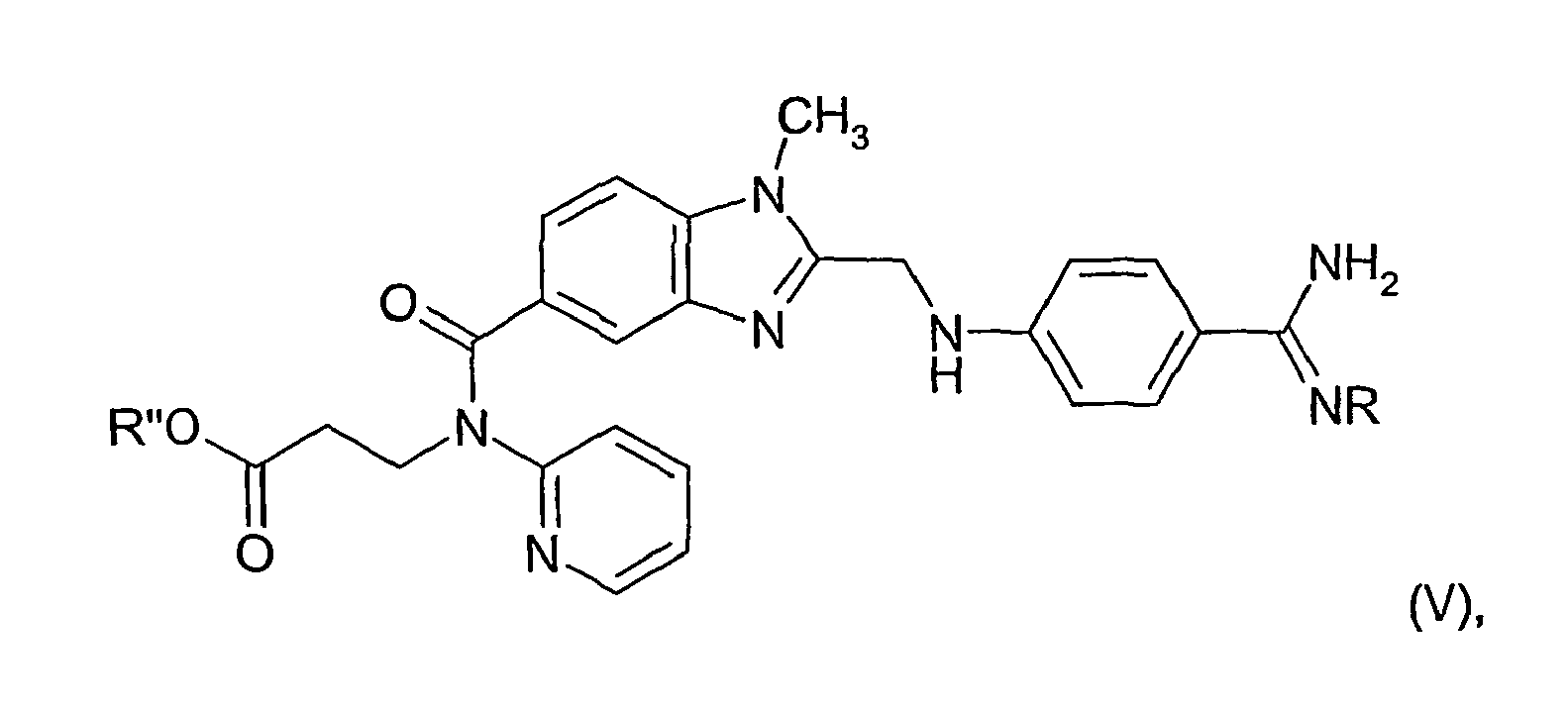
R gemäss den Ansprüchen 1 und 2 definiert ist und
R" eine durch Hydrolyse, Behandeln mit einer Säure oder Base, Thermolyse oder Hydrogenolyse in eine Carboxylgruppe überführbare Gruppe bedeutet,
mittels Hydrolyse, Behandeln mit einer Säure oder Base, Thermolyse oder Hydrogenolyse in eine Verbindung der allgemeinen Formel I übergefürt wird, in der R' Wasserstoff bedeutet, oderc. zur Herstellung einer Verbindung der allgemeinen Formel I, in der R eine Methoxycarbonylgruppe bedeutet,
eine Verbindung der allgemeinen Formel
R' gemäss den Ansprüchen 1 und 2 definiert ist, mit einer Verbindung der allgemeinen Formel
Z2 - COOCH3 , (VII)
in der
Z2 eine nukleofuge Austrittsgruppe wie ein Halogenatom, z.B. ein Chlor-, Brom- oder Jodatom, bedeutet, umgesetzt wird,
und gewüschtenfalls die erhaltenen Verbindungen der Formel I in ihre Salze, insbesondere für die pharmazeutische Anwendung in ihre physiologisch verträglichen Salze mit anorganischen oder organischen Säuren oder Basen, übergeführt werden.
Priority Applications (1)
| Application Number | Priority Date | Filing Date | Title |
|---|---|---|---|
| SI200330498T SI1529041T1 (sl) | 2002-08-02 | 2003-07-28 | Nova predzdravila (N-2-piridil-N-2-hidroksikarboniletil)-amida 1-metil-2(4-amidinofenilaminometil)-benzimidazol-5-il-karboksilne kisline, njihova priprava in njihova uporaba kot zdravila |
Applications Claiming Priority (3)
| Application Number | Priority Date | Filing Date | Title |
|---|---|---|---|
| DE10235639 | 2002-08-02 | ||
| DE10235639A DE10235639A1 (de) | 2002-08-02 | 2002-08-02 | Neue Prodrugs von 1-Methyl-2-(4-amidinophenylaminomethyl)-benzimidazol-5-yl-carbonsäure-(N-2-pyridyl-N-2-hydroxycarbonylethyl)-amid, ihre Herstellung und ihre Verwendung als Arzneimittel |
| PCT/EP2003/008289 WO2004014894A1 (de) | 2002-08-02 | 2003-07-28 | Neue prodrugs von 1-methyl-2(4-amidinophenylaminomethyl)-benzimidazol-5-yl-carbonsäure-(n-2-pyridil-n-2-hydroxycarbonylethyl)-amid, ihre herstellung und ihre verwendung als arzneimittel |
Publications (2)
| Publication Number | Publication Date |
|---|---|
| EP1529041A1 EP1529041A1 (de) | 2005-05-11 |
| EP1529041B1 true EP1529041B1 (de) | 2006-10-11 |
Family
ID=30469409
Family Applications (1)
| Application Number | Title | Priority Date | Filing Date |
|---|---|---|---|
| EP03784088A Expired - Lifetime EP1529041B1 (de) | 2002-08-02 | 2003-07-28 | Neue prodrugs von 1-methyl-2-(4-amidinophenylaminomethyl)-benzimidazol-5-yl-carbonsäure-(n -2-pyridil-n-2-hydroxycarbonylethyl)-amid, ihre herstellung und ihre verwendung als arzneimittel |
Country Status (22)
| Country | Link |
|---|---|
| US (2) | US6900229B2 (de) |
| EP (1) | EP1529041B1 (de) |
| JP (1) | JP4230453B2 (de) |
| KR (1) | KR101110088B1 (de) |
| CN (1) | CN100391957C (de) |
| AR (1) | AR040763A1 (de) |
| AT (1) | ATE342265T1 (de) |
| AU (1) | AU2003255304B2 (de) |
| BR (1) | BR0313179A (de) |
| CA (1) | CA2494024C (de) |
| CY (1) | CY1105734T1 (de) |
| DE (2) | DE10235639A1 (de) |
| DK (1) | DK1529041T3 (de) |
| EA (1) | EA008249B1 (de) |
| ES (1) | ES2274300T3 (de) |
| IL (1) | IL166584A (de) |
| MX (1) | MXPA04012945A (de) |
| PL (1) | PL218430B1 (de) |
| PT (1) | PT1529041E (de) |
| TW (1) | TWI313682B (de) |
| WO (1) | WO2004014894A1 (de) |
| ZA (1) | ZA200409940B (de) |
Families Citing this family (16)
| Publication number | Priority date | Publication date | Assignee | Title |
|---|---|---|---|---|
| US20030181488A1 (en) * | 2002-03-07 | 2003-09-25 | Boehringer Ingelheim Pharma Gmbh & Co. Kg | Administration form for the oral application of 3-[(2-{[4-(hexyloxycarbonylamino-imino-methyl)-phenylamino]-methyl}-1-methyl-1H-benzimidazol-5-carbonyl)-pyridin-2-yl-amino]-propionic acid ethyl ester and the salts thereof |
| DE10235639A1 (de) * | 2002-08-02 | 2004-02-19 | Boehringer Ingelheim Pharma Gmbh & Co. Kg | Neue Prodrugs von 1-Methyl-2-(4-amidinophenylaminomethyl)-benzimidazol-5-yl-carbonsäure-(N-2-pyridyl-N-2-hydroxycarbonylethyl)-amid, ihre Herstellung und ihre Verwendung als Arzneimittel |
| DE10339862A1 (de) * | 2003-08-29 | 2005-03-24 | Boehringer Ingelheim Pharma Gmbh & Co. Kg | 3-[(2-{[4-(Hexyloxycarbonylamino-imino-methyl)- phenylamino]-methyl}-1-methyl-1H-benzimidazol-5-carbonyl)-pyridin-2-yl-amino]-propionsäure-ethylester-Methansulfonat und dessen Verwendung als Arzneimittel |
| US20060222640A1 (en) * | 2005-03-29 | 2006-10-05 | Boehringer Ingelheim International Gmbh | New pharmaceutical compositions for treatment of thrombosis |
| DE102005020002A1 (de) * | 2005-04-27 | 2006-11-02 | Boehringer Ingelheim Pharma Gmbh & Co. Kg | Physiologisch verträgliche Salze von 3-[(2-{[4-(Hexyloxycarbonylamino-imino-methyl)-phenylamino]-methyl}-1-methyl-1H-benzimidazol-5-carbonyl)-pyridin-2-yl-amino]-propionsäure-ethylester |
| DE102005025728A1 (de) * | 2005-06-04 | 2006-12-07 | Boehringer Ingelheim Pharma Gmbh & Co. Kg | Polymorphe von 3-[(2-{[4-(Hexyloxycarbonylamino-imino-methyl)-phenylamino]-methyl}-1-methyl-1H-benzimidazol-5-carbonyl)-pyridin-2-yl-amino]-Propionsäure-ethylester |
| CA2657269A1 (en) * | 2006-07-17 | 2008-01-24 | Boehringer Ingelheim International Gmbh | New indications for direct thrombin inhibitors |
| JP2009543842A (ja) * | 2006-07-17 | 2009-12-10 | ベーリンガー インゲルハイム インターナショナル ゲゼルシャフト ミット ベシュレンクテル ハフツング | 心臓血管分野における直接トロンビン阻害薬のための新規適応 |
| EP1956018A1 (de) * | 2007-02-06 | 2008-08-13 | Boehringer Ingelheim Pharma GmbH & Co. KG | Verfahren zur Herstellung eines Benzimidazolderivats |
| CN102875529B (zh) * | 2011-07-15 | 2015-04-22 | 天津药物研究院 | 达比加群的酯衍生物及其制备方法 |
| DK2550966T3 (en) | 2011-07-25 | 2017-02-06 | Dritte Patentportfolio Beteili | Dabigatran amidoxic acid esters as prodrugs and their use as a drug |
| CN103420994B (zh) * | 2012-05-24 | 2016-04-06 | 天津药物研究院 | 作为前药的达比加群酯衍生物及其制备方法和用途 |
| WO2014012236A1 (zh) * | 2012-07-19 | 2014-01-23 | 北京普禄德医药科技有限公司 | 达比加群的酯衍生物及其制备方法和用途 |
| CN102766134B (zh) * | 2012-07-19 | 2014-06-25 | 北京普禄德医药科技有限公司 | 达比加群的酯衍生物及其制备方法和用途 |
| WO2016019848A1 (zh) * | 2014-08-06 | 2016-02-11 | 四川海思科制药有限公司 | 一种达比加群硫酯衍生物及其制备方法和在药学上的用途 |
| CN111440149A (zh) * | 2020-03-31 | 2020-07-24 | 浙江美诺华药物化学有限公司 | 一种达比加群酯中间体的制备方法 |
Family Cites Families (5)
| Publication number | Priority date | Publication date | Assignee | Title |
|---|---|---|---|---|
| US6087380A (en) * | 1949-11-24 | 2000-07-11 | Boehringer Ingelheim Pharma Kg | Disubstituted bicyclic heterocycles, the preparations and the use thereof as pharmaceutical compositions |
| CA2134192A1 (en) * | 1993-11-12 | 1995-05-13 | Michael L. Denney | 5, 6-bicyclic glycoprotein iib/iiia antagonists |
| PE121699A1 (es) * | 1997-02-18 | 1999-12-08 | Boehringer Ingelheim Pharma | Heterociclos biciclicos disustituidos como inhibidores de la trombina |
| US6414008B1 (en) * | 1997-04-29 | 2002-07-02 | Boehringer Ingelheim Pharma Kg | Disubstituted bicyclic heterocycles, the preparation thereof, and their use as pharmaceutical compositions |
| DE10235639A1 (de) * | 2002-08-02 | 2004-02-19 | Boehringer Ingelheim Pharma Gmbh & Co. Kg | Neue Prodrugs von 1-Methyl-2-(4-amidinophenylaminomethyl)-benzimidazol-5-yl-carbonsäure-(N-2-pyridyl-N-2-hydroxycarbonylethyl)-amid, ihre Herstellung und ihre Verwendung als Arzneimittel |
-
2002
- 2002-08-02 DE DE10235639A patent/DE10235639A1/de not_active Withdrawn
-
2003
- 2003-07-28 WO PCT/EP2003/008289 patent/WO2004014894A1/de not_active Ceased
- 2003-07-28 BR BR0313179-3A patent/BR0313179A/pt not_active Application Discontinuation
- 2003-07-28 EA EA200500261A patent/EA008249B1/ru not_active IP Right Cessation
- 2003-07-28 MX MXPA04012945A patent/MXPA04012945A/es active IP Right Grant
- 2003-07-28 CA CA2494024A patent/CA2494024C/en not_active Expired - Fee Related
- 2003-07-28 KR KR1020057001873A patent/KR101110088B1/ko not_active Expired - Fee Related
- 2003-07-28 PT PT03784088T patent/PT1529041E/pt unknown
- 2003-07-28 JP JP2004526797A patent/JP4230453B2/ja not_active Expired - Lifetime
- 2003-07-28 AT AT03784088T patent/ATE342265T1/de active
- 2003-07-28 EP EP03784088A patent/EP1529041B1/de not_active Expired - Lifetime
- 2003-07-28 CN CNB038185946A patent/CN100391957C/zh not_active Expired - Fee Related
- 2003-07-28 PL PL373088A patent/PL218430B1/pl unknown
- 2003-07-28 AU AU2003255304A patent/AU2003255304B2/en not_active Ceased
- 2003-07-28 ES ES03784088T patent/ES2274300T3/es not_active Expired - Lifetime
- 2003-07-28 DK DK03784088T patent/DK1529041T3/da active
- 2003-07-28 DE DE50305374T patent/DE50305374D1/de not_active Expired - Lifetime
- 2003-07-31 US US10/631,645 patent/US6900229B2/en not_active Expired - Lifetime
- 2003-08-01 AR AR20030102774A patent/AR040763A1/es not_active Application Discontinuation
- 2003-08-01 TW TW092121155A patent/TWI313682B/zh not_active IP Right Cessation
-
2004
- 2004-12-08 ZA ZA200409940A patent/ZA200409940B/xx unknown
-
2005
- 2005-01-31 IL IL166584A patent/IL166584A/en not_active IP Right Cessation
- 2005-02-11 US US11/056,029 patent/US7189743B2/en not_active Expired - Lifetime
-
2006
- 2006-10-24 CY CY20061101538T patent/CY1105734T1/el unknown
Also Published As
Similar Documents
| Publication | Publication Date | Title |
|---|---|---|
| EP0966454B1 (de) | Disubstituierte bicyclische heterocyclen, ihre herstellung und ihre verwendung als arzneimittel | |
| EP1100795B1 (de) | Disubstituierte bicyclische heterocyclen mit insbesondere eine thrombinhemmende wirkung | |
| EP0555824A1 (de) | N-alpha-arylsulfonylierte Benzimidazolyl-alaninamid Derivate, diese enthaltende Arzneimittel sowie Verfahren zu ihrer Herstellung | |
| EP0204349A2 (de) | Neue heteroaromatische Aminderivate, diese Verbindungen enthaltende Arzneimittel und Verfahren zu ihrer Herstellung | |
| WO2000027826A1 (de) | Neue pyrimidine, deren herstellung und verwendung | |
| EP0574808A1 (de) | Amidin-Biphenylderivate, diese Verbindungen enthaltende Arzneimittel und Verfahren zu ihrer Herstellung | |
| EP1529041A1 (de) | NEUE PRODRUGS VON 1-METHYL-2(4-AMIDINOPHENYLAMINOMETHYL)-BENZIMIDAZOL-5-YL-CARBONS URE-( i N /i -2-PYRIDIL- i N /i -2-HYDROXY CARBONYLETHYL)-AMID, IHRE HERSTELLUNG UND IHRE VERWENDUNG ALS ARZNEIMITTEL | |
| DE4304650A1 (de) | Kondensierte 5-gliedrige Heterocyclen, Verfahren zu ihrer Herstellung und diese Verbindungen enthaltende Arzneimittel | |
| EP1414790A1 (de) | Substituierte n-acyl-anilinderivate, deren herstellung und deren verwendung als arzneimittel | |
| DE19816983A1 (de) | Bicyclen, deren Herstellung und deren Verwendung als Arzneimittel | |
| EP0161599A2 (de) | Neue Benzazepinderivate, diese Verbindungen enthaltende Arzneimittel und Verfahren zu ihrer Herstellung | |
| EP1370540A1 (de) | Antithrombotische carbonsäureamide, deren herstellung und deren verwendung als arzneimittel | |
| EP1244636A1 (de) | Benzimidazole, deren herstellung und deren verwendung als antithrombotika | |
| DE68924221T2 (de) | Imidazolderivate. | |
| EP0148431A1 (de) | Neue Benzimidazole, ihre Herstellung und diese Verbindungen enthaltende Arzneimittel | |
| WO2000050419A1 (de) | Substituierte bicyclische heterocyclen und deren verwendung als thrombininhibitoren | |
| DE19754490A1 (de) | Durch einen Aminocarbonylrest substituierte Bicyclen, ihre Herstellung und ihre Verwendung als Arzneimittel | |
| EP0180833B1 (de) | 4-Oxo-pyrido[2,3]pyrimidin-Derivate, Verfahren zur deren Herstellung und diese ethaltende Arzneimittel | |
| DE60013607T2 (de) | Bemzimidazolverbindungen und medikamente die diese enthalten | |
| EP1237877B1 (de) | Carboxamid-substituierte benzimidazol-derivate, verfahren zu ihrer herstellung und ihre verwendung als tryptase-inhibitoren | |
| EP0129509B1 (de) | Triazol(2,3-c)(1,3)benzodiazepine, Verfahren zu ihrer Herstellung, pharmazeutische Präparate enthaltend diese Verbindungen, sowie ihre therapeutische Verwendung | |
| EP1220845B1 (de) | Arylsulfonamid-substituierte benzimidazolderivate ihre verwendung als tryptase-inhibitoren | |
| EP0029992A1 (de) | Neue Aminopropanolderivate, Verfahren zu ihrer Herstellung und diese Verbindungen enthaltende Arzneimittel | |
| EP0213571A2 (de) | 3-Aminomethylpyrrol-1-yl-alkylamine und diese Verbindungen enthaltende therapeutische Mittel | |
| DE69116680T2 (de) | Imidazol-2-yl-derivate von bicyclischen verbindungen und verfahren zu deren herstellung |
Legal Events
| Date | Code | Title | Description |
|---|---|---|---|
| PUAI | Public reference made under article 153(3) epc to a published international application that has entered the european phase |
Free format text: ORIGINAL CODE: 0009012 |
|
| 17P | Request for examination filed |
Effective date: 20050302 |
|
| AK | Designated contracting states |
Kind code of ref document: A1 Designated state(s): AT BE BG CH CY CZ DE DK EE ES FI FR GB GR HU IE IT LI LU MC NL PT RO SE SI SK TR |
|
| AX | Request for extension of the european patent |
Extension state: AL LT LV MK |
|
| DAX | Request for extension of the european patent (deleted) | ||
| GRAP | Despatch of communication of intention to grant a patent |
Free format text: ORIGINAL CODE: EPIDOSNIGR1 |
|
| RTI1 | Title (correction) |
Free format text: NOVEL PRODRUGS OF 1-METHYL-2(4-AMIDINOPHENYLAMINOMETHYL)-BENZIMIDAZOL-5-YL-CARBOXYLIC ACID-(N-2-PYRIDIL-N-2-HYDROXYCARBONYLETHYL)-AMIDE, PRODUCTION AND USE THEREOF AS MEDICAMENTS |
|
| GRAS | Grant fee paid |
Free format text: ORIGINAL CODE: EPIDOSNIGR3 |
|
| GRAA | (expected) grant |
Free format text: ORIGINAL CODE: 0009210 |
|
| RTI1 | Title (correction) |
Free format text: NOVEL PRODRUGS OF 1-METHYL-2-(4-AMIDINOPHENYLAMINOMETHYL)-BENZIMIDAZOL-5-YL-CARBOXYLIC ACID-(N-2-PYRIDIL-N-2-HYDROXYCARBONYLETHYL)-AMIDE, PRODUCTION AND USE THEREOF AS MEDICAMENT |
|
| AK | Designated contracting states |
Kind code of ref document: B1 Designated state(s): AT BE BG CH CY CZ DE DK EE ES FI FR GB GR HU IE IT LI LU MC NL PT RO SE SI SK TR |
|
| REG | Reference to a national code |
Ref country code: GB Ref legal event code: FG4D Free format text: NOT ENGLISH |
|
| REG | Reference to a national code |
Ref country code: CH Ref legal event code: EP Ref country code: SE Ref legal event code: TRGR |
|
| REG | Reference to a national code |
Ref country code: IE Ref legal event code: FG4D Free format text: LANGUAGE OF EP DOCUMENT: GERMAN |
|
| REF | Corresponds to: |
Ref document number: 50305374 Country of ref document: DE Date of ref document: 20061123 Kind code of ref document: P |
|
| REG | Reference to a national code |
Ref country code: EE Ref legal event code: FG4A Ref document number: E000665 Country of ref document: EE Effective date: 20061030 |
|
| REG | Reference to a national code |
Ref country code: GR Ref legal event code: EP Ref document number: 20060403873 Country of ref document: GR |
|
| REG | Reference to a national code |
Ref country code: RO Ref legal event code: EPE |
|
| REG | Reference to a national code |
Ref country code: DK Ref legal event code: T3 |
|
| REG | Reference to a national code |
Ref country code: PT Ref legal event code: SC4A Free format text: AVAILABILITY OF NATIONAL TRANSLATION Effective date: 20061115 |
|
| REG | Reference to a national code |
Ref country code: GB Ref legal event code: 711B |
|
| REG | Reference to a national code |
Ref country code: HU Ref legal event code: AG4A Ref document number: E001003 Country of ref document: HU |
|
| ET | Fr: translation filed | ||
| REG | Reference to a national code |
Ref country code: ES Ref legal event code: FG2A Ref document number: 2274300 Country of ref document: ES Kind code of ref document: T3 |
|
| REG | Reference to a national code |
Ref country code: GB Ref legal event code: 711G |
|
| PLBE | No opposition filed within time limit |
Free format text: ORIGINAL CODE: 0009261 |
|
| STAA | Information on the status of an ep patent application or granted ep patent |
Free format text: STATUS: NO OPPOSITION FILED WITHIN TIME LIMIT |
|
| 26N | No opposition filed |
Effective date: 20070712 |
|
| PGFP | Annual fee paid to national office [announced via postgrant information from national office to epo] |
Ref country code: TR Payment date: 20130625 Year of fee payment: 11 |
|
| PGFP | Annual fee paid to national office [announced via postgrant information from national office to epo] |
Ref country code: LU Payment date: 20140722 Year of fee payment: 12 Ref country code: RO Payment date: 20140620 Year of fee payment: 12 |
|
| PGFP | Annual fee paid to national office [announced via postgrant information from national office to epo] |
Ref country code: DK Payment date: 20140721 Year of fee payment: 12 Ref country code: IE Payment date: 20140724 Year of fee payment: 12 Ref country code: NL Payment date: 20140721 Year of fee payment: 12 Ref country code: FI Payment date: 20140711 Year of fee payment: 12 Ref country code: MC Payment date: 20140714 Year of fee payment: 12 Ref country code: CH Payment date: 20140721 Year of fee payment: 12 Ref country code: CZ Payment date: 20140722 Year of fee payment: 12 Ref country code: BG Payment date: 20140711 Year of fee payment: 12 Ref country code: GR Payment date: 20140717 Year of fee payment: 12 Ref country code: EE Payment date: 20140714 Year of fee payment: 12 |
|
| PGFP | Annual fee paid to national office [announced via postgrant information from national office to epo] |
Ref country code: SI Payment date: 20140630 Year of fee payment: 12 Ref country code: ES Payment date: 20140728 Year of fee payment: 12 Ref country code: SK Payment date: 20140724 Year of fee payment: 12 Ref country code: AT Payment date: 20140611 Year of fee payment: 12 Ref country code: HU Payment date: 20140721 Year of fee payment: 12 Ref country code: SE Payment date: 20140721 Year of fee payment: 12 |
|
| PGFP | Annual fee paid to national office [announced via postgrant information from national office to epo] |
Ref country code: IT Payment date: 20140730 Year of fee payment: 12 Ref country code: PT Payment date: 20140129 Year of fee payment: 12 |
|
| PGFP | Annual fee paid to national office [announced via postgrant information from national office to epo] |
Ref country code: BE Payment date: 20140722 Year of fee payment: 12 |
|
| PGFP | Annual fee paid to national office [announced via postgrant information from national office to epo] |
Ref country code: CY Payment date: 20140711 Year of fee payment: 12 |
|
| REG | Reference to a national code |
Ref country code: FR Ref legal event code: PLFP Year of fee payment: 13 |
|
| REG | Reference to a national code |
Ref country code: PT Ref legal event code: MM4A Free format text: LAPSE DUE TO NON-PAYMENT OF FEES Effective date: 20160128 |
|
| REG | Reference to a national code |
Ref country code: DK Ref legal event code: EBP Effective date: 20150731 |
|
| PG25 | Lapsed in a contracting state [announced via postgrant information from national office to epo] |
Ref country code: MC Free format text: LAPSE BECAUSE OF NON-PAYMENT OF DUE FEES Effective date: 20150731 |
|
| REG | Reference to a national code |
Ref country code: CH Ref legal event code: PL |
|
| REG | Reference to a national code |
Ref country code: SE Ref legal event code: EUG Ref country code: SK Ref legal event code: MM4A Ref document number: E 1161 Country of ref document: SK Effective date: 20150728 |
|
| REG | Reference to a national code |
Ref country code: AT Ref legal event code: MM01 Ref document number: 342265 Country of ref document: AT Kind code of ref document: T Effective date: 20150728 Ref country code: EE Ref legal event code: MM4A Ref document number: E000665 Country of ref document: EE Effective date: 20150731 |
|
| PG25 | Lapsed in a contracting state [announced via postgrant information from national office to epo] |
Ref country code: LU Free format text: LAPSE BECAUSE OF NON-PAYMENT OF DUE FEES Effective date: 20150728 |
|
| REG | Reference to a national code |
Ref country code: NL Ref legal event code: MM Effective date: 20150801 |
|
| REG | Reference to a national code |
Ref country code: IE Ref legal event code: MM4A |
|
| PG25 | Lapsed in a contracting state [announced via postgrant information from national office to epo] |
Ref country code: CH Free format text: LAPSE BECAUSE OF NON-PAYMENT OF DUE FEES Effective date: 20150731 Ref country code: CZ Free format text: LAPSE BECAUSE OF NON-PAYMENT OF DUE FEES Effective date: 20150728 Ref country code: LI Free format text: LAPSE BECAUSE OF NON-PAYMENT OF DUE FEES Effective date: 20150731 Ref country code: SK Free format text: LAPSE BECAUSE OF NON-PAYMENT OF DUE FEES Effective date: 20150728 Ref country code: EE Free format text: LAPSE BECAUSE OF NON-PAYMENT OF DUE FEES Effective date: 20150731 Ref country code: BG Free format text: LAPSE BECAUSE OF NON-PAYMENT OF DUE FEES Effective date: 20160331 Ref country code: IT Free format text: LAPSE BECAUSE OF NON-PAYMENT OF DUE FEES Effective date: 20150728 Ref country code: CY Free format text: LAPSE BECAUSE OF NON-PAYMENT OF DUE FEES Effective date: 20150728 |
|
| REG | Reference to a national code |
Ref country code: SI Ref legal event code: KO00 Effective date: 20160330 |
|
| PG25 | Lapsed in a contracting state [announced via postgrant information from national office to epo] |
Ref country code: NL Free format text: LAPSE BECAUSE OF NON-PAYMENT OF DUE FEES Effective date: 20150801 Ref country code: SE Free format text: LAPSE BECAUSE OF NON-PAYMENT OF DUE FEES Effective date: 20150729 Ref country code: FI Free format text: LAPSE BECAUSE OF NON-PAYMENT OF DUE FEES Effective date: 20150728 Ref country code: HU Free format text: LAPSE BECAUSE OF NON-PAYMENT OF DUE FEES Effective date: 20150729 Ref country code: AT Free format text: LAPSE BECAUSE OF NON-PAYMENT OF DUE FEES Effective date: 20150728 Ref country code: SI Free format text: LAPSE BECAUSE OF NON-PAYMENT OF DUE FEES Effective date: 20150729 Ref country code: RO Free format text: LAPSE BECAUSE OF NON-PAYMENT OF DUE FEES Effective date: 20150728 Ref country code: PT Free format text: LAPSE BECAUSE OF NON-PAYMENT OF DUE FEES Effective date: 20160128 Ref country code: GR Free format text: LAPSE BECAUSE OF NON-PAYMENT OF DUE FEES Effective date: 20160202 |
|
| REG | Reference to a national code |
Ref country code: GR Ref legal event code: ML Ref document number: 20060403873 Country of ref document: GR Effective date: 20160202 |
|
| REG | Reference to a national code |
Ref country code: FR Ref legal event code: PLFP Year of fee payment: 14 |
|
| PG25 | Lapsed in a contracting state [announced via postgrant information from national office to epo] |
Ref country code: IE Free format text: LAPSE BECAUSE OF NON-PAYMENT OF DUE FEES Effective date: 20150728 |
|
| REG | Reference to a national code |
Ref country code: ES Ref legal event code: FD2A Effective date: 20160826 |
|
| PG25 | Lapsed in a contracting state [announced via postgrant information from national office to epo] |
Ref country code: DK Free format text: LAPSE BECAUSE OF NON-PAYMENT OF DUE FEES Effective date: 20150731 |
|
| PG25 | Lapsed in a contracting state [announced via postgrant information from national office to epo] |
Ref country code: ES Free format text: LAPSE BECAUSE OF NON-PAYMENT OF DUE FEES Effective date: 20150729 |
|
| REG | Reference to a national code |
Ref country code: FR Ref legal event code: PLFP Year of fee payment: 15 |
|
| PG25 | Lapsed in a contracting state [announced via postgrant information from national office to epo] |
Ref country code: BE Free format text: LAPSE BECAUSE OF NON-PAYMENT OF DUE FEES Effective date: 20150731 |
|
| PG25 | Lapsed in a contracting state [announced via postgrant information from national office to epo] |
Ref country code: TR Free format text: LAPSE BECAUSE OF NON-PAYMENT OF DUE FEES Effective date: 20150728 |
|
| REG | Reference to a national code |
Ref country code: FR Ref legal event code: PLFP Year of fee payment: 16 |
|
| PGFP | Annual fee paid to national office [announced via postgrant information from national office to epo] |
Ref country code: GB Payment date: 20220720 Year of fee payment: 20 Ref country code: DE Payment date: 20220620 Year of fee payment: 20 |
|
| PGFP | Annual fee paid to national office [announced via postgrant information from national office to epo] |
Ref country code: FR Payment date: 20220720 Year of fee payment: 20 |
|
| REG | Reference to a national code |
Ref country code: DE Ref legal event code: R071 Ref document number: 50305374 Country of ref document: DE |
|
| REG | Reference to a national code |
Ref country code: GB Ref legal event code: PE20 Expiry date: 20230727 |
|
| PG25 | Lapsed in a contracting state [announced via postgrant information from national office to epo] |
Ref country code: GB Free format text: LAPSE BECAUSE OF EXPIRATION OF PROTECTION Effective date: 20230727 |