EP1513835B1 - Piperazinylacylpiperidinderivate, deren herstellung und deren therapeutische anwendung - Google Patents
Piperazinylacylpiperidinderivate, deren herstellung und deren therapeutische anwendung Download PDFInfo
- Publication number
- EP1513835B1 EP1513835B1 EP03757108A EP03757108A EP1513835B1 EP 1513835 B1 EP1513835 B1 EP 1513835B1 EP 03757108 A EP03757108 A EP 03757108A EP 03757108 A EP03757108 A EP 03757108A EP 1513835 B1 EP1513835 B1 EP 1513835B1
- Authority
- EP
- European Patent Office
- Prior art keywords
- compound
- formula
- methyl
- trifluoromethyl
- phenyl
- Prior art date
- Legal status (The legal status is an assumption and is not a legal conclusion. Google has not performed a legal analysis and makes no representation as to the accuracy of the status listed.)
- Expired - Lifetime
Links
- 0 C*(C)N(*)C*=C Chemical compound C*(C)N(*)C*=C 0.000 description 9
- CHAIMVARZJJCRY-UHFFFAOYSA-N CCC1N=CC(C)=NC1 Chemical compound CCC1N=CC(C)=NC1 CHAIMVARZJJCRY-UHFFFAOYSA-N 0.000 description 1
- CAWHJQAVHZEVTJ-UHFFFAOYSA-N Cc1cnccn1 Chemical compound Cc1cnccn1 CAWHJQAVHZEVTJ-UHFFFAOYSA-N 0.000 description 1
- TWGNOYAGHYUFFR-UHFFFAOYSA-N Cc1cncnc1 Chemical compound Cc1cncnc1 TWGNOYAGHYUFFR-UHFFFAOYSA-N 0.000 description 1
- LVILGAOSPDLNRM-UHFFFAOYSA-N Cc1ncncc1 Chemical compound Cc1ncncc1 LVILGAOSPDLNRM-UHFFFAOYSA-N 0.000 description 1
Classifications
-
- C—CHEMISTRY; METALLURGY
- C07—ORGANIC CHEMISTRY
- C07D—HETEROCYCLIC COMPOUNDS
- C07D417/00—Heterocyclic compounds containing two or more hetero rings, at least one ring having nitrogen and sulfur atoms as the only ring hetero atoms, not provided for by group C07D415/00
- C07D417/14—Heterocyclic compounds containing two or more hetero rings, at least one ring having nitrogen and sulfur atoms as the only ring hetero atoms, not provided for by group C07D415/00 containing three or more hetero rings
-
- A—HUMAN NECESSITIES
- A61—MEDICAL OR VETERINARY SCIENCE; HYGIENE
- A61P—SPECIFIC THERAPEUTIC ACTIVITY OF CHEMICAL COMPOUNDS OR MEDICINAL PREPARATIONS
- A61P17/00—Drugs for dermatological disorders
- A61P17/02—Drugs for dermatological disorders for treating wounds, ulcers, burns, scars, keloids, or the like
-
- A—HUMAN NECESSITIES
- A61—MEDICAL OR VETERINARY SCIENCE; HYGIENE
- A61P—SPECIFIC THERAPEUTIC ACTIVITY OF CHEMICAL COMPOUNDS OR MEDICINAL PREPARATIONS
- A61P17/00—Drugs for dermatological disorders
- A61P17/14—Drugs for dermatological disorders for baldness or alopecia
-
- A—HUMAN NECESSITIES
- A61—MEDICAL OR VETERINARY SCIENCE; HYGIENE
- A61P—SPECIFIC THERAPEUTIC ACTIVITY OF CHEMICAL COMPOUNDS OR MEDICINAL PREPARATIONS
- A61P19/00—Drugs for skeletal disorders
-
- A—HUMAN NECESSITIES
- A61—MEDICAL OR VETERINARY SCIENCE; HYGIENE
- A61P—SPECIFIC THERAPEUTIC ACTIVITY OF CHEMICAL COMPOUNDS OR MEDICINAL PREPARATIONS
- A61P19/00—Drugs for skeletal disorders
- A61P19/02—Drugs for skeletal disorders for joint disorders, e.g. arthritis, arthrosis
-
- A—HUMAN NECESSITIES
- A61—MEDICAL OR VETERINARY SCIENCE; HYGIENE
- A61P—SPECIFIC THERAPEUTIC ACTIVITY OF CHEMICAL COMPOUNDS OR MEDICINAL PREPARATIONS
- A61P19/00—Drugs for skeletal disorders
- A61P19/08—Drugs for skeletal disorders for bone diseases, e.g. rachitism, Paget's disease
- A61P19/10—Drugs for skeletal disorders for bone diseases, e.g. rachitism, Paget's disease for osteoporosis
-
- A—HUMAN NECESSITIES
- A61—MEDICAL OR VETERINARY SCIENCE; HYGIENE
- A61P—SPECIFIC THERAPEUTIC ACTIVITY OF CHEMICAL COMPOUNDS OR MEDICINAL PREPARATIONS
- A61P25/00—Drugs for disorders of the nervous system
-
- A—HUMAN NECESSITIES
- A61—MEDICAL OR VETERINARY SCIENCE; HYGIENE
- A61P—SPECIFIC THERAPEUTIC ACTIVITY OF CHEMICAL COMPOUNDS OR MEDICINAL PREPARATIONS
- A61P25/00—Drugs for disorders of the nervous system
- A61P25/02—Drugs for disorders of the nervous system for peripheral neuropathies
-
- A—HUMAN NECESSITIES
- A61—MEDICAL OR VETERINARY SCIENCE; HYGIENE
- A61P—SPECIFIC THERAPEUTIC ACTIVITY OF CHEMICAL COMPOUNDS OR MEDICINAL PREPARATIONS
- A61P25/00—Drugs for disorders of the nervous system
- A61P25/04—Centrally acting analgesics, e.g. opioids
-
- A—HUMAN NECESSITIES
- A61—MEDICAL OR VETERINARY SCIENCE; HYGIENE
- A61P—SPECIFIC THERAPEUTIC ACTIVITY OF CHEMICAL COMPOUNDS OR MEDICINAL PREPARATIONS
- A61P25/00—Drugs for disorders of the nervous system
- A61P25/08—Antiepileptics; Anticonvulsants
-
- A—HUMAN NECESSITIES
- A61—MEDICAL OR VETERINARY SCIENCE; HYGIENE
- A61P—SPECIFIC THERAPEUTIC ACTIVITY OF CHEMICAL COMPOUNDS OR MEDICINAL PREPARATIONS
- A61P25/00—Drugs for disorders of the nervous system
- A61P25/14—Drugs for disorders of the nervous system for treating abnormal movements, e.g. chorea, dyskinesia
-
- A—HUMAN NECESSITIES
- A61—MEDICAL OR VETERINARY SCIENCE; HYGIENE
- A61P—SPECIFIC THERAPEUTIC ACTIVITY OF CHEMICAL COMPOUNDS OR MEDICINAL PREPARATIONS
- A61P25/00—Drugs for disorders of the nervous system
- A61P25/14—Drugs for disorders of the nervous system for treating abnormal movements, e.g. chorea, dyskinesia
- A61P25/16—Anti-Parkinson drugs
-
- A—HUMAN NECESSITIES
- A61—MEDICAL OR VETERINARY SCIENCE; HYGIENE
- A61P—SPECIFIC THERAPEUTIC ACTIVITY OF CHEMICAL COMPOUNDS OR MEDICINAL PREPARATIONS
- A61P25/00—Drugs for disorders of the nervous system
- A61P25/18—Antipsychotics, i.e. neuroleptics; Drugs for mania or schizophrenia
-
- A—HUMAN NECESSITIES
- A61—MEDICAL OR VETERINARY SCIENCE; HYGIENE
- A61P—SPECIFIC THERAPEUTIC ACTIVITY OF CHEMICAL COMPOUNDS OR MEDICINAL PREPARATIONS
- A61P25/00—Drugs for disorders of the nervous system
- A61P25/28—Drugs for disorders of the nervous system for treating neurodegenerative disorders of the central nervous system, e.g. nootropic agents, cognition enhancers, drugs for treating Alzheimer's disease or other forms of dementia
-
- A—HUMAN NECESSITIES
- A61—MEDICAL OR VETERINARY SCIENCE; HYGIENE
- A61P—SPECIFIC THERAPEUTIC ACTIVITY OF CHEMICAL COMPOUNDS OR MEDICINAL PREPARATIONS
- A61P27/00—Drugs for disorders of the senses
-
- A—HUMAN NECESSITIES
- A61—MEDICAL OR VETERINARY SCIENCE; HYGIENE
- A61P—SPECIFIC THERAPEUTIC ACTIVITY OF CHEMICAL COMPOUNDS OR MEDICINAL PREPARATIONS
- A61P27/00—Drugs for disorders of the senses
- A61P27/02—Ophthalmic agents
-
- A—HUMAN NECESSITIES
- A61—MEDICAL OR VETERINARY SCIENCE; HYGIENE
- A61P—SPECIFIC THERAPEUTIC ACTIVITY OF CHEMICAL COMPOUNDS OR MEDICINAL PREPARATIONS
- A61P29/00—Non-central analgesic, antipyretic or antiinflammatory agents, e.g. antirheumatic agents; Non-steroidal antiinflammatory drugs [NSAID]
-
- A—HUMAN NECESSITIES
- A61—MEDICAL OR VETERINARY SCIENCE; HYGIENE
- A61P—SPECIFIC THERAPEUTIC ACTIVITY OF CHEMICAL COMPOUNDS OR MEDICINAL PREPARATIONS
- A61P29/00—Non-central analgesic, antipyretic or antiinflammatory agents, e.g. antirheumatic agents; Non-steroidal antiinflammatory drugs [NSAID]
- A61P29/02—Non-central analgesic, antipyretic or antiinflammatory agents, e.g. antirheumatic agents; Non-steroidal antiinflammatory drugs [NSAID] without antiinflammatory effect
-
- A—HUMAN NECESSITIES
- A61—MEDICAL OR VETERINARY SCIENCE; HYGIENE
- A61P—SPECIFIC THERAPEUTIC ACTIVITY OF CHEMICAL COMPOUNDS OR MEDICINAL PREPARATIONS
- A61P3/00—Drugs for disorders of the metabolism
- A61P3/08—Drugs for disorders of the metabolism for glucose homeostasis
- A61P3/10—Drugs for disorders of the metabolism for glucose homeostasis for hyperglycaemia, e.g. antidiabetics
-
- A—HUMAN NECESSITIES
- A61—MEDICAL OR VETERINARY SCIENCE; HYGIENE
- A61P—SPECIFIC THERAPEUTIC ACTIVITY OF CHEMICAL COMPOUNDS OR MEDICINAL PREPARATIONS
- A61P35/00—Antineoplastic agents
-
- A—HUMAN NECESSITIES
- A61—MEDICAL OR VETERINARY SCIENCE; HYGIENE
- A61P—SPECIFIC THERAPEUTIC ACTIVITY OF CHEMICAL COMPOUNDS OR MEDICINAL PREPARATIONS
- A61P35/00—Antineoplastic agents
- A61P35/02—Antineoplastic agents specific for leukemia
-
- A—HUMAN NECESSITIES
- A61—MEDICAL OR VETERINARY SCIENCE; HYGIENE
- A61P—SPECIFIC THERAPEUTIC ACTIVITY OF CHEMICAL COMPOUNDS OR MEDICINAL PREPARATIONS
- A61P35/00—Antineoplastic agents
- A61P35/04—Antineoplastic agents specific for metastasis
-
- A—HUMAN NECESSITIES
- A61—MEDICAL OR VETERINARY SCIENCE; HYGIENE
- A61P—SPECIFIC THERAPEUTIC ACTIVITY OF CHEMICAL COMPOUNDS OR MEDICINAL PREPARATIONS
- A61P37/00—Drugs for immunological or allergic disorders
-
- A—HUMAN NECESSITIES
- A61—MEDICAL OR VETERINARY SCIENCE; HYGIENE
- A61P—SPECIFIC THERAPEUTIC ACTIVITY OF CHEMICAL COMPOUNDS OR MEDICINAL PREPARATIONS
- A61P43/00—Drugs for specific purposes, not provided for in groups A61P1/00-A61P41/00
-
- A—HUMAN NECESSITIES
- A61—MEDICAL OR VETERINARY SCIENCE; HYGIENE
- A61P—SPECIFIC THERAPEUTIC ACTIVITY OF CHEMICAL COMPOUNDS OR MEDICINAL PREPARATIONS
- A61P9/00—Drugs for disorders of the cardiovascular system
-
- A—HUMAN NECESSITIES
- A61—MEDICAL OR VETERINARY SCIENCE; HYGIENE
- A61P—SPECIFIC THERAPEUTIC ACTIVITY OF CHEMICAL COMPOUNDS OR MEDICINAL PREPARATIONS
- A61P9/00—Drugs for disorders of the cardiovascular system
- A61P9/04—Inotropic agents, i.e. stimulants of cardiac contraction; Drugs for heart failure
-
- A—HUMAN NECESSITIES
- A61—MEDICAL OR VETERINARY SCIENCE; HYGIENE
- A61P—SPECIFIC THERAPEUTIC ACTIVITY OF CHEMICAL COMPOUNDS OR MEDICINAL PREPARATIONS
- A61P9/00—Drugs for disorders of the cardiovascular system
- A61P9/10—Drugs for disorders of the cardiovascular system for treating ischaemic or atherosclerotic diseases, e.g. antianginal drugs, coronary vasodilators, drugs for myocardial infarction, retinopathy, cerebrovascula insufficiency, renal arteriosclerosis
-
- C—CHEMISTRY; METALLURGY
- C07—ORGANIC CHEMISTRY
- C07D—HETEROCYCLIC COMPOUNDS
- C07D401/00—Heterocyclic compounds containing two or more hetero rings, having nitrogen atoms as the only ring hetero atoms, at least one ring being a six-membered ring with only one nitrogen atom
- C07D401/14—Heterocyclic compounds containing two or more hetero rings, having nitrogen atoms as the only ring hetero atoms, at least one ring being a six-membered ring with only one nitrogen atom containing three or more hetero rings
Definitions
- the present invention relates to substituted 1-piperazinylacylpiperidine derivatives, their preparation and their therapeutic application.
- the compounds according to the present invention have an affinity for the p75 NTR receptor of neurotrophins.
- Neurotrophins belong to a family of proteins with similar structures and functions, including Nerve Growth Factor (NGF), BDNF (Brain Derived Neurotrophic Factor), neurotrophin 3 (NT-3, Neurotrophin-3), Neurotrophin-4/5 (NT-4/5, Neurotrophin-4/5) and Neurotrophin 6 (NT-6, English Neurotrophin-6).
- NGF Nerve Growth Factor
- BDNF Brain Derived Neurotrophic Factor
- neurotrophin 3 NT-3, Neurotrophin-3
- Neurotrophin-4/5 NT-4/5, Neurotrophin-4/5)
- Neurotrophin 6 Neurotrophin 6
- the biological effects of these proteins are exerted by interaction with membrane receptors with tyrosine kinase activity (trk-A, trk-B and trk-C) (H. THOENEN, Science, 1995, 270, 593- 598, GR LEWIN and YA BARDE, Annu Rev.
- the p75 NTR receptor a receptor for all neurotrophins, is a transmembrane glycoprotein of the Tumor Necrosis Factor (TNF) family of receptors (WJ FRIEDMAN and LA GREENE, Exp Cell Res. 1999, 253, 131-142, J. MELDOSIS et al., Trends Pharmacol Sci., 2000, 21, 242-243).
- TNF Tumor Necrosis Factor
- Several biological functions are attributed to the p75 NTR receptor: on the one hand, the modulation of the affinity of neurotrophins for trk receptors; on the other hand, in the absence of trk, an induction of a cell death signal by apoptosis which is carried out by homodimerization of the receptor and activation of the ceramide pathway.
- Apoptosis or programmed cell death is a physiological mechanism of cell removal in many tissues.
- apoptosis plays a major role in embryogenesis, morphogenesis and cell renewal.
- Apoptosis is a genetically controlled phenomenon that occurs only at an advanced and irreversible stage of cell injury.
- apoptosis is involved in several central nervous system pathologies such as amyotrophic lateral sclerosis, multiple sclerosis, Alzheimer's, Parkinson's and Huntington's prion diseases.
- apoptotic neuronal death also occurs very early after cerebral and cardiac ischemia.
- Cell death is also a preponderant phenomenon in atherosclerosis, in fact it is estimated that 80% of the necrosis zones in primary atherosclerosis lesions in humans (ML BOCHATON-PIALAT et al., Am. J. Pathol. 1995, 146, 1-6, H. PERLMAN, Circulation, 1997, 95, 981-987).
- Apoptosis is also involved in the mechanisms leading to cell death following cardiac ischemia-reperfusion (Yaoita, H. et al., Cardiovasc Res., 2000, 45 , 630-641).
- the p75 NTR receptor is described as a cellular target of the Prion peptide (V. DELLA-BIANCA et al., J. Biol Chem., 2001, in Press) and of the ⁇ -Amyloid peptide (S. RABIZADEH et al., Proc. Natl Acad Sci USA, 1994, 91, 10703-10706) and would thus be involved in the apoptosis phenomena induced by these compounds.
- These results support the hypothesis that p75 NTR plays an important role in neuronal death induced by the infectious prion protein (transmissible spongiform encephalopathy) or the beta amyloid protein (Alzheimer's disease).
- the p75 NTR receptor is associated with the Nogo receptor and is involved in signaling the inhibitory effects of these myelin proteins on axonal growth.
- the p75 NTR receptor plays a major role in the regulation of neuronal plasticity and in neuron-glia interactions and thus represents a therapeutic target of choice for promoting nerve regeneration.
- patent application WO 00/59893 describes substituted pyrimidine derivatives which demonstrate an NGF type activity and / or which increase the activity of NGF on PC12 cells.
- Patent applications WO 00/69828 and WO 00/69829 describe polycyclic compounds which inhibit the binding of NGF to the p75 NTR receptor in cells which do not express the trkA receptor.
- WO 94/11373 discloses pyridazinoquinazolone derivatives which bind to the p75 NTR receptor of neurotrophins.
- WO 94/22866 discloses pyrazoloquinazolone derivatives which specifically bind to NGF in order to avoid its binding to the p75 NTR receptor but allowing it to interact with the trk receptor.
- WO 01/49684 discloses substituted tetrahydropyridine derivatives which have activity with respect to the modulation of TNF-alpha.
- the compounds of formula (I) may exist in the form of bases or addition salts with acids. Such addition salts are part of the invention.
- salts are advantageously prepared with pharmaceutically acceptable acids, but the salts of other acids that are useful for purifying or isolating the compounds of formula (I) are also part of the invention.
- the compounds of formula (I) may also exist in the form of hydrates or solvates, namely in the form of associations or combinations with one or more water molecules or with a solvent. Such hydrates and solvates are also part of the invention.
- halogen atom is meant a bromine, chlorine, fluorine or iodine atom.
- (C 1 -C 4 ) alkyl or (C 1 -C 5 ) alkyl is meant a linear or branched alkyl radical of one to four carbon atoms or, respectively, of one to five carbon atoms, such as the methyl or ethyl radical.
- (C 1 -C 4 ) alkoxy is meant a linear or branched alkoxy radical of one to four carbon atoms, such as the methoxy, ethoxy, propoxy, isopropoxy, butoxy, isobutoxy, sec-butoxy or tert -butoxy radical.
- R 1 , R 2 and R 3 are as defined for a compound of formula (I) and Hal represents a halogen atom, preferably chlorine or bromine, it being understood that when R 3 contains a hydroxyl function or amine, these functions can be protected, with a compound of formula: wherein p and R 4 are as defined for a compound of formula (I);
- the compound of formula (I) is converted into one of its addition salts with an acid.
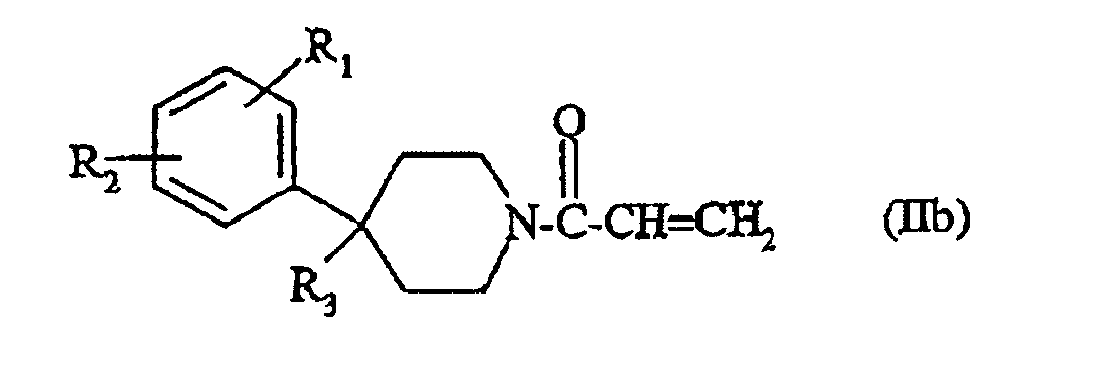
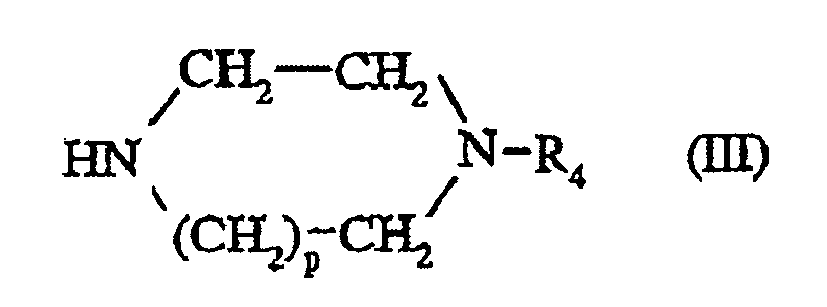
- R 1 , R 2 and R 3 are as defined for a compound of formula (I), it being understood that when R 3 contains a hydroxyl or amine function, these functions may be protected, with a compound of formula: wherein p and R 4 are as defined for a compound of formula (I);
- the compound of formula (I) is converted into one of its addition salts with an acid.
- step a1) or in step a2) when a compound of formula (IIa) or (IIb) is reacted with a compound of formula (III), the reaction is carried out in the presence of a base chosen from organic bases such as triethylamine, N, N-diisopropylethylamine or N-methylmorpholine or from alkali metal carbonates or bicarbonates, such as potassium carbonate, sodium carbonate or sodium bicarbonate, and absence or in the presence of an alkali metal iodide such as potassium iodide or sodium iodide.
- the reaction is carried out in a solvent such as acetonitrile, N, N-dimethylformamide, toluene or propan-2-ol and at a temperature between room temperature and the reflux temperature of the solvent.
- step b1) or step b2) the deprotection of the hydroxyl or amine functions contained in R 3 is carried out according to conventional methods well known to those skilled in the art.
- R 3 represents a group -CH 2 NR 12 R 13 in which R 12 and R 13 each represent hydrogen:
- the compound of formula (I) is converted into one of its addition salts with an acid.
- step a3) the reaction between the compound of formula (IIc) or (IId) and the compound of formula (III) is carried out as previously described in step a1) or a2) of the process according to the invention .
- step b3) the reduction of the cyano group of the compound of formula (Ia) is carried out according to conventional methods.
- the reduction is carried out by hydrogenation, in the presence of a catalyst such as Raney® nickel or rhodium on alumina, and in the presence or absence of ammonia, in a solvent such as methanol, N, N-dimethylformamide or tetrahydrofuran or a mixture of these solvents and at a temperature between room temperature and 60 ° C.
- the compound of formula (I) is converted into one of its addition salts with an acid.
- the dehydration is carried out using, for example, an acetic acid / hydrochloric acid mixture or an acetic acid / sulfuric acid mixture at a temperature of between room temperature and 140 ° C.
- the reaction can also be carried out using p-toluenesulfonic acid in a solvent such as toluene and at a temperature between room temperature and reflux temperature.
- a base such as an alkali metal carbonate such as potassium carbonate
- a solvent such as acetonitrile, N, N-dimethylformamide or tetrahydrofuran
- a solvent such as dichloromethane
- a compound of formula (I) in which R 3 represents a group -CONR 16 R 17 may also be prepared by reaction of a corresponding intermediate compound in which R 3 represents a carboxy with a compound of formula HNR 16 R 17 according to the methods classical peptide coupling; the corresponding intermediate compound is prepared according to conventional methods by acidic or basic treatment of a compound of formula (I) in which R 3 represents a (C 1 -C 4 ) alkoxycarbonyl or by reaction of a compound of formula (Ia) with a strong base such as an alkali metal hydroxide such as potassium hydroxide, in a solvent such as toluene or ethylene glycol at a temperature between room temperature and the reflux temperature of the solvent.
- a strong base such as an alkali metal hydroxide such as potassium hydroxide
- a compound of formula (I) in which R 3 represents a group -CH 2 OR 5 in which R 5 represents a hydrogen atom may also be prepared by acidic or basic treatment of a compound of formula (I) in which R 3 represents a group -CH 2 OR 5 in which R 5 represents a (C 1 -C 4 ) alkylcarbonyl.
- the compounds of formula (I) thus obtained may subsequently be separated from the reaction medium and purified by conventional methods, for example by crystallization or chromatography.
- the compounds of formula (IIa) are prepared by reaction of a piperidine derivative of formula: in which R 1 , R 2 and R 3 are as defined for a compound of formula (I), with a compound of formula: wherein Hal and Hal 'each independently represent a halogen atom, preferably chlorine or bromine.
- the reaction is carried out in the presence of a base such as triethylamine, N, N-diisopropylethylamine or N-methylmorpholine, in a solvent such as dichloromethane, chloroform, tetrahydrofuran, dioxane or a mixture of these solvents and at a temperature between 0 ° C and room temperature.
- the compounds of formula (IIb) are prepared by reaction of the compound of formula (IV) with a compound of formula: in which Hal and Hal 'are as defined above, under the operating conditions mentioned above.
- the compounds of formula (IIc) or respectively (IId) are prepared by reaction of a compound of formula: in which R 1 and R 2 are as defined for a compound of formula (I), with a compound of formula (V) or (VI) respectively according to the same operating conditions as above.
- the compounds of formula (V) or (VI) are commercial, known or are prepared according to known methods.
- the compounds of formula (III) are commercially available or prepared according to known methods such as those described in J. Org. Chem., 1953, 18, 1484-1488, J. Med. Chem., 1978, 21 (6), 536-542, Chem. Pharm. Bull., 1991, 39 (9), 2288-2300, Tetrahedron Letters, 1998, 39, 617-620 or WO 97/28129.
- a compound of formula (III) is prepared by reacting a compound of formula: in which p is as defined for a compound of formula (I) and W represents hydrogen or an N-protecting group, with a compound of formula: Hal-R 4 (VIII) wherein R 4 is as defined for a compound of formula (I) and Hal represents a halogen atom, preferably chlorine, bromine or iodine.
- the reaction is carried out in the presence or absence of base, in an inert solvent such as ethanol, propan-2-ol, n-butanol, acetonitrile or toluene and at a temperature between 0.degree. ° C and the reflux temperature of the solvent.
- a base is chosen from organic bases such as diisopropylethylamine or from alkali metal carbonates such as sodium or potassium carbonate.
- the reaction is carried out using an excess of the compound of formula (VII).
- the reaction can also be carried out without solvent by heating the mixture of compounds (VII) and (VIII) at temperatures of the order of 140 ° C to 180 ° C.
- the compounds of formula (IV) are commercial, known or are prepared according to known methods such as those described in EP-0 474 561, EP-0 673 928 or WO 96/23787.
- the compounds of formula (IV) are generally prepared in protected form on the nitrogen atom of piperidine; after a deprotection step, the compounds of formula (IV) themselves are obtained.
- organomagnesium derivatives of formula (IX) are prepared according to standard methods well known to those skilled in the art from the corresponding halogenated derivatives.
- a strong base such as an alkali metal hydroxide such as sodium hydroxide
- a phase transfer catalyst such as a substituted quaternary ammonium salt trioctylmethylammonium chloride
- the compounds of formula (IVa) are prepared according to known methods such as those described in Bioorg. Med. Chem. Lett., 1999, 9 , 3273-3276 and in J. Med. Chem., 1999, 42 (23), 4778-4793.
- the compounds of formula (IV) in which R 3 represents a (C 1 -C 4 ) alkoxycarbonyl are prepared by esterification reaction of a corresponding intermediate compound in which R 3 represents a carboxy according to the methods known to those skilled in the art. art ; the corresponding intermediate compound is prepared by reacting a compound of formula (IVa) with a strong base such as an alkali metal hydroxide such as potassium hydroxide, in a solvent such as toluene or ethylene glycol at a temperature between room temperature and the reflux temperature of the solvent.
- a strong base such as an alkali metal hydroxide such as potassium hydroxide
- any of the steps of preparing the compounds of formula (I), or intermediate compounds of formula (Ia), (IIa), (IIb), (IIc), (IId), (III), ( IV) It may be necessary and / or desirable to protect reactive or sensitive functional groups, such as amine, hydroxyl or carboxy groups, present on any of the molecules concerned. This protection can be achieved by using conventional protecting groups, such as those described in Protective Groups in Organic Chemistry, J.F.W. McOmie, Ed. Plenum Press, 1973, in Protective Groups in Organic Synthesis, T.W. Greene and P.G.M. Wutts, Ed.
- N-protecting groups which may be used are the conventional N-protecting groups well known to those skilled in the art, such as for example the tert- butoxycarbonyl, fluorenylmethoxycarbonyl, benzyl, benzhydrylidene or benzyloxycarbonyl group.
- the invention also relates to the compounds of formula (Ia). These compounds are useful as synthesis intermediates for the compounds of formula (I).
- Buffer solution pH 2: solution of 16.66 g of KHSO 4 and 32.32 g of K 2 SO 4 in 1 liter of water.
- Proton magnetic resonance spectra ( 1 H NMR) are recorded at 200 MHz in DMSO-d 6 , using the peak of DMSO-d 6 as a reference.
- the chemical shifts ⁇ are expressed in parts per million (ppm).
- the signals observed are expressed as follows: s: singlet; it is: widened singlet; d: doublet; dd: double doublet; t: triplet; td: split triplet; q: quadruplet; m: massive; mt: multiplet.
- the compounds according to the invention are analyzed by LC / UV / MS coupling (liquid chromatography / UV detection / mass spectrometry).
- the mass spectra of the compounds according to the invention generally have, as base peak, the molecular ion MH + .
- a mixture of 180 g of magnesium in 2670 ml of THF is heated to 30 ° C., 33 ml of a solution of 1670 g of 1-bromo-3- (trifluoromethyl) benzene in 1330 ml of THF are added, then slowly the remainder. of the solution so as to reach then to maintain the reflux of THF, and leave 2 hours under reflux with stirring.
- a solution of 1000 g of 1-benzyl-4-piperidinone in 3200 ml of THF is then slowly added and refluxed for 2 hours. After cooling to RT, the reaction mixture is poured over 30 minutes into a solution of 1870 g of ammonium chloride in 6700 ml of water and left stirring for 2 hours at 20-25 ° C.
- a mixture of 1000 g of the compound obtained in the preceding step and 83 g of 10% palladium on carbon (50% moisture) in 2910 ml of EtOH is hydrogenated at 50 ° C. and under 2 bar of pressure. and 2910 ml MeOH.
- the catalyst is filtered, washed twice with 660 ml of MeOH and the filtrate and the washings are concentrated under vacuum.
- the residue is taken up in 3320 ml of ether and stirred for 1 hour 30 minutes at RT.
- the precipitate formed is filtered off, washed with ether (280 ml) and dried under vacuum at 40.degree. 726 g of the expected product are obtained.
- a mixture of 9.6 g of the compound obtained in the preceding step, 250 ml of a concentrated solution of HCl and 250 ml of water is heated at 150 ° C. overnight.
- Half of the reaction mixture is concentrated under vacuum, the resulting acidic aqueous phase is basified by addition of a concentrated NaOH solution, extracted with DCM, the organic phase is dried over Na 2 SO 4 and the solvent is evaporated under vacuum.
- 8.1 g of the expected product are obtained, which is used as such.
- a mixture of 2 g of the compound obtained in the preceding step and 0.2 g of 10% palladium on carbon in 30 ml of MeOH is hydrogenated for 3 hours at RT and at atmospheric pressure.
- the catalyst is filtered through Celite® and the filtrate is concentrated under vacuum. 1.5 g of the expected product are obtained.
- This compound can also be prepared by following the three steps below:
- a mixture of 1.45 g of the compound obtained in the preceding step in 20 ml of AcOEt is heated to 40 ° C., 0.9 g of di- tert- butyldicarbonate are added and the mixture is refluxed for 30 minutes. After cooling to RT, water is added, extracted with AcOEt, the organic phase is dried over Na 2 SO 4 and the solvent is evaporated under vacuum. 1.86 g of the expected product are obtained.
- a mixture of 5 g of the compound obtained in step C of Preparation 1.4, 30 ml of toluene, 30 ml of a 30% solution of H 2 O 2 , 30 ml is heated for 48 hours at 100 ° C. a 30% solution of NaOH and 0.5 g of 336 aliquate (trioctylmethylammonium chloride). It is concentrated under vacuum, the residue is taken up in water and extracted with DCM, the organic phase is dried over Na 2 SO 4 and the solvent is evaporated under vacuum. The residue is chromatographed on silica gel H, eluting with a DCM / MeOH (100/3, v / v) mixture. 2.5 g of the expected product are obtained.
- a mixture of 9.27 g of the compound obtained in the preceding step in 150 ml of ether is cooled to 0 ° C., 1 g of lithium aluminum hydride is added and the mixture is stirred for 4 hours at 0 ° C. .
- a saturated solution of NH 4 Cl is added to the reaction mixture, the inorganic salts are filtered off, the filtrate is extracted with AcOEt, the organic phase is dried over Na 2 SO 4 and the solvent is evaporated off under vacuum. 5.5 g of the expected product are obtained after crystallization from ether.
- This compound is prepared according to the procedure described in step A of Preparation 1.7 from 1.55 g of magnesium in 25 ml of THF, a solution of 14.25 g of 1-bromo-4- (trifluoromethyl) benzene in 15 ml of THF and a solution of 10 g of 1-benzyl-4-piperidinone in 30 ml of THF. 7.3 g of the expected product are obtained.
- This compound is prepared according to the procedure described in step A of Preparation 1.7 from 1.55 g of magnesium in 25 ml of THF, a solution of 11 g of 3-bromotoluene in 15 ml of THF and a solution of 10 g of 1-benzyl-4-piperidone in 30 ml of THF.
- the product obtained is chromatographed on silica gel, eluting with a DCM / MeOH mixture (97/3, v / v). 14.5 g of the expected product are obtained.
- This compound is prepared according to the procedure described in step A of Preparation 1.7 from 1.55 g of magnesium in 25 ml of THF, a solution of 12 g of 3-bromoanisole in 15 ml of THF and a solution of 10 g of 1-benzyl-4-piperidone in 30 ml of THF.
- the product obtained is chromatographed on silica gel, eluting with a DCM / MeOH mixture (from 97/3 v / v) to (95/5 v / v). 13.7 g of the expected product are obtained.
- This compound is prepared according to the procedure described in step A of Preparation 1.7 from 2 g of magnesium in 25 ml of THF, a solution of 20 g of 1-bromo-3- (trifluoromethoxy) benzene in 15 ml of THF and a solution of 13 g of 1-benzyl-4-piperidone in 30 ml of THF.
- the hydrochloride of the product obtained is formed in a solution of 2N hydrochloric ether. 24.4 g of the expected product are obtained.
- a mixture of 150 g of N, N-bis- (2-chloroethyl) amine hydrochloride and 100 ml of benzyl bromide in 1000 ml of DMF is cooled in an ice bath and then 120 ml of triethylamine are added dropwise and the mixture is left to dry. one night with agitation at TA.
- the reaction mixture is concentrated under vacuum, the residue is taken up in water and extracted 3 times with ether, the organic phases are dried over Na 2 SO 4 and the solvent is evaporated under vacuum. 113 g of the expected product are obtained.
- a mixture of 27 g of the compound obtained in the preceding step and 300 ml of ethyl formate is left stirring overnight at RT and then heated at 60 ° C. for 6 hours and left stirring for 48 hours at RT. It is concentrated under vacuum, the residue is taken up in 10% HCl solution, the acidic aqueous phase is washed with ether, ice is added and the mixture is made alkaline by adding 10% NaOH solution, extracted with water. ether, dry the organic phase over Na 2 SO 4 and evaporate the solvent in vacuo. The residue is chromatographed on silica gel H, eluting with DCM and then with a DCM / MeOH mixture (100/4, v / v). 20 g of the expected product are obtained.
- a mixture of 21 g of the compound obtained in the preceding step and 2 g of 10% palladium on carbon in 300 ml of MeOH is hydrogenated for 12 hours at RT and at atmospheric pressure.
- the catalyst is filtered and the filtrate is concentrated under vacuum. 16 g of the expected product are obtained.
- This compound is prepared according to the procedure described in step A of Preparation 1.8 from 16.3 g of 60% sodium hydride in oil in 400 ml of DMSO, 30 g of 3-methoxyphenylacetonitrile. in 150 ml of THF and 47 g of tert- butyl bis (2-chloroethyl) carbamate in 100 ml of DMSO. 54 g of expected product are obtained.
- This compound is prepared according to the procedure described in Preparation 2.12 from 4- (4-chlorophenyl) -4-piperidinol (commercial) and 2-chloroacetyl chloride.
- This compound is prepared according to the procedure described in Preparation 2.1 from the compound obtained in Preparation 1.12 and 2-chloroacetyl chloride.
- This compound is prepared according to the procedure described in Preparation 2.1 from the compound obtained in Preparation 1.13 and 2-chloroacetyl chloride.
- This compound is prepared according to the procedure described in Preparation 2.1 from the compound obtained in Preparation 1.14 and 2-chloroacetyl chloride.
- This compound is prepared according to the procedure described in Preparation 2.1 from 4- [4-chloro-3- (trifluoromethyl) phenyl] -4-piperidinol and 2-chloroacetyl chloride.
- This compound is prepared according to the procedure described in Preparation 2.2 from the compound obtained in Preparation 1.15 and 2-chloroacetyl chloride.
- This compound is prepared according to the procedure described in Preparation 2.1 from the compound obtained in Preparation 1.16 and 2-chloroacetyl chloride.
- This compound is prepared according to the procedure described in Preparation 2.1 from the compound obtained in Preparation 1.18 and 2-chloroacetyl chloride.
- This compound is prepared according to the procedure described in Preparation 2.1 from the compound obtained in Preparation 1.19 and 2-chloroacetyl chloride.
- This compound is prepared according to the procedure described in Preparation 2.1 from the compound obtained in Preparation 1.20 and 2-chloroacetyl chloride.
- a mixture of 10.5 g of the compound obtained in the preceding step and 2.5 g of palladium on carbon at room temperature is hydrogenated overnight at RT and at atmospheric pressure. 10% in 30 ml of DMF and 250 ml of EtOH.
- the catalyst is filtered and the filtrate is concentrated under vacuum.
- the residue is chromatographed on silica gel, eluting with a DCM / MeOH mixture (from 97/3 v / v) to (90/10 v / v). 9.1 g of the expected product are obtained, which is used as such.
- a mixture of 12.9 g of the compound obtained in the preceding step and 3.2 g of 10% palladium on carbon in 300 ml of MeOH and 100 ml of DMF is hydrogenated for 2 hours at RT and at atmospheric pressure. .
- the catalyst is filtered and the filtrate is concentrated under vacuum. 13 g of the expected product are obtained, which is used as such.
- a mixture of 1.7 g of the compound obtained in the preceding step and 20 ml of phosphorus oxychloride is heated at 85 ° C. for 4 hours. After cooling to RT, the reaction mixture is poured onto ice, the aqueous phase is basified by addition of a concentrated NaOH solution, extracted with DCM, the organic phase is dried over Na 2 SO 4 and the solvent is evaporated under vacuum. The residue is chromatographed on silica gel, eluting with a DCM / MeOH mixture (from 97/3 v / v) to (90/10 v / v). 1.5 g of the expected product is obtained which is used as such.
- a mixture of 0.8 g of the compound obtained in step A of Preparation 3.8 and 0.3 g of 10% palladium on carbon in 30 ml of hydrogen is hydrogenated for 2 hours at 30 ° C. and under atmospheric pressure. MeOH.
- the catalyst is filtered and the filtrate concentrated in vacuo. 0.38 g of the expected product is obtained which is used as such.
- a mixture of 0.75 g of the least polar compound obtained in the preceding step and 0.2 g of 10% palladium on carbon in 20 ml of MeOH is hydrogenated for 3 hours at 30 ° C. and under atmospheric pressure. and 10 ml of DMF.
- the catalyst is filtered and the filtrate concentrated in vacuo. 0.46 g of the expected product is obtained which is used as such.
- a mixture of 0.7 g of the compound obtained in Preparation 2.1, 0.39 g of the compound obtained in Preparation 3.1, 0.39 g of potassium iodide and 0.635 g of K 2 are stirred overnight at RT. CO 3 in 30 ml of acetonitrile. Water is added to the reaction mixture, extracted with AcOEt, the organic phase washed with water, with saturated NaCl solution, dried over Na 2 SO 4 and the solvent evaporated in vacuo. The residue is chromatographed on silica gel, eluting with a DCM / MeOH mixture (97/3, v / v). The product obtained is taken up in a solution of 2N hydrochloric ether and, after trituration, the precipitate formed is filtered off. 0.42 g of the expected product is obtained.
- a mixture of 3 g of the compound obtained in the preceding step, 0.3 g of Raney® nickel, 20 ml of a 20% solution of ammonia and a mixture of 20 g of ammonia is hydrogenated for 16 hours at RT and at atmospheric pressure. 200 ml of MeOH.
- Compound No. 4 of Example 4 can also be obtained by following two steps:
- a mixture of 0.9 g of the compound obtained in the preceding step, 0.1 g of Raney® nickel, 10 ml of a 20% strength solution is hydrogenated for 4 hours at RT and at atmospheric pressure. ammonia and 50 ml of MeOH.
- the catalyst is filtered and the filtrate is concentrated under vacuum.
- the residue is taken up with water and extracted with DCM, the organic phase is dried over Na 2 SO 4 and the solvent is evaporated under vacuum.
- the residue is taken up in a solution of 2N HCl in ether and the precipitate formed is filtered off. 0.74 g of the expected product is obtained after drying under vacuum, mp 198-202 ° C.
- a mixture of 0.62 g of the compound obtained in the preceding step and 0.6 g of Raney® nickel in 30 ml of MeOH is hydrogenated for 8 hours at 28 ° C. and at atmospheric pressure.
- the catalyst is filtered and the filtrate is concentrated under vacuum.
- a mixture of 1.3 g of the compound obtained in the preceding step, 0.2 g of Raney® nickel and 10 ml of a concentrated solution of hydrogen is hydrogenated for 30 hours at 31 ° C. and under atmospheric pressure.
- the catalyst is filtered and the filtrate is evaporated under vacuum.
- the residue is taken up in 1N HCl solution, the aqueous phase is washed with AcOEt, the aqueous phase is basified by addition of a 10% NaOH solution, extracted with DCM and the organic phase is dried over Na 2 SO 4. and evaporates the solvent in vacuo.
- the compounds according to the invention have been the subject of biochemical studies.
- the SH-SY-5Y strain (human neuroblastoma) is conventionally cultured in a DMEM (Dulbecco's Modified Eagle's Medium) culture medium (Gibco BRL, France) containing FCS (5%) (fetal calf serum) ( Boehringer Mannheim, Germany), sodium pyruvate (1 mM), anti-PPLO (5 ml) (anti mycoplasma agent: Tylocine® prepared in normal saline, 6000 ⁇ g / ml), gentamicin (0.1 mM) mg / ml) and glutamine (4 mM) in culture flasks coated with collagen (Becton Dickinson, France).
- DMEM Dynabecco's Modified Eagle's Medium
- FCS fetal calf serum
- Boehringer Mannheim, Germany sodium pyruvate
- anti-PPLO anti mycoplasma agent: Tylocine® prepared in normal saline, 6000 ⁇ g / ml
- the SK-N-BE parent strain (human neuroblastoma) and the Bep 75 clone expressing the human p75 NTR receptor (SK-N-BE Bep 75) are conventionally cultured in a DMEM culture medium containing FCS (5%), sodium pyruvate (1 mM), anti-PPLO (5 ml), gentamycin (0.1 mg / ml) and glutamine (4 mM).
- 125 I NGF 125 I- 125 radiolabeled neuronal growth factor
- SH-SY-5Y and SK-N-BE Bep 75 in agreement with the method described by Weskamp (Neuron, 1991, 6, 649-663).
- Non-specific binding is determined by measuring total binding after one hour of pre-incubation with the cells at 37 ° C in the presence of labeled non-radioactive NGF (1 ⁇ M). The specific binding is calculated by difference between the measurement of the total binding and the non-specific binding measurement.
- the competition experiments are performed using a 125 I NGF concentration of 0.3 nM.
- the 50% inhibitory concentrations (IC 50 ) of the binding of 125 I NGF to the p75 NTR receptor of the compounds according to the invention are low and vary from 10 -6 to 10 -11 M.
- the cells (human neuroblastoma strains SH-SY-5Y and SK-N-BE Bep 75) are placed in 35 mm diameter petri dishes (Biocoat collagen I, (10 5 cells / well) in a culture medium. DMEM containing 5% FCS for 24 hours The culture medium is then removed, the cells are rinsed with PBS (English Dulbecco's Phosphate Buffered Saline) and either fresh medium containing 5% FCS or medium containing NGF at the concentration of 10 ng / ml is added in the presence or absence of the compounds according to the invention, the apoptosis levels are measured 48 hours after the treatments in the case of the strain SH-SY-5Y and 24 hours later in the case of the case of the Bep 75 SK-N-BE strain by quantification of cytoplasmic histones associated with DNA fragments (ELISA cell death detection, Boehringer Mannheim, Germany) Apoptosis rates are expressed as the amount of oligonucleosomes / 105 cells ⁇
- the binding of the compounds according to the invention to the p75 NTR receptor results firstly at the biochemical level by the inhibition of the dimerization of the receptor induced by the neurotrophins and secondly at the cellular level by the inhibition of the Proapoptotic effect mediated by the p75 NTR receptor.
- the compounds according to the invention can therefore be used for the preparation of medicaments, in particular medicaments intended to prevent or treat any pathology in which the p75 NTR receptor is involved.
- the subject of the invention is medicaments which comprise a compound of formula (I), or an addition salt thereof to a pharmaceutically acceptable acid, or a solvate or a hydrate of compound of formula (I).
- the compounds according to the invention can be used, in humans or in animals, in the treatment or prevention of various dependent p75 NTR conditions such as central and peripheral neurodegenerative diseases such as senile dementia, epilepsy , Alzheimer's disease, Parkinson's disease, Huntington's disease, Down syndrome, prion diseases, amnesia, schizophrenia; amyotrophic lateral sclerosis, multiple sclerosis; cardiovascular conditions such as post-ischemic heart damage, cardiomyopathies, myocardial infarction, heart failure, cardiac ischemia, cerebral infarction; peripheral neuropathies (of diabetic, traumatic or iatrogenic origin); damage to the optic nerve and retina; the spinal cord trauma and head trauma; atherosclerosis; stenoses; healing ; alopecia.
- central and peripheral neurodegenerative diseases such as senile dementia, epilepsy , Alzheimer's disease, Parkinson's disease, Huntington's disease, Down syndrome, prion diseases, amnesia, schizophrenia; amyotrophic lateral sclerosis, multiple
- the compounds according to the invention can also be used in the treatment of cancers such as that of the lung, thyroid, pancreas, prostate, small intestine and colon, breast, in the treatment of tumors, metastases and leukemias.
- the compounds according to the invention can also be used in the treatment of chronic neuropathic and inflammatory pain and in the treatment of autoimmune diseases such as rheumatoid arthritis.
- the compounds according to the invention can also be used in the treatment of bone fractures, in the treatment or prevention of bone diseases such as osteoporosis.
- the present invention relates to pharmaceutical compositions comprising, as active principle, a compound according to the invention.
- These pharmaceutical compositions contain an effective dose of at least one compound according to the invention, or a pharmaceutically acceptable salt, a solvate or hydrate of said compound, as well as at least one pharmaceutically acceptable excipient.
- Said excipients are chosen according to the pharmaceutical form and the desired mode of administration, from the usual excipients which are known to those skilled in the art.
- compositions of the present invention for oral, sublingual, subcutaneous, intramuscular, intravenous, topical, local, intratracheal, intranasal, transdermal or rectal administration the active ingredient of formula (I) above, or its salt, solvate or hydrate, may be administered in unit dosage form, in admixture with conventional pharmaceutical excipients, to animals and humans for the prophylaxis or treatment of the above disorders or diseases.
- Suitable unit dosage forms include oral forms such as tablets, soft or hard capsules, powders, granules and oral solutions or suspensions, sublingual, oral, intratracheal, intraocular, intranasal forms of administration. by inhalation, topical, transdermal, subcutaneous, intramuscular or intravenous administration forms, rectal administration forms and implants.
- the compounds according to the invention can be used in creams, gels, ointments or lotions.
- a unitary form of administration of a compound according to the invention in tablet form may comprise the following components: Compound according to the invention 50.0 mg Mannitol: 223.75 mg Croscaramellose sodium: 6.0 mg Corn starch : 15.0 mg Hydroxypropyl methylcellulose: 2.25 mg Magnesium stearate: 3.0 mg
- the dose of active ingredient administered per day can reach 0.01 to 100 mg / kg, in one or more doses, preferably 0.02 to 50 mg / kg.
- the dosage appropriate to each patient is determined by the physician according to the mode of administration, the weight and the response of said patient.
- the present invention also relates to a method of treatment of the pathologies indicated above which comprises the administration to a patient of an effective dose of a compound according to the invention, or one of its pharmaceutically acceptable salts or hydrates or solvates.
Landscapes
- Health & Medical Sciences (AREA)
- Organic Chemistry (AREA)
- Chemical & Material Sciences (AREA)
- Public Health (AREA)
- Engineering & Computer Science (AREA)
- Medicinal Chemistry (AREA)
- Nuclear Medicine, Radiotherapy & Molecular Imaging (AREA)
- Chemical Kinetics & Catalysis (AREA)
- Pharmacology & Pharmacy (AREA)
- Life Sciences & Earth Sciences (AREA)
- Animal Behavior & Ethology (AREA)
- General Health & Medical Sciences (AREA)
- Bioinformatics & Cheminformatics (AREA)
- Veterinary Medicine (AREA)
- General Chemical & Material Sciences (AREA)
- Biomedical Technology (AREA)
- Neurology (AREA)
- Neurosurgery (AREA)
- Physical Education & Sports Medicine (AREA)
- Rheumatology (AREA)
- Pain & Pain Management (AREA)
- Cardiology (AREA)
- Heart & Thoracic Surgery (AREA)
- Diabetes (AREA)
- Orthopedic Medicine & Surgery (AREA)
- Psychology (AREA)
- Dermatology (AREA)
- Psychiatry (AREA)
- Oncology (AREA)
- Hematology (AREA)
- Immunology (AREA)
- Hospice & Palliative Care (AREA)
- Emergency Medicine (AREA)
- Endocrinology (AREA)
- Obesity (AREA)
- Ophthalmology & Optometry (AREA)
- Urology & Nephrology (AREA)
- Vascular Medicine (AREA)
- Pharmaceuticals Containing Other Organic And Inorganic Compounds (AREA)
- Hydrogenated Pyridines (AREA)
Claims (13)
- Verbindung der Formel (I):
 - n gleich 1 oder 2 ist;- p gleich 1 oder 2 ist;- R1 für ein Halogenatom, einen Trifluormethylrest; C1-C4-Alkyl; C1-C4-Alkoxy oder einen Trifluormethoxyrest steht;- R2 für ein Wasserstoffatom oder ein Halogenatom steht;- R3 für ein Wasserstoffatom, eine Gruppe -OR5; eine Gruppe -CH2OR5; eine Gruppe -NR6R7; eine Gruppe -NR8COR9; eine Gruppe -NR8CONR10R11; eine Gruppe -CH2NR12R13; eine Gruppe -CH2NR8CONR14R15; C1-C4-Alkoxycarbonyl oder eine Gruppe -CONR16R17 steht;- oder auch R3 eine Doppelbindung zwischen dem Kohlenstoffatom, an das es gebunden ist, und dem dem Piperidinring benachbarten Kohlenstoffatom bildet;- R4 für eine unter:
 - wobei diese aromatischen Gruppen gegebenenfalls ein- oder zweifach durch einen unabhängig voneinander unter einem Halogenatom, C1-C4-Alkyl; C1-C4-Alkoxy und einem Trifluormethylrest ausgewählten Substituenten substituiert sind;- R5 für ein Wasserstoffatom, C1-C4-Alkyl oder C1-C4-Alkylcarbonyl steht;- R6 und R7 jeweils unabhängig voneinander für ein Wasserstoffatom oder C1-C4-Alkyl stehen;- R8 für ein Wasserstoffatom oder C1-C4-Alkyl steht;- R9 für C1-C4-Alkyl oder eine Gruppe -(CH2)m-NR6NR7 steht;- m gleich 1, 2 oder 3 ist;- R10 und R11 jeweils unabhängig voneinander für ein Wasserstoffatom oder C1-C4-Alkyl stehen;- R12 und R13 jeweils unabhängig voneinander für ein Wasserstoffatom oder C1-C5-Alkyl stehen und R13 außerdem für eine Gruppe -(CH2)q-OH oder eine Gruppe -(CH2)q-S-CH3 stehen kann;- oder auch R12 und R13 gemeinsam mit dem Stickstoffatom, an das sie gebunden sind, einen unter Aziridin, Azetidin, Pyrrolidin, Piperidin oder Morpholin ausgewählten Heterocyclus bilden;- q gleich 2 oder 3 ist;- R14 und R15 jeweils unabhängig voneinander für ein Wasserstoffatom oder C1-C4-Alkyl stehen;- R16 und R17 jeweils unabhängig voneinander für ein Wasserstoffatom oder C1-C4-Alkyl stehen und R17 außerdem für eine Gruppe -(CH2)q-NR6R7 stehen kann;- oder auch R16 und R17 gemeinsam mit dem Stickstoffatom, an das sie gebunden sind, einen unter Azetidin, Pyrrolidin, Piperidin, Morpholin oder Piperazin ausgewählten Heterocyclus bilden, der gegebenenfalls in 4-Position durch C1-C4-Alkyl substituiert ist;in Form einer Base oder eines Säureadditionssalzes sowie in Form eines Hydrats oder Solvats.
 - Verbindung der Formel (I) nach Anspruch 1, dadurch gekennzeichnet, daß:- R1 in 2-, 3- oder 4-Position des Phenyls steht und für einen Trifluormethylrest, ein Chloratom, Methyl, Methoxy oder einen Trifluormethoxyrest steht und R2 für ein Wasserstoffatom steht oder auch R1 in 3-Position des Phenyls steht und für einen Trifluormethylrest steht und R2 in 4-Position des Phenyls steht und für ein Chloratom steht;in Form einer Base oder eines Säureadditionssalzes sowie in Form eines Hydrats oder Solvats.
- Verbindung der Formel (I) nach Anspruch 1, dadurch gekennzeichnet, daß:- R3 für ein Wasserstoffatom, Hydroxy, Methoxy, (Acetyloxy)methyl, Hydroxymethyl, Dimethylamino, Acetylamino, Aminomethyl, (Methylamino)methyl, (Dimethylamino)methyl, (Diethylamino)methyl, (Isopropylamino)methyl, (N-Methylisopropylamino)methyl, (Isobutylamino)-methyl, (N-Methylisobutylamino)methyl, (Isopentylamino)methyl, (N-Methylisopentylamino)-methyl, Aminocarbonyl oder Azetidin-1-yl-carbonyl steht oder auch R3 eine Doppelbindung zwischen dem Kohlenstoffatom, an das es gebunden ist, und dem dem Piperidinring benachbarten Kohlenstoffatom bildet;in Form einer Base oder eines Säureadditionssalzes sowie in Form eines Hydrats oder Solvats.
- Verbindung der Formel (I) nach Anspruch 1, dadurch gekennzeichnet, daß:- R4 für 2-Pyridinyl, 6-Methyl-2-pyridinyl, 3-(Trifluormethyl)-2-pyridinyl, 5-(Trifluormethyl)-2-pyridinyl, 3-Chlor-5-(trifluormethyl)-2-pyridinyl, 3-Pyridinyl, 4-Pyridinyl, 3,5-Dichlor-4-pyridinyl, 2-Pyrazinyl, 5-Chlor-2-pyrazinyl, 6-Chlor-2-pyrazinyl, 2-Pyrimidinyl, 4-(Trifluormethyl)-2-pyrimidinyl, 6-Chlor-2-pyrimidinyl, 4-Pyrimidinyl, 6-Chlor-4-pyrimidinyl, 5-Pyrimidinyl, 3-Pyridazinyl, 6-Chlor-3-pyridazinyl, 4-Pyridazinyl, 3(2H)-Pyridazinon-5-yl oder 3(2H)-Pyridazinon-4-yl steht;in Form einer Base oder eines Säureadditionssalzes sowie in Form eines Hydrats oder Solvats.
- Verbindung der Formel (I) nach Anspruch 1, dadurch gekennzeichnet, daß:- n gleich 1 oder 2 ist;- p gleich 1 oder 2 ist;- R1 in 2-, 3- oder 4-Position des Phenyls steht und für einen Trifluormethylrest, ein Chloratom, Methyl, Methoxy oder einen Trifluormethoxyrest steht und R2 für ein Wasserstoffatom steht oder auch R1 in 3-Position des Phenyls steht und für einen Trifluormethylrest steht und R2 in 4-Position des Phenyls steht und für ein Chloratom steht;- R3 für ein Wasserstoffatom, Hydroxy, Methoxy, (Acetyloxy)methyl, Hydroxymethyl, Dimethylamino, Acetylamino, Aminomethyl, (Methylamino)methyl, (Dimethylamino)methyl, (Diethylamino)methyl, (Isopropylamino)methyl, (N-Methylisopropylamino)methyl, (Isobutylamino)-methyl, (N-Methylisobutylamino)methyl, (Isopentylamino)methyl, (N-Methylisopentylamino)-methyl, Aminocarbonyl oder Azetidin-1-yl-carbonyl steht oder auch R3 eine Doppelbindung zwischen dem Kohlenstoffatom, an das es gebunden ist, und dem dem Piperidinring benachbarten Kohlenstoffatom bildet;- R4 für 2-Pyridinyl, 6-Methyl-2-pyridinyl, 3-(Trifluormethyl)-2-pyridinyl, 5-(Trifluormethyl)-2-pyridinyl, 3-Chlor-5-(trifluormethyl)-2-pyridinyl, 3-Pyridinyl, 4-Pyridinyl, 3,5-Dichlor-4-pyridinyl, 2-Pyrazinyl, 5-Chlor-2-pyrazinyl, 6-Chlor-2-pyrazinyl, 2-Pyrimidinyl, 4-(Trifluormethyl)-2-pyrimidinyl, 6-Chlor-2-pyrimidinyl, 4-Pyrimidinyl, 6-Chlor-4-pyrimidinyl, 5-Pyrimidinyl, 3-Pyridazinyl, 6-Chlor-3-pyridazinyl, 4-Pyridazinyl, 3(2H)-Pyridazinon-5-yl oder 3(2H)-Pyridazinon-4-yl steht;in Form einer Base oder eines Säureadditionssalzes sowie in Form eines Hydrats oder Solvats.
- Verbindung der Formel (I) nach Anspruch 1, dadurch gekennzeichnet, daß:- n gleich 1 ist;- p gleich 1 ist;- R1 in 2-, 3- oder 4-Position des Phenyls steht und für einen Trifluormethylrest, ein Chloratom, Methoxy oder einen Trifluormethoxyrest steht und R2 für ein Wasserstoffatom steht oder auch R1 in 3-Position des Phenyls steht und für einen Trifluormethylrest steht und R2 in 4-Position des Phenyls steht und für ein Chloratom steht;- R3 für Hydroxy, Dimethylamino, Aminomethyl, (Methylamino)methyl, (Dimethylamino)methyl, (Diethylamino)methyl, (Isopropylamino)methyl, (Isobutylamino)methyl, (Isopentylamino)methyl, (N-Methylisopentylamino)methyl oder Aminocarbonyl steht oder auch R3 eine Doppelbindung zwischen dem Kohlenstoffatom, an das es gebunden ist, und dem dem Piperidinring benachbarten Kohlenstoffatom bildet;- R4 für 2-Pyrazinyl, 4-Pyrimidinyl, 3(2H)-Pyridazinon-5-yl oder 5-(Trifluormethyl)-2-pyridinyl steht; in Form einer Base oder eines Säureadditionssalzes sowie in Form eines Hydrats oder Solvats.
- Verfahren zur Herstellung von Verbindungen der Formel (I) nach Anspruch 1 mit n = 1, dadurch gekennzeichnet, daß man:a1) eine Verbindung der Formel:

 b1) und nach eventueller Entschützung der in R3 enthaltenen Hydroxyl- oder Aminfunktionen die Verbindung der Formel (I) erhält.
 - Verfahren zur Herstellung von Verbindungen der Formel (I) nach Anspruch 1 mit n = 2, dadurch gekennzeichnet, daß man:a2) eine Verbindung der Formel:
 b2) und nach eventueller Entschützung der in R3 enthaltenen Hydroxyl- oder Aminfunktionen die Verbindung der Formel (I) erhält.
 - Verfahren zur Herstellung von Verbindungen der Formel (I) nach Anspruch 1, worin R3 für eine Gruppe -CH2NR12R13 steht, in welcher R12 und R13 jeweils Wasserstoff bedeuten, dadurch gekennzeichnet, daß man:a3) eine Verbindung der Formel:


 b3) die Cyanogruppe der Verbindung der Formel (Ia) reduziert, wobei man eine Verbindung der Formel (I) nach Anspruch 1 mit R3 = CH2NH2 erhält.
 - Verbindung der Formel:
 - n gleich 1 oder 2 ist;- p gleich 1 oder 2 ist;- R1 für ein Halogenatom; einen Trifluormethylrest; C1-C4-Alkyl; C1-C4-Alkoxy oder einen Trifluormethoxyrest steht;- R2 für ein Wasserstoffatom oder ein Halogenatom steht;- R4 für eine unter:
 - wobei diese aromatischen Gruppen gegebenenfalls ein- oder zweifach durch einen unabhängig voneinander unter einem Halogenatom, C1-C4-Alkyl; C1-C4-Alkoxy und einem Trifluormethoxyrest ausgewählten Substituenten substituiert sind; in Form einer Base oder eines Säureadditionssalzes sowie in Form eines Hydrats oder Solvats.
 - Arzneimittel, dadurch gekennzeichnet, daß es eine Verbindung der Formel (I) nach einem der Ansprüche 1 bis 6 oder ein Additionssalz dieser Verbindung mit einer pharmazeutisch unbedenklichen Säure oder auch ein Hydrat oder ein Solvat der Verbindung der Formel (I) enthält.
- Pharmazeutische Zusammensetzung, dadurch gekennzeichnet, daß sie eine Verbindung der Formel (I) nach einem der Ansprüche 1 bis 6 oder ein pharmazeutisch unbedenkliches Salz, ein Hydrat oder ein Solvat dieser Verbindung sowie mindestens einen pharmazeutisch unbedenklichen Hilfsstoff enthält.
- Verwendung einer Verbindung der Formel (I) nach einem der Ansprüche 1 bis 6 zur Herstellung eines Arzneimittels zur Prävention oder Behandlung von zentralen oder peripheren neurodegenerativen Erkrankungen; amyotrophischer Lateralsklerose, multipler Sklerose; Herz-Kreislauf-Erkrankungen, peripheren Neuropathien; Sehnerv- und Retinaschäden; Rückenmarks- und Hirntrauma; Atherosklerose; Stenosen; Narbenbildung; Alopecia; Krebs; Tumoren; Metastasen; Leukämien; chronischen neuropathischen Schmerzen und Entzündungsschmerzen; Autoimmunerkrankungen; Knochenbrüchen und Knochenerkrankungen.
Priority Applications (1)
| Application Number | Priority Date | Filing Date | Title |
|---|---|---|---|
| SI200330512T SI1513835T1 (sl) | 2002-06-07 | 2003-06-05 | Derivati piperazunilacilpiperidina, njihova priprava in njihova terapevtska uporaba |
Applications Claiming Priority (3)
| Application Number | Priority Date | Filing Date | Title |
|---|---|---|---|
| FR0207001 | 2002-06-07 | ||
| FR0207001 | 2002-06-07 | ||
| PCT/FR2003/001685 WO2003104225A1 (fr) | 2002-06-07 | 2003-06-05 | Derives de piperazinylacylpiperidine, leur preparation et leur application en therapeutique |
Publications (2)
| Publication Number | Publication Date |
|---|---|
| EP1513835A1 EP1513835A1 (de) | 2005-03-16 |
| EP1513835B1 true EP1513835B1 (de) | 2006-08-16 |
Family
ID=29724874
Family Applications (2)
| Application Number | Title | Priority Date | Filing Date |
|---|---|---|---|
| EP03757109A Expired - Lifetime EP1513836B1 (de) | 2002-06-07 | 2003-06-05 | Piperazinylacylpiperidinderivate, deren herstellung und deren therapeutische anwendung |
| EP03757108A Expired - Lifetime EP1513835B1 (de) | 2002-06-07 | 2003-06-05 | Piperazinylacylpiperidinderivate, deren herstellung und deren therapeutische anwendung |
Family Applications Before (1)
| Application Number | Title | Priority Date | Filing Date |
|---|---|---|---|
| EP03757109A Expired - Lifetime EP1513836B1 (de) | 2002-06-07 | 2003-06-05 | Piperazinylacylpiperidinderivate, deren herstellung und deren therapeutische anwendung |
Country Status (29)
| Country | Link |
|---|---|
| US (2) | US7294628B2 (de) |
| EP (2) | EP1513836B1 (de) |
| JP (2) | JP4441401B2 (de) |
| KR (1) | KR100970812B1 (de) |
| CN (1) | CN100448875C (de) |
| AR (2) | AR040247A1 (de) |
| AT (2) | ATE325122T1 (de) |
| AU (2) | AU2003255645A1 (de) |
| BR (1) | BR0311828A (de) |
| CA (1) | CA2487840C (de) |
| CY (2) | CY1107330T1 (de) |
| DE (2) | DE60307632T2 (de) |
| DK (2) | DK1513835T3 (de) |
| EA (1) | EA007501B1 (de) |
| ES (2) | ES2264001T3 (de) |
| HR (1) | HRP20041157B1 (de) |
| IS (1) | IS2302B (de) |
| MA (1) | MA27233A1 (de) |
| ME (1) | MEP11508A (de) |
| MX (1) | MXPA04012341A (de) |
| NO (1) | NO329669B1 (de) |
| NZ (1) | NZ537044A (de) |
| PL (1) | PL208711B1 (de) |
| PT (2) | PT1513836E (de) |
| RS (2) | RS52588B (de) |
| TW (2) | TWI319400B (de) |
| UA (1) | UA77526C2 (de) |
| WO (2) | WO2003104225A1 (de) |
| ZA (1) | ZA200409823B (de) |
Families Citing this family (22)
| Publication number | Priority date | Publication date | Assignee | Title |
|---|---|---|---|---|
| FR2862968B1 (fr) * | 2003-12-01 | 2006-08-04 | Sanofi Synthelabo | Derives de 4-[(arylmethyl)aminomethyl]piperidine, leur preparation et leur application en therapeutique |
| FR2862967B1 (fr) * | 2003-12-01 | 2006-08-04 | Sanofi Synthelabo | Derives de (4-phenylpiperazin-1-yl)acylpiperidine, leur preparation et leur application en therapeutique |
| US7723362B2 (en) * | 2004-01-08 | 2010-05-25 | Syngenta Crop Protection, Inc. | Pesticidal heterocyclic dihaloallyl compounds |
| CN1984910A (zh) * | 2004-07-16 | 2007-06-20 | 詹森药业有限公司 | 适用于神经变性疾病治疗的哌啶、哌嗪或者吗啉或它们的7元类似物的二聚化合物 |
| EP2289510A1 (de) * | 2004-09-20 | 2011-03-02 | Xenon Pharmaceuticals Inc. | Heterozyklische Derivate zur Behandlung von durch Stearoyl-Coa-Desaturase-Enzyme verursachten Krankheiten |
| EP1871420A4 (de) | 2005-04-15 | 2010-09-22 | Univ North Carolina | Verfahren zur ermöglichung des überlebens von zellen über neurotrophin-mimetika |
| CL2008000725A1 (es) * | 2007-03-15 | 2008-11-14 | Schering Corp | Compuestos derivados de heterociclos aromaticos; composicion farmaceutica; kit farmceuticos; uso de la composicion y de los compuestos como inhibidores de glucano sintasa para el tratamiento o prevencion del crecimiento de patogenos fungicos en planta y para tratar o prevenir infecciones producidas por hongos. |
| JP5466147B2 (ja) * | 2007-05-21 | 2014-04-09 | レビバ ファーマシューティカルズ,インコーポレーテッド | キノリノン系非定型抗精神病薬剤の組成物、合成、及び使用方法 |
| DE102007026341A1 (de) | 2007-06-06 | 2008-12-11 | Merck Patent Gmbh | Benzoxazolonderivate |
| DE102007032507A1 (de) | 2007-07-12 | 2009-04-02 | Merck Patent Gmbh | Pyridazinonderivate |
| FR2932482B1 (fr) * | 2008-06-13 | 2010-10-08 | Sanofi Aventis | Nouveaux derives de (phenyl-3,6-dihydro-2h-pyridinyl)- (piperazinyl ponte)-1-alcanone et leur utilisation comme inhibiteurs de p75 |
| FR2932481B1 (fr) * | 2008-06-13 | 2010-10-08 | Sanofi Aventis | Derives de 4-{2-°4-phenyl-3,6-dihydro-2h-pyridin-1-yl!-2- oxo-alkyl}-1-piperazin-2-one, leur preparation et leur application en therapeutique. |
| CN102740856B (zh) | 2009-11-12 | 2015-02-18 | 特罗菲克斯制药股份有限公司 | 神经营养蛋白模拟化合物及其盐的晶型 |
| US10273219B2 (en) | 2009-11-12 | 2019-04-30 | Pharmatrophix, Inc. | Crystalline forms of neurotrophin mimetic compounds and their salts |
| FR2953839A1 (fr) | 2009-12-14 | 2011-06-17 | Sanofi Aventis | Nouveaux derives d'(heterocycle-piperidine condensee)-(piperazinyl)-1alcanone ou d'(heterocycle-pyrrolidine condensee)-(piperazinyl)-1alcanone et leur utilisation comme inhibiteurs de p75 |
| FR2953836B1 (fr) * | 2009-12-14 | 2012-03-16 | Sanofi Aventis | Nouveaux derives (heterocycle-tetrahydro-pyridine)-(piperazinyl)-1-alcanone et (heterocycle-dihydro-pyrrolidine)-(piperazinyl)-1-alcanone et leur utilisation comme inhibiteurs de p75 |
| AU2010333338A1 (en) | 2009-12-14 | 2012-08-02 | Merck Patent Gmbh | Sphingosine kinase inhibitors |
| EP2606894A1 (de) | 2011-12-20 | 2013-06-26 | Sanofi | Neuartige therapeutische Verwendung von p75-Rezeptorantagonisten |
| AU2018334290A1 (en) | 2017-09-18 | 2020-04-02 | Goldfinch Bio, Inc. | Pyridazinones and methods of use thereof |
| IL281438B2 (en) | 2018-09-18 | 2023-12-01 | Goldfinch Bio Inc | Pyridazinones and methods of use thereof |
| MX2021012310A (es) | 2019-04-11 | 2021-11-12 | Goldfinch Bio Inc | Formulación de secado por aspersión de un inhibidor de trpc5 de piridazinona. |
| EP3858439A1 (de) * | 2020-02-03 | 2021-08-04 | Esteve Pharmaceuticals, S.A. | Amidderivate mit multimodaler aktivität gegen schmerzen |
Family Cites Families (4)
| Publication number | Priority date | Publication date | Assignee | Title |
|---|---|---|---|---|
| HU206109B (en) * | 1987-10-26 | 1992-08-28 | Pfizer | Process for producing heterocyclic carbonylpropyl pyrimidinyl piperazine derivatives and pharmaceutical compositions comprising same |
| FR2747041B1 (fr) * | 1996-04-05 | 1998-05-22 | Cird Galderma | Utilisation de derives benzonaphtaleniques pour la fabrication de medicaments destines au traitement des neuropathies |
| US6468990B1 (en) * | 1999-05-17 | 2002-10-22 | Queen's University At Kingston | Method of inhibiting binding of nerve growth factor to p75 NTR receptor |
| FR2803593B1 (fr) * | 2000-01-06 | 2002-02-15 | Sanofi Synthelabo | Nouvelles tetrahydropyridines, procede pour leur preparation et compositions pharmaceutiques les contenant |
-
2003
- 2003-05-06 UA UA20041210010A patent/UA77526C2/uk unknown
- 2003-06-05 BR BR0311828-2A patent/BR0311828A/pt not_active IP Right Cessation
- 2003-06-05 US US10/516,808 patent/US7294628B2/en not_active Expired - Lifetime
- 2003-06-05 EP EP03757109A patent/EP1513836B1/de not_active Expired - Lifetime
- 2003-06-05 RS RS20050014A patent/RS52588B/sr unknown
- 2003-06-05 WO PCT/FR2003/001685 patent/WO2003104225A1/fr not_active Ceased
- 2003-06-05 KR KR1020047019860A patent/KR100970812B1/ko not_active Expired - Fee Related
- 2003-06-05 PT PT03757109T patent/PT1513836E/pt unknown
- 2003-06-05 DK DK03757108T patent/DK1513835T3/da active
- 2003-06-05 ME MEP-115/08A patent/MEP11508A/xx unknown
- 2003-06-05 EA EA200401470A patent/EA007501B1/ru not_active IP Right Cessation
- 2003-06-05 PT PT03757108T patent/PT1513835E/pt unknown
- 2003-06-05 WO PCT/FR2003/001686 patent/WO2003104226A1/fr not_active Ceased
- 2003-06-05 DE DE60307632T patent/DE60307632T2/de not_active Expired - Lifetime
- 2003-06-05 ES ES03757109T patent/ES2264001T3/es not_active Expired - Lifetime
- 2003-06-05 NZ NZ537044A patent/NZ537044A/en not_active IP Right Cessation
- 2003-06-05 RS YUP-2005/0014A patent/RS20050014A/sr unknown
- 2003-06-05 MX MXPA04012341A patent/MXPA04012341A/es active IP Right Grant
- 2003-06-05 PL PL374729A patent/PL208711B1/pl not_active IP Right Cessation
- 2003-06-05 JP JP2004511296A patent/JP4441401B2/ja not_active Expired - Fee Related
- 2003-06-05 AT AT03757109T patent/ATE325122T1/de active
- 2003-06-05 US US10/516,704 patent/US7468368B2/en not_active Expired - Lifetime
- 2003-06-05 ES ES03757108T patent/ES2271637T3/es not_active Expired - Lifetime
- 2003-06-05 HR HR20041157 patent/HRP20041157B1/xx not_active IP Right Cessation
- 2003-06-05 DE DE60305037T patent/DE60305037T2/de not_active Expired - Lifetime
- 2003-06-05 DK DK03757109T patent/DK1513836T3/da active
- 2003-06-05 JP JP2004511295A patent/JP4437075B2/ja not_active Expired - Fee Related
- 2003-06-05 CA CA2487840A patent/CA2487840C/en not_active Expired - Fee Related
- 2003-06-05 EP EP03757108A patent/EP1513835B1/de not_active Expired - Lifetime
- 2003-06-05 CN CNB038188082A patent/CN100448875C/zh not_active Expired - Fee Related
- 2003-06-05 AU AU2003255645A patent/AU2003255645A1/en not_active Abandoned
- 2003-06-05 AT AT03757108T patent/ATE336491T1/de active
- 2003-06-05 AU AU2003255644A patent/AU2003255644B2/en not_active Ceased
- 2003-06-06 AR ARP030102018A patent/AR040247A1/es active IP Right Grant
- 2003-06-06 AR ARP030102017A patent/AR040246A1/es active IP Right Grant
- 2003-06-06 TW TW092115443A patent/TWI319400B/zh not_active IP Right Cessation
- 2003-06-06 TW TW092115416A patent/TWI283671B/zh not_active IP Right Cessation
-
2004
- 2004-12-02 IS IS7579A patent/IS2302B/is unknown
- 2004-12-03 ZA ZA200409823A patent/ZA200409823B/en unknown
- 2004-12-03 MA MA27980A patent/MA27233A1/fr unknown
- 2004-12-06 NO NO20045331A patent/NO329669B1/no not_active IP Right Cessation
-
2006
- 2006-08-03 CY CY20061101094T patent/CY1107330T1/el unknown
- 2006-11-15 CY CY20061101660T patent/CY1105784T1/el unknown
Also Published As
Similar Documents
| Publication | Publication Date | Title |
|---|---|---|
| EP1513836B1 (de) | Piperazinylacylpiperidinderivate, deren herstellung und deren therapeutische anwendung | |
| EP1699778B1 (de) | (4-phenylpiperazin-1-yl)acylpiperidinderivate, deren herstellung und deren verwendung in therapeutka | |
| US20100240670A1 (en) | 4-[(arylmethyl)aminomethyl]piperidine derivatives, their preparation and their therapeutic application | |
| IL165420A (en) | Piperazinylacylpiperidine and homopiperazinylacylpiperidine derivatives, their preparation and their use in the preparation of medicaments | |
| HK1076110B (en) | Piperazinylacylpiperidine derivatives, their preparation and therapeutic use thereof |
Legal Events
| Date | Code | Title | Description |
|---|---|---|---|
| PUAI | Public reference made under article 153(3) epc to a published international application that has entered the european phase |
Free format text: ORIGINAL CODE: 0009012 |
|
| 17P | Request for examination filed |
Effective date: 20050107 |
|
| AK | Designated contracting states |
Kind code of ref document: A1 Designated state(s): AT BE BG CH CY CZ DE DK EE ES FI FR GB GR HU IE IT LI LU MC NL PT RO SE SI SK TR |
|
| AX | Request for extension of the european patent |
Extension state: AL LT LV MK |
|
| GRAP | Despatch of communication of intention to grant a patent |
Free format text: ORIGINAL CODE: EPIDOSNIGR1 |
|
| GRAS | Grant fee paid |
Free format text: ORIGINAL CODE: EPIDOSNIGR3 |
|
| GRAA | (expected) grant |
Free format text: ORIGINAL CODE: 0009210 |
|
| AK | Designated contracting states |
Kind code of ref document: B1 Designated state(s): AT BE BG CH CY CZ DE DK EE ES FI FR GB GR HU IE IT LI LU MC NL PT RO SE SI SK TR |
|
| AX | Request for extension of the european patent |
Extension state: AL LT LV MK |
|
| PG25 | Lapsed in a contracting state [announced via postgrant information from national office to epo] |
Ref country code: IT Free format text: LAPSE BECAUSE OF FAILURE TO SUBMIT A TRANSLATION OF THE DESCRIPTION OR TO PAY THE FEE WITHIN THE PRESCRIBED TIME-LIMIT;WARNING: LAPSES OF ITALIAN PATENTS WITH EFFECTIVE DATE BEFORE 2007 MAY HAVE OCCURRED AT ANY TIME BEFORE 2007. THE CORRECT EFFECTIVE DATE MAY BE DIFFERENT FROM THE ONE RECORDED. Effective date: 20060816 |
|
| REG | Reference to a national code |
Ref country code: GB Ref legal event code: FG4D Free format text: NOT ENGLISH |
|
| REG | Reference to a national code |
Ref country code: CH Ref legal event code: EP |
|
| REG | Reference to a national code |
Ref country code: IE Ref legal event code: FG4D Free format text: LANGUAGE OF EP DOCUMENT: FRENCH |
|
| REF | Corresponds to: |
Ref document number: 60307632 Country of ref document: DE Date of ref document: 20060928 Kind code of ref document: P |
|
| REG | Reference to a national code |
Ref country code: RO Ref legal event code: EPE |
|
| REG | Reference to a national code |
Ref country code: SE Ref legal event code: TRGR |
|
| GBT | Gb: translation of ep patent filed (gb section 77(6)(a)/1977) |
Effective date: 20061122 |
|
| REG | Reference to a national code |
Ref country code: EE Ref legal event code: FG4A Ref document number: E000666 Country of ref document: EE Effective date: 20061107 |
|
| REG | Reference to a national code |
Ref country code: GR Ref legal event code: EP Ref document number: 20060404052 Country of ref document: GR |
|
| REG | Reference to a national code |
Ref country code: DK Ref legal event code: T3 |
|
| REG | Reference to a national code |
Ref country code: PT Ref legal event code: SC4A Free format text: AVAILABILITY OF NATIONAL TRANSLATION Effective date: 20061114 |
|
| REG | Reference to a national code |
Ref country code: HU Ref legal event code: AG4A Ref document number: E000902 Country of ref document: HU |
|
| REG | Reference to a national code |
Ref country code: ES Ref legal event code: FG2A Ref document number: 2271637 Country of ref document: ES Kind code of ref document: T3 |
|
| PLBE | No opposition filed within time limit |
Free format text: ORIGINAL CODE: 0009261 |
|
| STAA | Information on the status of an ep patent application or granted ep patent |
Free format text: STATUS: NO OPPOSITION FILED WITHIN TIME LIMIT |
|
| 26N | No opposition filed |
Effective date: 20070518 |
|
| PG25 | Lapsed in a contracting state [announced via postgrant information from national office to epo] |
Ref country code: CY Free format text: LAPSE BECAUSE OF NON-PAYMENT OF DUE FEES Effective date: 20080605 |
|
| REG | Reference to a national code |
Ref country code: DE Ref legal event code: R081 Ref document number: 60307632 Country of ref document: DE Owner name: SANOFI, FR Free format text: FORMER OWNER: SANOFI-AVENTIS, PARIS, FR Effective date: 20130205 Ref country code: DE Ref legal event code: R081 Ref document number: 60307632 Country of ref document: DE Owner name: SANOFI-AVENTIS, FR Free format text: FORMER OWNER: SANOFI-AVENTIS, PARIS, FR Effective date: 20130205 |
|
| PGFP | Annual fee paid to national office [announced via postgrant information from national office to epo] |
Ref country code: IE Payment date: 20140610 Year of fee payment: 12 Ref country code: MC Payment date: 20140429 Year of fee payment: 12 Ref country code: EE Payment date: 20140519 Year of fee payment: 12 |
|
| PGFP | Annual fee paid to national office [announced via postgrant information from national office to epo] |
Ref country code: SK Payment date: 20140513 Year of fee payment: 12 Ref country code: AT Payment date: 20140528 Year of fee payment: 12 Ref country code: BG Payment date: 20140411 Year of fee payment: 12 Ref country code: IT Payment date: 20140611 Year of fee payment: 12 Ref country code: SE Payment date: 20140611 Year of fee payment: 12 Ref country code: SI Payment date: 20140522 Year of fee payment: 12 Ref country code: ES Payment date: 20140513 Year of fee payment: 12 Ref country code: CZ Payment date: 20140514 Year of fee payment: 12 Ref country code: PT Payment date: 20140602 Year of fee payment: 12 Ref country code: RO Payment date: 20140513 Year of fee payment: 12 Ref country code: TR Payment date: 20140512 Year of fee payment: 12 Ref country code: FI Payment date: 20140610 Year of fee payment: 12 Ref country code: LU Payment date: 20140612 Year of fee payment: 12 Ref country code: CH Payment date: 20140612 Year of fee payment: 12 Ref country code: GR Payment date: 20140514 Year of fee payment: 12 |
|
| PGFP | Annual fee paid to national office [announced via postgrant information from national office to epo] |
Ref country code: DK Payment date: 20140610 Year of fee payment: 12 Ref country code: HU Payment date: 20140522 Year of fee payment: 12 |
|
| PGFP | Annual fee paid to national office [announced via postgrant information from national office to epo] |
Ref country code: CY Payment date: 20140515 Year of fee payment: 12 Ref country code: NL Payment date: 20140610 Year of fee payment: 12 Ref country code: BE Payment date: 20140611 Year of fee payment: 12 |
|
| REG | Reference to a national code |
Ref country code: PT Ref legal event code: MM4A Free format text: LAPSE DUE TO NON-PAYMENT OF FEES Effective date: 20151207 |
|
| REG | Reference to a national code |
Ref country code: LT Ref legal event code: MM9D Effective date: 20150605 |
|
| REG | Reference to a national code |
Ref country code: DK Ref legal event code: EBP Effective date: 20150630 |
|
| PG25 | Lapsed in a contracting state [announced via postgrant information from national office to epo] |
Ref country code: IT Free format text: LAPSE BECAUSE OF NON-PAYMENT OF DUE FEES Effective date: 20150605 Ref country code: FI Free format text: LAPSE BECAUSE OF NON-PAYMENT OF DUE FEES Effective date: 20150605 Ref country code: MC Free format text: LAPSE BECAUSE OF NON-PAYMENT OF DUE FEES Effective date: 20150630 |
|
| REG | Reference to a national code |
Ref country code: CH Ref legal event code: PL |
|
| REG | Reference to a national code |
Ref country code: SE Ref legal event code: EUG |
|
| REG | Reference to a national code |
Ref country code: AT Ref legal event code: MM01 Ref document number: 336491 Country of ref document: AT Kind code of ref document: T Effective date: 20150605 Ref country code: EE Ref legal event code: MM4A Ref document number: E000666 Country of ref document: EE Effective date: 20150630 |
|
| PG25 | Lapsed in a contracting state [announced via postgrant information from national office to epo] |
Ref country code: SE Free format text: LAPSE BECAUSE OF NON-PAYMENT OF DUE FEES Effective date: 20150606 Ref country code: CY Free format text: LAPSE BECAUSE OF NON-PAYMENT OF DUE FEES Effective date: 20150605 Ref country code: PT Free format text: LAPSE BECAUSE OF NON-PAYMENT OF DUE FEES Effective date: 20151207 Ref country code: CZ Free format text: LAPSE BECAUSE OF NON-PAYMENT OF DUE FEES Effective date: 20150605 Ref country code: LU Free format text: LAPSE BECAUSE OF NON-PAYMENT OF DUE FEES Effective date: 20150605 Ref country code: RO Free format text: LAPSE BECAUSE OF NON-PAYMENT OF DUE FEES Effective date: 20150605 |
|
| REG | Reference to a national code |
Ref country code: SK Ref legal event code: MM4A Ref document number: E 1232 Country of ref document: SK Effective date: 20150605 |
|
| REG | Reference to a national code |
Ref country code: NL Ref legal event code: MM Effective date: 20150701 |
|
| REG | Reference to a national code |
Ref country code: IE Ref legal event code: MM4A |
|
| REG | Reference to a national code |
Ref country code: SI Ref legal event code: KO00 Effective date: 20160222 |
|
| PG25 | Lapsed in a contracting state [announced via postgrant information from national office to epo] |
Ref country code: BG Free format text: LAPSE BECAUSE OF NON-PAYMENT OF DUE FEES Effective date: 20160331 Ref country code: IE Free format text: LAPSE BECAUSE OF NON-PAYMENT OF DUE FEES Effective date: 20150605 Ref country code: SK Free format text: LAPSE BECAUSE OF NON-PAYMENT OF DUE FEES Effective date: 20150605 Ref country code: CH Free format text: LAPSE BECAUSE OF NON-PAYMENT OF DUE FEES Effective date: 20150630 Ref country code: NL Free format text: LAPSE BECAUSE OF NON-PAYMENT OF DUE FEES Effective date: 20150701 Ref country code: LI Free format text: LAPSE BECAUSE OF NON-PAYMENT OF DUE FEES Effective date: 20150630 Ref country code: EE Free format text: LAPSE BECAUSE OF NON-PAYMENT OF DUE FEES Effective date: 20150630 |
|
| REG | Reference to a national code |
Ref country code: FR Ref legal event code: PLFP Year of fee payment: 14 |
|
| PG25 | Lapsed in a contracting state [announced via postgrant information from national office to epo] |
Ref country code: GR Free format text: LAPSE BECAUSE OF NON-PAYMENT OF DUE FEES Effective date: 20160112 Ref country code: SI Free format text: LAPSE BECAUSE OF NON-PAYMENT OF DUE FEES Effective date: 20150606 Ref country code: HU Free format text: LAPSE BECAUSE OF NON-PAYMENT OF DUE FEES Effective date: 20150606 Ref country code: AT Free format text: LAPSE BECAUSE OF NON-PAYMENT OF DUE FEES Effective date: 20150605 |
|
| REG | Reference to a national code |
Ref country code: GR Ref legal event code: ML Ref document number: 20060404052 Country of ref document: GR Effective date: 20160112 |
|
| REG | Reference to a national code |
Ref country code: ES Ref legal event code: FD2A Effective date: 20160728 |
|
| PG25 | Lapsed in a contracting state [announced via postgrant information from national office to epo] |
Ref country code: DK Free format text: LAPSE BECAUSE OF NON-PAYMENT OF DUE FEES Effective date: 20150630 |
|
| PG25 | Lapsed in a contracting state [announced via postgrant information from national office to epo] |
Ref country code: ES Free format text: LAPSE BECAUSE OF NON-PAYMENT OF DUE FEES Effective date: 20150606 |
|
| REG | Reference to a national code |
Ref country code: FR Ref legal event code: PLFP Year of fee payment: 15 |
|
| PG25 | Lapsed in a contracting state [announced via postgrant information from national office to epo] |
Ref country code: BE Free format text: LAPSE BECAUSE OF NON-PAYMENT OF DUE FEES Effective date: 20150630 |
|
| PG25 | Lapsed in a contracting state [announced via postgrant information from national office to epo] |
Ref country code: TR Free format text: LAPSE BECAUSE OF NON-PAYMENT OF DUE FEES Effective date: 20150605 |
|
| REG | Reference to a national code |
Ref country code: DE Ref legal event code: R081 Ref document number: 60307632 Country of ref document: DE Owner name: SANOFI, FR Free format text: FORMER OWNER: SANOFI-AVENTIS, 75013 PARIS, FR |
|
| REG | Reference to a national code |
Ref country code: FR Ref legal event code: PLFP Year of fee payment: 16 |
|
| PGFP | Annual fee paid to national office [announced via postgrant information from national office to epo] |
Ref country code: GB Payment date: 20220414 Year of fee payment: 20 Ref country code: FR Payment date: 20220408 Year of fee payment: 20 Ref country code: DE Payment date: 20220414 Year of fee payment: 20 |
|
| REG | Reference to a national code |
Ref country code: DE Ref legal event code: R071 Ref document number: 60307632 Country of ref document: DE |
|
| REG | Reference to a national code |
Ref country code: GB Ref legal event code: PE20 Expiry date: 20230604 |
|
| PG25 | Lapsed in a contracting state [announced via postgrant information from national office to epo] |
Ref country code: GB Free format text: LAPSE BECAUSE OF EXPIRATION OF PROTECTION Effective date: 20230604 |