EP1508852A2 - System und Verfahren zur Ausführung eines flachen Audiolautstärkeregler-modells - Google Patents
System und Verfahren zur Ausführung eines flachen Audiolautstärkeregler-modells Download PDFInfo
- Publication number
- EP1508852A2 EP1508852A2 EP04103753A EP04103753A EP1508852A2 EP 1508852 A2 EP1508852 A2 EP 1508852A2 EP 04103753 A EP04103753 A EP 04103753A EP 04103753 A EP04103753 A EP 04103753A EP 1508852 A2 EP1508852 A2 EP 1508852A2
- Authority
- EP
- European Patent Office
- Prior art keywords
- audio
- volume
- software application
- control
- settings
- Prior art date
- Legal status (The legal status is an assumption and is not a legal conclusion. Google has not performed a legal analysis and makes no representation as to the accuracy of the status listed.)
- Granted
Links
Images






Classifications
-
- G—PHYSICS
- G06—COMPUTING OR CALCULATING; COUNTING
- G06F—ELECTRIC DIGITAL DATA PROCESSING
- G06F9/00—Arrangements for program control, e.g. control units
- G06F9/06—Arrangements for program control, e.g. control units using stored programs, i.e. using an internal store of processing equipment to receive or retain programs
-
- G—PHYSICS
- G06—COMPUTING OR CALCULATING; COUNTING
- G06F—ELECTRIC DIGITAL DATA PROCESSING
- G06F3/00—Input arrangements for transferring data to be processed into a form capable of being handled by the computer; Output arrangements for transferring data from processing unit to output unit, e.g. interface arrangements
- G06F3/16—Sound input; Sound output
- G06F3/165—Management of the audio stream, e.g. setting of volume, audio stream path
-
- G—PHYSICS
- G06—COMPUTING OR CALCULATING; COUNTING
- G06F—ELECTRIC DIGITAL DATA PROCESSING
- G06F3/00—Input arrangements for transferring data to be processed into a form capable of being handled by the computer; Output arrangements for transferring data from processing unit to output unit, e.g. interface arrangements
- G06F3/01—Input arrangements or combined input and output arrangements for interaction between user and computer
- G06F3/048—Interaction techniques based on graphical user interfaces [GUI]
- G06F3/0484—Interaction techniques based on graphical user interfaces [GUI] for the control of specific functions or operations, e.g. selecting or manipulating an object, an image or a displayed text element, setting a parameter value or selecting a range
- G06F3/04847—Interaction techniques to control parameter settings, e.g. interaction with sliders or dials
-
- G—PHYSICS
- G06—COMPUTING OR CALCULATING; COUNTING
- G06F—ELECTRIC DIGITAL DATA PROCESSING
- G06F3/00—Input arrangements for transferring data to be processed into a form capable of being handled by the computer; Output arrangements for transferring data from processing unit to output unit, e.g. interface arrangements
- G06F3/16—Sound input; Sound output
Definitions
- the present invention relates to computer software and user interfaces, and in particular, to a system and method implementing a flat audio volume control model in a computer system.
- a variety of computer software applications output audio data as part of the function of the software application.
- Examples of software applications outputting audio data include multi-media software applications for playing various media, presentation software applications for generating audio data as part of a presentation, and other software applications that generate some type of audio signal as part of a user interaction.
- audio signals from the software applications are processed along various stages in a computer system before reaching the speakers and being converted to sound audible by a user.
- the various stages in the computer system can be thought of as an audio setting hierarchy having one or more levels.
- Each level in the audio setting hierarchy corresponds to a volume setting control that can have an impact on the overall volume of audio signals generated by a software application.
- the overall output volume of the audio signals generated by a software application corresponds to the product of the volume settings for each level of the audio setting hierarchy.
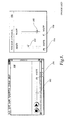
- FIGURE 1 is a block diagram illustrative of a set of conventional user interfaces for manipulating audio hierarchy settings in a computer system.
- a first audio setting control corresponds to a volume control setting at the software application level.
- a second audio setting control corresponds to a mute control also at the software application level.
- the first and second audio setting controls are typically associated with user interface display 100 associated with the particular software application generating the audio signals.
- the first and second control can be represented as a slider bar 102 for adjusting the volume setting and mute control 104 on the display 100.
- the first and second audio setting controls 102 and 104 are illustrated as being associated with a particular software application, these controls may be omitted from software applications.
- a third audio setting control 108 corresponds to a volume control on a channel level for processing all audio signals generated by all the instantiated software applications.
- a fourth audio setting control 110 corresponds to a mute control for the same channel level as the third audio setting control 108. In one audio setting hierarchy, this level is often referred to as channel volume. There may be multiple channels, and each of them may carry a different name, such as "wave channel.”
- the third and fourth audio setting controls 108, 110 are typically not directly associated with any particular software application and would be used to cumulatively control the overall output volume of audio signals from all the software application. As illustrated in FIGURE 1, the third and fourth audio setting controls are typically associated with some type of centralized user interface display 106 and can be represented as a slider bar 108 for adjusting the volume setting and mute control 110 on the display.
- a fifth audio setting control 112 corresponds to a main volume setting processing all audio signals generated by all the channels in the software application. In a typical audio setting hierarchy, this level is often referred to as a main volume or master volume.
- a sixth audio setting control 114 corresponds to a mute control for the same main volume level as the fifth audio setting control 114. Similar to the third and fourth audio setting controls, the fifth and sixth audio setting controls are typically not directly associated with any particular software application and are used to adjust volume setting for all audio channels being processed by a computer system. As illustrated in FIGURE 1, the fifth and sixth audio setting controls are typically associated with some type of centralized user interface display 106 and can be represented as a slider bar 112 for adjusting the volume setting and mute control 114 on the display.
- any one of the six illustrated audio setting controls can effect the overall output volume of a particular software application's audio signals. Accordingly, regardless of the number of levels in the typical audio setting hierarchy, no one control has the effect of offering full control of the overall output volume of the particular software application's audio signals. While each control can reduce the overall output volume, controls cannot increase output volume beyond the limitations set by the other controls. In particular, if a "mute" or "zero volume” control is being utilized, adjusting any other volume controls will show no effect. Additionally, in many situations, a computer user may have multiple software applications instantiated at one time such that the multiple software applications are capable of generating audio signal data.
- the user In order to obtain the maximal output volume for any application affected by the wave channel, the user has to maximize the volume settings of that channel.
- a user manipulation of some of the audio setting controls can also have the undesirable effect of modifying the overall output volume of audio signals of the other software applications.
- a user manipulation of the third or fourth audio setting controls e.g., the wave channel controls
- a user may manipulate the volume slide bars of a main audio control, channel audio control and software application volume control to increase overall output volume only to discover that one of the mute controls is negating the settings of the volume slide bars.
- the current set of interfaces for controlling audio setting controls can be inefficient in presenting a user with a representation of audio signal overall output volume for a software application and for controlling audio signal overall output volume for multiple software applications.
- a system and method for implementing a flat volume model for software application audio signals is provided.
- a computer system generates a flat volume characteristics tree based upon current hardware/software values from an audio setting hierarchy.
- the computer system optimizes the flat volume characteristics tree and converts the optimized values into new audio hierarchy settings.
- the computer system can generate user interfaces representative of the flat volume settings for the software application. Adjustments to the flat volume settings result in modification to the flat volume characteristics tree and the audio setting hierarchy.
- a method for managing system audio settings may be implemented in a system having one or more software applications for generating audio signals.
- the system can also include an audio setting hierarchy for processing audio signals from one or more software applications.
- a system generates a system audio settings control corresponding to a processing of audio signals from a first software application through the audio setting hierarchy.
- the system obtains a user manipulation of the first software application system audio settings control.
- the system adjusts one or more audio settings in the audio setting hierarchy corresponding to the user manipulation of the system audio settings control.
- a method for managing system audio settings may be implemented in a system having one or more software applications for generating audio signals.
- the system can also include an audio setting hierarchy for processing audio signals from the one or more software applications.
- a system generates a flat volume characteristics tree based upon current hardware volume settings.
- the system obtains a user manipulation of a first software application system audio settings control.
- the first software application system audio settings control corresponds to a processing of audio signals from the first software application through the audio setting hierarchy.
- the system modifies the flat volume characteristics tree according to the user input and adjusts the hardware volume settings based on the flat volume characteristics tree.
- a method for managing system audio settings may be implemented in a system having one or more software applications for generating audio signals.
- the system can also include an audio setting hierarchy for processing audio signals from the one or more software applications.
- a system generates a centralized audio control display including a general software application audio setting control and a system audio settings control for a first software application.
- the system audio settings control for the first software application corresponds to a processing of audio signals from the first software application through the audio setting hierarchy.
- the system then obtains a user indication to adjust the audio settings of the first software application and adjusts one or more audio settings in the audio setting hierarchy corresponding to the user indication to adjust the audio settings of the first software application.
- a method for managing a global variable setting is provided.
- a system generates a global variable control corresponding to a processing of an input signal from a first software application through the variable hierarchy.
- the system obtains a user manipulation of the first software application system global variable control. Additionally, the system adjusts one or more variable values in the variable hierarchy corresponding to the user manipulation of the global variable control.
- the present invention relates to a system and method for modeling software application audio signal overall output volume, referred to generally as a flat volume model. More specifically, the present invention relates to a system and method for implementing a flat volume model for software applications in an audio setting hierarchy. The present invention can correspond to a determination of flat volume settings representative of audio signal overall output volume and for the optimization of hardware/software settings in an audio setting hierarchy corresponding to the flat volume settings. Additionally, another aspect of the present invention relates to various user interfaces for representing a flat volume model of software application audio signals.
- aspect of the present invention can be implemented in a computer system that includes one or more software applications including some form of a user interface.
- the computer systems can correspond to a wide variety of computing devices, such as personal computers, server-based computers, hand-held computers, mobile computers, personal digital assistants, mobile telephones, audio processing equipment (such as mixers and sampling devices), and the like.
- the software applications included in the computer system can correspond to software applications that include an explicit control that allows users to manipulate volume settings.
- the software applications included in the computer system can also correspond to software application that generate audio signals, but do not include an explicit control for allowing users to manipulate volume settings.
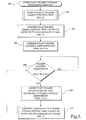
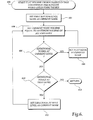
- FIGURE 2 is a flow diagram illustrative of a flat volume control processing routine 200 implemented by a computer system for implementing a flat volume framework for software application audio signals in accordance with the present invention.
- the computer system generates a flat volume characteristics tree.
- a flat volume characteristics tree is a tree structure based upon a computer system audio setting hierarchy.
- the initial values of nodes within the flat volume characteristics tree correspond to a current hardware/software volume settings in the computer system audio setting hierarchy.
- FIGURE 3 is a flow diagram illustrative of a flat volume characteristics tree generation sub-routine 300 implemented by a computer system in accordance with the present invention and corresponding to block 202 of FIGURE 2.
- the computer system generates a flat volume characteristics tree based upon current volume control settings.
- volume control setting values can be represented as a percentage of the volume signal that is passed through each volume control. For example, a volume control setting of 100% would pass all of the volume signals, while a volume control setting of 0% would not pass any volume signals.
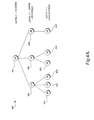
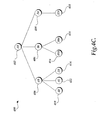
- FIGURE 4A is a block diagram of a three-level flat volume characteristics tree 400 corresponding to current volume control setting values. A first level in the tree includes a top node 402 corresponding to a main volume control setting.
- the value of the top node 402 corresponds to the current volume control setting for the main volume. Further, the value of the top node 402 can also reflect the setting of a mute control with a "0" value when the mute control is instantiated.
- the flat volume characteristics tree 400 can also include a second level corresponding to input channels and including three nodes 404, 406, 408. Similar to the top node 402, the value of nodes 404, 406, and 408 corresponds to the current setting for the volume controls at the respective input channels. Further, the value of the value of nodes 404, 406, and 408 can also reflect the setting of a mute control at each respective input channel. With continued reference to FIGURE 4A, the flat volume characteristics tree 400 also includes a third level corresponding to software application volume settings and including six nodes 410, 412, 414, 416, 418 and 420.
- Nodes 410, 412, 414, 416, 418 and 420 are leaf nodes of the flat volume characteristics tree 400 and include a value corresponding to a current setting for a volume setting at each respective software application, which can include a mute control value.
- nodes 410, 412, 414, 416, 418 and 420 are leaf nodes and have no children.
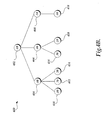
- FIGURE 4B is the block diagram of FIGURE 4A including illustrative values for each node in the flat volume characteristics tree 400 for purposes of illustration.
- the values shown in nodes 402-420 are illustrative in nature and will be used to illustrate various processes in accordance with the present invention.
- a computer system may have any number of levels within an audio setting hierarchy. Accordingly, the flat volume characteristics tree would have a corresponding number of levels. Further, in the event that a software application would not include an application level volume control, the flat volume characteristic tree would not include a node at the corresponding level for the particular software application.
- the computer system begins converting the flat volume characteristic tree values from the current hardware audio setting hierarchy values to a flat volume model.
- the computer system converts the flat volume characteristics tree 400 according to parent node values. The conversion of the flat volume characteristics tree 400 based upon parent node values will be described below with regard to sub-routine 500 (FIGURE 5).
- the computer system continues the conversion process by converting the flat volume characteristics tree 400 based upon child node values. The conversion of the flat volume characteristics tree 400 based upon child node values will be described below with regard to sub-routine 600 (FIGURE 6). Upon completion of the conversion, the sub-routine 300 returns.
- FIGURE 5 is a flow diagram illustrative of a flat volume characteristic tree conversion sub-routine 500 based upon parent node values implemented by a computer system in accordance with the present invention. More specifically, sub-routine 500 corresponds to a top-down flat volume characteristics tree conversion sub-routine.
- the top-level node is set as a current node for processing.
- the current node value is set equal to the product of the current node value and the value of a parent node.
- a test is conducted to determine whether additional nodes exist the current level of the flat volume characteristics tree 400. If additional nodes exist at the current level, at block 508, the next node at the current level is set as the current node and the sub-routine 500 returns to block 504.
- a test is conducted to determine whether any additional nodes exist at the next level of the flat volume characteristics tree 400. If nodes exist at the next level, at block 512, the first node at the next level of the flat volume characteristics tree 400 is set as the current node and the sub-routine 500 returns to block 504. Alternatively, if no additional nodes exist at the next level of the flat volume characteristics tree 400, the sub-routine 500 returns at block 514.
- FIGURES 4B and 4C are block diagrams of the flat volume characteristics tree 400 illustrating two iterations of sub-routine 500. As illustrated in FIGURE 4B, the values of nodes 404, 406 and 408 have been replaced by the value of the product of the node and their parent node 402. With reference to FIGURE 4C, in a second iteration of sub-routine 500, the values of nodes 410, 412, 414, 416, 418 and 420 have been replaced by the product of the node and their respective parent nodes 404, 406, and 408. Because no other levels remain in the flat volume characteristics tree 400, the sub-routine 500 returns.
- FIGURE 6 is a flow diagram illustrative of a flat volume characteristic tree conversion sub-routine 600 based upon child node values implemented by a computer system in accordance with the present invention. More specifically, sub-routine 600 corresponds to a bottom-up flat volume characteristics tree conversion sub-routine.
- the bottom level node is set as a current node for processing.
- the current node value is set equal to the maximum value of all child nodes of the current node.
- a test is conducted to determine whether additional nodes exist the current level of the flat volume characteristics tree 400. If additional nodes exist, at block 408, the next node at the current level is set as the current node and the sub-routine 600 returns to block 604.
- a test is conducted to determine whether any additional nodes exist at the next level of the flat volume characteristics tree 400. If nodes exist at the next level, at block 612, the first node at the next level of the flat volume characteristics tree 400 is set as the current node and the sub-routine 600 returns to block 604. Alternatively, if no additional nodes exist at the next level of the flat volume characteristics tree 400, the sub-routine 600 returns at block 614.
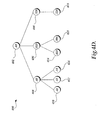
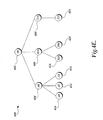
- FIGURES 4D and 4E are block diagrams of the flat volume characteristics tree 400 illustrating two iterations of sub-routine 600.
- the value of node 404 has been replaced by the maximum value of its children nodes, namely, node 410.
- the value of nodes 406 and 408 have been replaced by the maximum value of their children nodes.
- the value of node 602 has been replaced by the maximum value of its children, namely, node 604. Because no additional levels have nodes, the sub-routine 600 returns.
- the overall output volume for each software application can be represented by a flat volume setting control.
- the flat volume setting corresponds to the value of each leaf node in the flat volume characteristics tree 400 (FIGURE 4).
- new audio hierarchy setting values are generated based on the flat volume characteristics tree.
- FIGURE 7 is a flow diagram illustrative of a flat volume characteristics tree to hardware audio setting hierarchy conversion sub-routine 700 implemented by a computer system in accordance with the present invention. More specifically, sub-routine 700 corresponds to a top-down audio setting hierarchy conversion sub-routine that maps flat volume characteristics tree node values to the audio setting hierarchy.
- the top-level node is set as a current node for processing.
- the current node value is set equal to the quotient of the current node value and the value of a parent node.
- a test is conducted to determine whether additional nodes exist the current level of the flat volume characteristics tree. If additional nodes exist at the current level, at block 708, the next node at the current level is set as the current node and the sub-routine 700 returns to block 704.
- a test is conducted to determine whether any additional nodes exist at the next level of the flat volume characteristics tree. If nodes exist at the next level, at block 712, the first node at the next level of the flat volume characteristics tree is set as the current node and the sub-routine 700 returns to block 704. Alternatively, if no additional nodes exist at the next level of the flat volume characteristics tree, the sub-routine 700 returns at block 714.
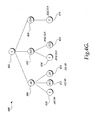
- FIGURES 4F and 4G are block diagrams of the flat volume characteristics tree 400 illustrating two iterations of sub-routine 700.
- the value of node 402 has been modified to "1" since it is the top node and does not have a parent node.
- the values of nodes 404, 406 and 408 have been replaced by the value of the quotient of the node and their parent node 402.
- the values of nodes 410, 412, 414, 416, 418 and 420 have been replaced by the quotient of the node and their respective parent nodes 404, 406, and 408. Because no other levels remain in the flat volume characteristics tree 400, the sub-routine 700 returns.
- a flat volume control for a software application corresponds to a single volume setting control corresponding to the overall output volume of the audio signals generated by the software application.
- the flat volume control does not necessarily correspond to any volume setting on a traditional computer audio setting hierarchy.
- the flat volume control can be included in one or more screen displays associated with a software application. The location of the flat volume control can be similar where a conventional software application volume setting control would have been located. In another embodiment of the present invention, the flat volume control can be located in a centralized volume control display for controlling flat volume settings for a number of software applications.
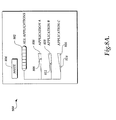
- FIGURE 8A is a block diagram illustrative of a centralized audio control display 800 including generated by a computer system in accordance with the present invention.
- the centralized audio control display 800 includes a first general software application audio setting control 802 for manipulating the flat volume control settings of multiple software applications.
- the first general software application audio setting control 802 is in the form of a dial that can manipulated by a user to increase or decrease flat volume control settings. As illustrated in FIGURE 8A, as a dial, the first general software application audio setting control 802 is not indicative of any particular volume state.
- the centralized audio control display 800 also includes a second general software application audio setting control 804 for controlling a mute function for all flat volume control settings of the multiple software applications.
- the second general software application audio setting control 804 can correspond to any user interface that allows a user to select or deselect the control.
- the centralized audio control display 800 also includes a number of additional displays for tracking flat volume control settings for various software applications on the computer system.
- the software applications may correspond to instantiated software applications, favorite software applications, recently instantiated software applications, and any other selected software application.
- the flat volume setting controls for three software applications are represented on the centralized audio control display 800.
- Each representation includes a slider bar 806, 710 and 716 indicative of the possible range for the flat volume of the software application and indicators 808, 712 and 814 of the current flat volume setting of the software application.
- the current state of the flat volume setting could be represented in a number of ways.
- the routine 200 enters into a repeating loop to detect modification of a flat volume setting and adjust hardware settings accordingly.
- a test is conducted to determine whether a flat volume control has been adjusted.
- the flat volume control of an individual software application may be adjusted by a user manipulation of the flat volume slider corresponding to the particular software application.
- the flat volume controls of multiple software applications may be adjusted by manipulating the general software application audio setting controls 802, 804, which will be described in greater detail below.
- a flat volume indicator such as the in the user interfaces described below, would result in the modification of the value for the node representing the particular software application in the flat volume characteristics tree 400.
- the routine 200 loops back to decision block 208.
- the computer system adjusts the flat volume characteristics tree 400 according to the detected adjustment.
- the adjustment of the flat volume characteristics tree 400 can correspond to the optimization of the entire flat volume characteristics tree as illustrated in sub-routine 500 and sub-routine 600.
- the adjustment of the flat volume characteristics tree can correspond to a partial processing of the branches of the tree affected by a modified flat volume characteristic node value.
- the computer system adjusts the audio setting hierarchy in accordance with the values of the adjusted flat volume characteristics tree.
- sub-routine 700 may be implemented to determine any new audio setting hierarchy values. The sub-routine 200 then returns to decision block 210 to detect any new flat volume control setting adjustments.
- the first general software application audio setting control 802 can be manipulated in a direction designated for positive increase in flat volume control settings.
- a user may utilize a user input device, such as a mouse, to cause the dial to rotate in a direction.
- the rotation of the dial may cause the dial to rotate a pre-defined distance, such as a number of steps. Alternatively, the rotation may be continuous.
- the distance of rotation of the general software application audio setting control 802 causes the indicators 808, 812 and 816 to move in the same direction.
- the movement of the indicators 808, 812 and 816 can correspond to certain percentage of their respective previous values. For example, a movement of one increment of the dial 802 would correspond to an equal increase in value for highest indicator, indicator 808. If the movement of indicator 808 corresponded to an increase by a factor of X, then other indicators 812 and 816 would move so as to represent a growth by the same factor X.
- the movement of the indicators 808, 812 and 816 may correspond to some different percentage, greater or lesser, of the movement of dial 802.. For example, a movement/rotation of the dial 802 of two increments may only correspond to a movement of the indicators 808, 812, 816 by a single increment.
- all of the indicators 808, 812, 816 move a proportional distance, relative to each other, with each rotation of the general software application audio setting control 802.
- the movement of dial 802 may correspond to an equal movement of indicator 808. If value of the indicator 808 was increased by 40%, the values of indicators 812 and 816 would be increased by 40%. Still further, in illustrative embodiment of the present invention, once one of the indicators has reached a threshold value, such as a maximum value, the further increase of indicator values by the rotation of the general software application audio setting control 802 is prohibited to maintain the relative difference of flat volume settings between the software application indicators 808, 812, and 816. Alternatively, the other indicators may continue to move until they individually reach a maximum value.
- the first general software application audio setting control 802 can be manipulated in a direction designated for negative increase in flat volume control settings. Similar to FIGURE 8B, in an illustrative embodiment of the present invention, a user can manipulate the first general software application audio setting control 802 to cause each flat volume indicator 808, 812 and 816 to decrease accordingly. Additionally, a user can manipulate the second general software application audio setting control 804 to cause all the indicators 808, 812, and 816 to automatically decrease to zero value. In an illustrative embodiment of the present invention, the first general software application audio setting control 802 can continue to be turned in a direction for decreasing flat volume control settings until all the indicators reach a zero value.
- the second general software application audio setting control 804 can be modified to allow a user to restore the indicator values to the last non-zero setting.
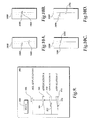
- FIGURE 9 is a block diagram illustrative of an alternative embodiment for a centralized audio control display 900 for manipulating flat volume controls. Similar to centralized audio control display 800, the centralized audio control display 900 includes a number of displays for tracking flat volume control settings for various software applications on the computer system. Each representation includes a slider bar 906, 910 and 916 indicative of the possible range for the flat volume of the software application and indicators 908, 912 and 914 of the current flat volume setting of the software application. Additionally, the centralized audio control display 900 includes a first and second general software application audio setting control 902, 904 for controlling the flat volume control settings for the software applications. In an illustrative embodiment of the present invention, the first general software application audio setting control 902 is in the form of a volume slider bar.
- the indicator of the volume slider bar corresponds to the maximum value of all the indicators 908, 912 and 916 in the centralized audio control display 900.
- manipulation of the first and second general software application audio setting controls can result in the adjustment of the individual indicators 908, 912, and 916.
- FIGURES 10A-10D are block diagrams illustrative of an alternative embodiment for representing various audio setting control values in individual application volume controls in accordance with the present invention.
- an application may implement a flat volume implementation in an operating system that does not support flat volume controls.
- an individual software application volume control can be represented on a graphical user interface 1000 as a slider control 1004.
- the graphical user interface 1000 may correspond to an interface associated only with the software application. Alternatively, the interface may correspond to some centralized control.
- the graphical user interface 1000 also includes a main audio volume indicator 1006 that corresponds to a level for the main audio volume.
- the slider control 1004 is at approximately a 40% maximum of application volume, while the main volume indicator 1006 is at approximately 70% of maximum system volume.
- the graphical user interface 1000 represents to the user the application volume level and how it is effected by the main volume setting.
- an additional manipulation of the slider control 1004 increases the level of the main audio volume indicator 1006 (FIGURE 10C).
- the increase of the main audio volume indicator 1006 has the effect of increasing the main audio volume settings on the computer system. Accordingly, as illustrated in FIGURE 10D, the main audio volume indicator 1006 remains at the new level even if the slider control 1004 is adjusted down.
- a user may manipulate the slider control 1004 to adjust application volume as long as the slider control is below the main audio volume indicator 1006.
- the main audio volume 1006 may decrease when the user drags down the slider control 1004.
- the main audio volume is also adjusted and the overall volume levels for other applications may be effected.
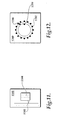
- an alternative user interface 1100 can include two controls for controlling two or more attributes.
- the controls can include a main volume control 1102 that can serve to globally adjust flat volume controls of multiple applications in a manner similar to the general software application audio setting control 802 (FIGURE 8).
- the controls can include individual flat volume control 1104 that corresponds to a single software application.
- the main audio control 1102 may be adjusted along a first audio scale.
- the flat volume control 1104 can be further adjusted along a second scale in a manner that does not affect the main audio control 1102.
- the flat volume control 1104 may correspond to traditional audio volume controls and/or any type of attribute control.
- user interface 1200 can include two controls for controlling two or more attributes. Similar to user interface 1100 (FIGURE 11), the controls can include a main volume control 1202 that can serve to globally adjust flat volume controls of multiple applications. Additionally, the controls can include individual flat volume control 1204 that corresponds to a single software application. In accordance with this illustrative embodiment, the main audio control 1202 and flat volume control 1204 correspond to circular controls that are adjusted similar to turning a dial. The adjustment of the flat volume control 1204 may be implemented in a manner that does not affect the main volume control 1102. Alternatively, once the flat volume control 1204 has reached a maximum point or a minimum point, further manipulation of the flat volume control 1204 will result in an adjustment of the main audio control 1202.
- the user interface 1200 is described with regard to a flat volume control model, one skilled in the relevant art will appreciate that the controls may correspond to traditional audio volume controls and/or any type of attribute control. Further, additional user interfaces may be built by mechanically placing a first dial on top of a second dial.
- the present invention may be utilized in conjunction with other hierarchical based variable structures to facilitate control of values within the variable hierarchy through a global variable control.
- the present invention may be utilized in conjunction with a visual display variable hierarchy, such as a gamma variable correction hierarchy, to facilitate adjustment of various display variable values by manipulation of a global variable display control.
- additional user interfaces may be built by mechanically placing a first slider on top of a second slider or placing a dial on top of a second dial.
- FIGURES 11 and 12 one skilled in the relevant art will appreciate that any number of independent controls may be incorporated into the present invention.
Landscapes
- Engineering & Computer Science (AREA)
- Theoretical Computer Science (AREA)
- General Engineering & Computer Science (AREA)
- Physics & Mathematics (AREA)
- General Physics & Mathematics (AREA)
- Human Computer Interaction (AREA)
- General Health & Medical Sciences (AREA)
- Audiology, Speech & Language Pathology (AREA)
- Health & Medical Sciences (AREA)
- Multimedia (AREA)
- Software Systems (AREA)
- Control Of Amplification And Gain Control (AREA)
- User Interface Of Digital Computer (AREA)
- Circuit For Audible Band Transducer (AREA)
Applications Claiming Priority (4)
| Application Number | Priority Date | Filing Date | Title |
|---|---|---|---|
| US49633703P | 2003-08-19 | 2003-08-19 | |
| US496337P | 2003-08-19 | ||
| US10/880,842 US7502480B2 (en) | 2003-08-19 | 2004-06-30 | System and method for implementing a flat audio volume control model |
| US880842 | 2004-06-30 |
Publications (3)
| Publication Number | Publication Date |
|---|---|
| EP1508852A2 true EP1508852A2 (de) | 2005-02-23 |
| EP1508852A3 EP1508852A3 (de) | 2008-09-10 |
| EP1508852B1 EP1508852B1 (de) | 2015-05-27 |
Family
ID=34068467
Family Applications (1)
| Application Number | Title | Priority Date | Filing Date |
|---|---|---|---|
| EP04103753.2A Expired - Lifetime EP1508852B1 (de) | 2003-08-19 | 2004-08-04 | Verfahren zur Ausführung eines flachen Audiolautstärkereglermodells |
Country Status (5)
| Country | Link |
|---|---|
| US (1) | US7502480B2 (de) |
| EP (1) | EP1508852B1 (de) |
| JP (1) | JP4714441B2 (de) |
| KR (1) | KR101076902B1 (de) |
| CN (1) | CN1624656B (de) |
Cited By (3)
| Publication number | Priority date | Publication date | Assignee | Title |
|---|---|---|---|---|
| EP1703774A3 (de) * | 2005-03-19 | 2006-09-27 | Microsoft Corporation | Automatische Regelung der Verstärkung der Tonsignale für gleichtzeitigbetriebene Erffassungsanwendungen |
| EP2447828A1 (de) * | 2010-10-29 | 2012-05-02 | Nokia Corporation | Ausgabelautstärkesteuerung für eine Software-Anwendung |
| WO2013041875A3 (en) * | 2011-09-22 | 2013-11-07 | Earsoft Limited | Dynamic range control |
Families Citing this family (30)
| Publication number | Priority date | Publication date | Assignee | Title |
|---|---|---|---|---|
| KR100703758B1 (ko) * | 2005-05-04 | 2007-04-06 | 삼성전자주식회사 | 어플리케이션에 원거리에서 제어가능한 인터페이스를제공하는 방법 및 장치 |
| KR100617716B1 (ko) | 2005-06-09 | 2006-08-28 | 삼성전자주식회사 | 백라이트를 제어하는 휴대 단말기 및 그 방법 |
| US20060285701A1 (en) * | 2005-06-16 | 2006-12-21 | Chumbley Robert B | System and method for OS control of application access to audio hardware |
| US7831054B2 (en) * | 2005-06-28 | 2010-11-09 | Microsoft Corporation | Volume control |
| JP2007034658A (ja) * | 2005-07-27 | 2007-02-08 | Matsushita Electric Ind Co Ltd | ガイダンス報知装置、ガイダンス報知用集積回路、ガイダンス報知方法、及びガイダンス報知用プログラム |
| US8369539B2 (en) * | 2006-03-24 | 2013-02-05 | Panasonic Automotive Systems Company Of America, Division Of Panasonic Corporation Of North America | Audio system with parental maximum volume control |
| WO2007111582A1 (en) * | 2006-03-24 | 2007-10-04 | Panasonic Automotive Systems Company Of America Division Of Panasonic Corporation Of North America | Audio system with parental maximum volume control |
| US7706903B2 (en) * | 2006-04-13 | 2010-04-27 | International Business Machines Corporation | Selective muting of applications |
| US20080144860A1 (en) * | 2006-12-15 | 2008-06-19 | Dennis Haller | Adjustable Resolution Volume Control |
| US8825737B2 (en) * | 2007-02-07 | 2014-09-02 | Microsoft Corporation | Per-application remote volume control |
| US8954889B2 (en) * | 2008-12-18 | 2015-02-10 | Nec Corporation | Slide bar display control device and slide bar display control method |
| JP4820434B2 (ja) | 2009-06-08 | 2011-11-24 | レノボ・シンガポール・プライベート・リミテッド | マイクロフォンのミュート・コントロール |
| JP5449044B2 (ja) * | 2010-06-10 | 2014-03-19 | シャープ株式会社 | サーバ装置、端末装置およびアプリケーション制御システム |
| US8774955B2 (en) | 2011-04-13 | 2014-07-08 | Google Inc. | Audio control of multimedia objects |
| CN103123571B (zh) * | 2011-11-21 | 2018-01-12 | 上海博泰悦臻网络技术服务有限公司 | 车载设备及车载设备的界面处理方法 |
| KR101875743B1 (ko) * | 2012-01-10 | 2018-07-06 | 엘지전자 주식회사 | 이동 단말기 및 그 제어방법 |
| JP5855996B2 (ja) * | 2012-03-28 | 2016-02-09 | 京セラ株式会社 | 端末装置 |
| CN103914006A (zh) * | 2012-12-29 | 2014-07-09 | 北京谊安医疗系统股份有限公司 | 一种控制音频包络线边沿波形的电路 |
| US9395871B2 (en) * | 2013-01-29 | 2016-07-19 | Google Inc. | Detection and control of multimedia applications |
| US20140278911A1 (en) * | 2013-03-15 | 2014-09-18 | Telemetry Limited | Method and apparatus for determining digital media audibility |
| CN107728992B (zh) * | 2014-01-24 | 2020-11-24 | Oppo广东移动通信有限公司 | 音量调节方法和系统 |
| USD754714S1 (en) * | 2014-06-17 | 2016-04-26 | Tencent Technology (Shenzhen) Company Limited | Portion of a display screen with animated graphical user interface |
| CN105991103A (zh) * | 2015-04-27 | 2016-10-05 | 乐视致新电子科技(天津)有限公司 | 一种音量控制方法及装置 |
| US10387104B2 (en) * | 2015-06-07 | 2019-08-20 | Apple Inc. | Audio control for web browser |
| US10275116B2 (en) | 2015-06-07 | 2019-04-30 | Apple Inc. | Browser with docked tabs |
| US10091581B2 (en) * | 2015-07-30 | 2018-10-02 | Roku, Inc. | Audio preferences for media content players |
| KR102546212B1 (ko) * | 2016-01-05 | 2023-06-22 | 삼성전자주식회사 | 소리 출력 방법 및 이를 지원하는 전자 장치 |
| CN105955695B (zh) * | 2016-04-22 | 2019-02-15 | 捷开通讯(深圳)有限公司 | 一种设置智能终端音量的方法及智能终端 |
| CN106406803A (zh) * | 2016-08-31 | 2017-02-15 | 青岛海信移动通信技术股份有限公司 | 终端应用的音量控制方法和装置 |
| US10661682B2 (en) | 2018-07-17 | 2020-05-26 | Honda Motor Co., Ltd. | Vehicle seat haptic system and method |
Family Cites Families (13)
| Publication number | Priority date | Publication date | Assignee | Title |
|---|---|---|---|---|
| JP2871387B2 (ja) * | 1992-07-27 | 1999-03-17 | ヤマハ株式会社 | 音像定位装置 |
| JPH08195068A (ja) * | 1995-01-20 | 1996-07-30 | Pioneer Electron Corp | オーディオ信号混合装置 |
| US6201537B1 (en) * | 1996-06-11 | 2001-03-13 | Samsung Electronics Co., Ltd. | Sound control circuit and method using microcomputer |
| JPH10149274A (ja) * | 1996-09-19 | 1998-06-02 | Fujitsu Ltd | オーディオ信号制御装置、仮想マスタボリューム制御方法、及び記録媒体 |
| JPH11296167A (ja) * | 1998-04-09 | 1999-10-29 | Fujitsu Ltd | サウンド再生装置及び記録媒体 |
| JP2000004396A (ja) * | 1998-06-12 | 2000-01-07 | Matsushita Electric Ind Co Ltd | オーディオ信号処理装置 |
| JP2000242475A (ja) * | 1999-02-22 | 2000-09-08 | Fujitsu Ten Ltd | ディジタル信号処理制御装置 |
| US6728675B1 (en) * | 1999-06-03 | 2004-04-27 | International Business Machines Corporatiion | Data processor controlled display system with audio identifiers for overlapping windows in an interactive graphical user interface |
| JP2001043062A (ja) * | 1999-07-27 | 2001-02-16 | Nec Corp | パーソナルコンピュータ、その音量調整方法及び記録媒体 |
| FR2814891B1 (fr) * | 2000-10-04 | 2003-04-04 | Thomson Multimedia Sa | Procede de reglages de niveau audio provenant de plusieurs canaux et dispositif de reglage |
| TW493138B (en) * | 2001-03-07 | 2002-07-01 | Via Tech Inc | Audio chip with changeable output direction and the method thereof |
| JP4192461B2 (ja) * | 2001-11-02 | 2008-12-10 | ヤマハ株式会社 | 情報処理装置及び情報処理システム並びに情報処理用プログラム |
| US7251337B2 (en) * | 2003-04-24 | 2007-07-31 | Dolby Laboratories Licensing Corporation | Volume control in movie theaters |
-
2004
- 2004-06-30 US US10/880,842 patent/US7502480B2/en active Active
- 2004-08-04 EP EP04103753.2A patent/EP1508852B1/de not_active Expired - Lifetime
- 2004-08-18 KR KR1020040065139A patent/KR101076902B1/ko not_active Expired - Fee Related
- 2004-08-19 CN CN2004100642194A patent/CN1624656B/zh not_active Expired - Fee Related
- 2004-08-19 JP JP2004239996A patent/JP4714441B2/ja not_active Expired - Lifetime
Non-Patent Citations (1)
| Title |
|---|
| STAFF: "Gain complete control over your audio with Rogue Amoeba's Detour", THE MAC OBSERVER, 4 July 2003 (2003-07-04), pages 1 - 3 |
Cited By (4)
| Publication number | Priority date | Publication date | Assignee | Title |
|---|---|---|---|---|
| EP1703774A3 (de) * | 2005-03-19 | 2006-09-27 | Microsoft Corporation | Automatische Regelung der Verstärkung der Tonsignale für gleichtzeitigbetriebene Erffassungsanwendungen |
| EP2447828A1 (de) * | 2010-10-29 | 2012-05-02 | Nokia Corporation | Ausgabelautstärkesteuerung für eine Software-Anwendung |
| WO2013041875A3 (en) * | 2011-09-22 | 2013-11-07 | Earsoft Limited | Dynamic range control |
| CN103828232A (zh) * | 2011-09-22 | 2014-05-28 | 伊尔索芙特有限公司 | 动态范围控制 |
Also Published As
| Publication number | Publication date |
|---|---|
| JP4714441B2 (ja) | 2011-06-29 |
| KR101076902B1 (ko) | 2011-10-25 |
| CN1624656B (zh) | 2010-04-07 |
| KR20050020665A (ko) | 2005-03-04 |
| JP2005063450A (ja) | 2005-03-10 |
| EP1508852A3 (de) | 2008-09-10 |
| CN1624656C (de) | |
| CN1624656A (zh) | 2005-06-08 |
| EP1508852B1 (de) | 2015-05-27 |
| US7502480B2 (en) | 2009-03-10 |
| US20050043831A1 (en) | 2005-02-24 |
Similar Documents
| Publication | Publication Date | Title |
|---|---|---|
| US7502480B2 (en) | System and method for implementing a flat audio volume control model | |
| US9203366B2 (en) | Audio processing | |
| US8440902B2 (en) | Interactive multi-channel data sonification to accompany data visualization with partitioned timbre spaces using modulation of timbre as sonification information carriers | |
| US7453035B1 (en) | Methods and systems for providing musical interfaces | |
| CN114245271A (zh) | 音频信号处理方法及电子设备 | |
| JP2010041190A (ja) | 音響装置及びプログラム | |
| US7079153B2 (en) | System and method for creating mark-making tools | |
| US20080255688A1 (en) | Changing a display based on transients in audio data | |
| EP3674849A1 (de) | Haptische effektsignalverarbeitung | |
| US20150207478A1 (en) | Adjusting Controls of an Audio Mixer | |
| CN112287260A (zh) | 内容输出方法、装置和电子设备 | |
| JP7664877B2 (ja) | 音響制御装置、プログラム及び方法 | |
| US20100169775A1 (en) | Audio processing interface | |
| CN100381988C (zh) | 用于调节控制参数的组合的系统 | |
| WO2015037388A1 (ja) | ユーザインタフェース装置、音響制御装置、音響システム、音響制御方法及びプログラム | |
| Brede | Construction principles for highly synchronizable sparse directed networks | |
| Pachet et al. | MusicSpace: a Constraint-Based Control System for Music Spatialization. | |
| JP6172159B2 (ja) | プログラム設定装置、及び、プログラム設定方法 | |
| CN112862582B (zh) | 基于金融风控的用户画像生成系统及方法 | |
| US7880748B1 (en) | Audio view using 3-dimensional plot | |
| EP4270267A1 (de) | Informationsverarbeitungsvorrichtung, informationsverarbeitungsverfahren und informationsverarbeitungsprogramm | |
| US8045732B1 (en) | Mapping control signals to values for one or more internal parameters | |
| CN118016034A (zh) | 音量均衡方法、装置、计算机设备和存储介质 | |
| Kayser et al. | Comparison of speech perception in virtual and real-life acoustic environments | |
| US20120331023A1 (en) | Interactive exhibits |
Legal Events
| Date | Code | Title | Description |
|---|---|---|---|
| PUAI | Public reference made under article 153(3) epc to a published international application that has entered the european phase |
Free format text: ORIGINAL CODE: 0009012 |
|
| AK | Designated contracting states |
Kind code of ref document: A2 Designated state(s): AT BE BG CH CY CZ DE DK EE ES FI FR GB GR HU IE IT LI LU MC NL PL PT RO SE SI SK TR |
|
| AX | Request for extension of the european patent |
Extension state: AL HR LT LV MK |
|
| RIN1 | Information on inventor provided before grant (corrected) |
Inventor name: BAUDISCH, PATRICK MARKUS Inventor name: BASU, SUMIT |
|
| PUAL | Search report despatched |
Free format text: ORIGINAL CODE: 0009013 |
|
| AK | Designated contracting states |
Kind code of ref document: A3 Designated state(s): AT BE BG CH CY CZ DE DK EE ES FI FR GB GR HU IE IT LI LU MC NL PL PT RO SE SI SK TR |
|
| AX | Request for extension of the european patent |
Extension state: AL HR LT LV MK |
|
| RIC1 | Information provided on ipc code assigned before grant |
Ipc: G06F 3/16 20060101AFI20041203BHEP Ipc: G06F 3/033 20060101ALI20080801BHEP |
|
| 17P | Request for examination filed |
Effective date: 20080926 |
|
| 17Q | First examination report despatched |
Effective date: 20081203 |
|
| AKX | Designation fees paid |
Designated state(s): AT BE BG CH CY CZ DE DK EE ES FI FR GB GR HU IE IT LI LU MC NL PL PT RO SE SI SK TR |
|
| REG | Reference to a national code |
Ref country code: DE Ref legal event code: R079 Ref document number: 602004047252 Country of ref document: DE Free format text: PREVIOUS MAIN CLASS: G06F0003160000 Ipc: G06F0003048400 |
|
| RIC1 | Information provided on ipc code assigned before grant |
Ipc: G06F 3/0484 20130101AFI20141001BHEP |
|
| GRAP | Despatch of communication of intention to grant a patent |
Free format text: ORIGINAL CODE: EPIDOSNIGR1 |
|
| INTG | Intention to grant announced |
Effective date: 20141121 |
|
| RAP1 | Party data changed (applicant data changed or rights of an application transferred) |
Owner name: MICROSOFT TECHNOLOGY LICENSING, LLC |
|
| GRAS | Grant fee paid |
Free format text: ORIGINAL CODE: EPIDOSNIGR3 |
|
| GRAA | (expected) grant |
Free format text: ORIGINAL CODE: 0009210 |
|
| AK | Designated contracting states |
Kind code of ref document: B1 Designated state(s): AT BE BG CH CY CZ DE DK EE ES FI FR GB GR HU IE IT LI LU MC NL PL PT RO SE SI SK TR |
|
| REG | Reference to a national code |
Ref country code: GB Ref legal event code: FG4D |
|
| REG | Reference to a national code |
Ref country code: CH Ref legal event code: EP |
|
| REG | Reference to a national code |
Ref country code: AT Ref legal event code: REF Ref document number: 729179 Country of ref document: AT Kind code of ref document: T Effective date: 20150615 |
|
| REG | Reference to a national code |
Ref country code: IE Ref legal event code: FG4D |
|
| REG | Reference to a national code |
Ref country code: DE Ref legal event code: R096 Ref document number: 602004047252 Country of ref document: DE Effective date: 20150709 |
|
| REG | Reference to a national code |
Ref country code: NL Ref legal event code: T3 |
|
| REG | Reference to a national code |
Ref country code: AT Ref legal event code: MK05 Ref document number: 729179 Country of ref document: AT Kind code of ref document: T Effective date: 20150527 |
|
| PG25 | Lapsed in a contracting state [announced via postgrant information from national office to epo] |
Ref country code: FI Free format text: LAPSE BECAUSE OF FAILURE TO SUBMIT A TRANSLATION OF THE DESCRIPTION OR TO PAY THE FEE WITHIN THE PRESCRIBED TIME-LIMIT Effective date: 20150527 Ref country code: PT Free format text: LAPSE BECAUSE OF FAILURE TO SUBMIT A TRANSLATION OF THE DESCRIPTION OR TO PAY THE FEE WITHIN THE PRESCRIBED TIME-LIMIT Effective date: 20150928 Ref country code: ES Free format text: LAPSE BECAUSE OF FAILURE TO SUBMIT A TRANSLATION OF THE DESCRIPTION OR TO PAY THE FEE WITHIN THE PRESCRIBED TIME-LIMIT Effective date: 20150527 |
|
| PG25 | Lapsed in a contracting state [announced via postgrant information from national office to epo] |
Ref country code: GR Free format text: LAPSE BECAUSE OF FAILURE TO SUBMIT A TRANSLATION OF THE DESCRIPTION OR TO PAY THE FEE WITHIN THE PRESCRIBED TIME-LIMIT Effective date: 20150828 Ref country code: AT Free format text: LAPSE BECAUSE OF FAILURE TO SUBMIT A TRANSLATION OF THE DESCRIPTION OR TO PAY THE FEE WITHIN THE PRESCRIBED TIME-LIMIT Effective date: 20150527 Ref country code: BG Free format text: LAPSE BECAUSE OF FAILURE TO SUBMIT A TRANSLATION OF THE DESCRIPTION OR TO PAY THE FEE WITHIN THE PRESCRIBED TIME-LIMIT Effective date: 20150827 |
|
| PG25 | Lapsed in a contracting state [announced via postgrant information from national office to epo] |
Ref country code: EE Free format text: LAPSE BECAUSE OF FAILURE TO SUBMIT A TRANSLATION OF THE DESCRIPTION OR TO PAY THE FEE WITHIN THE PRESCRIBED TIME-LIMIT Effective date: 20150527 Ref country code: DK Free format text: LAPSE BECAUSE OF FAILURE TO SUBMIT A TRANSLATION OF THE DESCRIPTION OR TO PAY THE FEE WITHIN THE PRESCRIBED TIME-LIMIT Effective date: 20150527 |
|
| PG25 | Lapsed in a contracting state [announced via postgrant information from national office to epo] |
Ref country code: CZ Free format text: LAPSE BECAUSE OF FAILURE TO SUBMIT A TRANSLATION OF THE DESCRIPTION OR TO PAY THE FEE WITHIN THE PRESCRIBED TIME-LIMIT Effective date: 20150527 Ref country code: PL Free format text: LAPSE BECAUSE OF FAILURE TO SUBMIT A TRANSLATION OF THE DESCRIPTION OR TO PAY THE FEE WITHIN THE PRESCRIBED TIME-LIMIT Effective date: 20150527 Ref country code: SK Free format text: LAPSE BECAUSE OF FAILURE TO SUBMIT A TRANSLATION OF THE DESCRIPTION OR TO PAY THE FEE WITHIN THE PRESCRIBED TIME-LIMIT Effective date: 20150527 Ref country code: RO Free format text: LAPSE BECAUSE OF NON-PAYMENT OF DUE FEES Effective date: 20150527 |
|
| REG | Reference to a national code |
Ref country code: DE Ref legal event code: R097 Ref document number: 602004047252 Country of ref document: DE |
|
| PG25 | Lapsed in a contracting state [announced via postgrant information from national office to epo] |
Ref country code: LU Free format text: LAPSE BECAUSE OF FAILURE TO SUBMIT A TRANSLATION OF THE DESCRIPTION OR TO PAY THE FEE WITHIN THE PRESCRIBED TIME-LIMIT Effective date: 20150804 Ref country code: MC Free format text: LAPSE BECAUSE OF FAILURE TO SUBMIT A TRANSLATION OF THE DESCRIPTION OR TO PAY THE FEE WITHIN THE PRESCRIBED TIME-LIMIT Effective date: 20150527 |
|
| REG | Reference to a national code |
Ref country code: CH Ref legal event code: PL |
|
| PLBE | No opposition filed within time limit |
Free format text: ORIGINAL CODE: 0009261 |
|
| STAA | Information on the status of an ep patent application or granted ep patent |
Free format text: STATUS: NO OPPOSITION FILED WITHIN TIME LIMIT |
|
| PG25 | Lapsed in a contracting state [announced via postgrant information from national office to epo] |
Ref country code: LI Free format text: LAPSE BECAUSE OF NON-PAYMENT OF DUE FEES Effective date: 20150831 Ref country code: IT Free format text: LAPSE BECAUSE OF FAILURE TO SUBMIT A TRANSLATION OF THE DESCRIPTION OR TO PAY THE FEE WITHIN THE PRESCRIBED TIME-LIMIT Effective date: 20150527 Ref country code: CH Free format text: LAPSE BECAUSE OF NON-PAYMENT OF DUE FEES Effective date: 20150831 |
|
| 26N | No opposition filed |
Effective date: 20160301 |
|
| PG25 | Lapsed in a contracting state [announced via postgrant information from national office to epo] |
Ref country code: SI Free format text: LAPSE BECAUSE OF FAILURE TO SUBMIT A TRANSLATION OF THE DESCRIPTION OR TO PAY THE FEE WITHIN THE PRESCRIBED TIME-LIMIT Effective date: 20150527 |
|
| REG | Reference to a national code |
Ref country code: IE Ref legal event code: MM4A |
|
| REG | Reference to a national code |
Ref country code: FR Ref legal event code: PLFP Year of fee payment: 13 |
|
| PG25 | Lapsed in a contracting state [announced via postgrant information from national office to epo] |
Ref country code: IE Free format text: LAPSE BECAUSE OF NON-PAYMENT OF DUE FEES Effective date: 20150804 |
|
| PG25 | Lapsed in a contracting state [announced via postgrant information from national office to epo] |
Ref country code: BE Free format text: LAPSE BECAUSE OF FAILURE TO SUBMIT A TRANSLATION OF THE DESCRIPTION OR TO PAY THE FEE WITHIN THE PRESCRIBED TIME-LIMIT Effective date: 20150527 |
|
| PG25 | Lapsed in a contracting state [announced via postgrant information from national office to epo] |
Ref country code: HU Free format text: LAPSE BECAUSE OF FAILURE TO SUBMIT A TRANSLATION OF THE DESCRIPTION OR TO PAY THE FEE WITHIN THE PRESCRIBED TIME-LIMIT; INVALID AB INITIO Effective date: 20040804 |
|
| PG25 | Lapsed in a contracting state [announced via postgrant information from national office to epo] |
Ref country code: SE Free format text: LAPSE BECAUSE OF FAILURE TO SUBMIT A TRANSLATION OF THE DESCRIPTION OR TO PAY THE FEE WITHIN THE PRESCRIBED TIME-LIMIT Effective date: 20150527 Ref country code: CY Free format text: LAPSE BECAUSE OF FAILURE TO SUBMIT A TRANSLATION OF THE DESCRIPTION OR TO PAY THE FEE WITHIN THE PRESCRIBED TIME-LIMIT Effective date: 20150527 |
|
| REG | Reference to a national code |
Ref country code: FR Ref legal event code: PLFP Year of fee payment: 14 |
|
| PG25 | Lapsed in a contracting state [announced via postgrant information from national office to epo] |
Ref country code: TR Free format text: LAPSE BECAUSE OF FAILURE TO SUBMIT A TRANSLATION OF THE DESCRIPTION OR TO PAY THE FEE WITHIN THE PRESCRIBED TIME-LIMIT Effective date: 20150527 |
|
| REG | Reference to a national code |
Ref country code: FR Ref legal event code: PLFP Year of fee payment: 15 |
|
| PGFP | Annual fee paid to national office [announced via postgrant information from national office to epo] |
Ref country code: DE Payment date: 20180724 Year of fee payment: 15 Ref country code: FR Payment date: 20180712 Year of fee payment: 15 Ref country code: NL Payment date: 20180712 Year of fee payment: 15 |
|
| PGFP | Annual fee paid to national office [announced via postgrant information from national office to epo] |
Ref country code: GB Payment date: 20180801 Year of fee payment: 15 |
|
| REG | Reference to a national code |
Ref country code: DE Ref legal event code: R119 Ref document number: 602004047252 Country of ref document: DE |
|
| REG | Reference to a national code |
Ref country code: NL Ref legal event code: MM Effective date: 20190901 |
|
| GBPC | Gb: european patent ceased through non-payment of renewal fee |
Effective date: 20190804 |
|
| PG25 | Lapsed in a contracting state [announced via postgrant information from national office to epo] |
Ref country code: NL Free format text: LAPSE BECAUSE OF NON-PAYMENT OF DUE FEES Effective date: 20190901 Ref country code: DE Free format text: LAPSE BECAUSE OF NON-PAYMENT OF DUE FEES Effective date: 20200303 Ref country code: FR Free format text: LAPSE BECAUSE OF NON-PAYMENT OF DUE FEES Effective date: 20190831 |
|
| PG25 | Lapsed in a contracting state [announced via postgrant information from national office to epo] |
Ref country code: GB Free format text: LAPSE BECAUSE OF NON-PAYMENT OF DUE FEES Effective date: 20190804 |