EP1480033B1 - Verfahren zur Bestimmung der Isomerenzusammensetzung bei Isocyanat-Herstellprozessen - Google Patents
Verfahren zur Bestimmung der Isomerenzusammensetzung bei Isocyanat-Herstellprozessen Download PDFInfo
- Publication number
- EP1480033B1 EP1480033B1 EP04010763A EP04010763A EP1480033B1 EP 1480033 B1 EP1480033 B1 EP 1480033B1 EP 04010763 A EP04010763 A EP 04010763A EP 04010763 A EP04010763 A EP 04010763A EP 1480033 B1 EP1480033 B1 EP 1480033B1
- Authority
- EP
- European Patent Office
- Prior art keywords
- isomer
- spectrum
- mixture
- mdi
- composition
- Prior art date
- Legal status (The legal status is an assumption and is not a legal conclusion. Google has not performed a legal analysis and makes no representation as to the accuracy of the status listed.)
- Expired - Lifetime
Links
Images





Classifications
-
- G—PHYSICS
- G01—MEASURING; TESTING
- G01N—INVESTIGATING OR ANALYSING MATERIALS BY DETERMINING THEIR CHEMICAL OR PHYSICAL PROPERTIES
- G01N21/00—Investigating or analysing materials by the use of optical means, i.e. using sub-millimetre waves, infrared, visible or ultraviolet light
- G01N21/17—Systems in which incident light is modified in accordance with the properties of the material investigated
- G01N21/25—Colour; Spectral properties, i.e. comparison of effect of material on the light at two or more different wavelengths or wavelength bands
-
- G—PHYSICS
- G01—MEASURING; TESTING
- G01N—INVESTIGATING OR ANALYSING MATERIALS BY DETERMINING THEIR CHEMICAL OR PHYSICAL PROPERTIES
- G01N21/00—Investigating or analysing materials by the use of optical means, i.e. using sub-millimetre waves, infrared, visible or ultraviolet light
- G01N21/17—Systems in which incident light is modified in accordance with the properties of the material investigated
- G01N21/25—Colour; Spectral properties, i.e. comparison of effect of material on the light at two or more different wavelengths or wavelength bands
- G01N21/31—Investigating relative effect of material at wavelengths characteristic of specific elements or molecules, e.g. atomic absorption spectrometry
- G01N21/35—Investigating relative effect of material at wavelengths characteristic of specific elements or molecules, e.g. atomic absorption spectrometry using infrared light
- G01N21/359—Investigating relative effect of material at wavelengths characteristic of specific elements or molecules, e.g. atomic absorption spectrometry using infrared light using near infrared light
-
- C—CHEMISTRY; METALLURGY
- C07—ORGANIC CHEMISTRY
- C07C—ACYCLIC OR CARBOCYCLIC COMPOUNDS
- C07C265/00—Derivatives of isocyanic acid
-
- G—PHYSICS
- G01—MEASURING; TESTING
- G01N—INVESTIGATING OR ANALYSING MATERIALS BY DETERMINING THEIR CHEMICAL OR PHYSICAL PROPERTIES
- G01N21/00—Investigating or analysing materials by the use of optical means, i.e. using sub-millimetre waves, infrared, visible or ultraviolet light
- G01N21/17—Systems in which incident light is modified in accordance with the properties of the material investigated
- G01N21/25—Colour; Spectral properties, i.e. comparison of effect of material on the light at two or more different wavelengths or wavelength bands
- G01N21/31—Investigating relative effect of material at wavelengths characteristic of specific elements or molecules, e.g. atomic absorption spectrometry
- G01N21/35—Investigating relative effect of material at wavelengths characteristic of specific elements or molecules, e.g. atomic absorption spectrometry using infrared light
- G01N21/3577—Investigating relative effect of material at wavelengths characteristic of specific elements or molecules, e.g. atomic absorption spectrometry using infrared light for analysing liquids, e.g. polluted water
-
- G—PHYSICS
- G01—MEASURING; TESTING
- G01N—INVESTIGATING OR ANALYSING MATERIALS BY DETERMINING THEIR CHEMICAL OR PHYSICAL PROPERTIES
- G01N21/00—Investigating or analysing materials by the use of optical means, i.e. using sub-millimetre waves, infrared, visible or ultraviolet light
- G01N21/62—Systems in which the material investigated is excited whereby it emits light or causes a change in wavelength of the incident light
- G01N21/63—Systems in which the material investigated is excited whereby it emits light or causes a change in wavelength of the incident light optically excited
- G01N21/65—Raman scattering
-
- G—PHYSICS
- G01—MEASURING; TESTING
- G01J—MEASUREMENT OF INTENSITY, VELOCITY, SPECTRAL CONTENT, POLARISATION, PHASE OR PULSE CHARACTERISTICS OF INFRARED, VISIBLE OR ULTRAVIOLET LIGHT; COLORIMETRY; RADIATION PYROMETRY
- G01J3/00—Spectrometry; Spectrophotometry; Monochromators; Measuring colours
- G01J3/28—Investigating the spectrum
- G01J3/42—Absorption spectrometry; Double beam spectrometry; Flicker spectrometry; Reflection spectrometry
- G01J3/433—Modulation spectrometry; Derivative spectrometry
-
- G—PHYSICS
- G01—MEASURING; TESTING
- G01N—INVESTIGATING OR ANALYSING MATERIALS BY DETERMINING THEIR CHEMICAL OR PHYSICAL PROPERTIES
- G01N21/00—Investigating or analysing materials by the use of optical means, i.e. using sub-millimetre waves, infrared, visible or ultraviolet light
- G01N21/84—Systems specially adapted for particular applications
- G01N2021/8411—Application to online plant, process monitoring
- G01N2021/8416—Application to online plant, process monitoring and process controlling, not otherwise provided for
-
- G—PHYSICS
- G01—MEASURING; TESTING
- G01N—INVESTIGATING OR ANALYSING MATERIALS BY DETERMINING THEIR CHEMICAL OR PHYSICAL PROPERTIES
- G01N2201/00—Features of devices classified in G01N21/00
- G01N2201/12—Circuits of general importance; Signal processing
- G01N2201/129—Using chemometrical methods
- G01N2201/1293—Using chemometrical methods resolving multicomponent spectra
-
- Y—GENERAL TAGGING OF NEW TECHNOLOGICAL DEVELOPMENTS; GENERAL TAGGING OF CROSS-SECTIONAL TECHNOLOGIES SPANNING OVER SEVERAL SECTIONS OF THE IPC; TECHNICAL SUBJECTS COVERED BY FORMER USPC CROSS-REFERENCE ART COLLECTIONS [XRACs] AND DIGESTS
- Y10—TECHNICAL SUBJECTS COVERED BY FORMER USPC
- Y10T—TECHNICAL SUBJECTS COVERED BY FORMER US CLASSIFICATION
- Y10T436/00—Chemistry: analytical and immunological testing
- Y10T436/12—Condition responsive control
-
- Y—GENERAL TAGGING OF NEW TECHNOLOGICAL DEVELOPMENTS; GENERAL TAGGING OF CROSS-SECTIONAL TECHNOLOGIES SPANNING OVER SEVERAL SECTIONS OF THE IPC; TECHNICAL SUBJECTS COVERED BY FORMER USPC CROSS-REFERENCE ART COLLECTIONS [XRACs] AND DIGESTS
- Y10—TECHNICAL SUBJECTS COVERED BY FORMER USPC
- Y10T—TECHNICAL SUBJECTS COVERED BY FORMER US CLASSIFICATION
- Y10T436/00—Chemistry: analytical and immunological testing
- Y10T436/17—Nitrogen containing
-
- Y—GENERAL TAGGING OF NEW TECHNOLOGICAL DEVELOPMENTS; GENERAL TAGGING OF CROSS-SECTIONAL TECHNOLOGIES SPANNING OVER SEVERAL SECTIONS OF THE IPC; TECHNICAL SUBJECTS COVERED BY FORMER USPC CROSS-REFERENCE ART COLLECTIONS [XRACs] AND DIGESTS
- Y10—TECHNICAL SUBJECTS COVERED BY FORMER USPC
- Y10T—TECHNICAL SUBJECTS COVERED BY FORMER US CLASSIFICATION
- Y10T436/00—Chemistry: analytical and immunological testing
- Y10T436/17—Nitrogen containing
- Y10T436/172307—Cyanide or isocyanide
Definitions
- the invention relates to the field of determination of the isomer composition in isocyanate production processes and to the control of an isomeric system for the mixture or the separation of isomers.
- an isomer separation can be carried out by distillation or by crystallization. Or the production of a particular mixture of isomers by mixing suitable isomer starting mixtures.
- the quality can be regulated, for example, in a distillative isomer separation roughly via the process parameters pressure and temperature and the distillate / bottom product ratios and reflux ratios.
- a disadvantage here is that, for example, at high product purities, pressure and temperature do not provide practically useful information about the concentration of the isomers; d. H. the sensitivity of the concentration determination lies in the range of the measuring noise due to the boiling points lying close to each other.
- no physical method for the determination of isomer mixtures has hitherto been known.
- Processes that can be used online include process chromatography or automated titration. What is common to these methods is that the result is available only after a considerable time delay after longer measurement times. In addition, these processes are characterized by complex sample introduction, susceptibility to interference and greater consumption of auxiliaries and consumables.
- isocyanates A, B, C, D, etc. consist of a mixture of two or more isomers 1, 2, 3, ..., n.
- isocyanates can z.
- naphthylene diisocyanates bis [isocyanate] naphthalene
- xylylene diisocyanates bis [isocyanatmethyl] benzene
- MDI methylene diphenyl diisocyanates
- TDI toluene diisocyanates
- isocyanate intermediates or sales products consist of the different isomers in different proportions.
- isocyanate intermediates or sales products are prepared from an isocyanate starting mixture (crude mixture) of several isomers 1, 2, 3,..., N.
- the isocyanate A may be tolylene diisocyanate (TDI), an isomeric mixture of the isomers 2,4-TDI (2,4-bis [isocyanate] benzene), 2,6-TDI (2,6-bis [isocyanate] -benzene), 2,3-TDI and 3,4-TDI.
- the starting mixture can be decomposed to achieve special high quality product properties in its isomers. For example, a sales product I with approx. 100% 2,4-TDI and a sales product II with approx. 65% 2,4-TDI and approx. 35% 2,6-TDI are available on the market.
- the isocyanate B may be methylene diphenyl diisocyanate (MDI), an isomeric mixture of the isomers 2,2'-MDI (bis [2-isocyanate-phenyl] -methane), 2,4'-MDI (2-isocyanate -phenyl) - (4-isocyanate-phenyl) -methane 4,4'-MDI (bis- [4-isocyanate-phenyl] -methane) and other higher-nuclear isomers.
- MDI methylene diphenyl diisocyanate
- 2,2'-MDI bis [2-isocyanate-phenyl] -methane
- 4,4'-MDI bis- [4-isocyanate-phenyl] -methane
- the starting mixture can be decomposed to achieve special high quality product properties in its isomers.
- a sales product I with approximately 100% 4,4'-MDI and a sales product II with approximately 50% 2,4'-MDI and approximately 50% 4,4'-MDI are available on the market.
- the most accurate monitoring of the isomer composition is imperative for compliance with a given product specification. This monitoring must deliver the composition as quickly as possible so that the readjustment of the isomer can be done efficiently. Since the production of isocyanate isomers may be by-products due to production, rapid and precise monitoring is particularly important.
- NIR near-infrared
- NIR near-infrared
- NIR spectroscopy For the use of NIR spectroscopy in the field of quantitative determinations, the analytical method is often used in combination with chemometric evaluation methods. Common is z. As the partial least squares method (PLS), such as. B. off Raphael Vieira "In-line and In-Situ Monitoring of Semi-Batch Emulsion Copolymerizations Using Near-Infrared Spectroscopy J Applied Polymer Science, Vol. 84, 2 670-2682 (2002 ), or off T. Rohe "Near Infrared (NIR) spectroscopy for in-line monitoring of polymer extrusion processes" Talanta 50 (1999) 283-290 respectively. C.
- PLS partial least squares method
- NIR techniques for special measurement tasks is also known from: WO 00/02035 (Determination of organic acid in organic polymer), US 005717209 (Spectral analysis of hydrocarbons), US 006228650 ; WO 99/31485 (Control of the separation of chemical components in an alkylation process with acid catalyst), US 6339222 ; WO 00/68664 (Determination of ionic species in pulp cerebrospinal fluid), DE 10005130A1 (Control of polymer processes, determination of NCO in PU).
- the US 6162644 describes the isomer separation, inter alia, by concentration measurement of xylenes by comparison of NIR spectra.
- the DE 10005130 A1 discloses a method for controlling polymerization reactions of isocyanates by measuring absorption bands in the near infrared region.
- the invention is therefore based on the object, an improved method for determining the isomer composition in an isocyanate isomer mixture and an improved method for controlling an isomer.
- the starting point of the present invention is the discovery that the absorption spectra of isocyanate isomer mixtures surprisingly sufficiently differ from each other even with small concentration differences and small amounts of individual isomers, using a chemometric calibration model, the isomer concentrations in a mixture of isomers based on the measurement of the spectrum To be able to determine isomer mixtures.
- the determination of methylene diphenyl diisocyanate (MDI) isomer concentrations according to claim 1.
- the determination of the composition in an isocyanate isomer mixture is such that, for example, online a spectrum of the isomer mixture with an optical sensor by means of near-infrared (NIR) Spectroscopy, mid-infrared spectroscopy or Raman spectroscopy is recorded.
- the measured spectrum is then entered into a chemometric calibration model, which has been previously prepared for the mixture of these isomers.
- chemometric calibration model By evaluating the spectrum in the chemometric calibration model, the isomer concentrations in the isomer mixture are obtained.
- the chemometric calibration model can, for. B. be a multivariate model, z. For example, a partial least squares algorithm.
- Another advantage is that manual sampling and GC analysis can be eliminated. This has particular advantages in terms of occupational safety and environmental protection.
- the spectra can be recorded online / inline at one or more different points of a complex installation, without sampling.
- a complex system consists for example of several interconnected devices, eg. B. columns or crystallizers. This allows timely and frequent information about the isomer concentrations. This information can be used for a manual control of one or more of the parameters of the isomeric plant or for a continuous, automatic control of the production plant.
- a plurality of optical sensors for recording spectra may be arranged at different locations of an isomer system for recording the spectra of different isomer mixtures.
- These optical sensors can, for. B. be connected via fiber with a single spectrometer, which operates in multiplex mode.
- the investment effort is minimized.
- sampling lines up to an analyzer with the risk of clogging by crystallization and the like can be avoided. This is a particular advantage of the invention, since such analysis lines are prone to failure and require additional handling of the resulting product Analysstoffströme.
- Another advantage is the possibility of automatic process control based on the concentration information with the resulting possible maintenance of a nearly constant product quality with low energy consumption and high yield as well as the consistent exploitation of the plant capacity.
- step 100 the preparation of an isomer mixture.
- the mixture is a crude MDI mixture consisting of three MDI isomers or a crude TDI mixture consisting of up to four TDI isomers.
- step 102 from the crude isomer mixture prepared in step 100, one or more mixtures G i , each having a particular desired isomer composition, are prepared by isomer separation. This takes place in an isomer separation plant, for example by distillation or by crystallization. It may also be an isomer mixing plant instead of an isomer separation plant.
- step 104 the index i is initialized.
- step 106 the spectrum of the mixture G i at the outlet of the isomeric system is measured online. This is done for example by an online NIR spectral measurement. The measurement is carried out for example by an optical sensor which is connected by means of a glass fiber cable with an NIR spectrometer.
- step 108 a spectral analysis of the measured NIR spectrum is carried out with the aid of a chemometric calibration model.
- step 110 the actual isomer composition of the mixture G i .
- step 112 the difference is formed from the desired and actual values of the isomer composition of the mixture G i .
- step 114 the difference is formed from the desired and actual values of the isomer composition of the mixture G i .
- step 116 the index i is incremented and the next spectrum is measured in step 106. This process is repeated until the actual isomer composition for all mixtures G i has been determined once. Thereafter, the index i is reset so that continuously within relatively short time intervals, z. B. a few minutes, the actual isomer compositions of all mixtures G i are determined and a corresponding readjustment can be carried out promptly.
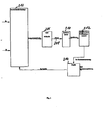
- FIG. 2 shows an isomer separation unit 200 for the preparation of isomeric mixtures G 1 and G 2 , each with defined isomer concentrations from a crude isomer mixture.
- the distillative isomer separation plant is obtained in a bottom region 202 200, the mixture G, and in a head portion 204 of the isomerization 200, the mixture G 2nd
- an optical measuring cell 206 is arranged.
- the measuring cell 206 includes an NIR sensor and may be connected, for example, to the in WO 00/58711 claimed "pressure-resistant process window" be formed.
- the measuring cell 206 is preferably connected to a spectrometer 210 via an optical waveguide 208.
- the spectrometer 210 provides a spectrum which is input to a chemometric calibration model 212.
- the chemometric calibration model 212 can be realized by a separate evaluation unit, for example a commercially available PC. Alternatively, the spectrometer 210 itself may include such an evaluation unit for the spectrum.
- the chemometric calibration model 212 outputs the actual composition of the isomer mixture G 1 .
- This actual composition is entered into a regulator 214 and also the desired composition of the isomer mixture G 1 .
- the controller 214 determines a manipulated variable for the readjustment of the isomer 200.
- sensors 206 can be arranged at different locations of the isomer separation unit 200, in particular at different columns, which in turn are connected to the spectrometer 210 via optical waveguides.
- the spectrometer 210 is in this case operated in multiplex as well as the chemometric calibration model 212 and the controller 214.
- the spectra can be measured at different locations of the isomer separation unit 200, preferably in the inlets, within the separation apparatus and / or in a separate fraction ,
- the isomer mixture is, for example, crude monomer MDI which consists of the three isomers 2,4'-MDI, 2,2'-MDI and 4,4'-MDI.
- the controller 214 may be realized by a process control system of the isomer separation unit 200. Alternatively, it is also possible, for example, the measurement results on a Display unit of a control panel of the isomerization 200, so that it can be manually readjusted.
- the FIG. 3 shows an isomer mixing plant 216. Elements of the isomer mixing plant 216, which correspond to the elements of the isomer separation plant 200, are in the FIG. 3 marked with the same reference numerals.
- the isomer mixing plant 216 is used to prepare an isomer mixture with a certain desired composition of different isomers.
- a spectrum is determined by means of the measuring cell 206, which is connected to a spectrometer 210 via an optical waveguide 208, which spectrum is entered into a chemometric, multivariate calibration model 212.
- the chemometric calibration model 212 outputs the actual composition of the isomer mixture.
- This actual composition is entered into a regulator 214, as well as the desired composition of the isomer mixture. From a deviation between the actual composition and the desired composition, the controller 214 determines a manipulated variable for the readjustment of the isomer mixing plant 216.
- the isomer mixing plant is fed with two or more isomers or mixtures of isomers g 1 , g 2 ,. These may be, for example, TDI isomers and / or mixtures of TDI isomers.
- Measuring cells 206 which are likewise connected to the spectrometer 210, can be arranged at the corresponding inlets of the isomer mixing plant, in order to obtain the actual compositions of the starting materials g 1 , g 2 , ... to monitor.
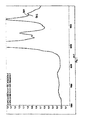
- FIG. 4 shows examples of the corresponding spectra, ie the spectrum 300 for pure 4,4'-MDI, the spectrum 302 for 2,4'-MDI and the spectrum 304 for 2,2'-MDI. Like from the FIG. 4 As can be seen, these spectra 300, 302, 304 are similar.
- the FIG. 5 shows the spectrum 400 of an isomeric mixture of 0.34% 2,4'-MDI in 4,4'-MDI. This mixture is obtained, for example, as a mixture G 1 at the bottom region 202 of the isomer separation plant (cf. FIG. 1 ). Furthermore, the shows FIG. 5 the spectrum 402, the isomeric mixture of 2.12% 2,4'-MDI in 4,4'-MDI. Like from the FIG. 5 As can be seen, the spectra of these isomer mixtures are almost congruent.
- the FIG. 6 shows the difference spectrum from the spectra 402 and 400 of the FIG. 5 , Preferably, only the frequency ranges 502 and / or 504 and / or 506 for the evaluation in the multivariate calibration model 212 (cf. FIG. 2 ) used.
- Preferred frequency ranges for the evaluation of the spectrum are in particular the frequency ranges of 5000-7000 cm-1, preferably 6250-6080 cm-1 or 5840-5650 cm-1. This allows isomer concentrations in a mixture of isomers z. In the range of 0.01% to 99.99%, with an accuracy of less than 0.1% absolute. A regulator intervention can therefore already take place at a setpoint deviation of only 0.1%, so that a practically constant product quality is guaranteed at all times, in particular in the case of fully automatic regulation.
- the absorption spectra are processed either as original spectra or as first, second or higher derivative spectra.
- the first derivative spectra are processed further.
- FIG. 7 shows the corresponding spectra for various mixtures of 2,4-TDI and 2,6-TDI.
- the spectrum 700 is obtained; for 81% 2.4 TDI with the remainder 2.6 TDI, the spectrum 702 is obtained; for a concentration of ⁇ 99.5 2.4 TDI with a remainder of 2.6-TDI, the spectrum 704 is obtained.
- these spectra are very similar to 700, 702, and 704. Nevertheless, it is possible in particular to determine even small differences in concentration accurately.
- FIG. 8 shows the calibration curve for the determination of 2,4-TDI in 2,6-TDI. From this it can be seen that the quantitative analysis is possible with a high accuracy, despite the similarity of the spectra.
- Preferred frequency ranges for the evaluation of the spectrum are in particular the frequency ranges of 4500-9000 cm-1, preferably 5610-6220 cm-1 and of 5240-5480 cm-1.
Landscapes
- Physics & Mathematics (AREA)
- Chemical & Material Sciences (AREA)
- Spectroscopy & Molecular Physics (AREA)
- Health & Medical Sciences (AREA)
- General Physics & Mathematics (AREA)
- Analytical Chemistry (AREA)
- Biochemistry (AREA)
- General Health & Medical Sciences (AREA)
- Life Sciences & Earth Sciences (AREA)
- Immunology (AREA)
- Pathology (AREA)
- Organic Chemistry (AREA)
- Nuclear Medicine, Radiotherapy & Molecular Imaging (AREA)
- Investigating Or Analysing Materials By Optical Means (AREA)
- Organic Low-Molecular-Weight Compounds And Preparation Thereof (AREA)
- Investigating, Analyzing Materials By Fluorescence Or Luminescence (AREA)
Description
- Die Erfindung betrifft das Gebiet der Bestimmung der Isomerenzusammensetzung bei Isocyanat-Herstellprozessen sowie die Regelung einer Isomeren-Anlage für die Mischung oder die Trennung von Isomeren.
- Aus dem Stand der Technik ist es bekannt, ein Isomerengemisch von Isocyanaten einer bestimmten Isomerenzusammensetzung mittels einer Isomerenanlage herzustellen.
- Beispielsweise kann eine Isomerentrennung destillativ oder mittels Kristallisation erfolgen. Oder die Herrstellung eines bestimmten Isomerengemisches erfolgt durch Mischen von geeigneten Isomerenausgangsmischungen. Die Qualität kann beispielsweise in einer destillativen Isomerentrennung grob über die Prozessparameter Druck und Temperatur sowie die Destillat/Sumpfproduktverhältnisse und Rücklaufverhältnisse geregelt werden. Hierbei ist von Nachteil, dass beispielsweise bei hohen Produktreinheiten Druck und Temperatur keine praktisch nutzbare Information über die Konzentration der Isomeren liefern; d. h. die Sensitiviät der Konzentrationsbestimmung liegt im Bereich des Messrauschens aufgrund der eng beieinander liegenden Siedepunkte. Weiterhin ist bei einer Isocyanat-Isomerenmischung bisher keine physikalische Methode zur Bestimmung von Isomerenmischungen bekannt.
- Bisher wurde diese Qualitätsüberwachung deshalb per Probenahme und z. B. anschließender manueller chromatographischer Analytik, bevorzugt Gaschromatographie (GC) durchgeführt. Hierbei sind Arbeitsschutz- und Umweltschutzbedingungen zu beachten, um Gefährdungen aufgrund des Umgangs mit den chemischen Stoffen zu vermeiden; ferner ist die Probenanzahl wegen des personellen Aufwandes begrenzt und die Information über die Zusammensetzung der Probe steht erst mit einer erheblichen Verzögerung zur Verfügung. Zur Steuerung der Produktqualität von Kristallisatoren oder Destillationskolonnen hat dieses manuelle Verfahren daher erhebliche Nachteile, insbesondere da sie keine laufende Trendaussage über die Konzentrationsänderungen an vielen Apparaten einer komplexen Anlage zulässt.
- Bei solchen manuellen Steuerungen kann es daher während relativ langer Zeiträume dazu kommen, dass das hergestellte Isomerengemisch eine relativ große Abweichung von der Soll-Zusammensetzung aufweist. Dies kann die Reduzierung der Produktqualität oder die Herstellung von Ausschuss bedeuten.
- Als online Verfahren kommen Prozess-Chromatographie oder automatisierte Titration in Frage. Diesen Verfahren gemeinsam ist, dass das Ergebnis nur erheblich zeitverzögert nach längeren Messzeiten zur Verfügung steht. Daneben sind diese Verfahren durch aufwändige Probenzuführung, Störanfälligkeit und größeren Verbrauch an Hilfsstoffen und Verbrauchsmaterialien gekennzeichnet.
- Die Überwachung und Regelung der Isomerenzusammensetzung ist insbesondere für die Herstellung von Isocyanaten von Bedeutung. Verschiedene Isocyanate A, B, C, D usw. bestehen dabei aus einer Mischung von zwei oder mehreren Isomeren 1, 2, 3, ..., n.
- Diese Isocyanate können z. B. Naphthylen-Diisocyanate (Bis-[isocyanat]-naphthalin), Xylylen-Diisocyanate (Bis-[isocyanatmethyl]-benzol), Methylen-Diphenyl-Diisocyanate (MDI) oder Toluylen-Diisocyanate (TDI) sein, sowie weitere aromatische, alicyclische oder aliphatische Isocyanate und deren Mischungen.
- Im allgemeinen bestehen Isocyanat-Zwischen- oder -Verkaufsprodukte aus den verschiedenen Isomeren in unterschiedlichen Verhältnissen.
- Technisch werden solche Isocyanat-Zwischen- oder -Verkaufsprodukte aus einem Isocyanat-Ausgangsgemisch (Rohgemisch) mehrerer Isomere 1,2,3, ..., n hergestellt.
- Beispielsweise kann das Isocyanat A Toluylendiisocyanat (TDI) sein, ein Isomerengemisch aus den Isomeren 2,4-TDI (2,4-Bis-[isocyanat]-benzol), 2,6 -TDI (2,6-Bis-[isocyanat]-benzol), 2,3-TDI und 3,4-TDI. Das Ausgangsgemisch kann zur Erzielung spezieller hochwertiger Produkteigenschaften in seine Isomeren zerlegt werden. So sind auf dem Markt ein Verkaufsprodukt I mit ca. 100 % 2,4-TDI, sowie ein Verkaufsprodukt II mit ca. 65 % 2,4-TDI und ca. 35 % 2,6-TDI erhältlich.
- Beispielsweise kann das Isocyanat B Methylen-Diphenyl-Diisocyanat (MDI) sein, ein Isomerengemisch aus den Isomeren 2,2'-MDI (Bis-[2-isocyanat-phenyl]-methan), 2,4'-MDI (2-Isocyanat-phenyl)-(4-isocyanat-phenyl)-methan 4,4'-MDI (Bis-[4-isocyanat-phenyl]-methan) sowie weiterer höherkerniger Isomere.
- Das Ausgangsgemisch kann zur Erzielung spezieller hochwertiger Produkteigenschaften in seine Isomeren zerlegt werden. So sind auf dem Markt ein Verkaufsprodukt I mit ca. 100 % 4,4'-MDI, sowie ein Verkaufsprodukt II mit ca. 50 % 2,4'-MDI und ca. 50 % 4,4'-MDI erhältlich.
- Eine möglichst genaue Überwachung der Isomerenzusammensetzung ist für die Einhaltung einer vorgegebenen Produktspezifikation zwingend erforderlich. Diese Überwachung muss die Zusammensetzung möglichst schnell liefern, damit die Nachregelung der Isomerenanlage effizient erfolgen kann. Da es sich bei der Isocyanat-Isomerenherstellung produktionsbedingt um Koppelprodukte handeln kann, ist eine schnelle und möglichst präzise Überwachung besonders wichtig.
- Die bisher praktizierten Verfahren können diese Anforderungen nur mit erheblichen Einschränkungen erfüllen. Beispielsweise müssen für die offline gaschromatographische Untersuchung Proben gezogen und ins Labor transportiert werden, dort müssen die Probe aufbereitet und anschließend gaschromatographisch analysiert werden.
- Als Alternative zur Gaschromatographie und Titration sind zur quantitativen Analyse der Zusammensetzung von Stoffgemischen aus dem Stand der Technik spektroskopische Verfahren bekannt, beispielsweise Nah-Infrarot(NIR)-Spektroskopie, Mittelinfrarot-Spektroskopie und Raman-Spektroskopie.
- Das analytische Verfahren Nahinfrarot-(NIR-)Spektroskopie ist eine weit verbreitete Technik, die sowohl im Labor als auch im Online-Betrieb eingesetzt wird. Die Kombination von NIR-Spektroskopie mit chemometrischen Auswerteverfahren für spezielle Messaufgaben ist ebenfalls an sich aus dem Stand der Technik bekannt, z. B.
DE 02139269 ,WO 97/41420 WO 98/29787 WO 99/31485 JP 11350368 WO 20002/0834 JP 2000146835 JP 2000298512 WO 2002/04394 WO 2002/12969 WO 95/31709 U.S. Patent 5,707,870 ,U.S. Patent 5,712,481 , undWO 2000/68664 - Spektroskopische Analysetechniken, zur Bestimmung von chemischen Eigenschaften von Polymeren oder von physikalischen Eigenschaften von Polyurethan-Schäumen sowohl im Labor als auch im Online-Betrieb, sind bekannt aus "A review of process near infrared spectroscopy: 1980-1994" (J. Workman, J. Near Infrared Spectroscopy 1, 221-245 (1993). Die Vorteile der Kombination aus Lichtwellenleitern und NIR-Spektrometer gegenüber dem Einsatz der Mittel-Infrarot-Spektroskopie sind bekannt aus Khettry "In-Line Monitoring of Polymeric Processes" Antec '92, 2 674-2 676.
- Für den Einsatz der NIR-Spektrokopie im Bereich von quantitativen Bestimmungen wird das analytische Verfahren häufig in Kombination mit chemometrischen Auswertemethoden verwendet. Gebräuchlich ist dabei z. B. das Partial Least Square-Verfahren (PLS), wie z. B. aus Raphael Vieira "In-line and In Situ Monitoring of Semi-Batch Emulsion Copolymerizations Using Near-Infrared Spectroscopy" J Applied Polymer Science, Vol. 84, 2 670-2 682 (2002) ersichtlich, oder aus T. Rohe "Near Infrared (NIR) spectroscopy for inline monitoring of polymer extrusion processes" Talanta 50 (1999) 283-290 bzw. C. Miller "Chemometrics for on-line spectroscopy applications - theory and practice", J Chemometrics 2000; 14: 513-528 bzw. "Multivariate Analysis of Near-Infrared Spectra Using G-Programming Language" J. Chem. Inf.Comput. Sci. 2000, 40, 1 093-1 100.
- Die Verwendung von NIR-Techniken für spezielle Messaufgaben ist ferner bekannt aus:
WO 00/02035 US 005717209 (Spektralanalyse von Kohlenwasserstoffen),US 006228650 ;WO 99/31485 US 6339222 ;WO 00/68664 DE 10005130A1 (Kontrolle von Polymerprozessen, Bestimmung von NCO in PU). - Einen Überblick über die Verwendung von multivariaten chemometrischen Kalibrationsmodellen in der analytischen Chemie gibt ferner "Multivariate Kalibration", Jörg-Peter Conzen, 2001, ISBN 3-929431-13-0.
- Die
US 6162644 beschreibt die Isomeren-Trennung u.a. durch Konzentrationsmessung von Xylenen durch Vergleich von NIR-Spektren. - Die
DE 10005130 A1 offenbart ein Verfahren zur Kontrolle von Polymerisationsreaktionen von Isocyanaten durch Messung von Absorptionsbanden im nahen Infrarotbereich. - Im Stand der Technik werden solche spektroskopische Verfahren für Isocyanat-Isomergemische jedoch nicht eingesetzt.
- Der Erfindung liegt daher die Aufgabe zugrunde, ein verbessertes Verfahren zur Bestimmung der Isomerenzusammensetzung in einem Isocyanat-Isomerengemisch sowie ein verbessertes Verfahren zur Regelung einer Isomerenanlage.
- Die der Erfindung zugrunde liegenden Aufgaben werden jeweils mit den Merkmalen der unabhängigen Patentansprüche gelöst. Bevorzugte Ausführungsformen der Erfindung sind in den abhängigen Patentansprüchen angegeben.
- Ausgangspunkt der vorliegenden Erfindung ist die Entdeckung, dass sich die Absorptionsspektren von Isocyanat-Isomerengemischen überraschenderweise selbst bei kleinen Konzentrationsunterschieden und bei kleinen Gehalten einzelner Isomere hinreichend voneinander unterscheiden, um mit Hilfe eines chemometrischen Kalibrationsmodells die Isomerenkonzentrationen in einem Isomerengemisch auf der Grundlage der Messung des Spektrums des Isomerengemisches bestimmen zu können.
- Erfindungsgemäß erfolgt die Bestimmung von Methylen-Diphenyl-Diisocyanat (MDI)-Isomeren Konzentrationen gemäß Anspruchs 1. Die Bestimmung der Zusammensetzung in einem Isocyanat-Isomerengemisch erfolgt so, dass beispielsweise online ein Spektrum des Isomerengemisches mit einem optischen Sensor mittels Nah-Infrarot(NIR)-Spektroskopie, Mittelinfrarot-Spektroskopie oder Raman-Spektroskopie aufgenommen wird. Das gemessene Spektrum wird dann in ein chemometrisches Kalibrationsmodell eingegeben, was zuvor für die Mischung dieser Isomeren erstellt worden ist. Durch die Auswertung des Spektrums in dem chemometrischen Kalibrationsmodell erhält man die Isomerenkonzentrationen in dem Isomerengemisch. Durch Vergleich der so ermittelten Ist-Konzentrationen der Isomere mit spezifizierten Soll-Konzentrationen kann die Isomerentrennanlage entsprechend nachgeregelt werden. Das chemometrische Kalibrationsmodell kann z. B. ein multivariates Modell sein, z. B. ein Partial Least Square-Algorithmus.
- Von besonderem Vorteil ist hierbei, dass die Konzentrationsmessungen ständig, d. h. beispielsweise in kleinsten Zeitabständen, erfolgen können und somit eine Regelung der Isomerenanlage innerhalb enger Sollwertbereichen möglich ist. Insbesondere ist so die Produktion von Ausschuss oder geringer Produktqualität weitgehend vermeidbar.
- Ein weiterer Vorteil ist, dass die manuelle Probenentnahme und GC-Analytik entfallen kann. Dies hat insbesondere Vorteile hinsichtlich Arbeits- und Umweltschutz.
- Von besonderem Vorteil ist ferner, dass die Aufnahme der Spektren online/inline an einer oder mehrerer verschiedener Stellen einer komplexen Anlage erfolgen kann, und zwar ohne Probenentnahme. Eine solche komplexe Anlage besteht beispielsweise aus mehreren miteinander verschalteten Apparaten, z. B. Kolonnen oder Kristallisatoren. Dies ermöglicht eine zeitnahe und häufige Information über die Isomerenkonzentrationen. Diese Information kann für eine manuelle Regelung eines oder mehrerer der Parameter der Isomerenanlage verwendet werden oder auch für eine kontinuierliche, automatische Regelung der Produktionsanlage.
- Beispielsweise können mehrere optische Sensoren zur Aufnahme von Spektren an verschiedenen Stellen einer Isomerenanlage zur Aufnahme der Spektren verschiedener Isomerengemische angeordnet sein. Diese optischen Sensoren können z. B. über Glasfaser mit einem einzigen Spektrometer verbunden sein, welches im Multiplexbetrieb arbeitet. Dadurch wird der investive Aufwand minimiert. Ferner können aufgrund dieser Online-Analytik Probenentnahme-Leitungen bis zu einem Analysegerät mit der Gefahr von Verstopfungen durch Auskristallisieren und dergleichen vermieden werden. Dies ist ein besonderer Vorteil der Erfindung, da solche Analysenleitungen störanfällig sind und ein zusätzliches Handling der anfallenden Produkt-Analysenstoffströme erfordern.
- Ein weiterer Vorteil ist die Möglichkeit der automatischen Prozessführung auf der Grundlage der Konzentrationsinformationen mit der dadurch möglichen Einhaltung einer nahezu konstanten Produktqualität mit geringem Energieaufwand bei hoher Ausbeute sowie das konsequente Ausschöpfen der Anlagenkapazität.
- Von weiterem besonderen Vorteil ist die universelle Einsetzbarkeit der Erfindung für verschiedenste Isomerenzusammensetzungen bei Isocyanat-Herstellprozessen. Insbesondere sind mit Hilfe der vorliegenden Erfindung hohe Messgenauigkeiten für die Bestimmung der Isomerenzusammensetzung erreichbar, wenn einer oder mehrere der Isomere in ganz geringen Konzentrationen vorliegen, als auch wenn die Mischungskonzentrationen in etwa gleichgewichtig sind. Beispielsweise können mit Hilfe der vorliegenden Erfindung Konzentrationsmessungen eines Isomers in einem Isomerengemisch durchgeführt werden, wenn die Konzentration des Isomers zwischen 0,01 % und 99,99 % liegt. Einige bevorzugte Anwendungen für die Bestimmung der Isomerenzusammensetzung bei Isocyanat-Herstellprozessen sind im Folgenden angegeben:
- a) 0-3% 2,4'-MDI, , 0-3% 2,2'-MDI, Rest 4,4'-MDI
- b) 40% - 70% 2,4'-MDI, 0% - 3% 2,2'-MDI, Rest 4,4'-MDI
- Weitere Anwendungen für die Bestimmung der Isomerenzusammensetzung bei Isocyanat-Herstellprozessen sind: 0-40% 2,6-TDI, Rest 2,4-TDI.
- Im Weiteren werden Ausführungsformen mit Bezugnahme auf die Zeichnungen näher erläutert. Es zeigen:
- Figur 1
- ein Flussdiagramm einer Ausführungsform eines erfindungsgemäßen Verfahrens zur Bestimmung der Isomerenzusammensetzung in verschiedenen Isomerengemischen,
- Figur 2
- ein Blockdiagramm einer Isomerentrennanlage,
- Figur 3
- ein Blockdiagramm einer Isomerenmischanlage,
- Figur 4
- verschiedene Spektren von MDI-Isomeren,
- Figur 5
- die Spektren von zwei unterschiedlichen MDI-Isomerengemischen,
- Figur 6
- das Differenzspektrum der Spektren der
Figur 5 , - Figur 7
- verschiedene Spektren von TDI-Isomeren,
- Figur 8
- eine Kalibrationskurve für die Bestimmung von 2,4-TDI in 2,6-TDI.
- In dem Schritt 100 erfolgt die Herstellung eines Isomerengemisches. Bei dem Gemisch handelt es sich beispielsweise um rohes MDI-Gemisch, welches aus drei MDI-Isomeren besteht oder um rohes TDI-Gemisch, welches aus bis zu vier TDI-Isomeren besteht..
- In dem Schritt 102 werden aus dem Roh-Isomerengemisch, welches in dem Schritt 100 hergestellt worden ist, ein oder mehrere Gemische Gi, die jeweils eine bestimmte Soll-Isomerenzusammensetzung aufweisen, durch Isomerentrennung hergestellt. Dies erfolgt in einer Isomerentrennanlage, beispielsweise destillativ oder mittels Kristallisation. Ebenfalls kann es sich statt um eine Isomerentrennanlage um eine Isomerenmischanlage handeln.
- In dem Schritt 104 wird der Index i initialisiert. In dem Schritt 106 wird online das Spektrum des Gemisches Gi am Ausgang der Isomerenanlage gemessen. Dies erfolgt beispielsweise durch eine Online-NIR-Spektralmessung. Die Messung erfolgt beispielsweise durch einen optischen Sensor, der mittels eines Glasfaserkabels mit einem NIR-Spektrometer verbunden ist.
- In dem Schritt 108 erfolgt eine Spektralanalyse des gemessenen NIR-Spektrums mit Hilfe eines chemometrischen Kalibrationsmodells. Daraus resultiert in dem Schritt 110 die Ist-Isomerenzusammensetzung des Gemisches Gi. In dem Schritt 112 wird aus den Soll- und den Ist-Werten der Isomerenzusammensetzung des Gemisches Gi die Differenz gebildet. Auf der Basis dieses Differenzwertes erfolgt in dem Schritt 114 eine Nachregelung der Isomerenanlage. In dem Schritt 116 wird der Index i inkrementiert und das nächste Spektrum wird in dem Schritt 106 gemessen. Dieser Ablauf wiederholt sich solange, bis die Ist-Isomerenzusammensetzung für alle Gemische Gi einmal bestimmt worden ist. Danach wird der Index i zurückgesetzt, sodass kontinuierlich innerhalb relativ kurzer Zeitabstände, von z. B. wenigen Minuten die Ist-Isomerenzusammensetzungen sämtlicher Gemische Gi bestimmt werden und eine entsprechende Nachregelung zeitnah erfolgen kann.
-
Figur 2 zeigt eine Isomerentrennanlage 200 zur Herstellung von Isomeren-Gemischen G1 und G2 mit jeweils definierten Isomerenkonzentrationen aus einem Roh-Isomerengemisch. Beispielsweise erhält man in einem Sumpfbereich 202 der destillativen Isomerentrennanlage 200 das Gemisch G, und in einem Kopfbereich 204 der Isomerentrennanlage 200 das Gemisch G2. - Zumindest am Ausgang des Sumpfbereichs 202 der Isomerentrennanlage 200 ist ein optischer Messzelle 206 angeordnet. Die Messzelle 206 beinhaltet einen NIR-Sensor und kann beispielsweise mit dem in
WO 00/58711 - Als Ergebnis der Analyse des gemessenen Spektrums gibt das chemometrische Kalibrationsmodell 212 die Ist-Zusammensetzung des Isomerengemisches G1 aus. Diese Ist-Zusammensetzung wird in einen Regler 214 eingegeben sowie auch die Soll-Zusammensetzung des Isomerengemischs G1. Aus einer Abweichung zwischen der Ist-Zusammensetzung und der Soll-Zusammensetzung ermittelt der Regler 214 eine Stellgröße für die Nachregelung der Isomerenanlage 200.
- Bei der Ausführungsform der
Figur 2 ist eine Messung des Spektrums des Gemischs G2 nicht unbedingt erforderlich, da sich die Isomerenkonzentrationen in dem Gemisch G2 aus den bekannten Konzentrationen in dem Roh-Isomerengemisch und der Ist-Zusammensetzung des Gemischs G1 ergibt. - Andererseits können an verschiedenen Stellen der Isomerentrennanlage 200, insbesondere an verschiedenen Kolonnen, weitere Sensoren 206 angeordnet sein, die wiederum über Lichtwellenleiter mit dem Spektrometer 210 verbunden sind. Das Spektrometer 210 wird in diesem Fall im Multiplex betrieben ebenso wie das chemometrische Kalibrationsmodell 212 und der Regler 214. Die Messung der Spektren kann also an verschiedenen Stellen der Isomerentrennanlage 200 erfolgen, vorzugsweise in den Einläufen, innerhalb des Trennapparats und / oder in einer getrennten Fraktion.
- Bei dem Isomerengemisch handelt es sich beispielsweise um rohes Monomer-MDI, welches aus den drei Isomeren 2,4'-MDI, 2,2'-MDI und 4,4'-MDI besteht.
- Der Regler 214 kann durch ein Prozessleitsystem der Isomerentrennanlage 200 realisiert werden. Alternativ ist es auch möglich, die Messergebnisse beispielsweise auf eine Anzeigeinheit einer Bedienkonsole der Isomerentrennanlage 200 anzuzeigen, so dass diese manuell nachgeregelt werden kann.
- Die
Figur 3 zeigt eine Isomerenmischanlage 216. Elemente der Isomerenmischanlage 216, die den Elementen der Isomerentrennanlage 200 entsprechen, sind in derFigur 3 mit denselben Bezugszeichen gekennzeichnet. Die Isomerenmischanlage 216 dient zur Herstellung eines Isomerengemisches mit einer bestimmten Soll-Zusammensetzung aus verschiedenen Isomeren. Für das in der Isomerenmischanlage 216 hergestellte Isomerengemisch wird mittels der Messzelle 206, die über einen Lichtwellenleiter 208 mit einem Spektrometer 210 verbunden ist, ein Spektrum ermittelt, welches in ein chemometrisches, multivariates Kalibrationsmodell 212 eingegeben wird. Als Ergebnis der Analyse des gemessenen Spektrums gibt das chemometrische Kalibrationsmodell 212 die Ist-Zusammensetzung des Isomerengemisches aus. Diese Ist-Zusammensetzung wird in einen Regler 214 eingegeben, sowie auch die Soll-Zusammensetzung des Isomerengemisches. Aus einer Abweichung zwischen der Ist-Zusammensetzung und der Soll-Zusammensetzung ermittelt der Regler 214 eine Stellgröße für die Nachregelung der Isomerenmischanlage 216. - Für die Herstellung des Isomerengemischs werden der Isomerenmischanlage zwei oder mehr Reinisomere oder Isomerengemische g1, g2, ... zugeführt. Hierbei kann es sich beispielsweise um TDI-Reinisomere und / oder um TDI-Isomerengemische handeln. Zur Überwachung der Zusammensetzungen der Isomeren- bzw. Isomerengemische g1, g2, ... können an den entsprechenden Einläufen der Isomerenmischanlage jeweils Messzellen 206 angeordnet sein, die ebenfalls mit dem Spektrometer 210 verbunden sind, um die Ist-Zusammensetzungen der Ausgangsstoffe g1, g2, ... zu überwachen.
- Die
Figur 4 zeigt Beispiele für die entsprechenden Spektren, d. h. das Spektrum 300 für reines 4,4'-MDI, das Spektrum 302 für 2,4'-MDI und das Spektrum 304 für 2,2'-MDI. Wie aus derFigur 4 ersichtlich, sind diese Spektren 300, 302, 304 ähnlich. - Die
Figur 5 zeigt das Spektrum 400 eines Isomerengemisches aus 0,34 % 2,4'-MDI in 4,4'-MDI. Dieses Gemisch erhält man beispielsweise als Gemisch G1 am Sumpfbereich 202 der Isomerentrennanlage (vergleicheFigur 1 ). Ferner zeigt dieFigur 5 das Spektrum 402, des Isomerengemischs von 2,12 % 2,4'-MDI in 4,4'-MDI. Wie aus derFigur 5 ersichtlich, sind die Spektren dieser Isomerengemische nahezu deckungsgleich. - Die
Figur 6 zeigt das Differenzspektrum aus den Spektren 402 und 400 derFigur 5 . Vorzugsweise werden nur die Frequenzbereiche 502 und/oder 504 und/oder 506 für die Auswertung in dem multivariaten Kalibrationsmodell 212 (vergleicheFigur 2 ) verwendet. Bevorzugte Frequenzbereiche für die Auswertung des Spektrums sind insbesondere die Frequenzbereiche von 5000-7000 cm-1, bevorzugt 6250-6080 cm-1 oder 5840-5650 cm-1. Damit lassen sich Isomerenkonzentrationen in einem Isomerengemisch z. B. im Bereich von 0,01 % bis 99,99 % bestimmen, mit einer Genauigkeit von kleiner 0,1% absolut. Ein Reglereingriff kann also bereits bei einer Sollwert-Abweichung von nur 0,1 % erfolgen, sodass eine praktisch gleich bleibende Produktqualität zu jedem Zeitpunkt gewährleistet ist, insbesondere bei einer vollautomatischen Regelung. - Die Absorptionsspektren werden entweder als Originalspektren, oder als erste, zweite oder höhere Ableitungsspektren weiterverarbeitet. Bevorzugt werden die ersten Ableitungsspektren weiterverarbeitet.
- Die
Figur 7 zeigt die entsprechenden Spektren für verschiedene Gemische von 2,4-TDI und 2,6-TDI. Für ein Isomerengemisch aus 67 % 2,4 TDI mit Rest 2,6-TDI erhält man des Spektrum 700; für 81 % 2,4 TDI mit Rest 2,6 TDI erhält man das Spektrum 702; für eine Konzentration von ≥ 99,5 2,4 TDI mit einem Rest von 2,6-TDI erhält man das Spektrum 704. Wie aus derFigur 7 ersichtlich, sind diese Spektren 700, 702. und 704 sehr ähnlich. Dennoch wird ermöglicht insbesondere auch kleine Konzentrationsunterschiede genau zu bestimmen. -
Figur 8 zeigt die Kalibrationskurve für die Bestimmung von 2,4-TDI in 2,6-TDI. Hieraus ist ersichtlich, dass die quantitative Analyse mit einer großen Genauigkeit möglich ist, trotz der Ähnlichkeit der Spektren. Bevorzugte Frequenzbereiche für die Auswertung des Spektrums sind insbesondere die Frequenzbereiche von 4500-9000 cm-1, bevorzugt 5610-6220 cm-1 sowie von 5240-5480 cm-1. -
- Isomerentrennanlage
- 200
- Sumpfbereich
- 202
- Kopfbereich
- 204
- Messzelle
- 206
- Lichtwellenleiter
- 208
- Spektren
- 210
- chemometrisches Kalibrationsmodell
- 212
- Regler
- 214
- Isomerenmischanlage
- 216
- 4,4'-MDI-Spektrum
- 300
- 2,4'-MDI-Spektrum
- 302
- 2,2'-MDI-Spektrum
- 304
- Spektrum
- 400
- Spektrum
- 402
- Spektrum
- 500
- Frequenzbereich
- 502
- Frequenzbereich
- 504
- Frequenzbereich
- 506
- Spektrum
- 700
- Spektrum
- 702
- Spektrum
- 704
Claims (9)
- Verfahren zur Bestimmung von Methylen-Diphenyl-Diisocyanat (MDI)-Isomerenkonzentrationen in einem Methylen-Diphenyl-Diisocyanat-Isomerengemisch, wobeia) ein Nah-Infrarot(NIR)-Spektrum des Methylen-Diphenyl-Diisocyanat-Isomerengemisches aufgenommen wird,b) das Spektrum in einem chemometrischen Kalibrationsmodell eingegeben wird, undc) das Spektrum in dem chemometrischen Kalibrationsmodell in einem Frequenzbereich von 6250 - 6080 cm-1 oder 5840 - 5650 cm-1 ausgewertet wird.
- Verfahren nach Anspruch 1 mit einem Methylen-Diphenyl-Diisocyanat-Isomerengemisch aus 2,4'MDI und 4,4'-MDI.
- Verfahren nach einem der vorhergehenden Ansprüche 1 bis 2, dadurch gekennzeichnet, dass die Aufnahme des Spektrums ohne Probenahme online, insbesondere inline erfolgt.
- Verfahren nach einem der vorhergehenden Ansprüche 1 bis 3, wobei das Ergebnis der Bestimmung der Isomerenzusammensetzung zur Steuerung und/oder Regelung verwendet wird, vorzugsweise zur automatischen Regelung.
- Verfahren nach einem der vorhergehenden Ansprüche 1 bis 4, dadurch gekennzeichnet, dass die Isomerenkonzentrationen in dem Isomerengemisch im Bereich von 0,01 % bis 99,99 % liegen.
- Verfahren nach einem der vorhergehenden Ansprüche 1 bis 5, dadurch gekennzeichnet, dass die Auswertung des Spektrums mit einem chemometrischen Modell mit einem Partial Least Square-Verfahren erfolgt.
- Verfahren zur Regelung einer Isomerenanlage zur Herstellung eines Methylen-Diphenyl-Diisocyanat-Isomerengemisches mit einer Soll-Isomeren-Zusammensetzung, mit unter Anwendung des Verfahrens nach einem der vorhergehenden Ansprüche- Aufnahme eines Nah-Infrarot(NIR)-Spektrum, des Methylen-Diphenyl-Diisocyanat-Isomerengemisches,- Eingabe des Spektrums in ein chemometrisches Kalibrationsmodell zur Bestimmung einer Ist-Isomeren-Zusammensetzung des Isomerengemischs,
wobei die Auswertung der Spektrums des Methylen-Diphenyl-Diisocyanat-Isomerengemisches in dem chemometrischen Kalibrationsmodell in einem Frequenzbereich von 6250-6080cm-1 oder 5840-5650cm-1 erfolgt- anschliessender Bestimmung einer Soll-Ist-Abweichung, und- Regelung eines oder mehrerer Prozessparameter der Isomerenanlage basierend auf der Soll-Ist-Abweichung. - Verfahren nach Anspruch 7, wobei die Herstellung des Isomerengemischs in der Isocyanat-Isomerenanlage destillativ oder mittels Kristallisation erfolgt.
- Verfahren nach einem der vorhergehenden Ansprüche 7 bis 8, dadurch gekennzeichnet, dass die Messung des Spektrums online, insbesondere inline erfolgt.
Applications Claiming Priority (2)
| Application Number | Priority Date | Filing Date | Title |
|---|---|---|---|
| DE10322439 | 2003-05-19 | ||
| DE10322439A DE10322439A1 (de) | 2003-05-19 | 2003-05-19 | Verfahren und Vorrichtung zur Bestimmung der Isomerenzusammensetzung bei Isocyanat-Herstellprozessen |
Publications (2)
| Publication Number | Publication Date |
|---|---|
| EP1480033A1 EP1480033A1 (de) | 2004-11-24 |
| EP1480033B1 true EP1480033B1 (de) | 2009-07-22 |
Family
ID=33039195
Family Applications (1)
| Application Number | Title | Priority Date | Filing Date |
|---|---|---|---|
| EP04010763A Expired - Lifetime EP1480033B1 (de) | 2003-05-19 | 2004-05-06 | Verfahren zur Bestimmung der Isomerenzusammensetzung bei Isocyanat-Herstellprozessen |
Country Status (12)
| Country | Link |
|---|---|
| US (1) | US7662634B2 (de) |
| EP (1) | EP1480033B1 (de) |
| JP (1) | JP2004347598A (de) |
| KR (1) | KR101038818B1 (de) |
| CN (1) | CN100538336C (de) |
| AT (1) | ATE437358T1 (de) |
| BR (1) | BRPI0401771A (de) |
| CA (1) | CA2467281A1 (de) |
| DE (2) | DE10322439A1 (de) |
| PT (1) | PT1480033E (de) |
| RU (1) | RU2346262C2 (de) |
| TW (1) | TW200506338A (de) |
Families Citing this family (18)
| Publication number | Priority date | Publication date | Assignee | Title |
|---|---|---|---|---|
| DE102005010216A1 (de) * | 2005-01-28 | 2006-08-03 | Bayer Technology Services Gmbh | Apparatetechnische Kombination einer NIR-Stoffkonzentrationsmessung mit einer auf Faser-Bragg-Gittern in Glasfasern beruhenden Temperaturprofilmessung |
| KR100714392B1 (ko) * | 2006-02-20 | 2007-05-08 | 삼성전자주식회사 | 병렬 데이터 직렬 변환회로 및 방법 |
| DE102006052673A1 (de) * | 2006-11-07 | 2008-05-08 | Thomas Schneider | Verfahren und Vorrichtung zur Rekalibrierung von Herstellungsprozessen |
| EP2014641A3 (de) † | 2007-06-06 | 2009-03-18 | Huntsman International Llc | Verfahren zur Herstellung von Mischungen aus Diphenylmethandiisocyanaten und Polyphenylpolymethylenpolyisocyanaten |
| CN102803926A (zh) * | 2009-06-24 | 2012-11-28 | 巴斯夫欧洲公司 | 测量水进入光气传导装置中的方法 |
| US9170184B2 (en) | 2012-03-13 | 2015-10-27 | Basf Se | Method of regulating the viscosity of a mixture comprising at least two components having different viscosities |
| WO2013135614A1 (de) | 2012-03-13 | 2013-09-19 | Basf Se | Verfahren zur regelung der viskosität eines mindestens zwei komponenten mit unterschiedlicher viskosität enthaltenden gemischs |
| CN103308507B (zh) * | 2013-05-27 | 2016-06-15 | 广西科技大学 | 一种快速测定聚氨酯中游离-nco的分析方法 |
| US20160025620A1 (en) * | 2014-07-22 | 2016-01-28 | Olympus Corporation | Optical Compositional Analysis of Mixtures |
| CN109001304B (zh) * | 2018-05-18 | 2021-05-07 | 云南电网有限责任公司电力科学研究院 | 一种用于在线色谱仪的校验装置 |
| JP7087697B2 (ja) * | 2018-06-07 | 2022-06-21 | 横河電機株式会社 | 光学分析システム及び光学分析方法 |
| EP3816610B1 (de) * | 2018-06-07 | 2023-05-03 | Yokogawa Electric Corporation | System zur optischen analyse und verfahren zur optischen analyse |
| JP7192473B2 (ja) * | 2018-12-17 | 2022-12-20 | 横河電機株式会社 | 光学分析システム及び光学分析方法 |
| JP7087696B2 (ja) * | 2018-06-07 | 2022-06-21 | 横河電機株式会社 | 光学分析システム及び光学分析方法 |
| US10983044B2 (en) * | 2018-06-26 | 2021-04-20 | Arometrix, Inc. | Device, system and method for in-situ optical monitoring and control of extraction and purification of plant materials |
| EP3711852A1 (de) * | 2019-03-21 | 2020-09-23 | Covestro Deutschland AG | Verfahren und vorrichtung zur quantitativen überwachung der zusammensetzung einer oligomer-/monomermischung |
| CN115298629B (zh) | 2020-03-18 | 2025-10-17 | 巴斯夫欧洲公司 | 通信系统、监测系统及相关方法 |
| CN118914165B (zh) * | 2024-10-10 | 2025-02-21 | 浙江大学衢州研究院 | 一种聚氨酯反应进程在线监测方法和系统 |
Family Cites Families (29)
| Publication number | Priority date | Publication date | Assignee | Title |
|---|---|---|---|---|
| DE265753C (de) | ||||
| SU675784A1 (ru) * | 1972-04-10 | 1980-02-25 | Предприятие П/Я Г-4236 | Способ получени низших изоцианатов |
| DD273175A3 (de) * | 1984-03-14 | 1989-11-08 | Schwarzheide Synthesewerk Veb | Verfahren zur Sicherung der Qualität von Polyurethan-Thermoplasten |
| SU1365666A1 (ru) * | 1985-11-20 | 1997-01-20 | Всесоюзный научно-исследовательский институт химических средств защиты растений с опытным заводом | Способ получения ортозамещенных бензолсульфонилизоцианатов |
| SU1636735A1 (ru) * | 1988-03-01 | 1991-03-23 | Предприятие П/Я Г-4302 | Способ анализа термообработанного дифенилметандиизоцианата |
| US5712481A (en) | 1990-04-09 | 1998-01-27 | Ashland Inc | Process and apparatus for analysis of hydrocarbon species by near infrared spectroscopy |
| EP0711313B1 (de) * | 1993-06-18 | 1998-08-26 | Henkel Kommanditgesellschaft auf Aktien | Isocyanat/polyol-reaktionsharz |
| US5404015A (en) * | 1993-09-21 | 1995-04-04 | Exxon Research & Engineering Co. | Method and system for controlling and optimizing isomerization processes |
| SE503101C2 (sv) | 1994-05-18 | 1996-03-25 | Eka Nobel Ab | Sätt att bestämma våtstyrkan hos papper och medel för processkontroll genom användning av sättet |
| ES2187570T3 (es) | 1994-09-01 | 2003-06-16 | Du Pont | Proceso de neutralizacion de acidos en una solucion de polimero. |
| US5808131A (en) * | 1995-05-01 | 1998-09-15 | The Dow Chemical Company | Liquid urethane containing adduct |
| US5717209A (en) | 1996-04-29 | 1998-02-10 | Petrometrix Ltd. | System for remote transmission of spectral information through communication optical fibers for real-time on-line hydrocarbons process analysis by near infra red spectroscopy |
| DE19645659A1 (de) * | 1996-11-06 | 1998-05-07 | Bayer Ag | Verfahren zur Isomerentrennung von Isocyanaten |
| US6072576A (en) * | 1996-12-31 | 2000-06-06 | Exxon Chemical Patents Inc. | On-line control of a chemical process plant |
| US6228650B1 (en) | 1997-12-17 | 2001-05-08 | Phillips Petroleum Company | Acid catalyst regeneration control |
| KR100277721B1 (ko) * | 1998-03-24 | 2001-01-15 | 남창우 | 근적외선분석시스템을이용한자이렌이성질체분리및이성화공정의조절및최적화방법및그장치 |
| JPH11350368A (ja) | 1998-06-09 | 1999-12-21 | Yokogawa Electric Corp | 白液連続測定装置 |
| US6300633B1 (en) * | 1998-07-06 | 2001-10-09 | Bayer Corporation | In-line method for determining the residue content of an isocyanate and apparatus useful therefor |
| US6294764B1 (en) | 1998-10-07 | 2001-09-25 | Mississippi State University | Multi-component process analysis and control |
| JP3620572B2 (ja) | 1998-11-10 | 2005-02-16 | 横河電機株式会社 | アルカリ濃度分析装置 |
| US6339222B1 (en) | 1998-11-12 | 2002-01-15 | Kvaerner Canada Inc. | Determination of ionic species concentration by near infrared spectroscopy |
| US6103934A (en) | 1998-12-18 | 2000-08-15 | Millennium Petrochemicals, Inc. | Manufacturing and process control methods |
| US6552221B1 (en) | 1998-12-18 | 2003-04-22 | Millenium Petrochemicals, Inc. | Process control for acetic acid manufacture |
| US6153217A (en) | 1999-01-22 | 2000-11-28 | Biodelivery Sciences, Inc. | Nanocochleate formulations, process of preparation and method of delivery of pharmaceutical agents |
| JP3959887B2 (ja) | 1999-04-14 | 2007-08-15 | 三井化学株式会社 | 近赤外分析によるプラントの運転制御方法 |
| CA2271221C (en) | 1999-05-05 | 2007-12-18 | Kvaerner Canada Inc. | Determination of ionic species concentration by near infrared spectroscopy |
| CN1379670A (zh) * | 1999-08-26 | 2002-11-13 | 艾伊法马公司 | 傅立叶变换拉曼光谱术测量组合物中奥美拉唑异构体的比例 |
| DE10005130A1 (de) * | 2000-02-04 | 2001-08-16 | Basf Coatings Ag | Vorrichtung und Verfahren zur Kontrolle von Polymerisationsreaktionen |
| RU2184951C1 (ru) * | 2001-06-05 | 2002-07-10 | Камский политехнический институт | Способ спектрального анализа дымов |
-
2003
- 2003-05-19 DE DE10322439A patent/DE10322439A1/de not_active Withdrawn
-
2004
- 2004-05-06 EP EP04010763A patent/EP1480033B1/de not_active Expired - Lifetime
- 2004-05-06 DE DE502004009776T patent/DE502004009776D1/de not_active Expired - Lifetime
- 2004-05-06 PT PT04010763T patent/PT1480033E/pt unknown
- 2004-05-06 AT AT04010763T patent/ATE437358T1/de not_active IP Right Cessation
- 2004-05-14 CA CA002467281A patent/CA2467281A1/en not_active Abandoned
- 2004-05-14 US US10/845,727 patent/US7662634B2/en active Active
- 2004-05-18 RU RU2004114921/04A patent/RU2346262C2/ru not_active IP Right Cessation
- 2004-05-18 KR KR1020040035056A patent/KR101038818B1/ko not_active Expired - Fee Related
- 2004-05-18 JP JP2004147303A patent/JP2004347598A/ja active Pending
- 2004-05-18 TW TW093113886A patent/TW200506338A/zh unknown
- 2004-05-18 BR BR0401771-4A patent/BRPI0401771A/pt not_active IP Right Cessation
- 2004-05-19 CN CNB2004100477888A patent/CN100538336C/zh not_active Expired - Lifetime
Also Published As
| Publication number | Publication date |
|---|---|
| KR101038818B1 (ko) | 2011-06-03 |
| DE10322439A1 (de) | 2004-12-09 |
| EP1480033A1 (de) | 2004-11-24 |
| US7662634B2 (en) | 2010-02-16 |
| CN1609597A (zh) | 2005-04-27 |
| BRPI0401771A (pt) | 2005-01-25 |
| ATE437358T1 (de) | 2009-08-15 |
| US20050003553A1 (en) | 2005-01-06 |
| PT1480033E (pt) | 2009-09-04 |
| CA2467281A1 (en) | 2004-11-19 |
| KR20040100947A (ko) | 2004-12-02 |
| RU2004114921A (ru) | 2005-10-27 |
| CN100538336C (zh) | 2009-09-09 |
| RU2346262C2 (ru) | 2009-02-10 |
| TW200506338A (en) | 2005-02-16 |
| DE502004009776D1 (de) | 2009-09-03 |
| JP2004347598A (ja) | 2004-12-09 |
Similar Documents
| Publication | Publication Date | Title |
|---|---|---|
| EP1480033A1 (de) | Verfahren und Vorrichtung zur Bestimmung der Isomerenzusammensetzung bei Isocyanat-Herstellprozessen | |
| DE69107467T2 (de) | Gerät und Verfahren zur Analyse von Kohlenwasserstoffen durch Spektroskopie im nahen Infrarotbereich. | |
| WO1998007026A1 (de) | Verfahren und vorrichtung zum untersuchen von chemischen reaktionen in parallel geschalteten, miniaturisierten reaktoren | |
| EP2825926B1 (de) | Verfahren zur regelung der viskosität eines mindestens zwei komponenten mit unterschiedlicher viskosität enthaltenden gemischs | |
| DE69930121T2 (de) | Ein in-line verfahren zur bestimmung des anteils von rückständen eines isocyanates | |
| DE10027074B4 (de) | Verfahren zur Analyse von Gasgemischen mit mehreren Komponenten unter Verwendung von FTIR-Spektroskopie | |
| DE10304615A1 (de) | Verfahren zur Überwachung und Führung von Nitrierprozessen mit Hilfe von Online-Spektrometern | |
| WO2021204450A1 (de) | Prozesssteuerung/-regelung auf basis einer spektroskopischen bestimmung unbestimmter substanzkonzentrationen | |
| WO2016110408A1 (de) | Apparatur und verfahren zur untersuchung von naphtha-reformierunqsprozessen | |
| DE4426944A1 (de) | Verfahren zur Kontrolle von Polykondensations- oder Polyadditionsreaktionen | |
| EP2192102B1 (de) | Verfahren zur Herstellung von wässrigen Formaldehyd-Lösungen | |
| DE10005130A1 (de) | Vorrichtung und Verfahren zur Kontrolle von Polymerisationsreaktionen | |
| DE19653532A1 (de) | Verfahren und Vorrichtung zur Prozeßführung bei der Herstellung von Faserstoff aus Holz | |
| DE69809904T2 (de) | Prozessleituerfahren fürventilierte polymerisationsvorichtung | |
| DE4328357C2 (de) | Verfahren zur quantitativen Erfassung der nichtflüchtigen von Pigmenten und Füllstoffen unterschiedlichen Komponenten von Überzugsmitteln oder Überzugsmittelbestandteilen | |
| DE60126775T2 (de) | Teilchendatenanalyse | |
| EP1512960B1 (de) | Spektroskopische Konzentrationsbestimmung in einer Rektifikationskolonne | |
| EP1238262A2 (de) | Verfahren und einrichtung zur messung von kenngrössen einer probe | |
| DE102009056849B4 (de) | Verfahren zur Bestimmung eines BSB-Wertes | |
| HK1076510A (en) | Method and device for determining the isomer composition in isocyanate production processes | |
| EP3941617A1 (de) | Verfahren und vorrichtung zur quantitativen überwachung der zusammensetzung einer oligomer-/monomermischung | |
| DE102025127883A1 (de) | Spektrometrisches Messverfahren | |
| Bastianelli et al. | Near infrared spectroscopy as a tool to control the results of chemical analyses performed as single determinations | |
| EP3081923A1 (de) | Verfahren zur herstellung und reinigung von adipinsäure |
Legal Events
| Date | Code | Title | Description |
|---|---|---|---|
| PUAI | Public reference made under article 153(3) epc to a published international application that has entered the european phase |
Free format text: ORIGINAL CODE: 0009012 |
|
| AK | Designated contracting states |
Kind code of ref document: A1 Designated state(s): AT BE BG CH CY CZ DE DK EE ES FI FR GB GR HU IE IT LI LU MC NL PL PT RO SE SI SK TR |
|
| AX | Request for extension of the european patent |
Extension state: AL HR LT LV MK |
|
| RIN1 | Information on inventor provided before grant (corrected) |
Inventor name: WOLF, UDO, DR. Inventor name: BOLTON, JEFFREY, DR. Inventor name: MUELLER, HEINZ-HERBERT, DR. Inventor name: DRESELY, STEFAN, DR. Inventor name: SCHIFFHAUER, MARTIN Inventor name: PIRKL, HANS-GEORG, DR. Inventor name: GERLACH, MARTIN, DR. Inventor name: SCHWEER, JOHANNES, DR. Inventor name: WIMSCHNEIDER, ANDREA, DR. Inventor name: MAHRENHOLTZ, JOCHEN |
|
| 17P | Request for examination filed |
Effective date: 20050524 |
|
| AKX | Designation fees paid |
Designated state(s): AT BE BG CH CY CZ DE DK EE ES FI FR GB GR HU IE IT LI LU MC NL PL PT RO SE SI SK TR |
|
| 17Q | First examination report despatched |
Effective date: 20070212 |
|
| GRAP | Despatch of communication of intention to grant a patent |
Free format text: ORIGINAL CODE: EPIDOSNIGR1 |
|
| RTI1 | Title (correction) |
Free format text: METHOD FOR DETERMINING THE CONTENT OF ISOMERES DURING PRODUCTION OF ISOCYANATE |
|
| GRAS | Grant fee paid |
Free format text: ORIGINAL CODE: EPIDOSNIGR3 |
|
| GRAA | (expected) grant |
Free format text: ORIGINAL CODE: 0009210 |
|
| AK | Designated contracting states |
Kind code of ref document: B1 Designated state(s): AT BE BG CH CY CZ DE DK EE ES FI FR GB GR HU IE IT LI LU MC NL PL PT RO SE SI SK TR |
|
| REG | Reference to a national code |
Ref country code: GB Ref legal event code: FG4D Free format text: NOT ENGLISH |
|
| REG | Reference to a national code |
Ref country code: CH Ref legal event code: EP |
|
| REG | Reference to a national code |
Ref country code: IE Ref legal event code: FG4D |
|
| REF | Corresponds to: |
Ref document number: 502004009776 Country of ref document: DE Date of ref document: 20090903 Kind code of ref document: P |
|
| REG | Reference to a national code |
Ref country code: PT Ref legal event code: SC4A Free format text: AVAILABILITY OF NATIONAL TRANSLATION Effective date: 20090828 |
|
| PG25 | Lapsed in a contracting state [announced via postgrant information from national office to epo] |
Ref country code: SE Free format text: LAPSE BECAUSE OF FAILURE TO SUBMIT A TRANSLATION OF THE DESCRIPTION OR TO PAY THE FEE WITHIN THE PRESCRIBED TIME-LIMIT Effective date: 20090722 Ref country code: FI Free format text: LAPSE BECAUSE OF FAILURE TO SUBMIT A TRANSLATION OF THE DESCRIPTION OR TO PAY THE FEE WITHIN THE PRESCRIBED TIME-LIMIT Effective date: 20090722 Ref country code: ES Free format text: LAPSE BECAUSE OF FAILURE TO SUBMIT A TRANSLATION OF THE DESCRIPTION OR TO PAY THE FEE WITHIN THE PRESCRIBED TIME-LIMIT Effective date: 20091102 |
|
| PG25 | Lapsed in a contracting state [announced via postgrant information from national office to epo] |
Ref country code: PL Free format text: LAPSE BECAUSE OF FAILURE TO SUBMIT A TRANSLATION OF THE DESCRIPTION OR TO PAY THE FEE WITHIN THE PRESCRIBED TIME-LIMIT Effective date: 20090722 Ref country code: SI Free format text: LAPSE BECAUSE OF FAILURE TO SUBMIT A TRANSLATION OF THE DESCRIPTION OR TO PAY THE FEE WITHIN THE PRESCRIBED TIME-LIMIT Effective date: 20090722 |
|
| REG | Reference to a national code |
Ref country code: HU Ref legal event code: AG4A Ref document number: E006510 Country of ref document: HU |
|
| REG | Reference to a national code |
Ref country code: IE Ref legal event code: FD4D |
|
| PG25 | Lapsed in a contracting state [announced via postgrant information from national office to epo] |
Ref country code: BG Free format text: LAPSE BECAUSE OF FAILURE TO SUBMIT A TRANSLATION OF THE DESCRIPTION OR TO PAY THE FEE WITHIN THE PRESCRIBED TIME-LIMIT Effective date: 20091022 |
|
| PLBI | Opposition filed |
Free format text: ORIGINAL CODE: 0009260 |
|
| PG25 | Lapsed in a contracting state [announced via postgrant information from national office to epo] |
Ref country code: DK Free format text: LAPSE BECAUSE OF FAILURE TO SUBMIT A TRANSLATION OF THE DESCRIPTION OR TO PAY THE FEE WITHIN THE PRESCRIBED TIME-LIMIT Effective date: 20090722 Ref country code: CZ Free format text: LAPSE BECAUSE OF FAILURE TO SUBMIT A TRANSLATION OF THE DESCRIPTION OR TO PAY THE FEE WITHIN THE PRESCRIBED TIME-LIMIT Effective date: 20090722 Ref country code: RO Free format text: LAPSE BECAUSE OF FAILURE TO SUBMIT A TRANSLATION OF THE DESCRIPTION OR TO PAY THE FEE WITHIN THE PRESCRIBED TIME-LIMIT Effective date: 20090722 Ref country code: EE Free format text: LAPSE BECAUSE OF FAILURE TO SUBMIT A TRANSLATION OF THE DESCRIPTION OR TO PAY THE FEE WITHIN THE PRESCRIBED TIME-LIMIT Effective date: 20090722 Ref country code: IE Free format text: LAPSE BECAUSE OF FAILURE TO SUBMIT A TRANSLATION OF THE DESCRIPTION OR TO PAY THE FEE WITHIN THE PRESCRIBED TIME-LIMIT Effective date: 20090722 |
|
| 26 | Opposition filed |
Opponent name: HUNTSMAN INTERNATIONAL LLC Effective date: 20100415 |
|
| PLAX | Notice of opposition and request to file observation + time limit sent |
Free format text: ORIGINAL CODE: EPIDOSNOBS2 |
|
| PG25 | Lapsed in a contracting state [announced via postgrant information from national office to epo] |
Ref country code: SK Free format text: LAPSE BECAUSE OF FAILURE TO SUBMIT A TRANSLATION OF THE DESCRIPTION OR TO PAY THE FEE WITHIN THE PRESCRIBED TIME-LIMIT Effective date: 20090722 |
|
| PLAF | Information modified related to communication of a notice of opposition and request to file observations + time limit |
Free format text: ORIGINAL CODE: EPIDOSCOBS2 |
|
| PG25 | Lapsed in a contracting state [announced via postgrant information from national office to epo] |
Ref country code: GR Free format text: LAPSE BECAUSE OF FAILURE TO SUBMIT A TRANSLATION OF THE DESCRIPTION OR TO PAY THE FEE WITHIN THE PRESCRIBED TIME-LIMIT Effective date: 20091023 |
|
| PLAS | Information related to reply of patent proprietor to notice(s) of opposition deleted |
Free format text: ORIGINAL CODE: EPIDOSDOBS3 |
|
| PLBB | Reply of patent proprietor to notice(s) of opposition received |
Free format text: ORIGINAL CODE: EPIDOSNOBS3 |
|
| PLBB | Reply of patent proprietor to notice(s) of opposition received |
Free format text: ORIGINAL CODE: EPIDOSNOBS3 |
|
| PG25 | Lapsed in a contracting state [announced via postgrant information from national office to epo] |
Ref country code: MC Free format text: LAPSE BECAUSE OF NON-PAYMENT OF DUE FEES Effective date: 20100531 |
|
| REG | Reference to a national code |
Ref country code: CH Ref legal event code: PL |
|
| GBPC | Gb: european patent ceased through non-payment of renewal fee |
Effective date: 20100506 |
|
| REG | Reference to a national code |
Ref country code: FR Ref legal event code: ST Effective date: 20110131 |
|
| PG25 | Lapsed in a contracting state [announced via postgrant information from national office to epo] |
Ref country code: CH Free format text: LAPSE BECAUSE OF NON-PAYMENT OF DUE FEES Effective date: 20100531 Ref country code: LI Free format text: LAPSE BECAUSE OF NON-PAYMENT OF DUE FEES Effective date: 20100531 |
|
| PG25 | Lapsed in a contracting state [announced via postgrant information from national office to epo] |
Ref country code: IT Free format text: LAPSE BECAUSE OF FAILURE TO SUBMIT A TRANSLATION OF THE DESCRIPTION OR TO PAY THE FEE WITHIN THE PRESCRIBED TIME-LIMIT Effective date: 20090722 |
|
| PG25 | Lapsed in a contracting state [announced via postgrant information from national office to epo] |
Ref country code: FR Free format text: LAPSE BECAUSE OF NON-PAYMENT OF DUE FEES Effective date: 20100531 |
|
| PG25 | Lapsed in a contracting state [announced via postgrant information from national office to epo] |
Ref country code: GB Free format text: LAPSE BECAUSE OF NON-PAYMENT OF DUE FEES Effective date: 20100506 |
|
| PG25 | Lapsed in a contracting state [announced via postgrant information from national office to epo] |
Ref country code: AT Free format text: LAPSE BECAUSE OF NON-PAYMENT OF DUE FEES Effective date: 20100506 |
|
| PLCK | Communication despatched that opposition was rejected |
Free format text: ORIGINAL CODE: EPIDOSNREJ1 |
|
| PLBN | Opposition rejected |
Free format text: ORIGINAL CODE: 0009273 |
|
| STAA | Information on the status of an ep patent application or granted ep patent |
Free format text: STATUS: OPPOSITION REJECTED |
|
| 27O | Opposition rejected |
Effective date: 20120322 |
|
| PG25 | Lapsed in a contracting state [announced via postgrant information from national office to epo] |
Ref country code: CY Free format text: LAPSE BECAUSE OF FAILURE TO SUBMIT A TRANSLATION OF THE DESCRIPTION OR TO PAY THE FEE WITHIN THE PRESCRIBED TIME-LIMIT Effective date: 20090722 |
|
| PG25 | Lapsed in a contracting state [announced via postgrant information from national office to epo] |
Ref country code: LU Free format text: LAPSE BECAUSE OF NON-PAYMENT OF DUE FEES Effective date: 20100506 |
|
| REG | Reference to a national code |
Ref country code: DE Ref legal event code: R100 Ref document number: 502004009776 Country of ref document: DE Effective date: 20120322 |
|
| PG25 | Lapsed in a contracting state [announced via postgrant information from national office to epo] |
Ref country code: TR Free format text: LAPSE BECAUSE OF FAILURE TO SUBMIT A TRANSLATION OF THE DESCRIPTION OR TO PAY THE FEE WITHIN THE PRESCRIBED TIME-LIMIT Effective date: 20090722 |
|
| REG | Reference to a national code |
Ref country code: DE Ref legal event code: R081 Ref document number: 502004009776 Country of ref document: DE Owner name: BAYER INTELLECTUAL PROPERTY GMBH, DE Free format text: FORMER OWNER: BAYER MATERIALSCIENCE AKTIENGESELLSCHAFT, 51373 LEVERKUSEN, DE Effective date: 20140317 Ref country code: DE Ref legal event code: R081 Ref document number: 502004009776 Country of ref document: DE Owner name: COVESTRO DEUTSCHLAND AG, DE Free format text: FORMER OWNER: BAYER MATERIALSCIENCE AKTIENGESELLSCHAFT, 51373 LEVERKUSEN, DE Effective date: 20140317 |
|
| REG | Reference to a national code |
Ref country code: DE Ref legal event code: R081 Ref document number: 502004009776 Country of ref document: DE Owner name: COVESTRO DEUTSCHLAND AG, DE Free format text: FORMER OWNER: BAYER INTELLECTUAL PROPERTY GMBH, 40789 MONHEIM, DE |
|
| REG | Reference to a national code |
Ref country code: NL Ref legal event code: HC Owner name: COVESTRO DEUTSCHLAND AG; DE Free format text: DETAILS ASSIGNMENT: VERANDERING VAN EIGENAAR(S), VERANDERING VAN NAAM VAN DE EIGENAAR(S); FORMER OWNER NAME: BAYER MATERIALSCIENCE AG Effective date: 20160810 |
|
| PGFP | Annual fee paid to national office [announced via postgrant information from national office to epo] |
Ref country code: NL Payment date: 20220502 Year of fee payment: 19 |
|
| PGFP | Annual fee paid to national office [announced via postgrant information from national office to epo] |
Ref country code: PT Payment date: 20220504 Year of fee payment: 19 Ref country code: HU Payment date: 20220430 Year of fee payment: 19 |
|
| PGFP | Annual fee paid to national office [announced via postgrant information from national office to epo] |
Ref country code: DE Payment date: 20230418 Year of fee payment: 20 |
|
| PGFP | Annual fee paid to national office [announced via postgrant information from national office to epo] |
Ref country code: BE Payment date: 20230427 Year of fee payment: 20 |
|
| REG | Reference to a national code |
Ref country code: NL Ref legal event code: MM Effective date: 20230601 |
|
| PG25 | Lapsed in a contracting state [announced via postgrant information from national office to epo] |
Ref country code: PT Free format text: LAPSE BECAUSE OF NON-PAYMENT OF DUE FEES Effective date: 20231106 Ref country code: HU Free format text: LAPSE BECAUSE OF NON-PAYMENT OF DUE FEES Effective date: 20230507 |
|
| PG25 | Lapsed in a contracting state [announced via postgrant information from national office to epo] |
Ref country code: NL Free format text: LAPSE BECAUSE OF NON-PAYMENT OF DUE FEES Effective date: 20230601 |
|
| REG | Reference to a national code |
Ref country code: DE Ref legal event code: R071 Ref document number: 502004009776 Country of ref document: DE |
|
| REG | Reference to a national code |
Ref country code: BE Ref legal event code: MK Effective date: 20240506 |
|
| PG25 | Lapsed in a contracting state [announced via postgrant information from national office to epo] |
Ref country code: PT Free format text: LAPSE BECAUSE OF EXPIRATION OF PROTECTION Effective date: 20240515 |
|
| PG25 | Lapsed in a contracting state [announced via postgrant information from national office to epo] |
Ref country code: PT Free format text: LAPSE BECAUSE OF EXPIRATION OF PROTECTION Effective date: 20240515 |
|
| PG25 | Lapsed in a contracting state [announced via postgrant information from national office to epo] |
Ref country code: PT Free format text: LAPSE BECAUSE OF NON-PAYMENT OF DUE FEES Effective date: 20230506 |