EP1475132A2 - Kontrolle von Objektparametern in einem Computerspiel - Google Patents
Kontrolle von Objektparametern in einem Computerspiel Download PDFInfo
- Publication number
- EP1475132A2 EP1475132A2 EP04005607A EP04005607A EP1475132A2 EP 1475132 A2 EP1475132 A2 EP 1475132A2 EP 04005607 A EP04005607 A EP 04005607A EP 04005607 A EP04005607 A EP 04005607A EP 1475132 A2 EP1475132 A2 EP 1475132A2
- Authority
- EP
- European Patent Office
- Prior art keywords
- counter value
- parameter
- condition
- counter
- type
- Prior art date
- Legal status (The legal status is an assumption and is not a legal conclusion. Google has not performed a legal analysis and makes no representation as to the accuracy of the status listed.)
- Withdrawn
Links
Images




Classifications
-
- A63F13/10—
-
- A—HUMAN NECESSITIES
- A63—SPORTS; GAMES; AMUSEMENTS
- A63F—CARD, BOARD, OR ROULETTE GAMES; INDOOR GAMES USING SMALL MOVING PLAYING BODIES; VIDEO GAMES; GAMES NOT OTHERWISE PROVIDED FOR
- A63F13/00—Video games, i.e. games using an electronically generated display having two or more dimensions
- A63F13/55—Controlling game characters or game objects based on the game progress
- A63F13/58—Controlling game characters or game objects based on the game progress by computing conditions of game characters, e.g. stamina, strength, motivation or energy level
-
- A—HUMAN NECESSITIES
- A63—SPORTS; GAMES; AMUSEMENTS
- A63F—CARD, BOARD, OR ROULETTE GAMES; INDOOR GAMES USING SMALL MOVING PLAYING BODIES; VIDEO GAMES; GAMES NOT OTHERWISE PROVIDED FOR
- A63F13/00—Video games, i.e. games using an electronically generated display having two or more dimensions
- A63F13/45—Controlling the progress of the video game
-
- A—HUMAN NECESSITIES
- A63—SPORTS; GAMES; AMUSEMENTS
- A63F—CARD, BOARD, OR ROULETTE GAMES; INDOOR GAMES USING SMALL MOVING PLAYING BODIES; VIDEO GAMES; GAMES NOT OTHERWISE PROVIDED FOR
- A63F13/00—Video games, i.e. games using an electronically generated display having two or more dimensions
- A63F13/80—Special adaptations for executing a specific game genre or game mode
- A63F13/822—Strategy games; Role-playing games
-
- A—HUMAN NECESSITIES
- A63—SPORTS; GAMES; AMUSEMENTS
- A63F—CARD, BOARD, OR ROULETTE GAMES; INDOOR GAMES USING SMALL MOVING PLAYING BODIES; VIDEO GAMES; GAMES NOT OTHERWISE PROVIDED FOR
- A63F2300/00—Features of games using an electronically generated display having two or more dimensions, e.g. on a television screen, showing representations related to the game
- A63F2300/60—Methods for processing data by generating or executing the game program
- A63F2300/65—Methods for processing data by generating or executing the game program for computing the condition of a game character
Definitions
- the present invention relates to a method for controlling parameters of an object such as a character in a computer game. Furthermore, the present invention relates to an apparatus, a game device, a computer readable program and a recording medium for realizing the method.
- a game progress is determined based upon units of objects such as characters.
- objects such as characters.
- RPG role-playing game
- the appearances and deaths of battle characters in battle scenes among the objects have a great influence on the game quality.
- players may lose their interest in the game, if an enemy character to be fought in a battle scene never changes.
- a method for controlling a parameter of an object in a computer game includes storing a plurality of objects in association with a type.
- the method further includes storing for the type a counter and an initial value of the counter.
- the method further includes storing for the type at least two kinds of initial parameters, i.e., a regular parameter and a special parameter, and a condition the counter value must satisfy in order to switch from the regular parameter to the special parameter.
- the method further includes updating the counter value in accordance with game progress and determining whether the counter value satisfies the condition.
- the method further includes, when the counter value is determined to satisfy the condition and when the object is active and of the type associated with the condition satisfying counter, shifting the parameter of the active object to the special parameter.
- a new pattern of appearance of enemy characters (set) having different parameters can be provided based upon data such as animations, etc., prepared for one kind (called type or class hereinafter) of character (object).
- type or class hereinafter
- the type can be stored (defined) hierarchically by at least two stages, and the variable like a flag or a counter, etc., that corresponds to a certain type can be replaced with the variable of a super type to which the type belongs.
- "ghost” is defined as the super type of at least two types having battle parameters similar but slightly different from each other ("ghosts race A" and "ghost race B", for example).
- the battle parameters of the obj ects (No.1 belonging to the ghost race A", “No.2 belonging to the ghost race A”, “No.1 belonging to the ghost race B”, “No.2 belonging to the ghost race B” and “No.3 belonging to the ghost race B", for example) of these multiple similar types (“ghost race A” and "ghost race B") can be controlled based upon the change of the sole variable (e.g., the number of defeated objects) of the super type "ghost”.
- the sole variable e.g., the number of defeated objects
- bitmaps or effects may be prepared for the character of the object whose initial parameters are shifted, which bitmaps or effects are different from those for the character of the object whose parameters are not shifted.
- an aura-shaped luster may be displayed around the character or letters indicating the shift may be displayed above the character's head.
- the development costs can be saved notably when compared with the development of new characters or modes.
- the method may further include determining whether the object whose parameter is shifted to the initial parameter corresponding to the conditions becomes inactive.
- the method may further include, when the object is determined as being inactive, setting the variable corresponding to the type of the object whose parameter is shifted to the initial parameter corresponding to the condition to the initial value.
- the method may further include, when the counter value is determined to satisfy the condition and when the object is inactive and associated with the type corresponding to the counter value satisfying the condition, storing a command or a flag for shifting the parameter of the object of the type corresponding to the counter value satisfying the condition to the special parameter when the object becomes active.
- the method may further include clearing the command or the flag after the parameter of at least one of the objects of the type corresponding to the counter value satisfying the condition is shifted to the special parameter by the command or the flag.
- the counter value may be updated when the object of the type corresponding to the variable to be updated becomes inactive. Furthermore, the counter value may be updated by incrementing the counter value close to the condition.
- the statistics for determining the frequency or timing of parameter shift of enemy characters belonging to a single type can be taken effectively.
- the necessary amount of memory should be also reduced. Thus, debugging is easier.
- the counter value may be updated when the object of the type corresponding to the variable to be updated is affected by another object. Furthermore, the counter value may be updated by incrementing the counter value close to the condition.
- the parameter shift can be executed based upon not only the statistical data but also an event, etc., and thereby various new patterns of appearance of the enemy characters are realized with little amount of data. Consequently, the game quality is improved and players' interests are maintained over the long term.
- the initial parameter is a maximum hit point, a maximum magic point or the combination thereof. This enables the player to grasp the situation where the parameters of some characters belonging to a certain race are shifted based upon the increase of the maximum hit points. Consequently, the player can understand the complicated game quality of the scene without showy effects. Furthermore, in the case where the indicator of the enemy character is also displayed, the player can grasp directly the effect brought about by the parameter shift of the enemy character.
- the hit point (normally abbreviated as "HP") indicates the momentary endurance against attacks by the opponent (player).
- the consumed HP indicates the amount of damage given by the attack, and the present HP is obtained by subtracting the consumed HP from the maximum HP.
- the value of the HP is normally determined based upon the character' s level. As to the main character controlled by the player, the value increases as the character' s level goes up in accordance with the game progress. Furthermore, the value of the consumed HP increases when the enemy character damages the character during a battle, and it decreases (is restored) as time passes or when the character takes a rest or is subjected to the magic of healing.
- the character's endurance is interpreted as being pushed to the limit, and the character is defeated (unable to fight, disappears, etc.).
- the means for attacking may be limited based upon the present HP (the difference between the maximum HP and the consumed HP).
- the HP is the most important parameter that determines the basic ability of the character.
- the magic points (normally abbreviated as "MP") indicate the character's ability for magic
- the maximum MP indicates the value of MP that has not been consumed and corresponds to the current character's level.
- the consumed MP indicates the amount of magic that the character used.
- the behavior of the MP, maximum MP and consumed MP is similar to that of the HP, but the value of the consumed magic points reflects not the damage give by the enemy but the amount of magic energy that the character has used. Thus, even when the value of the MP becomes zero, that is, when the value of maximum magic points becomes equal to that of the consumed magic points, the character does not disappear.
- the implementation is the same as that of the HP.
- an apparatus which controls a parameter of an object in a computer game.
- the apparatus includes an object storage that stores a plurality of objects in association with a type.
- the apparatus further includes a type counter storage that stores for the type a counter and an initial value of the counter.
- the apparatus further includes a parameter storage that stores for the type at least two kinds of initial parameters, i.e., a regular parameter and a special parameter, and a condition the counter value must satisfy in order to switch from the regular parameter to the special parameter.
- the apparatus further includes an updating system that updates the counter value in accordance with game progress and a first determining system that determines whether the counter value satisfies the condition.
- the apparatus further includes a shifting system that shifts, when the first determining system determines that the counter value satisfies the condition and when the object is active and of the type associated with the condition satisfying counter, the parameter of the active object to the special parameter.
- the apparatus may further include a second determining system that determines whether the shifted object becomes inactive.
- the apparatus may further include a resetting system that sets, when the second determining system determines that the object becomes inactive, the counter value corresponding to the type of shifted object to the initial value.
- the apparatus may further include a shift request storage.
- the shift request storage may store a command or a flag when the first determining system determines that the counter value satisfies the condition and when the object is inactive and associated with the type corresponding to the counter value satisfying the condition.
- the command or flag shifts the parameter of the object of the type corresponding to the counter value satisfying the condition to the special parameter when the object becomes active.
- the apparatus may further include a request clearing system.
- the request clearing system may clear the command or the flag after the parameter of at least one of the active objects of the type corresponding to the counter value satisfying the condition is shifted to the special parameter by the command or the flag.
- the updating system may update the counter value when the object of the type corresponding to the counter value to be updated becomes inactive.
- the updating system may also update the value by incrementing the counter value close to the condition.
- the updating system may update the counter value when the object of the type corresponding to the counter value to be updated is affected by another object.
- the updating system may also update the counter value by incrementing the counter value close to the condition.
- a game device that includes means for implementing the above methods or includes the above apparatuses.
- a computer program for causing a computer to implement the above methods or for causing the computer or a part of the computer to operate as means for implementing the above methods.
- a computer-readable recording medium on which is recorded a program according to the fourth aspect of the present invention.
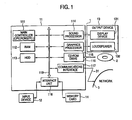
- Fig. 1 illustrates a structure of a game device 1 used in a game system of the present invention.
- the game device 1 includes a game device main body 11, an input device 12, an output device 13 and a memory card 14. Provided with software that implements a specific game title via a CD-ROM (or DVD-ROM) 2 or a network 3, the game device 1 operates as the game system to execute the specific game title for a player.
- the game device main body 11 includes a main controller 111, a random access memory (RAM) 112, a hard disc drive (HDD) 113, a sound processor 114, a graphics processor 115, a CD-ROM (Read Only Memory) drive 116, a communications interface 117 and an interface unit 118.
- a CPU Central Processing Unit
- a ROM Read Only Memory
- a bus 119 is provided for connecting these components 111-118 with each other.
- the main controller 111 controls a game by using the CPU or the ROM. Specifically, the main controller executes processing in consideration of a predetermined timing of the input (key, reading of CD-ROM, etc.) and the output (images, sounds, etc.).
- the CPU of the main controller 111 uses the RAM 112 as a main storage for executing a program.
- the program executed by the CPU and the related data for executing the program, etc., are stored.
- the CPU of the main controller 111 uses the HDD 113 as an auxiliary storage for executing the program.
- the HDD 113 there are stored various data or programs such as information downloaded via the communications interface 117 or read from the CD-ROM 2 or information for storing game status.
- the sound processor 114 is a circuit for playing sound data such as a background music, sound effects, etc., of the game.
- the sound processor 114 receives an instruction from the main controller 111.
- the sound processor 114 Upon receiving the instruction, the sound processor 114 generates a sound signal based upon the data stored in the RAM 112 or the CD-ROM 2, and outputs the signal to the output device 13.
- the graphics processor 115 includes a frame buffer (not shown) on which it draws images in accordance with the instruction from the main controller 111.
- the graphics processor 115 adds a predetermined signal to the image data drawn on the frame buffer to generate a video signal, and outputs the video signal to the output device 13.
- the CD-ROM drive 116 reads data from the CD-ROM 2 serving as a recording medium.
- the communications interface 117 controls communications when sending/receiving data to/from other game devices or a game server connected to the network 3.
- the data downloaded from the network 3 via the communications interface 117 and a communications line 31 can be stored in the HDD 113.
- the input device 12 and the memory card 14 are detachably connected to the interface unit 118.
- the interface unit 118 controls data transmission between each of the components 111-117 connected to the bus 119 and the input device 12 or the memory card 14.
- the CD-ROM 2 there are stored program for processing the game, the related data such as initial parameters, image data, sound data, etc.
- the game software game title
- the input device 12 includes a controller operated by the player to input various instructions regarding the game.
- the input device 12 transmits an instruction signal corresponding to the operation by the player to the game device main body 11 via the interface unit 118.
- the output device 13 displays images based upon image signals and outputs sounds based upon sound signals, which signals are transmitted from the game device main body based upon timing controlled by the program.
- a monitor device with a built-in loudspeaker such as a television set, for example, is used as the output device 13.
- the output device 13 includes a display device 131 (a cathode-ray tube or a liquid crystal panel) for displaying images and a loudspeaker 132 for outputting sounds.
- a flash memory constitutes the memory card 14.
- the game device main body 11 controls the memory card 14.
- the memory card 14 serves as the auxiliary storage for storing game data, especially saved data.
- the main controller 111 controls writing/reading data to/from the memory card 14 via the interface unit 118.
- the main controller 111 controls all of these devices.
- the main controller 111 controls the game device main body 11 based upon basic software such as a BIOS stored in the ROM or the game software (program and data) that is read from the CD-ROM 2 and stored in the RAM 112, and thereby controls the overall operation of the game device 1.
- basic software such as a BIOS stored in the ROM or the game software (program and data) that is read from the CD-ROM 2 and stored in the RAM 112, and thereby controls the overall operation of the game device 1.
- the CPU for example, reads graphics data corresponding to the parameters of an enemy character to be displayed from the CD-ROM 2 to the RAM 112. Then, the CPU transfers the graphics data from the RAM 112 to the graphics processor 115 and instructs the generation of the image. In response to the instruction, the graphics processor 115 expands the graphics data of the enemy character on the frame buffer and generates a video signal based upon the frame buffer. The video signal is transmitted to the output device 13. Thus, the image of the enemy character is displayed on a display device 131. The same processing is applied to sounds of characters' movement and attacks. The sound information is sent from the CD-ROM 2 to the RAM 112, the sound processor 114, the output device 13, and then the loudspeaker 132.
- the CD-ROM 2 includes a program storage area 2a that stores the game program executed by the main controller 111 and a related data storage area 2b that stores the related data necessary during game progress. Furthermore, the CD-ROM 2 includes an image data storage area 2c that stores two-dimensional (bit-map) image data such as backgrounds, characters or icons specific to the game and three-dimensional model data. The CD-ROM 2 also includes a sound data storage area 2d that stores sound data such as a sound effect.
- the RAM 112 includes a program storage area 112a, a related data storage area 112b, an image data storage area 112c and a sound data storage area 112d.
- the related data storage area 2b of the CD-ROM 2 stores only static data (constant area) while the related data storage area 112b of the RAM 112 stores dynamic data reflecting a player's on-going game progress (variable area).
- the structure of each of the constant area and the variable area will be described later with the reference to Figs. 6-9.
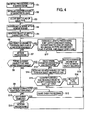
- Fig. 4 is a flowchart showing a processing procedure for controlling character's parameters in an embodiment.
- the general processing includes reading a main game program from the CD-ROM 2 into the program storage area 112a of the RAM 112.
- the main controller 111 executes the main program and prepares for the subsequent processing shown in the flowchart of Fig. 4.
- the processing includes initializing each device (or the frame buffer of each device) , allocating the variable area to be used in the game on the RAM 112, initializing the variable area, and reading the frequently used image/sound data into the RAM 112.
- Steps S2 and S3 are steps extracted from the initialization of the variable area in connection with the present invention.
- a counter variable of each type e.g., race
- the counter variable indicates how many characters belonging to a certain race are defeated by a player.
- a shift flag of each type e.g., race
- the shift flag stores information that ability parameters of an object (e.g., character) belonging to the type corresponding to the flag should be shifted to be stronger the next time the object appears.
- an image display, a sound output and a key input are processed in accordance with various scenes such as exploring the land, buying and selling arms, assembling companions or collecting information.
- various scenes such as exploring the land, buying and selling arms, assembling companions or collecting information.
- step S5 enemy obj ects related to the battle, i.e., enemy characters are generated and displayed on the display device 131 in company with friend characters such as a main character controlled by a player, etc.
- step S6 it is determined whether the enemy character whose initial parameter should be shifted is generated (displayed).
- the initialization has been already executed at step 3, the enemy character whose initial parameter should be initialized does not exist, therefore the processing flow proceeds to step S7.
- one of the friend characters whose turn has come attacks one of the enemy characters restores another friend character or the character itself, or starts a special effect on another friend character.
- a certain character on the display device 131 is damaged (its hit points or magic points decrease, or its consumed hit points or consumed magic points increase), or is restored (its hit points or magic points increase, or its consumed hit points or consumed magic points decrease).
- the value of a character' s hit points become zero, that is, the value of its consumed hit points becomes equal to the value of its maximum hit points. In this case, the character is defeated and disappears from the display.
- Fig. 5 shows an image displayed on the display device 131 at step S7.
- Figs. 6-9 show a part of a storage structure of the maximum hit points, consumed hit points, etc., stored in the related data storage area 112b of the RAM 112.
- Fig 5 various characters C0101-C0303 and P01-P03 including both friend and enemy characters and their attacks are displayed in a display frame B of the display device 131. There are also displayed each friend character's maximum hit points, current hit points, maximum magic points and current magic points B1. The current hit points are the maximum hit points minus the consumed hit points.
- the left side of the frame B twelve enemy characters of three races and a volcano character are displayed. More specifically, there are displayed, starting from the top of the frame, three enemy robot characters C0101-C0103, five enemy ghost characters C0201-C0205, one enemy volcano character C1101 and four enemy tank characters C0303. In the right side of the frame B, three friend characters P01-P03 are displayed. Furthermore, in the middle of the frame B, there are displayed the attacks from the friend character P02 to the robot character C0101, from the ghost character C0205 to the friend character P02, and from the tank character C0303 to the friend character P02.
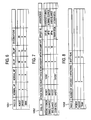
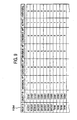
- Figs. 6-9 show a portion of a storage structure of the related data storage area 112b of the RAM 112.
- a table 112b1 that stores the initial parameters of each of the enemy characters and a table 112b2 that stores attributes of skill available to each of the races.
- a table 112b3 that stores integer variables representing the number of defeated enemy characters for each race in an on-going game play and Boolean variables representing whether the shift of initial parameters as described above is requested.
- table 112b4 that stores present parameters of each of the characters (objects).
- the contents of these four tables (two-dimensional arrays) 112b1-112b4 will be explained in detail.
- the first row indicates that the enemy characters belonging to the race of robots have five points as their maximum hit points and four points as their magic points when the robot characters (objects) are first generated. Furthermore, the first row indicates that one robot character (object) having ten points as its maximum hit points and eight points as its maximum magic points is generated when the number of robot characters defeated by a player reaches twenty.
- the second row indicates the initial parameters of ghost characters in a similar way as the first row.
- the "OS conditions" is zero, and this means that the over-soul does not take place based upon the number of the ghost characters defeated by the player.
- OS_HP over-soul hit points
- OS_MP over-soul magic points
- the developers of the game design such information and store the information in advance as related data in the related area storage area 2b of the CD-ROM 2.
- the first row indicates that only the enemy character "robot” can perform the skill "rocket punch” to damage a friend character named "Yuna” P01.
- the first row also indicates that the robot character should have nine hit points for performing the "robot punch", and that no magic points are necessary for the robot punch.
- the first row indicates the value of hit points of the friend character "Yuna” P01 decreases by ten points on average when the rocket punch hits the character "Yuna”.
- an ID (array index) of an animation (on a pointer table to data) representing the robot's attack to the character "Yuna” is A rocket punch (integer 0, for example).
- the second and third rows relates to the skills named "small glance” and "big glance” that the ghost character can exercise on any other characters " * " .
- the ghost character should have three hit points and five magic points for performing the "small glance”, which points are equal to the initial parameters of the normal (not over-soul) ghost character.
- the ghost character should have six hit points and ten magic points for performing the "big glance", which points are equal to the initial parameters of the over-soul ghost.
- the effects and animation of the two skills are different from each other.
- the fourth row indicates that the ghost character can exercise the over- soul on another ghost character and that the ghost character should have one point as the magic point to exercise the over-soul.
- the fourth row also indicates that the ID of the animation representing the ghost character's over-soul on another ghost character is A over-soul.
- the first row indicates that five robot characters (objects) have been defeated and that there is no request for performing the over-soul on the object to be generated next time. No requests for over-soul exist for the ghosts and tanks as indicated in the second and third rows.
- the first row indicates the present parameters of the object C0101 belonging to the race of robots. More specifically, the object C0101 has five points as the maximum hit points, four points as the consumed hit points, four points as the maximum magic points and zero point as the consumed magic points. Furthermore, the active flag having a value of one indicates the object C0101 is still alive. The over-soul flag having a value of zero indicates the over-soul (having ten points as the maximum hit points and eight points as the maximum magic points as indicated in the first row of the table 112b1) has not been performed on the object C0101 yet.
- the subsequent rows display data in a similar manner, it should be noted that the table 112b4 stores, unlike the table 112b1, the present parameters of multiple characters belonging to the same race (type).
- variable area tables 112b3 and 112b4 of Figs. 8 and 9 are updated in response to the attacks or effects by each of the characters.
- the value of the consumed hit points of the robot character indicated in the first row of the table 112b4 changes from four to five. Then, the robot character C0101 is controlled to disappear, and the active flag in the first row changes from one to zero. Accordingly, the number of defeated characters belonging to the robot race indicated in the first row of the table 112b3 of Fig. 8 is updated from five to six.
- step S8 it is detected whether, in the table 112b4 of the Fig. 9, there is an object of which the value of the maximum hit points is equal to the value of the consumed hit points and of which the active flag is set to one.
- the active flag in the corresponding row is updated to zero.
- step S13 it is judged whether the over-soul in the corresponding row is one.
- step S14 in the table 112b3 of Fig. 8, the number of the defeated characters of the robot race is incremented by one, e.g., updated to six.
- step S15 it is judged that the number of the defeated characters does not reach twenty, that is, the conditions for the over-soul of the race of robots as defined in the first row of the table 112b1. Then, the processing flow returns back to step S8, and the object C0102 is checked in a same way.
- step S9 it is judged whether all friend characters P01-P03 are defeated. If all friend characters P01-P03 are defeated, the processing flow proceeds to S12, where the game ends. If there remains at least one friend character, it is judged whether there remains at least one enemy character (active flag being 1 in the table 112b4 of Fig. 9) at step S10. If there is no active enemy character, the processing flow proceeds to S11, and the processing of victory in the battle is executed. If there remains at least one enemy character, the processing flow returns back to step S6.
- step S15 proceeds to step S16.
- step S16 the shift flag of the race of robots is set to one. That is, the shift flag in the first row of the table 112b3 of Fig. 8 becomes one.
- step S6 it is judged that the object belonging to the race whose shift flag is active has been generated. Accordingly, the processing flow proceeds to step S17.
- the over-soul is performed on the robot character C0102, for example (selected based upon random numbers or the ID sequence).
- the values of OS_HP and OS_MP defined in the first row of the table 112b1 of Fig.6, that is, ten and six, are substituted for the values of maximum HP and maximum MP in the second row of the table 112b4 of Fig.9, respectively.
- the values of consumed HP and consumed MP are initialized to zero.
- the shift flag in the first row of the table 112b3 of Fig.8 is cleared from one to zero.
- the object on which the over-soul has been performed is only the robot character (object) C0102.
- step S13 the number of defeated characters indicated in the first row of the table 112b3 of Fig.8 is initialized to zero. Then, the processing flow returns back to S8, and the counting of the number of the defeated characters is restarted.
- the parameter value of the objects belonging to the race of robots can be shifted based upon accumulated total value, and thereby the obj ect of the present invention is achieved.
- the obj ect whose parameters are shifted (the robot character C0102 in this embodiment) , becomes harder to defeat, due to its increased (maximum) hit points, with the same amount of attacks that the friend character P02 performs on the robot character C0101.
- its increased (maximum) magic points realize scenes, etc., where the robot character C0102 performs new kinds of magic.
- Such unpredictability enables players to keep their interest in the game longer.
- the enemy character on which the over-soul has been performed may possess a new item (diamond, for example) different from the item (gold coin, for example) that the enemy character had possessed before the over-soul was performed, and drop the new item when defeated.
- Fig. 10 is a flowchart showing a processing procedure according to another embodiment of the present invention, where the parameters of an object are shifted not by statistics but by another character's action.
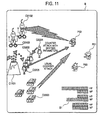
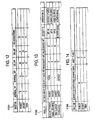
- Figs. 11-15 show modifications of Figs. 5-9.
- step S7 is replaced with steps S7' and step S18' is added between steps S8 and S9.
- S18' is added for the over-soul (parameter shift) on the ghost character C0205, for example, which over-soul is caused not by the increase of the number of defeated characters but rather by external shift actions.
- Another ghost character (C0201) and another object (character) belonging to a race other than the race of robots, that is, the volcano character for example cause the external parameter shift.
- other objects such as the robot character C0103 or the friend character P03 can also cause the external parameter shift.
- the ghost character C0201 performs the over-soul command on another ghost character C0202 and a dotted arrow is displayed as shown in Fig. 11 in accordance with the skill ID of over-soul identified in the fourth row of table 112b2 of Fig. 13.
- the volcano character 1101 performs the over-soul on the ghost character C0205 and a dotted line is displayed as shown in Fig. 11 in accordance with the skill ID of over-soul volcanic ash (not shown) defined in the table 112b2.
- table 112b4 of Fig. 15 the values of the over-soul column of the ghost characters C0202 and C0205 turn to one.
- step S18' an object is detected having a value of the maximum hit points or the maximum magic points not corresponding to the over-soul value defined in the table 112b1 even though its value in the over-soul column in the table 112b4 is one. Then, the values of the hit points and the magic points of the detected object are changed to the over-soul values defined in the table 112b1.
- a counterattack from the robot character C0205 to the friend character P02 shown by a bold line in Fig. 11 indicates that it is stronger than the counterattack shown by a narrow line in Fig. 5.
- Fig. 10 is a flowchart corresponding to the over-soul (parameter shift) caused both by the number of defeated characters and by external actions. This means that, even after the parameter of one of the ghost characters has been shifted by the external action as described above, another character can be subjected to the over-soul caused by the increase of the number of defeated characters, and vice versa. In both cases, when any ghost character on which the over-soul has been performed is defeated (has disappeared), the disappearance is detected at step S13. Then, the number of defeated characters counted in the table 112b3 is initialized to zero.
- the counter variable could have the function of shift flag in a simpler embodiment. That is, the counter variable satisfying the conditions can be interpreted as the active shift flag causing the over-soul to be performed.
- new patterns of appearance of enemy characters can be provided based upon data of animations, etc., prepared for characters (objects) belonging to one race (type).
- the game quality is improved, and players can keep their interest in the game.
- the parameter shift can be executed based upon not only the statistical data but also an event, and thereby a new pattern of appearance of the enemy characters is realized offering more diversity. Consequently, the game quality is improved and players' interest is maintained over the long term.
- players can grasp quickly the parameter shift of one of the characters belonging to the same type, and thereby they can grasp more complicated game quality of the scene.
Landscapes
- Engineering & Computer Science (AREA)
- Multimedia (AREA)
- Theoretical Computer Science (AREA)
- Human Computer Interaction (AREA)
- Processing Or Creating Images (AREA)
- Pinball Game Machines (AREA)
- Electrophonic Musical Instruments (AREA)
Applications Claiming Priority (2)
| Application Number | Priority Date | Filing Date | Title |
|---|---|---|---|
| JP2003063915A JP2004267554A (ja) | 2003-03-10 | 2003-03-10 | コンピュータゲームにおけるオブジェクトのパラメータ制御方法、このための装置、ゲーム機、コンピュータプログラム、および記憶媒体 |
| JP2003063915 | 2003-03-10 |
Publications (2)
| Publication Number | Publication Date |
|---|---|
| EP1475132A2 true EP1475132A2 (de) | 2004-11-10 |
| EP1475132A3 EP1475132A3 (de) | 2005-02-02 |
Family
ID=32984452
Family Applications (1)
| Application Number | Title | Priority Date | Filing Date |
|---|---|---|---|
| EP04005607A Withdrawn EP1475132A3 (de) | 2003-03-10 | 2004-03-09 | Kontrolle von Objektparametern in einem Computerspiel |
Country Status (3)
| Country | Link |
|---|---|
| US (1) | US20040204212A1 (de) |
| EP (1) | EP1475132A3 (de) |
| JP (1) | JP2004267554A (de) |
Cited By (1)
| Publication number | Priority date | Publication date | Assignee | Title |
|---|---|---|---|---|
| EP1813326A1 (de) * | 2006-01-27 | 2007-08-01 | Kabushiki Kaisha Square Enix (also trading as Square Enix Co., Ltd.) | Spielgerät, Spielverarbeitungsverfahren, Programm und Aufzeichnungsmedium |
Families Citing this family (19)
| Publication number | Priority date | Publication date | Assignee | Title |
|---|---|---|---|---|
| JP3732843B2 (ja) * | 2004-02-18 | 2006-01-11 | 株式会社スクウェア・エニックス | ビデオ・ゲーム装置のプログラムおよびビデオ・ゲーム装置 |
| US20080171599A1 (en) * | 2004-07-10 | 2008-07-17 | Antti Salo | Gaming Device, a System For Gaming and a Method of Controlling a Game |
| JP4752289B2 (ja) * | 2005-02-28 | 2011-08-17 | 株式会社セガ | ゲームプログラム、記録媒体及びゲーム装置 |
| US7971226B2 (en) * | 2005-04-01 | 2011-06-28 | The Upper Deck Company, Llc | Interactive game system with computer-animated game pieces |
| US8974309B2 (en) * | 2011-06-13 | 2015-03-10 | Kabushiki Kaisha Square Enix | Video game processing apparatus and video game processing program |
| JP5216152B1 (ja) * | 2012-04-27 | 2013-06-19 | 株式会社 ディー・エヌ・エー | ゲームプログラム、及び、ゲームシステム |
| US8726172B1 (en) | 2012-12-26 | 2014-05-13 | Disney Enterprises, Inc. | Managing an environment of a virtual space based on characters made accessible responsive to corresponding tokens being detected |
| US8909920B2 (en) | 2012-12-26 | 2014-12-09 | Disney Enterprises, Inc. | Linking token detection at a single computing platform with a user identification to effectuate modifications in virtual space instances presented via multiple computing platforms |
| US9457263B2 (en) | 2012-12-26 | 2016-10-04 | Disney Enterprises, Inc. | Unlocking virtual items in a virtual space responsive to physical token detection |
| US8972369B2 (en) | 2012-12-26 | 2015-03-03 | Disney Enterprises, Inc. | Providing a common virtual item repository in a virtual space |
| US9387407B2 (en) * | 2012-12-26 | 2016-07-12 | Disney Enterprises, Inc. | Managing objectives associated with a virtual space based on characters made accessible responsive to corresponding tokens being detected |
| US9327200B2 (en) | 2012-12-26 | 2016-05-03 | Disney Enterprises, Inc. | Managing a theme of a virtual space based on characters made accessible responsive to corresponding tokens being detected |
| US9517404B2 (en) | 2012-12-26 | 2016-12-13 | Disney Enterprises, Inc. | Apparatus, system, and method for effectuating modifications to a virtual space responsive to token detection |
| US9674267B2 (en) * | 2013-01-29 | 2017-06-06 | Sony Interactive Entertainment America, LLC | Methods and apparatus for hiding latency in network multiplayer games |
| JP5457585B1 (ja) * | 2013-05-29 | 2014-04-02 | 株式会社 ディー・エヌ・エー | サーバ装置およびプログラム |
| JP2019050938A (ja) * | 2017-09-13 | 2019-04-04 | 任天堂株式会社 | 情報処理システム、情報処理装置、情報処理サーバ、情報処理プログラムおよび情報処理方法 |
| JP7250968B2 (ja) * | 2020-07-15 | 2023-04-03 | グリー株式会社 | ゲームプログラム、ゲーム制御方法及び情報処理装置 |
| CN113457156B (zh) * | 2021-06-25 | 2022-07-12 | 网易(杭州)网络有限公司 | 游戏中的信息交互方法、装置和电子设备 |
| JP7553061B2 (ja) * | 2022-02-03 | 2024-09-18 | グリー株式会社 | ゲームプログラム、ゲーム制御方法及び情報処理装置 |
Family Cites Families (14)
| Publication number | Priority date | Publication date | Assignee | Title |
|---|---|---|---|---|
| US4858930A (en) * | 1988-06-07 | 1989-08-22 | Namco, Ltd. | Game system |
| US5377997A (en) * | 1992-09-22 | 1995-01-03 | Sierra On-Line, Inc. | Method and apparatus for relating messages and actions in interactive computer games |
| US6530840B1 (en) * | 1997-04-02 | 2003-03-11 | International Business Machines Corporation | Method and system for an object architecture for a multi-user game lobby and game session |
| JPH11114227A (ja) * | 1997-10-20 | 1999-04-27 | Hudson Soft Co Ltd | 敵キャラクタのレベル・パラメータ設定方法および装置 |
| JPH11244533A (ja) * | 1998-03-06 | 1999-09-14 | Namco Ltd | ゲーム装置及び情報記憶媒体 |
| JP3829014B2 (ja) * | 1998-06-03 | 2006-10-04 | 株式会社コナミデジタルエンタテインメント | ビデオゲーム装置 |
| JP3967502B2 (ja) * | 1998-11-27 | 2007-08-29 | 株式会社スクウェア・エニックス | ゲーム進行制御方法 |
| JP2000229172A (ja) * | 1999-02-10 | 2000-08-22 | Konami Co Ltd | ゲームシステムおよびゲーム用プログラムが記録されたコンピュータ読み取り可能な記憶媒体 |
| US6354940B1 (en) * | 1999-04-30 | 2002-03-12 | Square Co., Ltd. | Game apparatus, game fight processing method, and computer readable storage medium storage program therefor |
| JP3281332B2 (ja) * | 1999-07-01 | 2002-05-13 | 株式会社スクウェア | コンピュータ読み取り可能な記録媒体、ゲーム制御方法およびゲーム装置 |
| JP3781336B2 (ja) * | 1999-09-20 | 2006-05-31 | 株式会社スクウェア・エニックス | ビデオゲームにおける能力値制御方法、能力値制御プログラムを記憶した記録媒体及びゲーム装置 |
| US6807521B1 (en) * | 2000-04-28 | 2004-10-19 | Kabushiki Kaisha Square Enix | Computer readable program product, game control method, and video game system |
| US20040072616A1 (en) * | 2000-12-05 | 2004-04-15 | Harmon Matthew Cole | Webmaster tools' E-commerce role playing platform |
| JP3470107B2 (ja) * | 2001-03-29 | 2003-11-25 | 株式会社スクウェア・エニックス | ビデオゲーム装置およびその制御方法、ならびにビデオゲームのプログラムおよびそのプログラムを記録したコンピュータ読取り可能な記録媒体。 |
-
2003
- 2003-03-10 JP JP2003063915A patent/JP2004267554A/ja active Pending
-
2004
- 2004-03-09 US US10/795,391 patent/US20040204212A1/en not_active Abandoned
- 2004-03-09 EP EP04005607A patent/EP1475132A3/de not_active Withdrawn
Cited By (2)
| Publication number | Priority date | Publication date | Assignee | Title |
|---|---|---|---|---|
| EP1813326A1 (de) * | 2006-01-27 | 2007-08-01 | Kabushiki Kaisha Square Enix (also trading as Square Enix Co., Ltd.) | Spielgerät, Spielverarbeitungsverfahren, Programm und Aufzeichnungsmedium |
| US7628697B2 (en) | 2006-01-27 | 2009-12-08 | Kabushiki Kaisha Square Enix | Game apparatus, game progressing method, program, and recording medium |
Also Published As
| Publication number | Publication date |
|---|---|
| EP1475132A3 (de) | 2005-02-02 |
| JP2004267554A (ja) | 2004-09-30 |
| US20040204212A1 (en) | 2004-10-14 |
Similar Documents
| Publication | Publication Date | Title |
|---|---|---|
| US20040204212A1 (en) | Control of object parameter in computer game | |
| JP4545809B2 (ja) | ゲーム装置及びプログラム | |
| JP3463753B2 (ja) | カードゲームプログラム | |
| US6666764B1 (en) | Method of controlling a character in a video game | |
| US6807521B1 (en) | Computer readable program product, game control method, and video game system | |
| JP7580520B2 (ja) | ゲームを提供するためのプログラム、システム、及び方法 | |
| JPH11244533A (ja) | ゲーム装置及び情報記憶媒体 | |
| JP2001025577A (ja) | プレイヤキャラクタの行動能力制御方法、行動能力制御プログラムを記録した記録媒体及びゲーム装置 | |
| JP6813620B2 (ja) | コンピュータプログラム、およびコンピュータ装置 | |
| JP2002166053A (ja) | ゲーム装置、ゲーム提供方法及び情報記憶媒体 | |
| JP2002200350A (ja) | コンピュータ読み取り可能な記録媒体、ゲーム制御方法、ビデオゲーム装置、及びゲームプログラム | |
| JP3835345B2 (ja) | ゲーム処理方法、そのプログラム及びその記憶媒体 | |
| JP3053391B1 (ja) | ビデオゲーム装置、ビデオゲームのプレイ制御方法及びその方法が記録された可読記録媒体 | |
| JP2005230148A (ja) | ビデオ・ゲーム装置のプログラムおよびビデオ・ゲーム装置 | |
| JP2002166048A (ja) | ゲーム装置、ゲーム提供方法及び情報記憶媒体 | |
| US6672964B2 (en) | Video game with readily distinguishable characters displaying the character's line of sight | |
| JP2001276430A (ja) | ゲーム装置、戦闘結果処理方法および情報記憶媒体 | |
| JP2005052491A (ja) | ゲーム装置およびゲームプログラム | |
| JP3736767B2 (ja) | 画像処理方法 | |
| JP2005218463A (ja) | シューティングゲーム装置およびゲームプログラム | |
| JP7394159B2 (ja) | ゲームサーバ、ゲームプログラム、情報処理方法 | |
| JP2022140262A (ja) | ゲームサーバ、ゲームプログラム、情報処理方法 | |
| JP7738232B2 (ja) | プログラム、情報処理方法および情報処理装置 | |
| JP7280404B2 (ja) | ゲームサーバ、ゲームプログラム、情報処理方法 | |
| JP7698776B1 (ja) | プログラム、管理用パラメータ変動方法、及びゲーム装置 |
Legal Events
| Date | Code | Title | Description |
|---|---|---|---|
| PUAI | Public reference made under article 153(3) epc to a published international application that has entered the european phase |
Free format text: ORIGINAL CODE: 0009012 |
|
| AK | Designated contracting states |
Kind code of ref document: A2 Designated state(s): AT BE BG CH CY CZ DE DK EE ES FI FR GB GR HU IE IT LI LU MC NL PL PT RO SE SI SK TR |
|
| AX | Request for extension of the european patent |
Extension state: AL LT LV MK |
|
| PUAL | Search report despatched |
Free format text: ORIGINAL CODE: 0009013 |
|
| RAP1 | Party data changed (applicant data changed or rights of an application transferred) |
Owner name: KABUSHIKI KAISHA SQUARE ENIX (ALSO TRADING AS SQUA |
|
| AK | Designated contracting states |
Kind code of ref document: A3 Designated state(s): AT BE BG CH CY CZ DE DK EE ES FI FR GB GR HU IE IT LI LU MC NL PL PT RO SE SI SK TR |
|
| AX | Request for extension of the european patent |
Extension state: AL LT LV MK |
|
| 17P | Request for examination filed |
Effective date: 20050726 |
|
| AKX | Designation fees paid |
Designated state(s): DE FR GB |
|
| STAA | Information on the status of an ep patent application or granted ep patent |
Free format text: STATUS: THE APPLICATION IS DEEMED TO BE WITHDRAWN |
|
| 18D | Application deemed to be withdrawn |
Effective date: 20060119 |