EP1450751B1 - Träger zur freisetzung von nanopartikeln - Google Patents
Träger zur freisetzung von nanopartikeln Download PDFInfo
- Publication number
- EP1450751B1 EP1450751B1 EP02802543A EP02802543A EP1450751B1 EP 1450751 B1 EP1450751 B1 EP 1450751B1 EP 02802543 A EP02802543 A EP 02802543A EP 02802543 A EP02802543 A EP 02802543A EP 1450751 B1 EP1450751 B1 EP 1450751B1
- Authority
- EP
- European Patent Office
- Prior art keywords
- nanoparticle
- delivery vehicle
- nanoparticle delivery
- nucleic acid
- protein
- Prior art date
- Legal status (The legal status is an assumption and is not a legal conclusion. Google has not performed a legal analysis and makes no representation as to the accuracy of the status listed.)
- Expired - Lifetime
Links
Images

Classifications
-
- A—HUMAN NECESSITIES
- A61—MEDICAL OR VETERINARY SCIENCE; HYGIENE
- A61K—PREPARATIONS FOR MEDICAL, DENTAL OR TOILETRY PURPOSES
- A61K49/00—Preparations for testing in vivo
- A61K49/001—Preparation for luminescence or biological staining
- A61K49/0013—Luminescence
- A61K49/0017—Fluorescence in vivo
- A61K49/0019—Fluorescence in vivo characterised by the fluorescent group, e.g. oligomeric, polymeric or dendritic molecules
- A61K49/0045—Fluorescence in vivo characterised by the fluorescent group, e.g. oligomeric, polymeric or dendritic molecules the fluorescent agent being a peptide or protein used for imaging or diagnosis in vivo
- A61K49/0047—Green fluorescent protein [GFP]
-
- A—HUMAN NECESSITIES
- A61—MEDICAL OR VETERINARY SCIENCE; HYGIENE
- A61K—PREPARATIONS FOR MEDICAL, DENTAL OR TOILETRY PURPOSES
- A61K48/00—Medicinal preparations containing genetic material which is inserted into cells of the living body to treat genetic diseases; Gene therapy
- A61K48/0008—Medicinal preparations containing genetic material which is inserted into cells of the living body to treat genetic diseases; Gene therapy characterised by an aspect of the 'non-active' part of the composition delivered, e.g. wherein such 'non-active' part is not delivered simultaneously with the 'active' part of the composition
- A61K48/0025—Medicinal preparations containing genetic material which is inserted into cells of the living body to treat genetic diseases; Gene therapy characterised by an aspect of the 'non-active' part of the composition delivered, e.g. wherein such 'non-active' part is not delivered simultaneously with the 'active' part of the composition wherein the non-active part clearly interacts with the delivered nucleic acid
-
- A—HUMAN NECESSITIES
- A61—MEDICAL OR VETERINARY SCIENCE; HYGIENE
- A61K—PREPARATIONS FOR MEDICAL, DENTAL OR TOILETRY PURPOSES
- A61K9/00—Medicinal preparations characterised by special physical form
- A61K9/48—Preparations in capsules, e.g. of gelatin, of chocolate
- A61K9/50—Microcapsules having a gas, liquid or semi-solid filling; Solid microparticles or pellets surrounded by a distinct coating layer, e.g. coated microspheres, coated drug crystals
- A61K9/51—Nanocapsules; Nanoparticles
- A61K9/5107—Excipients; Inactive ingredients
- A61K9/5115—Inorganic compounds
-
- A—HUMAN NECESSITIES
- A61—MEDICAL OR VETERINARY SCIENCE; HYGIENE
- A61P—SPECIFIC THERAPEUTIC ACTIVITY OF CHEMICAL COMPOUNDS OR MEDICINAL PREPARATIONS
- A61P43/00—Drugs for specific purposes, not provided for in groups A61P1/00-A61P41/00
-
- C—CHEMISTRY; METALLURGY
- C12—BIOCHEMISTRY; BEER; SPIRITS; WINE; VINEGAR; MICROBIOLOGY; ENZYMOLOGY; MUTATION OR GENETIC ENGINEERING
- C12N—MICROORGANISMS OR ENZYMES; COMPOSITIONS THEREOF; PROPAGATING, PRESERVING, OR MAINTAINING MICROORGANISMS; MUTATION OR GENETIC ENGINEERING; CULTURE MEDIA
- C12N15/00—Mutation or genetic engineering; DNA or RNA concerning genetic engineering, vectors, e.g. plasmids, or their isolation, preparation or purification; Use of hosts therefor
- C12N15/09—Recombinant DNA-technology
- C12N15/87—Introduction of foreign genetic material using processes not otherwise provided for, e.g. co-transformation
- C12N15/88—Introduction of foreign genetic material using processes not otherwise provided for, e.g. co-transformation using microencapsulation, e.g. using amphiphile liposome vesicle
-
- Y—GENERAL TAGGING OF NEW TECHNOLOGICAL DEVELOPMENTS; GENERAL TAGGING OF CROSS-SECTIONAL TECHNOLOGIES SPANNING OVER SEVERAL SECTIONS OF THE IPC; TECHNICAL SUBJECTS COVERED BY FORMER USPC CROSS-REFERENCE ART COLLECTIONS [XRACs] AND DIGESTS
- Y02—TECHNOLOGIES OR APPLICATIONS FOR MITIGATION OR ADAPTATION AGAINST CLIMATE CHANGE
- Y02A—TECHNOLOGIES FOR ADAPTATION TO CLIMATE CHANGE
- Y02A50/00—TECHNOLOGIES FOR ADAPTATION TO CLIMATE CHANGE in human health protection, e.g. against extreme weather
- Y02A50/30—Against vector-borne diseases, e.g. mosquito-borne, fly-borne, tick-borne or waterborne diseases whose impact is exacerbated by climate change
-
- Y—GENERAL TAGGING OF NEW TECHNOLOGICAL DEVELOPMENTS; GENERAL TAGGING OF CROSS-SECTIONAL TECHNOLOGIES SPANNING OVER SEVERAL SECTIONS OF THE IPC; TECHNICAL SUBJECTS COVERED BY FORMER USPC CROSS-REFERENCE ART COLLECTIONS [XRACs] AND DIGESTS
- Y10—TECHNICAL SUBJECTS COVERED BY FORMER USPC
- Y10S—TECHNICAL SUBJECTS COVERED BY FORMER USPC CROSS-REFERENCE ART COLLECTIONS [XRACs] AND DIGESTS
- Y10S977/00—Nanotechnology
- Y10S977/70—Nanostructure
- Y10S977/773—Nanoparticle, i.e. structure having three dimensions of 100 nm or less
Definitions
- the present invention relates to compositions for and methods of delivering an active agent to and into cells. More particularly, the method employs a nanoparticle delivery vehicle as a vehicle for carrying proteins, nucleic acids, protein and nucleic acid analogs, small molecules and other compounds to the surface of a cell, into the cytoplasm of a cell or into a cell's nucleus.
- ATP adenosine triphosphate ADP adenosine diphosphate AS antisense AS-ODN antisense oligodeoxynucleotides bipy bipyridine cDNA complementary DNA DNA deoxyribonucleic acid dsDNA double stranded DNA EDTA ethylenediaminetetraacetic acid HEPES N-2-hydroxyethylpiperazine-N'-2-ethanesulfonic acid ITO indium tin oxide IV intravenous kDa kilodalton(s) LB Luria broth MES 2-[N-Morpholino]ethanesulfonic acid mRNA messenger RNA NDP nucleotide diphosphate NLS nuclear localization signal nt nucleotide NTP nucleotide triphosphate ODN oligodeoxynucleotide PACVD plasma-assisted chemical vapor deposition PAGE polyacrylamide gel electrophoresis PBS phosphate buffered
- therapeutics that use macromolecules such as proteins or nucleic acids as therapeutic agents have created a need to develop new and effective approaches of delivering such macromolecules to their appropriate cellular targets.
- Therapeutics based on either the use of specific polypeptide growth factors or specific genes to replace or supplement absent or defective genes are examples of therapeutics that might require such new delivery systems.
- Therapeutics involving oligonucleotides that interact with DNA to modulate the expression of a gene or other segment of DNA might also require a new delivery system.
- Clinical application of such therapies depends not only on the reliability and efficiency of new delivery systems but also on their safety and on the ease with which the technologies underlying these systems can be adapted for large-scale pharmaceutical production, storage, and distribution of the therapeutic formulations.
- Gene therapy has become an increasingly important mode of treating various genetic disorders.
- the potential for providing effective treatments has stimulated an intense effort to apply this technology to diseases for which there have been no effective treatments.
- Recent progress in this area has indicated that gene therapy can have a significant impact not only on the treatment of single gene disorders, but also on other more complex diseases such as cancer.
- a significant obstacle in the attainment of efficient gene therapy regime has been the difficulty of designing new and effective approaches for delivering therapeutic nucleic acids to cells and intracellular targets.
- an ideal vehicle for the delivery of nucleic acids or proteins into cells and tissues should be highly efficient, safe to use, easy to produce in large quantity and have sufficient stability to be practicable as a pharmaceutical delivery vehicle.
- nucleic acids When nucleic acids are used as "active agents" in a gene therapy regime, there are essentially two systems based on viral vectors or nonviral vectors that are described in the art: (1) retro, adeno and herpes viruses (or their recombinants) are presently being studied in vivo as viral vectors; and (2) liposomes and ligands of cell surface-specific receptors are being researched in vivo as nonviral vectors ( Wu & Wu, (1991) Biotherapy 3: 87-95 ; Ledley, (1993) Clin. Invest. Med.16: 78-88 ). Nanocrystalline particles are also being investigated ( U.S. Patent No. 5,460,831 to Kossovsky ).
- Nanoparticle technology has found application in a variety of disciplines, but has found minimal application in pharmacology and drug delivery.
- the development of therapeutic nanoparticles was first attempted around 1970, and the proposed nanoparticles were intended to function as carriers of anticancer and other drugs ( Couvreur et al., (1982) J. Pharm. Sci., 71: 790-92 ).
- Attempts were also made to elucidate methods by which the uptake of the nanoparticles by the cells of the reticuloendothelial system (RES) would be minimized ( Couvreur et al., (1986) in Polymeric Nanoparticles and Microspheres, (Guiot & Couvreur, eds.), CRC Press, Boca Raton, pp. 27-93 ).
- Other attempts pursued the use of nanoparticles for treatment of specific disorders See, e.g. , Labhasetwar et al., (1997) Adv. Drug. Del. Rev., 24: 63-
- W09856363 discloses a solid nanoparticle for delivery to target cells, said nanoparticle comprising a polymeric cation and a polyanion, wherein the polyanion consists of nucleic acids (DNA, RNA).
- a polypeptide is attached to the surface of said nanoparticle, this polypeptide comprises the knob domain of adenovirus fiber protein which is suitable for targeted delivery of therapeutic agents to cells and for cell binding.
- a composition which comprises a nucleic acid molecule (DNA, RNA), a conjugated peptide nucleic acid (PNA) molecule associated with said DNA molecule.
- PNA conjugated peptide nucleic acid
- This PNA molecule is preferably a nuclear localization signal peptide that facilitates nuclear uptake and contains a region complementary to the DNA molecule. Insulin, interferon, erythropoietin are used as therapeutic agents.
- nanoparticles have shown promise as useful tools for drug delivery systems, many problems remain. Some unsolved problems relate to the control, selection, and behavior of various particle sizes, as well as problems surrounding the loading of particles with therapeutics. Additionally, the targeting of the nanoparticle to the appropriate cellular site has remained problematic. The design and provision of a nanoparticle delivery vehicle that addresses these problems thus represents and ongoing and long-felt need in the art.
- a nanoparticle delivery vehicle comprises: (a) a nanoparticle; (b) an active agent; and (c) a nuclear localization signal.
- the nanoparticle delivery vehicle comprises (a) a plurality of targeting agents; (b) a nanoparticle scaffold; and (c) an active agent.
- the active agent is selected from the group consisting of double stranded nucleic acids, single stranded nucleic acids, chemically modified nucleic acids, peptide nucleic acids, proteins and small molecules.
- the nanoparticle delivery vehicle further comprises a tether sequence attached to, and disposed between, the active agent and the nanoparticle.
- the nanoparticle delivery vehicle further comprises a cell surface recognition sequence.
- the nanoparticle delivery vehicle is disposed in a pharmaceutically acceptable diluent.
- the nanoparticle delivery vehicle further comprises a detectable moiety.
- the nanoparticle delivery vehicle can further comprise two or more different active agents.
- the nanoparticle delivery vehicle can further comprise a biocompatibility-enhancing agent.
- the nanoparticle delivery vehicle can further comprise a protective coating covering at least part of the delivery vehicle.
- the protective coating can cover the entire delivery vehicle, including the active agent(s) and targeting agent(s).
- the protective coating can comprise a polymer.
- the protective coating can also comprise a biological material.
- the biological material can be a protein, lipid, carbohydrate, or combination thereof.
- a method of delivering an active agent to the nucleus of a cell comprises:(a) providing a nanoparticle delivery vehicle of the present invention comprising a nanoparticle having a diameter of about 30 nm or less; and (b) contacting a target cell with the nanoparticle delivery vehicle, whereby an active agent is delivered to the nucleus of a target cell.
- the active agent is selected from the group consisting of double stranded nucleic acids, single stranded nucleic acids, chemically modified nucleic acids, peptide nucleic acids, proteins and small molecules.
- the nanoparticle delivery vehicle further comprises a tether sequence attached to, and disposed between, the active agent and the nanoparticle.
- the nanoparticle delivery vehicle further comprises a cell surface recognition sequence.
- the nanoparticle delivery vehicle is disposed in a pharmaceutically acceptable diluent.
- the nanoparticle delivery vehicle further comprises a detectable moiety.
- a method of delivering an active agent to the cytoplasm of a cell comprises: (a) providing a nanoparticle delivery vehicle of the present invention comprising a nanoparticle having a diameter greater than or equal to about 30 nm; and (b) contacting a target cell with the nanoparticle delivery vehicle.
- the active agent is selected from the group consisting of double stranded nucleic acids, single stranded nucleic acids, chemically modified nucleic acids, peptide nucleic acids, proteins and small molecules.
- the nanoparticle delivery vehicle further comprises a tether sequence attached to, and disposed between, the active agent and the nanoparticle.
- the nanoparticle delivery vehicle further comprises a cell surface recognition sequence.
- the nanoparticle delivery vehicle is disposed in a pharmaceutically acceptable diluent.
- the nanoparticle delivery vehicle further comprises a detectable moiety.
- a method of modulating the expression of a target nucleic acid sequence comprises:(a) providing a nanoparticle delivery vehicle of the present invention comprising an active agent capable of interacting with a target nucleic acid sequence whose expression is to be modulated; (b) contacting a target cell comprising a target nucleic acid sequence with the nanoparticle delivery vehicle; and (c) modulating the expression of the target nucleic acid sequence through the contacting of step (b).
- the nanoparticle delivery vehicle further comprises a tether sequence attached to, and disposed between, the active agent and the nanoparticle.
- the nanoparticle delivery vehicle further comprises a cell surface recognition sequence.
- the nanoparticle delivery vehicle is disposed in a pharmaceutically acceptable diluent.
- the nanoparticle delivery vehicle further comprises a detectable moiety.
- a method of modulating the expression of a target protein comprises: (a) providing a nanoparticle delivery vehicle of the present invention comprising a single stranded antisense nucleic acid sequence complementary to a nucleic acid sequence encoding a target protein; (b) contacting a target cell comprising a nucleic acid sequence encoding a target protein with the nanoparticle delivery vehicle; and (c) modulating the expression of the target protein through the contacting of step (b).
- the nanoparticle delivery vehicle further comprises a tether sequence attached to, and disposed between, the active agent and the nanoparticle.
- the nanoparticle delivery vehicle further comprises a cell surface recognition sequence.
- the nanoparticle delivery vehicle is disposed in a pharmaceutically acceptable diluent.
- the nanoparticle delivery vehicle further comprises a detectable moiety.
- a method of modulating transcription in a sample comprises: (a) providing a nanoparticle delivery vehicle of the present invention comprising an active agent comprising a ligand for which a wild-type transcription component has greater affinity than a natural ligand of the wild-type transcription component; (b) contacting a sample comprising the wild-type transcription component with the nanoparticle delivery vehicle; and (c) modulating transcription in the sample through the contacting of step (b).
- the nanoparticle delivery vehicle further comprises a tether sequence attached to, and disposed between, the active agent and the nanoparticle.
- the nanoparticle delivery vehicle further comprises a cell surface recognition sequence.
- the nanoparticle delivery vehicle is disposed in a pharmaceutically acceptable diluent.
- the nanoparticle delivery vehicle further comprises a detectable moiety.
- a method of modulating RNA splicing in a sample comprises: (a) providing a nanoparticle delivery vehicle of the present invention comprising a nucleic acid sequence known or suspected to alter the splicing pattern for a target gene; and (b) contacting a sample comprising the target gene with the nanoparticle delivery vehicle; and (c) modulating RNA splicing in a sample through the contacting of step (b).
- the nanoparticle delivery vehicle further comprises a tether sequence attached to, and disposed between, the active agent and the nanoparticle.
- the nanoparticle delivery vehicle further comprises a cell surface recognition sequence.
- the nanoparticle delivery vehicle is disposed in a pharmaceutically acceptable diluent.
- the nanoparticle delivery vehicle further comprises a detectable moiety.
- a method of modulating the translation of an mRNA sequence encoding a protein of interest comprises: (a) providing a nanoparticle delivery vehicle of the present invention comprising a single stranded nucleic acid sequence complementary to a nucleic acid sequence of an mRNA sequence encoding a protein of interest; (b) contacting a sample comprising the mRNA sequence encoding a protein of interest with the nanoparticle delivery vehicle; and (c) modulating the translation of an mRNA sequence encoding a protein of interest through the contacting of step (b).
- the nanoparticle delivery vehicle further comprises a tether sequence attached to, and disposed between, the active agent and the nanoparticle.
- the nanoparticle delivery vehicle further comprises a cell surface recognition sequence.
- the nanoparticle delivery vehicle is disposed in a pharmaceutically acceptable diluent.
- the nanoparticle delivery vehicle further comprises a detectable moiety.
- the present invention provides a nanoparticle delivery vehicle as a vehicle for carrying proteins, nucleic acids, protein and nucleic acid analogs, small molecules and other compounds to the surface of a cell, into the cytoplasm of a cell and/or into a cell's nucleus.
- a plurality of sequences can be associated with a nanoparticle delivery vehicle, preferably a plurality of different sequences, such as RME sequences and NLS sequences. These sequences can aid in the translocation of a vehicle across various membranes, such as the nuclear membrane of a cell or the outer membrane of a cell.
- a nanoparticle delivery vehicle of the present invention can comprise a plurality of different sequences or "keys,” which can enable a given nanoparticle delivery vehicle to pass through various potential barriers to translocation in a variety of different cell types.
- active agent means a therapeutic agent, including but not limited to chemotherapeutic agents, radiotherapeutics, or radiosensitizing agents; an imaging agent; a diagnostic agent; or other agent known to interact with an intracellular protein, a nucleic acid or a soluble or insoluble ligand.
- amino acid sequence means an oligopeptide, peptide, polypeptide, or protein sequence, and fragments thereof, and naturally occurring or synthetic molecules.
- amino acid sequence is recited herein to refer to an amino acid sequence of a synthetic peptide or a naturally occurring protein molecule, amino acid sequence, and the like. The term is not meant to limit the amino acid sequence to a complete, native amino acid sequence associated with a recited protein molecule, but is intended to encompass variations on the native amino acid sequence as well.
- biodegradable means any structure, including but not limited to a nanoparticle, which decomposes or otherwise disintegrates after prolonged exposure to physiological conditions. To be biodegradable, the structure should be substantially disintegrated within a few weeks after introduction into the body. Brushite is a preferred biodegradable nanoparticle material.
- extracellular targeting agent and “cell surface recognition sequence” are used interchangeably and refer to a small molecule or protein sequence that is recognized and bound by one or more receptors present on the surface of a particular cell.
- Cell surface recognition sequences can include HIV coat proteins (gp160, 41, 120) corona virus coat proteins, EBV coat proteins (gp350) and peptides.
- HIV coat proteins gp160, 41, 120
- EBV coat proteins gp350
- Other representative, but non-limiting cell surface recognition sequences can comprise carbohydrate and lipid, carbohydrates, peptide nucleic acids, morpholino oligonucleotides and polymers. It is intended that the term "cell surface recognition sequence” encompass any sequence or molecule recognized and/or bound by a cell surface receptor.
- RME receptor-mediated endocytosis
- chemical modification means alteration of a first moiety by covalently, noncovalently or ionically binding a second moiety to the first moiety. Chemical modification can involve the addition of a detectable moiety to a peptide or protein.
- the term "detecting” means confirming the presence of a target entity by observing the occurrence of a detectable signal, such as an electrical, radiological or spectroscopic signal that will appear exclusively in the presence of the target entity.
- the term encompasses the use of electrophoresis techniques and blotting techniques, including northern, Southern, western and far western blots.
- the term “detecting” also includes the use of microscopy techniques, such as transmission electron microscopy. "Detecting" an event or the presence of a compound can be done directly or indirectly, for example, by monitoring the rate of transcription to detect the presence of transcription factors.
- the term “detecting” broadly means identifying the presence or absence of an event, compound, molecule, etc.
- the term "gene” is used for simplicity and means a functional protein, polypeptide or peptide encoding unit. As will be understood by those in the art, this functional term includes both genomic sequences and cDNA sequences.
- the term "gold” means element 79, which has the chemical symbol Au; the term specifically excludes any connotation related to color or other colorimetric properties.
- the term "homology” means a degree of complementarity. There can be partial homology or complete homology (i.e., identity). A partially complementary sequence that at least partially inhibits an identical sequence from hybridizing to a target nucleic acid can be considered “substantially homologous". The inhibition of hybridization of the completely complementary sequence to the target sequence can be examined using a hybridization assay (Southern or northern blot, solution hybridization and the like) under conditions of low stringency. A substantially homologous sequence or hybridization probe will compete for and inhibit the binding of a completely homologous sequence to the target sequence under conditions of low stringency.
- low stringency conditions are such that non-specific binding is permitted; low stringency conditions require that the binding of two sequences to one another be a specific (i.e., selective) interaction.
- the absence of non-specific binding can be tested by the use of a second target sequence that lacks even a partial degree of complementarity (e.g., less than about 30% identity). In the absence of non-specific binding, the probe will not hybridize to the second non-complementary target sequence.
- hybridization means the binding of a probe sample to a target sample.
- the probe sample can comprise a molecule to which a detectable moiety has been bound, thereby making it possible to detect the presence or absence of a probe sample.
- interact means detectable interactions between molecules, such as can be detected using, for example, transmission electron microscopy or fluorescence microscopy.
- interact is also meant to include “binding" interactions between molecules. Interactions can be, for example, nucleic acid-nucleic acid, protein-protein or protein-nucleic acid in nature.
- isolated means oligonucleotides substantially free of other nucleic acids, proteins, lipids, carbohydrates or other materials with which they can be associated, such association being either in cellular material or in a synthesis medium.
- the term can also be applied to polypeptides, in which case the polypeptide will be substantially free of nucleic acids, carbohydrates, lipids and other undesired polypeptides.
- labeled means the covalent, noncovalent or ionic attachment of a moiety capable of detection by electrochemical, spectroscopic, radiologic or other methods to a probe molecule.
- modified means an alteration from an entity's normally occurring state.
- An entity can be modified by removing discrete chemical units or by adding discrete chemical units.
- modified encompasses detectable labels as well as those entities added as aids in purification. Any variation from the normally occurring state, regardless of degree, is encompassed by the term "modified”.
- modulate means an increase, decrease, or other alteration of any, or all, chemical and biological activities or properties of a sample which are mediated by a nucleic acid sequence, a peptide or a small molecule.
- modulation refers to both upregulation (i.e., activation or stimulation) and downregulation (i.e. inhibition or suppression) of a response or property.
- mutation carries its traditional connotation and means a change, inherited, naturally occurring or introduced, in a nucleic acid or polypeptide sequence, and is used in its sense as generally known to those of skill in the art.
- nanoparticle As used herein, the terms “nano”, “nanoscopic” “nanometer-sized”, “nanostructured”, “nanoscale”, “DNA-nanoparticle complexes” and grammatical derivatives thereof are used synonymously and interchangeably and mean nanoparticles, nanoparticle composites and hollow nanocapsules less than or equal to about 1000 nanometers (nm) in diameter, preferably less than about 30 nanometers in diameter and more preferably less than about 10 nanometers in diameter.
- a nanoparticle can be fashioned from any material.
- a preferred nanoparticle is fashioned of a semiconductor material or metal, and more preferably of gold, TiO 2 or gold or TiO 2 -containing materials. Biodegradable materials are also preferred, e.g. polypeptides. The terms can refer not only to the metal component of a nanoparticle, but the composite of metal and other component parts as well.
- nanoparticle denotes a carrier structure which is biocompatible with and sufficiently resistant to chemical and/or physical destruction by the environment of use such that a sufficient amount of the nanoparticles remain substantially intact after injection into the blood stream, given intraperitoneally or orally or incubated with an in vitro sample so as to be able to reach the nucleus of a cell or some other cellular structure. If the drug can enter the cell in the form whereby it is adsorbed to the nanoparticles, the nanoparticles must also remain sufficiently intact to enter the cell. Biodegradation of the nanoparticle is permissible upon entry of a cell's nucleus. Nanoparticles can be solid colloidal particles ranging in size from 1 to 1000 nm.
- Nanoparticle can have any diameter less than or equal to 1000 nm, including 5, 10, 15, 20, 25, 30, 50, 100, 500 and 750 nm.
- Drugs, active agents, bioactive or other relevant materials can be incubated with the nanoparticles, and thereby be adsorbed or attached to the nanoparticle.
- nanoparticle metal component means a component of a nanoparticle delivery vehicle of the present invention to which a nuclear localization signal, drugs, bioactive and other relevant materials are bound.
- the nanoparticle metal component comprises an approximately spherical metal atom-comprising entity.
- the nanoparticle metal component is an elemental metal or semiconductor material, such as a gold or TiO 2 particle.
- nuclear localization signal means an amino acid sequence known to, in vivo, direct a protein disposed in the cytoplasm of a cell across the nuclear membrane and into the nucleus of the cell.
- a nuclear localization signal can also target the exterior surface of a cell.
- a single nuclear localization signal can direct the entity with which it is associated to the exterior of a cell and to the nucleus of a cell.
- sequences can be of any size and composition, for example more than 25, 25, 15, 12, 10, 8, 7, 6, 5 or 4 amino acids, but will preferably comprise at least a four to eight amino acid sequence known to function as a nuclear localization signal (NLS).
- compositions, carriers, diluents and reagents means that the materials are capable of administration to or upon a vertebrate subject without the production of undesirable physiological effects such as nausea, dizziness, gastric upset, fever and the like.
- polypeptide As used herein, the terms “polypeptide”, “protein”, “gene product” and “peptide” are used interchangeably and mean any polymer comprising any of the 20 protein amino acids, regardless of its size. Although “protein” is often used in reference to relatively large polypeptides, and “peptide” is often used in reference to small polypeptides, usage of these terms in the art overlaps and varies.
- polypeptide as used herein refers to peptides, polypeptides and proteins, unless otherwise noted.
- protein As used herein, the terms “protein”, “polypeptide” and “peptide” are used interchangeably herein when referring to a gene product.
- sequencing means determining the ordered linear sequence of nucleic acids or amino acids of a DNA or peptide (or protein) target sample, using manual or automated laboratory techniques known in the art.
- small molecule means a molecule that has a molecular weight of less than or equal to 5000 daltons.
- the term “substantially pure” means that the polynucleotide or polypeptide is substantially free of the sequences and molecules with which it is associated in its natural state, and those molecules used in the isolation procedure.
- the term “substantially free” means that the sample is at least 50%, preferably at least 70%, more preferably 80% and most preferably 90% free of the materials and compounds with which is it associated in nature.
- targeting agent means any agent having the ability to direct a moiety associated with the targeting agent to the surface of a cell, to the surface of a particular type of cell, or to the nucleus of a cell.
- a targeting agent can comprise, but is not limited to, proteins, peptides, small molecules, oligonucleotides, morpholino oligonucleotides and peptide nucleic acids.
- a targeting can be of any size, as long as it retains its ability to direct a moiety associated with the targeting agent to the surface of a cell or to the surface of a particular type of cell.
- therapeutic agent means any agent having a therapeutic effect, including but not limited to chemotherapeutics, toxins, radiotherapeutics, or radiosensitizing agents. Also encompassed by the term are gene therapy vectors, antisense nucleic acid constructs and transcription factor decoys.
- transcription factor means a polypeptide that is involved in the transcription of DNA. Transcription factors can, but are not required to bind DNA. A transcription factor can function in response to an external stimulus, or a transcription factor's action can be constitutive.
- transcription factor decoy and “decoy” are used interchangeably and mean molecules that bind to or interact with transcription factors and/or prevent their binding to native enhancer sequences. Decoys include nucleic acid sequences, including, but not limited to, oligonucleotides that correspond to (i.e., are identical to or essentially identical to) the native enhancer.
- Such oligonucleotides include, but are not limited to: single stranded palindromic oligonucleotides comprising one or more repeats of the enhancer sequence; sense and antisense oligonucleotides comprising one or more repeats of the enhancer sequence; oligonucleotides that form hairpin structures such that a duplex binding site for the transcription factor is generated; and one or more oligonucleotides that form a cruciform structure such that one or more binding sites for the transcription factor are generated; and double stranded DNA sequences that have a higher affinity for a genomic binding site of a transcription factor than does the natural DNA sequence.
- wild-type means the naturally occurring form of a protein or nucleic acid sequence. The term is not used to denote a baseline from which a mutation is established. The term “wild-type” is meant to describe the form of a protein or nucleic acid sequence as it is most commonly found in nature.
- the present invention pertains in part to the regulation and modulation of gene expression.
- Gene expression can be regulated by placing a foreign DNA or RNA oligonucleotide (or an analog such as phosphorothionate DNA/RNA) in the cell for the purpose of (a) incorporation into the genome; (b) expression of a gene (which is sometimes considered "transient transfection”); (c) altering regulatory protein concentrations (wherein a vehicle can act as a transcription factor decoy); (d) altering RNA splicing; (e) binding to messenger RNA in the cytoplasm, (f) RNA interference or (g) altering the expression of a segment of DNA by inducing the formation of untranscribable structures, such as a triple helix.
- the strategy for (a), (b) and (g) generally involves the delivery of a relatively long double stranded DNA oligomer to the nucleus.
- the strategy for (c) through (g) can involve a short DNA oligomer that is an operator (i.e. sequence of DNA known to act as a binding site) for a particular regulatory protein.
- the strategy for (d) and (e) can involve RNA, DNA or analogs such as peptide nucleic acids and morpholino DNA/RNA oligonucleotides as well as the use of antisense oligonucleotides.
- RNA, DNA or analogs such as peptide nucleic acids and morpholino DNA/RNA oligonucleotides as well as the use of antisense oligonucleotides.
- antisense oligonucleotides there has been a great deal of difficulty implementing antisense strategies. At the present time, it is thought that perhaps this is related to a delivery problem or, alternatively, that the cell has a mechanism for overcoming the reduction in concentration of a particular message. In either case, delivery of oligonucleotides to the nucleus is still a requirement for strategies (a) through (d).
- a goal of the present invention is the regulation and/or perturbation of gene expression. This is of use both for research purposes and also in therapeutic applications. Delivery is a major obstacle in the use of oligonucleotides and chemically modified oligonucleotides for these applications.
- Nanoparticles of various compositions can be used to achieve a desired result. Materials such as titanium, titanium dioxide, tin, tin oxide, silicon, silicon dioxide, iron, iron III oxide, silver, nickel, gold, copper, aluminum and other materials can be used, however gold is a preferred material.
- Gold nanoparticles possess several advantages. First, gold nanoparticles offer the ability to easily regulate nanoparticle size and, as explained below, subcellular localization. Additionally, synthesis of such nanoparticles is facile, and many art-recognized techniques are available.
- Nanoparticles can be conveniently produced by known methods, including emulsion polymerization in a continuous aqueous phase, emulsion polymerization in continuous organic phase, interfacial polymerization, solvent deposition, solvent evaporation, dissolution of an organic polymer solution, cross-linking of water-soluble polymers in emulsion, dissolution of macromolecules, and carbohydrate cross-linking. These fabrication methods can be performed with a wide range of materials. Metal atoms, and structures comprising metal atoms, can also serve as effective nanoparticles. Nanoparticles can be solid or can comprise a hollow structure that can contain a material.
- a delivery vehicle of the present invention can comprise one or more appropriate oligonucleotides associated with a nanoparticle.
- a nuclear localization signal or other localization peptides that will help with transport and direct the nanoparticle to the nucleus are associated with the nanoparticle.
- the size of the nanoparticle can be used to prevent transport to the nucleus when this is desirable.
- appropriate proteins can also be localized on the surface of the particle. Appropriate proteins can comprise ligases, restriction enzymes or other DNA processing enzymes useful for a given application.
- the localization and effect of the delivery vehicle can then be identified using transmission electron microscopy, Raman microscopy, confocal microscopy and other analytical techniques for determining the concentration and localization of the active nanoparticles in the cell. Even delivery vehicles comprising nanoparticles as small as 5 nm can be identified using one or more of the above analytical techniques.
- the present invention provides a novel approach to solving the problems of nanoparticles as drug delivery vehicles encountered in the art.
- the present invention discloses nanoparticles that do not necessarily encapsulate a biologically active structure, but rather serve as a scaffold for the biologically active structure to be attached to the surface of the nanoparticle.
- the nanoparticles of the present invention can also comprise a nuclear localization signal, which can target a therapeutic agent to the nucleus of a cell.
- nuclear localization signals have not been used to direct a nanoparticle across both the plasma membrane and the nuclear membrane.
- a plurality of sequences can be associated with a nanoparticle delivery vehicle.
- Various sequences such as RME sequences, can also be associated with a vehicle. These additional sequences can aid in the translocation of a vehicle across various membranes, such as the nuclear membrane of a cell or the outer membrane of a cell.
- RME sequences can aid in the translocation of a vehicle across various membranes, such as the nuclear membrane of a cell or the outer membrane of a cell.
- a nanoparticle delivery vehicle of the present invention can comprise a plurality of different sequences or "keys," which can enable a given nanoparticle delivery vehicle to pass through various potential barriers to translocation and can provide for the targeting of a variety of different cell types.
- the present invention describes a nanoparticle delivery vehicle that can be used with a variety of subjects including warm blooded animals, particularly mammals, including humans, dogs, cats and other small animals, and farm animals. Additionally, the nanoparticles of the present invention can be used with prokaryotic and eukaryotic microorganisms and with in vitro cultures.
- the nanoparticle delivery vehicle of the present invention can be used as a diagnostic agent in all of the above subjects, as well as in the capacity of a therapeutic agent.
- a targetable nanoparticle delivery vehicle of the present invention preferably comprises at least three components: a nanoparticle, one or more targeting agents (e.g. "keys” such as nuclear localization signals and cell surface targeting signals) and one or more active agents.
- the active agent can be one or more of any chemical entity, for example, a peptide sequence, a single stranded nucleic acid oligomer, a double stranded nucleic acid oligomer, a peptide nucleic acid or a small molecule.
- These three components are prepared and joined together to function as a delivery vehicle, which can be targeted a cell's nucleus via the nuclear localization signal. Active agents and nuclear localization signals can be synthesized using primers or templates previously associated with the nanoparticle.
- the nuclear localization signal directs the translocation of the delivery vehicle to the nucleus of a cell, whereupon the active agent can interact with one or more proteins or nucleic acids to facilitate a desired effect. If a nanoparticle of larger size is selected, for example greater than or equal to about 30 nm, the delivery vehicle will be translocated to a cell's cytoplasm.
- a targetable nanoparticle delivery vehicle of the present invention can further comprise an extracellular targeting agent.
- a nanoparticle delivery vehicle can comprise two targeting signals.
- a targeting agent can be selected which can direct a delivery vehicle to the surface of a target structure that recognizes the selected targeting agent.
- a nuclear localization sequence can be included, which will direct a delivery vehicle to the nucleus of a target structure.
- a nanoparticle component of the present invention there are no limits on the physical parameters of a nanoparticle component of the present invention, although the design of a delivery vehicle should take into account the biocompatibility of the nanoparticle vehicle, where appropriate.
- the physical parameters of a nanoparticle vehicle can be optimized, with the desired effect governing the choice of size, shape and material.
- Preferred particle sizes for transport to a cell's nucleus are on the order of 5 nm although, as discussed below, larger particles might be desired for a given application. Additionally, particles smaller than about 25 nm in diameter are preferred for use in nuclear targeting to facilitate entry into the nucleus via a nuclear pore. ( Feldherr & Akin, (1990) Electron Microsc. Rev.
- the nanoparticle which can also be referred to as a scaffold, of a nanoparticle delivery vehicle can comprise a variety of inorganic materials including, but not limited to, metals, semi-conductor materials or ceramics.
- Preferred metal-based compounds for the manufacture of nanoparticles include titanium, titanium dioxide, tin, tin oxide, silicon, silicon dioxide, iron, iron III oxide, silver, gold, copper, nickel, aluminum, steel, cobalt-chrome alloys, cadmium (preferably cadmium selenide) and titanium alloys.
- Preferred ceramic materials include brushite, tricalcium phosphate, alumina, silica, and zirconia.
- the nanoparticle can be made from organic materials including carbon (diamond).
- Preferred polymers include polystyrene, silicone rubber, polycarbonate, polyurethanes, polypropylenes, polymethylmethacrylate, polyvinyl chloride, polyesters, polyethers, and polyethylene.
- Biodegradable, biopolymer e.g. polypeptides such as BSA, polysaccharides, etc.
- other biological materials e.g. carbohydrates
- polymeric compounds are also suitable for use as a nanoparticle scaffold.
- Gold is especially preferred due to its well-known reactivity profiles and biological inertness.
- Nanoparticles comprising the above materials and having diameters less than 1,000 nanometers are available commercially or they can be produced from progressive nucleation in solution (e.g., by colloid reaction), or by various physical and chemical vapor deposition processes, such as sputter deposition. See, e.g. , Hayashi, (1987) Vac. Sci. Technol. July/August 1987, A5(4):1375-84 ; Hayashi, (1987) Physics Today, December 1987, pp. 44-60 ; MRS Bulletin, January 1990, pgs. 16-47 .
- nanoparticles can be produced using HAuCl 4 and a citrate-reducing agent, using methods known in the art. See, e.g. , Marinakos et al., (1999) Adv. Mater. 11: 34-37 ; Marinakos et al., (1998) Chem. Mater. 10: 1214-19 ; Enustun & Turkevich, (1963) J. Am. Chem. Soc. 85: 3317 . Tin oxide nanoparticles having a dispersed (in H 2 O) aggregate particle size of about 140 nm are available commercially from Vacuum Metallurgical Co., Ltd. of Chiba, Japan.
- Nanoparticles of various compositions and size ranges are available, for example, from Vector Laboratories, Inc. of Burlingame, California.
- Biodegradable, ceramic and polymeric nanoparticle materials will be known to those of skill in the art and can comprise a biodegradable composition.
- PACVD plasma-assisted chemical vapor deposition
- PACVD functions in relatively high atmospheric pressures (on the order of one torr and greater) and is useful for generating particles having diameters of about 1000 nanometers and smaller.
- aluminum nitride particles having diameters of less than 1000 nanometer can be synthesized by PACVD using Al(CH 3 ) 3 and NH 3 as reactants.
- the PACVD system typically includes a horizontally mounted quartz tube with associated pumping and gas feed systems. A susceptor is located at the center of the quartz tube and heated using a 60 KHz radio frequency source.
- the synthesized aluminum nitride particles are collected on the walls of the quartz tube. Nitrogen gas is commonly used as the carrier of the Al(CH 3 ) 3 .
- the ratio of Al(CH 3 ) 3 :NH 3 in the reaction chamber is controlled by varying the flow rates of the N 2 /Al(CH 3 ) 3 and NH 3 gas into the chamber.
- a constant pressure in the reaction chamber of 10 torr is generally maintained to provide deposition and formation of the ultrafine aluminum nitride nanoparticles.
- PACVD can be used to prepare a variety of other suitable biodegradable nanoparticles.
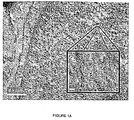
- the size of a nanoparticle can be an important consideration. Larger nanoparticles, on the order of greater than or equal to about 30 nm, are seen to enter cells, but are not translocated across the nuclear membrane into the nucleus of a cell, as seen in Figure 1B . Presumably, this effect is directly related to the size of the nanoparticle, since 5 nm nanoparticles do cross the nuclear membrane and are translocated into the nucleus, as seen in Figure 1A . Thus, selection of the appropriate delivery vehicle size will be important, but also offers an additional level of targetability and facilitates the design and employment of nanoparticles carrying active agents that need to be located in the cytoplasm and not the nucleus.
- a desired active agent is selected and prepared.
- Appropriate active agents can comprise any small molecule, protein or nucleic acid sequence, and the selection is governed by the intended application of the delivery vehicle.
- Various applications of nanoparticle delivery vehicles of the present invention are discussed in depth below, and include gene therapy, modulation of gene expression, altering RNA splicing and modulation of protein-protein interactions.
- Appropriate active agents will be apparent to one of skill in the art upon review of the present disclosure and will be selected with to regard to a desired experimental or clinical goal.
- nanoparticle delivery vehicle comprising two or more different active agents, e.g. 2, 3, 4, 5, or other desired number of different active agents.
- delivery of the different active agents can be accomplished in the same cellular or tissue location, or in two or more different cellular or tissue locations, depending on the targeting sequences that are employed.
- a nanoparticle delivery vehicle comprising a therapeutic agent and an imaging agent can be provided, for use in for example, delivery to a tumor.
- a nanoparticle delivery vehicle comprising a chemotherapeutic agent and a radiosensitizing agent can be provided.
- a nanoparticle delivery vehicle comprising different polynucleotide sequences for use in modulation of transcription and/or translation of the same or different genes can be provided.
- a single stranded nucleic acid sequence appropriate for use as an active agent in the present invention can be selected on the basis of the context in which the present invention is employed.
- appropriate single stranded DNA are complementary to a nucleic acid sequence known or suspected to be present in a disease condition.
- appropriate single stranded DNA is complementary to an overexpressed gene.
- Functional equivalents of known sequences can also be used as active agents and are considered to be an aspect of the present invention.
- Nucleic acid sequences of any manageable length can be used as an active agent. Typically, such agents range between about 20 and about 50 nucleotides in length, although longer sequences can be used.
- a nucleic acid sequence corresponding to a full-length gene, or a fragment thereof can be used as an active agent.
- Double stranded DNA of various lengths and compositions is suitable for use as an active agent in the present invention.
- Double stranded DNA can be of any length, from a few base pairs up to the length of a full-length gene.
- long lengths of DNA, and notably full-length genes find utility in gene therapy applications.
- full-length genes can be incorporated into a host cell's genome, or can be transiently expressed within the cell.
- a cell is lacking a particular gene and an appropriate double stranded DNA sequence selected as an active agent is the gene absent from the cell's genome.
- Nucleic acid analogs can also be used as active agents in the present invention.
- peptide nucleic acid analogs can be used as active agents.
- a peptide nucleic acid analog is a DNA analog wherein the backbone of the analog, normally a sugar backbone in DNA, is a pseudopeptide.
- a PNA backbone can comprise a sequence of repeated N-(2-amino-ethyl)-glycine units.
- Peptide nucleic acid analogs react as DNA would react in a given environment, and can additionally bind complementary nucleic acid sequences.
- Peptide nucleic acid analogs offer the potential advantage over unmodified DNA of the formation of stronger bonds, due to the neutrally charged peptide backbone of the analogs, and can impart a higher degree of specificity than is achievable by unmodified DNA.
- PNAs have been employed in a wide array of biochemical roles, which is applicable to the present invention, including sequence mapping. In vitro studies indicate that PNA could inhibit both transcription and translation of genes to which it has been engineered with a complementary sequence. This suggests that PNAs could be useful in antigene and antisense therapy. See, e.g. , Norden et al., (2000) FASEB J. 14(9): 1041-60 . To date, however, researchers have been unable to reproducibly target such a sequence to the cell nucleus from outside the plasma membrane.
- PNAs suitable for use as active agents in the present invention will, therefore, comprise a sequence complementary to a sequence of interest.
- Other nucleic acid analogs useful in the context of the present invention include morpholino nucleic acid analogs. Morpholino analogs can be substituted for a nucleic acid sequence and has the benefits of both complementarity and a unique chemical reaction and binding profile not found in native nucleic acid sequences. See, e.g. , Chakhmakhcheva et al., (1999) Nucleos. Nucleot. 18: 1427-28 .
- proteins are appropriate for use as an active agent in the present invention.
- appropriate proteins comprise proteins known to interact with proteins associated with DNA replication and expression, for example, ligases.
- a nanoparticle-bound protein can be a protein that interacts with DNA or RNA sequences, possibly as an up- or downregulator of the transcription process, the translation process or both.
- the present invention can be used to prove or disprove a putative protein-protein interaction.
- the nanoparticle-bound sequence is a probe protein and the application of the invention can give data similar to that achievable using the well-characterized yeast two-hybrid system and other analytical systems, although the present invention affords the opportunity to examine such an interaction in situ. More specifically, proteins capable of interacting with receptors on nuclear regulatory proteins can be employed as active agents.
- small molecules attached to a nanoparticle can be used as active agents in the present invention.
- Appropriate small molecules will have the ability to interact with enzymes, cofactors, nucleic acids and other intracellular structures.
- Small molecules can be those identified as natural ligands, inhibitors (competitive, uncompetitive and noncompetitive) or designed modulators.
- Chemotherapeutic agents, radiotherapeutics, or radiosensitizing agents; an imaging agent; a diagnostic agent; or other agent known to interact with an intracellular protein, a nucleic acid or a soluble or insoluble ligand can also be used as active agents.
- active agents does not preclude the binding of a different active agent to the nanoparticle and several active agents can be joined to a single nanoparticle.
- active agents can be multivalent and/or multifunctional.
- Nucleic acid sequences useful as active agents in the context of the present invention can be prepared in a variety of ways and will be apparent to one of skill in the art upon review of the present disclosure.
- an appropriate DNA sequence can be excised from a larger DNA sample using restriction endonucleases, which sever nucleic acid sequences at known sequences.
- Excised nucleic acid sequences can be excised and purified using methods known in the art. See, e.g. , Sambrook et al., (1992) Molecular Cloning: A Laboratory Manual, Cold Spring Harbor, New York for a general discussion of cloning strategies.
- nucleic acid sequences can be synthesized using well-known manual and automated nucleic acid synthesis methods. All nucleic acid sequences that are used as active agents, whether they are excised, synthesized or otherwise prepared, should be substantially pure. Synthesis of nucleic acid or protein active agents can proceed using a template previously associated with a nanoparticle.
- Isolation and purification of proteins will correspond with techniques established for preparation of a given protein; those proteins of interest that have not been purified can be isolated using methods known to those of skill in the art and are not discussed here. Similarly, strategies of synthesizing and purifying small molecules can be found in the art and will be evident to one of skill in the art of organic chemistry or other chemical discipline.
- a nuclear localization signal is a peptide sequence that directs the protein to the nucleus of the cell in which the sequence is expressed.
- a nuclear localization signal is predominantly basic, can be positioned almost anywhere in a protein's amino acid sequence, generally comprises a short sequence of four amino acids ( Autieri & Agrawal, (1998) J. Biol. Chem. 273: 14731-37 ) to eight amino acids, and is typically rich in lysine and arginine residues ( Magin et al., (2000) Virology 274: 11-16 ).
- Nuclear localization signals often comprise proline residues.
- nuclear localization signals have been identified and have been used to effect transport of biological molecules from the cytoplasm to the nucleus of a cell. See, e.g. , Tinland et al., (1992) Proc. Natl. Acad. Sci. U.S.A. 89:7442-46 ; Moede et al., (1999) FEBS Lett. 461:229-34 . Translocation is currently thought to involve nuclear pore proteins.
- a nuclear localization signal be attached to the nanoparticle.
- the nuclear localization signal can be synthesized or excised from a larger sequence.
- a variety of nuclear localization signals are known and selection of an appropriate sequence can be made based on the known properties of these various sequences.
- Representative NLS's include the monopartite sequence PKKKRKV (SEQ ID NO: 1) and the bipartite sequence KRPAAIKKAGQAKKKK (SEQ ID NO: 2).
- Nuclear localization signals appear at various points in the amino acid sequences of proteins. NLS's have been identified at the N-terminus, the C-terminus and in the central region of proteins. Thus, a selected sequence can serve as the functional component of a longer peptide sequence. The residues of a longer sequence that do not function as component NLS residues should be selected so as not to interfere, for example ionically or sterically, with the nuclear localization signal itself. Therefore, although there are no strict limits on the composition of an NLS-comprising sequence, in practice, such a sequence can be functionally limited in length and composition.
- a plurality of sequences can be associated with a nanoparticle delivery vehicle.
- Various sequences such as RME sequences, can also be associated with a vehicle. These additional sequences can aid in the translocation of a vehicle across various membranes, such as the nuclear membrane of a cell or the outer membrane of a cell.
- NLS and RME sequences can be analogized to be "keys”.
- a nanoparticle delivery vehicle of the present invention can comprise a plurality of different sequences or "keys,” which can enable a given nanoparticle delivery vehicle to pass through various potential barriers to translocation.
- a moiety that imparts the ability to be recognized and/or bound by a cell surface receptor is bound to the nanoparticle.
- This moiety will generally comprise a protein sequence known to be recognized by a cell surface receptor.
- the cell surface receptor recognition moiety can further comprise a nucleic acid sequence, either alone or as part of a nucleic acid-protein hybrid, or peptide analog.
- a vast number of cell surface receptors are known and can be useful in the present invention, including the macrophage mannose receptor and its various homologs, and those associated with retroviruses such as HIV.
- a representative, but non-limiting, list of moieties that can be employed as targeting agents in the present invention is presented in Table 1. Homologs of the presented moieties can also be employed. These targeting agents can be associated with a nanoparticle and used to direct the nanoparticle to a target structure, where it can subsequently be internalized. There is no requirement that the entire moiety be used as a targeting agent. Smaller fragments of these moieties known to interact with a specific receptor or other structure can also be used as a targeting agent.
- the targeting agents of Table 1 can function to internalize (e.g., by receptor mediated endocytosis) a delivery agent interacting with a targeting agent.
- the recognition moiety can further comprise a sequence that is subject to enzymatic or electrochemical cleavage.
- the recognition moiety can thus comprise a sequence that is susceptible to cleavage by enzymes present at various locations inside a cell, such as proteases or restriction endonucleases (e.g. DNAse or RNAse).
- a cell surface recognition sequence is not an absolute requirement for the present invention. Indeed, as shown in Figure 1A , hepatocytes grown in media containing nanoparticles lacking a cell surface recognition sequence were translocated across the cell membrane, in the absence of such a sequence. Thus, although a cell surface receptor sequence can be useful for targeting a given cell type, or for inducing the association of a nanoparticle with a cell surface, there is no requirement that a cell surface recognition sequence be present on the surface of a nanoparticle in order to practice the present invention.
- a cell surface receptor unique to a given type of cell can assist in the selection and delivery of an active agent to that cell type.
- macrophages express a cell surface receptor (the macrophage mannose receptor) that mediates pinocytosis of particles that comprise mannose through carbohydrate recognition domains. See , Mullin et al., (1997) J. Biol. Chem. 272: 5668-81 .
- the selection of an appropriate cell surface receptor can facilitate cell specific selection by a nanoparticle delivery vehicle and consequently, cell specific interaction.
- a short tether sequence can be disposed between the nanoparticle and a cell surface recognition sequence of a nanoparticle delivery vehicle of the present invention.
- the tether can be a protein sequence, a nucleic acid sequence or any other composition that is compatible with an intracellular environment.
- protein and nucleic acid sequences are preferred due to their enzymatic cleavability.
- a nucleic acid tether that comprises a known cut site for a restriction endonuclease found in the targeted cell can be employed.
- a protein tether can be employed that comprises a cut site for a protease commonly found in the targeted cell type.
- a tether can be designed that can be chemically or electrochemically cleaved.
- Cleavage of a tether is one method by which the nanoparticle, which will comprise an active agent and a nuclear localization signal, can be freed to translocate across the nuclear membrane and into the nucleus of a cell.
- the nanoparticle delivery vehicle upon association of a cell surface receptor with a cell surface recognition sequence disposed on the surface of a nanoparticle of a delivery vehicle of the present invention, the nanoparticle delivery vehicle is, in effect, bound to the cell surface.
- the nanoparticle delivery vehicle Upon translocation of the delivery vehicle to the interior of a cell, by endocytosis or other mechanism, the nanoparticle delivery vehicle remains bound to the receptor.
- the tether can be cleave by endogenous proteases, nucleases or other chemical or electrochemical techniques. Cleavage of the tether sequence frees the nanoparticle delivery vehicle and enables subsequent direction of the delivery vehicle to the nucleus, via the nuclear localization signal disposed on the nanoparticle surface.
- the agent itself is then assembled.
- the order of assembly is not critical and can be governed primarily by the requirements of a desired chemical reaction.
- the assembly procedure described hereinbelow is presented in an arbitrary order.
- the materials described, i.e. composition of the nanoparticle, etc. are presented only as examples and are not meant to be limiting in any way. Suitable materials and sequences will be known to those of skill in the art when evaluated in light of the present disclosure and the knowledge and resources available to researchers in the applicable fields.
- the nanoparticle is fashioned of gold.
- Gold is particularly useful in the present invention due to its well-known reactivity profile and its relatively inertness in the context of biological systems.
- Colloidal gold can be used, although the overall negative charge of common preparations of gold imparts the quality that colloidal gold has a high non-specific affinity for certain proteins.
- the negative charge of a preparation can be imparted by association of gold molecules with negatively-charged ligands such as citrate or bis-sulfonatotriphenylphosphine.
- negatively-charged ligands and thus the overall negative charge associated with a colloidal gold preparation, are preferably reduced or eliminated by exchanging any negatively-charged ligands with neutral ligands, such as polyethylene glycol, or positively-charged ligands, such as amines.
- neutral ligands such as polyethylene glycol
- positively-charged ligands such as amines.
- colloidal gold can be accompanied by additional treatments such that it can be coated at some point in the preparation process with another protein, such as BSA, in order to block undesired nonspecific protein binding.
- BSA another protein
- Small molecule and peptide coatings can also be used to avoid specific interactions with cellular proteins.
- colloidal gold has been prepared with a coating of glutathione. Since glutathione, a natural antioxidant, is one of the most abundant peptides in the cell, this coating may impart to the nanoparticle a camouflage-like effect.
- some gold clusters and particles are commercially available and can be used in the present invention.
- NANOGOLD® gold particles are available from Nanoprobes, Inc., Yaphank, New York.
- biodegradable particles which can be fashioned of an appropriate polymer or other material.
- a thiolation reaction can be performed to add a thiol group to the 5' end of the nucleic acid oligomer.
- an amination reaction can be performed and will proceed mutatis mutandis to the thiolation reaction described herein.
- the general purpose of the reaction is to introduce a nucleophilic center, which can subsequently be functionalized with a desired moiety.
- a representative thiol modifier phosphoramidite reagent is presented as Compound 1, which is available from Glen Research, Inc. of Sterling, Virginia.
- Nucleic acid oligmers are incubated with a thiol modifier phosphoramidite under conditions that permit attachment of the phosphine to the 5' end of the probe DNA.
- the reaction can be carried out in a DNA synthesizer using standard conditions.
- Compound 1 can be added as a step in automated DNA synthesis using an automated apparatus, such as the ABI TM 3900 high-throughput DNA synthesizer (Applied Biosystems, Foster City, California).
- the thiol modifier is added in the last step of synthesis of an oligonucleotide.
- the phosphine is oxidized using iodine and the purification is exactly the same as that used for unlabeled oligonucleotides.
- the purification process is easier for labeled oligonucleotides since labeled oligonucleotides are significantly more hydrophobic and therefore tend to elute much more slowly under typical HPLC conditions.
- the phosphoramidite reacts spontaneously with the 5' hydroxyl of DNA, which can be disposed in acetonitrile.
- the thiol group is protected by a protecting trityl or acetic thioester group and is separated from the 5'-phosphodiester by a variable length carbon linker.
- a six-carbon linker is present in Compound 1.
- the nucleic acid complex is then subjected to thiol deprotection to remove the trityl group. Specifically, the protecting trityl group is removed by treatment with silver nitrate and dithiothreitol (DTT).
- DTT dithiothreitol
- the nucleic acid complex is incubated with a nanoparticle metal component. The two entities are joined at the thiol exposed by the removal of the trityl group during the deprotection reaction.
- the formed active agent-nanoparticle complexes in this embodiment nucleic acid-nanoparticle complexes
- nuclear localization signals can be synthesized using standard peptide chemistry techniques, or can be isolated by proteolytic cleavage from a larger protein. Isolated or synthesized nuclear localization signals can be of any size, with the only requirement that the sequence comprise at least a known NLS, which are typically four to eight amino acids in length. Protein and peptide purification methods suitable for preparing nuclear localization signals, which are isolated from larger proteins, are known in the art.
- the present invention also encompasses the preparation of and association of a protein-peptide conjugate with a nanoparticle.
- a conjugate can comprise, for example, a comparatively large protein and a comparatively small NLS.
- both entities comprise amino acids, the distinction of protein and peptide is made based on, among other criteria, the functionality of each entity.
- a protein-peptide conjugate can comprise BSA and an NLS. Protein-peptide conjugates can subsequently be bound to gold nanoparticles.
- a thiol reaction is performed.
- the reaction can involve a thiol group disposed on the nuclear localization signal, which can take the form of a terminal cysteine or methionine residue, or on the nanoparticle.
- the thiol group can be convenient reacted with a primary amine on the alternate entity.
- the primary amine can conveniently take the form of a terminal lysine or arginine residue in the nuclear localization signal, but can also be disposed on the surface of the nanoparticle. See, e.g., Hainfeld & Furuva, (1992) J. Histochem. Cytochem. 40: 177-84 ; Hainfeld, (1992) Ultramicroscopy 46: 135-44 .
- An appropriate cell surface recognition sequence can be selected (for example, one selected from or based on those presented in Table 1) and prepared as described above in Section IV.D above.
- the sequence can be, essentially, a protein or a peptide known to bind to a receptor expressed on the surface of a given cell type.
- the same chemical reactions can be performed to associate a cell surface recognition sequence with a nanoparticle as are performed to associate a nuclear localization signal or a protein active agent with a nanoparticle.
- a thiol-amine reaction can be performed to associate a thiol disposed on either the nanoparticle or the cell surface recognition sequence with a primary amine disposed on the alternate member of a thiol-amine reaction pair.
- a scheme of site blocking can be developed. Such a scheme can prevent binding of an entity to undesired sites on the nanoparticle or on the component parts themselves.
- a tether sequence can also be bound to a nanoparticle. Such a sequence can be disposed between the nanoparticle and a cell surface recognition sequence or other entity associated with the nanoparticle.
- the tether sequence preferably comprises a site at which chemical, electrochemical or enzymatic cleavage can take place.
- the sequence can comprise a cut site for a nuclease known to be present in the cells to which the delivery vehicle is being introduced.
- the tether is a protein, it can comprise a proteolytic site.
- the tether when it is desired that the tether be cleaved photolytically, it can comprise a material amenable to photocleavage.
- Commercially available photocleavable tether sequences include various spacer phosphoramidites, available from Glen Research of Sterling, Virginia.
- the nanoparticle comprises a metal component such as gold
- a metal component such as gold
- Gold is relatively inert and less physiologically intrusive than other metals, but the detrimental effects of any metal or polymer nanoparticle material can be minimized by coating or otherwise wholly or partly covering the nanoparticle with a biocompatible substance.
- Compounds that can be used to achieve biocompatibility include polymers (such as polyethylene glycol-PEG), proteins (such as BSA), lipids (including membrane envelopes) and carbohydrates. Addition of these biocompatibility compounds can be performed following the addition of the other delivery vehicle components and can serve as the final synthetic step before introduction of the delivery vehicle to a subject or system.
- These materials can also protective or masking agents for the delivery vehicle and the active agent(s) and targeting agent(s) attached thereto to prevent recognition by the immune system or other biological systems (e.g. proteases, nucleases (e.g. DNAse or RNAse), or other enzymes or biological entities associated with undesired degradation).
- the protective coating or shell provides cloaking or stealth features to facilitate that the delivery vehicle reaches a desired cell or tissue with the active agent(s) and targeting agent(s) intact.
- a delivery vehicle of the present invention can be adapted to pass through various cellular barriers, such as the cell membrane or a nuclear membrane.
- a nanoparticle vehicle can comprise an NLS and a RME sequence.
- the RME sequence can assist in the translocation of a vehicle across the membrane of a cell.
- the NLS can target the vehicle to the nucleus of the cell.
- any sequences associated with a nanoparticle delivery vehicle are independently associated with the vehicle, rather than forming components of a single long sequence.
- independent association of multiple sequences is a more efficient method targeting a nanoparticle delivery vehicle to a desired cellular structure.
- sequential association of multiple sequences can also be an effective method of directing a nanoparticle delivery vehicle to a given site, and this approach forms another aspect of the present invention.
- a sufficiently pure nanoparticle delivery vehicle preferably comprising a nanoparticle, an active agent and an NLS
- Preferred administration techniques include parenteral administration, intravenous administration and infusion directly into any desired target tissue, including but not limited to a solid tumor or other neoplastic tissue. This can be achieved by employing a final purification step, which disposes the vehicle in a medium comprising a suitable pharmaceutical composition.
- Suitable pharmaceutical compositions in accordance with the invention generally comprise an amount of the desired delivery vehicle-active agent in accordance with the dosage information (which is determined on a case-by-case basis), admixed with an acceptable pharmaceutical diluent or excipient, such as a sterile aqueous solution, to give an appropriate final concentration in accordance with the dosage information set forth above with respect to the active agent.
- Such formulations will typically include buffers such as phosphate buffered saline (PBS), or additional additives such as pharmaceutical excipients, stabilizing agents such as BSA or HSA, or salts such as sodium chloride.
- compositions for parenteral administration it is generally desirable to further render such compositions pharmaceutically acceptable by insuring their sterility, non-immunogenicity and non-pyrogenicity.
- Such techniques are generally well known in the art as exemplified by Remington's Pharmaceutical Sciences, (1980) (Osol, ed.) 16th Ed., Mack Publishing Company, Easton, Pennsylvania , incorporated herein by reference.
- preparations should meet sterility, pyrogenicity, general safety and purity standards as required by FDA Office of Biological Standards.
- LB Luria broth
- these introduction treatments are preferable and can be performed without regard for the entities present on the surface of a delivery vehicle.
- delivery vehicles can be added to directly to a selected cell growth medium before cells are introduced into the medium.
- a selected cell growth medium must, obviously, be compatible not only with the physiological requirements of the cells, but also with the chemical and reactivity profile of the delivery vehicle.
- the delivery vehicle's profile will be apparent to one of skill in the art upon review of the present disclosure and in view of the moieties bound to the nanoparticle.
- Recognition and binding of a cell surface recognition sequence disposed on a nanoparticle delivery vehicle of the present invention is an aspect of the present invention.
- the present invention takes advantage of the understanding that a cell surface binding event is often the initiating step in a cellular cascade leading to a range of events, notably receptor-mediated endocytosis.
- a delivery vehicle can be introduced into a sample or subject.
- These agents are translocated across the cell membrane in a variety of ways.
- a cell recognition sequence is bound to a nanoparticle, a different type of internalization can occur, namely receptor mediated endocytosis.
- receptor mediated endocytosis generally describes a mechanism by which, catalyzed by the binding of a ligand to a receptor disposed on the surface of a cell, a receptor-bound ligand is internalized within a cell.
- Many proteins and other structures enter cells via receptor mediated endocytosis, including insulin, epidermal growth factor, growth hormone, thyroid stimulating hormone, nerve growth factor, calcitonin, glucagon and many others, including those presented in Table 1.
- receptor mediated endocytosis affords a convenient mechanism for transporting a nanoparticle to the interior of a cell.
- the binding of a ligand by a receptor disposed on the surface of a cell can initiate an intracellular signal, which can include an endocytosis response.
- an agent that is bound on the surface of a cell is invaginated and internalized within the cell.
- any tether sequence present on the nanoparticle can be cleaved by the cell's endogenous enzymes, thereby freeing the agent to deliver its active agent to the appropriate structure.
- RME is not the exclusive method by which a delivery vehicle can be translocated into a cell.
- Other methods of uptake that can be exploited by attaching the appropriate entity to a nanoparticle include the advantageous use of membrane pores.
- Phagocytotic and pinocytotic mechanisms also offer advantageous mechanisms by which a nanoparticle delivery vehicle can be internalized.
- Nanoparticle delivery vehicles of the present invention can be detected on both the interior and exterior of cells in a variety of ways. Indeed, the ability to select one of several techniques for detection is an aspect of the present invention.
- One method of detecting the presence of a nanoparticle delivery vehicle is by monitoring a sample for the homeostatic change the nanoparticle delivery vehicle is designed to produce. For some applications, however, it might be desirable to monitor the presence of a nanoparticle delivery vehicle by a different approach.
- Several, but not all, methods of detecting the presence of nanoparticle delivery agents can include the use of transmission electron, fluorescence and other microscopy techniques; spectroscopic-based detection; and detection methods involving proteins, such as immunological methods. Other methods are possible and will depend on the specific circumstances of the experiment or treatment protocol.
- Nanoparticle delivery vehicles comprising nanoparticles of 5 nm and larger can be clearly visualized by TEM, as evidenced by the TEM images presented in Figures 1A and 1B .
- Figure 1A depicts nanoparticle delivery vehicles comprising 5 nm nanoparticles.
- Figure 1B depicts nanoparticle delivery vehicles comprising 30 nm nanoparticles. In both figures, the nanoparticle delivery vehicles comprise a nuclear localization signal.
- Figures 1A and 1B indicate that TEM is a useful method of detecting the presence and subcellular localization of nanoparticle delivery vehicles. Nanoparticle delivery vehicles comprising nanoparticles as small as 5 nm in size are visible, as depicted in Figure 1A .
- Figures 1A and 1B demonstrate that TEM can be used to detect the presence of a nanoparticle delivery vehicle in the nucleus of a cell.
- Nanoparticle delivery vehicles comprising 5 nm nanoparticles locate to the cell nucleus, as shown in Figure 1A .
- Nanoparticle delivery vehicles comprising 30 nm nanoparticles remain in the cell's cytoplasm, as shown in Figure 1B .
- TEM facilitates the detection of nanoparticle delivery vehicles and the subcellular localization of the delivery vehicles.
- TEM can also be used to estimate the density of nanoparticle delivery vehicles in a region.
- a density calculation can be performed by counting the number of observed particles in a given area scanned by TEM.
- An understanding of the density of nanoparticle delivery vehicles in a defined region, such as a cell's nucleus or cytoplasm, can provide information regarding the size requirements for a nanoparticle, the effectiveness of a given nuclear localization signal and other parameters.
- Nanoparticle delivery vehicles of the present invention can also be detected spectroscopically. UV, visible and IR spectroscopic methods can be employed in the present invention. The choice of detection method will typically depend on the experimental design. In one embodiment, nanoparticle delivery vehicles of the present invention can be indirectly detected using fluorescence spectroscopy.
- GFP and other fluorescent marker proteins provided by an active agent of a nanoparticle delivery vehicle of the present invention can be detected by fluorescence and can act as an indicator of the presence of a nanoparticle delivery vehicle.
- a fluorescent moiety can be associated with the nanoparticle component of a nanoparticle delivery vehicle and in this way, the presence of the nanoparticle delivery vehicle itself can be identified.
- TEM is one form of microscopy useful for detecting delivery vehicles. Other forms of microscopy, however, can also be employed. Microscopy techniques such as bright field microscopy, phase contrast microscopy, confocal microscopy and other techniques can be employed to detect the presence of delivery vehicles.
- Phase contrast microscopy is typically used for the visualization of cellular organelles, and can be employed to detect the presence of delivery vehicles. Confocal microscopy can also be useful for detecting delivery vehicles.
- the resolution of any of the above microscopy techniques can be enhanced by the introduction of various contrast enhancement or other agents known to refine images and increase resolution.
- Protein-based detection of a nanoparticle delivery vehicle is also possible.
- a second protein known to associate with a first protein bound to a nanoparticle can be labeled and used as a probe.
- Suitable labels include fluorescent moieties and other labels.
- the presence of the nanoparticle delivery vehicle is detectable by detecting the presence of the probe.
- Any suitable protein pair can be used to detect a nanoparticle delivery vehicle of the present invention; preferably, a first protein is associated with a nanoparticle and a second protein is labeled with a detectable label, and the two proteins are known to associate.
- the nanoparticle delivery vehicles of the present invention can be employed to deliver a variety of active agents to a variety of different cellular and subcellular locations.
- the present invention is useful for analysis of gene expression; incorporating a nucleic acid sequence or a sequence comprising nucleic acid analogs into a cell's genome; altering the concentration of a regulatory protein in a cell; altering an RNA splicing pattern; and interacting with mRNA in the cytoplasm of a cell.
- the stringency of hybridization conditions can be varied, with the general rule that the temperature should remain within approximately 10oC of the duplex's predicted T m , which is the temperature (under defined ionic strength and pH) at which 50% of the target sequence hybridizes to a perfectly matched probe.
- T m the temperature (under defined ionic strength and pH) at which 50% of the target sequence hybridizes to a perfectly matched probe.
- An example of stringent hybridization conditions for analysis of complementary nucleic acids having more than about 100 complementary residues is overnight incubation in 50% formamide with 1 mg of heparin at 42oC.
- a high stringency wash can be preceded by a low stringency wash to remove background probe signal.
- An example of medium stringency wash conditions for a duplex of more than about 100 nucleotides is incubation for 15 minutes in 1X SSC at 45oC.
- stringent conditions typically involve incubation in salt concentrations of less than about 1.0 M sodium ion, typically about 0.01 to 1.0 M sodium ion (or other ion) concentration, at pH 7.0-8.3, at a temperature of at least about 30oC.
- Stringent conditions can also be achieved with the addition of destabilizing agents such as formamide.
- destabilizing agents such as formamide.
- a signal to noise ratio of 2-fold (or higher) than that observed for an unrelated probe in the particular hybridization assay indicates detection of a specific hybridization.
- the nanoparticle delivery vehicles of the present invention can be used to modulate and analyze gene expression in a model system. It is fundamental that the expression of a gene of interest correlates with the production of, mRNA transcribed from the gene's DNA sequence. Transcribed mRNA is subject to standard Watson-Crick base pairing rules. Thus, in one embodiment a nanoparticle delivery vehicle can be used to directly modulate expression of a gene by selecting an active agent that will remove any expression-inhibiting structures or will introduce expression-enhancing structures. In another embodiment, a delivery vehicle of the present invention is employed to mimic a component part of a cell's natural second messenger system and thereby modulate the transcription and translation of a given gene.
- a transcription factor or other protein having the ability to modulate protein expression which has been presented to the cytoplasm or nucleus of a cell by a nanoparticle delivery vehicle of the present invention, modulates gene expression. Modulation encompasses both up- and downregulation of a gene.
- a nanoparticle delivery vehicle comprises either a competent transcription or translation modulator (e.g., a transcription factor) or a nucleic acid sequence encoding a transcription or translation modulator in the role of active agent.
- Competent modulators can be active in the form in which they are bound to a nanoparticle, or they can be in a form that is activated by proteolytic or other enzymatic or chemical treatment in the cytoplasm or nucleus of a target cell.
- nucleic acid sequences encoding a transcription or translation modulator can be translated by the translation machinery of the target cell, which can be used in a method analogous to a feedback inhibition loop: the target cell's expression machinery can be used to express the nucleic acid introduced by a delivery vehicle, which will then produce a protein can inhibit further protein expression.
- gene expression is modulated in a cell having protein whose expression is dependent on a given splicing pattern.
- a nanoparticle delivery vehicle of the present invention comprising a morpholino oligonucleotide, PNA or other modified oligonucleotide of appropriate sequence that alters splicing, is introduced to target cells that comprise a gene whose expression is dependent on a splicing event.
- GFP green fluorescent protein
- morpholino oligonucleotide delivered by a delivery vehicle of the present invention In cells where the morpholino oligonucleotide delivered by a delivery vehicle of the present invention is present, alternate splicing events occur and the GFP gene is expressed and can be detected spectrophotometrically.
- This example can be extended to any gene that can be spliced to generate a functional protein, with an appropriate nucleotide serving as an active agent bound on a delivery vehicle.
- a delivery vehicle of the present invention can be used to deliver a nucleic acid sequence for incorporation into the genome of a target cell.
- This concept is sometimes referred to as "antisense” or "gene therapy”.
- Breakthroughs in molecular biology and the Human Genome Project have opened previously unforeseen possibilities for targeted intervention with gene expression. These include permanent approaches such as transgenic overexpression or recombinant disruption of specific genes, as well as novel approaches for transient suppression of gene function.
- Short synthetic antisense (AS) oligodeoxynucleotides (ODN) designed to hybridize with specific sequences within a targeted mRNA belong to the latter class. Integration of a lacking gene into a host's genome has also been of significant interest.
- AS intervention in the expression of specific genes can be achieved by the use of synthetic antisense oligodeoxynucleotides (AS-ODNs).
- AS-ODNs synthetic antisense oligodeoxynucleotides
- AS-ODNs are short sequences of DNA, typically 15 to 25 bases in length, and are designed to complement a target mRNA of interest and to form an RNA:ODN duplex. This duplex formation can prevent processing, splicing, transport or translation of the relevant mRNA.
- AS-ODNs can elicit cellular RNase H activity when hybridized with their target mRNA, resulting in mRNA degradation. Calabretta et al., (1996) Semin. Oncol., 23: 78-87 . In that case, RNase H will cleave the RNA component of the duplex and can potentially release the AS-ODN to further hybridize with additional molecules of the target RNA.
- An additional mode of action results from the interaction of AS-ODNs with genomic DNA to form a triple helix that might be transcriptionally inactive.
- a nanoparticle delivery vehicle can be prepared that comprises at least one AS sequence, an ODN sequence, an AS-ODN sequence or other nucleic acid or modified nucleic acid sequence. This sequence can serve as an active agent in a nanoparticle delivery vehicle.
- the nanoparticle delivery vehicle also comprises a nuclear localization signal, which targets the delivery vehicle to the nucleus of a cell. Alternatively, if it is desired that the nanoparticle delivery vehicle remain in the cytoplasm, nanoparticles of larger size (e.g., 30 nm) can be employed.
- the precise sequence and/or composition of an active agent reflects the role or roles of the nanoparticle delivery vehicle. For example, an active agent can be complementary to a gene of interest.
- a nanoparticle delivery vehicle designed to vary a target cell's protein translation profile can be administered to a subject by injection or, if the target cells are present in an in vitro environment, the nanoparticle delivery vehicle can be added directly to the cell's growth medium. Both introduction procedures are described herein above, and others will be apparent to one of skill in the art upon review of the present disclosure.
- the nanoparticle delivery vehicles of the present invention can be used to modulated the concentration of various cellular regulatory proteins.
- a specific example of regulation is known as using a transcription factor decoy.
- the terms “decoy” and “transcription factor decoy” refer to molecules that bind to or interact with transcription factors and prevent their binding to native enhancer sequences. It is possible to design transcription factor decoys that specifically interact with transcription factors and mimic or resemble the natural genomic binding site for the particular transcription factor. Some transcription factor decoys can bind the transcription factor with an affinity near or exceeding its affinity for the natural genomic binding site.
- transcription factors in addition to binding an endogenous genomic binding site, can also bind to intracellular soluble ligands. Binding of such a transcription factor to an appropriate ligand subsequently alters the binding profile of the transcription factor to its genomic binding site or sites. Restated, ligand binding by a transcription factor can modulate the ability of the transcription factor to bind its intended genomic site.
- Such transcription factors are referred to in the art as intracellular or nuclear receptors for soluble ligands.
- Transcription factor decoys can function in a variety of ways and thus can comprise a variety of elements.
- nucleic acid sequences can compete with cellular target DNA for binding to one or more transcription factors.
- nucleic acid sequences can form a duplex with a target sequence and effectively inactivate the sequence.
- Nucleic acid sequences can be introduced that will form other duplex-type structures such as hairpins, cruciforms or other structures that will effectively inactivate cellular target DNA.
- Sequences can comprise nucleic acid molecules that contain modified phosphodiester bonds.
- Modified phosphodiester bonds can include phosphorothioate, phosphoramidite, and methyl phosphate derivatives, for example.
- the nanoparticle delivery vehicles of the present invention are able to facilitate a modulation in regulatory protein concentration. Modulation can be achieved by associating an appropriate active agent with a nanoparticle. For example, a short sequence of double stranded DNA, for which a given regulatory protein (e.g., transcription factor) has a high affinity, can be used as a transcription factor decoy, as described herein above. Additional regulatory protein-modulating applications for a delivery vehicle of the present invention will be apparent to one of skill in the art when considered in view of the present disclosure.
- a given regulatory protein e.g., transcription factor
- the expression of a specific gene can be regulated at any step in the process of producing an active protein. Modulation of total protein activity can occur via transcriptional, transcript-processing, translational or post-translational mechanisms.
- One role of a nanoparticle delivery vehicle of the present invention is to modulate transcription of a nucleic acid sequence.
- Transcription means a cellular process involving the interaction of an RNA polymerase with a gene that directs the expression as RNA of the structural information present in the coding sequences of the gene.
- the process includes, but is not limited to the following steps: (1) transcription initiation, (2) transcript elongation, (3) transcript splicing, (4) transcript capping, (5) transcript termination, (6) transcript polyadenylation, (7) nuclear export of the transcript, (8) transcript editing, and (9) stabilizing the transcript.
- Transcription can be modulated by altering the rate of transcriptional initiation or the progression of RNA polymerase ( Maniatis et al., (1987) Science, 236: 1237-45 ).
- Transcript-processing can be influenced by circumstances such as the pattern of RNA splicing (the splicing of the RNA to yield one or more mRNA species), the rate of mRNA transport to the cytoplasm or mRNA stability.
- mRNA splice sites i.e., intron-exon junctions
- intron-exon junctions can be target regions for an active agent of the present invention, and can be particularly useful in situations where aberrant splicing is implicated in disease, or where an overproduction of a particular mRNA splice product is implicated in disease. Aberrant fusion junctions due to rearrangements or deletions can also be targets.
- the present invention can be employed to modulate RNA splicing.
- This aspect of the present invention can be accomplished by selecting an appropriate active agent, such as a nucleic acid sequence known to alter the splicing pattern for a given gene.
- an appropriate sequence e.g., DNA, RNA, morpholino nucleotide, etc.
- Delivery of the appropriate sequence is the major obstacle in therapeutic applications of RNA splicing that can be overcome by employing nanoparticle delivery vehicles comprising a nuclear targeting capability.
- the present invention can be used to interact with mRNA transcript for a given protein while the transcript is in the cytoplasm. Interaction can take a variety of forms, including modulation of the amount of a given protein produced by a cell.
- a nanoparticle delivery vehicle of the present invention can employ an antisense nucleotide to interact with mRNA which has been exported to the cytoplasm. See, e.g. , Bassell et al., (1999) FASEB J. 13: 447-54 .
- a nanoparticle delivery vehicle of the present invention can be designed to interact with mRNA in the cytoplasm of a cell.
- the specific hybridization of an oligomeric compound with mRNA can interfere with the normal function of the mRNA.
- This modulation of function of a nucleic acid by compounds that specifically hybridize to it is generally referred to as "antisense” and is discussed herein above.
- Antisense compounds can interrupt various functions of RNA can include all vital functions such as, for example, translocation of the RNA to the site of protein translation, translation of protein from the RNA, splicing of the RNA to yield one or more mRNA species, and catalytic activity which might be engaged in or facilitated by the RNA.
- the overall effect of such interference with mRNA function is the modulation of the expression of the protein for which the mRNA codes.
- association of an antisense compound with, for example, mRNA can be utilized for diagnostics, therapeutics, prophylaxis and as research reagents and kits.
- a subject suspected of having a disease or disorder that can be treated by modulating the expression of a given protein can be treated by administering a nanoparticle delivery vehicle of the present invention comprising an antisense active agent.
- Use of the nanoparticle delivery vehicles of the present invention, when antisense compounds are included as the active agent can also be used prophylactically, e.g., to prevent or delay infection, inflammation or tumor formation, for example.
- Antisense-bearing delivery vehicles of the present invention are useful for research and diagnostics, because the antisense component can hybridize with nucleic acids encoding a particular protein of interest, enabling sandwich and other assays to easily be constructed to exploit this fact.
- the nanoparticle delivery vehicles of the present invention can be localized subcellularly through the selection of an appropriately sized nanoparticle. As shown in Figure 1B , delivery vehicles comprising nanoparticles of 30 nm or greater remain localized to the cytoplasm of a cell and are not localized in the cell's nucleus, regardless of the presence or absence of a nuclear localization signal. This observation indicates that larger nanoparticles can be targeted to the cytoplasm, wherein untranslated mRNA is localized. Smaller nanoparticles can be used to target pre-mRNA in the nucleus. Thus, a delivery vehicle of the present invention can be targeted to the cytoplasm of a cell, where it can interact with RNA sequences disposed therein.
- an NLS as a component part of a nanoparticle delivery vehicle assures that, assuming optimization of other variables, the nanoparticle delivery vehicle is targeted directly to the nucleus of a cell.
- This advantage greatly increases the efficacy of an active agent designed to interact with nuclear structures by increasing the amount of material delivered to the nucleus of a target cell; inclusion of the NLS results in less material disposed in the cytoplasm for shorter periods of time and ultimately less degradation of material.
- the NLS additionally offers the ability to effectively target cellular processes that occur in the nucleus, such as DNA replication, transcription, and various splicing events.
- a nanoparticle delivery vehicle of the present invention can comprise a plurality of different sequences or "keys,” which can enable a given nanoparticle delivery vehicle to pass through various potential barriers to translocation.
- nanoparticle delivery vehicles of the present invention is the ability to create nanoparticles that comprise a material that is biologically inert. For example, it is possible to fashion nanoparticles from gold and other materials. Gold, unlike some other materials, is biologically inert and can be physiologically tolerated without significant adverse effects by biological systems. Further, a nanoparticle can comprise biodegradable material, which upon breakdown, can yield the nanoparticle delivery vehicle's component parts, all of which are themselves biodegradable.
- nanoparticle delivery vehicles of the present invention are their ability to function in any of a variety of roles, due to the lack of restriction on the active agent.
- a nanoparticle delivery vehicle of the present invention can therefore fill a variety of roles by simply changing the active agent to suit the need.
- a nanoparticle delivery vehicle designed to modulate gene expression by delivering an antisense strand to the nucleus of a cell can also function as a transcription factor decoy by replacing the antisense strand active agent with a double stranded sequence of DNA.
- the size of the nanoparticle can be varied, which can provide for differential targeting of a nanoparticle delivery vehicle.
- Nanoparticle size can influence the targeting of a delivery vehicle.
- a nanoparticle delivery vehicle comprising a nanoparticle of about 30 nm or larger will not be transported into the nucleus of a cell and will remain in the cytoplasm of the cell, even if an NLS is present.
- the nanoparticle delivery vehicle can be internalized by the cell and remain localized in the cytoplasm.
- such vehicles can be useful for modulating processes occurring in the cytoplasm, such as translation and translocation.
- Laboratory Example has been included to illustrate preferred modes of the invention. Certain aspects of the following Laboratory Example are described in terms of techniques and procedures found or contemplated by the present inventors to work well in the practice of the invention. This Laboratory Example are exemplified through the use of standard laboratory practices of the inventors. In light of the present disclosure and the general level of skill in the art, those of skill will appreciate that the following Laboratory Example is intended to be exemplary only and that numerous changes, modifications and alterations can be employed without departing from the spirit and scope of the present invention.
- the nucleus is a desirable target since the genetic information of the cell and transcription machinery resides there.
- the diagnoses of disease phenotype, the identification of potential drug candidates, and the treatment of disease by novel methods such as antisense therapy would be enhanced greatly by the efficient transport of materials to living cell nuclei ( Kole & Sazani, (2001) Curr. Opin. Mol. Ther. 3: 229-234 ).
- the intracellular fate of gold nanoparticles chemically designed to transit from outside a living cell into the nucleus is reported in the present Laboratory Example.
- Targeted nuclear delivery is a challenging task, as any cell-specific nuclear probe must satisfy minimally the following requirements ( Hallenbeck & Stevenson, (2000) Targetable Gene Delivery Vectors (Habib, Ed.), Kluwer Academic/Plenum Publishers: New York, pp 37-46 ): it must (i) be small enough to enter the cell and cross the nuclear membrane; (ii) bind to cell-specific plasma membrane receptors by receptor-mediated endocytosis (RME), for example; (iii) escape endosomal/lysosomal pathways; (iv) pass through the nuclear pore complex, and (v) have low toxicity.
- RME receptor-mediated endocytosis
- a nanoparticle vector of the present Laboratory Example comprises a core of a 20 nm gold particle and a shell of bovine serum albumin (BSA) conjugated to various cellular targeting peptides, which are presented in the following Table of Representative Peptide Sequences:
- Peptide Sequence SEQ ID NO Source Peptide/BSA N0 CGGGPKKKRKVGG 3 SV40 large T NLS 7 ⁇ 1 N1 CGGFSTSLRARKA 4 Adenoviral NLS 8 ⁇ 1 N2 CKKKKKKSEDEYPYVPN 5 Adenoviral RME 9 ⁇ 2 N3 CKKKKKKKSEDEYPYVP NFSTSLRARKA 6 Adenoviral Fiber Protein 6 ⁇ 2
- peptides were conjugated to BSA with a 3-maleimido benzoic acid N-hydroxysuccinimide ester linker.
- Gold was chosen as an intracellular targeting vector primarily for three reasons. First, gold can be routinely synthesized in sizes varying continuously from 0.8 nm to 200 nm with ⁇ 5 % size dispersity. Secondly, gold can be modified with a large collection of small molecules, peptides, proteins, DNA, and polymers. Moreover, all of these functional elements can be combined on a single particle, often via simple one-pot procedures. Finally, gold particles have strong visible light extinctions that can be used to monitor their trajectories inside cells under polarized light conditions. These properties were advantageously employed in a novel combination of video-enhanced color (VEC) microscopy and differential interference contrast microscopy (DIC), which facilitated the observation of the trajectory of 20 nm gold nanoparticles inside cells.
- VEC video-enhanced color
- DIC differential interference contrast microscopy
- BSA-peptide conjugates add ⁇ 2 nm to the radius of the nanoparticle complex.
- the fact that BSA does not add greatly to the size of the gold particle is important in its use in constructing nuclear targeting vectors because the diameter of the nuclear pore complex is 20 - 50 nm depending on the cell line ( Feldherr & Akin, (1990) J. Cell Biol. 111:1-8 ).
- the 20 nm gold particles used in he present Laboratory Example have a maximum diameter of 25 nm when complexed with any of the BSA-peptide conjugates studied (see Supporting Information).
- Nuclear translocation through the nuclear pore complex has previously been studied using gold nanoparticles labeled with an NLS from SV-40 virus (large T antigen).
- nuclear targeting was observed by transmission electron microscopy (TEM) following microinjection into the cell ( Feldherr et al., (1992) Proc. Nat. Acad. Sci. U.S.A. 89: 11002-11005 ).
- nanoparticle complexes comprising peptide N0 were introduced into the growth medium of HepG2 cells.
- N0 complexes were observed inside the cytoplasm of HepG2 cells, however N0 did not enter the nucleus.
- Experiments at 4°C indicated that cell entry was via an energy-dependent pathway.
- peptides from the adenovirus were explored.
- the adenovirus is widely used in gene delivery and there is a great deal of interest in replacing the whole virus, which is potentially infectious and immunogenic, with peptide sequences derived from the adenovirus fiber protein ( Seth, (2000) Adenoviral Vectors; (Habib, Ed.) Kluwer Academic/Plenum Publishers: New York, pp 13-22 ; Bilbao et al., (1998) Targeted Adenoviral vectors for Cancer Gene Therapy, Plenum Press: New York, Vol. 57, pp 365-374 ).
- This protein is known to contain both RME and NLS sequences (N1 and N2, in the Table of Representative Peptide Sequences).
- the full length fiber containing both the RME and NLS is peptide N3 in the Table of Representative Peptide Sequences.
- a comparison of the functions of these targeting peptides when complexed to a gold nanoparticle is as follows. N1 does not enter the cell. N2 enters the cell, but remains trapped in endosomes and does not reach the nucleus. N3 targets the nucleus, however, N1/N2 has a greater propensity for nuclear targeting than N1, N2, or N3. These results are interpreted as follows. N1 presents only the adenovirus NLS (Table of Representative Peptide Sequences).
- N2 presents the RME (NPXY (SEQ ID NO: 7) motif) and it enters the cell, however, it is not capable of nuclear targeting ( Chen et al., (1990) J. Biol. Chem. 265: 3116-3123 ).
- N1/N2 presents the RME and NLS on separate BSA bioconjugates and N3, which presents the full-length adenoviral fiber peptide.
- N1/N2 was present in the nucleus in greater numbers than N3.
- the origin of the higher nuclear targeting efficiency in particles carrying two short peptides versus one long sequence could be structural or spatial. Infrared spectroscopy indicates that all peptides employed in this Exa,[;e adopt an extended confirmation when attached to nanoparticles. However, when one long peptide is synthesized with two consecutive signals, it is likely that one of the signals will be less accessible to cellular receptors.
- NPXY SEQ lD NO: 7
- SEQ ID NO: 7 This is important for NPXY (SEQ lD NO: 7) motifs, for example, since tandem interaction of two NPXY (SEQ ID NO: 7) regions has been shown to facilitate RME ( Hussain, (2001) Front. Biosci. 6: 417-428 ). Attaching the two-peptide signals to a nanoparticle as separate, shorter pieces likely gives them equal access to cellular receptors.
- the methods used here provide an approach for rapidly assessing the efficacy of various combinations of targeting peptides using nanoparticle complexes for nuclear targeting.
- the VEC-DIC combination microscopy permits examination of hundreds of samples per day, an improvement over costly and time consuming electron and confocal microscopy techniques.
- adenoviral targeting sequences provides a test of the function of individual peptide sequences that will permit effective and cell-specific targeting for a range of scientific and medical applications.
Landscapes
- Health & Medical Sciences (AREA)
- Life Sciences & Earth Sciences (AREA)
- Engineering & Computer Science (AREA)
- Chemical & Material Sciences (AREA)
- Genetics & Genomics (AREA)
- General Health & Medical Sciences (AREA)
- Bioinformatics & Cheminformatics (AREA)
- Biomedical Technology (AREA)
- Molecular Biology (AREA)
- Animal Behavior & Ethology (AREA)
- Public Health (AREA)
- Veterinary Medicine (AREA)
- Epidemiology (AREA)
- Biotechnology (AREA)
- Medicinal Chemistry (AREA)
- Pharmacology & Pharmacy (AREA)
- Organic Chemistry (AREA)
- General Engineering & Computer Science (AREA)
- Wood Science & Technology (AREA)
- Biochemistry (AREA)
- Zoology (AREA)
- Physics & Mathematics (AREA)
- Nuclear Medicine, Radiotherapy & Molecular Imaging (AREA)
- Plant Pathology (AREA)
- Radiology & Medical Imaging (AREA)
- Biophysics (AREA)
- Optics & Photonics (AREA)
- Inorganic Chemistry (AREA)
- Pathology (AREA)
- Microbiology (AREA)
- Nanotechnology (AREA)
- General Chemical & Material Sciences (AREA)
- Chemical Kinetics & Catalysis (AREA)
- Medicines That Contain Protein Lipid Enzymes And Other Medicines (AREA)
- Pharmaceuticals Containing Other Organic And Inorganic Compounds (AREA)
- Medicinal Preparation (AREA)
- Solid-Sorbent Or Filter-Aiding Compositions (AREA)
Claims (37)
- Träger zur Freisetzung von Nanopartikeln, umfassend:(a) einen Nanopartikel;(b) einen Wirkstoff;(c) ein nukleäres Lokalisierungssignal; und(d) eines oder mehrere extrazelluläre Targeting-Mittel.
- Träger zur Freisetzung von Nanopartikeln nach Anspruch 1, wobei der Nanopartikel ein Material umfasst, das ausgewählt ist aus der Gruppe, bestehend aus Metallen, Keramiken, Halbleitern und Polymeren.
- Träger zur Freisetzung von Nanopartikeln nach Anspruch 1, wobei der Nanopartikel biologisch abbaubar ist.
- Träger zur Freisetzung von Nanopartikeln nach Anspruch 1, wobei jede Sequenz unabhängig mit dem Nanopartikel assoziiert ist.
- Träger zur Freisetzung von Nanopartikeln nach Anspruch 1, ferner umfassend eine Schutzhülle, die wenigstens einen Teil des Trägers zur Freisetzung bedeckt.
- Träger zur Freisetzung von Nanopartikeln, umfassend:(a) eine Vielzahl verschiedener Targeting-Mittel, wobei die Vielzahl verschiedener Targeting-Mittel ein nukleäres Lokalisierungssignal und eines oder mehrere extrazelluläre Targeting-Mittel umfasst;(b) ein Nanopartikelgerüst, wobei das Nanopartikelgerüst ein Material umfasst, das ausgewählt ist aus der Gruppe, bestehend aus Cadmiumselenid, Titan, Titandioxid, Zinn, Zinnoxid, Silizium, Siliziumdioxid, Eisen, Eisen(III)oxid, Silber, Nickel, Gold, Kupfer, Aluminium, Stahl, Cobalt-Chrom-Legierung, Titanlegierung, Brushit, Tricalciumphosphat, Aluminiumoxid, Siliziumoxid, Zirkoniumoxid, Diamant, Polystyrol, Siliziumgummi, Polycarbonat, Polyurethane, Polypropylene, Polymethylmethacrylat, Polyvinylchlorid, Polyether und Polyethylen; und(c) einen Wirkstoff.
- Träger zur Freisetzung von Nanopartikeln nach Anspruch 6, wobei jedes Targeting-Mittel unabhängig mit dem Nanopartikel assoziiert ist.
- Träger zur Freisetzung von Nanopartikeln nach Anspruch 1 oder 6, wobei das extrazelluläre Targeting-Mittel ein RME-Motiv ist.
- Träger zur Freisetzung von Nanopartikeln nach Anspruch 1 oder 6, wobei das extrazelluläre Targeting-Mittel ausgewählt ist aus der Gruppe, bestehend aus Diphtherie-Toxin, Pseudomonas-Toxin, Cholera-Toxin, Ricin, Concanavalin A, Rous-Sarkoma-Virus, Semliki-Forest-Virus, vesikulärem Stomatitis-Virus, Adenovirus, Transferrin, Low Density-Lipoprotein, Transcobalamin, Dotter-Proteinen, IgE, polymerem IgA, mütterlichem IgG, Insulin, epidermalem Wachstumsfaktor, Wachstumshormon, schilddrüsestimulierendem Hormon, Nervenwachstumsfaktor, Calcitonin, Glucagon, Prolactin, luteinisierendem Hormon, Schilddrüsenhormon, Platelet derived Growth Factor, Interferon, nukleärem Lokalisierungssignal und Catecholaminen.
- Träger zur Freisetzung von Nanopartikeln nach Anspruch 1 oder 6, wobei das extrazelluläre Targeting-Mittel ein Fragment eines Moleküls umfasst, das ausgewählt ist, aus der Gruppe, bestehend aus Diphtherie-Toxin, Pseudomonas-Toxin, Cholera-Toxin, Ricin, Concanavalin A, Rous-Sarkoma-Virus, Semliki-Forest-Virus, vesikulärem Stomatitis-Virus, Adenovirus, Transferrin, Low Density-Lipoprotein, Transcobalamin, Dotter-Proteinen, IgE, polymerem IgA, mütterlichem IgG, Insulin, epidermalem Wachstumsfaktor, Wachstumshormon, schilddrüsestimulierendem Hormon, Nervenwachstumsfaktor, Calcitonin, Glucagon, Prolactin, luteinisierendem Hormon, Schilddrüsenhormon, Platelet derived Growth Factor, Interferon und Catecholaminen.
- Träger zur Freisetzung von Nanopartikeln nach Anspruch 1 oder 6, wobei die Targeting-Mittel ausgewählt sind aus der Gruppe, bestehend aus SEQ ID NO: 4 bis 6 und Kombinationen davon.
- Träger zur Freisetzung von Nanopartikeln nach Anspruch 6, wobei das Nanopartikelgerüst biologisch abbaubar ist.
- Träger zur Freisetzung von Nanopartikeln nach Anspruch 1 oder 6, wobei der Nanopartikel einen Durchmesser von ungefähr 30 nm oder weniger aufweist.
- Träger zur Freisetzung von Nanopartikeln nach Anspruch 1 oder 6, wobei der Wirkstoff ausgewählt ist aus der Gruppe, bestehend aus Oligomeren von doppelsträngigen Nukleinsäuren, einzelsträngigen Nukleinsäuren, chemisch modifizierten Nukleinsäuren, Peptid-Nukleinsäuren, Proteinen und kleinen Molekülen.
- Träger zur Freisetzung von Nanopartikeln nach Anspruch 1 oder 6, weiter umfassend eine Anbindungssequenz, die mit dem Wirkstoff und dem Nanopartikel verknüpft und zwischen diesen angeordnet ist.
- Träger zur Freisetzung von Nanopartikeln nach Anspruch 1 oder 6, weiter umfassend zwei oder mehrere verschiedene Wirkstoffe.
- Träger zur Freisetzung von Nanopartikeln nach Anspruch 1 oder 6, wobei der Träger zur Freisetzung von Nanopartikeln in einem pharmazeutisch annehmbaren Verdünnungsmittel angeordnet ist.
- Träger zur Freisetzung von Nanopartikeln nach Anspruch 1 oder 6, weiter umfassend einen nachweisbaren Rest, wobei der nachweisbare Rest vorzugsweise eine fluoreszierende Verbindung ist.
- Träger zur Freisetzung von Nanopartikeln nach Anspruch 1 oder 6, weiter umfassend ein die Biokompatibilität erhöhendes Mittel.
- Träger zur Freisetzung von Nanopartikeln nach Anspruch 1 oder 6, weiter umfassend eine Schutzhülle, die wenigstens einen Teil des Trägers zur Freisetzung bedeckt.
- Träger zur Freisetzung von Nanopartikeln nach einem der Ansprüche 5 oder 20, weiter umfassend eine Schutzhülle, die den gesamten Träger zur Freisetzung bedeckt, wobei die Schutzhülle vorzugsweise ein Polymer oder ein biologisches Material umfasst, wobei das biologische Material vorzugsweise ein Protein, Lipid, Kohlenwasserstoff oder eine Kombination davon ist.
- In vitro-Verfahren zum Freisetzen eines Wirkstoffs in den Kern einer Zelle, wobei das Verfahren umfasst:(a) Bereitstellen eines Trägers zur Freisetzung von Nanopartikeln, der ein Nanopartikel-Gerüst mit einem Durchmesser von ungefähr 30 nm oder weniger und einen Wirkstoff und eine Vielzahl von Targeting-Mitteln umfasst, wobei die Vielzahl von Targeting-Mitteln ein nukleäres Lokalisierungssignal und eines oder mehrere verschiedene, extrazelluläre Targeting-Mittel umfasst; und(b) In-Kontakt-Bringen einer intakten Zielzelle mit dem Träger zur Freisetzung von Nanopartikeln, wobei der Träger zur Freisetzung von Nanopartikeln in die Zelle eindringt und die Kernmembran überquert, wodurch ein Wirkstoff in den Kern einer Zielzelle freigesetzt wird.
- In vitro-Verfahren zum Modulieren der Expression einer Zielnukleinsäure, wobei das Verfahren umfasst:(a) Bereitstellen eines Trägers zur Freisetzung von Nanopartikeln, der einen Nanopartikel, eine Vielzahl von Targeting-Mitteln und einen Wirkstoff umfasst, der dazu in der Lage ist, mit einer Zielnukleinsäure, deren Expression moduliert werden soll, wechselzuwirken, wobei die Vielzahl von verschiedenen Targeting-Mitteln ein nukleäres Lokalisierungssignal und eines oder mehrere verschiedene, extrazelluläre Targeting-Mittel umfasst;(b) In-Kontakt-Bringen einer Zielzelle, die eine Zielnukleinsäuresequenz umfasst, mit dem Träger zur Freisetzung von Nanopartikeln, wobei der Träger zur Freisetzung von Nanopartikeln in die Zelle eindringt und die Kernmembran überquert; und(c) Modulieren der Expression der Zielnukleinsäuresequenz durch das In-Kontakt-Bringen in Schritt (b), wodurch die Expression einer Zielnukleinsäuresequenz moduliert wird.
- Verfahren nach Anspruch 23, weiter umfassend das Bestimmen eines Grades, bis zu dem die Zielnukleinsäuresequenz exprimiert wird.
- In vitro-Verfahren zum Modulieren der Expression eines Zielproteins, wobei das Verfahren umfasst:(a) Bereitstellen eines Trägers zur Freisetzung von Nanopartikeln, der einen Nanopartikel, eine Vielzahl von Targeting-Mitteln und eine einzelsträngige antisense-Nukleinsäuresequenz umfasst, die zu einer Nukleinsäuresequenz komplementär ist, die für ein Zielprotein kodiert, wobei die Vielzahl von verschiedenen Targeting-Mitteln ein nukleäres Lokalisierungssignal und eines oder mehrere verschiedene, extrazelluläre Targeting-Mittel umfasst;(b) In-Kontakt-Bringen einer Zielzelle, die eine Zielnukleinsäuresequenz umfasst, die für ein Zielprotein kodiert, mit dem Träger zur Freisetzung von Nanopartikeln; und(c) Modulieren der Expression des Zielproteins durch das In-Kontakt-Bringen in Schritt (b), wodurch die Expression eines Zielproteins moduliert wird.
- Verfahren nach Anspruch 25, weiter umfassend das Bestimmen eines Grades, bis zu dem das Zielprotein exprimiert wird.
- In vitro-Verfahren zum Modulieren der Transkription in einer Probe, wobei das Verfahren umfasst:(a) Bereitstellen eines Trägers zur Freisetzung von Nanopartikeln, der einen Nanopartikel, eine Vielzahl von Targeting-Mitteln und einen Wirkstoff umfasst, der einen Liganden umfasst, zu dem ein Wildtyp-Transkriptionsbestandteil eine höhere Affinität als ein natürlicher Ligand des Wildtyp-Transkriptionsbestandteils hat, wobei die Vielzahl von verschiedenen Targeting-Mitteln ein nukleäres Lokalisierungssignal und eines oder mehrere verschiedene, extrazelluläre Targeting-Mittel umfasst;(b) In-Kontakt-Bringen einer Probe, die den Wildtyp-Transkriptionsbestandteil umfasst, mit dem Träger zur Freisetzung von Nanopartikeln; und(c) Modulieren der Transkription in der Probe durch das In-Kontakt-Bringen in Schritt (b), wodurch die Transkription in einer Probe moduliert wird.
- Verfahren nach Anspruch 27, wobei der Ligand, zu dem ein Wildtyp-Transkriptionsbestandteil eine höhere Affinität als ein natürlicher Ligand des Wildtyp-Transkriptionsbestandteils hat, ein Morpholino-Oligonukleotid umfasst;
oder wobei der Ligand, zu dem ein Wildtyp-Transkriptionsbestandteil eine höhere Affinität als ein natürlicher Ligand des Wildtyp-Transkriptionsbestandteils hat, modifizierte Phosphodiesterbindungen umfasst;
oder wobei der Ligand, zu dem ein Wildtyp-Transkriptionsbestandteil eine höhere Affinität als ein natürlicher Ligand des Wildtyp-Transkriptionsbestandteils hat, die Fähigkeit besitzt, mit einer Nukleinsäuresequenz, die für ein regulatorisches Protein kodiert, wechselzuwirken, um dadurch wenigstens eines von (a) einer nicht-transkribierbaren, dreidimensionalen Struktur und (b) einer nicht-translatierbaren, dreidimensionalen Struktur zu bilden, oder wobei der Träger zur Freisetzung von Nanopartikeln weiter eine Anbindungssequenz umfasst, die mit dem Liganden, zu dem ein Wildtyp-Transkriptionsbestandteil eine höhere Affinität als ein natürlicher Ligand des Wildtyp-Transkriptionsbestandteil hat, und dem Nanopartikel verknüpft ist und zwischen diesen angeordnet ist. - Verfahren nach Anspruch 27, weiter umfassend das Bestimmen eines Grades, bis zu dem eine Transkription moduliert wird.
- Verfahren zum Modulieren von RNA-Splicing in einer Probe, wobei das Verfahren umfasst:(a) Bereitstellen eines Trägers zur Freisetzung von Nanopartikeln, der einen Nanopartikel, eine Vielzahl von Targeting-Mitteln und eine Nukleinsäuresequenz umfasst, von der bekannt ist oder vermutet wird, dass sie das Splicing-Muster für ein Zielgen ändert, wobei die Vielzahl von verschiedenen Targeting-Mitteln ein nukleäres Lokalisierungssignal und eines oder mehrere verschiedene, extrazelluläre Targeting-Mittel umfasst;(b) In-Kontakt-Bringen einer Probe, die das Zielgen umfasst, mit dem Träger zur Freisetzung von Nanopartikeln; und(c) Modulieren des RNA-Splicing in einer Probe durch das In-Kontakt-Bringen in Schritt (b), wodurch das RNA-Splicing in einer Probe moduliert wird.
- Verfahren nach Anspruch 30, wobei die Nukleinsäuresequenz, von der bekannt ist oder vermutet wird, dass sie das Splicing-Muster für ein Zielgen ändert, ein Morpholino-Oligonukleotid umfasst, oder wobei die Nukleinsäuresequenz, von der bekannt ist oder vermutet wird, dass sie das Splicing-Muster für ein Zielgen ändert, modifizierte Phosphodiesterbindungen umfasst,
oder wobei der Träger zur Freisetzung von Nanopartikeln weiter eine Anbindungssequenz umfasst, die mit der Nukleinsäuresequenz, von der bekannt ist oder vermutet wird, dass sie das Splicing-Muster für ein Zielgen ändert, und dem Nanopartikel verknüpft ist und zwischen diesen angeordnet ist. - Verfahren nach Anspruch 30, weiter umfassend das Bestimmen eines Grades, bis zu dem das RNA-Splicing in einer Probe moduliert wird.
- In vitro-Verfahren zum Modulieren der Translation einer mRNA-Sequenz, die für ein Protein von Interesse kodiert, wobei das Verfahren umfasst:(a) Bereitstellen eines Trägers zur Freisetzung von Nanopartikeln, der einen Nanopartikel, eine Vielzahl von Targeting-Mitteln und eine einzelsträngige Nukleinsäuresequenz umfasst, die zu einer Nukleinsäuresequenz einer mRNA-Sequenz komplementär ist, die für ein Protein von Interesse kodiert, wobei die Vielzahl von verschiedenen Targeting-Mitteln ein nukleäres Lokalisierungssignal und eines oder mehrere verschiedene, extrazelluläre Targeting-Mittel umfasst;(b) In-Kontakt-Bringen einer Probe, die die mRNA-Sequenz umfasst, die für ein Protein von Interesse kodiert, mit dem Träger zur Freisetzung von Nanopartikeln; und(c) Modulieren der Translation einer mRNA-Sequenz, die für ein Protein von Interesse kodiert, durch das In-Kontakt-Bringen in Schritt (b), wodurch die Translation einer mRNA-Sequenz, die für ein Protein von Interesse kodiert, moduliert wird.
- In vitro-Verfahren nach Anspruch 33, wobei die einzelsträngige Nukleinsäuresequenz, die zu der Nukleinsäuresequenz der mRNA-Sequenz komplementär ist, die für ein Protein von Interesse kodiert, ein Morpholino-Oligonukleotid umfasst,
oder wobei die einzelsträngige Nukleinsäuresequenz, die zu der Nukleinsäuresequenz der mRNA-Sequenz komplementär ist, die für ein Protein von Interesse kodiert, modifizierte Phosphodiesterbindungen umfasst,
oder wobei die einzelsträngige Nukleinsäuresequenz, die zu der Nukleinsäuresequenz der mRNA-Sequenz komplementär ist, die für ein Protein von Interesse kodiert, die Fähigkeit besitzt, mit der Nukleinsäuresequenz der mRNA-Sequenz, die für ein Protein von Interesse kodiert, wechselzuwirken, um dadurch wenigstens eine von (a) einer nicht-transkribierbaren, dreidimensionale Struktur und (b) einer nicht-translatierbaren, dreidimensionalen Struktur zu bilden,
oder wobei der Träger zur Freisetzung von Nanopartikeln weiter eine Anbindungssequenz umfasst, die mit der einzelsträngigen Nukleinsäuresequenz, die zu der Nukleinsäuresequenz der mRNA-Sequenz komplementär ist, die für ein Protein von Interesse kodiert, und dem Nanopartikel verknüpft ist und zwischen diesen angeordnet ist. - In vitro-Verfahren nach Anspruch 33, weiter umfassend das Bestimmen eines Grades, bis zu dem die Konzentration eines regulatorischen Proteins in Lösung moduliert wird.
- In vitro-Verfahren nach einem der Ansprüche 23, 24, 25, 29, 32, 33 oder 35, wobei das Bestimmen durch eine Technik erfolgt, die ausgewählt ist aus der Gruppe, bestehend aus SDS-PAGE, Enzymaktivitätstest, auf ELISA basierendem Test, spektroskopischem Test, Northern Blot, Southern Blot und auf Radiologie basierendem Test.
- Verwendung eines Trägers zur Freisetzung von Nanopartikeln gemäß einem oder mehreren der Ansprüche 1 bis 21 zur Herstellung eines Medikaments zur Verwendung in der Gentherapie, zur Modulation von Genexpression oder zur Modulation von RNA-Splicing.
Priority Applications (1)
| Application Number | Priority Date | Filing Date | Title |
|---|---|---|---|
| EP08152601A EP1990040A1 (de) | 2001-07-10 | 2002-07-10 | Vehikel zur Freisetzung von Nanopartikeln |
Applications Claiming Priority (3)
| Application Number | Priority Date | Filing Date | Title |
|---|---|---|---|
| US30423601P | 2001-07-10 | 2001-07-10 | |
| US304236P | 2001-07-10 | ||
| PCT/US2002/021733 WO2003051278A2 (en) | 2001-07-10 | 2002-07-10 | Nanoparticle delivery vehicle |
Related Child Applications (1)
| Application Number | Title | Priority Date | Filing Date |
|---|---|---|---|
| EP08152601A Division EP1990040A1 (de) | 2001-07-10 | 2002-07-10 | Vehikel zur Freisetzung von Nanopartikeln |
Publications (3)
| Publication Number | Publication Date |
|---|---|
| EP1450751A2 EP1450751A2 (de) | 2004-09-01 |
| EP1450751A4 EP1450751A4 (de) | 2006-03-22 |
| EP1450751B1 true EP1450751B1 (de) | 2008-03-12 |
Family
ID=23175645
Family Applications (2)
| Application Number | Title | Priority Date | Filing Date |
|---|---|---|---|
| EP02802543A Expired - Lifetime EP1450751B1 (de) | 2001-07-10 | 2002-07-10 | Träger zur freisetzung von nanopartikeln |
| EP08152601A Withdrawn EP1990040A1 (de) | 2001-07-10 | 2002-07-10 | Vehikel zur Freisetzung von Nanopartikeln |
Family Applications After (1)
| Application Number | Title | Priority Date | Filing Date |
|---|---|---|---|
| EP08152601A Withdrawn EP1990040A1 (de) | 2001-07-10 | 2002-07-10 | Vehikel zur Freisetzung von Nanopartikeln |
Country Status (9)
| Country | Link |
|---|---|
| US (2) | US7332586B2 (de) |
| EP (2) | EP1450751B1 (de) |
| JP (1) | JP2005511761A (de) |
| AT (1) | ATE388691T1 (de) |
| AU (1) | AU2002364927A1 (de) |
| CA (1) | CA2453417A1 (de) |
| DE (1) | DE60225589T2 (de) |
| ES (1) | ES2304467T3 (de) |
| WO (1) | WO2003051278A2 (de) |
Families Citing this family (147)
| Publication number | Priority date | Publication date | Assignee | Title |
|---|---|---|---|---|
| US7834349B2 (en) * | 2000-03-29 | 2010-11-16 | Georgia Tech Research Corporation | Silicon based nanospheres and nanowires |
| EP1404359A2 (de) * | 2000-12-07 | 2004-04-07 | Board Of Regents, The University Of Texas System | Behandlungsverfahren mit menschlichem mda-7 |
| WO2002057283A1 (en) * | 2001-01-19 | 2002-07-25 | Baylor College Of Medecine | Methods and compositions in breast cancer diagnosis and therapeutics |
| US20040009939A1 (en) * | 2002-03-05 | 2004-01-15 | Board Of Regent, The University Of Texas System | Methods of enhancing immune induction involving MDA-7 |
| US7666410B2 (en) * | 2002-12-20 | 2010-02-23 | Kimberly-Clark Worldwide, Inc. | Delivery system for functional compounds |
| WO2004060378A2 (en) * | 2002-12-20 | 2004-07-22 | Kimberly-Clark Worldwide, Inc. | Compositions comprising particles containing alumina with compounds bound to the alumina surface, delivery systems and methods of preparation thereof |
| US8409618B2 (en) | 2002-12-20 | 2013-04-02 | Kimberly-Clark Worldwide, Inc. | Odor-reducing quinone compounds |
| US7582308B2 (en) | 2002-12-23 | 2009-09-01 | Kimberly-Clark Worldwide, Inc. | Odor control composition |
| US7641912B1 (en) * | 2003-01-13 | 2010-01-05 | EnviroCare Corporation | Antimicrobial coatings for treatment of surfaces in a building setting and method of applying same |
| US8282951B2 (en) | 2003-01-13 | 2012-10-09 | EnviroCare Corporation | Antimicrobial coatings for treatment of surfaces in a building setting and method of applying same |
| WO2005002643A2 (en) * | 2003-06-24 | 2005-01-13 | Johns Hopkins University | Method and products for delivering biological molecules to cells using multicomponent nanostructures |
| US7682631B2 (en) * | 2003-10-01 | 2010-03-23 | Clemson University | Adhesin-specific nanoparticles and process for using same |
| US7141518B2 (en) | 2003-10-16 | 2006-11-28 | Kimberly-Clark Worldwide, Inc. | Durable charged particle coatings and materials |
| US7413550B2 (en) | 2003-10-16 | 2008-08-19 | Kimberly-Clark Worldwide, Inc. | Visual indicating device for bad breath |
| US7754197B2 (en) | 2003-10-16 | 2010-07-13 | Kimberly-Clark Worldwide, Inc. | Method for reducing odor using coordinated polydentate compounds |
| US7678367B2 (en) | 2003-10-16 | 2010-03-16 | Kimberly-Clark Worldwide, Inc. | Method for reducing odor using metal-modified particles |
| US7582485B2 (en) | 2003-10-16 | 2009-09-01 | Kimberly-Clark Worldride, Inc. | Method and device for detecting ammonia odors and helicobacter pylori urease infection |
| US7879350B2 (en) | 2003-10-16 | 2011-02-01 | Kimberly-Clark Worldwide, Inc. | Method for reducing odor using colloidal nanoparticles |
| US7794737B2 (en) | 2003-10-16 | 2010-09-14 | Kimberly-Clark Worldwide, Inc. | Odor absorbing extrudates |
| US7837663B2 (en) | 2003-10-16 | 2010-11-23 | Kimberly-Clark Worldwide, Inc. | Odor controlling article including a visual indicating device for monitoring odor absorption |
| US7488520B2 (en) | 2003-10-16 | 2009-02-10 | Kimberly-Clark Worldwide, Inc. | High surface area material blends for odor reduction, articles utilizing such blends and methods of using same |
| US7438875B2 (en) * | 2003-10-16 | 2008-10-21 | Kimberly-Clark Worldwide, Inc. | Method for reducing odor using metal-modified silica particles |
| CA2548220A1 (en) * | 2003-12-01 | 2005-09-09 | Introgen Therapeutics, Inc. | Use of mda-7 to inhibit infection by pathogenic organisms |
| US20070281041A1 (en) * | 2004-03-02 | 2007-12-06 | Introgen Therapeutics, Inc. | Compositions and Methods Involving MDA-7 for the Treatment of Cancer |
| US20070190155A1 (en) * | 2004-03-05 | 2007-08-16 | Leary James F | Molecular programming of nanoparticle systems for an ordered and controlled sequence of events for gene-drug delivery |
| US7294340B2 (en) * | 2004-03-30 | 2007-11-13 | Chien-Min Sung | Healthcare and cosmetic compositions containing nanodiamond |
| US20080213177A1 (en) | 2004-05-24 | 2008-09-04 | Thomas William Rademacher | Nanoparticles Comprising Rna Ligands |
| AU2005271781A1 (en) * | 2004-07-13 | 2006-02-16 | Altairnano, Inc. | Ceramic structures for prevention of drug diversion |
| WO2007013877A2 (en) * | 2004-09-02 | 2007-02-01 | The Regents Of The University Of California | Signal peptide-semiconductor nanocrystal conjugates |
| US7935517B2 (en) * | 2004-09-22 | 2011-05-03 | Nanolab, Inc. | Nanospearing for molecular transportation into cells |
| AU2005292083A1 (en) * | 2004-09-29 | 2006-04-13 | Alza Corporation | Microparticles and nanoparticles containing a lipopolymer |
| US9079765B2 (en) * | 2004-10-01 | 2015-07-14 | Midatech Ltd. | Nanoparticles comprising antigens and adjuvants, and immunogenic structures |
| GB0426182D0 (en) * | 2004-11-30 | 2004-12-29 | Univ St Andrews | Photoporation of cells |
| JP4736413B2 (ja) * | 2004-12-14 | 2011-07-27 | 富士ゼロックス株式会社 | 生体分子保持物及び生体分子の保存方法 |
| MX2007009417A (es) * | 2005-02-04 | 2007-08-17 | Univ Auburn | Sistema de suministro de farmaco de contacto. |
| US8349352B2 (en) * | 2005-02-04 | 2013-01-08 | Auburn University | Therapeutic contact lenses with anti-fungal delivery |
| US8388995B1 (en) | 2006-02-03 | 2013-03-05 | Auburn University | Controlled and extended delivery of hyaluronic acid and comfort molecules via a contact lens platform |
| US9238003B2 (en) | 2005-02-04 | 2016-01-19 | Auburn University | Extended or continuous wear silicone hydrogel contact lenses for the extended release of comfort molecules |
| US20060222595A1 (en) * | 2005-03-31 | 2006-10-05 | Priyabrata Mukherjee | Nanoparticles for therapeutic and diagnostic applications |
| DE102005016873A1 (de) * | 2005-04-12 | 2006-10-19 | Magforce Nanotechnologies Ag | Nanopartikel-Wirstoff-Konjugate |
| US20060246143A1 (en) * | 2005-04-28 | 2006-11-02 | Hilmi Ege | Targeted therapy via targeted delivery of energy susceptible nanoscale magnetic particles |
| US20080206347A1 (en) * | 2005-05-26 | 2008-08-28 | Flamma S.P.A. | Pharmaceutical Formulations Comprising Active Pharmaceutical Principles Adsorbed on Titanium Dioxide Nanoparticles |
| WO2006138145A1 (en) * | 2005-06-14 | 2006-12-28 | Northwestern University | Nucleic acid functionalized nanoparticles for therapeutic applications |
| DE102005033855B4 (de) * | 2005-07-12 | 2009-04-02 | Siemens Ag | Nanopartikel und Verfahren zum Transportieren eines Nanopartikels |
| US7868161B2 (en) * | 2005-07-29 | 2011-01-11 | North Carolina State University | Photocrosslinking probes and uses of the same |
| US8268405B2 (en) * | 2005-08-23 | 2012-09-18 | Uwm Research Foundation, Inc. | Controlled decoration of carbon nanotubes with aerosol nanoparticles |
| US8240190B2 (en) * | 2005-08-23 | 2012-08-14 | Uwm Research Foundation, Inc. | Ambient-temperature gas sensor |
| US9248034B2 (en) * | 2005-08-23 | 2016-02-02 | Advanced Cardiovascular Systems, Inc. | Controlled disintegrating implantable medical devices |
| WO2007092944A2 (en) * | 2006-02-08 | 2007-08-16 | Introgen Therapeutics, Inc. | Compositions and methods involving gene therapy and proteasome modulation |
| EP2021492A2 (de) * | 2006-04-28 | 2009-02-11 | Ludwig Institute For Cancer Research | Quantifizierung von enzymaktivitäten durch massenspektrometrie |
| US20100068817A1 (en) * | 2006-11-08 | 2010-03-18 | Northwestern University | Colorimetric detection of metallic ions in aqueous media using functionalized nanoparticles |
| WO2008060575A2 (en) * | 2006-11-13 | 2008-05-22 | Auburn University | Drug delivery system and method |
| US20090093551A1 (en) * | 2006-12-08 | 2009-04-09 | Bhatia Sangeeta N | Remotely triggered release from heatable surfaces |
| CA2691066C (en) | 2007-02-09 | 2018-07-31 | Northwestern University | Particles for detecting intracellular targets |
| EP2129803A4 (de) * | 2007-02-27 | 2010-11-03 | Univ Northwestern | Anbringung von molekülen an nanopartikeln |
| EP2131856B1 (de) | 2007-03-07 | 2014-09-17 | UTI Limited Partnership | Zusammensetzungen und verfahren zur prävention und behandlung von autoimmunkrankheiten |
| AU2014262264B2 (en) * | 2007-05-30 | 2017-01-05 | Northwestern University | Nucleic Acid Functionalized Nanoparticles For Therapeutic Applications |
| MX2009013046A (es) | 2007-05-30 | 2010-02-17 | Univ Northwestern | Nanoparticulas con grupo funcional de acido nucleico para aplicaciones terapeuticas. |
| US7807372B2 (en) * | 2007-06-04 | 2010-10-05 | Northwestern University | Screening sequence selectivity of oligonucleotide-binding molecules using nanoparticle based colorimetric assay |
| EP2039254A1 (de) * | 2007-09-14 | 2009-03-25 | Nederlandse Organisatie voor toegepast- natuurwetenschappelijk onderzoek TNO | Induzierbares Freigabemittel in Hybridform |
| WO2009038776A1 (en) * | 2007-09-18 | 2009-03-26 | Victor Manneh | Therapeutic nanoconjugates |
| EP2205755A4 (de) | 2007-10-17 | 2012-07-18 | Cornell Res Foundation Inc | System zur herstellung von adenosintriphosphat |
| US9186317B2 (en) * | 2007-11-26 | 2015-11-17 | Stc.Unm | Active nanoparticles and method of using |
| JP5539962B2 (ja) | 2008-04-25 | 2014-07-02 | ノースウェスタン、ユニバーシティ | コレステロールを隔離するのに適したナノ構造体 |
| DE102008023228A1 (de) | 2008-05-08 | 2009-11-19 | Technische Universität Dresden | Nanopartikel zur selektiven Gewebetherapie, Verfahren zu deren Herstellung und deren Verwendung in der Gewebetherapie |
| RU2444571C2 (ru) * | 2008-05-28 | 2012-03-10 | Учреждение Российской Академии наук Институт катализа им.Г.К.Борескова Сибирского отделения РАН (ИК СО РАН) | Нанокомпозиты диоксида титана для инактивации вирусного генома внутри клеток, способ их получения |
| DE102008033175A1 (de) | 2008-07-15 | 2010-01-21 | Merck Patent Gmbh | Siliciumdioxid-Nanopartikel und deren Verwendung zur Vakzinierung |
| WO2010022321A1 (en) * | 2008-08-21 | 2010-02-25 | Georgia Tech Research Corporation | Gas sensors, methods of preparation thereof, methods of selecting gas sensor materials, and methods of use of gas sensors |
| JP5753784B2 (ja) | 2008-10-10 | 2015-07-22 | ダラ・バイオサイエンシズ,インコーポレイテッド | スピカマイシン誘導体を用いて疼痛を治療又は予防する方法 |
| EP2365803B1 (de) * | 2008-11-24 | 2017-11-01 | Northwestern University | Polyvalente rna-nanoteilchen-zusammensetzungen |
| US20100184844A1 (en) * | 2009-01-08 | 2010-07-22 | Northwestern University | Inhibition of Bacterial Protein Production by Polyvalent Oligonucleotide Modified Nanoparticle Conjugates |
| US20100233270A1 (en) | 2009-01-08 | 2010-09-16 | Northwestern University | Delivery of Oligonucleotide-Functionalized Nanoparticles |
| KR101546673B1 (ko) * | 2009-01-15 | 2015-08-25 | 삼성전자주식회사 | 전자 사진용 토너 및 그의 제조방법 |
| US20110033940A1 (en) * | 2009-01-30 | 2011-02-10 | Northwestern University | Click chemistry, molecular transport junctions, and colorimetric detection of copper |
| CN102449170A (zh) | 2009-04-15 | 2012-05-09 | 西北大学 | 寡核苷酸功能化的纳米颗粒的递送 |
| US9409983B2 (en) | 2009-07-23 | 2016-08-09 | The Board Of Trustess Of The University Of Illinois | Methods and compositions involving PBEF inhibitors for lung inflammation conditions and diseases |
| US9937128B2 (en) | 2009-08-03 | 2018-04-10 | The University Of North Carolina At Chapel Hill | Liposomes comprising a calcium phosphate-containing precipitate |
| US20110073412A1 (en) | 2009-09-28 | 2011-03-31 | Tlt-Babcock, Inc. | Axial fan compact bearing viscous pump |
| EP2494075B1 (de) | 2009-10-30 | 2018-04-04 | Northwestern University | Templatgesteuerte nanokonjugate |
| EP2496268A4 (de) * | 2009-11-06 | 2013-06-19 | Univ Chung Ang Ind | Genabgabesysteme auf nanopartikelbasis |
| US8445228B2 (en) * | 2009-11-16 | 2013-05-21 | Massachusetts Institute Of Technology | Enhancement of in vitro translation by nanoparticle conjugates |
| WO2011087456A1 (en) * | 2010-01-12 | 2011-07-21 | Agency For Science, Technology And Research | Sequence-selective recognition of nucleic acids using nanoparticle probes |
| CA2787156C (en) | 2010-01-19 | 2020-12-29 | Northwestern University | Synthetic nanostructures for delivery of oligonucleotides |
| US8592364B2 (en) * | 2010-02-11 | 2013-11-26 | Ecole Polytechnique Federale de Lausanne (“EPFL”) | CCR7 ligand delivery and co-delivery in immunotherapy |
| US20130101512A1 (en) | 2010-03-12 | 2013-04-25 | Chad A. Mirkin | Crosslinked polynucleotide structure |
| US8362207B2 (en) | 2010-04-16 | 2013-01-29 | Wake Forest University Health Sciences | Multi-level specific targeting of cancer cells with IL-13 |
| US9545421B2 (en) | 2010-05-04 | 2017-01-17 | General Electric Company | Nucleic acid delivery vehicle and uses thereof |
| JP6343147B2 (ja) | 2010-08-30 | 2018-06-13 | プレジデント・アンド・フェロウズ・オブ・ハーバード・カレッジ | 狭窄病変および血栓溶解療法のための剪断による制御放出 |
| WO2012061402A2 (en) * | 2010-11-01 | 2012-05-10 | Syracuse University | System and method for delivery of dna-binding chemotherapy drugs using nanoparticles |
| US9511151B2 (en) | 2010-11-12 | 2016-12-06 | Uti Limited Partnership | Compositions and methods for the prevention and treatment of cancer |
| US9448231B2 (en) * | 2011-02-28 | 2016-09-20 | Ventana Medical Systems, Inc. | Application of quantum dots for nuclear staining |
| US20120323112A1 (en) * | 2011-06-17 | 2012-12-20 | The Board Of Trustees Of The Leland Stanford Junior University | Nanoparticles for accoustic imaging, methods of making, and methods of accoustic imaging |
| WO2013033802A1 (en) * | 2011-09-08 | 2013-03-14 | Nanox Tecnologia S/A | Antimicrobial compositions and uses thereof |
| US10040853B2 (en) | 2011-09-09 | 2018-08-07 | Fred Hutchinson Cancer Research Center | Methods and compositions involving NKG2D inhibitors and cancer |
| WO2013036974A1 (en) | 2011-09-11 | 2013-03-14 | Aurasense, Llc | Cellular uptake control systems |
| CN104023749B (zh) | 2011-09-14 | 2019-12-17 | 西北大学 | 能穿过血脑屏障的纳米缀合物 |
| US9051583B2 (en) | 2011-12-19 | 2015-06-09 | Northwestern University | Modified silica shell particles, and methods of making and using the same |
| GB201204579D0 (en) * | 2012-03-15 | 2012-05-02 | Univ Nottingham Trent | Coating metal oxide particles |
| US10988516B2 (en) | 2012-03-26 | 2021-04-27 | Uti Limited Partnership | Methods and compositions for treating inflammation |
| US10555911B2 (en) | 2012-05-04 | 2020-02-11 | Yale University | Highly penetrative nanocarriers for treatment of CNS disease |
| GB201209517D0 (en) * | 2012-05-29 | 2012-07-11 | Univ Birmingham | Nanoparticles |
| US20140017263A1 (en) | 2012-06-28 | 2014-01-16 | Clemson University | Delivery Agents for Targeted Treatment of Elastin Degradation |
| US9603948B2 (en) | 2012-10-11 | 2017-03-28 | Uti Limited Partnership | Methods and compositions for treating multiple sclerosis and related disorders |
| US9468681B2 (en) | 2013-03-01 | 2016-10-18 | California Institute Of Technology | Targeted nanoparticles |
| CA3166758A1 (en) * | 2013-05-14 | 2014-11-20 | California Institute Of Technology | Method of delivering therapeutics and imaging agents by nanoparticles that cross the blood brain barrier |
| US9701985B2 (en) | 2013-06-04 | 2017-07-11 | Virginia Commonwealth University | mda-9/syntenin promoter to image and treat metastatic cancer cells |
| ES2750608T3 (es) | 2013-07-25 | 2020-03-26 | Exicure Inc | Construcciones esféricas a base de ácido nucleico como agentes inmunoestimulantes para uso profiláctico y terapéutico |
| US20160194642A1 (en) | 2013-07-25 | 2016-07-07 | Exicure, Inc | Spherical nucleic acid-based constructs as immunoregulatory agents |
| US10568898B2 (en) | 2013-08-13 | 2020-02-25 | Northwestern University | Lipophilic nanoparticles for drug delivery |
| WO2015026947A1 (en) * | 2013-08-21 | 2015-02-26 | The Regents Of The University Of California | Composition and methods for culturing cells |
| EP3065771B1 (de) | 2013-11-04 | 2019-03-20 | UTI Limited Partnership | Verfahren und zusammensetzungen für retard-immuntherapie |
| WO2015066708A1 (en) | 2013-11-04 | 2015-05-07 | Northwestern University | Quantification and spatio-temporal tracking of a target using a spherical nucleic acid (sna) |
| US9975942B2 (en) | 2013-11-11 | 2018-05-22 | Wake Forest University Health Services | EPHA3 And multi-valent targeting of tumors |
| EP3076918A4 (de) | 2013-12-03 | 2017-06-07 | Northwestern University | Liposomale partikel, verfahren zur herstellung davon und verwendungen davon |
| CA2953216C (en) | 2014-06-04 | 2020-12-22 | Exicure, Inc. | Multivalent delivery of immune modulators by liposomal spherical nucleic acids for prophylactic or therapeutic applications |
| US12264344B2 (en) | 2014-08-19 | 2025-04-01 | Northwestern University | Protein/oligonucleotide core-shell nanoparticle therapeutics |
| CN107002081A (zh) | 2014-10-06 | 2017-08-01 | 埃克西奎雷股份有限公司 | 抗tnf化合物 |
| CN104324380B (zh) * | 2014-10-17 | 2017-08-01 | 华东理工大学 | 一种纳米药物载体及其制备方法和应用 |
| EP3220895B1 (de) | 2014-11-21 | 2022-08-31 | Northwestern University | Sequenzspezifische zelluläre aufnahme von sphärischen nukleinsäurenanopartikelkonjugaten |
| EP3247796A4 (de) | 2015-01-14 | 2018-07-11 | Exicure, Inc. | Nukleinsäurenanostrukturen mit kernmotiven |
| US10078092B2 (en) | 2015-03-18 | 2018-09-18 | Northwestern University | Assays for measuring binding kinetics and binding capacity of acceptors for lipophilic or amphiphilic molecules |
| CN107847582A (zh) | 2015-05-06 | 2018-03-27 | 优迪有限合伙公司 | 用于持续疗法的纳米颗粒组合物 |
| JP6914860B2 (ja) | 2015-07-01 | 2021-08-04 | カリフォルニア インスティチュート オブ テクノロジー | カチオン性粘液酸ポリマー系デリバリーシステム |
| DE102016000865A1 (de) * | 2016-01-28 | 2017-08-03 | Friz Biochem Gesellschaft Für Bioanalytik Mbh | Funktionalisierte metallische Nanopartikel |
| US10188749B2 (en) | 2016-04-14 | 2019-01-29 | Fred Hutchinson Cancer Research Center | Compositions and methods to program therapeutic cells using targeted nucleic acid nanocarriers |
| EP3452598A4 (de) | 2016-05-06 | 2020-04-29 | Exicure, Inc. | Konstrukte aus liposomaler sphärischer nukleinsäure (sna) mit antisense-oligonukleotiden (aso) zum spezifischen knockdown von interleukin-17-rezeptor-mrna |
| ITUA20163432A1 (it) * | 2016-05-13 | 2017-11-13 | Fondazione St Italiano Tecnologia | Processo per la preparazione di nanoparticelle cave con un core metallico |
| EP3463316A4 (de) * | 2016-06-03 | 2020-05-27 | Stemgenics, Inc. | Funktionalisierte nanopartikel zur intrazellulären verabreichung von biologisch aktiven molekülen und verfahren zu deren herstellung und verwendung |
| EP3472306A4 (de) | 2016-06-16 | 2020-03-18 | The Regents of The University of California | Identifizierung eines faktors zur förderung der selbsterneuerung von menschlichen hsc |
| US11364304B2 (en) | 2016-08-25 | 2022-06-21 | Northwestern University | Crosslinked micellar spherical nucleic acids |
| CN110121336A (zh) | 2017-01-05 | 2019-08-13 | 弗莱德哈钦森癌症研究中心 | 改善疫苗功效的系统和方法 |
| WO2018201090A1 (en) | 2017-04-28 | 2018-11-01 | Exicure, Inc. | Synthesis of spherical nucleic acids using lipophilic moieties |
| WO2018209270A1 (en) | 2017-05-11 | 2018-11-15 | Northwestern University | Adoptive cell therapy using spherical nucleic acids (snas) |
| US10543231B2 (en) | 2017-05-19 | 2020-01-28 | Mayo Foundation For Medical Education And Research | Methods and materials for treating cancer |
| KR20200028997A (ko) | 2017-07-13 | 2020-03-17 | 노오쓰웨스턴 유니버시티 | 올리고뉴클레오타이드-작용화된 금속-유기 프레임워크 나노입자를 제조하는 일반적이고 직접적인 방법 |
| AU2018374569B2 (en) | 2017-11-29 | 2024-10-17 | Uti Limited Partnership | Methods of treating autoimmune disease |
| US20190381188A1 (en) | 2018-06-13 | 2019-12-19 | California Institute Of Technology | Nanoparticles For Crossing The Blood Brain Barrier And Methods Of Treatment Using The Same |
| MY204234A (en) | 2018-08-27 | 2024-08-16 | Regeneron Pharma | Use of raman spectroscopy in downstream purification |
| CA3117112A1 (en) | 2018-10-31 | 2020-05-07 | Arizona Board Of Regents On Behalf Of The University Of Arizona | Biomarkers and methods of use for radiation-induced lung injury |
| US20220175956A1 (en) | 2019-03-06 | 2022-06-09 | Northwestern University | Hairpin-like oligonucleotide-conjugated spherical nucleic acid |
| US12319711B2 (en) | 2019-09-20 | 2025-06-03 | Northwestern University | Spherical nucleic acids with tailored and active protein coronae |
| US12378560B2 (en) | 2019-10-29 | 2025-08-05 | Northwestern University | Sequence multiplicity within spherical nucleic acids |
| CN111110855B (zh) * | 2019-12-26 | 2023-06-23 | 深圳百纳心致生命科学有限公司 | 一种利用红细胞制备的靶向性的囊泡药物 |
| CA3194232A1 (en) | 2020-09-29 | 2022-04-07 | Daniel Beard | Stroke treatment |
| CN113209046B (zh) * | 2021-05-08 | 2022-09-09 | 中国人民解放军陆军军医大学 | 一种CoSe@BSA纳米粒子药物组合物及其制备方法和应用 |
| WO2022248645A1 (en) * | 2021-05-27 | 2022-12-01 | Astrazeneca Ab | Cas9 effector proteins with enhanced stability |
| CN119372734B (zh) * | 2024-12-23 | 2025-04-08 | 浙江大学 | 一种利用级联电交换技术制备高熵合金的方法 |
Family Cites Families (20)
| Publication number | Priority date | Publication date | Assignee | Title |
|---|---|---|---|---|
| US4501726A (en) | 1981-11-12 | 1985-02-26 | Schroeder Ulf | Intravascularly administrable, magnetically responsive nanosphere or nanoparticle, a process for the production thereof, and the use thereof |
| GB8601100D0 (en) | 1986-01-17 | 1986-02-19 | Cosmas Damian Ltd | Drug delivery system |
| US5460830A (en) | 1990-06-22 | 1995-10-24 | The Regents Of The University Of California | Biochemically active agents for chemical catalysis and cell receptor activation |
| US5219577A (en) | 1990-06-22 | 1993-06-15 | The Regents Of The University Of California | Biologically active composition having a nanocrystalline core |
| US5460831A (en) | 1990-06-22 | 1995-10-24 | The Regents Of The University Of California | Targeted transfection nanoparticles |
| US5178882A (en) | 1990-06-22 | 1993-01-12 | The Regents Of The University Of California | Viral decoy vaccine |
| US5462751A (en) * | 1990-06-22 | 1995-10-31 | The Regeants Of The University Of California | Biological and pharmaceutical agents having a nanomeric biodegradable core |
| US5521291A (en) * | 1991-09-30 | 1996-05-28 | Boehringer Ingelheim International, Gmbh | Conjugates for introducing nucleic acid into higher eucaryotic cells |
| US6033884A (en) | 1992-03-20 | 2000-03-07 | Baylor College Of Medicine | Nucleic acid transporter systems and methods of use |
| DE69411154T2 (de) | 1993-02-22 | 1998-10-22 | Alza Corp., Palo Alto, Calif. | Mittel zur oralen gabe von wirkstoffen |
| US6274552B1 (en) | 1993-03-18 | 2001-08-14 | Cytimmune Sciences, Inc. | Composition and method for delivery of biologically-active factors |
| EP0706709A1 (de) | 1993-06-30 | 1996-04-17 | Carnegie Mellon University | Metall, legierung, oder metallkarbid nanopartikeln und ihrer herstellungsverfahren |
| US5543158A (en) * | 1993-07-23 | 1996-08-06 | Massachusetts Institute Of Technology | Biodegradable injectable nanoparticles |
| US5807746A (en) | 1994-06-13 | 1998-09-15 | Vanderbilt University | Method for importing biologically active molecules into cells |
| FR2739292B1 (fr) | 1995-09-28 | 1997-10-31 | Rhone Poulenc Rorer Sa | Composition pharmaceutique utile pour la transfection d'acides nucleiques et ses utilisations |
| WO1998056363A1 (en) * | 1997-06-13 | 1998-12-17 | The Johns Hopkins University | Knobby nanospheres |
| US6106798A (en) | 1997-07-21 | 2000-08-22 | Nanogram Corporation | Vanadium oxide nanoparticles |
| JP2001516562A (ja) * | 1997-09-18 | 2001-10-02 | ジーン セラピー システムズ インコーポレーテッド | ペプチド核酸コンジュゲートを用いたdnaの化学修飾 |
| DE60027030D1 (de) * | 1999-09-27 | 2006-05-18 | Elan Corp | Membrantranslokierendes peptid als wirkstofftransportsystem |
| JP4194365B2 (ja) * | 2000-10-31 | 2008-12-10 | エムジーアイ ファーマ バイオロジックス インコーポレイテッド | Cyp1b1核酸および使用の方法 |
-
2002
- 2002-07-10 JP JP2003552212A patent/JP2005511761A/ja active Pending
- 2002-07-10 EP EP02802543A patent/EP1450751B1/de not_active Expired - Lifetime
- 2002-07-10 AT AT02802543T patent/ATE388691T1/de not_active IP Right Cessation
- 2002-07-10 EP EP08152601A patent/EP1990040A1/de not_active Withdrawn
- 2002-07-10 CA CA002453417A patent/CA2453417A1/en not_active Abandoned
- 2002-07-10 AU AU2002364927A patent/AU2002364927A1/en not_active Withdrawn
- 2002-07-10 WO PCT/US2002/021733 patent/WO2003051278A2/en not_active Ceased
- 2002-07-10 US US10/192,393 patent/US7332586B2/en not_active Expired - Fee Related
- 2002-07-10 DE DE60225589T patent/DE60225589T2/de not_active Expired - Lifetime
- 2002-07-10 ES ES02802543T patent/ES2304467T3/es not_active Expired - Lifetime
-
2008
- 2008-02-15 US US12/032,292 patent/US20080199529A1/en not_active Abandoned
Also Published As
| Publication number | Publication date |
|---|---|
| EP1990040A1 (de) | 2008-11-12 |
| WO2003051278A2 (en) | 2003-06-26 |
| AU2002364927A1 (en) | 2003-06-30 |
| CA2453417A1 (en) | 2003-06-26 |
| JP2005511761A (ja) | 2005-04-28 |
| US20030147966A1 (en) | 2003-08-07 |
| US7332586B2 (en) | 2008-02-19 |
| EP1450751A4 (de) | 2006-03-22 |
| ES2304467T3 (es) | 2008-10-16 |
| WO2003051278A3 (en) | 2004-07-01 |
| ATE388691T1 (de) | 2008-03-15 |
| EP1450751A2 (de) | 2004-09-01 |
| DE60225589T2 (de) | 2009-04-23 |
| US20080199529A1 (en) | 2008-08-21 |
| DE60225589D1 (de) | 2008-04-24 |
Similar Documents
| Publication | Publication Date | Title |
|---|---|---|
| EP1450751B1 (de) | Träger zur freisetzung von nanopartikeln | |
| US8076451B2 (en) | Selective delivery of molecules into cells or marking of cells in diseased tissue regions using environmentally sensitive transmembrane peptide | |
| KR102399799B1 (ko) | 인공 핵산 분자 | |
| Boutorine et al. | Reversible covalent attachment of cholesterol to oligodeoxyribonucleotides for studies of the mechanisms of their penetration into eucaryotic cells | |
| CN111989113B (zh) | 用于治疗癌症的包含向导rna和核酸内切酶作活性成分的药物组合物 | |
| JP2002537828A (ja) | 細胞への物質のデリバリー | |
| US20130101512A1 (en) | Crosslinked polynucleotide structure | |
| HU211944A9 (en) | New protein-polycation conjugates | |
| CA2587962A1 (en) | Highly branched hk peptides as effective carriers of sirna | |
| CN111787912A (zh) | 用于核酸分子递送的纳米颗粒-水凝胶复合物 | |
| CN113811611A (zh) | 无毒cas9酶及其应用 | |
| CN110101664A (zh) | 用于递送具有特异性剪切hpv16型基因功能的核酸类药物的系统及其制备方法 | |
| Wang et al. | Effect of surface charge and ligand organization on the specific cell-uptake of uPAR-targeted nanoparticles | |
| US6521456B1 (en) | Cellular transport system for the transfer of a nucleic acid through the nuclear envelope and methods thereof | |
| van Rossenberg et al. | Stable polyplexes based on arginine-containing oligopeptides for in vivo gene delivery | |
| JP2002533088A (ja) | 非病原性トランスフェクションベクター | |
| KR20220039263A (ko) | 신규의 cd47 바인더와 폴리뉴클레오티드를 포함하는 암 치료를 위한 리포좀 복합체 | |
| EP3956350B1 (de) | Manipulierte cry-proteine zur verabreichung von therapeutika | |
| Huang et al. | A chirality/microRNA dual-gating theranostic nanomachine for gene silencing therapy | |
| CN117860907A (zh) | 一种穿膜肽在制备递送rna药物的递送载体中的应用和具有透膜能力的rna药物 | |
| JP7531250B2 (ja) | 5’-ヌクレオチダーゼ変形タンパク質を暗号化するがん治療のためのポリヌクレオチド | |
| Hardie | Chemical manipulation of macrophages: nanomaterial and molecular approaches | |
| Sun et al. | Non-nuclear localization signal-guided CRISPR/Cas9 ribonucleoproteins for translocation and gene editing via apoferritin delivery vectors | |
| KR100308527B1 (ko) | 조직 특이성을 갖는 유전자 전달 복합체 | |
| CN120227456A (zh) | 一种靶向巨噬细胞的在体编辑和代谢重编程纳米载药材料及其制备方法与应用 |
Legal Events
| Date | Code | Title | Description |
|---|---|---|---|
| PUAI | Public reference made under article 153(3) epc to a published international application that has entered the european phase |
Free format text: ORIGINAL CODE: 0009012 |
|
| 17P | Request for examination filed |
Effective date: 20040209 |
|
| AK | Designated contracting states |
Kind code of ref document: A2 Designated state(s): AT BE BG CH CY CZ DE DK EE ES FI FR GB GR IE IT LI LU MC NL PT SE SK TR |
|
| AX | Request for extension of the european patent |
Extension state: AL LT LV MK RO SI |
|
| A4 | Supplementary search report drawn up and despatched |
Effective date: 20060206 |
|
| RIC1 | Information provided on ipc code assigned before grant |
Ipc: A61K 9/51 20060101ALI20060131BHEP Ipc: A61K 49/00 20060101ALI20060131BHEP Ipc: A61K 48/00 20060101ALI20060131BHEP Ipc: A61K 6/00 20060101AFI20030628BHEP |
|
| RIC1 | Information provided on ipc code assigned before grant |
Ipc: A61K 48/00 20060101ALI20060510BHEP Ipc: A61K 9/14 20060101AFI20060510BHEP Ipc: A61K 49/00 20060101ALI20060510BHEP Ipc: A61K 9/51 20060101ALI20060510BHEP |
|
| GRAP | Despatch of communication of intention to grant a patent |
Free format text: ORIGINAL CODE: EPIDOSNIGR1 |
|
| GRAS | Grant fee paid |
Free format text: ORIGINAL CODE: EPIDOSNIGR3 |
|
| GRAA | (expected) grant |
Free format text: ORIGINAL CODE: 0009210 |
|
| AK | Designated contracting states |
Kind code of ref document: B1 Designated state(s): AT BE BG CH CY CZ DE DK EE ES FI FR GB GR IE IT LI LU MC NL PT SE SK TR |
|
| AX | Request for extension of the european patent |
Extension state: AL LT LV MK RO SI |
|
| REG | Reference to a national code |
Ref country code: GB Ref legal event code: FG4D |
|
| REG | Reference to a national code |
Ref country code: CH Ref legal event code: EP |
|
| REG | Reference to a national code |
Ref country code: IE Ref legal event code: FG4D |
|
| REF | Corresponds to: |
Ref document number: 60225589 Country of ref document: DE Date of ref document: 20080424 Kind code of ref document: P |
|
| PG25 | Lapsed in a contracting state [announced via postgrant information from national office to epo] |
Ref country code: FI Free format text: LAPSE BECAUSE OF FAILURE TO SUBMIT A TRANSLATION OF THE DESCRIPTION OR TO PAY THE FEE WITHIN THE PRESCRIBED TIME-LIMIT Effective date: 20080312 |
|
| LTIE | Lt: invalidation of european patent or patent extension |
Effective date: 20080312 |
|
| PG25 | Lapsed in a contracting state [announced via postgrant information from national office to epo] |
Ref country code: AT Free format text: LAPSE BECAUSE OF FAILURE TO SUBMIT A TRANSLATION OF THE DESCRIPTION OR TO PAY THE FEE WITHIN THE PRESCRIBED TIME-LIMIT Effective date: 20080312 |
|
| NLV1 | Nl: lapsed or annulled due to failure to fulfill the requirements of art. 29p and 29m of the patents act | ||
| PG25 | Lapsed in a contracting state [announced via postgrant information from national office to epo] |
Ref country code: BE Free format text: LAPSE BECAUSE OF FAILURE TO SUBMIT A TRANSLATION OF THE DESCRIPTION OR TO PAY THE FEE WITHIN THE PRESCRIBED TIME-LIMIT Effective date: 20080312 |
|
| REG | Reference to a national code |
Ref country code: ES Ref legal event code: FG2A Ref document number: 2304467 Country of ref document: ES Kind code of ref document: T3 |
|
| PG25 | Lapsed in a contracting state [announced via postgrant information from national office to epo] |
Ref country code: CZ Free format text: LAPSE BECAUSE OF FAILURE TO SUBMIT A TRANSLATION OF THE DESCRIPTION OR TO PAY THE FEE WITHIN THE PRESCRIBED TIME-LIMIT Effective date: 20080312 Ref country code: SK Free format text: LAPSE BECAUSE OF FAILURE TO SUBMIT A TRANSLATION OF THE DESCRIPTION OR TO PAY THE FEE WITHIN THE PRESCRIBED TIME-LIMIT Effective date: 20080312 Ref country code: PT Free format text: LAPSE BECAUSE OF FAILURE TO SUBMIT A TRANSLATION OF THE DESCRIPTION OR TO PAY THE FEE WITHIN THE PRESCRIBED TIME-LIMIT Effective date: 20080818 Ref country code: SE Free format text: LAPSE BECAUSE OF FAILURE TO SUBMIT A TRANSLATION OF THE DESCRIPTION OR TO PAY THE FEE WITHIN THE PRESCRIBED TIME-LIMIT Effective date: 20080612 |
|
| PG25 | Lapsed in a contracting state [announced via postgrant information from national office to epo] |
Ref country code: NL Free format text: LAPSE BECAUSE OF FAILURE TO SUBMIT A TRANSLATION OF THE DESCRIPTION OR TO PAY THE FEE WITHIN THE PRESCRIBED TIME-LIMIT Effective date: 20080312 |
|
| ET | Fr: translation filed | ||
| PLBE | No opposition filed within time limit |
Free format text: ORIGINAL CODE: 0009261 |
|
| STAA | Information on the status of an ep patent application or granted ep patent |
Free format text: STATUS: NO OPPOSITION FILED WITHIN TIME LIMIT |
|
| PG25 | Lapsed in a contracting state [announced via postgrant information from national office to epo] |
Ref country code: DK Free format text: LAPSE BECAUSE OF FAILURE TO SUBMIT A TRANSLATION OF THE DESCRIPTION OR TO PAY THE FEE WITHIN THE PRESCRIBED TIME-LIMIT Effective date: 20080312 |
|
| 26N | No opposition filed |
Effective date: 20081215 |
|
| REG | Reference to a national code |
Ref country code: CH Ref legal event code: PL |
|
| PG25 | Lapsed in a contracting state [announced via postgrant information from national office to epo] |
Ref country code: MC Free format text: LAPSE BECAUSE OF NON-PAYMENT OF DUE FEES Effective date: 20080731 |
|
| PG25 | Lapsed in a contracting state [announced via postgrant information from national office to epo] |
Ref country code: BG Free format text: LAPSE BECAUSE OF FAILURE TO SUBMIT A TRANSLATION OF THE DESCRIPTION OR TO PAY THE FEE WITHIN THE PRESCRIBED TIME-LIMIT Effective date: 20080612 Ref country code: EE Free format text: LAPSE BECAUSE OF FAILURE TO SUBMIT A TRANSLATION OF THE DESCRIPTION OR TO PAY THE FEE WITHIN THE PRESCRIBED TIME-LIMIT Effective date: 20080312 |
|
| PG25 | Lapsed in a contracting state [announced via postgrant information from national office to epo] |
Ref country code: LI Free format text: LAPSE BECAUSE OF NON-PAYMENT OF DUE FEES Effective date: 20080731 Ref country code: CH Free format text: LAPSE BECAUSE OF NON-PAYMENT OF DUE FEES Effective date: 20080731 |
|
| PG25 | Lapsed in a contracting state [announced via postgrant information from national office to epo] |
Ref country code: IE Free format text: LAPSE BECAUSE OF NON-PAYMENT OF DUE FEES Effective date: 20080710 |
|
| PG25 | Lapsed in a contracting state [announced via postgrant information from national office to epo] |
Ref country code: CY Free format text: LAPSE BECAUSE OF FAILURE TO SUBMIT A TRANSLATION OF THE DESCRIPTION OR TO PAY THE FEE WITHIN THE PRESCRIBED TIME-LIMIT Effective date: 20080312 |
|
| PG25 | Lapsed in a contracting state [announced via postgrant information from national office to epo] |
Ref country code: LU Free format text: LAPSE BECAUSE OF NON-PAYMENT OF DUE FEES Effective date: 20080710 |
|
| PG25 | Lapsed in a contracting state [announced via postgrant information from national office to epo] |
Ref country code: TR Free format text: LAPSE BECAUSE OF FAILURE TO SUBMIT A TRANSLATION OF THE DESCRIPTION OR TO PAY THE FEE WITHIN THE PRESCRIBED TIME-LIMIT Effective date: 20080312 |
|
| PG25 | Lapsed in a contracting state [announced via postgrant information from national office to epo] |
Ref country code: GR Free format text: LAPSE BECAUSE OF FAILURE TO SUBMIT A TRANSLATION OF THE DESCRIPTION OR TO PAY THE FEE WITHIN THE PRESCRIBED TIME-LIMIT Effective date: 20080613 |
|
| PGFP | Annual fee paid to national office [announced via postgrant information from national office to epo] |
Ref country code: GB Payment date: 20120719 Year of fee payment: 11 |
|
| PGFP | Annual fee paid to national office [announced via postgrant information from national office to epo] |
Ref country code: IT Payment date: 20120726 Year of fee payment: 11 Ref country code: ES Payment date: 20120726 Year of fee payment: 11 Ref country code: DE Payment date: 20120731 Year of fee payment: 11 Ref country code: FR Payment date: 20120806 Year of fee payment: 11 |
|
| GBPC | Gb: european patent ceased through non-payment of renewal fee |
Effective date: 20130710 |
|
| REG | Reference to a national code |
Ref country code: DE Ref legal event code: R119 Ref document number: 60225589 Country of ref document: DE Effective date: 20140201 |
|
| REG | Reference to a national code |
Ref country code: FR Ref legal event code: ST Effective date: 20140331 |
|
| PG25 | Lapsed in a contracting state [announced via postgrant information from national office to epo] |
Ref country code: GB Free format text: LAPSE BECAUSE OF NON-PAYMENT OF DUE FEES Effective date: 20130710 Ref country code: DE Free format text: LAPSE BECAUSE OF NON-PAYMENT OF DUE FEES Effective date: 20140201 |
|
| PG25 | Lapsed in a contracting state [announced via postgrant information from national office to epo] |
Ref country code: IT Free format text: LAPSE BECAUSE OF NON-PAYMENT OF DUE FEES Effective date: 20130710 Ref country code: FR Free format text: LAPSE BECAUSE OF NON-PAYMENT OF DUE FEES Effective date: 20130731 |
|
| REG | Reference to a national code |
Ref country code: ES Ref legal event code: FD2A Effective date: 20140909 |
|
| PG25 | Lapsed in a contracting state [announced via postgrant information from national office to epo] |
Ref country code: ES Free format text: LAPSE BECAUSE OF NON-PAYMENT OF DUE FEES Effective date: 20130711 |