EP1414588B1 - Method for depositing a barrier coating on a polymeric substrate and composition for manufacturing said barrier coating - Google Patents
Method for depositing a barrier coating on a polymeric substrate and composition for manufacturing said barrier coating Download PDFInfo
- Publication number
- EP1414588B1 EP1414588B1 EP20020765770 EP02765770A EP1414588B1 EP 1414588 B1 EP1414588 B1 EP 1414588B1 EP 20020765770 EP20020765770 EP 20020765770 EP 02765770 A EP02765770 A EP 02765770A EP 1414588 B1 EP1414588 B1 EP 1414588B1
- Authority
- EP
- European Patent Office
- Prior art keywords
- parylene
- polymeric substrate
- layer
- keypad
- polymer
- Prior art date
- Legal status (The legal status is an assumption and is not a legal conclusion. Google has not performed a legal analysis and makes no representation as to the accuracy of the status listed.)
- Expired - Lifetime
Links
- 238000000576 coating method Methods 0.000 title claims abstract description 66
- 239000000758 substrate Substances 0.000 title claims abstract description 66
- 239000011248 coating agent Substances 0.000 title claims abstract description 51
- 238000000034 method Methods 0.000 title claims abstract description 49
- 230000004888 barrier function Effects 0.000 title claims abstract description 44
- 238000000151 deposition Methods 0.000 title claims abstract description 31
- 239000000203 mixture Substances 0.000 title claims abstract description 23
- 238000004519 manufacturing process Methods 0.000 title 1
- 229920000052 poly(p-xylylene) Polymers 0.000 claims abstract description 112
- 229920000642 polymer Polymers 0.000 claims abstract description 53
- 229920002379 silicone rubber Polymers 0.000 claims abstract description 29
- 239000004945 silicone rubber Substances 0.000 claims abstract description 29
- 238000000137 annealing Methods 0.000 claims abstract description 26
- 238000005229 chemical vapour deposition Methods 0.000 claims abstract description 12
- 239000000356 contaminant Substances 0.000 claims abstract description 9
- 239000010410 layer Substances 0.000 claims description 48
- VRBFTYUMFJWSJY-UHFFFAOYSA-N 28804-46-8 Chemical compound ClC1CC(C=C2)=CC=C2C(Cl)CC2=CC=C1C=C2 VRBFTYUMFJWSJY-UHFFFAOYSA-N 0.000 claims description 45
- 230000008021 deposition Effects 0.000 claims description 17
- 239000011229 interlayer Substances 0.000 claims description 9
- 238000010438 heat treatment Methods 0.000 claims description 6
- 239000012808 vapor phase Substances 0.000 claims description 3
- 238000001727 in vivo Methods 0.000 claims description 2
- 239000000615 nonconductor Substances 0.000 claims description 2
- 230000000069 prophylactic effect Effects 0.000 claims description 2
- 239000005336 safety glass Substances 0.000 claims description 2
- 239000000126 substance Substances 0.000 abstract description 30
- 239000000463 material Substances 0.000 description 27
- 230000008569 process Effects 0.000 description 14
- 238000010521 absorption reaction Methods 0.000 description 13
- 239000008199 coating composition Substances 0.000 description 11
- OKKJLVBELUTLKV-UHFFFAOYSA-N Methanol Chemical compound OC OKKJLVBELUTLKV-UHFFFAOYSA-N 0.000 description 9
- 239000003795 chemical substances by application Substances 0.000 description 9
- 239000000446 fuel Substances 0.000 description 9
- 238000012360 testing method Methods 0.000 description 7
- IJGRMHOSHXDMSA-UHFFFAOYSA-N Atomic nitrogen Chemical compound N#N IJGRMHOSHXDMSA-UHFFFAOYSA-N 0.000 description 6
- 238000002844 melting Methods 0.000 description 6
- 230000008018 melting Effects 0.000 description 6
- 239000000178 monomer Substances 0.000 description 6
- 239000000539 dimer Substances 0.000 description 5
- 239000002904 solvent Substances 0.000 description 5
- 238000004381 surface treatment Methods 0.000 description 5
- XLYOFNOQVPJJNP-UHFFFAOYSA-N water Substances O XLYOFNOQVPJJNP-UHFFFAOYSA-N 0.000 description 5
- OOLUVSIJOMLOCB-UHFFFAOYSA-N 1633-22-3 Chemical compound C1CC(C=C2)=CC=C2CCC2=CC=C1C=C2 OOLUVSIJOMLOCB-UHFFFAOYSA-N 0.000 description 4
- XKRFYHLGVUSROY-UHFFFAOYSA-N Argon Chemical compound [Ar] XKRFYHLGVUSROY-UHFFFAOYSA-N 0.000 description 4
- 230000008901 benefit Effects 0.000 description 4
- IJOOHPMOJXWVHK-UHFFFAOYSA-N chlorotrimethylsilane Chemical compound C[Si](C)(C)Cl IJOOHPMOJXWVHK-UHFFFAOYSA-N 0.000 description 4
- 230000001351 cycling effect Effects 0.000 description 4
- 239000002283 diesel fuel Substances 0.000 description 4
- 230000008961 swelling Effects 0.000 description 4
- HEMHJVSKTPXQMS-UHFFFAOYSA-M Sodium hydroxide Chemical compound [OH-].[Na+] HEMHJVSKTPXQMS-UHFFFAOYSA-M 0.000 description 3
- 150000001298 alcohols Chemical class 0.000 description 3
- 125000003118 aryl group Chemical group 0.000 description 3
- 239000012298 atmosphere Substances 0.000 description 3
- 239000003518 caustics Substances 0.000 description 3
- 125000001309 chloro group Chemical group Cl* 0.000 description 3
- 238000004140 cleaning Methods 0.000 description 3
- 238000005336 cracking Methods 0.000 description 3
- 238000005202 decontamination Methods 0.000 description 3
- 230000003588 decontaminative effect Effects 0.000 description 3
- 239000008367 deionised water Substances 0.000 description 3
- 229910021641 deionized water Inorganic materials 0.000 description 3
- 230000032798 delamination Effects 0.000 description 3
- 239000003599 detergent Substances 0.000 description 3
- 229910052757 nitrogen Inorganic materials 0.000 description 3
- 230000009467 reduction Effects 0.000 description 3
- 239000000243 solution Substances 0.000 description 3
- 230000007704 transition Effects 0.000 description 3
- 239000000853 adhesive Substances 0.000 description 2
- 230000001070 adhesive effect Effects 0.000 description 2
- 229910052786 argon Inorganic materials 0.000 description 2
- 238000009833 condensation Methods 0.000 description 2
- 230000005494 condensation Effects 0.000 description 2
- 238000001816 cooling Methods 0.000 description 2
- 238000002425 crystallisation Methods 0.000 description 2
- 230000008025 crystallization Effects 0.000 description 2
- 238000010586 diagram Methods 0.000 description 2
- JJQZDUKDJDQPMQ-UHFFFAOYSA-N dimethoxy(dimethyl)silane Chemical compound CO[Si](C)(C)OC JJQZDUKDJDQPMQ-UHFFFAOYSA-N 0.000 description 2
- 239000000428 dust Substances 0.000 description 2
- 230000007613 environmental effect Effects 0.000 description 2
- 230000001747 exhibiting effect Effects 0.000 description 2
- 229910052734 helium Inorganic materials 0.000 description 2
- 239000001307 helium Substances 0.000 description 2
- SWQJXJOGLNCZEY-UHFFFAOYSA-N helium atom Chemical compound [He] SWQJXJOGLNCZEY-UHFFFAOYSA-N 0.000 description 2
- 239000011261 inert gas Substances 0.000 description 2
- 238000005259 measurement Methods 0.000 description 2
- 239000003921 oil Substances 0.000 description 2
- 229920001084 poly(chloroprene) Polymers 0.000 description 2
- 229920001296 polysiloxane Polymers 0.000 description 2
- 238000002360 preparation method Methods 0.000 description 2
- 238000006467 substitution reaction Methods 0.000 description 2
- 239000005051 trimethylchlorosilane Substances 0.000 description 2
- 238000009834 vaporization Methods 0.000 description 2
- 230000008016 vaporization Effects 0.000 description 2
- XNWFRZJHXBZDAG-UHFFFAOYSA-N 2-METHOXYETHANOL Chemical compound COCCO XNWFRZJHXBZDAG-UHFFFAOYSA-N 0.000 description 1
- ZKQDCIXGCQPQNV-UHFFFAOYSA-N Calcium hypochlorite Chemical compound [Ca+2].Cl[O-].Cl[O-] ZKQDCIXGCQPQNV-UHFFFAOYSA-N 0.000 description 1
- RPNUMPOLZDHAAY-UHFFFAOYSA-N Diethylenetriamine Chemical compound NCCNCCN RPNUMPOLZDHAAY-UHFFFAOYSA-N 0.000 description 1
- 229920002943 EPDM rubber Polymers 0.000 description 1
- 244000043261 Hevea brasiliensis Species 0.000 description 1
- 206010020751 Hypersensitivity Diseases 0.000 description 1
- 229920000459 Nitrile rubber Polymers 0.000 description 1
- CBENFWSGALASAD-UHFFFAOYSA-N Ozone Chemical compound [O-][O+]=O CBENFWSGALASAD-UHFFFAOYSA-N 0.000 description 1
- 229910019142 PO4 Inorganic materials 0.000 description 1
- XUIMIQQOPSSXEZ-UHFFFAOYSA-N Silicon Chemical compound [Si] XUIMIQQOPSSXEZ-UHFFFAOYSA-N 0.000 description 1
- 230000021736 acetylation Effects 0.000 description 1
- 238000006640 acetylation reaction Methods 0.000 description 1
- 230000009471 action Effects 0.000 description 1
- 230000001464 adherent effect Effects 0.000 description 1
- 238000013019 agitation Methods 0.000 description 1
- 230000029936 alkylation Effects 0.000 description 1
- 238000005804 alkylation reaction Methods 0.000 description 1
- XAGFODPZIPBFFR-UHFFFAOYSA-N aluminium Chemical compound [Al] XAGFODPZIPBFFR-UHFFFAOYSA-N 0.000 description 1
- 229910052782 aluminium Inorganic materials 0.000 description 1
- 239000012080 ambient air Substances 0.000 description 1
- 238000005576 amination reaction Methods 0.000 description 1
- 239000007864 aqueous solution Substances 0.000 description 1
- 230000005540 biological transmission Effects 0.000 description 1
- 230000015572 biosynthetic process Effects 0.000 description 1
- 239000007844 bleaching agent Substances 0.000 description 1
- -1 but not limited to Substances 0.000 description 1
- BRPQOXSCLDDYGP-UHFFFAOYSA-N calcium oxide Chemical compound [O-2].[Ca+2] BRPQOXSCLDDYGP-UHFFFAOYSA-N 0.000 description 1
- 239000000292 calcium oxide Substances 0.000 description 1
- ODINCKMPIJJUCX-UHFFFAOYSA-N calcium oxide Inorganic materials [Ca]=O ODINCKMPIJJUCX-UHFFFAOYSA-N 0.000 description 1
- 230000015556 catabolic process Effects 0.000 description 1
- 230000008859 change Effects 0.000 description 1
- 229910052801 chlorine Inorganic materials 0.000 description 1
- 239000011247 coating layer Substances 0.000 description 1
- 239000002131 composite material Substances 0.000 description 1
- 150000001875 compounds Chemical class 0.000 description 1
- 230000001010 compromised effect Effects 0.000 description 1
- 230000002596 correlated effect Effects 0.000 description 1
- 230000000875 corresponding effect Effects 0.000 description 1
- 125000004122 cyclic group Chemical group 0.000 description 1
- 238000006731 degradation reaction Methods 0.000 description 1
- 238000005238 degreasing Methods 0.000 description 1
- 230000002939 deleterious effect Effects 0.000 description 1
- 238000005137 deposition process Methods 0.000 description 1
- 238000009792 diffusion process Methods 0.000 description 1
- 230000003292 diminished effect Effects 0.000 description 1
- 238000002845 discoloration Methods 0.000 description 1
- 230000000694 effects Effects 0.000 description 1
- 239000013013 elastic material Substances 0.000 description 1
- 229920001971 elastomer Polymers 0.000 description 1
- 229920001109 fluorescent polymer Polymers 0.000 description 1
- 230000026030 halogenation Effects 0.000 description 1
- 238000005658 halogenation reaction Methods 0.000 description 1
- FFUAGWLWBBFQJT-UHFFFAOYSA-N hexamethyldisilazane Chemical compound C[Si](C)(C)N[Si](C)(C)C FFUAGWLWBBFQJT-UHFFFAOYSA-N 0.000 description 1
- 229920001519 homopolymer Polymers 0.000 description 1
- 238000007654 immersion Methods 0.000 description 1
- 230000006872 improvement Effects 0.000 description 1
- 238000002347 injection Methods 0.000 description 1
- 239000007924 injection Substances 0.000 description 1
- 238000001746 injection moulding Methods 0.000 description 1
- 230000007774 longterm Effects 0.000 description 1
- 229920002521 macromolecule Polymers 0.000 description 1
- 239000006082 mold release agent Substances 0.000 description 1
- 229920003052 natural elastomer Polymers 0.000 description 1
- 229920001194 natural rubber Polymers 0.000 description 1
- 238000006396 nitration reaction Methods 0.000 description 1
- 231100000989 no adverse effect Toxicity 0.000 description 1
- 230000003647 oxidation Effects 0.000 description 1
- 238000007254 oxidation reaction Methods 0.000 description 1
- NRNFFDZCBYOZJY-UHFFFAOYSA-N p-quinodimethane Chemical group C=C1C=CC(=C)C=C1 NRNFFDZCBYOZJY-UHFFFAOYSA-N 0.000 description 1
- 239000002245 particle Substances 0.000 description 1
- 230000000149 penetrating effect Effects 0.000 description 1
- 230000035515 penetration Effects 0.000 description 1
- NBIIXXVUZAFLBC-UHFFFAOYSA-K phosphate Chemical compound [O-]P([O-])([O-])=O NBIIXXVUZAFLBC-UHFFFAOYSA-K 0.000 description 1
- 239000010452 phosphate Substances 0.000 description 1
- 229920002857 polybutadiene Polymers 0.000 description 1
- 229920000307 polymer substrate Polymers 0.000 description 1
- 229920002635 polyurethane Polymers 0.000 description 1
- 239000004814 polyurethane Substances 0.000 description 1
- 239000005060 rubber Substances 0.000 description 1
- 229920006395 saturated elastomer Polymers 0.000 description 1
- 238000009738 saturating Methods 0.000 description 1
- 238000007789 sealing Methods 0.000 description 1
- 229910052710 silicon Inorganic materials 0.000 description 1
- 239000010703 silicon Substances 0.000 description 1
- 239000007858 starting material Substances 0.000 description 1
- 125000001424 substituent group Chemical group 0.000 description 1
- 238000007669 thermal treatment Methods 0.000 description 1
- 238000011282 treatment Methods 0.000 description 1
- ZDHXKXAHOVTTAH-UHFFFAOYSA-N trichlorosilane Chemical compound Cl[SiH](Cl)Cl ZDHXKXAHOVTTAH-UHFFFAOYSA-N 0.000 description 1
- 239000005052 trichlorosilane Substances 0.000 description 1
- YUYCVXFAYWRXLS-UHFFFAOYSA-N trimethoxysilane Chemical compound CO[SiH](OC)OC YUYCVXFAYWRXLS-UHFFFAOYSA-N 0.000 description 1
- WFKWXMTUELFFGS-UHFFFAOYSA-N tungsten Chemical compound [W] WFKWXMTUELFFGS-UHFFFAOYSA-N 0.000 description 1
- 229910052721 tungsten Inorganic materials 0.000 description 1
- 239000010937 tungsten Substances 0.000 description 1
- 238000005019 vapor deposition process Methods 0.000 description 1
- 230000004580 weight loss Effects 0.000 description 1
- 125000006839 xylylene group Chemical group 0.000 description 1
Images


Classifications
-
- B—PERFORMING OPERATIONS; TRANSPORTING
- B05—SPRAYING OR ATOMISING IN GENERAL; APPLYING FLUENT MATERIALS TO SURFACES, IN GENERAL
- B05D—PROCESSES FOR APPLYING FLUENT MATERIALS TO SURFACES, IN GENERAL
- B05D7/00—Processes, other than flocking, specially adapted for applying liquids or other fluent materials to particular surfaces or for applying particular liquids or other fluent materials
- B05D7/02—Processes, other than flocking, specially adapted for applying liquids or other fluent materials to particular surfaces or for applying particular liquids or other fluent materials to macromolecular substances, e.g. rubber
-
- B—PERFORMING OPERATIONS; TRANSPORTING
- B05—SPRAYING OR ATOMISING IN GENERAL; APPLYING FLUENT MATERIALS TO SURFACES, IN GENERAL
- B05D—PROCESSES FOR APPLYING FLUENT MATERIALS TO SURFACES, IN GENERAL
- B05D1/00—Processes for applying liquids or other fluent materials
- B05D1/60—Deposition of organic layers from vapour phase
-
- B—PERFORMING OPERATIONS; TRANSPORTING
- B32—LAYERED PRODUCTS
- B32B—LAYERED PRODUCTS, i.e. PRODUCTS BUILT-UP OF STRATA OF FLAT OR NON-FLAT, e.g. CELLULAR OR HONEYCOMB, FORM
- B32B15/00—Layered products comprising a layer of metal
- B32B15/04—Layered products comprising a layer of metal comprising metal as the main or only constituent of a layer, which is next to another layer of the same or of a different material
- B32B15/08—Layered products comprising a layer of metal comprising metal as the main or only constituent of a layer, which is next to another layer of the same or of a different material of synthetic resin
-
- C—CHEMISTRY; METALLURGY
- C08—ORGANIC MACROMOLECULAR COMPOUNDS; THEIR PREPARATION OR CHEMICAL WORKING-UP; COMPOSITIONS BASED THEREON
- C08J—WORKING-UP; GENERAL PROCESSES OF COMPOUNDING; AFTER-TREATMENT NOT COVERED BY SUBCLASSES C08B, C08C, C08F, C08G or C08H
- C08J7/00—Chemical treatment or coating of shaped articles made of macromolecular substances
- C08J7/04—Coating
- C08J7/0427—Coating with only one layer of a composition containing a polymer binder
-
- C—CHEMISTRY; METALLURGY
- C08—ORGANIC MACROMOLECULAR COMPOUNDS; THEIR PREPARATION OR CHEMICAL WORKING-UP; COMPOSITIONS BASED THEREON
- C08J—WORKING-UP; GENERAL PROCESSES OF COMPOUNDING; AFTER-TREATMENT NOT COVERED BY SUBCLASSES C08B, C08C, C08F, C08G or C08H
- C08J7/00—Chemical treatment or coating of shaped articles made of macromolecular substances
- C08J7/04—Coating
- C08J7/043—Improving the adhesiveness of the coatings per se, e.g. forming primers
-
- G—PHYSICS
- G02—OPTICS
- G02B—OPTICAL ELEMENTS, SYSTEMS OR APPARATUS
- G02B6/00—Light guides; Structural details of arrangements comprising light guides and other optical elements, e.g. couplings
- G02B6/02—Optical fibres with cladding with or without a coating
-
- B—PERFORMING OPERATIONS; TRANSPORTING
- B05—SPRAYING OR ATOMISING IN GENERAL; APPLYING FLUENT MATERIALS TO SURFACES, IN GENERAL
- B05D—PROCESSES FOR APPLYING FLUENT MATERIALS TO SURFACES, IN GENERAL
- B05D3/00—Pretreatment of surfaces to which liquids or other fluent materials are to be applied; After-treatment of applied coatings, e.g. intermediate treating of an applied coating preparatory to subsequent applications of liquids or other fluent materials
- B05D3/02—Pretreatment of surfaces to which liquids or other fluent materials are to be applied; After-treatment of applied coatings, e.g. intermediate treating of an applied coating preparatory to subsequent applications of liquids or other fluent materials by baking
- B05D3/0254—After-treatment
-
- B—PERFORMING OPERATIONS; TRANSPORTING
- B05—SPRAYING OR ATOMISING IN GENERAL; APPLYING FLUENT MATERIALS TO SURFACES, IN GENERAL
- B05D—PROCESSES FOR APPLYING FLUENT MATERIALS TO SURFACES, IN GENERAL
- B05D3/00—Pretreatment of surfaces to which liquids or other fluent materials are to be applied; After-treatment of applied coatings, e.g. intermediate treating of an applied coating preparatory to subsequent applications of liquids or other fluent materials
- B05D3/04—Pretreatment of surfaces to which liquids or other fluent materials are to be applied; After-treatment of applied coatings, e.g. intermediate treating of an applied coating preparatory to subsequent applications of liquids or other fluent materials by exposure to gases
- B05D3/0493—Pretreatment of surfaces to which liquids or other fluent materials are to be applied; After-treatment of applied coatings, e.g. intermediate treating of an applied coating preparatory to subsequent applications of liquids or other fluent materials by exposure to gases using vacuum
-
- C—CHEMISTRY; METALLURGY
- C08—ORGANIC MACROMOLECULAR COMPOUNDS; THEIR PREPARATION OR CHEMICAL WORKING-UP; COMPOSITIONS BASED THEREON
- C08J—WORKING-UP; GENERAL PROCESSES OF COMPOUNDING; AFTER-TREATMENT NOT COVERED BY SUBCLASSES C08B, C08C, C08F, C08G or C08H
- C08J2321/00—Characterised by the use of unspecified rubbers
-
- C—CHEMISTRY; METALLURGY
- C08—ORGANIC MACROMOLECULAR COMPOUNDS; THEIR PREPARATION OR CHEMICAL WORKING-UP; COMPOSITIONS BASED THEREON
- C08J—WORKING-UP; GENERAL PROCESSES OF COMPOUNDING; AFTER-TREATMENT NOT COVERED BY SUBCLASSES C08B, C08C, C08F, C08G or C08H
- C08J2383/00—Characterised by the use of macromolecular compounds obtained by reactions forming in the main chain of the macromolecule a linkage containing silicon with or without sulfur, nitrogen, oxygen, or carbon only; Derivatives of such polymers
-
- C—CHEMISTRY; METALLURGY
- C08—ORGANIC MACROMOLECULAR COMPOUNDS; THEIR PREPARATION OR CHEMICAL WORKING-UP; COMPOSITIONS BASED THEREON
- C08J—WORKING-UP; GENERAL PROCESSES OF COMPOUNDING; AFTER-TREATMENT NOT COVERED BY SUBCLASSES C08B, C08C, C08F, C08G or C08H
- C08J2465/00—Characterised by the use of macromolecular compounds obtained by reactions forming a carbon-to-carbon link in the main chain; Derivatives of such polymers
-
- Y—GENERAL TAGGING OF NEW TECHNOLOGICAL DEVELOPMENTS; GENERAL TAGGING OF CROSS-SECTIONAL TECHNOLOGIES SPANNING OVER SEVERAL SECTIONS OF THE IPC; TECHNICAL SUBJECTS COVERED BY FORMER USPC CROSS-REFERENCE ART COLLECTIONS [XRACs] AND DIGESTS
- Y10—TECHNICAL SUBJECTS COVERED BY FORMER USPC
- Y10T—TECHNICAL SUBJECTS COVERED BY FORMER US CLASSIFICATION
- Y10T428/00—Stock material or miscellaneous articles
- Y10T428/24—Structurally defined web or sheet [e.g., overall dimension, etc.]
- Y10T428/24942—Structurally defined web or sheet [e.g., overall dimension, etc.] including components having same physical characteristic in differing degree
- Y10T428/2495—Thickness [relative or absolute]
- Y10T428/24967—Absolute thicknesses specified
- Y10T428/24975—No layer or component greater than 5 mils thick
-
- Y—GENERAL TAGGING OF NEW TECHNOLOGICAL DEVELOPMENTS; GENERAL TAGGING OF CROSS-SECTIONAL TECHNOLOGIES SPANNING OVER SEVERAL SECTIONS OF THE IPC; TECHNICAL SUBJECTS COVERED BY FORMER USPC CROSS-REFERENCE ART COLLECTIONS [XRACs] AND DIGESTS
- Y10—TECHNICAL SUBJECTS COVERED BY FORMER USPC
- Y10T—TECHNICAL SUBJECTS COVERED BY FORMER US CLASSIFICATION
- Y10T428/00—Stock material or miscellaneous articles
- Y10T428/31504—Composite [nonstructural laminate]
-
- Y—GENERAL TAGGING OF NEW TECHNOLOGICAL DEVELOPMENTS; GENERAL TAGGING OF CROSS-SECTIONAL TECHNOLOGIES SPANNING OVER SEVERAL SECTIONS OF THE IPC; TECHNICAL SUBJECTS COVERED BY FORMER USPC CROSS-REFERENCE ART COLLECTIONS [XRACs] AND DIGESTS
- Y10—TECHNICAL SUBJECTS COVERED BY FORMER USPC
- Y10T—TECHNICAL SUBJECTS COVERED BY FORMER US CLASSIFICATION
- Y10T428/00—Stock material or miscellaneous articles
- Y10T428/31504—Composite [nonstructural laminate]
- Y10T428/31652—Of asbestos
- Y10T428/31663—As siloxane, silicone or silane
-
- Y—GENERAL TAGGING OF NEW TECHNOLOGICAL DEVELOPMENTS; GENERAL TAGGING OF CROSS-SECTIONAL TECHNOLOGIES SPANNING OVER SEVERAL SECTIONS OF THE IPC; TECHNICAL SUBJECTS COVERED BY FORMER USPC CROSS-REFERENCE ART COLLECTIONS [XRACs] AND DIGESTS
- Y10—TECHNICAL SUBJECTS COVERED BY FORMER USPC
- Y10T—TECHNICAL SUBJECTS COVERED BY FORMER US CLASSIFICATION
- Y10T428/00—Stock material or miscellaneous articles
- Y10T428/31504—Composite [nonstructural laminate]
- Y10T428/31855—Of addition polymer from unsaturated monomers
- Y10T428/31931—Polyene monomer-containing
Definitions
- the present invention relates generally to a method and composition for improving chemical resistance of a polymeric substrate, and more particularly to a barrier coating composition and method for depositing such coating composition onto a polymeric substrate formed into, for example, a keypad for providing an effective barrier against chemical attacks and other environmental effects.
- Elastic polymeric materials are used in a variety of applications where elasticity and spring properties are desired, such as touch keypads, for example, for computers and other devices. Keypads composed of such elastic materials are useful for environmentally sealing a keyboard or data input device to protect internal electronic components from external factors such as weather, moisture, dust, contaminants, and the like.
- Such keypads typically consist of an injection molded overlay that covers the keyboard circuit card. The overlay contains the individual keys with a conductive contact on the backside to activate the circuit card input. The flexible portion of the key is molded into the keypad and provides the spring constant for the key return. The edges of the keypad are sealed against the keyboard enclosure to produce an environmentally sealed keyboard assembly. Portions of the keypad may be translucent to permit backlighting of the alphanumeric key labels.
- An elastic polymeric material useful for such purpose is silicone rubber which possesses excellent resistance to oxidation, ozone, water, and weather.
- solvents including alcohols and the like, corrosive substances, fuels including gasoline, diesel, jet fuel and the like, and nuclear, chemical, and biological warfare decontaminating agents, and the like are rapidly absorbed into the silicone rubber material causing swelling, physical degradation, and loss of strength and integrity.
- US-A-3 573 968 discloses para-xylylene polymer coated substrates exhibiting strong polymer-substrate interfacial bonds obtained by deposition coating the substrates to a para-xylylene polymer thickness of up to about 5 ⁇ m and thereafter maintaining the coated substrate at a temperature of from 100 to 200°C for at least 15 minutes.
- Macromolecules 1995 28, 7343-7348 discloses growth of homopolymers such as xylylenes on a clean, polished silicon strip.
- US-A-6 129 360 discloses an oil resistant gasket and a method for preparing the oil resistant gasket which comprises applying an organic polymeric coating selected from the group consisting of parylene N, parylene D, parylene C and mixtures thereof; to a porous, elastomeric gasket.
- PAJ Vol 2000 No6, 22 September 2000 and 7 March 2000 disclose a film composed of polyparaxylene formed by chemical vapour deposition employing diparaxylene dimer or a derivative thereof as a deposition source.
- One object of the invention is to impart improved chemical resistance against solvents including alcohols and the like, corrosive substances, fuels including gasoline, diesel fuel, and the like, to elastic polymeric materials such as silicone rubber which have been less than fully satisfactory in resisting chemical attacks, particularly those induced by nuclear, chemical, and biological warfare decontamination agents.
- Another object of the invention is to provide a barrier coating composition and method for applying such a composition to a polymeric substrate in a cost efficient and effective manner with no adverse effect on the underlying substrate.
- the present invention relates generally to a barrier coating composition and a method for depositing the barrier coating composition on a polymeric substrate.
- the barrier coating composition advantageously provides significantly improved chemical resistance for the coated substrate.
- the coating composition possesses excellent coating adhesion, mechanical strength, and barrier qualities required for long term durability and effective use.
- the composition and method of the present invention provides low-cost, effective protection of the polymeric substrate.
- the substrate is a silicone rubber keypad.
- the barrier coating comprises a first layer comprising parylene N applied to an outer surface portion of the polymeric substrate, and a second layer comprising parylene C in adjacent contact with the first layer.
- the composition is readily applied to the substrate surface portion by first treating the surface of the substrate to remove any contaminants, and depositing the first and second layers through the process of chemical vapor deposition.
- the method may be advantageously carried out at room temperature, thus reducing any potentially undesirable effects on the polymeric substrate due to heat.
- the method yields a highly conformal and continuously uniform coating even on corner portions of the substrate. Once applied, the first and second layers are annealed for improved barrier performance.
- a graded interlayer comprised of a transitional mixture of parylene N and parylene C between the first and second layers of parylene N and parylene C, respectively.
- a polymeric substrate coated with a composition which composition comprises a first layer including parylene N on the surface portion of the substrate; and a second layer including parylene C on the first layer of parylene N.
- composition is used as a barrier coating for a polymeric substrate.
- a method for depositing a barrier coating on a polymeric substrate including a silicone rubber keypad in a particular aspect of the invention, there is provided a method for depositing a barrier coating on a polymeric substrate including a silicone rubber keypad.
- the present invention is generally directed to a barrier coating composition and to a method for depositing such a coating composition to a polymeric substrate for improving chemical resistance to substances including solvents such as alcohols and the like, fuels including gasoline, jet fuel, diesel fuel, and the like, nuclear, chemical, and biological warfare decontamination agents, and other corrosive substances.
- the present invention advantageously provides improved wear resistance, better durability, and resistance to chemicals as compared to uncoated polymeric substrates.
- the barrier coating composition is deposited on the polymeric substrates using a cost effective and efficient process which is suitable for broad use in a variety of applications and products including silicone rubber keypads and the like. A variety of substrates can be coated with a barrier coating utilizing the composition and method of the present invention.
- the method and composition of the present invention are particularly suited in yielding a barrier coating that provides improved chemical resistance of the coated substrate to nuclear, chemical, and biological warfare decontamination agents.
- agents are especially corrosive and damaging to elastic polymeric materials including silicone rubber, and include, among others, DS2® decontaminate solution comprised of 70 percent weight of diethylene triamine, 28 percent weight 2-methoxyethanol, and 2 percent weight sodium hydroxide, and Super Tropical Bleach® (STB) comprised of an aqueous solution of calcium hypochlorite and calcium oxide.
- the damaging chemical substances delineated above typically attack the polymeric material (i.e. silicone rubber) by rapidly penetrating the material and causing swelling and possibly chemical changes.
- the penetration by the chemical substances induces the material to expand to nearly twice its original volume, and generally results in loss of structural strength and integrity.
- the saturated material eventually becomes especially prone to physical disintegration and failure.
- the method and composition of the present invention advantageously provide barrier protection for the underlying coated polymeric material to prevent. chemical attacks and minimize the deleterious effects caused by such damaging chemical substances.
- This barrier protection desirably extends the polymeric material's functionality and life.
- the method and composition may be used in combination with a range of products, particularly those composed of polymeric material which would gain from the benefits of having a barrier set between the underlying polymeric material product and the external elements.
- benefits include increasing overall effective life of the product, providing excellent physical and chemical barrier protection, reducing surface adherence of foreign external elements, forming a barrier to reduce or prevent allergic reactions, improving wear and durability, and others as disclosed herein.
- the range of products may include, but is not limited to, keypads, conduits such as tubings and pipes, safety glass products, containers, implantable in vivo devices, taping strips, garments, electrical insulators, surgical gloves, prophylactic devices, and so forth.
- the polymeric substrate which in one embodiment is a silicone rubber keypad, is thoroughly surface treated to remove any contaminants such as mold releasing agents, for example.
- the method further includes annealing the parylene polymer coating for further , improving the chemical resistance and durability of the coating.
- the parylene N polymer has the following polymer repeat unit structure: where "n" indicates the number of repeating units in the structure.
- the three commonly known forms of parylenes include parylene N as shown above with no chlorine atoms, parylene C which is produced from the same monomer as parylene N and modified by the substitution of a chlorine atom for one of the aromatic hydogens, and parylene D which is produced from the same monomer as parylene N and modified by the substitution of two chlorine atoms for two of the aromatic hydogens.
- parylene N possesses excellent adhesion properties to silicone rubber while exhibiting modest chemical barrier properties
- parylene C possesses excellent chemical barrier properties, but maintains lower adhesion to silicone rubber than parylene N.
- an improved barrier coating which is created by first applying a first layer of parylene N to the surface of the polymeric substrate and then applying a second layer of parylene C overlaying the first layer.
- a graded interlayer comprising a mixture of parylene N and parylene C is located between the first and second layers. Accordingly, a barrier coating possessing the desirable characteristics of both parylene polymers is achieved in a multilaminate configuration.
- the parylene polymer is applied through a coating process using chemical vapor deposition (CVD) techniques.
- CVD chemical vapor deposition
- the CVD process of applying a parylene polymer coating is described in U.S. Pat. No. 3,342,754.
- the process utilizes a parylene dimer to produce the polymeric monomer in the vapor phase.
- the vaporous monomer is then polymerized on the surface of the substrate.
- cyclic dimer, di-p-xylylene, or substituted dimers are used as starting materials.
- the substituted dimers can be readily prepared from the di-p-xylylene by appropriate treatment of the substituted groups.
- halogenation, alkylation, acetylation, nitration, amination, cyanolation, and the methods for the introduction of such substituent groups as can normally be substituted on the aromatic nuclei can be utilized.
- the reactive diradicals are prepared by pyrolizing the di-p-xylylenes at a temperature less than about 700°C, preferably between 450° and 700°C for a time sufficient to cleave substantially all of the di-p-xylylenes into vaporous parylene diradicals at a pressure such that the vapor pressure of the vaporous parylene diradicals is below 133 Pa (1.0 mm Hg.) and cooling the vaporous diradicals to a temperature below 200°C and below the ceiling condensation temperature of the parylene diradical. Condensation of the diradical yields a tough, linear, non-fluorescent polymer.
- the CVD technique of depositing parylene polymer provides several advantages. The first is that the room temperature deposition process permits a wide range of substrates to be coated. The second is the formation of a highly conforming and uniformly continuous coating on substrates with complex shapes. The third is the capability to form very thin coating layers while remaining continuous and uniform for precise coating control.
- the method and barrier coating composition of the present invention may be applied to a variety of elastic polymeric materials including, but not limited to, silicone rubber, ethylene propylene diene monomer (E.P.D.M.), neoprene, santroprene rubber, polychloroprene, nitrile butadiene rubber, polyurethane, polybutadiene rubber, natural rubber and the like.
- silicone rubber ethylene propylene diene monomer
- E.P.D.M. ethylene propylene diene monomer
- neoprene neoprene
- santroprene rubber polychloroprene
- nitrile butadiene rubber polyurethane
- polybutadiene rubber natural rubber and the like.
- the system 10 comprises a vaporization chamber 12, a cracking chamber 14, a deposition chamber 16, and a vacuum pump 18.
- the vaporization chamber 12 heats a sample of the di-p-xylylene dimer at a temperature of about 175°C.
- the vaporized dimer proceeds to the cracking chamber 14 where the dimer is cracked to form parylene diradical, a monomer, at a temperature of about 680°C.
- the parylene diradical proceeds to the deposition chamber 16 where the diradical condenses on a cool surface of a polymeric substrate placed therein at room temperature.
- the vacuum pump 18 is connected to the system 10 to ensure that the process is carried out in a evacuated atmosphere for optimal processing.
- Substrates comprised of elastic polymeric material such as silicone rubber are typically formed by injection molding process.
- the surface of such substrates is tainted with a number of contaminants, including mold release agents, that must be removed prior to coating with parylene polymer.
- the surface of the substrate is surface treated in preparation to applying a parylene polymer coating.
- the surface treatment method comprises any process for treating a substrate surface which results in the removal of all or substantially all contaminants, dust particles and the like established thereon and/or results in the improvement of the adhesion of the parylene polymer on the surface of the substrate.
- Such surface treatment methods may include any cleaning procedure known to one of ordinary skill in the art compatible with the substrate material. Examples include solvent degreasing, detergent cleaning, plasma discharge and/or ultraviolet light surface treatments, thermal baking, mechanical agitation such as mildly abrasive cleaning methods, and the like.
- the surface treatment method may include subjecting the surface of the substrate to a silating agent to provide adhesion promotion of the parylene polymer coating thereon.
- the silating agent would operate to modify the surface of the substrate prior to deposition of the parylene polymer coating.
- silating agents may be selected from silating compounds, hexamethyldisilazane (HMDS), dimethyldimethoxysilane (DMMOS), trimethylchlorosilane (TMCS), trimethoxysilane, trichlorosilane, and the like.
- HMDS hexamethyldisilazane
- DMOS dimethyldimethoxysilane
- TMCS trimethylchlorosilane
- trimethoxysilane trichlorosilane
- the substrate surface may be chlorinated prior to application of the parylene polymer coating for generating an increased polar surface which operates to yield a stronger molecular bond with the parylene polymer coating applied thereon
- a silicone rubber keypad is first thoroughly washed with a detergent solution, preferably a phosphate detergent solution (i.e., ALCONOX®) using an ultrasonic cleaner for at least an hour, to remove any contaminants present on the surface.
- a detergent solution preferably a phosphate detergent solution (i.e., ALCONOX®) using an ultrasonic cleaner for at least an hour.
- the keypad is then rinsed with deionized water three times and rinsed under running deionized water for about 5 minutes.
- the rinsed keypad is then placed into a container of deionized water and ultrasonically cleaned for about 5 minutes.
- the keypad is then removed and shaken to eliminate any excess water, and placed into a container of methanol.
- the keypad is then ultrasonically cleaned in the methanol for about 5 minutes.
- the keypad is then removed, shaken to eliminate any excess methanol.
- the keypad is placed into an oven at a temperature of about 80°C for at least an hour.
- the dried keypad is removed from the oven and blown off with deionized nitrogen in preparation for parylene polymer coating.
- the above steps are typically carried out in a class 10,000 clean room.
- annealing refers to any process which operates to treat a substance with heat followed with cooling to improve the structural properties of the substance.
- the barrier properties of the parylene polymer coating are greatly improved after the annealing thermal treatment.
- the annealing process is preferably conducted in the presence of a vacuum or inert gas such as helium, argon or nitrogen at atmospheric pressure.
- the optimal annealing conditions differ slightly between each variant of the parylene polymer.
- the optimal annealing temperature range is from about 100°C to 220°C for parylene N and from about 100°C to 160°C for parylene C.
- the optimal annealing temperature is about 120°C.
- This annealing process may be applied to a range of barrier coatings comprising various parylene polymer variants, in addition to parylene N and C. It is noted that the annealing process may be utilized on each parylene polymer layer individually as applied during the vapor deposition process, or on the parylene polymer coating as a whole upon applying all the parylene polymer layers.
- the parylene polymer coating process of the present invention will now be described.
- the cleaned keypad is placed into the deposition chamber 16 and positioned for exposing the outer surface to the parylene monomer flow in the deposition chamber 16 during operation, as previously described.
- the deposition chamber 16 is sealed from ambient air and the atmosphere of the chamber 16 is evacuated with the vacuum pump 18.
- the atmosphere in the deposition chamber 16 may be substituted with an inert gas such as helium, argon or nitrogen, at ambient pressure.
- the keypad remains in the chamber 16 for about 8 to 12 hours to allow any volatile materials to exit the keypad.
- the CVD process is then initiated to produce a parylene polymer coating of sufficient thickness on the surface of the keypad.
- the silicone rubber keypad is first coated with parylene N, which bonds much more strongly with silicone rubber than parylene C, but is not as good a barrier material in terms of chemical resistance as parylene C to which it also bonds strongly with.
- the parylene N layer is then overlayed with a second layer of parylene C.
- the resulting multilaminate parylene barrier coating possesses the excellent chemical resistance of parylene C, with the superior adhesion properties of parylene N to silicone rubber for significant reduction of delamination.
- the preferred thickness of the parylene N layer is in the range of from about 0.0001" (2.54 ⁇ m) to 0.0005'' (12.7 ⁇ m), more preferably about 0.0002'' (5.08 ⁇ m).
- the preferred thickness of the parylene C layer is in the range of from about 0.0002" (5.08 ⁇ m) to 0.002'' (50.8 ⁇ m), more preferably 0.0005" (12.7 ⁇ m).
- the transition of the vapor supply from parylene N to parylene C in the deposition chamber 16 may be made gradually to form a parylene N to parylene C transitional interlayer located between the parylene N and parylene C layers.
- the parylene N vapor flow is gradually reduced and the parylene C vapor flow is initiated and then increased in proportion to the corresponding reduction in parylene N vapor flow.
- This action produces a graded interface between the pure parylene N layer and the pure parylene C layer for improved adhesion therebetween.
- the thickness of the interlayer is in the range of from about 0.00005" (1.27 ⁇ m) to 0.0005'' (12.7 ⁇ m), more preferably 0.0001'' (2.54 ⁇ m).
- the coated keypad may then be annealed under vacuum in the deposition chamber 16 prior to its removal, or alternatively, in an evacuated oven (not shown).
- the keypad is then heated to a temperature of from about 80°C to 220°C, preferably to a temperature of about 120°C, over a two hour period. The temperature is maintained for a period of from about 12 to 100 hours, preferably for about 48 hours.
- the keypad is cooled to room temperature and removed from the deposition chamber 16 or oven.
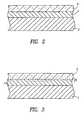
- a substrate 2 such as that of a silicone keypad, is shown in cross section with the above-described laminate layers consisting of a parylene N bonding layer 4 and a top parylene C layer 6, the layers being deposited as described above.
- a transition layer 8 formed of parylene N and parylene C is located between the parylene N layer 4 and the parylene C layer 6, formed using the alternative coating method described above.
- the barrier properties of a parylene polymer coating closely correlate to the degree of crystallization as determined by several deposition factors including the deposition temperature and the deposition rate.
- a post-deposition polymer annealing process provides a method for increasing the degree of parylene crystallization in the keypad coating for improved structural strength and resistance to chemical attacks.
- the keypad samples included uncoated keypads, unannealed coated keypads, and annealed coated keypads. Each of the latter was annealed in a high temperature vacuum furnace utilizing tungsten heating elements. The vacuum was maintained by a diffusion pump, which is typically in the 10 -6 to 10 -5 torr (1.33 x 10 -4 to 1.33 x 10 -3 Pa) range. The keypad samples were pressed against the control thermocouple. The following keypad samples were annealed in the following manner:
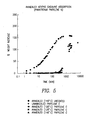
- gasoline is the most rapidly absorbed substance followed by jet fuel and diesel fuel.
- Each of the fuels attacks the silicone rubber material by saturating it to a point where the material nearly doubles in size and volume. At this saturation point, the structural strength of the material is diminished and the material is prone to disintegrating on contact. As the solvent evaporates from the material, the material returns to its original size or volume with some slight discoloration. There is also a slight weight loss due to the removal of remnant unpolymerized silicone rubber accompanied with compromised structural integrity. Accordingly based on this observation, gasoline was determined to be a feasible candidate for testing the effectiveness of annealed parylene polymer coatings versus nonannealed coatings, and in comparison to uncoated silicone rubber keypads.
- full expansion of the keypad sample in gasoline resulted in visible cracking of the parylene polymer coating.
- the annealing temperature of 220°C was also too high for the silicone keypad material, and the uncoated keypad sample became brittle at 220°C.
- the barrier properties of the parylene C coatings were also improved by annealing.
- Annealing two keypad samples at 120°C for 90 hours reduced the gasoline absorption rate at an average of about 2.5 times. Both coatings maintained their adhesion upon expansion of the keypad.
- annealing at a high temperature of 140°C there was some loss of coating adhesion at portions between several of the keys. This coating delamination may have affected the gasoline keypad absorption rate measurement, as reflected by the slightly elevated gasoline transmission rate reported in Table 2. No further loss of coating adhesion was detected with the sample after expansion of the keypad.
- barrier properties of both the parylene N and C coatings were significantly improved by vacuum annealing the parylene polymer coated keypads.
- the test described in the following examined the adhesive capacity of the parylene polymer coating to the surface of the polymeric substrate (i.e. silicone rubber keypad).
- the adhesive capacity is an important factor in measuring the effectiveness of the parylene polymer coating.
- the robustness of the coatings was determined by cycling one or more keys of a parylene polymer coated keypad.
- a test fixture was devised that included a reciprocating plunger member connected to a small motor.
- the keypad sample was mounted on a flat aluminum backing plate, and the plunger depresses the key such that the conductive contact located on the backside of the key touches the backing plate.
- the frequency of the key cycling ranged from about 10 to 25 cycles per second.
- the total number of key cycles was counted and tallied with a photodiode detector assembly and a chopper wheel mounted on the motor shaft. The output from the photodiode detector is connected to a pulse counter to record the keyboard cycles.
Landscapes
- Chemical & Material Sciences (AREA)
- Organic Chemistry (AREA)
- Life Sciences & Earth Sciences (AREA)
- Health & Medical Sciences (AREA)
- Engineering & Computer Science (AREA)
- Chemical Kinetics & Catalysis (AREA)
- Medicinal Chemistry (AREA)
- Wood Science & Technology (AREA)
- Polymers & Plastics (AREA)
- Physics & Mathematics (AREA)
- General Physics & Mathematics (AREA)
- Optics & Photonics (AREA)
- Coating Of Shaped Articles Made Of Macromolecular Substances (AREA)
- Treatments Of Macromolecular Shaped Articles (AREA)
- Laminated Bodies (AREA)
- Application Of Or Painting With Fluid Materials (AREA)
- Paints Or Removers (AREA)
Applications Claiming Priority (3)
| Application Number | Priority Date | Filing Date | Title |
|---|---|---|---|
| US09/828,065 US6586048B2 (en) | 2001-04-05 | 2001-04-05 | Method for depositing a barrier coating on a polymeric substrate and composition comprising said barrier coating |
| US828065 | 2001-04-05 | ||
| PCT/US2002/004865 WO2003002270A2 (en) | 2001-04-05 | 2002-02-19 | Method for depositing a barrier coating on a polymeric substrate and composition for manufacturihg said barrier coating |
Publications (2)
| Publication Number | Publication Date |
|---|---|
| EP1414588A2 EP1414588A2 (en) | 2004-05-06 |
| EP1414588B1 true EP1414588B1 (en) | 2006-07-12 |
Family
ID=25250845
Family Applications (1)
| Application Number | Title | Priority Date | Filing Date |
|---|---|---|---|
| EP20020765770 Expired - Lifetime EP1414588B1 (en) | 2001-04-05 | 2002-02-19 | Method for depositing a barrier coating on a polymeric substrate and composition for manufacturing said barrier coating |
Country Status (12)
| Country | Link |
|---|---|
| US (1) | US6586048B2 (enExample) |
| EP (1) | EP1414588B1 (enExample) |
| JP (1) | JP4121950B2 (enExample) |
| KR (1) | KR20040068462A (enExample) |
| CN (1) | CN1256186C (enExample) |
| AT (1) | ATE332764T1 (enExample) |
| BR (1) | BR0208701A (enExample) |
| CA (1) | CA2443661A1 (enExample) |
| DE (1) | DE60213097T2 (enExample) |
| IL (2) | IL158284A0 (enExample) |
| MX (1) | MXPA03009110A (enExample) |
| WO (1) | WO2003002270A2 (enExample) |
Cited By (1)
| Publication number | Priority date | Publication date | Assignee | Title |
|---|---|---|---|---|
| EP2918628A1 (de) | 2014-02-21 | 2015-09-16 | Oerlikon Leybold Vacuum GmbH | Beschichtete CFK Oberflächen von Turbomolekularpumpen |
Families Citing this family (46)
| Publication number | Priority date | Publication date | Assignee | Title |
|---|---|---|---|---|
| US20020187350A1 (en) * | 2001-01-29 | 2002-12-12 | Honeywell International Inc. | Robust highly reflective optical construction |
| US20040034275A1 (en) | 2002-07-29 | 2004-02-19 | Peter Forsell | Multi-material incontinence treatment constriction device |
| US20040133219A1 (en) * | 2002-07-29 | 2004-07-08 | Peter Forsell | Multi-material constriction device for forming stoma opening |
| MXPA05001208A (es) * | 2002-07-29 | 2005-06-08 | Potencia Medical Ag | Implante durable. |
| CA2493779C (en) * | 2002-07-29 | 2011-08-16 | Potencia Medical Ag | Multi-material penis constriction device |
| US7413706B2 (en) * | 2003-12-19 | 2008-08-19 | Palo Alto Research Center Incorporated | Replaceable parylene membranes for nanocalorimeter |
| US6997179B1 (en) | 2004-01-13 | 2006-02-14 | Essex Pb&R Corporation | Protective hood |
| ATE440622T1 (de) * | 2004-07-27 | 2009-09-15 | Cordis Corp | Verfahren zur beschichtung von stents |
| US7575781B2 (en) * | 2004-08-03 | 2009-08-18 | Sur Modics, Inc. | Method for depositing a polymeric coating on a substrate |
| WO2006038702A1 (en) * | 2004-10-06 | 2006-04-13 | Daikin Industries, Ltd. | Laminated article having excellent stain-proofing property and interlayer adhesion and method of production of same |
| KR100700000B1 (ko) * | 2004-10-19 | 2007-03-26 | 삼성에스디아이 주식회사 | 표시장치와 그 제조방법 |
| KR100588773B1 (ko) * | 2005-02-28 | 2006-06-20 | 주식회사 모젬 | 무선단말기의 키패드 및 그 제조방법 |
| KR20060105447A (ko) * | 2005-03-29 | 2006-10-11 | 엘지전자 주식회사 | 네트워크 노드의 과부하 관리 방법 및 시스템 |
| EP1904663A2 (en) * | 2005-04-21 | 2008-04-02 | California Institute of Technology | Method for decreasing chemical diffusion in parylene and trapping at parylene-to-parylene interfaces |
| US20070128420A1 (en) * | 2005-12-07 | 2007-06-07 | Mariam Maghribi | Hybrid composite for biological tissue interface devices |
| US7531481B2 (en) | 2006-03-21 | 2009-05-12 | Kolbo Philip A | Method for transferring a dye sublimation ink image onto an elastomeric substrate |
| WO2008022258A2 (en) * | 2006-08-16 | 2008-02-21 | Surmodics, Inc. | Methods and materials for increasing the adhesion of elution control matrices to substrates |
| GB2456747A (en) * | 2007-10-12 | 2009-07-29 | Laryngeal Mask Co Ltd | Laryngeal mask airway device with a parylene coating |
| TWI508331B (zh) * | 2008-11-13 | 2015-11-11 | Maven Optronics Corp | 用於形成螢光轉換型發光元件之薄膜螢光層的系統及方法、以及用於螢光轉換型發光元件之薄膜螢光層 |
| DE102008063818B4 (de) * | 2008-12-19 | 2012-12-13 | Otto Bock Healthcare Gmbh | Verfahren zur Herstellung eines orthopädischen Polsters |
| GB2479154A (en) * | 2010-03-30 | 2011-10-05 | Camvac Ltd | Electron flux coated substrate |
| RU2461429C2 (ru) * | 2010-09-03 | 2012-09-20 | Российская Федерация, от имени которой выступает Министерство образования и науки РФ (Минобрнаука РФ) | Способ получения пленок полипараксилилена и его производных |
| CN103189762A (zh) * | 2010-11-02 | 2013-07-03 | 3M创新有限公司 | 反射制品及其制备方法 |
| US8723042B2 (en) | 2011-03-17 | 2014-05-13 | Electronics And Telecommunications Research Institute | Flexible flat cable and manufacturing method thereof |
| JP2014524980A (ja) * | 2011-07-08 | 2014-09-25 | スペシャルティ コーティング システムズ, インク. | 抗菌性パリレン・コーティング及び同コーティングを蒸着する方法 |
| US11220217B2 (en) | 2013-01-24 | 2022-01-11 | SMR Patents S.à.r.l. | Rearview device with moveable head assembly and method of assembling same |
| JP6251189B2 (ja) | 2012-01-24 | 2017-12-20 | エスエムアール・パテンツ・ソシエテ・ア・レスポンサビリテ・リミテ | クロムをベースとする反射被膜 |
| US11794649B2 (en) | 2012-01-24 | 2023-10-24 | SMR Patents S.à.r.l. | Rearview device with moveable head assembly and method of assembling same |
| US11519585B2 (en) | 2012-01-24 | 2022-12-06 | SMR Patent S.à.r.l. | Covering devices for use with vehicle parts |
| CN102637609A (zh) * | 2012-04-16 | 2012-08-15 | 中国电子科技集团公司第十研究所 | 用真空气相沉积膜对毫米波电路组件进行防护处理的方法 |
| DE102012010825B3 (de) * | 2012-05-15 | 2013-03-28 | Otto Bock Healthcare Gmbh | Flexibles Laminat und Verfahren zu seiner Herstellung |
| US9024526B1 (en) | 2012-06-11 | 2015-05-05 | Imaging Systems Technology, Inc. | Detector element with antenna |
| KR102167482B1 (ko) * | 2013-03-15 | 2020-10-19 | 에이치제트오 인코포레이티드 | 상이한 유형의 내습성 재료들의 조합 |
| US20170130061A1 (en) * | 2015-11-09 | 2017-05-11 | Hzo, Inc. | Hybrid parylene-metal oxide interstacked coatings |
| US10553512B2 (en) * | 2015-11-09 | 2020-02-04 | Hzo, Inc. | Hybrid parylene-metal oxide layers for corrosion resistant coatings |
| US20170159178A1 (en) * | 2015-11-24 | 2017-06-08 | Hzo, Inc. | Ald/parylene multi-layer thin film stack |
| US12151616B2 (en) | 2017-05-24 | 2024-11-26 | SMR Patents S.à.r.l. | Rearview device with moveable head assembly and method of assembling same |
| US12122297B2 (en) | 2016-11-14 | 2024-10-22 | SMR Patents S.à.r.l. | Rearview device with moveable head assembly and method of assembling same |
| CN107474225B (zh) * | 2017-09-20 | 2019-05-10 | 陕西科技大学 | 一种化学气相沉积法制备聚对二甲苯纳米纤维的方法 |
| CN107653506B (zh) * | 2017-09-20 | 2019-06-21 | 陕西科技大学 | 一种化学气相沉积法制备可降解聚合物纳米纤维的方法 |
| KR102684674B1 (ko) * | 2019-10-07 | 2024-07-15 | 주식회사 와인 | 코팅 방법, 및 이에 의하여 얻어지는 물품 |
| KR102695904B1 (ko) * | 2019-10-07 | 2024-08-19 | 주식회사 와인 | 스텐트 코팅방법, 및 이에 의하여 제조되는 스텐트 |
| KR102704605B1 (ko) * | 2019-11-04 | 2024-09-10 | 주식회사 와인 | 펠리클 프레임 코팅방법, 및 이에 의하여 얻어지는 펠리클 |
| CN114574094B (zh) * | 2022-03-03 | 2023-03-03 | 上海派拉纶生物技术股份有限公司 | 一种高可靠性集成电路防护涂层 |
| CN117187773B (zh) * | 2023-11-03 | 2024-03-08 | 上海锐畅医疗科技有限公司 | 介入医疗器械亲水涂层及其制备方法 |
| CN120841439A (zh) * | 2025-07-17 | 2025-10-28 | 安徽华鑫微纳集成电路有限公司 | 一种基于牺牲层释放工艺的微电极制备方法 |
Family Cites Families (14)
| Publication number | Priority date | Publication date | Assignee | Title |
|---|---|---|---|---|
| US3342754A (en) | 1966-02-18 | 1967-09-19 | Union Carbide Corp | Para-xylylene polymers |
| US3573968A (en) * | 1968-01-22 | 1971-04-06 | Union Carbide Corp | Process for coating solid substrates with para-xylylene polymers |
| IT1222434B (it) * | 1987-08-03 | 1990-09-05 | Ausimont Spa | Contenitore a bassa permeabilita' ai vapori idrocarburi e processo per la loro produzione |
| FR2656459A1 (fr) | 1989-12-22 | 1991-06-28 | Boye Sa Manuf Vetements Paul | Materiau pour la realisation d'equipements de protection a l'encontre des agressions nucleaires, biologiques et chimiques. |
| US5075174A (en) * | 1990-07-31 | 1991-12-24 | Acadia Polymers, Inc. | Parylene coated elastomers |
| CA2027850C (en) | 1990-10-17 | 2000-06-27 | Pierre P. Meunier | Stretchable protective fabric and protective apparel made therefrom |
| JP3056780B2 (ja) * | 1990-11-07 | 2000-06-26 | ティーディーケイ株式会社 | 改質ポリ(p―キシリレン)保護膜及びその製造方法 |
| CA2174279C (en) | 1995-09-26 | 2001-01-30 | Francis J. Walker | Anti-bleed coating for silicone automobile gaskets |
| US5879808A (en) * | 1995-10-27 | 1999-03-09 | Alpha Metals, Inc. | Parylene polymer layers |
| CN1201399A (zh) | 1995-11-07 | 1998-12-09 | 卡莫多应用技术公司 | 销毁化学战争试剂的方法和设备 |
| US5955161A (en) | 1996-01-30 | 1999-09-21 | Becton Dickinson And Company | Blood collection tube assembly |
| FI963157L (fi) | 1996-08-13 | 1998-02-14 | Silitek Corp | Menetelmä näppäimistön päällystämiseksi |
| NL1007781C2 (nl) * | 1997-12-12 | 1999-06-15 | Packard Instr Bv | Microtiterplaat. |
| JP2000071451A (ja) * | 1998-09-02 | 2000-03-07 | Konica Corp | 圧電セラミック素子及びその製造方法 |
-
2001
- 2001-04-05 US US09/828,065 patent/US6586048B2/en not_active Expired - Fee Related
-
2002
- 2002-02-19 JP JP2003508492A patent/JP4121950B2/ja not_active Expired - Fee Related
- 2002-02-19 BR BR0208701A patent/BR0208701A/pt not_active IP Right Cessation
- 2002-02-19 EP EP20020765770 patent/EP1414588B1/en not_active Expired - Lifetime
- 2002-02-19 WO PCT/US2002/004865 patent/WO2003002270A2/en not_active Ceased
- 2002-02-19 CA CA 2443661 patent/CA2443661A1/en not_active Abandoned
- 2002-02-19 KR KR10-2003-7013115A patent/KR20040068462A/ko not_active Abandoned
- 2002-02-19 IL IL15828402A patent/IL158284A0/xx active IP Right Grant
- 2002-02-19 AT AT02765770T patent/ATE332764T1/de not_active IP Right Cessation
- 2002-02-19 MX MXPA03009110A patent/MXPA03009110A/es active IP Right Grant
- 2002-02-19 DE DE2002613097 patent/DE60213097T2/de not_active Expired - Fee Related
- 2002-02-19 CN CNB028106997A patent/CN1256186C/zh not_active Expired - Fee Related
-
2003
- 2003-10-07 IL IL158284A patent/IL158284A/en not_active IP Right Cessation
Cited By (1)
| Publication number | Priority date | Publication date | Assignee | Title |
|---|---|---|---|---|
| EP2918628A1 (de) | 2014-02-21 | 2015-09-16 | Oerlikon Leybold Vacuum GmbH | Beschichtete CFK Oberflächen von Turbomolekularpumpen |
Also Published As
| Publication number | Publication date |
|---|---|
| IL158284A (en) | 2007-12-03 |
| WO2003002270A2 (en) | 2003-01-09 |
| EP1414588A2 (en) | 2004-05-06 |
| CN1256186C (zh) | 2006-05-17 |
| CN1518482A (zh) | 2004-08-04 |
| US6586048B2 (en) | 2003-07-01 |
| KR20040068462A (ko) | 2004-07-31 |
| JP2004535494A (ja) | 2004-11-25 |
| JP4121950B2 (ja) | 2008-07-23 |
| BR0208701A (pt) | 2006-01-24 |
| DE60213097D1 (de) | 2006-08-24 |
| CA2443661A1 (en) | 2003-01-09 |
| IL158284A0 (en) | 2004-05-12 |
| US20020182392A1 (en) | 2002-12-05 |
| ATE332764T1 (de) | 2006-08-15 |
| WO2003002270A3 (en) | 2004-03-04 |
| DE60213097T2 (de) | 2006-12-21 |
| MXPA03009110A (es) | 2004-02-12 |
Similar Documents
| Publication | Publication Date | Title |
|---|---|---|
| US6586048B2 (en) | Method for depositing a barrier coating on a polymeric substrate and composition comprising said barrier coating | |
| KR101175061B1 (ko) | 제품에 대응하는 유연한 플라즈마 중합체 생성물, 그 제조방법 및 용도 | |
| US9882167B2 (en) | Hybrid layers for use in coatings on electronic devices or other articles | |
| US9828671B2 (en) | Method for fixation onto layer comprising amorphous carbon film, and laminate | |
| EP2466665A1 (en) | Hybrid layers for use in coatings on electronic devices or other articles | |
| US7968146B2 (en) | Hybrid layers for use in coatings on electronic devices or other articles | |
| US5011706A (en) | Method of forming coatings containing amorphous silicon carbide | |
| EP3450164A1 (en) | Polyimide film layered body | |
| WO2001012705A1 (en) | Product having a thin film polymer coating and method of making | |
| AU2002329170B2 (en) | Method for depositing a barrier coating on a polymeric substrate and composition comprising said barrier coating | |
| AU2002329170A1 (en) | Method for depositing a barrier coating on a polymeric substrate and composition comprising said barrier coating | |
| KR20220034525A (ko) | 패럴린 코팅 방법 및 이로부터 제조된 패럴린 코팅 박막 | |
| Chen et al. | Fabrication and characterization of fluorine-containing films using plasma polymerization of octafluorotoluene | |
| WO2000006794A1 (en) | Hardcoats for flat panel display substrates | |
| CN116273774A (zh) | 半导体热电器件表面涂层及涂覆方法 | |
| KR20200009181A (ko) | 오링용 고무패킹 표면을 개질하는 방법 | |
| EP0543634A1 (en) | Improvements in coating processes | |
| KR102878866B1 (ko) | 대면적 유연 기판의 열 안정성 개선 방법 | |
| US20230323154A1 (en) | Adhesion between base material and resilient material layer | |
| PL242444B1 (pl) | Sposób laminowania elastomeru warstwą politetrafluoroetylenu | |
| Moylan et al. | Sorption of methylene chloride vapor in polyimide films |
Legal Events
| Date | Code | Title | Description |
|---|---|---|---|
| PUAI | Public reference made under article 153(3) epc to a published international application that has entered the european phase |
Free format text: ORIGINAL CODE: 0009012 |
|
| 17P | Request for examination filed |
Effective date: 20031008 |
|
| AK | Designated contracting states |
Kind code of ref document: A2 Designated state(s): AT BE CH CY DE DK ES FI FR GB GR IE IT LI LU MC NL PT SE TR |
|
| AX | Request for extension of the european patent |
Extension state: AL LT LV MK RO SI |
|
| GRAP | Despatch of communication of intention to grant a patent |
Free format text: ORIGINAL CODE: EPIDOSNIGR1 |
|
| GRAS | Grant fee paid |
Free format text: ORIGINAL CODE: EPIDOSNIGR3 |
|
| GRAA | (expected) grant |
Free format text: ORIGINAL CODE: 0009210 |
|
| AK | Designated contracting states |
Kind code of ref document: B1 Designated state(s): AT BE CH CY DE DK ES FI FR GB GR IE IT LI LU MC NL PT SE TR |
|
| PG25 | Lapsed in a contracting state [announced via postgrant information from national office to epo] |
Ref country code: IT Free format text: LAPSE BECAUSE OF FAILURE TO SUBMIT A TRANSLATION OF THE DESCRIPTION OR TO PAY THE FEE WITHIN THE PRESCRIBED TIME-LIMIT;WARNING: LAPSES OF ITALIAN PATENTS WITH EFFECTIVE DATE BEFORE 2007 MAY HAVE OCCURRED AT ANY TIME BEFORE 2007. THE CORRECT EFFECTIVE DATE MAY BE DIFFERENT FROM THE ONE RECORDED. Effective date: 20060712 Ref country code: LI Free format text: LAPSE BECAUSE OF FAILURE TO SUBMIT A TRANSLATION OF THE DESCRIPTION OR TO PAY THE FEE WITHIN THE PRESCRIBED TIME-LIMIT Effective date: 20060712 Ref country code: AT Free format text: LAPSE BECAUSE OF FAILURE TO SUBMIT A TRANSLATION OF THE DESCRIPTION OR TO PAY THE FEE WITHIN THE PRESCRIBED TIME-LIMIT Effective date: 20060712 Ref country code: FI Free format text: LAPSE BECAUSE OF FAILURE TO SUBMIT A TRANSLATION OF THE DESCRIPTION OR TO PAY THE FEE WITHIN THE PRESCRIBED TIME-LIMIT Effective date: 20060712 Ref country code: BE Free format text: LAPSE BECAUSE OF FAILURE TO SUBMIT A TRANSLATION OF THE DESCRIPTION OR TO PAY THE FEE WITHIN THE PRESCRIBED TIME-LIMIT Effective date: 20060712 Ref country code: CH Free format text: LAPSE BECAUSE OF FAILURE TO SUBMIT A TRANSLATION OF THE DESCRIPTION OR TO PAY THE FEE WITHIN THE PRESCRIBED TIME-LIMIT Effective date: 20060712 Ref country code: NL Free format text: LAPSE BECAUSE OF FAILURE TO SUBMIT A TRANSLATION OF THE DESCRIPTION OR TO PAY THE FEE WITHIN THE PRESCRIBED TIME-LIMIT Effective date: 20060712 |
|
| REG | Reference to a national code |
Ref country code: GB Ref legal event code: FG4D |
|
| REG | Reference to a national code |
Ref country code: CH Ref legal event code: EP |
|
| REG | Reference to a national code |
Ref country code: IE Ref legal event code: FG4D |
|
| REF | Corresponds to: |
Ref document number: 60213097 Country of ref document: DE Date of ref document: 20060824 Kind code of ref document: P |
|
| PG25 | Lapsed in a contracting state [announced via postgrant information from national office to epo] |
Ref country code: DK Free format text: LAPSE BECAUSE OF FAILURE TO SUBMIT A TRANSLATION OF THE DESCRIPTION OR TO PAY THE FEE WITHIN THE PRESCRIBED TIME-LIMIT Effective date: 20061012 Ref country code: SE Free format text: LAPSE BECAUSE OF FAILURE TO SUBMIT A TRANSLATION OF THE DESCRIPTION OR TO PAY THE FEE WITHIN THE PRESCRIBED TIME-LIMIT Effective date: 20061012 |
|
| PG25 | Lapsed in a contracting state [announced via postgrant information from national office to epo] |
Ref country code: ES Free format text: LAPSE BECAUSE OF FAILURE TO SUBMIT A TRANSLATION OF THE DESCRIPTION OR TO PAY THE FEE WITHIN THE PRESCRIBED TIME-LIMIT Effective date: 20061023 |
|
| PG25 | Lapsed in a contracting state [announced via postgrant information from national office to epo] |
Ref country code: PT Free format text: LAPSE BECAUSE OF FAILURE TO SUBMIT A TRANSLATION OF THE DESCRIPTION OR TO PAY THE FEE WITHIN THE PRESCRIBED TIME-LIMIT Effective date: 20061212 |
|
| ET | Fr: translation filed | ||
| NLV1 | Nl: lapsed or annulled due to failure to fulfill the requirements of art. 29p and 29m of the patents act | ||
| PG25 | Lapsed in a contracting state [announced via postgrant information from national office to epo] |
Ref country code: MC Free format text: LAPSE BECAUSE OF NON-PAYMENT OF DUE FEES Effective date: 20070228 |
|
| PLBE | No opposition filed within time limit |
Free format text: ORIGINAL CODE: 0009261 |
|
| STAA | Information on the status of an ep patent application or granted ep patent |
Free format text: STATUS: NO OPPOSITION FILED WITHIN TIME LIMIT |
|
| 26N | No opposition filed |
Effective date: 20070413 |
|
| PG25 | Lapsed in a contracting state [announced via postgrant information from national office to epo] |
Ref country code: IE Free format text: LAPSE BECAUSE OF NON-PAYMENT OF DUE FEES Effective date: 20070219 |
|
| PG25 | Lapsed in a contracting state [announced via postgrant information from national office to epo] |
Ref country code: GR Free format text: LAPSE BECAUSE OF FAILURE TO SUBMIT A TRANSLATION OF THE DESCRIPTION OR TO PAY THE FEE WITHIN THE PRESCRIBED TIME-LIMIT Effective date: 20061013 |
|
| PGFP | Annual fee paid to national office [announced via postgrant information from national office to epo] |
Ref country code: DE Payment date: 20080229 Year of fee payment: 7 Ref country code: GB Payment date: 20080108 Year of fee payment: 7 |
|
| PGFP | Annual fee paid to national office [announced via postgrant information from national office to epo] |
Ref country code: FR Payment date: 20080212 Year of fee payment: 7 |
|
| PG25 | Lapsed in a contracting state [announced via postgrant information from national office to epo] |
Ref country code: CY Free format text: LAPSE BECAUSE OF FAILURE TO SUBMIT A TRANSLATION OF THE DESCRIPTION OR TO PAY THE FEE WITHIN THE PRESCRIBED TIME-LIMIT Effective date: 20060712 Ref country code: LU Free format text: LAPSE BECAUSE OF NON-PAYMENT OF DUE FEES Effective date: 20070219 |
|
| PG25 | Lapsed in a contracting state [announced via postgrant information from national office to epo] |
Ref country code: TR Free format text: LAPSE BECAUSE OF FAILURE TO SUBMIT A TRANSLATION OF THE DESCRIPTION OR TO PAY THE FEE WITHIN THE PRESCRIBED TIME-LIMIT Effective date: 20060712 |
|
| GBPC | Gb: european patent ceased through non-payment of renewal fee |
Effective date: 20090219 |
|
| REG | Reference to a national code |
Ref country code: FR Ref legal event code: ST Effective date: 20091030 |
|
| PG25 | Lapsed in a contracting state [announced via postgrant information from national office to epo] |
Ref country code: DE Free format text: LAPSE BECAUSE OF NON-PAYMENT OF DUE FEES Effective date: 20090901 |
|
| PG25 | Lapsed in a contracting state [announced via postgrant information from national office to epo] |
Ref country code: FR Free format text: LAPSE BECAUSE OF NON-PAYMENT OF DUE FEES Effective date: 20090302 Ref country code: GB Free format text: LAPSE BECAUSE OF NON-PAYMENT OF DUE FEES Effective date: 20090219 |
|
| P01 | Opt-out of the competence of the unified patent court (upc) registered |
Effective date: 20230525 |