EP1362021B1 - Verfahren zur extrahierung, fraktionierung und reinigung mittels eines harzes mit hohem adsorptions- und eluierungsrendement, von polyphenolischen verbindungen erhalten aus ausleseabfällen von frischen gemüsen - Google Patents
Verfahren zur extrahierung, fraktionierung und reinigung mittels eines harzes mit hohem adsorptions- und eluierungsrendement, von polyphenolischen verbindungen erhalten aus ausleseabfällen von frischen gemüsen Download PDFInfo
- Publication number
- EP1362021B1 EP1362021B1 EP02704833A EP02704833A EP1362021B1 EP 1362021 B1 EP1362021 B1 EP 1362021B1 EP 02704833 A EP02704833 A EP 02704833A EP 02704833 A EP02704833 A EP 02704833A EP 1362021 B1 EP1362021 B1 EP 1362021B1
- Authority
- EP
- European Patent Office
- Prior art keywords
- extract
- plants
- resin
- equal
- polyphenolic compounds
- Prior art date
- Legal status (The legal status is an assumption and is not a legal conclusion. Google has not performed a legal analysis and makes no representation as to the accuracy of the status listed.)
- Expired - Lifetime
Links
- 238000000034 method Methods 0.000 title claims abstract description 60
- 239000011347 resin Substances 0.000 title claims abstract description 58
- 229920005989 resin Polymers 0.000 title claims abstract description 58
- 238000010828 elution Methods 0.000 title claims abstract description 20
- 235000013824 polyphenols Nutrition 0.000 title description 25
- -1 polyphenol compounds Chemical class 0.000 title description 16
- 235000013311 vegetables Nutrition 0.000 title description 15
- 238000010521 absorption reaction Methods 0.000 title 1
- 150000008442 polyphenolic compounds Chemical class 0.000 claims abstract description 78
- 238000001179 sorption measurement Methods 0.000 claims abstract description 15
- CHRJZRDFSQHIFI-UHFFFAOYSA-N 1,2-bis(ethenyl)benzene;styrene Chemical compound C=CC1=CC=CC=C1.C=CC1=CC=CC=C1C=C CHRJZRDFSQHIFI-UHFFFAOYSA-N 0.000 claims abstract description 6
- 241000196324 Embryophyta Species 0.000 claims description 70
- 239000000284 extract Substances 0.000 claims description 58
- 238000010438 heat treatment Methods 0.000 claims description 32
- OKKJLVBELUTLKV-UHFFFAOYSA-N Methanol Chemical compound OC OKKJLVBELUTLKV-UHFFFAOYSA-N 0.000 claims description 27
- 235000011389 fruit/vegetable juice Nutrition 0.000 claims description 23
- 244000291564 Allium cepa Species 0.000 claims description 19
- 239000000463 material Substances 0.000 claims description 19
- 150000001875 compounds Chemical class 0.000 claims description 18
- 235000002732 Allium cepa var. cepa Nutrition 0.000 claims description 17
- 240000008415 Lactuca sativa Species 0.000 claims description 17
- HVQAJTFOCKOKIN-UHFFFAOYSA-N flavonol Natural products O1C2=CC=CC=C2C(=O)C(O)=C1C1=CC=CC=C1 HVQAJTFOCKOKIN-UHFFFAOYSA-N 0.000 claims description 15
- 235000011957 flavonols Nutrition 0.000 claims description 15
- 239000011148 porous material Substances 0.000 claims description 15
- 238000000605 extraction Methods 0.000 claims description 14
- 150000002216 flavonol derivatives Chemical class 0.000 claims description 14
- REFJWTPEDVJJIY-UHFFFAOYSA-N Quercetin Chemical compound C=1C(O)=CC(O)=C(C(C=2O)=O)C=1OC=2C1=CC=C(O)C(O)=C1 REFJWTPEDVJJIY-UHFFFAOYSA-N 0.000 claims description 13
- 239000000047 product Substances 0.000 claims description 13
- 150000002989 phenols Chemical class 0.000 claims description 10
- LFQSCWFLJHTTHZ-UHFFFAOYSA-N Ethanol Chemical compound CCO LFQSCWFLJHTTHZ-UHFFFAOYSA-N 0.000 claims description 9
- MWDZOUNAPSSOEL-UHFFFAOYSA-N kaempferol Natural products OC1=C(C(=O)c2cc(O)cc(O)c2O1)c3ccc(O)cc3 MWDZOUNAPSSOEL-UHFFFAOYSA-N 0.000 claims description 9
- 241000234280 Liliaceae Species 0.000 claims description 8
- 235000003228 Lactuca sativa Nutrition 0.000 claims description 7
- 230000002225 anti-radical effect Effects 0.000 claims description 7
- 235000005875 quercetin Nutrition 0.000 claims description 7
- 229960001285 quercetin Drugs 0.000 claims description 7
- 230000000717 retained effect Effects 0.000 claims description 6
- PZIRUHCJZBGLDY-UHFFFAOYSA-N Caffeoylquinic acid Natural products CC(CCC(=O)C(C)C1C(=O)CC2C3CC(O)C4CC(O)CCC4(C)C3CCC12C)C(=O)O PZIRUHCJZBGLDY-UHFFFAOYSA-N 0.000 claims description 4
- 240000006740 Cichorium endivia Species 0.000 claims description 4
- 235000003733 chicria Nutrition 0.000 claims description 4
- IYRMWMYZSQPJKC-UHFFFAOYSA-N kaempferol Chemical compound C1=CC(O)=CC=C1C1=C(O)C(=O)C2=C(O)C=C(O)C=C2O1 IYRMWMYZSQPJKC-UHFFFAOYSA-N 0.000 claims description 4
- 239000007788 liquid Substances 0.000 claims description 4
- KNMNNEPMKDJBDW-UHFFFAOYSA-N n-[2-(3,4-dimethoxyphenyl)ethyl]-1-(2,6-dimethylphenoxy)propan-2-amine;hydrochloride Chemical compound Cl.C1=C(OC)C(OC)=CC=C1CCNC(C)COC1=C(C)C=CC=C1C KNMNNEPMKDJBDW-UHFFFAOYSA-N 0.000 claims description 4
- 239000002994 raw material Substances 0.000 claims description 4
- CWVRJTMFETXNAD-FWCWNIRPSA-N 3-O-Caffeoylquinic acid Natural products O[C@H]1[C@@H](O)C[C@@](O)(C(O)=O)C[C@H]1OC(=O)\C=C\C1=CC=C(O)C(O)=C1 CWVRJTMFETXNAD-FWCWNIRPSA-N 0.000 claims description 3
- CWVRJTMFETXNAD-KLZCAUPSSA-N Neochlorogenin-saeure Natural products O[C@H]1C[C@@](O)(C[C@@H](OC(=O)C=Cc2ccc(O)c(O)c2)[C@@H]1O)C(=O)O CWVRJTMFETXNAD-KLZCAUPSSA-N 0.000 claims description 3
- 235000001368 chlorogenic acid Nutrition 0.000 claims description 3
- CWVRJTMFETXNAD-JUHZACGLSA-N chlorogenic acid Chemical compound O[C@@H]1[C@H](O)C[C@@](O)(C(O)=O)C[C@H]1OC(=O)\C=C\C1=CC=C(O)C(O)=C1 CWVRJTMFETXNAD-JUHZACGLSA-N 0.000 claims description 3
- 229940074393 chlorogenic acid Drugs 0.000 claims description 3
- FFQSDFBBSXGVKF-KHSQJDLVSA-N chlorogenic acid Natural products O[C@@H]1C[C@](O)(C[C@@H](CC(=O)C=Cc2ccc(O)c(O)c2)[C@@H]1O)C(=O)O FFQSDFBBSXGVKF-KHSQJDLVSA-N 0.000 claims description 3
- BMRSEYFENKXDIS-KLZCAUPSSA-N cis-3-O-p-coumaroylquinic acid Natural products O[C@H]1C[C@@](O)(C[C@@H](OC(=O)C=Cc2ccc(O)cc2)[C@@H]1O)C(=O)O BMRSEYFENKXDIS-KLZCAUPSSA-N 0.000 claims description 3
- 239000002537 cosmetic Substances 0.000 claims description 3
- 235000012041 food component Nutrition 0.000 claims description 3
- 239000005417 food ingredient Substances 0.000 claims description 3
- 239000012264 purified product Substances 0.000 claims description 3
- NGSWKAQJJWESNS-ZZXKWVIFSA-N trans-4-coumaric acid Chemical class OC(=O)\C=C\C1=CC=C(O)C=C1 NGSWKAQJJWESNS-ZZXKWVIFSA-N 0.000 claims description 3
- 240000006108 Allium ampeloprasum Species 0.000 claims description 2
- 235000005254 Allium ampeloprasum Nutrition 0.000 claims description 2
- 235000010167 Allium cepa var aggregatum Nutrition 0.000 claims description 2
- 240000002234 Allium sativum Species 0.000 claims description 2
- MQVRGDZCYDEQML-UHFFFAOYSA-N Astragalin Natural products C1=CC(OC)=CC=C1C1=C(OC2C(C(O)C(O)C(CO)O2)O)C(=O)C2=C(O)C=C(O)C=C2O1 MQVRGDZCYDEQML-UHFFFAOYSA-N 0.000 claims description 2
- UBSCDKPKWHYZNX-UHFFFAOYSA-N Demethoxycapillarisin Natural products C1=CC(O)=CC=C1OC1=CC(=O)C2=C(O)C=C(O)C=C2O1 UBSCDKPKWHYZNX-UHFFFAOYSA-N 0.000 claims description 2
- 239000004397 EU approved solvent Substances 0.000 claims description 2
- FNTJVYCFNVUBOL-VFKUPZNOSA-N Kaempferol 3-glucuronide Natural products O=C(O)[C@@H]1[C@@H](O)[C@@H](O)[C@H](O)[C@H](OC2=C(c3ccc(O)cc3)Oc3c(c(O)cc(O)c3)C2=O)O1 FNTJVYCFNVUBOL-VFKUPZNOSA-N 0.000 claims description 2
- FNTJVYCFNVUBOL-UHFFFAOYSA-N Kaempferol-3-beta-D-glucuronid Natural products O1C(C(O)=O)C(O)C(O)C(O)C1OC1=C(C=2C=CC(O)=CC=2)OC2=CC(O)=CC(O)=C2C1=O FNTJVYCFNVUBOL-UHFFFAOYSA-N 0.000 claims description 2
- QVGXLLKOCUKJST-UHFFFAOYSA-N atomic oxygen Chemical compound [O] QVGXLLKOCUKJST-UHFFFAOYSA-N 0.000 claims description 2
- 238000001035 drying Methods 0.000 claims description 2
- 235000004611 garlic Nutrition 0.000 claims description 2
- 235000008777 kaempferol Nutrition 0.000 claims description 2
- JPUKWEQWGBDDQB-QSOFNFLRSA-N kaempferol 3-O-beta-D-glucoside Chemical compound O[C@@H]1[C@@H](O)[C@H](O)[C@@H](CO)O[C@H]1OC1=C(C=2C=CC(O)=CC=2)OC2=CC(O)=CC(O)=C2C1=O JPUKWEQWGBDDQB-QSOFNFLRSA-N 0.000 claims description 2
- FNTJVYCFNVUBOL-ZUGPOPFOSA-N kaempferol 3-O-glucuronide Chemical compound O1[C@H](C(O)=O)[C@@H](O)[C@H](O)[C@@H](O)[C@@H]1OC1=C(C=2C=CC(O)=CC=2)OC2=CC(O)=CC(O)=C2C1=O FNTJVYCFNVUBOL-ZUGPOPFOSA-N 0.000 claims description 2
- IQPNAANSBPBGFQ-UHFFFAOYSA-N luteolin Chemical compound C=1C(O)=CC(O)=C(C(C=2)=O)C=1OC=2C1=CC=C(O)C(O)=C1 IQPNAANSBPBGFQ-UHFFFAOYSA-N 0.000 claims description 2
- 238000002803 maceration Methods 0.000 claims description 2
- UXOUKMQIEVGVLY-UHFFFAOYSA-N morin Natural products OC1=CC(O)=CC(C2=C(C(=O)C3=C(O)C=C(O)C=C3O2)O)=C1 UXOUKMQIEVGVLY-UHFFFAOYSA-N 0.000 claims description 2
- 229940072113 onion extract Drugs 0.000 claims description 2
- 229910052760 oxygen Inorganic materials 0.000 claims description 2
- 239000001301 oxygen Substances 0.000 claims description 2
- 239000000843 powder Substances 0.000 claims description 2
- QAIPRVGONGVQAS-DUXPYHPUSA-N trans-caffeic acid Chemical class OC(=O)\C=C\C1=CC=C(O)C(O)=C1 QAIPRVGONGVQAS-DUXPYHPUSA-N 0.000 claims description 2
- 238000009834 vaporization Methods 0.000 claims description 2
- 241000208822 Lactuca Species 0.000 claims 4
- 235000018927 edible plant Nutrition 0.000 claims 4
- 241000208838 Asteraceae Species 0.000 claims 2
- CWVRJTMFETXNAD-BMNNCGMMSA-N (1s,3r,4s,5r)-3-[(e)-3-(3,4-dihydroxyphenyl)prop-2-enoyl]oxy-1,4,5-trihydroxycyclohexane-1-carboxylic acid Chemical compound O[C@H]1[C@H](O)C[C@@](O)(C(O)=O)C[C@H]1OC(=O)\C=C\C1=CC=C(O)C(O)=C1 CWVRJTMFETXNAD-BMNNCGMMSA-N 0.000 claims 1
- BLANPKHHDVIMSA-UHFFFAOYSA-N 4-(1h-indol-5-yl)oxan-4-ol Chemical compound C=1C=C2NC=CC2=CC=1C1(O)CCOCC1 BLANPKHHDVIMSA-UHFFFAOYSA-N 0.000 claims 1
- 235000000318 Bindesalat Nutrition 0.000 claims 1
- SWGKAHCIOQPKFW-JTNORFRNSA-N Caftaric acid Chemical compound OC(=O)[C@H](O)[C@H](C(O)=O)OC(=O)\C=C\C1=CC=C(O)C(O)=C1 SWGKAHCIOQPKFW-JTNORFRNSA-N 0.000 claims 1
- YDDUMTOHNYZQPO-RVXRWRFUSA-N Cynarine Chemical compound O([C@@H]1C[C@@](C[C@H]([C@@H]1O)O)(OC(=O)\C=C\C=1C=C(O)C(O)=CC=1)C(O)=O)C(=O)\C=C\C1=CC=C(O)C(O)=C1 YDDUMTOHNYZQPO-RVXRWRFUSA-N 0.000 claims 1
- YDDGKXBLOXEEMN-UHFFFAOYSA-N Di-E-caffeoyl-meso-tartaric acid Natural products C=1C=C(O)C(O)=CC=1C=CC(=O)OC(C(O)=O)C(C(=O)O)OC(=O)C=CC1=CC=C(O)C(O)=C1 YDDGKXBLOXEEMN-UHFFFAOYSA-N 0.000 claims 1
- 235000010702 Insulata Nutrition 0.000 claims 1
- 244000165077 Insulata Species 0.000 claims 1
- 241001381639 Lactuca sativa var. longifolia Species 0.000 claims 1
- 239000011805 ball Substances 0.000 claims 1
- YDDGKXBLOXEEMN-IABMMNSOSA-N chicoric acid Chemical class O([C@@H](C(=O)O)[C@@H](OC(=O)\C=C\C=1C=C(O)C(O)=CC=1)C(O)=O)C(=O)\C=C\C1=CC=C(O)C(O)=C1 YDDGKXBLOXEEMN-IABMMNSOSA-N 0.000 claims 1
- 229950009125 cynarine Drugs 0.000 claims 1
- YDDGKXBLOXEEMN-WOJBJXKFSA-N dicaffeoyl-L-tartaric acid Natural products O([C@@H](C(=O)O)[C@@H](OC(=O)C=CC=1C=C(O)C(O)=CC=1)C(O)=O)C(=O)C=CC1=CC=C(O)C(O)=C1 YDDGKXBLOXEEMN-WOJBJXKFSA-N 0.000 claims 1
- 239000003480 eluent Substances 0.000 claims 1
- MOKUYUICRPXHER-UHFFFAOYSA-N feruloylquinic acid Natural products COc1cc(C=CC(=O)OC(=O)C2(O)CC(O)C(O)C(O)C2)ccc1O MOKUYUICRPXHER-UHFFFAOYSA-N 0.000 claims 1
- 150000007946 flavonol Chemical class 0.000 claims 1
- 239000008187 granular material Substances 0.000 claims 1
- KRZBCHWVBQOTNZ-DLDRDHNVSA-N isochlorogenic acid Natural products O[C@@H]1[C@H](C[C@@](O)(C[C@H]1OC(=O)C=Cc2ccc(O)c(O)c2)C(=O)O)OC(=O)C=Cc3ccc(O)c(O)c3 KRZBCHWVBQOTNZ-DLDRDHNVSA-N 0.000 claims 1
- 230000004792 oxidative damage Effects 0.000 claims 1
- 150000003899 tartaric acid esters Chemical class 0.000 claims 1
- PMKQSEYPLQIEAY-UHFFFAOYSA-N trans-caffeoyl-L-malic acid Natural products OC(=O)CC(C(O)=O)OC(=O)C=CC1=CC=C(O)C(O)=C1 PMKQSEYPLQIEAY-UHFFFAOYSA-N 0.000 claims 1
- 238000000746 purification Methods 0.000 abstract description 6
- 235000012045 salad Nutrition 0.000 description 14
- 239000000287 crude extract Substances 0.000 description 13
- XLYOFNOQVPJJNP-UHFFFAOYSA-N water Chemical compound O XLYOFNOQVPJJNP-UHFFFAOYSA-N 0.000 description 10
- 239000003463 adsorbent Substances 0.000 description 8
- 239000002253 acid Substances 0.000 description 7
- 235000013399 edible fruits Nutrition 0.000 description 7
- ZVOLCUVKHLEPEV-UHFFFAOYSA-N Quercetagetin Natural products C1=C(O)C(O)=CC=C1C1=C(O)C(=O)C2=C(O)C(O)=C(O)C=C2O1 ZVOLCUVKHLEPEV-UHFFFAOYSA-N 0.000 description 6
- HWTZYBCRDDUBJY-UHFFFAOYSA-N Rhynchosin Natural products C1=C(O)C(O)=CC=C1C1=C(O)C(=O)C2=CC(O)=C(O)C=C2O1 HWTZYBCRDDUBJY-UHFFFAOYSA-N 0.000 description 6
- 235000013305 food Nutrition 0.000 description 4
- 239000001253 polyvinylpolypyrrolidone Substances 0.000 description 4
- 235000013809 polyvinylpolypyrrolidone Nutrition 0.000 description 4
- 229920000523 polyvinylpolypyrrolidone Polymers 0.000 description 4
- 239000002904 solvent Substances 0.000 description 4
- HEMHJVSKTPXQMS-UHFFFAOYSA-M Sodium hydroxide Chemical compound [OH-].[Na+] HEMHJVSKTPXQMS-UHFFFAOYSA-M 0.000 description 3
- 150000002148 esters Chemical class 0.000 description 3
- 229930005346 hydroxycinnamic acid Natural products 0.000 description 3
- DEDGUGJNLNLJSR-UHFFFAOYSA-N hydroxycinnamic acid group Chemical class OC(C(=O)O)=CC1=CC=CC=C1 DEDGUGJNLNLJSR-UHFFFAOYSA-N 0.000 description 3
- 235000010359 hydroxycinnamic acids Nutrition 0.000 description 3
- 238000011002 quantification Methods 0.000 description 3
- RPVIQWDFJPYNJM-UHFFFAOYSA-N Ganodermic acid Ja Natural products OC1C(O)C(O)C(CO)OC1OC1=CC=C(C2=C(C(=O)C3=C(O)C=C(O)C=C3O2)OC2C(C(O)C(O)C(CO)O2)O)C=C1O RPVIQWDFJPYNJM-UHFFFAOYSA-N 0.000 description 2
- RPVIQWDFJPYNJM-MPPJEPTCSA-N Quercetin 3,4'-di-O-beta-D-glucopyranoside Natural products O([C@H]1[C@H](O)[C@H](O)[C@H](O)[C@@H](CO)O1)c1c(O)cc(C2=C(O[C@H]3[C@H](O)[C@H](O)[C@H](O)[C@@H](CO)O3)C(=O)c3c(O)cc(O)cc3O2)cc1 RPVIQWDFJPYNJM-MPPJEPTCSA-N 0.000 description 2
- VYPSYNLAJGMNEJ-UHFFFAOYSA-N Silicium dioxide Chemical compound O=[Si]=O VYPSYNLAJGMNEJ-UHFFFAOYSA-N 0.000 description 2
- 125000003118 aryl group Chemical group 0.000 description 2
- 235000013405 beer Nutrition 0.000 description 2
- 235000013361 beverage Nutrition 0.000 description 2
- 238000004519 manufacturing process Methods 0.000 description 2
- 238000003825 pressing Methods 0.000 description 2
- RPVIQWDFJPYNJM-DEFKTLOSSA-N quercetin 3,4'-di-O-beta-D-glucoside Chemical compound O[C@@H]1[C@@H](O)[C@H](O)[C@@H](CO)O[C@H]1OC1=CC=C(C2=C(C(=O)C3=C(O)C=C(O)C=C3O2)O[C@H]2[C@@H]([C@@H](O)[C@H](O)[C@@H](CO)O2)O)C=C1O RPVIQWDFJPYNJM-DEFKTLOSSA-N 0.000 description 2
- OIUBYZLTFSLSBY-HMGRVEAOSA-N quercetin 4'-O-beta-D-glucopyranoside Chemical compound O[C@@H]1[C@@H](O)[C@H](O)[C@@H](CO)O[C@H]1OC1=CC=C(C2=C(C(=O)C3=C(O)C=C(O)C=C3O2)O)C=C1O OIUBYZLTFSLSBY-HMGRVEAOSA-N 0.000 description 2
- 244000144730 Amygdalus persica Species 0.000 description 1
- 241000723343 Cichorium Species 0.000 description 1
- 235000007542 Cichorium intybus Nutrition 0.000 description 1
- 241001245662 Eragrostis rigidior Species 0.000 description 1
- VKVBSQRURLRCHO-BVVADKFVSA-N Isorhamnetin 3,4'-diglucoside Natural products O(C)c1c(O[C@H]2[C@H](O)[C@@H](O)[C@H](O)[C@@H](CO)O2)ccc(C2=C(O[C@H]3[C@H](O)[C@H](O)[C@H](O)[C@@H](CO)O3)C(=O)c3c(O)cc(O)cc3O2)c1 VKVBSQRURLRCHO-BVVADKFVSA-N 0.000 description 1
- 244000141359 Malus pumila Species 0.000 description 1
- 241001465754 Metazoa Species 0.000 description 1
- 239000004677 Nylon Substances 0.000 description 1
- 239000004952 Polyamide Substances 0.000 description 1
- 235000006040 Prunus persica var persica Nutrition 0.000 description 1
- 241000220324 Pyrus Species 0.000 description 1
- NBQPHANHNTWDML-NWFUCLLXSA-N Quercetin 3-(6''-malonylglucoside) Natural products O=C(OC[C@@H]1[C@@H](O)[C@@H](O)[C@@H](O)[C@H](OC2=C(c3cc(O)c(O)cc3)Oc3c(c(O)cc(O)c3)C2=O)O1)CC(=O)O NBQPHANHNTWDML-NWFUCLLXSA-N 0.000 description 1
- 241001303601 Rosacea Species 0.000 description 1
- FEWJPZIEWOKRBE-UHFFFAOYSA-N Tartaric acid Natural products [H+].[H+].[O-]C(=O)C(O)C(O)C([O-])=O FEWJPZIEWOKRBE-UHFFFAOYSA-N 0.000 description 1
- 230000000274 adsorptive effect Effects 0.000 description 1
- 150000001408 amides Chemical class 0.000 description 1
- 239000003957 anion exchange resin Substances 0.000 description 1
- 150000001450 anions Chemical class 0.000 description 1
- 235000021016 apples Nutrition 0.000 description 1
- VKVBSQRURLRCHO-UHFFFAOYSA-N astragalegoside Natural products COC1=CC(C2=C(C(=O)C3=C(O)C=C(O)C=C3O2)OC2C(C(O)C(O)C(CO)O2)O)=CC=C1OC1OC(CO)C(O)C(O)C1O VKVBSQRURLRCHO-UHFFFAOYSA-N 0.000 description 1
- 230000000903 blocking effect Effects 0.000 description 1
- 230000015556 catabolic process Effects 0.000 description 1
- 150000001768 cations Chemical class 0.000 description 1
- 239000012141 concentrate Substances 0.000 description 1
- 238000009833 condensation Methods 0.000 description 1
- 230000005494 condensation Effects 0.000 description 1
- 238000010411 cooking Methods 0.000 description 1
- 238000006731 degradation reaction Methods 0.000 description 1
- 238000004090 dissolution Methods 0.000 description 1
- 238000009826 distribution Methods 0.000 description 1
- 230000000694 effects Effects 0.000 description 1
- 230000002255 enzymatic effect Effects 0.000 description 1
- 238000001704 evaporation Methods 0.000 description 1
- 238000000855 fermentation Methods 0.000 description 1
- 230000004151 fermentation Effects 0.000 description 1
- 239000000796 flavoring agent Substances 0.000 description 1
- 235000019634 flavors Nutrition 0.000 description 1
- 235000015203 fruit juice Nutrition 0.000 description 1
- 239000000499 gel Substances 0.000 description 1
- 150000004676 glycans Chemical class 0.000 description 1
- 238000000227 grinding Methods 0.000 description 1
- 238000004128 high performance liquid chromatography Methods 0.000 description 1
- 230000003301 hydrolyzing effect Effects 0.000 description 1
- 230000006698 induction Effects 0.000 description 1
- LRDGATPGVJTWLJ-UHFFFAOYSA-N luteolin Natural products OC1=CC(O)=CC(C=2OC3=CC(O)=CC(O)=C3C(=O)C=2)=C1 LRDGATPGVJTWLJ-UHFFFAOYSA-N 0.000 description 1
- 235000009498 luteolin Nutrition 0.000 description 1
- 235000013575 mashed potatoes Nutrition 0.000 description 1
- 238000005259 measurement Methods 0.000 description 1
- DUBCCGAQYVUYEU-ZUGPOPFOSA-N miquelianin Chemical compound O1[C@H](C(O)=O)[C@@H](O)[C@H](O)[C@@H](O)[C@@H]1OC1=C(C=2C=C(O)C(O)=CC=2)OC2=CC(O)=CC(O)=C2C1=O DUBCCGAQYVUYEU-ZUGPOPFOSA-N 0.000 description 1
- 150000002823 nitrates Chemical class 0.000 description 1
- 150000002826 nitrites Chemical class 0.000 description 1
- 229920001778 nylon Polymers 0.000 description 1
- 239000011146 organic particle Substances 0.000 description 1
- 238000010525 oxidative degradation reaction Methods 0.000 description 1
- 230000001590 oxidative effect Effects 0.000 description 1
- 235000021017 pears Nutrition 0.000 description 1
- 230000002093 peripheral effect Effects 0.000 description 1
- 239000000419 plant extract Substances 0.000 description 1
- 229920002647 polyamide Polymers 0.000 description 1
- 229920006122 polyamide resin Polymers 0.000 description 1
- 229920001282 polysaccharide Polymers 0.000 description 1
- 239000005017 polysaccharide Substances 0.000 description 1
- 238000004094 preconcentration Methods 0.000 description 1
- 238000002360 preparation method Methods 0.000 description 1
- NBQPHANHNTWDML-UJKBSQBPSA-N quercetin 3-O-(6-O-malonyl-beta-D-glucoside) Chemical compound O[C@@H]1[C@@H](O)[C@H](O)[C@@H](COC(=O)CC(O)=O)O[C@H]1OC1=C(C=2C=C(O)C(O)=CC=2)OC2=CC(O)=CC(O)=C2C1=O NBQPHANHNTWDML-UJKBSQBPSA-N 0.000 description 1
- RDUAJIJVNHKTQC-UJECXLDQSA-N quercetin 3-O-beta-D-glucosyl-(1->2)-beta-D-glucoside Chemical compound O[C@@H]1[C@@H](O)[C@H](O)[C@@H](CO)O[C@H]1O[C@H]1[C@H](OC=2C(C3=C(O)C=C(O)C=C3OC=2C=2C=C(O)C(O)=CC=2)=O)O[C@H](CO)[C@@H](O)[C@@H]1O RDUAJIJVNHKTQC-UJECXLDQSA-N 0.000 description 1
- 150000003244 quercetin derivatives Chemical class 0.000 description 1
- DUBCCGAQYVUYEU-GGTBVAQXSA-N quercetin-3-glucuronide Natural products O1[C@H](C(O)=O)[C@@H](O)[C@H](O)[C@@H](O)[C@H]1OC1=C(C=2C=C(O)C(O)=CC=2)OC2=CC(O)=CC(O)=C2C1=O DUBCCGAQYVUYEU-GGTBVAQXSA-N 0.000 description 1
- 238000011084 recovery Methods 0.000 description 1
- 150000003839 salts Chemical class 0.000 description 1
- 238000000926 separation method Methods 0.000 description 1
- 239000000377 silicon dioxide Substances 0.000 description 1
- 230000006641 stabilisation Effects 0.000 description 1
- 238000011105 stabilization Methods 0.000 description 1
- 125000004079 stearyl group Chemical group [H]C([*])([H])C([H])([H])C([H])([H])C([H])([H])C([H])([H])C([H])([H])C([H])([H])C([H])([H])C([H])([H])C([H])([H])C([H])([H])C([H])([H])C([H])([H])C([H])([H])C([H])([H])C([H])([H])C([H])([H])C([H])([H])[H] 0.000 description 1
- 239000000126 substance Substances 0.000 description 1
- 235000000346 sugar Nutrition 0.000 description 1
- 150000008163 sugars Chemical class 0.000 description 1
- 239000000057 synthetic resin Substances 0.000 description 1
- 229920003002 synthetic resin Polymers 0.000 description 1
- 235000002906 tartaric acid Nutrition 0.000 description 1
- 239000011975 tartaric acid Substances 0.000 description 1
- 230000008016 vaporization Effects 0.000 description 1
- 235000014101 wine Nutrition 0.000 description 1
Images


Classifications
-
- C—CHEMISTRY; METALLURGY
- C07—ORGANIC CHEMISTRY
- C07H—SUGARS; DERIVATIVES THEREOF; NUCLEOSIDES; NUCLEOTIDES; NUCLEIC ACIDS
- C07H17/00—Compounds containing heterocyclic radicals directly attached to hetero atoms of saccharide radicals
- C07H17/04—Heterocyclic radicals containing only oxygen as ring hetero atoms
- C07H17/06—Benzopyran radicals
- C07H17/065—Benzo[b]pyrans
- C07H17/07—Benzo[b]pyran-4-ones
-
- A—HUMAN NECESSITIES
- A23—FOODS OR FOODSTUFFS; TREATMENT THEREOF, NOT COVERED BY OTHER CLASSES
- A23L—FOODS, FOODSTUFFS OR NON-ALCOHOLIC BEVERAGES, NOT OTHERWISE PROVIDED FOR; PREPARATION OR TREATMENT THEREOF
- A23L33/00—Modifying nutritive qualities of foods; Dietetic products; Preparation or treatment thereof
- A23L33/10—Modifying nutritive qualities of foods; Dietetic products; Preparation or treatment thereof using additives
- A23L33/105—Plant extracts, their artificial duplicates or their derivatives
-
- A—HUMAN NECESSITIES
- A23—FOODS OR FOODSTUFFS; TREATMENT THEREOF, NOT COVERED BY OTHER CLASSES
- A23V—INDEXING SCHEME RELATING TO FOODS, FOODSTUFFS OR NON-ALCOHOLIC BEVERAGES AND LACTIC OR PROPIONIC ACID BACTERIA USED IN FOODSTUFFS OR FOOD PREPARATION
- A23V2002/00—Food compositions, function of food ingredients or processes for food or foodstuffs
Definitions
- the invention relates to a method for extracting, fractionating and purifying compounds derived from leafy vegetable plants of the family Compound or bulb of the Liliaceae family or from sorting differences of fresh plants to obtain a rich extract. in polyphenolic compounds.
- the subject of the invention is a process for extracting, fractionating and purifying polyphenolic compounds, in which the purification is carried out by adsorption of the polyphenol compounds on an adsorbent resin and then eluting the compounds retained on the resin.
- extract rich in polyphenolic compounds is meant in the sense of the application a product having a minimum content of polyphenolic compounds equal to or greater than 30% relative to the dry weight.
- purification is meant in the sense of the request the recovery or selection of phenolic compounds extracted.
- the US patent US 5994413 relates to a process for extracting polyphenolic compounds from rosacea fruits, such as apples, pears, peaches and related fruits.
- This patent describes more particularly a process for isolating and purifying polyphenolic compounds from fruit by extracting juice from peeled or unpeeled fruit, by grinding the fruit, then centrifuging and recovering, and then passing the juice thus obtained onto a fruit.
- resin capable of selectively retaining the phenolic compounds, and finally elution of the polyphenols retained on the resin to obtain a powder rich in polyphenolic compounds.
- adsorbents such as styrene-divinylbenzene synthetic resins, anion exchange resins or silica gels on which the octadecyl groups are chemically fixed, the elution of the polyphenols adsorbed on these resins taking place by addition of sodium hydroxide. an alcohol solution, such as ethanol.
- the US patent US 5141611 discloses a method for removing polyphenolic substances contained in a solution and, where appropriate, recovering them using a polyamide resin on which the polyphenols are adsorbed.
- the US patent US 5856429 relates to a process for removing polyphenols from liquids, wherein the polyphenols are retained on an amide resin.
- This patent also discloses other types of polyphenol adsorbent support, such as nylon or polyvinylpolypyrrolidone (PVPP).
- PVPP polyvinylpolypyrrolidone
- the US patent US 4910182 discloses a polyphenol-containing beverage stabilization process in which an adsorbent support based on polyvinylpolypyrrolidone (PVPP) is used. This process is particularly suitable for the removal of polyphenolic compounds from beer.
- PVPP polyvinylpolypyrrolidone
- the US patent US 4008339 relates to a process for removing polyphenols from beverages of plant origin such as beer, wine and fruit juice, using an adsorbing resin based on N-substituted polyamide.
- the subject of the present invention is therefore a process for extracting, fractionating and purifying polyphenolic compounds which overcomes the drawbacks of the prior art.
- the subject of the present invention is a process for extracting, fractionating and purifying, comprising a step of extracting the polyphenol compounds from leafy vegetable plants of the family Composées or with a bulb of the Liliaceae family or of separation of fresh plants, an adsorption step and then an elution step of these compounds using a resin having particular physical characteristics, conferring on it a high adsorptive capacity of polyphenolic compounds and a high elution capacity.
- the subject of the invention is also a product rich in polyphenolic compounds obtained by the process according to the invention.
- the invention further relates to the use of a product as defined above in the manufacture of cosmetic products and / or pharmaceutical compounds and / or food ingredients.
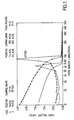
- the pore distribution according to their size is represented on the figure 1 for two resins according to the invention.
- the resins according to the invention adsorb the polyphenolic compounds contained in the plants but have little or no affinity for a whole range of molecules and solutes also contained in these same plants, which are partly eliminated, such as dissolved salts. , sugars, polysaccharides, cations, anions, nitrates and nitrites.
- Plants are usually plants or fruits.
- the polyphenol compounds are contained in plant tissues of vegetable plants.
- vegetable plants we mean any plant or plant that is used for cooking.
- Especially preferred vegetable plants are the leafy vegetable plants of the family Compounds and the bulbous vegetable plants of the family Liliaceae.
- plants of the Compound family include lettuce, chicory and in particular escarole and curly leaf.
- Examples of bulbous plants of the family Liliaceae include onion, garlic, leek and shallot.
- the molecules to be upgraded that is to say the polyphenol compounds, are eluted with a solvent, preferably a food.
- food solvent means any solvent suitable for the preparation of products intended for human or animal consumption.
- the food solvent is ethanol or methanol.
- the elution should be easy, fast and as complete as possible so as not to dilute the extract, and thus the overall yield of the process.
- the purified extract, or eluate, is generally concentrated, and a product rich in polyphenolic compounds is obtained, the extract being spray-dried or freeze-dried.
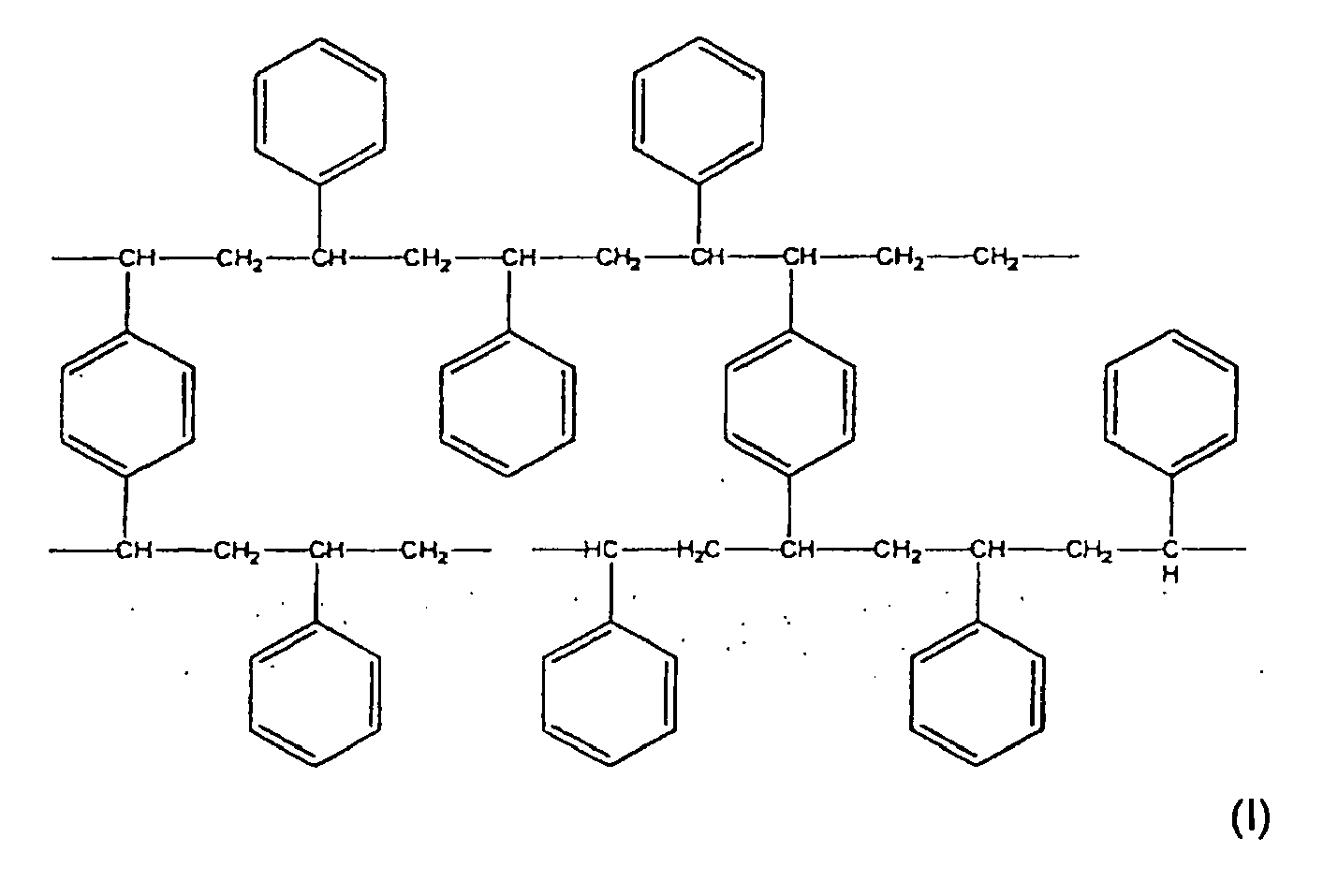
- the resin according to the invention corresponds to formula (I):
- the adsorbent resins according to the invention are very selective with respect to polyphenol compounds and have a high elution capacity with food solvents such as methanol or ethanol.
- the adsorption rate of the polyphenolic compounds on the resin is equal to or greater than 80%, and the elution rate of the polyphenolic compounds is equal to or greater than 60%.
- adsorption rate of the polyphenolic compounds is meant the ratio between the amount of polyphenolic compounds attached to the resin and the amount of polyphenolic compounds contained in the crude extract.
- elution rate is meant the overall yield of the process, that is to say the ratio between the amount of polyphenolic compounds contained in the purified extract (or eluate) and the amount of polyphenolic compounds contained in the raw extract.
- the extraction of the phenolic compounds generally comprises a rapid heating of the plant from an ambient temperature of 25 ° C. to a temperature of up to 105 ° C., to obtain a hot exudation juice and a must of cooled exudated cooked plants.
- the exudation juice at least partially constituting the crude extract.
- the rapid heating is preferably carried out in the absence of oxygen in the air for the blocking of enzymatic activities and the protection of the treated plant materials vis-à-vis any oxidative or hydrolytic degradation.
- the heating is carried out in one to fifteen minutes without maceration.
- the rapid heating can be followed by a substantially immediate evacuation step. of the plant, causing the vaporization of a portion of the plant, this step being carried out at a pressure of between 10 3 and 2 ⁇ 10 4 Pa.
- Vacuuming is necessary when the polyphenolic compounds are contained in vegetable plants belonging to the family Liliaceae, especially the onion, for which the extraction of polyphenolic compounds is difficult.
- the vacuuming stage is useful but not necessary.
- the plants are heated by circulating juice from the treated plants to the plants or steam.
- microwave heating induction heating
- ohmic heating batch heating in the tank or heating from a heat exchanger.
- heat exchangers examples include, for example, tubular or plate heat exchangers, scraped-surface exchangers that allow a direct supply of calories to plants, coruga exchangers, coaxial exchangers.
- the purified extract may be used in dry form or in liquid form, but it is preferably used in dry form.
- the purified extract can be spray-dried or freeze-dried.
- the purified extract has a content of polyphenolic compounds equal to or greater than 30%.
- the flavonols represent at most 25% of the polyphenolic compounds and the hydroxycinnamic acid esters represent at least 50% of the polyphenolic compounds, relative to the total weight of the purified extract dry.
- esters of hydroxycinnamic acids are in particular derivatives of caffeic acid comprising the esters of tartaric acid with monocaffeoyltartric acid, the isomers of the acid dicaféoyltartrique, 5'-caféoylquinique acid (or chlorogenic acid), 3'-5'dicaféoylquinique acid (or isochloro misleading acid), caféoylmalique acid and feruloylquinique acid.
- Flavonols include kaempferol-3-glucoside (kaempferol or luteolin), kaempferol-3-glucuronide, kaempferol-3-O-malonylglucoside, quercetin-3-glucuronide, quercetin-3-O-malonylglucoside, and derivatives of kaempferol-malonylglucoside.
- the flavonols represent at least 90% of the polyphenolic compounds relative to the total weight of the dry purified extract.
- quercetin-3,4'-diglucoside quercetin-4'-monoglucoside
- quercetin quercetin
- isorhamnetin-3,4'-diglucoside quercetin
- isorhamnetin-4'-monoglucoside quercetin
- the antiradical properties of purified salad and onion extracts are evaluated by their ability to neutralize the radical DDPH * , according to the method described in the article of P. Goupy, M. Hugues, P. Boivin and M. J. Amiot, Journal of the Science of Food and Agriculture, 1999, 79, pages 1625-1634 ,
- the antiradical activity is defined as 1 / IC 50 , where IC 50 is defined as the amount of purified product required to reduce by 50% the amount of DDPH * present at an initial concentration of 6x10 -5 mole. I -1 .
- the salad extract has an antiradical activity defined by a 1 / IC 50 ratio equal to or greater than 0.2 and the onion extract has an antiradical activity defined by an equal 1 / IC 50 ratio or greater than 0.12, for a content of polyphenolic compounds equal to or greater than 30%.
- the products obtained according to the invention can be used for the manufacture of cosmetic products, and / or pharmaceutical compounds, and / or food ingredients.
- Extracts of salads and onions were prepared during the extraction step of the process according to the invention, which is in the European patent EP-0728189 and in the French patent FR-9313286 .
- the Figure 2 represents a device for implementing this method.
- the material treated by this extraction process consists of sorting differences of salads or onions.
- the process can be applied to sorting differences of fresh plants of any kind.
- the heating of the plant material is carried out at a precisely controlled temperature within the temperature range 25 ° C-105 ° C, avoiding the presence of air that could cause oxidative degradations.
- the heating of the plant material in the heating chamber 4 can be carried out by any suitable means.
- the condensates and the dripping or exudation juices are recovered from the heating chamber 4 and transmitted, via ducts 3 and 7 and a pump P1, into a heat exchanger 8. also provide to transmit juice from the press (reference 22) in the exchanger 8. This variant is not illustrated on the Figure 2 .
- the conduit 3 is connected to the conduit 26 by a valve V3.
- the valve V3 is open and the condensates and the juice of the duct 3 are directly transmitted into the expansion chamber 14. This makes it possible to obtain better energy efficiency in the extent that the condensates and the juices conveyed by the duct 8 are colder than those of the ducts 7.
- the valve V3 is closed and all the condensates and juices recovered in the ducts 3 and 7 are transmitted at the interchange 8.
- a steam generator 9 is connected to the exchanger 8, which is preferably a scraped-surface heat exchanger which transmits steam to the device 5 by appropriate means 10.
- This device prevents heating by an exogenous water vapor coming directly from a boiler room.
- the duration of the heating is adjustable so that it is possible to heat either all the plants or the film of these plants, especially in the case of onions, or a peripheral portion of these same plants. This makes it possible to control the level of extraction of the various polyphenolic compounds present in these plant materials.
- the duration of the heating is relatively short. It is less than 5 minutes, and preferably equal to about 3 minutes in the case of the extraction of polyphenolic compounds contained in salads. In the case of the extraction of polyphenolic compounds from the onion, the duration of the heating is less than 15 minutes, and preferably equal to about 10 minutes.
- the plant material is heated from an ambient temperature of 25 ° C to a temperature of up to 105 ° C depending on the nature of the plants: for salads and onions, the heating temperature is preferably greater than or equal to 90 ° C .
- the plant material is transferred from the inlet of the heating chamber 4 to the outlet 12, by means of screws, carrying perforated troughs which are intended to receive a predetermined quantity of material.
- the screws rotate around an axis 13.
- the rotational speed, the height of the adjustable layer, the length of the screws and the heating bandwidth define the flow rate and the residence time of the heated products.
- the heated plant material is transferred from the outlet 12 of the heating chamber 4 to an expansion chamber 14 via a conduit 15. It is equipped with an airlock or a pump 16, preferably substantially sealed, so as to avoid steam leakage.
- the expansion chamber 14 is connected by appropriate means 17 to a condenser 18 which is itself connected to a vacuum device 19.
- the preheated material is evacuated substantially immediately.
- the pressure inside the expansion chamber 14 is between 10 3 and 2x10 4 Pa absolute.
- the value of the pressure is chosen according to the nature of the plants.
- the absolute pressure in the expansion chamber is 12 ⁇ 10 3 Pa absolute, whereas it is advantageous to use a relatively lower pressure of about 6 ⁇ 10 3 Pa absolute in the case of polyphenolic compounds extracted from salads.
- the vacuum in the chamber 14 is by condensation of the vapors emitted through the condenser 18.
- This effect is all the more important as the difference between the heating temperature of the plant material and that caused by the vacuum is also important.
- the treated plant material is then removed from the expansion chamber 14 by appropriate means 20.
- the product exiting the expansion chamber 14 is a puree of plant material.
- this mash comes out of the expansion chamber 14 at a relatively low temperature, of the order of 20 to 25 ° C, when the vacuum present in this chamber is very high (of the order of 2x10 3 Pa absolute and that the plant material has been heated to an appropriate temperature.
- Mashed potatoes can be spread.
- the puree is generally pressed in the device 21, so as to obtain a juice, also called raw pressing juice which flows through the conduit 22.
- the pressed mash is recovered at 24, which then constitutes a press cake of vegetable matter.
- the whole juice obtained by the process is recovered. If it is desired to obtain a fermented product (in the case of the onion for example), the fermentation is carried out from the mash from the expansion chamber 14, after enzymage and yeasting of this puree.
- the juice obtained at the outlet of the exchanger 8 is transferred to the expansion chamber 14, via the conduit 26 and the pump P2.
- the vapor emitted during the evacuation is recovered, at the outlet of the condenser 18, in the form of aromatic condensates.
- These can be transferred from the condenser 18 to the expansion chamber 14, the valve V1 then being open and the valve V2 closed, which makes it possible to restore a puree of a weight identical to that of the vegetable raw material.
- the aromatic condensates can be processed to concentrate the flavors and separate the water.
- the raw pressing juice and the exudation juice containing the polyphenolic compounds to be valorized are combined to form the raw juice or the raw plant extract.
- the method which has just been described makes it possible to obtain crude extracts of plants whose polyphenolic compounds are fractionated and purified by using a resin with a high adsorption and elution yield.
- the resin R used in the process according to the invention is a styrene-divinyl benzene resin corresponding to formula (I), and whose physical characteristics are summarized in Table 1.
- Resin R average pore size (A) 90 specific surface area (m 2 / g) 1200 pore volume (ml / g) 2.4
- the polyphenolic compounds are analyzed by HPLC and quantified by external calibration.
- the different contents are expressed in grams chlorogenic acid equivalent for the esters of hydroxycinnamic acids (EAC) and grams equivalent quercetin for the flavonols (EQ).
- the contents are expressed in quercetin-4'-monoglucoside equivalent, or in quercetin-3,4'-diglucoside equivalent for the compounds identified as such, or quercetin equivalent for the other flavonols.
- This method has the advantage, besides quantifying each compound present in the extract or solution analyzed, to check the presence of all the polyphenol compounds.
- the ratio of the amount of phenolic compounds adsorbed on the resin R over the amount of polyphenol compounds contained in the crude extract deposited on this resin represents the T A rate of adsorption of phenolic compounds on the resin.
- the ratio between the amount of polyphenol compounds contained in the purified extract and the amount of polyphenol compounds contained in the crude extract represents the T E level of polyphenol compounds recovered after elution with methanol. This ratio actually represents the overall efficiency of the purification process.
- the level T NE of non-elutable polyphenolic compounds fixed on the resin is the ratio between the quantity of polyphenolic compounds adsorbed on the resin and not eluted during the elution stage with methanol or eluted during rinsing with water or during charging, and the amount of polyphenol compounds contained in the extract deposited on the resin.
- the adsorption rate T A on the resin of phenolic compounds is the sum of the rates T E and T NE.
- the crude extracts of salads were purified using respectively the method according to the invention.
- the raw salad extracts are deposited on the resin R (charge).
- the volume of resin used is 25 ml, ie 1 BV (Bed Volum).
- the polyphenol compounds are eluted with 80 ml of methanol, 3.2 BV.
- An EP purified extract is obtained.
- the solution eluted during charging and that eluted during the water rinsing of the resin are combined and brought back to a volume of 350 ml, the nature and quantity of polyphenol compounds, to quantify the loss of polyphenolic compounds. during this step.
- the amount of polyphenolic compounds contained in the EP purified extract was measured. This measure is represented on the Figure 3 .
- the Figure 3 shows that the crude extract deposited contains 317 mg of polyphenol compounds, and the purified extract EP contains 199 mg of phenolic compounds. No qualitative difference is observed between the deposited extract and the purified extract: these extracts include hydroxycinnamic acids and flavonols.
- the crude extracts of onions are deposited on the resin R After rinsing with water (125 ml or 5 BV), the compounds are eluted with 100 ml of methanol (ie 4 BV). An EP purified extract is obtained.
- the Figure 4 shows that the deposited extract contains 494 mg of phenolic compounds, and the purified EP extract contains 449 mg of phenolic compounds. No qualitative difference is observed between the deposited extract and the EP purified extract of the onion which are more than 95% flavonols derived from quercetin, comprising the following compounds: quercetin, quercetin monoglucoside and quercetin diglucoside inter alia .
- Table 3 shows that the level of flavonols adsorbed on the resin according to the invention R and recovered after elution with methanol is high: 91% of the compounds are retained on the adsorbent and eluted with methanol.
Landscapes
- Life Sciences & Earth Sciences (AREA)
- Chemical & Material Sciences (AREA)
- Organic Chemistry (AREA)
- Engineering & Computer Science (AREA)
- Health & Medical Sciences (AREA)
- Botany (AREA)
- Polymers & Plastics (AREA)
- Genetics & Genomics (AREA)
- Molecular Biology (AREA)
- Biotechnology (AREA)
- Biochemistry (AREA)
- Mycology (AREA)
- Nutrition Science (AREA)
- Food Science & Technology (AREA)
- General Health & Medical Sciences (AREA)
- Coloring Foods And Improving Nutritive Qualities (AREA)
- Medicines Containing Plant Substances (AREA)
- Compounds Of Unknown Constitution (AREA)
- Preparation Of Fruits And Vegetables (AREA)
- Solid-Sorbent Or Filter-Aiding Compositions (AREA)
- Saccharide Compounds (AREA)
- Organic Low-Molecular-Weight Compounds And Preparation Thereof (AREA)
Claims (31)
- Verfahren zur Extraktion, Fraktionierung und Reinigung von Polyphenolverbindungen aus Blattgemüsepflanzen der Familie der Korbblütler oder aus Zwiebelgemüsepflanzen der Familie der Liliengewächse oder aus Nebenprodukten von Frischgemüse, umfassend die folgenden Schritte:a) Extraktion der Polyphenolverbindungen, wobei man einen Gemüserohextrakt erhält;b) Adsorption der im Rohextrakt enthaltenen Polyphenolverbindungen auf einem adsorbierenden Harz;c) Elution der auf dem Harz zurückgehaltenen Polyphenolverbindungen, wobei man einen gereinigten Extrakt erhält;d) Eindicken und dann gegebenenfalls Trocknen des gereinigten Extrakts, wobei man ein an Polyphenolverbindungen reiches Produkt erhält;dadurch gekennzeichnet, dass das Harz ein Styrol-Divinylbenzol-Harz ist, das die folgenden physikalischen Merkmale aufweist:1) Poren mit einer mittleren Größe von 50 bis 110 Å, vorzugsweise 60 bis 100 Å;2) eine spezifische Oberfläche von größer oder gleich 800 m2/g, vorzugsweise größer oder gleich 880 m2/g;3) ein Porenvolumen von über 1 ml/g und vorzugsweise größer oder gleich 1,4 ml/g.
- Verfahren gemäß Anspruch 1, dadurch gekennzeichnet, dass das Harz die folgenden physikalischen Merkmale aufweist:1) Poren mit einer mittleren Größe von 80 bis 110 Å, vorzugsweise 88 bis 92 Å und besonders bevorzugt ungefähr 90 Å;2) eine spezifische Oberfläche von größer oder gleich 1000 m2/g, vorzugsweise größer oder gleich 1200 m2/g;3) ein Porenvolumen von größer oder gleich 2 ml/g und vorzugsweise größer oder gleich 2,4 ml/g.
- Verfahren gemäß Anspruch 1 oder 2, dadurch gekennzeichnet, dass der Adsorptionsgrad der Polyphenolverbindungen auf dem Harz größer oder gleich 80% ist und der Elutionsgrad größer oder gleich 60% ist.
- Verfahren gemäß einem der vorstehenden Ansprüche, dadurch gekennzeichnet, dass das Harz der Formel (I) entspricht:
- Verfahren gemäß einem der vorstehenden Ansprüche, dadurch gekennzeichnet, dass der Extraktionsschritt (a) einen Schritt des schnellen Erhitzens der Pflanze von einer Umgebungstemperatur von 25 °C auf eine Temperatur von 105 °C umfasst, wobei man einen heißen Tropfsaft und eine Maische aus abgekühlten ausgelaugten gekochten Pflanzen erhält, wobei der Tropfsaft wenigstens teilweise den Rohextrakt bildet.
- Verfahren gemäß Anspruch 5, dadurch gekennzeichnet, dass das Erhitzen in weniger als fünfzehn Minuten ohne Mazeration erfolgt.
- Verfahren gemäß Anspruch 5 oder 6, dadurch gekennzeichnet, dass das Erhitzen in Abwesenheit von Luftsauerstoff erfolgt, um so die Pflanzenstoffe vor eventuellem oxidativem Abbau zu schützen.
- Verfahren gemäß einem der Ansprüche 5 bis 7, dadurch gekennzeichnet, dass der Extraktionsschritt einen Schritt des Evakuierens der Pflanze umfasst, der die Verdampfung eines Teils der Pflanze hervorruft, wobei dieser Schritt nach dem Schritt des Erhitzens bei einem Druck von 103 bis 2 x 10⁴ Pa absolut durchgeführt wird.
- Verfahren gemäß Anspruch 8, dadurch gekennzeichnet, dass die beim Evakuieren von den Pflanzen abgegebenen Dämpfe kondensiert werden.
- Verfahren gemäß einem der vorstehenden Ansprüche, dadurch gekennzeichnet, dass das Erhitzen mittels eines kondensierenden Dampfes erfolgt.
- Verfahren gemäß einem der Ansprüche 1 bis 9, dadurch gekennzeichnet, dass das Erhitzen dadurch erfolgt, dass man Saft aus den behandelten Pflanzen oder kondensierten Dampf, der beim Evakuieren abgegeben wurde, im Kreislauf auf die Pflanzen zurückführt.
- Verfahren gemäß einem der Ansprüche 1 bis 9, dadurch gekennzeichnet, dass das Erhitzen durch direkten Eintrag von Wärme ausgehend von einem geeigneten Austauscher, insbesondere einem Schabewärmetauscher, auf die Pflanzen erfolgt.
- Verfahren gemäß einem der vorstehenden Ansprüche, dadurch gekennzeichnet, dass der Extraktionsschritt kontinuierlich oder diskontinuierlich durchgeführt wird.
- Verfahren gemäß einem der vorstehenden Ansprüche, dadurch gekennzeichnet, dass im Elutionsschritt (b) ein Eluent eingesetzt wird, der aus lebensmitteltauglichen Lösungsmitteln, vorzugsweise Methanol oder Ethanol, ausgewählt ist.
- Verfahren gemäß einem der vorstehenden Ansprüche, dadurch gekennzeichnet, dass der gereinigte Extrakt in flüssiger Form verwendet wird.
- Verfahren gemäß einem der Ansprüche 1 bis 14, dadurch gekennzeichnet, dass der gereinigte Extrakt in trockener Form verwendet wird.
- Verfahren gemäß Anspruch 16, dadurch gekennzeichnet, dass der gereinigte Extrakt einer Sprühtrocknung unterzogen wird.
- Verfahren gemäß Anspruch 16, dadurch gekennzeichnet, dass der gereinigte Extrakt durch Lyophilisierung getrocknet wird.
- Verfahren gemäß einem der Ansprüche 16 bis 18, dadurch gekennzeichnet, dass der Extrakt in Form eines Puders, Granulats oder von Kügelchen vorliegt.
- Verfahren gemäß einem der vorstehenden Ansprüche, dadurch gekennzeichnet, dass der gereinigte Extrakt einen Gehalt an Polyphenolverbindungen von größer oder gleich 30% hat.
- Verfahren gemäß einem der vorstehenden Ansprüche, dadurch gekennzeichnet, dass die Blattgemüsepflanzen der Familie der Korbblütler aus Gartensalat, Chicorée, Frisée und glatter Endivie und den Nebenprodukten dieser Pflanzen ausgewählt sind.
- Verfahren gemäß Anspruch 21, dadurch gekennzeichnet, dass die Blattgemüsepflanzen Gartensalate sind, die vorzugsweise aus Romana, Batavia und Eisbergsalat ausgewählt sind.
- Verfahren gemäß einem der Ansprüche 1 bis 20, dadurch gekennzeichnet, dass die Zwiebelgemüsepflanzen der Familie der Liliengewächse aus Zwiebel, Knoblauch, Porree und Schalotte und den Nebenprodukten dieser Pflanzen ausgewählt sind.
- Extrakt von Salaten, der nach dem Verfahren gemäß einem der Ansprüche 1 bis 23 erhalten wurde und einen Gehalt an Polyphenolverbindungen von größer oder gleich 30% hat, dadurch gekennzeichnet, dass die Flavonole höchstens 25% der Polyphenolverbindungen ausmachen und die Ester von Hydroxyzimtsäuren wenigstens 50% der Polyphenolverbindungen ausmachen, bezogen auf das Gesamtgewicht des trockenen gereinigten Extraktes.
- Extrakt gemäß Anspruch 24, dadurch gekennzeichnet, dass die Ester von Hydroxyzimtsäuren Derivate der Kaffeesäure sind, die die Ester von Weinsäure mit Monocaffeoylweinsäure, die Isomere von Dicaffeoylweinsäure, 5-Caffeoylchininsäure (oder Chlorogensäure), 3',5'-Dicaffeoylchininsäure (oder Isochlorogensäure), Caffeoyläpfelsäure und Feruloylchininsäure umfassen.
- Extrakt gemäß Anspruch 24, dadurch gekennzeichnet, dass die Flavonole Kaempferol-3-glucosid (Kaempferol oder Luteolin), Kaempferol-3-glucuronid, Kaempferol-3-O-malonylglucosid, Quercetin-3-glucuronid, Quercetin-3-O-malonylglucosid und Derivate von Kaempferolmalonylglucosid umfassen.
- Extrakt gemäß einem der Ansprüche 24 bis 26, dadurch gekennzeichnet, dass er eine Antiradikalwirkung aufweist, die durch ein Verhältnis 1/CI50 von größer oder gleich 0,2 bei einem Gehalt an Phenolverbindungen von größer oder gleich 30% definiert ist, wobei CI50 die Menge des gereinigten Produkts ist, die für die Reduktion von 50% der Menge von in einer Anfangskonzentration von 6 x 10⁻⁵ mol·l-1 vorhandenem DDPH* notwendig ist.
- Extrakt von Zwiebeln, der nach dem Verfahren gemäß einem der Ansprüche 1 bis 23 erhalten wurde und einen Gehalt an Polyphenolverbindungen von größer oder gleich 30% hat, dadurch gekennzeichnet, dass die Flavonole wenigstens 80% der Polyphenolverbindungen ausmachen, bezogen auf das Gesamtgewicht des trockenen gereinigten Extraktes.
- Extrakt gemäß Anspruch 28, dadurch gekennzeichnet, dass die Flavonole Quercetin-3,4'-diglucosid, Quercetin-4'-monoglucosid, Quercetin, I-sorhamnetin-3,4'-diglucosid und Isorhamnetin-4'-monoglucosid enthalten.
- Extrakt gemäß Anspruch 28 oder 29, dadurch gekennzeichnet, dass er eine Antiradikalwirkung aufweist, die durch ein Verhältnis 1/CI50 von größer oder gleich 0,12 bei einem Gehalt an Flavonolen von größer oder gleich 30% definiert ist, wobei CI50 die Menge des gereinigten Produkts ist, die für die Reduktion von 50% der Menge von in einer Anfangskonzentration von 6 x 10⁻⁵ mol·l-1 vorhandenem DDPH* notwendig ist.
- Verwendung eines aus Salaten oder Zwiebeln oder Nebenprodukten derselben gereinigten Extrakts, wie er gemäß einem der Ansprüche 24 bis 30 definiert ist, zur Herstellung von Kosmetikprodukten, Nahrungsmittelzutaten oder pharmazeutischen Verbindungen.
Applications Claiming Priority (3)
| Application Number | Priority Date | Filing Date | Title |
|---|---|---|---|
| FR0102096A FR2820738B1 (fr) | 2001-02-15 | 2001-02-15 | Procede d'extraction, de fractionnement et de purification de composes polyphenoliques issus d'ecarts de triage de vegetaux frais utilisant une resine a haut rendement d'adsorption et d'elution |
| FR0102096 | 2001-02-15 | ||
| PCT/FR2002/000570 WO2002064536A1 (fr) | 2001-02-15 | 2002-02-14 | Procede d'extraction, de fractionnement et de purification de composes polyphenoliques issus d'ecarts de triage de vegetaux frais utilisant une resine a haut rendement d'adsorption et d'elution |
Publications (2)
| Publication Number | Publication Date |
|---|---|
| EP1362021A1 EP1362021A1 (de) | 2003-11-19 |
| EP1362021B1 true EP1362021B1 (de) | 2009-08-05 |
Family
ID=8860079
Family Applications (1)
| Application Number | Title | Priority Date | Filing Date |
|---|---|---|---|
| EP02704833A Expired - Lifetime EP1362021B1 (de) | 2001-02-15 | 2002-02-14 | Verfahren zur extrahierung, fraktionierung und reinigung mittels eines harzes mit hohem adsorptions- und eluierungsrendement, von polyphenolischen verbindungen erhalten aus ausleseabfällen von frischen gemüsen |
Country Status (13)
| Country | Link |
|---|---|
| US (1) | US6824797B2 (de) |
| EP (1) | EP1362021B1 (de) |
| AT (1) | ATE438606T1 (de) |
| AU (1) | AU2002238644B2 (de) |
| CA (1) | CA2437970A1 (de) |
| DE (1) | DE60233202D1 (de) |
| DK (1) | DK1362021T3 (de) |
| ES (1) | ES2332039T3 (de) |
| FR (1) | FR2820738B1 (de) |
| MX (1) | MXPA03007216A (de) |
| NZ (1) | NZ527545A (de) |
| PT (1) | PT1362021E (de) |
| WO (1) | WO2002064536A1 (de) |
Families Citing this family (17)
| Publication number | Priority date | Publication date | Assignee | Title |
|---|---|---|---|---|
| TW200302110A (en) * | 2001-12-28 | 2003-08-01 | Sansho Seiyaku K K | Compositions containing pigmentatin inhibitor, use thereof and process for producing the same |
| KR100564800B1 (ko) * | 2002-09-28 | 2006-03-29 | 주식회사 알엔에이 | 상추 추출물로부터 분리한 화합물을 함유하는 심혈관계질환의 예방 및 치료용 조성물 |
| BRPI0410431A (pt) * | 2003-05-21 | 2006-06-13 | David B Linton | método para cozimento de baixa pressão e baixa temperatura via o processo de lintonização |
| EP1669338A4 (de) * | 2003-10-01 | 2008-04-16 | Toyo Shinyaku Co Ltd | Verfahren zur herstellung eines produkts mit einem hohen anteil an proanthocyanidin |
| DE102004004034A1 (de) * | 2004-01-27 | 2005-08-18 | Lichtwer Pharma Ag | Zwiebelextrakte |
| FR2882933B1 (fr) * | 2005-03-14 | 2007-04-20 | Scalime France Sa | Utilisation d'un extrait d'oignon pour la fabrication d'une composition pour controler la prise de poids |
| GB0615781D0 (en) * | 2006-08-09 | 2006-09-20 | Coressence Ltd | Prebiotic composition |
| FR2904935A1 (fr) * | 2006-08-18 | 2008-02-22 | Centre Nat Rech Scient | Composition antidiabetique apte a stimuler la secretion d'insuline et destinee au traitement du diabete de type 2 (diabete non insulino-dependant). |
| US20100210866A1 (en) * | 2007-09-26 | 2010-08-19 | Takasago International Corporation | Plant extracts and use thereof |
| ES2341526B1 (es) * | 2008-12-19 | 2011-06-08 | Consejo Superior De Investigaciones Cientificas (Csic) | Procedimiento de purificacion de 3,4-dihidroxifenilglicol (dhfg) a partir de productos vegetales. |
| JP5465479B2 (ja) * | 2009-07-17 | 2014-04-09 | 高砂香料工業株式会社 | タマネギ抽出物およびその製造方法 |
| PH12012000062A1 (en) | 2012-03-22 | 2020-10-19 | Univ Of San Carlos | Preparation of pectin and polyphenolic compositions from mango peels |
| FR2998296B1 (fr) | 2012-11-16 | 2015-03-06 | Valagro Carbone Renouvelable Poitou Charentes | Procede d'obtention de polyphenols a partir d'une matiere premiere vegetale en contenant |
| CN103113439A (zh) * | 2013-02-27 | 2013-05-22 | 新疆大学 | 从对叶大戟中制备山奈酚-3-O-β-D-葡萄糖醛酸苷的方法 |
| FR3031458B1 (fr) * | 2015-01-12 | 2019-06-07 | Biolie | Extraits de salade, compositions et utilisations |
| CN104817603B (zh) * | 2015-04-11 | 2018-07-27 | 福建中医药大学 | 从莲房中制备槲皮素-3-O-β-D-葡萄糖醛酸苷的方法 |
| CN109761760B (zh) * | 2019-01-21 | 2022-03-15 | 武汉工程大学 | 一种利用聚维酮提取煤焦油中酚类物质的方法 |
Family Cites Families (15)
| Publication number | Priority date | Publication date | Assignee | Title |
|---|---|---|---|---|
| SU483981A1 (ru) * | 1972-02-08 | 1975-09-15 | Способ получени кверцетина | |
| CH602531A5 (de) * | 1975-04-18 | 1978-07-31 | Helmona Ag | |
| DE3509892C2 (de) | 1985-03-19 | 1994-04-21 | Westfalia Separator Ag | Verfahren zum Nachklären und Stabilisieren von Polyphenole und/oder Eiweißstoffe enthaltenden Flüssigkeiten und Getränken, insbesondere von Bier |
| US5141611A (en) | 1985-05-16 | 1992-08-25 | Memtec Limited | Removing and recovering plant polyphenols |
| JP2543872B2 (ja) | 1986-08-13 | 1996-10-16 | 株式会社東芝 | 増幅回路 |
| JP2909522B2 (ja) * | 1992-09-04 | 1999-06-23 | 農林水産省食品総合研究所長 | 紫外線防御剤 |
| FR2712147B1 (fr) | 1993-11-08 | 1996-02-02 | Agronomique Inst Nat Rech | Produit alimentaire, obtention et application à la fabrication de jus de fruits ou de vin. |
| FR2712206B1 (fr) | 1993-11-08 | 1998-10-23 | Cogat Pierre Olivier | Dispositif additionnel au matériel de chauffage-refroidissement sous vide permettant de gérer les liquides afin d'éviter la dilution par de l'eau exogène et afin d'assurer la pré-concentration des matières traitées. |
| CA2128293C (en) | 1993-12-06 | 2002-09-03 | Masayuki Tanabe | Fruit polyphenols and medicinal compositions containing them |
| JP3477628B2 (ja) * | 1995-06-19 | 2003-12-10 | アサヒビール株式会社 | ホップ苞より得られるポリフェノール製剤とその製造法 |
| JPH09175982A (ja) * | 1995-12-28 | 1997-07-08 | Nikka Uisukii Kk | 化粧品 |
| US5856429A (en) | 1996-06-28 | 1999-01-05 | W. R. Grace & Co.-Conn. | Polyamide compositions for removal of polyphenols from liquids |
| US6238673B1 (en) * | 1996-09-20 | 2001-05-29 | The Howard Foundation | Method of producing high flavonol content polyphenol compositions |
| JPH10194907A (ja) * | 1997-01-14 | 1998-07-28 | Kenichi Kishigami | 野菜レタス植物性ポリフェノール利用に関する件 |
| KR20000019717A (ko) * | 1998-09-15 | 2000-04-15 | 박호군 | 루틴 및 쿼세틴을 포함하는 고지혈증, 동맥경화증 및 간 질환의예방 및 치료용 조성물 |
-
2001
- 2001-02-15 FR FR0102096A patent/FR2820738B1/fr not_active Expired - Fee Related
-
2002
- 2002-02-14 ES ES02704833T patent/ES2332039T3/es not_active Expired - Lifetime
- 2002-02-14 PT PT02704833T patent/PT1362021E/pt unknown
- 2002-02-14 EP EP02704833A patent/EP1362021B1/de not_active Expired - Lifetime
- 2002-02-14 DK DK02704833T patent/DK1362021T3/da active
- 2002-02-14 NZ NZ527545A patent/NZ527545A/en not_active IP Right Cessation
- 2002-02-14 DE DE60233202T patent/DE60233202D1/de not_active Expired - Lifetime
- 2002-02-14 AT AT02704833T patent/ATE438606T1/de not_active IP Right Cessation
- 2002-02-14 CA CA002437970A patent/CA2437970A1/fr not_active Abandoned
- 2002-02-14 MX MXPA03007216A patent/MXPA03007216A/es active IP Right Grant
- 2002-02-14 WO PCT/FR2002/000570 patent/WO2002064536A1/fr not_active Ceased
- 2002-02-14 AU AU2002238644A patent/AU2002238644B2/en not_active Ceased
- 2002-02-15 US US10/077,225 patent/US6824797B2/en not_active Expired - Lifetime
Non-Patent Citations (1)
| Title |
|---|
| "LES EXTRAITS SCANOLINE", 27 February 2007, SCALIME NUTRITION SAS (FICHE TECHNIQUE) * |
Also Published As
| Publication number | Publication date |
|---|---|
| WO2002064536A1 (fr) | 2002-08-22 |
| FR2820738A1 (fr) | 2002-08-16 |
| PT1362021E (pt) | 2009-11-10 |
| FR2820738B1 (fr) | 2003-05-16 |
| MXPA03007216A (es) | 2005-02-14 |
| DK1362021T3 (da) | 2009-12-14 |
| NZ527545A (en) | 2004-08-27 |
| AU2002238644B2 (en) | 2007-06-07 |
| US20020187207A1 (en) | 2002-12-12 |
| US6824797B2 (en) | 2004-11-30 |
| ATE438606T1 (de) | 2009-08-15 |
| ES2332039T3 (es) | 2010-01-25 |
| EP1362021A1 (de) | 2003-11-19 |
| CA2437970A1 (fr) | 2002-08-22 |
| DE60233202D1 (de) | 2009-09-17 |
Similar Documents
| Publication | Publication Date | Title |
|---|---|---|
| EP1362021B1 (de) | Verfahren zur extrahierung, fraktionierung und reinigung mittels eines harzes mit hohem adsorptions- und eluierungsrendement, von polyphenolischen verbindungen erhalten aus ausleseabfällen von frischen gemüsen | |
| Soleas et al. | Wine as a biological fluid: history, production, and role in disease prevention | |
| EP3795579B1 (de) | Verfahren zur herstellung einer luo-han-guo-süssstoffzusammensetzung aus siraitia grosvenorii und dadurch erhaltene zusammensetzung | |
| Shi et al. | Extraction of polyphenolics from plant material for functional foods—Engineering and technology | |
| KR101113162B1 (ko) | 식물물질로부터 약제학적 활성성분의 추출의 개량 | |
| JPH0222755B2 (de) | ||
| CN1611125A (zh) | 容器装茶类饮料 | |
| GIRARD¹ et al. | Functional grape and citrus products | |
| Seabra et al. | Two-step high pressure solvent extraction of walnut (Juglans regia L.) husks: scCO2+ CO2/ethanol/H2O | |
| EP3515206B1 (de) | Entsäuerter cranberry-saft und verfahren zur herstellung davon | |
| FR3061176A1 (fr) | Preparation d'un extrait de biomasse seche riche en polyphenols | |
| JP6955570B2 (ja) | 精製サラシア属植物抽出物の製造方法および精製サラシア属植物抽出物 | |
| JP2002267655A (ja) | ニシキギ科サラキア属の植物および/またはそれからの抽出物の品質判定方法 | |
| JP4521703B2 (ja) | ホップより得られるリパーゼ阻害剤 | |
| WO2007125562A2 (en) | Method for the preparation and use of an enriched cyanidine-s-o-beta-glucopyranoside extract and derivatives thereof from fruits and vegetables containing said anthocyanin and method for the purification and use of cyanidine-3-o-beta- glucopyranoside and derivatives thereof obtained | |
| EP2036601A1 (de) | Verfahren zum erhalt von polyphenolreichem kakaopulver mit einem geringen fettgehalt und so erhaltener kakao | |
| FR2935096A1 (fr) | Compositions riches en acide chlorogenique, leur procede d'obtention et leur utilisation | |
| EP1651748B1 (de) | Biologisches verfahren zur entgiftung eines flüssigen nahrungsmediums | |
| FR2767533A1 (fr) | Procede et dispositif de preparation d'une boisson riche en composes polyphenoliques, et boisson obtenue | |
| KR20150088223A (ko) | 해당화 추출물을 유효성분으로 포함하는 알코올성 간질환 예방 또는 치료용, 또는 숙취해소용 조성물 | |
| JP2001275604A (ja) | 果汁粉末組成物及びその製造方法、並びに該果汁粉末組成物を含有させてなる健康食品 | |
| WO2017125669A1 (fr) | Composition a visée détoxifiante pour administration par voie orale et son procédé de préparation | |
| EP1913951B1 (de) | Verfahren zur Extraktion von Polyphenolen und ihre Verwendung | |
| van Lelyveld et al. | Ethylene concentration and polyphenol oxidase activity in mango (Mangifera indica L.) fruit abscission | |
| CZ34894A3 (en) | Soft beverage with reduced content of compounds causing faulty sensoric coloring and thus with enhanced storage stability |
Legal Events
| Date | Code | Title | Description |
|---|---|---|---|
| PUAI | Public reference made under article 153(3) epc to a published international application that has entered the european phase |
Free format text: ORIGINAL CODE: 0009012 |
|
| 17P | Request for examination filed |
Effective date: 20030915 |
|
| AK | Designated contracting states |
Kind code of ref document: A1 Designated state(s): AT BE CH CY DE DK ES FI FR GB GR IE IT LI LU MC NL PT SE TR |
|
| AX | Request for extension of the european patent |
Extension state: AL LT LV MK RO SI |
|
| 17Q | First examination report despatched |
Effective date: 20050602 |
|
| RAP1 | Party data changed (applicant data changed or rights of an application transferred) |
Owner name: SCALIME NUTRITION Owner name: INSTITUT NATIONAL DE LA RECHERCHE AGRONOMIQUE (INR |
|
| 17Q | First examination report despatched |
Effective date: 20050602 |
|
| GRAP | Despatch of communication of intention to grant a patent |
Free format text: ORIGINAL CODE: EPIDOSNIGR1 |
|
| GRAS | Grant fee paid |
Free format text: ORIGINAL CODE: EPIDOSNIGR3 |
|
| GRAA | (expected) grant |
Free format text: ORIGINAL CODE: 0009210 |
|
| AK | Designated contracting states |
Kind code of ref document: B1 Designated state(s): AT BE CH CY DE DK ES FI FR GB GR IE IT LI LU MC NL PT SE TR |
|
| REG | Reference to a national code |
Ref country code: GB Ref legal event code: FG4D Free format text: NOT ENGLISH |
|
| REG | Reference to a national code |
Ref country code: CH Ref legal event code: EP |
|
| REG | Reference to a national code |
Ref country code: IE Ref legal event code: FG4D |
|
| REF | Corresponds to: |
Ref document number: 60233202 Country of ref document: DE Date of ref document: 20090917 Kind code of ref document: P |
|
| REG | Reference to a national code |
Ref country code: PT Ref legal event code: SC4A Free format text: AVAILABILITY OF NATIONAL TRANSLATION Effective date: 20091104 |
|
| REG | Reference to a national code |
Ref country code: SE Ref legal event code: TRGR |
|
| REG | Reference to a national code |
Ref country code: DK Ref legal event code: T3 |
|
| REG | Reference to a national code |
Ref country code: GR Ref legal event code: EP Ref document number: 20090402723 Country of ref document: GR |
|
| REG | Reference to a national code |
Ref country code: ES Ref legal event code: FG2A Ref document number: 2332039 Country of ref document: ES Kind code of ref document: T3 |
|
| PG25 | Lapsed in a contracting state [announced via postgrant information from national office to epo] |
Ref country code: AT Free format text: LAPSE BECAUSE OF FAILURE TO SUBMIT A TRANSLATION OF THE DESCRIPTION OR TO PAY THE FEE WITHIN THE PRESCRIBED TIME-LIMIT Effective date: 20090805 |
|
| PLBE | No opposition filed within time limit |
Free format text: ORIGINAL CODE: 0009261 |
|
| STAA | Information on the status of an ep patent application or granted ep patent |
Free format text: STATUS: NO OPPOSITION FILED WITHIN TIME LIMIT |
|
| 26N | No opposition filed |
Effective date: 20100507 |
|
| REG | Reference to a national code |
Ref country code: CH Ref legal event code: PL |
|
| PG25 | Lapsed in a contracting state [announced via postgrant information from national office to epo] |
Ref country code: CH Free format text: LAPSE BECAUSE OF NON-PAYMENT OF DUE FEES Effective date: 20100228 Ref country code: MC Free format text: LAPSE BECAUSE OF NON-PAYMENT OF DUE FEES Effective date: 20100301 Ref country code: LI Free format text: LAPSE BECAUSE OF NON-PAYMENT OF DUE FEES Effective date: 20100228 |
|
| PG25 | Lapsed in a contracting state [announced via postgrant information from national office to epo] |
Ref country code: CY Free format text: LAPSE BECAUSE OF FAILURE TO SUBMIT A TRANSLATION OF THE DESCRIPTION OR TO PAY THE FEE WITHIN THE PRESCRIBED TIME-LIMIT Effective date: 20090805 |
|
| PG25 | Lapsed in a contracting state [announced via postgrant information from national office to epo] |
Ref country code: LU Free format text: LAPSE BECAUSE OF NON-PAYMENT OF DUE FEES Effective date: 20100214 |
|
| PG25 | Lapsed in a contracting state [announced via postgrant information from national office to epo] |
Ref country code: TR Free format text: LAPSE BECAUSE OF FAILURE TO SUBMIT A TRANSLATION OF THE DESCRIPTION OR TO PAY THE FEE WITHIN THE PRESCRIBED TIME-LIMIT Effective date: 20090805 |
|
| PGFP | Annual fee paid to national office [announced via postgrant information from national office to epo] |
Ref country code: FI Payment date: 20130226 Year of fee payment: 12 Ref country code: DK Payment date: 20130227 Year of fee payment: 12 Ref country code: SE Payment date: 20130227 Year of fee payment: 12 Ref country code: IE Payment date: 20130227 Year of fee payment: 12 |
|
| PGFP | Annual fee paid to national office [announced via postgrant information from national office to epo] |
Ref country code: BE Payment date: 20130227 Year of fee payment: 12 Ref country code: GR Payment date: 20130227 Year of fee payment: 12 Ref country code: NL Payment date: 20130227 Year of fee payment: 12 |
|
| BERE | Be: lapsed |
Owner name: INSTITUT NATIONAL DE LA RECHERCHE AGRONOMIQUE (IN Effective date: 20140228 Owner name: SCALIME NUTRITION Effective date: 20140228 |
|
| REG | Reference to a national code |
Ref country code: NL Ref legal event code: V1 Effective date: 20140901 |
|
| REG | Reference to a national code |
Ref country code: DK Ref legal event code: EBP Effective date: 20140228 |
|
| REG | Reference to a national code |
Ref country code: SE Ref legal event code: EUG |
|
| REG | Reference to a national code |
Ref country code: GR Ref legal event code: ML Ref document number: 20090402723 Country of ref document: GR Effective date: 20140903 |
|
| PG25 | Lapsed in a contracting state [announced via postgrant information from national office to epo] |
Ref country code: FI Free format text: LAPSE BECAUSE OF NON-PAYMENT OF DUE FEES Effective date: 20140214 Ref country code: GR Free format text: LAPSE BECAUSE OF NON-PAYMENT OF DUE FEES Effective date: 20140903 Ref country code: NL Free format text: LAPSE BECAUSE OF NON-PAYMENT OF DUE FEES Effective date: 20140901 |
|
| PG25 | Lapsed in a contracting state [announced via postgrant information from national office to epo] |
Ref country code: SE Free format text: LAPSE BECAUSE OF NON-PAYMENT OF DUE FEES Effective date: 20140215 |
|
| REG | Reference to a national code |
Ref country code: IE Ref legal event code: MM4A |
|
| PG25 | Lapsed in a contracting state [announced via postgrant information from national office to epo] |
Ref country code: BE Free format text: LAPSE BECAUSE OF NON-PAYMENT OF DUE FEES Effective date: 20140228 Ref country code: IE Free format text: LAPSE BECAUSE OF NON-PAYMENT OF DUE FEES Effective date: 20140214 Ref country code: DK Free format text: LAPSE BECAUSE OF NON-PAYMENT OF DUE FEES Effective date: 20140228 |
|
| REG | Reference to a national code |
Ref country code: FR Ref legal event code: PLFP Year of fee payment: 15 |
|
| REG | Reference to a national code |
Ref country code: FR Ref legal event code: PLFP Year of fee payment: 16 |
|
| REG | Reference to a national code |
Ref country code: FR Ref legal event code: PLFP Year of fee payment: 17 |
|
| PGFP | Annual fee paid to national office [announced via postgrant information from national office to epo] |
Ref country code: FR Payment date: 20210224 Year of fee payment: 20 Ref country code: IT Payment date: 20210222 Year of fee payment: 20 Ref country code: PT Payment date: 20210210 Year of fee payment: 20 |
|
| PGFP | Annual fee paid to national office [announced via postgrant information from national office to epo] |
Ref country code: DE Payment date: 20210217 Year of fee payment: 20 Ref country code: GB Payment date: 20210219 Year of fee payment: 20 |
|
| PGFP | Annual fee paid to national office [announced via postgrant information from national office to epo] |
Ref country code: ES Payment date: 20210421 Year of fee payment: 20 |
|
| REG | Reference to a national code |
Ref country code: DE Ref legal event code: R071 Ref document number: 60233202 Country of ref document: DE |
|
| REG | Reference to a national code |
Ref country code: GB Ref legal event code: PE20 Expiry date: 20220213 |
|
| PG25 | Lapsed in a contracting state [announced via postgrant information from national office to epo] |
Ref country code: GB Free format text: LAPSE BECAUSE OF EXPIRATION OF PROTECTION Effective date: 20220213 |
|
| REG | Reference to a national code |
Ref country code: ES Ref legal event code: FD2A Effective date: 20220526 |
|
| PG25 | Lapsed in a contracting state [announced via postgrant information from national office to epo] |
Ref country code: PT Free format text: LAPSE BECAUSE OF EXPIRATION OF PROTECTION Effective date: 20220222 |
|
| PG25 | Lapsed in a contracting state [announced via postgrant information from national office to epo] |
Ref country code: ES Free format text: LAPSE BECAUSE OF EXPIRATION OF PROTECTION Effective date: 20220215 |