EP1232274B1 - Enhanced transgene expression by co-expression with a suppressor of post-transcriptional gene silencing (ptgs) - Google Patents
Enhanced transgene expression by co-expression with a suppressor of post-transcriptional gene silencing (ptgs) Download PDFInfo
- Publication number
- EP1232274B1 EP1232274B1 EP00977696A EP00977696A EP1232274B1 EP 1232274 B1 EP1232274 B1 EP 1232274B1 EP 00977696 A EP00977696 A EP 00977696A EP 00977696 A EP00977696 A EP 00977696A EP 1232274 B1 EP1232274 B1 EP 1232274B1
- Authority
- EP
- European Patent Office
- Prior art keywords
- protein
- gfp
- suppressor
- plant
- ptgs
- Prior art date
- Legal status (The legal status is an assumption and is not a legal conclusion. Google has not performed a legal analysis and makes no representation as to the accuracy of the status listed.)
- Expired - Lifetime
Links
- 230000032361 posttranscriptional gene silencing Effects 0.000 title claims abstract description 190
- 230000014509 gene expression Effects 0.000 title claims abstract description 103
- 108700019146 Transgenes Proteins 0.000 title claims abstract description 66
- 230000004186 co-expression Effects 0.000 title 1
- 241000196324 Embryophyta Species 0.000 claims abstract description 248
- 108090000623 proteins and genes Proteins 0.000 claims abstract description 211
- 102000004169 proteins and genes Human genes 0.000 claims abstract description 157
- 238000000034 method Methods 0.000 claims abstract description 97
- 150000007523 nucleic acids Chemical class 0.000 claims abstract description 96
- 239000013598 vector Substances 0.000 claims abstract description 89
- 102000039446 nucleic acids Human genes 0.000 claims abstract description 82
- 108020004707 nucleic acids Proteins 0.000 claims abstract description 82
- 241000709992 Potato virus X Species 0.000 claims abstract description 64
- 101710142246 External core antigen Proteins 0.000 claims abstract description 59
- 101710152529 Fibrohexamerin Proteins 0.000 claims abstract description 59
- 101710147507 Neutrophil gelatinase-associated lipocalin Proteins 0.000 claims abstract description 59
- 239000002773 nucleotide Substances 0.000 claims abstract description 52
- 125000003729 nucleotide group Chemical group 0.000 claims abstract description 51
- 230000003612 virological effect Effects 0.000 claims abstract description 40
- 230000010474 transient expression Effects 0.000 claims abstract description 29
- 241000710145 Tomato bushy stunt virus Species 0.000 claims abstract description 28
- 241000702449 African cassava mosaic virus Species 0.000 claims abstract description 18
- 241001429314 Rice yellow mottle virus Species 0.000 claims abstract description 17
- 101000846901 Drosophila melanogaster Fat-body protein 1 Proteins 0.000 claims abstract description 8
- 102100029008 Putative HTLV-1-related endogenous sequence Human genes 0.000 claims abstract 2
- 230000030279 gene silencing Effects 0.000 claims description 163
- 108091032973 (ribonucleotides)n+m Proteins 0.000 claims description 120
- 210000001519 tissue Anatomy 0.000 claims description 114
- 241000700605 Viruses Species 0.000 claims description 109
- 210000004027 cell Anatomy 0.000 claims description 100
- 108020004999 messenger RNA Proteins 0.000 claims description 44
- 238000012226 gene silencing method Methods 0.000 claims description 42
- 108020004414 DNA Proteins 0.000 claims description 29
- 239000000463 material Substances 0.000 claims description 17
- 108091028043 Nucleic acid sequence Proteins 0.000 claims description 16
- 230000010076 replication Effects 0.000 claims description 14
- 238000013518 transcription Methods 0.000 claims description 12
- 230000035897 transcription Effects 0.000 claims description 11
- 230000015556 catabolic process Effects 0.000 claims description 10
- 238000006731 degradation reaction Methods 0.000 claims description 10
- 241001465754 Metazoa Species 0.000 claims description 9
- 230000001939 inductive effect Effects 0.000 claims description 9
- 238000012546 transfer Methods 0.000 claims description 7
- 238000003306 harvesting Methods 0.000 claims description 6
- 239000000758 substrate Substances 0.000 claims description 6
- 238000011282 treatment Methods 0.000 claims description 6
- 239000000203 mixture Substances 0.000 claims description 5
- 210000000805 cytoplasm Anatomy 0.000 claims description 4
- 230000005014 ectopic expression Effects 0.000 claims description 4
- 230000006798 recombination Effects 0.000 claims description 4
- 238000005215 recombination Methods 0.000 claims description 4
- 210000001082 somatic cell Anatomy 0.000 claims description 4
- 108060001084 Luciferase Proteins 0.000 claims description 3
- 239000005089 Luciferase Substances 0.000 claims description 3
- 239000004009 herbicide Substances 0.000 claims description 3
- 208000035240 Disease Resistance Diseases 0.000 claims description 2
- 241000238631 Hexapoda Species 0.000 claims description 2
- 230000006652 catabolic pathway Effects 0.000 claims description 2
- 230000002363 herbicidal effect Effects 0.000 claims description 2
- 230000037353 metabolic pathway Effects 0.000 claims description 2
- 238000002560 therapeutic procedure Methods 0.000 claims description 2
- 230000001172 regenerating effect Effects 0.000 claims 1
- 230000003362 replicative effect Effects 0.000 abstract description 20
- 239000005090 green fluorescent protein Substances 0.000 description 245
- 108010043121 Green Fluorescent Proteins Proteins 0.000 description 189
- 102000004144 Green Fluorescent Proteins Human genes 0.000 description 184
- 235000018102 proteins Nutrition 0.000 description 103
- 230000009885 systemic effect Effects 0.000 description 89
- 241000589158 Agrobacterium Species 0.000 description 55
- 230000000694 effects Effects 0.000 description 54
- 102400000125 Cyclin-dependent kinase 5 activator 1, p25 Human genes 0.000 description 52
- 230000001629 suppression Effects 0.000 description 52
- 102000040650 (ribonucleotides)n+m Human genes 0.000 description 50
- 241000207746 Nicotiana benthamiana Species 0.000 description 38
- 108700026244 Open Reading Frames Proteins 0.000 description 37
- 238000004458 analytical method Methods 0.000 description 37
- 210000003462 vein Anatomy 0.000 description 37
- 238000002474 experimental method Methods 0.000 description 35
- 230000009261 transgenic effect Effects 0.000 description 33
- 238000001764 infiltration Methods 0.000 description 30
- 102100024458 Cyclin-dependent kinase inhibitor 2A Human genes 0.000 description 24
- 241000894007 species Species 0.000 description 24
- 239000002299 complementary DNA Substances 0.000 description 23
- 238000005286 illumination Methods 0.000 description 22
- 230000008595 infiltration Effects 0.000 description 22
- 101000737786 Daucus carota Calcium-dependent protein kinase Proteins 0.000 description 21
- 101000737787 Glycine max Calcium-dependent protein kinase SK5 Proteins 0.000 description 21
- 230000001419 dependent effect Effects 0.000 description 21
- 230000033001 locomotion Effects 0.000 description 20
- 239000013612 plasmid Substances 0.000 description 20
- 239000012634 fragment Substances 0.000 description 19
- 108091093088 Amplicon Proteins 0.000 description 18
- 208000015181 infectious disease Diseases 0.000 description 18
- 239000000523 sample Substances 0.000 description 17
- 238000009825 accumulation Methods 0.000 description 16
- 230000001404 mediated effect Effects 0.000 description 16
- 230000035772 mutation Effects 0.000 description 16
- 230000037361 pathway Effects 0.000 description 16
- 208000024891 symptom Diseases 0.000 description 16
- 101100301219 Arabidopsis thaliana RDR6 gene Proteins 0.000 description 15
- 101710132601 Capsid protein Proteins 0.000 description 15
- 101710094648 Coat protein Proteins 0.000 description 15
- 241000724252 Cucumber mosaic virus Species 0.000 description 15
- 102100021181 Golgi phosphoprotein 3 Human genes 0.000 description 15
- 101710125418 Major capsid protein Proteins 0.000 description 15
- 101710141454 Nucleoprotein Proteins 0.000 description 15
- 101710083689 Probable capsid protein Proteins 0.000 description 15
- 108020000999 Viral RNA Proteins 0.000 description 15
- 238000012217 deletion Methods 0.000 description 15
- 230000037430 deletion Effects 0.000 description 15
- 230000007246 mechanism Effects 0.000 description 14
- 108090000765 processed proteins & peptides Proteins 0.000 description 14
- 230000001052 transient effect Effects 0.000 description 14
- 102000004196 processed proteins & peptides Human genes 0.000 description 13
- 241000723762 Potato virus Y Species 0.000 description 12
- 241000723873 Tobacco mosaic virus Species 0.000 description 12
- 238000003556 assay Methods 0.000 description 12
- 238000004519 manufacturing process Methods 0.000 description 12
- 108020004418 ribosomal RNA Proteins 0.000 description 12
- 238000001262 western blot Methods 0.000 description 12
- 241000723655 Cowpea mosaic virus Species 0.000 description 11
- 239000013614 RNA sample Substances 0.000 description 11
- 230000009466 transformation Effects 0.000 description 11
- 241000963701 Nandina virus X Species 0.000 description 10
- 241000709996 Narcissus mosaic virus Species 0.000 description 10
- 241000963699 Viola mosaic virus Species 0.000 description 10
- 229920001184 polypeptide Polymers 0.000 description 10
- 238000010186 staining Methods 0.000 description 10
- 238000012360 testing method Methods 0.000 description 10
- 101000609447 Beet necrotic yellow vein virus (isolate Japan/S) Protein P25 Proteins 0.000 description 9
- 108091005804 Peptidases Proteins 0.000 description 9
- 241000710007 Potexvirus Species 0.000 description 9
- 238000001514 detection method Methods 0.000 description 9
- ZMMJGEGLRURXTF-UHFFFAOYSA-N ethidium bromide Chemical compound [Br-].C12=CC(N)=CC=C2C2=CC=C(N)C=C2[N+](CC)=C1C1=CC=CC=C1 ZMMJGEGLRURXTF-UHFFFAOYSA-N 0.000 description 9
- 229960005542 ethidium bromide Drugs 0.000 description 9
- 230000001747 exhibiting effect Effects 0.000 description 9
- 230000000977 initiatory effect Effects 0.000 description 9
- 238000011068 loading method Methods 0.000 description 9
- 230000002459 sustained effect Effects 0.000 description 9
- 241000710017 Foxtail mosaic virus Species 0.000 description 8
- OJOBTAOGJIWAGB-UHFFFAOYSA-N acetosyringone Chemical compound COC1=CC(C(C)=O)=CC(OC)=C1O OJOBTAOGJIWAGB-UHFFFAOYSA-N 0.000 description 8
- 239000000306 component Substances 0.000 description 8
- 239000013604 expression vector Substances 0.000 description 8
- 230000004927 fusion Effects 0.000 description 8
- 239000000499 gel Substances 0.000 description 8
- 239000000411 inducer Substances 0.000 description 8
- 238000012809 post-inoculation Methods 0.000 description 8
- 230000001105 regulatory effect Effects 0.000 description 8
- 229920006395 saturated elastomer Polymers 0.000 description 8
- 125000000174 L-prolyl group Chemical group [H]N1C([H])([H])C([H])([H])C([H])([H])[C@@]1([H])C(*)=O 0.000 description 7
- 102000035195 Peptidases Human genes 0.000 description 7
- 108700008625 Reporter Genes Proteins 0.000 description 7
- 241000723792 Tobacco etch virus Species 0.000 description 7
- 230000015572 biosynthetic process Effects 0.000 description 7
- 230000007423 decrease Effects 0.000 description 7
- 238000011081 inoculation Methods 0.000 description 7
- 108010026228 mRNA guanylyltransferase Proteins 0.000 description 7
- 238000012423 maintenance Methods 0.000 description 7
- 108010001545 phytoene dehydrogenase Proteins 0.000 description 7
- 235000019833 protease Nutrition 0.000 description 7
- 238000011002 quantification Methods 0.000 description 7
- 230000004044 response Effects 0.000 description 7
- 238000003786 synthesis reaction Methods 0.000 description 7
- 230000014616 translation Effects 0.000 description 7
- 238000012228 RNA interference-mediated gene silencing Methods 0.000 description 6
- 150000001413 amino acids Chemical class 0.000 description 6
- 230000002708 enhancing effect Effects 0.000 description 6
- 230000006870 function Effects 0.000 description 6
- 230000009368 gene silencing by RNA Effects 0.000 description 6
- 230000001965 increasing effect Effects 0.000 description 6
- 238000003199 nucleic acid amplification method Methods 0.000 description 6
- 230000007918 pathogenicity Effects 0.000 description 6
- 230000008569 process Effects 0.000 description 6
- 230000002829 reductive effect Effects 0.000 description 6
- 230000011664 signaling Effects 0.000 description 6
- 239000013603 viral vector Substances 0.000 description 6
- 230000028604 virus induced gene silencing Effects 0.000 description 6
- 241000724328 Alfalfa mosaic virus Species 0.000 description 5
- 101000933461 Escherichia coli (strain K12) Beta-glucuronidase Proteins 0.000 description 5
- 241000208125 Nicotiana Species 0.000 description 5
- 241000710078 Potyvirus Species 0.000 description 5
- 101710118046 RNA-directed RNA polymerase Proteins 0.000 description 5
- 108700005077 Viral Genes Proteins 0.000 description 5
- 230000009471 action Effects 0.000 description 5
- 230000004913 activation Effects 0.000 description 5
- 230000003321 amplification Effects 0.000 description 5
- 230000037433 frameshift Effects 0.000 description 5
- 239000003550 marker Substances 0.000 description 5
- 230000036961 partial effect Effects 0.000 description 5
- 238000006467 substitution reaction Methods 0.000 description 5
- 238000013519 translation Methods 0.000 description 5
- 230000009385 viral infection Effects 0.000 description 5
- 241000589155 Agrobacterium tumefaciens Species 0.000 description 4
- 108020005544 Antisense RNA Proteins 0.000 description 4
- 241000219194 Arabidopsis Species 0.000 description 4
- 241000894006 Bacteria Species 0.000 description 4
- ZHNUHDYFZUAESO-UHFFFAOYSA-N Formamide Chemical compound NC=O ZHNUHDYFZUAESO-UHFFFAOYSA-N 0.000 description 4
- TWRXJAOTZQYOKJ-UHFFFAOYSA-L Magnesium chloride Chemical compound [Mg+2].[Cl-].[Cl-] TWRXJAOTZQYOKJ-UHFFFAOYSA-L 0.000 description 4
- 235000002637 Nicotiana tabacum Nutrition 0.000 description 4
- 241000710119 Sobemovirus Species 0.000 description 4
- 108091081024 Start codon Proteins 0.000 description 4
- 108091027544 Subgenomic mRNA Proteins 0.000 description 4
- 235000001014 amino acid Nutrition 0.000 description 4
- 229940024606 amino acid Drugs 0.000 description 4
- 230000000692 anti-sense effect Effects 0.000 description 4
- 230000001413 cellular effect Effects 0.000 description 4
- 230000008859 change Effects 0.000 description 4
- 238000003776 cleavage reaction Methods 0.000 description 4
- 238000010367 cloning Methods 0.000 description 4
- 230000002950 deficient Effects 0.000 description 4
- 238000010790 dilution Methods 0.000 description 4
- 239000012895 dilution Substances 0.000 description 4
- 238000005516 engineering process Methods 0.000 description 4
- 238000001415 gene therapy Methods 0.000 description 4
- 238000012544 monitoring process Methods 0.000 description 4
- 230000009467 reduction Effects 0.000 description 4
- 230000007017 scission Effects 0.000 description 4
- 230000002792 vascular Effects 0.000 description 4
- XLYOFNOQVPJJNP-UHFFFAOYSA-N water Substances O XLYOFNOQVPJJNP-UHFFFAOYSA-N 0.000 description 4
- 101710097567 12 kDa protein Proteins 0.000 description 3
- 241000723607 Comovirus Species 0.000 description 3
- 102000004190 Enzymes Human genes 0.000 description 3
- 108090000790 Enzymes Proteins 0.000 description 3
- LFQSCWFLJHTTHZ-UHFFFAOYSA-N Ethanol Chemical compound CCO LFQSCWFLJHTTHZ-UHFFFAOYSA-N 0.000 description 3
- 241000702463 Geminiviridae Species 0.000 description 3
- 241000209510 Liliopsida Species 0.000 description 3
- 235000007688 Lycopersicon esculentum Nutrition 0.000 description 3
- 108060004795 Methyltransferase Proteins 0.000 description 3
- 101710164418 Movement protein TGB2 Proteins 0.000 description 3
- 240000007594 Oryza sativa Species 0.000 description 3
- 235000007164 Oryza sativa Nutrition 0.000 description 3
- 239000004365 Protease Substances 0.000 description 3
- 240000003768 Solanum lycopersicum Species 0.000 description 3
- 101001086866 Sus scrofa Pulmonary surfactant-associated protein B Proteins 0.000 description 3
- 241000710141 Tombusvirus Species 0.000 description 3
- 108050006628 Viral movement proteins Proteins 0.000 description 3
- 238000007792 addition Methods 0.000 description 3
- 230000007123 defense Effects 0.000 description 3
- 230000005860 defense response to virus Effects 0.000 description 3
- 230000029087 digestion Effects 0.000 description 3
- 239000003623 enhancer Substances 0.000 description 3
- 231100000221 frame shift mutation induction Toxicity 0.000 description 3
- 230000006698 induction Effects 0.000 description 3
- 230000002458 infectious effect Effects 0.000 description 3
- 238000003780 insertion Methods 0.000 description 3
- 230000037431 insertion Effects 0.000 description 3
- 239000012528 membrane Substances 0.000 description 3
- 230000017074 necrotic cell death Effects 0.000 description 3
- 230000003287 optical effect Effects 0.000 description 3
- 239000013600 plasmid vector Substances 0.000 description 3
- 239000002243 precursor Substances 0.000 description 3
- 238000012545 processing Methods 0.000 description 3
- 235000009566 rice Nutrition 0.000 description 3
- 238000010561 standard procedure Methods 0.000 description 3
- 239000000725 suspension Substances 0.000 description 3
- 239000005723 virus inoculator Substances 0.000 description 3
- 108020004705 Codon Proteins 0.000 description 2
- 108020004635 Complementary DNA Proteins 0.000 description 2
- 241000724253 Cucumovirus Species 0.000 description 2
- 241000255581 Drosophila <fruit fly, genus> Species 0.000 description 2
- 244000258539 Epigaea repens Species 0.000 description 2
- 101150066002 GFP gene Proteins 0.000 description 2
- 240000005979 Hordeum vulgare Species 0.000 description 2
- 235000007340 Hordeum vulgare Nutrition 0.000 description 2
- 241000124008 Mammalia Species 0.000 description 2
- 241000723638 Nepovirus Species 0.000 description 2
- 101710163270 Nuclease Proteins 0.000 description 2
- 108700001094 Plant Genes Proteins 0.000 description 2
- 102100037486 Reverse transcriptase/ribonuclease H Human genes 0.000 description 2
- 108700008530 Rice yellow mottle virus P1 Proteins 0.000 description 2
- 101150101169 Rx gene Proteins 0.000 description 2
- 244000061456 Solanum tuberosum Species 0.000 description 2
- 235000002595 Solanum tuberosum Nutrition 0.000 description 2
- 229920002472 Starch Polymers 0.000 description 2
- 241000723573 Tobacco rattle virus Species 0.000 description 2
- 241000723790 Tobacco vein mottling virus Species 0.000 description 2
- 241000723848 Tobamovirus Species 0.000 description 2
- 108020004566 Transfer RNA Proteins 0.000 description 2
- 108010067390 Viral Proteins Proteins 0.000 description 2
- 230000000996 additive effect Effects 0.000 description 2
- 239000011543 agarose gel Substances 0.000 description 2
- 230000009418 agronomic effect Effects 0.000 description 2
- 108010025267 calcium-dependent protein kinase Proteins 0.000 description 2
- 235000014633 carbohydrates Nutrition 0.000 description 2
- 150000001720 carbohydrates Chemical class 0.000 description 2
- 125000003178 carboxy group Chemical group [H]OC(*)=O 0.000 description 2
- 230000000453 cell autonomous effect Effects 0.000 description 2
- 238000004113 cell culture Methods 0.000 description 2
- 235000013339 cereals Nutrition 0.000 description 2
- 238000006243 chemical reaction Methods 0.000 description 2
- 229930002875 chlorophyll Natural products 0.000 description 2
- 235000019804 chlorophyll Nutrition 0.000 description 2
- ATNHDLDRLWWWCB-AENOIHSZSA-M chlorophyll a Chemical compound C1([C@@H](C(=O)OC)C(=O)C2=C3C)=C2N2C3=CC(C(CC)=C3C)=[N+]4C3=CC3=C(C=C)C(C)=C5N3[Mg-2]42[N+]2=C1[C@@H](CCC(=O)OC\C=C(/C)CCC[C@H](C)CCC[C@H](C)CCCC(C)C)[C@H](C)C2=C5 ATNHDLDRLWWWCB-AENOIHSZSA-M 0.000 description 2
- 238000013461 design Methods 0.000 description 2
- 201000010099 disease Diseases 0.000 description 2
- 208000037265 diseases, disorders, signs and symptoms Diseases 0.000 description 2
- 238000004520 electroporation Methods 0.000 description 2
- 239000000284 extract Substances 0.000 description 2
- 238000001506 fluorescence spectroscopy Methods 0.000 description 2
- 230000002538 fungal effect Effects 0.000 description 2
- 108020001507 fusion proteins Proteins 0.000 description 2
- 102000037865 fusion proteins Human genes 0.000 description 2
- 230000002068 genetic effect Effects 0.000 description 2
- 229940088597 hormone Drugs 0.000 description 2
- 239000005556 hormone Substances 0.000 description 2
- 230000009215 host defense mechanism Effects 0.000 description 2
- 238000009396 hybridization Methods 0.000 description 2
- 208000006278 hypochromic anemia Diseases 0.000 description 2
- 230000001524 infective effect Effects 0.000 description 2
- 230000010354 integration Effects 0.000 description 2
- 230000003902 lesion Effects 0.000 description 2
- 231100000518 lethal Toxicity 0.000 description 2
- 230000001665 lethal effect Effects 0.000 description 2
- 229910001629 magnesium chloride Inorganic materials 0.000 description 2
- 230000001338 necrotic effect Effects 0.000 description 2
- 239000003921 oil Substances 0.000 description 2
- 230000002688 persistence Effects 0.000 description 2
- 235000021118 plant-derived protein Nutrition 0.000 description 2
- 210000003449 plasmodesmata Anatomy 0.000 description 2
- 230000000644 propagated effect Effects 0.000 description 2
- 235000019419 proteases Nutrition 0.000 description 2
- 238000001243 protein synthesis Methods 0.000 description 2
- 230000012743 protein tagging Effects 0.000 description 2
- 238000002708 random mutagenesis Methods 0.000 description 2
- 230000008929 regeneration Effects 0.000 description 2
- 238000011069 regeneration method Methods 0.000 description 2
- 238000012163 sequencing technique Methods 0.000 description 2
- 238000002741 site-directed mutagenesis Methods 0.000 description 2
- 235000019698 starch Nutrition 0.000 description 2
- 230000008685 targeting Effects 0.000 description 2
- 231100000419 toxicity Toxicity 0.000 description 2
- 230000001988 toxicity Effects 0.000 description 2
- 230000001960 triggered effect Effects 0.000 description 2
- 230000007306 turnover Effects 0.000 description 2
- 230000029812 viral genome replication Effects 0.000 description 2
- 230000007919 viral pathogenicity Effects 0.000 description 2
- CAAMSDWKXXPUJR-UHFFFAOYSA-N 3,5-dihydro-4H-imidazol-4-one Chemical class O=C1CNC=N1 CAAMSDWKXXPUJR-UHFFFAOYSA-N 0.000 description 1
- 241000186361 Actinobacteria <class> Species 0.000 description 1
- 241000724330 Alfamovirus Species 0.000 description 1
- 108700028369 Alleles Proteins 0.000 description 1
- 102400000068 Angiostatin Human genes 0.000 description 1
- 108010079709 Angiostatins Proteins 0.000 description 1
- 241001124076 Aphididae Species 0.000 description 1
- 108700006074 Arabidopsis RTM1 Proteins 0.000 description 1
- 108700025242 Arabidopsis SGS2 Proteins 0.000 description 1
- 108700025241 Arabidopsis SGS3 Proteins 0.000 description 1
- 241000219195 Arabidopsis thaliana Species 0.000 description 1
- 239000004475 Arginine Substances 0.000 description 1
- DCXYFEDJOCDNAF-UHFFFAOYSA-N Asparagine Natural products OC(=O)C(N)CC(N)=O DCXYFEDJOCDNAF-UHFFFAOYSA-N 0.000 description 1
- 235000007319 Avena orientalis Nutrition 0.000 description 1
- 241000209763 Avena sativa Species 0.000 description 1
- 235000007558 Avena sp Nutrition 0.000 description 1
- 101710096866 Calmodulin-related protein Proteins 0.000 description 1
- 241000282461 Canis lupus Species 0.000 description 1
- 241000701489 Cauliflower mosaic virus Species 0.000 description 1
- 102100025064 Cellular tumor antigen p53 Human genes 0.000 description 1
- 240000002754 Chenopodium giganteum Species 0.000 description 1
- 235000008091 Chenopodium giganteum Nutrition 0.000 description 1
- 239000005496 Chlorsulfuron Substances 0.000 description 1
- 108091026890 Coding region Proteins 0.000 description 1
- 102000008186 Collagen Human genes 0.000 description 1
- 108010035532 Collagen Proteins 0.000 description 1
- 102000004127 Cytokines Human genes 0.000 description 1
- 108090000695 Cytokines Proteins 0.000 description 1
- 102000053602 DNA Human genes 0.000 description 1
- 230000007067 DNA methylation Effects 0.000 description 1
- 241000450599 DNA viruses Species 0.000 description 1
- 108010014303 DNA-directed DNA polymerase Proteins 0.000 description 1
- 102000016928 DNA-directed DNA polymerase Human genes 0.000 description 1
- YQYJSBFKSSDGFO-UHFFFAOYSA-N Epihygromycin Natural products OC1C(O)C(C(=O)C)OC1OC(C(=C1)O)=CC=C1C=C(C)C(=O)NC1C(O)C(O)C2OCOC2C1O YQYJSBFKSSDGFO-UHFFFAOYSA-N 0.000 description 1
- 241000233866 Fungi Species 0.000 description 1
- 108700028146 Genetic Enhancer Elements Proteins 0.000 description 1
- 108700007698 Genetic Terminator Regions Proteins 0.000 description 1
- CEAZRRDELHUEMR-URQXQFDESA-N Gentamicin Chemical compound O1[C@H](C(C)NC)CC[C@@H](N)[C@H]1O[C@H]1[C@H](O)[C@@H](O[C@@H]2[C@@H]([C@@H](NC)[C@@](C)(O)CO2)O)[C@H](N)C[C@@H]1N CEAZRRDELHUEMR-URQXQFDESA-N 0.000 description 1
- 229930182566 Gentamicin Natural products 0.000 description 1
- 229930186217 Glycolipid Natural products 0.000 description 1
- 102000003886 Glycoproteins Human genes 0.000 description 1
- 108090000288 Glycoproteins Proteins 0.000 description 1
- 239000005562 Glyphosate Substances 0.000 description 1
- 108020005004 Guide RNA Proteins 0.000 description 1
- HVLSXIKZNLPZJJ-TXZCQADKSA-N HA peptide Chemical compound C([C@@H](C(=O)N[C@@H](CC(O)=O)C(=O)N[C@@H](C(C)C)C(=O)N1[C@@H](CCC1)C(=O)N[C@@H](CC(O)=O)C(=O)N[C@@H](CC=1C=CC(O)=CC=1)C(=O)N[C@@H](C)C(O)=O)NC(=O)[C@H]1N(CCC1)C(=O)[C@@H](N)CC=1C=CC(O)=CC=1)C1=CC=C(O)C=C1 HVLSXIKZNLPZJJ-TXZCQADKSA-N 0.000 description 1
- 101000721661 Homo sapiens Cellular tumor antigen p53 Proteins 0.000 description 1
- 206010020649 Hyperkeratosis Diseases 0.000 description 1
- DCXYFEDJOCDNAF-REOHCLBHSA-N L-asparagine Chemical compound OC(=O)[C@@H](N)CC(N)=O DCXYFEDJOCDNAF-REOHCLBHSA-N 0.000 description 1
- CKLJMWTZIZZHCS-REOHCLBHSA-N L-aspartic acid Chemical compound OC(=O)[C@@H](N)CC(O)=O CKLJMWTZIZZHCS-REOHCLBHSA-N 0.000 description 1
- ZDXPYRJPNDTMRX-VKHMYHEASA-N L-glutamine Chemical compound OC(=O)[C@@H](N)CCC(N)=O ZDXPYRJPNDTMRX-VKHMYHEASA-N 0.000 description 1
- AGPKZVBTJJNPAG-WHFBIAKZSA-N L-isoleucine Chemical compound CC[C@H](C)[C@H](N)C(O)=O AGPKZVBTJJNPAG-WHFBIAKZSA-N 0.000 description 1
- ROHFNLRQFUQHCH-YFKPBYRVSA-N L-leucine Chemical compound CC(C)C[C@H](N)C(O)=O ROHFNLRQFUQHCH-YFKPBYRVSA-N 0.000 description 1
- FFEARJCKVFRZRR-BYPYZUCNSA-N L-methionine Chemical compound CSCC[C@H](N)C(O)=O FFEARJCKVFRZRR-BYPYZUCNSA-N 0.000 description 1
- FBOZXECLQNJBKD-ZDUSSCGKSA-N L-methotrexate Chemical compound C=1N=C2N=C(N)N=C(N)C2=NC=1CN(C)C1=CC=C(C(=O)N[C@@H](CCC(O)=O)C(O)=O)C=C1 FBOZXECLQNJBKD-ZDUSSCGKSA-N 0.000 description 1
- KZSNJWFQEVHDMF-BYPYZUCNSA-N L-valine Chemical compound CC(C)[C@H](N)C(O)=O KZSNJWFQEVHDMF-BYPYZUCNSA-N 0.000 description 1
- 108010092277 Leptin Proteins 0.000 description 1
- 102000016267 Leptin Human genes 0.000 description 1
- ROHFNLRQFUQHCH-UHFFFAOYSA-N Leucine Natural products CC(C)CC(N)C(O)=O ROHFNLRQFUQHCH-UHFFFAOYSA-N 0.000 description 1
- KDXKERNSBIXSRK-UHFFFAOYSA-N Lysine Natural products NCCCCC(N)C(O)=O KDXKERNSBIXSRK-UHFFFAOYSA-N 0.000 description 1
- 239000004472 Lysine Substances 0.000 description 1
- 241001609967 Nicotiana clevelandii Species 0.000 description 1
- 108020004485 Nonsense Codon Proteins 0.000 description 1
- 238000000636 Northern blotting Methods 0.000 description 1
- 108091093105 Nuclear DNA Proteins 0.000 description 1
- 239000004677 Nylon Substances 0.000 description 1
- 241000283973 Oryctolagus cuniculus Species 0.000 description 1
- 241000223785 Paramecium Species 0.000 description 1
- 241000222291 Passalora fulva Species 0.000 description 1
- 108010002747 Pfu DNA polymerase Proteins 0.000 description 1
- 108010064851 Plant Proteins Proteins 0.000 description 1
- 108010090971 Plant Viral Movement Proteins Proteins 0.000 description 1
- 108010076039 Polyproteins Proteins 0.000 description 1
- 101900259239 Potato virus X Coat protein Proteins 0.000 description 1
- 244000028344 Primula vulgaris Species 0.000 description 1
- 235000016311 Primula vulgaris Nutrition 0.000 description 1
- 108010026552 Proteome Proteins 0.000 description 1
- 238000002123 RNA extraction Methods 0.000 description 1
- 101150023114 RNA1 gene Proteins 0.000 description 1
- 108050002653 Retinoblastoma protein Proteins 0.000 description 1
- 108010003581 Ribulose-bisphosphate carboxylase Proteins 0.000 description 1
- 240000004808 Saccharomyces cerevisiae Species 0.000 description 1
- 241000242583 Scyphozoa Species 0.000 description 1
- 108091081021 Sense strand Proteins 0.000 description 1
- 238000012300 Sequence Analysis Methods 0.000 description 1
- 102000007562 Serum Albumin Human genes 0.000 description 1
- 108010071390 Serum Albumin Proteins 0.000 description 1
- 101710137500 T7 RNA polymerase Proteins 0.000 description 1
- 101710192266 Tegument protein VP22 Proteins 0.000 description 1
- 241000723717 Tobravirus Species 0.000 description 1
- 108091023040 Transcription factor Proteins 0.000 description 1
- 102000040945 Transcription factor Human genes 0.000 description 1
- 241000209140 Triticum Species 0.000 description 1
- 235000021307 Triticum Nutrition 0.000 description 1
- 240000000359 Triticum dicoccon Species 0.000 description 1
- 241000714211 Turnip crinkle virus Species 0.000 description 1
- 241000700618 Vaccinia virus Species 0.000 description 1
- 206010046865 Vaccinia virus infection Diseases 0.000 description 1
- KZSNJWFQEVHDMF-UHFFFAOYSA-N Valine Natural products CC(C)C(N)C(O)=O KZSNJWFQEVHDMF-UHFFFAOYSA-N 0.000 description 1
- 241000607479 Yersinia pestis Species 0.000 description 1
- 240000008042 Zea mays Species 0.000 description 1
- 235000016383 Zea mays subsp huehuetenangensis Nutrition 0.000 description 1
- 235000002017 Zea mays subsp mays Nutrition 0.000 description 1
- JUGOREOARAHOCO-UHFFFAOYSA-M acetylcholine chloride Chemical compound [Cl-].CC(=O)OCC[N+](C)(C)C JUGOREOARAHOCO-UHFFFAOYSA-M 0.000 description 1
- 230000006978 adaptation Effects 0.000 description 1
- 239000000654 additive Substances 0.000 description 1
- 229930013930 alkaloid Natural products 0.000 description 1
- 239000003242 anti bacterial agent Substances 0.000 description 1
- 230000000840 anti-viral effect Effects 0.000 description 1
- 229940088710 antibiotic agent Drugs 0.000 description 1
- 238000013459 approach Methods 0.000 description 1
- ODKSFYDXXFIFQN-UHFFFAOYSA-N arginine Natural products OC(=O)C(N)CCCNC(N)=N ODKSFYDXXFIFQN-UHFFFAOYSA-N 0.000 description 1
- 229960001230 asparagine Drugs 0.000 description 1
- 235000009582 asparagine Nutrition 0.000 description 1
- 235000003704 aspartic acid Nutrition 0.000 description 1
- FZCSTZYAHCUGEM-UHFFFAOYSA-N aspergillomarasmine B Natural products OC(=O)CNC(C(O)=O)CNC(C(O)=O)CC(O)=O FZCSTZYAHCUGEM-UHFFFAOYSA-N 0.000 description 1
- 230000000680 avirulence Effects 0.000 description 1
- 230000001580 bacterial effect Effects 0.000 description 1
- 230000004888 barrier function Effects 0.000 description 1
- OQFSQFPPLPISGP-UHFFFAOYSA-N beta-carboxyaspartic acid Natural products OC(=O)C(N)C(C(O)=O)C(O)=O OQFSQFPPLPISGP-UHFFFAOYSA-N 0.000 description 1
- 230000001588 bifunctional effect Effects 0.000 description 1
- 230000005540 biological transmission Effects 0.000 description 1
- 230000001851 biosynthetic effect Effects 0.000 description 1
- 210000004899 c-terminal region Anatomy 0.000 description 1
- 235000021466 carotenoid Nutrition 0.000 description 1
- 150000001747 carotenoids Chemical class 0.000 description 1
- 230000030833 cell death Effects 0.000 description 1
- 229920002678 cellulose Polymers 0.000 description 1
- 235000010980 cellulose Nutrition 0.000 description 1
- 238000012512 characterization method Methods 0.000 description 1
- VJYIFXVZLXQVHO-UHFFFAOYSA-N chlorsulfuron Chemical compound COC1=NC(C)=NC(NC(=O)NS(=O)(=O)C=2C(=CC=CC=2)Cl)=N1 VJYIFXVZLXQVHO-UHFFFAOYSA-N 0.000 description 1
- 229920001436 collagen Polymers 0.000 description 1
- 230000000295 complement effect Effects 0.000 description 1
- 239000003184 complementary RNA Substances 0.000 description 1
- 238000010276 construction Methods 0.000 description 1
- 239000008358 core component Substances 0.000 description 1
- 238000005520 cutting process Methods 0.000 description 1
- 230000003247 decreasing effect Effects 0.000 description 1
- 230000004665 defense response Effects 0.000 description 1
- 230000006735 deficit Effects 0.000 description 1
- 230000003111 delayed effect Effects 0.000 description 1
- 230000000994 depressogenic effect Effects 0.000 description 1
- 238000011161 development Methods 0.000 description 1
- 230000018109 developmental process Effects 0.000 description 1
- 235000014113 dietary fatty acids Nutrition 0.000 description 1
- 230000004069 differentiation Effects 0.000 description 1
- 238000002224 dissection Methods 0.000 description 1
- 241001493065 dsRNA viruses Species 0.000 description 1
- 102100035859 eIF5-mimic protein 2 Human genes 0.000 description 1
- 238000001962 electrophoresis Methods 0.000 description 1
- 230000000408 embryogenic effect Effects 0.000 description 1
- 210000002257 embryonic structure Anatomy 0.000 description 1
- 108010048367 enhanced green fluorescent protein Proteins 0.000 description 1
- 238000006911 enzymatic reaction Methods 0.000 description 1
- 241001233957 eudicotyledons Species 0.000 description 1
- 230000000763 evoking effect Effects 0.000 description 1
- 230000005284 excitation Effects 0.000 description 1
- 230000007717 exclusion Effects 0.000 description 1
- 229930195729 fatty acid Natural products 0.000 description 1
- 239000000194 fatty acid Substances 0.000 description 1
- 150000004665 fatty acids Chemical class 0.000 description 1
- 230000035558 fertility Effects 0.000 description 1
- 229930003935 flavonoid Natural products 0.000 description 1
- 235000017173 flavonoids Nutrition 0.000 description 1
- 150000002215 flavonoids Chemical class 0.000 description 1
- 239000000796 flavoring agent Substances 0.000 description 1
- 235000019634 flavors Nutrition 0.000 description 1
- 102000034356 gene-regulatory proteins Human genes 0.000 description 1
- 108091006104 gene-regulatory proteins Proteins 0.000 description 1
- 238000007429 general method Methods 0.000 description 1
- 238000010353 genetic engineering Methods 0.000 description 1
- 238000013412 genome amplification Methods 0.000 description 1
- ZDXPYRJPNDTMRX-UHFFFAOYSA-N glutamine Natural products OC(=O)C(N)CCC(N)=O ZDXPYRJPNDTMRX-UHFFFAOYSA-N 0.000 description 1
- XDDAORKBJWWYJS-UHFFFAOYSA-N glyphosate Chemical compound OC(=O)CNCP(O)(O)=O XDDAORKBJWWYJS-UHFFFAOYSA-N 0.000 description 1
- 229940097068 glyphosate Drugs 0.000 description 1
- 239000003102 growth factor Substances 0.000 description 1
- 230000001744 histochemical effect Effects 0.000 description 1
- 125000001165 hydrophobic group Chemical group 0.000 description 1
- 238000003384 imaging method Methods 0.000 description 1
- 230000008073 immune recognition Effects 0.000 description 1
- 230000001771 impaired effect Effects 0.000 description 1
- 238000000338 in vitro Methods 0.000 description 1
- 238000001727 in vivo Methods 0.000 description 1
- 238000011065 in-situ storage Methods 0.000 description 1
- 230000002779 inactivation Effects 0.000 description 1
- 230000036512 infertility Effects 0.000 description 1
- 239000002054 inoculum Substances 0.000 description 1
- 230000003993 interaction Effects 0.000 description 1
- 230000003834 intracellular effect Effects 0.000 description 1
- 238000002955 isolation Methods 0.000 description 1
- 229960000310 isoleucine Drugs 0.000 description 1
- AGPKZVBTJJNPAG-UHFFFAOYSA-N isoleucine Natural products CCC(C)C(N)C(O)=O AGPKZVBTJJNPAG-UHFFFAOYSA-N 0.000 description 1
- 229930027917 kanamycin Natural products 0.000 description 1
- 229960000318 kanamycin Drugs 0.000 description 1
- SBUJHOSQTJFQJX-NOAMYHISSA-N kanamycin Chemical compound O[C@@H]1[C@@H](O)[C@H](O)[C@@H](CN)O[C@@H]1O[C@H]1[C@H](O)[C@@H](O[C@@H]2[C@@H]([C@@H](N)[C@H](O)[C@@H](CO)O2)O)[C@H](N)C[C@@H]1N SBUJHOSQTJFQJX-NOAMYHISSA-N 0.000 description 1
- 229930182823 kanamycin A Natural products 0.000 description 1
- 238000011005 laboratory method Methods 0.000 description 1
- 230000014634 leaf senescence Effects 0.000 description 1
- 229940039781 leptin Drugs 0.000 description 1
- NRYBAZVQPHGZNS-ZSOCWYAHSA-N leptin Chemical compound O=C([C@H](CO)NC(=O)[C@H](CC(C)C)NC(=O)[C@H](CC(O)=O)NC(=O)[C@H](CC(C)C)NC(=O)[C@H](CCC(N)=O)NC(=O)[C@H](CC=1C2=CC=CC=C2NC=1)NC(=O)[C@H](CC(C)C)NC(=O)[C@@H](NC(=O)[C@H](CC(O)=O)NC(=O)[C@H](CCC(N)=O)NC(=O)[C@H](CC(C)C)NC(=O)[C@H](CO)NC(=O)CNC(=O)[C@H](CCC(N)=O)NC(=O)[C@@H](N)CC(C)C)CCSC)N1CCC[C@H]1C(=O)NCC(=O)N[C@@H](CS)C(O)=O NRYBAZVQPHGZNS-ZSOCWYAHSA-N 0.000 description 1
- 229920005610 lignin Polymers 0.000 description 1
- 230000000670 limiting effect Effects 0.000 description 1
- 150000002632 lipids Chemical class 0.000 description 1
- 238000001638 lipofection Methods 0.000 description 1
- 239000002502 liposome Substances 0.000 description 1
- 230000004807 localization Effects 0.000 description 1
- 235000009973 maize Nutrition 0.000 description 1
- 239000011159 matrix material Substances 0.000 description 1
- 230000004060 metabolic process Effects 0.000 description 1
- 229930182817 methionine Natural products 0.000 description 1
- 229960000485 methotrexate Drugs 0.000 description 1
- 230000000813 microbial effect Effects 0.000 description 1
- 238000000520 microinjection Methods 0.000 description 1
- 239000011859 microparticle Substances 0.000 description 1
- 238000002156 mixing Methods 0.000 description 1
- 238000007479 molecular analysis Methods 0.000 description 1
- 238000010369 molecular cloning Methods 0.000 description 1
- 238000002703 mutagenesis Methods 0.000 description 1
- 231100000350 mutagenesis Toxicity 0.000 description 1
- 108010058731 nopaline synthase Proteins 0.000 description 1
- 230000031787 nutrient reservoir activity Effects 0.000 description 1
- 235000015097 nutrients Nutrition 0.000 description 1
- 235000016709 nutrition Nutrition 0.000 description 1
- 229920001778 nylon Polymers 0.000 description 1
- 235000019645 odor Nutrition 0.000 description 1
- 210000000056 organ Anatomy 0.000 description 1
- 230000002018 overexpression Effects 0.000 description 1
- 239000002245 particle Substances 0.000 description 1
- 102000013415 peroxidase activity proteins Human genes 0.000 description 1
- 108040007629 peroxidase activity proteins Proteins 0.000 description 1
- 230000002085 persistent effect Effects 0.000 description 1
- 235000009048 phenolic acids Nutrition 0.000 description 1
- 150000007965 phenolic acids Chemical class 0.000 description 1
- -1 phosphinotricin Chemical compound 0.000 description 1
- 238000003322 phosphorimaging Methods 0.000 description 1
- 238000000053 physical method Methods 0.000 description 1
- 238000004161 plant tissue culture Methods 0.000 description 1
- 230000008488 polyadenylation Effects 0.000 description 1
- 229920000642 polymer Polymers 0.000 description 1
- 230000001124 posttranscriptional effect Effects 0.000 description 1
- 230000003389 potentiating effect Effects 0.000 description 1
- 238000002360 preparation method Methods 0.000 description 1
- 125000002924 primary amino group Chemical group [H]N([H])* 0.000 description 1
- 230000000750 progressive effect Effects 0.000 description 1
- 238000001742 protein purification Methods 0.000 description 1
- 230000017854 proteolysis Effects 0.000 description 1
- 230000002797 proteolythic effect Effects 0.000 description 1
- 238000000746 purification Methods 0.000 description 1
- 238000003259 recombinant expression Methods 0.000 description 1
- 239000013074 reference sample Substances 0.000 description 1
- 238000011160 research Methods 0.000 description 1
- 230000008261 resistance mechanism Effects 0.000 description 1
- 239000013605 shuttle vector Substances 0.000 description 1
- 231100000161 signs of toxicity Toxicity 0.000 description 1
- 230000001743 silencing effect Effects 0.000 description 1
- UNFWWIHTNXNPBV-WXKVUWSESA-N spectinomycin Chemical compound O([C@@H]1[C@@H](NC)[C@@H](O)[C@H]([C@@H]([C@H]1O1)O)NC)[C@]2(O)[C@H]1O[C@H](C)CC2=O UNFWWIHTNXNPBV-WXKVUWSESA-N 0.000 description 1
- 229960000268 spectinomycin Drugs 0.000 description 1
- 230000003019 stabilising effect Effects 0.000 description 1
- 239000008107 starch Substances 0.000 description 1
- 230000004960 subcellular localization Effects 0.000 description 1
- 235000000346 sugar Nutrition 0.000 description 1
- 150000008163 sugars Chemical class 0.000 description 1
- 230000002195 synergetic effect Effects 0.000 description 1
- 230000009044 synergistic interaction Effects 0.000 description 1
- 235000018553 tannin Nutrition 0.000 description 1
- 229920001864 tannin Polymers 0.000 description 1
- 239000001648 tannin Substances 0.000 description 1
- 230000005100 tissue tropism Effects 0.000 description 1
- 239000003053 toxin Substances 0.000 description 1
- 231100000765 toxin Toxicity 0.000 description 1
- 108700012359 toxins Proteins 0.000 description 1
- 238000001890 transfection Methods 0.000 description 1
- 230000001131 transforming effect Effects 0.000 description 1
- 241000701161 unidentified adenovirus Species 0.000 description 1
- 208000007089 vaccinia Diseases 0.000 description 1
- 239000004474 valine Substances 0.000 description 1
- 239000003981 vehicle Substances 0.000 description 1
- 210000002845 virion Anatomy 0.000 description 1
- 230000001018 virulence Effects 0.000 description 1
- 230000000007 visual effect Effects 0.000 description 1
- 238000003260 vortexing Methods 0.000 description 1
- 239000001993 wax Substances 0.000 description 1
Images



Classifications
-
- C—CHEMISTRY; METALLURGY
- C12—BIOCHEMISTRY; BEER; SPIRITS; WINE; VINEGAR; MICROBIOLOGY; ENZYMOLOGY; MUTATION OR GENETIC ENGINEERING
- C12N—MICROORGANISMS OR ENZYMES; COMPOSITIONS THEREOF; PROPAGATING, PRESERVING, OR MAINTAINING MICROORGANISMS; MUTATION OR GENETIC ENGINEERING; CULTURE MEDIA
- C12N15/00—Mutation or genetic engineering; DNA or RNA concerning genetic engineering, vectors, e.g. plasmids, or their isolation, preparation or purification; Use of hosts therefor
-
- C—CHEMISTRY; METALLURGY
- C12—BIOCHEMISTRY; BEER; SPIRITS; WINE; VINEGAR; MICROBIOLOGY; ENZYMOLOGY; MUTATION OR GENETIC ENGINEERING
- C12N—MICROORGANISMS OR ENZYMES; COMPOSITIONS THEREOF; PROPAGATING, PRESERVING, OR MAINTAINING MICROORGANISMS; MUTATION OR GENETIC ENGINEERING; CULTURE MEDIA
- C12N9/00—Enzymes; Proenzymes; Compositions thereof; Processes for preparing, activating, inhibiting, separating or purifying enzymes
- C12N9/10—Transferases (2.)
- C12N9/12—Transferases (2.) transferring phosphorus containing groups, e.g. kinases (2.7)
- C12N9/1205—Phosphotransferases with an alcohol group as acceptor (2.7.1), e.g. protein kinases
-
- C—CHEMISTRY; METALLURGY
- C12—BIOCHEMISTRY; BEER; SPIRITS; WINE; VINEGAR; MICROBIOLOGY; ENZYMOLOGY; MUTATION OR GENETIC ENGINEERING
- C12N—MICROORGANISMS OR ENZYMES; COMPOSITIONS THEREOF; PROPAGATING, PRESERVING, OR MAINTAINING MICROORGANISMS; MUTATION OR GENETIC ENGINEERING; CULTURE MEDIA
- C12N15/00—Mutation or genetic engineering; DNA or RNA concerning genetic engineering, vectors, e.g. plasmids, or their isolation, preparation or purification; Use of hosts therefor
- C12N15/09—Recombinant DNA-technology
- C12N15/63—Introduction of foreign genetic material using vectors; Vectors; Use of hosts therefor; Regulation of expression
- C12N15/79—Vectors or expression systems specially adapted for eukaryotic hosts
- C12N15/82—Vectors or expression systems specially adapted for eukaryotic hosts for plant cells, e.g. plant artificial chromosomes (PACs)
- C12N15/8201—Methods for introducing genetic material into plant cells, e.g. DNA, RNA, stable or transient incorporation, tissue culture methods adapted for transformation
- C12N15/8202—Methods for introducing genetic material into plant cells, e.g. DNA, RNA, stable or transient incorporation, tissue culture methods adapted for transformation by biological means, e.g. cell mediated or natural vector
- C12N15/8203—Virus mediated transformation
-
- C—CHEMISTRY; METALLURGY
- C12—BIOCHEMISTRY; BEER; SPIRITS; WINE; VINEGAR; MICROBIOLOGY; ENZYMOLOGY; MUTATION OR GENETIC ENGINEERING
- C12N—MICROORGANISMS OR ENZYMES; COMPOSITIONS THEREOF; PROPAGATING, PRESERVING, OR MAINTAINING MICROORGANISMS; MUTATION OR GENETIC ENGINEERING; CULTURE MEDIA
- C12N15/00—Mutation or genetic engineering; DNA or RNA concerning genetic engineering, vectors, e.g. plasmids, or their isolation, preparation or purification; Use of hosts therefor
- C12N15/09—Recombinant DNA-technology
- C12N15/63—Introduction of foreign genetic material using vectors; Vectors; Use of hosts therefor; Regulation of expression
- C12N15/79—Vectors or expression systems specially adapted for eukaryotic hosts
- C12N15/82—Vectors or expression systems specially adapted for eukaryotic hosts for plant cells, e.g. plant artificial chromosomes (PACs)
- C12N15/8216—Methods for controlling, regulating or enhancing expression of transgenes in plant cells
- C12N15/8218—Antisense, co-suppression, viral induced gene silencing [VIGS], post-transcriptional induced gene silencing [PTGS]
-
- C—CHEMISTRY; METALLURGY
- C12—BIOCHEMISTRY; BEER; SPIRITS; WINE; VINEGAR; MICROBIOLOGY; ENZYMOLOGY; MUTATION OR GENETIC ENGINEERING
- C12N—MICROORGANISMS OR ENZYMES; COMPOSITIONS THEREOF; PROPAGATING, PRESERVING, OR MAINTAINING MICROORGANISMS; MUTATION OR GENETIC ENGINEERING; CULTURE MEDIA
- C12N15/00—Mutation or genetic engineering; DNA or RNA concerning genetic engineering, vectors, e.g. plasmids, or their isolation, preparation or purification; Use of hosts therefor
- C12N15/09—Recombinant DNA-technology
- C12N15/63—Introduction of foreign genetic material using vectors; Vectors; Use of hosts therefor; Regulation of expression
- C12N15/79—Vectors or expression systems specially adapted for eukaryotic hosts
- C12N15/82—Vectors or expression systems specially adapted for eukaryotic hosts for plant cells, e.g. plant artificial chromosomes (PACs)
- C12N15/8241—Phenotypically and genetically modified plants via recombinant DNA technology
- C12N15/8242—Phenotypically and genetically modified plants via recombinant DNA technology with non-agronomic quality (output) traits, e.g. for industrial processing; Value added, non-agronomic traits
- C12N15/8257—Phenotypically and genetically modified plants via recombinant DNA technology with non-agronomic quality (output) traits, e.g. for industrial processing; Value added, non-agronomic traits for the production of primary gene products, e.g. pharmaceutical products, interferon
Definitions
- the present invention relates generally to methods and materials for use in suppressing gene silencing, particularly post-transcriptional gene silencing, and for boosting gene expression.
- PTGS post-transcriptional gene silencing
- PTGS can be initiated in a variety of ways, and is thought to underlie the phenomena of co-suppression of endogenous plant genes, and depressed expression of transgenes.
- PTGS is targeted against transcripts of the transgene and any similar endogenous genes so that the corresponding gene products accumulate at a low level (Vaucheret et al., 1998).
- PTGS in transgenic plants is that it is not cell autonomous.
- a signal of gene silencing can move between cells through plasmodesmata and long distances through the vascular system, directing sequence-specific degradation of target RNAs (2, 3).
- the nature of the signal is not known but, based on the specificity of its action, it is thought to incorporate a nucleic acid.
- the specificity of the degradation mechanism may be mediated by short RNA species corresponding to the target RNA that accumulate in tissues exhibiting PTGS (Hamilton and Baulcombe, 1999 - described therein as being 25 nucleotides, though may be 21-23 nucleotide (nt) RNA).
- RNA-mediated defense This induced defense is similar to PTGS in that it is characterised by nucleotide sequence-specific resistance against virus infection (6).
- PTGS is targeted against the viral RNA and causes its accumulation or slow down or stop at late stages in the infection process (Ratcliff et al., 1999).
- the upper leaves of plants exhibiting this RMD are said to have recovered because they contain only low levels of viral RNA and are symptom-free (7, 8).
- PTGS The role of PTGS in virus protection is illustrated by the phenotype of sgs2 mutant Arabidopsis plants infected with cucumber mosaic virus (CMV) (Mourrain et al., 2000). These plants are defective in PTGS and hyper-susceptible to the virus. In addition, with caulimo-, nepo-, potex- and tobraviruses there is evidence that PTGS accounts, at least in part, for cross protection against infection with a second virus (Covey et al., 1997; Ratcliff et al., 1997; Ratcliff et al., 1999). The first virus induces PTGS so that the infected cells are primed to resist the second virus in a nucleotide-specific manner.
- CMV cucumber mosaic virus
- PTGS is transported systemically in transgenic plants
- a virus-induced silencing signal could migrate cell-to-cell in advance of the infection front and be transported over long distances through the phloem.
- the effect of this intercellular signalling would be to potentiate RNA sequence-specific virus resistance in non-infected tissues and, consequently, to delay spread of the virus through the plant.
- HcPro Hc-protease encoded in the potyviral genome (10), examples including tobacco vein mottling virus (TVMV); tobacco etch virus (TEV) and potato virus Y (PVY).
- TVMV tobacco vein mottling virus
- TMV tobacco etch virus
- PVY potato virus Y
- HcPro was a suppressor of PTGS and provided a link between PTGS and antiviral defense (11-13). Presumably, the suppression acts against the RMD evoked above.
- CMV cucumber mosaic virus
- Suppressors of gene silencing can be used inter alia for improving expression of desirable genes, particularly heterologous genes, in plants (see WO 98/44097 of Vance et al ).
- PTGS also operates in animals raises the possibility that silencing suppression has also been adopted by animal viruses (31) and such suppressors may be of relevance to gene expression in e.g. mammals.
- Suppressors such as those disclosed herein may be used, inter alia, to suppress silencing in those instances where it is not desired.
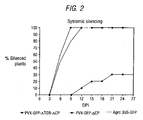
- p25 may be used to specifically inhibit systemic silencing of a target gene (i.e. enhance, relatively, its expression). It may be used to preferentially enhance expression (impair suppression) of a target transgene in a plant, without equivalent impairment of the suppression of virally-expressed genes (which could increase the susceptibility of the plant to viral diseases).
- a variety of suppressors have been used in conjunction with a 'transient' expression system to generate very high, levels of the protein over a sustained expression period (generally a matter of days).
- Particular experiments employed transient expression of a suppressor in conjunction with transient expression of a desired protein, in each case from a plant binary vector. The results were particularly surprising, not only because of the highly (i) enhanced, and (ii) sustained, expression levels which were achieved, but also because it was hitherto unknown that PTGS played any role in the 'transient' nature of the expression which results from constructs used in this way.
- this system can be used as a rapid method to generate protein in a plant or part thereof, at higher levels, and more conveniently, than by use of 'stable' (integrated) transgenes, or viral vectors. Alternatively it can be used as a sensitive 'trap' assay for identifying putative suppressors. Putative suppressors may derive from any source e.g. plants, animals or viruses.
- Those wild type and recombinant viruses which produced suppressors of a PTGS-like resistance mechanism, which interfered with PTGS of the GFP include TMV; TBSV; RYMV; ACMV; NMV; NVX; VMV and CPMV.
- the relevant viruses produced a characteristic pattern of silencing suppression. Some, like potyviruses, suppressed in young and old leaves. Others were like CMV and affected only young leaves. There was also variation in the tissue specificity with ACMV, NMV, NVX, VMV, and PVX-P1 affecting all tissues whereas TBSV, TMV and CPMV specifically suppressed silencing in tissues that were in or close to the veins. This phenotype of silencing suppression that operates in the vicinity of the veins was previously uncharacterised.
- TMV, TBSV and CPMV are only able to suppress PTGS in or near the veins, they are nevertheless able to accumulate at a high level throughout the infected leaf. It is therefore clear that suppression of PTGS is by no means the only strategy adopted by viruses for enhancing pathogenicity and counteracting the effects of RMD.
- ACMV is a DNA geminivirus (26, 27).
- RYMV is a sobemovirus
- TBSV is a tombusvirus.
- heterologous is used broadly below to indicate that the gene/sequence of nucleotides in question have been introduced into the cells in question (e.g. of a plant or an ancestor thereof) using genetic engineering, i.e. by human intervention.
- a heterologous gene may replace an endogenous equivalent gene, i.e. one which normally performs the same or a similar function, or the inserted sequence may be additional to the endogenous gene or other sequence.
- Nucleic acid heterologous to a cell may be non-naturally occurring in cells of that type, variety or species.
- heterologous nucleic acid may comprise a coding sequence of, or derived from, a particular type of plant cell or species or variety of plant, placed within the context of a plant cell of a different type or species or variety of plant.
- a nucleic acid sequence may be placed within a cell in which it or a homologue is found naturally, but wherein the nucleic acid sequence is linked and/or adjacent to nucleic acid which does not occur naturally within the cell, or cells of that type or species or variety of plant, such as operably linked to one or more regulatory sequences, such as a promoter sequence, for control of expression.
- Gene unless context demands otherwise refers to any nucleic acid encoding genetic information for translation into a peptide, polypeptide or protein.
- Vector is defined to include, inter alia, any plasmid, cosmid, phage, viral or Agrobacterium binary vector in double or single stranded linear or circular form which may or may not be self transmissible or mobilizable, and which can transform a prokaryotic or eukaryotic host either by integration into the cellular genome or exist extrachromosomally (e.g. autonomous replicating plasmid with an origin of replication).
- shuttle vectors by which is meant a DNA vehicle capable, naturally or by design, of replication in two different host organisms, which may be selected from actinomycetes and related species, bacteria and eucaryotic (e.g. higher plant, mammalian, yeast or fungal cells).
- a vector according to the present invention need not include a promoter or other regulatory sequence, particularly if the vector is to be used to introduce the nucleic acid into cells for recombination into the genome.
- “Expression vector” refers to a vector in which a nucleic acid is under the control of, and operably linked to, an appropriate promoter or other regulatory elements for transcription in a host cell such as a microbial or plant cell.
- the vector may be a bifunctional expression vector which functions in multiple hosts. In the case of genomic or subgenomic DNA, this may contain its own promoter or other regulatory elements and in the case of cDNA this may be under the control of an appropriate promoter or other regulatory elements for expression in the host cell
- a “promoter” is a sequence of nucleotides from which transcription may be initiated of DNA operably linked downstream (i.e. in the 3' direction on the sense strand of double-stranded DNA).
- “Operably linked” means joined as part of the same nucleic acid molecule, suitably positioned and oriented for transcription to be initiated from the promoter.
- inducible as applied to a promoter is well understood by those skilled in the art. In essence, expression under the control of an inducible promoter is "switched on” or increased in response to an applied stimulus. The nature of the stimulus varies between promoters. Some inducible promoters cause little or undetectable levels of expression (or no expression) in the absence of the appropriate stimulus. Other inducible promoters cause detectable constitutive expression in the absence of the stimulus. Whatever the level of expression is in the absence of the stimulus, expression from any inducible promoter is increased in the presence of the correct stimulus.
- a gene silencing suppressor protein obtainable from a virus be selected from: PVX; TBSV; RYMV; ACMV.
- PTCS in this context does not imply a requirement that PTCS be totally negated.
- the suppression may be partial, for instance in terms of localisation (e.g. restricted to in and around leaf veins) temporally (e.g. inhibits the initiation of PTGS, rather existing silencing) or intensity (i.e. PTGS continues at a reduced level).
- localisation e.g. restricted to in and around leaf veins
- intensity i.e. PTGS continues at a reduced level
- the suppression may also be with respect of the systemic signal of PTGS, which is to say that the spread of PTGS can be inhibited. This may be achieved using p25 or a variant thereof.
- the suppressor is selected from: the ACMV AC2 protein; PVX p25 protein; the RYMV P1 protein; or the TBSV 19K protein, or variants thereof.
- it is the 19K or p25 protein, or a variant of either.
- the P1 protein in particular has been found to operate in both monocot and dicot plants. This is surprising because P1 is associated with a virus which only affects monocots (e.g. wheat, rice and barley). This versatility of P1, makes it particular suitable for enhancing expression in a wide variety of plant types.
- the constructs may be free or substantially free of other sequences or proteins associated with the suppressor in nature (e.g. viral proteins, if the suppressor is derived from a virus).
- the invention also embraces use of a variant of any of these sequences.
- a variant protein shares homology with, or is identical to, all or part of the sequences discussed above and will be capable of suppressing PTGS, which activity can be confirmed using the methods disclosed or otherwise referred to herein.
- Such methods may comprise the step of comparing the PTGS-suppressing effect of the native or reference protein, with that of the variant, and with a control (such as the 'm' controls discussed in the Examples).
- Homology may be at the nucleotide sequence and/or encoded amino acid sequence level.
- the nucleic acid and/or amino acid sequence shares at least about 75%, or 80% identity, most preferably at least about 90%, 95%, 96%, 97%, 98% or 99% identity.
- T m 81.5°C + 16.6Log [Na+] + 0.41 (% G+C) - 0.63 (% formamide) - 600/#bp in duplex.
- [Na+] [0.368] and 50-% formamide, with GC content of 42% and an average probe size of 200 bases, the T m is 57°C.
- the T m of a DNA duplex decreases by 1 - 1.5°C with every 1% decrease in homology.
- targets with greater than about 75% sequence identity would be observed using a hybridization temperature of 42°C.
- this aspect of the invention particularly embraces use of the p25, AC2, P1 or 19K protein, or homologues or derivatives of any of these.
- the suppressor may be employed in the methods of the present invention by infection from a progenitor virus, or by expression from an appropriate nucleic acid construct (based e.g. on cDNA, RNA, genomic DNA etc.). Where a DNA sequence is specified, unless context requires otherwise, use of the RNA equivalent, with U substituted for T where it occurs, is encompassed.
- Nucleic acid encoding suppressors according to the present invention may be utilised in isolated and/or purified form e.g. free or substantially free of nucleic acid comprising other nucleotide sequences of the viral strain of origin. The nucleic acid molecules used may be wholly or partially synthetic.
- nucleic acid sequences which are not found together in nature do not run contiguously have been ligated or otherwise combined artificially e.g. suppressors and heterologous sequences which it is desired to express.
- the invention will generally be employed in plants, using nucleic acids encoding suppressors identified for the first time by the present inventors, or in certain cases those of the prior art.
- Suitable vectors may include plant viral-derived vectors (see e.g. EP-A-194809 ).
- Suitable promoters which operate in plants include the Cauliflower Mosaic Virus 35S (CaMV 35S). Other examples are disclosed at pg 120 of Lindsey & Jones (1989) "Plant Biotechnology in Agriculture” Pub. OU Press, Milton Keynes, UK .
- the promoter may be selected to include one or more sequence motifs or elements conferring developmental and/or tissue-specific regulatory control of expression.
- Inducible plant promoters include the ethanol induced promoter of Caddick et al (1998) Nature Biotechnology 16: 177-180 .
- selectable genetic markers may be included in the construct, such as those that confer selectable phenotypes such as resistance to antibiotics or herbicides (e.g. kanamycin, hygromycin, phosphinotricin, chlorsulfuron, methotrexate, gentamycin, spectinomycin, imidazolinones and glyphosate).
- antibiotics or herbicides e.g. kanamycin, hygromycin, phosphinotricin, chlorsulfuron, methotrexate, gentamycin, spectinomycin, imidazolinones and glyphosate.
- the present invention also provides methods comprising introduction of such constructs comprising appropriate suppressors and heterologous sequences into a plant cell and/or induction of expression of a construct within a plant cell, by application of a suitable stimulus e.g. an effective exogenous inducer.
- a suitable stimulus e.g. an effective exogenous inducer.
- Nucleic acid can be introduced into plant cells using any suitable technology, such as a disarmed Ti-plasmid vector carried by Agrobacterium exploiting its natural gene transfer ability (EP-A-270355 , EP-A-0116718 , NAR 12(22) 8711 - 87215 1984 ), particle or microprojectile bombardment ( US 5100792 , EP-A-444882 , EP-A-434616 ) microinjection ( WO 92/09696 , WO 94/00583 , EP 331083 , EP 175966 , Green et al.
- a disarmed Ti-plasmid vector carried by Agrobacterium exploiting its natural gene transfer ability ( EP-A-270355 , EP-A-0116718 , NAR 12(22) 8711 - 87215 1984 ), particle or microprojectile bombardment ( US 5100792 , EP-A-444882 , EP-A-434616 ) microinjection ( WO 92/096
- Ti-plasmids particularly binary vectors, are discussed in more detail below.
- Agrobacterium transformation is widely used by those skilled in the art to transform dicotyledonous species. However there has also been considerable success in the routine production of stable, fertile transgenic plants in almost all economically relevant monocot plants (see e.g. Hiei et al. (1994) The Plant Journal 6, 271-282 )). Microprojectile bombardment, electroporation and direct DNA uptake are preferred where Agrobacterium alone is inefficient or ineffective. Alternatively, a combination of different techniques may be employed to enhance the efficiency of the transformation process, eg bombardment with Agrobacterium coated microparticles ( EP-A-486234 ) or microprojectile bombardment to induce wounding followed by co-cultivation with Agrobacterium ( EP-A-486233 ).
- various aspects of the present invention provide a method of transforming a plant cell involving introduction of a suppressor-based construct as described below into a plant tissue (e.g. a plant cell) and causing or allowing recombination between the vector and the plant cell genome to introduce a nucleic acid according to the present invention into the genome.
- a plant tissue e.g. a plant cell
- a plant may be regenerated, e.g. from single cells, callus tissue or leaf discs, as is standard in the art. Almost any plant can be entirely regenerated from cells, tissues and organs of the plant. Available techniques are reviewd in Vasil et al., Cell Culture and Somatic Cell Genetics of Plants, Vol I, II and III, Laboratory Procedures and Their Applications, Academic Press, 1984 , and Weissbach and Weissbach, Methods for Plant Molecular Biology, Academic Press, 1989 .
- Regenerated plants or parts thereof may be used to provide clones, seed, selfed or hybrid progeny and descendants (e.g. F1 and F2 descendants), cuttings (e.g. edible parts) etc.
- Suppressors may be used to enhance the activity of viral vectors or other vectors used in gene therapy (c.f. evidence of RNA interference in mouse embryos, Wianny F et al (2000) Nature Cell Biology 2 pp70-75 ).
- Such vector may be based on any appropriate vector known to those skilled in the art. See for instance the disclosure of European patent application 909052736.3 (VICAL).
- Known viral vectors include HSV, vaccinia or adenovirus (see Principles of Gene Manipulation (1994) 5th Edit. Old and Primrose 5th Edition, Blackwell Scientific Publications ).
- Viral vectors for use in gene therapy are also discussed by Vile (1997) Nature Biotechnology 15: 840-841 .
- a non-viral gene therapy approach is discussed by Sebestyen et al (1998) Nature Biotechnology 16: 80-85 .
- the suppressors may be used in conjunction with methods of nucleic acid transfection or lipofection (see e.g. Wiggler M, et al. 1977 Cell 11, 223-232 ; Ruyssaert J M, et al 1994 Biochem Biophys Res Comm 203, 1622-1628 ; Biochem Biophys Res Comm 236. 126-129 .
- PTGS post-transcriptional gene silencing
- PTGS is a nucleotide sequence-specific defence mechanism that can target both cellular and viral mRNAs.
- PTGS occurs in plants and fungi stably or transiently transformed with foreign (heterologous) or endogenous DNA and results in the reduced accumulation of RNA molecules with sequence similarity to the introduced nucleic acid ( Vaucheret, et al., Plant J. 16, 651-659 (1998 ); C. Cogoni and, G. Macino, Trends Plant Sci. 2, 438-443 (1997 )).
- Specific PTGS instances include: silencing of endogenous genes by use of additional copies of the gene (co-suppression - see, for example, van der Krol et al., (1990) The Plant Cell 2, 291-299 ; Napoli et al., (1990) The Plant Cell 2, 279-289 ; Zhang et al., (1992) The Plant Cell 4, 1575-1588 , and US-A-5,231,020 ); silencing of endogenous genes by insertion of homologous genes; silencing arising from the use of cytoplasmically replicating constructs ( WO95/3466 (Biosource); Angell & Baulcombe (1997) The EMBO Journal 16,12:3675-3684 ); systemic silencing of transgenes or endogenous arising from transient presence in the cytoplasm of homologous nucleic acids (and Voinnet & Baulcombe (1997) Nature 389: pg 553 ), 'self-silencing' of transgenes; virally
- RNA species around 25 nt, more preferably about 21-23nt RNA
- mRNA and ⁇ or expressed protein “Nothern or Western Blots”
- the suppressor is used to enhance expression, particularly the level of translation, of a heterologous or endogenous nucleic acid in a cell, particularly a plant cell.
- Expression may be enhanced, for instance, by at least about 25-50%, preferably about 50-100%, or more. In certain preferred embodiments in which PTGS may be particularly severe, at least 5, 10, 15, 20, 25, or 50-fold enhancements of expression may be achieved.
- the present invention provides methods of or for suppressing PTGS, and enhancing expression of heterologous or endogenous nucleic acids (to produce heterologous or endogenous polypeptides), in cells, which employ the suppressors of the present invention discussed above.
- the invention provides a method of achieving enhanced expression from a target nucleotide sequence in a non-human organism, which method comprises the steps of introducing for transient expression into a cell of the organism, in conjunction with a post transcriptional gene silencing (PTGS) suppressor protein, a target nucleic acid construct comprising a target nucleotide sequence operably linked to a promoter, wherein the method is not a method for treatment of the human or animal body by therapy.
- PTGS post transcriptional gene silencing
- Genes of interest include those encoding agronomic traits, insect resistance, disease resistance. herbicide resistance. sterility , grain characteristics, and the like. The genes may be involved in metabolism of oil, starch. carbohydrates, nutrients, etc. Genes or traits of interest include, but are not limited to, environmental-or stress- related traits, disease-related traits, and traits affecting agronomic performance. Target sequences also include genes responsible for the synthesis of proteins, peptides, fatty acids, lipids, waxes, oils. starches, sugars, carbohydrates, flavors, odors, toxins, carotenoids. hormones, polymers, flavonoids, storage proteins, phenolic acids, alkaloids, lignins, tannins, celluloses, glycoproteins, glycolipids, etc.
- Heterologous nucleic acids may encode, inter alia, genes of bacterial, fungal, plant or animal origin.
- the polypeptides may be utilised in planta (to modify the characteristics of the plant e.g. with respect to pest susceptibility, vigour, tissue differentiation, fertility, nutritional value etc.) or the plant may be an intermediate for producing the polypeptides which can be purified therefrom for use elsewhere.
- proteins include, but are not limited to retinoblastoma protein, p53, angiostatin, and leptin.
- the methods of the invention can be used to produce mammalian regulatory proteins.
- Other sequences of interest include proteins, hormones, growth factors, cytokines, serum albumin haemoglobin, collagen, etc.
- heterologous nucleic acids may be expressed by any appropriate process used in the art.
- expression-Amplicons in addition to expression-Amplicons (described below) they may be transcribed or expressed as follows:
- the suppressors may be used to enhance the expression of heterologous nucleic acids in the following formats:
- the suppressors may be used to suppress PTGS in plants for which their progenitor viruses are naturally infective or not naturally infective.
- Certain virally expressed suppressors have been found to be particularly efficient such as the PVX-based expression vectors employed in certain of the Examples below.
- Other viral vectors are discussed in US patents 5,316,931 and 5,589,367 (Donsen et al ); Takamatsu et al (1990) FEBS Lett 269: 73-76 ; Hamamoto (1993) Bio/Technology 11: 930-932 ; Kumagag et al (1993) Proc Natl Acad Sci USA 90: 427-430 .
- the expression of the suppressor may in each case (as appropriate) be prior to, simultaneous with, or after, the expression of the heterologous or endogenous nucleic acid, provided that in each case the suppressor has the effect of enhancing expression by suppressing PTGS, which PTGS would otherwise occur at a higher level in the absence of the suppressor.
- the term "in conjunction" covers all of these possibilities.
- a suppressor may be used. Different suppressors may be used together (e.g. in tandem) provided that at least one is a suppressor of the present invention.
- Suppressors may be operably linked to inducible promoters in order that their activity may be regulated.
- Combinations of suppressors of the present invention and silencing systems such as that described in WO99/15682 of Plant Bioscience Limited) or more preferably 'amplicon' systems (such as that describe in WO98/36083 of Plant Bioscience Limited) may be used to generate very high levels of expression, greater than those which may be achieved from conventional (non-replicating) transgenes, even in the absence of PTGS.
- 'Amplicons' as described in WO98/36083 , comprise a promoter operably linked to a viral replicase, or a promoter sequence operably inked to DNA for transcription in a plant cell of an RNA molecule hat includes plant virus sequences that confer on the RNA molecule the ability to replicate in the cytoplasm of a plant cell following transcription.
- the transcripts replicate as if they are viral RNAs, and comprise a targeting sequence corresponding to the gene of interest ('the target gene'). Other sequence from the viral RNA may be omitted to give a minimal amplico.
- an amplicon may comprise a transgene DNA construct including a promoter, cDNA of at least part of a viral genome, and a sequence corresponding to the target sequence or its complement, with which it shares enough sequence similarity to interfere with expression e.g. at least 40%, 50%, 60%, 70%, and up to 100% sequence identity.
- the target sequence may be a heterologous sequence
- the amplicon is used in conjunction with (see above) an enhancer which may or may not be part of the amplicon construct.
- the suppressor and heterologous nucleic acid may be encoded by the same construct, for example an amplicon construct wherein the (generally full length) heterologous nucleic acid is inserted into an appropriate cloning site.
- the amplicon may be con-infiltrated with a binary vector encoding the suppressor as described above.
- the suppressor is selected to be one which prevents PTGS of replicating viral-type constructs.
- p25 may be less preferred. Where p25 is used, it may be desirable that it is not itself expressed from a cytoplasmically replicating construct, so as to minimise the likelihood that it is itself subject to PTGS.
- suppressors of PTGS may be used particularly advantageously to enhance expression from constructs introduced (preferably at high levels) into the cells of a non-human organism, which constructs can exist either integrated or non-integrated into the genome (e.g. ectopically) but in either case can give rise to transcribed mRNA.
- constructs introduced preferably at high levels
- constructs can exist either integrated or non-integrated into the genome (e.g. ectopically) but in either case can give rise to transcribed mRNA.
- the suppressors can inhibit the degradation of mRNA produced in this way, thereby permitting it to accumulate at very high levels, giving correspondingly high levels of protein.
- Constructs can be introduced at relatively high copy number (in both integrated and non-integrated form) with strong promoters, and without the inherent moderating effect which may occur when selecting a stable transformant in which a construct is integrated into the genome.
- the levels of protein produced may far exceed those obtainable by use of methods of the prior art, and will generally exceed the rate in which the protein (which will generally be heterologous to the organism) can be broken down by any host protection mechanisms.
- the use of suppressors appears to enhance the levels and stability of the mRNA produced from the copies of the target nucleic acid present in the cell.
- a PTGS suppressor to inhibit degradation of mRNA encoding a target protein generated by transcription from a transiently introduced nucleic acid construct including the target nucleotide sequence operably linked to a promoter, which construct is introduced into the cell of a non-human organism.
- the "introduced nucleic acid” will thus include the target as a DNA sequence provided in the form of a construct that is capable of giving rise to an elevated level of a corresponding mRNA when introduced in conjunction with DNA coding for suppressor DNA compared to the level of mRNA production normally associated with i) stable transgene expression of the said DNA sequence and/or ii) the level of mRNA normally associated with a transient expression system employing a binary vector comprising said DNA sequence (in absence of suppressor).
- the cell is a somatic cell present in a tissue of the living organism.
- the construct is simultaneously introduced into a number of cells of the organism.
- such uses and methods disclosed herein may be employed in organisms which are plants or animals using any suppressor appropriate to the species in question e.g. the RGF-CaM suppressor from plants (this is believed to be a calmodulin-related protein) see Anandalakshmi R, et al (2000) Science 290 [5 October], 142-144 ) and the following discussion will be understood to apply correspondingly to these.
- the organism is a plant, and the suppressor is one discussed above e.g. of viral origin.
- a method of achieving enhanced expression of a target nucleotide sequence in a plant comprises the steps of transiently introducing into plant material at least a first nucleic acid sequence comprising the target nucleotide sequence and at least a second nucleic acid sequence encoding a suppressor of the invention as described above, wherein the first and second nucleic acids are comprised within a single binary vector, or the first and second nucleic acid sequences are comprised within a first binary vector and a second binary vector respectively.
- the first nucleic acid sequence may comprise two or more target nucleotide sequences.
- the second nucleic acid sequence may encode two or more suppressors.
- a binary vector system includes(a) border sequences which permit the transfer of a desired nucleotide sequence into a plant cell genome; (b) desired nucleotide sequence itself, which will generally comprise an expression cassette of (i) a plant active promoter, operably linked to (ii) the target sequence and ⁇ or enhancer as appropriate.
- the desired nucleotide sequence is situated between the border sequences and is capable of being inserted into a plant genome under appropriate conditions.
- the binary vector system will generally require other sequence (derived from A. tumafaciens) to effect the integration. Generally this may be achieved by use of so called "agro-infiltration" which uses Agrobacterium-mediated transient transformation.
- T-DNA Agrobacterium tumafaciens to transfer a portion of its DNA
- the T-DNA is defined by left and right border sequences which are around 21-23 nucleotides in length.
- the infiltration may be achieved e.g. by syringe (in leaves) or vacuum (whole plants).
- the border sequences will generally be included around the desired nucleotide sequence (the T-DNA) with the one or more vectors being introduced into the plant material by agro-infiltration.
- the binary transformation vector is based on pBin19 described below (see Materials and Methods; see also Frisch, D. A., L. W. Harris-Haller, et al. (1995). "Complete Sequence of the binary vector Bin 19. " Plant Molecular Biology 27: 405-409 ).
- a method of achieving enhanced expression of a target nucleotide sequence in a plant comprises the steps of introducing into plant material, at least one nucleic acid construct which is a binary vector comprising the target nucleotide sequence and encoding a suppressor of the invention as described above.
- the target gene may be endogenous or otherwise to the plant material.
- the method uses a first nucleic acid construct which is a binary vector comprising the target nucleotide sequence in conjunction with a second nucleic acid construct which is a binary vector which encodes the suppressor. This may be advantageous, inter alia, in terms of ease of construction and manipulation.
- the method employs the step of co-introducing the two species of binary vector into the plant (tissue) e.g. by agroinfiltration, syringe or vacuum infiltration.
- a method of generating a protein comprises the steps of:
- the suppressors may be transiently expressed from a transgene inoculated into a first population of leaves on a plant and, after harvesting of said leaves, a second or more population(s) of leaves may be inoculated with a transgene in an appropriate transient inoculation system and grown on the plant using the same or different transient suppressors,
- the same plant may be used to continuously produce desired proteins in its leaves by using different suppressors and/or different nucleic acid sequences encoding different desired proteins after each harvesting of the appropriate leaf population.
- the invention further provides for the use of different suppressors and/or different nucleic acid sequences encoding different desired proteins in different leaf populations of the same plant.
- the transgene or target gene or other sequence may be endogenous or otherwise to the plant material.
- the isolation may be by entirely conventional means, and may or may not entail partial or complete purification.
- the protein may be used in situ.
- the plant material or tissue in question can be all or part of a plant (e.g. a leaf, or several leaves). Generally it will comprise somatic cells present in a 'developed' plant (i.e. not a plantlet, or embryogenic or embryonic tissue for regeneration).
- the time period may be any period up to or even beyond which the tissue remains viable, or until it is saturated with protein; in general it may be preferred that it is between about 3 to 10 days, more preferably between about 4 to 7 days.
- Naturally more than one target gene and ⁇ or suppressor may be used in the or each construct, although a single sequence in each case is preferred.
- Multiple binary vectors (each including one or more sequence e.g. suppressor) may be introduced at high density into the plant material in an single infiltration. This may be useful for producing e.g. multiple subunits e.g. of an enzyme.
- One preferred embodiment capitalises on the sustained presence of mRNA in the cell to permit the production of combinations of proteins in a temporally organised manner, whereby there is provided a method of generating proteins in an organism in a defined sequence, which method comprises the steps of:
- Preferred combinations of proteins are those which form metabolic or catabolic pathways in which proteins (e.g. enzymes) act on a substrate which is the product of an earlier protein in the pathway.
- proteins e.g. enzymes
- one of the proteins may itself be a substrate for another.
- the first target protein of (ii) can be considered to generate a substrate for the subsequent target protein of (iii), and so on.
- the finally harvested tissue can thus contain a complex product which is not itself directly expressed in the plant.
- transient expression of the target sequence ⁇ suppressor when introduced in this way can give very high levels of target polypeptide over the course of the transient expression period, which will generally be several days, depending on the precise methods and materials employed.
- mRNA levels and polypeptide levels are can be sustained for higher levels, and over longer periods, than would be the case in the absence of the suppressor.
- the fluorescence arising from transiently expressed GFP may persist for 3 to 4 dpi, before decreasing and gradually becoming undetectable at 5-6 dpi.
- this may be extended to 15 dpi.
- the method may be particularly preferred in those applications where high levels of expression are required, but where viral constructs (with the requirement for plant 'infection') or stable transgenic plants are undesirable e.g. where a rapid assay is important, or where the sequence in question imparts a lethal phenotype.
- a method for identifying a suppressor of gene silencing comprises the steps of introducing into plant material, at least one nucleic acid construct which is a binary vector encoding a reporter molecule and encoding a putative suppressor of PTGS.
- the method uses a first nucleic acid construct which is a binary vector comprising the reporter sequence in conjunction with a second nucleic acid construct which is a binary vector which encodes the putative suppressor.
- the putative suppressor can be selected from any source e.g. plant, viral, mammal etc.
- the reporter can be any detectable protein, such as a marker gene, commonly used in the art such as GUS, GFP, luciferase etc.
- a marker gene commonly used in the art such as GUS, GFP, luciferase etc.
- the reporter is a non-invasive marker such as GFP or luciferase.
- FIG. 1 shows the viral and transgene constructs used in Example 9 and others.
- PVX-GFP and PVX-GF were described previously (Ruiz et al., 1998). Expression of the inserts in the PVX vector is controlled by a duplicated coat protein (CP) promoter.
- the Replicase ORF is essential for replication of viral RNAs; the 25, 12 and 8 kDa proteins are all strictly required for cell-to-cell movement of viral RNAs; the CP is essential for encapsidation as well as cell-to-cell and systemic movement of viral RNAs. All other viral constructs were based on the PVX-GFP construct coupled to the 35S promoter and nos terminator and inserted into the T-DNA of the pBin19 binary vector plasmid.
- PVX-GFP-ACP carries a deletion spanning the entire CP ORF; PVX-GFP- ⁇ TGB- ⁇ CP and PVX-GFP- ⁇ rep- ⁇ CP are based on PVX-GFP- ⁇ CP and carry a deletion spanning all the TGB ORFs and an in-frame deletion in the replicase ORF, respectively.
- the PVX-GFP- ⁇ 12k- ⁇ CP and PVX-GFP- ⁇ 25k- ⁇ CP constructs carry deletions into the 12kDa and 25kDa ORF, respectively.
- PVX-GFP- ⁇ 8k- ⁇ CP carries a frameshift mutation that prevents translation of the 8kDa ORF.
- PVX-GFP-25k FS - ⁇ CP carries a frameshift mutation in the 25kDa ORF, indicated by "FS” (see “experimental procedures” for details).
- the 35S-GFP construct was described previously.
- the 35S-25k and 35S-25k- ⁇ ATG constructs are based on the PVX 25kDa ORF coupled to the 35S promoter and the 35S terminator and inserted into the T-DNA of pBin19.
- the start codon of the 25kDa ORF has been removed in 35S-25k- ⁇ ATG, as indicated by " ⁇ ATG".
- LB and RB indicate left and right border of the pBin19 T-DNA, respectively.
- FIG. 2 Effect of the TGB proteins on systemic movement of the GFP silencing signal - kinetics of GFP systemic silencing.
- Each point in the graph represents the percentage of plants exhibiting GFP systemic silencing as assessed under UV illumination. The average values are from 30 individual plants tested in 3 independent experiments, for each treatment. Plants were scored as silenced even if the systemic silencing was confined to small areas near the veins of a few leaves (i.e. panel B2, at 21 dpi). All of the PVX-GFP-_TGB- ⁇ CP-inoculated plants showed extensive systemic silencing at 21dpi.
- Figure 3 A model for the mode of action of p25.
- Table I shows "Suppression of PTGS of GFP mRNA caused by various plant viruses.”
- PTGS of the GFP mRNA was induced in transgenic N.benthamiana by Agrobacterium infiltration, as described (17). Following systemic infection, suppression of gene silencing was assessed under UV illumination throughout time and confirmed by RNA gel blot analysis. RNA Samples were taken from either old leaves that had emerged before the virus had spread systemically or from new leaves emerging after virus infection. The total number of plants tested is indicated as well as the phenotype of suppression in leaves (affecting whole tissues or vein centric). Viruses were tested in duplicate independent experiments during the summer and the winter.
- Annex I shows a partial sequence of CPDK as used in Example 11.
- Annex II shows the sequence of the GFP-RdRp fusion used in Example 13.
- Plant material, Agrobacterium infiltration and grafting procedure Plant material, Agrobacterium infiltration and grafting procedure
- Transgenic N.benthamiana carrying the GFP transgene (line 16c) and the Agrobacterium infiltration method were described previously (Ref 12, - also Voinnet et al., 1998).
- the Rx- GFP plants resulted from a cross between transgenic N.benthamiana homozygous for the Rx locus (Bendahmane et al., 1999) and line 16c. Graftings were performed according to Palauqui et al., 1997.
- a test for silencing suppression was based on a previously described experimental system (12). This system involves transgenic Nicotiana benthamiana carrying a highly expressed GFP transgene that are bright green-fluorescent under ultra violet (UV) illumination. Systemic silencing in these plants was induced by infiltration of lower leaves of transgenic seedlings with a strain of Agrobacterium tumefaciens, as described (17). By 20 days post-infiltration, silencing of the GFP was extensive in all vegetative tissues of the plants, and, consequently, they appeared uniformly red under UV illumination. At this stage, there was no PTGS in the growing points of the plant and silencing was maintained by being constantly initiated in non silenced cells located near or in the meristems (17). These silenced plants were then infected with a range of plant viruses and, when systemic symptoms were observed, the extent of green fluorescence was assessed under UV illumination. In addition, Northern analysis was performed to assess the level of GFP mRNAs in infected tissues.
- leaves of seedlings of line 16c were infiltrated with a strain of A. tumefaciens carrying a binary-Ti plasmid vector into which a functional 35S-GFP cassette had been inserted, as reported (17).
- a systemic leaf was inoculated with a wild type or recombinant virus. This leaf is referred to as "inoculated leaf”.
- the challenged virus was then allowed to spread in the silenced plant, and two types of leaves were collected at 14 or 20 DPI. "Old leaves” were infected leaves that had emerged before the virus had spread systemically, whereas "new leaves” were those emerging after the virus had moved systemically.
- Transgene-induced, systemic silencing of the GFP transgene was initiated by localized infiltration of a strain of Agrobacterium tumefaciens carrying a 35S-GFP T-DNA construct (35S-GFP, Figure 1 ).
- Virus-induced PTGS of the GFP transgene was initiated by infection with a PVX vector carrying 450 nucleotides from the 5' end of the GFP reporter gene (PVX-GF, Figure 1 ).
- the rootstocks in these experiments were GFP transgenic plants that had been inoculated with PVX-GF five days previously. These plants exhibited the early signs of PTGS of GFP.
- the scions carried a GFP transgene together with the Rx gene that confers extreme resistance against PVX. The presence of Rx would prevent replication of PVX-GF in the scions but should have no effect on systemic transport of a silencing signal.
- Isolates of AMV, FoMV, NMV, NVX, VMV and TBSV were obtained from the JIC collection (UK).
- CPMV was obtained from George Lomonosoff at JIC (UK).
- ACMV was obtained from John Stanley at JIC (UK).
- TRV-PPK20 was obtained from John Bol (Leiden University, Netherlands).
- Other viruses and references were as follows: TMV-U1 (18), PVX-UK3 (19), PVY N and CMV (12), TBRV-W22 (8) and RYMV-N (20).
- PVX-GFP The various PVX-GFP derivatives used in Example 9 onwards were based on pPVX204 which is a PUC19-based vector in which the full length PVX vector is inserted between the 35S promoter and the Nos terminator.
- the construct referred here to as PVX-GFP is a derivative of pPVX204 carrying the mGFP5 insert from pBin-35-mGFP5 (Ruiz et al., 1998).
- PVX-GF was derived from PVX-GFP.
- the entire coat protein ORF was removed from PVX-GFP by digestion with SalI and XhoI and subsequent religation, leading to PVX-GFP- ⁇ CP.
- PVX-GFP- ⁇ TGB- ⁇ CP was generated by digestion of PVX-GFP- ⁇ CP with AvrII and EagI, which removed the 3' end of the replicase ORF, the entire TGB and the 3' end of the GFP5 ORF.
- AvrII and EagI the 3' end of the replicase ORF
- EagI the 3' end of the replicase ORF
- GFP5 ORF 3' end of the GFP5 ORF.
- a 3-way ligation was performed with two DNA fragments that had been PCR amplified from PVX-GFP- ⁇ CP and digested as described below.
- PVX-GFP- ⁇ rep- ⁇ CP and PVX- ⁇ rep-GFP- ⁇ TGB- CP were generated by digesting PVX-GFP- ⁇ CP and PVX-GFP- ⁇ TGB- ⁇ CP, respectively, with BglII and religation, generating a 1729-nt deletion in the replicase ORF.
- Individual TGB mutants were generated by introducing previously characterized mutations into the PVX-GFP- ⁇ CP background.
- PVX-GFP-12k- ⁇ CP was made by inserting an ApaI-BstBI restriction fragment of PVX-GFP-12D (Verchot et al., 1998) into ApaI-BstBI digested PVX-GFP- ⁇ CP.
- PVX-GFP- ⁇ 8k- ⁇ CP was generated by inserting an ApaI-BstBI restriction fragment of pTXS- 8K-GFP (kindly provided by Simon Santa Cruz, SCRI, Dundee) into ApaI-BstBI digested PVX-GFP- ⁇ CP.
- pTXS- ⁇ 8K- ⁇ GFP has a mutation in the start codon (M->T) of the 8kDa protein that also introduces an in-frame STOP codon without altering the coding capacity of the overlapping 12kDa protein ORF.
- PVX-GFP- ⁇ 25k- ⁇ CP was generated from pTXS-GFP- ⁇ Apa/Apa that has a 354-nt deletion in the 25kDa ORF, between an ApaI site inserted by mutation of nucleotides 4588-4591 in the PVX genome and an ApaI site existing naturally at position 4945. The deletion was then introduced as an AvrII-BstBI fragment into AvrII-BstBI digested PVX-GFP.
- the PVX-GFP-25kFS- ⁇ CP construct was generated by inserting an AvrII-BstBI restriction fragment from pTXS-GFP3A (kindly provided by Simon Santa Cruz, SCRI, Dundee) into AvrII-BstBI digested PVX-GFP- ⁇ CP.
- pTXS-GFP3A carries a 4bp deletion, resulting from removal of the 3' overhang (T4 DNA polymerase) of an ApaI digestion at nucleotide 4945 in the PVX genome.
- This mutation causes a frameshift in the 25kDa ORF starting at amino acid 154 and introduces an in-frame STOP codon at amino acid 159, leading to a truncated protein (C-terminal deletion of 73 amino acids).
- Constructs carrying fragments of endogenous genes were all derivatives of the above vectors.
- the unique PmlI blunt site in GFP5 was used to clone the corresponding inserts (see figure legends). All the constructs described here were confirmed by sequencing and inserted as SacI fragments into the T-DNA of the pBin19 vector plasmid (Bevan, 1984).
- the 35S-25k and 35S-25k- ATG constructs are based on pBin19 containing the 35S expression cassette of pJIT61 (JIC).
- the 25kDa inserts were PCR fragments amplified from pPVX204 , using the PFU polymerase (Promega).
- the start codon was omitted in the forward primer. Both constructs were confirmed by sequencing.
- RNA isolation and Northern analysis of high and low molecular weight RNAs were as described (Dalmay et al., 2000). Viral inocula of PVX-GFP and PVX-GF were described previously (Ruiz et al., 1998).
- GFP-plus fluorescence set from Leica (excitation 480nm, dichromatic beam splitters, 505nmLP, Barrier filter 510nmLP). Photographs were produced using LEICAMPS60 device coupled to the stereomicroscope.
- Example 1 Suppression of gene silencing by diverse plant viruses
- a more likely explanation depends jointly on the mode of action of the suppressor and the component of the gene silencing mechanism that is targeted. For example, if a suppressor can degrade a component required for maintenance of gene silencing, it will have an effect in both new and old leaves. However, if the suppressor blocks synthesis or activation of a component required for silencing, the suppression would be restricted to new emerging leaves where silencing would be established in the presence of the viral suppressor. In old leaves, the component would have been formed in the absence of the suppressor and, consequently, would be unaffected when the virus would infect the plant.
- Example 2 suppression of PTGS by the geminivirus-encoded AC2 protein
- Tissues were photographed under UV illumination from a dissecting microscope at 15 DPI.
- the red tissue corresponds to chlorophyll fluorescence under UV, and thus is indicative of gene silencing of GFP.
- the green fluorescent tissue that sometimes appears yellow is from expression of GFP, and thus indicates suppression of gene silencing.
- infection of African cassava mosaic geminivirus (ACMV) led to suppression of GFP silencing at about three weeks post-inoculation in both fully expanded and new emerging infected tissues.
- RNA samples were taken either from inoculated leaves, old leaves that had emerged before the virus had spread systemically, or from new leaves emerging after virus infection (NL). Equal amounts of each RNA sample (10 ⁇ g) were assayed by RNA gel blotting, using a 32 P-labelled GFP cDNA as probe. Ethidium bromide staining of ribosomal RNA (rRNA) showed equal loading of the samples.
- the Northern analysis revealed that GFP mRNA levels were high in both types of tissues, and that suppression also occurred in inoculated leaves, although to a lower extent. Therefore, these results were consistent with a suppressor of PTGS encoded in the ACMV genome.
- PVX-AC2 a PVX vector expressing the AC2 protein
- PVX-AC2 a PVX vector expressing the AC2 protein
- Individual sequences were inserted into the P2C2S PVX vector using the ClaI-EcoRV-SalI multiple cloning site (19), leading to "PVX-X” (e.g. PVX-AC2).
- PVX-X e.g. PVX-AC2
- Expression of the inserts and the PVX coat protein is controlled by duplicated coat protein promoters.
- Mutant versions of all pathogenicity determinants used in this study were referred to as "mX" (e.g. PVX-mAC2). From the above results, it was likely that AC2 was a suppressor of RMD.
- Example 3 vein specific suppression of silencing by the 19K protein of TBSV
- N. benthamiana infected with TBSV showed reversion of PTGS at about 3 weeks post-inoculation, when symptoms were fully systemic (Table 1). Again photographs were taken under UV illumination from a dissecting microscope at 20 DPI. As in CMV infected plants the restoration of green fluorescence occurred only in new emerging infected leaves. However, this suppression of silencing was weaker than with CMV, so that the green fluorescence was barely detectable under UV illumination from a hand-held lamp. Also unlike CMV, TBSV only suppressed PTGS in and around the veins. Vein-specific reversion of GFP was more evident when detached, new emerging leaves were observed under a dissecting microscope.
- RNA samples were taken either from old leaves or from new emerging leaves. Equal amounts of each RNA sample (15 ⁇ g) were assayed by RNA gel blotting, using a 32 P-labeled GFP cDNA as probe. 'Mock' inoculations were run as a dilution series of GFP RNAs from a non silenced plant into total RNA from a non-transformed plant. GFP RNA was diluted to a half (1:2) or to a fifth (1:5) of the reference sample (1:1).
- ribosomal RNA shows equal loading of the samples.
- the Northern analysis showed that GFP RNAs were more abundant in the new leaves of the infected plants than in old leaves or in mock-inoculated, non-silenced plants. However, the GFP RNA in the new leaves was less than 20% of the level in mock inoculated plants.
- the 19K protein of TBSV is a pathogenicity determinant.
- a PVX vector expressing the 19K protein pHS142
- PVX-19K induced severe symptoms on N. benthamiana (22).
- inactivation of the 19K protein in TBSV had an attenuating effect on the lethal apical necrotic symptom phenotype that is usually elicited in plants by TBSV (22).
- the TBSV 19K protein possesses attributes of a suppressor of gene silencing. To test this hypothesis, silenced GFP plants were inoculated with PVX-19K.
- PVX-m19K pHS160
- pHS160 pHS160
- PVX-m19K pHS160
- PVX-m19K pHS160
- symptoms of PVX-19K were visible on all areas of the leaves. Similar tissues infected with PVX-m19K remained uniformly red-fluorescent.
- Example 4 other instances in which suppression of PTGS occurs preferentially in or near the veins
- TMV tobacco mosaic virus
- CPMV cowpea mosaic virus
- type members of the tobamovirus and comovirus groups were assessed as described above with photographs being taken under UV illumination from a hand-held lamp at 20 DPI.
- Inoculation of the corresponding viruses onto GFP silenced plants led to suppression of gene silencing that affected both new emerging and already expanded silenced tissues, thus indicating that maintenance of PTGS was alleviated (Table 1).
- suppression was mostly manifested near, or in the veins, with most tissues of the lamina remaining silenced (i.e. red fluorescent), although symptoms of the respective viruses were observed on the whole leaf lamina (data not shown).
- red fluorescent most tissues of the lamina remaining silenced
- RNA samples were taken either from old leaves or from new emerging leaves. Equal amounts of each RNA sample (15 ⁇ g) were assayed by RNA gel blotting, using a 32 P-labeled GFP cDNA as probe. Samples were separated on the same agarose gel and blotted on the same filter that was used in Example, thus allowing the use of the same 'mock' GFP RNA dilution series as a reference. Ethidium bromide staining of ribosomal RNA (rRNA) shows equal loading of the samples.
- rRNA ribosomal RNA
- the suppression of silencing in veins could indicate that this protein is only stable or expressed in the veins, or that it is targeted against a component of the PTGS mechanism that is qualitatively or quantitatively different between vascular and non vascular tissue.
- the suppressor could be targeted against the systemic signal of PTGS. We have shown that this signal is phloem-transmitted and that, in recipient leaves, it is primarily located in and near the veins (17).
- TMV, TBSV and CPMV are only able to suppress PTGS in or near the veins, they are nevertheless able to accumulate at a high level throughout the infected leaf. It is likely, therefore, that these viruses have secondary strategies for counteracting the effects of RMD.
- Example 5 a pathogenicity determinant from rice yellow mottle virus (RYMV) suppresses PTGS in the non-host Nicotiana benthamiana species
- RYMV is a sobemovirus exhibiting a very narrow host range. It only systemically infects monocotyledonous species belonging to the Oryzae, Phalaridae and Eragrostidae tribes (23). Recent studies have characterised the P1 protein of RYMV as a pathogenicity determinant in rice (24). To test if it would suppress gene silencing in a RYMV non-host species, the P1 ORF was introduced into the PVX vector and GFP-silenced N . benthamiana were infected with the resulting recombinant virus (PVX-P1).
- PVX-mP1 a PVX vector carrying a non-translatable form of P1 (PVX-mP1) was also inoculated.
- PVX-mP1 a PVX vector carrying a non-translatable form of P1
- tissues infected with PVX-P1 exhibited severe chlorosis and white necrosis. Under UV illumination, these tissues, including leaves that had emerged prior to virus inoculation, appeared green fluorescent at 14 DPI, reversion of silencing occurring in both new emerging tissues as well as in old leaves.
- RNA samples were taken either from old leaves or new emerging leaves. Equal amounts of each RNA sample (10 ⁇ g) were assayed by RNA gel blotting, using a 32 P-labeled GFP cDNA as probe. Ethidium bromide staining of ribosomal RNA (rRNA) shows equal loading of the samples. In young infected tissues, GFP mRNA levels were similar to those in non-silenced GFP plants.
- GFP mRNAs could also be detected in infected leaves that had emerged prior to virus inoculation, although to a lower extent. In contrast, neither severe symptoms nor reversion of GFP silencing was caused by PVX-mP1-infection. From this data, we conclude that the P1 protein of RYMV is a suppressor of maintenance of PTGS in N. benthamiana, although it is encoded in the genome of a virus that is not infectious on Nicotiana species.
- Example 6 variations in the ability to suppress PTGS in N. benthamiana between highly related members of the potexvirus group.
- RNA samples were taken either from old leaves or from new emerging leavess. Equal amounts of each RNA sample (15 ⁇ g) were assayed by RNA gel blotting, using a 32 P-labeled GFP cDNA as probe. Samples were separated on the same agarose gel and blotted on the same filter that was used in Example 3, thus allowing the use of the same 'mock' GFP RNA dilution series as a reference. Ethidium bromide staining of ribosomal RNA (rRNA) showed equal loading of the samples.
- rRNA ribosomal RNA
- NMV narcissus mosaic virus
- NVX nandina virus X
- VMV viola mosaic virus
- NVX and VMV which produced strong suppressors, are respectively 93% and 97% identical to PVX at the nucleotide level, based on sequence analysis of a region spanning the coat protein and the 3 movement proteins (A. Bendhamane and D.C. Baulcombe, in preparation).
- NMV which also produced a suppressor, is only a distant relative of PVX. Therefore, there is extreme variation in the ability to suppress PTGS in closely related members of a single virus group.
- Example 7 use of AC2 and P1 as suppressors of PTGS
- Wild type N . benthamiana and N . tabaccum are transformed with T-DNA containing a 35S-nos expression cassette (17) in which a cDNA of the P1 or the Ac2 protein is inserted using standard laboratory techniques.
- Stable transformants are generated by Agrobacterium tumefaciens leaf disk inoculation ( Horsch, R. B., Fry, J. E., Hoffmann, N. L, Eicbholtz, D., Rogers, S. G., and Fraley, R. T. (1985).
- a simple and general method of transferring genes into plants. Science 227,1229-1231 .) and those exhibiting high levels of expression, as assessed by Northern analysis, are selected for testing for PTGS suppression.
- the PTGS suppression test is performed by taking N . benthamiana transformants homozygous for P1 or Ac2 and crossing them with homozygous GFP transgenic N . benthamiana ( Ruiz, M. T., Voinnet, 0., and Baulcombe, D. C. (1998). Initiation and maintenance of virus-induced gene silencing. Plant Cell 10, 937-946 ). F1 plants are then infected with PVX-GFP, in order to activate virus induced gene silencing (VIGS) of GFP mRNA (Ruiz et al supra).
- VGS virus induced gene silencing
- the suppression by Ac2 and P1 of VIGS of GFP in the F1 crosses demonstrates that both proteins are functional suppressors of PTGS when expressed transgenically. Likewise an absence of systemic silencing of GFP in these crosses demonstrates that both P1 and AC2 prevent transgene induced gene silencing of the GFP mRNAs.
- the N . tabaccum transformants described in the Example above are crossed with a transgenic N . tabaccum line containing a transgene of the PVX-GUS amplicon ( Angell, S. M., and Baulcombe, D. C. (1997). Consistent gene silencing in transgenic plants expressing a replicating potato virus X RNA. EMBO J. 16, 3675-3684 ).
- the amplicon line exhibits consistent PTGS of the PVX-GUS RNA and, as a consequence, the GUS protein is not produced.
- the amplicon/P1 or amplicon/Ac2 crosses exhibit high levels of GUS expression, as assessed by histochemical staining of leaves ( Jefferson, R. A., Kavanagb, T.
- GUS fusions B-glucuronidase as a sensitive and versatile gene fusion marker in higher plants.
- PTGS of the amplicon is reduced by the P1 and AC2 proteins, and high levels of GUS protein are produced as a consequence of PVX replication.
- the plants are symptomless, as in the initial PVX-GUS amplicon line, indicating that the high level of PVX replication is supportable by the plant cells.
- Transgenic scions carrying either the GFP transgene or both the GFP and the Rx transgenes were wedge-grafted onto the rootstocks. Graft-transmission of GFP silencing was then scored under UV illumination throughout time. By 20 days after grafting, PTGS of GFP was extensive in the rootstocks, as indicated by loss of green fluorescence under UV illumination. As expected, there was no spread of PVX-GF into the Rx /GFP scions, indicated by the absence of PVX symptoms and the failure to detect PVX-GF RNAs by Northern analysis. Also as expected, there was spread of PVX-GF and of gene silencing into the GFP scions without Rx .
- PVX TGB protein prevents systemic silencing
- PVX-encoded proteins are able to prevent or interfere with systemic silencing.
- These mutant viruses would have been confined to the initially infected cell because they were all defective for the coat protein (CP) that is required for cell-to-cell and long distance movement of PVX. If, as predicted, a PVX-encoded protein prevented systemic silencing, PTGS initiated by the corresponding PVX-GFP mutant would be manifested away from the inoculated cells. In contrast, silencing initiated by PVX-GFP constructs carrying mutations in any other open reading frame (ORF) would be restricted to the inoculated area.
- ORF open reading frame
- PVX-GFP- ⁇ CP and PVX-GFP- ⁇ TGB- ⁇ CP ( Figure 1 ) to induce systemic silencing of the GFP transgene.
- These constructs are similar to the PVX-GFP vector ( Figure 1 ), except that there is a deletion in the CP ORFs.
- PVX-GFP- ⁇ TGB- ⁇ CP carries a deletion spanning all three ORFs of the triple gene block (TGB).
- TGB encodes three proteins that are strictly required, in addition to the CP, for cell-to-cell movement of PVX (Verchot et al., 1998).
- the PVX-encoded 25kDa protein prevents systemic silencing
- TGB mutants that produced extensive systemic silencing were those carrying either a deletion (PVX-GFP- ⁇ 25k- ⁇ CP, Figure 1 ) or a frameshift mutation (PVX-GFP-25k FS - ⁇ CP, Figure 1 ) in the ORF of the 25kDa protein (p25).
- viruses carrying mutations in the ORFs of the 12kDa and 8kDa proteins encode a functional 25kDa protein and, like PVX-GFP- ⁇ CP were poor inducers of systemic silencing. Most of the GFP plants inoculated with these constructs did not exhibit any systemic silencing of GFP. However, as with PVX-GFP- ⁇ CP, about 25% of the inoculated plants exhibited partial silencing of GFP. At 21 dpi this partial silencing was restricted to the regions in and around the veins of some upper leaves and did not develop further.
- the contrasting silencing phenotypes triggered by the PVX-GFP TGB mutants could be a direct effect of p25.
- northern analysis of RNA from the infiltrated leaf tissues at 2.5 and 5dpi using a GFP-specific probe. Total RNA was extracted at 2.5 and 5dpi from leaves of GFP plants that had been infiltrated with either PVX-GFP- ⁇ 8k- ⁇ CP, PVX-GFP- ⁇ 12k- ⁇ CP, PVX-GFP- ⁇ 25k- ⁇ CP, or water.
- RNA loading was carried out on 10 ⁇ g of the high molecular weight RNA fraction, to detect accumulation of the PVX-GFP and transgene GFP RNA, using a probe corresponding to the central region of the GFP cDNA. Ethidium bromide staining of the electrophoresed gel showed rRNA loading.
- the extracts contained four major RNA species detected with the GFP probe.
- the genomic viral RNA (gRNA) was the least and the viral subgenomic (sg) RNA1 was the most abundant.
- the sgRNA2 co-migrated with and could not be differentiated from the GFP transgene mRNA.
- these RNAs were all abundant in the PVX-GFP- ⁇ 12K- ⁇ CP, PVX-GFP- ⁇ 8K- ⁇ CP and PVX-GFP- ⁇ 25k- ⁇ CP-infected tissues.
- this gene is a potential target of PVX-induced PTGS but, unlike transgenes, it does not participate in the initiation, amplification or maintenance of the mechanism (Jones et al., 1999). Therefore, it was likely that systemic silencing of rbcs would indicate the extent of signal spread from the virus-infected cells.
- the constructs in these experiments were derivatives of PVX-GFP- ⁇ CP ( Figure 1 ) in which a 500nt fragment of the rbcs cDNA was inserted into the GFP ORF. These derivatives are collectively referred to as PVX-rbcs-X in which "X" indicates the various mutations carried by each individual construct.
- the Agrobacterium infiltration procedure was used to inoculate these PVX constructs into one or two expanded leaves of non transgenic plants. Fourteen days later, systemic, new emerging leaves were inspected for silencing of rbcs. Inoculation of the PVX-rbcs- ⁇ TGB- ⁇ CP derivative led to systemic silencing of rbcs that was manifested as yellow-green chlorosis in and around the veins of systemic leaves.
- PVX-GFP- ⁇ CP derivatives targeted against the phytoene desaturase (PDS) gene wherein a 415-nucleotide fragment from the central region of the phytoene desaturase (PDS) cDNA was inserted into the GFP ORF of the corresponding PVX-GFP derivative - Figure 1 ).
- PDS phytoene desaturase
- rbcs the systemic silencing of PDS, manifested as photobleaching, was only transient and localized around the veins of some new emerging leaves. It was also dependent on PVX replication.
- the PDS mRNA is several orders of magnitude less abundant than the rbcs mRNA. We can therefore rule out that the level of target gene expression influenced the vein pattern and persistence of systemic silencing in non transgenic plants.
- a culture of an Agrobacterium strain containing the 35S-25k or the 35S-25k- ⁇ ATG construct was mixed (equal volume) with a culture of an Agrobacterium strain containing either the 35S-GFP or the PVX-GFP- ⁇ 25k- ⁇ CP construct ( Figure 1 ).
- the corresponding suspension was then infiltrated into one or two leaves of a young GFP transgenic seedling, and the onset of local and systemic silencing of the GFP transgene was monitored throughout time.
- the values are from independent experiments involving 10 plants each. "Veins" indicates that systemic silencing was only manifested in the veins of a few leaves at 21dpi.
- p25 on systemic silencing could result from a block of signal production in the infiltrated cells.
- this protein could prevent movement of the signal out of the cells in which it was produced.
- Northern analysis of high molecular weight RNAs was performed as follows.
- the GFP 21-23nt antisense RNAs were more than five times less abundant than in tissues infiltrated with 35S-GFP or with (35S-GFP+35S-25k- ⁇ ATG).
- Northern analysis of low molecular weight RNAs was carried out to detect accumulation of 21-23nt antisense GFP RNAs in the 5dpi samples analyzed above. Loading was standardized with ethidium bromide staining and quantification of tRNAs in each sample. The probe used corresponded to the full-length GFP cDNA.
- RNA samples were substantially higher than in the control.
- the GFP mRNA from the transgene was masked by one of the viral subgenomic RNAs but it was clearly less abundant than in the mock-infiltrated tissue. This decline in the levels of target RNAs was observed in at least three independent experiments and indicates that, between 2.5 and 5dpi, local PTGS triggered by PVX-GFP- ⁇ 25k- ⁇ CP had overcome the initial effect of p25.
- Transgene-mediated PTGS in Arabidopsis involves production of short RNA species of about 21-23 nucleotides, and requires an RdRP homologue encoded by Sde1; in contrast, PTGS induced by some viruses appears to be independent of Sde1, although it also involves the short RNA (Dalmay et al., 2000).
- PTGS in plants is a branched variation of the pathway leading to RNA interference in Drosophila. This pathway involves processing of double stranded (ds)RNA into the short 21-23nt RNAs that serve as the guide RNA for a sequence-specific nuclease (Zamore et al., 2000).
- Examples 1-8 various viral suppressors involved infection of plants exhibiting transgene-induced PTGS of GFP were characterised. With PVY and other viruses there was an increase of GFP in some or all of the infected tissues, indicating that the corresponding virus encoded a suppressor of PTGS (Brigneti et al., 1998; Voinnet et al., 1999). In contrast, in PVX-infected plants, there was no reversal of PTGS and we originally concluded that this virus does not encode a suppressor.
- PVX does encode a suppressor of PTGS. It is likely that this property of PVX was not evident in the earlier Examples because the p25 protein of PVX and the other suppressors of PTGS, including HcPro of PVY, act on different stages in the gene silencing mechanism.
- Hcpro and p25 target different stages in gene silencing are from their differential ability to suppress virus-induced PTGS.
- the HcPro suppresses virus-induced PTGS of GFP (Anandalakshmi et al., 1998) whereas it is clear from the present and previous studies that p25 does not.
- HcPro should act on PTGS at some point after the convergence of the SDE1-dependent and SDE1-independent branches. Since we have proposed that signal production takes place before the convergence of the two branches, we predict that HcPro would not suppress systemic PTGS. Recent data from grafting experiments confirm this prediction and thereby illustrate how analysis of the different viral suppressors of PTGS can be informative about the underlying mechanisms.
- Example 10 Use of viral encoded suppressors of gene silencing in Agrobacterium-mediatted transient expression
- the gene encoding the Green Fluorescent Protein (GFP) was cloned under the control of the 35S promoter and Nos terminator.
- the resulting expression cassette was then inserted into the T-DNA of the pBin19 binary vector.
- Agrobacterium strain c58c1 Farrand et al (1989) J. Bacteriology 171 pp 5314-5321 ) carrying the helper plasmid pCh32 ( Hamilton et a1 (1996) PNAS 93 pp9975-9979 ) was then electroporated with the resulting plasmid.
- the infiltrated tissues appeared green fluorescent under illumination from a UV hand-held lamp. This green fluorescence indicated that transfer of the T-DNA from the Agrobacterium into the plant cells has occurred and that transient expression of the reporter gene had been initiated.
- infiltrated leaves were removed from the plants at 2 days intervals. Leaf samples were collected up to 11 dpi. Total RNA was extracted from those samples, and Northern analysis was performed on the high and low molecular weight fraction of the extracted RNA, using a probe corresponding to the full-length GFP cDNA.
- GFP mRNA was abundant at 2.5 dpi. It was still abundant at 4-5 dpi, but at later time points, there was a progressive loss of the signal and at 11 dpi the GFP mRNA was at or below the level of Northern detection. This reduction of GFP mRNA was consistent with the decrease of green fluorescence observed under UV illumination, throughout time. At ⁇ 4 dpi the green fluorescence started to decrease and was not detectable at ⁇ 7.5 dpi.
- Short 21-23nt RNAs are unique markers of Post-Transcriptional Gene Silencing (PTGS) in plants and RNA interference (RNAi) in C.elegans and Drosophila. These processes are mechanistically related and are involved in sequence-specific turnover of RNAs.
- the 21-23 nucleotide RNA species have been characterised as a core component of the cellular machinery involved in PTGS/RNAi. They are likely to act as specificity determinants of the degradation system.
- RNA extracted from the infiltrated leaves was separated by electrophoresis with digested GFP plasmid DNA run as approximate molecular size markers (Hamilton and Baulcombe, 1999). RNA and DNA were transferred to a nylon membrane. The membrane was then hybridised with an antisense specific GFP RNA 32 P labelled probe produced by in vitro-transcription of a linear GFP plasmid (Hamilton and Baulcombe, 1999) using T7 RNA polymerase (Promega). Signal was visualised by phosphorimaging (BAS 1000, Fujix) .
- RNA blot showed that high amounts of GFP specific 21-23nt RNAs accumulate in tissues of nontransgenic N. benthamiana infiltrated with the 35S-GFP strain of Agrobacterium. Moreover, the abundance of those RNAs species is as high as in transgenic plants exhibiting PTGS of a stably integrated GFP transgene (track 3). It was further confirmed that co-infiltration of the 35S-GFP strain with the p19 strain of Agrobacterium resulted in enhanced GFP mRNA and,consequently protein accumulation (see below). As expected, the level of 23-21nt RNAs was below the detection limit from those samples at 5dpi.
- the HcPro of potyviruses As described above, the HcPro of potyviruses, the 2b protein of cucumoviruses, the Ac2 protein from African Cassava Mosaic Virus, the P1 protein of sobemoviruses and the 19k protein of tombusviruses are viral-encoded suppressors of PTGS. All these proteins were identified as suppressors of PTGS because when expressed from a Potato Virus X (PVX) vector, they restored GFP expression in some or all of the tissues of transgenic plants exhibiting PTGS of GFP. Another protein, the PVX-encoded 25kDa protein was also identified as a suppressor of gene silencing. This protein was shown to prevent production of the PTGS systemic signal and to abolish transgene silencing.
- PVX Potato Virus X
- the GFP gene was used as a reporter gene, as described in 10.1).
- the Agrobacterium strain carrying the GFP reporter was mixed (equal volume) with another Agrobacterium strain containing one of the PTGS suppressors mentioned above. After infiltration of leaves of non-transgenic N.benthamiana, appearance and persistence of green fluorescence were assessed under UV illumination. These co-infiltrations were performed with saturated Agrobacterium cultures, ensuring optimal co-transfer of the corresponding T-DNAs.
- GFP expression is expected to be at least 10 fold, and may be 50 fold greater than those in the control tissues.
- RNAs were at least 3 times less abundant in the 2b and Ac2-coinfiltrated samples than in the control samples (GFP alone). Surprisingly, only one species (23nt) was strongly affected in the P1-coinfiltrated tissues.
- a PVX-GFP construct as described in the earlier examples, was engineered so that the Coat protein Open reading frame was removed from the viral genome, thus preventing virus movement in the plant.
- This construct was then cloned under the control of the 35 promoter and Nos terminator and subsequently introduced in the T-DNA of pBin19.
- the plasmid was then inserted into the T-DNA of the pBin19 binary vector.
- Agrobacterium strain c58c1 carrying the helper plasmid pCh32 were then electroporated with the plasmid.
- Example 11 use of transient expression and suppressors of PTGS to enhance protein synthesis in nontransgenic plants
- the aim of this experiment was to transiently express and detect a truncated form of a tobacco homologue of a tomato Calcium-Dependent Protein Kinase (CDPK, Romeis et al., 2000).
- CDPK tomato Calcium-Dependent Protein Kinase
- the plant used for over-expression was Nicotiana benthamiana.
- the cDNA corresponding to a fragment of a tobacco CDPK (Annex I) was inserted as a blunt-end fragment in the SmaI site of the T-DNA of the pBin19 binary vector, using standard procedures, under the control of the 35S promoter and 35S terminator.
- the corresponding plasmid was then electroporated into electrocompetent Agrobacterium cells (Strain c58c1 carrying the hypervirulence plasmid pCh32).
- the recombinant bacteria (referred to as CDPK strain) were then grown at 28 degrees and one isolated colony was used to produce a saturated culture. This culture was subsequently resuspended in 10mM MgCl 2 and induced with acetosyringone, as described. The induced culture was then brought to an optical density of 0.5 (600 nm).
- Detection of CDPK was by Western-blot performed on 10 ⁇ g of the solubilized membrane fraction of total proteins extracted from the infiltrated tissues.
- the sequence of the HA epitope tag (Niman et al., 1983) was added to the 3' end of the CDPK cDNA, resulting in a carboxy terminal epitope fusion.
- the HA antibody (Sigma) was then used for immunodetection, as described (Romeis et al., 2000). Quantification of the signal was performed using the MacBas software (Koshin Graphics Systems Inc, USA).
- CDPK was not detectable in both experimental set-ups. However, starting at 1.5 dpi, there was a detectable, low level of CDPK produced from the tissues that had been infiltrated with the CDPK strain alone. At 2 dpi these levels were slightly higher (2 times more than the levels at 1.5 dpi). However, at 3 dpi (and up to 5dpi), the signal was at or below the level of Western-blot detection, indicating that the truncated form of CDPK is unstable. In addition, no signal was detected at any time point in samples extracted from tissues that had been infiltrated with a culture of Agrobacterium cultures carrying an empty pBin19 vector (i.e. with no insert in the T-DNA).
- the levels of CDPK from tissues that had been infiltrated together with the p19 strain of Agrobacterium were already at least 3 times higher than the ones in the control experiments described above. At 2dpi, these levels were at least 5 times higher than those from tissues infiltrated with CDPK alone.
- the levels observed in the p19 co-infiltrated tissues had increased and were at least 10 times higher than the maximum levels observed at 2dpi in the control samples. Precise quantification of CDPK levels was impaired by the very high amount of protein made in the presence of p19, causing saturation of the signal. It is expected that up to 50 times more protein were produced. These high levels of CDPK were still detectable in samples collected up to 5dpi or more.
- p19 protein by virtue of its anti-silencing property, allowed very high levels of CDPK mRNA to accumulate in the cells. These mRNAs were then translated to such an extent that the plant's protein degradation machinery was saturated, thus allowing the excess unstable protein to peak.
- This example is to illustrate that the effect of p19 on protein synthesis in transient expression assays is not peculiar to CDPK.
- the cDNAs encoding Cf4 and Cf9 were fused with the sequence of a TAP (Rigaut et al., 1999) epitope TAG (resulting in a Carboxy-terminal TAP fusion) and inserted into the T-DNA of pBin19, under the control of the 35S promoter and 35S terminator.
- the resulting plasmids were then subsequently electroporated into Agrobacterium cells (Strain c58c1 carrying the hypervirulence plasmid pCh32) and one colony was used to produce cultures at an optical density of 0.2 (600nm), referred to as Cf4TAP and Cf9TAP strains, respectively.
- Detection of Cf4 and Cf9 was by Western-blot analysis performed on 10 ug of the total proteins extracted from the infiltrated tissues.
- the Peroxidase Anti-peroxidase antibody (sigma) was used for immunodetection as described (Romeis et al., 2000). Quantification of the signal was performed using the MacBas software(Koshin Graphics Systems Inc, USA).
- Example 12 enhancement of expression of non-plant proteins.
- GFP 5 Green Fluorescent Protein
- pBin19 binary vector under the control of the 35S promoter and the nopaline synthase (nos) terminator, using standard techniques.
- the resulting vector was then electroporated into electro-competent Agrobacterium (strain C58c1 containing the hypervirulence plasmid pCh32). These bacteria were propagated and induced with acetosyringone, as described in examples 10 and 11.
- a saturated culture (referred to as GFP strain) was used to infiltrate leaves of wild-type Nicotiana benthamiana .
- the GFP strain was mixed (equal volume) with the p19 strain of Agrobacterium (see examples 1-2) and the resulting mix was then infiltrated into leaves of wild-type Nicotiana benthamiana.
- the culture of the p19 strain was set at an optical density (600nm) of 2.0.
- GFP GFP-binding protein
- dpi rabbit anti-GFP antibody from Invitrogen. Samples were harvested at 4 days post-infiltration (dpi), total proteins were extracted and a fraction (30 ⁇ l) was analysed by Western-blot, as described (Romeis et al., 2000). Quantification was performed using the MacBas software (Koshin Graphics Systems Inc, USA).
- the effect of p19 was to (i) dramatically enhance and (ii) sustain expression of a foreign protein.
- the expression was also much higher than in stably transformed plants.
- Example 13 combined use of transient expression and suppressors of gene silencing can enhance synthesis of products resulting from enzymatic reactions.
- a fragment of the cDNA of the PVX RNA-dependent RNA-polymerase (RdRp, Malcuit et al., 2000) was fused to the 3' end of the cDNA encoding a modified GFP (GFP 4 , Haseloff et al., 1997), using standard techniques.
- GFP 4 modified GFP
- a short sequence encoding a cleavage site for the Nia proteinase of Potato Virus Y (PVY) was inserted between both cDNAs (Mestre et al., 2000).
- the GFP-RdRp fusion cDNA (sequence found below) was inserted into the T-DNA of the pBinY53 binary vector (Mestre et al., 2000).
- the resulting vector was then electroporated into electro-competent Agrobacterium (strain C58c1 containing the hypervirulence plasmid pCh32). These bacteria (referred to as GFP-RdRp strain) were propagated and induced with acetosyringone, as described in examples 1, 2 and 3. This construct should produce a fusion protein [GFP 4 amino terminal /RdRp carboxy-terminal] carrying an Nia proteinase cleavage site that should allow the release of free GFP 4 by the action of the Nia proteinase.
- Another strain of Agrobacterium referred to as Pro contained the pBinYPro binary vector that allows expression of the protease domain from the Nia Proteinase (Mestre et al., 2000).
- the GFP-RdRp protein fusion does not fluoresce under UV light (possibly because the carboxy terminal fusion prevents adequate folding of the GFP 4 protein). This interpretation is supported by the fact that green fluorescence was restored in the presence of the Nia proteinase, giving rise to accumulation of free GFP 4 . Therefore, the high levels of free GFP 4 in the Pro/ GFP-RdRp/ p19 infiltrated tissues are thought to result from enhanced proteolytic activity of the Nia proteinase targeting high levels of its GFP-RdRp fusion protein substrate. It is likely that these high levels of both enzyme and substrate, introduced as T-DNA constructs into the plant cells, resulted from the anti-silencing property of p19.
Landscapes
- Health & Medical Sciences (AREA)
- Life Sciences & Earth Sciences (AREA)
- Genetics & Genomics (AREA)
- Engineering & Computer Science (AREA)
- Chemical & Material Sciences (AREA)
- Biomedical Technology (AREA)
- Molecular Biology (AREA)
- Organic Chemistry (AREA)
- Zoology (AREA)
- Biotechnology (AREA)
- Bioinformatics & Cheminformatics (AREA)
- Wood Science & Technology (AREA)
- General Engineering & Computer Science (AREA)
- General Health & Medical Sciences (AREA)
- Biochemistry (AREA)
- Microbiology (AREA)
- Physics & Mathematics (AREA)
- Plant Pathology (AREA)
- Biophysics (AREA)
- Cell Biology (AREA)
- Virology (AREA)
- Medicinal Chemistry (AREA)
- Pharmacology & Pharmacy (AREA)
- Breeding Of Plants And Reproduction By Means Of Culturing (AREA)
- Micro-Organisms Or Cultivation Processes Thereof (AREA)
- Saccharide Compounds (AREA)
Applications Claiming Priority (7)
| Application Number | Priority Date | Filing Date | Title |
|---|---|---|---|
| GB9927609 | 1999-11-22 | ||
| GBGB9927609.9A GB9927609D0 (en) | 1999-11-22 | 1999-11-22 | Enhanced expression |
| GB0022960 | 2000-09-19 | ||
| GB0022960A GB0022960D0 (en) | 2000-09-19 | 2000-09-19 | Enhanced expression |
| GB0023668A GB0023668D0 (en) | 2000-09-27 | 2000-09-27 | Enhanced expression |
| GB0023668 | 2000-09-27 | ||
| PCT/GB2000/004454 WO2001038512A2 (en) | 1999-11-22 | 2000-11-22 | Enhanced transgene expression by co-expression with a suppressor of post-transcriptional gene silencing (ptgs) |
Publications (2)
| Publication Number | Publication Date |
|---|---|
| EP1232274A2 EP1232274A2 (en) | 2002-08-21 |
| EP1232274B1 true EP1232274B1 (en) | 2010-03-10 |
Family
ID=27255894
Family Applications (1)
| Application Number | Title | Priority Date | Filing Date |
|---|---|---|---|
| EP00977696A Expired - Lifetime EP1232274B1 (en) | 1999-11-22 | 2000-11-22 | Enhanced transgene expression by co-expression with a suppressor of post-transcriptional gene silencing (ptgs) |
Country Status (12)
| Country | Link |
|---|---|
| US (2) | US7217854B1 (enExample) |
| EP (1) | EP1232274B1 (enExample) |
| JP (1) | JP4884628B2 (enExample) |
| KR (1) | KR20030004305A (enExample) |
| AT (1) | ATE460490T1 (enExample) |
| AU (1) | AU782788B2 (enExample) |
| CA (1) | CA2390152C (enExample) |
| DE (1) | DE60043992D1 (enExample) |
| IL (1) | IL149388A0 (enExample) |
| MX (1) | MXPA02005089A (enExample) |
| NZ (1) | NZ518947A (enExample) |
| WO (1) | WO2001038512A2 (enExample) |
Families Citing this family (41)
| Publication number | Priority date | Publication date | Assignee | Title |
|---|---|---|---|---|
| US6972349B1 (en) | 1999-11-12 | 2005-12-06 | University Of South Carolina | Control of post-transcriptional gene silencing in plants |
| CA2390049C (en) * | 1999-11-12 | 2012-01-24 | University Of South Carolina | Control of post-transcriptional gene silencing in plants |
| GB0101505D0 (en) * | 2001-01-19 | 2001-03-07 | Scottish Crop Res Inst | Protection against gene silencing |
| GB0101513D0 (en) * | 2001-01-19 | 2001-03-07 | Scottish Crop Res Inst | 'Gene silencing suppressor' |
| CA2492917C (en) | 2002-07-19 | 2011-10-18 | University Of South Carolina | Compositions and methods for the modulation of gene expression in plants |
| US7683238B2 (en) | 2002-11-12 | 2010-03-23 | iBio, Inc. and Fraunhofer USA, Inc. | Production of pharmaceutically active proteins in sprouted seedlings |
| US7692063B2 (en) | 2002-11-12 | 2010-04-06 | Ibio, Inc. | Production of foreign nucleic acids and polypeptides in sprout systems |
| EP1594956A4 (en) | 2003-02-03 | 2007-08-01 | Fraunhofer Usa Inc | SYSTEM FOR EXPRESSION OF GENES IN PLANTS |
| AU2004278624B2 (en) * | 2003-10-01 | 2008-03-20 | Japan Science And Technology Agency | DNA fragment, method for producing transformant for protein production and utilization thereof |
| GB0327919D0 (en) * | 2003-12-02 | 2004-01-07 | Plant Bioscience Ltd | Enhanced expression |
| ES2532609T3 (es) * | 2004-02-20 | 2015-03-30 | Ibio, Inc. | Sistemas y métodos para expresión clonales en plantas |
| PL1756280T3 (pl) | 2004-04-22 | 2015-04-30 | Commw Scient Ind Res Org | Synteza długołańcuchowych wielonienasyconych kwasów tłuszczowych w komórkach rekombinowanych |
| ES2529572T3 (es) | 2004-04-22 | 2015-02-23 | Commonwealth Scientific And Industrial Research Organisation | Síntesis de ácidos grasos poliinsaturados de cadena larga por células recombinantes |
| EP1616959A1 (en) * | 2004-07-07 | 2006-01-18 | Icon Genetics AG | Biological safe transient protein expression in plants |
| FR2877014B1 (fr) * | 2004-10-21 | 2009-07-10 | Inst Rech Pour Le Dev I R D Et | Systemes d'expression de proteines recombinantes et leurs applications |
| FR2880357B1 (fr) * | 2005-01-05 | 2010-12-10 | Inst Rech Developpement Ird | Vecteurs viraux pour la surexpression ou pour l'extinction de genes d'interet chez les plantes et leurs applications |
| WO2007092460A2 (en) * | 2006-02-03 | 2007-08-16 | The Texas A & M University System | Enhancing expression of value-added genes by transgenic expression of tombusvirus-based p19 gene mutants |
| BRPI0716075A2 (pt) | 2006-08-29 | 2013-08-06 | Commw Scient Ind Res Org | sÍntese de Ácidos graxos |
| EP1897953A1 (en) * | 2006-09-06 | 2008-03-12 | Icon Genetics GmbH | Potexvirus-derived replicon |
| US9605270B2 (en) * | 2006-09-22 | 2017-03-28 | The Regents Of The University Of California | Chemically inducible cucumber mosaic virus protein expression system |
| WO2008094512A2 (en) | 2007-01-29 | 2008-08-07 | The Ohio Sate University Research Foundation | System for expression of genes in plants from a virus-based expression vector |
| MX2009011893A (es) * | 2007-05-09 | 2010-02-17 | Devgen Nv | Metodo para la transcripcion sustentable de transgenes. |
| US8513397B2 (en) * | 2008-08-27 | 2013-08-20 | The Arizona Board Of Regents For And On Behalf Of Arizona State University | DNA replicon system for high-level rapid production of vaccines and monoclonal antibody therapeutics in plants |
| CA3015426C (en) | 2008-11-18 | 2020-01-14 | Commonwealth Scientific And Industrial Research Organisation | Recombinant cells comprising exogenous .delta.5 and .delta.6 desaturases, .delta.5 and .delta.6 elongases, and .delta.4 desaturases |
| AU2013204254B8 (en) * | 2008-11-18 | 2015-10-08 | Commonwealth Scientific And Industrial Research Organisation | Enzymes and methods for producing omega-3 fatty acids |
| WO2010099462A2 (en) * | 2009-02-26 | 2010-09-02 | Baylor University | Highly efficient suppressor-dependent protein expression in plants with a viral vector |
| US20110197312A1 (en) * | 2010-02-07 | 2011-08-11 | University Of Kuwait | Indigenous Viral Satellite RNA Associate with Cucumber Mosaic Virus used as a Biological Control Agent against Tomato Diseases caused by Virus Strains, Viroids, and Fungi |
| FR2960550A1 (fr) * | 2010-05-26 | 2011-12-02 | Inst Rech R Pour Le Dev Ird | Moyens pour la production transitoire dans les plantes de proteines recombinantes utilisables notamment en prophylaxie et en therapeutique |
| FI20100248A0 (fi) | 2010-06-11 | 2010-06-11 | Kristiina Maekinen | Menetelmä proteiinien tuottamiseksi |
| CA2824152C (en) | 2011-01-17 | 2022-12-13 | Philip Morris Products S.A. | Method and system for producing a heterologous polypeptide in a nicotiana tabacum plant |
| WO2012098111A1 (en) | 2011-01-17 | 2012-07-26 | Philip Morris Products S.A. | Vectors for nucleic acid expression in plants |
| KR101334846B1 (ko) * | 2011-07-20 | 2013-11-29 | 대한민국 | 벼줄무늬잎마름병 바이러스 유래 ns3유전자의 신규 용도 |
| WO2013096992A1 (en) * | 2011-12-27 | 2013-07-04 | Commonwealth Scientific And Industrial Reserach Organisation | Simultaneous gene silencing and supressing gene silencing in the same cell |
| HUE033766T2 (en) | 2012-06-15 | 2018-01-29 | Commw Scient Ind Res Org | Production of long chain polyunsaturated fatty acids in plant cells |
| EA037817B1 (ru) | 2013-12-18 | 2021-05-25 | Коммонвелт Сайнтифик Энд Индастриэл Рисерч Организэйшн | Экстрагированный растительный липид, содержащий длинноцепочечные полиненасыщенные жирные кислоты |
| WO2015168733A1 (en) * | 2014-05-05 | 2015-11-12 | Queensland University Of Technology | Decoy molecules |
| CA2953008C (en) | 2014-06-27 | 2024-03-19 | Nuseed Pty Ltd | Lipid comprising docosapentaenoic acid |
| WO2019049111A1 (en) | 2017-09-11 | 2019-03-14 | R. J. Reynolds Tobacco Company | METHODS AND COMPOSITIONS FOR INCREASING THE EXPRESSION OF GENES OF INTEREST IN A PLANT BY CO-EXPRESSION WITH P21 |
| US20220002746A1 (en) * | 2018-11-13 | 2022-01-06 | University Of Maryland, College Park | Plant Vectors, Compositions and Uses Relating Thereto |
| CN115851820B (zh) * | 2022-12-19 | 2024-06-18 | 内蒙古农业大学 | 一株烟草脉斑驳病毒的应用 |
| CN119410670A (zh) * | 2025-01-06 | 2025-02-11 | 中国热带农业科学院三亚研究院 | 斯里兰卡木薯花叶病毒转录激活因子ac2及其应用 |
Family Cites Families (3)
| Publication number | Priority date | Publication date | Assignee | Title |
|---|---|---|---|---|
| US5939541A (en) * | 1997-03-28 | 1999-08-17 | University Of South Carolina | Method for enhancing expression of a foreign or endogenous gene product in plants |
| US6972349B1 (en) * | 1999-11-12 | 2005-12-06 | University Of South Carolina | Control of post-transcriptional gene silencing in plants |
| CA2390049C (en) * | 1999-11-12 | 2012-01-24 | University Of South Carolina | Control of post-transcriptional gene silencing in plants |
-
2000
- 2000-11-22 WO PCT/GB2000/004454 patent/WO2001038512A2/en not_active Ceased
- 2000-11-22 AU AU15334/01A patent/AU782788B2/en not_active Ceased
- 2000-11-22 JP JP2001540262A patent/JP4884628B2/ja not_active Expired - Fee Related
- 2000-11-22 MX MXPA02005089A patent/MXPA02005089A/es unknown
- 2000-11-22 CA CA2390152A patent/CA2390152C/en not_active Expired - Lifetime
- 2000-11-22 US US10/130,758 patent/US7217854B1/en not_active Expired - Lifetime
- 2000-11-22 KR KR1020027006548A patent/KR20030004305A/ko not_active Ceased
- 2000-11-22 EP EP00977696A patent/EP1232274B1/en not_active Expired - Lifetime
- 2000-11-22 AT AT00977696T patent/ATE460490T1/de not_active IP Right Cessation
- 2000-11-22 DE DE60043992T patent/DE60043992D1/de not_active Expired - Lifetime
- 2000-11-22 IL IL14938800A patent/IL149388A0/xx not_active IP Right Cessation
- 2000-11-22 NZ NZ518947A patent/NZ518947A/en unknown
-
2006
- 2006-11-20 US US11/602,416 patent/US8871997B2/en not_active Expired - Fee Related
Non-Patent Citations (1)
| Title |
|---|
| BIRCHLER J.A. ET AL.: "Less from more: cosuppression of transposable elements", NATURE GENETICS, vol. 21, 1999, pages 148 - 149 * |
Also Published As
| Publication number | Publication date |
|---|---|
| US8871997B2 (en) | 2014-10-28 |
| US7217854B1 (en) | 2007-05-15 |
| KR20030004305A (ko) | 2003-01-14 |
| JP2003514585A (ja) | 2003-04-22 |
| ATE460490T1 (de) | 2010-03-15 |
| AU782788B2 (en) | 2005-08-25 |
| IL149388A0 (en) | 2002-11-10 |
| JP4884628B2 (ja) | 2012-02-29 |
| WO2001038512A3 (en) | 2002-03-28 |
| AU1533401A (en) | 2001-06-04 |
| CA2390152A1 (en) | 2001-05-31 |
| EP1232274A2 (en) | 2002-08-21 |
| CA2390152C (en) | 2012-08-28 |
| DE60043992D1 (de) | 2010-04-22 |
| WO2001038512A2 (en) | 2001-05-31 |
| MXPA02005089A (es) | 2003-01-28 |
| NZ518947A (en) | 2004-05-28 |
| US20070292862A1 (en) | 2007-12-20 |
Similar Documents
| Publication | Publication Date | Title |
|---|---|---|
| EP1232274B1 (en) | Enhanced transgene expression by co-expression with a suppressor of post-transcriptional gene silencing (ptgs) | |
| US6635805B1 (en) | Methods and DNA constructs for gene silencing in transgenic plants | |
| US6531647B1 (en) | Gene silencing methods | |
| Rajamaki et al. | Control of nuclear and nucleolar localization of nuclear inclusion protein a of picorna-like Potato virus A in Nicotiana species | |
| US7485774B2 (en) | Methods and means for delivering inhibitory RNA to plants and applications thereof | |
| Sempere et al. | Development of expression vectors based on pepino mosaic virus | |
| US7229829B2 (en) | Tobacco rattle virus vectors and related compositions and methods | |
| HUP0104697A2 (hu) | Bináris, víruseredetű expressziós rendszer növényekben | |
| EP1564295A1 (en) | RNA virus-derived plant expression system | |
| Rubino et al. | Biologically active cymbidium ringspot virus satellite RNA in transgenic plants suppresses accumulation of DI RNA | |
| US8637653B2 (en) | Infectious plant viral vector and an artificial bipartite plant viral vector an infectious plant viral vector and an artificial bipartite plant viral vector | |
| CA2297616A1 (en) | Viral vectors | |
| US20040078844A1 (en) | Methods and means for gene silencing | |
| US20050214263A1 (en) | Methods and means for gene silencing in plants | |
| EP1282697A1 (en) | A construct capable of release in closed circular form from a larger nucleotide sequence permitting site specific expression and/or developmentally regulated expression of selected genetic sequences | |
| WO2011154611A2 (en) | A method for enhanced protein synthesis | |
| WO2008119136A1 (en) | Improved methods and constructs for marker free agrobacterium mediated transformatiom | |
| KR102890390B1 (ko) | 바이러스 감염의 시각적 추적을 위해 형광 표지를 장착한 재조합 오이모자이크바이러스 | |
| Jin et al. | Expression of the tobacco mosaic virus movement protein alters starch accumulation in Nicotiana benthamiana | |
| Gao et al. | Enhanced Transgene Expression in Sugarcane by Co-Expression of Virus |
Legal Events
| Date | Code | Title | Description |
|---|---|---|---|
| PUAI | Public reference made under article 153(3) epc to a published international application that has entered the european phase |
Free format text: ORIGINAL CODE: 0009012 |
|
| 17P | Request for examination filed |
Effective date: 20020612 |
|
| AK | Designated contracting states |
Kind code of ref document: A2 Designated state(s): AT BE CH CY DE DK ES FI FR GB GR IE IT LI LU MC NL PT SE TR |
|
| AX | Request for extension of the european patent |
Free format text: AL PAYMENT 20020612;LT PAYMENT 20020612;LV PAYMENT 20020612;MK PAYMENT 20020612;RO PAYMENT 20020612;SI PAYMENT 20020612 |
|
| RIN1 | Information on inventor provided before grant (corrected) |
Inventor name: HAMILTON, ANDREW JOHN Inventor name: BAULCOMBE, DAVID, CHARLES Inventor name: VIONNET, OLIVIER |
|
| GRAP | Despatch of communication of intention to grant a patent |
Free format text: ORIGINAL CODE: EPIDOSNIGR1 |
|
| RIN1 | Information on inventor provided before grant (corrected) |
Inventor name: HAMILTON, ANDREW JOHN Inventor name: VOINNET, OLIVIER Inventor name: BAULCOMBE, DAVID, CHARLES |
|
| GRAS | Grant fee paid |
Free format text: ORIGINAL CODE: EPIDOSNIGR3 |
|
| GRAA | (expected) grant |
Free format text: ORIGINAL CODE: 0009210 |
|
| AK | Designated contracting states |
Kind code of ref document: B1 Designated state(s): AT BE CH CY DE DK ES FI FR GB GR IE IT LI LU MC NL PT SE TR |
|
| AX | Request for extension of the european patent |
Extension state: AL LT LV MK RO SI |
|
| REG | Reference to a national code |
Ref country code: GB Ref legal event code: FG4D |
|
| REG | Reference to a national code |
Ref country code: CH Ref legal event code: EP |
|
| REG | Reference to a national code |
Ref country code: IE Ref legal event code: FG4D |
|
| REF | Corresponds to: |
Ref document number: 60043992 Country of ref document: DE Date of ref document: 20100422 Kind code of ref document: P |
|
| REG | Reference to a national code |
Ref country code: NL Ref legal event code: T3 |
|
| LTIE | Lt: invalidation of european patent or patent extension |
Effective date: 20100310 |
|
| PG25 | Lapsed in a contracting state [announced via postgrant information from national office to epo] |
Ref country code: FI Free format text: LAPSE BECAUSE OF FAILURE TO SUBMIT A TRANSLATION OF THE DESCRIPTION OR TO PAY THE FEE WITHIN THE PRESCRIBED TIME-LIMIT Effective date: 20100310 Ref country code: AT Free format text: LAPSE BECAUSE OF FAILURE TO SUBMIT A TRANSLATION OF THE DESCRIPTION OR TO PAY THE FEE WITHIN THE PRESCRIBED TIME-LIMIT Effective date: 20100310 |
|
| PG25 | Lapsed in a contracting state [announced via postgrant information from national office to epo] |
Ref country code: CY Free format text: LAPSE BECAUSE OF FAILURE TO SUBMIT A TRANSLATION OF THE DESCRIPTION OR TO PAY THE FEE WITHIN THE PRESCRIBED TIME-LIMIT Effective date: 20100310 Ref country code: SE Free format text: LAPSE BECAUSE OF FAILURE TO SUBMIT A TRANSLATION OF THE DESCRIPTION OR TO PAY THE FEE WITHIN THE PRESCRIBED TIME-LIMIT Effective date: 20100310 Ref country code: GR Free format text: LAPSE BECAUSE OF FAILURE TO SUBMIT A TRANSLATION OF THE DESCRIPTION OR TO PAY THE FEE WITHIN THE PRESCRIBED TIME-LIMIT Effective date: 20100611 Ref country code: ES Free format text: LAPSE BECAUSE OF FAILURE TO SUBMIT A TRANSLATION OF THE DESCRIPTION OR TO PAY THE FEE WITHIN THE PRESCRIBED TIME-LIMIT Effective date: 20100621 |
|
| PLBE | No opposition filed within time limit |
Free format text: ORIGINAL CODE: 0009261 |
|
| STAA | Information on the status of an ep patent application or granted ep patent |
Free format text: STATUS: NO OPPOSITION FILED WITHIN TIME LIMIT |
|
| PG25 | Lapsed in a contracting state [announced via postgrant information from national office to epo] |
Ref country code: PT Free format text: LAPSE BECAUSE OF FAILURE TO SUBMIT A TRANSLATION OF THE DESCRIPTION OR TO PAY THE FEE WITHIN THE PRESCRIBED TIME-LIMIT Effective date: 20100712 Ref country code: DK Free format text: LAPSE BECAUSE OF FAILURE TO SUBMIT A TRANSLATION OF THE DESCRIPTION OR TO PAY THE FEE WITHIN THE PRESCRIBED TIME-LIMIT Effective date: 20100310 |
|
| 26N | No opposition filed |
Effective date: 20101213 |
|
| PG25 | Lapsed in a contracting state [announced via postgrant information from national office to epo] |
Ref country code: IT Free format text: LAPSE BECAUSE OF FAILURE TO SUBMIT A TRANSLATION OF THE DESCRIPTION OR TO PAY THE FEE WITHIN THE PRESCRIBED TIME-LIMIT Effective date: 20100310 |
|
| PG25 | Lapsed in a contracting state [announced via postgrant information from national office to epo] |
Ref country code: MC Free format text: LAPSE BECAUSE OF NON-PAYMENT OF DUE FEES Effective date: 20101130 |
|
| PG25 | Lapsed in a contracting state [announced via postgrant information from national office to epo] |
Ref country code: IE Free format text: LAPSE BECAUSE OF NON-PAYMENT OF DUE FEES Effective date: 20101122 |
|
| PG25 | Lapsed in a contracting state [announced via postgrant information from national office to epo] |
Ref country code: LU Free format text: LAPSE BECAUSE OF NON-PAYMENT OF DUE FEES Effective date: 20101122 |
|
| PG25 | Lapsed in a contracting state [announced via postgrant information from national office to epo] |
Ref country code: TR Free format text: LAPSE BECAUSE OF FAILURE TO SUBMIT A TRANSLATION OF THE DESCRIPTION OR TO PAY THE FEE WITHIN THE PRESCRIBED TIME-LIMIT Effective date: 20100310 |
|
| PGFP | Annual fee paid to national office [announced via postgrant information from national office to epo] |
Ref country code: CH Payment date: 20150928 Year of fee payment: 16 |
|
| PGFP | Annual fee paid to national office [announced via postgrant information from national office to epo] |
Ref country code: DE Payment date: 20150928 Year of fee payment: 16 |
|
| PGFP | Annual fee paid to national office [announced via postgrant information from national office to epo] |
Ref country code: NL Payment date: 20150928 Year of fee payment: 16 |
|
| REG | Reference to a national code |
Ref country code: FR Ref legal event code: PLFP Year of fee payment: 17 |
|
| REG | Reference to a national code |
Ref country code: DE Ref legal event code: R119 Ref document number: 60043992 Country of ref document: DE |
|
| REG | Reference to a national code |
Ref country code: CH Ref legal event code: PL |
|
| REG | Reference to a national code |
Ref country code: NL Ref legal event code: MM Effective date: 20161201 |
|
| PG25 | Lapsed in a contracting state [announced via postgrant information from national office to epo] |
Ref country code: LI Free format text: LAPSE BECAUSE OF NON-PAYMENT OF DUE FEES Effective date: 20161130 Ref country code: CH Free format text: LAPSE BECAUSE OF NON-PAYMENT OF DUE FEES Effective date: 20161130 |
|
| PG25 | Lapsed in a contracting state [announced via postgrant information from national office to epo] |
Ref country code: NL Free format text: LAPSE BECAUSE OF NON-PAYMENT OF DUE FEES Effective date: 20161201 |
|
| REG | Reference to a national code |
Ref country code: FR Ref legal event code: PLFP Year of fee payment: 18 |
|
| PG25 | Lapsed in a contracting state [announced via postgrant information from national office to epo] |
Ref country code: DE Free format text: LAPSE BECAUSE OF NON-PAYMENT OF DUE FEES Effective date: 20170601 |
|
| PGFP | Annual fee paid to national office [announced via postgrant information from national office to epo] |
Ref country code: FR Payment date: 20181130 Year of fee payment: 19 Ref country code: BE Payment date: 20181128 Year of fee payment: 19 Ref country code: GB Payment date: 20181130 Year of fee payment: 19 |
|
| REG | Reference to a national code |
Ref country code: BE Ref legal event code: MM Effective date: 20191130 |
|
| GBPC | Gb: european patent ceased through non-payment of renewal fee |
Effective date: 20191122 |
|
| PG25 | Lapsed in a contracting state [announced via postgrant information from national office to epo] |
Ref country code: FR Free format text: LAPSE BECAUSE OF NON-PAYMENT OF DUE FEES Effective date: 20191130 Ref country code: GB Free format text: LAPSE BECAUSE OF NON-PAYMENT OF DUE FEES Effective date: 20191122 |
|
| PG25 | Lapsed in a contracting state [announced via postgrant information from national office to epo] |
Ref country code: BE Free format text: LAPSE BECAUSE OF NON-PAYMENT OF DUE FEES Effective date: 20191130 |