EP1221839B1 - Hydrogel microbeads having a secondary layer - Google Patents
Hydrogel microbeads having a secondary layer Download PDFInfo
- Publication number
- EP1221839B1 EP1221839B1 EP00968588A EP00968588A EP1221839B1 EP 1221839 B1 EP1221839 B1 EP 1221839B1 EP 00968588 A EP00968588 A EP 00968588A EP 00968588 A EP00968588 A EP 00968588A EP 1221839 B1 EP1221839 B1 EP 1221839B1
- Authority
- EP
- European Patent Office
- Prior art keywords
- microbeads
- secondary layer
- active
- water
- matrix
- Prior art date
- Legal status (The legal status is an assumption and is not a legal conclusion. Google has not performed a legal analysis and makes no representation as to the accuracy of the status listed.)
- Expired - Lifetime
Links
- 239000011325 microbead Substances 0.000 title claims description 171
- 239000000017 hydrogel Substances 0.000 title description 51
- 239000011159 matrix material Substances 0.000 claims description 69
- 238000000034 method Methods 0.000 claims description 63
- 239000000463 material Substances 0.000 claims description 61
- 239000003016 pheromone Substances 0.000 claims description 53
- 239000011149 active material Substances 0.000 claims description 46
- 229920000615 alginic acid Polymers 0.000 claims description 46
- 235000010443 alginic acid Nutrition 0.000 claims description 45
- FHVDTGUDJYJELY-UHFFFAOYSA-N 6-{[2-carboxy-4,5-dihydroxy-6-(phosphanyloxy)oxan-3-yl]oxy}-4,5-dihydroxy-3-phosphanyloxane-2-carboxylic acid Chemical compound O1C(C(O)=O)C(P)C(O)C(O)C1OC1C(C(O)=O)OC(OP)C(O)C1O FHVDTGUDJYJELY-UHFFFAOYSA-N 0.000 claims description 24
- 229940072056 alginate Drugs 0.000 claims description 24
- 229920001661 Chitosan Polymers 0.000 claims description 16
- 239000000758 substrate Substances 0.000 claims description 7
- 239000001257 hydrogen Substances 0.000 claims description 6
- 229910052739 hydrogen Inorganic materials 0.000 claims description 6
- 125000005842 heteroatom Chemical group 0.000 claims description 5
- 125000004435 hydrogen atom Chemical group [H]* 0.000 claims description 5
- 239000007788 liquid Substances 0.000 claims description 4
- 125000001570 methylene group Chemical group [H]C([H])([*:1])[*:2] 0.000 claims description 3
- 229920002873 Polyethylenimine Polymers 0.000 claims description 2
- 125000004836 hexamethylene group Chemical group [H]C([H])([*:2])C([H])([H])C([H])([H])C([H])([H])C([H])([H])C([H])([H])[*:1] 0.000 claims description 2
- 239000000203 mixture Substances 0.000 description 38
- 239000000243 solution Substances 0.000 description 37
- XLYOFNOQVPJJNP-UHFFFAOYSA-N water Substances O XLYOFNOQVPJJNP-UHFFFAOYSA-N 0.000 description 34
- 239000011162 core material Substances 0.000 description 31
- 150000001875 compounds Chemical class 0.000 description 26
- 230000001070 adhesive effect Effects 0.000 description 25
- 239000000853 adhesive Substances 0.000 description 24
- -1 web Substances 0.000 description 20
- 239000003570 air Substances 0.000 description 19
- 239000000725 suspension Substances 0.000 description 17
- XSQUKJJJFZCRTK-UHFFFAOYSA-N Urea Chemical compound NC(N)=O XSQUKJJJFZCRTK-UHFFFAOYSA-N 0.000 description 16
- 230000008569 process Effects 0.000 description 16
- 238000009472 formulation Methods 0.000 description 15
- 241000238631 Hexapoda Species 0.000 description 14
- 239000000499 gel Substances 0.000 description 14
- 229920000642 polymer Polymers 0.000 description 14
- 229920001282 polysaccharide Polymers 0.000 description 13
- 239000005017 polysaccharide Substances 0.000 description 13
- 239000000126 substance Substances 0.000 description 13
- 239000004094 surface-active agent Substances 0.000 description 13
- WSFSSNUMVMOOMR-UHFFFAOYSA-N Formaldehyde Chemical compound O=C WSFSSNUMVMOOMR-UHFFFAOYSA-N 0.000 description 12
- ULDHMXUKGWMISQ-UHFFFAOYSA-N carvone Chemical compound CC(=C)C1CC=C(C)C(=O)C1 ULDHMXUKGWMISQ-UHFFFAOYSA-N 0.000 description 12
- 239000003094 microcapsule Substances 0.000 description 12
- 150000004804 polysaccharides Chemical class 0.000 description 12
- 239000004005 microsphere Substances 0.000 description 11
- 239000005056 polyisocyanate Substances 0.000 description 11
- 229920001228 polyisocyanate Polymers 0.000 description 11
- 239000002904 solvent Substances 0.000 description 11
- 239000004971 Cross linker Substances 0.000 description 10
- 150000001299 aldehydes Chemical class 0.000 description 10
- 125000000524 functional group Chemical group 0.000 description 10
- 150000002576 ketones Chemical class 0.000 description 10
- 150000003839 salts Chemical class 0.000 description 10
- NFLGAXVYCFJBMK-RKDXNWHRSA-N (+)-isomenthone Natural products CC(C)[C@H]1CC[C@@H](C)CC1=O NFLGAXVYCFJBMK-RKDXNWHRSA-N 0.000 description 9
- NFLGAXVYCFJBMK-UHFFFAOYSA-N Menthone Chemical compound CC(C)C1CCC(C)CC1=O NFLGAXVYCFJBMK-UHFFFAOYSA-N 0.000 description 9
- 229920002396 Polyurea Polymers 0.000 description 9
- HEMHJVSKTPXQMS-UHFFFAOYSA-M Sodium hydroxide Chemical compound [OH-].[Na+] HEMHJVSKTPXQMS-UHFFFAOYSA-M 0.000 description 9
- 230000015572 biosynthetic process Effects 0.000 description 9
- 238000006243 chemical reaction Methods 0.000 description 9
- 238000009792 diffusion process Methods 0.000 description 9
- 238000011065 in-situ storage Methods 0.000 description 9
- 239000012528 membrane Substances 0.000 description 9
- 229930007503 menthone Natural products 0.000 description 9
- 239000002253 acid Substances 0.000 description 8
- 239000000839 emulsion Substances 0.000 description 8
- 239000002245 particle Substances 0.000 description 8
- 239000007921 spray Substances 0.000 description 8
- QTBSBXVTEAMEQO-UHFFFAOYSA-M Acetate Chemical compound CC([O-])=O QTBSBXVTEAMEQO-UHFFFAOYSA-M 0.000 description 7
- BHPQYMZQTOCNFJ-UHFFFAOYSA-N Calcium cation Chemical compound [Ca+2] BHPQYMZQTOCNFJ-UHFFFAOYSA-N 0.000 description 7
- 150000001412 amines Chemical class 0.000 description 7
- 150000002148 esters Chemical class 0.000 description 7
- IQPQWNKOIGAROB-UHFFFAOYSA-N isocyanate group Chemical group [N-]=C=O IQPQWNKOIGAROB-UHFFFAOYSA-N 0.000 description 7
- 239000003921 oil Substances 0.000 description 7
- UXVMQQNJUSDDNG-UHFFFAOYSA-L Calcium chloride Chemical compound [Cl-].[Cl-].[Ca+2] UXVMQQNJUSDDNG-UHFFFAOYSA-L 0.000 description 6
- 239000005973 Carvone Substances 0.000 description 6
- ZMANZCXQSJIPKH-UHFFFAOYSA-N Triethylamine Chemical compound CCN(CC)CC ZMANZCXQSJIPKH-UHFFFAOYSA-N 0.000 description 6
- 229920001807 Urea-formaldehyde Polymers 0.000 description 6
- 150000001298 alcohols Chemical class 0.000 description 6
- 125000001931 aliphatic group Chemical group 0.000 description 6
- 239000011324 bead Substances 0.000 description 6
- 239000001110 calcium chloride Substances 0.000 description 6
- 229910001628 calcium chloride Inorganic materials 0.000 description 6
- 229910001424 calcium ion Inorganic materials 0.000 description 6
- 239000004202 carbamide Substances 0.000 description 6
- 238000010668 complexation reaction Methods 0.000 description 6
- 238000005538 encapsulation Methods 0.000 description 6
- 235000010413 sodium alginate Nutrition 0.000 description 6
- 150000003512 tertiary amines Chemical class 0.000 description 6
- UMGDCJDMYOKAJW-UHFFFAOYSA-N thiourea Chemical compound NC(N)=S UMGDCJDMYOKAJW-UHFFFAOYSA-N 0.000 description 6
- IXPNQXFRVYWDDI-UHFFFAOYSA-N 1-methyl-2,4-dioxo-1,3-diazinane-5-carboximidamide Chemical group CN1CC(C(N)=N)C(=O)NC1=O IXPNQXFRVYWDDI-UHFFFAOYSA-N 0.000 description 5
- AEMOLEFTQBMNLQ-BZINKQHNSA-N D-Guluronic Acid Chemical compound OC1O[C@H](C(O)=O)[C@H](O)[C@@H](O)[C@H]1O AEMOLEFTQBMNLQ-BZINKQHNSA-N 0.000 description 5
- DGAQECJNVWCQMB-PUAWFVPOSA-M Ilexoside XXIX Chemical compound C[C@@H]1CC[C@@]2(CC[C@@]3(C(=CC[C@H]4[C@]3(CC[C@@H]5[C@@]4(CC[C@@H](C5(C)C)OS(=O)(=O)[O-])C)C)[C@@H]2[C@]1(C)O)C)C(=O)O[C@H]6[C@@H]([C@H]([C@@H]([C@H](O6)CO)O)O)O.[Na+] DGAQECJNVWCQMB-PUAWFVPOSA-M 0.000 description 5
- 239000000783 alginic acid Substances 0.000 description 5
- 229960001126 alginic acid Drugs 0.000 description 5
- 150000004781 alginic acids Chemical class 0.000 description 5
- AEMOLEFTQBMNLQ-UHFFFAOYSA-N beta-D-galactopyranuronic acid Natural products OC1OC(C(O)=O)C(O)C(O)C1O AEMOLEFTQBMNLQ-UHFFFAOYSA-N 0.000 description 5
- 125000002887 hydroxy group Chemical group [H]O* 0.000 description 5
- 239000004816 latex Substances 0.000 description 5
- 229920000126 latex Polymers 0.000 description 5
- 230000013011 mating Effects 0.000 description 5
- 229910052751 metal Inorganic materials 0.000 description 5
- 239000002184 metal Substances 0.000 description 5
- 239000000178 monomer Substances 0.000 description 5
- 238000006116 polymerization reaction Methods 0.000 description 5
- 239000001267 polyvinylpyrrolidone Substances 0.000 description 5
- 235000013855 polyvinylpyrrolidone Nutrition 0.000 description 5
- 229920000036 polyvinylpyrrolidone Polymers 0.000 description 5
- 239000000047 product Substances 0.000 description 5
- 229910052708 sodium Inorganic materials 0.000 description 5
- 239000011734 sodium Substances 0.000 description 5
- 239000000661 sodium alginate Substances 0.000 description 5
- 229940005550 sodium alginate Drugs 0.000 description 5
- QTBSBXVTEAMEQO-UHFFFAOYSA-N Acetic acid Chemical compound CC(O)=O QTBSBXVTEAMEQO-UHFFFAOYSA-N 0.000 description 4
- 0 CC*C1CCCC1 Chemical compound CC*C1CCCC1 0.000 description 4
- AEMOLEFTQBMNLQ-VANFPWTGSA-N D-mannopyranuronic acid Chemical compound OC1O[C@H](C(O)=O)[C@@H](O)[C@H](O)[C@@H]1O AEMOLEFTQBMNLQ-VANFPWTGSA-N 0.000 description 4
- 241000196324 Embryophyta Species 0.000 description 4
- 239000004593 Epoxy Chemical class 0.000 description 4
- IAJILQKETJEXLJ-UHFFFAOYSA-N Galacturonsaeure Natural products O=CC(O)C(O)C(O)C(O)C(O)=O IAJILQKETJEXLJ-UHFFFAOYSA-N 0.000 description 4
- 229920000877 Melamine resin Polymers 0.000 description 4
- 241000607479 Yersinia pestis Species 0.000 description 4
- 125000003118 aryl group Chemical group 0.000 description 4
- 238000000889 atomisation Methods 0.000 description 4
- 235000010410 calcium alginate Nutrition 0.000 description 4
- 239000000648 calcium alginate Substances 0.000 description 4
- 229960002681 calcium alginate Drugs 0.000 description 4
- OKHHGHGGPDJQHR-YMOPUZKJSA-L calcium;(2s,3s,4s,5s,6r)-6-[(2r,3s,4r,5s,6r)-2-carboxy-6-[(2r,3s,4r,5s,6r)-2-carboxylato-4,5,6-trihydroxyoxan-3-yl]oxy-4,5-dihydroxyoxan-3-yl]oxy-3,4,5-trihydroxyoxane-2-carboxylate Chemical compound [Ca+2].O[C@@H]1[C@H](O)[C@H](O)O[C@@H](C([O-])=O)[C@H]1O[C@H]1[C@@H](O)[C@@H](O)[C@H](O[C@H]2[C@H]([C@@H](O)[C@H](O)[C@H](O2)C([O-])=O)O)[C@H](C(O)=O)O1 OKHHGHGGPDJQHR-YMOPUZKJSA-L 0.000 description 4
- 150000001735 carboxylic acids Chemical class 0.000 description 4
- 150000001768 cations Chemical class 0.000 description 4
- 239000003795 chemical substances by application Substances 0.000 description 4
- 230000001276 controlling effect Effects 0.000 description 4
- 238000004132 cross linking Methods 0.000 description 4
- 238000004945 emulsification Methods 0.000 description 4
- 230000007613 environmental effect Effects 0.000 description 4
- 150000002170 ethers Chemical class 0.000 description 4
- 238000013265 extended release Methods 0.000 description 4
- RRAMGCGOFNQTLD-UHFFFAOYSA-N hexamethylene diisocyanate Chemical compound O=C=NCCCCCCN=C=O RRAMGCGOFNQTLD-UHFFFAOYSA-N 0.000 description 4
- 230000003100 immobilizing effect Effects 0.000 description 4
- 238000010348 incorporation Methods 0.000 description 4
- 239000012948 isocyanate Substances 0.000 description 4
- 150000002513 isocyanates Chemical class 0.000 description 4
- 239000004611 light stabiliser Substances 0.000 description 4
- 239000004530 micro-emulsion Substances 0.000 description 4
- 239000012071 phase Substances 0.000 description 4
- 229920002635 polyurethane Polymers 0.000 description 4
- 239000004814 polyurethane Substances 0.000 description 4
- 150000003141 primary amines Chemical class 0.000 description 4
- 238000005507 spraying Methods 0.000 description 4
- FBWNMEQMRUMQSO-UHFFFAOYSA-N tergitol NP-9 Chemical compound CCCCCCCCCC1=CC=C(OCCOCCOCCOCCOCCOCCOCCOCCOCCO)C=C1 FBWNMEQMRUMQSO-UHFFFAOYSA-N 0.000 description 4
- NIXOWILDQLNWCW-UHFFFAOYSA-M Acrylate Chemical compound [O-]C(=O)C=C NIXOWILDQLNWCW-UHFFFAOYSA-M 0.000 description 3
- YMWUJEATGCHHMB-UHFFFAOYSA-N Dichloromethane Chemical compound ClCCl YMWUJEATGCHHMB-UHFFFAOYSA-N 0.000 description 3
- LFQSCWFLJHTTHZ-UHFFFAOYSA-N Ethanol Chemical compound CCO LFQSCWFLJHTTHZ-UHFFFAOYSA-N 0.000 description 3
- PEDCQBHIVMGVHV-UHFFFAOYSA-N Glycerine Chemical compound OCC(O)CO PEDCQBHIVMGVHV-UHFFFAOYSA-N 0.000 description 3
- FYYHWMGAXLPEAU-UHFFFAOYSA-N Magnesium Chemical compound [Mg] FYYHWMGAXLPEAU-UHFFFAOYSA-N 0.000 description 3
- ZLMJMSJWJFRBEC-UHFFFAOYSA-N Potassium Chemical compound [K] ZLMJMSJWJFRBEC-UHFFFAOYSA-N 0.000 description 3
- 229920002472 Starch Polymers 0.000 description 3
- 239000002250 absorbent Substances 0.000 description 3
- 230000002745 absorbent Effects 0.000 description 3
- 150000001242 acetic acid derivatives Chemical class 0.000 description 3
- 238000013019 agitation Methods 0.000 description 3
- 229910052783 alkali metal Inorganic materials 0.000 description 3
- 230000004075 alteration Effects 0.000 description 3
- 239000007864 aqueous solution Substances 0.000 description 3
- 239000012620 biological material Substances 0.000 description 3
- 229920001222 biopolymer Polymers 0.000 description 3
- 239000011248 coating agent Substances 0.000 description 3
- 238000000576 coating method Methods 0.000 description 3
- 238000009833 condensation Methods 0.000 description 3
- 230000005494 condensation Effects 0.000 description 3
- 230000000694 effects Effects 0.000 description 3
- 238000001704 evaporation Methods 0.000 description 3
- 230000008020 evaporation Effects 0.000 description 3
- 238000004817 gas chromatography Methods 0.000 description 3
- 229910052749 magnesium Inorganic materials 0.000 description 3
- 239000011777 magnesium Substances 0.000 description 3
- 238000004519 manufacturing process Methods 0.000 description 3
- JDSHMPZPIAZGSV-UHFFFAOYSA-N melamine Chemical compound NC1=NC(N)=NC(N)=N1 JDSHMPZPIAZGSV-UHFFFAOYSA-N 0.000 description 3
- 125000004430 oxygen atom Chemical group O* 0.000 description 3
- 239000012188 paraffin wax Substances 0.000 description 3
- 229920001277 pectin Polymers 0.000 description 3
- 235000010987 pectin Nutrition 0.000 description 3
- 239000001814 pectin Substances 0.000 description 3
- 229920000058 polyacrylate Polymers 0.000 description 3
- ODGAOXROABLFNM-UHFFFAOYSA-N polynoxylin Chemical compound O=C.NC(N)=O ODGAOXROABLFNM-UHFFFAOYSA-N 0.000 description 3
- 229910052700 potassium Inorganic materials 0.000 description 3
- 239000011591 potassium Substances 0.000 description 3
- 238000002360 preparation method Methods 0.000 description 3
- 150000003335 secondary amines Chemical class 0.000 description 3
- 241000894007 species Species 0.000 description 3
- 239000003381 stabilizer Substances 0.000 description 3
- 235000019698 starch Nutrition 0.000 description 3
- IGFHQQFPSIBGKE-UHFFFAOYSA-N 4-nonylphenol Chemical compound CCCCCCCCCC1=CC=C(O)C=C1 IGFHQQFPSIBGKE-UHFFFAOYSA-N 0.000 description 2
- DXPPIEDUBFUSEZ-UHFFFAOYSA-N 6-methylheptyl prop-2-enoate Chemical compound CC(C)CCCCCOC(=O)C=C DXPPIEDUBFUSEZ-UHFFFAOYSA-N 0.000 description 2
- KWOLFJPFCHCOCG-UHFFFAOYSA-N Acetophenone Chemical compound CC(=O)C1=CC=CC=C1 KWOLFJPFCHCOCG-UHFFFAOYSA-N 0.000 description 2
- 229920001817 Agar Polymers 0.000 description 2
- QGZKDVFQNNGYKY-UHFFFAOYSA-O Ammonium Chemical compound [NH4+] QGZKDVFQNNGYKY-UHFFFAOYSA-O 0.000 description 2
- IJGRMHOSHXDMSA-UHFFFAOYSA-N Atomic nitrogen Chemical compound N#N IJGRMHOSHXDMSA-UHFFFAOYSA-N 0.000 description 2
- OYPRJOBELJOOCE-UHFFFAOYSA-N Calcium Chemical compound [Ca] OYPRJOBELJOOCE-UHFFFAOYSA-N 0.000 description 2
- VTYYLEPIZMXCLO-UHFFFAOYSA-L Calcium carbonate Chemical compound [Ca+2].[O-]C([O-])=O VTYYLEPIZMXCLO-UHFFFAOYSA-L 0.000 description 2
- 229920002134 Carboxymethyl cellulose Polymers 0.000 description 2
- XDTMQSROBMDMFD-UHFFFAOYSA-N Cyclohexane Chemical compound C1CCCCC1 XDTMQSROBMDMFD-UHFFFAOYSA-N 0.000 description 2
- RTZKZFJDLAIYFH-UHFFFAOYSA-N Diethyl ether Chemical compound CCOCC RTZKZFJDLAIYFH-UHFFFAOYSA-N 0.000 description 2
- RWSOTUBLDIXVET-UHFFFAOYSA-N Dihydrogen sulfide Chemical class S RWSOTUBLDIXVET-UHFFFAOYSA-N 0.000 description 2
- PIICEJLVQHRZGT-UHFFFAOYSA-N Ethylenediamine Chemical compound NCCN PIICEJLVQHRZGT-UHFFFAOYSA-N 0.000 description 2
- 229920002148 Gellan gum Polymers 0.000 description 2
- 239000005057 Hexamethylene diisocyanate Substances 0.000 description 2
- 239000005058 Isophorone diisocyanate Substances 0.000 description 2
- 241001465754 Metazoa Species 0.000 description 2
- GLUUGHFHXGJENI-UHFFFAOYSA-N Piperazine Chemical compound C1CNCCN1 GLUUGHFHXGJENI-UHFFFAOYSA-N 0.000 description 2
- 239000004820 Pressure-sensitive adhesive Substances 0.000 description 2
- 238000010521 absorption reaction Methods 0.000 description 2
- 229960000583 acetic acid Drugs 0.000 description 2
- 230000001464 adherent effect Effects 0.000 description 2
- 235000010419 agar Nutrition 0.000 description 2
- 239000003905 agrochemical Substances 0.000 description 2
- 125000000217 alkyl group Chemical group 0.000 description 2
- ZOJBYZNEUISWFT-UHFFFAOYSA-N allyl isothiocyanate Chemical compound C=CCN=C=S ZOJBYZNEUISWFT-UHFFFAOYSA-N 0.000 description 2
- 239000012080 ambient air Substances 0.000 description 2
- 125000003277 amino group Chemical group 0.000 description 2
- 238000004458 analytical method Methods 0.000 description 2
- 239000007900 aqueous suspension Substances 0.000 description 2
- 239000012298 atmosphere Substances 0.000 description 2
- QVGXLLKOCUKJST-UHFFFAOYSA-N atomic oxygen Chemical compound [O] QVGXLLKOCUKJST-UHFFFAOYSA-N 0.000 description 2
- 230000008901 benefit Effects 0.000 description 2
- MSWZFWKMSRAUBD-QZABAPFNSA-N beta-D-glucosamine Chemical group N[C@H]1[C@H](O)O[C@H](CO)[C@@H](O)[C@@H]1O MSWZFWKMSRAUBD-QZABAPFNSA-N 0.000 description 2
- CQEYYJKEWSMYFG-UHFFFAOYSA-N butyl acrylate Chemical compound CCCCOC(=O)C=C CQEYYJKEWSMYFG-UHFFFAOYSA-N 0.000 description 2
- 239000011575 calcium Substances 0.000 description 2
- 229910052791 calcium Inorganic materials 0.000 description 2
- ZCCIPPOKBCJFDN-UHFFFAOYSA-N calcium nitrate Chemical compound [Ca+2].[O-][N+]([O-])=O.[O-][N+]([O-])=O ZCCIPPOKBCJFDN-UHFFFAOYSA-N 0.000 description 2
- OSGAYBCDTDRGGQ-UHFFFAOYSA-L calcium sulfate Chemical compound [Ca+2].[O-]S([O-])(=O)=O OSGAYBCDTDRGGQ-UHFFFAOYSA-L 0.000 description 2
- 125000004432 carbon atom Chemical group C* 0.000 description 2
- 125000002915 carbonyl group Chemical group [*:2]C([*:1])=O 0.000 description 2
- 125000003178 carboxy group Chemical group [H]OC(*)=O 0.000 description 2
- 235000010948 carboxy methyl cellulose Nutrition 0.000 description 2
- 150000007942 carboxylates Chemical group 0.000 description 2
- 235000010418 carrageenan Nutrition 0.000 description 2
- 229920001525 carrageenan Polymers 0.000 description 2
- 230000015556 catabolic process Effects 0.000 description 2
- 125000002091 cationic group Chemical group 0.000 description 2
- 239000002801 charged material Substances 0.000 description 2
- 230000000536 complexating effect Effects 0.000 description 2
- 238000007796 conventional method Methods 0.000 description 2
- 230000006196 deacetylation Effects 0.000 description 2
- 238000003381 deacetylation reaction Methods 0.000 description 2
- 230000018044 dehydration Effects 0.000 description 2
- 238000006297 dehydration reaction Methods 0.000 description 2
- 235000014113 dietary fatty acids Nutrition 0.000 description 2
- 239000006185 dispersion Substances 0.000 description 2
- 239000012153 distilled water Substances 0.000 description 2
- LQZZUXJYWNFBMV-UHFFFAOYSA-N dodecan-1-ol Chemical compound CCCCCCCCCCCCO LQZZUXJYWNFBMV-UHFFFAOYSA-N 0.000 description 2
- 238000006266 etherification reaction Methods 0.000 description 2
- 239000000194 fatty acid Substances 0.000 description 2
- 229930195729 fatty acid Natural products 0.000 description 2
- 150000004665 fatty acids Chemical class 0.000 description 2
- 150000002194 fatty esters Chemical class 0.000 description 2
- 239000010419 fine particle Substances 0.000 description 2
- 235000010492 gellan gum Nutrition 0.000 description 2
- 239000000216 gellan gum Substances 0.000 description 2
- 239000012362 glacial acetic acid Substances 0.000 description 2
- NAQMVNRVTILPCV-UHFFFAOYSA-N hexane-1,6-diamine Chemical compound NCCCCCCN NAQMVNRVTILPCV-UHFFFAOYSA-N 0.000 description 2
- 239000003906 humectant Substances 0.000 description 2
- 230000002209 hydrophobic effect Effects 0.000 description 2
- 238000010952 in-situ formation Methods 0.000 description 2
- 239000002917 insecticide Substances 0.000 description 2
- 239000002563 ionic surfactant Substances 0.000 description 2
- NIMLQBUJDJZYEJ-UHFFFAOYSA-N isophorone diisocyanate Chemical compound CC1(C)CC(N=C=O)CC(C)(CN=C=O)C1 NIMLQBUJDJZYEJ-UHFFFAOYSA-N 0.000 description 2
- 230000007246 mechanism Effects 0.000 description 2
- 238000002156 mixing Methods 0.000 description 2
- 230000004048 modification Effects 0.000 description 2
- 238000012986 modification Methods 0.000 description 2
- 231100000252 nontoxic Toxicity 0.000 description 2
- 230000003000 nontoxic effect Effects 0.000 description 2
- 239000011368 organic material Substances 0.000 description 2
- 239000003960 organic solvent Substances 0.000 description 2
- 239000001301 oxygen Substances 0.000 description 2
- 229910052760 oxygen Inorganic materials 0.000 description 2
- 230000035699 permeability Effects 0.000 description 2
- 239000000575 pesticide Substances 0.000 description 2
- 239000003755 preservative agent Substances 0.000 description 2
- 102000004169 proteins and genes Human genes 0.000 description 2
- 108090000623 proteins and genes Proteins 0.000 description 2
- 239000000376 reactant Substances 0.000 description 2
- 239000011541 reaction mixture Substances 0.000 description 2
- 230000035484 reaction time Effects 0.000 description 2
- 230000009257 reactivity Effects 0.000 description 2
- 238000002791 soaking Methods 0.000 description 2
- 239000007787 solid Substances 0.000 description 2
- 238000002470 solid-phase micro-extraction Methods 0.000 description 2
- 239000008107 starch Substances 0.000 description 2
- 238000003860 storage Methods 0.000 description 2
- 229920003002 synthetic resin Polymers 0.000 description 2
- 239000000057 synthetic resin Substances 0.000 description 2
- 238000010998 test method Methods 0.000 description 2
- FAGUFWYHJQFNRV-UHFFFAOYSA-N tetraethylenepentamine Chemical compound NCCNCCNCCNCCN FAGUFWYHJQFNRV-UHFFFAOYSA-N 0.000 description 2
- 239000013638 trimer Substances 0.000 description 2
- GETQZCLCWQTVFV-UHFFFAOYSA-N trimethylamine Chemical compound CN(C)C GETQZCLCWQTVFV-UHFFFAOYSA-N 0.000 description 2
- 239000001993 wax Substances 0.000 description 2
- CUNWUEBNSZSNRX-RKGWDQTMSA-N (2r,3r,4r,5s)-hexane-1,2,3,4,5,6-hexol;(z)-octadec-9-enoic acid Chemical compound OC[C@H](O)[C@@H](O)[C@H](O)[C@H](O)CO.OC[C@H](O)[C@@H](O)[C@H](O)[C@H](O)CO.CCCCCCCC\C=C/CCCCCCCC(O)=O.CCCCCCCC\C=C/CCCCCCCC(O)=O.CCCCCCCC\C=C/CCCCCCCC(O)=O CUNWUEBNSZSNRX-RKGWDQTMSA-N 0.000 description 1
- ZORQXIQZAOLNGE-UHFFFAOYSA-N 1,1-difluorocyclohexane Chemical compound FC1(F)CCCCC1 ZORQXIQZAOLNGE-UHFFFAOYSA-N 0.000 description 1
- ZXHZWRZAWJVPIC-UHFFFAOYSA-N 1,2-diisocyanatonaphthalene Chemical compound C1=CC=CC2=C(N=C=O)C(N=C=O)=CC=C21 ZXHZWRZAWJVPIC-UHFFFAOYSA-N 0.000 description 1
- GEYOCULIXLDCMW-UHFFFAOYSA-N 1,2-phenylenediamine Chemical compound NC1=CC=CC=C1N GEYOCULIXLDCMW-UHFFFAOYSA-N 0.000 description 1
- IKYNWXNXXHWHLL-UHFFFAOYSA-N 1,3-diisocyanatopropane Chemical compound O=C=NCCCN=C=O IKYNWXNXXHWHLL-UHFFFAOYSA-N 0.000 description 1
- CDMDQYCEEKCBGR-UHFFFAOYSA-N 1,4-diisocyanatocyclohexane Chemical compound O=C=NC1CCC(N=C=O)CC1 CDMDQYCEEKCBGR-UHFFFAOYSA-N 0.000 description 1
- VZXPHDGHQXLXJC-UHFFFAOYSA-N 1,6-diisocyanato-5,6-dimethylheptane Chemical compound O=C=NC(C)(C)C(C)CCCCN=C=O VZXPHDGHQXLXJC-UHFFFAOYSA-N 0.000 description 1
- VOZKAJLKRJDJLL-UHFFFAOYSA-N 2,4-diaminotoluene Chemical compound CC1=CC=C(N)C=C1N VOZKAJLKRJDJLL-UHFFFAOYSA-N 0.000 description 1
- MSACGCINQCCHBD-UHFFFAOYSA-N 2,4-dioxo-4-(4-piperidin-1-ylphenyl)butanoic acid Chemical compound C1=CC(C(=O)CC(=O)C(=O)O)=CC=C1N1CCCCC1 MSACGCINQCCHBD-UHFFFAOYSA-N 0.000 description 1
- SMZOUWXMTYCWNB-UHFFFAOYSA-N 2-(2-methoxy-5-methylphenyl)ethanamine Chemical compound COC1=CC=C(C)C=C1CCN SMZOUWXMTYCWNB-UHFFFAOYSA-N 0.000 description 1
- GOXQRTZXKQZDDN-UHFFFAOYSA-N 2-Ethylhexyl acrylate Chemical compound CCCCC(CC)COC(=O)C=C GOXQRTZXKQZDDN-UHFFFAOYSA-N 0.000 description 1
- NIXOWILDQLNWCW-UHFFFAOYSA-N 2-Propenoic acid Natural products OC(=O)C=C NIXOWILDQLNWCW-UHFFFAOYSA-N 0.000 description 1
- UPMLOUAZCHDJJD-UHFFFAOYSA-N 4,4'-Diphenylmethane Diisocyanate Chemical compound C1=CC(N=C=O)=CC=C1CC1=CC=C(N=C=O)C=C1 UPMLOUAZCHDJJD-UHFFFAOYSA-N 0.000 description 1
- ZFQMGOCRWDJUCX-HJWRWDBZSA-N 7Z-Tetradecen-2-one Chemical compound CCCCCC\C=C/CCCCC(C)=O ZFQMGOCRWDJUCX-HJWRWDBZSA-N 0.000 description 1
- 244000215068 Acacia senegal Species 0.000 description 1
- HRPVXLWXLXDGHG-UHFFFAOYSA-N Acrylamide Chemical compound NC(=O)C=C HRPVXLWXLXDGHG-UHFFFAOYSA-N 0.000 description 1
- NLHHRLWOUZZQLW-UHFFFAOYSA-N Acrylonitrile Chemical compound C=CC#N NLHHRLWOUZZQLW-UHFFFAOYSA-N 0.000 description 1
- VHUUQVKOLVNVRT-UHFFFAOYSA-N Ammonium hydroxide Chemical compound [NH4+].[OH-] VHUUQVKOLVNVRT-UHFFFAOYSA-N 0.000 description 1
- 241000512259 Ascophyllum nodosum Species 0.000 description 1
- 229920013683 Celanese Polymers 0.000 description 1
- 229920002101 Chitin Polymers 0.000 description 1
- 241000255942 Choristoneura fumiferana Species 0.000 description 1
- 241001124562 Choristoneura rosaceana Species 0.000 description 1
- RYGMFSIKBFXOCR-UHFFFAOYSA-N Copper Chemical compound [Cu] RYGMFSIKBFXOCR-UHFFFAOYSA-N 0.000 description 1
- 241000195493 Cryptophyta Species 0.000 description 1
- 241001635274 Cydia pomonella Species 0.000 description 1
- RPNUMPOLZDHAAY-UHFFFAOYSA-N Diethylenetriamine Chemical compound NCCNCCN RPNUMPOLZDHAAY-UHFFFAOYSA-N 0.000 description 1
- 241000801160 Euura alaskensis Species 0.000 description 1
- 241000519875 Exomala orientalis Species 0.000 description 1
- 239000004606 Fillers/Extenders Substances 0.000 description 1
- PXGOKWXKJXAPGV-UHFFFAOYSA-N Fluorine Chemical compound FF PXGOKWXKJXAPGV-UHFFFAOYSA-N 0.000 description 1
- BDAGIHXWWSANSR-UHFFFAOYSA-N Formic acid Chemical group OC=O BDAGIHXWWSANSR-UHFFFAOYSA-N 0.000 description 1
- 241001441330 Grapholita molesta Species 0.000 description 1
- 229920000084 Gum arabic Polymers 0.000 description 1
- 206010061217 Infestation Diseases 0.000 description 1
- 229910021578 Iron(III) chloride Inorganic materials 0.000 description 1
- VQTUBCCKSQIDNK-UHFFFAOYSA-N Isobutene Chemical group CC(C)=C VQTUBCCKSQIDNK-UHFFFAOYSA-N 0.000 description 1
- 240000007049 Juglans regia Species 0.000 description 1
- 235000009496 Juglans regia Nutrition 0.000 description 1
- 241000296380 Laminaria hyperborea Species 0.000 description 1
- CERQOIWHTDAKMF-UHFFFAOYSA-M Methacrylate Chemical compound CC(=C)C([O-])=O CERQOIWHTDAKMF-UHFFFAOYSA-M 0.000 description 1
- CERQOIWHTDAKMF-UHFFFAOYSA-N Methacrylic acid Chemical compound CC(=C)C(O)=O CERQOIWHTDAKMF-UHFFFAOYSA-N 0.000 description 1
- VVQNEPGJFQJSBK-UHFFFAOYSA-N Methyl methacrylate Chemical compound COC(=O)C(C)=C VVQNEPGJFQJSBK-UHFFFAOYSA-N 0.000 description 1
- 229920001730 Moisture cure polyurethane Polymers 0.000 description 1
- OVRNDRQMDRJTHS-FMDGEEDCSA-N N-acetyl-beta-D-glucosamine Chemical group CC(=O)N[C@H]1[C@H](O)O[C@H](CO)[C@@H](O)[C@@H]1O OVRNDRQMDRJTHS-FMDGEEDCSA-N 0.000 description 1
- 229920002230 Pectic acid Polymers 0.000 description 1
- 229920003171 Poly (ethylene oxide) Polymers 0.000 description 1
- 229920000538 Poly[(phenyl isocyanate)-co-formaldehyde] Polymers 0.000 description 1
- 239000004721 Polyphenylene oxide Substances 0.000 description 1
- 239000004372 Polyvinyl alcohol Substances 0.000 description 1
- 241000700159 Rattus Species 0.000 description 1
- 241001201823 Rhopobota naevana Species 0.000 description 1
- 229920002125 Sokalan® Polymers 0.000 description 1
- HVUMOYIDDBPOLL-XWVZOOPGSA-N Sorbitan monostearate Chemical compound CCCCCCCCCCCCCCCCCC(=O)OC[C@@H](O)[C@H]1OC[C@H](O)[C@H]1O HVUMOYIDDBPOLL-XWVZOOPGSA-N 0.000 description 1
- 241001341014 Sparganothis Species 0.000 description 1
- QAOWNCQODCNURD-UHFFFAOYSA-L Sulfate Chemical compound [O-]S([O-])(=O)=O QAOWNCQODCNURD-UHFFFAOYSA-L 0.000 description 1
- NINIDFKCEFEMDL-UHFFFAOYSA-N Sulfur Chemical group [S] NINIDFKCEFEMDL-UHFFFAOYSA-N 0.000 description 1
- 229920002359 Tetronic® Polymers 0.000 description 1
- ATJFFYVFTNAWJD-UHFFFAOYSA-N Tin Chemical compound [Sn] ATJFFYVFTNAWJD-UHFFFAOYSA-N 0.000 description 1
- NWGKJDSIEKMTRX-BFWOXRRGSA-N [(2r)-2-[(3r,4s)-3,4-dihydroxyoxolan-2-yl]-2-hydroxyethyl] (z)-octadec-9-enoate Chemical compound CCCCCCCC\C=C/CCCCCCCC(=O)OC[C@@H](O)C1OC[C@H](O)[C@H]1O NWGKJDSIEKMTRX-BFWOXRRGSA-N 0.000 description 1
- ZNOZWUKQPJXOIG-XSBHQQIPSA-L [(2r,3s,4r,5r,6s)-6-[[(1r,3s,4r,5r,8s)-3,4-dihydroxy-2,6-dioxabicyclo[3.2.1]octan-8-yl]oxy]-4-[[(1r,3r,4r,5r,8s)-8-[(2s,3r,4r,5r,6r)-3,4-dihydroxy-6-(hydroxymethyl)-5-sulfonatooxyoxan-2-yl]oxy-4-hydroxy-2,6-dioxabicyclo[3.2.1]octan-3-yl]oxy]-5-hydroxy-2-( Chemical compound O[C@@H]1[C@@H](O)[C@@H](OS([O-])(=O)=O)[C@@H](CO)O[C@H]1O[C@@H]1[C@@H]2OC[C@H]1O[C@H](O[C@H]1[C@H]([C@@H](CO)O[C@@H](O[C@@H]3[C@@H]4OC[C@H]3O[C@H](O)[C@@H]4O)[C@@H]1O)OS([O-])(=O)=O)[C@@H]2O ZNOZWUKQPJXOIG-XSBHQQIPSA-L 0.000 description 1
- 235000010489 acacia gum Nutrition 0.000 description 1
- 239000000205 acacia gum Substances 0.000 description 1
- 238000007171 acid catalysis Methods 0.000 description 1
- 150000003926 acrylamides Chemical class 0.000 description 1
- 150000001252 acrylic acid derivatives Chemical class 0.000 description 1
- 230000009471 action Effects 0.000 description 1
- 239000004480 active ingredient Substances 0.000 description 1
- 239000002671 adjuvant Substances 0.000 description 1
- 239000008272 agar Substances 0.000 description 1
- 230000002776 aggregation Effects 0.000 description 1
- 238000004220 aggregation Methods 0.000 description 1
- 150000004705 aldimines Chemical class 0.000 description 1
- 125000002723 alicyclic group Chemical group 0.000 description 1
- 229910052784 alkaline earth metal Inorganic materials 0.000 description 1
- 235000016720 allyl isothiocyanate Nutrition 0.000 description 1
- 239000000908 ammonium hydroxide Substances 0.000 description 1
- 150000001450 anions Chemical class 0.000 description 1
- 239000003125 aqueous solvent Substances 0.000 description 1
- 150000004984 aromatic diamines Chemical class 0.000 description 1
- 229910052788 barium Inorganic materials 0.000 description 1
- DSAJWYNOEDNPEQ-UHFFFAOYSA-N barium atom Chemical compound [Ba] DSAJWYNOEDNPEQ-UHFFFAOYSA-N 0.000 description 1
- XDFCIPNJCBUZJN-UHFFFAOYSA-N barium(2+) Chemical compound [Ba+2] XDFCIPNJCBUZJN-UHFFFAOYSA-N 0.000 description 1
- MSWZFWKMSRAUBD-UHFFFAOYSA-N beta-D-galactosamine Natural products NC1C(O)OC(CO)C(O)C1O MSWZFWKMSRAUBD-UHFFFAOYSA-N 0.000 description 1
- 239000003124 biologic agent Substances 0.000 description 1
- OHJMTUPIZMNBFR-UHFFFAOYSA-N biuret Chemical compound NC(=O)NC(N)=O OHJMTUPIZMNBFR-UHFFFAOYSA-N 0.000 description 1
- 229920001400 block copolymer Polymers 0.000 description 1
- KGBXLFKZBHKPEV-UHFFFAOYSA-N boric acid Chemical compound OB(O)O KGBXLFKZBHKPEV-UHFFFAOYSA-N 0.000 description 1
- 239000004327 boric acid Substances 0.000 description 1
- 239000006227 byproduct Substances 0.000 description 1
- 229910000019 calcium carbonate Inorganic materials 0.000 description 1
- AXCZMVOFGPJBDE-UHFFFAOYSA-L calcium dihydroxide Chemical compound [OH-].[OH-].[Ca+2] AXCZMVOFGPJBDE-UHFFFAOYSA-L 0.000 description 1
- 239000000920 calcium hydroxide Substances 0.000 description 1
- 229910001861 calcium hydroxide Inorganic materials 0.000 description 1
- 239000001506 calcium phosphate Substances 0.000 description 1
- 229910000389 calcium phosphate Inorganic materials 0.000 description 1
- 235000011010 calcium phosphates Nutrition 0.000 description 1
- 159000000007 calcium salts Chemical class 0.000 description 1
- CJZGTCYPCWQAJB-UHFFFAOYSA-L calcium stearate Chemical class [Ca+2].CCCCCCCCCCCCCCCCCC([O-])=O.CCCCCCCCCCCCCCCCCC([O-])=O CJZGTCYPCWQAJB-UHFFFAOYSA-L 0.000 description 1
- GUPPESBEIQALOS-UHFFFAOYSA-L calcium tartrate Chemical compound [Ca+2].[O-]C(=O)C(O)C(O)C([O-])=O GUPPESBEIQALOS-UHFFFAOYSA-L 0.000 description 1
- 235000011035 calcium tartrate Nutrition 0.000 description 1
- 239000001427 calcium tartrate Substances 0.000 description 1
- 239000001768 carboxy methyl cellulose Substances 0.000 description 1
- 239000008112 carboxymethyl-cellulose Substances 0.000 description 1
- 239000000679 carrageenan Substances 0.000 description 1
- 229940113118 carrageenan Drugs 0.000 description 1
- 238000001311 chemical methods and process Methods 0.000 description 1
- 239000007795 chemical reaction product Substances 0.000 description 1
- 238000004587 chromatography analysis Methods 0.000 description 1
- 239000004927 clay Substances 0.000 description 1
- 230000015271 coagulation Effects 0.000 description 1
- 238000005345 coagulation Methods 0.000 description 1
- GVPFVAHMJGGAJG-UHFFFAOYSA-L cobalt dichloride Chemical compound [Cl-].[Cl-].[Co+2] GVPFVAHMJGGAJG-UHFFFAOYSA-L 0.000 description 1
- 229940097267 cobaltous chloride Drugs 0.000 description 1
- 239000008139 complexing agent Substances 0.000 description 1
- 229920001577 copolymer Polymers 0.000 description 1
- 238000007334 copolymerization reaction Methods 0.000 description 1
- 229910052802 copper Inorganic materials 0.000 description 1
- 239000010949 copper Substances 0.000 description 1
- 239000013078 crystal Substances 0.000 description 1
- 125000000753 cycloalkyl group Chemical group 0.000 description 1
- 230000003247 decreasing effect Effects 0.000 description 1
- 238000006731 degradation reaction Methods 0.000 description 1
- 238000011161 development Methods 0.000 description 1
- KORSJDCBLAPZEQ-UHFFFAOYSA-N dicyclohexylmethane-4,4'-diisocyanate Chemical compound C1CC(N=C=O)CCC1CC1CCC(N=C=O)CC1 KORSJDCBLAPZEQ-UHFFFAOYSA-N 0.000 description 1
- 238000010790 dilution Methods 0.000 description 1
- 239000012895 dilution Substances 0.000 description 1
- 238000007598 dipping method Methods 0.000 description 1
- 239000003814 drug Substances 0.000 description 1
- 238000001035 drying Methods 0.000 description 1
- 239000000975 dye Substances 0.000 description 1
- 229920001198 elastomeric copolymer Polymers 0.000 description 1
- 239000003995 emulsifying agent Substances 0.000 description 1
- 125000003700 epoxy group Chemical group 0.000 description 1
- 125000001033 ether group Chemical group 0.000 description 1
- 125000001301 ethoxy group Chemical group [H]C([H])([H])C([H])([H])O* 0.000 description 1
- 238000000605 extraction Methods 0.000 description 1
- 150000002191 fatty alcohols Chemical class 0.000 description 1
- 239000000834 fixative Substances 0.000 description 1
- 229910052731 fluorine Inorganic materials 0.000 description 1
- 239000011737 fluorine Substances 0.000 description 1
- 235000013305 food Nutrition 0.000 description 1
- IVJISJACKSSFGE-UHFFFAOYSA-N formaldehyde;1,3,5-triazine-2,4,6-triamine Chemical compound O=C.NC1=NC(N)=NC(N)=N1 IVJISJACKSSFGE-UHFFFAOYSA-N 0.000 description 1
- 239000003205 fragrance Substances 0.000 description 1
- 238000001879 gelation Methods 0.000 description 1
- 125000002791 glucosyl group Chemical group C1([C@H](O)[C@@H](O)[C@H](O)[C@H](O1)CO)* 0.000 description 1
- 125000005613 guluronic acid group Chemical group 0.000 description 1
- 229920000591 gum Polymers 0.000 description 1
- 239000004009 herbicide Substances 0.000 description 1
- 239000004312 hexamethylene tetramine Substances 0.000 description 1
- 235000010299 hexamethylene tetramine Nutrition 0.000 description 1
- 229940088597 hormone Drugs 0.000 description 1
- 229920002674 hyaluronan Polymers 0.000 description 1
- 230000000887 hydrating effect Effects 0.000 description 1
- 238000006703 hydration reaction Methods 0.000 description 1
- 125000004356 hydroxy functional group Chemical group O* 0.000 description 1
- 238000011534 incubation Methods 0.000 description 1
- 230000002401 inhibitory effect Effects 0.000 description 1
- 239000011147 inorganic material Substances 0.000 description 1
- 239000000201 insect hormone Substances 0.000 description 1
- 150000002500 ions Chemical class 0.000 description 1
- RBTARNINKXHZNM-UHFFFAOYSA-K iron trichloride Chemical compound Cl[Fe](Cl)Cl RBTARNINKXHZNM-UHFFFAOYSA-K 0.000 description 1
- 239000002949 juvenile hormone Substances 0.000 description 1
- 150000004658 ketimines Chemical class 0.000 description 1
- 239000002650 laminated plastic Substances 0.000 description 1
- ICAKDTKJOYSXGC-UHFFFAOYSA-K lanthanum(iii) chloride Chemical compound Cl[La](Cl)Cl ICAKDTKJOYSXGC-UHFFFAOYSA-K 0.000 description 1
- 230000002045 lasting effect Effects 0.000 description 1
- 239000007791 liquid phase Substances 0.000 description 1
- 230000005923 long-lasting effect Effects 0.000 description 1
- 230000002503 metabolic effect Effects 0.000 description 1
- 150000002734 metacrylic acid derivatives Chemical class 0.000 description 1
- 229910021645 metal ion Inorganic materials 0.000 description 1
- VNWKTOKETHGBQD-UHFFFAOYSA-N methane Natural products C VNWKTOKETHGBQD-UHFFFAOYSA-N 0.000 description 1
- 125000002496 methyl group Chemical group [H]C([H])([H])* 0.000 description 1
- 239000000693 micelle Substances 0.000 description 1
- GNVRJGIVDSQCOP-UHFFFAOYSA-N n-ethyl-n-methylethanamine Chemical compound CCN(C)CC GNVRJGIVDSQCOP-UHFFFAOYSA-N 0.000 description 1
- 229910052757 nitrogen Inorganic materials 0.000 description 1
- 231100001160 nonlethal Toxicity 0.000 description 1
- 239000002420 orchard Substances 0.000 description 1
- 239000012074 organic phase Substances 0.000 description 1
- 239000003986 organophosphate insecticide Substances 0.000 description 1
- 238000005192 partition Methods 0.000 description 1
- 230000037361 pathway Effects 0.000 description 1
- RGSFGYAAUTVSQA-UHFFFAOYSA-N pentamethylene Natural products C1CCCC1 RGSFGYAAUTVSQA-UHFFFAOYSA-N 0.000 description 1
- 239000002304 perfume Substances 0.000 description 1
- IPBVNPXQWQGGJP-UHFFFAOYSA-N phenyl acetate Chemical group CC(=O)OC1=CC=CC=C1 IPBVNPXQWQGGJP-UHFFFAOYSA-N 0.000 description 1
- 125000002467 phosphate group Chemical group [H]OP(=O)(O[H])O[*] 0.000 description 1
- 230000036314 physical performance Effects 0.000 description 1
- 229920001983 poloxamer Polymers 0.000 description 1
- 229920001308 poly(aminoacid) Polymers 0.000 description 1
- 229920001495 poly(sodium acrylate) polymer Polymers 0.000 description 1
- 229920000162 poly(ureaurethane) Polymers 0.000 description 1
- 229920000768 polyamine Polymers 0.000 description 1
- 238000012643 polycondensation polymerization Methods 0.000 description 1
- 229920000647 polyepoxide Chemical group 0.000 description 1
- 229920000570 polyether Polymers 0.000 description 1
- 229920000656 polylysine Polymers 0.000 description 1
- 229920000193 polymethacrylate Polymers 0.000 description 1
- 229920001184 polypeptide Polymers 0.000 description 1
- 229920002451 polyvinyl alcohol Polymers 0.000 description 1
- 229920005614 potassium polyacrylate Polymers 0.000 description 1
- 125000002924 primary amino group Chemical group [H]N([H])* 0.000 description 1
- 102000004196 processed proteins & peptides Human genes 0.000 description 1
- 108090000765 processed proteins & peptides Proteins 0.000 description 1
- 230000001737 promoting effect Effects 0.000 description 1
- 230000001681 protective effect Effects 0.000 description 1
- 230000001105 regulatory effect Effects 0.000 description 1
- 229920005989 resin Polymers 0.000 description 1
- 239000011347 resin Substances 0.000 description 1
- 239000011435 rock Substances 0.000 description 1
- 125000000467 secondary amino group Chemical group [H]N([*:1])[*:2] 0.000 description 1
- 229910052710 silicon Inorganic materials 0.000 description 1
- 239000010703 silicon Substances 0.000 description 1
- 239000002195 soluble material Substances 0.000 description 1
- 235000011069 sorbitan monooleate Nutrition 0.000 description 1
- 239000001593 sorbitan monooleate Substances 0.000 description 1
- 229940035049 sorbitan monooleate Drugs 0.000 description 1
- 235000011076 sorbitan monostearate Nutrition 0.000 description 1
- 239000001587 sorbitan monostearate Substances 0.000 description 1
- 229940035048 sorbitan monostearate Drugs 0.000 description 1
- 229960005078 sorbitan sesquioleate Drugs 0.000 description 1
- 229910052712 strontium Inorganic materials 0.000 description 1
- CIOAGBVUUVVLOB-UHFFFAOYSA-N strontium atom Chemical compound [Sr] CIOAGBVUUVVLOB-UHFFFAOYSA-N 0.000 description 1
- PWYYWQHXAPXYMF-UHFFFAOYSA-N strontium(2+) Chemical compound [Sr+2] PWYYWQHXAPXYMF-UHFFFAOYSA-N 0.000 description 1
- 150000005846 sugar alcohols Polymers 0.000 description 1
- QAOWNCQODCNURD-UHFFFAOYSA-N sulfuric acid Substances OS(O)(=O)=O QAOWNCQODCNURD-UHFFFAOYSA-N 0.000 description 1
- 229910021653 sulphate ion Inorganic materials 0.000 description 1
- 230000004083 survival effect Effects 0.000 description 1
- 238000013268 sustained release Methods 0.000 description 1
- 239000012730 sustained-release form Substances 0.000 description 1
- 230000008961 swelling Effects 0.000 description 1
- HLZKNKRTKFSKGZ-UHFFFAOYSA-N tetradecan-1-ol Chemical compound CCCCCCCCCCCCCCO HLZKNKRTKFSKGZ-UHFFFAOYSA-N 0.000 description 1
- 229920001169 thermoplastic Polymers 0.000 description 1
- 239000004416 thermosoftening plastic Substances 0.000 description 1
- 230000008719 thickening Effects 0.000 description 1
- RUELTTOHQODFPA-UHFFFAOYSA-N toluene 2,6-diisocyanate Chemical compound CC1=C(N=C=O)C=CC=C1N=C=O RUELTTOHQODFPA-UHFFFAOYSA-N 0.000 description 1
- 231100000419 toxicity Toxicity 0.000 description 1
- 230000001988 toxicity Effects 0.000 description 1
- QORWJWZARLRLPR-UHFFFAOYSA-H tricalcium bis(phosphate) Chemical compound [Ca+2].[Ca+2].[Ca+2].[O-]P([O-])([O-])=O.[O-]P([O-])([O-])=O QORWJWZARLRLPR-UHFFFAOYSA-H 0.000 description 1
- 238000011144 upstream manufacturing Methods 0.000 description 1
- JOYRKODLDBILNP-UHFFFAOYSA-N urethane group Chemical group NC(=O)OCC JOYRKODLDBILNP-UHFFFAOYSA-N 0.000 description 1
- 230000035899 viability Effects 0.000 description 1
- 235000020234 walnut Nutrition 0.000 description 1
- 229920001285 xanthan gum Polymers 0.000 description 1
- UHVMMEOXYDMDKI-JKYCWFKZSA-L zinc;1-(5-cyanopyridin-2-yl)-3-[(1s,2s)-2-(6-fluoro-2-hydroxy-3-propanoylphenyl)cyclopropyl]urea;diacetate Chemical compound [Zn+2].CC([O-])=O.CC([O-])=O.CCC(=O)C1=CC=C(F)C([C@H]2[C@H](C2)NC(=O)NC=2N=CC(=CC=2)C#N)=C1O UHVMMEOXYDMDKI-JKYCWFKZSA-L 0.000 description 1
Images
Classifications
-
- A—HUMAN NECESSITIES
- A61—MEDICAL OR VETERINARY SCIENCE; HYGIENE
- A61K—PREPARATIONS FOR MEDICAL, DENTAL OR TOILETRY PURPOSES
- A61K8/00—Cosmetics or similar toiletry preparations
- A61K8/02—Cosmetics or similar toiletry preparations characterised by special physical form
- A61K8/04—Dispersions; Emulsions
- A61K8/042—Gels
-
- A—HUMAN NECESSITIES
- A01—AGRICULTURE; FORESTRY; ANIMAL HUSBANDRY; HUNTING; TRAPPING; FISHING
- A01N—PRESERVATION OF BODIES OF HUMANS OR ANIMALS OR PLANTS OR PARTS THEREOF; BIOCIDES, e.g. AS DISINFECTANTS, AS PESTICIDES OR AS HERBICIDES; PEST REPELLANTS OR ATTRACTANTS; PLANT GROWTH REGULATORS
- A01N25/00—Biocides, pest repellants or attractants, or plant growth regulators, characterised by their forms, or by their non-active ingredients or by their methods of application, e.g. seed treatment or sequential application; Substances for reducing the noxious effect of the active ingredients to organisms other than pests
- A01N25/26—Biocides, pest repellants or attractants, or plant growth regulators, characterised by their forms, or by their non-active ingredients or by their methods of application, e.g. seed treatment or sequential application; Substances for reducing the noxious effect of the active ingredients to organisms other than pests in coated particulate form
- A01N25/28—Microcapsules or nanocapsules
-
- A—HUMAN NECESSITIES
- A61—MEDICAL OR VETERINARY SCIENCE; HYGIENE
- A61K—PREPARATIONS FOR MEDICAL, DENTAL OR TOILETRY PURPOSES
- A61K8/00—Cosmetics or similar toiletry preparations
- A61K8/02—Cosmetics or similar toiletry preparations characterised by special physical form
- A61K8/0241—Containing particulates characterized by their shape and/or structure
- A61K8/0245—Specific shapes or structures not provided for by any of the groups of A61K8/0241
-
- A—HUMAN NECESSITIES
- A61—MEDICAL OR VETERINARY SCIENCE; HYGIENE
- A61K—PREPARATIONS FOR MEDICAL, DENTAL OR TOILETRY PURPOSES
- A61K8/00—Cosmetics or similar toiletry preparations
- A61K8/18—Cosmetics or similar toiletry preparations characterised by the composition
- A61K8/30—Cosmetics or similar toiletry preparations characterised by the composition containing organic compounds
- A61K8/33—Cosmetics or similar toiletry preparations characterised by the composition containing organic compounds containing oxygen
- A61K8/34—Alcohols
- A61K8/342—Alcohols having more than seven atoms in an unbroken chain
-
- A—HUMAN NECESSITIES
- A61—MEDICAL OR VETERINARY SCIENCE; HYGIENE
- A61K—PREPARATIONS FOR MEDICAL, DENTAL OR TOILETRY PURPOSES
- A61K8/00—Cosmetics or similar toiletry preparations
- A61K8/18—Cosmetics or similar toiletry preparations characterised by the composition
- A61K8/30—Cosmetics or similar toiletry preparations characterised by the composition containing organic compounds
- A61K8/33—Cosmetics or similar toiletry preparations characterised by the composition containing organic compounds containing oxygen
- A61K8/35—Ketones, e.g. benzophenone
-
- A—HUMAN NECESSITIES
- A61—MEDICAL OR VETERINARY SCIENCE; HYGIENE
- A61K—PREPARATIONS FOR MEDICAL, DENTAL OR TOILETRY PURPOSES
- A61K8/00—Cosmetics or similar toiletry preparations
- A61K8/18—Cosmetics or similar toiletry preparations characterised by the composition
- A61K8/30—Cosmetics or similar toiletry preparations characterised by the composition containing organic compounds
- A61K8/33—Cosmetics or similar toiletry preparations characterised by the composition containing organic compounds containing oxygen
- A61K8/37—Esters of carboxylic acids
-
- A—HUMAN NECESSITIES
- A61—MEDICAL OR VETERINARY SCIENCE; HYGIENE
- A61K—PREPARATIONS FOR MEDICAL, DENTAL OR TOILETRY PURPOSES
- A61K8/00—Cosmetics or similar toiletry preparations
- A61K8/18—Cosmetics or similar toiletry preparations characterised by the composition
- A61K8/72—Cosmetics or similar toiletry preparations characterised by the composition containing organic macromolecular compounds
- A61K8/73—Polysaccharides
- A61K8/733—Alginic acid; Salts thereof
-
- A—HUMAN NECESSITIES
- A61—MEDICAL OR VETERINARY SCIENCE; HYGIENE
- A61K—PREPARATIONS FOR MEDICAL, DENTAL OR TOILETRY PURPOSES
- A61K8/00—Cosmetics or similar toiletry preparations
- A61K8/18—Cosmetics or similar toiletry preparations characterised by the composition
- A61K8/72—Cosmetics or similar toiletry preparations characterised by the composition containing organic macromolecular compounds
- A61K8/73—Polysaccharides
- A61K8/736—Chitin; Chitosan; Derivatives thereof
-
- A—HUMAN NECESSITIES
- A61—MEDICAL OR VETERINARY SCIENCE; HYGIENE
- A61Q—SPECIFIC USE OF COSMETICS OR SIMILAR TOILETRY PREPARATIONS
- A61Q13/00—Formulations or additives for perfume preparations
-
- A—HUMAN NECESSITIES
- A61—MEDICAL OR VETERINARY SCIENCE; HYGIENE
- A61Q—SPECIFIC USE OF COSMETICS OR SIMILAR TOILETRY PREPARATIONS
- A61Q19/00—Preparations for care of the skin
-
- B—PERFORMING OPERATIONS; TRANSPORTING
- B01—PHYSICAL OR CHEMICAL PROCESSES OR APPARATUS IN GENERAL
- B01J—CHEMICAL OR PHYSICAL PROCESSES, e.g. CATALYSIS OR COLLOID CHEMISTRY; THEIR RELEVANT APPARATUS
- B01J13/00—Colloid chemistry, e.g. the production of colloidal materials or their solutions, not otherwise provided for; Making microcapsules or microballoons
- B01J13/0052—Preparation of gels
-
- B—PERFORMING OPERATIONS; TRANSPORTING
- B01—PHYSICAL OR CHEMICAL PROCESSES OR APPARATUS IN GENERAL
- B01J—CHEMICAL OR PHYSICAL PROCESSES, e.g. CATALYSIS OR COLLOID CHEMISTRY; THEIR RELEVANT APPARATUS
- B01J13/00—Colloid chemistry, e.g. the production of colloidal materials or their solutions, not otherwise provided for; Making microcapsules or microballoons
- B01J13/02—Making microcapsules or microballoons
- B01J13/06—Making microcapsules or microballoons by phase separation
- B01J13/10—Complex coacervation, i.e. interaction of oppositely charged particles
-
- B—PERFORMING OPERATIONS; TRANSPORTING
- B01—PHYSICAL OR CHEMICAL PROCESSES OR APPARATUS IN GENERAL
- B01J—CHEMICAL OR PHYSICAL PROCESSES, e.g. CATALYSIS OR COLLOID CHEMISTRY; THEIR RELEVANT APPARATUS
- B01J13/00—Colloid chemistry, e.g. the production of colloidal materials or their solutions, not otherwise provided for; Making microcapsules or microballoons
- B01J13/02—Making microcapsules or microballoons
- B01J13/06—Making microcapsules or microballoons by phase separation
- B01J13/14—Polymerisation; cross-linking
-
- A—HUMAN NECESSITIES
- A61—MEDICAL OR VETERINARY SCIENCE; HYGIENE
- A61K—PREPARATIONS FOR MEDICAL, DENTAL OR TOILETRY PURPOSES
- A61K2800/00—Properties of cosmetic compositions or active ingredients thereof or formulation aids used therein and process related aspects
- A61K2800/40—Chemical, physico-chemical or functional or structural properties of particular ingredients
- A61K2800/56—Compounds, absorbed onto or entrapped into a solid carrier, e.g. encapsulated perfumes, inclusion compounds, sustained release forms
-
- A—HUMAN NECESSITIES
- A61—MEDICAL OR VETERINARY SCIENCE; HYGIENE
- A61K—PREPARATIONS FOR MEDICAL, DENTAL OR TOILETRY PURPOSES
- A61K2800/00—Properties of cosmetic compositions or active ingredients thereof or formulation aids used therein and process related aspects
- A61K2800/40—Chemical, physico-chemical or functional or structural properties of particular ingredients
- A61K2800/60—Particulates further characterized by their structure or composition
- A61K2800/61—Surface treated
- A61K2800/614—By macromolecular compounds
Definitions
- the invention relates broadly to immobilization and release of active material, which is a pheromone, within hydrogel microbeads having a secondary layer.
- active material which is a pheromone
- the hydrogel microbeads can be used to immobilize water soluble and water insoluble actives such as agricultural chemicals such as pheromones.
- Alternative methods involve insect mating disruption, where insect pheromones are used to control pests and protect agricultural crop.
- insect mating disruption methods the mating pheromone plume of a female insect is typically masked with other pheromone point sources. This reduces the likelihood of a male insect finding a female, and subsequently disrupts and reduces larvae production. The insect population of the next generation is thus decreased, as well as potential crop damage.
- microcapsules Conventional sprayable pheromone formulations are generally provided in liquid filled microcapsules containing an active.
- the microcapsules have a polyurea membrane that can be formed using an interfacial process involving an isocyanate and an amine. Microencapsulation by this method has been described for example in U.S. Patent 4,487,759 (Nesbitt et al. , 1984). These polyurea membranes allow actives to be released into the atmosphere for up to a total of 2-3 weeks for most insect pheromones.
- interfacial condensation to encapsulate substances such as pharmaceuticals, pesticides and herbicides is taught in U. S. Patent No. 3,577,515.
- the encapsulation process involves two immiscible liquid phases (typically water and an organic solvent), one being dispersed in the other by agitation, and the subsequent polymerization of monomers from each phase at the interface between the bulk (continuous) phase, and the dispersed droplets.
- Polyurethanes and polyureas arc materials suitable for producing the microcapsules.
- the microcapsules comprise a polymeric sphere and a liquid centre, ranging from 30 ⁇ m to 2 mm in diameter, depending on monomers and solvents used.
- Hydrogels arc safe and non-toxic to humans. Hydrogels arc have been used for the encapsulation of biological materials whereby the formulation is non-lethal to the viability of the cells, proteins, and rotated materials.
- U.S. Patent No. 4.689,293 describes the process of encapsulating living tissue or cells in alginate beads. The encapsulation shell permits the passage of materials and oxygen to the cells and permits the diffusion of the metabolic by-products from the gel.
- U.S. Patent No. 5,635,609 the encapsulation art described involves one esterified polysaccharide (i.e., alginate) and one polyamine (i.e. chitosan) whereby the outer surface membranes are formed through covalent amide bonds.
- U.S. Patent No. 4,439,488 teaches a process of encapsulating pheromone whereby the biological agents are dissolved or dispersed in an aqueous paste of a gel-forming polyhydroxy polymer. By adding boric acid to an alkaline pH, the paste transforms into a gel thereby entrapping the agents in a protective matrix.
- Japanese patent S 60-252403 describes a method of forming sprayable, slow release pheromone agent obtained by emulsification co-polymerization.
- the outer surface of the delivery system i.e., synthetic resin or inorganic substance
- the water-proof agent can be a silicon, fluorine, or paraffin hydrogen carbide type material.
- Japanese Patent No. 04 310233 discloses microcapsules comprising a membrane formed from a prepolymer of urea-formaldehyde or of melamine-formaldehyde and a water soluble cationic urea resin.
- WO98/45036 discloses a process for encapsulating a partially water-miscible organic material within a polyurea or polyurethane shell.
- US Patent No. 4,746,513 discloses dump release microcapsules of a water-reswellable gel.
- WO98/44912 discloses suspensions of microcapsules containing biologically active material and an amount of adhesive material, to cause the microcapsules to adhere to a substrate.
- Japanese Patent No. 05 238957 discloses a sustained release composition prepared from alginic acid, chitosan and calcium ions.
- Japanese Patents Nos. 09 012447 and 10 182320 disclose microcapsules for slow release of materials, including allyl isothiocyanate.
- US Patent No. 4,230,809 discloses pressure-resistant homogeneous polyurethane-polyurea particles. Biomaterials, Vol. 20, April 1999 (1999-04) pages 773-783 and Biomaterials, Vol. 17, No. 11, April 1996, pages 1069-1079 disclose alginate polycation microcapsules.
- 4,557,755 discloses microencapsulated agricultural chemicals, the microcapsule wall comprising a water-soluble cationic urea resin and a prepolymer composed of formaldehyde and a compound selected from the group consisting of urea, melamine and thiourea.
- a method of delivering active material, which is a pheromone, using a plurality of microbeads suspended in solution where the microbeads comprise a hydrophilic matrix having droplets of pheromone entrained therein and a secondary layer adjacent to the surface of the matrix. Furthermore, the matrix is capable of immobilizing a broad spectrum of active materials, either water soluble or non-water soluble.
- the hydrophilic matrix may be made from a naturally occurring material to provide an environmentally friendly microbead.
- the active entrained in the matrix diffuses through the hydrophilic matrix and the secondary layer, and is released into the environment over an extended period.
- the microbeads are capable of re-hydrating after an initial dehydration and release of active.
- the release and longevity of the active can be controlled by adjusting the humidity of the environment in which the microbeads have been delivered.
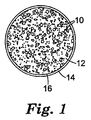
- FIG. 1 is a cross-sectional illustration depicting a preferred embodiment of a microbead of the invention.
- an active delivery system having an extended release life and having a hydrogel material in order that it be non-toxic and bio-degradable. It would also be advantageous to provide a system for sprayable long lasting active delivery that would be applicable to a broad spectrum of actives thereby eliminating the issue of reactivity of the active with one of the membrane components.
- the present invention provides a method of delivering active material, which is a pheromone, using microbeads having a secondary layer, where the microbeads are made of a hydrophilic matrix core having droplets of pheromone entrained and immobilized therein.
- active material which is a pheromone
- the microbeads are made of a hydrophilic matrix core having droplets of pheromone entrained and immobilized therein.
- the secondary layer can be a membrane, web, coating, film, or other material that is positioned outside and adjacent to the outer surface of the matrix core.
- the term "secondary" layer is used herein to describe the layer that lays immediately outside the surface of the matrix core.
- the microbeads described in the invention can have multiple layers.
- the microbeads described in the invention comprise a matrix forming material, and are preferably substantially spherical.
- the matrix forming materials of the microbead core are hydrophilic and water soluble. Entrained or finely dispersed within the matrix are micro-sized droplets of active material, wich is a pheromone.
- Active materials that can be immobilized within the hydrogel microbeads include acetates, aldehydes, alcohols, esters, epoxy compounds, ethers, and ketones, especially reactive ketones in which the double bond of the carbonyl group is conjugated with one or more double bonds, for example acetophenone where the carbonyl group is conjugated with double bonds of the aromatic ring.
- the hydrogel matrix core is preferably made from environmentally or biologically friendly materials to provide sufficient immobilization of oil soluble actives such that the active can be delivered and sprayed by conventional techniques.
- the hydrogel microbeads entrap micro-sized droplets of active material within the matrix. This is in contrast to delivery systems that solely utilize microencapsulation of actives, achieved by interfacial condensation.
- Immobilizing active material in a hydrophilic matrix core advantageously imparts the capability of the hydrogel microbeads to immobilize oil-soluble active materials and minimizes the risk of undesired reactivity between the active and its immobilizer.
- immobilization of active materials by use of the microbeads described in the invention does not render the immobilized material inert or ineffective.
- microbeads described in the invention provide a method of controlling release of active(s) by cyclically hydrating and rehydrating the microbeads. This is a result of the surprising benefit from immobilizing active ingredients in hydrogel microbeads, where the microbead is able to "swell” under humid conditions and shrink under dry conditions.
- swell is descriptive of the behavior of a microbead, wherein the size (volume) is enlarged (increased) due to absorption of water.
- the microbeads' ability to swell is likely due to the hydrophilic nature of the matrix forming materials used to immobilize the active material.
- the hydrogel microbeads are surprisingly found to be capable of absorbing moisture, rehydrating, and consequently releasing active material contained within the microbead. This behavior can be cyclical.
- the release rate of active material from the microbeads can be controlled such that specific periods of release can be generally predicted. It is therefore possible with the present invention to release the active material on demand from the microbead. Release on demand, or "smart release,” can be advantageous in those instances where release is preferred at certain times.
- the microbeads' ability to release more active out from the matrix may increase the longevity of the release period.
- the microheads are delivered to an intended environment in effective amounts to obtain the desired effect.
- microbeads having pheromones entrained therein are preferably delivered to a desired area in amounts such that mating. disruption is effected and release is accomplished for more than 4 weeks, more preferably, the microbead can release for more than about 6 weeks; and most preferably more than about 8 weeks.
- microbeads made according to the method of the present invention provide excellent delivery systems as they arc capable of releasing active material for extended periods. Furthermore, since the active is dispersed within a water-based matrix, additional protection from environmental conditions (i.e., UV) can be provided.
- microbeads described in the invention can be made having a diameter of up to about 5 millimeters (mm), it is preferred that the microbeads be between about 1 micrometers ( ⁇ m) to about 1 000 ⁇ m and more preferably between about 1 ⁇ m to about 500 ⁇ m in diameter to ensure that the microbeads are easily sprayable from conventional spray nozzles. Most preferably, to ensure minimal clogging in conventional nozzles, the microbeads are less than about 400 ⁇ m in diameter. It is contemplated, however, that with the advent of larger spray nozzles not yet realized in the industry, the microbeads can be provided in much greater diameters.
- the microheads be capable of remaining suspended in solution (e.g., water) to ensure that the microbeads do not sink, settle, or coagulate in the suspension.
- a uniform suspension ensures an even spray coverage.
- the microbeads of the invention are able to remain in suspension, thus minimizing if not eliminating the need to agitate during application (and storage).
- suitable suspension aids include rhamsam gum, xanthum gum, gellan gum, pectin, and gum arabic.
- the microbeads described in the present invention should be somewhat elastic, and not frangible.
- typical atomization of a suspension during a spray application will force the suspension through two rotating perforated discs that are immediately upstream of the discharge nozzle.
- Sufficient elasticity of the microbeads minimizes physical damage to the microbeads as they pass through the discs.
- the microbeads described in the present invention comprise a hydrophilic matrix core having droplets of active material, which is a pheromone, entrained therein, and a secondary layer adjacent to the matrix forming material and active material.
- active material which is a pheromone, entrained therein
- FIG. 1 a preferred embodiment is shown, where a plurality of active material droplets 10 is entrained within the hydrogel matrix 12, and a layer 14 adjacent to outer surface 16 of the matrix 12.
- active material droplets are preferably located between and within the hydrogel matrix, where the matrix provides an immobilizing network around the droplets.
- Droplets are preferably between about 0.01 nm to about 200,000nm in diameter. More preferably, the droplets are between about 1 to about 1000nm.
- the matrix-forming material useful in the present invention are biocompatible, water-soluble, have pendant functional groups, and complex with ions (e.g., polyvalent cations and/or anions) to form hydrogels.
- Functional groups of the matrix forming material include for example, carboxyls, hydroxyls, primary or secondary amines, aldehydes, ketones, esters, or combinations thereof.
- the matrix-forming material of the hydrophilic matrix core can be made from natural occurring polysaccharides, such as alginates, chitosans, gums, agars, carrageenans, or the matrix can be made synthetic, water soluble monomers, oligomers or polymers, such as, for example, polyvinyl alcohol, poly(N-isoproylacrylamide), acrylamides, acrylates, methacrylates or combinations thereof.
- natural occurring polysaccharides such as alginates, chitosans, gums, agars, carrageenans
- the matrix can be made synthetic, water soluble monomers, oligomers or polymers, such as, for example, polyvinyl alcohol, poly(N-isoproylacrylamide), acrylamides, acrylates, methacrylates or combinations thereof.
- Suitable naturally occurring polysaccharides include the water-soluble salts of alginic, pectic and hyaluronic acids, the water-soluble salts or esters of polyglucuronic acid, polymanuronic acid, polylygalacturonic acid and polyarabinic acid, and gum kappa-carragecnan.
- the preferred polysaccharides are the ammonium, magnesium, potassium, sodium and other alkali metal salts of alginic acid, and the most preferred polysaccharide is sodium alginate.
- Alginate is the general name given to alginic acid and its salts. Alginates are composed of D-mannosyluronic (mannuronic - "M”) and L-gulopyranosyluronic (guluronic - "G”) acid residues. The ratio of mannuronic to guluronic acid residues is known as the M:G ratio.
- the alginate used to immoblize active droplets should be carefully selected to ensure proper microbead formation, ensure the stability of the microbeads during storage and delivery applications, and ensure that the microheads arc able to shrink and swell appropriately to deliver the desired active material over an extended period of time (preferably 4-6 weeks).
- an alginate is chosen such that the matrix formed is sufficient in strength to withstand the shear forces (conditions) placed upon the microbeads during application via a spray nozzle - i.e., the microbeads are resistant to rupture during the spray application.
- alginate For strength and stability of the microbeads, it is desirable to choose a proper molecular weight of the alginate, as well as an appropriate M:G ratio.
- alginates high in mannuronic acid are generally useful for thickening applications, whereas alginates with a high level of guluronic acid are often used for forming gels, both alginate categories (individually or a mixture thereof) are suitable for the microbeads of the invention.
- a preferred alginate that imparts strength and rupture resistance is an alginate that has a high level of guluronic acid, e.g., greater than about 30 percent by weight.
- Alginate compositions with excessive levels of mannuronic acid could result in less stable and less rigid microbeads than high guluronic acid gels.
- high mannuronic acid alginates impart to the microbeads the capability of swelling and absorbing more water than microbeads of high guluronic acid content.
- a careful balance of the advantages imparted by each of M and G residues should be considered when choosing a suitable alginate.
- the alginates preferably have a molecular weight in the range of about 100,000 kg/mol to about 2,500,000 kg/mol, more preferably about 200,000 kg/mol to about 1,500,000 kg/mol. Furthermore, the alginates preferably have an M:G ratio in the range of about 0.2 to about 3.5; more preferably about 0.3 to about 1.85.
- Suitable alginates that have a high level of guluronic acid are alginates from the algae Laminaria hyperborea, stem, whole plant or frond.
- Preferred alginates with high levels of mannuronic acid include Ascophyllum nodosum, for example.
- Gel matrices formed by crosslinking polysaccharides bearing pendant carboxylate groups are also useful in the present invention. These compounds are composed of water-insoluble alginates which include, with the exception of magnesium and the alkali metal salts, the group II metal salts of alginic acid.
- the water-insoluble alginate gels are typically formed by the chemical conversion of water-soluble alginates, in an aqueous solution, into water-insoluble alginates. This conversion usually is accomplished by the reaction of a water-soluble alginate with polyvalent cations released from a soluble di- or trivalent metal salt.
- Water-soluble alginates can include the ammonium, magnesium, potassium, sodium, and other alkali metal salts of alginic acid.
- Water-insoluble di-or trivalent metal salts suitable for the present invention should satisfy two requirements: (1) that the water-insoluble metal salt contain a di-or trivalent metal ion capable of complexing with the pendant carboxylate groups of the water-soluble polysaccharide to cause the formation of a water-insoluble polysaccharide gel; and (2) that the water-insoluble metal salt reacts with a water-soluble acid to form a water-soluble metal salt.
- a common and suitable alginate gel is composed of calcium alginate.
- Sources for the crosslinking calcium ions used in the formation of alginate gels include, for example, calcium carbonate, calcium sulfate, calcium chloride, calcium phosphate, calcium tartrate, calcium nitrate, and calcium hydroxide.
- Other acceptable crosslinkers may include lanthanum chloride, ferric chloride, cobaltous chloride, as generally are other compounds with multivalent cations, such as calcium (Ca++), copper (Cu++), barium (Ba++), strontium (Sr++).
- the time of gelation of the calcium alginate gels can be accomplished by regulating the concentration of free calcium ions in the solution.
- concentration of free calcium ions is controlled by manipulation of the ionization rate of the calcium salt and/or by the inclusion of other compounds in the solution which react with the free calcium ions.
- Preferred active materials entrained in the matrix core are partially water-miscible organic molecules of compounds that have a molecular weight in the range of between about 100 to about 400, preferably between about 150 to 300.
- the compounds contain a heteroatom that con fers some degree of water-miscibility.
- the sole heteroatom is oxygen, and there may be up to three heteroatoms per molecule in, for instance, hydroxy-substituted or keto-substituted carboxylic acids.
- Unsubstituted carboxylic acids of course contain two oxygen atoms and simple aldehydes, ketones and ethers contain only one oxygen atom.
- Compounds that contain nitrogen and/or sulphur atoms are also of interest,
- biologically active compounds are biologically active compounds.
- biologically active means materials that affect the life processes of organisms. Materials that are biologically active include naturally and artificially produced pheromones and synthetic pheromone analogs. Materials of this nature that are of particular interest are those materials that interfere with a life process essential to the survival of a target pest.
- the method of the invention can be used to immobilize pheromone with functional groups such as acetates, aldehydes, ketones, alcohols, esters, ethers, epoxies or combinations thereof.
- Pheromones may be defined as compounds which, when naturally produced, are secreted by one member of an animal species which can influence the behaviour or development of another member of the same animal species. Pheromones generally are species-specific and therefore the application of pheromones for insect behaviour modification has minimal effect on non-target pests. Pheromones supplied for modification of insect behaviour interfere with the "mate finding process" by releasing point sources of pheromone. which may compete with or camouflage the pheromone plume of a female.
- pheromones have an ester terminal group, for example and acetate or formate group. Typically these substances are water-immiscible and incorporation of them into microcapsules by known methods presents no particular problem. Many other pheromones have an aldehyde or an alcohol terminal group. In general, these are partially water-miscible and potentially reactive with the reactants used to encapsulate by prior, conventional methods. In particular, it is difficult to achieve high degrees of encapsulation or materials that have some degree of water solubility, as the material partitions between the small amount of organic solvent and the relatively larger amount of water that constitutes the continuous phase. Furthermore, these compounds can be expected to react with the reactants used to encapsulate.
- Aldehydes and ketones react with amines to form aldimines and ketimines, respectively.
- Alcohols, carboxylic acids and mercaptans react with isocyanates.
- Epoxy compounds react both with amines and with isocyanates.
- the present invention overcomes the limitation of delivering partially water-miscible substances such as alcohols, aldehydes, carboxylic acids, ketones, ethers, including epoxy compounds, and mercaptans.
- Pheromones useful in the described microbeads are preferably insect pheromones.
- the following notation is used: the type (E (trans)or Z(cis)) and position of the double bond or bonds are given first, the number of carbon atoms in the chain is given next and the nature of the end group is given last.
- the pheromone Z-10 C19 aldehyde has the structure;
- Pheromones can be mixtures of compounds with one component of the mixture predominating, or at least being a significant component.
- Partially water-miscible significant or predominant components of insect pheromones, with the target species in brackets, include, for example: E/Z-11 C14 aldehyde (Eastern Spruce Budworm), Z-10 C19 aldehyde (Yellow Headed Spruce Sawfly), Z-11 C14 alcohol (Oblique Banded Leafroller), Z-8 C12 alcohol (Oriental Fruit moth) and E,E-8,14 C12 alcohol (Codling moth), E-11 C14 acetate (Sparganothis Fruitworm), and Z-11 C14 acetate (Blackheaded Fireworm).
- ketone that is a pheromone is E or Z 7-tetradecen-2-one, which is effective with the oriental beetle.
- oil absorbents can be incorporated into the active droplets. These absorbents can help retain the active droplets within the microbeads, resulting in longer lasting formulations. Clays and starches could also be used for this purpose.
- the concentration of active material in the microbeads as described in the invention should be at a level such that the matrix forming material can still provide a strong, rupture resistant network and deliver an effective amount of the active material to the environment to which it is intended.
- the active material is preferably present in an amount between about 0.1 wt % to about 60 weight percent (wt%) of the total weight of the microbead. More preferably, the amount of active material is present in the microbead at between about 0.2 wt% to about 40 wt%; and most preferably between about 0.3 wt% to about 20 wt%.
- Microbeads as described in the invention comprise at least one layer (hereinafter referred to as a "secondary layer") adjacent to the outer surface of the hydrophilic matrix core.
- the secondary layer can be a discontinuous layer, or alternatively, a continuous layer. permeable to liquid (moisture).
- the secondary layer that is applied onto the microbead surface can be performed by chemical processes such as ionic complexation or alternatively in-situ polymerization which involves hydrogen bonding of the layer to the matrix core. It is preferable that the material used to form the secondary layer is chosen such that the path of diffusion of the active material is altered to provide extended release of the active.
- Suitable materials that can be used for the secondary layer include hydrophilic, hydrophobic, inorganic or organic materials or combinations thereof. Mention is made of polyurea, polymethyleneurea and polyurethane. Preferably, the secondary layer is biocompatible and easily biodegradeable in the environment.
- the secondary layer can be ionically complexed with the outer surface of the hydrophilic matrix core.
- an ionically complexed layer provides a different permeability and diffusion profile of the active through the secondary layer, than that of a secondary layer that is covalently bonded to a matrix core.
- the permeability and diffusion of the actives delivered by the compositions and methods of the invention provide extended release periods.
- Formation of the secondary layer by ionic complexation is achieved by binding opposing charged groups (i.e. negatively-charged groups and positively-charged groups) of the matrix core materials and the secondary layer.
- opposing charged groups i.e. negatively-charged groups and positively-charged groups
- the selection of the material to form the secondary layer depends on the surface charge of the hydrophilic matrix core. If the hydrophilic matrix core is comprised of a negatively charged hydrophilic material, then the counter charged material should be a positively-charged material, and vice-versa.
- Negatively charged groups suitable for use in the invention include for example, hydroxyl, carboxyl, sulphate, and phosphate groups.
- Preferred biocompatible negatively-charged hydrophilic materials include, for example a polysaccharide. Suitable polysaccharides include, for example, an alginate, a carrageenan, in particular kappa-carrageenan, a gelable pectin, in particular a low methoyxyl pectin, agar, gellan gum, or combinations thereof.
- Positively-charged hydrophilic materials suitable for use in the invention include, for example, proteins, polylysines, polypeptide, polyamino acids, polysaccharide bearing amino groups such as chitosan and carboxymethyl cellulose, aliphatics, alicyclic or aromatic organic substances bearing several primary or secondary amino groups, such as ethylenediamine, hexamethylenediamine, piperazine, phenylenediamine, polyethyleneimine, poly(hexamethylene co-guanidine), or poly(methylene co-guanidine), or combinations thereof.
- proteins polylysines, polypeptide, polyamino acids
- polysaccharide bearing amino groups such as chitosan and carboxymethyl cellulose
- aliphatics such as aliphatics
- alicyclic or aromatic organic substances bearing several primary or secondary amino groups such as ethylenediamine, hexamethylenediamine, piperazine, phenylenediamine, polyethyleneimine, poly(hexamethylene co-guan
- Chitosan obtained by the deacetylation of chitin, is an amino-polysaccharide and a biopolymer widely distributed in nature.
- Chitosan is a linear polysaccharide composed of ß-1,4 linked D-glucosamine residues. In nature, the polymer is partially acclylated, and it includes a wide range of polymers corresponding to various proportions of D-glucosamine and N-acetyl-glucosamine residues.
- the properties of chitosan in solution depend on molecular weight, the degree of deacetylation, pH and ionic strength.
- the ionic complexation reaction generally requires an aqueous solvent.
- concentration of the solute is preferably about 0.0 1wt% to about 10 wt%, more preferably about 0.05 wt% to about 4 wt%.
- the solvent is preferably chosen, and its pH adjusted, to avoid precipiation yet ensure satisfactory complexation of the counter-charges materials.
- the pH is preferably between about 1.0 and 6.0, more preferably between about 5.0 and 6.0.
- the concentration of the secondary iayer forming material is preferably about 0.01 wt% to about 10.0wt%, more preferably about 0.02 wt% to 4.0 wt% based on the total solution weight.
- the secondary layer can be adjacent to and hydrogen bonded to the outer surface of the hydrophilic matrix core.
- This method is performed in-situ, where the secondary layer is deposited onto the surface of the hydrophilic matrix core.
- the in situ formation of a secondary layer may be formed by a reaction between a water-immiscible polyisocyanate and a water-miscible polyfunctional amine.
- the polyisocyanate may be dispersed within the hydrogel forming emulsion mixture or dissolved in or within the active droplet.
- Layers formed by the in situ methods can be continuous and preferably permeable. Suitable materials for use in the in-situ method include for example, polyurea, polyurethane, or polyureamethylene urea.
- the polyisocyanate may be aromatic or aliphatic and may contain two, three or more isocyanate groups.
- aromatic polyisocyanates include 2,4- and 2,6-toluene diisocyanate, naphthalene diisocyanate, diphenylmethane diisocyanate and triphenylmethane-p,p',p"-trityl triisocyanate.
- Aliphatic polyisocyanates may optionally be selected from aliphatic polyisocyanates containing two isocyanate functionalities, three isocyanate functionalities, or more than three isocyanate functionalities, or mixtures of these polyisocyanates.
- the aliphatic polyisocyanate contains 5 to 30 carbons. More preferably, the aliphatic polyisocyanate comprise one or more cycloalkyl moieties.
- Examples of preferred isocyanates include dicyclohexylmethane-4,4'-diisocyanate; hexamethylene 1,6-diisocyanate; isophorone diisocyanate; trimethylhexamethylene diisocyanate; trimer of hexamethylene 1,6-diisocyanate; trimer of isophorone diisocyanate; 1,4-cyclohexane diisocyanate; 1,4-(dimethylisocyanato) cyclohexane; biuret of hexamethylene diisocyanate; urea of hexamethylene diisocyanate; trimethylenediisocyanate; propylene-1,2-diisocyanate; and butylene-1,2-diisocyanate. Mixtures of polyisocyanates can be used.
- polyisocyanates are polymethylene polyphenylisocyanates of formula wherein n is 2 to 4. These compounds are available under the trade-mark Mondur-MRS.
- the mole equivalent ratio of total primary amine functionality to isocyanate functionality in the system is preferably about 0.8: to 1: 1.2, and more preferably about 1:1.1.
- the polyfunctional amine in the amount used, is preferably freely soluble in the water present in the reaction mixture.
- the polyfunctional compound containing amine and/or hydroxy functional groups may contain at least two functional groups selected from primary amine, secondary amine and hydroxy groups.
- suitable compounds include ethylene diamine, diethylene triamine and compounds of the general formula wherein m takes a value from 1 to 8, and each R is independently hydrogen or methyl.
- Aromatic diamines for example toluene diamine, can be used. Mixtures of polyfunctional compounds can be used. Tetraethylene pentamine (TEPA) and pentamethylene hexamine are particularly preferred.
- a suitable amine for use in this invention is trimethylamine, a tertiary amine.
- This compound, and its C 2 , C 3 and C 4 homologues can be used in the microbeads of the invention.
- Other suitable tertiary amines include those containing a mixture of alkyl groups, for instance methyldiethylamine.
- the tertiary amine can contain more than one tertiary amine moiety. It may also contain other functional groups provided that those other functional groups do not interfere with the required reaction, or the functional groups participate beneficially in the required reaction. As an example of a functional group that does not interfere there is mentioned an ether group.
- tertiary amines include compounds of the following structures: N[CH 2 (CH 2 ) n CH 3 ] 3 , where n is 0, 1, 2 or 3 and Of the tertiary amines triethylamine (TEA) is preferred.
- a water-insoluble non-thermoplastic synthetic resin may be used.
- Polymerization of the resin generally requires a pre-polymer.
- Prepolymers suitable to the present invention are partially etherified urea-formaldehyde prepolymers with a high solubility in the organic phase and low solubility in water.
- the prepolymer contains a large number of methylol groups, -CH 2 OH, in its molecular structure.
- Etherification is the replacement of the hydroxyl hydrogens with alkyl groups; and is preferably achieved by condensation of the prepolymer with an alcohol.
- the secondary layer of this invention may comprise a water-soluble urea resin where at least one of the prepolymers is a mixture of formaldehyde and at least one compound selected from the group consisting of urea, melamine and thiourea.
- microbeads described in the present invention can be placed into suspension in aqueous or solvent-based solutions, to provide sprayable compositions that can be delivered to a substrate and allowed to dehydrate.
- aqueous suspensions be used.
- Suspension aids are preferably included in the suspension formulations to ensure the microbeads remain suspended in solution.
- the invention provides a method of delivering and releasing active material, which is a pheromone, comprising the steps of:
- the suspension solution is substantially free of monovalent cations, such as sodium, to avoid degradation or breakdown of the secondary layer or the hydrogel matrix.
- a concentration of approximately 50 millimolar of a crosslinker such as calcium chloride is maintained in a stored solution comprising the microbeads of the invention.
- adhesive material can be included in the compositions of the invention.
- the adhesive material can be provided in various forms, such as for example, latex or a tacky microspheres. Adherent properties imparted to the hydrogel microbeads should result in the microbeads being able to still retain their.suspended state and minimize aggregation or coagulation in the aqueous suspension. Furthermore, any adhesive material used to impart adherent properties should not affect the integrity of the particles; it should not dissolve or weaken the microbeads.
- a suitable adhesive material that may be included in the compositions described in the invention is adhesive latex.
- the adhesive latex may be any suitable water-dispersible adhesive available in the art. In the agricultural business, such latex compositions are often called stickers or spreaders. Stickers are used to help non-encapsulated agriculture chemicals adhere to plants. Spreaders are used to help disperse non-encapsulated agriculture chemicals on application. Preferred adhesives are acrylate-based adhesives.
- One suitable latex is available from Rohm & Haas under the trade-mark Companion. Another is available from Deerpoint Industries under the trade-mark DPI S-100 (a proprietary sticker/spreader).
- Examples of such adhesives are polymers made from the "soft" monomers such as n-butyl acrylate, isooctyl acrylate or copolymers made from a soft component, such as isobutylene, n-butyl acrylate, isooctyl acrylate, ethyl hexyl acrylate; and a polar monomer such as acrylic acid, acrylonitrile, acrylamide, methacrylic acid, methyl methacrylate.
- Non-spherical polyacrylate adhesives are commercially available, for example, as the Rohm and Haas RhoplexTM line of adhesives.
- the non-spherical polyacrylate adhesive is present in an amount of about 10-35% by weight of the total suspension.
- Tacky microspheres of adhesive may alternatively be used to help adhere the hydrogel microbeads of the invention to an intended substrate.
- the tacky microspheres have sufficient adhesive properties to provide the desired adhesive function, yet there is no danger of completely coating the microbead which may lead to potentially inhibiting the release characteristics of the microbead.
- the combination of microbeads and tacky microspheres may be applied without the need to modify the orifices of conventional sprayers with minimal clogging or plugging problems.
- the incorporation of tacky (adhesive) microspheres to the (formulation) suspension of microbeads allows the microbeads' surfaces to become tacky. The beads can therefore stick to'intended surfaces, such as, foliage and branches, for example.
- the tacky adhesive microspheres may be hollow or solid but, especially if they are hollow, may also absorb some of the active material into its own body, thus providing a second mechanism of release of the active material. This could result in an overall alteration, preferably an enhancement, of the release profile.
- the adhesive material is an acrylate- or methacrylate-based adhesive system comprising infusible, solvent dispersible, solvent insoluble, inherently tacky, elastomeric copolymer microspheres as disclosed in U.S. Pat. No. 3,691,140.
- this adhesive composition may comprise hollow, polymer, acrylate, infusible, inherently tacky, solvent insoluble, solvent dispersible, elastomeric pressure-sensitive adhesive microspheres as disclosed in U.S. Pat. No. 5,045,569.
- Other suitable adhesives are the tacky microspheres having pendant hydrophilic polymeric or oligomeric moieties that are disclosed in U.S. Pat. No. 5,508,313.
- the adhesive comprises between about 60-100% by weight of hollow, polymeric, acrylate, inherently tacky, infusible, solvent-insoluble, solvent dispersible, elastomeric pressure-sensitive adhesive microspheres having a diameter of at least 1 micrometer, and between about 0-40%, by weight of a non-spherical polyacrylate adhesive.
- the hollow microspheres are made in accordance with the teaching of European Patent Application 371,635.
- compositions described in the present invention may also include one or more adjuvants including for example, gelling aids, preservatives, dyes, humectants, fixatives, emulsifiers, extenders, UV protectants and stabilizers including freeze/thaw stabilizers such as polyhydric alcohols and their esters. Mention is also made of combinations of preservatives, humectants, stabilizers and UV protectants. These materials are present in an amount effective to achieve their extended function, generally less than about 5% typically less than 2%, by weight of the composition.
- adjuvants including for example, gelling aids, preservatives, dyes, humectants, fixatives, emulsifiers, extenders, UV protectants and stabilizers including freeze/thaw stabilizers such as polyhydric alcohols and their esters. Mention is also made of combinations of preservatives, humectants, stabilizers and UV protectants. These materials are present in an amount effective to achieve their
- a light stabilizer can be included in the microbeads described in the invention.
- Suitable light stabilizers include the tertiary phenylene diamine compounds disclosed in Canadian Patent No. 1,179,682.
- the light stabilizer can be incorporated by dissolving it, with the active, in a water-immiscible solvent.
- a light stabilizer can be incorporated in the microbeads as taught in Canadian Patent No. 1,044,134.
- the process of making the microbeads described in the invention preferably comprises, initially, the formation of a microemulsion and the dispersion of the active material in the hydrogel material.
- the microemulsion is then mechanically atomized to create substantially spherical droplets which are subsequently gelled (hardened) to form a hydrogel microbead having an active material dispersed therein.
- an emulsion of an oil active within a water soluble solution comprising a hydrogel is first formed.
- This emulsion is then followed by a mechanical microbead forming step that can be performed by, for example, spray method or emulsification.
- the droplets are then hardened or cured either by chemical means (i.e., polymer crosslinking) or by non-chemical means (i.e., temperature, pH, pressure).
- the resulting microbead is a hydrogel microbead, having greater than about 30% water initially, and the active would be finely dispersed and entrained within the water-polymer matrix.
- microbeads tend to be more spherical in shape when the spray method is used, as compared to the emulsification method.
- the size of the microbeads is generally governed by the intrinsic properties of the emulsion solution, the feed rate and the coaxial airflow rate.
- the droplets which are atomized can then be allowed to free-fall directly into a reacting bath.
- the reacting bath cures or sets the hydrogels so that they solidify.
- Reaction bath curing can be achieved through chemical or non-chemical means.
- calcium ions are used to cross-link the polymer chains.
- a preferred crosslinker is calcium chloride.
- the emulsification method is another technique that can be used for producing hydrogel microbeads.
- the continuous phase material it is preferable that it be immiscible with both the aqueous polymer and oil active.
- the matrix-forming material preferably has a range of concentrations usable in practicing the invention.
- concentration should be chosen to optimize ease of handling, gelling time, the strength of the hydrogcl microbead around the active material droplets.
- a sodium alginate solution can preferably be prepared in a concentration of about 1 to about 10% (w/v) in water, more preferably about 1.5 to about 5% and most preferably from about 1 to 3%.
- the hydrogel agent concentration is too great, the solution may be so viscous as to hinder the formation of spherical microbeads.
- hydrogel microbeads described in the invention can be formed, for example, by adding the matrix forming material solution drop-wise to a selected crosslinker.
- a method can be used whereby droplet formation and crosslinker addition is completed as a one step process by a vibrating nozzle which ejects a hydrogel droplet from one source and coats the dropiet with a crosslinker from another.
- U.S. Patent No. 4,701,326 teaches use of this method.
- a crosslinker is preferably made up in solution at a concentration of 1 to 1000 millimolar, more preferably 20 to 500 millimolar and most preferably from 50 to 100 millimolar.
- concentration ranges may have to be adjusted, depending on the nature of a crosslinker and matrix-forming material.
- microbeads containing matrix material and active material can be treated with the crosslinker solution by soaking, spraying, dipping, pouring or any of sever other methods which will deposit an amount of the complexing agent on the droplet.
- the time in solution may be from 1 second to 24 hours, preferably 1 minute to 1 hour, and more preferably from 10 to 30 minutes.
- the temperature for hydrogel microbead formation is preferably chosen as to avoid damage or alteration to the active material.
- the temperature is preferably in the range of about 1 °C to about 70 °C; more preferably between about 10 °C to about 40°C. and most preferably between about 15 °C to about 30 °C.
- Forming the secondary layer of the microbead may be accomplished in various methods.
- both the secondary layer and the hydrophilic matrix core can be produced substantially simultaneously.
- the ionically complexed layer is formed while the crosslinker diffuses into the matrix-forming material to form (gel) the matrix core.
- the active material is emulsified and entrained into the matrix-forming material with the aid of surfactants.
- the intact beads are then placed into an ionically complexing solution containing opposing charges (either positively or negatively charges), depending on the selection of the hydrophilic matrix forming material for a specified period of time.
- reaction time or the length of incubation time of the secondary layer forming material and the matrix forming material should be sufficient to complex to the hydrogel bead.
- the reaction time is between 5 min to 3 hours, preferably between 5 min and 1 hour, and even more preferably is 30 min.
- the polyisocyantes arc first dispersed within the matrix forming material and/or along with the active material.
- the microbeads can then be formed in a crosslinking solution, where the secondary layer is formed substantially simultaneously as the matrix core with active droplets entrained therein.
- the matrix core with active droplets entrained therein is formed prior to forming the secondary layer.
- the secondary layer is then preferably formed by providing an aqueous solution of a water-soluble, low-molecular weight urea-aldehyde precondensate comprising predominantly low molecular weight reaction products of urea, melamine or thiourea and formaldehyde and adding acid thereto in amount to provide a pH for the dispersion in the range of about 1 to 6.0 and more practically about 1.0 to 3, thereby promoting acid catalysis of the precondensate.
- PMU polymerized polymethylene urea membranes
- Polymerization of the precondensate to a water-insoluble urea-formaldehyde polymer can be continued by agitation within a preferable temperature range of about 20 to about 90 °C for at least about one hour.
- the polymerized layer can then be neutralized using sodium hydroxide.
- the microbeads Prior to adding the microbeads a suspending solution, the microbeads arc preferably washed and filtered using, for example, a Buchner type funnel.
- Surfactants can be used in the process of terming the microbeads. The incorporation of different surfactants will offer different types of microemulsion drop sizes of the active within the hydrogel as well as dictate the amount of free oil lost in the reacting bath solution.
- a preferred surfactant has a high critical micelle concentration, such as for example, a product available under the product designation DISPONIL SUS IC 875 (CMC ⁇ 1%)., available from Henkel (Ambler, PA).
- surfactants are nonionic.
- suitable surfactants include polyvinylpyrrolidone (PVP) and poly(ethoxy)nonylphenol.
- PVP is usable and available at various molecular weights in the range of from about 20,000 to about 90,000. PVP having a molecular weight of about 40,000 is preferred.
- Poly(ethoxy)nonylphenols are commercially available under the trade designation IGEPAL from Rhone-Poulenc (Cranbury, NJ), with various molecular weights depending on the length of the ethoxy chain. Poly(ethoxy)nonylphenols having the formula: where n has an average value from about 9 to about 13 can be used.
- a preferred poly(ethoxy)nonylphenols is available commercially under the product name IGEPAL 630, from Rhone-Poulenc (Cranbury, NJ) -- 630 is indicative of the approximate molecular weight of the compound.
- suitable surfactants include polyether block copolymers, such as those available under the trade designations PLURONIC and TETRONIC, both available from BASF (Washington, NJ), polyoxyethylene adducts of fatty alcohols, such as BRIJ surfactants available from ICI (Wilmington, DE), and esters of fatty acids, such as stearates, oleates.
- fatty acids examples include sorbitan monostearate, sorbitan monooleate, sorbitan sesquioleate.
- alcohol portions of the fatty esters include glycerol, glucosyl.
- Fatty esters are commercially available as surfactants under the trade designation ARLACEL C from ICI (Wilmington, DE)
- Various properties of the surfactant can affect the size of the active droplets formed within the microbeads. For example, use of PVP (having a molecular weight of 40,000) tend to result in production of larger sized active droplets than use of poly(ethoxy)nonylphenols (IGEPAL 630).
- PVP having a molecular weight of 40,000
- IGEPAL 630 poly(ethoxy)nonylphenols
- Ionic surfactants can alternatively be used in the processes described in the invention.
- suitable ionic surfactants partially neutralized salts of polyacrylic acids such as sodium or potassium polyacrylate or sodium or potassium polymethacrylate.
- the active material entrained in the microbeads of the invention are released gradually over time.
- a mechanism of release of the active in the microbeads described in the invention involves water evaporation from the matrix core and then diffusion of active through the secondary layer.
- the active may be released by entrainment with the hydrogel matrix as the water evaporates, in addition to release by diffusion through the secondary layer.
- the active preferably diffuses though each layer.
- these hydrogel microbeads would be sprayed followed by water evaporation within the gel.
- the matrix shrinks in size and releases its active with time.
- the degree of shrinkage of the microbead from its original size depending on the components used in the formulation.
- the microbeads shrink about 10 to about 90 % from its original size, more preferably from about 40 to about 80%, and most preferably from about 50% to about 70%.
- Active release from the microbeads of the invention has surprisingly been found to be controllable by controlling the humidity (and dryness) of the environment in which the microbeads are in.
- the microbead upon re-exposure to humidity, can swell and rehydrate itself by absorbing water. Re-exposure to humidity can be performed in various ways. For example the microbeads' surfaces can be contacted directly with water or other aqueous solutions. In agricultural applications where pheronomes arc used as the active material, a farmer or caretake can irrigate the plants and foliage to re-hydrate the hydrogel microbeads.
- the humidity of the environment or ambient air in which the microbeads arc located in can be increased by entraining air droplets in the air.
- the microbeads can be "re-activated” by re-hydration. thereby selectively controlling the release times of the active material.
- the microbead comprises a secondary layer ionically complexed to the matrix core surface
- swell rates or rehydration effects may result in a further alteration of the release profile of the active. This may be due to the secondary layer having a di fferent absorption rats than that of the hydrophilic matrix core.
- this can provide extended release profiles of the active to a desired environment.
- microbeads described in the invention can be delivered to an intended substrate by various methods. Delivery of the microbeads will depend on various factors, such as for example, the size of release coverage desired. For small concentrated areas, the microbeads can be impregnated into hollow fibres, plastic laminate flakes or twist-ties and then physically attaching the fibres or ties to plants to be protected from insect infestation. For larger areas, spraying (aerially or by back-pack) may be the better option.
- microbeads wherein the hydrophilic matrix core is an alginate, the active material is a pheromone and the secondary layer is formed using chitosan or a co-guanidine containing compund.
- a known amount of beads (10 microbeads) were recovered and placed in a constant airflow chamber of 100 mL/min ( ⁇ 23-24 °C temperature).
- the effluent air stream from the chambers was analyzed for active concentration using solid phase microextraction (SPME) (Supelco, Bellefonte, PA) and gas chromatography (GC) (Varian Chromatography Systems, Walnut Creek, CA) over a period of weeks to evaluate the performance of the hydrogel microbeads.
- SPME solid phase microextraction
- GC gas chromatography
- the Air Concentration is multiplied by the Air Flow rate.
- Formulations were filtered using a Buchner type vacuum funnel, washed with room temperature distilled water and dried in a fumehood at room temperature for 24 hours. Fifty milligrams of the dried formulation were put on tinfoil squares as application substrates. After the required exposure time, the microbeads were subjected to extraction for at least 24 hours with 4 mL of dichloromethane to determine the residual level of active still remaining in the formulation. Each collected sample was then analyzed by gas chromatography.
- a sodium alginate solution was initially prepared by dissolving a prewcighcd amount of alginate into a known volume of distilled water. The solution was mixed thoroughly to solubilize the polymer and was deaerated for removal of entrained air bubbles. In a separate 250 mL vessel, the active and surfactant was added and mixed at a speed of about 2000 RPM using a marine type impeller (3.81 cm diamter). To the mixture, the alginate solution was gradually added to form the microemulsion. The emulsion was homogenized for about 30 minutes. The emulsion was then atomized into fine particle droplets using a coaxial air nozzle sprayer.
- the size of the particles was determined by the settings on the atomizing device. This involved control of the nozzle head diameters, the feed rate of the emulsion through the nozzle and the airflow which passed along its feed path (shown in Table 2).
- the nozzle feed diameter was 0.508 mm
- the coaxial air nozzle was 1.4 mm
- the feed pressure was about 34.4-110.3 kPa
- the airflow was about 13.8-34.5 kPa.
- discrete spherical microbeads were produced with a particle size range of 4 to 400 microns.
- Examples A-F demonstrated the ability of this invention to encapsulate oils or pheromones with function groups of ketones, alcohols, and acetates. All the formulations resulted in spherical intact hydrogel microbeads containing the desired active.
- Examples G-I demonstrated the ability of this invention to absorb oils or pheromones with functional groups of ketones, alchols, and acetates within an absorbent material prior to encapsulation within a hydrogel matrix. All the formulations resulted in spherical intact hydrogel microbeads containing the desired active. Hydrogel microbead formulations Sample Sodium alginate Active Surfactant Calcium conc. (mM) Conc.
- Type Weight (g/100 mL) Weight (g) Type Weight (g) Type Weight (g) A 2.0 50.0 Carvone 20.0 Igepal CO-630 2.0 50 B 2.0 50.0 Carvone 5.0 Igepal CO-630 1.0 50 C 2.0 38.6 E,E-8,10-C12 alcohol/ Solvent 100 (1:4 by wt) 1.0 Disponil SUS IC 875 1.0 50 D 2.5 250.0 Menthone 50.0 Igepal CO-630 5.0 50 E 2.5 800.
- Hydrogel microbeads were formed using coaxial airflow atomization, using the formulations of Samples A and E. Average particle diameters were measured by evaluating 30-50 microbeads, using a stereomicroscope product name STEREOZOOM 7 available from Bausch & Lomb (Brick, NJ) and a light microscope product LEITZ DIAPLAN available from Ernst Leitz (Wetzlar, West Germany). The nozzle size and settings varied respectively to produce different size particles, asshown in Table 2.
- the nozzle feed diameter was 0.020 inches
- the coaxial air nozzle diameter was 0.055 inches
- the feed pressure was about 10 psi
- the airflow was set to 0 psi.
- the microbeads were formed, they were soaked in the forming solution for about 3-4 hours.
- 11 g of calcium chloride crystals were added to the suspension.
- the microbeads were then gelled for 3-4 hours, filtered and washed with water.
- discrete spherical menthone immobilized hydrogel microbeads were produced with an average particle size of about 2.5 millimeters.
- EXAMPLE I The procedure outlined in EXAMPLE I was adopted, where SAMPLE A was used, in addition to a polymer forming solution along with the calcium chloride.
- a solution of chitosan (Seacure 143, Pronova Biopolymer, Washington) containing 1% glacial acetic acid and 50 millimolar calcium chloride was prepared by mixing at room temperature. The solution pH was adjusted to about 5.6 using sodium hydroxide.
- the method of microbead preparation utilizing coaxial air atomization was also adopted using protocol demonstrated in EXAMPLE 1.
- the nozzle feed diameter was 0.020 inches
- the coaxial air nozzle diameter was 0.055 inches
- the feed pressure was about 10 psi
- the airflow was set to 0 psi.
- discrete spherical carvonc immobilized hydrogel microbeads were produced with an average particle size of about 3.2 millimeters.
- a 1 L jacketed reactor set to 71 °C was charged with 326.0 g formaldehyde (Hoechst-Celanese, Rock Hill, SC), 121.6 g urea (Arcadian Corporation, Memphis, TN) and 1.14 g potassium tetraborate tetrahydrate (Aldrich Chemical Co., Milwaukee, WS).
- the solution was mixed for 2.5 hours at 350 RPM using a six blade turbine.
- Dilution water (552.4 g) was then added and mixed well before bottling and storing at room temperature.
- the reaction was stirred for a further 1 hour, then the temperature was increased to 60 °C over 15 minutes, and the mixture held for a final 1 hour.
- the reaction mixture was cooled to room temperature and neutralized with ammonium hydroxide.
- the microbeads were filtered and washed several times with water. The resulting microbeads were discrete and possessed a rigid, hard coating.
- microbeads used were chitosan layered menthone hydrogel microbeads obtained from EXAMPLE 2A.
- the resulting microbeads were discrete and possessed a secondary layer.
- microbeads used were carvone hydrogel microbeads obtained from Sample B.
- the resulting microbeads were discrete and possessed a secondary layer.
- microbeads used were menthone absorbed in clay (Tixogel EZ 100, Süd-Chemie Rheologicals, Louisville, KY) calcium alginate hydrogels obtained from Sample I.
- the resulting microbeads were discrete and possessed a secondary layer.
- microbeads used were menthone absorbed in wax (Paraffin Wax, Aldrich) calcium alginate hydrogels obtained from Sample J.
- the resulting microbeads were discrete and possessed a secondary layer.
- Air Concentration Determination analysis showed a burst of active (carvone) in the air during the first day followed by a gradual decrease with time for all formulations. In the initial portion of the total release period, the release rate for the microbeads comprising a secondary layer was observed to be significantly lower than that of non-layered microbeads. Subsequently, the longevity of the release is extended significantly as a result of forming an ionically complexed layer on hydrogel microbeads.
Landscapes
- Health & Medical Sciences (AREA)
- Life Sciences & Earth Sciences (AREA)
- General Health & Medical Sciences (AREA)
- Chemical & Material Sciences (AREA)
- Veterinary Medicine (AREA)
- Animal Behavior & Ethology (AREA)
- Public Health (AREA)
- Birds (AREA)
- Epidemiology (AREA)
- Organic Chemistry (AREA)
- Dispersion Chemistry (AREA)
- Emergency Medicine (AREA)
- Chemical Kinetics & Catalysis (AREA)
- Engineering & Computer Science (AREA)
- Wood Science & Technology (AREA)
- Pest Control & Pesticides (AREA)
- Plant Pathology (AREA)
- Toxicology (AREA)
- Dermatology (AREA)
- Dentistry (AREA)
- Agronomy & Crop Science (AREA)
- Zoology (AREA)
- Environmental Sciences (AREA)
- Physics & Mathematics (AREA)
- Geometry (AREA)
- Agricultural Chemicals And Associated Chemicals (AREA)
- Solid-Sorbent Or Filter-Aiding Compositions (AREA)
Applications Claiming Priority (3)
| Application Number | Priority Date | Filing Date | Title |
|---|---|---|---|
| US426140 | 1989-10-24 | ||
| US09/426,140 US6365189B1 (en) | 1999-10-22 | 1999-10-22 | Method of delivering and releasing a pheromone |
| PCT/US2000/027167 WO2001030144A1 (en) | 1999-10-22 | 2000-10-03 | Hydrogel microbeads having a secondary layer |
Publications (2)
| Publication Number | Publication Date |
|---|---|
| EP1221839A1 EP1221839A1 (en) | 2002-07-17 |
| EP1221839B1 true EP1221839B1 (en) | 2004-05-26 |
Family
ID=23689476
Family Applications (1)
| Application Number | Title | Priority Date | Filing Date |
|---|---|---|---|
| EP00968588A Expired - Lifetime EP1221839B1 (en) | 1999-10-22 | 2000-10-03 | Hydrogel microbeads having a secondary layer |
Country Status (8)
| Country | Link |
|---|---|
| US (1) | US6365189B1 (enExample) |
| EP (1) | EP1221839B1 (enExample) |
| JP (1) | JP2003512393A (enExample) |
| AR (1) | AR026191A1 (enExample) |
| AU (1) | AU776909B2 (enExample) |
| CA (1) | CA2387170A1 (enExample) |
| DE (1) | DE60011117T2 (enExample) |
| WO (1) | WO2001030144A1 (enExample) |
Cited By (2)
| Publication number | Priority date | Publication date | Assignee | Title |
|---|---|---|---|---|
| RU2492487C2 (ru) * | 2008-09-30 | 2013-09-10 | Сони Корпорейшн | Способ получения микробусин и микробусины |
| US9259030B2 (en) | 2010-03-26 | 2016-02-16 | Philip Morris Usa Inc. | Fabrication of core/shell capsules of different geometries and treatment thereafter |
Families Citing this family (28)
| Publication number | Priority date | Publication date | Assignee | Title |
|---|---|---|---|---|
| US6602602B1 (en) * | 1999-04-26 | 2003-08-05 | Renssealer Polytechnic Institute | Epoxy-functional polymeric microbeads |
| US6562361B2 (en) * | 2001-05-02 | 2003-05-13 | 3M Innovative Properties Company | Pheromone immobilized in stable hydrogel microbeads |
| US7597903B2 (en) * | 2002-12-02 | 2009-10-06 | Shenkar College Of Engineering And Design | Method and composition for producing catheters with antibacterial property |
| US20060094635A1 (en) * | 2004-11-01 | 2006-05-04 | Unilever Home & Personal Care Usa, Division Of Conopco, Inc. | Aqueous cleansing composition with gel flakes |
| US20060147536A1 (en) * | 2004-12-30 | 2006-07-06 | Fiore Robert A | Method for removing fluids containing dissolved or suspended carbohydrates, lipids, metals, salts, and/or toxins from biological systems |
| US7638477B2 (en) * | 2005-03-09 | 2009-12-29 | Alberto-Culver Company | Sustained-release fragrance delivery system |
| US9968120B2 (en) * | 2006-05-17 | 2018-05-15 | Dsm Nutritional Products Ag | Homogenized formulations containing microcapsules and methods of making and using thereof |
| EP1933631A2 (en) * | 2005-08-23 | 2008-06-25 | 3M Innovative Properties Company | Methods of applying antimicrobial formulations on food |
| JP4823675B2 (ja) * | 2005-12-16 | 2011-11-24 | 花王株式会社 | ハイドロゲル粒子の製造方法、並びに、それによって製造されるハイドロゲル粒子及びそれを用いた分散体 |
| DE102006001481A1 (de) * | 2006-01-11 | 2007-07-12 | P & W Invest Vermögensverwaltungsgesellschaft mbH | Kapseln zur dosierten Abgabe eines eingeschlossenen Wirkstoffs, ein Verfahren zu deren Herstellung und deren Verwendung |
| EP2032149A4 (en) * | 2006-06-13 | 2010-09-01 | Fmc Biopolymer As | METHOD AND SYSTEMS FOR THE USE OF BIOPOLYMER-BASED BEADS AND HYDROGELS |
| WO2008042970A2 (en) * | 2006-10-03 | 2008-04-10 | Haggard Warren O | Chitosan-coated calcium sulfate based medicament delivery system |
| DE102007057395A1 (de) * | 2007-11-27 | 2009-05-28 | Friedrich-Alexander-Universität Erlangen-Nürnberg | Verkapselte Mikropartikel mit einem virenhaltigen Kern und Verfahren zur Herstellung der Mikropartikel |
| US8946123B2 (en) * | 2008-05-28 | 2015-02-03 | Richard Foster DEBUTTS | Compositions and methods for controlling the direction of growth of plants with rootlets |
| US9205395B2 (en) * | 2009-10-15 | 2015-12-08 | Encapsys, Llc | Encapsulation |
| US8663671B2 (en) | 2009-11-05 | 2014-03-04 | Philip Morris Usa Inc. | Methods and compositions for producing hydrogel capsules coated for low permeability and physical integrity |
| US8996171B2 (en) * | 2010-02-02 | 2015-03-31 | Deere & Company | Pheromone for robotic boundary |
| WO2012010509A2 (de) * | 2010-07-20 | 2012-01-26 | Bayer Cropscience Ag | Gelköder zur bekämpfung von kriechenden schadinsekten |
| DE102010033048A1 (de) * | 2010-08-02 | 2012-02-02 | Katz Biotech Ag | Verwendung eines mikroverkapselten Nahrungssubstrats |
| WO2013089925A1 (en) * | 2011-12-12 | 2013-06-20 | Stc. Unm | Microencapsulation as a strategy for implementation and environmental safe-guarding of a paratransgenic approach to control of vector-borne diseases |
| CN105338803A (zh) * | 2013-03-15 | 2016-02-17 | 阿达玛马克西姆股份有限公司 | 用于有效吸收土壤中的肥料和其他农用化学品的人工环境 |
| EP3223935A1 (en) * | 2014-11-24 | 2017-10-04 | The Procter and Gamble Company | Systems for encapsulation of actives within droplets and other compartments |
| WO2016098910A1 (en) * | 2014-12-17 | 2016-06-23 | L'oreal | Composite particle and preparation thereof |
| KR20220075022A (ko) * | 2020-11-26 | 2022-06-07 | (주) 에이치엔에이파마켐 | 다층 구형 파티클의 제조 방법 및 이에 의해 제조된 다층 구형 파티클을 포함하는 화장료 조성물 |
| FR3117731A1 (fr) * | 2020-12-21 | 2022-06-24 | Virbac | Dispositifs portables pour animaux de compagnie avec diffusion passive de compositions sémiochimiques |
| US20230000074A1 (en) * | 2021-02-23 | 2023-01-05 | Provivi, Inc. | Sprayable microencapsulated pheromones |
| CN115124962B (zh) * | 2022-07-01 | 2023-11-03 | 南通金丝楠膜材料有限公司 | 一种无溶剂散香胶水及其制备方法、复合膜及其制备方法 |
| CN116473857B (zh) * | 2023-04-03 | 2024-08-06 | 广东丸美生物技术股份有限公司 | 油芯凝珠、制备方法以及化妆品 |
Family Cites Families (30)
| Publication number | Priority date | Publication date | Assignee | Title |
|---|---|---|---|---|
| US3577515A (en) | 1963-12-13 | 1971-05-04 | Pennwalt Corp | Encapsulation by interfacial polycondensation |
| US3691140A (en) | 1970-03-09 | 1972-09-12 | Spencer Ferguson Silver | Acrylate copolymer microspheres |
| CA1044134A (en) | 1975-04-09 | 1978-12-12 | Minnesota Mining And Manufacturing Company | Microcapsule insecticide composition |
| DE2757017C3 (de) | 1977-12-21 | 1986-07-31 | Hoechst Ag, 6230 Frankfurt | Verfahren zum Herstellen von druckbeständigen Polyurethan-Polyharnstoff-Kapseln mit strukturierter Innenmasse |
| CA1179682A (en) | 1980-03-05 | 1984-12-18 | Imperial Chemical Industries Plc | Stabilised compositions containing behaviour modifying compounds |
| JPS58124705A (ja) | 1982-01-18 | 1983-07-25 | Kureha Chem Ind Co Ltd | マイクロカプセル化農薬及びその製造方法 |
| US4439488A (en) | 1982-02-26 | 1984-03-27 | The United States Of America As Represented By The Secretary Of Agriculture | Encapsulation by entrapment within polyhydroxy polymer borates |
| US4532123A (en) | 1982-03-04 | 1985-07-30 | Battelle Development Corporation | Dual Microcapsules and process for their preparation |
| JPS58183601A (ja) | 1982-04-21 | 1983-10-26 | Shin Etsu Chem Co Ltd | マイクロカプセル化性フエロモン物質もしくは農薬 |
| JPS59139301A (ja) | 1983-01-31 | 1984-08-10 | Shin Etsu Chem Co Ltd | 気化拡散性物質放出制御体 |
| US4689293A (en) | 1983-06-06 | 1987-08-25 | Connaught Laboratories Limited | Microencapsulation of living tissue and cells |
| GB8325061D0 (en) | 1983-09-20 | 1983-10-19 | Dow Chemical Co | Microcapsules |
| JPS60252403A (ja) | 1984-05-28 | 1985-12-13 | Shin Etsu Chem Co Ltd | 徐放性フエロモン製剤組成物および徐放性フエロモン製剤付着方法 |
| US4701326A (en) | 1985-10-23 | 1987-10-20 | Plant Genetics, Inc. | Membrane-coated hydrogel encapsulated nematodes |
| US4755377A (en) | 1987-04-24 | 1988-07-05 | The Drackett Company | Foamed air freshener composition |
| US5427935A (en) * | 1987-07-24 | 1995-06-27 | The Regents Of The University Of Michigan | Hybrid membrane bead and process for encapsulating materials in semi-permeable hybrid membranes |
| US5786216A (en) * | 1987-11-17 | 1998-07-28 | Cytotherapeutics, Inc. | Inner-supported, biocompatible cell capsules |
| US5045569A (en) | 1988-11-30 | 1991-09-03 | Minnesota Mining And Manufacturing Company | Hollow acrylate polymer microspheres |
| US5089606A (en) | 1989-01-24 | 1992-02-18 | Minnesota Mining And Manufacturing Company | Water-insoluble polysaccharide hydrogel foam for medical applications |
| US5183690A (en) * | 1990-06-25 | 1993-02-02 | The United States Of America, As Represented By The Secretary Of Agriculture | Starch encapsulation of biologically active agents by a continuous process |
| JPH04310233A (ja) | 1991-04-05 | 1992-11-02 | Kureha Chem Ind Co Ltd | 湿潤時に芯物質放出性を有するマイクロカプセル |
| JP2511612B2 (ja) | 1992-02-28 | 1996-07-03 | 株式会社紀文フードケミファ | 徐放性組成物 |
| TW338043B (en) | 1992-12-11 | 1998-08-11 | Minnesota Mining & Mfg | Tacky microspheres having pendant hydrophilic polymeric or oligomeric moieties |
| FR2703927B1 (fr) | 1993-04-13 | 1995-07-13 | Coletica | Utilisation d'une réaction de transacylation entre un polysaccharide estérifié et une polyamine pour former en milieu aqueux une membrane au moins en surface de particules gélifiées. |
| US5645844A (en) | 1995-06-07 | 1997-07-08 | Chitogenics, Inc. | Negatively charged chitosan derivative semiochemical delivery system |
| JP3499047B2 (ja) | 1995-06-23 | 2004-02-23 | 第一工業製薬株式会社 | 揮散性物質内包マイクロカプセル分散液の製法および揮散性物質内包マイクロカプセルの製法 |
| JP3795109B2 (ja) | 1995-11-06 | 2006-07-12 | 信越化学工業株式会社 | 徐放性フェロモン製剤 |
| JP3802959B2 (ja) | 1996-12-27 | 2006-08-02 | 第一工業製薬株式会社 | 野生獣食害忌避剤およびそれを含有する分散液 |
| US6248364B1 (en) | 1997-04-07 | 2001-06-19 | 3M Innovative Properties Company | Encapsulation process and encapsulated products |
| US6080418A (en) | 1997-04-07 | 2000-06-27 | 3M Innovative Properties Company | Suspensions of microcapsules containing biologically active ingredients and adhesive microspheres |
-
1999
- 1999-10-22 US US09/426,140 patent/US6365189B1/en not_active Expired - Fee Related
-
2000
- 2000-10-03 EP EP00968588A patent/EP1221839B1/en not_active Expired - Lifetime
- 2000-10-03 CA CA002387170A patent/CA2387170A1/en not_active Abandoned
- 2000-10-03 DE DE60011117T patent/DE60011117T2/de not_active Expired - Fee Related
- 2000-10-03 WO PCT/US2000/027167 patent/WO2001030144A1/en not_active Ceased
- 2000-10-03 AU AU78479/00A patent/AU776909B2/en not_active Ceased
- 2000-10-03 JP JP2001532584A patent/JP2003512393A/ja not_active Withdrawn
- 2000-10-20 AR ARP000105531A patent/AR026191A1/es unknown
Cited By (2)
| Publication number | Priority date | Publication date | Assignee | Title |
|---|---|---|---|---|
| RU2492487C2 (ru) * | 2008-09-30 | 2013-09-10 | Сони Корпорейшн | Способ получения микробусин и микробусины |
| US9259030B2 (en) | 2010-03-26 | 2016-02-16 | Philip Morris Usa Inc. | Fabrication of core/shell capsules of different geometries and treatment thereafter |
Also Published As
| Publication number | Publication date |
|---|---|
| DE60011117T2 (de) | 2005-06-16 |
| US6365189B1 (en) | 2002-04-02 |
| AR026191A1 (es) | 2003-01-29 |
| AU776909B2 (en) | 2004-09-23 |
| WO2001030144A1 (en) | 2001-05-03 |
| CA2387170A1 (en) | 2001-05-03 |
| EP1221839A1 (en) | 2002-07-17 |
| JP2003512393A (ja) | 2003-04-02 |
| AU7847900A (en) | 2001-05-08 |
| US20020034550A1 (en) | 2002-03-21 |
| DE60011117D1 (de) | 2004-07-01 |
Similar Documents
| Publication | Publication Date | Title |
|---|---|---|
| EP1221839B1 (en) | Hydrogel microbeads having a secondary layer | |
| EP1221841B1 (en) | Encapsulated active material immobilized in hydrogel microbeads | |
| EP1221840B1 (en) | Active material within hydrogel microbeads | |
| AU2002340552B2 (en) | Active material immobilized in stable hydrogel microbeads | |
| Roy et al. | Controlled pesticide release from biodegradable polymers | |
| AU2002340552A1 (en) | Active material immobilized in stable hydrogel microbeads | |
| AU744180B2 (en) | Adherent microcapsules containing biologically active ingredients | |
| US6540991B2 (en) | Stabilized active materials | |
| EP1135021B1 (en) | Sustained release dispersions of polymer-based water insoluble beads | |
| AU2002248678A1 (en) | Stabilized active materials |
Legal Events
| Date | Code | Title | Description |
|---|---|---|---|
| PUAI | Public reference made under article 153(3) epc to a published international application that has entered the european phase |
Free format text: ORIGINAL CODE: 0009012 |
|
| 17P | Request for examination filed |
Effective date: 20020508 |
|
| AK | Designated contracting states |
Kind code of ref document: A1 Designated state(s): AT BE CH CY DE DK ES FI FR GB GR IE IT LI LU MC NL PT SE |
|
| AX | Request for extension of the european patent |
Free format text: AL;LT;LV;MK;RO;SI |
|
| 17Q | First examination report despatched |
Effective date: 20020910 |
|
| GRAP | Despatch of communication of intention to grant a patent |
Free format text: ORIGINAL CODE: EPIDOSNIGR1 |
|
| GRAS | Grant fee paid |
Free format text: ORIGINAL CODE: EPIDOSNIGR3 |
|
| GRAA | (expected) grant |
Free format text: ORIGINAL CODE: 0009210 |
|
| AK | Designated contracting states |
Kind code of ref document: B1 Designated state(s): DE FR IT |
|
| REG | Reference to a national code |
Ref country code: IE Ref legal event code: FG4D |
|
| REF | Corresponds to: |
Ref document number: 60011117 Country of ref document: DE Date of ref document: 20040701 Kind code of ref document: P |
|
| LTIE | Lt: invalidation of european patent or patent extension |
Effective date: 20040526 |
|
| ET | Fr: translation filed | ||
| PLBE | No opposition filed within time limit |
Free format text: ORIGINAL CODE: 0009261 |
|
| STAA | Information on the status of an ep patent application or granted ep patent |
Free format text: STATUS: NO OPPOSITION FILED WITHIN TIME LIMIT |
|
| 26N | No opposition filed |
Effective date: 20050301 |
|
| REG | Reference to a national code |
Ref country code: IE Ref legal event code: MM4A |
|
| PGFP | Annual fee paid to national office [announced via postgrant information from national office to epo] |
Ref country code: DE Payment date: 20071130 Year of fee payment: 8 |
|
| PGFP | Annual fee paid to national office [announced via postgrant information from national office to epo] |
Ref country code: IT Payment date: 20071026 Year of fee payment: 8 |
|
| PGFP | Annual fee paid to national office [announced via postgrant information from national office to epo] |
Ref country code: FR Payment date: 20071017 Year of fee payment: 8 |
|
| REG | Reference to a national code |
Ref country code: FR Ref legal event code: ST Effective date: 20090630 |
|
| PG25 | Lapsed in a contracting state [announced via postgrant information from national office to epo] |
Ref country code: IT Free format text: LAPSE BECAUSE OF NON-PAYMENT OF DUE FEES Effective date: 20081003 Ref country code: DE Free format text: LAPSE BECAUSE OF NON-PAYMENT OF DUE FEES Effective date: 20090501 |
|
| PG25 | Lapsed in a contracting state [announced via postgrant information from national office to epo] |
Ref country code: FR Free format text: LAPSE BECAUSE OF NON-PAYMENT OF DUE FEES Effective date: 20081031 |