EP1196637B1 - Peptide acceptor ligation methods - Google Patents
Peptide acceptor ligation methods Download PDFInfo
- Publication number
- EP1196637B1 EP1196637B1 EP00947524A EP00947524A EP1196637B1 EP 1196637 B1 EP1196637 B1 EP 1196637B1 EP 00947524 A EP00947524 A EP 00947524A EP 00947524 A EP00947524 A EP 00947524A EP 1196637 B1 EP1196637 B1 EP 1196637B1
- Authority
- EP
- European Patent Office
- Prior art keywords
- rna
- linker
- peptide acceptor
- sequence
- molecule
- Prior art date
- Legal status (The legal status is an assumption and is not a legal conclusion. Google has not performed a legal analysis and makes no representation as to the accuracy of the status listed.)
- Expired - Lifetime
Links
- 108090000765 processed proteins & peptides Proteins 0.000 title claims abstract description 75
- 238000000034 method Methods 0.000 title claims abstract description 69
- 108020004707 nucleic acids Proteins 0.000 claims description 30
- 102000039446 nucleic acids Human genes 0.000 claims description 30
- RXWNCPJZOCPEPQ-NVWDDTSBSA-N puromycin Chemical group C1=CC(OC)=CC=C1C[C@H](N)C(=O)N[C@H]1[C@@H](O)[C@H](N2C3=NC=NC(=C3N=C2)N(C)C)O[C@@H]1CO RXWNCPJZOCPEPQ-NVWDDTSBSA-N 0.000 claims description 30
- 229950010131 puromycin Drugs 0.000 claims description 24
- 239000002773 nucleotide Substances 0.000 claims description 20
- 150000008300 phosphoramidites Chemical class 0.000 claims description 15
- 102000012410 DNA Ligases Human genes 0.000 claims description 6
- 108010061982 DNA Ligases Proteins 0.000 claims description 6
- 238000001261 affinity purification Methods 0.000 claims description 6
- 238000006664 bond formation reaction Methods 0.000 claims description 5
- 108091034057 RNA (poly(A)) Proteins 0.000 claims description 4
- 239000003153 chemical reaction reagent Substances 0.000 abstract description 8
- 108091032973 (ribonucleotides)n+m Proteins 0.000 description 118
- 125000005647 linker group Chemical group 0.000 description 103
- 239000000370 acceptor Substances 0.000 description 62
- 230000004927 fusion Effects 0.000 description 61
- 108020004999 messenger RNA Proteins 0.000 description 42
- ZCCUUQDIBDJBTK-UHFFFAOYSA-N psoralen Chemical compound C1=C2OC(=O)C=CC2=CC2=C1OC=C2 ZCCUUQDIBDJBTK-UHFFFAOYSA-N 0.000 description 40
- 238000006243 chemical reaction Methods 0.000 description 38
- 230000015572 biosynthetic process Effects 0.000 description 29
- 150000007523 nucleic acids Chemical class 0.000 description 28
- 239000000047 product Substances 0.000 description 26
- 238000005755 formation reaction Methods 0.000 description 22
- 238000000746 purification Methods 0.000 description 19
- VXGRJERITKFWPL-UHFFFAOYSA-N 4',5'-Dihydropsoralen Natural products C1=C2OC(=O)C=CC2=CC2=C1OCC2 VXGRJERITKFWPL-UHFFFAOYSA-N 0.000 description 18
- 238000011160 research Methods 0.000 description 18
- 230000014616 translation Effects 0.000 description 18
- 239000000872 buffer Substances 0.000 description 17
- 238000013519 translation Methods 0.000 description 17
- 239000000203 mixture Substances 0.000 description 16
- 239000000126 substance Substances 0.000 description 15
- TWRXJAOTZQYOKJ-UHFFFAOYSA-L Magnesium chloride Chemical compound [Mg+2].[Cl-].[Cl-] TWRXJAOTZQYOKJ-UHFFFAOYSA-L 0.000 description 14
- 102000004169 proteins and genes Human genes 0.000 description 14
- 108090000623 proteins and genes Proteins 0.000 description 14
- 239000000499 gel Substances 0.000 description 13
- 108020004414 DNA Proteins 0.000 description 12
- 125000000524 functional group Chemical group 0.000 description 12
- 125000003729 nucleotide group Chemical group 0.000 description 12
- 150000003839 salts Chemical class 0.000 description 12
- -1 tyrosyl adenosine Chemical compound 0.000 description 12
- 239000011541 reaction mixture Substances 0.000 description 11
- 238000013518 transcription Methods 0.000 description 11
- 238000000338 in vitro Methods 0.000 description 10
- 230000035897 transcription Effects 0.000 description 10
- YBJHBAHKTGYVGT-ZKWXMUAHSA-N (+)-Biotin Chemical compound N1C(=O)N[C@@H]2[C@H](CCCCC(=O)O)SC[C@@H]21 YBJHBAHKTGYVGT-ZKWXMUAHSA-N 0.000 description 9
- 150000001413 amino acids Chemical group 0.000 description 9
- 238000003786 synthesis reaction Methods 0.000 description 9
- 238000013459 approach Methods 0.000 description 8
- 230000027455 binding Effects 0.000 description 8
- 238000009396 hybridization Methods 0.000 description 8
- 239000011324 bead Substances 0.000 description 7
- 229960002685 biotin Drugs 0.000 description 7
- 239000011616 biotin Substances 0.000 description 7
- 239000006166 lysate Substances 0.000 description 7
- 229910001629 magnesium chloride Inorganic materials 0.000 description 7
- WEVYAHXRMPXWCK-UHFFFAOYSA-N Acetonitrile Chemical compound CC#N WEVYAHXRMPXWCK-UHFFFAOYSA-N 0.000 description 6
- 108020004705 Codon Proteins 0.000 description 6
- LFQSCWFLJHTTHZ-UHFFFAOYSA-N Ethanol Chemical compound CCO LFQSCWFLJHTTHZ-UHFFFAOYSA-N 0.000 description 6
- 239000001913 cellulose Substances 0.000 description 6
- 229920002678 cellulose Polymers 0.000 description 6
- 238000004132 cross linking Methods 0.000 description 6
- 125000002924 primary amino group Chemical group [H]N([H])* 0.000 description 6
- 239000007787 solid Substances 0.000 description 6
- ZIBGPFATKBEMQZ-UHFFFAOYSA-N triethylene glycol Chemical compound OCCOCCOCCO ZIBGPFATKBEMQZ-UHFFFAOYSA-N 0.000 description 6
- 108091026890 Coding region Proteins 0.000 description 5
- 102100033215 DNA nucleotidylexotransferase Human genes 0.000 description 5
- 108091081024 Start codon Proteins 0.000 description 5
- 235000020958 biotin Nutrition 0.000 description 5
- 150000001875 compounds Chemical class 0.000 description 5
- 238000002474 experimental method Methods 0.000 description 5
- 230000003647 oxidation Effects 0.000 description 5
- 238000007254 oxidation reaction Methods 0.000 description 5
- 125000000446 sulfanediyl group Chemical group *S* 0.000 description 5
- QKNYBSVHEMOAJP-UHFFFAOYSA-N 2-amino-2-(hydroxymethyl)propane-1,3-diol;hydron;chloride Chemical compound Cl.OCC(N)(CO)CO QKNYBSVHEMOAJP-UHFFFAOYSA-N 0.000 description 4
- 108010008286 DNA nucleotidylexotransferase Proteins 0.000 description 4
- OAKJQQAXSVQMHS-UHFFFAOYSA-N Hydrazine Chemical compound NN OAKJQQAXSVQMHS-UHFFFAOYSA-N 0.000 description 4
- FFEARJCKVFRZRR-BYPYZUCNSA-N L-methionine Chemical compound CSCC[C@H](N)C(O)=O FFEARJCKVFRZRR-BYPYZUCNSA-N 0.000 description 4
- 108091093037 Peptide nucleic acid Proteins 0.000 description 4
- VMHLLURERBWHNL-UHFFFAOYSA-M Sodium acetate Chemical compound [Na+].CC([O-])=O VMHLLURERBWHNL-UHFFFAOYSA-M 0.000 description 4
- 150000001412 amines Chemical class 0.000 description 4
- 239000004202 carbamide Substances 0.000 description 4
- 230000000295 complement effect Effects 0.000 description 4
- 238000013461 design Methods 0.000 description 4
- 230000002255 enzymatic effect Effects 0.000 description 4
- 238000012986 modification Methods 0.000 description 4
- 230000004048 modification Effects 0.000 description 4
- 230000008569 process Effects 0.000 description 4
- 230000002829 reductive effect Effects 0.000 description 4
- OIRDTQYFTABQOQ-KQYNXXCUSA-N Adenosine Natural products C1=NC=2C(N)=NC=NC=2N1[C@@H]1O[C@H](CO)[C@@H](O)[C@H]1O OIRDTQYFTABQOQ-KQYNXXCUSA-N 0.000 description 3
- IAZDPXIOMUYVGZ-UHFFFAOYSA-N Dimethylsulphoxide Chemical compound CS(C)=O IAZDPXIOMUYVGZ-UHFFFAOYSA-N 0.000 description 3
- KCXVZYZYPLLWCC-UHFFFAOYSA-N EDTA Chemical compound OC(=O)CN(CC(O)=O)CCN(CC(O)=O)CC(O)=O KCXVZYZYPLLWCC-UHFFFAOYSA-N 0.000 description 3
- OKKJLVBELUTLKV-UHFFFAOYSA-N Methanol Chemical compound OC OKKJLVBELUTLKV-UHFFFAOYSA-N 0.000 description 3
- YXFVVABEGXRONW-UHFFFAOYSA-N Toluene Chemical compound CC1=CC=CC=C1 YXFVVABEGXRONW-UHFFFAOYSA-N 0.000 description 3
- 108010028230 Trp-Ser- His-Pro-Gln-Phe-Glu-Lys Proteins 0.000 description 3
- 125000003277 amino group Chemical group 0.000 description 3
- 230000008901 benefit Effects 0.000 description 3
- 239000012148 binding buffer Substances 0.000 description 3
- LNQHREYHFRFJAU-UHFFFAOYSA-N bis(2,5-dioxopyrrolidin-1-yl) pentanedioate Chemical compound O=C1CCC(=O)N1OC(=O)CCCC(=O)ON1C(=O)CCC1=O LNQHREYHFRFJAU-UHFFFAOYSA-N 0.000 description 3
- UAOMVDZJSHZZME-UHFFFAOYSA-N diisopropylamine Chemical compound CC(C)NC(C)C UAOMVDZJSHZZME-UHFFFAOYSA-N 0.000 description 3
- 238000007306 functionalization reaction Methods 0.000 description 3
- 239000011521 glass Substances 0.000 description 3
- 229940042795 hydrazides for tuberculosis treatment Drugs 0.000 description 3
- 238000007654 immersion Methods 0.000 description 3
- 238000005304 joining Methods 0.000 description 3
- 239000011159 matrix material Substances 0.000 description 3
- 239000003607 modifier Substances 0.000 description 3
- 238000002360 preparation method Methods 0.000 description 3
- 239000000376 reactant Substances 0.000 description 3
- 238000006268 reductive amination reaction Methods 0.000 description 3
- 239000011347 resin Substances 0.000 description 3
- 229920005989 resin Polymers 0.000 description 3
- 125000002652 ribonucleotide group Chemical group 0.000 description 3
- 125000006850 spacer group Chemical group 0.000 description 3
- 239000000758 substrate Substances 0.000 description 3
- 230000014621 translational initiation Effects 0.000 description 3
- 238000005406 washing Methods 0.000 description 3
- XLYOFNOQVPJJNP-UHFFFAOYSA-N water Substances O XLYOFNOQVPJJNP-UHFFFAOYSA-N 0.000 description 3
- 102000040650 (ribonucleotides)n+m Human genes 0.000 description 2
- VKIGAWAEXPTIOL-UHFFFAOYSA-N 2-hydroxyhexanenitrile Chemical compound CCCCC(O)C#N VKIGAWAEXPTIOL-UHFFFAOYSA-N 0.000 description 2
- 108010011170 Ala-Trp-Arg-His-Pro-Gln-Phe-Gly-Gly Proteins 0.000 description 2
- 239000002126 C01EB10 - Adenosine Substances 0.000 description 2
- 102000004190 Enzymes Human genes 0.000 description 2
- 108090000790 Enzymes Proteins 0.000 description 2
- 102100034343 Integrase Human genes 0.000 description 2
- 101710203526 Integrase Proteins 0.000 description 2
- 150000008575 L-amino acids Chemical class 0.000 description 2
- DRBBFCLWYRJSJZ-UHFFFAOYSA-N N-phosphocreatine Chemical compound OC(=O)CN(C)C(=N)NP(O)(O)=O DRBBFCLWYRJSJZ-UHFFFAOYSA-N 0.000 description 2
- 108091028043 Nucleic acid sequence Proteins 0.000 description 2
- 108091034117 Oligonucleotide Proteins 0.000 description 2
- 241000283973 Oryctolagus cuniculus Species 0.000 description 2
- 229910019142 PO4 Inorganic materials 0.000 description 2
- 229920002352 Peptidyl-tRNA Polymers 0.000 description 2
- ISWSIDIOOBJBQZ-UHFFFAOYSA-N Phenol Chemical compound OC1=CC=CC=C1 ISWSIDIOOBJBQZ-UHFFFAOYSA-N 0.000 description 2
- JUJWROOIHBZHMG-UHFFFAOYSA-N Pyridine Chemical compound C1=CC=NC=C1 JUJWROOIHBZHMG-UHFFFAOYSA-N 0.000 description 2
- 108091028664 Ribonucleotide Proteins 0.000 description 2
- WYURNTSHIVDZCO-UHFFFAOYSA-N Tetrahydrofuran Chemical compound C1CCOC1 WYURNTSHIVDZCO-UHFFFAOYSA-N 0.000 description 2
- 241000723873 Tobacco mosaic virus Species 0.000 description 2
- 239000007983 Tris buffer Substances 0.000 description 2
- 229960005305 adenosine Drugs 0.000 description 2
- 150000001408 amides Chemical class 0.000 description 2
- 238000004458 analytical method Methods 0.000 description 2
- XEVRDFDBXJMZFG-UHFFFAOYSA-N carbonyl dihydrazine Chemical group NNC(=O)NN XEVRDFDBXJMZFG-UHFFFAOYSA-N 0.000 description 2
- 150000001768 cations Chemical class 0.000 description 2
- 238000001816 cooling Methods 0.000 description 2
- 238000005859 coupling reaction Methods 0.000 description 2
- 230000001419 dependent effect Effects 0.000 description 2
- 238000010511 deprotection reaction Methods 0.000 description 2
- 230000000694 effects Effects 0.000 description 2
- 238000001962 electrophoresis Methods 0.000 description 2
- 238000010828 elution Methods 0.000 description 2
- 150000002148 esters Chemical class 0.000 description 2
- 238000012869 ethanol precipitation Methods 0.000 description 2
- 238000001502 gel electrophoresis Methods 0.000 description 2
- 238000010438 heat treatment Methods 0.000 description 2
- 125000004051 hexyl group Chemical group [H]C([H])([H])C([H])([H])C([H])([H])C([H])([H])C([H])([H])C([H])([H])* 0.000 description 2
- 150000002429 hydrazines Chemical class 0.000 description 2
- 230000007062 hydrolysis Effects 0.000 description 2
- 238000006460 hydrolysis reaction Methods 0.000 description 2
- 238000011065 in-situ storage Methods 0.000 description 2
- 238000011534 incubation Methods 0.000 description 2
- 238000002955 isolation Methods 0.000 description 2
- 125000000956 methoxy group Chemical group [H]C([H])([H])O* 0.000 description 2
- 238000000329 molecular dynamics simulation Methods 0.000 description 2
- 239000012038 nucleophile Substances 0.000 description 2
- 239000010452 phosphate Substances 0.000 description 2
- 238000001556 precipitation Methods 0.000 description 2
- 210000001995 reticulocyte Anatomy 0.000 description 2
- 239000002336 ribonucleotide Substances 0.000 description 2
- 238000003345 scintillation counting Methods 0.000 description 2
- 150000003349 semicarbazides Chemical class 0.000 description 2
- 150000007659 semicarbazones Chemical class 0.000 description 2
- 238000010532 solid phase synthesis reaction Methods 0.000 description 2
- 239000000243 solution Substances 0.000 description 2
- 239000006228 supernatant Substances 0.000 description 2
- 150000003573 thiols Chemical class 0.000 description 2
- LENZDBCJOHFCAS-UHFFFAOYSA-N tris Chemical compound OCC(N)(CO)CO LENZDBCJOHFCAS-UHFFFAOYSA-N 0.000 description 2
- CTFJATOFOZBFPT-UCTKEYDRSA-N (2s)-2-amino-1-[(2s,3r,4s,5r)-2-(6-aminopurin-9-yl)-3,4-dihydroxy-5-(hydroxymethyl)oxolan-2-yl]-3-phenylpropan-1-one Chemical compound C([C@H](N)C(=O)[C@@]1([C@@H]([C@H](O)[C@@H](CO)O1)O)N1C2=NC=NC(N)=C2N=C1)C1=CC=CC=C1 CTFJATOFOZBFPT-UCTKEYDRSA-N 0.000 description 1
- BLOMDWFVDQMXKC-GFYCOGQESA-N (2s)-2-amino-1-[(2s,3r,4s,5r)-2-(6-aminopurin-9-yl)-3,4-dihydroxy-5-(hydroxymethyl)oxolan-2-yl]propan-1-one Chemical compound C1=NC2=C(N)N=CN=C2N1[C@]1(C(=O)[C@@H](N)C)O[C@H](CO)[C@@H](O)[C@H]1O BLOMDWFVDQMXKC-GFYCOGQESA-N 0.000 description 1
- 150000000180 1,2-diols Chemical class 0.000 description 1
- 150000003923 2,5-pyrrolediones Chemical class 0.000 description 1
- PIINGYXNCHTJTF-UHFFFAOYSA-N 2-(2-azaniumylethylamino)acetate Chemical group NCCNCC(O)=O PIINGYXNCHTJTF-UHFFFAOYSA-N 0.000 description 1
- CJHGCXGTUHBMMH-UHFFFAOYSA-N 2-[2-(2-hydroxyethoxy)ethoxy]ethyl dihydrogen phosphate Chemical compound OCCOCCOCCOP(O)(O)=O CJHGCXGTUHBMMH-UHFFFAOYSA-N 0.000 description 1
- 108020003589 5' Untranslated Regions Proteins 0.000 description 1
- RZVAJINKPMORJF-UHFFFAOYSA-N Acetaminophen Chemical compound CC(=O)NC1=CC=C(O)C=C1 RZVAJINKPMORJF-UHFFFAOYSA-N 0.000 description 1
- 229930024421 Adenine Natural products 0.000 description 1
- GFFGJBXGBJISGV-UHFFFAOYSA-N Adenine Chemical compound NC1=NC=NC2=C1N=CN2 GFFGJBXGBJISGV-UHFFFAOYSA-N 0.000 description 1
- 229920000936 Agarose Polymers 0.000 description 1
- VHUUQVKOLVNVRT-UHFFFAOYSA-N Ammonium hydroxide Chemical compound [NH4+].[OH-] VHUUQVKOLVNVRT-UHFFFAOYSA-N 0.000 description 1
- 108020004394 Complementary RNA Proteins 0.000 description 1
- 102000053602 DNA Human genes 0.000 description 1
- 230000006820 DNA synthesis Effects 0.000 description 1
- ZNZYKNKBJPZETN-WELNAUFTSA-N Dialdehyde 11678 Chemical compound N1C2=CC=CC=C2C2=C1[C@H](C[C@H](/C(=C/O)C(=O)OC)[C@@H](C=C)C=O)NCC2 ZNZYKNKBJPZETN-WELNAUFTSA-N 0.000 description 1
- BWGNESOTFCXPMA-UHFFFAOYSA-N Dihydrogen disulfide Chemical compound SS BWGNESOTFCXPMA-UHFFFAOYSA-N 0.000 description 1
- XZWYTXMRWQJBGX-VXBMVYAYSA-N FLAG peptide Chemical compound NCCCC[C@@H](C(O)=O)NC(=O)[C@H](CC(O)=O)NC(=O)[C@H](CC(O)=O)NC(=O)[C@H](CC(O)=O)NC(=O)[C@H](CC(O)=O)NC(=O)[C@H](CCCCN)NC(=O)[C@@H](NC(=O)[C@@H](N)CC(O)=O)CC1=CC=C(O)C=C1 XZWYTXMRWQJBGX-VXBMVYAYSA-N 0.000 description 1
- 101001024703 Homo sapiens Nck-associated protein 5 Proteins 0.000 description 1
- 239000004472 Lysine Substances 0.000 description 1
- KDXKERNSBIXSRK-UHFFFAOYSA-N Lysine Natural products NCCCCC(N)C(O)=O KDXKERNSBIXSRK-UHFFFAOYSA-N 0.000 description 1
- PEEHTFAAVSWFBL-UHFFFAOYSA-N Maleimide Chemical compound O=C1NC(=O)C=C1 PEEHTFAAVSWFBL-UHFFFAOYSA-N 0.000 description 1
- 229910020700 Na3VO4 Inorganic materials 0.000 description 1
- 102100036946 Nck-associated protein 5 Human genes 0.000 description 1
- GEYBMYRBIABFTA-VIFPVBQESA-N O-methyl-L-tyrosine Chemical compound COC1=CC=C(C[C@H](N)C(O)=O)C=C1 GEYBMYRBIABFTA-VIFPVBQESA-N 0.000 description 1
- 108700026244 Open Reading Frames Proteins 0.000 description 1
- 108090000279 Peptidyltransferases Proteins 0.000 description 1
- 230000004570 RNA-binding Effects 0.000 description 1
- 240000004808 Saccharomyces cerevisiae Species 0.000 description 1
- 229920002684 Sepharose Polymers 0.000 description 1
- 108020004682 Single-Stranded DNA Proteins 0.000 description 1
- 108010090804 Streptavidin Proteins 0.000 description 1
- 101710137500 T7 RNA polymerase Proteins 0.000 description 1
- 108020005038 Terminator Codon Proteins 0.000 description 1
- 229920004890 Triton X-100 Polymers 0.000 description 1
- 239000013504 Triton X-100 Substances 0.000 description 1
- 108091023045 Untranslated Region Proteins 0.000 description 1
- 238000010521 absorption reaction Methods 0.000 description 1
- 229960000643 adenine Drugs 0.000 description 1
- 150000003838 adenosines Chemical class 0.000 description 1
- 238000005576 amination reaction Methods 0.000 description 1
- 239000000908 ammonium hydroxide Substances 0.000 description 1
- 230000001580 bacterial effect Effects 0.000 description 1
- 150000001615 biotins Chemical class 0.000 description 1
- 239000005388 borosilicate glass Substances 0.000 description 1
- 230000003197 catalytic effect Effects 0.000 description 1
- 108091092328 cellular RNA Proteins 0.000 description 1
- 230000006790 cellular biosynthetic process Effects 0.000 description 1
- 238000005119 centrifugation Methods 0.000 description 1
- 230000008859 change Effects 0.000 description 1
- 238000012412 chemical coupling Methods 0.000 description 1
- 238000007385 chemical modification Methods 0.000 description 1
- 239000007795 chemical reaction product Substances 0.000 description 1
- 230000000052 comparative effect Effects 0.000 description 1
- 239000003184 complementary RNA Substances 0.000 description 1
- 230000009918 complex formation Effects 0.000 description 1
- 230000008878 coupling Effects 0.000 description 1
- 238000010168 coupling process Methods 0.000 description 1
- 238000004925 denaturation Methods 0.000 description 1
- 230000036425 denaturation Effects 0.000 description 1
- 239000005547 deoxyribonucleotide Substances 0.000 description 1
- 125000002637 deoxyribonucleotide group Chemical group 0.000 description 1
- 238000010586 diagram Methods 0.000 description 1
- 230000029087 digestion Effects 0.000 description 1
- 229940043279 diisopropylamine Drugs 0.000 description 1
- 238000007865 diluting Methods 0.000 description 1
- 238000001035 drying Methods 0.000 description 1
- 238000006911 enzymatic reaction Methods 0.000 description 1
- 238000000605 extraction Methods 0.000 description 1
- 239000012467 final product Substances 0.000 description 1
- 238000007429 general method Methods 0.000 description 1
- 125000002887 hydroxy group Chemical group [H]O* 0.000 description 1
- 239000005457 ice water Substances 0.000 description 1
- 238000010348 incorporation Methods 0.000 description 1
- 238000009830 intercalation Methods 0.000 description 1
- 230000002687 intercalation Effects 0.000 description 1
- 230000001678 irradiating effect Effects 0.000 description 1
- 150000002576 ketones Chemical class 0.000 description 1
- 239000005351 kimble Substances 0.000 description 1
- 150000002596 lactones Chemical class 0.000 description 1
- 239000012160 loading buffer Substances 0.000 description 1
- 125000003588 lysine group Chemical group [H]N([H])C([H])([H])C([H])([H])C([H])([H])C([H])([H])C([H])(N([H])[H])C(*)=O 0.000 description 1
- 238000004519 manufacturing process Methods 0.000 description 1
- 229930182817 methionine Natural products 0.000 description 1
- 238000007069 methylation reaction Methods 0.000 description 1
- 108091005601 modified peptides Proteins 0.000 description 1
- 238000010369 molecular cloning Methods 0.000 description 1
- 230000007935 neutral effect Effects 0.000 description 1
- 108010087904 neutravidin Proteins 0.000 description 1
- 238000007899 nucleic acid hybridization Methods 0.000 description 1
- 239000002777 nucleoside Substances 0.000 description 1
- 150000003833 nucleoside derivatives Chemical class 0.000 description 1
- 238000005457 optimization Methods 0.000 description 1
- 239000008363 phosphate buffer Substances 0.000 description 1
- SXADIBFZNXBEGI-UHFFFAOYSA-N phosphoramidous acid Chemical group NP(O)O SXADIBFZNXBEGI-UHFFFAOYSA-N 0.000 description 1
- 230000000704 physical effect Effects 0.000 description 1
- 229920002401 polyacrylamide Polymers 0.000 description 1
- 229920001223 polyethylene glycol Polymers 0.000 description 1
- 108091033319 polynucleotide Chemical group 0.000 description 1
- 102000040430 polynucleotide Human genes 0.000 description 1
- 239000002157 polynucleotide Chemical group 0.000 description 1
- 229920001184 polypeptide Polymers 0.000 description 1
- SCVFZCLFOSHCOH-UHFFFAOYSA-M potassium acetate Chemical compound [K+].CC([O-])=O SCVFZCLFOSHCOH-UHFFFAOYSA-M 0.000 description 1
- 102000004196 processed proteins & peptides Human genes 0.000 description 1
- 125000006239 protecting group Chemical group 0.000 description 1
- 238000001243 protein synthesis Methods 0.000 description 1
- 230000012743 protein tagging Effects 0.000 description 1
- 239000005297 pyrex Substances 0.000 description 1
- UMJSCPRVCHMLSP-UHFFFAOYSA-N pyridine Natural products COC1=CC=CN=C1 UMJSCPRVCHMLSP-UHFFFAOYSA-N 0.000 description 1
- 238000013139 quantization Methods 0.000 description 1
- 239000010453 quartz Substances 0.000 description 1
- 230000009257 reactivity Effects 0.000 description 1
- 238000010188 recombinant method Methods 0.000 description 1
- 238000011084 recovery Methods 0.000 description 1
- 230000009467 reduction Effects 0.000 description 1
- 238000006722 reduction reaction Methods 0.000 description 1
- 238000010992 reflux Methods 0.000 description 1
- 238000004007 reversed phase HPLC Methods 0.000 description 1
- 210000003705 ribosome Anatomy 0.000 description 1
- 239000012146 running buffer Substances 0.000 description 1
- VYPSYNLAJGMNEJ-UHFFFAOYSA-N silicon dioxide Inorganic materials O=[Si]=O VYPSYNLAJGMNEJ-UHFFFAOYSA-N 0.000 description 1
- JQWHASGSAFIOCM-UHFFFAOYSA-M sodium periodate Chemical compound [Na+].[O-]I(=O)(=O)=O JQWHASGSAFIOCM-UHFFFAOYSA-M 0.000 description 1
- GEHJYWRUCIMESM-UHFFFAOYSA-L sodium sulfite Chemical compound [Na+].[Na+].[O-]S([O-])=O GEHJYWRUCIMESM-UHFFFAOYSA-L 0.000 description 1
- 238000010561 standard procedure Methods 0.000 description 1
- 238000012360 testing method Methods 0.000 description 1
- YLQBMQCUIZJEEH-UHFFFAOYSA-N tetrahydrofuran Natural products C=1C=COC=1 YLQBMQCUIZJEEH-UHFFFAOYSA-N 0.000 description 1
- 125000003396 thiol group Chemical group [H]S* 0.000 description 1
- SGAUPIBMJQWCEK-UHFFFAOYSA-N thionitrosourea Chemical group NC(=O)NN=S SGAUPIBMJQWCEK-UHFFFAOYSA-N 0.000 description 1
- RYYWUUFWQRZTIU-UHFFFAOYSA-K thiophosphate Chemical group [O-]P([O-])([O-])=S RYYWUUFWQRZTIU-UHFFFAOYSA-K 0.000 description 1
- 239000001226 triphosphate Substances 0.000 description 1
- 235000011178 triphosphate Nutrition 0.000 description 1
- IHIXIJGXTJIKRB-UHFFFAOYSA-N trisodium vanadate Chemical compound [Na+].[Na+].[Na+].[O-][V]([O-])([O-])=O IHIXIJGXTJIKRB-UHFFFAOYSA-N 0.000 description 1
- 238000009281 ultraviolet germicidal irradiation Methods 0.000 description 1
Images





Classifications
-
- C—CHEMISTRY; METALLURGY
- C12—BIOCHEMISTRY; BEER; SPIRITS; WINE; VINEGAR; MICROBIOLOGY; ENZYMOLOGY; MUTATION OR GENETIC ENGINEERING
- C12P—FERMENTATION OR ENZYME-USING PROCESSES TO SYNTHESISE A DESIRED CHEMICAL COMPOUND OR COMPOSITION OR TO SEPARATE OPTICAL ISOMERS FROM A RACEMIC MIXTURE
- C12P19/00—Preparation of compounds containing saccharide radicals
- C12P19/26—Preparation of nitrogen-containing carbohydrates
- C12P19/28—N-glycosides
- C12P19/30—Nucleotides
- C12P19/34—Polynucleotides, e.g. nucleic acids, oligoribonucleotides
-
- C—CHEMISTRY; METALLURGY
- C12—BIOCHEMISTRY; BEER; SPIRITS; WINE; VINEGAR; MICROBIOLOGY; ENZYMOLOGY; MUTATION OR GENETIC ENGINEERING
- C12N—MICROORGANISMS OR ENZYMES; COMPOSITIONS THEREOF; PROPAGATING, PRESERVING, OR MAINTAINING MICROORGANISMS; MUTATION OR GENETIC ENGINEERING; CULTURE MEDIA
- C12N15/00—Mutation or genetic engineering; DNA or RNA concerning genetic engineering, vectors, e.g. plasmids, or their isolation, preparation or purification; Use of hosts therefor
- C12N15/09—Recombinant DNA-technology
- C12N15/11—DNA or RNA fragments; Modified forms thereof; Non-coding nucleic acids having a biological activity
-
- C—CHEMISTRY; METALLURGY
- C07—ORGANIC CHEMISTRY
- C07K—PEPTIDES
- C07K1/00—General methods for the preparation of peptides, i.e. processes for the organic chemical preparation of peptides or proteins of any length
- C07K1/107—General methods for the preparation of peptides, i.e. processes for the organic chemical preparation of peptides or proteins of any length by chemical modification of precursor peptides
- C07K1/1072—General methods for the preparation of peptides, i.e. processes for the organic chemical preparation of peptides or proteins of any length by chemical modification of precursor peptides by covalent attachment of residues or functional groups
- C07K1/1077—General methods for the preparation of peptides, i.e. processes for the organic chemical preparation of peptides or proteins of any length by chemical modification of precursor peptides by covalent attachment of residues or functional groups by covalent attachment of residues other than amino acids or peptide residues, e.g. sugars, polyols, fatty acids
-
- C—CHEMISTRY; METALLURGY
- C07—ORGANIC CHEMISTRY
- C07K—PEPTIDES
- C07K17/00—Carrier-bound or immobilised peptides; Preparation thereof
- C07K17/02—Peptides being immobilised on, or in, an organic carrier
-
- C—CHEMISTRY; METALLURGY
- C12—BIOCHEMISTRY; BEER; SPIRITS; WINE; VINEGAR; MICROBIOLOGY; ENZYMOLOGY; MUTATION OR GENETIC ENGINEERING
- C12N—MICROORGANISMS OR ENZYMES; COMPOSITIONS THEREOF; PROPAGATING, PRESERVING, OR MAINTAINING MICROORGANISMS; MUTATION OR GENETIC ENGINEERING; CULTURE MEDIA
- C12N15/00—Mutation or genetic engineering; DNA or RNA concerning genetic engineering, vectors, e.g. plasmids, or their isolation, preparation or purification; Use of hosts therefor
- C12N15/09—Recombinant DNA-technology
- C12N15/10—Processes for the isolation, preparation or purification of DNA or RNA
- C12N15/1003—Extracting or separating nucleic acids from biological samples, e.g. pure separation or isolation methods; Conditions, buffers or apparatuses therefor
- C12N15/1006—Extracting or separating nucleic acids from biological samples, e.g. pure separation or isolation methods; Conditions, buffers or apparatuses therefor by means of a solid support carrier, e.g. particles, polymers
-
- C—CHEMISTRY; METALLURGY
- C12—BIOCHEMISTRY; BEER; SPIRITS; WINE; VINEGAR; MICROBIOLOGY; ENZYMOLOGY; MUTATION OR GENETIC ENGINEERING
- C12N—MICROORGANISMS OR ENZYMES; COMPOSITIONS THEREOF; PROPAGATING, PRESERVING, OR MAINTAINING MICROORGANISMS; MUTATION OR GENETIC ENGINEERING; CULTURE MEDIA
- C12N15/00—Mutation or genetic engineering; DNA or RNA concerning genetic engineering, vectors, e.g. plasmids, or their isolation, preparation or purification; Use of hosts therefor
- C12N15/09—Recombinant DNA-technology
- C12N15/10—Processes for the isolation, preparation or purification of DNA or RNA
- C12N15/1034—Isolating an individual clone by screening libraries
- C12N15/1062—Isolating an individual clone by screening libraries mRNA-Display, e.g. polypeptide and encoding template are connected covalently
-
- C—CHEMISTRY; METALLURGY
- C12—BIOCHEMISTRY; BEER; SPIRITS; WINE; VINEGAR; MICROBIOLOGY; ENZYMOLOGY; MUTATION OR GENETIC ENGINEERING
- C12N—MICROORGANISMS OR ENZYMES; COMPOSITIONS THEREOF; PROPAGATING, PRESERVING, OR MAINTAINING MICROORGANISMS; MUTATION OR GENETIC ENGINEERING; CULTURE MEDIA
- C12N15/00—Mutation or genetic engineering; DNA or RNA concerning genetic engineering, vectors, e.g. plasmids, or their isolation, preparation or purification; Use of hosts therefor
- C12N15/09—Recombinant DNA-technology
- C12N15/10—Processes for the isolation, preparation or purification of DNA or RNA
- C12N15/1034—Isolating an individual clone by screening libraries
- C12N15/1075—Isolating an individual clone by screening libraries by coupling phenotype to genotype, not provided for in other groups of this subclass
Definitions
- the present invention relates to ligation methods, in particular, for joining peptide acceptors to nucleic acids.
- RNA-protein fusion is created by attaching a peptide acceptor to the 3' end of an RNA molecule, followed by in vitro or in situ translation of the RNA.
- the product is a peptide attached to the 3' end of the RNA encoding it.
- the generation of these RNA-protein fusions facilitates the isolation of proteins with desired properties from large pools of partially or completely random amino acid sequences, and solves the problem of recovering and amplifying protein sequence information by covalently attaching the RNA coding sequence to its corresponding protein molecule.
- the present invention features methods for the attachment of a peptide acceptor to an RNA molecule. These methods facilitate the production of RNA-protein fusions which can be used, for example, for the isolation of proteins or nucleic acids with desired properties from large pools of partially or completely random amino acid or nucleic acid sequences.
- the methods of the invention may be carried out by a variety of strategies for affixing a peptide acceptor to a nucleic acid molecule. These various approaches differ from one another in the types of bonds formed by the attachment of the peptide acceptor to the nucleic acid, and in the reagents used to achieve the attachment.
- the invention features a method for affixing a peptide acceptor to an RNA molecule comprising providing an RNA molecule, providing a peptide acceptor covalently bonded to a nucleic acid linker molecule, and hybridizing the RNA molecule to the nucleic acid linker molecule under conditions which allow covalent bond formation to occur between the peptide acceptor and the RNA molecule, wherein the 3' sequence of the RNA molecule forms a hairpin structure or the 5' sequence of the linker molecule forms a hairpin structure.
- the peptide acceptor is bonded to the RNA molecule using T4 DNA ligase.
- the RNA molecule may include a translation initiation sequence and a start codon operably linked to a candidate protein coding sequence.
- one preferred peptide acceptor is puromycin, a nucleoside analog which adds to the C-terminus of a growing peptide chain and terminates translation.
- the peptide acceptor includes puromycin attached to a linker, for example, a nucleotide linker. This linker facilitates the alignment of the peptide acceptor to the RNA molecule for attachment.
- the linker region of the peptide acceptor includes non-nucleotide moieties, for example, PEG.
- acceptors include tRNA-like structures at the 3' end of the RNA, as well as other compounds that act in a manner similar to puromycin.
- Such compounds include, without limitation, any compound which possesses an amino acid linked to an adenine or an adenine-like compound, such as the amino acid nucleotides, phenylalanyl-adenosine (A-Phe), tyrosyl adenosine (A-Tyr), and alanyl adenosine (A-Ala), as well as amide-linked structures, such as phenylalanyl 3' deoxy 3' amino adenosine, alanyl 3' deoxy 3' amino adenosine, and tyrosyl 3' deoxy 3' amino adenosine; in any of these compounds, any of the naturally-occurring L-amino acids or their analogs may be utilized.
- a DNA sequence is included between the end of the message and the peptide acceptor. This sequence is designed to cause the ribosome to pause at the end of the open reading frame, providing additional time for the peptide acceptor (for example, puromycin) to accept the nascent peptide chain before hydrolysis of the peptidyl-tRNA linkage. During in vitro translation the ribosome may also pause at the site of chemical ligation, especially at a psoralen crosslinking site or at a PNA clamp.
- the peptide acceptor for example, puromycin
- the linker may contain triethylene glycol spacers.
- the linker may also contain 2'-OMe-RNA phosphoramidites. In some cases where hybridization is a prerequisite for chemical or enzymatic ligation, a sufficient portion of the linker next to the ligation site must be comprised of nucleic acids.
- RNA or linker used according to the invention may contain a sequence (e.g., a poly(A) sequence) for use in purification, for example, affinity purification of the RNA or an RNA-protein fusion molecule formed from such an RNA or linker.
- a sequence e.g., a poly(A) sequence
- affinity purification of the RNA or an RNA-protein fusion molecule formed from such an RNA or linker for example, affinity purification of the RNA or an RNA-protein fusion molecule formed from such an RNA or linker.
- RNA-protein fusion molecule may be in vitro or in situ translated to produce an RNA-protein fusion molecule.
- the RNA-protein fusion molecule is then incubated in the presence of high salt and/or incubated at low temperature (e.g., overnight at -20°C) as described by Szostak et al. (09/247,190).
- the RNA-protein fusion molecule may be also purified, for example, using standard poly(A) purification techniques.
- protein any two or more naturally occurring or modified amino acids joined by one or more peptide bonds.
- Protein and “peptide” are used interchangeably.
- RNA is meant a sequence of two or more covalently bonded, naturally occurring or modified ribonucleotides.
- a modified RNA included within this term is phosphorothioate RNA.
- start codon is meant three bases which signal the beginning of a protein coding sequence.
- stop codon is meant three bases which signal the termination of a protein coding sequence.
- start codons are AUG (or ATG) and stop codons are UAA (or TAA), UAG (or TAG), or UGA (or TGA); however, any other base triplets capable of being utilized as start or stop codons may be substituted.
- covalently bonded is meant joined together either directly through a covalent bond or indirectly through another covalently bonded sequence (for example, DNA corresponding to a pause site).
- non-covalently bonded is meant joined together by means other than a covalent bond.
- hairpin structure is meant a double-stranded region formed by a single nucleic acid strand.
- hairpin structures are at least 8 base pairs in length, and more preferably, between 8 and 15 base pairs in length.
- chemically ligating is meant the joining together of two molecules without the use of an enzyme. Chemical ligation can result in non-covalent as well as covalent bonds.
- Peptide acceptors may also possess a nucleophile, which may be, without limitation, an amino group, a hydroxyl group, or a sulfhydryl group.
- peptide acceptors may be composed of nucleotide mimetics, amino acid mimetics, or mimetics of the combined nucleotide-amino acid structure.
- linker or “linker molecule” is meant a sequence that includes deoxyribonucleotides, ribonucleotides, or analogs thereof.
- RNA molecule may be functionalized through IO 4 - oxidation or amination, or a peptide acceptor may be functionalized by attaching an amine, hydrazine, (thio)hydrazide, or (thio)semicarbazone group.
- high salt having a concentration of a monovalent cation of at least 200 mM, and, preferably, at least 500 mM or even 1 M, and/or a concentration of a divalent or higher valence cation of at least 25 mM, preferably, at least 50 mM, and, most preferably, at least 100 mM.
- affinity purification sequence is meant a nucleotide sequence that is utilized in the purification of a nucleic acid or a nucleic acid-protein fusion molecule.
- an affinity purification sequence may be a poly(A) sequence, such as A 8-20 , which can be used for purification of nucleic acid or fusion molecules on oligo-dT cellulose.
- An affinity purification sequence may also be a polypeptide sequence that is used to purify a nucleic acid-protein fusion molecule.
- Other exemplary purification techniques are described by Szostak et al. U.S.S.N. 09/247,190.
- Example 1 Enzymatic Ligation Methods Involving T4 DNA Ligase on a Hairpin Template
- T4 DNA ligase is used to attach a peptide acceptor to an RNA molecule using a hairpin-containing template, for example, as shown in Figure 1.
- the ligation reaction is carried out in a self-templating manner and does not utilize a splint oligo.
- Either the RNA 3' sequence or the 5' end of the linker region of the peptide acceptor is designed to form a hairpin structure.
- RNA molecule Another enzymatic method for the attachment of a peptide acceptor to an RNA molecule involves the modification of the 3' end of the RNA followed by ligation using terminal deoxynucleotidyl transferase, for example, as shown in Figure 2.
- the TdT reaction is carried out as generally described in Sambrook, Fritsch, & Maniatis ( supra ). This enzyme extends the 3' end of nucleic acids with deoxy- (or dideoxy-) nucleotide triphosphates.
- (d/dd)NTPs may be chemically modified on their base moieties to carry the desired linker structures (as described, for example, in Meyer, Methods in Molecular Biology, Agrawal, ed., vol 26, Totowa: Humana Press, 1994, pages 73-91; Kumar et al., Anal. Biochem. 169:376, 1988; Riley et al., DNA 5:333, 1986; and Schmitz et al., Anal. Biochem. 192:222, 1991).
- the linker molecule must initiate with a (d/dd) NTP.
- the remainder of the linker composition may vary.
- a special feature of this terminal transferase ligation method is that the DNA linker region of the peptide acceptor can be as short as one (d/dd)NTP unit.
- a peptide acceptor can also be attached to an RNA molecule by functionalization of the 3' end of the RNA via IO 4 - oxidation, followed by chemical ligation of the peptide acceptor to the RNA, as shown in Figure 3A.
- the IO 4 - oxidation is carried out as described below and according to the methods of Agrawal ( Methods in Molecular Biology, Agrawal, ed., vol 26, Totowa: Humana Press, 1994, pages 93-120), Proudnikov and Mirzabekov, (Nucleic Acids Res. 24:4535, 1996), Gosh et al., (Anal. Biochem. 178:43, 1989), Bauman et al., (J. Histochem.
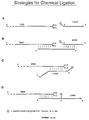
- the above-described coupling reactions can be executed using a number of different strategies, as shown in Figures 4A-4D.
- the ligation can be carried out in an external template-independent manner as shown in Figure 4A.
- This strategy requires a large excess of modified peptide acceptor (for example, 100 to 1000-fold excess) to achieve successful ligation to the RNA molecule.
- external template oligos may be used for substrate alignment as shown in Figure 4B.
- such oligos which are complementary in sequence to the RNA and peptide acceptor linker sequences, are at least approximately ten nucleotides in length.
- this oligo will include at least approximately ten nucleotides which are complementary to the RNA molecule and approximately ten nucleotides which are complementary to the peptide acceptor linker.
- the reactive sites may be brought into close proximity by direct hybridization of linker and RNA domains as shown in Figures 4C-4D.
- the extent of hybridizing sequence is at least ten to fifteen nucleotides.
- one type of exemplary construct includes a peptide acceptor attached to a linker carrying a modification at its 5' end as shown in Figures 4A-4C.
- An alternative construct may comprise an internal functional group flanked by a hybridization domain on one side and a puromycin-linker portion on the other ( Figure 4D).
- a carbohydrazide phosphoramidite was generated by combining a lactone with hydrazine and methanol and placing the reactants under reflux for 2 hours to produce a carbohydrazide moiety.
- the yield for this step of the synthesis was 97%.
- the resulting product was then reacted with the salt of a dimethoxytrityl group and pyridine/toluene at room temperature for 2.5 hours to yield a protected carbohydrazide moiety.
- the product yield for this step was 88%.
- the reactivity of the peptide acceptor toward the IO 4 - -oxidized RNA may be further enhanced through introduction of multiple copies of reactive groups.
- RNA consisting of a transcript encoding a flag epitope and a strep tag, of the sequence: 5' G GGA CAA UUA CUA UUU ACA AUU ACA AUG GAC UAC AAG GAC GAU GAC GAU AAG GGC GGC UGG UCC CAC CCC CAG UUC GAG AAG GCA UCC GCU (SEQ ID NO:1) was combined with 20 ⁇ l of 500 mM NaOAc (pH 5.2), 10 ⁇ l of 5 mM NaIO 4 , and brought up to a final volume of 100 ⁇ l with water. The reaction mixture was incubated for 15 minutes at room temperature.
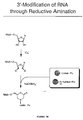
- a peptide acceptor can also be affixed to an RNA molecule by attaching a functional group to the 3' end of the RNA followed by chemical ligation, as shown in Figure 6.
- reductive amination and related reactions are used to attach functional groups to the 3' terminus of an RNA.
- These newly introduced groups then react further with suitably modified linkers on the peptide acceptor, leading to covalent bond formation between the RNA and peptide acceptor.
- exemplary reactive groups include thiols (for disulfide formation or reactions with thiolphilic reagents such as pyridyl disulfides; Figure 6, Reaction A) or maleimides (Figure 6, Reaction B).
- N-hydroxysuccinimide-esters can be generated on 5' amino-modified linkers of the peptide acceptor by reaction with disuccinimidyl glutarate (DSG) or related reagents as described in Cox et al. (J. Immunol. 145:1719, 1990) and http://www. piercenet.com/Products/linksearch.cfm (Pierce, Rockford, IL; Figure 6, Reaction C). This modified linker can then be reacted with the amino functional group of the modified RNA.
- DSG disuccinimidyl glutarate
- This modified linker can then be reacted with the amino functional group of the modified RNA.
- This type of ligation reaction may be carried out in either an external template-independent or -dependent manner as described above, using the same general approaches.
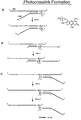
- a peptide acceptor can also be attached to an RNA molecule using photochemical methods as shown in Figures 7A-7H.
- Peptide acceptor linker molecules that carry psoralen groups allow the introduction of crosslinks to complementary RNA strands upon irradiation with long wave UV-light. This technique may be carried out generally as described in Pieles and Englisch, (Nucleic Acids Res. 17:285, 1989); and Godard et al. (Nucleic Acids Res. 22:4789, 1994).
- Attachment of the psoralen moiety to the 5' terminus of the linker region of the peptide acceptor can be accomplished using commercially available psoralen amidites, 2'-OMe-RNA phosphoramidites, psoralen C6 phosphoramidites, and triethylene glycol (TEG) phosphoramidites (Glen Research, Sterling, VA) on a standard DNA synthesizer.
- psoralen amidites 2'-OMe-RNA phosphoramidites
- psoralen C6 phosphoramidites psoralen C6 phosphoramidites
- TAG triethylene glycol
- RNA consisting of an RNA transcript encoding a flag epitope, a strep tag, and a photochemical target site of the sequence: 5' G GGA CAA UUA CUA UUU ACA AUU ACA AUG GAC UAC AAG GAC GAU GAC GAU AAG GGC GGC UGG UCC GAG CCC CAG UUC GAG AAG AAC GGC UAU A (SEQ ID NO:3), 1.2 nmole of Photolinker 30/10 consisting of the sequence: 5' Pso TAG CCG TTC T AAA AAA AAA AAA AAA AAA AAA AAA AAA AAA AAA AAA AAA CC Pu (SEQ ID NO:4) (where Pso is a psoralen C2 amidite [Glen Research], and Pu is Puromycin-CPG [Glen Research]), synthesized according to standard manufacturer protocols, or 30/15 consisting of the sequence: 5' Pso TAG CCG TTC TTC TCG AAA
- the reaction mixture was then slowly cooled to room temperature.
- the reaction mixture was next irradiated for 15 minutes at 0°C with ⁇ greater than 310 nm using a 450 W immersion lamp (medium pressure; ACE Glass, cat. no. 7825-34), equipped with a Pyrex absorption sleeve (ACE Glass, cat. no. 7835-44) in a Quartz immersion well (ACE Glass, cat. no. 7854-25), with the sample in a microcentrifuge tube strapped to the immersion well, and cooled in ice-water.
- the sample was then precipitated with 40 ⁇ l of 3 M NaOAc and 1000 ⁇ l of ethanol, and resuspended in 75 ⁇ l of water.
- various mRNAs and puromycin linkers were synthesized such that the peptide acceptor was positioned at the 3' end of the linker.
- the linkers were annealed to the target mRNAs and evaluated for their efficiency in forming mRNA-protein fusions molecules through in vitro translation techniques. The effect of the linker length and composition on fusion molecule yield was also determined.
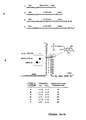
- FIG. 7D illustrates the design of the mRNAs used in the crosslinking reactions.
- Each of the RNA molecules contained a portion of the tobacco mosaic virus 5'-UTR (TMV) with good initiation codon context (Gallie et al., Nucleic Acids Res., 16:883-93, 1988; and Kozak, Microbiol. Rev., 47:1-45, 1983), and a translation initiation codon (AUG).
- TMV tobacco mosaic virus 5'-UTR
- UAG translation initiation codon
- All mRNAs also carried a 3'-terminal ten nucleotide linker hybridization sequence 5'-GCAUCCGCUAUU coding for the amino acid sequence ASA, and ending with the dinucleotide sequence 5'-UA for psoralen photocrosslinking (const.), as described by Sinden and Hagerman (Biochemistry, 23:6299-6303, 198) and Gamper et al., (Photochem. Photobiol., 40:29-34, 1984).
- mRNA 1 contained a Flag epitope, DYKDDDDK (Hopp et al., Biotechnology, 6:1205-1210, 1988) followed by a Strep-Tag II sequence, WSHPQFEK (Schmidt et al., J. Mol. Biol., 255:753-66, 1996).
- Other mRNA molecules contained a 4-4-20 scFv, anti-fluorescein single chain antibody template, as described by Bedzyk et al. (J. Biol. Chem., 265:18615-20, 1990) and Mallender et al. (J. Biol. Chem., 271:5338-46, 1996).
- mRNAs 3 and 4 contained a downstream stop codon (UAA) to induce mRNA release from the ribosome after translation of residual un-crosslinked template (vide infra).
- UAA downstream stop codon
- a poly-A tail was also attached to mRNA 4 for purification by oligo-dT.
- RNAs used in these studies were prepared by T7 RNA polymerase run off-transcription (Megashortscript Transcription Kit, Ambion, TX) of PCR DNA templates, according to the methods of Milligan et al. (Nucleic Acids Res., 15:8783-8798, 1987). After transcription, all RNAs were purified by electrophoresis on 6% TBE-urea polyacrylamide gels (Novex, CA). The product bands were visualized by UV-shadowing, excised, crushed, and soaked overnight in 0.3 M NaOAc. Following ethanol precipitation, the RNAs were resuspended and stored in H 2 O. Radiolabeled RNA was synthesized according to the same procedure by including [ ⁇ - 32 P] UTP (Amersham, IL) in the transcription buffer.
- TAG Flexible triethyleneglycol phosphate
- polynucleotide sequences of various lengths were used to tether 5'-dCdC-puromycin to the 3'-end (see the table in Figure 7E).
- the linker hybridization sequence was prepared from 2'-OMe-RNA phosphoramidites to enhance the pairing stability of the stem structure (Inoue et al., Nucleic Acids Res., 15:6131-6148, 1987; and Majlessi et al., Nucleic Acids Res., 26:2224-2229, 1998).
- the product mixture of the photocrosslinking reaction between radiolabeled mRNA 1 and linker B was analyzed on a denaturing 6% TBE-Urea gel (Novex) and visualized on a phosporimaging system (Molecular Dynamics, CA) ( Figure 7E).
- These photocrosslink product mixtures generally contained ⁇ 20% unreacted and >80% photocrosslinked mRNA, and were used directly for in vitro translation and subsequent mRNA-protein fusion formation without further purification.
- the relative size difference between mRNA and crosslinked mRNA became too small to be separated on a gel. In these cases, the crude photo-crosslinking reaction mixtures were directly added to the lysate for fusion formation, without further purification.
- mRNA-protein fusion formation was promoted by the addition of KCl and MgCl 2 to the final concentrations of 590 mM and 50 mM, respectively, in a 500 ⁇ l volume, according to the methods of Roberts & Szostak and Szostak et al. ( supra ). Incubation was continued for another 60 minutes at 20°C. Varying concentrations of KCl and MgCl 2 were also tested to explore salt dependence on fusion formation.
- the in vitro translation products were isolated by diluting the lysate into 10 ml of binding buffer (100 mM Tris HCl, pH 8.0, 10 mM EDTA, I M NaCl, 0.25% v/v Triton X-100) and by adding to the mixture 10 mg of oligo-dT cellulose type 7 (Pharmacia, NJ). The samples were rotated for 60 minutes at 4°C. The solid support was then washed with 5 ml of ice-cold binding buffer, followed by elution with 100 ⁇ l aliquots of deionized H 2 O. The amount of mRNA-protein fusion isolated was determined by scintillation counting of the incorporated [ 35 S] methionine.
- the product was analyzed by electrophoresis on 4-12% NuPage gels using MES running buffer (Novex). The gels were dried after extensive washing to remove excess [ 35 S] methionine, and bands were visualized on a phosphorimager system (Molecular Dynamics).
- mRNA-scFv fusion molecule prepared from mRNA 4 of Figure 7E, was purified by binding of the A 18 linker regions to oligo-dT cellulose, followed by washing with binding buffer, according to the methods of Roberts & Szostak and Szostak et al. ( supra ) ( Figure 7E, lane 5).
- the fusion product could be isolated with a 1.3% yield based on the amount of photo-crosslinked input mRNA.
- Physical properties (gel mobility, binding to oligo-dT cellulose, selective peptide binding to affinity reagents) of the fusions prepared from photo-crosslinked mRNA were found to be identical to those of the fusion product obtained from enzymatically ligated mRNA templates.
- fusions prepared from the mRNA template 1 crosslinked to linker B of Figure 7E, encoding the Flag and Strep-Tag II epitope were tested for protein binding.
- a solution of 10 ⁇ l of 35 S-labeled mRNA-peptide fusion (prepared from mRNA 1 with linker B) was added to 20 ⁇ l of Anti-Flag M2 Affinity Gel (Sigma, MO) in 300 ⁇ l of buffer containing 50 mM Tris HCl, pH 7.4, 1% NP 40, 150 mM NaCl, 1 mM EDTA, 1 mM Na 3 VO 4 , and 1 mM NaF.
- a second precipitation experiment was carried out by adding the same fusion product to 20 ⁇ l of StrepTactin Sepharose (Genosys, TX) in 300 ⁇ l of buffer containing 100 mM Tris-HCl, pH 7.1, 1 mM EDTA, and 0.5 mg/ml yeast tRNA. Both precipitation mixtures were processed in parallel under identical conditions: The mixtures were rotated for 1 hour at 4°C and then transferred onto an Ultrafree-MC filter unit (0.45 ⁇ m; Millipore, MA). The buffer was removed by centrifugation, and the residue washed with 5 x 300 ⁇ l of ice-cold buffer.
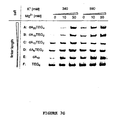
- mRNA 3 was photo-crosslinked to linkers A-F of Figure 7E and each template was subsequently tested for fusion formation (Figure 7G). After incubation for 30 minutes at 30°C, the samples were divided into aliquots, to which varying amounts of KCl and MgCl 2 were added. The samples were incubated for another 60 minutes at 20°C; then, the fusion product was analyzed by gel-electrophoresis. The highest mRNA-protein fusion yields were obtained with the long linkers A and B (40 and 35 nucleotides, respectively) under high salt conditions.
- the psoralen moiety may also be incorporated at an internal position of the linker region of the peptide acceptor, as shown in Figure 7B, and as described in Pieles et al. (Nucleic Acids Res. 17:8967, 1989), or by incorporation of a branched phosphoramidite (Clontech, Palo Alto, CA) within the linker sequence, followed by addition of a psoralen phosphoramidite (Glen Research, Sterling, VA).
- the psoralen moiety may be crosslinked to the RNA through a branched linker, as described in U.S.S.N. 09/453,190.
- a linker with the sequence 5' cgt agg cga gaa agt gat X AAA AAA AAA AAA AAA AAA AAA AAA AAA CC Pu (where Pu is Puromycin-CPG [Glen Research]; C and A are standard 3'-amidites [Glen Research]; a, t, c, and g are 5'-phosphoramidites [Glen Research]; and X is an asymmetric branching amidite [Clontech]) has been synthesized according to standard manufacturer protocols, followed by selective deprotection of the branching point X (according to the instructions of Clontech) and subsequent coupling of a psoralen C6 amidite (Glen Research).
- This linker was then photocrosslinked to an RNA with the target sequence 5' ...GCA UCC GCU CUU UCA CUA UA using the photocrosslinking techniques described above.
- This RNA-linker construct was then successfully used for the synthesis of RNA-protein fusions.
- a linker containing a psoralen attached to the 3' end of the target hybridization domain may also be constructed (Figure 7C).
- the 5' end of the psoralen-containing linker is extended by another linker, that after reversal of strand orientation, terminates with a 3' puromycin.
- a subsequent digestion of the RNA target domain with RNase H is optional and will increase the flexibility of the linker construct.
- this approach allows the attachment of the linker at internal positions of much longer RNA molecules, and the untranslated region downstream from the linker site is then clipped off before translation and RNA-protein fusion formation.
- One advantage of the photochemical methods for attaching a peptide acceptor to an RNA is that these methods do not require chemical modification of the RNA prior to ligation. This makes the process very robust and selective, and allows the use of an RNA from a crude T7 transcription reaction as the substrate for the chemical ligation.
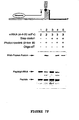
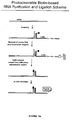
- an affinity-based RNA purification step may be combined with a photochemical ligation procedure described above ( Figure 7H).
- a suitable linker molecule is modified at its puromycin terminus with a photocleavable biotin moiety (e.g., EZ-Link TM NHS-PC-LC-Biotin, Pierce, Rockford, IL).
- the target RNA obtained, for example, from a crude transcription reaction
- the target RNA is then hybridized to a defined amount of linker, and the resulting duplex is captured on a solid support, such as streptavidin (or a related) resin.
- the excess RNA, as well as the components of the transcription reaction are then removed by extensive washing. Irradiation with long-wave UV light simultaneously leads to photocrosslink formation and product release from the resin.
- the ligated RNA can then be directly fed into a translation and fusion formation reaction, without further purification.
- RNA merely has to be estimated to exceed the amount of linker used.
- its amount is automatically reduced to a quantity not more than the amount of linker used. This, in turn, allows one to proceed to the next step without further quantization of the RNA (or ligated RNA) by, for example, taking A 260 UV readings, and the RNA amounts do not have to be adjusted otherwise.
- the nucleic-acid protein fusion molecule preparation process is therefore more suitable for automation.
- the mixture is incubated at room temperature for 2 hours, and results in a quantitative yield.
- the mixture is then precipitated twice with ethanol, with an expected recovery of >90% of the PC-biotinylated linker, and resuspended in 200 ⁇ l H 2 O.
- RNA is next transcribed using, for example, the T7 Megashortscript Kit (Ambion). Transcription is carried out using 10 pmole of a DNA template containing the sequence GCA UCC GCU AUU UAA A n at the 3'-terminus for a 250 ⁇ l reaction. This transcription reaction should yield approximately 2-5 nmol of crude RNA product. No purification (phenol extraction, NAP-5 column, or RNeasy column) is required prior to proceeding to the next step.
- the biotinylated linker (10 ⁇ l of 50 pmol/ ⁇ l biotinylated linker; 500 pmol total) is annealed to 62.5 to 250 ⁇ l of the transcription mixture (containing an estimated minimum of 500 pmole of RNA) using, for example, a PCR machine (heating for 30 seconds to 80°C, then cooling to 4°C at 0.3°C/sec) with 15 ⁇ l of 5 M NaCl (to a final concentration of 0.25 M for a 300 ⁇ l reaction) and H 2 O, to a final reaction volume of 300 ⁇ l.
- RNA of the reaction mixture is next immobilized onto 100 ⁇ l of Neutravidin beads (Pierce, Rockford, IL) by gently rocking the reaction mixture at 4°C for 30 minutes. The beads are then washed and resuspended in 300 ⁇ l H 2 O.
- Neutravidin beads Pieris, Rockford, IL
- the beads are next spun down and washed 3 times with 100 ⁇ l of buffer (25 mM Tris pH 7.0 and 0.25 M NaCl). Then the beads are UV irradiated for 15 minutes at room temperature (using a hand-held UV lamp UVGL-25; a microcentrifuge tube containing the beads is put directly on the lamp) to chemically ligate the linker to the RNA and photo-release the ligated molecule from the beads. It is expected that 250 pmol of ligated RNA is photo-released. Seventy-five ⁇ l of H 2 O is added to the tubes, the tubes are vortexed for 30 seconds, and the beads are spun down. The 75 ⁇ l supernatant, containing the ligated RNA/linker, is used for translation and formation of nucleic acid-protein fusion molecules.
- buffer 25 mM Tris pH 7.0 and 0.25 M NaCl
- the nucleic acid-protein fusion molecules are formed by combining the 75 ⁇ l of supernatant from the previous step, and combining it with 225 ⁇ l of the buffer components and lysate of the Rabbit Reticulocyte Lysate Kit (Ambion), and incubating the mixture for 30 minutes at 30°C.
- KCl and MgCl 2 are next added to final concentrations of 500 mM and 50 mM, respectively, and the reaction continues to incubate for 60 minutes at room temperature to produce the nucleic acid-protein fusion molecules.
- PNAs peptide nucleic acids
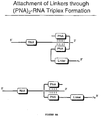
- triple-helix-forming constructs comprising two PNA molecules binding to RNA, thereby forming a clamp, can provide an efficient means for strong binding of RNA, since such constructs can be extremely resistant to thermal denaturation and conditions used for in vitro translation (Figure 8A) (Hanvey et al., Science, 258:1481, 1992).
- nucleic acid linker-PNA constructs may be accomplished by solid phase synthesis starting with puromycin-CPG, as shown in Figure 8B and as described in Uhlmann et al. (Angew. Chem. Int. Ed. Engl. 35:2633, 1996). After assembly of the desired nucleic acid portion (or PEG-spacer, if so desired) using standard automated synthesis, the solid phase synthesis is continued by attaching the PNA domain with the appropriate reagents (for example, as described in Uhlman et al. ( supra )). Alternatively, the PNA can be pre-synthesized as a separate moiety (PE Biosystems, Foster City, CA), followed by chemical coupling to the desired linker portion.
- RNA hybridization strength and consequently ligation efficiency are known to be increased by the use of 2-OMe RNA or propyne-modified nucleobases, rather than DNA (as described, for example, in Inoue et al., Nucleic Acids Res. 15:6131, 1987; Kibler-Herzog et al., Nucleic Acids Res. 19:2979, 1991; and Wagner et al., Science 260:1510, 1993).
- the linkers may also be optimized for their effectiveness in the RNA-protein fusion reaction. This will generally involve varying the length of the linker, but may also involve the use of different building blocks for RNA-protein joining.
- the deoxynucleotides of the linker may be replaced with PEG-spacers or 2-OMe-RNA units (both from Glen Research, Sterling, VA).
Landscapes
- Chemical & Material Sciences (AREA)
- Life Sciences & Earth Sciences (AREA)
- Health & Medical Sciences (AREA)
- Genetics & Genomics (AREA)
- Engineering & Computer Science (AREA)
- Organic Chemistry (AREA)
- Biomedical Technology (AREA)
- Wood Science & Technology (AREA)
- Zoology (AREA)
- Molecular Biology (AREA)
- Biotechnology (AREA)
- General Engineering & Computer Science (AREA)
- Bioinformatics & Cheminformatics (AREA)
- General Health & Medical Sciences (AREA)
- Biochemistry (AREA)
- Biophysics (AREA)
- Microbiology (AREA)
- Plant Pathology (AREA)
- Physics & Mathematics (AREA)
- Crystallography & Structural Chemistry (AREA)
- Chemical Kinetics & Catalysis (AREA)
- Analytical Chemistry (AREA)
- Bioinformatics & Computational Biology (AREA)
- General Chemical & Material Sciences (AREA)
- Medicinal Chemistry (AREA)
- Proteomics, Peptides & Aminoacids (AREA)
- Peptides Or Proteins (AREA)
- Preparation Of Compounds By Using Micro-Organisms (AREA)
- Measuring Or Testing Involving Enzymes Or Micro-Organisms (AREA)
- Medicines Containing Material From Animals Or Micro-Organisms (AREA)
Priority Applications (2)
| Application Number | Priority Date | Filing Date | Title |
|---|---|---|---|
| EP07005917A EP1870417B9 (en) | 1999-07-27 | 2000-07-19 | Peptide acceptor ligation methods |
| DK07005917.5T DK1870417T3 (da) | 1999-07-27 | 2000-07-19 | Peptidacceptor-ligeringsmetoder |
Applications Claiming Priority (3)
| Application Number | Priority Date | Filing Date | Title |
|---|---|---|---|
| US14583499P | 1999-07-27 | 1999-07-27 | |
| US145834P | 1999-07-27 | ||
| PCT/US2000/019653 WO2001007657A1 (en) | 1999-07-27 | 2000-07-19 | Peptide acceptor ligation methods |
Related Child Applications (1)
| Application Number | Title | Priority Date | Filing Date |
|---|---|---|---|
| EP07005917A Division EP1870417B9 (en) | 1999-07-27 | 2000-07-19 | Peptide acceptor ligation methods |
Publications (3)
| Publication Number | Publication Date |
|---|---|
| EP1196637A1 EP1196637A1 (en) | 2002-04-17 |
| EP1196637A4 EP1196637A4 (en) | 2003-11-12 |
| EP1196637B1 true EP1196637B1 (en) | 2007-04-25 |
Family
ID=22514769
Family Applications (2)
| Application Number | Title | Priority Date | Filing Date |
|---|---|---|---|
| EP00947524A Expired - Lifetime EP1196637B1 (en) | 1999-07-27 | 2000-07-19 | Peptide acceptor ligation methods |
| EP07005917A Expired - Lifetime EP1870417B9 (en) | 1999-07-27 | 2000-07-19 | Peptide acceptor ligation methods |
Family Applications After (1)
| Application Number | Title | Priority Date | Filing Date |
|---|---|---|---|
| EP07005917A Expired - Lifetime EP1870417B9 (en) | 1999-07-27 | 2000-07-19 | Peptide acceptor ligation methods |
Country Status (16)
| Country | Link |
|---|---|
| US (3) | US6429300B1 (enExample) |
| EP (2) | EP1196637B1 (enExample) |
| JP (2) | JP4766808B2 (enExample) |
| KR (1) | KR20020033743A (enExample) |
| AT (2) | ATE360706T1 (enExample) |
| AU (2) | AU781783B2 (enExample) |
| CA (2) | CA2377468C (enExample) |
| CY (1) | CY1113185T1 (enExample) |
| DE (1) | DE60034566T2 (enExample) |
| DK (2) | DK1196637T3 (enExample) |
| ES (2) | ES2383332T3 (enExample) |
| HK (1) | HK1045334A1 (enExample) |
| IL (1) | IL147037A0 (enExample) |
| NO (1) | NO20020348D0 (enExample) |
| PT (2) | PT1196637E (enExample) |
| WO (1) | WO2001007657A1 (enExample) |
Families Citing this family (105)
| Publication number | Priority date | Publication date | Assignee | Title |
|---|---|---|---|---|
| IL147037A0 (en) * | 1999-07-27 | 2002-08-14 | Phylos Inc | Peptide acceptor ligation methods |
| CA2397091A1 (en) | 2000-01-11 | 2001-07-19 | Markus Schweitzer | Biomolecules having multiple attachment moieties for binding to a substrate surface |
| AU2001262152A1 (en) * | 2000-03-31 | 2001-10-08 | Memorec Stoffel Gmbh | Method for extracting nucleic acids |
| US20040229271A1 (en) | 2000-05-19 | 2004-11-18 | Williams Richard B. | Compositions and methods for the identification and selection of nucleic acids and polypeptides |
| US7410761B2 (en) * | 2000-05-19 | 2008-08-12 | Proteonova, Inc. | System for rapid identification and selection of nucleic acids and polypeptides, and method thereof |
| WO2005072087A2 (en) * | 2003-12-12 | 2005-08-11 | Proteonova, Inc. | System and methods for nucleic acid and polypeptide selection |
| US6962781B1 (en) | 2000-05-19 | 2005-11-08 | Proteonova, Inc. | In vitro evolution of nucleic acids and encoded polypeptide |
| WO2003044194A1 (en) * | 2001-11-16 | 2003-05-30 | Proteonova, Inc. | Selection and evolution of nucleic acids and polypeptides |
| US7129229B2 (en) | 2000-08-11 | 2006-10-31 | Nanogen Recognomics Gmbh | Hydrazide building blocks and hydrazide modified biomolecules |
| EP1309730B1 (en) * | 2000-08-11 | 2008-11-26 | Nanogen Recognomics GmbH | New hydrazide building blocks and hydrazide modified biomolecules |
| JP4963142B2 (ja) * | 2000-12-14 | 2012-06-27 | 学校法人慶應義塾 | 遺伝子型と表現型の対応付け分子とその構成要素、および対応付け分子の製造方法と利用方法 |
| EP1401850A1 (en) * | 2001-06-20 | 2004-03-31 | Nuevolution A/S | Nucleoside derivatives for library preparation |
| US20060234231A1 (en) * | 2001-06-20 | 2006-10-19 | Nuevolution A/S | Microarrays displaying encoded molecules |
| US6893822B2 (en) | 2001-07-19 | 2005-05-17 | Nanogen Recognomics Gmbh | Enzymatic modification of a nucleic acid-synthetic binding unit conjugate |
| WO2003012146A1 (en) * | 2001-07-31 | 2003-02-13 | Phylos, Inc. | Modular assembly of nucleic acid-protein fusion multimers |
| DE10147074A1 (de) * | 2001-09-25 | 2003-05-08 | Beru Ag | Verfahren zum Betreiben einer aus mehreren Heizelementen bestehenden mehrstufigen elektrischen Heizung |
| US7125669B2 (en) * | 2001-11-27 | 2006-10-24 | Compound Therapeutics, Inc. | Solid-phase immobilization of proteins and peptides |
| DE20200926U1 (de) * | 2002-01-23 | 2002-04-18 | Hegenscheidt-MFD GmbH & Co. KG, 41812 Erkelenz | Festwalzgerät einer Festwalzmaschine für Kurbelwellen |
| US20050247001A1 (en) * | 2002-03-15 | 2005-11-10 | Nuevolution A/S | Building block forming a c-c or a c-hetero atom bond uponreaction |
| US10731151B2 (en) | 2002-03-15 | 2020-08-04 | Nuevolution A/S | Method for synthesising templated molecules |
| AU2003218630A1 (en) * | 2002-03-15 | 2003-09-29 | Nuevolution A/S | A building block capable of functional entity transfer to nucleophil |
| DE60324778D1 (de) * | 2002-03-15 | 2009-01-02 | Nuevolution As | Eine verbesserte methode zur synthese von matritzenabhängigen molekülen |
| US20050221318A1 (en) * | 2002-03-15 | 2005-10-06 | Gouliaev Alex H | Building block forming a c-c bond upon reaction |
| WO2004013070A2 (en) * | 2002-08-01 | 2004-02-12 | Nuevolution A/S | Multi-step synthesis of templated molecules |
| WO2004015075A2 (en) * | 2002-08-08 | 2004-02-19 | Dharmacon, Inc. | Short interfering rnas having a hairpin structure containing a non-nucleotide loop |
| DK3299463T3 (da) | 2002-10-30 | 2020-12-07 | Nuevolution As | Enzymatisk kodning |
| ATE450609T1 (de) | 2002-12-19 | 2009-12-15 | Nuevolution As | Durch quasizufallsstrukturen und funktionen geführte synthesemethode |
| US20070026397A1 (en) * | 2003-02-21 | 2007-02-01 | Nuevolution A/S | Method for producing second-generation library |
| EP1597394A2 (en) * | 2003-02-21 | 2005-11-23 | Nuevolution A/S | A method for obtaining structural information about an encoded molecule |
| US7915201B2 (en) * | 2003-03-20 | 2011-03-29 | Nuevolution A/S | Ligational encoding of small molecules |
| WO2004110964A2 (en) * | 2003-06-16 | 2004-12-23 | Nuevolution A/S | Encoded molecules by translation (emt) |
| WO2005074417A2 (en) * | 2003-09-03 | 2005-08-18 | Salk Institute For Biological Studies | Multiple antigen detection assays and reagents |
| WO2005026387A1 (en) | 2003-09-18 | 2005-03-24 | Nuevolution A/S | A method for obtaining structural information concerning an encoded molecule and method for selecting compounds |
| AU2004292547B9 (en) * | 2003-11-20 | 2012-04-26 | Sanofi Pasteur, Inc. | Methods for purifying pertussis toxin and peptides useful therefor |
| WO2005056764A2 (en) | 2003-12-05 | 2005-06-23 | Compound Therapeutics, Inc. | Inhibitors of type 2 vascular endothelial growth factor receptors |
| EP1723255B1 (en) * | 2004-02-17 | 2010-12-29 | Nuevolution A/S | Method for enrichment involving elimination by mismatch hybridisation |
| WO2005090566A2 (en) * | 2004-03-22 | 2005-09-29 | Nuevolution A/S | Ligational encoding using building block oligonucleotides |
| CA2467321A1 (en) * | 2004-05-14 | 2005-11-14 | Paul J. Santerre | Polymeric coupling agents and pharmaceutically-active polymers made therefrom |
| EP1816192B1 (en) * | 2004-10-15 | 2012-12-12 | National Institute of Advanced Industrial Science and Technology | LINKER FOR CONSTRUCTING mRNA-PUROMYCIN-PROTEIN CONJUGATE |
| US10206998B2 (en) | 2005-01-12 | 2019-02-19 | Proteonova, Inc. | Modular targeted therapeutic agents and methods of making same |
| EP2261257B1 (en) | 2005-01-12 | 2018-07-11 | Proteonova, Inc. | Method for making targeted therapeutic agents |
| EP1951890A4 (en) | 2005-11-16 | 2009-06-24 | Ambrx Inc | PROCESSES AND COMPOSITIONS WITH NON-NATURAL AMINO ACIDS |
| LT2336315T (lt) | 2005-12-01 | 2017-11-10 | Nuevolution A/S | Fermentiniai kodavimo būdai, skirti efektyviai didelių bibliotekų sintezei |
| US7749957B2 (en) | 2006-04-06 | 2010-07-06 | E.I. Du Pont De Nemours And Company | Clay-binding peptides and methods of use |
| JP5537946B2 (ja) | 2006-11-22 | 2014-07-02 | ブリストル−マイヤーズ スクイブ カンパニー | Igf−irを含むチロシンキナーゼ受容体に対する改変タンパク質に基づく標的治療薬 |
| EP2118344B1 (en) | 2007-02-12 | 2014-07-23 | Proteonova, Inc. | GENERATION OF LIBRARY OF SOLUBLE RANDOM POLYPEPTIDES LINKED TO mRNA |
| US7829311B2 (en) | 2007-07-25 | 2010-11-09 | E.I. Du Pont De Nemours And Company | Ketosteroid isomerase inclusion body tag engineered to be acid-resistant by replacing aspartates with glutamate |
| US7951559B2 (en) * | 2007-07-25 | 2011-05-31 | E.I. Du Pont De Nemours And Company | Recombinant peptide production using a cross-linkable solubility tag |
| US7678883B2 (en) * | 2007-07-25 | 2010-03-16 | E.I. Du Pont De Nemours And Company | Solubility tags for the expression and purification of bioactive peptides |
| US7794963B2 (en) | 2007-11-02 | 2010-09-14 | E.I. Du Pont De Nemours And Company | Use of tetracysteine tags in fluorescence-activated cell sorting analysis of prokaryotic cells producing peptides or proteins |
| KR20210049186A (ko) | 2007-11-30 | 2021-05-04 | 애브비 바이오테크놀로지 리미티드 | 단백질 제형 및 이의 제조방법 |
| US8883146B2 (en) | 2007-11-30 | 2014-11-11 | Abbvie Inc. | Protein formulations and methods of making same |
| JP2011517314A (ja) | 2008-02-14 | 2011-06-02 | ブリストル−マイヤーズ スクイブ カンパニー | Egfrに結合する操作されたタンパク質に基づく標的化された治療薬 |
| CA2723265C (en) * | 2008-05-02 | 2015-11-24 | Epicentre Technologies Corporation | Selective 5' ligation tagging of rna |
| US9296810B2 (en) | 2008-05-02 | 2016-03-29 | Novartis Ag | Fibronectin-based binding molecules and uses thereof |
| PE20091931A1 (es) | 2008-05-22 | 2009-12-31 | Bristol Myers Squibb Co | Proteinas de dominio de armazon basadas en fibronectina multivalentes |
| WO2010011944A2 (en) | 2008-07-25 | 2010-01-28 | Wagner Richard W | Protein screeing methods |
| BRPI0919426A2 (pt) * | 2008-09-30 | 2015-12-15 | Abbott Lab | métodos melhorado de exposição de rna |
| TWI496582B (zh) | 2008-11-24 | 2015-08-21 | 必治妥美雅史谷比公司 | 雙重專一性之egfr/igfir結合分子 |
| US20100158846A1 (en) * | 2008-12-18 | 2010-06-24 | E. I. Du Pont De Nemours And Company | Hair-binding peptides |
| US20100158837A1 (en) | 2008-12-18 | 2010-06-24 | E. I. Du Pont De Nemours And Company | Iron oxide-binding peptides |
| US8287845B2 (en) * | 2008-12-18 | 2012-10-16 | E I Du Pont De Nemours And Company | Hair-binding peptides |
| US20100158822A1 (en) * | 2008-12-18 | 2010-06-24 | E .I. Du Pont De Nemours And Company | Peptides that bind to silica-coated particles |
| BRPI1014677A2 (pt) * | 2009-03-30 | 2016-04-12 | Du Pont | sistemas baseados em peptídeos para distribuição de agentes cosméticos |
| US8481678B2 (en) | 2009-03-30 | 2013-07-09 | E I Du Pont De Nemours And Company | Peptide-based tooth whitening reagents |
| JP5733784B2 (ja) * | 2009-09-24 | 2015-06-10 | 国立大学法人埼玉大学 | cDNA/mRNA−タンパク質連結体の効率的合成法 |
| WO2011051327A2 (en) | 2009-10-30 | 2011-05-05 | Novartis Ag | Small antibody-like single chain proteins |
| WO2011051466A1 (en) | 2009-11-02 | 2011-05-05 | Novartis Ag | Anti-idiotypic fibronectin-based binding molecules and uses thereof |
| WO2011092233A1 (en) | 2010-01-29 | 2011-08-04 | Novartis Ag | Yeast mating to produce high-affinity combinations of fibronectin-based binders |
| AU2011214465A1 (en) | 2010-02-10 | 2012-08-30 | Novartis Ag | Methods and compounds for muscle growth |
| MX340735B (es) * | 2010-04-09 | 2016-07-22 | Univ Utrecht Holding Bv | Proteinas multimericas recombinantes de la influenza. |
| CA2832672A1 (en) | 2010-04-16 | 2011-10-20 | Nuevolution A/S | Bi-functional complexes and methods for making and using such complexes |
| TW201138808A (en) | 2010-05-03 | 2011-11-16 | Bristol Myers Squibb Co | Serum albumin binding molecules |
| US9562089B2 (en) | 2010-05-26 | 2017-02-07 | Bristol-Myers Squibb Company | Fibronectin based scaffold proteins having improved stability |
| MX345300B (es) | 2010-07-30 | 2017-01-24 | Novartis Ag * | Moléculas andamio de fibronectina y bibliotecas de las mismas. |
| DE102010056289A1 (de) | 2010-12-24 | 2012-06-28 | Geneart Ag | Verfahren zur Herstellung von Leseraster-korrekten Fragment-Bibliotheken |
| US9880160B2 (en) | 2011-03-15 | 2018-01-30 | X-Body, Inc. | Antibody screening methods |
| CA2833917C (en) | 2011-04-28 | 2020-04-28 | The Board Of Trustees Of The Leland Stanford Junior University | Identification of polynucleotides associated with a sample. |
| US9422550B2 (en) | 2011-08-01 | 2016-08-23 | The General Hospital Corporation | Protein and peptide libraries |
| KR20220116585A (ko) | 2011-10-11 | 2022-08-23 | 비엘라 바이오, 인크. | Cd40l 특이적 tn3 유래 스카폴드 및 이의 사용 방법 |
| WO2013085972A1 (en) | 2011-12-05 | 2013-06-13 | X-Body, Inc. | Pdgf receptor beta binding polypeptides |
| JP6020865B2 (ja) * | 2013-03-13 | 2016-11-02 | 国立大学法人 東京大学 | 核酸リンカー |
| MY191368A (en) | 2013-06-28 | 2022-06-20 | X Body Inc | Target antigen discovery, phenotypic screens and use thereof for identification of target cell specific target epitopes |
| CN103382579B (zh) * | 2013-07-06 | 2015-10-21 | 中国科学院成都生物研究所 | 一种体外筛选多肽的方法 |
| US10519436B2 (en) | 2013-09-23 | 2019-12-31 | X-Body, Inc. | Methods and compositions for generation of binding agents against cell surface antigens |
| WO2015101516A1 (en) * | 2013-12-31 | 2015-07-09 | F. Hoffmann-La Roche Ag | Enrichment of full-length oligonucleotides via transcription/translation-mediated purification |
| EP3102245B1 (en) | 2014-02-05 | 2021-09-08 | Molecular Templates, Inc. | Methods of screening, selecting, and identifying cytotoxic recombinant polypeptides based on an interim diminution of ribotoxicity |
| EP3129401B1 (en) | 2014-03-20 | 2019-06-12 | Bristol-Myers Squibb Company | Serum albumin-binding fibronectin type iii domains |
| JP6478392B2 (ja) * | 2014-12-26 | 2019-03-06 | 国立研究開発法人産業技術総合研究所 | 核酸リンカー |
| CN107428817B (zh) | 2015-03-12 | 2022-07-12 | 免疫医疗有限责任公司 | 纯化白蛋白融合蛋白的方法 |
| ES2781207T3 (es) | 2015-09-23 | 2020-08-31 | Bristol Myers Squibb Co | Dominios de fibronectina de tipo iii de unión a seroalbúmina con velocidad de disociación rápida |
| EP4299803A3 (en) | 2016-05-02 | 2024-03-27 | Encodia, Inc. | Macromolecule analysis employing nucleic acid encoding |
| CN109790565A (zh) * | 2016-06-15 | 2019-05-21 | 基因捕获公司 | 包含茎-环捕获分子的组合物、方法和装置 |
| EP3475706B1 (en) | 2016-06-27 | 2021-08-11 | Juno Therapeutics, Inc. | Mhc-e restricted epitopes, binding molecules and related methods and uses |
| US20200182884A1 (en) | 2016-06-27 | 2020-06-11 | Juno Therapeutics, Inc. | Method of identifying peptide epitopes, molecules that bind such epitopes and related uses |
| SG11201908817WA (en) | 2017-03-21 | 2019-10-30 | Fujifilm Corp | Peptide compound and method for producing same, composition for screening use, and method for selecting peptide compound |
| AU2018358057B2 (en) | 2017-10-31 | 2023-03-02 | Encodia, Inc. | Kits for analysis using nucleic acid encoding and/or label |
| US11807623B2 (en) | 2017-11-30 | 2023-11-07 | Arrakis Therapeutics, Inc. | Nucleic acid-binding photoprobes and uses thereof |
| WO2019148294A1 (en) | 2018-02-02 | 2019-08-08 | Interface Biologics, Inc. | Dimeric dexamethasone prodrug compositions and uses thereof |
| TWI830718B (zh) * | 2018-02-09 | 2024-02-01 | 日商住友化學股份有限公司 | 核酸分子之製造方法 |
| JP6817493B2 (ja) * | 2018-03-30 | 2021-01-20 | 住友化学株式会社 | 一本鎖rnaの製造方法 |
| WO2019236644A1 (en) * | 2018-06-05 | 2019-12-12 | Arrakis Therapeutics, Inc. | Encoded libraries and methods of use for screening nucleic acid targets |
| US12473326B2 (en) | 2019-02-01 | 2025-11-18 | Ripple Therapeutics Corporation | Crystalline forms of dexamethasone dimers and uses thereof |
| US20220347305A1 (en) | 2019-08-07 | 2022-11-03 | Ripple Therapeutics Corporation | Controlled release drug dimers |
| WO2021220061A2 (en) | 2020-05-01 | 2021-11-04 | Ripple Therapeutics Corporation | Heterodimer compositions and methods for the treatment of ocular disorders |
Family Cites Families (16)
| Publication number | Priority date | Publication date | Assignee | Title |
|---|---|---|---|---|
| US5391723A (en) * | 1989-05-31 | 1995-02-21 | Neorx Corporation | Oligonucleotide conjugates |
| US5843701A (en) | 1990-08-02 | 1998-12-01 | Nexstar Pharmaceticals, Inc. | Systematic polypeptide evolution by reverse translation |
| WO1995011922A1 (en) * | 1993-10-29 | 1995-05-04 | Affymax Technologies N.V. | In vitro peptide and antibody display libraries |
| DE19646372C1 (de) * | 1995-11-11 | 1997-06-19 | Evotec Biosystems Gmbh | Genotyp und Phänotyp koppelnde Verbindung |
| US6143495A (en) * | 1995-11-21 | 2000-11-07 | Yale University | Unimolecular segment amplification and sequencing |
| US6117635A (en) * | 1996-07-16 | 2000-09-12 | Intergen Company | Nucleic acid amplification oligonucleotides with molecular energy transfer labels and methods based thereon |
| US5842701A (en) * | 1996-10-08 | 1998-12-01 | Smith International, Inc. | Dual functioning seal for rock bits |
| WO1998015636A1 (en) | 1996-10-10 | 1998-04-16 | Henrik Garoff | Alphavirus-retrovirus vectors |
| EP0962527B1 (en) * | 1996-10-17 | 2004-08-04 | Mitsubishi Chemical Corporation | Molecule that homologizes genotype and phenotype and utilization thereof |
| DK0971946T3 (da) * | 1997-01-21 | 2006-10-30 | Gen Hospital Corp | Selektion af proteiner ved anvendelse af RNA-protein-fusioner |
| US6261804B1 (en) * | 1997-01-21 | 2001-07-17 | The General Hospital Corporation | Selection of proteins using RNA-protein fusions |
| US5935791A (en) * | 1997-09-23 | 1999-08-10 | Becton, Dickinson And Company | Detection of nucleic acids by fluorescence quenching |
| DE69800415T2 (de) * | 1997-12-22 | 2001-07-19 | Genset, Paris | Prostatakrebs-gen |
| US5985575A (en) | 1998-05-20 | 1999-11-16 | Wisconsin Alumni Research Foundation | Tethered function assay for protein function |
| IL147037A0 (en) * | 1999-07-27 | 2002-08-14 | Phylos Inc | Peptide acceptor ligation methods |
| JP4803933B2 (ja) * | 1999-08-27 | 2011-10-26 | ブリストル−マイヤーズ スクウィブ カンパニー | インビトロ翻訳タンパク質の符号化方法および選別方法 |
-
2000
- 2000-07-19 IL IL14703700A patent/IL147037A0/xx unknown
- 2000-07-19 HK HK02106728.4A patent/HK1045334A1/zh unknown
- 2000-07-19 JP JP2001512922A patent/JP4766808B2/ja not_active Expired - Lifetime
- 2000-07-19 CA CA2377468A patent/CA2377468C/en not_active Expired - Lifetime
- 2000-07-19 EP EP00947524A patent/EP1196637B1/en not_active Expired - Lifetime
- 2000-07-19 DK DK00947524T patent/DK1196637T3/da active
- 2000-07-19 EP EP07005917A patent/EP1870417B9/en not_active Expired - Lifetime
- 2000-07-19 PT PT00947524T patent/PT1196637E/pt unknown
- 2000-07-19 DK DK07005917.5T patent/DK1870417T3/da active
- 2000-07-19 WO PCT/US2000/019653 patent/WO2001007657A1/en not_active Ceased
- 2000-07-19 US US09/619,103 patent/US6429300B1/en not_active Expired - Lifetime
- 2000-07-19 ES ES07005917T patent/ES2383332T3/es not_active Expired - Lifetime
- 2000-07-19 AT AT00947524T patent/ATE360706T1/de active
- 2000-07-19 CA CA2693274A patent/CA2693274C/en not_active Expired - Lifetime
- 2000-07-19 ES ES00947524T patent/ES2284508T3/es not_active Expired - Lifetime
- 2000-07-19 PT PT07005917T patent/PT1870417E/pt unknown
- 2000-07-19 AU AU61112/00A patent/AU781783B2/en not_active Expired
- 2000-07-19 DE DE60034566T patent/DE60034566T2/de not_active Expired - Lifetime
- 2000-07-19 AT AT07005917T patent/ATE551352T1/de active
- 2000-07-19 KR KR1020027001058A patent/KR20020033743A/ko not_active Withdrawn
-
2002
- 2002-01-23 NO NO20020348A patent/NO20020348D0/no not_active Application Discontinuation
- 2002-07-30 US US10/208,357 patent/US7078197B2/en not_active Expired - Lifetime
-
2005
- 2005-09-15 AU AU2005211548A patent/AU2005211548B2/en not_active Expired
-
2006
- 2006-07-10 US US11/483,495 patent/US7790421B2/en not_active Expired - Fee Related
-
2010
- 2010-08-24 JP JP2010186725A patent/JP5512463B2/ja not_active Expired - Lifetime
-
2012
- 2012-06-08 CY CY20121100522T patent/CY1113185T1/el unknown
Non-Patent Citations (1)
| Title |
|---|
| None * |
Also Published As
Similar Documents
| Publication | Publication Date | Title |
|---|---|---|
| EP1870417B1 (en) | Peptide acceptor ligation methods | |
| AU775997B2 (en) | DNA-protein fusions and uses thereof | |
| US6312927B1 (en) | Methods for producing nucleic acids lacking 3'-untranslated regions and optimizing cellular RNA-protein fusion formation | |
| JP6057185B2 (ja) | 核酸リンカー | |
| JP2008253176A (ja) | 高親和性分子取得のためのリンカー | |
| AU2008200974B2 (en) | Peptide acceptor ligation methods | |
| HK1112007B (en) | Peptide acceptor ligation methods | |
| WO2003062417A1 (fr) | Produit de ligation arn-adn, et utilisation correspondante | |
| JP4745577B2 (ja) | アミノアシル化活性を有した触媒RNAs | |
| JPWO2005024018A1 (ja) | 核酸構築物およびその製造方法 |
Legal Events
| Date | Code | Title | Description |
|---|---|---|---|
| PUAI | Public reference made under article 153(3) epc to a published international application that has entered the european phase |
Free format text: ORIGINAL CODE: 0009012 |
|
| 17P | Request for examination filed |
Effective date: 20020122 |
|
| AK | Designated contracting states |
Kind code of ref document: A1 Designated state(s): AT BE CH CY DE DK ES FI FR GB GR IE IT LI LU MC NL PT SE |
|
| AX | Request for extension of the european patent |
Free format text: AL;LT;LV;MK;RO;SI |
|
| RIC1 | Information provided on ipc code assigned before grant |
Ipc: 7C 12P 21/06 B Ipc: 7C 12Q 1/68 A Ipc: 7C 12N 15/10 B Ipc: 7C 12N 15/11 B Ipc: 7C 12P 19/34 B |
|
| A4 | Supplementary search report drawn up and despatched |
Effective date: 20030925 |
|
| RAP1 | Party data changed (applicant data changed or rights of an application transferred) |
Owner name: COMPOUND THERAPEUTICS, INC. |
|
| 17Q | First examination report despatched |
Effective date: 20050523 |
|
| RAP1 | Party data changed (applicant data changed or rights of an application transferred) |
Owner name: ADNEXUS THERAPEUTICS, INC. |
|
| GRAP | Despatch of communication of intention to grant a patent |
Free format text: ORIGINAL CODE: EPIDOSNIGR1 |
|
| GRAS | Grant fee paid |
Free format text: ORIGINAL CODE: EPIDOSNIGR3 |
|
| GRAA | (expected) grant |
Free format text: ORIGINAL CODE: 0009210 |
|
| AK | Designated contracting states |
Kind code of ref document: B1 Designated state(s): AT BE CH CY DE DK ES FI FR GB GR IE IT LI LU MC NL PT SE |
|
| REG | Reference to a national code |
Ref country code: GB Ref legal event code: FG4D |
|
| REG | Reference to a national code |
Ref country code: IE Ref legal event code: FG4D |
|
| REG | Reference to a national code |
Ref country code: CH Ref legal event code: EP |
|
| REF | Corresponds to: |
Ref document number: 60034566 Country of ref document: DE Date of ref document: 20070606 Kind code of ref document: P |
|
| REG | Reference to a national code |
Ref country code: SE Ref legal event code: TRGR |
|
| REG | Reference to a national code |
Ref country code: CH Ref legal event code: NV Representative=s name: SERVOPATENT GMBH |
|
| REG | Reference to a national code |
Ref country code: PT Ref legal event code: SC4A Free format text: AVAILABILITY OF NATIONAL TRANSLATION Effective date: 20070625 |
|
| REG | Reference to a national code |
Ref country code: DK Ref legal event code: T3 |
|
| ET | Fr: translation filed | ||
| REG | Reference to a national code |
Ref country code: ES Ref legal event code: FG2A Ref document number: 2284508 Country of ref document: ES Kind code of ref document: T3 |
|
| REG | Reference to a national code |
Ref country code: CH Ref legal event code: PFA Owner name: ADNEXUS THERAPEUTICS, INC. Free format text: ADNEXUS THERAPEUTICS, INC.#100 BEAVER STREET#WALTHAM MA 02453 (US) -TRANSFER TO- ADNEXUS THERAPEUTICS, INC.#100 BEAVER STREET#WALTHAM MA 02453 (US) |
|
| PLBE | No opposition filed within time limit |
Free format text: ORIGINAL CODE: 0009261 |
|
| STAA | Information on the status of an ep patent application or granted ep patent |
Free format text: STATUS: NO OPPOSITION FILED WITHIN TIME LIMIT |
|
| 26N | No opposition filed |
Effective date: 20080128 |
|
| PG25 | Lapsed in a contracting state [announced via postgrant information from national office to epo] |
Ref country code: GR Free format text: LAPSE BECAUSE OF FAILURE TO SUBMIT A TRANSLATION OF THE DESCRIPTION OR TO PAY THE FEE WITHIN THE PRESCRIBED TIME-LIMIT Effective date: 20070726 |
|
| REG | Reference to a national code |
Ref country code: CH Ref legal event code: PUE Owner name: BRISTOL-MYERS SQUIBB COMPANY Free format text: ADNEXUS, A BRISTOL-MYERS SQUIBB R&D COMPANY#100 BEAVER STREET#WALTHAM, MA 02453 (US) -TRANSFER TO- BRISTOL-MYERS SQUIBB COMPANY#RT. 206 & PROVINCE LINE ROAD#PRINCETON, NJ 08543-4000 (US) Ref country code: CH Ref legal event code: PFA Owner name: ADNEXUS, A BRISTOL-MYERS SQUIBB R&D COMPANY Free format text: ADNEXUS, A BMS R&D COMPANY#100 BEAVER STREET#WALTHAM, MA 02453 (US) -TRANSFER TO- ADNEXUS, A BRISTOL-MYERS SQUIBB R&D COMPANY#100 BEAVER STREET#WALTHAM, MA 02453 (US) Ref country code: CH Ref legal event code: PUE Owner name: ADNEXUS, A BMS R&D COMPANY Free format text: ADNEXUS THERAPEUTICS, INC.#100 BEAVER STREET#WALTHAM MA 02453 (US) -TRANSFER TO- ADNEXUS, A BMS R&D COMPANY#100 BEAVER STREET#WALTHAM, MA 02453 (US) |
|
| REG | Reference to a national code |
Ref country code: PT Ref legal event code: PC4A Owner name: ADNEXUS, A BMS R&D COMPANY, US Effective date: 20090128 |
|
| REG | Reference to a national code |
Ref country code: HK Ref legal event code: WD Ref document number: 1045334 Country of ref document: HK |
|
| REG | Reference to a national code |
Ref country code: PT Ref legal event code: PC4A Owner name: ADNEXUS, A BMS R&D COMPANY, US Effective date: 20090128 |
|
| REG | Reference to a national code |
Ref country code: PT Ref legal event code: PC4A Owner name: BRISTOL-MYERS SQUIBB COMPANY, US Effective date: 20090128 |
|
| PG25 | Lapsed in a contracting state [announced via postgrant information from national office to epo] |
Ref country code: CY Free format text: LAPSE BECAUSE OF FAILURE TO SUBMIT A TRANSLATION OF THE DESCRIPTION OR TO PAY THE FEE WITHIN THE PRESCRIBED TIME-LIMIT Effective date: 20070425 |
|
| REG | Reference to a national code |
Ref country code: GB Ref legal event code: 732E Free format text: REGISTERED BETWEEN 20100107 AND 20100113 |
|
| REG | Reference to a national code |
Ref country code: FR Ref legal event code: CD Ref country code: FR Ref legal event code: TP |
|
| BECA | Be: change of holder's address |
Owner name: BRISTOL-MYERS SQUIBB CY206 & PROVINCE LINE ROAD, U Effective date: 20100707 |
|
| BECH | Be: change of holder |
Owner name: BRISTOL-MYERS SQUIBB CY Effective date: 20100707 |
|
| BECN | Be: change of holder's name |
Owner name: BRISTOL-MYERS SQUIBB CY Effective date: 20100707 |
|
| REG | Reference to a national code |
Ref country code: NL Ref legal event code: SD Effective date: 20100813 Ref country code: NL Ref legal event code: TD Effective date: 20100813 |
|
| REG | Reference to a national code |
Ref country code: FR Ref legal event code: PLFP Year of fee payment: 17 |
|
| REG | Reference to a national code |
Ref country code: FR Ref legal event code: PLFP Year of fee payment: 18 |
|
| REG | Reference to a national code |
Ref country code: FR Ref legal event code: PLFP Year of fee payment: 19 |
|
| PGFP | Annual fee paid to national office [announced via postgrant information from national office to epo] |
Ref country code: MC Payment date: 20190626 Year of fee payment: 20 |
|
| PGFP | Annual fee paid to national office [announced via postgrant information from national office to epo] |
Ref country code: NL Payment date: 20190712 Year of fee payment: 20 Ref country code: FR Payment date: 20190619 Year of fee payment: 20 Ref country code: BE Payment date: 20190617 Year of fee payment: 20 Ref country code: LU Payment date: 20190710 Year of fee payment: 20 |
|
| PGFP | Annual fee paid to national office [announced via postgrant information from national office to epo] |
Ref country code: DE Payment date: 20190710 Year of fee payment: 20 Ref country code: FI Payment date: 20190709 Year of fee payment: 20 Ref country code: SE Payment date: 20190710 Year of fee payment: 20 Ref country code: IE Payment date: 20190710 Year of fee payment: 20 Ref country code: ES Payment date: 20190801 Year of fee payment: 20 Ref country code: IT Payment date: 20190719 Year of fee payment: 20 Ref country code: PT Payment date: 20190719 Year of fee payment: 20 Ref country code: DK Payment date: 20190710 Year of fee payment: 20 |
|
| PGFP | Annual fee paid to national office [announced via postgrant information from national office to epo] |
Ref country code: GB Payment date: 20190717 Year of fee payment: 20 Ref country code: AT Payment date: 20190625 Year of fee payment: 20 |
|
| PGFP | Annual fee paid to national office [announced via postgrant information from national office to epo] |
Ref country code: CH Payment date: 20190718 Year of fee payment: 20 |
|
| REG | Reference to a national code |
Ref country code: DE Ref legal event code: R071 Ref document number: 60034566 Country of ref document: DE |
|
| REG | Reference to a national code |
Ref country code: DK Ref legal event code: EUP Expiry date: 20200719 |
|
| REG | Reference to a national code |
Ref country code: NL Ref legal event code: MK Effective date: 20200718 |
|
| REG | Reference to a national code |
Ref country code: CH Ref legal event code: PL |
|
| REG | Reference to a national code |
Ref country code: FI Ref legal event code: MAE |
|
| REG | Reference to a national code |
Ref country code: GB Ref legal event code: PE20 Expiry date: 20200718 |
|
| REG | Reference to a national code |
Ref country code: BE Ref legal event code: MK Effective date: 20200719 |
|
| REG | Reference to a national code |
Ref country code: SE Ref legal event code: EUG |
|
| REG | Reference to a national code |
Ref country code: IE Ref legal event code: MK9A |
|
| REG | Reference to a national code |
Ref country code: AT Ref legal event code: MK07 Ref document number: 360706 Country of ref document: AT Kind code of ref document: T Effective date: 20200719 |
|
| REG | Reference to a national code |
Ref country code: SE Ref legal event code: EUG |
|
| REG | Reference to a national code |
Ref country code: ES Ref legal event code: FD2A Effective date: 20201026 |
|
| PG25 | Lapsed in a contracting state [announced via postgrant information from national office to epo] |
Ref country code: PT Free format text: LAPSE BECAUSE OF EXPIRATION OF PROTECTION Effective date: 20200729 Ref country code: IE Free format text: LAPSE BECAUSE OF EXPIRATION OF PROTECTION Effective date: 20200719 Ref country code: GB Free format text: LAPSE BECAUSE OF EXPIRATION OF PROTECTION Effective date: 20200718 |
|
| PG25 | Lapsed in a contracting state [announced via postgrant information from national office to epo] |
Ref country code: ES Free format text: LAPSE BECAUSE OF EXPIRATION OF PROTECTION Effective date: 20200720 |