EP1179945B1 - Answer detection for ip based telephones using passive detection - Google Patents
Answer detection for ip based telephones using passive detection Download PDFInfo
- Publication number
- EP1179945B1 EP1179945B1 EP01303529A EP01303529A EP1179945B1 EP 1179945 B1 EP1179945 B1 EP 1179945B1 EP 01303529 A EP01303529 A EP 01303529A EP 01303529 A EP01303529 A EP 01303529A EP 1179945 B1 EP1179945 B1 EP 1179945B1
- Authority
- EP
- European Patent Office
- Prior art keywords
- handset
- personal computer
- sound card
- audio
- hook tone
- Prior art date
- Legal status (The legal status is an assumption and is not a legal conclusion. Google has not performed a legal analysis and makes no representation as to the accuracy of the status listed.)
- Expired - Lifetime
Links
- 238000001514 detection method Methods 0.000 title description 4
- 230000005540 biological transmission Effects 0.000 claims description 6
- 238000000034 method Methods 0.000 claims description 3
- 239000004020 conductor Substances 0.000 claims 18
- 230000000903 blocking effect Effects 0.000 claims 2
- 238000004891 communication Methods 0.000 description 6
- 238000012546 transfer Methods 0.000 description 6
- 230000011664 signaling Effects 0.000 description 4
- 238000010586 diagram Methods 0.000 description 3
- 230000006870 function Effects 0.000 description 3
- 230000005236 sound signal Effects 0.000 description 3
- 238000012545 processing Methods 0.000 description 2
- 238000013461 design Methods 0.000 description 1
- 230000000977 initiatory effect Effects 0.000 description 1
- QYSGYZVSCZSLHT-UHFFFAOYSA-N octafluoropropane Chemical compound FC(F)(F)C(F)(F)C(F)(F)F QYSGYZVSCZSLHT-UHFFFAOYSA-N 0.000 description 1
Images

Classifications
-
- H—ELECTRICITY
- H04—ELECTRIC COMMUNICATION TECHNIQUE
- H04M—TELEPHONIC COMMUNICATION
- H04M1/00—Substation equipment, e.g. for use by subscribers
- H04M1/253—Telephone sets using digital voice transmission
- H04M1/2535—Telephone sets using digital voice transmission adapted for voice communication over an Internet Protocol [IP] network
-
- H—ELECTRICITY
- H04—ELECTRIC COMMUNICATION TECHNIQUE
- H04L—TRANSMISSION OF DIGITAL INFORMATION, e.g. TELEGRAPHIC COMMUNICATION
- H04L12/00—Data switching networks
- H04L12/66—Arrangements for connecting between networks having differing types of switching systems, e.g. gateways
-
- H—ELECTRICITY
- H04—ELECTRIC COMMUNICATION TECHNIQUE
- H04M—TELEPHONIC COMMUNICATION
- H04M1/00—Substation equipment, e.g. for use by subscribers
- H04M1/60—Substation equipment, e.g. for use by subscribers including speech amplifiers
- H04M1/6033—Substation equipment, e.g. for use by subscribers including speech amplifiers for providing handsfree use or a loudspeaker mode in telephone sets
-
- H—ELECTRICITY
- H04—ELECTRIC COMMUNICATION TECHNIQUE
- H04M—TELEPHONIC COMMUNICATION
- H04M1/00—Substation equipment, e.g. for use by subscribers
- H04M1/82—Line monitoring circuits for call progress or status discrimination
-
- H—ELECTRICITY
- H04—ELECTRIC COMMUNICATION TECHNIQUE
- H04M—TELEPHONIC COMMUNICATION
- H04M7/00—Arrangements for interconnection between switching centres
- H04M7/006—Networks other than PSTN/ISDN providing telephone service, e.g. Voice over Internet Protocol (VoIP), including next generation networks with a packet-switched transport layer
Definitions
- This invention relates to telephones in general, and in particular two or more telephones communicating using an IP protocol.
- An IP softphone consists of a software package running on a personal computer (PC).
- the software emulates a telephone and communicates signaling and voice information via a IP-network connection between the PC and a telecommunication switching system (also referred to as a PBX).
- This network connection is often the Internet or a LAN.
- Audio information being received from the network is communicated with the user via a headset or handset via a sound card that interfaces the headset or handset to the PC.
- the sound card converts the analog information into digital information that the software then transmits to a destination via the network.
- the software alerts the user via a speaker attached to the PC.
- the user once again selects the software and selects a soft button labeled "Number" and proceeds to dial the destination number using a keypad or a pre-stored list of telephone numbers.
- the keypad can be either a soft keypad or the PC's keyboard.
- a common problem is that while a user is walking into their office, they then hear the IP softphone ringing. To answer the call, the user must unlock the screen blanker to access the PC, select the software application, and actuate the soft button labeled "answer". Then, the user can pick up the handset or the headset and talk. The problem is that a great amount of time is involved in performing these steps. Frequently, before the user has completed the steps, the call is transferred to coverage such as a voice mail system.
- U.S. Patent No. 5,974,043 discloses a system that includes a computer and a communications interface.
- the system can also include a telephone which includes a communication unit, a computer interface, a controller and a switch.
- the switch is switchable between two states. In the first state, the communication unit is connected to a telephone line. In the second state, the communication unit is connected to the computer and the computer is connected to the telephone line.
- WIPO Patent Application No. WO 00/35179 discloses a computer-telephone-sound card interface system by which a personal computer is enabled to pass audio signals directly between a sound card to a telephone handset. When a modem has not seized the telephone line, audio signals are passed directly between the sound card and external speakers and a microphone. The interface system automatically detects when the modem seizes the telephone line and passes audio signals between the sound card and telephone only when the handset goes off hook.
- This invention is directed to solving these and other problems and disadvantages of the prior art.
- a handset has a switch that is manually deactivated when the user wishes to answer an incoming call, or manually activated when the user wishes to terminate a call.
- a sound card within a personal computer transmits a hook tone that is above the human hearing range to a transmitter section of the handset.
- the switch When the switch is in the activated state, the handset re-transmits the hook tone back to the sound card which converts the hook tone to digital information so that the hook tone can be detected by software running in the personal computer.
- the manual switch is deactivated, the handset ceases to re-transmit the hook tone back to the sound card.
- the software detects the absence of the hook tone to determine if the handset is answering the incoming call.
- FIG. 1 illustrates the system for implementing the invention.
- PBX 108 is supplying telephone service for a user that is utilizing handset 100 via sound card 105, personal computer (PC) 106, LAN card 107 and LAN 111.
- PBX 108 supplies access to the general public by being interconnected to public telephone network 109.
- LAN card 107 and sound card 105 could be internal to PC 106.
- PBX 108 can advantageously be a Lucent Definity® Business Communication Switching System.
- PBX 108 supplies service for other users utilizing conventional telephones such as telephone 112.
- other handsets similar to handset 100 can be interconnected to LAN 111 by having individual sound cards, PCs and LAN cards.
- PC 106 receives control signaling and voice information from PBX 108, and PC 106 in turn transmits voice information and control signaling information to PBX 108 via LAN card 107 and LAN 111.
- Sound card 105 performs the function of converting audio information received from PC 106 to analog signals and transmitting these to audio receiver 101 that advantageously can be a simple speaker arranged in handset 100. Sound card 105 similarly converts audio information received from audio transmitter 102 (that advantageously can be a simple microphone) to digital information which is transmitted to PC 106.
- sound card 105 also generates a hook tone that is above the human hearing range for transmission to handset 100. Also, sound card 105 provides the facilities for converting this hook tone into digital information for detection by software after the hook tone is received back from handset 100.
- handset 100 When not in use, handset 100 sets in a physical apparatus that actuates switch 104 so that the hook tone being received from sound card 105 is re-transmitted back to sound card 105.
- switch 104 When a user picks up and places handset 100 to the user's ear, removal from the physical apparatus causes switch 104 to be deactuated so that the hook tone received from sound card 105 is not re-transmitted back to sound card 105.
- Low-pass filter 103 prevents the hook tone from being transmitted to audio receiver 100
- low-pass filter 110 prevents the hook tone from being transmitted to audio transmitter 102.
- Low-pass filters 103 and 110 are low-pass passive filters that block the hook tone but communicate audio information in human hearing range. Such filters are well known to those skilled in the art.
- PC 106 transmits control signaling information to PC 106.
- PC 106 then provides an audio alerting sound via an internal speaker of PC 106 or other apparatus well-known to those skilled in the art.
- PC 106 transmits control information to sound card 105 that causes sound card 105 to start generation of the hook tone for transmission to handset 100 and to start converting the re-transmitted hook tone from handset 100 to digital information.
- Software in PC 106 (audio client 202 of FIG. 2) monitors for the hook tone (as digital information) from handset 100 received via sound card 105.
- switch 104 When the user of handset 100 deactivates switch 104 by removing handset 100 from the physical apparatus, switch 104 now ceases to re-transmit the hook tone back to sound card 105.
- the software detects the absence of the hook tone from handset 100, PC 106 transmits control information back to PBX 108 indicating that the call has been answered by handset 100.
- the telephone conversation then takes place in a normal manner by the user of handset 100 hearing speech from the user of telephone 112 via audio receiver 100 and speaking to the user of telephone 112 via audio transmitter 102.
- switch 104 When the user of handset 100 ends the conversation by placing handset 100 on the physical apparatus, switch 104 is activated to re-transmit the hook tone back to sound card 105.
- software in PC 106 (audio client 202 of FIG.
- FIG. 2 illustrates, in block diagram form, the structure of the software within PC 106 utilized to provide the functions for handset 100.
- the messages transmitted among the software elements 201-204 are conveyed via a standard operating system not illustrated in FIG. 2.
- Drivers 201 and 203 provide the standard software interface to sound card 105 and LAN card 107, respectively. Such drivers are well-known to those skilled in the art.
- Softphone application 204 provides the overall control not only of the communication of calls with PBX 108 but also control over the functions of audio client 202. When the control information is received from PBX 108 indicating that there is an incoming call, this information is relayed from LAN card driver 203 to softphone application 204.
- Softphone application 204 then signals the operating system to produce a ringing sound on the internal speaker of PC 106 and starts sound card 201 generating and transmitting the hook tone to handset 100.
- softphone application 204 requests that sound card driver 201 start converting audio information from handset 100 to digital information and that audio client 202 start the detection for the absence of the hook tone from handset 100.
- audio client 202 detects that the hook tone is no longer being received from sound card 105, it transmits control information to softphone application 204 indicating this fact.
- Softphone application 204 is responsive to the absence of the hook tone to transmit a control message to PBX 108 via LAN card driver 203 indicating that the call has been answered.
- Softphone application 204 then interacts with PBX 108 to exchange the necessary control information so that the call can be completed.
- Softphone application 204 controls audio client 202 so that audio client 202 is responsive to digital samples received from LAN card driver 203 to relay these to sound card driver 201 and to relay digital samples received from sound card driver 201 to LAN card driver 203.
- the re-transmitted hook tone from handset 100 via sound card 105 is again detected by audio client 202, it signals this fact to softphone application 204.
- softphone application 204 transmits a disconnect message to PBX 108 to cause the call to be terminated.
- PBX 108 sends a disconnect message to softphone application 204 that resets the call state of the soft phone with respect to the software elements 201-204.
- softphone application 204 transmits control information to audio client 202 that causes audio client 202 to cease sending the digital information to sound card driver 201 to generate the hook tone.
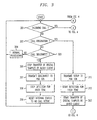
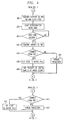
- FIGS. 3 and 4 illustrate, in flow chart form, the steps performed by softphone application 204.
- decision block 301 checks to see if an incoming call is being received from PBX 108. If the answer is yes, control is transferred to block 401 that transmits an alerting message to PBX 108 indicating that the called telephone is being alerted. In addition, block 401 alerts the user by the transmission of control information to sound card driver 201 to start the alerting utilizing the internal speaker of PC 106.
- block 402 starts sound card 105 generating the hook tone and starts audio client 202 detecting for the re-transmitted hook tone received via sound card 105.
- Decision block 403 determines when softphone application 204 receives a message from audio client 202 indicating that the hook tone is no longer being detected. Once this message is received, decision block 403 transfers control to block 404 that transmits an answer message to PBX 108.
- Block 404 then transfers control to decision block 406 which determines if a connect message is received from PBX 108.
- the connect message indicates that the call is fully set up between the calling telephone and the called telephone by PBX 108. If the connect message is not received, control is transferred to block 407 that performs the normal processing required to return the state of the software elements illustrated in FIG. 2 to the no active call state. If a connect message is detected, decision block 406 transfers control to block 408.
- the latter block sets the state of softphone application 204 to the active call state before transferring control to block 409.
- Block 409 initiates the transfer of digital samples by audio client 202 before transferring control back to decision block 301 of FIG. 3.
- decision block 302 determines if a call origination is being performed by the user of handset 100. A call origination is done by the user interacting with softphone application 204 utilizing a GUI interface. If the answer is yes in decision block 302, control is transferred to block 311 which transmits a setup message to PBX 108 indicating that handset 100 is initiating a call. The setup message includes the telephone number of the called telephone. Next, block 312 starts sound card 105 generating the hook tone and starts audio client 202 watching for the re-transmitted hook tone received via sound card 105 from handset 100 so as to determine when the user of handset 100 has terminated the call.
- Block 313 initiates the transfer of digital samples by audio client 202 before transferring control to decision block 411 of FIG. 4.
- Decision block 411 determines when a connect message is received from PBX 108 indicating that the call has been established. If a connect message is detected, control is transferred to block 412 which sets the state of softphone application 204 to the active call state before transferring control back to decision block 301 of FIG. 1. If the answer in decision block 411 is no, control is transferred to block 413 that does the necessary operations to return all software elements of FIG. 2 to the no active call state before transferring control back to decision block 301.
- decision block 302 if the answer in decision block 302 is no, control is transferred to decision block 303 that determines if a call disconnect has been made by handset 100 or by the far end party hanging up. If the answer is no, control is transferred to block 304 that performs normal processing before returning control back to decision block 301. If the answer in decision block 303 is yes, control is transferred to block 306 that stops the transfer of digital samples by audio client 202. Next, block 307 transmits a disconnect message to PBX 108 to terminate the call. Then, block 308 stops the generation of the hook tone by sound card 105 and stops the watching for the hook tone by audio client 202 via sound card 105.
- Block 307 also determines if a disconnect message is received from PBX 108; and if so, block 307 transmits an acknowledgement message to PBX 108.
- block 309 re-sets the internal status of all of the software elements of FIG. 2 to the no call active state before transferring control back to decision block 301.
Landscapes
- Engineering & Computer Science (AREA)
- Signal Processing (AREA)
- Computer Networks & Wireless Communication (AREA)
- Telephone Function (AREA)
- Telephonic Communication Services (AREA)
Applications Claiming Priority (2)
| Application Number | Priority Date | Filing Date | Title |
|---|---|---|---|
| US09/628,481 US6650751B1 (en) | 2000-07-31 | 2000-07-31 | Answer detection for IP based telephones using passive detection |
| US628481 | 2000-07-31 |
Publications (2)
| Publication Number | Publication Date |
|---|---|
| EP1179945A1 EP1179945A1 (en) | 2002-02-13 |
| EP1179945B1 true EP1179945B1 (en) | 2003-08-06 |
Family
ID=24519056
Family Applications (1)
| Application Number | Title | Priority Date | Filing Date |
|---|---|---|---|
| EP01303529A Expired - Lifetime EP1179945B1 (en) | 2000-07-31 | 2001-04-18 | Answer detection for ip based telephones using passive detection |
Country Status (6)
| Country | Link |
|---|---|
| US (1) | US6650751B1 (enExample) |
| EP (1) | EP1179945B1 (enExample) |
| JP (1) | JP3751545B2 (enExample) |
| KR (1) | KR20020011106A (enExample) |
| CA (1) | CA2345879C (enExample) |
| DE (1) | DE60100560T2 (enExample) |
Families Citing this family (14)
| Publication number | Priority date | Publication date | Assignee | Title |
|---|---|---|---|---|
| JP2004112639A (ja) * | 2002-09-20 | 2004-04-08 | Fuji Xerox Co Ltd | 情報処理装置およびその制御方法 |
| US7689939B1 (en) | 2004-06-30 | 2010-03-30 | Avaya Inc. | Software application break through a screen blanker |
| US7684830B2 (en) * | 2005-03-08 | 2010-03-23 | Endtone, Llc | Communication link termination indication signal method and apparatus |
| US20070224984A1 (en) | 2005-03-08 | 2007-09-27 | Muir Brockett Iii | Communication Link Termination Indication Signal and Secondary Signal Method and Apparatus |
| US7640550B1 (en) | 2005-07-28 | 2009-12-29 | Avaya Inc. | Context sensitive contact broker |
| WO2007076875A2 (en) * | 2006-01-06 | 2007-07-12 | Aarhus Universitet | Compounds acting on the serotonin transporter |
| US20070286098A1 (en) * | 2006-06-12 | 2007-12-13 | Combs Fredrick D | Computerized telephony accessibility provider (CTAP) for provisioning a talking telephone device |
| US10528913B2 (en) | 2011-12-30 | 2020-01-07 | Elwha Llc | Evidence-based healthcare information management protocols |
| US10679309B2 (en) | 2011-12-30 | 2020-06-09 | Elwha Llc | Evidence-based healthcare information management protocols |
| US20130173294A1 (en) | 2011-12-30 | 2013-07-04 | Elwha LLC, a limited liability company of the State of Delaware | Evidence-based healthcare information management protocols |
| US10340034B2 (en) | 2011-12-30 | 2019-07-02 | Elwha Llc | Evidence-based healthcare information management protocols |
| US10552581B2 (en) | 2011-12-30 | 2020-02-04 | Elwha Llc | Evidence-based healthcare information management protocols |
| US10559380B2 (en) | 2011-12-30 | 2020-02-11 | Elwha Llc | Evidence-based healthcare information management protocols |
| US10475142B2 (en) | 2011-12-30 | 2019-11-12 | Elwha Llc | Evidence-based healthcare information management protocols |
Family Cites Families (9)
| Publication number | Priority date | Publication date | Assignee | Title |
|---|---|---|---|---|
| JPH04237243A (ja) * | 1991-01-22 | 1992-08-25 | Nec Corp | デジタル電話機 |
| JPH08307948A (ja) * | 1995-05-11 | 1996-11-22 | Canon Inc | コードレスボタン電話装置 |
| US5974043A (en) * | 1996-09-16 | 1999-10-26 | Solram Electronics Ltd. | System and method for communicating information using the public switched telephone network and a wide area network |
| US6366653B1 (en) * | 1996-09-19 | 2002-04-02 | Acer Incorporated | System for integrating a telephone to a computer |
| US6327476B1 (en) * | 1998-06-30 | 2001-12-04 | Conexant Systems, Inc. | System and method for wireless voice and computer communications using a wireless link to a public telephone network |
| JP2000115354A (ja) * | 1998-10-02 | 2000-04-21 | Fujitsu I-Network Systems Ltd | インターネット電話用ハンドセット装置 |
| AU2171800A (en) | 1998-12-10 | 2000-06-26 | Go2Call.Com, Llc | Computer-telephone-sound card interface method and apparatus |
| CA2372218A1 (en) | 1999-04-29 | 2000-11-09 | Klaus Dyhrmann Akselsen | Computer network telephony adapter device |
| US6381309B1 (en) * | 2000-03-17 | 2002-04-30 | Auristar Technologies Inc. | Personal computer having a sound card |
-
2000
- 2000-07-31 US US09/628,481 patent/US6650751B1/en not_active Expired - Fee Related
-
2001
- 2001-04-18 DE DE60100560T patent/DE60100560T2/de not_active Expired - Lifetime
- 2001-04-18 EP EP01303529A patent/EP1179945B1/en not_active Expired - Lifetime
- 2001-05-01 CA CA002345879A patent/CA2345879C/en not_active Expired - Fee Related
- 2001-07-30 KR KR1020010045940A patent/KR20020011106A/ko not_active Ceased
- 2001-07-31 JP JP2001230713A patent/JP3751545B2/ja not_active Expired - Fee Related
Also Published As
| Publication number | Publication date |
|---|---|
| DE60100560T2 (de) | 2004-06-17 |
| DE60100560D1 (de) | 2003-09-11 |
| US6650751B1 (en) | 2003-11-18 |
| KR20020011106A (ko) | 2002-02-07 |
| EP1179945A1 (en) | 2002-02-13 |
| CA2345879A1 (en) | 2002-01-31 |
| JP2002111906A (ja) | 2002-04-12 |
| JP3751545B2 (ja) | 2006-03-01 |
| CA2345879C (en) | 2004-10-19 |
Similar Documents
| Publication | Publication Date | Title |
|---|---|---|
| US6337898B1 (en) | Method for monitoring voicemail calls using ADSI capable CPE | |
| US6345047B1 (en) | Computer telephony adapter and method | |
| US6549621B1 (en) | Method and system for integrating a computer and a telephone | |
| US20040218583A1 (en) | Computer telephony integration adapter | |
| US20050152338A1 (en) | System and method for managing voice communications between a telephone, a circuit switching network and/or a packet switching network | |
| WO1997022198A1 (en) | Voice data modem, voice data method and voice data modem system | |
| CA2345879C (en) | Answer detection for ip based telephones using passive detection | |
| US20050152347A1 (en) | System and method for managing voice communications between a telephone, a circuit switching network and/or a packet switching network | |
| US6697456B2 (en) | Speech analysis based answer detection for IP based telephones | |
| WO1997044959A1 (en) | Caller id telephone with signal attenuation | |
| KR100473722B1 (ko) | 펄베이시브 음성 핸드셋 시스템 | |
| EP1179949B1 (en) | Tone answer detection for IP telephones | |
| CN100581204C (zh) | 语音网关及语音网关构建专线链路的方法 | |
| JPWO2004015972A1 (ja) | 音声通信システムおよびその方法 | |
| US5812646A (en) | Switching controller with supervisory mode for communication terminals | |
| US7277530B2 (en) | IP telephone apparatus and IP telephone system | |
| JP3085216B2 (ja) | 電話通信端末及びそれを使用した通信方法 | |
| JP2004215209A (ja) | インターネット電話アダプタ | |
| JP4221311B2 (ja) | Ip電話機、ip電話アダプタ及び電話折り返しプログラム | |
| JP4152828B2 (ja) | Ip電話システムにおけるサービス追加方法、それに用いる電話装置およびサーバ | |
| JPS5937762A (ja) | 多機能電話機 | |
| GB2342809A (en) | Method for monitoring voicemail calls using ADSI capable CPE | |
| JPH01265650A (ja) | 着信転送方式 | |
| JPH01233870A (ja) | 電話装置 | |
| JPH03155246A (ja) | 通信端末装置 |
Legal Events
| Date | Code | Title | Description |
|---|---|---|---|
| PUAI | Public reference made under article 153(3) epc to a published international application that has entered the european phase |
Free format text: ORIGINAL CODE: 0009012 |
|
| 17P | Request for examination filed |
Effective date: 20010430 |
|
| AK | Designated contracting states |
Kind code of ref document: A1 Designated state(s): DE FR GB Kind code of ref document: A1 Designated state(s): AT BE CH CY DE DK ES FI FR GB GR IE IT LI LU MC NL PT SE TR |
|
| AX | Request for extension of the european patent |
Free format text: AL;LT;LV;MK;RO;SI |
|
| 17Q | First examination report despatched |
Effective date: 20020211 |
|
| AKX | Designation fees paid |
Free format text: DE FR GB |
|
| GRAH | Despatch of communication of intention to grant a patent |
Free format text: ORIGINAL CODE: EPIDOS IGRA |
|
| GRAH | Despatch of communication of intention to grant a patent |
Free format text: ORIGINAL CODE: EPIDOS IGRA |
|
| GRAA | (expected) grant |
Free format text: ORIGINAL CODE: 0009210 |
|
| AK | Designated contracting states |
Designated state(s): DE FR GB |
|
| REG | Reference to a national code |
Ref country code: GB Ref legal event code: FG4D |
|
| REG | Reference to a national code |
Ref country code: IE Ref legal event code: FG4D |
|
| REF | Corresponds to: |
Ref document number: 60100560 Country of ref document: DE Date of ref document: 20030911 Kind code of ref document: P |
|
| ET | Fr: translation filed | ||
| PLBE | No opposition filed within time limit |
Free format text: ORIGINAL CODE: 0009261 |
|
| STAA | Information on the status of an ep patent application or granted ep patent |
Free format text: STATUS: NO OPPOSITION FILED WITHIN TIME LIMIT |
|
| 26N | No opposition filed |
Effective date: 20040507 |
|
| REG | Reference to a national code |
Ref country code: IE Ref legal event code: MM4A |
|
| REG | Reference to a national code |
Ref country code: GB Ref legal event code: 732E Free format text: REGISTERED BETWEEN 20090430 AND 20090506 |
|
| PGFP | Annual fee paid to national office [announced via postgrant information from national office to epo] |
Ref country code: GB Payment date: 20130417 Year of fee payment: 13 Ref country code: DE Payment date: 20130508 Year of fee payment: 13 |
|
| PGFP | Annual fee paid to national office [announced via postgrant information from national office to epo] |
Ref country code: FR Payment date: 20130910 Year of fee payment: 13 |
|
| REG | Reference to a national code |
Ref country code: DE Ref legal event code: R119 Ref document number: 60100560 Country of ref document: DE |
|
| GBPC | Gb: european patent ceased through non-payment of renewal fee |
Effective date: 20140418 |
|
| REG | Reference to a national code |
Ref country code: FR Ref legal event code: ST Effective date: 20141231 |
|
| REG | Reference to a national code |
Ref country code: DE Ref legal event code: R119 Ref document number: 60100560 Country of ref document: DE Effective date: 20141101 |
|
| PG25 | Lapsed in a contracting state [announced via postgrant information from national office to epo] |
Ref country code: GB Free format text: LAPSE BECAUSE OF NON-PAYMENT OF DUE FEES Effective date: 20140418 Ref country code: DE Free format text: LAPSE BECAUSE OF NON-PAYMENT OF DUE FEES Effective date: 20141101 |
|
| PG25 | Lapsed in a contracting state [announced via postgrant information from national office to epo] |
Ref country code: FR Free format text: LAPSE BECAUSE OF NON-PAYMENT OF DUE FEES Effective date: 20140430 |