EP1171472B1 - Farines et amidons a tres haute teneur en amylopectine, leurs procedes de preparation et leurs applications - Google Patents
Farines et amidons a tres haute teneur en amylopectine, leurs procedes de preparation et leurs applications Download PDFInfo
- Publication number
- EP1171472B1 EP1171472B1 EP00915258A EP00915258A EP1171472B1 EP 1171472 B1 EP1171472 B1 EP 1171472B1 EP 00915258 A EP00915258 A EP 00915258A EP 00915258 A EP00915258 A EP 00915258A EP 1171472 B1 EP1171472 B1 EP 1171472B1
- Authority
- EP
- European Patent Office
- Prior art keywords
- flour
- starch
- products
- wheat
- full waxy
- Prior art date
- Legal status (The legal status is an assumption and is not a legal conclusion. Google has not performed a legal analysis and makes no representation as to the accuracy of the status listed.)
- Expired - Lifetime
Links
Images

Classifications
-
- C—CHEMISTRY; METALLURGY
- C08—ORGANIC MACROMOLECULAR COMPOUNDS; THEIR PREPARATION OR CHEMICAL WORKING-UP; COMPOSITIONS BASED THEREON
- C08B—POLYSACCHARIDES; DERIVATIVES THEREOF
- C08B30/00—Preparation of starch, degraded or non-chemically modified starch, amylose, or amylopectin
-
- A—HUMAN NECESSITIES
- A21—BAKING; EDIBLE DOUGHS
- A21D—TREATMENT OF FLOUR OR DOUGH FOR BAKING, e.g. BY ADDITION OF MATERIALS; BAKING; BAKERY PRODUCTS
- A21D13/00—Finished or partly finished bakery products
- A21D13/02—Products made from whole meal; Products containing bran or rough-ground grain
-
- A—HUMAN NECESSITIES
- A21—BAKING; EDIBLE DOUGHS
- A21D—TREATMENT OF FLOUR OR DOUGH FOR BAKING, e.g. BY ADDITION OF MATERIALS; BAKING; BAKERY PRODUCTS
- A21D13/00—Finished or partly finished bakery products
- A21D13/80—Pastry not otherwise provided for elsewhere, e.g. cakes, biscuits or cookies
-
- A—HUMAN NECESSITIES
- A21—BAKING; EDIBLE DOUGHS
- A21D—TREATMENT OF FLOUR OR DOUGH FOR BAKING, e.g. BY ADDITION OF MATERIALS; BAKING; BAKERY PRODUCTS
- A21D2/00—Treatment of flour or dough by adding materials thereto before or during baking
- A21D2/08—Treatment of flour or dough by adding materials thereto before or during baking by adding organic substances
- A21D2/14—Organic oxygen compounds
- A21D2/18—Carbohydrates
- A21D2/186—Starches; Derivatives thereof
-
- A—HUMAN NECESSITIES
- A21—BAKING; EDIBLE DOUGHS
- A21D—TREATMENT OF FLOUR OR DOUGH FOR BAKING, e.g. BY ADDITION OF MATERIALS; BAKING; BAKERY PRODUCTS
- A21D6/00—Other treatment of flour or dough before baking, e.g. cooling, irradiating or heating
- A21D6/003—Heat treatment
-
- A—HUMAN NECESSITIES
- A23—FOODS OR FOODSTUFFS; TREATMENT THEREOF, NOT COVERED BY OTHER CLASSES
- A23K—FODDER
- A23K20/00—Accessory food factors for animal feeding-stuffs
- A23K20/10—Organic substances
- A23K20/163—Sugars; Polysaccharides
-
- A—HUMAN NECESSITIES
- A23—FOODS OR FOODSTUFFS; TREATMENT THEREOF, NOT COVERED BY OTHER CLASSES
- A23L—FOODS, FOODSTUFFS OR NON-ALCOHOLIC BEVERAGES, NOT OTHERWISE PROVIDED FOR; PREPARATION OR TREATMENT THEREOF
- A23L13/00—Meat products; Meat meal; Preparation or treatment thereof
- A23L13/40—Meat products; Meat meal; Preparation or treatment thereof containing additives
- A23L13/42—Additives other than enzymes or microorganisms in meat products or meat meals
- A23L13/422—Addition of natural plant hydrocolloids, e.g. gums of cellulose derivatives or of microbial fermentation gums
-
- A—HUMAN NECESSITIES
- A23—FOODS OR FOODSTUFFS; TREATMENT THEREOF, NOT COVERED BY OTHER CLASSES
- A23L—FOODS, FOODSTUFFS OR NON-ALCOHOLIC BEVERAGES, NOT OTHERWISE PROVIDED FOR; PREPARATION OR TREATMENT THEREOF
- A23L13/00—Meat products; Meat meal; Preparation or treatment thereof
- A23L13/40—Meat products; Meat meal; Preparation or treatment thereof containing additives
- A23L13/42—Additives other than enzymes or microorganisms in meat products or meat meals
- A23L13/426—Addition of proteins, carbohydrates or fibrous material from vegetable origin other than sugars or sugar alcohols
-
- A—HUMAN NECESSITIES
- A23—FOODS OR FOODSTUFFS; TREATMENT THEREOF, NOT COVERED BY OTHER CLASSES
- A23L—FOODS, FOODSTUFFS OR NON-ALCOHOLIC BEVERAGES, NOT OTHERWISE PROVIDED FOR; PREPARATION OR TREATMENT THEREOF
- A23L29/00—Foods or foodstuffs containing additives; Preparation or treatment thereof
- A23L29/20—Foods or foodstuffs containing additives; Preparation or treatment thereof containing gelling or thickening agents
- A23L29/206—Foods or foodstuffs containing additives; Preparation or treatment thereof containing gelling or thickening agents of vegetable origin
- A23L29/212—Starch; Modified starch; Starch derivatives, e.g. esters or ethers
-
- A—HUMAN NECESSITIES
- A23—FOODS OR FOODSTUFFS; TREATMENT THEREOF, NOT COVERED BY OTHER CLASSES
- A23L—FOODS, FOODSTUFFS OR NON-ALCOHOLIC BEVERAGES, NOT OTHERWISE PROVIDED FOR; PREPARATION OR TREATMENT THEREOF
- A23L29/00—Foods or foodstuffs containing additives; Preparation or treatment thereof
- A23L29/20—Foods or foodstuffs containing additives; Preparation or treatment thereof containing gelling or thickening agents
- A23L29/206—Foods or foodstuffs containing additives; Preparation or treatment thereof containing gelling or thickening agents of vegetable origin
- A23L29/212—Starch; Modified starch; Starch derivatives, e.g. esters or ethers
- A23L29/225—Farinaceous thickening agents other than isolated starch or derivatives
-
- A—HUMAN NECESSITIES
- A23—FOODS OR FOODSTUFFS; TREATMENT THEREOF, NOT COVERED BY OTHER CLASSES
- A23L—FOODS, FOODSTUFFS OR NON-ALCOHOLIC BEVERAGES, NOT OTHERWISE PROVIDED FOR; PREPARATION OR TREATMENT THEREOF
- A23L29/00—Foods or foodstuffs containing additives; Preparation or treatment thereof
- A23L29/30—Foods or foodstuffs containing additives; Preparation or treatment thereof containing carbohydrate syrups; containing sugars; containing sugar alcohols, e.g. xylitol; containing starch hydrolysates, e.g. dextrin
- A23L29/35—Degradation products of starch, e.g. hydrolysates, dextrins; Enzymatically modified starches
-
- A—HUMAN NECESSITIES
- A23—FOODS OR FOODSTUFFS; TREATMENT THEREOF, NOT COVERED BY OTHER CLASSES
- A23L—FOODS, FOODSTUFFS OR NON-ALCOHOLIC BEVERAGES, NOT OTHERWISE PROVIDED FOR; PREPARATION OR TREATMENT THEREOF
- A23L7/00—Cereal-derived products; Malt products; Preparation or treatment thereof
- A23L7/10—Cereal-derived products
- A23L7/161—Puffed cereals, e.g. popcorn or puffed rice
- A23L7/165—Preparation of puffed cereals involving preparation of meal or dough as an intermediate step
-
- A—HUMAN NECESSITIES
- A23—FOODS OR FOODSTUFFS; TREATMENT THEREOF, NOT COVERED BY OTHER CLASSES
- A23L—FOODS, FOODSTUFFS OR NON-ALCOHOLIC BEVERAGES, NOT OTHERWISE PROVIDED FOR; PREPARATION OR TREATMENT THEREOF
- A23L7/00—Cereal-derived products; Malt products; Preparation or treatment thereof
- A23L7/10—Cereal-derived products
- A23L7/198—Dry unshaped finely divided cereal products, not provided for in groups A23L7/117 - A23L7/196 and A23L29/00, e.g. meal, flour, powder, dried cereal creams or extracts
-
- C—CHEMISTRY; METALLURGY
- C08—ORGANIC MACROMOLECULAR COMPOUNDS; THEIR PREPARATION OR CHEMICAL WORKING-UP; COMPOSITIONS BASED THEREON
- C08B—POLYSACCHARIDES; DERIVATIVES THEREOF
- C08B30/00—Preparation of starch, degraded or non-chemically modified starch, amylose, or amylopectin
- C08B30/12—Degraded, destructured or non-chemically modified starch, e.g. mechanically, enzymatically or by irradiation; Bleaching of starch
- C08B30/14—Cold water dispersible or pregelatinised starch
Definitions
- the invention relates to the field agrifood and concerns products from full wheat waxy, including full waxy wheat starches, flours full waxy wheat, starches or full wheat flour waxy having undergone hydrothermal treatment (starches or BFW-HT flours) or products containing or prepared for from such flours or such starches.
- full wheat waxy including full waxy wheat starches, flours full waxy wheat, starches or full wheat flour waxy having undergone hydrothermal treatment (starches or BFW-HT flours) or products containing or prepared for from such flours or such starches.
- the invention also relates to a method obtaining these products, in particular these starches or these BFW-HT flours, and their uses in starch manufacture, for the manufacture of food products, or non-food products.
- Wheat is the most widely grown cereal and is one of the staple foods of the population World. Indeed, it is used to produce wheat flour which goes into the composition of bread, pasta, cereals and many other food products to humans or animals. It is known that wheat, like all cereals, is rich in starch, and that the alteration of the starch, in quantity or in quality, affects the qualities of the flours made from this wheat.
- the flours sought are those made starch whose physical properties are such as products containing such flours do not downgrade, nor stale.
- Starch is in the form of grains or insoluble granules, simple or compound, in shape spherical, lenticular or angular, and of variable size depending on the species.
- the composition of a starch granule is complex and varies with species. First, it includes 15 to 20% water, but also fatty acids (1% in wheat), calcium phosphates (cereals) and potassium (potato) part of a residue mineral which can represent 0.4% of the fresh weight (starch wheat), finally proteins, most of which are enzyme.
- Starch grains insoluble in cold water give, when treated with hot water (from 60 to 80 ° C), a poisonous, viscous liquid which hardens on drying. They therefore contain amylopectin, a substance mucilaginous to which is due the viscosity of the poison, and amylose which precipitates after cooling under form of a white powder.
- hydrothermal treatment causes an irreversible change in the semi-crystalline structure native starch, which goes from an ordered state in a disordered state, it is gelatinization.
- the gel as well formed is not stable and after a few days the starch reorganize towards a more ordered structure, this phenomenon being known as demotion.
- Reassurance baked goods and the excessive viscosity of sauces and the like are related to this demotion as well as another phenomenon, syneresis (exudation of water), responsible for the separation of the phases and the breakdown of the texture of the products.
- Waxy mutants are plants whose synthesis of GBSS (Granule Bound Starch Synthase), again called Wx protein, a vital enzyme in the synthesis of amyloidosis, is inhibited, or plants synthesizing GBSS inactive. Most waxy starches come from diploid plants such as barley, corn, rice or potato.
- waxy starch is more suitable for diploid plants.
- mutagenic treatments using rays X or ethylmethane sulphonate are very suitable for diploid plants, but are ineffective on tetra- or hexaploid plants, the latter expressing not the recessive mutation. So it's more difficult to obtain waxy mutants from polyploid plants given the presence of several isoenzymes which involved in the synthesis of amyloidosis.
- So wheat is polyploid, and most varieties of wheat are hexaploid, with three groups of seven pairs of chromosomes.
- Three genes code for three GBSS, Wx-A1, Wx-B1 and Wx-D1 isoforms. These three GBSS isoforms can be separated based on their molecular weight. In addition, they present structural, chemical and biochemical properties different.
- a selection method has been developed and described (Toshiki Nakamura et al., Mol Gen Genet, 1995, n ° 248, p. 253-259) to obtain full hexaploid wheat waxy. It consists in crossing a variety of hexaploid wheat "partial waxy” mutated on genes A and B, Kanto 107, and a variety of "partial waxy" hexaploid wheat mutated on the D gene, Bai Huo. A small percentage of seeds grown of this cross is full waxy and the generations from these seeds have the full waxy phenotype.
- the method used to obtain the products of the present invention also consists in crossing two varieties of hexaploid wheat, one double aabbDD mutant and the other mutant on the D genome, AABBdd, but adapted to the western culture.
- the main varieties mutated on one of the genes involved belong to varieties not adapted to Western culture, either because that they are old varieties, very large, with low potential yield, either because they are varieties other countries that are struggling to adapt to conditions Western.
- There are several varieties in the West type aabbDD one can quote among others IKE and ROSELLA.
- Gold products from full waxy wheat according to the invention unexpectedly presents characteristics particularly suitable in particular for food or non-food products that tend downshift without the need to mix them with traditional wheat products.
- the invention therefore relates to the use full waxy wheat products, including flour full waxy wheat, full waxy wheat starches, grains full waxy wheat.
- starch By flour, starch, grain or product made from full waxy wheat, flour, starch, grain or a product made from wheat, the amylose content of starch granules is not significant or zero, that's say less than 1%.
- the present invention therefore relates to a flour or full waxy wheat starch which by an insignificant or zero amylose content, less than 1%.
- the amylose content is determined by the "blue value” method described in the article published in “Starch / editorial", volume 48, n ° 9 p. 338-344 of 1996, whose authors are Batey Ian et al., entitled “Measurement of amylose / amylopectin ratio by high performance liquid chromatography ".
- Whole wheat flour object of the invention have a humidity of between 9 and 15%, preferably between 11 and 13%, a rate of proteins between 9 and 20%, preferably between between 12 and 16% compared to the dry matter.
- the full waxy wheat flours have a humidity of around 13% and a protein level of around 15.4%.
- the viscosimetric profile of starch or full waxy wheat flour measured by Rapid Visco-Analyzer or RVA has a gelatinization start temperature, otherwise known as "pasting" between 60 and 80 ° C, a peak between 140 and 600 RVU (RVA unit), a drop in viscosity or "breakdown" between 0 and 400 RVU and a final viscosity between 0 and 300 RVU.
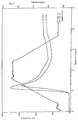
- the viscosimetric profile of full waxy wheat flour measured by RVA has a gelatinization start temperature of 66.15 ° C, a peak of 284 RVU, a drop in viscosity of 177 RVU and a final viscosity of 138 RVU.
- the viscosimetric profile of full waxy wheat starch measured by RVA (4g at 14% H 2 O + 24.5 ml of water) has a gelatinization start temperature of 65.3 ° C, a peak of 351 RVU , a viscosity drop of 224 RVU and a final viscosity of 157 RVU.
- the enthalpy measured for flour and starch full waxy is between 5 and 15 J / g, and preferably between 8 and 13.
- the enthalpy for full waxy wheat flour is 10.2 J / g and 12.98 J / g for full waxy starch.
- the flour from this wheat given associated proteins and other components, present limited mucus behavior compared to starch full-waxy wheat.
- An advantage of the invention is that this flour and / or this full waxy starch can be used as which in the food and non-food industry, that is to say without mixing them with wheat flour traditional.
- Full waxy wheat flour presents advantageously, in particular compared to waxy corn, a more neutral taste and a whiter color allowing a access to more applications.
- Full waxy starches extracted directly from full waxy wheat or extracts of full waxy wheat flour allow in particular a preservation of neutrality organoleptic and translucency.
- these starches and / or these full waxy wheat flours can be advantageously used in the field of cosmetics, paints, glues to increase the cohesion of these products, or as a hydrolysis or fermentation substrate.
- the invention therefore relates to the use flour or starch defined to make dairy products, biscuit products, sauces, ready meals, animal feed.
- the invention therefore also relates to the use of flour or starch defined above as a hydrolysis substrate or as a substrate for fermentation to produce malto-dextrins and fermentation substrate for better production biomass and specific metabolites.
- the invention also relates to the use of a flour or starch previously defined for the manufacture of non-food products such as cosmetics, glues or paints.
- the invention therefore relates to products food such as biscuit products, cold meats, pet food, sauces and dishes cooked, dairy products, containing flour or starch defined above.
- the invention also relates to a culture medium for microorganisms or non-microorganisms such as cosmetics, glues or paints containing starch and / or flour previously defined.
- the present invention also relates to starches and / or full waxy wheat flours obtained by selection or genetic engineering that has undergone treatment hydrothermal prior to improve significantly their functionality.
- the invention therefore also relates to a method of preparation of a functional full waxy wheat flour including preparation, from full wheat kernels waxy, from a starting flour of defined particle size, characterized in that said flour is subjected to a hydrothermal treatment consisting of the supply of water or of steam and thermal energy to obtain a degree of gelatinization of starch between 15 and 99% and preferably between 20 and 80% in a very short time, from around 5 minutes.
- a hydrothermal treatment consisting of the supply of water or of steam and thermal energy to obtain a degree of gelatinization of starch between 15 and 99% and preferably between 20 and 80% in a very short time, from around 5 minutes.
- the invention also relates to a flour capable of being obtained by this process.
- the invention also relates to a method of preparation of an improved full waxy wheat starch, characterized in that the starch extracted from full waxy wheat grains to hydrothermal treatment consisting of the supply of water or steam and energy thermal to obtain a degree of gelatinization of starch between 15 and 99%.
- the invention relates also to a starch capable of being obtained by this process.
- Full waxy wheat flours and starches having undergone a hydrothermal treatment according to the invention will also be referred to below as BFW-HT flours and starches BOW-HT.
- Crosslinking consists in introducing chemical bonds in order to increase the resistance of the pellet.
- Stabilization consists of introducing macromolecules that create interchain repulsions and prevent the reassociation of chains so as to limit considerably the syneresis.
- the object of the present invention is therefore also to offer a BFW-HT flour or a BFW-HT starch which has functionalities equivalent to those of starches modified for certain applications while benefiting an INGREDIENT, not ADDITIVE labeling declaration, which offers a remarkable advantage over reception of the product by consumers.
- full waxy wheat starches can also serve as a substrate for obtaining starches from modified full waxy wheat, by crosslinking or stabilization.
- BFW-HT flours or BFW-HT starches which have a higher level of functionality allowing them to supplant the modified starches in some applications.
- BFW-HT flour has a viscosity development significantly greater than that of untreated full waxy wheat flour thermally. The viscosity gain is retained at the end cooling and allows use as highly functional ingredient.
- Heat treatment also helps inactivate endogenous activities which may be present in flour and mainly amylase activity. It also limits the often encountered, particularly in the waxy corn, and bring or highlight new viscosifier type functions.
- the invention is also relates to a full wheat flour and / or starch waxy having undergone a heat treatment according to one of previously mentioned techniques.
- a preferred process according to the invention to obtain such flour or starch consists in subjecting to a flour and / or a starch of wheat full waxy hydrothermal treatment and drying for partial pregelatinization, allowing to modify the crystal structure of starch so as to develop competitive higher viscosities to certain starches changed.
- the hydrothermal treatment stages and drying are characterized in that one brings to the flour and / or starch water or steam and thermal energy to obtain a degree of gelatinization starch between 15 and 99% and preferably between 20 and 80% in a very short time, advantageously less than or equal to 5 minutes.
- Treatment steps hydrothermal and drying process are carried out at temperatures between 210 and 250 ° C and preferably of the order of 220 ° C., for a period less than about 5 minutes.
- a device for the implementation of this technique has two parts, a cooker and a dryer, each consisting of a horizontal cylinder where a propeller horizontal keeps the product against walls by centrifugation.
- a thermal oil circuit ensures the heating of the cylinders thanks to a jacket coaxial.
- the cooker can receive water and / or steam and various other additives. So under the effect of the associated water to the supply of thermal energy, the rheological properties (viscosity, absorption capacity) of the starch are no longer the same.
- the product is then transferred to the dryer, where air heated via a heat exchanger is injected into the cylinder.
- the product is then dried by conduction (heated walls) and by convection (air heated).
- the main parameters to be regulated are: material and water flow rates, residence times and temperatures used.
- the hydrothermal treatment stage followed by the drying step of the process of the invention are therefore advantageously carried out by suspending the flour and / or starch in high turbulence in a heated air stream in permanent contact with a surface also heated, bringing water or steam.
- the invention therefore also relates to BFW-HT flours and / or starches. They are remarkable because they have a coloration not modified by the treatment, enzymatic inactivation and remarkable features making them competitive with native starches and modified starches for certain applications.
- the BFW-HT flours obtained have the following features:
- the degree of gelatinization is a function of the intensity of the heat treatment, it is understood: between 15 and 99% and preferably between 20 and 80%.
- the profile viscosimetric of BFW-HT flour measured by RVA has a start temperature gelatinization of 64.55 ° C, a peak of 479 RVU, a drop viscosity of 309 RVU and a final viscosity of 223 RVU.
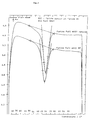
- the enthalpy measured by DSC for BFW-HT flour, according to the protocol described above, is 7.7 J / g.
- BFW-HT wheat flours and / or starches can be used in the food industry.
- these flours and / or starches have excellent viscosifying, binding properties, without retrogradation during cooling.
- the flours and / or BFW-HT wheat starches help stabilize emulsions, including emulsified sauces or products cold cuts.
- the invention therefore also relates to the use of BFW-HT flour as an ingredient, in particular as a substitute for non-flour processed and / or native and / or modified starches, for the food manufacturing, and more particularly for the manufacture of snacks and others extruded products, bread-making and pastries, cold meats, animal feed, sauces and dishes cooked, or dairy products.
- the invention particularly contemplates the use of flour, BFW-HT starch or mixture of these for making snacks and the like extruded products, cookie products, bread and pastries, cold meats, animal feed, sauces and cooked meals, dairy, batter, or non-dairy products such as glues, paints, cosmetic products.
- the invention also contemplates any especially the use of flour, starch BFW-HT or a mixture thereof as a substrate hydrolysis or as a fermentation substrate.
- the invention therefore also relates to food products such as snacks and other products extruded, biscuit, bread, pastry, cold meats, food for animals, sauces and ready meals, products dairy and desserts containing flour and / or starch BFW-HT according to the invention.
- the invention therefore also relates to non-food products such as culture media microorganisms, glues, paints, cosmetic products containing flour and / or starch BFW-HT according to the invention
- BFW-HT flour and / or BFW-HT starch provides a viscosity sauce comparable to that made with modified starches (crosslinked and stabilized).
- the Béchamel sauce prepared in from BFW-HT flour has a fluid texture not demoted, homogeneous smooth and without syneresis.
- Use of such flour guarantees perfect reproducibility of the sauces produced and allows keep the authenticity of a Béchamel sauce traditionally made by the housewife with flour of wheat.
- BFW-HT flour allows, with functionalities equal with a modified starch, to benefit from a “Ingredient” and not “additive” declaration, criterion sought after by consumers.
- Example n ° 1 Flour and starches of full waxy wheat .
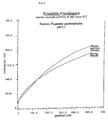
- the curves in Figure 1 represent the RVA viscosity: full waxy wheat flour and starch.
- amylose content determined by the “blue value” method: Iodine determination of amylose content referenced by Batey Ian et al, Starch /opathy 48 (1996), n ° 9, p 338-344.
- the amylose content for starch and full waxy wheat flour 0% (relative to the dry matter), the tolerance of the method being +/- 1%.
- Example No. 2 Full waxy wheat flour as a fermentation substrate .
- TTA titratable acidity
- Example No. 3 Obtaining a BFW-HT flour and comparative results .
- the flour obtained is ground and / or sieved, preferably 250 ⁇ to limit the grainy perception in mouth.
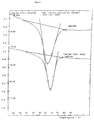
- the viscosimetric profiles of native full waxy wheat flour and BFW-HT flour measured at RVA are as follows: Gelatinization start temperature ° C Pic RVU Viscosity drop RVU RVU Final Viscosity Wheat flour Full waxy native 66.15 284 177 138 BFW-HT flour 64.55 479 309 223
- the curves in Figure 3 represent the RVA viscosity: native full waxy wheat flour and flour BOW-HT.
- HT flour presents a development of significantly higher viscosity than flour of full waxy native wheat.
- the viscosity gain is preserved after cooling and allows use as a highly functional ingredient.
- Pic 1 Pic 2 (amylose-lipid complex) Starch change temperature Peak temperature Enthalpy J / g Onset point Temp. peak Enthalpy J / g Full waxy wheat flour 62.86 68.54 10.2 No amyloidosis BFW-HT flour 61.26 67.54 7.7 No amyloidosis
- the curves in Figure 4 represent the DSC: native full waxy wheat flour and BFW-HT flour.
- the degree of gelatinization is determined by the ratio of enthalpies measured by DSC according to the publication by P. Chinachoti et al. (Journal of Food Science, vol 55, n ° 2 1990, pages 543 et seq.).
- Example n ° 4 Use of BFW-HT flour for snacks and other extrusion products .
- Snacks are made with the following formulas: Snack of the invention Witness Normal wheat flour 67.5 97.5 BFW-HT flour 30 - Salt 2 2 monoglyceride 0.5 0.5
- the mixture is extruded on BC45 with a specific configuration for direct expansion (not declining and counter-thread in the last position) and cylindrical dies for the production of balls.
- the 2 mixtures are extruded under the same conditions at temperatures of 100 ° C.
- the products are cut at the outlet of the die. After cooling, the densities of the snacks are measured and the snacks tasted.
- Example No. 5 Delicatessen application .
- Dry ingredients and ice are incorporated into a large "cutter" to which the fat is gradually incorporated to create the emulsion. Ten turns cutter are necessary to arrive at a cutter classic of fine pasta.
- the dough then has a temperature close to 10 ° C. She is then pushed to through a 22 mm Nojax hose and portioned. The stage of cooking is carried out in several pre-cooking cycles, smoking, cooking and showering.
- the sausages are then put in jars with sauerkraut at acidic pH (around 4) then sterilized for 30 minutes at 115 ° C.
- the yield after sterilization is not significantly different.
- BFW-HT flour allows, even at low concentrations, stabilize the emulsion and bring a final viscosity to the same sausage to the viscosity developed by a native starch. Moreover, this BFW-HT flour allows better resistance to 2 successive heat treatments (cooking + sterilization) in an unfavorable acidic environment. The same yields are obtained, but above all, BFW-HT flour brings a gain of firmness, main quality criterion sought after for fine dough sausages. In addition, employment of a wheat-based ingredient brings neither color nor taste parasite.
- Example 6 Sauces and Dishes Applications cooked (substitution of modified starch).
- the dry ingredients are mixed, then the water is added to the whisk.
- the mixture is brought to a boil using a heating mixer (saucer type).
- the shear produced makes it possible to partially mimic the shears encountered in industrial processes. Boiling is maintained for 5 minutes. Water is added to respect the formulation.
- Béchamel sauces are put in pots stored at -18 ° C. Products are evaluated before and after a 2 week freezing cycle. The evaluation is carried out on viscosity criteria using a rheometer (measurement of flow properties between 1 and 500 s-1 in 5 minutes with a Carimed CSL 100 with a 4 cm - 4 degree cone and at a temperature of 40 ° C) and by a jury of sensory analysis evaluating the texture in the mouth and the color.
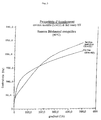
- the curves in Figure 5 show the flow properties: modified starch (E1422) and Flour BOW-HT.
- BFW-HT flour allows obtain a viscosity sauce comparable to that made with modified starches (crosslinked and stabilized).
- Béchamel sauce has a fluid texture not retrograded, homogeneous smooth, without syneresis, which resists freezing / thawing cycles.
- the use of a such flour guarantees perfect reproducibility of the sauces produced and allows keep the authenticity of a Béchamel sauce traditionally made by the housewife with flour of wheat.
- BFW-HT flour allows functionality equal with a modified starch to benefit from a “Ingredient” and not “additive” declaration, criterion sought after by consumers.
- Example 7 Application pasteurized tomato sauce .
- the products are evaluated after 7 days of storage at 4 ° C (acceleration of the demotion process) and after 1 month at room temperature.
- the evaluation is carried out on viscosity criteria using a rheometer (measurement of flow properties between 1 and 500 s-1 in 5 minutes with a Carimed CSL 100 with a 4 cm - 4 degree cone and at a temperature of 40 ° C) and by a jury of sensory analysis evaluating the texture in the mouth and the color.
- the results are reported in the following table.
- the curves in Figure 6 represent the flow properties: modified starch (E1422) and flour BOW-HT.
- BFW-HT flour allows obtain a viscosity sauce comparable to that made with modified starches (crosslinked and stabilized).
- Tomato sauce has a fluid texture non-retrograde, homogeneous smooth and without syneresis.
- the use of such flour, under conditions acids - pH: 4) guarantees perfect reproducibility of the sauces produced.
- flour BFW-HT allows equal functionality with a starch modified to benefit from an “Ingredient” declaration and not "additive", criterion sought by consumers. As no oil release was observed, the flour of the invention also allows in a sauce tomato at pH: 4 to better stabilize the emulsion than starch amended. This example highlights a new functionality of this type of flour unknown to date.
- a mushroom soup formulation is reported in Table 11 below.
- BFW-HT flour 6% Water 77.18% Mushrooms cut into strips 10% Clotted cream 2.5% Mushroom concentrate 2.25% Powdered cream 1% Sodium caseinates 1% Spices 0.05% Ground white pepper 0.02%
- Dry ingredients are mixed with water and the mushroom concentrate is added. The mixture is heated to 85 ° C. Fresh cream and mushrooms slats are added. The soups are potted and pasteurized for 1 hour at 120 ° C.
- Example 10 Applications to cakes .
- a cake formulation is reported in Table 12 below.
Landscapes
- Life Sciences & Earth Sciences (AREA)
- Chemical & Material Sciences (AREA)
- Engineering & Computer Science (AREA)
- Health & Medical Sciences (AREA)
- Food Science & Technology (AREA)
- Polymers & Plastics (AREA)
- Nutrition Science (AREA)
- Dispersion Chemistry (AREA)
- Molecular Biology (AREA)
- Biochemistry (AREA)
- Medicinal Chemistry (AREA)
- Organic Chemistry (AREA)
- Materials Engineering (AREA)
- Chemical Kinetics & Catalysis (AREA)
- Thermal Sciences (AREA)
- Crystallography & Structural Chemistry (AREA)
- Animal Husbandry (AREA)
- Biotechnology (AREA)
- Physics & Mathematics (AREA)
- Zoology (AREA)
- Botany (AREA)
- Grain Derivatives (AREA)
- Bakery Products And Manufacturing Methods Therefor (AREA)
- Cereal-Derived Products (AREA)
- Polysaccharides And Polysaccharide Derivatives (AREA)
- Seeds, Soups, And Other Foods (AREA)
Description
- Conditionnement : la cellule de référence contient de l'eau (850 mg). La prise d'échantillon est de 89 mg, complétée à 850 mg avec de l'eau. Le temps de conditionnement (mouillage de l'échantillon dans la cellule fermée à température ambiante) est de 1 heure.
- Cycle :
- Appareil micro DSC SETARAM III;
- Température de début 25°C;
- Chauffage jusqu'à 110°C à raison de 1,2°C/minute (vitesse maximale de l'appareil);
- Refroidissement à 25°C à raison de 3°C/minute.
- des produits de biscuiteries où la fèle est diminuée de façon significative;
- des produits de charcuterie dont la tenue et la texture sont améliorées, ce qui constitue un avantage pour des traitements de stérilisation;
- des aliments pour animaux qui présentent une forte rétention d'eau et une forte adhésivité, ce qui est avantageux pour la stabilité des produits;
- des sauces, plats cuisinés et produits laitiers où l'on peut obtenir, en léger surdosage de farine, des fonctionnalités de type résistance à des contraintes technologiques : cisaillement, acidité, cycle congélation / décongélation et traitement thermique identique aux amidons modifiés tout en conservant une déclaration "INGRÉDIENT";
- des produits "batters" et autres produits d'enrobage où l'adhésivité de la chapelure est améliorée et la fèle est diminuée lors de la conservation.
- Substrat d'hydrolyse (chimique ou enzymatique) en vue de la production de malto-dextrines, puisqu'en offrant l'avantage de temps d'hydrolyse réduits, ils permettent d'améliorer le rendement de la production de malto-dextrines et leur confèrent un caractère non rétrogradant. Les maltodextrines ainsi obtenues peuvent servir, par exemple, à la confection de colles pour lesquelles on observe alors un maintien de la viscosité dans le temps du fait de la non rétrogradation. Les maltodextrines ainsi obtenues peuvent également être utilisées comme substitut de matière grasse dans les produits alimentaires, par exemple les mayonnaises. En effet, les maltodextrines issus de blé traditionnel, malgré l'hydrolyse, présentent toujours l'inconvénient de rétrograder, entraínant une augmentation progressive de la viscosité au cours du stockage, modifiant la texture et l'aspect du produit. Or les maltodextrines issues de l'hydrolyse de farines full waxy et / ou d'amidon full waxy pallient tous ces problèmes et participe à la stabilisation de l'émulsion.
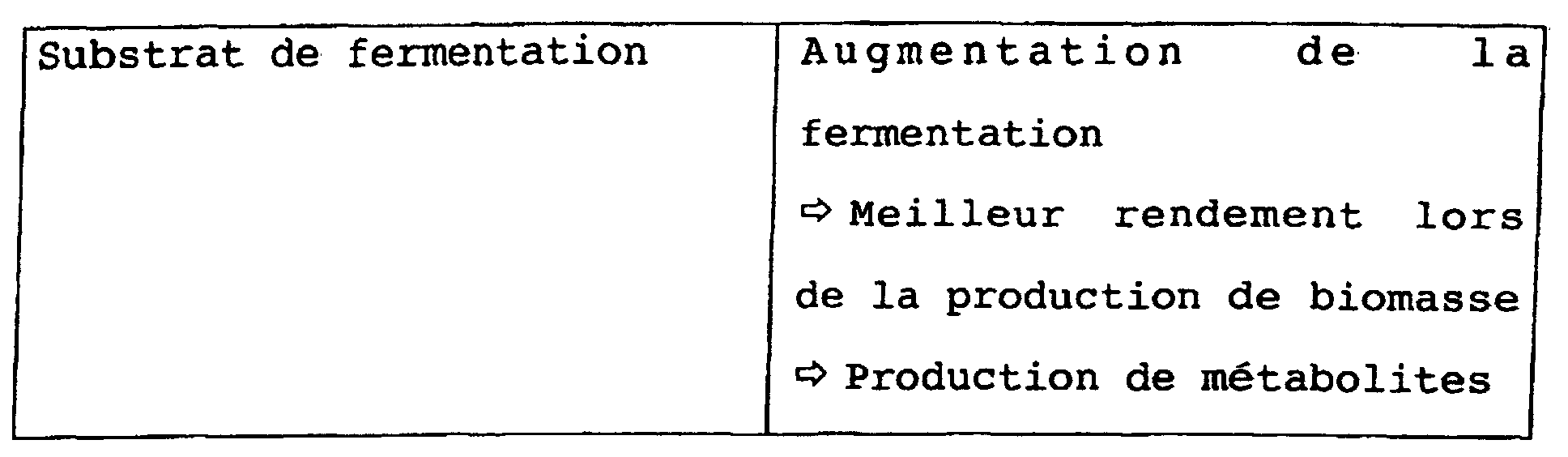
- Substrat de fermentation dans la confection d'un milieu de culture, pour un meilleur rendement de production de biomasse.
- Substrat de fermentation dans la confection d'un milieu de culture pour un meilleur rendement de production de métabolites spécifiques, par exemples de l'acide lactiques ou de l'acide acétique. En effet, de façon surprenante, les farines et / ou les amidons de blé full waxy utilisés comme substrat favorisent la croissance de microorganismes (bactéries, levures) et permettent d'améliorer la productivité de métabolites spécifiques.


- Humidité : 3 à 12%
- Protéine (% / matière sèche) : 10 à 16%

- des snacks et autres produits extrudés présentant une amélioration de l'expansion, du fondant, de la perception organoleptique,
- des produits de panification et de viennoiserie qui présentent une amélioration de l'alvéolage, une augmentation de l'hydratation et une meilleure conservation;
- des produits de charcuterie et des aliments pour animaux dont la tenue et la texture sont améliorées, ce qui constitue un avantage pour des traitements de stérilisation. On note également une meilleure rétention d'eau et une augmentation du rendement technologique;
- des sauces, plats cuisinés, produits laitiers et desserts pour lesquels on peut obtenir, en léger surdosage de farine, des fonctionnalités de type résistance à des contraintes technologiques : cycles congélation / décongélation, cisaillement, acidité et traitement thermique identique aux amidons modifiés tout en conservant une déclaration "INGRÉDIENT". On observe pour ce produits une absence de rétrogradation, une absence de synérèse en même temps q'une amélioration de la texture et de la perception organoleptique.
- Substrat d'hydrolyse (chimique ou enzymatique) en vue de la production de malto-dextrines, puisqu'en offrant l'avantage de temps d'hydrolyse réduits, ils permettent d'améliorer le rendement de la production de malto-dextrines et leur confèrent un caractère non rétrogradant. Les maltodextrines ainsi obtenues peuvent servir, par exemple, à la confection de colles pour lesquelles on observe alors un maintien de la viscosité dans le temps du fait de la non rétrogradation. Les maltodextrines ainsi obtenues peuvent également être utilisées comme substitut de matière grasse dans les produits alimentaires, par exemple les mayonnaises. En effet, les maltodextrines issus de blé traditionnel, malgré l'hydrolyse, présentent toujours l'inconvénient de rétrograder, entraínant une augmentation progressive de la viscosité au cours du stockage, modifiant la texture et l'aspect du produit. Or les maltodextrines issues de l'hydrolyse de farines et / ou d'amidon BFW-HT pallient tous ces problèmes et participe à la stabilisation de l'émulsion.
- Substrat de fermentation dans la confection d'un milieu de culture, pour un meilleur rendement de production de biomasse.
- Substrat de fermentation dans la confection d'un milieu de culture pour un meilleur rendement de production de métabolites spécifiques, par exemples de l'acide lactique ou, de l'acide acétique. En effet, de façon surprenante, les farines et / ou les amidons BFW-HT utilisées comme substrat favorisent la croissance de microorganismes (bactéries, levures) et permettent d'améliorer la productivité de métabolites spécifiques.
- un cuiseur constitué d'un cylindre horizontal où une hélice horizontale permet de maintenir le produit contre les parois par centrifugation, pouvant recevoir de l'eau et / ou de la vapeur;
- un sécheur constitué d'un cylindre horizontal où une hélice horizontale permet de maintenir le produit contre les parois par centrifugation et ou de l'air chauffé via un échangeur de chaleur est injecté;
- un circuit, comme un circuit d'huile thermique assurant le chauffage des cylindres grâce à un manteau coaxial.
- Humidité : 13%
- Protéine (% / matière sèche) : 15,4%
| Température de début de gélatinisat ion °C | Pic RVU | Chute de viscosité RVU | Viscosité Finale RVU | |
| Farine de blé full waxy | 66,15 | 284 | 177 | 138 |
| Amidon extrait de blé full waxy | 65,3 | 351 | 224 | 157 |
| Pic 1 | Pic 2 (complexe amylose - lipide) | |||||
| T°C de changement d'état de l'amidon | Température de pic °C | Enthalpie J/g | Onset point | Temp. pic | Enthalpie J/g | |
| Farine full waxy | 62,86 | 68,54 | 10,2 | Pas d'amylose | ||
| Amidon full waxy | 59,27 | 65,93 | 12,98 | Pas d'amylose |

| Temps en heure | 2h | 4h | 6h | 8h | 24h |
| Farine de blé full waxy | 5,84 | 5,93 | 4,97 | 4,42 | 3,49 |
| Farine de blé normal | 5,9 | 5,96 | 5,18 | 4,29 | 3,67 |
| Temps en heure | 2h | 4h | 6h | 8h | 24h |
| Farine de blé full waxy | 49,2 | 41 | 54,9 | 76,5 | 295,1 |
| Farine de blé normal | 15,2 | 21,2 | 36,4 | 60,6 | 278,8 |
| température cuiseur | 200 à 250°C |
| débit matière | 100 kg/h |
| % eau / débit matière | 8 % |
| température sécheur | 200 à 220°C |
- Humidité : comprise entre 4 et 12%
- granulométrie voisine de 150µ
| Température de début de gélatinisation °C | Pic RVU | Chute de viscosité RVU | Viscosité Finale RVU | |
| Farine de blé Full waxy native | 66,15 | 284 | 177 | 138 |
| Farine BFW-HT | 64,55 | 479 | 309 | 223 |
| Pic 1 | Pic 2 (complexe amylose - lipide) | |||||
| T°C de changement d'état de l'amidon | Température de pic | Enthalpie J/g | Onset point | Temp. pic | Enthalpie J/g | |
| Farine blé full waxy | 62,86 | 68,54 | 10,2 | Pas d'amylose | ||
| Farine BFW-HT | 61,26 | 67,54 | 7,7 | Pas d'amylose |
| Snack de l'invention | Témoin | |
| Farine blé normale | 67,5 | 97,5 |
| Farine BFW-HT | 30 | - |
| Sel | 2 | 2 |
| Monoglycéride | 0,5 | 0,5 |
| Farine BFW-HT | Farine de Blé normal | |
| Densité des snacks | 43g/l +/- 2 | 55g/l +/- 4 |
| Niveau d'expansion | supérieur | normal |
| Témoin (en %) | Saucisse de l'invention (en %) | |
| viande de porc séparée mécaniquement | 10 | 10 |
| purée de Couenne | 5 | 5 |
| boeuf fabrication | 18 | 18 |
| jarret de porc | 12 | 12 |
| gras dur | 30 | 30 |
| glace | 19 | 19 |
| caséinates | 1 | 1 |
| sel nitrité | 0,8 | 0,8 |
| phosphates | 0,3 | 0,3 |
| tradirose | 0,4 | 0,4 |
| épices | 0,5 | 0,5 |
| fécule de pomme de terre (témoin) | 3 | - |
| Farine BFW-HT | - | 2 |
| Évaluation à J+10 | Témoin | Saucisse de l'invention |
| Mise en oeuvre et tenue de l'émulsion | = | = |
| Apparence | = | = |
| Rendement après stérilisation : = (masse après - masse avant)/masse avant | 102 | 106 |
| Analyse sensorielle | ||
| - fermeté au toucher | 5/10 | 8/10 |
| - fermeté en bouche | 4/10 | 6/10 |
| Témoin (en %) | Sauce de l'invention (en %) | |
| amidon modifié : COLFLO™ - E1422 | 3 | - |
| Farine BFW-HT | - | 4 |
| sel | 0,9 | 0,9 |
| beurre | 3,4 | 3,4 |
| crème épaisse | 7,7 | 7,7 |
| eau | 85 | 84 |
| témoin | Sauce de l'invention | |
| Aspect | Absence de rétrogradation Absence de synérèse | |
| Viscosité (mesure d'écoulement - voir courbes) | = | = |
| Analyse sensorielle - Couleur - texture en bouche | Translucide homogène | Blanche Homogène, onctueuse |
| Témoin en % | Sauce de l'invention (en %) | |
| Amidon modifié (Colflo® 67 - E1422) | 3 | - |
| Farine BFW-HT | - | 4 |
| Sel | 0,9 | 0,9 |
| Concentré de tomate | 13,3 | 13,3 |
| Huile | 8,1 | 8,1 |
| eau | 74,7 | 73,7 |
| Témoin | Sauce de l'invention Après 7 j à 4°C | Sauce de l'invention Après 1 mois à température ambiante | |
| Aspect | Pas de rétrogradation Texture non gélifiée, très fluide | ||
| Propriétés stabilisantes | Exsudation d'huile à la surface | Stabilisant d'émulsion Très homogène | |
| Viscosité (mesure d'écoulement - voir courbes) | = | = | = |
| Analyse sensorielle | Translucide | Légèrement plus opaque et plus clair. | Légèrement plus opaque et plus clair. |
| - Couleur | Homogène | ||
| - texture en bouche | Homogène, onctueux | Homogène, onctueux |
| Farine BFW-HT | 6% |
| Eau | 77,18% |
| Champignons coupés en lamelles | 10% |
| Crème fraíche épaisse | 2,5% |
| Concentré de champignons | 2,25% |
| Crème en poudre | 1% |
| Caséinates de sodium | 1% |
| Epices | 0,05% |
| Poivre blanc moulu | 0,02% |
- de la farine de blé traditionnelle, et après une semaine de conservation dans les mêmes conditions, la soupe se présente sous forme de gel solide, qui ne s'écoule pas des pots, cette perte de fluidité étant due à la rétrogradation de l'amylose.
- de l'amidon modifié, et après une semaine de conservation dans les mêmes conditions, la soupe présente une texture fluide, homogène et lisse, mais a un arrière goût déplaisant, indésirable après l'avoir réchauffée.
| Témoin | Gâteau de l'invention | |
| Farine de blé normale | 175 g | De 155 à 174 g |
| Farine BFW-HT | - | Complément pour 175 g de farine au total, soit 20 à 1 g |
| Sucre | 120 g | 120 g |
| Oeufs | 80 g | 80 g |
| Lait | 60 g | 60 g |
| Beurre | 100 g | 100 g |
Claims (12)
- Produit alimentaire ou non alimentaire préparé à partir de farine et/ou d'amidon de blé, caractérisé en ce que ladite farine et ledit amidon sont exclusivement une farine ou un amidon de blé full waxy dont la teneur en amylose est inférieure à 1%.
- Produit alimentaire selon la revendication 1, caractérisé en ce qu'il est choisi parmi les produits alimentaires suivants : snacks et autres produits extrudés, produits de biscuiterie, de panification, de viennoiserie, sauces et plats cuisinés, aliments pour animaux.
- Produit non alimentaire selon la revendication 1, caractérisé en ce qu'il est choisi parmi les peintures et les colles.
- Produit non alimentaire selon la revendication 1, caractérisé en ce qu'il constitue un substrat d'hydrolyse ou substrat de fermentation.
- Procédé de préparation d'une farine de blé fonctionnelle comprenant la préparation d'une farine de départ de granulométrie définie et la soumission de ladite farine à un traitement hydrothermique, caractérisé en ce que l'on utilise une farine de grains de blé full waxy et en ce que ledit traitement hydrothermique consiste en l'apport d'eau ou de vapeur et d'énergie thermique pour obtenir un degré de gélatinisation de l'amidon compris entre 15 et 99% en un temps très court de 5 minutes.
- Procédé de préparation d'une farine de blé fonctionnelle selon la revendication 5, caractérisé en ce que ledit degré de gélatinisation est compris entre 20 et 80%.
- Farine de blé full waxy obtenue par un procédé selon l'une quelconque des revendications 5 ou 6.
- Procédé de préparation d'amidon de blé amélioré comprenant la soumission dudit amidon à un traitement hydrothermique, caractérisé en ce que ledit amidon est extrait de blé full waxy et en ce que ledit traitement hydrothermique consiste en l'apport d'eau ou de vapeur et d'énergie thermique pour obtenir un degré de gélatinisation de l'amidon compris entre 15 et 99%.
- Amidon de blé full waxy obtenu par un procédé selon la revendication 8.
- Utilisation d'une farine selon la revendication 7 et/ou d'amidon selon la revendication 9 pour la fabrication de produits alimentaires ou non alimentaires.
- Utilisation d'une farine selon la revendication 7 et/ou d'amidon selon la revendication 9 pour la fabrication de snacks et autres produits extrudés, de produits alimentaires de biscuiterie, de panification et de viennoiserie, de charcuterie, d'aliments pour animaux, de sauces et plats cuisinés, de produits laitiers, de batters.
- Produits alimentaires choisis parmi les snacks et autres produits extrudés, les produits alimentaires de biscuiterie, de panification, de viennoiserie, de charcuterie, d'aliments pour animaux, de sauces et plats cuisinés, de produits laitiers, de batters, à base de farine selon la revendication 7 et/ou d'amidon selon la revendication 9.
Applications Claiming Priority (3)
| Application Number | Priority Date | Filing Date | Title |
|---|---|---|---|
| FR9904120 | 1999-03-30 | ||
| FR9904120A FR2791686A1 (fr) | 1999-03-30 | 1999-03-30 | Produits issus d'un ble a tres haute teneur en amylopectine et ses applications. |
| PCT/FR2000/000808 WO2000058366A1 (fr) | 1999-03-30 | 2000-03-30 | Farines et amidons a tres haute teneur en amylopectine, leurs procedes de preparation et leurs applications |
Publications (3)
| Publication Number | Publication Date |
|---|---|
| EP1171472A1 EP1171472A1 (fr) | 2002-01-16 |
| EP1171472B1 true EP1171472B1 (fr) | 2003-06-04 |
| EP1171472B2 EP1171472B2 (fr) | 2007-06-06 |
Family
ID=9543931
Family Applications (1)
| Application Number | Title | Priority Date | Filing Date |
|---|---|---|---|
| EP00915258A Expired - Lifetime EP1171472B2 (fr) | 1999-03-30 | 2000-03-30 | Farines et amidons a tres haute teneur en amylopectine, leurs procedes de preparation et leurs applications |
Country Status (9)
| Country | Link |
|---|---|
| US (1) | US7348036B2 (fr) |
| EP (1) | EP1171472B2 (fr) |
| AT (1) | ATE242271T1 (fr) |
| AU (1) | AU771482B2 (fr) |
| CA (1) | CA2367758A1 (fr) |
| DE (1) | DE60003176T3 (fr) |
| ES (1) | ES2202084T5 (fr) |
| FR (1) | FR2791686A1 (fr) |
| WO (1) | WO2000058366A1 (fr) |
Families Citing this family (21)
| Publication number | Priority date | Publication date | Assignee | Title |
|---|---|---|---|---|
| GB9921830D0 (en) * | 1999-09-15 | 1999-11-17 | Nat Starch Chem Invest | Plants having reduced activity in two or more starch-modifying enzymes |
| US6881429B2 (en) * | 2002-02-05 | 2005-04-19 | The Pillsbury Company | Method of extruding bread dough and products thereof |
| US20030152667A1 (en) * | 2002-02-14 | 2003-08-14 | Goedeken Douglas Lee | Dough, products and methods |
| CA2423712A1 (fr) | 2003-03-26 | 2004-09-26 | Nicolas Nourry | Amylopectine reticulee obtenue par extrusion reactive et utilisation dudit compose comme materiau absorbant ou superabsorbant |
| GB0325942D0 (en) * | 2003-11-06 | 2003-12-10 | Glycologic Ltd | Compositions and uses thereof |
| MXPA06014592A (es) * | 2004-06-15 | 2007-05-23 | Ajinomoto Kk | Pimiento seco que contiene capsinoide y metodo de secado para el mismo. |
| US20060251792A1 (en) * | 2005-04-29 | 2006-11-09 | Roxanna Shariff | Rice flour composition with enhanced process tolerance and solution stability |
| EP1878337B1 (fr) * | 2005-05-02 | 2012-02-15 | Nippon Flour Mills Co., Ltd | Blé contenant un nouvel amidon et son procédé de production |
| US20070148318A1 (en) * | 2005-12-22 | 2007-06-28 | Rubio Felipe A | Continuous production of masa flour and whole-corn flour for grain-based foods, using a novel precooking |
| US20090041918A1 (en) * | 2007-07-11 | 2009-02-12 | Yong-Cheng Shi | Non-cohesive waxy flours and method of preparation |
| WO2009021110A1 (fr) * | 2007-08-08 | 2009-02-12 | Archer-Daniels-Midland Company | Système d'émulsifiant et de remplacement d'œuf et procédés connexes |
| JP5178404B2 (ja) * | 2008-09-01 | 2013-04-10 | 松谷化学工業株式会社 | パン類の製造方法 |
| ES2375985B1 (es) * | 2009-09-18 | 2012-11-19 | Lesya Osetska | Procedimiento de fabricación de urnas funerarias y urna que se obtiene con dicho procedimiento. |
| US8926308B2 (en) | 2010-04-21 | 2015-01-06 | Intercontinental Great Brands Llc | Dough extruders and methods |
| DE102013004923B4 (de) * | 2013-03-22 | 2017-04-13 | Karin Dieckmann | Verfahren zur Herstellung von Quellmehlen mit hydrokolloidalen Eigenschaften |
| EP3232793B1 (fr) | 2014-12-19 | 2020-05-27 | Investigacion Tecnica Avanzada S.A. De C.V. | Procédé d'économie d'eau et d'énergie pour fabriquer de la farine de blé entier et de grains entiers sans gluten |
| US9623417B2 (en) | 2014-12-19 | 2017-04-18 | Investigacion Tecnica Avanzada S.A. De C.V. | Water and energy saving process for making whole grain and whole gluten-free grain flour |
| US9604220B2 (en) | 2014-12-19 | 2017-03-28 | Investigacion Tecnica Avanzada S.A. De C.V. | Water and energy saving process for making whole grain and whole gluten-free grain flour |
| CN112868996B (zh) * | 2021-03-12 | 2023-09-19 | 湖南农业大学 | 一种湿热处理改善陈粮米品质的方法 |
| EP4059965A1 (fr) | 2021-03-17 | 2022-09-21 | Südzucker AG | Utilisation de l'amidon de blé visqueux comme améliorant de viscosité |
| BR102022008570A2 (pt) * | 2022-05-03 | 2023-11-14 | Zini Indústria E Comércio De Produtos Alimentícios Ltda. | Processo para obtenção de farinha de empanamento lipófoba e respectivo produto resultante |
Family Cites Families (12)
| Publication number | Priority date | Publication date | Assignee | Title |
|---|---|---|---|---|
| GB1085562A (en) * | 1963-05-16 | 1967-10-04 | James Bertram Hutchinson | Improving wheat and flour |
| US3904429A (en) * | 1974-01-28 | 1975-09-09 | Nat Starch Chem Corp | Process for preparing dried, precooked starch products with microwaves |
| JPS55157595A (en) * | 1979-05-24 | 1980-12-08 | Ajinomoto Co Inc | Weak basic nitrogen-containing compound amylostatin y |
| US4540592A (en) * | 1983-12-27 | 1985-09-10 | Kraft, Inc. | Multiple screw pasta manufacturing process |
| US4804414A (en) * | 1987-12-07 | 1989-02-14 | H. B. Fuller Company | Starch-based adhesive formulation |
| DE69532146T3 (de) * | 1994-07-29 | 2009-04-02 | National Starch And Chemical Investment Holding Corp., Wilmington | Thermisch inhibierte Stärken und Mehle und Verfahren zu ihrer Herstellung |
| US5562937A (en) * | 1994-12-19 | 1996-10-08 | National Starch And Chemical Investment Holding Corporation | Amylase-treated waxy starch in foods and process of making |
| JP3347237B2 (ja) * | 1995-03-30 | 2002-11-20 | 日清フーズ株式会社 | パスタソースの製造方法 |
| US6001408A (en) * | 1995-10-13 | 1999-12-14 | Corn Products International, Inc. | Starch products having hot or cold water dispersibility and hot or cold swelling viscosity |
| US5643627A (en) * | 1995-12-29 | 1997-07-01 | National Starch And Chemical Investment Holding Corporation | Non-gelling waxy starch hydrolyzates for use in foods |
| AU703050B2 (en) * | 1996-01-18 | 1999-03-11 | Incorporated Administrative Agency National Agriculture And Bio-Oriented Research Organization | Flour blends for breads, cakes, or noodles, and foods prepared from the flour blends |
| US6143963A (en) * | 1996-10-08 | 2000-11-07 | Exseed Genetics, L.L.C. | Waxy wheat starch type having waxy proteins in granule |
-
1999
- 1999-03-30 FR FR9904120A patent/FR2791686A1/fr active Pending
-
2000
- 2000-03-30 EP EP00915258A patent/EP1171472B2/fr not_active Expired - Lifetime
- 2000-03-30 DE DE60003176T patent/DE60003176T3/de not_active Expired - Lifetime
- 2000-03-30 AU AU36634/00A patent/AU771482B2/en not_active Ceased
- 2000-03-30 CA CA002367758A patent/CA2367758A1/fr not_active Abandoned
- 2000-03-30 ES ES00915258T patent/ES2202084T5/es not_active Expired - Lifetime
- 2000-03-30 AT AT00915258T patent/ATE242271T1/de not_active IP Right Cessation
- 2000-03-30 WO PCT/FR2000/000808 patent/WO2000058366A1/fr not_active Ceased
-
2001
- 2001-09-24 US US09/961,914 patent/US7348036B2/en not_active Expired - Lifetime
Also Published As
| Publication number | Publication date |
|---|---|
| DE60003176T2 (de) | 2004-04-08 |
| FR2791686A1 (fr) | 2000-10-06 |
| ES2202084T3 (es) | 2004-04-01 |
| DE60003176T3 (de) | 2007-12-27 |
| ATE242271T1 (de) | 2003-06-15 |
| US20020037352A1 (en) | 2002-03-28 |
| EP1171472A1 (fr) | 2002-01-16 |
| US7348036B2 (en) | 2008-03-25 |
| AU3663400A (en) | 2000-10-16 |
| ES2202084T5 (es) | 2008-01-16 |
| EP1171472B2 (fr) | 2007-06-06 |
| DE60003176D1 (de) | 2003-07-10 |
| WO2000058366A1 (fr) | 2000-10-05 |
| CA2367758A1 (fr) | 2000-10-05 |
| AU771482B2 (en) | 2004-03-25 |
Similar Documents
| Publication | Publication Date | Title |
|---|---|---|
| EP1171472B2 (fr) | Farines et amidons a tres haute teneur en amylopectine, leurs procedes de preparation et leurs applications | |
| US3962465A (en) | Method of producing starch hydrolysis products for use as a food additives | |
| CN101990926B (zh) | 挤出奶酪饼干和点心的制造 | |
| JP7404233B2 (ja) | 結晶澱粉分解物、及び該結晶澱粉分解物を用いた飲食品用組成物、飲食品、医薬品、化粧料、工業製品、飼料、培地、肥料、及びこれらの改質剤、並びに、前記結晶澱粉分解物、飲食品用組成物、飲食品、医薬品、化粧料、工業製品、飼料、培地、及び肥料の製造方法 | |
| RU2513748C2 (ru) | Вафли с отсутствием или низким содержанием сахара или вспученный экструдированный зерновой продукт, содержащие монодисперсные мальтодекстрины или фруктоолигосахариды, тесто для них, способ изготовления и применение. | |
| JP6470099B2 (ja) | 澱粉分解物、並びに該澱粉分解物を用いた粉飴、シラップ及び飲食品 | |
| JP2016103992A (ja) | 加工食品の品質改良剤 | |
| JP2020015871A (ja) | 澱粉分解物、並びに該澱粉分解物を用いた飲食品用組成物、及び飲食品 | |
| CN107249338A (zh) | 棒状烘焙食品及其制造方法 | |
| EP3728334B1 (fr) | Procédé de préparation d'un amidon thermiquement modifié | |
| JP5155817B2 (ja) | 氷結晶化阻害剤及びその利用 | |
| US20130337141A1 (en) | Spreadable gels | |
| JP2017038530A (ja) | 耐熱性を有するゲル状食品 | |
| JP2001516224A (ja) | アミロース含有量が低下した澱粉 | |
| EP0948904B1 (fr) | Procédé d'obtention d'ingrédients fonctionnels à partir de farine de mais cireux, ingrédients obtenus et leurs applications | |
| JP6998297B2 (ja) | 澱粉を含む食品組成物 | |
| JP5726623B2 (ja) | クルトンの製造方法 | |
| JP3974770B2 (ja) | 液状又はゲル状食品 | |
| JP2001252032A (ja) | 餅又は団子及びその製造方法 | |
| JP2023104766A (ja) | 衣用澱粉分解物 | |
| EP3794959A1 (fr) | Procédé et processus pour empêcher la cristallisation du miel | |
| CA3137486A1 (fr) | Procede de preparation d'un amidon thermiquement modifie | |
| JP2909310B2 (ja) | レトルトパスタの製造方法 | |
| RU2785127C2 (ru) | Предварительно желатинированные крахмалы с высокой технологической устойчивостью и способы их получения и использования | |
| JP2019024436A (ja) | 揚げ衣用又は揚げ皮用組成物、及び揚げ物用改質剤、並びに、前記揚げ衣用又は揚げ皮用組成物或いは前記揚げ物用改質剤を用いた揚げ物 |
Legal Events
| Date | Code | Title | Description |
|---|---|---|---|
| PUAI | Public reference made under article 153(3) epc to a published international application that has entered the european phase |
Free format text: ORIGINAL CODE: 0009012 |
|
| 17P | Request for examination filed |
Effective date: 20010928 |
|
| AK | Designated contracting states |
Kind code of ref document: A1 Designated state(s): AT BE CH CY DE DK ES FI FR GB GR IE IT LI LU MC NL PT SE |
|
| AX | Request for extension of the european patent |
Free format text: AL;LT;LV;MK;RO;SI |
|
| 17Q | First examination report despatched |
Effective date: 20020221 |
|
| GRAH | Despatch of communication of intention to grant a patent |
Free format text: ORIGINAL CODE: EPIDOS IGRA |
|
| GRAH | Despatch of communication of intention to grant a patent |
Free format text: ORIGINAL CODE: EPIDOS IGRA |
|
| GRAA | (expected) grant |
Free format text: ORIGINAL CODE: 0009210 |
|
| AK | Designated contracting states |
Designated state(s): AT BE CH CY DE DK ES FI FR GB GR IE IT LI LU MC NL PT SE |
|
| PG25 | Lapsed in a contracting state [announced via postgrant information from national office to epo] |
Ref country code: IE Free format text: LAPSE BECAUSE OF FAILURE TO SUBMIT A TRANSLATION OF THE DESCRIPTION OR TO PAY THE FEE WITHIN THE PRESCRIBED TIME-LIMIT Effective date: 20030604 Ref country code: AT Free format text: LAPSE BECAUSE OF FAILURE TO SUBMIT A TRANSLATION OF THE DESCRIPTION OR TO PAY THE FEE WITHIN THE PRESCRIBED TIME-LIMIT Effective date: 20030604 Ref country code: FI Free format text: LAPSE BECAUSE OF FAILURE TO SUBMIT A TRANSLATION OF THE DESCRIPTION OR TO PAY THE FEE WITHIN THE PRESCRIBED TIME-LIMIT Effective date: 20030604 Ref country code: NL Free format text: LAPSE BECAUSE OF FAILURE TO SUBMIT A TRANSLATION OF THE DESCRIPTION OR TO PAY THE FEE WITHIN THE PRESCRIBED TIME-LIMIT Effective date: 20030604 Ref country code: CY Free format text: LAPSE BECAUSE OF FAILURE TO SUBMIT A TRANSLATION OF THE DESCRIPTION OR TO PAY THE FEE WITHIN THE PRESCRIBED TIME-LIMIT Effective date: 20030604 Ref country code: IT Free format text: LAPSE BECAUSE OF FAILURE TO SUBMIT A TRANSLATION OF THE DESCRIPTION OR TO PAY THE FEE WITHIN THE PRESCRIBED TIME-LIMIT;WARNING: LAPSES OF ITALIAN PATENTS WITH EFFECTIVE DATE BEFORE 2007 MAY HAVE OCCURRED AT ANY TIME BEFORE 2007. THE CORRECT EFFECTIVE DATE MAY BE DIFFERENT FROM THE ONE RECORDED. Effective date: 20030604 |
|
| REG | Reference to a national code |
Ref country code: GB Ref legal event code: FG4D Free format text: NOT ENGLISH |
|
| REG | Reference to a national code |
Ref country code: CH Ref legal event code: EP |
|
| REG | Reference to a national code |
Ref country code: IE Ref legal event code: FG4D Free format text: FRENCH |
|
| REF | Corresponds to: |
Ref document number: 60003176 Country of ref document: DE Date of ref document: 20030710 Kind code of ref document: P |
|
| PG25 | Lapsed in a contracting state [announced via postgrant information from national office to epo] |
Ref country code: GR Free format text: LAPSE BECAUSE OF FAILURE TO SUBMIT A TRANSLATION OF THE DESCRIPTION OR TO PAY THE FEE WITHIN THE PRESCRIBED TIME-LIMIT Effective date: 20030904 Ref country code: DK Free format text: LAPSE BECAUSE OF FAILURE TO SUBMIT A TRANSLATION OF THE DESCRIPTION OR TO PAY THE FEE WITHIN THE PRESCRIBED TIME-LIMIT Effective date: 20030904 Ref country code: SE Free format text: LAPSE BECAUSE OF FAILURE TO SUBMIT A TRANSLATION OF THE DESCRIPTION OR TO PAY THE FEE WITHIN THE PRESCRIBED TIME-LIMIT Effective date: 20030904 Ref country code: PT Free format text: LAPSE BECAUSE OF FAILURE TO SUBMIT A TRANSLATION OF THE DESCRIPTION OR TO PAY THE FEE WITHIN THE PRESCRIBED TIME-LIMIT Effective date: 20030904 |
|
| NLV1 | Nl: lapsed or annulled due to failure to fulfill the requirements of art. 29p and 29m of the patents act | ||
| GBT | Gb: translation of ep patent filed (gb section 77(6)(a)/1977) |
Effective date: 20031021 |
|
| LTIE | Lt: invalidation of european patent or patent extension |
Effective date: 20030604 |
|
| REG | Reference to a national code |
Ref country code: IE Ref legal event code: FD4D |
|
| PLBQ | Unpublished change to opponent data |
Free format text: ORIGINAL CODE: EPIDOS OPPO |
|
| PLBI | Opposition filed |
Free format text: ORIGINAL CODE: 0009260 |
|
| PG25 | Lapsed in a contracting state [announced via postgrant information from national office to epo] |
Ref country code: LU Free format text: LAPSE BECAUSE OF NON-PAYMENT OF DUE FEES Effective date: 20040330 |
|
| PG25 | Lapsed in a contracting state [announced via postgrant information from national office to epo] |
Ref country code: LI Free format text: LAPSE BECAUSE OF NON-PAYMENT OF DUE FEES Effective date: 20040331 Ref country code: BE Free format text: LAPSE BECAUSE OF NON-PAYMENT OF DUE FEES Effective date: 20040331 Ref country code: MC Free format text: LAPSE BECAUSE OF NON-PAYMENT OF DUE FEES Effective date: 20040331 Ref country code: CH Free format text: LAPSE BECAUSE OF NON-PAYMENT OF DUE FEES Effective date: 20040331 |
|
| PLAX | Notice of opposition and request to file observation + time limit sent |
Free format text: ORIGINAL CODE: EPIDOSNOBS2 |
|
| 26 | Opposition filed |
Opponent name: MONSANTO COMPANY Effective date: 20040304 |
|
| PLAX | Notice of opposition and request to file observation + time limit sent |
Free format text: ORIGINAL CODE: EPIDOSNOBS2 |
|
| BERE | Be: lapsed |
Owner name: S.A. *ULICE Effective date: 20040331 |
|
| PLBB | Reply of patent proprietor to notice(s) of opposition received |
Free format text: ORIGINAL CODE: EPIDOSNOBS3 |
|
| REG | Reference to a national code |
Ref country code: CH Ref legal event code: PL |
|
| PLAQ | Examination of admissibility of opposition: information related to despatch of communication + time limit deleted |
Free format text: ORIGINAL CODE: EPIDOSDOPE2 |
|
| PLAR | Examination of admissibility of opposition: information related to receipt of reply deleted |
Free format text: ORIGINAL CODE: EPIDOSDOPE4 |
|
| PLBQ | Unpublished change to opponent data |
Free format text: ORIGINAL CODE: EPIDOS OPPO |
|
| PLAB | Opposition data, opponent's data or that of the opponent's representative modified |
Free format text: ORIGINAL CODE: 0009299OPPO |
|
| R26 | Opposition filed (corrected) |
Opponent name: RAGT GENETIQUE S.A. Effective date: 20040304 |
|
| PLAY | Examination report in opposition despatched + time limit |
Free format text: ORIGINAL CODE: EPIDOSNORE2 |
|
| PLBC | Reply to examination report in opposition received |
Free format text: ORIGINAL CODE: EPIDOSNORE3 |
|
| PLBP | Opposition withdrawn |
Free format text: ORIGINAL CODE: 0009264 |
|
| PUAH | Patent maintained in amended form |
Free format text: ORIGINAL CODE: 0009272 |
|
| STAA | Information on the status of an ep patent application or granted ep patent |
Free format text: STATUS: PATENT MAINTAINED AS AMENDED |
|
| 27A | Patent maintained in amended form |
Effective date: 20070606 |
|
| AK | Designated contracting states |
Kind code of ref document: B2 Designated state(s): AT BE CH CY DE DK ES FI FR GB GR IE IT LI LU MC NL PT SE |
|
| GBTA | Gb: translation of amended ep patent filed (gb section 77(6)(b)/1977) | ||
| REG | Reference to a national code |
Ref country code: ES Ref legal event code: DC2A Date of ref document: 20070903 Kind code of ref document: T5 |
|
| REG | Reference to a national code |
Ref country code: DE Ref legal event code: R082 Ref document number: 60003176 Country of ref document: DE Representative=s name: BOEHMERT & BOEHMERT, DE |
|
| REG | Reference to a national code |
Ref country code: DE Ref legal event code: R081 Ref document number: 60003176 Country of ref document: DE Owner name: LIMAGRAIN CEREALES INGREDIENTS S.A.S, FR Free format text: FORMER OWNER: LIMAGRAIN CEREALES INGREDIENTS S.A.S., SAINT IGNAT, FR Effective date: 20130828 Ref country code: DE Ref legal event code: R082 Ref document number: 60003176 Country of ref document: DE Representative=s name: BOEHMERT & BOEHMERT, DE Effective date: 20130828 Ref country code: DE Ref legal event code: R081 Ref document number: 60003176 Country of ref document: DE Owner name: LIMAGRAIN CEREALES INGREDIENTS S.A.S, FR Free format text: FORMER OWNER: ULICE S.A., RIOM, FR Effective date: 20130806 Ref country code: DE Ref legal event code: R082 Ref document number: 60003176 Country of ref document: DE Representative=s name: BOEHMERT & BOEHMERT, DE Effective date: 20130806 Ref country code: DE Ref legal event code: R082 Ref document number: 60003176 Country of ref document: DE Representative=s name: BOEHMERT & BOEHMERT ANWALTSPARTNERSCHAFT MBB -, DE Effective date: 20130828 Ref country code: DE Ref legal event code: R082 Ref document number: 60003176 Country of ref document: DE Representative=s name: BOEHMERT & BOEHMERT ANWALTSPARTNERSCHAFT MBB -, DE Effective date: 20130806 |
|
| REG | Reference to a national code |
Ref country code: ES Ref legal event code: PC2A Owner name: LIMAGRAN CEREALES INGREDIENTS Effective date: 20130926 |
|
| REG | Reference to a national code |
Ref country code: GB Ref legal event code: 732E Free format text: REGISTERED BETWEEN 20130919 AND 20130925 |
|
| REG | Reference to a national code |
Ref country code: FR Ref legal event code: TP Owner name: LIMAGRAIN CEREALES INGREDIENTS SA, FR Effective date: 20131002 |
|
| REG | Reference to a national code |
Ref country code: FR Ref legal event code: PLFP Year of fee payment: 17 |
|
| REG | Reference to a national code |
Ref country code: FR Ref legal event code: PLFP Year of fee payment: 18 |
|
| REG | Reference to a national code |
Ref country code: FR Ref legal event code: PLFP Year of fee payment: 19 |
|
| PGFP | Annual fee paid to national office [announced via postgrant information from national office to epo] |
Ref country code: DE Payment date: 20190219 Year of fee payment: 20 Ref country code: GB Payment date: 20190222 Year of fee payment: 20 |
|
| PGFP | Annual fee paid to national office [announced via postgrant information from national office to epo] |
Ref country code: FR Payment date: 20190220 Year of fee payment: 20 |
|
| PGFP | Annual fee paid to national office [announced via postgrant information from national office to epo] |
Ref country code: ES Payment date: 20190401 Year of fee payment: 20 |
|
| REG | Reference to a national code |
Ref country code: DE Ref legal event code: R071 Ref document number: 60003176 Country of ref document: DE |
|
| REG | Reference to a national code |
Ref country code: GB Ref legal event code: PE20 Expiry date: 20200329 |
|
| PG25 | Lapsed in a contracting state [announced via postgrant information from national office to epo] |
Ref country code: GB Free format text: LAPSE BECAUSE OF EXPIRATION OF PROTECTION Effective date: 20200329 |
|
| REG | Reference to a national code |
Ref country code: ES Ref legal event code: FD2A Effective date: 20200903 |
|
| PG25 | Lapsed in a contracting state [announced via postgrant information from national office to epo] |
Ref country code: ES Free format text: LAPSE BECAUSE OF EXPIRATION OF PROTECTION Effective date: 20200331 |