EP1142979A2 - Verfahren zum Entsäuren von sauren Erdöldestillaten - Google Patents
Verfahren zum Entsäuren von sauren Erdöldestillaten Download PDFInfo
- Publication number
- EP1142979A2 EP1142979A2 EP01106644A EP01106644A EP1142979A2 EP 1142979 A2 EP1142979 A2 EP 1142979A2 EP 01106644 A EP01106644 A EP 01106644A EP 01106644 A EP01106644 A EP 01106644A EP 1142979 A2 EP1142979 A2 EP 1142979A2
- Authority
- EP
- European Patent Office
- Prior art keywords
- adsorbent
- process according
- adsorbents
- petroleum
- distillates
- Prior art date
- Legal status (The legal status is an assumption and is not a legal conclusion. Google has not performed a legal analysis and makes no representation as to the accuracy of the status listed.)
- Withdrawn
Links
- 238000000034 method Methods 0.000 title claims abstract description 42
- 239000002253 acid Substances 0.000 title claims abstract description 13
- 239000003208 petroleum Substances 0.000 title description 2
- 239000008130 destillate Substances 0.000 title 1
- 239000003463 adsorbent Substances 0.000 claims abstract description 30
- 239000003209 petroleum derivative Substances 0.000 claims abstract description 23
- 230000002378 acidificating effect Effects 0.000 claims abstract description 5
- 238000009835 boiling Methods 0.000 claims abstract description 4
- 229910052717 sulfur Inorganic materials 0.000 claims description 17
- 239000011593 sulfur Substances 0.000 claims description 17
- NINIDFKCEFEMDL-UHFFFAOYSA-N Sulfur Chemical compound [S] NINIDFKCEFEMDL-UHFFFAOYSA-N 0.000 claims description 11
- VYPSYNLAJGMNEJ-UHFFFAOYSA-N Silicium dioxide Chemical compound O=[Si]=O VYPSYNLAJGMNEJ-UHFFFAOYSA-N 0.000 claims description 7
- RWSOTUBLDIXVET-UHFFFAOYSA-N Dihydrogen sulfide Chemical class S RWSOTUBLDIXVET-UHFFFAOYSA-N 0.000 claims description 6
- 239000003350 kerosene Substances 0.000 claims description 5
- 238000005406 washing Methods 0.000 claims description 5
- PNEYBMLMFCGWSK-UHFFFAOYSA-N Alumina Chemical compound [O-2].[O-2].[O-2].[Al+3].[Al+3] PNEYBMLMFCGWSK-UHFFFAOYSA-N 0.000 claims description 3
- 239000002808 molecular sieve Substances 0.000 claims description 3
- 239000000377 silicon dioxide Substances 0.000 claims description 3
- URGAHOPLAPQHLN-UHFFFAOYSA-N sodium aluminosilicate Chemical compound [Na+].[Al+3].[O-][Si]([O-])=O.[O-][Si]([O-])=O URGAHOPLAPQHLN-UHFFFAOYSA-N 0.000 claims description 3
- OKTJSMMVPCPJKN-UHFFFAOYSA-N Carbon Chemical compound [C] OKTJSMMVPCPJKN-UHFFFAOYSA-N 0.000 claims description 2
- 229910052799 carbon Inorganic materials 0.000 claims description 2
- 239000000203 mixture Substances 0.000 claims description 2
- TWNQGVIAIRXVLR-UHFFFAOYSA-N oxo(oxoalumanyloxy)alumane Chemical compound O=[Al]O[Al]=O TWNQGVIAIRXVLR-UHFFFAOYSA-N 0.000 claims description 2
- 239000003495 polar organic solvent Substances 0.000 claims description 2
- 235000012239 silicon dioxide Nutrition 0.000 claims description 2
- 239000000499 gel Substances 0.000 claims 1
- 239000000446 fuel Substances 0.000 description 12
- 230000003647 oxidation Effects 0.000 description 8
- 238000007254 oxidation reaction Methods 0.000 description 8
- 150000002989 phenols Chemical class 0.000 description 7
- 230000008929 regeneration Effects 0.000 description 7
- 238000011069 regeneration method Methods 0.000 description 7
- LSDPWZHWYPCBBB-UHFFFAOYSA-N Methanethiol Chemical class SC LSDPWZHWYPCBBB-UHFFFAOYSA-N 0.000 description 6
- 239000003054 catalyst Substances 0.000 description 6
- 239000007789 gas Substances 0.000 description 5
- 150000003839 salts Chemical class 0.000 description 5
- 238000001179 sorption measurement Methods 0.000 description 5
- IJGRMHOSHXDMSA-UHFFFAOYSA-N Atomic nitrogen Chemical compound N#N IJGRMHOSHXDMSA-UHFFFAOYSA-N 0.000 description 4
- 150000007513 acids Chemical class 0.000 description 4
- 239000012670 alkaline solution Substances 0.000 description 4
- 150000001875 compounds Chemical class 0.000 description 4
- 238000003795 desorption Methods 0.000 description 4
- VNWKTOKETHGBQD-UHFFFAOYSA-N methane Chemical compound C VNWKTOKETHGBQD-UHFFFAOYSA-N 0.000 description 4
- OKKJLVBELUTLKV-UHFFFAOYSA-N Methanol Chemical compound OC OKKJLVBELUTLKV-UHFFFAOYSA-N 0.000 description 3
- HEMHJVSKTPXQMS-UHFFFAOYSA-M Sodium hydroxide Chemical compound [OH-].[Na+] HEMHJVSKTPXQMS-UHFFFAOYSA-M 0.000 description 3
- 239000003637 basic solution Substances 0.000 description 3
- 238000004519 manufacturing process Methods 0.000 description 3
- 229910052751 metal Inorganic materials 0.000 description 3
- 239000002184 metal Substances 0.000 description 3
- 239000000344 soap Substances 0.000 description 3
- 239000000126 substance Substances 0.000 description 3
- XLYOFNOQVPJJNP-UHFFFAOYSA-N water Substances O XLYOFNOQVPJJNP-UHFFFAOYSA-N 0.000 description 3
- 238000004140 cleaning Methods 0.000 description 2
- 238000005260 corrosion Methods 0.000 description 2
- 230000007797 corrosion Effects 0.000 description 2
- 239000012535 impurity Substances 0.000 description 2
- 239000007788 liquid Substances 0.000 description 2
- 229910052757 nitrogen Inorganic materials 0.000 description 2
- 239000007800 oxidant agent Substances 0.000 description 2
- 239000007787 solid Substances 0.000 description 2
- 229910018072 Al 2 O 3 Inorganic materials 0.000 description 1
- VHUUQVKOLVNVRT-UHFFFAOYSA-N Ammonium hydroxide Chemical compound [NH4+].[OH-] VHUUQVKOLVNVRT-UHFFFAOYSA-N 0.000 description 1
- 239000002250 absorbent Substances 0.000 description 1
- 230000002745 absorbent Effects 0.000 description 1
- 150000001447 alkali salts Chemical class 0.000 description 1
- QGZKDVFQNNGYKY-UHFFFAOYSA-N ammonia Natural products N QGZKDVFQNNGYKY-UHFFFAOYSA-N 0.000 description 1
- 235000011114 ammonium hydroxide Nutrition 0.000 description 1
- 239000007864 aqueous solution Substances 0.000 description 1
- 230000015572 biosynthetic process Effects 0.000 description 1
- 229910052793 cadmium Inorganic materials 0.000 description 1
- BDOSMKKIYDKNTQ-UHFFFAOYSA-N cadmium atom Chemical compound [Cd] BDOSMKKIYDKNTQ-UHFFFAOYSA-N 0.000 description 1
- 150000001735 carboxylic acids Chemical class 0.000 description 1
- 239000000969 carrier Substances 0.000 description 1
- 239000013522 chelant Substances 0.000 description 1
- 238000006243 chemical reaction Methods 0.000 description 1
- 239000003795 chemical substances by application Substances 0.000 description 1
- 235000009508 confectionery Nutrition 0.000 description 1
- 239000000356 contaminant Substances 0.000 description 1
- 239000010779 crude oil Substances 0.000 description 1
- 239000013078 crystal Substances 0.000 description 1
- 238000001035 drying Methods 0.000 description 1
- 238000001914 filtration Methods 0.000 description 1
- 239000003502 gasoline Substances 0.000 description 1
- 230000009931 harmful effect Effects 0.000 description 1
- 230000036571 hydration Effects 0.000 description 1
- 238000006703 hydration reaction Methods 0.000 description 1
- 229910052500 inorganic mineral Inorganic materials 0.000 description 1
- 239000000463 material Substances 0.000 description 1
- 239000011159 matrix material Substances 0.000 description 1
- 239000011707 mineral Substances 0.000 description 1
- 238000002156 mixing Methods 0.000 description 1
- 230000003472 neutralizing effect Effects 0.000 description 1
- 239000003921 oil Substances 0.000 description 1
- 150000007524 organic acids Chemical class 0.000 description 1
- 235000005985 organic acids Nutrition 0.000 description 1
- 239000003960 organic solvent Substances 0.000 description 1
- 150000002898 organic sulfur compounds Chemical class 0.000 description 1
- 230000000149 penetrating effect Effects 0.000 description 1
- IEQIEDJGQAUEQZ-UHFFFAOYSA-N phthalocyanine Chemical class N1C(N=C2C3=CC=CC=C3C(N=C3C4=CC=CC=C4C(=N4)N3)=N2)=C(C=CC=C2)C2=C1N=C1C2=CC=CC=C2C4=N1 IEQIEDJGQAUEQZ-UHFFFAOYSA-N 0.000 description 1
- 239000002574 poison Substances 0.000 description 1
- 231100000614 poison Toxicity 0.000 description 1
- 239000002798 polar solvent Substances 0.000 description 1
- 239000000741 silica gel Substances 0.000 description 1
- 229910002027 silica gel Inorganic materials 0.000 description 1
- 159000000000 sodium salts Chemical class 0.000 description 1
- 239000000243 solution Substances 0.000 description 1
- 238000007669 thermal treatment Methods 0.000 description 1
Images


Classifications
-
- C—CHEMISTRY; METALLURGY
- C10—PETROLEUM, GAS OR COKE INDUSTRIES; TECHNICAL GASES CONTAINING CARBON MONOXIDE; FUELS; LUBRICANTS; PEAT
- C10G—CRACKING HYDROCARBON OILS; PRODUCTION OF LIQUID HYDROCARBON MIXTURES, e.g. BY DESTRUCTIVE HYDROGENATION, OLIGOMERISATION, POLYMERISATION; RECOVERY OF HYDROCARBON OILS FROM OIL-SHALE, OIL-SAND, OR GASES; REFINING MIXTURES MAINLY CONSISTING OF HYDROCARBONS; REFORMING OF NAPHTHA; MINERAL WAXES
- C10G25/00—Refining of hydrocarbon oils in the absence of hydrogen, with solid sorbents
Definitions
- the invention relates to a process for deacidifying acidic petroleum distillates with a boiling range of 140 to 350 ° C and an acid number between 0.05 and> 0.015 mg KOH / g.
- the process particularly concerns the deacidification of kerosene, from which Aircraft fuels such as Jet A 1 are produced.
- Aircraft fuels such as Jet A 1 are produced.
- These aviation fuels are subject to certain specifications according to different standards such as DERD 2494 or ASTM D 1655, in which the Limit values for certain components of the fuel are set.
- the critical parameters of these fuels are acidity and sulfur content and the content of mercaptans. These parameters are therefore in the specifications limited to certain limit values.
- the acidity of the distillates is mainly caused by carboxylic acids and phenolic compounds. These connections can, especially when using basic materials such as sodium hydroxide or similar substances meet, form salts or soaps that cause harmful effects in the fuel. So can salt crystals that are do not dissolve in the fuel, lead to clogging of the fuel filter.
- the soaps can bind small amounts of water, such as at low temperatures they can prevail at great heights, freeze out.
- Sulfur contaminants in aircraft fuel can cause cadmium corrosion lead and especially organic sulfur compounds cause corrosion on the turbines.
- the acidic petroleum distillate is produced in three different ways Steps.
- the mercaptan compounds are then removed in a second step. This are oxidized using metal phthalocyanine compounds on supports, Oxidizing agents and aqueous alkaline solutions implemented.
- a third step the final treatment of the distillate takes place. There this is washed with water to remove the remaining alkaline compounds and to remove salts that have formed. This is followed by drying by passing through the distillate through a salt filter and decolorize the distillate by passing through a sound filter.
- Newer methods of the prior art therefore essentially aim at this to avoid treatment with alkalis.
- alkalis for example, as a replacement used for the alkalis, aqueous ammonia solutions.
- EP 0 474 545 B1 describes a process for sweetening petroleum distillates, in a single step in the absence of basic solutions the acidity levels aimed at for the sweetened distillates, mercaptan levels and color characteristics can be achieved. This will reduce the acidity and the mercaptan oxidation together in a single step carried out.
- the distillates are in the presence of an oxidizing agent, preferably a metal chelate passed over an oxidation catalyst.
- This Oxidation catalyst also contains pyrolyzed carbon and large ones Portions of mineral matrix with a degree of hydration of 1 - 20% by weight. In this process, the distillate is transferred only by transfer the oxidation catalyst neutralizes the acids and the phenolic compounds and oxidizes the mercaptans.
- oxidation catalysts consisting of an absorbent solid impregnated with metal chelates Carriers are relatively expensive to manufacture and therefore such cleaning Manufacturing costs for aircraft fuels should increase significantly.
- Hydrotreating processes as an alternative to sweetening processes for lowering the acid number have the disadvantage that this process is more expensive since, among other things, additional H 2 is consumed.
- the technical object of the invention is a method for deacidifying to provide acidic petroleum distillates that are used more cost-effectively is carried out and also without the use of aqueous alkaline solutions can be.
- Preferred inorganic adsorbents are those selected from the Group predominantly silicon dioxide-containing adsorbents, predominantly aluminum oxide-containing Adsorbents and zeolitic molecular sieves or mixtures thereof used.
- the use of activated aluminum oxide is particularly preferred or silica gel.
- adsorbents preferably have a specific surface area of 100-1800 m 2 / g, preferably 100-850 m 2 / g and a micropore volume of 0.2-0.4 cm 3 / g.
- the method is used in particular for deacidifying kerosene, which are used for the production of aircraft fuels.
- the process is preferably at temperatures of 30-150 ° C, preferably 45 - 120 ° C, a pressure of 1 - 20 bar, preferably 2 - 10 bar and a specific load on the column containing the adsorbent of 0.5-10 kg of petroleum distillate / kg adsorbent / h carried out.
- the adsorbent is regenerated by thermal treatment with hot Gases at temperatures of 250 - 350 ° C or by washing with a polar organic solvents in any case where higher molecular weight Phenols are present as impurities in the petroleum distillate.
- the process according to the invention is preferably carried out in two columns, that can be operated in parallel or in series.
- a pillar can be used in the meantime be taken out of operation for regeneration without the entire process must be interrupted.
- Low-sulfur petroleum distillates are preferably used for the process because here the mercaptan concentrations are already close to the required specifications lie. Such low-sulfur petroleum distillates can be made using appropriate Crude oils or by mixing low-sulfur distillates with sulfur-rich distillates can be produced with little effort.
- Figure 1 shows experimental results of deacidification of straight run kerosene with an adsorbent based on Al 2 O 3, for example Alcoa CDX.
- the acid numbers of the kerosene used were between 0.02 and 0.04 mg KOH / g. After deacidification, acid numbers were achieved which are in the range 0.002-0.015 mg KOH / g.
- Fig. 2 shows the possible different operating modes for the adsorption and Desorption processes in the columns.
- the number 1 denotes the feed of the distillates from the top column, number 2 the flow of the distillates after deacidification.
- the number 3 denotes the inlet of the regeneration gas and the number 4 the flow of the regeneration gas.
- With the number 5 is the inlet of a polar Desorbent denotes and with the number 6 the process of desorbent.
- Number 7 denotes the columns, number 8 the top column and number 9 the pool.
- the columns 7 can be operated in different operating modes. So can both columns 7 are operated in a parallel operating mode. Then it will be the adsorption was carried out simultaneously on both reactors. The distillates are then led from the top column via the feed 1 into the reactors 7, where the adsorption is carried out. The products are over the drain 2 in the pool 9 collected. Alternatively, the columns can also be connected in series.
- a second alternative operating mode provides that one of the reactors regenerates is, while the adsorption takes place in the other reactor.
- the polar liquid desorbent preferably via the inlet 5 of led through the column above. Desorption of that in the column takes place Adsorbent, after which the desorbent is removed via the outlet 6.
- An organic solvent can be used as polar desorbent.
- the column is then flushed dry with hot gas from below.
- the other continues to operate in the adsorption mode.
- the regeneration process instead of using a polar liquid desorbent as thermal regeneration of the adsorbent can be carried out at temperatures of 250 - 350 ° C. Hot nitrogen or hot methane is fed in from below via feed 3 passed through the reactor.
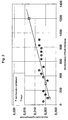
- Fig. 3 shows the reduction of the acid number in medium oil with fresh adsorbent and Adsorbent after desorption with methanol.
Landscapes
- Chemical & Material Sciences (AREA)
- Oil, Petroleum & Natural Gas (AREA)
- Engineering & Computer Science (AREA)
- Chemical Kinetics & Catalysis (AREA)
- General Chemical & Material Sciences (AREA)
- Organic Chemistry (AREA)
- Production Of Liquid Hydrocarbon Mixture For Refining Petroleum (AREA)
Abstract
Description
Claims (9)
- Verfahren zum Entsäuern von sauren Erdöldestillaten mit einem Siedebereich von 140 bis 350 °C und einer Säurezahl zwischen 0,05 und >0,015 mg KOH/g, dadurch gekennzeichnet, daß die Entsäuerung mit einem anorganischen Adsorbens erfolgt.
- Verfahren nach Anspruch 1, dadurch gekennzeichnet, daß schwefelarme Erdöldestillate mit einem Gesamtschwefelgehalt von ≤ 0,3 Gew.-% (w/w) und einem Schwefelgehalt aus Mercaptanen von ≤ 0,003 Gew.-% (w/w) eingesetzt werden.
- Verfahren nach Anspruch 1 oder 2 dadurch gekennzeichnet, daß Adsorbentien ausgewählt aus der Gruppe überwiegend siliciumdioxidhaltige Adsorbentien, überwiegend aluminiumoxidhaltige Adsorbentien, zeolithische Molekularsiebe und kohlenstoffhaltige Adsorbentien oder Mischungen derselben eingesetzt werden.
- Verfahren nach einem der Ansprüche 1 bis 3, dadurch gekennzeichnet, daß als Adsorbens aktiviertes Aluminiumoxid, Silicagele oder zeolitische Molekularsiebe eingesetzt werden.
- Verfahren nach Anspruch 3 oder 4, dadurch gekennzeichnet, daß die spezifische Oberfläche der Adsorbentien 100 - 1800 m2/g und das Mikroporenvolumen 0,2 - 0,4 cm3/g beträgt.
- Verfahren nach einem der Ansprüche 1 bis 5, dadurch gekennzeichnet, daß als Erdöldestillate Kerosine eingesetzt werden.
- Verfahren nach einem der Ansprüche 1 bis 6, dadurch gekennzeichnet, daß das Verfahren bei Temperaturen von 30 - 150 °C, einem Druck von 1 - 20 bar und einer spezifischen Belastung von 0,5 - 10 kg Erdöldestillat pro kg Adsorbens pro Stunde durchgeführt wird.
- Verfahren nach einem der Ansprüche 1 bis 7, dadurch gekennzeichnet, daß die Regenerierung des Adsorbens thermisch bei Temperaturen von 250 - 350 °C erfolgt.
- Verfahren nach einem der Ansprüche 1 bis 7, dadurch gekennzeichnet, daß die Regenerierung des Adsorbens durch Waschen mit einem polaren organischen Lösemittel erfolgt.
Applications Claiming Priority (2)
| Application Number | Priority Date | Filing Date | Title |
|---|---|---|---|
| DE10017260 | 2000-04-06 | ||
| DE2000117260 DE10017260A1 (de) | 2000-04-06 | 2000-04-06 | Kontinuierlicher Prozeß zur Jet-Erzeugung mittels Adsorbentien |
Publications (2)
| Publication Number | Publication Date |
|---|---|
| EP1142979A2 true EP1142979A2 (de) | 2001-10-10 |
| EP1142979A3 EP1142979A3 (de) | 2002-03-06 |
Family
ID=7637876
Family Applications (1)
| Application Number | Title | Priority Date | Filing Date |
|---|---|---|---|
| EP01106644A Withdrawn EP1142979A3 (de) | 2000-04-06 | 2001-03-16 | Verfahren zum Entsäuren von sauren Erdöldestillaten |
Country Status (2)
| Country | Link |
|---|---|
| EP (1) | EP1142979A3 (de) |
| DE (1) | DE10017260A1 (de) |
Family Cites Families (4)
| Publication number | Priority date | Publication date | Assignee | Title |
|---|---|---|---|---|
| US2327526A (en) * | 1940-06-22 | 1943-08-24 | Standard Oil Dev Co | Recovery of phenols from mineral oils |
| US3457165A (en) * | 1967-07-17 | 1969-07-22 | Universal Oil Prod Co | Treatment of hydrocarbon distillates to remove acidic organic material employing a fixed bed containing a solid alkali metal hydroxide |
| JPS55161886A (en) * | 1979-06-04 | 1980-12-16 | Matsushita Electric Ind Co Ltd | Purification of kerosene |
| US5389240A (en) * | 1993-08-02 | 1995-02-14 | Uop | Naphthenic acid removal as an adjunct to liquid hydrocarbon sweetening |
-
2000
- 2000-04-06 DE DE2000117260 patent/DE10017260A1/de not_active Ceased
-
2001
- 2001-03-16 EP EP01106644A patent/EP1142979A3/de not_active Withdrawn
Also Published As
| Publication number | Publication date |
|---|---|
| DE10017260A1 (de) | 2001-10-25 |
| EP1142979A3 (de) | 2002-03-06 |
Similar Documents
| Publication | Publication Date | Title |
|---|---|---|
| DE60107602T2 (de) | Verfahren zur entschwefelung von thiophenderivate enthaltenden kohlenwasserstoffen | |
| DE60000934T2 (de) | Verfahren zur erzeugung von erdölprodukten mit niedrigem schwefelgehalt durch entschwefelung von extrakten | |
| DE3912009C2 (de) | Verfahren zur Hydrokonversion von schwerem Kohlenwasserstofföl | |
| DE602004010906T2 (de) | Behandlung von rohölfraktionen, fossilen brennstoffen und produkten davon mit schallenergie | |
| EP0054783B1 (de) | Verfahren und Anlage zum Abtrennen von Schwefelwasserstoff und Kohlendioxid aus einem Gasgemisch | |
| DE2841662C2 (de) | Verfahren zum Entfernen von sauren Gasen und Polymeren bei der Absorptionsbehandlung von Beschickungsgasen | |
| EP0157339A2 (de) | Verfahren zur Herstellung von Kohlenwasserstoffen aus Klärschlamm | |
| DE19845397C2 (de) | Verfahren zur Entschwefelung eines motorischen Kraftstoffs an Bord eines Kraftfahrzeugs | |
| DE69205096T2 (de) | Entfernung von Arsenverbindungen aus leichten Kohlenwasserstoffströmen. | |
| DE2317674A1 (de) | Verfahren zur herstellung von synthesegas und reinen kraftstoffen | |
| DE10297118T5 (de) | Verfahren zur adsorptiven Entschwefelung von Leichtöldestillaten | |
| DE69412010T2 (de) | Verfahren zum Strippen von Verunreinigungen aus Abwasser | |
| DD237181A5 (de) | Verfahren zur verminderung der konzentration von mercaptanverbindungen | |
| DE4207191C2 (de) | Verfahren zum Herstellen eines etherreichen Additivs | |
| DE2822235A1 (de) | Katalytisches verfahren zur behandlung eines mercaptanhaltigen sauren erdoeldestillates | |
| DE102004031522B4 (de) | Verfahren zur Desulfuration einer Kohlenwasserstoffcharge | |
| DE2730526A1 (de) | Verfahren zur reinigung von wasserstoffhaltigen gasen | |
| DE102004035375A1 (de) | Verfahren zur Entschwefelung der Benzine durch Adsorption | |
| DE69926430T2 (de) | Verfahren zur Umsetzung von Kohlenwasserstoffen durch Behandlung in einer mit einer Reaktionszone verbundenen Destillationsanlage und Anwendung für die Hydrogenierung von Benzol | |
| DE10017260A1 (de) | Kontinuierlicher Prozeß zur Jet-Erzeugung mittels Adsorbentien | |
| DE3390486T1 (de) | Verfahren zur Reinigung von Gasen von Schwefelverbindungen | |
| DE3828603C2 (de) | Verfahren zum kontinuierlichen Süßen von Erdölschnitten in der Flüssigkeitsphase | |
| DE2815069C2 (de) | ||
| DE3233346A1 (de) | Verfahren zum suessen eines sauren kohlenwasserstoffes | |
| DE2815233C2 (de) |
Legal Events
| Date | Code | Title | Description |
|---|---|---|---|
| PUAI | Public reference made under article 153(3) epc to a published international application that has entered the european phase |
Free format text: ORIGINAL CODE: 0009012 |
|
| AK | Designated contracting states |
Kind code of ref document: A2 Designated state(s): AT BE CH CY DE DK ES FI FR GB GR IE IT LI LU MC NL PT SE TR |
|
| AX | Request for extension of the european patent |
Free format text: AL;LT;LV;MK;RO;SI |
|
| PUAL | Search report despatched |
Free format text: ORIGINAL CODE: 0009013 |
|
| AK | Designated contracting states |
Kind code of ref document: A3 Designated state(s): AT BE CH CY DE DK ES FI FR GB GR IE IT LI LU MC NL PT SE TR |
|
| AX | Request for extension of the european patent |
Free format text: AL;LT;LV;MK;RO;SI |
|
| 17P | Request for examination filed |
Effective date: 20020904 |
|
| AKX | Designation fees paid |
Free format text: AT BE CH CY DE DK ES FI FR GB GR IE IT LI LU MC NL PT SE TR |
|
| 17Q | First examination report despatched |
Effective date: 20021223 |
|
| STAA | Information on the status of an ep patent application or granted ep patent |
Free format text: STATUS: THE APPLICATION IS DEEMED TO BE WITHDRAWN |
|
| 18D | Application deemed to be withdrawn |
Effective date: 20141001 |