EP1131663B1 - System für die blickrichtung der augen - Google Patents
System für die blickrichtung der augen Download PDFInfo
- Publication number
- EP1131663B1 EP1131663B1 EP99954129A EP99954129A EP1131663B1 EP 1131663 B1 EP1131663 B1 EP 1131663B1 EP 99954129 A EP99954129 A EP 99954129A EP 99954129 A EP99954129 A EP 99954129A EP 1131663 B1 EP1131663 B1 EP 1131663B1
- Authority
- EP
- European Patent Office
- Prior art keywords
- instrument according
- user
- eye
- image
- eyepiece
- Prior art date
- Legal status (The legal status is an assumption and is not a legal conclusion. Google has not performed a legal analysis and makes no representation as to the accuracy of the status listed.)
- Revoked
Links
Images


Classifications
-
- A—HUMAN NECESSITIES
- A61—MEDICAL OR VETERINARY SCIENCE; HYGIENE
- A61B—DIAGNOSIS; SURGERY; IDENTIFICATION
- A61B3/00—Apparatus for testing the eyes; Instruments for examining the eyes
- A61B3/10—Objective types, i.e. instruments for examining the eyes independent of the patients' perceptions or reactions
- A61B3/113—Objective types, i.e. instruments for examining the eyes independent of the patients' perceptions or reactions for determining or recording eye movement
-
- G—PHYSICS
- G02—OPTICS
- G02B—OPTICAL ELEMENTS, SYSTEMS OR APPARATUS
- G02B21/00—Microscopes
-
- G—PHYSICS
- G02—OPTICS
- G02B—OPTICAL ELEMENTS, SYSTEMS OR APPARATUS
- G02B27/00—Optical systems or apparatus not provided for by any of the groups G02B1/00 - G02B26/00, G02B30/00
- G02B27/0093—Optical systems or apparatus not provided for by any of the groups G02B1/00 - G02B26/00, G02B30/00 with means for monitoring data relating to the user, e.g. head-tracking, eye-tracking
-
- G—PHYSICS
- G03—PHOTOGRAPHY; CINEMATOGRAPHY; ANALOGOUS TECHNIQUES USING WAVES OTHER THAN OPTICAL WAVES; ELECTROGRAPHY; HOLOGRAPHY
- G03B—APPARATUS OR ARRANGEMENTS FOR TAKING PHOTOGRAPHS OR FOR PROJECTING OR VIEWING THEM; APPARATUS OR ARRANGEMENTS EMPLOYING ANALOGOUS TECHNIQUES USING WAVES OTHER THAN OPTICAL WAVES; ACCESSORIES THEREFOR
- G03B13/00—Viewfinders; Focusing aids for cameras; Means for focusing for cameras; Autofocus systems for cameras
- G03B13/02—Viewfinders
-
- G—PHYSICS
- G06—COMPUTING OR CALCULATING; COUNTING
- G06V—IMAGE OR VIDEO RECOGNITION OR UNDERSTANDING
- G06V40/00—Recognition of biometric, human-related or animal-related patterns in image or video data
- G06V40/10—Human or animal bodies, e.g. vehicle occupants or pedestrians; Body parts, e.g. hands
- G06V40/18—Eye characteristics, e.g. of the iris
- G06V40/19—Sensors therefor
-
- G—PHYSICS
- G03—PHOTOGRAPHY; CINEMATOGRAPHY; ANALOGOUS TECHNIQUES USING WAVES OTHER THAN OPTICAL WAVES; ELECTROGRAPHY; HOLOGRAPHY
- G03B—APPARATUS OR ARRANGEMENTS FOR TAKING PHOTOGRAPHS OR FOR PROJECTING OR VIEWING THEM; APPARATUS OR ARRANGEMENTS EMPLOYING ANALOGOUS TECHNIQUES USING WAVES OTHER THAN OPTICAL WAVES; ACCESSORIES THEREFOR
- G03B2213/00—Viewfinders; Focusing aids for cameras; Means for focusing for cameras; Autofocus systems for cameras
- G03B2213/02—Viewfinders
- G03B2213/025—Sightline detection
Definitions
- the present invention relates to an apparatus and method for tracking the direction of a user's gaze.
- the invention has particular relevance to an eye tracking system for use with optical instruments which form a viewable image of an object, such as microscopes, cameras, telescopes etc.
- Leica Microsystems Limited has already proposed in WO96/13743 a microscope system which employs eye tracking techniques to track the position of gaze of a user viewing an image through a microscope eyepiece, which gaze information is used to control, for example, an auto-focus system. This is particularly useful at high magnification, where the depth of field is often limited and only a small part of the total field of view is in sharp focus at any one time.
- This earlier patent also teaches that the gaze information can be used to control other functions of the microscope, including hands-free movement of the microscope or the operation of a menu-driven computer system superimposed on the user's normal field of view.
- EP 588 290 discloses a camera with sight line detecting device, equipped with plural light sources for detecting the position of the center of the pupil.
- Limbus trackers usually operate by illuminating the user's eye, typically with one or more infra-red LEDs and detecting the light reflected off the white of the eye (sclera) using one or more photodetectors. Since the amount of light reflected off the white of the eye will vary depending on the position of the dark regions (the pupil and the iris), it is possible to determine where in the specified field of view the user is actually looking. However, this type of eye tracking system cannot unambiguously determine the angle of gaze because it only gives information relating to the position of the iris-sclera boundary. In addition, whilst Limbus tracking techniques give fairly good information on the horizontal position of the surface of the eye, they cannot accurately determine the vertical position due to obstruction from eyelashes and eyelids.
- One aim of the present invention is to provide a different eye tracking technique for use with optical instruments which form a viewable image of an object, such as microscopes, cameras and the like.
- the present invention provides an optical instrument for forming a viewable image of an object comprising all the characteristics recited in claim 1. Additional embodiments are defined in dependent claims.
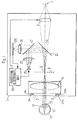
- Figure 1 is a schematic diagram of a surgical microscope 1.
- the microscope 1 comprises an objective lens 3 and an eyepiece 5, both of which are illustrated schematically by a single lens but which will, in practice, comprise a number of lenses.
- the objective lens 3 operates to generate an image of an object 7 being examined at an intermediate image plane (illustrated by the dashed line 9) which, in this embodiment is located at the focal plane of the eyepiece 5.
- an intermediate image plane illustrated by the dashed line 9
- the object 7 viewed by the observer appears to be at "infinity", i.e. the light from the object 7 emerges from the eyepiece 5 parallel to the optical axis 10 of the microscope.
- This image is then focussed by the cornea 15 and the eye lens 17 onto the retina 11 of the observer's eye 13.
- the microscope 1 also comprises two beam splitters 21 and 23 both of which are optically located along the optical axis 10 of the microscope 1.
- Beam splitter 21 operates to reflect light from an illumination source 25 onto the cornea 15 of the observer's eye 13.
- a lens 27 is provided between the illumination source 25 and the beam splitter 21 for focussing the light from the source 25 substantially onto the focal point 8 of the eyepiece 5, resulting in the light from the source 25 which exits the eyepiece 5 being substantially parallel to the axis 10 of the microscope.
- Some of this illumination light will be reflected from the surface of the cornea 15 back through the eyepiece 5 towards the beam splitter 23, where it is reflected and focussed onto a CCD sensor 29 by lens 31.
- the image generated by the CCD sensor 29 is input to a processing electronics unit 33, which is operable, in this embodiment, to process the received image to determine the observer's direction of gaze and to control the auto-focussing of the objective lens 3 in response thereto.
- the system can identify the direction of gaze at a resolution of approximately ⁇ 3% of the full field of view of the microscope, which is around what would be expected for natural saccadic movements of the eye. This implies that the tracking technique itself has a resolution that is potentially better than this figure.
- separate light sources 35a and 35b and 37a and 37b are provided around the outer rim of the eyepiece 5.
- the light sources 25, 35 and 37 emit near Infra Red (IR) light, since this is invisible to the user's eye and should not therefore, result in any reduction of the pupil size or in the quality of the image observed through the microscope.
- these sources are provided by high powered 850nm LED's which are operable to output about 0.2 mW at the front surface of the eye, which is well within current eye safety regulations.
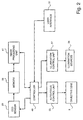
- FIG. 2 is a block diagram illustrating the principal components of the eye tracking system used in the present embodiment to determine the observer's direction of gaze.
- the output image from the CCD camera 29 is supplied to a memory 39 where it is processed by an image processing unit 41 to determine the observer's direction of gaze. This is achieved by monitoring the position of the reflected image of the illumination source 25 relative to the centre of the observer's pupil.
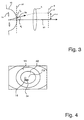
- Figure 3 schematically shows a cross section of the observer's eye showing the cornea 15, the iris 14, the eyepiece 5 and the intermediate image plane 9.
- the angle of gaze ⁇ x is related to the distance (x) between the optical axis 10 of the microscope 1 and the point (p) on the intermediate image plane 9 the observer is looking at. If the CCD camera 29 is focussed on the front surface of the observer's eye, i.e. at the plane 16, then the angle of gaze ( ⁇ x ) will also be dependent upon the distance ( ⁇ x) between the point of intersection of the axis 10 of the microscope and the plane 16 and the observed centre of the observer's pupil (c p ). Consequently, there will be a linear relationship between ⁇ x and x.
- Figure 3 illustrates a cross section of the microscope in the x-z plane
- a similar relationship exists for the angle of gaze ( ⁇ y ) in the y-z plane.
- the system uses a calibration routine (which the observer can initiate via the user interface 51) in which the observer is asked to look at a plurality of known points on the field of view of the microscope and in which the CCD camera 29 captures images of the observer's eye when the observer is looking at each of those points.
- a calibration routine which the observer can initiate via the user interface 51
- the CCD camera 29 captures images of the observer's eye when the observer is looking at each of those points.
- a scaling A x and an offset O x which relates ⁇ x to x and a scaling A y and an offset O y which relates ⁇ y to y can be determined. These scalings and offsets are then stored for use when the microscope is in its normal mode of operation.
- the observer's eye is located on the optical axis of the microscope.
- the light from the light source 25 exits the eyepiece 5 as a columnated beam, a similar relationship will exist if the observer's eye is off the axis of the microscope. Therefore, the system will be relatively insensitive to small head movements around the optical axis.
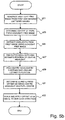
- Figure 4 schematically illustrates an example of the image generated by the CCD camera 29.
- the image shows the iris 14 and a reflection or highlight 18 of the illumination source 25 from the surface of the eye.
- Figure 4 also illustrates the distance ⁇ x between the highlight 18 and the centre of the pupil 22 at point c p .
- this distance can be determined by simple image processing techniques. Therefore, by capturing an image of the observer's eye and by measuring the distance ⁇ x and the corresponding distance ⁇ y, the point (x,y) that the observer is looking at on the image plane 9 can be determined using the stored scalings and offsets. The inventors have established through experimentation and testing with various user's that this technique can determine the observer's angle of gaze within approximately ⁇ 3% of the full field of view of the microscope.
- FIG 5a is a flowchart illustrating the processing steps employed by the controller 49 shown in Figure 2.
- the controller 49 signals the illumination control unit 57 to turn on the light source 25 and a first pair of the side light sources 35a and 35b.
- the controller 49 then signals, in step S3, the CCD camera 29 to capture a first image of the observer's eye which is then stored in the memory 39.
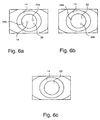
- Figure 6a illustrates the image generated by the CCD camera in this step. As shown, the image has three highlights - a central highlight 18 from the light source 25 and two outer highlights 24a and 24b generated by the light sources 35a and 35b respectively.
- the controller 49 then signals, in step S5, the illumination control unit 57 to switch off the light sources 25 and 35 and in step S7, to switch on the other pair of side illumination sources 37a and 37b. Then, in step S9, the controller 49 signals the CCD camera 29 to capture a second image of the observer's eye which is also then stored in memory 39.
- Figure 6b schematically illustrates the resulting image captured by the CCD camera 29, which shows the outer highlights 26a and 26b generated from the illumination sources 37a and 37b respectively.
- the processing then proceeds to step S11 where the controller 49 instructs the image processing unit 41 to determine the observer's direction of gaze from the two stored images. Once the image processing unit 41 determines this gaze information, it passes it back to the controller 49 which, in step S13 takes the necessary control action. In this embodiment, this involves controlling the focus of the objective lens 3 using the auto-focus control unit 55.
- Figure 5b is a flow chart illustrating the processing steps employed by the image processing unit 31 to determine the observer's direction of gaze.
- the image processing unit 41 generates a highlight free image from the first and second images stored in memory 39 (images shown in Figures 6a and 6b), by taking the lower of the pixel values from the two images, at each pixel.
- This highlight free image is shown in Figure 6c.
- This technique works since the highlights 18, 24 and 26 appear at different pixel locations in the two images and since the pupil is much darker than the highlights, the pixel values of the highlights will be much larger.
- the processing then proceeds to step S23 where the image processing unit 41 determines the centre of the pupil 22 from the highlight free image. It does this, in this embodiment, by thresholding the image to identify the boundary between the pupil 22 and the iris 14. A best fit circle is then fitted to the identified boundary and the centre of this circle is identified as being the pupil centre.
- step S25 the image processing unit extracts the highlights 18, 24a and 24b from the first image by subtracting the highlight free image shown in Figure 6c from the image shown in Figure 6a (i.e. subtracting the pixel values of the image shown in Figure 6c from the pixel values of the image shown in Figure 6a).
- step S27 the image processing unit determines the position of the outer highlights 24a and 24b by thresholding the image generated in step S25. From the determined position of the outer highlights 24, the image processing unit 41 estimates the position of the centre highlight 18. It can do this, since the illumination source 25 (which generates the centre highlight 18) and the illumination sources 35a and 35b (which generate the outer highlights 24) are in a known fixed position relative to each other.
- the illumination sources 35a and 35b are diametrically opposite each other on the outer rim of the eyepiece 5 and illumination source 25 is effectively on the optical axis of the microscope. Therefore, the position is estimated to be halfway between the two outer highlights.
- the processing then proceeds to step S29 where the image processing unit 41 determines a more accurate position of the centre highlight 18 by thresholding the image around the estimated position.
- the image processing unit 41 determines, in step S31, ⁇ x and ⁇ y from the determined positions of the centre highlight 18 and the pupil centre.
- step S33 the image processing unit scales ⁇ x and ⁇ y by using the stored scalings A x and A y and applies the appropriate offsets O x and O y to give the gaze direction in terms of the x,y co-ordinate of the point in the field of view 9 that the observer is looking at.
- the above processing steps are performed at approximately 25 times per second.
- the above described eye tracking technique works well in this microscope application because the observer's eye is usually located, in use, at approximately the same position relative to the eyepiece 5.
- This technique is also particularly appropriate for use in microscopes and other optical instruments in which the observer is viewing an image that appears essentially at infinity, since the x,y position on the image plane where the observer is looking is simply determined by the angle of gaze. Further, if the image is genuinely at infinity, then small head movements will have no effect on the observer's angle of gaze.
- information relating to the angle of gaze of the observer can be obtained by measuring the difference in the position of the pupil centre with respect to any of the highlights produced from any of the illumination sources.
- a highlight generated by a source (source 25) that is also effectively at infinity provides much more accurate results.
- the highlight is produced near the centre of the corneal bulge, where the radius of curvature of the cornea is relatively constant.
- the relatively large variations in curvature of the cornea that occur near the transition point from the corneal bulge to the rest of the eyeball have little effect on the measurement.
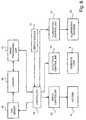
- FIG. 7 shows the processing blocks used in an embodiment where the gaze information is used to control the movement of the microscope 1. Processing blocks which are the same as those described with reference to Figure 2 have the same reference numeral. As shown, the only difference in this embodiment is the provision of a servo-controller 65 which is operable to receive the gaze information output by the controller 49 and in response thereto, is operable to control the operation of a number of motors 67 which move the microscope over the object 7 being viewed.
- Figure 8 shows the form of the processing and control electronics used in a further embodiment of the invention. As shown in Figure 8, in this embodiment, the determined direction of gaze information is used to control the positioning of the microscope and the focussing of the objective lens 3.
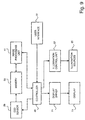
- Figure 9 shows the processing and control blocks used in yet another embodiment of the present invention.
- the direction of gaze information obtained by the controller is passed to a display driver 71 which controls the display of menus on a display 73 which is located within the viewfinder of the microscope.
- the CCD camera 29 was focussed onto the plane 16 shown in Figure 3. Provided the depth of field of the CCD camera is relatively large, the observer's eye does not have to be exactly at the plane 16 for the observer's eye to be in focus.
- the CCD camera 29 may have an associated autofocussing circuitry which operates to automatically focus the CCD camera onto the front surface of the observer's eye.
- the lens system for the CCD camera would either have to be telecentric or the calibration data would have to be adapted in dependence upon the current focus point of the CCD camera. This can be done, for example, by making the observer look at the calibration points for various different distances from the eyepiece 5, in order to determine the relationship between the calibration data and the focus point of the CCD camera.
- two pairs of side illumination sources 35 and 37 were provided on the outer rim of the eyepiece 5, for illuminating the observer's eye.
- illumination of the observer's eye can be achieved through the use of a single illumination source on the rim of the eyepiece. However, this is not preferred, since illumination from a single source does not provide uniform illumination of the observer's eye.
- the glints from these sources in the image can be removed by combining the images generated when only one of the side lights is switched on at any one time.
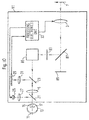
- FIG. 10 shows a schematic diagram of a camera 81 which employs the eye tracking technique discussed above.
- the camera 81 comprises an objective lens 3 for focussing the object onto the intermediate image plane.
- a real image is generated at the intermediate image plane by locating a diffusing screen 83 at the intermediate plane.
- the real image formed on the diffusing screen 83 is then viewed by the observer through the eyepiece 5 and a prism 85 which operates to reorientate the image the right way up.
- the camera 81 also has a mirror 87 which can be moved up or down so that the light from the object can be focussed onto the film 89.
- the remaining components of the eye tracking system are the same as those used in the microscope embodiments described above and will not, therefore, be described again. It should, however, be noted that, in this embodiment, the CCD sensor 29 and lens 31 are located in front of the diffusing screen 83, because the eye image cannot pass through the diffusing screen 83.
- calibration data was stored for each observer.
- the calibration data of one observer could be used for one or more other observers.
- such an embodiment is not preferred since the results will not be as accurate for the other observers. This is because the calibration data for an observer is dependent upon the radius of curvature of the observer's corneal bulge. The accuracy of such common calibration data may be improved if it is obtained by averaging several observer's calibration data.
- the system automatically changed the focus of the objective lens if the observer's direction of gaze moved to a position in the field of view which was out of focus.
- the processing electronics may be arranged so that the automatic focussing only changes either if the user remains focussed at the same point for a predetermined length of time or if the observer inputs a control command signalling that he wishes the focus to be changed.
- a beam splitter was used to effectively place the CCD sensor and the sensor lens on the axis of the microscope.
- the CCD sensor and the sensor lens can be located off the optical axis 10 of the microscope, provided the CCD sensor can still "see" the observer's eye.
- the CCD sensor is relatively small compared to the diameter of the objective lens, then the CCD sensor can be placed along the axis 10 of the objective lens.
- this embodiment is not preferred because it reduces the amount of light entering the observer's eye.
- the illumination source 25 may be located off the optical axis 10 of the microscope, provided the light from it will hit the observer's eye and be reflected back into the microscope and onto the CCD sensor.
Landscapes
- Physics & Mathematics (AREA)
- Engineering & Computer Science (AREA)
- Health & Medical Sciences (AREA)
- General Physics & Mathematics (AREA)
- Life Sciences & Earth Sciences (AREA)
- Optics & Photonics (AREA)
- Ophthalmology & Optometry (AREA)
- Human Computer Interaction (AREA)
- General Health & Medical Sciences (AREA)
- Heart & Thoracic Surgery (AREA)
- Surgery (AREA)
- Analytical Chemistry (AREA)
- Theoretical Computer Science (AREA)
- Biophysics (AREA)
- Biomedical Technology (AREA)
- Multimedia (AREA)
- Medical Informatics (AREA)
- Molecular Biology (AREA)
- Chemical & Material Sciences (AREA)
- Animal Behavior & Ethology (AREA)
- Public Health (AREA)
- Veterinary Medicine (AREA)
- Microscoopes, Condenser (AREA)
- Eye Examination Apparatus (AREA)
- Radar Systems Or Details Thereof (AREA)
- Measurement Of The Respiration, Hearing Ability, Form, And Blood Characteristics Of Living Organisms (AREA)
- Studio Devices (AREA)
Claims (36)
- Ein optisches Instrument zur Darstellung eines sichtbaren Bildes eines Objekts (7), welches:dadurch gekennzeichnet, dass der Augensensor mit umfasst:bilddarstellende Mittel (3) zur Bildung eines sichtbaren Bildes eines Objekts (7) in einer Bildebene (9),ein Okular (5), durch das der Beobachter das besagte sichtbare Bild auf besagter Bildplatte (9) betrachten kann;einen Augensensor zum Erfassen der Blickrichtung eines Beobachters, der das sichtbare Bild durch besagtes Okular (5) betrachtet undMittel zur Justierung einer kontrollierbaren Funktion des besagten optischen Instruments in Abhängigkeit zur abgetasteten Blickrichtung umfasst;(i) eine Lichtquelle (25), um Licht durch das besagte Okular in Richtung des Beobachterauges auszugeben;(ii) eine Linse (27), verbunden mit besagter Lichtquelle zur Erzeugung des Lichts von besagter Quelle, welches dann im Wesentlichen kollimiert ist, wenn es das besagte Okular in Richtung des besagten Beobachterauges verlässt;(iii) ein Bildumformer (5, 23, 29, 31), um die Vorderseite des Beobachterauges durch das besagte Okular abzubilden und um ein elektrisches Bildsignal auf der Vorderseite des Beobachterauges zu erzeugen; und(iv) Verarbeitungsmittel (33) zur Verarbeitung des elektrischen Bildsignals von dem besagten Bildumformer (9, 23, 29, 31), um innerhalb des Bildes die Distanz zwischen der Position einer Reflexion des Lichts von besagter Lichtquelle zum Beobachterauge zu bestimmen, und um besagte Blickrichtung zu bestimmen, indem man die besagte Distanz und die vorher festgelegten Kalibrierungsdaten, welche eine Beziehung zwischen besagter Distanz und dem Punkt auf der Bildebene (9), den der Beobachter gerade betrachtet, benutzt.
- Ein Instrument nach Anspruch 1, wobei das besagte Okular ein Linsensystem beinhaltet, um das sichtbare Sichtfeld des optischen Instrumentes zu erhöhen.
- Ein Instrument nach Anspruch 2, wobei besagte Linse, die mit besagter Lichtquelle verbunden ist, betriebsfähig ist, um das Licht von besagter Lichtquelle im Wesentlichen in dem Brennpunkt des besagten Okular-Linsensystem zu fokussieren.
- Ein Instrument nach Anspruch 2 oder 3, wobei die besagten bilddarstellenden Mittel betriebsfähig sind, um das besagte sichtbare Bild in einer Bildebene abzubilden, welche im Wesentlichen in dem Brennpunkt des besagten Okular-Linsensystem liegt.
- Ein Instrument nach einem der vorhergehenden Ansprüche, wobei besagter Bildumformer außerhalb der optischen Achse des besagten optischen Instrumentes liegt.
- Ein Instrument nach Anspruch 5, wobei zusätzlich ein Strahlenteiler zur Reflexion des Lichts von der Vorderseite des Beobachterauges auf besagten Bildumformer angeordnet ist.
- Ein Instrument nach einem der vorgehenden Ansprüche, wobei besagter Bildumformer einen CCD-Sensor beinhaltet.
- Ein Instrument nach Anspruch 7, wobei besagter CCD-Sensor einen 2D-CCD-Sensor beinhaltet.
- Ein Instrument nach Anspruch 7 oder 8, wobei besagter Bildumformer überdies eine Linse umfasst, um das Licht vom Beobachterauge auf den besagten CCD-Sensor zu fokussieren.
- Ein Instrument nach Anspruch 9, wobei besagte Bildumformerlinse auf eine Ebene in einer vorher festgelegten Distanz vor dem besagten Okular fokussierbar ist.
- Ein Instrument nach Anspruch 9, wobei besagter Bildumformer überdies Autofokus-Mittel umfasst, um automatisch die besagte Bildumformerlinse auf die vordere Oberfläche des besagten Beobachterauges zu fokussieren.
- Ein Instrument nach einem der vorhergehenden Ansprüche mit einer oder mehreren zusätzlichen Lichtquellen zur Beleuchtung des Beobachterauges.
- Ein Instrument nach Anspruch 12, wobei besagte eine oder mehrere zusätzlichen Lichtquellen um einen äußeren Rand des besagten Okulars angeordnet sind.
- Ein Instrument nach Anspruch 12, wobei zwei Paar zusätzliche Lichtquellen um besagten Rand vorgesehen sind.
- Ein Instrument nach einem der vorhergehenden Ansprüche, wobei die oder jede der besagten Lichtquellen mit infrarotnahem Licht betreibbar ist.
- Ein Instrument nach Anspruch 15, wobei die oder jede Lichtquelle eine 850nm LED umfasst.
- Ein Instrument nach einem der vorhergehenden Ansprüche, wobei mit besagten Verarbeitungsmitteln das besagte Pupillenzentrum durch Grenzwert-Bestimmung des Bildes die Grenze zwischen der Pupille und der Iris bestimmbar ist und durch Identifizierung des Zentrums des Kreises festzustellen, welcher am besten zur lokalisierten Grenze passt.
- Ein Instrument nach Anspruch 1, wobei besagte Kalibrierungsdaten im Voraus während dem Betrieb eines Kalibrierungsprogramms erzeugbar sind, in welchem der Beobachter auf verschiedene vordefinierte Stellen auf die Bildebene schaut und in welcher die ermittelten Distanzen von den entsprechenden Bildern den bekannten Punkten durch die Verarbeitungsmittel zuordenbar sind.
- Ein Instrument nach Anspruch 1 oder 18, wobei besagte Kalibrierungsdaten einen Skalierungsfaktor zum Skalieren der besagten Distanz zwischen den besagten zwei Positionen umfassen.
- Ein Instrument nach Anspruch 19, wobei besagte Kalibrierungsdaten einen Skalierungsfaktor für eine x-Komponente der besagten Distanz sowie einen Skalierungsfaktor für eine y-Komponente der besagten Distanz umfassen.
- Ein Instrument nach Anspruch 20, wobei besagte Kalibrierungsdaten überdies eine Nulllagen-Abweichung für besagte x-Richtung sowie eine Nulllagen-Abweichung für besagte y-Richtung umfassen.
- Ein Instrument nach Anspruch 11 mit Mitteln zur Veränderung der besagten Kalibrierungsdaten in Abhängigkeit eines gegenwärtigen Brennpunkts der besagten Bildumformerlinse.
- Ein Instrument nach einem der vorhergehenden Ansprüche, wobei mindestens zwei zusätzliche Lichtquellen zur Beleuchtung des Beobachterauges vorgesehen sind und worin das Instrument weitere Beleuchtungskontrollmittel beinhaltet, damit gezielt verschiedene der zwei besagten oder weiteren Lichtquellen betreibbar sind und worin mit besagtem Bildumformer ein Bild des Beobachterauges erzeugbar ist, wenn verschiedene der besagten Lichtquellen betreibbar sind und ein glanzpunktfreies Bild durch Kombinierung der Bildausgaben durch besagten Umformer erzeugbar ist, wenn die verschiedenen Lichtquellen betreibbar sind.
- Ein Instrument nach Anspruch 23, wobei durch besagte Verarbeitungsmittel das Zentrum von besagter Pupille von dem besagten glanzfreien Bild bestimmbar ist.
- Ein Instrument nach Anspruch 23 oder 24, wobei durch besagte Beleuchtungskontrollmittel ein erstes Paar der besagten weiteren Lichtquellen während einem ersten Zeitintervall betreibbar ist und ein zweites verschiedenes Paar der Lichtquellen während einem zweiten Zeitintervall betreibbar ist und worin mit besagtem Bildumformer ein Bild des Beobachterauges während dem besagten ersten und während dem besagten zweiten Zeitintervall erzeugbar ist.
- Ein Instrument nach Anspruch 25, worin durch besagte Beleuchtungskontrollmittel die besagte Lichtquelle schaltbar ist, um während besagtem ersten Zeitintervall Licht durch besagtes Okular auszugeben und worin durch besagte Verarbeitungsmittel die Position von besagter Reflexion durch Lokalisierung der Reflexionen vom besagten ersten Paar der weiteren Lichtquellen und dann durch Berechnung der Position der besagten Reflexion von diesen Positionen sowie durch Grenzwert-Bestimmung des Bildes um besagte berechnete Position herum feststellbar ist.
- Ein Instrument nach einem der vorhergehenden Ansprüchen, worin besagte Lichtquelle zur Lichtausgabe durch besagtes Okular außerhalb der Achse des besagten optischen Instruments angeordnet ist.
- Ein Instrument nach Anspruch 27, mit einem weiteren Strahlenteiler, der auf der optischen Achse des Instrumentes anordenbar ist, wodurch das Licht von besagter Quelle auf das Beobachterauge reflektierbar ist.
- Ein Instrument nach einem der vorhergehenden Ansprüche, worin mittels besagtem Bildumformer ein Bildsignal viele Male pro Sekunde ausgebbar ist und mittels besagten Verarbeitungsmitteln besagte Blickinformationen von den besagten Bildern wiederholt feststellbar sind.
- Ein Instrument nach Anspruch 29, worin mittels besagtem Bildumformer ein Bildsignal zwischen zehn und fünfzig Mal pro Sekunde ausgebbar ist.
- Ein Instrument nach einem der vorhergehenden Ansprüche, worin besagte kontrollierbare Funktion die automatische Fokussierung einer Objektivlinse als Bestandteil der besagten bilddarstellenden Mittel ist, sodass der Punkt im Blickfeld, den der Beobachter betrachtet, im Fokus ist.
- Ein Instrument nach einem der vorhergehenden Ansprüche, worin besagte kontrollierbare Funktion die Bewegung des optischen Instrumentes über dem betrachteten Objekt ist.
- Ein Instrument nach einem der vorhergehenden Ansprüche, worin besagte kontrollierbare Funktion der Inhalt eines Displays ist, welches auf das Blickfeld des Instruments optisch überlagerbar ist.
- Ein Instrument nach einem der vorhergehenden Ansprüche, wobei es ein Mikroskop ist.
- Ein Instrument nach einem der vorhergehenden Ansprüche, wobei es eine Kamera ist.
- Verfahren zum Betrieb eines optischen Instruments zur Darstellung eines sichtbaren Bildes eines Objekts (7), folgende Schritte umfassend:Darstellung eines sichtbaren Bildes eines Objektes (7) in einer Bildebene (9);Betrachtung des sichtbaren Bildes durch ein Okular (5);Erfassung einer Blickrichtung eines Beobachters, der das Bild (9) betrachtet; undSteuerung einer steuerbaren Funktion des optischen Instruments in Abhängigkeit von der erfassten Blickrichtung, dadurch gekennzeichnet, dass besagter Erfassungsschritt die Schritte beinhaltet:(i) Verwendung einer Lichtquelle (25), um Licht durch besagtes Okular (5) in Richtung des Beobachterauges auszugeben;(ii) Bereitstellung einer Linse (27), welche mit besagter Lichtquelle verbunden ist, um das Licht von besagter Quelle im Wesentlichen zu kollimieren, wenn es das besagte Okular (5) in Richtung des besagten Beobachterauges verlässt;(iii) Bereitstellung eines Bildumformers (5, 23, 29, 31), um die Vorderseite des Beobachterauges durch besagtes Okular (5) abzubilden, um ein elektrisches Bildsignal der Vorderseite des Beobachterauges zu erzeugen; und(iv) Verarbeitung des elektrischen Bildsignals von besagtem Bildumformer (5, 23, 29, 31 ), um die Distanz zwischen der Position innerhalb des Bildes des Zentrums der Beobachterpupille und der Position einer Reflexion des Lichts von besagter Lichtquelle aus zu bestimmen und um die besagten Blickinformationen zu bestimmen, indem besagte Distanz und vorbestimmte Kalibrierungsdaten verwendet werden, die eine Beziehung zwischen besagter Distanz und dem gerade vom Beobachter betrachteten Punkt auf der Bildebene (9) definieren.
Applications Claiming Priority (3)
| Application Number | Priority Date | Filing Date | Title |
|---|---|---|---|
| GB9823977 | 1998-11-02 | ||
| GB9823977A GB9823977D0 (en) | 1998-11-02 | 1998-11-02 | Eye tracking method and apparatus |
| PCT/GB1999/003625 WO2000026713A1 (en) | 1998-11-02 | 1999-11-02 | Eye tracking system |
Publications (2)
| Publication Number | Publication Date |
|---|---|
| EP1131663A1 EP1131663A1 (de) | 2001-09-12 |
| EP1131663B1 true EP1131663B1 (de) | 2004-08-11 |
Family
ID=10841712
Family Applications (1)
| Application Number | Title | Priority Date | Filing Date |
|---|---|---|---|
| EP99954129A Revoked EP1131663B1 (de) | 1998-11-02 | 1999-11-02 | System für die blickrichtung der augen |
Country Status (8)
| Country | Link |
|---|---|
| US (1) | US6634749B1 (de) |
| EP (1) | EP1131663B1 (de) |
| JP (1) | JP2002529763A (de) |
| AT (1) | ATE273525T1 (de) |
| AU (1) | AU1056800A (de) |
| DE (1) | DE69919383T2 (de) |
| GB (1) | GB9823977D0 (de) |
| WO (1) | WO2000026713A1 (de) |
Cited By (2)
| Publication number | Priority date | Publication date | Assignee | Title |
|---|---|---|---|---|
| DE102025126611A1 (de) | 2024-11-19 | 2026-05-21 | Carl Zeiss Microscopy Gmbh | Eye-Tracking-Kalibrierung |
| DE102024133935A1 (de) | 2024-11-19 | 2026-05-21 | Carl Zeiss Microscopy Gmbh | Eye-Tracking |
Families Citing this family (53)
| Publication number | Priority date | Publication date | Assignee | Title |
|---|---|---|---|---|
| US7076118B1 (en) * | 1997-12-05 | 2006-07-11 | Sharp Laboratories Of America, Inc. | Document classification system |
| US7011410B2 (en) * | 2000-11-22 | 2006-03-14 | Eyetect, L.L.C. | Method and apparatus for monitoring eye tremor |
| US6478425B2 (en) * | 2000-12-29 | 2002-11-12 | Koninlijke Phillip Electronics N. V. | System and method for automatically adjusting a lens power through gaze tracking |
| AU2002361210A1 (en) * | 2001-12-21 | 2003-07-09 | Sensomotoric Instruments Gmbh | Method and apparatus for eye registration |
| US7197165B2 (en) | 2002-02-04 | 2007-03-27 | Canon Kabushiki Kaisha | Eye tracking using image data |
| DE10250569A1 (de) * | 2002-10-28 | 2004-05-13 | Carl Zeiss Meditec Ag | Ophthalmologisches Gerät und Verfahren zur Gerätepositionierung |
| EP1447698B1 (de) * | 2003-02-17 | 2007-04-11 | Kabushiki Kaisha TOPCON | Ophthalmo-Operationsmikroskop |
| US20040174497A1 (en) * | 2003-03-07 | 2004-09-09 | Manish Sharma | Method and system for controlling the movement of a device |
| US8292433B2 (en) * | 2003-03-21 | 2012-10-23 | Queen's University At Kingston | Method and apparatus for communication between humans and devices |
| US7762665B2 (en) | 2003-03-21 | 2010-07-27 | Queen's University At Kingston | Method and apparatus for communication between humans and devices |
| US7731360B2 (en) * | 2003-11-07 | 2010-06-08 | Neuro Kinetics | Portable video oculography system |
| US20060279745A1 (en) * | 2005-06-13 | 2006-12-14 | Wenstrand John S | Color imaging system for locating retroreflectors |
| JP4797588B2 (ja) * | 2005-11-17 | 2011-10-19 | アイシン精機株式会社 | 車両周辺表示装置 |
| JP4356733B2 (ja) * | 2006-11-09 | 2009-11-04 | アイシン精機株式会社 | 車載用画像処理装置とその制御方法 |
| US9655515B2 (en) * | 2008-04-08 | 2017-05-23 | Neuro Kinetics | Method of precision eye-tracking through use of iris edge based landmarks in eye geometry |
| US9039631B2 (en) | 2008-10-09 | 2015-05-26 | Neuro Kinetics | Quantitative, non-invasive, clinical diagnosis of traumatic brain injury using VOG device for neurologic testing |
| US8585609B2 (en) * | 2008-10-09 | 2013-11-19 | Neuro Kinetics, Inc. | Quantitative, non-invasive, clinical diagnosis of traumatic brain injury using simulated distance visual stimulus device for neurologic testing |
| US10398309B2 (en) | 2008-10-09 | 2019-09-03 | Neuro Kinetics, Inc. | Noninvasive rapid screening of mild traumatic brain injury using combination of subject's objective oculomotor, vestibular and reaction time analytic variables |
| US20100295782A1 (en) | 2009-05-21 | 2010-11-25 | Yehuda Binder | System and method for control based on face ore hand gesture detection |
| IT1399456B1 (it) * | 2009-09-11 | 2013-04-19 | Sr Labs S R L | Metodo e apparato per l'utilizzo di generiche applicazioni software attraverso controllo oculare e opportune metodologie di interazione. |
| DE102010038547B4 (de) * | 2010-07-28 | 2012-07-19 | Leica Microsystems (Schweiz) Ag | Bildstabilisierungs- und -aufnahmesensor für eine Bildaufnahmevorrichtung eines Operationsmikroskops |
| KR101824501B1 (ko) * | 2011-05-19 | 2018-02-01 | 삼성전자 주식회사 | 헤드 마운트 디스플레이 장치의 이미지 표시 제어 장치 및 방법 |
| US8885882B1 (en) | 2011-07-14 | 2014-11-11 | The Research Foundation For The State University Of New York | Real time eye tracking for human computer interaction |
| EP2551636A1 (de) * | 2011-07-25 | 2013-01-30 | Leica Geosystems AG | Berührungslos bedienbare Vermessungsvorrichtung und Steuerverfahren für eine solche |
| CN102914932A (zh) * | 2011-08-03 | 2013-02-06 | 浪潮乐金数字移动通信有限公司 | 一种利用摄像设备用户的眼睛来对焦的方法及摄像设备 |
| US9102269B2 (en) | 2011-08-09 | 2015-08-11 | Continental Automotive Systems, Inc. | Field of view matching video display system |
| US8808179B1 (en) | 2012-08-06 | 2014-08-19 | James Z. Cinberg | Method and associated apparatus for detecting minor traumatic brain injury |
| US9265458B2 (en) | 2012-12-04 | 2016-02-23 | Sync-Think, Inc. | Application of smooth pursuit cognitive testing paradigms to clinical drug development |
| US9380976B2 (en) | 2013-03-11 | 2016-07-05 | Sync-Think, Inc. | Optical neuroinformatics |
| CN105431078B (zh) * | 2013-03-18 | 2018-11-02 | 视译公司 | 用于同轴眼睛凝视跟踪的系统和方法 |
| US9261959B1 (en) | 2013-03-28 | 2016-02-16 | Google Inc. | Input detection |
| EP2787323A1 (de) * | 2013-04-05 | 2014-10-08 | Leica Geosystems AG | Vermessungsgerät mit Funktion zur Kalibrierung einer Anzeige-Bildposition eines elektronischen Fadenkreuzes |
| US8922589B2 (en) | 2013-04-07 | 2014-12-30 | Laor Consulting Llc | Augmented reality apparatus |
| US9652034B2 (en) | 2013-09-11 | 2017-05-16 | Shenzhen Huiding Technology Co., Ltd. | User interface based on optical sensing and tracking of user's eye movement and position |
| US9557553B2 (en) | 2013-10-10 | 2017-01-31 | Raytheon Canada Limited | Electronic eyebox |
| WO2015070182A2 (en) | 2013-11-09 | 2015-05-14 | Firima Inc. | Optical eye tracking |
| WO2015081325A1 (en) | 2013-11-27 | 2015-06-04 | Shenzhen Huiding Technology Co., Ltd. | Eye tracking and user reaction detection |
| CN105828700B (zh) * | 2013-12-09 | 2018-07-06 | Smi创新传感技术有限公司 | 操作眼睛跟踪装置的方法和提供主动照明控制用于改进的眼睛跟踪稳定性的眼睛跟踪装置 |
| US9292765B2 (en) * | 2014-01-07 | 2016-03-22 | Microsoft Technology Licensing, Llc | Mapping glints to light sources |
| US9782069B2 (en) | 2014-11-06 | 2017-10-10 | International Business Machines Corporation | Correcting systematic calibration errors in eye tracking data |
| DK179537B1 (en) * | 2015-02-04 | 2019-02-08 | Itu Business Development A/S | Tin traces and eye tracking methods |
| KR102000865B1 (ko) * | 2015-05-08 | 2019-07-16 | 센소모토릭 인스트루멘츠 게젤샤프트 퓌어 이노바티브 센소릭 엠베하 | 눈 추적 디바이스 및 눈 추적 디바이스를 동작시키기 위한 방법 |
| KR102345652B1 (ko) * | 2015-06-26 | 2021-12-30 | 삼성전자주식회사 | 뷰 파인더 장치 및 그 동작 방법 |
| US11061233B2 (en) | 2015-06-30 | 2021-07-13 | 3M Innovative Properties Company | Polarizing beam splitter and illuminator including same |
| WO2017026371A1 (ja) * | 2015-08-11 | 2017-02-16 | 株式会社ソニー・インタラクティブエンタテインメント | ヘッドマウントディスプレイ |
| DE102015118154A1 (de) | 2015-10-23 | 2017-04-27 | Arnold & Richter Cine Technik Gmbh & Co. Betriebs Kg | Elektronisches Mikroskop, insbesondere Operationsmikroskop |
| CN105954992B (zh) * | 2016-07-22 | 2018-10-30 | 京东方科技集团股份有限公司 | 显示系统和显示方法 |
| WO2018022910A1 (en) * | 2016-07-27 | 2018-02-01 | Tobii Ab | Wearable device having a display, lens, illuminator, and image sensor |
| KR102773928B1 (ko) * | 2016-11-04 | 2025-03-04 | 삼성전자주식회사 | 눈을 촬영하여 정보를 획득하는 방법 및 장치 |
| US10176375B2 (en) | 2017-03-29 | 2019-01-08 | Raytheon Canada Limited | High speed pupil detection system and method |
| CN110251078A (zh) * | 2019-01-30 | 2019-09-20 | 北京大学第三医院(北京大学第三临床医学院) | 显微镜的成像方法、成像系统和显微镜 |
| CN110441901A (zh) * | 2019-08-14 | 2019-11-12 | 东北大学 | 一种可实时追踪注视位置的光学显微镜系统及方法 |
| FI130771B1 (fi) * | 2020-07-03 | 2024-03-07 | Seetrue Tech Oy | Katseen seuranta |
Family Cites Families (18)
| Publication number | Priority date | Publication date | Assignee | Title |
|---|---|---|---|---|
| JPS542115A (en) | 1977-06-07 | 1979-01-09 | Fuji Photo Film Co Ltd | Data imprinting device for cameras |
| US4322752A (en) | 1980-01-16 | 1982-03-30 | Eastman Technology, Inc. | Fast frame rate sensor readout |
| IL87813A (en) | 1987-09-21 | 1993-08-18 | Udden | Measuring light intensity variations |
| US5016282A (en) * | 1988-07-14 | 1991-05-14 | Atr Communication Systems Research Laboratories | Eye tracking image pickup apparatus for separating noise from feature portions |
| US4974010A (en) * | 1989-06-09 | 1990-11-27 | Lc Technologies, Inc. | Focus control system |
| US5231674A (en) * | 1989-06-09 | 1993-07-27 | Lc Technologies, Inc. | Eye tracking method and apparatus |
| FR2672989A1 (fr) | 1991-02-15 | 1992-08-21 | Sodern | Dispositif de determination de la direction d'une source emissive de faible luminosite et son application a la visee stellaire. |
| JPH0761314B2 (ja) | 1991-10-07 | 1995-07-05 | コナミ株式会社 | 網膜反射光量測定装置及び該装置を用いた視線検出装置 |
| US5360971A (en) * | 1992-03-31 | 1994-11-01 | The Research Foundation State University Of New York | Apparatus and method for eye tracking interface |
| DE69333674T2 (de) | 1992-06-02 | 2006-02-02 | Canon K.K. | Optisches Gerät zur Rotationsdetektion eines Augapfels eines Beobachters |
| EP0588290A3 (en) | 1992-09-14 | 1994-05-18 | Nippon Kogaku Kk | Camera with sight line detecting device |
| JPH0694978A (ja) | 1992-09-14 | 1994-04-08 | Nikon Corp | 視線検出装置 |
| JPH06138379A (ja) | 1992-09-14 | 1994-05-20 | Nikon Corp | 視線検出装置付きカメラ |
| JPH06148513A (ja) * | 1992-10-30 | 1994-05-27 | Canon Inc | 視線検出装置 |
| FR2719988B1 (fr) | 1994-05-20 | 1996-08-02 | Centre Nat Rech Scient | Dispositif de contrôle des mouvements oculaires. |
| DE59504515D1 (de) | 1994-10-26 | 1999-01-21 | Leica Mikroskopie Sys Ag | Mikroskop, insbesondere operationsmikroskop |
| US5726916A (en) * | 1996-06-27 | 1998-03-10 | The United States Of America As Represented By The Secretary Of The Army | Method and apparatus for determining ocular gaze point of regard and fixation duration |
| CA2310114A1 (en) * | 1998-02-02 | 1999-08-02 | Steve Mann | Wearable camera system with viewfinder means |
-
1998
- 1998-11-02 GB GB9823977A patent/GB9823977D0/en not_active Ceased
-
1999
- 1999-11-02 WO PCT/GB1999/003625 patent/WO2000026713A1/en not_active Ceased
- 1999-11-02 EP EP99954129A patent/EP1131663B1/de not_active Revoked
- 1999-11-02 JP JP2000580037A patent/JP2002529763A/ja active Pending
- 1999-11-02 AU AU10568/00A patent/AU1056800A/en not_active Abandoned
- 1999-11-02 AT AT99954129T patent/ATE273525T1/de not_active IP Right Cessation
- 1999-11-02 US US09/830,828 patent/US6634749B1/en not_active Expired - Lifetime
- 1999-11-02 DE DE1999619383 patent/DE69919383T2/de not_active Revoked
Cited By (2)
| Publication number | Priority date | Publication date | Assignee | Title |
|---|---|---|---|---|
| DE102025126611A1 (de) | 2024-11-19 | 2026-05-21 | Carl Zeiss Microscopy Gmbh | Eye-Tracking-Kalibrierung |
| DE102024133935A1 (de) | 2024-11-19 | 2026-05-21 | Carl Zeiss Microscopy Gmbh | Eye-Tracking |
Also Published As
| Publication number | Publication date |
|---|---|
| WO2000026713A1 (en) | 2000-05-11 |
| ATE273525T1 (de) | 2004-08-15 |
| DE69919383T2 (de) | 2005-12-01 |
| US6634749B1 (en) | 2003-10-21 |
| DE69919383D1 (de) | 2004-09-16 |
| AU1056800A (en) | 2000-05-22 |
| EP1131663A1 (de) | 2001-09-12 |
| GB9823977D0 (en) | 1998-12-30 |
| JP2002529763A (ja) | 2002-09-10 |
Similar Documents
| Publication | Publication Date | Title |
|---|---|---|
| US6634749B1 (en) | Eye tracking system | |
| US6394602B1 (en) | Eye tracking system | |
| JP2003521950A6 (ja) | 視標追跡システム | |
| EP3294113B1 (de) | Augenverfolgungsvorrichtung und verfahren zum betrieb einer augenverfolgungsvorrichtung | |
| US5751396A (en) | Ophthalmic apparatus including ocular fundus illuminating system for illuminating the fundus of the eye to be examined through the pupil thereof | |
| US6191892B1 (en) | Image display apparatus | |
| US5225862A (en) | Visual axis detector using plural reflected image of a light source | |
| US5386258A (en) | Optical apparatus having a visual axis direction detecting device | |
| US7298414B2 (en) | Digital camera autofocus using eye focus measurement | |
| JPH11508780A (ja) | 視覚情報を並行検出する方法及びそのための装置並びに前記方法の使用方法 | |
| JPH11501403A (ja) | 顕微鏡、特に手術用顕微鏡 | |
| KR20020086590A (ko) | 응시 추적을 통해 렌즈 배율을 자동으로 조절하기 위한시스템 및 방법 | |
| CN103782131A (zh) | 能够非接触操作的测量设备以及用于这种测量设备的控制方法 | |
| JPH0846846A (ja) | 撮像装置 | |
| JP2021064928A (ja) | 電子機器 | |
| JPH08286144A (ja) | 画像観察装置及びそれを用いた観察機器 | |
| JP2009240551A (ja) | 視線検出装置 | |
| US5973737A (en) | Apparatus having an eye control unit | |
| US5767821A (en) | Communication device | |
| JPH10179520A (ja) | 視線検出方法及び装置並びに記憶媒体 | |
| WO1991006263A1 (en) | A communication device | |
| JPH09262210A (ja) | 光学システム | |
| JP3171698B2 (ja) | カメラの焦点距離制御装置 | |
| JP3134320B2 (ja) | 視線検出装置 | |
| JP2995878B2 (ja) | 視線検出装置を有した光学装置 |
Legal Events
| Date | Code | Title | Description |
|---|---|---|---|
| PUAI | Public reference made under article 153(3) epc to a published international application that has entered the european phase |
Free format text: ORIGINAL CODE: 0009012 |
|
| 17P | Request for examination filed |
Effective date: 20010530 |
|
| AK | Designated contracting states |
Kind code of ref document: A1 Designated state(s): AT BE CH CY DE DK ES FI FR GB GR IE IT LI LU MC NL PT SE |
|
| GRAG | Despatch of communication of intention to grant |
Free format text: ORIGINAL CODE: EPIDOS AGRA |
|
| 17Q | First examination report despatched |
Effective date: 20011112 |
|
| GRAG | Despatch of communication of intention to grant |
Free format text: ORIGINAL CODE: EPIDOS AGRA |
|
| RAP1 | Party data changed (applicant data changed or rights of an application transferred) |
Owner name: LEICA MICROSYSTEMS SCHWEIZ AG |
|
| GRAP | Despatch of communication of intention to grant a patent |
Free format text: ORIGINAL CODE: EPIDOSNIGR1 |
|
| GRAU | Approval following communication of intention to grant |
Free format text: ORIGINAL CODE: EPIDOSNAGR4 |
|
| GRAS | Grant fee paid |
Free format text: ORIGINAL CODE: EPIDOSNIGR3 |
|
| GRAA | (expected) grant |
Free format text: ORIGINAL CODE: 0009210 |
|
| AK | Designated contracting states |
Kind code of ref document: B1 Designated state(s): AT BE CH CY DE DK ES FI FR GB GR IE IT LI LU MC NL PT SE |
|
| PG25 | Lapsed in a contracting state [announced via postgrant information from national office to epo] |
Ref country code: NL Free format text: LAPSE BECAUSE OF FAILURE TO SUBMIT A TRANSLATION OF THE DESCRIPTION OR TO PAY THE FEE WITHIN THE PRESCRIBED TIME-LIMIT Effective date: 20040811 Ref country code: IT Free format text: LAPSE BECAUSE OF FAILURE TO SUBMIT A TRANSLATION OF THE DESCRIPTION OR TO PAY THE FEE WITHIN THE PRESCRIBED TIME-LIMIT;WARNING: LAPSES OF ITALIAN PATENTS WITH EFFECTIVE DATE BEFORE 2007 MAY HAVE OCCURRED AT ANY TIME BEFORE 2007. THE CORRECT EFFECTIVE DATE MAY BE DIFFERENT FROM THE ONE RECORDED. Effective date: 20040811 Ref country code: FI Free format text: LAPSE BECAUSE OF FAILURE TO SUBMIT A TRANSLATION OF THE DESCRIPTION OR TO PAY THE FEE WITHIN THE PRESCRIBED TIME-LIMIT Effective date: 20040811 Ref country code: CY Free format text: LAPSE BECAUSE OF FAILURE TO SUBMIT A TRANSLATION OF THE DESCRIPTION OR TO PAY THE FEE WITHIN THE PRESCRIBED TIME-LIMIT Effective date: 20040811 Ref country code: BE Free format text: LAPSE BECAUSE OF FAILURE TO SUBMIT A TRANSLATION OF THE DESCRIPTION OR TO PAY THE FEE WITHIN THE PRESCRIBED TIME-LIMIT Effective date: 20040811 Ref country code: AT Free format text: LAPSE BECAUSE OF FAILURE TO SUBMIT A TRANSLATION OF THE DESCRIPTION OR TO PAY THE FEE WITHIN THE PRESCRIBED TIME-LIMIT Effective date: 20040811 |
|
| REG | Reference to a national code |
Ref country code: GB Ref legal event code: FG4D |
|
| REG | Reference to a national code |
Ref country code: CH Ref legal event code: EP |
|
| REG | Reference to a national code |
Ref country code: IE Ref legal event code: FG4D |
|
| REF | Corresponds to: |
Ref document number: 69919383 Country of ref document: DE Date of ref document: 20040916 Kind code of ref document: P |
|
| PG25 | Lapsed in a contracting state [announced via postgrant information from national office to epo] |
Ref country code: LU Free format text: LAPSE BECAUSE OF NON-PAYMENT OF DUE FEES Effective date: 20041102 Ref country code: IE Free format text: LAPSE BECAUSE OF NON-PAYMENT OF DUE FEES Effective date: 20041102 |
|
| PG25 | Lapsed in a contracting state [announced via postgrant information from national office to epo] |
Ref country code: SE Free format text: LAPSE BECAUSE OF FAILURE TO SUBMIT A TRANSLATION OF THE DESCRIPTION OR TO PAY THE FEE WITHIN THE PRESCRIBED TIME-LIMIT Effective date: 20041111 Ref country code: GR Free format text: LAPSE BECAUSE OF FAILURE TO SUBMIT A TRANSLATION OF THE DESCRIPTION OR TO PAY THE FEE WITHIN THE PRESCRIBED TIME-LIMIT Effective date: 20041111 Ref country code: DK Free format text: LAPSE BECAUSE OF FAILURE TO SUBMIT A TRANSLATION OF THE DESCRIPTION OR TO PAY THE FEE WITHIN THE PRESCRIBED TIME-LIMIT Effective date: 20041111 |
|
| PGFP | Annual fee paid to national office [announced via postgrant information from national office to epo] |
Ref country code: CH Payment date: 20041119 Year of fee payment: 6 |
|
| PG25 | Lapsed in a contracting state [announced via postgrant information from national office to epo] |
Ref country code: ES Free format text: LAPSE BECAUSE OF FAILURE TO SUBMIT A TRANSLATION OF THE DESCRIPTION OR TO PAY THE FEE WITHIN THE PRESCRIBED TIME-LIMIT Effective date: 20041122 |
|
| PGFP | Annual fee paid to national office [announced via postgrant information from national office to epo] |
Ref country code: GB Payment date: 20041122 Year of fee payment: 6 |
|
| PGFP | Annual fee paid to national office [announced via postgrant information from national office to epo] |
Ref country code: FR Payment date: 20041123 Year of fee payment: 6 |
|
| PG25 | Lapsed in a contracting state [announced via postgrant information from national office to epo] |
Ref country code: MC Free format text: LAPSE BECAUSE OF NON-PAYMENT OF DUE FEES Effective date: 20041130 |
|
| NLV1 | Nl: lapsed or annulled due to failure to fulfill the requirements of art. 29p and 29m of the patents act | ||
| ET | Fr: translation filed | ||
| PLAQ | Examination of admissibility of opposition: information related to despatch of communication + time limit deleted |
Free format text: ORIGINAL CODE: EPIDOSDOPE2 |
|
| PLBQ | Unpublished change to opponent data |
Free format text: ORIGINAL CODE: EPIDOS OPPO |
|
| PLAQ | Examination of admissibility of opposition: information related to despatch of communication + time limit deleted |
Free format text: ORIGINAL CODE: EPIDOSDOPE2 |
|
| PLAR | Examination of admissibility of opposition: information related to receipt of reply deleted |
Free format text: ORIGINAL CODE: EPIDOSDOPE4 |
|
| PLBI | Opposition filed |
Free format text: ORIGINAL CODE: 0009260 |
|
| PLBQ | Unpublished change to opponent data |
Free format text: ORIGINAL CODE: EPIDOS OPPO |
|
| PLAB | Opposition data, opponent's data or that of the opponent's representative modified |
Free format text: ORIGINAL CODE: 0009299OPPO |
|
| PLAQ | Examination of admissibility of opposition: information related to despatch of communication + time limit deleted |
Free format text: ORIGINAL CODE: EPIDOSDOPE2 |
|
| PLAR | Examination of admissibility of opposition: information related to receipt of reply deleted |
Free format text: ORIGINAL CODE: EPIDOSDOPE4 |
|
| PLBQ | Unpublished change to opponent data |
Free format text: ORIGINAL CODE: EPIDOS OPPO |
|
| PLAX | Notice of opposition and request to file observation + time limit sent |
Free format text: ORIGINAL CODE: EPIDOSNOBS2 |
|
| 26 | Opposition filed |
Opponent name: CARL ZEISS AG Effective date: 20050506 |
|
| R26 | Opposition filed (corrected) |
Opponent name: CARL ZEISS AG Effective date: 20050506 |
|
| REG | Reference to a national code |
Ref country code: IE Ref legal event code: MM4A |
|
| PLAF | Information modified related to communication of a notice of opposition and request to file observations + time limit |
Free format text: ORIGINAL CODE: EPIDOSCOBS2 |
|
| PG25 | Lapsed in a contracting state [announced via postgrant information from national office to epo] |
Ref country code: GB Free format text: LAPSE BECAUSE OF NON-PAYMENT OF DUE FEES Effective date: 20051102 |
|
| PG25 | Lapsed in a contracting state [announced via postgrant information from national office to epo] |
Ref country code: LI Free format text: LAPSE BECAUSE OF NON-PAYMENT OF DUE FEES Effective date: 20051130 Ref country code: CH Free format text: LAPSE BECAUSE OF NON-PAYMENT OF DUE FEES Effective date: 20051130 |
|
| PLBB | Reply of patent proprietor to notice(s) of opposition received |
Free format text: ORIGINAL CODE: EPIDOSNOBS3 |
|
| REG | Reference to a national code |
Ref country code: CH Ref legal event code: PL |
|
| GBPC | Gb: european patent ceased through non-payment of renewal fee |
Effective date: 20051102 |
|
| PG25 | Lapsed in a contracting state [announced via postgrant information from national office to epo] |
Ref country code: FR Free format text: LAPSE BECAUSE OF NON-PAYMENT OF DUE FEES Effective date: 20060731 |
|
| REG | Reference to a national code |
Ref country code: FR Ref legal event code: ST Effective date: 20060731 |
|
| PGFP | Annual fee paid to national office [announced via postgrant information from national office to epo] |
Ref country code: DE Payment date: 20061124 Year of fee payment: 8 |
|
| RDAF | Communication despatched that patent is revoked |
Free format text: ORIGINAL CODE: EPIDOSNREV1 |
|
| RDAG | Patent revoked |
Free format text: ORIGINAL CODE: 0009271 |
|
| STAA | Information on the status of an ep patent application or granted ep patent |
Free format text: STATUS: PATENT REVOKED |
|
| 27W | Patent revoked |
Effective date: 20070812 |
|
| PG25 | Lapsed in a contracting state [announced via postgrant information from national office to epo] |
Ref country code: PT Free format text: LAPSE BECAUSE OF NON-PAYMENT OF DUE FEES Effective date: 20050111 |