EP1092039B1 - Methods for generating highly diverse libraries - Google Patents
Methods for generating highly diverse libraries Download PDFInfo
- Publication number
- EP1092039B1 EP1092039B1 EP99932081A EP99932081A EP1092039B1 EP 1092039 B1 EP1092039 B1 EP 1092039B1 EP 99932081 A EP99932081 A EP 99932081A EP 99932081 A EP99932081 A EP 99932081A EP 1092039 B1 EP1092039 B1 EP 1092039B1
- Authority
- EP
- European Patent Office
- Prior art keywords
- nucleic acid
- population
- stranded nucleic
- templates
- library
- Prior art date
- Legal status (The legal status is an assumption and is not a legal conclusion. Google has not performed a legal analysis and makes no representation as to the accuracy of the status listed.)
- Expired - Lifetime
Links
- 238000000034 method Methods 0.000 title claims abstract description 100
- 150000007523 nucleic acids Chemical class 0.000 claims abstract description 140
- 102000039446 nucleic acids Human genes 0.000 claims abstract description 112
- 108020004707 nucleic acids Proteins 0.000 claims abstract description 112
- 239000012634 fragment Substances 0.000 claims abstract description 58
- 230000000295 complement effect Effects 0.000 claims abstract description 32
- 108091026890 Coding region Proteins 0.000 claims abstract description 27
- 108010014303 DNA-directed DNA polymerase Proteins 0.000 claims abstract description 19
- 102000016928 DNA-directed DNA polymerase Human genes 0.000 claims abstract description 19
- 239000000203 mixture Substances 0.000 claims abstract description 16
- 238000009396 hybridization Methods 0.000 claims abstract description 15
- 102000012410 DNA Ligases Human genes 0.000 claims abstract description 13
- 108010061982 DNA Ligases Proteins 0.000 claims abstract description 13
- 238000006073 displacement reaction Methods 0.000 claims abstract description 9
- 230000000694 effects Effects 0.000 claims abstract description 9
- 108090000626 DNA-directed RNA polymerases Proteins 0.000 claims abstract description 8
- 102000004163 DNA-directed RNA polymerases Human genes 0.000 claims abstract description 8
- 108091032973 (ribonucleotides)n+m Proteins 0.000 claims description 36
- 230000035772 mutation Effects 0.000 claims description 29
- 108090000623 proteins and genes Proteins 0.000 claims description 25
- 108091034117 Oligonucleotide Proteins 0.000 claims description 21
- 102000004169 proteins and genes Human genes 0.000 claims description 20
- 230000008439 repair process Effects 0.000 claims description 20
- 150000001413 amino acids Chemical class 0.000 claims description 19
- 102000004190 Enzymes Human genes 0.000 claims description 17
- 108090000790 Enzymes Proteins 0.000 claims description 17
- 230000004927 fusion Effects 0.000 claims description 14
- JLCPHMBAVCMARE-UHFFFAOYSA-N [3-[[3-[[3-[[3-[[3-[[3-[[3-[[3-[[3-[[3-[[3-[[5-(2-amino-6-oxo-1H-purin-9-yl)-3-[[3-[[3-[[3-[[3-[[3-[[5-(2-amino-6-oxo-1H-purin-9-yl)-3-[[5-(2-amino-6-oxo-1H-purin-9-yl)-3-hydroxyoxolan-2-yl]methoxy-hydroxyphosphoryl]oxyoxolan-2-yl]methoxy-hydroxyphosphoryl]oxy-5-(5-methyl-2,4-dioxopyrimidin-1-yl)oxolan-2-yl]methoxy-hydroxyphosphoryl]oxy-5-(6-aminopurin-9-yl)oxolan-2-yl]methoxy-hydroxyphosphoryl]oxy-5-(6-aminopurin-9-yl)oxolan-2-yl]methoxy-hydroxyphosphoryl]oxy-5-(6-aminopurin-9-yl)oxolan-2-yl]methoxy-hydroxyphosphoryl]oxy-5-(6-aminopurin-9-yl)oxolan-2-yl]methoxy-hydroxyphosphoryl]oxyoxolan-2-yl]methoxy-hydroxyphosphoryl]oxy-5-(5-methyl-2,4-dioxopyrimidin-1-yl)oxolan-2-yl]methoxy-hydroxyphosphoryl]oxy-5-(4-amino-2-oxopyrimidin-1-yl)oxolan-2-yl]methoxy-hydroxyphosphoryl]oxy-5-(5-methyl-2,4-dioxopyrimidin-1-yl)oxolan-2-yl]methoxy-hydroxyphosphoryl]oxy-5-(5-methyl-2,4-dioxopyrimidin-1-yl)oxolan-2-yl]methoxy-hydroxyphosphoryl]oxy-5-(6-aminopurin-9-yl)oxolan-2-yl]methoxy-hydroxyphosphoryl]oxy-5-(6-aminopurin-9-yl)oxolan-2-yl]methoxy-hydroxyphosphoryl]oxy-5-(4-amino-2-oxopyrimidin-1-yl)oxolan-2-yl]methoxy-hydroxyphosphoryl]oxy-5-(4-amino-2-oxopyrimidin-1-yl)oxolan-2-yl]methoxy-hydroxyphosphoryl]oxy-5-(4-amino-2-oxopyrimidin-1-yl)oxolan-2-yl]methoxy-hydroxyphosphoryl]oxy-5-(6-aminopurin-9-yl)oxolan-2-yl]methoxy-hydroxyphosphoryl]oxy-5-(4-amino-2-oxopyrimidin-1-yl)oxolan-2-yl]methyl [5-(6-aminopurin-9-yl)-2-(hydroxymethyl)oxolan-3-yl] hydrogen phosphate Polymers Cc1cn(C2CC(OP(O)(=O)OCC3OC(CC3OP(O)(=O)OCC3OC(CC3O)n3cnc4c3nc(N)[nH]c4=O)n3cnc4c3nc(N)[nH]c4=O)C(COP(O)(=O)OC3CC(OC3COP(O)(=O)OC3CC(OC3COP(O)(=O)OC3CC(OC3COP(O)(=O)OC3CC(OC3COP(O)(=O)OC3CC(OC3COP(O)(=O)OC3CC(OC3COP(O)(=O)OC3CC(OC3COP(O)(=O)OC3CC(OC3COP(O)(=O)OC3CC(OC3COP(O)(=O)OC3CC(OC3COP(O)(=O)OC3CC(OC3COP(O)(=O)OC3CC(OC3COP(O)(=O)OC3CC(OC3COP(O)(=O)OC3CC(OC3COP(O)(=O)OC3CC(OC3COP(O)(=O)OC3CC(OC3COP(O)(=O)OC3CC(OC3CO)n3cnc4c(N)ncnc34)n3ccc(N)nc3=O)n3cnc4c(N)ncnc34)n3ccc(N)nc3=O)n3ccc(N)nc3=O)n3ccc(N)nc3=O)n3cnc4c(N)ncnc34)n3cnc4c(N)ncnc34)n3cc(C)c(=O)[nH]c3=O)n3cc(C)c(=O)[nH]c3=O)n3ccc(N)nc3=O)n3cc(C)c(=O)[nH]c3=O)n3cnc4c3nc(N)[nH]c4=O)n3cnc4c(N)ncnc34)n3cnc4c(N)ncnc34)n3cnc4c(N)ncnc34)n3cnc4c(N)ncnc34)O2)c(=O)[nH]c1=O JLCPHMBAVCMARE-UHFFFAOYSA-N 0.000 claims description 13
- 238000000338 in vitro Methods 0.000 claims description 12
- 108060002716 Exonuclease Proteins 0.000 claims description 10
- 102000013165 exonuclease Human genes 0.000 claims description 10
- 108010090804 Streptavidin Proteins 0.000 claims description 5
- 230000001580 bacterial effect Effects 0.000 claims description 5
- 230000029087 digestion Effects 0.000 claims description 5
- 238000010839 reverse transcription Methods 0.000 claims description 5
- 241001524679 Escherichia virus M13 Species 0.000 claims description 4
- 230000015572 biosynthetic process Effects 0.000 claims description 4
- 241000894007 species Species 0.000 claims description 4
- 238000003786 synthesis reaction Methods 0.000 claims description 3
- 108020004414 DNA Proteins 0.000 description 39
- 102000053602 DNA Human genes 0.000 description 26
- 239000002773 nucleotide Substances 0.000 description 18
- 125000003729 nucleotide group Chemical group 0.000 description 18
- 238000013459 approach Methods 0.000 description 14
- 239000000370 acceptor Substances 0.000 description 13
- 238000013518 transcription Methods 0.000 description 8
- 230000035897 transcription Effects 0.000 description 8
- 238000005215 recombination Methods 0.000 description 7
- 230000006798 recombination Effects 0.000 description 7
- 239000002253 acid Substances 0.000 description 6
- 150000007513 acids Chemical class 0.000 description 6
- 108091028043 Nucleic acid sequence Proteins 0.000 description 5
- 238000006116 polymerization reaction Methods 0.000 description 5
- 238000010561 standard procedure Methods 0.000 description 5
- 230000003321 amplification Effects 0.000 description 4
- 150000001875 compounds Chemical class 0.000 description 4
- 238000001727 in vivo Methods 0.000 description 4
- 238000003199 nucleic acid amplification method Methods 0.000 description 4
- 108090000765 processed proteins & peptides Proteins 0.000 description 4
- 238000013519 translation Methods 0.000 description 4
- 108091033380 Coding strand Proteins 0.000 description 3
- 108020004705 Codon Proteins 0.000 description 3
- 240000004808 Saccharomyces cerevisiae Species 0.000 description 3
- 102000004196 processed proteins & peptides Human genes 0.000 description 3
- 102000040650 (ribonucleotides)n+m Human genes 0.000 description 2
- 241000588724 Escherichia coli Species 0.000 description 2
- 108091027305 Heteroduplex Proteins 0.000 description 2
- 101710163270 Nuclease Proteins 0.000 description 2
- 238000012408 PCR amplification Methods 0.000 description 2
- DRTQHJPVMGBUCF-XVFCMESISA-N Uridine Chemical compound O[C@@H]1[C@H](O)[C@@H](CO)O[C@H]1N1C(=O)NC(=O)C=C1 DRTQHJPVMGBUCF-XVFCMESISA-N 0.000 description 2
- OIRDTQYFTABQOQ-KQYNXXCUSA-N adenosine Chemical compound C1=NC=2C(N)=NC=NC=2N1[C@@H]1O[C@H](CO)[C@@H](O)[C@H]1O OIRDTQYFTABQOQ-KQYNXXCUSA-N 0.000 description 2
- 125000003275 alpha amino acid group Chemical group 0.000 description 2
- 230000004075 alteration Effects 0.000 description 2
- 238000000137 annealing Methods 0.000 description 2
- 210000004027 cell Anatomy 0.000 description 2
- 238000006243 chemical reaction Methods 0.000 description 2
- 238000013467 fragmentation Methods 0.000 description 2
- 238000006062 fragmentation reaction Methods 0.000 description 2
- 238000002703 mutagenesis Methods 0.000 description 2
- 231100000350 mutagenesis Toxicity 0.000 description 2
- 125000002924 primary amino group Chemical group [H]N([H])* 0.000 description 2
- MWWATHDPGQKSAR-UHFFFAOYSA-N propyne Chemical compound CC#C MWWATHDPGQKSAR-UHFFFAOYSA-N 0.000 description 2
- RXWNCPJZOCPEPQ-NVWDDTSBSA-N puromycin Chemical compound C1=CC(OC)=CC=C1C[C@H](N)C(=O)N[C@H]1[C@@H](O)[C@H](N2C3=NC=NC(=C3N=C2)N(C)C)O[C@@H]1CO RXWNCPJZOCPEPQ-NVWDDTSBSA-N 0.000 description 2
- 230000001131 transforming effect Effects 0.000 description 2
- 238000011144 upstream manufacturing Methods 0.000 description 2
- UHDGCWIWMRVCDJ-UHFFFAOYSA-N 1-beta-D-Xylofuranosyl-NH-Cytosine Natural products O=C1N=C(N)C=CN1C1C(O)C(O)C(CO)O1 UHDGCWIWMRVCDJ-UHFFFAOYSA-N 0.000 description 1
- 241000894006 Bacteria Species 0.000 description 1
- 241000212384 Bifora Species 0.000 description 1
- 239000002126 C01EB10 - Adenosine Substances 0.000 description 1
- UHDGCWIWMRVCDJ-PSQAKQOGSA-N Cytidine Natural products O=C1N=C(N)C=CN1[C@@H]1[C@@H](O)[C@@H](O)[C@H](CO)O1 UHDGCWIWMRVCDJ-PSQAKQOGSA-N 0.000 description 1
- 108010063113 DNA Polymerase II Proteins 0.000 description 1
- 102000010567 DNA Polymerase II Human genes 0.000 description 1
- 108010008532 Deoxyribonuclease I Proteins 0.000 description 1
- 102000007260 Deoxyribonuclease I Human genes 0.000 description 1
- KCXVZYZYPLLWCC-UHFFFAOYSA-N EDTA Chemical compound OC(=O)CN(CC(O)=O)CCN(CC(O)=O)CC(O)=O KCXVZYZYPLLWCC-UHFFFAOYSA-N 0.000 description 1
- 150000008575 L-amino acids Chemical class 0.000 description 1
- 108060004795 Methyltransferase Proteins 0.000 description 1
- 108010059724 Micrococcal Nuclease Proteins 0.000 description 1
- GEYBMYRBIABFTA-VIFPVBQESA-N O-methyl-L-tyrosine Chemical compound COC1=CC=C(C[C@H](N)C(O)=O)C=C1 GEYBMYRBIABFTA-VIFPVBQESA-N 0.000 description 1
- 241000283973 Oryctolagus cuniculus Species 0.000 description 1
- 108090000279 Peptidyltransferases Proteins 0.000 description 1
- 108091028664 Ribonucleotide Proteins 0.000 description 1
- 108020004682 Single-Stranded DNA Proteins 0.000 description 1
- 108010006785 Taq Polymerase Proteins 0.000 description 1
- 241000209140 Triticum Species 0.000 description 1
- 235000021307 Triticum Nutrition 0.000 description 1
- 229960005305 adenosine Drugs 0.000 description 1
- 150000003838 adenosines Chemical class 0.000 description 1
- 150000001408 amides Chemical class 0.000 description 1
- 125000003277 amino group Chemical group 0.000 description 1
- DRTQHJPVMGBUCF-PSQAKQOGSA-N beta-L-uridine Natural products O[C@H]1[C@@H](O)[C@H](CO)O[C@@H]1N1C(=O)NC(=O)C=C1 DRTQHJPVMGBUCF-PSQAKQOGSA-N 0.000 description 1
- 230000003197 catalytic effect Effects 0.000 description 1
- 230000008859 change Effects 0.000 description 1
- 239000003153 chemical reaction reagent Substances 0.000 description 1
- 238000003776 cleavage reaction Methods 0.000 description 1
- UHDGCWIWMRVCDJ-ZAKLUEHWSA-N cytidine Chemical compound O=C1N=C(N)C=CN1[C@H]1[C@H](O)[C@@H](O)[C@H](CO)O1 UHDGCWIWMRVCDJ-ZAKLUEHWSA-N 0.000 description 1
- 238000012217 deletion Methods 0.000 description 1
- 230000037430 deletion Effects 0.000 description 1
- 238000013461 design Methods 0.000 description 1
- 239000003814 drug Substances 0.000 description 1
- 150000002148 esters Chemical class 0.000 description 1
- 230000006846 excision repair Effects 0.000 description 1
- 238000002474 experimental method Methods 0.000 description 1
- 230000004077 genetic alteration Effects 0.000 description 1
- 231100000118 genetic alteration Toxicity 0.000 description 1
- 125000002887 hydroxy group Chemical group [H]O* 0.000 description 1
- 238000003780 insertion Methods 0.000 description 1
- 230000037431 insertion Effects 0.000 description 1
- 238000002955 isolation Methods 0.000 description 1
- 150000002576 ketones Chemical class 0.000 description 1
- 238000004519 manufacturing process Methods 0.000 description 1
- 230000007246 mechanism Effects 0.000 description 1
- MYWUZJCMWCOHBA-VIFPVBQESA-N methamphetamine Chemical compound CN[C@@H](C)CC1=CC=CC=C1 MYWUZJCMWCOHBA-VIFPVBQESA-N 0.000 description 1
- 238000007069 methylation reaction Methods 0.000 description 1
- 238000001668 nucleic acid synthesis Methods 0.000 description 1
- 239000012038 nucleophile Substances 0.000 description 1
- 229920001184 polypeptide Polymers 0.000 description 1
- 229950010131 puromycin Drugs 0.000 description 1
- 238000011160 research Methods 0.000 description 1
- 108091008146 restriction endonucleases Proteins 0.000 description 1
- 210000001995 reticulocyte Anatomy 0.000 description 1
- 239000002336 ribonucleotide Substances 0.000 description 1
- 125000002652 ribonucleotide group Chemical group 0.000 description 1
- 210000003705 ribosome Anatomy 0.000 description 1
- 229920002477 rna polymer Polymers 0.000 description 1
- 230000007017 scission Effects 0.000 description 1
- 238000012216 screening Methods 0.000 description 1
- 238000010008 shearing Methods 0.000 description 1
- 238000002741 site-directed mutagenesis Methods 0.000 description 1
- 238000000527 sonication Methods 0.000 description 1
- 239000000758 substrate Substances 0.000 description 1
- 230000001225 therapeutic effect Effects 0.000 description 1
- -1 therapeutics Chemical class 0.000 description 1
- 125000003396 thiol group Chemical group [H]S* 0.000 description 1
- DRTQHJPVMGBUCF-UHFFFAOYSA-N uracil arabinoside Natural products OC1C(O)C(CO)OC1N1C(=O)NC(=O)C=C1 DRTQHJPVMGBUCF-UHFFFAOYSA-N 0.000 description 1
- 229940045145 uridine Drugs 0.000 description 1
Images
Classifications
-
- C—CHEMISTRY; METALLURGY
- C12—BIOCHEMISTRY; BEER; SPIRITS; WINE; VINEGAR; MICROBIOLOGY; ENZYMOLOGY; MUTATION OR GENETIC ENGINEERING
- C12N—MICROORGANISMS OR ENZYMES; COMPOSITIONS THEREOF; PROPAGATING, PRESERVING, OR MAINTAINING MICROORGANISMS; MUTATION OR GENETIC ENGINEERING; CULTURE MEDIA
- C12N15/00—Mutation or genetic engineering; DNA or RNA concerning genetic engineering, vectors, e.g. plasmids, or their isolation, preparation or purification; Use of hosts therefor
-
- C—CHEMISTRY; METALLURGY
- C12—BIOCHEMISTRY; BEER; SPIRITS; WINE; VINEGAR; MICROBIOLOGY; ENZYMOLOGY; MUTATION OR GENETIC ENGINEERING
- C12N—MICROORGANISMS OR ENZYMES; COMPOSITIONS THEREOF; PROPAGATING, PRESERVING, OR MAINTAINING MICROORGANISMS; MUTATION OR GENETIC ENGINEERING; CULTURE MEDIA
- C12N15/00—Mutation or genetic engineering; DNA or RNA concerning genetic engineering, vectors, e.g. plasmids, or their isolation, preparation or purification; Use of hosts therefor
- C12N15/09—Recombinant DNA-technology
- C12N15/10—Processes for the isolation, preparation or purification of DNA or RNA
- C12N15/1034—Isolating an individual clone by screening libraries
- C12N15/1093—General methods of preparing gene libraries, not provided for in other subgroups
Definitions
- this invention relates to methods for generating and altering recombinant libraries.
- the ability to isolate a desired nucleic acid or amino acid sequence requires the availability of recombinant libraries of sufficient number and diversity that a particular species is represented in the library and can be identified by one or more screening techniques. Such libraries facilitate the isolation of useful compounds, including therapeutics, research diagnostics, and agricultural reagents, as well as their coding sequences.
- desirable libraries may be specifically designed to contain large numbers of possible variants of a single compound. This type of library may be used to screen for improved versions of the compound, for example, for a compound variant having optimized therapeutic efficacy.
- the present invention features a method for generating a nucleic acid library, the method involving: (a) providing a population of single-stranded nucleic acid templates, each of the templates including a coding sequence and an operably linked promoter sequence; (b) hybridizing to the population of single-stranded nucleic acid templates a mixture of substantially complementary single-stranded nucleic acid fragments, the fragments being shorter in length than the nucleic acid template; (c) contacting each of the hybridization products of step (b) with both a DNA polymerase which lacks strand displacement activity and a DNA ligase under conditions in which the fragments act as primers for the completion of a second nucleic acid strand which is substantially complementary to the nucleic acid template; and (d) contacting the products of step (c) with RNA polymerase to generate an RNA library, the library being transcribed from the second nucleic acid strand.
- the method is used to introduce one or more mutations into the library;
- the mixture of substantially complementary single-stranded nucleic acid fragments is generated by cleaving a double-stranded nucleic acid molecule;
- the mixture of substantially complementary single-stranded nucleic acid fragments is generated by synthesis of random oligonucleotides;
- the single-stranded nucleic acid template is generated using an M13 phage carrying the nucleic acid, by digestion of one strand of a double-stranded nucleic acid template using gene VI exonuclease or lambda exonuclease, by capture of a biotinylated single nucleic acid strand using streptavidin, or by reverse transcription of RNA;
- the mixture of substantially complementary single-stranded nucleic acid fragments includes at least about 100 different species of nucleic acid fragments; step (b) is carried out using between 1 and approximately 1000 fragments per single-stranded nucleic acid template; a single
- the invention features a method for reducing sequence variation in a population of nucleic acid molecules, the method involving: (a) providing a first population of single-stranded nucleic acid templates of varying sequence, each of substantially all of the templates including a coding sequence and an operably linked promoter sequence; (b) hybridizing to the members of the first population a second population of substantially complementary single-stranded nucleic acid fragments, the fragments being shorter in length than the nucleic acid template and the fragments being of substantially identical sequence; (c) contacting the hybridization products of step (b) with both a DNA polymerase which lacks strand displacement activity and a DNA ligase under conditions in which the fragments act as primers for the completion of a second nucleic acid strand which is substantially complementary to the nucleic acid template; and (d) contacting the products of step (c) with RNA polymerase to generate a population of RNA molecules, the population of RNA molecules being transcribed from the second nucleic acid strand
- the method is used to remove one or more mutations from the first population of single-stranded nucleic acid templates; step (b) involves hybridization of the first population of single-stranded nucleic acid templates to two or more different populations of substantially complementary single-stranded nucleic acid fragments; the second population of substantially complementary single-stranded nucleic acid fragments is generated by cleaving a double-stranded nucleic acid molecule; the second population of substantially complementary single-stranded nucleic acid fragments is generated by synthesis of random oligonucleotides; the single-stranded nucleic acid template is generated using an M13 phage carrying the nucleic acid, by digestion of one strand of a double-stranded nucleic acid template using gene VI exonuclease or lambda exonuclease, by capture of a biotinylated single nucleic acid strand using streptavidin, or by reverse transcription of RNA, step (b) is carried out using between
- the invention features a method for generating a nucleic acid library, the method involving: (a) providing a population of single-stranded nucleic acid templates, each of the templates including a coding sequence; (b) providing a population of single-stranded nucleic acid molecules of varying sequence, the population of single-stranded nucleic acid templates and the population of single-stranded nucleic acid molecules of varying sequence being substantially complementary; (c) hybridizing the population of single-stranded nucleic acid templates with the population of single-stranded nucleic acid molecules of varying sequence under conditions sufficient to form duplexes; and (d) contacting the duplexes with one or more excision/repair enzymes under conditions that allow the enzymes to correct mismatched base pairs in the duplexes.
- the method further involves providing a population of single-stranded templates derived from the product of step (d) and repeating steps (c) and (d); and the steps (c) and (d) are repeated, using, in each round, a population of single-stranded templates derived from the product of step (d).
- the invention features a method for generating a nucleic acid library, the method involving: (a) providing a population of single-stranded nucleic acid templates, each of the templates including a coding sequence; (b) hybridizing to the population of single-stranded nucleic acid templates a mixture of substantially complementary single-stranded nucleic acid fragments, the fragments being shorter in length than the nucleic acid template; (c) contacting each of the hybridization products of step (b) with both a DNA polymerase which lacks strand displacement activity and a DNA ligase under conditions in which the fragments act as primers for the completion of a second nucleic acid strand which is substantially complementary to the nucleic acid template; and (d) contacting the products of step (c) with one or more excision/repair enzymes under conditions that allow the enzymes to correct mismatched base pairs in the products.
- the method further involves providing a population of single-stranded templates derived from the product of step (d) and repeating steps (b) - (d); and steps (b) - (d) are repeated, using, in each round, a population of single-stranded templates derived from the product of step (d).
- the contacting with the excision/repair enzymes is carried out in vivo (for example, in a bacterial cell); the contacting with the excision/repair enzymes is carried out in vitro ; the single-stranded nucleic acid template is generated using an M13 phage carrying the nucleic acid, by digestion of one strand of a double-stranded nucleic acid template using gene VI exonuclease or lambda exonuclease, by capture of a biotinylated single nucleic acid strand using streptavidin, or by reverse transcription of RNA; step (b) is carried out using between 1 and approximately 1000 single-stranded nucleic acid molecules of varying sequence or single-stranded nucleic acid fragments per single-stranded nucleic acid template; the method further involves the step of: (e) amplifying the product of step (d); each of the coding sequences is operably linked to a promoter sequence
- a “library” is meant at least 10 8 , preferably, at least 10 10 , more preferably, at least 10 12 , and, most preferably, at least 10 14 molecules having a nucleic acid and/or an amino acid component.
- a “mixture" of nucleic acid fragments is meant at least 100, preferably, at least 500, more preferably, at least 1000, and, most preferably, at least 1500 nucleic acid fragments.
- promoter sequence any nucleic acid sequence which provides a functional RNA polymerase binding site and which is sufficient to allow transcription of a proximal coding sequence.
- nucleic acid strand possesses a sufficient number of nucleotides which are capable of forming matched Watson-Crick base pairs with a second nucleic acid strand to produce one or more regions of double-strandedness between the two nucleic acids. It will be understood that each nucleotide in a nucleic acid molecule need not form a matched Watson-Crick base pair with a nucleotide in an opposing strand to be substantially complementary, and that in a "mixture of substantially complementary single-stranded nucleic acid fragments," a significant fraction of the fragments will contain one or more nucleotides which form mismatches with the "single-stranded nucleic acid template.”
- strand displacement activity is meant the ability of a polymerase or its associated helicase to disrupt base pairing between two nucleic acid strands.
- mutation is meant any nucleotide change and includes sequence alterations that result in phenotypic differences as well as changes which are silent.
- duplex is meant is meant a structure formed between two annealed nucleic acid strands in which sufficient sequence complementarity exists between the strands to maintain a stable hybridization complex.
- a duplex may be either a "homoduplex,” in which all of the nucleotides in the first strand appropriately base pair with all of the nucleotides in the second opposing strand, or a heteroduplex.
- heteroduplex is meant a structure formed between two annealed strands of nucleic acid in which one or more nucleotides in the first strand do not or cannot appropriately base pair with one or more nucleotides in the second opposing complementary strand because of one or more mismatches. Examples of different types of heteroduplexes include those which exhibit an exchange of one or several nucleotides, and insertion or deletion mutations.
- Random oligonucleotides is meant a mixture of oligonucleotides having sequence variation at one or more nucleotide positions. Random oligonucleotides may be produced using entirely random or partially random synthetic approaches or by intentionally altering an oligonucleotide in a directed fashion.
- amino acid acceptor molecule any molecule capable of being added to the C-terminus of a growing protein chain by the catalytic activity of the ribosomal peptidyl transferase function.
- such molecules contain (i) a nucleotide or nucleotide-like moiety (for example, adenosine or an adenosine analog (di-methylation at the N-6 amino position is acceptable)), (ii) an amino acid or amino acid-like moiety (for example, any of the 20 D- or L-amino acids or any amino acid analog thereof (for example, O-methyl tyrosine or any of the analogs described by Ellman et al., Meth. Enzymol.
- Amino acid acceptors may also possess a nucleophile, which may be, without limitation, an amino group, a hydroxyl group, or a sulfhydryl group.
- amino acid acceptors may be composed of nucleotide mimetics, amino acid mimetics, or mimetics of a combined nucleotide-amino acid structure.
- an amino acid acceptor being linked "to the 3' terminus" of a coding sequence is meant that the amino acid acceptor molecule is positioned after the final codon of that coding sequence.
- This term includes, without limitation, an amino acid acceptor molecule that is positioned precisely at the 3' end of the coding sequence as well as one which is separated from the final codon by intervening coding or non-coding sequence (for example, a sequence corresponding to a pause site).
- This term also includes constructs in which coding or non-coding sequences follow (that is, are 3' to) the amino acid acceptor molecule.
- this term encompasses, without limitation, an amino acid acceptor molecule that is covalently bonded (either directly or indirectly through intervening nucleic acid sequence) to the coding sequence, as well as one that is joined to the coding sequence by some non-covalent means, for example, through hybridization using a second nucleic acid sequence that binds at or near the 3' end of the coding sequence and that itself is bound to an amino acid acceptor molecule.
- RNA-protein fusion is meant any molecule that includes a ribonucleic acid covalently bonded through an amide bond to a protein. This covalent bond is resistant to cleavage by a ribosome.
- protein any two or more naturally occurring or modified amino acids joined by one or more peptide bonds.
- Protein By a “protein” is meant any two or more naturally occurring or modified amino acids joined by one or more peptide bonds.
- Protein Protein
- peptide and “polypeptide” are used interchangeably herein.
- a population of single-stranded templates of varying sequence is meant that the nucleic acid species of the population possess sequences which differ at one or more nucleotide positions.
- excision/repair enzymes any combination of enzymes sufficient to replace a mismatched base pair or loop with a standard base pair (i.e., A:T or G:C).
- the present invention involves a number of novel and related methods for the random recombination of nucleic acid sequences, facilitating the generation of DNA, RNA, and protein libraries into which genetic alterations have been introduced.
- this technique is carried out in vitro and is used to generate traditional protein libraries or RNA-protein fusion libraries, either of which may then be used in combination with any of a variety of methods for the selection of desired proteins or peptides (or their corresponding coding sequences) from library populations.
- This general approach provides a means for the introduction of mutations into protein libraries in an unbiased fashion and also provides a technique by which unfavorable mutations may be removed from a library or selected pool, or "backcrossed" out of a population of molecules during subsequent rounds of selection.
- a library is generated by the production of mutant fragments and the random recombination of these fragments with an unmutated (typically, wild-type) sequence.
- an unmutated sequence typically, wild-type sequence.
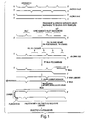
- Figure 1 One example of this general approach is shown in Figure 1 . As indicated in this figure, mutations are first randomly introduced into an initial double-stranded DNA sequence (termed “dsDNA(init)").
- dsDNA(mut) This produces a population of mutant double-stranded DNA sequences, which, in Figure 1 , is termed "dsDNA(mut)."
- dsDNA(mut) These mutations may be introduced by any technique, including PCR mutagenesis (which relies on the poor error-proofing mechanism of Taq polymerase), site-directed mutagenesis, or template-directed mutagenesis (for example, as described in Joyce and Inoue, Nucl. Acids Res. 17:171, 1989 .
- the DNA in this mutation-containing population is subsequently fragmented using any of a variety of standard methods.
- the DNA may be partially degraded using one or more nucleases (such as DNase I, micrococcal nuclease, restriction endonucleases, or P1 nuclease), or may be fragmented chemically using, for example, Fe•EDTA.
- nucleases such as DNase I, micrococcal nuclease, restriction endonucleases, or P1 nuclease
- mutation-containing fragments may be generated by limited nucleotide consumption during polymerization (for example, during PCR amplification), or by simple physical shearing (for example, by sonication).
- Preferable fragment sizes range from 25-1000 base pairs and are most preferably in the range of 50-150 base pairs.
- WO97/20078 describes the random fragmentation of double-stranded DNA and subsequent reassembly of said fragments in a PCR-like reaction to form recombinant double-stranded DNA.
- the DNA fragments are heated and subsequently annealed to a full-length single-stranded DNA template which is identical to the initial DNA. in sequence and which is the non-coding (or minus) strand of that DNA.
- a second type of fragment sometimes referred to as a "terminator fragment” ( Joyce and Inoue, Nucl. Acids Res. 17:171, 1989 ).
- This terminator fragment is complementary to the 3' end of the single-stranded template and provides a polymerization primer which binds to the template in a manner that is relatively independent of the number or nature of the randomly annealed, mutation-containing fragments.
- Single-stranded templates may be generated by any standard technique, for example, by using an M 13 phage carrying the DNA sequence, by digestion of the coding strand of a dsDNA(init) molecule using gene VI exonuclease ( Nikiforov et al, PCR Methods Appl. 3:285, 1994 ) or lambda exonuclease ( Higuchi and Ochman, Nucl. Acids Res 17: 5865, 1989 ), by capture of a biotinylated DNA strand using immobilized streptavidin ( Joyce and Inoue, Nucl. Acids Res. 17:171, 1989 ), or by reverse transcription ofRNA.
- gene VI exonuclease Nikiforov et al, PCR Methods Appl. 3:285, 1994
- lambda exonuclease Higuchi and Ochman, Nucl. Acids Res 17: 5865, 1989
- immobilized streptavidin Joyce and Inoue
- templates are mixed with fragments using no less than one fragment molecule per template molecule and no more than approximately 1000 fragment molecules per template molecule.
- a low ratio of fragments to templates produces progeny strands that closely resemble the templates, whereas a higher ratio produces progeny that more closely resemble the fragments.
- Hybridization conditions are determined by standard methods and are designed to allow for the formation of heteroduplexes between the template and the fragments. Exemplary hybridization techniques are described, for example, in Stemmer. U.S. Patent No. 5,605,793 .
- DNA polymerases useful for this purpose include, without limitation, T4 DNA polymerase and reconstituted DNA pol II from E. coli (see, for example, Hughes et al., J. Biol. Chem. 266:4568, 1991 ). Any DNA ligase (for example, T4 DNA ligase) may be utilized.
- the DNA duplexes may be treated first with the DNA polymerase and then with the DNA ligase, or with both enzymes simultaneously, and the step may be carried out, for example, as described in Joyce and Inoue (Nucl. Acids Res.
- this step generates a population of double-stranded DNAs (termed "dsDNA(lib)), each member of which includes one strand typically having one or more introduced mutations. Because both the mutations initially introduced and the number and nature of the fragments annealed are random, different duplexes in the population contain different mutant sequences.
- dsDNA(lib) double-stranded DNAs
- oligonucleotide fragments are synthesized which correspond to portions of the coding strand of an initial double-stranded DNA molecule. These oligonucleotide fragments preferably range from 5-2000 nucleotides, and most preferably range from 20-100 nucleotides in length and are generated, for example, using any standard technique of nucleic acid synthesis. These oligonucleotides may be synthesized with completely random or semi-random mutations by any standard technique.
- such oligonucleotides include up to 3 introduced mismatches per 20 nucleotide segment and are devoid of in frame stop codons.
- dsDNA(lib) double-stranded DNA library
- this library contains a population of duplex molecules, containing an array of different coding strands having mutations which differ in number, position, and identity.
- the above steps may be repeated, for either the fragment or the oligonucleotide approach, to introduce varying numbers of mutations into a DNA molecule.
- the mutated strands become the initial single-stranded templates, and mutant fragments or oligonucleotides are annealed to those strands and polymerized and ligated.
- the methods of the invention are used to introduce mutations into an initial DNA sequence.
- these techniques may be used to remove or reduce in frequency undesirable mutations from a DNA library.
- oligonucleotides of wild-type sequence or specific fragments of unmutated or wild-type DNA may be added to the single-stranded template together with the dsDNA(mut) fragments or oligonucleotides.
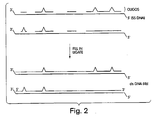
- the fragments are strand-separated (if necessary), annealed to the full-length single-stranded template, and joined together using DNA polymerase and DNA ligase, as described above.
- the use of a high concentration of unmutated oligonucleotide or fragment, relative to the corresponding mutant fragment allows for the generation of libraries in which undesirable mutations are minimized or eliminated.
- this approach may be used with existing mutation-containing libraries to similarly decrease or eliminate undesirable sequences.
- This approach involves an initial library having mutant sequences and the annealing, polymerization, and ligation of fragments or oligonucleotides of wild-type sequence, as generally described above.
- the DNA libraries described above further include an RNA polymerase binding site, for example, for T7 or SP6 polymerase.
- RNA polymerase binding sites are described, for example, in Milligan et al., Proc. Natl. Acad. Sci. USA 87:696, 1990 .
- This site is positioned upstream of the coding sequence at a location which allows for transcription of the sequence. Typically such sites are located at between 5-2000 base pairs upstream of the coding sequence.
- RNA polymerase binding sites may be altered as described above.
- the dsDNA(lib) may be transcribed directly, for example, using an in vitro transcription system, to generate an RNA library.
- the dsDNA(lib) may be transcribed and translated directly, for example, using in vitro transcription and translation systems, to generate a protein library.
- Exemplary in vitro transcription systems and in vitro translation systems include T7 transcription systems, and rabbit reticulocyte, wheat germ, yeast, and E. coli translation systems.
- the number of copies of each RNA or protein in the library may be increased by including a strand-specific amplification step prior to transcription.
- PCR amplification may be carried out by incorporating unique primer-binding sequences are incorporated into the mutant strand during the polymerization and ligation steps. These sequences may be incorporated as either mismatches or sequence extensions at one or both ends of the DNA, allowing amplification of the newly-synthesized strand without amplification of the template strand.
- linear amplification can be achieved by multiple cycles of annealing and extension of a single oligonucleotide primer that is complementary to the 3' end of the newly-synthesized strand. Subsequent PCR and transcription steps produce a majority of RNA corresponding to mutant sequences with only a small proportion of template-derived sequences.
- RNA-protein libraries may be constructed by ligating linkers containing a non-hydrolyzable amino acid acceptor molecule, such as puromycin, to the 3' termini of the RNAs in a library (for example, produced as described above).
- a library for example, produced as described above.
- Exemplary techniques for generating RNA-protein fusions are described, for example, in Szostak et al., U.S.S.N. 09/007,005 ; and Roberts et al., Proc. Natl. Acad. Sci. USA 94:12297, 1997 . Subsequent translation of these RNAs generates a library of RNA-protein fusion molecules that may subsequently be used in in vitro selection experiments.
- RNA or RNA-protein fusion molecules once selected, may be used as templates in standard PCR reactions to obtain the corresponding coding sequence.
- this method provides a means for carrying out fragment recombination, molecular backcrossing, selection of proteins and/or peptides, and selection of their corresponding coding sequences, all in an in vitro system.
- excision/repair may also be used to alter library sequences.
- This approach may be used to generate DNA, RNA, and RNA-protein fusion libraries.
- This technique relies on the fact that the dsDNA(lib)s, produced by any of the methods described above, by their nature, contain a certain number of mismatched base pairs.
- these mismatches are repaired in vitro by excision/repair enzymes. This may be carried out using any excision repair system (for example, as described in Jaiswal et al., Nucl. Acids Res. 26:2184, 1998 ; or Fortini et al., Biochemistry 37:3575, 1998 .
- the excision/repair step may be carried out by transforming a dsDNA(lib) into a bacterial or yeast strain and exploiting the bacterial or yeast repair systems in vivo .
- this step may be carried out by transforming the library into any standard in vivo excision/repair system. Exemplary systems are described, without limitation, in Campbell et al., Mutat. Res. 211:181, 1989 ; Bishop and Kolodner, Mol. Cell Biol. 6:3401, 1986 ; Fishel et al., J. Mol. Biol. 188:147, 1986 ; and Westmoreland et al., Genetics 145:29, 1997 .
- in vitro or in vivo excision/repair may also be used directly to generate diverse libraries using as a substrate a mixture of dsDNA(mut) (for example, produced as described above) and dsDNA(init) or wtDNA.
- the mixture is strand-separated and reannealed, and is then either incubated in vitro with excision/repair enzymes or transformed into bacteria to utilize the bacterial excision/repair system (for example, as described above).
- mutations may be randomly introduced into a sequence, and wild-type sequences may be backcrossed into dsDNA(mut) molecules.
Landscapes
- Health & Medical Sciences (AREA)
- Life Sciences & Earth Sciences (AREA)
- Genetics & Genomics (AREA)
- Engineering & Computer Science (AREA)
- Chemical & Material Sciences (AREA)
- Organic Chemistry (AREA)
- Zoology (AREA)
- Wood Science & Technology (AREA)
- Biomedical Technology (AREA)
- Bioinformatics & Cheminformatics (AREA)
- Biotechnology (AREA)
- General Engineering & Computer Science (AREA)
- Molecular Biology (AREA)
- General Health & Medical Sciences (AREA)
- Biophysics (AREA)
- Microbiology (AREA)
- Physics & Mathematics (AREA)
- Plant Pathology (AREA)
- Biochemistry (AREA)
- Crystallography & Structural Chemistry (AREA)
- Bioinformatics & Computational Biology (AREA)
- Measuring Or Testing Involving Enzymes Or Micro-Organisms (AREA)
- Pharmaceuticals Containing Other Organic And Inorganic Compounds (AREA)
- Preparation Of Compounds By Using Micro-Organisms (AREA)
- Crystals, And After-Treatments Of Crystals (AREA)
- Compounds Of Unknown Constitution (AREA)
- Other Investigation Or Analysis Of Materials By Electrical Means (AREA)
Applications Claiming Priority (3)
| Application Number | Priority Date | Filing Date | Title |
|---|---|---|---|
| US9097098P | 1998-06-29 | 1998-06-29 | |
| US90970P | 1998-06-29 | ||
| PCT/US1999/014776 WO2000000632A1 (en) | 1998-06-29 | 1999-06-29 | Methods for generating highly diverse libraries |
Publications (3)
| Publication Number | Publication Date |
|---|---|
| EP1092039A1 EP1092039A1 (en) | 2001-04-18 |
| EP1092039A4 EP1092039A4 (en) | 2003-07-02 |
| EP1092039B1 true EP1092039B1 (en) | 2012-02-29 |
Family
ID=22225171
Family Applications (1)
| Application Number | Title | Priority Date | Filing Date |
|---|---|---|---|
| EP99932081A Expired - Lifetime EP1092039B1 (en) | 1998-06-29 | 1999-06-29 | Methods for generating highly diverse libraries |
Country Status (13)
| Country | Link |
|---|---|
| EP (1) | EP1092039B1 (enExample) |
| JP (1) | JP4700805B2 (enExample) |
| KR (1) | KR20010071613A (enExample) |
| CN (1) | CN1308683A (enExample) |
| AT (1) | ATE547532T1 (enExample) |
| AU (1) | AU761570B2 (enExample) |
| CA (1) | CA2331926C (enExample) |
| ES (1) | ES2381824T3 (enExample) |
| IL (1) | IL140100A0 (enExample) |
| NO (1) | NO20006675D0 (enExample) |
| NZ (1) | NZ508287A (enExample) |
| WO (1) | WO2000000632A1 (enExample) |
| ZA (1) | ZA200007261B (enExample) |
Families Citing this family (103)
| Publication number | Priority date | Publication date | Assignee | Title |
|---|---|---|---|---|
| US7883872B2 (en) | 1996-10-10 | 2011-02-08 | Dyadic International (Usa), Inc. | Construction of highly efficient cellulase compositions for enzymatic hydrolysis of cellulose |
| US6902918B1 (en) | 1998-05-21 | 2005-06-07 | California Institute Of Technology | Oxygenase enzymes and screening method |
| CN1230546C (zh) | 1998-10-06 | 2005-12-07 | 马克·阿龙·埃马尔法尔布 | 丝状真菌宿主领域的转化系统 |
| US7488590B2 (en) | 1998-10-23 | 2009-02-10 | Amgen Inc. | Modified peptides as therapeutic agents |
| US6368861B1 (en) | 1999-01-19 | 2002-04-09 | Maxygen, Inc. | Oligonucleotide mediated nucleic acid recombination |
| US6917882B2 (en) | 1999-01-19 | 2005-07-12 | Maxygen, Inc. | Methods for making character strings, polynucleotides and polypeptides having desired characteristics |
| US6376246B1 (en) | 1999-02-05 | 2002-04-23 | Maxygen, Inc. | Oligonucleotide mediated nucleic acid recombination |
| US8457903B1 (en) | 1999-01-19 | 2013-06-04 | Codexis Mayflower Holdings, Llc | Method and/or apparatus for determining codons |
| US7024312B1 (en) | 1999-01-19 | 2006-04-04 | Maxygen, Inc. | Methods for making character strings, polynucleotides and polypeptides having desired characteristics |
| US7873477B1 (en) | 2001-08-21 | 2011-01-18 | Codexis Mayflower Holdings, Llc | Method and system using systematically varied data libraries |
| AU3210100A (en) | 1999-01-19 | 2000-08-01 | Maxygen, Inc. | Methods for making character strings, polynucleotides and polypeptides having desired characteristics |
| US7702464B1 (en) | 2001-08-21 | 2010-04-20 | Maxygen, Inc. | Method and apparatus for codon determining |
| US6961664B2 (en) | 1999-01-19 | 2005-11-01 | Maxygen | Methods of populating data structures for use in evolutionary simulations |
| US7430477B2 (en) | 1999-10-12 | 2008-09-30 | Maxygen, Inc. | Methods of populating data structures for use in evolutionary simulations |
| WO2001032712A2 (en) | 1999-11-03 | 2001-05-10 | Maxygen, Inc. | Antibody diversity generation |
| US7115403B1 (en) | 2000-05-16 | 2006-10-03 | The California Institute Of Technology | Directed evolution of galactose oxidase enzymes |
| US6539102B1 (en) | 2000-09-01 | 2003-03-25 | Large Scale Proteomics | Reference database |
| US6980674B2 (en) | 2000-09-01 | 2005-12-27 | Large Scale Proteomics Corp. | Reference database |
| US6783941B2 (en) | 2000-12-06 | 2004-08-31 | Novozymes A/S | Method for producing a polynucleotide library in vitro by mismatch repair of heteroduplexes |
| AU2002220529A1 (en) * | 2000-12-06 | 2002-06-18 | Novozymes A/S | Method for producing a polynucleotide library |
| US6689568B2 (en) | 2001-02-01 | 2004-02-10 | Agilent Technologies, Inc. | Capture arrays using polypeptide capture agents |
| CA2436214C (en) * | 2001-02-02 | 2012-12-04 | Large Scale Biology Corporation | A method of increasing complementarity in a heteroduplex polynucleotide |
| WO2002083868A2 (en) | 2001-04-16 | 2002-10-24 | California Institute Of Technology | Peroxide-driven cytochrome p450 oxygenase variants |
| US20030032028A1 (en) * | 2001-06-12 | 2003-02-13 | Gayle Dace | In vitro capture of nucleic acids via modified oligonucleotides and magnetic beads |
| WO2003008563A2 (en) | 2001-07-20 | 2003-01-30 | California Institute Of Technology | Improved cytochrome p450 oxygenases |
| WO2003062417A1 (fr) * | 2002-01-22 | 2003-07-31 | Mitsubishi Chemical Corporation | Produit de ligation arn-adn, et utilisation correspondante |
| EP1493027B1 (en) | 2002-03-01 | 2014-10-15 | Codexis Mayflower Holdings, LLC | Methods, systems, and software for identifying functional bio-molecules |
| JP4851687B2 (ja) | 2002-03-09 | 2012-01-11 | マキシジェン, インコーポレイテッド | 定向進化のための交叉点の最適化 |
| CN102174546A (zh) | 2002-04-19 | 2011-09-07 | 维莱尼姆公司 | 磷脂酶,编码磷脂酶的核酸以及制备和应用磷脂酶的方法 |
| US7226771B2 (en) | 2002-04-19 | 2007-06-05 | Diversa Corporation | Phospholipases, nucleic acids encoding them and methods for making and using them |
| US9321832B2 (en) | 2002-06-28 | 2016-04-26 | Domantis Limited | Ligand |
| EP2275536A1 (en) | 2002-08-06 | 2011-01-19 | Verdia, Inc. | AP1 amine oxidase variants |
| CN102618564B (zh) | 2003-03-06 | 2014-10-29 | 维莱尼姆公司 | 淀粉酶、编码它们的核酸及其制备和应用方法 |
| DK2853593T3 (en) | 2003-03-07 | 2018-01-08 | Dsm Ip Assets Bv | Hydrolases, nucleic acids encoding them, and processes for their preparation and use |
| PL1613733T3 (pl) | 2003-04-04 | 2015-11-30 | Basf Enzymes Llc | Liazy pektynianowe, kodujące je kwasy nukleinowe oraz sposoby ich wytwarzania i zastosowania |
| EP1620557A2 (en) | 2003-04-29 | 2006-02-01 | Pioneer Hi-Bred International, Inc. | Novel glyphosate-n-acetyltransferase (gat) genes |
| EP1639091B1 (en) | 2003-06-17 | 2012-12-05 | California University Of Technology | Regio- and enantioselective alkane hydroxylation with modified cytochrome p450 |
| CN101370819A (zh) | 2003-07-02 | 2009-02-18 | 维莱尼姆公司 | 葡聚糖酶,编码它们的核酸以及制备和使用它们的方法 |
| US7741089B2 (en) | 2003-08-11 | 2010-06-22 | Verenium Corporation | Laccases, nucleic acids encoding them and methods for making and using them |
| US7435570B2 (en) | 2003-08-11 | 2008-10-14 | California Institute Of Technology | Thermostable peroxide-driven cytochrome P450 oxygenase variants and methods of use |
| JP2005065575A (ja) * | 2003-08-22 | 2005-03-17 | Japan Science & Technology Agency | フレームシャッフリングによるタンパク質分子多様性集団の作製 |
| AU2005264938B2 (en) | 2004-06-16 | 2011-11-24 | Verenium Corporation | Compositions and methods for enzymatic decolorization of chlorophyll |
| US20090038023A1 (en) | 2005-03-10 | 2009-02-05 | Verenium Corporation | Lyase Enzymes, Nucleic Acids Encoding Them and Methods For Making and Using Them |
| DK1861506T3 (en) | 2005-03-15 | 2015-07-20 | Bp Corp North America Inc | Cellulases, nucleic acids encoding them, and methods of making and using them |
| US8715988B2 (en) | 2005-03-28 | 2014-05-06 | California Institute Of Technology | Alkane oxidation by modified hydroxylases |
| US11214817B2 (en) | 2005-03-28 | 2022-01-04 | California Institute Of Technology | Alkane oxidation by modified hydroxylases |
| US20090324574A1 (en) | 2006-02-02 | 2009-12-31 | Verenium Corporation | Esterases and Related Nucleic Acids and Methods |
| DK1989301T3 (en) | 2006-02-10 | 2015-01-05 | Bp Corp North America Inc | Cellulolytic enzymes, nucleic acids encoding them, and methods for making and using them |
| DK1989302T3 (en) | 2006-02-14 | 2018-07-23 | Bp Corp North America Inc | XYLANASES, NUCLEIC ACID CODING THEM AND PROCEDURES FOR THEIR PREPARATION AND USE |
| ES2416104T3 (es) | 2006-03-07 | 2013-07-30 | Cargill, Incorporated | Aldolasas, ácidos nucleicos que las codifican y métodos para producir y usar las mismas |
| AU2007223086B2 (en) | 2006-03-07 | 2013-09-26 | Basf Enzymes Llc | Aldolases, nucleic acids encoding them and methods for making and using them |
| EP2069389B1 (en) | 2006-08-04 | 2014-10-08 | BP Corporation North America Inc. | Glucanases, nucleic acids encoding them and methods for making and using them |
| US8252559B2 (en) | 2006-08-04 | 2012-08-28 | The California Institute Of Technology | Methods and systems for selective fluorination of organic molecules |
| WO2008016709A2 (en) | 2006-08-04 | 2008-02-07 | California Institute Of Technology | Methods and systems for selective fluorination of organic molecules |
| DK2057178T3 (da) | 2006-09-21 | 2014-02-03 | Verenium Corp | Phytaser, nucleinsyrer, som koder for dem, og fremgangsmåder til at fremstille og benytte dem |
| EA015591B1 (ru) | 2006-09-21 | 2011-10-31 | Верениум Корпорейшн | Фосфолипазы, кодирующие их нуклеиновые кислоты и способы их получения и применения |
| EP2505651A3 (en) | 2006-12-10 | 2013-01-09 | Dyadic International, Inc. | Isolated fungus with reduced protease activity |
| HUE033455T2 (en) | 2006-12-21 | 2017-12-28 | Basf Enzymes Llc | Amylases and glucoamylases, nucleic acids encoding them, and methods for their preparation and use |
| AU2008210495B2 (en) | 2007-01-30 | 2014-02-27 | Bp Corporation North America, Inc. | Enzymes for the treatment of lignocellulosics, nucleic acids encoding them and methods for making and using them |
| WO2009033071A2 (en) | 2007-09-07 | 2009-03-12 | Dyadic International, Inc. | Novel fungal enzymes |
| USRE46733E1 (en) | 2007-10-03 | 2018-02-27 | Bp Corporation North America Inc. | Xylanases, nucleic acids encoding them and methods for making and using them |
| CA2710683A1 (en) | 2008-01-03 | 2009-07-16 | Verenium Corporation | Transferases and oxidoreductases, nucleic acids encoding them and methods for making and using them |
| CA2710922A1 (en) | 2008-01-03 | 2009-07-16 | Verenium Corporation | Isomerases, nucleic acids encoding them and methods for making and using them |
| WO2009143397A2 (en) | 2008-05-23 | 2009-11-26 | E. I. Du Pont De Nemours And Company | Novel dgat genes for increased seed storage lipid production and altered fatty acid profiles in oilseed plants |
| US8198062B2 (en) | 2008-08-29 | 2012-06-12 | Dsm Ip Assets B.V. | Hydrolases, nucleic acids encoding them and methods for making and using them |
| CN102227503B (zh) | 2008-09-26 | 2015-10-21 | 托卡根公司 | 重组载体 |
| AU2010249500B2 (en) | 2009-05-21 | 2016-03-24 | Basf Enzymes Llc | Phytases, nucleic acids encoding them and methods for making and using them |
| UA109884C2 (uk) | 2009-10-16 | 2015-10-26 | Поліпептид, що має активність ферменту фосфатидилінозитол-специфічної фосфоліпази с, нуклеїнова кислота, що його кодує, та спосіб його виробництва і застосування | |
| UA111708C2 (uk) | 2009-10-16 | 2016-06-10 | Бандж Ойлз, Інк. | Спосіб рафінування олії |
| US9187762B2 (en) | 2010-08-13 | 2015-11-17 | Pioneer Hi-Bred International, Inc. | Compositions and methods comprising sequences having hydroxyphenylpyruvate dioxygenase (HPPD) activity |
| WO2013016207A2 (en) | 2011-07-22 | 2013-01-31 | California Institute Of Technology | Stable fungal cel6 enzyme variants |
| BR112014027468A2 (pt) | 2012-05-04 | 2017-06-27 | Du Pont | polinucleotídeo isolado ou recombinante, construção de dna recombinante, célula, planta, explante vegetal, semente transgênica, polipeptídeo isolado, composição, métodos de produção de meganuclease, de introdução de rompimento e de integração de um polinucleotídeo. |
| JP6004423B2 (ja) * | 2012-05-07 | 2016-10-05 | 国立研究開発法人産業技術総合研究所 | 遺伝子連結法およびそれを用いた単鎖抗体作製方法 |
| EP2970995A1 (en) | 2013-03-14 | 2016-01-20 | Pioneer Hi-Bred International, Inc. | Compositions having dicamba decarboxylase activity and methods of use |
| BR112015023286A2 (pt) | 2013-03-14 | 2018-03-06 | Arzeda Corp | polipeptídeo recombinante com atividade da dicamba descarboxilase, construto de polinucleotídeo, célula, método de produção de uma célula hospedeira compreendendo um polinucleotídeo heterólogo que codifica um polipeptídeo tendo atividade da dicamba descarboxilase, método para descarboxilar dicamba, um derivado de dicamba ou um metabolito de dicamba, método para a detecção de um polipeptideo e método para a detecção da presença de um polinucleotideo que codifica um polipeptideo tendo atividade da dicamba descarboxilase |
| CA2901316A1 (en) | 2013-03-15 | 2014-09-25 | Pioneer Hi-Bred International, Inc. | Phi-4 polypeptides and methods for their use |
| EA030896B1 (ru) | 2013-08-16 | 2018-10-31 | Пайонир Хай-Бред Интернэшнл, Инк. | Инсектицидные белки и способы их применения |
| CA3223359A1 (en) | 2013-09-13 | 2015-03-19 | Pioneer Hi-Bred International, Inc. | Insecticidal proteins and methods for their use |
| EP3087088B1 (en) | 2013-12-23 | 2022-05-25 | University Of Rochester | Methods and compositions for ribosomal synthesis of macrocyclic peptides |
| RU2021113662A (ru) | 2014-02-07 | 2021-05-31 | Пайонир Хай-Бред Интернэшнл, Инк. | Инсектицидные белки и способы их применения |
| CA2938979C (en) | 2014-02-07 | 2024-02-20 | Pioneer Hi-Bred International, Inc. | Insecticidal proteins and methods for their use |
| MX381370B (es) | 2014-10-16 | 2025-03-12 | Corteva Agriscience Llc | Proteinas insecticidas y metodos de uso. |
| RU2740312C2 (ru) | 2015-01-15 | 2021-01-13 | Пайониэ Хай-Бред Интернешнл, Инк. | Инсектицидные белки и способы их применения |
| WO2016138292A1 (en) | 2015-02-25 | 2016-09-01 | Igenomx International Genomics Corporation | Methods and compositions for in silico long read sequencing |
| CA2977026A1 (en) | 2015-03-11 | 2016-09-15 | E.I. Du Pont De Nemours And Company | Insecticidal combinations of pip-72 and methods of use |
| CA2985198A1 (en) | 2015-05-19 | 2016-11-24 | Pioneer Hi-Bred International, Inc. | Insecticidal proteins and methods for their use |
| WO2017023486A1 (en) | 2015-08-06 | 2017-02-09 | Pioneer Hi-Bred International, Inc. | Plant derived insecticidal proteins and methods for their use |
| EP3390431A1 (en) | 2015-12-18 | 2018-10-24 | Pioneer Hi-Bred International, Inc. | Insecticidal proteins and methods for their use |
| US11339427B2 (en) | 2016-02-12 | 2022-05-24 | Jumpcode Genomics, Inc. | Method for target specific RNA transcription of DNA sequences |
| US11008585B2 (en) | 2016-05-04 | 2021-05-18 | Pioneer Hi-Bred International, Inc. | Insecticidal proteins and methods for their use |
| EP3954202A1 (en) | 2016-07-01 | 2022-02-16 | Pioneer Hi-Bred International, Inc. | Insecticidal proteins from plants and methods for their use |
| EP3535285B1 (en) | 2016-11-01 | 2022-04-06 | Pioneer Hi-Bred International, Inc. | Insecticidal proteins and methods for their use |
| BR112019012339A2 (pt) | 2016-12-14 | 2019-11-26 | Pioneer Hi Bred Int | polipeptídeo inseticida recombinante, composição, construto de dna, célula hospedeira, planta transgênica, método para inibir o crescimento ou extermínio de uma praga de inseto ou população de praga, polipeptídeo ipd093 quimérico e proteína de fusão |
| MX2019007491A (es) | 2016-12-22 | 2019-09-06 | Pioneer Hi Bred Int | Proteinas insecticidas y metodos para su uso. |
| WO2018148001A1 (en) | 2017-02-08 | 2018-08-16 | Pioneer Hi-Bred International Inc | Insecticidal combinations of plant derived insecticidal proteins and methods for their use |
| US11555203B2 (en) | 2017-05-11 | 2023-01-17 | Pioneer Hi-Bred International, Inc. | Insecticidal proteins and methods for their use |
| CN110158157B (zh) * | 2018-02-13 | 2021-02-02 | 浙江大学 | 基于模板材料合成长度固定和特定末端序列dna文库的方法 |
| CA3092078A1 (en) | 2018-03-14 | 2019-09-19 | Pioneer Hi-Bred International, Inc. | Insecticidal proteins from plants and methods for their use |
| AU2019234562B2 (en) | 2018-03-14 | 2024-08-01 | Pioneer Hi-Bred International, Inc. | Insecticidal proteins from plants and methods for their use |
| JP7662531B2 (ja) | 2019-03-28 | 2025-04-15 | ダニスコ・ユーエス・インク | 改変抗体 |
| US20230051453A1 (en) | 2020-01-10 | 2023-02-16 | The Regents Of The University Of California | Biosynthetic platform for the production of olivetolic acid and analogues of olivetolic acid |
| WO2022015619A2 (en) | 2020-07-14 | 2022-01-20 | Pioneer Hi-Bred International, Inc. | Insecticidal proteins and methods for their use |
| WO2023173084A1 (en) | 2022-03-11 | 2023-09-14 | University Of Rochester | Cyclopeptibodies and uses thereof |
Family Cites Families (7)
| Publication number | Priority date | Publication date | Assignee | Title |
|---|---|---|---|---|
| US4994379A (en) * | 1983-03-09 | 1991-02-19 | Cetus Corporation | Modified signal peptides |
| US5447839A (en) * | 1988-09-09 | 1995-09-05 | Hoffmann-La Roche Inc. | Detection of human papillomavirus by the polymerase chain reaction |
| US6117679A (en) * | 1994-02-17 | 2000-09-12 | Maxygen, Inc. | Methods for generating polynucleotides having desired characteristics by iterative selection and recombination |
| US5580730A (en) * | 1994-08-19 | 1996-12-03 | Olympus America, Inc. | Enzyme digestion method for the detection of amplified DNA |
| US5922539A (en) * | 1995-12-15 | 1999-07-13 | Duke University | Methods for use of mismatch repair systems for the detection and removal of mutant sequences that arise during enzymatic amplification |
| DE69839668D1 (de) * | 1997-03-18 | 2008-08-14 | Novozymes As | Ein in-vitro-verfahren zur herstellung einer dna-bibliothek |
| US6153410A (en) * | 1997-03-25 | 2000-11-28 | California Institute Of Technology | Recombination of polynucleotide sequences using random or defined primers |
-
1999
- 1999-06-29 KR KR1020007014838A patent/KR20010071613A/ko not_active Withdrawn
- 1999-06-29 WO PCT/US1999/014776 patent/WO2000000632A1/en not_active Ceased
- 1999-06-29 AU AU48470/99A patent/AU761570B2/en not_active Expired
- 1999-06-29 CN CN99807977A patent/CN1308683A/zh active Pending
- 1999-06-29 AT AT99932081T patent/ATE547532T1/de active
- 1999-06-29 JP JP2000557385A patent/JP4700805B2/ja not_active Expired - Lifetime
- 1999-06-29 ES ES99932081T patent/ES2381824T3/es not_active Expired - Lifetime
- 1999-06-29 CA CA2331926A patent/CA2331926C/en not_active Expired - Lifetime
- 1999-06-29 IL IL14010099A patent/IL140100A0/xx unknown
- 1999-06-29 NZ NZ508287A patent/NZ508287A/en not_active IP Right Cessation
- 1999-06-29 EP EP99932081A patent/EP1092039B1/en not_active Expired - Lifetime
-
2000
- 2000-12-07 ZA ZA200007261A patent/ZA200007261B/en unknown
- 2000-12-28 NO NO20006675A patent/NO20006675D0/no not_active Application Discontinuation
Also Published As
| Publication number | Publication date |
|---|---|
| AU761570B2 (en) | 2003-06-05 |
| NZ508287A (en) | 2003-08-29 |
| CA2331926A1 (en) | 2000-01-06 |
| WO2000000632A1 (en) | 2000-01-06 |
| WO2000000632A9 (en) | 2000-10-26 |
| EP1092039A1 (en) | 2001-04-18 |
| ES2381824T3 (es) | 2012-05-31 |
| CA2331926C (en) | 2013-09-10 |
| IL140100A0 (en) | 2002-02-10 |
| ATE547532T1 (de) | 2012-03-15 |
| NO20006675L (no) | 2000-12-28 |
| JP2002519038A (ja) | 2002-07-02 |
| KR20010071613A (ko) | 2001-07-28 |
| JP4700805B2 (ja) | 2011-06-15 |
| EP1092039A4 (en) | 2003-07-02 |
| ZA200007261B (en) | 2002-05-15 |
| AU4847099A (en) | 2000-01-17 |
| NO20006675D0 (no) | 2000-12-28 |
| CN1308683A (zh) | 2001-08-15 |
Similar Documents
| Publication | Publication Date | Title |
|---|---|---|
| EP1092039B1 (en) | Methods for generating highly diverse libraries | |
| US6846655B1 (en) | Methods for generating highly diverse libraries | |
| JP7050866B2 (ja) | オリゴヌクレオチドの産生のための新規プロセス | |
| US6387620B1 (en) | Transcription-free selex | |
| JP2022109986A (ja) | オリゴヌクレオチドの産生のための新規プロセス | |
| JP2000511783A (ja) | ランダムプライマーまたは定義プライマーを用いるポリヌクレオチド配列の組換え | |
| WO1993019202A2 (en) | Exchangeable template reaction | |
| WO1998005765A1 (en) | Double-stranded dna with cohesive end(s), and method of shuffling dna using the same | |
| JP2001514498A (ja) | 多数のdna断片の同時連結方法 | |
| US20240376531A1 (en) | Target Initiation and Amplification of Long DNA with Nuclease and Replisome Enzymes | |
| US7829502B2 (en) | Systems and methods for nuclease-assisted selection and acquisition of single stranded DNA oligomer/polymer aptamers/ligands | |
| Tsang et al. | [23] In vitro evolution of randomized ribozymes | |
| AU2003267008B2 (en) | Method for the selective combinatorial randomization of polynucleotides | |
| WO2001029212A1 (en) | Methods for chimeragenesis of whole genomes or large polynucleotides | |
| EP1548113A1 (en) | A method for obtaining circular mutated and/or chimaeric polynucleotides | |
| CZ20004564A3 (cs) | Způsob vytváření knihovny nukleových kyselin | |
| US20040132054A1 (en) | Method for the selective combinatorial randomization of polynucleotides |
Legal Events
| Date | Code | Title | Description |
|---|---|---|---|
| PUAI | Public reference made under article 153(3) epc to a published international application that has entered the european phase |
Free format text: ORIGINAL CODE: 0009012 |
|
| 17P | Request for examination filed |
Effective date: 20010123 |
|
| AK | Designated contracting states |
Kind code of ref document: A1 Designated state(s): AT BE CH CY DE DK ES FI FR GB GR IE IT LI LU MC NL PT SE |
|
| A4 | Supplementary search report drawn up and despatched |
Effective date: 20030520 |
|
| RIC1 | Information provided on ipc code assigned before grant |
Ipc: 7C 12Q 1/68 B Ipc: 7C 12N 15/74 B Ipc: 7C 12P 19/34 B Ipc: 7C 12P 21/06 A |
|
| RAP1 | Party data changed (applicant data changed or rights of an application transferred) |
Owner name: COMPOUND THERAPEUTICS, INC. |
|
| 17Q | First examination report despatched |
Effective date: 20050110 |
|
| RAP1 | Party data changed (applicant data changed or rights of an application transferred) |
Owner name: ADNEXUS THERAPEUTICS, INC. |
|
| 17Q | First examination report despatched |
Effective date: 20050110 |
|
| REG | Reference to a national code |
Ref country code: HK Ref legal event code: WD Ref document number: 1037681 Country of ref document: HK |
|
| RAP1 | Party data changed (applicant data changed or rights of an application transferred) |
Owner name: BRISTOL-MYERS SQUIBB COMPANY |
|
| GRAP | Despatch of communication of intention to grant a patent |
Free format text: ORIGINAL CODE: EPIDOSNIGR1 |
|
| GRAS | Grant fee paid |
Free format text: ORIGINAL CODE: EPIDOSNIGR3 |
|
| GRAA | (expected) grant |
Free format text: ORIGINAL CODE: 0009210 |
|
| AK | Designated contracting states |
Kind code of ref document: B1 Designated state(s): AT BE CH CY DE DK ES FI FR GB GR IE IT LI LU MC NL PT SE |
|
| REG | Reference to a national code |
Ref country code: GB Ref legal event code: FG4D Ref country code: CH Ref legal event code: EP |
|
| REG | Reference to a national code |
Ref country code: AT Ref legal event code: REF Ref document number: 547532 Country of ref document: AT Kind code of ref document: T Effective date: 20120315 |
|
| REG | Reference to a national code |
Ref country code: IE Ref legal event code: FG4D |
|
| REG | Reference to a national code |
Ref country code: DE Ref legal event code: R096 Ref document number: 69944068 Country of ref document: DE Effective date: 20120426 |
|
| REG | Reference to a national code |
Ref country code: ES Ref legal event code: FG2A Ref document number: 2381824 Country of ref document: ES Kind code of ref document: T3 Effective date: 20120531 |
|
| REG | Reference to a national code |
Ref country code: NL Ref legal event code: VDEP Effective date: 20120229 |
|
| PG25 | Lapsed in a contracting state [announced via postgrant information from national office to epo] |
Ref country code: NL Free format text: LAPSE BECAUSE OF FAILURE TO SUBMIT A TRANSLATION OF THE DESCRIPTION OR TO PAY THE FEE WITHIN THE PRESCRIBED TIME-LIMIT Effective date: 20120229 |
|
| PG25 | Lapsed in a contracting state [announced via postgrant information from national office to epo] |
Ref country code: GR Free format text: LAPSE BECAUSE OF FAILURE TO SUBMIT A TRANSLATION OF THE DESCRIPTION OR TO PAY THE FEE WITHIN THE PRESCRIBED TIME-LIMIT Effective date: 20120530 Ref country code: PT Free format text: LAPSE BECAUSE OF FAILURE TO SUBMIT A TRANSLATION OF THE DESCRIPTION OR TO PAY THE FEE WITHIN THE PRESCRIBED TIME-LIMIT Effective date: 20120629 Ref country code: BE Free format text: LAPSE BECAUSE OF FAILURE TO SUBMIT A TRANSLATION OF THE DESCRIPTION OR TO PAY THE FEE WITHIN THE PRESCRIBED TIME-LIMIT Effective date: 20120229 Ref country code: FI Free format text: LAPSE BECAUSE OF FAILURE TO SUBMIT A TRANSLATION OF THE DESCRIPTION OR TO PAY THE FEE WITHIN THE PRESCRIBED TIME-LIMIT Effective date: 20120229 |
|
| REG | Reference to a national code |
Ref country code: AT Ref legal event code: MK05 Ref document number: 547532 Country of ref document: AT Kind code of ref document: T Effective date: 20120229 |
|
| PG25 | Lapsed in a contracting state [announced via postgrant information from national office to epo] |
Ref country code: CY Free format text: LAPSE BECAUSE OF FAILURE TO SUBMIT A TRANSLATION OF THE DESCRIPTION OR TO PAY THE FEE WITHIN THE PRESCRIBED TIME-LIMIT Effective date: 20120229 |
|
| PG25 | Lapsed in a contracting state [announced via postgrant information from national office to epo] |
Ref country code: DK Free format text: LAPSE BECAUSE OF FAILURE TO SUBMIT A TRANSLATION OF THE DESCRIPTION OR TO PAY THE FEE WITHIN THE PRESCRIBED TIME-LIMIT Effective date: 20120229 Ref country code: SE Free format text: LAPSE BECAUSE OF FAILURE TO SUBMIT A TRANSLATION OF THE DESCRIPTION OR TO PAY THE FEE WITHIN THE PRESCRIBED TIME-LIMIT Effective date: 20120229 |
|
| PLBE | No opposition filed within time limit |
Free format text: ORIGINAL CODE: 0009261 |
|
| STAA | Information on the status of an ep patent application or granted ep patent |
Free format text: STATUS: NO OPPOSITION FILED WITHIN TIME LIMIT |
|
| PG25 | Lapsed in a contracting state [announced via postgrant information from national office to epo] |
Ref country code: AT Free format text: LAPSE BECAUSE OF FAILURE TO SUBMIT A TRANSLATION OF THE DESCRIPTION OR TO PAY THE FEE WITHIN THE PRESCRIBED TIME-LIMIT Effective date: 20120229 Ref country code: MC Free format text: LAPSE BECAUSE OF NON-PAYMENT OF DUE FEES Effective date: 20120630 |
|
| REG | Reference to a national code |
Ref country code: CH Ref legal event code: PL |
|
| 26N | No opposition filed |
Effective date: 20121130 |
|
| REG | Reference to a national code |
Ref country code: CH Ref legal event code: PL |
|
| REG | Reference to a national code |
Ref country code: IE Ref legal event code: MM4A |
|
| REG | Reference to a national code |
Ref country code: DE Ref legal event code: R097 Ref document number: 69944068 Country of ref document: DE Effective date: 20121130 |
|
| PG25 | Lapsed in a contracting state [announced via postgrant information from national office to epo] |
Ref country code: CH Free format text: LAPSE BECAUSE OF NON-PAYMENT OF DUE FEES Effective date: 20120630 Ref country code: LI Free format text: LAPSE BECAUSE OF NON-PAYMENT OF DUE FEES Effective date: 20120630 Ref country code: IE Free format text: LAPSE BECAUSE OF NON-PAYMENT OF DUE FEES Effective date: 20120629 |
|
| PG25 | Lapsed in a contracting state [announced via postgrant information from national office to epo] |
Ref country code: LU Free format text: LAPSE BECAUSE OF NON-PAYMENT OF DUE FEES Effective date: 20120629 |
|
| REG | Reference to a national code |
Ref country code: FR Ref legal event code: PLFP Year of fee payment: 18 |
|
| REG | Reference to a national code |
Ref country code: FR Ref legal event code: PLFP Year of fee payment: 19 |
|
| REG | Reference to a national code |
Ref country code: FR Ref legal event code: PLFP Year of fee payment: 20 |
|
| PGFP | Annual fee paid to national office [announced via postgrant information from national office to epo] |
Ref country code: DE Payment date: 20180619 Year of fee payment: 20 |
|
| PGFP | Annual fee paid to national office [announced via postgrant information from national office to epo] |
Ref country code: FR Payment date: 20180514 Year of fee payment: 20 |
|
| PGFP | Annual fee paid to national office [announced via postgrant information from national office to epo] |
Ref country code: ES Payment date: 20180702 Year of fee payment: 20 Ref country code: IT Payment date: 20180625 Year of fee payment: 20 Ref country code: GB Payment date: 20180627 Year of fee payment: 20 |
|
| REG | Reference to a national code |
Ref country code: DE Ref legal event code: R071 Ref document number: 69944068 Country of ref document: DE |
|
| REG | Reference to a national code |
Ref country code: GB Ref legal event code: PE20 Expiry date: 20190628 |
|
| PG25 | Lapsed in a contracting state [announced via postgrant information from national office to epo] |
Ref country code: GB Free format text: LAPSE BECAUSE OF EXPIRATION OF PROTECTION Effective date: 20190628 |
|
| REG | Reference to a national code |
Ref country code: ES Ref legal event code: FD2A Effective date: 20200723 |
|
| PG25 | Lapsed in a contracting state [announced via postgrant information from national office to epo] |
Ref country code: ES Free format text: LAPSE BECAUSE OF EXPIRATION OF PROTECTION Effective date: 20190630 |