EP1057902A2 - Verbessertes Verfahren zur Synthese eines Palladium-Regenerators für Elektroplattierungsbäder - Google Patents
Verbessertes Verfahren zur Synthese eines Palladium-Regenerators für Elektroplattierungsbäder Download PDFInfo
- Publication number
- EP1057902A2 EP1057902A2 EP00304357A EP00304357A EP1057902A2 EP 1057902 A2 EP1057902 A2 EP 1057902A2 EP 00304357 A EP00304357 A EP 00304357A EP 00304357 A EP00304357 A EP 00304357A EP 1057902 A2 EP1057902 A2 EP 1057902A2
- Authority
- EP
- European Patent Office
- Prior art keywords
- palladium
- complex
- weight percent
- bath
- sulfate
- Prior art date
- Legal status (The legal status is an assumption and is not a legal conclusion. Google has not performed a legal analysis and makes no representation as to the accuracy of the status listed.)
- Withdrawn
Links
- KDLHZDBZIXYQEI-UHFFFAOYSA-N Palladium Chemical compound [Pd] KDLHZDBZIXYQEI-UHFFFAOYSA-N 0.000 title claims abstract description 336
- 229910052763 palladium Inorganic materials 0.000 title claims abstract description 163
- 238000000034 method Methods 0.000 title claims abstract description 59
- 230000008569 process Effects 0.000 title claims abstract description 46
- 238000009713 electroplating Methods 0.000 title claims abstract description 27
- 230000002194 synthesizing effect Effects 0.000 title 1
- QAOWNCQODCNURD-UHFFFAOYSA-L Sulfate Chemical compound [O-]S([O-])(=O)=O QAOWNCQODCNURD-UHFFFAOYSA-L 0.000 claims abstract description 37
- 238000007747 plating Methods 0.000 claims abstract description 22
- 229910002651 NO3 Inorganic materials 0.000 claims abstract description 11
- NHNBFGGVMKEFGY-UHFFFAOYSA-N Nitrate Chemical compound [O-][N+]([O-])=O NHNBFGGVMKEFGY-UHFFFAOYSA-N 0.000 claims abstract description 11
- 229910001252 Pd alloy Inorganic materials 0.000 claims description 17
- 229910052751 metal Inorganic materials 0.000 claims description 14
- 239000002184 metal Substances 0.000 claims description 14
- GPNDARIEYHPYAY-UHFFFAOYSA-N palladium(ii) nitrate Chemical compound [Pd+2].[O-][N+]([O-])=O.[O-][N+]([O-])=O GPNDARIEYHPYAY-UHFFFAOYSA-N 0.000 claims description 8
- VHUUQVKOLVNVRT-UHFFFAOYSA-N Ammonium hydroxide Chemical compound [NH4+].[OH-] VHUUQVKOLVNVRT-UHFFFAOYSA-N 0.000 claims description 7
- 239000000908 ammonium hydroxide Substances 0.000 claims description 7
- 150000001875 compounds Chemical class 0.000 claims description 4
- 239000000203 mixture Substances 0.000 claims description 3
- GRYLNZFGIOXLOG-UHFFFAOYSA-N Nitric acid Chemical compound O[N+]([O-])=O GRYLNZFGIOXLOG-UHFFFAOYSA-N 0.000 claims description 2
- 238000001914 filtration Methods 0.000 claims description 2
- 229910017604 nitric acid Inorganic materials 0.000 claims description 2
- 238000005406 washing Methods 0.000 claims description 2
- 229910009112 xH2O Inorganic materials 0.000 claims description 2
- 230000003213 activating effect Effects 0.000 claims 2
- 150000002941 palladium compounds Chemical class 0.000 claims 1
- 239000000243 solution Substances 0.000 description 13
- QGZKDVFQNNGYKY-UHFFFAOYSA-N Ammonia Chemical compound N QGZKDVFQNNGYKY-UHFFFAOYSA-N 0.000 description 9
- 150000002500 ions Chemical class 0.000 description 9
- PXHVJJICTQNCMI-UHFFFAOYSA-N Nickel Chemical compound [Ni] PXHVJJICTQNCMI-UHFFFAOYSA-N 0.000 description 8
- 229910002669 PdNi Inorganic materials 0.000 description 6
- 229910045601 alloy Inorganic materials 0.000 description 6
- 239000000956 alloy Substances 0.000 description 6
- 239000012535 impurity Substances 0.000 description 6
- MUBZPKHOEPUJKR-UHFFFAOYSA-N Oxalic acid Chemical compound OC(=O)C(O)=O MUBZPKHOEPUJKR-UHFFFAOYSA-N 0.000 description 5
- 238000005275 alloying Methods 0.000 description 5
- 230000015572 biosynthetic process Effects 0.000 description 5
- 229910000069 nitrogen hydride Inorganic materials 0.000 description 5
- 150000002940 palladium Chemical class 0.000 description 5
- 238000003786 synthesis reaction Methods 0.000 description 5
- RYGMFSIKBFXOCR-UHFFFAOYSA-N Copper Chemical compound [Cu] RYGMFSIKBFXOCR-UHFFFAOYSA-N 0.000 description 4
- QAOWNCQODCNURD-UHFFFAOYSA-N Sulfuric acid Chemical compound OS(O)(=O)=O QAOWNCQODCNURD-UHFFFAOYSA-N 0.000 description 4
- 229910052802 copper Inorganic materials 0.000 description 4
- 239000010949 copper Substances 0.000 description 4
- 238000000921 elemental analysis Methods 0.000 description 4
- 229910052759 nickel Inorganic materials 0.000 description 4
- 239000000047 product Substances 0.000 description 4
- VEXZGXHMUGYJMC-UHFFFAOYSA-M Chloride anion Chemical compound [Cl-] VEXZGXHMUGYJMC-UHFFFAOYSA-M 0.000 description 3
- VEXZGXHMUGYJMC-UHFFFAOYSA-N Hydrochloric acid Chemical compound Cl VEXZGXHMUGYJMC-UHFFFAOYSA-N 0.000 description 3
- 238000010521 absorption reaction Methods 0.000 description 3
- 230000008901 benefit Effects 0.000 description 3
- 239000006227 byproduct Substances 0.000 description 3
- 238000004821 distillation Methods 0.000 description 3
- 238000004519 manufacturing process Methods 0.000 description 3
- -1 palladium tetrachloride anion Chemical class 0.000 description 3
- 150000003839 salts Chemical class 0.000 description 3
- 239000000126 substance Substances 0.000 description 3
- 238000012360 testing method Methods 0.000 description 3
- NLXLAEXVIDQMFP-UHFFFAOYSA-N Ammonia chloride Chemical compound [NH4+].[Cl-] NLXLAEXVIDQMFP-UHFFFAOYSA-N 0.000 description 2
- QGZKDVFQNNGYKY-UHFFFAOYSA-O Ammonium Chemical compound [NH4+] QGZKDVFQNNGYKY-UHFFFAOYSA-O 0.000 description 2
- IJGRMHOSHXDMSA-UHFFFAOYSA-N Atomic nitrogen Chemical compound N#N IJGRMHOSHXDMSA-UHFFFAOYSA-N 0.000 description 2
- XEEYBQQBJWHFJM-UHFFFAOYSA-N Iron Chemical compound [Fe] XEEYBQQBJWHFJM-UHFFFAOYSA-N 0.000 description 2
- IOVCWXUNBOPUCH-UHFFFAOYSA-M Nitrite anion Chemical compound [O-]N=O IOVCWXUNBOPUCH-UHFFFAOYSA-M 0.000 description 2
- 229910021124 PdAg Inorganic materials 0.000 description 2
- 229910021118 PdCo Inorganic materials 0.000 description 2
- 230000002411 adverse Effects 0.000 description 2
- 238000013019 agitation Methods 0.000 description 2
- 229910021529 ammonia Inorganic materials 0.000 description 2
- 238000006243 chemical reaction Methods 0.000 description 2
- 230000000052 comparative effect Effects 0.000 description 2
- 238000005260 corrosion Methods 0.000 description 2
- 230000007797 corrosion Effects 0.000 description 2
- 239000012467 final product Substances 0.000 description 2
- 239000012530 fluid Substances 0.000 description 2
- 239000000543 intermediate Substances 0.000 description 2
- 239000007788 liquid Substances 0.000 description 2
- PZKNFJIOIKQCPA-UHFFFAOYSA-N oxalic acid palladium Chemical compound [Pd].OC(=O)C(O)=O PZKNFJIOIKQCPA-UHFFFAOYSA-N 0.000 description 2
- 230000001376 precipitating effect Effects 0.000 description 2
- 238000010992 reflux Methods 0.000 description 2
- 239000007787 solid Substances 0.000 description 2
- 239000000758 substrate Substances 0.000 description 2
- 239000006228 supernatant Substances 0.000 description 2
- 239000002699 waste material Substances 0.000 description 2
- XLYOFNOQVPJJNP-UHFFFAOYSA-N water Substances O XLYOFNOQVPJJNP-UHFFFAOYSA-N 0.000 description 2
- PAWQVTBBRAZDMG-UHFFFAOYSA-N 2-(3-bromo-2-fluorophenyl)acetic acid Chemical compound OC(=O)CC1=CC=CC(Br)=C1F PAWQVTBBRAZDMG-UHFFFAOYSA-N 0.000 description 1
- UFHFLCQGNIYNRP-UHFFFAOYSA-N Hydrogen Chemical compound [H][H] UFHFLCQGNIYNRP-UHFFFAOYSA-N 0.000 description 1
- BQCADISMDOOEFD-UHFFFAOYSA-N Silver Chemical compound [Ag] BQCADISMDOOEFD-UHFFFAOYSA-N 0.000 description 1
- HCHKCACWOHOZIP-UHFFFAOYSA-N Zinc Chemical compound [Zn] HCHKCACWOHOZIP-UHFFFAOYSA-N 0.000 description 1
- 230000009471 action Effects 0.000 description 1
- 235000019270 ammonium chloride Nutrition 0.000 description 1
- 150000003863 ammonium salts Chemical class 0.000 description 1
- 239000007864 aqueous solution Substances 0.000 description 1
- 239000007853 buffer solution Substances 0.000 description 1
- 230000015556 catabolic process Effects 0.000 description 1
- 125000002091 cationic group Chemical group 0.000 description 1
- 239000007795 chemical reaction product Substances 0.000 description 1
- 229910017052 cobalt Inorganic materials 0.000 description 1
- 239000010941 cobalt Substances 0.000 description 1
- GUTLYIVDDKVIGB-UHFFFAOYSA-N cobalt atom Chemical compound [Co] GUTLYIVDDKVIGB-UHFFFAOYSA-N 0.000 description 1
- 230000009918 complex formation Effects 0.000 description 1
- 238000011109 contamination Methods 0.000 description 1
- 230000007423 decrease Effects 0.000 description 1
- 238000006731 degradation reaction Methods 0.000 description 1
- 238000005868 electrolysis reaction Methods 0.000 description 1
- 230000004927 fusion Effects 0.000 description 1
- 239000007789 gas Substances 0.000 description 1
- 208000021302 gastroesophageal reflux disease Diseases 0.000 description 1
- 229910052739 hydrogen Inorganic materials 0.000 description 1
- 239000001257 hydrogen Substances 0.000 description 1
- 238000009616 inductively coupled plasma Methods 0.000 description 1
- 238000004255 ion exchange chromatography Methods 0.000 description 1
- 229910052742 iron Inorganic materials 0.000 description 1
- 238000002156 mixing Methods 0.000 description 1
- 238000012986 modification Methods 0.000 description 1
- 230000004048 modification Effects 0.000 description 1
- 150000002823 nitrates Chemical class 0.000 description 1
- 238000006396 nitration reaction Methods 0.000 description 1
- 229910052757 nitrogen Inorganic materials 0.000 description 1
- 229910052755 nonmetal Inorganic materials 0.000 description 1
- 239000006259 organic additive Substances 0.000 description 1
- 235000006408 oxalic acid Nutrition 0.000 description 1
- 230000003647 oxidation Effects 0.000 description 1
- 238000007254 oxidation reaction Methods 0.000 description 1
- MUJIDPITZJWBSW-UHFFFAOYSA-N palladium(2+) Chemical compound [Pd+2] MUJIDPITZJWBSW-UHFFFAOYSA-N 0.000 description 1
- NXJCBFBQEVOTOW-UHFFFAOYSA-L palladium(2+);dihydroxide Chemical compound O[Pd]O NXJCBFBQEVOTOW-UHFFFAOYSA-L 0.000 description 1
- 239000002244 precipitate Substances 0.000 description 1
- 238000001556 precipitation Methods 0.000 description 1
- 230000009467 reduction Effects 0.000 description 1
- 230000001105 regulatory effect Effects 0.000 description 1
- 229910052709 silver Inorganic materials 0.000 description 1
- 239000004332 silver Substances 0.000 description 1
- 239000007921 spray Substances 0.000 description 1
- 239000010414 supernatant solution Substances 0.000 description 1
- 239000000725 suspension Substances 0.000 description 1
- 229910052725 zinc Inorganic materials 0.000 description 1
- 239000011701 zinc Substances 0.000 description 1
Images
Classifications
-
- C—CHEMISTRY; METALLURGY
- C25—ELECTROLYTIC OR ELECTROPHORETIC PROCESSES; APPARATUS THEREFOR
- C25D—PROCESSES FOR THE ELECTROLYTIC OR ELECTROPHORETIC PRODUCTION OF COATINGS; ELECTROFORMING; APPARATUS THEREFOR
- C25D3/00—Electroplating: Baths therefor
-
- C—CHEMISTRY; METALLURGY
- C01—INORGANIC CHEMISTRY
- C01G—COMPOUNDS CONTAINING METALS NOT COVERED BY SUBCLASSES C01D OR C01F
- C01G55/00—Compounds of ruthenium, rhodium, palladium, osmium, iridium, or platinum
- C01G55/002—Compounds containing ruthenium, rhodium, palladium, osmium, iridium or platinum, with or without oxygen or hydrogen, and containing two or more other elements
-
- C—CHEMISTRY; METALLURGY
- C25—ELECTROLYTIC OR ELECTROPHORETIC PROCESSES; APPARATUS THEREFOR
- C25D—PROCESSES FOR THE ELECTROLYTIC OR ELECTROPHORETIC PRODUCTION OF COATINGS; ELECTROFORMING; APPARATUS THEREFOR
- C25D21/00—Processes for servicing or operating cells for electrolytic coating
- C25D21/12—Process control or regulation
-
- C—CHEMISTRY; METALLURGY
- C25—ELECTROLYTIC OR ELECTROPHORETIC PROCESSES; APPARATUS THEREFOR
- C25D—PROCESSES FOR THE ELECTROLYTIC OR ELECTROPHORETIC PRODUCTION OF COATINGS; ELECTROFORMING; APPARATUS THEREFOR
- C25D21/00—Processes for servicing or operating cells for electrolytic coating
- C25D21/16—Regeneration of process solutions
- C25D21/18—Regeneration of process solutions of electrolytes
-
- C—CHEMISTRY; METALLURGY
- C01—INORGANIC CHEMISTRY
- C01P—INDEXING SCHEME RELATING TO STRUCTURAL AND PHYSICAL ASPECTS OF SOLID INORGANIC COMPOUNDS
- C01P2006/00—Physical properties of inorganic compounds
- C01P2006/80—Compositional purity
Definitions
- This invention is related to a replenisher for palladium and palladium alloy electroplating baths. More specifically, this invention relates to a novel method for making palladium tetraammine sulfate as a replenisher for palladium and palladium alloy plating solutions.
- Palladium complexes utilized in conventional palladium and palladium alloy plating chemistries contain by-products of their syntheses such as, for example, chloride and nitrite. These species can, under certain conditions, contaminate plating baths resulting in low efficiencies, fast degradation of organic components, and unstable bath performance. These specific are implicated in the corrosive attack of plating line equipment.
- Precipitation of palladium salts has been a method used in the prior art to separate palladium from contaminating compounds.
- One method of precipitating palladium has been described by Rogin et al. (1990) Russian Journal of Inorganic Chemistry 35(5).
- palladium hydroxide is precipitated.
- the precipitated palladium hydroxide is reacted with oxalic acid to form an oxalate complex of palladium.
- the action of concentrated ammonium hydroxide on the palladium oxalate complex produces a complex of tetraammine palladium and palladium oxalate.
- Another method is described by Blokhin et al. (1989) Russian Journal of Inorganic Chemistry 34(6).
- a cationic palladium complex and palladium tetrachloride anion are reacted together and result in the formation of a so called "pink salt.”
- chloride and oxalate ions are produced. These ions are electrochemically active species which adversely affect bath performance in the manner previously described.
- palladium tetraammine sulfate complex that is 35 to 45 weight percent palladium could be a suitable replenisher for palladium ans palladium alloy electroplating baths when added with a sulfate complex of the alloying metal at high temperatures.
- This invention provides a palladium tetraammine sulfate complex which is from about 35 to about 45 weight percent palladium.
- the palladium complex is prepared by precipitating the complex from a supernatant solution and separating the complex from the solution. Because of the process by which the complex is prepared, the palladium sulfate complex contains a negligible amount of impurities (i.e. molecules or atoms that are present in the complex due to the presence of impurity or as by-products of the complex formation). A negligible amount of other moieties is a quantity of impurity that does not adversely affect bath performance.
- the complex is suitable for use as a replenisher of palladium in palladium electroplating baths. The palladium complex is added to the bath in an amount to maintain the concentration of palladium in the bath within from about 5 to about 10 weight percent of the recommended levels.
- the complex of the invention is also suitable for use as a liquid or solid replenisher for palladium alloy electroplating baths when added in conjunction with a sulfate complex of the alloying metal.
- a novel and more economical process for making the useful palladium complex is disclosed.
- An amount of palladium metal is provided and activated, preferably by washing with hydrochloric acid.
- the activated palladium is contacted with an excess of nitric acid to make a palladium nitrate solution.
- the solution is distilled at a temperature less than or equal to about 115°C.
- An amount of palladium sulfate is added to the solution along with an amount of ammonium hydroxide.
- the solution is ultimately treated, for example by filtering, to isolate the product from the supernatant fluid.
- the palladium tetraammine sulfate complex is preferably used as a replenisher for a palladium plating solution bath.
- the complex preferably contains from about 35 to about 45 weight percent of palladium, and the complex is added to the bath to maintain a palladium concentration in the bath of from about 5 to about 10 weight percent of recommended bath levels.
- the electroplating process is preferably used to plate a metal or treated non-metal article.
- the complex is preferably rerpresented by the chemical formula [Pd(NH 3 ) 4 ]SO 4 XH 2 O, where x is 0 in the non-hydrated form and x is a number from 1 to 6 in the hydrated form.
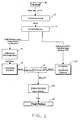
- Figure 1 is a schematic representation of the process of the present invention.
- This invention provides a method of forming a complex of palladium suitable for replenishing the palladium in a palladium or palladium alloy electroplating bath.
- the palladium complex is formed in conjunction with an unreactive counter ion.
- sulfate as a counter ion for the palladium complex of the invention is an alternative to the counter ions of the prior art such as oxalate, chloride, nitrate and nitrite counter ions.
- One of the advantages provided by sulfate counter ions over prior art counter ions is that they are electrochemically inert and cause minimal corrosion and oxidation of the bath components.
- Another advantage of the use of sulfate as a counter ion in the formation of the complex of the present invention is that the palladium complex is precipitated with a yield of from about 90% to about 95% without contamination by undesirable intermediates and by products.
- the process of the present invention provides for the synthesis of palladium tetraammine sulfate.
- the synthesis can be accomplished by mixing an ammonia-containing aqueous solution and [Pd(NH 3 ) 4 ][Pd(SO 4 ) 2 ].
- a complex is formed as a fine pale yellow precipitate, soluble in water, as illustrated by the following chemical equation: [Pd(NH 3 ) 4 ][Pd(SO 4 ) 2 ) + 4NH 3 ⁇ 2Pd(NH 3 ) 4 SO 4
- the palladium complex is produced from [Pd(NH 3 ) 4 ] [Pd(SO 4 ) 2 ]xH 2 O).
- x is 0 and in the hydrated form, x is any number above 0 and up to 6.
- the structure of the palladium complex was confirmed by elemental analysis. Hydrogen and nitrogen were determined by elemental analysis using the gas fusion technique, sulfate was determined by ion chromatography and palladium was determined by inductively coupled plasma or atomic absorption. Other elemental analyses methods are known to those skilled in the art. The results of the elemental analysis are summarized in Table 1: Element Pd N H S O Theo. (%) 44.9 11.9 2.5 13.6 27.1 Anal. (%0 39.5 12.3 3.0 13.9 31.3
- the preferred complex of the present invention can be used as a solid replenisher to the palladium ion in a palladium or palladium alloy electroplating. Further, the palladium complex can be provided in solution form and added to the bath as a liquid replenisher.
- Palladium alloys which are contemplated as suitable include, for example, PdCo, PdAg, PdZn, PdFe and PdNi alloys.
- a typical palladium electroplating bath contains palladium salt, ammonium chloride, ammonium salts, free ammonium as an ammonia/ammonium buffer system, and organic additives.
- concentration of palladium metal and/or alloying metal in the bath decreases.
- palladium is added to the electroplating bath during the electroplating process.
- the desired palladium concentration for a particular bath is determined by the plating rate and the agitation speed.
- the palladium concentration is also selected to control dragout losses and minimize palladium waste.
- the palladium concentration of the bath is generally maintained within 5% to 10% of the desired palladium concentration (g/l).
- the palladium is replenished frequently. If palladium is not replenished before its concentration drops below within 5% to 10% of the desired concentration, undesirable, rough and dark deposits will likely result, necessitating down time for the plating line while the bath is readjusted.
- the replenisher is used to replenish palladium in a palladium/alloy electroplating bath, the corresponding sulfate of the alloying metal can be added in addition to the palladium complex of the present invention.
- the amount required of the expensive palladium in the complex could be significantly reduced if the complex synthesis was conducted under stringent operating controls whereby the distillation of the nitrated palladium was restricted to a temperature not to exceed 115°C.
- an excess of nitrate-containing compound was made available during the reaction.
- the preferred concentration of the nitrate is about 25 g/l.
- the preferred nitrate is an ammonium nitrate. This manufacturing protocol was in strong contrast to the accepted reflux reaction conducted at from about 195 to 210°C for from 1-4 hours.
- palladium refers to elemental palladium having trace amounts of impurities.
- palladium alloy refers to a compound of palladium combined with an alloying metal such as, for example, cobalt, silver, zinc, iron and nickel. Therefore, the preferred palladium alloys are PdCo, PdAg, PdZn, PdFe and PdNi, where the preferred ratio of palladium:alloy is approximately 50:50 by weight.
- palladium preferably in the form of palladium shot (10) is preferably washed with HCl to activate the palladium (12).
- a nitrate is supplied to the activated palladium to produce a palladium nitrate solution (14).
- the palladium nitrate solution was refluxed with a sulfuric acid at a high temperature of from about 195°C to about 210°C for from about 1 to about 4 hours to create a hot suspension of palladium sulfate (16). Water was then added to cool the sulfate solution (18) and ammonium hydroxide was added to achieve the final product.
- the palladium nitrate solution is distilled carefully by allowing the temperature to rise to a maximum of 115°C to create the palladium sulfate and palladium nitrate in solution (20).
- Ammonium hydroxide is added to achieve the tetraammine palladium bis(sulfato) palladate (21).
- a further amount of ammonium hydroxide is added to the intermediate to achieve the palladium tetraammine sulfate product (22).
- the product is filtered to remove the product from the supernatant fluid to achieve the final product (24).
- the plating baths using the replenisher made according to the process of the present invention produced results superior to the replenishers made according to known syntheses.
- improvements with respect to plating brightness and color were qualitatively perceived when the replenished baths were used to plate copper panels.
- a tetraammine palladium sulfate complex replenisher made according to known methods was evaluated for the amount of palladium contained within the complex.
- the known process used the high temperature (195°C to 210°C), reflux process.
- the complex was assayed for palladium content using Atomic Absorption. The results showed a palladium content of 17.9 g/l palladium.
- a tetraammine palladium sulfate complex replenisher was made according to the process of the present invention under conditions of excess nitrate and regulated distillation temperature of up to but never exceeding 115°C.
- the complex was assayed for palladium content using Atomic Absorption.
- low speed pure palladium plating baths were prepared using the following operating parameters.
- An amount of 250 ml of baths I (Example I) and II (Example II) were used for bath make-up purposes.
- the bath compositions are provided in Table 2. All bath components listed are commercially available from Electroplating Chemicals and Services, Staten Island, NY.
- This example illustrates palladium replenishment.
- the palladium concentration of the bath should be maintained within 5% to 10% of the desired value to ensure stable bath performance.
- the AMP-minute (A-min) method is used to calculate the amount of palladium complex that needs to be added to replenish the palladium.
- This example illustrates the replenishment of a PdNi alloy plating bath.
- a PdNi alloy with 80% palladium/20% nickel (by weight) was deposited on a substrate from the bath containing 20 g/l palladium as metal and 15 g/l nickel as metal.
- the PdNi bath needed to be replenished. Replenishment was accomplished by addition of 5.26 grams of the palladium complex of this invention, containing 38% by weight (or 2 grams) of palladium.
Landscapes
- Chemical & Material Sciences (AREA)
- Organic Chemistry (AREA)
- Engineering & Computer Science (AREA)
- Chemical Kinetics & Catalysis (AREA)
- Electrochemistry (AREA)
- Materials Engineering (AREA)
- Metallurgy (AREA)
- Inorganic Chemistry (AREA)
- Automation & Control Theory (AREA)
- Electroplating And Plating Baths Therefor (AREA)
- Inorganic Compounds Of Heavy Metals (AREA)
Applications Claiming Priority (2)
| Application Number | Priority Date | Filing Date | Title |
|---|---|---|---|
| US09/323,607 US6346222B1 (en) | 1999-06-01 | 1999-06-01 | Process for synthesizing a palladium replenisher for electroplating baths |
| US323607 | 1999-06-01 |
Publications (1)
| Publication Number | Publication Date |
|---|---|
| EP1057902A2 true EP1057902A2 (de) | 2000-12-06 |
Family
ID=23259936
Family Applications (1)
| Application Number | Title | Priority Date | Filing Date |
|---|---|---|---|
| EP00304357A Withdrawn EP1057902A2 (de) | 1999-06-01 | 2000-05-23 | Verbessertes Verfahren zur Synthese eines Palladium-Regenerators für Elektroplattierungsbäder |
Country Status (5)
| Country | Link |
|---|---|
| US (1) | US6346222B1 (de) |
| EP (1) | EP1057902A2 (de) |
| JP (1) | JP2001026427A (de) |
| KR (1) | KR20010007134A (de) |
| SG (1) | SG84600A1 (de) |
Cited By (5)
| Publication number | Priority date | Publication date | Assignee | Title |
|---|---|---|---|---|
| CN102786100A (zh) * | 2012-08-30 | 2012-11-21 | 贵研资源(易门)有限公司 | 一种硫酸四氨钯的合成方法 |
| CN103395847A (zh) * | 2013-07-24 | 2013-11-20 | 励福实业(江门)贵金属有限公司 | 硫酸四氨合钯的合成方法 |
| CN109295482A (zh) * | 2018-09-14 | 2019-02-01 | 金川集团股份有限公司 | 一种氨钯络合物及其制备方法 |
| CN110482620A (zh) * | 2019-08-27 | 2019-11-22 | 贵研铂业股份有限公司 | 一种可量产硫酸四氨钯的精制方法 |
| CN112169811A (zh) * | 2020-10-27 | 2021-01-05 | 金川集团股份有限公司 | 一种硫酸钯溶液的制备方法 |
Families Citing this family (11)
| Publication number | Priority date | Publication date | Assignee | Title |
|---|---|---|---|---|
| FR2807422B1 (fr) * | 2000-04-06 | 2002-07-05 | Engelhard Clal Sas | Sel complexe de palladium et son utilisation pour ajuster la concentration en palladium d'un bain electrolytique destine au depot de palladium ou d'un de ses alliages |
| US7537799B2 (en) * | 2003-07-11 | 2009-05-26 | Hewlett-Packard Development Company, L.P. | Methods of forming electrically conductive pathways using palladium aliphatic amine complexes |
| US9175135B2 (en) | 2010-03-30 | 2015-11-03 | Bayer Materialscience Ag | Process for preparing diaryl carbonates and polycarbonates |
| ES2643234T3 (es) | 2010-03-30 | 2017-11-21 | Covestro Deutschland Ag | Procedimiento para la preparación de carbonatos de diarilo y policarbonatos |
| DE102014006739B3 (de) * | 2014-05-12 | 2015-06-25 | Albert-Ludwigs-Universität Freiburg | Verfahren zur Beschichtung von Oberflächen mit Nanostrukturen, nach dem Verfahren her- gestelltes Bauteil und Verwendung des Bauteils |
| CN104028774A (zh) * | 2014-06-11 | 2014-09-10 | 励福实业(江门)贵金属有限公司 | 活化钯粉及其制备方法和应用 |
| CN107176625A (zh) * | 2017-04-19 | 2017-09-19 | 乐山东承新材料有限公司 | 一种硫酸四氨钯的生产方法 |
| KR102055883B1 (ko) * | 2018-06-12 | 2019-12-13 | (재)한국건설생활환경시험연구원 | Pd-Ni 합금 도금액 조성물 및 이를 이용한 도금 방법 |
| CN111732133A (zh) * | 2020-06-17 | 2020-10-02 | 中船重工黄冈贵金属有限公司 | 一种硫酸四氨钯的制备方法 |
| CN112897600B (zh) * | 2021-03-15 | 2021-11-19 | 徐州浩通新材料科技股份有限公司 | 一种硫酸四氨钯(ⅱ)的制备方法 |
| JP7108153B1 (ja) | 2021-04-02 | 2022-07-27 | 松田産業株式会社 | 導電性材料 |
Family Cites Families (5)
| Publication number | Priority date | Publication date | Assignee | Title |
|---|---|---|---|---|
| CH572989A5 (de) * | 1973-04-27 | 1976-02-27 | Oxy Metal Industries Corp | |
| US4066517A (en) * | 1976-03-11 | 1978-01-03 | Oxy Metal Industries Corporation | Electrodeposition of palladium |
| US4552628A (en) * | 1982-09-09 | 1985-11-12 | Engelhard Corporation | Palladium electroplating and bath thereof |
| US4911799A (en) * | 1989-08-29 | 1990-03-27 | At&T Bell Laboratories | Electrodeposition of palladium films |
| US5024733A (en) * | 1989-08-29 | 1991-06-18 | At&T Bell Laboratories | Palladium alloy electroplating process |
-
1999
- 1999-06-01 US US09/323,607 patent/US6346222B1/en not_active Expired - Lifetime
-
2000
- 2000-05-23 EP EP00304357A patent/EP1057902A2/de not_active Withdrawn
- 2000-05-26 SG SG200002894A patent/SG84600A1/en unknown
- 2000-05-30 JP JP2000160159A patent/JP2001026427A/ja active Pending
- 2000-05-30 KR KR1020000029198A patent/KR20010007134A/ko not_active Withdrawn
Cited By (6)
| Publication number | Priority date | Publication date | Assignee | Title |
|---|---|---|---|---|
| CN102786100A (zh) * | 2012-08-30 | 2012-11-21 | 贵研资源(易门)有限公司 | 一种硫酸四氨钯的合成方法 |
| CN103395847A (zh) * | 2013-07-24 | 2013-11-20 | 励福实业(江门)贵金属有限公司 | 硫酸四氨合钯的合成方法 |
| CN109295482A (zh) * | 2018-09-14 | 2019-02-01 | 金川集团股份有限公司 | 一种氨钯络合物及其制备方法 |
| CN110482620A (zh) * | 2019-08-27 | 2019-11-22 | 贵研铂业股份有限公司 | 一种可量产硫酸四氨钯的精制方法 |
| CN110482620B (zh) * | 2019-08-27 | 2021-10-22 | 贵研铂业股份有限公司 | 一种可量产硫酸四氨钯的精制方法 |
| CN112169811A (zh) * | 2020-10-27 | 2021-01-05 | 金川集团股份有限公司 | 一种硫酸钯溶液的制备方法 |
Also Published As
| Publication number | Publication date |
|---|---|
| US6346222B1 (en) | 2002-02-12 |
| SG84600A1 (en) | 2001-11-20 |
| JP2001026427A (ja) | 2001-01-30 |
| KR20010007134A (ko) | 2001-01-26 |
Similar Documents
| Publication | Publication Date | Title |
|---|---|---|
| US6346222B1 (en) | Process for synthesizing a palladium replenisher for electroplating baths | |
| US3338726A (en) | Chemical reduction plating process and bath | |
| Wilkinson | Understanding gold plating | |
| JP3455709B2 (ja) | めっき方法とそれに用いるめっき液前駆体 | |
| CA1081406A (en) | Electroless metal plating | |
| US5091223A (en) | Process for forming a blackened layer on a zinciferous surface by contacting the surface with an aqueous solution containing nickel and cobalt ions | |
| JP7352515B2 (ja) | 電解金合金めっき浴及び電解金合金めっき方法 | |
| US5683568A (en) | Electroplating bath for nickel-iron alloys and method | |
| US4144141A (en) | Ammonia free palladium deposition using aminoacetic acid | |
| US4715935A (en) | Palladium and palladium alloy plating | |
| US5085693A (en) | Hydrazine bath for chemical deposition of platinum and/or palladium, and method of manufacturing such a bath | |
| JP2003530486A (ja) | パラジウム又はその合金を電気化学的に析出させるための電解浴 | |
| US5935306A (en) | Electroless gold plating bath | |
| US2819187A (en) | Chemical nickel plating processes and baths therefor | |
| US6743950B2 (en) | Palladium complex salt and use thereof for adjusting palladium concentration of an electrolytic solution for deposit of palladium or one of its alloys | |
| US6524642B1 (en) | Electroless metal-plating process | |
| EP0059452B1 (de) | Elektroplattierungsverfahren für Palladium und Palladiumlegierungen | |
| JPH10317183A (ja) | 非シアンの電気金めっき浴 | |
| US4468296A (en) | Process for electroplating palladium | |
| JPH11269658A (ja) | 無電解パラジウムメッキ液 | |
| US4377450A (en) | Palladium electroplating procedure | |
| HK1033157A (en) | Improved process for synthesizing a palladium replenisher for electroplating baths | |
| US4778574A (en) | Amine-containing bath for electroplating palladium | |
| US4454010A (en) | Palladium plating procedure | |
| JP3101061B2 (ja) | 白金無電解めっき浴及びそれを用いた白金めっき品の製造方法 |
Legal Events
| Date | Code | Title | Description |
|---|---|---|---|
| PUAI | Public reference made under article 153(3) epc to a published international application that has entered the european phase |
Free format text: ORIGINAL CODE: 0009012 |
|
| AK | Designated contracting states |
Kind code of ref document: A2 Designated state(s): AT BE CH CY DE DK ES FI FR GB GR IE IT LI LU MC NL PT SE |
|
| AX | Request for extension of the european patent |
Free format text: AL;LT;LV;MK;RO;SI |
|
| STAA | Information on the status of an ep patent application or granted ep patent |
Free format text: STATUS: THE APPLICATION IS DEEMED TO BE WITHDRAWN |
|
| 18D | Application deemed to be withdrawn |
Effective date: 20021201 |
|
| REG | Reference to a national code |
Ref country code: HK Ref legal event code: WD Ref document number: 1033157 Country of ref document: HK |