EP1025201B1 - Verfahren zur herstellung einer bierwürze und/oder zum maischekochen sowie vorrichtung zur durchführung des verfahrens - Google Patents
Verfahren zur herstellung einer bierwürze und/oder zum maischekochen sowie vorrichtung zur durchführung des verfahrens Download PDFInfo
- Publication number
- EP1025201B1 EP1025201B1 EP98961029A EP98961029A EP1025201B1 EP 1025201 B1 EP1025201 B1 EP 1025201B1 EP 98961029 A EP98961029 A EP 98961029A EP 98961029 A EP98961029 A EP 98961029A EP 1025201 B1 EP1025201 B1 EP 1025201B1
- Authority
- EP
- European Patent Office
- Prior art keywords
- container
- wort
- microwaves
- microwave
- microwave generator
- Prior art date
- Legal status (The legal status is an assumption and is not a legal conclusion. Google has not performed a legal analysis and makes no representation as to the accuracy of the status listed.)
- Expired - Lifetime
Links
- 238000000034 method Methods 0.000 title claims abstract description 28
- 238000009835 boiling Methods 0.000 title claims abstract description 9
- 235000013405 beer Nutrition 0.000 title claims description 10
- 238000004519 manufacturing process Methods 0.000 title description 3
- XLYOFNOQVPJJNP-UHFFFAOYSA-N water Substances O XLYOFNOQVPJJNP-UHFFFAOYSA-N 0.000 claims description 12
- 239000000126 substance Substances 0.000 claims description 6
- 235000013599 spices Nutrition 0.000 claims description 3
- 239000002918 waste heat Substances 0.000 claims description 3
- 150000001720 carbohydrates Chemical class 0.000 claims description 2
- 238000013124 brewing process Methods 0.000 claims 1
- 239000000470 constituent Substances 0.000 claims 1
- 238000010438 heat treatment Methods 0.000 abstract description 9
- 238000006243 chemical reaction Methods 0.000 abstract description 6
- 238000010411 cooking Methods 0.000 description 49
- QMMFVYPAHWMCMS-UHFFFAOYSA-N Dimethyl sulfide Chemical compound CSC QMMFVYPAHWMCMS-UHFFFAOYSA-N 0.000 description 15
- 102000004169 proteins and genes Human genes 0.000 description 11
- 108090000623 proteins and genes Proteins 0.000 description 11
- 238000001704 evaporation Methods 0.000 description 8
- 230000008020 evaporation Effects 0.000 description 8
- 235000008694 Humulus lupulus Nutrition 0.000 description 7
- VMSLCPKYRPDHLN-UHFFFAOYSA-N (R)-Humulone Chemical compound CC(C)CC(=O)C1=C(O)C(CC=C(C)C)=C(O)C(O)(CC=C(C)C)C1=O VMSLCPKYRPDHLN-UHFFFAOYSA-N 0.000 description 4
- GXCLVBGFBYZDAG-UHFFFAOYSA-N N-[2-(1H-indol-3-yl)ethyl]-N-methylprop-2-en-1-amine Chemical compound CN(CCC1=CNC2=C1C=CC=C2)CC=C GXCLVBGFBYZDAG-UHFFFAOYSA-N 0.000 description 4
- 238000001816 cooling Methods 0.000 description 4
- 235000011194 food seasoning agent Nutrition 0.000 description 4
- 239000007788 liquid Substances 0.000 description 3
- 150000008442 polyphenolic compounds Chemical class 0.000 description 3
- 235000013824 polyphenols Nutrition 0.000 description 3
- 230000015271 coagulation Effects 0.000 description 2
- 238000005345 coagulation Methods 0.000 description 2
- 238000010276 construction Methods 0.000 description 2
- 230000001419 dependent effect Effects 0.000 description 2
- 238000010586 diagram Methods 0.000 description 2
- 238000000855 fermentation Methods 0.000 description 2
- 230000004151 fermentation Effects 0.000 description 2
- 239000012530 fluid Substances 0.000 description 2
- 239000004615 ingredient Substances 0.000 description 2
- 238000006317 isomerization reaction Methods 0.000 description 2
- JVTAAEKCZFNVCJ-UHFFFAOYSA-N lactic acid Chemical compound CC(O)C(O)=O JVTAAEKCZFNVCJ-UHFFFAOYSA-N 0.000 description 2
- 235000018553 tannin Nutrition 0.000 description 2
- 229920001864 tannin Polymers 0.000 description 2
- 239000001648 tannin Substances 0.000 description 2
- IJGRMHOSHXDMSA-UHFFFAOYSA-N Atomic nitrogen Chemical compound N#N IJGRMHOSHXDMSA-UHFFFAOYSA-N 0.000 description 1
- 241000894006 Bacteria Species 0.000 description 1
- 102000004190 Enzymes Human genes 0.000 description 1
- 108090000790 Enzymes Proteins 0.000 description 1
- 150000001413 amino acids Chemical class 0.000 description 1
- 235000014633 carbohydrates Nutrition 0.000 description 1
- 230000015556 catabolic process Effects 0.000 description 1
- 238000003776 cleavage reaction Methods 0.000 description 1
- 239000004020 conductor Substances 0.000 description 1
- 239000002826 coolant Substances 0.000 description 1
- 150000002016 disaccharides Chemical class 0.000 description 1
- 238000007599 discharging Methods 0.000 description 1
- 230000005611 electricity Effects 0.000 description 1
- 230000002255 enzymatic effect Effects 0.000 description 1
- 238000001914 filtration Methods 0.000 description 1
- 238000010304 firing Methods 0.000 description 1
- 238000005189 flocculation Methods 0.000 description 1
- 230000016615 flocculation Effects 0.000 description 1
- 239000006260 foam Substances 0.000 description 1
- 239000007789 gas Substances 0.000 description 1
- 150000004676 glycans Chemical class 0.000 description 1
- 239000010903 husk Substances 0.000 description 1
- 235000014655 lactic acid Nutrition 0.000 description 1
- 239000004310 lactic acid Substances 0.000 description 1
- 239000007791 liquid phase Substances 0.000 description 1
- 150000002772 monosaccharides Chemical class 0.000 description 1
- 239000012071 phase Substances 0.000 description 1
- 229920001282 polysaccharide Polymers 0.000 description 1
- 239000005017 polysaccharide Substances 0.000 description 1
- 230000008092 positive effect Effects 0.000 description 1
- 238000001556 precipitation Methods 0.000 description 1
- 239000002243 precursor Substances 0.000 description 1
- 239000002994 raw material Substances 0.000 description 1
- 238000007670 refining Methods 0.000 description 1
- 230000001105 regulatory effect Effects 0.000 description 1
- 238000003303 reheating Methods 0.000 description 1
- 230000007017 scission Effects 0.000 description 1
- 239000007787 solid Substances 0.000 description 1
- 239000003381 stabilizer Substances 0.000 description 1
- 238000013517 stratification Methods 0.000 description 1
- 238000009834 vaporization Methods 0.000 description 1
- 230000008016 vaporization Effects 0.000 description 1
Images


Classifications
-
- C—CHEMISTRY; METALLURGY
- C12—BIOCHEMISTRY; BEER; SPIRITS; WINE; VINEGAR; MICROBIOLOGY; ENZYMOLOGY; MUTATION OR GENETIC ENGINEERING
- C12C—BEER; PREPARATION OF BEER BY FERMENTATION; PREPARATION OF MALT FOR MAKING BEER; PREPARATION OF HOPS FOR MAKING BEER
- C12C7/00—Preparation of wort
- C12C7/20—Boiling the beerwort
- C12C7/205—Boiling with hops
- C12C7/22—Processes or apparatus specially adapted to save or recover energy
-
- C—CHEMISTRY; METALLURGY
- C12—BIOCHEMISTRY; BEER; SPIRITS; WINE; VINEGAR; MICROBIOLOGY; ENZYMOLOGY; MUTATION OR GENETIC ENGINEERING
- C12C—BEER; PREPARATION OF BEER BY FERMENTATION; PREPARATION OF MALT FOR MAKING BEER; PREPARATION OF HOPS FOR MAKING BEER
- C12C13/00—Brewing devices, not covered by a single group of C12C1/00 - C12C12/04
- C12C13/02—Brew kettles
-
- C—CHEMISTRY; METALLURGY
- C12—BIOCHEMISTRY; BEER; SPIRITS; WINE; VINEGAR; MICROBIOLOGY; ENZYMOLOGY; MUTATION OR GENETIC ENGINEERING
- C12C—BEER; PREPARATION OF BEER BY FERMENTATION; PREPARATION OF MALT FOR MAKING BEER; PREPARATION OF HOPS FOR MAKING BEER
- C12C7/00—Preparation of wort
- C12C7/04—Preparation or treatment of the mash
- C12C7/06—Mashing apparatus
-
- C—CHEMISTRY; METALLURGY
- C12—BIOCHEMISTRY; BEER; SPIRITS; WINE; VINEGAR; MICROBIOLOGY; ENZYMOLOGY; MUTATION OR GENETIC ENGINEERING
- C12C—BEER; PREPARATION OF BEER BY FERMENTATION; PREPARATION OF MALT FOR MAKING BEER; PREPARATION OF HOPS FOR MAKING BEER
- C12C9/00—Methods specially adapted for the making of beerwort
- C12C9/02—Beerwort treatment; Boiling with hops; Hop extraction
Definitions
- the invention relates to a method for producing a wort and / or for mash cooking and a device for carrying it out of the procedure.
- the brewhouse is at the heart of the brewery. Here malt is crushed and mashed with hot water. This happens in the mash tun.
- the Malt ingredients undergo an enzymatic conversion of polysaccharides to mono- and disaccharides and high molecular weight Protein to medium and low molecular nitrogen and free amino acids is broken down.
- the wort is cooked here. purpose the cooking is to first inactivate the still active enzymes, so that it does not lead to an excessive breakdown of carbohydrates and the protein comes. Furthermore, the lactic acid bacteria derived from malt killed and the wort sterilized by the boil.
- the essential task of cooking is a number of chemical Conversions.
- the content of protein in the wort is reduced that it denatures and flocculates. This is called a fraction, which should be rough and represent a quality feature of the cooking.
- Spice analysis divides the protein into different fractions, which then influences fermentation, foam, shelf life and full-bodied character in beer to have. There are norm values for these fractions.
- Another task of wort boiling is to split the Dimethyl sulfide precursors (DMS-P) in free dimethyl sulfide (DMS) and its evaporation.
- DMS-P Dimethyl sulfide precursors
- DMS free dimethyl sulfide
- Hops are added to the wort during the cooking process.
- the Cooking temperature causes a re-isomerization of the ⁇ -acid to the Iso- ⁇ -acid. the decisive component of value for the bitter beer.
- the degree the conversion depends on the intensity of the cooking and will referred to as the ⁇ -acid yield. This value is technological and economic importance, as hops are an expensive raw material.
- Another criterion for cooking is the evaporation rate.
- the Evaporation leads to a concentration of the wort on the one hand desired original wort and secondly the water vapor is removed Components, such as the free strain gauge (boiling point 37 ° C), from the wort.
- the wort gets into the while still hot Whirlpool for hot trub removal and afterwards after the Cooling down in a cooler in the fermentation cellar.
- the mash and wort are heated according to the previously known method State of the art usually in steam-heated tube bundle heat exchangers.
- These cooking systems can be used as internal cookers in the brewing vessels be built in or as an external cooker using pumps stand next to the respective brewing vessel. Flows through the inner stoves the seasoning of the cooker is particularly due to the convection flow.
- These known cooking systems have various disadvantages.
- Boilers are used for steam generation, which are always ready for operation must be kept, which is comparatively high Energy and personnel costs are caused. Be subject to beyond more and more breweries are subject to strict local emission regulations regarding the firing systems of the boilers. modern Systems such as combined heat and power plants (CHP) have so far been able to do not enforce the breweries, as there is usually no simultaneous need of electricity and heat.
- CHP combined heat and power plants
- the cooking system according to the invention takes a different path than that Cooking systems described at the beginning and solves their disadvantages on economical and environmentally friendly way.
- a microwave generator for example in the form of a Microwave tube used, e.g. with the power of a combined heat and power plant can be operated. This can either be outside or be arranged within the container or brewing vessel.
- the microwave generator outside the brewing vessel can initiate the microwave in the container by means of a known device for microwave conduction, for example by Reflection.
- the The wort is heated outside the brewing vessel in a pipeline Introducing the wort into the brewing vessel when flowing through in the manner of a Outside cooker.
- the pipeline can be on the inlet and outlet side be connectable to the brewing vessel so that the wort is repeated removed from the brewing vessel, warmed and put back into the brewing vessel can be traced back.
- the microwave generator can also be located inside the brewing vessel or a container for continuous cooking. In the brewing vessel or container is then over the entire acting as a resonator Interior distributes a three-dimensional cooktop, which becomes a homogeneous heating of the mash or wort from the beginning of the Cooking on leads.
- the openings of the brewing vessel especially the steam outlet opening, by means of reflection, for example in the form of a lattice-like structure to leave the brewing vessel (3).
- This shield provides there is no flow resistance for the steam.
- the microwave source can be used especially in the case of an arrangement outside the brewing vessel with water cooling in the form of a heat exchanger be provided, which operated with brewing water as a coolant can be. This can cause the waste heat from the microwave generator used for preheating brewing water or as other process heat become, which increases the overall efficiency.
- the interior of the brewing vessel can be kept free of internals, which could disrupt the convective circulation of the wort.
- the construction the inside of the frying pan can be disregarded for the stove according to fluid mechanics.
- the microwave generator can season by varying the pulse frequency be regulated, which is compared to the regulation of a steam boiler Represents advantage. Cooking is done by simply turning on the Microwave source started. There is no need for operational readiness like a steam boiler. About that In addition, the controllability is supported by the fact that with a power reduction no reheating occurs in the microwave generator. The boil starts quickly and everywhere in the liquid volume.
- the Chemical reaction reactions also start immediately, since it is microwave cooking from the beginning of the cooking due to friction of the vibrating water molecules to temperature peaks in the atomic Area is coming. This will make cooking more intense from the start achieved than would be possible with a steam-heated heat exchanger, which only heats up at the wort / heating surface interface. When it comes to microwave cooking, there is an overall significant one better implementation of the wort ingredients instead.
- the evaporation is further supported in microwave cooking by that steam emerging from the wort surface affects the microwave field does not leave and thus does not condense into steam some of which re-enter the liquid.
- the steam can be as Evaporate water vapor gas. This is one of the reasons for the better Evaporation in this system.
- Microwave cooking has two positive effects on strain gauges.
- the Cleavage of the DMS-P takes place more quickly, since this process takes place at a higher rate thermal intensity runs faster.
- the better evaporation causes more extensive evaporation and thus lower contents free strain gauges after a short cooking time.
- the chemical described Implementation of the DMS limits the cooking time of today's systems to at least 60 minutes, usually up to 90 minutes.
- the microwave cooking system makes cooking times of 30 to 45 minutes possible, what the Capacities of a brewery increased significantly and the energy expenditure lowers.
- the isomerization of the ⁇ -acid in hops is also time and temperature dependent. With the intense temperature influence of microwave cooking this process is faster, which means that after a shorter cooking time more ⁇ -acid is isomerized. The Hops can also be given due to the consequently better efficiency be reduced, which is remarkable economic due to the hop price Has meaning.
- Another advantage of the invention is the low polyphenol content of seasoning. These tannins are in the wort for the precipitation of the responsible for protein. Your salary should be in the wort after the boil should be low, otherwise they will still contain protein in the finished beer will fail. This has a negative impact on durability.
- the Polyphenol content is important in microwave cooking lower than in prior art cooking. This requires at later beer filtration, less use of stabilizers, with which the tannins (polyphenols) are removed from the beer in order to indirectly prevent protein clouding.
- the device shown in Fig. 1 has a container 3 in shape of a brewing vessel.
- the wort to be boiled is in this container 4 recoverable.
- In the ceiling or lid area of the container 3 is one Steam outlet opening 5 for discharging the evaporated water and the volatile wort components contained therein arranged.
- a microwave generator 1 is arranged outside the container 3 via a microwave conductor 7, for example in the form of a reflection tube, is connected to the interior of the container 3. Through this Microwave guides 7 are the microwaves generated in the microwave generator 1 can be introduced into the container 3 for heating the wort.
- the microwave generator is connected to a vessel 9 via pipes 8, which contains brewing water. Brewing water is used during the Operation of the microwave generator 1 for cooling via a not shown Heat exchanger unit performed so that the waste heat from the microwave generator recoverable as process heat and if necessary can be temporarily stored in an energy store.
- the microwave generator 1 arranged inside the brewing vessel 3 so that the microwaves more or less evenly distributed in the entire liquid volume can be introduced into the wort 4.
- the steam discharge opening 5 is this with a microwave reflector 6 in Form a grid structure.
- the mesh size of the grid is included in a manner known per se depending on the frequency or Select the wavelength of the microwave so that there is no wave passage can be done. Such a grid provides for the steam to be removed however, does not represent an obstacle to flow.
- the power supply of the microwave generator takes place via only one schematically indicated cogeneration unit 2.
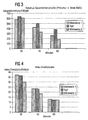
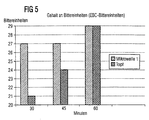
- the wort was boiled for 30, 45 and 60 minutes.
- a microwave source (microwave 1 and 2) and an electric direct heating (pot) is used.
- the wort samples came from a brew.
- the hops were given with every attempt directly after the start of cooking. Quality and quantity of Hops were always the same.
Landscapes
- Chemical & Material Sciences (AREA)
- Organic Chemistry (AREA)
- Engineering & Computer Science (AREA)
- Bioinformatics & Cheminformatics (AREA)
- Life Sciences & Earth Sciences (AREA)
- Biochemistry (AREA)
- Health & Medical Sciences (AREA)
- General Engineering & Computer Science (AREA)
- General Health & Medical Sciences (AREA)
- Genetics & Genomics (AREA)
- Food Science & Technology (AREA)
- Wood Science & Technology (AREA)
- Zoology (AREA)
- Distillation Of Fermentation Liquor, Processing Of Alcohols, Vinegar And Beer (AREA)
- Seasonings (AREA)
Description
- Fig.1
- in schematischer biockdiagrammartiger Gestaltung ein erstes Ausführungsbeispiel einer erfindungsgemäßen Vorrichtung mit außerhalb des Sudgefäßes angeordnetem Mikrowellenerzeuger;
- Fig. 2
- in einer der Fig. 1 entsprechenden Darstellung ein zweites Ausführungsbeispiel einer erfindungsgemäßen Vorrichtung mit im Sudgefäß angeordnetem Mikrowellenerzeuger; und
- Fig. 3, 4, 5
- Analysendiagramme einer mit dem erfindungsgemäßen Verfahren hergestellten Würze.
Claims (14)
- Verfahren zur Herstellung von Ausschlagwürze zur Herstellung von Bier, mit folgenden Verfahrensschritten:a) Beschicken eines Behälters (3) mit von unlöslichen Stoffen im wesentlichen befreiter Würze (4);b) Einleiten von Mikrowellen in den Behälter (3) zum Erwärmen der Würze (4) bis zur gewünschten Kochtemperatur;c) Zugabe von Würzmitteln nach Kochbeginn der Würze (4); undd) Aufrechterhalten der Kochtemperatur für eine vorgegebene Zeitdauer unter gleichzeitigem Ableiten von verdampftem bzw. gasförmigem Wasser sowie darin enthaltenen flüchtigen Bestandteilen.
- Verfahren nach Anspruch 1,
dadurch gekennzeichnet, daß im Verfahrensschritt d) die Kochtemperatur für 10 bis 75 Minuten, vorzugsweise 15 bis 60 Minuten, besonders bevorzugt 30 bis 45 Minuten, aufrechterhalten wird. - Verfahren nach Anspruch 1 oder 2,
dadurch gekenn zeichnet,
daß die Mikrowellen in einem Frequenzbereich zwischen 1 GHz und 100 GHz, vorzugsweise von 2,45 GHz, verwendet werden. - Verfahren nach einem der Ansprüche 1 bis 3,
dadurch gekennzeichnet, daß die Mikrowellen mittels eines Oszillators erzeugt werden. - Verfahren nach einem der Ansprüche 1 bis 4,
dadurch gekennzeichnet, daß die Abwärme des Mikrowellenerzeugers (1) im Brauprozeß, insbesondere zur Erwärmung von Brauwasser, verwendet wird. - Verfahren nach einem der Ansprüche 1 bis 5,
dadurch gekennzeichnet, daß der Strom zum Betreiben der Einrichtung zur Erzeugung der Mikrowellen einem Blockheizkraftwerk (2) entnommen wird. - Verfahren nach einem der Ansprüche 1 bis 6,
dadurch gekennzeichnet, daß das Verfahren diskontinuierlich oder kontinuierlich durchführbar ist. - Vorrichtung zur Durchführung des Verfahrens nach einem der Ansprüche 1 bis 7,
gekennzeichnet durch
einen Behälter (3) zur Aufnahme der von unlöslichen Stoffen im wesentlichen befreiten Würze (4) und einen im Inneren des Behälters angeordneten Mikrowellenerzeuger (1). - Vorrichtung zur Durchführung des Verfahrens nach einem der Ansprüche 1 bis 7,
gekennzeichnet durch
einen Behälter (3) zur Aufnahme der von unlöslichen Stoffen im wesentlichen befreiten Würze (4), einen außerhalb des Behälters angeordneten Mikrowellenerzeuger (1) und einer Einrichtung zur Einleitung der im Mikrowellenerzeuger (1) erzeugten Mikrowellen in den Behälter (3). - Vorrichtung nach einem der Ansprüche 8 und 9,
dadurch gekennzeichnet, daß im Behälter (3) im Bereich der Behälteröffnungen, insbesondere der Dampfauslaßöffung (5), eine Einrichtung (6) zur Reflexion der Mikrowellen in den Innenraum des Behälters (3) angeordnet ist. - Vorrichtung gemäß Anspruch 9,
gekennzeichnet durch
einen Behälter (3) zur Aufnahme der von unlöslichen Stoffen im wesentlichen befreiten Würze (4), mindestens eine Rohrleitung zur Einleitung der Würze in den Behälter und einen außerhalb des Behälters (3) angeordneten Mikrowellenerzeuger (1), wobei die Einleitung der Mikrowellen in die Würze im Bereich der Rohrleitung während des Durchströmens erfolgt. - Vorrichtung nach einem der Ansprüche 8 bis 11,
dadurch gekennzeichnet, daß Mikrowellenleistung mittels einer elektronischen Steuer- und Regeleinrichtung einstellbar ist. - Vorrichtung nach einem der Ansprüche 8 bis 12,
dadurch gekennzeichnet, daß im Behälter (3) ein mikrowellendurchlässiges Gefäß zur Aufnahme des Würzmittels angeordnet ist. - Verfahren zur Herstellung von Maische zur Herstellung von Bier, mit folgenden Schritten:Beschicken eines Behälters (3) mit Wasser und Malzschrot und/oder weiteren Kohlehydratquellen;Einleiten von Mikrowellen in den Behälter (3) zum Erwärmen der Maische bis zur Abmaischtemperatur.
Applications Claiming Priority (3)
| Application Number | Priority Date | Filing Date | Title |
|---|---|---|---|
| DE19746437 | 1997-10-21 | ||
| DE19746437A DE19746437B4 (de) | 1997-10-21 | 1997-10-21 | Verfahren und Vorrichtung zum Erwärmen von Maische und/oder Würze |
| PCT/DE1998/003088 WO1999020735A2 (de) | 1997-10-21 | 1998-10-21 | Verfahren zur herstellung einer bierwürze und/oder zum maischekochen sowie vorrichtung zur durchführung des verfahrens |
Publications (2)
| Publication Number | Publication Date |
|---|---|
| EP1025201A2 EP1025201A2 (de) | 2000-08-09 |
| EP1025201B1 true EP1025201B1 (de) | 2004-05-19 |
Family
ID=7846140
Family Applications (1)
| Application Number | Title | Priority Date | Filing Date |
|---|---|---|---|
| EP98961029A Expired - Lifetime EP1025201B1 (de) | 1997-10-21 | 1998-10-21 | Verfahren zur herstellung einer bierwürze und/oder zum maischekochen sowie vorrichtung zur durchführung des verfahrens |
Country Status (6)
| Country | Link |
|---|---|
| EP (1) | EP1025201B1 (de) |
| AT (1) | ATE267241T1 (de) |
| AU (1) | AU1661399A (de) |
| DE (3) | DE19746437B4 (de) |
| WO (1) | WO1999020735A2 (de) |
| ZA (1) | ZA989599B (de) |
Cited By (1)
| Publication number | Priority date | Publication date | Assignee | Title |
|---|---|---|---|---|
| RU2855021C1 (ru) * | 2025-04-14 | 2026-01-23 | Федеральное государственное бюджетное образовательное учреждение высшего образования "Кубанский государственный технологический университет" (ФГБОУ ВО "КубГТУ") | Способ приготовления пивного сусла |
Families Citing this family (2)
| Publication number | Priority date | Publication date | Assignee | Title |
|---|---|---|---|---|
| DE19852057A1 (de) * | 1998-11-11 | 2000-05-18 | Hrch Huppmann Gmbh | Brauereianlage mit Mikrowellenerzeuger |
| EP1715031B1 (de) * | 2005-04-22 | 2011-07-27 | Kaspar Schulz Brauereimaschinenfabrik & Apparatebauanstalt KG | Verfahren und Vorrichtung zur Bereitstellung von Wasser oder Wasserdampf als Heizmedium bei einem Prozess |
Family Cites Families (12)
| Publication number | Priority date | Publication date | Assignee | Title |
|---|---|---|---|---|
| GB977387A (en) * | 1960-09-20 | 1964-12-09 | Apv Co Ltd | Improvements in the processing of wort |
| DE3005689A1 (de) * | 1980-02-15 | 1981-08-20 | Karl 8722 Sulzheim Rienecker | Drucklos beheizter mikrowellen heizungskessel |
| DE3019720C2 (de) * | 1980-05-23 | 1983-06-01 | Jung GmbH, 6050 Offenbach | Mikrowellenheizvorrichtung für umwälzbare Medien |
| DE3139268A1 (de) * | 1981-10-02 | 1983-04-21 | geb. Görts Ingrid Drübenbach | Mit hoechstfrequenzen betriebene vorrichtung zur erwaermung von fluessigkeiten |
| SU1219643A1 (ru) * | 1984-10-22 | 1986-03-23 | Винницкий политехнический институт | Устройство дл смешивани измельченного солода с водой |
| DE3544270A1 (de) * | 1985-12-14 | 1987-06-25 | Kraftanlagen Ag | Verfahren und einrichtung zur trocknung kontaminierter fluessigkeiten und loesungen |
| DE3711251A1 (de) * | 1987-04-03 | 1988-10-13 | Steinecker Maschf Anton | Brauereianlage |
| FR2634091A1 (fr) * | 1988-07-11 | 1990-01-12 | Commissariat Energie Atomique | Dispositif de chauffage d'un liquide en circulation par micro-ondes |
| US5360964A (en) * | 1992-02-17 | 1994-11-01 | Samsung Electronics Co., Ltd. | Microwave coffee maker having a hot plate heated by microwaves |
| DE4226811A1 (de) * | 1992-08-13 | 1994-02-17 | Sueddeutsche Kalkstickstoff | Verfahren zur Stabilisierung von Hopfenprodukten |
| DE4324606C2 (de) * | 1993-07-22 | 1997-11-20 | Helmut Fleischmann | Heizungsanlagen |
| DE29713506U1 (de) * | 1996-10-11 | 1997-10-16 | Anton Steinecker Maschinenfabrik GmbH, 85356 Freising | Aufheizvorrichtung bei der Bierherstellung |
-
1997
- 1997-10-21 DE DE19746437A patent/DE19746437B4/de not_active Expired - Fee Related
-
1998
- 1998-10-21 ZA ZA989599A patent/ZA989599B/xx unknown
- 1998-10-21 EP EP98961029A patent/EP1025201B1/de not_active Expired - Lifetime
- 1998-10-21 WO PCT/DE1998/003088 patent/WO1999020735A2/de not_active Ceased
- 1998-10-21 DE DE59811433T patent/DE59811433D1/de not_active Expired - Lifetime
- 1998-10-21 DE DE19881522T patent/DE19881522D2/de not_active Expired - Lifetime
- 1998-10-21 AT AT98961029T patent/ATE267241T1/de not_active IP Right Cessation
- 1998-10-21 AU AU16613/99A patent/AU1661399A/en not_active Abandoned
Cited By (1)
| Publication number | Priority date | Publication date | Assignee | Title |
|---|---|---|---|---|
| RU2855021C1 (ru) * | 2025-04-14 | 2026-01-23 | Федеральное государственное бюджетное образовательное учреждение высшего образования "Кубанский государственный технологический университет" (ФГБОУ ВО "КубГТУ") | Способ приготовления пивного сусла |
Also Published As
| Publication number | Publication date |
|---|---|
| WO1999020735A3 (de) | 1999-07-01 |
| ATE267241T1 (de) | 2004-06-15 |
| DE19881522D2 (de) | 2000-01-13 |
| ZA989599B (en) | 1999-04-28 |
| DE59811433D1 (de) | 2004-06-24 |
| DE19746437A1 (de) | 1999-04-29 |
| WO1999020735A2 (de) | 1999-04-29 |
| AU1661399A (en) | 1999-05-10 |
| DE19746437B4 (de) | 2004-11-18 |
| EP1025201A2 (de) | 2000-08-09 |
Similar Documents
| Publication | Publication Date | Title |
|---|---|---|
| EP2227535B1 (de) | Verfahren und vorrichtung zur bierbereitung | |
| EP0810280B1 (de) | Vorrichtung zum Aufheizen der Würze bei der Bierherstellung | |
| EP2427064A2 (de) | Maischverfahren zur herstellung von kwass-würze | |
| WO2010054755A2 (de) | Vorrichtung und verfahren zum strippen von würze | |
| DE202011110180U1 (de) | Vorrichtung zur Würzevorkühlung | |
| DE102007062948A1 (de) | Verfahren und Vorrichtung zur Bierbereitung | |
| DE19746437B4 (de) | Verfahren und Vorrichtung zum Erwärmen von Maische und/oder Würze | |
| DE4304975C1 (de) | Verfahren zum diskontinuierlichen Maische- und Würzekochen bei der Biererzeugung | |
| DE3828786C1 (de) | ||
| DE10351426B3 (de) | Verfahren zum Kochen von Würze | |
| DE102018212895A1 (de) | Verfahren und Vorrichtung zur Hopfenbehandlung bei der Bierherstellung | |
| AT407877B (de) | Würzepfanne | |
| DE2828029A1 (de) | Verfahren und vorrichtung zur verbesserung der hopfenausbeute bei der biererzeugung | |
| DE102010010278A1 (de) | Verfahren und Vorrichtung zur Bierherstellung | |
| DE19747106C1 (de) | Verfahren und Vorrichtung zum Aufheizen und atmosphärischen Kochen der Würze bei der Bierherstellung | |
| DE102009023247A1 (de) | Brauverfahren und zugehörige Vorrichtung | |
| DE102014105620A1 (de) | Verfahren und Vorrichtung zur Aromastoffaustreibung | |
| DE3614431A1 (de) | Verfahren und vorrichtung zum energiesparenden kontinuierlichen sieden von bierwuerze | |
| DE69527849T2 (de) | Pasteurisierung und fermentation eines fermentierbaren extraktes | |
| DE202007005281U1 (de) | Vorrichtung zur Niedertemperaturwürzekochung | |
| DE2901366A1 (de) | Verfahren zur herstellung eines kohlenhydratarmen, alkoholreduzierten und kalorienarmen diaetbieres | |
| DE2934464A1 (de) | Verfahren zur gewinnung alkoholhaltiger braende | |
| DE4142646C1 (en) | Alcohol-free beer mfr. in high yield, retaining colour and taste - comprises fermenting high-alcohol wort, reducing alcohol content, fermenting second wort with brewing liquor and blending | |
| DE10156829A1 (de) | Verfahren zur optimierten Herstellung von Bierwürze | |
| DE3146558A1 (de) | Verfahren und vorrichtung zum umsetzen von staerkehaltigen produkten zu maischeloesungen |
Legal Events
| Date | Code | Title | Description |
|---|---|---|---|
| PUAI | Public reference made under article 153(3) epc to a published international application that has entered the european phase |
Free format text: ORIGINAL CODE: 0009012 |
|
| 17P | Request for examination filed |
Effective date: 20000420 |
|
| AK | Designated contracting states |
Kind code of ref document: A2 Designated state(s): AT DE DK ES GB |
|
| GRAP | Despatch of communication of intention to grant a patent |
Free format text: ORIGINAL CODE: EPIDOSNIGR1 |
|
| GRAS | Grant fee paid |
Free format text: ORIGINAL CODE: EPIDOSNIGR3 |
|
| GRAA | (expected) grant |
Free format text: ORIGINAL CODE: 0009210 |
|
| AK | Designated contracting states |
Kind code of ref document: B1 Designated state(s): AT DE DK ES GB |
|
| PG25 | Lapsed in a contracting state [announced via postgrant information from national office to epo] |
Ref country code: GB Free format text: LAPSE BECAUSE OF FAILURE TO SUBMIT A TRANSLATION OF THE DESCRIPTION OR TO PAY THE FEE WITHIN THE PRESCRIBED TIME-LIMIT Effective date: 20040519 |
|
| REG | Reference to a national code |
Ref country code: GB Ref legal event code: FG4D |
|
| REF | Corresponds to: |
Ref document number: 59811433 Country of ref document: DE Date of ref document: 20040624 Kind code of ref document: P |
|
| PG25 | Lapsed in a contracting state [announced via postgrant information from national office to epo] |
Ref country code: DK Free format text: LAPSE BECAUSE OF FAILURE TO SUBMIT A TRANSLATION OF THE DESCRIPTION OR TO PAY THE FEE WITHIN THE PRESCRIBED TIME-LIMIT Effective date: 20040819 |
|
| PG25 | Lapsed in a contracting state [announced via postgrant information from national office to epo] |
Ref country code: ES Free format text: LAPSE BECAUSE OF FAILURE TO SUBMIT A TRANSLATION OF THE DESCRIPTION OR TO PAY THE FEE WITHIN THE PRESCRIBED TIME-LIMIT Effective date: 20040830 |
|
| PG25 | Lapsed in a contracting state [announced via postgrant information from national office to epo] |
Ref country code: AT Free format text: LAPSE BECAUSE OF NON-PAYMENT OF DUE FEES Effective date: 20041021 |
|
| GBV | Gb: ep patent (uk) treated as always having been void in accordance with gb section 77(7)/1977 [no translation filed] |
Effective date: 20040519 |
|
| PLBE | No opposition filed within time limit |
Free format text: ORIGINAL CODE: 0009261 |
|
| STAA | Information on the status of an ep patent application or granted ep patent |
Free format text: STATUS: NO OPPOSITION FILED WITHIN TIME LIMIT |
|
| 26N | No opposition filed |
Effective date: 20050222 |
|
| PGFP | Annual fee paid to national office [announced via postgrant information from national office to epo] |
Ref country code: DE Payment date: 20101220 Year of fee payment: 13 |
|
| PG25 | Lapsed in a contracting state [announced via postgrant information from national office to epo] |
Ref country code: DE Free format text: LAPSE BECAUSE OF NON-PAYMENT OF DUE FEES Effective date: 20130501 |
|
| REG | Reference to a national code |
Ref country code: DE Ref legal event code: R119 Ref document number: 59811433 Country of ref document: DE Effective date: 20130501 |