EP1017365B1 - Liposome-entrapped polynucleotide composition and method - Google Patents
Liposome-entrapped polynucleotide composition and method Download PDFInfo
- Publication number
- EP1017365B1 EP1017365B1 EP98930447A EP98930447A EP1017365B1 EP 1017365 B1 EP1017365 B1 EP 1017365B1 EP 98930447 A EP98930447 A EP 98930447A EP 98930447 A EP98930447 A EP 98930447A EP 1017365 B1 EP1017365 B1 EP 1017365B1
- Authority
- EP
- European Patent Office
- Prior art keywords
- liposomes
- lipid
- polynucleotide
- solvent
- composition
- Prior art date
- Legal status (The legal status is an assumption and is not a legal conclusion. Google has not performed a legal analysis and makes no representation as to the accuracy of the status listed.)
- Expired - Lifetime
Links
- 239000002157 polynucleotide Substances 0.000 title claims abstract description 79
- 108091033319 polynucleotide Proteins 0.000 title claims abstract description 77
- 102000040430 polynucleotide Human genes 0.000 title claims abstract description 77
- 239000000203 mixture Substances 0.000 title claims abstract description 63
- 238000000034 method Methods 0.000 title claims abstract description 38
- 239000002502 liposome Substances 0.000 claims abstract description 197
- 150000002632 lipids Chemical class 0.000 claims abstract description 118
- 230000007935 neutral effect Effects 0.000 claims abstract description 57
- 125000002091 cationic group Chemical group 0.000 claims abstract description 39
- 108091034117 Oligonucleotide Proteins 0.000 claims description 134
- 239000002904 solvent Substances 0.000 claims description 57
- 239000002245 particle Substances 0.000 claims description 41
- HEDRZPFGACZZDS-UHFFFAOYSA-N Chloroform Chemical compound ClC(Cl)Cl HEDRZPFGACZZDS-UHFFFAOYSA-N 0.000 claims description 38
- -1 cationic lipid Chemical class 0.000 claims description 36
- XLYOFNOQVPJJNP-UHFFFAOYSA-N water Substances O XLYOFNOQVPJJNP-UHFFFAOYSA-N 0.000 claims description 32
- 229910001868 water Inorganic materials 0.000 claims description 24
- OKKJLVBELUTLKV-UHFFFAOYSA-N Methanol Chemical compound OC OKKJLVBELUTLKV-UHFFFAOYSA-N 0.000 claims description 22
- 239000002202 Polyethylene glycol Substances 0.000 claims description 19
- 229920001223 polyethylene glycol Polymers 0.000 claims description 19
- 238000001727 in vivo Methods 0.000 claims description 16
- 150000003904 phospholipids Chemical class 0.000 claims description 16
- 239000011248 coating agent Substances 0.000 claims description 15
- 238000000576 coating method Methods 0.000 claims description 15
- 229920001477 hydrophilic polymer Polymers 0.000 claims description 13
- 238000001704 evaporation Methods 0.000 claims description 10
- 239000000074 antisense oligonucleotide Substances 0.000 claims description 7
- 238000012230 antisense oligonucleotides Methods 0.000 claims description 7
- LDGWQMRUWMSZIU-LQDDAWAPSA-M 2,3-bis[(z)-octadec-9-enoxy]propyl-trimethylazanium;chloride Chemical compound [Cl-].CCCCCCCC\C=C/CCCCCCCCOCC(C[N+](C)(C)C)OCCCCCCCC\C=C/CCCCCCCC LDGWQMRUWMSZIU-LQDDAWAPSA-M 0.000 claims description 6
- ATUOYWHBWRKTHZ-UHFFFAOYSA-N Propane Chemical compound CCC ATUOYWHBWRKTHZ-UHFFFAOYSA-N 0.000 claims description 6
- 239000000839 emulsion Substances 0.000 claims description 6
- 125000001436 propyl group Chemical group [H]C([*])([H])C([H])([H])C([H])([H])[H] 0.000 claims description 6
- 239000003125 aqueous solvent Substances 0.000 claims description 5
- 239000012634 fragment Substances 0.000 claims description 5
- 239000003446 ligand Substances 0.000 claims description 5
- 239000012528 membrane Substances 0.000 claims description 5
- 239000003960 organic solvent Substances 0.000 claims description 5
- HIHOWBSBBDRPDW-PTHRTHQKSA-N [(3s,8s,9s,10r,13r,14s,17r)-10,13-dimethyl-17-[(2r)-6-methylheptan-2-yl]-2,3,4,7,8,9,11,12,14,15,16,17-dodecahydro-1h-cyclopenta[a]phenanthren-3-yl] n-[2-(dimethylamino)ethyl]carbamate Chemical compound C1C=C2C[C@@H](OC(=O)NCCN(C)C)CC[C@]2(C)[C@@H]2[C@@H]1[C@@H]1CC[C@H]([C@H](C)CCCC(C)C)[C@@]1(C)CC2 HIHOWBSBBDRPDW-PTHRTHQKSA-N 0.000 claims description 4
- 239000003814 drug Substances 0.000 claims description 4
- WALUVDCNGPQPOD-UHFFFAOYSA-M 2,3-di(tetradecoxy)propyl-(2-hydroxyethyl)-dimethylazanium;bromide Chemical compound [Br-].CCCCCCCCCCCCCCOCC(C[N+](C)(C)CCO)OCCCCCCCCCCCCCC WALUVDCNGPQPOD-UHFFFAOYSA-M 0.000 claims description 3
- 241001441550 Zeiformes Species 0.000 claims description 3
- 239000007900 aqueous suspension Substances 0.000 claims description 3
- UMGXUWVIJIQANV-UHFFFAOYSA-M didecyl(dimethyl)azanium;bromide Chemical compound [Br-].CCCCCCCCCC[N+](C)(C)CCCCCCCCCC UMGXUWVIJIQANV-UHFFFAOYSA-M 0.000 claims description 3
- OGQYPPBGSLZBEG-UHFFFAOYSA-N dimethyl(dioctadecyl)azanium Chemical compound CCCCCCCCCCCCCCCCCC[N+](C)(C)CCCCCCCCCCCCCCCCCC OGQYPPBGSLZBEG-UHFFFAOYSA-N 0.000 claims description 3
- 239000001294 propane Substances 0.000 claims description 3
- 230000008685 targeting Effects 0.000 claims description 3
- 230000007928 solubilization Effects 0.000 claims description 2
- 238000005063 solubilization Methods 0.000 claims description 2
- KSXTUUUQYQYKCR-LQDDAWAPSA-M 2,3-bis[[(z)-octadec-9-enoyl]oxy]propyl-trimethylazanium;chloride Chemical compound [Cl-].CCCCCCCC\C=C/CCCCCCCC(=O)OCC(C[N+](C)(C)C)OC(=O)CCCCCCC\C=C/CCCCCCCC KSXTUUUQYQYKCR-LQDDAWAPSA-M 0.000 claims 1
- 238000004519 manufacturing process Methods 0.000 claims 1
- 239000000725 suspension Substances 0.000 abstract description 18
- 239000003012 bilayer membrane Substances 0.000 abstract 1
- HVYWMOMLDIMFJA-DPAQBDIFSA-N cholesterol Chemical compound C1C=C2C[C@@H](O)CC[C@]2(C)[C@@H]2[C@@H]1[C@@H]1CC[C@H]([C@H](C)CCCC(C)C)[C@@]1(C)CC2 HVYWMOMLDIMFJA-DPAQBDIFSA-N 0.000 description 21
- 239000012071 phase Substances 0.000 description 21
- 239000012074 organic phase Substances 0.000 description 19
- BAQCROVBDNBEEB-UBYUBLNFSA-N Metrizamide Chemical compound CC(=O)N(C)C1=C(I)C(NC(C)=O)=C(I)C(C(=O)N[C@@H]2[C@H]([C@H](O)[C@@H](CO)OC2O)O)=C1I BAQCROVBDNBEEB-UBYUBLNFSA-N 0.000 description 18
- 229960000554 metrizamide Drugs 0.000 description 18
- WTJKGGKOPKCXLL-RRHRGVEJSA-N phosphatidylcholine Chemical compound CCCCCCCCCCCCCCCC(=O)OC[C@H](COP([O-])(=O)OCC[N+](C)(C)C)OC(=O)CCCCCCCC=CCCCCCCCC WTJKGGKOPKCXLL-RRHRGVEJSA-N 0.000 description 16
- 210000004369 blood Anatomy 0.000 description 14
- 239000008280 blood Substances 0.000 description 14
- 238000002360 preparation method Methods 0.000 description 14
- 239000008346 aqueous phase Substances 0.000 description 13
- 235000012000 cholesterol Nutrition 0.000 description 11
- 238000005538 encapsulation Methods 0.000 description 11
- 239000004417 polycarbonate Substances 0.000 description 10
- JKMHFZQWWAIEOD-UHFFFAOYSA-N 2-[4-(2-hydroxyethyl)piperazin-1-yl]ethanesulfonic acid Chemical compound OCC[NH+]1CCN(CCS([O-])(=O)=O)CC1 JKMHFZQWWAIEOD-UHFFFAOYSA-N 0.000 description 9
- 241000699670 Mus sp. Species 0.000 description 9
- 238000002347 injection Methods 0.000 description 9
- 239000007924 injection Substances 0.000 description 9
- JLCPHMBAVCMARE-UHFFFAOYSA-N [3-[[3-[[3-[[3-[[3-[[3-[[3-[[3-[[3-[[3-[[3-[[5-(2-amino-6-oxo-1H-purin-9-yl)-3-[[3-[[3-[[3-[[3-[[3-[[5-(2-amino-6-oxo-1H-purin-9-yl)-3-[[5-(2-amino-6-oxo-1H-purin-9-yl)-3-hydroxyoxolan-2-yl]methoxy-hydroxyphosphoryl]oxyoxolan-2-yl]methoxy-hydroxyphosphoryl]oxy-5-(5-methyl-2,4-dioxopyrimidin-1-yl)oxolan-2-yl]methoxy-hydroxyphosphoryl]oxy-5-(6-aminopurin-9-yl)oxolan-2-yl]methoxy-hydroxyphosphoryl]oxy-5-(6-aminopurin-9-yl)oxolan-2-yl]methoxy-hydroxyphosphoryl]oxy-5-(6-aminopurin-9-yl)oxolan-2-yl]methoxy-hydroxyphosphoryl]oxy-5-(6-aminopurin-9-yl)oxolan-2-yl]methoxy-hydroxyphosphoryl]oxyoxolan-2-yl]methoxy-hydroxyphosphoryl]oxy-5-(5-methyl-2,4-dioxopyrimidin-1-yl)oxolan-2-yl]methoxy-hydroxyphosphoryl]oxy-5-(4-amino-2-oxopyrimidin-1-yl)oxolan-2-yl]methoxy-hydroxyphosphoryl]oxy-5-(5-methyl-2,4-dioxopyrimidin-1-yl)oxolan-2-yl]methoxy-hydroxyphosphoryl]oxy-5-(5-methyl-2,4-dioxopyrimidin-1-yl)oxolan-2-yl]methoxy-hydroxyphosphoryl]oxy-5-(6-aminopurin-9-yl)oxolan-2-yl]methoxy-hydroxyphosphoryl]oxy-5-(6-aminopurin-9-yl)oxolan-2-yl]methoxy-hydroxyphosphoryl]oxy-5-(4-amino-2-oxopyrimidin-1-yl)oxolan-2-yl]methoxy-hydroxyphosphoryl]oxy-5-(4-amino-2-oxopyrimidin-1-yl)oxolan-2-yl]methoxy-hydroxyphosphoryl]oxy-5-(4-amino-2-oxopyrimidin-1-yl)oxolan-2-yl]methoxy-hydroxyphosphoryl]oxy-5-(6-aminopurin-9-yl)oxolan-2-yl]methoxy-hydroxyphosphoryl]oxy-5-(4-amino-2-oxopyrimidin-1-yl)oxolan-2-yl]methyl [5-(6-aminopurin-9-yl)-2-(hydroxymethyl)oxolan-3-yl] hydrogen phosphate Polymers Cc1cn(C2CC(OP(O)(=O)OCC3OC(CC3OP(O)(=O)OCC3OC(CC3O)n3cnc4c3nc(N)[nH]c4=O)n3cnc4c3nc(N)[nH]c4=O)C(COP(O)(=O)OC3CC(OC3COP(O)(=O)OC3CC(OC3COP(O)(=O)OC3CC(OC3COP(O)(=O)OC3CC(OC3COP(O)(=O)OC3CC(OC3COP(O)(=O)OC3CC(OC3COP(O)(=O)OC3CC(OC3COP(O)(=O)OC3CC(OC3COP(O)(=O)OC3CC(OC3COP(O)(=O)OC3CC(OC3COP(O)(=O)OC3CC(OC3COP(O)(=O)OC3CC(OC3COP(O)(=O)OC3CC(OC3COP(O)(=O)OC3CC(OC3COP(O)(=O)OC3CC(OC3COP(O)(=O)OC3CC(OC3COP(O)(=O)OC3CC(OC3CO)n3cnc4c(N)ncnc34)n3ccc(N)nc3=O)n3cnc4c(N)ncnc34)n3ccc(N)nc3=O)n3ccc(N)nc3=O)n3ccc(N)nc3=O)n3cnc4c(N)ncnc34)n3cnc4c(N)ncnc34)n3cc(C)c(=O)[nH]c3=O)n3cc(C)c(=O)[nH]c3=O)n3ccc(N)nc3=O)n3cc(C)c(=O)[nH]c3=O)n3cnc4c3nc(N)[nH]c4=O)n3cnc4c(N)ncnc34)n3cnc4c(N)ncnc34)n3cnc4c(N)ncnc34)n3cnc4c(N)ncnc34)O2)c(=O)[nH]c1=O JLCPHMBAVCMARE-UHFFFAOYSA-N 0.000 description 8
- 230000015572 biosynthetic process Effects 0.000 description 8
- 239000008367 deionised water Substances 0.000 description 8
- 229910021641 deionized water Inorganic materials 0.000 description 8
- 230000008030 elimination Effects 0.000 description 8
- 238000003379 elimination reaction Methods 0.000 description 8
- 238000000605 extraction Methods 0.000 description 8
- 210000004185 liver Anatomy 0.000 description 8
- 108090000623 proteins and genes Proteins 0.000 description 8
- LFQSCWFLJHTTHZ-UHFFFAOYSA-N Ethanol Chemical compound CCO LFQSCWFLJHTTHZ-UHFFFAOYSA-N 0.000 description 7
- 206010028980 Neoplasm Diseases 0.000 description 7
- 238000001125 extrusion Methods 0.000 description 7
- 238000009472 formulation Methods 0.000 description 7
- 239000000243 solution Substances 0.000 description 7
- 210000001519 tissue Anatomy 0.000 description 7
- 238000011282 treatment Methods 0.000 description 7
- 108091032973 (ribonucleotides)n+m Proteins 0.000 description 6
- LVNGJLRDBYCPGB-UHFFFAOYSA-N 1,2-distearoylphosphatidylethanolamine Chemical compound CCCCCCCCCCCCCCCCCC(=O)OCC(COP([O-])(=O)OCC[NH3+])OC(=O)CCCCCCCCCCCCCCCCC LVNGJLRDBYCPGB-UHFFFAOYSA-N 0.000 description 6
- 108020004414 DNA Proteins 0.000 description 6
- FAPWRFPIFSIZLT-UHFFFAOYSA-M Sodium chloride Chemical compound [Na+].[Cl-] FAPWRFPIFSIZLT-UHFFFAOYSA-M 0.000 description 6
- CZMRCDWAGMRECN-UGDNZRGBSA-N Sucrose Chemical compound O[C@H]1[C@H](O)[C@@H](CO)O[C@@]1(CO)O[C@@H]1[C@H](O)[C@@H](O)[C@H](O)[C@@H](CO)O1 CZMRCDWAGMRECN-UGDNZRGBSA-N 0.000 description 6
- 229930006000 Sucrose Natural products 0.000 description 6
- 230000000692 anti-sense effect Effects 0.000 description 6
- 230000008020 evaporation Effects 0.000 description 6
- 108020004999 messenger RNA Proteins 0.000 description 6
- 238000000926 separation method Methods 0.000 description 6
- 210000000952 spleen Anatomy 0.000 description 6
- 239000005720 sucrose Substances 0.000 description 6
- 241001465754 Metazoa Species 0.000 description 5
- 230000017531 blood circulation Effects 0.000 description 5
- 239000000872 buffer Substances 0.000 description 5
- 238000005119 centrifugation Methods 0.000 description 5
- 230000000295 complement effect Effects 0.000 description 5
- 238000009826 distribution Methods 0.000 description 5
- 238000002296 dynamic light scattering Methods 0.000 description 5
- 238000002474 experimental method Methods 0.000 description 5
- 239000012091 fetal bovine serum Substances 0.000 description 5
- 239000010408 film Substances 0.000 description 5
- 238000011534 incubation Methods 0.000 description 5
- 230000002285 radioactive effect Effects 0.000 description 5
- RYYWUUFWQRZTIU-UHFFFAOYSA-K thiophosphate Chemical compound [O-]P([O-])([O-])=S RYYWUUFWQRZTIU-UHFFFAOYSA-K 0.000 description 5
- 239000000232 Lipid Bilayer Substances 0.000 description 4
- 229920002684 Sepharose Polymers 0.000 description 4
- 201000011510 cancer Diseases 0.000 description 4
- 230000003993 interaction Effects 0.000 description 4
- 238000001990 intravenous administration Methods 0.000 description 4
- 210000000865 mononuclear phagocyte system Anatomy 0.000 description 4
- 210000000056 organ Anatomy 0.000 description 4
- 229920000515 polycarbonate Polymers 0.000 description 4
- 238000012360 testing method Methods 0.000 description 4
- ZCYVEMRRCGMTRW-UHFFFAOYSA-N 7553-56-2 Chemical compound [I] ZCYVEMRRCGMTRW-UHFFFAOYSA-N 0.000 description 3
- CSCPPACGZOOCGX-UHFFFAOYSA-N Acetone Chemical compound CC(C)=O CSCPPACGZOOCGX-UHFFFAOYSA-N 0.000 description 3
- UHOVQNZJYSORNB-UHFFFAOYSA-N Benzene Chemical compound C1=CC=CC=C1 UHOVQNZJYSORNB-UHFFFAOYSA-N 0.000 description 3
- 108091003079 Bovine Serum Albumin Proteins 0.000 description 3
- 241000699666 Mus <mouse, genus> Species 0.000 description 3
- 229920005654 Sephadex Polymers 0.000 description 3
- 239000012507 Sephadex™ Substances 0.000 description 3
- YXFVVABEGXRONW-UHFFFAOYSA-N Toluene Chemical compound CC1=CC=CC=C1 YXFVVABEGXRONW-UHFFFAOYSA-N 0.000 description 3
- 230000002776 aggregation Effects 0.000 description 3
- 238000004220 aggregation Methods 0.000 description 3
- 239000003795 chemical substances by application Substances 0.000 description 3
- 230000000052 comparative effect Effects 0.000 description 3
- MWRBNPKJOOWZPW-CLFAGFIQSA-N dioleoyl phosphatidylethanolamine Chemical compound CCCCCCCC\C=C/CCCCCCCC(=O)OCC(COP(O)(=O)OCCN)OC(=O)CCCCCCC\C=C/CCCCCCCC MWRBNPKJOOWZPW-CLFAGFIQSA-N 0.000 description 3
- 230000000694 effects Effects 0.000 description 3
- 238000001914 filtration Methods 0.000 description 3
- 238000005194 fractionation Methods 0.000 description 3
- 230000000887 hydrating effect Effects 0.000 description 3
- 230000006872 improvement Effects 0.000 description 3
- 238000000338 in vitro Methods 0.000 description 3
- 239000011630 iodine Substances 0.000 description 3
- 229910052740 iodine Inorganic materials 0.000 description 3
- 210000004072 lung Anatomy 0.000 description 3
- VLKZOEOYAKHREP-UHFFFAOYSA-N n-Hexane Chemical compound CCCCCC VLKZOEOYAKHREP-UHFFFAOYSA-N 0.000 description 3
- 125000003729 nucleotide group Chemical group 0.000 description 3
- 229940046166 oligodeoxynucleotide Drugs 0.000 description 3
- 229920000642 polymer Polymers 0.000 description 3
- 238000002390 rotary evaporation Methods 0.000 description 3
- 239000011780 sodium chloride Substances 0.000 description 3
- KWVJHCQQUFDPLU-YEUCEMRASA-N 2,3-bis[[(z)-octadec-9-enoyl]oxy]propyl-trimethylazanium Chemical compound CCCCCCCC\C=C/CCCCCCCC(=O)OCC(C[N+](C)(C)C)OC(=O)CCCCCCC\C=C/CCCCCCCC KWVJHCQQUFDPLU-YEUCEMRASA-N 0.000 description 2
- 108020000948 Antisense Oligonucleotides Proteins 0.000 description 2
- 208000003174 Brain Neoplasms Diseases 0.000 description 2
- 206010006187 Breast cancer Diseases 0.000 description 2
- 208000026310 Breast neoplasm Diseases 0.000 description 2
- RTZKZFJDLAIYFH-UHFFFAOYSA-N Diethyl ether Chemical compound CCOCC RTZKZFJDLAIYFH-UHFFFAOYSA-N 0.000 description 2
- JZNWSCPGTDBMEW-UHFFFAOYSA-N Glycerophosphorylethanolamin Natural products NCCOP(O)(=O)OCC(O)CO JZNWSCPGTDBMEW-UHFFFAOYSA-N 0.000 description 2
- 239000004472 Lysine Substances 0.000 description 2
- 101710163270 Nuclease Proteins 0.000 description 2
- 206010061535 Ovarian neoplasm Diseases 0.000 description 2
- 229910019142 PO4 Inorganic materials 0.000 description 2
- OFBQJSOFQDEBGM-UHFFFAOYSA-N Pentane Chemical compound CCCCC OFBQJSOFQDEBGM-UHFFFAOYSA-N 0.000 description 2
- ISWSIDIOOBJBQZ-UHFFFAOYSA-N Phenol Chemical compound OC1=CC=CC=C1 ISWSIDIOOBJBQZ-UHFFFAOYSA-N 0.000 description 2
- VMHLLURERBWHNL-UHFFFAOYSA-M Sodium acetate Chemical compound [Na+].CC([O-])=O VMHLLURERBWHNL-UHFFFAOYSA-M 0.000 description 2
- 229930182558 Sterol Natural products 0.000 description 2
- 238000009825 accumulation Methods 0.000 description 2
- 238000013019 agitation Methods 0.000 description 2
- 239000010441 alabaster Substances 0.000 description 2
- OSGAYBCDTDRGGQ-UHFFFAOYSA-L calcium sulfate Chemical compound [Ca+2].[O-]S([O-])(=O)=O OSGAYBCDTDRGGQ-UHFFFAOYSA-L 0.000 description 2
- 210000004027 cell Anatomy 0.000 description 2
- 210000000170 cell membrane Anatomy 0.000 description 2
- 229920002678 cellulose Polymers 0.000 description 2
- 230000008859 change Effects 0.000 description 2
- 238000012512 characterization method Methods 0.000 description 2
- 238000006243 chemical reaction Methods 0.000 description 2
- 238000001415 gene therapy Methods 0.000 description 2
- 230000036571 hydration Effects 0.000 description 2
- 238000006703 hydration reaction Methods 0.000 description 2
- PHTQWCKDNZKARW-UHFFFAOYSA-N isoamylol Chemical compound CC(C)CCO PHTQWCKDNZKARW-UHFFFAOYSA-N 0.000 description 2
- 210000003734 kidney Anatomy 0.000 description 2
- 238000011068 loading method Methods 0.000 description 2
- YACKEPLHDIMKIO-UHFFFAOYSA-N methylphosphonic acid Chemical compound CP(O)(O)=O YACKEPLHDIMKIO-UHFFFAOYSA-N 0.000 description 2
- DDBRXOJCLVGHLX-UHFFFAOYSA-N n,n-dimethylmethanamine;propane Chemical compound CCC.CN(C)C DDBRXOJCLVGHLX-UHFFFAOYSA-N 0.000 description 2
- 239000010452 phosphate Substances 0.000 description 2
- NBIIXXVUZAFLBC-UHFFFAOYSA-K phosphate Chemical compound [O-]P([O-])([O-])=O NBIIXXVUZAFLBC-UHFFFAOYSA-K 0.000 description 2
- 150000008104 phosphatidylethanolamines Chemical class 0.000 description 2
- 102000004169 proteins and genes Human genes 0.000 description 2
- 235000017281 sodium acetate Nutrition 0.000 description 2
- 239000001632 sodium acetate Substances 0.000 description 2
- SRLOHQKOADWDBV-NRONOFSHSA-M sodium;[(2r)-2,3-di(octadecanoyloxy)propyl] 2-(2-methoxyethoxycarbonylamino)ethyl phosphate Chemical compound [Na+].CCCCCCCCCCCCCCCCCC(=O)OC[C@H](COP([O-])(=O)OCCNC(=O)OCCOC)OC(=O)CCCCCCCCCCCCCCCCC SRLOHQKOADWDBV-NRONOFSHSA-M 0.000 description 2
- ATHGHQPFGPMSJY-UHFFFAOYSA-N spermidine Chemical compound NCCCCNCCCN ATHGHQPFGPMSJY-UHFFFAOYSA-N 0.000 description 2
- PFNFFQXMRSDOHW-UHFFFAOYSA-N spermine Chemical compound NCCCNCCCCNCCCN PFNFFQXMRSDOHW-UHFFFAOYSA-N 0.000 description 2
- 235000003702 sterols Nutrition 0.000 description 2
- 229940124597 therapeutic agent Drugs 0.000 description 2
- 238000013519 translation Methods 0.000 description 2
- 210000003462 vein Anatomy 0.000 description 2
- 102000040650 (ribonucleotides)n+m Human genes 0.000 description 1
- UOCLXMDMGBRAIB-UHFFFAOYSA-N 1,1,1-trichloroethane Chemical compound CC(Cl)(Cl)Cl UOCLXMDMGBRAIB-UHFFFAOYSA-N 0.000 description 1
- PORPENFLTBBHSG-MGBGTMOVSA-N 1,2-dihexadecanoyl-sn-glycerol-3-phosphate Chemical compound CCCCCCCCCCCCCCCC(=O)OC[C@H](COP(O)(O)=O)OC(=O)CCCCCCCCCCCCCCC PORPENFLTBBHSG-MGBGTMOVSA-N 0.000 description 1
- TZCPCKNHXULUIY-RGULYWFUSA-N 1,2-distearoyl-sn-glycero-3-phosphoserine Chemical compound CCCCCCCCCCCCCCCCCC(=O)OC[C@H](COP(O)(=O)OC[C@H](N)C(O)=O)OC(=O)CCCCCCCCCCCCCCCCC TZCPCKNHXULUIY-RGULYWFUSA-N 0.000 description 1
- 208000030507 AIDS Diseases 0.000 description 1
- 108020004491 Antisense DNA Proteins 0.000 description 1
- 102100021569 Apoptosis regulator Bcl-2 Human genes 0.000 description 1
- 108700020463 BRCA1 Proteins 0.000 description 1
- 102000036365 BRCA1 Human genes 0.000 description 1
- 101150072950 BRCA1 gene Proteins 0.000 description 1
- 102000052609 BRCA2 Human genes 0.000 description 1
- 108700020462 BRCA2 Proteins 0.000 description 1
- 101150008921 Brca2 gene Proteins 0.000 description 1
- 108010001857 Cell Surface Receptors Proteins 0.000 description 1
- 102100025064 Cellular tumor antigen p53 Human genes 0.000 description 1
- 206010009944 Colon cancer Diseases 0.000 description 1
- 208000001333 Colorectal Neoplasms Diseases 0.000 description 1
- 206010010099 Combined immunodeficiency Diseases 0.000 description 1
- 102000009508 Cyclin-Dependent Kinase Inhibitor p16 Human genes 0.000 description 1
- 108010009392 Cyclin-Dependent Kinase Inhibitor p16 Proteins 0.000 description 1
- 201000003883 Cystic fibrosis Diseases 0.000 description 1
- 229920002307 Dextran Polymers 0.000 description 1
- 102000012199 E3 ubiquitin-protein ligase Mdm2 Human genes 0.000 description 1
- 108050002772 E3 ubiquitin-protein ligase Mdm2 Proteins 0.000 description 1
- KCXVZYZYPLLWCC-UHFFFAOYSA-N EDTA Chemical compound OC(=O)CN(CC(O)=O)CCN(CC(O)=O)CC(O)=O KCXVZYZYPLLWCC-UHFFFAOYSA-N 0.000 description 1
- 102100030708 GTPase KRas Human genes 0.000 description 1
- 101710113436 GTPase KRas Proteins 0.000 description 1
- 102100039788 GTPase NRas Human genes 0.000 description 1
- WQZGKKKJIJFFOK-GASJEMHNSA-N Glucose Natural products OC[C@H]1OC(O)[C@H](O)[C@@H](O)[C@@H]1O WQZGKKKJIJFFOK-GASJEMHNSA-N 0.000 description 1
- ZWZWYGMENQVNFU-UHFFFAOYSA-N Glycerophosphorylserin Natural products OC(=O)C(N)COP(O)(=O)OCC(O)CO ZWZWYGMENQVNFU-UHFFFAOYSA-N 0.000 description 1
- 229930186217 Glycolipid Natural products 0.000 description 1
- 102000004457 Granulocyte-Macrophage Colony-Stimulating Factor Human genes 0.000 description 1
- 108010017213 Granulocyte-Macrophage Colony-Stimulating Factor Proteins 0.000 description 1
- 108010091938 HLA-B7 Antigen Proteins 0.000 description 1
- 102000006947 Histones Human genes 0.000 description 1
- 108010033040 Histones Proteins 0.000 description 1
- 101000971171 Homo sapiens Apoptosis regulator Bcl-2 Proteins 0.000 description 1
- 101000721661 Homo sapiens Cellular tumor antigen p53 Proteins 0.000 description 1
- 101000744505 Homo sapiens GTPase NRas Proteins 0.000 description 1
- 101000835893 Homo sapiens Mothers against decapentaplegic homolog 4 Proteins 0.000 description 1
- 239000004354 Hydroxyethyl cellulose Substances 0.000 description 1
- 229920000663 Hydroxyethyl cellulose Polymers 0.000 description 1
- 108090000723 Insulin-Like Growth Factor I Proteins 0.000 description 1
- 102000004218 Insulin-Like Growth Factor I Human genes 0.000 description 1
- 108010002350 Interleukin-2 Proteins 0.000 description 1
- 108090000978 Interleukin-4 Proteins 0.000 description 1
- 206010058467 Lung neoplasm malignant Diseases 0.000 description 1
- KDXKERNSBIXSRK-UHFFFAOYSA-N Lysine Natural products NCCCCC(N)C(O)=O KDXKERNSBIXSRK-UHFFFAOYSA-N 0.000 description 1
- 206010027406 Mesothelioma Diseases 0.000 description 1
- 102100025725 Mothers against decapentaplegic homolog 4 Human genes 0.000 description 1
- 101710135898 Myc proto-oncogene protein Proteins 0.000 description 1
- 102100038895 Myc proto-oncogene protein Human genes 0.000 description 1
- 102000055056 N-Myc Proto-Oncogene Human genes 0.000 description 1
- 108700026495 N-Myc Proto-Oncogene Proteins 0.000 description 1
- 206010029260 Neuroblastoma Diseases 0.000 description 1
- 108700020796 Oncogene Proteins 0.000 description 1
- 102000043276 Oncogene Human genes 0.000 description 1
- 206010033128 Ovarian cancer Diseases 0.000 description 1
- 108091000080 Phosphotransferase Proteins 0.000 description 1
- 229920000954 Polyglycolide Polymers 0.000 description 1
- 108010039918 Polylysine Proteins 0.000 description 1
- 102000007327 Protamines Human genes 0.000 description 1
- 108010007568 Protamines Proteins 0.000 description 1
- 208000006265 Renal cell carcinoma Diseases 0.000 description 1
- 102000006601 Thymidine Kinase Human genes 0.000 description 1
- 108020004440 Thymidine kinase Proteins 0.000 description 1
- 101710150448 Transcriptional regulator Myc Proteins 0.000 description 1
- XSTXAVWGXDQKEL-UHFFFAOYSA-N Trichloroethylene Chemical group ClC=C(Cl)Cl XSTXAVWGXDQKEL-UHFFFAOYSA-N 0.000 description 1
- 239000007983 Tris buffer Substances 0.000 description 1
- 102000044209 Tumor Suppressor Genes Human genes 0.000 description 1
- 108700025716 Tumor Suppressor Genes Proteins 0.000 description 1
- 102000040856 WT1 Human genes 0.000 description 1
- 108700020467 WT1 Proteins 0.000 description 1
- 101150084041 WT1 gene Proteins 0.000 description 1
- 238000002835 absorbance Methods 0.000 description 1
- 230000009471 action Effects 0.000 description 1
- 230000004913 activation Effects 0.000 description 1
- 125000002252 acyl group Chemical group 0.000 description 1
- 201000009628 adenosine deaminase deficiency Diseases 0.000 description 1
- 125000000129 anionic group Chemical group 0.000 description 1
- 230000000840 anti-viral effect Effects 0.000 description 1
- 239000003816 antisense DNA Substances 0.000 description 1
- 238000013459 approach Methods 0.000 description 1
- 229920006187 aquazol Polymers 0.000 description 1
- 239000012736 aqueous medium Substances 0.000 description 1
- 239000007864 aqueous solution Substances 0.000 description 1
- 208000036556 autosomal recessive T cell-negative B cell-negative NK cell-negative due to adenosine deaminase deficiency severe combined immunodeficiency Diseases 0.000 description 1
- WQZGKKKJIJFFOK-VFUOTHLCSA-N beta-D-glucose Chemical compound OC[C@H]1O[C@@H](O)[C@H](O)[C@@H](O)[C@@H]1O WQZGKKKJIJFFOK-VFUOTHLCSA-N 0.000 description 1
- 230000027455 binding Effects 0.000 description 1
- 239000013060 biological fluid Substances 0.000 description 1
- 230000002051 biphasic effect Effects 0.000 description 1
- 238000004820 blood count Methods 0.000 description 1
- 230000036765 blood level Effects 0.000 description 1
- 210000000481 breast Anatomy 0.000 description 1
- 125000004432 carbon atom Chemical group C* 0.000 description 1
- 229950005499 carbon tetrachloride Drugs 0.000 description 1
- 230000015556 catabolic process Effects 0.000 description 1
- 230000001413 cellular effect Effects 0.000 description 1
- 230000004700 cellular uptake Effects 0.000 description 1
- 239000001913 cellulose Substances 0.000 description 1
- 235000010980 cellulose Nutrition 0.000 description 1
- 201000010989 colorectal carcinoma Diseases 0.000 description 1
- 238000012937 correction Methods 0.000 description 1
- 210000000805 cytoplasm Anatomy 0.000 description 1
- 238000006731 degradation reaction Methods 0.000 description 1
- 230000000368 destabilizing effect Effects 0.000 description 1
- 239000003599 detergent Substances 0.000 description 1
- 238000000502 dialysis Methods 0.000 description 1
- 239000003792 electrolyte Substances 0.000 description 1
- 238000010828 elution Methods 0.000 description 1
- 230000002349 favourable effect Effects 0.000 description 1
- 230000002068 genetic effect Effects 0.000 description 1
- 239000011521 glass Substances 0.000 description 1
- 239000008103 glucose Substances 0.000 description 1
- 208000014829 head and neck neoplasm Diseases 0.000 description 1
- 210000002216 heart Anatomy 0.000 description 1
- 230000007062 hydrolysis Effects 0.000 description 1
- 238000006460 hydrolysis reaction Methods 0.000 description 1
- 230000002209 hydrophobic effect Effects 0.000 description 1
- 229940071826 hydroxyethyl cellulose Drugs 0.000 description 1
- 235000019447 hydroxyethyl cellulose Nutrition 0.000 description 1
- 229920003063 hydroxymethyl cellulose Polymers 0.000 description 1
- 229940031574 hydroxymethyl cellulose Drugs 0.000 description 1
- 208000027866 inflammatory disease Diseases 0.000 description 1
- 230000005764 inhibitory process Effects 0.000 description 1
- 238000007918 intramuscular administration Methods 0.000 description 1
- 238000010253 intravenous injection Methods 0.000 description 1
- 238000011835 investigation Methods 0.000 description 1
- FZWBNHMXJMCXLU-BLAUPYHCSA-N isomaltotriose Chemical compound O[C@@H]1[C@@H](O)[C@H](O)[C@@H](CO)O[C@@H]1OC[C@@H]1[C@@H](O)[C@H](O)[C@@H](O)[C@@H](OC[C@@H](O)[C@@H](O)[C@H](O)[C@@H](O)C=O)O1 FZWBNHMXJMCXLU-BLAUPYHCSA-N 0.000 description 1
- 150000002576 ketones Chemical class 0.000 description 1
- 201000005202 lung cancer Diseases 0.000 description 1
- 208000020816 lung neoplasm Diseases 0.000 description 1
- 208000037841 lung tumor Diseases 0.000 description 1
- 230000003211 malignant effect Effects 0.000 description 1
- 238000005259 measurement Methods 0.000 description 1
- 230000007246 mechanism Effects 0.000 description 1
- 239000002609 medium Substances 0.000 description 1
- 201000001441 melanoma Diseases 0.000 description 1
- 102000006240 membrane receptors Human genes 0.000 description 1
- FQPSGWSUVKBHSU-UHFFFAOYSA-N methacrylamide Chemical compound CC(=C)C(N)=O FQPSGWSUVKBHSU-UHFFFAOYSA-N 0.000 description 1
- 125000000956 methoxy group Chemical group [H]C([H])([H])O* 0.000 description 1
- 238000010369 molecular cloning Methods 0.000 description 1
- 102000039446 nucleic acids Human genes 0.000 description 1
- 108020004707 nucleic acids Proteins 0.000 description 1
- 150000007523 nucleic acids Chemical class 0.000 description 1
- 239000002773 nucleotide Substances 0.000 description 1
- 230000003204 osmotic effect Effects 0.000 description 1
- 238000007911 parenteral administration Methods 0.000 description 1
- 239000008188 pellet Substances 0.000 description 1
- 150000003905 phosphatidylinositols Chemical class 0.000 description 1
- 150000004713 phosphodiesters Chemical class 0.000 description 1
- 102000020233 phosphotransferase Human genes 0.000 description 1
- 239000012994 photoredox catalyst Substances 0.000 description 1
- 229920000747 poly(lactic acid) Polymers 0.000 description 1
- 239000004633 polyglycolic acid Substances 0.000 description 1
- 239000004626 polylactic acid Substances 0.000 description 1
- 229920000656 polylysine Polymers 0.000 description 1
- 239000001267 polyvinylpyrrolidone Substances 0.000 description 1
- 235000013855 polyvinylpyrrolidone Nutrition 0.000 description 1
- 239000002243 precursor Substances 0.000 description 1
- 230000002265 prevention Effects 0.000 description 1
- 229950008679 protamine sulfate Drugs 0.000 description 1
- 102000016914 ras Proteins Human genes 0.000 description 1
- 108010014186 ras Proteins Proteins 0.000 description 1
- 239000011535 reaction buffer Substances 0.000 description 1
- 238000011084 recovery Methods 0.000 description 1
- 238000011160 research Methods 0.000 description 1
- 238000005070 sampling Methods 0.000 description 1
- 210000002966 serum Anatomy 0.000 description 1
- 238000004513 sizing Methods 0.000 description 1
- 238000000935 solvent evaporation Methods 0.000 description 1
- 238000000527 sonication Methods 0.000 description 1
- 230000009870 specific binding Effects 0.000 description 1
- 229940063673 spermidine Drugs 0.000 description 1
- 229940063675 spermine Drugs 0.000 description 1
- 150000003432 sterols Chemical class 0.000 description 1
- 238000007920 subcutaneous administration Methods 0.000 description 1
- 239000000126 substance Substances 0.000 description 1
- 239000006228 supernatant Substances 0.000 description 1
- VZGDMQKNWNREIO-UHFFFAOYSA-N tetrachloromethane Chemical compound ClC(Cl)(Cl)Cl VZGDMQKNWNREIO-UHFFFAOYSA-N 0.000 description 1
- 230000001225 therapeutic effect Effects 0.000 description 1
- 238000002560 therapeutic procedure Methods 0.000 description 1
- 239000010409 thin film Substances 0.000 description 1
- 238000004809 thin layer chromatography Methods 0.000 description 1
- 210000001685 thyroid gland Anatomy 0.000 description 1
- 230000000699 topical effect Effects 0.000 description 1
- 238000012546 transfer Methods 0.000 description 1
- UBOXGVDOUJQMTN-UHFFFAOYSA-N trichloroethylene Natural products ClCC(Cl)Cl UBOXGVDOUJQMTN-UHFFFAOYSA-N 0.000 description 1
- LENZDBCJOHFCAS-UHFFFAOYSA-N tris Chemical compound OCC(N)(CO)CO LENZDBCJOHFCAS-UHFFFAOYSA-N 0.000 description 1
- 239000002691 unilamellar liposome Substances 0.000 description 1
- 230000003612 virological effect Effects 0.000 description 1
- 238000003260 vortexing Methods 0.000 description 1
Images





Classifications
-
- C—CHEMISTRY; METALLURGY
- C12—BIOCHEMISTRY; BEER; SPIRITS; WINE; VINEGAR; MICROBIOLOGY; ENZYMOLOGY; MUTATION OR GENETIC ENGINEERING
- C12N—MICROORGANISMS OR ENZYMES; COMPOSITIONS THEREOF; PROPAGATING, PRESERVING, OR MAINTAINING MICROORGANISMS; MUTATION OR GENETIC ENGINEERING; CULTURE MEDIA
- C12N15/00—Mutation or genetic engineering; DNA or RNA concerning genetic engineering, vectors, e.g. plasmids, or their isolation, preparation or purification; Use of hosts therefor
- C12N15/09—Recombinant DNA-technology
- C12N15/87—Introduction of foreign genetic material using processes not otherwise provided for, e.g. co-transformation
- C12N15/88—Introduction of foreign genetic material using processes not otherwise provided for, e.g. co-transformation using microencapsulation, e.g. using amphiphile liposome vesicle
-
- A—HUMAN NECESSITIES
- A61—MEDICAL OR VETERINARY SCIENCE; HYGIENE
- A61K—PREPARATIONS FOR MEDICAL, DENTAL OR TOILETRY PURPOSES
- A61K48/00—Medicinal preparations containing genetic material which is inserted into cells of the living body to treat genetic diseases; Gene therapy
-
- A—HUMAN NECESSITIES
- A61—MEDICAL OR VETERINARY SCIENCE; HYGIENE
- A61K—PREPARATIONS FOR MEDICAL, DENTAL OR TOILETRY PURPOSES
- A61K9/00—Medicinal preparations characterised by special physical form
- A61K9/10—Dispersions; Emulsions
- A61K9/127—Synthetic bilayered vehicles, e.g. liposomes or liposomes with cholesterol as the only non-phosphatidyl surfactant
- A61K9/1271—Non-conventional liposomes, e.g. PEGylated liposomes or liposomes coated or grafted with polymers
- A61K9/1272—Non-conventional liposomes, e.g. PEGylated liposomes or liposomes coated or grafted with polymers comprising non-phosphatidyl surfactants as bilayer-forming substances, e.g. cationic lipids or non-phosphatidyl liposomes coated or grafted with polymers
Definitions
- the present invention relates to a liposome composition having a polynucleotide entrapped therein, and to a method of preparing the liposome composition.
- Oligonucleotides are composed of a string of nucleotide residues complementary to the mRNA of a target gene for hybridizing by Watson-Crick base pairing. In this way, inhibition of translation is achieved, often by mechanisms such as activation of RNAse H or by prevention of the assembly or the progress of the translational machinery (Branch, A.D., Hepatology 24 (6):1517-1529 (1996)).
- polynucleotides DNA, RNA and oligonucleotides, as therapeutic agents is a relatively poor ability to cross the cell membrane in order to reach their site of action in the cytoplasm.
- Polynucleotides carry a negative charge and, therefore, do not readily cross the cell membrane in free form.
- polynucleotides can interact with a variety of extracellular molecules which can alter the polynucleotide's bioavailability. Further, polynucleotides are susceptible to degradation in biological fluids and they display pharmacokinetics which may not be favorable for some therapeutic applications.
- lipid vesicle such as a liposome
- various liposome-based compositions have been proposed (Zelphati, O., and Szoka, F.C., J. Control. Res . 41 :99-119 (1996)).
- a lipid vesicle such as a liposome
- various liposome-based compositions have been proposed (Zelphati, O., and Szoka, F.C., J. Control. Res . 41 :99-119 (1996)).
- a lipid vesicle such as a liposome
- DOPE dioleoylphosphatidyl-ethanolamine
- the polynucleotide is mixed with the pre-formed cationic liposomes to form polynucleotide-liposome complexes through electrostatic charge interactions.
- Such complexes have some in vitro ability to mediate cellular uptake of polynucleotides, however, the relatively large size (200-2000 nm) and poor stability make them unsuitable for in vivo applications, in particular for delivery to organs other than the liver and the lungs (Bennet, C.F., et al., J. Control. Rel . 41 :121-130 (1996); Litzinger, D:C., et al., Biochim. Biophys. Acta 1281 :139-149 (1996)).
- Another proposed polynucleotide-liposome composition includes a polynucleotide entrapped in the aqueous interior of neutral liposomes formed from neutral vesicle-forming lipids.
- These liposomes are typically prepared by either hydrating a dried lipid film with a highly concentrated solution of the polynucleotide (Juliano, R.L., and Akhtar, S., Antisense Res. Dev. 2 :165-176 (1992)) or by the reverse evaporation method (REV) (Ropert, C., et al., Pharm. Res .
- a problem with polynucleotide-liposome compositions prepared by these methods is a low trapping efficiency of the polynucleotide, in particular for small unilamellar vesicles ( ⁇ 100 nm), where trapping efficiencies on the order of 2-4% have been reported (Zelphati, O., et al., Antiviral Res . 25 :13-25 (1994)). Because polynucleotides are expensive, such low trapping efficiencies are unacceptable. The problem is compounded in that recovery of unentrapped polynucleotide can be costly and/or time consuming.
- WO 96/40964 discloses lipid-nucleic acid particulate complexes, which are formed using either detergent dialysis methods or methods which utilize organic solvents. However, the methods disclosed in WO 96/40964 yield a mixed population of lipid particles as there is little control over the arrangement of lipid components in each lipid particle.
- compositions for in vivo administration of a polynucleotide where the polynucleotide is entrapped in the central core of a liposome.
- the invention includes a liposome composition suitable for in vivo administration of a polynucleotide.
- the composition includes an aqueous suspension of liposomes composed predominantly of liposomes having a lipid bilayer membrane comprising cationic vesicle-forming lipids which are primarily disposed in the inner bilayer region and surround the polynucleotide, and neutral vesicle-forming lipids which are predominantly disposed in the outer bilayer region and form a coating around the cationic polynucleotide particles.
- the liposomes have a central core with an inner surface, and entrapped in the core localized predominantly on the inner surface is the polynucleotide.
- the polynucleotide is DNA, RNA, or a fragment or an analog thereof. In another embodiment, the polynucleotide is an antisense oligonucleotide.
- the cationic lipid is, for example, 1,2-dioleoyloxy-3-(trimethylamino) propane (DOTAP); N-[1-(2,3,-ditetradecyloxy)propyl]-N,N-dimethyl-N-hydroxyethylammonium bromide (DMRIE); N-[1-(2,3,-dioleyloxy)propyl]-N,N-dimethyl-N-hydroxy ethylammonium bromide(DORIE); N-[1-(2,3-dioleyloxy) propyl]-N,N,N-trimethylammonium chloride (DOTMA); 3 ⁇ [N-(N',N'-dimethylaminoethane) carbamoly] cholesterol (DC-Chol); or dimethyldioctadecylammonium (DDAB).
- DOTAP 1,2-dioleoyloxy-3-(trimethylamino) propane
- DMRIE N-[1
- the neutral vesicle-forming lipid is, in one embodiment, a phospholipid. In another embodiment, the neutral lipid is derivatized with a hydrophilic polymer, such as polyethylene glycol.
- the liposomes have sizes of less than 300 nm, preferably between about 50-300 nm.
- the liposomes further include a ligand for targeting the liposomes to a selected site in the body, such as a particular tissue region or cell.
- the invention includes a method of entrapping a polynucleotide in liposomes.
- the method includes forming polynucleotide-cationic lipid particles in a lipid solvent suitable for solubilization of the cationic lipid by (i) dissolving the polynucleotide in a non-ionic solvent which is immiscible with the lipid solvent, (ii) contacting the polynucleotide with a charge-neutralizing amount of cationic lipid solubilized in the lipid solvent in the presence of a third solvent effective to form a single phase solvent system, (iii) adding additional non-ionic solvent or lipid solvent to the single phase system under conditions effective to form a two-phase system and (vi) removing the non-ionic solvent phase.
- Neutral vesicle-forming lipids and a non-ionic aqueous solvent are added to the lipid solvent containing the particles to form an emulsion, and the lipid solvent is evaporated to form liposomes having the polynucleotide entrapped therein.
- the polynucleotide-cationic particles are formed by dissolving the polynucleotide in a non-ionic solvent which is immiscible with the lipid solvent.
- the dissolved polynucleotide is contacted with a charge-neutralizing amount of cationic lipid solubilized in the lipid solvent in the presence of a third solvent effective to form a single phase solvent system. e . g ., a monophase.
- Additional non-ionic solvent or lipid solvent is added to the single phase system under conditions effective to form a two-phase system, and the non-ionic solvent phase is removed.
- the polynucleotide is dissolved in water and is contacted with cationic lipids solubilized in chloroform in the presence of methanol.
- Evaporation of the lipid solvent in one embodiment, includes hydrating with an aqueous medium.
- the invention includes the use of a suspension of liposomes as described above for the preparation of a medicament.
- the liposome composition of the invention is composed of liposomes, typically in suspension form, having a polynucleotide entrapped in the central core.
- the liposomes have a lipid bilayer composed of a cationic vesicle-forming lipid and a neutral vesicle-forming lipid.
- the entrapped polynucleotide is associated with the cationic vesicle-forming lipid and is localized predominantly on the inner surface of the central core compartment of each liposome.
- a method for preparing the liposome composition of the invention is illustrated.
- a polynucleotide-cationic lipid particle is formed by extracting the polynucleotide through a Bligh and Dyer monophase (Bligh, E.G., and Dyer, W.J., Can. J. Biochem. Physiol . 37 (8):911-917 (1959)).
- the polynucleotide is dissolved in a first solvent, typically a non-ionic solvent, at a selected concentration.
- exemplary first solvents include deionized water and non-aqueous, hydrophilic solvents.
- the non-ionic solvent may contain a non-electrolyte solute, such as sucrose, glucose, dextran and the like.
- a cationic lipid of choice is solubilized in a suitable second solvent, also referred to herein as a iipid solvent, which is immiscible with the first solvent in which the polynucleotide is dissolved.
- a suitable second solvent also referred to herein as a iipid solvent
- the lipid solvent can be chloroform, tetrachloromethane, trichloroethylene, trichloroethane, benzene, hexane, pentane, toluene and the like.
- the dissolved polynucleotide and cationic lipid are brought in contact in the presence of a third solvent effective to form a monophase, e . g ., a single phase solvent system (tube #2 in Fig. 1).
- a third solvent can be an alcohol, such as methanol or ethanol, a ketone, such as acetone, or an ether.
- Solvents suitable for the third solvent, e . g ., a solvent effective to form a monophase in the presence of the first solvent and the second lipid solvent can be determined by solubility experiments readily performed by those of skill in the art.
- the monophase is incubated and an amount of the first solvent and/or the lipid solvent is added to separate the monophase into a two-phase solvent system (tube #3 in Fig. 1).
- the less dense solvent is removed from the system by aspirating or decanting. It will be appreciated that at this point, each phase can be analyzed for polynucleotide content to determine the extraction efficiency, which is indicative of the liposome loading efficiency.
- a particle referred to herein as a polynucleotide-cationic lipid particle is formed.
- the amounts of polynucleotide and cationic lipid can be selected to achieve a charge-neutralized polynucleotide-cationic lipid particle or a charged particle.
- studies in support of the invention show that the uptake of the liposomes by the reticuloendothelial system are affected by the degree of charge interaction between the cationic lipid and the anionic polynucleotide.
- neutral vesicle-forming lipids are added to the organic phase containing the polynucleotide-cationic lipid particles.
- An amount of non-ionic solvent is added and the mixture is mixed briefly by vortexing and/or sonication.
- the organic phase is then evaporated under rotary evaporation to form a gel phase (tube #5 in Fig. 1). After sufficient evaporation of the organic phase, the system reverts into the aqueous phase to form liposomes having a bilayer lipid membrane of the neutral vesicle-forming lipids and the cationic lipids with the polynucleotide entrapped in the central core of the liposomes.
- the neutral vesicle-forming lipids are predominantly in the outer lipid bilayers, with the cationic lipids in the inner lipid bilayers closest to the central core of the liposomes.
- the polynucleotide, which is associated with the cationic lipids, is predominantly on the inner surface regions of the central core compartment.
- Example 1 describes preparation of polynucleotide-cationic lipid particles composed of a 18-residue oligonucleotide and the cationic lipid dioleoyl trimethylammonium propane (DOTAP).
- DOTAP cationic lipid dioleoyl trimethylammonium propane
- Example 2 As described in Example 1, a fixed amount of the oligonucleotide, including a trace of 125 I-oligonucleotide, was dissolved in a non-ionic solvent (deionized water) and mixed with varying amounts of DOTAP dissolved in chloroform. An amount of methanol sufficient to form a monophase was added. After incubation, the monophase mixture was disrupted to form a biphase solvent system by addition of water and chloroform.
- a non-ionic solvent deionized water
- aqueous phase and the organic phase were analyzed for labelled oligonucleotide and the results are shown in Fig. 2, which shows the amount of 125 I-oligonucleotide in the organic phase (open triangles/dashed line) and in the aqueous phase (plus symbols/solid line) as a function of nmoles of cationic lipid, DOTAP. As seen, at low cationic lipid concentrations, most of the oligonucleotide remained in the non-ionic, aqueous phase.
- oligonucleotide As the concentration of cationic lipid increased, more oligonucleotide is recovered in the lipid organic phase and at about 80 nmoles of DOTAP, essentially all of the oligonucleotide is extracted into the organic, lipid solvent. At this point, the molar ratio of oligonucleotide to cationic lipid is about 1:50 and the +/- charge ratio is 3:1.
- oligodeoxynucleotide and the cationic lipid DOTAP can be used for any selected polynucleotide and cationic lipid combination.
- exemplary polynucleotides include DNA, RNA and fragments and analogs thereof; oligonucleotides of up to about 100 nucleotide residues, including oligonucleotides with nuclease resistant chemical linkages, such as phosphorothioate and methylphosphonate.
- the polynucleotide in embodiments where the polynucleotide is, for example, DNA, the polynucleotide can be condensed using a polycationic condensing agent in addition to or instead of the cationic lipid.
- a polycationic condensing agent for example, spermine, spermidine, histones, poly-lysine and protamine sulfate are polycationic agents suitable for condensing a large polynucleotide to facilitate its entrapment in the liposomes of the invention.
- Cationic lipid refers to a vesicle-forming lipid having a net positive charge.
- the cationic lipid can be a monocation or a polycation.
- vesicle-forming lipid is intended to include any amphipathic lipid having hydrophobic and polar head group moieties, and which by itself can form spontaneously into bilayer vesicles in water, as exemplified by phospholipids.
- vesicle-forming lipids are diacyl-chain lipids, such as a phospholipid, whose acyl chains are typically between about 14-22 carbon atoms in length, and have varying degrees of unsaturation.
- Exemplary cationic vesicle-forming lipids include phospholipids, such as phosphatidylethanolamine, whose polar head groups are derivatized with a positive moiety, e.g. , lysine, as illustrated, for example, for the lipid DOPE derivatized with -lysine (LYS-DOPE) (Guo, L., et al., Journal of Liposome Research 3 (1):51-70 (1993)). Also included in this class are the glycolipids having a cationic polar head-group.
- Another cationic vesicle-forming lipid which may be employed is cholesterol amine and related cationic sterols.
- DOTAP 1,2-dioleoyloxy-3-(trimethylamino) propane
- DMRIE N-[1-(2,3,-ditetradecyloxy)propyl]-N,N-dimethyl-N-hydroxyethylammonium bromide
- DORIE N-[1-(2,3,-dioleyloxy)propyl]-N,N-dimethyl-N-hydroxy ethylammonium bromide
- DORIE N-[1-(2,3-dioleyloxy) propyl]-N,N,N-trimethylammonium chloride
- DC-Chol dimethyldioctadecylammonium
- DDAB dimethyldioctadecylammonium
- Neutral vesicle-forming lipids meaning vesicle forming lipids which have no net charge, include phospholipids, such as phosphatidylcholine, phosphatidyl ethanolamine, phosphatidylinositol, and sphingomyelin.
- Negatively charged lipids are also contemplated for use alone or in combination with a neutral lipid.
- Exemplary negative vesicle-forming lipids include phosphatidylserine, phosphatidylglycrol and phosphatidic acid. It will be appreciated that other lipids, such as cholesterol and other uncharged sterols, can be added to the neutral or negatively charged vesicle-forming lipid and that various combinations are suitable for use.
- Example 2 describes formation of liposomes following formation of oligonucleotide-cationic lipid particles by the extraction procedure discussed above in Example 1.
- Cationic lipid-oligonucleotide particles were prepared using the cationic lipid DOTAP and a 21-residue oligonucleotide by dissolving 50 ⁇ g of the oligonucleotide in a non-ionic aqueous phase and 0.5 ⁇ moles DOTAP in a lipid organic phase. The oligonucleotide was extracted from the aqueous phase to form oligonucleotide-cationic lipid particles.
- oligonucleotide-cationic lipid particles Added to the oligonucleotide-cationic lipid particles was a selected amount of phosphatidylcholine (iodine number 40) and cholesterol in a 2:1 ratio (PC:chol). A small amount of deionized water was added, the mixture was sonicated briefly to emulsify the phases and the organic phase was evaporated. Liposomes formed once the system reverted into the aqueous phase. As described above, the entrapped oligonucleotides are associated predominantly with the inner surface of the central core region due to the charge interaction between the cationic lipid and the oligonucleotides.
- the neutral lipids coat the particles, to form a liposomal bilayer composed of both the cationic lipids, which are primarily disposed in the inner bilayer region of the liposomes, and the neutral lipids, which are disposed in the outer bilayer regions of the liposomes and form a coating around the cationic-polynucleotide particles.
- Liposomes having entrapped oligonucleotides were characterized by dynamic light scattering and on a metrizamide density gradient column to determine encapsulation efficiency. As described in Example 3, the suspension of liposomes was placed on a metrizamide gradient column to separate the liposomes containing entrapped oligonucleotide from unentrapped oligonucleotide. Unentrapped oligonucleotide equilibrates in a lower, more dense column fraction, e . g ., the 20% metrizamide fraction whereas the liposomes equilibrate in a less dense fraction.
- the gradient column was centrifuged. After centrifugation, the liposome fraction of the sample had equilibrated at the 10% metrizamide/water interface, with a faint band of lipid .visible at the 20%/10% metrizamide interface. The lipid was collected from the 10% metrizamide/water interface for counting in a gamma counter and for assaying for phosphate content.
- Table 1 shows the results for three liposomal compositions containing different amounts of phosphatidylcholine.
- the encapsulation efficiency, taken as the counts in the liposome-associated oligonucleotide fraction over the total number of counts measured in the column, is around 73%, a significant improvement over that achieved by passive entrapment.
- the liposomal particle size measurements are also shown in Table 1 are the liposomal particle size measurements, determined by dynamic light scattering.
- the liposomes were between 360-530 nm in diameter, somewhat larger than preferred for in vivo administration, where liposomes having sizes of less than about 300 nm are preferred. Sizing of the liposomes down to the preferred size was demonstrated by extruding through 100 nm or stacked 200 run filters. These extrusions demonstrated that the liposomes can be successfully down-sized while retaining the entrapped oligonucleotide. The extrusion experiments also demonstrated that the neutral lipid stabilizes the liposomes, as evidenced by liposomes having about 2 ⁇ moles neutral lipid were more stable during the extrusion.
- the liposomes include a surface coating of hydrophilic polymer chains, effective to extend the blood circulation time of the liposomes.
- Suitable hydrophilic polymers include polyethylene glycol (PEG), polylactic acid, polyglycolic acid, polyvinyl-pyrrolidone, polymethyloxazoline, polyethyloxazoline, polyhydroxypropyl methacrylamide, polymethacrylamide, polydimethylacrylamide, and derivatized celluloses, such as hydroxymethylcellulose or hydroxyethyl-cellulose.
- a preferred hydrophilic polymer chain is polyethyleneglycol (PEG), preferably as a PEG chain having a molecular weight between 500-10,000 daltons, more preferably between 1,000-5,000 daltons.
- the coating is preferably prepared by including in the neutral vesicle-forming lipids forming the liposomes, between 1-20 mole percent of a vesicle-forming lipid, preferably a phospholipid or other diacyl-chain lipid, derivatized at its head group with the polymer chain.
- a vesicle-forming lipid preferably a phospholipid or other diacyl-chain lipid, derivatized at its head group with the polymer chain.
- Exemplary methods of preparing such lipids, and forming polymer coated liposomes therewith, have been described in co-owned U.S. Patents Nos. 5,013,556, 5,631,018 and 5,395,619.
- the polymer may be stably coupled to the lipid, or coupled through an unstable linkage which allows the coated particles to shed their coating as they circulate in the bloodstream.
- Liposomes having such a surface coating and including an entrapped polynucleotide were prepared using methoxy polyethylene glycol (mPEG) derivatized to distearoyl phosphatidylethanolamine (DSPE). As described in Example 3, oligonucleotide-cationic lipid particles were formed and liposomes were prepared by adding to the particles neutral lipids composed of a 2:1:0.1 molar ratio of phosphatidylcholine, cholesterol, and mPEG 2000 covalently attached to the polar head group of DSPE, mPEG-DSPE. The resulting liposome suspension was extruded through polycarbonate filters to diameters below 200 nm.
- mPEG methoxy polyethylene glycol
- DSPE distearoyl phosphatidylethanolamine
- the encapsulation efficiency of the oligonucleotide into the PEG-coated liposomes was determined by separating the liposomes from unentrapped oligonucleotide on a metrizamide gradient, as described in Example 3.
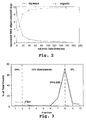
- the separation profile of the liposome suspension is shown in Fig. 3, where the percentage of total counts on the gradient column is shown as a function of fraction number.
- Fig. 3 the percentage of total counts on the gradient column is shown as a function of fraction number.
- nearly all of the lipid migrated to the 10% metrizamide/deionized H 2 O interface, and except for a very small amount in the first two fractions, all of the oligonucleotide migrated with the lipid.
- Table 2 summarizes the results from two separate experiments. Neutral Lipid Added ( ⁇ moles) Size (nm) Encapsulation Efficiency (%) Ratio oligonucleotide/phospholipid (nmol/ ⁇ mol) 3 174 86 2.1 3 176
- the liposomes include a ligand or affinity moiety effective to bind specifically to a desired tissue region or target cell.
- moieties can be attached to the surface of the liposome or to the distal ends of hydrophilic polymer chains.
- exemplary moieties include antibodies, ligands for specific binding to target cell surface receptors and the like, as described, for example, in co-owned PCT application No. WO US94/03103.
- the stability of the liposomes in 25% fetal bovine serum was determined by preparing liposomes having an entrapped oligonucleotide and measuring liposome size as a function of time after placing in the serum.
- the liposomes were prepared in accordance with the method of the invention and were composed of a 21-residue oligodeoxynucleotide, the cationic lipid DOTAP. and neutral lipids consisting of 5 mol% mPEG-DSPE, 2 ⁇ moles phosphatidylcholine and 1.25 ⁇ moles cholesterol (PC:Chol:mPEG-DSPE molar ratio of 2:1:0.1).
- Two liposome suspensions were prepared using these components.
- deionized water was used for formation of the cationic-lipid-oligonucleotide particles and as the hydration medium for liposome formation during solvent evaporation.
- a 5% sucrose aqueous solution was used rather than water.
- the size of the liposomes after extrusion was 174 nm, for the liposomes prepared in deionized water, and 172 nm, for the liposomes prepared in 5% sucrose, as seen in Table 3.
- each liposome suspension was placed in buffer (25 mM Hepes, 140 mM NaCl, pH 7.4) and the particle size was measured again. as seen in Table 3.
- the liposomes in both suspensions were reduced in size, to around 156 nm and 157 nm for the water-based and the 5% sucrose-based suspensions, respectively.
- Liposomes were prepared in accordance with the invention to include an 18-mer phosphorothioate oligonucleotide complementary to the MDRI gene.
- the liposomes used for the in vivo studies included a surface coating of polyethylene glycol (PEG) hydrophilic polymer chains, by including in the neutral liposome composition distearoyl phosphatidylethanolamine derivatized with PEG (mPEG 2000 -DSPE), as described in Example 5B.
- PEG polyethylene glycol
- mPEG 2000 -DSPE distearoyl phosphatidylethanolamine derivatized with PEG
- neutral liposomes were prepared by a conventional lipid film hydration in the presence of the oligonucleotide (Example 5A).
- Figs. 4A-4B are fractionation profiles for the cationic liposomes (Fig. 4A) and the neutral liposomes (Fig. 4B) prepared for the animal studies.
- the profiles were obtained by sampling the fractions during separation of the free oligonucleotide from the lipid associated oligonucleotide by filtration down a Sepharose CL-4B column (Example 5B).
- Fig. 4A virtually 100% of the oligonucleotide was associated with the lipid fraction, as evidenced by the single elution peak over fractions 5-12.
- Fig. 4B only 20 % of the oligonucleotide was associated with the neutral liposomes.
- the liposomes were sized by dynamic light scattering and the conventional liposomes had an average diameter of 197 ⁇ 2 nm (polydispersity 0.032 ⁇ 0.012) while the cationic liposomes of the invention had an average diameter of 188 ⁇ 1 run (polydispersity 0.138 ⁇ 0.018).
- Both liposome compositions were administered to mice according to the procedure of Example 6.
- Free oligonucleotide was also administered to a group of test animals.
- the compositions were intravenously administered in a single bolus injection via the tail vein at a lipid (phosphatidylcholine) dose of 0.5 ⁇ moles.
- lipid phosphatidylcholine
- three mice from each test group were sacrificed and the organs and a blood sample were analyzed for presence of oligonucleotide.
- Fig. 5 shows the blood circulation lifetime of the free oligonucleotide (open circles) and the liposome entrapped oligonucleotide, where the liposomes of the invention are represented by the plus symbols and the comparative, neutral liposomes by the closed triangles.
- free 125 I-labelled oligonucleotide has an initial, rapid distribution phase and approximately 50% of the injected dose has been eliminated from the body 2 hours after administration.
- 125 I-labelled oligonucleotide encapsulated within liposomes demonstrate a much different pharmacokinetic profile in the blood.
- the oligonucleotide Encapsulated within neutral liposomes (closed triangles), the oligonucleotide has a short initial phase of elimination immediately following injection which accounts for about 10% of the injected dose. The remaining 90% of the dose has a much slower rate of elimination, so that at 24 hours following injection, about 20% of the injected dose remains in blood.
- 125 I-labelled oligonucleotide entrapped within the cationic liposomes of the invention displayed a similar profile, however, the initial phase of elimination accounted for approximately 30% of the injected dose. Twenty-four hours following injection, over 10% of the injected dose remained in the blood.
- Table 4 gives the pharmacokinetic parameters calculated for each treatment.
- the residence time corresponds to the time required for 66% of the administered dose to be eliminated from the blood, and the liposome formulations result in a significant improvement in residence time.
- the area under the curve (AUC) values for the liposome formulations are also significantly higher than for the free oligonucleotide.
- the AUC for oligonucleotide entrapped within the liposomes of the invention is larger than for neutral liposomes because of the larger dose administered (52.4 ⁇ g versus 6.5 ⁇ g).
- the dose administered was based on the amount of lipid rather than amount of oligonucleotide, since the lipid dose can have a significant effect on liposomal pharmacokinetics (Allen, T.M. et al., Biochim. Biophys. Acta 1068:133-141 (1991)) when the entrapped agent has a slow rate of leakage from the liposomes.
- the amount of oligonucleotide associated with the cationic liposomes is significantly greater than for neutral liposomes, as demonstrated by the entrapment efficiency (Figs.
- the amount of oligonucleotide injected per ⁇ mole phospholipid is much greater for the cationic liposomes, leading to a larger AUC.
- the AUC for neutral liposomes (199.9) is greater than for cationic liposomes (128.1) or free oligonucleotide (10.4). It will be appreciated that the improved loading efficiency of the oligonucleotide in the cationic liposomes of the invention permit administration of a smaller lipid dose to achieve a given dose of oligonucleotide, compared to conventional neutral liposomes.
- the blood circulation half-lives (T 1 ⁇ 2 ) for the initial phase of elimination (T 1 ⁇ 2 ⁇ ) and for the elimination of the remaining dose (T 1 ⁇ 2 ⁇ ) are also shown in Table 4.
- Pharmacokinetic parameters calculated for oligonucleotide in different formulation Group Residence Time (hrs) AUC ( ⁇ g•hr/ml) V D (ml) k (hr-1) T 1 ⁇ 2 ⁇ (hrs) T 1 ⁇ 2 ⁇ (hrs) Neutral liposomes (6.5 ⁇ g) 17.6 43.4 1.96 0.08 0.39 12.4 cationic liposomes (52.4 ⁇ g) 15.0 226.9 2.39 0.10 0.26 10.6 Free oligonucleotide (30 ⁇ g) 4.7 5.7 13.77 0.38 0.26 3.5
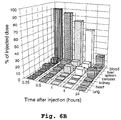
- Figs. 6A-6C are plots showing the biodistribution of the oligonucleotide in the animals, where Fig. 6A corresponds to the distribution after administration of the oligonucleotide in the free form, Fig. 6B corresponds to the oligonucleotide entrapped in neutral liposomes and Fig. 6C corresponds to the oligonucleotide entrapped in cationic liposomes in accordance with the invention.
- Fig. 6A shows that very little free oligonucleotide remains in blood any time point after 15 minutes. The greatest proportion of the dose distributes to the carcass which includes all of the remaining tissues left undissected. The liver and kidney also contained significant amounts of radioactive counts.
- Fig. 6B shows that at all time points, the greatest proportion of oligonucleotide exists in the blood when administered in the form of neutral liposomes. Blood levels account for nearly all of the dose, particularly at the earlier time points. There is a relatively constant amount in the liver and spleen at all time points, however, carcass levels appear to increase in later time points and this would be consistent with the distribution and elimination of free oligonucleotide following release from the liposomes, or possible the accumulation of liposomal oligonucleotide within tissues.
- Fig. 6C shows that oligonucleotide administered entrapped in cationic liposomes the nucleotide remains primarily in the blood. There is an increase in carcass levels over time, consistent with elimination of free oligonucleotide or with the accumulation of liposomal oligonucleotide in the tissues.
- Liposomes were prepared by the method of the invention (Example 5B) with ratios of oligonucleotide:cationic lipid (DOTAP) of 0 (no oligonucleotide in the formulation), 44.4 ⁇ g/ ⁇ mole (+/- ratio of 2.6:1) and 104.8 ⁇ g/ ⁇ mole (+/- ratio 1.1:1).
- DOTAP oligonucleotide:cationic lipid
- the liposomes contained no oligonucleotide
- the liposomes were hydrated in the presence of 125 I-labelled tyraminylinulin, prepared as described in Sommerman (Sommermanm E.F., et al., Biochem. Biophys. Res. Comm ., 122:319-324 (1984)).
- the liposome formulation were intravenously injected into mice and the liver and spleen were analyzed 15 minutes after administration for 125 I-labelled tyraminylinulin and 125 I-labelled oligonucleotide.
- Fig. 7 The results are shown in Fig. 7 where the percentage of remaining dose in the reticuloendothelial system is shown as a function of oligonucleo-tide/cationic lipid ratio.
- the oligonucleotide/cationic lipid ratio was 44.4 ⁇ g/ ⁇ mole, approximately 40% of the dose distributed to liver and spleen.
- the ratio was 104.8 ⁇ g/ ⁇ mole (+/- ratio 1.1:1), approximately 30% of the dose distributed to the liver and spleen 15 minutes following injection.
- the uptake at 104.8 ⁇ g/ ⁇ mole was significantly different from the uptake at 44.4 ⁇ g/ ⁇ mole and 0 ⁇ g/ ⁇ mole (p ⁇ 0.05).
- the polynucleotide which is entrapped in cationic liposomes as described above may be administered to a subject in need of treatment.
- the polynucleotide entrapped in the liposomes can be selected from a variety of DNA and RNA based polynucleotides, including fragments and analogues of these.
- the polynucleotide is an antisense DNA oligonucleotide composed of sequences complementary to its target, usually a messenger RNA (mRNA) or a mRNA precursor.
- mRNA messenger RNA
- the mRNA contains genetic information in the functional, or sense, orientation and binding of the antisense oligonucleotide inactivate the intended mRNA and prevents its translation into protein.
- antisense molecules are determined based on biochemical experiments showing that proteins are translated from specific RNAs and that once the sequence of the RNA is known, an antisense molecule that will bind to it through complementary Watson-Crick base pairs can be designed.
- antisense molecules typically contain between 10-30 base pairs. More preferably between 10-25, and most preferably between 15-20.
- the antisense oligonucleotide is modified for improved resistance to nuclease hydrolysis.
- analogues include phosphorothioate, methylphosphonate, phosphodiester and p-ethoxy oligonucleotides (WO 97/07784, published 6 March 1997).
- composition of the invention is intended for use in a variety of therapies, including, but not limited to, treatment of viral, malignant and inflammatory diseases and conditions. such as, cystic fibrosis. adenosine deaminase deficiency and AIDS.
- Treatment of cancers by administration of tumor suppressor genes. such as APC. DPC4, NF-1, NF-2, MTS1, RB, p53, WT1, BRCA1, BRCA2, VHL. or administration of oncogenes, such as PDGF, erb-B, erb-B2, RET, ras (including Ki-ras, N-ras), c-myc. N-myc. L-myc, Bcl-1, Bcl-2 and MDM2, are contemplated.
- HLA-B7 tumors, colorectal carcinoma, melanoma
- IL-2 cancers, especially breast cancer, lung cancer, and tumors
- IL-4 cancer: TNF, cancer; IGF-1 antisense, brain tumors; IFN, neuroblastoma; GM-CSF, renal cell carcinoma; MDR-1, cancer, especially advanced cancer, breast and ovarian cancers
- HSV thymidine kinase brain tumors, head and neck tumors, mesothelioma, ovarian cancer.
- composition of the invention has utility in ex vivo procedures as well.
- the liposomes are typically in suspension form, for parenteral administration, preferably intravenous administration.
- Other routes of administration are suitable, including subcutaneous, intramuscular, interlesional (to tumors), intertracheal by inhalation, topical, internasal, intraocular, via direct injection into organs and intravenous.
- the present invention provides a liposome composition having a polynucleotide entrapped in the central core, where, by virtue of the method of preparation, the polynucleotide is associated primarily with the inner surface region of the cationic lipids forming the central core.
- a coating of neutral lipids surrounds the cationic lipid core, the neutral lipids serving to stabilize the vesicles.
- the liposomes include a surface coating of hydrophilic polymer chains
- the liposomes achieved a long blood circulation lifetime, with little uptake by the RES.
- the method for preparing the liposomes results in a high encapsulation efficiency of the polynucleotide, where at least about 80% of the polynucleotide is entrapped in the liposomes.
- approximately 95% of the oligonucleotide was extracted from the aqueous phase into the organic phase.
- all of the oligonucleotide remains associated with the lipid (as evidenced by Fig. 4A).
- the liposomes can be sized by extrusion, if necessary, to bring the liposome size to a range suitable for in vivo administration, typically, less than about 300 nm, more preferably between 50-300 nm, most preferably between 100-200 nm.
- the liposomes are stable, as evidenced by no aggregation or appreciable change in size when placed in fetal bovine serum and by low lung and RES uptake in vivo .
- 125 I-labelled oligonucleotide was prepared in the following way: a 1ml conical reaction vial was coated with approximately 200 ⁇ g of lodogen (Pierce, Rockford, IL) and then 500 ⁇ g of oligonucleotide was added along with 2,400 pmoles of 125 I (185 Mbq) and 300 ⁇ g of oligonucleotide was added along with 2,400 pmole of 125 I (185 Mbq) and 300 ⁇ l 0.35 M sodium acetate, pH 4.0 in a total volume of 400 ⁇ l (Piatyszek, M.A., Ana. Biochem . 172:356-359 (1988)).
- DOTAP cationic lipid 1,2-dioleoyl-3-trimethylammonium-propane
- each chloroform-cationic lipid solution and 0.51 mL methanol were added to each vial of oligonucleotide and each vial was vortexed to form a monophase.
- aqueous-methanol layer was aspirated from each vial and saved in a separate tube, and then the amount of oligonucleotide in both phases was measured by counting in a gamma counter. The results are shown in Fig. 1.
- Cationic lipid-oligonucleotide particles were prepared using the procedure of Example 1 by dissolving 50 ⁇ g of a 21-residue oligonucleotide in distilled, deionized water. 0.5 ⁇ moles DOTAP was dissolved in chloroform, and the oligonucleotide was extracted into the chloroform according to Example 1.
- phosphatidylcholine (PC, iodine number 40) and cholesterol in a 2:1 ratio (PC:chol) were added to the chloroform organic phase containing the oligonucleotide-cationic lipid particles.
- PC phosphatidylcholine
- cholesterol in a 2:1 ratio
- the amount of PC added was 0.5 ⁇ moles, 1.0 ⁇ moles or 2.0 ⁇ moles.
- 0.2 mL of distilled deionized H 2 O was added and the mixture sonicated briefly to emulsify the mixture.
- the organic phase was evaporated in a Roto-vap under a vacuum of 500-700 mmHg. Liposomes formed once the system reverted into the aqueous phase.
- the liposomes were typically between 200 and 400 nm in diameter.
- a suspension of liposomes was prepared according to Example 2, with the addition of a trace amount of 125 -I labelled oligonucleotide (prepared as in Example 1).
- the encapsulation efficiency and oligonucleotide:phospholipid ratio was determined as follows.
- the encapsulation efficiency was determined by separating the nonentrapped 21-mer oligonucleotide from the liposome-associated oligonucleotide on a metrizamide gradient and measuring by gamma counter the amount of oligonucleotide in each fraction. The encapsulation efficiency was taken as the counts in the liposome-associated oligonucleotide fraction over the total number of counts measured.
- the metrizamide gradient was performed as follows. A 20% metrizamide/10% metrizamide/deionized H 2 O gradient was set in 12 mL centrifuge tubes by sequentially layering 1.5 mL of 20% metrizamide, 8 mL of 10% metrizamide and 2 mL of deionized H 2 O. A control experiment of free oligonucleotide verified that 100% of free, non-lipid associated oligonucleotide remained in the 20% metrizamide fraction.
- the liposome samples were placed on the gradient column and the gradients were then centrifuged at 240,000 ⁇ g for 4 hours at 4°C. After centrifugation, a lipid band at the 10% metrizamide/deionized H 2 O interface was visible. The lipid was collected from the 10% metrizamide/H 2 O interface by aspiration with a pipette and counted in a gamma counter and then assayed for phosphate content. Table 1 gives the results from for three liposomal formulations containing 0.5, 1.0 or 2.0 ⁇ moles phosphatidylcholine.
- Liposomes having a surface coating of polyethylene glycol (PEG) were prepared according to the procedure described in Example 2 by extracting 50 ⁇ g of oligonucleotide with a trace of 125 I-oligonucleotide in deionized water with 0.5 ⁇ moles DOTAP in chloroform.
- PEG polyethylene glycol
- Liposomes were prepared from this mixture by evaporation of the chloroform and 200 ⁇ L deionized H 2 O was added to increase the volume for extrusion.
- the liposome suspension was extruded through 400 nm and 200 nm polycarbonate filters to diameters below 200 nm.
- the liposome suspension was characterized by separation of the non-entrapped oligonucleotide from the lipid-associated oligonucleotide on a metrizamide gradient as described in Example 3, except for a 12 hour centrifugation time. After centrifugation, the gradients were fractioned carefully by making a small hole in the bottom of the centrifugation tube and collecting the phases in equal drop fractions in scintillation vials. Both ⁇ (for 125 I-oligonucleotide) and ⁇ (for 3 H-Chol) counts were measured, then ⁇ counts for each fraction were corrected for the ⁇ signal.
- Figure 3 gives a representative gradient profile and the results are summarized in Table 2.
- Neutral liposomes encapsulating an 18-mer antisense oligodeoxynucleotide were prepared by hydrating a lipid film in a concentrated solution of the oligonucleotide.
- Partially hydrogenated soy phosphatidylcholine (PC40), cholesterol and polyethylene glycol distearoyl phosphatidylethanolamine (PEG 2000 -DSPE) were mixed in chloroform at a molar ratio of 2:2:0.1. The mixture was dried to a thin film by rotary evaporation and then traces of chloroform were removed under vacuum overnight.
- oligonucleotide A solution of 1.7 mM oligonucleotide was added to the lipid film to give a phospholipid concentration of approximately 300 mM, the film was allowed to hydrate for six hours at room temperature. An equal volume of oligonucleotide solution was then added and the tube was vortexed for approximately on minute. Next, the mixture was diluted to 75 mM phospholipid with Hepes buffer (25 mM Hepes, 140 mM NaCl, pH7.4) and sonicated for 2 minutes. The liposomes were then extruded under N 2 pressure through a 200 nm Nuclepore polycarbonate filter in Hepes buffer according to Olson et al . (Olson, F.. Biochim. Biophys.
- Liposomes were sized by dynamic light scattering using a Brookhaven B190 particle sizer (Brookhaven Instrument, Holtsville, NY). Free oligonucleotide was separated from lipid associated oligonucleotide by filtration down a Sepharose CL-4B (Pharmacia, Sweden) column equilibrated with Hepes buffer.
- oligonucleotide was mixed with 50 ⁇ Ci 32 P- ⁇ -ATP (ICN Pharamaceuticals, Inc., Irvine, CA), 5x's forward reaction buffer and 10 units T4 kinase (Gibco BRL. Gaithersburg, MD) to a total volume of 20 ⁇ L. The mixture was incubated at 37°C in a water bath for 45 minutes. Following incubation, 80 ⁇ L buffer (10 mM Tris, I mM EDTA) was added and then the oligonucleotide was extracted using phenol/chloroform/isoamyl alcohol (25:24:1) (FisherBiotech, Fair Lawn, NJ). Free 32 P- ⁇ -ATP was removed by separation on a Sephadex G-50 (Pharmacia. Sweden) spin column.
- DOTAP cationic lipid 1,2-Dioleoyl-3-trimethyl ammonium-propane
- oligonucleotide in double distilled H 2 O was then added to the CHCl 3 /MeOH mixture containing DOTAP and the sample was mixed to form a monophase. Following 30 minutes incubation at room temperature, 250 ⁇ L of CHCl 3 were added, followed by 250 ⁇ L of double distilled H 2 O. The tube was vortexed briefly and then centrifuged at 900 x g for 7 minutes. The system then existed as a biphase and the upper, aqueous phase, was removed and the amount of oligonucleotide was determined either by radioactive counts or by measuring the absorbance at 260 nm. This procedure resulted in ⁇ 95% of the oligonucleotide being extracted into the organic phase when a 1:1 (+/-) charge ratio was used (DOTAP:oligonucleotide).
- PC40 partially hydrogenated soy phosphatidylcholine
- cholesterol cholesterol
- mPEG-DSPE all in CHCl 3
- PC40:Chol:DOTAP:mPEG-DSPE 3:2:1:0.2
- the system formed a gel phase following the evaporation of most of the organic phase and following further evaporation (sometimes with slight agitation), the system reverted into the aqueous phase which was briefly vortexed and then further evaporated.
- the vesicles formed by this procedure had a diameter in the range of 600 to 800 nm which were subsequently extruded through 400 and then 200 nm polycarbonate filers.
- Liposomes were sized by dynamic light scattering using a Brookhaven BI90 particle sizer (Brookhaven Instrument, Holtsville, NY). The neutral liposomes had an average diameter of 197 ⁇ 2 nm (polydispersity 0.032 ⁇ 0.012) while the DOTAP cationic liposomes had an average diameter of 188 ⁇ 1 nm (polydispersity 0.138 ⁇ 0.018). The size was stable in buffer at 4° C as well as in 25% FBS at 37°C for at least three days (data not shown).
- Free oligonucleotide was separated from lipid-associated oligonucleotide by filtration down a Sepharose CL-4B (Pharmacia, Sweden) column equilibrated with Hepes buffer. The fractionation profiles for the cationic liposomes and the neutral liposomes are shown in Figs. 4A and 4B, respectively.
- mice Female ICR outbread mice (6-8 weeks old) were purchased from Charles River and used within 5 weeks of delivery at which time the weight ranged from 24 to 30 grams. Mice were given a single bolus injection via the tail vein of 0.2 mL of liposomes at a lipid dose of 0.5 ⁇ moles phospholipid per mouse. Radioactive counts from each injection ranged from 0.4 to 2 x 10 5 cpm. At specific time points (0.25, 0.5, 1, 4, 12, 24 hours) mice (3 per group) were sacrificed, and organs were dissected. weighed, and radioactive counts determined in a Beckman gamma 8000 counter.
Landscapes
- Health & Medical Sciences (AREA)
- Life Sciences & Earth Sciences (AREA)
- Genetics & Genomics (AREA)
- Chemical & Material Sciences (AREA)
- Engineering & Computer Science (AREA)
- Molecular Biology (AREA)
- General Health & Medical Sciences (AREA)
- Biotechnology (AREA)
- Zoology (AREA)
- Public Health (AREA)
- Veterinary Medicine (AREA)
- Bioinformatics & Cheminformatics (AREA)
- General Engineering & Computer Science (AREA)
- Wood Science & Technology (AREA)
- Biophysics (AREA)
- Biomedical Technology (AREA)
- Animal Behavior & Ethology (AREA)
- Epidemiology (AREA)
- Organic Chemistry (AREA)
- Pharmacology & Pharmacy (AREA)
- Medicinal Chemistry (AREA)
- Dispersion Chemistry (AREA)
- Physics & Mathematics (AREA)
- Biochemistry (AREA)
- Microbiology (AREA)
- Plant Pathology (AREA)
- Medicinal Preparation (AREA)
- Pharmaceuticals Containing Other Organic And Inorganic Compounds (AREA)
- Medicines That Contain Protein Lipid Enzymes And Other Medicines (AREA)
Applications Claiming Priority (3)
| Application Number | Priority Date | Filing Date | Title |
|---|---|---|---|
| US5049097P | 1997-06-23 | 1997-06-23 | |
| US50490P | 1997-06-23 | ||
| PCT/US1998/012937 WO1998058630A1 (en) | 1997-06-23 | 1998-06-22 | Liposome-entrapped polynucleotide composition and method |
Publications (2)
| Publication Number | Publication Date |
|---|---|
| EP1017365A1 EP1017365A1 (en) | 2000-07-12 |
| EP1017365B1 true EP1017365B1 (en) | 2003-12-10 |
Family
ID=21965541
Family Applications (1)
| Application Number | Title | Priority Date | Filing Date |
|---|---|---|---|
| EP98930447A Expired - Lifetime EP1017365B1 (en) | 1997-06-23 | 1998-06-22 | Liposome-entrapped polynucleotide composition and method |
Country Status (11)
| Country | Link |
|---|---|
| US (1) | US6120798A (enExample) |
| EP (1) | EP1017365B1 (enExample) |
| JP (1) | JP2002508765A (enExample) |
| AT (1) | ATE255882T1 (enExample) |
| AU (1) | AU7983798A (enExample) |
| CA (1) | CA2294579C (enExample) |
| DE (1) | DE69820465T2 (enExample) |
| DK (1) | DK1017365T3 (enExample) |
| ES (1) | ES2212305T3 (enExample) |
| TW (1) | TWI225412B (enExample) |
| WO (1) | WO1998058630A1 (enExample) |
Families Citing this family (85)
| Publication number | Priority date | Publication date | Assignee | Title |
|---|---|---|---|---|
| US5855911A (en) * | 1995-08-29 | 1999-01-05 | Board Of Regents, The University Of Texas System | Liposomal phosphodiester, phosphorothioate, and P-ethoxy oligonucleotides |
| US7309692B1 (en) * | 1996-07-08 | 2007-12-18 | Board Of Regents, The University Of Texas System | Inhibition of chronic myelogenous leukemic cell growth by liposomal-antisense oligodeoxy-nucleotides targeting to GRB2 or CRK1 |
| US6977244B2 (en) | 1996-10-04 | 2005-12-20 | Board Of Regents, The University Of Texas Systems | Inhibition of Bcl-2 protein expression by liposomal antisense oligodeoxynucleotides |
| US6056973A (en) * | 1996-10-11 | 2000-05-02 | Sequus Pharmaceuticals, Inc. | Therapeutic liposome composition and method of preparation |
| US6126965A (en) * | 1997-03-21 | 2000-10-03 | Georgetown University School Of Medicine | Liposomes containing oligonucleotides |
| US7262173B2 (en) * | 1997-03-21 | 2007-08-28 | Georgetown University | Chemosensitizing with liposomes containing oligonucleotides |
| US20030229040A1 (en) * | 1997-03-21 | 2003-12-11 | Georgetown University | Cationic liposomal delivery system and therapeutic use thereof |
| US6559129B1 (en) * | 1997-03-21 | 2003-05-06 | Georgetown University | Cationic liposomal delivery system and therapeutic use thereof |
| US7285288B1 (en) | 1997-10-03 | 2007-10-23 | Board Of Regents, The University Of Texas System | Inhibition of Bcl-2 protein expression by liposomal antisense oligodeoxynucleotides |
| US7704962B1 (en) | 1997-10-03 | 2010-04-27 | Board Of Regents, The University Of Texas System | Small oligonucleotides with anti-tumor activity |
| AU773515B2 (en) * | 1999-02-08 | 2004-05-27 | Alza Corporation | Method for controlling liposome size |
| US7223406B2 (en) * | 2000-07-21 | 2007-05-29 | The Regents Of The University Of California | Methods and compositions for preventing and treating male erectile dysfunction and female sexual arousal disorder |
| US6852323B2 (en) | 2000-07-21 | 2005-02-08 | The Regents Of The University Of California | Methods and compositions for preventing and treating male erectile dysfunction and female sexual arousal disorder |
| US20020146829A1 (en) * | 2000-11-29 | 2002-10-10 | Aventis Pharmaceuticals Products Inc. | Neutral and anionic colloidal particles for gene delivery |
| US6610322B1 (en) * | 2000-12-20 | 2003-08-26 | Brian Charles Keller | Self forming, thermodynamically stable liposomes and their applications |
| WO2002087541A1 (en) * | 2001-04-30 | 2002-11-07 | Protiva Biotherapeutics Inc. | Lipid-based formulations for gene transfer |
| KR100411234B1 (ko) * | 2001-08-14 | 2003-12-18 | 한국과학기술원 | 올리고뉴클레오티드 혼성화 미셀 및 그의 제조방법 |
| CA2471967A1 (en) * | 2002-01-03 | 2003-07-31 | Board Of Regents, The University Of Texas System | Wt1 antisense oligos for the inhibition of breast cancer |
| KR100466254B1 (ko) * | 2002-02-25 | 2005-01-14 | 한국과학기술원 | 세포내 전달을 위한 올리고뉴클레오티드와 친수성 고분자로 구성되는 유전자 전달용 접합체, 고분자 전해질 복합 미셀 및 그의 제조방법 |
| CA2752143C (en) | 2002-05-15 | 2014-09-23 | Sutter West Bay Hospitals | Delivery of nucleic acid-like compounds |
| US20030219696A1 (en) * | 2002-05-23 | 2003-11-27 | Moreland Gerald W. | Method and apparatus for preventing backflow in dental saliva evacuators |
| ES2331791T5 (es) | 2002-06-26 | 2016-01-21 | Medigene Ag | Método de producción de una preparación catiónica de liposomas que comprende un compuesto lipófilo |
| EP1519714B1 (en) | 2002-06-28 | 2010-10-20 | Protiva Biotherapeutics Inc. | Method and apparatus for producing liposomes |
| AU2002953285A0 (en) * | 2002-12-12 | 2003-01-02 | Protech Research Pty Ltd | Yeast treatment |
| US20070178066A1 (en) | 2003-04-21 | 2007-08-02 | Hall Frederick L | Pathotropic targeted gene delivery system for cancer and other disorders |
| EP2353389B1 (en) | 2003-04-21 | 2015-11-04 | Epeius Biotechnologies Corporation | Compositions for treating disorders |
| EP1765294B1 (en) * | 2004-05-12 | 2008-09-24 | Baxter International Inc. | Nucleic acid microspheres, production and delivery thereof |
| US20090209621A1 (en) | 2005-06-03 | 2009-08-20 | The Johns Hopkins University | Compositions and methods for decreasing microrna expression for the treatment of neoplasia |
| US20070087045A1 (en) * | 2005-10-14 | 2007-04-19 | Industrial Technology Research Institute | Lipid carrier and method of preparing the same |
| US20090175930A1 (en) | 2006-01-11 | 2009-07-09 | Nobuhiro Yagi | Composition Suppressing The Expression of Target Gene in Eyeball and Medicament For Treating of Disease in Eyeball |
| US20110091377A1 (en) | 2007-05-11 | 2011-04-21 | The Johns Hopkins University | Biomarkers for melanoma |
| PL208054B1 (pl) * | 2007-09-06 | 2011-03-31 | Akademia Medyczna Im Piastow Śląskich We Wrocławiu | Kompozycja lipidowa do wytwarzania lipidowego nośnika dla leków genetycznych i jej zastosowanie |
| US20110038941A1 (en) * | 2007-12-27 | 2011-02-17 | The Ohio State University Research Foundation | Lipid Nanoparticle Compositions and Methods of Making and Using the Same |
| US20110229498A1 (en) | 2008-05-08 | 2011-09-22 | The Johns Hopkins University | Compositions and methods for modulating an immune response |
| CN103585107A (zh) | 2008-08-01 | 2014-02-19 | 协和发酵麒麟株式会社 | 组合物在制备癌症或炎症疾病的治疗剂中的应用 |
| US20120035247A1 (en) | 2009-03-19 | 2012-02-09 | Merck Sharp & Dohme Corp. | RNA Interference Mediated Inhibition of Signal Transducer and Activator of Transcription 6 (STAT6) Gene Expression Using Short Interfering Nucleic Acid (siNA) |
| US20120029054A1 (en) | 2009-03-19 | 2012-02-02 | Merck Sharp & Dohme Corp. | RNA Interference Mediated Inhibition of GATA Binding Protein 3 (GATA3) Gene Expression Using Short Intefering Nucleic Acid (siNA) |
| JP2012520683A (ja) | 2009-03-19 | 2012-09-10 | メルク・シャープ・エンド・ドーム・コーポレイション | 低分子干渉核酸(siNA)を用いた結合組織増殖因子(CTGF)遺伝子発現のRNA干渉媒介性阻害 |
| AU2010226604A1 (en) | 2009-03-19 | 2011-10-13 | Merck Sharp & Dohme Corp. | RNA interference mediated inhibition of BTB and CNC homology 1, basic leucine zipper transcription factor 1 (Bach 1) gene expression using short interfering nucleic acid (siNA) sequence listing |
| WO2010111468A2 (en) | 2009-03-27 | 2010-09-30 | Merck Sharp & Dohme Corp. | RNA INTERFERENCE MEDIATED INHIBITION OF THE NERVE GROWTH FACTOR BETA CHAIN (NGFß) GENE EXPRESSION USING SHORT INTERFERING NUCLEIC ACID (SINA) |
| US20120010272A1 (en) | 2009-03-27 | 2012-01-12 | Merck Sharp & Dohme Corp. | RNA Interference Mediated Inhibition of Apoptosis Signal-Regulating Kinase 1 (ASK1) Gene Expression Using Short Interfering Nucleic Acid (siNA) |
| WO2010111490A2 (en) | 2009-03-27 | 2010-09-30 | Merck Sharp & Dohme Corp. | RNA INTERFERENCE MEDIATED INHIBITION OF THE THYMIC STROMAL LYMPHOPOIETIN (TSLP) GENE EXPRESSION USING SHORT INTERFERING NUCLEIC ACID (siNA) |
| EP2411517A2 (en) | 2009-03-27 | 2012-02-01 | Merck Sharp&Dohme Corp. | RNA INTERFERENCE MEDIATED INHIBITION OF THE INTERCELLULAR ADHESION MOLECULE 1 (ICAM-1)GENE EXPRESSION USING SHORT INTERFERING NUCLEIC ACID (siNA) |
| US20120022142A1 (en) | 2009-03-27 | 2012-01-26 | Merck Sharp & Dohme Corp. | RNA Interference Mediated Inhibition of Signal Transducer and Activator of Transcription 1 (STAT1) Gene Expression Using Short Interfering Nucleic Acid (siNA) |
| WO2012098692A1 (ja) | 2011-01-19 | 2012-07-26 | 協和発酵キリン株式会社 | 標的遺伝子の発現を抑制する組成物 |
| HUE031793T2 (en) | 2009-08-31 | 2017-07-28 | Nanocarrier Co Ltd | Particle composition and pharmaceutical composition containing such |
| JP4653242B1 (ja) | 2010-02-12 | 2011-03-16 | ナノキャリア株式会社 | 粒子状医薬組成物 |
| US20110237686A1 (en) | 2010-03-26 | 2011-09-29 | Cerulean Pharma Inc | Formulations and methods of use |
| US20130129811A1 (en) | 2010-04-28 | 2013-05-23 | Takeshi Kuboyama | Cationic lipid |
| KR101773643B1 (ko) | 2010-04-28 | 2017-08-31 | 교와 핫꼬 기린 가부시키가이샤 | 양이온성 지질 |
| WO2011143651A1 (en) | 2010-05-14 | 2011-11-17 | Dana-Farber Cancer Institute, Inc. | Compositions and methods for modulating metabolism |
| CN103154246B (zh) | 2010-05-14 | 2015-11-25 | 达那-法伯癌症研究所 | 用于治疗白血病的组合物和方法 |
| CN103068980B (zh) | 2010-08-02 | 2017-04-05 | 瑟纳治疗公司 | 使用短干扰核酸(siNA)的RNA干扰介导的联蛋白(钙粘蛋白关联蛋白质),β1(CTNNB1)基因表达的抑制 |
| RU2745848C2 (ru) | 2010-08-17 | 2021-04-01 | Сирна Терапьютикс, Инк. | ОПОСРЕДУЕМОЕ РНК-ИНТЕРФЕРЕНЦИЕЙ ИНГИБИРОВАНИЕ ЭКСПРЕССИИ ГЕНОВ ВИРУСА ГЕПАТИТА B (HBV) С ПРИМЕНЕНИЕМ МАЛОЙ ИНТЕРФЕРИРУЮЩЕЙ НУКЛЕИНОВОЙ КИСЛОТЫ (миНК) |
| JP6106085B2 (ja) | 2010-08-24 | 2017-03-29 | サーナ・セラピューティクス・インコーポレイテッドSirna Therapeutics,Inc. | 内部非核酸スペーサーを含む一本鎖RNAi剤 |
| WO2012027467A1 (en) | 2010-08-26 | 2012-03-01 | Merck Sharp & Dohme Corp. | RNA INTERFERENCE MEDIATED INHIBITION OF PROLYL HYDROXYLASE DOMAIN 2 (PHD2) GENE EXPRESSION USING SHORT INTERFERING NUCLEIC ACID (siNA) |
| WO2012058210A1 (en) | 2010-10-29 | 2012-05-03 | Merck Sharp & Dohme Corp. | RNA INTERFERENCE MEDIATED INHIBITION OF GENE EXPRESSION USING SHORT INTERFERING NUCLEIC ACIDS (siNA) |
| JP2013095755A (ja) | 2011-11-02 | 2013-05-20 | Kyowa Hakko Kirin Co Ltd | カチオン性脂質 |
| EP2780455B1 (en) | 2011-11-17 | 2017-07-05 | The U.S.A. as represented by the Secretary, Department of Health and Human Services | Auto-recognizing therapeutic rna/dna chimeric nanoparticles (np) |
| EP2780456A1 (en) | 2011-11-17 | 2014-09-24 | The U.S.A. as represented by the Secretary, Department of Health and Human Services | Therapeutic rna switches compositions and methods of use |
| JP6182457B2 (ja) | 2011-12-12 | 2017-08-16 | 協和発酵キリン株式会社 | カチオン性脂質を含有するドラックデリバリーシステムのための脂質ナノ粒子 |
| CN104159615B (zh) | 2011-12-12 | 2017-08-18 | 协和发酵麒麟株式会社 | 含有阳离子性脂质的组合的脂质纳米粒子 |
| WO2013106358A1 (en) | 2012-01-10 | 2013-07-18 | Hussain M Mahmood | Method of treating hyperlipidemia and atherosclerosis with mir-30c |
| HK1206644A1 (en) | 2012-03-29 | 2016-01-15 | Shire Human Genetic Therapies, Inc. | Lipid-derived neutral nanoparticles |
| CA2874490C (en) * | 2012-05-23 | 2021-11-16 | The Ohio State University | Tertiary quaternary amine-based cationic lipid nanoparticle compositions and methods of making and methods of using the same |
| US10502737B2 (en) | 2012-05-25 | 2019-12-10 | The University Of Vermont And State Agriculture College | Anti-thrombotic compositions and methods for assaying platelet reactivity and treatment selection |
| TW201726599A (zh) | 2012-07-06 | 2017-08-01 | 協和醱酵麒麟有限公司 | 陽離子性脂質 |
| AU2013291125A1 (en) | 2012-07-16 | 2015-01-22 | Dicerna Pharmaceuticals, Inc. | RNAi pharmaceutical composition capable of suppressing expression of KRAS gene |
| JP6000033B2 (ja) * | 2012-09-18 | 2016-09-28 | 株式会社ピカソ美化学研究所 | 内包物質に耐熱性を与えたリポソーム及びその製造方法 |
| JP2016524590A (ja) | 2013-03-14 | 2016-08-18 | エペイウス バイオテクノロジーズ コーポレイション | 遺伝子療法適用のためのチミジンキナーゼ診断アッセイ |
| EP3158992A1 (en) * | 2015-10-21 | 2017-04-26 | Universität Heidelberg | Liposomes containing cell penetrating peptides and tetraetherlipids for the oral delivery of macromolecules |
| WO2017081686A1 (en) | 2015-11-10 | 2017-05-18 | B. G. Negev Technologies And Applications Ltd., At Ben-Gurion University | Means and methods for reducing tumorigenicity of cancer stem cells |
| EP3386594B1 (en) | 2015-12-11 | 2023-05-03 | The General Hospital Corporation | Combination of a platelet-derived growth factor receptor alpha inhibitor and a histone lysine demethylase inhibitor for treating drug-tolerant glioblastoma |
| US10525138B2 (en) | 2015-12-25 | 2020-01-07 | Kyowa Hakko Kirin Co., Ltd. | Compound as cationic lipid |
| EP3772928B1 (en) | 2018-04-06 | 2025-02-26 | Children's Medical Center Corporation | Compositions and methods for somatic cell reprogramming and modulating imprinting |
| EP3628309A1 (en) | 2018-09-28 | 2020-04-01 | Universität Heidelberg | Method of making oral dosage forms |
| BR112022013068A2 (pt) * | 2019-12-31 | 2022-09-20 | Fred Hutchinson Cancer Center | Sistemas de nanopartícula para estimular e manter a capacidade de resposta do sistema imune nos sítios de tratamento |
| JP2023530234A (ja) | 2020-06-05 | 2023-07-14 | ザ・ブロード・インスティテュート・インコーポレイテッド | 新生物を治療するための組成物および方法 |
| WO2022053130A1 (en) | 2020-09-09 | 2022-03-17 | Sid Alex Group, S.R.O. | Antago-mir-155 for treatment of v-src, c-src-tyrosine kinase-induced cancers |
| MX2023004299A (es) | 2020-10-13 | 2023-07-07 | Univ Pennsylvania | Direccionamiento de células t cd4+ in vivo para terapeuticos de arnm. |
| US20230241118A1 (en) | 2021-10-20 | 2023-08-03 | University Of Rochester | Rejuvenation treatment of age-related white matter loss |
| EP4658294A2 (en) | 2023-02-02 | 2025-12-10 | University of Rochester | Competitive replacement of glial cells |
| WO2024226499A1 (en) | 2023-04-24 | 2024-10-31 | The Broad Institute, Inc. | Compositions and methods for modifying fertility |
| WO2025090427A1 (en) | 2023-10-23 | 2025-05-01 | University Of Rochester | Glial-targeted relief of hyperexcitability in neurodegenerative diseases |
| WO2025096975A1 (en) | 2023-11-02 | 2025-05-08 | The Regents Of The University Of Colorado, A Body Corporate | Compositions and methods of enhancing immune cell therapies by runx2 modulation |
Citations (2)
| Publication number | Priority date | Publication date | Assignee | Title |
|---|---|---|---|---|
| WO1996040964A2 (en) * | 1995-06-07 | 1996-12-19 | Inex Pharmaceuticals Corporation | Lipid-nucleic acid particles prepared via a hydrophobic lipid-nucleic acid complex intermediate and use for gene transfer |
| US5705385A (en) * | 1995-06-07 | 1998-01-06 | Inex Pharmaceuticals Corporation | Lipid-nucleic acid particles prepared via a hydrophobic lipid-nucleic acid complex intermediate and use for gene transfer |
Family Cites Families (4)
| Publication number | Priority date | Publication date | Assignee | Title |
|---|---|---|---|---|
| US4394448A (en) * | 1978-02-24 | 1983-07-19 | Szoka Jr Francis C | Method of inserting DNA into living cells |
| AU6691496A (en) * | 1995-08-01 | 1997-02-26 | Advanced Therapies, Inc. | Enhanced artificial viral envelopes for cellular delivery of therapeutic substances |
| US5855911A (en) * | 1995-08-29 | 1999-01-05 | Board Of Regents, The University Of Texas System | Liposomal phosphodiester, phosphorothioate, and P-ethoxy oligonucleotides |
| FR2751222B1 (fr) * | 1996-07-16 | 1998-10-09 | Capsulis | Compositions contenant au moins un acide nucleique et leurs applications dans le domaine biomedical, en particulier en therapie genique |
-
1998
- 1998-06-22 DK DK98930447T patent/DK1017365T3/da active
- 1998-06-22 TW TW087109984A patent/TWI225412B/zh not_active IP Right Cessation
- 1998-06-22 AU AU79837/98A patent/AU7983798A/en not_active Abandoned
- 1998-06-22 JP JP50493699A patent/JP2002508765A/ja not_active Abandoned
- 1998-06-22 ES ES98930447T patent/ES2212305T3/es not_active Expired - Lifetime
- 1998-06-22 CA CA002294579A patent/CA2294579C/en not_active Expired - Fee Related
- 1998-06-22 EP EP98930447A patent/EP1017365B1/en not_active Expired - Lifetime
- 1998-06-22 WO PCT/US1998/012937 patent/WO1998058630A1/en not_active Ceased
- 1998-06-22 DE DE69820465T patent/DE69820465T2/de not_active Expired - Fee Related
- 1998-06-22 AT AT98930447T patent/ATE255882T1/de not_active IP Right Cessation
- 1998-06-23 US US09/103,341 patent/US6120798A/en not_active Expired - Lifetime
Patent Citations (2)
| Publication number | Priority date | Publication date | Assignee | Title |
|---|---|---|---|---|
| WO1996040964A2 (en) * | 1995-06-07 | 1996-12-19 | Inex Pharmaceuticals Corporation | Lipid-nucleic acid particles prepared via a hydrophobic lipid-nucleic acid complex intermediate and use for gene transfer |
| US5705385A (en) * | 1995-06-07 | 1998-01-06 | Inex Pharmaceuticals Corporation | Lipid-nucleic acid particles prepared via a hydrophobic lipid-nucleic acid complex intermediate and use for gene transfer |
Also Published As
| Publication number | Publication date |
|---|---|
| US6120798A (en) | 2000-09-19 |
| WO1998058630A1 (en) | 1998-12-30 |
| HK1025906A1 (en) | 2000-12-01 |
| DE69820465D1 (de) | 2004-01-22 |
| AU7983798A (en) | 1999-01-04 |
| DE69820465T2 (de) | 2004-09-16 |
| TWI225412B (en) | 2004-12-21 |
| JP2002508765A (ja) | 2002-03-19 |
| CA2294579A1 (en) | 1998-12-30 |
| ATE255882T1 (de) | 2003-12-15 |
| CA2294579C (en) | 2007-10-09 |
| EP1017365A1 (en) | 2000-07-12 |
| DK1017365T3 (da) | 2004-03-29 |
| ES2212305T3 (es) | 2004-07-16 |
Similar Documents
| Publication | Publication Date | Title |
|---|---|---|
| US6120798A (en) | Liposome-entrapped polynucleotide composition and method | |
| Monck et al. | Stabilized plasmid–lipid particles: pharmacokinetics and plasmid delivery to distal tumors following intravenous injection | |
| Stuart et al. | A new liposomal formulation for antisense oligodeoxynucleotides with small size, high incorporation efficiency and good stability | |
| US6835395B1 (en) | Composition containing small multilamellar oligodeoxynucleotide-containing lipid vesicles | |
| CN114099533A (zh) | 核酸药物递送系统、制备方法、药物组合物和应用 | |
| EP0955999B1 (en) | Novel liposome complexes for increased systemic delivery | |
| Semple et al. | Efficient encapsulation of antisense oligonucleotides in lipid vesicles using ionizable aminolipids: formation of novel small multilamellar vesicle structures | |
| EP2892505B1 (en) | Lipid assemblies comprising anionic lysolipids and use thereof | |
| US6884430B1 (en) | Formulation of stabilized cationic transfection agent(s) /nucleic acid particles | |
| WO1998007408A9 (en) | Novel liposome complexes for increased systemic delivery | |
| US7005140B2 (en) | Lipid particles having asymmetric lipid coating and method of preparing same | |
| CA2342292A1 (en) | Condensed plasmid-liposome complex for transfection | |
| KR20020063875A (ko) | 핵산 및 약물 전달용 중성-양이온성 지질 | |
| Palmer et al. | Transfection properties of stabilized plasmid–lipid particles containing cationic PEG lipids | |
| PL208054B1 (pl) | Kompozycja lipidowa do wytwarzania lipidowego nośnika dla leków genetycznych i jej zastosowanie | |
| Stuart et al. | High efficiency entrapment of antisense oligonucleotides in liposomes | |
| Bartsch et al. | Stabilized lipid coated lipoplexes for the delivery of antisense oligonucleotides to liver endothelial cells in vitro and in vivo | |
| EP4661843A2 (en) | Multi-functional lipid nanoparticles and uses thereof | |
| Yamauchi et al. | Improved formulations of antisense oligodeoxynucleotides using wrapped liposomes | |
| HK1025906B (en) | Liposome-entrapped polynucleotide composition and method | |
| CN1829498A (zh) | 具有不对称脂质包被的脂质微粒和制备其的方法 |
Legal Events
| Date | Code | Title | Description |
|---|---|---|---|
| PUAI | Public reference made under article 153(3) epc to a published international application that has entered the european phase |
Free format text: ORIGINAL CODE: 0009012 |
|
| 17P | Request for examination filed |
Effective date: 20000113 |
|
| AK | Designated contracting states |
Kind code of ref document: A1 Designated state(s): AT BE CH CY DE DK ES FI FR GB GR IE IT LI LU MC NL PT SE |
|
| AX | Request for extension of the european patent |
Free format text: AL PAYMENT 20000113;LT PAYMENT 20000113;LV PAYMENT 20000113;MK PAYMENT 20000113;RO PAYMENT 20000113;SI PAYMENT 20000113 |
|
| RIN1 | Information on inventor provided before grant (corrected) |
Inventor name: STUART, DARRIN Inventor name: ALLEN, THERESA, M. |
|
| 17Q | First examination report despatched |
Effective date: 20010108 |
|
| GRAH | Despatch of communication of intention to grant a patent |
Free format text: ORIGINAL CODE: EPIDOS IGRA |
|
| GRAS | Grant fee paid |
Free format text: ORIGINAL CODE: EPIDOSNIGR3 |
|
| GRAA | (expected) grant |
Free format text: ORIGINAL CODE: 0009210 |
|
| AK | Designated contracting states |
Kind code of ref document: B1 Designated state(s): AT BE CH CY DE DK ES FI FR GB GR IE IT LI LU MC NL PT SE |
|
| AX | Request for extension of the european patent |
Extension state: AL LT LV MK RO SI |
|
| PG25 | Lapsed in a contracting state [announced via postgrant information from national office to epo] |
Ref country code: CY Free format text: LAPSE BECAUSE OF FAILURE TO SUBMIT A TRANSLATION OF THE DESCRIPTION OR TO PAY THE FEE WITHIN THE PRESCRIBED TIME-LIMIT Effective date: 20031210 Ref country code: AT Free format text: LAPSE BECAUSE OF FAILURE TO SUBMIT A TRANSLATION OF THE DESCRIPTION OR TO PAY THE FEE WITHIN THE PRESCRIBED TIME-LIMIT Effective date: 20031210 |
|
| REG | Reference to a national code |
Ref country code: GB Ref legal event code: FG4D |
|
| REG | Reference to a national code |
Ref country code: CH Ref legal event code: EP |
|
| RAP2 | Party data changed (patent owner data changed or rights of a patent transferred) |
Owner name: ALZA CORPORATION |
|
| REG | Reference to a national code |
Ref country code: IE Ref legal event code: FG4D |
|
| REF | Corresponds to: |
Ref document number: 69820465 Country of ref document: DE Date of ref document: 20040122 Kind code of ref document: P |
|
| NLT2 | Nl: modifications (of names), taken from the european patent patent bulletin |
Owner name: ALZA CORPORATION |
|
| PG25 | Lapsed in a contracting state [announced via postgrant information from national office to epo] |
Ref country code: GR Free format text: LAPSE BECAUSE OF FAILURE TO SUBMIT A TRANSLATION OF THE DESCRIPTION OR TO PAY THE FEE WITHIN THE PRESCRIBED TIME-LIMIT Effective date: 20040310 |
|
| REG | Reference to a national code |
Ref country code: CH Ref legal event code: NV Representative=s name: E. BLUM & CO. PATENTANWAELTE |
|
| REG | Reference to a national code |
Ref country code: DK Ref legal event code: T3 |
|
| REG | Reference to a national code |
Ref country code: SE Ref legal event code: TRGR |
|
| LTIE | Lt: invalidation of european patent or patent extension |
Effective date: 20031210 |
|
| PG25 | Lapsed in a contracting state [announced via postgrant information from national office to epo] |
Ref country code: LU Free format text: LAPSE BECAUSE OF NON-PAYMENT OF DUE FEES Effective date: 20040622 |
|
| PG25 | Lapsed in a contracting state [announced via postgrant information from national office to epo] |
Ref country code: MC Free format text: LAPSE BECAUSE OF NON-PAYMENT OF DUE FEES Effective date: 20040630 |
|
| REG | Reference to a national code |
Ref country code: ES Ref legal event code: FG2A Ref document number: 2212305 Country of ref document: ES Kind code of ref document: T3 |
|
| ET | Fr: translation filed | ||
| PLBE | No opposition filed within time limit |
Free format text: ORIGINAL CODE: 0009261 |
|
| STAA | Information on the status of an ep patent application or granted ep patent |
Free format text: STATUS: NO OPPOSITION FILED WITHIN TIME LIMIT |
|
| 26N | No opposition filed |
Effective date: 20040913 |
|
| PGFP | Annual fee paid to national office [announced via postgrant information from national office to epo] |
Ref country code: NL Payment date: 20070603 Year of fee payment: 10 |
|
| PGFP | Annual fee paid to national office [announced via postgrant information from national office to epo] |
Ref country code: SE Payment date: 20070607 Year of fee payment: 10 |
|
| PGFP | Annual fee paid to national office [announced via postgrant information from national office to epo] |
Ref country code: DE Payment date: 20070614 Year of fee payment: 10 Ref country code: CH Payment date: 20070614 Year of fee payment: 10 Ref country code: IE Payment date: 20070614 Year of fee payment: 10 |
|
| PGFP | Annual fee paid to national office [announced via postgrant information from national office to epo] |
Ref country code: FI Payment date: 20070615 Year of fee payment: 10 |
|
| PGFP | Annual fee paid to national office [announced via postgrant information from national office to epo] |
Ref country code: DK Payment date: 20070618 Year of fee payment: 10 |
|
| PGFP | Annual fee paid to national office [announced via postgrant information from national office to epo] |
Ref country code: ES Payment date: 20070717 Year of fee payment: 10 |
|
| REG | Reference to a national code |
Ref country code: CH Ref legal event code: PFA Owner name: ALZA CORPORATION Free format text: ALZA CORPORATION#1900 CHARLESTON ROAD#MOUNTAIN VIEW, CA 94043 (US) -TRANSFER TO- ALZA CORPORATION#1900 CHARLESTON ROAD#MOUNTAIN VIEW, CA 94043 (US) |
|
| PGFP | Annual fee paid to national office [announced via postgrant information from national office to epo] |
Ref country code: GB Payment date: 20070620 Year of fee payment: 10 |
|
| PG25 | Lapsed in a contracting state [announced via postgrant information from national office to epo] |
Ref country code: PT Free format text: LAPSE BECAUSE OF NON-PAYMENT OF DUE FEES Effective date: 20040510 |
|
| PGFP | Annual fee paid to national office [announced via postgrant information from national office to epo] |
Ref country code: IT Payment date: 20070618 Year of fee payment: 10 |
|
| PGFP | Annual fee paid to national office [announced via postgrant information from national office to epo] |
Ref country code: BE Payment date: 20070814 Year of fee payment: 10 |
|
| PGFP | Annual fee paid to national office [announced via postgrant information from national office to epo] |
Ref country code: FR Payment date: 20070608 Year of fee payment: 10 |
|
| BERE | Be: lapsed |
Owner name: *ALZA CORP. Effective date: 20080630 |
|
| REG | Reference to a national code |
Ref country code: CH Ref legal event code: PL |
|
| REG | Reference to a national code |
Ref country code: DK Ref legal event code: EBP |
|
| EUG | Se: european patent has lapsed | ||
| GBPC | Gb: european patent ceased through non-payment of renewal fee |
Effective date: 20080622 |
|
| PG25 | Lapsed in a contracting state [announced via postgrant information from national office to epo] |
Ref country code: FI Free format text: LAPSE BECAUSE OF NON-PAYMENT OF DUE FEES Effective date: 20080622 |
|
| NLV4 | Nl: lapsed or anulled due to non-payment of the annual fee |
Effective date: 20090101 |
|
| PG25 | Lapsed in a contracting state [announced via postgrant information from national office to epo] |
Ref country code: BE Free format text: LAPSE BECAUSE OF NON-PAYMENT OF DUE FEES Effective date: 20080630 |
|
| REG | Reference to a national code |
Ref country code: IE Ref legal event code: MM4A |
|
| REG | Reference to a national code |
Ref country code: FR Ref legal event code: ST Effective date: 20090228 |
|
| PG25 | Lapsed in a contracting state [announced via postgrant information from national office to epo] |
Ref country code: IE Free format text: LAPSE BECAUSE OF NON-PAYMENT OF DUE FEES Effective date: 20080623 Ref country code: DE Free format text: LAPSE BECAUSE OF NON-PAYMENT OF DUE FEES Effective date: 20090101 |
|
| PG25 | Lapsed in a contracting state [announced via postgrant information from national office to epo] |
Ref country code: NL Free format text: LAPSE BECAUSE OF NON-PAYMENT OF DUE FEES Effective date: 20090101 |
|
| PG25 | Lapsed in a contracting state [announced via postgrant information from national office to epo] |
Ref country code: LI Free format text: LAPSE BECAUSE OF NON-PAYMENT OF DUE FEES Effective date: 20080630 Ref country code: GB Free format text: LAPSE BECAUSE OF NON-PAYMENT OF DUE FEES Effective date: 20080622 Ref country code: CH Free format text: LAPSE BECAUSE OF NON-PAYMENT OF DUE FEES Effective date: 20080630 |
|
| REG | Reference to a national code |
Ref country code: ES Ref legal event code: FD2A Effective date: 20080623 |
|
| PG25 | Lapsed in a contracting state [announced via postgrant information from national office to epo] |
Ref country code: IT Free format text: LAPSE BECAUSE OF NON-PAYMENT OF DUE FEES Effective date: 20080622 Ref country code: FR Free format text: LAPSE BECAUSE OF NON-PAYMENT OF DUE FEES Effective date: 20080630 |
|
| PG25 | Lapsed in a contracting state [announced via postgrant information from national office to epo] |
Ref country code: ES Free format text: LAPSE BECAUSE OF NON-PAYMENT OF DUE FEES Effective date: 20080623 |
|
| PG25 | Lapsed in a contracting state [announced via postgrant information from national office to epo] |
Ref country code: DK Free format text: LAPSE BECAUSE OF NON-PAYMENT OF DUE FEES Effective date: 20090106 |
|
| PG25 | Lapsed in a contracting state [announced via postgrant information from national office to epo] |
Ref country code: DK Free format text: LAPSE BECAUSE OF NON-PAYMENT OF DUE FEES Effective date: 20080630 |
|
| PG25 | Lapsed in a contracting state [announced via postgrant information from national office to epo] |
Ref country code: SE Free format text: LAPSE BECAUSE OF NON-PAYMENT OF DUE FEES Effective date: 20080623 |