EP0973699B1 - Bauprodukte - Google Patents
Bauprodukte Download PDFInfo
- Publication number
- EP0973699B1 EP0973699B1 EP98914703A EP98914703A EP0973699B1 EP 0973699 B1 EP0973699 B1 EP 0973699B1 EP 98914703 A EP98914703 A EP 98914703A EP 98914703 A EP98914703 A EP 98914703A EP 0973699 B1 EP0973699 B1 EP 0973699B1
- Authority
- EP
- European Patent Office
- Prior art keywords
- formulation
- siliceous
- reactant
- bulk density
- cementitious
- Prior art date
- Legal status (The legal status is an assumption and is not a legal conclusion. Google has not performed a legal analysis and makes no representation as to the accuracy of the status listed.)
- Expired - Lifetime
Links
- 239000000463 material Substances 0.000 claims description 132
- 239000000203 mixture Substances 0.000 claims description 95
- VYPSYNLAJGMNEJ-UHFFFAOYSA-N Silicium dioxide Chemical compound O=[Si]=O VYPSYNLAJGMNEJ-UHFFFAOYSA-N 0.000 claims description 87
- 238000009472 formulation Methods 0.000 claims description 72
- 238000000034 method Methods 0.000 claims description 71
- 239000000047 product Substances 0.000 claims description 66
- XLYOFNOQVPJJNP-UHFFFAOYSA-N water Substances O XLYOFNOQVPJJNP-UHFFFAOYSA-N 0.000 claims description 56
- 239000000376 reactant Substances 0.000 claims description 55
- 239000000378 calcium silicate Substances 0.000 claims description 50
- 229910052918 calcium silicate Inorganic materials 0.000 claims description 50
- OYACROKNLOSFPA-UHFFFAOYSA-N calcium;dioxido(oxo)silane Chemical compound [Ca+2].[O-][Si]([O-])=O OYACROKNLOSFPA-UHFFFAOYSA-N 0.000 claims description 49
- 239000000377 silicon dioxide Substances 0.000 claims description 30
- 239000002002 slurry Substances 0.000 claims description 29
- 238000006243 chemical reaction Methods 0.000 claims description 28
- 230000008569 process Effects 0.000 claims description 28
- 239000004568 cement Substances 0.000 claims description 26
- 239000002893 slag Substances 0.000 claims description 25
- ODINCKMPIJJUCX-UHFFFAOYSA-N Calcium oxide Chemical compound [Ca]=O ODINCKMPIJJUCX-UHFFFAOYSA-N 0.000 claims description 23
- 239000002245 particle Substances 0.000 claims description 22
- 239000000835 fiber Substances 0.000 claims description 17
- 235000008733 Citrus aurantifolia Nutrition 0.000 claims description 16
- 235000011941 Tilia x europaea Nutrition 0.000 claims description 16
- 239000004571 lime Substances 0.000 claims description 16
- 239000011398 Portland cement Substances 0.000 claims description 15
- 239000004615 ingredient Substances 0.000 claims description 15
- 230000035699 permeability Effects 0.000 claims description 13
- 239000000654 additive Substances 0.000 claims description 11
- 239000000292 calcium oxide Substances 0.000 claims description 11
- 235000012255 calcium oxide Nutrition 0.000 claims description 11
- 229910000077 silane Inorganic materials 0.000 claims description 11
- BLRPTPMANUNPDV-UHFFFAOYSA-N Silane Chemical compound [SiH4] BLRPTPMANUNPDV-UHFFFAOYSA-N 0.000 claims description 9
- 229910000831 Steel Inorganic materials 0.000 claims description 9
- 239000010959 steel Substances 0.000 claims description 9
- 239000002352 surface water Substances 0.000 claims description 9
- 229920003043 Cellulose fiber Polymers 0.000 claims description 8
- AXCZMVOFGPJBDE-UHFFFAOYSA-L calcium dihydroxide Chemical compound [OH-].[OH-].[Ca+2] AXCZMVOFGPJBDE-UHFFFAOYSA-L 0.000 claims description 8
- 239000002657 fibrous material Substances 0.000 claims description 8
- 239000010881 fly ash Substances 0.000 claims description 8
- -1 polypropylene Polymers 0.000 claims description 8
- 229910021487 silica fume Inorganic materials 0.000 claims description 8
- 229910052500 inorganic mineral Inorganic materials 0.000 claims description 7
- 235000010755 mineral Nutrition 0.000 claims description 7
- 239000011707 mineral Substances 0.000 claims description 7
- 239000003607 modifier Substances 0.000 claims description 7
- 239000003795 chemical substances by application Substances 0.000 claims description 6
- 239000010453 quartz Substances 0.000 claims description 6
- 239000004576 sand Substances 0.000 claims description 6
- 239000010456 wollastonite Substances 0.000 claims description 6
- 229910052882 wollastonite Inorganic materials 0.000 claims description 6
- 239000010425 asbestos Substances 0.000 claims description 5
- 239000000920 calcium hydroxide Substances 0.000 claims description 5
- 235000011116 calcium hydroxide Nutrition 0.000 claims description 5
- 229910001861 calcium hydroxide Inorganic materials 0.000 claims description 5
- 229910052895 riebeckite Inorganic materials 0.000 claims description 5
- VTYYLEPIZMXCLO-UHFFFAOYSA-L Calcium carbonate Chemical compound [Ca+2].[O-]C([O-])=O VTYYLEPIZMXCLO-UHFFFAOYSA-L 0.000 claims description 4
- 229920000297 Rayon Polymers 0.000 claims description 4
- 229910052782 aluminium Inorganic materials 0.000 claims description 4
- 239000004411 aluminium Substances 0.000 claims description 4
- XAGFODPZIPBFFR-UHFFFAOYSA-N aluminium Chemical compound [Al] XAGFODPZIPBFFR-UHFFFAOYSA-N 0.000 claims description 4
- 229910052681 coesite Inorganic materials 0.000 claims description 4
- 229910052906 cristobalite Inorganic materials 0.000 claims description 4
- 239000011521 glass Substances 0.000 claims description 4
- 150000004679 hydroxides Chemical class 0.000 claims description 4
- NLYAJNPCOHFWQQ-UHFFFAOYSA-N kaolin Chemical compound O.O.O=[Al]O[Si](=O)O[Si](=O)O[Al]=O NLYAJNPCOHFWQQ-UHFFFAOYSA-N 0.000 claims description 4
- 239000000843 powder Substances 0.000 claims description 4
- 239000011044 quartzite Substances 0.000 claims description 4
- 229910052682 stishovite Inorganic materials 0.000 claims description 4
- 229910052905 tridymite Inorganic materials 0.000 claims description 4
- 239000005909 Kieselgur Substances 0.000 claims description 3
- 235000007164 Oryza sativa Nutrition 0.000 claims description 3
- 239000002956 ash Substances 0.000 claims description 3
- 230000015572 biosynthetic process Effects 0.000 claims description 3
- 229920002678 cellulose Polymers 0.000 claims description 3
- 239000001913 cellulose Substances 0.000 claims description 3
- KPUWHANPEXNPJT-UHFFFAOYSA-N disiloxane Chemical class [SiH3]O[SiH3] KPUWHANPEXNPJT-UHFFFAOYSA-N 0.000 claims description 3
- 239000000945 filler Substances 0.000 claims description 3
- 238000001746 injection moulding Methods 0.000 claims description 3
- 229910000000 metal hydroxide Inorganic materials 0.000 claims description 3
- 229920000728 polyester Polymers 0.000 claims description 3
- 229920001296 polysiloxane Polymers 0.000 claims description 3
- 235000009566 rice Nutrition 0.000 claims description 3
- 239000011435 rock Substances 0.000 claims description 3
- 239000002023 wood Substances 0.000 claims description 3
- 239000005995 Aluminium silicate Substances 0.000 claims description 2
- OKTJSMMVPCPJKN-UHFFFAOYSA-N Carbon Chemical compound [C] OKTJSMMVPCPJKN-UHFFFAOYSA-N 0.000 claims description 2
- 239000004677 Nylon Substances 0.000 claims description 2
- 239000004952 Polyamide Substances 0.000 claims description 2
- 239000004743 Polypropylene Substances 0.000 claims description 2
- 239000004372 Polyvinyl alcohol Substances 0.000 claims description 2
- 238000010521 absorption reaction Methods 0.000 claims description 2
- 235000012211 aluminium silicate Nutrition 0.000 claims description 2
- 229910000019 calcium carbonate Inorganic materials 0.000 claims description 2
- 229910052799 carbon Inorganic materials 0.000 claims description 2
- 239000000919 ceramic Substances 0.000 claims description 2
- 239000003638 chemical reducing agent Substances 0.000 claims description 2
- 239000003086 colorant Substances 0.000 claims description 2
- 239000002270 dispersing agent Substances 0.000 claims description 2
- 229910000514 dolomite Inorganic materials 0.000 claims description 2
- 239000010459 dolomite Substances 0.000 claims description 2
- 238000001125 extrusion Methods 0.000 claims description 2
- 239000003063 flame retardant Substances 0.000 claims description 2
- 239000008394 flocculating agent Substances 0.000 claims description 2
- 239000004088 foaming agent Substances 0.000 claims description 2
- 239000001095 magnesium carbonate Substances 0.000 claims description 2
- 229910000021 magnesium carbonate Inorganic materials 0.000 claims description 2
- ZLNQQNXFFQJAID-UHFFFAOYSA-L magnesium carbonate Chemical compound [Mg+2].[O-]C([O-])=O ZLNQQNXFFQJAID-UHFFFAOYSA-L 0.000 claims description 2
- 235000014380 magnesium carbonate Nutrition 0.000 claims description 2
- 229910044991 metal oxide Inorganic materials 0.000 claims description 2
- 150000004706 metal oxides Chemical class 0.000 claims description 2
- 239000010445 mica Substances 0.000 claims description 2
- 229910052618 mica group Inorganic materials 0.000 claims description 2
- 239000011490 mineral wool Substances 0.000 claims description 2
- 229920001778 nylon Polymers 0.000 claims description 2
- 239000000049 pigment Substances 0.000 claims description 2
- 239000004014 plasticizer Substances 0.000 claims description 2
- 229920002401 polyacrylamide Polymers 0.000 claims description 2
- 229920002239 polyacrylonitrile Polymers 0.000 claims description 2
- 229920002647 polyamide Polymers 0.000 claims description 2
- 239000004848 polyfunctional curative Substances 0.000 claims description 2
- 229920000306 polymethylpentene Polymers 0.000 claims description 2
- 239000011116 polymethylpentene Substances 0.000 claims description 2
- 229920001155 polypropylene Polymers 0.000 claims description 2
- 229920002451 polyvinyl alcohol Polymers 0.000 claims description 2
- 239000004800 polyvinyl chloride Substances 0.000 claims description 2
- 229920000915 polyvinyl chloride Polymers 0.000 claims description 2
- 239000002964 rayon Substances 0.000 claims description 2
- 238000007789 sealing Methods 0.000 claims description 2
- 229920001059 synthetic polymer Polymers 0.000 claims description 2
- 239000002562 thickening agent Substances 0.000 claims description 2
- 238000004078 waterproofing Methods 0.000 claims description 2
- 241000209094 Oryza Species 0.000 claims 2
- 229920002522 Wood fibre Polymers 0.000 claims 1
- PNEYBMLMFCGWSK-UHFFFAOYSA-N aluminium oxide Inorganic materials [O-2].[O-2].[O-2].[Al+3].[Al+3] PNEYBMLMFCGWSK-UHFFFAOYSA-N 0.000 claims 1
- 239000002518 antifoaming agent Substances 0.000 claims 1
- 239000007795 chemical reaction product Substances 0.000 claims 1
- 229920000609 methyl cellulose Polymers 0.000 claims 1
- 239000001923 methylcellulose Substances 0.000 claims 1
- 235000010981 methylcellulose Nutrition 0.000 claims 1
- 150000004684 trihydrates Chemical class 0.000 claims 1
- 235000012241 calcium silicate Nutrition 0.000 description 51
- 239000000523 sample Substances 0.000 description 20
- JLDKGEDPBONMDR-UHFFFAOYSA-N calcium;dioxido(oxo)silane;hydrate Chemical compound O.[Ca+2].[O-][Si]([O-])=O JLDKGEDPBONMDR-UHFFFAOYSA-N 0.000 description 14
- 238000004519 manufacturing process Methods 0.000 description 13
- 239000011518 fibre cement Substances 0.000 description 12
- XEEYBQQBJWHFJM-UHFFFAOYSA-N Iron Chemical compound [Fe] XEEYBQQBJWHFJM-UHFFFAOYSA-N 0.000 description 10
- 238000012360 testing method Methods 0.000 description 9
- 229920006395 saturated elastomer Polymers 0.000 description 8
- 239000007787 solid Substances 0.000 description 8
- 239000011230 binding agent Substances 0.000 description 7
- 239000011575 calcium Substances 0.000 description 7
- 229910052791 calcium Inorganic materials 0.000 description 7
- 238000004455 differential thermal analysis Methods 0.000 description 7
- 235000019738 Limestone Nutrition 0.000 description 6
- 238000007792 addition Methods 0.000 description 6
- 238000001914 filtration Methods 0.000 description 6
- 239000006028 limestone Substances 0.000 description 6
- 238000012986 modification Methods 0.000 description 6
- 230000004048 modification Effects 0.000 description 6
- 239000011148 porous material Substances 0.000 description 6
- 239000002994 raw material Substances 0.000 description 6
- OYPRJOBELJOOCE-UHFFFAOYSA-N Calcium Chemical compound [Ca] OYPRJOBELJOOCE-UHFFFAOYSA-N 0.000 description 5
- 229910052742 iron Inorganic materials 0.000 description 5
- 238000002156 mixing Methods 0.000 description 5
- 238000012545 processing Methods 0.000 description 5
- 235000008577 Pinus radiata Nutrition 0.000 description 4
- 241000218621 Pinus radiata Species 0.000 description 4
- 150000004645 aluminates Chemical class 0.000 description 4
- 239000000123 paper Substances 0.000 description 4
- 238000003825 pressing Methods 0.000 description 4
- 230000035484 reaction time Effects 0.000 description 4
- QTBSBXVTEAMEQO-UHFFFAOYSA-N Acetic acid Chemical compound CC(O)=O QTBSBXVTEAMEQO-UHFFFAOYSA-N 0.000 description 3
- 238000005273 aeration Methods 0.000 description 3
- 229910000323 aluminium silicate Inorganic materials 0.000 description 3
- 230000008901 benefit Effects 0.000 description 3
- 238000001035 drying Methods 0.000 description 3
- 230000002209 hydrophobic effect Effects 0.000 description 3
- 238000002347 injection Methods 0.000 description 3
- 239000007924 injection Substances 0.000 description 3
- 239000011159 matrix material Substances 0.000 description 3
- MKTRXTLKNXLULX-UHFFFAOYSA-P pentacalcium;dioxido(oxo)silane;hydron;tetrahydrate Chemical compound [H+].[H+].O.O.O.O.[Ca+2].[Ca+2].[Ca+2].[Ca+2].[Ca+2].[O-][Si]([O-])=O.[O-][Si]([O-])=O.[O-][Si]([O-])=O.[O-][Si]([O-])=O.[O-][Si]([O-])=O.[O-][Si]([O-])=O MKTRXTLKNXLULX-UHFFFAOYSA-P 0.000 description 3
- 235000012239 silicon dioxide Nutrition 0.000 description 3
- VEXZGXHMUGYJMC-UHFFFAOYSA-N Hydrochloric acid Chemical compound Cl VEXZGXHMUGYJMC-UHFFFAOYSA-N 0.000 description 2
- 239000006004 Quartz sand Substances 0.000 description 2
- CDBYLPFSWZWCQE-UHFFFAOYSA-L Sodium Carbonate Chemical compound [Na+].[Na+].[O-]C([O-])=O CDBYLPFSWZWCQE-UHFFFAOYSA-L 0.000 description 2
- 239000002253 acid Substances 0.000 description 2
- 239000011324 bead Substances 0.000 description 2
- 239000000440 bentonite Substances 0.000 description 2
- 229910000278 bentonite Inorganic materials 0.000 description 2
- SVPXDRXYRYOSEX-UHFFFAOYSA-N bentoquatam Chemical compound O.O=[Si]=O.O=[Al]O[Al]=O SVPXDRXYRYOSEX-UHFFFAOYSA-N 0.000 description 2
- 238000009835 boiling Methods 0.000 description 2
- 239000006227 byproduct Substances 0.000 description 2
- 230000032798 delamination Effects 0.000 description 2
- 238000000227 grinding Methods 0.000 description 2
- 239000010440 gypsum Substances 0.000 description 2
- 229910052602 gypsum Inorganic materials 0.000 description 2
- 239000011121 hardwood Substances 0.000 description 2
- 238000007654 immersion Methods 0.000 description 2
- 239000000391 magnesium silicate Substances 0.000 description 2
- 235000012243 magnesium silicates Nutrition 0.000 description 2
- 229910052751 metal Inorganic materials 0.000 description 2
- 239000002184 metal Substances 0.000 description 2
- 238000000465 moulding Methods 0.000 description 2
- 239000010451 perlite Substances 0.000 description 2
- 235000019362 perlite Nutrition 0.000 description 2
- 238000010791 quenching Methods 0.000 description 2
- 230000000171 quenching effect Effects 0.000 description 2
- 230000003014 reinforcing effect Effects 0.000 description 2
- 239000011122 softwood Substances 0.000 description 2
- 239000000243 solution Substances 0.000 description 2
- 239000000126 substance Substances 0.000 description 2
- 238000003786 synthesis reaction Methods 0.000 description 2
- 238000002411 thermogravimetry Methods 0.000 description 2
- 239000010455 vermiculite Substances 0.000 description 2
- 229910052902 vermiculite Inorganic materials 0.000 description 2
- 235000019354 vermiculite Nutrition 0.000 description 2
- IJGRMHOSHXDMSA-UHFFFAOYSA-N Atomic nitrogen Chemical compound N#N IJGRMHOSHXDMSA-UHFFFAOYSA-N 0.000 description 1
- RYGMFSIKBFXOCR-UHFFFAOYSA-N Copper Chemical compound [Cu] RYGMFSIKBFXOCR-UHFFFAOYSA-N 0.000 description 1
- UFHFLCQGNIYNRP-UHFFFAOYSA-N Hydrogen Chemical compound [H][H] UFHFLCQGNIYNRP-UHFFFAOYSA-N 0.000 description 1
- FYYHWMGAXLPEAU-UHFFFAOYSA-N Magnesium Chemical compound [Mg] FYYHWMGAXLPEAU-UHFFFAOYSA-N 0.000 description 1
- 239000006057 Non-nutritive feed additive Substances 0.000 description 1
- BPQQTUXANYXVAA-UHFFFAOYSA-N Orthosilicate Chemical compound [O-][Si]([O-])([O-])[O-] BPQQTUXANYXVAA-UHFFFAOYSA-N 0.000 description 1
- 240000007594 Oryza sativa Species 0.000 description 1
- 235000005205 Pinus Nutrition 0.000 description 1
- 241000218602 Pinus <genus> Species 0.000 description 1
- 229920001131 Pulp (paper) Polymers 0.000 description 1
- 238000003723 Smelting Methods 0.000 description 1
- 229920006397 acrylic thermoplastic Polymers 0.000 description 1
- 230000009471 action Effects 0.000 description 1
- 230000000996 additive effect Effects 0.000 description 1
- 239000000956 alloy Substances 0.000 description 1
- 229910045601 alloy Inorganic materials 0.000 description 1
- 239000004566 building material Substances 0.000 description 1
- 238000005266 casting Methods 0.000 description 1
- 239000003153 chemical reaction reagent Substances 0.000 description 1
- 239000000701 coagulant Substances 0.000 description 1
- 239000003245 coal Substances 0.000 description 1
- 238000000576 coating method Methods 0.000 description 1
- 238000007906 compression Methods 0.000 description 1
- 230000006835 compression Effects 0.000 description 1
- 238000007796 conventional method Methods 0.000 description 1
- 229910052802 copper Inorganic materials 0.000 description 1
- 239000010949 copper Substances 0.000 description 1
- 239000013078 crystal Substances 0.000 description 1
- 229910002026 crystalline silica Inorganic materials 0.000 description 1
- 230000001419 dependent effect Effects 0.000 description 1
- 238000011161 development Methods 0.000 description 1
- 238000007865 diluting Methods 0.000 description 1
- 229910001873 dinitrogen Inorganic materials 0.000 description 1
- 238000011038 discontinuous diafiltration by volume reduction Methods 0.000 description 1
- 229910001653 ettringite Inorganic materials 0.000 description 1
- 239000004794 expanded polystyrene Substances 0.000 description 1
- 210000003195 fascia Anatomy 0.000 description 1
- 239000012065 filter cake Substances 0.000 description 1
- 239000006260 foam Substances 0.000 description 1
- 239000000446 fuel Substances 0.000 description 1
- 239000003365 glass fiber Substances 0.000 description 1
- 238000005469 granulation Methods 0.000 description 1
- 230000003179 granulation Effects 0.000 description 1
- 238000009787 hand lay-up Methods 0.000 description 1
- 238000010438 heat treatment Methods 0.000 description 1
- 230000036571 hydration Effects 0.000 description 1
- 238000006703 hydration reaction Methods 0.000 description 1
- 239000001257 hydrogen Substances 0.000 description 1
- 229910052739 hydrogen Inorganic materials 0.000 description 1
- 230000003301 hydrolyzing effect Effects 0.000 description 1
- 125000002887 hydroxy group Chemical group [H]O* 0.000 description 1
- 238000009413 insulation Methods 0.000 description 1
- 239000002655 kraft paper Substances 0.000 description 1
- 238000011174 lab scale experimental method Methods 0.000 description 1
- 238000010030 laminating Methods 0.000 description 1
- 229910052749 magnesium Inorganic materials 0.000 description 1
- 239000011777 magnesium Substances 0.000 description 1
- 238000005259 measurement Methods 0.000 description 1
- 230000007246 mechanism Effects 0.000 description 1
- 239000000155 melt Substances 0.000 description 1
- 238000002844 melting Methods 0.000 description 1
- 230000008018 melting Effects 0.000 description 1
- 150000004692 metal hydroxides Chemical class 0.000 description 1
- 150000002739 metals Chemical class 0.000 description 1
- 239000004570 mortar (masonry) Substances 0.000 description 1
- 239000003973 paint Substances 0.000 description 1
- 238000010951 particle size reduction Methods 0.000 description 1
- 230000000737 periodic effect Effects 0.000 description 1
- 229920003229 poly(methyl methacrylate) Polymers 0.000 description 1
- 238000002360 preparation method Methods 0.000 description 1
- 239000013074 reference sample Substances 0.000 description 1
- 239000011819 refractory material Substances 0.000 description 1
- 230000002787 reinforcement Effects 0.000 description 1
- 150000004756 silanes Chemical class 0.000 description 1
- 150000004760 silicates Chemical class 0.000 description 1
- 229910000029 sodium carbonate Inorganic materials 0.000 description 1
- 238000003756 stirring Methods 0.000 description 1
- 238000003860 storage Methods 0.000 description 1
- 239000008399 tap water Substances 0.000 description 1
- 235000020679 tap water Nutrition 0.000 description 1
- 238000009864 tensile test Methods 0.000 description 1
- ISXSCDLOGDJUNJ-UHFFFAOYSA-N tert-butyl prop-2-enoate Chemical compound CC(C)(C)OC(=O)C=C ISXSCDLOGDJUNJ-UHFFFAOYSA-N 0.000 description 1
- 238000010998 test method Methods 0.000 description 1
- 229910000859 α-Fe Inorganic materials 0.000 description 1
Images
Classifications
-
- C—CHEMISTRY; METALLURGY
- C04—CEMENTS; CONCRETE; ARTIFICIAL STONE; CERAMICS; REFRACTORIES
- C04B—LIME, MAGNESIA; SLAG; CEMENTS; COMPOSITIONS THEREOF, e.g. MORTARS, CONCRETE OR LIKE BUILDING MATERIALS; ARTIFICIAL STONE; CERAMICS; REFRACTORIES; TREATMENT OF NATURAL STONE
- C04B28/00—Compositions of mortars, concrete or artificial stone, containing inorganic binders or the reaction product of an inorganic and an organic binder, e.g. polycarboxylate cements
- C04B28/02—Compositions of mortars, concrete or artificial stone, containing inorganic binders or the reaction product of an inorganic and an organic binder, e.g. polycarboxylate cements containing hydraulic cements other than calcium sulfates
-
- C—CHEMISTRY; METALLURGY
- C04—CEMENTS; CONCRETE; ARTIFICIAL STONE; CERAMICS; REFRACTORIES
- C04B—LIME, MAGNESIA; SLAG; CEMENTS; COMPOSITIONS THEREOF, e.g. MORTARS, CONCRETE OR LIKE BUILDING MATERIALS; ARTIFICIAL STONE; CERAMICS; REFRACTORIES; TREATMENT OF NATURAL STONE
- C04B18/00—Use of agglomerated or waste materials or refuse as fillers for mortars, concrete or artificial stone; Treatment of agglomerated or waste materials or refuse, specially adapted to enhance their filling properties in mortars, concrete or artificial stone
- C04B18/02—Agglomerated materials, e.g. artificial aggregates
- C04B18/021—Agglomerated materials, e.g. artificial aggregates agglomerated by a mineral binder, e.g. cement
-
- C—CHEMISTRY; METALLURGY
- C04—CEMENTS; CONCRETE; ARTIFICIAL STONE; CERAMICS; REFRACTORIES
- C04B—LIME, MAGNESIA; SLAG; CEMENTS; COMPOSITIONS THEREOF, e.g. MORTARS, CONCRETE OR LIKE BUILDING MATERIALS; ARTIFICIAL STONE; CERAMICS; REFRACTORIES; TREATMENT OF NATURAL STONE
- C04B28/00—Compositions of mortars, concrete or artificial stone, containing inorganic binders or the reaction product of an inorganic and an organic binder, e.g. polycarboxylate cements
- C04B28/18—Compositions of mortars, concrete or artificial stone, containing inorganic binders or the reaction product of an inorganic and an organic binder, e.g. polycarboxylate cements containing mixtures of the silica-lime type
-
- C—CHEMISTRY; METALLURGY
- C04—CEMENTS; CONCRETE; ARTIFICIAL STONE; CERAMICS; REFRACTORIES
- C04B—LIME, MAGNESIA; SLAG; CEMENTS; COMPOSITIONS THEREOF, e.g. MORTARS, CONCRETE OR LIKE BUILDING MATERIALS; ARTIFICIAL STONE; CERAMICS; REFRACTORIES; TREATMENT OF NATURAL STONE
- C04B2111/00—Mortars, concrete or artificial stone or mixtures to prepare them, characterised by specific function, property or use
- C04B2111/00034—Physico-chemical characteristics of the mixtures
- C04B2111/00129—Extrudable mixtures
Definitions
- This invention relates to low density building products and methods for their production.
- Shaped calcium silicate products are widely used in industry and domestic applications as thermal insulation and refractory materials and shown in Australian Patent No 552,930. These products are commonly formed by combining a source of calcium hydroxide with a siliceous material at elevated temperature and pressure. A variety of crystalline forms of calcium silicate may be formed depending upon the temperature, pressure, length of reaction time and water concentration used. The resultant slurry of hydrated calcium silicate crystals may then be cast into moulds and dried, usually by the application of heat, to form the desired finish shaped products prior to moulding if desired. Reinforcing fibres such as glass and polyester fibres may then be added to the slurry.
- Australian Patent No 606,344 attempts to overcome the difficulties associated with calcium silicate products by adding fibrous materials, such as wood pulp, and a suitable polymeric coagulant, forming thin sheets of the resulting material and laminating the sheets to form a building board.
- fibrous materials such as wood pulp
- a suitable polymeric coagulant forming thin sheets of the resulting material and laminating the sheets to form a building board.
- Various other production techniques or additives such as fibres, polymeric binders etc have been used to increase the strength and durability of the calcium silicate product.
- German Patent Application DE 3711549 for example includes a polymeric binder and an expansion ettringite forming agent to the calcium silicate slurry to give a product similar to wood.
- Fibre reinforced cement products such as water resistant building sheets have been used for building since 1895.
- reinforcing fibres used in such products have included not only asbestos fibres, but also cellulose fibres (AU 515151), metal fibres, glass fibres and other natural fibres.
- the density of such building sheets is from 1.2-1.7 g/cm 3 , the variation in density typically being achievable by compression and dewatering of the fibre cement slurries used in manufacture and by varying the amount of fibre used.
- the densities of the building sheets described above mean the products are heavier than timber based products of equal dimension and consequently are more difficult to cut, machine and nail than timber and timber based products.
- the density of natural timber sheets typically range from 0.7 to 0.9g/cm 3 for dry hardwoods and from 0.38 to 0.6 g/cm 3 for dry softwoods.
- the dry density of reconstituted pressed hardboards typically range from 0.95 to 1.1 g/cm 3 .
- the present invention provides a method for forming a cementitious product comprising adding a cementitious material, a siliceous material and a low bulk density material to water to form a slurry forming a green shaped article from the slurry and curing the article in an autoclave, characterised in that the low bulk density material is a mixture of calcium silicate hydrate and unreacted siliceous reactant
- the low bulk density material is made up of particles being substantially calcium silicate hydrate, typically in the form of a 3-D interlocking structure containing beads and is resistant to crushing in subsequent processing.
- the low bulk density material has a bulk density between 0.06 and 0.3 g/cm 3 .
- the low bulk density material is provided by reacting a siliceous reactant with a calcareous reactant in the presence of water under pressure and elevated temperature, wherein at least 90 wt % of the siliceous material has a particle size of less than 100 microns (100 ⁇ m).
- the green shaped articles may be formed from the water borne slurry by any of a number of conventional processes such as the Hatschek sheet process, the Mazza pipe process, the Magnani sheet process, injection moulding, extrusion, hand lay-up, moulding, casting, filter pressing, flow on machine, roll forming, etc., with or without post-formation pressing.
- the green article is preferably pre-cured for a short time preferably up to 80 hours, then cured by autoclaving preferably in a steam pressurised vessel at 120 to 200°C for 3 to 30 hours, most preferably for less than 24 hours.
- the length of time and temperature chosen for curing is dependent on the formulation, the manufacturing process and form of the article.
- this reaction is terminated prior to complete conversion of the reactants to calcium silicate hydrate.
- the reaction is terminated at less than 4 hours. More preferably the reaction is conducted over a period of up 2 hours such that at least 80% of the calcareous reactant material is converted into calcium silicate hydrate (preferably as determined from DTA (differential thermal analysis)/TGA (thermogravimetric analysis)).
- the product resulting from this reaction not only serves as an effective density modifier for producing cementitious products resulting in densities of 1.2 g/cm 3 to 0.5 g/cm 3 and if combined with aeration of the slurry, the density may be even lower, but provides other advantages including high strength and low surface water permeability.
- Another advantage of producing such low density cementitious products in accordance with the invention is that thicker sheets or thicker walled products can be manufactured, including those containing fibres, without being excessively heavy for handling.
- thick sheets for example 10 mm-35 mm thick, are able to be nailed or machined (which is not always possible with normal density or compressed fibre cement sheets).
- the low density cementitious products of the invention are also suitable for fixing with power driven nail guns since the lower density of the board enables the impact and head of the nail to be absorbed into the board unlike normal density or compressed fibre cement boards which may fracture by the impact of the head of the nail.
- the low density of the inventive cementitious products also enables for example sheets of say up to 12 mm thickness x 1200 mm wide to be scored and snapped. Normal density fibre cement sheets would be too strong and dense to score and snap at such dimensions.
- the cementitious products resulting from the present invention have surprisingly good strength and toughness.
- the applicants have also noticed that the low density cementitious products resulting from the inventive process have lower water surface permeability as compared with conventional cementitious products.
- the siliceous reactant material may be obtained in the correct particle size or alternatively ground by any appropriate method including a high impact type ball or rod mills, vertical stirred ball mill or attrittor mill. Such mills obtain high particle size reduction rates by impact fracture of particles.
- the siliceous reactant material preferably has particle size of 90 wt % less than about 100 micron (100 ⁇ m) more preferably less than 70 micron and most preferably less than 50 micron (50 ⁇ m) diameter (as measured on a laser diffraction particle size analyser such as a Malvern Mastersizer diffraction type particle size analyser).
- Suitable siliceous reactant materials are crystalline, most preferably such as quartz, quartzite sand, quartzite rock or crystalline silica.
- Amorphous siliceous reactant materials can also be used but are less desirable.
- Typical amorphous siliceous materials include diatomaceous earth, silica fume, rice hull ash, fly ash, blast furnace slag, granulated slag, steel slag, crystalline or air cooled slag, geothermal silica and mixtures thereof.
- the siliceous material in steps (a) and (c) may be the same or different.
- the silica particle size may be adjusted if desired to alter reaction rates for forming the substantially calcium silicate hydrate product.
- Other process parameters or additives may be altered to adjust the various properties of the resultant building product including density, toughness etc.
- Suitable calcareous materials include lime particularly quick lime preferably containing greater than 90% CaO.
- Quick lime can be hydrated by slaking it in water, preferably at a temperature of 40° to 70°C in a ratio of 1 to 7 litres of water per kilogram of lime.
- Water in the reaction is typically present in an amount to up to 30 times the total weight of the siliceous and calcareous reactant materials.
- the siliceous material and calcareous material are reacted at a temperature between 120°C and 250°C, more preferably at a temperature of between 160°C and 180°C.
- the siliceous and calcareous materials are reacted in a stirred pressure vessel.
- Suitable pressures used are typically between 200 and 4000 kPa, more preferably between 600 and 1000 kPa.
- the calcareous material and siliceous material are reacted in a molar ratio of CaO:SiO 2 of from 0.1 up to 1.2. More preferably they are reacted in a ratio of 0.3-0.8.
- the present invention further provides a formulation for preparing a cementitious product comprising:
- the siliceous material is preferably present in the dry formulation in an amount of from 10 to 80 wt %, more preferably 30 to 70 wt %, most preferably 40 to 65 wt %.
- the siliceous material is ground sand (also known as silica) or fine quartz and has an average particle size of 1 to 500 microns, more preferably 20 to 70 microns.
- the cementitious material is preferably present in the dry formulation in an amount of from 10 to 80 wt %, more preferably 20 to 70 wt %, most preferably 30 to 40 wt %.
- Suitable cementitious material is cement and/or lime and/or lime containing material and includes Portland cement, hydrated lime, lime or mixtures thereof.
- the cementitious material has a fineness index of 200 to 450m 2 /kg and more preferably 300 to 400m 2 /kg.
- siliceous material and cementitious material may originate from separate source materials eg silica and Portland cement or can originate from a single source material eg a blended cement which is a cement including ordinary Portland cement and/or off-white cement with one or a combination of limestone, granulated slag and condensed silica fume.
- a blended cement which is a cement including ordinary Portland cement and/or off-white cement with one or a combination of limestone, granulated slag and condensed silica fume.
- the proportion of these additions is in excess of 5% by mass.
- siliceous reactant material and calcareous reactant material can be provided from separate sources eg silica and limestone or from a single source material eg a siliceous limestone deposit.
- the low bulk density calcium silicate hydrate of the invention is preferably added in an amount of up to 80 wt %, more preferably up to 50% of the dry formulation.
- the cementitious product can include a fibrous material capable of producing a fibre reinforced product.
- Suitable fibrous materials can include asbestos however it is more preferable to use non-asbestos fibres including cellulose such as softwood and hardwood cellulose fibres, non wood cellulose fibres, mineral wool, steel fibres, synthetic polymer fibres such as polyamides, polyesters, polypropylene, polymethylpentene, polyacrylonitrile, polyacrylamide, viscose, nylon, PVC, PVA, rayon, and glass, ceramic or carbon.
- cellulose fibres are used, they are preferably refined to a degree of freeness of between 20 and 800 Canadian Standard Freeness (CSF), more preferably 200 to 500 CSF. Thermomechanically or chemically refined fibres are preferred.
- Cellulose fibres produced by the Kraft process are suitable.
- the cellulose fibres may be bleached, unbleached, partially bleached or mixtures thereof.
- the fibrous materials may be present in a concentration of 0 to 25 wt %, preferably 2 to 16 wt %, more preferably 5 to 14 wt % based on the weight of the dry formulation.
- the density of the cementitious product material resulting from the present inventive process will depend upon a number of factors including the quantity of low density substantially calcium silicate hydrate material and fibrous material or pulp added to the mix. Shown below in Tables 1, 2 and 3 are saturated, equilibrium and oven-dried densities of cementitious product resulting from the present inventive process with varying amounts of CSH material and pulp.
- the cementitious product may also contain 0 to 40 wt % of other additives such as fillers, for example, mineral oxides, hydroxides and clays, metal oxides and hydroxides, fire retardants, for example, magnesite or dolomite, thickeners, silica fume or amorphous silica, colorants, pigments, water sealing agents, water reducing agents, setting rate modifiers, hardeners, filtering aids, plasticisers, dispersants, foaming agents or flocculating agents, water-proofing agents, density modifiers or other processing aids.
- specific additives can include aluminium powder, kaolin, mica, metakaolin, silica fume and calcium carbonate.
- the low density cementitious products are formed by the Hatschek process.
- the Hatschek process For use with the inventive low density cementitious composition, however, certain modifications to the Hatschek process may be required or desired.
- delamination of the green sheet may occur when the vacuum pad contacts the sheet to try and lift it from the conveyor up onto a stack. It is believed this occurs due to the weight of the sheet being too heavy to be supported by the wet interlaminar bond of the material because of the sheet thickness and high moisture content (approximately double the green sheet moisture content of normal fibre reinforced cement). Further, although the green sheet moisture content is higher than usual, it is possible that the green sheet is in fact too dry leading to a weak wet bond between laminates.
- This green sheet delamination may be avoided or at least reduced by inclusion of an additive eg bentonite 0.6% to increase the bond between the laminates.
- an additive eg bentonite 0.6% to increase the bond between the laminates.
- the abovementioned processing modification also greatly increased the ultimate tensile strength or inter-laminar bond perpendicular to the face of the sheet.
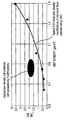
- This is shown in the accompanying graph.
- the curve shows the ILB (inter-laminar bond) achieved with sheet produced using standard formulation fibre cement with unbleached pulp, density modified by the addition of CSH.
- the shaded region of the graph demonstrates the typical ILB achieved with the abovementioned processing modifications.
- the abovementioned modifications more than doubled the ILB at densities of around 0.8-0,9 g/cm 3 .
- the silane, siloxane or other silicone treatment makes these pores hydrophobic thereby reducing water absorption and further lowering surface water permeability.
- the present inventive process provides building products with a surface water permeability of around 0.6 mL/hr (averaged over 48 hours) down to as low as 0.4 mL/hr whereas conventional boards have a surface permeability of around 0.8-1.9 mL/hr.
- Surface Water Permeability was measured by exposing a 50 mm diameter circular area of a 250 x 250 square sample to a 1.22m column of water at 23 ⁇ 2°C for 48 hours and measuring the drop in the water level over the 48 hrs. The result is quoted as mL drop per hour.
- Ordinary Portland cement - hydraulic binder consisting of calcium silicates, calcium aluminates and calcium aluminoferrites manufactured from Portland cement, clinker and gypsum.
- the binder may contain small quantities, usually less than 5% by mass, of limestone, fly ash, granulated slag or combinations of all three materials. Additives that alter setting time, water demand, drying shrinkage and other properties may also be contained.
- Off-white Portland cement - hydraulic binder consisting of calcium silicates, calcium aluminates and calcium aluminoferrites manufactured from Portland cement, clinker and gypsum.
- the ferrite phases are minimised to below 4% to produce the off-white colour. This results in an increase in the silicate and aluminate phases.
- ordinary Portland cement it may contain small quantities of other materials and additives to alter its properties.
- Blended cement - hydraulic binder consisting of ordinary Portland cement and/or off-white cement and one or a combination of the following materials, limestone, granulated slag and condensed silica fume. The proportion of these additions in excess of 5% by mass. Additives that alter setting time, water demand, drying shrinkage and other properties may also be contained.
- fly ash the fine material collected in electrostatic, mechanical filters or bag filters from boilers fired with pulverised fuels such as coal.
- fly ash can be pozzolanic with degree determined by the quantity and types of calcium silicates present. Fly ash is also known as pulverised fuel ash.
- Iron blast furnace slag - a by-product separated from molten iron during manufacture of iron in an iron blast furnace.
- the material consists of calcium and magnesium silicates, aluminates and aluminosilicates as well as other minerals in smaller quantities.
- Steel slag - a by-product separated from molten steel during manufacture of steel and its alloys.
- the material consists of calcium and magnesium silicates, aluminates and aluminosilicates as well as other minerals in smaller quantities.
- Granulated slag - a glass material obtained by quenching molten slag in air, water or a mixture of both. This process known as granulation produces mainly amorphous materials that possess latent hydraulic properties.
- cementitious material and siliceous material in the inventive formulation may be provided by a single source material eg a blended Portland cement. It may also be envisaged that the calcareous reactant and siliceous reactant may be provided by a single source material eg a siliceous limestone deposit.
- Process lime water is weighed into the batch tank at a ratio of 6.0L water per kg of lime (CaO) in the batch. It should be noted that the present inventive process is suitable for use with both fresh town water or process water.
- the water is discharged into the mixing tank and then heated with steam to 65°C. The steam adds extra water.
- a 1300 kg batch of raw materials requires 628 kg of lime which is slaked in 3767 Litres of lime water and 672 kg dry weight of ground quartz sand in a slurry at 40% solids which is added to the slaked lime in a stirred tank.
- the preparation of the silica sand is described below.
- the quartz sand was ground in a vertical stirred ball mill to a particle size such that 90% the volume of silica is less than 11.60 micron (11.60 ⁇ m) diameter as measured by a Malvern "Mastersizer” laser diffraction particle size analyser.
- the slurry is mixed for 15 minutes then pumped into the stirred pressure vessel. Water is added to modify the viscosity of the slurry.
- the slurry is heated with steam to a pressure of approximately 700 ⁇ 50 kPa. The reaction is maintained at this pressure by addition of steam into the vessel.
- the material is maintained at pressure for 3 hours by further intermittent injection of steam. After 3 hours at full pressure, the pressure is then reduced to approximately 270 kPa in 30 minutes.
- the material is then discharged into a tank via a cyclone to allow the liberation of steam from the slurry.
- the slurry is then diluted with lime water to between 10-12 wt % dry solids of calcium silicate hydrate product. The slurry is then pumped to a stirred storage tank.
- the calcium silicate hydrate product was dried in an oven at 105°C.
- the dried cake was broken up using a mortar and pestle and passed through 250 ⁇ m screens to remove lumps. Conglomerated material that failed to pass through the sieves was broken up by hand and sieved again. (100 ⁇ 1 cm 3 ) of the sieved sample was placed in a preweighed measuring cylinder. This cylinder was shaken on a vibrating table for 10 to 15 minutes with periodic stirring with a piece of wire. Once volume reduction ceased, the volume and mass were recorded. The mass of the sample divided by the volume of the sample, expressed in kg/m 3 , was recorded as the Tamped Bulk Density.
- Filtration Time is a measure of time taken for a 1.00 Litre sample of slurry to drain the water through a 12.5 cm diameter Buchner funnel and Whatman grade 541 filter paper, at a slurry temperature of 25° ⁇ 5°C under a vacuum of -60 kPa.
- the slurry shall be between 10 wt % and 12 wt % dry solids.
- the start time is when the slurry first covers the filter paper and the finish time is when the vacuum drops to -30 kPa as the filter cake shrinks or cracks.
- DTA Differential Thermal Analysis
- the test method involves heating approximately 30 mg of sample under nitrogen gas at a rate of 20° per minute from ambient to 1000°C. The difference in temperature between an empty reference sample holder and the sample is measured versus temperature.
- the tobermorite phase of calcium silicate hydrate is characterised by an exothermic conversion to wollastonite phase at temperatures between 824° and 840°C. Wollastonite conversion temperatures above 840° up to 900°C are more typical of a reaction that has not proceeded to the tobermorite phase.
- the low bulk density calcium silicate hydrate made by the method of example 1 was then combined into a fibre cement matrix formed, via a Hatschek machine process, into a 10 mm flat sheet and autoclaved at 175°C (900 kPa sat. steam pressure) for 8 hours.
- the formulation and properties of the material are described below.
- FORMULATION FORMULATION I FORMULATION 2 Bleached Pulp refined to 200 to 250 mL csf freeness 11.0% 11.0% Off-White Cement ( ⁇ 400 m 2 /kg) 39.2% 41.0% Silica (350 - 380 m 2 /kg) 39.2% 27.4%
- Low Bulk Density Calcium Silicate Hydrate (example 1) 10.0% 20.0% Bentonite 0.6% 0.6%
- the lime and the milled silica were then mixed into an aqueous slurry and reacted in a stirred pressure vessel.
- the molar ratio of lime to silica was 1:1 and water was added to give a dry solids concentration of 4% ⁇ 1%.
- the reaction was heated from ambient to 170° ⁇ 5°C and a steam pressure of 750 ⁇ 50 kPa in 40 minutes in the stirred pressure vessel and maintained at these conditions for 2.0 hours.
- Formulation 1 was manufactured by mixing and pressing a slurry of 3:1 water to solids between two meshes to dewater the slurry and form a monolithic sheet material. The sheet was then steam autoclaved at 175°C for 8 hours.
- Formulation 2 was manufactured by mixing the ingredients in a mass ratio of 3:1 water to solids and then autoclaving same as formulation 1.
- the 1% aluminium powder was added to supply aeration to the slurry via reaction to produce hydrogen and further lower the density and then autoclaved.
- the resultant fibre reinforced cement products had the following properties PROPERTIES (Oven Dried 105°C for 24 hrs) FORMULATION 1 FORMULATION 2 Dry Density (g/cm 3 ) 0.587 ⁇ 0.019 0.24 ⁇ 0.02 MoR ave. (MPa) 4.82 ⁇ 0.39 MoE (GPa) 0.94 ⁇ 0.19 Toughness (kJ/m 3 ) 2.69 ⁇ 0.42 Thickness (mm) 15.06 ⁇ 0.45
- a silane chemical was selected because of its ability to react with the hydroxyl groups at the pore surfaces and its hydrophobic nature of the tail of the molecule.
- a silane supplied by Wacker Chemicals (GF 31) was selected to test the hypothesis. Methacryloxypropyltrimethyoxysilane, was used to treat Low Density Cementitious Board prepared in accordance with the present invention to reduce the rate at which water wicks through the board. This silane was chosen because it also bonds well with acrylics that are the most common binder in current paint coatings for fibre reinforced cement products.
- the silane was prepared by hydrolysing 20g of silane in 2L of 2 wt % acetic acid solution for 15 minutes. Two pre-dried low density board samples (250 mm x 250 mm x 10 mm) were soaked in the solution for 30 minutes, removed and dried at 105°C for 12 hours. The samples were tested for wicking and water permeability and the results compared with a sample of untreated board.
- Wicking testing involved constant immersion of the bottom 25 mm of the sample in clean tap water, and measurement of the height to which the water was drawn up in the middle of the sample over time.
- the low bulk density CSH of a grade called "Microcel E” supplied by Celite Corporation was combined into fibre cement formulations and formed into a green shaped product via an injection moulding process. The moulded green product was then pre-cured for 8 to 12 hours then autoclaved as in Example 2.
- a low bulk density calcium silicate hydrate was made by reacting 674 kg of ground silica (90 wt % ⁇ 28.7 ⁇ m), 326 kg of lime and 5400 L of water for 2 hours at 175°C in a stirred pressure vessel. This material was then combined with fibres into cementitious matrices to form flat sheets. Fibre reinforced cement sheets were produced using three formulations. The sheets were made by mixing the following materials to form a slurry, then pressing the slurry between fine sieve mesh to form a sheet material of 12 mm thickness. The sheets were autoclaved at 173°C (860 kPa sat, steam pressure) for 5 hours.
- a low bulk density calcium silicate hydrate sold under the trade name "Silasorb” by Celite Corporation was combined into a fibre cement matrix by a Hatschek machine process. Sheets of 11 mm thickness were autoclaved at 175°C (900 kPa) saturated steam pressure) for 8 hours.
- the calcium silicate hydrate of the present invention is suitable for the production of cementitious products for both internal and external applications.
- the present invention provides a general purpose low density fibre cement building material which is suitable for use in a wide range of applications.
- the present invention provides the ability to make thick fibre cement sheets while maintaining ease of nailing. This property provides new opportunities for development of specialised products such as timber trim replacement, siding, fascias, roofing, eave sheets and components thereof on external surfaces of buildings.
- the inventive process is particularly well suited to the Hatschek process because the CSH material described unlike other common density modifiers such as vermiculite and perlite, does not float and resists crushing.
Landscapes
- Chemical & Material Sciences (AREA)
- Engineering & Computer Science (AREA)
- Ceramic Engineering (AREA)
- Materials Engineering (AREA)
- Structural Engineering (AREA)
- Organic Chemistry (AREA)
- Chemical Kinetics & Catalysis (AREA)
- Inorganic Chemistry (AREA)
- Civil Engineering (AREA)
- Curing Cements, Concrete, And Artificial Stone (AREA)
- Devices For Post-Treatments, Processing, Supply, Discharge, And Other Processes (AREA)
Claims (63)
- Verfahren zum Bilden eines zementösen Produkts, wobei ein zementöses Material, ein silikatisches Material und ein Material niedriger Schüttdichte zu Wasser hinzugefügt werden, um eine Aufschlämmung zu bilden, ein geformter Rohartikel aus der Aufschlämmung gebildet wird und der Artikel in einem Autoklaven gehärtet wird,
dadurch gekennzeichnet, dass das Material niedriger Schüttdichte eine Mischung aus Calciumsilikathydrat und nicht in Reaktion getretenem silikatischen Reaktionspartner ist. - Verfahren nach Anspruch 1, wobei das Material niedriger Schüttdichte eine Schüttdichte zwischen 0,06 und 0,3 g/cm3 hat.
- Verfahren nach Anspruch 1 oder 2, wobei das Material niedriger Schüttdichte bereitgestellt wird durch
Reagieren eines silikatischen Reaktionspartners mit einem kalkartigen Reaktionspartner in Gegenwart von Wasser unter Druck und erhöhter Temperatur, wobei wenigstens 90 Gew.-% des silikatischen Reaktionspartners eine Teilchengröße von weniger als 100 Mikron (100 µm) hat. - Verfahren nach einem der vorhergehenden Ansprüche, wobei vor der Bildung des geformten Rohartikels faserige und/oder andere Zusätze zu der Aufschlämmung hinzugefügt werden.
- Verfahren nach einem der vorhergehenden Ansprüche, wobei der geformte Rohartikel durch den Hatschek-Prozess gebildet wird.
- Verfahren nach einem der vorhergehenden Ansprüche, wobei der geformte Rohartikel durch einen Filterprozess gebildet wird.
- Verfahren nach einem der vorhergehenden Ansprüche, wobei der geformte Rohartikel durch Spritzgießen gebildet wird.
- Verfahren nach einem der vorhergehenden Ansprüche, wobei der geformte Rohartikel durch Extrusion gebildet wird.
- Verfahren nach einem der Ansprüche 3 bis 8, wobei die Reaktion vor der vollständigen Umwandlung der Reaktionspartner zu Calciumsilikathydrat beendet wird.
- Verfahren nach einem der Ansprüche 3 bis 9, wobei die Reaktion für weniger als 4 Stunden durchgeführt wird.
- Verfahren nach einem der Ansprüche 3 bis 10, wobei die Reaktion über eine Periode von bis zu 2 Stunden durchgeführt wird, wobei wenigstens 80 % des kalkartigen Reaktionspartnermaterials zu Calciumsilikathydrat umgewandelt werden.
- Verfahren nach einem der Ansprüche 3 bis 11, wobei vor oder während der Reaktion Wasser in einer Menge von bis zu 30 mal dem Gesamtgewicht der silikatischen und kalkartigen Reaktionspartner hinzugefügt wird.
- Verfahren nach einem der Ansprüche 3 bis 12, wobei die Reaktion bei einer Temperatur zwischen 120 und 250 °C durchgeführt wird.
- Verfahren nach einem der Ansprüche 3 bis 13, wobei die Reaktion bei einer Temperatur zwischen 160 und 180 °C durchgeführt wird.
- Verfahren nach einem der Ansprüche 3 bis 14, wobei die Reaktion bei einem Druck zwischen 200 und 4000 kPa durchgeführt wird.
- Verfahren nach einem der Ansprüche 3 bis 15, wobei die Reaktion bei einem Druck zwischen 600 und 1000 kPa durchgeführt wird.
- Verfahren nach einem der Ansprüche 3 bis 16, wobei der kalkartige Reaktionspartner und der silikatische Reaktionspartner in einem molaren Verhältnis von CaO:SiO2 zwischen 0,1 und 1,2 miteinander reagiert werden.
- Verfahren nach einem der Ansprüche 3 bis 17, wobei der kalkartige Reaktionspartner und der silikatische Reaktionspartner in einem molaren Verhältnis von CaO:SiO2 zwischen 0,3 und 0,8 miteinander reagiert werden.
- Verfahren nach einem der Ansprüche 3 bis 18, wobei der silikatische Reaktionspartner bei 90 Gew.-% eine Teilchengröße von weniger als 70 Mikron (70 µm) hat.
- Verfahren nach einem der Ansprüche 3 bis 19, wobei der silikatische Reaktionspartner bei 90 Gew.-% eine Teilchengröße von weniger als 50 Mikron (50 µm) hat.
- Verfahren nach einem der vorhergehenden Ansprüche, wobei der silikatische Reaktionspartner und/oder das silikatische Material amorph ist.
- Verfahren nach einem der vorhergehenden Ansprüche, wobei der silikatische Reaktionspartner und/oder das silikatische Material kristallin ist.
- Verfahren nach einem der Ansprüche 3 bis 22, wobei der kalkartige Reaktionspartner Kalk ist.
- Verfahren nach einem der Ansprüche 3 bis 23, wobei der kalkartige Reaktionspartner Ätzkalk ist.
- Verfahren nach einem der Ansprüche 3 bis 24, wobei der kalkartige Reaktionspartner mehr als 90 % CaO enthält.
- Verfahren nach einem der vorhergehenden Ansprüche, wobei der silikatische Reaktionspartner und/oder das silikatische Material ausgewählt ist aus der Gruppe, die aus Siliciumdioxid, Quarz, Quarzit, Quarzitsand, Kieselgur, Quarzstaub, Reishülsenasche, Flugasche, Hochofenschlacke, granulierter Schlacke, Stahlschlacke, kristalliner oder luftgekühlter Schlacke, geothermischem Silikamaterial und Mischungen davon besteht.
- Verfahren nach einem der Ansprüche 3 bis 26, wobei der silikatische Reaktionspartner und der kalkartige Reaktionspartner von einem einzigen Ausgangsmaterial stammen.
- Verfahren nach einem der Ansprüche 3 bis 26, wobei der silikatische Reaktionspartner und der kalkartige Reaktionspartner von verschiedenen Ausgangsmaterialien stammen.
- Verfahren nach einem der vorhergehenden Ansprüche, wobei das zementöse Material ausgewählt ist aus der Gruppe, die aus Zement, Kalk, kalkhaltigem Material, Portlandzement, nicht weißem Zement, gemischtem Zement, hydriertem Kalk oder Mischungen davon besteht.
- Verfahren nach einem der vorhergehenden Ansprüche, wobei das zementöse Material und das silikatische Material von einem einzigen Ausgangsmaterial stammen.
- Verfahren nach einem der vorhergehenden Ansprüche, wobei das zementöse Material und das silikatische Material von verschiedenen Ausgangsmaterialien stammen.
- Verfahren nach einem der vorhergehenden Ansprüche, wobei das zementöse Produkt mit Silan, Siloxan und/oder Silikon behandelt wird, um seine Wasserabsorption und Oberflächenwasser-Durchlässigkeitseigenschaften zu reduzieren.
- Verfahren nach einem der vorhergehenden Ansprüche, wobei das Material niedriger Schüttdichte in ausreichenden Mengen hinzugefügt wird, so dass das resultierende zementöse Produkt eine Dichte zwischen 0,5 und 1,2 g/cm3 hat.
- Formulierung zum Zubereiten eines zementösen Produkts, mit:dadurch gekennzeichnet, dass das Material niedriger Schüttdichte eine Mischung aus Calciumsilikathydrat und nicht in Reaktion getretenem silikatischen Reaktionspartner ist.einem zementösen Material,einem silikatischen Material, undeinem Material niedriger Schüttdichte,
- Formulierung nach Anspruch 34, wobei das Material niedriger Schüttdichte eine Schüttdichte zwischen 0,06 und 0,3 g/cm3 hat.
- Formulierung nach Anspruch 34, wobei das Material niedriger Schüttdichte durch Reaktion eines silikatischen Reaktionspartners mit einem kalkartigen Reaktionspartner in Gegenwart von Wasser unter Druck und erhöhter Temperatur hergestellt ist, um das Material niedriger Schüttdichte zu bilden, wobei wenigstens 90 Gew.-% des silikatischen Reaktionspartners eine Teilchengröße von weniger als 100 Mikron (100 µm) haben.
- Formulierung nach einem der Ansprüche 34 bis 36, die ferner Wasser enthält.
- Formulierung nach einem der Ansprüche 34 bis 37, wobei das Material niedriger Schüttdichte in einer Menge bis zu 80 Gew.-% trockener Zutaten hinzugefügt wird.
- Formulierung nach einem der Ansprüche 34 bis 38, wobei das Material niedriger Schüttdichte in einer Menge bis zu 50 Gew.-% trockener Zutaten hinzugefügt wird.
- Formulierung nach einem der Ansprüche 34 bis 39, wobei das Material niedriger Schüttdichte in ausreichenden Mengen hinzugefügt wird, so dass das resultierende zementöse Produkt eine Dichte zwischen 0,5 und 1,2 g/cm3 hat.
- Formulierung nach einem der Ansprüche 34 bis 40, wobei die Menge des silikatischen Materials zwischen 10 und 80 Gew.-% trockener Zutaten liegt.
- Formulierung nach einem der Ansprüche 34 bis 41, wobei die Menge an silikatischem Material zwischen 40 und 65 Gew.-% trockener Zutaten liegt.
- Formulierung nach einem der Ansprüche 34 bis 42, wobei der silikatische Reaktionspartner und/oder das silikatische Material aus der Gruppe ausgewählt ist, die aus Siliciumdioxid, Quarz, Quarzit, Quarzitsand, Kieselgur, Quarzstaub, Reishülsenasche, Flugasche, Hochofenschlacke, granulierter Schlacke, Stahlschlacke, kristalliner oder luftgekühlter Schlacke, geothermischem Silikamaterial und Mischungen davon besteht.
- Formulierung nach einem der Ansprüche 34 bis 43, wobei der silikatische Reaktionspartner und/oder das silikatische Material amorph ist.
- Formulierung nach einem der Ansprüche 34 bis 43, wobei der silikatische Reaktionspartner und/oder das silikatische Material kristallin ist.
- Formulierung nach einem der Ansprüche 34 bis 45, wobei die Menge an zementösem Material zwischen 10 und 80 Gew.-% trockener Zutaten liegt.
- Formulierung nach einem der Ansprüche 34 bis 46, wobei die Menge an zementösem Material zwischen 30 und 40 Gew.-% trockener Zutaten liegt.
- Formulierung nach einem der Ansprüche 34 bis 47, wobei das zementöse Material ausgewählt ist aus der Gruppe, die aus Zement, Kalk, kalkhaltigem Material, Portlandzement, nicht weißem Zement, gemischtem Zement, hydriertem Kalk oder Mischungen davon besteht.
- Formulierung nach einem der Ansprüche 34 bis 48, wobei das silikatische Material und das zementöse Material von einem einzigen Ausgangsmaterial stammen.
- Formulierung nach einem der Ansprüche 34 bis 48, wobei das silikatische Material und das zementöse Material von verschiedenen Ausgangsmaterialien stammen.
- Formulierung nach einem der Ansprüche 36 bis 50, wobei der kalkartige Reaktionspartner Kalk ist.
- Formulierung nach einem der Ansprüche 36 bis 51, wobei der kalkartige Reaktionspartner Ätzkalk ist.
- Formulierung nach einem der Ansprüche 36 bis 52, wobei der kalkartige Reaktionspartner mehr als 90 % CaO enthält.
- Formulierung nach einem der Ansprüche 36 bis 53, wobei der silikatische Reaktionspartner und der kalkartige Reaktionspartner von einem einzigen Ausgangsmaterial stammen.
- Formulierung nach einem der Ansprüche 36 bis 53, wobei der silikatische Reaktionspartner und der kalkartige Reaktionspartner von verschiedenen Ausgangsmaterialien stammen.
- Formulierung nach einem der Ansprüche 34 bis 55, die ferner 0 bis 25 Gew.-% trockener Zutaten an Asbestfasermaterial enthält.
- Formulierung nach einem der Ansprüche 34 bis 55, die ferner 0 bis 25 Gew.-% trockener Zutaten an nicht-asbesthaltigem Fasermaterial enthält, das aus der Gruppe ausgewählt ist, die aus Celluloseholzfasern, nicht-hölzernen Cellulosefasern, Mineralwolle, Stahlfasern, synthetischen Polymerfasern wie Polyamiden, Polyester, Polypropylen, Polymethylpenten, Polyacrylnitril, Polyacrylamid, Viskose, Nylon, PVC, PVA, Rayon und Glas, Keramik oder Kohlenstoff und Mischungen davon besteht.
- Formulierung nach Anspruch 57, wobei die Fasern Cellulosefasern sind, die gebleicht, ungebleicht, teilweise gebleicht oder Mischungen davon sind.
- Formulierung nach einem der Ansprüche 56 bis 58, wobei die Menge an faserartigem Material zwischen 2 und 15 Gew.-% trockener Zutaten liegt.
- Formulierung nach einem der Ansprüche 56 bis 59, wobei die Menge an faserartigem Material zwischen 5 und 14 Gew.-% trockener Zutaten liegt.
- Formulierung nach einem der Ansprüche 34 bis 60, die ferner 0 bis 40 Gew.-% trockener Zutaten an anderen Zusätzen enthält, die ausgewählt sind aus der Gruppe, die aus Füllstoffen, Brandverzögerern, Eindickern, Farbstoffen, Pigmenten, wasserdichtenden Mitteln, wasserreduzierenden Mitteln, wasserhaltenden Mitteln, Abbinderatenmodifizierern, Härtern, Füllstoffhilfsmitteln, Plastifizierungsmitteln, Dispergiermitteln, Treibmitteln, Entschäumern, Flockungsmitteln, Wasserabdichtungsmitteln, Dichtemodifizierern und Mischungen davon besteht.
- Formulierung nach einem der Ansprüche 34 bis 61, die ferner 0 bis 40 Gew.-% trockener Zutaten an anderen Zusätzen enthält, die ausgewählt sind aus der Gruppe, die aus Mineraloxiden, Mineralhydroxiden und Tonen, Metalloxiden und Hydroxiden, Magnesit, Dolomit, Aluminiumpulver, Aluminiumoxidtrihydrat, Kaolin, Glimmer, Metakaolin, Quarzstaub, Calciumcarbonat, Wollastonit, Methylcellulose und Mischungen davon besteht.
- Zementöses Produkt, das das im Autoklaven gehärtete Reaktionsprodukt der Formulierung nach einem der Ansprüche 34 bis 62 aufweist.
Applications Claiming Priority (3)
| Application Number | Priority Date | Filing Date | Title |
|---|---|---|---|
| AUPO612097 | 1997-04-10 | ||
| AUPO6120A AUPO612097A0 (en) | 1997-04-10 | 1997-04-10 | Building products |
| PCT/AU1998/000263 WO1998045222A1 (en) | 1997-04-10 | 1998-04-09 | Building products |
Publications (3)
| Publication Number | Publication Date |
|---|---|
| EP0973699A1 EP0973699A1 (de) | 2000-01-26 |
| EP0973699A4 EP0973699A4 (de) | 2000-11-02 |
| EP0973699B1 true EP0973699B1 (de) | 2003-06-18 |
Family
ID=3800418
Family Applications (1)
| Application Number | Title | Priority Date | Filing Date |
|---|---|---|---|
| EP98914703A Expired - Lifetime EP0973699B1 (de) | 1997-04-10 | 1998-04-09 | Bauprodukte |
Country Status (19)
| Country | Link |
|---|---|
| US (2) | US6346146B1 (de) |
| EP (1) | EP0973699B1 (de) |
| JP (1) | JP2001518867A (de) |
| AR (1) | AR012390A1 (de) |
| AT (1) | ATE243175T1 (de) |
| AU (1) | AUPO612097A0 (de) |
| CA (1) | CA2287210C (de) |
| DE (1) | DE69815668T2 (de) |
| DK (1) | DK0973699T3 (de) |
| ES (1) | ES2202833T3 (de) |
| MX (1) | MX215633B (de) |
| MY (1) | MY114812A (de) |
| NZ (1) | NZ500215A (de) |
| PE (1) | PE94099A1 (de) |
| PH (1) | PH11998000842B1 (de) |
| PT (1) | PT973699E (de) |
| TW (1) | TW485151B (de) |
| WO (1) | WO1998045222A1 (de) |
| ZA (1) | ZA983063B (de) |
Cited By (5)
| Publication number | Priority date | Publication date | Assignee | Title |
|---|---|---|---|---|
| US7028436B2 (en) | 2002-11-05 | 2006-04-18 | Certainteed Corporation | Cementitious exterior sheathing product with rigid support member |
| US7155866B2 (en) | 2002-11-05 | 2007-01-02 | Certainteed Corporation | Cementitious exterior sheathing product having improved interlaminar bond strength |
| US7762040B2 (en) | 2004-08-12 | 2010-07-27 | Progressive Foam Technologies, Inc. | Insulated fiber cement siding |
| US9097024B2 (en) | 2004-08-12 | 2015-08-04 | Progressive Foam Technologies Inc. | Foam insulation board |
| US9434131B2 (en) | 2004-09-30 | 2016-09-06 | Plycem Usa, Inc. | Building panel having a foam backed fiber cement substrate |
Families Citing this family (116)
| Publication number | Priority date | Publication date | Assignee | Title |
|---|---|---|---|---|
| AUPP650198A0 (en) * | 1998-10-14 | 1998-11-05 | James Hardie International Finance B.V. | Cement formulation |
| BE1012853A3 (nl) * | 1999-08-25 | 2001-04-03 | Michiels Hugo Remi | Samengesteld isolerend materiaal en werkwijze voor het vervaardigen ervan. |
| MY125251A (en) * | 1999-10-08 | 2006-07-31 | James Hardie Int Finance B V | Fiber-cement/gypsum laminate composite building material |
| US6689451B1 (en) * | 1999-11-19 | 2004-02-10 | James Hardie Research Pty Limited | Pre-finished and durable building material |
| AUPQ468299A0 (en) * | 1999-12-15 | 2000-01-20 | James Hardie Research Pty Limited | Method and apparatus for extruding cementitious articles |
| US6539643B1 (en) | 2000-02-28 | 2003-04-01 | James Hardie Research Pty Limited | Surface groove system for building sheets |
| NZ521491A (en) * | 2000-03-14 | 2004-06-25 | James Hardie Res Pty Ltd | Fiber cement building materials with low density additives and cellulose fibers |
| CA2424795C (en) * | 2000-10-04 | 2010-07-27 | James Hardie Research Pty Limited | Fiber cement composite materials using cellulose fibers loaded with inorganic and/or organic substances |
| CN1246246C (zh) * | 2000-10-04 | 2006-03-22 | 詹姆斯哈迪国际财金公司 | 使用上浆的纤维素纤维的纤维水泥复合材料 |
| JP2004511675A (ja) | 2000-10-17 | 2004-04-15 | ジェイムズ ハーディー リサーチ ピーティーワイ.リミテッド | 繊維強化セメント複合材料製造用のセルロース繊維中の不純物を減少させるための方法および装置 |
| AU1181602A (en) * | 2000-10-17 | 2002-04-29 | James Hardie Res Pty Ltd | Fiber cement composite material using biocide treated durable cellulose fibers |
| US20050126430A1 (en) | 2000-10-17 | 2005-06-16 | Lightner James E.Jr. | Building materials with bioresistant properties |
| CA2370875A1 (en) * | 2001-02-15 | 2002-08-15 | B.J. Services Company | High temperature flexible cementing compositions and methods for using same |
| CA2439451A1 (en) * | 2001-03-02 | 2002-09-12 | James Hardie Research Pty Limited | A method and apparatus for forming a laminated sheet material by spattering |
| US20030164119A1 (en) * | 2002-03-04 | 2003-09-04 | Basil Naji | Additive for dewaterable slurry and slurry incorporating same |
| MY129267A (en) * | 2001-03-05 | 2007-03-30 | James Hardie Int Finance Bv | Low density accelerant and strength enhancing additive for cementitious products and methods of using same. |
| CN1247487C (zh) * | 2001-03-09 | 2006-03-29 | 詹姆斯哈迪国际财金公司 | 经化学处理而有改善的分散性的纤维形成的纤维强化水泥复合材料 |
| US7713615B2 (en) * | 2001-04-03 | 2010-05-11 | James Hardie International Finance B.V. | Reinforced fiber cement article and methods of making and installing the same |
| JP4701542B2 (ja) * | 2001-05-31 | 2011-06-15 | 澁谷工業株式会社 | 充填装置とその充填方法 |
| CA2399883C (en) | 2001-08-28 | 2007-07-31 | Exothermic Distribution Corporation | Use of rice hull ash in steelmaking |
| US8215079B2 (en) * | 2002-04-11 | 2012-07-10 | Encore Building Solutions, Inc | Building block and system for manufacture |
| US20060037271A1 (en) * | 2004-04-01 | 2006-02-23 | Sinclair Robert F Sr | Building block and system for manufacture |
| US20070277472A1 (en) * | 2002-04-11 | 2007-12-06 | Sinclair Raymond F | Building block and system for manufacture |
| US20040003559A1 (en) * | 2002-04-24 | 2004-01-08 | Minke Ronald C. | Doors and methods of producing same |
| US6972100B2 (en) * | 2002-04-24 | 2005-12-06 | Tt Technologies, Inc. | Method and system for providing articles with rigid foamed cementitious cores |
| US20030233962A1 (en) * | 2002-06-21 | 2003-12-25 | Dongell Jonathan E. | Pozzolan modified portland cement compositions and admixtures therefor |
| TW200402498A (en) * | 2002-07-16 | 2004-02-16 | James Hardie Res Pty Ltd | Packaging prefinished fiber cement products |
| US8281535B2 (en) | 2002-07-16 | 2012-10-09 | James Hardie Technology Limited | Packaging prefinished fiber cement articles |
| US6942726B2 (en) * | 2002-08-23 | 2005-09-13 | Bki Holding Corporation | Cementitious material reinforced with chemically treated cellulose fiber |
| EP3418264A1 (de) | 2002-08-23 | 2018-12-26 | GP Cellulose GmbH | Mit chemisch behandelter cellulosefaser verstärktes zementartiges material |
| MXPA05003691A (es) | 2002-10-07 | 2005-11-17 | James Hardie Int Finance Bv | Material mixto de fibrocemento de densidad media durable. |
| US20040120761A1 (en) * | 2002-10-31 | 2004-06-24 | Naum Sapozhnikov | Concrete pavement with the preset strength safety level for highways and streets |
| EP1565406A4 (de) * | 2002-11-05 | 2008-07-23 | James Hardie Int Finance Bv | Verfahren und vorrichtung für die herstellung von calciumsilikathydrat |
| CN100402455C (zh) * | 2003-01-09 | 2008-07-16 | 詹姆斯哈迪国际财金公司 | 使用漂白的纤维素纤维的纤维水泥复合材料及其生产方法 |
| US7004673B2 (en) * | 2003-03-04 | 2006-02-28 | Naum Sapozhnikov | Asphalt concrete pavement with concrete subbase with the enriched quarry limestone waste as a coarse aggregate |
| US7700017B2 (en) * | 2003-08-25 | 2010-04-20 | Icestone Llc | Method for producing materials from recycled glass and cement compositions |
| CA2788668C (en) * | 2003-08-29 | 2016-08-23 | Buckeye Technologies Inc. | System for delivery of fibers into concrete |
| FR2860511B1 (fr) * | 2003-10-02 | 2005-12-02 | Saint Gobain Mat Constr Sas | Produit cimentaire en plaque et procede de fabrication |
| US20050108965A1 (en) * | 2003-11-26 | 2005-05-26 | Morse Rick J. | Clapboard siding panel with built in fastener support |
| EP1692353A4 (de) * | 2003-11-28 | 2009-03-25 | James Hardie Int Finance Bv | Dachrinnenauskleidungssystem |
| CN1910326A (zh) | 2004-01-12 | 2007-02-07 | 詹姆斯哈迪国际财金公司 | 具有可辐射固化组分的复合纤维水泥制品 |
| NZ549407A (en) * | 2004-02-27 | 2009-04-30 | James Hardie Int Finance Bv | Batten mounting water management system |
| US20090151292A1 (en) * | 2004-04-01 | 2009-06-18 | Sinclair Sr Robert F | Building block and system for manufacture |
| US7998571B2 (en) | 2004-07-09 | 2011-08-16 | James Hardie Technology Limited | Composite cement article incorporating a powder coating and methods of making same |
| US8910443B2 (en) | 2004-08-12 | 2014-12-16 | Progressive Foam Technologies, Inc. | Foam backer for insulation |
| US8910444B2 (en) | 2004-08-12 | 2014-12-16 | Progressive Foam Technologies, Inc. | Foam insulation backer board |
| US8844233B2 (en) | 2004-08-12 | 2014-09-30 | Progressive Foam Technologies, Inc. | Foam insulation board with edge sealer |
| JP2006062883A (ja) * | 2004-08-24 | 2006-03-09 | Nichiha Corp | 木質セメント板およびその製造方法 |
| US7223303B2 (en) * | 2004-08-26 | 2007-05-29 | Mitsubishi Materials Corporation | Silicon cleaning method for semiconductor materials and polycrystalline silicon chunk |
| WO2006025331A1 (ja) * | 2004-08-31 | 2006-03-09 | Nichiha Corporation | 無機質板およびその製造方法 |
| US20090249724A1 (en) * | 2004-09-29 | 2009-10-08 | Thomas Remmele | Blast mitigation coating systems |
| CA2584203A1 (en) * | 2004-10-14 | 2006-04-20 | James Hardie International Finance B.V. | Cavity wall system |
| WO2006086842A1 (en) * | 2005-02-15 | 2006-08-24 | James Hardie International Finance B.V. | Flooring sheet and modular flooring system |
| KR100799337B1 (ko) | 2005-04-01 | 2008-01-30 | 금광개발 주식회사 | 유색 석영을 이용한 기능성 모르타르 |
| JP4558569B2 (ja) * | 2005-04-18 | 2010-10-06 | 電気化学工業株式会社 | 超高強度繊維補強セメント組成物、超高強度繊維補強モルタル又はコンクリート、並びに超高強度セメント混和材 |
| US7201798B2 (en) * | 2005-05-05 | 2007-04-10 | Halliburton Energy Services, Inc. | Set-delayed cement compositions comprising hydrated lime and silica and methods of cementing in subterranean formations |
| US20060249289A1 (en) * | 2005-05-05 | 2006-11-09 | Halliburton Energy Services, Inc. | Set-delayed cement compositions comprising hydrated lime and silica and methods of cementing in subterranean formations |
| US7758954B2 (en) | 2005-08-18 | 2010-07-20 | James Hardie Technology Limited | Coated substrate having one or more cross-linked interfacial zones |
| DE602006011641D1 (de) | 2005-11-15 | 2010-02-25 | Valspar Sourcing Inc | Bruchfeste latexdeckbeschichtungszusammensetzung für faserzementsubstrate |
| AU2007211046B2 (en) * | 2006-01-31 | 2011-09-01 | Valspar Sourcing, Inc. | Method for coating a cement fiberboard article |
| US8293361B2 (en) * | 2006-01-31 | 2012-10-23 | Valspar Sourcing, Inc. | Coating system for cement composite articles |
| WO2007089913A1 (en) * | 2006-01-31 | 2007-08-09 | Valspar Sourcing, Inc. | Coating system for cement composite articles |
| US9783622B2 (en) | 2006-01-31 | 2017-10-10 | Axalta Coating Systems Ip Co., Llc | Coating system for cement composite articles |
| US7905956B2 (en) * | 2006-02-15 | 2011-03-15 | Nichiha Corporation | Fiber reinforced cement composition and products and manufacturing process |
| PL207450B1 (pl) * | 2006-03-31 | 2010-12-31 | Politechnika Wroclawska | Dwubiegowy silnik synchroniczny z magnesami trwałymi |
| NZ571874A (en) | 2006-04-12 | 2010-11-26 | Hardie James Technology Ltd | A surface sealed reinforced building element |
| US7722964B2 (en) * | 2006-04-25 | 2010-05-25 | Nichiha Corporation | Fiber reinforced cement board and manufacturing process |
| US7758694B2 (en) * | 2006-05-11 | 2010-07-20 | Nichiha Corporation | Fiber reinforced cement composition and products and manufacturing process |
| EP2032664B1 (de) | 2006-05-19 | 2017-11-08 | Valspar Sourcing, Inc. | Beschichtungssystem für zementverbundartikel |
| CA2655125C (en) | 2006-06-02 | 2014-10-14 | Valspar Sourcing, Inc. | High performance aqueous coating compositions |
| US7812090B2 (en) * | 2006-06-02 | 2010-10-12 | Valspar Sourcing, Inc. | High performance aqueous coating compositions |
| ES2716987T3 (es) * | 2006-07-07 | 2019-06-18 | Swimc Llc | Sistemas de recubrimiento para artículos composite de cemento |
| FR2904972B1 (fr) * | 2006-08-21 | 2009-12-18 | Philippe Pichat | Composition a prise hydraulique. |
| US7976626B2 (en) * | 2006-09-27 | 2011-07-12 | Nichiha Corporation | Fiber reinforced cement composition and products and manufacturing process |
| US7837788B2 (en) * | 2006-09-27 | 2010-11-23 | Nichiha Corporation | Fiber reinforced cement composition and products and manufacturing process |
| US7972433B2 (en) * | 2006-12-27 | 2011-07-05 | Nichiha Co., Ltd. | Fiber reinforced cement composition and products and manufacturing process |
| US7967907B2 (en) * | 2007-01-26 | 2011-06-28 | Nichiha Corporation | Fiber reinforced cement composition and products and manufacturing process |
| US7879145B2 (en) * | 2007-02-14 | 2011-02-01 | Nichiha Corporation | Inorganic composition and products and manufacturing process |
| US8202581B2 (en) * | 2007-02-16 | 2012-06-19 | Valspar Sourcing, Inc. | Treatment for cement composite articles |
| US7875231B1 (en) * | 2007-02-26 | 2011-01-25 | Bracegirdle Paul E | Method for producing fiber reinforced cement-based structural building materials |
| EP2008983B1 (de) * | 2007-05-21 | 2009-07-22 | Liapor GmbH & Co. KG | Verfahren zum Herstellen einer Gesteinskörnung und Gesteinskörnung, insbesondere für Baumaterialien |
| EP2160439A4 (de) | 2007-06-28 | 2013-12-04 | Hardie James Technology Ltd | Farbenformulierung für ein gebäudematerial |
| NZ582054A (en) | 2007-06-29 | 2012-06-29 | Hardie James Technology Ltd | Multifunctional primers for composite building materials |
| MX2010001253A (es) * | 2007-08-01 | 2010-04-30 | Valspar Sourcing Inc | Sistema de recubrimiento para articulos preparados de cemento. |
| US20090049776A1 (en) * | 2007-08-23 | 2009-02-26 | Matakii O'goshi Lim | Stable and efficient building system |
| HUE032265T2 (hu) * | 2007-08-27 | 2017-09-28 | Dyckerhoff Gmbh | Ásványi kötõanyag, valamint eljárás ennek elõállítására |
| EP2209750A4 (de) | 2007-10-02 | 2014-04-16 | Hardie James Technology Ltd | Zementformulierungen und produkte |
| US8209927B2 (en) * | 2007-12-20 | 2012-07-03 | James Hardie Technology Limited | Structural fiber cement building materials |
| US7927417B2 (en) * | 2008-02-04 | 2011-04-19 | Capitol Aggregates, Ltd. | Cementitious composition and apparatus and method for manufacturing the same |
| US9175187B2 (en) * | 2008-08-15 | 2015-11-03 | Valspar Sourcing, Inc. | Self-etching cementitious substrate coating composition |
| WO2010060109A1 (en) | 2008-11-24 | 2010-05-27 | Valspar Sourcing, Inc. | Coating system for cement composite articles |
| US20110054081A1 (en) * | 2009-09-02 | 2011-03-03 | Frank Dierschke | Formulation and its use |
| GB2481379A (en) | 2010-06-21 | 2011-12-28 | Hardie James Technology Ltd | Method for marking a cementitious substrate |
| GB2481382A (en) | 2010-06-21 | 2011-12-28 | Hardie James Technology Ltd | Method for forming a marked coated cementitious substrate |
| KR101914809B1 (ko) * | 2011-04-27 | 2018-11-02 | 제임스 하디 테크놀로지 리미티드 | 공기함유 섬유 시멘트 건설 제품 및 이의 제조 방법 |
| US9732524B2 (en) * | 2011-04-27 | 2017-08-15 | James Hardie Technology Limited | Aerated fiber cement building products and methods of making the same |
| DE102011079692A1 (de) * | 2011-07-22 | 2013-01-24 | Chemex Gmbh | Speiser und formbare Zusammensetzungen zu deren Herstellung |
| AU2012318528A1 (en) | 2011-10-07 | 2014-05-22 | Boral Ip Holdings (Australia) Pty Limited | Inorganic polymer/organic polymer composites and methods of making same |
| ES2624902T3 (es) | 2011-10-14 | 2017-07-18 | Evonik Degussa Gmbh | Procedimiento mejorado para el tratamiento de agua con dióxido de cloro |
| US8864901B2 (en) | 2011-11-30 | 2014-10-21 | Boral Ip Holdings (Australia) Pty Limited | Calcium sulfoaluminate cement-containing inorganic polymer compositions and methods of making same |
| WO2013165650A1 (en) * | 2012-04-30 | 2013-11-07 | 3M Innovative Properties Company | High solar-reflectivity roofing granules utilizing low absorption components |
| ITMI20121382A1 (it) * | 2012-08-03 | 2014-02-04 | Contento Trade Srl | Materiale inerte, metodo di produzione del medesimo da materiali di scarto e relativi impieghi industriali. |
| US9796622B2 (en) | 2013-09-09 | 2017-10-24 | Saudi Arabian Oil Company | Development of high temperature low density cement |
| ES2738789T3 (es) * | 2013-09-13 | 2020-01-27 | Etex Services Nv | Producto de fibrocemento hidrofobizado que comprende al menos una superficie perfilada |
| EP2876094A1 (de) | 2014-04-03 | 2015-05-27 | Basf Se | Zement- und Calciumsulfat-basierte Bindemittelzusammensetzung |
| EP3271311A1 (de) * | 2015-03-20 | 2018-01-24 | Solidia Technologies, Inc. | Mikrostrukturierte karbonisierbare calciumsilikatklinker und verfahren dafür |
| US20170081249A1 (en) * | 2015-09-23 | 2017-03-23 | Anthony Gauci | Concrete Wet Cast Ready Mix Composition |
| US10155695B2 (en) * | 2016-10-04 | 2018-12-18 | Romeo Ilarian Ciuperca | Manufactured natural pozzolan, improved manufactured natural pozzolan-based cement and method of making and using same |
| WO2019038260A1 (en) * | 2017-08-21 | 2019-02-28 | Swisspearl Group Ag | FLOORING RESISTANT TO FALL SHOCK AND ADAPTIVE |
| DE102017128150A1 (de) * | 2017-11-28 | 2019-05-29 | Technische Hochschule Nürnberg Georg Simon Ohm | Bindebaustoffmischung auf Zementbasis, Bindebaustoff und Verfahren zur Herstellung der Bindebaustoffmischung |
| JP7133946B2 (ja) * | 2018-03-02 | 2022-09-09 | アイカ工業株式会社 | けい酸カルシウム板およびその製造方法 |
| EP3877352A4 (de) * | 2018-11-07 | 2022-08-03 | James Hardie Technology Limited | Integral wasserdichtes faserzementverbundmaterial |
| CN112458927A (zh) * | 2020-10-22 | 2021-03-09 | 广东省交通规划设计研究院股份有限公司 | 一种公路桥梁悬挑结构的改造加固方法 |
| KR102334661B1 (ko) * | 2021-03-15 | 2021-12-06 | (주)천수씨피알 | 침투성 방수 및 표면보호용 조성물 및 그 시공방법 |
| CN113799453B (zh) * | 2021-09-14 | 2023-08-04 | 天津卓宝科技有限公司 | 一种隔离颗粒及其制备方法与应用 |
| CN117183104B (zh) * | 2023-09-11 | 2026-03-27 | 淮南北新建材有限公司 | 掺和水及石膏板的制备方法、控制装置、存储介质、石膏板生产系统 |
Family Cites Families (16)
| Publication number | Priority date | Publication date | Assignee | Title |
|---|---|---|---|---|
| SU411054A1 (de) * | 1972-03-02 | 1974-01-15 | ||
| DE2344773A1 (de) * | 1973-09-05 | 1975-03-27 | Osaka Packing | Herstellung von wollastonitkristallen |
| US4132555A (en) * | 1975-01-02 | 1979-01-02 | Cape Boards & Panels Ltd. | Building board |
| US4101335A (en) * | 1976-11-04 | 1978-07-18 | Cape Boards & Panels Ltd. | Building board |
| US4131638A (en) * | 1977-07-05 | 1978-12-26 | Johns-Manville Corporation | Process for the manufacture of calcium silicate hydrate objects |
| DE2832125C2 (de) * | 1978-07-21 | 1983-03-03 | Mars Inc., 22102 McLean, Va. | Verfahren zur Herstellung von feuerbeständigen maßgenauen Leichtbauplatten |
| JPS5614466A (en) * | 1979-07-11 | 1981-02-12 | Nippon Asbestos Co Ltd | Manufacture of calcium silicate formed body |
| JPS57183344A (en) * | 1981-05-01 | 1982-11-11 | Asahi Chemical Ind | Manufacture of lightweight foamed concrete |
| SE435271B (sv) * | 1981-06-26 | 1984-09-17 | Thermobase Snc | Forfarande for framstellning av angherdat oorganiskt porost isoleringsmaterial med extremt lag volymvikt |
| JPS5917659A (ja) | 1982-07-21 | 1984-01-28 | Hitachi Ltd | 画像圧縮デ−タ伸長方式 |
| JPS5945953A (ja) * | 1982-09-01 | 1984-03-15 | 旭化成株式会社 | 珪酸カルシウム水和物系成形体の製造方法 |
| GB2128178B (en) | 1982-10-01 | 1986-01-08 | Bryan James Walker | Lightweight aggregate |
| DE3711549C2 (de) | 1986-04-04 | 1997-09-04 | Ube Industries | Leichter Calciumsilicat-Gegenstand sowie Verfahren zu seiner Herstellung |
| US5580508A (en) * | 1986-04-04 | 1996-12-03 | Ube Industries, Ltd. | Process for preparing calcium silicate articles |
| AU1545292A (en) | 1991-04-09 | 1992-11-17 | Nihon Cement Co., Ltd. | Low heat building cement composition |
| JP3783734B2 (ja) * | 1995-05-30 | 2006-06-07 | 株式会社エーアンドエーマテリアル | 珪酸カルシウム板の製造方法 |
-
1997
- 1997-04-10 AU AUPO6120A patent/AUPO612097A0/en not_active Abandoned
-
1998
- 1998-04-08 AR ARP980101658A patent/AR012390A1/es active IP Right Grant
- 1998-04-09 ES ES98914703T patent/ES2202833T3/es not_active Expired - Lifetime
- 1998-04-09 PT PT98914703T patent/PT973699E/pt unknown
- 1998-04-09 DK DK98914703T patent/DK0973699T3/da active
- 1998-04-09 AT AT98914703T patent/ATE243175T1/de not_active IP Right Cessation
- 1998-04-09 JP JP54215998A patent/JP2001518867A/ja active Pending
- 1998-04-09 WO PCT/AU1998/000263 patent/WO1998045222A1/en not_active Ceased
- 1998-04-09 ZA ZA983063A patent/ZA983063B/xx unknown
- 1998-04-09 EP EP98914703A patent/EP0973699B1/de not_active Expired - Lifetime
- 1998-04-09 NZ NZ500215A patent/NZ500215A/en not_active IP Right Cessation
- 1998-04-09 TW TW87105370A patent/TW485151B/zh not_active IP Right Cessation
- 1998-04-09 DE DE69815668T patent/DE69815668T2/de not_active Expired - Lifetime
- 1998-04-09 US US09/058,444 patent/US6346146B1/en not_active Expired - Lifetime
- 1998-04-09 CA CA002287210A patent/CA2287210C/en not_active Expired - Lifetime
- 1998-04-10 MY MYPI98001603A patent/MY114812A/en unknown
- 1998-04-13 PE PE1998000270A patent/PE94099A1/es not_active Application Discontinuation
- 1998-04-13 PH PH11998000842A patent/PH11998000842B1/en unknown
-
1999
- 1999-10-11 MX MX9909324A patent/MX215633B/es not_active IP Right Cessation
-
2001
- 2001-07-17 US US09/908,005 patent/US6506248B1/en not_active Expired - Lifetime
Cited By (8)
| Publication number | Priority date | Publication date | Assignee | Title |
|---|---|---|---|---|
| US7028436B2 (en) | 2002-11-05 | 2006-04-18 | Certainteed Corporation | Cementitious exterior sheathing product with rigid support member |
| US7155866B2 (en) | 2002-11-05 | 2007-01-02 | Certainteed Corporation | Cementitious exterior sheathing product having improved interlaminar bond strength |
| US8192658B2 (en) | 2002-11-05 | 2012-06-05 | Certainteed Corporation | Cementitious exterior sheathing product having improved interlaminar bond strength |
| US9435124B2 (en) | 2002-11-05 | 2016-09-06 | Plycem Usa, Inc. | Cementitious exterior sheathing product having improved interlaminar bond strength |
| US7762040B2 (en) | 2004-08-12 | 2010-07-27 | Progressive Foam Technologies, Inc. | Insulated fiber cement siding |
| US9097024B2 (en) | 2004-08-12 | 2015-08-04 | Progressive Foam Technologies Inc. | Foam insulation board |
| US9359769B2 (en) | 2004-08-12 | 2016-06-07 | Progressive Foam Technologies, Inc. | Insulated fiber cement siding |
| US9434131B2 (en) | 2004-09-30 | 2016-09-06 | Plycem Usa, Inc. | Building panel having a foam backed fiber cement substrate |
Also Published As
| Publication number | Publication date |
|---|---|
| AUPO612097A0 (en) | 1997-05-08 |
| DE69815668T2 (de) | 2004-05-13 |
| CA2287210C (en) | 2009-09-15 |
| MY114812A (en) | 2003-01-31 |
| EP0973699A1 (de) | 2000-01-26 |
| WO1998045222A1 (en) | 1998-10-15 |
| EP0973699A4 (de) | 2000-11-02 |
| PT973699E (pt) | 2003-11-28 |
| AR012390A1 (es) | 2000-10-18 |
| JP2001518867A (ja) | 2001-10-16 |
| MX9909324A (es) | 2000-02-28 |
| DK0973699T3 (da) | 2003-10-06 |
| US6346146B1 (en) | 2002-02-12 |
| US6506248B1 (en) | 2003-01-14 |
| ES2202833T3 (es) | 2004-04-01 |
| TW485151B (en) | 2002-05-01 |
| CA2287210A1 (en) | 1998-10-15 |
| ATE243175T1 (de) | 2003-07-15 |
| MX215633B (es) | 2003-08-06 |
| PH11998000842B1 (en) | 2004-04-13 |
| NZ500215A (en) | 2001-06-29 |
| DE69815668D1 (de) | 2003-07-24 |
| PE94099A1 (es) | 1999-10-04 |
| ZA983063B (en) | 1998-10-13 |
Similar Documents
| Publication | Publication Date | Title |
|---|---|---|
| EP0973699B1 (de) | Bauprodukte | |
| AU697348C (en) | Cement formulation | |
| EP0263723B1 (de) | Verfahren zur Herstellung von faserverstärkten Formkörpern | |
| KR100829265B1 (ko) | 무기 및(또는) 유기 물질이 로딩된 셀룰로즈 섬유를 이용한 섬유 시멘트 복합 자재 | |
| CA2699903C (en) | Cementitious formulations and products | |
| EP0846666A1 (de) | Kalziumsilikatplatte sowie verfahren zur herstellung | |
| KR20080077002A (ko) | 응고성 복합재를 위한 다기능성 조성물 및 조성물의 제조방법 | |
| JPH0840758A (ja) | 繊維強化セメント製品及びその製造方法 | |
| US20220220035A1 (en) | Autoclaved cement compositions | |
| AU723626B2 (en) | Building products | |
| JPH11322395A (ja) | 繊維補強セメント成形体及びその製造方法 | |
| JP3448121B2 (ja) | 軽量無機質板の製造方法 | |
| SU1758038A1 (ru) | Сырьева смесь дл изготовлени силикатного кирпича | |
| JPH0216261B2 (de) | ||
| TH35683A (th) | ผลิตภัณฑ์ก่อสร้าง | |
| HK1011856B (en) | Cement formulation |
Legal Events
| Date | Code | Title | Description |
|---|---|---|---|
| PUAI | Public reference made under article 153(3) epc to a published international application that has entered the european phase |
Free format text: ORIGINAL CODE: 0009012 |
|
| 17P | Request for examination filed |
Effective date: 19991110 |
|
| AK | Designated contracting states |
Kind code of ref document: A1 Designated state(s): AT BE CH CY DE DK ES FI FR GB GR IE IT LI LU MC NL PT SE |
|
| RIN1 | Information on inventor provided before grant (corrected) |
Inventor name: GLEESON, JAMES Inventor name: STITT, DAVID Inventor name: SLOANE, BRIAN Inventor name: NGUYEN, ANHTHE Inventor name: NAJI, BASIL Inventor name: KIRBY, NIGEL Inventor name: GOODWIN, PETER Inventor name: DUSELIS, STEVE |
|
| A4 | Supplementary search report drawn up and despatched |
Effective date: 20000918 |
|
| AK | Designated contracting states |
Kind code of ref document: A4 Designated state(s): AT BE CH CY DE DK ES FI FR GB GR IE IT LI LU MC NL PT SE |
|
| RIC1 | Information provided on ipc code assigned before grant |
Free format text: 7C 04B 28/18 A, 7C 04B 40/00 B, 7C 04B 111/30 -, 7C 04B 111/40 - |
|
| 17Q | First examination report despatched |
Effective date: 20011204 |
|
| GRAH | Despatch of communication of intention to grant a patent |
Free format text: ORIGINAL CODE: EPIDOS IGRA |
|
| GRAH | Despatch of communication of intention to grant a patent |
Free format text: ORIGINAL CODE: EPIDOS IGRA |
|
| GRAA | (expected) grant |
Free format text: ORIGINAL CODE: 0009210 |
|
| AK | Designated contracting states |
Designated state(s): AT BE CH CY DE DK ES FI FR GB GR IE IT LI LU MC NL PT SE |
|
| PG25 | Lapsed in a contracting state [announced via postgrant information from national office to epo] |
Ref country code: CY Free format text: LAPSE BECAUSE OF FAILURE TO SUBMIT A TRANSLATION OF THE DESCRIPTION OR TO PAY THE FEE WITHIN THE PRESCRIBED TIME-LIMIT Effective date: 20030618 |
|
| REG | Reference to a national code |
Ref country code: GB Ref legal event code: FG4D |
|
| BECA | Be: change of holder's address |
Owner name: JAMES *HARDIE RESEARCH PTY. LTDLEVEL 1, RESEARCH & Effective date: 20030618 |
|
| REG | Reference to a national code |
Ref country code: CH Ref legal event code: EP |
|
| REG | Reference to a national code |
Ref country code: IE Ref legal event code: FG4D |
|
| REF | Corresponds to: |
Ref document number: 69815668 Country of ref document: DE Date of ref document: 20030724 Kind code of ref document: P |
|
| REG | Reference to a national code |
Ref country code: DK Ref legal event code: T3 |
|
| REG | Reference to a national code |
Ref country code: SE Ref legal event code: TRGR |
|
| REG | Reference to a national code |
Ref country code: GR Ref legal event code: EP Ref document number: 20030403603 Country of ref document: GR |
|
| REG | Reference to a national code |
Ref country code: CH Ref legal event code: NV Representative=s name: PFEIFFER VACUUM (SCHWEIZ) AG |
|
| PLBQ | Unpublished change to opponent data |
Free format text: ORIGINAL CODE: EPIDOS OPPO |
|
| PLBI | Opposition filed |
Free format text: ORIGINAL CODE: 0009260 |
|
| REG | Reference to a national code |
Ref country code: ES Ref legal event code: FG2A Ref document number: 2202833 Country of ref document: ES Kind code of ref document: T3 |
|
| ET | Fr: translation filed | ||
| PLAX | Notice of opposition and request to file observation + time limit sent |
Free format text: ORIGINAL CODE: EPIDOSNOBS2 |
|
| PG25 | Lapsed in a contracting state [announced via postgrant information from national office to epo] |
Ref country code: MC Free format text: LAPSE BECAUSE OF NON-PAYMENT OF DUE FEES Effective date: 20040430 |
|
| 26 | Opposition filed |
Opponent name: REDCO N.V. Effective date: 20040317 |
|
| NLR1 | Nl: opposition has been filed with the epo |
Opponent name: REDCO N.V. |
|
| PLAX | Notice of opposition and request to file observation + time limit sent |
Free format text: ORIGINAL CODE: EPIDOSNOBS2 |
|
| PLAX | Notice of opposition and request to file observation + time limit sent |
Free format text: ORIGINAL CODE: EPIDOSNOBS2 |
|
| NLS | Nl: assignments of ep-patents |
Owner name: JAMES HARDIE INTERNATIONAL FINANCE B.V. |
|
| PLAX | Notice of opposition and request to file observation + time limit sent |
Free format text: ORIGINAL CODE: EPIDOSNOBS2 |
|
| REG | Reference to a national code |
Ref country code: PT Ref legal event code: TE4A Free format text: JAMES HARDIE RESEARCH PTY. LTD. AU Effective date: 20041025 Ref country code: PT Ref legal event code: TE4A Free format text: JAMES HARDIE INTERNATIONAL FINANCE B. V AU Effective date: 20041025 Ref country code: PT Ref legal event code: PC4A Free format text: JAMES HARDIE INTERNATIONAL FINANCE B. V AU Effective date: 20041025 Ref country code: PT Ref legal event code: PC4A Free format text: JAMES HARDIE RESEARCH PTY. LTD. AU Effective date: 20041025 |
|
| REG | Reference to a national code |
Ref country code: CH Ref legal event code: PUE Owner name: JAMES HARDIE INTERNATIONAL FINANCE B.V. Free format text: JAMES HARDIE RESEARCH PTY. LTD.#2ND FLOOR, 1 GRAND AVENUE#CAMELLIA, NSW 2142 (AU) -TRANSFER TO- JAMES HARDIE INTERNATIONAL FINANCE B.V.#UNIT 04-07, ATRIUM BUILDING, STRAWINSKYLAAN 3077#1077 ZX AMSTERDAM (NL) |
|
| PLBB | Reply of patent proprietor to notice(s) of opposition received |
Free format text: ORIGINAL CODE: EPIDOSNOBS3 |
|
| REG | Reference to a national code |
Ref country code: GB Ref legal event code: 732E |
|
| RAP2 | Party data changed (patent owner data changed or rights of a patent transferred) |
Owner name: JAMES HARDIE INTERNATIONAL FINANCE B.V. |
|
| REG | Reference to a national code |
Ref country code: FR Ref legal event code: TP |
|
| RAP2 | Party data changed (patent owner data changed or rights of a patent transferred) |
Owner name: JAMES HARDIE INTERNATIONAL FINANCE B.V. |
|
| NLT2 | Nl: modifications (of names), taken from the european patent patent bulletin |
Owner name: JAMES HARDIE INTERNATIONAL FINANCE B.V. Effective date: 20050928 |
|
| NLT2 | Nl: modifications (of names), taken from the european patent patent bulletin |
Owner name: JAMES HARDIE INTERNATIONAL FINANCE B.V. Effective date: 20051109 |
|
| PLCK | Communication despatched that opposition was rejected |
Free format text: ORIGINAL CODE: EPIDOSNREJ1 |
|
| PLBN | Opposition rejected |
Free format text: ORIGINAL CODE: 0009273 |
|
| STAA | Information on the status of an ep patent application or granted ep patent |
Free format text: STATUS: OPPOSITION REJECTED |
|
| 27O | Opposition rejected |
Effective date: 20060515 |
|
| NLR2 | Nl: decision of opposition |
Effective date: 20060515 |
|
| PGFP | Annual fee paid to national office [announced via postgrant information from national office to epo] |
Ref country code: GR Payment date: 20090330 Year of fee payment: 12 |
|
| PGFP | Annual fee paid to national office [announced via postgrant information from national office to epo] |
Ref country code: PT Payment date: 20090408 Year of fee payment: 12 Ref country code: NL Payment date: 20090405 Year of fee payment: 12 Ref country code: LU Payment date: 20090424 Year of fee payment: 12 |
|
| REG | Reference to a national code |
Ref country code: GB Ref legal event code: 732E Free format text: REGISTERED BETWEEN 20100415 AND 20100421 |
|
| PGFP | Annual fee paid to national office [announced via postgrant information from national office to epo] |
Ref country code: FI Payment date: 20100414 Year of fee payment: 13 Ref country code: ES Payment date: 20100505 Year of fee payment: 13 |
|
| REG | Reference to a national code |
Ref country code: FR Ref legal event code: TP |
|
| PGFP | Annual fee paid to national office [announced via postgrant information from national office to epo] |
Ref country code: IT Payment date: 20100420 Year of fee payment: 13 Ref country code: AT Payment date: 20100413 Year of fee payment: 13 |
|
| PGFP | Annual fee paid to national office [announced via postgrant information from national office to epo] |
Ref country code: CH Payment date: 20100414 Year of fee payment: 13 |
|
| REG | Reference to a national code |
Ref country code: NL Ref legal event code: V1 Effective date: 20101101 |
|
| PG25 | Lapsed in a contracting state [announced via postgrant information from national office to epo] |
Ref country code: NL Free format text: LAPSE BECAUSE OF NON-PAYMENT OF DUE FEES Effective date: 20101101 |
|
| PG25 | Lapsed in a contracting state [announced via postgrant information from national office to epo] |
Ref country code: PT Free format text: LAPSE BECAUSE OF NON-PAYMENT OF DUE FEES Effective date: 20101011 |
|
| PG25 | Lapsed in a contracting state [announced via postgrant information from national office to epo] |
Ref country code: GR Free format text: LAPSE BECAUSE OF NON-PAYMENT OF DUE FEES Effective date: 20101103 |
|
| REG | Reference to a national code |
Ref country code: DE Ref legal event code: R081 Ref document number: 69815668 Country of ref document: DE Owner name: JAMES HARDIE TECHNOLOGY LTD., CLARENDON HOUSE, BM Free format text: FORMER OWNER: JAMES HARDIE INTERNATIONAL FINANCE B.V., AMSTERDAM, NL Effective date: 20110404 Ref country code: DE Ref legal event code: R081 Ref document number: 69815668 Country of ref document: DE Owner name: JAMES HARDIE TECHNOLOGY LTD., BM Free format text: FORMER OWNER: JAMES HARDIE INTERNATIONAL FINANCE B.V., AMSTERDAM, NL Effective date: 20110404 |
|
| PGFP | Annual fee paid to national office [announced via postgrant information from national office to epo] |
Ref country code: IE Payment date: 20110412 Year of fee payment: 14 |
|
| REG | Reference to a national code |
Ref country code: CH Ref legal event code: PL |
|
| REG | Reference to a national code |
Ref country code: AT Ref legal event code: MM01 Ref document number: 243175 Country of ref document: AT Kind code of ref document: T Effective date: 20110409 |
|
| PG25 | Lapsed in a contracting state [announced via postgrant information from national office to epo] |
Ref country code: CH Free format text: LAPSE BECAUSE OF NON-PAYMENT OF DUE FEES Effective date: 20110430 Ref country code: FI Free format text: LAPSE BECAUSE OF NON-PAYMENT OF DUE FEES Effective date: 20110409 Ref country code: LI Free format text: LAPSE BECAUSE OF NON-PAYMENT OF DUE FEES Effective date: 20110430 |
|
| PG25 | Lapsed in a contracting state [announced via postgrant information from national office to epo] |
Ref country code: IT Free format text: LAPSE BECAUSE OF NON-PAYMENT OF DUE FEES Effective date: 20110409 Ref country code: AT Free format text: LAPSE BECAUSE OF NON-PAYMENT OF DUE FEES Effective date: 20110409 |
|
| REG | Reference to a national code |
Ref country code: ES Ref legal event code: FD2A Effective date: 20120604 |
|
| PG25 | Lapsed in a contracting state [announced via postgrant information from national office to epo] |
Ref country code: ES Free format text: LAPSE BECAUSE OF NON-PAYMENT OF DUE FEES Effective date: 20110410 |
|
| PG25 | Lapsed in a contracting state [announced via postgrant information from national office to epo] |
Ref country code: LU Free format text: LAPSE BECAUSE OF NON-PAYMENT OF DUE FEES Effective date: 20100409 |
|
| REG | Reference to a national code |
Ref country code: IE Ref legal event code: MM4A |
|
| PG25 | Lapsed in a contracting state [announced via postgrant information from national office to epo] |
Ref country code: IE Free format text: LAPSE BECAUSE OF NON-PAYMENT OF DUE FEES Effective date: 20120409 |
|
| REG | Reference to a national code |
Ref country code: FR Ref legal event code: PLFP Year of fee payment: 19 |
|
| REG | Reference to a national code |
Ref country code: FR Ref legal event code: PLFP Year of fee payment: 20 |
|
| PGFP | Annual fee paid to national office [announced via postgrant information from national office to epo] |
Ref country code: FR Payment date: 20170313 Year of fee payment: 20 |
|
| PGFP | Annual fee paid to national office [announced via postgrant information from national office to epo] |
Ref country code: BE Payment date: 20170313 Year of fee payment: 20 |
|
| PGFP | Annual fee paid to national office [announced via postgrant information from national office to epo] |
Ref country code: DE Payment date: 20170404 Year of fee payment: 20 Ref country code: DK Payment date: 20170411 Year of fee payment: 20 Ref country code: GB Payment date: 20170405 Year of fee payment: 20 |
|
| PGFP | Annual fee paid to national office [announced via postgrant information from national office to epo] |
Ref country code: SE Payment date: 20170411 Year of fee payment: 20 |
|
| REG | Reference to a national code |
Ref country code: DE Ref legal event code: R071 Ref document number: 69815668 Country of ref document: DE |
|
| REG | Reference to a national code |
Ref country code: DK Ref legal event code: EUP Effective date: 20180409 |
|
| REG | Reference to a national code |
Ref country code: GB Ref legal event code: PE20 Expiry date: 20180408 |
|
| REG | Reference to a national code |
Ref country code: BE Ref legal event code: MK Effective date: 20180409 |
|
| REG | Reference to a national code |
Ref country code: SE Ref legal event code: EUG |
|
| PG25 | Lapsed in a contracting state [announced via postgrant information from national office to epo] |
Ref country code: GB Free format text: LAPSE BECAUSE OF EXPIRATION OF PROTECTION Effective date: 20180408 |