EP0946154B1 - Liquisolid systems and methods of preparing same - Google Patents
Liquisolid systems and methods of preparing same Download PDFInfo
- Publication number
- EP0946154B1 EP0946154B1 EP97929921A EP97929921A EP0946154B1 EP 0946154 B1 EP0946154 B1 EP 0946154B1 EP 97929921 A EP97929921 A EP 97929921A EP 97929921 A EP97929921 A EP 97929921A EP 0946154 B1 EP0946154 B1 EP 0946154B1
- Authority
- EP
- European Patent Office
- Prior art keywords
- liquid
- liquisolid
- powder
- carrier
- drug
- Prior art date
- Legal status (The legal status is an assumption and is not a legal conclusion. Google has not performed a legal analysis and makes no representation as to the accuracy of the status listed.)
- Expired - Lifetime
Links
Images




Classifications
-
- A—HUMAN NECESSITIES
- A61—MEDICAL OR VETERINARY SCIENCE; HYGIENE
- A61K—PREPARATIONS FOR MEDICAL, DENTAL OR TOILETRY PURPOSES
- A61K9/00—Medicinal preparations characterised by special physical form
- A61K9/20—Pills, tablets, discs, rods
- A61K9/2095—Tabletting processes
-
- A—HUMAN NECESSITIES
- A61—MEDICAL OR VETERINARY SCIENCE; HYGIENE
- A61K—PREPARATIONS FOR MEDICAL, DENTAL OR TOILETRY PURPOSES
- A61K9/00—Medicinal preparations characterised by special physical form
- A61K9/14—Particulate form, e.g. powders, Processes for size reducing of pure drugs or the resulting products, Pure drug nanoparticles
- A61K9/141—Intimate drug-carrier mixtures characterised by the carrier, e.g. ordered mixtures, adsorbates, solid solutions, eutectica, co-dried, co-solubilised, co-kneaded, co-milled, co-ground products, co-precipitates, co-evaporates, co-extrudates, co-melts; Drug nanoparticles with adsorbed surface modifiers
- A61K9/143—Intimate drug-carrier mixtures characterised by the carrier, e.g. ordered mixtures, adsorbates, solid solutions, eutectica, co-dried, co-solubilised, co-kneaded, co-milled, co-ground products, co-precipitates, co-evaporates, co-extrudates, co-melts; Drug nanoparticles with adsorbed surface modifiers with inorganic compounds
-
- A—HUMAN NECESSITIES
- A61—MEDICAL OR VETERINARY SCIENCE; HYGIENE
- A61K—PREPARATIONS FOR MEDICAL, DENTAL OR TOILETRY PURPOSES
- A61K9/00—Medicinal preparations characterised by special physical form
- A61K9/14—Particulate form, e.g. powders, Processes for size reducing of pure drugs or the resulting products, Pure drug nanoparticles
- A61K9/141—Intimate drug-carrier mixtures characterised by the carrier, e.g. ordered mixtures, adsorbates, solid solutions, eutectica, co-dried, co-solubilised, co-kneaded, co-milled, co-ground products, co-precipitates, co-evaporates, co-extrudates, co-melts; Drug nanoparticles with adsorbed surface modifiers
- A61K9/146—Intimate drug-carrier mixtures characterised by the carrier, e.g. ordered mixtures, adsorbates, solid solutions, eutectica, co-dried, co-solubilised, co-kneaded, co-milled, co-ground products, co-precipitates, co-evaporates, co-extrudates, co-melts; Drug nanoparticles with adsorbed surface modifiers with organic macromolecular compounds
Definitions
- the present invention relates to powdered forms of liquid medications formulated to have both acceptable flow and acceptable compression characteristics, and methods of producing them.
- soft gelatin capsules represent a unique approach for the formulation of liquid oily medications and/or drug solutions of water-insoluble solid drugs. Comparing various digoxin oral solid dosage forms, Ebert (1) has reported that soft gelatin capsule products demonstrated the highest and most consistent bioavailability, mainly due to the fact that the drug is already in solution. Nelson, in his review (2), points out that the availability of drug for absorption from various types of oral formulations, usually decreases in the following order: solution, suspension, powdered-filled capsule, compressed tablet, coated tablet.
- Powdered solution technology A more recent technique, entitled “ powdered solution technology ", has been applied to prepare water-insoluble drugs into rapid release solid dosage forms.
- Powdered solutions are designed to contain liquid medications in powdered form, thereby possessing mechanisms of drug delivery similar to those of soft gelatin capsule preparations containing liquids.
- the concept of powdered solutions enables one to convert drug solutions or liquid drugs into acceptably flowing powders by a simple admixture with selected powder excipients (e.g., cellulose and silica).
- selected powder excipients e.g., cellulose and silica.
- Several investigators (3-8) have used a similar approach to improve the release profiles of several water-insoluble drugs.
- the present invention is thus directed to a method of converting a liquid medication into a liquisolid system , wherein the liquid medication is incorporated into a specific amount of carrier material, and the resulting wet mixture is blended with a calculated amount of coating material to produce a "dry" (i.e. dry-looking), nonadherent, liquid/powder admixture which possesses acceptable flow and, simultaneously, acceptable compression characteristics.
- a "dry" i.e. dry-looking
- nonadherent, liquid/powder admixture which possesses acceptable flow and, simultaneously, acceptable compression characteristics.
- a new formulation-mathematical model which includes a redefined fundamental flow property of powders termed flowable liquid-retention potential ( ⁇ -value) and introduces a new fundamental compression property of powders termed compressible liquid-retention potential ( ⁇ - number), is provided to calculate the optimum amounts of carrier and coating materials required to yield such acceptably flowing and compressible liquid/powder admixtures.
- liquid medication includes liquid lipophilic drugs and drug suspensions or solutions of solid water-insoluble drugs in suitable non-volatile solvent systems.
- water-insoluble drugs includes those drugs that are “sparingly water-soluble” (1 part solute into 30 to 100 parts of water), “slightly water-soluble” (1 part solute into 100 to 1000 parts of water), “very slightly water-soluble” (1 part solute into 1000 to 10,000 parts of water), and “practically water-insoluble” or “insoluble” (1 part solute into 10,000 or more parts of water), as defined in USP XXII or Remington's Pharmaceutical Sciences.
- liquids refers to powdered forms of liquid medications formulated by converting liquid lipophilic drugs, or drug suspensions or solutions of water-insoluble solid drugs in suitable non-volatile solvent systems, into "dry” (i.e., dry-looking), nonadherent, free-flowing and readily compressible powder admixtures by blending with selected carrier and coating materials.
- liquisolid systems may be classified into three subgroups: "powdered drug solutions,” “powdered drug suspensions,” and “powdered liquid drugs.”
- the first two may be produced from the conversion of drug solutions (e.g., prednisolone solution in propylene glycol) or drug suspensions (e.g., gemfibrozil suspension in Polysorbate 80), and the latter from the formulation of liquid drugs (e.g., clofibrate, valproic acid, liquid vitamins, etc.), into liquisolid systems.
- drug solutions e.g., prednisolone solution in propylene glycol
- drug suspensions e.g., gemfibrozil suspension in Polysorbate 80
- liquid drugs e.g., clofibrate, valproic acid, liquid vitamins, etc.
- liquid crystal compacts refers to rapid or sustained release tablets or capsules that are prepared using the technique described under “liquisolid systems,” combined with the inclusion of appropriate adjuvants required for tabletting or encapsulation, such as lubricants, and for rapid or sustained release action, such as disintegrants or binders, respectively.
- liquid medication refers to capsules prepared by the technique described under “liquisolid systems” combined with the inclusion of an additive, e.g., polyvinylpyrrolidone (PVP), in the liquid medication wherein the resulting unit size may be as much as five times less than that of liquisolid compacts.
- PVP polyvinylpyrrolidone
- ⁇ -value flowable liquid-retential potential of a powder material describes its ability to retain a specific amount of liquid while maintaining good flow properties.
- the ⁇ -value is defined as the maximum weight of liquid that can be retained per unit weight of the powder material in order to produce an acceptably flowing liquid/powder admixture.
- compressible liquid-retential potential ( ⁇ -number) of a powder material describes its ability to retain a specific amount of liquid while maintaining good compression properties.
- the ⁇ -number is defined as the maximum weight of liquid that can be retained per unit weight of the powder material in order to produce an acceptably compressible liquid/powder admixture, i.e., being able to yield tablets of satisfactory mechanical crushing strength (hardness) without presenting any liquid squeezing out of the liquisolid mass during compaction.
- pactisity ( ⁇ ) of a liquisolid system is the maximum crushing strength (hardness) of a one-gram tablet of the system compressed at standard pactisity conditions (SPC).
- plateau compressional force is the force required to achieve maximum powder cohesiveness which, in turn, results in maximum tablet hardness.
- carrier material refers to a preferably porous material possessing sufficient absorption properties, such as microcrystalline and amorphous cellulose, which contributes in liquid absorption.
- coating material refers to a material possessing fine and highly adsorptive particles, such as various types of amorphous silicon dioxide (silica), which contributes in covering the wet carrier particles and displaying a dry-looking powder by adsorbing any excess liquid.
- adsorptive particles have a particle size range of about 10 nm to 5,000 nm in diameter.
- Liquisolid systems are acceptably flowing and compressible powdered forms of liquid medications.
- a schematic outline of steps involved in the preparation of liquisolid systems is provided in Fig. 1 .
- a liquid lipophilic drug e.g., chlorpheniramine, clofibrate, valproic acid, water-insoluble vitamins, fish oil, etc.
- a liquid lipophilic drug e.g., chlorpheniramine, clofibrate, valproic acid, water-insoluble vitamins, fish oil, etc.
- a solid water-insoluble drug e.g., gemfibrozil, nifedipine, digoxin, digitoxin, polythiazide, hydrochlorothiazide, methyclothiazide, etoposide, spironolactone, prednisolone, prednisone, hydrocortisone, etc.
- a solid water-insoluble drug e.g., gemfibrozil, nifedipine, digoxin, digitoxin, polythiazide, hydrochlorothiazide, methyclothiazide, etoposide, spironolactone, prednisolone, prednisone, hydrocortisone, etc.
- Inert, high boiling point preferably water-miscible and not highly viscous organic solvent systems (e.g., propylene glycol, liquid polyethylene glycols, polysorbates, glycerin, N,N-dimethylacetamide, fixed oils, etc.) are most suitable for this process.
- organic solvent systems e.g., propylene glycol, liquid polyethylene glycols, polysorbates, glycerin, N,N-dimethylacetamide, fixed oils, etc.
- a certain amount of the prepared drug solution or suspension, or the liquid drug itself is incorporated into a specific quantity of carrier material which should be preferably of a porous nature and possessing sufficient absorption properties.
- carrier material which should be preferably of a porous nature and possessing sufficient absorption properties.
- Materials with a porous surface and closely matted fibers in their interior such as powder and granular grades of microcrystalline and amorphous cellulose, are most preferred as carriers.
- the resulting wet mixture is then converted into a dry-looking, nonadherent, free-flowing and readily compressible powder by the simple addition and mixing of a calculated amount of coating material. Excipients possessing fine and highly adsorptive particles, such as various types of amorphous silicon dioxide (silica), are most suitable for this step.
- various adjuvants such as lubricants and disintegrants (rapid-release) or binders (sustained-release) may be mixed with the finished liquisolid systems to produce liquisolid compacts (tablets or capsules).
- liquisolid systems may be classified into three subgroups: "powdered drug solutions,” “powdered drug suspensions” and “powdered liquid drugs.” The first two may be produced from the conversion of drug solutions or drug suspensions and the latter from the formulation of liquid drugs into liquisolid systems.
- liquisolid systems may be classified into two categories, namely, liquisolid compacts or liquisolid microsystems .
- the first are prepared using the previously outlined method to produce tablets or capsules, whereas the latter are based on a new concept which employs similar methodology combined with the inclusion of an additive, e.g., polyvinylpyrrolidone (PVP), in the liquid medication which is incorporated into the carrier and coating materials to produce an acceptably flowing admixture for encapsulation.
- PVP polyvinylpyrrolidone
- the advantage stemming from this new technique is that the resulting unit size of liquisolid microsystems may be as much as five times less than that of liquisolid compacts.
- liquisolid flowability LSF
- LSC liquisolid compressibility
- the practical substance of the liquisolid formulation desired to be prepared may be assessed by predicting its unit dose weight U w using Equation 13. This can be done as long as the weight W of the liquid medication (to be included in a single liquisolid compact unit) and the desired excipient ratio R of the formulation have been selected leading to the determination of the required optimum load factor L o .
- the minimum possible unit dose weight U min which can be produced by the carrier:coating system may be also predicted using Equation 14, having selected the weight W of the liquid medication (per unit dose) and having determined the minimum excipient ratio R min of the powder system and its corresponding maximum load factor L max required to yield a flowable and compressible liquisolid system.
- U w W + W ⁇ 1 + 1 / R 1 / L o
- U min W + W ⁇ 1 + 1 / R min 1 / L max
- LSF liquisolid flowability
- the method consists of the following steps:
- a powder, or a liquid/powder admixture was considered as possessing acceptable flow properties, if 25 to 30 grams of the liquid/powder sample was able to pass through the hopper of the RPF assembly (at a vibration level produced by a standard pressure of 10 psi) exhibiting a flow rate not less than 4 grams/sec and flow consistency without any blockages at the start or during the powder flow. Since the objective of these studies was to investigate the ⁇ -value concept in a comparative fashion, the line of acceptable flow was drawn in a more or less arbitrary manner.
- LSC liquisolid compressibility
- the method consists of the following steps:
- the ⁇ -number of a powder represents a certain liquid/solid content (w/w) C w that when compressed at plateau pressures, termed standard pactisity conditions, will yield a compact possessing a pactisity ⁇ equal to 20 kg/g.
- the LSC test can be used not only for the preparation of acceptably compressible liquisolid compacts, but also for the general evaluation of the compactibility of powder excipients and fomulations. Compared to current methods of "compaction simulation,” the LSC test is simple, accurate and reproducible.
- liquisolid systems Another advantage of liquisolid systems is that their production cost is lower than that of soft gelatin capsules because the production of liquisolid systems is similar to that of conventional tablets. Still another possible advantage of liquisolid systems, particularly for powdered liquid drugs, should be mentioned. During dissolution of a liquisolid tablet, after the disintegration process is completed, the drug solution or liquid drug, carried on the suspended and thoroughly agitated primary particles, is dispersed throughout the volume of the dissolution medium; such a phenomenon does not extensively occur during the dissolution process of soft gelatin capsule preparations. Therefore, since more drug surface is exposed to the dissolving medium, liquisolid systems exhibit enhanced drug release.
- liquid or solid "water-insoluble drugs” may be formulated into rapid-release or sustained-release “liquisolid compacts” or “liquisolid microsystems.”
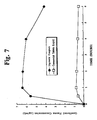
- Optimized rapid-release liquisolid tablets or capsules of water-insoluble drugs exhibit enhanced in-vitro and in-vivo drug release as compared to their commercial counterparts, including soft gelatin capsule preparations, as illustrated in Figs. 2-8 .
- Optimized sustained-release liquisolid tablets or capsules of water-insoluble drugs exhibit surprisingly constant dissolution rates (zero-order release) comparable only to expensive commercial preparations that combine osmotic pump technology and laser-drilled tablets, as illustrated in Fig. 9 .
- Liquisolid tablet formulations of the oily liquid drug, clofibrate, and of several water-insoluble solid drugs such as nifedipine, gemfibrozil, hydrocortisone, prednisolone, prednisone, spironolactone, methylclothiazide, and hydrochlorothiazide dissolved in suitable non-volatile solvents were evaluated. Additionally, the in-vitro dissolution profiles of such liquisolid products were compared with those of their commercial counterparts. Furthermore, the effects of aging on the crushing strengths and dissolution profiles of prepared liquisolid tablets were also investigated. Finally, in-vivo studies were conducted in rats to compare clofibrate, nifedipine and gemfibrozil liquisolid compacts with their commercial counterparts.
- gembibrozil Sigma Chem. Corp., St. Louis, MO
- nifedipine Barr Laboratories, Inc., Pomona, NY
- hydrochlorothiazide USP and hydrocortisone USP (Ciba-Geigy Co., Pharmaceuticals Division, Summit, NJ)
- spironolactone USP prednisolone USP and methyclothiazide USP
- prednisone USP Amend, Drug & Chemical Co., Irvington, NJ
- clofibrate Alerst Laboratories, Inc., New York, NY
- propylene glycol Sigma Chemical Co., St.
- Liquisolid tablet formulations of hydrocortisone, prednisolone, prednisone, spironolactone, methyclothiazide, hydrochlorothiazide and clofibrate were prepared using various cellulosic carriers (i.e., Avicel® PH 102 and PH 200, and E.G.C.) and silica coating materials (i.e., Cab-O-Sil® M5 and Syloid® 244 FP).
- non-volatile solvents such as, for example, propylene glycol (PG), polyethylene glycol 400 (PEG) and polysorbate 80, were employed to prepare the incorporated drug solutions or suspensions having, in some instances, different drug concentrations (% w/w).
- PG propylene glycol
- PEG polyethylene glycol 400
- polysorbate 80 polysorbate 80
- the new mathematical model was used to calculate the optimum quantities of ingredients required (per unit dose) to yield acceptably flowing and compressible systems.
- Various amounts, ranging from 5% to 12% w/w, of the disintegrant sodium starch glycolate (Explotab®) were included in all formulations in order to produce rapid-release preparations.
- the finished liquid/powder admixtures were compressed into cylindrical tablets possessing a specific crushing strength equal to 15 kg/g.
- non-volatile solvents such as PG, PEG 400 and polysorbate 80
- PG PG, PEG 400 and polysorbate 80
- a standard mixing process was used for all preparations. Initially, the calculated ingredient quantities per unit dose, multiplied by a factor equal to 50 (to prepare 50-tablet batches), were accurately weighed in a plastic weighing boat. Then, the liquid-powder contents, weighing 25 to 35 grams, were blended in a porcelain mortar with the aid of a pestle avoiding excessive trituration and particle size reduction. The mixing procedure was conducted in three stages. During the first stage, the system was blended at an approximate mixing rate of one rotation per second for approximately one minute in order to evenly distribute the liquid medication into the powder.
- the liquid/powder admixture was evenly spread as a uniform layer on the surfaces of the mortar and left standing for approximately five minutes to allow the drug solution or liquid drug to be absorbed in the interior of the powder particles.
- the powder was scraped off the mortar surfaces by means of an aluminum spatula, and then blended with a calculated quantity (5% to 12% w/w) of the disintegrant, Explotab®, for another thirty seconds, in a manner similar to the one used in the first stage, producing the final liquisolid formulation to be compressed.
- the prepared liquisolid systems were manually compressed into cylindrical tablets of desired weight using a model B hydraulic Carver Laboratory Press (Fred S. Carver, Inc., Hydraulic Equipment, Summit, NJ). Round, flat-face punches and die units possessing diameters varying, according to intended tablet size, from 0.87 cm to 1.27 cm (11/32" to 16/32") were used. All formulations were compressed into tablets possessing similar specific crushing strength , i.e., 15 kg/g. Specific crushing strength of a tablet is the ratio of its crushing strength S c (hardness) over its weight W t , i.e., S c /W t .
- liquisolid tablets weighing 0.6 and 0.3 grams were compressed to a hardness (S c ) of 9 kg (i.e., 15 kg/g x 0.6 g) and 4.5 kg (i.e., 15 kg/g x 0.3 g), respectively.
- HSN-1 contained 5 mg of hydrocortisone (per tablet) in the form of 0.15 g of its 3.33% w/w solution in PG, mixed with an E.G.C.:Cab-o-Sil® M5 system possessing an excipient ratio equal to 10.
- Formulations HSN-1 and HSN-2 contained 10 mg of hydrocortisone (per tablet) in the forms of 0.15 g of its 6.66% w/w solution and 0.1 g of its 10% w/w solution in PG, respectively.
- formulation HSN-4 contained 10 mg of hydrocortisone (per tablet) in the form of 0.1 g of its 10% w/w solution in PG, mixed with an Avicel® PH 102:Cab-O-Sil® M5 powder combination possessing excipient ratio equal to 20.
- a 12% w/w of the disintegrant Explotab® was included in all liquisolid compacts.
- Table 3 Liquisolid tablet formulations of hydrocortisone (HSN 5 & 10 mg).
- Formulation Ingredients Liquisolid Formulations (quantity/tablet in grams) HSN-1 (5 mg) HSN-2 (10 mg) HSN-3 (10 mg) HSN-4 (10 mg) Drug solution 3.33% w/w (hydrocortisone in propylene glycol) 0.150 g - - - Drug solution 6.67% w/w (hydrocortisone in propylene glycol) - 0.150 g - - Drug solution 10% w/w (hydrocortisone in propylene glycol) - - 0.100 g 0.100 g Avicel PH 102 (granular MCC) - - - 0.397 g Avicel PH 200 (coarse gran.
- prednisolone denoted as PLN-1, PLN-2, PLN-3 and PLN-4. All systems contained 5 mg of prednisolone (per tablet) in the form of 0.108 g of its 4.63% w/w solution in PG, and various carrier:coating combinations.
- a 12% w/w of Explotab® was included in all liquisolid compacts.
- the prepared prednisolone tablet formulations are listed in Table 4.
- Liquisolid tablet formulations of prednisolone (PLN 5 mg).
- Formulation Ingredients Liquisolid Formulations (quantity/tablet in grams) PLN-1 (5 mg) PLN-2 (5 mg) PLN-3 (5 mg) PLN-4 (5 mg) Drug solution 4.63% w/w prednisolone in propylene glycol (0.103 g for 5 mg PLN/tablet) 0.103 g 0.103 g 0.103 g 0.103 g Avicel PH 102 granular MCC 0.423 g - - - Avicel PH 200 (coarse gran. MCC) - 0.363 g 0.334 g - E.G.C.
- PSN-1 and PSN-2 Two liquisolid tablet formulations of prednisone possessing different strengths, i.e., 1 mg and 5 mg of prednisone per tablet, denoted as PSN-1 and PSN-2, were prepared. Both systems consisted of a mixture of Avicel® PH 200:Cab-O-Sil® M5 at an excipient ratio equal to 10, and different amounts (per tablet) of the same prednisone solution in PG possessing a standard 5% w/w drug concentration.
- each PSN-1 tablet contained 1 mg of prednisone in the form of 0.02 g of its 5% w/w drug solution
- PSN-2 tablets contained 5 mg of drug in the form of 0.1 g of its 5% w/w drug solution in PG.
- PG 5% w/w drug solution
- a 12% w/w of Explotab® was included in both liquisolid compacts.
- the prepared prednisone formulations are listed in Table 5.
- Table 5 Liquisolid tablet formulations of prednisone (PSN 1 & 5 mg), spironolactone (SPN 10 mg) and hydrochlorothiazide (HTZ 25 mg).
- Liquisolid Formulations (quantity/tablet in grams) PSN-1 (1 mg) PSN-2 (5 mg) PSN-1 (10 mg) HTZ-1 (25 mg) Prednisone solution 5% w/w (in propylene glycol) 0.020 g 0.100 g - - Spironolactone solution 10% w/w (in polyethylene glycol 400) - - 0.103 g - Hydrochlorothiazide solution 25% w/w (in polyethylene glycol 400) - - - 0.100 g Avicel PH 102 (granular MCC) - - 0.595 g - Avicel PH 200 (coarse gran.
- SPN-1 One liquisolid tablet formulation of spironolactone, denoted as SPN-1, was prepared.
- the system contained 10 mg of spironolactone (per tablet) in the form of 0.1 g of its 10% w/w solution in PEG 400, and a powder system of Avicel® PH 102:Cab-0-Sil® M5 possessing an excipient ratio equal to 20. A 12% w/w of Explotab® was also included.
- the prepared spironolactone liquisolid formulation is listed in Table 5.
- HTZ-1 hydrochlorothiazide
- the system contained 25 mg of hydrochlorothiazide (per tablet) in the form of 0.1 g of its 25% w/w solution in PEG 400, and a powder system of Avicel® PH 200:Cab-O-Sil® M5 possessing an excipient ratio equal to 10. A 12% w/w of Explotab® was also included.
- the prepared HTZ-1 formulation is listed in Table 5.
- Formulation CLF-1 contained 100 mg of this oily liquid drug (per tablet) mixed with an Avicel® PH 200:Cab-O-Sil® M5 system possessing an excipient ratio equal to 10.
- formulation CLF-2 consisted of 50 mg clofibrate (per tablet) blended with an Avicel® PH 102:Cab-O-Sil® M5 combination possessing an excipient ratio equal to 20.
- a 5% w/w of the disintegrant Explotab® was included in both liquisolid compacts.
- the prepared clofibrate tablet formulations are listed in Table 6.
- Formulation Ingredients Liquisolid Formulations (quantity/tablet in grams) MTZ-1 (5 mg) MTZ-2 (5 mg) CLF-1 (100 mg) CLF-2 (50 mg) Methyclothiazide solution 5% w/w (in polyethylene glycol 400) 0.100 g 0.100 g - - Clofibrate (only liquid drug) - - 0.100 g 0.050 g Avicel PH 102 (granular MCC) - 0.595 g - 0.595 g Avicel PH 200 (coarse granular MCC) 0.379 g - 0.505 g - Cab-O-Sil M5 (silica nm-sized) 0.038 g 0.030 g 0.051 g 0.030 g Explotab (sodium starch glycolate) 0.071 g 0.099 g
- NFD-RR An optimized rapid release liquisolid tablet formulation of Nifedipine, denoted as NFD-RR was prepared. It contained 5 mg of this practically insoluble drug (per tablet) in the form of 0.1 g of its 5% w/w solution in polyethylene glycol 400, mixed with an Avicel® PH 200:Cab-O-Sil® M5 system possessing an excipient ratio equal to 20. A 5% w/w of the disintegrant Explotab was included in the formulation which is listed in Table 7.
- NFD-SR An optimized rapid release liquisolid tablet formulation of Nifedipine, denoted as NFD-SR was prepared. It contained 30 mg of nifedipine in the form of 0.1 g of its 30% w/w suspension in PEG 400, mixed with an Avicel® PH 200:Cab-O-Sil® M5 system possessing an excipient ratio equal to 20. Twenty-two percent (22%) of the (matrix-producing) binder hydroxypropylmethyl cellullose (HPMC) and 5% of the lubricant magnesium stearate were included in the finished formulation which is listed in Table 7.
- HPMC hydroxypropylmethyl cellullose
- the spectrophotometric readings were converted into cumulative percent of drug released using the internal computation system of the Beckman DU-37 software, which was previously fed with the following parameters: (a) absorbance reading of a standard drug solution; (b) selected concentration of the standard drug solution measured; and (c) maximum concentration of the drug in the dissolution medium expected at the 100% release level.
- (a) absorbance reading of a standard drug solution (b) selected concentration of the standard drug solution measured; and (c) maximum concentration of the drug in the dissolution medium expected at the 100% release level.
- LC#1, LC#2, LC#3 and LC#4 containing 0.1 g (per compact unit) of a 10% w/w hydrocortisone solution in PG mixed with different carrier: coating combinations possessing minimum excipient ratios, were prepared.
- LC#5 and LC#6 containing 0.1 g (per compact unit) of a 5% w/w methyclothiazide solution in PEG 400 were prepared.
- LC#7 and LC#8 containing 50 and 100 mg (per compact unit) of clofibrate, respectively, were also prepared.
- the flow rate and consistency of the prepared liquisolid systems were characterized using a recording powder flowmeter (RPF) assembly.
- Experimental conditions for flow rate determinations using the RPF were similar to those employed during the liquisolid flowability (LSF) test.
- the conditions characterizing a liquisolid system as acceptably flowing were similar to those set during LSF testing and ⁇ -value determinations. Consequently, a liquid/powder admixture was considered acceptably flowable if 30 grams of the mixture were able to pass through the hopper of the RPF assembly (at a vibration level produced by a standard pressure of 10 psi) exhibiting a flow rate of not less than 4 grams/sec and flow consistency without any blockages at the start or during the powder flow.
- Table 10 Flowability and compressibility evaluation of liquisolid compacts containing a solution of hydrocortisone in propylene glycol (10% w/w).
- SPC Standard pactisity conditions
- P ⁇ pressure of pactisity
- r ⁇ pactisity pressure rate
- t ⁇ pactisity pressure dwell time
- pactisity ⁇ of a liquisolid compact is the crushing strength of a one-gram tablet of the system compressed at SPC. According to conditions defined during LSC testing, the liquisolid system under investigation was considered acceptably compressible if it could be compressed to a pactisity greater than or equal to 20 kg/g, without any visual evidence of liquid being squeezed out of the compacts during compression.
- Pactisity results of the prepared liquisolid compacts are included in Tables 10 and 11.
- the measured flow rates and pactisities of the liquisolid compacts LC #1-8 are given in Tables 10 and 11. All systems prepared according to the formulation-mathematical model of the present invention displayed acceptable flow and compression properties. Tested using the RPF assembly, all preparations exhibited flow rates higher than 4 g/sec and consistent flow without any blockages at the start or during the powder's passage through the hopper orifice. Moreover, the same liquid/powder admixtures, compressed at standard pactisity conditions (SPC), yielded pactisities greater than, or close to 20 kg/g. Such flow rate and pactisity results comply with the previously set limits of acceptable flowability and compressibility, providing verification for the validity of the mathematical model to produce free-flowing and readily compressible liquisolid systems.
- SPC standard pactisity conditions
- liquisolid compacts of gemfibrozil and nifedipine displayed significantly superior drug plasma levels in rats as compared to their highly expensive commercial counterparts. Specifically, a 10 to 12 times higher bioavailability of gemfibrozil in rats was observed from liquisolid compacts (GFZ, 60 mg) as compared to its commercial counterpart (LOPID 600 mg tablets). A three to four times higher bioavailability of nifedipine in rats was observed from liquisolid compacts (NFD-RR, 5 mg) as compared to its commercial counterpart (soft gelatin capsules of nifedipine).
- GFZ liquisolid compacts
- LPID 600 mg tablets LPID 600 mg tablets
- a three to four times higher bioavailability of nifedipine in rats was observed from liquisolid compacts (NFD-RR, 5 mg) as compared to its commercial counterpart (soft gelatin capsules of nifedipine).
- FIG. 9 A representative sample for the potential of sustained-release liquisolid compacts is given in Fig. 9 .
- the in-vitro release rate of nifedipine (over a 12-hour period) from sustained-release liquisolid tablets was more constant (zero-order release) than that displayed by its highly expensive commercial counterpart (PROCARDIA-XL).
Landscapes
- Health & Medical Sciences (AREA)
- Chemical & Material Sciences (AREA)
- Bioinformatics & Cheminformatics (AREA)
- Engineering & Computer Science (AREA)
- Epidemiology (AREA)
- Life Sciences & Earth Sciences (AREA)
- Animal Behavior & Ethology (AREA)
- General Health & Medical Sciences (AREA)
- Public Health (AREA)
- Veterinary Medicine (AREA)
- Pharmacology & Pharmacy (AREA)
- Medicinal Chemistry (AREA)
- Inorganic Chemistry (AREA)
- Medicinal Preparation (AREA)
- Organic Low-Molecular-Weight Compounds And Preparation Thereof (AREA)
- Physical Or Chemical Processes And Apparatus (AREA)
Applications Claiming Priority (3)
| Application Number | Priority Date | Filing Date | Title |
|---|---|---|---|
| US08/658,514 US5800834A (en) | 1996-06-10 | 1996-06-10 | Liquisolid systems and methods of preparing same |
| PCT/US1997/010093 WO1997047290A1 (en) | 1996-06-10 | 1997-06-09 | Liquisolid systems and methods of preparing same |
| US658514 | 2003-09-09 |
Publications (3)
| Publication Number | Publication Date |
|---|---|
| EP0946154A1 EP0946154A1 (en) | 1999-10-06 |
| EP0946154A4 EP0946154A4 (en) | 2007-02-07 |
| EP0946154B1 true EP0946154B1 (en) | 2010-11-03 |
Family
ID=24641555
Family Applications (1)
| Application Number | Title | Priority Date | Filing Date |
|---|---|---|---|
| EP97929921A Expired - Lifetime EP0946154B1 (en) | 1996-06-10 | 1997-06-09 | Liquisolid systems and methods of preparing same |
Country Status (12)
| Country | Link |
|---|---|
| US (2) | US5800834A (ja) |
| EP (1) | EP0946154B1 (ja) |
| JP (1) | JP2000512295A (ja) |
| CN (1) | CN1224379C (ja) |
| AT (1) | ATE486584T1 (ja) |
| BR (1) | BR9709778A (ja) |
| CA (1) | CA2257890C (ja) |
| DE (1) | DE69740040D1 (ja) |
| ES (1) | ES2355871T3 (ja) |
| IL (1) | IL127295A (ja) |
| RU (1) | RU2209623C2 (ja) |
| WO (1) | WO1997047290A1 (ja) |
Cited By (1)
| Publication number | Priority date | Publication date | Assignee | Title |
|---|---|---|---|---|
| CN102949363A (zh) * | 2012-11-28 | 2013-03-06 | 山东省中医药研究院 | 熊果酸液固压缩片 |
Families Citing this family (30)
| Publication number | Priority date | Publication date | Assignee | Title |
|---|---|---|---|---|
| IL115445A (en) * | 1994-10-17 | 1999-08-17 | Akzo Nobel Nv | Solid pharmaceutical compositions comprising low dosage active ingredient oil and excipient capable of binding water and their preparation |
| DE69942205D1 (de) | 1998-08-13 | 2010-05-12 | Cima Labs Inc | Microemulsionen als feste dosisformen zur oralen verabreichung |
| US6342249B1 (en) | 1998-12-23 | 2002-01-29 | Alza Corporation | Controlled release liquid active agent formulation dosage forms |
| EP1140027B1 (en) * | 1998-12-23 | 2005-10-12 | Alza Corporation | Dosage forms comprising porous particles |
| US6635281B2 (en) | 1998-12-23 | 2003-10-21 | Alza Corporation | Gastric retaining oral liquid dosage form |
| US6793934B1 (en) | 1999-12-08 | 2004-09-21 | Shire Laboratories, Inc. | Solid oral dosage form |
| US7029700B2 (en) * | 2000-01-14 | 2006-04-18 | Brown University Research Foundation | Micronized freeze-dried particles |
| WO2001052818A1 (en) | 2000-01-19 | 2001-07-26 | Pharmaceutical Discovery Corporation | Dry powder formulations of antihistamine for nasal administration |
| US6399101B1 (en) | 2000-03-30 | 2002-06-04 | Mova Pharmaceutical Corp. | Stable thyroid hormone preparations and method of making same |
| US7056951B2 (en) | 2000-09-26 | 2006-06-06 | Mutual Pharmaceutical Co., Inc. | Stable solid dosage forms of amino acids and processes for producing same |
| US6855333B1 (en) | 2000-10-03 | 2005-02-15 | Mutual Pharmaceutical Co., Inc. | Stabilization of solid thyroid drug formulations |
| US6979462B1 (en) | 2000-10-03 | 2005-12-27 | Mutual Pharmaceutical Co., Inc. | Stabilization of solid drug formulations |
| US6692771B2 (en) | 2001-02-23 | 2004-02-17 | Cima Labs Inc. | Emulsions as solid dosage forms for oral administration |
| AU2001241730B2 (en) * | 2001-02-23 | 2007-03-15 | Cima Labs Inc. | Emulsions as solid dosage forms for oral administration |
| ITMI20012366A1 (it) * | 2001-11-09 | 2003-05-09 | Farmatron Ltd | Sistemi terapeutici stabilizzati a rilascio immediato e/o modificato per la somministrazione orale di principi attivi e/o eccipienti e/o ali |
| US20030099699A1 (en) * | 2001-11-13 | 2003-05-29 | Hanshew Dwight D. | Storage stable thyroxine active drug formulations and methods for their production |
| US6645526B2 (en) * | 2001-11-13 | 2003-11-11 | Mylan Pharmaceuticals, Inc. | Storage stable thyroxine active drug formulations and methods for their production |
| KR101170844B1 (ko) * | 2003-02-24 | 2012-08-02 | 파마슈티칼 프로덕션스, 인크. | 경점막 약물 전달 시스템 |
| US20050181059A1 (en) * | 2003-09-30 | 2005-08-18 | Spherics, Inc. | Nanoparticulate therapeutic biologically active agents |
| WO2005087204A1 (en) | 2004-03-08 | 2005-09-22 | Spiridon Spireas | Bioavailable solid dosage forms of metaxalone |
| MY142989A (en) | 2004-03-10 | 2011-02-14 | Bayer Schering Pharma Ag | Stabilised supersaturated solids of lipophilic drugs |
| EP1791520A2 (en) * | 2004-08-19 | 2007-06-06 | Alza Corporation | Controlled release nanoparticle active agent formulation dosage forms and methods |
| FR2894822B1 (fr) * | 2005-12-20 | 2011-11-18 | Pf Medicament | Composition pharmaceutique contenant des acides gras omega-3 |
| US7569612B1 (en) | 2006-08-21 | 2009-08-04 | Mutual Pharmaceutical Company, Inc. | Methods of use of fenofibric acid |
| US10004682B2 (en) | 2010-08-24 | 2018-06-26 | Rutgers, The State University Of New Jersey | Formulation and manufacture of pharmaceuticals by impregnation onto porous carriers |
| EP2950923B1 (en) | 2013-02-01 | 2022-03-09 | W.R. Grace & CO. - CONN. | Porous silica gel as a carrier for liquid technologies |
| GB201812022D0 (en) | 2018-07-24 | 2018-09-05 | Univ Of Sussex | Pharmaceutical methods and compositions |
| EP4076501A4 (en) | 2019-12-16 | 2024-05-08 | Rutgers, the State University of New Jersey | CONTINUOUS PROCESSES FOR MANUFACTURING IMPREGNATED POROUS SUPPORTS AND FOR MANUFACTURING IMPREGNATED POROUS SUPPORTS CONTAINING PHARMACEUTICAL PRODUCTS |
| US10744137B1 (en) * | 2020-01-06 | 2020-08-18 | King Abdulaziz University | Liquisolid tablet containing combined dose of tadalafil and dapoxetine |
| CN111067875B (zh) * | 2020-01-16 | 2021-11-30 | 兰州大学 | 一种阿苯达唑液固压缩片及其制备方法 |
Family Cites Families (4)
| Publication number | Priority date | Publication date | Assignee | Title |
|---|---|---|---|---|
| GB1368112A (en) * | 1971-09-08 | 1974-09-25 | Geistlich Soehne Ag | Chemical compositions for the treatment of hyperlipemia |
| DE2400819C2 (de) * | 1974-01-09 | 1982-04-22 | Bayer Ag, 5090 Leverkusen | Verfahren zur Herstellung fester Zubereitungen von schwerlöslichen Arzneimittelwirkstoffen in feinster Verteilung |
| SE8601624D0 (sv) * | 1986-04-11 | 1986-04-11 | Haessle Ab | New pharmaceutical preparations |
| DE69222006T2 (de) * | 1991-10-30 | 1998-01-22 | Glaxo Group Ltd | Mehrschichtzusammensetzungen enthaltend Histamin- oder Serotonin- Antagonisten |
-
1996
- 1996-06-10 US US08/658,514 patent/US5800834A/en not_active Expired - Lifetime
-
1997
- 1997-06-09 CA CA002257890A patent/CA2257890C/en not_active Expired - Lifetime
- 1997-06-09 IL IL12729596A patent/IL127295A/en not_active IP Right Cessation
- 1997-06-09 DE DE69740040T patent/DE69740040D1/de not_active Expired - Lifetime
- 1997-06-09 BR BR9709778-0A patent/BR9709778A/pt not_active Application Discontinuation
- 1997-06-09 CN CNB971953996A patent/CN1224379C/zh not_active Expired - Lifetime
- 1997-06-09 RU RU99100314/14A patent/RU2209623C2/ru not_active IP Right Cessation
- 1997-06-09 JP JP10501792A patent/JP2000512295A/ja active Pending
- 1997-06-09 ES ES97929921T patent/ES2355871T3/es not_active Expired - Lifetime
- 1997-06-09 AT AT97929921T patent/ATE486584T1/de not_active IP Right Cessation
- 1997-06-09 WO PCT/US1997/010093 patent/WO1997047290A1/en not_active Ceased
- 1997-06-09 EP EP97929921A patent/EP0946154B1/en not_active Expired - Lifetime
- 1997-10-01 US US08/937,240 patent/US5968550A/en not_active Expired - Lifetime
Non-Patent Citations (2)
| Title |
|---|
| SPIREAS S. ET AL: "Powdered Solution Technology: Principles and Mechanism.", PHARMACEUTICAL RESEARCH, vol. 9, no. 10, 1992, pages 1351 - 1358, XP002923448 * |
| SPIROS S. ET AL: "Theory and practice of liquisolid compacts", PHARMACEUTICAL RESEARCH, KLUWER ACADEMIC PUBLISHERS, NEW YORK, NY, US, vol. 10, no. 10 SUPPL, 1 January 1993 (1993-01-01), pages S158, XP008083281, ISSN: 0724-8741 * |
Cited By (1)
| Publication number | Priority date | Publication date | Assignee | Title |
|---|---|---|---|---|
| CN102949363A (zh) * | 2012-11-28 | 2013-03-06 | 山东省中医药研究院 | 熊果酸液固压缩片 |
Also Published As
| Publication number | Publication date |
|---|---|
| CN1224379C (zh) | 2005-10-26 |
| WO1997047290A1 (en) | 1997-12-18 |
| ATE486584T1 (de) | 2010-11-15 |
| IL127295A (en) | 2002-05-23 |
| JP2000512295A (ja) | 2000-09-19 |
| CA2257890C (en) | 2003-10-28 |
| RU2209623C2 (ru) | 2003-08-10 |
| HK1022844A1 (en) | 2000-08-25 |
| AU3387097A (en) | 1998-01-07 |
| CN1221337A (zh) | 1999-06-30 |
| EP0946154A4 (en) | 2007-02-07 |
| ES2355871T3 (es) | 2011-03-31 |
| DE69740040D1 (de) | 2010-12-16 |
| US5968550A (en) | 1999-10-19 |
| AU709566B2 (en) | 1999-09-02 |
| IL127295A0 (en) | 1999-09-22 |
| US5800834A (en) | 1998-09-01 |
| BR9709778A (pt) | 2000-01-11 |
| EP0946154A1 (en) | 1999-10-06 |
| CA2257890A1 (en) | 1997-12-18 |
Similar Documents
| Publication | Publication Date | Title |
|---|---|---|
| US5800834A (en) | Liquisolid systems and methods of preparing same | |
| US6423339B1 (en) | Liquisolid systems and methods of preparing same | |
| Spireas et al. | Enhancement of prednisolone dissolution properties using liquisolid compacts | |
| KR100415897B1 (ko) | 생체 이용율이 높은 페노피브레이트 제약학적 조성물 | |
| Spireas et al. | AAAIn vitro release evaluation of hydrocortisone liquisolid tablets | |
| US5474989A (en) | Drug composition | |
| DE3879080T2 (de) | Pharmazeutische matrix mit verzoegerter freisetzung und verfahren. | |
| AU2004218859B2 (en) | Impregnated powder improving bioavailability and/or solubility and method of production | |
| Khalid et al. | Formulation and evaluation of rofecoxib liquisolid tablets | |
| FI96095B (fi) | Menetelmä jatkuvavapautteisen lääkevalmisteen valmistamiseksi | |
| JPS62242613A (ja) | 徐放性を有する新規医薬製剤 | |
| KR930008956B1 (ko) | 서방형 이부프로펜 제제의 제조방법 | |
| US20080138403A1 (en) | Pharmaceutical dosage forms of oxcarbazepine | |
| JP4532903B2 (ja) | 微粒子組成物 | |
| AU709566C (en) | Liquisolid systems and methods of preparing same | |
| WO2010046418A1 (en) | Pharmaceutical composition comprising levetiracetam | |
| HK1022844B (en) | Liquisolid systems and methods of preparing same | |
| EP0443027B1 (en) | Drug composition | |
| Altememy et al. | Formulation and evaluation of meloxicam liquisolid compact | |
| KR100490094B1 (ko) | 액상/고상시스템및그제조방법 | |
| MXPA98010456A (en) | Liquisolid systems and methods to prepare losmis | |
| DE602004000016T2 (de) | Schnell freisetzende farmazeutische darreichungsform enthaltend polymorphes tibolon | |
| JPH0560810B2 (ja) | ||
| Sharma et al. | FORMULATION, OPTIMIZATION AND EVALUATION OF EXTENDED RELEASE TABLET OF CYANOCOBALAMIN BY USING POLYMER MATRIX SYSTEM | |
| Patel et al. | Liquisolid technology: a novel approach to enhance solubility of poorly water soluble drugs |
Legal Events
| Date | Code | Title | Description |
|---|---|---|---|
| PUAI | Public reference made under article 153(3) epc to a published international application that has entered the european phase |
Free format text: ORIGINAL CODE: 0009012 |
|
| 17P | Request for examination filed |
Effective date: 19990108 |
|
| AK | Designated contracting states |
Kind code of ref document: A1 Designated state(s): AT BE CH DE DK ES FI FR GB GR IE IT LI LU MC NL PT SE |
|
| RIC1 | Information provided on ipc code assigned before grant |
Ipc: A61K 9/20 20060101ALI20061222BHEP Ipc: A61K 9/14 20060101AFI20061222BHEP |
|
| A4 | Supplementary search report drawn up and despatched |
Effective date: 20070110 |
|
| 17Q | First examination report despatched |
Effective date: 20070921 |
|
| GRAP | Despatch of communication of intention to grant a patent |
Free format text: ORIGINAL CODE: EPIDOSNIGR1 |
|
| GRAS | Grant fee paid |
Free format text: ORIGINAL CODE: EPIDOSNIGR3 |
|
| GRAA | (expected) grant |
Free format text: ORIGINAL CODE: 0009210 |
|
| AK | Designated contracting states |
Kind code of ref document: B1 Designated state(s): AT BE CH DE DK ES FI FR GB GR IE IT LI LU MC NL PT SE |
|
| REG | Reference to a national code |
Ref country code: GB Ref legal event code: FG4D |
|
| REG | Reference to a national code |
Ref country code: CH Ref legal event code: EP |
|
| REG | Reference to a national code |
Ref country code: IE Ref legal event code: FG4D |
|
| REF | Corresponds to: |
Ref document number: 69740040 Country of ref document: DE Date of ref document: 20101216 Kind code of ref document: P |
|
| REG | Reference to a national code |
Ref country code: CH Ref legal event code: PFA Owner name: BOLTON, SANFORD M. Free format text: SPIREAS, SPIRIDON#441 RATZER ROAD#WAYNE, NJ 07470 (US) $ BOLTON, SANFORD M.#5495 N. VIA VELAZQUEZ#TUCSON, AZ 85750 (US) -TRANSFER TO- BOLTON, SANFORD M.#5495 N. VIA VELAZQUEZ#TUCSON, AZ 85750 (US) $ SPIREAS, SPIRIDON#1536 PEBBLETOWN DRIVE#NEW HOPE PA 18938 (US) Ref country code: CH Ref legal event code: NV Representative=s name: KELLER & PARTNER PATENTANWAELTE AG |
|
| REG | Reference to a national code |
Ref country code: SE Ref legal event code: TRGR |
|
| REG | Reference to a national code |
Ref country code: NL Ref legal event code: VDEP Effective date: 20101103 |
|
| RAP4 | Party data changed (patent owner data changed or rights of a patent transferred) |
Owner name: BOLTON, SANFORD M. Owner name: SPIREAS, SPIRIDON |
|
| RIN2 | Information on inventor provided after grant (corrected) |
Inventor name: BOLTON, SANFORD M. Inventor name: SPIREAS, SPIRIDON |
|
| REG | Reference to a national code |
Ref country code: ES Ref legal event code: FG2A Ref document number: 2355871 Country of ref document: ES Kind code of ref document: T3 Effective date: 20110331 |
|
| REG | Reference to a national code |
Ref country code: HK Ref legal event code: GR Ref document number: 1022844 Country of ref document: HK |
|
| REG | Reference to a national code |
Ref country code: GR Ref legal event code: EP Ref document number: 20110400270 Country of ref document: GR Effective date: 20110317 |
|
| REG | Reference to a national code |
Ref country code: DE Ref legal event code: R081 Ref document number: 69740040 Country of ref document: DE Owner name: BOLTON, SANFORD M., TUCSON, US Free format text: FORMER OWNERS: SPIREAS, SPIRIDON, WAYNE, N.J., US; BOLTON, SANFORD M., TUCSON, ARIZ., US Effective date: 20110228 Ref country code: DE Ref legal event code: R081 Ref document number: 69740040 Country of ref document: DE Owner name: SPIREAS, SPIRIDON, NEW HOPE, US Free format text: FORMER OWNERS: SPIREAS, SPIRIDON, WAYNE, N.J., US; BOLTON, SANFORD M., TUCSON, ARIZ., US Effective date: 20110228 Ref country code: DE Ref legal event code: R081 Ref document number: 69740040 Country of ref document: DE Owner name: SPIREAS, SPIRIDON, NEW HOPE, US Free format text: FORMER OWNER: SPIRIDON SPIREAS,SANFORD M. BOLTON, , US Effective date: 20110228 Ref country code: DE Ref legal event code: R081 Ref document number: 69740040 Country of ref document: DE Owner name: BOLTON, SANFORD M., TUCSON, US Free format text: FORMER OWNER: SPIRIDON SPIREAS,SANFORD M. BOLTON, , US Effective date: 20110228 |
|
| PG25 | Lapsed in a contracting state [announced via postgrant information from national office to epo] |
Ref country code: PT Free format text: LAPSE BECAUSE OF FAILURE TO SUBMIT A TRANSLATION OF THE DESCRIPTION OR TO PAY THE FEE WITHIN THE PRESCRIBED TIME-LIMIT Effective date: 20110303 Ref country code: AT Free format text: LAPSE BECAUSE OF FAILURE TO SUBMIT A TRANSLATION OF THE DESCRIPTION OR TO PAY THE FEE WITHIN THE PRESCRIBED TIME-LIMIT Effective date: 20101103 Ref country code: FI Free format text: LAPSE BECAUSE OF FAILURE TO SUBMIT A TRANSLATION OF THE DESCRIPTION OR TO PAY THE FEE WITHIN THE PRESCRIBED TIME-LIMIT Effective date: 20101103 Ref country code: NL Free format text: LAPSE BECAUSE OF FAILURE TO SUBMIT A TRANSLATION OF THE DESCRIPTION OR TO PAY THE FEE WITHIN THE PRESCRIBED TIME-LIMIT Effective date: 20101103 |
|
| PG25 | Lapsed in a contracting state [announced via postgrant information from national office to epo] |
Ref country code: BE Free format text: LAPSE BECAUSE OF FAILURE TO SUBMIT A TRANSLATION OF THE DESCRIPTION OR TO PAY THE FEE WITHIN THE PRESCRIBED TIME-LIMIT Effective date: 20101103 |
|
| PG25 | Lapsed in a contracting state [announced via postgrant information from national office to epo] |
Ref country code: DK Free format text: LAPSE BECAUSE OF FAILURE TO SUBMIT A TRANSLATION OF THE DESCRIPTION OR TO PAY THE FEE WITHIN THE PRESCRIBED TIME-LIMIT Effective date: 20101103 |
|
| PLBE | No opposition filed within time limit |
Free format text: ORIGINAL CODE: 0009261 |
|
| STAA | Information on the status of an ep patent application or granted ep patent |
Free format text: STATUS: NO OPPOSITION FILED WITHIN TIME LIMIT |
|
| 26N | No opposition filed |
Effective date: 20110804 |
|
| REG | Reference to a national code |
Ref country code: DE Ref legal event code: R097 Ref document number: 69740040 Country of ref document: DE Effective date: 20110804 |
|
| REG | Reference to a national code |
Ref country code: CH Ref legal event code: PCAR Free format text: NEW ADDRESS: EIGERSTRASSE 2 POSTFACH, 3000 BERN 14 (CH) |
|
| REG | Reference to a national code |
Ref country code: FR Ref legal event code: PLFP Year of fee payment: 19 |
|
| REG | Reference to a national code |
Ref country code: FR Ref legal event code: PLFP Year of fee payment: 20 |
|
| PG25 | Lapsed in a contracting state [announced via postgrant information from national office to epo] |
Ref country code: IT Free format text: LAPSE BECAUSE OF NON-PAYMENT OF DUE FEES Effective date: 20150609 |
|
| PGFP | Annual fee paid to national office [announced via postgrant information from national office to epo] |
Ref country code: IE Payment date: 20160609 Year of fee payment: 20 Ref country code: DE Payment date: 20160601 Year of fee payment: 20 Ref country code: LU Payment date: 20160607 Year of fee payment: 20 Ref country code: ES Payment date: 20160510 Year of fee payment: 20 Ref country code: MC Payment date: 20160426 Year of fee payment: 20 Ref country code: GR Payment date: 20160516 Year of fee payment: 20 Ref country code: GB Payment date: 20160608 Year of fee payment: 20 Ref country code: CH Payment date: 20160613 Year of fee payment: 20 |
|
| PGFP | Annual fee paid to national office [announced via postgrant information from national office to epo] |
Ref country code: SE Payment date: 20160613 Year of fee payment: 20 Ref country code: FR Payment date: 20160516 Year of fee payment: 20 |
|
| PG25 | Lapsed in a contracting state [announced via postgrant information from national office to epo] |
Ref country code: IT Free format text: LAPSE BECAUSE OF NON-PAYMENT OF DUE FEES Effective date: 20150609 |
|
| PGRI | Patent reinstated in contracting state [announced from national office to epo] |
Ref country code: IT Effective date: 20161125 |
|
| PGFP | Annual fee paid to national office [announced via postgrant information from national office to epo] |
Ref country code: IT Payment date: 20160621 Year of fee payment: 20 |
|
| REG | Reference to a national code |
Ref country code: DE Ref legal event code: R071 Ref document number: 69740040 Country of ref document: DE |
|
| REG | Reference to a national code |
Ref country code: CH Ref legal event code: PL |
|
| REG | Reference to a national code |
Ref country code: GB Ref legal event code: PE20 Expiry date: 20170608 |
|
| REG | Reference to a national code |
Ref country code: IE Ref legal event code: MK9A |
|
| PG25 | Lapsed in a contracting state [announced via postgrant information from national office to epo] |
Ref country code: GB Free format text: LAPSE BECAUSE OF EXPIRATION OF PROTECTION Effective date: 20170608 |
|
| REG | Reference to a national code |
Ref country code: SE Ref legal event code: EUG |
|
| REG | Reference to a national code |
Ref country code: ES Ref legal event code: FD2A Effective date: 20170926 |
|
| PG25 | Lapsed in a contracting state [announced via postgrant information from national office to epo] |
Ref country code: ES Free format text: LAPSE BECAUSE OF EXPIRATION OF PROTECTION Effective date: 20170610 |
|
| PG25 | Lapsed in a contracting state [announced via postgrant information from national office to epo] |
Ref country code: IE Free format text: LAPSE BECAUSE OF EXPIRATION OF PROTECTION Effective date: 20170609 |