EP0889156B9 - Process for producing woven or knitted fabric from yarn-dyed raw silk - Google Patents
Process for producing woven or knitted fabric from yarn-dyed raw silk Download PDFInfo
- Publication number
- EP0889156B9 EP0889156B9 EP96909363A EP96909363A EP0889156B9 EP 0889156 B9 EP0889156 B9 EP 0889156B9 EP 96909363 A EP96909363 A EP 96909363A EP 96909363 A EP96909363 A EP 96909363A EP 0889156 B9 EP0889156 B9 EP 0889156B9
- Authority
- EP
- European Patent Office
- Prior art keywords
- silk
- dyed
- fabric
- yarn
- sericin
- Prior art date
- Legal status (The legal status is an assumption and is not a legal conclusion. Google has not performed a legal analysis and makes no representation as to the accuracy of the status listed.)
- Expired - Lifetime
Links
- 239000004744 fabric Substances 0.000 title claims abstract description 222
- 238000000034 method Methods 0.000 title claims abstract description 52
- 230000008569 process Effects 0.000 title claims abstract description 30
- 108010013296 Sericins Proteins 0.000 claims abstract description 51
- XLYOFNOQVPJJNP-UHFFFAOYSA-N water Substances O XLYOFNOQVPJJNP-UHFFFAOYSA-N 0.000 claims abstract description 37
- 102000004190 Enzymes Human genes 0.000 claims abstract description 31
- 108090000790 Enzymes Proteins 0.000 claims abstract description 31
- 238000004043 dyeing Methods 0.000 claims abstract description 31
- 238000009941 weaving Methods 0.000 claims abstract description 19
- 238000009940 knitting Methods 0.000 claims abstract description 18
- 230000008961 swelling Effects 0.000 claims abstract description 18
- 108010022355 Fibroins Proteins 0.000 claims abstract description 10
- 239000000835 fiber Substances 0.000 claims abstract description 9
- 238000009991 scouring Methods 0.000 claims description 44
- 238000004519 manufacturing process Methods 0.000 claims description 20
- 238000005406 washing Methods 0.000 claims description 7
- UIIMBOGNXHQVGW-UHFFFAOYSA-M Sodium bicarbonate Chemical compound [Na+].OC([O-])=O UIIMBOGNXHQVGW-UHFFFAOYSA-M 0.000 claims description 6
- 238000007598 dipping method Methods 0.000 claims description 4
- 229910000030 sodium bicarbonate Inorganic materials 0.000 claims description 3
- 235000017557 sodium bicarbonate Nutrition 0.000 claims description 3
- 238000009971 piece dyeing Methods 0.000 abstract description 16
- 230000007547 defect Effects 0.000 abstract description 11
- 238000005452 bending Methods 0.000 abstract 1
- 230000002255 enzymatic effect Effects 0.000 abstract 1
- 230000003301 hydrolyzing effect Effects 0.000 abstract 1
- 238000011282 treatment Methods 0.000 description 21
- 230000002940 repellent Effects 0.000 description 16
- 239000005871 repellent Substances 0.000 description 16
- 238000012360 testing method Methods 0.000 description 15
- 206010042674 Swelling Diseases 0.000 description 14
- 238000001035 drying Methods 0.000 description 12
- 230000037303 wrinkles Effects 0.000 description 12
- 210000002268 wool Anatomy 0.000 description 10
- 239000000047 product Substances 0.000 description 9
- 239000002131 composite material Substances 0.000 description 8
- 239000003513 alkali Substances 0.000 description 7
- 238000009958 sewing Methods 0.000 description 7
- 235000014676 Phragmites communis Nutrition 0.000 description 6
- 238000005520 cutting process Methods 0.000 description 6
- 239000002904 solvent Substances 0.000 description 6
- 239000004753 textile Substances 0.000 description 6
- 241000196324 Embryophyta Species 0.000 description 5
- 244000273256 Phragmites communis Species 0.000 description 4
- 235000013351 cheese Nutrition 0.000 description 4
- 238000005108 dry cleaning Methods 0.000 description 4
- 239000003086 colorant Substances 0.000 description 3
- 238000000354 decomposition reaction Methods 0.000 description 3
- 238000013461 design Methods 0.000 description 3
- 230000000694 effects Effects 0.000 description 3
- 239000000463 material Substances 0.000 description 3
- 238000005259 measurement Methods 0.000 description 3
- 239000002759 woven fabric Substances 0.000 description 3
- 229920002955 Art silk Polymers 0.000 description 2
- 241000894006 Bacteria Species 0.000 description 2
- OKTJSMMVPCPJKN-UHFFFAOYSA-N Carbon Chemical compound [C] OKTJSMMVPCPJKN-UHFFFAOYSA-N 0.000 description 2
- 102000005158 Subtilisins Human genes 0.000 description 2
- 108010056079 Subtilisins Proteins 0.000 description 2
- 229910052799 carbon Inorganic materials 0.000 description 2
- 238000005516 engineering process Methods 0.000 description 2
- 230000000135 prohibitive effect Effects 0.000 description 2
- 238000011084 recovery Methods 0.000 description 2
- 239000000344 soap Substances 0.000 description 2
- 210000004243 sweat Anatomy 0.000 description 2
- 238000004804 winding Methods 0.000 description 2
- 238000009970 yarn dyeing Methods 0.000 description 2
- 229920000742 Cotton Polymers 0.000 description 1
- 241001465754 Metazoa Species 0.000 description 1
- 108091005804 Peptidases Proteins 0.000 description 1
- 239000004365 Protease Substances 0.000 description 1
- 229920000297 Rayon Polymers 0.000 description 1
- 102100037486 Reverse transcriptase/ribonuclease H Human genes 0.000 description 1
- 229920002472 Starch Polymers 0.000 description 1
- 241001584775 Tunga penetrans Species 0.000 description 1
- 238000005299 abrasion Methods 0.000 description 1
- 239000002253 acid Substances 0.000 description 1
- WYTGDNHDOZPMIW-RCBQFDQVSA-N alstonine Natural products C1=CC2=C3C=CC=CC3=NC2=C2N1C[C@H]1[C@H](C)OC=C(C(=O)OC)[C@H]1C2 WYTGDNHDOZPMIW-RCBQFDQVSA-N 0.000 description 1
- 230000008901 benefit Effects 0.000 description 1
- 239000006227 byproduct Substances 0.000 description 1
- 230000008859 change Effects 0.000 description 1
- 230000000052 comparative effect Effects 0.000 description 1
- 230000000295 complement effect Effects 0.000 description 1
- 238000011109 contamination Methods 0.000 description 1
- 230000007423 decrease Effects 0.000 description 1
- 238000011161 development Methods 0.000 description 1
- 238000002474 experimental method Methods 0.000 description 1
- 238000005562 fading Methods 0.000 description 1
- 239000003292 glue Substances 0.000 description 1
- 238000007602 hot air drying Methods 0.000 description 1
- 239000002932 luster Substances 0.000 description 1
- 238000002156 mixing Methods 0.000 description 1
- 230000035515 penetration Effects 0.000 description 1
- 238000012545 processing Methods 0.000 description 1
- 239000002964 rayon Substances 0.000 description 1
- 230000008439 repair process Effects 0.000 description 1
- 238000002791 soaking Methods 0.000 description 1
- 239000007787 solid Substances 0.000 description 1
- 235000019698 starch Nutrition 0.000 description 1
- 239000008107 starch Substances 0.000 description 1
- 230000007306 turnover Effects 0.000 description 1
Images


Classifications
-
- D—TEXTILES; PAPER
- D06—TREATMENT OF TEXTILES OR THE LIKE; LAUNDERING; FLEXIBLE MATERIALS NOT OTHERWISE PROVIDED FOR
- D06P—DYEING OR PRINTING TEXTILES; DYEING LEATHER, FURS OR SOLID MACROMOLECULAR SUBSTANCES IN ANY FORM
- D06P5/00—Other features in dyeing or printing textiles, or dyeing leather, furs, or solid macromolecular substances in any form
- D06P5/02—After-treatment
-
- D—TEXTILES; PAPER
- D06—TREATMENT OF TEXTILES OR THE LIKE; LAUNDERING; FLEXIBLE MATERIALS NOT OTHERWISE PROVIDED FOR
- D06B—TREATING TEXTILE MATERIALS USING LIQUIDS, GASES OR VAPOURS
- D06B21/00—Successive treatments of textile materials by liquids, gases or vapours
-
- D—TEXTILES; PAPER
- D06—TREATMENT OF TEXTILES OR THE LIKE; LAUNDERING; FLEXIBLE MATERIALS NOT OTHERWISE PROVIDED FOR
- D06B—TREATING TEXTILE MATERIALS USING LIQUIDS, GASES OR VAPOURS
- D06B3/00—Passing of textile materials through liquids, gases or vapours to effect treatment, e.g. washing, dyeing, bleaching, sizing, impregnating
- D06B3/04—Passing of textile materials through liquids, gases or vapours to effect treatment, e.g. washing, dyeing, bleaching, sizing, impregnating of yarns, threads or filaments
-
- D—TEXTILES; PAPER
- D06—TREATMENT OF TEXTILES OR THE LIKE; LAUNDERING; FLEXIBLE MATERIALS NOT OTHERWISE PROVIDED FOR
- D06L—DRY-CLEANING, WASHING OR BLEACHING FIBRES, FILAMENTS, THREADS, YARNS, FABRICS, FEATHERS OR MADE-UP FIBROUS GOODS; BLEACHING LEATHER OR FURS
- D06L1/00—Dry-cleaning or washing fibres, filaments, threads, yarns, fabrics, feathers or made-up fibrous goods
- D06L1/02—Dry-cleaning or washing fibres, filaments, threads, yarns, fabrics, feathers or made-up fibrous goods using organic solvents
- D06L1/06—De-sizing
-
- D—TEXTILES; PAPER
- D06—TREATMENT OF TEXTILES OR THE LIKE; LAUNDERING; FLEXIBLE MATERIALS NOT OTHERWISE PROVIDED FOR
- D06P—DYEING OR PRINTING TEXTILES; DYEING LEATHER, FURS OR SOLID MACROMOLECULAR SUBSTANCES IN ANY FORM
- D06P1/00—General processes of dyeing or printing textiles, or general processes of dyeing leather, furs, or solid macromolecular substances in any form, classified according to the dyes, pigments, or auxiliary substances employed
- D06P1/0004—General aspects of dyeing
-
- D—TEXTILES; PAPER
- D06—TREATMENT OF TEXTILES OR THE LIKE; LAUNDERING; FLEXIBLE MATERIALS NOT OTHERWISE PROVIDED FOR
- D06P—DYEING OR PRINTING TEXTILES; DYEING LEATHER, FURS OR SOLID MACROMOLECULAR SUBSTANCES IN ANY FORM
- D06P3/00—Special processes of dyeing or printing textiles, or dyeing leather, furs, or solid macromolecular substances in any form, classified according to the material treated
- D06P3/02—Material containing basic nitrogen
- D06P3/04—Material containing basic nitrogen containing amide groups
- D06P3/24—Polyamides; Polyurethanes
-
- D—TEXTILES; PAPER
- D06—TREATMENT OF TEXTILES OR THE LIKE; LAUNDERING; FLEXIBLE MATERIALS NOT OTHERWISE PROVIDED FOR
- D06P—DYEING OR PRINTING TEXTILES; DYEING LEATHER, FURS OR SOLID MACROMOLECULAR SUBSTANCES IN ANY FORM
- D06P3/00—Special processes of dyeing or printing textiles, or dyeing leather, furs, or solid macromolecular substances in any form, classified according to the material treated
- D06P3/82—Textiles which contain different kinds of fibres
- D06P3/8204—Textiles which contain different kinds of fibres fibres of different chemical nature
- D06P3/8209—Textiles which contain different kinds of fibres fibres of different chemical nature mixtures of fibres containing amide groups
-
- Y—GENERAL TAGGING OF NEW TECHNOLOGICAL DEVELOPMENTS; GENERAL TAGGING OF CROSS-SECTIONAL TECHNOLOGIES SPANNING OVER SEVERAL SECTIONS OF THE IPC; TECHNICAL SUBJECTS COVERED BY FORMER USPC CROSS-REFERENCE ART COLLECTIONS [XRACs] AND DIGESTS
- Y10—TECHNICAL SUBJECTS COVERED BY FORMER USPC
- Y10S—TECHNICAL SUBJECTS COVERED BY FORMER USPC CROSS-REFERENCE ART COLLECTIONS [XRACs] AND DIGESTS
- Y10S8/00—Bleaching and dyeing; fluid treatment and chemical modification of textiles and fibers
- Y10S8/916—Natural fiber dyeing
- Y10S8/917—Wool or silk
-
- Y—GENERAL TAGGING OF NEW TECHNOLOGICAL DEVELOPMENTS; GENERAL TAGGING OF CROSS-SECTIONAL TECHNOLOGIES SPANNING OVER SEVERAL SECTIONS OF THE IPC; TECHNICAL SUBJECTS COVERED BY FORMER USPC CROSS-REFERENCE ART COLLECTIONS [XRACs] AND DIGESTS
- Y10—TECHNICAL SUBJECTS COVERED BY FORMER USPC
- Y10T—TECHNICAL SUBJECTS COVERED BY FORMER US CLASSIFICATION
- Y10T442/00—Fabric [woven, knitted, or nonwoven textile or cloth, etc.]
- Y10T442/30—Woven fabric [i.e., woven strand or strip material]
- Y10T442/3049—Including strand precoated with other than free metal or alloy
-
- Y—GENERAL TAGGING OF NEW TECHNOLOGICAL DEVELOPMENTS; GENERAL TAGGING OF CROSS-SECTIONAL TECHNOLOGIES SPANNING OVER SEVERAL SECTIONS OF THE IPC; TECHNICAL SUBJECTS COVERED BY FORMER USPC CROSS-REFERENCE ART COLLECTIONS [XRACs] AND DIGESTS
- Y10—TECHNICAL SUBJECTS COVERED BY FORMER USPC
- Y10T—TECHNICAL SUBJECTS COVERED BY FORMER US CLASSIFICATION
- Y10T442/00—Fabric [woven, knitted, or nonwoven textile or cloth, etc.]
- Y10T442/30—Woven fabric [i.e., woven strand or strip material]
- Y10T442/3179—Woven fabric is characterized by a particular or differential weave other than fabric in which the strand denier or warp/weft pick count is specified
- Y10T442/322—Warp differs from weft
- Y10T442/3228—Materials differ
-
- Y—GENERAL TAGGING OF NEW TECHNOLOGICAL DEVELOPMENTS; GENERAL TAGGING OF CROSS-SECTIONAL TECHNOLOGIES SPANNING OVER SEVERAL SECTIONS OF THE IPC; TECHNICAL SUBJECTS COVERED BY FORMER USPC CROSS-REFERENCE ART COLLECTIONS [XRACs] AND DIGESTS
- Y10—TECHNICAL SUBJECTS COVERED BY FORMER USPC
- Y10T—TECHNICAL SUBJECTS COVERED BY FORMER US CLASSIFICATION
- Y10T442/00—Fabric [woven, knitted, or nonwoven textile or cloth, etc.]
- Y10T442/30—Woven fabric [i.e., woven strand or strip material]
- Y10T442/3976—Including strand which is stated to have specific attributes [e.g., heat or fire resistance, chemical or solvent resistance, high absorption for aqueous composition, water solubility, heat shrinkability, etc.]
-
- Y—GENERAL TAGGING OF NEW TECHNOLOGICAL DEVELOPMENTS; GENERAL TAGGING OF CROSS-SECTIONAL TECHNOLOGIES SPANNING OVER SEVERAL SECTIONS OF THE IPC; TECHNICAL SUBJECTS COVERED BY FORMER USPC CROSS-REFERENCE ART COLLECTIONS [XRACs] AND DIGESTS
- Y10—TECHNICAL SUBJECTS COVERED BY FORMER USPC
- Y10T—TECHNICAL SUBJECTS COVERED BY FORMER US CLASSIFICATION
- Y10T442/00—Fabric [woven, knitted, or nonwoven textile or cloth, etc.]
- Y10T442/40—Knit fabric [i.e., knit strand or strip material]
- Y10T442/419—Including strand precoated with other than free metal or alloy
Definitions
- the present invention relates to a process for manufacturing woven or knit fabrics using yarn made of dyed raw silk.
- Prior art yarn dyed silk woven fabrics have been manufactured from silk in which sericin or silk glue (about 25 % of the total weight of raw silk) which covers the periphery of the raw silk fibers is removed and thereafter only fibroin is dyed (the same may be applied to the knit silk fabrics).
- twisting is generally carried out after conducting shrink proofing and twist setting for the silk yarns by using starch.
- manufacturing a great quantity of silk fabrics for Japanese and Western clothes by this manufacturing process has encountered processing problems and is expensive due to the cost of yarn twisting or fabric manufacturing.
- the fabrics manufactured by this process have been used in only a restricted field of high grade Japanese clothes, such as kimono.
- Such a traditional technology has a tendency to decline with the time due to problem in finding technically skilled successors.
- Piece dyed woven or knit fabrics have been predominantly used in silk fabrics.
- shrink-proofing and twist setting of silk yarns can not be achieved unless almost 100 % sericin is left in order to manufacture the fabrics using both wefts and warps of hard twisted yarns.
- the piece dyed fabrics are manufactured by following the steps as follows: (1) manufacturing of raw silk; (2) soaking and drying; (3) winding ; (4) first twisting; (5) doubling and twisting: (6) final twisting and twist setting; (7) weaving or knitting; (8) scouring (degumming) at a plant; (9) dyeing; (10) product.
- the scouring at the plant consists of five steps as follows: 1. Preliminary scouring (alkali scouring) 98°C, 320 minutes (5 hours 20 minutes) 2. Main scouring (alkali scouring) 98°C, 600 minutes (10 hours) 3. Finishing scouring (alkali scouring) 98°C, 60 minutes (one hour) 4. Drying finishing 5. Tentering, softening finishing
- a prior art method of dyeing 100 % silk fabrics having a large width will be briefly described with reference to Fig. 1.
- the prior art method which has previously been adopted as a method of dyeing fabrics having a large width is referred to as "suspend dyeing".
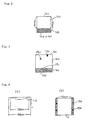
- An elongated and wide fabric 14 which is disposed in serpentine or spiral manner as shown in Figs. 1(b) and 1(c), respectively is suspended from parallel, or radial bars 10 with threads 12 in a predetermined interval so that it is dipped into hot water and dye 16 in a dyeing tub 18 as shown in Fig. 1(a).
- a first problem of the piece dyed fabric resides in that the upper side of the fabric 14 to which threads 12 are bound is dyed to a color different from that of the lower side thereof if the fabric 14 has a width of about 114 cm or more.
- the condition of the dyed fabric 14 is schematically illustrated in Fig. 2.
- the fabric 14 is actually extended in a transverse direction in Fig. 2.
- the upper portion 14a (from the upper side 14c of the fabric 14 to about 114 cm lower position) is dyed to a specified color although the lower portion 14b (from the about 114 cm position to the lower side 14d of the fabric 14) generally exhibits dense and light fading colors. It is estimated that this is due to the fact that the temperature of the hot water and mixing ratio of the dye 16 in the vicinity of the surface level in the tub 18 is delicately different from that in the vicinity of its bottom.
- a second problem of the piece dyed fabrics is that defects such as creases, rub marks, and wrinkles may occur on the surface of the fabric 14. Since the fabric 14 is moved up and down and the water and dye 16 is heated with steam to about 100°C during the dyeing process, the fabric 14 that is suspended only through threads 12 could be waved or the lower side 14d of the fabric 14 could be rolled up so that the above-mentioned defects occur. It is obvious that a rub mark 15a is formed in the vicinity of the center of the fabric 14, a wrinkle 15b is formed in the vicinity of a position to which a thread 12 is attached and a crease 15c is formed in the vicinity of the lower side 14d which is liable to be rolled up.
- a third problem of the piece dyed fabrics is that creases 15d and wrinkles 15e occur in the vicinity of upper and lower sides 14c ,14d of the fabric 14 when the fabric 14 has a width of 114 cm or more (refer to Fig. 4).
- This is due to the fact that the center of the fabric 14 is loosened by the weight of the fabric and me water contained therein as represented by a two-dot-and-chain line in Fig. 4(a) since tentering to the fabric 14 is conducted in a wet condition during finishing treatment. If the loosened fabric 14 is tensioned as represented by a solid line in Fig. 4(a), an inward force acts against the outward tension so that the fabric 14 is not balanced. Thus, the creases 15d and 15e wrinkles may occur as shown in Fig. 4(b).
- a first reason why silk fabrics having a width of 150 cm are demanded is that a great cutting loss occurs if, for example, a double-breasted suit is produced from a piece dyed silk fabric having a width of 96 to 114 cm.
- the Japanese apparel sewing systems are currently on the top level in the world and are adapted to 150 cm width cloth.
- a great cutting loss of fabric occurs if one double-breasted suit is made from a fabric having a width of 96 to 114 cm.
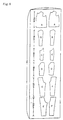
- Fabric loss during manufacture of a double breasted suit is calculated with reference to Figs.5 and 6.
- the fabric area needed is 4.5 m 2 ( 1.5m x 3m).
- the fabric area must be 5.7m 2 (1.14m x 5m).
- the use of fabric having 114cm width, as compared to fabric having 150cm width results in fabric loss of about 1.2m 2 .
- the cutting loss will be included in the original cost of the suit.
- References A to F in the drawing schematically denote cut pieces for making a double-breasted suit.
- a second reason why the silk fabrics having a width of 150 cm are demanded is that demerits of cloths if any should be indicated by the Product Liability Law which was enforced in 1995 in Japan.
- Japanese apparel manufacturers manufacture few silk fabrics that are made in Tango, Japan and deal with secondary products made in China (clothes which have been sewn) or Italian silk fabrics.
- the silk products that are made in China have problems in quality due to problems in manufacturing systems and its management.
- the Italian silk fabrics have a width of 130 cm, which are not suited for Japanese sewing systems similarly to the above-mentioned Japanese piece dyed silk fabrics having a width of 114 cm. This may also be included in the cost of silk clothes.
- Italian silk fabrics are not suspend-dyed as is done for Japanese silk fabrics, but are dyed by means of jiggers, sericin does not decompose sufficiently. Accordingly, Italian silk fabrics have an inferior color fastness. Indication of original manufacturing place and demerits is essential under enforcement of the Product Liability Law. The apparel industry has encountered big problems on these points.
- the piece dyed silk fabrics have various problems and could not have met the demands from the apparel industry.
- Document JP 50 031 240 B shows a method for scouring a specific crepe fabric made of hard-twisted yarns which discloses all features of the preamble of claim 1.
- Document JP 61 03 4274 A shows a method for scouring fabric made of silk yarn wherein in a first step the fabric is dipped in water at 60°C or more, in order to remove 60-90° sericin, and in a second step is dipped into water containing alcali protease at 40-60°C in order to decompose remaining sericin.
- the present invention aims to overcome the above-mentioned problems of the prior art and provides a process for manufacturing a woven or knit fabric using yarn made of sericin fixed type dyed silk fibres, comprising the steps of dyeing the sericin which covers the periphery of silk fibres and fibroin which is located inside thereof into the same color, making yarn made of dyed silk by doubling and twisting the dyed silk fibres, making a cloth by weaving or knitting the yarn made of dyed silk and swelling the yarn made of dyed silk which constitutes the cloth by dipping the cloth into hot water (in a tub) prior to decomposing the sericin or the yarn made of dyed silk of the cloth by scouring the cloth with an enzyme in hot water (especially in a tub).
- a process for manufacturing a woven or knit fabric using yarn made of dyed silk as provided by the first aspect of the present invention further including a step of dyeing the cloth (especially by dipping it into a dyeing tub) after sericin has been decomposed at the enzyme scouring step.
- swelling may be promoted by adding a solvent such as sodium bicarbonate into the hot water in the tub at said swelling step (and sericin of the swelled silk may be decomposed especially with an enzyme or bacteria at said enzyme scouring step).
- a solvent such as sodium bicarbonate
- the process further includes a finishing scouring step for removing the enzyme by washing the enzyme scoured cloth (especially after the enzyme scouring step and softening treatment and water repellent treatments are simultaneously conducted as well).
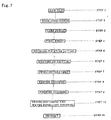
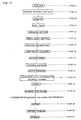
- FIG. 7 there is shown a flow chart showing a process for making woven or knit fabric using yarn dyed silk of the present invention.
- Raw silk is prepared similarly to prior art (step 1).
- the silk is reeled in the form of hank, cone or cheese (step 2).
- the reeling is dipped in a dyeing bath so that sericin and fibroin are dyed into the same color while sericin is fixed to the fibroin (step 3).
- first twisting is conducted on the dyed silk. Twist setting is conducted by doubling and twisting in case of cheese or cone (step 5) or by winding first and then by doubling and twisting in case of hank.
- Various known methods such as single twisting, plying (folding) and special twisting can be adopted to provide various yarns having different fineness and characteristics.
- Yarn dyed jacquard fabrics can be obtained since warps and wefts can be hard twisted yarns in such a manner. If the yarn dyed silk is hard twisted yarn, such twisted yarn (single twisted yarn; S, Z) has a strong recovery force. Fabrics which are made from this yarn are resistant to wrinkling and can be provided with stretching properties.
- Woven or knit fabrics are produced by weaving or knitting machines, respectively, using such hard twisted yarn dyed silk (step 6). Since weaving or knitting is conducted using yarn dyed silk, no dyeing step which was otherwise conducted in the prior art is necessary after the cloth has been made. Accordingly, there is no likelihood that defects such as color shadings (dyeing specks), rub marks, wrinkles and creases occur due to the above-mentioned dyeing. It is possible to make high quality cloths having a width of 150 cm. Provision of cloth having a width of 150 cm or any width is preferable for the apparel sewing and making systems existing in Japan and sewing becomes easier. Since cutting loss of the cloth having a width of 150 cm is less than that having a width of 114 cm as mentioned above, there is an advantage that the cost of the product made from such wide cloth can be reduced.
- the temperature of the hot water can be elevated to 100°C or higher. This shortens the period of time for completing the swelling step. It is preferable that the period of time for the swelling step be 60 to 120 minutes when high pressure pots of 110 °C at 2 atomospheric pressure are used and 120 to 180 minutes when normal pressure pots of 98°C at one atmospheric pressure are used.
- the enzyme scouring is preferably conducted at 60 °C or less to maximize the effect of the enzyme. It takes about 60 to 180 minutes to complete the enzyme scouring. If the temperature is elevated above 60 °C, enzyme or bacteria will die so that the unique effect of the present invention that is decomposition of sericin can not be performed. It is preferable to conduct finishing scouring at relatively high temperatures of about 100 °C. The period of time taken to complete the finishing scouring is about 60 minutes.
- step 10 various finishing treatments such as drying, tentering, softening and water repellent finishing are conducted if needed (step 10) to provide a silk fabric that is a finished product (step 11).
- Drying can be conducted by using a 120 °C heated air and a cylinder having a surface temperature of 120 °C. Since the water repellent finishing is a process for providing the fabrics with a water repellent ability and is accompanied by additional cost in the prior art method, it is conducted for only special application. For this reason, wearing of a silk product on a rainy day is considered prohibitive in the prior art.
- FIG. 10 there is shown a flow chart showing a process for manufacturing the above-mentioned prior art piece dyed silk woven or knit fabric. Comparison of the inventive process to the prior art process shows that the present invention is totally different from the prior art in order or timing of dyeing and sericin decomposition, or step of decomposing sericin after weaving or knitting. Due to these differences, the present invention provides various distinct effects which will be described hereafter.
- the width of the cloth is narrowed at a dyeing step and the cloth should be finished to provide a larger width than that of the dried cloth. Since the cloth cannot be stretched in a traverse direction (tentered) in drying finishing, treatments of drying, water repellent and softening are simultaneously conducted without stretching the cloth. If the water repellent treatment is conducted in a piece dyeing method at this time, drying finishing should be conducted again. However, once the cloth is dipped in water and solvent, the cloth (which is dried by tenter finishing) is returned to the original condition so that the cloth does become uneven. This is why the water repellent treatment can not be conducted and is a drawback of the prior art piece dyeing method.
- the woven or knit fabric using yarn dyed silk in which either or both of wefts and warps are hard twisted yarns is scoured in a hot water having a temperature of 98 °C to 100 °C, the yarn is contracted in a length direction and the wefts and warps are contacted with each other with a strong force at intersection positions of the wefts and warps.
- the silk is stronger than natural silk so that sericin cannot be decomposed by usual soap alkali scouring.
- sericin of the yarn dyed silk is impossible by the above-mentioned usual scouring method that is conducted for piece dyed fabric.
- the features of the present invention reside in that sericin is made readily decomposable by enzyme after subjecting the cloth produced by weaving or knitting yarn dyed silk to a swelling treatment, so that no damage is given to the torque of the yarn dyed silk and textile woven. This results in that characteristics which are inherent in the yarn dyed silk can be developed.
- the period of time of the swelling step and enzyme scouring step is determined depending upon, the fineness of silk, the number of twists of the twisted yarn, textile and difference in cloths.
- the woven or knit fabric that is produced by the process of the present invention is totally different from the piece dyed fabrics. The differences will now be described in detail.
- the present invention provides a water repellent treatment at final finishing step.
- a second aspect of the present invention is characterized in that the step 8 at which sericin is removed by treating it with a sericin decomposable enzyme such as ALCALASE, SERIASE or step 9 in Fig. 7 at which finishing scouring is conducted by washing the enzyme scoured cloth in a hot tub to remove the enzyme and is followed by an additional piece dyeing step at which the cloth is dipped in a dyeing tub to conduct piece dyeing.
- a sericin decomposable enzyme such as ALCALASE, SERIASE or step 9 in Fig. 7 at which finishing scouring is conducted by washing the enzyme scoured cloth in a hot tub to remove the enzyme and is followed by an additional piece dyeing step at which the cloth is dipped in a dyeing tub to conduct piece dyeing.
- Prior art black piece dyed cloth of 100 % silk generally has a very low color fastness so that indication of demerit condition is compelled by Product Liability Law. These fabrics for Japanese clothes are made by weaving or knitting raw silk and then sericin is removed by scouring treatment to make the color of the fabrics white. Then piece dyeing treatment is conducted. This may deteriorate the color fastness. Accordingly, prior art silk woven or knit fabrics that are dense color are inferior in color fastness and the fabrics used for inner lining are mainly dyed to light colors to avoid discoloring due to washing or dry cleaning and color changes due to sweat.
- woven or knit fabric is produced by weaving or knitting yarn dyed silk and sericin is decomposed by subjecting the woven or knit fabric to swelling and enzyme scouring steps.
- the woven or knit fabric has been already yarn-dyed into black, dense or light color. If the over-dyeing, or piece dyeing of the fabric is conducted, a deep color which is different from that of the original woven or knit fabric is exhibited and the color fastness is enhanced. This provides novel cloths for Japanese clothes.
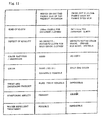
- Fig. 11 is a table in which the characteristics of prior art piece dyed 100 % silk fabric are compared to those of the woven or knit fabric using yarn dyed silk of the present invention.
- Combination fabrics of silk with wool have a great deal of demand as coat materials.
- Combination fabrics of silk with the other fibers such as wool have been hardly produced due to problems of dyeing. Since sericin can not be decomposed by a prior art method after the fabrics are made by weaving or knitting the yarn dyed silk as mentioned above, composite fabrics including silk had to be piece dyed. An alkali solvent is necessary to decompose the sericin of silk when silk is combined with wool, but the solvent causes wool to deteriorate. If composite fabric of silk with wool is dyed to a black color, silk is dyed to light black while wool is dyed to dark black. This chambray condition will not change even if dyeing is repeated many times. This is due to the fact that silk and wool have different dye setting speeds and dye penetration degrees although they both are animal fibers. This problem can not be solved by the piece dyeing method.
- the yarn dyed silk can be used as yarn for composite fabrics. This will be described in connection with the above-mentioned case.
- Fabrics are made by weaving or knitting the silk and wool that has been yarn dyed to black, and then sericin of the yarn dyed silk is removed.
- composite fabric of black silk with black wool having the same color tone is completed.
- the process of the present invention enables the development of composite solid color dyed (same color) fabrics of silk and wool. New materials for coats can be provided.
- the 100 % silk knit Raschel fabric has previously been made from mainly spun silk. This is due to the fact that the value of commercial good can not be increased since the silk can be dyed to only one color even if expensive silk is used. Use of spun silk will lower the color fastness. This may lower the value of commercial good.
- yarn dyed silk can be used by the process of the present invention
- new type knit fabrics such as knit Jacquard fabrics that are made from yarn dyed silk (which is naturally not spun silk) having 2 or 3 different colors can be provided.
- the prior art yarn dyeing has a disadvantage that the characteristics of woven or knit fabrics are very poor since they are made by weaving or knitting after sericin of yarns are removed. The only way to improve such characteristics is to use two folded yarns. Such a technique can not eliminate defects such as rub marks, wrinkles and creases on the completed fabric. Repair of the fabrics is impossible.
- various techniques such as use of two folded yarns or use of hard twisted yarns as weft can be adopted since the yarn dyed silk that is used for weaving or knitting has sericin fixed thereto. Setting characteristics of the yarns are excellent If the rate of defect occurrence shall be minimized at the sericin decomposing step, fabrics having no defects can be made.
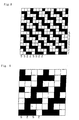
- the yarn dyed silk was used according to specifications as follows: Total number of warps 8880 Total number of yarns in selvage 8760 Warping length 63 m Reed space 187.96 cm (74 inches) Number of dents per unit Length 11.81 dents (4 reeds)/cm ⁇ 30 dents (4 reeds)/inch ⁇ Perchers 39.16/cm (100/inch) Textile view (W Georgette/refer to Fig. 8)
- two spun yarns (each is 2.33 tex/6 (21D/6) yarns, S twist yarn of 2000 t/m, Z twist yarn of 2000 t/m) were alternatively warped and were loaded in the following machine: A weaving machine; PICANOL GTM The number of rotations; 340 r.p.m.
- the finished fabric had a width of 150 cm and a weight of 219 g/m 2 or METSUKE 51 monme.
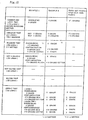
- the result of measurements set forth in a test report of color fastness dated Dec. 26, 1995 that was prepared by Kyoto-fu Orimono Shidosho (Aza Tanba, Mineyamamachi, Naka-gun, Kyoto-fu /Tetsu Kobayashi in charge of Test) are described in Fig. 12.
- Example 1 is 8 grade of discoloring (color fade) in a carbon ark light exposure test.
- the color fastness is remarkably enhanced in comparison to 3 to 4 grade of prior art piece dyed black silk fabric.
- Abrasion test shows that the fabric of Example 1 is 5 and 4 grades in dried and wet conditions, respectively.
- the prior art piece dyed black silk fabric is 2 to 3 grade and 1 to 2 grade in dried and wet conditions, respectively. It is found that the properties are also improved in this respect.
- Example 1 There is no comparative data on the color fastness since the prior art silk fabric that was piece dyed to black color can not be subjected to both washing and dry cleaning.
- the fabric of Example 1 has a discoloring of 4 to 5 and 5 grade and has a contamination of 5 grade (silk and cotton) and 3 to 4 grade (rayon) in washing test and dry cleaning test, respectively. It is suggested that the fabric of Example 1 can be used as fabric for western clothes.
- Sweat test A shows that the fabric of EXAMPLE 1 exhibits characteristics which are substantially equivalent to those of prior art. silk fabric which has been piece dyed to black color in both acid and alkali tests.
- the yarn dyed silk was used according to specifications as follows: Total number of warps 7920 Total number of yarns in selvage 7800 Warping length 63 m Reed space 167,64 cm (66 inches) Number of dents per unit Length 11.81 dents (4 reeds)/cm ⁇ 30 dents/inch (4 reeds) ⁇ Percher 33.86/cm (86/inch) Textile view (W crepe/refer to Fig. 9)
- one spun yarn (each is 2.33 tex/6 (21D/6) yarns, S twist yarn of 1250 t/m, Z twist yarn of 1250 t/m) were alternatively warped and were loaded in the following machine: A weaving machine VERSAMAT HOWA KOGYO The number of rotations: 200 r.p.m.
- one yarn of S twist and Z twist (each is 2.33 tex/6 (21D/6) yarns and is of 1250 t/m) was alternatively loaded as wefts.
- woven fabric for western clothes was scoured in a scouring plant as follows: 1. Swelling treatment normal pot 98°C, 120 minutes 2. Enzyme scouring 55°C, 120 min. 3. Finishing scouring normal pot 98 °C, 60 min. 4. Drying cylinder drying (surface temperature 120 °C) 5. Softening and repellent treatment Tenter finishing 6. Completion of fabrics
- the finished fabric had a width of 150 cm and a weight of 122.2 g/m 2 or METSUKE 28.5 monme.
- the result of measurements set forth in a test report of color fastness dated Nov. 24, 1995 that was prepared by Kyoto-fu Orimono Shidosho (Aza Tanba, Mineyamamachi, Naka-gun, Kyoto-fu/Tetsu Kobayashi in charge of Test) are set forth in Fig. 12.
- Example 2 Various characteristics of the fabric of Example 2 are substantially equal to those of the fabric of Example 1.
- Hard twisted yarn of 14 tex (126 denier) that is spun from 6 yarn dyed silks of 2.33 tex (21 denier) and then is hard twisted (S twist yarn of 2000 t/m, Z twist yarn of 2000 t/m) having the same specifications of Example 1 was used.
- the yarn dyed silk was rolled on 20 cones.
- FUKUHARA WS knitting machine single knit knitted the yarn dyed silk at 28 rotations per minute with providing S and Z twist yarns alternatively.
- the fabric had a width of 191 cm and was scoured at a plant according to the steps as follows: 1. Swelling treatment normal pot 98 °C, 120 minutes 2. Enzyme scouring 55 °C, 120 min. 3. Water repellent and softening treatment 4. Complement of knit fabric (width 160 cm)
- the produced fabrics had characteristics which have not been obtained by the prior art, as will be described hereafter.
- the fabric of Example 3 also has longitudinal stretching properties due to the elasticity (torque) which the yarn dyed silk possesses.
- This fabric can be used as cloth for western clothes that are cut for current three-dimensional sewing and inner lining owing to these longitudinal stretching properties.
- a new application field for knit fabrics can be developed.
- the recovery ability, which is exhibited after stretching is also enhanced in comparison to the fabrics using prior art yarn dyed silk or raw silk.
- Dyeing, appearance and texture of the silk woven or knit fabric can be achieved at a high quality in Examples 1 to 3 since the yarn dyed silk according to the present invention, wherein both sericin and fibroin are dyed to the same color while sericin is fixed to the fibroin, is woven or knitted, and thereafter sericin can be decomposed at swelling and enzyme scouring steps.
- the prior art 100 % silk piece dyed woven or knit fabrics are very inferior in color fastness as both fabrics for kimono and western clothes. Accordingly, wearing of silk kimono or western clothes has been considered prohibitive.
- the results of carbon arc light test, abrasive test, washing test and dry cleaning test of the fabrics of Examples 1 and 2 turn over the common sense of prior art piece dyed fabrics.
- a process for manufacturing a woven or knit fabric using yarn dyed silk comprises the steps of dyeing sericin which covers the periphery of silk fibers and fibroin which is located inside thereof into the same color; making yarn dyed silk by doubling and twisting the dyed silk fibers; making a cloth by weaving or knitting the yarn dyed silk; swelling the yarn dyed silk which constitutes the cloth by dipping the cloth into hot water in a tub; and decomposing sericin of the yarn dyed silk of the cloth with an enzyme in hot water in a tub.
- the process further includes a piece dyeing step at which the fabric is dipped in a dyeing tub after the enzyme scouring step. Accordingly, new fabrics for Japanese and Western clothes, which exhibit a deep color different from that of the yarn dyed fabric and have an excellent color fastness can be manufactured.
- the silk fabrics that are provided in a third aspect of the present invention have a large width of 150 cm, they are suited for existing apparel sewing systems in Japan so that sewing of the fabrics is made easier.
- Use of yarn dyed silk as hard twisted yarns makes it possible to provide new type fabrics having glazing uniquely possessed by silk and which are added with new characteristics such as wrinkle resistance and stretch properties in both transverse and longitudinal directions.
Landscapes
- Engineering & Computer Science (AREA)
- Textile Engineering (AREA)
- Chemical & Material Sciences (AREA)
- Materials Engineering (AREA)
- Coloring (AREA)
- Woven Fabrics (AREA)
- Yarns And Mechanical Finishing Of Yarns Or Ropes (AREA)
- Treatment Of Fiber Materials (AREA)
- Treatments For Attaching Organic Compounds To Fibrous Goods (AREA)
Applications Claiming Priority (4)
| Application Number | Priority Date | Filing Date | Title |
|---|---|---|---|
| JP8061825A JP3023431B2 (ja) | 1996-02-23 | 1996-02-23 | 先染絹生糸を用いる織編物の製造方法及びそれによって製造された織編物 |
| JP6182596 | 1996-02-23 | ||
| JP61825/96 | 1996-02-23 | ||
| PCT/JP1996/001019 WO1997031147A1 (en) | 1996-02-23 | 1996-04-12 | Process for producing woven or knitted fabric from yarn-dyed raw silk and woven or knitted fabric thus produced |
Publications (4)
| Publication Number | Publication Date |
|---|---|
| EP0889156A1 EP0889156A1 (en) | 1999-01-07 |
| EP0889156A4 EP0889156A4 (en) | 2000-12-27 |
| EP0889156B1 EP0889156B1 (en) | 2003-01-08 |
| EP0889156B9 true EP0889156B9 (en) | 2003-03-26 |
Family
ID=13182264
Family Applications (1)
| Application Number | Title | Priority Date | Filing Date |
|---|---|---|---|
| EP96909363A Expired - Lifetime EP0889156B9 (en) | 1996-02-23 | 1996-04-12 | Process for producing woven or knitted fabric from yarn-dyed raw silk |
Country Status (10)
| Country | Link |
|---|---|
| US (3) | US5849040A (enExample) |
| EP (1) | EP0889156B9 (enExample) |
| JP (1) | JP3023431B2 (enExample) |
| KR (1) | KR100294479B1 (enExample) |
| CN (1) | CN1106476C (enExample) |
| AT (1) | ATE230813T1 (enExample) |
| AU (1) | AU5288996A (enExample) |
| BR (1) | BR9612526A (enExample) |
| DE (1) | DE69625710T2 (enExample) |
| WO (1) | WO1997031147A1 (enExample) |
Cited By (1)
| Publication number | Priority date | Publication date | Assignee | Title |
|---|---|---|---|---|
| US8746014B2 (en) | 2008-12-15 | 2014-06-10 | Allergan, Inc. | Method for making a knitted mesh |
Families Citing this family (28)
| Publication number | Priority date | Publication date | Assignee | Title |
|---|---|---|---|---|
| JP3023431B2 (ja) | 1996-02-23 | 2000-03-21 | 株式会社山嘉精練 | 先染絹生糸を用いる織編物の製造方法及びそれによって製造された織編物 |
| US6228132B1 (en) * | 1999-12-17 | 2001-05-08 | Innovative Products | Process for modifying silk |
| KR100404784B1 (ko) * | 2000-07-15 | 2003-11-07 | 손인조 | 가모시 염색방법 |
| CN1172053C (zh) * | 2001-02-09 | 2004-10-20 | 广东溢达纺织有限公司 | 免烫耐洗纯棉针织物的生产工艺 |
| US20110009960A1 (en) * | 2001-11-16 | 2011-01-13 | Allergan, Inc. | Prosthetic fabric structure |
| US6902932B2 (en) | 2001-11-16 | 2005-06-07 | Tissue Regeneration, Inc. | Helically organized silk fibroin fiber bundles for matrices in tissue engineering |
| KR100462805B1 (ko) * | 2002-03-06 | 2004-12-29 | 재단법인서울대학교산학협력재단 | 세리신의 효소가수분해방법 및 그에 사용되는 반응기 |
| ES2368843T3 (es) * | 2003-03-11 | 2011-11-22 | Allergan, Inc. | Implante de tejido de seda biocompatible. |
| US8265910B2 (en) * | 2007-10-09 | 2012-09-11 | Cervel Neurotech, Inc. | Display of modeled magnetic fields |
| KR20090085244A (ko) * | 2008-02-04 | 2009-08-07 | 윤항선 | 물세탁 가능한 실크 제조 방법 |
| KR100899772B1 (ko) * | 2008-10-31 | 2009-05-28 | 김동찬 | 선염 실크 스카프 |
| US9204953B2 (en) | 2008-12-15 | 2015-12-08 | Allergan, Inc. | Biocompatible surgical scaffold with varying stretch |
| US9326840B2 (en) | 2008-12-15 | 2016-05-03 | Allergan, Inc. | Prosthetic device and method of manufacturing the same |
| US9204954B2 (en) | 2008-12-15 | 2015-12-08 | Allergan, Inc. | Knitted scaffold with diagonal yarn |
| US9308070B2 (en) | 2008-12-15 | 2016-04-12 | Allergan, Inc. | Pliable silk medical device |
| NZ598691A (en) * | 2009-09-11 | 2014-05-30 | Allergan Inc | Prosthetic device and method of manufacturing the same |
| US20150056261A1 (en) * | 2013-08-22 | 2015-02-26 | Allergan, Inc. | Silk medical devices |
| US20150057685A1 (en) * | 2013-08-22 | 2015-02-26 | Allergan, Inc. | Medical device with anti adhesive property |
| CN103469313B (zh) * | 2013-09-26 | 2016-04-27 | 大连工业大学 | 一种纯中性的柞蚕茧酶法脱胶解舒方法 |
| US9735427B2 (en) * | 2015-02-12 | 2017-08-15 | Yang Zhang | Method of producing triazine-based graphitic carbon nitride films |
| CN104746211B (zh) * | 2015-04-13 | 2016-04-20 | 张家港市金陵纺织有限公司 | 一种涤纶粘胶仿丝绸面料的加工方法 |
| CN108677323A (zh) * | 2018-05-12 | 2018-10-19 | 利郎(中国)有限公司 | 一种仿双面呢面料的制备工艺 |
| CN108677517B (zh) * | 2018-05-22 | 2020-08-18 | 杭州富强丝绸有限公司 | 色织丝棉经编工艺 |
| CN109468735B (zh) * | 2018-12-29 | 2023-09-22 | 四川省玻纤集团股份有限公司 | 一种玄武岩纤维布的织布系统及其织布方法 |
| US11591748B2 (en) | 2020-01-14 | 2023-02-28 | Shadow Works, Llc | Heat treated multilayer knitted textile of liquid crystal polymer fibers and modified polyacrylonitrile fibers, and process for making same |
| CN112853574B (zh) * | 2021-02-05 | 2022-08-09 | 淄博大染坊丝绸集团有限公司 | 一种真丝面料的防经柳筛选方法及应用 |
| CN113897797B (zh) * | 2021-10-28 | 2023-10-03 | 李德喜 | 一种古法丝绸织造工艺 |
| CN114452087B (zh) * | 2022-02-09 | 2023-02-24 | 广东娜菲实业股份有限公司 | 一种干爽型棉花面层卫生巾经期裤制备工艺 |
Family Cites Families (13)
| Publication number | Priority date | Publication date | Assignee | Title |
|---|---|---|---|---|
| US1332675A (en) | 1920-03-02 | Eugene l | ||
| US836464A (en) | 1906-01-27 | 1906-11-20 | Peter Schmid | Process of ungumming and dyeing raw natural silk. |
| US1366705A (en) * | 1920-06-03 | 1921-01-25 | Rosenstock Max | Manufacture of fabrics |
| US1486292A (en) | 1923-04-23 | 1924-03-11 | Eugene L Naupai | Process of dyeing raw silk |
| JPS5031240B1 (enExample) * | 1970-12-27 | 1975-10-08 | ||
| JPS5381788A (en) * | 1976-12-24 | 1978-07-19 | Konishikei Shiyouten Kk | Color resist style method of silk |
| JPS59192771A (ja) * | 1983-04-15 | 1984-11-01 | 東洋紡績株式会社 | 絹繊維混用繊維製品の精練加工法 |
| JPH0619823B2 (ja) * | 1984-07-25 | 1994-03-16 | コニカ株式会社 | 磁気記録媒体 |
| JPS6134274A (ja) * | 1984-07-26 | 1986-02-18 | ノボ インダストリ アクテイ−ゼルスカブ | 生絹織物の酵素精練法 |
| JPH0319905A (ja) * | 1989-06-13 | 1991-01-29 | Kosuke Sakai | 生糸の酵素精練用助剤 |
| JP2742818B2 (ja) * | 1989-07-25 | 1998-04-22 | 松下電器産業株式会社 | 積層フィルムコンデンサの製造方法 |
| JP2691499B2 (ja) * | 1993-04-14 | 1997-12-17 | 大日精化工業株式会社 | 有色絹糸の製造方法 |
| JP3023431B2 (ja) | 1996-02-23 | 2000-03-21 | 株式会社山嘉精練 | 先染絹生糸を用いる織編物の製造方法及びそれによって製造された織編物 |
-
1996
- 1996-02-23 JP JP8061825A patent/JP3023431B2/ja not_active Expired - Fee Related
- 1996-04-12 US US08/836,971 patent/US5849040A/en not_active Expired - Fee Related
- 1996-04-12 AT AT96909363T patent/ATE230813T1/de not_active IP Right Cessation
- 1996-04-12 DE DE69625710T patent/DE69625710T2/de not_active Expired - Fee Related
- 1996-04-12 KR KR1019980706552A patent/KR100294479B1/ko not_active Expired - Fee Related
- 1996-04-12 BR BR9612526A patent/BR9612526A/pt not_active Application Discontinuation
- 1996-04-12 CN CN96180078A patent/CN1106476C/zh not_active Expired - Fee Related
- 1996-04-12 AU AU52889/96A patent/AU5288996A/en not_active Abandoned
- 1996-04-12 WO PCT/JP1996/001019 patent/WO1997031147A1/ja not_active Ceased
- 1996-04-12 EP EP96909363A patent/EP0889156B9/en not_active Expired - Lifetime
-
1997
- 1997-08-07 US US09/194,716 patent/US6302922B1/en not_active Expired - Fee Related
-
1998
- 1998-08-12 US US09/133,053 patent/US6080689A/en not_active Expired - Fee Related
Cited By (1)
| Publication number | Priority date | Publication date | Assignee | Title |
|---|---|---|---|---|
| US8746014B2 (en) | 2008-12-15 | 2014-06-10 | Allergan, Inc. | Method for making a knitted mesh |
Also Published As
| Publication number | Publication date |
|---|---|
| KR100294479B1 (ko) | 2001-09-17 |
| EP0889156A1 (en) | 1999-01-07 |
| KR19990087159A (ko) | 1999-12-15 |
| CN1209180A (zh) | 1999-02-24 |
| US6302922B1 (en) | 2001-10-16 |
| EP0889156B1 (en) | 2003-01-08 |
| DE69625710T2 (de) | 2003-11-13 |
| US5849040A (en) | 1998-12-15 |
| WO1997031147A1 (en) | 1997-08-28 |
| JPH11217775A (ja) | 1999-08-10 |
| DE69625710D1 (de) | 2003-02-13 |
| US6080689A (en) | 2000-06-27 |
| ATE230813T1 (de) | 2003-01-15 |
| EP0889156A4 (en) | 2000-12-27 |
| CN1106476C (zh) | 2003-04-23 |
| AU5288996A (en) | 1997-09-10 |
| BR9612526A (pt) | 1999-07-20 |
| JP3023431B2 (ja) | 2000-03-21 |
Similar Documents
| Publication | Publication Date | Title |
|---|---|---|
| EP0889156B1 (en) | Process for producing woven or knitted fabric from yarn-dyed raw silk | |
| US20030190853A1 (en) | Chambray fabric having unique characteristics and method of manufacturing same | |
| CA2042895C (en) | Process for making preshrunk size-free denim | |
| US2685120A (en) | Fabric having contoured decorative surface | |
| JP2024045109A (ja) | 織布およびその製造方法 | |
| US4283194A (en) | Brushed stretch denim fabric and process therefor: indigo dyeing | |
| CN114197200B (zh) | 一种全棉耐久保形罗纹面料的制造方法 | |
| US5330538A (en) | Salt-and-pepper denim | |
| EP3692190B1 (en) | Lyocell filament lining fabric | |
| US20060150610A1 (en) | Yarns spun from olefin and cotton fibers and products made therefrom | |
| JP2000054263A (ja) | セリシン定着糸を用いる先染め後練り方式の絹織編物製造方法及びそれによって製造された絹織編物 | |
| KR102272066B1 (ko) | 수피마 면 원사와 폴리에스테르 원사를 조합한 이중지 원단 및 이의 제조방법 | |
| US20200173065A1 (en) | Fiber assembly including cellulose water-repellent fiber, method for manufacturing same, and fiber product | |
| CN110318277A (zh) | 一种烂花织物的制造方法 | |
| JPH04327259A (ja) | 立体模様を有する布帛の製造方法 | |
| KR101349696B1 (ko) | 고압 가먼트 염색 방법 | |
| JPH1018145A (ja) | セルロースマルチフィラメント交織裏地、及びその製造方法 | |
| US3498737A (en) | Process of producing sculptured lace from flat lace | |
| JPH0987969A (ja) | セルロース系繊維構造物及びその製造方法 | |
| JPWO1997031147A1 (ja) | 先染絹生糸を用いる織編物の製造方法及びそれによって製造された織編物 | |
| US6523196B1 (en) | Shibori clothes manufacturing method, etc. and shibori clothes made by said manufacturing method | |
| CN114990739A (zh) | 一种腈纶纤维加羊绒纺织色织光边面料生产工艺 | |
| JPH0544181A (ja) | 再生セルロース系繊維のチーズ染色方法 | |
| CN114214774A (zh) | 一种四面弹牛仔面料及其制备方法 | |
| JPH05295660A (ja) | ポリエステル系混合繊維構造物の製造方法 |
Legal Events
| Date | Code | Title | Description |
|---|---|---|---|
| PUAI | Public reference made under article 153(3) epc to a published international application that has entered the european phase |
Free format text: ORIGINAL CODE: 0009012 |
|
| 17P | Request for examination filed |
Effective date: 19980805 |
|
| AK | Designated contracting states |
Kind code of ref document: A1 Designated state(s): AT BE CH DE DK ES FI FR GB GR IE IT LI LU MC NL PT SE |
|
| RAP1 | Party data changed (applicant data changed or rights of an application transferred) |
Owner name: SUMITOMO CORPORATION |
|
| A4 | Supplementary search report drawn up and despatched |
Effective date: 20001115 |
|
| AK | Designated contracting states |
Kind code of ref document: A4 Designated state(s): AT BE CH DE DK ES FI FR GB GR IE IT LI LU MC NL PT SE |
|
| 17Q | First examination report despatched |
Effective date: 20010621 |
|
| GRAH | Despatch of communication of intention to grant a patent |
Free format text: ORIGINAL CODE: EPIDOS IGRA |
|
| RTI1 | Title (correction) |
Free format text: PROCESS FOR PRODUCING WOVEN OR KNITTED FABRIC FROM YARN-DYED RAW SILK |
|
| GRAH | Despatch of communication of intention to grant a patent |
Free format text: ORIGINAL CODE: EPIDOS IGRA |
|
| GRAA | (expected) grant |
Free format text: ORIGINAL CODE: 0009210 |
|
| AK | Designated contracting states |
Kind code of ref document: B1 Designated state(s): AT BE CH DE DK ES FI FR GB GR IE IT LI LU MC NL PT SE |
|
| PG25 | Lapsed in a contracting state [announced via postgrant information from national office to epo] |
Ref country code: NL Free format text: LAPSE BECAUSE OF FAILURE TO SUBMIT A TRANSLATION OF THE DESCRIPTION OR TO PAY THE FEE WITHIN THE PRESCRIBED TIME-LIMIT Effective date: 20030108 Ref country code: LI Free format text: LAPSE BECAUSE OF FAILURE TO SUBMIT A TRANSLATION OF THE DESCRIPTION OR TO PAY THE FEE WITHIN THE PRESCRIBED TIME-LIMIT Effective date: 20030108 Ref country code: FI Free format text: LAPSE BECAUSE OF FAILURE TO SUBMIT A TRANSLATION OF THE DESCRIPTION OR TO PAY THE FEE WITHIN THE PRESCRIBED TIME-LIMIT Effective date: 20030108 Ref country code: CH Free format text: LAPSE BECAUSE OF FAILURE TO SUBMIT A TRANSLATION OF THE DESCRIPTION OR TO PAY THE FEE WITHIN THE PRESCRIBED TIME-LIMIT Effective date: 20030108 Ref country code: GR Free format text: LAPSE BECAUSE OF FAILURE TO SUBMIT A TRANSLATION OF THE DESCRIPTION OR TO PAY THE FEE WITHIN THE PRESCRIBED TIME-LIMIT Effective date: 20030108 Ref country code: BE Free format text: LAPSE BECAUSE OF FAILURE TO SUBMIT A TRANSLATION OF THE DESCRIPTION OR TO PAY THE FEE WITHIN THE PRESCRIBED TIME-LIMIT Effective date: 20030108 Ref country code: AT Free format text: LAPSE BECAUSE OF FAILURE TO SUBMIT A TRANSLATION OF THE DESCRIPTION OR TO PAY THE FEE WITHIN THE PRESCRIBED TIME-LIMIT Effective date: 20030108 |
|
| REF | Corresponds to: |
Ref document number: 230813 Country of ref document: AT Date of ref document: 20030115 Kind code of ref document: T |
|
| REG | Reference to a national code |
Ref country code: GB Ref legal event code: FG4D |
|
| REG | Reference to a national code |
Ref country code: CH Ref legal event code: EP |
|
| REG | Reference to a national code |
Ref country code: IE Ref legal event code: FG4D |
|
| REF | Corresponds to: |
Ref document number: 69625710 Country of ref document: DE Date of ref document: 20030213 Kind code of ref document: P |
|
| PG25 | Lapsed in a contracting state [announced via postgrant information from national office to epo] |
Ref country code: SE Free format text: LAPSE BECAUSE OF FAILURE TO SUBMIT A TRANSLATION OF THE DESCRIPTION OR TO PAY THE FEE WITHIN THE PRESCRIBED TIME-LIMIT Effective date: 20030408 Ref country code: PT Free format text: LAPSE BECAUSE OF FAILURE TO SUBMIT A TRANSLATION OF THE DESCRIPTION OR TO PAY THE FEE WITHIN THE PRESCRIBED TIME-LIMIT Effective date: 20030408 Ref country code: DK Free format text: LAPSE BECAUSE OF FAILURE TO SUBMIT A TRANSLATION OF THE DESCRIPTION OR TO PAY THE FEE WITHIN THE PRESCRIBED TIME-LIMIT Effective date: 20030408 |
|
| PG25 | Lapsed in a contracting state [announced via postgrant information from national office to epo] |
Ref country code: LU Free format text: LAPSE BECAUSE OF NON-PAYMENT OF DUE FEES Effective date: 20030412 |
|
| PG25 | Lapsed in a contracting state [announced via postgrant information from national office to epo] |
Ref country code: IE Free format text: LAPSE BECAUSE OF NON-PAYMENT OF DUE FEES Effective date: 20030414 |
|
| PG25 | Lapsed in a contracting state [announced via postgrant information from national office to epo] |
Ref country code: MC Free format text: LAPSE BECAUSE OF NON-PAYMENT OF DUE FEES Effective date: 20030430 |
|
| REG | Reference to a national code |
Ref country code: CH Ref legal event code: PL |
|
| PG25 | Lapsed in a contracting state [announced via postgrant information from national office to epo] |
Ref country code: ES Free format text: LAPSE BECAUSE OF FAILURE TO SUBMIT A TRANSLATION OF THE DESCRIPTION OR TO PAY THE FEE WITHIN THE PRESCRIBED TIME-LIMIT Effective date: 20030730 |
|
| ET | Fr: translation filed | ||
| PLBE | No opposition filed within time limit |
Free format text: ORIGINAL CODE: 0009261 |
|
| STAA | Information on the status of an ep patent application or granted ep patent |
Free format text: STATUS: NO OPPOSITION FILED WITHIN TIME LIMIT |
|
| 26N | No opposition filed |
Effective date: 20031009 |
|
| REG | Reference to a national code |
Ref country code: IE Ref legal event code: MM4A |
|
| PGFP | Annual fee paid to national office [announced via postgrant information from national office to epo] |
Ref country code: GB Payment date: 20040329 Year of fee payment: 9 |
|
| PGFP | Annual fee paid to national office [announced via postgrant information from national office to epo] |
Ref country code: FR Payment date: 20040421 Year of fee payment: 9 |
|
| PGFP | Annual fee paid to national office [announced via postgrant information from national office to epo] |
Ref country code: DE Payment date: 20040426 Year of fee payment: 9 |
|
| PG25 | Lapsed in a contracting state [announced via postgrant information from national office to epo] |
Ref country code: GB Free format text: LAPSE BECAUSE OF NON-PAYMENT OF DUE FEES Effective date: 20050412 Ref country code: IT Free format text: LAPSE BECAUSE OF NON-PAYMENT OF DUE FEES;WARNING: LAPSES OF ITALIAN PATENTS WITH EFFECTIVE DATE BEFORE 2007 MAY HAVE OCCURRED AT ANY TIME BEFORE 2007. THE CORRECT EFFECTIVE DATE MAY BE DIFFERENT FROM THE ONE RECORDED. Effective date: 20050412 |
|
| PG25 | Lapsed in a contracting state [announced via postgrant information from national office to epo] |
Ref country code: DE Free format text: LAPSE BECAUSE OF NON-PAYMENT OF DUE FEES Effective date: 20051101 |
|
| GBPC | Gb: european patent ceased through non-payment of renewal fee |
Effective date: 20050412 |
|
| PG25 | Lapsed in a contracting state [announced via postgrant information from national office to epo] |
Ref country code: FR Free format text: LAPSE BECAUSE OF NON-PAYMENT OF DUE FEES Effective date: 20051230 |
|
| REG | Reference to a national code |
Ref country code: FR Ref legal event code: ST Effective date: 20051230 |