EP0873880B2 - Wärmeempfindliches Aufzeichnungsmaterial, das einen Ethr-Sensibilisator verwendet - Google Patents
Wärmeempfindliches Aufzeichnungsmaterial, das einen Ethr-Sensibilisator verwendet Download PDFInfo
- Publication number
- EP0873880B2 EP0873880B2 EP98302304A EP98302304A EP0873880B2 EP 0873880 B2 EP0873880 B2 EP 0873880B2 EP 98302304 A EP98302304 A EP 98302304A EP 98302304 A EP98302304 A EP 98302304A EP 0873880 B2 EP0873880 B2 EP 0873880B2
- Authority
- EP
- European Patent Office
- Prior art keywords
- record material
- thermally
- bar code
- bar
- sensitizer
- Prior art date
- Legal status (The legal status is an assumption and is not a legal conclusion. Google has not performed a legal analysis and makes no representation as to the accuracy of the status listed.)
- Expired - Lifetime
Links
- 239000000463 material Substances 0.000 title claims abstract description 87
- RTZKZFJDLAIYFH-UHFFFAOYSA-N Diethyl ether Chemical compound CCOCC RTZKZFJDLAIYFH-UHFFFAOYSA-N 0.000 title 2
- 239000011248 coating agent Substances 0.000 claims abstract description 23
- 238000000576 coating method Methods 0.000 claims abstract description 23
- 239000002243 precursor Substances 0.000 claims abstract description 17
- 239000011230 binding agent Substances 0.000 claims abstract description 15
- XCSGHNKDXGYELG-UHFFFAOYSA-N 2-phenoxyethoxybenzene Chemical compound C=1C=CC=CC=1OCCOC1=CC=CC=C1 XCSGHNKDXGYELG-UHFFFAOYSA-N 0.000 claims abstract description 9
- 230000002378 acidificating effect Effects 0.000 claims abstract description 8
- MTMKZABGIQJAEX-UHFFFAOYSA-N 4,4'-sulfonylbis[2-(prop-2-en-1-yl)phenol] Chemical compound C1=C(CC=C)C(O)=CC=C1S(=O)(=O)C1=CC=C(O)C(CC=C)=C1 MTMKZABGIQJAEX-UHFFFAOYSA-N 0.000 claims abstract description 7
- 239000000049 pigment Substances 0.000 claims description 5
- UIFAEJQCFLEWCF-UHFFFAOYSA-N 1-methyl-4-[2-(4-methylphenoxy)ethoxy]benzene Chemical compound C1=CC(C)=CC=C1OCCOC1=CC=C(C)C=C1 UIFAEJQCFLEWCF-UHFFFAOYSA-N 0.000 claims description 3
- 238000003384 imaging method Methods 0.000 abstract description 6
- OTMSDBZUPAUEDD-UHFFFAOYSA-N Ethane Chemical compound CC OTMSDBZUPAUEDD-UHFFFAOYSA-N 0.000 abstract description 4
- 230000015556 catabolic process Effects 0.000 abstract description 2
- 238000006731 degradation reaction Methods 0.000 abstract description 2
- XAAILNNJDMIMON-UHFFFAOYSA-N 2'-anilino-6'-(dibutylamino)-3'-methylspiro[2-benzofuran-3,9'-xanthene]-1-one Chemical compound C=1C(N(CCCC)CCCC)=CC=C(C2(C3=CC=CC=C3C(=O)O2)C2=C3)C=1OC2=CC(C)=C3NC1=CC=CC=C1 XAAILNNJDMIMON-UHFFFAOYSA-N 0.000 description 40
- 230000007613 environmental effect Effects 0.000 description 17
- 239000000975 dye Substances 0.000 description 15
- 238000012360 testing method Methods 0.000 description 15
- 230000000052 comparative effect Effects 0.000 description 12
- 238000000034 method Methods 0.000 description 12
- XLYOFNOQVPJJNP-UHFFFAOYSA-N water Substances O XLYOFNOQVPJJNP-UHFFFAOYSA-N 0.000 description 12
- 239000004372 Polyvinyl alcohol Substances 0.000 description 11
- 239000003921 oil Substances 0.000 description 11
- 235000019198 oils Nutrition 0.000 description 11
- 229920002451 polyvinyl alcohol Polymers 0.000 description 11
- 231100000489 sensitizer Toxicity 0.000 description 11
- IISBACLAFKSPIT-UHFFFAOYSA-N bisphenol A Chemical group C=1C=C(O)C=CC=1C(C)(C)C1=CC=C(O)C=C1 IISBACLAFKSPIT-UHFFFAOYSA-N 0.000 description 10
- WOZVHXUHUFLZGK-UHFFFAOYSA-N dimethyl terephthalate Chemical group COC(=O)C1=CC=C(C(=O)OC)C=C1 WOZVHXUHUFLZGK-UHFFFAOYSA-N 0.000 description 9
- 239000006185 dispersion Substances 0.000 description 9
- 239000000758 substrate Substances 0.000 description 9
- LFQSCWFLJHTTHZ-UHFFFAOYSA-N Ethanol Chemical compound CCO LFQSCWFLJHTTHZ-UHFFFAOYSA-N 0.000 description 7
- 239000007864 aqueous solution Substances 0.000 description 7
- 150000001875 compounds Chemical class 0.000 description 7
- 238000005516 engineering process Methods 0.000 description 6
- 239000000203 mixture Substances 0.000 description 6
- 238000005259 measurement Methods 0.000 description 5
- 239000007787 solid Substances 0.000 description 5
- QKJAZPHKNWSXDF-UHFFFAOYSA-N 2-bromoquinoline Chemical compound C1=CC=CC2=NC(Br)=CC=C21 QKJAZPHKNWSXDF-UHFFFAOYSA-N 0.000 description 4
- 239000008199 coating composition Substances 0.000 description 4
- 230000007423 decrease Effects 0.000 description 4
- 239000010408 film Substances 0.000 description 4
- 239000012530 fluid Substances 0.000 description 4
- 230000002441 reversible effect Effects 0.000 description 4
- 239000001993 wax Substances 0.000 description 4
- KFZMGEQAYNKOFK-UHFFFAOYSA-N Isopropanol Chemical compound CC(C)O KFZMGEQAYNKOFK-UHFFFAOYSA-N 0.000 description 3
- 239000003963 antioxidant agent Substances 0.000 description 3
- 125000003118 aryl group Chemical group 0.000 description 3
- 239000000981 basic dye Substances 0.000 description 3
- 238000003490 calendering Methods 0.000 description 3
- 239000000945 filler Substances 0.000 description 3
- MDQRDWAGHRLBPA-UHFFFAOYSA-N fluoroamine Chemical compound FN MDQRDWAGHRLBPA-UHFFFAOYSA-N 0.000 description 3
- 229920000126 latex Polymers 0.000 description 3
- 239000004816 latex Substances 0.000 description 3
- 239000000314 lubricant Substances 0.000 description 3
- 238000003801 milling Methods 0.000 description 3
- 239000002245 particle Substances 0.000 description 3
- 239000002904 solvent Substances 0.000 description 3
- 229920003048 styrene butadiene rubber Polymers 0.000 description 3
- VTYYLEPIZMXCLO-UHFFFAOYSA-L Calcium carbonate Chemical compound [Ca+2].[O-]C([O-])=O VTYYLEPIZMXCLO-UHFFFAOYSA-L 0.000 description 2
- VYPSYNLAJGMNEJ-UHFFFAOYSA-N Silicium dioxide Chemical compound O=[Si]=O VYPSYNLAJGMNEJ-UHFFFAOYSA-N 0.000 description 2
- 239000002174 Styrene-butadiene Substances 0.000 description 2
- 150000008378 aryl ethers Chemical class 0.000 description 2
- MTAZNLWOLGHBHU-UHFFFAOYSA-N butadiene-styrene rubber Chemical compound C=CC=C.C=CC1=CC=CC=C1 MTAZNLWOLGHBHU-UHFFFAOYSA-N 0.000 description 2
- 239000004927 clay Substances 0.000 description 2
- 230000001186 cumulative effect Effects 0.000 description 2
- ZUOUZKKEUPVFJK-UHFFFAOYSA-N diphenyl Chemical compound C1=CC=CC=C1C1=CC=CC=C1 ZUOUZKKEUPVFJK-UHFFFAOYSA-N 0.000 description 2
- 239000012153 distilled water Substances 0.000 description 2
- 238000002844 melting Methods 0.000 description 2
- 230000008018 melting Effects 0.000 description 2
- 230000007935 neutral effect Effects 0.000 description 2
- 239000002985 plastic film Substances 0.000 description 2
- 229920006255 plastic film Polymers 0.000 description 2
- 229920000570 polyether Polymers 0.000 description 2
- 239000011115 styrene butadiene Substances 0.000 description 2
- 238000010998 test method Methods 0.000 description 2
- -1 1-(4-methoxyphenoxy)-2-phenoxyethane compound Chemical class 0.000 description 1
- AGPLQTQFIZBOLI-UHFFFAOYSA-N 1-benzyl-4-phenylbenzene Chemical group C=1C=C(C=2C=CC=CC=2)C=CC=1CC1=CC=CC=C1 AGPLQTQFIZBOLI-UHFFFAOYSA-N 0.000 description 1
- IYQIAVRZWFMVGZ-UHFFFAOYSA-N 1-methoxy-4-(2-phenoxyethoxy)benzene Chemical class C1=CC(OC)=CC=C1OCCOC1=CC=CC=C1 IYQIAVRZWFMVGZ-UHFFFAOYSA-N 0.000 description 1
- WWHWOXMOOULLJQ-UHFFFAOYSA-N 1-methoxy-4-[2-(3-methylphenoxy)ethoxy]benzene Chemical compound C1=CC(OC)=CC=C1OCCOC1=CC=CC(C)=C1 WWHWOXMOOULLJQ-UHFFFAOYSA-N 0.000 description 1
- MFVYUFXPCIXKDA-UHFFFAOYSA-N 1-methyl-4-[1-(4-methylphenoxy)ethoxy]benzene Chemical compound C=1C=C(C)C=CC=1OC(C)OC1=CC=C(C)C=C1 MFVYUFXPCIXKDA-UHFFFAOYSA-N 0.000 description 1
- WQFYAGVHZYFXDO-UHFFFAOYSA-N 2'-anilino-6'-(diethylamino)-3'-methylspiro[2-benzofuran-3,9'-xanthene]-1-one Chemical group C=1C(N(CC)CC)=CC=C(C2(C3=CC=CC=C3C(=O)O2)C2=C3)C=1OC2=CC(C)=C3NC1=CC=CC=C1 WQFYAGVHZYFXDO-UHFFFAOYSA-N 0.000 description 1
- MGXVDCNMTMBLHP-UHFFFAOYSA-N 2-oxo-2-(2-phenylpropan-2-yloxy)acetic acid Chemical group OC(=O)C(=O)OC(C)(C)C1=CC=CC=C1 MGXVDCNMTMBLHP-UHFFFAOYSA-N 0.000 description 1
- MOPBWASVAUDDTC-UHFFFAOYSA-N 4-[2-(3,4-dimethylphenyl)ethyl]-1,2-dimethylbenzene Chemical compound C1=C(C)C(C)=CC=C1CCC1=CC=C(C)C(C)=C1 MOPBWASVAUDDTC-UHFFFAOYSA-N 0.000 description 1
- OCKGFTQIICXDQW-ZEQRLZLVSA-N 5-[(1r)-1-hydroxy-2-[4-[(2r)-2-hydroxy-2-(4-methyl-1-oxo-3h-2-benzofuran-5-yl)ethyl]piperazin-1-yl]ethyl]-4-methyl-3h-2-benzofuran-1-one Chemical compound C1=C2C(=O)OCC2=C(C)C([C@@H](O)CN2CCN(CC2)C[C@H](O)C2=CC=C3C(=O)OCC3=C2C)=C1 OCKGFTQIICXDQW-ZEQRLZLVSA-N 0.000 description 1
- 239000005995 Aluminium silicate Substances 0.000 description 1
- 229920000298 Cellophane Polymers 0.000 description 1
- 108010010803 Gelatin Proteins 0.000 description 1
- 229920000663 Hydroxyethyl cellulose Polymers 0.000 description 1
- 239000004354 Hydroxyethyl cellulose Substances 0.000 description 1
- 229920002153 Hydroxypropyl cellulose Polymers 0.000 description 1
- 229920000881 Modified starch Polymers 0.000 description 1
- 239000004793 Polystyrene Substances 0.000 description 1
- KZTYYGOKRVBIMI-UHFFFAOYSA-N S-phenyl benzenesulfonothioate Natural products C=1C=CC=CC=1S(=O)(=O)C1=CC=CC=C1 KZTYYGOKRVBIMI-UHFFFAOYSA-N 0.000 description 1
- 229920002472 Starch Polymers 0.000 description 1
- 229920001807 Urea-formaldehyde Polymers 0.000 description 1
- 125000003158 alcohol group Chemical group 0.000 description 1
- GZCGUPFRVQAUEE-SLPGGIOYSA-N aldehydo-D-glucose Chemical compound OC[C@@H](O)[C@@H](O)[C@H](O)[C@@H](O)C=O GZCGUPFRVQAUEE-SLPGGIOYSA-N 0.000 description 1
- WNROFYMDJYEPJX-UHFFFAOYSA-K aluminium hydroxide Chemical compound [OH-].[OH-].[OH-].[Al+3] WNROFYMDJYEPJX-UHFFFAOYSA-K 0.000 description 1
- 235000012211 aluminium silicate Nutrition 0.000 description 1
- 238000013459 approach Methods 0.000 description 1
- 239000004305 biphenyl Substances 0.000 description 1
- 235000010290 biphenyl Nutrition 0.000 description 1
- 230000001680 brushing effect Effects 0.000 description 1
- 229910000019 calcium carbonate Inorganic materials 0.000 description 1
- 239000004203 carnauba wax Substances 0.000 description 1
- 235000013869 carnauba wax Nutrition 0.000 description 1
- 238000006243 chemical reaction Methods 0.000 description 1
- 239000003795 chemical substances by application Substances 0.000 description 1
- 229910052570 clay Inorganic materials 0.000 description 1
- 238000001816 cooling Methods 0.000 description 1
- 230000007547 defect Effects 0.000 description 1
- 230000002950 deficient Effects 0.000 description 1
- ZYZXGWGQYNTGAU-UHFFFAOYSA-N dibenzyl oxalate Chemical compound C=1C=CC=CC=1COC(=O)C(=O)OCC1=CC=CC=C1 ZYZXGWGQYNTGAU-UHFFFAOYSA-N 0.000 description 1
- 238000002845 discoloration Methods 0.000 description 1
- 235000013305 food Nutrition 0.000 description 1
- 229920000159 gelatin Polymers 0.000 description 1
- 239000008273 gelatin Substances 0.000 description 1
- 235000019322 gelatine Nutrition 0.000 description 1
- 235000011852 gelatine desserts Nutrition 0.000 description 1
- 235000019447 hydroxyethyl cellulose Nutrition 0.000 description 1
- 229940071826 hydroxyethyl cellulose Drugs 0.000 description 1
- 239000001863 hydroxypropyl cellulose Substances 0.000 description 1
- NLYAJNPCOHFWQQ-UHFFFAOYSA-N kaolin Chemical compound O.O.O=[Al]O[Si](=O)O[Si](=O)O[Al]=O NLYAJNPCOHFWQQ-UHFFFAOYSA-N 0.000 description 1
- 239000007788 liquid Substances 0.000 description 1
- 238000004519 manufacturing process Methods 0.000 description 1
- 239000000155 melt Substances 0.000 description 1
- 229920000609 methyl cellulose Polymers 0.000 description 1
- 239000001923 methylcellulose Substances 0.000 description 1
- 235000019426 modified starch Nutrition 0.000 description 1
- 229920003023 plastic Polymers 0.000 description 1
- 239000004033 plastic Substances 0.000 description 1
- 239000004014 plasticizer Substances 0.000 description 1
- 229920000058 polyacrylate Polymers 0.000 description 1
- 229920000728 polyester Polymers 0.000 description 1
- 229920002223 polystyrene Polymers 0.000 description 1
- 229920002689 polyvinyl acetate Polymers 0.000 description 1
- 229920006395 saturated elastomer Polymers 0.000 description 1
- 238000012216 screening Methods 0.000 description 1
- 239000000377 silicon dioxide Substances 0.000 description 1
- 235000012239 silicon dioxide Nutrition 0.000 description 1
- 239000003381 stabilizer Substances 0.000 description 1
- 239000008107 starch Substances 0.000 description 1
- 235000019698 starch Nutrition 0.000 description 1
- 239000000126 substance Substances 0.000 description 1
- 150000003457 sulfones Chemical class 0.000 description 1
- 229920002994 synthetic fiber Polymers 0.000 description 1
- 239000000454 talc Substances 0.000 description 1
- 229910052623 talc Inorganic materials 0.000 description 1
- 239000010409 thin film Substances 0.000 description 1
- 238000013519 translation Methods 0.000 description 1
- 235000015112 vegetable and seed oil Nutrition 0.000 description 1
- 239000008158 vegetable oil Substances 0.000 description 1
- 239000003232 water-soluble binding agent Substances 0.000 description 1
- 239000000080 wetting agent Substances 0.000 description 1
- 230000037303 wrinkles Effects 0.000 description 1
- XOOUIPVCVHRTMJ-UHFFFAOYSA-L zinc stearate Chemical compound [Zn+2].CCCCCCCCCCCCCCCCCC([O-])=O.CCCCCCCCCCCCCCCCCC([O-])=O XOOUIPVCVHRTMJ-UHFFFAOYSA-L 0.000 description 1
Images


Classifications
-
- B—PERFORMING OPERATIONS; TRANSPORTING
- B41—PRINTING; LINING MACHINES; TYPEWRITERS; STAMPS
- B41M—PRINTING, DUPLICATING, MARKING, OR COPYING PROCESSES; COLOUR PRINTING
- B41M5/00—Duplicating or marking methods; Sheet materials for use therein
- B41M5/26—Thermography ; Marking by high energetic means, e.g. laser otherwise than by burning, and characterised by the material used
- B41M5/30—Thermography ; Marking by high energetic means, e.g. laser otherwise than by burning, and characterised by the material used using chemical colour formers
- B41M5/333—Colour developing components therefor, e.g. acidic compounds
- B41M5/3333—Non-macromolecular compounds
- B41M5/3335—Compounds containing phenolic or carboxylic acid groups or metal salts thereof
- B41M5/3336—Sulfur compounds, e.g. sulfones, sulfides, sulfonamides
-
- B—PERFORMING OPERATIONS; TRANSPORTING
- B41—PRINTING; LINING MACHINES; TYPEWRITERS; STAMPS
- B41M—PRINTING, DUPLICATING, MARKING, OR COPYING PROCESSES; COLOUR PRINTING
- B41M5/00—Duplicating or marking methods; Sheet materials for use therein
- B41M5/26—Thermography ; Marking by high energetic means, e.g. laser otherwise than by burning, and characterised by the material used
- B41M5/30—Thermography ; Marking by high energetic means, e.g. laser otherwise than by burning, and characterised by the material used using chemical colour formers
- B41M5/323—Organic colour formers, e.g. leuco dyes
- B41M5/327—Organic colour formers, e.g. leuco dyes with a lactone or lactam ring
- B41M5/3275—Fluoran compounds
-
- B—PERFORMING OPERATIONS; TRANSPORTING
- B41—PRINTING; LINING MACHINES; TYPEWRITERS; STAMPS
- B41M—PRINTING, DUPLICATING, MARKING, OR COPYING PROCESSES; COLOUR PRINTING
- B41M5/00—Duplicating or marking methods; Sheet materials for use therein
- B41M5/26—Thermography ; Marking by high energetic means, e.g. laser otherwise than by burning, and characterised by the material used
- B41M5/30—Thermography ; Marking by high energetic means, e.g. laser otherwise than by burning, and characterised by the material used using chemical colour formers
- B41M5/337—Additives; Binders
- B41M5/3375—Non-macromolecular compounds
Definitions
- This invention relates to a thermally-responsive record material, typically in the form of sheets coated with color-forming systems comprising chromogenic material (electron-donating dye precursors) and acidic color developer material.
- the thermally-responsive record material is capable of forming a substantially non-reversible image resistant to fade or erasure and is useful for producing functional bar codes.
- the thermally-sensitive record material exhibits superior image properties cumulatively in terms of print contrast signal.
- Thermally-responsive record material systems are well known in the art and are described in many patents, for example.
- basic colorless or lightly colored chromogenic material and acidic color developer material are contained in a coating on a substrate which, when heated to a suitable temperature, melts or softens to permit said materials to react, thereby producing a colored mark.
- Thermally-responsive record materials have characteristic thermal response, desirably producing a colored image of sufficient intensity upon selective thermal exposure.
- thermally-responsive record material limiting utilization in certain environments and application has been the undesirable tendency of thermally-responsive record material upon forming an image to not retain that image in its original integrity over time when the thermally-responsive record material is handled or exposed to common liquids or oils or plasticizers such as found in skin oil, plastic food wrap, cooling oil and solvents such as common carbonless paper solvents.
- Thermally-responsive record materials are increasingly utilized for bar code imaging, since such bar codes can be readily created by printer equipment in the field nearer the point of use and application.
- Bar codes provide a convenient means for computerized inventory or goods handling and tracking. To function properly, it is necessary that the bar code have high print contrast signal, and that the thermally-responsive material on which the bar code is imaged resist unwanted bar width growth after imaging. The characters or bars must not only be intensely imaged, but must be sharp, and unbroken or free of pin holes. It is also necessary that when read by a scanner that a high percentage of scans result in successful decoding of the information in the bar code. The percentage of successful decodes of the bar code information must be maintained at a high value for the thermally-responsive record material to gain wide commercial acceptance for use in bar coding applications.
- Print contrast signal relates to image intensity.
- Bar width growth relates to imaged bar dimensional stability and character sharpness.
- Percent decode relates to image integrity. Background contrast must also be maintained at a high level. Difficulties have been encountered attempting to bring together a confluence of these characteristics simultaneously in one coating formulation.
- EP-A-0306916 discloses a heat-sensitive recording material of which the heat-sensitive coating comprises a dye precursor which can be 3-dibutylamino-6-methyl-7-anilinofluoran, and a colour developing agent which is a mixture of bis-(3-allyl-4-hydroxyphenyl) sulfone and dibenzyl oxalate (the dibenzyl oxalate is also referred to as a sensitiser).
- a binder is also present.
- 3-dibutylamino-6-methyl-7-anilinofluoran can be named alternatively as 2-anilino-3 methyl-6-dibutylaminofluoran.
- EP-A-0141170 discloses a heat-sensitive recording material comprising a colourless or pale-coloured basic dye and a colour acceptor which is reactive with the basic dye to form a colour when contacted therewith.
- the basic dye can be 3-dibutylamino-6-methyl-7-phenylaminofluoran (alternatively named 3-dibutylamino-6-methyl-7-anilinofluoran).
- a binder and a sensitiser are also present, and the sensitiser can be 1,2-diphenoxyethane.
- JP-A-4010977 discloses a thermal recording material of which the thermal colour forming layer comprises an electron-donating leuco dye, an electron-acceptive compound and a 1-(4-methoxyphenoxy)-2-phenoxyethane compound of specified general formula.
- the leuco dye can be 2-anilino-3-methyl-6-dibutylaminofluoran.
- 1-(4-methoxyphenoxy)-2-(3-methylphenoxy) ethane or 1-4(methoxyphenoxy)-2-phenoxyethane are designated as possible 1-(4-methoxyphenoxy)-2-phenoxyethane compounds.
- DE-A-3703479 discloses a heat-sensitive recording material of which the heat-sensitive colour forming layer contains an electron donating dye precursor, an electron accepting compound, and a binder, as well as (1) at least one compound selected from the group consisting of (a) aromatic polyethers and (b) aromatic polyesters, and (2) an aromatic ether.
- the dye precursor can be 2-anilino-3-methyl-6-diethylaminofluoran.
- 1,2-diphenoxyethane or 1,2-(4-methylphenoxy) ethane are mentioned as examples of suitable aromatic polyethers.
- 1,2-diphenoxyethane is also mentioned as an example of a suitable aromatic ether.
- EP-A-0741046 discloses a thermally sensitive recording sheet of which the thermally sensitive colour developing layer comprises a colourless or pale coloured basic achromatic dye, an organic colour developer of specified formula, a stabiliser of specified formula and a binder.
- the colour developer can be bis-(3-allyl-4-hydroxyphenyl) sulfone and the basic achromatic dye can be 3-dibutylamino-6-mothyl-7-anilino fluoran.
- the colour developing layer can also include a sensitiser.
- the present invention provides thermally-responsive record material according to claim 1 useful for bar coding, comprising a support having provided thereon in substantially contiguous relationship in one or more layers a heat-sensitive coating comprising:
- thermally-responsive record material can optionally be included in the heat-sensitive coating of the thermally-responsive record material including fillers, antioxidants, lubricants, waxes and brighteners.
- the present invention also resides in record material as defined above wherein the heat sensitive coating on the support has been imaged by selective application of heat in the pattern of a bar code.
- Bar codes are well known and typically comprise a plurality of uniformly spaced apart parallel vertical lines, often of differing thicknesses forming a row extending from a common horizontal axis. The horizontal axis is generally not shown but is a convenient reference point for descriptive purposes.
- the spaced apart parallel neutral lines are arranged in a row
- the thermally-responsive record material of the invention is capable of forming a non-reversible high density bar code image upon selective thermal contact and of retaining that bar code image over time when subjected to common external environmental challenges.
- the remarkable properties of the combination of the invention yields a thermally-responsive record material unique in that it forms an image displaying high print contrast signal, resistance to bar width growth degradation, a high percentage of successful decoding, and low background discoloration.
- the record material according to the invention has a non-reversible image in that it is non-reversible under the action of heat.
- the coating of the record material of the invention is basically a dewatered solid at ambient temperature.
- the color-forming system of the record material of this invention comprises the electron donating dye precursors, also known as chromogenic material, in its substantially colorless state together with an acidic developer material.
- the color-forming system relies upon melting, softening, or subliming one or more of the components to achieve reactive, color-producing contact with the chromogen.
- Substantially colorless for purposes of the invention is understood to mean colorless or lightly or faintly colored.
- the invention is functional with 2-anilino-3-methyl-6-dibutylaminofluoran, including in the various crystalline or recrystallized forms such as ⁇ or ⁇ .
- the record material includes a substrate or support material which is generally in sheet form.
- sheets can be referred to as support members and are understood to also mean webs, ribbons, tapes, belts, films, cards and the like. Sheets denote articles having two large surface dimensions and a comparative small thickness dimension.
- the substrate or support material can be opaque, transparent or translucent and could, itself, be colored or not.
- the material can be fibrous including, for example, paper and filamentous synthetic materials. It can be a film including, for example, cellophane and synthetic polymeric sheets cast, extruded, or otherwise formed.
- the invention resides in the color-forming composition coated on the substrate.
- the kind or type of substrate material is not critical. Neutral sized base paper has been used in thermally-imaged record systems for 25 years and is a preferred substrate.
- the components of the heat sensitive coating are in substantially contiguous relationship, substantially homogeneously distributed throughout the coated layer or layers deposited on the substrate.
- substantially contiguous is understood to mean that the color-forming components are positioned in sufficient proximity such that upon melting, softening or subliming one or more of the components, a reactive color-forming contact between the components is achieved.
- these reactive components accordingly can be in the same coated layer or layers, or individual components positioned in separate layers using multiple layers.
- one component can be positioned in the first layer, and coreactive or sensitizer components positioned in a subsequent layer or layers. All such arrangements are understood herein as being substantially contiguous.
- the acidic developer to dye precursor ratio by weight is preferably maintained at from 1:1 to 2:1.
- the sensitizer to dye precursor ratio by weight is preferably maintained at greater than 1:1.
- a coating composition which includes a fine dispersion of the components of the color-forming system, and binder material, preferably polymeric binder such as polyvinyl alcohol.
- binder material preferably polymeric binder such as polyvinyl alcohol.
- the composition of the invention preferably is free of pigments including clays and fillers. Pigments, if included, are maintained at less than 13% by weight of the heat sensitive coating composition of the invention.
- the heat-sensitive coating composition can additionally contain pigments, such as clay, talc, silicon dioxide, aluminum hydroxide, calcined kaolin clay and calcium carbonate, and urea-formaldehyde resin pigments maintained at less than 13% by weight of the heat-sensitive coating.
- pigments such as clay, talc, silicon dioxide, aluminum hydroxide, calcined kaolin clay and calcium carbonate, and urea-formaldehyde resin pigments maintained at less than 13% by weight of the heat-sensitive coating.
- Other optional materials include natural waxes, Carnauba wax, synthetic waxes, lubricants such as zinc stearate; wetting agents; defoamers, other sensitizers and antioxidants.
- the sensitizer typically does not impart any image on its own but as a relatively low melt point solid, acts as a solvent to facilitate reaction between the mark-forming components of the color-forming system.
- the thermally-sensitive record material can be top coated with a polymeric coating such as polyvin
- the color-forming system components are substantially insoluble in the dispersion vehicle (preferably water) and are ground to an individual average particle size of less than 10 ⁇ m, preferably less than 3 ⁇ m.
- the polymeric binder material is substantially vehicle soluble although latexes are also eligible in some instances.
- Preferred water soluble binders which can also be used as topcoats, include polyvinyl alcohol, hydroxy ethylcellulose, methylcellulose, methyl-hydroxypropylcellulose, starch, modified starches, gelatin and the like.
- Eligible latex materials include polyacrylates, styrene-butadiene-rubber latexes, polyvinylacetates, polystyrene, and the like.
- the polymeric binder is used to protect the coated materials from brushing and handling forces occasioned by storage and use of thermal sheets. Binder should be present in an amount to afford such protection and in an amount less than will interfere with achieving reactive contact between color-forming reactive materials.
- Coating weights can effectively be 3 to 9 gm -2 (grams per square meter or gsm) and preferably 5 to 6 gm -2 (gsm).
- the practical amount of color-forming materials is controlled by economic considerations, functional parameters and desired handling characteristics of the coated sheets.
- a dispersion of a particular system component can be prepared by milling the component in an aqueous solution of the binder until a particle size of less than 10 ⁇ m (microns) is achieved.
- the milling was accomplished in an attritor or other suitable milling device.
- the desired average particle size was less than 3 ⁇ m (microns) in each dispersion.
- the thermally-responsive sheets were made by making separate dispersions of chromogenic material, sensitizer material, and developer material.
- the dispersions are mixed in the desired ratios and applied to a support with a wire wound rod and dried.
- Other materials such as fillers, antioxidants, lubricants and waxes can be added if desired.
- the sheets may be calendered to improve smoothness.
- the thermal performance of the sheet can be measured by imaging the sheet on a dynamic thermal tester, such as an Atlantek* Thermal Response Tester, Model 200.
- the thermal testing unit images the sheet with a constant cycle time, and a sequentially increasing dot pulse duration resulting in a series of thermal images of increasing intensity
- the thermal images can be measured using a MacBeth* RD-922 densitometer.
- the densitometer is calibrated such that 0.05 indicates pure white and 1.79 a fully saturated black image.
- the LaserChek* II scanner and verifier of Symbol Technologies conveniently can measure print contrast signal, change in bar width growth, percent decode and background.
- MacBeth* densitometer measurement alone can be insufficient in ascertaining suitability of a thermal recording material for bar code applications.
- the densitometer measures image density, but in a bar code application, a dense image could nonetheless be deficient. Characters or character edges may be fuzzy or indistinct. Pinholes could exist in otherwise dense solid areas and similar defects all can make an otherwise dense image unsuitable for bar code applications, despite a high MacBeth reading.
- % Decode is a measure of the average probability that a single scan of a bar code would result in a successful decode or translation. In a well designed bar code system, that probability is desired to approach 100%.
- PCS or print contrast signal is a measurement of the contrast or brightness difference between the bars and spaces of a bar code.
- a threshold PCS value is needed for a bar code to be scannable.
- PCS (RL-RD)/RL; where RL is the reflectance of the background and RD is the reflectance of the dark bars.
- BWG is the average deviation of bars from nominal widths over the entire symbol. The thickness of the bar is measured from the edge closest to the start character to the trailing edge of the same bar.
- Test procedure Samples are imaged on Hobart* 18 VP printer. Cut into individual samples with each sample bearing a complete bar code.
- 70°C Cup Humidity Test This method can be used for determining the physical resistance of samples to environmental humidity exposures at 70°C.
- the following materials are used in conducting this test: Hobart* 18 VP printer or equivalent; LaserChek* II scanner and verifier; test samples 2 9/16" (CD x 11 " (MD); 1000 ml beaker; 1000 ml beaker cover; oven maintained at 70°C.
- Imaged samples are secured inside of a 1000 ml beaker containing 250 ml of water.
- the labels should not be contacting the water directly.
- the lid is placed on the beaker and the beaker is placed in the 70°C oven for 24 hours.
- the labels are removed from the beaker and allowed to air dry for not less than 1 hour or more than 24 hours. Read image with LaserChek* II scanner and verifier.
- the PCS, BWG, Decode and background are conveniently measured with a LaserChek* II scanner and verifier of Symbol Technologies: A MacBeth* densitometer can also be used for background measurement.
- Imaged samples are placed into 100 ml beakers that contain 20% by weight isopropyl alcohol. Each beaker is able to hold two samples.
- the bar code samples should not contact each other The bar codes should be completely immersed.
- the PCS, BWG and % Decode are measured with the LaserChek* II scanner and verifier of Symbol Technologies.
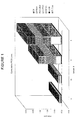
- Fig. 1 is a bar graph representation for samples of print contrast signal values represented cumulatively for environmental challenge tests comprising oil, water, alcohol, 40°C PVC, WPVC, 40/90% humidity and 70° cup humidity.
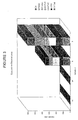
- Fig. 2 is a bar graph representation of bar width growth of samples subjected to the environmental challenge tests recited above.
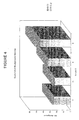
- Fig. 3 is a bar graph representation of cumulative decode loss of samples subjected to the environmental challenges recited above.
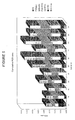
- Fig. 4 is a bar graph representation of background decline values for samples subjected to relative humidity and 70° cup humidity challenges.
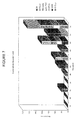
- Fig. 5 is a bar graph representation for sample of print contrast signal values represented cumulatively for environmental challenge tests comprising oil, water, alcohol, 40°C PVC, WPVC, 40/90% humidity, and 70° cup humidity.
- Fig. 6 is a bar graph representation of bar width growth values of samples subjected to the environmental challenges recited in Fig. 5.
- Fig. 7 is a bar code representation of cumulative decode loss of samples subjected to environmental challenges recited in Fig. 5.
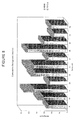
- Fig. 8 is a bar graph representation of background decline values of samples subjected to relative humidity and 70° cup humidity challenges.
- the coating fluid was applied to a base paper having a basis weight of 64 g/m 2 so that the amount of coating (solid) came to 3 g/m 2 , after which it was dried and a 3 g/m 2 coating of topcoat applied.
- the second coating was dried and calendered to prepare the direct thermal recording material for imaging.
- a direct thermal recording material was prepared by repeating the procedure of Example 1A, except that the compound 2-anilino-3-methyl-6-dibutylaminoflouran was replaced with 2-anilino-3-methyl-6-(cyclohexyl methyl) aminofluoran.
- a direct thermal recording material was prepared by repeating the procedure of Example 1A, except that the compound 2-anilino-3-methyl-6-dibutylaminoflouran was replaced with 2-anilino-3-methyl-6-diethylaminoflouran.
- the coating fluid was applied to a base paper having a basis weight of 64 g/m 2 so that the amount of coating (solid) came to 3 g/m 2 , after which it was dried and calendered to prepare the direct thermal recording material for imaging.
- a direct thermal recording material was prepared by repeating the procedure of Example 1A, except that the compound 2-anilino-3-methyl-6-dibutylaminoflouran was replaced with 2-anilino-3-methyl-6-(cyclohexyl methyl) aminofluoran.
- a direct thermal recording material was prepared by repeating the procedure of Example 1A, except that the compound 2-anilino-3-methyl-6-dibutylaminoflouran was replaced with 2-anilino-3-methyl-6-diethylaminoflouran.
- a direct thermal recording material was prepared by repeating the procedure of Example 1A, except that the compound 1,2-diphenoxyethane was replaced with parabenzyl biphenyl.
- a direct thermal recording material was prepared by repeating the procedure of Example 1A, except that the compound 1,2-diphenoxyethane was replaced with dibenzyl oxalate.
- a direct thermal recording material was prepared by repeating the procedure of Example 1A, except that the compound 1,2-diphenoxyethane was replaced with dimethylbenzyl oxalate.
- a direct thermal recording material was prepared by repeating the procedure of Example 1A, except that the compound 1,2-diphenoxyethane was replaced with 1,2-(3,4-dimethylphenyl)ethane.
- a direct thermal recording material was prepared by repeating the procedure of Example 1A, except that the compound 1,2-diphenoxyethane was replaced with dimethyl terephthalate.
- a direct thermal recording material was prepared by repeating the procedure of Example 1A, except that the compound bis (3-allyl-4-hydroxyphenyl) sulfone was replaced with 4-hydroxy, 4'-isopropoxy diphenylsulfone.
- a direct thermal recording material was prepared by repeating the procedure of Example 1A, except that the compound bis (3-allyl-4-hydroxyphenyl) sulfone was replaced with 2,2-bis(4-hydroxyphenyl) propane also known as "BPA".
- the direct thermal recording materials obtained above were recorded by means of an electronic print heat (manufactured by Hobart*, model 18VP), and the PCS, BWG, % Decode was measured by a LaserChek* II scanner and verifier, (manufactured by Symbol Technologies). Whiteness of the thermal recording material background was measured before and after exposure to 40°C/90% RH for 24 hours and separately before and after exposure to 70°C/90% RH for 24 hours, using a BNL-2 Opacimeter (manufactured by Technidyne Corporation).
- a layer with developer can be top coated with a layer containing dye precursor or chromogen.
- Another workable variation, equally within the scope of the invention would be to apply to a substrate a coating of dye precursor or chromogen over which is top coated a dispersion of developer.
Landscapes
- Chemical & Material Sciences (AREA)
- Chemical Kinetics & Catalysis (AREA)
- General Chemical & Material Sciences (AREA)
- Physics & Mathematics (AREA)
- Optics & Photonics (AREA)
- Heat Sensitive Colour Forming Recording (AREA)
Claims (6)
- Wärmeempfindliches Registriermaterial, welches für Strichcodierung geeignet ist, umfassend einen Träger mit einer in einer oder mehr Lagen in einem im wesentlichen angrenzenden Verhältnis darauf angeordneten wärmeempfindlichen Beschichtung, umfassend:einen im wesentlichen farblosen Farbstoffvorläufer, umfassend 2-Anilin-3-methyl-6-dibutylaminofluoran;einen Sensibilisator ausgewählt aus der Gruppe bestehend aus 1,2-Diphenoxyethan und 1,2-bis(4-Methylphenoxy)ethan,ein saures Entwicklermaterial, umfassend bis-(3-Allyl-4-hydroxyphenyl)sulfon, welches nach Erwärmung mit dem Farbstoffvorläufer reagiert, um Farbe zu entwickeln; undein Bindematerial,wobei die wärmeempfindliche Beschichtung weniger als 13 Gew.-% Pigmente umfasst.
- Registriermaterial nach Anspruch 1, wobei das Gewichtsverhältnis von saurem Entwickler zu Farbstoffvorläufer von 1:1 bis 2:1 beträgt.
- Registriermaterial nach Anspruch 1 oder Anspruch 2, wobei das Gewichtsverhältnis von Sensibilisator zu Farbstoffvorläufer größer als 1:1 ist.
- Registriermaterial nach einem der vorhergehenden Ansprüche, wobei der Sensibilisator 1,2-Diphenoxyethan ist.
- Registriermaterial nach einem der Ansprüche 1 bis 3, wobei der Sensibilisator 1,2-bis(4-Methylphenoxy)ethan ist.
- Registriermaterial nach einem der vorhergehenden Ansprüche, wobei auf die wärmeempfindliche Schicht auf dem Träger durch selektive Wärmeanwendung ein Muster in Form eines Barcodes, beispielsweise eines Barcodes umfassend mehrere sich in einem Abstand befindende, in einer Reihe angeordnete parallele Linien, abgebildet wurde.
Applications Claiming Priority (2)
| Application Number | Priority Date | Filing Date | Title |
|---|---|---|---|
| US842965 | 1986-03-24 | ||
| US08/842,965 US5955398A (en) | 1997-04-25 | 1997-04-25 | Thermally-responsive record material |
Publications (3)
| Publication Number | Publication Date |
|---|---|
| EP0873880A1 EP0873880A1 (de) | 1998-10-28 |
| EP0873880B1 EP0873880B1 (de) | 2000-05-31 |
| EP0873880B2 true EP0873880B2 (de) | 2006-12-20 |
Family
ID=25288707
Family Applications (1)
| Application Number | Title | Priority Date | Filing Date |
|---|---|---|---|
| EP98302304A Expired - Lifetime EP0873880B2 (de) | 1997-04-25 | 1998-03-26 | Wärmeempfindliches Aufzeichnungsmaterial, das einen Ethr-Sensibilisator verwendet |
Country Status (6)
| Country | Link |
|---|---|
| US (1) | US5955398A (de) |
| EP (1) | EP0873880B2 (de) |
| AT (1) | ATE193489T1 (de) |
| CA (1) | CA2218632C (de) |
| DE (1) | DE69800165T3 (de) |
| ES (1) | ES2146489T5 (de) |
Families Citing this family (13)
| Publication number | Priority date | Publication date | Assignee | Title |
|---|---|---|---|---|
| US6835691B2 (en) * | 2000-01-05 | 2004-12-28 | Appleton Papers Inc. | Thermally-responsive record material |
| WO2001049507A1 (en) * | 2000-01-05 | 2001-07-12 | Appleton Papers Inc. | Thermally-responsive record material |
| JP2007505774A (ja) * | 2003-05-22 | 2007-03-15 | アップルトン ペーパーズ インコーポレイテッド | ライナーレスラベル |
| US20060264326A1 (en) * | 2005-05-17 | 2006-11-23 | Appleton Papers Inc. | Heat-sensitive record material |
| JP2009090591A (ja) * | 2007-10-11 | 2009-04-30 | Oji Paper Co Ltd | 感熱記録体 |
| EP2483485B1 (de) * | 2009-10-02 | 2016-12-07 | Unifrax I LLC | Ultraleichte isolierplatte |
| US9126451B2 (en) | 2013-12-18 | 2015-09-08 | Appvion, Inc. | Thermal recording materials |
| US20200019077A1 (en) | 2018-07-11 | 2020-01-16 | Appvion Operations, Inc. | Media Adapted for Both Direct Thermal Recording and Memjet-Type Printing |
| DE202020006063U1 (de) | 2020-12-10 | 2024-08-27 | Appvion, Llc | Phenol-freie Mehrzweck-Thermodirekt-Aufzeichnungsmedien |
| US12151498B2 (en) | 2020-12-10 | 2024-11-26 | Appvion, Llc | Multi-purpose phenol-free direct thermal recording media |
| US12115803B2 (en) | 2020-12-10 | 2024-10-15 | Appvion, Llc | Fade-resistant water-dispersible phenol-free direct thermal media |
| FI4259449T3 (fi) | 2020-12-10 | 2024-08-01 | Appvion Llc | Monikäyttöinen fenoliton suora lämpötallennusväline |
| JP2025528105A (ja) | 2022-08-10 | 2025-08-26 | アプヴィオン エルエルシー | 耐油性のためのジアリール尿素の組合せを用いた直接感熱記録媒体 |
Citations (6)
| Publication number | Priority date | Publication date | Assignee | Title |
|---|---|---|---|---|
| EP0141170A2 (de) † | 1983-09-08 | 1985-05-15 | Kanzaki Paper Manufacturing Company Limited | Wärmeempfindliches Aufzeichnungsmaterial |
| US4659643A (en) † | 1984-10-27 | 1987-04-21 | Kanzaki Paper Manufacturing Co. Ltd. | Heat-sensitive recording diazo material with recording sensitizer |
| US4870047A (en) † | 1988-09-01 | 1989-09-26 | Appleton Papers Inc. | Thermally-responsive record material |
| JPH04110191A (ja) † | 1990-08-29 | 1992-04-10 | Kanzaki Paper Mfg Co Ltd | 感熱記録体 |
| JPH0454597B2 (de) † | 1983-03-25 | 1992-08-31 | Ricoh Kk | |
| US5466656A (en) † | 1993-09-22 | 1995-11-14 | New Oji Paper Company, Ltd. | Heat sensitive recording material |
Family Cites Families (14)
| Publication number | Priority date | Publication date | Assignee | Title |
|---|---|---|---|---|
| US33815A (en) * | 1861-11-26 | Improved churn | ||
| US3627787A (en) * | 1969-01-21 | 1971-12-14 | Ncr Co | Amids- and sulfonamido-substituted fluorans |
| JPS6053069B2 (ja) * | 1980-09-17 | 1985-11-22 | 保土谷化学工業株式会社 | フルオラン化合物 |
| JPS57170794A (en) * | 1981-04-14 | 1982-10-21 | Kanzaki Paper Mfg Co Ltd | Heat sensitive recording paper |
| JPS58208092A (ja) * | 1982-05-28 | 1983-12-03 | Fuji Xerox Co Ltd | 感熱記録紙 |
| JPS59190891A (ja) * | 1983-04-14 | 1984-10-29 | Hodogaya Chem Co Ltd | 感熱記録紙 |
| JPS60202155A (ja) * | 1984-03-26 | 1985-10-12 | Nippon Kayaku Co Ltd | 3−ジブチルアミノ−6−メチル−7−アニリノフルオランの結晶変態 |
| DE3601645A1 (de) * | 1985-01-31 | 1986-08-07 | Mitsubishi Paper Mills, Ltd., Tokio/Tokyo | Waermeempfindliches aufzeichnungsmaterial |
| JPS62181183A (ja) * | 1986-02-06 | 1987-08-08 | Fuji Photo Film Co Ltd | 感熱記録材料 |
| JPH0649390B2 (ja) * | 1986-06-11 | 1994-06-29 | 富士写真フイルム株式会社 | 感熱記録材料 |
| DE3783005T2 (de) * | 1986-09-03 | 1993-05-19 | Fuji Photo Film Co Ltd | Aufzeichnungsmaterialblatt mit farbstoffbildner. |
| EP0306916B1 (de) * | 1987-09-08 | 1993-06-23 | Mitsubishi Paper Mills, Ltd. | Wärmeempfindliches Aufzeichnungsmaterial |
| EP0567314A1 (de) * | 1992-04-24 | 1993-10-27 | Fuji Photo Film Co., Ltd. | Elektronenacceptorenverbindungen und Mehrfarbaufzeichnungsmaterialien, die diese Verbindungen enthalten |
| JP3029010B2 (ja) * | 1995-04-26 | 2000-04-04 | 日本製紙株式会社 | 感熱記録シート |
-
1997
- 1997-04-25 US US08/842,965 patent/US5955398A/en not_active Expired - Lifetime
- 1997-10-20 CA CA002218632A patent/CA2218632C/en not_active Expired - Lifetime
-
1998
- 1998-03-26 DE DE69800165T patent/DE69800165T3/de not_active Expired - Lifetime
- 1998-03-26 AT AT98302304T patent/ATE193489T1/de active
- 1998-03-26 ES ES98302304T patent/ES2146489T5/es not_active Expired - Lifetime
- 1998-03-26 EP EP98302304A patent/EP0873880B2/de not_active Expired - Lifetime
Patent Citations (7)
| Publication number | Priority date | Publication date | Assignee | Title |
|---|---|---|---|---|
| JPH0454597B2 (de) † | 1983-03-25 | 1992-08-31 | Ricoh Kk | |
| EP0141170A2 (de) † | 1983-09-08 | 1985-05-15 | Kanzaki Paper Manufacturing Company Limited | Wärmeempfindliches Aufzeichnungsmaterial |
| US4531140A (en) † | 1983-09-08 | 1985-07-23 | Kansaki Paper Manufacturing Co. Ltd. | Heat-sensitive recording material |
| US4659643A (en) † | 1984-10-27 | 1987-04-21 | Kanzaki Paper Manufacturing Co. Ltd. | Heat-sensitive recording diazo material with recording sensitizer |
| US4870047A (en) † | 1988-09-01 | 1989-09-26 | Appleton Papers Inc. | Thermally-responsive record material |
| JPH04110191A (ja) † | 1990-08-29 | 1992-04-10 | Kanzaki Paper Mfg Co Ltd | 感熱記録体 |
| US5466656A (en) † | 1993-09-22 | 1995-11-14 | New Oji Paper Company, Ltd. | Heat sensitive recording material |
Also Published As
| Publication number | Publication date |
|---|---|
| ES2146489T5 (es) | 2007-06-01 |
| EP0873880B1 (de) | 2000-05-31 |
| ATE193489T1 (de) | 2000-06-15 |
| DE69800165T2 (de) | 2000-10-05 |
| DE69800165D1 (de) | 2000-07-06 |
| EP0873880A1 (de) | 1998-10-28 |
| DE69800165T3 (de) | 2007-10-04 |
| CA2218632C (en) | 2004-08-24 |
| CA2218632A1 (en) | 1998-10-25 |
| ES2146489T3 (es) | 2000-08-01 |
| US5955398A (en) | 1999-09-21 |
Similar Documents
| Publication | Publication Date | Title |
|---|---|---|
| EP0873880B2 (de) | Wärmeempfindliches Aufzeichnungsmaterial, das einen Ethr-Sensibilisator verwendet | |
| US4742042A (en) | Thermosensitive recording material | |
| EP2093072B1 (de) | Wärmeempfindliches Aufzeichnungsmittel und Aufzeichnungsverfahren | |
| JP3586428B2 (ja) | 感熱記録材料 | |
| US8916497B2 (en) | Thermally-responsive record material | |
| US4999332A (en) | Heat-sensitive recording material | |
| EP0535788B1 (de) | Wärmeempfindliches Aufzeichnungsmaterial | |
| US5494882A (en) | Thermal recording material | |
| JP7456708B1 (ja) | 感熱記録体 | |
| JP3699221B2 (ja) | 感熱記録材料 | |
| JP2024158945A (ja) | 感熱記録体 | |
| JP2024158946A (ja) | 感熱記録体 | |
| JP3526689B2 (ja) | 感熱記録材料 | |
| JPH11216956A (ja) | 感熱記録体 | |
| JP2006264122A (ja) | 感熱記録材料 | |
| JPH0615957A (ja) | 感熱記録材料 | |
| JPH04269584A (ja) | 感熱記録体 | |
| JPS61199988A (ja) | 感熱記録材料 | |
| JPH08216510A (ja) | 赤黒2色感熱記録型ラベル | |
| JP2004249548A (ja) | 感熱記録材料 | |
| JPH05318906A (ja) | 多色記録感熱ラベル用シート | |
| JPH07257043A (ja) | 感熱記録体 | |
| JPH08207446A (ja) | 感熱記録材料 | |
| JPH07314910A (ja) | 感熱記録材料 | |
| JPH09314994A (ja) | 感熱記録材料 |
Legal Events
| Date | Code | Title | Description |
|---|---|---|---|
| PUAI | Public reference made under article 153(3) epc to a published international application that has entered the european phase |
Free format text: ORIGINAL CODE: 0009012 |
|
| AK | Designated contracting states |
Kind code of ref document: A1 Designated state(s): AT BE CH DE ES FI FR GB IT LI NL SE |
|
| AX | Request for extension of the european patent |
Free format text: AL;LT;LV;MK;RO;SI |
|
| 17P | Request for examination filed |
Effective date: 19981113 |
|
| 17Q | First examination report despatched |
Effective date: 19981209 |
|
| GRAG | Despatch of communication of intention to grant |
Free format text: ORIGINAL CODE: EPIDOS AGRA |
|
| AKX | Designation fees paid |
Free format text: AT BE CH DE ES FI FR GB IT LI NL SE |
|
| TPAD | Observations filed by third parties |
Free format text: ORIGINAL CODE: EPIDOS TIPA |
|
| GRAG | Despatch of communication of intention to grant |
Free format text: ORIGINAL CODE: EPIDOS AGRA |
|
| GRAH | Despatch of communication of intention to grant a patent |
Free format text: ORIGINAL CODE: EPIDOS IGRA |
|
| GRAH | Despatch of communication of intention to grant a patent |
Free format text: ORIGINAL CODE: EPIDOS IGRA |
|
| GRAA | (expected) grant |
Free format text: ORIGINAL CODE: 0009210 |
|
| AK | Designated contracting states |
Kind code of ref document: B1 Designated state(s): AT BE CH DE ES FI FR GB IT LI NL SE |
|
| REF | Corresponds to: |
Ref document number: 193489 Country of ref document: AT Date of ref document: 20000615 Kind code of ref document: T |
|
| REG | Reference to a national code |
Ref country code: CH Ref legal event code: EP |
|
| ITF | It: translation for a ep patent filed | ||
| REG | Reference to a national code |
Ref country code: CH Ref legal event code: NV Representative=s name: BOVARD AG PATENTANWAELTE |
|
| REF | Corresponds to: |
Ref document number: 69800165 Country of ref document: DE Date of ref document: 20000706 |
|
| REG | Reference to a national code |
Ref country code: ES Ref legal event code: FG2A Ref document number: 2146489 Country of ref document: ES Kind code of ref document: T3 |
|
| ET | Fr: translation filed | ||
| PLBQ | Unpublished change to opponent data |
Free format text: ORIGINAL CODE: EPIDOS OPPO |
|
| PLBI | Opposition filed |
Free format text: ORIGINAL CODE: 0009260 |
|
| PLBQ | Unpublished change to opponent data |
Free format text: ORIGINAL CODE: EPIDOS OPPO |
|
| PLBI | Opposition filed |
Free format text: ORIGINAL CODE: 0009260 |
|
| PLBF | Reply of patent proprietor to notice(s) of opposition |
Free format text: ORIGINAL CODE: EPIDOS OBSO |
|
| 26 | Opposition filed |
Opponent name: OJI PAPER COMPANY, LIMITED Effective date: 20010228 |
|
| 26 | Opposition filed |
Opponent name: KANZAKI SPECIALTY PAPERS INC. Effective date: 20010228 Opponent name: OJI PAPER COMPANY, LIMITED Effective date: 20010228 |
|
| NLR1 | Nl: opposition has been filed with the epo |
Opponent name: KANZAKI SPECIALTY PAPERS INC. Opponent name: OJI PAPER COMPANY, LIMITED |
|
| PLBF | Reply of patent proprietor to notice(s) of opposition |
Free format text: ORIGINAL CODE: EPIDOS OBSO |
|
| PLBF | Reply of patent proprietor to notice(s) of opposition |
Free format text: ORIGINAL CODE: EPIDOS OBSO |
|
| REG | Reference to a national code |
Ref country code: GB Ref legal event code: IF02 |
|
| RDAF | Communication despatched that patent is revoked |
Free format text: ORIGINAL CODE: EPIDOSNREV1 |
|
| APBP | Date of receipt of notice of appeal recorded |
Free format text: ORIGINAL CODE: EPIDOSNNOA2O |
|
| APBQ | Date of receipt of statement of grounds of appeal recorded |
Free format text: ORIGINAL CODE: EPIDOSNNOA3O |
|
| APAA | Appeal reference recorded |
Free format text: ORIGINAL CODE: EPIDOS REFN |
|
| APAH | Appeal reference modified |
Free format text: ORIGINAL CODE: EPIDOSCREFNO |
|
| APBU | Appeal procedure closed |
Free format text: ORIGINAL CODE: EPIDOSNNOA9O |
|
| PUAH | Patent maintained in amended form |
Free format text: ORIGINAL CODE: 0009272 |
|
| STAA | Information on the status of an ep patent application or granted ep patent |
Free format text: STATUS: PATENT MAINTAINED AS AMENDED |
|
| 27A | Patent maintained in amended form |
Effective date: 20061220 |
|
| AK | Designated contracting states |
Kind code of ref document: B2 Designated state(s): AT BE CH DE ES FI FR GB IT LI NL SE |
|
| REG | Reference to a national code |
Ref country code: CH Ref legal event code: AEN Free format text: AUFRECHTERHALTUNG DES PATENTES IN GEAENDERTER FORM |
|
| NLR2 | Nl: decision of opposition |
Effective date: 20061220 |
|
| NLR3 | Nl: receipt of modified translations in the netherlands language after an opposition procedure | ||
| REG | Reference to a national code |
Ref country code: SE Ref legal event code: RPEO |
|
| REG | Reference to a national code |
Ref country code: ES Ref legal event code: DC2A Date of ref document: 20070112 Kind code of ref document: T5 |
|
| ET3 | Fr: translation filed ** decision concerning opposition | ||
| REG | Reference to a national code |
Ref country code: CH Ref legal event code: PFA Owner name: APPLETON PAPERS INC. Free format text: APPLETON PAPERS INC.#P.O. BOX 359 825 EAST WISCONSIN AVENUE#APPLETON WISCONSIN 54912 (US) -TRANSFER TO- APPLETON PAPERS INC.#P.O. BOX 359 825 EAST WISCONSIN AVENUE#APPLETON WISCONSIN 54912 (US) |
|
| REG | Reference to a national code |
Ref country code: FR Ref legal event code: PLFP Year of fee payment: 19 |
|
| PGFP | Annual fee paid to national office [announced via postgrant information from national office to epo] |
Ref country code: NL Payment date: 20160321 Year of fee payment: 19 Ref country code: ES Payment date: 20160309 Year of fee payment: 19 Ref country code: CH Payment date: 20160323 Year of fee payment: 19 |
|
| PGFP | Annual fee paid to national office [announced via postgrant information from national office to epo] |
Ref country code: FI Payment date: 20160311 Year of fee payment: 19 Ref country code: GB Payment date: 20160321 Year of fee payment: 19 Ref country code: AT Payment date: 20160322 Year of fee payment: 19 Ref country code: BE Payment date: 20160321 Year of fee payment: 19 Ref country code: FR Payment date: 20160321 Year of fee payment: 19 Ref country code: SE Payment date: 20160321 Year of fee payment: 19 |
|
| PGFP | Annual fee paid to national office [announced via postgrant information from national office to epo] |
Ref country code: DE Payment date: 20160330 Year of fee payment: 19 |
|
| PGFP | Annual fee paid to national office [announced via postgrant information from national office to epo] |
Ref country code: IT Payment date: 20160323 Year of fee payment: 19 |
|
| REG | Reference to a national code |
Ref country code: DE Ref legal event code: R119 Ref document number: 69800165 Country of ref document: DE |
|
| PG25 | Lapsed in a contracting state [announced via postgrant information from national office to epo] |
Ref country code: FI Free format text: LAPSE BECAUSE OF NON-PAYMENT OF DUE FEES Effective date: 20170326 |
|
| REG | Reference to a national code |
Ref country code: CH Ref legal event code: PL Ref country code: SE Ref legal event code: EUG |
|
| REG | Reference to a national code |
Ref country code: NL Ref legal event code: MM Effective date: 20170401 |
|
| REG | Reference to a national code |
Ref country code: AT Ref legal event code: MM01 Ref document number: 193489 Country of ref document: AT Kind code of ref document: T Effective date: 20170326 |
|
| GBPC | Gb: european patent ceased through non-payment of renewal fee |
Effective date: 20170326 |
|
| PG25 | Lapsed in a contracting state [announced via postgrant information from national office to epo] |
Ref country code: SE Free format text: LAPSE BECAUSE OF NON-PAYMENT OF DUE FEES Effective date: 20170327 |
|
| REG | Reference to a national code |
Ref country code: FR Ref legal event code: ST Effective date: 20171130 |
|
| PG25 | Lapsed in a contracting state [announced via postgrant information from national office to epo] |
Ref country code: NL Free format text: LAPSE BECAUSE OF NON-PAYMENT OF DUE FEES Effective date: 20170401 Ref country code: FR Free format text: LAPSE BECAUSE OF NON-PAYMENT OF DUE FEES Effective date: 20170331 Ref country code: DE Free format text: LAPSE BECAUSE OF NON-PAYMENT OF DUE FEES Effective date: 20171003 Ref country code: AT Free format text: LAPSE BECAUSE OF NON-PAYMENT OF DUE FEES Effective date: 20170326 |
|
| PG25 | Lapsed in a contracting state [announced via postgrant information from national office to epo] |
Ref country code: LI Free format text: LAPSE BECAUSE OF NON-PAYMENT OF DUE FEES Effective date: 20170331 Ref country code: GB Free format text: LAPSE BECAUSE OF NON-PAYMENT OF DUE FEES Effective date: 20170326 Ref country code: IT Free format text: LAPSE BECAUSE OF NON-PAYMENT OF DUE FEES Effective date: 20170326 Ref country code: CH Free format text: LAPSE BECAUSE OF NON-PAYMENT OF DUE FEES Effective date: 20170331 |
|
| REG | Reference to a national code |
Ref country code: BE Ref legal event code: MM Effective date: 20170331 |
|
| REG | Reference to a national code |
Ref country code: ES Ref legal event code: FD2A Effective date: 20180507 |
|
| PG25 | Lapsed in a contracting state [announced via postgrant information from national office to epo] |
Ref country code: BE Free format text: LAPSE BECAUSE OF NON-PAYMENT OF DUE FEES Effective date: 20170331 |
|
| PG25 | Lapsed in a contracting state [announced via postgrant information from national office to epo] |
Ref country code: ES Free format text: LAPSE BECAUSE OF NON-PAYMENT OF DUE FEES Effective date: 20170327 |