EP0866667B1 - High temperature/ultra-high pressure sterilization of low acid foods - Google Patents
High temperature/ultra-high pressure sterilization of low acid foods Download PDFInfo
- Publication number
- EP0866667B1 EP0866667B1 EP96945769A EP96945769A EP0866667B1 EP 0866667 B1 EP0866667 B1 EP 0866667B1 EP 96945769 A EP96945769 A EP 96945769A EP 96945769 A EP96945769 A EP 96945769A EP 0866667 B1 EP0866667 B1 EP 0866667B1
- Authority
- EP
- European Patent Office
- Prior art keywords
- temperature
- pressure
- ultra
- low acid
- pressurized
- Prior art date
- Legal status (The legal status is an assumption and is not a legal conclusion. Google has not performed a legal analysis and makes no representation as to the accuracy of the status listed.)
- Revoked
Links
Images



Classifications
-
- A—HUMAN NECESSITIES
- A23—FOODS OR FOODSTUFFS; TREATMENT THEREOF, NOT COVERED BY OTHER CLASSES
- A23B—PRESERVATION OF FOODS, FOODSTUFFS OR NON-ALCOHOLIC BEVERAGES; CHEMICAL RIPENING OF FRUIT OR VEGETABLES
- A23B2/00—Preservation of foods or foodstuffs, in general
- A23B2/30—Preservation of foods or foodstuffs, in general by heating materials in packages which are not progressively transported through the apparatus
-
- A—HUMAN NECESSITIES
- A23—FOODS OR FOODSTUFFS; TREATMENT THEREOF, NOT COVERED BY OTHER CLASSES
- A23B—PRESERVATION OF FOODS, FOODSTUFFS OR NON-ALCOHOLIC BEVERAGES; CHEMICAL RIPENING OF FRUIT OR VEGETABLES
- A23B2/00—Preservation of foods or foodstuffs, in general
- A23B2/10—Preservation of foods or foodstuffs, in general by treatment with pressure variation, shock, acceleration or shear stress
- A23B2/103—Preservation of foods or foodstuffs, in general by treatment with pressure variation, shock, acceleration or shear stress using sub- or super-atmospheric pressures, or pressure variations transmitted by a liquid or gas
-
- A—HUMAN NECESSITIES
- A23—FOODS OR FOODSTUFFS; TREATMENT THEREOF, NOT COVERED BY OTHER CLASSES
- A23B—PRESERVATION OF FOODS, FOODSTUFFS OR NON-ALCOHOLIC BEVERAGES; CHEMICAL RIPENING OF FRUIT OR VEGETABLES
- A23B4/00—Preservation of meat, sausages, fish or fish products
- A23B4/005—Preserving by heating
- A23B4/0053—Preserving by heating with gas or liquids, with or without shaping, e.g. in form of powder, granules or flakes
- A23B4/0056—Preserving by heating with gas or liquids, with or without shaping, e.g. in form of powder, granules or flakes with packages, or with shaping in the form of blocks or portions
-
- A—HUMAN NECESSITIES
- A23—FOODS OR FOODSTUFFS; TREATMENT THEREOF, NOT COVERED BY OTHER CLASSES
- A23B—PRESERVATION OF FOODS, FOODSTUFFS OR NON-ALCOHOLIC BEVERAGES; CHEMICAL RIPENING OF FRUIT OR VEGETABLES
- A23B7/00—Preservation of fruit or vegetables; Chemical ripening of fruit or vegetables
- A23B7/005—Preserving by heating
- A23B7/0053—Preserving by heating by direct or indirect contact with heating gases or liquids
- A23B7/0056—Preserving by heating by direct or indirect contact with heating gases or liquids with packages
Definitions
- This invention relates to a method of sterilizing low acid foods using a combination of ultra-high pressure and elevated temperatures. More particularly, the invention relates to using the synergy between the adiabatic temperature rise that occurs when a material is hydrostatically pressurized, coupled with the lethality of the pressure to achieve the appropriate sterilization conditions.
- UHP ultra-high pressure
- the potential to process certain foods using ultra-high pressure (UHP) sterilization has been known since the turn of the century when hydrostatic pressures in excess of 689 MPa (100,000 psi) at ambient temperatures were tested and it was established to have a lethal effect on vegetative bacteria.
- the process involves pressurizing a material (in this case a food) to ultra-high pressures 344 to 1034 MPa (50,000 to 150,000 psi and higher). This process is very effective at eliminating vegetative bacteria, yeast and molds.
- the treatment is uniform throughout the product and much faster in its ability to inactivate microorganisms than standard batch sterilization processes which heat the food product slowly through conduction.
- UHP is often referred to as a "heatless” or "cold pasteurization” method. In the literature, it was believed that UHP was not very effective at destroying bacterial spores or denaturing enzymes. These are the primary requirements for processing low acid, shelf stable, canned foods.
- Ultra-high pressure bacterial inactivation is not well understood. It is believed that microbes are destroyed through altered permeability of the cell membranes from mechanical disruption as well as protein denaturation due to the disruption of hydrophobic bonds, ionic bonds and subsequent unfolding of the protein structure. In contrast, thermal protein denaturation and to a large extent microbiological inactivation is due to the destruction and creation of covalent bonds. It is currently believed that the UHP process is only effective for inactivating vegetative bacteria, yeast and molds.
- Low acid food pasteurization involves heating the product to 60-100°C and is only effective for inactivating non-spore forming pathogens.
- the sterilization process is particularly severe because of the time required to heat the entire product, particularly the center of the product, to the treatment temperature (>100°C). That is, by the time the center core of the product achieves the desired peak treatment temperature for the desired period of time, the outer portions of the product have been overtreated. Accordingly, low acid food sterilization, particularly in packaging (which tends to insulate the product), is undesirable since the extended time for thermal treatment often degrades the characteristics of the product.
- Japanese Patent Publication 225 7864 to Ajinomoto discloses pressure sterilization of bacterial spores.
- the publication discloses sterilizing bacterial spores under pressure by treating a food product for 5 to 300 minutes at 30 to 100° C under a pressure of 1,000 to 10,000 kg/cm 2 (70-700 psi) (not ultra-high pressure).
- Japanese Patent Publication 318 3450 to Dainippon Printing discloses the preparation of cut vegetables involving the step of pasteurizing the product by applying a pressure of at least 1,000 kg/cm 2 (70 psi) (not ultra-high pressure).
- Australian Patent Publication 42 50 72 to Donald discloses the sterilization of food compositions.
- the disclosed process includes raising the pressure of a previously heated food product, injecting steam into the pressurized chamber to allow the steam to condense onto the product, raising the temperature of the composition and subsequently releasing the pressure.
- the publication discloses that the composition is held at a pressure such that the steam is condensed to water donating its latent heat energy to the surrounding composition and subsequently lowering the pressure, causing the condensed water to flash off, taking its latent heat energy from the composition and thus cooling it.
- the invention relates to a method of sterilizing low acid foods using a combination of ultra-high pressure and elevated temperatures.
- the instantaneous adiabatic temperature change that occurs when pressure is applied to a food composition combines a high-temperature short-time process with ultra-high pressure to deliver a fast and therefore gentle thermal process to a prepackaged product.
- the destruction of microorganisms relates to the destruction of life at the single cell level (Pflug et al, "Principles of the thermal destruction of microorganisms", Disinfection, Sterilization and Preservation , fourth edition, edited by Seymour Block).
- One particular microorganism that is a target of thermal sterilization processes is Clostridium botulinum.
- C. botulinum in a food is not dangerous unless it can develop into a toxin-producing vegetative culture. Growth depends on the food satisfying the nutritional requirements of the organisms. However, the growth also depends on other factors (see Food Born Diseases , edited by Dean Cliver, pages 116-120 and Basic Food Microbiology , second edition, by George Banwart, pages 219-239).
- the invention achieves commercial sterility of low acid food products, that is, inactivates all spores capable of growing under the intended storage conditions.
- the invention results in a 10+ log spore kill (eliminates 10 10 spores or more).
- Products prepared using the invention have a fresher appearance compared to the conventional cooked products because the products treated according to the invention are exposed to high temperatures for only short periods of time. Since extensive high temperature treatments are avoided, the invention also provides additional recipe flexibility and product claims compared to thermally processed products because temperature sensitive additives can be used more readily.
- One embodiment of the invention involves heating a low acid food to a pre-pressurized temperature, subjecting the food to ultra-high pressure, which instantaneously raises the temperature adiabatically, and then releasing the pressure so that the temperature returns to the original pre-pressurized temperature.
- the technique leverages the adiabatic temperature rise which occurs when a food material is hydrostatically pressurized, coupled with the lethality of the pressure, to achieve appropriate sterilization conditions.
- the process achieves a 10+ log spore kill (detection sensitivity of the testing to date) of mesophilic, anaerobic and thermophilic spores ( B. subtilis, C. sporogenes and B. stearothermophilus ) by coupling pascalization with elevated temperatures.
- the presently disclosed methods provide a new way of sterilizing and processing foods, particularly low acid canned foods, that is faster, more energy efficient and less detrimental to product quality than conventional thermal canning (hydrostatic cooker and retort) processes.
- the present invention offers several advantages over current sterilization technology.
- the primary advantage is the ability to sterilize low acid foods with increased efficiency. Process cycle times are dramatically reduced by eliminating the conventional pressurized (30-35 psi) heat up, hold and cool down cycle time.
- a product can be quickly heated via conventional UHT equipment to 80-99°C, packaged, loaded into a pascalization chamber filled with a preheated medium, pressurized to 50,000-150,000 psi, preferably 70,000-130,000 psi, decompressed, and then transferred to a cooling trough to chill the product from 80-99°C to ambient conditions.
- the sterilization conditions of the invention are achieved with lower peak temperatures and much shorter hold times since the ultra-high pressure and temperature combination contribute synergistically to the lethality of the process. Neither the pressure nor temperature conditions alone would provide the synergistic lethality of the combination.
- the thermal degradation reactions that occur in conventionally sterilized pre-packaged products are greatly reduced due to the short duration of thermal exposure at the high temperature ranges. This reduces vitamin and nutritional deterioration and allows for the utilization of thermally sensitive, natural additives and colorants. Flavor deterioration, thermally induced off-flavors, breakdown of gel and viscosity systems are also greatly reduced.
- An additional advantage is the reduction of thermal energy requirements and cooling water utilization. Furthermore, enzymes which could cause product deterioration are denatured and therefore inactivated.
- the process according to the invention is similar to high temperature short time processes, but does not rely on the more complicated aseptic packaging conditions to maintain product sterility.
- high temperature short time processes the food product is heated to high temperatures (121,1°C 250°F and up) external to the package and then directly packaged in sterile containers to avoid contamination.
- the invention avoids the use of both the high temperatures and complicated packaging requirements of the high temperature short time processes.
- the present invention allows for the treatment of the already-packaged product.
- the presently disclosed process can be utilized to sterilize a variety of foods.
- These foods include pet foods (high moisture and semi-moisture), main meals, sauces, soups, stews, vegetables, beverages and juices.
- a method of sterilizing a low acid food product having a pH greater than or equal to 4.6 comprising the steps of:
- Low acid foods are those having a pH ⁇ 4.6.
- High acid foods pH ⁇ 4.6
- pathogens unlike low acid foods, are not prone to the growth of pathogens. It is these pathogens that are particularly susceptible to the synergistic effect of the present process.
- a second aspect of the present invention provides a food product processed according to the method of the first aspect.
- the first aspect of the present invention uses a combination of both ultra-high pressure and high temperatures to sterilize a low acid food.
- the pre-pressurized temperature is in the range of 75°C to 125°C, more preferably in the range 90°C to 100°C. At temperatures above 100° water may turn to steam which can cause complications.
- additives, such as salt can be used to increase the boiling temperature of water.
- the ultra-high pressure is greater than about 517 MPa (75,000 psi), preferably greater than about 620 MPa (90,000 psi), even more preferably greater than about 689 MPa (100,000 psi) and most preferably greater than about 862 MPa (125,000 psi), and less than about 1724 MPa (250 Kpsi).
- hydraulic means are used to apply isostatic pressure.
- the food product is preferably in a package.
- the package may contain gas, which will become compressed during pressurization.
- the package is hermetically sealed.
- the high temperature is achieved by an adiabatic temperature increase due to the pressurization.
- the temperature of the material rises instantaneously when the pressure is applied and immediately returns to its starting temperature when the pressure is released.
- 689 MPa 100,000 psi
- adiabatic heating of water increases the temperature approximately 20°C
- castor oil rises 40°C.
- Tests have demonstrated a 27°C adiabatic temperature rise in a model wet pet food at 620 MPa (90,000 psi).
- This transposable temperature change is explained by the ideal gas law. Applying the ideal gas law to solid and liquid materials, which marginally compress, the temperature will rise when pressure is applied and decline when the pressure is released.
- This instantaneous temperature change that occurs when pressure is applied provides the ability to couple a high- temperature short-time process with ultra-high pressure to deliver a fast and therefore gentle thermal process to a prepackaged product.
- the additional lethality of the process is primarily based on the peak temperature achieved under pressure.
- the peak temperature depends on the starting temperature (pre-pressurized temperature) and the adiabatic temperature rise which occurs instantaneously when a material is pressurized. This temperature increase is instantaneous and uniform throughout the product, relying on neither conductive nor convective forces to transfer the thermal energy.
- the peak temperature ranges from about 100°C to about 160°C, preferably about 110°C to 150°C and even more preferably about 120°C to 140°C.
- the time-temperature nor the ultra-high pressure conditions alone is enough to sterilize low acid food products.
- the combination achieves greater than about 95% bacterial spore inactivation.
- the bacterial spore inactivation is greater than about 99%, more preferably greater than about 99.9%, and even more preferably about 100%.
- the process results in a 10+ log spore kill and achieves commercial sterility.
- One embodiment of the present invention includes the step of heating a food product to an initial pre-pressurized temperature, pressurizing to an ultra-high pressure, thereby instantaneously increasing the temperature due to the adiabatic temperature rise, decompressing the product, thereby returning the temperature to the original initial pre-pressurized temperature and subsequently cooling the product from the initial pre-pressurized temperature to room temperature, resulting in a sterilized product.
- the pre-pressurized temperature is preferably greater than about 75°C, more preferably about 80°C, and even more preferably 85°C, and less than about 105°C.
- Another embodiment of the present invention relates to sterilizing a food product utilizing an instantaneous temperature rise, preferably resulting from the application of ultra-high pressure.
- a method utilizing the instant adiabatic temperature rise is used to achieve a specific targeted required amount of lethality.
- the lethality of a thermal process is normally expressed in terms of an F o .
- the F o value is based on a temperature/time relationship and is used to equate thermal processes to a known process at 121.1°C.
- An F o of 1 is equal to processing a material at 121.1°C for 1 minute. This can also be achieved by processing at 105°C for much greater than 1 minute or at 130°C for somewhat less than 1 minute. Depending on the attributes of a product, this allows the food processor some flexibility on how a food is processed.
- the disclosed process provides an instantaneous adiabatic temperature rise which results in an instantaneous uniform temperature increase throughout the entire product. Accordingly, a specific F o target can be achieved without overtreating portions of the product.
- a pre-packaged product can be heated to a pre-pressurized temperature which does not degrade the product, pressurized with ultra-high pressure resulting in an instantaneous temperature increase throughout the product for a specific period of time and then de-pressurized and cooled.
- a specific target F o can be achieved (i.e. an instantaneous temperature increase to 121.1°C for 1 minute to achieve an F o of 1). Therefore an important aspect of the invention relates to the ability to achieve a specific F o lethality level throughout an entire bulk product (packaged or not packaged) without overtreating or overexposing portions of the product to the thermal treatment.
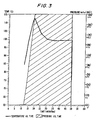
- a graphical representation illustrates the time-temperature-pressure relationship for the UHP process of Set A of Example 4.
- the left vertical axis represents temperature
- the right vertical axis represents pressure
- the horizontal axis represents time.
- the temperature of the product during treatment is shown by a curve.
- the pressure is shown by the shaded region.
- the pre-pressurized temperature was about 85°C and the maximum pressure was 620 MPa (90,000 psi) applied for about one minute.
- Fig. 2 illustrates a graphical representation of the UHP process performed in Set B of Example 4 where the pre-pressurized temperature was 85°C and the pressure was 620 MPa (90,000 psi) applied for about five minutes.
- Fig. 3 illustrates a graphical representation of the UHP process performed in Set C of Example 4 where the pre-pressurized temperature was 85°C and the pressure was 620 MPa (90,000 psi) applied for about 30 minutes.
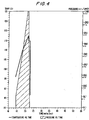
- Fig. 4 illustrates a graphical representation of the UHP process performed in Set D of Example 4 where the pre-pressurized temperature was 98°C and the pressure was 620 MPa (90,000 psi) applied for about one minute.
- FIG. 5 illustrates a graphical representation of the UHP process performed in Set E of Example 4 where the pre-pressurized temperature was 98°C and the pressure was 620 MPa (90,000 psi) applied for about five minutes.
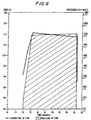
- Fig. 6 illustrates a graphical representation of the UHP process performed in Set F of Example 4 where the pre-pressurized temperature was 98°C and the pressure was 620 MPa (90,000 psi) applied for thirty minutes.
- test variations were evaluated.
- the testing used a media control system with the spores contained in a phosphate buffer. This enabled the evaluation of the effects of the processing conditions on the spores without any variation due to the influence of other substances.
- Various processing parameters including (a) pressures of 689 MPa (100 Kpsi) and pre-pressurized temperatures of 100°C for 1 minute, (b) multistage pressurization using pressures of 51.7 MPa (7,500) and 414 MPa (60,000 psi) (consecutive 10 minute exposures to each pressure) and (c) pressures of 827 MPa (120 Kpsi) with a pre-pressurized temperature of 80°C for 1 minute.
- the remaining third strip per process was used for enumerating the level of surviving spores.
- the strip and pouch contents were thoroughly mixed and diluted using saline.
- the dilutions were individually transferred onto each of 2 trypticase soy agar plates and incubated at 35°C for 72 hours.
- the number of colony forming units per milliliter was determined by counting the colonies on each plate and multiplying by the dilution factor.
- Multistage pressurization using pressures of 57.7 MPa (7,500 psi) and 414 MPa (60,000 psi) did not inactivate 6 logs of B . subtilis spores. Survival of the spores was observed after consecutive 10 minute exposures to each pressure.
- Example 2 Increased sporicidal activity was observed in the media system (Example 2) compared to that of the emulsified meats (Example 1). It can be assumed that fat, protein and other substances serve to protect spores from inactivation by high isostatic pressures.
- the samples and processing chamber were preconditioned to temperatures of 75°C, 85°C or 95°C prior to pascalization at 620 MPa (90 Kpsi).
- Three samples from both the raw and presterilized group were evaluated per process conditions. The samples were exposed to each temperature/pressure combination for up to 30 minutes. Following pascalization, the samples were stored on ice until evaluated for surviving microorganisms.
- visual inspection of the heat seals demonstrated that they failed during processing and hermetic integrity was not maintained. Seal failure was also evident in the outgrowth study where bacterial growth was observed; however, no presence of the inoculated spores were measured (within the sensitivity of the test) in the same variables. Therefore, it is assumed that outgrowth was due to post process contamination.
- the challenge spore level is the amount of spores the test sample is inoculated with.
- test conditions provided up to a 5 log reduction in spore population for all inoculated organisms.
- the results from the commercial sterility tests indicated that post process contamination occurred. However, it appears that a process as low as 1 minute at 85°C (preconditioning temperature) may be capable of producing a 6 log reduction for the 3 inoculated organisms.
- Example 4 SET A Duration of application peak pressure: 1 minute Pre-pressurized temperature: 85°C STAGE Time (h:m:s) Time (minutes) Pressure MPa (K psi) Product Temp.
- FIGS 1 through 6 illustrate the UHP time-temperature-pressure relationship for each of Sets A through F of Example 4.
- C1 (sample 0-0-13-SI) designates a sample with a target 13 log inoculation of a pre-sterilized product that was not subjected to pressure (zero pressure for zero time).
- C2 (sample 0-85-SI) was the same as C1 except the sample was exposed to an ultra-high pressure for zero minutes, that is, instantaneously pressurized and then released.
- C3 (sample 0-0-RU) was a raw (unsterilized) uninoculated sample that was not subjected to pressurization.
- C4 (sample 0-85-RU) was a raw uninoculated sample that was instantaneously pressurized at a pre-pressurized temperature of 85°C.
- C5 (sample 0-0-RI) was a raw inoculated sample not subjected to pressurization.
- C1, C3 and C5 demonstrated the level of spores that result without the UHP treatment.
- C2 and C4 demonstrated that the instantaneous application of the ultra-high pressure is insufficient to inactivate the amount of spores to achieve sterility.
- test sensitivity 10+ log reduction (test sensitivity) in spore population.
- Commercial sterility was obtained by processing the samples at 620 MPa (90 Kpsi) for 30 minutes at 85°C, or ⁇ 5 minutes at 98°C.
- Calibrated spore suspensions were prepared containing from 10 7 to 10 13 spores per milliliter. A 1 milliliter volume from one of the calibrated suspensions was individually added to 10 milliliters of phenol red broth with 1% added dextrose and heat sealed. This was repeated until 3 test packs were prepared for each spore concentration/challenge organism ( Clostridium sporogenes , Bacillus subtilis , or Bacillus stearothermophilis ). All pouches were stored on ice until evaluated.
- Two pouches per challenge organism/spore concentration were preconditioned to temperatures up to 98°C then exposed to 620 MPa (90 Kpsi) for up to 30 minutes. A total of 5 trials were performed. After processing, the samples were placed on ice until evaluated for surviving spores.
- the B. subtilis pouches were incubated aerobically at 35°C for 7 days.
- the pouches containing C. sporogenes were incubated anaerobically at 35°C for 7 days.
- the B. stearothermophilus pouches were incubated at 55°C for 7 days. All pouches were observed for signs of bacterial growth as evidenced by a yellow broth color (due to acid production).
- Example 5 The results from Example 5 were partly inconclusive since the test pouches served to insulate the spores from the desired exposure temperatures. Several pouches were tested simultaneously which resulted in the pouches being in contact with one another. The pouches surrounded by other pouches were insulated and therefore did not achieve the pre-pressurized temperatures. Additionally, the thermocouples were malfunctioning throughout the test so temperature profiles were not accurately determined.
- the present invention has great application for the sterilization of a wide variety of food products.
- the present invention provides an efficient method of sterilizing low acid foods by reducing the sterilization times required to achieve peak temperature.
- the present invention also allows for the avoidance of thermal degradation that occurs in conventionally sterilized products due to the shorter duration of thermal exposure at the high temperature ranges.
Landscapes
- Life Sciences & Earth Sciences (AREA)
- Engineering & Computer Science (AREA)
- Chemical & Material Sciences (AREA)
- Wood Science & Technology (AREA)
- Zoology (AREA)
- Food Science & Technology (AREA)
- Polymers & Plastics (AREA)
- Chemical Kinetics & Catalysis (AREA)
- General Chemical & Material Sciences (AREA)
- Food Preservation Except Freezing, Refrigeration, And Drying (AREA)
Priority Applications (1)
| Application Number | Priority Date | Filing Date | Title |
|---|---|---|---|
| EP02080565A EP1295537A3 (en) | 1995-12-14 | 1996-12-02 | High temperature/ultra-high pressure sterilization of low acid foods |
Applications Claiming Priority (3)
| Application Number | Priority Date | Filing Date | Title |
|---|---|---|---|
| US08/572,656 US6086936A (en) | 1995-12-14 | 1995-12-14 | High temperature/ultra-high pressure sterilization of foods |
| US572656 | 1995-12-14 | ||
| PCT/IB1996/001500 WO1997021361A1 (en) | 1995-12-14 | 1996-12-02 | High temperature/ultra-high pressure sterilization of low acid foods |
Related Child Applications (1)
| Application Number | Title | Priority Date | Filing Date |
|---|---|---|---|
| EP02080565A Division EP1295537A3 (en) | 1995-12-14 | 1996-12-02 | High temperature/ultra-high pressure sterilization of low acid foods |
Publications (3)
| Publication Number | Publication Date |
|---|---|
| EP0866667A1 EP0866667A1 (en) | 1998-09-30 |
| EP0866667A4 EP0866667A4 (en) | 1999-03-31 |
| EP0866667B1 true EP0866667B1 (en) | 2003-05-07 |
Family
ID=24288795
Family Applications (2)
| Application Number | Title | Priority Date | Filing Date |
|---|---|---|---|
| EP96945769A Revoked EP0866667B1 (en) | 1995-12-14 | 1996-12-02 | High temperature/ultra-high pressure sterilization of low acid foods |
| EP02080565A Withdrawn EP1295537A3 (en) | 1995-12-14 | 1996-12-02 | High temperature/ultra-high pressure sterilization of low acid foods |
Family Applications After (1)
| Application Number | Title | Priority Date | Filing Date |
|---|---|---|---|
| EP02080565A Withdrawn EP1295537A3 (en) | 1995-12-14 | 1996-12-02 | High temperature/ultra-high pressure sterilization of low acid foods |
Country Status (13)
| Country | Link |
|---|---|
| US (2) | US6086936A (enExample) |
| EP (2) | EP0866667B1 (enExample) |
| JP (1) | JP3672931B2 (enExample) |
| AT (1) | ATE239387T1 (enExample) |
| AU (1) | AU711708B2 (enExample) |
| BR (1) | BR9611951A (enExample) |
| CA (1) | CA2239291C (enExample) |
| DE (1) | DE69628032T2 (enExample) |
| DK (1) | DK0866667T3 (enExample) |
| ES (1) | ES2198507T3 (enExample) |
| PT (1) | PT866667E (enExample) |
| RU (1) | RU2174361C2 (enExample) |
| WO (1) | WO1997021361A1 (enExample) |
Cited By (2)
| Publication number | Priority date | Publication date | Assignee | Title |
|---|---|---|---|---|
| US8771771B2 (en) | 2006-04-17 | 2014-07-08 | The Iams Company | Food composition prepared by a sterilization process |
| US8993023B2 (en) | 2006-12-29 | 2015-03-31 | Kraft Foods Group Brands Llc | Process for reducing spore levels in compositions |
Families Citing this family (89)
| Publication number | Priority date | Publication date | Assignee | Title |
|---|---|---|---|---|
| US6086936A (en) * | 1995-12-14 | 2000-07-11 | Kal Kan Foods, Inc. | High temperature/ultra-high pressure sterilization of foods |
| US5996478A (en) * | 1996-01-23 | 1999-12-07 | Flow International Corporation | Apparatus for pressure processing a pumpable food substance |
| US5993172A (en) * | 1996-01-23 | 1999-11-30 | Flow International Corporation | Method and apparatus for pressure processing a pumpable substance |
| DE69704119T2 (de) * | 1996-05-17 | 2001-08-02 | Unilever N.V., Rotterdam | Verfahren zur konservierung unter hochdruck |
| US6004508A (en) | 1997-08-01 | 1999-12-21 | The Coca-Cola Company | Method and apparatus for super critical treatment of liquids |
| US6673311B1 (en) * | 1997-10-23 | 2004-01-06 | Morinaga Milk Industry Co., Ltd. | Method and apparatus for continuous heat sterilization of liquid |
| WO1999029187A1 (en) * | 1997-12-05 | 1999-06-17 | Meyer Richard S | Ultra high pressure, low temperature food preservation process |
| US20030161917A1 (en) * | 1998-01-20 | 2003-08-28 | Ernest A. Voisin | Process of elimination of bacteria in shellfish of shucking shellfish and an apparatus therefor |
| US6158981A (en) * | 1998-06-18 | 2000-12-12 | Flow International Corporation | Method and apparatus for aseptic pressure-processing of pumpable substances |
| US20010041206A1 (en) * | 1998-06-18 | 2001-11-15 | Chidambaram Raghavan | Method and apparatus for pressure processing a pumpable substance |
| US6017572A (en) | 1998-09-17 | 2000-01-25 | Meyer; Richard S. | Ultra high pressure, high temperature food preservation process |
| EP1219184A3 (en) * | 1998-09-17 | 2003-08-20 | Richard S. Meyer | Ultra high pressure, high temperature food preservation process |
| AU769174B2 (en) * | 1999-04-27 | 2004-01-15 | Avure Technologies Incorporated | Method and apparatus for pressure processing a pumpable substance |
| US7326562B2 (en) * | 1999-05-03 | 2008-02-05 | Icf Technologies, Inc. | Biological indicator system to detect effectiveness of sterilization |
| US6942989B2 (en) * | 1999-05-03 | 2005-09-13 | Icf Technologies, Inc. | Methods, compositions and kits for biological indicator of sterilization |
| US20040106167A1 (en) * | 1999-05-03 | 2004-06-03 | Icf Technologies, Inc. | Methods for evaluating sterilization procedures using a biological indicator |
| US6635223B2 (en) | 2000-10-25 | 2003-10-21 | Andreas Maerz | Method for inactivating micro-organisms using high pressure processing |
| DE60009713T2 (de) * | 2000-10-25 | 2005-04-07 | Andreas März | Methode zur Inaktivierung von Mikroorganismen mittels Hochdruckverfahren |
| WO2002045528A1 (en) * | 2000-12-04 | 2002-06-13 | Ato B.V. | Method for high-pressure preservation |
| DE10159248A1 (de) * | 2000-12-20 | 2003-06-18 | Fritz Kortschak | Verfahren zur gezielten Veränderung der Proteinstruktur von Prionen PrP·s··c· |
| US7220381B2 (en) * | 2001-06-15 | 2007-05-22 | Avure Technologies Incorporated | Method for high pressure treatment of substances under controlled temperature conditions |
| US6804459B2 (en) | 2001-06-15 | 2004-10-12 | Flow International Corporation | Method and apparatus for changing the temperature of a pressurized fluid |
| WO2003007724A1 (en) * | 2001-07-17 | 2003-01-30 | Washington State University Research Foundation | Yogurt manufacture using high hydrostatic pressure and thermal treatment |
| EP1443973B1 (en) * | 2001-09-15 | 2008-07-09 | ICF Technologies, Inc. | Kits and methods for determining the effectiveness of sterilization or disinfection processes |
| US20030170356A1 (en) * | 2002-02-19 | 2003-09-11 | Yuan James T.C. | High pressure processing of a substance utilizing a controlled atmospheric environment |
| US6843043B2 (en) | 2002-09-13 | 2005-01-18 | Alkar Rapidpak, Inc. | Web packaging pasteurization system |
| US6976347B2 (en) * | 2002-09-13 | 2005-12-20 | Alkar-Rapidpak, Inc. | Surface pasteurization method |
| US20040058041A1 (en) * | 2002-09-25 | 2004-03-25 | Greenwald Kevin S. | Food processing apparatus, method of preserving a food product and preserved food product |
| JP2004121161A (ja) * | 2002-10-07 | 2004-04-22 | Sangaku Renkei Kiko Kyushu:Kk | 断熱圧縮殺菌方法 |
| RU2248732C2 (ru) * | 2002-12-20 | 2005-03-27 | Распопов Владимир Александрович | Способ обеззараживания жидких пищевых продуктов |
| US20040126480A1 (en) * | 2002-12-26 | 2004-07-01 | Unilever Bestfoods North America | Food process |
| US20040170731A1 (en) * | 2003-02-28 | 2004-09-02 | Girish Subramaniam | Reduction of oil and off-flavors in citrus juice by direct steam heating and flash cooling |
| SE525002C2 (sv) * | 2003-03-21 | 2004-11-09 | Flow Holdings Sagl | Isostatpress för högtrycksbehandling samt förfarande, behållare, anläggning och användning |
| US20040191382A1 (en) * | 2003-03-27 | 2004-09-30 | Cooper Kern L | Ultra-high-pressure vegetable sterilization method and product |
| US20050014932A1 (en) * | 2003-05-15 | 2005-01-20 | Iogenetics, Llc | Targeted biocides |
| US8394379B2 (en) * | 2003-05-15 | 2013-03-12 | Iogenetics, Llc | Targeted cryptosporidium biocides |
| US7566447B2 (en) * | 2003-05-15 | 2009-07-28 | Iogenetics, Llc | Biocides |
| US8703134B2 (en) | 2003-05-15 | 2014-04-22 | Iogenetics, Llc | Targeted cryptosporidium biocides |
| US20050013908A1 (en) * | 2003-07-15 | 2005-01-20 | Fmc Technologies, Inc. | Method of processing paperboard containers |
| SG135189A1 (en) * | 2003-09-22 | 2007-09-28 | Baxter Int | High-pressure sterilization to terminally sterilize pharmaceutical preparations and medical products |
| EP1679982A4 (en) * | 2003-11-03 | 2007-11-21 | Commw Scient Ind Res Org | PROCESS FOR INACTIVATING SPORTS |
| WO2005055731A1 (en) * | 2003-12-09 | 2005-06-23 | Clearwater Seafoods Limited Partnership | Method for shucking lobster, crab or shrimp |
| US20050142259A1 (en) * | 2003-12-31 | 2005-06-30 | Meyer Richard S. | High pressure inactivation of pathogenic viruses |
| US7101585B2 (en) * | 2004-04-15 | 2006-09-05 | Solae, Llc | Ultra high pressure homogenization process for making a stable protein based acid beverage |
| US20060024414A1 (en) * | 2004-07-30 | 2006-02-02 | Kraft Foods Holdings, Inc. | Methods for preserving food products |
| GB2417230B (en) * | 2004-08-20 | 2008-01-09 | Mars Inc | Manufacture of packaged stabilized foodstuffs |
| WO2006096074A1 (en) * | 2005-03-08 | 2006-09-14 | Fonterra Co-Operative Group Limited | High pressure processing of bioactive compositions |
| US20060205332A1 (en) * | 2005-03-11 | 2006-09-14 | Flow International Corporation | Method to remove meat from crabs |
| US7722912B2 (en) * | 2005-05-16 | 2010-05-25 | Hormel Foods Corporation | Method and apparatus for material handling for a food product using high pressure pasteurization |
| US7744937B2 (en) * | 2005-08-09 | 2010-06-29 | Kraft Foods Global Brands Llc | Chemoprotectants from crucifer seeds and sprouts |
| US20090317533A1 (en) * | 2006-03-29 | 2009-12-24 | Westfalia Separator Ag | Method for producing a soy milk |
| MX2008013252A (es) * | 2006-04-17 | 2008-10-22 | Iams Company | Composicion alimenticia preparada mediante un proceso de esterilizacion. |
| EP2007229A2 (en) * | 2006-04-17 | 2008-12-31 | The Iams Company | Food composition prepared by a sterilization process |
| ES2319037B1 (es) * | 2007-04-12 | 2010-02-16 | Jealsa Rianxeira, S.A. | Procedimiento para el tratamiento del marisco. |
| US20080311276A1 (en) * | 2007-06-12 | 2008-12-18 | Kraft Foods Holdings, Inc. | Production of Glucosinolates from Agricultural By-Products & Waste |
| US20080311192A1 (en) * | 2007-06-12 | 2008-12-18 | Kraft Foods Holdings, Inc. | Enteric-Coated Glucosinolates And Beta-Thioglucosidases |
| US11154080B2 (en) * | 2007-06-27 | 2021-10-26 | Jcr Technologies Llc | High pressure frozen sterilization process |
| US7976885B2 (en) * | 2007-10-23 | 2011-07-12 | Alkar-Rapidpak-Mp Equipment, Inc. | Anti-microbial injection for web packaging pasteurization system |
| US20090291174A1 (en) * | 2008-03-13 | 2009-11-26 | Portage Plastics Corporation | High pressure pasteurizable/ultra-high pressure sterilizable food processing container and method |
| CA2663900A1 (en) * | 2008-04-23 | 2009-10-23 | Clearwater Seafoods Limited Partnership | Preparation of eviscerated raw whole lobster |
| US20090324786A1 (en) * | 2008-06-25 | 2009-12-31 | Mcnaughton James L | Underwater Pressure Arc Discharge System for Disinfection of Food and Food Products |
| US8586899B2 (en) * | 2008-11-24 | 2013-11-19 | Jeffrey H. Mackay | Apparatus and method for mass sterilization and pasteurization of food products |
| EP2480093A4 (en) * | 2009-09-25 | 2013-12-11 | Cargill Inc | HIGH PRESSURE PASTEURIZATION OF GROUNDED MEAT |
| WO2011038245A1 (en) * | 2009-09-25 | 2011-03-31 | Cargill, Incorporated | High pressure pasteurizing of frozen ground meats |
| ES2362520B1 (es) * | 2009-12-21 | 2012-05-16 | Olus Tecnologia, S.L. | Método para la conservación de pimiento capsicum annumm, l. |
| US8425962B2 (en) | 2010-03-02 | 2013-04-23 | Del Monte Corporation | Fruit and vegetable preservation process |
| PT2409583E (pt) | 2010-07-21 | 2015-09-14 | Univ Aut Noma De Barcelona | Sistema contínuo e processo de esterilização e estabilização física de fluidos bombeáveis por meios de homogeneização a ultra-alta pressão |
| JP6009467B2 (ja) | 2011-02-22 | 2016-10-19 | コーディル・シード・カンパニー・インコーポレイテッドCaudill Seed Company, Inc. | 噴霧乾燥ミロシナーゼ、及びイソチオシアネートを製造するための使用 |
| DE102011051269A1 (de) * | 2011-06-22 | 2012-12-27 | DIL Deutsches Institut für Lebensmitteltechnik e.V. | Beschickungsbehälter und Verfahren zur zeitgleichen Hochdruck- und Temperaturbehandlung eines Nahrungsmittels in einem Hochdruckkessel |
| US8997637B2 (en) * | 2011-10-12 | 2015-04-07 | Elend S. LeBaron | Dual bladder system and method for treatment and reduction of microbial content in fluids by means of high pressure |
| KR20130118129A (ko) | 2012-04-19 | 2013-10-29 | 한국과학기술연구원 | 바이오리셉터가 고정된 이산화티타늄과 이를 이용한 미생물 항균 방법 |
| JP6606430B2 (ja) | 2013-02-05 | 2019-11-13 | コーニンクラケ ダウ エグバート ビー.ブイ. | 液体コーヒー濃縮物の製造方法 |
| KR101550965B1 (ko) * | 2013-07-31 | 2015-09-07 | 씨제이제일제당 (주) | 초고압을 이용한 야채류 식품의 제조방법 |
| US10368606B2 (en) | 2014-04-15 | 2019-08-06 | Nike, Inc. | Resilient knitted component with wave features |
| CN103907995A (zh) * | 2014-04-17 | 2014-07-09 | 中国农业大学 | 食品的超高温超高压瞬时灭菌方法 |
| US20150351442A1 (en) * | 2014-06-06 | 2015-12-10 | Chic Group Co., Ltd. | High pressure processing of juice containing probiotics |
| JP6189260B2 (ja) * | 2014-07-05 | 2017-08-30 | 越後製菓株式会社 | 耐熱性芽胞菌の殺菌又は不活化処理方法 |
| UA125016C2 (uk) * | 2015-07-03 | 2021-12-29 | Натуро Пті Лтд | Спосіб обробки молока та молоко, одержане за способом |
| WO2017065700A1 (en) * | 2015-10-14 | 2017-04-20 | Thai Union Group Public Company Limited | The combinatorial methods of high pressure and temperature process (hptp) for producing texturized meat products and the improved meat products obtained from the methods thereof |
| JP7441125B2 (ja) * | 2015-10-14 | 2024-02-29 | タイ ユニオン グループ パブリック カンパニー リミテッド | 組織化された食肉製品を製造するための高圧および高温処理(hptp)の組み合わせ方法ならびにその方法から得られた改良された食肉製品 |
| US10874113B1 (en) | 2016-02-08 | 2020-12-29 | Hormel Foods Corporation | Method of producing bacteria reduced raw, fresh, ground meat products |
| RU2022101314A (ru) | 2016-05-04 | 2022-02-04 | Маккормик Энд Компани, Инкорпорейтед | Высокочастотный способ обработки компонентов приправы |
| US12714128B2 (en) * | 2016-09-21 | 2026-08-25 | Priya Ranjan Dass | Curry assisted pressure sterilization (CAPS) methods for food products |
| US11252981B1 (en) | 2017-10-26 | 2022-02-22 | Swift Beef Company | Raw, frozen ground beef (and/or other meat), method for making same, and packaging for displaying same |
| CN109497371A (zh) * | 2018-11-26 | 2019-03-22 | 山西中医药大学 | 一种野生刺玫果汁饮品及其生产方法 |
| US20220264920A1 (en) * | 2019-08-15 | 2022-08-25 | N.V. Nutricia | Method of preparing a fruit-containing product |
| KR20230006478A (ko) * | 2020-03-27 | 2023-01-10 | 어뷰어 테크놀로지스 인코포레이티드 | 고압 적용 벌크 프로세스를 위한 압력 용기 온도 조절 방법 |
| US12439940B2 (en) | 2022-01-12 | 2025-10-14 | Tzg Llc | High pressure processing methods for ready-to-drink beverages with solids |
| CN116982658B (zh) * | 2023-07-28 | 2024-03-19 | 黑龙江辰鹰乳业有限公司 | 一种婴儿配方液态乳的制备方法与系统 |
Family Cites Families (12)
| Publication number | Priority date | Publication date | Assignee | Title |
|---|---|---|---|---|
| AU464080B2 (en) * | 1972-05-19 | 1975-08-14 | Archibald Donald Robert | Sterilizing food compositions |
| JPH02257864A (ja) * | 1989-03-30 | 1990-10-18 | Ajinomoto Co Inc | 高圧処理による細菌芽胞の殺菌方法 |
| JPH03183450A (ja) * | 1989-12-12 | 1991-08-09 | Dainippon Printing Co Ltd | カット野菜の製造法 |
| JPH07102119B2 (ja) * | 1990-10-12 | 1995-11-08 | 凸版印刷株式会社 | 果汁の高圧処理方法 |
| US5213029A (en) * | 1991-03-28 | 1993-05-25 | Kabushiki Kaisha Kobe Seiko Sho | Apparatus for treating food under high pressure |
| JPH04304838A (ja) * | 1991-03-30 | 1992-10-28 | Toppan Printing Co Ltd | 肉類の加工方法 |
| US5217687A (en) * | 1991-06-03 | 1993-06-08 | Iso-Spectrum, Inc. | Sterilizing apparatus and method for sterilizing infectious waste materials |
| US5316745A (en) * | 1993-01-28 | 1994-05-31 | Flow International Corporation | High pressure sterilization apparatus and method |
| US5494691A (en) * | 1993-05-10 | 1996-02-27 | Tetra Laval Holdings & Finance Sa | Process for packaging liquid food products |
| CA2172244A1 (en) * | 1993-09-24 | 1995-03-30 | Johannes Petrus Paulus Maria Smelt | Shelf stable product |
| SE500905C2 (sv) * | 1993-10-25 | 1994-09-26 | Kjell Lilja | Högtrycksbehandling av livsmedel med hjälp av elektrisk urladdning |
| US6086936A (en) * | 1995-12-14 | 2000-07-11 | Kal Kan Foods, Inc. | High temperature/ultra-high pressure sterilization of foods |
-
1995
- 1995-12-14 US US08/572,656 patent/US6086936A/en not_active Expired - Fee Related
-
1996
- 1996-12-02 ES ES96945769T patent/ES2198507T3/es not_active Expired - Lifetime
- 1996-12-02 RU RU98113071/13A patent/RU2174361C2/ru not_active IP Right Cessation
- 1996-12-02 DK DK96945769T patent/DK0866667T3/da active
- 1996-12-02 CA CA002239291A patent/CA2239291C/en not_active Expired - Fee Related
- 1996-12-02 EP EP96945769A patent/EP0866667B1/en not_active Revoked
- 1996-12-02 WO PCT/IB1996/001500 patent/WO1997021361A1/en not_active Ceased
- 1996-12-02 DE DE69628032T patent/DE69628032T2/de not_active Expired - Lifetime
- 1996-12-02 EP EP02080565A patent/EP1295537A3/en not_active Withdrawn
- 1996-12-02 AU AU18067/97A patent/AU711708B2/en not_active Ceased
- 1996-12-02 JP JP52190097A patent/JP3672931B2/ja not_active Expired - Fee Related
- 1996-12-02 PT PT96945769T patent/PT866667E/pt unknown
- 1996-12-02 BR BR9611951-9A patent/BR9611951A/pt not_active Application Discontinuation
- 1996-12-02 AT AT96945769T patent/ATE239387T1/de not_active IP Right Cessation
-
2000
- 2000-05-24 US US09/578,126 patent/US6207215B1/en not_active Expired - Fee Related
Cited By (2)
| Publication number | Priority date | Publication date | Assignee | Title |
|---|---|---|---|---|
| US8771771B2 (en) | 2006-04-17 | 2014-07-08 | The Iams Company | Food composition prepared by a sterilization process |
| US8993023B2 (en) | 2006-12-29 | 2015-03-31 | Kraft Foods Group Brands Llc | Process for reducing spore levels in compositions |
Also Published As
| Publication number | Publication date |
|---|---|
| EP0866667A4 (en) | 1999-03-31 |
| US6207215B1 (en) | 2001-03-27 |
| EP1295537A2 (en) | 2003-03-26 |
| CA2239291C (en) | 2005-04-12 |
| EP1295537A3 (en) | 2003-09-24 |
| DE69628032D1 (de) | 2003-06-12 |
| US6086936A (en) | 2000-07-11 |
| AU711708B2 (en) | 1999-10-21 |
| BR9611951A (pt) | 1999-12-28 |
| RU2174361C2 (ru) | 2001-10-10 |
| AU1806797A (en) | 1997-07-03 |
| WO1997021361A1 (en) | 1997-06-19 |
| ATE239387T1 (de) | 2003-05-15 |
| ES2198507T3 (es) | 2004-02-01 |
| PT866667E (pt) | 2003-09-30 |
| CA2239291A1 (en) | 1997-06-19 |
| DE69628032T2 (de) | 2004-02-26 |
| EP0866667A1 (en) | 1998-09-30 |
| JP2000501612A (ja) | 2000-02-15 |
| JP3672931B2 (ja) | 2005-07-20 |
| DK0866667T3 (da) | 2003-06-16 |
Similar Documents
| Publication | Publication Date | Title |
|---|---|---|
| US6086936A (en) | High temperature/ultra-high pressure sterilization of foods | |
| JP3062489B2 (ja) | 食品の殺菌方法 | |
| Deak et al. | Thermal treatment | |
| Wilson et al. | High pressure in combination with elevated temperature as a method for the sterilisation of food | |
| Gould | Preservation: past, present and future | |
| Dogan et al. | High pressure inactivation kinetics of Listeria monocytogenes inactivation in broth, milk, and peach and orange juices | |
| Reddy et al. | Inactivation of Clostridium botulinum type A spores by high-pressure processing at elevated temperatures | |
| Basak et al. | High pressure destruction kinetics of Leuconostoc mesenteroides and Saccharomyces cerevisiae in single strength and concentrated orange juice | |
| Daryaei et al. | Microbiological aspects of high-pressure processing of food: inactivation of microbial vegetative cells and spores | |
| Moerman | High hydrostatic pressure inactivation of vegetative microorganisms, aerobic and anaerobic spores in pork Marengo, a low acidic particulate food product | |
| Ramaswamy et al. | High‐pressure destruction kinetics of E. coli (29055) in apple juice | |
| Yousef et al. | Physical methods of food preservation | |
| Erkmen | Antimicrobial effect of pressurised carbon dioxide on Enterococcus faecalis in physiological saline and foods | |
| AU2486799A (en) | Method for ultra high pressure inactivation of microorganisms in juice products | |
| Ibrahim | Thermal and nonthermal food processing technologies for food preservation and their effects on food chemistry and nutritional values | |
| Ziuzina et al. | Inactivation of Staphylococcus aureus in foods by thermal and nonthermal control strategies | |
| WO2006110051A1 (en) | Pressure assisted thermal sterilisation or pasteurisation method and apparatus | |
| Raso et al. | Nonthermal Technologies in Combination | |
| GB2367997A (en) | Killing microorganisms with peroxidase under superatmospheric pressure | |
| EP1219184A2 (en) | Ultra high pressure, high temperature food preservation process | |
| JP2001245641A (ja) | 食品の製造方法 | |
| Woldehaimanot | Growth and Inactivation of Bacillus pumilus With Heat and High-Pressure Processing | |
| Reid et al. | Microorganisms and microbial toxins | |
| Koncz et al. | Pasteurisation of raw milk by high hydrostatic pressure | |
| Tewari | Microbial safety during nonthermal preservation of foods |
Legal Events
| Date | Code | Title | Description |
|---|---|---|---|
| PUAI | Public reference made under article 153(3) epc to a published international application that has entered the european phase |
Free format text: ORIGINAL CODE: 0009012 |
|
| 17P | Request for examination filed |
Effective date: 19980612 |
|
| AK | Designated contracting states |
Kind code of ref document: A1 Designated state(s): AT BE CH DE DK ES FI FR GB GR IE IT LI LU MC NL PT SE |
|
| A4 | Supplementary search report drawn up and despatched |
Effective date: 19990217 |
|
| AK | Designated contracting states |
Kind code of ref document: A4 Designated state(s): AT BE CH DE DK ES FI FR GB GR IE IT LI LU MC NL PT SE |
|
| 17Q | First examination report despatched |
Effective date: 20020123 |
|
| GRAH | Despatch of communication of intention to grant a patent |
Free format text: ORIGINAL CODE: EPIDOS IGRA |
|
| GRAH | Despatch of communication of intention to grant a patent |
Free format text: ORIGINAL CODE: EPIDOS IGRA |
|
| GRAA | (expected) grant |
Free format text: ORIGINAL CODE: 0009210 |
|
| AK | Designated contracting states |
Designated state(s): AT BE CH DE DK ES FI FR GB GR IE IT LI LU MC NL PT SE |
|
| REG | Reference to a national code |
Ref country code: GB Ref legal event code: FG4D |
|
| REG | Reference to a national code |
Ref country code: CH Ref legal event code: EP |
|
| REG | Reference to a national code |
Ref country code: IE Ref legal event code: FG4D |
|
| REF | Corresponds to: |
Ref document number: 69628032 Country of ref document: DE Date of ref document: 20030612 Kind code of ref document: P |
|
| REG | Reference to a national code |
Ref country code: DK Ref legal event code: T3 |
|
| REG | Reference to a national code |
Ref country code: SE Ref legal event code: TRGR |
|
| REG | Reference to a national code |
Ref country code: CH Ref legal event code: NV Representative=s name: PATENTANWAELTE SCHAAD, BALASS, MENZL & PARTNER AG |
|
| REG | Reference to a national code |
Ref country code: GR Ref legal event code: EP Ref document number: 20030402979 Country of ref document: GR |
|
| REG | Reference to a national code |
Ref country code: PT Ref legal event code: SC4A Free format text: AVAILABILITY OF NATIONAL TRANSLATION Effective date: 20030806 |
|
| REG | Reference to a national code |
Ref country code: ES Ref legal event code: FG2A Ref document number: 2198507 Country of ref document: ES Kind code of ref document: T3 |
|
| PLBI | Opposition filed |
Free format text: ORIGINAL CODE: 0009260 |
|
| PLBQ | Unpublished change to opponent data |
Free format text: ORIGINAL CODE: EPIDOS OPPO |
|
| PLBQ | Unpublished change to opponent data |
Free format text: ORIGINAL CODE: EPIDOS OPPO |
|
| PLBI | Opposition filed |
Free format text: ORIGINAL CODE: 0009260 |
|
| PLAX | Notice of opposition and request to file observation + time limit sent |
Free format text: ORIGINAL CODE: EPIDOSNOBS2 |
|
| ET | Fr: translation filed | ||
| 26 | Opposition filed |
Opponent name: RICHARD S. MEYER Effective date: 20040209 |
|
| 26 | Opposition filed |
Opponent name: UNILEVER N.V. Effective date: 20040206 Opponent name: RICHARD S. MEYER Effective date: 20040209 |
|
| NLR1 | Nl: opposition has been filed with the epo |
Opponent name: UNILEVER N.V. Opponent name: RICHARD S. MEYER |
|
| PLAX | Notice of opposition and request to file observation + time limit sent |
Free format text: ORIGINAL CODE: EPIDOSNOBS2 |
|
| PLAX | Notice of opposition and request to file observation + time limit sent |
Free format text: ORIGINAL CODE: EPIDOSNOBS2 |
|
| PLBB | Reply of patent proprietor to notice(s) of opposition received |
Free format text: ORIGINAL CODE: EPIDOSNOBS3 |
|
| PGFP | Annual fee paid to national office [announced via postgrant information from national office to epo] |
Ref country code: MC Payment date: 20041126 Year of fee payment: 9 |
|
| PGFP | Annual fee paid to national office [announced via postgrant information from national office to epo] |
Ref country code: IE Payment date: 20041217 Year of fee payment: 9 |
|
| RAP2 | Party data changed (patent owner data changed or rights of a patent transferred) |
Owner name: MARS, INCORPORATED |
|
| NLT2 | Nl: modifications (of names), taken from the european patent patent bulletin |
Owner name: MARS, INCORPORATED Effective date: 20050720 |
|
| PG25 | Lapsed in a contracting state [announced via postgrant information from national office to epo] |
Ref country code: IE Free format text: LAPSE BECAUSE OF NON-PAYMENT OF DUE FEES Effective date: 20051202 Ref country code: GB Free format text: LAPSE BECAUSE OF NON-PAYMENT OF DUE FEES Effective date: 20051202 |
|
| PG25 | Lapsed in a contracting state [announced via postgrant information from national office to epo] |
Ref country code: MC Free format text: LAPSE BECAUSE OF NON-PAYMENT OF DUE FEES Effective date: 20051231 |
|
| GBPC | Gb: european patent ceased through non-payment of renewal fee |
Effective date: 20051202 |
|
| REG | Reference to a national code |
Ref country code: IE Ref legal event code: MM4A |
|
| REG | Reference to a national code |
Ref country code: GB Ref legal event code: 728V |
|
| REG | Reference to a national code |
Ref country code: GB Ref legal event code: 732E |
|
| PGFP | Annual fee paid to national office [announced via postgrant information from national office to epo] |
Ref country code: PT Payment date: 20070514 Year of fee payment: 11 |
|
| PGFP | Annual fee paid to national office [announced via postgrant information from national office to epo] |
Ref country code: SE Payment date: 20070525 Year of fee payment: 11 |
|
| REG | Reference to a national code |
Ref country code: GB Ref legal event code: 728Y |
|
| PLBP | Opposition withdrawn |
Free format text: ORIGINAL CODE: 0009264 |
|
| REG | Reference to a national code |
Ref country code: PT Ref legal event code: MM4A Free format text: LAPSE DUE TO NON-PAYMENT OF FEES Effective date: 20080602 |
|
| PLAB | Opposition data, opponent's data or that of the opponent's representative modified |
Free format text: ORIGINAL CODE: 0009299OPPO |
|
| EUG | Se: european patent has lapsed | ||
| PG25 | Lapsed in a contracting state [announced via postgrant information from national office to epo] |
Ref country code: PT Free format text: LAPSE BECAUSE OF NON-PAYMENT OF DUE FEES Effective date: 20080602 |
|
| PG25 | Lapsed in a contracting state [announced via postgrant information from national office to epo] |
Ref country code: SE Free format text: LAPSE BECAUSE OF NON-PAYMENT OF DUE FEES Effective date: 20071203 |
|
| PLAB | Opposition data, opponent's data or that of the opponent's representative modified |
Free format text: ORIGINAL CODE: 0009299OPPO |
|
| PGFP | Annual fee paid to national office [announced via postgrant information from national office to epo] |
Ref country code: LU Payment date: 20091221 Year of fee payment: 14 Ref country code: FI Payment date: 20091214 Year of fee payment: 14 Ref country code: DK Payment date: 20091211 Year of fee payment: 14 Ref country code: CH Payment date: 20091215 Year of fee payment: 14 Ref country code: AT Payment date: 20091211 Year of fee payment: 14 |
|
| PGFP | Annual fee paid to national office [announced via postgrant information from national office to epo] |
Ref country code: NL Payment date: 20091204 Year of fee payment: 14 |
|
| APBM | Appeal reference recorded |
Free format text: ORIGINAL CODE: EPIDOSNREFNO |
|
| APBP | Date of receipt of notice of appeal recorded |
Free format text: ORIGINAL CODE: EPIDOSNNOA2O |
|
| PGFP | Annual fee paid to national office [announced via postgrant information from national office to epo] |
Ref country code: IT Payment date: 20091216 Year of fee payment: 14 Ref country code: GB Payment date: 20091202 Year of fee payment: 14 Ref country code: FR Payment date: 20091221 Year of fee payment: 14 Ref country code: ES Payment date: 20100113 Year of fee payment: 14 |
|
| APAH | Appeal reference modified |
Free format text: ORIGINAL CODE: EPIDOSCREFNO |
|
| PGFP | Annual fee paid to national office [announced via postgrant information from national office to epo] |
Ref country code: GR Payment date: 20091112 Year of fee payment: 14 Ref country code: DE Payment date: 20091126 Year of fee payment: 14 Ref country code: BE Payment date: 20091224 Year of fee payment: 14 |
|
| APBQ | Date of receipt of statement of grounds of appeal recorded |
Free format text: ORIGINAL CODE: EPIDOSNNOA3O |
|
| BERE | Be: lapsed |
Owner name: *KAL KAN FOODS INC. Effective date: 20101231 |
|
| REG | Reference to a national code |
Ref country code: NL Ref legal event code: V1 Effective date: 20110701 |
|
| REG | Reference to a national code |
Ref country code: CH Ref legal event code: PL |
|
| REG | Reference to a national code |
Ref country code: DK Ref legal event code: EBP |
|
| GBPC | Gb: european patent ceased through non-payment of renewal fee |
Effective date: 20101202 |
|
| PG25 | Lapsed in a contracting state [announced via postgrant information from national office to epo] |
Ref country code: AT Free format text: LAPSE BECAUSE OF NON-PAYMENT OF DUE FEES Effective date: 20101202 Ref country code: FI Free format text: LAPSE BECAUSE OF NON-PAYMENT OF DUE FEES Effective date: 20101202 |
|
| REG | Reference to a national code |
Ref country code: FR Ref legal event code: ST Effective date: 20110831 |
|
| PG25 | Lapsed in a contracting state [announced via postgrant information from national office to epo] |
Ref country code: BE Free format text: LAPSE BECAUSE OF NON-PAYMENT OF DUE FEES Effective date: 20101231 |
|
| APBU | Appeal procedure closed |
Free format text: ORIGINAL CODE: EPIDOSNNOA9O |
|
| PG25 | Lapsed in a contracting state [announced via postgrant information from national office to epo] |
Ref country code: CH Free format text: LAPSE BECAUSE OF NON-PAYMENT OF DUE FEES Effective date: 20101231 Ref country code: LI Free format text: LAPSE BECAUSE OF NON-PAYMENT OF DUE FEES Effective date: 20101231 Ref country code: FR Free format text: LAPSE BECAUSE OF NON-PAYMENT OF DUE FEES Effective date: 20110103 |
|
| REG | Reference to a national code |
Ref country code: DE Ref legal event code: R119 Ref document number: 69628032 Country of ref document: DE Effective date: 20110701 |
|
| PG25 | Lapsed in a contracting state [announced via postgrant information from national office to epo] |
Ref country code: GB Free format text: LAPSE BECAUSE OF NON-PAYMENT OF DUE FEES Effective date: 20101202 Ref country code: DE Free format text: LAPSE BECAUSE OF NON-PAYMENT OF DUE FEES Effective date: 20110701 Ref country code: GR Free format text: LAPSE BECAUSE OF NON-PAYMENT OF DUE FEES Effective date: 20110704 |
|
| PG25 | Lapsed in a contracting state [announced via postgrant information from national office to epo] |
Ref country code: IT Free format text: LAPSE BECAUSE OF NON-PAYMENT OF DUE FEES Effective date: 20101202 Ref country code: NL Free format text: LAPSE BECAUSE OF NON-PAYMENT OF DUE FEES Effective date: 20110701 |
|
| REG | Reference to a national code |
Ref country code: ES Ref legal event code: FD2A Effective date: 20120206 |
|
| RDAF | Communication despatched that patent is revoked |
Free format text: ORIGINAL CODE: EPIDOSNREV1 |
|
| RDAG | Patent revoked |
Free format text: ORIGINAL CODE: 0009271 |
|
| STAA | Information on the status of an ep patent application or granted ep patent |
Free format text: STATUS: PATENT REVOKED |
|
| 27W | Patent revoked |
Effective date: 20110926 |
|
| REG | Reference to a national code |
Ref country code: AT Ref legal event code: MA03 Ref document number: 239387 Country of ref document: AT Kind code of ref document: T Effective date: 20110926 |
|
| REG | Reference to a national code |
Ref country code: SE Ref legal event code: ECNC |
|
| PG25 | Lapsed in a contracting state [announced via postgrant information from national office to epo] |
Ref country code: LU Free format text: LAPSE BECAUSE OF REVOCATION BY EPO Effective date: 20101202 |
|
| REG | Reference to a national code |
Ref country code: SE Ref legal event code: ECNC |
|
| PG25 | Lapsed in a contracting state [announced via postgrant information from national office to epo] |
Ref country code: ES Free format text: LAPSE BECAUSE OF NON-PAYMENT OF DUE FEES Effective date: 20101203 |