EP0851874B1 - Novel variants of green fluorescent protein, gfp - Google Patents
Novel variants of green fluorescent protein, gfp Download PDFInfo
- Publication number
- EP0851874B1 EP0851874B1 EP96900890A EP96900890A EP0851874B1 EP 0851874 B1 EP0851874 B1 EP 0851874B1 EP 96900890 A EP96900890 A EP 96900890A EP 96900890 A EP96900890 A EP 96900890A EP 0851874 B1 EP0851874 B1 EP 0851874B1
- Authority
- EP
- European Patent Office
- Prior art keywords
- gfp
- fluorescent protein
- cells
- promoter
- fluorescent
- Prior art date
- Legal status (The legal status is an assumption and is not a legal conclusion. Google has not performed a legal analysis and makes no representation as to the accuracy of the status listed.)
- Expired - Lifetime
Links
- 108050002220 Green fluorescent protein, GFP Proteins 0.000 title 1
- 102000034287 fluorescent proteins Human genes 0.000 claims abstract description 45
- 108091006047 fluorescent proteins Proteins 0.000 claims abstract description 45
- 239000005090 green fluorescent protein Substances 0.000 claims description 154
- 210000004027 cell Anatomy 0.000 claims description 114
- 108010043121 Green Fluorescent Proteins Proteins 0.000 claims description 59
- 102000004144 Green Fluorescent Proteins Human genes 0.000 claims description 58
- 108090000623 proteins and genes Proteins 0.000 claims description 55
- 102000004169 proteins and genes Human genes 0.000 claims description 36
- 230000014509 gene expression Effects 0.000 claims description 28
- 238000000034 method Methods 0.000 claims description 15
- 210000003463 organelle Anatomy 0.000 claims description 13
- 230000004927 fusion Effects 0.000 claims description 10
- 241000233866 Fungi Species 0.000 claims description 9
- 240000004808 Saccharomyces cerevisiae Species 0.000 claims description 8
- 239000002773 nucleotide Substances 0.000 claims description 8
- 125000003729 nucleotide group Chemical group 0.000 claims description 8
- 125000002924 primary amino group Chemical group [H]N([H])* 0.000 claims description 8
- 150000001413 amino acids Chemical class 0.000 claims description 7
- 108090000765 processed proteins & peptides Proteins 0.000 claims description 7
- 229920001184 polypeptide Polymers 0.000 claims description 6
- 102000004196 processed proteins & peptides Human genes 0.000 claims description 6
- 238000012800 visualization Methods 0.000 claims description 6
- 125000003275 alpha amino acid group Chemical group 0.000 claims description 5
- 230000000694 effects Effects 0.000 claims description 5
- 241000894006 Bacteria Species 0.000 claims description 4
- 230000001580 bacterial effect Effects 0.000 claims description 4
- 230000008569 process Effects 0.000 claims description 4
- 241000243290 Aequorea Species 0.000 claims description 3
- 108091000080 Phosphotransferase Proteins 0.000 claims description 3
- 238000012544 monitoring process Methods 0.000 claims description 3
- 102000020233 phosphotransferase Human genes 0.000 claims description 3
- 241000242743 Renilla reniformis Species 0.000 claims description 2
- 230000008859 change Effects 0.000 claims description 2
- 239000000284 extract Substances 0.000 claims description 2
- 238000004519 manufacturing process Methods 0.000 claims description 2
- 230000001105 regulatory effect Effects 0.000 claims description 2
- 150000001875 compounds Chemical class 0.000 claims 3
- 102000001253 Protein Kinase Human genes 0.000 claims 2
- 108060006633 protein kinase Proteins 0.000 claims 2
- 102000008130 Cyclic AMP-Dependent Protein Kinases Human genes 0.000 claims 1
- 108010049894 Cyclic AMP-Dependent Protein Kinases Proteins 0.000 claims 1
- 101150018665 MAPK3 gene Proteins 0.000 claims 1
- 102000003923 Protein Kinase C Human genes 0.000 claims 1
- 108090000315 Protein Kinase C Proteins 0.000 claims 1
- 239000012472 biological sample Substances 0.000 claims 1
- 230000003197 catalytic effect Effects 0.000 claims 1
- 230000003436 cytoskeletal effect Effects 0.000 claims 1
- 230000030609 dephosphorylation Effects 0.000 claims 1
- 238000006209 dephosphorylation reaction Methods 0.000 claims 1
- 238000000099 in vitro assay Methods 0.000 claims 1
- 238000005462 in vivo assay Methods 0.000 claims 1
- 230000002503 metabolic effect Effects 0.000 claims 1
- 230000003612 virological effect Effects 0.000 claims 1
- 235000018102 proteins Nutrition 0.000 description 34
- 239000013598 vector Substances 0.000 description 30
- 108020004414 DNA Proteins 0.000 description 28
- 230000005284 excitation Effects 0.000 description 25
- 238000003752 polymerase chain reaction Methods 0.000 description 21
- 241000588724 Escherichia coli Species 0.000 description 18
- 108091028043 Nucleic acid sequence Proteins 0.000 description 17
- 239000013612 plasmid Substances 0.000 description 15
- BPHPUYQFMNQIOC-NXRLNHOXSA-N isopropyl beta-D-thiogalactopyranoside Chemical compound CC(C)S[C@@H]1O[C@H](CO)[C@H](O)[C@H](O)[C@H]1O BPHPUYQFMNQIOC-NXRLNHOXSA-N 0.000 description 11
- 230000035772 mutation Effects 0.000 description 11
- 239000000523 sample Substances 0.000 description 11
- 102220566687 GDNF family receptor alpha-1_F64L_mutation Human genes 0.000 description 10
- 235000001014 amino acid Nutrition 0.000 description 10
- 239000012634 fragment Substances 0.000 description 10
- 108091005971 Wild-type GFP Proteins 0.000 description 9
- 239000013604 expression vector Substances 0.000 description 8
- 239000003550 marker Substances 0.000 description 8
- 238000006467 substitution reaction Methods 0.000 description 8
- 230000001413 cellular effect Effects 0.000 description 7
- 238000010367 cloning Methods 0.000 description 7
- 210000004962 mammalian cell Anatomy 0.000 description 7
- PEDCQBHIVMGVHV-UHFFFAOYSA-N Glycerine Chemical compound OCC(O)CO PEDCQBHIVMGVHV-UHFFFAOYSA-N 0.000 description 6
- 235000014680 Saccharomyces cerevisiae Nutrition 0.000 description 6
- 239000000047 product Substances 0.000 description 6
- 230000010076 replication Effects 0.000 description 6
- 230000002103 transcriptional effect Effects 0.000 description 6
- 238000001890 transfection Methods 0.000 description 6
- 102220566469 GDNF family receptor alpha-1_S65T_mutation Human genes 0.000 description 5
- 210000000349 chromosome Anatomy 0.000 description 5
- 239000002299 complementary DNA Substances 0.000 description 5
- 238000001514 detection method Methods 0.000 description 5
- 241000242764 Aequorea victoria Species 0.000 description 4
- 241000228245 Aspergillus niger Species 0.000 description 4
- 240000006439 Aspergillus oryzae Species 0.000 description 4
- 108020004705 Codon Proteins 0.000 description 4
- 102000053602 DNA Human genes 0.000 description 4
- FAPWRFPIFSIZLT-UHFFFAOYSA-M Sodium chloride Chemical compound [Na+].[Cl-] FAPWRFPIFSIZLT-UHFFFAOYSA-M 0.000 description 4
- 229960000723 ampicillin Drugs 0.000 description 4
- AVKUERGKIZMTKX-NJBDSQKTSA-N ampicillin Chemical compound C1([C@@H](N)C(=O)N[C@H]2[C@H]3SC([C@@H](N3C2=O)C(O)=O)(C)C)=CC=CC=C1 AVKUERGKIZMTKX-NJBDSQKTSA-N 0.000 description 4
- 238000000695 excitation spectrum Methods 0.000 description 4
- 230000001939 inductive effect Effects 0.000 description 4
- 210000005253 yeast cell Anatomy 0.000 description 4
- 102100026189 Beta-galactosidase Human genes 0.000 description 3
- WQZGKKKJIJFFOK-GASJEMHNSA-N Glucose Natural products OC[C@H]1OC(O)[C@H](O)[C@@H](O)[C@@H]1O WQZGKKKJIJFFOK-GASJEMHNSA-N 0.000 description 3
- 239000007995 HEPES buffer Substances 0.000 description 3
- 241000238631 Hexapoda Species 0.000 description 3
- 108010076504 Protein Sorting Signals Proteins 0.000 description 3
- 108091081024 Start codon Proteins 0.000 description 3
- 102100033598 Triosephosphate isomerase Human genes 0.000 description 3
- 108010005774 beta-Galactosidase Proteins 0.000 description 3
- 238000006243 chemical reaction Methods 0.000 description 3
- 238000002474 experimental method Methods 0.000 description 3
- 101150066555 lacZ gene Proteins 0.000 description 3
- 244000005700 microbiome Species 0.000 description 3
- 230000003287 optical effect Effects 0.000 description 3
- 108091008146 restriction endonucleases Proteins 0.000 description 3
- 230000028327 secretion Effects 0.000 description 3
- 230000003595 spectral effect Effects 0.000 description 3
- 238000013518 transcription Methods 0.000 description 3
- 230000035897 transcription Effects 0.000 description 3
- 238000012546 transfer Methods 0.000 description 3
- 230000009466 transformation Effects 0.000 description 3
- 230000005945 translocation Effects 0.000 description 3
- XLYOFNOQVPJJNP-UHFFFAOYSA-N water Substances O XLYOFNOQVPJJNP-UHFFFAOYSA-N 0.000 description 3
- JKMHFZQWWAIEOD-UHFFFAOYSA-N 2-[4-(2-hydroxyethyl)piperazin-1-yl]ethanesulfonic acid Chemical compound OCC[NH+]1CCN(CCS([O-])(=O)=O)CC1 JKMHFZQWWAIEOD-UHFFFAOYSA-N 0.000 description 2
- 102100034042 Alcohol dehydrogenase 1C Human genes 0.000 description 2
- 239000004382 Amylase Substances 0.000 description 2
- 108010065511 Amylases Proteins 0.000 description 2
- 241000228212 Aspergillus Species 0.000 description 2
- 241000351920 Aspergillus nidulans Species 0.000 description 2
- 241000193744 Bacillus amyloliquefaciens Species 0.000 description 2
- 235000014469 Bacillus subtilis Nutrition 0.000 description 2
- 108091005658 Basic proteases Proteins 0.000 description 2
- 239000002028 Biomass Substances 0.000 description 2
- 101000796894 Coturnix japonica Alcohol dehydrogenase 1 Proteins 0.000 description 2
- 102220566451 GDNF family receptor alpha-1_Y66H_mutation Human genes 0.000 description 2
- 108700028146 Genetic Enhancer Elements Proteins 0.000 description 2
- 241000193385 Geobacillus stearothermophilus Species 0.000 description 2
- 101000780463 Homo sapiens Alcohol dehydrogenase 1C Proteins 0.000 description 2
- 101000801742 Homo sapiens Triosephosphate isomerase Proteins 0.000 description 2
- ROHFNLRQFUQHCH-YFKPBYRVSA-N L-leucine Chemical compound CC(C)C[C@H](N)C(O)=O ROHFNLRQFUQHCH-YFKPBYRVSA-N 0.000 description 2
- ROHFNLRQFUQHCH-UHFFFAOYSA-N Leucine Natural products CC(C)CC(N)C(O)=O ROHFNLRQFUQHCH-UHFFFAOYSA-N 0.000 description 2
- TWRXJAOTZQYOKJ-UHFFFAOYSA-L Magnesium chloride Chemical compound [Mg+2].[Cl-].[Cl-] TWRXJAOTZQYOKJ-UHFFFAOYSA-L 0.000 description 2
- CSNNHWWHGAXBCP-UHFFFAOYSA-L Magnesium sulfate Chemical compound [Mg+2].[O-][S+2]([O-])([O-])[O-] CSNNHWWHGAXBCP-UHFFFAOYSA-L 0.000 description 2
- 241000235648 Pichia Species 0.000 description 2
- 108010022394 Threonine synthase Proteins 0.000 description 2
- 238000005273 aeration Methods 0.000 description 2
- 108090000637 alpha-Amylases Proteins 0.000 description 2
- 102000004139 alpha-Amylases Human genes 0.000 description 2
- 229940024171 alpha-amylase Drugs 0.000 description 2
- 238000000137 annealing Methods 0.000 description 2
- 238000003556 assay Methods 0.000 description 2
- 230000008901 benefit Effects 0.000 description 2
- 230000015572 biosynthetic process Effects 0.000 description 2
- 239000000872 buffer Substances 0.000 description 2
- 230000003915 cell function Effects 0.000 description 2
- 230000001086 cytosolic effect Effects 0.000 description 2
- 230000006378 damage Effects 0.000 description 2
- 238000012217 deletion Methods 0.000 description 2
- 230000037430 deletion Effects 0.000 description 2
- 102000004419 dihydrofolate reductase Human genes 0.000 description 2
- 230000006870 function Effects 0.000 description 2
- 230000002538 fungal effect Effects 0.000 description 2
- 101150021650 gluA gene Proteins 0.000 description 2
- 239000008103 glucose Substances 0.000 description 2
- 230000010354 integration Effects 0.000 description 2
- 230000004068 intracellular signaling Effects 0.000 description 2
- 238000002372 labelling Methods 0.000 description 2
- 230000035800 maturation Effects 0.000 description 2
- 235000015097 nutrients Nutrition 0.000 description 2
- 230000010355 oscillation Effects 0.000 description 2
- 239000002244 precipitate Substances 0.000 description 2
- 230000002035 prolonged effect Effects 0.000 description 2
- 238000012216 screening Methods 0.000 description 2
- 239000011780 sodium chloride Substances 0.000 description 2
- 238000010561 standard procedure Methods 0.000 description 2
- 239000006228 supernatant Substances 0.000 description 2
- 241000701447 unidentified baculovirus Species 0.000 description 2
- 241001515965 unidentified phage Species 0.000 description 2
- 238000001262 western blot Methods 0.000 description 2
- 108010052418 (N-(2-((4-((2-((4-(9-acridinylamino)phenyl)amino)-2-oxoethyl)amino)-4-oxobutyl)amino)-1-(1H-imidazol-4-ylmethyl)-1-oxoethyl)-6-(((-2-aminoethyl)amino)methyl)-2-pyridinecarboxamidato) iron(1+) Proteins 0.000 description 1
- 108091032973 (ribonucleotides)n+m Proteins 0.000 description 1
- AXAVXPMQTGXXJZ-UHFFFAOYSA-N 2-aminoacetic acid;2-amino-2-(hydroxymethyl)propane-1,3-diol Chemical compound NCC(O)=O.OCC(N)(CO)CO AXAVXPMQTGXXJZ-UHFFFAOYSA-N 0.000 description 1
- UHPMCKVQTMMPCG-UHFFFAOYSA-N 5,8-dihydroxy-2-methoxy-6-methyl-7-(2-oxopropyl)naphthalene-1,4-dione Chemical compound CC1=C(CC(C)=O)C(O)=C2C(=O)C(OC)=CC(=O)C2=C1O UHPMCKVQTMMPCG-UHFFFAOYSA-N 0.000 description 1
- 108010021809 Alcohol dehydrogenase Proteins 0.000 description 1
- 108700028369 Alleles Proteins 0.000 description 1
- 102000013142 Amylases Human genes 0.000 description 1
- 102000004580 Aspartic Acid Proteases Human genes 0.000 description 1
- 108010017640 Aspartic Acid Proteases Proteins 0.000 description 1
- 241001513093 Aspergillus awamori Species 0.000 description 1
- 241001203868 Autographa californica Species 0.000 description 1
- 241000193830 Bacillus <bacterium> Species 0.000 description 1
- 241000193752 Bacillus circulans Species 0.000 description 1
- 241000193749 Bacillus coagulans Species 0.000 description 1
- 241000193422 Bacillus lentus Species 0.000 description 1
- 241000194108 Bacillus licheniformis Species 0.000 description 1
- 108010029675 Bacillus licheniformis alpha-amylase Proteins 0.000 description 1
- 241000194107 Bacillus megaterium Species 0.000 description 1
- 241000194103 Bacillus pumilus Species 0.000 description 1
- 244000063299 Bacillus subtilis Species 0.000 description 1
- 241000193388 Bacillus thuringiensis Species 0.000 description 1
- 241000149420 Bothrometopus brevis Species 0.000 description 1
- 101100280051 Brucella abortus biovar 1 (strain 9-941) eryH gene Proteins 0.000 description 1
- OYPRJOBELJOOCE-UHFFFAOYSA-N Calcium Chemical compound [Ca] OYPRJOBELJOOCE-UHFFFAOYSA-N 0.000 description 1
- UXVMQQNJUSDDNG-UHFFFAOYSA-L Calcium chloride Chemical compound [Cl-].[Cl-].[Ca+2] UXVMQQNJUSDDNG-UHFFFAOYSA-L 0.000 description 1
- 206010059866 Drug resistance Diseases 0.000 description 1
- 102100031780 Endonuclease Human genes 0.000 description 1
- 102000004190 Enzymes Human genes 0.000 description 1
- 108090000790 Enzymes Proteins 0.000 description 1
- YQYJSBFKSSDGFO-UHFFFAOYSA-N Epihygromycin Natural products OC1C(O)C(C(=O)C)OC1OC(C(=C1)O)=CC=C1C=C(C)C(=O)NC1C(O)C(O)C2OCOC2C1O YQYJSBFKSSDGFO-UHFFFAOYSA-N 0.000 description 1
- 241000701959 Escherichia virus Lambda Species 0.000 description 1
- 241000192125 Firmicutes Species 0.000 description 1
- 241000223218 Fusarium Species 0.000 description 1
- 108091005973 GFP derivatives Proteins 0.000 description 1
- 108010073178 Glucan 1,4-alpha-Glucosidase Proteins 0.000 description 1
- 102100022624 Glucoamylase Human genes 0.000 description 1
- 101100295959 Halobacterium salinarum (strain ATCC 700922 / JCM 11081 / NRC-1) arcB gene Proteins 0.000 description 1
- 241000125500 Hedypnois rhagadioloides Species 0.000 description 1
- 101000741885 Homo sapiens Protection of telomeres protein 1 Proteins 0.000 description 1
- 102000002265 Human Growth Hormone Human genes 0.000 description 1
- 108010000521 Human Growth Hormone Proteins 0.000 description 1
- 239000000854 Human Growth Hormone Substances 0.000 description 1
- 241000701109 Human adenovirus 2 Species 0.000 description 1
- 241001135569 Human adenovirus 5 Species 0.000 description 1
- 108700002232 Immediate-Early Genes Proteins 0.000 description 1
- 241000235649 Kluyveromyces Species 0.000 description 1
- 241001138401 Kluyveromyces lactis Species 0.000 description 1
- 241000235058 Komagataella pastoris Species 0.000 description 1
- 241000235087 Lachancea kluyveri Species 0.000 description 1
- 241000255777 Lepidoptera Species 0.000 description 1
- 229910021380 Manganese Chloride Inorganic materials 0.000 description 1
- GLFNIEUTAYBVOC-UHFFFAOYSA-L Manganese chloride Chemical compound Cl[Mn]Cl GLFNIEUTAYBVOC-UHFFFAOYSA-L 0.000 description 1
- 108090000157 Metallothionein Proteins 0.000 description 1
- 241001465754 Metazoa Species 0.000 description 1
- 101100235161 Mycolicibacterium smegmatis (strain ATCC 700084 / mc(2)155) lerI gene Proteins 0.000 description 1
- 229930193140 Neomycin Natural products 0.000 description 1
- 241000221960 Neurospora Species 0.000 description 1
- 108091034117 Oligonucleotide Proteins 0.000 description 1
- 241000283973 Oryctolagus cuniculus Species 0.000 description 1
- 241000194109 Paenibacillus lautus Species 0.000 description 1
- 101710182846 Polyhedrin Proteins 0.000 description 1
- 101710093543 Probable non-specific lipid-transfer protein Proteins 0.000 description 1
- 102100038745 Protection of telomeres protein 1 Human genes 0.000 description 1
- 108010092799 RNA-directed DNA polymerase Proteins 0.000 description 1
- 102220528919 Receptor-interacting serine/threonine-protein kinase 1_F64A_mutation Human genes 0.000 description 1
- 108020004511 Recombinant DNA Proteins 0.000 description 1
- 241000235403 Rhizomucor miehei Species 0.000 description 1
- 101000968489 Rhizomucor miehei Lipase Proteins 0.000 description 1
- 241000235070 Saccharomyces Species 0.000 description 1
- 241000235346 Schizosaccharomyces Species 0.000 description 1
- 241000235347 Schizosaccharomyces pombe Species 0.000 description 1
- 241000242583 Scyphozoa Species 0.000 description 1
- 241000256251 Spodoptera frugiperda Species 0.000 description 1
- 241000187747 Streptomyces Species 0.000 description 1
- 241000187398 Streptomyces lividans Species 0.000 description 1
- 241001468239 Streptomyces murinus Species 0.000 description 1
- 101150033985 TPI gene Proteins 0.000 description 1
- 108010006785 Taq Polymerase Proteins 0.000 description 1
- 241000223259 Trichoderma Species 0.000 description 1
- 241000255993 Trichoplusia ni Species 0.000 description 1
- 108700015934 Triose-phosphate isomerases Proteins 0.000 description 1
- 108091034131 VA RNA Proteins 0.000 description 1
- 108020005202 Viral DNA Proteins 0.000 description 1
- 241000700605 Viruses Species 0.000 description 1
- JLCPHMBAVCMARE-UHFFFAOYSA-N [3-[[3-[[3-[[3-[[3-[[3-[[3-[[3-[[3-[[3-[[3-[[5-(2-amino-6-oxo-1H-purin-9-yl)-3-[[3-[[3-[[3-[[3-[[3-[[5-(2-amino-6-oxo-1H-purin-9-yl)-3-[[5-(2-amino-6-oxo-1H-purin-9-yl)-3-hydroxyoxolan-2-yl]methoxy-hydroxyphosphoryl]oxyoxolan-2-yl]methoxy-hydroxyphosphoryl]oxy-5-(5-methyl-2,4-dioxopyrimidin-1-yl)oxolan-2-yl]methoxy-hydroxyphosphoryl]oxy-5-(6-aminopurin-9-yl)oxolan-2-yl]methoxy-hydroxyphosphoryl]oxy-5-(6-aminopurin-9-yl)oxolan-2-yl]methoxy-hydroxyphosphoryl]oxy-5-(6-aminopurin-9-yl)oxolan-2-yl]methoxy-hydroxyphosphoryl]oxy-5-(6-aminopurin-9-yl)oxolan-2-yl]methoxy-hydroxyphosphoryl]oxyoxolan-2-yl]methoxy-hydroxyphosphoryl]oxy-5-(5-methyl-2,4-dioxopyrimidin-1-yl)oxolan-2-yl]methoxy-hydroxyphosphoryl]oxy-5-(4-amino-2-oxopyrimidin-1-yl)oxolan-2-yl]methoxy-hydroxyphosphoryl]oxy-5-(5-methyl-2,4-dioxopyrimidin-1-yl)oxolan-2-yl]methoxy-hydroxyphosphoryl]oxy-5-(5-methyl-2,4-dioxopyrimidin-1-yl)oxolan-2-yl]methoxy-hydroxyphosphoryl]oxy-5-(6-aminopurin-9-yl)oxolan-2-yl]methoxy-hydroxyphosphoryl]oxy-5-(6-aminopurin-9-yl)oxolan-2-yl]methoxy-hydroxyphosphoryl]oxy-5-(4-amino-2-oxopyrimidin-1-yl)oxolan-2-yl]methoxy-hydroxyphosphoryl]oxy-5-(4-amino-2-oxopyrimidin-1-yl)oxolan-2-yl]methoxy-hydroxyphosphoryl]oxy-5-(4-amino-2-oxopyrimidin-1-yl)oxolan-2-yl]methoxy-hydroxyphosphoryl]oxy-5-(6-aminopurin-9-yl)oxolan-2-yl]methoxy-hydroxyphosphoryl]oxy-5-(4-amino-2-oxopyrimidin-1-yl)oxolan-2-yl]methyl [5-(6-aminopurin-9-yl)-2-(hydroxymethyl)oxolan-3-yl] hydrogen phosphate Polymers Cc1cn(C2CC(OP(O)(=O)OCC3OC(CC3OP(O)(=O)OCC3OC(CC3O)n3cnc4c3nc(N)[nH]c4=O)n3cnc4c3nc(N)[nH]c4=O)C(COP(O)(=O)OC3CC(OC3COP(O)(=O)OC3CC(OC3COP(O)(=O)OC3CC(OC3COP(O)(=O)OC3CC(OC3COP(O)(=O)OC3CC(OC3COP(O)(=O)OC3CC(OC3COP(O)(=O)OC3CC(OC3COP(O)(=O)OC3CC(OC3COP(O)(=O)OC3CC(OC3COP(O)(=O)OC3CC(OC3COP(O)(=O)OC3CC(OC3COP(O)(=O)OC3CC(OC3COP(O)(=O)OC3CC(OC3COP(O)(=O)OC3CC(OC3COP(O)(=O)OC3CC(OC3COP(O)(=O)OC3CC(OC3COP(O)(=O)OC3CC(OC3CO)n3cnc4c(N)ncnc34)n3ccc(N)nc3=O)n3cnc4c(N)ncnc34)n3ccc(N)nc3=O)n3ccc(N)nc3=O)n3ccc(N)nc3=O)n3cnc4c(N)ncnc34)n3cnc4c(N)ncnc34)n3cc(C)c(=O)[nH]c3=O)n3cc(C)c(=O)[nH]c3=O)n3ccc(N)nc3=O)n3cc(C)c(=O)[nH]c3=O)n3cnc4c3nc(N)[nH]c4=O)n3cnc4c(N)ncnc34)n3cnc4c(N)ncnc34)n3cnc4c(N)ncnc34)n3cnc4c(N)ncnc34)O2)c(=O)[nH]c1=O JLCPHMBAVCMARE-UHFFFAOYSA-N 0.000 description 1
- 108010048241 acetamidase Proteins 0.000 description 1
- 239000002253 acid Substances 0.000 description 1
- 101150069003 amdS gene Proteins 0.000 description 1
- 125000000539 amino acid group Chemical group 0.000 description 1
- 235000019418 amylase Nutrition 0.000 description 1
- 238000004458 analytical method Methods 0.000 description 1
- 230000006907 apoptotic process Effects 0.000 description 1
- 101150008194 argB gene Proteins 0.000 description 1
- 210000000227 basophil cell of anterior lobe of hypophysis Anatomy 0.000 description 1
- 239000011575 calcium Substances 0.000 description 1
- 229910052791 calcium Inorganic materials 0.000 description 1
- 239000001110 calcium chloride Substances 0.000 description 1
- 229910001628 calcium chloride Inorganic materials 0.000 description 1
- 125000003178 carboxy group Chemical group [H]OC(*)=O 0.000 description 1
- 239000006285 cell suspension Substances 0.000 description 1
- 230000019522 cellular metabolic process Effects 0.000 description 1
- 229960005091 chloramphenicol Drugs 0.000 description 1
- WIIZWVCIJKGZOK-RKDXNWHRSA-N chloramphenicol Chemical compound ClC(Cl)C(=O)N[C@H](CO)[C@H](O)C1=CC=C([N+]([O-])=O)C=C1 WIIZWVCIJKGZOK-RKDXNWHRSA-N 0.000 description 1
- 230000002759 chromosomal effect Effects 0.000 description 1
- 238000010276 construction Methods 0.000 description 1
- 238000007796 conventional method Methods 0.000 description 1
- 239000006059 cover glass Substances 0.000 description 1
- 210000004292 cytoskeleton Anatomy 0.000 description 1
- 210000000172 cytosol Anatomy 0.000 description 1
- 229940127089 cytotoxic agent Drugs 0.000 description 1
- 239000002254 cytotoxic agent Substances 0.000 description 1
- 231100000599 cytotoxic agent Toxicity 0.000 description 1
- SUYVUBYJARFZHO-RRKCRQDMSA-N dATP Chemical compound C1=NC=2C(N)=NC=NC=2N1[C@H]1C[C@H](O)[C@@H](COP(O)(=O)OP(O)(=O)OP(O)(O)=O)O1 SUYVUBYJARFZHO-RRKCRQDMSA-N 0.000 description 1
- SUYVUBYJARFZHO-UHFFFAOYSA-N dATP Natural products C1=NC=2C(N)=NC=NC=2N1C1CC(O)C(COP(O)(=O)OP(O)(=O)OP(O)(O)=O)O1 SUYVUBYJARFZHO-UHFFFAOYSA-N 0.000 description 1
- RGWHQCVHVJXOKC-SHYZEUOFSA-J dCTP(4-) Chemical compound O=C1N=C(N)C=CN1[C@@H]1O[C@H](COP([O-])(=O)OP([O-])(=O)OP([O-])([O-])=O)[C@@H](O)C1 RGWHQCVHVJXOKC-SHYZEUOFSA-J 0.000 description 1
- HAAZLUGHYHWQIW-KVQBGUIXSA-N dGTP Chemical compound C1=NC=2C(=O)NC(N)=NC=2N1[C@H]1C[C@H](O)[C@@H](COP(O)(=O)OP(O)(=O)OP(O)(O)=O)O1 HAAZLUGHYHWQIW-KVQBGUIXSA-N 0.000 description 1
- NHVNXKFIZYSCEB-XLPZGREQSA-N dTTP Chemical compound O=C1NC(=O)C(C)=CN1[C@@H]1O[C@H](COP(O)(=O)OP(O)(=O)OP(O)(O)=O)[C@@H](O)C1 NHVNXKFIZYSCEB-XLPZGREQSA-N 0.000 description 1
- 230000007547 defect Effects 0.000 description 1
- 230000001419 dependent effect Effects 0.000 description 1
- 230000008021 deposition Effects 0.000 description 1
- 239000008121 dextrose Substances 0.000 description 1
- BNIILDVGGAEEIG-UHFFFAOYSA-L disodium hydrogen phosphate Chemical compound [Na+].[Na+].OP([O-])([O-])=O BNIILDVGGAEEIG-UHFFFAOYSA-L 0.000 description 1
- 229910000397 disodium phosphate Inorganic materials 0.000 description 1
- 239000012153 distilled water Substances 0.000 description 1
- 229940079593 drug Drugs 0.000 description 1
- 239000003814 drug Substances 0.000 description 1
- 238000000295 emission spectrum Methods 0.000 description 1
- 210000002472 endoplasmic reticulum Anatomy 0.000 description 1
- 238000005516 engineering process Methods 0.000 description 1
- 239000003623 enhancer Substances 0.000 description 1
- 230000002708 enhancing effect Effects 0.000 description 1
- 229940088598 enzyme Drugs 0.000 description 1
- 210000003527 eukaryotic cell Anatomy 0.000 description 1
- 239000013613 expression plasmid Substances 0.000 description 1
- 210000002950 fibroblast Anatomy 0.000 description 1
- 238000002189 fluorescence spectrum Methods 0.000 description 1
- 238000001943 fluorescence-activated cell sorting Methods 0.000 description 1
- 239000007850 fluorescent dye Substances 0.000 description 1
- 239000000499 gel Substances 0.000 description 1
- 230000002068 genetic effect Effects 0.000 description 1
- 238000010353 genetic engineering Methods 0.000 description 1
- 108010061330 glucan 1,4-alpha-maltohydrolase Proteins 0.000 description 1
- 230000002414 glycolytic effect Effects 0.000 description 1
- 230000012010 growth Effects 0.000 description 1
- 238000011534 incubation Methods 0.000 description 1
- 230000006698 induction Effects 0.000 description 1
- 239000002054 inoculum Substances 0.000 description 1
- 238000003780 insertion Methods 0.000 description 1
- 230000037431 insertion Effects 0.000 description 1
- 230000003834 intracellular effect Effects 0.000 description 1
- 230000006525 intracellular process Effects 0.000 description 1
- 229960000318 kanamycin Drugs 0.000 description 1
- 229930027917 kanamycin Natural products 0.000 description 1
- SBUJHOSQTJFQJX-NOAMYHISSA-N kanamycin Chemical compound O[C@@H]1[C@@H](O)[C@H](O)[C@@H](CN)O[C@@H]1O[C@H]1[C@H](O)[C@@H](O[C@@H]2[C@@H]([C@@H](N)[C@H](O)[C@@H](CO)O2)O)[C@H](N)C[C@@H]1N SBUJHOSQTJFQJX-NOAMYHISSA-N 0.000 description 1
- 229930182823 kanamycin A Natural products 0.000 description 1
- 238000009630 liquid culture Methods 0.000 description 1
- 101150039489 lysZ gene Proteins 0.000 description 1
- 229910001629 magnesium chloride Inorganic materials 0.000 description 1
- 229910052943 magnesium sulfate Inorganic materials 0.000 description 1
- 239000011565 manganese chloride Substances 0.000 description 1
- 230000010198 maturation time Effects 0.000 description 1
- 238000005259 measurement Methods 0.000 description 1
- QSHDDOUJBYECFT-UHFFFAOYSA-N mercury Chemical compound [Hg] QSHDDOUJBYECFT-UHFFFAOYSA-N 0.000 description 1
- 229910052753 mercury Inorganic materials 0.000 description 1
- 238000002156 mixing Methods 0.000 description 1
- 239000000203 mixture Substances 0.000 description 1
- 238000010369 molecular cloning Methods 0.000 description 1
- 230000004660 morphological change Effects 0.000 description 1
- 238000002703 mutagenesis Methods 0.000 description 1
- 231100000350 mutagenesis Toxicity 0.000 description 1
- 229960004927 neomycin Drugs 0.000 description 1
- 230000007935 neutral effect Effects 0.000 description 1
- 101150095344 niaD gene Proteins 0.000 description 1
- 230000003647 oxidation Effects 0.000 description 1
- 238000007254 oxidation reaction Methods 0.000 description 1
- COLNVLDHVKWLRT-QMMMGPOBSA-N phenylalanine group Chemical group N[C@@H](CC1=CC=CC=C1)C(=O)O COLNVLDHVKWLRT-QMMMGPOBSA-N 0.000 description 1
- 230000008832 photodamage Effects 0.000 description 1
- 230000008488 polyadenylation Effects 0.000 description 1
- 230000004481 post-translational protein modification Effects 0.000 description 1
- 210000001938 protoplast Anatomy 0.000 description 1
- 101150054232 pyrG gene Proteins 0.000 description 1
- 230000006798 recombination Effects 0.000 description 1
- 238000005215 recombination Methods 0.000 description 1
- 230000003362 replicative effect Effects 0.000 description 1
- 238000011160 research Methods 0.000 description 1
- 238000012552 review Methods 0.000 description 1
- 230000003248 secreting effect Effects 0.000 description 1
- 238000002415 sodium dodecyl sulfate polyacrylamide gel electrophoresis Methods 0.000 description 1
- 210000001082 somatic cell Anatomy 0.000 description 1
- 239000000126 substance Substances 0.000 description 1
- 239000000758 substrate Substances 0.000 description 1
- 239000013589 supplement Substances 0.000 description 1
- 229930101283 tetracycline Natural products 0.000 description 1
- OFVLGDICTFRJMM-WESIUVDSSA-N tetracycline Chemical compound C1=CC=C2[C@](O)(C)[C@H]3C[C@H]4[C@H](N(C)C)C(O)=C(C(N)=O)C(=O)[C@@]4(O)C(O)=C3C(=O)C2=C1O OFVLGDICTFRJMM-WESIUVDSSA-N 0.000 description 1
- 210000001519 tissue Anatomy 0.000 description 1
- 101150080369 tpiA gene Proteins 0.000 description 1
- 230000001131 transforming effect Effects 0.000 description 1
- 230000009261 transgenic effect Effects 0.000 description 1
- 241000701161 unidentified adenovirus Species 0.000 description 1
- 238000011144 upstream manufacturing Methods 0.000 description 1
Images





Classifications
-
- C—CHEMISTRY; METALLURGY
- C07—ORGANIC CHEMISTRY
- C07K—PEPTIDES
- C07K14/00—Peptides having more than 20 amino acids; Gastrins; Somatostatins; Melanotropins; Derivatives thereof
- C07K14/435—Peptides having more than 20 amino acids; Gastrins; Somatostatins; Melanotropins; Derivatives thereof from animals; from humans
- C07K14/43504—Peptides having more than 20 amino acids; Gastrins; Somatostatins; Melanotropins; Derivatives thereof from animals; from humans from invertebrates
- C07K14/43595—Peptides having more than 20 amino acids; Gastrins; Somatostatins; Melanotropins; Derivatives thereof from animals; from humans from invertebrates from coelenteratae, e.g. medusae
-
- C—CHEMISTRY; METALLURGY
- C12—BIOCHEMISTRY; BEER; SPIRITS; WINE; VINEGAR; MICROBIOLOGY; ENZYMOLOGY; MUTATION OR GENETIC ENGINEERING
- C12Q—MEASURING OR TESTING PROCESSES INVOLVING ENZYMES, NUCLEIC ACIDS OR MICROORGANISMS; COMPOSITIONS OR TEST PAPERS THEREFOR; PROCESSES OF PREPARING SUCH COMPOSITIONS; CONDITION-RESPONSIVE CONTROL IN MICROBIOLOGICAL OR ENZYMOLOGICAL PROCESSES
- C12Q1/00—Measuring or testing processes involving enzymes, nucleic acids or microorganisms; Compositions therefor; Processes of preparing such compositions
- C12Q1/48—Measuring or testing processes involving enzymes, nucleic acids or microorganisms; Compositions therefor; Processes of preparing such compositions involving transferase
-
- C—CHEMISTRY; METALLURGY
- C07—ORGANIC CHEMISTRY
- C07K—PEPTIDES
- C07K2319/00—Fusion polypeptide
-
- Y—GENERAL TAGGING OF NEW TECHNOLOGICAL DEVELOPMENTS; GENERAL TAGGING OF CROSS-SECTIONAL TECHNOLOGIES SPANNING OVER SEVERAL SECTIONS OF THE IPC; TECHNICAL SUBJECTS COVERED BY FORMER USPC CROSS-REFERENCE ART COLLECTIONS [XRACs] AND DIGESTS
- Y10—TECHNICAL SUBJECTS COVERED BY FORMER USPC
- Y10S—TECHNICAL SUBJECTS COVERED BY FORMER USPC CROSS-REFERENCE ART COLLECTIONS [XRACs] AND DIGESTS
- Y10S530/00—Chemistry: natural resins or derivatives; peptides or proteins; lignins or reaction products thereof
- Y10S530/808—Materials and products related to genetic engineering or hybrid or fused cell technology, e.g. hybridoma, monoclonal products
-
- Y—GENERAL TAGGING OF NEW TECHNOLOGICAL DEVELOPMENTS; GENERAL TAGGING OF CROSS-SECTIONAL TECHNOLOGIES SPANNING OVER SEVERAL SECTIONS OF THE IPC; TECHNICAL SUBJECTS COVERED BY FORMER USPC CROSS-REFERENCE ART COLLECTIONS [XRACs] AND DIGESTS
- Y10—TECHNICAL SUBJECTS COVERED BY FORMER USPC
- Y10S—TECHNICAL SUBJECTS COVERED BY FORMER USPC CROSS-REFERENCE ART COLLECTIONS [XRACs] AND DIGESTS
- Y10S530/00—Chemistry: natural resins or derivatives; peptides or proteins; lignins or reaction products thereof
- Y10S530/855—Proteins from animals other than mammals or birds
- Y10S530/857—Fish; fish eggs; shell fish; crustacea
Definitions
- the present invention relates to novel variants of the fluorescent protein GFP having improved fluorescence properties.
- GFP Green Fluorescent Protein
- the blue fluorescing variant described by Heim et al, Y66H-GFP suffers from certain limitations: The blue fluorescence is weak (emission maximum at 448nm), thus making detection difficult, and necessitating prolonged excitation of cells expressing Y66H-GFP. Moreover, the prolonged period of excitation is damaging to cells especially because the excitation wavelength is in the UV range, 360nm - 390nm.
- a very important aspect of using recombinant, fluorescent proteins in studying cellular functions is the non-invasive nature of the assay. This allows detection of cellular events in intact, living cells.
- a limitation with current fluorescent proteins is, however, that relatively high intensity light sources are needed for visualization. Especially with the blue variant, Y66H-GFP, it is necessary to excite with intensities that are damaging to most cells. It is worth mentioning that some cellular events like oscillations in intracellular signalling systems, e.g. cytosolic free calcium, are very photo sensitive.
- a further consequence of the low light emittance is that only high levels of expression can be detected. Obtaining such high level expression may stress the transcriptional and/or translational machinery of the cells.
- the excitation spectrum of the green fluorescent protein from Aequorea victoria shows two peaks: A major peak at 396nm, which is in the potentially cell damaging UV range, and a lesser peak at 475nm, which is in an excitation range that is much less harmful to cells.
- Heim et al.(1995), Nature, Vol. 373, p. 663-4 discloses a Ser65Thr mutation of GFP (S65T) having longer wavelengths of excitation and emission, 490nm and 510nm, respectively, than the wild-type GFP and wherein the fluorophore formation proceeded about fourfold more rapidly than in the wild-type GFP.
- GFP or its fluorescent variants in living cells provides a valuable tool for studying cellular events and it is well known that many cells, including mammalian cells, are incubated at approximately 37°C in order to secure optimal and/or physiologically relevant growth.
- Cell lines originating from different organisms or tissues may have different relevant temperatures ranging from about 35°C for fibroblasts to about 38°C - 39°C for mouse ⁇ -cells.
- the fluorescent signal from cells expressing GFP is weak or absent when said cells are incubated at temperatures above room temperature, cf. Webb, C.D. et al., Journal of Bacteriology, Oct. 1995, p. 5906-5911. Ogawa H. et al., Proc. Natl.
- the purpose of the present invention is to provide novel fluorescent proteins, such as F64L-GFP, F64L-Y66H-GFP and F64LS65T-GFP that result in a cellular fluorescence far exceeding the cellular fluorescence from cells expressing the parent proteins, i.e. GFP, the blue variant Y66H-GFP and the S65T-GFP variant, respectively. This greatly improves the usefulness of fluorescent proteins in studying cellular functions in living cells.
- a further purpose of the invention is to provide novel fluorescent proteins that exhibit high fluorescence in cells expressing them when said cells are incubated at a temperature of 30°C or above, preferably at a temperature of from 32°C to 39°C, more preferably at a temperature of from 35°C to 38°C, and most preferably at a temperature of about 37°C.
- fluorescence in wild-type GFP is due to the presence of a chromophore, which is generated by cyclisation and oxidation of the SYG at position 65-67 in the predicted primary amino acid sequence and presumably by the same reasoning of the SHG sequence and other GFP analogues at positions 65-67, cf. Heim et al. (1994).
- a mutation, preferably a substitution, of the F amino acid residue at position 1 preceding the S of the SYG or SHG chromophore or the T of the THG chromophore, in casu position 64 in the predicted primary amino acid sequence results in a substantial increase of fluorescence intensity apparently without shifting the excitation and emission wavelengths. This increase is remarkable for the blue variant Y66H-GFP, which hitherto has not been useful in biological systems because of its weak fluorescence.
- F64L, F64I, F64V, F64A, and F64G substitutions are preferred, the F64L substitution being most preferred, but other mutations, e.g. deletions, insertions, or posttranslational modifications immediately preceding the chromophore are also included in the invention, provided that they result in improved fluorescence properties of the various fluorescent proteins. It should be noted that extensive deletions may result in loss of the fluorescent properties of GFP. It has been shown, that only one residue can be sacrificed from the amino terminus and less than 10 or 15 from the carboxyl terminus before fluorescence is lost, cf. Cubitt et al. TIBS Vol. 20 (11), pp. 448-456, November 1995.
- one aspect of the present invention relates to a fluorescent protein derived from Aequorea Green Fluorescent Protein (GFP) or any functional GFP analogue, wherein the amino acid in position 1 upstream from the chromophore has been mutated to provide an increase of fluorescence intensity when the fluorescent protein of the invention is expressed in cells.
- said mutation also results in a significant increase of the intensity of the fluorescent signal from cells expressing the mutated GFP and incubated at 30°C or above 30°C, preferably at about 37°C, compared to the prior art GFP variants.
- a real time reporter for gene expression in living cells is now possible, since the fluorescence from F64L-Y66H-GFP and F64L-GFP reaches a detectable level much faster than from wild type GFP, and prior known derivatives thereof. Hence, it is more suitable for real time studies of gene expression in living cells. Detectable fluorescence may be obtained faster due to shorter maturation time of the chromophore, higher emission intensity, or a more stable protein or a combination thereof.
- Expression of more than one gene can be monitored simultaneously without any damage to living cells.
- novel proteins are suitable tags for proteins present at low concentrations. Since no substrate is needed and visualisation of the cells do not damage the cells dynamic analysis can be performed.
- organelle tag More than one organelle can be tagged and visualised simultaneously in living cells, e.g. the endoplasmic reticulum and the cytoskeleton.
- fusions such as heterokaryon formation
- Translocation of proteins fused to the novel proteins of the invention can be visualised.
- the translocation of intracellular proteins to a specific organelle can be visualised by fusing the protein of interest to one fluorescent protein, e.g. F64L-Y66HGFP, and labelling the organelle with another fluorescent protein , e.g. F64L-GFP, which emits light of a different wavelength. Translocation can then be detected as a spectral shift of the fluorescent proteins in the specific organelle.
- secretion marker By fusion of the novel proteins to a signal peptide or a peptide to be secreted, secretion may be followed on-line in living cells. A precondition for that is that the maturation of a detectable number of novel fluorescent protein molecules occurs faster than the secretion. This appears not to be the case for the fluorescent proteins GFP or Y66H-GFP of the prior art.
- transfection marker Use as a transfection marker, and as a marker to be used in combination with FACS sorting. Due to the increased brightness of the novel proteins the quality of cell detection and sorting can be significantly improved.
- novel proteins as a ratio real-time kinase probe.
- F64L-GFP or F64L-Y66H-GFP
- F64L-Y66H-GFP which emits more light upon phophorylation
- F64L-Y66H-GFP which emits less light upon phophorylation
- novel proteins are significantly brighter than wild type GFP and prior art derivatives at about 37°C the concentration needed for visualisation can be lowered.
- Target sites for enzymes engineered into the novel proteins e.g. F64L-Y66H-GFP or F64L-GFP, can therefore be present in the cell at low concentrations in living cells. This is important for two reasons: 1) The probe must interfere as little as possible with the intracellular process being studied; 2) the translational and transcriptional apparatus should be stressed minimally.
- novel proteins can be used as real time probes based on energy transfer.
- novel proteins can be used as reporters to monitor live/dead biomass of organisms, such as fungi.
- live/dead biomass of organisms such as fungi.
- F64L-Y66H-GFP or F64L-GFP By constitutive expression of F64L-Y66H-GFP or F64L-GFP in fungi the viable biomass will light up.
- Transposon vector mutagenesis can be performed using the novel proteins as markers in transcriptional and translational fusions.
- Transposons to be used in microorganisms encoding the novel proteins may be constructed for translational and transcriptional fusions. To be used for screening for promoters.
- Transposon vectors encoding the novel proteins can be used for tagging plasmids and chromosomes.
- the novel proteins enables the study of transfer of conjugative plasmids, since more than one parameter can be followed in living cells.
- the plasmid may be tagged by F64L-Y66HGFP or F64L-GFP and the chromosome of the donor/recipient by F64LY66H-GFP or F64L-GFP.
- F64L-Y66H-GFP or F64L-GFP By engineering the novel proteins, e.g. F64L-Y66H-GFP or F64L-GFP, into the genome of a phage a diagnostic tool can be designed. F64L-Y66H-GFP or F64L-GFP will be expressed only upon transfection of the genome into a living host. The host specificity is defined by the bacteriophage.
- the novel fluorescent protein is the F64L mutant of GFP or the blue variant Y66H-GFP, said mutant showing increased fluorescence intensity.
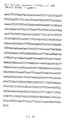
- a preferred sequence of the gene encoding GFP derived from Aequorea victoria is disclosed in Fig. 2 herein.
- Fig. 2 shows the nucleotide sequence of a wild-type GFP (Hind3-EcoR1 fragment) and the amino acid sequence, wherein start codon ATG corresponds to position 8 and stop codon TAA corresponds to position 722 in the nucleotide sequence.
- the DNA construct of the invention encoding the novel fluorescent proteins may be prepared synthetically by established standard methods, e.g. the phosphoamidite method described by Beaucage and Caruthers, Tetrahedron Letters 22 (1981), 1859 - 1869, or the method described by Matthes et al., EMBO Journal 3 (1984), 801805.
- phosphoamidite method oligonucleotides are synthesized, e.g. in an automatic DNA synthesizer, purified, annealed, ligated and cloned in suitable vectors.
- the DNA construct may also be prepared by polymerase chain reaction (PCR) using specific primers, for instance as described in US 4,683,202 or Saiki et al., Science 239 (1988), 487 - 491.
- PCR polymerase chain reaction
- the DNA construct of the invention may be inserted into a recombinant vector which may be any vector which may conveniently be subjected to recombinant DNA procedures.
- a recombinant vector which may be any vector which may conveniently be subjected to recombinant DNA procedures.
- the choice of vector will often depend on the host cell into which it is to be introduced.
- the vector may be an autonomously replicating vector, i.e. a vector which exists as an extrachromosomal entity, the replication of which is independent of chromosomal replication, e.g. a plasmid.
- the vector may be one which, when introduced into a host cell, is integrated into the host cell genome and replicated together with the chromosome(s) into which it has been integrated.
- the vector is preferably an expression vector in which the DNA sequence encoding the fluorescent protein of the invention is operably linked to additional segments required for transcription of the DNA.
- the expression vector is derived from plasmid or viral DNA, or may contain elements of both.
- operably linked indicates that the segments are arranged so that they function in concert for their intended purposes, e.g. transcription initiates in a promoter and proceeds through the DNA sequence coding for the fluorescent protein of the invention.
- the promoter may be any DNA sequence which shows transcriptional activity in the host cell of choice and may be derived from genes encoding proteins either homologous or heterologous to the host cell, including native Aequorea GFP genes.
- Suitable promoters for directing the transcription of the DNA sequence encoding the fluorescent protein of the invention in mammalian cells are the SV40 promoter (Subramani et al., Mol. Cell Biol. 1 (1981), 854 -864), the MT-1 (metallothionein gene) promoter (Palmiter et al., Science 222 (1983), 809 - 814) or the adenovirus 2 major late promoter.
- a suitable promoter for use in insect cells is the polyhedrin promoter (US 4,745,051; Vasuvedan et al., FEBS Lett. 311, (1992) 7 - 11), the P10 promoter (J.M. Vlak et al., J. Gen. Virology 69 , 1988, pp. 765-776), the Autographa californica polyhedrosis virus basic protein promoter (EP 397 485), the baculovirus immediate early gene 1 promoter (US 5,155,037; US 5,162,222), or the baculovirus 39K delayed-early gene promoter (US 5,155,037; US 5,162,222).
- promoters for use in yeast host cells include promoters from yeast glycolytic genes (Hitzeman et al., J. Biol. Chem. 255 (1980), 12073 - 12080; Alber and Kawasaki, J. Mol. Appl. Gen. 1 (1982), 419 - 434) or alcohol dehydrogenase genes (Young et al., in Genetic Engineering of Microorganisms for Chemicals (Hollaender et al, eds.), Plenum Press, New York, 1982), or the TPI1 (US 4,599,311) or ADH2-4c (Russell et al., Nature 304 (1983), 652 - 654) promoters.
- suitable promoters for use in filamentous fungus host cells are, for instance, the ADH3 promoter (McKnight et al., The EMBO J. 4 (1985), 2093 - 2099) or the tpi A promoter.
- suitable promoters are those derived from the gene encoding A. oryzae TAKA amylase, Rhizomucor miehei aspartic proteinase, A. niger neutral ⁇ -amylase, A. niger acid stable ⁇ -amylase, A. niger or A. awamori glucoamylase (gluA), Rhizomucor miehei lipase, A. oryzae alkaline protease, A. oryzae triose phosphate isomerase or A. nidulans acetamidase.
- Preferred are the TAKA-amylase and gluA promoters.
- suitable promoters for use in bacterial host cells include the promoter of the Bacillus stearothermophilus maltogenic amylase gene, the Bacillus licheniformis alpha-amylase gene, the Bacillus amyloliquefaciens BAN amylase gene, the Bacillus subtilis alkaline protease gene, or the Bacillus pumilus xylosidase gene, or by the phage Lambda P R or P L promoters or the E. coli lac, trp or tac promoters.
- the DNA sequence encoding the novel fluorescent proteins of the invention may also, if necessary, be operably connected to a suitable terminator, such as the human growth hormone terminator (Palmiter et al., op. cit.) or (for fungal hosts) the TP I1 (Alber and Kawasaki, op. cit.) or ADH3 (McKnight et al., op. cit.) terminators.
- the vector may further comprise elements such as polyadenylation signals (e.g. from SV40 or the adenovirus 5 Elb region), transcriptional enhancer sequences (e.g. the SV40 enhancer) and translational enhancer sequences (e.g. the ones encoding adenovirus VA RNAs).
- the recombinant vector may further comprise a DNA sequence enabling the vector to replicate in the host cell in question.
- a DNA sequence enabling the vector to replicate in the host cell in question.
- An example of such a sequence is the SV40 origin of replication.
- suitable sequences enabling the vector to replicate are the yeast plasmid 2 ⁇ replication genes REP 1-3 and origin of replication.
- the vector may also comprise a selectable marker, e.g. a gene the product of which complements a defect in the host cell, such as the gene coding for dihydrofolate reductase (DHFR) or the Schizosaccharomyces pombe TPI gene (described by P.R. Russell, Gene 40, 1985, pp. 125-130), or one which confers resistance to a drug, e.g. ampicillin, kanamycin, tetracyclin, chloramphenicol, neomycin or hygromycin.
- selectable markers include amdS, pyrG, argB, niaD, sC.
- the host cell into which the DNA construct or the recombinant vector of the invention is introduced may be any cell which is capable of expressing the present DNA construct and includes bacteria, yeast, fungi and higher eukaryotic cells.
- Examples of bacterial host cells which, on cultivation, are capable of expressing the DNA construct of the invention are grampositive bacteria, e.g. strains of Bacillus, such as B. subtilis, B. licheniformis, B. lentus, B. brevis, B. stearothermophilus, B. alkalophilus, B. amyloliquefaciens, B. coagulans, B. circulans, B. lautus, B. megatherium or B. thuringiensis, or strains of Streptomyces, such as S. lividans or S. murinus, or gramnegative bacteria such as Echerichia coli.
- the transformation of the bacteria may be effected by protoplast transformation or by using competent cells in a manner known per se (cf. Sambrook et al., supra).
- suitable mammalian cell lines are the HEK293 and the HeLa cell lines, primary cells, and the COS (e.g. ATCC CRL 1650), BHK (e.g. ATCC CRL 1632, ATCC CCL 10), CHL (e.g. ATCC CCL39) or CHO (e.g. ATCC CCL 61) cell lines.
- COS e.g. ATCC CRL 1650
- BHK e.g. ATCC CRL 1632, ATCC CCL 10
- CHL e.g. ATCC CCL39
- CHO e.g. ATCC CCL 61
- yeast cells include cells of Saccharomyces spp. or Schizosaccharomyces spp., in particular strains of Saccharomyces cerevisiae or Saccharomyces kluyveri. Methods for transforming yeast cells with heterologous DNA and producing heterologous polypeptides therefrom are described, e.g. in US 4,599,311, US 4,931,373, US 4,870,008, 5,037,743, and US 4,845,075, all of which are hereby incorporated by reference. Transformed cells are selected by a phenotype determined by a selectable marker, commonly drug resistance or the ability to grow in the absence of a particular nutrient, e.g. leucine.
- a selectable marker commonly drug resistance or the ability to grow in the absence of a particular nutrient, e.g. leucine.
- a preferred vector for use in yeast is the POT1 vector disclosed in US 4,931,373.
- the DNA sequence encoding the fluorescent protein of the invention may be preceded by a signal sequence and optionally a leader sequence , e.g. as described above.
- suitable yeast cells are strains of Kluyveromyces, such as K. lactis, Hansenula, e.g. H. polymorpha, or Pichia, e.g. P. pastoris (cf. Gleeson et al., J. Gen. Microbiol. 132, 1986, pp. 3459-3465; US 4,882,279).
- Examples of other fungal cells are cells of filamentous fungi, e.g. Aspergillus spp., Neurospora spp., Fusarium spp. or Trichoderma spp., in particular strains of A. oryzae, A. nidulans or A. niger.
- Aspergillus spp. for the expression of proteins is described in, e.g., EP 272 277, EP 230 023, EP 184 438.
- a filamentous fungus When a filamentous fungus is used as the host cell, it may be transformed with the DNA construct of the invention, conveniently by integrating the DNA construct in the host chromosome to obtain a recombinant host cell.
- This integration is generally considered to be an advantage as the DNA sequence is more likely to be stably maintained in the cell. Integration of the DNA constructs into the host chromosome may be performed according to conventional methods, e.g. by homologous or heterologous recombination.
- Transformation of insect cells and production of heterologous polypeptides therein may be performed as described in US 4,745,051; US 4,879,236; US 5,155,037; 5,162,222; EP 397,485) all of which are incorporated herein by reference.
- the insect cell line used as the host may suitably be a Lepidoptera cell line, such as Spodoptera frugiperda cells or Trichoplusia ni cells (cf. US 5,077,214).
- Culture conditions may suitably be as described in, for instance, WO 89/01029 or WO 89/01028, or any of the aforementioned references.
- the transformed or transfected host cell described above is then cultured in a suitable nutrient medium under conditions permitting the expression of the present DNA construct after which the cells may be used in the screening method of the invention.
- the cells may be disrupted after which cell extracts and/or supernatants may be analysed for fluorescence.
- the medium used to culture the cells may be any conventional medium suitable for growing the host cells, such as minimal or complex media containing appropriate supplements. Suitable media are available from commercial suppliers or may be prepared according to published recipes (e.g. in catalogues of the American Type Culture Collection).
- the fluorescence of cells transformed or transfected with the DNA construct of the invention may suitably be measured in a spectrometer or a fluorescence microscope where the spectral properties of the cells in liquid culture may be determined as scans of light excitation and emission.
- RNA was converted into cDNA by using the AMV reverse transcriptase (Promega, Madison, WI, USA) as recommended by the manufacturer.
- the cDNA was then PCR amplified, using PCR primers designed on the basis of a previously published GFP sequence (Prasher et al., Gene 111 (1992), 229-233; GenBank accession No. M62653) together with the U1Tma TM polymerase (Perkin Elmer, Foster City, CA, USA).
- the sequences of the primers were: GFP2: TGGAATAAGCTTTATGAGTAAAGGAGAAGAACTTTT and GFP-1 : AAGAATTCGGATCCCTTTAGTGTCAATTGGAAGTCT Restriction endonuclease sites inserted in the 5' (a HindIII site) and 3' (EcoRI and BamHI sites) primers facilitated the cloning of the PCR amplified GFP cDNA into a slightly modified pUC19 vector.
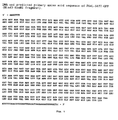
- Fig. 2a The DNA sequence and predicted primary amino acid sequence of GFP is shown below in Fig. 2a. Another DNA sequence encoding the same amino acid sequence as shown in Fig. 2a is shown in Fig. 2b.
- a PCR primer incorporating the Y66H substitution responsible for changing green fluorescence into blue fluorescence was used as 5' PCR primer in combination with a GFP specific 3' primer.
- the template was the GFP clone described above.
- the sequence of the 5 ' primer is 5 'CTACCTGTTCCATGGCCAACGCTTGTCACTACTTTCCTCATGGTGTTCAATGCTTTTCTAGAT ACCC-3'. Its 5' end corresponds to position 164 in the GFP sequence.
- the 5' primer introduces a A to T change at position 223 ; this mutation creates a Xba1 site without changing an amino acid.
- the 5' primer also contains the naturally occuring Nco1 recognition sequence (position 173 in the GFP sequence).
- the sequence of the 3' primer is 5'-AAGAATTCGGATCCCTTTAGTGTCAATTGGAAGTCT-3'. Position 3 from the 5' end is the first base of the EcoR1 recognition site that corresponds to the 3' end of the GFP sequence.
- the resulting PCR product was digested with Nco1 and EcoR1 and cloned into an Nco1EcoR1 vector fragment to reconstitute the entire Y66H-GFP gene.
- E.coli cells carrying an expression vector containing Y66H-GFP were grown overnight in the presence of 10 micrograms per ml Nmethyl-N-nitro-N-nitrosoguanidine. Plasmid DNA was isolated, the 764 bp Hind3-EcoR1 insert containing Y66H-GFP was isolated and cloned into a Hind3-EcoR1 digested vector fragment, allowing expression of the insert in E.coli. E.coli transformants were inspected for blue fluorescence when excited with a 365 nm UV light, and colonies that appeared to fluoresce stronger than wildtype BFP were identified.
- 10 ng DNA from one particular colony was used as template in a PCR reaction containing 1.5 units of Taq polymerase (Perkin Elmer), 0.lmM MnCl 2 , 0.2 mM each of dGTP, dCTP and dTTP, 0.05mM dATP, 1.7 mM MgCl 2 and the buffer recommended by the manufacturer.
- the primers used flank the Y66H-GFP insert.
- the sequence of the 5' primer was 5'-AATTGGTACCAAGGAGGTAAGCTTTATGAG-3' ; it contains a Hind3 recognition sequence.
- the sequence of the 3' primer was 5'CTTTCGTTTTGAATTCGGATCCCTTTAGTG-3'; it contains a EcoR1 recognition sequence.
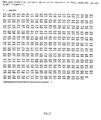
- the PCR product was digested with Hind3 and EcoR1 and cloned into a Hind3-EcoR1 digested vector fragment, allowing expression of the insert in E.coli.E.coli transformants were inspected for blue fluorescence when excited with a 365 nm UV light, and colonies that appeared to fluoresce stronger than Y66H-GFP were identified. Plasmid DNA from one strongly fluorescing colony (called BX12-1A) was isolated and the Y66H-GFP insert was subjected to sequence determination. The mutation F64L was identified. This mutation replaces the phenylalanine residue preceding the SHG tripeptide chromophore sequence of Y66H-GFP with leucine. No other aminoacid changes were present in the Y66H-GFP sequence of BX12-1A. The DNA sequence and predicted primary amino acid sequence of F64L-Y66HGFP is shown in Fig. 3 below.
- F64L-GFP was constructed as follows: An E.coli expression vector containing Y66H-GFP was digested with restriction enzymes Nco1 and Xba1. The recognition sequence of Ncol is located at position 173 and the recognition sequence of Xbal is located at position 221 in the F64L-Y66H-GFP sequence listed below. The large Nco1-Xba1 vector fragment was isolated and ligated with a synthetic Nco1-Xba1 DNA linker of the following sequence: One DNA strand has the sequence:
- the other DNA strand has the sequence:
- the two strands form a Ncol-Xbal fragment that incorporates the sequence of the GFP chromophore SYG with the F64L substitution preceding SYG.
- the DNA sequence and predicted primary amino acid sequence of F64L-GFP is shown in Fig. 4 below.
- F64L-S65T-GFP was constructed as follows: An E.coli expression vector containing Y66H-GFP was digested with restriction enzymes Ncol and Xba1. The recognition sequence of Ncol is located at position 173 and the recognition sequence of Xbal is located at position 221 in the F64L-Y66H-GFP sequence listed below. The large Nco1-Xba1 vector fragment was isolated and ligated with a synthetic Nco1-Xba1 DNA linker of the following sequence:
- One DNA strand has the sequence:
- the other DNA strand has the sequence:
- the E. coli expression vector contains an IPTG (isopropyl-thiogalactoside)-inducible promoter.
- the E. coli strain used is a del(lacZ)MI5 derivative of K 803 (Sambrook et al. supra).
- the GFP allele present in the pGFP-Nl plasmid was introduced into the IPTG inducible E.coli expression vector in the following manner: 1 ng pGFP-N1 plasmid DNA was used as template in a standard PCR reaction where the 5' PCR primer had the sequence: and the 3' PCR primer had the sequence:
- the primers flank the GFP-N1 insert in the vector pGFP-N1.
- the 5' primer includes the ATG start codon preceded by a Hind3 cloning site.
- the 3' primer includes a TAA stop codon followed by a Bg12 cloning site.
- the PCR product was digested with Hind3 and Bg12 and cloned into a Hind3-BamH1digested vector fragment behind an IPTG inducible promoter, allowing expression of the insert in E.coli in the presence of IPTG.
- the lacZ gene present in the pZeoSV-LacZ plasmid (available from Invitrogen) was introduced into the IPTG inducible E.coli expression vector in the following manner: 1 ng pZeoSV-LacZ plasmid DNA was used as template in a standard PCR reaction where the 5' PCR primer had the sequence: and the 3' PCR primer had the sequence:
- the primers flank the lacZ insert in the vector pZeoSV-LacZ.
- the 5' primer includes the ATG start codon preceded by a Hind3 cloning site.
- the 3' primer includes a TAA stop codon followed by an EcoR1 cloning site.
- the PCR product was digested with Hind3 and EcoR1 and cloned into a Hind3- EcoRl digested vector fragment behind an IPTG inducible promoter, allowing expression of the insert in E.coli in the presence of IPTG.
- E. coli cells containing an expression plasmid allowing expression of one of the various gene products upon induction with IPTG were grown in LB medium containing 100 micrograms per milliliter ampicillin and no IPTG.
- To 1 ml cell suspension was added 0.5 ml 50% glycerol and cells were frozen and kept frozen at -80C.
- Cells from the - 80C glycerol stocks were inoculated into 2 ml LB medium containing 100 ⁇ g/ml ampicillin and grown with aeration at 37C for 6 hours. 2 microliters of this inoculum was transferred to each of two tubes containing 2 ml of LB medium with 100 ⁇ g/ml ampicillin and 1 mM IPTG. The two sets of tubes were incubated with aeration at two different temperatures: room temperature (22C) and 37C.
- the excitation wavelengths were set to 398 nm and 470 nm for GFP, GFP-N1, F64L-GFP and F64L-S65T-GFP; 398 nm is near the optimal excitation wavelength for GFP, GFP-N1 and F64L-GFP, and 470 nm is near the optimal excitation wavelength for F64L-S65T-GFP.
- the excitation wavelength was set to 380 nm, which is near the optimal excitation wavelength for these derivatives.
- Beta-galactosidase expressing cells were included as background controls.
- Luminometer data were normalized to the optical density of the sample.
- F64L-Y66H-GFP, F64L-GFP, and F64L-S65T-GFP were cloned into pcDNA3 (Invitrogen, Ca, USA) so that the expression was under control of the CMV promoter.
- Wild-type GFP was expressed from the pGFP-Nl plasmid (Clontech, Ca, USA) in which the CMV promoter controls the expression.
- Plasmid DNA to be used for transfection were purified using Jetstar Plasmid kit (Genomed Inc. NC, USA) and was dissolved in distilled water.
- the precipitate used for the transfections were made by mixing the following components: 2 ⁇ g DNA in 44 ⁇ l of water were mixed with 50 ⁇ l 2xHBS buffer (280 mM NaCl, 1.5 mM Na 2 HPO 4 , 12 mM dextrose, 50 mM HEPES) and 6.2 ⁇ l 2M CaCl 2 . The transfection mix was incubated at room temperature for 25 minutes before it was added to the cells.
- HEK 293 cells ATCC CRL 1573 were grown in 2 cm by 2 cm coverglass chambers (Nunc, Denmark) with approximately 1.5 ml medium (Dulbecco's MEM with glutamax-1, 4500 mg/L glucose, and 10% FCS; Gibco BRL, MD, USA).
- F64L-GFP, and F64L-S65T-GFP the following filters were used: excitation 480/40 nm, dichroic 505 nm, and emission 510LP nm (all from Chroma Technologies Corp., Vt, USA).
- F64L-Y66H-GFP the following filters were used: excitation 380/15 nm, dichroic 400 nm, and emission 450/65 nm (all from Omega Optical, Vt, USA).
- Cells in several chambers were transfected in parallel, so that, a new chamber could be taken for each sample point. In cases where the incubation extended beyond 8.5 hours the Ca 2+ precipitate was removed by replacing the medium.
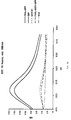
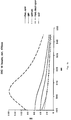
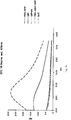
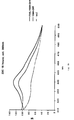
- the F64L mutation enhances the fluorescent signal significantly (wild type GFP versus F64L-GFP and F64L-S65TGFP). Fluorescent cells can be observed as early as 1-2 hours post-transfection indicating an efficient maturation of the chromophore at 37°C. Furthermore, the F64L mutation is enhancing other GFP derivatives like the S65T mutant which has a shifted excitation spectrum and the blue derivative which is not detectable in mammalian cells without the F64L substitution. (Comment: When comparing the results of F64L-S65T-GFP and F64L-GFP one has to take into account that the excitation spectra differ and that the filter set used is optimised for F64L-S65T-GFP. F64LGFP and WT GFP share the same spectral properties.)
Landscapes
- Chemical & Material Sciences (AREA)
- Health & Medical Sciences (AREA)
- Life Sciences & Earth Sciences (AREA)
- Organic Chemistry (AREA)
- Zoology (AREA)
- Proteomics, Peptides & Aminoacids (AREA)
- Engineering & Computer Science (AREA)
- Genetics & Genomics (AREA)
- General Health & Medical Sciences (AREA)
- Biochemistry (AREA)
- Wood Science & Technology (AREA)
- Molecular Biology (AREA)
- Biophysics (AREA)
- Toxicology (AREA)
- Medicinal Chemistry (AREA)
- Immunology (AREA)
- Bioinformatics & Cheminformatics (AREA)
- General Engineering & Computer Science (AREA)
- Biotechnology (AREA)
- Physics & Mathematics (AREA)
- Tropical Medicine & Parasitology (AREA)
- Analytical Chemistry (AREA)
- Microbiology (AREA)
- Gastroenterology & Hepatology (AREA)
- Peptides Or Proteins (AREA)
- Micro-Organisms Or Cultivation Processes Thereof (AREA)
- Enzymes And Modification Thereof (AREA)
- Measuring Or Testing Involving Enzymes Or Micro-Organisms (AREA)
- Preparation Of Compounds By Using Micro-Organisms (AREA)
- Investigating Or Analysing Biological Materials (AREA)
- Investigating Or Analysing Materials By The Use Of Chemical Reactions (AREA)
Applications Claiming Priority (3)
| Application Number | Priority Date | Filing Date | Title |
|---|---|---|---|
| DK106595 | 1995-09-22 | ||
| DK106595 | 1995-09-22 | ||
| PCT/DK1996/000051 WO1997011094A1 (en) | 1995-09-22 | 1996-01-31 | Novel variants of green fluorescent protein, gfp |
Publications (2)
| Publication Number | Publication Date |
|---|---|
| EP0851874A1 EP0851874A1 (en) | 1998-07-08 |
| EP0851874B1 true EP0851874B1 (en) | 1999-09-15 |
Family
ID=8100600
Family Applications (1)
| Application Number | Title | Priority Date | Filing Date |
|---|---|---|---|
| EP96900890A Expired - Lifetime EP0851874B1 (en) | 1995-09-22 | 1996-01-31 | Novel variants of green fluorescent protein, gfp |
Country Status (10)
| Country | Link |
|---|---|
| US (3) | US6172188B1 (enExample) |
| EP (1) | EP0851874B1 (enExample) |
| JP (2) | JP3535177B2 (enExample) |
| AT (1) | ATE184613T1 (enExample) |
| AU (1) | AU4482996A (enExample) |
| CA (1) | CA2232727C (enExample) |
| DE (1) | DE69604298T2 (enExample) |
| DK (1) | DK0851874T3 (enExample) |
| ES (1) | ES2139329T3 (enExample) |
| WO (1) | WO1997011094A1 (enExample) |
Cited By (2)
| Publication number | Priority date | Publication date | Assignee | Title |
|---|---|---|---|---|
| US6054321A (en) * | 1996-08-16 | 2000-04-25 | The Regents Of The University Of California | Long wavelength engineered fluorescent proteins |
| US6248550B1 (en) | 1996-07-16 | 2001-06-19 | The Regents Of The University Of California | Assays for protein kinases using fluorescent protein substrates |
Families Citing this family (132)
| Publication number | Priority date | Publication date | Assignee | Title |
|---|---|---|---|---|
| US5777079A (en) * | 1994-11-10 | 1998-07-07 | The Regents Of The University Of California | Modified green fluorescent proteins |
| US5625048A (en) | 1994-11-10 | 1997-04-29 | The Regents Of The University Of California | Modified green fluorescent proteins |
| ES2139329T3 (es) | 1995-09-22 | 2000-02-01 | Bioimage A S | Nuevas variantes de la proteina fluorescente verde, gfp. |
| US6803188B1 (en) | 1996-01-31 | 2004-10-12 | The Regents Of The University Of California | Tandem fluorescent protein constructs |
| US6900304B2 (en) | 1996-01-31 | 2005-05-31 | The Regents Of The University Of California | Emission ratiometric indicators of phosphorylation |
| US5804387A (en) * | 1996-02-01 | 1998-09-08 | The Board Of Trustees Of The Leland Stanford Junior University | FACS-optimized mutants of the green fluorescent protein (GFP) |
| US6027881A (en) * | 1996-05-08 | 2000-02-22 | The United States Of America As Represented By The Secretary Of The Department Of Health And Human Services | Mutant Aequorea victoria fluorescent proteins having increased cellular fluorescence |
| US5925558A (en) * | 1996-07-16 | 1999-07-20 | The Regents Of The University Of California | Assays for protein kinases using fluorescent protein substrates |
| US6593135B2 (en) | 1996-08-16 | 2003-07-15 | The State Of Oregon, Acting By And Through The State Board Of Higher Education On Behalf Of The University Of Oregon | Long wavelength engineered fluorescent proteins |
| WO1998021355A1 (en) | 1996-11-15 | 1998-05-22 | Life Technologies, Inc. | Mutants of green fluorescent protein |
| US6090919A (en) * | 1997-01-31 | 2000-07-18 | The Board Of Trustees Of The Leland Stanford Junior University | FACS-optimized mutants of the green fluorescent protein (GFP) |
| US6197928B1 (en) | 1997-03-14 | 2001-03-06 | The Regents Of The University Of California | Fluorescent protein sensors for detection of analytes |
| US5998204A (en) * | 1997-03-14 | 1999-12-07 | The Regents Of The University Of California | Fluorescent protein sensors for detection of analytes |
| EP2325308A3 (en) | 1997-04-04 | 2011-07-27 | The Board of Regents of the University of Nebraska | Methods and materials for making and using transgenic dicamba-degrading organisms |
| DE69837118T2 (de) | 1997-04-07 | 2007-12-27 | Fisher Biolmage Aps | Ein Verfahren zum Screenen von Substanzen hinsichtlich ihres Effekts auf cAMP Spiegel basierend auf intrazellulärer Translokation von PKA |
| US6046925A (en) * | 1997-04-14 | 2000-04-04 | The Regents Of The University Of California | Photochromic fluorescent proteins and optical memory storage devices based on fluorescent proteins |
| US6407132B1 (en) | 1997-07-25 | 2002-06-18 | James Black Foundation Limited | Substituted imidazole derivatives and their use as histamine H3 receptor ligands |
| FR2766927B1 (fr) * | 1997-07-31 | 1999-11-05 | Centre Nat Rech Scient | Methodes et kits pour le diagnostic de la maladie d'alzheimer |
| EP0928968A1 (en) * | 1998-01-12 | 1999-07-14 | Universität Basel | Screening method for apoptosis and necrosis |
| US6194548B1 (en) | 1998-01-23 | 2001-02-27 | Takashi Osumi | Green fluorescent proteins and blue fluorescent proteins |
| CA2324648C (en) * | 1998-03-27 | 2013-02-26 | Prolume, Ltd. | Luciferases, fluorescent proteins, nucleic acids encoding the luciferases and fluorescent proteins and the use thereof in diagnostics, high throughput screening and novelty items |
| US7090976B2 (en) | 1999-11-10 | 2006-08-15 | Rigel Pharmaceuticals, Inc. | Methods and compositions comprising Renilla GFP |
| US6495664B1 (en) | 1998-07-24 | 2002-12-17 | Aurora Biosciences Corporation | Fluorescent protein sensors of post-translational modifications |
| JP2002522040A (ja) * | 1998-08-08 | 2002-07-23 | インペリアル キャンサー リサーチ テクノロジー リミテッド | 改変されたグリーン蛍光タンパク質 |
| US7297482B2 (en) | 1998-10-08 | 2007-11-20 | Rigel Pharmaceuticals, Inc. | Structurally biased random peptide libraries based on different scaffolds |
| US6936421B2 (en) | 1998-10-08 | 2005-08-30 | Rigel Pharmaceuticals, Inc. | Structurally biased random peptide libraries based on different scaffolds |
| US6180343B1 (en) | 1998-10-08 | 2001-01-30 | Rigel Pharmaceuticals, Inc. | Green fluorescent protein fusions with random peptides |
| WO2000023615A2 (en) * | 1998-10-15 | 2000-04-27 | Bioimage A/S | Method for extracting quantitative information relating to an influence on a cellular response |
| EP1031630B1 (en) * | 1999-02-22 | 2004-10-20 | Matsushita Electric Industrial Co., Ltd. | Method for detecting bacteria |
| DE19915137C2 (de) * | 1999-03-26 | 2001-10-18 | Michael Schaefer | Verfahren zur Quantifizierung mehrerer Fluorochrome in einer mehrfach gefärbten Probe bei der Fluoreszenzmikroskopie und Verwendungen des Verfahrens |
| US6410255B1 (en) | 1999-05-05 | 2002-06-25 | Aurora Biosciences Corporation | Optical probes and assays |
| US7151847B2 (en) | 2001-02-20 | 2006-12-19 | Cytokinetics, Inc. | Image analysis of the golgi complex |
| JP4845073B2 (ja) * | 1999-07-30 | 2011-12-28 | 全国農業協同組合連合会 | 再構築受精卵の作製方法及びそれを用いたトランスジェニック胚の作製方法 |
| US6716614B1 (en) | 1999-09-02 | 2004-04-06 | Lexicon Genetics Incorporated | Human calcium dependent proteases, polynucleotides encoding the same, and uses thereof |
| US6541252B1 (en) | 2000-05-19 | 2003-04-01 | Lexicon Genetics Incorporated | Human kinases and polynucleotides encoding the same |
| US7109315B2 (en) | 2000-03-15 | 2006-09-19 | Bruce J. Bryan | Renilla reniformis fluorescent proteins, nucleic acids encoding the fluorescent proteins and the use thereof in diagnostics, high throughput screening and novelty items |
| JP2005518180A (ja) * | 2000-06-19 | 2005-06-23 | バイオイメージ エイ/エス | 新規蛍光タンパク質 |
| JP2004533221A (ja) * | 2000-10-27 | 2004-11-04 | レキシコン・ジェネティクス・インコーポレーテッド | 新規ヒト7tmタンパクおよびそれをコードするポリヌクレオチド |
| US6956961B2 (en) | 2001-02-20 | 2005-10-18 | Cytokinetics, Inc. | Extracting shape information contained in cell images |
| US7016787B2 (en) | 2001-02-20 | 2006-03-21 | Cytokinetics, Inc. | Characterizing biological stimuli by response curves |
| JP3929250B2 (ja) * | 2001-03-08 | 2007-06-13 | 株式会社ルネサステクノロジ | 半導体装置 |
| CA2440592C (en) * | 2001-03-12 | 2012-05-15 | The State Of Oregon Acting By And Through The State Board Of Higher Education On Behalf Of The University Of Oregon | Oxidation-reduction sensitive green fluorescent protein variants |
| EP1392864A4 (en) * | 2001-04-23 | 2005-11-23 | Lifesensors Inc | COMPOSITIONS AND METHODS OF GENDER SEPARATION |
| GB0109858D0 (en) * | 2001-04-23 | 2001-06-13 | Amersham Pharm Biotech Uk Ltd | Fluorscent proteins |
| JP3829252B2 (ja) | 2001-06-08 | 2006-10-04 | 独立行政法人理化学研究所 | 蛍光蛋白質 |
| US6894205B2 (en) * | 2001-06-22 | 2005-05-17 | Vanderbilt University | Assay for toxin induced neuronal degeneration and viability in C. elegans |
| TWI332943B (en) * | 2001-07-10 | 2010-11-11 | Synta Pharmaceuticals Corp | Taxol enhancer compounds |
| US6924312B2 (en) * | 2001-07-10 | 2005-08-02 | Synta Pharmaceuticals Corp. | Taxol enhancer compounds |
| TWI297335B (en) | 2001-07-10 | 2008-06-01 | Synta Pharmaceuticals Corp | Taxol enhancer compounds |
| TWI252847B (en) * | 2001-07-10 | 2006-04-11 | Synta Pharmaceuticals Corp | Synthesis of taxol enhancers |
| GB0123314D0 (en) * | 2001-09-28 | 2001-11-21 | Amersham Pharm Biotech Uk Ltd | Fluorescent proteins |
| WO2003029827A2 (en) * | 2001-10-01 | 2003-04-10 | Bioimage A/S | A method of detecting intracellular protein-protein interactions using three heterologous conjugates |
| US20050130237A1 (en) * | 2002-02-04 | 2005-06-16 | Alessandro Strebel | High throughput screening method for compounds with non-, pro-, or anti-apoptotic or proliferative or necrotic activity |
| WO2009095742A1 (en) * | 2008-01-31 | 2009-08-06 | Cellectis | New i-crei derived single-chain meganuclease and uses thereof |
| US7335488B2 (en) | 2002-04-05 | 2008-02-26 | The Chinese University Of Hong Kong | Fluorescent proteins |
| US7271241B2 (en) | 2002-04-24 | 2007-09-18 | Los Alamos National Security, Llc | Directed evolution methods for improving polypeptide folding and solubility and superfolder fluorescent proteins generated thereby |
| AU2003295322B2 (en) | 2002-08-21 | 2009-06-18 | Revivicor, Inc. | Porcine animals lacking any expression of functional alpha 1,3 galactosyltransferase |
| US9453251B2 (en) | 2002-10-08 | 2016-09-27 | Pfenex Inc. | Expression of mammalian proteins in Pseudomonas fluorescens |
| EP1565559B1 (en) * | 2002-11-12 | 2011-05-18 | Zakrytoe Aktsionernoe Obschestvo " Evrogen" | Fluorescent proteins and chromoproteins from non-aequorea hydrozoa species and methods for using same |
| US7413874B2 (en) | 2002-12-09 | 2008-08-19 | University Of Miami | Nucleic acid encoding fluorescent proteins from aquatic species |
| TWI330079B (en) * | 2003-01-15 | 2010-09-11 | Synta Pharmaceuticals Corp | Treatment for cancers |
| US7083931B2 (en) | 2003-04-04 | 2006-08-01 | Stratagene California | Renilla GFP mutants with increased fluorescent intensity and spectral shift |
| GB2423988A (en) | 2003-07-18 | 2006-09-13 | Cytokinetics Inc | Characterizing biological stimuli by response curves |
| WO2005074436A2 (en) | 2003-10-24 | 2005-08-18 | The Regents Of The University Of California | Self-assembling split-fluorescent protein systems |
| GB0329353D0 (en) * | 2003-12-19 | 2004-01-21 | Amersham Biosciences Uk Ltd | Cytochrome C protein and assay |
| EP2400030B1 (en) | 2004-05-18 | 2016-01-20 | The Board of Trustees of the Leland Stanford Junior University | Detection of protein translocation by beta-galactosidase reporter fragment complementation |
| CN1993318B (zh) * | 2004-06-23 | 2012-10-03 | Synta医药公司 | 用于治疗癌症的双(硫代-酰肼酰胺)盐 |
| US7323318B2 (en) | 2004-07-15 | 2008-01-29 | Cytokinetics, Inc. | Assay for distinguishing live and dead cells |
| CN101031655A (zh) | 2004-07-26 | 2007-09-05 | 陶氏环球技术公司 | 通过株工程改进蛋白表达的方法 |
| WO2006023231A2 (en) * | 2004-07-27 | 2006-03-02 | Molecular Probes, Inc. | Fluorescent metal ion indicators with large stokes shift |
| US20060031020A1 (en) * | 2004-08-09 | 2006-02-09 | Yang Jenny J | Computational approach for constructing an analyte binding motif |
| CA2587598A1 (en) * | 2004-11-19 | 2006-05-26 | Synta Pharmaceuticals Corp. | Bis(thio-hydrazide amides) for increasing hsp70 expression |
| US20090263821A1 (en) * | 2004-12-01 | 2009-10-22 | Proteologics, Inc. | Ubiquitin Ligase Assays And Related Reagents |
| EP1877048A1 (en) * | 2005-04-15 | 2008-01-16 | Synta Pharmaceuticals Corporation | Combination cancer therapy with bis(thiohydrazide) amide compounds |
| CN101223133B (zh) | 2005-05-16 | 2012-02-29 | 辛塔制药公司 | 双(硫代酰肼酰胺)盐的合成 |
| PL1888640T3 (pl) | 2005-05-18 | 2012-08-31 | Ablynx Nv | Ulepszone nanociała skierowane przeciwko czynnikowi martwicy nowotworów typu alfa |
| CN101213214B (zh) | 2005-05-20 | 2014-06-25 | 埃博灵克斯股份有限公司 | 针对冯威勒布兰特因子的单一结构域vhh抗体 |
| US8362250B2 (en) | 2005-05-24 | 2013-01-29 | Enzo Biochem, Inc. | Fluorescent dyes and compounds, methods and kits useful for identifying specific organelles and regions in cells of interest |
| CA2617930A1 (en) | 2005-08-09 | 2007-03-29 | Revivicor, Inc. | Transgenic ungulates expressing ctla4-ig and uses thereof |
| JP2009504740A (ja) | 2005-08-16 | 2009-02-05 | シンタ ファーマシューティカルズ コーポレーション | ビス(チオ−ヒドラジドアミド)製剤 |
| DK1954713T3 (da) | 2005-11-04 | 2013-02-11 | Evrogen Jsc | Modificerede grønfluorescerende proteiner og fremgangsmåder til anvendelse af samme |
| EP1785434A1 (en) | 2005-11-11 | 2007-05-16 | Ludwig-Maximilians-Universität München | Targeting and tracing of antigens in living cells |
| US20090170091A1 (en) * | 2006-01-17 | 2009-07-02 | Kenneth Giuliano | Method For Predicting Biological Systems Responses |
| GB0606430D0 (en) * | 2006-03-31 | 2006-05-10 | Ge Healthcare Uk Ltd | Method for cell based assays |
| WO2007127428A2 (en) * | 2006-04-28 | 2007-11-08 | University Of Florida Research Foundation, Inc. | Double-stranded/self-complementary vectors with a truncated cba promoter and methods of gene delivery |
| US8114615B2 (en) | 2006-05-17 | 2012-02-14 | Cernostics, Inc. | Method for automated tissue analysis |
| US20080004410A1 (en) * | 2006-06-30 | 2008-01-03 | Yu-Chin Lai | Hydrophilic macromonomers having alpha,beta-conjugated carboxylic terminal group and medical devices incorporating same |
| US8481272B2 (en) | 2006-08-04 | 2013-07-09 | Georgia State University Research Foundation, Inc. | Enzyme sensors, methods for preparing and using such sensors, and methods of detecting protease activity |
| MX2009001877A (es) | 2006-08-21 | 2009-03-02 | Synta Pharmaceuticals Corp | Compuestos para el tratamiento de trastornos proliferativos. |
| WO2008027445A2 (en) * | 2006-08-31 | 2008-03-06 | Synta Pharmaceuticals Corp. | Combination with bis(thiohydrazide amides) for treating cancer |
| TW200829543A (en) * | 2006-09-15 | 2008-07-16 | Synta Pharmaceuticals Corp | Purification of bis(thiohydrazide amides) |
| US20100112602A1 (en) * | 2006-11-10 | 2010-05-06 | Taylor Lansing D | Protein-Protein Interaction Biosensors and Methods of Use Thereof |
| GB0624462D0 (en) * | 2006-12-07 | 2007-01-17 | Ge Healthcare Ltd | Method for determining gentoxicity |
| AU2007336242B2 (en) | 2006-12-19 | 2012-08-30 | Ablynx N.V. | Amino acid sequences directed against GPCRs and polypeptides comprising the same for the treatment of GPCR-related diseases and disorders |
| WO2008074840A2 (en) | 2006-12-19 | 2008-06-26 | Ablynx N.V. | Amino acid sequences directed against a metalloproteinase from the adam family and polypeptides comprising the same for the treatment of adam-related diseases and disorders |
| US9580719B2 (en) | 2007-04-27 | 2017-02-28 | Pfenex, Inc. | Method for rapidly screening microbial hosts to identify certain strains with improved yield and/or quality in the expression of heterologous proteins |
| EP2142651B1 (en) | 2007-04-27 | 2013-05-22 | Pfenex Inc. | Method for rapidly screening microbial hosts to identify certain strains with improved yield and/or quality in the expression of heterologous proteins |
| US8727554B2 (en) | 2007-06-25 | 2014-05-20 | Yorktown Technologies, L.P. | Aquarium with adjustable lighting |
| US20090006219A1 (en) * | 2007-06-29 | 2009-01-01 | Alan Blake | Method for distribution of an aquarium kit |
| JPWO2009020197A1 (ja) * | 2007-08-03 | 2010-11-04 | 国立大学法人北海道大学 | 群青色蛍光タンパク質 |
| EP2078750B1 (en) | 2008-01-09 | 2016-09-28 | Ludwig-Maximilians-Universität München | A fluorescent two-hybrid (F2H) assay for direct visualization of protein interactions in living cells |
| GB0800938D0 (en) * | 2008-01-18 | 2008-02-27 | Ge Healthcare Uk Ltd | Multiplex cell signalling assay |
| CA2720763A1 (en) | 2008-04-07 | 2009-10-15 | Ablynx Nv | Amino acid sequences directed against the notch pathways and uses thereof |
| EP2128259A1 (en) * | 2008-05-27 | 2009-12-02 | Koninklijke Philips Electronics N.V. | Therapy delivery and monitoring using a gene of interest-reporter fusion protein and optical imaging |
| US9250249B2 (en) | 2008-09-08 | 2016-02-02 | Enzo Biochem, Inc. | Autophagy and phospholipidosis pathway assays |
| US9334281B2 (en) * | 2008-09-08 | 2016-05-10 | Enzo Life Sciences, Inc. | Fluorochromes for organelle tracing and multi-color imaging |
| EP3470425A3 (en) | 2008-12-19 | 2019-07-17 | Ablynx N.V. | Immunoglobulins against cell-associatd antigens such as p2x7 |
| MX2011010681A (es) | 2009-04-10 | 2012-01-20 | Ablynx Nv | Secuencias mejoradas de aminoacidos dirigidas contra il-6r y polipeptidos que comprenden el mismo para el tratamiento de enfermedades y trastornos relacionados con il-6r. |
| NZ597314A (en) | 2009-06-05 | 2013-07-26 | Ablynx Nv | Monovalent, bivalent and trivalent anti human respiratory syncytial virus (hrsv) nanobody constructs for the prevention and/or treatment of respiratory tract infections |
| EP2275442A1 (en) | 2009-07-06 | 2011-01-19 | Ludwig-Maximilians-Universität München | Detection and vizualization of the cell cycle in living cells |
| US9644022B2 (en) | 2009-11-30 | 2017-05-09 | Ablynx N.V. | Amino acid sequences directed against human respiratory syncytial virus (HRSV) and polypeptides comprising the same for the prevention and/or treatment of respiratory tract infections |
| WO2011083141A2 (en) | 2010-01-08 | 2011-07-14 | Ablynx Nv | Method for generation of immunoglobulin sequences by using lipoprotein particles |
| JP6259187B2 (ja) | 2010-10-01 | 2018-01-10 | 国立大学法人九州大学 | ストラメノパイルの形質転換方法 |
| EP2686688B1 (en) | 2011-03-17 | 2019-05-08 | Cernostics, Inc. | Systems and compositions for diagnosing barrett's esophagus and methods of using the same |
| WO2013014256A1 (en) | 2011-07-27 | 2013-01-31 | Gbiotech Sarl | Production of recombinant protein in insect cells using a baculovirus expression system |
| EP2685260A1 (en) | 2012-07-09 | 2014-01-15 | Ludwig-Maximilians-Universität München | Direct and quantitative detection of targets in living cells |
| TW201538518A (zh) | 2014-02-28 | 2015-10-16 | Dow Agrosciences Llc | 藉由嵌合基因調控元件所賦予之根部特異性表現 |
| NL2013661B1 (en) | 2014-10-21 | 2016-10-05 | Ablynx Nv | KV1.3 Binding immunoglobulins. |
| WO2016007886A1 (en) * | 2014-07-11 | 2016-01-14 | Northwestern University | Yeast-based biosensor |
| DE102014012130B3 (de) | 2014-08-13 | 2015-03-05 | Alfred-Wegener-Institut, Helmholtz-Zentrum für Polar- und Meeresforschung | Nachweisverfahren unter Verwendung von rekombinanten lebenden Zellen zum Nachweis von xenobiotischen Stoffen sowie Anordnung und Testkit zur Durchführung des Nachweisverfahrens |
| WO2016186948A1 (en) | 2015-05-15 | 2016-11-24 | Albert Einstein College Of Medicine, Inc. | Gfp-derived fusion tags for protein expression |
| CN117700549A (zh) | 2016-11-16 | 2024-03-15 | 埃博灵克斯股份有限公司 | 能够结合CD123和TCRα/β的T细胞募集多肽 |
| EP3420811A1 (en) | 2017-06-29 | 2019-01-02 | Paris Sciences et Lettres - Quartier Latin | Non-human model for neurofibromatosis type 1 |
| US20200392512A1 (en) | 2018-02-26 | 2020-12-17 | Ablynx N.V. | Nucleotide sequences encoding peptide linkers |
| EP3553080A1 (en) | 2018-04-12 | 2019-10-16 | ETH Zürich | Piezo1-based fluorescent reporter |
| US11834698B2 (en) | 2018-05-02 | 2023-12-05 | Indian Institute Of Science Education And Research | Process for determining enzyme activity in a cell by activity-based reporter gene technology (ABRGT) |
| EP3810637A1 (en) | 2018-06-20 | 2021-04-28 | DWI - Leibniz-Institut für Interaktive Materialien e.V. | Fusion peptides or proteins, their use, and systems and kits based thereupon, for the separation and/or detection of plastics, particularly of microplastics |
| GB201904697D0 (en) | 2019-04-03 | 2019-05-15 | Vib Vzw | Means and methods for single molecule peptide sequencing |
| KR102642718B1 (ko) | 2019-05-02 | 2024-02-29 | 더 보드 오브 리젠츠 오브 더 유니버시티 오브 텍사스 시스템 | 합성 단백질 안정성을 증가시키기 위한 시스템 및 방법 |
| US12529699B2 (en) | 2020-04-17 | 2026-01-20 | Regeneron Pharmaceuticals, Inc | Detection assays for coronavirus neutralizing antibodies |
| US12624071B2 (en) | 2023-03-30 | 2026-05-12 | Triad National Security, Llc | Bright and stable red fluorescent protein |
| TW202528354A (zh) | 2024-01-03 | 2025-07-16 | 中國商北京泰德製藥股份有限公司 | B7-h3結合蛋白及其用途 |
Family Cites Families (9)
| Publication number | Priority date | Publication date | Assignee | Title |
|---|---|---|---|---|
| US5491084A (en) * | 1993-09-10 | 1996-02-13 | The Trustees Of Columbia University In The City Of New York | Uses of green-fluorescent protein |
| JP3810791B2 (ja) * | 1993-09-10 | 2006-08-16 | ザ・トラスティーズ・オブ・コランビア・ユニバーシティー・イン・ザ・シティー・オブ・ニューヨーク | 緑色蛍光タンパク質の使用 |
| US5610031A (en) * | 1993-10-27 | 1997-03-11 | The General Hospital Corporation | B1k chain of laminin and methods of use |
| WO1995021191A1 (en) * | 1994-02-04 | 1995-08-10 | William Ward | Bioluminescent indicator based upon the expression of a gene for a modified green-fluorescent protein |
| US5625048A (en) * | 1994-11-10 | 1997-04-29 | The Regents Of The University Of California | Modified green fluorescent proteins |
| ES2139329T3 (es) * | 1995-09-22 | 2000-02-01 | Bioimage A S | Nuevas variantes de la proteina fluorescente verde, gfp. |
| US5804387A (en) * | 1996-02-01 | 1998-09-08 | The Board Of Trustees Of The Leland Stanford Junior University | FACS-optimized mutants of the green fluorescent protein (GFP) |
| US6124128A (en) * | 1996-08-16 | 2000-09-26 | The Regents Of The University Of California | Long wavelength engineered fluorescent proteins |
| US6090919A (en) * | 1997-01-31 | 2000-07-18 | The Board Of Trustees Of The Leland Stanford Junior University | FACS-optimized mutants of the green fluorescent protein (GFP) |
-
1996
- 1996-01-31 ES ES96900890T patent/ES2139329T3/es not_active Expired - Lifetime
- 1996-01-31 CA CA002232727A patent/CA2232727C/en not_active Expired - Lifetime
- 1996-01-31 JP JP51232697A patent/JP3535177B2/ja not_active Expired - Lifetime
- 1996-01-31 DK DK96900890T patent/DK0851874T3/da active
- 1996-01-31 AT AT96900890T patent/ATE184613T1/de not_active IP Right Cessation
- 1996-01-31 DE DE69604298T patent/DE69604298T2/de not_active Expired - Lifetime
- 1996-01-31 EP EP96900890A patent/EP0851874B1/en not_active Expired - Lifetime
- 1996-01-31 AU AU44829/96A patent/AU4482996A/en not_active Abandoned
- 1996-01-31 WO PCT/DK1996/000051 patent/WO1997011094A1/en not_active Ceased
-
1997
- 1997-03-17 US US08/819,612 patent/US6172188B1/en not_active Expired - Lifetime
-
2001
- 2001-06-01 US US09/872,364 patent/US6818443B2/en not_active Expired - Fee Related
-
2003
- 2003-06-16 JP JP2003170625A patent/JP2004024258A/ja active Pending
-
2004
- 2004-09-23 US US10/947,178 patent/US7314915B2/en not_active Expired - Fee Related
Cited By (2)
| Publication number | Priority date | Publication date | Assignee | Title |
|---|---|---|---|---|
| US6248550B1 (en) | 1996-07-16 | 2001-06-19 | The Regents Of The University Of California | Assays for protein kinases using fluorescent protein substrates |
| US6054321A (en) * | 1996-08-16 | 2000-04-25 | The Regents Of The University Of California | Long wavelength engineered fluorescent proteins |
Also Published As
| Publication number | Publication date |
|---|---|
| DE69604298D1 (de) | 1999-10-21 |
| US7314915B2 (en) | 2008-01-01 |
| JP2004024258A (ja) | 2004-01-29 |
| DK0851874T3 (da) | 2000-03-06 |
| WO1997011094A1 (en) | 1997-03-27 |
| AU4482996A (en) | 1997-04-09 |
| ES2139329T3 (es) | 2000-02-01 |
| US20020107362A1 (en) | 2002-08-08 |
| ATE184613T1 (de) | 1999-10-15 |
| CA2232727C (en) | 2002-03-26 |
| JP3535177B2 (ja) | 2004-06-07 |
| US6172188B1 (en) | 2001-01-09 |
| US6818443B2 (en) | 2004-11-16 |
| US20050054050A1 (en) | 2005-03-10 |
| CA2232727A1 (en) | 1997-03-27 |
| DE69604298T2 (de) | 2000-05-18 |
| EP0851874A1 (en) | 1998-07-08 |
| JPH11512441A (ja) | 1999-10-26 |
Similar Documents
| Publication | Publication Date | Title |
|---|---|---|
| US7314915B2 (en) | Fluorescent proteins | |
| US5958713A (en) | Method of detecting biologically active substances by using green fluorescent protein | |
| CA2217700C (en) | A method of detecting biologically active substances | |
| JP4060191B2 (ja) | 緑色蛍光タンパク質の突然変異体 | |
| US7476518B2 (en) | Nucleic acids encoding fluorescent proteins and methods of using the same | |
| AU2001292040A1 (en) | Mutants of green flourescent protein | |
| AU2001279669A1 (en) | Fluorescent proteins | |
| JP2005511027A (ja) | 蛍光タンパク質 | |
| US20040072995A1 (en) | Novel fluorescent proteins | |
| EP1143011A2 (en) | A method of detecting biologically active substances | |
| AU2002326047A1 (en) | Fluorescent proteins |
Legal Events
| Date | Code | Title | Description |
|---|---|---|---|
| PUAI | Public reference made under article 153(3) epc to a published international application that has entered the european phase |
Free format text: ORIGINAL CODE: 0009012 |
|
| 17P | Request for examination filed |
Effective date: 19980422 |
|
| AK | Designated contracting states |
Kind code of ref document: A1 Designated state(s): AT BE CH DE DK ES FR GB GR IE IT LI LU NL PT SE |
|
| AX | Request for extension of the european patent |
Free format text: LT PAYMENT 980422;LV PAYMENT 980422;SI PAYMENT 980422 |
|
| GRAG | Despatch of communication of intention to grant |
Free format text: ORIGINAL CODE: EPIDOS AGRA |
|
| 17Q | First examination report despatched |
Effective date: 19981005 |
|
| GRAG | Despatch of communication of intention to grant |
Free format text: ORIGINAL CODE: EPIDOS AGRA |
|
| GRAG | Despatch of communication of intention to grant |
Free format text: ORIGINAL CODE: EPIDOS AGRA |
|
| GRAH | Despatch of communication of intention to grant a patent |
Free format text: ORIGINAL CODE: EPIDOS IGRA |
|
| GRAH | Despatch of communication of intention to grant a patent |
Free format text: ORIGINAL CODE: EPIDOS IGRA |
|
| GRAA | (expected) grant |
Free format text: ORIGINAL CODE: 0009210 |
|
| AK | Designated contracting states |
Kind code of ref document: B1 Designated state(s): AT BE CH DE DK ES FR GB GR IE IT LI LU NL PT SE |
|
| AX | Request for extension of the european patent |
Free format text: LT PAYMENT 19980422;LV PAYMENT 19980422;SI PAYMENT 19980422 |
|
| LTIE | Lt: invalidation of european patent or patent extension | ||
| PG25 | Lapsed in a contracting state [announced via postgrant information from national office to epo] |
Ref country code: GR Free format text: LAPSE BECAUSE OF NON-PAYMENT OF DUE FEES Effective date: 19990915 Ref country code: AT Free format text: LAPSE BECAUSE OF FAILURE TO SUBMIT A TRANSLATION OF THE DESCRIPTION OR TO PAY THE FEE WITHIN THE PRESCRIBED TIME-LIMIT Effective date: 19990915 |
|
| REF | Corresponds to: |
Ref document number: 184613 Country of ref document: AT Date of ref document: 19991015 Kind code of ref document: T |
|
| REG | Reference to a national code |
Ref country code: CH Ref legal event code: EP |
|
| RAP2 | Party data changed (patent owner data changed or rights of a patent transferred) |
Owner name: BIOIMAGE A/S |
|
| REF | Corresponds to: |
Ref document number: 69604298 Country of ref document: DE Date of ref document: 19991021 |
|
| REG | Reference to a national code |
Ref country code: IE Ref legal event code: FG4D |
|
| ET | Fr: translation filed | ||
| ITF | It: translation for a ep patent filed | ||
| NLT2 | Nl: modifications (of names), taken from the european patent patent bulletin |
Owner name: BIOIMAGE A/S |
|
| PG25 | Lapsed in a contracting state [announced via postgrant information from national office to epo] |
Ref country code: PT Free format text: LAPSE BECAUSE OF FAILURE TO SUBMIT A TRANSLATION OF THE DESCRIPTION OR TO PAY THE FEE WITHIN THE PRESCRIBED TIME-LIMIT Effective date: 19991215 |
|
| REG | Reference to a national code |
Ref country code: CH Ref legal event code: NV Representative=s name: RITSCHER & SEIFERT |
|
| PG25 | Lapsed in a contracting state [announced via postgrant information from national office to epo] |
Ref country code: LU Free format text: LAPSE BECAUSE OF NON-PAYMENT OF DUE FEES Effective date: 20000131 |
|
| REG | Reference to a national code |
Ref country code: ES Ref legal event code: FG2A Ref document number: 2139329 Country of ref document: ES Kind code of ref document: T3 |
|
| REG | Reference to a national code |
Ref country code: DK Ref legal event code: T3 |
|
| PLBQ | Unpublished change to opponent data |
Free format text: ORIGINAL CODE: EPIDOS OPPO |
|
| PLBI | Opposition filed |
Free format text: ORIGINAL CODE: 0009260 |
|
| PLBF | Reply of patent proprietor to notice(s) of opposition |
Free format text: ORIGINAL CODE: EPIDOS OBSO |
|
| 26 | Opposition filed |
Opponent name: AURORA. BIOSCIENCES CORPORATION Effective date: 20000615 |
|
| NLR1 | Nl: opposition has been filed with the epo |
Opponent name: AURORA. BIOSCIENCES CORPORATION |
|
| PLBF | Reply of patent proprietor to notice(s) of opposition |
Free format text: ORIGINAL CODE: EPIDOS OBSO |
|
| PLBF | Reply of patent proprietor to notice(s) of opposition |
Free format text: ORIGINAL CODE: EPIDOS OBSO |
|
| REG | Reference to a national code |
Ref country code: CH Ref legal event code: PLI Owner name: BIOIMAGE A/S TRANSFER- AMERSHAM PHARMACIA BIOTECH |
|
| PLBL | Opposition procedure terminated |
Free format text: ORIGINAL CODE: EPIDOS OPPC |
|
| REG | Reference to a national code |
Ref country code: GB Ref legal event code: IF02 |
|
| PLBM | Termination of opposition procedure: date of legal effect published |
Free format text: ORIGINAL CODE: 0009276 |
|
| STAA | Information on the status of an ep patent application or granted ep patent |
Free format text: STATUS: OPPOSITION PROCEDURE CLOSED |
|
| 27C | Opposition proceedings terminated |
Effective date: 20011015 |
|
| NLR2 | Nl: decision of opposition | ||
| REG | Reference to a national code |
Ref country code: GB Ref legal event code: 732E |
|
| REG | Reference to a national code |
Ref country code: FR Ref legal event code: TP |
|
| REG | Reference to a national code |
Ref country code: CH Ref legal event code: PUE Owner name: FISHER BIOIMAGE APS Free format text: BIOIMAGE A/S#MOERKHOEJ BYGADE 28#2860 SOEBORG (DK) -TRANSFER TO- FISHER BIOIMAGE APS#MORKHOJ BYGADE 28#2860 SOBORG (DK) Ref country code: CH Ref legal event code: NV Representative=s name: RITSCHER & PARTNER AG |
|
| NLS | Nl: assignments of ep-patents |
Owner name: FISHER BIOIMAGE APS Effective date: 20070608 |
|
| REG | Reference to a national code |
Ref country code: ES Ref legal event code: PC2A |
|
| REG | Reference to a national code |
Ref country code: CH Ref legal event code: PCAR Free format text: RITSCHER & PARTNER AG;RESIRAIN 1;8125 ZOLLIKERBERG (CH) |
|
| REG | Reference to a national code |
Ref country code: CH Ref legal event code: PFA Owner name: FISHER BIOIMAGE APS, DK Free format text: FORMER OWNER: FISHER BIOIMAGE APS, DK |
|
| REG | Reference to a national code |
Ref country code: FR Ref legal event code: PLFP Year of fee payment: 20 |
|
| PGFP | Annual fee paid to national office [announced via postgrant information from national office to epo] |
Ref country code: NL Payment date: 20150126 Year of fee payment: 20 |
|
| PGFP | Annual fee paid to national office [announced via postgrant information from national office to epo] |
Ref country code: IE Payment date: 20150129 Year of fee payment: 20 Ref country code: DE Payment date: 20150128 Year of fee payment: 20 Ref country code: CH Payment date: 20150126 Year of fee payment: 20 Ref country code: DK Payment date: 20150126 Year of fee payment: 20 Ref country code: IT Payment date: 20150126 Year of fee payment: 20 Ref country code: ES Payment date: 20150126 Year of fee payment: 20 |
|
| PGFP | Annual fee paid to national office [announced via postgrant information from national office to epo] |
Ref country code: GB Payment date: 20150127 Year of fee payment: 20 Ref country code: SE Payment date: 20150128 Year of fee payment: 20 Ref country code: FR Payment date: 20150119 Year of fee payment: 20 |
|
| PGFP | Annual fee paid to national office [announced via postgrant information from national office to epo] |
Ref country code: BE Payment date: 20150127 Year of fee payment: 20 |
|
| REG | Reference to a national code |
Ref country code: DE Ref legal event code: R071 Ref document number: 69604298 Country of ref document: DE |
|
| REG | Reference to a national code |
Ref country code: DK Ref legal event code: EUP Effective date: 20160131 |
|
| REG | Reference to a national code |
Ref country code: NL Ref legal event code: MK Effective date: 20160130 |
|
| REG | Reference to a national code |
Ref country code: CH Ref legal event code: PL |
|
| REG | Reference to a national code |
Ref country code: GB Ref legal event code: PE20 Expiry date: 20160130 Ref country code: IE Ref legal event code: MK9A |
|
| REG | Reference to a national code |
Ref country code: SE Ref legal event code: EUG |
|
| PG25 | Lapsed in a contracting state [announced via postgrant information from national office to epo] |
Ref country code: IE Free format text: LAPSE BECAUSE OF EXPIRATION OF PROTECTION Effective date: 20160131 Ref country code: GB Free format text: LAPSE BECAUSE OF EXPIRATION OF PROTECTION Effective date: 20160130 |
|
| REG | Reference to a national code |
Ref country code: ES Ref legal event code: FD2A Effective date: 20160526 |
|
| PG25 | Lapsed in a contracting state [announced via postgrant information from national office to epo] |
Ref country code: ES Free format text: LAPSE BECAUSE OF EXPIRATION OF PROTECTION Effective date: 20160201 |