EP0821589B1 - Mittel und verfahren zur verhinderung der durch nichtsteroidale antiinflammatorische arzneistoffe verursachten toxizität - Google Patents
Mittel und verfahren zur verhinderung der durch nichtsteroidale antiinflammatorische arzneistoffe verursachten toxizität Download PDFInfo
- Publication number
- EP0821589B1 EP0821589B1 EP96911685A EP96911685A EP0821589B1 EP 0821589 B1 EP0821589 B1 EP 0821589B1 EP 96911685 A EP96911685 A EP 96911685A EP 96911685 A EP96911685 A EP 96911685A EP 0821589 B1 EP0821589 B1 EP 0821589B1
- Authority
- EP
- European Patent Office
- Prior art keywords
- nitroso
- substituted
- group
- acid
- mmol
- Prior art date
- Legal status (The legal status is an assumption and is not a legal conclusion. Google has not performed a legal analysis and makes no representation as to the accuracy of the status listed.)
- Expired - Lifetime
Links
- 0 **(*)C(*(C1*2)C3=*OOC(N)=C3C1P*21CCCCCC1)=O Chemical compound **(*)C(*(C1*2)C3=*OOC(N)=C3C1P*21CCCCCC1)=O 0.000 description 1
- FKBIOHDYZIYKTQ-UHFFFAOYSA-N Cc(c(C)c1Cl)cc(Cl)c1NC1=C(C)C=CCC1 Chemical compound Cc(c(C)c1Cl)cc(Cl)c1NC1=C(C)C=CCC1 FKBIOHDYZIYKTQ-UHFFFAOYSA-N 0.000 description 1
Images

Classifications
-
- C—CHEMISTRY; METALLURGY
- C07—ORGANIC CHEMISTRY
- C07D—HETEROCYCLIC COMPOUNDS
- C07D417/00—Heterocyclic compounds containing two or more hetero rings, at least one ring having nitrogen and sulfur atoms as the only ring hetero atoms, not provided for by group C07D415/00
- C07D417/02—Heterocyclic compounds containing two or more hetero rings, at least one ring having nitrogen and sulfur atoms as the only ring hetero atoms, not provided for by group C07D415/00 containing two hetero rings
- C07D417/12—Heterocyclic compounds containing two or more hetero rings, at least one ring having nitrogen and sulfur atoms as the only ring hetero atoms, not provided for by group C07D415/00 containing two hetero rings linked by a chain containing hetero atoms as chain links
-
- A—HUMAN NECESSITIES
- A61—MEDICAL OR VETERINARY SCIENCE; HYGIENE
- A61K—PREPARATIONS FOR MEDICAL, DENTAL OR TOILETRY PURPOSES
- A61K31/00—Medicinal preparations containing organic active ingredients
- A61K31/33—Heterocyclic compounds
- A61K31/335—Heterocyclic compounds having oxygen as the only ring hetero atom, e.g. fungichromin
- A61K31/34—Heterocyclic compounds having oxygen as the only ring hetero atom, e.g. fungichromin having five-membered rings with one oxygen as the only ring hetero atom, e.g. isosorbide
- A61K31/343—Heterocyclic compounds having oxygen as the only ring hetero atom, e.g. fungichromin having five-membered rings with one oxygen as the only ring hetero atom, e.g. isosorbide condensed with a carbocyclic ring, e.g. coumaran, bufuralol, befunolol, clobenfurol, amiodarone
-
- A—HUMAN NECESSITIES
- A61—MEDICAL OR VETERINARY SCIENCE; HYGIENE
- A61K—PREPARATIONS FOR MEDICAL, DENTAL OR TOILETRY PURPOSES
- A61K31/00—Medicinal preparations containing organic active ingredients
- A61K31/60—Salicylic acid; Derivatives thereof
-
- A—HUMAN NECESSITIES
- A61—MEDICAL OR VETERINARY SCIENCE; HYGIENE
- A61P—SPECIFIC THERAPEUTIC ACTIVITY OF CHEMICAL COMPOUNDS OR MEDICINAL PREPARATIONS
- A61P1/00—Drugs for disorders of the alimentary tract or the digestive system
-
- A—HUMAN NECESSITIES
- A61—MEDICAL OR VETERINARY SCIENCE; HYGIENE
- A61P—SPECIFIC THERAPEUTIC ACTIVITY OF CHEMICAL COMPOUNDS OR MEDICINAL PREPARATIONS
- A61P1/00—Drugs for disorders of the alimentary tract or the digestive system
- A61P1/04—Drugs for disorders of the alimentary tract or the digestive system for ulcers, gastritis or reflux esophagitis, e.g. antacids, inhibitors of acid secretion, mucosal protectants
-
- A—HUMAN NECESSITIES
- A61—MEDICAL OR VETERINARY SCIENCE; HYGIENE
- A61P—SPECIFIC THERAPEUTIC ACTIVITY OF CHEMICAL COMPOUNDS OR MEDICINAL PREPARATIONS
- A61P19/00—Drugs for skeletal disorders
- A61P19/02—Drugs for skeletal disorders for joint disorders, e.g. arthritis, arthrosis
-
- A—HUMAN NECESSITIES
- A61—MEDICAL OR VETERINARY SCIENCE; HYGIENE
- A61P—SPECIFIC THERAPEUTIC ACTIVITY OF CHEMICAL COMPOUNDS OR MEDICINAL PREPARATIONS
- A61P25/00—Drugs for disorders of the nervous system
- A61P25/28—Drugs for disorders of the nervous system for treating neurodegenerative disorders of the central nervous system, e.g. nootropic agents, cognition enhancers, drugs for treating Alzheimer's disease or other forms of dementia
-
- A—HUMAN NECESSITIES
- A61—MEDICAL OR VETERINARY SCIENCE; HYGIENE
- A61P—SPECIFIC THERAPEUTIC ACTIVITY OF CHEMICAL COMPOUNDS OR MEDICINAL PREPARATIONS
- A61P29/00—Non-central analgesic, antipyretic or antiinflammatory agents, e.g. antirheumatic agents; Non-steroidal antiinflammatory drugs [NSAID]
-
- A—HUMAN NECESSITIES
- A61—MEDICAL OR VETERINARY SCIENCE; HYGIENE
- A61P—SPECIFIC THERAPEUTIC ACTIVITY OF CHEMICAL COMPOUNDS OR MEDICINAL PREPARATIONS
- A61P43/00—Drugs for specific purposes, not provided for in groups A61P1/00-A61P41/00
-
- A—HUMAN NECESSITIES
- A61—MEDICAL OR VETERINARY SCIENCE; HYGIENE
- A61P—SPECIFIC THERAPEUTIC ACTIVITY OF CHEMICAL COMPOUNDS OR MEDICINAL PREPARATIONS
- A61P9/00—Drugs for disorders of the cardiovascular system
-
- C—CHEMISTRY; METALLURGY
- C07—ORGANIC CHEMISTRY
- C07C—ACYCLIC OR CARBOCYCLIC COMPOUNDS
- C07C203/00—Esters of nitric or nitrous acid
-
- C—CHEMISTRY; METALLURGY
- C07—ORGANIC CHEMISTRY
- C07C—ACYCLIC OR CARBOCYCLIC COMPOUNDS
- C07C327/00—Thiocarboxylic acids
- C07C327/20—Esters of monothiocarboxylic acids
- C07C327/28—Esters of monothiocarboxylic acids having sulfur atoms of esterified thiocarboxyl groups bound to carbon atoms of hydrocarbon radicals substituted by singly-bound oxygen atoms
-
- C—CHEMISTRY; METALLURGY
- C07—ORGANIC CHEMISTRY
- C07C—ACYCLIC OR CARBOCYCLIC COMPOUNDS
- C07C381/00—Compounds containing carbon and sulfur and having functional groups not covered by groups C07C301/00 - C07C337/00
-
- C—CHEMISTRY; METALLURGY
- C07—ORGANIC CHEMISTRY
- C07D—HETEROCYCLIC COMPOUNDS
- C07D209/00—Heterocyclic compounds containing five-membered rings, condensed with other rings, with one nitrogen atom as the only ring hetero atom
- C07D209/02—Heterocyclic compounds containing five-membered rings, condensed with other rings, with one nitrogen atom as the only ring hetero atom condensed with one carbocyclic ring
- C07D209/04—Indoles; Hydrogenated indoles
- C07D209/10—Indoles; Hydrogenated indoles with substituted hydrocarbon radicals attached to carbon atoms of the hetero ring
- C07D209/18—Radicals substituted by carbon atoms having three bonds to hetero atoms with at the most one bond to halogen, e.g. ester or nitrile radicals
- C07D209/26—Radicals substituted by carbon atoms having three bonds to hetero atoms with at the most one bond to halogen, e.g. ester or nitrile radicals with an acyl radical attached to the ring nitrogen atom
- C07D209/28—1-(4-Chlorobenzoyl)-2-methyl-indolyl-3-acetic acid, substituted in position 5 by an oxygen or nitrogen atom; Esters thereof
-
- C—CHEMISTRY; METALLURGY
- C07—ORGANIC CHEMISTRY
- C07J—STEROIDS
- C07J41/00—Normal steroids containing one or more nitrogen atoms not belonging to a hetero ring
- C07J41/0033—Normal steroids containing one or more nitrogen atoms not belonging to a hetero ring not covered by C07J41/0005
- C07J41/0055—Normal steroids containing one or more nitrogen atoms not belonging to a hetero ring not covered by C07J41/0005 the 17-beta position being substituted by an uninterrupted chain of at least three carbon atoms which may or may not be branched, e.g. cholane or cholestane derivatives, optionally cyclised, e.g. 17-beta-phenyl or 17-beta-furyl derivatives
-
- C—CHEMISTRY; METALLURGY
- C07—ORGANIC CHEMISTRY
- C07K—PEPTIDES
- C07K5/00—Peptides containing up to four amino acids in a fully defined sequence; Derivatives thereof
- C07K5/02—Peptides containing up to four amino acids in a fully defined sequence; Derivatives thereof containing at least one abnormal peptide link
- C07K5/0215—Peptides containing up to four amino acids in a fully defined sequence; Derivatives thereof containing at least one abnormal peptide link containing natural amino acids, forming a peptide bond via their side chain functional group, e.g. epsilon-Lys, gamma-Glu
-
- A—HUMAN NECESSITIES
- A61—MEDICAL OR VETERINARY SCIENCE; HYGIENE
- A61K—PREPARATIONS FOR MEDICAL, DENTAL OR TOILETRY PURPOSES
- A61K38/00—Medicinal preparations containing peptides
Definitions
- This invention relates to the field of "aspirin-like" or nonsteroidal antiinflammatory drug compounds and compositions that prevent, reduce or reverse the gastrointestinal, renal, and other toxicities associated with nonsteroidal antiinflammatory drugs.
- Arena et al., WO94/12463 discloses the chemistry and pharmacology of nitroxybutylester[(CH 2 ) 4 -ONO 2 ] derivatives of several aryl propionic acid non-steroidal antiinflammatory drugs including ketoprofen, flurbiprofen, suprofen, indobufen and etodolac.
- ketoprofen a compound that has a high degree of flurbiprofen
- suprofen flurbiprofen
- indobufen indobufen
- etodolac aryl propionic acid non-steroidal antiinflammatory drugs
- nitroxybutylester derivatives of flurbiprofen and ketoprofen are also reported in Wallace et al., Gastroenterology, 107:173-179 (1994 ). See, also, Cuzzolin et al., Pharmacol.
- the present invention is based on the discovery by the inventors that it is possible to link a nitrogen monoxide group, nitric oxide(NO), to a non-steroidal antiinflammatory agent and that the resulting compounds not only possess potent analgesic/antiinflammatory properties but has a much reduced potential for producing gastrointestinal lesions(ulcers).
- NO nitrogen monoxide group
- a nitric oxide donor is a compound that contains a nitric oxide moiety and which releases or chemically transfers nitrogen monoxide (nitric oxide), preferably in its positively charged nitrosonium form, to another molecule.
- Nitric oxide donors include but are not limited to S-nitrosothiols, nitrites, N-oxoN-nitrosamines, and substrates of various forms of nitric oxide synthase.
- the present invention provides a non-steroidal antiinflammatory agent (NSAID) comprising at least one NO group, or a pharmaceutically acceptable salt thereof, wherein the at least one NO group is linked to the NSAID through an oxygen atom, a sulfur atom or a nitrogen atom.
- NSAID non-steroidal antiinflammatory agent
- the non-steroidal antiinflammatory agent can, for example, be an aryl propionic acid or an enolic anilide.
- the invention also provides compositions comprising such compounds in a pharmaceutically acceptable carrier.
- the compounds and compositions of the present invention are novel and can be utilized to treat numerous inflammatory disease states and disorders.
- reperfusion injury to an ischemic organ e.g., reperfusion injury to the ischemic myocardium, myocardial infarction, inflammatory bowel disease, rheumatoid arthritis, osteoarthritis, hypertension, psoriasis, oprgan transplant rejections, organ preservation, impotence, radiation-induced injury, asthma, atherosclerosis, thrombosis, platelet aggregation, metastasis, influenza, stroke, burns, trauma, acute pancreatitis, pyelonephritis, hepatitis, autoimmune diseases, insulin-dependent diabetes mellitus, disseminated intravascular coagulation, fatty embolism, Alzheimer's disease, adult and infantile respiratory diseases, carcinogenesis and hemorrhages in neonates.
- the NSAID is nitosylated through sites such as oxygen (hydroxyl condensation), sulfur (sulfhydryl condensation) and nitrogen.
- lower alkyl herein refers to branched or straight chain alkyl groups comprising one to ten carbon atoms, including methyl, ethyl, propyl, isopropyl, n-butyl, t-butyl, neopentyl and the like.
- alkoxy herein refers to RO-wherein R is lower alkyl as defined above.
- Representative examples of alkoxy groups include methoxy, ethoxy, t-butoxy and the like.
- alkoxyalkyl herein refers to an alkoxy group as previously defined appended to an alkyl group as previously defined.
- alkoxyalkyl include, but are not limited to, methoxymethyl, methoxyethyl, isopropoxymethyl and the like.
- alkenyl herein refers to a branched or straight chain C 2 -C 10 hydrocarbon which also comprises one or more carbon-carbon double bonds.
- nitrite herein refers to -O-NO.
- amino herein refers to -NH 2 .
- nitrosothiol herein refers to -S-NO.
- cyano herein refers to -CN.
- hydroxy herein refers to -OH.
- thionitrate herein refers to -S-No 2 .
- alkylsulfinyl herein refers to R 50 -S(O) 2 - wherein R 50 is a branched or unbranched lower alkyl of up to four carbons.
- carbamoyl herein refers to -C-C(O)NH 2 .
- alkylamino herein refers to R 51 NH-wherein R 51 is a lower alkyl group, for example, methylamino, ethylamino, butylaino, and the like.
- dialkylamino herein refers to R 52 R 53 N- wherein R 52 and R 53 are independently selected from lower alkyl, for example dimethylamino, diethylamino, methyl propylamino, and the like.
- N-alkylcarbamoyl herein refers to -O-C(O)N(R 52 )(R 53 ) wherein R 52 and R 53 are as previously defined.
- nitroso herein refers to the group -NO and “nitrosylated” refers to compounds that have been substituted herewith.
- nitro herein refers to the group -NO and “nitrosated” refers to compounds that have been substituted therewith.
- aryl refers to a mono- or bicyclic carbocyclic ring system having one or two aromatic rings including, but not limtied to, phenyl, naphthyl, tetrahydronaphthyl, indanyl, indenyl, and the like.
- Aryl groups can be unsubstituted or substituted with one, two or three substituents independently selected from loweralkyl, haloalkyl, alkoxy, amino, alkylamino, dialkylamino, hydroxy, halo, and nitro.
- substituted aryl groups include tetrafluorophenyl and pentafluorophenyl.
- arylalkyl herein refers to a lower alkyl radical to which is appended an aryl group.
- Representative arylalkyl groups include benzyl, phenylethyl, hydroxybenzyl, fluorobenzyl, fluorophenylethyl and the like.
- arylthio herein refers to R 54 S- wherein R 54 is an aryl group.
- cycloalkyl herein refers to an alicyclic group comprising from 3 to 7 carbon atoms including, but not limited to, cyclopropyl, cyclobutyl, cyclopentyl, cyclohexyl and the like.
- bridged cycloalkyl herein refers to two or more cycloalkyl radicals fuxed via adjacent or non-adjacent carbon atoms, including but not limited to adamantyl and decahydronapthyl.
- halogen or halo refer to I, Br, Cl or F.
- haloalkyl refers to a lower alkyl radical, as defined above, bearing at least one halogen substituent, for example, chloromethyl, fluoroethyl or trifluoromethyl and the like.
- heteroaryl refers to a mono-or bi-cyclic ring system containing one or two aromatic rings and containing at least one nitrogen, oxygen, or sulfur atom in an aromatic ring.
- Heteroaryl groups can be unsubstituted or substituted with one, two, or three substituents independently selected from lower alkyl, haloalkyl, alkoxy, amino, alkylamino, dialkylamino, hydroxy, halo and nitro.
- heteroaryl groups include but are not limited to pyridine, pyrazine, pyrimidine, pyridazine, pyrazole, triazole, thiazole, isothiazole, benzothiazole, benzoxazole, thiadiazole, oxazole, pyrrole, imidazole, and isoxazole.
- heterocyclic ring refers to any 3-, 4-, 5-, 6-, or 7-membered nonaromatic ring containing at least one nitrogen atom which is bonded to an atom which is not part of the heterocyclic ring.
- the heterocyclic ring may also contain [a] one additional heteroatom which may be nitrogen, oxygen, or sulfur.
- heterocyclic compounds herein refers to mono and polycyclic compounds containing at least one heteroaryl or heterocyclic ring.
- Compounds of the invention which have one or more asymmetric carbon atoms may exist as the optically pure enantionmers, pure diastereomers, mixtures of enantiomers, mixtures of diastereomers, racemic mixtures of enantiomers, diastereomeric racemates or mixtures of diastereomeric racemates. It is to be understood that the present invention anticipates and includes within its scope all such isomers and mixtures thereof.
- the NSAID used in the compositions of the invention can be any of those known to the art, including those exemplified below.
- aspirin acetylsalicylic acid
- Salicyclic acid itself is so irritating that it can only be used externally.
- derivatives, particularly salicylate esters and salts have been prepared which provide ingestible forms of the salicylates which have the desired antiinflammatory and other properties.
- aspirin which is the acetate ester of salicyclic acid
- diflurophenyl derivative diflurophenyl derivative
- salicylsalicylic acid salicylsalicylic acid
- salts of salicylic acid principally sodium salicylate.
- Sodium salicylate and aspirin are the two most commonly used preparations for systemic treatment.
- Other salicylates include salicylamide, sodium thiosalicylate, choline salicylate and magnesium salicylate. Also available are combinations of choline and magnesium salicylates.
- 5-aminosalicylic acid mealamine
- salicylazosulfapyridine sulfasalazine
- methylsalicylate methylsalicylate.
- NSAID drugs included are th pyrazolon derivatives. Included in this group are, for example, phenylbutazone, oxyphenbutazone, antipyrine, aminopyrine, dipyrone and apazone (azapropazone).
- NSAIDs are the para-aminophenol derivatives. These are the so-called “coal tar” analgesics and include phenacetin and its active metabolite acetaminophen.
- Another group of compounds contemplated include indomethacin, a methylated indole derivative, and the structurally related compound, sulindac.
- fenamates which are derivatives of N-phenylanthranilic acid.
- thse compounds are mefenamic, meclofenamic, flufenamic, tolfenamic and etofenamic acids. They are used either as the acid or as pharmaceutically acceptable salts.
- NSAID is tolmetin which, like the other NSAIDs discussed herein, causes gastric erosion and prolonged bleeding time.
- NSAID compounds are the propionic acid derivatives. Principal membrs of this group are ibuprofen, naproxen, flurbiprofen, fenoprofen and ketoprofen. Other members of this group, in use or study in countries outside the U.S., include fenbufen, pirprofen, oxaprozin, indoprofen and tiaprofenic acid.
- piroxicam and amperoxicam oxicam derivatives which are a class of antiinflammatory enolic acids.
- the other related compounds tenoxicam and tenidap are also contemplated.
- Another compound that is particularly contemplated is diclophenac, one of the series of phenylacetic acid derivatives that have been developed as antiinflammatory agents.
- Other NSAIDs which are contemplated as suitable in the compositions of the invention include etodolac and nabumentone.
- compositions of the invention can also include NSAIDs which have been nitrosylated through sites such as oxygen (hydroxyl condensation), sulfur (sulfhydryl condensation), carbon and nitrogen, including those specifically discused below and in the working examples that follow.
- NSAIDs which have been nitrosylated through sites such as oxygen (hydroxyl condensation), sulfur (sulfhydryl condensation), carbon and nitrogen, including those specifically discused below and in the working examples that follow.
- One embodiment of this aspect includes nitroso substituted compounds of the formula: wherein R a is a lower alkyl group, a cycloalkyl group, an aryl group or a heteroaryl group;
- the present invention also relates to processes for preparing the compounds of formula (I), (II), (III) or (IV) and to the intermediates useful in such processes.
- Nitroso compounds of formula ( I ) wherein A 1 , A 2 , A 3 , R a , and Z are defined as above and an O-nitrosyated enol is represenatative of the D group as defined above may be prepared according to reaction Scheme I.
- the enolic form of the -keto amide of the formula 1 is reacted with a suitable nitrosylating agent such as thionyl chloride nitrite, thionyl dinitrite [c.f., Hakimelahi et al., Helvetica Chimica Acta, 67, 907 (1984 )], or nitrosium tetrafluoroborate in a suitable anhydrous solvent such as methylene chloride, tetrahydrofuran (THF), dimethylforamide (DMF), or acetonitrile with or without an amine base such as pyridine or triethylamine to afford the O-nitrite IA.
- a suitable nitrosylating agent such as thionyl chloride nitrite, thionyl dinitrite [c.f., Hakimelahi et al., Helvetica Chimica Acta, 67, 907 (1984 )]
- Nitroso compounds of formula (I) wherein p, A 1 , A 2 , A 3 , R a , R b , R c , and Z are defined as above and an O-nitrosylated ester is representative of the D group as defined above may be prepared according to Scheme II.
- the enolic form of the -keto amide of the formula 1 is converted to the ester of the formula 2 wherein p, R b and R c are defined as above by reaction with an appropriate protected alcohol containing activated acylating agent wherein P 1 is as defined above.
- Preferred methods for the formation of enol ester are reacting the enol with the preformed acid chloride or symmetrical anhydride of the protected alcohol containing acid.
- Preferred protecting groups for the alcohol moiety are silyl ethers such as a trimethylsilyl or a tert-butyldimethylsilyl ether.
- a suitable nitrosylating agent such as thionyl chloride nitrite, thionyl dinitrite, or nitrosium tetrafluoroborate in a suitable anhydrous solvent such as dichloromethane, THF, DMF, or acetonitrile with or without an amine base such as pyridine or triethylamine affords the compound of the formula IB .
- Nitroso compounds of formula (I) wherein p, A 1 , A 2 , A 3 , R a , R b , R c , and Z are defined as above and an S-nitrosyated enol ester is representative of the D group as defined above may be prepared according to reaction Scheme III.
- the enolic form of the -keto amide of the formula I is converted to the ester of the formula 3 wherein p, R b , and R c are defined as above by reaction with an appropriate protected thiol containing activated acylating agent wherein P 2 is as defined above.
- Preferred methods for the formation of enol ester are reacting the enol with the preformed acid chloride or symmetrical anhydride of the protected thiol containing acid.
- Preferred protecting groups for the thiol moiety are as a thioester such as a thioacetate or thiobenzoate, as a disulfide, as a thiocarbamate such as N-methoxymethyl thiocarbamate, or as a thioether such as a paramethoxybenzyl thioether, a tetrahydropyranyl thioether or a S-triphenylmethyl thioether.
- thiol moiety (zinc in dilute aqueous acid, triphenylphosphine in water and sodium borohydride are preferred methods for reducing disulfide groups while aqueous base is typically utilized to hydrolyze thioesters and N-methoxymethyl thiocarbamates and mercuric trifluoroacetate, silver nitrate, or strong acids such as trifluoroacetic or hydrochloric acid and heat are used to remove a paramethoxybenzyl thioether, a tetrahydropyranyl thioether or a S-triphenylmethyl thioether group) followed by reaction a suitable nitrosylating agent such as thionyl chloride nitrite, thionyl dinitrite, a lower alkyl nitrite such as tert-butyl nitrite, or nitrosium tetrafluoroborate in a suitable anhydrous solvent such as methyen
- Nitroso compounds of formula ( II ) wherein p, A 1 , A 2 , A 3 , R b and R c , and Z are defined as above and an O-nitrosylated ester is representative of the D group as defined above may be prepared according to Scheme IV.
- the enolic form of the -keto amide of the formula 4 is converted to the ester of the formula 5 wherein p, R b and R c are defined as above by reaction with an appropriate protected alcohol containing activated acylating agent wherein P 1 is as defined above.
- Preferred methods for the formation of enol ester are reacting the enol with the preformed acid chloride or symmetrical anhydride of the protected alcohol containing acid.
- Preferred protecting groups for the alcohol moiety are silyl ethers such as a trimethylsilyl or a tert-butyldimethylsilyl ether.
- Deprotection of the hydroxyl moiety fluoride ion is the preferred method for removing silyl ether protecting groups
- a suitable nitrosylating agent such as thionyl chloride nitrite, thionyl dinitrite, or nitrosium tetrafluoroborate in a suitable anhydrous solvent such as dichloromethane, THF, DMF, or acetonitrile with or without an amine base such as pyridine or triethylamine affords the compound of the formula IIA .
- Nitroso compounds of formula ( II ) wherein p, A 1 , A 2 , A 3 , R b , R c , and Z are defined as above and an S-nitrosyated enol ester is representative of the D group as defined above may be prepared according to reaction Scheme V.
- the enolic form of the -keto amide of the formula 4 is converted to the ester of the formula 6 wherein p, R b and R c are defined as above by reaction with an appropriate protected thiol containing activated acylating agent wherein P 2 is as defined above.
- Preferred methods for the formation of enol ester are reacting the enol with the preformed acid chloride or symmetrical anhydride of the protected thiol containing acid.
- Preferred protecting groups for the thiol moiety are as a thioester such as a thioacetate or thiobenzoate, as a disulfide, as a thiocarbamate such as N-methoxymethyl thiocarbamate, or as a thioether such as a paramethoxybenzyl thioether, a tetrahydropyranyl thioether, or a S-triphenylmethyl thioether.
- thiol moiety (zinc in dilute aqueous acid, triphenylphosphine in water and sodium borohydride are preferred methods for reducing disulfide groups while aqueous base is typically utilized to hydrolyze thiolesters and N-methoxymethyl thiocarbamates and mercuric trifluoroacetate, silver nitrate, or strong acids such as trifluoroacetic or hydrochloric acid and heat are used to remove a paramethoxybenzyl thioether, a tetrahydropyranyl thioether or a S-triphenylmethyl thioether group) followed by reaction a suitable nitrosylating agent such as thionyl chloride nitrite, thionyl dinitrite, a lower alkyl nitrite such as tert-butyl nitrite, or nitrosium tetrafluoroborate in a suitable anhydrous solvent such as methyen
- Nitroso compounds of formula ( III ) wherein p, R b , R c , R e and R f are defined as above and an O-nitrosylated ester is representative of the X group as defined above may be prepared according to Scheme VI.
- An acid of the formula 7 is converted into the ester of the formula 8 wherein p, R b and R c are defined as above by reaction with an appropriate monoprotected diol.
- Preferred methods for the preparation of esters are initially forming the mixed anhydride via reaction of 7 with a chloroformate such as isobutylchloroformate in the presence of a non nucleophilic base such as triethylamine in an anhydrous inert solvent such as dichloromethane, diethylether, or THF.
- a chloroformate such as isobutylchloroformate
- a non nucleophilic base such as triethylamine in an anhydrous inert solvent
- an anhydrous inert solvent such as dichloromethane, diethylether, or THF.
- the mixed anhydride is then reacted with the monoprotected alcohol preferably in the presence of a condensation catalyst such as 4-dimethylamine pyridine.
- the acid 7 may be first converted to the acid chloride by treatment with oxalyl chloride in the presence of a catalytic amount of DMF.
- the acid chloride is then reacted with the monoprotected alcohol preferably in the presence of a condensation catalyst such as 4-dimethylamine pyridine and a tertiary amine base such as triethyl amine to afford the ester 8.
- a condensation catalyst such as 4-dimethylamine pyridine and a tertiary amine base such as triethyl amine
- the acid 7 and monoprotected diol may be coupled to afford 8 by treatment with a dehydration agent such as 1.3-dicyclohexylcarbodiimide (DCC).
- DCC 1.3-dicyclohexylcarbodiimide
- compound 7 may be first converted into an alkali metal salt such as the sodium, potassium, or lithium salt, and reacted with an alkyl halide which also contains a protected hydroxyl group in a polar solvent such as DMF to afford 8.
- Preferred protecting groups for the alcohol moiety are silyl ethers such as a trimethylsilyl or a tert-butyldimethylsilyl ether.
- Deprotection of the hydroxyl moiety fluoride ion is the preferred method for removing silyl ether protecting groups
- a suitable nitrosylating agent such as thionyl chloride nitrite, thionyl dinitrite, or nitrosium tetrafluoroborate in a suitable anhydrous solvent such as dichloromethane, THF, DMF, or acetonitrile with or without an amine base such as pyridine or triethylamine affords the compound of the formula IIIA.
- Nitroso compounds of formula ( III ) wherein p, R b , R c , R e , and R f are defined as above and a S-nitrosylated ester is representative of the X group as defined above may be prepared according to Scheme VII.
- An acid of the formula 7 is converted into the ester of the formula 9 by reaction with an appropriate protected thiol containing alcohol.
- Preferred methods for the preparation of esters are initially forming the mixed anhydride via reaction of 7 with a chloroformate such as isobutylchloroformate in the presence of a non nucleophilic base such as triethylamine in an anhydrous inert solvent such as diethylether or THF.
- the mixed anhydride is then reacted with the thiol containing alcohol preferably in the presence of a condensation catalyst such as 4-dimethylamine pyridine.
- a condensation catalyst such as 4-dimethylamine pyridine.
- the acid 7 may be first converted to the acid chloride by treatment with oxalyl chloride in the presence of a catalytic amount of DMF.
- the acid chloride is then reacted with the monoprotected thiol preferably in the presence of a condensation catalyst such as 4-dimethylamine pyridine and a tertiary amine base such as triethyl amine to afford the ester 9.
- the acid and thiol containing alcohol may be coupled to afford 9 by treatment with a dehydration agent such as DCC.
- compound 7 may be first converted into an alkali metal salt such as the sodium, potassium, or lithium salt, and reacted with an alkyl halide which also contains a protected thiol group in a polar solvent such as DMF to afford 9.
- Preferred protecting groups for the thiol moiety are as a thioester such as a thioacetate or thiobenzoate, as a disulfide, as a thiocarbamate such as N-methoxymethyl thiocarbamate, or as a thioether such as a paramethoxybenzyl thioether, a tetrahydropyranyl thioether, or a S-triphenylmethyl thioether.
- thiol moiety (zinc in dilute aqueous acid, triphenylphosphine in water and sodium borohydride are preferred methods for reducing disulfide groups while aqueous base is typically utilized to hydrolyze thiolesters and N-methoxymethyl thiocarbamates and mercuric trifluoroacetate, silver nitrate, or strong acids such as trifluoroacetic or hydrochloric acid and heat are used to remove a paramethoxybenzyl thioether, a tetrahydropyranyl thioether or a S-triphenylmethyl thioether group) followed by reaction a suitable nitrosylating agent such as thionyl chloride nitrite, thionyl dinitrite, a lower alkyl nitrite such as tert-butyl nitrite, or nitrosium tetrafluoroborate in a suitable anhydrous solvent such as methylene chlor
- Nitroso compounds of formula ( III ) wherein W, R e , and R f are defined as above and a 6-W-substituted sydnonimine wherein W is as defined above is representative of the X group as defined above may be prepared according to Scheme VIII.
- An acid of the formula 7 is converted into the carboximide of the formula IIIC by reaction with a 6-W-substituted sydnonimine.
- Preferred methods for the preparation of carboximides are initially forming the mixed anhydride via reaction of 7 with a chloroformate such as isobutylchloroformate in the presence of a non nucleophilic base such as triethylamine in an anhydrous inert solvent such as diethylether or THF.
- a chloroformate such as isobutylchloroformate
- a non nucleophilic base such as triethylamine
- an anhydrous inert solvent such as diethylether or THF.
- the mixed anhydride is then reacted with the 6-W-substituted sydnonimine to afford IIIC .
- the acid 7 and may be coupled to the 6-W-substituted sydnonimine afford IIIC by treatment with a dehydration agent such as DCC.
- the acid 7 may be converted into an active ester by reaction with a suitably substituted phenol utilizing any of the conditions for ester formation described for Scheme VI, followed by reaction with a 6-W-substituted sydnonimine.
- a suitably substituted phenol utilizing any of the conditions for ester formation described for Scheme VI, followed by reaction with a 6-W-substituted sydnonimine.
- Preferred 6-W-substituted sydnonimines are 1,2,6,4-oxatriazolium, 6-amino-6-morpholine and 1,2,6,4-oxatriazolium, 6-amino-6-(6-chloro-2-methyl-benzene) and preferred active esters are para-nitrophenyl, 2,4,6-trichlorophenyl, and pentafluorophenyl.
- Nitroso compounds of formula ( III ) wherein p, R b , R c , R e and R f are defined as above and an S-nitrosylated ester is representative of the X group as defined above may be prepared according to Scheme IX. The protected thiol containing ester of the formula 9 is deprotected.
- a solvent such as methylene chloride, THF, DMF, or acetonitrile affords the compound of the formula 111D .
- Nitroso compounds of formula ( IV ) wherein p, R b , R c , and R g are defined as above and an O-nitrosylated ester is representative of the X group as defined above may be prepared according to Scheme IX.
- An acid of the formula 10 is converted into the ester of the formula 11 wherein p, R b , and R c are defined as above, by reaction with an appropriate monoprotected diol.
- Preferred methods for the preparation of esters are initially forming the mixed anhydride via reaction of 10 with a chloroformate such as isobutylchloroformate in the presence of a non nucleophilic base such as triethylamine in an anhydrous inert solvent such as dichloromethane, diethylether or THF.
- a chloroformate such as isobutylchloroformate
- a non nucleophilic base such as triethylamine in an anhydrous inert solvent such as dichloromethane, diethylether or THF.
- the mixed anhydride is then reacted with the monoprotected alcohol preferably in the presence of a condensation catalyst such as 4-dimethylamine pyridine.
- the acid 10 may be first converted to the acid chloride be treatment with oxalyl chloride in the presence of a catalytic amount of DMF.
- the acid chloride is then reacted with the monoprotected alcohol preferably in the presence of a condensation catalyst such as 4-dimethylamine pyridine and a tertiary amine base such as triethylamine to afford the ester 11.
- a condensation catalyst such as 4-dimethylamine pyridine and a tertiary amine base such as triethylamine
- the acid 10 and monoprotected diol may be coupled to afford 11 by treatment with a dehydration agent such as DCC.
- compound 10 may be first converted into an alkali metal salt such as the sodium, potassium, or lithium salt, which is then reacted with an alkyl halide which also contains a protected hydroxyl group in a polar solvent such as DMF to afford 11.
- Preferred protecting groups for the alcohol moiety are silyl ethers such as a trimethylsilyl or a tert-butyldimethylsilyl ether.
- a suitable nitrosylating agent such as thionyl chloride nitrite, thionyl dinitrite, or nitrosium tetrafluoroborate in a suitable anhydrous solvent such as methylene chloride, THF, DMF, or acetonitrile with or without an amine base such as pyridine or triethyl amine affords the compound of the formula IVA.
- Nitroso compounds of formula ( IV ) wherein R g is defined as above and a S-nitrosylated ester is representative of the X group as defined above may be prepared according to Scheme X.
- An acid of the formula 10 is converted into the ester of the formula 12 by reaction with an appropriate protected thiol containing alcohol.
- Preferred methods for the preparation of esters are initially forming the mixed anhydride via reaction of 10 with a chloroformate such as isobutylchloroformate in the presence of a non nucleophilic base such as triethylamine in an anhydrous inert solvent such as diethylether or THF.
- the mixed anhydride is then reacted with the protected thiol containing alcohol preferably in the presence of a condensation catalyst such as 4-dimethylaminopyridine.
- the acid 10 may be first converted to the acid chloride be treatment with oxalyl chloride in the presence of a catalytic amount of DMF.
- the acid chloride is then reacted with the protected thiol containing alcohol preferably in the presence of a condensation catalyst such as 4-dimethylamine pyridine and a tertiary amine base such as triethyl amine to afford the ester 12.
- the acid and protected thiol containing alcohol may be coupled to afford 12 by treatment with a dehydration agent such as DCC.
- compound 10 may be first converted into an alkali metal salt such as the sodium, potassium, or lithium salt, which is then reacted with an alkyl halide which also contains a protected thiol group in an polar solvent such as DMF to afford 12.
- Preferred protecting groups for the thiol moiety are as a thioester such as a thioacetate or thiobenzoate, as a disulfide, as a thiocarbamate such as N-methoxymethyl thiocarbamate, or as a thioether such as a paramethoxybenzyl thioether, a tetrahydropyranyl thioether, or a S-triphenylmethyl thioether.
- thiol moiety (zinc in dilute aqueous acid, triphenylphosphine in water and sodium borohydride are preferred methods for reducing disulfide groups while aqueous base is typically utilized to hydrolyze thiolesters and N-methoxymethyl thiocarbamates and mercuric trifluoroacetate, silver nitrate, or strong acids such as trifluoroacetic or hydrochloric acid and heat are used to remove a paramethoxybenzyl thioether, a tetrahydropyranyl thioether or a S-triphenylmethyl thioether group) followed by reaction with a suitable nitrosylating agent such as thionyl chloride nitrite, thionyl dinitrite, a lower alkyl nitrite such as tert-butyl nitrite, or nitrosium tetrafluoroborate in a suitable anhydrous solvent such as methylene
- Nitroso compounds of formula (IV) wherein R g is defined as above and a 6-substituted sydnonimine is representative of the X group as defined above may be prepared according to Scheme XI.
- An acid of the formula 10 is converted into the carboximide of the formula IVC by reaction with a 6-W-substituted sydnonimine wherein W is as defined above.
- Preferred methods for the preparation of carboximides are initially forming the mixed anhydride via reaction of 10 with a chloroformate such as isobutylchloroformate in the presence of a non nucleophilic base such as triethylamine in an anhydrous inert solvent such as diethylether or THF.
- the mixed anhydride is then reacted with the 6-W-substituted sydnonimine afford IVC.
- the acid 10 may be coupled to the 6-W-substituted sydnonimine afford IVC by treatment with a dehydration agent such as DCC.
- the acid 10 may be converted into an active ester by reaction with a suitably substituted phenol utilizing any of the conditions for ester formation described above, followed by reaction with the a 6-W-substituted sydnonimine.
- Preferred 6-W-substituted sydnonimines are 1,2,6,4-oxatriazolium, 6-amino-6-morpholine and 1,2,6,4-oxatriazolium, 6-amino-6-(6-chloro-2-methyl-benzene) and preferred active esters are para-nitrophenyl, 2,4,6-trichlorophenyl, and pentafluorophenyl.
- Nitroso compounds of formula ( IV ) wherein p, R b , R c , and R g are defined as above and a S-nitrosylated ester is representative of the X group as defined above may be prepared according to Scheme XII. The protected thiol containing ester of the formula 12 is deprotected.
- Zinc in dilute aqueous acid, triphenylphospine in water and sodium borohydride are preferred methods for reducing disulfide groups while aqueous base is typically utilized to hydrolyze thiolesters and N-methoxymethyl thiocarbamates and mercuric trifluoroacetate, silver nitrate, or strong acids such as trifluoroacetic or hydrochloric acid and heat are used to remove a paramethoxybenzyl thioether, a tetrahydropyranyl thioether or a S-triphenylmethyl thioether group. Reactio nof the thiol group(s) with excess dinitrogen tetroxide in a solvent such as methylene chloride, THF, DMF, or acetonitrile affords the compound of the formula IVD.
- a solvent such as methylene chloride, THF, DMF, or acetonitrile
- compositions When administered in vivo, the compositions may be administered in combination with pharmaceutical carriers and in dosages described herein.
- compositions of the present invention may be administered orally, parenterally, by inhalation spray, rectally, or topically in dosage unit formulations containing conventional nontoxic pharmaceutically acceptable carriers, adjuvants, and vehicles as desired. Topical administration may also involve the use of transdermal administration such as transdermal patches or iontophoresis devices.
- parenteral as used herein includes subcutaneous injections, intravenous, intramuscular, intrasternal injection, or infusion techniques.
- Solid dosage forms for oral administration may include capsules, tablets, pills, powders, granules and gels.
- the active compounds may be admixed with at least one inert diluent such as sucrose, lactose or starch.
- Such dosage forms may also comprise, as in normal practice, additional substances other than inert diluents, e.g., lubricating agents such as magnesium stearate.
- the dosage forms may also comprise buffering agents. Tablets and pills can additionally be prepared with enteric coatings.
- Dosage forms for topical administration of the composition can include creams, sprays, lotions, gels, ointments and the like.
- the compositions of the invention can be mixed to form white, smooth, homogeneous, opaque lotions with, for example, benzyl alcohol 1% (wt/wt) as preservative, emulsifying wax, glycerin, isopropyl palmitate, lactic acid, purified water, sorbitol solution and polyethylene glycol 400.
- benzyl alcohol 2% (wt/wt) as preservative, emulsifying wax, glycerin, isopropyl palmitate, lactic acid, purified water, and sorbitol solution.
- ointments with, for example, benzyl alcohol 2% (wt/wt) as preservative, white petrolatum, emulsifying wax, and tenox II (butylated hydroxyanisole, propyl gallate, citric acid, propylene glycol).
- Woven pads or rolls of bandaging material can be impregnated with the compositions in solution, lotion, cream, ointment or other such form can also be used for topical application.
- the compositions can also be applied topically using a transdermal system, such as one of an acrylic-based polymer, adhesive with a resinous crosslinking agent impregnated with the composition and laminated to an impermeable backing.
- Suppositories for rectal administration of the drug composition can be prepared by mixing the drug with a suitable nonirritating excipient such as cocoa butter and polyethylene glycols which are solid at ordinary temperatures but liquid at the rectal temperature and will therefore melt in the rectum and release the drug.
- a suitable nonirritating excipient such as cocoa butter and polyethylene glycols which are solid at ordinary temperatures but liquid at the rectal temperature and will therefore melt in the rectum and release the drug.
- sterile injectable preparations for example, sterile injectable aqueous or oleaginous suspensions may be formulated according to the known art using suitable dispersing or wetting agents and suspending agents.
- the sterile injectable preparation may also be a sterile injectable solution or suspension in a nontoxic parenterally acceptable diluent or solvent, for example, as a solution in 1, 3-butanediol.
- acceptable vehicles and solvents that may be employed are water, Ringer's solution, and isotonic sodium chloride solution.
- sterile, fixed oils are conventionally employed an a solvent or suspending medium.
- compositions of the invention can also be used in combination with one or more additional compounds which are known to be effective against the specific disease state that one is targeting for treatment.
- compositions of this invention can further include conventional excipients, i.e., pharmaceutically acceptable organic or inorganic carrier substances suitable for parenteral application which do not deleteriously react with the active compounds.
- suitable pharmaceutically acceptable carriers include, but are not limited to, water, salt solutions, alcohol, vegetable oils, polyethylene glycols, gelatin, lactose, amylose, magnesium stearate, talc, silicic acid, viscous paraffin, perfume oil, fatty acid monoglycerides and diglycerides, petroethral fatty acid esters, hydroxymethylcellulose, polyvinylpyrrolidone, etc.
- the pharmaceutical preparations can be sterilized and if desired, mixed with auxiliary agents, e.g., lubricants, preservatives, stabilizers, wetting agents, emulsifiers, salts for influencing osmotic pressure, buffers, colorings, flavoring and/or aromatic substances and the like which do not deleteriously react with the active compounds.
- auxiliary agents e.g., lubricants, preservatives, stabilizers, wetting agents, emulsifiers, salts for influencing osmotic pressure, buffers, colorings, flavoring and/or aromatic substances and the like which do not deleteriously react with the active compounds.
- auxiliary agents e.g., lubricants, preservatives, stabilizers, wetting agents, emulsifiers, salts for influencing osmotic pressure, buffers, colorings, flavoring and/or aromatic substances and the like which do not deleteriously react with the active compounds.
- particularly suitable vehicles consist of solutions
- the composition can also contain minor amounts of wetting or emulsifying agents, or pH buffering agents.
- the composition can be a liquid solution, suspension, emulsion, tablet, pill, capsule, sustained release formulation, or powder.
- the composition can be formulated as a suppository, with traditional binders and carriers such as triglycerides.
- Oral formulations can include standard carriers such as pharmaceutical grades of mannitol, lactose, starch, magnesium stearate, sodium saccharine, cellulose, magnesium carbonate, etc.
- Various delivery systems are known and can be used to administer a therapeutic compound or composition of the invention, e.g., encapsulation in liposomes, microparticles, microcapsules and the like.
- the therapeutics of the invention can be formulated as neutral or salt forms.
- Pharmaceutically acceptable salts include, but are not limited to, those formed with free amino groups such as those derived from hydrochloric, phosphoric, sulfuric, acetic, oxalic, tartaric acids, etc., and those formed with free carboxyl groups such as those derived from sodium, potassium, ammonium, calcium, ferric hydroxides, isopropylamine, triethylamine, 2-ethylamino ethanol, histidine, procaine, etc.
- terapéuticaally effective amount refers to the amount of the nitric oxide adduct which is effective to achieve its intended purpose. While individual needs vary, determination of optimal ranges for effective amounts of each nitric oxide adduct is within the skill of the art. Generally, the dosage required to provide an effective amount of the composition, and which can be adjusted by one of ordinary skill in the art will vary, depending on the age, health, physical condition, sex, weight, extent of disease of the recipient, frequency of treatment and the nature and scope of the disorder.
- the amount of a given NSAID which will be effective in the treatment of a particular disorder or condition will depend on the nature of the disorder or condition, and can be determined by standard clinical techniques. Reference is again made to Goodman and Gilman, supra; The Physician's Desk Reference, Medical Economics Company, Inc., Oradell, N.J., 1995 ; and to Drug Facts and Comparisons, Facts and Comparisons, Inc., St. Louis, MO, 1993 .
- the precise dose to be employed in the formulation will also depend on the route of administration, and the seriousness of the disease or disorder, and should be decided according to the judgment of the practitioner and each patient's circumstances.
- NSAIDs are 3-40 mg/kg body weight. Effective doses may be extrapolated from dose-response curves derived from in vitro or animal model test systems and are in the same ranges or less than as described for the commercially available compounds in the Physician's Desk Reference, supra.
- the invention also provides a pharmaceutical pack or kit comprising one or more containers filled with one or more of the ingredients of the pharmaceutical compositions of the invention.
- a pharmaceutical pack or kit comprising one or more containers filled with one or more of the ingredients of the pharmaceutical compositions of the invention.
- Associated with such container(s) can be a notice in the form prescribed by a governmental agency regulating the manufacture, use or sale of pharmaceuticals or biological products, which notice reflects approval by the agency of manufacture, use or sale for human administration.
- Flash chromatography was performed on 40 microm silica gel (Baker).
- Cholesterol (0.242 g, 0.62 mmol) was dissolved in anhydrous methylene chloride (3 mL) and pyridine (0.103 g, 3.45 mmol) was added, followed by nitrosonium tetrafluoroborate (0.036 g, 0.31 mmol). After stirring for 1 hour at room temperature, an additional nitrosonium tetrafluoroborate (0.099 g, 0.85 mmol) was added. The reaction mixture was stirred at room temperature for 16 hours.
- N-(N-L- ⁇ -glutamyl-L-cysteinyl)glycine 100 g, 0.325 mol was dissolved in deoxygenated water (200 ml) and 2N HCl (162 ml) at room temperature and then the reaction mixture was cooled to 0°C. With rapid stirring, a solution of sodium nitrite (24.4 g, 0.35 mol) in water (40 ml) was added and stirring with cooling of the reaction mixture was continued for approximately 1 hour after which time the pink precipitate which formed was collected by vacuum filtration. The filter cake was resuspended in chilled 40% acetone-water (600 ml) and collected by vacuum filtration.
- Triphenylmethyl mercaptan (0.050g, 0.18 mmol) was dissolved in anhydrous methylene chloride and cooled to 0 °C.
- Tert-butyl nitrite (0.186 g, 1.80 mmol) was added and the resulting mixture was stirred at 0 °C for 30 min.
- the reaction mixture was allowed to warm to room temperature and stirred at room temperature for 1 hour.
- the solvent and excess of tert-butyl nitrite were evaporated to give the title compound as a green solid (0.054 g, 98%).
- Example 4a The product of Example 4a (1 g, 3.6 mmol) and pyridine (1.4 mL, 18 mmol) were dissolved in dichloromethane (15 mL) and cooled to -78 °C. Nitrosonium tetrafluoroborate (840 mg, 7.2 mmol) was added and the solution was kept cold for 30 minutes. The reaction was warmed to room temperature with continued stirring for 1 hour. The mixture was diluted with dichloromethane and washed with 1N HCl, then brine. The solution was dried over sodium sulfate and evaporated. Chromatography on silica gel eluting with 9:1 Hexane:EtOAc gave 840 mg (76%) of the title compound.
- Example 6a To a solution of the product of Example 6a (105 mg, 0.3 mmol) in dichloromethane (4 mL) was added tert-butyl nitrite (70 mg, 0.6 mmol) in a dropwise fashion. The mixture was stirred at room temperature for 30 minutes. The solvent and excess reagent were evaporated to give 113 mg (quantitative) of the title compound.
- Example 7b The product of Example 7b (0.209 g, 0.69 mmol) was dissolved in anhydrous methylene chloride (4 mL) and pyridine (0.273 g, 3.45 mmol) was added. The resulting solution was cooled to -78 °C and nitrosonium tetrafluoroborate (0.161 g, 1.38 mmol) was added in one portion. The reaction mixture was stirred for 1 hour at - 78°C. The solvent was evaporated in vacuo and the residue was purified by flash chromatography on silica gel, deactivated with triethylamine, eluted with ethyl acetate/hexane (1:2) to give 0.180 g (79% yield) of the title compound as an oil.
- ⁇ -Methyl-4-(2-methylpropyl)benzeneacetic acid (4 g, 19 mmol) and 10 ⁇ L DMF were dissolved in benzene (30 mL). Oxalyl chloride was added dropwise. Stirring was continued for 2 hours before concentration to a syrup.
- Butanediol (9 mL, 100 mmol) and pyridine (1.67 mL, 21 mmol) were dissolved in dichloromethane (100 mL) and dioxane (15 mL) and cooled to 0°C.
- a solution of the acid chloride was added in dichloromethane (20 mL). The reaction mixture was stirred cold for 20 minutes then warmed to room temperature with stirring for 2 hours.
- Example 12a The product of Example 12a (1 g, 3.6 mmol) and pyridine (1.4 mL, 18 mmol) were dissolved in dichloromethane (15 mL) and cooled to -78°C. Nitrosonium tetrafluoroborate (840 mg, 7.2 mmol) was added and the solution was kept cold for 30 min. The reaction was warmed to room temperature with continued stirring for 1 hour. The mixture was diluted with dichloromethane and washed successively with 1N HCl, H 2 O, and brine. The solution was dried over sodium sulfate and evaporated. Chromatography on silica gel eluting with 9:1 hexane:EtOAc gave 840 mg (76 %) of the title compound.
- Example 13b The product of Example 13b (0.190 g, 0.60 mmol) was dissolved in anhydrous methylene chloride (4 mL) and pyridine (0.237 g, 3.00 mmol) was added. The resulting solution was cooled to -78°C and nitrosonium tetrafluoroborate (0.084 g, 0.72 mmol) was added. The reaction mixture was stirred for 1 hour at -78°C and an additional nitrosonium tetrafluoroborate (0.047 g, 0.40 mmol) was added.
- Example 14b The product of Example 14b (5.7 g, 19.2 mmol) was dissolved in methanol (30 mL) and degassed with nitrogen gas for 30 minutes. Potassium carbonate (2.92 g, 21.1 mmol) was added in one portion at room temperature. After 1 hour of stirring at room temperature, the solvent was evaporated and the residue was partioned between hexane and water. The organic layer was dried over anhydrous sodium sulfate and concentrated in vacuo to give the product (3.2 g, 66 %).
- Example 14c The product of Example 14c (1.37g, 5.4 mmol) was combined with pyridine (0.142 ⁇ g, 1.8 mmol) in methylene chloride (5 mL) and the resulting solution was cooled to 0°C. A solution of the product of Example 13a (0.500 g, 1.8 mmol) in methylene chloride (4 mL) was added dropwise. After 22 hours of stirring at room temperature, the reaction mixture was diluted with ethyl acetate and washed with 1N hydrochloric acid. The organic layer was dried over anhydrous sodium sulfate and concentrated in vacuo to give the product (0.526 g, 59%).
- Example 14d The product of Example 14d (0.320 g, 0.64 mmol) was dissolved in the mixture of glacial acetic acid (0.5 mL), water (1 mL), and tetrahydrofuran (5 mL). The resulting solution was stirred for 24 hours at room temperature. The solvent was evaporated and the residue was partioned between methylene chloride and water. The organic layer was washed with saturated sodium bicarbonate solution and brine, and dried over anhydrous sodium sulfate. The solvent was evaporated to give the product (0.235 g, 100 %).
- Example 14e The product of Example 14e (0.235 g, 0.61 mmol) was dissolved in anhydrous methylene chloride (3 mL) and pyridine (0.097 g, 1.23 mmol) was added. The resulting solution was cooled to -78°C and nitrosonium tetrafluoroborate (0.144 g, 1.23 mmol) was added in one portion. The reaction mixture was stirred for 1 hour at -78°C, the solvent was evaporated, and the residue was purified by chromatography on silica gel eluted with hexane/ethyl acetate (10:1) to give the title compound (0.110 g, 44 %).
- Example 16b The product of Example 16b (0.090 g, 0.24 mmol) was treated in the same manner as set forth in Example 7c. Purification of the crude product was accomplished using flash chromatography on silica gel eluted with hexane/ethyl acetate (1:2) to give 0.069 g (71%) of the title compound as a yellow oil.
- 1 H NMR (CDCl 3 , 300EMHz), ⁇ 1.55 (d, 3H), 3.85 (q, 1H), 5.11 (s, 2H), 5.67 (s, 2H), 7.27-7.80 (m, 9H).
- Example 17a The product of Example 17a (0.74 g, 0.198 mmol) was treated in the same manner as set forth in Example 7c. Purification of the crude product was accomplished using flash chromatography on silica gel eluted with hexane/ethyl acetate (2:1) to give 0.046 g (71%) of the title compound.
- 1,3-adamantanedicarboxylic acid (1.5 g, 5.95 mmol) was dissolved in methanol (30 mL) and concentrated sulfuric acid (0.5 mL, 8.90 mmol) was added. The reaction mixture was stirred at room temperature 20 hours. After concentration in vacuo, the residue was dissolved in methylene chloride, washed with water/brine (1:1), and dried over anhydrous sodium sulfate. The solvent was evaporated to give the product as a white solid in a quantitative yield.
- Example 18a Under a nitrogen atmosphere, the product of Example 18a (1.33 g, 5.95 mmol) was dissolved in tetrahydrofuran (20 mL) and lithium aluminum hydride (0.316 g, 8.33 mmol) was added in one portion. The reaction mixture was allowed to reflux for 30 minutes, and was then quenched with water (0.316 mL, 8.33 mmol), 15% sodium hydroxide solution (0.316 mL), and water (0.95 mL). After 15 hours of stirring at room temperature, the reaction mixture was filtered through PTFE and filtrate was partitioned between ethyl acetate and brine.
- Example 18b The product of Example 18b (0.199 g,0.54 mmol) was dissolved in tetrahydrofuran (10 mL) and pyridine (0.047 g, 0.59 mmol) was added. A solution of the product of Example 16a (0.161 g, 0.59 mmol) in chloroform (3 mL) was added dropwise. The reaction mixture was stirred at room temperature for 40 hours. The solvent was evaporated, the residue was dissolved in methylene chloride, washed with 1N hydrochloric acid, saturated sodium bicarbonate solution and brine, and dried over anhydrous sodium sulfate.
- Example 18c The product of Example 18c (0.056 g, 0.083 mmol) was dissolved in anhydrous methylene chloride (2 mL) and pyridine. (2 drops) was added. The resulting solution was cooled to -78°C and nitrosonium tetrafluoroborate was added in one portion. The reaction mixture was stirred for 3 hours at -78°C, washed with water, brine, dried over anhydrous sodium sulfate and concentrated in vacuo. The residue was purified by chromatography on silica gel eluted with hexane/ethyl acetate (15:1) to give the title compound as a colorless oil.
- Example 19a To this solution was added the product of Example 19a (2 g, 6.8 mmol) and pyridine (570 ⁇ L, 6.8 mmol) in methylene chloride (14 mL). The reaction was kept cold for 15 minutes then allowed to warm to room temperature. After 1 hour the mixture was diluted with methylene chloride and washed (1 X 10 ml) with 0.3 N HCl and satd NaHCO 3 . The solvent was dried over Na 2 SO 4 and evaporated in vacuo to leave 3.04 g of product as a mixture of inseparable diastereomers.
- Example 19b The product of Example 19b (630 mg, 1.3 mmol) and tert-butyl nitrite (190 uL, 1.6 mmol) were dissolved in methylene chloride (8 mL) and stirred at room temperature for 1.5 hours. The solvent was evaporated and the residue was filtered through silica gel to give 430 mg of nitrosothiol. The amine protecting group was removed by stirring in 3N HCl in EtOAc (6 mL0 for 1 hour. The solvent was removed to give 360 mg (62% overall) of nitrosothiol hydrochloride (mixture of diastereomers) as a green solid.
- Example 19a To this solution was added the product of Example 19a (2 g, 6.8 mmol) and pyridine (570 uL, 6.8 mmol) in methylene chloride (14 mL). The reaction was kept cold for 15 minutes then allowed to warm to room temperature. After 1 hour the mixture was diluted with methylene chloride and washed (1 X 10) with 0.3 N HCl and satd NaHC0 3 . The solvent was dried over Nazis09 and removed on a rotary evaporator to leave 3.4 g of product. Chromatography on silica gel eluting with 2:1 Hex:EtOAc gave 1.89 g (53%) of an inseparable mixture of diastereomers.
- Example 20a The product of Example 20a (520 mg, 1.0 mmol) and tert-butyl nitrite (140 ⁇ L, 1.2 mmol) were dissolved in methylene chloride (8 mL) and stirred at room temperature for 1.5 hour. The solvent was evaporated and the residue was filtered through a plug of silica gel to give 350 mg of nitrosothiol. The amine protecting group was removed by stirring in 3N HCl in EtOAc (6 mL) for 1 hour. The solvent was evaporated to give 290 mg (58 % overall) of the title compound (mixture of diastereomers) as a green solid.
- Example 19a To this solution was added the the product of Example 19a (2.2 g, 7.6 mmol) and pyridine (630 ⁇ L, 7.6 mmol) in methylene chloride (14 mL). The reaction was kept cold for 15 minutes then allowed to warm to room temperature. After 1 hour the mixture was diluted with methylene chloride and washed (1 X 10) with 0.3 N HCl and satd NaHCO 3 . The solvent was dried over Na 2 SO 4 and evaporated on a rotary evaporator.
- Example 21a 500 mg, 1.0 mmol
- tert-butyl nitrite 150 ⁇ L, 1.2 mmol
- the solvent was evaporated and the residue was filtered through a plug of silica gel to give 470 mg of nitrosothiol.
- the amine protecting group was removed by stirring in 3N HC1 in EtOAc (6 mL) for 1 hour. The solvent was evaporated to give 330 mg (69 % overall) of the title compound as a green solid.
- Example 7a The product of Example 7a (0.204 g, 0.82 mmol) was dissolved in anhydrous methylene chloride (2 mL) and pyridine (66 ⁇ L, 0.82 mmol) was added. The reaction mixture was cooled to - 78°C and a solution of the product of Example 22b (0.187 g, 0.98 mmol) in anhydrous methylene chloride (3 mL) was added. The reaction mixture was allowed to warm to room temperature and stirred overnight. The solvent was evaporated and the residue was purified by flash chromatography on silica gel eluting with hexane/ethyl acetate (1:1) to give 0.190g (59 % yield) of the product as a white solid.
- Example 22c The product of Example 22c (0.102 g, 0.26 mmol) was dissolved in anhydrous methylene chloride (2 mL) and tert-butyl nitrite (46 ⁇ L, 0.39 mmol) was added. The reaction mixture was stirred for 15 minutes at room temperature and the solvent was evaporated in vacuo to give 0.105 g (93 % yield) of the title compound as a green oil.
- Example 23b The product of Example 23b (0.180 g, 0.39 mmol) was dissolved in methanol and a solution of silver nitrate (0.133g, 0.79 mmol) in water (0.5 mL) was added. The reaction mixture was stirred for 30 minutes at room temperature and the solvent was evaporated. The residue was suspended in dichloromethane (50 mL) and a 4M solution of hydrochloric acid in ethyl ether (1 mL) was added. After 12 hours stirring at room temperature, the precipitate was filtered, the filtrate washed with brine and dried over anhydrous sodium sulfate.
- Example 23c The product of Example 23c (0.040 g, 0.11 mmol) was dissolved in anhydrous methylene chloride (1 mL) and tert-butyl nitrite (19 ⁇ L, 0.16 mmol) was added. The reaction mixture was stirred for 15 minutes at room temperature and the solvent was evaporated in vacuo to give 0.043 g (100 % yield) of the title compound as a green oil.
- Example 25b To the product of Example 25b (690 mg, 1.8 mmol) in methanol (10 ml) was added lithium hydroxide monohydrate (90 mg, 2.1 mmol) and the reaction mixture was stirred at room temperature for 3 hours. The reaction mixture was concentrated in vacuo and the residue pardoned between ethyl acetate and 1N HCl-brine. The organic phase was dried over sodium sulfate and and the volatiles evaporated to afford 540 mg (90 %) of the crude product as a white solid.
- 1 H-NMR (CDCl 3 ) ⁇ :1.42 (s, 12 H), 1.71 (s, 2 H), 3.53 (d, J 6. 1Hz, 4 H), 6.92 (m, 2 H), 7.62 (s, 2 H), 7.74 (s, 1 H).
- Example 25d The product of Example 25d (0.018 g, 0.032 mmol) was dissolved in anhydrous methylene chloride (1 mL) and cooled to 0°C. Tert-butyl nitrite (20 ⁇ L, 0.17 mmol) was added and the resulting mixture was stirred for 25 minutes. The solvent was evaporated in vacuo to give 0.018 g (90 % yield) of the title compound as a green solid.
- mice The phenylbenzoquinone-induced writhing test in mice was used to measure analgesic activity. The ability of the compounds to inhibit phenylbenzoquinone-induced writhing in mice was measured using the method of Siegmund et al., Proc. Soc. Exp. Biol. Med. 95: 729-731, 1957 .
- Male CD-I mice (Charles River Laboratories, Wilmington, MA) weighing 20-25 g were fasted overnight. Vehicle or compounds were administered by oral gavage 1 hour prior to i.p. injection of 2 mg/kg of phenylbenzoquinone.
- nitric oxide adduct In the case of a nitric oxide adduct being given in combination with a NSAID, the nitric oxide adduct was administered immediately before the NSAID. Five minutes after the i.p. injection of phenylbenzoquinone, the number of writhes in a 5 minute period was counted. The rat paw edema test was used to measure antiinflammatory activity. The rat paw edema test was performed according to the method of Winter et al., Proc. Soc. Exp. Biol. Med. 111: 544-547, 1962 .
- the rat gastric lesion test ( Kitagawa et al., J. Pharmacol. Exp.Ther., 253:1133-1137, 1990 ; Al-Ghamdi et al., J. Int. Med. Res., 19: 2242, 1991 ) was used to evaluate the potential of compounds to produce gastric lesion.
- Male Sprague Dawley rats (Charles River Laboratories, Wilmington, MA) weighing 230-250 g were used for the experiments. The rats were housed with laboratory chow and water ad libitum prior to the study. The rats were fasted for 24-30 hours with free access to water and then dosed by oral gavage with vehicle or with drugs given at a volume of 0.5 mL/100 g.
- NO-adduct nitric oxide adduct
- the NO-adduct was administered by oral gavage immediately prior to the administration of NSAID by oral gavage. Food was withheld for 18 hours after the inital dosing.
- rats were euthanized by CO 2 eighteen hours after dosing and the stomachs were dissected.
- the rats were either fasted 24-30 hours before the first dosing and for 4 hours after the first dosing, (4 day study with ketoprofen, Example 4, and Example 6); allowed access to food and water ad libitum before as well as during the experiment, (7 day study with ketoprofen and Example 4); or fasted 24-30 hours prior to the first dosing and for 18 hours after the first dosing, (7 day study with ibuprofen, Example 11, and Example 12).
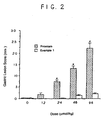
- the stomachs were dissected along the greater curvature, washed with a directed stream of 0.9% saline and pinned open on a sylgard based petridish for examination of the hemorrhagic lesion. Gastric lesion score was expressed in mm and calculated by summing the length of each lesion.
- Table 1 shows the relative activities of compounds in the analgesic, antiinflammatory and gastric lesion tests, and are expressed, for each novel NSAID compound, as described according to the general formulas (I), (II), (III) and (IV), or NSAID coadministered with an NO-adduct, as the ratio of activity relative to the parent NSAID.
- Table 2 shows the results of single dose treatment studies in which various NO-adducts were administered in combination with various NSAIDs. The combinations are able to protect against the NSAID induced gastric toxicity.
- Table 2 Molar Dose Ratio Gastric Lesion NSAID (mg/kg) NO-Adduct NSAID : NO-Adduct Protection Piroxicam 16
- Example 2 1 1 +++ Piroxicam 8
- Example 2 1 1 +++ Piroxicam 8
- Isoamyl nitrite 1 : 3 +++ Piroxicam 8 Isosorbide dinitrate 1 : 3 +++ Piroxicam 8
- Example 2 1 1 ++ Tenidap 16
- Example 2 1 1 ++ Indomethaacin 20
- Table 3 shows the results of multiple dose treatment studies in which various NO-adducts were administered in combination with various NSAIDs. The combinations are able to protect against the NSAID induced gastric toxicity.
- Table 4 shows the results of multiple dose treatment studies in which various novel NSAID compounds directly or indirectly linked to various NO-adducts were administered.
- the modified NSAIDs containing NO-adducts produced significantly less gastric toxicity.
Landscapes
- Chemical & Material Sciences (AREA)
- Organic Chemistry (AREA)
- Health & Medical Sciences (AREA)
- General Health & Medical Sciences (AREA)
- Medicinal Chemistry (AREA)
- Life Sciences & Earth Sciences (AREA)
- Pharmacology & Pharmacy (AREA)
- Animal Behavior & Ethology (AREA)
- Public Health (AREA)
- Veterinary Medicine (AREA)
- Chemical Kinetics & Catalysis (AREA)
- General Chemical & Material Sciences (AREA)
- Nuclear Medicine, Radiotherapy & Molecular Imaging (AREA)
- Bioinformatics & Cheminformatics (AREA)
- Engineering & Computer Science (AREA)
- Epidemiology (AREA)
- Molecular Biology (AREA)
- Biophysics (AREA)
- Proteomics, Peptides & Aminoacids (AREA)
- Neurology (AREA)
- Neurosurgery (AREA)
- Biomedical Technology (AREA)
- Genetics & Genomics (AREA)
- Rheumatology (AREA)
- Biochemistry (AREA)
- Heart & Thoracic Surgery (AREA)
- Pain & Pain Management (AREA)
- Psychiatry (AREA)
- Hospice & Palliative Care (AREA)
- Immunology (AREA)
- Orthopedic Medicine & Surgery (AREA)
- Physical Education & Sports Medicine (AREA)
- Cardiology (AREA)
- Pharmaceuticals Containing Other Organic And Inorganic Compounds (AREA)
- Acyclic And Carbocyclic Compounds In Medicinal Compositions (AREA)
- Medicines That Contain Protein Lipid Enzymes And Other Medicines (AREA)
- Plural Heterocyclic Compounds (AREA)
- Indole Compounds (AREA)
Claims (16)
- Nicht-steroider entzündungshemmender Arzneistoff, umfassend mindestens eine NO-Gruppe, oder ein pharmazeutisch verträgliches Salz davon, wobei die mindestens eine NO-Gruppe an den nicht-steroiden entzündungshemmenden Arzneistoff über ein Sauerstoff-Atom, ein Schwefel-Atom oder ein Stickstoff-Atom gebunden ist.
- Nicht-steroider entzündungshemmender Arzneistoff nach Anspruch 1 oder ein pharmazeutisch verträgliches Salz davon, wobei der nicht-steroide entzündungshemmende Arzneistoff eine Verbindung der Formel (I), Formel (II), Formel (III) oder Formel (IV) ist,
worin die Verbindung der Formel (I):
worin Ra eine Nieder-Alkyl-Gruppe, eine Cycloalkyl-Gruppe, eine Aryl-Gruppe oder eine Heteroaryl-Gruppe darstellt;
D bedeutet(i) eine kovalente Bindung;(ii)
-C(Ral)-O-C(O)-Y-(C(Rb)(Rc))p-T-,
worin Ral eine Nieder-Alkyl-Gruppe, eine Cycloalkyl-Gruppe, eine Aryl-Gruppe oder eine Heteroaryl-Gruppe darstellt; Y Sauerstoff, Schwefel oder NRi darstellt, worin Ri ein Wasserstoff-Atom oder eine Nieder-Alkyl-Gruppe darstellt; Rb und Rc unabhängig ein Wasserstoff-Atom, eine Nieder-Alkyl-Gruppe, eine Cycloalkyl-Gruppe, eine Aryl-Gruppe, eine Heteroaryl-Gruppe, eine Arylalkyl-Gruppe, eine Alkylamino-Gruppe oder eine Dialkylamino-Gruppe darstellen; oder Rb und Rc zusammen genommen mit den Kohlenstoff-Atomen, an die sie gebunden sind, eine Cycloalkyl-Gruppe oder eine überbrückte Cycloalkyl-Gruppe darstellen; p eine ganze Zahl von 1 bis 6 ist und T eine kovalente Bindung, Sauerstoff, Schwefel oder Stickstoff darstellt oder(iii)Z eine Aryl-Gruppe oder eine Heteroaryl-Gruppe darstellt; und
-(CO)-T1-(C(Rb)(Rc))p-T2-,
worin T1 und T2 jeweils unabhängig eine kovalente Bindung, Sauerstoff, Schwefel oder Stickstoff darstellen; Rb und Rc unabhängig ein Wasserstoff-Atom, eine Nieder-Alkyl-Gruppe, eine Cycloalkyl-Gruppe, eine Aryl-Gruppe, eine Heteroaryl-Gruppe, eine Arylalkyl-Gruppe, eine Alkylamino-Gruppe oder eine Dialkylamino-Gruppe darstellen; oder Rb und Rc zusammen genommen mit den Kohlenstoff-Atomen, an die sie gebunden sind, eine Cycloalkyl-Gruppe oder eine überbrückte Cycloalkyl-Gruppe darstellen; p eine ganze Zahl von 1 bis 6 ist;
A1, A2 und A3 die anderen Untereinheiten von einem 5- oder 6-gliedrigen monocyclischen aromatischen Ring umfassen und jeder von A1, A2 und A3 unabhängig ist:(1) C-R1, worin R1 bei jedem Auftreten unabhängig ein Wasserstoff-Atom, eine Nieder-Alkyl-Gruppe, eine Nieder-Halogenalkyl-Gruppe, eine Alkoxyalkyl-Gruppe, ein Halogen-Atom oder eine Nitro-Gruppe darstellt;(2) N-Rd, worin Rd bei jedem Auftreten unabhängig eine kovalente Bindung an ein benachbartes Ring-Atom, um den Ring aromatisch zu machen, ein Wasserstoff-Atom, eine Nieder-Alkyl-Gruppe, eine Cycloalkyl-Gruppe, eine Arylalkyl-Gruppe, eine Aryl-Gruppe oder eine Heteroaryl-Gruppe darstellt;(3) ein Schwefel-Atom;(4) ein Sauerstoff-Atom; oder(5) Ba=Bb, worin Ba und Bb jeweils unabhängig ein Stickstoff-Atom oder C-R1 darstellen, worin R1 bei jedem Auftreten unabhängig ein Wasserstoff-Atom, eine Nieder-Alkyl-Gruppe, eine Nieder-Halogenalkyl-Gruppe, eine Alkoxyalkyl-Gruppe, ein Halogen-Atom oder eine Nitro-Gruppe darstellt;worin Nieder-Alkyl sich auf verzweigte oder gerad-kettige Alkyl-Gruppen, umfassend ein bis zehn Kohlenstoff-Atome, bezieht;
wobei Nieder-Halogenalkyl sich auf einen wie vorstehend definierten Nieder-Alkyl-Rest, der mindestens einen Halogen-Substituenten trägt, bezieht;
worin die Verbindung der Formel (II):
worin
Rb, Rc, D, Z, A1, A2 und A3 wie vorstehend definiert sind;
worin die Verbindung der Formel (III):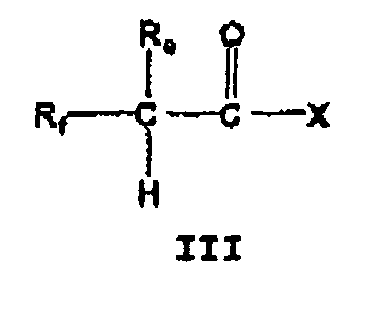
worin
Ra ein Wasserstoff-Atom oder eine Nieder-Alkyl-Gruppe darstellt;
wobei Nieder-Alkyl sich auf verzweigte oder gerad-kettige Alkyl-Gruppen, umfassend ein bis zehn Kohlenstoff-Atome, bezieht;
Rf bedeutet: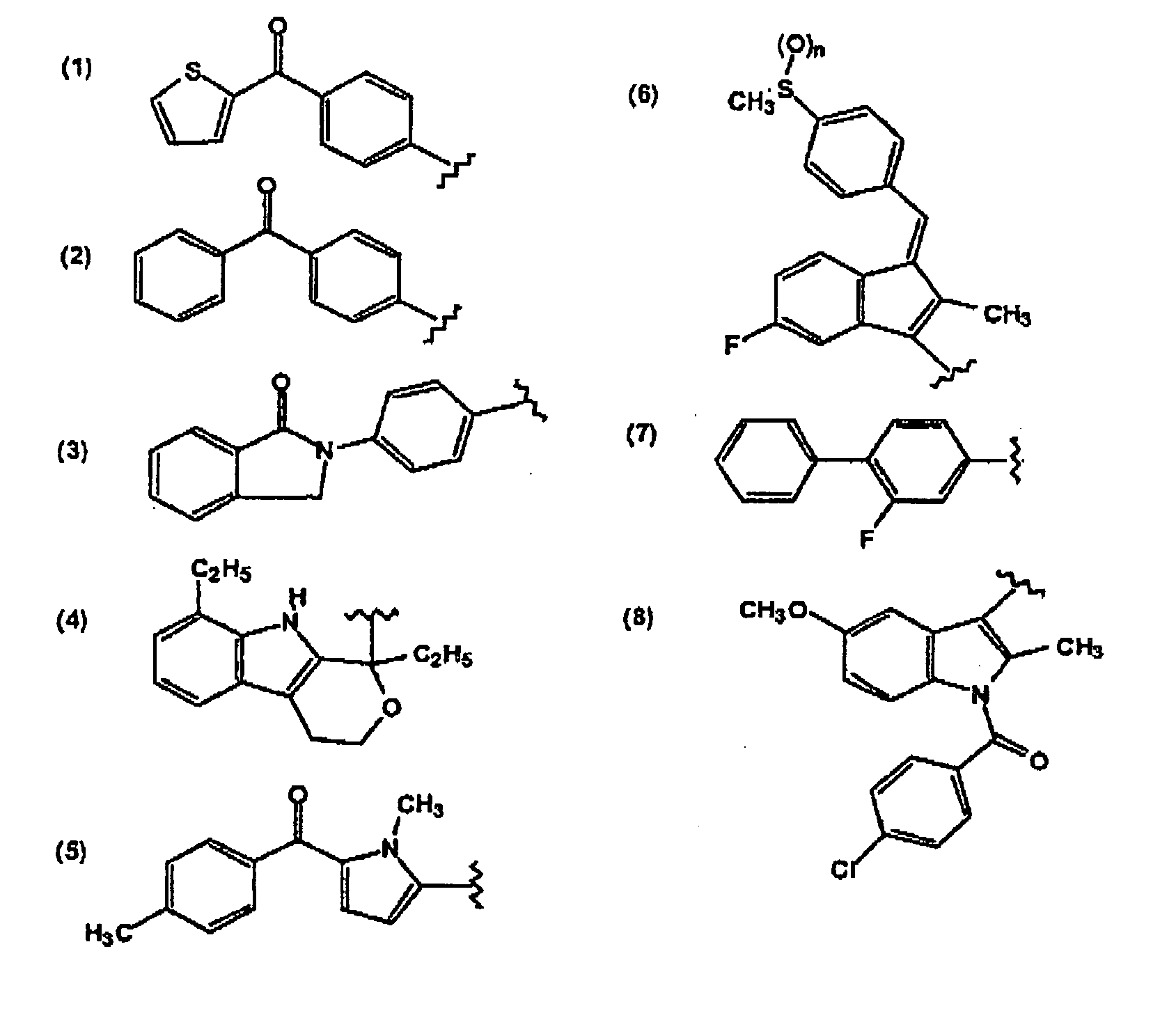

X bedeutet(1) -Y-(C(Rb)(Rc))p1-G-(C(Rb)(Rc))p2-T-NO, worin G (i) eine kovalente Bindung; (ii) -T-C(O)-; (iii) -C(O)-T; (iv) -C(Y-C(O)-Rm)-, worin Rm eine Heteroaryl-Gruppe oder einen heterocyclischen Ring darstellt; p1 und p2 jeweils unabhängig p und Y darstellen, darstellt, Rb, Rc, p und T wie vorstehend definiert sind;(2) (3) -Y1-(C(Rb)(Rc))s-Z-(C(O)-Y2-(C(Rb)(Rc)]p1-T-NO)p2, worin Y1 und Y2 jeweils unabhängig Y darstellen, s eine ganze Zahl von 0 bis 3 ist, und Rb, Rc, Z und T wie vorstehend definiert sind; und
worin die Verbindung der Formel (IV):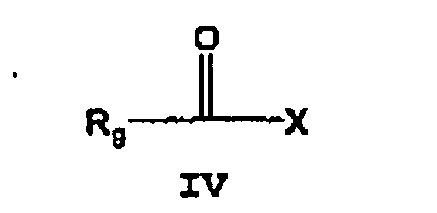
worin
Rg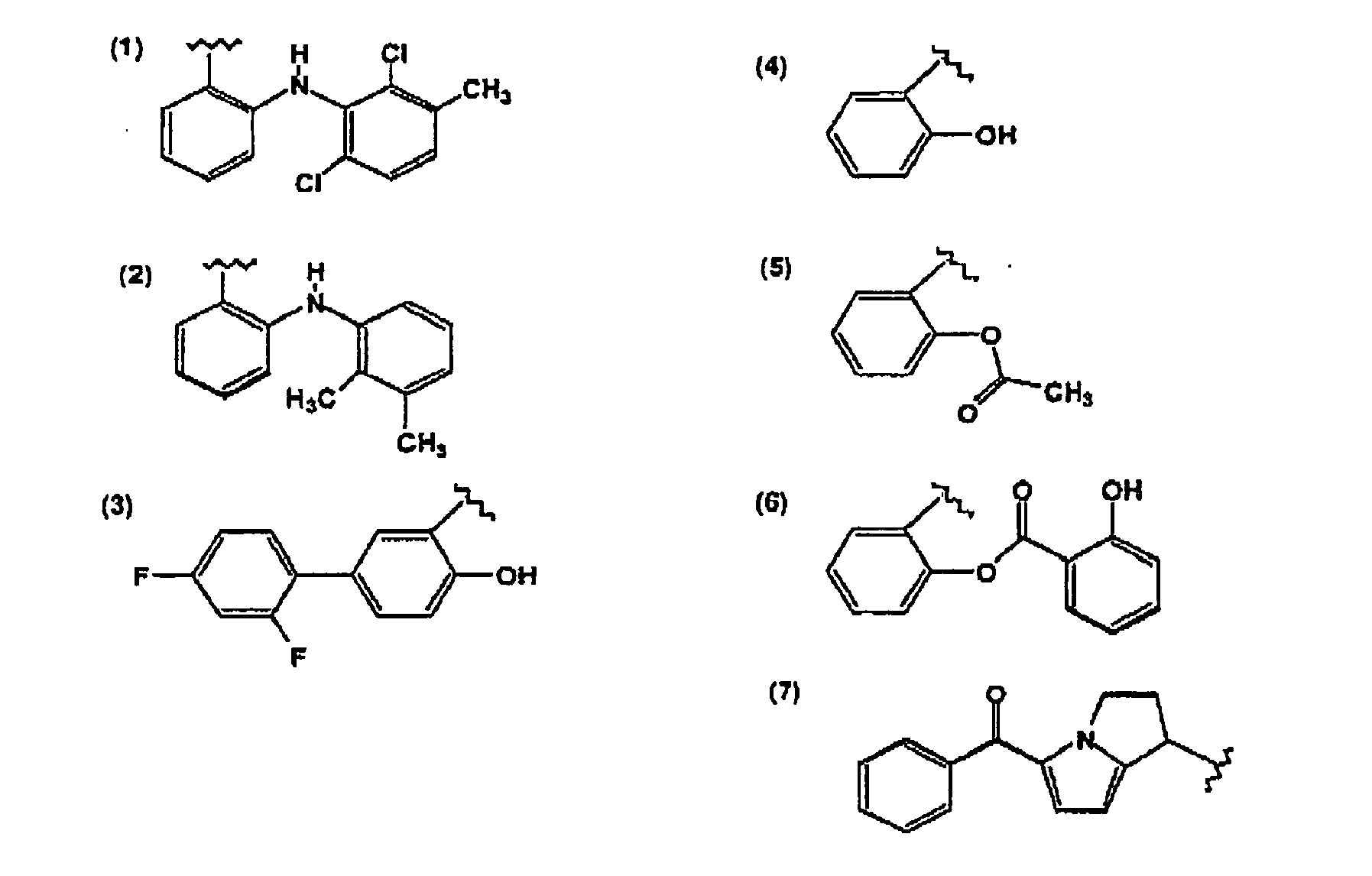
wobei Nieder-Alkyl sich auf verzweigte oder gerad-kettige Alkyl-Gruppen, umfassend ein bis zehn Kohlenstoff-Atome, bezieht;
und X wie hierin definiert ist. - Zusammensetzung, umfassend den nicht-steroiden entzündungshemmenden Arzneistoff nach Anspruch 1 und einen pharmazeutisch verträglichen Träger.
- Zusammensetzung, umfassend den nicht-steroiden entzündungshemmenden Arzneistoff nach Anspruch 2 und einen pharmazeutisch verträglichen Träger.
- Zusammensetzung nach Anspruch 3, worin der nicht-steroide entzündungshemmende Arzneistoff ein Salicylsäure-Derivat, ein Pyrazolon-Derivat, ein para-Aminophenol-Derivat, ein Indol-Derivat, ein Fentamat, ein Tolmetin, ein Propionsäure-Derivat, ein Oxicam-Derivat, ein Phenylessigsäure-Derivat, einen Cytokin-Inhibitor, einen Cyclooxygenase-Inhibitor, einen selektiven Cyclooxygenase-1-Inhibitor oder einen selektiven Cyclooxygenase-2-Inhibitor darstellt.
- Zusammensetzung nach Anspruch 5, worin das Salicylsäure-Derivat Acetylsalicylsäure, Diflunisal, Salsalat, Natriumsalicylat, Salicylamid, Natriumthiosalicylat, Cholinsalicylat, Magnesiumsalicylat, Mesalamin, Sulfasalazin oder Methylsalicylat darstellt; das Pyrazolon-Derivat Phenylbutazon, Oxyphenbutazon, Antipyrin, Aminopyrin, Dipyron und Apazon darstellt; das para-Aminophenol-Derivat Phenacetin oder Acetaminophen darstellt; das Indol-Derivat Indomethacin oder Sulindac darstellt; das Fenamat Mefenamin-, Meclofenamin-, Flufenamin-, Tolfenamin- oder Etofenaminsäure und pharmazeutisch verträgliche Salze davon darstellt; das Propionsäure-Derivat Ibuprofen, Naproxen, Flurbiprofen, Fenoprofen, Ketoprofen, Fenbufen, Miroprofen, Corprofen, Pirprofen, Oxaprozin, Indoprofen oder Tiaprofensäure und pharmazeutisch verträgliche Salze davon darstellt; das Oxicam-Derivat Piroxicam, Isoxicam, Amperoxicam, Tenoxicam oder die verwandte Verbindung Tenidap darstellt; das Phenylessigsäure-Derivat Tolmetin oder Diclofenac und pharmazeutisch verträgliche Salze davon darstellt; der Cyclooxygenase-Inhibitor Etodolac oder Nabumeton darstellt; der selektive Cyclooxygenase-2-Inhibitor CGP 28238 (6-(2,4-Difluorphenoxy)-5-methyl-sulfonylamino-1-indanon), SC-58125 (1-((4-Methylsulfonyl)-phenyl)-3-trifluormethyl-5-(4-fluorphenyl)-pyrazol), NS-398 (N-(2-(Cyclohexyloxy)-4-nitro-phenyl)-methansulfonamid), DuP 697 (5-Brom-2-(fluorphenyl)-3-(4-methylsulfonylphenyl)-thiophen), L-745,337 (5-Methansulfonamida-6-(2,4-difluorthiophenyl)-1-indanon), ein 1,2-substituiertes Diarylcyclopenten-Analoges, oder ein Chinazolinon darstellt.
- Nicht-steroider entzündungshemmender Arzneistoff nach Anspruch 2, worin die Verbindung der Formel I ein Nitroso-substituiertes Piroxicam, ein Nitroso-suhstituiertes Isoxicam, ein Nitroso-substituiertes Amperoxicam, oder ein Nitroso-substituiertes Tenoxicam darstellt; die Verbindung der Formel II ein Nitroso-substituiertes Tenidap darstellt; die Verbindung der Formel III ein Nitroso-substituiertes Diclofenac, ein Nitroso-substituiertes Tolmetin, ein Nitroso-substituiertes Naproxen, ein Nitroso-substituiertes Ketoprofen, ein Nitroso-substituiertes Indomethacin, ein Nitroso-substituiertes Ibuprofen, ein Nitroso-substituiertes Suprofen, ein Nitroso-substituiertes Etodolac, ein Nitroso-substituiertes Sulindac, ein Nitroso-substituiertes Flurbiprofen, ein Nitroso-substituiertes Carprofen, ein Nitroso-substituiertes Tiaprofenac, ein Nitroso-substituiertes Fenoprofen, ein Nitroso-substituiertes Oxaprozin oder ein Nitroso-substituiertes Fenbufen darstellt; die Verbindung der Formel IV eine Nitroso-substituierte Salicylsäure oder ein Nitroso-substituiertes Fenamat darstellt, wobei die Nitroso-substituierte Salicylsäure eine Nitroso-substituierte Acetylsalicylsäure, ein Nitroso-substituiertes Diflunisal, ein Nitroso-substituiertes Salsalat, ein Nitroso-substituiertes Natriumsalicylat, ein Nitroso-substituiertes Salicylamid, ein Nitroso-substituiertes Natriumthiosalicylat, ein Nitroso-substituiertes Cholinsalicylat, ein Nitroso-substituiertes Magnesiumsalicylat, ein Nitroso-substituiertes Mesalamin, Sulfasalazin oder ein Nitroso-substituiertes Methylsalicylat darstellt und das Nitroso-substituierte Fenamat eine Nitroso-substituierte Mefenamin-, eine Nitroso-substituierte Meclofenamin-, eine Nitroso-substituierte Flufenamin-, eine Nitroso-substituierte Tolfenamin- oder eine Nitroso-substituierte Etofenaminsäure darstellt.
- Verwendung einer therapeutisch wirksamen Menge von einem nicht-steroiden entzündungshemmenden Arzneistoff nach Anspruch 1, 2 oder 7 zur Herstellung eines Medikaments zum Behandeln von Entzündung, Schmerz, Gastrointestinal-Läsionen oder Fieber bei einem Lebewesen bei Bedarf dafür.
- Verwendung einer therapeutisch wirksamen Menge der Zusammensetzung nach einem der Ansprüche 3 bis 6 zur Herstellung eines Medikaments zum Behandeln von Entzündung, Schmerz, Gastrointestinal-Läsionen oder Fieber bei einem Lebewesen bei Bedarf dafür.
- Verwendung einer therapeutisch wirksamen Menge der Zusammensetzung nach einem der Ansprüche 3 bis 6 zur Herstellung eines Medikaments zum Vermindern der Gastrointestinal-Toxizität oder Nieren-Toxizität von einem nicht-steroiden entzündungshemmenden Arzneistoff, der an ein Lebewesen verabreicht wird.
- Verwendung einer therapeutisch wirksamen Menge der Zusammensetzung nach einem der Ansprüche 3 bis 6 zur Herstellung eines Medikaments zur Beschleunigung der Gastrointestinal-Gewebe-Reparatur bei einem Lebewesen bei Bedarf dafür.
- Verwendung einer therapeutisch wirksamen Menge der Zusammensetzung nach einem der Ansprüche 3 bis 6 zur Herstellung einer pharmazeutischen Zusammensetzung zum Behandeln von entzündlicher Darmkrankheit bei einem Lebewesen bei Bedarf dafür.
- Verwendung einer therapeutisch wirksamen Menge der Zusammensetzung nach einem der Ansprüche 3 bis 6 zur Herstellung einer pharmazeutischen Zusammensetzung zum Behandeln von einem entzündlichen Krankheitszustand oder einer entzilndlichen Störung bei einem Lebewesen, wobei der entzündliche Krankheitszustand oder die entzündliche Störung eine Reperfusions-Schädigung an einem ischämischen Organ, einen Herzinfarkt, entzündliche Darmkrankheit, rheumatische Arthritis, Osteoarthritis, Hypertension, Psoriasis, eine Organ-Transplantat-Abstoßung, Organ-Konservierung, Impotenz, eine Strahlungs-induzierte Schädigung, Asthma, Arteriosklerose, Thrombose, Thrombozyten-Aggregation, Metastasis, Influenza, einen Schlaganfall, eine Verbrennung, ein Trauma, akute Pancreatitis, Pyelonephritis, Hepatitis, eine Autoimmun-Krankheit, Insulin-abhängigen Diabetes Mellitus, disseminierte intravasculäre Gerinnung, eine Fettembolie, Alzheimer-Krankheit, eine respiratorische Krankheit bei Erwachsenen, eine respiratorische Krankheit bei Kindern, Carcinogenese, oder eine Hämorrhagie bei einem Neugeborenen darstellt.
- Verwendung nach Anspruch 13, wobei der entzündliche Krankheitszustand oder die entzündliche Störung eine entzündliche Darmkrankheit darstellt.
- Kit, umfassend:(a) einen Arzneistoff nach Anspruch 1, 2 oder 7; und(b) Anweisungen zur Verwendung des Arzneistoffs von (a) zum:(i) Behandeln von Entzündung, Schmerz oder Gastrointestinal-Läsionen oder Fieber bei einem Lebewesen bei Bedarf dafür;(ii) Vermindern der Gastrointestinal-Toxizität oder Nieren-Toxizität von einem nicht-steroiden entzündungshemmenden Arzneistoff, der an ein Lebewesen verabreicht wird;(iii) Beschleunigen der Gastrointestinal-Gewebs-Reparatur bei einem Lebewesen bei Bedarf dafür; und(iv) zum Behandeln von einem entzündlichen Krankheitszustand oder einer entzündlichen Störung bei einem Lebewesen, wobei der entzündliche Krankheitszustand oder die entzündliche Störung eine Reperfusions-Schädigung an einem ischämischen Organ, einen Herzinfarkt, entzündliche Darmkrankheit, rheumatische Arthritis, Osteoarthritis, Hypertension, Psoriasis, eine Organ-Transplantat-Abstoßung, Organ-Konservierung, Impotenz, eine Strahlungs-induzierte Schädigung, Asthma, Arteriosklerose, Thrombose, Thrombozyten-Aggregation, Metastasis, Influenza, einen Schlaganfall, eine Verbrennung, ein Trauma, akute Pancreatitis, Pyelonephritis, Hepatitis, eine Autoimmun-Krankheit, Insulin-abhängigen Diabetes Mellitus, disseminierte intravasculäre Gerinnung, eine Fettembolie, Alzheimer-Krankheit, eine respiratorische Krankheit bei Erwachsenen, eine respiratorische Krankheit bei Kindern, Carcinogenese, oder eine Hämorrhagie bei einem Neugeborenen darstellt.
- Kit, umfassend:(a) eine Zusammensetzung nach einem der Ansprüche 3 bis 6; und(b) Anweisungen zur Verwendung des Arzneistoffs von (a) zum:(i) Behandeln von Entzündung, Schmerz oder Gastrointestinal-Läsionen oder Fieber bei einem Lebewesen bei Bedarf dafür;(ii) Vermindern der Gastrointestinal-Toxizität oder Nieren-Toxizität von einem nicht-steroiden entzündungshemmenden Arzneistoff, der an ein Lebewesen verabreicht wird;(iii) Beschleunigen der Gastrointestinal-Gewebs-Reparatur bei einem Lebewesen bei Bedarf dafür; und(iv) zum Behandeln von einem entzündlichen Krankheitszustand oder einer entzündlichen Störung bei einem Lebewesen, worin der entzündliche Krankheitszustand oder die entzündliche Störung eine Reperfusions-Schädigung an einem ischämischen Organ, einen Herzinfarkt, entzündliche Darmkrankheit, rheumatische Arthritis, Osteoarthritis, Hypertension, Psoriasis, eine Organ-Transplantat-Abstoßung, Organ-Konservierung, Impotenz, eine Strahlungs-induzierte Schädigung, Asthma, Arteriosklerose, Thrombose, Thrombozyten-Aggregation, Metastasis, Influenza, einen Schlaganfall, eine Verbrennung, ein Trauma, akute Pancreatitis, Pyelonephritis, Hepatitis, eine Autoimmun-Krankheit, Insulin-abhängigen Diabetes Mellitus, disseminierte intravasculaire Gerinnung, eine Fettembolie, Alzheimer-Krankheit, eine respiratorische Krankheit bei Erwachsenen, eine respiratorische Krankheit bei Kindern, Carcinogenese, oder eine Hämorrhagie bei einem Neugeborenen darstellt.
Applications Claiming Priority (5)
| Application Number | Priority Date | Filing Date | Title |
|---|---|---|---|
| US425090 | 1995-04-19 | ||
| US08/425,090 US6051588A (en) | 1995-04-19 | 1995-04-19 | Nitroso esters of β-oxo-amides and aryl propionic acid derivatives of non-steroidal antiinflammatory drugs |
| US543208 | 1995-10-13 | ||
| US08/543,208 US5703073A (en) | 1995-04-19 | 1995-10-13 | Compositions and methods to prevent toxicity induced by nonsteroidal antiinflammatory drugs |
| PCT/US1996/004931 WO1996032946A1 (en) | 1995-04-19 | 1996-04-11 | Compositions and methods to prevent toxicity induced by nonsteroidal antiinflammatory drugs |
Publications (3)
| Publication Number | Publication Date |
|---|---|
| EP0821589A1 EP0821589A1 (de) | 1998-02-04 |
| EP0821589A4 EP0821589A4 (de) | 2002-05-15 |
| EP0821589B1 true EP0821589B1 (de) | 2009-02-04 |
Family
ID=27026571
Family Applications (1)
| Application Number | Title | Priority Date | Filing Date |
|---|---|---|---|
| EP96911685A Expired - Lifetime EP0821589B1 (de) | 1995-04-19 | 1996-04-11 | Mittel und verfahren zur verhinderung der durch nichtsteroidale antiinflammatorische arzneistoffe verursachten toxizität |
Country Status (6)
| Country | Link |
|---|---|
| US (11) | US5703073A (de) |
| EP (1) | EP0821589B1 (de) |
| JP (2) | JPH11509519A (de) |
| AU (1) | AU710951B2 (de) |
| CA (1) | CA2218555C (de) |
| WO (1) | WO1996032946A1 (de) |
Families Citing this family (119)
| Publication number | Priority date | Publication date | Assignee | Title |
|---|---|---|---|---|
| US5891459A (en) * | 1993-06-11 | 1999-04-06 | The Board Of Trustees Of The Leland Stanford Junior University | Enhancement of vascular function by modulation of endogenous nitric oxide production or activity |
| US5703073A (en) * | 1995-04-19 | 1997-12-30 | Nitromed, Inc. | Compositions and methods to prevent toxicity induced by nonsteroidal antiinflammatory drugs |
| US6043232A (en) * | 1997-07-23 | 2000-03-28 | Nitromed, Inc. | Nitroso esters of beta-oxo-amides and aryl propionic acid derivatives of non-steroidal antiinflammatory drugs |
| AU737584B2 (en) * | 1995-04-19 | 2001-08-23 | Nicox S.A. | Compositions and methods to prevent toxicity induced by nonsteroidal antiinflammatory drugs |
| IT1282686B1 (it) | 1996-02-26 | 1998-03-31 | Nicox Sa | Composti in grado di ridurre la tossicita' da farmaci |
| US5824669A (en) * | 1996-03-22 | 1998-10-20 | Nitromed, Inc. | Nitrosated and nitrosylated compounds and compositions and their use for treating respiratory disorders |
| IT1288123B1 (it) * | 1996-09-04 | 1998-09-10 | Nicox Sa | Uso di nitroderivati per l'incontinenza urinaria |
| US6331543B1 (en) * | 1996-11-01 | 2001-12-18 | Nitromed, Inc. | Nitrosated and nitrosylated phosphodiesterase inhibitors, compositions and methods of use |
| JP2001513497A (ja) * | 1997-08-08 | 2001-09-04 | メドサン、リセルカ エス.アール.エル. | 胃分泌過多および腎損傷の予防作用を有する抗炎症剤の製造のための化合物2−メトキシフェニル−1−メチル−5p−メチルベンゾイル−ピロール−2−アセトアミドアセテートの使用 |
| US6656452B1 (en) | 1997-10-21 | 2003-12-02 | The General Hospital Corporation | Use of inhaled NO as anti-inflammatory agent |
| US6136327A (en) * | 1997-12-01 | 2000-10-24 | Alza Corporation | Stereospecific delivery of a drug using electrotransport |
| GB9801398D0 (en) | 1998-01-22 | 1998-03-18 | Anggard Erik E | Chemical compounds |
| US6121249A (en) * | 1998-07-01 | 2000-09-19 | Donald L. Weissman | Treatment and prevention of cardiovascular diseases with help of aspirin, antioxidants, niacin, and certain B vitamins |
| EP0984012A3 (de) * | 1998-08-31 | 2001-01-10 | Pfizer Products Inc. | Stickstoffmonoxid freisetzende Oxindol-Prodrugs mit analgetischen und entzündungshemmenden Eigenschaften |
| EP1126838A4 (de) | 1998-10-30 | 2005-02-16 | Nitromed Inc | Nitrosierte und nitrosylierte nichtsteroidale antiphlogistishe verbindungen, zusammenstellungen und verwendungsmethoden |
| AU772188B2 (en) * | 1998-11-17 | 2004-04-08 | Nitromed, Inc. | Nitrosated and nitrosylated H2 receptor antagonist compounds, compositions and methods of use |
| US6852739B1 (en) | 1999-02-26 | 2005-02-08 | Nitromed Inc. | Methods using proton pump inhibitors and nitric oxide donors |
| JP2002537336A (ja) * | 1999-02-26 | 2002-11-05 | ニトロメド インコーポレーテッド | ニトロソ化およびニトロシル化されたプロトンポンプ阻害剤、組成物および使用方法 |
| JP2003501393A (ja) * | 1999-06-05 | 2003-01-14 | ザ・ボード・オブ・トラスティーズ・オブ・ザ・レランド・スタンフォード・ジュニア・ユニバーシティ | 心臓血管細胞増殖を阻害するための方法および組成物 |
| IT1313596B1 (it) * | 1999-08-04 | 2002-09-09 | Nicox Sa | Processo per la preparazione di nitrossialchil esteri del naproxene |
| US6552078B2 (en) | 1999-10-27 | 2003-04-22 | Nobex Corp | 6-methoxy-2-naphthylacetic acid prodrugs |
| US6436990B1 (en) | 1999-10-27 | 2002-08-20 | Nobex Corporation | 6-methoxy-2-naphthylacetic acid prodrugs |
| TWI262791B (en) | 1999-10-27 | 2006-10-01 | Nobex Corp | 6-methoxy-2-naphthylacetic acid prodrugs |
| US7105172B1 (en) * | 1999-11-18 | 2006-09-12 | Bolla John D | Treatment of rosacea |
| CA2393724A1 (en) * | 1999-12-23 | 2001-06-28 | Nitromed, Inc. | Nitrosated and nitrosylated cyclooxygenase-2 inhibitors, compositions and methods of use |
| WO2001051046A1 (en) * | 2000-01-14 | 2001-07-19 | University Of Virginia Patent Foundation | Airway alkalinization as therapy for airway diseases |
| AU5702201A (en) * | 2000-04-13 | 2001-10-30 | Mayo Foundation | Abeta<sub>42</sub> lowering agents |
| US6355666B1 (en) | 2000-06-23 | 2002-03-12 | Medinox, Inc. | Protected forms of pharmacologically active agents and uses therefor |
| US6429223B1 (en) * | 2000-06-23 | 2002-08-06 | Medinox, Inc. | Modified forms of pharmacologically active agents and uses therefor |
| US8519005B2 (en) | 2000-07-27 | 2013-08-27 | Thomas N. Thomas | Compositions and methods to prevent toxicity of antiinflammatory agents and enhance their efficacy |
| US6417347B1 (en) * | 2000-08-24 | 2002-07-09 | Scimed Life Systems, Inc. | High yield S-nitrosylation process |
| WO2002018324A2 (en) | 2000-08-29 | 2002-03-07 | Nobex Corporation | Immunoregulatory compounds, derivatives thereof and their use |
| JP4092203B2 (ja) * | 2000-12-21 | 2008-05-28 | ニトロメッド,インク. | 新規のシクロオキシゲナーゼ2選択的阻害剤としての置換アリール化合物、組成物、および使用方法 |
| EP1219306A1 (de) | 2000-12-29 | 2002-07-03 | Nicox S.A. | Zyklodextrin und NO-abgebende Arzneimittlen enthaltende Zusammensetzungen |
| CA2446064A1 (en) | 2001-05-02 | 2002-11-07 | Nitromed, Inc. | Nitrosated and nitrosylated nebivolol and its metabolites, compositions and methods of use |
| KR20040014544A (ko) * | 2001-06-05 | 2004-02-14 | 컨트롤 딜리버리 시스템즈 인코포레이티드 | 서방 진통제 화합물 |
| ITMI20011744A1 (it) * | 2001-08-09 | 2003-02-09 | Nicox Sa | Farmaci per le vasculopatie |
| US8048924B2 (en) | 2001-08-29 | 2011-11-01 | Biocon Limited | Methods and compositions employing 4-aminophenylacetic acid compounds |
| US20030162824A1 (en) * | 2001-11-12 | 2003-08-28 | Krul Elaine S. | Methods of treating or preventing a cardiovascular condition using a cyclooxygenase-1 inhibitor |
| US20040110691A1 (en) * | 2001-11-13 | 2004-06-10 | Stamler Jonathan S. | Thiol reactive agents as a therapeutic modality |
| US6627602B2 (en) * | 2001-11-13 | 2003-09-30 | Duke University | Preventing desensitization of receptors |
| EP1448231A1 (de) * | 2001-11-19 | 2004-08-25 | Control Delivery Systems, Inc. | Topische verabreichung von kombinierten wirkstoffen |
| WO2003045896A1 (en) * | 2001-11-27 | 2003-06-05 | Astrazeneca Ab | New process |
| ES2189682B1 (es) * | 2001-12-11 | 2004-04-01 | Laboratorios Del Dr. Esteve, S.A. | Preparacion bebible que comprende ketoprofeno y su empleo en el tratamiento de procesos que cursan con fiebre, inflamacion y/o dolor, en un colectivo de animales, de forma simultanea. |
| JP2005537223A (ja) * | 2002-04-05 | 2005-12-08 | ニトロメッド,インク. | 酸化窒素供与体、組成物および使用法 |
| DE60302454T2 (de) | 2002-04-19 | 2006-08-17 | Yissum Research Development Company Of The Hebrew University Of Jerusalem | Beta-agonisten-verbindungen mit stickoxid-donatoren-gruppen und reaktionsfähige sauerstoffspezies-fängergruppen und ihre verwendung bei der behandlung von atemwegsstörungen |
| AU2003229016A1 (en) * | 2002-05-10 | 2003-11-11 | The Trustees Of Columbia University In The City Of New York | Genetically engineered cell lines and systems for propagatingvaricella zoster virus and methods of use thereof |
| WO2003103602A2 (en) * | 2002-06-11 | 2003-12-18 | Nitromed, Inc. | Nitrosated and/or nitrosylated cyclooxygenase-2 selective inhibitors, compositions and methods of use |
| US20040038947A1 (en) * | 2002-06-14 | 2004-02-26 | The Gov. Of The U.S. Of America As Represented By The Sec. Of The Dept. Of Health & Human Services | Method of treating ischemia/reperfusion injury with nitroxyl donors |
| AU2003279622A1 (en) * | 2002-06-28 | 2004-01-19 | Nitromed, Inc. | Oxime and/or hydrazone containing nitrosated and/or nitrosylated cyclooxigenase-2 selective inhibitors, compositions and methods of use |
| CA2491127A1 (en) * | 2002-07-03 | 2004-01-15 | Nitromed, Inc. | Nitrosated nonsteroidal antiinflammatory compounds, compositions and methods of use |
| AU2003261281A1 (en) * | 2002-07-29 | 2004-02-16 | Nicox S.A. | Cyclooxygenase- 2 selective inhibitors, compositions and methods of use |
| WO2004012659A2 (en) * | 2002-08-01 | 2004-02-12 | Nitromed, Inc. | Nitrosated proton pump inhibitors, compositions and methods of use |
| US6936639B2 (en) | 2002-08-21 | 2005-08-30 | The United States Of America As Represented By The Secretary Of The Department Of Health And Human Services | Nitroxyl progenitors in the treatment of heart failure |
| DE10248601B4 (de) * | 2002-10-17 | 2006-05-24 | Goldstein, Naum, Dr.habil.nat. | Pharmazeutisches Mittel zur endonasalen Applikation bei der Behandlung von Krankheiten und Störungen des zentralen Nervensystems |
| WO2004071431A2 (en) * | 2003-02-05 | 2004-08-26 | Myriad Genetics, Inc. | Method and composition for treating neurodegenerative disorders |
| BRPI0407541A (pt) * | 2003-02-17 | 2006-02-14 | Altana Pharma Ag | combinações e uso de compostos farmaceuticamente ativos selecionados |
| US20060235056A1 (en) * | 2003-04-29 | 2006-10-19 | Olivier Bezencon | Novel 3,4-disubstituted 1,2,3,6-tetrahydropyridine derivatives |
| US20060235044A1 (en) * | 2003-04-30 | 2006-10-19 | Olivier Bezencon | Azabicyclononene derivatives |
| AU2004233575A1 (en) * | 2003-04-30 | 2004-11-11 | Actelion Pharmaceuticals Ltd | 9-azabicyclo'3.3.1!non-6-ee derivatives with a heteroatom at the 3-position as renin inhibitors |
| JP2006524657A (ja) * | 2003-04-30 | 2006-11-02 | アクテリオン ファマシューティカルズ リミテッド | 新規トロパン誘導体 |
| US20060223795A1 (en) * | 2003-05-02 | 2006-10-05 | Oliver Bezencon | Novel diazabicyclononene derivatives |
| US20050009789A1 (en) * | 2003-05-13 | 2005-01-13 | The Government Of The Usa As Represented By The Secretary Of The Dept. Of Health And Human Service | Cyclooxygenase inhibition with nitroxyl |
| KR20060040676A (ko) * | 2003-07-11 | 2006-05-10 | 미리어드 제네틱스, 인크. | 알츠하이머병을 치료하기 위한 약제학적 방법, 투약 방법및 제형 |
| JP2007502831A (ja) * | 2003-08-20 | 2007-02-15 | ニトロメッド インコーポレーティッド | ニトロソ化およびニトロシル化心血管化合物、組成物、ならびに使用方法 |
| CA2536975A1 (en) * | 2003-08-28 | 2005-03-17 | Nitromed, Inc. | Nitrosated and nitrosylated diuretic compounds, compositions and methods of use |
| US20050171207A1 (en) * | 2003-09-26 | 2005-08-04 | Myriad Genetics, Incorporated | Method and composition for combination treatment of neurodegenerative disorders |
| CN1863773A (zh) * | 2003-10-09 | 2006-11-15 | 埃科特莱茵药品有限公司 | 四氢吡啶衍生物 |
| EP1678176A1 (de) * | 2003-10-13 | 2006-07-12 | Actelion Pharmaceuticals Ltd. | Diazabicyclononenderivate und deren verwendung als renininhibitoren |
| CN1930170A (zh) * | 2003-10-23 | 2007-03-14 | 埃科特莱茵药品有限公司 | 二氮杂二环壬烯及四氢吡啶衍生物用作肾素抑制剂 |
| WO2005054243A1 (en) * | 2003-12-05 | 2005-06-16 | Actelion Pharmaceuticals Ltd | Diazabicyclononene derivatives and their use as renin inhibitors |
| US20070135406A1 (en) * | 2003-12-05 | 2007-06-14 | Olivier Bezencon | Diazabicyclononene and tetrahydropyridine derivatives with a new side-chain |
| CA2554716A1 (en) * | 2004-01-22 | 2005-08-04 | Nitromed, Inc. | Nitrosated and/or nitrosylated compounds, compositions and methods of use |
| AU2005218539A1 (en) * | 2004-03-01 | 2005-09-15 | Lumen Therapeutics, Llc | Compositions and methods for treating diseases |
| US20080253960A1 (en) * | 2004-04-01 | 2008-10-16 | The Trustees Of The University Of Pennsylvania Center For Technology Transfer | Lipoprotein-Based Nanoplatforms |
| AU2005241023A1 (en) * | 2004-04-29 | 2005-11-17 | Keystone Retaining Wall Systems, Inc. | Veneers for walls, retaining walls and the like |
| WO2005115075A2 (en) * | 2004-05-27 | 2005-12-08 | Antibe Therapeutics Inc. | Salt of 4- or 5- aminosalicylic acid |
| DK1773767T3 (en) | 2004-07-07 | 2016-03-21 | Biocon Ltd | Synthesis of azo bound in immune regulatory relations |
| WO2006020850A2 (en) * | 2004-08-11 | 2006-02-23 | Myriad Genetics, Inc. | Pharmaceutical composition and method for treating neurodegenerative disorders |
| WO2006020852A2 (en) * | 2004-08-11 | 2006-02-23 | Myriad Genetics, Inc. | Pharmaceutical composition and method for treating neurodegenerative disorders |
| WO2006020853A2 (en) * | 2004-08-11 | 2006-02-23 | Myriad Genetics, Inc. | Pharmaceutical composition and method for treating neurodegenerative disorders |
| EP1786814B1 (de) * | 2004-08-25 | 2010-03-31 | Actelion Pharmaceuticals Ltd. | Bicyclononen-derivate als renin-inhibitoren |
| US8067464B2 (en) | 2004-10-04 | 2011-11-29 | Nitromed, Inc. | Compositions and methods using apocynin compounds and nitric oxide donors |
| EP1814535A4 (de) * | 2004-11-08 | 2008-06-04 | Nitromed Inc | Nitrosierte und nitrosylierte verbindungen, zusammensetzungen und verfahren zur behandlung von augenkrankheiten |
| US20080306041A1 (en) * | 2005-01-21 | 2008-12-11 | Garvey David S | Cardiovascular Compounds Comprising Heterocyclic Nitric Oxide Donor Groups, Compositions and Methods of Use |
| EP1858525A2 (de) * | 2005-02-16 | 2007-11-28 | Nitromed, Inc. | Organische stickoxidspendersalze antimikrobieller verbindungen, zusammensetzungen und verwendungsverfahren |
| JP2008531697A (ja) * | 2005-02-28 | 2008-08-14 | ニトロメッド インコーポレーティッド | 酸化窒素増強基を含む心血管化合物、組成物および使用法 |
| CA2597444A1 (en) * | 2005-03-09 | 2006-09-21 | Nitromed, Inc. | Organic nitric oxide enhancing salts of angiotensin ii antagonists, compositions and methods of use |
| EP1865770A4 (de) * | 2005-04-07 | 2010-12-29 | Nitromed Inc | Beurteilung des genetischen risikos bei herzversagen: auswirkung der genetischen variation von nos3 |
| US7926484B2 (en) * | 2005-05-03 | 2011-04-19 | Aeon Research And Technology, Inc. | Interface accessory for use with an aerosol inhalation system |
| WO2006127591A2 (en) * | 2005-05-23 | 2006-11-30 | Nitromed, Inc. | Organic nitric oxide enhancing salts of nonsteroidal antiinflammatory compounds, compositions and methods of use |
| EP1893578A2 (de) * | 2005-05-27 | 2008-03-05 | Actelion Pharmaceuticals Ltd. | Neuartige piperidincarboxylsäureamid-derivate |
| EP1909779A1 (de) * | 2005-06-23 | 2008-04-16 | Johns Hopkins University | Thiol-empfindliche positiv-inotrope |
| KR20080039876A (ko) * | 2005-07-22 | 2008-05-07 | 미리어드 제네틱스, 인크. | 높은 약물 충진 제형 및 투여형 |
| WO2007016095A2 (en) * | 2005-07-27 | 2007-02-08 | Nitromed, Inc. | Cyclooxygenase-2 selective inhibitor compounds comprising nitric oxide enhancing groups, compositions and methods of use |
| WO2007016677A2 (en) | 2005-08-02 | 2007-02-08 | Nitromed, Inc. | Nitric oxide enhancing antimicrobial compounds, compositions and methods of use |
| WO2007041681A2 (en) * | 2005-10-04 | 2007-04-12 | Nitromed, Inc. | Methods for treating respiratory disorders |
| WO2007041680A2 (en) * | 2005-10-04 | 2007-04-12 | Nitromed, Inc. | The genetic risk assessment in heart failure: impact of genetic variation of beta 1 adrenergic receptor gly389arg polymorphism |
| US7838023B2 (en) * | 2005-11-16 | 2010-11-23 | Nitromed, Inc. | Furoxan compounds, compositions and methods of use |
| WO2007075541A2 (en) * | 2005-12-20 | 2007-07-05 | Nitromed, Inc. | Nitric oxide enhancing glutamic acid compounds, compositions and methods of use |
| WO2007075542A2 (en) * | 2005-12-22 | 2007-07-05 | Nitromed, Inc. | Nitric oxide enhancing pyruvate compounds, compositions and methods of use |
| NZ570828A (en) | 2006-02-02 | 2011-07-29 | Actelion Pharmaceuticals Ltd | Secondary amines as renin inhibitors |
| AU2007224368A1 (en) * | 2006-03-08 | 2007-09-13 | Actelion Pharmaceuticals Ltd | New amines |
| US8361494B2 (en) * | 2006-03-10 | 2013-01-29 | The Trustees Of The University Of Pennsylvania | Biomimetic iron-oxide-containing lipoprotein and related materials |
| AU2007243765A1 (en) | 2006-03-29 | 2007-11-08 | Nicox S.A. | Nitric oxide enhancing prostaglandin compounds, compositions and methods of use |
| JP2007275193A (ja) * | 2006-04-04 | 2007-10-25 | Fujifilm Corp | 光プローブおよび光断層画像化装置 |
| CA2646266A1 (en) * | 2006-04-10 | 2007-10-25 | Nitromed, Inc. | Assessment of heart failure risk using genetic assessment of g-protein beta-3 subunit polymorphism |
| CA2685356A1 (en) * | 2006-04-28 | 2007-11-08 | Joslin Diabetes Center, Inc. | Reducing risk of type 2 diabetes (t2d) |
| EP2046119A2 (de) * | 2006-07-07 | 2009-04-15 | Myriad Genetics, Inc. | Behandlung von psychiatrischen störungen |
| EP2620145A3 (de) | 2006-08-16 | 2014-01-08 | Action Medicines, S.L. | Verwendung von 2,5-Dihydroxybenzen-Verbindungen zur Behandlung von Krebs eines Organs |
| WO2008101060A1 (en) * | 2007-02-14 | 2008-08-21 | Logical Therapeutics, Inc. | Method of treating arthritis, pain or inflammation with naproxen 2(methanesulfonyl)ethyl ester and a proton pump inhibitor |
| US20100221334A1 (en) * | 2007-07-19 | 2010-09-02 | Fink Mitchell P | Compositions including leukotriene antagonists and nsaids and methods of using the same |
| CN102015682B (zh) * | 2008-05-05 | 2014-07-16 | 埃科特莱茵药品有限公司 | 作为肾素抑制剂的3,4-取代的哌啶衍生物 |
| KR102170375B1 (ko) | 2009-06-09 | 2020-10-27 | 프로롱 파마슈티컬스, 엘엘씨 | 헤모글로빈 조성물 |
| WO2011041870A1 (en) * | 2009-10-07 | 2011-04-14 | Nitrogenix Inc. | Non-steroidal anti-inflammatory drugs coadministered with nitric oxide amino acid ester compounds as prophylaxis in hypertensive patients |
| WO2011063339A1 (en) * | 2009-11-23 | 2011-05-26 | Cardioxyl Pharmaceuticals, Inc. | Nitroxyl donors for the treatment of pulmonary hypertension |
| WO2011071947A2 (en) | 2009-12-07 | 2011-06-16 | Johns Hopkins University | Bis-acylated hydroxylamine derivatives |
| US20110144067A1 (en) * | 2009-12-07 | 2011-06-16 | Toscano John P | N-Acyloxysulfonamide and N-Hydroxy-N-Acylsulfonamide Derivatives |
| PL3639828T3 (pl) | 2013-12-24 | 2022-05-02 | Virginia Commonwealth University | Zastosowanie utlenowanych siarczanów cholesterolu (ocs) w leczeniu ostrej niewydolności wątroby |
Family Cites Families (34)
| Publication number | Priority date | Publication date | Assignee | Title |
|---|---|---|---|---|
| US242651A (en) * | 1881-06-07 | Electric cable and conductor | ||
| US4044125A (en) * | 1975-07-18 | 1977-08-23 | Eli Lilly And Company | Method of stabilizing acetylsalicylic acid in the presence of d-propoxyphene hydrochloride and compositions thereof |
| CA1163561A (en) * | 1979-11-06 | 1984-03-13 | Cyril Boroda | Preparation containing nitroglycerine and optionally other medicaments and preparation thereof |
| US4389393A (en) * | 1982-03-26 | 1983-06-21 | Forest Laboratories, Inc. | Sustained release therapeutic compositions based on high molecular weight hydroxypropylmethylcellulose |
| US4547371A (en) * | 1983-04-18 | 1985-10-15 | Merck & Co., Inc. | Substituted cephalosporin sulfones as anti-inflammatory and anti-degenerative agents |
| US4556672A (en) * | 1984-03-19 | 1985-12-03 | Pfizer Inc. | 3-Substituted 2-oxindole-1-carboxamides as analgesic and anti-inflammatory agents |
| CA1248450A (en) * | 1984-04-05 | 1989-01-10 | Kazuo Kigasawa | Soft patch |
| US4629621A (en) * | 1984-07-23 | 1986-12-16 | Zetachron, Inc. | Erodible matrix for sustained release bioactive composition |
| WO1989003682A1 (en) * | 1987-10-26 | 1989-05-05 | Pfizer Inc. | Benzothiazine dioxide derivatives |
| JPH0629271B2 (ja) * | 1988-03-09 | 1994-04-20 | 株式会社日本ハイポックス | ベンゾチアジン―1,1―ジオキシド誘導体及びそれを含有する医薬組成物 |
| US5025001A (en) * | 1988-06-15 | 1991-06-18 | Brigham And Women's Hospital | S-nitroso derivatives of ACE inhibitors and the use thereof |
| FR2650589A1 (fr) * | 1989-08-04 | 1991-02-08 | Esteve Labor Dr | Derives benzothiaziniques, leur preparation et leurs applications comme medicaments ou comme intermediaires de synthese de medicaments |
| US5570683A (en) | 1990-12-05 | 1996-11-05 | The General Hospital Corporation | Methods and devices for treating pulmonary vasoconstriction and asthma |
| AU3071592A (en) * | 1991-11-14 | 1993-06-15 | Brigham And Women's Hospital | Nitrosylation of protein sh groups and amino acid residues as a therapeutic modality |
| GB9200114D0 (en) * | 1992-01-04 | 1992-02-26 | Scras | Dual inhibitors of no synthase and cyclooxygenase |
| AT399880B (de) * | 1992-07-03 | 1995-08-25 | Chem Pharm Forsch Gmbh | Neue thienothiazinderivate, verfahren zu ihrer herstellung und ihre verwendung |
| WO1994002655A1 (en) * | 1992-07-17 | 1994-02-03 | The Dow Chemical Company | A method of preparing boron carbide/aluminum cermets having a controlled microstructure |
| DE69321596T2 (de) * | 1992-07-30 | 1999-04-22 | Cal International Ltd., Dublin | Ester und kombinationen von einem organischen nitrat und einem salicyclat |
| IT1256345B (it) * | 1992-08-20 | 1995-12-01 | Esteri nitrici di derivati dell'acido 2-(2,6-di-alo-fenilammino) fenilacetico e procedimento per la loro preparazione | |
| IT1256450B (it) * | 1992-11-26 | 1995-12-05 | Soldato Piero Del | Esteri nitrici con attivita' farmacologica e procedimento per la loro preparazione |
| US5344929A (en) * | 1993-02-18 | 1994-09-06 | Alcon Laboratories, Inc. | Preparation of carbonic anhydrase inhibitors |
| US5840701A (en) * | 1993-08-16 | 1998-11-24 | Hsia; Jen-Chang | Compositions and methods utilizing nitroxides in combination with biocompatible macromolecules |
| DE69433478T2 (de) * | 1993-09-17 | 2004-11-25 | Brigham And Women's Hospital, Boston | Verwendung von stickoxid-addukten zur verhütung von thrombosen auf artifiziellen und vaskulären oberflächen |
| DE69412109T2 (de) * | 1993-10-06 | 1999-01-21 | Nicox S.A., Paris | Salzetersaüreester mit entzündungshemmender und/oder schmerzlindernder wirkung und verfahren zu deren herstellung |
| EP0658559A1 (de) * | 1993-12-14 | 1995-06-21 | Chemisch Pharmazeutische Forschungsgesellschaft m.b.H. | Thienothiazinderivate, Verfahren zu ihrer Herstellung und ihre Verwendung als 5-dipoxygenase und Cyclooxygenaseinhibitoren |
| US5538966A (en) * | 1994-01-21 | 1996-07-23 | Alcon Laboratories, Inc. | Carbonic anhydrase inhibitors |
| SI0759899T1 (en) * | 1994-05-10 | 1999-12-31 | Nicox S.A. | Nitro compounds and their compositions having anti-inflammatory, analgesic and anti-thrombotic acitivities |
| US6043232A (en) | 1997-07-23 | 2000-03-28 | Nitromed, Inc. | Nitroso esters of beta-oxo-amides and aryl propionic acid derivatives of non-steroidal antiinflammatory drugs |
| US6051588A (en) * | 1995-04-19 | 2000-04-18 | Nitromed Inc | Nitroso esters of β-oxo-amides and aryl propionic acid derivatives of non-steroidal antiinflammatory drugs |
| US5703073A (en) * | 1995-04-19 | 1997-12-30 | Nitromed, Inc. | Compositions and methods to prevent toxicity induced by nonsteroidal antiinflammatory drugs |
| US5620416A (en) * | 1995-06-07 | 1997-04-15 | North Carolina State University | Methods of using topical agents with systemically administered active agents |
| IT1276071B1 (it) * | 1995-10-31 | 1997-10-24 | Nicox Ltd | Compositi ad attivita' anti-infiammatoria |
| IT1282686B1 (it) * | 1996-02-26 | 1998-03-31 | Nicox Sa | Composti in grado di ridurre la tossicita' da farmaci |
| IT1288123B1 (it) * | 1996-09-04 | 1998-09-10 | Nicox Sa | Uso di nitroderivati per l'incontinenza urinaria |
-
1995
- 1995-10-13 US US08/543,208 patent/US5703073A/en not_active Expired - Lifetime
-
1996
- 1996-04-11 JP JP8531797A patent/JPH11509519A/ja active Pending
- 1996-04-11 AU AU54493/96A patent/AU710951B2/en not_active Ceased
- 1996-04-11 EP EP96911685A patent/EP0821589B1/de not_active Expired - Lifetime
- 1996-04-11 WO PCT/US1996/004931 patent/WO1996032946A1/en not_active Ceased
- 1996-04-11 CA CA002218555A patent/CA2218555C/en not_active Expired - Fee Related
-
1997
- 1997-09-16 US US08/931,564 patent/US6057347A/en not_active Expired - Fee Related
-
1999
- 1999-01-22 US US09/235,801 patent/US6083515A/en not_active Expired - Fee Related
- 1999-01-22 US US09/235,804 patent/US6043233A/en not_active Expired - Fee Related
- 1999-01-22 US US09/235,803 patent/US6048858A/en not_active Expired - Fee Related
-
2000
- 2000-03-03 US US09/518,541 patent/US6323234B1/en not_active Expired - Fee Related
-
2001
- 2001-08-30 US US09/941,690 patent/US6482846B1/en not_active Expired - Fee Related
-
2002
- 2002-10-22 US US10/277,202 patent/US6790864B2/en not_active Expired - Fee Related
-
2004
- 2004-09-01 US US10/930,901 patent/US20050038029A1/en not_active Abandoned
-
2006
- 2006-08-18 US US11/505,905 patent/US20060276439A1/en not_active Abandoned
-
2007
- 2007-06-26 JP JP2007167646A patent/JP2007291127A/ja active Pending
-
2008
- 2008-07-16 US US12/174,510 patent/US20080275010A1/en not_active Abandoned
Also Published As
| Publication number | Publication date |
|---|---|
| US5703073A (en) | 1997-12-30 |
| US6482846B1 (en) | 2002-11-19 |
| JPH11509519A (ja) | 1999-08-24 |
| US6057347A (en) | 2000-05-02 |
| US6048858A (en) | 2000-04-11 |
| US6083515A (en) | 2000-07-04 |
| CA2218555A1 (en) | 1996-10-24 |
| CA2218555C (en) | 2003-09-23 |
| US20080275010A1 (en) | 2008-11-06 |
| EP0821589A1 (de) | 1998-02-04 |
| JP2007291127A (ja) | 2007-11-08 |
| US20030109520A1 (en) | 2003-06-12 |
| US6043233A (en) | 2000-03-28 |
| WO1996032946A1 (en) | 1996-10-24 |
| US6323234B1 (en) | 2001-11-27 |
| US20050038029A1 (en) | 2005-02-17 |
| AU5449396A (en) | 1996-11-07 |
| US6790864B2 (en) | 2004-09-14 |
| AU710951B2 (en) | 1999-09-30 |
| US20060276439A1 (en) | 2006-12-07 |
| EP0821589A4 (de) | 2002-05-15 |
Similar Documents
| Publication | Publication Date | Title |
|---|---|---|
| EP0821589B1 (de) | Mittel und verfahren zur verhinderung der durch nichtsteroidale antiinflammatorische arzneistoffe verursachten toxizität | |
| AU763000B2 (en) | Nitrosated and nitrosylated nonsteroidal antiinflammatory compounds, compositions and methods of use | |
| AU2003247792B2 (en) | Nitrosated nonsteroidal antiinflammatory compounds, compositions and methods of use | |
| AU772188B2 (en) | Nitrosated and nitrosylated H2 receptor antagonist compounds, compositions and methods of use | |
| JP2000509016A (ja) | ニトロ化およびニトロシル化化合物、および組成物、並びに呼吸器障害の治療のためのそれらの使用 | |
| HU215437B (hu) | Gyulladáscsökkentő és vérlemezke-aggregációt gátló salétromsav-észterek és eljárás előállításukra | |
| JPH03505335A (ja) | ベンゾサイクリックまたはベンゾヘテロサイクリック酸由来の新規スルホンアミド、その製造法およびその医薬用途 | |
| EP0415566A1 (de) | Heterozyklische Verbindungen, Verfahren zu ihrer Herstellung und sie enthaltende pharmazeutische Zusammenstellungen | |
| WO1998022442A2 (en) | Pharmaceutical compositions comprising diaryl-cyclomethylenpyrazole compounds and their use as cyclooxygenase i (cox 1) inhibitors | |
| AU737584B2 (en) | Compositions and methods to prevent toxicity induced by nonsteroidal antiinflammatory drugs | |
| JPH09227495A (ja) | フェノール誘導体及びその製法 | |
| WO1998054131A1 (en) | Novel sulfonamide derivatives | |
| AU2004200091B2 (en) | Nitrosated and nitrosylated nonsteroidal antiinflammatory compounds, compositions and methods of use | |
| AU2004202027B2 (en) | Nitrosated and nitrosylated H2 receptor antagonist compounds, compositions and methods of use |
Legal Events
| Date | Code | Title | Description |
|---|---|---|---|
| PUAI | Public reference made under article 153(3) epc to a published international application that has entered the european phase |
Free format text: ORIGINAL CODE: 0009012 |
|
| 17P | Request for examination filed |
Effective date: 19971024 |
|
| AK | Designated contracting states |
Kind code of ref document: A1 Designated state(s): CH DE FR GB IT LI SE |
|
| A4 | Supplementary search report drawn up and despatched |
Effective date: 20020328 |
|
| AK | Designated contracting states |
Kind code of ref document: A4 Designated state(s): CH DE FR GB IT LI SE |
|
| 17Q | First examination report despatched |
Effective date: 20030303 |
|
| 17Q | First examination report despatched |
Effective date: 20030303 |
|
| GRAP | Despatch of communication of intention to grant a patent |
Free format text: ORIGINAL CODE: EPIDOSNIGR1 |
|
| RIC1 | Information provided on ipc code assigned before grant |
Ipc: A61P 29/00 20060101ALI20080702BHEP Ipc: C07D 513/04 20060101ALI20080702BHEP Ipc: C07D 513/02 20060101ALI20080702BHEP Ipc: C07D 513/00 20060101ALI20080702BHEP Ipc: A61K 31/54 20060101AFI20080702BHEP |
|
| GRAS | Grant fee paid |
Free format text: ORIGINAL CODE: EPIDOSNIGR3 |
|
| GRAA | (expected) grant |
Free format text: ORIGINAL CODE: 0009210 |
|
| AK | Designated contracting states |
Kind code of ref document: B1 Designated state(s): CH DE FR GB IT LI SE |
|
| REG | Reference to a national code |
Ref country code: GB Ref legal event code: FG4D |
|
| REG | Reference to a national code |
Ref country code: CH Ref legal event code: EP |
|
| REF | Corresponds to: |
Ref document number: 69637830 Country of ref document: DE Date of ref document: 20090319 Kind code of ref document: P |
|
| PG25 | Lapsed in a contracting state [announced via postgrant information from national office to epo] |
Ref country code: SE Free format text: LAPSE BECAUSE OF FAILURE TO SUBMIT A TRANSLATION OF THE DESCRIPTION OR TO PAY THE FEE WITHIN THE PRESCRIBED TIME-LIMIT Effective date: 20090504 |
|
| REG | Reference to a national code |
Ref country code: GB Ref legal event code: 732E Free format text: REGISTERED BETWEEN 20090813 AND 20090819 |
|
| PLBE | No opposition filed within time limit |
Free format text: ORIGINAL CODE: 0009261 |
|
| STAA | Information on the status of an ep patent application or granted ep patent |
Free format text: STATUS: NO OPPOSITION FILED WITHIN TIME LIMIT |
|
| 26N | No opposition filed |
Effective date: 20091105 |
|
| REG | Reference to a national code |
Ref country code: FR Ref legal event code: TP |
|
| PGFP | Annual fee paid to national office [announced via postgrant information from national office to epo] |
Ref country code: FR Payment date: 20100506 Year of fee payment: 15 |
|
| PGFP | Annual fee paid to national office [announced via postgrant information from national office to epo] |
Ref country code: IT Payment date: 20100428 Year of fee payment: 15 Ref country code: DE Payment date: 20100428 Year of fee payment: 15 |
|
| PGFP | Annual fee paid to national office [announced via postgrant information from national office to epo] |
Ref country code: CH Payment date: 20100426 Year of fee payment: 15 |
|
| PGFP | Annual fee paid to national office [announced via postgrant information from national office to epo] |
Ref country code: GB Payment date: 20100426 Year of fee payment: 15 |
|
| REG | Reference to a national code |
Ref country code: CH Ref legal event code: PL |
|
| GBPC | Gb: european patent ceased through non-payment of renewal fee |
Effective date: 20110411 |
|
| REG | Reference to a national code |
Ref country code: FR Ref legal event code: ST Effective date: 20111230 |
|
| PG25 | Lapsed in a contracting state [announced via postgrant information from national office to epo] |
Ref country code: CH Free format text: LAPSE BECAUSE OF NON-PAYMENT OF DUE FEES Effective date: 20110430 Ref country code: LI Free format text: LAPSE BECAUSE OF NON-PAYMENT OF DUE FEES Effective date: 20110430 Ref country code: FR Free format text: LAPSE BECAUSE OF NON-PAYMENT OF DUE FEES Effective date: 20110502 |
|
| PG25 | Lapsed in a contracting state [announced via postgrant information from national office to epo] |
Ref country code: GB Free format text: LAPSE BECAUSE OF NON-PAYMENT OF DUE FEES Effective date: 20110411 Ref country code: IT Free format text: LAPSE BECAUSE OF NON-PAYMENT OF DUE FEES Effective date: 20110411 |
|
| REG | Reference to a national code |
Ref country code: DE Ref legal event code: R119 Ref document number: 69637830 Country of ref document: DE Effective date: 20111102 |
|
| PG25 | Lapsed in a contracting state [announced via postgrant information from national office to epo] |
Ref country code: DE Free format text: LAPSE BECAUSE OF NON-PAYMENT OF DUE FEES Effective date: 20111102 |