EP0787191B2 - Sequences nucleotidiques d'antigenes retroviraux vih-1 groupe (ou sous-groupe) o - Google Patents
Sequences nucleotidiques d'antigenes retroviraux vih-1 groupe (ou sous-groupe) o Download PDFInfo
- Publication number
- EP0787191B2 EP0787191B2 EP95935996A EP95935996A EP0787191B2 EP 0787191 B2 EP0787191 B2 EP 0787191B2 EP 95935996 A EP95935996 A EP 95935996A EP 95935996 A EP95935996 A EP 95935996A EP 0787191 B2 EP0787191 B2 EP 0787191B2
- Authority
- EP
- European Patent Office
- Prior art keywords
- hiv
- sequence
- vau
- virus
- peptide
- Prior art date
- Legal status (The legal status is an assumption and is not a legal conclusion. Google has not performed a legal analysis and makes no representation as to the accuracy of the status listed.)
- Expired - Lifetime
Links
- 239000000427 antigen Substances 0.000 title claims description 41
- 108091007433 antigens Proteins 0.000 title claims description 41
- 102000036639 antigens Human genes 0.000 title claims description 41
- 241001430294 unidentified retrovirus Species 0.000 title claims description 28
- 108091028043 Nucleic acid sequence Proteins 0.000 title description 9
- 241000713772 Human immunodeficiency virus 1 Species 0.000 claims abstract description 239
- 108090000765 processed proteins & peptides Proteins 0.000 claims abstract description 133
- 102000004196 processed proteins & peptides Human genes 0.000 claims abstract description 71
- 108090000623 proteins and genes Proteins 0.000 claims abstract description 42
- 102000004169 proteins and genes Human genes 0.000 claims abstract description 38
- 210000002966 serum Anatomy 0.000 claims abstract description 28
- 208000015181 infectious disease Diseases 0.000 claims abstract description 14
- 241000700605 Viruses Species 0.000 claims description 65
- 239000000203 mixture Substances 0.000 claims description 51
- 229920001184 polypeptide Polymers 0.000 claims description 39
- 102100034349 Integrase Human genes 0.000 claims description 37
- 238000000034 method Methods 0.000 claims description 33
- 208000031886 HIV Infections Diseases 0.000 claims description 32
- 241000713340 Human immunodeficiency virus 2 Species 0.000 claims description 32
- 239000000523 sample Substances 0.000 claims description 32
- 238000001514 detection method Methods 0.000 claims description 29
- 150000001413 amino acids Chemical class 0.000 claims description 23
- 108020004707 nucleic acids Proteins 0.000 claims description 23
- 102000039446 nucleic acids Human genes 0.000 claims description 23
- 150000007523 nucleic acids Chemical class 0.000 claims description 22
- 101710091045 Envelope protein Proteins 0.000 claims description 20
- 101710188315 Protein X Proteins 0.000 claims description 20
- 101800001690 Transmembrane protein gp41 Proteins 0.000 claims description 20
- 238000009396 hybridization Methods 0.000 claims description 18
- 230000000890 antigenic effect Effects 0.000 claims description 17
- 108090000288 Glycoproteins Proteins 0.000 claims description 16
- 102000003886 Glycoproteins Human genes 0.000 claims description 16
- 239000012634 fragment Substances 0.000 claims description 15
- 239000002773 nucleotide Substances 0.000 claims description 13
- 125000003729 nucleotide group Chemical group 0.000 claims description 13
- 238000006243 chemical reaction Methods 0.000 claims description 11
- 238000000338 in vitro Methods 0.000 claims description 11
- 125000003275 alpha amino acid group Chemical group 0.000 claims description 10
- 238000003786 synthesis reaction Methods 0.000 claims description 10
- 238000002965 ELISA Methods 0.000 claims description 9
- 101710121417 Envelope glycoprotein Proteins 0.000 claims description 9
- 239000003153 chemical reaction reagent Substances 0.000 claims description 9
- 238000003745 diagnosis Methods 0.000 claims description 9
- 239000013060 biological fluid Substances 0.000 claims description 8
- 239000012472 biological sample Substances 0.000 claims description 8
- 238000004519 manufacturing process Methods 0.000 claims description 7
- 230000015572 biosynthetic process Effects 0.000 claims description 6
- 230000002285 radioactive effect Effects 0.000 claims description 5
- 230000002255 enzymatic effect Effects 0.000 claims description 4
- 238000006467 substitution reaction Methods 0.000 claims description 4
- 238000001262 western blot Methods 0.000 claims description 4
- 101710177291 Gag polyprotein Proteins 0.000 claims description 3
- 102100034353 Integrase Human genes 0.000 claims description 3
- 101710125418 Major capsid protein Proteins 0.000 claims description 3
- 239000002299 complementary DNA Substances 0.000 claims description 3
- 108010078428 env Gene Products Proteins 0.000 claims description 3
- 230000001939 inductive effect Effects 0.000 claims description 3
- 108010089520 pol Gene Products Proteins 0.000 claims description 3
- 241001465754 Metazoa Species 0.000 claims description 2
- 239000012530 fluid Substances 0.000 claims description 2
- 230000008105 immune reaction Effects 0.000 claims description 2
- 239000000969 carrier Substances 0.000 claims 2
- 239000007788 liquid Substances 0.000 claims 2
- 238000001727 in vivo Methods 0.000 claims 1
- 230000006698 induction Effects 0.000 claims 1
- 241000560056 HIV-1 group O Species 0.000 abstract description 11
- 241000725303 Human immunodeficiency virus Species 0.000 description 38
- 108020004414 DNA Proteins 0.000 description 32
- 235000018102 proteins Nutrition 0.000 description 30
- 239000013615 primer Substances 0.000 description 22
- 235000001014 amino acid Nutrition 0.000 description 18
- 229940024606 amino acid Drugs 0.000 description 18
- 210000004027 cell Anatomy 0.000 description 18
- 208000030507 AIDS Diseases 0.000 description 15
- 210000003819 peripheral blood mononuclear cell Anatomy 0.000 description 12
- 238000012360 testing method Methods 0.000 description 12
- 230000003612 virological effect Effects 0.000 description 11
- 239000000047 product Substances 0.000 description 10
- 230000009257 reactivity Effects 0.000 description 10
- 108091032973 (ribonucleotides)n+m Proteins 0.000 description 8
- 101710147327 Calcineurin B homologous protein 1 Proteins 0.000 description 8
- 101710205625 Capsid protein p24 Proteins 0.000 description 8
- 230000004544 DNA amplification Effects 0.000 description 8
- 101710177166 Phosphoprotein Proteins 0.000 description 8
- 101710149279 Small delta antigen Proteins 0.000 description 8
- 102100022563 Tubulin polymerization-promoting protein Human genes 0.000 description 8
- 230000003321 amplification Effects 0.000 description 8
- 239000000284 extract Substances 0.000 description 8
- 238000003199 nucleic acid amplification method Methods 0.000 description 8
- 238000003752 polymerase chain reaction Methods 0.000 description 8
- ZMXDDKWLCZADIW-UHFFFAOYSA-N N,N-Dimethylformamide Chemical compound CN(C)C=O ZMXDDKWLCZADIW-UHFFFAOYSA-N 0.000 description 7
- 108010092799 RNA-directed DNA polymerase Proteins 0.000 description 7
- WEVYAHXRMPXWCK-UHFFFAOYSA-N Acetonitrile Chemical compound CC#N WEVYAHXRMPXWCK-UHFFFAOYSA-N 0.000 description 6
- 238000004458 analytical method Methods 0.000 description 6
- 108700004025 env Genes Proteins 0.000 description 6
- 238000002360 preparation method Methods 0.000 description 6
- DTQVDTLACAAQTR-UHFFFAOYSA-N trifluoroacetic acid Substances OC(=O)C(F)(F)F DTQVDTLACAAQTR-UHFFFAOYSA-N 0.000 description 6
- 238000009007 Diagnostic Kit Methods 0.000 description 5
- 235000018417 cysteine Nutrition 0.000 description 5
- 230000002163 immunogen Effects 0.000 description 5
- 239000006228 supernatant Substances 0.000 description 5
- 238000005406 washing Methods 0.000 description 5
- 108090000565 Capsid Proteins Proteins 0.000 description 4
- 102100023321 Ceruloplasmin Human genes 0.000 description 4
- RTZKZFJDLAIYFH-UHFFFAOYSA-N Diethyl ether Chemical compound CCOCC RTZKZFJDLAIYFH-UHFFFAOYSA-N 0.000 description 4
- 102000004190 Enzymes Human genes 0.000 description 4
- 108090000790 Enzymes Proteins 0.000 description 4
- 241000560067 HIV-1 group M Species 0.000 description 4
- 108700010908 HIV-1 proteins Proteins 0.000 description 4
- 241000282412 Homo Species 0.000 description 4
- -1 IDS Species 0.000 description 4
- 241000282577 Pan troglodytes Species 0.000 description 4
- 239000000872 buffer Substances 0.000 description 4
- 238000010367 cloning Methods 0.000 description 4
- 150000001945 cysteines Chemical class 0.000 description 4
- 230000000694 effects Effects 0.000 description 4
- 101150030339 env gene Proteins 0.000 description 4
- 238000004128 high performance liquid chromatography Methods 0.000 description 4
- 230000001900 immune effect Effects 0.000 description 4
- 238000011534 incubation Methods 0.000 description 4
- 238000002955 isolation Methods 0.000 description 4
- 239000002245 particle Substances 0.000 description 4
- 230000008569 process Effects 0.000 description 4
- 238000012163 sequencing technique Methods 0.000 description 4
- 239000013598 vector Substances 0.000 description 4
- 125000003088 (fluoren-9-ylmethoxy)carbonyl group Chemical group 0.000 description 3
- BDNKZNFMNDZQMI-UHFFFAOYSA-N 1,3-diisopropylcarbodiimide Chemical compound CC(C)N=C=NC(C)C BDNKZNFMNDZQMI-UHFFFAOYSA-N 0.000 description 3
- QTBSBXVTEAMEQO-UHFFFAOYSA-N Acetic acid Chemical compound CC(O)=O QTBSBXVTEAMEQO-UHFFFAOYSA-N 0.000 description 3
- DCXYFEDJOCDNAF-UHFFFAOYSA-N Asparagine Natural products OC(=O)C(N)CC(N)=O DCXYFEDJOCDNAF-UHFFFAOYSA-N 0.000 description 3
- 239000003155 DNA primer Substances 0.000 description 3
- DCXYFEDJOCDNAF-REOHCLBHSA-N L-asparagine Chemical compound OC(=O)[C@@H](N)CC(N)=O DCXYFEDJOCDNAF-REOHCLBHSA-N 0.000 description 3
- 108091034117 Oligonucleotide Proteins 0.000 description 3
- 241001080024 Telles Species 0.000 description 3
- JLCPHMBAVCMARE-UHFFFAOYSA-N [3-[[3-[[3-[[3-[[3-[[3-[[3-[[3-[[3-[[3-[[3-[[5-(2-amino-6-oxo-1H-purin-9-yl)-3-[[3-[[3-[[3-[[3-[[3-[[5-(2-amino-6-oxo-1H-purin-9-yl)-3-[[5-(2-amino-6-oxo-1H-purin-9-yl)-3-hydroxyoxolan-2-yl]methoxy-hydroxyphosphoryl]oxyoxolan-2-yl]methoxy-hydroxyphosphoryl]oxy-5-(5-methyl-2,4-dioxopyrimidin-1-yl)oxolan-2-yl]methoxy-hydroxyphosphoryl]oxy-5-(6-aminopurin-9-yl)oxolan-2-yl]methoxy-hydroxyphosphoryl]oxy-5-(6-aminopurin-9-yl)oxolan-2-yl]methoxy-hydroxyphosphoryl]oxy-5-(6-aminopurin-9-yl)oxolan-2-yl]methoxy-hydroxyphosphoryl]oxy-5-(6-aminopurin-9-yl)oxolan-2-yl]methoxy-hydroxyphosphoryl]oxyoxolan-2-yl]methoxy-hydroxyphosphoryl]oxy-5-(5-methyl-2,4-dioxopyrimidin-1-yl)oxolan-2-yl]methoxy-hydroxyphosphoryl]oxy-5-(4-amino-2-oxopyrimidin-1-yl)oxolan-2-yl]methoxy-hydroxyphosphoryl]oxy-5-(5-methyl-2,4-dioxopyrimidin-1-yl)oxolan-2-yl]methoxy-hydroxyphosphoryl]oxy-5-(5-methyl-2,4-dioxopyrimidin-1-yl)oxolan-2-yl]methoxy-hydroxyphosphoryl]oxy-5-(6-aminopurin-9-yl)oxolan-2-yl]methoxy-hydroxyphosphoryl]oxy-5-(6-aminopurin-9-yl)oxolan-2-yl]methoxy-hydroxyphosphoryl]oxy-5-(4-amino-2-oxopyrimidin-1-yl)oxolan-2-yl]methoxy-hydroxyphosphoryl]oxy-5-(4-amino-2-oxopyrimidin-1-yl)oxolan-2-yl]methoxy-hydroxyphosphoryl]oxy-5-(4-amino-2-oxopyrimidin-1-yl)oxolan-2-yl]methoxy-hydroxyphosphoryl]oxy-5-(6-aminopurin-9-yl)oxolan-2-yl]methoxy-hydroxyphosphoryl]oxy-5-(4-amino-2-oxopyrimidin-1-yl)oxolan-2-yl]methyl [5-(6-aminopurin-9-yl)-2-(hydroxymethyl)oxolan-3-yl] hydrogen phosphate Polymers Cc1cn(C2CC(OP(O)(=O)OCC3OC(CC3OP(O)(=O)OCC3OC(CC3O)n3cnc4c3nc(N)[nH]c4=O)n3cnc4c3nc(N)[nH]c4=O)C(COP(O)(=O)OC3CC(OC3COP(O)(=O)OC3CC(OC3COP(O)(=O)OC3CC(OC3COP(O)(=O)OC3CC(OC3COP(O)(=O)OC3CC(OC3COP(O)(=O)OC3CC(OC3COP(O)(=O)OC3CC(OC3COP(O)(=O)OC3CC(OC3COP(O)(=O)OC3CC(OC3COP(O)(=O)OC3CC(OC3COP(O)(=O)OC3CC(OC3COP(O)(=O)OC3CC(OC3COP(O)(=O)OC3CC(OC3COP(O)(=O)OC3CC(OC3COP(O)(=O)OC3CC(OC3COP(O)(=O)OC3CC(OC3COP(O)(=O)OC3CC(OC3CO)n3cnc4c(N)ncnc34)n3ccc(N)nc3=O)n3cnc4c(N)ncnc34)n3ccc(N)nc3=O)n3ccc(N)nc3=O)n3ccc(N)nc3=O)n3cnc4c(N)ncnc34)n3cnc4c(N)ncnc34)n3cc(C)c(=O)[nH]c3=O)n3cc(C)c(=O)[nH]c3=O)n3ccc(N)nc3=O)n3cc(C)c(=O)[nH]c3=O)n3cnc4c3nc(N)[nH]c4=O)n3cnc4c(N)ncnc34)n3cnc4c(N)ncnc34)n3cnc4c(N)ncnc34)n3cnc4c(N)ncnc34)O2)c(=O)[nH]c1=O JLCPHMBAVCMARE-UHFFFAOYSA-N 0.000 description 3
- 125000000539 amino acid group Chemical group 0.000 description 3
- 230000036436 anti-hiv Effects 0.000 description 3
- 235000009582 asparagine Nutrition 0.000 description 3
- 229960001230 asparagine Drugs 0.000 description 3
- 210000004369 blood Anatomy 0.000 description 3
- 239000008280 blood Substances 0.000 description 3
- 239000003795 chemical substances by application Substances 0.000 description 3
- 238000005859 coupling reaction Methods 0.000 description 3
- 108700004026 gag Genes Proteins 0.000 description 3
- 238000010353 genetic engineering Methods 0.000 description 3
- 238000011084 recovery Methods 0.000 description 3
- 238000007363 ring formation reaction Methods 0.000 description 3
- 238000000926 separation method Methods 0.000 description 3
- 230000000405 serological effect Effects 0.000 description 3
- 239000000758 substrate Substances 0.000 description 3
- 208000011580 syndromic disease Diseases 0.000 description 3
- 210000001519 tissue Anatomy 0.000 description 3
- 239000003643 water by type Substances 0.000 description 3
- 229920000936 Agarose Polymers 0.000 description 2
- 108091035707 Consensus sequence Proteins 0.000 description 2
- 208000037357 HIV infectious disease Diseases 0.000 description 2
- 206010061598 Immunodeficiency Diseases 0.000 description 2
- 208000029462 Immunodeficiency disease Diseases 0.000 description 2
- KDXKERNSBIXSRK-UHFFFAOYSA-N Lysine Natural products NCCCCC(N)C(O)=O KDXKERNSBIXSRK-UHFFFAOYSA-N 0.000 description 2
- 239000004472 Lysine Substances 0.000 description 2
- 238000012408 PCR amplification Methods 0.000 description 2
- ISWSIDIOOBJBQZ-UHFFFAOYSA-N Phenol Chemical compound OC1=CC=CC=C1 ISWSIDIOOBJBQZ-UHFFFAOYSA-N 0.000 description 2
- NQRYJNQNLNOLGT-UHFFFAOYSA-N Piperidine Chemical compound C1CCNCC1 NQRYJNQNLNOLGT-UHFFFAOYSA-N 0.000 description 2
- 108010076504 Protein Sorting Signals Proteins 0.000 description 2
- 208000005074 Retroviridae Infections Diseases 0.000 description 2
- 238000012300 Sequence Analysis Methods 0.000 description 2
- 210000001744 T-lymphocyte Anatomy 0.000 description 2
- AYFVYJQAPQTCCC-UHFFFAOYSA-N Threonine Natural products CC(O)C(N)C(O)=O AYFVYJQAPQTCCC-UHFFFAOYSA-N 0.000 description 2
- 239000004473 Threonine Substances 0.000 description 2
- 108010003533 Viral Envelope Proteins Proteins 0.000 description 2
- 238000010521 absorption reaction Methods 0.000 description 2
- 239000002253 acid Substances 0.000 description 2
- 235000009697 arginine Nutrition 0.000 description 2
- 238000003556 assay Methods 0.000 description 2
- 239000011324 bead Substances 0.000 description 2
- 238000005119 centrifugation Methods 0.000 description 2
- 238000012512 characterization method Methods 0.000 description 2
- 230000000052 comparative effect Effects 0.000 description 2
- 238000007796 conventional method Methods 0.000 description 2
- 230000008878 coupling Effects 0.000 description 2
- 238000010168 coupling process Methods 0.000 description 2
- 230000009089 cytolysis Effects 0.000 description 2
- 238000000151 deposition Methods 0.000 description 2
- 238000011161 development Methods 0.000 description 2
- 239000003814 drug Substances 0.000 description 2
- 229940079593 drug Drugs 0.000 description 2
- 235000004554 glutamine Nutrition 0.000 description 2
- 230000012010 growth Effects 0.000 description 2
- 208000033519 human immunodeficiency virus infectious disease Diseases 0.000 description 2
- NPZTUJOABDZTLV-UHFFFAOYSA-N hydroxybenzotriazole Substances O=C1C=CC=C2NNN=C12 NPZTUJOABDZTLV-UHFFFAOYSA-N 0.000 description 2
- 238000003119 immunoblot Methods 0.000 description 2
- 230000007813 immunodeficiency Effects 0.000 description 2
- 238000010166 immunofluorescence Methods 0.000 description 2
- 210000004698 lymphocyte Anatomy 0.000 description 2
- 238000012986 modification Methods 0.000 description 2
- 230000004048 modification Effects 0.000 description 2
- 239000013642 negative control Substances 0.000 description 2
- 230000036961 partial effect Effects 0.000 description 2
- 238000010647 peptide synthesis reaction Methods 0.000 description 2
- 210000005105 peripheral blood lymphocyte Anatomy 0.000 description 2
- 239000012071 phase Substances 0.000 description 2
- 239000013612 plasmid Substances 0.000 description 2
- 239000002987 primer (paints) Substances 0.000 description 2
- 238000000746 purification Methods 0.000 description 2
- 230000005855 radiation Effects 0.000 description 2
- 230000006798 recombination Effects 0.000 description 2
- 238000005215 recombination Methods 0.000 description 2
- 230000002829 reductive effect Effects 0.000 description 2
- 239000011347 resin Substances 0.000 description 2
- 229920005989 resin Polymers 0.000 description 2
- 230000000717 retained effect Effects 0.000 description 2
- 230000001177 retroviral effect Effects 0.000 description 2
- 238000002976 reverse transcriptase assay Methods 0.000 description 2
- 238000012216 screening Methods 0.000 description 2
- 230000035945 sensitivity Effects 0.000 description 2
- 239000007787 solid Substances 0.000 description 2
- 239000007790 solid phase Substances 0.000 description 2
- 241000894007 species Species 0.000 description 2
- 238000001228 spectrum Methods 0.000 description 2
- 238000003892 spreading Methods 0.000 description 2
- 230000007480 spreading Effects 0.000 description 2
- 125000000999 tert-butyl group Chemical group [H]C([H])([H])C(*)(C([H])([H])[H])C([H])([H])[H] 0.000 description 2
- 229960005486 vaccine Drugs 0.000 description 2
- 238000012800 visualization Methods 0.000 description 2
- MTCFGRXMJLQNBG-REOHCLBHSA-N (2S)-2-Amino-3-hydroxypropansäure Chemical compound OC[C@H](N)C(O)=O MTCFGRXMJLQNBG-REOHCLBHSA-N 0.000 description 1
- DHBXNPKRAUYBTH-UHFFFAOYSA-N 1,1-ethanedithiol Chemical compound CC(S)S DHBXNPKRAUYBTH-UHFFFAOYSA-N 0.000 description 1
- QKNYBSVHEMOAJP-UHFFFAOYSA-N 2-amino-2-(hydroxymethyl)propane-1,3-diol;hydron;chloride Chemical compound Cl.OCC(N)(CO)CO QKNYBSVHEMOAJP-UHFFFAOYSA-N 0.000 description 1
- YEDUAINPPJYDJZ-UHFFFAOYSA-N 2-hydroxybenzothiazole Chemical compound C1=CC=C2SC(O)=NC2=C1 YEDUAINPPJYDJZ-UHFFFAOYSA-N 0.000 description 1
- USFZMSVCRYTOJT-UHFFFAOYSA-N Ammonium acetate Chemical compound N.CC(O)=O USFZMSVCRYTOJT-UHFFFAOYSA-N 0.000 description 1
- 239000005695 Ammonium acetate Substances 0.000 description 1
- NLXLAEXVIDQMFP-UHFFFAOYSA-N Ammonium chloride Substances [NH4+].[Cl-] NLXLAEXVIDQMFP-UHFFFAOYSA-N 0.000 description 1
- VHUUQVKOLVNVRT-UHFFFAOYSA-N Ammonium hydroxide Chemical compound [NH4+].[OH-] VHUUQVKOLVNVRT-UHFFFAOYSA-N 0.000 description 1
- 239000004475 Arginine Substances 0.000 description 1
- 125000001433 C-terminal amino-acid group Chemical group 0.000 description 1
- 102100021786 CMP-N-acetylneuraminate-poly-alpha-2,8-sialyltransferase Human genes 0.000 description 1
- 241000282836 Camelus dromedarius Species 0.000 description 1
- 101710132601 Capsid protein Proteins 0.000 description 1
- 108020004638 Circular DNA Proteins 0.000 description 1
- 108091026890 Coding region Proteins 0.000 description 1
- 101100536354 Drosophila melanogaster tant gene Proteins 0.000 description 1
- 238000008157 ELISA kit Methods 0.000 description 1
- 108010010803 Gelatin Proteins 0.000 description 1
- WHUUTDBJXJRKMK-UHFFFAOYSA-N Glutamic acid Natural products OC(=O)C(N)CCC(O)=O WHUUTDBJXJRKMK-UHFFFAOYSA-N 0.000 description 1
- 241000016884 HIV-1 O_ANT70 Species 0.000 description 1
- 101000616698 Homo sapiens CMP-N-acetylneuraminate-poly-alpha-2,8-sialyltransferase Proteins 0.000 description 1
- 101000582320 Homo sapiens Neurogenic differentiation factor 6 Proteins 0.000 description 1
- 108060003951 Immunoglobulin Proteins 0.000 description 1
- 108010061833 Integrases Proteins 0.000 description 1
- XUJNEKJLAYXESH-REOHCLBHSA-N L-Cysteine Chemical compound SC[C@H](N)C(O)=O XUJNEKJLAYXESH-REOHCLBHSA-N 0.000 description 1
- QNAYBMKLOCPYGJ-REOHCLBHSA-N L-alanine Chemical compound C[C@H](N)C(O)=O QNAYBMKLOCPYGJ-REOHCLBHSA-N 0.000 description 1
- WHUUTDBJXJRKMK-VKHMYHEASA-N L-glutamic acid Chemical compound OC(=O)[C@@H](N)CCC(O)=O WHUUTDBJXJRKMK-VKHMYHEASA-N 0.000 description 1
- ZDXPYRJPNDTMRX-VKHMYHEASA-N L-glutamine Chemical compound OC(=O)[C@@H](N)CCC(N)=O ZDXPYRJPNDTMRX-VKHMYHEASA-N 0.000 description 1
- AGPKZVBTJJNPAG-WHFBIAKZSA-N L-isoleucine Chemical compound CC[C@H](C)[C@H](N)C(O)=O AGPKZVBTJJNPAG-WHFBIAKZSA-N 0.000 description 1
- ROHFNLRQFUQHCH-YFKPBYRVSA-N L-leucine Chemical compound CC(C)C[C@H](N)C(O)=O ROHFNLRQFUQHCH-YFKPBYRVSA-N 0.000 description 1
- AYFVYJQAPQTCCC-GBXIJSLDSA-N L-threonine Chemical compound C[C@@H](O)[C@H](N)C(O)=O AYFVYJQAPQTCCC-GBXIJSLDSA-N 0.000 description 1
- OUYCCCASQSFEME-QMMMGPOBSA-N L-tyrosine Chemical compound OC(=O)[C@@H](N)CC1=CC=C(O)C=C1 OUYCCCASQSFEME-QMMMGPOBSA-N 0.000 description 1
- 241000713666 Lentivirus Species 0.000 description 1
- ROHFNLRQFUQHCH-UHFFFAOYSA-N Leucine Natural products CC(C)CC(N)C(O)=O ROHFNLRQFUQHCH-UHFFFAOYSA-N 0.000 description 1
- 230000004988 N-glycosylation Effects 0.000 description 1
- 102100030589 Neurogenic differentiation factor 6 Human genes 0.000 description 1
- 239000000020 Nitrocellulose Substances 0.000 description 1
- 108020004485 Nonsense Codon Proteins 0.000 description 1
- 108010038807 Oligopeptides Proteins 0.000 description 1
- 102000015636 Oligopeptides Human genes 0.000 description 1
- 208000001388 Opportunistic Infections Diseases 0.000 description 1
- 241000282579 Pan Species 0.000 description 1
- 102000004160 Phosphoric Monoester Hydrolases Human genes 0.000 description 1
- 108090000608 Phosphoric Monoester Hydrolases Proteins 0.000 description 1
- 241000288906 Primates Species 0.000 description 1
- 108010013377 Retroviridae Proteins Proteins 0.000 description 1
- MTCFGRXMJLQNBG-UHFFFAOYSA-N Serine Natural products OCC(N)C(O)=O MTCFGRXMJLQNBG-UHFFFAOYSA-N 0.000 description 1
- 238000002105 Southern blotting Methods 0.000 description 1
- 101710172711 Structural protein Proteins 0.000 description 1
- 108010008038 Synthetic Vaccines Proteins 0.000 description 1
- 108010006785 Taq Polymerase Proteins 0.000 description 1
- 102100023935 Transmembrane glycoprotein NMB Human genes 0.000 description 1
- 150000007513 acids Chemical class 0.000 description 1
- 239000004480 active ingredient Substances 0.000 description 1
- 230000001154 acute effect Effects 0.000 description 1
- 239000003463 adsorbent Substances 0.000 description 1
- 238000001042 affinity chromatography Methods 0.000 description 1
- 239000011543 agarose gel Substances 0.000 description 1
- 235000004279 alanine Nutrition 0.000 description 1
- 229940043376 ammonium acetate Drugs 0.000 description 1
- 235000019257 ammonium acetate Nutrition 0.000 description 1
- 235000011114 ammonium hydroxide Nutrition 0.000 description 1
- 206010002026 amyotrophic lateral sclerosis Diseases 0.000 description 1
- 239000003443 antiviral agent Substances 0.000 description 1
- ODKSFYDXXFIFQN-UHFFFAOYSA-N arginine Natural products OC(=O)C(N)CCCNC(N)=N ODKSFYDXXFIFQN-UHFFFAOYSA-N 0.000 description 1
- 150000001484 arginines Chemical class 0.000 description 1
- QRUDEWIWKLJBPS-UHFFFAOYSA-N benzotriazole Chemical compound C1=CC=C2N[N][N]C2=C1 QRUDEWIWKLJBPS-UHFFFAOYSA-N 0.000 description 1
- 239000012964 benzotriazole Substances 0.000 description 1
- 230000005540 biological transmission Effects 0.000 description 1
- 238000004113 cell culture Methods 0.000 description 1
- 210000001175 cerebrospinal fluid Anatomy 0.000 description 1
- 208000019065 cervical carcinoma Diseases 0.000 description 1
- 230000008859 change Effects 0.000 description 1
- 238000004587 chromatography analysis Methods 0.000 description 1
- 238000003776 cleavage reaction Methods 0.000 description 1
- 208000035850 clinical syndrome Diseases 0.000 description 1
- 238000003501 co-culture Methods 0.000 description 1
- 210000001072 colon Anatomy 0.000 description 1
- 230000000295 complement effect Effects 0.000 description 1
- 239000000470 constituent Substances 0.000 description 1
- 230000037029 cross reaction Effects 0.000 description 1
- 230000009260 cross reactivity Effects 0.000 description 1
- 239000012228 culture supernatant Substances 0.000 description 1
- 238000012258 culturing Methods 0.000 description 1
- XUJNEKJLAYXESH-UHFFFAOYSA-N cysteine Natural products SCC(N)C(O)=O XUJNEKJLAYXESH-UHFFFAOYSA-N 0.000 description 1
- 230000000120 cytopathologic effect Effects 0.000 description 1
- 230000034994 death Effects 0.000 description 1
- 238000012217 deletion Methods 0.000 description 1
- 230000037430 deletion Effects 0.000 description 1
- 230000008021 deposition Effects 0.000 description 1
- 238000013461 design Methods 0.000 description 1
- 230000010460 detection of virus Effects 0.000 description 1
- 238000002405 diagnostic procedure Methods 0.000 description 1
- 238000012631 diagnostic technique Methods 0.000 description 1
- BGRWYRAHAFMIBJ-UHFFFAOYSA-N diisopropylcarbodiimide Natural products CC(C)NC(=O)NC(C)C BGRWYRAHAFMIBJ-UHFFFAOYSA-N 0.000 description 1
- 201000010099 disease Diseases 0.000 description 1
- 208000037265 diseases, disorders, signs and symptoms Diseases 0.000 description 1
- 239000003937 drug carrier Substances 0.000 description 1
- 241001493065 dsRNA viruses Species 0.000 description 1
- 238000001962 electrophoresis Methods 0.000 description 1
- 238000010828 elution Methods 0.000 description 1
- ZMMJGEGLRURXTF-UHFFFAOYSA-N ethidium bromide Chemical compound [Br-].C12=CC(N)=CC=C2C2=CC=C(N)C=C2[N+](CC)=C1C1=CC=CC=C1 ZMMJGEGLRURXTF-UHFFFAOYSA-N 0.000 description 1
- 229960005542 ethidium bromide Drugs 0.000 description 1
- 238000002474 experimental method Methods 0.000 description 1
- 239000013604 expression vector Substances 0.000 description 1
- 238000000605 extraction Methods 0.000 description 1
- 101150098622 gag gene Proteins 0.000 description 1
- 239000008273 gelatin Substances 0.000 description 1
- 229920000159 gelatin Polymers 0.000 description 1
- 235000019322 gelatine Nutrition 0.000 description 1
- 235000011852 gelatine desserts Nutrition 0.000 description 1
- 235000013922 glutamic acid Nutrition 0.000 description 1
- 239000004220 glutamic acid Substances 0.000 description 1
- ZDXPYRJPNDTMRX-UHFFFAOYSA-N glutamine Natural products OC(=O)C(N)CCC(N)=O ZDXPYRJPNDTMRX-UHFFFAOYSA-N 0.000 description 1
- 150000002309 glutamines Chemical class 0.000 description 1
- 230000007062 hydrolysis Effects 0.000 description 1
- 238000006460 hydrolysis reaction Methods 0.000 description 1
- 230000003301 hydrolyzing effect Effects 0.000 description 1
- 230000003100 immobilizing effect Effects 0.000 description 1
- 102000018358 immunoglobulin Human genes 0.000 description 1
- 238000011081 inoculation Methods 0.000 description 1
- 238000003780 insertion Methods 0.000 description 1
- 230000037431 insertion Effects 0.000 description 1
- 238000001990 intravenous administration Methods 0.000 description 1
- 229960000310 isoleucine Drugs 0.000 description 1
- AGPKZVBTJJNPAG-UHFFFAOYSA-N isoleucine Natural products CCC(C)C(N)C(O)=O AGPKZVBTJJNPAG-UHFFFAOYSA-N 0.000 description 1
- 238000002372 labelling Methods 0.000 description 1
- 101150066555 lacZ gene Proteins 0.000 description 1
- 230000000670 limiting effect Effects 0.000 description 1
- 231100000053 low toxicity Toxicity 0.000 description 1
- 239000006166 lysate Substances 0.000 description 1
- 125000003588 lysine group Chemical group [H]N([H])C([H])([H])C([H])([H])C([H])([H])C([H])([H])C([H])(N([H])[H])C(*)=O 0.000 description 1
- 239000003550 marker Substances 0.000 description 1
- 238000004949 mass spectrometry Methods 0.000 description 1
- 238000002483 medication Methods 0.000 description 1
- 239000012528 membrane Substances 0.000 description 1
- 238000010369 molecular cloning Methods 0.000 description 1
- 230000035772 mutation Effects 0.000 description 1
- LWGJTAZLEJHCPA-UHFFFAOYSA-N n-(2-chloroethyl)-n-nitrosomorpholine-4-carboxamide Chemical compound ClCCN(N=O)C(=O)N1CCOCC1 LWGJTAZLEJHCPA-UHFFFAOYSA-N 0.000 description 1
- 238000006386 neutralization reaction Methods 0.000 description 1
- 208000004235 neutropenia Diseases 0.000 description 1
- 229920001220 nitrocellulos Polymers 0.000 description 1
- 230000007918 pathogenicity Effects 0.000 description 1
- 239000008188 pellet Substances 0.000 description 1
- 238000013081 phylogenetic analysis Methods 0.000 description 1
- 210000002381 plasma Anatomy 0.000 description 1
- 108700004029 pol Genes Proteins 0.000 description 1
- 101150088264 pol gene Proteins 0.000 description 1
- 239000013641 positive control Substances 0.000 description 1
- 239000002243 precursor Substances 0.000 description 1
- 230000005180 public health Effects 0.000 description 1
- 238000011403 purification operation Methods 0.000 description 1
- 230000036647 reaction Effects 0.000 description 1
- 239000012429 reaction media Substances 0.000 description 1
- 230000007420 reactivation Effects 0.000 description 1
- 230000010076 replication Effects 0.000 description 1
- 210000003296 saliva Anatomy 0.000 description 1
- 230000007017 scission Effects 0.000 description 1
- 238000002864 sequence alignment Methods 0.000 description 1
- 238000009589 serological test Methods 0.000 description 1
- 230000001568 sexual effect Effects 0.000 description 1
- 238000011895 specific detection Methods 0.000 description 1
- 238000010186 staining Methods 0.000 description 1
- 201000004059 subependymal giant cell astrocytoma Diseases 0.000 description 1
- 208000024891 symptom Diseases 0.000 description 1
- 108700004027 tat Genes Proteins 0.000 description 1
- 101150098170 tat gene Proteins 0.000 description 1
- 125000005931 tert-butyloxycarbonyl group Chemical group [H]C([H])([H])C(OC(*)=O)(C([H])([H])[H])C([H])([H])[H] 0.000 description 1
- HNKJADCVZUBCPG-UHFFFAOYSA-N thioanisole Chemical compound CSC1=CC=CC=C1 HNKJADCVZUBCPG-UHFFFAOYSA-N 0.000 description 1
- 125000000341 threoninyl group Chemical group [H]OC([H])(C([H])([H])[H])C([H])(N([H])[H])C(*)=O 0.000 description 1
- 108091007466 transmembrane glycoproteins Proteins 0.000 description 1
- 108091005703 transmembrane proteins Proteins 0.000 description 1
- 102000035160 transmembrane proteins Human genes 0.000 description 1
- OUYCCCASQSFEME-UHFFFAOYSA-N tyrosine Natural products OC(=O)C(N)CC1=CC=C(O)C=C1 OUYCCCASQSFEME-UHFFFAOYSA-N 0.000 description 1
- 238000011144 upstream manufacturing Methods 0.000 description 1
- XLYOFNOQVPJJNP-UHFFFAOYSA-N water Substances O XLYOFNOQVPJJNP-UHFFFAOYSA-N 0.000 description 1
Images










Classifications
-
- C—CHEMISTRY; METALLURGY
- C07—ORGANIC CHEMISTRY
- C07K—PEPTIDES
- C07K14/00—Peptides having more than 20 amino acids; Gastrins; Somatostatins; Melanotropins; Derivatives thereof
- C07K14/005—Peptides having more than 20 amino acids; Gastrins; Somatostatins; Melanotropins; Derivatives thereof from viruses
-
- A—HUMAN NECESSITIES
- A61—MEDICAL OR VETERINARY SCIENCE; HYGIENE
- A61P—SPECIFIC THERAPEUTIC ACTIVITY OF CHEMICAL COMPOUNDS OR MEDICINAL PREPARATIONS
- A61P31/00—Antiinfectives, i.e. antibiotics, antiseptics, chemotherapeutics
- A61P31/12—Antivirals
-
- A—HUMAN NECESSITIES
- A61—MEDICAL OR VETERINARY SCIENCE; HYGIENE
- A61P—SPECIFIC THERAPEUTIC ACTIVITY OF CHEMICAL COMPOUNDS OR MEDICINAL PREPARATIONS
- A61P31/00—Antiinfectives, i.e. antibiotics, antiseptics, chemotherapeutics
- A61P31/12—Antivirals
- A61P31/14—Antivirals for RNA viruses
- A61P31/18—Antivirals for RNA viruses for HIV
-
- A—HUMAN NECESSITIES
- A61—MEDICAL OR VETERINARY SCIENCE; HYGIENE
- A61P—SPECIFIC THERAPEUTIC ACTIVITY OF CHEMICAL COMPOUNDS OR MEDICINAL PREPARATIONS
- A61P37/00—Drugs for immunological or allergic disorders
- A61P37/02—Immunomodulators
- A61P37/04—Immunostimulants
-
- G—PHYSICS
- G01—MEASURING; TESTING
- G01N—INVESTIGATING OR ANALYSING MATERIALS BY DETERMINING THEIR CHEMICAL OR PHYSICAL PROPERTIES
- G01N33/00—Investigating or analysing materials by specific methods not covered by groups G01N1/00 - G01N31/00
- G01N33/48—Biological material, e.g. blood, urine; Haemocytometers
- G01N33/50—Chemical analysis of biological material, e.g. blood, urine; Testing involving biospecific ligand binding methods; Immunological testing
- G01N33/53—Immunoassay; Biospecific binding assay; Materials therefor
- G01N33/569—Immunoassay; Biospecific binding assay; Materials therefor for microorganisms, e.g. protozoa, bacteria, viruses
- G01N33/56983—Viruses
- G01N33/56988—HIV or HTLV
-
- C—CHEMISTRY; METALLURGY
- C12—BIOCHEMISTRY; BEER; SPIRITS; WINE; VINEGAR; MICROBIOLOGY; ENZYMOLOGY; MUTATION OR GENETIC ENGINEERING
- C12N—MICROORGANISMS OR ENZYMES; COMPOSITIONS THEREOF; PROPAGATING, PRESERVING, OR MAINTAINING MICROORGANISMS; MUTATION OR GENETIC ENGINEERING; CULTURE MEDIA
- C12N2740/00—Reverse transcribing RNA viruses
- C12N2740/00011—Details
- C12N2740/10011—Retroviridae
- C12N2740/16011—Human Immunodeficiency Virus, HIV
- C12N2740/16021—Viruses as such, e.g. new isolates, mutants or their genomic sequences
-
- C—CHEMISTRY; METALLURGY
- C12—BIOCHEMISTRY; BEER; SPIRITS; WINE; VINEGAR; MICROBIOLOGY; ENZYMOLOGY; MUTATION OR GENETIC ENGINEERING
- C12N—MICROORGANISMS OR ENZYMES; COMPOSITIONS THEREOF; PROPAGATING, PRESERVING, OR MAINTAINING MICROORGANISMS; MUTATION OR GENETIC ENGINEERING; CULTURE MEDIA
- C12N2740/00—Reverse transcribing RNA viruses
- C12N2740/00011—Details
- C12N2740/10011—Retroviridae
- C12N2740/16011—Human Immunodeficiency Virus, HIV
- C12N2740/16022—New viral proteins or individual genes, new structural or functional aspects of known viral proteins or genes
-
- C—CHEMISTRY; METALLURGY
- C12—BIOCHEMISTRY; BEER; SPIRITS; WINE; VINEGAR; MICROBIOLOGY; ENZYMOLOGY; MUTATION OR GENETIC ENGINEERING
- C12N—MICROORGANISMS OR ENZYMES; COMPOSITIONS THEREOF; PROPAGATING, PRESERVING, OR MAINTAINING MICROORGANISMS; MUTATION OR GENETIC ENGINEERING; CULTURE MEDIA
- C12N2740/00—Reverse transcribing RNA viruses
- C12N2740/00011—Details
- C12N2740/10011—Retroviridae
- C12N2740/16011—Human Immunodeficiency Virus, HIV
- C12N2740/16041—Use of virus, viral particle or viral elements as a vector
- C12N2740/16043—Use of virus, viral particle or viral elements as a vector viral genome or elements thereof as genetic vector
-
- C—CHEMISTRY; METALLURGY
- C12—BIOCHEMISTRY; BEER; SPIRITS; WINE; VINEGAR; MICROBIOLOGY; ENZYMOLOGY; MUTATION OR GENETIC ENGINEERING
- C12N—MICROORGANISMS OR ENZYMES; COMPOSITIONS THEREOF; PROPAGATING, PRESERVING, OR MAINTAINING MICROORGANISMS; MUTATION OR GENETIC ENGINEERING; CULTURE MEDIA
- C12N2740/00—Reverse transcribing RNA viruses
- C12N2740/00011—Details
- C12N2740/10011—Retroviridae
- C12N2740/16011—Human Immunodeficiency Virus, HIV
- C12N2740/16111—Human Immunodeficiency Virus, HIV concerning HIV env
- C12N2740/16122—New viral proteins or individual genes, new structural or functional aspects of known viral proteins or genes
-
- C—CHEMISTRY; METALLURGY
- C12—BIOCHEMISTRY; BEER; SPIRITS; WINE; VINEGAR; MICROBIOLOGY; ENZYMOLOGY; MUTATION OR GENETIC ENGINEERING
- C12N—MICROORGANISMS OR ENZYMES; COMPOSITIONS THEREOF; PROPAGATING, PRESERVING, OR MAINTAINING MICROORGANISMS; MUTATION OR GENETIC ENGINEERING; CULTURE MEDIA
- C12N2740/00—Reverse transcribing RNA viruses
- C12N2740/00011—Details
- C12N2740/10011—Retroviridae
- C12N2740/16011—Human Immunodeficiency Virus, HIV
- C12N2740/16211—Human Immunodeficiency Virus, HIV concerning HIV gagpol
- C12N2740/16222—New viral proteins or individual genes, new structural or functional aspects of known viral proteins or genes
-
- C—CHEMISTRY; METALLURGY
- C12—BIOCHEMISTRY; BEER; SPIRITS; WINE; VINEGAR; MICROBIOLOGY; ENZYMOLOGY; MUTATION OR GENETIC ENGINEERING
- C12N—MICROORGANISMS OR ENZYMES; COMPOSITIONS THEREOF; PROPAGATING, PRESERVING, OR MAINTAINING MICROORGANISMS; MUTATION OR GENETIC ENGINEERING; CULTURE MEDIA
- C12N2740/00—Reverse transcribing RNA viruses
- C12N2740/00011—Details
- C12N2740/10011—Retroviridae
- C12N2740/16011—Human Immunodeficiency Virus, HIV
- C12N2740/16311—Human Immunodeficiency Virus, HIV concerning HIV regulatory proteins
- C12N2740/16322—New viral proteins or individual genes, new structural or functional aspects of known viral proteins or genes
-
- Y—GENERAL TAGGING OF NEW TECHNOLOGICAL DEVELOPMENTS; GENERAL TAGGING OF CROSS-SECTIONAL TECHNOLOGIES SPANNING OVER SEVERAL SECTIONS OF THE IPC; TECHNICAL SUBJECTS COVERED BY FORMER USPC CROSS-REFERENCE ART COLLECTIONS [XRACs] AND DIGESTS
- Y10—TECHNICAL SUBJECTS COVERED BY FORMER USPC
- Y10S—TECHNICAL SUBJECTS COVERED BY FORMER USPC CROSS-REFERENCE ART COLLECTIONS [XRACs] AND DIGESTS
- Y10S435/00—Chemistry: molecular biology and microbiology
- Y10S435/975—Kit
Definitions
- the invention relates to antigens obtained by expression of nucleotide sequences or by chemical synthesis, for example using Applied-Biosystems brand synthesizers present in the dVIH-1 group (or subgroup) O variants and particularly the antigens corresponding to those that can be isolated. viral particles.
- HIV-1 virus of subgroup O reference is made to the HIV-1 isolate (VAU) as well as the HIV-1 isolate (DUR) .
- the invention also relates to the polyclonal or monoclonal antibodies induced by these antigens.
- the invention also relates to cloned DNA sequences either having a sequence analogy or a complementarity with the genomic RNA of the aforementioned virus. It also relates to methods for preparing these cloned DNA sequences. The invention also relates to polypeptides containing amino acid sequences encoded by cloned DNA sequences.
- the invention relates to applications of the antigens mentioned above to the in vitro detection in humans of the potential of certain forms of AIDS and, with regard to some of them, to the production of immunogenic compositions and compositions. vaccinating against this retrovirus.
- the invention relates to applications for the same purposes of the above antibodies and, for some of them, their application to the production of active ingredients of drugs against this human AIDS.
- the invention also relates to the application of the cloned DNA sequences and polypeptides obtained from these sequences as probes or primers for gene amplification in diagnostic kits.
- the invention also relates to antigen compositions, which can be obtained by chemical synthesis or expression in a recombinant cell host and allow the diagnosis of an HIV-type human retrovirus infection regardless of the HIV subtype. -1 or HIV-2.
- Such compositions comprise at least one peptide selected from the antigenic peptides common to HIV-1, HIV-2, HIV-1 (DUR) and HIV-1 (VAU) or variants of these antigenic peptides having similar immunogenic characteristics.
- the invention also provides compositions for the specific diagnosis of HIV-1 type human retrovirus infection, more particularly HIV-1, group M, HIV-2 or HIV-1 group (or sub-group). group) 0 and comprising at least one antigenic peptide specific for the HIV-1 virus, an antigenic peptide specific for the HIV-2 virus and an antigenic peptide specific for the HIV-1 virus group (or subgroup) O or variants of these peptides antigenic agents with similar immunogenic characteristics. More particularly, the antigenic peptides are derived from the envelope protein of the HIV-1 group M, HIV-2 and VIM-1 group (or subgroup) O.
- the invention furthermore discloses a peptide allowing detection of anti-HIV antibodies that the peptides of the prior art did not always make it possible to detect, based notably on the discovery of a new HIV-1 strain: HIV-1 HARD.
- HIV consensus refers to regions conserved between isolates and whose demonstration is essential to the design of vaccines or diagnostic reagents, and whose mutations confer resistance to antiviral drugs.
- peptide used in this text defines both oligopeptides and polypeptides.
- HIV human immunodeficiency virus
- HIV retrovirus type 2 belongs to a distinct class and has only a reduced immunological relationship with type 1 HIV retroviruses. HIV-2 retroviruses have been described in European Patent Application No. 87,400,151,4 published under the number 239.425.
- HIV-1 retrovirus is the most common and its presence is predominant in many parts of the world. As for the HIV-2 retrovirus, it is most often found in West Africa, although its spread outside this region has been recently documented by Grez et al., (1994) J. Virol. 68, 2161-2168.
- HIV-1 subtypes and phylogenetics trees In: Human Retrovirus and AIDS 1994, Myers, G., Korber, B., Wain-Hobson, S., Smith, RF, and Pavlakis, GN, eds., Los Alamos. National Laboratory, Los Alamos, NM III-2-III-9.).
- This distinction of subtypes is mainly based on the divergence of the gag and env genes . At least 6 subtypes have been identified, designated A to F, but many are still likely to emerge from the ongoing global HIV-1 isolates survey.
- HIV-1 group O NKENGASONG et al., 1993.
- a general constraint in the development of HIV serological tests is to avoid both false-positive and false-negative reactions while maintaining or improving the sensitivity of prior seropositivity tests.
- the present invention aims to provide diagnostic laboratories means, including specific peptides for detecting anti-HIV antibodies, which were up to date likely to be undetectable.
- the present application also describes mixtures of peptides derived from HIV-1 DUR and corresponding peptides from other HIVs, so as to avoid potential "false negative” results.
- It also relates to a method for detecting and discriminating in a biological sample between antibodies characteristic of a retrovirus of the HIV-1-M type and antibodies characteristic of a retrovirus HIV-1 group (or subgroup) O.
- the invention results from the observations made on an HIV-positive woman who had stayed in Cameroon and revealed atypical serological reactivity, during several tests for HIV infection, the latter having been confirmed by "Western blot" techniques. .
- primers from the M group and known O-group primers were unsuccessful for the V3 loop coding portions of gp120, and for the immunodominant region of gp41. Only the GAG region was amplifiable using primers known in the prior art (Loussert-Ajaka l, Lancet 1994; 343: 1393). Another object of the present invention is therefore the determination of primers likely to overcome this problem. These primers may be referred to as "primers" afterwards.
- Partial sequences of gp41 and gp120 glycoproteins as well as capsid proteins (GAG gene) were determined from lymphocyte DNA and viral cultures, indicating that this HIV-1 strain belongs on the one hand to the HIV-1 group. 1-O, and that it differs significantly from the M group, more particularly for gp41 and gp120.
- Cloning of the sequences encoding HIV-1 GAG, gp41 and gp120 fragments was performed in a Bluescript® plasmid containing a PST1 site.
- the amplification products were cloned either according to conventional techniques using the universal primers T3 and T7, or directly sequenced by the use of the primers of the previous amplification.
- the sequences were then determined by the Applied Biosystems 373A automatic sequencing device (ESGS Montigny le Bretonneux, France).
- HIV-1 a group O isolate
- HIV-1 VAU
- VAU HIV-1
- the phylogenetic analysis of the env sequences reveals that the three viruses appear to be a distinct group, which will be referred to here as HIV-1 group O.
- the HIV-1 isolation (VAU) of this patient also indicates that some HIV spread Group O has already occurred outside of Africa.
- VAU HIV-1 virus
- HIV-1 (VAU) was isolated in 1992 from a 41-year-old French patient with AIDS. This patient presented in 1986 a severe leuko-neutropenia associated with carcinoma of the cervix. Nevertheless, it gradually showed signs of opportunistic infections, with a decrease in the number of circulating CD4 + T cells, and died of AIDS in 1992. Anti-HIV-1 antibodies were first detected by ELISA (Elavia , SANOFI DIAGNOSTICS PASTEUR, and ABBOTT Test) in 1990.
- Isolation of the virus was achieved as follows: CD8 + cells present in PBMC (peripheral blood lymphocytes) of the patient were removed using beads coated with IOT8 antibody (Immunotech). These remaining PBMCs were PHA-stimulated and then co-cultured with CD8-depleted PB8 from a healthy donor and PHA-stimulated. The viral growth in coculture was monitored by assaying the reverse transcriptase (RT) activity of the supernatant and by the HIV-1 p24 ELISA test (diagnostic kit marketed by DuPont de Nemours). The virus obtained from the initial co-culture was subjected to several passages in PB8-depleted PBMC cultures stimulated with PHA.
- RT reverse transcriptase
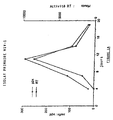
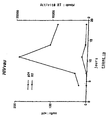
- figure 1 panel A represents the production of HIV-1 (VAU) in supernatants of infected PBMC cultures, controlled by RT assay (closed circles) and HIV-1 p24 antigen capture ELISA (open circles). The concentration of p24 HIV-1 is expressed in ng / ml and the RT activity in cpm / ⁇ l.
- Panel B the same experiment was performed with a standard HIV-1 primary isolate of an AIDS patient
- the figure 1 shows the comparison between the productive infection profiles of PBMCs with either HIV-1 (VAU) or a primary isolate of HIV-1 from a patient with AIDS dosed in RT or p24. For equivalent amounts of particles determined by assaying RT activity in the assayed supernatants, approximately 25-fold less p24 was detected for HIV-1 (VAU) than for the other HIV-1 isolate. The difference may be due to the fact that the monoclonal antibody specific for HIV-1 p24, which is used to coat the ELISA plates, has a low affinity for HIV-1 gag products (VAU) .
- VAU HIV-1 sensitive transformed human T cell lines.
- cocultures between HIV-1 infected (VAU) PBMCs and either MT4 cells or CEM cells did not lead to the spread of the virus. It has also been found that this virus was not capable of infecting HeLa CD4 + (P4-2) cells (Clavel and Camel 1994) carrying a lacZ gene inducible by the tat gene.
- no replication of HIV-1 (VAU) could be detected in activated peripheral blood lymphocytes of several chimpanzees.
- HIV-1 envelope sequence VAU
- VAU HIV-1 envelope sequence
- HIV-1-like virus present in a non-human primate is the isolate SNCPZGAB (Huet, et al., 1990), isolated from a naturally infected chimpanzee, which is clearly distinct from both the M and group O, and for which no human equivalent has been found, Group O viruses are unlikely to have evolved from a chimpanzee virus to the extent that HIV-1 (VAU) failed to replicate in chimpanzee lymphocytes.
- VAU HIV-1
- the present invention also relates to compositions containing either antigens according to the invention, or a mixture of antigens according to the invention associated with extracts originating from one or more HIV-1 group O or other variant viruses, on the one hand, and one or more HIV-2 and / or HIV-1, on the other hand, these compositions being optionally labeled.
- Any type of suitable marker can be used: enzymatic, fluorescent, radioactive, etc.
- the invention relates to DNA or DNA fragments, more particularly DNA and cloned DNA fragments obtained from RNA, cDNA or primers usable in PCR, or other methods of gene amplification derived from DNA.
- RNA or HIV retrovirus DNA (VAU) RNA or HIV retrovirus DNA (VAU) .
- the application also discloses equivalent DNAs, in particular having sequence homologies with HIV-1 DNA (VAU) , in particular with the sequence coding for the env region of the HIV-1 strain (VAU) comprising the sequence represented in FIG. figure 6 and called "vau".
- the homology with HIV-1 group M is at least 50%, preferably 70% and more preferably at about 90%.
- the application describes any equivalent DNA (or RNA) capable of hybridizing with the DNA or RNA of an O-group HIV-1 retrovirus.
- the invention also relates to the RNA sequences corresponding to the DNA sequences defined above.
- the invention also relates to compositions containing the peptides or polypeptides encoded by the above-mentioned DNA or DNA fragments.
- Oligonucleotides derived from the VAU sequence can be used for the detection of DNA or RNA sequences of group O HIV-1 viruses in biological samples, cell cultures, or extracts of cells. by the technique of PCR or any other gene amplification technique. These sequences could be used either as gene amplification primers or as probes for the specific detection of gene amplification products.
- the amplification products, or their corresponding synthetic sequence, obtained by chemical synthesis (Applied Biosystems) can also be used as hybridization probes.
- the invention also covers any fragment of at least 100 nucleotides usable as a probe in hybridization reactions and capable of allowing a reaction with a part of the genome of an HIV-1 variant (VAU) under hybridization conditions. strong stringency.
- VAU HIV-1 env gene
- the reaction medium including 50mM KCl, 10mM Tris-HCl (pH 8.9), 1.5mM MgCl 2 , 0.1mg / ml gelatin, 0.2mM dNTP, 1U Taq Polymerase (Amersham). PCR was performed for 43 thermal cycles at 92 ° C for 10 seconds, 50 ° C for 1 minute, 72 ° C for 40 seconds.
- the resulting amplification product was cloned into a pBluescript vector, generating the ph4 clone deposited at the CNCM on October 20, 1994 under No. I-1486 which was subsequently used as a probe to screen a lambda library of weak DNA.
- molecular weight digested with EcoRI, from cells infected with HIV-1 (VAU) . Briefly, HIV-1-infected PBMCs (VAU) were cocultivated for 24 hours with new PBMCs stimulated with PHA and depleted of CD8 + cells, after which a high cytopathic effect (ECP) was visible. The low molecular weight DNA was then extracted according to the method of Hirt (Hirt 1967), and digested with the EcoRI enzyme.
- VAU HIV-1 genome
- EcoRI site allowing the cloning of non-integrated circular DNA species representing the entire viral genome.
- the resulting digest was agarose gel electrophoresed, and the population of approximately 8-12 kb DNA fragments was purified and ligated to EcoRI-digested lambda Zap DNA. (Stratagene). After encapsidation, spreading, and hybridization screening with 32 P-labeled ph4 DNA, a clone, ⁇ H34, was identified as positive, and amplified.
- the EcoRI insert was purified, sonicated, and cloned by "shotgun" into the phosphatase-treated vector M13mp18, digested with the SmaI enzyme.
- One hundred and fifty of the clones obtained were sequenced on a 373A DNA sequencer (Applied Biosystems), and the resulting sequences were pooled in a single sequence using the GCG-Wisconsin DNA Analysis Package.
- PCR amplification was carried out for 35 thermal cycles at 92 ° C for 15 seconds, 52 ° C for 1 minute, 60 ° C for 2 minutes, and 72 ° C for 2 minutes.
- the resulting amplification product of a size of 3.5 kb, was cloned into the M13mp18 vector and sequenced by successive reactions, first using the universal M13 sequencing primer, then primers deduced from the upstream sequences. .
- Nucleotide and peptide sequence analysis was performed using the GCG-Wisconsin DNA Analysis Package.
- the HIV-1 env (VAU) gene encodes a total of 877 amino acids, including the signal peptide.
- the nucleotide sequence of the HIV-1 env gene corresponds to Seq. ID N ° 5 (see figure 3 ).
- the invention also naturally relates to the use of DNAs, DNA c or fragments thereof, or recombinant plasmids or other equivalent vectors containing these fragments, as probes, for the detection of the presence or absence of the HIV-1 virus ( VAU ) in serum samples or other biological fluids or tissues obtained from patients suspected to be carrying the HIV-1 virus ( VAU ). These probes are optionally labeled (radioactive, enzymatic, fluorescent markers, etc.). Probes of particular interest for the implementation of the method of detecting HIV-1 virus (VAU) or an HIV- 1 variant (VAU) can be characterized in that they comprise all or a fraction of the DNA complementary to the genome of the HIV-1 virus (VAU) or in particular the fragments contained in various clones. Probes characterized by comprising a fraction of the HIV-1 cDNA (VAU) containing all or part of the env region . are part of the invention.
- the probes used in this method for detecting the HIV-1 virus (VAU) or in diagnostic kits are in no way limited to the probes described above. They comprise all the nucleotide sequences derived from the genome of the HIV-1 virus (VAU) , an HIV-1 variant (VAU) or a virus similar in structure, since they allow the detection, from biological fluids of people who may have AIDS, an HIV-1 group O virus, particularly HIV-1 (VAU) by hybridization with HIV-1 DNA or RNA (VAU) .
- probes that, when hybridized with HIV-1, give a strong reaction with HIV belonging to group O and a weak reaction with HIV-1 belonging to group M.
- the aforesaid diagnosis involving hybridization reactions can also be carried out using probe mixtures respectively derived from HIV-1 (VAU) , HIV-1 and HIV-2, since it does not It is not necessary to distinguish between the types of HIV viruses sought.
- VAU HIV-1
- HIV-2 HIV-2
- the application also discloses expression vectors containing the coding sequence for HIV-1 envelope proteins.
- the invention comprises compositions for detecting the presence or absence of HIV-1 VAU virus in serum samples or other biological fluids or tissues obtained from patients who may be carrying the HIV-1 VAU virus. .
- These compositions are characterized in that they comprise at least one probe obtained from a nucleotide sequence derived from or derived from the genome of the HIV-1 VAU virus, particularly a VAU HIV-1 DNA fragment containing the region or a part thereof. of the region encoding the env protein of the HIV-1 VAU virus or a variant of HIV-1 VAU .
- composition described above also comprises a probe obtained from a nucleotide sequence derived from HIV-1 or HIV-2.
- compositions comprise the primers of the invention which can be used for gene amplification of retroviruses of subgroup O or variants of these retroviruses.
- Antigens including proteins and glycoproteins
- the invention relates to a retrovirus protein HIV-1 group (or subgroup) O, or a polypeptide or natural or synthetic peptide comprising at least a part of said protein, capable of being recognized by isolatable antibodies from serum obtained following an infection with an HIV-1 group O VAU strain.
- the invention relates to an external envelope protein of the VAU HIV-1 retrovirus encoded by the gene comprising, the sequence shown in FIG. figure 6 .
- this protein is further characterized in that it comprises the amino acid sequence represented on the figure 3 and comprising amino acid residues 1 to 526.
- the invention also relates to any polypeptide or variant, derived from said sequence, having an epitope capable of being recognized by antibodies induced by the HIV-1 VAU virus .
- the above protein can be obtained in glycosylated or non-glycosylated form.
- the subject of the invention is also a transmembrane envelope protein comprising the amino acid sequence represented on the figure 3 between the amino acid residues 527 and 877.
- This transmembrane protein is, in the context of the invention, in glycosylated form or not.
- the invention relates to all antigens, in particular proteins, glycoproteins, polypeptides or peptides, obtained by expression of coding sequences of the HIV-1 genome (VAU) and having immunological properties equivalent to those of HIV-1 (VAU) .
- the antigens are said to be equivalent in the context of the present invention, since they are recognizable by the same antibodies, in particular isolable antibodies from serum obtained from a patient who has been infected with HIV-1 (VAU) .
- the subject of the invention is the chemically synthesized peptides or polypeptides whose amino acid sequence is contained in that of the HIV-1 envelope proteins (VAU) , shown in FIG. figure 3 , or the equivalent peptides or polypeptides.
- VAU HIV-1 envelope proteins
- the invention relates to any peptide or polypeptide having epitopes identical or similar to the epitopes of the aforesaid antigens, capable of being recognized by the same antibodies. Included in the latter type of polypeptides are the expression products of DNA sequences corresponding to the sequences of the DNAs encoding the polypeptides or antigens. aforementioned.
- the antigens obtained from the HIV-1 virus (VAU) or produced by genetic engineering or conventional chemical synthesis and which are of the greatest interest in the context of the present invention are the antigens which make it possible to establish a clear distinction between the HIV-1 viruses (VAU) of the invention and the viruses of the HIV-1 and HIV-2 groups.
- VAU HIV-1 envelope protein
- the gag and pol proteins are more similar to the HIV-1 virus than the envelope protein.
- the invention also relates to peptides or polypeptides identical to the immunodominant region of HIV-1 envelope transmembrane glycoprotein (VAU). figure 3 .
- Preferred polypeptides of this region are, for example, those which contain the sequence CKNRLIC or correspond to this sequence. It may also be polypeptides or peptides corresponding to the sequence RLLALETFIQNWWLLNLWGCKNRLIC or comprising this sequence.
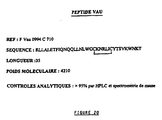
- VAU peptide corresponds to the following sequence or comprises this sequence or any part of this sequence that may be recognized by antibodies directed against the HIV-1 retrovirus (VAU). RARLLALETFIQNQQLLNLWGCKNRLICYTSVKWNKT.
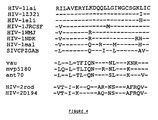
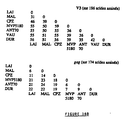
- Variant polypeptides of this sequence are for example the polypeptides represented on the figure 4 for isolates HIV-1 MVP5180 and HIV-1 (AN170). These polypeptides may also be derived from the above by insertion and / or deletion and / or substitution, for example conservative substitution by amino acid residues.
- a VAU peptide was prepared by the conventional solid phase peptide synthesis technique by the Fmoc method in "continuous flow.”
- the peptide was prepared using a Milligen 9050 PEP synthesizer using the "Millipore" PEG resin.
- PAL substituted by the first C-terminal amino acid residue
- the amino acid side chains are protected by the following groups: Pmc for arginine: Trt for asparagine, glutamine and cysteine: Boc for lysine tBu ester for glutamic acid, tBu ether for serine, threonine and tyrosine
- the temporary Fmoc groups are removed by a solution of piperidine at 20% DMF
- the coupling reactions of each amino acid are carried out with 6 equivalent of DIPCDI and HOBT Some residues require a double coupling, in particular arginines 1 and 23, cysteines 19 and 26, asparagine 11.
- glutamines 10, 12 and 13, alanine 4 isoleucine 9,
- the resin After coupling, the resin is dried under vacuum.
- the peptide is cleaved from the support by reagent K for 4 hours at room temperature.
- the crude peptide is precipitated and washed with ethyl ether.
- the product is purified by high pressure liquid chromatography (HPLC) on a WATERS LC PREP 4000 instrument with WATERS Delta Pak C18 40x100mm cartridges, flow rate 30 ml / min, acetonitrile gradient / 0.1% TFA.
- HPLC high pressure liquid chromatography
- the peptide (0.025mM) is dissolved in a 10mM ammonium acetate solution.
- the pH is brought to 8.5 with 1M ammonia solution.
- the pH is readjusted after 3 or 4 hours.
- the cyclization is followed by HPLC at 214 nm and 280 nm, WATERS Delta Pak C18 5 ⁇ column, acetonitrile / 0.1% TFA gradient. Cyclization is complete after 15 hours.
- the pH is brought to 6 with 97-100% acetic acid, the solution is lyophilized and then purified under the same conditions as for the crude peptide.
- the peptide is monitored by HPLC and mass spectrometry according to the electrospray technique (FISON VG Trio 2000 spectrophotometer).
- Fmoc Fluoroenyl-9-methyloxycarbonyl
- Pmc Pentanemethyl-8-chroman sulfonyl-6
- Trt Tritryl Boc: Tertbutyloxycarbonyl tBU: tert butyl
- DMF Dimethylformamide
- DIPCDI Diisopropyl carbodiimide
- HOBT Hydroxy-1 benzotriazole
- TFA trifluoroacetic acid Reagent K: Phenol / Water / Thioanisole / Ethanedithiol / TFA; 2.5 ml / 2.5 ml / 2.5 ml / 1.5 ml / 41ml Comparison of the amino acid sequence of the HIV-1 envelope (VAU) with the corresponding sequence of other HIV viruses.
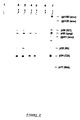
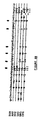
- Test strips 2-7 HIV positive sera -1; sera from the patient HIV-1 (VAU) : 2: obtained in November 1990; 3: in December 1990; 4: in February 1991; 5: in February 1992; 6: negative control; 7: positive control (serum of an individual infected with HIV-1).
- VAU HIV positive sera -1
- sera from the patient HIV-1 (VAU) 2: obtained in November 1990; 3: in December 1990; 4: in February 1991; 5: in February 1992; 6: negative control; 7: positive control (serum of an individual infected with HIV-1).
- the names and the size of the proteins (in kD) are indicated in the margin.
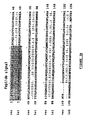
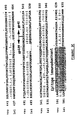
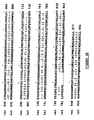
- the figure 3 shows an alignment of the amino acid sequence of the HIV-1 envelope (VAU) with the corresponding sequence of the LAI HIV-1 reference isolate (Wain-Hobson, et al., 1985).
- the signal peptides, the V3 loop and the immunodominant epitope gp41 are highlighted by hatched rectangles.
- the cleavage site between the outer envelope glycoprotein gp120 and the transmembrane gp41 is indicated by arrows.
- the vertical lines between the amino acid letters indicate a complete identity, the colon (:) indicates strong homology, and the dots (.) Indicate a limited homology between individual amino acids. Alignment was performed using the GCG-Wisconsin GAP program.
- the alignment of the figure 3 reveals many areas of strong divergence, with some areas preserved here and there. These conserved regions roughly correspond to domains also conserved in classical HIV-1 isolates (Alizon, et al., 1986, Benn, et al., 1985).
- the V3 loop also known as the primary neutralization determinant (Javaherian, et al., 1990, Javaherian, et al., 1989, Matsushita, et al., 1988) is clearly one of the most divergent, although both cysteines defining the loop are retained.
- the loop cap sequence, GPGRAF for HIV-1 LAI is GPMAWY in HIV-1 (VAU) .
- This motif of the cap is identical to that of the isolate of the Cameroonian O group HIV ANT70 (Van den Heasevelde, et al., 1994), but is different from that of the other isolate of the group O, HIV MVP5180 (Gürtler, and 1994), for which the reason is GPMRWR.
- the figure 4 shows the multiple alignment of immunodominant peptides in the extracellular segment of the transmembrane envelope glycoprotein of different HIV-1 isolates. All sequences are compared to the LAI HIV-1 reference sequence. Hyphens indicate identity to HIV-1LAI. Alignment was performed using the GCG-Wisconsin PILEUP program.
- the amino acid sequence of the immunodominant epitope of the outer portion of the TM protein (Gnann, et al., 1987) is substantially different from that of other HIV-1 and HIV-2 isolates. However, she kept most of the amino acids that were found to be between HIV-1 and HIV-2.
- HIV-1 LAI and HIV-1 envelope (VAU) sequences showed an identity of 50%.
- the HIV-1 envelope (VAU) sequence was also compared to that of other HIV representatives, including both O-group HIV-1 members described and sequenced: HIV-1 ANT70 and HIV-1 MVP5180 , and SIV.
- HIV-1 belongs to group O.
- the HIV-1 envelope (VAU) is 70% identical to the HIV-1 ANT70 envelope and 71% identical to HIV-1M VP5180 .
- envelope identity is comparable, ranging from 74% to 80%.
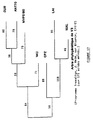
- HIV-1 (VAU) The relationship between HIV-1 (VAU) , other members of the HIV-1 phylogeny, and the two recently described group O viruses was analyzed by constructing a phylogenetic tree of unweighted parsimony using the nucleotide sequence of the transmembrane region env .
- the result of this analysis is represented on the Fig. 5 wherein the numbers indicate the number of nucleotide changes.
- the figure 5 shows that HIV-1 (VAU) is approximately equidistant from the other two group O viruses, and that, overall, these three viruses appear to be approximately equidistant from each other.
- the number of nucleotide changes between HIV-1 MVP5180 and HIV-1 (VAU) is 218 in the analyzed genome segment, while the distance is 183 between HIV-1 MVP5180 and HIV-1 ANT70 , and 213 between HIV-1 ANT70 and HIV-1 (VAU) .
- This divergence pattern is very similar to all other HIV-1 subtypes, where the number of unique nucleotide changes found between two distinct subtypes is 157 (subclass). type E to subtype F) to 219 (subtype A to subtype D).
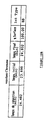
- Table 1 shows the comparison of envelope sequences of different HIV-1 related viruses. The numbers indicate the percent amino acid identity between envelope sequences, as calculated using the GAP program of GCG-Wisconsin. *: for HIV ANT70 , only the outer envelope protein was used in the comparison.
- compositions comprising HIV-1 antigens (VAU)
- the invention relates to any composition that can be used for in vitro detection of the presence in a biological fluid, in particular of persons who have come into contact with HIV-1 (VAU) , or of antibodies against at least one of the HIV-1 antigens (VAU) .
- This composition can be applied to the selective diagnosis of group O HIV-1 infection, using diagnostic techniques as described in the patent EP 84401.834 and EP 87400151.4.
- any constituent comprising antigenic determinants capable of being recognized by antibodies produced against HIV-1 (VAU) , for example recombinant antigens or peptides or peptides synthesized chemically defined from the sequence of HIV-1 envelope (VAU) .
- the invention relates more particularly to compositions containing at least one of the envelope proteins of the HIV-1 virus (VAU) .
- VAU HIV-1 virus
- compositions that may be mentioned are those containing proteins, glycoproteins or peptides of the envelope protein corresponding to the entire region 590-620 of the HIV-1 gp41 protein (VAU) or specific regions of this region of HIV-1 (VAU) such as peptides -TFIQN- or -WGCKNR-.
- the invention also relates to compositions associating recombinant or synthetic HIV-1 proteins and / or glycoproteins and / or peptides (VAU) with HIV-1 and / or HIV-2 proteins and / or glycoproteins and / or peptides and / or / or another HIV-1 group O obtained by extraction or in lysates or by recombination or by chemical synthesis and / or peptides derived from these proteins or glycoproteins and likely to be recognized by antibodies induced by the HIV virus -1 and / or HIV-2 and / or HIV-1, group O.
- VAU recombinant or synthetic HIV-1 proteins and / or glycoproteins and / or peptides
- Diagnostic compositions containing antigenic determinants capable of being recognized by antibodies to HIV-1 (VAU) may be included in or combined with compositions or kits already available for detection of HIV-1 antibodies (VAU). infection with HIV-1 and / or HIV-2 retroviruses, so as to extend the detection spectrum of the kits to the detection of group O HIV-1 retroviruses.
- composition of the present invention comprises at least one HIV-1 envelope protein or peptide (VAU) so that this virus can be detected with certainty.
- compositions used in diagnosis, therefore aid in the diagnosis of AIDS or its associated symptoms, which extend over a wider spectrum of causative etiological agents. It goes without saying that the use of diagnostic compositions which contain only HIV-1 envelope proteins and / or glycoproteins (VAU) is nonetheless useful for the more selective detection of the category of retrovirus which can be held responsible for the disease.
- VAU glycoproteins
- VAU HIV-1 virus
- the present invention relates to a method for in vitro diagnosis of HIV infection, etiological agents of AIDS and related syndromes, which comprises contacting a serum or other biological medium from a patient. or subject being diagnosed with a composition containing at least one HIV-1 protein, glycoprotein or peptide (VAU) according to the claims, and detecting an eventual immunological reaction. Examples of such compositions have been described above.
- Detections can be by direct or indirect immunofluorescence or direct or indirect immunoenzymatic assays.
- the subject of the invention is also immunogenic compositions capable of inducing the formation of antibodies recognizing antigens that can be obtained by chemical synthesis or by recombination.
- the serum antibody ability of the HIV-1 infected patient (VAU) to react with HIV-1 antigen preparations was evaluated using a variety of commercially available kits: SANOFI DIAGNOSTICS PASTEUR, (GENELAVIA MIXT) ABBOTT , WELLCOME, and BEHRING.
- SANOFI DIAGNOSTICS PASTEUR Western-blot kit, following the protocols recommended by the manufacturer.
- the patient's serum was examined multiple times using specific HIV-1 ELISA kits. It was first tested and found to be positive in 1990, with a score of 7.33 (this corresponds to the ratio of the OD measured on the OD of the background) with the SANOFI DIAGNOSTICS PASTEUR kit, 3, 50 with the ABBOTT kit and 2.70 with the WELLCOME kit.
- the serum was scored at 1.42 with the Behring kit and 4.40 with the WELLCOME kit.
- compositions comprising polyclonal or monoclonal antibodies prepared from recombinant or synthetic HIV-1 (VAU) antigens .
- VAU HIV-1
- the invention relates to a serum which can be produced in animals by inoculation thereof with HIV-1 (VAU) , particularly HIV-1 antigenic epitopes (VAU) and more particularly the antigenic epitopes of the HIV-1 protein (VAU). HIV-1 virus envelope (VAU) .
- VAU HIV-1 virus envelope
- the invention relates more particularly to polyclonal antibodies more specifically directed against each of the antigens, in particular proteins or glycoproteins according to the claims. It also relates to monoclonal antibodies produced by different techniques, these monoclonal antibodies being respectively oriented more specifically against HIV-1 envelope proteins (VAU) .
- polyclonal or monoclonal antibodies can be used in different applications. Their use is essentially mentioned to neutralize the corresponding proteins, or even to inhibit the infectivity of the whole virus. They can also be used, for example, to detect viral antigens in biological preparations or to carry out purification operations of the corresponding proteins and / or glycoproteins, for example when used in affinity chromatography columns.
- anti-envelope antibodies are reagents that can be used in diagnosis, in particular for the detection of HIV-1 group O particles by antigen capture ELISA.
- the invention relates to antibodies to one or more HIV-1 virus (VAU) antigens produced from HIV-1 amino acid (VAU) sequences according to the claims. Techniques for obtaining antibodies from antigenic epitopes similar to the antigenic epitopes of the HIV-1 virus ( VAU ) of the present invention have been described previously.
- the immunoreactivity of the vau peptide was verified, after having prepared experimental ELISA plates, according to a protocol established for an anti-HIV antibody screening test. This test is based on the detection of a solid phase prepared with the peptide mimicking the immunodominant epitope of the envelope glycoprotein of the HIV-1 virus group (or subgroup) O, VAU isolate. The implementation of the test was modeled on the protocol proposed by the GENELAVIA® MIXT kit, with the reagents of this kit.
- VAU HIV-1 virus
- the invention also relates to the detection of HIV-1 virus (VAU) by molecular hybridization.
- VAU HIV-1 virus
- the abovementioned hybridization is carried out under non-stringent conditions and the washing of the support (membrane) is carried out under conditions adapted to those of the hybridization.
- the biological sample may consist in particular of blood, plasma, serum or any other biological extract.
- the above compositions are useful for the detection of antibodies in one of the above-mentioned biological samples.
- an immunogenic composition characterized in that it comprises at least one peptide in combination with a pharmaceutical vehicle acceptable for the constitution of vaccines.
- the separation and recovery of HIV-1 DUR capsid proteins and glycoproteins gp41 and gp120 are made by electrophoresis and electroreduction of the proteins.
- the application describes a method of producing a previously defined nucleic acid, which can be produced either by isolation from a virus of the invention, or by chemical synthesis, or by using in vitro amplification techniques of the acids. nucleic acid from specific primers.
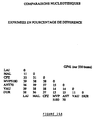
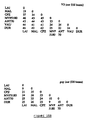
- the differences are smaller in the GAG region and maximum in the V3 loop region of gp120, where the protein comparison reaches 40% difference ( figure 16 ).
- the phylogenetic trees confirm on the one hand that the strain DUR belongs to the subgroup O, and on the other hand the importance of the differences between the various strains O described, without subtype branching being revealed. clearly ( figure 17 ).
- the QQA and LWTTRAGNP regions are hyper-variable regions.
- the strain DUR-HIV-1 group (or subgroup) is singled out in three positions with respect to consensus M and O (L for 1 and 2 times for E) and takes a specific amino acid in three hyper-positions. isolated variables V position L9; At position A77; Position 110.
- GAG region segments common to group O and group M such as SPRTLNAWVK, GSDIAGTTST and QGPKEPFRDYVDRF.
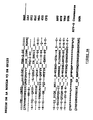
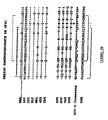
- the peptide sequence alignments of the regions of the V3 loop of gp120 and the immunodominant region of gp41 are given to the figure 9 .
- the sequence of the interior of the V3 loop of the DUR strain differs substantially from that of the consensus HIV-1 subgroup M. It shares the GPMAWYSM motif with the VAU and ANT70 strains but not with the MVP strain which has two substitutions: R for A and R for Y.
- V3 loop of DUR is longer than an amino acid other O sequences, themselves longer than another amino acid that sequences HIV-1 M.
- a long sequence of 11 amino acids flanking this loop on the left is identical to the VAU sequence.
- the DUR strain also makes it possible to define an HIV subgroup O consensus of the gp41 region, of which several sufficiently long homologous regions could be used. These homologous regions are among others: RL * ALET, QNQQ, LWGC, CYTV (* representing a variable amino acid).
- the anti-DUR antiserum does not react with the V3 loop peptides of HIV-1-M consensus, HIV-1 MAL, HIV-1 CPZ or HIV-1 group (or subgroup) 0 MVP5180, however, it reacts with the peptide of the V3 loop of HIV-1-O ANT70.
- the gp41 immunodominant region it does not react with the consensus of HIV-1 "classical" M subgroup, but reacts, however weakly but surprisingly, with the consensus HIV-1 subgroup M extended to the right.
Landscapes
- Health & Medical Sciences (AREA)
- Life Sciences & Earth Sciences (AREA)
- Chemical & Material Sciences (AREA)
- Immunology (AREA)
- Virology (AREA)
- Organic Chemistry (AREA)
- Molecular Biology (AREA)
- Medicinal Chemistry (AREA)
- Engineering & Computer Science (AREA)
- General Health & Medical Sciences (AREA)
- Biomedical Technology (AREA)
- Urology & Nephrology (AREA)
- Biochemistry (AREA)
- Hematology (AREA)
- Pharmacology & Pharmacy (AREA)
- Veterinary Medicine (AREA)
- Public Health (AREA)
- Animal Behavior & Ethology (AREA)
- AIDS & HIV (AREA)
- Nuclear Medicine, Radiotherapy & Molecular Imaging (AREA)
- Tropical Medicine & Parasitology (AREA)
- General Chemical & Material Sciences (AREA)
- Chemical Kinetics & Catalysis (AREA)
- Proteomics, Peptides & Aminoacids (AREA)
- Physics & Mathematics (AREA)
- Communicable Diseases (AREA)
- Genetics & Genomics (AREA)
- Biophysics (AREA)
- Biotechnology (AREA)
- Cell Biology (AREA)
- Gastroenterology & Hepatology (AREA)
- Microbiology (AREA)
- Pathology (AREA)
- Food Science & Technology (AREA)
- Oncology (AREA)
- Analytical Chemistry (AREA)
- General Physics & Mathematics (AREA)
- Bioinformatics & Cheminformatics (AREA)
- Peptides Or Proteins (AREA)
- Micro-Organisms Or Cultivation Processes Thereof (AREA)
Priority Applications (2)
| Application Number | Priority Date | Filing Date | Title |
|---|---|---|---|
| DE69535601T DE69535601T3 (de) | 1994-10-20 | 1995-10-20 | Nukleotiden-sequenzen aus retroviren-antigenen hiv-i gruppe (oder untergruppe) o |
| EP07003648A EP1849869A3 (fr) | 1994-10-20 | 1995-10-20 | Séquences nucléotidiques d'antigènes rétroviraux VIH-1 groupe (ou sous-groupe) 0 |
Applications Claiming Priority (5)
| Application Number | Priority Date | Filing Date | Title |
|---|---|---|---|
| FR9412554A FR2726006B1 (fr) | 1994-10-20 | 1994-10-20 | Sequences nucleotidiques codant des antigenes d'un retrovirus du type vih-1 groupe o |
| FR9412554 | 1994-10-20 | ||
| FR9502526A FR2731225B1 (fr) | 1995-03-03 | 1995-03-03 | Peptides de glycoproteine transmembranaire d'enveloppe et de proteine de capside du retrovirus humain du type hiv-1 et peptides presentant avec eux une parente immunologique |
| FR9502526 | 1995-03-03 | ||
| PCT/FR1995/001391 WO1996012809A2 (fr) | 1994-10-20 | 1995-10-20 | Sequences nucleotidiques d'antigenes retroviraux vih-1 groupe (ou sous-groupe) o |
Related Child Applications (2)
| Application Number | Title | Priority Date | Filing Date |
|---|---|---|---|
| EP07003648A Division EP1849869A3 (fr) | 1994-10-20 | 1995-10-20 | Séquences nucléotidiques d'antigènes rétroviraux VIH-1 groupe (ou sous-groupe) 0 |
| EP07003648.8 Division-Into | 2007-02-22 |
Publications (3)
| Publication Number | Publication Date |
|---|---|
| EP0787191A2 EP0787191A2 (fr) | 1997-08-06 |
| EP0787191B1 EP0787191B1 (fr) | 2007-09-26 |
| EP0787191B2 true EP0787191B2 (fr) | 2011-10-26 |
Family
ID=26231483
Family Applications (2)
| Application Number | Title | Priority Date | Filing Date |
|---|---|---|---|
| EP95935996A Expired - Lifetime EP0787191B2 (fr) | 1994-10-20 | 1995-10-20 | Sequences nucleotidiques d'antigenes retroviraux vih-1 groupe (ou sous-groupe) o |
| EP07003648A Withdrawn EP1849869A3 (fr) | 1994-10-20 | 1995-10-20 | Séquences nucléotidiques d'antigènes rétroviraux VIH-1 groupe (ou sous-groupe) 0 |
Family Applications After (1)
| Application Number | Title | Priority Date | Filing Date |
|---|---|---|---|
| EP07003648A Withdrawn EP1849869A3 (fr) | 1994-10-20 | 1995-10-20 | Séquences nucléotidiques d'antigènes rétroviraux VIH-1 groupe (ou sous-groupe) 0 |
Country Status (12)
| Country | Link |
|---|---|
| US (3) | US6399294B1 (enExample) |
| EP (2) | EP0787191B2 (enExample) |
| JP (4) | JP4278174B2 (enExample) |
| CN (3) | CN102134609A (enExample) |
| AT (1) | ATE374253T1 (enExample) |
| AU (3) | AU715731B2 (enExample) |
| CA (2) | CA2202408C (enExample) |
| DE (1) | DE69535601T3 (enExample) |
| DK (1) | DK0787191T4 (enExample) |
| ES (1) | ES2293643T5 (enExample) |
| PT (1) | PT787191E (enExample) |
| WO (1) | WO1996012809A2 (enExample) |
Families Citing this family (27)
| Publication number | Priority date | Publication date | Assignee | Title |
|---|---|---|---|---|
| PT787191E (pt) * | 1994-10-20 | 2007-12-06 | Pasteur Institut | Sequências nucleotídicas de antigénios retroviraisde vih do tipo (ou sub-tipo) o |
| AU710468B2 (en) * | 1995-01-27 | 1999-09-23 | Government Of The United States Of America, As Represented By The Secretary Of The Department Of Health And Human Services, The | Methods for sensitive detection of reverse transcriptase |
| DE19505262C2 (de) * | 1995-02-16 | 1998-06-18 | Behring Diagnostics Gmbh | Retrovirus aus der HIV-Gruppe und dessen Verwendung |
| IL132166A0 (en) * | 1997-04-09 | 2001-03-19 | Pasteur Sanofi Diagnostics | Synthetic peptides which can be used in biological tests for the detection of infections due to group o hiv-1 viruses |
| FR2761993B1 (fr) * | 1997-04-09 | 1999-05-21 | Pasteur Sanofi Diagnostics | Peptides synthetiques utilisables dans les essais biologiques pour la detection des infections dues aux virus vih 1 groupe 0 |
| FR2775287B1 (fr) * | 1998-02-24 | 2000-11-24 | Pasteur Sanofi Diagnostics | Peptides synthetiques consensus utilisables dans les essais biologiques pour la detection des infections dues aux virus vih 1 du groupe o |
| US6511801B1 (en) | 1997-07-18 | 2003-01-28 | Innogenetics, N.V. | HIV-1 group O antigens and uses thereof |
| US6846905B2 (en) | 1997-08-15 | 2005-01-25 | Abbott Laboratories | Antigen constructs useful in the detection and differentiation of antibodies to HIV |
| US5922533A (en) * | 1997-08-15 | 1999-07-13 | Abbott Laboratories | Rapid assay for simultaneous detection and differentiation of antibodies to HIV groups |
| AU2345399A (en) * | 1998-01-28 | 1999-08-16 | Universal Health-Watch, Inc. | Divergent hiv-1 peptides |
| CN1061092C (zh) * | 1998-02-27 | 2001-01-24 | 中国科学院上海生物化学研究所 | 白色念珠菌具有逆转录转座子结构的元件 |
| CA2288869A1 (en) * | 1998-03-04 | 1999-09-10 | Mary Ann Childs | Rapid confirmatory test for microbial infections |
| AU3670999A (en) * | 1998-04-30 | 1999-11-16 | Universal Health-Watch, Inc. | Immunoassay with mixed peptides |
| WO1999062945A2 (en) * | 1998-06-05 | 1999-12-09 | Peptide Solutions, Inc. | Peptide antigens for detection of hiv, hcv and other microbial infections |
| CA2676762C (en) * | 1998-11-30 | 2015-12-29 | Ortho-Clinical Diagnostics, Inc. | Peptides for the detection of hiv-1 group o |
| EP1187939B9 (en) * | 1999-07-09 | 2009-08-12 | Gen-Probe Incorporated | Detection of hiv-1 by nucleic acid amplification |
| US6818392B2 (en) | 2000-12-06 | 2004-11-16 | Abbott Laboratories | Monoclonal antibodies to human immunodeficiency virus and uses thereof |
| EP2251442B9 (en) | 2003-12-19 | 2012-04-25 | Gen-Probe Incorporated | Compositions, methods and kits for detecting the nucleic acids of HIV-1 and HIV-2 |
| TW200613554A (en) * | 2004-06-17 | 2006-05-01 | Wyeth Corp | Plasmid having three complete transcriptional units and immunogenic compositions for inducing an immune response to HIV |
| AU2005335203A1 (en) | 2004-09-08 | 2007-02-15 | The United States Of America As Represented By The Secretary Of Health And Human Services, Nih | Compositions and methods for the detection of HIV-1/HIV-2 infection |
| EP1989326A4 (en) | 2006-01-17 | 2009-09-30 | Health Research Inc | BIO-HETERODUPLEX TRACKING TEST |
| US8405379B1 (en) | 2008-09-18 | 2013-03-26 | Luc Montagnier | System and method for the analysis of DNA sequences in biological fluids |
| US20130302364A1 (en) * | 2010-11-10 | 2013-11-14 | Laboratorios Del Dr. Esteve, S.A. | Highly immunogenic hiv p24 sequences |
| EP2864787B1 (en) * | 2012-06-22 | 2017-11-01 | Bio-Rad Laboratories, Inc. | Human factor xiii as a normalization control for immunoassays |
| US9823249B2 (en) * | 2012-12-12 | 2017-11-21 | Brigham And Women's Hospital, Inc. | System and method for detecting pathogens |
| KR102056520B1 (ko) | 2017-03-24 | 2019-12-18 | (주)셀아이콘랩 | 인간 섬유아세포에서 콜라겐 합성 촉진 및 콜라겐 분해 효소 활성화 억제를 유도하는 펩타이드를 함유한 화장품 조성물 및 제조방법 |
| CN108997482B (zh) | 2018-08-09 | 2025-09-09 | 东莞市朋志生物科技有限公司 | 用于检测hiv-1的合成肽 |
Family Cites Families (28)
| Publication number | Priority date | Publication date | Assignee | Title |
|---|---|---|---|---|
| US5030714A (en) | 1986-06-23 | 1991-07-09 | Institut Pasteur | Variant of LAV viruses |
| JPH0762031B2 (ja) * | 1986-12-30 | 1995-07-05 | アメリカ合衆国 | エイズウイルスおよびエイズウイルスのタンパク質に対する細胞性免疫を誘導する合成ペプチド |
| NO881151L (no) * | 1987-03-27 | 1988-09-28 | Syntello Ab | Syntetisk hiv-1-antigen. |
| CA1339363C (en) * | 1987-05-01 | 1997-08-26 | Alan Ray Flesher | Monoclonal antibodies to specific antigenic regions of the human immunodeficiency virus and methods for use |
| JPH0215098A (ja) * | 1987-05-18 | 1990-01-18 | Virovahl Sa | Hiv−1感染検出用合成ペプチド杭原、その組成物およびその使用方法 |
| US5019387A (en) * | 1987-09-08 | 1991-05-28 | Duke University | Production of antibodies to HIV |
| IL88963A (en) * | 1988-01-27 | 1996-05-14 | Iaf Biochem Int | Circular synthetic peptides and their mixtures for the detection of VIH antibodies and for the formation of vaccines |
| EP0330359A3 (en) | 1988-02-25 | 1991-06-05 | Bio-Rad Laboratories, Inc. | Composition useful in the diagnosis and treating of hiv-1 infection |
| ES2072853T3 (es) | 1988-06-09 | 1995-08-01 | Innogenetics Nv | Retrovirus hiv-3 y su utilizacion. |
| ATE135113T1 (de) * | 1988-12-20 | 1996-03-15 | Clarity Technologies Inc | Synthetische hiv ähnliche peptide, deren zusammensetzungen und verwendungen |
| GB8910145D0 (en) * | 1989-05-03 | 1989-06-21 | Connaught Lab | Synthetic peptides for an hiv-1 vaccine |
| ZA903492B (en) * | 1989-05-15 | 1991-02-27 | Akzo Nv | T-lymphotropic retrovirus monoclonal antibodies |
| FR2647810B1 (fr) * | 1989-06-02 | 1994-07-22 | Pasteur Institut | Amorces oligonucleotidiques pour l'amplification du genome des retrovirus du type hiv-2 et siv, et leurs applications au diagnostic in vitro des infections dues a ces virus |
| DE3934366A1 (de) * | 1989-10-14 | 1991-04-18 | Chemotherapeutisches Forschungsinstitut Georg Speyer Haus | Vakzine zum schutz vor hiv-virusinfektionen, verfahren zu ihrer herstellung und ihre verwendung als diagnostikum und immuntherapeutikum |
| US5480967A (en) * | 1990-01-05 | 1996-01-02 | United Biomedical, Inc. | HIV-1 core protein fragments |
| IL99077A0 (en) * | 1990-08-13 | 1992-07-15 | Merck & Co Inc | New embodiments of the hiv principal neutralizing determinant and pharmaceutical compositions containing them |
| JPH06500923A (ja) * | 1990-09-21 | 1994-01-27 | カイロン コーポレイション | パッケージング細胞 |
| US7115554B1 (en) | 1993-05-06 | 2006-10-03 | Acorda Therapeutics, Inc. | Methods of increasing myotube formation or survival or muscle cell mitogenesis differentiation or survival using neuregulin GGF III |
| JP2541030B2 (ja) * | 1991-04-22 | 1996-10-09 | 富士ゼロックス株式会社 | ヒドロキシインジウムフタロシアニンの新規結晶及びそれを用いた電子写真感光体 |
| JP3443809B2 (ja) * | 1992-03-06 | 2003-09-08 | エヌ・ブイ・インノジェネティクス・ソシエテ・アノニム | 免疫学的に重要なエピトープに相当するペプチドの決定方法、及び免疫学的に重要なエピトープに相当するビオチニル化ペプチド又は抗体の決定のための方法におけるその利用、その調製方法及びそれを含む組成物 |
| ES2053413T3 (es) * | 1992-05-14 | 1997-11-16 | Polymun Scient Immunbio Forsch | Peptidos que inducen anticuerpos que neutralizan aislados de vih-1 geneticamente divergentes. |
| JP3207535B2 (ja) | 1992-08-07 | 2001-09-10 | 森永乳業株式会社 | 抗酸化剤 |
| ES2126620T5 (es) | 1992-10-06 | 2010-05-21 | Siemens Healthcare Diagnostics Products Gmbh | Retrovirus del grupo de los vih y su utilizacion. |
| WO1994028871A1 (en) | 1993-06-07 | 1994-12-22 | Endocon, Inc. | Implant stimulated cellular immunity |
| KR960703136A (ko) | 1993-06-09 | 1996-06-19 | 미첼 클레인 | 탠덤 합성 hiv-1 펩티드들 |
| FR2707091B1 (fr) * | 1993-06-30 | 1997-04-04 | Cohen Haguenauer Odile | Vecteur rétroviral pour le transfert et l'expression de gènes dans des cellules eucaryotes. |
| PT787191E (pt) | 1994-10-20 | 2007-12-06 | Pasteur Institut | Sequências nucleotídicas de antigénios retroviraisde vih do tipo (ou sub-tipo) o |
| DE19622088A1 (de) | 1996-05-31 | 1997-12-04 | Boehringer Mannheim Gmbh | Anti-HIV-Antikörper als Kontrollproben |
-
1995
- 1995-10-20 PT PT95935996T patent/PT787191E/pt unknown
- 1995-10-20 DK DK95935996.9T patent/DK0787191T4/da active
- 1995-10-20 EP EP95935996A patent/EP0787191B2/fr not_active Expired - Lifetime
- 1995-10-20 CA CA2202408A patent/CA2202408C/fr not_active Expired - Lifetime
- 1995-10-20 ES ES95935996T patent/ES2293643T5/es not_active Expired - Lifetime
- 1995-10-20 WO PCT/FR1995/001391 patent/WO1996012809A2/fr not_active Ceased
- 1995-10-20 CN CN2010102008955A patent/CN102134609A/zh active Pending
- 1995-10-20 EP EP07003648A patent/EP1849869A3/fr not_active Withdrawn
- 1995-10-20 CA CA2652992A patent/CA2652992C/fr not_active Expired - Lifetime
- 1995-10-20 JP JP51369296A patent/JP4278174B2/ja not_active Expired - Lifetime
- 1995-10-20 US US08/817,441 patent/US6399294B1/en not_active Expired - Lifetime
- 1995-10-20 AU AU38089/95A patent/AU715731B2/en not_active Expired
- 1995-10-20 CN CNB951963678A patent/CN1147586C/zh not_active Expired - Lifetime
- 1995-10-20 AT AT95935996T patent/ATE374253T1/de active
- 1995-10-20 DE DE69535601T patent/DE69535601T3/de not_active Expired - Lifetime
- 1995-10-20 CN CN2004100078820A patent/CN1651457B/zh not_active Expired - Lifetime
-
2001
- 2001-12-27 US US10/026,741 patent/US7157225B2/en not_active Expired - Fee Related
-
2005
- 2005-05-24 AU AU2005202281A patent/AU2005202281B2/en not_active Expired
-
2006
- 2006-11-02 US US11/591,678 patent/US8236324B2/en not_active Expired - Fee Related
-
2008
- 2008-05-07 JP JP2008121431A patent/JP4589420B2/ja not_active Expired - Lifetime
-
2009
- 2009-06-09 JP JP2009138688A patent/JP2009240315A/ja not_active Withdrawn
- 2009-09-10 AU AU2009213045A patent/AU2009213045B2/en not_active Expired
-
2010
- 2010-03-04 JP JP2010048112A patent/JP2010172335A/ja not_active Withdrawn
Also Published As
Similar Documents
| Publication | Publication Date | Title |
|---|---|---|
| EP0787191B2 (fr) | Sequences nucleotidiques d'antigenes retroviraux vih-1 groupe (ou sous-groupe) o | |
| US6426073B1 (en) | Variant of LAV viruses | |
| US5747242A (en) | Diagnostic kits and methods for detecting antibodies to LAV viruses | |
| US6284454B1 (en) | Variant of LAV viruses | |
| FR2726006A1 (fr) | Sequences nucleotidiques codant des antigenes d'un retrovirus du type vih-1 groupe o | |
| AU780017B2 (en) | Nucleotide sequences of HIV-1 type (or subtype) O retrovirus antigens | |
| FR2730493A1 (fr) | Polypeptides de glycoproteine transmembranaire d'enveloppe du retrovirus humain du type hiv-1 et polypeptides presentant avec eux une parente immunologique | |
| HK1001233B (en) | Variants of lav viruses, their dna- and protein components and their uses, particularly for diagnostic purposes and for the preparation of immunogenic compositions | |
| HK1001233A (en) | Variants of lav viruses, their dna- and protein components and their uses, particularly for diagnostic purposes and for the preparation of immunogenic compositions | |
| FR2731225A1 (fr) | Peptides de glycoproteine transmembranaire d'enveloppe et de proteine de capside du retrovirus humain du type hiv-1 et peptides presentant avec eux une parente immunologique | |
| FR2730243A1 (fr) | Polypeptides de glycoproteine trasmembranaire d'enveloppe du retrovirus humain du type hiv-1 et polypeptides presentant avec eux une parente immunologique |
Legal Events
| Date | Code | Title | Description |
|---|---|---|---|
| PUAI | Public reference made under article 153(3) epc to a published international application that has entered the european phase |
Free format text: ORIGINAL CODE: 0009012 |
|
| 17P | Request for examination filed |
Effective date: 19970416 |
|
| AK | Designated contracting states |
Kind code of ref document: A2 Designated state(s): AT BE CH DE DK ES FR GB GR IE IT LI LU MC NL PT SE |
|
| RIN1 | Information on inventor provided before grant (corrected) |
Inventor name: COHEN, JACQUES, H., M. Inventor name: DONJON DE SAINT-MARTIN, JACQUELINE Inventor name: MONTAGNIER, LUC Inventor name: GUETARD, DENISE Inventor name: QUILLENT, CAROLINE Inventor name: BORMAN, ANDREW Inventor name: CLAVEL, FRANCOIS Inventor name: CHARNEAU, PIERRE |
|
| 17Q | First examination report despatched |
Effective date: 20030702 |
|
| 17Q | First examination report despatched |
Effective date: 20030702 |
|
| GRAP | Despatch of communication of intention to grant a patent |
Free format text: ORIGINAL CODE: EPIDOSNIGR1 |
|
| RIN1 | Information on inventor provided before grant (corrected) |
Inventor name: COHEN, JACQUES, H., M. Inventor name: DONJON DE SAINT-MARTIN, JACQUELINE Inventor name: MONTAGNIER, LUC Inventor name: GUETARD, DENISE Inventor name: QUILLENT, CAROLINE Inventor name: BORMAN, ANDREW Inventor name: CLAVEL, FRANCOIS Inventor name: CHARNEAU, PIERRE |
|
| GRAS | Grant fee paid |
Free format text: ORIGINAL CODE: EPIDOSNIGR3 |
|
| GRAA | (expected) grant |
Free format text: ORIGINAL CODE: 0009210 |
|
| AK | Designated contracting states |
Kind code of ref document: B1 Designated state(s): AT BE CH DE DK ES FR GB GR IE IT LI LU MC NL PT SE |
|
| REG | Reference to a national code |
Ref country code: GB Ref legal event code: FG4D Free format text: NOT ENGLISH |
|
| REG | Reference to a national code |
Ref country code: CH Ref legal event code: EP |
|
| REF | Corresponds to: |
Ref document number: 69535601 Country of ref document: DE Date of ref document: 20071108 Kind code of ref document: P |
|
| REG | Reference to a national code |
Ref country code: IE Ref legal event code: FG4D Free format text: LANGUAGE OF EP DOCUMENT: FRENCH |
|
| REG | Reference to a national code |
Ref country code: PT Ref legal event code: SC4A Free format text: AVAILABILITY OF NATIONAL TRANSLATION Effective date: 20071127 |
|
| REG | Reference to a national code |
Ref country code: CH Ref legal event code: NV Representative=s name: PATENTANWAELTE SCHAAD, BALASS, MENZL & PARTNER AG |
|
| REG | Reference to a national code |
Ref country code: SE Ref legal event code: TRGR |
|
| REG | Reference to a national code |
Ref country code: DK Ref legal event code: T3 |
|
| REG | Reference to a national code |
Ref country code: GR Ref legal event code: EP Ref document number: 20070403691 Country of ref document: GR |
|
| GBT | Gb: translation of ep patent filed (gb section 77(6)(a)/1977) |
Effective date: 20080205 |
|
| REG | Reference to a national code |
Ref country code: ES Ref legal event code: FG2A Ref document number: 2293643 Country of ref document: ES Kind code of ref document: T3 |
|
| PLBI | Opposition filed |
Free format text: ORIGINAL CODE: 0009260 |
|
| PLAX | Notice of opposition and request to file observation + time limit sent |
Free format text: ORIGINAL CODE: EPIDOSNOBS2 |
|
| 26 | Opposition filed |
Opponent name: NOVARTIS VACCINES AND DIAGNOSTICS, INC. Effective date: 20080626 |
|
| NLR1 | Nl: opposition has been filed with the epo |
Opponent name: NOVARTIS VACCINES AND DIAGNOSTICS, INC. |
|
| PLAF | Information modified related to communication of a notice of opposition and request to file observations + time limit |
Free format text: ORIGINAL CODE: EPIDOSCOBS2 |
|
| PLBB | Reply of patent proprietor to notice(s) of opposition received |
Free format text: ORIGINAL CODE: EPIDOSNOBS3 |
|
| PLAB | Opposition data, opponent's data or that of the opponent's representative modified |
Free format text: ORIGINAL CODE: 0009299OPPO |
|
| PUAH | Patent maintained in amended form |
Free format text: ORIGINAL CODE: 0009272 |
|
| STAA | Information on the status of an ep patent application or granted ep patent |
Free format text: STATUS: PATENT MAINTAINED AS AMENDED |
|
| 27A | Patent maintained in amended form |
Effective date: 20111026 |
|
| AK | Designated contracting states |
Kind code of ref document: B2 Designated state(s): AT BE CH DE DK ES FR GB GR IE IT LI LU MC NL PT SE |
|
| REG | Reference to a national code |
Ref country code: DE Ref legal event code: R102 Ref document number: 69535601 Country of ref document: DE |
|
| REG | Reference to a national code |
Ref country code: CH Ref legal event code: AEN Free format text: BREVET MAINTENU DANS UNE FORME MODIFIEE |
|
| REG | Reference to a national code |
Ref country code: DE Ref legal event code: R102 Ref document number: 69535601 Country of ref document: DE Effective date: 20111026 |
|
| REG | Reference to a national code |
Ref country code: NL Ref legal event code: T3 |
|
| REG | Reference to a national code |
Ref country code: DK Ref legal event code: T4 |
|
| REG | Reference to a national code |
Ref country code: ES Ref legal event code: DC2A Ref document number: 2293643 Country of ref document: ES Kind code of ref document: T5 Effective date: 20120202 |
|
| REG | Reference to a national code |
Ref country code: SE Ref legal event code: RPEO |
|
| REG | Reference to a national code |
Ref country code: GR Ref legal event code: EP Ref document number: 20120400150 Country of ref document: GR Effective date: 20120305 |
|
| PGFP | Annual fee paid to national office [announced via postgrant information from national office to epo] |
Ref country code: LU Payment date: 20140922 Year of fee payment: 20 Ref country code: GR Payment date: 20140929 Year of fee payment: 20 Ref country code: DK Payment date: 20140919 Year of fee payment: 20 Ref country code: MC Payment date: 20140917 Year of fee payment: 20 Ref country code: IE Payment date: 20140922 Year of fee payment: 20 |
|
| PGFP | Annual fee paid to national office [announced via postgrant information from national office to epo] |
Ref country code: PT Payment date: 20140421 Year of fee payment: 20 |
|
| PGFP | Annual fee paid to national office [announced via postgrant information from national office to epo] |
Ref country code: FR Payment date: 20141031 Year of fee payment: 20 Ref country code: DE Payment date: 20141010 Year of fee payment: 20 Ref country code: CH Payment date: 20141016 Year of fee payment: 20 Ref country code: ES Payment date: 20141021 Year of fee payment: 20 Ref country code: GB Payment date: 20141015 Year of fee payment: 20 Ref country code: SE Payment date: 20141015 Year of fee payment: 20 |
|
| PGFP | Annual fee paid to national office [announced via postgrant information from national office to epo] |
Ref country code: NL Payment date: 20140915 Year of fee payment: 20 Ref country code: AT Payment date: 20140919 Year of fee payment: 20 |
|
| PGFP | Annual fee paid to national office [announced via postgrant information from national office to epo] |
Ref country code: IT Payment date: 20141020 Year of fee payment: 20 |
|
| PGFP | Annual fee paid to national office [announced via postgrant information from national office to epo] |
Ref country code: BE Payment date: 20141030 Year of fee payment: 20 |
|
| REG | Reference to a national code |
Ref country code: DE Ref legal event code: R071 Ref document number: 69535601 Country of ref document: DE |
|
| REG | Reference to a national code |
Ref country code: NL Ref legal event code: MK Effective date: 20151019 |
|
| REG | Reference to a national code |
Ref country code: DK Ref legal event code: EUP Effective date: 20151020 |
|
| REG | Reference to a national code |
Ref country code: PT Ref legal event code: MM4A Free format text: MAXIMUM VALIDITY LIMIT REACHED Effective date: 20151020 |
|
| REG | Reference to a national code |
Ref country code: CH Ref legal event code: PL |
|
| REG | Reference to a national code |
Ref country code: GB Ref legal event code: PE20 Expiry date: 20151019 |
|
| REG | Reference to a national code |
Ref country code: IE Ref legal event code: MK9A |
|
| REG | Reference to a national code |
Ref country code: AT Ref legal event code: MK07 Ref document number: 374253 Country of ref document: AT Kind code of ref document: T Effective date: 20151020 Ref country code: SE Ref legal event code: EUG |
|
| REG | Reference to a national code |
Ref country code: ES Ref legal event code: FD2A Effective date: 20160127 |
|
| PG25 | Lapsed in a contracting state [announced via postgrant information from national office to epo] |
Ref country code: IE Free format text: LAPSE BECAUSE OF EXPIRATION OF PROTECTION Effective date: 20151020 Ref country code: GB Free format text: LAPSE BECAUSE OF EXPIRATION OF PROTECTION Effective date: 20151019 |
|
| REG | Reference to a national code |
Ref country code: GR Ref legal event code: MA Ref document number: 20120400150 Country of ref document: GR Effective date: 20151021 |
|
| PG25 | Lapsed in a contracting state [announced via postgrant information from national office to epo] |
Ref country code: PT Free format text: LAPSE BECAUSE OF EXPIRATION OF PROTECTION Effective date: 20151028 |
|
| PG25 | Lapsed in a contracting state [announced via postgrant information from national office to epo] |
Ref country code: ES Free format text: LAPSE BECAUSE OF EXPIRATION OF PROTECTION Effective date: 20151021 |