EP0714987B1 - Verfahren zur Quantifizierung von genomischer DNA - Google Patents
Verfahren zur Quantifizierung von genomischer DNA Download PDFInfo
- Publication number
- EP0714987B1 EP0714987B1 EP95890171A EP95890171A EP0714987B1 EP 0714987 B1 EP0714987 B1 EP 0714987B1 EP 95890171 A EP95890171 A EP 95890171A EP 95890171 A EP95890171 A EP 95890171A EP 0714987 B1 EP0714987 B1 EP 0714987B1
- Authority
- EP
- European Patent Office
- Prior art keywords
- nucleic acid
- dna
- plasmid
- sample
- amount
- Prior art date
- Legal status (The legal status is an assumption and is not a legal conclusion. Google has not performed a legal analysis and makes no representation as to the accuracy of the status listed.)
- Expired - Lifetime
Links
- 238000000034 method Methods 0.000 title claims abstract description 67
- 108020004707 nucleic acids Proteins 0.000 claims abstract description 61
- 102000039446 nucleic acids Human genes 0.000 claims abstract description 61
- 150000007523 nucleic acids Chemical class 0.000 claims abstract description 61
- 230000003252 repetitive effect Effects 0.000 claims abstract description 23
- 238000003199 nucleic acid amplification method Methods 0.000 claims abstract description 18
- 230000003321 amplification Effects 0.000 claims abstract description 16
- 230000008569 process Effects 0.000 claims abstract description 5
- 230000000295 complement effect Effects 0.000 claims abstract description 4
- 108020004414 DNA Proteins 0.000 claims description 125
- 239000013612 plasmid Substances 0.000 claims description 46
- 238000001514 detection method Methods 0.000 claims description 21
- 238000011002 quantification Methods 0.000 claims description 20
- 238000006243 chemical reaction Methods 0.000 claims description 17
- 239000000872 buffer Substances 0.000 claims description 14
- 108090000623 proteins and genes Proteins 0.000 claims description 11
- 108091023043 Alu Element Proteins 0.000 claims description 9
- 210000004027 cell Anatomy 0.000 claims description 9
- 238000012217 deletion Methods 0.000 claims description 9
- 230000037430 deletion Effects 0.000 claims description 9
- 239000013642 negative control Substances 0.000 claims description 7
- 102000004169 proteins and genes Human genes 0.000 claims description 7
- 239000013641 positive control Substances 0.000 claims description 6
- 241000288906 Primates Species 0.000 claims description 5
- 108091035707 Consensus sequence Proteins 0.000 claims description 4
- 210000004408 hybridoma Anatomy 0.000 claims description 4
- 238000003780 insertion Methods 0.000 claims description 4
- 230000037431 insertion Effects 0.000 claims description 4
- 230000002285 radioactive effect Effects 0.000 claims description 4
- 241000271566 Aves Species 0.000 claims description 3
- 210000003501 vero cell Anatomy 0.000 claims description 3
- PXFBZOLANLWPMH-UHFFFAOYSA-N 16-Epiaffinine Natural products C1C(C2=CC=CC=C2N2)=C2C(=O)CC2C(=CC)CN(C)C1C2CO PXFBZOLANLWPMH-UHFFFAOYSA-N 0.000 claims description 2
- 241000283984 Rodentia Species 0.000 claims description 2
- 125000003636 chemical group Chemical group 0.000 claims description 2
- 241000251539 Vertebrata <Metazoa> Species 0.000 claims 1
- 238000001303 quality assessment method Methods 0.000 claims 1
- 238000011896 sensitive detection Methods 0.000 claims 1
- 239000000523 sample Substances 0.000 description 57
- 238000003752 polymerase chain reaction Methods 0.000 description 47
- 239000000047 product Substances 0.000 description 32
- 239000013611 chromosomal DNA Substances 0.000 description 19
- 241000287828 Gallus gallus Species 0.000 description 11
- 238000010790 dilution Methods 0.000 description 9
- 239000012895 dilution Substances 0.000 description 9
- 241000282693 Cercopithecidae Species 0.000 description 8
- 230000002759 chromosomal effect Effects 0.000 description 7
- 238000011088 calibration curve Methods 0.000 description 6
- 238000005259 measurement Methods 0.000 description 6
- 239000002773 nucleotide Substances 0.000 description 6
- 125000003729 nucleotide group Chemical group 0.000 description 6
- 238000004113 cell culture Methods 0.000 description 5
- 238000003908 quality control method Methods 0.000 description 5
- 230000035945 sensitivity Effects 0.000 description 5
- 229960005486 vaccine Drugs 0.000 description 5
- 102000007056 Recombinant Fusion Proteins Human genes 0.000 description 4
- 238000004458 analytical method Methods 0.000 description 4
- 238000004519 manufacturing process Methods 0.000 description 4
- 238000002360 preparation method Methods 0.000 description 4
- XLYOFNOQVPJJNP-UHFFFAOYSA-N water Substances O XLYOFNOQVPJJNP-UHFFFAOYSA-N 0.000 description 4
- 108010008281 Recombinant Fusion Proteins Proteins 0.000 description 3
- 239000007983 Tris buffer Substances 0.000 description 3
- XAGFODPZIPBFFR-UHFFFAOYSA-N aluminium Chemical compound [Al] XAGFODPZIPBFFR-UHFFFAOYSA-N 0.000 description 3
- 229910052782 aluminium Inorganic materials 0.000 description 3
- 238000011156 evaluation Methods 0.000 description 3
- 239000007850 fluorescent dye Substances 0.000 description 3
- 241000894007 species Species 0.000 description 3
- 238000012360 testing method Methods 0.000 description 3
- OLLATZWLQXKRHY-JJURSQSHSA-N (2s)-2-[[(2s,3r)-2-[[(2s)-2-[[(2s)-2-[[(2s)-2-[[(2s)-1-[(2s)-2-[[(2s)-2-[[(2s)-4-amino-2-azaniumyl-4-oxobutanoyl]amino]-4-methylpentanoyl]amino]-3-methylbutanoyl]pyrrolidine-2-carbonyl]amino]-4-methylsulfanylbutanoyl]amino]-3-methylbutanoyl]amino]propanoy Chemical compound CC(C)[C@@H](C(O)=O)NC(=O)[C@H]([C@@H](C)O)NC(=O)[C@H](C)NC(=O)[C@H](C(C)C)NC(=O)[C@H](CCSC)NC(=O)[C@@H]1CCCN1C(=O)[C@@H](NC(=O)[C@H](CC(C)C)NC(=O)[C@@H](N)CC(N)=O)C(C)C OLLATZWLQXKRHY-JJURSQSHSA-N 0.000 description 2
- 108091032973 (ribonucleotides)n+m Proteins 0.000 description 2
- HEDRZPFGACZZDS-UHFFFAOYSA-N Chloroform Chemical compound ClC(Cl)Cl HEDRZPFGACZZDS-UHFFFAOYSA-N 0.000 description 2
- 102000053602 DNA Human genes 0.000 description 2
- KCXVZYZYPLLWCC-UHFFFAOYSA-N EDTA Chemical compound OC(=O)CN(CC(O)=O)CCN(CC(O)=O)CC(O)=O KCXVZYZYPLLWCC-UHFFFAOYSA-N 0.000 description 2
- LFQSCWFLJHTTHZ-UHFFFAOYSA-N Ethanol Chemical compound CCO LFQSCWFLJHTTHZ-UHFFFAOYSA-N 0.000 description 2
- 208000004006 Tick-borne encephalitis Diseases 0.000 description 2
- 230000008901 benefit Effects 0.000 description 2
- 239000006227 byproduct Substances 0.000 description 2
- 238000004364 calculation method Methods 0.000 description 2
- 238000010367 cloning Methods 0.000 description 2
- 230000002860 competitive effect Effects 0.000 description 2
- 238000011109 contamination Methods 0.000 description 2
- 229940079593 drug Drugs 0.000 description 2
- 239000003814 drug Substances 0.000 description 2
- 239000000975 dye Substances 0.000 description 2
- 238000005516 engineering process Methods 0.000 description 2
- 238000000605 extraction Methods 0.000 description 2
- 239000012634 fragment Substances 0.000 description 2
- 238000001502 gel electrophoresis Methods 0.000 description 2
- 238000009396 hybridization Methods 0.000 description 2
- 238000001499 laser induced fluorescence spectroscopy Methods 0.000 description 2
- 238000010369 molecular cloning Methods 0.000 description 2
- 238000003753 real-time PCR Methods 0.000 description 2
- 238000012340 reverse transcriptase PCR Methods 0.000 description 2
- 238000000926 separation method Methods 0.000 description 2
- 239000000243 solution Substances 0.000 description 2
- 208000030507 AIDS Diseases 0.000 description 1
- 102000004506 Blood Proteins Human genes 0.000 description 1
- 108010017384 Blood Proteins Proteins 0.000 description 1
- 241000699800 Cricetinae Species 0.000 description 1
- 241000699802 Cricetulus griseus Species 0.000 description 1
- 238000007400 DNA extraction Methods 0.000 description 1
- SHIBSTMRCDJXLN-UHFFFAOYSA-N Digoxigenin Natural products C1CC(C2C(C3(C)CCC(O)CC3CC2)CC2O)(O)C2(C)C1C1=CC(=O)OC1 SHIBSTMRCDJXLN-UHFFFAOYSA-N 0.000 description 1
- 108010067770 Endopeptidase K Proteins 0.000 description 1
- 102000004190 Enzymes Human genes 0.000 description 1
- 108090000790 Enzymes Proteins 0.000 description 1
- 241001295925 Gegenes Species 0.000 description 1
- 229920002527 Glycogen Polymers 0.000 description 1
- XQFRJNBWHJMXHO-RRKCRQDMSA-N IDUR Chemical compound C1[C@H](O)[C@@H](CO)O[C@H]1N1C(=O)NC(=O)C(I)=C1 XQFRJNBWHJMXHO-RRKCRQDMSA-N 0.000 description 1
- 102000003960 Ligases Human genes 0.000 description 1
- 108090000364 Ligases Proteins 0.000 description 1
- 241000124008 Mammalia Species 0.000 description 1
- 108091034117 Oligonucleotide Proteins 0.000 description 1
- ISWSIDIOOBJBQZ-UHFFFAOYSA-N Phenol Chemical compound OC1=CC=CC=C1 ISWSIDIOOBJBQZ-UHFFFAOYSA-N 0.000 description 1
- 108091081062 Repeated sequence (DNA) Proteins 0.000 description 1
- 108010008038 Synthetic Vaccines Proteins 0.000 description 1
- 108010006785 Taq Polymerase Proteins 0.000 description 1
- 108700005077 Viral Genes Proteins 0.000 description 1
- 241000700605 Viruses Species 0.000 description 1
- JLCPHMBAVCMARE-UHFFFAOYSA-N [3-[[3-[[3-[[3-[[3-[[3-[[3-[[3-[[3-[[3-[[3-[[5-(2-amino-6-oxo-1H-purin-9-yl)-3-[[3-[[3-[[3-[[3-[[3-[[5-(2-amino-6-oxo-1H-purin-9-yl)-3-[[5-(2-amino-6-oxo-1H-purin-9-yl)-3-hydroxyoxolan-2-yl]methoxy-hydroxyphosphoryl]oxyoxolan-2-yl]methoxy-hydroxyphosphoryl]oxy-5-(5-methyl-2,4-dioxopyrimidin-1-yl)oxolan-2-yl]methoxy-hydroxyphosphoryl]oxy-5-(6-aminopurin-9-yl)oxolan-2-yl]methoxy-hydroxyphosphoryl]oxy-5-(6-aminopurin-9-yl)oxolan-2-yl]methoxy-hydroxyphosphoryl]oxy-5-(6-aminopurin-9-yl)oxolan-2-yl]methoxy-hydroxyphosphoryl]oxy-5-(6-aminopurin-9-yl)oxolan-2-yl]methoxy-hydroxyphosphoryl]oxyoxolan-2-yl]methoxy-hydroxyphosphoryl]oxy-5-(5-methyl-2,4-dioxopyrimidin-1-yl)oxolan-2-yl]methoxy-hydroxyphosphoryl]oxy-5-(4-amino-2-oxopyrimidin-1-yl)oxolan-2-yl]methoxy-hydroxyphosphoryl]oxy-5-(5-methyl-2,4-dioxopyrimidin-1-yl)oxolan-2-yl]methoxy-hydroxyphosphoryl]oxy-5-(5-methyl-2,4-dioxopyrimidin-1-yl)oxolan-2-yl]methoxy-hydroxyphosphoryl]oxy-5-(6-aminopurin-9-yl)oxolan-2-yl]methoxy-hydroxyphosphoryl]oxy-5-(6-aminopurin-9-yl)oxolan-2-yl]methoxy-hydroxyphosphoryl]oxy-5-(4-amino-2-oxopyrimidin-1-yl)oxolan-2-yl]methoxy-hydroxyphosphoryl]oxy-5-(4-amino-2-oxopyrimidin-1-yl)oxolan-2-yl]methoxy-hydroxyphosphoryl]oxy-5-(4-amino-2-oxopyrimidin-1-yl)oxolan-2-yl]methoxy-hydroxyphosphoryl]oxy-5-(6-aminopurin-9-yl)oxolan-2-yl]methoxy-hydroxyphosphoryl]oxy-5-(4-amino-2-oxopyrimidin-1-yl)oxolan-2-yl]methyl [5-(6-aminopurin-9-yl)-2-(hydroxymethyl)oxolan-3-yl] hydrogen phosphate Polymers Cc1cn(C2CC(OP(O)(=O)OCC3OC(CC3OP(O)(=O)OCC3OC(CC3O)n3cnc4c3nc(N)[nH]c4=O)n3cnc4c3nc(N)[nH]c4=O)C(COP(O)(=O)OC3CC(OC3COP(O)(=O)OC3CC(OC3COP(O)(=O)OC3CC(OC3COP(O)(=O)OC3CC(OC3COP(O)(=O)OC3CC(OC3COP(O)(=O)OC3CC(OC3COP(O)(=O)OC3CC(OC3COP(O)(=O)OC3CC(OC3COP(O)(=O)OC3CC(OC3COP(O)(=O)OC3CC(OC3COP(O)(=O)OC3CC(OC3COP(O)(=O)OC3CC(OC3COP(O)(=O)OC3CC(OC3COP(O)(=O)OC3CC(OC3COP(O)(=O)OC3CC(OC3COP(O)(=O)OC3CC(OC3COP(O)(=O)OC3CC(OC3CO)n3cnc4c(N)ncnc34)n3ccc(N)nc3=O)n3cnc4c(N)ncnc34)n3ccc(N)nc3=O)n3ccc(N)nc3=O)n3ccc(N)nc3=O)n3cnc4c(N)ncnc34)n3cnc4c(N)ncnc34)n3cc(C)c(=O)[nH]c3=O)n3cc(C)c(=O)[nH]c3=O)n3ccc(N)nc3=O)n3cc(C)c(=O)[nH]c3=O)n3cnc4c3nc(N)[nH]c4=O)n3cnc4c(N)ncnc34)n3cnc4c(N)ncnc34)n3cnc4c(N)ncnc34)n3cnc4c(N)ncnc34)O2)c(=O)[nH]c1=O JLCPHMBAVCMARE-UHFFFAOYSA-N 0.000 description 1
- 239000002253 acid Substances 0.000 description 1
- AZDRQVAHHNSJOQ-UHFFFAOYSA-N alumane Chemical group [AlH3] AZDRQVAHHNSJOQ-UHFFFAOYSA-N 0.000 description 1
- 239000000427 antigen Substances 0.000 description 1
- 102000036639 antigens Human genes 0.000 description 1
- 108091007433 antigens Proteins 0.000 description 1
- TZCXTZWJZNENPQ-UHFFFAOYSA-L barium sulfate Chemical compound [Ba+2].[O-]S([O-])(=O)=O TZCXTZWJZNENPQ-UHFFFAOYSA-L 0.000 description 1
- 229960000074 biopharmaceutical Drugs 0.000 description 1
- 229960000182 blood factors Drugs 0.000 description 1
- 238000012512 characterization method Methods 0.000 description 1
- 239000007795 chemical reaction product Substances 0.000 description 1
- 238000004587 chromatography analysis Methods 0.000 description 1
- 239000012141 concentrate Substances 0.000 description 1
- 108091036078 conserved sequence Proteins 0.000 description 1
- 239000000356 contaminant Substances 0.000 description 1
- QONQRTHLHBTMGP-UHFFFAOYSA-N digitoxigenin Natural products CC12CCC(C3(CCC(O)CC3CC3)C)C3C11OC1CC2C1=CC(=O)OC1 QONQRTHLHBTMGP-UHFFFAOYSA-N 0.000 description 1
- SHIBSTMRCDJXLN-KCZCNTNESA-N digoxigenin Chemical compound C1([C@@H]2[C@@]3([C@@](CC2)(O)[C@H]2[C@@H]([C@@]4(C)CC[C@H](O)C[C@H]4CC2)C[C@H]3O)C)=CC(=O)OC1 SHIBSTMRCDJXLN-KCZCNTNESA-N 0.000 description 1
- ZMMJGEGLRURXTF-UHFFFAOYSA-N ethidium bromide Chemical compound [Br-].C12=CC(N)=CC=C2C2=CC=C(N)C=C2[N+](CC)=C1C1=CC=CC=C1 ZMMJGEGLRURXTF-UHFFFAOYSA-N 0.000 description 1
- 229960005542 ethidium bromide Drugs 0.000 description 1
- 238000002474 experimental method Methods 0.000 description 1
- 229940096919 glycogen Drugs 0.000 description 1
- 230000036541 health Effects 0.000 description 1
- 229940094991 herring sperm dna Drugs 0.000 description 1
- 238000004128 high performance liquid chromatography Methods 0.000 description 1
- 230000006872 improvement Effects 0.000 description 1
- 206010022000 influenza Diseases 0.000 description 1
- 238000007689 inspection Methods 0.000 description 1
- 210000003292 kidney cell Anatomy 0.000 description 1
- 238000002372 labelling Methods 0.000 description 1
- 210000005229 liver cell Anatomy 0.000 description 1
- 238000007403 mPCR Methods 0.000 description 1
- 210000001161 mammalian embryo Anatomy 0.000 description 1
- 239000012528 membrane Substances 0.000 description 1
- 108020004999 messenger RNA Proteins 0.000 description 1
- 239000000203 mixture Substances 0.000 description 1
- 238000005457 optimization Methods 0.000 description 1
- 230000008520 organization Effects 0.000 description 1
- 230000002611 ovarian Effects 0.000 description 1
- 239000008188 pellet Substances 0.000 description 1
- 229920002401 polyacrylamide Polymers 0.000 description 1
- 239000002243 precursor Substances 0.000 description 1
- 238000012545 processing Methods 0.000 description 1
- 238000009419 refurbishment Methods 0.000 description 1
- 238000011160 research Methods 0.000 description 1
- 230000004044 response Effects 0.000 description 1
- 238000012552 review Methods 0.000 description 1
- 238000010186 staining Methods 0.000 description 1
- 230000009261 transgenic effect Effects 0.000 description 1
- 239000013026 undiluted sample Substances 0.000 description 1
- 241001430294 unidentified retrovirus Species 0.000 description 1
Images









Classifications
-
- C—CHEMISTRY; METALLURGY
- C12—BIOCHEMISTRY; BEER; SPIRITS; WINE; VINEGAR; MICROBIOLOGY; ENZYMOLOGY; MUTATION OR GENETIC ENGINEERING
- C12Q—MEASURING OR TESTING PROCESSES INVOLVING ENZYMES, NUCLEIC ACIDS OR MICROORGANISMS; COMPOSITIONS OR TEST PAPERS THEREFOR; PROCESSES OF PREPARING SUCH COMPOSITIONS; CONDITION-RESPONSIVE CONTROL IN MICROBIOLOGICAL OR ENZYMOLOGICAL PROCESSES
- C12Q1/00—Measuring or testing processes involving enzymes, nucleic acids or microorganisms; Compositions therefor; Processes of preparing such compositions
- C12Q1/68—Measuring or testing processes involving enzymes, nucleic acids or microorganisms; Compositions therefor; Processes of preparing such compositions involving nucleic acids
- C12Q1/6876—Nucleic acid products used in the analysis of nucleic acids, e.g. primers or probes
-
- C—CHEMISTRY; METALLURGY
- C12—BIOCHEMISTRY; BEER; SPIRITS; WINE; VINEGAR; MICROBIOLOGY; ENZYMOLOGY; MUTATION OR GENETIC ENGINEERING
- C12Q—MEASURING OR TESTING PROCESSES INVOLVING ENZYMES, NUCLEIC ACIDS OR MICROORGANISMS; COMPOSITIONS OR TEST PAPERS THEREFOR; PROCESSES OF PREPARING SUCH COMPOSITIONS; CONDITION-RESPONSIVE CONTROL IN MICROBIOLOGICAL OR ENZYMOLOGICAL PROCESSES
- C12Q1/00—Measuring or testing processes involving enzymes, nucleic acids or microorganisms; Compositions therefor; Processes of preparing such compositions
- C12Q1/68—Measuring or testing processes involving enzymes, nucleic acids or microorganisms; Compositions therefor; Processes of preparing such compositions involving nucleic acids
- C12Q1/6844—Nucleic acid amplification reactions
- C12Q1/6851—Quantitative amplification
Definitions
- Gilliland describes a quantitative PCR method based on is based on a competitive PCR reaction (PNAS 87 (1990), 2725). He uses a dilution series to determine the amount of DNA the internal standard, which amplifies simultaneously with the sample becomes. The PCR reaction is carried out until saturation. This also allows the detection of the PCR products using Ethidium bromide staining. The PCR products are then on separated on a gel, the number of copies of the sample is determined with the Number of copies of the standard dilution series compared and so the Concentration of the sample estimated. This concentration estimate is exact when the concentration of the standard and the sample approximately in the ratio 1: 1 in a reaction vessel were amplified. This in turn implies that the determination the more standard dilutions, the more accurate the DNA amount will be be used.
- WO 94/12669 describes a PCR method for the detection of contaminating DNA suggested in repetitive sequences of the genome are amplified. This method is designed to measure DNA amounts from 0.1 pg to 0.01 pg can be detected. A however, suitable quantification of the chromosomal DNA is included not possible with this method. Neither is the addition of a standard described before the amplification reaction, is still one Procedure disclosed as from the amount of amplified DNA on the total chromosomal originally contained in the sample DNA can be inferred. It just mentions that the repetitive sequences at least in one concentration of 1% in the genome of the organism contaminating the sample must be present.
- the present invention therefore has as its object Methods for quantifying chromosomal DNA are available which is a very accurate quantitative information for the total amount of chromosomal DNA in one Sample allows.
- This process makes it possible for the first time to determine the content of chromosomal DNA in a sample by quantifying a certain subset of the chromosomal DNA (in the present case a specific repetitive sequence).
- nucleic acid amplifications are methods to understand which is based on that of Mullis et al. (U.S. PS 4,683,195 and 4,683,202) and other developed technologies are based, for example the polymerase chain reaction (PCR), reverse transcriptase PCR (RT-PCR) or ligase CR (LCR).
- PCR polymerase chain reaction
- RT-PCR reverse transcriptase PCR
- LCR ligase CR
- the standard nucleic acid must be detectable in at least one Characteristic of the genomic DNA to be amplified distinguish, but they should use the same primers can be amplified.
- Standard nucleic acids have proven to be practical proved to be a different size than the one to be amplified genomic DNA or one of those to be amplified genomic DNA have different restriction sites.
- the standard nucleic acid is preferably a DNA because the greatest possible similarity between standard nucleic acid and the chromosomal DNA to be quantified in the sample should. This also applies to the GC content, the restriction sites, the sequence, etc. Differentiate preferred standards differs from the chromosomal DNA to be amplified 1% to 20% of their length. The exact sequence of the standard nucleic acid should of course be known.
- the primers used in the amplification preferably contain Groups that have the detection limit of the amplified nucleic acids increase, for example fluorescent or radioactive Groups or chemical groups with affine proteins and downstream detection reactions can be detected (e.g. biotin-avidin, digoxigenin labeling, etc.), where primer with fluorescent groups are particularly preferred.
- Groups that have the detection limit of the amplified nucleic acids increase for example fluorescent or radioactive Groups or chemical groups with affine proteins and downstream detection reactions can be detected (e.g. biotin-avidin, digoxigenin labeling, etc.), where primer with fluorescent groups are particularly preferred.
- the preferred repetitive genomic sequence for the analysis of DNA represents aluminum sequences or aluminum equivalent sequences, the primers preferably on a portion of the aluminum equivalents Consensus sequences, especially the aluminum-equivalent consensus sequences of mammals, especially rodents and primates, tie.
- Determining the amount of DNA (the amount of DNA is to be understood principally the quantity of DNA; an amount of DNA can e.g. in Form of mass (mg, ⁇ g, ng, pg, ...) or as the number of copies of a particular DNA molecule) after amplification can be done in many different ways, but mostly a step must be provided in which the amplified standard nucleic acid from the amplified to be quantified genomic DNA is separated and the separated amounts of DNA to be determined separately. This separation step is preferably carried out in a gel electrophoresis or in a chromatographic Method.
- a preferred embodiment of the The method according to the invention therefore consists in that the determination the amounts of amplified nucleic acid using a nucleic acid detection device, preferably one fluorescence-sensitive nucleic acid detection device.
- nucleic acid detection devices are automatic DNA sequencer with laser-induced fluorescence measuring devices (e.g. Gene Scanner®373A from Applied Biosystems) or HPLC systems. With these devices it is possible Separate DNA molecules from each other, which are just about Differentiate a bp in length.
- a particular advantage of the Gene Scanner® is that it can be different Distinguish fluorescent dyes in a single lane to be able to. This enables the simultaneous processing of a Plenty of samples on a gel, as all are available on the gel standing tracks can be used for samples. Furthermore is it is possible to use a variety of PCR products, labeled with different ones Fluorescent dyes, in a single lane too analyze (multiplex-PCR) and different genomic DNA Proof of origin in a sample. At the same time Detection of, for example, two different nucleic acids in In addition, the effort and costs of a sample are almost halved. This is when the method according to the invention is used in routine operation of particular advantage. In contrast, the of Porcher et al. automatic used to analyze the PCR products Laser fluorescence DNA sequencer uses only one fluorescent dye (and therefore only one DNA) per track.
- the amplification step is already carried out in the process exponential phase stopped.
- the method according to the invention is preferably contaminating genomic DNA determined. This provision is special important in the determination of contaminating DNA in vaccines or in the quality control of recombinant products Cell cultures.
- the amount of genomic DNA to be quantified in the sample is preferably by means of a calibration line from the amount amplified standard nucleic acid determined.
- the calibration curve you wear it from it calculated number of copies of the repetitive sequence against the original amount of genomic DNA used. It was surprisingly found that at low DNA concentration (0 to 60 pg / ml) this calibration curve represents a straight line. A factor can be calculated from this straight line, the finally for the determination of unknown amounts of DNA is used.
- This calibration curve is characteristic of the genomic used DNA, the primers used and the specially chosen ones Amplification conditions.
- Methods can measure amounts of DNA in the range of 1 pg to 100 pg can be determined very precisely and reproducibly. So that is but in no way reaches the sensitivity limit of the method
- the method according to the invention is particularly suitable for Checking and quality control of biotechnologically produced Proteins, with no limitation to that Manufacturing processes of these proteins exist.
- Manufacturing processes of these proteins exist.
- the multiplex analysis enables monoclonal Antibodies raised in hybridoma cell lines are easier on contaminating DNA of the original species and investigate efficiently.
- the quantification methodology according to the invention is particularly preferred for genomic DNA from CHO, Vero (monkey cell line), BHK, SK-Hepl (human liver cell line), hybridoma cells or CEC cells, because these cell cultures on most common in the production of vaccines, recombinant Proteins or monoclonal antibodies.
- the reproducibility of the method according to the invention is at least 95%. To achieve this, care must be taken that the efficiency of the amplification reaction for the standard and the sample is the same size. The efficiency of the amplification reaction is especially important if it is in the exponential phase is stopped.
- Another aspect of the present invention therefore relates the use of the method according to the invention for checking and quality control of biological preparations, especially of biotechnologically produced preparations, since the Risk of contamination with DNA is particularly high.
- the inventive method in the review and quality control of HIV surface antigen gp160, recombinant blood factors, plasma proteins and vaccines (e.g. vaccine against herpes, influenza or tick-borne encephalitis (TBE) viruses) used.
- the inventive method can new quality criteria in the case of organic products, which is due to an extremely low or missing content of contaminating nucleic acids are defined.
- the efficiency of the PCR reaction is influenced, for example, by the binding of the primers to standard and sample nucleic acids. Therefore, the same primers are preferred for the standard and the sample is used and these primers should be 100% homologous to the primer binding sites of standard and to be amplified be genomic DNA. For the synthetic standard this is not a problem, but it is for those to be amplified genomic sequences. Repetitive sequences are namely not necessarily 100% homologous, they often have different ones Sequences. When choosing the primer must therefore be made sure that the most strictly preserved Sequence of nucleotides is used. The less the primer homologous to the genomic repetitive sequence, the worse the primer binds and the worse it is Efficiency of the PCR reaction.
- the primers in the invention Methods are preserved by aligning DNA sections selected within the repetitive sequences in gene databases.
- the efficiency of the amplification reaction also depends on the type of the DNA molecule to be amplified. It has for that The method according to the invention proved advantageous, the internal Add standard in linearized form before amplification. This will make further differences in the efficiency of the Response balanced to the different shape of the to amplifying DNA.
- Nucleic acids of different origins are analyzed using PCR using primers which fluorescent groups amplified (Saiki et al., Science 239 (1985) 487-491). Analysis and quantification of the amplified obtained PCR products were generated using an automatic DNA sequencer with laser-induced fluorescence measuring device (373A Gene-Scanner® from Applied Biosystems). This Instrument is able to display the fluorescence-labeled PCR products by means of gel electrophoresis in a polyacrylamide gel to separate according to size under denaturing conditions and quantify their amount. The number of copies certain sequences in the sample is based on the obtained intensities of the PCR products of chromosomal DNA and internal standard. Using a given Ratio between the number of repetitive amplified chromosomal sequences per standard mass of DNA (see "Creation of the calibration straight line”) can be applied directly to the whole of the Sample existing chromosomal DNA can be closed.
- 500 ⁇ l of a sample becomes 5 ⁇ l 1 M TRIS / HCl pH 8.0 and 10 ⁇ l Proteinase K (Boehringer Mannheim, 20 mg / ml) and 20 ⁇ l 20% SDS solution added.
- a certain amount of standard nucleic acid and 1 ⁇ g of herring sperm DNA is added and the sample is incubated at 56 ° C for 1 h.
- the sample is taken one by one extracted with phenol and chloroform, and 10 ul glycogen (Boehringer Mannheim, 20 mg / ml) are added. Subsequently is precipitated with ethanol, centrifuged, the pellet washed and finally dissolved in water.
- the PCR mixture contains an aliquot of the extracted nucleic acid, PCR buffer (Boehringer Mannheim), MgCl 2 , dNTPs, primers, Taq DNA polymerase (Boehringer Mannheim, 5.0 U / ⁇ l) and water.
- the PCR is carried out in accordance with the manufacturer's instructions for buffer and enzyme or in accordance with customary working instructions (Mullis et al., Methods in Enzymology 155 (1987), 335) in a PCR apparatus (GeneAmp PCR System 9600 from Perkin-Elmer) .
- This quantification uses primers which bind in a highly conserved region in the so-called “Alu repeat” sequences and amplify a 146 bp fragment (Jelinek et al., Ann. Rev. Biochem. 51 (1982) 813-844), namely (Numbering according to Batzer et al.).
- the primers were prepared using phosphoamidite chemistry on a DNA synthesizer (Applied Biosystems 394 DNA Synthesizer).
- the standard plasmid pAlu20 is derived from the plasmid pAlu-wt, which is from the known pCRII plasmid (InVitrogen) and an insert at the multiple cloning site of the pCRII plasmid which insert is the bp 148 to 294 of the Alu repeat-specific Sequence from Batzer et al. contains.
- Bp 178 to 197 were deleted in pAlu20.
- the plasmid was purified (QUIAGEN method), the concentration by spectroscopic Measurement at 260 nm determined, cut with EcoRI and diluted in a 10mM TRIS / HCl pH 8 / 0.1mM EDTA buffer (Sambrook et al. Molecular Cloning, Second Edition, Cold Spring Harbor Lab Press, Cold Spring Harbor (1989)).
- the length of the PCR products of standard and wild-type DNA is hence 126 and 146 bp.
- Precursors of vaccine batches which according to Barrett et al. (AIDS Research and Human Retroviruses 5 (1989) 159-171) were by means of DNA extraction and quantitative PCR with Using the primers Alu A2 / 2 and AluB and an internal standard (pAlu20), which is recognized by the same primers, but an in different PCR product size, examined.
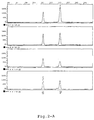
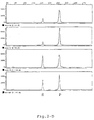
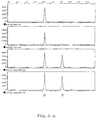
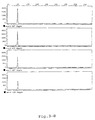
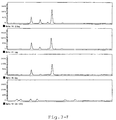
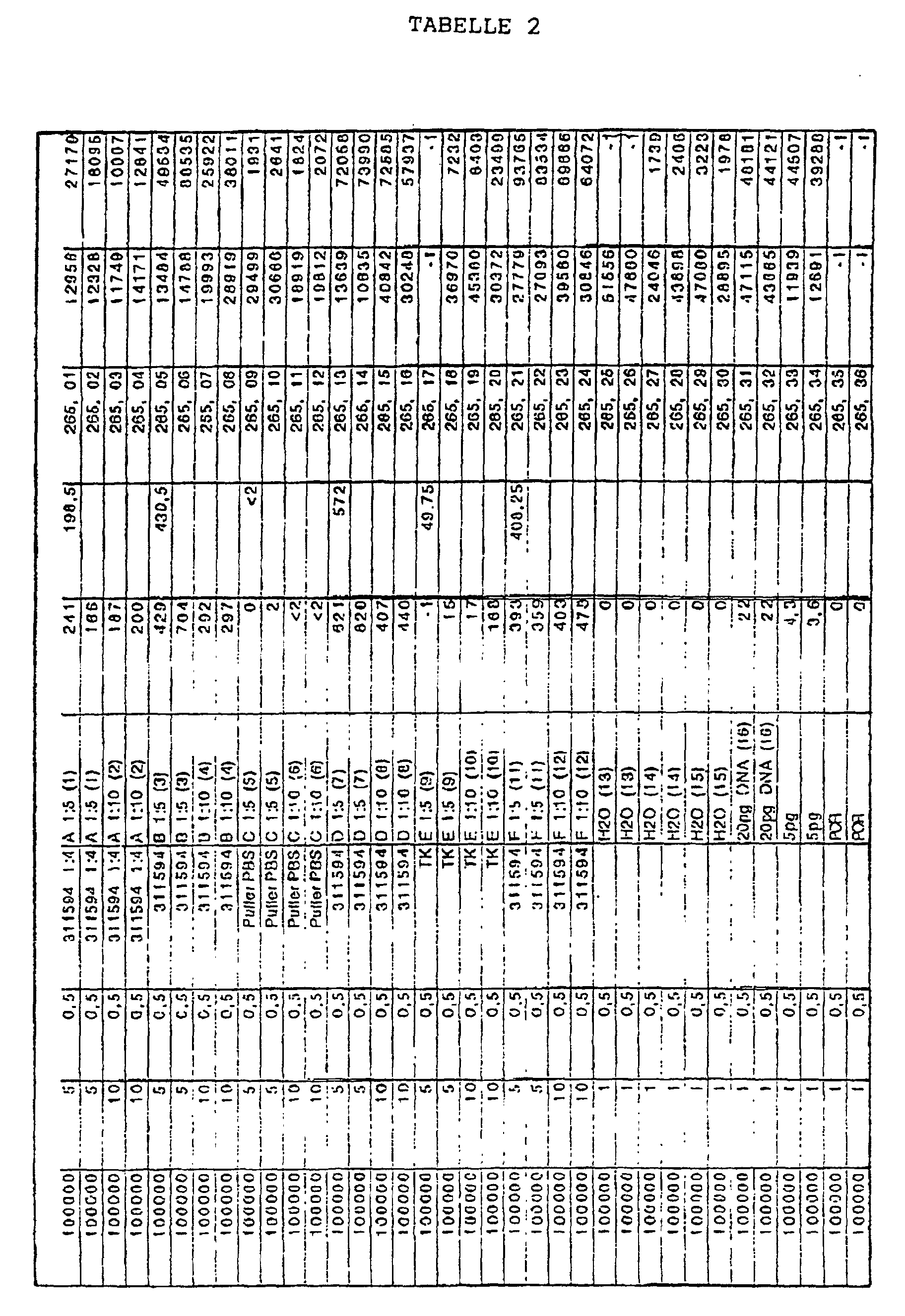
- the Results of the tests are in Table 2 and Fig.2-A to 2-I shown.
- Table 2 shows the type, scope and measured values of the measured samples.
- the number of copies of the standard plasmid pAlu20 is given in column 1; Column 2 gives the dilution level of the sample, where the value 1 is an undiluted sample; Column 1 gives the extracted volume of sample; Columns 4 and 5 indicate the type of sample (batch number of the gp160 preparation; buffer and dilution of the standard); Column 6 gives the measured values in pg Vero total DNA per ml sample and column 7 the mean values of these measurements; Column 8 denotes the number of the lane on which the sample was analyzed (see also: Fig. 2); Columns 9 and 10 indicate the area of the measured standard peak or the peak to be measured of chromosomal DNA.
- the first line is a control line.
- the purpose of this optimization of primers and PCR conditions is the exact and specific measurement in the concentration range 1 pg - 100 pg chicken DNA per ml sample.
- the sequence of a repetitive DNA family was selected as the target sequence for the PCR.
- These DNA families are not only largely species-specific, but also occur in large numbers of copies in the genome and therefore meet the criteria for determining small amounts of specific DNA.
- the CR1-repetitive DNA family which is said to be present in 7,000 to 20,000 copies per genome, has been described in the family of the Aves (birds) (Stumph et al., Nucleic Acids Res. 9 (1981) 5383-5397).
- the primer pair for the determination of the chicken DNA was selected by aligning the repetitive sequences in such a way that it binds specifically within this conserved sequence and amplifies an 84 bp long DNA fragment, namely (Numbering according to Stumph et al. (1984)).
- the primers were produced using phosphoamidite chemistry on a DNA synthesizer (Applied Biosystems 394 DNA Synthesizer)
- the standard plasmids pCR1 + 11 and pCR1-8 were inserted synthetic oligonucleotides that are derived from CR1 Sequence from position 260 to 345 (according to Stumph et al.) contained between the NcoI and SacI site of the pBluescript vector receive .
- the CR1 sequence contains one Insert of 11 nucleotides, and for the standard plasmid pCR1-8 a deletion of 8 nucleotides at position 302 (according to Stumph et al.). Therefore, these have standard plasmids originating PCR products with a length of 95 or 76 bp.
- the Plasmid was purified (QUIAGEN method), the concentration determined by spectroscopic measurement at 260 nm, with EcoRI cut and in a 10mM TRIS / HCl pH 8 / 0.1mM EDTA buffer diluted (Sambrook et al. Molecular Cloning, Second Edition, Cold Spring Harbor Lab Press, Cold Spring Harbor (1989)).
- the calibration line is created in an analogous manner to 2.1.
- Specificity controls were 100 pg mouse and human chromosomal DNA also subjected to PCR.
- As a negative control served 10 ul water.
- Table 3 shows the type, scope and measured values of the measured samples.
- Column 1 shows the number of the measurement (corresponds to a lane number in Fig.3);
- Column 2 shows the amount of genomic DNA used from CEF cells;
- Column 3 shows the area of the measured peak.
- CEF 200 pg / ml 61192 2 CEF 200 pg / ml 77128 3rd
- CEF 40 pg / ml 36856 4th CEF 40 pg / ml 29229 5 CEF20 pg / ml 22035 6
- CEF 10 pg / ml 13658 8th CEF 10 pg / ml 11333
- CEF 4 pg / ml 2958 10 CEF 4 pg / ml 6533 11 CEF 2 pg / ml 3471 12th CEF 2 pg / ml 29
- Table 4 gives the number of standard plasmid pCR + 11 and plasmid PCR1-8 (columns 1 and 2) added, the dilution (column 3), the volume (column 4), the sample description (column 5), the Comment (column 6), the number of CR1 sequences in the sample, calculated with the -standard (column 7) or with the + standard (column 8), the mean in pg of chicken DNA (column 9), the lane in which the sample was analyzed (column 10) and the peak areas of -standard (column 11), wild-type (column 12) and + standard (column 13).
- Fig. 3-E The graphic evaluation of the determination of the PCR products is illustrated in Fig. 3-E.
- the PCR products can be identified by their size.
- the wild-type peak appears at 84 bp, the minus standard peak at 76 bp and the plus standard at 95 bp, the peak areas of the fluorescence signals are given in Table 4.
Landscapes
- Chemical & Material Sciences (AREA)
- Life Sciences & Earth Sciences (AREA)
- Organic Chemistry (AREA)
- Proteomics, Peptides & Aminoacids (AREA)
- Health & Medical Sciences (AREA)
- Zoology (AREA)
- Engineering & Computer Science (AREA)
- Wood Science & Technology (AREA)
- Analytical Chemistry (AREA)
- Immunology (AREA)
- Bioinformatics & Cheminformatics (AREA)
- Molecular Biology (AREA)
- Biophysics (AREA)
- Biotechnology (AREA)
- Physics & Mathematics (AREA)
- Biochemistry (AREA)
- Microbiology (AREA)
- General Engineering & Computer Science (AREA)
- General Health & Medical Sciences (AREA)
- Genetics & Genomics (AREA)
- Chemical Kinetics & Catalysis (AREA)
- Measuring Or Testing Involving Enzymes Or Micro-Organisms (AREA)
- Saccharide Compounds (AREA)
- Investigating Or Analysing Biological Materials (AREA)
Description
- Amplifizieren der in der Probe enthaltenen DNA durch ein Nukleinsäure-Amplifizierungsverfahren unter Verwendung von Primern, welche zu repetitiven genomischen Sequenzen komplementär sind, und
- Detektieren der erhaltenen, amplifizierten DNA umfaßt.
- vor dem Amplifizieren in an sich bekannter Weise eine gegebene Menge einer bekannten Nukleinsäure der Probe als interner Standard zugegeben wird, wobei sich die Standard-Nukleinsäure zumindest in einem zu detektierenden Merkmal von der zu quantifizierenden genomischen DNA unterscheidet, und
- die Menge an amplifizierter genomischer DNA und die Menge an amplifizierter Standard-Nukleinsäure bestimmt werden und ausgehend von der erhaltenen Menge an Standard-Nukleinsäure die Menge der ursprünglich in der Probe vorhandenen genomischen DNA bestimmt wird.



- mindestens eine bekannte Nukleinsäure als internen Standard, welche sich von den zu quantifizierenden Nukleinsäuren in mindestens einem nachweisbaren Charakteristikum unterscheidet,
- Fluoreszenz-markierte Primer, die an die Standardnukleinsäure und an die zu quantifizierende Nukleinsäure binden,
- positive Kontrollen, welche bekannte Mengen an genomischer Nukleinsäure aufweisen,
- eine negative Kontrolle, welche einen von Nukleinsäuren freien Puffer aufweist,
- eine Arbeitsanleitung.
- als internen Standard, das Plasmid pAlu 20
- die Fluoreszenz-markierten Primer Alu A2/2 und AluB
- positive Kontrollen, die bekannte Mengen an Vero-Zell-DNA aufweisen
- eine negative Kontrolle, die einen von genomischer Nukleinsäure freien Puffer aufweist und
- eine Arbeitsanleitung.
- als internen Standard, die Plasmide pCR1+11 und pCR1-8
- die Fluoreszenz-markierten Primer CR1 und CR1A
- positive Kontrollen, die bekannte Mengen an Vogel-DNA aufweisen,
- eine negative Kontrolle, die einen von genomischer Nukleinsäure freien Puffer aufweist und
- eine Arbeitsanleitung.


| DNA | KG | RG | MW | SD | VK% |
| 0 | 4533.92996 | ||||
| 2 | 21599,4238 | 21974,0922 | |||
| 2 | 18983,3919 | 21974,0922 | 20099,8091 | 3822,30746 | 19,0166357 |
| 2 | 19900,3524 | 21974,0922 | |||
| 2 | 25246,6524 | 21974,0922 | |||
| 2 | 14769,225 | 21974,0922 | |||
| 5 | 44883,8779 | 48134,3354 | |||
| 5 | 52631,2571 | 48134,3354 | |||
| 5 | 51109,4418 | 48134,3354 | 45055,9297 | 8108,004 | 17,9954205 |
| 5 | 32068,2966 | 48134,3354 | |||
| 5 | 44586,7749 | 48134,3354 | |||
| 10 | 97555,2485 | 91734,7409 | |||
| 10 | 101015,717 | 91734,7409 | 90598.5793 | 10754.6015 | 11,8706073 |
| 10 | 86335,9144 | 91734,7409 | |||
| 10 | 77487,4372 | 91734,7409 | |||
| 20 | 108834,009 | 178935,552 | |||
| 20 | 199305,642 | 178935,552 | |||
| 20 | 203203,788 | 178935,552 | 172039,16 | 41076,2263 | 23,876091 |
| 20 | 197098,228 | 178935,552 | |||
| 20 | 151754,131 | 178935,552 | |||
| 40 | 363341,143 | 353337,174 | |||
| 40 | 402578,42 | 353337,174 | |||
| 40 | 433036,566 | 353337,174 | 383303,318 | 33743,5526 | 8,8033552 |
| 40 | 351420,48 | 353337,174 | |||
| 40 | 366139,983 | 353337,174 | |||
| 60 | 594815,223 | 527738,796 | |||
| 60 | 505612,823 | 527738.796 | 506228.628 | 69570,4812 | 13,7428975 |
| 60 | 424808.212 | 527738,796 | |||
| 60 | 499678 254 | 527738,796 | |||
| DNA: DNA in pg/ml | |||||
| KG: Kopien gefunden | |||||
| RG: Regression | |||||
| MW: Mittelwert | |||||
| SD: Standardabweichung | |||||
| VK%: Variationskoeffizient |


| 1 | CEF 200 pg/ml | 61192 |
| 2 | CEF 200 pg/ml | 77128 |
| 3 | CEF 40 pg/ml | 36856 |
| 4 | CEF 40 pg/ml | 29229 |
| 5 | CEF20 pg/ml | 22035 |
| 6 | CEF20 pg/ml | 19008 |
| 7 | CEF 10 pg/ml | 13658 |
| 8 | CEF 10 pg/ml | 11333 |
| 9 | CEF 4 pg/ml | 2958 |
| 10 | CEF 4 pg/ml | 6533 |
| 11 | CEF 2 pg/ml | 3471 |
| 12 | CEF 2 pg/ml | 2907 |
| 13 | H2O | 0 |
| 14 | H2O | 0 |
| 16 | Human DNA 100 pg/ml | 0 |
| 17 | Maus DNA 100 pg/ml | 0 |

Claims (17)
- Verfahren zur Quantifizierung von genomischer Gesamt-DNA in einer Probe, umfassend die Schritte:Zugabe einer gegebenen Menge mindestens einer bekannten Nukleinsäure als interner Standard zur Probe, wobei sich die Standard-Nukleinsäure(n) zumindestens in einem zu detektierenden Merkmal von der zu quantifizierenden genomischen DNA unterscheidet;Amplifizieren der genomischen DNA und der Standard-Nukleinsäure in der Probe durch ein Nukleinsäure-Amplifikationsverfahren unter Verwendung von Primern, die zu repetitiven genemischen Sequenzen komplementär sind; undBestimmung der Menge an amplifizierter repetitiver Sequenz und der Menge an amplifizierter Standard-Nukleinsäure(n) und ausgehend von der (den) erhaltenen Menge(n) an Standardard-Nukleinsäure(n) Bestimmung der Menge der ursprünglich in der Probe vorhandenen genomischen DNA.
- Verfahren nach Anspruch 1 oder 2, dadurch gekennzeichnet, dass die Primer an eine Alu-Sequenz oder Alu-äquivalente Sequenz binden.
- Verfahren nach Anspruch 1, dadurch gekennzeichnet, dass die Primer zu einem Teil der Alu-äquivalenten Konsensussequenz komplementär sind.
- Verfahren nach Anspruch 3, dadurch gekennzeichnet, dass die Alu-äquivalenten Konsensussequenz aus Wirbeltieren, wie Nagetieren oder Primaten, ist.
- Verfahren nach einem der Ansprüche 1 bis 4, dadurch gekennzeichnet, dass beim Amplifizieren Primer mit fluoreszierenden, radioaktiven oder chemischen Gruppen, die mit affinen Proteinen und nachgeschaltetenen Detektionsreaktionen detektiert werden können, verwendet werden.
- Verfahren nach einem der Ansprüche 1 bis 5, dadurch gekennzeichnet, dass die Amplifikation in der exponentiellen Phase gestoppt wird.
- Verfahren nach einem der Ansprüche 1 bis 6, dadurch gekennzeichnet, dass die Bestimmung der Menge an amplifizierten Nukleinsäure unter Verwendung eines Nukleinsäure-Detektionsgerätes erfolgt.
- Verfahren nach Anspruch 7, dadurch gekennzeichnet, dass das Nukleinsäure-Detektionsgerät ein fluoreszenz-empfindliches Detektionsgerät ist.
- Verfahren nach einem der Ansprüche 1 bis 8, dadurch gekennzeichnet, dass kontaminierende genomische DNA bestimmt wird.
- Verfahren nach einem der Ansprüche 1 bis 9, dadurch gekennzeichnet, dass die genomische DNA von CHO-, Vero-, BHK-, SK-Hepl-, Hybridom- oder CEC-Zellen quantifiziert wird.
- Verfahren nach einem der Ansprüche 1 bis 10, dadurch gekennzeichnet, dass von der Menge an amplifizierter Standard-Nukleinsäure mittels einer Eichgerade die Menge der in der Probe zu quantifizierenden genomischen DNA bestimmt wird.
- Verwendung eines Verfahrens nach einem der Ansprüche 1 bis 11 zur Überprüfung und Qualitätskontrolle von biologischen Produkten.
- Primer mit der Sequenz gemäß der SEQ ID. 1, 2, 3, und 4.
- Standardplasmide umfassend das Plasmid mit der Bezeichnung pAlu-wt bestehend aus dem Plasmid pCRII enthaltend die Alu repeat-spezifische Sequenz von Basenpaar 148 bis 294; das Plasmid mit der Bezeichnung pAlu20, abgeleitet von Plasmid pAlu-wt mit einer Deletion von 20 Basenpaaren bei Basenpaar 178 der Alu-Sequenz; das Plasmid mit der Bezeichnung pCR1-wt bestehend aus dem Plasmid pCRII enthaltend die CR1-Sequenz von Basenpaar 260 bis 345; das Plasmid mit der Bezeichnung pCR1+11 abgeleitet von Plasmid pCR1-wt mit einer Insertion von 11 Basenpaaren bei Basenpaar 300; und das Plasmid mit der Bezeichnung pCR1-8 abgeleitet von Plasmid pCR1-wt mit einer Deletion bei Basenpaar 302.
- Set zur Quantifizierung genomischer Nukleinsäure in einer Probe, welches umfasst:mindestens eine bekannte Nukleinsäure als internen Standard, welche sich von der zu quantifizierenden Nukleinsäure in mindestens einem nachweisbaren Charakteristikum unterscheidet,Fluoreszenz-markierte Primer, die an repetitive genomische Sequenzen binden,positive Kontrollen, welche bekannte Mengen genomischer Nukleinsäure aufweisen,eine negative Kontrolle, welche einen von Nukleinsäuren freien Puffer aufweist, undeine Arbeitsanleitung.
- Set zur Quantifizierung genomischer Nukleinsäure in einer Probe, welches umfasst:als internen Standard das Plasmid mit der Bezeichnung pAlu20 mit einer Deletion von 20 Basenpaaren bei Basenpaar 178 der Alu-repeat-spezifischen Sequenz, abgeleitet von Plasmid pAlu-wt bestehend aus dem Plasmid pCRII enthaltend die Alu-repeat-spezifische Sequenz von Basenpaar 148 bis 294,die Fluoreszenz-markierten Primer mit der Sequenz gemäß SEQ.ID. NO. 1 und SEQ.ID. No. 2,positive Kontrolle(n), die bekannte Menge(n) an Vero-Zell-DNA aufweist(en),eine negative Kontrolle, welche einen von Nukleinsäuren freien Puffer aufweist, undeine Arbeitsanleitung.
- Set zur Quantifizierung genomischer Nukleinsäure einer Probe, welches umfasst:als internen Standard, die Plasmide mit der Bezeichnung pCR1+11 abgeleitet von Plasmid pCR1-wt mit einer Insertion von 11 Basenpaaren bei Basenpaar 300 und das Plasmid mit der Bezeichnung pCR1-8 abgeleitet von Plasmid pCR2-wt mit einer Deletion bei Basenpaar 302, wobei das Plasmid mit der Bezeichnung pCR1-wt aus dem Plasmid pCRII enthaltend die CR1-Sequenz von Basenpaar 260 bis 345 besteht,Floureszenz-markierte Primer mit der Sequenz gemäß SEQ.ID. NO. 3 und SEQ.ID. No. 4,positive Kontrolle(n), die bekannte Menge(n) and Vogel-DNA aufweist(en),eine negative Kontrolle, welche einen von Nukleinsäuren freien Puffer aufweist, undeine Arbeitsanleitung.
Applications Claiming Priority (3)
| Application Number | Priority Date | Filing Date | Title |
|---|---|---|---|
| AT0183094A AT401270B (de) | 1994-09-26 | 1994-09-26 | Verfahren zur quantifizierung von genomischer dna |
| AT1830/94 | 1994-09-26 | ||
| AT183094 | 1994-09-26 |
Publications (3)
| Publication Number | Publication Date |
|---|---|
| EP0714987A2 EP0714987A2 (de) | 1996-06-05 |
| EP0714987A3 EP0714987A3 (de) | 1997-03-26 |
| EP0714987B1 true EP0714987B1 (de) | 2001-12-12 |
Family
ID=3521916
Family Applications (1)
| Application Number | Title | Priority Date | Filing Date |
|---|---|---|---|
| EP95890171A Expired - Lifetime EP0714987B1 (de) | 1994-09-26 | 1995-09-26 | Verfahren zur Quantifizierung von genomischer DNA |
Country Status (7)
| Country | Link |
|---|---|
| US (1) | US5858658A (de) |
| EP (1) | EP0714987B1 (de) |
| JP (1) | JP3691556B2 (de) |
| AT (2) | AT401270B (de) |
| CA (1) | CA2159043C (de) |
| DE (1) | DE59509937D1 (de) |
| ES (1) | ES2169115T3 (de) |
Families Citing this family (38)
| Publication number | Priority date | Publication date | Assignee | Title |
|---|---|---|---|---|
| AT404357B (de) * | 1995-06-13 | 1998-11-25 | Immuno Ag | Prothrombin-derivate |
| AT405403B (de) | 1997-02-27 | 1999-08-25 | Immuno Ag | Reinigung von von willebrand-faktor durch kationenaustauscherchromatographie |
| AT405516B (de) * | 1997-02-27 | 1999-09-27 | Immuno Ag | Faktor x-analoge mit modifizierter proteasespaltstelle |
| AT405517B (de) | 1997-02-27 | 1999-09-27 | Immuno Ag | Faktor x-deletionsmutanten und analoge davon |
| AT406373B (de) | 1997-02-27 | 2000-04-25 | Immuno Ag | Verfahren zur reinigung von faktor viii/vwf-komplex mittels kationenaustauscherchromatographie |
| US6060243A (en) * | 1997-07-17 | 2000-05-09 | Procrea Biosciences Inc. | Primers for obtaining highly informative DNA markers |
| US5888740A (en) * | 1997-09-19 | 1999-03-30 | Genaco Biomedical Products, Inc. | Detection of aneuploidy and gene deletion by PCR-based gene- dose co-amplification of chromosome specific sequences with synthetic sequences with synthetic internal controls |
| US6251592B1 (en) * | 1998-05-26 | 2001-06-26 | Procrea Biosciences Inc. | STR marker system for DNA fingerprinting |
| AT410216B (de) | 1999-08-10 | 2003-03-25 | Baxter Ag | Faktor x-analogon mit verbesserter aktivierbarkeit |
| AT409382B (de) | 1999-12-22 | 2002-07-25 | Baxter Ag | Verfahren zur detektion, unterscheidung und quantifizierung von freien und eingekapselten nukleinsäuren in einer probe |
| US6691041B2 (en) | 2000-03-31 | 2004-02-10 | Roche Molecular Systems, Inc. | Method for the efficiency-corrected real-time quantification of nucleic acids |
| DE10045521A1 (de) | 2000-03-31 | 2001-10-04 | Roche Diagnostics Gmbh | Nukleinsäureamplifikationen |
| US20050239125A1 (en) * | 2000-09-06 | 2005-10-27 | Hodge Timothy A | Methods for genotype screening |
| US20030087286A1 (en) * | 2000-09-06 | 2003-05-08 | Hodge Timothy A. | Isolation of eukaryotic genomic DNA using magnetically responsive solid functionalized particles |
| US20050272085A1 (en) * | 2000-09-06 | 2005-12-08 | Hodge Timothy A | Methods for forensic and congenic screening |
| US20030082605A1 (en) * | 2000-09-06 | 2003-05-01 | Hodge Timothy A. | Genomic DNA detection method and system thereof |
| US7011943B2 (en) | 2000-09-06 | 2006-03-14 | Transnetyx, Inc. | Method for detecting a designated genetic sequence in murine genomic DNA |
| US7494817B2 (en) * | 2000-09-06 | 2009-02-24 | Transnet Yx, Inc. | Methods for genotype screening using magnetic particles |
| US20050266494A1 (en) * | 2000-09-06 | 2005-12-01 | Hodge Timothy A | System and method for computer network ordering of biological testing |
| JP3752488B2 (ja) * | 2000-09-22 | 2006-03-08 | 株式会社日立製作所 | 核酸解析方法 |
| ATE372380T1 (de) * | 2001-03-15 | 2007-09-15 | Univ Aix Marseille Ii | Herstellung von kalibratoren und ihre verwendung zur quantifizierung von besonderen nukleotidsequenzen |
| US20060014186A1 (en) * | 2001-09-04 | 2006-01-19 | Hodge Timothy A | Methods for genotype screening of a strain disposed on an adsorbent carrier |
| US6825027B2 (en) | 2001-12-10 | 2004-11-30 | Baxter Healthcare S.A. | Method of production of purified hepatitis a virus particles and vaccine preparation |
| US7195905B2 (en) | 2001-12-10 | 2007-03-27 | Baxter Healthcare S.A. | Enveloped virus vaccine and method for production |
| AU2003277451A1 (en) * | 2002-10-18 | 2004-05-04 | Midwest Research Institute, Inc. | Method for quantitative end-point pcr |
| US7829312B2 (en) * | 2003-04-11 | 2010-11-09 | Dna Landmarks, Inc. | Methods for relative quantification of specific nucleic acid sequences |
| JP4476050B2 (ja) * | 2004-06-30 | 2010-06-09 | 株式会社ニデック | 視野計 |
| MX336958B (es) | 2005-11-15 | 2016-02-05 | Philadelphia Children Hospital | Metodos y composiciones para modular la hemostasia. |
| CA2641519A1 (en) | 2006-02-23 | 2007-09-07 | The Children's Hospital Of Philadelphia | Compositions and methods for modulating hemostasis using variant forms of activated factor v |
| US8557762B2 (en) | 2008-11-21 | 2013-10-15 | The Children's Hospital Of Philadelphia | Snake factor V and methods of use thereof as a procoagulant |
| WO2010139767A1 (de) * | 2009-06-04 | 2010-12-09 | Qiagen Gmbh | Amplifikation komplexer nukleinsäuren |
| CN107012204B (zh) * | 2010-09-23 | 2024-11-08 | 凯杰有限公司 | 用于检测和/或定量人类dna的方法 |
| JP6021230B2 (ja) * | 2011-02-21 | 2016-11-09 | キアゲン ゲーエムベーハー | 内部コントロールを使用するヒトdnaを定量するための方法 |
| US9371522B2 (en) | 2011-09-30 | 2016-06-21 | The Children's Hospital Of Philadelphia | Compositions and methods for modulating hemostasis |
| AU2012356826B2 (en) | 2011-12-22 | 2017-08-17 | Centre National De La Recherche Scientifique (Cnrs) | Method of DNA detection and quantification by single-molecule hybridization and manipulation |
| US9932628B2 (en) | 2012-07-27 | 2018-04-03 | Gen-Probe Incorporated | Dual reference calibration method and system for quantifying polynucleotides |
| CN104830842B (zh) * | 2013-08-15 | 2018-06-22 | 侯彦强 | 人外周血循环dna的引物组及定量检测试剂盒 |
| PE20231949A1 (es) | 2015-10-30 | 2023-12-05 | Spark Therapeutics Inc | VARIANTES DEL FACTOR VIII REDUCIDO CON CpG, COMPOSICIONES Y METODOS Y USOS PARA EL TRATAMIENTO DE TRASTORNOS DE LA HEMOSTASIA |
Family Cites Families (12)
| Publication number | Priority date | Publication date | Assignee | Title |
|---|---|---|---|---|
| JPS61162752A (ja) * | 1985-01-11 | 1986-07-23 | Sekisui Chem Co Ltd | Dnaおよび/またはrnaの検出法 |
| US4683195A (en) * | 1986-01-30 | 1987-07-28 | Cetus Corporation | Process for amplifying, detecting, and/or-cloning nucleic acid sequences |
| US4683202A (en) * | 1985-03-28 | 1987-07-28 | Cetus Corporation | Process for amplifying nucleic acid sequences |
| US5213961A (en) * | 1989-08-31 | 1993-05-25 | Brigham And Women's Hospital | Accurate quantitation of RNA and DNA by competetitive polymerase chain reaction |
| DE4014845A1 (de) * | 1990-05-09 | 1991-11-14 | Bayer Ag | Verfahren zur detektion und quantitativen bestimmung von nitrosomonas-staemmen in abwaessern oder boeden |
| NL9100132A (nl) * | 1991-01-25 | 1992-08-17 | Ingeny Bv | Werkwijze voor het detecteren van dna sequentievariatie. |
| US5352579A (en) * | 1991-06-28 | 1994-10-04 | Gen Probe, Inc. | Nucleic acid probes to histoplasma capsulatum |
| AU4248193A (en) * | 1992-05-15 | 1993-12-13 | New England Deaconess Hospital | Quantitation of viral rna by competitive polymerase chain reaction |
| ZA936015B (en) * | 1992-08-24 | 1994-03-10 | Akzo Nv | Elimination of false negatives in nuleic acid detection. |
| US5464945A (en) * | 1992-08-28 | 1995-11-07 | Hoffmann-La Roche Inc. | Oligonucleotide probes specific for the human alpha satellite locus |
| US5393657A (en) * | 1992-11-30 | 1995-02-28 | Genetics Institute, Inc. | Detection of residual host cell DNA by PCR |
| US5457027A (en) * | 1993-05-05 | 1995-10-10 | Becton, Dickinson And Company | Internal controls for isothermal nucleic acid amplification reactions |
-
1994
- 1994-09-26 AT AT0183094A patent/AT401270B/de not_active IP Right Cessation
-
1995
- 1995-09-25 CA CA2159043A patent/CA2159043C/en not_active Expired - Fee Related
- 1995-09-26 ES ES95890171T patent/ES2169115T3/es not_active Expired - Lifetime
- 1995-09-26 JP JP24745395A patent/JP3691556B2/ja not_active Expired - Fee Related
- 1995-09-26 US US08/533,967 patent/US5858658A/en not_active Expired - Lifetime
- 1995-09-26 AT AT95890171T patent/ATE210734T1/de active
- 1995-09-26 DE DE59509937T patent/DE59509937D1/de not_active Expired - Lifetime
- 1995-09-26 EP EP95890171A patent/EP0714987B1/de not_active Expired - Lifetime
Also Published As
| Publication number | Publication date |
|---|---|
| ATA183094A (de) | 1995-12-15 |
| DE59509937D1 (de) | 2002-01-24 |
| ES2169115T3 (es) | 2002-07-01 |
| CA2159043A1 (en) | 1996-03-27 |
| US5858658A (en) | 1999-01-12 |
| AT401270B (de) | 1996-07-25 |
| ATE210734T1 (de) | 2001-12-15 |
| JP3691556B2 (ja) | 2005-09-07 |
| CA2159043C (en) | 2010-01-26 |
| EP0714987A2 (de) | 1996-06-05 |
| JPH08105887A (ja) | 1996-04-23 |
| EP0714987A3 (de) | 1997-03-26 |
Similar Documents
| Publication | Publication Date | Title |
|---|---|---|
| AT401270B (de) | Verfahren zur quantifizierung von genomischer dna | |
| EP0714988B1 (de) | Verfahren zur Quantifizierung von Nukleinsaüren | |
| DE69232773T2 (de) | Vorrichtung zum Nachweis von Nukleinsäure-Amplifikations-Reaktionen | |
| DE69233458T2 (de) | Nukleinsäuretypisierung durch polymeraseverlängerung von oligonukleotiden unter verwendung von terminator-mischungen | |
| DE60129869T2 (de) | Methode zur Quantifizierung von Nukleinsäuren in Echtzeit mittels Effizienzkorrektur | |
| DE69029105T2 (de) | Schnellverfahren zum Nachweis und/oder zur Identifizierung einer Einzelbase in einer Nukleinsäuresequenz und seine Verwendungen | |
| DE69233657T2 (de) | Drei Mikrosatelliten-Repeat-Polymorphe DNA-Marker mit hoher Informationsdichte | |
| Lygo et al. | The validation of short tandem repeat (STR) loci for use in forensic casework | |
| DE69736637T2 (de) | Multiplex amplifikation kurzer tandem repeat loci | |
| DE3750198T2 (de) | Hybridisierungssonden. | |
| DE69506393T2 (de) | Hybridisation-ligitation-verfahren zum nachweis von spezifischen dns sequenzen | |
| DE69617274T2 (de) | Verfahren und vorrichtung für diagnostischen dns-test | |
| DE68926238T2 (de) | Dns-analyse verfahren mit genamplifikation und magnetischen teilchen | |
| DE60213730T2 (de) | Echtzeit-Quantifizierung mit internen Standards | |
| EP0731173B1 (de) | Verfahren zum direkten Nachweisen weniger Nukleinsäurestränge | |
| DE10132147B4 (de) | Verfahren zur schnellen quantitativen Bestimmung von Eu-Bakterien | |
| DE69127999T2 (de) | Interne-Standard zur elektrophoretischen Trennung | |
| DE69814848T2 (de) | Untersuchung von nukleotiden in loesung mit hilfe von pna-sonden | |
| DE69114325T2 (de) | Quantitative DNS-Polymerasebestimmung und Testkit dafür. | |
| AT409383B (de) | Verfahren zur detektion und quantifizierung von nukleinsäuren in einer probe | |
| WO2008110622A1 (de) | Verfahren und testkit zum schnellen nachweis spezifischer nukleinsäuresequenzen, insbesondere zum nachweis von mutationen oder snp's | |
| DE69724375T2 (de) | Verfahren zur Messung der Polynukleotidkonzentration | |
| DE69316028T2 (de) | Methoden zur bestimmung des nukleotidgrösse in dna-fragmenten | |
| WO2004108956A1 (de) | Bi-fluorophor-markierte sonden zum nachweis von nukleinsäuren | |
| DE60025871T2 (de) | Genetisches Screening Verfahren und Vorrichtung |
Legal Events
| Date | Code | Title | Description |
|---|---|---|---|
| PUAI | Public reference made under article 153(3) epc to a published international application that has entered the european phase |
Free format text: ORIGINAL CODE: 0009012 |
|
| AK | Designated contracting states |
Kind code of ref document: A2 Designated state(s): AT BE CH DE DK ES FR GB IE IT LI NL SE |
|
| PUAL | Search report despatched |
Free format text: ORIGINAL CODE: 0009013 |
|
| AK | Designated contracting states |
Kind code of ref document: A3 Designated state(s): AT BE CH DE DK ES FR GB IE IT LI NL SE |
|
| 17P | Request for examination filed |
Effective date: 19970503 |
|
| RAP1 | Party data changed (applicant data changed or rights of an application transferred) |
Owner name: BAXTER AKTIENGESELLSCHAFT |
|
| RAP1 | Party data changed (applicant data changed or rights of an application transferred) |
Owner name: BAXTER AKTIENGESELLSCHAFT |
|
| 17Q | First examination report despatched |
Effective date: 20000808 |
|
| GRAG | Despatch of communication of intention to grant |
Free format text: ORIGINAL CODE: EPIDOS AGRA |
|
| GRAG | Despatch of communication of intention to grant |
Free format text: ORIGINAL CODE: EPIDOS AGRA |
|
| GRAH | Despatch of communication of intention to grant a patent |
Free format text: ORIGINAL CODE: EPIDOS IGRA |
|
| GRAH | Despatch of communication of intention to grant a patent |
Free format text: ORIGINAL CODE: EPIDOS IGRA |
|
| GRAA | (expected) grant |
Free format text: ORIGINAL CODE: 0009210 |
|
| RAP1 | Party data changed (applicant data changed or rights of an application transferred) |
Owner name: BAXTER VACCINE AKTIENGESELLSCHAFT |
|
| AK | Designated contracting states |
Kind code of ref document: B1 Designated state(s): AT BE CH DE DK ES FR GB IE IT LI NL SE |
|
| PG25 | Lapsed in a contracting state [announced via postgrant information from national office to epo] |
Ref country code: IE Free format text: LAPSE BECAUSE OF FAILURE TO SUBMIT A TRANSLATION OF THE DESCRIPTION OR TO PAY THE FEE WITHIN THE PRESCRIBED TIME-LIMIT Effective date: 20011212 |
|
| REF | Corresponds to: |
Ref document number: 210734 Country of ref document: AT Date of ref document: 20011215 Kind code of ref document: T |
|
| REG | Reference to a national code |
Ref country code: CH Ref legal event code: NV Representative=s name: KIRKER & CIE SA Ref country code: CH Ref legal event code: EP |
|
| REG | Reference to a national code |
Ref country code: GB Ref legal event code: IF02 |
|
| REG | Reference to a national code |
Ref country code: IE Ref legal event code: FG4D Free format text: GERMAN |
|
| REF | Corresponds to: |
Ref document number: 59509937 Country of ref document: DE Date of ref document: 20020124 |
|
| PG25 | Lapsed in a contracting state [announced via postgrant information from national office to epo] |
Ref country code: DK Free format text: LAPSE BECAUSE OF FAILURE TO SUBMIT A TRANSLATION OF THE DESCRIPTION OR TO PAY THE FEE WITHIN THE PRESCRIBED TIME-LIMIT Effective date: 20020312 |
|
| ET | Fr: translation filed | ||
| GBT | Gb: translation of ep patent filed (gb section 77(6)(a)/1977) |
Effective date: 20020227 |
|
| REG | Reference to a national code |
Ref country code: ES Ref legal event code: FG2A Ref document number: 2169115 Country of ref document: ES Kind code of ref document: T3 |
|
| REG | Reference to a national code |
Ref country code: IE Ref legal event code: FD4D |
|
| PLBE | No opposition filed within time limit |
Free format text: ORIGINAL CODE: 0009261 |
|
| STAA | Information on the status of an ep patent application or granted ep patent |
Free format text: STATUS: NO OPPOSITION FILED WITHIN TIME LIMIT |
|
| 26N | No opposition filed | ||
| PGFP | Annual fee paid to national office [announced via postgrant information from national office to epo] |
Ref country code: CH Payment date: 20110926 Year of fee payment: 17 |
|
| PGFP | Annual fee paid to national office [announced via postgrant information from national office to epo] |
Ref country code: GB Payment date: 20120925 Year of fee payment: 18 Ref country code: SE Payment date: 20120927 Year of fee payment: 18 |
|
| PGFP | Annual fee paid to national office [announced via postgrant information from national office to epo] |
Ref country code: ES Payment date: 20120926 Year of fee payment: 18 Ref country code: IT Payment date: 20120924 Year of fee payment: 18 Ref country code: FR Payment date: 20121001 Year of fee payment: 18 |
|
| PGFP | Annual fee paid to national office [announced via postgrant information from national office to epo] |
Ref country code: DE Payment date: 20120927 Year of fee payment: 18 Ref country code: BE Payment date: 20120925 Year of fee payment: 18 |
|
| PGFP | Annual fee paid to national office [announced via postgrant information from national office to epo] |
Ref country code: AT Payment date: 20120904 Year of fee payment: 18 Ref country code: NL Payment date: 20120924 Year of fee payment: 18 |
|
| BERE | Be: lapsed |
Owner name: *BAXTER VACCINE A.G. Effective date: 20130930 |
|
| REG | Reference to a national code |
Ref country code: NL Ref legal event code: V1 Effective date: 20140401 |
|
| REG | Reference to a national code |
Ref country code: SE Ref legal event code: EUG |
|
| PG25 | Lapsed in a contracting state [announced via postgrant information from national office to epo] |
Ref country code: SE Free format text: LAPSE BECAUSE OF NON-PAYMENT OF DUE FEES Effective date: 20130927 |
|
| REG | Reference to a national code |
Ref country code: CH Ref legal event code: PL |
|
| REG | Reference to a national code |
Ref country code: AT Ref legal event code: MM01 Ref document number: 210734 Country of ref document: AT Kind code of ref document: T Effective date: 20130926 |
|
| GBPC | Gb: european patent ceased through non-payment of renewal fee |
Effective date: 20130926 |
|
| REG | Reference to a national code |
Ref country code: DE Ref legal event code: R119 Ref document number: 59509937 Country of ref document: DE Effective date: 20140401 |
|
| REG | Reference to a national code |
Ref country code: FR Ref legal event code: ST Effective date: 20140530 |
|
| PG25 | Lapsed in a contracting state [announced via postgrant information from national office to epo] |
Ref country code: GB Free format text: LAPSE BECAUSE OF NON-PAYMENT OF DUE FEES Effective date: 20130926 Ref country code: CH Free format text: LAPSE BECAUSE OF NON-PAYMENT OF DUE FEES Effective date: 20130930 Ref country code: BE Free format text: LAPSE BECAUSE OF NON-PAYMENT OF DUE FEES Effective date: 20130930 Ref country code: LI Free format text: LAPSE BECAUSE OF NON-PAYMENT OF DUE FEES Effective date: 20130930 |
|
| PG25 | Lapsed in a contracting state [announced via postgrant information from national office to epo] |
Ref country code: NL Free format text: LAPSE BECAUSE OF NON-PAYMENT OF DUE FEES Effective date: 20140401 Ref country code: DE Free format text: LAPSE BECAUSE OF NON-PAYMENT OF DUE FEES Effective date: 20140401 Ref country code: FR Free format text: LAPSE BECAUSE OF NON-PAYMENT OF DUE FEES Effective date: 20130930 Ref country code: AT Free format text: LAPSE BECAUSE OF NON-PAYMENT OF DUE FEES Effective date: 20130926 Ref country code: IT Free format text: LAPSE BECAUSE OF NON-PAYMENT OF DUE FEES Effective date: 20130926 |
|
| REG | Reference to a national code |
Ref country code: ES Ref legal event code: FD2A Effective date: 20141007 |
|
| PG25 | Lapsed in a contracting state [announced via postgrant information from national office to epo] |
Ref country code: ES Free format text: LAPSE BECAUSE OF NON-PAYMENT OF DUE FEES Effective date: 20130927 |