EP0710255B1 - Polymers of brominated styrene - Google Patents
Polymers of brominated styrene Download PDFInfo
- Publication number
- EP0710255B1 EP0710255B1 EP94922686A EP94922686A EP0710255B1 EP 0710255 B1 EP0710255 B1 EP 0710255B1 EP 94922686 A EP94922686 A EP 94922686A EP 94922686 A EP94922686 A EP 94922686A EP 0710255 B1 EP0710255 B1 EP 0710255B1
- Authority
- EP
- European Patent Office
- Prior art keywords
- process according
- monomers
- monomer
- polymerization initiator
- polymerization
- Prior art date
- Legal status (The legal status is an assumption and is not a legal conclusion. Google has not performed a legal analysis and makes no representation as to the accuracy of the status listed.)
- Expired - Lifetime
Links
- 229920000642 polymer Polymers 0.000 title claims description 27
- 125000003011 styrenyl group Chemical class [H]\C(*)=C(/[H])C1=C([H])C([H])=C([H])C([H])=C1[H] 0.000 title 1
- 239000000178 monomer Substances 0.000 claims description 94
- 238000006243 chemical reaction Methods 0.000 claims description 51
- 238000000034 method Methods 0.000 claims description 46
- 230000008569 process Effects 0.000 claims description 36
- 239000000203 mixture Substances 0.000 claims description 35
- 238000006116 polymerization reaction Methods 0.000 claims description 33
- 150000003440 styrenes Chemical class 0.000 claims description 29
- 239000003505 polymerization initiator Substances 0.000 claims description 22
- 238000002156 mixing Methods 0.000 claims description 14
- 239000000654 additive Substances 0.000 claims description 13
- YMOONIIMQBGTDU-VOTSOKGWSA-N [(e)-2-bromoethenyl]benzene Chemical compound Br\C=C\C1=CC=CC=C1 YMOONIIMQBGTDU-VOTSOKGWSA-N 0.000 claims description 11
- YMOONIIMQBGTDU-UHFFFAOYSA-N 2-bromoethenylbenzene Chemical compound BrC=CC1=CC=CC=C1 YMOONIIMQBGTDU-UHFFFAOYSA-N 0.000 claims description 8
- 239000003063 flame retardant Substances 0.000 claims description 8
- CYLVUSZHVURAOY-UHFFFAOYSA-N 2,2-dibromoethenylbenzene Chemical compound BrC(Br)=CC1=CC=CC=C1 CYLVUSZHVURAOY-UHFFFAOYSA-N 0.000 claims description 7
- RNFJDJUURJAICM-UHFFFAOYSA-N 2,2,4,4,6,6-hexaphenoxy-1,3,5-triaza-2$l^{5},4$l^{5},6$l^{5}-triphosphacyclohexa-1,3,5-triene Chemical compound N=1P(OC=2C=CC=CC=2)(OC=2C=CC=CC=2)=NP(OC=2C=CC=CC=2)(OC=2C=CC=CC=2)=NP=1(OC=1C=CC=CC=1)OC1=CC=CC=C1 RNFJDJUURJAICM-UHFFFAOYSA-N 0.000 claims description 5
- 238000013329 compounding Methods 0.000 claims description 5
- 241001550224 Apha Species 0.000 claims description 4
- JVPKLOPETWVKQD-UHFFFAOYSA-N 1,2,2-tribromoethenylbenzene Chemical compound BrC(Br)=C(Br)C1=CC=CC=C1 JVPKLOPETWVKQD-UHFFFAOYSA-N 0.000 claims description 3
- 238000006446 extruder reaction Methods 0.000 claims description 3
- 125000004178 (C1-C4) alkyl group Chemical group 0.000 claims description 2
- 239000003086 colorant Substances 0.000 claims description 2
- 238000001816 cooling Methods 0.000 claims description 2
- 239000003999 initiator Substances 0.000 description 24
- 239000000463 material Substances 0.000 description 21
- 238000013461 design Methods 0.000 description 18
- 239000000047 product Substances 0.000 description 17
- 239000004793 Polystyrene Substances 0.000 description 14
- 229920002223 polystyrene Polymers 0.000 description 14
- 238000004519 manufacturing process Methods 0.000 description 8
- 150000002978 peroxides Chemical class 0.000 description 8
- YXFVVABEGXRONW-UHFFFAOYSA-N Toluene Chemical compound CC1=CC=CC=C1 YXFVVABEGXRONW-UHFFFAOYSA-N 0.000 description 6
- 239000003674 animal food additive Substances 0.000 description 6
- 230000008901 benefit Effects 0.000 description 6
- 230000031709 bromination Effects 0.000 description 6
- 238000005893 bromination reaction Methods 0.000 description 6
- 150000003254 radicals Chemical class 0.000 description 6
- 230000009257 reactivity Effects 0.000 description 6
- 238000010586 diagram Methods 0.000 description 5
- 230000003068 static effect Effects 0.000 description 5
- WYGWHHGCAGTUCH-UHFFFAOYSA-N 2-[(2-cyano-4-methylpentan-2-yl)diazenyl]-2,4-dimethylpentanenitrile Chemical compound CC(C)CC(C)(C#N)N=NC(C)(C#N)CC(C)C WYGWHHGCAGTUCH-UHFFFAOYSA-N 0.000 description 4
- WKBOTKDWSSQWDR-UHFFFAOYSA-N Bromine atom Chemical compound [Br] WKBOTKDWSSQWDR-UHFFFAOYSA-N 0.000 description 4
- PPBRXRYQALVLMV-UHFFFAOYSA-N Styrene Chemical compound C=CC1=CC=CC=C1 PPBRXRYQALVLMV-UHFFFAOYSA-N 0.000 description 4
- 238000013459 approach Methods 0.000 description 4
- GDTBXPJZTBHREO-UHFFFAOYSA-N bromine Substances BrBr GDTBXPJZTBHREO-UHFFFAOYSA-N 0.000 description 4
- 229910052794 bromium Inorganic materials 0.000 description 4
- 230000000052 comparative effect Effects 0.000 description 4
- WHHGLZMJPXIBIX-UHFFFAOYSA-N decabromodiphenyl ether Chemical compound BrC1=C(Br)C(Br)=C(Br)C(Br)=C1OC1=C(Br)C(Br)=C(Br)C(Br)=C1Br WHHGLZMJPXIBIX-UHFFFAOYSA-N 0.000 description 4
- LSXWFXONGKSEMY-UHFFFAOYSA-N di-tert-butyl peroxide Chemical compound CC(C)(C)OOC(C)(C)C LSXWFXONGKSEMY-UHFFFAOYSA-N 0.000 description 4
- 229920001519 homopolymer Polymers 0.000 description 4
- 230000007935 neutral effect Effects 0.000 description 4
- DMWVYCCGCQPJEA-UHFFFAOYSA-N 2,5-bis(tert-butylperoxy)-2,5-dimethylhexane Chemical compound CC(C)(C)OOC(C)(C)CCC(C)(C)OOC(C)(C)C DMWVYCCGCQPJEA-UHFFFAOYSA-N 0.000 description 3
- FRIBMENBGGCKPD-UHFFFAOYSA-N 3-(2,3-dimethoxyphenyl)prop-2-enal Chemical compound COC1=CC=CC(C=CC=O)=C1OC FRIBMENBGGCKPD-UHFFFAOYSA-N 0.000 description 3
- 239000004342 Benzoyl peroxide Substances 0.000 description 3
- OMPJBNCRMGITSC-UHFFFAOYSA-N Benzoylperoxide Chemical compound C=1C=CC=CC=1C(=O)OOC(=O)C1=CC=CC=C1 OMPJBNCRMGITSC-UHFFFAOYSA-N 0.000 description 3
- ADCOVFLJGNWWNZ-UHFFFAOYSA-N antimony trioxide Chemical compound O=[Sb]O[Sb]=O ADCOVFLJGNWWNZ-UHFFFAOYSA-N 0.000 description 3
- 235000019400 benzoyl peroxide Nutrition 0.000 description 3
- 230000015572 biosynthetic process Effects 0.000 description 3
- 238000012662 bulk polymerization Methods 0.000 description 3
- 238000010924 continuous production Methods 0.000 description 3
- 229920001577 copolymer Polymers 0.000 description 3
- WNAHIZMDSQCWRP-UHFFFAOYSA-N dodecane-1-thiol Chemical compound CCCCCCCCCCCCS WNAHIZMDSQCWRP-UHFFFAOYSA-N 0.000 description 3
- 230000026030 halogenation Effects 0.000 description 3
- 238000005658 halogenation reaction Methods 0.000 description 3
- 238000010438 heat treatment Methods 0.000 description 3
- 230000000977 initiatory effect Effects 0.000 description 3
- 230000004048 modification Effects 0.000 description 3
- 238000012986 modification Methods 0.000 description 3
- 230000000379 polymerizing effect Effects 0.000 description 3
- 239000000243 solution Substances 0.000 description 3
- 239000002904 solvent Substances 0.000 description 3
- 238000005979 thermal decomposition reaction Methods 0.000 description 3
- XLYOFNOQVPJJNP-UHFFFAOYSA-N water Substances O XLYOFNOQVPJJNP-UHFFFAOYSA-N 0.000 description 3
- FVQMJJQUGGVLEP-UHFFFAOYSA-N (2-methylpropan-2-yl)oxy 2-ethylhexaneperoxoate Chemical compound CCCCC(CC)C(=O)OOOC(C)(C)C FVQMJJQUGGVLEP-UHFFFAOYSA-N 0.000 description 2
- SMZOUWXMTYCWNB-UHFFFAOYSA-N 2-(2-methoxy-5-methylphenyl)ethanamine Chemical compound COC1=CC=C(C)C=C1CCN SMZOUWXMTYCWNB-UHFFFAOYSA-N 0.000 description 2
- NIXOWILDQLNWCW-UHFFFAOYSA-N 2-Propenoic acid Natural products OC(=O)C=C NIXOWILDQLNWCW-UHFFFAOYSA-N 0.000 description 2
- XLPKAUDSAPXLJO-UHFFFAOYSA-N 4-bromo-2-[[2-[(5-bromo-2-hydroxyphenyl)methylideneamino]phenyl]iminomethyl]phenol Chemical compound OC1=CC=C(Br)C=C1C=NC1=CC=CC=C1N=CC1=CC(Br)=CC=C1O XLPKAUDSAPXLJO-UHFFFAOYSA-N 0.000 description 2
- IJGRMHOSHXDMSA-UHFFFAOYSA-N Atomic nitrogen Chemical compound N#N IJGRMHOSHXDMSA-UHFFFAOYSA-N 0.000 description 2
- KAKZBPTYRLMSJV-UHFFFAOYSA-N Butadiene Chemical compound C=CC=C KAKZBPTYRLMSJV-UHFFFAOYSA-N 0.000 description 2
- 101100189588 Canis lupus familiaris PDE6B gene Proteins 0.000 description 2
- OKTJSMMVPCPJKN-UHFFFAOYSA-N Carbon Chemical compound [C] OKTJSMMVPCPJKN-UHFFFAOYSA-N 0.000 description 2
- VYPSYNLAJGMNEJ-UHFFFAOYSA-N Silicium dioxide Chemical compound O=[Si]=O VYPSYNLAJGMNEJ-UHFFFAOYSA-N 0.000 description 2
- NINIDFKCEFEMDL-UHFFFAOYSA-N Sulfur Chemical compound [S] NINIDFKCEFEMDL-UHFFFAOYSA-N 0.000 description 2
- 230000000996 additive effect Effects 0.000 description 2
- -1 aliphatic halides Chemical class 0.000 description 2
- 238000004458 analytical method Methods 0.000 description 2
- WMWLMWRWZQELOS-UHFFFAOYSA-N bismuth(iii) oxide Chemical compound O=[Bi]O[Bi]=O WMWLMWRWZQELOS-UHFFFAOYSA-N 0.000 description 2
- 230000015556 catabolic process Effects 0.000 description 2
- 239000003795 chemical substances by application Substances 0.000 description 2
- 150000001875 compounds Chemical class 0.000 description 2
- 238000010410 dusting Methods 0.000 description 2
- 230000006872 improvement Effects 0.000 description 2
- 238000002347 injection Methods 0.000 description 2
- 239000007924 injection Substances 0.000 description 2
- 238000004898 kneading Methods 0.000 description 2
- 238000011068 loading method Methods 0.000 description 2
- 230000014759 maintenance of location Effects 0.000 description 2
- JKQOBWVOAYFWKG-UHFFFAOYSA-N molybdenum trioxide Chemical compound O=[Mo](=O)=O JKQOBWVOAYFWKG-UHFFFAOYSA-N 0.000 description 2
- 239000008188 pellet Substances 0.000 description 2
- 229920002959 polymer blend Polymers 0.000 description 2
- 239000000843 powder Substances 0.000 description 2
- 238000012545 processing Methods 0.000 description 2
- 238000005086 pumping Methods 0.000 description 2
- 230000035484 reaction time Effects 0.000 description 2
- 230000000979 retarding effect Effects 0.000 description 2
- 238000003892 spreading Methods 0.000 description 2
- 230000007480 spreading Effects 0.000 description 2
- 239000003381 stabilizer Substances 0.000 description 2
- 229910001220 stainless steel Inorganic materials 0.000 description 2
- 239000010935 stainless steel Substances 0.000 description 2
- 229910052717 sulfur Inorganic materials 0.000 description 2
- 239000011593 sulfur Substances 0.000 description 2
- 230000000153 supplemental effect Effects 0.000 description 2
- 238000012360 testing method Methods 0.000 description 2
- 239000012815 thermoplastic material Substances 0.000 description 2
- HGTUJZTUQFXBIH-UHFFFAOYSA-N (2,3-dimethyl-3-phenylbutan-2-yl)benzene Chemical compound C=1C=CC=CC=1C(C)(C)C(C)(C)C1=CC=CC=C1 HGTUJZTUQFXBIH-UHFFFAOYSA-N 0.000 description 1
- BZQKBFHEWDPQHD-UHFFFAOYSA-N 1,2,3,4,5-pentabromo-6-[2-(2,3,4,5,6-pentabromophenyl)ethyl]benzene Chemical compound BrC1=C(Br)C(Br)=C(Br)C(Br)=C1CCC1=C(Br)C(Br)=C(Br)C(Br)=C1Br BZQKBFHEWDPQHD-UHFFFAOYSA-N 0.000 description 1
- YATIGPZCMOYEGE-UHFFFAOYSA-N 1,3,5-tribromo-2-[2-(2,4,6-tribromophenoxy)ethoxy]benzene Chemical compound BrC1=CC(Br)=CC(Br)=C1OCCOC1=C(Br)C=C(Br)C=C1Br YATIGPZCMOYEGE-UHFFFAOYSA-N 0.000 description 1
- OZAIFHULBGXAKX-UHFFFAOYSA-N 2-(2-cyanopropan-2-yldiazenyl)-2-methylpropanenitrile Chemical compound N#CC(C)(C)N=NC(C)(C)C#N OZAIFHULBGXAKX-UHFFFAOYSA-N 0.000 description 1
- XMNIXWIUMCBBBL-UHFFFAOYSA-N 2-(2-phenylpropan-2-ylperoxy)propan-2-ylbenzene Chemical compound C=1C=CC=CC=1C(C)(C)OOC(C)(C)C1=CC=CC=C1 XMNIXWIUMCBBBL-UHFFFAOYSA-N 0.000 description 1
- ZACVGCNKGYYQHA-UHFFFAOYSA-N 2-ethylhexoxycarbonyloxy 2-ethylhexyl carbonate Chemical compound CCCCC(CC)COC(=O)OOC(=O)OCC(CC)CCCC ZACVGCNKGYYQHA-UHFFFAOYSA-N 0.000 description 1
- WFUGQJXVXHBTEM-UHFFFAOYSA-N 2-hydroperoxy-2-(2-hydroperoxybutan-2-ylperoxy)butane Chemical compound CCC(C)(OO)OOC(C)(CC)OO WFUGQJXVXHBTEM-UHFFFAOYSA-N 0.000 description 1
- IWTYTFSSTWXZFU-UHFFFAOYSA-N 3-chloroprop-1-enylbenzene Chemical compound ClCC=CC1=CC=CC=C1 IWTYTFSSTWXZFU-UHFFFAOYSA-N 0.000 description 1
- HRPVXLWXLXDGHG-UHFFFAOYSA-N Acrylamide Chemical compound NC(=O)C=C HRPVXLWXLXDGHG-UHFFFAOYSA-N 0.000 description 1
- NLHHRLWOUZZQLW-UHFFFAOYSA-N Acrylonitrile Chemical compound C=CC#N NLHHRLWOUZZQLW-UHFFFAOYSA-N 0.000 description 1
- YZFVTGCKLQCIFB-UHFFFAOYSA-N C1C2C1CC(C1)C1C2 Chemical compound C1C2C1CC(C1)C1C2 YZFVTGCKLQCIFB-UHFFFAOYSA-N 0.000 description 1
- CURLTUGMZLYLDI-UHFFFAOYSA-N Carbon dioxide Chemical compound O=C=O CURLTUGMZLYLDI-UHFFFAOYSA-N 0.000 description 1
- 229910001018 Cast iron Inorganic materials 0.000 description 1
- PIICEJLVQHRZGT-UHFFFAOYSA-N Ethylenediamine Chemical compound NCCN PIICEJLVQHRZGT-UHFFFAOYSA-N 0.000 description 1
- CERQOIWHTDAKMF-UHFFFAOYSA-N Methacrylic acid Chemical compound CC(=C)C(O)=O CERQOIWHTDAKMF-UHFFFAOYSA-N 0.000 description 1
- VVQNEPGJFQJSBK-UHFFFAOYSA-N Methyl methacrylate Chemical compound COC(=O)C(C)=C VVQNEPGJFQJSBK-UHFFFAOYSA-N 0.000 description 1
- 229920000426 Microplastic Polymers 0.000 description 1
- JLTDJTHDQAWBAV-UHFFFAOYSA-N N,N-dimethylaniline Chemical compound CN(C)C1=CC=CC=C1 JLTDJTHDQAWBAV-UHFFFAOYSA-N 0.000 description 1
- 229910003202 NH4 Inorganic materials 0.000 description 1
- OAICVXFJPJFONN-UHFFFAOYSA-N Phosphorus Chemical compound [P] OAICVXFJPJFONN-UHFFFAOYSA-N 0.000 description 1
- 208000034874 Product colour issue Diseases 0.000 description 1
- 239000006096 absorbing agent Substances 0.000 description 1
- 230000002730 additional effect Effects 0.000 description 1
- 230000032683 aging Effects 0.000 description 1
- XYLMUPLGERFSHI-UHFFFAOYSA-N alpha-Methylstyrene Chemical compound CC(=C)C1=CC=CC=C1 XYLMUPLGERFSHI-UHFFFAOYSA-N 0.000 description 1
- PNEYBMLMFCGWSK-UHFFFAOYSA-N aluminium oxide Inorganic materials [O-2].[O-2].[O-2].[Al+3].[Al+3] PNEYBMLMFCGWSK-UHFFFAOYSA-N 0.000 description 1
- 150000008064 anhydrides Chemical class 0.000 description 1
- 239000004599 antimicrobial Substances 0.000 description 1
- 229910052787 antimony Inorganic materials 0.000 description 1
- WATWJIUSRGPENY-UHFFFAOYSA-N antimony atom Chemical compound [Sb] WATWJIUSRGPENY-UHFFFAOYSA-N 0.000 description 1
- LJCFOYOSGPHIOO-UHFFFAOYSA-N antimony pentoxide Inorganic materials O=[Sb](=O)O[Sb](=O)=O LJCFOYOSGPHIOO-UHFFFAOYSA-N 0.000 description 1
- GHPGOEFPKIHBNM-UHFFFAOYSA-N antimony(3+);oxygen(2-) Chemical compound [O-2].[O-2].[O-2].[Sb+3].[Sb+3] GHPGOEFPKIHBNM-UHFFFAOYSA-N 0.000 description 1
- 239000003963 antioxidant agent Substances 0.000 description 1
- 239000002216 antistatic agent Substances 0.000 description 1
- 230000009286 beneficial effect Effects 0.000 description 1
- 125000001246 bromo group Chemical group Br* 0.000 description 1
- XNNQFQFUQLJSQT-UHFFFAOYSA-N bromo(trichloro)methane Chemical compound ClC(Cl)(Cl)Br XNNQFQFUQLJSQT-UHFFFAOYSA-N 0.000 description 1
- 239000006227 byproduct Substances 0.000 description 1
- 235000011089 carbon dioxide Nutrition 0.000 description 1
- 239000007795 chemical reaction product Substances 0.000 description 1
- GSOLWAFGMNOBSY-UHFFFAOYSA-N cobalt Chemical compound [Co][Co][Co][Co][Co][Co][Co][Co] GSOLWAFGMNOBSY-UHFFFAOYSA-N 0.000 description 1
- 239000010941 cobalt Substances 0.000 description 1
- 229910017052 cobalt Inorganic materials 0.000 description 1
- 238000002485 combustion reaction Methods 0.000 description 1
- 238000005056 compaction Methods 0.000 description 1
- 230000007797 corrosion Effects 0.000 description 1
- 238000005260 corrosion Methods 0.000 description 1
- XJOBOFWTZOKMOH-UHFFFAOYSA-N decanoyl decaneperoxoate Chemical compound CCCCCCCCCC(=O)OOC(=O)CCCCCCCCC XJOBOFWTZOKMOH-UHFFFAOYSA-N 0.000 description 1
- 238000000354 decomposition reaction Methods 0.000 description 1
- 230000007812 deficiency Effects 0.000 description 1
- 238000006731 degradation reaction Methods 0.000 description 1
- 239000000975 dye Substances 0.000 description 1
- 230000000694 effects Effects 0.000 description 1
- 229920001971 elastomer Polymers 0.000 description 1
- 239000000839 emulsion Substances 0.000 description 1
- 239000000945 filler Substances 0.000 description 1
- 239000012467 final product Substances 0.000 description 1
- 238000005187 foaming Methods 0.000 description 1
- 238000005227 gel permeation chromatography Methods 0.000 description 1
- 239000011521 glass Substances 0.000 description 1
- 230000009477 glass transition Effects 0.000 description 1
- 229910052736 halogen Inorganic materials 0.000 description 1
- 150000002367 halogens Chemical class 0.000 description 1
- 231100001261 hazardous Toxicity 0.000 description 1
- BHEPBYXIRTUNPN-UHFFFAOYSA-N hydridophosphorus(.) (triplet) Chemical compound [PH] BHEPBYXIRTUNPN-UHFFFAOYSA-N 0.000 description 1
- 238000002955 isolation Methods 0.000 description 1
- 239000000314 lubricant Substances 0.000 description 1
- FPYJFEHAWHCUMM-UHFFFAOYSA-N maleic anhydride Chemical compound O=C1OC(=O)C=C1 FPYJFEHAWHCUMM-UHFFFAOYSA-N 0.000 description 1
- 229910052757 nitrogen Inorganic materials 0.000 description 1
- QJGQUHMNIGDVPM-UHFFFAOYSA-N nitrogen group Chemical group [N] QJGQUHMNIGDVPM-UHFFFAOYSA-N 0.000 description 1
- 239000002667 nucleating agent Substances 0.000 description 1
- 229920001778 nylon Polymers 0.000 description 1
- 150000002989 phenols Chemical class 0.000 description 1
- 229910052698 phosphorus Inorganic materials 0.000 description 1
- 239000011574 phosphorus Substances 0.000 description 1
- 239000000049 pigment Substances 0.000 description 1
- 239000004014 plasticizer Substances 0.000 description 1
- 230000002028 premature Effects 0.000 description 1
- 230000001737 promoting effect Effects 0.000 description 1
- 238000000746 purification Methods 0.000 description 1
- 238000010791 quenching Methods 0.000 description 1
- 239000000376 reactant Substances 0.000 description 1
- 239000011541 reaction mixture Substances 0.000 description 1
- 230000009467 reduction Effects 0.000 description 1
- 239000011347 resin Substances 0.000 description 1
- 229920005989 resin Polymers 0.000 description 1
- 230000002441 reversible effect Effects 0.000 description 1
- 239000000377 silicon dioxide Substances 0.000 description 1
- 239000012748 slip agent Substances 0.000 description 1
- 239000000344 soap Substances 0.000 description 1
- 238000003756 stirring Methods 0.000 description 1
- 238000003860 storage Methods 0.000 description 1
- 239000000126 substance Substances 0.000 description 1
- OPQYOFWUFGEMRZ-UHFFFAOYSA-N tert-butyl 2,2-dimethylpropaneperoxoate Chemical compound CC(C)(C)OOC(=O)C(C)(C)C OPQYOFWUFGEMRZ-UHFFFAOYSA-N 0.000 description 1
- GJBRNHKUVLOCEB-UHFFFAOYSA-N tert-butyl benzenecarboperoxoate Chemical compound CC(C)(C)OOC(=O)C1=CC=CC=C1 GJBRNHKUVLOCEB-UHFFFAOYSA-N 0.000 description 1
- CIHOLLKRGTVIJN-UHFFFAOYSA-N tert‐butyl hydroperoxide Chemical compound CC(C)(C)OO CIHOLLKRGTVIJN-UHFFFAOYSA-N 0.000 description 1
- YEAUATLBSVJFOY-UHFFFAOYSA-N tetraantimony hexaoxide Chemical compound O1[Sb](O2)O[Sb]3O[Sb]1O[Sb]2O3 YEAUATLBSVJFOY-UHFFFAOYSA-N 0.000 description 1
- 229920001169 thermoplastic Polymers 0.000 description 1
- 239000004416 thermosoftening plastic Substances 0.000 description 1
- 238000012546 transfer Methods 0.000 description 1
- 125000002221 trityl group Chemical group [H]C1=C([H])C([H])=C([H])C([H])=C1C([*])(C1=C(C(=C(C(=C1[H])[H])[H])[H])[H])C1=C([H])C([H])=C([H])C([H])=C1[H] 0.000 description 1
- 238000010792 warming Methods 0.000 description 1
Images

Classifications
-
- C—CHEMISTRY; METALLURGY
- C08—ORGANIC MACROMOLECULAR COMPOUNDS; THEIR PREPARATION OR CHEMICAL WORKING-UP; COMPOSITIONS BASED THEREON
- C08F—MACROMOLECULAR COMPOUNDS OBTAINED BY REACTIONS ONLY INVOLVING CARBON-TO-CARBON UNSATURATED BONDS
- C08F12/00—Homopolymers and copolymers of compounds having one or more unsaturated aliphatic radicals, each having only one carbon-to-carbon double bond, and at least one being terminated by an aromatic carbocyclic ring
- C08F12/02—Monomers containing only one unsaturated aliphatic radical
- C08F12/04—Monomers containing only one unsaturated aliphatic radical containing one ring
- C08F12/14—Monomers containing only one unsaturated aliphatic radical containing one ring substituted by hetero atoms or groups containing heteroatoms
- C08F12/16—Halogens
- C08F12/21—Bromine
-
- C—CHEMISTRY; METALLURGY
- C08—ORGANIC MACROMOLECULAR COMPOUNDS; THEIR PREPARATION OR CHEMICAL WORKING-UP; COMPOSITIONS BASED THEREON
- C08F—MACROMOLECULAR COMPOUNDS OBTAINED BY REACTIONS ONLY INVOLVING CARBON-TO-CARBON UNSATURATED BONDS
- C08F14/00—Homopolymers and copolymers of compounds having one or more unsaturated aliphatic radicals, each having only one carbon-to-carbon double bond, and at least one being terminated by a halogen
- C08F14/16—Monomers containing bromine or iodine
Definitions
- the present invention relates generally to polymers of brominated styrene, and more particularly to methods for the solventless bulk polymerization of brominated styrenes.
- brominated styrene A variety of polymers of brominated styrene are known to the art. These brominated polystyrenes are commonly used as flame retardant additives, and are produced by one of two basic methods - the bromination of polystyrene or the polymerization of bromostyrene monomers.
- the materials made by the two production methods are not equivalent.
- broniination of polystyrene will result in undesirable side chain halogenation, causing a reduction in thermal stability or requiring expensive treatment to remove the more labile bromine atoms.
- Polymers prepared by the polymerization of bromostyrene do not have undesirable side chain halogenation, and are preferred for their relatively greater thermal stability.
- a more significant disadvantage of the bromination of polystyrene method is that the brominated polystyrenes produced are limited to copolymer compositions and molecular weights that are readily available.
- the products must be structures that are stable to, and will not interfere with, the bromination process.
- the polymerization of bromostyrene has several advantages over the bromination of polystyrene. As mentioned, it provides a more thermally stable product because side chain halogenation is avoided. Also, this method can be used to produce a continuum of molecular weights and bromine contents not otherwise available. Further, the polymerization can be accomplished without the use of solvents, and is readily adaptable to more economical continuous production processes. In addition, a broad spectrum of copolymer compositions may be produced simply by adjusting the monomer feed. Finally, production of convenient non-dusting pellets (with the option of incorporating auxiliary additives) is a natural by-product of the inventive polymerization process, and may be provided at no additional cost.
- One embodiment of the present invention there is a process for the solventless polymerization of brominated styrenes, comprising the steps of: (a) blending monomers of brominated styrenes with a polymerization initiator; (b) feeding the monomer/polymerization initiator mix into a prepolymerizer wherein the monomers begin to polymerize; and (c) feeding the monomer/polymerization initiator mix and the partially polymerized bromostyrene into a screw-type extruder to drive the polymerization to a high degree of completion in a short period of time.
- the monomers may be preheated before mixing with the initiator, or a heater may be included in the prepolymerizer.
- a second initiator may be used to facilitate polymerization in the extruder reaction zone.
- the early stages of the polymerization may be carried out in a prepolymerizer which may optionally be preceded by a preheater.
- a blend of monomer and polymerization initiator may be fed into the prepolymerizer and reacted therein, for example, for a time of between one minute and five minutes so as to polymerize at least 20% of the monomers of brominated styrenes.
- the present invention is able to provide an improved polymerization process in which the free radical source for the prepolymerizer is selected so as to provide rapid initiation at temperatures below 100°C.
- Desired additives may be introduced continuously into the brominated polymer during polymerization, thereby avoiding the expense of a separate compounding step.
- the present invention may be used to provide polymers that contain about 50% or more by weight of brominated styrene and that are useful as flame retardant additives.
- the flame retarding polymer produced by the process of the invention may be comprised predominantly of brominated styrene and having an APHA solution color of less than 500 following heat ageing for eight hours at 243°C in a test tube.
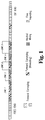
- FIG. 1 is a schematic diagram of one screw extruder used in the processes of the present invention.
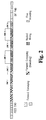
- FIG. 2 is a schematic diagram of a second screw extruder used in the processes of the present invention.
- FIG. 3 is a schematic diagram of a third screw extruder used in the processes of the present invention.
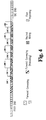
- FIG. 4 is a schematic diagram of a fourth screw extruder used in the processes of the present invention.
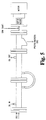
- FIG. 5 is a diagram of a prepolymerizer used in one preferred embodiment of the present invention.
- the present invention provides a process for the continuous bulk polymerization of brominated styrene monomers without the need for hazardous or costly solvents.
- the invention utilizes an extruder as a reaction pot to maintain a very short reaction time while controlling the potentially damaging exotherm.
- the reaction time may be between 2 minutes and 5 minutes and such as to polymerise at least 95 % of the monomers of brominated styrene.
- twin screw extruder Either a single screw or twin screw extruder may be utilized, with the twin screw design being preferred for reasons of higher productivity, better mixing and the ability to take the reaction to a higher degree of completion.
- the entire reaction may be carried out in the extruder, using an initiator to accelerate the polymerization.
- the initiator is conveniently blended into the monomer with the mixture then being fed into the extruder throat.
- a second addition of monomer plus initiator can be made at a point several barrels downstream from the throat. The advantage of this is an increase in productivity; the slower continuous feed at the throat acts as a rear seal for the screw, allowing the faster second feed to be injected under pressure. This avoids the delay of having to wait for the rotating screw elements to carry away low viscosity monomer from the feed throat.
- the screw design of the extruder of the present invention is based on the need to control the reaction by subdividing the polymerization into a series of reaction zones.
- the extruder might be designed to have only one reaction zone.
- Such an extruder might be considered to be a plug flow reactor in which the first barrels are used to heat the monomer to polymerization temperature.
- the middle sections would then contain the highly exothermic runaway polymerization, and the end barrels would further reduce monomer content. Deficiencies flowing from this design include the inability to control temperature in the middle sections, as well as the inability to take the reaction to a high degree of completion.
- the inability to control temperature in the middle sections allows excessive temperatures to occur during the major portion of the reaction, eliminating the option of producing higher molecular weight versions of the product and possibly causing thermal degradation.
- the inability to take the reaction to a high degree of completion is probably caused by inadequate monomer mixing.
- the preferred embodiments of the present invention avoid the aforementioned problems by spreading the reaction out over a larger number of barrels. This is accomplished by selecting a screw design comprising at least three and preferably at least five reaction zones. Each of the zones is characterized by three types of elements in the following order: (1) forward conveying, (2) neutral mixing, (3) flow impeding.
- the forward conveying elements can be of a normal flighted feeding type, conveying kneading type, or similar design intended to move material through the barrel toward the die.
- the neutral mixing section may consist of neutral kneading blocks, turbine blades or other designs that will mix materials but have little or no conveying effect.
- the last element type is a flow impeding design such as a reverse pumping element or a constricting element - sometimes referred to as a blister - which partially blocks the barrel, causing back pressure.
- the series of reaction zones may be preceded by a number of forward conveying elements. These will help to move material away from the throat, into the reaction zones, and serve to form a rear seal for the screw.
- the reaction zones may also be followed by forward conveying elements in order to move product away from the reaction zones and to develop the pressure required to force product through the die.
- the number of required reaction zones is determined in part by the size (screw diameter) of the extruder. For example, in a 57 mm machine acceptable results were achieved with just five reaction zones. In scaling up to a 70 mm extruder however, acceptable results required seven zones, and significant improvements were obtained with a nine-zone design.
- the initiator for the extruder phase of the reaction may be selected from free radical generators well known to the industry.
- the preferred initiators have a reactivity such that they cause rapid polymerization of bromostyrenes to begin at temperatures above approximately 75°C. Examples of initiators that may be used to begin polymerizations within the extruder include
- the extruder is used to complete the reaction which was begun in a prepolymerizer.
- a prepolymerizer is a vessel through which monomer or mixtures of monomers are continuously introduced while a mixture of monomer and polymer is continuously removed. It is preferred that the contents of the vessel be agitated in some fashion to prevent localized areas of high polymer content. Means for heating the contents are desirable, brit are not required if a preheater is used.
- suitable prepolymerizers include stirred tank reactors, static mixing tubes, and even other extruders.
- a low temperature, free radical generator is used to initiate the reaction when a prepolymerizer is utilized.
- the initiator may be selected from peroxides, azo compounds, and other free radical generators known to the industry. Preferred initiators have a reactivity such that they cause rapid polymerization of bromostyrenes at temperatures below approximately 100°C. This reactivity is normally expressed in terms of the half life temperature.
- the initiators of the present invention are selected such that at least half of the initiator has decomposed when held for 1 hour at 100°C. Examples of products meeting this requirement are
- accelerants or promoters may be used to reduce the half life temperature (increase the reactivity) of an initiator.
- the combinations of benzoyl peroxide/dimethylaniline and methylethylketone peroxide/cobalt soaps are well known Lo provide low temperature reactivity.
- the monomer may be 10% to 95% converted to polymer upon exiting the prepolymerizer, with a range of 40% to 95% being preferred.
- a high temperature initiator or blend of initiators may be desirable to complete the polymerization.
- the initiator may be added along with the monomer/polymer mixture, or may be injected several barrels downstream. Examples of suitable free radical generators are listed above (1 hour half lives above 75°C) with 2,5-dimethyl-2,5-bis(t-butylperoxy)hexane being most preferred.
- the most preferred monomer is dibroinostyrene (DBS). As produced by Great Lakes Chemical Corporation DBS normally contains about 15% monobromostyrene and about 3% tribromostyrene by weight.
- the bromostyrene monomers comprise from 1% to 20% monobromostyrene, from 0.5% to 10% tribromostyrene, and from 70% to 98.5% dibromostyrene.
- the monomer may also contain various storage stabilizers such as phenols or compounds of sulfur, nitrogen and phosphorus known to the industry to inhibit premature polymerization.
- the stabilizer may be removed prior to polymerization by water washes or by passing the monomer through a bed of activated carbon, silica, alumina or the like. Although water washes are not required, they provide the benefit of producing faster and more consistent reactivity.
- One advantage of the inventive process is tlie ability to produce a variety of molecular weight polymers within a particular piece of equipment by making only minor changes. It is very desirable and useful to offer these different product variations.
- a low molecular weight brominated polystyrene is known to provide better impact strength in rubber modified polystyrene, while the higher melt viscosity of the high molecular weight versions is preferred for processing characteristics with certain nylons.
- the modification of molecular weight may be accomplished through several different approaches.
- Traditional chain transfer agents such as compounds of sulfur or aliphatic halides may be added to the monomer prior to the start of the reaction.
- 1-dodecanethiol or bromotrichloromethane are known to be very effective.
- a second approach is to simply increase the loading of iiiitiator used to begin the polymerization. Higher concentrations of active chain initiators increase the competition for available monomer and promote certain chain terminating reactions. Both of these approaches will shorten the average chain length.
- a third way to reduce molecular weight is to conduct the polymerization at the higher temperature. This will also increase the concentration of active initiators, as well as increase the probability of chain terminating reactions occurring before chains have grown to high molecular weight.
- a minor amount of other reactive unsaturated monomers essentially free of brominated styrene can be mixed into the brominated styrene and polymerization initiator to create a second monomer/polymerization initiator blend.
- This blend may be fed into the reaction zone wherein at least 80% of the monomers are polymerized.
- the reactive unsaturated monomers essentially free of brominated styrene are used for the purpose of additional property modification. Examples of modifications that might be desirable include changes in color, clarity, lubricity, compatibility, melt viscosity, softening point, thermal stability, ultraviolet stability, viscoelastic behaviour, polarity, biodegradability and static charge dissipation.
- Examples of potential reactive comonomers are maleic anhydride, styrene, substituted styrenes such as ⁇ -methylstyrene and chloromethylstyrene, acrylonitrile, methylmethacrylate, acrylic acid, methacrylic acid, butadiene and acrylamide.
- nonreactive additives may be incorporated during the process without the expense of a separate compounding step.
- Metered addition of materials may be accomplished at the feed throat or via a "crammer feeder" attached to any of the extruder barrels while polymerization is being completed in the extruder.
- the product exiting the extruder is therefore a very desirable package of additives in a homogeneous pellet form, produced without the expense of separate blending and compounding steps.
- additives examples include antioxidants, ultraviolet absorbers, antistatic agents, pigments, dyes, nucleating agents, fillers, slip agents, lubricants, antiblocking agents, plasticizers, tougheners and antimicrobials.
- supplemental flame retardants may be incorporated into the package. These may include nonhalogenated materials such as Sb 2 O 3 , Sb 2 O 5 , Bi 2 O 3 , MoO 3 , NH 4 NO 3 , trityl compounds, 2,3-dimethyl-2,3-diphenylbutane, peroxides, and various phosphorous and/or nitrogen containing materials.
- the bromostyrene polymers may also include other halogenated flame retardants which could be used to increase the overall halogen content, improve efficiency or reduce dripping during combustion. Examples of potential lialogenated additives include
- M PS molecular weight versus polystyrene standards. This is determined by gel permeation chromatography in which the peak retention time of the bromostyrene polymer is equated with the molecular weight of a polystyrene standard having the same retention time.
- Example 1 demonstrates the use of a single screw extruder as a continuous prepolymerizer.
- the material exiting the die was collected on dry ice to quench the reaction and was found to contain 20.4% residual monomer, with the polymeric portion having a molecular weight M PS of 81,900.
- a heated static mixing tube was successfully used as a continuous prepolymerizer.
- Partially converted dibromostyrene prepared using a single screw extruder as in Example 1 was collected and ground.
- a blend of 0.5 parts di-t-butylperoxide per 100 parts of monomer/polymer mixture was continuously fed into the same single screw extruder of Example 1, but with a hotter temperature profile.
- Settings of 210, 210, 220, 220, and 230°C from throat to die were maintained.
- the material going through the extruder had an estimated residence time of 55 seconds and was processed at a rate of 15 kg per hour (33 pounds per hour).
- the material had an M PS of 81,400 and contained 13.4% monomer. After the reaction, the molecular weight was 70,000 and the monomer was reduced to 0.5%. Accordingly, it can be seen that the prepolymerizers of Example 1 or 2 could be arranged in tandem with the extruder of Example 3 to provide a continuous process.
- High molecular weight polydibromostyrene was prepared using a 30 mm twin screw extruder as the only reactor.
- the temperature profile was maintained at 160, 155, 185, 205, 205, 220, 230 and 240°C from throat to die while the screw speed was set at 400 rpm's.
- compositions and rates of feed were: FEED POINT FEED ADDITIVES, % OF MONOMER FEED RATE, kg/hr (LBS/HR) Throat DBS 0.125% t-butylperoxide 4.8 (10.5) Port DBS 0.125% di-t-butylperoxide + 0.0625% t-butylperoctoate 10.5 (23.1) TOTAL 15.3 (33.6)
- the feed throat was located in the first barrel and the injection port was approximately one-fourth of the way towards the die. Experimentation determined that 14 to 16 kg/hr (30 to 35 lbs/hr) was the maximum effective feed rate. Increasing monomer flow at either point resulted in flooding of the throat.
- Low molecular weight polydibromostyrene was also prepared in the twin screw extruder.
- Zone temperatures averaged 155, 160, 155, 155, 155, 220, 155 and 170°C. Screw speed remained at 400 rpm's.
- compositions and rates of feed were: FEED POINT FEED ADDITIVES, % OF MONOMER FEED RATE, kg/hr (LBS/HR) Throat DBS 1.0% t-butylperoctoate + 1.0% 1-dodecanethiol 5 (11.0) Port DBS 0.5% t-butylperoctoate + 1.0% t-butylperbenzoate + 1.0% 1-dodecanethiol + 10.9 (23.9) TOTAL 15.9 (34.9)
- Example 6 contained 5 reaction zones. This did not provide adequate control of the reaction, spreading it out over just a long enough section to provide only medium molecular weight polymer. And with only 5 mixing areas the monomer content was still too high at the vented barrel to permit vacuum devolatilization without foaming.
- the design in Example 7 increased the number of reaction zones from 5 to 6 by adding a small section of neutral turbine mixers. This reduced the monomer to the point at which a vacuum could be applied, but molecular weight was still in the medium range.
- Example 8 the number of reaction zones was increased from 6 to 7, producing acceptable residual monomer and some improvement in molecular weight. However, it was not until Example 9, increasing the number of reaction zones to nine, that high molecular weight and low residual monomer were achieved.
- a supplemental flame retardant was incorporated into polydibromostyrene during continuous production.
- decabromodiphenyloxide (DBDPO) was continuously introduced into the reaction mixture to produce a blend of flame retardants in a single step.
- the following materials were used: FEED POINT FEED ADDITIVES, % OF MONOMER FEED RATE, kg/hr (LBS/HR) Throat DBS 0.20% t-butylperoctoate 4.8 (10.6) Throat DBDPO ---- 5.6 (12.3) Port DBS 0.185% t-butylperoctoate + 0.155% cumenehydroperoxide 11.1 (24.5) TOTAL 21.5 (47.4)
- the temperature profile was maintained at approximately 140, 150, 180, 180, 200, 220, 230 and 240°C from throat to die. Screw speed was 400 rpm.
- the polymeric portion of the product had an M PS of 59,800, while the overall composition had a monomer content of 0.88%.
- the product had a calculated bromine content of 66% (compared with 60% for the neat homopolymer). Accordingly, less of the blend would be required as a flame retarding additive, making it a more efficient and valuable product while being produced at no greater of a manufacturing cost than the homopolymer itself.
- An inorganic synergist was also incorporated during continuous polymerization.
- a prepolymerizer was used to increase the production rate of DBS homopolymer.
- a prepolymerizer was constructed as shown in FIG. 5. In essence it was an elongated stirred tank reactor consisting of a 5 cm (2 inch) jacketed pipe containing a full length stir shaft fitted with a variety of blade types. Heating/cooling was accomplished by pumping oil of the desired temperature through the jacket. Monomer plus peroxide was continuously pumped into the bottom of the reactor and overflowed from the top directly into the twin screw extruder described in Example 4. The temperature profile of the extruder was 200, 210, 210, 210, 210, 220, 220 and 220°C with a screw speed of 400 rpm's. Oil temperature to the prepolymerizer was 145°C. A high temperature peroxide was injected neat into the extruder to complete the reaction. FEED POINT FEED ADDITIVES, % OF MONOMER FEED RATE, kg/hr (LBS/HR) Prepolymerizer DBS 0.25% t-butylperoctoate 32.5 (71.4)
- the partially converted material exiting the prepolymerizer contained 14 to 20% monomer, but after passing through the extruder this was reduced to 0.82%. Molecular weight averaged an M PS of 49,700. The productivity of this design represents a two fold increase over that seen in Example 4 where the prepolymerizer was not used.
- a preheater and a low temperature initiator were used to further increase productivity and to reduce the peak temperature.
- Example 12 The equipment in Example 12 was modified by adding a preheater to the system directly before the prepolymerizer.
- the preheater consisted of a 0.9 metre (3 ft.) long single pass stainless steel heat exchanger using recirculated tempered water as the heat source. Dibroinostyrene monomer was passed through the preheater, warming it to about 70°C before it entered the prepolymerizer. The low temperature initiator was injected into the monomer just before it entered the prepolymerizer. Oil temperature to the prepolymerizer was reduced to 135°C. A high temperature peroxide was injected neat into the extruder to complete the reaction.
- the polymer produced under these conditions had an M PS of 64,000 with a residual monomer of 0.35%.
- the peak temperature within the prepolymerizer was reduced.
- the higher temperature peroxide used in Example 12 required that the reactants be heated to approximately 145°C to provide rapid polymerization.
- the exothermic polymer formation resulted in peak temperatures as high as 280°C. This is not desirable since low levels of thermal decomposition will occur, lowering product quality.
- the initiator of the current Example caused the reaction to begin at a lower temperature. Since the heat of polymerization is independent of the temperature at which the reaction begins, the lower initiation provided a peak exotherm of around 200°C, well below the point of thermal decomposition.
- a copolymer of dibromostyrene was prepared using the design of this invention.
- a mixture of 60% dibromostyrene/30% styrene/10% acrylic acid by weight and containing 0.1% 2,2'-azobis(2,4-dimethylvaleronitrile) was processed through the equipment of Example 13. High temperature peroxide was injected into the extruder to complete the reaction.
- the product was a thermoplastic material with a calculated bromine content of 36%, and was useful as a flame retardant additive in polar resin systems.
- the thermal stability of a DBS homopolymer, PDBS, was compared with that of a polymeric material obtained by bromination of polystyrene (BrPS).
Landscapes
- Chemical & Material Sciences (AREA)
- Health & Medical Sciences (AREA)
- Chemical Kinetics & Catalysis (AREA)
- Medicinal Chemistry (AREA)
- Polymers & Plastics (AREA)
- Organic Chemistry (AREA)
- Addition Polymer Or Copolymer, Post-Treatments, Or Chemical Modifications (AREA)
- Compositions Of Macromolecular Compounds (AREA)
- Polymerisation Methods In General (AREA)
Applications Claiming Priority (3)
| Application Number | Priority Date | Filing Date | Title |
|---|---|---|---|
| US95865 | 1993-07-22 | ||
| US08/095,865 US5304618A (en) | 1993-07-22 | 1993-07-22 | Polymers of brominated styrene |
| PCT/US1994/008278 WO1995003341A1 (en) | 1993-07-22 | 1994-07-22 | Polymers of brominated styrene |
Publications (3)
| Publication Number | Publication Date |
|---|---|
| EP0710255A1 EP0710255A1 (en) | 1996-05-08 |
| EP0710255A4 EP0710255A4 (en) | 1997-03-26 |
| EP0710255B1 true EP0710255B1 (en) | 1999-10-06 |
Family
ID=22253940
Family Applications (1)
| Application Number | Title | Priority Date | Filing Date |
|---|---|---|---|
| EP94922686A Expired - Lifetime EP0710255B1 (en) | 1993-07-22 | 1994-07-22 | Polymers of brominated styrene |
Country Status (7)
| Country | Link |
|---|---|
| US (2) | US5304618A (enExample) |
| EP (1) | EP0710255B1 (enExample) |
| JP (1) | JP3499558B2 (enExample) |
| AU (1) | AU7371094A (enExample) |
| DE (1) | DE69421080T2 (enExample) |
| IL (1) | IL110245A0 (enExample) |
| WO (1) | WO1995003341A1 (enExample) |
Families Citing this family (30)
| Publication number | Priority date | Publication date | Assignee | Title |
|---|---|---|---|---|
| US6037401A (en) * | 1996-02-26 | 2000-03-14 | Dsm N.V. | Flame retardant polyamide composition |
| US5637650A (en) * | 1996-06-14 | 1997-06-10 | Ferro Corporation | Brominated polysytrene having improved thermal stability and color and process for the preparation thereof |
| US6518368B2 (en) | 1996-06-14 | 2003-02-11 | Albemarle Corporation | Brominated polystyrene having improved thermal stability and color and process for the preparation thereof |
| US5723549A (en) * | 1996-06-14 | 1998-03-03 | Ferro Corporation | Process for the preparation of brominated polystyrene having improved color characteristics |
| US6232408B1 (en) | 1996-09-26 | 2001-05-15 | Albemarle Corporation | Brominated polstyrenic resins |
| US6232393B1 (en) | 1996-09-26 | 2001-05-15 | Albemarle Corporation | Polymers flame retarded with brominated polystyrenic resins |
| US6235831B1 (en) | 1996-09-26 | 2001-05-22 | Albemarle Corporation | Polymer compositions containing brominated polystyrenic resins |
| EP0928300B1 (en) | 1996-09-26 | 2000-05-10 | Albemarle Corporation | Process for brominated styrenic polymers |
| US5677390A (en) * | 1996-09-26 | 1997-10-14 | Albemarle Corporation | Process for brominating polystyrenic resins |
| US5767203A (en) * | 1996-09-26 | 1998-06-16 | Albemarle Corporation | Process for brominated styrenic polymers |
| US6326439B1 (en) | 1996-09-26 | 2001-12-04 | Albemarle Corporation | Process for brominating polystyrenic resins |
| US6133381A (en) * | 1996-09-26 | 2000-10-17 | Albelmarle Corporation | Brominated polystyrenic flame retardants |
| US6235844B1 (en) | 1996-09-26 | 2001-05-22 | Albemarle Corporation | Brominated polystyrenic resins |
| US6521714B2 (en) | 1996-09-26 | 2003-02-18 | Albemarle Corporation | Brominated polystyrenic resins |
| US5686538A (en) * | 1996-09-26 | 1997-11-11 | Albemarle Corporation | Process for brominating polystyrenic resins |
| CN1122046C (zh) * | 1997-11-18 | 2003-09-24 | 阿尔伯麦尔公司 | 制备具有改进颜色性能的溴化聚苯乙烯方法 |
| US6277314B1 (en) | 1998-02-04 | 2001-08-21 | Flextech Packaging, Ltd. | System and method for producing polymeric film |
| CN1518580A (zh) | 2000-09-22 | 2004-08-04 | ��Ļ���Ű˾ | 改良的阻燃剂-聚酰胺组合物 |
| US7202296B2 (en) * | 2003-12-19 | 2007-04-10 | Albemarle Corporation | Flame retardant compositions and their use |
| US7612156B2 (en) | 2004-09-30 | 2009-11-03 | Chemtura Corporation | Polymers of bromostyrenes having controlled molecular weight |
| CA2687508C (en) * | 2007-06-07 | 2016-05-24 | Albemarle Corporation | Low molecular weight brominated polymers and their use in thermoplastic formulations |
| CN100567234C (zh) * | 2008-03-14 | 2009-12-09 | 山东天一化学有限公司 | 一种三溴苯乙烯的制备方法 |
| CN101240047B (zh) * | 2008-03-14 | 2010-06-09 | 山东天一化学有限公司 | 一种聚三溴苯乙烯的制备方法 |
| US8993684B2 (en) | 2008-06-06 | 2015-03-31 | Albemarle Corporation | Low molecular weight brominated polymers, processes for their manufacture and their use in thermoplastic formulations |
| JP6133406B2 (ja) * | 2012-05-07 | 2017-05-24 | ビーエーエスエフ ソシエタス・ヨーロピアBasf Se | 混合ニーダを運転する方法 |
| WO2015162609A1 (en) * | 2014-04-23 | 2015-10-29 | Bromine Compounds Ltd. | Process for the polymerization of pentabromobenzyl (meth) acrylate, the polymer obtained and uses thereof |
| CN106117409A (zh) * | 2016-06-20 | 2016-11-16 | 山东大学 | 一种聚溴化苯乙烯的制备方法 |
| EP3590977B1 (de) * | 2018-07-05 | 2020-09-30 | Karlsruher Institut für Technologie | Lösungsmittelfreies polymerisierbares gemisch, verfahren zur herstellung eines funktionalisierten polymers und funktionalisiertes polymer |
| US11670836B2 (en) * | 2020-10-29 | 2023-06-06 | Advanced Semiconductor Engineering, Inc. | Semiconductor device package |
| EP4741429A1 (en) | 2024-11-12 | 2026-05-13 | LANXESS Corporation | Low molecular weight polybromostyrene as flame retardant, process of manufacture and applications thereof |
Family Cites Families (16)
| Publication number | Priority date | Publication date | Assignee | Title |
|---|---|---|---|---|
| US3058929A (en) * | 1958-07-24 | 1962-10-16 | Dow Chemical Co | Method of polymerizing a vinyl aromatic monomer in the presence of an organic bromide and an organic peroxide and a self-extinguishing vinyl aromatic polymer containing same |
| DE1112631B (de) * | 1959-08-26 | 1961-08-10 | Basf Ag | Verfahren zur kontinuierlichen Blockpolymerisation von Styrol |
| BE624340A (enExample) * | 1961-11-02 | |||
| US3534012A (en) * | 1969-05-01 | 1970-10-13 | Dow Chemical Co | Anionic polymerization of nuclear halogenated styrenes |
| US3794471A (en) * | 1971-08-16 | 1974-02-26 | Monsanto Co | Continuous polymerization apparatus |
| JPS4926951A (enExample) * | 1972-07-12 | 1974-03-09 | ||
| NL7812460A (nl) * | 1978-12-22 | 1980-06-24 | Stamicarbon | Broombevattend polymeer en werkwijze voor het bereiden van een broombevattend polymeer. |
| JPS5896627A (ja) * | 1981-12-04 | 1983-06-08 | Nippon Ester Co Ltd | 連続重合方法 |
| US4518194A (en) * | 1983-11-23 | 1985-05-21 | Kirkham Robert L | Automatic truck bed cover assembly |
| AU580833B2 (en) * | 1984-12-05 | 1989-02-02 | General Electric Company | Thermoplastics containing brominated homopolymer |
| JPS61189239A (ja) * | 1985-02-19 | 1986-08-22 | Mitsui Toatsu Chem Inc | ブロモスチレン組成物 |
| US4755573A (en) * | 1985-11-15 | 1988-07-05 | General Electric Company | Cationic polymerization of bromoalkenyl aromatic compounds with aromatic chain transfer agent, and products |
| US4728463A (en) * | 1986-08-18 | 1988-03-01 | Ethyl Corporation | Brominated fire retardant composition |
| US5223594A (en) * | 1987-07-08 | 1993-06-29 | Hitachi, Ltd. | Flame-retardant resin composition containing a bromostyrene prepolymer |
| WO1992004387A1 (en) * | 1990-09-06 | 1992-03-19 | Great Lakes Chemical Corporation | Flame retardant brominated styrene-based latices |
| US5274029A (en) * | 1990-09-10 | 1993-12-28 | Kelley Joseph M | Styrene polymerization process |
-
1993
- 1993-07-22 US US08/095,865 patent/US5304618A/en not_active Expired - Lifetime
-
1994
- 1994-03-22 US US08/215,803 patent/US5369202A/en not_active Expired - Fee Related
- 1994-07-07 IL IL110245A patent/IL110245A0/xx unknown
- 1994-07-22 EP EP94922686A patent/EP0710255B1/en not_active Expired - Lifetime
- 1994-07-22 DE DE69421080T patent/DE69421080T2/de not_active Expired - Lifetime
- 1994-07-22 AU AU73710/94A patent/AU7371094A/en not_active Abandoned
- 1994-07-22 WO PCT/US1994/008278 patent/WO1995003341A1/en not_active Ceased
- 1994-07-22 JP JP50533495A patent/JP3499558B2/ja not_active Expired - Fee Related
Also Published As
| Publication number | Publication date |
|---|---|
| EP0710255A1 (en) | 1996-05-08 |
| DE69421080D1 (de) | 1999-11-11 |
| IL110245A0 (en) | 1994-10-21 |
| US5369202A (en) | 1994-11-29 |
| JPH09502210A (ja) | 1997-03-04 |
| US5304618A (en) | 1994-04-19 |
| WO1995003341A1 (en) | 1995-02-02 |
| EP0710255A4 (en) | 1997-03-26 |
| JP3499558B2 (ja) | 2004-02-23 |
| DE69421080T2 (de) | 2000-04-13 |
| AU7371094A (en) | 1995-02-20 |
Similar Documents
| Publication | Publication Date | Title |
|---|---|---|
| US5304618A (en) | Polymers of brominated styrene | |
| CN1151176C (zh) | 甲基丙烯酸系聚合物的生产方法 | |
| CA1129150A (en) | Process for the continuous mass polymerization of alkenyl-aromatic compounds | |
| JPWO2009107765A1 (ja) | 熱可塑性共重合体の製造方法 | |
| CN104024287B (zh) | 用于制备具有高熔体流动速率的聚苯乙烯的方法 | |
| US5221787A (en) | Method of preparing maleic anhydride terpolymers | |
| CN102101898B (zh) | 一种连续制备聚合物的方法及其装置 | |
| US10407523B2 (en) | Continuous process for preparation of high heat resistance copolymers | |
| JP2011132426A (ja) | ゴム強化熱可塑性樹脂組成物の製造方法 | |
| KR20090033988A (ko) | 내열 특성이 우수한 열가소성 공중합 수지의 연속 제조방법 | |
| JP2009191096A (ja) | 熱可塑性樹脂組成物の製造方法 | |
| Villalobos et al. | Bulk and solution processes | |
| JP5058407B2 (ja) | 場合によりエチレン性不飽和ニトリルを含有した、ビニル芳香族ポリマーの生産プロセス | |
| SU703025A3 (ru) | Способ получени привитых сополимеров | |
| US5880232A (en) | Process for producing styrene based polymer and molded articles comprising the polymer | |
| JPS6243409A (ja) | 熱可塑性樹脂の製造方法 | |
| JP4325475B2 (ja) | メタクリル系重合体及びその製造方法 | |
| JPS58132002A (ja) | メタクリレ−ト系共重合体の連続的製造方法 | |
| GB2196011A (en) | Improvements in the production of graft copolymers | |
| CN114106250A (zh) | 一种弹性体树脂组合物及其制备方法 | |
| JPH07116262B2 (ja) | α−メチルスチレン共重合体の製造方法 | |
| CN1127511A (zh) | 生产橡胶改性的苯乙烯树脂的方法 | |
| JPH0586105A (ja) | マレイミド系共重合体の製造方法 | |
| CN102850481A (zh) | 一种枝状结构(甲基)丙烯酸酯类聚合物的制备方法 | |
| JPH0137404B2 (enExample) |
Legal Events
| Date | Code | Title | Description |
|---|---|---|---|
| PUAI | Public reference made under article 153(3) epc to a published international application that has entered the european phase |
Free format text: ORIGINAL CODE: 0009012 |
|
| 17P | Request for examination filed |
Effective date: 19960108 |
|
| AK | Designated contracting states |
Kind code of ref document: A1 Designated state(s): DE FR GB IT NL |
|
| A4 | Supplementary search report drawn up and despatched |
Effective date: 19970206 |
|
| AK | Designated contracting states |
Kind code of ref document: A4 Designated state(s): DE FR GB IT NL |
|
| 17Q | First examination report despatched |
Effective date: 19970807 |
|
| GRAG | Despatch of communication of intention to grant |
Free format text: ORIGINAL CODE: EPIDOS AGRA |
|
| GRAG | Despatch of communication of intention to grant |
Free format text: ORIGINAL CODE: EPIDOS AGRA |
|
| GRAH | Despatch of communication of intention to grant a patent |
Free format text: ORIGINAL CODE: EPIDOS IGRA |
|
| GRAH | Despatch of communication of intention to grant a patent |
Free format text: ORIGINAL CODE: EPIDOS IGRA |
|
| GRAA | (expected) grant |
Free format text: ORIGINAL CODE: 0009210 |
|
| AK | Designated contracting states |
Kind code of ref document: B1 Designated state(s): DE FR GB IT NL |
|
| REF | Corresponds to: |
Ref document number: 69421080 Country of ref document: DE Date of ref document: 19991111 |
|
| ET | Fr: translation filed | ||
| ITF | It: translation for a ep patent filed | ||
| PLBE | No opposition filed within time limit |
Free format text: ORIGINAL CODE: 0009261 |
|
| STAA | Information on the status of an ep patent application or granted ep patent |
Free format text: STATUS: NO OPPOSITION FILED WITHIN TIME LIMIT |
|
| 26N | No opposition filed | ||
| REG | Reference to a national code |
Ref country code: GB Ref legal event code: IF02 |
|
| PG25 | Lapsed in a contracting state [announced via postgrant information from national office to epo] |
Ref country code: IT Free format text: LAPSE BECAUSE OF NON-PAYMENT OF DUE FEES Effective date: 20050722 |
|
| PGFP | Annual fee paid to national office [announced via postgrant information from national office to epo] |
Ref country code: GB Payment date: 20120625 Year of fee payment: 19 |
|
| PGFP | Annual fee paid to national office [announced via postgrant information from national office to epo] |
Ref country code: DE Payment date: 20120731 Year of fee payment: 19 Ref country code: FR Payment date: 20120712 Year of fee payment: 19 |
|
| PGFP | Annual fee paid to national office [announced via postgrant information from national office to epo] |
Ref country code: NL Payment date: 20120713 Year of fee payment: 19 |
|
| REG | Reference to a national code |
Ref country code: NL Ref legal event code: V1 Effective date: 20140201 |
|
| GBPC | Gb: european patent ceased through non-payment of renewal fee |
Effective date: 20130722 |
|
| REG | Reference to a national code |
Ref country code: FR Ref legal event code: ST Effective date: 20140331 |
|
| PG25 | Lapsed in a contracting state [announced via postgrant information from national office to epo] |
Ref country code: DE Free format text: LAPSE BECAUSE OF NON-PAYMENT OF DUE FEES Effective date: 20140201 Ref country code: NL Free format text: LAPSE BECAUSE OF NON-PAYMENT OF DUE FEES Effective date: 20140201 Ref country code: GB Free format text: LAPSE BECAUSE OF NON-PAYMENT OF DUE FEES Effective date: 20130722 |
|
| REG | Reference to a national code |
Ref country code: DE Ref legal event code: R119 Ref document number: 69421080 Country of ref document: DE Effective date: 20140201 |
|
| PG25 | Lapsed in a contracting state [announced via postgrant information from national office to epo] |
Ref country code: FR Free format text: LAPSE BECAUSE OF NON-PAYMENT OF DUE FEES Effective date: 20130731 |