EP0698092B1 - Antisense oligonucleotides which combat aberrant splicing and methods of using the same - Google Patents
Antisense oligonucleotides which combat aberrant splicing and methods of using the same Download PDFInfo
- Publication number
- EP0698092B1 EP0698092B1 EP94916064A EP94916064A EP0698092B1 EP 0698092 B1 EP0698092 B1 EP 0698092B1 EP 94916064 A EP94916064 A EP 94916064A EP 94916064 A EP94916064 A EP 94916064A EP 0698092 B1 EP0698092 B1 EP 0698092B1
- Authority
- EP
- European Patent Office
- Prior art keywords
- antisense oligonucleotide
- splicing
- mrna
- aberrant
- intron
- Prior art date
- Legal status (The legal status is an assumption and is not a legal conclusion. Google has not performed a legal analysis and makes no representation as to the accuracy of the status listed.)
- Expired - Lifetime
Links
Images



Classifications
-
- C—CHEMISTRY; METALLURGY
- C12—BIOCHEMISTRY; BEER; SPIRITS; WINE; VINEGAR; MICROBIOLOGY; ENZYMOLOGY; MUTATION OR GENETIC ENGINEERING
- C12N—MICROORGANISMS OR ENZYMES; COMPOSITIONS THEREOF; PROPAGATING, PRESERVING, OR MAINTAINING MICROORGANISMS; MUTATION OR GENETIC ENGINEERING; CULTURE MEDIA
- C12N15/00—Mutation or genetic engineering; DNA or RNA concerning genetic engineering, vectors, e.g. plasmids, or their isolation, preparation or purification; Use of hosts therefor
- C12N15/09—Recombinant DNA-technology
- C12N15/11—DNA or RNA fragments; Modified forms thereof; Non-coding nucleic acids having a biological activity
- C12N15/113—Non-coding nucleic acids modulating the expression of genes, e.g. antisense oligonucleotides; Antisense DNA or RNA; Triplex- forming oligonucleotides; Catalytic nucleic acids, e.g. ribozymes; Nucleic acids used in co-suppression or gene silencing
-
- A—HUMAN NECESSITIES
- A61—MEDICAL OR VETERINARY SCIENCE; HYGIENE
- A61K—PREPARATIONS FOR MEDICAL, DENTAL OR TOILETRY PURPOSES
- A61K38/00—Medicinal preparations containing peptides
-
- C—CHEMISTRY; METALLURGY
- C12—BIOCHEMISTRY; BEER; SPIRITS; WINE; VINEGAR; MICROBIOLOGY; ENZYMOLOGY; MUTATION OR GENETIC ENGINEERING
- C12N—MICROORGANISMS OR ENZYMES; COMPOSITIONS THEREOF; PROPAGATING, PRESERVING, OR MAINTAINING MICROORGANISMS; MUTATION OR GENETIC ENGINEERING; CULTURE MEDIA
- C12N2310/00—Structure or type of the nucleic acid
- C12N2310/30—Chemical structure
- C12N2310/32—Chemical structure of the sugar
- C12N2310/321—2'-O-R Modification
-
- C—CHEMISTRY; METALLURGY
- C12—BIOCHEMISTRY; BEER; SPIRITS; WINE; VINEGAR; MICROBIOLOGY; ENZYMOLOGY; MUTATION OR GENETIC ENGINEERING
- C12N—MICROORGANISMS OR ENZYMES; COMPOSITIONS THEREOF; PROPAGATING, PRESERVING, OR MAINTAINING MICROORGANISMS; MUTATION OR GENETIC ENGINEERING; CULTURE MEDIA
- C12N2310/00—Structure or type of the nucleic acid
- C12N2310/30—Chemical structure
- C12N2310/35—Nature of the modification
- C12N2310/352—Nature of the modification linked to the nucleic acid via a carbon atom
- C12N2310/3521—Methyl
Definitions
- the present invention relates to medicaments for combating aberrant splicing of pre-mRNA molecules and upregulating gene expression and antisense oligonucleotides useful for carrying out the same.
- oligonucleotides as modulators of gene expression is currently under intense investigation. Most of the efforts are focused on inhibiting the expression of targeted genes such as oncogenes or viral genes.
- the oligonucleotides are directed either against RNA (antisense oligonucleotides) ( M. Ghosh and J. Cohen, Prog. Nucleic Acid Res. Mol. Biol. 42, 79 (1992 ) ; L. Neckers et al., Crit. Rev. Oncog. 3, 175 (1992 )) or against DNA where they form triplex structures inhibiting transcription by RNA polymerase II ( J. Hanvey et al., Science 258, 1481 (1992 ); W. McShan et al., J.
- oligonucleotides must promote a decay of the preexisting, undesirable protein by effectively preventing its formation de novo. Such techniques are not useful where the object is to upregulate production of the native protein. Yet, in cases where the expression of a gene is downregulated because of mutations therein, a means for upregulating gene expression through antisense technology would be extremely useful.
- the present invention provides means for using antisense oligonucleotides to upregulate expression of a DNA containing a mutation which would otherwise lead to downregulation of that gene by aberrant splicing of the pre-mRNA it encodes.
- a medicament for combatting aberrant splicing in a pre-mRNA molecule containing a mutation When present in the pre-mRNA, the mutation causes the pre-mRNA to splice incorrectly and produce an aberrant mRNA or mRNA fragment different from the mRNA ordinarily resulting from the pre-mRNA.
- the pre-mRNA molecule contains: (i) a first set of splice elements defining a native intron which is removed by splicing when the mutation is absent to produce a first mRNA molecule encoding a native protein, and (ii) a second set of splice elements induced by the mutation which define an aberrant intron different from the native intron, which aberrant intron is removed by splicing when the mutation is present to produce an aberrant second mRNA molecule different from the first mRNA molecule.
- the medicament comprises an antisense oligonucleotide capable of hibridizing to the pre-mRNA molecule to create a duplex molecule under conditions which permit splicing.
- the antisense oligonucleotide is one which does not activate RNase H, and is selected to block a member of the aberrant second set of splice elements so that the native intron is removed by splicing and the first mRNA molecule encoding a native protein is produced.
- a medicament for upregulating expression of a native protein in a cell containing a DNA encoding the native protein which DNA further contains a mutation which causes downregulation of the native protein by aberrant splicing thereof. More particularly, the DNA encodes a pre-mRNA, the pre-mRNA having the characteristics set forth above.
- the medicament comprises an antisense oligonucleotide having the characteristics described above so that the native intron is removed by splicing and the native protein is produced by the cell.
- a third aspect of the present invention is an antisense oligonucleotide useful for combatting aberrant splicing in a pre-mRNA molecule containing a mutation.
- the pre-mRNA molecule contains a first set and second set of splice elements having the characteristics set forth above.
- the antisense oligonucleotide comprises an oligonucleotide which (i) hybridizes to the pre-mRNA to form a duplex molecule; (ii) does not activate RNase H; and (iii) blocks a member of the aberrant second set of splice elements.
- Introns are portions of eukaryotic DNA which intervene between the coding portions, or "exons," of that DNA. Introns and exons are transcribed into RNA termed “primary transcript, precursor to mRNA" (or “pre-mRNA”). Introns must be removed from the pre-mRNA so that the native protein encoded by the exons can be produced (the term “native protein” as used herein refers to naturally occuring, wild type, or functional protein). The removal of introns from pre-mRNA and subsequent joining of the exons is carried out in the splicing process.
- RNA after transcription but before translation RNA after transcription but before translation.
- a "pre-mRNA” is an RNA which contains both exons and intron(s)
- an "mRNA” is an RNA in which the intron(s) have been removed and the exons joined together sequentially so that the protein may be translated therefrom by the ribosomes.
- Introns are defined by a set of "splice elements" which are relatively short, conserved RNA segments which bind the various splicing factors which carry out the splicing reactions. Thus, each intron is defined by a 5' splice site, a 3' splice site, and a branch point situated therebetween.
- splice elements are "blocked", as discussed herein, when an antisense oligonucleotide either fully or partially overlaps the element, or binds to the pre-mRNA at a position sufficiently close to the element to disrupt the binding and function of the splicing factors which would ordinarily mediate the particular splicing reaction which occurs at that element (e.g., binds to the pre-mRNA at a position within 3, 6, 9, 12, 15, or 18 nucleotides of the element to be blocked).
- the mutation in the native DNA and pre-mRNA may be either a substitution mutation or a deletion mutation which creates a new, aberrant, splice element.
- the aberrant splice element is thus one member of a set of aberrant splice elements which define an aberrant intron.
- the remaining members of the aberrant set of splice elements may also be members of the set of splice elements which define the native intron.
- the mutation creates a new, aberrant 3' splice site which is both upstream from (i.e., 5' to) the native 3' splice site and downstream from (i.e., 3' to) the native branch point
- the native 5' splice site and the native branch point may serve as members of both the native set of splice elements and the aberrant set of splice elements.
- the mutation may cause native regions of the RNA which are normally dormant, or play no role as splicing elements, to become activated and serve as splicing elements. Such elements are referred to as "cryptic" elements.
- the mutation may activate a cryptic branch point between the aberrant mutated 3' splice site and the native branch point.
- a mutation may create an additional, aberrant 5' splice site which is situated between the native branch point and the native 5' splice site and may further activate a cryptic 3' splice site and a cryptic branch point sequentially upstream from the aberrant mutated 5' splice site.
- the native intron becomes divided into two aberrant introns, with a new exon situated therebetween.
- a native splice element particularly a branch point
- a cryptic element i.e., a cryptic branch point
- it may be situated in either the intron or one of the adjacent exons.
- the antisense oligonucleotide may be synthesized to block a variety of different splice elements to carry out the instant invention: it may block a mutated element, a cryptic element, or a native element; it may block a 5' splice site, a 3' splice site, or a branch point. In general, it will not block a splice element which also defines the native intron, of course taking into account the situation where blocking a native splice element activates a cryptic element which then serves as a surrogate member of the native set of splice elements and participates in correct splicing, as discussed above.
- the length of the antisense oligonucleotide (i.e., the number of nucleotides therein) is not critical so long as it binds selectively to the intended location, and can be determined in accordance with routine procedures. In general, the antisense oligonucleotide will be from 8, 10 or 12 nucleotides in length up to 20, 30, or 50 nucleotides in length.
- Antisense oligonucleotides which do not activate RNase H can be made in accordance with known techniques. See, e.g., U.S. Patent No. 5,149,797 to Pederson et al . (The disclosures of all patent references cited herein are to be incorporated herein by reference). Such antisense oligonucleotides, which may be deoxyribonucleotide or ribonucleotide sequences, simply contain any structural modification which sterically hinders or prevents binding of RNase H to a duplex molecule containing the oligonucleotide as one member thereof, which structural modification does not substantially hinder or disrupt duplex formation.
- antisense oligonucleotides which do not activate RNase H are available.
- antisense oligonucleotides may be oligonucleotides wherein at least one, or all, of the internucleotide bridging phosphate residues are modified phosphates, such as methyl phosphonates, methyl phosphonothioates, phosphoromorpholidates, phosphoropiperazidates and phosphoramidates.
- every other one of the internucleotide bridging phosphate residues may be modified as described.
- such antisense oligonucleotides are oligonucleotides wherein at least one, or all, of the nucleotides contain a 2' loweralkyl moiety (e.g., C1-C4, linear or branched, saturated or unsaturated alkyl, such as methyl, ethyl, ethenyl, propyl, 1-propenyl, 2-propenyl, and isopropyl).
- every other one of the nucleotides may be modified as described. See also P. Furdon et al., Nucleic Acids Res. 17, 9193-9204 (1989 ) ; S. Agrawal et al., Proc. Natl.
- the medicaments, oligonucleotides and formulations of the present invention have a variety of uses. They are useful in any fermentation process where it is desired to have a means for downregulating expression of a gene to be expressed until a certain time, after which it is desired to upregulate gene expression (e.g. , downregulate during the growth phase of the fermentation and upregulate during the production phase of the fermentation).
- the gene to be expressed may be any gene encoding a protein to be produced by fermentation so long as the gene contains a native intron.
- the gene may then be mutated by any suitable means, such as site-specific mutagenesis (see T. Kunkel, U.S. Patent No.
- the gene may then be inserted into a suitable expression vector and the expression vector inserted into a host cell (e.g., a eukaryotic cell such as a yeast, insect, or mammalian cell (e.g., human, rat)) by standard recombinant techniques.
- a host cell e.g., a eukaryotic cell such as a yeast, insect, or mammalian cell (e.g., human, rat)
- the host cell is then grown in culture by standard fermentative techniques.
- an antisense oligonucleotide in a suitable formulation, which binds to a member of the aberrant second set of splice elements, is then added to the culture medium so that expression of the gene is upregulated.
- the medicaments, oligonucleotides and formulations of the present invention are also useful as in vitro or in vivo tools to examine splicing in human or animal genes which are developmentally and/or tissue regulated. Such experiments may be carried out by the procedures described hereinbelow, or modification thereof which will be apparent to skilled persons.
- the medicaments, oligonucleotides and formulations of the present invention are also useful as therapeutic agents in the treatment of disease involving aberrant splicing, such as ⁇ -thalassemia (wherein the oligonucleotide would bind to ⁇ -globin, particularly human, pre-mRNA), ⁇ -thalassemia (wherein the oligonucleotide would bind to ⁇ -globin pre-mRNA), Tay-Sachs syndrome (wherein the oligonucleotide would bind to ⁇ -hexoseaminidase ⁇ -subunit pre-mRNA), phenylketonuria (wherein the oligonucleotide would bind to phenylalanine hydroxylase pre-mRNA) and certain forms of cystic fibrosis (wherein the oligonucleotide would bind the cystic fibrosis gene pre-mRNA), in which mutations leading to aberrant splicing of pre-mRNA have been identified (
- Examples of ⁇ -thalassemia which may be treated by the present invention include, but are not limited to, those of the ⁇ 110 , -IVS1 5 , IVS1 6 , IVS2 654 , IVS2 705 , and IVS2 745 mutant class (i.e., wherein the ⁇ - globin pre-mRNA carries the aforesaid mutations).
- antisense oligonucleotide includes the physiologically and pharmaceutically acceptable salts thereof: i.e., salts that retain the desired biological activity of the parent compound and do not impart undesired toxicological effects thereto.
- salts are (a) salts formed with cations such as sodium, potassium, NH 4 + , magnesium, calcium, polyamines such as spermine and spermidine, etc.; (b) acid addition salts formed with inorganic acids, for example hydrochloric acid, hydrobromic acid, sulfuric acid, phosphoric acid, nitric acid and the like; (c) salts formed with organic acids such as, for example, acetic acid, oxalic acid, tartaric acid, succinic acid, maleic acid, fumaric acid, gluconic acid, citric acid, malic acid, ascorbic acid, benzoic acid, tannic acid, palmitic acid, alginic acid, polyglutamic acid, naphthalenesulf
- Formulations of the present invention comprise the antisense oligonucleotide in a physiologically or pharmaceutically acceptable carrier, such as an aqueous carrier.
- a physiologically or pharmaceutically acceptable carrier such as an aqueous carrier.
- formulations for use in the present invention include, but are not limited to, those suitable for parenteral administration, including subcutaneous, intradermal, intramuscular, intravenous and intraarterial administration, as well as topical administration (i.e., administration of an aerosolized formulation of respirable particles to the lungs of a patient afflicted with cystic fibrosis).
- the formulations may conveniently be presented in unit dosage form and may be prepared by any of the methods well known in the art. The most suitable route of administration in any given case may depend upon the subject, the nature and severity of the condition being treated, and the particular active compound which is being used.
- the present invention provides for the use of antisense oligonucleotides having the characteristics set forth above for the preparation of a medicament for upregulating gene expression in a patient afflicted with an aberrant splicing disorder, as discussed above.
- the antisense oligonucleotide is typically admixed with, inter alia , an acceptable carrier.
- the carrier must, of course, be acceptable in the sense of being compatible with any other ingredients in the formulation and must not be deleterious to the patient.
- the carrier may be a solid or a liquid.
- One or more antisense oligonucleotides may be incorporated in the formulations of the invention, which may be prepared by any of the well known techniques of pharmacy consisting essentially of admixing the components, optionally including one or more accessory therapeutic ingredients.
- Formulations of the present invention may comprise sterile aqueous and non-aqueous injection solutions of the active compound, which preparations are preferably isotonic with the blood of intended recipient and essentially pyrogen free. These preparations may contain anti-oxidants, buffers, bacteriostats and solutes which render the formulation isotonic with the blood of the intended recipient.
- Aqueous and non-aqueous sterile suspensions may include suspending agents and thickening agents.
- the formulations may be presented in unit dose or multidose containers, for example sealed ampoules and vials, and may be stored in a freeze-dried (lyophilized) condition requiring only the addition of the sterile liquid carrier, for example, saline or water-for-injection immediately prior to use.
- the antisense oligonucleotide may be contained within a lipid particle or vesicle, such as a liposome or microcrystal, which may be suitable for parenteral administration.
- the particles may be of any suitable structure, such as unilamellar or plurilamellar, so long as the antisense oligonucleotide is contained therein.
- Positively charged lipids such as N-[1-(2,3-dioleoyloxi)propyl]-N,N,N-trimethylamoniummethylsulfate, or "DOTAP," are particularly preferred for such particles and vesicles.
- DOTAP N-[1-(2,3-dioleoyloxi)propyl]-N,N,N-trimethylamoniummethylsulfate
- the preparation of such lipid particles is well known. See, e.g., U.S. Patents Nos.
- the dosage of the antisense oligonucleotide administered will depend upon the particular method being carried out, and when it is being administered to a subject, will depend on the disease, the condition of the subject, the particular formulation, the route of administration, etc. In general, intracellular concentrations of the oligonucleotide of from .05 to 50 ⁇ M, or more particularly .2 to 5 ⁇ M, are desired. For administration to a subject such as a human, a dosage of from about .01, .1, or 1 mg/Kg up to 50, 100, or 150 mg/Kg is employed.
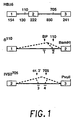
- FIG. 1 The construction and structure of various human ⁇ -globin pre-mRNA molecules is illustrated in Figure 1 . Boxes indicate exons; heavy lines, introns. Positions of the mutations (110 and 705) relative to nucleotide 1 of IVS 1 and IVS 2, respectively are shown above the HB ⁇ 6 clone. Numbers below indicate the length, in nucleotides, of exons and introns. Antisense oligonucleotides (discussed in detail below) are indicated by the numbered short bars below ⁇ 110 and IVS2 705 constructs, and splicing pathways by the dashed lines. All pre-mRNAs were transcribed by SP6 RNA polymerase ( M.
- HB ⁇ 6 A. Krainer et al., Cell 36, 993 (1984 ) contains the whole human ⁇ -globin gene.
- the 110 construct contains exons 1 and 2 and was subcloned from the original thalassemic clone ( R. Spritz et al., Proc. Natl. Acad. Sci. USA 78, 2455 (1981 )). Before transcription, plasmids were linearized at the BamHI site.
- IVS2 705 plasmid To construct the IVS2 705 plasmid, a fragment of HB ⁇ 6 containing virtually the entire second exon, the entire second intron, and a major portion of the third exon was first subcloned in SP64 and subsequently subjected to site specific mutagenesis in accordance with known techniques ( T. Kunkel et al., Methods Enzymol. 154, 367 (1987 )) to introduce a T to G mutation at nucleotide 705 of the intron. Transcription was then carried out on a plasmid linearized at the PvuII site.
- 2'-O-methyl-Oligoribonucleotides for use in the examples described herein were synthesized in accordance with known techniques using reagents from Glen Research (Sterling, VA) and purified in accordance with known techniques using the SUREPURE TM purification kit available from US Biochemicals.
- oligo 1 2'-O-methyl-oligoribonucleotides produced were referred to as oligo 1 through oligo 5.
- Oligo 1 (GUCAGUGCCUAUCA) ( SEQ ID NO:1 ), complementary to nucleotides 82-95 of intron 1, is targeted against the normal branch point, and oligo 2 (AUAGACUAAUAGGC)( SEQ ID NO:2 ), complementary to nucleotides 103-116 of intron 1, against the aberrant 3' splice site created by ⁇ 110 mutation in intron 1 of the ⁇ -globin gene.
- Oligo 3 (CAUUAUUGCCCUGAAAG) ( SEQ ID NO:3 ), complementary to nucleotides 573-589 of intron 2, is targeted against the cryptic 3' splice site at nucleotide 579 of the second intron and oligo 4 (CCUCUUACCUCAGUUAC) ( SEQ ID NO:4 ), complementary to nucleotides 697-713, is targeted against the aberrant 5' splice site created by the mutation at nucleotide 705 in the second intron of IVS2 705 pre-mRNA.
- Oligo 5 (GCUAUUACCUUAACCCAG) ( SEQ ID NO:5 ) is targeted against the aberrant 5' splice site created by the IVS2 654 mutation (nucleotides 643-660 of intron 2).
- Oligo 6 (GCCUGACCACCAAC) ( SEQ ID NO:6 ) is targeted against the cryptic 5' splice site in exon 1of globin pre-mRNA (nucleotides -23 to -10 relative to nucleotide 1 of intron 1).
- ⁇ 110 - thalassemia a form of the disease predominant in patients of Greek and Cypriot origin, an A to G mutation at nucleotide 110 of the first intron of human ⁇ -globin gene creates an additional, aberrant 3' splice site ( R. Spritz et al., Proc. Natl. Acad. Sci. USA 78, 2455 (1981 )).
- the aberrant site is preferentially used by the splicing machinery, resulting in an incorrectly spliced mRNA that contains 19 nucleotides of the intron sequence ( Fig. 1 ).
- oligonucleotide 1 SEQ ID NO:1
- the 2'-O-methyl oligonucleotides were selected for this and subsequent experiments since they are resistant to nucleases and form stable hybrids with RNA that are not degraded by RNase H ( H. Inoue et al., Nucleic Acids Res. 15, 6131 (1987 ); H.
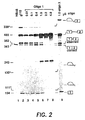
- Figure 2 shows the reversal of aberrant splicing by oligonucleotide 1 directed against the normal branch point in intron 1 of ⁇ -globin pre-mRNA.
- Splicing of P 32 labeled ⁇ 110 pre-mRNA was carried out in vitro in HeLa cell nuclear extract for 2 hours, essentially as described ( A. Krainer et al., Cell 36, 993 (1984 ); Z. Dominski and R. Kole, Mol. Cell. Biol. 12, 2108 (1992 )) except that the volume of the reaction was doubled to 50 ⁇ l. Reaction products were analyzed on an 8% polyacrylamide sequencing gel and visualized by autoradiography.
- Lane 1 splicing of control HB ⁇ 6 pre-mRNA.
- Lane 2 splicing of ⁇ 110 pre-mRNA.
- Lanes 3-8 splicing of ⁇ 110 pre-mRNA in the presence of increasing amounts (indicated at the top of the figure) of oligonucleotide 1.
- Lane 9 splicing of ⁇ 110 pre-mRNA in the presence of oligonucleotide 3, targeted to a sequence in intron 2 of ⁇ -globin pre-mRNA.
- oligonucleotide 3 SEQ ID NO:3
- splicing at both splice sites is inhibited and a 243-mer RNA fragment is generated ( Fig. 2 , lanes 7-8). This fragment accumulates only under splicing conditions, i.e. in the presence of ATP and other components of the splicing mixture, and most likely represents a product of cleavage at the site of the oligonucleotide's binding by an ATP dependent nuclease.
- the aberrant 3' splice site generated by the ⁇ 110 mutation also appears to be a target for reversal of aberrant splicing by an antisense oligonucleotide. Blocking of this sequence should be the simplest way of forcing the splicing machinery to use the original 3' splice site at the end of the intron.
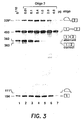
- a 14-mer oligo 2, ( SEQ ID NO:2 ) directed against the aberrant splice site was not effective; at increasing concentrations of the oligonucleotide accumulation of both spliced products was inhibited, the correct one being inhibited somewhat more efficiently ( Fig. 3 , lanes 2-5). Splicing was carried out under the same conditions as described in connection with Fig. 2.
- the first step of the splicing reaction cleavage at the 5' splice site and formation of the lariat-exon intermediate, seems to be less affected by oligo 2 than the formation of the final spliced product. This is shown by the presence of these intermediates even when 1 or 2 ⁇ g of the oligonucleotide were added to the splicing reaction ( Fig. 3 , lanes 5-6). At 4 ⁇ g per reaction cleavage at the 5' splice site is inhibited ( Fig. 3 , lane 7).
- oligo 1 and oligo 2 reflect complex interactions among the oligonucleotides, the numerous splicing factors and sequence elements located in the stretch of 37 nucleotides between the normal branch point and the correct 3' splice site.
- oligonucleotide 1 hybridized to the normal branch point at the 5' end of this region, prevents binding of the splicing factors to this sequence forcing them to select the cryptic branch point downstream. This leads to inhibition of aberrant and induction of correct splicing of ⁇ 110 pre-mRNA.
- hybridization of oligo 2 to its centrally located target sequence may hinder binding of a large number of splicing factors that assemble in this region and prevent any splicing.
- this oligonucleotide blocks a significant portion of the polypyrimidine tract that is essential for splicing to both the aberrant and the correct 3' splice sites. This is an alternative explanation why this oligonucleotide failed to restore the correct splicing pathway.
- a cryptic 3' splice site is activated at position 579 of the intron resulting in the removal of nucleotides 1-578 and 706-850 as separate introns and incorporation of the remaining portion of the intron into the spliced product ( Fig. 1 ).
- the distances between each of the sequence elements involved in splicing exceed 100 nucleotides and no steric hindrance effects by the oligonucleotide should be expected.
- the amounts of the oligonucleotides in the reaction are indicated at the top. "?” on the left indicates apparent degradation product.
- the control transcript containing the second intron of normal ⁇ -globin pre-mRNA is spliced efficiently ( Fig. 4 , lane 2) generating the expected intermediates (the 5' exon and the large lariats) and the correctly spliced product, 451 nucleotides in length.
- Splicing of IVS2 705 pre-mRNA is also efficient and yields an additional spliced product 577 nucleotide long and an expected 348-mer intermediate, resulting from the aberrant splicing pathway caused by the mutation ( Fig.4 , lane 3).
- the 1:2 ratio of correctly to incorrectly spliced RNAs is similar to that observed previously in vivo .
- Oligonucleotide 3 ( Fig.
- oligonucleotide 4 targeted at the activated cryptic 3' splice site at nucleotide 579 is very active, inducing dose dependent reversal of splicing to the correct splicing pathway ( Fig. 4 , lanes 4-8). At 0.1 and 0.4 ⁇ g of the oligonucleotide per reaction the reversal is virtually complete. Correct splicing is also obtained at similar concentrations of oligonucleotide 4 ( Fig. 1 ) targeted against the aberrant 5' splice site created by the mutation at nucleotide 705 of the second intron ( Fig. 4 , lanes 9-13).
- oligonucleotides 3 and 4 show that there are no major differences in their accessibilities to the target splice sites. Both oligonucleotides are approximately 10 times more effective than oligonucleotide 1 used in the experiments shown in Fig. 2 . This higher efficiency may be due to several factors. Oligonucleotides 3 and 4 are three nucleotides longer than oligonucleotide 1 and may form more stable hybrids with RNA.
- oligonucleotide 1 forces the splicing machinery to use a suboptimal cryptic branch point sequence, which may result in relatively inefficient generation of correctly spliced mRNA.
- the long input pre-mRNA is barely detectable after 2 hours of the reaction, suggesting its instability.
- the molar concentrations of the oligonucleotides were essentially the same as in previous experiments they may have been in greater excess over the substrate pre-mRNA.
- the thalassemic mutations are the IVS1-5 and IVS1-6 mutations, in which the authentic 5' splice site of IVS1 is mutated.
- Aberrant splicing resulting in thalassemia is apparently due to the fact that mutations IVS1-5 and IVS1-6 weaken the 5' splice site and allow the cryptic splice site located 16 nucleotides upstream to successfully compete for the splicing factors.
- oligonucleotide antisense to the cryptic splice site may revert aberrant splicing back to the mutated 5' splice site and restore correct splicing in spite of the mutations, since splice sites similar to the mutated ones appear functional in other pre-mRNAs.
- the oligonucleotide employed is oligo 6 ( SEQ ID NO:6 ), a 2-O-methyl-ribooligonucleotide produced as described in Example 2 above.
- the IVS2 654 mutation affects splicing by creating an additional 5' splice site at nucleotide 653 and activating the common cryptic 3' splice site at nucleotide 579 of intron 2.
- the efficiency of aberrant splicing of IVS2 654 pre-mRNA is higher than that for IVS2 705 pre-mRNA and only small amounts of correctly spliced product, relative to the aberrant one, are detectable during splicing in vitro.
- oligo 3 targeted against the cryptic 3' splice site, as well as oligo 5, targeted against the aberrant 5' splice site, restored correct splicing efficiently at concentrations similar to those described above.
- concentrations similar to those described above At 2 ⁇ M concentration of either oligonucleotide the correctly spliced product accumulates and the aberrant product is virtually undetectable (data not shown).
- This experiment is carried out essentially as described above to restore correct splicing in ⁇ -110 mutant pre-mRNA, except the oligonucleotide binds to to a sequence located just upstream from the native branch point sequence of intron 1 of ⁇ -globin gene (nucleotides 75-88).
- the sequence of the oligonucleotide is: CCCAAAGACUAUCC ( SEQ ID NO:7 ). Correct splicing is restored.
- a series of stable cell lines are constructed by transfecting HeLa cells and CHO cells with thalassemic globin genes cloned under the cytomegalovirus (CMV) immediate early promoter.
- the genes include IVS1-110, IVS2-654 and IVS1-5 mutation.
- Stable cell lines are obtained in accordance with standard techniques. See, e.g. , Current Protocols in Molecular Biology (P. Ausubel. et al. eds. 1987 ). Briefly, cells are cotransfected with plasmids carrying thalassemic globin genes under the CMV promoter and plasmids carrying the neomycin resistance gene as a selectable marker (pSV2neo). Transfection is either by electroporation, ( Z. Dominski and R. Kole, Mol. Cel. Biol. 11: 6075-6083 (1991 ); Z. Dominski and R. Kole, Mol. Cell. Biol. 12: 2108-2114 (1992 )), or by the calcium phosphate method. Cells are plated and after 24-48 hours challenged with selective medium containing G418. Surviving colonies are expanded and assayed for expression of thalassemic globin mRNA as follows.
- RNA is isolated from approximately 10 5 cells using a commercial Tri-Reagent (Molecular Research Center, Cincinnati, OH) following manufacturer's protocol. This method allows for easy processing of a large number of small samples and gives high yields of good quality RNA.
- the splicing patterns are analyzed by RT-PCR using rTth polymerase and following the manufacturers protocol (Perkin Elmer). No more than 1-5% of isolated RNA is required for detection of spliced RNA in transiently transfected cells, thus the method is sufficiently sensitive for easy detection in stable cell lines.
- the reverse transcriptase step is carried out with a 3' primer that hybridizes to the aberrant sequences in thalassemic mRNA and spans the splice junction.
- the cloned cell lines that express thalassemic pre-mRNA are used for treatment with antisense 2'-O-methyl-oligonucleotides as described below.
- Cells produced in Example 8 above are grown in 24 well culture dishes containing 200 ⁇ l of media per well. 2x10 4 cells are seeded per well and when attached they are treated with 200 ⁇ l of media containing up to 50 ⁇ M concentration of antisense oligonucleotides. Cells are cultured up to 4 days in the presence of the oligonucleotide before reaching confluence (2-3x10 5 cells). Since 2'-O-methyl oligonucleotides are very stable in serum containing media, medium is changed no more than every two days. The 50 ⁇ M (40 ⁇ g per well.) concentration of the oligonucleotide represents 100 fold excess over that required to elicit efficient restoration of splicing in vitro . Even at this concentration a single oligonucleotide synthesis at 1 ⁇ mole scale, yielding 1-1.6 mg of the oligonucleotide, provides sufficient material for 25 to 40 samples.
- RNA is isolated as above and assayed for the presence of correctly spliced mRNA by RT-PCR.
- Amplification of primers is carried out in the presence of alpha-P32 labeled ATP to increase sensitivity of detection and reduce the number of cycles to 15.
- a HeLa based cell line stably transfected with the human ⁇ -globin clone carrying an IVS2-654 thalassemic mutation was used to carry out the following experiments.
- One subclone of the ISV2-654 cell line expresses predominantly aberrantly spliced ⁇ - globin mRNA and small amounts of the correctly spliced species.
- a second subclone, termed ISV2-654* expresses aberrantly and correctly spliced ⁇ -globin mRNAs in approximately a 1:1 ratio.
- RNA from each sample was assayed using a rTth RT-PCR kit (Cetus-Perkin Elmer). The manufacturer's protocol was followed with the exception that 1 ⁇ Ci of ⁇ -P32 labelled dATP was added to the RT-PCR reaction. PCR products were analyzed on 8% nondenaturing polyacrylamide gel. An oligonucleotide hybridizing to the second exon of human ⁇ -globin gene was used as a common primer.
- Primer specific for aberrant splicing (primer A) spanned the aberrant splice junction whereas primer for correct splicing (primer C) spanned the correct splice junction ( Figure 5 ).
- RT-PCR was carried out with primer A in lanes 1, 3 and 5 and with primer C in lanes 2, 4 and 6. The amount of PCR product loaded in lanes 1, 3 and 5 was 1/5 of that in lanes 2, 4 and 6.
- Lanes 1 and 2 show splicing of pre-mRNA from cells treated with LIPOFECTIN TM reagent and 3 ⁇ M 2'-O-methyl-oligoribo-nucleotide; lanes 3 and 4 show splicing of pre-mRNA from cells treated with LIPOFECTIN TM reagent alone; and lanes 5 and 6 show splicing of pre-mRNA from untreated cells. Note the visually detectable increase in correct splicing for cells treated with the oligonucleotide in the presence of the LIPOFECTIN TM reagent in lane 2.
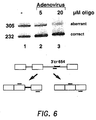
- RT-PCR reaction was carried out as above with the exception that the primers hybridized to the second and third exons of the human ⁇ -globin gene respectively.
- Analysis of the products was as given in Example 10 above with the exception that equal amounts of PCR products, were loaded on the gel. Results are illustrated in Figure 6 .
- Lane 1 showed splicing of untreated cells; and lanes 2 and 3 showed splicing of cells treated with 5 and 20 ⁇ M oligonucleotide, respectively, in the presence of adenovirus. Note the visually detectable increase in correct splicing, along with a corresponding decrease in aberrant splicing and in a dose-dependent manner, for the 5 and 20 ⁇ M oligo-treated cells.
- Results are illustrated in Figure 7 . Note a visually detectable decrease in aberrant splicing, along with a corresponding increase in correct splicing, particularly where 50 ⁇ M of oligo is delivered.
Landscapes
- Genetics & Genomics (AREA)
- Life Sciences & Earth Sciences (AREA)
- Engineering & Computer Science (AREA)
- Health & Medical Sciences (AREA)
- Biomedical Technology (AREA)
- Molecular Biology (AREA)
- Wood Science & Technology (AREA)
- Organic Chemistry (AREA)
- Biotechnology (AREA)
- General Engineering & Computer Science (AREA)
- Chemical & Material Sciences (AREA)
- Bioinformatics & Cheminformatics (AREA)
- Zoology (AREA)
- Physics & Mathematics (AREA)
- Microbiology (AREA)
- Plant Pathology (AREA)
- Biochemistry (AREA)
- General Health & Medical Sciences (AREA)
- Biophysics (AREA)
- Pharmaceuticals Containing Other Organic And Inorganic Compounds (AREA)
- Medicines That Contain Protein Lipid Enzymes And Other Medicines (AREA)
- Saccharide Compounds (AREA)
- Preparation Of Compounds By Using Micro-Organisms (AREA)
- Micro-Organisms Or Cultivation Processes Thereof (AREA)
Priority Applications (1)
| Application Number | Priority Date | Filing Date | Title |
|---|---|---|---|
| EP07013082A EP1897942A1 (en) | 1993-05-11 | 1994-05-10 | Antisense oligonucleotides which combat aberrant splicing and methods of using the same |
Applications Claiming Priority (3)
| Application Number | Priority Date | Filing Date | Title |
|---|---|---|---|
| US6247193A | 1993-05-11 | 1993-05-11 | |
| US62471 | 1993-05-11 | ||
| PCT/US1994/005181 WO1994026887A1 (en) | 1993-05-11 | 1994-05-10 | Antisense oligonucleotides which combat aberrant splicing and methods of using the same |
Related Child Applications (1)
| Application Number | Title | Priority Date | Filing Date |
|---|---|---|---|
| EP07013082A Division EP1897942A1 (en) | 1993-05-11 | 1994-05-10 | Antisense oligonucleotides which combat aberrant splicing and methods of using the same |
Publications (2)
| Publication Number | Publication Date |
|---|---|
| EP0698092A1 EP0698092A1 (en) | 1996-02-28 |
| EP0698092B1 true EP0698092B1 (en) | 2007-07-25 |
Family
ID=22042714
Family Applications (2)
| Application Number | Title | Priority Date | Filing Date |
|---|---|---|---|
| EP94916064A Expired - Lifetime EP0698092B1 (en) | 1993-05-11 | 1994-05-10 | Antisense oligonucleotides which combat aberrant splicing and methods of using the same |
| EP07013082A Ceased EP1897942A1 (en) | 1993-05-11 | 1994-05-10 | Antisense oligonucleotides which combat aberrant splicing and methods of using the same |
Family Applications After (1)
| Application Number | Title | Priority Date | Filing Date |
|---|---|---|---|
| EP07013082A Ceased EP1897942A1 (en) | 1993-05-11 | 1994-05-10 | Antisense oligonucleotides which combat aberrant splicing and methods of using the same |
Country Status (15)
| Country | Link |
|---|---|
| US (4) | US5665593A (https=) |
| EP (2) | EP0698092B1 (https=) |
| JP (3) | JPH08510130A (https=) |
| CN (1) | CN1123038A (https=) |
| AT (1) | ATE368107T1 (https=) |
| AU (1) | AU6786594A (https=) |
| CA (1) | CA2162361C (https=) |
| DE (1) | DE69435005T2 (https=) |
| DK (1) | DK0698092T3 (https=) |
| ES (1) | ES2290951T3 (https=) |
| FI (1) | FI955428L (https=) |
| NO (1) | NO954550L (https=) |
| NZ (1) | NZ266386A (https=) |
| PT (1) | PT698092E (https=) |
| WO (1) | WO1994026887A1 (https=) |
Families Citing this family (168)
| Publication number | Priority date | Publication date | Assignee | Title |
|---|---|---|---|---|
| US8153602B1 (en) * | 1991-11-19 | 2012-04-10 | Isis Pharmaceuticals, Inc. | Composition and methods for the pulmonary delivery of nucleic acids |
| GB9514435D0 (en) * | 1995-07-14 | 1995-09-13 | Danisco | Inhibition of gene expression |
| US5652356A (en) * | 1995-08-17 | 1997-07-29 | Hybridon, Inc. | Inverted chimeric and hybrid oligonucleotides |
| US7074768B2 (en) | 1995-08-17 | 2006-07-11 | Idera Pharmaceuticals, Inc. | Modified protein kinase A-specific oligonucleotides and methods of their use |
| US6624293B1 (en) | 1995-08-17 | 2003-09-23 | Hybridon, Inc. | Modified protein kinase A-specific oligonucleotides and methods of their use |
| GB9519299D0 (en) | 1995-09-21 | 1995-11-22 | Farrar Gwyneth J | Genetic strategy |
| GB9604449D0 (en) * | 1996-03-01 | 1996-05-01 | Farrar Gwyneth J | Genetic strategy ii |
| GB9606961D0 (en) | 1996-04-02 | 1996-06-05 | Farrar Gwyneth J | Genetic strategy III |
| US8551970B2 (en) | 1996-04-02 | 2013-10-08 | Optigen Patents Limited | Genetic suppression and replacement |
| US20030036519A1 (en) * | 1998-04-21 | 2003-02-20 | Ryszard Kole | Stable alteration of pre-mrna splicing patterns by modified rnas |
| US6214986B1 (en) | 1998-10-07 | 2001-04-10 | Isis Pharmaceuticals, Inc. | Antisense modulation of bcl-x expression |
| US6210892B1 (en) | 1998-10-07 | 2001-04-03 | Isis Pharmaceuticals, Inc. | Alteration of cellular behavior by antisense modulation of mRNA processing |
| JP2000325085A (ja) | 1999-05-21 | 2000-11-28 | Masafumi Matsuo | デュシェンヌ型筋ジストロフィー治療剤 |
| US6677445B1 (en) | 1999-08-27 | 2004-01-13 | Chiron Corporation | Chimeric antisense oligonucleotides and cell transfecting formulations thereof |
| JP2004509604A (ja) * | 2000-03-28 | 2004-04-02 | アイシス・ファーマシューティカルス・インコーポレーテッド | mRNAプロセッシングのアンチセンスモジュレーションによる、細胞行動の改変 |
| US6653467B1 (en) | 2000-04-26 | 2003-11-25 | Jcr Pharmaceutical Co., Ltd. | Medicament for treatment of Duchenne muscular dystrophy |
| US6784291B2 (en) | 2000-05-04 | 2004-08-31 | Avi Biopharma, Inc. | Splice-region antisense composition and method |
| US6727355B2 (en) | 2000-08-25 | 2004-04-27 | Jcr Pharmaceuticals Co., Ltd. | Pharmaceutical composition for treatment of Duchenne muscular dystrophy |
| EP1191097A1 (en) * | 2000-09-21 | 2002-03-27 | Leids Universitair Medisch Centrum | Induction of exon skipping in eukaryotic cells |
| GB2382577A (en) * | 2001-11-28 | 2003-06-04 | Talat Nasim | A reporter-based assay for assessing relative RNA processing activity in mammaliian cells |
| AU2003225410A1 (en) | 2003-03-21 | 2004-10-11 | Academisch Ziekenhuis Leiden | Modulation of exon recognition in pre-mrna by interfering with the secondary rna structure |
| ATE509692T1 (de) | 2003-07-17 | 2011-06-15 | Unilever Nv | Verfahren zur herstellung einer öl und strukturierungsmittel enthaltenden essbaren dispersion |
| CA2553104A1 (en) | 2004-01-23 | 2005-08-11 | Avi Biopharma, Inc. | Antisense oligomers and methods for inducing immune tolerance and immunosuppression |
| WO2005094370A2 (en) | 2004-03-29 | 2005-10-13 | The General Hospital Corporation | Oligonucleotide complex compositions and methods of use as gene alteration tools |
| KR101147147B1 (ko) | 2004-04-01 | 2012-05-25 | 머크 샤프 앤드 돔 코포레이션 | Rna 간섭의 오프 타겟 효과 감소를 위한 변형된폴리뉴클레오타이드 |
| USRE48960E1 (en) | 2004-06-28 | 2022-03-08 | The University Of Western Australia | Antisense oligonucleotides for inducing exon skipping and methods of use thereof |
| EP2933332A1 (en) | 2004-06-28 | 2015-10-21 | The University Of Western Australia | Antisense oligonucleotides for inducing exon skipping and methods of use thereof |
| US7879992B2 (en) | 2005-01-31 | 2011-02-01 | Isis Pharmaceuticals, Inc. | Modification of MyD88 splicing using modified oligonucleotides |
| EP1855694B1 (en) | 2005-02-09 | 2020-12-02 | Sarepta Therapeutics, Inc. | Antisense composition for treating muscle atrophy |
| WO2006087090A1 (en) | 2005-02-17 | 2006-08-24 | Unilever N.V. | Granules comprising sterol |
| JP2008539698A (ja) * | 2005-04-29 | 2008-11-20 | ザ・ユニヴァーシティ・オヴ・ノース・キャロライナ・アト・チャペル・ヒル | 転写後レベルでの核酸発現調節のための方法および組成物 |
| EP3470072A1 (en) | 2005-06-23 | 2019-04-17 | Biogen MA Inc. | Compositions and methods for modulation of smn2 splicing |
| US8501703B2 (en) | 2005-08-30 | 2013-08-06 | Isis Pharmaceuticals, Inc. | Chimeric oligomeric compounds for modulation of splicing |
| WO2007047913A2 (en) | 2005-10-20 | 2007-04-26 | Isis Pharmaceuticals, Inc | Compositions and methods for modulation of lmna expression |
| WO2007058894A2 (en) * | 2005-11-10 | 2007-05-24 | The University Of North Carolina At Chapel Hill | Splice switching oligomers for tnf superfamily receptors and their use in treatment of disease |
| US7785834B2 (en) * | 2005-11-10 | 2010-08-31 | Ercole Biotech, Inc. | Soluble TNF receptors and their use in treatment of disease |
| JP5713377B2 (ja) | 2005-12-28 | 2015-05-07 | ザ スクリプス リサーチ インスティテュート | 薬物標的としての天然アンチセンスおよび非コードrna転写物 |
| SI2049664T1 (sl) | 2006-08-11 | 2012-04-30 | Prosensa Technologies Bv | Enojna veriga oligonukleotidov, komplementarna repetitivnim elementom, za zdravljenje genetskih bolezni, povezanih z nestabilnostjo dnk ponovitev |
| US20090264353A1 (en) * | 2007-10-19 | 2009-10-22 | Santaris Pharma A/S | Splice Switching Oligomers for TNF Superfamily Receptors and their Use in Treatment of Disease |
| CA2689602A1 (en) * | 2007-06-06 | 2008-12-18 | Avi Biopharma, Inc. | Soluble her2 and her3 splice variant proteins, splice-switching oligonucleotides, and their use in the treatment of disease |
| CA2693742A1 (en) * | 2007-07-12 | 2009-01-15 | Prosensa Technologies B.V. | Molecules for targeting compounds to various selected organs, tissues or tumor cells |
| USRE48468E1 (en) | 2007-10-26 | 2021-03-16 | Biomarin Technologies B.V. | Means and methods for counteracting muscle disorders |
| ES2639852T3 (es) | 2007-10-26 | 2017-10-30 | Academisch Ziekenhuis Leiden | Medios y métodos para contrarrestar los trastornos musculares |
| WO2009064920A2 (en) | 2007-11-13 | 2009-05-22 | Isis Pharmaceuticals, Inc. | Compounds and methods for modulating protein expression |
| EP2119783A1 (en) | 2008-05-14 | 2009-11-18 | Prosensa Technologies B.V. | Method for efficient exon (44) skipping in Duchenne Muscular Dystrophy and associated means |
| BR122020021379B1 (pt) | 2008-10-24 | 2021-05-11 | Sarepta Therapeutics, Inc. | oligômero morfolino fosforodiamidato, composição que compreende o mesmo e uso do dito oligômero para tratar distrofia muscular |
| ES2629630T3 (es) | 2008-12-04 | 2017-08-11 | Curna, Inc. | Tratamiento de enfermedades relacionadas con eritropoyetina (EPO) mediante inhibición del transcrito antisentido natural a EPO |
| US20110294870A1 (en) | 2008-12-04 | 2011-12-01 | Opko Curna, Llc | Treatment of tumor suppressor gene related diseases by inhibition of natural antisense transcript to the gene |
| ES2600781T3 (es) | 2008-12-04 | 2017-02-10 | Curna, Inc. | Tratamiento para enfermedades relacionadas con el factor de crecimiento del endotelio vascular (vegf) mediante la inhibición de transcritos antisentido naturales de vegf |
| US20120021515A1 (en) | 2009-02-06 | 2012-01-26 | Swayze Eric E | Oligomeric compounds and methods |
| ES2762610T3 (es) | 2009-02-12 | 2020-05-25 | Curna Inc | Tratamiento de enfermedades relacionadas con el factor neurotrófico derivado de cerebro (BDNF) por inhibición de transcrito antisentido natural para BDNF |
| CN102482677B (zh) | 2009-03-16 | 2017-10-17 | 库尔纳公司 | 通过抑制nrf2的天然反义转录物治疗核因子(红细胞衍生2)‑样2(nrf2)相关疾病 |
| WO2010107740A2 (en) | 2009-03-17 | 2010-09-23 | Curna, Inc. | Treatment of delta-like 1 homolog (dlk1) related diseases by inhibition of natural antisense transcript to dlk1 |
| EP2421971B1 (en) | 2009-04-24 | 2016-07-06 | BioMarin Technologies B.V. | Oligonucleotide comprising an inosine for treating dmd |
| CN103223177B (zh) * | 2009-05-06 | 2016-08-10 | 库尔纳公司 | 通过针对脂质转运和代谢基因的天然反义转录物的抑制治疗脂质转运和代谢基因相关疾病 |
| ES2609655T3 (es) | 2009-05-06 | 2017-04-21 | Curna, Inc. | Tratamiento de enfermedades relacionadas con tristetraprolina (TTP) mediante inhibición de transcrito antisentido natural para TTP |
| JP5931720B2 (ja) | 2009-05-08 | 2016-06-08 | クルナ・インコーポレーテッド | Dmdファミリーに対する天然アンチセンス転写物の抑制によるジストロフィンファミリー関連疾患の治療 |
| DK2432881T3 (en) | 2009-05-18 | 2018-02-26 | Curna Inc | TREATMENT OF REPROGRAMMING FACTOR-RELATED DISEASES BY INHIBITING NATURAL ANTISENSE TRANSCRIPTS TO A REPROGRAMMING FACTOR |
| CA2762987A1 (en) | 2009-05-22 | 2010-11-25 | Joseph Collard | Treatment of transcription factor e3 (tfe3) and insulin receptor substrate 2 (irs2) related diseases by inhibition of natural antisense transcript to tfe3 |
| KR101704988B1 (ko) | 2009-05-28 | 2017-02-08 | 큐알엔에이, 인크. | 항바이러스 유전자에 대한 천연 안티센스 전사체의 억제에 의한 항바이러스 유전자 관련된 질환의 치료 |
| US8951981B2 (en) | 2009-06-16 | 2015-02-10 | Curna, Inc. | Treatment of paraoxonase 1 (PON1) related diseases by inhibition of natural antisense transcript to PON1 |
| WO2010148050A2 (en) | 2009-06-16 | 2010-12-23 | Curna, Inc. | Treatment of collagen gene related diseases by inhibition of natural antisense transcript to a collagen gene |
| ES2699827T3 (es) | 2009-06-17 | 2019-02-13 | Biogen Ma Inc | Composiciones y métodos para la modulación de corte y empalme de SMN2 en un sujeto |
| WO2010151671A2 (en) | 2009-06-24 | 2010-12-29 | Curna, Inc. | Treatment of tumor necrosis factor receptor 2 (tnfr2) related diseases by inhibition of natural antisense transcript to tnfr2 |
| EP2446037B1 (en) | 2009-06-26 | 2016-04-20 | CuRNA, Inc. | Treatment of down syndrome gene related diseases by inhibition of natural antisense transcript to a down syndrome gene |
| CN102712925B (zh) | 2009-07-24 | 2017-10-27 | 库尔纳公司 | 通过抑制sirtuin(sirt)的天然反义转录物来治疗sirtuin(sirt)相关性疾病 |
| CN102762731B (zh) | 2009-08-05 | 2018-06-22 | 库尔纳公司 | 通过抑制针对胰岛素基因(ins)的天然反义转录物来治疗胰岛素基因(ins)相关的疾病 |
| CN104313027B (zh) | 2009-08-11 | 2018-11-20 | 库尔纳公司 | 通过抑制脂连蛋白(adipoq)的天然反义转录物治疗脂连蛋白(adipoq)相关疾病 |
| KR101805213B1 (ko) | 2009-08-21 | 2017-12-06 | 큐알엔에이, 인크. | Chip에 대한 천연 안티센스 전사체의 억제에 의한 “hsp70-상호작용 단백질(chip)의 c-말단” 관련된 질환의 치료 |
| CA2771172C (en) | 2009-08-25 | 2021-11-30 | Opko Curna, Llc | Treatment of 'iq motif containing gtpase activating protein' (iqgap) related diseases by inhibition of natural antisense transcript to iqgap |
| US20120295952A1 (en) | 2009-09-25 | 2012-11-22 | Curna, Inc. | Treatment of filaggrin (flg) related diseases by modulation of flg expression and activity |
| EE05711B1 (et) * | 2009-10-07 | 2014-04-15 | Tartu Ülikool | Meetod ja kompositsioon konditsionaalselt letaalsete viirusmutantide loomiseks ja eukarootse raku elulisuse k?rvaldamiseks |
| TR201816523T4 (tr) | 2009-11-12 | 2018-11-21 | Univ Western Australia | Patolojilerin tedavisine yönelik antisens moleküller ve yöntemler. |
| JP6025567B2 (ja) | 2009-12-16 | 2016-11-16 | カッパーアールエヌエー,インコーポレイテッド | 膜結合転写因子ペプチダーゼ、部位1(mbtps1)に対する天然アンチセンス転写物の阻害によるmbtps1関連性疾患の治療 |
| RU2619185C2 (ru) | 2009-12-23 | 2017-05-12 | Курна, Инк. | Лечение заболеваний, связанных с разобщающим белком 2 (ucp2), путем ингибирования природного антисмыслового транскрипта к ucp2 |
| CN102869776B (zh) | 2009-12-23 | 2017-06-23 | 库尔纳公司 | 通过抑制肝细胞生长因子(hgf)的天然反义转录物而治疗hgf相关疾病 |
| WO2011078672A1 (en) | 2009-12-24 | 2011-06-30 | Prosensa Technologies B.V. | Molecule for treating an inflammatory disorder |
| ES2585829T3 (es) | 2009-12-29 | 2016-10-10 | Curna, Inc. | Tratamiento de las enfermedades relacionadas con la proteína tumoral 63 (p63) por inhibición de transcripción antisentido natural a p63 |
| EP2519633B1 (en) | 2009-12-29 | 2017-10-25 | CuRNA, Inc. | Treatment of nuclear respiratory factor 1 (nrf1) related diseases by inhibition of natural antisense transcript to nrf1 |
| CA2785727C (en) | 2009-12-31 | 2020-01-07 | Curna, Inc. | Treatment of insulin receptor substrate 2 (irs2) related diseases by inhibition of natural antisense transcript to irs2 and transcription factor e3 (tfe3) |
| CA2785832A1 (en) | 2010-01-04 | 2011-07-07 | Curna, Inc. | Treatment of interferon regulatory factor 8 (irf8) related diseases by inhibition of natural antisense transcript to irf8 |
| KR101853509B1 (ko) | 2010-01-06 | 2018-04-30 | 큐알엔에이, 인크. | 췌장 발달 유전자에 대한 천연 안티센스 전사체의 억제에 의한 췌장 발달 유전자와 관련된 질환의 치료 |
| JP6027893B2 (ja) | 2010-01-11 | 2016-11-16 | カッパーアールエヌエー,インコーポレイテッド | 性ホルモン結合グロブリン(shbg)に対する天然アンチセンス転写物の阻害による性ホルモン結合グロブリン(shbg)関連疾患の治療 |
| EP2529015B1 (en) | 2010-01-25 | 2017-11-15 | CuRNA, Inc. | Treatment of rnase h1 related diseases by inhibition of natural antisense transcript to rnase h1 |
| CN102844435B (zh) | 2010-02-22 | 2017-05-10 | 库尔纳公司 | 通过抑制吡咯啉‑5‑羧酸还原酶1(pycr1)的天然反义转录物而治疗pycr1相关疾病 |
| RU2612884C2 (ru) | 2010-04-02 | 2017-03-13 | Курна, Инк. | Лечение заболеваний, связанных с колониестимулирующим фактором 3 (csf3), путем ингибирования природного антисмыслового транскрипта k csf3 |
| WO2011127337A2 (en) | 2010-04-09 | 2011-10-13 | Opko Curna Llc | Treatment of fibroblast growth factor 21 (fgf21) related diseases by inhibition of natural antisense transcript to fgf21 |
| US8802642B2 (en) | 2010-04-28 | 2014-08-12 | Iowa State University Research Foundation, Inc. | Spinal muscular atrophy treatment via targeting SMN2 catalytic core |
| WO2011139387A1 (en) | 2010-05-03 | 2011-11-10 | Opko Curna, Llc | Treatment of sirtuin (sirt) related diseases by inhibition of natural antisense transcript to a sirtuin (sirt) |
| TWI531370B (zh) | 2010-05-14 | 2016-05-01 | 可娜公司 | 藉由抑制par4天然反股轉錄本治療par4相關疾病 |
| ES2664585T3 (es) | 2010-05-26 | 2018-04-20 | Curna, Inc. | Tratamiento de enfermedades relacionadas con metionina sulfóxido reductasa (MSRA) mediante inhibición del transcrito antisentido natural a MSRA |
| US8895528B2 (en) | 2010-05-26 | 2014-11-25 | Curna, Inc. | Treatment of atonal homolog 1 (ATOH1) related diseases by inhibition of natural antisense transcript to ATOH1 |
| EA024216B1 (ru) | 2010-06-22 | 2016-08-31 | Юнилевер Н.В. | Порошкообразные пищевые жиры |
| CN109112126B (zh) | 2010-06-23 | 2024-06-14 | 库尔纳公司 | 通过抑制电压门控钠通道α亚基(SCNA)的天然反义转录物而治疗SCNA相关疾病 |
| JP5998131B2 (ja) | 2010-07-14 | 2016-09-28 | カッパーアールエヌエー,インコーポレイテッド | Discslargehomolog(dlg)dlg1への天然アンチセンス転写物の阻害によるdlg関連疾患の治療 |
| CN103210086B (zh) | 2010-10-06 | 2017-06-09 | 库尔纳公司 | 通过抑制唾液酸酶4(neu4)的天然反义转录物而治疗neu4相关疾病 |
| KR101865433B1 (ko) | 2010-10-22 | 2018-07-13 | 큐알엔에이, 인크. | 알파-l 이두로니다아제 (idua)에 대한 자연 안티센스 전사체의 저해에 의한 idua 관련된 질환의 치료 |
| CA2817256A1 (en) | 2010-11-12 | 2012-05-18 | The General Hospital Corporation | Polycomb-associated non-coding rnas |
| US9920317B2 (en) | 2010-11-12 | 2018-03-20 | The General Hospital Corporation | Polycomb-associated non-coding RNAs |
| US10000752B2 (en) | 2010-11-18 | 2018-06-19 | Curna, Inc. | Antagonat compositions and methods of use |
| WO2012071238A2 (en) | 2010-11-23 | 2012-05-31 | Opko Curna Llc | Treatment of nanog related diseases by inhibition of natural antisense transcript to nanog |
| MX337914B (es) | 2010-12-17 | 2016-03-28 | Unilever Nv | Proceso para compactar polvo de grasa microporosa y polvo de grasa compactado asi obtenido. |
| MX342040B (es) | 2010-12-17 | 2016-09-12 | Unilever Nv | Emulsion de agua en aceite comestible. |
| AU2012267530A1 (en) | 2011-06-08 | 2014-01-16 | Indiana University Research And Technology Corporation | Monoclonal antibody and antigens for diagnosing and treating lung disease and injury |
| KR102043422B1 (ko) | 2011-06-09 | 2019-11-11 | 큐알엔에이, 인크. | 프라탁신 (fxn)에 대한 자연 안티센스 전사체의 저해에 의한 프라탁신 (fxn) 관련된 질환의 치료 |
| MX365525B (es) | 2011-09-06 | 2019-06-06 | Curna Inc | Compuestos que regulan la expresión de subunidades alfa de canales de sodio regulados por voltaje en enfermedades relacionadas con epilepsia mioclónica severa de la infancia. |
| US20130085139A1 (en) | 2011-10-04 | 2013-04-04 | Royal Holloway And Bedford New College | Oligomers |
| EP2802674B1 (en) | 2012-01-11 | 2020-12-16 | Ionis Pharmaceuticals, Inc. | Compositions and methods for modulation of ikbkap splicing |
| NZ627896A (en) | 2012-01-27 | 2016-11-25 | Biomarin Technologies B V | Rna modulating oligonucleotides with improved characteristics for the treatment of duchenne and becker muscular dystrophy |
| HK1210211A1 (en) | 2012-03-15 | 2016-04-15 | 科纳公司 | Treatment of brain derived neurotrophic factor (bdnf) related diseases by inhibition of natural antisense transcript to bdnf |
| EA201492116A1 (ru) | 2012-05-16 | 2015-05-29 | Рана Терапьютикс, Инк. | Композиции и способы для модулирования экспрессии mecp2 |
| US10837014B2 (en) | 2012-05-16 | 2020-11-17 | Translate Bio Ma, Inc. | Compositions and methods for modulating SMN gene family expression |
| SG11201407483YA (en) | 2012-05-16 | 2014-12-30 | Rana Therapeutics Inc | Compositions and methods for modulating smn gene family expression |
| RS54944B1 (sr) | 2012-07-12 | 2016-11-30 | Proqr Therapeutics Ii Bv | Oligonukleotidi za pravljenje promena u sekvencama ciljanih rnk molekula prisutnih u živoj ćeliji |
| HK1216902A1 (zh) | 2012-12-20 | 2016-12-09 | Sarepta Therapeutics, Inc. | 用作治疗肌肉萎缩的改进外显子跳跃组合物 |
| WO2014110291A1 (en) | 2013-01-09 | 2014-07-17 | Isis Pharmaceuticals, Inc. | Compositions and methods for modulation of smn2 splicing in a subject |
| CN110218727A (zh) | 2013-03-14 | 2019-09-10 | 萨勒普塔医疗公司 | 用于治疗肌营养不良的外显子跳跃组合物 |
| US20140315977A1 (en) | 2013-03-14 | 2014-10-23 | Sarepta Therapeutics, Inc. | Exon skipping compositions for treating muscular dystrophy |
| US20140329762A1 (en) | 2013-03-15 | 2014-11-06 | Sarepta Therapeutics, Inc. | Compositions for treating muscular dystrophy |
| US10590412B2 (en) | 2013-04-19 | 2020-03-17 | Ionis Pharmaceuticals, Inc. | Compositions and methods for modulation nucleic acids through nonsense mediated decay |
| WO2015051283A1 (en) | 2013-10-04 | 2015-04-09 | Rana Therapeutics, Inc. | Compositions and methods for treating amyotrophic lateral sclerosis |
| EP3797780B1 (en) | 2014-04-17 | 2022-09-14 | Biogen MA Inc. | Compositions and methods for modulation of smn2 splicing in a subject |
| GB201410693D0 (en) | 2014-06-16 | 2014-07-30 | Univ Southampton | Splicing modulation |
| US10436802B2 (en) | 2014-09-12 | 2019-10-08 | Biogen Ma Inc. | Methods for treating spinal muscular atrophy |
| AU2015327836B2 (en) | 2014-10-03 | 2021-07-01 | Cold Spring Harbor Laboratory | Targeted augmentation of nuclear gene output |
| WO2016070060A1 (en) | 2014-10-30 | 2016-05-06 | The General Hospital Corporation | Methods for modulating atrx-dependent gene repression |
| WO2016149455A2 (en) | 2015-03-17 | 2016-09-22 | The General Hospital Corporation | The rna interactome of polycomb repressive complex 1 (prc1) |
| MA41795A (fr) | 2015-03-18 | 2018-01-23 | Sarepta Therapeutics Inc | Exclusion d'un exon induite par des composés antisens dans la myostatine |
| CN108603230A (zh) | 2015-10-09 | 2018-09-28 | 南安普敦大学 | 基因表达的调节与蛋白质表达失调的筛选 |
| WO2017079570A2 (en) | 2015-11-04 | 2017-05-11 | Duke University | Splise-switching oligonucleotides and methods of use |
| IL294124B2 (en) | 2015-12-10 | 2024-02-01 | Ptc Therapeutics Inc | Methods for treating huntington's disease |
| WO2017106377A1 (en) | 2015-12-14 | 2017-06-22 | Cold Spring Harbor Laboratory | Antisense oligomers for treatment of autosomal dominant mental retardation-5 and dravet syndrome |
| US11096956B2 (en) | 2015-12-14 | 2021-08-24 | Stoke Therapeutics, Inc. | Antisense oligomers and uses thereof |
| PH12018501207B1 (en) | 2015-12-21 | 2024-02-23 | Novartis Ag | Compositions and methods for decreasing tau expression |
| TWI722181B (zh) * | 2016-05-03 | 2021-03-21 | 臺中榮民總醫院 | 一種對突變型多巴脫羧酶基因做剪接調整的反義寡核苷酸及其使用方法 |
| US11198867B2 (en) | 2016-06-16 | 2021-12-14 | Ionis Pharmaceuticals, Inc. | Combinations for the modulation of SMN expression |
| JP2019525742A (ja) | 2016-06-30 | 2019-09-12 | サレプタ セラピューティクス, インコーポレイテッド | 筋ジストロフィーに対するエクソンスキッピングオリゴマー |
| KR20240006023A (ko) | 2016-12-19 | 2024-01-12 | 사렙타 쎄러퓨틱스 인코퍼레이티드 | 근육 이상증에 대한 엑손 스킵핑 올리고머 결합체 |
| KR102810425B1 (ko) | 2016-12-19 | 2025-05-21 | 사렙타 쎄러퓨틱스 인코퍼레이티드 | 근육 이상증에 대한 엑손 스킵핑 올리고머 결합체 |
| PT3554552T (pt) | 2016-12-19 | 2022-10-03 | Sarepta Therapeutics Inc | Conjugados de oligómero de skipping de exão para distrofia muscular |
| EP3594346A4 (en) * | 2017-03-10 | 2020-12-16 | National Center For Child Health And Development | ANTISENS OLIGONUCLEOTIDE AND COMPOSITION FOR THE PREVENTION OR TREATMENT OF TYPE IA GLYCOGEN STORAGE DISEASE |
| US11407753B2 (en) | 2017-06-05 | 2022-08-09 | Ptc Therapeutics, Inc. | Compounds for treating Huntington's disease |
| US11382918B2 (en) | 2017-06-28 | 2022-07-12 | Ptc Therapeutics, Inc. | Methods for treating Huntington's Disease |
| WO2019005993A1 (en) | 2017-06-28 | 2019-01-03 | Ptc Therapeutics, Inc. | METHODS OF TREATING HUNTINGTON'S DISEASE |
| KR102318434B1 (ko) | 2017-08-25 | 2021-11-01 | 스톡 테라퓨틱스, 인크. | 병태 및 질환 치료용 안티센스 올리고머 |
| EA201991450A1 (ru) | 2017-09-22 | 2019-12-30 | Сарепта Терапьютикс, Инк. | Конъюгаты олигомеров для пропуска экзона при мышечной дистрофии |
| KR102398295B1 (ko) * | 2018-03-09 | 2022-05-17 | 다이이찌 산쿄 가부시키가이샤 | 당원병 Ia형 치료약 |
| EP3775172A4 (en) | 2018-03-26 | 2021-12-29 | Duke University | Splice-switching oligonucleotides and methods of use |
| MX2020009957A (es) | 2018-03-27 | 2021-01-15 | Ptc Therapeutics Inc | Compuestos para el tratamiento de enfermedad de hungtinton. |
| CA3099280A1 (en) | 2018-05-04 | 2019-11-07 | Stoke Therapeutics, Inc. | Methods and compositions for treatment of cholesteryl ester storage disease |
| US10758629B2 (en) | 2018-05-29 | 2020-09-01 | Sarepta Therapeutics, Inc. | Exon skipping oligomer conjugates for muscular dystrophy |
| PL3814357T3 (pl) | 2018-06-27 | 2024-09-16 | Ptc Therapeutics, Inc. | Związki heterocykliczne i heteroarylowe do leczenia choroby huntingtona |
| EP3814345B8 (en) | 2018-06-27 | 2024-10-30 | PTC Therapeutics, Inc. | Heteroaryl compounds for treating huntington's disease |
| AU2020227825B2 (en) | 2019-02-27 | 2026-03-26 | Stoke Therapeutics, Inc. | Antisense oligomers for treatment of conditions and diseases |
| US12595479B2 (en) | 2019-03-20 | 2026-04-07 | President And Fellows Of Harvard College | Antisense oligonucleotide-based progranulin augmentation therapy in neurodegenerative diseases |
| WO2020214763A1 (en) | 2019-04-18 | 2020-10-22 | Sarepta Therapeutics, Inc. | Compositions for treating muscular dystrophy |
| WO2020231977A1 (en) | 2019-05-13 | 2020-11-19 | Ptc Therapeutics, Inc. | Compounds for treating huntington's disease |
| CN112111528B (zh) * | 2019-06-21 | 2024-04-02 | 华东师范大学 | 一种内含子异常剪接的修复方法 |
| AU2020377204A1 (en) | 2019-11-01 | 2022-06-02 | Novartis Ag | The use of a splicing modulator for a treatment slowing progression of huntington's disease |
| TW202134438A (zh) * | 2019-12-02 | 2021-09-16 | 日商第一三共股份有限公司 | 著色性乾皮症f群組治療藥 |
| EP4058032A4 (en) | 2019-12-19 | 2024-01-10 | Entrada Therapeutics, Inc. | Compositions for delivery of antisense compounds |
| CN120505310A (zh) | 2020-02-28 | 2025-08-19 | Ionis制药公司 | 用于调节smn2的化合物和方法 |
| CN115867657A (zh) | 2020-05-11 | 2023-03-28 | 斯托克制药公司 | 用于治疗疾患和疾病的opa1反义寡聚物 |
| TW202304446A (zh) | 2021-03-29 | 2023-02-01 | 瑞士商諾華公司 | 剪接調節子用於減慢杭丁頓氏舞蹈症進展的治療之用途 |
| AU2022271873A1 (en) | 2021-05-10 | 2024-01-04 | Entrada Therapeutics, Inc. | Compositions and methods for intracellular therapeutics |
| EP4341406A4 (en) * | 2021-05-21 | 2026-03-25 | Ionis Pharmaceuticals Inc | COMPOUNDS FOR MODULATING THE EXPRESSION OF UNC13A |
| WO2025165891A1 (en) | 2024-01-29 | 2025-08-07 | Arnatar Therapeutics, Inc | Translation enhancing nucleic acid compounds: aso coupled translation - upregulation 1 (act-up1) and uses thereof |
| EP4671372A3 (en) | 2024-01-29 | 2026-03-11 | Arnatar Therapeutics, Inc | Translation enhancing nucleic acid compounds: aso coupled translation - upregulation 1 (act-up1) and uses thereof |
Family Cites Families (3)
| Publication number | Priority date | Publication date | Assignee | Title |
|---|---|---|---|---|
| US5023243A (en) * | 1981-10-23 | 1991-06-11 | Molecular Biosystems, Inc. | Oligonucleotide therapeutic agent and method of making same |
| US5220007A (en) * | 1990-02-15 | 1993-06-15 | The Worcester Foundation For Experimental Biology | Method of site-specific alteration of RNA and production of encoded polypeptides |
| US5149797A (en) * | 1990-02-15 | 1992-09-22 | The Worcester Foundation For Experimental Biology | Method of site-specific alteration of rna and production of encoded polypeptides |
-
1994
- 1994-05-10 DE DE69435005T patent/DE69435005T2/de not_active Expired - Lifetime
- 1994-05-10 AU AU67865/94A patent/AU6786594A/en not_active Abandoned
- 1994-05-10 CN CN94192083.6A patent/CN1123038A/zh active Pending
- 1994-05-10 ES ES94916064T patent/ES2290951T3/es not_active Expired - Lifetime
- 1994-05-10 DK DK94916064T patent/DK0698092T3/da active
- 1994-05-10 CA CA002162361A patent/CA2162361C/en not_active Expired - Lifetime
- 1994-05-10 FI FI955428A patent/FI955428L/fi not_active Application Discontinuation
- 1994-05-10 NZ NZ266386A patent/NZ266386A/en unknown
- 1994-05-10 EP EP94916064A patent/EP0698092B1/en not_active Expired - Lifetime
- 1994-05-10 AT AT94916064T patent/ATE368107T1/de not_active IP Right Cessation
- 1994-05-10 EP EP07013082A patent/EP1897942A1/en not_active Ceased
- 1994-05-10 WO PCT/US1994/005181 patent/WO1994026887A1/en not_active Ceased
- 1994-05-10 PT PT94916064T patent/PT698092E/pt unknown
- 1994-05-10 JP JP6525643A patent/JPH08510130A/ja not_active Withdrawn
-
1995
- 1995-01-26 US US08/379,079 patent/US5665593A/en not_active Expired - Lifetime
- 1995-05-30 US US08/453,224 patent/US5627274A/en not_active Expired - Lifetime
- 1995-11-10 NO NO954550A patent/NO954550L/no unknown
-
1997
- 1997-02-19 US US08/802,384 patent/US5916808A/en not_active Expired - Lifetime
-
1999
- 1999-04-30 US US09/302,390 patent/US5976879A/en not_active Expired - Lifetime
-
2008
- 2008-01-07 JP JP2008000648A patent/JP2008092960A/ja not_active Withdrawn
-
2009
- 2009-02-25 JP JP2009042209A patent/JP2009159971A/ja active Pending
Non-Patent Citations (3)
| Title |
|---|
| ALTER ET AL., NATURE MEDICINE, vol. 12, no. 2, 2006, pages 175 - 177 * |
| LU ET AL, PNAS, vol. 102, 2005, pages 198 - 203 * |
| SAZANI ET AL., NATURE BIOTECHNOLOGY, vol. 20, 2002, pages 1228 - 1233 * |
Also Published As
| Publication number | Publication date |
|---|---|
| CA2162361A1 (en) | 1994-11-24 |
| WO1994026887A1 (en) | 1994-11-24 |
| EP1897942A1 (en) | 2008-03-12 |
| CA2162361C (en) | 2008-10-21 |
| US5976879A (en) | 1999-11-02 |
| FI955428A7 (fi) | 1996-01-04 |
| DE69435005D1 (de) | 2007-09-06 |
| DK0698092T3 (da) | 2007-11-26 |
| CN1123038A (zh) | 1996-05-22 |
| DE69435005T2 (de) | 2008-04-17 |
| NZ266386A (en) | 1997-11-24 |
| PT698092E (pt) | 2007-10-29 |
| JPH08510130A (ja) | 1996-10-29 |
| US5665593A (en) | 1997-09-09 |
| NO954550D0 (no) | 1995-11-10 |
| FI955428A0 (fi) | 1995-11-10 |
| FI955428L (fi) | 1996-01-04 |
| AU6786594A (en) | 1994-12-12 |
| JP2009159971A (ja) | 2009-07-23 |
| EP0698092A1 (en) | 1996-02-28 |
| ES2290951T3 (es) | 2008-02-16 |
| US5916808A (en) | 1999-06-29 |
| JP2008092960A (ja) | 2008-04-24 |
| NO954550L (no) | 1996-01-10 |
| US5627274A (en) | 1997-05-06 |
| ATE368107T1 (de) | 2007-08-15 |
Similar Documents
| Publication | Publication Date | Title |
|---|---|---|
| EP0698092B1 (en) | Antisense oligonucleotides which combat aberrant splicing and methods of using the same | |
| JP2009159971A6 (ja) | 異常スプライシングを阻害するアンチセンスオリゴヌクレオチドと同物質の利用法 | |
| CA2210353C (en) | Stabilized external guide sequences | |
| Summerton et al. | Morpholino and phosphorothioate antisense oligomers compared in cell-free and in-cell systems | |
| US8263760B2 (en) | Methods and means for treating DNA repeat instability associated genetic disorders | |
| US6057153A (en) | Stabilized external guide sequences | |
| US5877162A (en) | Short external guide sequences | |
| EP1529105B1 (en) | Methods to reprogram splice site selection in pre-messenger rnas | |
| US20100184209A1 (en) | Compositions and methods for inhibiting gene silencing by rna interference | |
| US6380169B1 (en) | Metal complex containing oligonucleoside cleavage compounds and therapies | |
| Leonetti et al. | Cell delivery and mechanisms of action of antisense oligonucleotides | |
| KR20220123398A (ko) | 합성 가이드 rna, 이의 조성물, 방법 및 용도 | |
| AU2014272526A1 (en) | Double-stranded agents for delivering therapeutic oligonucleotides | |
| EP0832211B1 (en) | Oligonucleotides specific for hepatitis b virus | |
| US6030830A (en) | Immunoglobulin trans-spliced transcripts and uses thereof | |
| Sierakowska et al. | Restoration of ß-globin gene expression in mammalian cells by antisense oligonucleotides that modify the aberrant splicing Patierns of Thalassemic pre-mRNAs | |
| WO2022269016A1 (en) | Allele-specific silencing therapy for dfna21 using antisense oligonucleotides |
Legal Events
| Date | Code | Title | Description |
|---|---|---|---|
| PUAI | Public reference made under article 153(3) epc to a published international application that has entered the european phase |
Free format text: ORIGINAL CODE: 0009012 |
|
| 17P | Request for examination filed |
Effective date: 19951103 |
|
| AK | Designated contracting states |
Kind code of ref document: A1 Designated state(s): AT BE CH DE DK ES FR GB GR IE IT LI LU MC NL PT SE |
|
| 17Q | First examination report despatched |
Effective date: 20020930 |
|
| 17Q | First examination report despatched |
Effective date: 20020930 |
|
| RIN1 | Information on inventor provided before grant (corrected) |
Inventor name: DOMINSKI, ZBIGNIEW Inventor name: KOLE, RYSZARD |
|
| GRAP | Despatch of communication of intention to grant a patent |
Free format text: ORIGINAL CODE: EPIDOSNIGR1 |
|
| RAP1 | Party data changed (applicant data changed or rights of an application transferred) |
Owner name: THE UNIVERSITY OF NORTH CAROLINA AT CHAPEL HILL |
|
| GRAS | Grant fee paid |
Free format text: ORIGINAL CODE: EPIDOSNIGR3 |
|
| GRAA | (expected) grant |
Free format text: ORIGINAL CODE: 0009210 |
|
| AK | Designated contracting states |
Kind code of ref document: B1 Designated state(s): AT BE CH DE DK ES FR GB GR IE IT LI LU MC NL PT SE |
|
| REG | Reference to a national code |
Ref country code: GB Ref legal event code: FG4D |
|
| REG | Reference to a national code |
Ref country code: CH Ref legal event code: EP |
|
| REG | Reference to a national code |
Ref country code: IE Ref legal event code: FG4D |
|
| REF | Corresponds to: |
Ref document number: 69435005 Country of ref document: DE Date of ref document: 20070906 Kind code of ref document: P |
|
| REG | Reference to a national code |
Ref country code: PT Ref legal event code: SC4A Free format text: AVAILABILITY OF NATIONAL TRANSLATION Effective date: 20071016 |
|
| REG | Reference to a national code |
Ref country code: SE Ref legal event code: TRGR |
|
| REG | Reference to a national code |
Ref country code: CH Ref legal event code: NV Representative=s name: RITSCHER & PARTNER AG Ref country code: GR Ref legal event code: EP Ref document number: 20070403185 Country of ref document: GR |
|
| REG | Reference to a national code |
Ref country code: DK Ref legal event code: T3 |
|
| ET | Fr: translation filed | ||
| REG | Reference to a national code |
Ref country code: ES Ref legal event code: FG2A Ref document number: 2290951 Country of ref document: ES Kind code of ref document: T3 |
|
| REG | Reference to a national code |
Ref country code: CH Ref legal event code: PCAR Free format text: RITSCHER & PARTNER AG;RESIRAIN 1;8125 ZOLLIKERBERG (CH) |
|
| PLBE | No opposition filed within time limit |
Free format text: ORIGINAL CODE: 0009261 |
|
| STAA | Information on the status of an ep patent application or granted ep patent |
Free format text: STATUS: NO OPPOSITION FILED WITHIN TIME LIMIT |
|
| 26N | No opposition filed |
Effective date: 20080428 |
|
| PGFP | Annual fee paid to national office [announced via postgrant information from national office to epo] |
Ref country code: LU Payment date: 20080606 Year of fee payment: 15 Ref country code: DK Payment date: 20080528 Year of fee payment: 15 |
|
| PGFP | Annual fee paid to national office [announced via postgrant information from national office to epo] |
Ref country code: AT Payment date: 20080421 Year of fee payment: 15 |
|
| PGFP | Annual fee paid to national office [announced via postgrant information from national office to epo] |
Ref country code: BE Payment date: 20080624 Year of fee payment: 15 Ref country code: PT Payment date: 20080422 Year of fee payment: 15 Ref country code: MC Payment date: 20080418 Year of fee payment: 15 |
|
| PGFP | Annual fee paid to national office [announced via postgrant information from national office to epo] |
Ref country code: GR Payment date: 20080530 Year of fee payment: 15 |
|
| REG | Reference to a national code |
Ref country code: PT Ref legal event code: MM4A Free format text: LAPSE DUE TO NON-PAYMENT OF FEES Effective date: 20091110 |
|
| BERE | Be: lapsed |
Owner name: THE UNIVERSITY OF NORTH CAROLINA AT CHAPEL HILL Effective date: 20090531 |
|
| PG25 | Lapsed in a contracting state [announced via postgrant information from national office to epo] |
Ref country code: MC Free format text: LAPSE BECAUSE OF NON-PAYMENT OF DUE FEES Effective date: 20090531 |
|
| REG | Reference to a national code |
Ref country code: DK Ref legal event code: EBP |
|
| PG25 | Lapsed in a contracting state [announced via postgrant information from national office to epo] |
Ref country code: AT Free format text: LAPSE BECAUSE OF NON-PAYMENT OF DUE FEES Effective date: 20090510 |
|
| PG25 | Lapsed in a contracting state [announced via postgrant information from national office to epo] |
Ref country code: PT Free format text: LAPSE BECAUSE OF NON-PAYMENT OF DUE FEES Effective date: 20091110 |
|
| PG25 | Lapsed in a contracting state [announced via postgrant information from national office to epo] |
Ref country code: DK Free format text: LAPSE BECAUSE OF NON-PAYMENT OF DUE FEES Effective date: 20090531 |
|
| PG25 | Lapsed in a contracting state [announced via postgrant information from national office to epo] |
Ref country code: GR Free format text: LAPSE BECAUSE OF NON-PAYMENT OF DUE FEES Effective date: 20091202 Ref country code: BE Free format text: LAPSE BECAUSE OF NON-PAYMENT OF DUE FEES Effective date: 20090531 |
|
| PG25 | Lapsed in a contracting state [announced via postgrant information from national office to epo] |
Ref country code: LU Free format text: LAPSE BECAUSE OF NON-PAYMENT OF DUE FEES Effective date: 20090510 |
|
| PGFP | Annual fee paid to national office [announced via postgrant information from national office to epo] |
Ref country code: ES Payment date: 20120528 Year of fee payment: 19 |
|
| PGFP | Annual fee paid to national office [announced via postgrant information from national office to epo] |
Ref country code: DE Payment date: 20130530 Year of fee payment: 20 Ref country code: CH Payment date: 20130530 Year of fee payment: 20 Ref country code: GB Payment date: 20130528 Year of fee payment: 20 Ref country code: IE Payment date: 20130528 Year of fee payment: 20 Ref country code: SE Payment date: 20130530 Year of fee payment: 20 |
|
| PGFP | Annual fee paid to national office [announced via postgrant information from national office to epo] |
Ref country code: NL Payment date: 20130526 Year of fee payment: 20 Ref country code: IT Payment date: 20130524 Year of fee payment: 20 Ref country code: FR Payment date: 20130606 Year of fee payment: 20 |
|
| REG | Reference to a national code |
Ref country code: CH Ref legal event code: PFA Owner name: THE UNIVERSITY OF NORTH CAROLINA AT CHAPEL HIL, US Free format text: FORMER OWNER: THE UNIVERSITY OF NORTH CAROLINA AT CHAPEL HILL, US |
|
| REG | Reference to a national code |
Ref country code: DE Ref legal event code: R071 Ref document number: 69435005 Country of ref document: DE |
|
| REG | Reference to a national code |
Ref country code: DE Ref legal event code: R071 Ref document number: 69435005 Country of ref document: DE |
|
| REG | Reference to a national code |
Ref country code: CH Ref legal event code: PL |
|
| REG | Reference to a national code |
Ref country code: NL Ref legal event code: V4 Effective date: 20140510 |
|
| REG | Reference to a national code |
Ref country code: GB Ref legal event code: PE20 Expiry date: 20140509 |
|
| REG | Reference to a national code |
Ref country code: SE Ref legal event code: EUG |
|
| REG | Reference to a national code |
Ref country code: IE Ref legal event code: MK9A |
|
| PG25 | Lapsed in a contracting state [announced via postgrant information from national office to epo] |
Ref country code: IE Free format text: LAPSE BECAUSE OF EXPIRATION OF PROTECTION Effective date: 20140510 Ref country code: GB Free format text: LAPSE BECAUSE OF EXPIRATION OF PROTECTION Effective date: 20140509 |
|
| PG25 | Lapsed in a contracting state [announced via postgrant information from national office to epo] |
Ref country code: DE Free format text: LAPSE BECAUSE OF EXPIRATION OF PROTECTION Effective date: 20140513 |
|
| REG | Reference to a national code |
Ref country code: ES Ref legal event code: FD2A Effective date: 20140926 |
|
| PG25 | Lapsed in a contracting state [announced via postgrant information from national office to epo] |
Ref country code: ES Free format text: LAPSE BECAUSE OF EXPIRATION OF PROTECTION Effective date: 20140511 |