EP0688739B1 - Interkalationsverbindungen auf der Basis von Manganoxid zur Verwendung als aktives Material einer positiven Elektrode einer Lithium-Sekondärbatterie - Google Patents
Interkalationsverbindungen auf der Basis von Manganoxid zur Verwendung als aktives Material einer positiven Elektrode einer Lithium-Sekondärbatterie Download PDFInfo
- Publication number
- EP0688739B1 EP0688739B1 EP95401434A EP95401434A EP0688739B1 EP 0688739 B1 EP0688739 B1 EP 0688739B1 EP 95401434 A EP95401434 A EP 95401434A EP 95401434 A EP95401434 A EP 95401434A EP 0688739 B1 EP0688739 B1 EP 0688739B1
- Authority
- EP
- European Patent Office
- Prior art keywords
- manganese
- lithium
- mno
- compound
- process according
- Prior art date
- Legal status (The legal status is an assumption and is not a legal conclusion. Google has not performed a legal analysis and makes no representation as to the accuracy of the status listed.)
- Expired - Lifetime
Links
- 150000001875 compounds Chemical class 0.000 title claims description 41
- AMWRITDGCCNYAT-UHFFFAOYSA-L hydroxy(oxo)manganese;manganese Chemical compound [Mn].O[Mn]=O.O[Mn]=O AMWRITDGCCNYAT-UHFFFAOYSA-L 0.000 title claims description 41
- 229910052744 lithium Inorganic materials 0.000 title claims description 22
- WHXSMMKQMYFTQS-UHFFFAOYSA-N Lithium Chemical compound [Li] WHXSMMKQMYFTQS-UHFFFAOYSA-N 0.000 title claims description 21
- 239000011149 active material Substances 0.000 title description 9
- 230000002687 intercalation Effects 0.000 title 1
- 238000009830 intercalation Methods 0.000 title 1
- 239000011572 manganese Substances 0.000 claims description 75
- 238000003780 insertion Methods 0.000 claims description 38
- 230000037431 insertion Effects 0.000 claims description 38
- PWHULOQIROXLJO-UHFFFAOYSA-N Manganese Chemical compound [Mn] PWHULOQIROXLJO-UHFFFAOYSA-N 0.000 claims description 33
- 239000011029 spinel Substances 0.000 claims description 30
- 229910052596 spinel Inorganic materials 0.000 claims description 30
- 238000006243 chemical reaction Methods 0.000 claims description 28
- 238000007254 oxidation reaction Methods 0.000 claims description 28
- 230000003647 oxidation Effects 0.000 claims description 25
- 229910052748 manganese Inorganic materials 0.000 claims description 23
- 239000000203 mixture Substances 0.000 claims description 21
- 239000000843 powder Substances 0.000 claims description 18
- 238000010586 diagram Methods 0.000 claims description 16
- 238000000034 method Methods 0.000 claims description 14
- 230000008569 process Effects 0.000 claims description 13
- WMFOQBRAJBCJND-UHFFFAOYSA-M Lithium hydroxide Chemical compound [Li+].[OH-] WMFOQBRAJBCJND-UHFFFAOYSA-M 0.000 claims description 12
- NUJOXMJBOLGQSY-UHFFFAOYSA-N manganese dioxide Inorganic materials O=[Mn]=O NUJOXMJBOLGQSY-UHFFFAOYSA-N 0.000 claims description 12
- 150000002642 lithium compounds Chemical class 0.000 claims description 9
- FUJCRWPEOMXPAD-UHFFFAOYSA-N lithium oxide Chemical compound [Li+].[Li+].[O-2] FUJCRWPEOMXPAD-UHFFFAOYSA-N 0.000 claims description 9
- 229910001947 lithium oxide Inorganic materials 0.000 claims description 9
- 239000007787 solid Substances 0.000 claims description 9
- QVGXLLKOCUKJST-UHFFFAOYSA-N atomic oxygen Chemical compound [O] QVGXLLKOCUKJST-UHFFFAOYSA-N 0.000 claims description 5
- 229910052760 oxygen Inorganic materials 0.000 claims description 5
- 239000001301 oxygen Substances 0.000 claims description 5
- 238000002360 preparation method Methods 0.000 claims description 5
- XGZVUEUWXADBQD-UHFFFAOYSA-L lithium carbonate Chemical compound [Li+].[Li+].[O-]C([O-])=O XGZVUEUWXADBQD-UHFFFAOYSA-L 0.000 claims description 3
- 229910052808 lithium carbonate Inorganic materials 0.000 claims description 3
- 230000035484 reaction time Effects 0.000 claims description 3
- 230000002000 scavenging effect Effects 0.000 claims description 3
- 150000004649 carbonic acid derivatives Chemical class 0.000 claims description 2
- 150000004679 hydroxides Chemical class 0.000 claims description 2
- 150000002823 nitrates Chemical class 0.000 claims description 2
- 229910010081 Li2Mn4O9 Inorganic materials 0.000 claims 1
- 229910011981 Li4Mn5O12 Inorganic materials 0.000 claims 1
- 229910002097 Lithium manganese(III,IV) oxide Inorganic materials 0.000 claims 1
- 230000001105 regulatory effect Effects 0.000 claims 1
- 239000003792 electrolyte Substances 0.000 description 14
- 239000002245 particle Substances 0.000 description 12
- 239000000047 product Substances 0.000 description 12
- 239000012467 final product Substances 0.000 description 8
- 238000010438 heat treatment Methods 0.000 description 8
- 239000007784 solid electrolyte Substances 0.000 description 8
- 238000009472 formulation Methods 0.000 description 6
- 229910003002 lithium salt Inorganic materials 0.000 description 6
- 159000000002 lithium salts Chemical class 0.000 description 6
- 229910015643 LiMn 2 O 4 Inorganic materials 0.000 description 5
- 238000002441 X-ray diffraction Methods 0.000 description 5
- 239000011244 liquid electrolyte Substances 0.000 description 5
- 238000004519 manufacturing process Methods 0.000 description 5
- PXHVJJICTQNCMI-UHFFFAOYSA-N Nickel Chemical compound [Ni] PXHVJJICTQNCMI-UHFFFAOYSA-N 0.000 description 4
- 230000015572 biosynthetic process Effects 0.000 description 4
- 229910052799 carbon Inorganic materials 0.000 description 4
- 239000007772 electrode material Substances 0.000 description 4
- 239000007788 liquid Substances 0.000 description 4
- 239000000126 substance Substances 0.000 description 4
- 238000003786 synthesis reaction Methods 0.000 description 4
- 229920003171 Poly (ethylene oxide) Polymers 0.000 description 3
- 239000004480 active ingredient Substances 0.000 description 3
- 230000001351 cycling effect Effects 0.000 description 3
- 230000000694 effects Effects 0.000 description 3
- WPBNNNQJVZRUHP-UHFFFAOYSA-L manganese(2+);methyl n-[[2-(methoxycarbonylcarbamothioylamino)phenyl]carbamothioyl]carbamate;n-[2-(sulfidocarbothioylamino)ethyl]carbamodithioate Chemical compound [Mn+2].[S-]C(=S)NCCNC([S-])=S.COC(=O)NC(=S)NC1=CC=CC=C1NC(=S)NC(=O)OC WPBNNNQJVZRUHP-UHFFFAOYSA-L 0.000 description 3
- VLKZOEOYAKHREP-UHFFFAOYSA-N n-Hexane Chemical compound CCCCCC VLKZOEOYAKHREP-UHFFFAOYSA-N 0.000 description 3
- 239000002243 precursor Substances 0.000 description 3
- 229910052566 spinel group Inorganic materials 0.000 description 3
- OKTJSMMVPCPJKN-UHFFFAOYSA-N Carbon Chemical compound [C] OKTJSMMVPCPJKN-UHFFFAOYSA-N 0.000 description 2
- CURLTUGMZLYLDI-UHFFFAOYSA-N Carbon dioxide Chemical compound O=C=O CURLTUGMZLYLDI-UHFFFAOYSA-N 0.000 description 2
- 230000005536 Jahn Teller effect Effects 0.000 description 2
- 244000309464 bull Species 0.000 description 2
- 230000008859 change Effects 0.000 description 2
- 238000002484 cyclic voltammetry Methods 0.000 description 2
- 238000009826 distribution Methods 0.000 description 2
- -1 lithium cations Chemical class 0.000 description 2
- 229940093474 manganese carbonate Drugs 0.000 description 2
- 235000006748 manganese carbonate Nutrition 0.000 description 2
- 239000011656 manganese carbonate Substances 0.000 description 2
- 229910000016 manganese(II) carbonate Inorganic materials 0.000 description 2
- XMWCXZJXESXBBY-UHFFFAOYSA-L manganese(ii) carbonate Chemical compound [Mn+2].[O-]C([O-])=O XMWCXZJXESXBBY-UHFFFAOYSA-L 0.000 description 2
- 229910052759 nickel Inorganic materials 0.000 description 2
- 239000011148 porous material Substances 0.000 description 2
- 239000000725 suspension Substances 0.000 description 2
- 229910018068 Li 2 O Inorganic materials 0.000 description 1
- 229910013684 LiClO 4 Inorganic materials 0.000 description 1
- 229910015645 LiMn Inorganic materials 0.000 description 1
- 229910014689 LiMnO Inorganic materials 0.000 description 1
- HBBGRARXTFLTSG-UHFFFAOYSA-N Lithium ion Chemical compound [Li+] HBBGRARXTFLTSG-UHFFFAOYSA-N 0.000 description 1
- KLARSDUHONHPRF-UHFFFAOYSA-N [Li].[Mn] Chemical compound [Li].[Mn] KLARSDUHONHPRF-UHFFFAOYSA-N 0.000 description 1
- 239000006230 acetylene black Substances 0.000 description 1
- 239000000783 alginic acid Substances 0.000 description 1
- 229910001413 alkali metal ion Inorganic materials 0.000 description 1
- 229910045601 alloy Inorganic materials 0.000 description 1
- 239000000956 alloy Substances 0.000 description 1
- 230000009286 beneficial effect Effects 0.000 description 1
- 229910002092 carbon dioxide Inorganic materials 0.000 description 1
- 239000001569 carbon dioxide Substances 0.000 description 1
- 150000001768 cations Chemical class 0.000 description 1
- 229910017052 cobalt Inorganic materials 0.000 description 1
- 239000010941 cobalt Substances 0.000 description 1
- GUTLYIVDDKVIGB-UHFFFAOYSA-N cobalt atom Chemical compound [Co] GUTLYIVDDKVIGB-UHFFFAOYSA-N 0.000 description 1
- 238000007906 compression Methods 0.000 description 1
- 230000006835 compression Effects 0.000 description 1
- 239000013078 crystal Substances 0.000 description 1
- 125000004122 cyclic group Chemical group 0.000 description 1
- 230000007423 decrease Effects 0.000 description 1
- 238000009831 deintercalation Methods 0.000 description 1
- 239000006185 dispersion Substances 0.000 description 1
- 238000003487 electrochemical reaction Methods 0.000 description 1
- QQUZYDCFSDMNPX-UHFFFAOYSA-N ethene;4-methyl-1,3-dioxolan-2-one Chemical group C=C.CC1COC(=O)O1 QQUZYDCFSDMNPX-UHFFFAOYSA-N 0.000 description 1
- 230000008020 evaporation Effects 0.000 description 1
- 238000001704 evaporation Methods 0.000 description 1
- 238000002474 experimental method Methods 0.000 description 1
- 230000002349 favourable effect Effects 0.000 description 1
- 239000011872 intimate mixture Substances 0.000 description 1
- 229910001416 lithium ion Inorganic materials 0.000 description 1
- 229920002521 macromolecule Polymers 0.000 description 1
- 239000000463 material Substances 0.000 description 1
- 230000004048 modification Effects 0.000 description 1
- 238000012986 modification Methods 0.000 description 1
- 239000008188 pellet Substances 0.000 description 1
- 238000010587 phase diagram Methods 0.000 description 1
- 230000010287 polarization Effects 0.000 description 1
- 239000005518 polymer electrolyte Substances 0.000 description 1
- 229920001343 polytetrafluoroethylene Polymers 0.000 description 1
- 239000004810 polytetrafluoroethylene Substances 0.000 description 1
- 230000009257 reactivity Effects 0.000 description 1
- 230000027756 respiratory electron transport chain Effects 0.000 description 1
- 230000035939 shock Effects 0.000 description 1
- 239000002904 solvent Substances 0.000 description 1
- 239000007858 starting material Substances 0.000 description 1
- 239000010409 thin film Substances 0.000 description 1
- 238000012546 transfer Methods 0.000 description 1
- 238000004832 voltammetry Methods 0.000 description 1
- 229910006648 β-MnO2 Inorganic materials 0.000 description 1
Images


Classifications
-
- H—ELECTRICITY
- H01—ELECTRIC ELEMENTS
- H01M—PROCESSES OR MEANS, e.g. BATTERIES, FOR THE DIRECT CONVERSION OF CHEMICAL ENERGY INTO ELECTRICAL ENERGY
- H01M4/00—Electrodes
- H01M4/02—Electrodes composed of, or comprising, active material
- H01M4/36—Selection of substances as active materials, active masses, active liquids
- H01M4/48—Selection of substances as active materials, active masses, active liquids of inorganic oxides or hydroxides
- H01M4/50—Selection of substances as active materials, active masses, active liquids of inorganic oxides or hydroxides of manganese
- H01M4/505—Selection of substances as active materials, active masses, active liquids of inorganic oxides or hydroxides of manganese of mixed oxides or hydroxides containing manganese for inserting or intercalating light metals, e.g. LiMn2O4 or LiMn2OxFy
-
- C—CHEMISTRY; METALLURGY
- C01—INORGANIC CHEMISTRY
- C01G—COMPOUNDS CONTAINING METALS NOT COVERED BY SUBCLASSES C01D OR C01F
- C01G45/00—Compounds of manganese
- C01G45/12—Complex oxides containing manganese and at least one other metal element
- C01G45/1221—Manganates or manganites with trivalent manganese, tetravalent manganese or mixtures thereof
-
- C—CHEMISTRY; METALLURGY
- C01—INORGANIC CHEMISTRY
- C01G—COMPOUNDS CONTAINING METALS NOT COVERED BY SUBCLASSES C01D OR C01F
- C01G45/00—Compounds of manganese
- C01G45/12—Complex oxides containing manganese and at least one other metal element
- C01G45/1221—Manganates or manganites with trivalent manganese, tetravalent manganese or mixtures thereof
- C01G45/1242—Manganates or manganites with trivalent manganese, tetravalent manganese or mixtures thereof of the type (Mn2O4)-, e.g. LiMn2O4 or Li(MxMn2-x)O4
-
- C—CHEMISTRY; METALLURGY
- C01—INORGANIC CHEMISTRY
- C01G—COMPOUNDS CONTAINING METALS NOT COVERED BY SUBCLASSES C01D OR C01F
- C01G45/00—Compounds of manganese
- C01G45/12—Complex oxides containing manganese and at least one other metal element
- C01G45/1221—Manganates or manganites with trivalent manganese, tetravalent manganese or mixtures thereof
- C01G45/1292—Manganates or manganites with trivalent manganese, tetravalent manganese or mixtures thereof of the type (Mn5O12)n-
-
- C—CHEMISTRY; METALLURGY
- C01—INORGANIC CHEMISTRY
- C01P—INDEXING SCHEME RELATING TO STRUCTURAL AND PHYSICAL ASPECTS OF SOLID INORGANIC COMPOUNDS
- C01P2002/00—Crystal-structural characteristics
- C01P2002/10—One-dimensional structures
-
- C—CHEMISTRY; METALLURGY
- C01—INORGANIC CHEMISTRY
- C01P—INDEXING SCHEME RELATING TO STRUCTURAL AND PHYSICAL ASPECTS OF SOLID INORGANIC COMPOUNDS
- C01P2002/00—Crystal-structural characteristics
- C01P2002/70—Crystal-structural characteristics defined by measured X-ray, neutron or electron diffraction data
- C01P2002/72—Crystal-structural characteristics defined by measured X-ray, neutron or electron diffraction data by d-values or two theta-values, e.g. as X-ray diagram
-
- C—CHEMISTRY; METALLURGY
- C01—INORGANIC CHEMISTRY
- C01P—INDEXING SCHEME RELATING TO STRUCTURAL AND PHYSICAL ASPECTS OF SOLID INORGANIC COMPOUNDS
- C01P2002/00—Crystal-structural characteristics
- C01P2002/70—Crystal-structural characteristics defined by measured X-ray, neutron or electron diffraction data
- C01P2002/77—Crystal-structural characteristics defined by measured X-ray, neutron or electron diffraction data by unit-cell parameters, atom positions or structure diagrams
-
- C—CHEMISTRY; METALLURGY
- C01—INORGANIC CHEMISTRY
- C01P—INDEXING SCHEME RELATING TO STRUCTURAL AND PHYSICAL ASPECTS OF SOLID INORGANIC COMPOUNDS
- C01P2002/00—Crystal-structural characteristics
- C01P2002/80—Crystal-structural characteristics defined by measured data other than those specified in group C01P2002/70
- C01P2002/88—Crystal-structural characteristics defined by measured data other than those specified in group C01P2002/70 by thermal analysis data, e.g. TGA, DTA, DSC
-
- C—CHEMISTRY; METALLURGY
- C01—INORGANIC CHEMISTRY
- C01P—INDEXING SCHEME RELATING TO STRUCTURAL AND PHYSICAL ASPECTS OF SOLID INORGANIC COMPOUNDS
- C01P2004/00—Particle morphology
- C01P2004/51—Particles with a specific particle size distribution
-
- C—CHEMISTRY; METALLURGY
- C01—INORGANIC CHEMISTRY
- C01P—INDEXING SCHEME RELATING TO STRUCTURAL AND PHYSICAL ASPECTS OF SOLID INORGANIC COMPOUNDS
- C01P2006/00—Physical properties of inorganic compounds
- C01P2006/12—Surface area
-
- C—CHEMISTRY; METALLURGY
- C01—INORGANIC CHEMISTRY
- C01P—INDEXING SCHEME RELATING TO STRUCTURAL AND PHYSICAL ASPECTS OF SOLID INORGANIC COMPOUNDS
- C01P2006/00—Physical properties of inorganic compounds
- C01P2006/40—Electric properties
-
- Y—GENERAL TAGGING OF NEW TECHNOLOGICAL DEVELOPMENTS; GENERAL TAGGING OF CROSS-SECTIONAL TECHNOLOGIES SPANNING OVER SEVERAL SECTIONS OF THE IPC; TECHNICAL SUBJECTS COVERED BY FORMER USPC CROSS-REFERENCE ART COLLECTIONS [XRACs] AND DIGESTS
- Y02—TECHNOLOGIES OR APPLICATIONS FOR MITIGATION OR ADAPTATION AGAINST CLIMATE CHANGE
- Y02E—REDUCTION OF GREENHOUSE GAS [GHG] EMISSIONS, RELATED TO ENERGY GENERATION, TRANSMISSION OR DISTRIBUTION
- Y02E60/00—Enabling technologies; Technologies with a potential or indirect contribution to GHG emissions mitigation
- Y02E60/10—Energy storage using batteries
Definitions
- the present invention relates to preparation of insertion compounds based on oxide of manganese, having characteristics specific physico-chemical, with a view to use as active material of positive electrode in an electrochemical generator.
- insertion compounds based on manganese oxide and lithium for electrochemical generators whose operating principle is based on insertion and disinsertion (or intercalation-deintercalation) of an alkali metal ion consisting of lithium.
- the electrochemical reaction at the origin of production of current involves the transfer, via of a conductive electrolyte by lithium ions, lithium cations from a negative electrode which come into the acceptor network of the positive electrode.
- Conductive electrolytes ionic can be either in liquid form or in solid form.
- the conductive electrolyte When the conductive electrolyte is under liquid form, it can penetrate into the grains of the active electrode material and wet them on their entire surface; it is therefore preferable that the positive electrode has a high specific surface, low density and high porosity, for increase the active surface of the electrode. We can thus improving the exchanges between the electrolyte and the positive electrode, that is the electron transfers and the available power density.
- Maximum available electrode area will therefore be that formed by the external surface seeds.
- it is necessary to occupy with the largest active ingredient part of the volume of the cathode thin film, and therefore avoid the presence of pores (not filled with electrolyte solid) in the active material. That's why it is it makes sense, when using a solid electrolyte, to have the densest active material grains possible (this avoids gaps penalizing the energy density of the electrode) and having the most small particle size possible (we increase this electrode surface).
- insertion compounds can be used in these electrochemical generators, but for a few years, preference has been given to insertion compounds based on manganese oxide, because they have good electrochemical properties (high energy density, good reversibility for the insertion of lithium), while being less harmful to the environment and / or more economical than the insertion compounds used elsewhere such as V 2 O 5 and the oxides of nickel or cobalt .
- Document EP-A-0 265 950 also describes the use as active material of a positive electrode of manganese dioxide containing Li 2 MnO 3 , obtained by heat treatment of a mixture of MnO 2 and of a lithium salt.
- the aim sought is to obtain an active electrode material having a high specific surface, a low density and a high porosity. Furthermore, according to document EP-A-0 265 950, it is important to use Li 2 MnO 3 to obtain good cycling behavior (charge / discharge) of the electrode.
- the subject of the present invention is manganese oxide insertion compounds of stoichiometric or lacunar spinel structure which, although they have a low specific surface area and a density close to the theoretical value, have good electrochemical properties, and can be used not only in electrochemical generators at solid electrolyte, but also possibly in liquid electrolyte generators.
- an insertion compound based on lithiated manganese oxide, of stoichiometric or lacunar spinel structure, of low specific surface area and of density close to the theoretical value between 4 could be obtained. , 1 and 4.5, by complete reaction in the solid state of a manganese oxide powder of pyrolusite structure ⁇ -MnO 2 , of low specific surface with a lithium salt or oxide, at low temperatures, not exceeding 500 ° C.
- the Li / Mn stoichiometry of the final product cannot correspond to the initial stoichiometry, hence a poor appreciation of the formulation of the compound of synthesized spinel structure corresponding to the presence in the final mixture of undesirable products (balance of unreacted precursors, or formed products linked to local over- or under-stoichiometry).
- manganese oxide ⁇ -MnO 2 with a pyrolusite structure exhibits characteristics of chemical purity which are particularly advantageous for manufacturing products for electrochemical applications.
- the subject of the invention is a process for preparing an insertion compound based on manganese oxide and on lithium, which consists in reacting a manganese oxide powder MnO 2 - ⁇ , having a surface specific less than 7 m 2 / g and an average particle size less than 10 ⁇ m, with a powder of a lithium compound chosen from oxides, hydroxides, carbonates and nitrates, hydrated or not, of lithium, at a temperature from 150 to 500 ° C for a sufficient time to convert MnO 2 into manganese and lithium oxide with stoichiometric or lacunar spinel structure.
- the choice of the characteristics (specific surface and particle size) of the starting MnO 2 - ⁇ powder and the conditions of the synthesis play a preponderant role on the texture of the final product, because there is a strong correlation between the texture of the starting product and that of the final product.
- a powder of low specific surface area and of small particle size, in which the degree of oxidation of manganese is +4 one can obtain an insertion compound of low specific surface area, having a degree of oxidation of manganese ranging from +3.5 to +4, of high purity and of crystalline quality and which also has advantageous electrochemical properties for use as electrode active material in an electrochemical generator.
- this product is available in the form of grains having an average particle size greater than 5 ⁇ m which, normally, is not favorable for carrying out homogeneous chemical reactions by solid-solid route.
- MnO 2 - ⁇ is used with a smaller average particle size, situated for example in the range of 0.5 to 5 ⁇ m.
- Such a powder can be supplied by SEDEMA to Tertre in Belgium.
- quantities of MnO 2 - ⁇ and of lithium compound are used such that they correspond to the desired stoichiometry, that is to say with an atomic ratio of lithium to manganese from 0.5 to 0.8.
- the atomic ratio of manganese lithium in the final product depends on initial atomic ratio Li / Mn and temperature used to carry out the reaction.
- the atomic ratio Li / Mn and the degree of oxidation of the manganese of the insertion compound obtained by choosing reaction temperature as a function of the ratio initial atomic Li / Mn between manganese oxide and composed of lithium.
- the reaction is carried out in an oven rotating under oxygen scavenging, since the shocks between the oxide grains in such an oven are beneficial since they make it possible to carry out the reaction up to the core of the grains.
- the softer spinel structure material which forms during the reaction on the surface of the MnO 2 grains can be partially removed from the grains during impacts between the grains, which allows the spinel formation to continue until 'in the heart of the grains.
- the reaction time is chosen in depending on the temperature used and the particle size of the starting powders.
- durations of 5 to 150h are appropriate.
- the subject of the invention is also the insertion compounds of stoichiometric or lacunar spinel structure, based on manganese and lithium oxide obtained by this process.
- These insertion compounds are characterized by an atomic Li / Mn ratio of 0.5 to 0.75, a degree of oxidation of manganese from 3.5 to 3.92, a specific surface area of less than 7 m 2 / g and a mesh parameter between 8.12 ⁇ and 8.25 ⁇ corresponding to a density between 4.1 and 4.5.
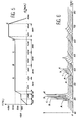
- Such compounds are located in the area delimited by the triangle Li 2 Mn 4 O 9 , Li 4 Mn 5 O 12 and LiMn 2 O 4 of the phase diagram LiMnO ( Figure 1).
- insertion compounds can be used as electrode active ingredient in solid polymer electrolyte batteries or liquid electrolyte, usable for example for portable, stationary, or electric traction, or in batteries primary.
- Insertion compounds based on manganese with physico-chemical characteristics mentioned above, are of great interest in the field of lithium batteries.
- cathode layers are facilitated, in particular when these are produced in thin layers in solid electrolyte technology.
- FIG. 1 is a diagram illustrating compositions of manganese oxide and of lithium with on the abscissa the Li / Mn ratio and on the ordinate the degree of oxidation of manganese
- the compositions in accordance with l The invention is represented by the hatched area delimited by the triangle Li 2 Mn 4 O 9 , Li 4 Mn 5 O 12 and LiMn 2 O 4 .
- This diagram also shows in dashes, the curve that is supposed to correspond to the Jahn-Teller effect.
- the curve (2) illustrates the degree of manganese oxidation in the final product in as a function of the reaction temperature.
- step E where we operate above the temperature T ⁇ and where the heating was slow, we have actually two stages, a first stage up to T ⁇ and a second step above T ⁇ .
- a lacunar spinel is synthesized having the same Li / Mn atomic ratio but an oxidation state of manganese greater than the stoichiometric state.
- the remaining lithium salt reacts gradually with the spinel structure.
- This example illustrates the preparation of a electrode for solid electrolyte accumulator.
- the electrolyte is prepared in the same way based on POE and Li TSSI and we spread it on the cathodic layer. After evaporation of the solvent, the total thickness of the nickel-cathode-electrolyte sandwich is less than 100 ⁇ m.
- This sandwich is vacuum dried at one temperature of 115 ° C, for 48 h.
- An accumulator is prepared in a glove box with an anode constituted by a lithium sheet with an active surface of 50 cm 2 .
- the capacity per unit area of the accumulator is in the range of 0.5 to 2mAh cm -2 depending on the insertion compound used.
- the electrochemical properties of the accumulator are tested at a temperature of 77 to 110 ° C, in potentiostatic or intentiostatic mode, and in cyclic voltammetry by varying the potential at a speed of 10 mV / h or 120 mV / h.
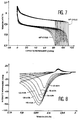
- FIG. 7 illustrates the results obtained in galvanostatic cycling with a discharge intensity of 0.12 mA / cm 2 and a charge intensity of 0.04mA / cm 2 , at a temperature of 110 ° C., with the accumulator using the insertion compound of example 1 (stage E)
- This figure represents the voltage variations (in V) as a function of the capacity (mAh / g) for cycles 20 to 60.
- FIG. 8 illustrates the results obtained in cyclic voltammetry, at different scanning speed v , at 110 ° C. with the insertion compound having a Li / Mn ratio of 0.71.
- the intensity scale is given in mA / g of active material in order to easily assess the rate of discharge. Indeed, with an approximate theoretical capacity at 3V of 150 mAh / g, an average normalized current of 75 mA / g corresponds to a discharge rate of C / 2.
- the insertion compounds of the invention are therefore very interesting as active material in solid electrolyte accumulators.
- the insertion compound is mixed with acetylene black and polytetrafluoroethylene in the weight ratio 70/20/10 in hexane, then it is dried and pellets of 20 mm in diameter are formed by compression under a pressure of 200 MPa, then each tablet is placed in an accumulator comprising a lithium anode and an electrolyte consisting for example of a solution of LiClO 4 1M in a mixture of propylene carbonate-ethylene carbonate-dimethyl ether ( 1/1/2) batteries are thus obtained which can be charged and discharged at rates of around C / 40 between 2.0 V and 3.5 V.
Landscapes
- Chemical & Material Sciences (AREA)
- Organic Chemistry (AREA)
- Inorganic Chemistry (AREA)
- Chemical Kinetics & Catalysis (AREA)
- Electrochemistry (AREA)
- General Chemical & Material Sciences (AREA)
- Battery Electrode And Active Subsutance (AREA)
- Secondary Cells (AREA)
- Inorganic Compounds Of Heavy Metals (AREA)
Claims (11)
- Verfahren zur Herstellung einer Einlagerungsverbindung auf der Basis eines Oxids von Mangan und von Lithium durch Reaktion im festen Zustand zwischen Manganoxid und einer Lithiumverbindung, dadurch gekennzeichnet, daß man ein Pulver von Manganoxid β-MnO2, das eine spezifische Oberfläche unter 7 m2/g und eine mittlere Korngröße unter 10 µm hat, mit einem Pulver einer Lithiumverbindung, gewählt unter den hydratisierten oder nicht hydratisierten Oxiden, Hydroxiden, Carbonaten und Nitraten von Lithium, bei einer Temperatur von 150 bis 500°C während einer Zeitdauer reagieren läßt, die ausreicht, um β-MnO2 in ein Oxid von Mangan und von Lithium mit stöchiometrischer oder lückenhafter Spinellstruktur umzuwandeln.
- Verfahren nach Anspruch 1, dadurch gekennzeichnet, daß die mittlere Korngröße des β-MnO2-Pulvers 0,5 bis 5 µm beträgt.
- Verfahren nach Anspruch 1 oder 2, dadurch gekennzeichnet, daß man Manganoxid β-MnO2 von Pyrolusitstruktur verwendet.
- Verfahren nach Anspruch 1, dadurch gekenzeichnet, das die Mengen des β-MnO2 und der Lithiumverbindung derart sind, daß das Verhältnis Li/Mn 0,5 bis 1 beträgt.
- Verfahren nach einem der Ansprüche 1 bis 4, dadurch gekennzeichnet, daß die Lithiumverbindung Li2CO3 oder LiOH ist.
- Verfahren nach einem der Ansprüche 1 bis 5, dadurch gekennzeichnet, daß man die Reaktion in einem Drehofen unter Spülung mit Sauerstoff ausführt.
- Verfahren nach einem der Ansprüche 1 bis 6, dadurch gekennzeichnet, daß die Reaktionsdauer 5 bis 150 h beträgt.
- Verfahren nach einem der Ansprüche 1 bis 7, dadurch gekennzeichnet, daß man das Atomverhältnis Li/Mn und den Oxidationsgrad des Mangans der erhaltenen Einlagerungsverbindung einstellt, indem man die Reaktionstemperatur in Abhängigkeit von dem anfänglichen Atomverhältnis Li/Mn von β-MnO2 und der Lithiumverbindung wählt.
- Einlagerungsverbindung auf der Basis eines Oxids von Mangan und von Lithium mit stöchiometrischer oder lückenhafter Spinellstruktur, gekennzeichnet durch ein Atomverhältnis Li/Mn von 0,5 bis 0,75, einen Oxidationsgrad des Mangans von +3,5 bis +3,92, eine spezifische Oberfläche unter 7 m2/g und einen Parameter der Elementarzelle zwischen 8,12 Å und 8,25 Å, entsprechend einer Dichte zwischen 4,1 und 4,5.
- Einlagerungsverbindung nach Anspruch 9, dadurch gekennzeichnet, daß ihre Zusammensetzung in der schraffierten Zone des in Fig. 1 dargestellten Diagramms liegt, die begrenzt wird durch das Dreieck Li2Mn4O9, Li4Mn5O12 und LiMn2O4.
- Positive Elektrode für einen Lithiumakkumulator, dadurch gekennzeichnet, daß sie die Einlagerungsverbindung nach einem der Ansprüche 9 und 10 enthält.
Applications Claiming Priority (2)
| Application Number | Priority Date | Filing Date | Title |
|---|---|---|---|
| FR9407569A FR2721308B1 (fr) | 1994-06-21 | 1994-06-21 | Composés d'insertion à base d'oxyde de manganèse, utilisables comme électrode positive dans un accumulateur au lithium. |
| FR9407569 | 1994-06-21 |
Publications (2)
| Publication Number | Publication Date |
|---|---|
| EP0688739A1 EP0688739A1 (de) | 1995-12-27 |
| EP0688739B1 true EP0688739B1 (de) | 1998-01-14 |
Family
ID=9464440
Family Applications (1)
| Application Number | Title | Priority Date | Filing Date |
|---|---|---|---|
| EP95401434A Expired - Lifetime EP0688739B1 (de) | 1994-06-21 | 1995-06-19 | Interkalationsverbindungen auf der Basis von Manganoxid zur Verwendung als aktives Material einer positiven Elektrode einer Lithium-Sekondärbatterie |
Country Status (7)
| Country | Link |
|---|---|
| US (1) | US5700442A (de) |
| EP (1) | EP0688739B1 (de) |
| JP (1) | JPH08203521A (de) |
| CA (1) | CA2152226A1 (de) |
| DE (1) | DE69501435T2 (de) |
| DK (1) | DK0688739T3 (de) |
| FR (1) | FR2721308B1 (de) |
Families Citing this family (31)
| Publication number | Priority date | Publication date | Assignee | Title |
|---|---|---|---|---|
| US5807646A (en) * | 1995-02-23 | 1998-09-15 | Tosoh Corporation | Spinel type lithium-mangenese oxide material, process for preparing the same and use thereof |
| DE19519044A1 (de) * | 1995-05-24 | 1996-11-28 | Basf Magnetics Gmbh | Lithium und Mangan-(III/IV) enthaltende Spinelle |
| US5792442A (en) * | 1995-12-05 | 1998-08-11 | Fmc Corporation | Highly homogeneous spinel Li1+X Mn2-X O4 intercalation compounds and method for preparing same |
| EP0891299B1 (de) * | 1996-04-05 | 2000-08-16 | Fmc Corporation | VERFAHREN ZUR HERSTELLUNG VON Li(1+x)Mn(2-x)0(4+y)-SPINELLEINLAGERUNGSVERBINDUNGEN |
| FR2747939A1 (fr) * | 1996-04-30 | 1997-10-31 | Commissariat Energie Atomique | Catalyseurs a base d'oxyde de manganese et de lithium de structure spinelle pour le traitement des gaz d'echappement |
| JP3221352B2 (ja) * | 1996-06-17 | 2001-10-22 | 株式会社村田製作所 | スピネル型リチウムマンガン複合酸化物の製造方法 |
| JP3047827B2 (ja) | 1996-07-16 | 2000-06-05 | 株式会社村田製作所 | リチウム二次電池 |
| US6270926B1 (en) | 1996-07-16 | 2001-08-07 | Murata Manufacturing Co., Ltd. | Lithium secondary battery |
| JP3562187B2 (ja) * | 1996-12-27 | 2004-09-08 | ソニー株式会社 | 非水電解液二次電池 |
| JP3036694B2 (ja) * | 1997-03-25 | 2000-04-24 | 三菱重工業株式会社 | Liイオン電池電極材料用Li複合酸化物の製造方法 |
| US6337157B1 (en) * | 1997-05-28 | 2002-01-08 | Showa Denki Kabushiki Kaisha | Cathode electroactive material, production method and nonaqueous secondary battery comprising the same |
| JPH1173966A (ja) * | 1997-07-01 | 1999-03-16 | Matsushita Electric Ind Co Ltd | 非水電解質二次電池およびその正極活物質の製造法 |
| US6071646A (en) * | 1997-08-26 | 2000-06-06 | Kyushu Ceramics Industry Co., Ltd. | Spinel compounds as cathodes for lithium materials |
| KR100268749B1 (ko) * | 1998-02-26 | 2000-10-16 | 이 병 길 | 리튬 이차전지 양극재료용 층상 결정구조 이산화 망간 및 이의 합성 방법 |
| US6361755B1 (en) * | 1998-03-24 | 2002-03-26 | Board Of Regents, The University Of Texas System | Low temperature synthesis of Li4Mn5O12 cathodes for lithium batteries |
| US5939043A (en) * | 1998-06-26 | 1999-08-17 | Ga-Tek Inc. | Process for preparing Lix Mn2 O4 intercalation compounds |
| KR20010072432A (ko) * | 1998-08-13 | 2001-07-31 | 메리 이. 보울러 | 리튬-망간 산화물 인터칼레이션 화합물의 제조 방법 및그로부터 제조된 화합물 |
| US6267943B1 (en) | 1998-10-15 | 2001-07-31 | Fmc Corporation | Lithium manganese oxide spinel compound and method of preparing same |
| JP2000169150A (ja) * | 1998-12-02 | 2000-06-20 | Murata Mfg Co Ltd | スピネル型リチウムマンガン複合酸化物及びリチウム二次電池 |
| JP3048352B1 (ja) * | 1998-12-02 | 2000-06-05 | 三井金属鉱業株式会社 | マンガン酸リチウムの製造方法 |
| EP1049187A3 (de) * | 1999-04-27 | 2004-04-28 | Hitachi, Ltd. | Lithium-Sekundärbatterie |
| JP4581157B2 (ja) * | 1999-06-14 | 2010-11-17 | パナソニック株式会社 | 非水電解質二次電池用正極活物質およびその製造方法 |
| JP4960561B2 (ja) * | 1999-12-10 | 2012-06-27 | エフエムシー・コーポレイション | リチウムコバルト酸化物及びその製造方法 |
| JP4636642B2 (ja) * | 1999-12-27 | 2011-02-23 | 日本電工株式会社 | スピネル型リチウムマンガン複合酸化物およびその製造方法 |
| JP5226917B2 (ja) * | 2000-01-21 | 2013-07-03 | 昭和電工株式会社 | 正極活物質、その製造法及びそれを用いた非水二次電池 |
| US6403257B1 (en) * | 2000-07-10 | 2002-06-11 | The Gillette Company | Mechanochemical synthesis of lithiated manganese dioxide |
| EP1244114A1 (de) * | 2001-03-20 | 2002-09-25 | ILFORD Imaging Switzerland GmbH | Elektrisch aktive Filme |
| TWI258238B (en) * | 2003-11-05 | 2006-07-11 | Lg Chemical Ltd | Functional polymer film-coated electrode and electrochemical device using the same |
| FR2870639B1 (fr) * | 2004-05-19 | 2006-11-10 | Electricite De France | Support type collecteur de courant et son utilisation en tant qu'electrode de batterie |
| JP5030076B2 (ja) * | 2005-07-19 | 2012-09-19 | 独立行政法人物質・材料研究機構 | 酸化マンガンナノメッシュとその合成方法 |
| JP2007238436A (ja) * | 2007-04-20 | 2007-09-20 | Mitsubishi Chemicals Corp | マンガン酸リチウムの製造方法及び非水溶媒二次電池 |
Family Cites Families (6)
| Publication number | Priority date | Publication date | Assignee | Title |
|---|---|---|---|---|
| JPH0746608B2 (ja) | 1986-10-30 | 1995-05-17 | 三洋電機株式会社 | 非水系二次電池 |
| JPH0746607B2 (ja) | 1987-01-29 | 1995-05-17 | 三洋電機株式会社 | 非水系二次電池 |
| JPH07112929B2 (ja) * | 1987-02-25 | 1995-12-06 | 日立マクセル株式会社 | リチウムマンガン酸化物固溶体の合成法 |
| US4959282A (en) * | 1988-07-11 | 1990-09-25 | Moli Energy Limited | Cathode active materials, methods of making same and electrochemical cells incorporating the same |
| CA2022898C (en) * | 1989-08-15 | 1995-06-20 | Nobuhiro Furukawa | Non-aqueous secondary cell |
| JPH07111153A (ja) * | 1993-10-13 | 1995-04-25 | Haibaru:Kk | 二次電池 |
-
1994
- 1994-06-21 FR FR9407569A patent/FR2721308B1/fr not_active Expired - Fee Related
-
1995
- 1995-06-19 US US08/492,141 patent/US5700442A/en not_active Expired - Fee Related
- 1995-06-19 EP EP95401434A patent/EP0688739B1/de not_active Expired - Lifetime
- 1995-06-19 DE DE69501435T patent/DE69501435T2/de not_active Expired - Fee Related
- 1995-06-19 JP JP7152006A patent/JPH08203521A/ja not_active Withdrawn
- 1995-06-19 DK DK95401434T patent/DK0688739T3/da active
- 1995-06-20 CA CA002152226A patent/CA2152226A1/en not_active Abandoned
Also Published As
| Publication number | Publication date |
|---|---|
| DK0688739T3 (da) | 1998-09-14 |
| JPH08203521A (ja) | 1996-08-09 |
| FR2721308B1 (fr) | 1996-10-11 |
| FR2721308A1 (fr) | 1995-12-22 |
| CA2152226A1 (en) | 1995-12-22 |
| DE69501435T2 (de) | 1998-08-27 |
| US5700442A (en) | 1997-12-23 |
| EP0688739A1 (de) | 1995-12-27 |
| DE69501435D1 (de) | 1998-02-19 |
Similar Documents
| Publication | Publication Date | Title |
|---|---|---|
| EP0688739A1 (de) | Interkalie Verbindungen auf der Basis von Manganoxid zur Verwendung als aktives Material einer positiven Elektrode aus einer Lithium-Sekondärbatterie | |
| EP1917691B1 (de) | Hochspannungs-positiv-elektrodenmaterial mit spinellstruktur auf der basis von nickel und mangan für lithiumzellenbatterien | |
| EP1438761B1 (de) | Oxyd aus lithium und vanadium, herstellungsvefahren, seine verwendung als aktive elektrodenmaterial | |
| US7018741B2 (en) | Particulate positive electrode active material for a lithium secondary cell | |
| EP0858677B1 (de) | Elektrode für wiederaufladbaren lithiumenthaltenden elektrochemischen stromgenerator | |
| EP0633617B1 (de) | Wiederaufladebarer Lithiumenthaltender elektrochemischer Stromgenerator und Verfahren zu ihrer Herstellung | |
| FR2733632A1 (fr) | Matiere active pour electrode positive dans une batterie au lithium, et procede pour la fabriquer | |
| FR2738673A1 (fr) | Composes d'insertion a haute tension pour des batteries au lithium | |
| US7754383B2 (en) | Non-aqueous electrolyte secondary battery, negative electrode material therefor, and method of manufacturing the negative electrode material | |
| KR20030032220A (ko) | 리튬 이차 전지용 음극 활물질 및 그의 제조 방법 | |
| EP1828058B1 (de) | Optimiertes anodenmaterial für lithiumbatterien, herstellungsverfahren dafür, elektrode und batterie zur durchführung des verfahrens | |
| US6514638B2 (en) | Non-aqueous electrolyte secondary battery including positive and negative electrodes | |
| FR2704216A1 (fr) | Matériaux d'électrode pour batteries rechargeables au lithium et leur procédé de synthèse. | |
| US20010036577A1 (en) | Lithium secondary battery and cathode active material for ues in lithium secondary battery | |
| EP0993057B1 (de) | Kathodisches Aktivmaterial für Lithium-Akkumulator | |
| EP0986121A1 (de) | Elektrode für nichtwässrige elektrolytische zellen | |
| KR100498859B1 (ko) | 비수성 전해질 전지용 전극의 제조방법 | |
| FR2776649A1 (fr) | Procede de production d'un oxyde complexe de lithium et de manganese de type spinelle et oxyde complexe ainsi obtenu | |
| JP5034305B2 (ja) | 非水二次電池用活物質およびその製造方法 | |
| EP4128415A1 (de) | Lithium enthaltende anorganische mischelektrolyten | |
| FR2901640A1 (fr) | Compose d'insertion du lithium utilisable comme matiere active cathodique d'un generateur electrochimique rechargeable au lithium | |
| KR100412523B1 (ko) | 리튬 이차 전지용 양극 활물질 및 이를 포함하는 리튬이차 전지 | |
| JP2002203559A (ja) | 非水電解質二次電池及び正極活物質の製造方法 | |
| EP1134825A2 (de) | Batterie mit nichtwässrigem Elektrolyten | |
| FR3139132A1 (fr) | Matériau actif en oxyde mixte niobium titane substitué par du tungstène |
Legal Events
| Date | Code | Title | Description |
|---|---|---|---|
| PUAI | Public reference made under article 153(3) epc to a published international application that has entered the european phase |
Free format text: ORIGINAL CODE: 0009012 |
|
| AK | Designated contracting states |
Kind code of ref document: A1 Designated state(s): BE DE DK FR GB IT |
|
| 17P | Request for examination filed |
Effective date: 19960617 |
|
| GRAG | Despatch of communication of intention to grant |
Free format text: ORIGINAL CODE: EPIDOS AGRA |
|
| 17Q | First examination report despatched |
Effective date: 19970313 |
|
| GRAG | Despatch of communication of intention to grant |
Free format text: ORIGINAL CODE: EPIDOS AGRA |
|
| GRAH | Despatch of communication of intention to grant a patent |
Free format text: ORIGINAL CODE: EPIDOS IGRA |
|
| GRAH | Despatch of communication of intention to grant a patent |
Free format text: ORIGINAL CODE: EPIDOS IGRA |
|
| GRAA | (expected) grant |
Free format text: ORIGINAL CODE: 0009210 |
|
| AK | Designated contracting states |
Kind code of ref document: B1 Designated state(s): BE DE DK FR GB IT |
|
| REF | Corresponds to: |
Ref document number: 69501435 Country of ref document: DE Date of ref document: 19980219 |
|
| RAP2 | Party data changed (patent owner data changed or rights of a patent transferred) |
Owner name: SADACEM Owner name: BOLLORE TECHNOLOGIES S.A. Owner name: ELECTRICITE DE FRANCE SERVICE NATIONAL Owner name: COMMISSARIAT A L'ENERGIE ATOMIQUE |
|
| ITF | It: translation for a ep patent filed | ||
| GBT | Gb: translation of ep patent filed (gb section 77(6)(a)/1977) |
Effective date: 19980331 |
|
| REG | Reference to a national code |
Ref country code: DK Ref legal event code: T3 |
|
| PLBE | No opposition filed within time limit |
Free format text: ORIGINAL CODE: 0009261 |
|
| STAA | Information on the status of an ep patent application or granted ep patent |
Free format text: STATUS: NO OPPOSITION FILED WITHIN TIME LIMIT |
|
| 26N | No opposition filed | ||
| PGFP | Annual fee paid to national office [announced via postgrant information from national office to epo] |
Ref country code: GB Payment date: 20010613 Year of fee payment: 7 Ref country code: DK Payment date: 20010613 Year of fee payment: 7 |
|
| PGFP | Annual fee paid to national office [announced via postgrant information from national office to epo] |
Ref country code: DE Payment date: 20010615 Year of fee payment: 7 |
|
| PGFP | Annual fee paid to national office [announced via postgrant information from national office to epo] |
Ref country code: FR Payment date: 20010622 Year of fee payment: 7 |
|
| PGFP | Annual fee paid to national office [announced via postgrant information from national office to epo] |
Ref country code: BE Payment date: 20010816 Year of fee payment: 7 |
|
| REG | Reference to a national code |
Ref country code: GB Ref legal event code: IF02 |
|
| PG25 | Lapsed in a contracting state [announced via postgrant information from national office to epo] |
Ref country code: GB Free format text: LAPSE BECAUSE OF NON-PAYMENT OF DUE FEES Effective date: 20020619 |
|
| PG25 | Lapsed in a contracting state [announced via postgrant information from national office to epo] |
Ref country code: BE Free format text: LAPSE BECAUSE OF NON-PAYMENT OF DUE FEES Effective date: 20020630 |
|
| PG25 | Lapsed in a contracting state [announced via postgrant information from national office to epo] |
Ref country code: DK Free format text: LAPSE BECAUSE OF NON-PAYMENT OF DUE FEES Effective date: 20020731 |
|
| BERE | Be: lapsed |
Owner name: S.A. *BOLLORE TECHNOLOGIES Effective date: 20020630 Owner name: *ELECTRICITE DE FRANCE SERVICE NATIONAL Effective date: 20020630 Owner name: COMMISSARIAT A L'ENERGIE *ATOMIQUE Effective date: 20020630 |
|
| PG25 | Lapsed in a contracting state [announced via postgrant information from national office to epo] |
Ref country code: DE Free format text: LAPSE BECAUSE OF NON-PAYMENT OF DUE FEES Effective date: 20030101 |
|
| GBPC | Gb: european patent ceased through non-payment of renewal fee |
Effective date: 20020619 |
|
| REG | Reference to a national code |
Ref country code: DK Ref legal event code: EBP |
|
| PG25 | Lapsed in a contracting state [announced via postgrant information from national office to epo] |
Ref country code: FR Free format text: LAPSE BECAUSE OF NON-PAYMENT OF DUE FEES Effective date: 20030228 |
|
| REG | Reference to a national code |
Ref country code: FR Ref legal event code: ST |
|
| PG25 | Lapsed in a contracting state [announced via postgrant information from national office to epo] |
Ref country code: IT Free format text: LAPSE BECAUSE OF NON-PAYMENT OF DUE FEES;WARNING: LAPSES OF ITALIAN PATENTS WITH EFFECTIVE DATE BEFORE 2007 MAY HAVE OCCURRED AT ANY TIME BEFORE 2007. THE CORRECT EFFECTIVE DATE MAY BE DIFFERENT FROM THE ONE RECORDED. Effective date: 20050619 |