EP0656929B1 - Verwendung von im ir-bereich absorbierenden und/oder fluoreszierenden verbindugen als markierungsmittel für flüssigkeiten - Google Patents
Verwendung von im ir-bereich absorbierenden und/oder fluoreszierenden verbindugen als markierungsmittel für flüssigkeiten Download PDFInfo
- Publication number
- EP0656929B1 EP0656929B1 EP93915892A EP93915892A EP0656929B1 EP 0656929 B1 EP0656929 B1 EP 0656929B1 EP 93915892 A EP93915892 A EP 93915892A EP 93915892 A EP93915892 A EP 93915892A EP 0656929 B1 EP0656929 B1 EP 0656929B1
- Authority
- EP
- European Patent Office
- Prior art keywords
- metal
- formula
- alkyl
- range
- fluorescence
- Prior art date
- Legal status (The legal status is an assumption and is not a legal conclusion. Google has not performed a legal analysis and makes no representation as to the accuracy of the status listed.)
- Expired - Lifetime
Links
- 0 C*c1c(*)c(C(*(**2C(*=C3*=C(C)C4=C(C)C(C*)=C(*)C(*CCC5*)[C@]34)=C3C5=C(*)C(*)=C(*)C3=C2C*=C(*=C2C)c3c2c(*)c(*)c(*)c3*)C2=C)=*)c2c(*)c1* Chemical compound C*c1c(*)c(C(*(**2C(*=C3*=C(C)C4=C(C)C(C*)=C(*)C(*CCC5*)[C@]34)=C3C5=C(*)C(*)=C(*)C3=C2C*=C(*=C2C)c3c2c(*)c(*)c(*)c3*)C2=C)=*)c2c(*)c1* 0.000 description 3
Images

Classifications
-
- C—CHEMISTRY; METALLURGY
- C10—PETROLEUM, GAS OR COKE INDUSTRIES; TECHNICAL GASES CONTAINING CARBON MONOXIDE; FUELS; LUBRICANTS; PEAT
- C10L—FUELS NOT OTHERWISE PROVIDED FOR; NATURAL GAS; SYNTHETIC NATURAL GAS OBTAINED BY PROCESSES NOT COVERED BY SUBCLASSES C10G OR C10K; LIQUIFIED PETROLEUM GAS; USE OF ADDITIVES TO FUELS OR FIRES; FIRE-LIGHTERS
- C10L1/00—Liquid carbonaceous fuels
- C10L1/003—Marking, e.g. coloration by addition of pigments
-
- C—CHEMISTRY; METALLURGY
- C10—PETROLEUM, GAS OR COKE INDUSTRIES; TECHNICAL GASES CONTAINING CARBON MONOXIDE; FUELS; LUBRICANTS; PEAT
- C10L—FUELS NOT OTHERWISE PROVIDED FOR; NATURAL GAS; SYNTHETIC NATURAL GAS OBTAINED BY PROCESSES NOT COVERED BY SUBCLASSES C10G OR C10K; LIQUIFIED PETROLEUM GAS; USE OF ADDITIVES TO FUELS OR FIRES; FIRE-LIGHTERS
- C10L1/00—Liquid carbonaceous fuels
- C10L1/10—Liquid carbonaceous fuels containing additives
-
- C—CHEMISTRY; METALLURGY
- C10—PETROLEUM, GAS OR COKE INDUSTRIES; TECHNICAL GASES CONTAINING CARBON MONOXIDE; FUELS; LUBRICANTS; PEAT
- C10M—LUBRICATING COMPOSITIONS; USE OF CHEMICAL SUBSTANCES EITHER ALONE OR AS LUBRICATING INGREDIENTS IN A LUBRICATING COMPOSITION
- C10M171/00—Lubricating compositions characterised by purely physical criteria, e.g. containing as base-material, thickener or additive, ingredients which are characterised exclusively by their numerically specified physical properties, i.e. containing ingredients which are physically well-defined but for which the chemical nature is either unspecified or only very vaguely indicated
- C10M171/007—Coloured or dyes-containing lubricant compositions
-
- G—PHYSICS
- G01—MEASURING; TESTING
- G01N—INVESTIGATING OR ANALYSING MATERIALS BY DETERMINING THEIR CHEMICAL OR PHYSICAL PROPERTIES
- G01N33/00—Investigating or analysing materials by specific methods not covered by groups G01N1/00 - G01N31/00
- G01N33/26—Oils; Viscous liquids; Paints; Inks
- G01N33/28—Oils, i.e. hydrocarbon liquids
- G01N33/2835—Specific substances contained in the oils or fuels
- G01N33/2882—Markers
-
- F—MECHANICAL ENGINEERING; LIGHTING; HEATING; WEAPONS; BLASTING
- F02—COMBUSTION ENGINES; HOT-GAS OR COMBUSTION-PRODUCT ENGINE PLANTS
- F02B—INTERNAL-COMBUSTION PISTON ENGINES; COMBUSTION ENGINES IN GENERAL
- F02B3/00—Engines characterised by air compression and subsequent fuel addition
- F02B3/06—Engines characterised by air compression and subsequent fuel addition with compression ignition
-
- Y—GENERAL TAGGING OF NEW TECHNOLOGICAL DEVELOPMENTS; GENERAL TAGGING OF CROSS-SECTIONAL TECHNOLOGIES SPANNING OVER SEVERAL SECTIONS OF THE IPC; TECHNICAL SUBJECTS COVERED BY FORMER USPC CROSS-REFERENCE ART COLLECTIONS [XRACs] AND DIGESTS
- Y10—TECHNICAL SUBJECTS COVERED BY FORMER USPC
- Y10T—TECHNICAL SUBJECTS COVERED BY FORMER US CLASSIFICATION
- Y10T436/00—Chemistry: analytical and immunological testing
- Y10T436/13—Tracers or tags
Definitions
- the present invention relates to the use of compounds from the class of the metal-free or metal-containing phthalocyanines, the metal-free or metal-containing naphthalocyanines, the nickel-dithiolene complexes, the aminium compounds of aromatic amines, the methine dyes or the azulene square acid dyes, which have their absorption maximum in the range from 600 to 1,200 nm and / or a fluorescence maximum in the range from 620 to 1,200 nm, as a marking agent for liquids, a method for the detection of marking agents in liquids and a suitable detector.
- heating oil can be distinguished from diesel oil in this way.
- the markers should have a sufficiently strong absorption and / or fluorescence in the near infrared, so that the detection of the absorption with conventional photometers, which are sensitive in this area, and / or the fluorescence with conventional devices, after excitation with a suitable radiation source, take place can.
- Metal-containing phthalocyanines or naphthalocyanines generally have lithium (twice), magnesium, zinc, copper, nickel, VO, TiO or AlCl as the central atom.
- naphthalocyanines of the formula II in which at least one of the radicals Y 1 to Y 8 are different from hydrogen.
- Suitable nickel-dithiolene complexes obey formula III, for example in the L 1 , L 2 , L 3 and L 4 independently of one another in each case C 1 -C 20 -alkyl, which may be interrupted by 1 to 4 oxygen atoms in ether function, phenyl, C 1 -C 20 -alkylphenyl, C 1 -C 20 - Alkoxyphenyl, where the alkyl groups can each be interrupted by 1 to 4 oxygen atoms in ether function, or L 1 and L 2 and / or L 3 and L 4 each together the rest of the formula mean.
- Suitable aminium compounds obey, for example, the formula IV in the Z 1 , Z 2 , Z 3 and Z 4 independently of one another are each C 1 -C 20 alkyl, which is optionally interrupted by 1 to 4 oxygen atoms in ether function, C 1 -C 20 alkanoyl or a radical of the formula wherein Z 6 for hydrogen, C 1 -C 20 alkyl, which is optionally interrupted by 1 to 4 oxygen atoms in ether function, or C 1 -C 20 alkanoyl, Z 7 for hydrogen or C 1 -C 20 alkyl, which optionally is interrupted by 1 to 4 oxygen atoms in ether function, and Z 8 represents hydrogen, C 1 -C 20 -alkyl, which is optionally interrupted by 1 to 4 oxygen atoms in ether function, or halogen, and An ⁇ is the equivalent of an anion.
- alkyl, alkylene or alkenyl radicals occurring in the above formulas can be either straight-chain or branched.
- C 1 -C 20 alkyl radicals which are optionally interrupted by 1 to 4 oxygen atoms in ether function, for example methyl, ethyl, propyl, isopropyl, butyl, isobutyl, sec-butyl, tert- Butyl, pentyl, isopentyl, neopentyl, tert-pentyl, hexyl, 2-methylpentyl, heptyl, octyl, 2-ethylhexyl, isooctyl, nonyl, isononyl, decyl, isodecyl, undecyl, dodecyl, tridecyl, 3,5,5,7- Tetramethylnonyl, isotridecyl (the above terms isooctyl, isononyl, isodecyl and isotridecyl are trivial names and der
- C 1 -C 20 alkoxy radicals which are optionally interrupted by 1 to 4 oxygen atoms in ether function, for example methoxy, ethoxy, propoxy, isopropoxy, butoxy, isobutoxy, pentyloxy, hexyloxy, heptyloxy, octyloxy, 2-ethylhexyloxy, isooctyloxy, nonyloxy, isononyloxy, decyloxy, isodecyloxy, undecyloxy, dodecyloxy, tridecyloxy, isotridecyloxy, tetradecyloxy, pentadecyloxy, hexadecyloxy, heptadecyloxy, octadecyloxy, nonosecyloxy, 2ic Isopropoxyethoxy, 2-butoxyethoxy, 2- or 3-methoxypropoxy, 2- or 3-e
- suitable substituted phenyl is, for example, phenyl substituted by C 1 -C 6 alkyl, C 1 -C 6 alkoxy, hydroxy or halogen. As a rule, 1 to 3 substituents can occur.
- Halogen in formula Ib, II, IV or VI is e.g. Fluorine, chlorine or bromine.
- Residues W in formula Ia and X 2 or X 3 in formula Ib are, for example, methylimino, ethylimino, propylimino, isopropylimino or butylimino.
- R 1 to R 16 in formula Ia and Y 9 to Y 12 in formula II are, for example, dimethylsulfamoyl, diethylsulfamoyl, dipropylsulfamoyl, dibutylsulfamoyl or N-methyl-N-ethylsulfamoyl.
- C 2 -C 20 alkenyl and C 4 -C 20 alkanedienyl in formula II are, for example, vinyl, allyl, prop-1-en-1-yl, methallyl, ethallyl, but-3-en-1-yl, pentenyl, Pentadienyl, hexadienyl, 3,7-dimethylocta-1,6-dien-1-yl, undec-10-en-1-yl, 6,10-dimethylundeca-5,9-dien-2-yl, octadec-9- en-1-yl, octadeca-9,12-dien-1-yl, 3,7,11,15-tetramethylhexadec-1-en-3-yl or Eicos-9-en-1-yl.
- C 3 -C 20 alkenyloxy in formula II is, for example, allyloxy, methallyloxy, but-3-en-1-yloxy, undec-10-en-1-yloxy, octadec-9-en-1-yloxy or Eicos-9- en-1-yloxy.
- Z 6 in formula IV means, for example, formyl, acetyl, propionyl, butyryl, isobutyryl, pentanoyl, hexanoyl, heptanoyl, octanoyl or 2-ethylhexanoyl.
- rings A and / or B in formula V are substituted, for example C 1 -C 6 -alkyl, phenyl-C 1 -C 6 -alkoxy, phenoxy, halogen, hydroxyl, amino, C 1 -C 6 -Mono- or dialkylamino or cyano come into consideration.
- the rings are usually 1 to 3 times substituted.
- Residues E 3 , E 4 , Q 1 and Q 2 in formula V are, for example, methyl, ethyl, propyl, isopropyl, butyl, isobutyl, sec-butyl, pentyl, isopentyl, neopentyl, tert-pentyl or hexyl.
- Residues Q 1 and Q 2 are furthermore, for example, hexyl, 2-methylpentyl, heptyl, octyl, 2-ethylhexyl, isooctyl, nonyl, isononyl, decyl, isodecyl, undecyl, dodecyl, cyclopentyl, cyclohexyl, 2-methoxyethyl, 2-ethoxyethyl, 2 - or 3-methoxypropyl, 2- or 3-ethoxypropyl, 2-hydroxyethyl, 2- or 3-hydroxypropyl, 2-chloroethyl, 2-bromoethyl, 2- or 3-chloropropyl, 2- or 3-bromopropyl, 2-carboxyethyl, 2- or 3-carboxypropyl, 2-methoxycarbonylethyl, 2-ethoxycarbonylethyl, 2- or 3-methoxycarbonylpropy
- An ⁇ in formula IV or V is derived, for example, from anions of organic or inorganic acids.
- methanesulfonate, 4-methylbenzenesulfonate, acetate, trifluoroacetate, heptafluorobutyrate, chloride, bromide, iodide, perchlorate, tetrafluoroborate, nitrate, hexafluorophosphate or tetraphenylborate are particularly preferred.
- Residues J in formula VI are e.g. Methylene, ethylene, 1,2- or 1,3-propylene, 1,2-, 1,3-, 2,3- or 1,4-butylene, pentamethylene, hexamethylene, heptamethylene, octamethylene, nonamethylene, decamethylene, undecamethylene or Dodecamethylene.
- T 2 , T 3 , T 4 and T 5 in formula VI are, for example, methyl, ethyl, propyl, isopropyl, butyl, isobutyl, sec-butyl, tert-butyl, pentyl, isopentyl, neopentyl, tert-pentyl, 2-methylbutyl , Hexyl, 2-methylpentyl, heptyl, octyl, 2-ethylhexyl, isooctyl, nonyl, isononyl, decyl, undecyl, dodecyl, fluoromethyl, chloromethyl, difluoromethyl, trifluoromethyl, trichloromethyl, 2-fluoroethyl, 2-chloroethyl, 2-bromoethyl, 1 , 1,1-trifluoroethyl, heptafluoropropyl, 4-chlorobut
- T 1 in formula VI is, for example, methoxycarbonyl, ethoxycarbonyl, propoxycarbonyl, isopropoxycarbonyl, butoxycarbonyl, isobutoxycarbonyl, sec-butoxycarbonyl, tert-butoxycarbonyl, pentyloxycarbonyl, isopentyloxycarbonyl, neopentyloxycarbonyl, tert-pentyloxycarbonyl, hexyloxycarbonyl, heptyloxyoxyyloxycarbonyl, octyloxycarbonyloxycarbonyl, octyloxyoxyyloxycarbonyl, octyloxycarbonyloxycarbonyl, octyloxycarbonyloxycarbonyl, octyloxycarbonyloxycarbonyl, octyloxycarbonyloxycarbonyl, octyloxycarbonyloxycarbonyl, octyloxycarbonyl
- naphthalocyanines of the formula IIa in which Y 1 , Y 2 , Y 3 , Y 4 , Y 5 , Y 6 , Y 7 and Y 8 are each independently of the other hydroxy, C 1 -C 20 alkoxy, in particular mean C 1 -C 10 alkoxy.
- the alkoxy radicals can be the same or different.
- L 1 , L 2 , L 3 and L 4 are each independently phenyl, C 1 -C 20 -alkylphenyl, C 1 -C 20 -alkoxyphenyl or phenyl substituted by hydroxy and C 1 -C 20 alkyl or L 1 and L 2 and L 3 and L 4 each together the rest of the formula mean.
- nickel-dithiolene complexes of the formula III in which L 1 and L 4 are each phenyl and L 2 and L 4 are each a radical of the formula 4- [C 2 H 5 -C (CH 3 ) 2 ] -C 6 H 4 mean.
- the phthalocyanines of formula Ia are known per se and e.g. described in DE-B-1 073 739 or EP-A-155 780 or can be carried out according to methods known per se, such as are used in the production of phthalocyanines or naphthalocyanines and as described, for example, in F.H. Moser, A.L. Thomas "The Phthalocyanines", CRC Press, Boca Rota, Florida, 1983, or J. Am. Chem. Soc. Volume 106, pages 7404 to 7410, 1984.
- the phthalocyanines of formula Ib are also known per se and e.g. in EP-A-155 780 or can be obtained according to the methods of the above-mentioned prior art (Moser, J.Am. Chem. Soc.).
- naphthalocyanines of the formula II are also known per se and are described, for example, in EP-A-336 213, EP-A-358 080, GB-A-2 168 372 or GB-A-2 200 650 or can be prepared according to the methods of above-mentioned prior art (Moser, J.Am. Chem.Soc.) can be obtained.
- the nickel-dithiolene complexes of the formula III are also known per se and are described, for example, in EP-A-192 215.
- aminium compounds of the formula IV are also known per se and are described, for example, in US Pat. No. 3,484,467 or can be obtained by the methods mentioned there.
- the methine dyes of formula V are also known per se and e.g. described in EP-A-464 543 or can be obtained according to the methods mentioned therein.
- azulene square acid dyes of the formula VI are also known per se and are e.g. in EP-A-310 080 or US-A-4 990 649 or can be obtained according to the methods mentioned therein.
- Suitable solvents which can be labeled according to the invention by means of the compounds described in more detail above are, in particular, organic liquids, for example alcohols, such as methanol, ethanol, propanol, isopropanol, butanol, isobutanol, sec-butanol, pentanol, isopentanol, neopentanol or hexanol, glycols, such as 1,2-ethylene glycol, 1,2- or 1,3-propylene glycol, 1,2-, 2,3- or 1,4-butylene glycol, di- or triethylene glycol or di- or tripropylene glycol, ethers such as methyl tert-butyl ether , 1,2-ethylene glycol mono- or dimethyl ether, 1,2-ethylene glycol mono- or diethyl ether, 3-methoxypropanol, 3-isopropoxypropanol, tetrahydrofuran or dioxane, ketones such as acetone,
- the above-mentioned compounds are used particularly advantageously for marking mineral oils, for which marking is also required, e.g. for tax reasons.
- marking is also required, e.g. for tax reasons.
- the aim is usually to use dyes that are as extensive as possible for the coloring.
- strong dyes in high dilution in mineral oils are no longer visually perceptible.
- markers which have their absorption maximum in the range from 600 to 1200 nm and / or which fluoresce in the range from 620 to 1200 nm, since they can be easily detected with suitable instruments.
- the above-mentioned compounds are generally used in the form of solutions to mark the liquids, but in particular mineral oil.
- Aromatic hydrocarbons such as toluene or xylene are preferably suitable as solvents.
- a concentration of compound absorbing IR radiation and / or fluorescent in the IR range of 2 to 50% by weight, based on the solution, is generally chosen.
- Another object of the present invention is a method for the detection of marking agents in liquids, which is characterized in that the marking agents are detected on the basis of their fluorescence in the NIR spectral range (near infrared spectral range).
- the fluorescence of the marking agents contained in the liquids is advantageously excited with a semiconductor laser or a semiconductor diode. It is particularly favorable to use a semiconductor laser or a semiconductor diode with a wavelength of the maximum emission in the spectral range from ⁇ max -100 nm to ⁇ max +20 nm. ⁇ max means the wavelength of the absorption maximum of the marking material. The wavelength of the maximum emission is in the range from 620 to 1200 nm.
- the fluorescence light generated in this way is advantageously detected with a semiconductor detector, in particular with a silicon photodiode or a germanium photodiode.
- the detection is particularly advantageous if there is still an interference filter and / or an edge filter (with a short-wave transmission edge in the range from ⁇ max to ⁇ max +80 nm) and / or a polarizer in front of the detector.
- the present invention further relates to a detector for performing the method according to the invention, the detector being an NIR light source selected from a semiconductor laser and a semiconductor diode, one or more optical filters, an NIR polarizer and a photodector selected from a silicon photodiode and a germanium photodiode, and optionally contains optical fibers or fiber bundles.
- the detector being an NIR light source selected from a semiconductor laser and a semiconductor diode, one or more optical filters, an NIR polarizer and a photodector selected from a silicon photodiode and a germanium photodiode, and optionally contains optical fibers or fiber bundles.
- Figure 1 shows the schematic structure of the detector.
- the emission of a commercial semiconductor diode laser is used to excite the marker fluorescence.
- the parallel laser beam is radiated onto the sample in a 1 cm cuvette.
- the transmitted light beam is reflected by a mirror and again radiated through the sample.
- the fluorescent light is imaged on the detector, a silicon photodiode, using optical elements (lens system).
- the light emitted on the back is also thrown onto the silicon photodiode by a concave mirror.
- Edge and / or interference filters and / or a polarizer are used to separate the stray light (scattered excitation light) from the fluorescent light.
- the optimization of the polarizer is chosen so that the direction of maximum transmission is perpendicular to the plane of polarization of the excitation light.
- Filter long-pass interference filter 850 nm (from Corion).
- Photodetector silicon photodiode with an area of 1 cm 2 (from UDT). The photocurrent was measured using a current / voltage converter (UDT, model 350).
- the dyes 26 to 28 are based on the above formula.
Landscapes
- Chemical & Material Sciences (AREA)
- Oil, Petroleum & Natural Gas (AREA)
- Engineering & Computer Science (AREA)
- Chemical Kinetics & Catalysis (AREA)
- General Chemical & Material Sciences (AREA)
- Organic Chemistry (AREA)
- Health & Medical Sciences (AREA)
- Life Sciences & Earth Sciences (AREA)
- Food Science & Technology (AREA)
- Medicinal Chemistry (AREA)
- Physics & Mathematics (AREA)
- Analytical Chemistry (AREA)
- Biochemistry (AREA)
- General Health & Medical Sciences (AREA)
- General Physics & Mathematics (AREA)
- Immunology (AREA)
- Pathology (AREA)
- Organic Low-Molecular-Weight Compounds And Preparation Thereof (AREA)
- Investigating Or Analysing Materials By The Use Of Chemical Reactions (AREA)
- Investigating Or Analysing Biological Materials (AREA)
- Inks, Pencil-Leads, Or Crayons (AREA)
- Thermal Transfer Or Thermal Recording In General (AREA)
- Investigating Or Analyzing Non-Biological Materials By The Use Of Chemical Means (AREA)
- Luminescent Compositions (AREA)
- Heat Sensitive Colour Forming Recording (AREA)
- Optical Filters (AREA)
- Nitrogen Condensed Heterocyclic Rings (AREA)
- Optical Record Carriers And Manufacture Thereof (AREA)
- External Artificial Organs (AREA)
- Detergent Compositions (AREA)
- Spectrometry And Color Measurement (AREA)
- Catching Or Destruction (AREA)
- Duplication Or Marking (AREA)
- Investigating Materials By The Use Of Optical Means Adapted For Particular Applications (AREA)
- Paints Or Removers (AREA)
- Investigating, Analyzing Materials By Fluorescence Or Luminescence (AREA)
Description
- Die vorliegende Erfindung betrifft die Verwendung von Verbindungen aus der Klasse der metallfreien oder metallhaltigen Phthalocyanine, der metallfreien oder metallhaltigen Naphthalocyanine, der Nickel-Dithiolen-Komplexe,der Aminiumverbindungen von aromatischen Aminen, der Methinfarbstoffe oder der Azulenquadratsäurefarbstoffe, die ihr Absorptionsmaximum im Bereich von 600 bis 1 200 nm und/oder ein Fluoreszenzmaximum im Bereich von 620 bis 1 200 nm aufweisen, als Markierungsmittel für Flüssigkeiten, ein Verfahren zur Detektion von Markierungsmittel in Flüssigkeiten sowie einen dazu geeigneten Detektor.
- Es ist häufig erforderlich, Flüssigkeiten zu markieren, um in der Folge, z.B. bei ihrer Anwendung, mittels geeigneter Methoden die so markierten Flüssigkeiten wieder zu detektieren.
- Beispielsweise kann auf diese Weise Heizöl von Dieselöl unterschieden werden.
- Aufgabe der vorliegenden Erfindung war es nun, geeignete Verbindungen, die sich als Markierungsmittel eignen, bereitzustellen. Die Markierungsmittel sollten im nahen Infrarot eine ausreichend starke Absorption und/oder Fluoreszenz aufweisen, so daß die Detektion der Absorption mit üblichen Photometern, die in diesem Bereich empfindlich sind, und/oder der Fluoreszenz mit üblichen Geräten, nach Anregung mit einer geeigneten Strahlenquelle, erfolgen kann.
- Demgemäß wurde gefunden, daß sich die eingangs näher bezeichneten Verbindungen vorteilhaft als Markierungsmittel eignen.
- Metallhaltige Phthalocyanine oder Naphthalocyanine weisen in der Regel Lithium (zweimal), Magnesium, Zink, Kupfer, Nickel, VO, TiO oder AlCl als Zentralatom auf.
- Geeignete Phthalocyanine gehorchen z.B. der Formel Ia

- Me1 zweimal Wasserstoff, zweimal Lithium, Magnesium, Zink, Kupfer, Nickel, VO, TiO, AlCl oder Si(OH)2,
- mindestens 4 der Reste R1 bis R16 unabhängig voneinander einen Rest der Formel W-X1, worin W für eine chemische Bindung, Schwefel, Imino, C1-C4-Alkylimino oder Phenylimino und X1 für C1-C20-Alkyl, das gegebenenfalls durch 1 bis 4 Sauerstoffatome in Etherfunktion unterbrochen ist und durch Phenyl substituiert sein kann, Adamantyl oder gegebenenfalls substituiertes Phenyl stehen, und
- gegebenenfalls die übrigen Reste R1 bis R16 Wasserstoff, Halogen, Hydroxysulfonyl oder C1-C4-Dialkylsulfamoyl bedeuten.
- Geeignete Phthalocyanine gehorchen weiterhin z.B. der Formel Ib

- R17 und R18 oder R18 und R19 oder R19 und R20 zusammen jeweils einen Rest der Formel X2-C2H4-X3, worin einer der beiden Reste X2 und X3 für Sauerstoff und der andere für Imino oder C1-C4-Alkylimino steht, und
- R19 und R20 oder R17 und R20 oder R17 und R18 unabhängig voneinander jeweils Wasserstoff oder Halogen bedeuten und
- Me1 die obengenannte Bedeutung besitzt.
- Geeignete Naphthalocyanine gehorchen z.B. der Formel II

- Y1, Y2, Y3, Y4, Y5, Y6, Y7 und Y8 unabhängig voneinander jeweils Wasserstoff, Hydroxy, C1-C20-Alkyl oder C1-C20-Alkoxy, wobei die Alkylgruppen jeweils durch 1 bis 4 Sauerstoffatome in Etherfunktion unterbrochen sein können und gegebenenfalls durch Phenyl substituiert sind,
- Y9, Y10, Y11 und Y12 unabhängig voneinander jeweils Wasserstoff, C1-C20-Alkyl oder C1-C20-Alkoxy, wobei die Alkylgruppen jeweils durch 1 bis 4 Sauerstoffatome in Etherfunktion unterbrochen sein können, Halogen, Hydroxysulfonyl oder C1-C4-Dialkylsulfamoyl und
- Me2 zweimal Wasserstoff, zweimal Lithium, Magnesium, Zink, Kupfer, Nickel, VO, TiO, AlCl oder den Rest

- Y17 und Y18 unabhängig voneinander jeweils für Hydroxy, C1-C20-Alkoxy, C1-C20-Alkyl, C2-C20-Alkenyl, C3-C20-Alkenyloxy oder einen Rest der Formel

- Von besonderem Interesse sind dabei Naphthalocyanine der Formel II, in der mindestens einer der Reste Y1 bis Y8 von Wasserstoff verschieden sind.
- Geeignete Nickel-Dithiolen-Komplexe gehorchen z.B. der Formel III

L1, L2, L3 und L4 unabhängig voneinander jeweils C1-C20-Alkyl, das gegebenenfalls durch 1 bis 4 Sauerstoffatome in Etherfunktion unterbrochen ist, Phenyl, C1-C20-Alkylphenyl, C1-C20-Alkoxyphenyl, wobei die Alkylgruppen jeweils durch 1 bis 4 Sauestoffatome in Etherfunktion unterbrochen sein können, oder L1 und L2 und/oder L3 und L4 jeweils zusammen den Rest der Formel
- Geeignete Aminiumverbindungen gehorchen z.B. der Formel IV

Z1, Z2, Z3 und Z4 unabhängig voneinander jeweils C1-C20-Alkyl, das gegebenenfalls durch 1 bis 4 Sauerstoffatome in Etherfunktion unterbrochen ist, C1-C20-Alkanoyl oder einen Rest der Formel
An ⊖ das Äquivalent eines Anions bedeuten. - Geeignete Methinfarbstoffe gehorchen z.B. der Formel V

E1 und E2 unabhängig voneinander jeweils Sauerstoff, Schwefel, Imino oder einen Rest der Formel
-C(CH3)2- oder -CH=CH-,
D einen Rest der Formel
-CE3= oder -CH=CE3-CH=,
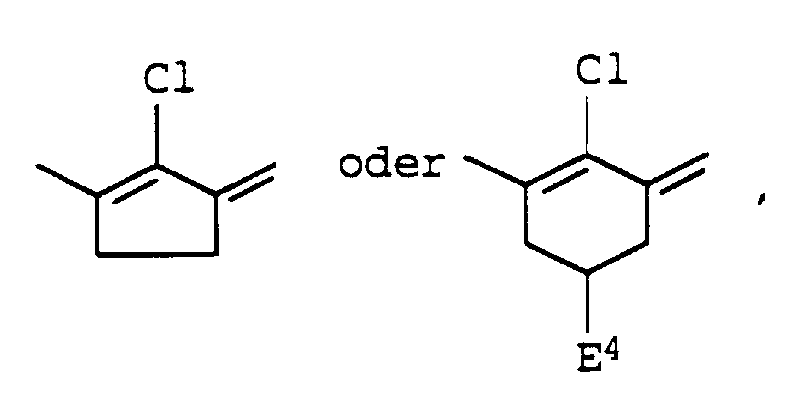
- Q1 und Q2 unabhängig voneinander jeweils Phenyl, C5-C7-Cycloalkyl, C1-C12-Alkyl das durch 1 bis 3 Sauerstoffatome in Etherfunktion unterbrochen sein kann und gegebenenfalls durch Hydroxy, Chlor, Brom, Carboxyl, C1-C4-Alkoxycarbonyl, Acryloyloxy, Methacryloyloxy, Hydroxysulfonyl, C1-C7-Alkanoylamino, C1-C6-Alkylcarbamoyl, C1-C6-Alkylcarbamoyloxy oder einen Rest der Formel G⊕(K)3, worin G für Stickstoff oder Phosphor und K für Phenyl, C5-C7-Cycloalkyl oder C1-C12-Alkyl stehen, substituiert sind,
- An ⊖ das Äquivalent eines Anions und
- n 1, 2 oder 3 bedeuten.
- Geeignete Azulenquadratsäurefarbstoffe gehorchen z.B. der Formel VI

- J C1-C12-Alkylen,
- T1 Wasserstoff, Halogen, Amino, Hydroxy, C1-C12-Alkoxy, Phenyl, substituiertes Phenyl, Carboxyl, C1-C12-Alkoxycarbonyl, Cyano oder einen Rest der Formel -NT7-CO-T6, -CO-NT6T7 oder O-CO-NT6T7, worin T6 und T7 unabhängig voneinander jeweils für Wasserstoff, C1-C12-Alkyl, C5-C7-Cycloalkyl, Phenyl, 2,2,6,6-Tetramethylpiperidin-4-yl oder Cyclohexylaminocarbonyl stehen, und
- T2, T3, T4 und T5 unabhängig voneinander jeweils Wasserstoff oder C1-C12-Alkyl, das gegebenenfalls durch Halogen, Amino, C1-C12-Alkoxy, Phenyl, substituiertes Phenyl, Carboxyl, C1-C12-Alkoxycarbonyl oder Cyano substituiert ist, bedeuten,
- mit der Maßgabe, daß wenn T5 Wasserstoff bedeutet, an einem oder beiden Azulenringen die Ringpositionen der Substituenten J-T1 und T4 innerhalb eines Azulenrings auch gegeneinander vertauscht sein können.
- Alle in den obengenannten Formeln auftretenden Alkyl-, Alkylen- oder Alkenylreste können sowohl geradkettig als auch verzweigt sein.
- In Formel Ia, II, III oder IV sind geeignete C1-C20-Alkylreste, die gegebenenfalls durch 1 bis 4 Sauerstoffatome in Etherfunktion unterbrochen sind, z.B. Methyl, Ethyl, Propyl, Isopropyl, Butyl, Isobutyl, sec-Butyl, tert-Butyl, Pentyl, Isopentyl, Neopentyl, tert-Pentyl, Hexyl, 2-Methylpentyl, Heptyl, Octyl, 2-Ethylhexyl, Isooctyl, Nonyl, Isononyl, Decyl, Isodecyl, Undecyl, Dodecyl, Tridecyl, 3,5,5,7-Tetramethylnonyl, Isotridecyl (die obigen Bezeichnungen Isooctyl, Isononyl, Isodecyl und Isotridecyl sind Trivialbezeichnungen und stammen von den nach der Oxosynthese erhaltenen Alkoholen - vgl. dazu Ullmanns Encyklopädie der technischen Chemie, 4. Auflage, Band 7, Seiten 215 bis 217, sowie Band 11, Seiten 435 und 436), Tetradecyl, Pentadecyl, Hexadecyl, Heptadecyl, Octadecyl, Nonadecyl, Eicosyl, 2-Methoxyethyl, 2-Ethoxyethyl, 2-Propoxyethyl, 2-Isopropoxyethyl, 2-Butoxyethyl, 2- oder 3-Methoxypropyl, 2- oder 3-Ethoxypropyl, 2- oder 3-Propoxypropyl, 2- oder 3-Butoxypropyl, 2- oder 4-Methoxybutyl, 2- oder 4-Ethoxybutyl, 2- oder 4-Propoxybutyl, 2- oder 4-Butoxybutyl, 3,6-Dioxaheptyl, 3,6-Dioxaoctyl, 4,8-Dioxanonyl, 3,7-Dioxaoctyl, 3,7-Dioxanonyl, 4,7-Dioxaoctyl, 4,7-Dioxanonyl, 4,8-Dioxadecyl, 3,6,8-Trioxadecyl, 3,6,9-Trioxaundecyl, 3,6,9,12-Tetraoxatridecyl oder 3,6,9,12-Tetraoxatetradecyl.
- In Formel I oder II ist geeignetes C1-C20-Alkyl, das durch Phenyl substituiert ist, z.B. Benzyl oder 1- oder 2-Phenylethyl.
- In Formel II, III oder IV sind geeignete C1-C20-Alkoxyreste, die gegebenenfalls durch 1 bis 4 Sauerstoffatome in Etherfunktion unterbrochen sind, z.B. Methoxy, Ethoxy, Propoxy, Isopropoxy, Butoxy, Isobutoxy, Pentyloxy, Hexyloxy, Heptyloxy, Octyloxy, 2-Ethylhexyloxy, Isooctyloxy, Nonyloxy, Isononyloxy, Decyloxy, Isodecyloxy, Undecyloxy, Dodecyloxy, Tridecyloxy, Isotridecyloxy, Tetradecyloxy, Pentadecyloxy, Hexadecyloxy, Heptadecyloxy, Octadecyloxy, Nonadecyloxy, Eicosyloxy, 2-Methoxyethoxy, 2-Ethoxyethoxy, 2-Propoxyethoxy, 2-Isopropoxyethoxy, 2-Butoxyethoxy, 2-oder 3-Methoxypropoxy, 2- oder 3-Ethoxypropoxy, 2- oder 3-Propoxypropoxy, 2- oder 3-Butoxypropoxy, 2- oder 4-Methoxybutoxy, 2-oder 4-Ethoxybutoxy, 2- oder 4-Propoxybutoxy, 2- oder 4-Butoxybutoxy, 3,6-Dioxaheptyloxy, 3,6-Dioxaoctyloxy, 4,8-Dioxanonyloxy, 3,7-Dioxaoctyloxy, 3,7-Dioxanonyloxy, 4,7-Dioxaoctyloxy, 4,7-Dioxanonyloxy, 4,8-Dioxadecyloxy, 3,6,8-Trioxadecyloxy, 3,6,9-Trioxaundecyloxy, 3,6,9,12-Tetraoxatridecyloxy oder 3,6,9,12-Tetraoxatetradecyloxy.
- In Formel II ist geeignetes C1-C20-Alkoxy, das durch Phenyl substituiert ist, z.B. Benzyloxy oder 1- oder 2-Phenylethoxy.
- In Formel Ia, III oder VI ist geeignetes substituiertes Phenyl z.B. durch C1-C6-Alkyl, C1-C6-Alkoxy, Hydroxy oder Halogen substituiertes Phenyl. In der Regel können dabei 1 bis 3 Substituenten auftreten.
- Halogen in Formel Ib, II, IV oder VI ist z.B. Fluor, Chlor oder Brom.
- Reste W in Formel Ia sowie X2 oder X3 in Formel Ib sind z.B. Methylimino, Ethylimino, Propylimino, Isopropylimino oder Butylimino.
- Reste R1 bis R16 in Formel Ia sowie Y9 bis Y12 in Formel II sind z.B. Dimethylsulfamoyl, Diethylsulfamoyl, Dipropylsulfamoyl, Dibutylsulfamoyl oder N-Methyl-N-ethylsulfamoyl.
- C2-C20-Alkenyl sowie C4-C20-Alkandienyl in Formel II ist z.B. Vinyl, Allyl, Prop-1-en-1-yl, Methallyl, Ethallyl, But-3-en-1-yl, Pentenyl, Pentadienyl, Hexadienyl, 3,7-Dimethylocta-1,6-dien-1-yl, Undec-10-en-1-yl, 6,10-Dimethylundeca-5,9-dien-2-yl, Octadec-9-en-1-yl, Octadeca-9,12- dien-1-yl, 3,7,11,15-Tetramethylhexadec-1-en-3-yl oder Eicos-9-en-1-yl.
- C3-C20-Alkenyloxy in Formel II ist z.B. Allyloxy, Methallyloxy, But-3-en-1-yloxy, Undec-10-en-1-yloxy, Octadec-9-en-1-yloxy oder Eicos-9-en-1-yloxy.
- Z6 in Formel IV bedeutet z.B. Formyl, Acetyl, Propionyl, Butyryl, Isobutyryl, Pentanoyl, Hexanoyl, Heptanoyl, Octanoyl oder 2-Ethylhexanoyl.
- Wenn die Ringe A und/oder B in Formel V substituiert sind, so können als Substituenten z.B. C1-C6-Alkyl, Phenyl-C1-C6-alkoxy, Phenoxy, Halogen, Hydroxy, Amino, C1-C6-Mono- oder Dialkylamino oder Cyano in Betracht kommen. Die Ringe sind dabei in der Regel 1 bis 3-fach substituiert.
- Reste E3, E4, Q1 und Q2 in Formel V sind z.B. Methyl, Ethyl, Propyl, Isopropyl, Butyl, Isobutyl, sec-Butyl, Pentyl, Isopentyl, Neopentyl, tert-Pentyl oder Hexyl.
- Reste Q1 und Q2 sind weiterhin z.B. Hexyl, 2-Methylpentyl, Heptyl, Octyl, 2-Ethylhexyl, Isooctyl, Nonyl, Isononyl, Decyl, Isodecyl, Undecyl, Dodecyl, Cyclopentyl, Cyclohexyl, 2-Methoxyethyl, 2-Ethoxyethyl, 2- oder 3-Methoxypropyl, 2- oder 3-Ethoxypropyl, 2-Hydroxyethyl, 2- oder 3-Hydroxypropyl, 2-Chlorethyl, 2-Bromethyl, 2- oder 3-Chlorpropyl, 2- oder 3-Brompropyl, 2-Carboxyethyl, 2- oder 3-Carboxypropyl, 2-Methoxycarbonylethyl, 2-Ethoxycarbonylethyl, 2- oder 3-Methoxycarbonylpropyl, 2- oder 3-Ethoxycarbonylpropyl, 2-Acryloyloxyethyl, 2- oder 3-Acryloyloxypropyl, 2-Methacryloyloxyethyl, 2- oder 3-Methacryloyloxypropyl, 2-Hydroxysulfonylethyl, 2- oder 3-Hydroxysulfonylpropyl, 2-Acetylaminoethyl, 2- oder 3-Acetylaminopropyl, 2-Methylcarbamoylethyl, 2-Ethylcarbamoylethyl, 2- oder 3-Methylcarbamoylpropyl, 2- oder 3-Ethylcarbamoylpropyl, 2-Methylcarbamoyloxyethyl, 2-Ethylcarbamoyloxyethyl, 2- oder 3-Methylcarbamoyloxypropyl, 2- oder 3-Ethylcarbamoyloxypropyl, 2-(Trimethylammonium)ethyl, 2-(Triethylammonium)ethyl, 2- oder 3-(Trimethylammonium)propyl, 2- oder 3-(Triethylammonium)propyl, 2-(Triphenylphosphonium)ethyl oder 2- oder 3-(Triphenylphosphonium)propyl.
- An⊖ in Formel IV oder V leitet sich z.B. von Anionen organischer oder anorganischer Säuren ab. Besonders bevorzugt sind dabei z.B. Methansulfonat, 4-Methylbenzolsulfonat, Acetat, Trifluoroacetat, Heptafluorobutyrat, Chlorid, Bromid, Iodid, Perchlorat, Tetrafluoroborat, Nitrat, Hexafluorophosphat oder Tetraphenylborat.
- Reste J in Formel VI sind z.B. Methylen, Ethylen, 1,2- oder 1,3-Propylen, 1,2-, 1,3-, 2,3- oder 1,4-Butylen, Pentamethylen, Hexamethylen, Heptamethylen, Octamethylen, Nonamethylen, Decamethylen, Undecamethylen oder Dodecamethylen.
- Reste T2, T3, T4 und T5 in Formel VI sind beispielsweise Methyl, Ethyl, Propyl, Isopropyl, Butyl, Isobutyl, sec-Butyl, tert-Butyl, Pentyl, Isopentyl, Neopentyl, tert-Pentyl, 2-Methylbutyl, Hexyl, 2-Methylpentyl, Heptyl, Octyl, 2-Ethylhexyl, Isooctyl, Nonyl, Isononyl, Decyl, Undecyl, Dodecyl, Fluormethyl, Chlormethyl, Difluormethyl, Trifluormethyl, Trichlormethyl, 2-Fluorethyl, 2-Chlorethyl, 2-Bromethyl, 1,1,1-Trifluorethyl, Heptafluorpropyl, 4-Chlorbutyl, 5-Fluorpentyl, 6-Chlorhexyl, Cyanomethyl, 2-Cyanoethyl, 3-Cyanopropyl, 2-Cyanobutyl, 4-Cyanobutyl, 5-Cyanopentyl, 6-Cyanohexyl, 2-Aminoethyl, 2-Aminopropyl, 3-Aminopropyl, 2-Aminobutyl, 4-Aminobutyl, 5-Aminopentyl, 6-Aminohexyl, 2-Hydroxyethyl, 2-Hydroxypropyl, 3-Hydroxypropyl, 2-Hydroxybutyl, 4-Hydroxybutyl, 5-Hydroxypentyl, 6-Hydroxyhexyl, 2-Methoxyethyl, 2-Ethoxyethyl, 2-Propoxyethyl, 2-Isopropoxyethyl, 2-Butoxyethyl, 2-Methoxypropyl, 2-Ethoxypropyl, 3-Ethoxypropyl, 4-Ethoxybutyl, 4-Isopropoxybutyl, 5-Ethoxypentyl, 6-Methoxyhexyl, Benzyl, 1-Phenylethyl, 2-Phenylethyl, 4-Chlorbenzyl, 4-Methoxybenzyl, 2-(4-Methylphenyl)ethyl, Carboxymethyl, 2-Carboxyethyl, 3-Carboxypropyl, 4-Carboxybutyl, 5-Carboxypentyl, 6-Carboxyhexyl, Methoxycarbonylmethyl, Ethoxycarbonylmethyl, 2-Methoxycarbonylethyl, 2-Ethoxycarbonylethyl, 3-Methoxycarbonylpropyl, 3-Ethoxycarbonylpropyl, 4-Methoxycarbonylbutyl, 4-Ethoxycarbonylbutyl, 5-Methoxycarbonylpentyl, 5-Ethoxycarbonylpentyl, 6-Methoxycarbonylhexyl oder 6-Ethoxycarbonylhexyl.
- T1 in Formel VI ist z.B. Methoxycarbonyl, Ethoxycarbonyl, Propoxycarbonyl, Isopropoxycarbonyl, Butoxycarbonyl, Isobutoxycarbonyl, sec-Butoxycarbonyl, tert-Butoxycarbonyl, Pentyloxycarbonyl, Isopentyloxycarbonyl, Neopentyloxycarbonyl, tert-Pentyloxycarbonyl, Hexyloxycarbonyl, Heptyloxycarbonyl, Octyloxycarbonyl, Isooctyloxycarbonyl, Nonyloxycarbonyl, Isononyloxycarbonyl, Decyloxycarbonyl, Isodecyloxycarbonyl, Undecyloxycarbonyl, Dodecyloxycarbonyl, Methoxy, Ethoxy, Propoxy, Isopropoxy, Butoxy, Isobutoxy, Pentyloxy, Hexyloxy, Acetylamino, Carbamoyl, Mono- oder Dimethylcarbamoyl, Mono- oder Diethylcarbamoyl, Monocyclohexylcarbonyl, Phenylcarbamoyl, Dimethylcarbamoyloxy oder Diethylcarbamoyloxy.
- Bevorzugt ist die erfindungsgemäße Verwendung von solchen Verbindungen, die aus der Klasse der metallfreien oder metallhaltigen Naphthalocyanine stammen.
- Hervorzuheben ist die erfindungsgemäße Verwendung von Naphthalocyaninen der Formel IIa

- Y1, Y2, Y3, Y4, Y5, Y6, Y7 und Y8 unabhängig voneinander jeweils Wasserstoff, Hydroxy, C1-C4-Alkyl oder C1-C20-Alkoxy und
- Me2 zweimal Wasserstoff, zweimal Lithium, Magnesium, Zink, Kupfer, Nickel, VO, AlCl oder den Rest

- Besonders hervorzuheben ist die erfindungsgemäße Verwendung von Naphthalocyaninen der Formel IIa, in der Y1, Y2, Y3, Y4, Y5, Y6, Y7 und Y8 unabhängig voneinander jeweils Hydroxy, C1-C20-Alkoxy, insbesondere C1-C10-Alkoxy bedeuten. Die Alkoxyreste können dabei gleich oder verschieden sein.
- Besonders hervorzuheben ist weiterhin die erfindungsgemäße Verwendung von Naphthalocyaninen der Formel IIa, in der Me2 zweimal Wasserstoff bedeutet.
- Hervorzuheben ist weiterhin die erfindungsgemäße Verwendung von Nickel-Dithiolen-Komplexen der Formel III, in der L1, L2, L3 und L4 unabhängig voneinander jeweils Phenyl, C1-C20-Alkylphenyl, C1-C20-Alkoxyphenyl oder durch Hydroxy und C1-C20-Alkyl substituiertes Phenyl oder L1 und L2 sowie L3 und L4 jeweils zusammen den Rest der Formel

- Besonders hervorzuheben ist weiterhin die erfindungsgemäße Verwendung von Nickel-Dithiolen-Komplexen der Formel III, in der L1 und L4 jeweils Phenyl und L2 und L4 jeweils einen Rest der Formel 4-[C2H5-C(CH3)2]-C6H4 bedeuten.
- Die Phthalocyanine der Formel Ia sind an sich bekannt und z.B. in DE-B-1 073 739 oder EP-A-155 780 beschrieben oder können nach an sich bekannten Methoden, wie sie bei der Herstellung von Phthalocyaninen oder Naphthalocyaninen zur Anwendung kommen und wie sie beispielsweise in F.H. Moser, A.L. Thomas "The Phthalocyanines", CRC Press, Boca Rota, Florida, 1983, oder J. Am. Chem. Soc. Band 106, Seiten 7404 bis 7410, 1984, beschrieben sind, erhalten werden. Die Phthalocyanine der Formel Ib sind ebenfalls an sich bekannt und z.B. in EP-A-155 780 beschrieben oder können gemäß den Methoden des obengenannten Standes der Technik (Moser, J.Am. Chem.Soc.) erhalten werden.
- Die Naphthalocyanine der Formel II sind ebenfalls an sich bekannt und beispielsweise in der EP-A-336 213, EP-A-358 080, GB-A-2 168 372 oder GB-A-2 200 650 beschrieben oder können gemäß den Methoden des obengenannten Standes der Technik (Moser, J.Am. Chem.Soc.) erhalten werden.
- Die Nickel-Dithiolen-Komplexe der Formel III sind ebenfalls an sich bekannt und beispielsweise in der EP-A-192 215 beschrieben.
- Die Aminiumverbindungen der Formel IV sind ebenfalls an sich bekannt und z.B. in US-A-3 484 467 beschrieben oder können gemäß den dort genannten Methoden erhalten werden.
- Die Methinfarbstoffe der Formel V sind ebenfalls an sich bekannt und z.B. in der EP-A-464 543 beschrieben oder können gemäß den dort genannten Methoden erhalten werden.
- Die Azulenquadratsäurefarbstoffe der Formel VI sind ebenfalls an sich bekannt und z.B. in der EP-A-310 080 oder US-A-4 990 649 beschrieben oder können gemäß den dort genannten Methoden erhalten werden.
- Geeignete Lösungsmittel, die erfindungsgemäß mittels der oben näher bezeichneten Verbindungen markiert werden können, sind insbesondere organische Flüssigkeiten, beispielsweise Alkohole, wie Methanol, Ethanol, Propanol, Isopropanol, Butanol, Isobutanol, sec-Butanol, Pentanol, Isopentanol, Neopentanol oder Hexanol, Glykole, wie 1,2-Ethylenglykol, 1,2- oder 1,3-Propylenglykol, 1,2-, 2,3- oder 1,4-Butylenglykol, Di- oder Triethylenglykol oder Di- oder Tripropylenglykol, Ether, wie Methyl-tertbutylether, 1,2-Ethylenglykolmono- oder -dimethylether, 1,2-Ethylenglykolmono- oder -diethylether, 3-Methoxypropanol, 3-Isopropoxypropanol, Tetrahydrofuran oder Dioxan, Ketone, wie Aceton, Methylethylketon oder Diacetonalkohol, Ester, wie Essigsäuremethylester, Essigsaureethylester, Essigsäurepropylester oder Essigsäurebutylester, aliphatische oder aromatische Kohlenwasserstoffe wie Pentan, Hexan, Heptan, Octan, Isooctan, Petrolether, Toluol, Xylol, Ethylbenzol, Tetralin, Dekalin, Dimethylnaphthalin, Testbenzin, Mineralöl, wie Benzin, Kerosin, Dieselöl oder Heizöl, natürliche Öle, wie Olivenöl, Sojaöl oder Sonnenblumenöl, oder natürliche oder synthetische Motoren-, Hydraulik- oder Getriebeöle, z.B. Fahrzeugmotorenöl oder Nähmaschinenöl, oder Bremsflüssigkeiten.
- Besonders vorteilhaft verwendet man die obengenannten Verbindungen zum Markieren von Mineralölen, bei denen gleichzeitig eine Kennzeichnung gefordert wird, z.B. aus steuerlichen Gründen. Um die Kosten der Kennzeichnung gering zu halten, strebt man üblicherweise an, für die Färbung möglichst ausgiebige Farbstoffe zu verwenden. Jedoch sind selbst sogenannte farbstarke Farbstoffe in hoher Verdünnung in Mineralölen rein visuell nicht mehr wahrnehmbar.
- Aus diesem Grund ist es von besonderem Vorteil, solche Markierstoffe zu verwenden, die ihr Absorptionsmaximum vom Bereich von 600 bis 1 200 nm aufweisen und/oder die im Bereich von 620 bis 1 200 nm fluoreszieren, da sie mit geeigneten Instrumenten leicht detektiert werden können.
- Zum Markieren der Flüssigkeiten, insbesondere aber von Mineralöl, werden die obengenannten Verbindungen im allgemeinen in Form von Lösungen angewandt. Als Lösungsmittel eignen sich vorzugsweise aromatische Kohlenwasserstoffe, wie Toluol oder Xylol. Um eine zu hohe Viskosität der resultierenden Lösungen zu vermeiden, wählt man im allgemeinen eine Konzentration an IR-Strahlung absorbierender und/oder im IR-Bereich fluoreszierender Verbindung von 2 bis 50 Gew.-%, bezogen auf die Lösung.
- Ein weiterer Gegenstand der vorliegenden Erfindung ist ein Verfahren zur Detektion von Markierungsmitteln in Flüssigkeiten, das dadurch gekennzeichnet ist, daß die Markierungsmittel anhand ihrer Fluoreszenz im NIR-Spektralbereich (naher Infrarot-Spektralbereich) nachgewiesen werden.
- Die Fluoreszenz der in den Flüssigkeiten enthaltenen Markierungsmittel wird vorteilhaft mit einem Halbleiterlaser oder einer Halbleiterdiode angeregt. Besonders günstig ist es, dabei einen Halbleiterlaser oder eine Halbleiterdiode mit einer Wellenlänge der maximalen Emission im Spektralbereich von λmax -100 nm bis λmax +20 nm anzuwenden. λmax bedeutet dabei die Wellenlänge des Absorptionsmaximums des Markierstoffs. Die Wellenlänge der maximalen Emission liegt dabei im Bereich von 620 bis 1 200 nm.
- Das so erzeugte Fluoreszenzlicht wird vorteilhaft mit einem Halbleiterdetektor, insbesondere mit einer Silicium-Photodiode oder einer Germanium-Photodiode, detektiert.
- Besonders vorteilhaft gelingt der Nachweis, wenn sich vor dem Detektor noch ein Interferenzfilter und/oder ein Kantenfilter (mit einer kurzwelligen Transmissionskante im Bereich von λmax bis λmax +80 nm) und/oder ein Polarisator befindet.
- Mittels der obengenannten Verbindungen gelingt es sehr einfach, markierte Flüssigkeiten nachzuweisen, selbst wenn die Markierungssubstanzen nur in einer Konzentration von ungefähr 0,1 ppm (Nachweis durch Absorption) oder ungefähr 5 ppb (Nachweis durch Fluoreszenz) vorliegen.
- Die vorliegende Erfindung betrifft weiterhin einen Detektor zur Ausübung des erfindungsgemäßen Verfahrens, wobei der Detektor eine NIR-Lichtquelle, ausgewählt aus einem Halbleiterlaser und einer Halbleiterdiode, ein oder mehrere optische Filter, einen NIR-Polarisator und einen Photodektor, ausgewählt aus einer Silicium-Photodiode und einer Germanium-Photodiode, sowie gegebenenfalls Lichtleitfasern oder -faserbündel enthält.
- Die folgenden Beispiele sollen die Erfindung näher erläutern.
- Allgemeine Vorschrift zum Nachweis der Markierungsmittel.
- Es wurde soviel Farbstoff der Formel

- Diese Lösung wurde stufenweise weiter verdünnt und ihre Absorption im NIR-Bereich im Vergleich mit reinem Dieselkraftstoff mittels eines handelsüblichen Spektrometers (1 cm-Küvette) vermessen.
Farbstoffgehalt in Dieselkraftstoff [ppm] Absorption Absorptionsmaximum [nm] 100 >> 3 - 50 3,05 844,0 20 2,81 854,0 10 2,10 860,4 1 0,27 860,0 - Ähnlich günstige Ergebnisse werden erzielt, wenn man Naphthalocyanine der obengenannten Formel (mit R = n-C5H11 oder n-C12H25) oder die im folgenden aufgeführten Farbstoffe zum Markieren verwendet, wobei Nc jeweils den Rest eines Naphthalocyaninsystems bedeutet.
- Hexadecaphenylthio-kupferphthalocyanin
- Tetradecaphenylthio-kupferphthalocyanin
- Tetradecadodecylthio-kupferphthalocyanin
-
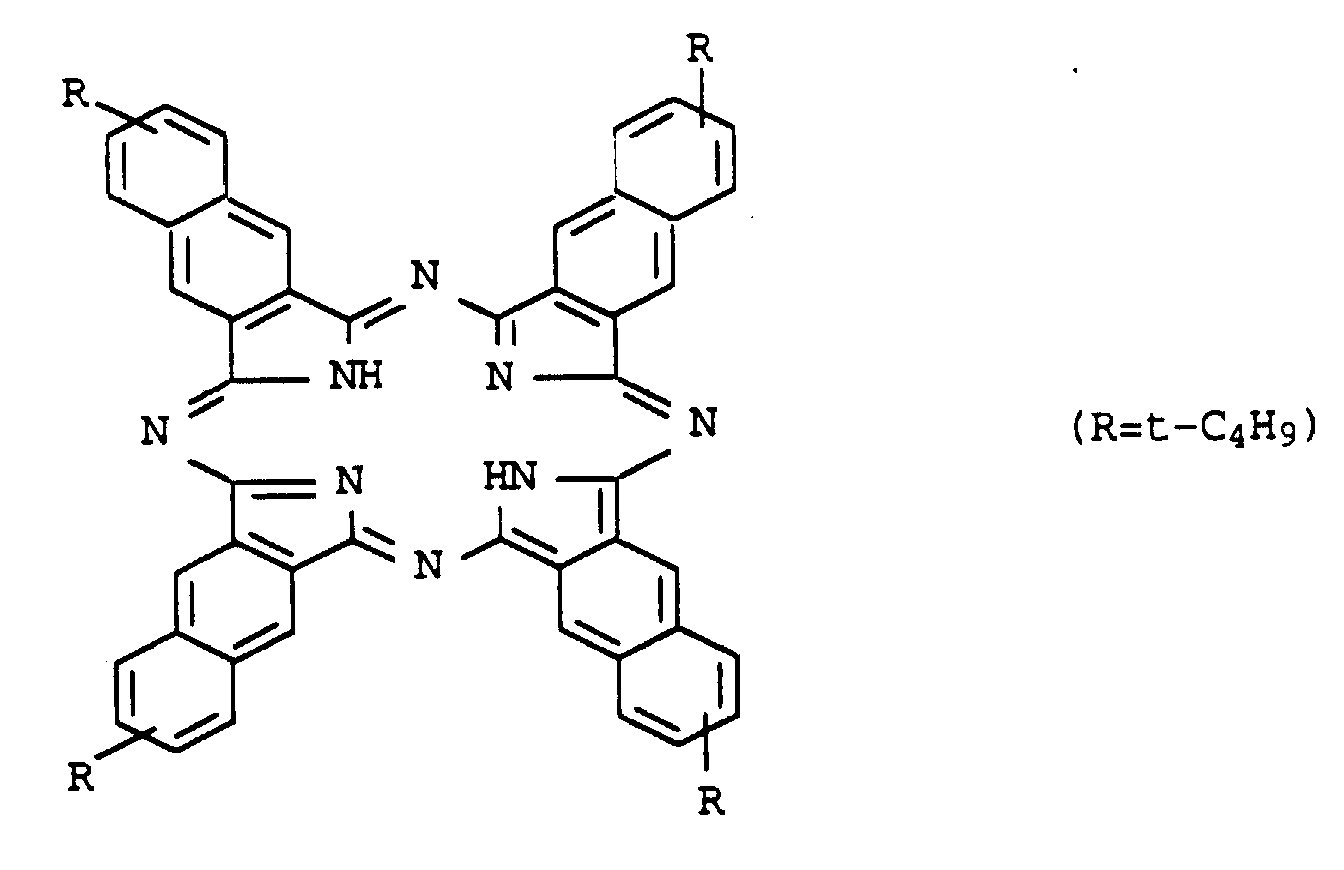
- Hexadeca(4-tert-butylphenylthio)-kupferphthalocyanin
-
NcSi[-O-Si(CH3)2-O-C12H25]2
-

-

-

-


-

Farbstoff Nr. Z An⊖ 16 C4H9 NO3 ⊖ 17 C2H5 NO3 ⊖ 18 C4H9 BF4 ⊖ -


-

- Die Abbildung 1 zeigt den schematischen Aufbau des Detektors.
- Zur Anregung der Marker-Fluoreszenz wird die Emission eines kommerziellen Halbleiterdiodenlasers benutzt. Der parallele Laserstrahl wird auf die in einer 1-cm-Küvette befindliche Probe gestrahlt. Zur Verdoppelung der Anregungsintensität wird der transmittierte Lichtstrahl durch einen Spiegel reflektiert und nochmals durch die Probe gestrahlt.
- Das Fluoreszenzlicht wird mittels optischer Elemente (Linsensystem) auf den Detektor, eine Silicium-Photodiode, abgebildet. Das rückseitig abgestrahlte Licht wird von einem Hohlspiegel ebenfalls auf die Silicium-Photodiode geworfen.
- Zur Abtrennung des Störlichts (gestreutes Anregungslicht) vom Fluoreszenzlicht werden Kanten- und/oder Interferenzfilter und/ oder ein Polarisator (NIR-Polarisationsfolie) benutzt.
- Die Optimierung des Polarisators wird dabei so gewählt, daß die Richtung der maximalen Transmission senkrecht zur Polarisationsebene des Anregungslichts steht.
- Es wurde soviel Farbstoff der Formel

- Diese Lösungen wurden gemäß der allgemeinen Vorschrift II unter Anwendung der folgenden apparativen Größen vermessen.
- Anregung: GaAlAs-Halbleiterdiodenlaser mit der Laserwellenlänge 813 nm; CW-Leistung 7 mW.
- Filter: Langpaß-Interferenzfilter 850 nm (Fa. Corion).
- Photodetektor: Silicium-Photodiode mit einer Fläche von 1 cm2 (Fa. UDT). Der Photostrom wurde mit einem Strom/Spannungs-Wandler (Fa. UDT, Modell 350) gemessen.
- Die Ergebnisse sind in der folgenden Tabelle aufgeführt.
Farbstoffgehalt im Dieselkraftstoff [ppb] Extinktion bei λmax Fluoreszenzsignal (in Skalenteilen) 219 0,05 2366 43,7 0,01 451 8,75 0,002 106 1,75 0,0004 40 0 0,0 20 - Damit gilt für den Nachweis des Markers mittels Fluoreszenz eine untere Nachweisgrenze von ca. 5 ppb.
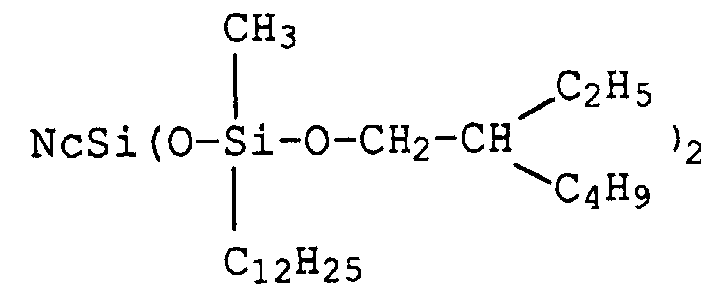
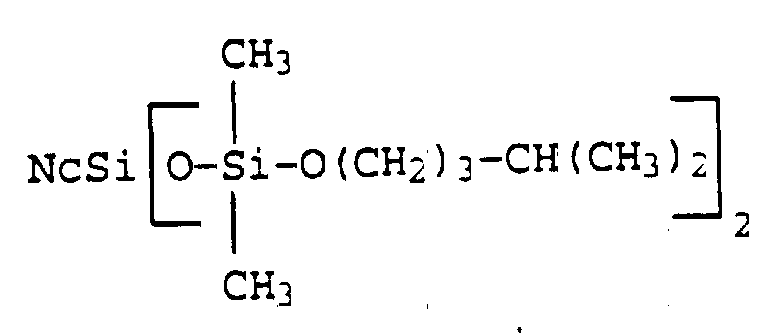
- Ähnlich günstige Ergebnisse werden erzielt, wenn man Naphthalocyanine der obengenannten Formel (mit R = n-C5H11 oder n-C12H25) oder die im folgenden aufgeführten Farbstoffe zum Markieren verwendet.

- Den Farbstoffen 26 bis 28 liegt jeweils die voranstehende Formel zugrunde.
-

-

-

-
NcSi[-O-Si(CH3)2-O-C12H25]2
-
-

-

-
-

-

Farbstoff Nr. Z An⊖ 35 C4H9 NO3 ⊖ 36 C2H5 NO3 ⊖ 37 C4H9 BF4 ⊖ -


-

Claims (9)
- Verwendung von Verbindungen aus der Klasse der metallfreien oder metallhaltigen Phthalocyanine, der metallfreien oder metallhaltigen Naphthalocyanine, der Nickel-Dithiolen-Komplexe, der Aminiumverbindungen von aromatischen Aminen, der Methinfarbstoffe oder der Azulenquadratsäurefarbstoffe, die ihr Absorptionsmaximum im Bereich von 600 bis 1 200 nm und/oder ein Fluoreszenzmaximum im Bereich von 620 bis 1 200 nm aufweisen, als Markierungsmittel für Flüssigkeiten.
- Verwendung von Verbindungen nach Anspruch 1, dadurch gekennzeichnet, daß sie aus der Klasse der metallfreien oder metallhaltigen Naphthalocyanine oder der Nickel-Dithiolen-Komplexe stammen.
- Verwendung von Verbindungen nach Anspruch 1, dadurch gekennzeichnet, daß sie aus der Klasse der metallfreien oder metallhaltigen Naphthalocyanine stammen.
- Verfahren zur Detektion von Markierungsmitteln in Flüssigkeiten, dadurch gekennzeichnet, daß die Markierungsmittel anhand ihrer Fluoreszenz im NIR-Spektralbereich nachgewiesen werden.
- Verfahren nach Anspruch 4, dadurch gekennzeichnet, daß die Fluoreszenz mit einem Halbleiterlaser oder einer Halbleiterdiode angeregt wird.
- Verfahren nach Anspruch 4, dadurch gekennzeichnet, daß das Fluoreszenzlicht mit einem Halbleiterdetektor detektiert wird.
- Verfahren nach Anspruch 4, dadurch gekennzeichnet, daß ein Halbleiterlaser oder eine Halbleiterdiode mit einer Wellenlänge der maximalen Emission im Spektralbereich von λmax-100nm bis λmax + 20 nm verwendet wird, wobei λmax die Wellenlänge des Absorptionsmaximums des Markierungsmittels bezeichnet.
- Verfahren nach Anspruch 4, dadurch gekennzeichnet, daß ein Halbleiterlaser oder eine Halbleiterdiode mit einer Wellenlänge der maximalen Emission von 620 bis 1200 nm verwendet wird.
- Detektor zur Ausübung des Verfahrens nach Anspruch 4, dadurch gekennzeichnet, daß er eine NIR-Lichtquelle, ausgewählt aus einem Halbleiterlaser und einer Halbleiterdiode, ein oder mehrere optische Filter, einen NIR-Polarisator und einen Photodetektor, ausgewählt aus einer Silicium-Photodiode und einer Germanium-Photodiode, sowie gegebenenfalls Lichtleitfasern oder -faserbündel enthält.
Applications Claiming Priority (7)
| Application Number | Priority Date | Filing Date | Title |
|---|---|---|---|
| DE4224301 | 1992-07-23 | ||
| DE4224301A DE4224301A1 (de) | 1992-07-23 | 1992-07-23 | Verwendung von im IR-Bereich absorbierenden Verbindungen als Markierungsmittel für Flüssigkeiten |
| DE19924243776 DE4243776A1 (de) | 1992-12-23 | 1992-12-23 | Verwendung von im IR-Bereich fluoreszierenden Verbindungen als Markierungsmittel für Flüssigkeiten |
| DE19924243774 DE4243774A1 (de) | 1992-12-23 | 1992-12-23 | Verfahren zur Detektion von Markierstoffen in Flüssigkeiten |
| DE4243774 | 1992-12-23 | ||
| DE4243776 | 1992-12-23 | ||
| PCT/EP1993/001830 WO1994002570A1 (de) | 1992-07-23 | 1993-07-13 | Verwendung von im ir-bereich absorbierenden und/oder fluoreszierenden verbindugen als markierungsmittel für flüssigkeiten |
Publications (2)
| Publication Number | Publication Date |
|---|---|
| EP0656929A1 EP0656929A1 (de) | 1995-06-14 |
| EP0656929B1 true EP0656929B1 (de) | 1997-02-05 |
Family
ID=27204005
Family Applications (1)
| Application Number | Title | Priority Date | Filing Date |
|---|---|---|---|
| EP93915892A Expired - Lifetime EP0656929B1 (de) | 1992-07-23 | 1993-07-13 | Verwendung von im ir-bereich absorbierenden und/oder fluoreszierenden verbindugen als markierungsmittel für flüssigkeiten |
Country Status (26)
| Country | Link |
|---|---|
| US (1) | US5998211A (de) |
| EP (1) | EP0656929B1 (de) |
| JP (1) | JP3561739B2 (de) |
| KR (1) | KR100254571B1 (de) |
| CN (1) | CN1045984C (de) |
| AT (1) | ATE148736T1 (de) |
| AU (1) | AU673530B2 (de) |
| BR (1) | BR9306754A (de) |
| CA (1) | CA2140667C (de) |
| CO (1) | CO4230033A1 (de) |
| CZ (1) | CZ294548B6 (de) |
| DE (1) | DE59305414D1 (de) |
| DK (1) | DK0656929T3 (de) |
| ES (1) | ES2097525T3 (de) |
| FI (1) | FI118086B (de) |
| GR (1) | GR3022613T3 (de) |
| HU (1) | HU214637B (de) |
| IL (1) | IL106322A (de) |
| MX (1) | MX9304188A (de) |
| MY (1) | MY117562A (de) |
| NO (2) | NO317928B1 (de) |
| PL (1) | PL175152B1 (de) |
| TR (1) | TR28190A (de) |
| TW (1) | TW302437B (de) |
| UA (1) | UA39942C2 (de) |
| WO (1) | WO1994002570A1 (de) |
Families Citing this family (40)
| Publication number | Priority date | Publication date | Assignee | Title |
|---|---|---|---|---|
| DE19818176A1 (de) * | 1998-04-23 | 1999-10-28 | Basf Ag | Verfahren zur Markierung von Flüssigkeiten mit mindestens zwei Markierstoffen und Verfahren zu deren Detektion |
| US5525516B1 (en) * | 1994-09-30 | 1999-11-09 | Eastman Chem Co | Method for tagging petroleum products |
| US5723338A (en) * | 1994-11-04 | 1998-03-03 | Amoco Corporation | Tagging hydrocarbons for subsequent identification |
| US5710046A (en) * | 1994-11-04 | 1998-01-20 | Amoco Corporation | Tagging hydrocarbons for subsequent identification |
| US5843783A (en) * | 1994-11-04 | 1998-12-01 | Amoco Corporation | Tagging hydrocarbons for subsequent identification |
| DE19721399A1 (de) | 1997-05-22 | 1998-11-26 | Basf Ag | Phthalocyanine und ihre Verwendung als Markierungsmittel |
| US5958780A (en) * | 1997-06-30 | 1999-09-28 | Boston Advanced Technologies, Inc. | Method for marking and identifying liquids |
| DE19818177A1 (de) * | 1998-04-23 | 1999-10-28 | Basf Ag | Verfahren zur Markierung von Flüssigkeiten mit mindestens zwei Markierstoffen und Verfahren zu deren Detektion |
| US6274381B1 (en) * | 1998-11-09 | 2001-08-14 | Rohm And Haas Company | Method for invisibly tagging petroleum products using visible dyes |
| US5984983A (en) * | 1998-12-04 | 1999-11-16 | Morton International, Inc. | Use of carbonyl compounds as markers |
| US7157611B2 (en) * | 2002-07-11 | 2007-01-02 | Rohm And Haas Company | Pyrazinoporphyrazines as markers for liquid hydrocarbons |
| EP1494000A1 (de) * | 2003-07-02 | 2005-01-05 | Sicpa Holding S.A. | Methode zum Markieren eines Materials mit Ionen, die schon in besagtem Material enthalten sind, und Methode zur Bestätigung der Authentizizät dieses Materials |
| US20050019939A1 (en) * | 2003-07-25 | 2005-01-27 | Dale Spall | Combination marker for liquids and method identification thereof |
| DE102004003791A1 (de) * | 2004-01-23 | 2005-08-11 | Basf Ag | Verwendung von Phthalocyaninen als Markierungsstoffe für Flüssigkeiten |
| US7919325B2 (en) | 2004-05-24 | 2011-04-05 | Authentix, Inc. | Method and apparatus for monitoring liquid for the presence of an additive |
| US7278727B2 (en) * | 2004-08-09 | 2007-10-09 | Silverbrook Research Pty Ltd | Method of minimizing absorption of visible light in infrared dyes |
| US8486711B2 (en) | 2004-10-22 | 2013-07-16 | Bayer Materialscience Llc | Highly fluorescent markers for fluids or articles |
| DE102005062910A1 (de) * | 2005-12-29 | 2007-07-05 | Basf Ag | Verfahren zur Bestimmung der Identität oder Nicht-Identität und Konzentration einer chemischen Verbindung in einem Medium |
| US7858373B2 (en) * | 2006-02-03 | 2010-12-28 | Rohm And Haas Company | Chemical markers |
| JP2009528417A (ja) * | 2006-03-01 | 2009-08-06 | ビーエーエスエフ ソシエタス・ヨーロピア | 液体用の標識剤としてのリレンの使用 |
| JP2009530427A (ja) * | 2006-03-15 | 2009-08-27 | ビーエーエスエフ ソシエタス・ヨーロピア | アリールもしくはアルキルオキシで置換されたフタロシアニンを液体用の標識物質として用いる使用 |
| US7553673B2 (en) * | 2006-11-13 | 2009-06-30 | Rohmax Additives Gmbh | Quality control of a functional fluid |
| US8129190B2 (en) * | 2006-11-17 | 2012-03-06 | Applied Nanotech Holdings, Inc. | Tagged petroleum products and methods of detecting same |
| CN101668818A (zh) * | 2007-04-05 | 2010-03-10 | 巴斯夫欧洲公司 | 硅酞菁和锗酞菁的制备及相关物质 |
| KR101073375B1 (ko) * | 2008-12-23 | 2011-10-17 | 한국조폐공사 | 기기감지요소를 포함하는 보안인쇄용 평판잉크 |
| US9995681B2 (en) * | 2010-09-28 | 2018-06-12 | Authentix, Inc. | Determining the quantity of a taggant in a liquid sample |
| US9244017B2 (en) | 2011-05-26 | 2016-01-26 | Altria Client Services Llc | Oil detection process and apparatus |
| US9080987B2 (en) | 2011-05-26 | 2015-07-14 | Altria Client Services, Inc. | Oil soluble taggants |
| US10900897B2 (en) | 2012-05-29 | 2021-01-26 | Altria Client Services Llc | Oil detection process |
| KR101520607B1 (ko) * | 2012-09-28 | 2015-05-15 | 한국화학연구원 | 나프탈로시아닌 화합물을 표지물질로 포함하는 비수용성 유체류 및 이를 이용한 비수용성 유체류의 식별방법 |
| WO2014051393A1 (en) * | 2012-09-28 | 2014-04-03 | Korea Research Institute Of Chemical Technology | Nonaqueous fluid containing naphthalocyanine compound as marker and method for marking nonaqueous fluid using the same |
| US20140154813A1 (en) | 2012-11-30 | 2014-06-05 | Sicpa Holding Sa | Marking of material, marked material and process of authentication or dilution determination |
| US9097668B2 (en) | 2013-03-15 | 2015-08-04 | Altria Client Services Inc. | Menthol detection on tobacco |
| EP2821940A1 (de) | 2013-07-03 | 2015-01-07 | Lumiprobe GmbH | Binäre Etikettierung |
| KR102023710B1 (ko) * | 2014-02-20 | 2019-09-20 | 동우 화인켐 주식회사 | 염료 및 착색 경화성 수지 조성물 |
| WO2016077471A1 (en) | 2014-11-11 | 2016-05-19 | Altria Client Services Inc. | Method for detecting oil on tobacco products and packaging |
| CN104964935A (zh) * | 2015-05-25 | 2015-10-07 | 天津悦泰石化科技有限公司 | 一种油溶性标识剂及其在燃油和燃油添加剂中的应用 |
| FR3046611B1 (fr) * | 2016-01-12 | 2019-10-25 | Inoventeam | Utilisation de complexes de terres rares comme marqueurs de produits petroliers, de petroles bruts, de biocarburants ou de lubrifiants |
| US11262298B2 (en) * | 2018-08-30 | 2022-03-01 | Caterpillar Inc. | System and method for determining fluid origin |
| US20240219366A1 (en) | 2021-04-20 | 2024-07-04 | Basf Se | A method of detecting one or more markers in a petroleum fuel using a photoacoustic detector |
Family Cites Families (11)
| Publication number | Priority date | Publication date | Assignee | Title |
|---|---|---|---|---|
| US3484467A (en) * | 1967-01-05 | 1969-12-16 | American Cyanamid Co | Diaryl - (n,n - diarylaminoaryl)-aminium hexafluoroantimonates and hexafluoroarsenates |
| US4009008A (en) * | 1972-12-08 | 1977-02-22 | Morton-Norwich Products, Inc. | Colored water immiscible organic liquid |
| US4209302A (en) * | 1979-05-10 | 1980-06-24 | Morton-Norwich Products, Inc. | Marker for petroleum fuels |
| US4735631A (en) * | 1983-12-16 | 1988-04-05 | Morton Thiokol, Inc. | Colored petroleum markers |
| EP0155780B1 (de) * | 1984-03-21 | 1990-03-28 | Imperial Chemical Industries Plc | Infrarot-Absorber |
| DE3505751A1 (de) * | 1985-02-20 | 1986-08-21 | Basf Ag, 6700 Ludwigshafen | Neue tetraphenyldithiolen-komplexe und diese komplexe enthaltende optische aufzeichnungsmedien |
| EP0310080A3 (en) * | 1987-10-01 | 1990-05-16 | Basf Aktiengesellschaft | Azulene-squarillic dyes, azulenes as their intermediary products, and optical recording medium |
| DE3830041A1 (de) * | 1988-09-03 | 1990-03-08 | Basf Ag | Siliciumnaphthalocyanine mit ungesaettigten liganden sowie duenne strahlungsempfindliche beschichtungsfilme |
| DE4021078A1 (de) * | 1990-07-03 | 1992-01-09 | Basf Ag | Polymethinfarbstoffe |
| AU5568594A (en) * | 1992-11-27 | 1994-06-22 | Bp Oil International Limited | Method of identifying liquid petroleum products |
| US5525516B1 (en) * | 1994-09-30 | 1999-11-09 | Eastman Chem Co | Method for tagging petroleum products |
-
1993
- 1993-07-12 MX MX9304188A patent/MX9304188A/es not_active IP Right Cessation
- 1993-07-13 ES ES93915892T patent/ES2097525T3/es not_active Expired - Lifetime
- 1993-07-13 UA UA95018062A patent/UA39942C2/uk unknown
- 1993-07-13 AU AU45678/93A patent/AU673530B2/en not_active Ceased
- 1993-07-13 PL PL93307175A patent/PL175152B1/pl not_active IP Right Cessation
- 1993-07-13 DE DE59305414T patent/DE59305414D1/de not_active Expired - Lifetime
- 1993-07-13 BR BR9306754A patent/BR9306754A/pt not_active IP Right Cessation
- 1993-07-13 HU HU9500182A patent/HU214637B/hu not_active IP Right Cessation
- 1993-07-13 DK DK93915892.9T patent/DK0656929T3/da active
- 1993-07-13 EP EP93915892A patent/EP0656929B1/de not_active Expired - Lifetime
- 1993-07-13 JP JP50391694A patent/JP3561739B2/ja not_active Expired - Fee Related
- 1993-07-13 WO PCT/EP1993/001830 patent/WO1994002570A1/de not_active Ceased
- 1993-07-13 CA CA002140667A patent/CA2140667C/en not_active Expired - Fee Related
- 1993-07-13 CZ CZ1995150A patent/CZ294548B6/cs not_active IP Right Cessation
- 1993-07-13 IL IL10632293A patent/IL106322A/en not_active IP Right Cessation
- 1993-07-13 KR KR1019950700245A patent/KR100254571B1/ko not_active Expired - Fee Related
- 1993-07-13 AT AT93915892T patent/ATE148736T1/de not_active IP Right Cessation
- 1993-07-14 MY MYPI93001379A patent/MY117562A/en unknown
- 1993-07-21 TR TR00622/93A patent/TR28190A/xx unknown
- 1993-07-22 TW TW082105852A patent/TW302437B/zh not_active IP Right Cessation
- 1993-07-22 CO CO93397777A patent/CO4230033A1/es unknown
- 1993-07-23 CN CN93116852A patent/CN1045984C/zh not_active Expired - Fee Related
-
1995
- 1995-01-19 FI FI950227A patent/FI118086B/fi active IP Right Grant
- 1995-01-20 NO NO19950213A patent/NO317928B1/no not_active IP Right Cessation
-
1997
- 1997-02-19 GR GR970400300T patent/GR3022613T3/el unknown
-
1998
- 1998-07-17 US US09/116,897 patent/US5998211A/en not_active Expired - Fee Related
-
2000
- 2000-07-25 NO NO20003811A patent/NO20003811D0/no not_active Application Discontinuation
Also Published As
Similar Documents
| Publication | Publication Date | Title |
|---|---|---|
| EP0656929A1 (de) | Verwendung von im ir-bereich absorbierenden und/oder fluoreszierenden verbindugen als markierungsmittel für flüssigkeiten. | |
| US5804447A (en) | Use of compounds which absorb and/or fluoresce in the IR region as markers for liquids | |
| EP1082610B1 (de) | Verfahren zur detektion von markierstoffen in kohlenwasserstoffen und kohlenwasserstoffgemischen | |
| EP0689507B1 (de) | Farbbänder, enthaltend im ir-bereich absorbierende verbindungen | |
| EP0666474B1 (de) | Verwendung von im IR-Bereich absorbierenden und fluoreszierenden Verbindungen als Riss-Prüfmittel | |
| DE4202038A1 (de) | Verwendung einer fluessigkeit, enthaltend ir-farbstoffe, als druckfarbe | |
| EP0983274B1 (de) | Phthalocyanine und ihre verwendung als markierungsmittel | |
| DE4243776A1 (de) | Verwendung von im IR-Bereich fluoreszierenden Verbindungen als Markierungsmittel für Flüssigkeiten | |
| DE4224301A1 (de) | Verwendung von im IR-Bereich absorbierenden Verbindungen als Markierungsmittel für Flüssigkeiten | |
| DE19818177A1 (de) | Verfahren zur Markierung von Flüssigkeiten mit mindestens zwei Markierstoffen und Verfahren zu deren Detektion | |
| EP0714429A1 (de) | Verwendung von aminotriarylmethanen zum markieren von kohlenwasserstoffen sowie neue aminotriarylmethane | |
| DE4243774A1 (de) | Verfahren zur Detektion von Markierstoffen in Flüssigkeiten |
Legal Events
| Date | Code | Title | Description |
|---|---|---|---|
| PUAI | Public reference made under article 153(3) epc to a published international application that has entered the european phase |
Free format text: ORIGINAL CODE: 0009012 |
|
| 17P | Request for examination filed |
Effective date: 19941222 |
|
| AK | Designated contracting states |
Kind code of ref document: A1 Designated state(s): AT BE CH DE DK ES FR GB GR IE IT LI NL PT SE |
|
| 17Q | First examination report despatched |
Effective date: 19950703 |
|
| GRAG | Despatch of communication of intention to grant |
Free format text: ORIGINAL CODE: EPIDOS AGRA |
|
| GRAH | Despatch of communication of intention to grant a patent |
Free format text: ORIGINAL CODE: EPIDOS IGRA |
|
| GRAH | Despatch of communication of intention to grant a patent |
Free format text: ORIGINAL CODE: EPIDOS IGRA |
|
| GRAA | (expected) grant |
Free format text: ORIGINAL CODE: 0009210 |
|
| AK | Designated contracting states |
Kind code of ref document: B1 Designated state(s): AT BE CH DE DK ES FR GB GR IE IT LI NL PT SE |
|
| REF | Corresponds to: |
Ref document number: 148736 Country of ref document: AT Date of ref document: 19970215 Kind code of ref document: T |
|
| REG | Reference to a national code |
Ref country code: CH Ref legal event code: EP |
|
| GBT | Gb: translation of ep patent filed (gb section 77(6)(a)/1977) |
Effective date: 19970214 |
|
| REG | Reference to a national code |
Ref country code: IE Ref legal event code: FG4D Free format text: 71997 |
|
| REF | Corresponds to: |
Ref document number: 59305414 Country of ref document: DE Date of ref document: 19970320 |
|
| REG | Reference to a national code |
Ref country code: ES Ref legal event code: FG2A Ref document number: 2097525 Country of ref document: ES Kind code of ref document: T3 |
|
| ITF | It: translation for a ep patent filed | ||
| REG | Reference to a national code |
Ref country code: GR Ref legal event code: FG4A Free format text: 3022613 |
|
| ET | Fr: translation filed | ||
| REG | Reference to a national code |
Ref country code: DK Ref legal event code: T3 |
|
| REG | Reference to a national code |
Ref country code: PT Ref legal event code: SC4A Free format text: AVAILABILITY OF NATIONAL TRANSLATION Effective date: 19970502 |
|
| PLBE | No opposition filed within time limit |
Free format text: ORIGINAL CODE: 0009261 |
|
| STAA | Information on the status of an ep patent application or granted ep patent |
Free format text: STATUS: NO OPPOSITION FILED WITHIN TIME LIMIT |
|
| 26N | No opposition filed | ||
| REG | Reference to a national code |
Ref country code: GB Ref legal event code: IF02 |
|
| PGFP | Annual fee paid to national office [announced via postgrant information from national office to epo] |
Ref country code: PT Payment date: 20100616 Year of fee payment: 18 |
|
| PGFP | Annual fee paid to national office [announced via postgrant information from national office to epo] |
Ref country code: NL Payment date: 20100726 Year of fee payment: 18 Ref country code: IE Payment date: 20100729 Year of fee payment: 18 Ref country code: ES Payment date: 20100830 Year of fee payment: 18 Ref country code: CH Payment date: 20100730 Year of fee payment: 18 |
|
| PGFP | Annual fee paid to national office [announced via postgrant information from national office to epo] |
Ref country code: SE Payment date: 20100728 Year of fee payment: 18 Ref country code: IT Payment date: 20100729 Year of fee payment: 18 Ref country code: FR Payment date: 20100812 Year of fee payment: 18 Ref country code: AT Payment date: 20100721 Year of fee payment: 18 |
|
| PGFP | Annual fee paid to national office [announced via postgrant information from national office to epo] |
Ref country code: GR Payment date: 20100802 Year of fee payment: 18 Ref country code: GB Payment date: 20100802 Year of fee payment: 18 |
|
| PGFP | Annual fee paid to national office [announced via postgrant information from national office to epo] |
Ref country code: DK Payment date: 20100727 Year of fee payment: 18 |
|
| PGFP | Annual fee paid to national office [announced via postgrant information from national office to epo] |
Ref country code: DE Payment date: 20100930 Year of fee payment: 18 Ref country code: BE Payment date: 20100906 Year of fee payment: 18 |
|
| REG | Reference to a national code |
Ref country code: PT Ref legal event code: MM4A Free format text: LAPSE DUE TO NON-PAYMENT OF FEES Effective date: 20120113 |
|
| BERE | Be: lapsed |
Owner name: *BASF A.G. Effective date: 20110731 |
|
| REG | Reference to a national code |
Ref country code: NL Ref legal event code: V1 Effective date: 20120201 |
|
| REG | Reference to a national code |
Ref country code: CH Ref legal event code: PL |
|
| REG | Reference to a national code |
Ref country code: SE Ref legal event code: EUG |
|
| REG | Reference to a national code |
Ref country code: DK Ref legal event code: EBP |
|
| GBPC | Gb: european patent ceased through non-payment of renewal fee |
Effective date: 20110713 |
|
| REG | Reference to a national code |
Ref country code: GR Ref legal event code: ML Ref document number: 970400300 Country of ref document: GR Effective date: 20120202 |
|
| REG | Reference to a national code |
Ref country code: AT Ref legal event code: MM01 Ref document number: 148736 Country of ref document: AT Kind code of ref document: T Effective date: 20110713 |
|
| REG | Reference to a national code |
Ref country code: FR Ref legal event code: ST Effective date: 20120330 |
|
| REG | Reference to a national code |
Ref country code: IE Ref legal event code: MM4A |
|
| PG25 | Lapsed in a contracting state [announced via postgrant information from national office to epo] |
Ref country code: BE Free format text: LAPSE BECAUSE OF NON-PAYMENT OF DUE FEES Effective date: 20110731 Ref country code: LI Free format text: LAPSE BECAUSE OF NON-PAYMENT OF DUE FEES Effective date: 20110731 Ref country code: CH Free format text: LAPSE BECAUSE OF NON-PAYMENT OF DUE FEES Effective date: 20110731 Ref country code: FR Free format text: LAPSE BECAUSE OF NON-PAYMENT OF DUE FEES Effective date: 20110801 Ref country code: DE Free format text: LAPSE BECAUSE OF NON-PAYMENT OF DUE FEES Effective date: 20120201 |
|
| PG25 | Lapsed in a contracting state [announced via postgrant information from national office to epo] |
Ref country code: IT Free format text: LAPSE BECAUSE OF NON-PAYMENT OF DUE FEES Effective date: 20110713 Ref country code: GR Free format text: LAPSE BECAUSE OF NON-PAYMENT OF DUE FEES Effective date: 20120202 Ref country code: PT Free format text: LAPSE BECAUSE OF NON-PAYMENT OF DUE FEES Effective date: 20120113 Ref country code: NL Free format text: LAPSE BECAUSE OF NON-PAYMENT OF DUE FEES Effective date: 20120201 |
|
| REG | Reference to a national code |
Ref country code: DE Ref legal event code: R119 Ref document number: 59305414 Country of ref document: DE Effective date: 20120201 |
|
| PG25 | Lapsed in a contracting state [announced via postgrant information from national office to epo] |
Ref country code: GB Free format text: LAPSE BECAUSE OF NON-PAYMENT OF DUE FEES Effective date: 20110713 |
|
| PG25 | Lapsed in a contracting state [announced via postgrant information from national office to epo] |
Ref country code: IE Free format text: LAPSE BECAUSE OF NON-PAYMENT OF DUE FEES Effective date: 20110713 Ref country code: DK Free format text: LAPSE BECAUSE OF NON-PAYMENT OF DUE FEES Effective date: 20110731 |
|
| REG | Reference to a national code |
Ref country code: ES Ref legal event code: FD2A Effective date: 20121207 |
|
| PG25 | Lapsed in a contracting state [announced via postgrant information from national office to epo] |
Ref country code: AT Free format text: LAPSE BECAUSE OF NON-PAYMENT OF DUE FEES Effective date: 20110713 |
|
| PG25 | Lapsed in a contracting state [announced via postgrant information from national office to epo] |
Ref country code: ES Free format text: LAPSE BECAUSE OF NON-PAYMENT OF DUE FEES Effective date: 20110714 |
|
| PG25 | Lapsed in a contracting state [announced via postgrant information from national office to epo] |
Ref country code: SE Free format text: LAPSE BECAUSE OF NON-PAYMENT OF DUE FEES Effective date: 20110714 |