EP0625212B1 - Methods of detecting alzheimer's disease - Google Patents
Methods of detecting alzheimer's disease Download PDFInfo
- Publication number
- EP0625212B1 EP0625212B1 EP93923745A EP93923745A EP0625212B1 EP 0625212 B1 EP0625212 B1 EP 0625212B1 EP 93923745 A EP93923745 A EP 93923745A EP 93923745 A EP93923745 A EP 93923745A EP 0625212 B1 EP0625212 B1 EP 0625212B1
- Authority
- EP
- European Patent Office
- Prior art keywords
- apoe4
- apoe
- disease
- subject
- alzheimer
- Prior art date
- Legal status (The legal status is an assumption and is not a legal conclusion. Google has not performed a legal analysis and makes no representation as to the accuracy of the status listed.)
- Expired - Lifetime
Links
Images


Classifications
-
- C—CHEMISTRY; METALLURGY
- C07—ORGANIC CHEMISTRY
- C07K—PEPTIDES
- C07K14/00—Peptides having more than 20 amino acids; Gastrins; Somatostatins; Melanotropins; Derivatives thereof
- C07K14/435—Peptides having more than 20 amino acids; Gastrins; Somatostatins; Melanotropins; Derivatives thereof from animals; from humans
- C07K14/745—Blood coagulation or fibrinolysis factors
- C07K14/755—Factors VIII, e.g. factor VIII C (AHF), factor VIII Ag (VWF)
-
- C—CHEMISTRY; METALLURGY
- C07—ORGANIC CHEMISTRY
- C07K—PEPTIDES
- C07K14/00—Peptides having more than 20 amino acids; Gastrins; Somatostatins; Melanotropins; Derivatives thereof
- C07K14/435—Peptides having more than 20 amino acids; Gastrins; Somatostatins; Melanotropins; Derivatives thereof from animals; from humans
- C07K14/775—Apolipopeptides
-
- C—CHEMISTRY; METALLURGY
- C12—BIOCHEMISTRY; BEER; SPIRITS; WINE; VINEGAR; MICROBIOLOGY; ENZYMOLOGY; MUTATION OR GENETIC ENGINEERING
- C12Q—MEASURING OR TESTING PROCESSES INVOLVING ENZYMES, NUCLEIC ACIDS OR MICROORGANISMS; COMPOSITIONS OR TEST PAPERS THEREFOR; PROCESSES OF PREPARING SUCH COMPOSITIONS; CONDITION-RESPONSIVE CONTROL IN MICROBIOLOGICAL OR ENZYMOLOGICAL PROCESSES
- C12Q1/00—Measuring or testing processes involving enzymes, nucleic acids or microorganisms; Compositions therefor; Processes of preparing such compositions
- C12Q1/68—Measuring or testing processes involving enzymes, nucleic acids or microorganisms; Compositions therefor; Processes of preparing such compositions involving nucleic acids
- C12Q1/6876—Nucleic acid products used in the analysis of nucleic acids, e.g. primers or probes
- C12Q1/6883—Nucleic acid products used in the analysis of nucleic acids, e.g. primers or probes for diseases caused by alterations of genetic material
-
- C—CHEMISTRY; METALLURGY
- C12—BIOCHEMISTRY; BEER; SPIRITS; WINE; VINEGAR; MICROBIOLOGY; ENZYMOLOGY; MUTATION OR GENETIC ENGINEERING
- C12Q—MEASURING OR TESTING PROCESSES INVOLVING ENZYMES, NUCLEIC ACIDS OR MICROORGANISMS; COMPOSITIONS OR TEST PAPERS THEREFOR; PROCESSES OF PREPARING SUCH COMPOSITIONS; CONDITION-RESPONSIVE CONTROL IN MICROBIOLOGICAL OR ENZYMOLOGICAL PROCESSES
- C12Q2600/00—Oligonucleotides characterized by their use
- C12Q2600/118—Prognosis of disease development
-
- C—CHEMISTRY; METALLURGY
- C12—BIOCHEMISTRY; BEER; SPIRITS; WINE; VINEGAR; MICROBIOLOGY; ENZYMOLOGY; MUTATION OR GENETIC ENGINEERING
- C12Q—MEASURING OR TESTING PROCESSES INVOLVING ENZYMES, NUCLEIC ACIDS OR MICROORGANISMS; COMPOSITIONS OR TEST PAPERS THEREFOR; PROCESSES OF PREPARING SUCH COMPOSITIONS; CONDITION-RESPONSIVE CONTROL IN MICROBIOLOGICAL OR ENZYMOLOGICAL PROCESSES
- C12Q2600/00—Oligonucleotides characterized by their use
- C12Q2600/156—Polymorphic or mutational markers
-
- C—CHEMISTRY; METALLURGY
- C12—BIOCHEMISTRY; BEER; SPIRITS; WINE; VINEGAR; MICROBIOLOGY; ENZYMOLOGY; MUTATION OR GENETIC ENGINEERING
- C12Q—MEASURING OR TESTING PROCESSES INVOLVING ENZYMES, NUCLEIC ACIDS OR MICROORGANISMS; COMPOSITIONS OR TEST PAPERS THEREFOR; PROCESSES OF PREPARING SUCH COMPOSITIONS; CONDITION-RESPONSIVE CONTROL IN MICROBIOLOGICAL OR ENZYMOLOGICAL PROCESSES
- C12Q2600/00—Oligonucleotides characterized by their use
- C12Q2600/172—Haplotypes
-
- Y—GENERAL TAGGING OF NEW TECHNOLOGICAL DEVELOPMENTS; GENERAL TAGGING OF CROSS-SECTIONAL TECHNOLOGIES SPANNING OVER SEVERAL SECTIONS OF THE IPC; TECHNICAL SUBJECTS COVERED BY FORMER USPC CROSS-REFERENCE ART COLLECTIONS [XRACs] AND DIGESTS
- Y10—TECHNICAL SUBJECTS COVERED BY FORMER USPC
- Y10S—TECHNICAL SUBJECTS COVERED BY FORMER USPC CROSS-REFERENCE ART COLLECTIONS [XRACs] AND DIGESTS
- Y10S435/00—Chemistry: molecular biology and microbiology
- Y10S435/81—Packaged device or kit
Definitions
- the present invention relates to methods of diagnosing and prognosing Alzheimer's disease.
- the senile plaque and congophilic angiopathy are abnormal extracellular structures found in abundance in brain of patients with Alzheimer's disease.
- the biochemical composition of these structures has been extensively studied to better understand their possible role in the pathogenesis of this dementing disease.
- the mature senile plaque is a complex structure, consisting of a central core of amyloid fibrils surrounded by dystrophic neurites, axonal terminals and dendrites, microglia and fibrous astrocytes. See D. Selkoe Neuron 6, 487-498 (1991).
- ⁇ A ⁇ -Amyloid
- ⁇ A peptide is found in brain in Alzheimer's disease, Down's syndrome, hereditary cerebral hemorrhage of the Dutch type, and in old age. K. Kosik, Science 256 , 780-783 (1992).
- ⁇ A is produced by abnormal proteolytic processing of a larger protein, the amyloid precursor protein (APP). See K. Beyreuther and C. Masters, Brain Path . 1, 241-251 (1991).
- the senile plaque and congophilic angiopathy contain proteins in addition to ⁇ A peptide.
- APP itself, among others, has been identified in the senile plaque by histochemical studies employing antibodies recognizing either the amino- and carboxy-termini of the precursor protein. See, e . g ., F. Tagliavine et al., Neurosci . Lett . 128, 117-120 (1991); C. Joachim et al., Amer. Jour. Path. 138, 373-384 (1991); The mechanisms by which these proteins aggregate in the extracellular space to associate with the senile. plaque and congophilic angiopathy are not known.
- the methods comprise detecting the presence or absence of DNA encoding apolipoprotein E type 4 (ApoE4) isoform, or detecting the presence or absence of ApoE4 isoform in a biological sample of the subject.
- ApoE4 isoform or of DNA encoding ApoE4 isoform indicates that the subject is afflicted with Alzheimer's disease or at risk of developing Alzheimer's disease.
- the present invention provides a method of screening (e.g., diagnosing or prognosing) for Alzheimer's disease in a subject.
- the method comprises detecting the presence or absence of ApoE4 isoform or of DNA encoding an ApoE4 isoform in the subject.
- the presence of such isoform or DNA indicates that the subject is afflicted with Alzheimer's disease or at risk of developing Alzheimer's disease.
- Suitable subjects include those which have not previously been diagnosed as afflicted with Alzheimer's disease, those which have previously been determined to be at risk of developing Alzheimer's disease, and those who have been initially diagnosed as being afflicted with Alzheimer's disease where confirming information is desired.
- the present invention may be employed in detecting both familial Alzheimer's disease (late onset and early onset) as well as sporadic Alzheimer's disease.
- the step of detecting the presence or absence of ApoE4 or of DNA encoding such isoform may be carried out either directly or indirectly by any suitable means.
- a variety of techniques are known to those skilled in the art. All generally involve the step of collecting a sample of biological material containing either DNA or ApoE from the subject, and then detecting whether or not the subject possesses ApoE4 or DNA encoding such isoform from that sample.
- the detecting step may be carried out by collecting an ApoE sample from the subject (for example, from cerebrospinal fluid, or any other fluid or tissue containing ApoE), and then determining the presence or absence of an ApoE4 4 isoform in the ApoE sample (e.g., by isoelectric focusing or immunoassay).
- the detecting step may be carried out by collecting a biological sample containing DNA from the subject, and then determining the presence or absence of DNA encoding an ApoE4 isoform in the biological sample.
- Any biological sample which contains the DNA of that subject may be employed, including tissue samples and blood samples, with blood cells being a particularly convenient source.
- Determining the presence or absence of DNA encoding an ApoE4 4 isoform may be carried out with an oligonucleotide probe labelled with a suitable detectable group, or by means of an amplification reaction such as a polymerase chain reaction or ligase chain reaction (the product of which amplification reaction may then be detected with a labelled oligonucleotide probe).
- the detecting step may include the step of detecting whether the subject is heterozygous or homozygous for the gene encoding an ApoE4 isoform.
- Numerous different oligonucleotide probe assay formats are known which may be employed to carry out the present invention. See , e.g ., U.S. Patent No. 4,302,204 to Wahl et al.; U.S. Patent No. 4,358,535 to Falkow et al.; U.S. Patent No. 4,563,419 to Ranki et al.; and U.S. Patent No. 4,994,373 to Stavrianopoulos et al.
- Amplification of a selected, or target, nucleic acid sequence may be carried out by any suitable means. See generally D. Kwoh and T. Kwoh, Am . Biotechnol . Lab . 8, 14-25 (1990).
- suitable amplification techniques include, but are not limited to, polymerase chain reaction, ligase chain reaction, strand displacement amplification( see generally G. Walker et al., Proc . Natl . Acad . Sci . USA 89, 392-396 (1992); G. Walker et al., Nucleic Acids Res . 20, 1691-1696 (1992)), transcription-based amplification (see D. Kwoh et al., Proc . Natl . Acad Sci .
- DNA amplification techniques such as the foregoing involve the use of a probe, a pair of probes, or two pairs of probes which specifically bind to DNA encoding ApoE4, but do not bind to DNA encoding ApoE2 or ApoE3 under the same hybridization conditions, and which serve as the primer or primers for the amplification of the ApoE4 DNA or a portion thereof in the amplification reaction (likewise, one may use a probe, a pair of probes, or two pairs of probes which specifically bind to DNA encoding ApoE2, but do not bind to DNA encoding ApoE3 or ApoE4 under the same hybridization conditions, and which serve as the primer or primers for the amplification of the ApoE2 DNA or a portion thereof in the amplification reaction; and one may use a probe, a pair of probes, or two pairs of probes which specifically bind to DNA encoding ApoE3, but do not bind to DNA encoding ApoE2 or ApoE4 under
- an oligonucleotide probe which is used to detect DNA encoding ApoE4 is an oligonucleotide probe which binds to DNA encoding ApoE4, but does not bind to DNA encoding ApoE2 or ApoE3 under the same hybridization conditions.
- the oligonucleotide probe is labelled with a suitable detectable group, such as those set forth below in connection with antibodies.
- an oligonucleotide probe which is used to detect DNA encoding ApoE2 is an oligonucleotide probe which binds to DNA encoding ApoE2 but does not bind to DNA encoding ApoE3 or ApoE4 under the same hybridization conditions
- an oligonucleotide probe which is used to detect DNA encoding ApoE3 is an oligonucleotide probe which binds to DNA encoding ApoE3 but does not bind to DNA encoding ApoE2 or ApoE4 under the same hybridization conditions.
- PCR Polymerase chain reaction
- a nucleic acid sample e.g., in the presence of a heat stable DNA polymerase
- one oligonucleotide primer for each strand of the specific sequence to be detected under hybridizing conditions so that an extension product of each primer is synthesized which is complementary to each nucleic acid strand, with the primers sufficiently complementary to each strand of the specific sequence to hybridize therewith so that the extension product synthesized from each primer, when it is separated from its complement, can serve as a template for synthesis of the extension product of the other primer, and then treating the sample under denaturing conditions to separate the primer extension products from their templates if the sequence or sequences to be detected are present.
- Detection of the amplified sequence may be carried out by adding to the reaction product an oligonucleotide probe capable of hybridizing to the reaction product (e.g., an oligonucleotide probe of the present invention), the probe carrying a detectable label, and then detecting the label in accordance with known techniques.
- an oligonucleotide probe capable of hybridizing to the reaction product e.g., an oligonucleotide probe of the present invention
- Ligase chain reaction is also carried out in accordance with known techniques. See , e . g ., R. Weiss, Science 254, 1292 (1991). In general, the reaction is carried out with two pairs of oligonucleotide probes: one pair binds to one strand of the sequence to be detected; the other pair binds to the other strand of the sequence to be detected. Each pair together completely overlaps the strand to which it corresponds.
- the reaction is carried out by, first, denaturing (e.g., separating) the strands of the sequence to be detected, then reacting the strands with the two pairs of oligonucleotide probes in the presence of a heat stable ligase so that each pair of oligonucleotide probes is ligated together, then separating the reaction product, and then cyclically repeating the process until the sequence has been amplified to the desired degree. Detection may then be carried out in like manner as described above with respect to PCR.
- detecting steps described herein may be carried out directly or indirectly.
- the subject is not homozygous for ApoE4; and if both ApoE2 and ApoE3 are detected in the subject, then it is determined that the subject is neither homozygous nor heterozygous for ApoE4.
- the step of determining the presence or absence of the ApoE4 isoform in a sample may be carried out by an antibody assay with an antibody which selectively binds to ApoE4 (i.e., an antibody which binds to ApoE4 but exhibits essentially no binding to ApoE2 or ApoE3 in the same binding conditions).
- antibodies which selectively bind to ApoE2 and ApoE3 may also be employed (i.e., an antibody which binds to ApoE2 but exhibits essentially no binding to ApoE3 or ApoE4 in the same binding conditions; an antibody which binds to ApoE3 but exhibits essentially no binding to ApoE2 or ApoE4 in the same binding conditions).
- Antibodies used to selectively bind ApoE2, ApoE3, and ApoE4 can be produced by any suitable technique.
- monoclonal antibodies may be produced in a hybridoma cell line according to the techniques of Kohler and Milstein, Nature 265, 495-97 (1975).
- ApoE2, ApoE3, or ApoE4 may be obtained from a human patient determined to be homozygous therefore, then purified by the technique described in S. Rall et al., Methods in Enzymol . 128, 273 (1986), and used as the immunogen for the production of monoclonal or polyclonal antibodies.
- Purified ApoE isoforms may be produced by recombinant means to express a biologically active isoform, or even an immunogenic fragment thereof may be used as an immunogen.
- Monoclonal Fab fragments may be produced in Escherichia coli from the known sequences by recombinant techniques known to those skilled in the art. See , e . g ., W. Huse, Science 246, 1275-81 (1989) (recombinant Fab techniques); P. Wenham et al., Lancet 337, 1158 (1991)(Apo PCR primers).
- the DNA encoding one subtype of ApoE can be obtained and converted to the other by site-directed mutagenesis. See , e . g ., T. Kunkel et al., Methods in Enzymol . 154, 367-382 (1987); T. Kunkel, U.S. Patent No. 4,873,192.
- antibodies refers to all types of immunoglobulins, including IgG, IgM, IgA, IgD, and IgE.
- the antibodies may be monoclonal or polyclonal and may be of any species of origin, including (for example) mouse, rat, rabbit, horse, or human, or may be chimeric antibodies, and include antibody fragments such as, for example, Fab, F(ab') 2 , and Fv fragments, and the corresponding fragments obtained from antibodies other than IgG.
- Antibody assays may, in general, be homogeneous assays or heterogeneous.
- the immunological reaction usually involves the specific antibody a labeled analyte, and the sample of interest.
- the signal arising from the label is modified, directly or indirectly, upon the binding of the antibody to the labeled analyte. Both the immunological reaction and detection of the extent thereof are carried out in a homogeneous solution.
- Immunochemical labels which may be employed include free radicals, radioisotopes, fluorescent dyes, enzymes, bacteriophages, coenzymes, and so forth.
- the reagents are usually the specimen, the antibody and means for producing a detectable signal. Similar specimens as described above may be used.
- the antibody is generally immobilized on a support, such as a bead, plate or slide, and contacted with the specimen suspected of containing the antigen in a liquid phase.
- the support is then separated from the liquid phase and either the support phase or the liquid phase is examined for a detectable signal employing means for producing such signal.
- the signal is related to the presence of the analyte in the specimen.
- Means for producing a detectable signal include the use of radioactive labels, fluorescent labels, enzyme labels, and so forth.
- an antibody which binds to that site can be conjugated to a detectable group and added to the liquid phase reaction solution before the separation step.
- the presence of the detectable group on the solid support indicates the presence of the antigen in the test sample.
- suitable immunoassays are the radioimmunoassay, immunofluorescence methods, enzyme-linked immunoassays, and the like.
- Antibodies which selectively bind an ApoE isoform may be conjugated to a solid support suitable for a diagnostic assay (e.g., beads, plates, slides or wells formed from materials such as latex or polystyrene) in accordance with known techniques, such as precipitation.
- a diagnostic assay e.g., beads, plates, slides or wells formed from materials such as latex or polystyrene
- Antibodies which bind an ApoE isoform may likewise be conjugated to detectable groups such as radiolabels (e.g., 35 S, 125 I, 131 I), enzyme labels (e.g., horseradish peroxidase, alkaline phosphatase), and fluorescent labels (e.g., fluorescein) in accordance with known techniques.
- radiolabels e.g., 35 S, 125 I, 131 I
- enzyme labels e.g., horseradish peroxidase, alkaline phosphatase
- fluorescent labels e.g., fluorescein
- the diagnostic kit comprises (a) an antibody which binds ApoE2, ApoE3, or ApoE4 conjugated to a solid support and (b) a second antibody which binds ApoE2, ApoE3, or ApoE4 conjugated to a detectable group.
- the reagents may also include ancillary agents such as buffering agents and protein stabilizing agents, e.g., polysaccharides and the like.
- the diagnostic kit may further include, where necessary, other members of the signal-producing system of which system the detectable group is a member (e.g., enzyme substrates), agents for reducing background interference in a test, control reagents, apparatus for conducting a test, and the like.
- a second embodiment of a test kit comprises (a) an antibody as above, and (b) a specific binding partner for the antibody conjugated to a detectable group. Ancillary agents as described above may likewise be included.
- the test kit may be packaged in any suitable manner, typically with all elements in a single container along with a sheet of printed instructions for carrying out the test.
- ⁇ A peptides (Bachem), other peptides, or ethanolamine were covalently immobilized to Immobilon AV affinity membrane (Millipore).
- the membrane is a chemically activated hydrophilic microporous membrane which covalently immobilizes peptides and proteins through amino and thiol groups.
- ⁇ A peptides, or control peptides were dissolved in distilled water at one mg peptide/100 ⁇ L.
- Ten microliters (containing one hundred micrograms peptide) were applied to a 13 mm diameter Immobilon disc, and incubated to dryness overnight at room temperature. Peptide was in large excess to the number of functional binding groups on the membrane.
- Control membranes were prepared by incubating the membrane in 2.0 M ethanolamine in 1.0 M NaHCO 3 , pH 9.5, to block the reactive groups on the Immobilon AV membrane. Membranes were stored at -20° C in a desiccator. Prior to use the membranes were washed with phosphate buffered saline. The 12-28 Hydropathic Mimic Peptide and the Even-Hydro Peptide were synthesized using standard f-Moc synthesis on an Applied Bio-Science 430A peptide synthesizer. Amino acids were protected with blocking groups, and were deprotected and washed prior to manual cleavage. Purity of the peptides was verified by reverse phase high performance liquid chromatography.
- Immobilon AV membranes previously bound with ⁇ A peptides, with ethanolamine, or with the hydromimic or even-hydro peptides were incubated with 100 ⁇ L cerebrospinal fluid (previously filtered through a 0.22 ⁇ filter) with 50 ⁇ L phosphate-buffered saline, pH 7.3, for thirty minutes at room temperature. After incubation the membranes were placed in a Millipore filter holder (Swinnex) and washed with 3.0 ml phosphate-buffered saline, then washed with 700 ⁇ L 5 % sodium dodecylsulfate (SDS).
- SDS sodium dodecylsulfate
- the membranes were removed from the filter holder, cut in half and placed in 150 ⁇ L of Laemmli buffer (2% sodium dodecylsulfate, 5% betamercaptoethanol, pH 6.8) and boiled five minutes to solubilize retained proteins. Forty-five ⁇ L of Laemmli buffer with solubilized protein were loaded in each of ten lanes of a Bio-Rad Minigel apparatus, with a stacking gel of 4%, and a separating gel of 12% polyacrylamide with 2% SDS.
- Laemmli buffer 2% sodium dodecylsulfate, 5% betamercaptoethanol, pH 6.8
- the membrane was exposed to goat - anti-rabbit secondary antibody conjugated with horse radish peroxidase at 1:10,000 dilution for one hour at room temperature, then washed seven times in Blotto. Horse-radish peroxidase was then visualized with Enhanced Chemiluminesce Detection kit (Amersham), and exposed to Hyperfilm ECL (Amersham).
- Cerebrospinal fluid samples Cerebrospinal fluid samples. Cerebrospinal fluid was obtained from clinical diagnostic lumbar punctures performed on human subjects following informed consent, and stored at -80° C.
- Cerebrospinal fluid contains many proteins which bind to immobilized ⁇ A peptide, and to a control peptide ("even-hydro peptide") after incubation and elution with phosphate buffered saline, Figure 1, top, column 1. Among these retained proteins is apolipoprotein E, as shown in Figure 1, bottom, column 1. Many of these proteins are eluted from both immobilized peptides by 5% sodium dodecyl sulfate, column 2; by 4 molar urea, column 3; or by 6 molar guanidine hydrochloride; column 4.
- Guanidine hydrochloride did not however elute apolipoprotein E from the ⁇ A (1-28) peptide, but eluted virtually all the apolipoprotein E previously bound to the control peptide, as shown in Figure 1, bottom, column 4.
- Apolipoprotein E in cerebrospinal fluid binds with high affinity to immobilized ⁇ A (1-40) , ⁇ A (1-28) and ⁇ A (12-28) following incubation and washing with PBS and 5% sodium dodecylsulfate.
- the "12-28 even hydro-peptide” contains the same amino acids as ⁇ A (12-28) , but has a different hydropathic profile.
- Apolipoprotein E did not bind to this immobilized peptide, as shown in Figure 2 bottom.
- the 12-28 hydropathic mimic peptide contains different amino acids from ⁇ A (12-28) , but has a hydropathy profile very similar to ⁇ A (12-28) , and also bound apolipoprotein E.
- CSF proteins were resolved by isoelectric focusing and immunoreactive apolipoprotein E was visualized.
- Cerebrospinal fluid (CSF) proteins were delipidated by agitation of 30 ⁇ l CSF with an equal volume of chloroform:methanol :: 2:1 (V/V). Delipidated CSF was then isoelectric focused using standard techniques on a urea, polacrylamide gel with Biorad ampholytes Ph 3 -10 in a vertical slab gel apparatus (Biorad Minigel). Following electrophoresis, proteins were transferred to Immobilon P using Western technique and detected as described above. Several apolipoprotein E isoforms were detected by isoelectric focusing.
- apolipoprotein E Population association studies of apolipoprotein E were carried out with over 85 blood samples from subjects afflicted with familial Alzheimer's disease, wherein the diagnosis of Alzheimer's disease was autopsy-proven.
- Genomic DNA from the blood samples was extracted in accordance with standard techniques and amplified by polymerase chain reaction in either a Stratagene SCS-96 or Techne MW-2 thermocycler using Techne HI-TEMP 96 well plates and the primers described by P. Wenham et al., Lancet 337, 1158 (1991).
- the polymerase chain reaction protocol was essentially as described by Wenham et al. supra , and J. Hixson and D. Vernier, J . Lipid Res. 31, 545 (1990).
- Each amplification reaction contained 20 ng genomic DNA, 1.0 pmol/ ⁇ L each primer, 10% dimethylsulfoxide (Sigma), 200 ⁇ M each dNTP (Pharmacia), 2.0 ⁇ Ci (alpha- 32 P) dCTP (800 Ci /mol in 10 mM Tricine, NEN Research Products) 0.05 Units/ ⁇ L Taq DNA polymerase and supplied 1X incubation buffer (Boehringer Mannheim) in a final volume of 15 ⁇ L. An initial denaturation at 94° C for 5 minutes was followed by 35 cycles of annealing at 65° C for 0.5 minutes, extension at 70° C for 1.5 minutes, denaturation at 94° C for 0.5 minutes, and a final extension at 70° C for 10 minutes.
- AD Alzheimer's disease patients
- ADRC Alzheimer's Disease Research Center
- the clinical diagnosis was made according to the NINCDS-ADRDA criteria (C. McKhann et al., Neurology 34, 939-944 (1984)).
- the Duke pedigrees were primarily late-onset AD families with an average age of 66.1 ⁇ 10.3 years in the 35 families. Three of the families could be classified as early-onset (M ⁇ 60 years) AD families.
- CEPH Centre d'Etude du Polymorphisme Humain
- the grandparents represent a random group of Caucasian aged-controls of European and American background, similar to the late-onset FAD families and the autopsy-confirmed sporadic AD population. Twenty-one Caucasian spouses of patients participating in an ongoing prospective analysis of probable AD patients and spouses were also used as control group.
- Genomic DNA High molecular weight DNA was obtained from transformed lymphoblasts according to know techniques (M. Pericak-Vance et al., Neurology 36, 1418-1423 (1986) and M. Pericak-Vance et al., Exp Neurol 102, 271-279 (1988)) or to the GENEPURE 341TM nucleic acid extractor's supplied protocol (Applied Biosystems). Genomic DNA from brain tissue was isolated by pulverizing approximately 300 mg of frozen brain tissue under liquid nitrogen, adding 4 ml of lysis buffer (Applied Biosystems) and 1 mg of proteinase K (Applied Biosystems), and gently rocking overnight at 37°C before extracting on the GENEPURE 341TM.
- Genomic DNA was amplified by polymerase chain reaction (PCR) in a Techne MW-2 thermocycler using HI-TEMP 96-well plates (Techne) and the primers described by P. Wenham et al., Lancet 337, 1158-1159 (1991).
- the PCR protocol was based on those described by Wenham et al. and J. Hixson et al., J. Lipid Res. 31 , 545-548 (1990).
- Each amplification reaction contained 20 ng genomic DNA, 1.0 pmol/ ⁇ l each primer, 10% dimethylsulfoxide (Sigma), 200 ⁇ M each dNTP (Pharmacia) , 1.
- CEPH controls versus autopsy-confirmed sporadic AD e ., AD versus controls, and between control groups, the following comparisons were made: 1) CEPH controls versus spouse controls; 2) CEPH controls versus literature controls; 3) CEPH controls versus late-onset; 4) CEPH controls versus early-onset; 5) CEPH controls versus clinical (probable) sporadic AD; and 6) CEPH controls versus autopsy-confirmed sporadic AD.
- Affected-pedigree-member (APM) linkage analysis for ApoE was analyzed in accordance with known techniques (M. Pericak-Vance et al., Am . J. Hum . Genet. 48, 1034-1050 (1991) and D. Weeks et al., Am . J . Hum . Genet.
- Table 2 illustrates the ApoE e4 allele frequency estimates in three control populations:
- ApoE Genotyiping Genomic DNA was obtained by isolating DNA from approximately 300 mg of frozen brain tissue from each case. ApoE genotyping for each patient was carried out as described above using amplification by polymerase chain reaction with ApoE primers and Hha I restriction isotyping with autoradiographic detection. ApoE genotyping demonstrated: 47 cases ApoE e3/3, 64 cases ApoE e3/4, 23 cases ApoE e4/4, 3 cases ApoE e2/3 and 6 cases ApoE e2/4.
- Neuropathological analysis Information on age at death, duration of illness, gender, brain weight, presence of amyloid deposits in cerebral vessels (using congo red stain) and description of neuritic plague density and amount of neurofibrillary tangles (modified King's silver stain [B. Lloyd et al., J. Histotech 8, 155-156 (1985)]) were taken from the original neuropathological reports. Neuritic plaque counts were mentioned in 100 cases and neurofibrillary tangle counts in 95 cases. Each count represented a single microscopic field felt to be the most affected area in the section of that region.
- Plaques were counted with a 10x objective (field of 2.92 mm 2 ) while tangles were counted with a 20x object (field of 0.72 mm 2 ). Plaque counts were truncated at 100 per 10x field. All of this data had been entered into the patients medical record one to five years prior to ApoE genotype analysis.
- vascular amyloid Analysis of congo red stained material for vascular amyloid. A subset of 53 patients was chosen by selecting in chronological order those cases with preexisting congo red stained slides. Selection ended when 17 patients with ApoE genotype e4/4 (of the 23 total patients); 20 patients with ApoE genotype e3/3 (of the 49 total patients); and 16 patients with ApoE genotype e3/4 (of the 65 total patients) had been chosen. Forty of the 53 autopsy reports specifically mentioned vascular amyloid and formed one set of blinded observations completed before genotyping. The presence of vascular amyloid was graded at three levels: no evident amyloid deposits (grade 0), trace amyloid deposits including one positive vessel (grade 1), and readily identifiable vascular amyloid (grade 2).
- Sections were reacted in parallel with identical antibody dilution and enzymatic detection steps using the ABC method (Vectorstain, Burlingame, CA), and a coverslip was placed over Permount after dehydration.
- Semi-adjacent sections (untreated with formic acid) were used to demonstrate neuritic plaques with monoclonal antibody (dilution 1:1000) to 164kd-neurofilament protein (SMI-34, Sternberger-Meyer Immunocytochemicals, Inc) and for ApoE using a polyclonal antibody (dilution 1:20,000) to human ApoE which recognizes ApoE2, ApoE3 and ApoE4 isoforms on Western blots (gift of Dr. Joel Morrisett, Baylor College of Medicine). Parallel controls were unstained in these experiments.
- Regions of maximum plaque density in each section were selected and graphical analysis was performed by drawing plaque outlines using a camera lucida onto a defined rectangle of 0.25 mm 2 divided into 160 equal grids. Any gridboxes containing all or any portion of an immunoreactive plaque were counted, and the total was divided to actual genotype. Inter-rate reliability is 85% with these methods, and variance between separate fields from the same section 15%. Representative fields were photographed with a Zeiss photomicroscope.
- Neuritic plaque number is increased in ApoE e4 homozygotes compared to ApoE e3 homozygotes. In four out of five cortical regions, the average number of neuritic plaques in silver stained material was greater in ApoE e4 homozygotes than in ApoE-e3 homozygotes (Table 1.A.2). Kruskal-Wallis one-way analysis revealed that increased average neuritic plaque count was significantly associated with ApoE-e4 allele dose in three regions: frontal, temporal and parietal cortex and that the association bordered on significance in the CA1 subfield of hippocampus. Neuritic plaque counts did not correlate with duration of illness.
- Neurofibrillary tangle counts are mildly increased in ApoE e4 compared to ApoE e3 homozygotes. In all five of the cortical regions presented above, the average number of neurofibrillary tangles was greater in ApoE-e4 homo zygotes compared to ApoE-e3 homozygotes (Table 3.A.3). The chance that all five regions would have increased average neurofibrillary tangle count in ApoE e4/4 cases compared to ApoE e3/3 cases is 3% (nonparametric paired sample test). The differences in average counts for each area are modest and not significant by Kruskal-Wallis test.
- the average neurofibrillary tangle count in each cortical region varies significantly (p ⁇ .01) with duration of illness in the whole set of patients and in the ApoE genotype subsets.
- the increase in average neurofibrillary tangle counts in ApoE-e4 homozygotes is apparently accounted for by the upward trend in duration of illness associated with ApoE-e4.
- neuritic plaques are less than that for amyloid plaques (as defined by ⁇ -peptide immunoreactivity) (data not shown)
- the area covered by neuritic plaques is also significantly greater in ApoE-e4 homozygotes than in ApoE-e3 homozygotes (p ⁇ .02).
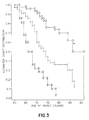
- This Example quantifies both the increased risk for AD and earlier age at onset conferred by ApoE4 alleles in late onset AD families. Risk increased from 20% to 90% and mean age at onset decreased from 84 to 68 years with increasing number of ApoE4 alleles. These data indicate that ApoE4 gene dose is a major risk factor for late onset AD, and that homozygosity for ApoE4 is virtually sufficient to cause AD by age 80.
- risk of AD increased by a factor of 2.84 (95% confidence interval (CI) 2.03 to 3.96) for each additional ApoE4 allele (D.R. Cox et al., Analysis of Survival Data (Chapman and Hall, London, 1984) and L. Wei et al., JASA 84, 1065 (1989)).
- subjects with the 4/4 genotype were more than 8 times as likely to be affected as subjects with 2/3 or 3/3 genotypes.
- survival distributions were constructed from information on age at death in subjects known to be deceased and from age when last examined in other subjects, regardless of affection status.
Landscapes
- Chemical & Material Sciences (AREA)
- Health & Medical Sciences (AREA)
- Life Sciences & Earth Sciences (AREA)
- Organic Chemistry (AREA)
- Proteomics, Peptides & Aminoacids (AREA)
- Genetics & Genomics (AREA)
- Zoology (AREA)
- Molecular Biology (AREA)
- General Health & Medical Sciences (AREA)
- Biochemistry (AREA)
- Biophysics (AREA)
- Toxicology (AREA)
- Analytical Chemistry (AREA)
- Medicinal Chemistry (AREA)
- Gastroenterology & Hepatology (AREA)
- Wood Science & Technology (AREA)
- Engineering & Computer Science (AREA)
- Immunology (AREA)
- Hematology (AREA)
- General Engineering & Computer Science (AREA)
- Microbiology (AREA)
- Pathology (AREA)
- Biotechnology (AREA)
- Physics & Mathematics (AREA)
- Bioinformatics & Cheminformatics (AREA)
- Measuring Or Testing Involving Enzymes Or Micro-Organisms (AREA)
- Investigating Or Analysing Biological Materials (AREA)
- Peptides Or Proteins (AREA)
- Medicines Containing Antibodies Or Antigens For Use As Internal Diagnostic Agents (AREA)
- Preparation Of Compounds By Using Micro-Organisms (AREA)
- Pharmaceuticals Containing Other Organic And Inorganic Compounds (AREA)
Applications Claiming Priority (5)
| Application Number | Priority Date | Filing Date | Title |
|---|---|---|---|
| US95999292A | 1992-10-13 | 1992-10-13 | |
| US959992 | 1992-10-13 | ||
| US11444893A | 1993-08-31 | 1993-08-31 | |
| US114448 | 1993-08-31 | ||
| PCT/US1993/009310 WO1994009155A1 (en) | 1992-10-13 | 1993-09-30 | Methods of detecting alzheimer's disease |
Publications (3)
| Publication Number | Publication Date |
|---|---|
| EP0625212A1 EP0625212A1 (en) | 1994-11-23 |
| EP0625212A4 EP0625212A4 (en) | 1995-02-08 |
| EP0625212B1 true EP0625212B1 (en) | 2004-03-24 |
Family
ID=26812201
Family Applications (1)
| Application Number | Title | Priority Date | Filing Date |
|---|---|---|---|
| EP93923745A Expired - Lifetime EP0625212B1 (en) | 1992-10-13 | 1993-09-30 | Methods of detecting alzheimer's disease |
Country Status (14)
| Country | Link |
|---|---|
| US (4) | US5508167A (enExample) |
| EP (1) | EP0625212B1 (enExample) |
| JP (1) | JP3265577B2 (enExample) |
| KR (1) | KR100279898B1 (enExample) |
| CN (2) | CN1525168A (enExample) |
| AT (1) | ATE262592T1 (enExample) |
| AU (1) | AU677614B2 (enExample) |
| CA (1) | CA2142300C (enExample) |
| DE (2) | DE625212T1 (enExample) |
| ES (1) | ES2148116T1 (enExample) |
| FI (1) | FI951701A7 (enExample) |
| NO (1) | NO951383L (enExample) |
| NZ (1) | NZ257215A (enExample) |
| WO (1) | WO1994009155A1 (enExample) |
Families Citing this family (141)
| Publication number | Priority date | Publication date | Assignee | Title |
|---|---|---|---|---|
| EP0625212B1 (en) * | 1992-10-13 | 2004-03-24 | Duke University | Methods of detecting alzheimer's disease |
| CA2111503A1 (en) * | 1993-12-15 | 1995-06-16 | Mcgill University | Apolipoprotein e polymorphism and alzheimer's disease |
| FR2716894B1 (fr) * | 1994-03-07 | 1996-05-24 | Pasteur Institut | Marqueurs génétiques utilisés conjointement pour le diagnostic de la maladie d'Alzheimer, méthode et kit de diagnostic. |
| US7049078B2 (en) | 1994-04-27 | 2006-05-23 | Judés Poirier | Apolipoprotein E polymorphism and treatment of alzheimer's disease |
| GB9408465D0 (en) * | 1994-04-27 | 1994-06-22 | Univ Mcgill | Apolipoprotein e polymorphism & treatment of alzheimer's disease |
| GB9415073D0 (en) * | 1994-06-27 | 1994-09-14 | Smithkline Beecham Plc | Novel method |
| GB9414624D0 (en) * | 1994-07-20 | 1994-09-07 | Smithkline Beecham Plc | Novel method |
| US5804560A (en) * | 1995-01-06 | 1998-09-08 | Sibia Neurosciences, Inc. | Peptide and peptide analog protease inhibitors |
| US5863902A (en) * | 1995-01-06 | 1999-01-26 | Sibia Neurosciences, Inc. | Methods of treating neurodegenerative disorders using protease inhibitors |
| FR2730745B1 (fr) * | 1995-02-17 | 1997-06-13 | Eurobio Lab | Procede de detection d'une mutation intervenant dans la maladie d'alzheimer et sequences nucleotidiques pour sa mise en oeuvre |
| US6022683A (en) * | 1996-12-16 | 2000-02-08 | Nova Molecular Inc. | Methods for assessing the prognosis of a patient with a neurodegenerative disease |
| US5773220A (en) * | 1995-07-28 | 1998-06-30 | University Of Pittsburgh | Determination of Alzheimer's disease risk using apolipoprotein E and .alpha. |
| US5767337A (en) * | 1995-07-31 | 1998-06-16 | Duke University | Creation of human apolipoprotein E isoform specific transgenic mice in apolipoprotein deficient "knockout" mice |
| US5672685A (en) * | 1995-10-04 | 1997-09-30 | Duke University | Source of apolipoprotein E and method of isolating apolipoprotein E |
| US5955472A (en) * | 1995-11-02 | 1999-09-21 | Warner-Lambert Company | Naphthylazo inhibition of amyloidosis |
| US6136530A (en) * | 1995-11-29 | 2000-10-24 | Texas Tech University Health Sciences Center | Compositions and methods for assessing risk factors in Alzheimer's disease |
| JPH10327897A (ja) | 1996-01-19 | 1998-12-15 | Washington Univ | プレセニリン−1遺伝子の配列を用いる疾患の診断および予後診断 |
| US6245751B1 (en) | 1996-07-09 | 2001-06-12 | University Of Cincinnati | Methods for the treatment of apolipoprotein E related diseases |
| ES2115553B1 (es) * | 1996-10-23 | 1999-02-16 | Boehringer Ingelheim Espana | Metodo para detectar la presencia de polimorfismos de dna, estuche de ensayo y acidos nucleicos recombinantes correspondientes. |
| AT404993B (de) * | 1997-01-13 | 1999-04-26 | Immuno Ag | Verfahren zur bestimmung eines proteins mit einer mutation |
| FR2765591B1 (fr) * | 1997-07-01 | 2002-08-09 | Pasteur Institut | Procede de diagnostic de la maladie d'alzheimer |
| US6313089B1 (en) * | 1997-08-20 | 2001-11-06 | Duke University | Complexes of apolipoprotein E and ciliary neurotrophic factor (CNTF) and methods of use |
| US6342350B1 (en) | 1997-09-05 | 2002-01-29 | The General Hospital Corporation | Alpha-2-macroglobulin diagnostic test |
| JP2001516593A (ja) * | 1997-09-12 | 2001-10-02 | ブリストル−マイヤーズ スクイブ カンパニー | 徴候が遅いアルツハイマー病の発現傾向の測定法 |
| ES2142248B1 (es) * | 1997-11-20 | 2000-11-16 | Univ Madrid Autonoma | Polimorfismos en el promotor del gen humano de la apolipoproteina e, y sus usos para aplicaciones diagnosticas y terapeuticas. |
| US6251587B1 (en) | 1997-12-16 | 2001-06-26 | Nova Molecular, Inc. | Method for determining the prognosis of a patient with a neurological disease |
| WO1999058640A2 (en) | 1998-05-11 | 1999-11-18 | Philadelphia Health And Education Corporation | Mct-1, a human oncogene |
| US6441149B1 (en) | 1998-06-15 | 2002-08-27 | Mitokor | Diagnostic method based on quantification of extramitochondrial DNA |
| US6489095B2 (en) * | 1998-06-15 | 2002-12-03 | Mitokor | Diagnostic method based on quantification of extramitochondrial DNA |
| US6218117B1 (en) * | 1998-06-15 | 2001-04-17 | Mitokor | Compositions and methods for identifying agents that quantitatively alter detectable extramitochondrial DNA:mitochondrial DNA ratios |
| WO2000020634A1 (en) * | 1998-10-01 | 2000-04-13 | Nova Molecular, Inc. | Methods for treating or identifying a subject at risk for a neurological disease by determining the presence of a variant gpiiia and/or variant gpiib allele |
| DE19855469C2 (de) * | 1998-12-01 | 2001-01-11 | Michael Esrich | Verfahren zur Bestimmung des Apolipoprotein-E-Genotyps in einer menschlichen Probe |
| US6017913A (en) * | 1999-05-03 | 2000-01-25 | Warner-Lambert Company | Naphthylazo inhibition of amyloidosis |
| US20030068632A1 (en) * | 1999-05-07 | 2003-04-10 | Institute National De La Sante Et De La Recherche Medicale (Inserm) | Diagnosis of glaucoma |
| CA2372993A1 (en) * | 1999-05-07 | 2000-11-16 | Institut National De La Sante Et De La Recherche Medicale | Diagnosis of glaucoma |
| US6255054B1 (en) | 1999-09-09 | 2001-07-03 | Jacques Hugon | Polymorphism of the human GluR-5 gene and risk factor for alzheimer disease |
| US6432643B1 (en) * | 1999-10-22 | 2002-08-13 | Duke University | Method of determining Alzheimer's disease risk using apolipoprotein E4 genotype analysis in combination with decreased estrogen levels |
| US6734166B1 (en) | 2000-02-08 | 2004-05-11 | North Carolina State University | Method of reducing aluminum levels in the central nervous system |
| AU2001253054A1 (en) * | 2000-03-29 | 2001-10-08 | The J. David Gladstone Institutes | Methods of treating cognitive decline disease conditions with androgens |
| US20070179197A1 (en) * | 2000-05-01 | 2007-08-02 | Accera, Inc. | Compositions and methods for improving or preserving brain function |
| JP2003531857A (ja) | 2000-05-01 | 2003-10-28 | アクセラ・インコーポレーテッド | アルツハイマー病およびニューロンの代謝の減少によって引き起こされる他の病気を治療および予防するための中鎖トリグリセリドの使用 |
| US8124589B2 (en) * | 2000-05-01 | 2012-02-28 | Accera, Inc. | Use of ketogenic compounds for treatment of age-associated memory impairment |
| US6835750B1 (en) * | 2000-05-01 | 2004-12-28 | Accera, Inc. | Use of medium chain triglycerides for the treatment and prevention of alzheimer's disease and other diseases resulting from reduced neuronal metabolism II |
| US20080009467A1 (en) * | 2000-05-01 | 2008-01-10 | Accera, Inc. | Combinations of medium chain triglycerides and therapeutic agents for the treatment and prevention of alzheimers disease and other diseases resulting from reduced neuronal metabolism |
| US20040248092A1 (en) * | 2000-05-26 | 2004-12-09 | Vance Jeffrey M | Methods of screening for parkinsons's disease |
| AU2001273661A1 (en) * | 2000-06-30 | 2002-01-14 | Duke University | Methods of screening for alzheimer's disease |
| US6495335B2 (en) * | 2000-12-07 | 2002-12-17 | Mario Chojkier | Compositions and methods for diagnosing alzheimer's disease |
| DE60224078T2 (de) * | 2001-02-12 | 2008-12-04 | N.V. Organon | Verwendung von Mirtazapin zur Verbesserung der Behandlung von Menschen mit starken Depressionen, welche Träger des Gens für Apolipoprotein E4 sind. |
| US20030105082A1 (en) * | 2001-12-03 | 2003-06-05 | Murphy Greer Marechal | Methods for improving the therapeutic response of humans having major depression and carrying the gene for apolipoprotein E4 |
| US6399310B1 (en) | 2001-02-12 | 2002-06-04 | Akzo Nobel N.V. | Methods for improving the therapeutic response of humans having major depression and carrying the gene for apolipoprotein E4 |
| US7070945B2 (en) * | 2001-04-25 | 2006-07-04 | Syn X Pharma, Inc. | Process for determining the presence of monomeric brain associated human glutamine synthetase in patients exhibiting mild cognitive impairment |
| US6451547B1 (en) | 2001-04-25 | 2002-09-17 | Syn X Pharma | Process for differential diagnosis of Alzheimer's dementia and device therefor |
| ATE390633T1 (de) * | 2001-10-04 | 2008-04-15 | Immuno Biological Lab Co Ltd | Reagens zum nachweis eines morbus-alzheimer- risikofaktors, nachweiskit dafür und verfahren zum nachweis eines morbus-alzheimer-risikofaktors unter verwendung davon |
| US20030224380A1 (en) * | 2001-10-25 | 2003-12-04 | The General Hospital Corporation | Genes and polymorphisms on chromosome 10 associated with Alzheimer's disease and other neurodegenerative diseases |
| AU2002364945A1 (en) * | 2001-10-25 | 2003-07-09 | Neurogenetics, Inc. | Genes and polymorphisms on chromosome 10 associated with alzheimer's disease and other neurodegenerative diseases |
| US20030170678A1 (en) * | 2001-10-25 | 2003-09-11 | Neurogenetics, Inc. | Genetic markers for Alzheimer's disease and methods using the same |
| WO2003046579A2 (en) * | 2001-11-09 | 2003-06-05 | University Of Zürich | Cyp46 genotype determination for risk and treatment evaluation of alzheimer's disease |
| US20030119074A1 (en) * | 2001-12-20 | 2003-06-26 | George Jackowski | Diagnosis and treatment of dementia utilizing thrombospondin |
| US20030224446A1 (en) * | 2001-12-20 | 2003-12-04 | Harry G. Jean | Method of predicting cytokine response to tissue injury |
| US7579147B2 (en) | 2002-05-07 | 2009-08-25 | Wake Forest University Health Sciences | Mutations in the macrophage scavenger receptor 1 gene alter risk of prostate cancer, asthma, and cardiovascular disease |
| US20040014109A1 (en) * | 2002-05-23 | 2004-01-22 | Pericak-Vance Margaret A. | Methods and genes associated with screening assays for age at onset and common neurodegenerative diseases |
| US20040005566A1 (en) * | 2002-07-02 | 2004-01-08 | Genelink, Inc. | Kits and methods for assessing cardiovascular health |
| US20060183117A1 (en) * | 2002-07-08 | 2006-08-17 | Pericak-Vance Margaret A | Screening for alzheimer's disease |
| ATE422671T1 (de) * | 2002-07-30 | 2009-02-15 | David Gladstone Inst | Verfahren zur diagnose von morbus alzheimer |
| ES2327914T3 (es) * | 2002-08-07 | 2009-11-05 | Novartis Ag | Metodo para pronosticar la sensibilidad al tratamiento con ravastigmina basado en el genotipo apoe de pacintes con demencia. |
| US7432355B2 (en) * | 2002-08-09 | 2008-10-07 | The J. David Gladstone Institutes | Apolipoprotein E stable folding intermediate and methods of use thereof |
| US20060246437A1 (en) * | 2003-07-11 | 2006-11-02 | Pericak-Vance Margaret A | Genetic susceptibility genes for asthma and atopy and asthma-related and atopic-related phenotypes |
| US20050191652A1 (en) * | 2003-11-03 | 2005-09-01 | Vance Jeffery M. | Identification of genetic forms of a gene that leads to high risk for parkinson disease |
| US20060068428A1 (en) * | 2003-11-03 | 2006-03-30 | Duke University | Identification of genetic markers associated with parkinson disease |
| WO2005049866A2 (en) | 2003-11-14 | 2005-06-02 | Duke University | Methods of detecting charcot-marie tooth disease type 2a |
| AU2004294178C1 (en) | 2003-11-19 | 2011-10-27 | Rules-Based Medicine, Inc. | Methods for diagnosis, stratification, and monitoring of Alzheimer's disease |
| US20060094064A1 (en) * | 2003-11-19 | 2006-05-04 | Sandip Ray | Methods and compositions for diagnosis, stratification, and monitoring of alzheimer's disease and other neurological disorders in body fluids |
| CA2547675A1 (en) | 2003-11-28 | 2005-06-09 | Astrazeneca Ab | Antibodies binding to a c-terminal fragment of apolipoprotein e |
| US7612179B2 (en) | 2003-11-28 | 2009-11-03 | Astrazeneca Ab | antibodies binding to a C-terminal fragment of apoliopoprotein E |
| EP1743036A4 (en) * | 2004-01-22 | 2008-07-02 | Genaissance Pharmaceuticals | APOE GENERAL MARKERS RELATED TO ALZHEIMER IN THE FIRST EARLY PERIOD |
| WO2005072152A2 (en) * | 2004-01-22 | 2005-08-11 | Genaissance Pharmaceuticals, Inc. | Apoc1 genetic markers associated with age of onset of alzheimer's disease |
| US7256003B2 (en) * | 2004-07-13 | 2007-08-14 | The Research Foundation For Mental Hygiene, Inc. | Method for differentiation of Alzheimer's Disease into subgroups |
| US7790390B2 (en) * | 2004-10-27 | 2010-09-07 | Duke University | Methods for identifying an individual at increased risk of developing coronary artery disease |
| US7807465B2 (en) * | 2004-10-27 | 2010-10-05 | Duke University | Methods for identifying an individual at increased risk of developing coronary artery disease |
| GB0424563D0 (en) | 2004-11-05 | 2004-12-08 | Novartis Ag | Organic compounds |
| US9335331B2 (en) * | 2005-04-11 | 2016-05-10 | Cornell Research Foundation, Inc. | Multiplexed biomarkers for monitoring the Alzheimer's disease state of a subject |
| US20060252775A1 (en) * | 2005-05-03 | 2006-11-09 | Henderson Samuel T | Methods for reducing levels of disease associated proteins |
| JP2008547006A (ja) * | 2005-06-17 | 2008-12-25 | ザ ブライハム アンド ウイメンズ ホスピタル, インコーポレイテッド | 変形性関節症のタンパク質プロフィール |
| US8224579B2 (en) | 2005-06-17 | 2012-07-17 | The Brigham And Women's Hospital, Inc. | Method of diagnosing osteoarthritis |
| EP1915144A4 (en) * | 2005-06-20 | 2009-08-19 | Accera Inc | METHOD FOR REDUCING OXIDATIVE DAMAGE AND IMPROVING MITOCHONDRIA EFFICIENCY |
| US20070148661A1 (en) * | 2005-07-19 | 2007-06-28 | Duke University | LSAMP Gene Associated With Cardiovascular Disease |
| EP1940403A2 (en) * | 2005-09-22 | 2008-07-09 | SB Pharmco Puerto Rico Inc. | Ppar-gamma agonists for improvement of cognitive function in apoe4 negative patients |
| WO2007086980A2 (en) * | 2005-11-10 | 2007-08-02 | Duke University | Methods of determining the risk of developing coronary artery disease |
| US20070166765A1 (en) * | 2006-01-16 | 2007-07-19 | Christian Rohlff | Protein isoforms and uses thereof |
| CA2653974A1 (en) | 2006-05-30 | 2008-02-14 | Mayo Foundation For Medical Education And Research | Detecting and treating dementia |
| DK2037948T3 (en) | 2006-05-30 | 2016-08-01 | Mayo Foundation | Detection and treatment of dementia |
| US7851172B2 (en) | 2006-07-25 | 2010-12-14 | University Of Kentucky Research Foundation | Biomarkers of mild cognitive impairment and alzheimer's disease |
| DE102006056337A1 (de) * | 2006-11-29 | 2008-06-05 | B.R.A.H.M.S Ag | In vitro Verfahren zur Diagnose und Frühdiagnose von neurodegenerativen Erkrankungen |
| MX2009012188A (es) | 2007-05-11 | 2010-02-24 | Univ Jefferson | Métodos de tratamiento y prevención de enfermedades y desórdenes neurodegenerativos. |
| EP2171089B1 (en) | 2007-06-25 | 2014-01-22 | Universität Duisburg-Essen | Screening-method for polymorphic markers in htra1 gene in neurodegenerative disorders |
| PT2650378E (pt) | 2007-07-31 | 2016-01-14 | Accera Inc | Utilização de testagem genómica e compostos cetogénicos para o tratamento de função cognitiva reduzida |
| US7902147B2 (en) | 2007-11-05 | 2011-03-08 | Duke University | Chronic lymphocytic leukemia prognosis and treatment |
| US20090142766A1 (en) * | 2007-11-09 | 2009-06-04 | Washington University In St. Louis | Methods for measuring the metabolism of cns derived biomolecules in vivo |
| US8105809B2 (en) * | 2008-07-03 | 2012-01-31 | Accera, Inc. | Enzymatic synthesis of acetoacetate esters and derivatives |
| KR101734152B1 (ko) * | 2008-07-03 | 2017-05-11 | 액세라인크 | 신경계 장애의 치료를 위한 아세토아세테이트의 모노글리세리드 및 유도체 |
| US8846315B2 (en) | 2008-08-12 | 2014-09-30 | Zinfandel Pharmaceuticals, Inc. | Disease risk factors and methods of use |
| CN102177436B (zh) * | 2008-08-12 | 2015-05-13 | 金帆德尔制药股份有限公司 | 鉴定疾病风险因子的方法 |
| US20100136584A1 (en) * | 2008-09-22 | 2010-06-03 | Icb International, Inc. | Methods for using antibodies and analogs thereof |
| US20100124756A1 (en) * | 2008-10-10 | 2010-05-20 | Sandip Ray | Collection of biomarkers for diagnosis and monitoring of alzheimer's disease in body fluids |
| US8355927B2 (en) | 2010-11-05 | 2013-01-15 | Genomind, Llc | Neuropsychiatric test reports |
| US20110237537A1 (en) * | 2009-05-29 | 2011-09-29 | Lombard Jay L | Methods for assessment and treatment of mood disorders via single nucleotide polymorphisms analysis |
| WO2011006144A1 (en) | 2009-07-10 | 2011-01-13 | Martek Biosciences Corporation | Methods of treating and preventing neurological disorders using docosahexaenoic acid |
| US8129139B2 (en) | 2009-07-13 | 2012-03-06 | Allergan, Inc. | Process for obtaining botulinum neurotoxin |
| ES2581178T3 (es) | 2009-07-29 | 2016-09-01 | Pharnext | Nuevas herramientas de diagnóstico para enfermedad de Alzheimer |
| US20110202284A1 (en) * | 2010-02-10 | 2011-08-18 | Mcreynolds Cristopher | Novel groups of biomarkers for diagnosing alzheimer's disease |
| WO2011133583A1 (en) * | 2010-04-19 | 2011-10-27 | Functional Neuromodulation Inc. | Deep brain stimulation of memory circuits in alzheimer's disease |
| AU2011336360A1 (en) * | 2010-12-02 | 2013-07-04 | The Washington University | Compositions and methods for treating amyloid plaque associated symptoms |
| WO2012085217A1 (en) | 2010-12-22 | 2012-06-28 | Universite De La Mediterranee (Aix-Marseille Ii) | A diagnostic method for dementias |
| PH12013501450A1 (en) | 2011-01-10 | 2013-08-28 | Takeda Pharmaceuticals Co | Methods and drug products for treating alzheimer`s diseases |
| EP2681555B1 (en) | 2011-02-25 | 2020-04-08 | Benaroya Research Institute | Detection of an allergic disorder |
| WO2013153461A2 (en) | 2012-04-13 | 2013-10-17 | Oasis Diagnostics Corporation | Specific salivary biomarkers for risk detection, early diagnosis, prognosis and monitoring of alzheimer's and parkinson's diseases |
| EP2847218A4 (en) * | 2012-05-08 | 2015-12-30 | Univ Ramot | APOE4 ANTIBODY FOR THE TREATMENT OF NEURODEEGENERATIVE DISEASES |
| CA2918194C (en) | 2013-03-27 | 2022-12-06 | The General Hospital Corporation | Methods and agents for treating alzheimer's disease |
| EP4289820A3 (en) * | 2014-03-21 | 2024-03-13 | Alzheon, Inc. | Compounds for use in treating alzheimer's disease in apoe4+/+ patients |
| CA2962969C (en) | 2014-09-30 | 2023-03-21 | Washington University | Tau kinetic measurements |
| CN105606814B (zh) * | 2014-11-20 | 2017-09-15 | 深圳市安群生物工程有限公司 | 检测人ApoE‑ε4蛋白的荧光免疫层析试纸及其制备方法 |
| US20180217163A1 (en) * | 2015-05-11 | 2018-08-02 | Daniel L. Alkon | Treatment of neurodegenerative conditions using pkc activators after determining the presence of the apoe4 allele |
| CA2997947A1 (en) | 2015-09-09 | 2017-03-16 | The Trustees Of Columbia University In The City Of New York | Reduction of er-mam-localized app-c99 and methods of treating alzheimer's disease |
| MD3347002T2 (ro) | 2015-09-10 | 2023-10-31 | Alzheon Inc | Tratamentul bolii Alzheimer într-o populație specifică de pacienți |
| EP3309550A1 (en) * | 2016-10-12 | 2018-04-18 | sphingotec GmbH | Method for the detection of apolipoprotein e4 |
| EP3548035A4 (en) | 2016-11-30 | 2020-07-22 | Case Western Reserve University | COMBINATIONS OF 15-PGDH INHIBITORS WITH CORCOSTEROIDS AND / OR TNF INHIBITORS AND THEIR USES |
| AU2018215678A1 (en) | 2017-02-06 | 2019-08-22 | Board Of Regents Of The University Of Texas System | Compositions and methods of modulating short-chain dehydrogenase activity |
| KR102064060B1 (ko) * | 2017-03-23 | 2020-02-11 | 서울대학교산학협력단 | 뇌의 베타 아밀로이드 축적 감별용 혈중 바이오마커 |
| WO2019200342A1 (en) * | 2018-04-12 | 2019-10-17 | The J. David Gladstone Institutes | Methods for treating apoe4/4-associated disorders |
| CN113507931B (zh) | 2018-11-21 | 2025-05-27 | 卡斯西部储备大学 | 调节短链脱氢酶活性的组合物和方法 |
| IL283496B2 (en) * | 2018-11-28 | 2025-09-01 | Prevail Therapeutics Inc | Gene therapies for neurodegenerative diseases |
| WO2021168430A1 (en) | 2020-02-21 | 2021-08-26 | Case Western Reserve University | Compositions and methods for treating renal injury |
| CN110006976B (zh) * | 2019-05-14 | 2021-06-15 | 黄河科技学院 | 一种检测阿尔茨海默症标志物的电化学免疫传感器、其制备方法及应用 |
| US12384834B2 (en) | 2019-05-28 | 2025-08-12 | The General Hospital Corporation | Anti-ApoE antibodies and polynucleotides thereof |
| JP2023510297A (ja) * | 2020-01-07 | 2023-03-13 | セロンテラ、インコーポレイテッド | アルツハイマー病の治療 |
| CN112540178B (zh) * | 2020-08-06 | 2023-12-19 | 武汉天德生物科技有限公司 | 一种检测早期老年痴呆症的免疫组化试剂盒及其使用方法 |
| CN112151113A (zh) * | 2020-09-27 | 2020-12-29 | 类承斌 | 一种迟发性阿尔茨海默症关联基因变异的早期筛查方法 |
| KR102561438B1 (ko) * | 2020-11-04 | 2023-07-28 | 사회복지법인 삼성생명공익재단 | 뇌 아밀로이드 베타 축적 가능성을 예측하는 방법 |
| WO2022182658A1 (en) | 2021-02-23 | 2022-09-01 | Hoth Therapeutics, Inc. | Use of aprepitant for treating alzheimer's disease |
| PL4125911T3 (pl) * | 2021-03-05 | 2024-11-04 | Newamsterdam Pharma B.V. | Obicetrapib do leczenia otępień |
| CN117886933A (zh) * | 2023-12-28 | 2024-04-16 | 上海良润生物医药科技有限公司 | 一种载脂蛋白e检测试剂及其应用 |
Family Cites Families (8)
| Publication number | Priority date | Publication date | Assignee | Title |
|---|---|---|---|---|
| US4772549A (en) * | 1986-05-30 | 1988-09-20 | Biotechnology Research Partners, Ltd. | Polymorphisms related to lipid metabolism: ApoB, ApoCII, ApoE, ApoAIV |
| US5168045A (en) * | 1989-08-18 | 1992-12-01 | The Scripps Research Institute | Diagnostic systems and methods using polypeptide analogs of apolipoprotein e |
| US5473039A (en) * | 1989-08-18 | 1995-12-05 | The Scripps Research Institute | Polypeptide analogs of apolipoprotein E, diagnostic systems and methods using the analogs |
| US5182364A (en) * | 1990-02-26 | 1993-01-26 | The Scripps Research Institute | Polypeptide analogs of apolipoprotein E |
| US5177189A (en) * | 1989-08-18 | 1993-01-05 | The Scripps Research Institute | Polypeptide analogs of Apolipoprotein E |
| US5297562A (en) * | 1991-04-01 | 1994-03-29 | President And Fellows Of Harvard College | Method for detecting and treating Alzheimer's disease |
| US5272055A (en) * | 1991-12-24 | 1993-12-21 | The University Of Kentucky Research Foundation | Detection of Alzheimer's disease and other diseases using a photoaffinity labeling method |
| EP0625212B1 (en) * | 1992-10-13 | 2004-03-24 | Duke University | Methods of detecting alzheimer's disease |
-
1993
- 1993-09-30 EP EP93923745A patent/EP0625212B1/en not_active Expired - Lifetime
- 1993-09-30 DE DE0625212T patent/DE625212T1/de active Pending
- 1993-09-30 ES ES93923745T patent/ES2148116T1/es active Pending
- 1993-09-30 KR KR1019950701013A patent/KR100279898B1/ko not_active Expired - Fee Related
- 1993-09-30 JP JP51005094A patent/JP3265577B2/ja not_active Expired - Lifetime
- 1993-09-30 NZ NZ257215A patent/NZ257215A/en not_active IP Right Cessation
- 1993-09-30 AT AT93923745T patent/ATE262592T1/de not_active IP Right Cessation
- 1993-09-30 FI FI951701A patent/FI951701A7/fi not_active Application Discontinuation
- 1993-09-30 CA CA002142300A patent/CA2142300C/en not_active Expired - Lifetime
- 1993-09-30 WO PCT/US1993/009310 patent/WO1994009155A1/en not_active Ceased
- 1993-09-30 AU AU53500/94A patent/AU677614B2/en not_active Expired
- 1993-09-30 DE DE69333461T patent/DE69333461T2/de not_active Expired - Lifetime
- 1993-10-13 CN CNA031545688A patent/CN1525168A/zh active Pending
- 1993-10-13 CN CN93114843A patent/CN1092525A/zh not_active Ceased
-
1994
- 1994-04-13 US US08/227,044 patent/US5508167A/en not_active Expired - Lifetime
-
1995
- 1995-04-07 NO NO951383A patent/NO951383L/no not_active Application Discontinuation
- 1995-05-15 US US08/441,001 patent/US5716828A/en not_active Expired - Lifetime
-
1997
- 1997-04-08 US US08/835,503 patent/US5767248A/en not_active Expired - Lifetime
-
1998
- 1998-04-15 US US09/060,459 patent/US6027896A/en not_active Expired - Lifetime
Non-Patent Citations (1)
| Title |
|---|
| J. Lipid Res. 33, 273-280, 1992, Gerritse et al. * |
Also Published As
| Publication number | Publication date |
|---|---|
| US5508167A (en) | 1996-04-16 |
| CN1525168A (zh) | 2004-09-01 |
| ES2148116T1 (es) | 2000-10-16 |
| DE69333461T2 (de) | 2005-03-24 |
| FI951701A0 (fi) | 1995-04-10 |
| JP3265577B2 (ja) | 2002-03-11 |
| NO951383D0 (no) | 1995-04-07 |
| EP0625212A1 (en) | 1994-11-23 |
| DE69333461D1 (de) | 2004-04-29 |
| WO1994009155A1 (en) | 1994-04-28 |
| KR100279898B1 (ko) | 2001-04-02 |
| NZ257215A (en) | 1996-12-20 |
| EP0625212A4 (en) | 1995-02-08 |
| US6027896A (en) | 2000-02-22 |
| FI951701L (fi) | 1995-04-10 |
| CA2142300A1 (en) | 1994-04-28 |
| CA2142300C (en) | 2005-08-23 |
| FI951701A7 (fi) | 1995-04-10 |
| AU5350094A (en) | 1994-05-09 |
| US5716828A (en) | 1998-02-10 |
| CN1092525A (zh) | 1994-09-21 |
| JPH07502418A (ja) | 1995-03-16 |
| AU677614B2 (en) | 1997-05-01 |
| US5767248A (en) | 1998-06-16 |
| ATE262592T1 (de) | 2004-04-15 |
| NO951383L (no) | 1995-04-07 |
| DE625212T1 (de) | 2000-11-02 |
Similar Documents
| Publication | Publication Date | Title |
|---|---|---|
| AU677614B2 (en) | Methods of detecting Alzheimer's disease | |
| Saunders et al. | Association of apolipoprotein E allele ε4 with late-onset familial and sporadic Alzheimer's disease | |
| US7867727B2 (en) | Methods and reagents for treatment and diagnosis of vascular disorders and age-related macular degeneration | |
| US6342350B1 (en) | Alpha-2-macroglobulin diagnostic test | |
| Myllykangas et al. | Genetic association of α2‐macroglobulin with Alzheimer's disease in a Finnish elderly population | |
| US20140199290A1 (en) | Genetic polymorphisms associated with alzheimer's disease, methods of detection and uses thereof | |
| JP2001524809A (ja) | 神経系疾患の治療に使用するための遺伝薬理学的方法 | |
| EP1074634B1 (en) | Method for the diagnosis or the prognosis of Alzheimer disease therapeutical composition for preventing or treating Alzheimer disease | |
| US5773220A (en) | Determination of Alzheimer's disease risk using apolipoprotein E and .alpha. | |
| WO2005017143A1 (en) | Diagnosis and treatment of neurodegenerative disorders, involving the microtubule associated protein tau (mapt) gene | |
| Egensperger et al. | Apolipoprotein E genotype and neuropathological phenotype in two members of a German family with chromosome 14-linked early onset Alzheimer's disease | |
| Corzo et al. | Influence of the apoE genoptype on serum apoe levels in Alzheimer’s disease patients | |
| JP2005522222A (ja) | Atp結合性カセット遺伝子およびタンパク質の神経変性疾患に関する診断的および治療的使用 | |
| EP1490694B1 (en) | Camp-regulated phosphorprotein for diagnostic and therapeutic use in neurodegenerative diseases | |
| WO2001082776A2 (en) | Methods and compositions for the diagnosis of schizophrenia | |
| US20060160728A1 (en) | Diagnostic and therapeutic use of ensandin-0138 gene and protein for neurodegenerative diseases | |
| AU2018206776A1 (en) | Methods and reagents for the treatment and diagnosis of vascular disorders and age-related macular degeneration | |
| WO2001087231A2 (en) | Methods and compositions for the diagnosis of schizophrenia | |
| AU2013202401A1 (en) | Methods and reagents for the treatment and diagnosis of vascular disorders and age-related macular degeneration | |
| WO2003107008A2 (en) | DIAGNOSTIC POLYMORPHISM OF 11ß-HYDROXYSTEROID DEHYDROGENASE USEFUL FOR IDENTIFYING RISK OF DEVELOPING ALZHEIMER'S DISEASE | |
| WO2001080722A2 (en) | Methods and compositions for the diagnosis of schizophrenia |
Legal Events
| Date | Code | Title | Description |
|---|---|---|---|
| PUAI | Public reference made under article 153(3) epc to a published international application that has entered the european phase |
Free format text: ORIGINAL CODE: 0009012 |
|
| 17P | Request for examination filed |
Effective date: 19940706 |
|
| AK | Designated contracting states |
Kind code of ref document: A1 Designated state(s): AT BE CH DE DK ES FR GB GR IE IT LI LU MC NL PT SE |
|
| A4 | Supplementary search report drawn up and despatched |
Effective date: 19941220 |
|
| AK | Designated contracting states |
Kind code of ref document: A4 Designated state(s): AT BE CH DE DK ES FR GB GR IE IT LI LU MC NL PT SE |
|
| 17Q | First examination report despatched |
Effective date: 19961227 |
|
| EL | Fr: translation of claims filed | ||
| TCAT | At: translation of patent claims filed | ||
| TCNL | Nl: translation of patent claims filed | ||
| REG | Reference to a national code |
Ref country code: ES Ref legal event code: BA2A Ref document number: 2148116 Country of ref document: ES Kind code of ref document: T1 |
|
| DET | De: translation of patent claims | ||
| GRAP | Despatch of communication of intention to grant a patent |
Free format text: ORIGINAL CODE: EPIDOSNIGR1 |
|
| GRAS | Grant fee paid |
Free format text: ORIGINAL CODE: EPIDOSNIGR3 |
|
| GRAA | (expected) grant |
Free format text: ORIGINAL CODE: 0009210 |
|
| AK | Designated contracting states |
Kind code of ref document: B1 Designated state(s): AT BE CH DE DK ES FR GB GR IE IT LI LU MC NL PT SE |
|
| PG25 | Lapsed in a contracting state [announced via postgrant information from national office to epo] |
Ref country code: NL Free format text: LAPSE BECAUSE OF FAILURE TO SUBMIT A TRANSLATION OF THE DESCRIPTION OR TO PAY THE FEE WITHIN THE PRESCRIBED TIME-LIMIT Effective date: 20040324 Ref country code: LI Free format text: LAPSE BECAUSE OF FAILURE TO SUBMIT A TRANSLATION OF THE DESCRIPTION OR TO PAY THE FEE WITHIN THE PRESCRIBED TIME-LIMIT Effective date: 20040324 Ref country code: IT Free format text: LAPSE BECAUSE OF FAILURE TO SUBMIT A TRANSLATION OF THE DESCRIPTION OR TO PAY THE FEE WITHIN THE PRE;WARNING: LAPSES OF ITALIAN PATENTS WITH EFFECTIVE DATE BEFORE 2007 MAY HAVE OCCURRED AT ANY TIME BEFORE 2007. THE CORRECT EFFECTIVE DATE MAY BE DIFFERENT FROM THE ONE RECORDED.SCRIBED TIME-LIMIT Effective date: 20040324 Ref country code: CH Free format text: LAPSE BECAUSE OF FAILURE TO SUBMIT A TRANSLATION OF THE DESCRIPTION OR TO PAY THE FEE WITHIN THE PRESCRIBED TIME-LIMIT Effective date: 20040324 Ref country code: BE Free format text: LAPSE BECAUSE OF FAILURE TO SUBMIT A TRANSLATION OF THE DESCRIPTION OR TO PAY THE FEE WITHIN THE PRESCRIBED TIME-LIMIT Effective date: 20040324 Ref country code: AT Free format text: LAPSE BECAUSE OF FAILURE TO SUBMIT A TRANSLATION OF THE DESCRIPTION OR TO PAY THE FEE WITHIN THE PRESCRIBED TIME-LIMIT Effective date: 20040324 |
|
| REG | Reference to a national code |
Ref country code: GB Ref legal event code: FG4D |
|
| RIC1 | Information provided on ipc code assigned before grant |
Ipc: 7G 01N 33/53 B Ipc: 7C 12Q 1/68 A |
|
| REG | Reference to a national code |
Ref country code: CH Ref legal event code: NV Representative=s name: E. BLUM & CO. PATENTANWAELTE Ref country code: CH Ref legal event code: EP |
|
| REG | Reference to a national code |
Ref country code: IE Ref legal event code: FG4D |
|
| REF | Corresponds to: |
Ref document number: 69333461 Country of ref document: DE Date of ref document: 20040429 Kind code of ref document: P |
|
| PG25 | Lapsed in a contracting state [announced via postgrant information from national office to epo] |
Ref country code: SE Free format text: LAPSE BECAUSE OF FAILURE TO SUBMIT A TRANSLATION OF THE DESCRIPTION OR TO PAY THE FEE WITHIN THE PRESCRIBED TIME-LIMIT Effective date: 20040624 Ref country code: GR Free format text: LAPSE BECAUSE OF FAILURE TO SUBMIT A TRANSLATION OF THE DESCRIPTION OR TO PAY THE FEE WITHIN THE PRESCRIBED TIME-LIMIT Effective date: 20040624 Ref country code: DK Free format text: LAPSE BECAUSE OF FAILURE TO SUBMIT A TRANSLATION OF THE DESCRIPTION OR TO PAY THE FEE WITHIN THE PRESCRIBED TIME-LIMIT Effective date: 20040624 |
|
| PG25 | Lapsed in a contracting state [announced via postgrant information from national office to epo] |
Ref country code: ES Free format text: LAPSE BECAUSE OF FAILURE TO SUBMIT A TRANSLATION OF THE DESCRIPTION OR TO PAY THE FEE WITHIN THE PRESCRIBED TIME-LIMIT Effective date: 20040705 |
|
| NLV1 | Nl: lapsed or annulled due to failure to fulfill the requirements of art. 29p and 29m of the patents act | ||
| PGFP | Annual fee paid to national office [announced via postgrant information from national office to epo] |
Ref country code: MC Payment date: 20040901 Year of fee payment: 12 |
|
| PGFP | Annual fee paid to national office [announced via postgrant information from national office to epo] |
Ref country code: IE Payment date: 20040927 Year of fee payment: 12 |
|
| REG | Reference to a national code |
Ref country code: CH Ref legal event code: PL |
|
| PGFP | Annual fee paid to national office [announced via postgrant information from national office to epo] |
Ref country code: LU Payment date: 20041004 Year of fee payment: 12 |
|
| ET | Fr: translation filed | ||
| PLBE | No opposition filed within time limit |
Free format text: ORIGINAL CODE: 0009261 |
|
| STAA | Information on the status of an ep patent application or granted ep patent |
Free format text: STATUS: NO OPPOSITION FILED WITHIN TIME LIMIT |
|
| 26N | No opposition filed |
Effective date: 20041228 |
|
| NLXE | Nl: other communications concerning ep-patents (part 3 heading xe) |
Free format text: A REQUEST FOR RESTORATION TO THE PRIOR STATE (ARTICLE 23 OF THE PATENTS ACT 1995) HAS BEEN FILED ON 20050519. |
|
| PG25 | Lapsed in a contracting state [announced via postgrant information from national office to epo] |
Ref country code: MC Free format text: LAPSE BECAUSE OF NON-PAYMENT OF DUE FEES Effective date: 20050930 Ref country code: LU Free format text: LAPSE BECAUSE OF NON-PAYMENT OF DUE FEES Effective date: 20050930 Ref country code: IE Free format text: LAPSE BECAUSE OF NON-PAYMENT OF DUE FEES Effective date: 20050930 |
|
| NLXE | Nl: other communications concerning ep-patents (part 3 heading xe) |
Free format text: THE REQUEST FOR RESTORATION TO THE PRIOR STATE AS PROVIDED FOR IN ARTICLE 23 OF THE PATENTS ACT 1995 (SEE PUBLICATION IN HEADING XE OF THE PATENT BULLETIN OF 20050801/08) HAS BEEN REJECTED. |
|
| REG | Reference to a national code |
Ref country code: IE Ref legal event code: MM4A |
|
| PG25 | Lapsed in a contracting state [announced via postgrant information from national office to epo] |
Ref country code: PT Free format text: LAPSE BECAUSE OF NON-PAYMENT OF DUE FEES Effective date: 20040824 |
|
| PGFP | Annual fee paid to national office [announced via postgrant information from national office to epo] |
Ref country code: GB Payment date: 20120925 Year of fee payment: 20 |
|
| PGFP | Annual fee paid to national office [announced via postgrant information from national office to epo] |
Ref country code: FR Payment date: 20121001 Year of fee payment: 20 |
|
| PGFP | Annual fee paid to national office [announced via postgrant information from national office to epo] |
Ref country code: DE Payment date: 20120927 Year of fee payment: 20 |
|
| REG | Reference to a national code |
Ref country code: DE Ref legal event code: R071 Ref document number: 69333461 Country of ref document: DE |
|
| REG | Reference to a national code |
Ref country code: DE Ref legal event code: R071 Ref document number: 69333461 Country of ref document: DE |
|
| REG | Reference to a national code |
Ref country code: GB Ref legal event code: PE20 Expiry date: 20130929 |
|
| PG25 | Lapsed in a contracting state [announced via postgrant information from national office to epo] |
Ref country code: GB Free format text: LAPSE BECAUSE OF EXPIRATION OF PROTECTION Effective date: 20130929 |
|
| PG25 | Lapsed in a contracting state [announced via postgrant information from national office to epo] |
Ref country code: DE Free format text: LAPSE BECAUSE OF EXPIRATION OF PROTECTION Effective date: 20131001 |