EP0507293A2 - Affichage à cristaux liquides à grand angle de pente - Google Patents
Affichage à cristaux liquides à grand angle de pente Download PDFInfo
- Publication number
- EP0507293A2 EP0507293A2 EP92105673A EP92105673A EP0507293A2 EP 0507293 A2 EP0507293 A2 EP 0507293A2 EP 92105673 A EP92105673 A EP 92105673A EP 92105673 A EP92105673 A EP 92105673A EP 0507293 A2 EP0507293 A2 EP 0507293A2
- Authority
- EP
- European Patent Office
- Prior art keywords
- liquid crystal
- crystal display
- display device
- diamine
- polyimide
- Prior art date
- Legal status (The legal status is an assumption and is not a legal conclusion. Google has not performed a legal analysis and makes no representation as to the accuracy of the status listed.)
- Granted
Links
Images
Classifications
-
- C—CHEMISTRY; METALLURGY
- C08—ORGANIC MACROMOLECULAR COMPOUNDS; THEIR PREPARATION OR CHEMICAL WORKING-UP; COMPOSITIONS BASED THEREON
- C08G—MACROMOLECULAR COMPOUNDS OBTAINED OTHERWISE THAN BY REACTIONS ONLY INVOLVING UNSATURATED CARBON-TO-CARBON BONDS
- C08G73/00—Macromolecular compounds obtained by reactions forming a linkage containing nitrogen with or without oxygen or carbon in the main chain of the macromolecule, not provided for in groups C08G12/00 - C08G71/00
- C08G73/06—Polycondensates having nitrogen-containing heterocyclic rings in the main chain of the macromolecule
- C08G73/10—Polyimides; Polyester-imides; Polyamide-imides; Polyamide acids or similar polyimide precursors
- C08G73/1039—Polyimides; Polyester-imides; Polyamide-imides; Polyamide acids or similar polyimide precursors comprising halogen-containing substituents
-
- G—PHYSICS
- G02—OPTICS
- G02F—OPTICAL DEVICES OR ARRANGEMENTS FOR THE CONTROL OF LIGHT BY MODIFICATION OF THE OPTICAL PROPERTIES OF THE MEDIA OF THE ELEMENTS INVOLVED THEREIN; NON-LINEAR OPTICS; FREQUENCY-CHANGING OF LIGHT; OPTICAL LOGIC ELEMENTS; OPTICAL ANALOGUE/DIGITAL CONVERTERS
- G02F1/00—Devices or arrangements for the control of the intensity, colour, phase, polarisation or direction of light arriving from an independent light source, e.g. switching, gating or modulating; Non-linear optics
- G02F1/01—Devices or arrangements for the control of the intensity, colour, phase, polarisation or direction of light arriving from an independent light source, e.g. switching, gating or modulating; Non-linear optics for the control of the intensity, phase, polarisation or colour
- G02F1/13—Devices or arrangements for the control of the intensity, colour, phase, polarisation or direction of light arriving from an independent light source, e.g. switching, gating or modulating; Non-linear optics for the control of the intensity, phase, polarisation or colour based on liquid crystals, e.g. single liquid crystal display cells
- G02F1/133—Constructional arrangements; Operation of liquid crystal cells; Circuit arrangements
- G02F1/1333—Constructional arrangements; Manufacturing methods
- G02F1/1337—Surface-induced orientation of the liquid crystal molecules, e.g. by alignment layers
- G02F1/133711—Surface-induced orientation of the liquid crystal molecules, e.g. by alignment layers by organic films, e.g. polymeric films
- G02F1/133723—Polyimide, polyamide-imide
-
- C—CHEMISTRY; METALLURGY
- C09—DYES; PAINTS; POLISHES; NATURAL RESINS; ADHESIVES; COMPOSITIONS NOT OTHERWISE PROVIDED FOR; APPLICATIONS OF MATERIALS NOT OTHERWISE PROVIDED FOR
- C09K—MATERIALS FOR MISCELLANEOUS APPLICATIONS, NOT PROVIDED FOR ELSEWHERE
- C09K2323/00—Functional layers of liquid crystal optical display excluding electroactive liquid crystal layer characterised by chemical composition
- C09K2323/02—Alignment layer characterised by chemical composition
- C09K2323/027—Polyimide
- C09K2323/0271—Polyimidfluoride
Definitions
- This invention relates to liquid crystal displays of high tilt bias angles, and especially those displays comprising polyimide coatings having pendant perfluorinated chains.
- LCD Liquid Crystal Display
- a field effect LCD device is prepared causing alignment of liquid crystal molecule to occur at a certain angle, the tilt angle, with respect to the plane of the inside of the glass plates.
- the inside of these glass plates of the LCD device have coatings of sets of electrodes (electrical conductors), usually judicious ratios of indium-tin oxide (ITO) or tin oxide.
- the sets of electrodes are usually etched conductors into the pattern compatible with the information to be displayed by the LCD.
- the alignment process is most easily carried out by solution casting (spin coating, roll coating, dipping, spraying, and/or doctor blading) a mixture of various organic polymers onto two glass/ITO substrates.
- the glass plates are usually rubbed or buffed in one direction with cloths.
- the rubbing process serves to establish a unique optical direction.
- these plates are rotated with respect to each other (the rotations being in the range from 90-270 degrees), adhered together (using either organic or inorganic adhesives) in such a way as to preserve a constant thickness to a space or gap between the plates, filled with various mixtures of LC molecules, and finally sealed by either organic or inorganic adhesives.
- polarizing films are often attached by a lamination process.
- electrical connections are made to both plates in a manner consistent with the electrical and display designs.
- tilt bias angle reaches a constant limiting value as the rubbing energy increases, the polyimide and the Liquid Crystal mixture being held constant. It is also known that tilt angles vary over wide ranges (0 to 90 degrees) depending on the composition of certain coupling agents (J. Cognard (1982); Alignment of Nematic Liquid Crystals and their Mixtures: Mol. Cryst. Liq. Cryst., Suppl. 1, 1-75; also R. W. Filas and J. S. Patel (1987). Chemically Induced High-Tilt Surfaces for Liquid Crystals; Appl. Phys. Lett., 50(20), 1426-1428).
- the tilt angle and its magnitude are very important in the various electro-optic responses of the LCD device.
- the stability, legibility, and reliability of the LCD are all related to the magnitude of the tilt angle and to the unchanging nature of this magnitude. It is very important that the polymer film have the following properties:
- A is one or more residues from an acid dianhydride group
- B is one or more residues from diamine compounds actually relies on long chain or strand of the type (-ABABABAB-)n where n is very large.
- Changes in the intrinsic nature of the polyimide i.e., those properties which relate to the factors cited above, may be altered by use of certain structures in either A or B above.
- the art of changing the properties of polyimide surfaces and/or controlling the magnitude of the tilt angle while maintaining the intrinsic properties (a)-(g) above is rather difficult. The need to maintain high values of the molecular weight while keeping electronic, spatial, tilt angle magnitude, and/or surface properties under control has been very difficult.
- properties (b), (c), and (d) above are maximized by the use of aromatic-ring (Ar) groups in both the A and B side of the polyimide. In so doing, this also tends to maximize the other properties.
- Ar aromatic-ring
- the films of polyimides used to control the tilt angle of liquid crystal molecules in all types of liquid crystal displays are very thin, 100-2000 ⁇ .
- the tilt is induced in a unique direction of the polymer by gentle buffing with specific cloths.
- Twisted Nematic LCD's such as those found in pocket TV sets and watches, need low tilt angles in the range of 1-5 degrees.
- Super Twisted Nematic (STN) and super twisted birefringent effect (SBE) LCD's, both of which require higher tilt angles, are slower switching devices, typically between 6-25 degrees.
- the actual tilt angle obtained is a function of polymer ordering on the surface (analogous to cold working of metals), the resulting surface energy (an intrinsic property), the nature of the cloth used to buff the surface (an intrinsic property of its fibers), and the amount of buffing pressure (an extrinsic process variable).
- each of the hundreds of commercial liquid crystal formulations probably interacts differently with a given surface.
- the single most important factor determining the value range of the tilt bias angle is the intrinsic character of the polymer used to control this angle.
- Japanese Patent Application Publication 2-4225 (Application No: 63-153134) (Minamizawa et al), publication date Jan. 9, 1990, describes a process for the manufacture of a liquid display element comprising heat treating a liquid crystalline orientation film of a polyimide obtained by treating a dicarboxylic acid anhydride with a fluorine-containing diamine, under a condition of liquid crystals in contact therewith to a temperature at least as high as the liquid transition temperature of said liquid crystal.
- liquid crystal display device orienting agents which consist of polyimide resins, which contain perfluoroalkyl groups containing 1-6 perfluorinated carbon atoms.
- Japanese Kokai Patent No. Hei 2(1990)-4224 (Application No.: Sho 63(1988)-153133) (Hitachi et al) publication date Jan. 9, 1990, describes a method for manufacturing a liquid crystal display device wherein a liquid crystal is heated at a temperature equal to or higher than the liquid transition point of said liquid crystal while said liquid crystal is being contacted with a liquid crystal orientation film consisting of a fluorine atom containing polyamide polymer.
- an improved liquid crystal display device of the type having a common liquid crystal layer with opposite sides, a set of electrodes on either side of the liquid crystal layer, and an alignment polyimide layer between each set of electrodes and the common liquid crystal layer, wherein the improvement comprises in that the polyimide contains pendant perfluorinated chains of more than 6 perfluorinated carbon atoms, and preferably of 8 or more perfluorinated carbon atoms. Linear chains are preferable.
- a suitable range of perfluorinated carbon atoms is from 7 to 22 carbon atoms and more preferably up to 18.
- the alignment polyimide layer is adaptable to provide the liquid crystal layer with a constant tilt angle of 5 degrees or more. It is also preferable that the pendant perfluorinated chains are contained in the polyimide in an effective amount to provide the liquid crystal layer with a constant tilt angle of 5 degrees or more.
- the polyimide comprises a reaction product of an acid dianhydride and a diamine, wherein the pendant perfluorinated chains are part of the diamine.
- a preferred dianhydride is 3,3',4,4'-benzophenonetetracarboxylic acid dianhydride, because it provides better adhesion, especially to glass substrates.
- Preferred diamines are 3,5-diamino-1-perfluorooctylbenzene, 2-perfluorooctyl-4,6-diaminomesitylene, and 4-(1,1,11-trihydroperfluorounecyloxy)-1,3-phenylenediamine.
- this invention relates to liquid crystal displays of high tilt bias angles, and especially those displays comprising polyimide coatings having pendant perfluorinated chains.
- Liquid Crystal Displays The configuration of Liquid Crystal Displays is described in different publications, such as many of the ones cited above.
- a monograph titled "Liquid Crystal TV Displays; Principles and Applications of Liquid Crystal Displays” by E. Kaneko, published by KTK Scientific Publishers, Tokyo, Japan (1987) gives an excellent overview of the different construction designs regarding Liquid Crystal Displays, especially on pages 15-73.
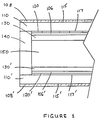
- a typical twisted nematic liquid crystal display cell in the form of a sandwich is shown in Figure 1. Starting from the outside, it comprises a pair of light polarizers 108 and 108' deposited on the outside surfaces 115 and 115' of the transparent substrates 110 and 110', respectively. The directions of polarization of the two polarizers are substantially perpendicular to each other.
- the transparent substrates 110 and 110' are usually glass or silica having a nominal thickness of the order of 0.5 to 1 mm.
- the substrates 110 and 110' are the structural supports of two sub-assemblies of the rest of the elements.
- a grid of one set of parallel transparent electrodes 120 and a second set of parallel transparent electrodes 120' such as Indium/Tin oxide for example, the two sets being preferably disposed in perpendicular directions with respect to each other.
- these transparent electrodes are deposited at a thickness in the range of 300 to 400 ⁇ .
- the passivation layers 106 and 106' may comprise silicon dioxide and titanium dioxide, and deposited by a dip and fire process, well known to the artisans.
- the thickness of the layers 106 and 106' is usually in the region of 1,000 to 2,000 ⁇ .
- alignment or orientation layers 130, and 130', respectively, are deposited, usually by spin-coating and curing.
- the alignment or orientation layers have usually a thickness of 200-2,000 ⁇ , and the preferred construction material is polyimide. Alignment of these layers is performed by rubbing techniques well known to the art as better described at a later section.
- liquid crystal material 150 is sandwiched between the two sub-assemblies, at a nominal thickness of 1-10 micrometers, with sealant 140 to complete the Liquid Crystal Display Cell.
- the Liquid Crystals assume a spiral orientation through the thickness of the layer following the alignment of the molecules of the two alignment layers 130 and 130', which have directions substantially perpendicular to each other.
- polarizer 108' In operation, when the cell is in an unenergized condition, light which passes through polarizer 108' becomes polarized. As it continues its path through the liquid crystals, which have been oriented in a spiral manner by the alignment layers, its angle of polarization changes accordingly by about 90 degrees by the time it has reached polarizer 108. Since the direction of polarization of the two polarizers 108 and 108' differs by substantially 90 degrees, the light passes freely through polarizer 108.
- polyimide tilt angle controlling films having pendant fluorocarbon chains of more than six perfluorinated carbon atoms are very effective in controllably increasing the tilt angles of liquid crystals considerably.
- the carbon chain contains 6 or less perfluorinated carbon atoms, a transient increase may be observed, which however, has a very short life, and disappears prematurely.
- the unexpected behavior of perfluorocarbon groups containing more than six perfluorinated carbon atoms has been used according to this invention as a means to prepare high molecular weight polymers, with high thermal and oxidative stability, which polymers also provide tilt angles in the range that can be used to align supertwisted nematic (STN: tilt range needed from 0 to about 15 degrees), and supertwisted birefringence effect (SBE: tilt angle of 25 degrees needed for optimum performance) liquid crystal display cells.
- STN supertwisted nematic
- SBE supertwisted birefringence effect
- the pendant chain may be at any point of the polyimide structure, it is preferable that it is originated on the amine part of the polyimide. This is because, among other reasons, it is less complex, and thus less expensive to prepare the amines with the pendant fluorocarbon chains, than it is to prepare the corresponding anhydrides.
- the amines used for introducing the fluorocarbon chains are diamines as compared to mono-amines.
- the diamines do not limit the length of the molecule, and high molecular weight polyimides may be prepared having correspondingly outstanding physical properties.
- mono-amines may be used only as end-capping entities, and therefore they limit necessarily the length of the molecule, thus restricting the molecular weight and degrading the physical properties of the resulting polyimides.
- One serious manifestation of such degradation is cracking of the film, as well as sensitivity to strong polar solvents after curing.
- it is preferable that when mono-amines are used be used in rather small quantities, and in conjunction with diamines.
- Aromatic amines are preferred to aliphatic ones, since among other reasons, the thermal/oxidative stability of aromatic compounds is considerably higher than that of aliphatic ones, and in the case of liquid crystal displays, at least one step requiring thermal/oxidative stability is involved, as well known to the artisans.
- Fluorocarbon pendant chains are considerably superior to hydrocarbon chains, as exhibiting significantly higher thermal and oxidative stability. In addition, they provide the controlling film with lower surface energy, which seems to be highly beneficial in most cases in increasing the tilt bias angle. Especially vulnerable to thermal/oxidative stability are polymers containing hydrocarbon chains in the backbone, since any cleavage of such chain causes considerable lowering of the molecular weight and degradation of the properties. Even pendant long chains of hydrocarbon groups decompose by elimination of hydrogen (H2) and olefins, usually below about 220°C. Also, they decrease the polyimide's glass transition temperatures appreciably more than their perfluorocarbon counterparts.
- H2 hydrogen
- olefins usually below about 220°C.
- Rfx fluorinated carbon atom chains
- Rfx fluorinated carbon atom chains
- x refers to the number of perfluorinated carbon atoms within this chain
- Rfx groups are attached directly to the cyclic aromatic ring structures, i.e., Ar-Rfx, without any intervening atoms, such as for example in the structure:
- Ar-Rfx cyclic aromatic ring structures
- the Rfx group has been attached in very close proximity to the aromatic ring through intervening atoms which were chosen to maintain high thermal stability of polymers which were based on them, i.e., Ar-O-CH2-Rfx and Ar-C(CH3)2-Rfx structures:
- the monomeric species Rfx-Diamine compounds shown above, have been used to prepare a series of poly(amic acid)s.
- the poly(amic acid) structures are, as is well known to those who practice polyimide technology, the soluble precursors to polyimides. Additionally, the poly(amic acid)s thus derived are of high molecular weight.
- the tilt angle can range from values of 5-60 degrees; surprisingly, the change from low tilt angle, i.e., under 5 degrees, to higher tilt angles, i.e., the range from 5 to at least 45 degrees, shows an abrupt rise.
- This range of high tilt angles can cover applications in supertwisted nematic (STN) LCD's, tilts needed for STN lie in the range from about 6 to about 25 degrees; furthermore, the supertwisted birefringence effect (SBE) LCD, essentially a sub-division of STN technologies, requires tilts above 25 degrees for optimum performance. It is believed that the high tilt angles, which obtain in these polymers, can also provide alignment in ferroelectric liquid crystals (FLC's).
- FLC's ferroelectric liquid crystals
- mixtures also called blends in the parlance of polymer technology
- polyamic acids could be prepared by using different amounts of the perfluoroalkyl-branched diamine (abbreviated Rfx-DA) compounds.
- Rfx-DA perfluoroalkyl-branched diamine
- the resulting soluble poly(amic acid) solutions could be mixed with various amounts of other poly(amic acid)s containing the Rfx-DA. After suitable equilibration, the mixtures remain homogeneous in character and soluble.
- these blends are processed, as will be described below, one can obtain optically homogeneous films of polyimides.
- the tilt angles of these blends are observed to be intermediate between the extremes of polyimides formed from the polyamic acid, which contains the Rfx-DA compounds and the poly(amic acid), which does not contain the fluoroalkyl branch. It is believed that the equilibration or mixing process results in the random, re-distribution of the Rfx-DA groups for the DA groups and/or the re-distribution of various lengths of poly(amic acid) chains to yield new, random distributions of the branch groups, -Rfx, along the poly(amic acid) chains.
- the perfluoroalkyl substituted aromatic diamines of the present invention may be prepared using a fluoroalkylation process wherein a bromine atom is replaced on an aromatic ring containing two nitro-groups (-NO2), which become amino groups (-NH2) after suitable chemical reduction.
- 1,3-diamino-5-perfluoroalkylbenzene also referred to as 5-perfluoroalkyl-meta-phenylenediamine or 5RfxMPD
- 1,3-diamino-5-perfluoroalkylmesitylene also referred to as 5-perfluoralkyldiaminomesitylene or 5RfxDAM
- Rfx groups which range from one to ten or more fully fluorinated carbon atoms.
- BTDA 3,3',4,4'-benzophenonetetracarboxylic dianhydride
- ODA 4,4'-oxydianiline
- MPD meta-phenylenediamine
- BTDA/ODA/MPD meta-phenylenediamine
- materials giving angles of at least 5 degrees are of high interest to the Industry, since materials providing high tilt angles may be diluted to provide any desirable value smaller than the one corresponding to their maximum potential.
- materials providing high tilt angles may be diluted to provide any desirable value smaller than the one corresponding to their maximum potential.
- the tilt angle still remains low (see tilt angles corresponding to the polyimide of Example 32 as compared to the tilt angles of Example 13 in Table II).
- the polyimides of this Invention show tilt angles, which have a strong dependence upon the concentration of the long (greater than six perfluorinated carbon atoms), perfluorinated alkyl chain.
- the tilt angles vary as shown below:
- the values of the tilt angles of the polyimides according to this invention were determined by the magneto-capacitance null (MCN) method. In this technique, LCD test cells are rotated in a magnetic field.
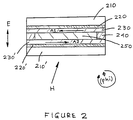
- Figure 2 represents a cross-section of a LCD test cell that was used for the magneto-capacitance null (MCN) method of measuring tilt angles. More specifically, the cell comprised a sandwich of two glass plates 210 and 210'. Each glass plate was either Corning #7059 low-alkali glass or Donnelly Corporation, #5005 soda lime glass. The glass plates 210 and 210' were coated with a continuous coating of indium tin oxide (ITO) 220 and 220', which served as a transparent conductor, and it was applied by well known to the art methods. The thickness of the ITO coatings 220 and 220' ranged from 350 - 2500 ⁇ .
- ITO indium tin oxide
- a polyimide film 230 and 230' according to this invention was applied on the ITO films 220 and 220', and then cured to yield thicknesses from 500-5000 ⁇ , although in the case of most test cells the polyimide film thickness was either approximately 2500 or approximately 1000 ⁇ .
- An adhesive 240 was used to seal the cell; it was either Du Pont Pyralux Sheet Adhesive (E. I. du Pont de Nemours and Company, Wilmington, Delaware, hereinafter "Du Pont"), which had a nominal thickness of 25 micrometers, or a screen printable epoxy #B9021-67, from Epoxy Technology, Billerica, MA.
- a liquid crystal mixture 250, ZLI-2293 from E. Merck (Darmstadt, Germany) was placed within the cell, as explained hereinafter.
- the arrows A1 and A2 along the polyimide film are the directions in which the films on the respective plates were rubbed or buffed as explained hereinunder.
- the symbol E shows the direction of the electric field.
- the symbol, B represents the direction of the applied magnetic field.
- the angle, ⁇ (phi) was the angle through which the cell could be rotated with respect to the fixed direction of the magnetic filed, B.
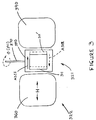
- Figure 2 shows the apparatus 321 used to hold the cell of Figure 2 as well as the magnet 322 for providing the magnetic field having the direction shown by the arrow B, between the magnet's pole faces, 360 and 390.
- Two different magnets were used, namely a Varian E-9 from Varian Co., Walnut Creek, CA, and a PAR, model 151 from Princeton Applied Research, Princeton, NJ. Each was capable of attaining any magnetic field strength from 0 to 20 kilo Oersteds (kOe).
- a holder rod 370 allowed rotation of the apparatus 20 between 0 and 360 degrees, the angle ⁇ (phi) as shown, when the PAR magnet was used.
- the holder rod 370 was fixed and the entire magnet assembly could be rotated through 0-75 degrees.
- a holder 380 supported the test cell on the holder rod 370.
- the two plates 311 and 311' of the LCD test cell are shown here with the plane of the glass being in the plane of the page; the glass plates 311 and 311' were off-set slightly to allow solder interconnect of the ITO conductors to a capacitance bridge (not shown).
- the directions of the rubbing of the respective plates, are shown by arrows A311 and A312.
- the angular variation of the capacitance between the plates 311 an 311' was determined as a function of this applied field. As long the measuring voltage (milli-volt range) of the capacitance bridge is kept well below the threshold voltage of the LC mixture (typical threshold voltages are of the order of 2-3 volts) the electric field, E in Figure 2, does not influence the tilt angle. The angle at which the capacitance is not affected by an increasing magnetic field is the tilt angle.
- This method has the advantage that it does not require the dielectric constants of the liquid crystal mixture to be known nor does it require that the test structure's thickness be known.
- the tilt angle of cells the alignment of which may not be homogeneous, i.e., cells where contamination or impurities from fabrication methods may cause a portion of the cell's alignment film to fail, since the slope measurements can be carried out in strong magnetic fields. Furthermore, it can determine any tilt angle from nearly zero (0) to ninety (90) degrees. Specific details of the cell fabrication are included in the section below.
- a GenRad, model 1688 Digibridge, operating at 5 kilo Hertz was the capacitance detector. These cells measured 1.25 X 2.50 centimeters, and the nominal thickness of the liquid crystal layer was about 25 micrometers. E. Merck (Darmstadt, Germany) liquid crystal mixture, ZLI-2293, was used for the tests.
- a surface burnishing machine model SBM-200 (Engineered Technical Products, Somerville, NJ) was fitted with a 4 inch diameter by 6 inch wide buffing wheel.
- the SBM apparatus consisted of a fixed wheel, which had a micrometer adjustment in its vertical travel; by adjusting the travel micrometer downward, the pressure on the glass could be increased.
- a flat platform which moved uni-directionally under the buffing wheel, held the glass in position by a vacuum chuck. This platform moved under the wheel at a constant speed. Two different buffing wheels were used.
- Aramid felt on cardboard tubes was supplied by the Hurt Machine Products Co.
- the Aramid fibers, a Du Pont polyarimide were 250 microns in diameter and the felt layer was approximately 1/2 inch thick.
- a velvet rayon rubbing cloth (product # B-7 from Maeda Co., Ltd, Osaka, Japan) was used in some of the tilt angle measurements. This velvet was 120 denier with the fiber length being about 2 mm. Thus, this process allowed various amounts of rubbing energy to be used while two different types of buffing materials could be used. Two different cells were used for the MCN determination of the tilt angles. These are described below.
- a Silicon Valley Group (Silicon Valley, California), SVG-81, automated spin coater was used to apply the alignment films to both glass substrates and silicon wafers, which were used to study the film's ellipsometry. This system had the capability to spin parts from 0-6000 RPM. Solutions of the poly(amic acid) precursors to the polymers of this invention were coated onto two types of glasses, which had transparent ITO conductors on their inner surfaces.
- Corning Glass Works #7059 coated with about 250-300 ⁇ of ITO and Donnelly Display Coatings, #5005 soda lime glass with 2500 A of ITO.
- the glass was treated with an amino silane coupling agent, Du Pont VM-651 as a 0.05% aqueous solution.
- the VM-651 was used, the plate was baked on the automatic hot plate module for 45 seconds at 90°C, and then they were immediately coated with the poly(amic acid) solutions. These polymer coatings were spun at their respective spin speeds for 30-45 seconds, and then baked on the hot plate for 45 seconds at 90°C.
- Curing of the polymer films was performed in a Vacuum Atmospheres (Los Angeles, CA) programmable oven, which had the capability of using reduced pressures (from ⁇ 25 inches Hg vacuum up to one atmosphere) and/or inert atmospheres.
- Typical cure profiles were as follows: a bake at 90°C for 15 minutes, ramp of oven's temperature from 90-150°C in less than one hour, ramping from 150°C to the peak cure temperature (usually between 215°C to about 300°C), a 30 minute stay at the peak, and finally a slow cool down to room temperature. After removal from the cure oven, the glass plates were rubbed as described above.
- the glass/ITO coated plates were sputtered with chromium (about 1000 ⁇ thickness) across their end edges by a mask placed over each plate. This allowed a continuous conductor to run over the edge of the end of each plate of the cell.
- Pyralux sheet adhesive #LF-0100 from Du Pont, Wilmington, Delaware
- a b-staged acrylic adhesive film approximately 25 micrometers in thickness was cut to the desired shape (small gaps were left in the adhesive to allow filling of the LC mixture), and placed onto one glass/ITO surface by hand.
- the second plate was placed on top of this structure in such a way that the direction of its rub was opposed to that of the first plate, i.e., the rubbing directions of the plates were anti-parallel, as shown in Figure 2.
- the above construction was transferred to a heated press, and it was laminated at 150°C for 20 minutes under an applied pressure of 30 pounds per square inch (psi).
- the assembled cells were filled with the Liquid Crystal mixture by initially drawing a vacuum on the assembly, placing drops of the mixture on one gap space, and then allowing the mixture to infiltrate the space between the plates. After filling was complete, the fill gap or port was sealed with a UV-curable adhesive (LOCTITE, LITETAK 375).
- the assembled and filled cell was heated slowly to a temperature above its nematic-to-isotropic phase transition, i.e., the N-I clearing point.
- the cells were held at about 90°C for 30 minutes, which temperature is above the N-I point of 85°C in the case of Merck's ZLI-2293 Liquid Crystal mixture.
- the cells were placed in a cell holder as shown in Figure 3, which had two spring loaded metal contacts (not shown) for contacting the Cr edge coating. Electrical leads from these two contacts were attached to the GenRad 1688 Digibridge capacitance bridge as aforementioned. Cells made with this method were tested with the system described above using the Varian E-9 magnet. This magnet had a wider access bore, but the rotation angles were restricted to the 0-75 degree range because the magnet was rotated while the cell was held fixed.
- the plates 210 and 210' were coated, cured, and rubbed as cited above. After rubbing, an adhesive perimeter seal was printed onto one plate using a screen printable epoxy formulation #B9021-6 from Epoxy Technology. The coated plate was dried at 75°C. The plate was sprinkled with glass bead spacers (from E. Merck, Darmstadt, Germany), about 10 micrometers in diameter, to prevent interplate shorts. The second plate, with its rub direction opposed was placed over the pattern, and this construction was placed in a heated press at 150°C, 20 psi pressure for 1 hour. After removal from the lamination press, the cells were filled as above, sealed with the UV adhesive, and heated above the clearing point. Electrical connections were made by two different techniques.
- the product mixture is diluted with 1,1,2-trichlorotrifluoroethane (F-113) and filtered.
- the filter cake is washed with methylene chloride; the filtrate and washes are combined with water, the aqueous layer is separated, and the organic layer is washed with water.
- the resulting product solution is dried over magnesium sulfate, and solvent is removed by rotary evaporation at reduced pressure. Recrystallization of the residual solid from methanol affords the purified product, 3,5-dinitro-1-perfluoro-hexylbenzene, m.p. 81-82°C.
- a one-liter flask was flushed with argon and charged with 119.5 g (0.268 mol) of 1-iodoperfluorohexane, 34.1 g (0.536 mol) of copper powder, and 400 ml of dimethylsulfoxide. The mixture was stirred and heated under an argon atmosphere to 102°C, and held and that temperature for two hours, to effect conversion of the 1-iodoperfluorohexane to perfluorohexyl copper(I).
- the reaction mixture was cooled to 60°C, and to it was added 55.0 g (0.190 mol) of 2-bromo-4,6-dinitromesitylene. With continued stirring under argon, the mixture was heated for about 18 hours at 70°C, and then for three hours at 100°C.
- the reaction mixture was diluted with an approximately equal volume of water, and the precipitated solids were collected by suction filtration.
- the filtrate was extracted with methylene chloride, and solvent was removed from the extracts by rotary evaporation at reduced pressure.
- the residue and the filtered solids were combined and extracted with one liter of acetone in a Soxhlet extraction apparatus.
- the resulting acetone solution was cooled to about 0°C to effect crystallization of the extracted product.
- the crystalline solid was collected by suction filtration and dried to afford 65.6 g (65% of theory) of 2-perfluorohexyl-4,6-dinitromesitylene, m.p. 125-129°C
- a one-liter flask was flushed with argon and charged with 146.3 g (0.268 mol) of 1-iodoperfluorooctane, 34.1 g (0.536 mol) of copper powder, and 400 ml of dimethylsulfoxide. Under an argon atmosphere, the mixture was stirred and heated to 102°C, and held and that temperature for 1.25 hour to effect conversion of the 1-iodoperfluorooctane to perfluorooctyl copper(I).
- the reaction mixture was cooled to below 70°C, and to it was added 55.0 g (0.19 mol) of 2-bromo-4,5-dinitromesitylene.
- the mixture was heated overnight at 68°C, under argon, with continued stirring.
- the solids were extracted thoroughly with methylene chloride and 1,1,2-trichlorotrifluoroethane.
- This acetamide group was hydrolyzed by refluxing the above product in 130 mL of ethanol and 66 mL of conc. hydrochloric acid for 48 hours. The suspension was concentrated on a rotary evaporator and neutralized with aqueous sodium hydroxide. The product was extracted into 4 x 150 mL of ether. The combine ether extracts were washed with water, dried over anhydrous magnesium sulfate and concentrated on a rotary evaporator. The product was distilled on a Kugelrohr apparatus at 150°C and 0.4 mm to give 50.44 g of the title amine, mp 72-73°C.
- Hastelloy pressure vessel was charged with 126.1 g (0.22 mol) of 3-(perfluorodecyl)-propionitrile (Du Pont), 20 g of Rainey cobalt, 50 g of anhydrous ammonia and 300 mL of tetrahydrofuran.
- the vessel was pressured to 800 psi with hydrogen and heated to 110°C.
- the hydrogen pressure was adjusted to 1500 psi and maintained for 20 hours.
- the vessel was cooled to room temperature and vented.
- the solution was decanted and the reaction vessel was rinsed with tetrahydrofuran.
- the combined solutions were filtered through Celite® and concentrated on a rotary evaporator at 50°C.
- the product was distilled through a Vigreux column to give 119.8 g of product, bp 78-80°C at 1.2 mm as a waxy solid which melted at 53-55°C.
- the product was redistilled through an 8 in. Vigreux column to give 107.7 g of a center cut, bp 70°C at 1.8 mm.
- NMP N-methylpyrrolidinone
- An additional 20 ml NMP was used to rinse in the BTDA slurry and then another 20 ml of NMP was added to bring the polymer concentration to ⁇ 20% solids.
- the polymer was diluted to ⁇ 5% solids with additional NMP and filtered through a 1 micron filter to give a poly(amicacid) solution containing 7.5 mole % of Rf8MPD units based on total moles diamine.
- ODA 3.0036
- g 0.015 moles
- MPD 1.2977
- the BTDA was added as a dry powder via funnel to a solution (in the reactor) of the diamines in 45 ml of NMP.
- An additional 20 ml NMP was used to rinse in the BTDA powder from the funnel and then another 20 ml was added to bring the polymer concentration to ⁇ 15% solids.
- the polymer was diluted to ⁇ 5% solids with additional NMP and filtered through a 1 micron filter to give a poly(amic acid) solution containing 10 mole % of Rf8MPD units based on total moles diamine.
- Rf8DAM perfluorooctyldiaminomesitylene
- the reaction was carried out by addition of the BTDA as a slurry in 15 ml NMP to a solution (in the reactor) of the diamines in 15 ml NMP.
- An additional 10 ml NMP was used to facilitate addition of the slurry giving a polymer concentration of ⁇ 20 wt% solids in NMP.
- the solution was diluted to ⁇ 5 % solids and filtered through a 1 micron filter giving a poly(amic acid) solution containing 5 mole % of Rf8DAM units based on total moles diamine.
- Rf6DAM perfluorohexyldiaminomesitylene
- the reaction was carried out by addition of the BTDA as a slurry in 15 ml NMP to a solution (in the reactor) of the diamines in 15 ml NMP.
- An additional 10 ml NMP was used to facilitate addition of the slurry giving a polymer concentration of ⁇ 20 wt% solids in NMP.
- the solution was diluted to ⁇ 5 % solids and filtered through a 1 micron filter giving a poly(amic acid) solution containing 5 mole % of Rf6DAM units based on total moles diamine.
- Tilt Angles were measured by method A. Initial values were about 5 to 8 degrees, but upon siting for 24 hours, the initial values decreased to about 1 degree.
- Example 10 A procedure similar to that described in Example 10 was followed, except that 0.4262 g (0.001 moles) 5-perfluorohexyl -1,3-phenylenediamine (Rf6MPD) was used in place of Rf8MPD.
- the reaction was carried out by addition of the BTDA as a slurry in 15 ml NMP to a solution (in the reactor) of the diamines in 15 ml NMP.
- An additional 10 ml NMP was used to facilitate addition of the slurry giving a polymer concentration of ⁇ 20 wt% solids in NMP.
- the solution was diluted to ⁇ 5 % solids and filtered through a 1 micron filter giving a poly(amic acid) solution containing 5 mole % of Rf6MPD units based on total moles diamine.
- Rf1MPD 5-trifluoromethyl-1,3-phenylene diamine
- the reaction was carried out by addition of the BTDA as a slurry in 15 ml NMP to a solution (in the reactor) of the diamines in 15 ml NMP.
- An additional 10 ml NMP was used to facilitate addition of the slurry giving a polymer concentration of ⁇ 20 wt% solids in NMP.
- the solution was diluted to ⁇ 5 % solids and filtered through a 1 micron filter giving a poly(amic acid) solution containing 5 mole % of Rf1MPD units based on total moles diamine.
- Example 10 A procedure similar to that described in Example 10 was followed, except that 0.6382 g (0.001 moles) 4-(1,1,11-trihydroperfluoroundecyloxy)-1,3-phenylenediamine (Rf10-O-MPD) was used in place of Rf8MPD.
- the reaction was carried out by addition of the BTDA as a slurry in 15 ml NMP to a solution (in the reactor) of the diamines in 15 ml NMP.
- An additional 10 ml NMP was used to facilitate addition of the slurry giving a polymer concentration of ⁇ 20 wt% solids in NMP.
- the solution was diluted to ⁇ 5 % solids and filtered through a 1 micron filter giving a poly(amic acid) solution containing 5 mole % of Rf10-O-MPD units based on total moles diamine.
- the PMDA reacted and dissolved into the mixture to give a fairly viscous solution of the poly(amic acid) in NMP.
- the reaction was carried out under nitrogen and with good stirring overnight ( ⁇ 16 hours) at room temperature. Afterwards, the sample was removed from the reactor and filtered through a 10 micron filter prior to use.
- NMP N-methyl-pyrrolidone
- BTDA benzophenonetetracarboxylic dianhydride
- a 7% solids solution was prepared of the polymer in example 21 by dilution with pure NMP solvent.
- a Silicon wafer (Si) was treated with an adhesion promoter, Du Pont VM-651 (as a 0.05% aqueous solution), and the polymer was applied by spin coating at 4,000 RPM. Ellipsometry and profilometry revealed a coating thickness of about 3500 ⁇ .
- a similar film was applied to ITO coated Corning #7059 glass substrates, upon which one edge had received a Cr coating. These were cured by baking at 90°C for 15 minutes followed by a ramping oven temperature profile which ranged from 150°C to 250°C; on reaching the 250°C, this was held for 1/2 hour and allowed to cool slowly to room temperature.
- the polymer coated parts were then rubbed with the Aramid pile buffing wheel.
- Du Pont PyraluxTM Sheet Adhesive was used to laminate the two cell plates together such that the rubbing directions of the plates were opposed, i.e., anti-parallel.
- the glass/ITO + PyraluxTM + ITO/Glass construction was eliminated at 150°C under 50 psi.
- the assembled LCD test cell was filled with an LC mixture, E. Merck (Darmstadt, Germany) ZLI-2293, by pulling a vacuum on one fill hole while placing drops of ZLI-2293 over the other port. After filling was complete, the ports were sealed with LOCTITE UV-curable adhesive (LITETAK #375). It was cleared by heating at 90°C for 30 minutes.
- test cell was examined in the Varian E-90 system cited above. Analysis of the reduced capacitance versus angle revealed a tilt angle of 7.7 degrees.
- the average weight molecular weight was determined by gel permeation chromatography (GPC) and found to be about 209,000.
- Example 23 A 4% solids dilution of the polymer obtained in Example 23 gave film thicknesses ranging from 3000 A to approximately 500 A over the spin speed range of 3,000 - 6,000 RPM. Similar increases in the refractive indices to that in Example 22 were observed.
- Donnelly 5005 (ITO on soda lime glass) was spin coated with 0.05% aqueous Din Pont VM-651 adhesion promoter, and followed by an immediate 45 second bake at 90°C. Immediately thereafter, a 4% solids solution of the polymer from Example 23 was spun coated onto these parts. The spin speed was 3000 RPM. The parts were softbaked 45 seconds at 90°C on a SVG-81 hot plate, then cured with a 260°C peak temperature. Ellipsometry revealed a film thickness of about 1000 ⁇ .
- the cells were screen printed with EPOXY TECHNOLOGY B-9021-6, screen printed with conductor stripes of Du Pont PE-4621D silver, laminated at 150°C under 30 psi, filled with E. Merck ZLI-2293, cleared at 90°C, and electrical wires attached by soldering to the silver stripes.
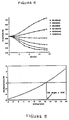
- the derivative of the slope of these curves in the linear region (between 5 and 8 kOe in this case) with respect to the applied magnetic field is plotted versus the angle ⁇ (phi), as shown in Figure 5.
- the Tilt angle corresponds to the angle at the point where the derivative passes through 0 as indicated in Figure 5.
- PI-2555 is a commercial material based on BTDA/ODA/MPD.
- An LCD cell was prepared according to Method (A) cited above.
- the tilt angle was found to be 2.3 degrees.
- a 10 mol% end capped polyimide was prepared by treating a 7% solids solution of Du Pont Pyralin PI-2545 with 3-perfluorodecyl-1-propylamine (3-PFDPA), which was prepared as shown in Example 9.
- a 10 mol% end cap of 3-perfluorooctylaniline was prepared using PI-2545 polyimide in a similar manner as in the case of Example 27. These materials required xylene co-solvents, and much longer stirring times, 5 days, before clear homogenous solutions could be obtained.
- 3-perfluorooctylaniline may be prepared as follows: In a 500-ml three-necked flask, equipped with a magnetic stirrer, thermometer, and condenser with gas inlet, are combined under argon 19.1 g (0.30 mol) of copper powder, 81.9 g (0.15 mol) of n-perfluorooctyl iodide, and 250 ml of dimethylsulfoxide. The mixture is stirred and heated under argon at 100-105°C for 1.25 hours, to effect conversion of the perfluorooctyl iodide to perfluorooctylcopper.
- the product mixture is diluted with water, and extracted with a mixture of diethyl ether and methyl t-butyl ether. The combined organic extracts are washed with water and dried over anhydrous magnesium sulfate. Following removal of solvent at reduced pressure, the product is purified by distillation under vacuum: b.p. 77-82°C (0.3 torr).
- a sample of polyimide made as described in Example 20 was diluted to 1.42 wt% in pure NMP. Silicon wafers were treated with VM-651 adhesion promoter (Du Pont) as above and spun-coated with the sample.
- VM-651 adhesion promoter Du Pont
- Films thicknesses ranged from about 130 A at 4,000 RPM to approximately 200 A at 2,000 RPM. The refractive indices were observed to increase as the film thickness decreased, thus proving that the film had homogeneously coated the Si even down to about 130 A.
- Du Pont Pyralin PI-2545 which is a commercial polymer based on PMDA (Pyromellitic dianhydride) and ODA (Oxydianiline), was diluted to 6% solids with NMP.
- a Liquid Crystal Display Cell was prepared in the manner of Example 22. The tilt angle was found to be 2.5 degrees (See Table II).
- Du Pont Pyralin PI2611 a commercial polymer based on BPDA (biphenyldianhydride) and PPD (p-phenylenediamine) was diluted to 5% solids with NMP.
- a Liquid Crystal Display Cell was prepared as in Example 22. The tilt angle was found to be about 3 degrees.
- the polymer was diluted to ⁇ 5% solids with additional NMP and filtered through a 1 micron filter to give a poly(amic acid) solution containing 6.54 mole % of Rf6DAM units based on total moles diamine.
- This sample contained the same wt% fluorine as the sample containing Rf8DAM at 5 mole % based on total diamine as given in Example 13. See also Table II for properties and comparisons.
Landscapes
- Physics & Mathematics (AREA)
- Chemical & Material Sciences (AREA)
- Nonlinear Science (AREA)
- General Physics & Mathematics (AREA)
- Crystallography & Structural Chemistry (AREA)
- Mathematical Physics (AREA)
- Spectroscopy & Molecular Physics (AREA)
- Optics & Photonics (AREA)
- Health & Medical Sciences (AREA)
- Chemical Kinetics & Catalysis (AREA)
- Medicinal Chemistry (AREA)
- Polymers & Plastics (AREA)
- Organic Chemistry (AREA)
- Liquid Crystal (AREA)
Applications Claiming Priority (2)
| Application Number | Priority Date | Filing Date | Title |
|---|---|---|---|
| US680488 | 1991-04-04 | ||
| US07/680,488 US5186985A (en) | 1991-04-04 | 1991-04-04 | Liquid crystal displays of high tilt bias angles |
Publications (3)
| Publication Number | Publication Date |
|---|---|
| EP0507293A2 true EP0507293A2 (fr) | 1992-10-07 |
| EP0507293A3 EP0507293A3 (en) | 1993-04-14 |
| EP0507293B1 EP0507293B1 (fr) | 1995-10-11 |
Family
ID=24731319
Family Applications (1)
| Application Number | Title | Priority Date | Filing Date |
|---|---|---|---|
| EP92105673A Expired - Lifetime EP0507293B1 (fr) | 1991-04-04 | 1992-04-02 | Affichage à cristaux liquides à grand angle de pente |
Country Status (5)
| Country | Link |
|---|---|
| US (1) | US5186985A (fr) |
| EP (1) | EP0507293B1 (fr) |
| JP (1) | JPH05100230A (fr) |
| CA (1) | CA2064605A1 (fr) |
| DE (1) | DE69205317T2 (fr) |
Cited By (2)
| Publication number | Priority date | Publication date | Assignee | Title |
|---|---|---|---|---|
| WO1997037273A3 (fr) * | 1996-03-29 | 1997-12-04 | Alliant Techsystems Inc | Procede et matieres servant a induire une preinclinaison dans des cristaux liquides et afficheurs a cristaux liquides |
| WO1997037274A3 (fr) * | 1996-03-29 | 1998-03-12 | Alliant Techsystems Inc | Procede et materiaux pour aligner des cristaux liquides et elements optiques a cristaux liquides |
Families Citing this family (27)
| Publication number | Priority date | Publication date | Assignee | Title |
|---|---|---|---|---|
| US5400159A (en) * | 1991-08-06 | 1995-03-21 | Canon Kabushiki Kaisha | Liquid crystal device having alignment film with particular surface energy difference before and after rubbing |
| US5576864A (en) * | 1984-07-11 | 1996-11-19 | Canon Kabushiki Kaisha | Chiral smectic liquid crystal device having fluorine-containing polymeric alignment film with predetermined refractive index anisotropy after rubbing |
| FR2667166A1 (fr) * | 1990-09-21 | 1992-03-27 | Asulab Sa | Cellule a cristal liquide comprenant une plaque munie d'une couche d'alignement thermosensible. |
| JP3097702B2 (ja) * | 1991-08-13 | 2000-10-10 | 日産化学工業株式会社 | 新規な液晶配向処理剤 |
| DE69217154T2 (de) * | 1991-10-30 | 1997-06-19 | Canon Kk | Flüssigkristall-Anzeigevorrichtung |
| JPH05203961A (ja) * | 1992-01-28 | 1993-08-13 | Canon Inc | 強誘電性液晶素子 |
| GB2264713B (en) * | 1992-02-05 | 1996-09-25 | Canon Kk | Liquid crystal device |
| US5578241A (en) * | 1993-05-18 | 1996-11-26 | Merck Patent Gesellschaft Mit Beschrankter Haftung | Liquid crystal display |
| JPH07287237A (ja) * | 1994-04-18 | 1995-10-31 | Chisso Corp | 液晶配向膜およびそれを用いた液晶表示素子 |
| US5929201A (en) * | 1996-03-29 | 1999-07-27 | Elsicon, Inc. | Fluorinated amine products |
| KR19980057654A (ko) * | 1996-12-30 | 1998-09-25 | 손욱 | 액정표시소자 및 그 제조방법 |
| JPH10307287A (ja) * | 1997-05-09 | 1998-11-17 | Minolta Co Ltd | 液晶素子及びその製造方法 |
| US6084057A (en) * | 1997-05-20 | 2000-07-04 | Elsicon, Inc. | Polarizable amines and polyimides for optical alignment of liquid crystals |
| US6043337A (en) * | 1997-05-20 | 2000-03-28 | Elsicon, Inc. | Polarizable amines and polyimides for optical alignment of liquid crystals |
| US6569502B1 (en) * | 1998-06-24 | 2003-05-27 | Fuji Photo Film Co., Ltd. | Optical compensatory sheet comprising substrate, orientation layer and optically anisotropic layer |
| US6194039B1 (en) | 1999-10-22 | 2001-02-27 | Elsicon, Inc. | Materials for inducing alignment in liquid crystals and liquid crystal displays |
| DE10102623C2 (de) * | 2001-01-20 | 2003-04-10 | Geesthacht Gkss Forschung | Verfahren und Vorrichtung zur Bestimmung des Molekulargewichts von Polymeren |
| US20040138408A1 (en) * | 2002-01-02 | 2004-07-15 | Harris Frank W. | Polymide lcd alignment layer |
| US8362151B2 (en) * | 2002-05-31 | 2013-01-29 | Elsicon, Inc. | Hybrid polymer materials for liquid crystal alignment layers |
| KR100960496B1 (ko) * | 2003-10-31 | 2010-06-01 | 엘지디스플레이 주식회사 | 액정표시소자의 러빙방법 |
| KR101315198B1 (ko) * | 2005-09-15 | 2013-10-07 | 가부시키가이샤 한도오따이 에네루기 켄큐쇼 | 액정 표시장치의 제조방법 |
| KR20100037604A (ko) * | 2007-06-15 | 2010-04-09 | 가부시키가이샤 한도오따이 에네루기 켄큐쇼 | 표시 장치 |
| US20090062742A1 (en) * | 2007-08-31 | 2009-03-05 | John Anthony Rotella | Blunted Safety Needle |
| KR101547588B1 (ko) * | 2008-03-10 | 2015-08-26 | 닛산 가가쿠 고교 가부시키 가이샤 | 화상 형성용 하층막 조성물 |
| US8300189B2 (en) * | 2008-06-27 | 2012-10-30 | Kent State University | Liquid crystal device and methods thereof |
| KR20110037874A (ko) * | 2009-10-05 | 2011-04-13 | 소니 주식회사 | 이무수물 및 디아민을 반응시켜 얻은 폴리아미드산 및 폴리이미드 |
| KR102027246B1 (ko) * | 2013-03-14 | 2019-10-01 | 삼성전자주식회사 | 디지타이저 및 그 제조 방법 |
Family Cites Families (15)
| Publication number | Priority date | Publication date | Assignee | Title |
|---|---|---|---|---|
| JPS61501712A (ja) * | 1984-10-05 | 1986-08-14 | ザ ダウ ケミカル カンパニ− | ポリエポキシドとハロゲン化二価フエノールとを含有するキユア性組成物 |
| EP0219336B1 (fr) * | 1985-10-14 | 1993-07-21 | Hitachi Chemical Co., Ltd. | Couche pour commander l'orientation d'un cristal liquide et application de celle-ci dans un dispositif à cristal liquide |
| JPS62149006A (ja) * | 1985-12-23 | 1987-07-03 | Hitachi Ltd | 磁気記録再生装置 |
| EP0231781B1 (fr) * | 1986-01-22 | 1992-04-01 | Hitachi, Ltd. | Elément d'affichage à cristal liquide |
| JPS62270009A (ja) * | 1986-05-19 | 1987-11-24 | Victor Co Of Japan Ltd | 複合磁気ヘツド及びその製造方法 |
| JPH06100755B2 (ja) * | 1986-06-18 | 1994-12-12 | 日産化学工業株式会社 | 液晶セル用配向処理剤 |
| JPS634366A (ja) * | 1986-06-24 | 1988-01-09 | Nec Corp | 複合計算機の相互監視装置 |
| JPS634760A (ja) * | 1986-06-24 | 1988-01-09 | Komunikusu Kk | 街頭設置型フアクシミリ装置 |
| JPS634365A (ja) * | 1986-06-24 | 1988-01-09 | Nec Corp | マルチマイクロプロセツサにおける相互監視方式 |
| JPS63153134A (ja) * | 1986-12-17 | 1988-06-25 | 三菱化成ビニル株式会社 | 農業用ポリエチレンテレフタレ−トフィルム |
| DE3881726T2 (de) * | 1987-03-09 | 1994-01-13 | Chisso Corp | Diamino-Verbindungen und Filme zur Orientierung von Flüssigkristallen. |
| US5192596A (en) * | 1989-06-02 | 1993-03-09 | Canon Kabushiki Kaisha | Liquid crystal device |
| JPH0228236A (ja) * | 1988-02-09 | 1990-01-30 | Mitsui Toatsu Chem Inc | 農業用塩化ビニル系樹脂フィルム |
| ATE125957T1 (de) * | 1989-05-11 | 1995-08-15 | Canon Kk | Chiralsmektische flüssigkristallvorrichtung. |
| JPH06294180A (ja) * | 1993-04-08 | 1994-10-21 | Kaname:Kk | 屋根葺替え工法 |
-
1991
- 1991-04-04 US US07/680,488 patent/US5186985A/en not_active Expired - Lifetime
-
1992
- 1992-04-01 CA CA002064605A patent/CA2064605A1/fr not_active Abandoned
- 1992-04-02 EP EP92105673A patent/EP0507293B1/fr not_active Expired - Lifetime
- 1992-04-02 DE DE69205317T patent/DE69205317T2/de not_active Expired - Fee Related
- 1992-04-03 JP JP4081986A patent/JPH05100230A/ja active Pending
Cited By (2)
| Publication number | Priority date | Publication date | Assignee | Title |
|---|---|---|---|---|
| WO1997037273A3 (fr) * | 1996-03-29 | 1997-12-04 | Alliant Techsystems Inc | Procede et matieres servant a induire une preinclinaison dans des cristaux liquides et afficheurs a cristaux liquides |
| WO1997037274A3 (fr) * | 1996-03-29 | 1998-03-12 | Alliant Techsystems Inc | Procede et materiaux pour aligner des cristaux liquides et elements optiques a cristaux liquides |
Also Published As
| Publication number | Publication date |
|---|---|
| US5186985A (en) | 1993-02-16 |
| EP0507293B1 (fr) | 1995-10-11 |
| JPH05100230A (ja) | 1993-04-23 |
| DE69205317D1 (de) | 1995-11-16 |
| EP0507293A3 (en) | 1993-04-14 |
| DE69205317T2 (de) | 1996-03-28 |
| CA2064605A1 (fr) | 1992-10-05 |
Similar Documents
| Publication | Publication Date | Title |
|---|---|---|
| EP0507293B1 (fr) | Affichage à cristaux liquides à grand angle de pente | |
| EP1222237B1 (fr) | Matieres destinees a induire l'alignement de cristaux liquides et d'ecrans a cristaux liquides | |
| KR100617424B1 (ko) | 액정의 정렬을 유도하기 위한 재료 및 액정 광학 소자 | |
| JP3169062B2 (ja) | 液晶セル用配向処理剤 | |
| US6111059A (en) | Diaminobenzene derivatives, polyimides prepared therefrom, and alignment film for liquid crystals | |
| KR101796490B1 (ko) | 액정 배향제, 액정 배향막 및 액정 표시 소자, 그리고 그들의 제조에 이용되는 폴리암산 및 폴리이미드 | |
| US5731404A (en) | Polyimide film from pyromellitic dianhydride and a bis(4-aminophenoxy) aromatic compound as an alignment layer for liquid crystal displays | |
| US7303792B2 (en) | Diaminobenzene derivative, polyimide precursor and polyimide obtained therefrom, and aligning agent for liquid crystal | |
| JPH08208835A (ja) | ポリイミド系共重合体の製造方法、薄膜形成剤、並びに液晶配向膜およびその製造方法 | |
| EP0682283B1 (fr) | Film d'orientation pour cristaux liquides | |
| EP0527439B1 (fr) | Agent pour le traitement de l'alignement pour une cellule liquide-cristallique | |
| KR20020019930A (ko) | 디아미노벤젠 유도체, 이로부터 수득한 폴리이미드 및액정배향막 | |
| KR100450698B1 (ko) | 액정셀용 배향처리제 | |
| EP0389092B1 (fr) | Couche d'alignement pour cristaux liquides et élément à cristaux liquides | |
| US20080213509A1 (en) | Composition for LC alignment film using diamine having dendron side chain | |
| EP0587122B1 (fr) | Agent d'alignement pour une cellule de crystal liquide | |
| US5430195A (en) | Diamino compounds and liquid crystal aligning films | |
| CN102020994A (zh) | 液晶取向剂 | |
| KR20060078792A (ko) | 덴드론 구조의 측쇄를 갖는 디아민 화합물 및 이를 이용한 액정 배향재 | |
| JPH08208836A (ja) | 含フッ素ポリイミド | |
| JPH07301806A (ja) | 新規な液晶配向膜 | |
| JPH0987388A (ja) | ペルフルオロアルキル基を有するポリイミド | |
| JPS63195621A (ja) | 強誘電性液晶素子 |
Legal Events
| Date | Code | Title | Description |
|---|---|---|---|
| PUAI | Public reference made under article 153(3) epc to a published international application that has entered the european phase |
Free format text: ORIGINAL CODE: 0009012 |
|
| AK | Designated contracting states |
Kind code of ref document: A2 Designated state(s): DE FR GB IT |
|
| PUAL | Search report despatched |
Free format text: ORIGINAL CODE: 0009013 |
|
| AK | Designated contracting states |
Kind code of ref document: A3 Designated state(s): DE FR GB IT |
|
| 17P | Request for examination filed |
Effective date: 19930604 |
|
| 17Q | First examination report despatched |
Effective date: 19950303 |
|
| GRAA | (expected) grant |
Free format text: ORIGINAL CODE: 0009210 |
|
| AK | Designated contracting states |
Kind code of ref document: B1 Designated state(s): DE FR GB IT |
|
| PG25 | Lapsed in a contracting state [announced via postgrant information from national office to epo] |
Ref country code: IT Free format text: LAPSE BECAUSE OF FAILURE TO SUBMIT A TRANSLATION OF THE DESCRIPTION OR TO PAY THE FEE WITHIN THE PRE;WARNING: LAPSES OF ITALIAN PATENTS WITH EFFECTIVE DATE BEFORE 2007 MAY HAVE OCCURRED AT ANY TIME BEFORE 2007. THE CORRECT EFFECTIVE DATE MAY BE DIFFERENT FROM THE ONE RECORDED.SCRIBED TIME-LIMIT Effective date: 19951011 |
|
| REF | Corresponds to: |
Ref document number: 69205317 Country of ref document: DE Date of ref document: 19951116 |
|
| ET | Fr: translation filed | ||
| PLBE | No opposition filed within time limit |
Free format text: ORIGINAL CODE: 0009261 |
|
| STAA | Information on the status of an ep patent application or granted ep patent |
Free format text: STATUS: NO OPPOSITION FILED WITHIN TIME LIMIT |
|
| 26N | No opposition filed | ||
| PGFP | Annual fee paid to national office [announced via postgrant information from national office to epo] |
Ref country code: DE Payment date: 20000318 Year of fee payment: 9 |
|
| REG | Reference to a national code |
Ref country code: GB Ref legal event code: 732E |
|
| REG | Reference to a national code |
Ref country code: FR Ref legal event code: TP |
|
| PGFP | Annual fee paid to national office [announced via postgrant information from national office to epo] |
Ref country code: FR Payment date: 20010323 Year of fee payment: 10 |
|
| PGFP | Annual fee paid to national office [announced via postgrant information from national office to epo] |
Ref country code: GB Payment date: 20010426 Year of fee payment: 10 |
|
| REG | Reference to a national code |
Ref country code: GB Ref legal event code: IF02 |
|
| PG25 | Lapsed in a contracting state [announced via postgrant information from national office to epo] |
Ref country code: DE Free format text: LAPSE BECAUSE OF NON-PAYMENT OF DUE FEES Effective date: 20020201 |
|
| PG25 | Lapsed in a contracting state [announced via postgrant information from national office to epo] |
Ref country code: GB Free format text: LAPSE BECAUSE OF NON-PAYMENT OF DUE FEES Effective date: 20020402 |
|
| GBPC | Gb: european patent ceased through non-payment of renewal fee |
Effective date: 20020402 |
|
| PG25 | Lapsed in a contracting state [announced via postgrant information from national office to epo] |
Ref country code: FR Free format text: LAPSE BECAUSE OF NON-PAYMENT OF DUE FEES Effective date: 20021231 |
|
| REG | Reference to a national code |
Ref country code: FR Ref legal event code: ST |