EP0450652A2 - Flüssigkristalline Polyester und Verfahren zu ihrer Herstellung - Google Patents
Flüssigkristalline Polyester und Verfahren zu ihrer Herstellung Download PDFInfo
- Publication number
- EP0450652A2 EP0450652A2 EP91105435A EP91105435A EP0450652A2 EP 0450652 A2 EP0450652 A2 EP 0450652A2 EP 91105435 A EP91105435 A EP 91105435A EP 91105435 A EP91105435 A EP 91105435A EP 0450652 A2 EP0450652 A2 EP 0450652A2
- Authority
- EP
- European Patent Office
- Prior art keywords
- formula
- units
- represented
- polymer
- liquid crystalline
- Prior art date
- Legal status (The legal status is an assumption and is not a legal conclusion. Google has not performed a legal analysis and makes no representation as to the accuracy of the status listed.)
- Granted
Links
- 229920000728 polyester Polymers 0.000 title claims abstract description 79
- 239000007788 liquid Substances 0.000 title claims abstract description 48
- 238000000034 method Methods 0.000 title claims description 62
- 238000004519 manufacturing process Methods 0.000 title claims description 13
- 239000002253 acid Substances 0.000 claims abstract description 37
- RFFLAFLAYFXFSW-UHFFFAOYSA-N 1,2-dichlorobenzene Chemical compound ClC1=CC=CC=C1Cl RFFLAFLAYFXFSW-UHFFFAOYSA-N 0.000 claims abstract description 12
- 150000002009 diols Chemical group 0.000 claims abstract description 11
- 125000002029 aromatic hydrocarbon group Chemical group 0.000 claims abstract description 9
- 125000004432 carbon atom Chemical group C* 0.000 claims abstract description 8
- 125000001142 dicarboxylic acid group Chemical group 0.000 claims abstract description 7
- WXNZTHHGJRFXKQ-UHFFFAOYSA-N 4-chlorophenol Chemical compound OC1=CC=C(Cl)C=C1 WXNZTHHGJRFXKQ-UHFFFAOYSA-N 0.000 claims abstract description 6
- WFDIJRYMOXRFFG-UHFFFAOYSA-N Acetic anhydride Chemical compound CC(=O)OC(C)=O WFDIJRYMOXRFFG-UHFFFAOYSA-N 0.000 claims description 45
- 150000001875 compounds Chemical class 0.000 claims description 21
- 239000007858 starting material Substances 0.000 claims description 12
- 238000006068 polycondensation reaction Methods 0.000 claims description 3
- NAWXUBYGYWOOIX-SFHVURJKSA-N (2s)-2-[[4-[2-(2,4-diaminoquinazolin-6-yl)ethyl]benzoyl]amino]-4-methylidenepentanedioic acid Chemical compound C1=CC2=NC(N)=NC(N)=C2C=C1CCC1=CC=C(C(=O)N[C@@H](CC(=C)C(O)=O)C(O)=O)C=C1 NAWXUBYGYWOOIX-SFHVURJKSA-N 0.000 claims description 2
- OFOBLEOULBTSOW-UHFFFAOYSA-N Malonic acid Chemical compound OC(=O)CC(O)=O OFOBLEOULBTSOW-UHFFFAOYSA-N 0.000 claims 2
- 229920000642 polymer Polymers 0.000 description 111
- 238000006116 polymerization reaction Methods 0.000 description 51
- 230000000052 comparative effect Effects 0.000 description 37
- LYCAIKOWRPUZTN-UHFFFAOYSA-N Ethylene glycol Chemical compound OCCO LYCAIKOWRPUZTN-UHFFFAOYSA-N 0.000 description 35
- 239000000047 product Substances 0.000 description 34
- IJGRMHOSHXDMSA-UHFFFAOYSA-N Atomic nitrogen Chemical compound N#N IJGRMHOSHXDMSA-UHFFFAOYSA-N 0.000 description 26
- 239000000155 melt Substances 0.000 description 26
- 239000000203 mixture Substances 0.000 description 25
- 238000001746 injection moulding Methods 0.000 description 24
- 238000006243 chemical reaction Methods 0.000 description 19
- 238000000465 moulding Methods 0.000 description 19
- 230000000704 physical effect Effects 0.000 description 17
- 238000005160 1H NMR spectroscopy Methods 0.000 description 15
- 238000000354 decomposition reaction Methods 0.000 description 15
- 239000011521 glass Substances 0.000 description 14
- 239000003054 catalyst Substances 0.000 description 13
- 229910052757 nitrogen Inorganic materials 0.000 description 13
- 239000007787 solid Substances 0.000 description 13
- FJKROLUGYXJWQN-UHFFFAOYSA-N 4-hydroxybenzoic acid Chemical compound OC(=O)C1=CC=C(O)C=C1 FJKROLUGYXJWQN-UHFFFAOYSA-N 0.000 description 12
- 238000005481 NMR spectroscopy Methods 0.000 description 11
- 230000021736 acetylation Effects 0.000 description 10
- 238000006640 acetylation reaction Methods 0.000 description 10
- 150000002148 esters Chemical group 0.000 description 10
- 239000000243 solution Substances 0.000 description 10
- 0 COc(cc1)ccc1C(O*)=O Chemical compound COc(cc1)ccc1C(O*)=O 0.000 description 9
- 150000001412 amines Chemical class 0.000 description 9
- 239000000835 fiber Substances 0.000 description 9
- -1 polyethylene terephthalate Polymers 0.000 description 9
- DTQVDTLACAAQTR-UHFFFAOYSA-N Trifluoroacetic acid Chemical compound OC(=O)C(F)(F)F DTQVDTLACAAQTR-UHFFFAOYSA-N 0.000 description 8
- 229920001577 copolymer Polymers 0.000 description 8
- 238000005259 measurement Methods 0.000 description 8
- 239000013078 crystal Substances 0.000 description 7
- 230000006872 improvement Effects 0.000 description 7
- 239000000178 monomer Substances 0.000 description 7
- 229920000139 polyethylene terephthalate Polymers 0.000 description 7
- 239000005020 polyethylene terephthalate Substances 0.000 description 7
- 238000003756 stirring Methods 0.000 description 7
- 229940090248 4-hydroxybenzoic acid Drugs 0.000 description 6
- OKKJLVBELUTLKV-UHFFFAOYSA-N Methanol Chemical compound OC OKKJLVBELUTLKV-UHFFFAOYSA-N 0.000 description 6
- 238000004364 calculation method Methods 0.000 description 6
- 238000002844 melting Methods 0.000 description 6
- 230000008018 melting Effects 0.000 description 6
- 239000002904 solvent Substances 0.000 description 6
- 238000004458 analytical method Methods 0.000 description 5
- 230000015572 biosynthetic process Effects 0.000 description 5
- 238000009826 distribution Methods 0.000 description 5
- 239000000463 material Substances 0.000 description 5
- OKKJLVBELUTLKV-MZCSYVLQSA-N Deuterated methanol Chemical compound [2H]OC([2H])([2H])[2H] OKKJLVBELUTLKV-MZCSYVLQSA-N 0.000 description 4
- RTZKZFJDLAIYFH-UHFFFAOYSA-N Diethyl ether Chemical compound CCOCC RTZKZFJDLAIYFH-UHFFFAOYSA-N 0.000 description 4
- 238000000333 X-ray scattering Methods 0.000 description 4
- 125000002915 carbonyl group Chemical group [*:2]C([*:1])=O 0.000 description 4
- 230000008859 change Effects 0.000 description 4
- 239000000945 filler Substances 0.000 description 4
- 238000012856 packing Methods 0.000 description 4
- LQQKHWUVRBYGOY-UHFFFAOYSA-N C[NH+](c(cc1)ccc1OC)[O-] Chemical compound C[NH+](c(cc1)ccc1OC)[O-] LQQKHWUVRBYGOY-UHFFFAOYSA-N 0.000 description 3
- 229920000106 Liquid crystal polymer Polymers 0.000 description 3
- 239000003365 glass fiber Substances 0.000 description 3
- 238000010438 heat treatment Methods 0.000 description 3
- 230000003301 hydrolyzing effect Effects 0.000 description 3
- 230000000977 initiatory effect Effects 0.000 description 3
- 239000004973 liquid crystal related substance Substances 0.000 description 3
- 230000003287 optical effect Effects 0.000 description 3
- 238000002360 preparation method Methods 0.000 description 3
- 230000009257 reactivity Effects 0.000 description 3
- 239000011877 solvent mixture Substances 0.000 description 3
- BYEAHWXPCBROCE-UHFFFAOYSA-N 1,1,1,3,3,3-hexafluoropropan-2-ol Chemical compound FC(F)(F)C(O)C(F)(F)F BYEAHWXPCBROCE-UHFFFAOYSA-N 0.000 description 2
- QPFMBZIOSGYJDE-UHFFFAOYSA-N 1,1,2,2-tetrachloroethane Chemical compound ClC(Cl)C(Cl)Cl QPFMBZIOSGYJDE-UHFFFAOYSA-N 0.000 description 2
- XBNGYFFABRKICK-UHFFFAOYSA-N 2,3,4,5,6-pentafluorophenol Chemical compound OC1=C(F)C(F)=C(F)C(F)=C1F XBNGYFFABRKICK-UHFFFAOYSA-N 0.000 description 2
- NGMYCWFGNSXLMP-UHFFFAOYSA-N 3-acetyloxybenzoic acid Chemical compound CC(=O)OC1=CC=CC(C(O)=O)=C1 NGMYCWFGNSXLMP-UHFFFAOYSA-N 0.000 description 2
- GDBUZIKSJGRBJP-UHFFFAOYSA-N 4-acetoxy benzoic acid Chemical compound CC(=O)OC1=CC=C(C(O)=O)C=C1 GDBUZIKSJGRBJP-UHFFFAOYSA-N 0.000 description 2
- VTYYLEPIZMXCLO-UHFFFAOYSA-L Calcium carbonate Chemical compound [Ca+2].[O-]C([O-])=O VTYYLEPIZMXCLO-UHFFFAOYSA-L 0.000 description 2
- IAZDPXIOMUYVGZ-WFGJKAKNSA-N Dimethyl sulfoxide Chemical compound [2H]C([2H])([2H])S(=O)C([2H])([2H])[2H] IAZDPXIOMUYVGZ-WFGJKAKNSA-N 0.000 description 2
- KFZMGEQAYNKOFK-UHFFFAOYSA-N Isopropanol Chemical compound CC(C)O KFZMGEQAYNKOFK-UHFFFAOYSA-N 0.000 description 2
- CTQNGGLPUBDAKN-UHFFFAOYSA-N O-Xylene Chemical compound CC1=CC=CC=C1C CTQNGGLPUBDAKN-UHFFFAOYSA-N 0.000 description 2
- 230000010933 acylation Effects 0.000 description 2
- 238000005917 acylation reaction Methods 0.000 description 2
- 125000001931 aliphatic group Chemical group 0.000 description 2
- 238000007796 conventional method Methods 0.000 description 2
- ROORDVPLFPIABK-UHFFFAOYSA-N diphenyl carbonate Chemical compound C=1C=CC=CC=1OC(=O)OC1=CC=CC=C1 ROORDVPLFPIABK-UHFFFAOYSA-N 0.000 description 2
- 230000000694 effects Effects 0.000 description 2
- 239000012776 electronic material Substances 0.000 description 2
- 238000001125 extrusion Methods 0.000 description 2
- 238000004817 gas chromatography Methods 0.000 description 2
- 125000002887 hydroxy group Chemical group [H]O* 0.000 description 2
- WGCNASOHLSPBMP-UHFFFAOYSA-N hydroxyacetaldehyde Natural products OCC=O WGCNASOHLSPBMP-UHFFFAOYSA-N 0.000 description 2
- 229920002521 macromolecule Polymers 0.000 description 2
- 239000012778 molding material Substances 0.000 description 2
- 239000002245 particle Substances 0.000 description 2
- IZUPBVBPLAPZRR-UHFFFAOYSA-N pentachloro-phenol Natural products OC1=C(Cl)C(Cl)=C(Cl)C(Cl)=C1Cl IZUPBVBPLAPZRR-UHFFFAOYSA-N 0.000 description 2
- WGYKZJWCGVVSQN-UHFFFAOYSA-N propylamine Chemical compound CCCN WGYKZJWCGVVSQN-UHFFFAOYSA-N 0.000 description 2
- 238000012360 testing method Methods 0.000 description 2
- JOXIMZWYDAKGHI-UHFFFAOYSA-N toluene-4-sulfonic acid Chemical compound CC1=CC=C(S(O)(=O)=O)C=C1 JOXIMZWYDAKGHI-UHFFFAOYSA-N 0.000 description 2
- XLYOFNOQVPJJNP-UHFFFAOYSA-N water Substances O XLYOFNOQVPJJNP-UHFFFAOYSA-N 0.000 description 2
- 239000008096 xylene Substances 0.000 description 2
- PUPZLCDOIYMWBV-UHFFFAOYSA-N (+/-)-1,3-Butanediol Chemical compound CC(O)CCO PUPZLCDOIYMWBV-UHFFFAOYSA-N 0.000 description 1
- OVXWHHYDMKASOR-UHFFFAOYSA-N 1-methylcyclohexa-2,4-diene-1-sulfonic acid Chemical compound OS(=O)(=O)C1(C)CC=CC=C1 OVXWHHYDMKASOR-UHFFFAOYSA-N 0.000 description 1
- RNFJDJUURJAICM-UHFFFAOYSA-N 2,2,4,4,6,6-hexaphenoxy-1,3,5-triaza-2$l^{5},4$l^{5},6$l^{5}-triphosphacyclohexa-1,3,5-triene Chemical compound N=1P(OC=2C=CC=CC=2)(OC=2C=CC=CC=2)=NP(OC=2C=CC=CC=2)(OC=2C=CC=CC=2)=NP=1(OC=1C=CC=CC=1)OC1=CC=CC=C1 RNFJDJUURJAICM-UHFFFAOYSA-N 0.000 description 1
- GFHGEIJFEHZKHZ-UHFFFAOYSA-N 2-hydroxyethyl 4-hydroxybenzoate Chemical compound OCCOC(=O)C1=CC=C(O)C=C1 GFHGEIJFEHZKHZ-UHFFFAOYSA-N 0.000 description 1
- BSYNRYMUTXBXSQ-UHFFFAOYSA-N Aspirin Chemical compound CC(=O)OC1=CC=CC=C1C(O)=O BSYNRYMUTXBXSQ-UHFFFAOYSA-N 0.000 description 1
- BVKZGUZCCUSVTD-UHFFFAOYSA-M Bicarbonate Chemical class OC([O-])=O BVKZGUZCCUSVTD-UHFFFAOYSA-M 0.000 description 1
- IZAGRGCVTFCJII-RVDMUPIBSA-N C/[N+](/[O-])=C(\C1)/C=CC=C1O[NH+](c1cccc(OC)c1)[O-] Chemical compound C/[N+](/[O-])=C(\C1)/C=CC=C1O[NH+](c1cccc(OC)c1)[O-] IZAGRGCVTFCJII-RVDMUPIBSA-N 0.000 description 1
- 229920000049 Carbon (fiber) Polymers 0.000 description 1
- IAYPIBMASNFSPL-UHFFFAOYSA-N Ethylene oxide Chemical compound C1CO1 IAYPIBMASNFSPL-UHFFFAOYSA-N 0.000 description 1
- GPHPTXGEOMELMT-UHFFFAOYSA-N O=[O]c1cc([O]=O)ccc1 Chemical compound O=[O]c1cc([O]=O)ccc1 GPHPTXGEOMELMT-UHFFFAOYSA-N 0.000 description 1
- DONZOKVANMBFOF-UHFFFAOYSA-N Oc(cc1)ccc1[O]=O Chemical compound Oc(cc1)ccc1[O]=O DONZOKVANMBFOF-UHFFFAOYSA-N 0.000 description 1
- ISWSIDIOOBJBQZ-UHFFFAOYSA-N Phenol Chemical compound OC1=CC=CC=C1 ISWSIDIOOBJBQZ-UHFFFAOYSA-N 0.000 description 1
- VMHLLURERBWHNL-UHFFFAOYSA-M Sodium acetate Chemical compound [Na+].CC([O-])=O VMHLLURERBWHNL-UHFFFAOYSA-M 0.000 description 1
- 229910000831 Steel Inorganic materials 0.000 description 1
- 239000004974 Thermotropic liquid crystal Substances 0.000 description 1
- 229910007339 Zn(OAc)2 Inorganic materials 0.000 description 1
- 238000005299 abrasion Methods 0.000 description 1
- 239000003377 acid catalyst Substances 0.000 description 1
- 230000003213 activating effect Effects 0.000 description 1
- 239000000654 additive Substances 0.000 description 1
- 229920005603 alternating copolymer Polymers 0.000 description 1
- 239000003963 antioxidant agent Substances 0.000 description 1
- 230000003078 antioxidant effect Effects 0.000 description 1
- 230000000903 blocking effect Effects 0.000 description 1
- WIHMDCQAEONXND-UHFFFAOYSA-M butyl-hydroxy-oxotin Chemical compound CCCC[Sn](O)=O WIHMDCQAEONXND-UHFFFAOYSA-M 0.000 description 1
- 229910000019 calcium carbonate Inorganic materials 0.000 description 1
- 239000004917 carbon fiber Substances 0.000 description 1
- 239000013065 commercial product Substances 0.000 description 1
- 238000000748 compression moulding Methods 0.000 description 1
- 238000001816 cooling Methods 0.000 description 1
- 230000007547 defect Effects 0.000 description 1
- 230000006866 deterioration Effects 0.000 description 1
- PNOXNTGLSKTMQO-UHFFFAOYSA-L diacetyloxytin Chemical compound CC(=O)O[Sn]OC(C)=O PNOXNTGLSKTMQO-UHFFFAOYSA-L 0.000 description 1
- BXKDSDJJOVIHMX-UHFFFAOYSA-N edrophonium chloride Chemical compound [Cl-].CC[N+](C)(C)C1=CC=CC(O)=C1 BXKDSDJJOVIHMX-UHFFFAOYSA-N 0.000 description 1
- 229920006351 engineering plastic Polymers 0.000 description 1
- 239000010408 film Substances 0.000 description 1
- 238000001914 filtration Methods 0.000 description 1
- 239000003063 flame retardant Substances 0.000 description 1
- 230000009969 flowable effect Effects 0.000 description 1
- 239000012530 fluid Substances 0.000 description 1
- 230000007062 hydrolysis Effects 0.000 description 1
- 238000006460 hydrolysis reaction Methods 0.000 description 1
- 238000010348 incorporation Methods 0.000 description 1
- LZKLAOYSENRNKR-LNTINUHCSA-N iron;(z)-4-oxoniumylidenepent-2-en-2-olate Chemical compound [Fe].C\C(O)=C\C(C)=O.C\C(O)=C\C(C)=O.C\C(O)=C\C(C)=O LZKLAOYSENRNKR-LNTINUHCSA-N 0.000 description 1
- 239000000314 lubricant Substances 0.000 description 1
- 150000004702 methyl esters Chemical class 0.000 description 1
- 239000010445 mica Substances 0.000 description 1
- 229910052618 mica group Inorganic materials 0.000 description 1
- 239000002667 nucleating agent Substances 0.000 description 1
- 239000000049 pigment Substances 0.000 description 1
- 230000000379 polymerizing effect Effects 0.000 description 1
- SCVFZCLFOSHCOH-UHFFFAOYSA-M potassium acetate Chemical compound [K+].CC([O-])=O SCVFZCLFOSHCOH-UHFFFAOYSA-M 0.000 description 1
- 239000000843 powder Substances 0.000 description 1
- 239000002244 precipitate Substances 0.000 description 1
- 150000003141 primary amines Chemical class 0.000 description 1
- 230000008569 process Effects 0.000 description 1
- 238000000425 proton nuclear magnetic resonance spectrum Methods 0.000 description 1
- 238000010298 pulverizing process Methods 0.000 description 1
- 230000009467 reduction Effects 0.000 description 1
- 238000010992 reflux Methods 0.000 description 1
- 230000003014 reinforcing effect Effects 0.000 description 1
- 238000011160 research Methods 0.000 description 1
- 229920005989 resin Polymers 0.000 description 1
- 239000011347 resin Substances 0.000 description 1
- 238000007086 side reaction Methods 0.000 description 1
- 238000000235 small-angle X-ray scattering Methods 0.000 description 1
- 239000003381 stabilizer Substances 0.000 description 1
- 239000010959 steel Substances 0.000 description 1
- 238000003860 storage Methods 0.000 description 1
- 238000000859 sublimation Methods 0.000 description 1
- 230000008022 sublimation Effects 0.000 description 1
- 238000003786 synthesis reaction Methods 0.000 description 1
- 239000000454 talc Substances 0.000 description 1
- 229910052623 talc Inorganic materials 0.000 description 1
- 229920005992 thermoplastic resin Polymers 0.000 description 1
- 230000009466 transformation Effects 0.000 description 1
- DTQVDTLACAAQTR-DYCDLGHISA-N trifluoroacetic acid-d1 Chemical compound [2H]OC(=O)C(F)(F)F DTQVDTLACAAQTR-DYCDLGHISA-N 0.000 description 1
- 229920002554 vinyl polymer Polymers 0.000 description 1
- 238000005406 washing Methods 0.000 description 1
- 238000004736 wide-angle X-ray diffraction Methods 0.000 description 1
- DJWUNCQRNNEAKC-UHFFFAOYSA-L zinc acetate Chemical compound [Zn+2].CC([O-])=O.CC([O-])=O DJWUNCQRNNEAKC-UHFFFAOYSA-L 0.000 description 1
Images






Classifications
-
- C—CHEMISTRY; METALLURGY
- C08—ORGANIC MACROMOLECULAR COMPOUNDS; THEIR PREPARATION OR CHEMICAL WORKING-UP; COMPOSITIONS BASED THEREON
- C08G—MACROMOLECULAR COMPOUNDS OBTAINED OTHERWISE THAN BY REACTIONS ONLY INVOLVING UNSATURATED CARBON-TO-CARBON BONDS
- C08G63/00—Macromolecular compounds obtained by reactions forming a carboxylic ester link in the main chain of the macromolecule
- C08G63/02—Polyesters derived from hydroxycarboxylic acids or from polycarboxylic acids and polyhydroxy compounds
- C08G63/60—Polyesters derived from hydroxycarboxylic acids or from polycarboxylic acids and polyhydroxy compounds derived from the reaction of a mixture of hydroxy carboxylic acids, polycarboxylic acids and polyhydroxy compounds
-
- C—CHEMISTRY; METALLURGY
- C09—DYES; PAINTS; POLISHES; NATURAL RESINS; ADHESIVES; COMPOSITIONS NOT OTHERWISE PROVIDED FOR; APPLICATIONS OF MATERIALS NOT OTHERWISE PROVIDED FOR
- C09K—MATERIALS FOR MISCELLANEOUS APPLICATIONS, NOT PROVIDED FOR ELSEWHERE
- C09K19/00—Liquid crystal materials
- C09K19/04—Liquid crystal materials characterised by the chemical structure of the liquid crystal components, e.g. by a specific unit
- C09K19/38—Polymers
- C09K19/3804—Polymers with mesogenic groups in the main chain
- C09K19/3809—Polyesters; Polyester derivatives, e.g. polyamides
Definitions
- the present invention relates to novel liquid crystalline polyesters wherein the sequence is alternately controlled and methods for their production.
- the liquid crystalline polyesters of the present invention have not only high modulus of elasticity, high tensile strength, high flexural strength and high impact strength but also a high level of elongation, and they are tough. Further, with the same composition and the same compositional ratio, they are superior to conventional products not only in the mechanical properties but also in heat resistance.
- the liquid crystalline polyesters of the present invention exhibit these characteristics, as they form thermotropic liquid crystals during the molding and the sequence is alternately well controlled. Furthermore, they have also a characteristic that with the same composition and the same compositional ratio, they show high fluidity even at a low temperature side as compared with the conventional products.
- molding materials are very useful as molding materials for products such as films or fibers.
- molding materials are particularly suitable for automobile parts, electrical and electronical parts, thin molded products and precision molded products. They also have a merit that they can be polymerized at a relatively low temperature in spite of their high heat resistance, since the difference between the solid heat resistance temperature and the sufficiently meltable temperature is small.
- polyesters have been used widely for molded products of general use. However, many polyesters are poor in the flexural modulus and flexural strength and thus unsuitable for applications where a high modulus of elasticity or high strength is required.
- the melting point, the softening point, etc. may vary depending upon the proportion of such chain (13).
- the present inventors previously found a copolymer polyester having the elongation at breakage of the polyester developed by Jackson et al improved (Japanese Unexamined Patent Publication No. 186527/1985).
- the concept was to minimize the proportion of the chain (13) of p-oxybenzoic acid units.
- Here is the basic idea for reducing the chain (13).
- Japanese Unexamined Patent Publication No. 26632/1989 discloses that with the liquid crystalline polyester obtained by the method of Jackson et al, formation of a highly blocked polymer (high proportion of (13)) formed by block polymerization of p-oxybenzoic acid is attributable to a deterioration of the physical properties, and it is intended to improve the physical properties by random polymerization by means of a two step polymerization method.
- the polyester obtainable by this method has a high melt viscosity and is poor in the fluidity, and its mechanical properties such as strength and elongation are not good enough, although the heat resistance is high, as confirmed by a duplication test.
- U.S. Patent 3,890,256 discloses a polyester having improved abrasion resistance.
- this polyester is produced also in the same manner as in Japanese Examined Patent Publication No. 18016/1981, whereby a chain of is likely to form. Therefore, insoluble or infusible particles are likely to result, and the elongation at breakage of the resulting polymer tends to be low, and the polymer tends to be brittle. Further, the copolymer component is so high that the heat resistance tends to be inferior.
- Japanese Unexamined Patent Publications No. 267323/1987, No. 285916/1987 and No. 099227/1988 also disclose polymers containing a component.
- the polymers thereby obtained are basically the same as the polymer obtained by U.S. Patent 3,804,805, and the heat resistance and the mechanical properties are not adequate.
- Japanese Unexamined Patent Publication No. 121095/1977 discloses a method wherein diphenylcarbonate is employed. However, the product obtained by this method is similar to those described above, and the heat resistance and the mechanical properties are not adequate.
- Japanese Unexamined Patent Publication No. 317524/1988 proposes a method wherein improvement of the elongation or improvement of the anisotropy of the physical properties is attempted in a system wherein an aliphatic diol or the like other than ethylene glycol is used.
- an aliphatic diol or the like other than ethylene glycol is used.
- it does not suggest a method of using ethylene glycol as the sole aliphatic glycol for further improving the above effects (particularly the elongation).
- the present inventors have conducted extensive researches with an aim to find out a system for a liquid crystalline polyester comprising constituting units of the following formulas (1), (2) and (3): -OCH 2 CH 2 0- (2) whereby the mechanical properties such as the tensile strength, flexural strength and impact strength are improved, the elongation at breakage is high and the heat resistance is excellent.
- the polyester While the heat resistance in a solid state is excellent, the polyester exhibits excellent fluidity once a fluid state is initiated, simply by setting the temperature at a slightly high level (such an excellent fluidity can be obtained by raising T 1 as far as possible and minimizing T 2 - T 1 , where T 1 is a temperature up to which the polyester shows heat resistance in a solid state and T 2 is a temperature at which it shows excellent fluidity), and thus it is excellent in the moldability and it exhibits high crystallinity in a solid state even when it is a copolymer, whereby it is possible to improve the mechanical properties, to improve the resistance against the hydrolysis or to substantially improve the mechanical properties or thermal properties when a filler, etc. are incorporated.
- the present invention provides a liquid crystalline polyester comprising dicarboxylic acid units of the following formula (1): wherein R 1 is a bivalent aromatic hydrocarbon group having from 6 to 18 carbon atoms, diol units of the following formula (2): and p-oxybenzoic acid units of the following formula (3):
- the present invention provides a liquid crystalline polyester comprising dicarboxylic acid units of the following formula (1): wherein R 1 is a bivalent aromatic hydrocarbon group having from 6 to 18 carbon atoms, diol units of the following formula (2): and oxybenzoic acid units of the following formula (4):
- the liquid crystalline polyester of the present invention has a feature that it has high strength and high elongation at breakage, and thus it is a polymer having excellent toughness. Further, among those having the same composition and the same compositional ratio, it has a feature that it has excellent heat resistance in a solid state, and the above-mentioned T 2 -T, is very small, whereby it is moldable at a low temperature. Besides, it has a feature that it is excellent in the mechanical properties when molded at a relatively low temperature i.e. at a temperature slightly higher than the melting point.
- liquid crystalline polyester has a feature that it shows high crystallinity in a solid state, whereby the resistance against hydrolytic decomposition is improved, and the mechanical properties and the thermal properties can be improved when a filler, etc. are incorporated.
- the liquid crystalline polyester of the present invention is required to satisfy at least one of the conditions of 0 ⁇ ri ⁇ 0.88 and 0 ⁇ r 2 ⁇ 0.88, where ri and r 2 (sequence forming ratios) are parameters defined by the following formulas (II) and (III), respectively:
- ri and r 2 are parameters defined by the following formulas (II) and (III), respectively:
- r 1 and r 2 are simultaneously in the above-mentioned ranges.
- R 1 is a ratio of the reaction rate constants for M 1 and M 2 to enter the position adjacent to -M 1 *.
- W 11 may sometimes be obtained by analyzing the polymer.
- R 1 may sometimes be obtained from the amounts of the monomers consumed (or from the proportions of units in the polymer).
- the reactions are successive, and a side reaction such as ester exchange has to be considered. Therefore, the reactivity ratio R 1 of the monomers does not simply determine the composition or the sequence of the polymer.
- the same concept can be employed. Namely, although the reactivity ratio of the monomers can not be determined, once W 11 can be determined from the polymer according to the same concept, the formativity ratio of the sequence can be determined therefrom.
- W 11 can be replaced by where [M 1 - M 1 ] is the concentration of M 1 having M 1 at the adjacent position.
- r 1 anew and have named it as a sequence formativity ratio.
- r 1 by using the following formula which is similar to the above-mentioned formula: represents the ratio of (3-1) to (3) i.e. the probability that units of the formula (3) are in the form of (3-1):
- r 1 will be represented substantially by the following formula:
- the polymer will be an ideal alternating copolymer.
- a conventional liquid crystalline polyester having the same composition and the same compositional ratio has a higher proportion of the sequence of (14) than the polyester of the present invention.
- r 2 is defined by the formula (III): represents the ratio of ([3] - [3-4]) to [3], i.e. the probability that units of the formula (3) are in the form other than In this case, for example, is taken as containing two units of the formula corresponding to the underlined portion of the formula (3-4):
- parameter r 3 (sequence formativity ratio) defined by the following formula (V): is required to satisfy a condition represented by the following formula: 0 ⁇ r 3 ⁇ 0.88 preferably more preferably, a still more preferably, most preferably, As mentioned above, however, when [4] > 2 x [2], is proper. However, taking an error in calculation into consideration, it is preferred to employ the following formula:
- the unit of the formula (3-3) can not be distinguished from the following units: Further, since the unit of the formula (5) is in a small amount as compared with the unit of the formula (3), the proportions of (3-5), (3-6) and (3-7) are substantially small as compared with (3-3).
- the liquid crystalline polyester of the present invention wherein at least one of r 1 , r 2 and r 3 as defined above is less than 0.88, has, for example, the following characteristics.
- the physical properties of the polymer of the present invention are far superior in the balance of the mechanical properties and the thermal properties to the conventional products, although it may be inferior in certain individual physical properties.
- the fact that the molding temperature can be lowered in spite of the high heat resistance means that the polymerization temperature for its production can be lowered, and it is possible to produce a polymer having excellent heat resistance by a conventional apparatus.
- R 1 in the dicarboxylic acid units of the formula (1) is a bivalent aromatic hydrocarbon group having from 6 to 18 carbon atoms. Specifically, it includes, for example, (wherein -X- includes, for example, -0-, -S-, -S0 2 -, -CH 2 - and -C(CH 2 ) 2 -). These aromatic hydrocarbon groups may be used alone or in combination as a mixture to form a copolymer. Among them, are preferred. When used alone, is preferred. Particularly preferred is When used in combination as a mixture, at least one of the units is preferably selected from and a total of such units preferably constitutes at least 50 mol%, more preferably at least 66 mol%.
- the ratio of the moles [1] and [3] of the units of the above formulas (1) and (3) is required to satisfy the following formula from the viewpoint of production: Namely, in the process of the present invention, and are required, and when is not added thereto, the ratio will necessarily be:
- the liquid crystalline polyester of the present invention can, of course, be produced by a method other than the method of the present invention. Even in such a case, however, it is necessary to satisfy Namely, if the heat resistance tends to be low, such being undesirable. From the viewpoint of heat resistance, is preferred, and is more preferred. When is used for (1), is particularly preferred. On the other hand, the upper limit is If the ratio exceeds this upper limit, the absolute value of the chain of p-oxybenzoic acid units tends to be large, such being undesirable. Within this condition, is preferred, and is particularly preferred. The ratio of [1 ] to [2] is usually preferably more preferably with a view to increasing the degree of polymerization.
- the molar ratio is usually preferably more preferably most preferably
- the polyester of the present invention does not substantially contain units of the formula (15) which is disclosed in Japanese Unexamined Patent Publication No. 186527/1985: If it contains such units, the heat resistance tends to be substantially low, such being undesirable. Further, the crystallinity also tends to be low. However, if units of the formula (15) are present, the moles of (15) shall not be included in the moles of [3].
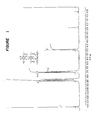
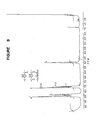
- r i was obtained by means of 1 H-NMR.
- NMR NMR
- AM-500 manufactured by BRUKER was used, and trifluoroacetic acid or a solvent mixture of trifluoroacetic acid and pentafluorophenol, was used as the solvent.
- the measurement was conducted at room temperature in the case of the system using trifluoroacetic acid alone and at 60 .
- C in the case of the solvent mixture system of trifluoroacetic acid and pentafluorophenol.
- this method comprises pulverizing e.g. the liquid crystalline polyester of the system of the present invention, treating the pulverized sample with a large excess amount of n-propylamine at 40 C for 90 minutes, and then quantitatively analyzing the decomposition product thereby obtained by the same 500 MHz 1 H-NMR as described above.
- the 1 H-NMR measurement is conducted by using deuterated methanol, a solvent mixture of deuterated DMSO and deuterated methanol, or deuterated trifluoroacetic acid, as the solvent, to quantitatively analyze (3-4) and (4-4).
- the proportions of (2), (3) and (5) were calculated by using the respectively identified peak intensities. According to this method, information on the sequence on the side of the units (3) and (4) will be obtained. Based on such information, r 2 and r 3 were calculated.
- r 1 and r 2 or r 3 may appear to be the same.
- (3-1) and (3-2) can be distinguished by 1 H-NMR, and r 1 can therefore be expressed by means of [3-1].
- (3) and (3-4) are distinguished rather than (3-3) and (3-4).
- r 2 is accurately expressed by means of [3] - [3-4]. Because of terminal groups, etc., [3-1] and ⁇ [3] - [3-4] ⁇ are not necessarily equal. Also from the viewpoint of precision in measurement, they may not necessarily be equal.
- the same as to r 2 applies to r 3 .
- the proportion of (1), (2) or (3), or (1), (2), (3) or (5) was obtained also by gas chromatography after methanol decomposition. The data agreed very well to the data obtained by the NMR method.
- Such a more alternating polyester is considered to be uniform not only with respect to the sequence but also with respect to the compositional distribution.
- a T 2 - T
- 0 ⁇ a ⁇ 75°C Preferably 0 ⁇ a ⁇ 75°C, more preferably 0 ⁇ a ⁇ 70°C, still more preferably 0 ⁇ a ⁇ 65° C, and most preferably 0 ⁇ a ⁇ 60° C.
- a m-substituted component as the kink component is contained, 0 ⁇ a ⁇ 90°C, preferably 0 ⁇ a ⁇ 85°C, more preferably 0 ⁇ a ⁇ 80°C.
- the smaller the value a the lower the temperature for fluidity in spite of high heat resistance in a solid state.
- T 1 can be controlled by the compositional ratio.
- the sequence becomes more alternating i.e. more uniform, it can be expected that with the same compositional ratio, the crystallinity will be improved. This can be confirmed by measuring the crystallinity by DSC or X-ray scattering.
- the polymer of the present invention has features that the size of the crystal lattice is small, and the distance between crystal molecules is small.
- the solution viscosity ⁇ inh of the liquid crystalline polyester obtained by the present invention can be determined as follows.
- the polyester of the present invention has a characteristic that with the same composition and the same compositional ratio, the melt viscosity is small and the fluidity is improved relative to the degree of polymerization (the solution viscosity may be used as an index of the polymerization degree). If this solution viscosity ⁇ inh is less than 0.4 dt/g, the mechanical properties tend to be poor, such being undesirable. Preferably ⁇ inh ⁇ 0.5, more preferably ⁇ inh ⁇ 0.6, most preferably ⁇ inh ⁇ 0.7. Further, with the liquid crystalline polyester of the present invention, the solution viscosity can be measured by this method, i.e. it can be dissolved substantially completely. This also indicates that there exists no long chain polymer of (3). Further, this indicates also that the compositional distribution is uniform.
- the present inventors have considered that in order to prevent formation of a chain of (3), it is advisable to let the units of be apart from one another from the stage of starting materials i.e. to use e.g. and/or and/or
- the present invention is based on an idea of utilizing the phenomenon that the ester exchange of the -OCH 2 CH 2 0- component unexpectedly hardly takes place at a high temperature condition.
- the method comprises adding and/or and then, if necessary, adding and/or then, if necessary, adding acetic anhydride, and in some cases, (if necessary) further adding and/or and in some cases, (if necessary) further adding and/or followed by e.g. acetylation at a temperature of from 100 to 170 C.
- This acetylation is conducted for from 5 minutes to 3 hours, preferably from 20 minutes to 1.5 hours.
- Acetic anhydride is used preferably in an amount of from the same amount to 1.5 times the amount of the hydroxyl groups in the starting materials. Namely, if the acetic anhydride is represented by (16), and the moles of (6), (9) and (16) are represented by [6], [9] and [16], is preferred, and is particularly preferred.
- acetic anhydride Even in a case where starting materials containing no hydroxyl groups are used, a small amount of acetic anhydride may be employed, since there is a merit that the polymerization rate can thereby be increased.
- the reaction may be conducted in the absence of a catalyst. Otherwise, a catalyst may be added as the case requires.
- the temperature is raised to conduct polymerization.
- the polymerization is conducted at a temperature of from 220 to 340 C. It is particularly preferred to conduct the polymerization at a temperature of from 260 to 320 C. More preferably, the polymerization is conducted at a temperature of from 265 to 300 C, most preferably from 265 to 280 C. There is a merit that the polymerization can be conducted at a low temperature in spite of the heat resistance in a solid state. Further, the time required for gradually reducing the pressure from 760 mmHg to 1 mmHg is usually at least 30 minutes, preferably at least 60 minutes. It is particularly important to conduct the reduction of the pressure from 30 mmHg to 1 mmHg gradually.
- the polymerization can be conducted in the absence of a catalyst, but it is usually conducted in the presence of a catalyst as the case requires.
- a catalyst As the catalyst to be used, an ester exchange catalyst, a polycondensation catalyst, an acylation catalyst or a decarboxylic acid catalyst, may be employed. These catalysts may be used in combination as a mixture.
- Preferred catalysts include, for example, Ti(OBu), BuSnOOH, Sn(OAc) 2 , Sb 2 0 3 , Fe(acac) 3 , Zn(OAc) 2 , Co(OAc) 2 , NaOAc and KOAc.
- the catalyst is used usually in an amount of from 5 to 50,000 ppm, preferably from 50 to 5,000 ppm, relative to the polymer.
- the polymerization time may be within 10 hours. It is particularly preferred to conduct the polymerization within 7 hours. Most preferably, it is conducted within a range of from 1 to 4 hours.
- the feeding ratio of and/or and is preferably more preferably Likewise, the feeding ratio of and/or and/or and/or is usually preferably If the above value exceeds 0.3, the heat resistance tends to be low, and the crystallinity tends to deteriorate, whereby the fluidity tends, to be poor, such being undesirable.
- the ratio of [9] and [10] is usually preferably more preferably
- Acetic anhydride is added to and a compound of the formula (9) and/or a compound of the formula (10): as the starting materials, followed by acetylation at a temperature of from 100 to 170° C. This acetylation is conducted for from 5 minutes to 3 hours, preferably from 20 minutes to 1.5 hours.
- Acetic anhydride is used usually in amount of
- the compounds (11), (8), (9) and (10) may preliminarily be reacted prior to the acetylation. Otherwise, the compounds (11), (9) and (10) may preliminarily be reacted prior to the acetylation.
- the molar ratio is preferably within a range of more preferably
- a solvent may be used for this reaction. However, it is preferred to conduct the reaction in the absence of a solvent to avoid the necessity of a subsequence step of removing it.
- the temperature is preferably from 145 to 220° C, more preferably from 170 to 210° C.
- the temperature may be slightly high.
- a structure of (13) tends to be formed at the initial state of the reaction, such being undesirable.
- the ratio of (11) and (8) is preferably more preferably
- the ratio of (11) and (9), (10) is usually preferably
- the ratio of (9-1), (9-2), (10-1) and (10-2) as the constituting components of (9) and (10), is preferably more preferably most preferably the heat resistance tends to be low, and the liquid crystallinity also tends to be low, whereby the fluidity tends to deteriorate.
- the whole or part of (8) and the whole or part of (10) may be added during the acetylation or after the acetylation.
- the temperature is raised to initiate the polymerization.
- the polymerization is conducted at a temperature of from 220 to 340 C, preferably from 260 to 320 C, more preferably from 265 to 300° C. Particularly preferred is from 265 to 290 C, and most preferred is from 265 to 280 C. If the temperature is lower than 260 C, the polymerization speed tends to be slow. On the other hand, if it exceeds 320 C, the physical properties of the resulting polymer tend to be poor.
- the catalyst the same as described with respect to the above-mentioned method will apply. This method has a merit that pipings, etc. will not be soiled since sublimation is little.
- Japanese Unexamined Patent Publication No. 317524/1988 The difference between the method of the present invention and the method disclosed in Japanese Unexamined Patent Publication No. 317524/1988 is that as mentioned above, the inventors of Japanese Unexamined Patent Publication No. 317524/1988 did not consider it possible to improve the physical properties when the aliphatic glycol was ethylene glycol only, and they stated that ester exchange or acidolysis of C 3 or higher was difficult, and they have overcome this difficulty. Further, referring to the earlier application (Japanese Unexamined Patent Publication No. 186525/1985) by the present inventors, they considered it possible to conduct acidolysis sufficiently by using ethylene glycol in this method, and therefore they did not intend to improve the physical properties by ethylene glycol only, from the very beginning.
- ester exchange or acidolysis is not sufficient even in the case of ethylene glycol, and therefore it is advisable to minimize the chain of from the very beginning of the production. This is basically different from the way of thinking by the inventors of Japanese Unexamined Patent Publication No. 317524/1988 such that in the case of ethylene glycol, ester exchange or acidolysis would take place sufficiently.
- the liquid crystalline polyester of the present invention exhibits an optical anisotropy in a molten phase. Especially, when melting starts, solid will substantially disappear simply by raising the temperature slightly from the melt-initiation temperature, and substantially all will take a liquid crystalline state. Therefore, the polyester of the present invention has a feature that it is far superior to conventional polyesters in the fluidity as represented by ⁇ inh. Therefore, the moldability is good, and a usual melt-molding such as extrusion molding, injection molding or compression molding can be applied to form it into molded products, films, fibers, etc.
- the polyester of the present invention shows liquid crystallinity, whereby the melt viscosity is generally low.
- the melt viscosity at 275 C under 10 3 sec- 1 is not more than 5000 poise, preferably from 30 to 3000 poise, more preferably from 100 to 2500 poise.
- the product of the present invention will have the lowest melt viscosity at 275 C.
- the ratio of the melt viscosity at 275° C to the melt viscosity at 290° C is small.
- the ratio of the melt viscosity at a temperature higher by from 8 to 18° C than T m to the melt viscosity at a temperature higher by from 23 to 33°C than T m is small.
- the polyester of the present invention has high fluidity and is therefore particularly suitable for e.g. precision molded products.
- it can be used for automobile parts, parts of information materials such as compact discs or flexible discs, or parts of electronic materials such as connectors, IC sockets, etc.
- fibers such as glass fibers or carbon fibers, fillers such as talc, mica or calcium carbonate, a nucleating agent, a pigment, an antioxidant, a lubricant, or other packing materials or additives such as a stabilizer or a flame retardant, or a thermoplastic resin, may be added to the copolymer polyester of the present invention to impart a desired property to the molded product.
- copolymer polyester of the present invention may be blended with other polymer or may be alloyed with other polymer to obtain a composition having the merits of the two polymers.
- optical anisotropy liquid crystallinity
- Molding was conducted by a 0.1 oz injection molding machine manufactured by The Japan Steel Works, Ltd., and molded specimens were prepared by means of molds A and B. Further, by a 0.3 oz injection molding machine manufactured by Sumitomo Heavy Industries, Ltd., molded specimens were prepared by means of mold C.
- HDT heat distortion temperature
- the Vicat softening temperature was measured by an automatic HDT measuring apparatus manufactured by Toyo Seiki, using as a sample a molded specimen prepared by the above-mentioned 0.1 oz injection molding machine, at a heating rate of 50°C/hr, whereby the temperature at which the needle penetrated in a depth of 1 mm was taken as the softening temperature.
- Tensile properties (tensile modulus, tensile strength and elongation at breakage) were measured by means of TENSILON/UTM-IIIL manufactured by Toyo Baldwin Co., with respect to the molded specimens prepared by means of molds A and B of the above 0.1 oz injection molding machine and with respect to the molded specimens prepared by means of mold C of the 0.3 oz injection molding machine.
- DSC was measured by means of TA2000 manufactured by Du Pont. As the sample, a powder was used, and it was heated to 350 C at a rate of 20 C/min, then left to stand for 5 minutes and then cooled to 20 C at a rate of 20 C/min. Then, it was left to stand for 5 minutes and then heated to 350 C at a rate of 20 C/min.
- the charts of the cooling step and the second heating step are shown in Figures 7(A) and 7(B).
- the X-ray scattering was measured by means of X-ray generating apparatus RAD-B system (maximum output: 12 kW) manufactured by Rigaku Denki K.K.
- RAD-B system maximum output: 12 kW
- Rigaku Denki K.K Rigaku Denki K.K
- As the sample table a fiber sample table manufactured by the same company was used. A sample was extruded from a nozzle of 1 ⁇ at 275 C or 290 C and molded into a rod shape of 0.37 ⁇ , which was further subjected to heat treatment at 130° C for 12 hours before use. By this molding, the sample was highly oriented in the direction of extrusion.
- the molded specimens (dumbbell specimens) prepared by the 0.1 oz injection molding machine (mold A, B) and by the 0.3 oz injection molding machine (mold C) usually have low elongation as compared with the molded specimens according to ASTM.
- the molded specimens prepared by means of mold A of the 0.1 oz injection molding machine usually shows a substantially low strength as compared with the molded specimens according to ASTM. Accordingly, if an elongation is at least 3.5% with such molded specimens, such polymer can be regarded as fairly tough. Likewise, if it is less than 3.0%, such polymer can be regarded as brittle.
- Izod impact strength was measured in accordance with ASTM D-256 (notched).
- the compound was prepared in accordance with the method disclosed in Kobunshi Kagaku (Polymer Chemistry) 30, 572 (1973). Namely, it was prepared by an ester exchange reaction of m-oxybenzoic acid methyl ester and ethylene glycol, and its structure was confirmed by 1 H-NMR.
- the polymer was formed into chips and dried under vacuum at 120° C overnight. This polymer had ⁇ inh of 0.98, and the melt viscosity was as shown in Table 1.
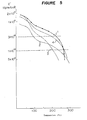
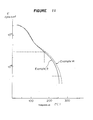
- Figure 5 shows various vibron charts including Example 1 of the present invention.
- the one shown in the Figure is the chart of Example 1.
- Vibron T 1 is very high at a level of 224°C which is higher by about 20°C than the conventional polymers having the same composition and the same compositional ratio (Comparative Examples 2, 4, 5 and 6), and T 2 was 270 C and lower than the conventional polymers of the same composition and the same compositional ratio except for Comparative Example 4.
- T 2 - T 1 of this polymer was 46° C which is a width substantially small as compared with conventional polymers.
- the polymer of the present invention shows a value of 3.7% whereas the conventional polymers (Comparative Examples 2, 4, 5 and 6 given hereinafter) show values not higher than 3%. Namely, this indicates that the polymer of the present invention has substantial toughness, while those having values not higher than 3% are rather brittle. Further, as compared with the Comparative Examples, the melt viscosity is low relative to ⁇ inh. Further, the product of the present invention shows better mechanical properties as the molding temperature is lower, while the conventional polymers (Comparative Examples 2 and 4) show better mechanical properties as the molding temperature is higher.
- Figure 7 shows a DSC chart of the polymer obtained in Example 1.
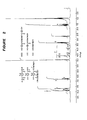
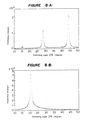
- Figure 8 shows the results of the X-ray scattering measurement. Namely, the positions of peaks of the scattering pattern in the meridional direction are as follows:
- the scattering intensity is high, and the crystallinity is high.
- the peak observed in the scattering pattern in the meridional direction such as the peak at 15.2°, is at a wide angle side than the peak of the conventional polymer with the same compositional ratio.
- the position of the peak observed in the scattering pattern in the equatorial direction is 20.4°, and thus the scattering angle is larger than the conventional polymer. Namely, this indicates that the size of the crystal lattice in the direction of the fiber axis (i.e. the fiber period) is smaller than the conventional polymers.
- the distance between molecules is shorter than the conventional polymers, and the packing of molecules is denser.
- the Izod impact strength was measured and was found to be as high as 58 kg ⁇ cm/cm.
- the sample was molded by the 0.1 oz injection molding machine by means of mold B, and the molded product showed a tensile strength as high as 2,220 kg/cm 2 .
- Example 1 The operation was conducted in the same manner as in Example 1 except that the types and feeding ratios of the starting materials and the polymerization conditions were changed as shown in Table 1.
- the polymerization conditions, etc. in Examples 1 to 8 and the results of measurements of various physical properties are listed in Table 1.
- the pressure was reduced to 10 mmHg in one hour and then from 10 mmHg to 0.3 mmHg over a period of 1.5 hours. Polymerization was conducted under 0.3 mmHg for 30 minutes, whereupon the torque was sufficiently high, and the polymerization was terminated.
- the system was left to stand still to let the pressure return to a normal level, and the polymer was discharged from the bottom of the glass tube.
- the dischargeability was excellent.
- the polymer was formed into chips and then dried under vacuum at 120° C overnight. This polymer had ⁇ inh of 1.17 and a melt viscosity of 750 poise at 275° C.
- Figure 11 shows a chart of various vibrons including Example 9.
- the one shown in the Figure is that of Example 9.
- Vibron T 1 is 175°C
- T 2 was 250 C.
- the mechanical properties were measured with respect to a specimen molded by the 0.1 oz injection molding machine by means of mold B. Among the mechanical properties, especially the tensile strength was as high as 2480 kg/cm 2 . Also the elongation at breakage was 4.6% which is substantially high as compared with Comparative Examples with the same compositional ratio. Namely, this indicates that the polymer of the present invention is fairly tough, while those having an elongation at breakage of not higher than 3% tend to be brittle, as mentioned above.
- melt viscosity is low relative to ⁇ inh.
- the temperature dependency of the melt viscosity was small with 750 poise at 275° C and 430 poise at 290 C.
- Example 9 The operation was conducted in the same manner as in Example 9 except that the types and feeding ratios of the starting materials and the polymerization conditions were changed as shown in Table 2. Namely, after acetylation, the temperature was raised to the polymerization temperature over a period of 1.5 hours, and when the temperature reached the polymerization temperature, vacuuming was started.
- the pressure was reduced to 10 mmHg in one hour and then to a level of less than 1 mmHg over a period of 1.5 hours.
- the final pressure was lower than 1 mmHg, and in a case where the polymerization time was less than 2.5 hours, the pressure at that time was the final pressure, which was 1 mmHg or higher.
- Example 13 the polymerization was conducted by using the same glass tube as in Example 9 under the conditions as identified in Table 2.
- the melt viscosity at 275° C was 1580 poise, and the tensile strength of the molded specimen at 275 C was as high as 2580 kg/cm 2. Also the elongation at breakage was as high as 4.4%, thus indicating toughness.
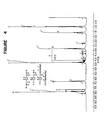
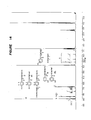
- Figure 14 shows a NMR chart after amine decomposition for determining r 3 in Example 12.
- the polymer was formed into chips and dried at 120° C overnight.
- dumbbell specimens were prepared by the 0.1 oz injection molding machine (mold: B), and the mechanical properties were measured.
- the elongation at breakage was 3.3%, and the tensile strength was 2000 kg/cm 2 , and the modulus of elasticity was 9.0 x 10 4 kg/cm 2 .
- Figure 6 shows vibron charts of Examples 1 to 4. Each of them is a liquid crystalline polyester comprising
- Polymers were prepared in accordance with the method disclosed in Japanese Examined Patent Publication No. 18016/1981.
- compositional ratios of the formed polymers are shown in Table 3.
- Polymers were prepared in accordance with the method disclosed in Japanese Unexamined patent Publication No. 186527/1985.
- compositional ratios of the formed polymers of Examples 3 and 4 are shown in Table 3.
- a polymer was prepared in accordance with Example 1 of Japanese Unexamined Patent Publication No. 45524/1990.
- the tensile strength and the elongation at breakage were low. Especially, the elongation at breakage was as low as not higher than 3%.
- the crystal lattice in the fiber direction is slightly large, and the packing distance between molecules is slightly large.
- a polymer was prepared in accordance with the method disclosed in Japanese Examined Patent Publication No. 18016/1981. Namely, polyethylene terephthalate, p-actoxybenzoic acid and m-acetoxybenzoic acid were used as starting materials so that the final ratios of the polymer units would be the same as in Example 13 (see Table 4).
- a polymer was prepared in accordance with the method disclosed in Japanese Unexamined Patent Publication No. 285916/1987. Namely, polyethylene terephthalate, acetic anhydride, p-hydroxybenzoic acid and m-hyroxybenzoic acid were used as starting materials so that the final ratios of polymer units would be the same as in Example 13 (see Table 4).
- a polymer was prepared in accordance with the method disclosed in Japanese Unexamined Patent Publication No. 121095/1977. Namely, polyethylene terephthalate, , p-hydroxybenzoic acid, m-hyroxybenzoic acid and diphenyl carbonate were used as starting materials so that the final ratios of polymer units would be the same as in Example 13 (see Table 4).
- a polymer was prepared in accordance with the method disclosed in Japanese Unexamined Patent Publication No. 186525/1985, so that the final ratios of polymer units would be the same as in Example 13 (see Table 4).
- This polymer was molded by the 0.1 oz injection molding machine by means of mold A or B and by the 0.3 oz injection molding machine by means of mold C. The respective values are shown in Table 5.
- Example 2 the same polymer as in Example 1 was prepared and molded by the 0.1 oz injection molding machine by means of mold B and by the 0.3 oz injection molding machine by means of mold C.
- This polymer was molded by the 0.1 oz injection molding machine (mold A), whereby the tensile strength was 1610 kg/cm 2 and the elongation at breakage was 5.0%.
- Example 18 Further operation was conducted in the same manner as in Example 18 except that the total polymerizing time was 3 hours. The dischargeability of polymer was excellent. This polymer had ⁇ inh of 1.13 dt/g. Then dumbbell specimens were prepared by the 0.1 oz injection molding machine (mold: B), and the mechanical properties were measured. The tensile strength was 2040 kg/cm 2 , and the modulus of elasticity was 9.5 x 10 4 kg/c m 2 .
- the liquid crystalline polyester of the present invention is superior in the mechanical properties and thermal properties to conventional polyesters having the same composition and the same compositional ratio, as the sequence is alternately better controlled. Namely, it has high strength and high elongation and exhibits better physical properties as the molding temperature is lower. Further, since the crystallinity is high, the melting point is distinct, and reinforcing effects with e.g. glass fibers will be obtained. Further, HDT is high and yet it is flowable at a low temperature in spite of its heat resistance. Therefore, it has a merit that the polymerization temperature can be lowered. Further, it has a merit that even when the polymerization temperature is low, it can be readily withdrawn from the bottom of the glass tube.
- liquid crystalline polyester of the present invention shows an optical anisotropy in its molten phase. Especially, once it starts to melt, there will be no substantial solid portion simply by raising the temperature slightly over the melt initiation temperature, and almost all will be a primary liquid crystal state. Thus, it has a feature that fluidity is far better than that of the conventional polyesters.
- the liquid crystalline polyester of the present invention is suitable for e.g. precision molded products.
- it is useful for automobile parts, parts of information materials such as compact discs or flexible discs or pats of electronic materials such as connectors or IC sockets.
Landscapes
- Chemical & Material Sciences (AREA)
- Organic Chemistry (AREA)
- Crystallography & Structural Chemistry (AREA)
- Engineering & Computer Science (AREA)
- Materials Engineering (AREA)
- Health & Medical Sciences (AREA)
- Chemical Kinetics & Catalysis (AREA)
- Medicinal Chemistry (AREA)
- Polymers & Plastics (AREA)
- Polyesters Or Polycarbonates (AREA)
Applications Claiming Priority (2)
| Application Number | Priority Date | Filing Date | Title |
|---|---|---|---|
| JP91640/90 | 1990-04-06 | ||
| JP9164090 | 1990-04-06 |
Publications (3)
| Publication Number | Publication Date |
|---|---|
| EP0450652A2 true EP0450652A2 (de) | 1991-10-09 |
| EP0450652A3 EP0450652A3 (en) | 1991-12-11 |
| EP0450652B1 EP0450652B1 (de) | 1997-12-17 |
Family
ID=14032127
Family Applications (1)
| Application Number | Title | Priority Date | Filing Date |
|---|---|---|---|
| EP91105435A Expired - Lifetime EP0450652B1 (de) | 1990-04-06 | 1991-04-05 | Flüssigkristalline Polyester und Verfahren zu ihrer Herstellung |
Country Status (3)
| Country | Link |
|---|---|
| US (2) | US5310859A (de) |
| EP (1) | EP0450652B1 (de) |
| DE (1) | DE69128435T2 (de) |
Cited By (1)
| Publication number | Priority date | Publication date | Assignee | Title |
|---|---|---|---|---|
| EP0520428A3 (en) * | 1991-06-25 | 1993-03-03 | Mitsubishi Petrochemical Co., Ltd. | Method of producing thermotropic liquid crystalline polyester |
Families Citing this family (13)
| Publication number | Priority date | Publication date | Assignee | Title |
|---|---|---|---|---|
| US5705600A (en) * | 1995-12-22 | 1998-01-06 | Eastman Chemical Company | Polyester/naphthalenedicarboxylic acid-containing polymer blends displaying reduced fluorescence |
| US5919403A (en) * | 1995-12-22 | 1999-07-06 | Eastman Chemical Company | Polymeric fluorescence quenching compounds and their use |
| WO2004014651A2 (en) * | 2002-08-07 | 2004-02-19 | Vim Technologies Ltd. | Lithographic printing members and a method and a system for preparation of lithographic printing members |
| US20060270772A1 (en) * | 2005-05-26 | 2006-11-30 | Black D J | Polyester organo-iron compositions |
| WO2013032971A1 (en) | 2011-08-29 | 2013-03-07 | Ticona Llc | Melt-extruded substrate for use in thermoformed articles |
| US8669341B2 (en) | 2011-08-29 | 2014-03-11 | Ticona Llc | Solid-state polymerization of a liquid crystalline polymer |
| KR20140057629A (ko) | 2011-08-29 | 2014-05-13 | 티코나 엘엘씨 | 방향족 아마이드 화합물 |
| TW201319023A (zh) | 2011-08-29 | 2013-05-16 | Ticona Llc | 具改良低剪切黏度之熱向性液晶聚合物 |
| JP2014525499A (ja) | 2011-08-29 | 2014-09-29 | ティコナ・エルエルシー | 低い融解温度をもつ耐熱性液晶ポリマー組成物 |
| CN103764794B (zh) | 2011-08-29 | 2016-05-18 | 提克纳有限责任公司 | 高流动液晶聚合物组合物 |
| CN103764793B (zh) | 2011-08-29 | 2016-09-14 | 提克纳有限责任公司 | 高流动液晶聚合物组合物 |
| US9045685B2 (en) | 2011-08-29 | 2015-06-02 | Ticona Llc | Cast molded parts formed from a liquid crystalline polymer |
| TW201319118A (zh) | 2011-08-29 | 2013-05-16 | Ticona Llc | 低熔融黏度液晶聚合物之熔融聚合 |
Family Cites Families (5)
| Publication number | Priority date | Publication date | Assignee | Title |
|---|---|---|---|---|
| GB968390A (en) * | 1960-12-19 | 1964-09-02 | Ici Ltd | Manufacture of novel copolyesters |
| JPS60219224A (ja) * | 1984-04-16 | 1985-11-01 | Teijin Ltd | ポリエステルの製造方法 |
| JPS6189816A (ja) * | 1984-10-09 | 1986-05-08 | Polyplastics Co | ラミネ−トフイルムの製造方法 |
| US4581443A (en) * | 1984-10-09 | 1986-04-08 | Celanese Corporation | Production of improved pellets from melt-processable polymer which is capable of forming and anisotropic melt |
| JPH02166685A (ja) * | 1988-12-20 | 1990-06-27 | Fujitsu Ltd | 記録ディスクの製造方法 |
-
1991
- 1991-04-05 US US07/681,066 patent/US5310859A/en not_active Expired - Lifetime
- 1991-04-05 EP EP91105435A patent/EP0450652B1/de not_active Expired - Lifetime
- 1991-04-05 DE DE69128435T patent/DE69128435T2/de not_active Expired - Lifetime
-
1993
- 1993-10-20 US US08/138,205 patent/US5340911A/en not_active Expired - Lifetime
Cited By (2)
| Publication number | Priority date | Publication date | Assignee | Title |
|---|---|---|---|---|
| EP0520428A3 (en) * | 1991-06-25 | 1993-03-03 | Mitsubishi Petrochemical Co., Ltd. | Method of producing thermotropic liquid crystalline polyester |
| US5298593A (en) * | 1991-06-25 | 1994-03-29 | Mitsubishi Petrochemical Company, Ltd. | Method of producing thermotropic liquid crystalline polyester |
Also Published As
| Publication number | Publication date |
|---|---|
| DE69128435D1 (de) | 1998-01-29 |
| US5310859A (en) | 1994-05-10 |
| EP0450652A3 (en) | 1991-12-11 |
| US5340911A (en) | 1994-08-23 |
| EP0450652B1 (de) | 1997-12-17 |
| DE69128435T2 (de) | 1998-04-09 |
Similar Documents
| Publication | Publication Date | Title |
|---|---|---|
| EP0356226B1 (de) | Aromatische Polyester, aromatische Polyesteramide und Verfahren zu deren Herstellung | |
| JP4681268B2 (ja) | 全芳香族液晶ポリエステル樹脂の製造方法 | |
| EP0450652B1 (de) | Flüssigkristalline Polyester und Verfahren zu ihrer Herstellung | |
| EP0398624B1 (de) | Flammenhemmende, flüssigkristalline Polyesterzusammensetzung, Verfahren zu deren Herstellung und daraus hergestelltes Spritzgussteil | |
| EP1616894B1 (de) | Kristallflüssiges Polyesterharz und Verfahren zu seiner Herstellung | |
| EP0071447A1 (de) | Polyester aus 6-hydroxy-2 Naphtalensäure, 4-Hydroxy-benzoesäure, 1,4-Cyclohexandicarbonsäure und aromatisches Diol, geeignet zur Bearbeitung in der Schmelze um Gegenstände zu formen mit hoher Schlagfestigkeit | |
| US5089594A (en) | Wholly aromatic polyester of isophthalic acid, terephthalic acid, p-hydroxybenzoic acid, hydroquinone and an arylene diol | |
| EP0869985B1 (de) | Flüssigkristalline polymer zusammensetzungen | |
| TW201930393A (zh) | 液晶聚酯組成物及方法 | |
| EP0391368A1 (de) | Cholesterischer, flüssigkristalliner, eine optisch aktive Gruppe enthaltender Polyester | |
| EP0344099B1 (de) | Polyester und daraus hergestellter Formkörper | |
| KR20120009705A (ko) | 방향족 액정 폴리에스테르 수지의 제조방법 및 방향족 액정 폴리에스테르 수지 컴파운드의 제조방법 | |
| EP0462844B1 (de) | Polybromstyrol enthaltende flammhemmende thermotrope Polyestermischung und Formteile daraus | |
| KR20010079493A (ko) | 액정 폴리머 | |
| CA2005480A1 (en) | Modified polyarylate resin and composition comprising the same | |
| KR960002954B1 (ko) | 용융 이방성을 나타내는 폴리에스테르 | |
| JP3114223B2 (ja) | 液晶性ポリエステルおよびその製造方法 | |
| JP3136744B2 (ja) | 液晶性ポリエステルおよびその製造方法 | |
| JP2699465B2 (ja) | 成形品 | |
| JP2505597B2 (ja) | 熱可塑性樹脂組成物 | |
| JP3130359B2 (ja) | 液晶性ポリエステル | |
| JP3089685B2 (ja) | 共重合ポリエステルの製造方法 | |
| JP3092226B2 (ja) | 液晶性ポリエステルアミドおよびその製造方法 | |
| JP2505643B2 (ja) | 液晶ポリエステル樹脂組成物 | |
| JP3284631B2 (ja) | 共重合ポリエステル及び共重合ポリエステルアミドの製造方法 |
Legal Events
| Date | Code | Title | Description |
|---|---|---|---|
| PUAI | Public reference made under article 153(3) epc to a published international application that has entered the european phase |
Free format text: ORIGINAL CODE: 0009012 |
|
| AK | Designated contracting states |
Kind code of ref document: A2 Designated state(s): DE GB |
|
| PUAL | Search report despatched |
Free format text: ORIGINAL CODE: 0009013 |
|
| AK | Designated contracting states |
Kind code of ref document: A3 Designated state(s): DE GB |
|
| 17P | Request for examination filed |
Effective date: 19920324 |
|
| 17Q | First examination report despatched |
Effective date: 19940914 |
|
| RAP1 | Party data changed (applicant data changed or rights of an application transferred) |
Owner name: MITSUBISHI CHEMICAL CORPORATION |
|
| GRAG | Despatch of communication of intention to grant |
Free format text: ORIGINAL CODE: EPIDOS AGRA |
|
| GRAG | Despatch of communication of intention to grant |
Free format text: ORIGINAL CODE: EPIDOS AGRA |
|
| GRAH | Despatch of communication of intention to grant a patent |
Free format text: ORIGINAL CODE: EPIDOS IGRA |
|
| GRAH | Despatch of communication of intention to grant a patent |
Free format text: ORIGINAL CODE: EPIDOS IGRA |
|
| GRAA | (expected) grant |
Free format text: ORIGINAL CODE: 0009210 |
|
| AK | Designated contracting states |
Kind code of ref document: B1 Designated state(s): DE GB |
|
| REF | Corresponds to: |
Ref document number: 69128435 Country of ref document: DE Date of ref document: 19980129 |
|
| PLBE | No opposition filed within time limit |
Free format text: ORIGINAL CODE: 0009261 |
|
| STAA | Information on the status of an ep patent application or granted ep patent |
Free format text: STATUS: NO OPPOSITION FILED WITHIN TIME LIMIT |
|
| 26N | No opposition filed | ||
| REG | Reference to a national code |
Ref country code: GB Ref legal event code: IF02 |
|
| PGFP | Annual fee paid to national office [announced via postgrant information from national office to epo] |
Ref country code: GB Payment date: 20100325 Year of fee payment: 20 |
|
| PGFP | Annual fee paid to national office [announced via postgrant information from national office to epo] |
Ref country code: DE Payment date: 20100430 Year of fee payment: 20 |
|
| REG | Reference to a national code |
Ref country code: DE Ref legal event code: R071 Ref document number: 69128435 Country of ref document: DE |
|
| REG | Reference to a national code |
Ref country code: GB Ref legal event code: PE20 Expiry date: 20110404 |
|
| PG25 | Lapsed in a contracting state [announced via postgrant information from national office to epo] |
Ref country code: GB Free format text: LAPSE BECAUSE OF EXPIRATION OF PROTECTION Effective date: 20110404 |
|
| PG25 | Lapsed in a contracting state [announced via postgrant information from national office to epo] |
Ref country code: DE Free format text: LAPSE BECAUSE OF EXPIRATION OF PROTECTION Effective date: 20110405 |