EP0436355A2 - Verfahren zur Herstellung von 7-Aminocephem-Verbindungen oder deren Salzen - Google Patents
Verfahren zur Herstellung von 7-Aminocephem-Verbindungen oder deren Salzen Download PDFInfo
- Publication number
- EP0436355A2 EP0436355A2 EP90313988A EP90313988A EP0436355A2 EP 0436355 A2 EP0436355 A2 EP 0436355A2 EP 90313988 A EP90313988 A EP 90313988A EP 90313988 A EP90313988 A EP 90313988A EP 0436355 A2 EP0436355 A2 EP 0436355A2
- Authority
- EP
- European Patent Office
- Prior art keywords
- dna
- gene
- compound
- aminocephem
- kbp
- Prior art date
- Legal status (The legal status is an assumption and is not a legal conclusion. Google has not performed a legal analysis and makes no representation as to the accuracy of the status listed.)
- Granted
Links
Images















Classifications
-
- C—CHEMISTRY; METALLURGY
- C12—BIOCHEMISTRY; BEER; SPIRITS; WINE; VINEGAR; MICROBIOLOGY; ENZYMOLOGY; MUTATION OR GENETIC ENGINEERING
- C12N—MICROORGANISMS OR ENZYMES; COMPOSITIONS THEREOF; PROPAGATING, PRESERVING, OR MAINTAINING MICROORGANISMS; MUTATION OR GENETIC ENGINEERING; CULTURE MEDIA
- C12N9/00—Enzymes; Proenzymes; Compositions thereof; Processes for preparing, activating, inhibiting, separating or purifying enzymes
- C12N9/0004—Oxidoreductases (1.)
- C12N9/0012—Oxidoreductases (1.) acting on nitrogen containing compounds as donors (1.4, 1.5, 1.6, 1.7)
- C12N9/0014—Oxidoreductases (1.) acting on nitrogen containing compounds as donors (1.4, 1.5, 1.6, 1.7) acting on the CH-NH2 group of donors (1.4)
- C12N9/0022—Oxidoreductases (1.) acting on nitrogen containing compounds as donors (1.4, 1.5, 1.6, 1.7) acting on the CH-NH2 group of donors (1.4) with oxygen as acceptor (1.4.3)
- C12N9/0024—D-Amino acid oxidase (1.4.3.3)
-
- C—CHEMISTRY; METALLURGY
- C12—BIOCHEMISTRY; BEER; SPIRITS; WINE; VINEGAR; MICROBIOLOGY; ENZYMOLOGY; MUTATION OR GENETIC ENGINEERING
- C12N—MICROORGANISMS OR ENZYMES; COMPOSITIONS THEREOF; PROPAGATING, PRESERVING, OR MAINTAINING MICROORGANISMS; MUTATION OR GENETIC ENGINEERING; CULTURE MEDIA
- C12N15/00—Mutation or genetic engineering; DNA or RNA concerning genetic engineering, vectors, e.g. plasmids, or their isolation, preparation or purification; Use of hosts therefor
- C12N15/09—Recombinant DNA-technology
- C12N15/63—Introduction of foreign genetic material using vectors; Vectors; Use of hosts therefor; Regulation of expression
- C12N15/79—Vectors or expression systems specially adapted for eukaryotic hosts
- C12N15/80—Vectors or expression systems specially adapted for eukaryotic hosts for fungi
-
- C—CHEMISTRY; METALLURGY
- C12—BIOCHEMISTRY; BEER; SPIRITS; WINE; VINEGAR; MICROBIOLOGY; ENZYMOLOGY; MUTATION OR GENETIC ENGINEERING
- C12N—MICROORGANISMS OR ENZYMES; COMPOSITIONS THEREOF; PROPAGATING, PRESERVING, OR MAINTAINING MICROORGANISMS; MUTATION OR GENETIC ENGINEERING; CULTURE MEDIA
- C12N9/00—Enzymes; Proenzymes; Compositions thereof; Processes for preparing, activating, inhibiting, separating or purifying enzymes
- C12N9/14—Hydrolases (3)
- C12N9/48—Hydrolases (3) acting on peptide bonds (3.4)
- C12N9/50—Proteinases, e.g. Endopeptidases (3.4.21-3.4.25)
- C12N9/58—Proteinases, e.g. Endopeptidases (3.4.21-3.4.25) derived from fungi
-
- C—CHEMISTRY; METALLURGY
- C12—BIOCHEMISTRY; BEER; SPIRITS; WINE; VINEGAR; MICROBIOLOGY; ENZYMOLOGY; MUTATION OR GENETIC ENGINEERING
- C12N—MICROORGANISMS OR ENZYMES; COMPOSITIONS THEREOF; PROPAGATING, PRESERVING, OR MAINTAINING MICROORGANISMS; MUTATION OR GENETIC ENGINEERING; CULTURE MEDIA
- C12N9/00—Enzymes; Proenzymes; Compositions thereof; Processes for preparing, activating, inhibiting, separating or purifying enzymes
- C12N9/14—Hydrolases (3)
- C12N9/78—Hydrolases (3) acting on carbon to nitrogen bonds other than peptide bonds (3.5)
- C12N9/80—Hydrolases (3) acting on carbon to nitrogen bonds other than peptide bonds (3.5) acting on amide bonds in linear amides (3.5.1)
-
- C—CHEMISTRY; METALLURGY
- C12—BIOCHEMISTRY; BEER; SPIRITS; WINE; VINEGAR; MICROBIOLOGY; ENZYMOLOGY; MUTATION OR GENETIC ENGINEERING
- C12P—FERMENTATION OR ENZYME-USING PROCESSES TO SYNTHESISE A DESIRED CHEMICAL COMPOUND OR COMPOSITION OR TO SEPARATE OPTICAL ISOMERS FROM A RACEMIC MIXTURE
- C12P35/00—Preparation of compounds having a 5-thia-1-azabicyclo [4.2.0] octane ring system, e.g. cephalosporin
- C12P35/02—Preparation of compounds having a 5-thia-1-azabicyclo [4.2.0] octane ring system, e.g. cephalosporin by desacylation of the substituent in the 7 position
Definitions
- This invention relates to a process for producing 7-aminocephem compound or salts thereof. More particularly, the invention relates to a process for producing 7-aminocephem compound or salts thereof, a vector to be used in said process, cephalosporin compound-producing microorganisms transformed with said vector, and a DNA fragment having the promoter activity of the Acremonium chrysogenum alkaline protease gene, among others.
- 7-Aminocephem compound of the formula: wherein R is an acetoxy, hydroxy or hydrogen, is the most important starting material for the production of semisynthetic cephalosporin antibiotics and is worldwidely used in a number of pharmaceutical factories throughout the world.
- the 7-aminocephem compound (I) is produced by a two-step process which comprises the step of cultivating in a nutrient medium a cephalosporin compound-producing strain belonging to the species Acremonium chrysogenum and capable of producing a cephalosporin compound of the formula: wherein R is as defined above and X is -CH(NH 2 )-COOH, -CO-COOH or -COOH, and recovering the cephalosporin compound (II) from the cultured broth and the step of chemically or enzymatically eliminating the acyl group at 7 position such as the a-aminoadipoyl group, from the cephalosporin compound (II).
- the present inventors made investigations in an attempt to produce 7-aminocephem compound (I) directly in one step without the above-mentioned deacylation step by causing microorganisms to fermentatively produce the 7 -aminocephem compound (I).
- Any microorganism capable of directly producing any of the 7-aminocephem compound (I) has not yet been discovered in the natural world in spite of efforts made by researchers all over the world.
- No report has been presented as yet about a success in creating an 7-aminocephem compound (I)-producing microorganism by modifying a microorganism by means of mutation treatment or using genetic engineering techniques, because the difficulty of the task is great.
- the present inventors made intensive investigations, after which a vector for producing 7-aminocephem compound (I) which contains one or more promoter(s) for Acremonium chrysogenum and gene(s) for enzyme(s) capable of converting the cephalosporin compound (II) to the corresponding 7-aminocephem compound (I) , with said gene(s) connected to said promoter(s), was newly constructed and the cephalosporin compound (II)-producing microorganism belonging to the species Acremonium chrysogenum was transformed with said vector and cultivated. Surprisingly the desired 7-aminocephem compound (I) was found accumulated in the culture. Further investigations based on this fact have now led to completion of this invention.
- This invention provides a process for producing 7-aminocephem compound (I) which comprises cultivating in a nutrient medium a 7-aminocephem compound (I)-producing microorganism, for example a cephalosporin compound (II)-producing microorganism belonging to the species Acremonium chrysogenum transformed with a vector for producing 7-aminocephem compounds (1) which contains one or more promoter(s) for Acremonium chrysogenum and gene(s) for enzyme(s) capable of converting the cephalosporin compound (II) to the corresponding 7-aminocephem comnpound (I), with said gene(s) connected to said promoter(s), and recovering the 7-aminocephem compound (I) from the cultured broth.
- a 7-aminocephem compound (I)-producing microorganism for example a cephalosporin compound (II)-producing microorganism belonging to the species Acremonium chrysogenum transformed
- the vector for producing 7-aminocephem compound (I) in accordance with this invention contains a DNA fragment prepared by ligating at least one or more promoter(s) for Acremonium chrysogenum (when the host cells are cells of Acremonium chrysogenum, for instance) to gene(s) for enzyme(s) capable of converting the cephalosporin compound (II) to the corresponding 7-aminocephem compound (I) to each other in that order from the upstream side to the downstream side by a conventional method.
- An appropriate selective marker, autonomously replicating sequence (ARS) for Acremonium chrysogenum, terminator, translation activating sequence and so forth may be inserted into said vector at respective desired sites by a conventional method. It is convenient for vector amplification in Escherichia coli if the autonomously replicating sequence for Escherichia coli (ori) and a selective marker are inserted in the vector.
- the "promoter for Acremonium chrysogenum” means a promoter capable of enabling expression, in Acremonium chrysogenum, of the gene coding for a desired polypeptide and includes these hitherto known, such as the promoter for the Acremonium chrysogenum isopenicillin N synthetase gene and the promoter for the Acremonium chrysogenum p-isopropyl malate dehydrogenase gene, as well as the DNA fragment having promoter activity for alkaline protease gene which was newly isolated from the Acremonium chrysogenum chromosome by the present inventors. These promoters may contain an enhancer sequence.
- cephalosporin C acylase genes which are genes for enzymes catalyzing one- step conversion [e.g. Pseudomonas sp. SE83-derived cephalosporin C acylase gene [cf. A. Matsuda et al., J. Bacteriol, 169, 5815-5826 (1987)] as well as the cephalosporin C acylase gene newly isolated from Pseudomonas diminuta V22 by the present inventors].
- cephalosporin C acylase genes which are genes for enzymes catalyzing one- step conversion [e.g. Pseudomonas sp. SE83-derived cephalosporin C acylase gene [cf. A. Matsuda et al., J. Bacteriol, 169, 5815-5826 (1987)] as well as the cephalosporin C acylase gene newly isolated from Pseudomonas diminuta V22 by the present inventors].
- DAO D-amino acid oxidase
- cephalosporin compound (II) producer used as the host produces GL-7ACA, GL-7ADCA, keto-AD-7ACA and/or keto-AD-7ADCA
- a cephalosporin C acylase gene or a GL-7ACA acylase gene may be used alone.
- D-amino acid oxidase gene there may be mentioned, for example, the Trigonopsis variabilis- derived DAO gene (cf. Japanese Kokai Tokkyo Koho No. 62-262994) and the DAO gene newly isolated from Fusarium solani M-0718 FERM-P 2688 by the present inventors (cf. European Laid-open Patent Publication No. 364,275).
- GL-7ACA acylase gene there may be mentioned, for example, the gene for the Pseudomonas putida ATCC 950-derived GL-7ACA acylase [cf. Agric. Biol. Chem., 45, 1561 (1981)] as well as the cephalosporin C acylase genes specifically mentioned above (cephalosporin C acylases serving also as GL-7ACA acylases).
- the enzyme gene(s) is preferably inserted each singly into the vector at a site downstream from the promoter for Acremonium chrysogenum.
- the vector for producing 7-aminocephem compound (I) in accordance with the invention may contain one or more genes for an enzyme or enzymes capable of converting the cephalosporin compound (II) to the 7-aminocephem compound (I) as inserted therein.
- the selective marker may be any marker utilizable in screening transformants following transformation of Acremonium chrysogenum with the vector.
- the marker (Hm R ) which provides the hygromycin resistance phenotype, for instance, is widely used.
- the autonomously replicating sequence (ARS) for Acremonium chrysogenum is, for example, the ARS of Acremonium chrysogenum (cf. Japanese Kokai Tokkyo Koho No. 61-209593). Since, however, transformation of Acremonium chrysogenum with the vector for 7-aminocephem compound production mainly results in incorporation of said vector into the genomic DNA of Acremonium chrysogenum and the subsequent replication, it is not necessary, in such a case, that the vector for 7-aminocephem compound production should contain an ARS insert.
- the presence of an ARS is required only when the vector for 7-aminocephem compound production is multiplied as an extrachromosomal component in Acremonium chrysogenum.
- the terminator which may contain a polyadenylation site, is, for example, the Acremonium chrysogenum genomic DNA-derived terminator used in the examples to be mentioned later herein.
- Cephalosporin compound (II)-producing strains belonging to the species Acremonium chrysogenum may be transformed with the vector for 7-aminocephem compound production by a conventional method, for example by the protoplast transformation method [cf. S. W. Queener et al.: Microbiology 1985, American Society of Microbiology, page 468 (1985)].
- the cephalosporin compound (II) producer includes, among others, A. chrysogenum ATCC 11550, ATCC 36225, etc. as cephalosporin C producers, A. chrysogenum ATCC 20371 etc. as deacetylcephalosporin C producers, A. chrysogenum ATCC 11550, ATCC 20416, etc. as deacetoxycephalosporin C producers and A. chrysogenum ATCC 20416, ATCC 20427, etc. as GL-7ACA and keto-AD-7ACA producers.
- a number of microorganisms other than Acremonium chrysogenum are also known to be cephalosporin compound (II) producers.
- the thus-obtained 7-aminocephem compound (I)-producing microorganism [cephalosporin compound (II) producer microorganism transformed with the vector for the production of 7-aminocephem compound] is cultivated in a nutrient medium.
- this cultivation can be carried out in the same manner as in cultivating microorganisms in general.
- submerged culture using an aqueous medium is advantageous.
- the medium to be used in the cultivation may be a synthetic one, a semisynthetic one or a natural one.
- As the carbon source to be included in the medium composition there may be mentioned, for example, glucose, sucrose, maltose, glycerin, starch, liquefied starch and the like.
- the nitrogen source there may be mentioned, for example, meat extract, caseine hydrolyzate, peptone, gluten meal, corn meal, cottonseed flour, soybean meal, corn steep liquor, dried yeast, yeast extract, urea, ammonium phosphate and the like.
- Inorganic salts such as disodium hydrogen phosphate, potassium dihydrogen phosphate, magnesium chloride, magnesium sulfate and calcium carbonate, may be added to the medium, if desired.
- an antifoam such as a vegetable oil (e.g. soybean oil or castor oil), a higher alcohol (e.g. octadecanol, tetradecanol or heptanol), or a silicone compound, may be added in an appropriate amount.
- a vegetable oil e.g. soybean oil or castor oil
- a higher alcohol e.g. octadecanol, tetradecanol or heptanol
- silicone compound e.g. a silicone compound
- the cultivation is suitably carried out at a temperature of about 30 C.
- the culture volume is large, the employment of appropriate seed culture will give good results in many instances
- the period of the cultivation is suitable about 100 to 170 hours and may be prolonged when a high concentration medium is used.
- the cultivation conditions mentioned above may be modified depending on the characteristics of the producig strain employed so that optimum conditions can be seleced and applied.
- the 7-aminocephem compound (I) formed during cultivation is generally accumulated extracellularly in the culture in most cases. Therefore the desired 7-aminocephem compound (I) can generally be isolated and purified from the filtrate (or supernatant) separated from microbial cells by centrifugation, filtration or the like means, by applying to the filtrate (supernatant) combinedly (in an appropriate order) and/or repeatedly such means as concentration under reduced pressure, solvent extraction, pH adjustment, treatment with a resin (e.g. anion exchange resin, cation exchange resin, nonionic adsorbent resin, etc.), treatment with an adsorbent (e.g. activated carbon, silicic acid, silica gel, alumina, cellulose, etc.), high-performance liquid chromatography, crystallization, recrystallization, and the like means used in producing antibiotic substances in general.
- a resin e.g. anion exchange resin, cation exchange resin, nonionic adsorbent resin, etc.
- the 7-aminocephem compound (I) obtained in the free form can be converted to desired salts by reacting it with a base such as sodium hydroxide and the like.
- compositions of the main buffers and media used in the examples are as follows:
- An aqueous solution (900 ml) of components [A] and an aqueous solution (100 ml) of components [B] are respectively sterilized by autoclaving and then mixed up, and the mixture is used for preparing plates and so on.
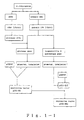
- A. chrysogenum ATCC 11550 was cultivated and alkaline protease was recovered from the culture filtrate by precipitation with 70% saturated ammonium sulfate, followed by purification using CM (carboxymethyl)-cellulose and Sephadex G75.
- CM carboxymethyl
- Sephadex G75 A molecular size of about 30,000 dalton was revealed by analysis by 11% SDS-PAGE (SDS polyacrylamide gel electrophoresis).
- This alkaline protease was mixed with complete Freund adjuvant (DIFCO) and the mixture was injected into male New Zealand white rabbits three times at a dose of 2 mg per injection in order to cause antibody production. Then whole blood collection and serum separation were made, and the serum was treated at 56 C for 30 minutes and then with 35% saturated ammonium sulfate. The resultant precipitate was subjected to treatment with Protein A-Sepharose CL-4B (Pharmacia) for antibody purification. The whole volume of the antibody solution was made 16 ml. Ouchterlony's test confirmed that the protease protein and the antibody reacted with each other to give an immunoprecipitate. The IgG (immunoglobulin G) fraction obtained from a control rabbit (no protease injection) did not show any immunoprecipitation reaction with the protease.
- DIFCO complete Freund adjuvant
- the genomic DNA was extracted from A. chrysogenum ATCC 11550 by the method described in Japanese Kokai Tokkyo Koho No. 61-209593 (Isogai et al.; laid open September 17, 1986).
- This DNA (about 25 pg) was treated with the restriction enzyme EcoRl (100 units.) at 37° C for 3 hours for partial cleavage and the digest was subjected to sucrose density gradient centrifugation (5 to 20% sucrose; Hitachi ultracentrifuge rotor RPS 55T-2, 50 krpm, 4 hours) to give a purified DNA fraction (about 3 Kbp or more in size).
- the size-fractionated DNA was finally dissolved in 100 ⁇ l of TE buffer.
- the ⁇ gtWES ⁇ B DNA [Bethesda Research Laboratories (BRL)] (about 40 ⁇ g) was completely cleaved with EcoRl and the digest was subjected to sucrose density gradient centrifugation (under the same conditions as mentioned above), whereby a 4.85-Kbp DNA was removed and a 21.7-Kbp left arm and a 13.8-Kbp right arm were purified.
- the DNA fragment obtained by partial cleavage with EcoRl (>3 Kbp, about 5 ⁇ g) and the ⁇ gtWES ⁇ B-derived EcoRl arms (about 15 ⁇ g) were mixed up and subjected to ligation using T4 DNA ligase.
- the ligation mixture was subjected to in vitro packaging using PackerGene [ ⁇ phage in vitro packaging system; Promega Biotec (imported and distributed by Seikagaku Kogyo)]. Plaque formation using E. coli DP50 supF (included in the PackerGene kit) as a host gave about 2 x 10 6 plaques. Thus a genomic DNA library consisting of about 2 x 10 6 clones could be constructed.
- chrysogenum ATCC 11550 was cultured in 100 ⁇ l of an aqueous medium containing 4.5% soluble starch, 3% corn steep liquor (CSL), 1.5% soybean meal and 0.35% CaCOa at 25°C for 4 days.
- the cells obtained were distrupted in a mortar cooled to a low temperature with liquefied nitrogen, then suspended in 40 ml of a guanidine isothiocyanate solution [4 M guanidine isothiocyanate, 50 mM Tris-HCI (pH 7.5), 20 mM EDTA, 2% N-lauroylsarcosine sodium, 0.17 M 2-mercaptoethanol] and heated at 60° C for 5 minutes.
- RNA was recovered from the supernatant by the guanidine-cesium chloride method (cf. Molecular Cloning, page 196, Cold Spring Harbor Laboratory, 1982).
- a cDNA library was constructed by the Okayama-Berg method [cf. H. Okayama and P. Berg, Mol. Cell. Biol., 2, 161 1982)].
- the mRNA (4 ⁇ g) obtained in (1-iii) and 0.9 ⁇ g of a primer [3'-oligo(dT)-tailed pSV7186-derived plasmid primer (Pharmacia)] were treated with reverse transcriptase (Seikagaku Kogyo) for synthesizing 0.64 ⁇ g of ss-cDNA (single-stranded cDNA).
- Plasmid DNA was isolated from the cDNA library consisting of 3.6 x 10 4 clones and recloned into ⁇ gtl1 (ATCC 37194), and the protease gene was searched for by express-blot assay using the protease antibody prepared in (1-i).
- the cDNA-derived DNA mixture (20 ⁇ g) was cleaved with Pstl, then treated with 1.2 units of Ba131 (BRL) (final volume 600 ⁇ l) at 37° C for 5 minutes for rendering the ends blunt and subjected to phenol extraction.
- the DNA recovered by ethanol precipitation was treated with the Klenow fragment (large fragment E. coli DNA polymerase I) in the presence of dNTP, followed by phenol extraction and ethanol precipitation.
- the DNA recovered was treated with EcoRl methylase (New England Biolabs) in the presence of S-adenosylmethionine for methylation of the EcoRl site to render said site uncleavable with EcoRl.
- the filter was reacted with a rabbit-derived protease antibody neutralized with E. coli lysate (included in the kit) [neutralized by adding 0.2 ml of E. coli lysate and 4 ⁇ l of protease antibody to 20 ml of antibody incubation buffer (cf. the manual attached to the kit)] and then with HRP (horseraddish peroxidase)-labeled anti-rabbit IgG (included in the kit). Upon the subsequent color development, positive clones gave blue-violet spots, while negative clones and rabbit-derived control antibodies gave no such spots.
- HRP horseradish peroxidase
- DNA was isolated from each of the above six positive clones and cleaved with restriction enzymes for comparison of cDNA inserts with respect to length.
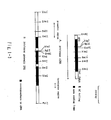
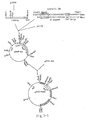
- the clone having the longest insert was named xgt-Protease2 (cf. Fig. 1-2).
- the remaining five clones each gave a similar restriction enzyme cleavage map.
- Phage transfer to a nitrocellulose filter was performed by the method described in Advanced Bacterial Genetics, pages 162 and 174 (Cold Spring Harbor Laboratory, 1980), followed by denaturation and neutralization and by Southern hybridization using a 32 P-labeled DNA mixture of pBR322-Pro2-E2 and pBR-Pro2-E3 for recovering positive clones.
- DNA labeling with 32p was performed by the nick translation method (Molecular Cloning, page 109, Cold Spring Harbor Laboratory, 1982) using ⁇ -32P-dCTP.
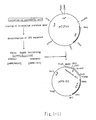
- pGPR2-EH1 was constructed by subcloning the x-G-Protease-0112 DNA into pBR322 (BRL) (cf. Fig. 1-2), and pGPR3-EH1 by subcloning the ⁇ -G-Protease-1413 DNA into pBR322.
- the ⁇ -G-Protease-0112 DNA was cleaved with EcoRl and Hindlll and a DNA fragment of about 3.5 Kbp was isolated by agarose gel (0.8%) electrophoresis followed by electrophoretic elution.
- the pBR322 DNA was cleaved with EcoRl and Hindlll and the cleavage mixture was mixed with the above-mentioned DNA fragment (about 3.5 Kbp). Ligation was effected using T4 DNA ligase. The ligation mixture was used to transform E. coli DH1.
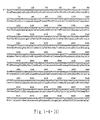
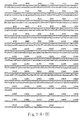
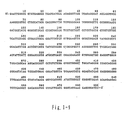
- nucleotide sequences of the cDNA portion (about 1.5 Kbp) of xgt-Protease2, the Xhol-EcoRl fragment (about 1.4 Kbp) of pGPR2-EH1 and the EcoRl-Pstl fragment (about 1.8 Kbp) of pGPR3-EH1 were determined by the dideoxynucleotide synthetic chain termination method [F. Sanger et al., Proc. Natl. Acad. Sci. USA, 74, 5463 (1977)] using the M13mp10 and M13mp11 vectors (Amersham) together with a- 32p- dCTP. The results obtained are shown in Fig. 1-4 and Fig. 1-5.
- Fig. 1-7 The long open reading frame of xgt-Protease2 is shown in Fig. 1-7. Since this cDNA was obtained based on expression of a protein fused with ⁇ gtl1 ⁇ -galactosidase followed by screening with the antibody mentioned above, the cDNA and ⁇ -galactosidase gene were supposed to be in the same translational reading frame and the result of translation was estimated. The result is shown in Fig. 1-6. It is evident that the two frames are just in phase. Furthermore it was found that the cDNA was joined to ⁇ gt11 via a 21-bp GC tailing portion.
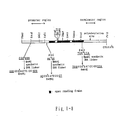
- Fig. 1-3 A Comparison in nucleotide sequence between the cDNA and genomic DNA indicated that portion of the genomic DNA which is transcribed into mRNA (cf. Fig. 1-3 B). The estimated locations of the promoter and terminator upstream and downstream, respectively, from said portion are shown in Fig. 1-3 B.
- the pGPR2-EH1 (cf. Fig. 1-2) DNA was cleaved with Smal, a synthetic EcoRl liner [d(CCGAATTCGG); Takara Shuzo] was added, and ligation was effected using T4 DNA ligase, followed by cleavage with EcoRl and Bglll.
- Fig. 1-8 The sites of introduction of the EcoRl and BamHI linkers into the promoter region of the protease gene DNA are shown in Fig. 1-8.
- the nucleotide sequence of the 0.59 Kbp DNA is shown in Fig. 1-9.
- This DNA fragment (about 0.92 Kbp) was mixed with a BamHl-Pstl DNA fragment (2.7 Kbp) of the vector plasmid pUC18 and ligation was effected using T4 DNA ligase to give the plasmid pGPR-TB1.
- Fig. 1-8 The site of introduction of the BamHl linker into the terminator region of the protease gene DNA is shown in Fig. 1-8.
- the nucleotide sequence comprising the 0.92-Kbp DNA is shown in Fig. 1-10.
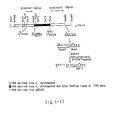
- the vector plasmid pCEP97 [cf. Isogai et al., Japanese Kokai Tokkyo Koho No. 61-209593; isolable from Escherichia coli C600 r-m- (pCEP97) ATCC 39971 by a conventional method] (Ap R Gm R ) (cf. Fig. 1-11) was cleaved with EcoRl and Hindlll.
- pGPR-PA3Q2 [cf. (2-i); containing a promoter (about 0.59 Kbp)] (Ap R Cm S ) was cleaved with EcoRl and BamHl and, further, pGPR-TB1 [cf.
- chrysogenum 3112 was grown on a media (100 ml) containing 1% glucose, 3% soluble starch, 3% corn steep liquor (CSL), 1.5% soybean meal and 0.5% CaC0 3 (pH 6.5) at 30° C for 5 days.
- the cells were disrupted in a mortar under cooling with liquefied nitrogen and a buffer was added to give the following composition: 50 mM Tris-HCI (pH 7.5), 10 mM EDTA and 1% SDS.
- the resultant mixture was heated at 65 C for 10 minutes. After phenol extractions(twice), ethanol precipitation was performed.
- the precipitate was treated with 5 ⁇ g/ml RNase A (Sigma) and then with 100 ⁇ g/ml protease K (Merck). Phenol extraction, ethanol precipitation and sucrose density gradient centrifugation (5 to 20% sucrose; Hitachi ultracentrifuge rotor SRP28; 22 krpm, 13 hours) gave a purified genomic DNA.
- IPNS genomic isopenicillin N synthetase
- Probe [1 and probe [2] were respectively labeled by the method of Inglia et al. [Inglia et al., Nucleic Acids Res., 9, 1627 (1982)] using T4 polynucleotide kinase (BRL) and ⁇ 32 P-ATP. Then a mixed DNA solution containing the probes [1], [2] and [3] was prepared, heated at 95°C for 2 minutes and cooled gradually to room temperature for effecting annealing. The annealing product was purfied using NENSORB 20 (Du Pont; imported and distributed by Daiichi Kagaku) (according to the attached manual). Separately, the A.
- NENSORB 20 Du Pont; imported and distributed by Daiichi Kagaku
- chrysogenum 3112-derived genomic DNA (about 5 ⁇ g) prepared in (3-i) was cleaved with BamHl and the cleavage mixture was subjected to agarose gel (0.8%) electrophoresis, followed by transfer to a nitrocellulose filter and Southern hybridization by the method of Southern [E. M. Southern, J. Mol. Biol., 98, 503 (1975)].
- the plasmid DNA was isolated from each of about 2.4 x 10 5 transformants and cleaved with EcoRl.
- EcoRl For exclusion of the original vector plasmid free of the A. chrystogenum 3112-derived DNA, the EcoRl digest was subjected to agarose gel (0.8%) electrophoresis and a mixture of DNAs about 6.5 to 9.5 Kbp in size was separated by electrophoretic elution. This DNA mixture was subjected to ligation using T4 DNA ligase and the ligation mixture was used to transform E. coli DH1. In this way, about 2.6 x 10 4 transformants resistant to 50 ⁇ g/ml ampicillin were obtained.
- the filter was then treated with 0.5 N NaOH-1.5 M NaCl at room temperature for 4 minutes for bacteriolysis and DNA denaturation, then neutralized by treatment with two portions of 0.5 M Tris-HCI (pH 7.0)-1.5 M NaCl at room temperature for 5 minutes per portion and subjected to hybridization, which was performed by the method described in (3-ii) using the 32P-labeled 30-meric DNA resulting from joining of probes [1] and [2]. Five hybridization-positive strains were obtained. The plasmid DNAs isolated from these strains were found quite identical to one another when compared by restriction enzyme cleavage analysis. One of the plasmids was named pIPS105 (cf. Fig. 1-12). (3-iv) Cloning of plPS105 into M13mp10:
- Amersham's M13 cloning kit was used and the procedure described in the manual attached to the kit was followed.
- the pIPS105 DNA was cleaved with Sall and a DNA fragment of about 0.63 Kbp was isolated by agarose gel (1.5%) electrophoresis followed by electrophoretic elution.
- This DNA fragment was mixed with the Sall digest of the M13mp10 DNA and ligation was carried out using T4 DNA ligase.
- the ligation mixture was used to transform E. coli JM105 (Amersham) as a host.
- White plaques which formed in the presence of X-gal and IPTG were collected and phage multiplication was conducted using E. coli JM105 as a host.
- the RF (replicating form) DNA was isolated from the host cells and named M13mp10-IPS4-2. Similary, the pIPS105 DNA was cleaved with Pstl and BamHl and a DNA fragment of about 1.0 Kbp was isolated by agarose gel (0.8%) electrophoresis followed by electrophoretic elution. This DNA fragment (about 1.0 Kbp) was ligated to Pstl-BamHl DNA fragments of M13mp10 using T4 DNA ligase. Cloning was carried out in the same manner as above. The phage obtained was multiplicated using E. coli JM 105 as a host and the RF DNA was isolated and named M13mp10-IPS3.
- the DNA nucleotide sequence of a Sall region of about 0.63 Kbp of the ss-DNA (single-stranded DNA) of M13mp10-IPS4-2 was determined by the dideoxynucleotide synthetic chain termination method (using Amersham's sequencing kit).
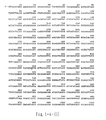
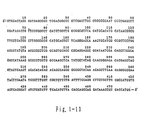
- the 478 bp Sall-Ncol DNA fragment out of said region is illustrated in Fig. 1-13. In this way, the presence of the IPNS gene could be confirmed and the promoter region could be identified.
- the restriction enzyme map of the IPNS terminator of M13mp10-IPS3 and the multicloning site portion of M13mp10 is shown in Fig. 1-14.
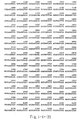
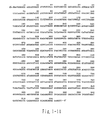
- the IPNS gene promoter and terminator can be readily synthesized by means of a DNA synthesizer on the basis of the DNA nucleotide sequences shown in Fig. 1-13 and Fig. 1-16, respectively.
- the RF DNA of M13mp10-IPS3 was cleaved with BamHl, then repaired using the Klenow fragment (large fragment E. coli DNA polymerase I; Amersham) in the presence of dNTP, subjected to ligation using T4 DNA ligase and again cleaved with BamHl.
- the cleavage mixture was used to transform E. coli JM105 and phage plaques were collected.
- the phage was multiplied using E. coli JM105 as a host and the RF DNA was separated from the host cells.
- This DNA was named M13mp10-IPS3-D8 and it was confirmed that said DNA could not be cleaved with BamHl.
- the DNA nucleotide sequence of the terminator-containing Bcll-EcoRl region (about 1.0 Kbp) of M13mp10-IPS3-D8 was determined by the dideoxynucleotide synthetic chain termination method using a- 32 P-dATP and sequenase. The sequence is shown in Fig. 1-16.
- the G418 resistance gene of Tn903 [A. Oka et al., J Mol. Biol., 147, 217 (1987)] (Pvull 1696 bp fragment) was purified from the Pvull-cleaved DNA of pCYG97 [cf. Japanese Kokai Tokkyo Koho No. 61-209593; isolable from Escherichia coli C600 r-m- (pCYG97) ATCC 399770 by a conventional method].
- coli JM109 (Takara Shuzo) and transformants grown on an LB agar plate containing 20 ⁇ g/ml kanamycin were obtained
- the plasmid DNA was isolated from one of these transformants and named pUC-Tn903-F1. Its structure was confirmed using restriction enzymes.
- the pUC-Tn903-F1 DNA was cleaved with Xhol and BamHl and a DNA fragment of about 1.21 Kbp was isolated by agarose gel (0.8%) electrophoresis followed by electrophoretic elution.
- the IPNS gene promoter was isolated from the M13mp10-IPS4-2 RF DNA by cleavage with Hindlll and Ncol followed by acrylamide gel (8%) electrophoresis and electrophoretic elution as a DNA fragment (Hindlll ⁇ Pstl ⁇ Sall-Ncol) of about 0.49 Kbp. ATG occurs in this Ncol site. Therefore, for allowing expression of the G418 resistance (kanamycin resistance) gene, the Ncol site was linked to the Xhol site by means of a synthetic DNA. Thus, two 31-meric synthetic DNAs (shown below) were synthesized using an Applied Biosystems model 381 A DNA synthesizer.
- the two synthetic DNAs (10 ⁇ g each) were mixed up in 100 ⁇ l of TE buffer, heated at 95 C for 2 minutes and then gradually cooled to room temperature for annealing.
- the 4.0 kbp Hindlll-BamHl fragment derived from the vector plasmid pBR322, the M13mp10-IPS4-2-derived Hindlll-Ncol fragment (about 0.49 Kbp), the annealed synthetic DNA (31 bp) and the pUC-Tn903-F1-derived Xhol-BamHl fragment (about 1.21 Kbp) were mixed up and ligation was carried out using T4 DNA ligase.
- the ligation mixture was used to transform E. coli DH1 by the method of D.
- the RF DNA of M13mp10-IPS3-D8 as prepared in (4-i) was cleaved with Pvull and Bcll and a DNA fragment of about 1.1 Kbp was isolated by agarose gel (0.8%) electrophoresis followed by electrophoretic elution.
- the pBCG-D3 DNA prepared in (4-ii) was cleaved with BamHl and Pvull and a BamHl-Pvull DNA fragment of about 4.05 Kbp was isolated by agarose gel (0.8%) electrophoresis followed by electrophoretic elution.
- the Bcll-Pvull DNA fragment (Bcll-Sacl-Smal ⁇ Sacl ⁇ EcoRl-Pvull) (about 1.1 Kbp) and the BamHl-Pvull DNA fragment (about 4.05 Kbp) were mixed up and ligation was carried out using T4 DNA ligase.
- the ligation mixture was used to transform E. coli DH1.
- the plasmid DNA was isolated from each of the ampicillin-resistant transformants thus obtained and the structure thereof was confirmed by analysis with restriction enzymes.
- One of the plasmids was named pBCG-DT1.
- pCEP97 DNA (cf. Fig. 1-15) was treated with 30 units of Pvull at 37° C for 1 hour (final volume: 200 ⁇ l) for partial cleavage of the DNA. Following phenol extraction and ether extraction, DNA was precipitated with ethanol. This DNA was then completely cleaved with Sall and a DNA of about 6.0 Kbp was isolated by agarose gel (0.8%) electrophoresis followed by electrophoretic elution. Separately, about 10 ⁇ g of the pBCG-DT1 DNA prepared in (4-iii) was treated with 20 units of Smal at 37° C for 30 minutes (final volume: 100 ⁇ l) for partial cleavage.
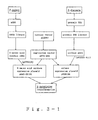
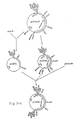
- a plasmid, pCYG-HB51, capable of expressing Hm R in A. chrysogenum was constructed by introducing the plasmid pLG90-derived Hm R gene with its 5' side modified with a synthetic DNA into the plasmid pCYG-B2 (cf. Fig. 1-11) containing a protease gene expression unit, at the BamHl site thereof (cf. Fig. 2-1).
- the plasmid pLG90 and a method of constructing the same are known [cf. P. J. M. van den Elzen et al., Plant Molecular Biology, 5, 299-302 (1985) and L. Grits and J. Davies, Gene, 25, 179-188 (1983)].
- pLG90 was cleaved with the restriction enzyme Hphl and then with the restriction enzyme BamHl.
- An Hphi-BamHl fragment (about 1.03 Kbp) was isolated by agarose gel (1.5%) electrophoresis followed by electrophoretic elution [cf. Molecular Cloning (cited above), pages 150 and 164].
- the ligation mixture was used to transform E. coli JM109 (Takara Shuzo).
- pHMP-E5 cf. Fig. 2-1
- the nucleotide sequence of a synthetic DNA region-containing portion of pHMP-E5 was determined by the dideoxynucleotide synthetic chain termination method and found to be as designed.
- pHMP-E5 was cleaved with BamHl and a DNA about 1.06 Kbp in size was isolated by agarose gel (0.8%) electrophoresis followed by electrophoretic elution.
- the expression vector in A. chrysogenum pCYG-B2 (cf. Fig. 1-11) was cleaved with BamHl. Both BamHl DNA fragments were mixed up and ligated to each other using T4 DNA ligase, and the ligation mixture was used to transform E.
- the Ap R Hm R strains might include strains containing the Hm R gene in one direction and strains containing said gene in the reverse direction.
- plasmid DNA was isolated from each of these strains and cleaved with EcoRl and the direction of the Hm R gene was judged by agarose gel (0.8%) electrophoresis.
- One of the plasmids in which said gene was in the same direction with that of the protease gene promoter was named pCYG-HB51 (cf. Fig. 2-1).
- the nucleotide sequence of the hygromycin B resistance gene inserted in this plasmid pCYG-HB51 is shown in Fig. 2-2, together with the amino acid sequence encoded by said nucleotide sequence.
- CC cephalosporin C
- DCC deacetylcephalosporin C
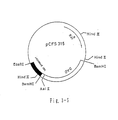
- the DAO expression plasmid pCFS315 (cf. Fig. 3-5) was isolated from E. coli JM109 (pCFS315) (FERM BP-1916) by a conventional method and cleaved with BamHl, and a 1.24 Kbp DNA was isolated by agarose gel (0.8%) electrophoresis followed by electrophoretic elution.
- the nucleotide sequence of the DAO cDNA contained in the plasmid pCFS315 is shown in Fig. 3-11.
- the vector pCYG-EB2 DNA (cf. Fig. 1-15) having an expression unit in A. chrysogenum was cleaved with BamHl.
- Both the BamHl DNA fragments were mixed up and ligated to each other using T4 DNA ligase.
- the ligation mixture was used to transform E coli DH1 (ATCC 33849). Transformants capable of growing on an LB agar plate containing 50 ⁇ g/ml ampicillin were collected.
- the plasmid DNA was isolated from each of these transformants, cleaved with BamHl or EcoRl + Pvull and subjected to agarose gel (1.5%) electrophoresis.
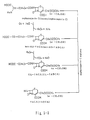
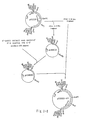
- One of the plasmids that gave a 1.24 Kbp DNA fragment upon BamHl cleavage and a 1.33 Kbp DNA fragment upon EcoRl + Pvull cleavage was named pDAO-EB101 (cf. Fig. 3-3).
- Pseudomonas diminuta V22 showing CC acylase activity was isolated from a soil sample and an acylase gene was cloned from the genomic DNA thereof using E. coli as a host, with CC acylase activity as an index.
- the N-terminal side of this gene was excised with Pstl, the C-terminal side was deleted by treatment with Ba131 to reduce the gene size to about 3 Kbp, and pCPV22P (cf. Fig. 3-6) was constructed using this gene and Km R pHSG298 [Takara Shuzo; S. Takeshita et al., Gene, 61, 63-74 (1987)] as the vector therefor.
- pV22B1 was constructed (cf. Fig. 3-6).
- the pCPV22P plasmid was isolated from E. coli JM109 (pCPV22P) (FERM-BP 2704) and 15 ⁇ g of this DNA was treated with 30 units of the restriction enzyme Mlul (Toyobo) at 37° C for 15 minutes for partial cleavage of the DNA. Following phenol extraction and ether extraction, DNA was precipitated with ethanol and treated with the Klenow fragment (large fragment E. coli DNA polymerase I) (Takara Shuzo) in the presence of dNTP for rendering the cleavage site blunt-ended. Following phenol extraction and ether extraction, DNA was precipitated with ethanol.
- the DNA was cleaved with EcoRl and a DNA about 1.1 Kbp in size was isolated by agarose gel (1.5%) electrophoresis followed by electrophoretic elution.
- the above DNA fragment (about 1.1 Kbp) and a Smal-EcoRl DNA fragment (2.7 Kbp) of the vector plasmid pUC19 (Takara Shuzo) were mixed up and ligated to each other using T4 DNA ligase to give a plasmid, pV22F2 (cf. Fig. 3-6).
- the plasmid DNA was isolated from each of these transformants and cleaved with Sall, and pV22R6 (cf. Fig. 3-6) with the acylase gene inserted therein in the reverse direction was isolated by agarose gel (0.8%) electrophoresis.
- pV22F2 was cleaved with Hindlll and EcoRl, and a Hindlll-EcoRl fragment (about 1.2 Kbp) was isolated by agarose gel (0.8%) electrophoresis followed by electrophoretic elution.
- pV22R6 was cleaved with EcoRl and BamHl and an EcoRl-BamHl fragment (about 1.4 Kbp) was isolated by agarose gel (0.8%) electrophoresis followed by electrophoretic elution.
- Hindlll-EcoRl fragment about 1.2 Kbp
- EcoRl-BamHl fragment about 1.4 Kbp
- Hindlll-BamHl fragment of the vector plasmid pHSG399 [Takara Shuzo; plasmid containing Cm R as a marker; E. coli JM109 (pHSG399) can grow on an LB agar plate containing 30 ⁇ g/ml chloramphenicol] were mixed up and ligation was carried out using T4 DNA ligase to give the plasmid pV22B1 (cf. Fig. 3-6).
- pV22B1 was cleaved with BamHI and EcoRl and a BamHl-EcoRl fragment (about 2.5 Kbp) was isolated by agarose gel (0.8%) electrophoresis followed by electrophoretic elution. This DNA fragment was cloned into an EcoRl-BamHl fragment of M13mp18 and of M13mp19 and the DNA nucleotide sequence of the open reading frame of the acylase gene inserted in pV22B1 was determined (cf. Fig. 3-7). For the nucleotide sequence determination, ⁇ - 32 P-dATP and sequenase [cf. S. Tabor and C. C. Richardson, J. Biol.
- pV22B1 was cleaved with EcoRl and DNA fragments of about 3.3 Kbp and about 1.38 Kbp were isolated by agarose gel (0.8%) electrophoresis followed by electrophoretic elution.
- the 1.38 Kbp DNA fragment was used in constructing pV22BS-A11 from pV22BDS1.
- the 3.3 Kbp DNA fragment was subjected to ligation using T4 DNA ligase to give a plasmid, pV22BD3 (cf. Fig. 3-8).
- pV22BD3 was cleaved with Aatll and BamHl and a DNA of about 3.3 Kbp was isolated by agarose gel (0.8%) electrophoresis followed by electrophoretic elution.
- two synthetic DNAs (19-mer and 11-mer) were prepared by a conventional method.
- the synthetic DNAs were designed such that a Kpnl site could be formed for facilitating detection of clones with the same inserted therein.
- the synthetic DNAs (10 ⁇ g each ) were mixed up in a final volume of 100 ⁇ l of TE buffer, heated at 90 C for 2 minutes and cooled gradually to room temperature for effecting annealing of the two DNAs.
- pV22BDS1 was cleaved with EcoRl and then mixed with the above-mentioned EcoRI-EcoRl DNA fragment (about 1.38 Kbp), and ligation was carried out using T4 DNA ligase.
- the ligation mixture was used to transform E. coli DH1 and transformants growing on an LB agar plate containing 30 ⁇ g/ml chloramphenicol were collected.
- the plasmid DNA was isolated from each of these transformants and cleaved with Pstl. Agarose gel (0.8%) electrophoresis gave pV22BS-A11 which contained the 1.38 Kbp EcoRl DNA fragment in the desired direction (cf. Fig. 3-8).
- pV22BS-A11 was cleaved with BamHl and a DNA of about 2.5 Kbp was isolated by agarose gel (0.8%) electrophoresis followed by electrophoretic elution.
- the expression vector pCYG-EB2 (cf. Fig. 1-15) for use in A. chrysogenum was cleaved with BamHl. Both the BamHl DNA fragments were mixed up and ligated to each other using T4 DNA ligase, and the ligation mixture was used to transform E. coli DH1. Transformants growing on an LB agar plate containing 50 ⁇ g/ml ampicillin were recovered.
- the plasmid DNA was isolated from each of these transformants and cleaved with BamHl and EcoRl.
- One of the plasmids which gave a DNA fragment of about 2.5 Kbp upon cleavage with BamHl and a DNA fragment of about 1.67 Kbp (about 1.96 Kbp if the acylase gene was in the reverse direction) upon cleavage with EcoRl was named pVEB104 (cf. Fig. 3-4).
- Transformation of S. cerevisiae YNN27 with pDAO-EB101 or pVEB104 was performed as described in Japanese Kokai Tokkyo Koho No. 61-209593 (Isogai et., laid open September 17, 1986) (in Example 2-III).
- the protoplast of S. cerevisiae YNN27 was mixed with 10 ⁇ l (about 5 ⁇ g) of each DNA and a buffer containing 20% PEG 4000 was added to the mixture for effecting transformation. Selection using about 300 ⁇ g/ml of the antibiotic G418 gave about 1 x 10⁴ transformants.
- Each transformant was inoculated into YEPD medium (10 g/liter yeast extract, 20 g/liter peptone, 20 g/liter glucose) (5 ml) containing 10 ⁇ g/ml uracil, 40 pg/ml tryptophan and 300 pg/ml G418 and cultivation was carried out at 30° C for 3 days. Cells were then collected by centifugation.
- YEPD medium 10 g/liter yeast extract, 20 g/liter peptone, 20 g/liter glucose
- 5 ml containing 10 ⁇ g/ml uracil, 40 pg/ml tryptophan and 300 pg/ml G418 and cultivation was carried out at 30° C for 3 days. Cells were then collected by centifugation.
- the cells were reacted with CCNa or GL-7ACA and the supernatant separated from cells by centrifugation was subjected to high performance liquid chromatogrphay [column: Inertsil ODS-2 (GasChro Kogyo); mobile phase: solution composed of 6.6 mM phosphate buffer (pH 7.3) and 3% methanol; detection: 254 nm] for product quantification.
- pDAO-EB101-carrying transformants 500 ⁇ l of a reactant solution containing 5 mg/ml CCNa, 0.1 M phosphate buffer (pH 7.5) and 14 mM NaN 3 and 5 ⁇ l of toluene were added to centrifuged cells and the reaction was carried out at 37° C for 3 hours with shaking. NaNa was added so that it could inhibit catalase to thereby allow DAO-catalyzed conversion of CCNa to GL-7ACA without stopping at the stage of keto-AD-7ACA. In this way, 840 ⁇ g/ml GL-7ACA was formed.
- pHBV1 vector for 7ACA and 7ADCA production
- pHDV1 vector for 7ACA and 7ADCA production
- pHBD3 vector for GL-7ACA and GL-7ADCA production
- pCYG-HB51 About 15 ⁇ g of pCYG-HB51 was treated with 10 units of EcoRl at 37° C for 15 minutes (final volume: 100 ⁇ l) for partial cleavage of the DNA. Following phenol extraction and ether extraction, DNA was precipitated with ethanol. This DNA was then completely cleaved with Smal and a DNA fragment of about 3.1 Kbp was isolated by agarose gel (0.8%) electrophoresis followed by electrophoretic elution. Separately, pVEB104 was cleaved with Sacl and Pvull and a DNA fragment of about 5.7 Kbp was isolated by agarose gel (0.8%) electrophoresis followed by electrophoretic elution.
- pDAO-EB101 was cleaved with Clal and a DNA fragment of about 7.5 Kbp was isolated by agarose gel (0.8%) electrophoresis followed by electrophoretic elution. Further, pHBV1 was cleaved with Clal (for cleavage at one site alone). The cleavage mixture was mixed with the above-mentioned Clal fragment (about 7.5 Kbp) and ligation was carried out using T4 DNA ligase. The ligation mixture was used to transform E. coli JM109 and transformants growing on an LB agar plate containing 50 ⁇ g/ml ampicillin were collected.
- strains capable of growing on an LB agar plate containing 150 ⁇ g/ml hygromycin but incapable of growing on an LB agar plate containing 30 ⁇ g/ml kanamycin were selected.
- the plasmid DNA was isolated from each of the thus-obtained Ap R Hm R Km S strains. Based on the BamHl cleavage pattern, whether said plasmid was the desired one or not was judged and the direction of gene insertion was determined.
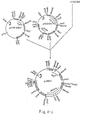
- pHDV11 cf. Fig. 4-2).
- pCYG-HB51 About 15 ⁇ g of pCYG-HB51 was treated with 10 units of EcoRl at 37° C for 15 minutes (final volume: 1 00 ⁇ l) for partial cleavage of the DNA. Following phenol extraction and ether extraction, DNA was precipitated with ethanol. This DNA was then completely cleaved with Clal and a DNA fragment fraction of about 4.3 Kbp was isolated by agarose gel (0.8%) electrophoresis followed by electrophoretic elution. Said fraction was a mixture of a fragment of about 4.28 Kbp. and a fragment of about 4.44 Kbp. If desired, however, the necessary DNA fragment (about 4.28 Kbp) can be isolated by utilizing Hm R Ap s .
- pDAO-EB101 was treated with 50 units of Pstl at 37°C for 5 minutes (final volume: 200 ⁇ l) for partial cleavage of the DNA.
- Pstl 50 units of Pstl at 37°C for 5 minutes
- DNA was precipitated with ethanol. This DNA was then cleaved with Clal and a DNA fragment fraction of about 6 Kbp was isolated by agarose gel (0.8%) electrophoresis followed by electrophoretic elution.
- This DNA fragment fraction included the following three fragments: Pstl DAO Pstl--Clal (about 5.63 Kbp), Pstl DAO pstl----Clal----Clal (about 6.53 Kbp) and Clal---Pstl DAO stl (about 5.80 Kbp). If desired, however, the last fragment (about 5.80 Kbp) can be removed by selecting APs transformants.
- the above-mentioned first DNA fragment mixture (about 4.3 Kbp) and second DNA fragment mixture (about 6 Kbp) and, further, an EcoRl-Pstl fragment (2.6 Kbp) of the vector plasmid pHG298 were mixed up and subjected to ligation using T4 DN A ligase.
- the ligation mixture was used to transform E. coli JM109 by the method of D. Hanahan and transformants growing as white colonies on an LB agar plate containing 20 ⁇ g/ml kanamycin, 0.5 mM IPTG and 100 ⁇ g/ml X-gal were recovered.
- A. chrysogenum BC2116 was transformed with pHBV1 or pHDV11 (vector for 7ACA and 7ADCA production in A. chrysogenum) or pHBD3 (vector for GL-7ACA and GL-7ADCA production in A. chrysogenum).
- the thus-obtained hygromycin B-resistant transformants were cultivated in a CC production medium (without addition of hygromycin B). It was found that said transformants can produce 7ACA or GL-7ACA in the medium.
- the frozen cell suspension (A. chrysogenum BC2116) in one ampule was thawed at 37 C and the whole amount was inoculated into 50 ml of YSP medium placed in a 250-ml shaking flask and shake culture was performed at 30 C for 4 days. A 5-ml portion of this preculture was transferred to 50 ml of fresh YPS medium and cultivation was conducted at 30 C as mentioned above for 24 hours.
- Cells were harvested from the thus-obtained 24-hour culture (200 ml) by centrifugation (3,000 rpm, 5 minutes), washed twice with sterile water (200 ml) by centrifugation and suspended in 80 ml of 10 mM Tris-HCI (pH 7.5) containing 10 mM DTT. The suspension was shaken gently at 30 C for 1 hour. Cells were then collected by centrifugation (3,000 rpm, 5 minutes) washed twice with 100 ml of 1 M KCI buffer (pH 5.8) by centrifugation and suspended in 1 M KCI buffer (pH 5.8) to a suspension volume of 20 ml.
- each plasmid DNA solution to be used for transformation was added 240 ⁇ l of 1 M KP buffer (pH 7.5). After mixing up, 400 ⁇ l of the protoplast suspension was added. After mixing up, the mixture was allowed to stand in ice for 30 minutes, then 4 ml of 10 mM Tris-HCI (pH 7.5) containing 40% PEG, 10-8% sucrose and 50 mM CaC1 2 was added and, after mixing up, the mixture was allowed to stand at room temperature for 15 minutes. Then, 10 ml of 0.8 M NaP buffer was added to the mixture and, after mixing up, the whole mixture was centrifuges at 1,000 rpm for 5 minutes. The sediment was suspended in 1.2 ml of 0.8 M NaP buffer.
- the transformant suspension (0.2 ml) was mixed with 5 ml of BRM agar medium (48° C) and the mixture was poured onto a BRM agar medium plate (25 ml). After incubation at 20°C for 20 hours, 10 mg/ml hygromycin B (Calbiochem Corporation; imported and distributed by Nakalai Tesque) was spread over the plate to a final concentration of 25 ⁇ g/ml or 50 ⁇ g/ml using a spreader (three plates for each concentration). After 2 to 3 weeks of incubation at 30° C, each colony that had appeared was transferred to a PDA-YE agar plate containing 50 ⁇ g/ml hygromycin B. Incubation was further continued at 30 C for 7 days.
- hygromycin B-resistant transformants were obtained. Since abortive transformants cannot grow on fresh medium in the presence of hygromycin B in such subculture as mentioned above, stable transformants can be readily distinguished from abortive transformants.
- the transformants were each again spread over a PDA-YE agar plate containing 40 ⁇ g/ml hygromycin B and subcultured (30° C, 5 to 7 days).
- the above procedure generally gave 1 to 3 hygromycin B-resistant transformants per about 20 ⁇ g of DNA.
- the number of colonies regenerated on the BRM agar medium plate from the final protoplast suspension obtained as described above in section (c) was about 2 x 10 8 /ml (after 2 weeks of incubation at 30 C).
- Hygromycin B-resistant transformants (cf. Table 1) were produced by transforming A. chrysogenum BC2116 with pCYG-HB51 (Hm R alone), pHBV1 (vector for 7ACA and 7ADCA production), pHDV1 (vector for 7ACA and 7ADCA production) or pHBD3 (vector for GL-7ACA and GL-7ADCA production) as described above in section (i). Each transformant was inoculated into 50 ml of CS1 medium placed in a 250-ml shaking flask.
- transformants obtained with the 7ACA and 7ADCA production vector pHVD11 containing both the D-amino acid oxidase gene and acylase gene produced 7ACA in an amount of about 150 ⁇ g/ml but did not produce GL-7ACA or keto-AD-7ACA. Even GL-7ACA producers did not produce keto-AD-7ACA. This is presumably because keto-AD-7ACA was decomposed due to its instability.
- Hygromycin B-resistant transformants (A. chrysogenum Hm144, Hm172, Hm155, Hm146, Hm154, Hm156, Hm161, Hm178, Hm165, Hm164, Hm168 and Hm179) were each shake-cultured in YPS medium (50 ml) containing 12.5 ⁇ g/ml hygromycin B at 30°C for 5 to 7 days. Cultured cells were collected by centrifugation and stored at -20° C.
- Protease K was then added to a concentration of 100 ⁇ g/ml and the mixture was maintained at 37°C for 2 hours. Following phenol extraction, DNA precipitation was caused with ethanol and the precipitate was dissolved in about 300 ⁇ l of TE buffer. The DNA solution was dialyzed against TE buffer.
- the 7ACA producing strain Acremonium chrysogenum Hm178 was cultivated in the same manner as in Example 5.
- the thus-obtained culture (1,000 ml) was centrifuged at 8,000 rpm for 5 minutes.
- the supernatant obtained was adjusted to pH 5.0 with 1 N HCI (about 10 ml) and the resultant precipitate was removed by suction filtration.
- the filtrate (600 ml; 7ACA content: 136 ⁇ g/ml) was subjected to column chromatography using Diaion HP-20 (600 ml; Mitsubishi Kasei).
- 7ACA-containing fractions were combined (600 ml), adjusted to pH 5.0 with 1 N HCI and subjected to column chromatography using Diaion HP-20 (60 ml), development being conducted with water (1,200 ml). 7ACA was eluted in fractions 600 ml to 1,600 ml. The 7ACA-containing fractions were combined and concentrated to dryness at 30° C under reduced pressure to give 5.36 mg of 7ACA as a white powder. The 1 H NMR spectrum and IR spectrum of this product were in good agreement with those of a standard.
- Hygromycin-B-resistant transformants were prepared by transforming A. chrysogenum BC2116 with pCYG-HB51 (Hm R alone), pHBV1 (vector for 7ACA and 7ADCA production), pHDV11 (vector for 7ACA and 7ADCA production) or pHBD3 (vector for GL-7ACA or GL-7ADCA production) in the same manner as described in Example 5 (cf. Table 2). These transformants were each inoculated into 50 ml of CS1 medium placed in a 250-ml shaking flask and cultured at 30° C for 4 days. One milliliter of this preculture was transferred to each of ten 250-ml shaking flasks containing 20 ml of the main culture medium.
- Shake culture stroke: 3 inches; 250 rpm was conducted at 25 C for 3, 4, 5, 6 or 7 days.
- the main culture two flasks for each culture period
- a 100- ⁇ l portion of the filtrate was added to 900 ⁇ l of 0.1 M phosphate buffer (pH 6.0) for dilution and assayed by HPLC under the following conditions:
- transformants obtained with the 7ACA and 7ADCA production vector pHDV11 containing both the D-amino acid oxidase and acylase genes produced 7ADCA in an amount of about 177 ⁇ g/ml and, in addition, the above-mentioned HPLC analysis revealed the simultaneous production of 7-amino-3-methyl-3-cephem-4-carboxylic acid by them (a small peak was found at a position corresonding to a retention time of 10 minutes).
Landscapes
- Life Sciences & Earth Sciences (AREA)
- Chemical & Material Sciences (AREA)
- Health & Medical Sciences (AREA)
- Organic Chemistry (AREA)
- Engineering & Computer Science (AREA)
- Genetics & Genomics (AREA)
- Wood Science & Technology (AREA)
- Zoology (AREA)
- Bioinformatics & Cheminformatics (AREA)
- General Engineering & Computer Science (AREA)
- Biotechnology (AREA)
- Biochemistry (AREA)
- Microbiology (AREA)
- General Health & Medical Sciences (AREA)
- Biomedical Technology (AREA)
- Molecular Biology (AREA)
- Medicinal Chemistry (AREA)
- Mycology (AREA)
- General Chemical & Material Sciences (AREA)
- Chemical Kinetics & Catalysis (AREA)
- Biophysics (AREA)
- Plant Pathology (AREA)
- Physics & Mathematics (AREA)
- Proteomics, Peptides & Aminoacids (AREA)
- Micro-Organisms Or Cultivation Processes Thereof (AREA)
- Preparation Of Compounds By Using Micro-Organisms (AREA)
- Cephalosporin Compounds (AREA)
- Organic Low-Molecular-Weight Compounds And Preparation Thereof (AREA)
- Enzymes And Modification Thereof (AREA)
- Pharmaceuticals Containing Other Organic And Inorganic Compounds (AREA)
Applications Claiming Priority (4)
| Application Number | Priority Date | Filing Date | Title |
|---|---|---|---|
| JP34211389 | 1989-12-27 | ||
| JP342113/89 | 1989-12-27 | ||
| JP193609/90 | 1990-07-20 | ||
| JP19360990 | 1990-07-20 |
Publications (3)
| Publication Number | Publication Date |
|---|---|
| EP0436355A2 true EP0436355A2 (de) | 1991-07-10 |
| EP0436355A3 EP0436355A3 (en) | 1991-10-09 |
| EP0436355B1 EP0436355B1 (de) | 1996-05-08 |
Family
ID=26507976
Family Applications (1)
| Application Number | Title | Priority Date | Filing Date |
|---|---|---|---|
| EP90313988A Expired - Lifetime EP0436355B1 (de) | 1989-12-27 | 1990-12-20 | Verfahren zur Herstellung von 7-Aminocephem-Verbindungen oder deren Salzen |
Country Status (13)
| Country | Link |
|---|---|
| US (1) | US5677141A (de) |
| EP (1) | EP0436355B1 (de) |
| JP (3) | JP3057759B2 (de) |
| KR (1) | KR0171897B1 (de) |
| AT (1) | ATE137803T1 (de) |
| CA (1) | CA2032963C (de) |
| DE (1) | DE69026921T2 (de) |
| DK (1) | DK0436355T3 (de) |
| ES (1) | ES2086386T3 (de) |
| GR (1) | GR3020071T3 (de) |
| HU (1) | HU212767B (de) |
| IE (1) | IE75376B1 (de) |
| TR (1) | TR27317A (de) |
Cited By (6)
| Publication number | Priority date | Publication date | Assignee | Title |
|---|---|---|---|---|
| EP0475652A3 (en) * | 1990-09-10 | 1992-11-19 | Fujisawa Pharmaceutical Co., Ltd. | Cephalosporin c acylase |
| EP0532341A1 (de) * | 1991-09-11 | 1993-03-17 | Gist-Brocades B.V. | Neues biologisches Verfahren zur Herstellung von 7-ADCA |
| WO1993008287A1 (en) * | 1991-10-15 | 1993-04-29 | Merck & Co., Inc. | Novel bioprocesses for preparing 7-aca and 7-adac |
| US5453374A (en) * | 1992-07-27 | 1995-09-26 | Asahi Kasai Kogyo Kabushiki Kaisha | Trigonopsis transformant producing D-amino acid oxidase |
| WO1999013058A3 (en) * | 1997-09-09 | 1999-06-10 | Biochemie Gmbh | Esterase free enzymes |
| WO2002086143A3 (en) * | 2001-04-19 | 2003-01-09 | Bioferma Murcia S A | Enzymatic process for preparing cephalosporin derivatives |
Families Citing this family (8)
| Publication number | Priority date | Publication date | Assignee | Title |
|---|---|---|---|---|
| US6410323B1 (en) * | 1999-08-31 | 2002-06-25 | Isis Pharmaceuticals, Inc. | Antisense modulation of human Rho family gene expression |
| DE10153792A1 (de) * | 2001-10-31 | 2003-05-22 | Henkel Kgaa | Neue Alkalische Protease-Varianten und Wasch- und Reinigungsmittel enthaltend diese neuen Alkalischen Protease-Varianten |
| DE60205635D1 (de) * | 2002-10-31 | 2005-09-22 | Bioferma Murcia S A | Einfaches enzymatisches Verfahren zur Herstellung von Cefazolin |
| KR100530299B1 (ko) * | 2003-08-11 | 2005-11-22 | 산도즈 게엠베하 | 변이 세팔로스포린 c 아실라제 및 이를 이용한 7-aca 제조방법 |
| ITMI20040016A1 (it) * | 2004-01-12 | 2004-04-12 | Antibiotics S P A | Cefalosporina c acilasi |
| US7981090B2 (en) | 2006-10-18 | 2011-07-19 | Baxter International Inc. | Luer activated device |
| US8221363B2 (en) | 2006-10-18 | 2012-07-17 | Baxter Healthcare S.A. | Luer activated device with valve element under tension |
| US7753338B2 (en) | 2006-10-23 | 2010-07-13 | Baxter International Inc. | Luer activated device with minimal fluid displacement |
Family Cites Families (9)
| Publication number | Priority date | Publication date | Assignee | Title |
|---|---|---|---|---|
| JPS52143289A (en) * | 1976-05-24 | 1977-11-29 | Meiji Seika Kaisha Ltd | Production of 7-amino-cephem derivatives by filamentous fungi |
| US4925794A (en) * | 1985-01-02 | 1990-05-15 | Fujisawa Pharmaceutical Co., Ltd. | Hybrid plasmids and microorganisms containing them |
| US5208155A (en) * | 1985-01-11 | 1993-05-04 | Klaus Mosbach | D-amino acid oxidase and method for isolation thereof |
| EP0200425B1 (de) * | 1985-04-22 | 1991-12-27 | Eli Lilly And Company | Rekombinante DNS-Expressionsvektoren und DNS-Verbindungen |
| JPH0829114B2 (ja) * | 1986-09-18 | 1996-03-27 | 旭化成工業株式会社 | 7−アミノセフアロスポラン酸およびその誘導体の製造法 |
| EP0322032A3 (de) * | 1987-12-21 | 1991-01-30 | Merck & Co. Inc. | Enzymatische Umwandlung von Cephalosporin C und Derivaten in 7-Aminocephalosporinsäure und Derivate in einem Schritt |
| ES2020792A6 (es) * | 1990-08-03 | 1991-09-16 | Antibioticos Sa | Un procedimiento enzimatico para la presentacion de acido 7-amino-cefa-losporanico y un procedimiento para expresar la enzima 7b (4-carboxibutanamido) cefalosporinacilasa. |
| IT1252308B (it) * | 1990-12-21 | 1995-06-08 | Antibioticos Spa | Procedimento enzimatico per la produzione di acido 7- amminocefalosporanico e derivati |
| RO116648B1 (ro) * | 1991-10-15 | 2001-04-30 | Merck & Co Inc | Bioprocedeu pentru prepararea acidului 7-amino-3-deacetil-cefalosporanic si a acidului 7-aminocefalosporanic |
-
1990
- 1990-08-30 KR KR1019900013653A patent/KR0171897B1/ko not_active Expired - Fee Related
- 1990-11-30 JP JP2338897A patent/JP3057759B2/ja not_active Expired - Fee Related
- 1990-12-20 DE DE69026921T patent/DE69026921T2/de not_active Expired - Fee Related
- 1990-12-20 ES ES90313988T patent/ES2086386T3/es not_active Expired - Lifetime
- 1990-12-20 AT AT90313988T patent/ATE137803T1/de not_active IP Right Cessation
- 1990-12-20 EP EP90313988A patent/EP0436355B1/de not_active Expired - Lifetime
- 1990-12-20 IE IE464090A patent/IE75376B1/en not_active IP Right Cessation
- 1990-12-20 DK DK90313988.9T patent/DK0436355T3/da active
- 1990-12-21 CA CA002032963A patent/CA2032963C/en not_active Expired - Fee Related
- 1990-12-21 HU HU908442A patent/HU212767B/hu not_active IP Right Cessation
-
1991
- 1991-01-18 TR TR00023/91A patent/TR27317A/xx unknown
-
1994
- 1994-09-30 US US08/314,309 patent/US5677141A/en not_active Expired - Fee Related
-
1996
- 1996-05-28 GR GR960401435T patent/GR3020071T3/el unknown
-
2000
- 2000-01-11 JP JP2000002148A patent/JP3239359B2/ja not_active Expired - Fee Related
- 2000-11-17 JP JP2000350331A patent/JP2001186894A/ja active Pending
Cited By (14)
| Publication number | Priority date | Publication date | Assignee | Title |
|---|---|---|---|---|
| EP0475652A3 (en) * | 1990-09-10 | 1992-11-19 | Fujisawa Pharmaceutical Co., Ltd. | Cephalosporin c acylase |
| EP0532341A1 (de) * | 1991-09-11 | 1993-03-17 | Gist-Brocades B.V. | Neues biologisches Verfahren zur Herstellung von 7-ADCA |
| WO1993005158A1 (en) * | 1991-09-11 | 1993-03-18 | Merck & Co., Inc. | Novel bioprocess for preparing 7-adca |
| US5318896A (en) * | 1991-09-11 | 1994-06-07 | Merck & Co., Inc. | Recombinant expandase bioprocess for preparing 7-aminodesacetoxy cephalosporanic acid (7-ADCA) |
| EP0856516A1 (de) * | 1991-10-15 | 1998-08-05 | Gist-Brocades B.V. | Neues biologisches Verfahren zur Herstellung von 7-ACA und 7-ADAC |
| WO1993008287A1 (en) * | 1991-10-15 | 1993-04-29 | Merck & Co., Inc. | Novel bioprocesses for preparing 7-aca and 7-adac |
| EP0540210A1 (de) * | 1991-10-15 | 1993-05-05 | Merck & Co. Inc. | Neues biologisches Verfahren zur Herstellung von 7-ACA und 7-ADAC |
| US5559005A (en) * | 1991-10-15 | 1996-09-24 | Merck & Co., Inc. | Bioprocess for preparing 7-ACA and 7-ADAC |
| US5453374A (en) * | 1992-07-27 | 1995-09-26 | Asahi Kasai Kogyo Kabushiki Kaisha | Trigonopsis transformant producing D-amino acid oxidase |
| WO1999013058A3 (en) * | 1997-09-09 | 1999-06-10 | Biochemie Gmbh | Esterase free enzymes |
| US6465227B1 (en) | 1997-09-09 | 2002-10-15 | Biochemie Gesellschaft M.B.H. | Spherical particles containing microorganism cells having enzyme activity |
| WO2002086143A3 (en) * | 2001-04-19 | 2003-01-09 | Bioferma Murcia S A | Enzymatic process for preparing cephalosporin derivatives |
| WO2002085914A3 (en) * | 2001-04-19 | 2003-02-06 | Bioferma Murcia S A | ENZYMATIC PROCESS FOR PREPARING CEPHALOSPORANIC ACID DERIVATIVES USING α-KETOACID DERIVATIVES |
| US6642020B2 (en) | 2001-04-19 | 2003-11-04 | Bioferma Murcia S.A. | Process for preparing cephalosporin derivatives |
Also Published As
| Publication number | Publication date |
|---|---|
| JP3239359B2 (ja) | 2001-12-17 |
| IE904640A1 (en) | 1991-07-17 |
| HUT58368A (en) | 1992-02-28 |
| CA2032963A1 (en) | 1991-06-28 |
| EP0436355A3 (en) | 1991-10-09 |
| GR3020071T3 (en) | 1996-08-31 |
| US5677141A (en) | 1997-10-14 |
| DE69026921T2 (de) | 1996-11-14 |
| KR0171897B1 (ko) | 1999-02-01 |
| HU212767B (en) | 1996-11-28 |
| IE75376B1 (en) | 1997-09-10 |
| JP2001186894A (ja) | 2001-07-10 |
| TR27317A (tr) | 1995-01-12 |
| JP2000152796A (ja) | 2000-06-06 |
| DK0436355T3 (da) | 1996-05-28 |
| ATE137803T1 (de) | 1996-05-15 |
| CA2032963C (en) | 2002-02-19 |
| JP3057759B2 (ja) | 2000-07-04 |
| DE69026921D1 (de) | 1996-06-13 |
| HU908442D0 (en) | 1991-07-29 |
| ES2086386T3 (es) | 1996-07-01 |
| KR910012261A (ko) | 1991-07-30 |
| JPH04234994A (ja) | 1992-08-24 |
| EP0436355B1 (de) | 1996-05-08 |
Similar Documents
| Publication | Publication Date | Title |
|---|---|---|
| KR100648480B1 (ko) | 세팔로스포린의 개선된 생체내 생산 | |
| US6071713A (en) | Bioprocesses for preparing 7-ACA and 7-ADAC | |
| KR100336174B1 (ko) | 2-(카르복시에틸티오)아세틸-7-adca및3-(카르복시메틸티오)프로피오닐-7-adca를경유하여7-adca를제조하는효율적인방법 | |
| EP0436355A2 (de) | Verfahren zur Herstellung von 7-Aminocephem-Verbindungen oder deren Salzen | |
| CZ287357B6 (cs) | Bioproces pro přípravu 7-aminodeacetoxycefalosporanové kyseliny, (7 - ADCA) rekombinantní DNA vektor pro expresi expandázy a jím transformovaná buňka P. chrysogenum | |
| EP0711348B1 (de) | Prozess zur effizienten produktion von 7-adca via 3-(carboxyethylthio)propionyl-7-adca | |
| JPH02150284A (ja) | クラスター状生合成遺伝子を用いた二次代謝産物生産増加法 | |
| US5328839A (en) | Oxido reductase enzyme system obtained from P. chrysogenum | |
| Bañuelos et al. | Overexpression of the lys1 gene in Penicillium chrysogenum: homocitrate synthase levels, α-aminoadipic acid pool and penicillin production | |
| JP3122663B2 (ja) | アスコルビン酸―2―リン酸の製造法 | |
| US5466598A (en) | Deacetylcephalosporin C acetyltransferase from Acremonium chrysogenum | |
| US5753435A (en) | Oxido reductase enzyme system obtainable from P. chrysogenum, the set of genes encoding the same and the use of oxido reductase enzyme systems or genes encoding the same for increasing antibiotic production | |
| EP0716698B1 (de) | Verfahren zur effizienten Herstellung von 7-ADCA via 2-(carboxyethylthio)acetyl-7-ADCA und 3-(carboxymethylthio)propionyl-7-ADCA | |
| CA2018367A1 (en) | Purified enzyme and process therefor | |
| BanÄuelos et al. | Overexpression of the lys1 gene in Penicillium chrysogenum: homocitrate synthase levels, a-aminoadipic acid pool and penicillin production | |
| PL174984B1 (pl) | Nowy proces biologiczny wytwarzania kwasu 7-aminodezacetoksycefalosporanowego (kwasu 7-ADC) |
Legal Events
| Date | Code | Title | Description |
|---|---|---|---|
| PUAI | Public reference made under article 153(3) epc to a published international application that has entered the european phase |
Free format text: ORIGINAL CODE: 0009012 |
|
| AK | Designated contracting states |
Kind code of ref document: A2 Designated state(s): AT BE CH DE DK ES FR GB GR IT LI LU NL SE |
|
| PUAL | Search report despatched |
Free format text: ORIGINAL CODE: 0009013 |
|
| AK | Designated contracting states |
Kind code of ref document: A3 Designated state(s): AT BE CH DE DK ES FR GB GR IT LI LU NL SE |
|
| 17P | Request for examination filed |
Effective date: 19920107 |
|
| 17Q | First examination report despatched |
Effective date: 19940518 |
|
| GRAA | (expected) grant |
Free format text: ORIGINAL CODE: 0009210 |
|
| AK | Designated contracting states |
Kind code of ref document: B1 Designated state(s): AT BE CH DE DK ES FR GB GR IT LI LU NL SE |
|
| REF | Corresponds to: |
Ref document number: 137803 Country of ref document: AT Date of ref document: 19960515 Kind code of ref document: T |
|
| REG | Reference to a national code |
Ref country code: DK Ref legal event code: T3 |
|
| REF | Corresponds to: |
Ref document number: 69026921 Country of ref document: DE Date of ref document: 19960613 |
|
| ET | Fr: translation filed | ||
| REG | Reference to a national code |
Ref country code: ES Ref legal event code: FG2A Ref document number: 2086386 Country of ref document: ES Kind code of ref document: T3 |
|
| ITF | It: translation for a ep patent filed | ||
| REG | Reference to a national code |
Ref country code: GR Ref legal event code: FG4A Free format text: 3020071 |
|
| PLBE | No opposition filed within time limit |
Free format text: ORIGINAL CODE: 0009261 |
|
| STAA | Information on the status of an ep patent application or granted ep patent |
Free format text: STATUS: NO OPPOSITION FILED WITHIN TIME LIMIT |
|
| 26N | No opposition filed | ||
| REG | Reference to a national code |
Ref country code: GB Ref legal event code: IF02 |
|
| PGFP | Annual fee paid to national office [announced via postgrant information from national office to epo] |
Ref country code: SE Payment date: 20021204 Year of fee payment: 13 |
|
| PGFP | Annual fee paid to national office [announced via postgrant information from national office to epo] |
Ref country code: FR Payment date: 20021210 Year of fee payment: 13 |
|
| PGFP | Annual fee paid to national office [announced via postgrant information from national office to epo] |
Ref country code: AT Payment date: 20021211 Year of fee payment: 13 |
|
| PGFP | Annual fee paid to national office [announced via postgrant information from national office to epo] |
Ref country code: DK Payment date: 20021212 Year of fee payment: 13 |
|
| PGFP | Annual fee paid to national office [announced via postgrant information from national office to epo] |
Ref country code: GB Payment date: 20021218 Year of fee payment: 13 |
|
| PGFP | Annual fee paid to national office [announced via postgrant information from national office to epo] |
Ref country code: GR Payment date: 20021220 Year of fee payment: 13 |
|
| PGFP | Annual fee paid to national office [announced via postgrant information from national office to epo] |
Ref country code: NL Payment date: 20021227 Year of fee payment: 13 |
|
| PGFP | Annual fee paid to national office [announced via postgrant information from national office to epo] |
Ref country code: LU Payment date: 20021230 Year of fee payment: 13 |
|
| PGFP | Annual fee paid to national office [announced via postgrant information from national office to epo] |
Ref country code: DE Payment date: 20021231 Year of fee payment: 13 |
|
| PGFP | Annual fee paid to national office [announced via postgrant information from national office to epo] |
Ref country code: CH Payment date: 20030108 Year of fee payment: 13 |
|
| PGFP | Annual fee paid to national office [announced via postgrant information from national office to epo] |
Ref country code: ES Payment date: 20030121 Year of fee payment: 13 |
|
| PGFP | Annual fee paid to national office [announced via postgrant information from national office to epo] |
Ref country code: BE Payment date: 20030218 Year of fee payment: 13 |
|
| PG25 | Lapsed in a contracting state [announced via postgrant information from national office to epo] |
Ref country code: LU Free format text: LAPSE BECAUSE OF NON-PAYMENT OF DUE FEES Effective date: 20031220 Ref country code: GB Free format text: LAPSE BECAUSE OF NON-PAYMENT OF DUE FEES Effective date: 20031220 Ref country code: AT Free format text: LAPSE BECAUSE OF NON-PAYMENT OF DUE FEES Effective date: 20031220 |
|
| PG25 | Lapsed in a contracting state [announced via postgrant information from national office to epo] |
Ref country code: SE Free format text: LAPSE BECAUSE OF NON-PAYMENT OF DUE FEES Effective date: 20031221 |
|
| PG25 | Lapsed in a contracting state [announced via postgrant information from national office to epo] |
Ref country code: ES Free format text: LAPSE BECAUSE OF NON-PAYMENT OF DUE FEES Effective date: 20031222 |
|
| PG25 | Lapsed in a contracting state [announced via postgrant information from national office to epo] |
Ref country code: LI Free format text: LAPSE BECAUSE OF NON-PAYMENT OF DUE FEES Effective date: 20031231 Ref country code: CH Free format text: LAPSE BECAUSE OF NON-PAYMENT OF DUE FEES Effective date: 20031231 Ref country code: BE Free format text: LAPSE BECAUSE OF NON-PAYMENT OF DUE FEES Effective date: 20031231 |
|
| PG25 | Lapsed in a contracting state [announced via postgrant information from national office to epo] |
Ref country code: DK Free format text: LAPSE BECAUSE OF NON-PAYMENT OF DUE FEES Effective date: 20040102 |
|
| BERE | Be: lapsed |
Owner name: *FUJISAWA PHARMACEUTICAL CO. LTD Effective date: 20031231 |
|
| PG25 | Lapsed in a contracting state [announced via postgrant information from national office to epo] |
Ref country code: NL Free format text: LAPSE BECAUSE OF NON-PAYMENT OF DUE FEES Effective date: 20040701 Ref country code: DE Free format text: LAPSE BECAUSE OF NON-PAYMENT OF DUE FEES Effective date: 20040701 |
|
| PG25 | Lapsed in a contracting state [announced via postgrant information from national office to epo] |
Ref country code: GR Free format text: LAPSE BECAUSE OF NON-PAYMENT OF DUE FEES Effective date: 20040705 |
|
| EUG | Se: european patent has lapsed | ||
| REG | Reference to a national code |
Ref country code: DK Ref legal event code: EBP |
|
| GBPC | Gb: european patent ceased through non-payment of renewal fee |
Effective date: 20031220 |
|
| REG | Reference to a national code |
Ref country code: CH Ref legal event code: PL |
|
| PG25 | Lapsed in a contracting state [announced via postgrant information from national office to epo] |
Ref country code: FR Free format text: LAPSE BECAUSE OF NON-PAYMENT OF DUE FEES Effective date: 20040831 |
|
| NLV4 | Nl: lapsed or anulled due to non-payment of the annual fee |
Effective date: 20040701 |
|
| REG | Reference to a national code |
Ref country code: FR Ref legal event code: ST |
|
| REG | Reference to a national code |
Ref country code: ES Ref legal event code: FD2A Effective date: 20031222 |
|
| PG25 | Lapsed in a contracting state [announced via postgrant information from national office to epo] |
Ref country code: IT Free format text: LAPSE BECAUSE OF NON-PAYMENT OF DUE FEES;WARNING: LAPSES OF ITALIAN PATENTS WITH EFFECTIVE DATE BEFORE 2007 MAY HAVE OCCURRED AT ANY TIME BEFORE 2007. THE CORRECT EFFECTIVE DATE MAY BE DIFFERENT FROM THE ONE RECORDED. Effective date: 20051220 |