EP0346085A2 - Verfahren zur Herstellung von Polyphenylensulfid-Ketonpolymeren - Google Patents
Verfahren zur Herstellung von Polyphenylensulfid-Ketonpolymeren Download PDFInfo
- Publication number
- EP0346085A2 EP0346085A2 EP89305725A EP89305725A EP0346085A2 EP 0346085 A2 EP0346085 A2 EP 0346085A2 EP 89305725 A EP89305725 A EP 89305725A EP 89305725 A EP89305725 A EP 89305725A EP 0346085 A2 EP0346085 A2 EP 0346085A2
- Authority
- EP
- European Patent Office
- Prior art keywords
- polymer
- sulfide
- alkali metal
- polymerization
- dihalogen compound
- Prior art date
- Legal status (The legal status is an assumption and is not a legal conclusion. Google has not performed a legal analysis and makes no representation as to the accuracy of the status listed.)
- Withdrawn
Links
Images
Classifications
-
- C—CHEMISTRY; METALLURGY
- C08—ORGANIC MACROMOLECULAR COMPOUNDS; THEIR PREPARATION OR CHEMICAL WORKING-UP; COMPOSITIONS BASED THEREON
- C08G—MACROMOLECULAR COMPOUNDS OBTAINED OTHERWISE THAN BY REACTIONS ONLY INVOLVING UNSATURATED CARBON-TO-CARBON BONDS
- C08G10/00—Condensation polymers of aldehydes or ketones with aromatic hydrocarbons or halogenated aromatic hydrocarbons only
-
- C—CHEMISTRY; METALLURGY
- C08—ORGANIC MACROMOLECULAR COMPOUNDS; THEIR PREPARATION OR CHEMICAL WORKING-UP; COMPOSITIONS BASED THEREON
- C08G—MACROMOLECULAR COMPOUNDS OBTAINED OTHERWISE THAN BY REACTIONS ONLY INVOLVING UNSATURATED CARBON-TO-CARBON BONDS
- C08G75/00—Macromolecular compounds obtained by reactions forming a linkage containing sulfur with or without nitrogen, oxygen, or carbon in the main chain of the macromolecule
- C08G75/02—Polythioethers
- C08G75/0204—Polyarylenethioethers
- C08G75/0236—Polyarylenethioethers containing atoms other than carbon or sulfur in a linkage between arylene groups
- C08G75/024—Polyarylenethioethers containing atoms other than carbon or sulfur in a linkage between arylene groups containing carbonyl groups
-
- C—CHEMISTRY; METALLURGY
- C08—ORGANIC MACROMOLECULAR COMPOUNDS; THEIR PREPARATION OR CHEMICAL WORKING-UP; COMPOSITIONS BASED THEREON
- C08G—MACROMOLECULAR COMPOUNDS OBTAINED OTHERWISE THAN BY REACTIONS ONLY INVOLVING UNSATURATED CARBON-TO-CARBON BONDS
- C08G75/00—Macromolecular compounds obtained by reactions forming a linkage containing sulfur with or without nitrogen, oxygen, or carbon in the main chain of the macromolecule
- C08G75/02—Polythioethers
- C08G75/0204—Polyarylenethioethers
- C08G75/025—Preparatory processes
- C08G75/0254—Preparatory processes using metal sulfides
-
- C—CHEMISTRY; METALLURGY
- C08—ORGANIC MACROMOLECULAR COMPOUNDS; THEIR PREPARATION OR CHEMICAL WORKING-UP; COMPOSITIONS BASED THEREON
- C08G—MACROMOLECULAR COMPOUNDS OBTAINED OTHERWISE THAN BY REACTIONS ONLY INVOLVING UNSATURATED CARBON-TO-CARBON BONDS
- C08G75/00—Macromolecular compounds obtained by reactions forming a linkage containing sulfur with or without nitrogen, oxygen, or carbon in the main chain of the macromolecule
- C08G75/02—Polythioethers
- C08G75/0204—Polyarylenethioethers
- C08G75/0286—Chemical after-treatment
- C08G75/0295—Modification with inorganic compounds
Definitions
- the present invention relates to a process for producing thermally stable polyphenylene sulfide ketone polymers.
- the polymers produced by the process of the present invention are thermoplastic and exhibit high resistance to heat, flame and chemicals.
- Polyphenylene sulfide ketone having a recurring unit represented by the general formula have such high heat resistance (glass transition point, 137°C; crystal melting point, 352°C) that they are anticipated to find utility in a broad range of applications including electric, electronics and automotive industries.
- PPSK has been synthesized from dihaloaromatic compounds and alkali metal sulfides in polar organic solvents and two processes based on this approach are described in Indian Journal of Chemistry , 21 , 501 (1982) and JP-A-60-58435 (the term “JP-A” as used herein means an "unexamined published Japanese patent application”).
- the polymerization temperature is as low as 170 to 180°C and the reaction is performed by one-stage heating.
- the resulting polymer has only a low solution viscosity of 0.26 (H2SO4, 0.5 g/dl, 28°C).
- the alkali metal sulfide is deprived of free water or the water of hydration by heating in a polar organic solvent and the reaction mixture is further polymerized by two-stage heating.
- the resulting polymer has low melting point and the part formed from it is very brittle.
- U.S. Patent 4,716,212 describes a process in which PPSK of high molecular weight is produced by adding sodium hydroxide and a slight excess of sodium hydrosulfide to the system. According to the Examples given therein, however, a heat treatment conducted at 316°C for 120 minutes in an air atmosphere rendered the reaction product insoluble in concentrated sulfuric acid. This phenomenon suggests the occurrence of a marked structural change due to crosslinking reaction, which led to low thermal stability of the polymer.
- PPSK Because of its crystalline nature and high melting point, PPSK needs high processing temperature and whether it is thermally stable or not presents an important problem in its shaping. However, no review has been made on the thermal stability of PPSK.
- PPSK having better thermal stability than those produced by known processes could be obtained by improving the conditions of polymerization in the following way: an alkali metal sulfide used as a reactant is not deprived of free water or the water of hydration by heating, and reaction is performed at low temperatures in the initial period of polymerization until the percentage of residual unreacted dihalogen compound is reduced to 2% and below.
- the present invention has been accomplished on the basis of this finding.
- An object, therefore, of the present invention is to provide a process for producing a polyphenylene sulfide ketone polymer comprising reacting a dihalogen compound of the general formula wherein X and X′, which may be the same or different, each represents a fluorine, chlorine, bromine or iodine atom, with an alkali metal sulfide in a polar solvent in such a way that the alkali metal sulfide is not deprived of free water or the water of hydration in the polar solvent before polymerization is started, and that the reaction is performed at a temperature in the range of from 80 to 170°C in the initial period of polymerization until the percentage of residual unreacted dihalogen compound is reduced to 2% and below, with the subsequent reaction being performed at a temperature in the range of from 200 to 345°C.
- dihalogen compound examples include 4,4′-difluorobenzophenone, 4,4′-dichlorobenzophenone, 4,4′-dibromobenzophenone and 4,4′-diiodobenzophenone. From the viewpoint of thermal resistance, it is preferred that these compounds are entirely composed of linkages on the para-position but in order to improve the solubility and formability of the resulting sulfide ketone polymers, linkages on the meta- and/or ortho-position may be introduced.
- the compounds listed above may be copolymerized with less than 30 mol%, preferably less than 10 mol%, of monomers such as 2,4′-difluorobenzophenone, 3,3′-difluorobenzophenone, 3,4′-difluorobenzophenone, 2,4′-dichlorobenzophenone, 3,3′-dichlorobenzophenone, 3,4′-dichlorobenzophenone, 2,4′-dibromobenzophenone, 3,3′-dibromobenzophenone and 3,4′-dibromobenzophenone.
- monomers such as 2,4′-difluorobenzophenone, 3,3′-difluorobenzophenone, 3,4′-difluorobenzophenone, 2,4′-dichlorobenzophenone, 3,3′-dichlorobenzophenone, 2,4′-dibromobenzophenone, 3,3′-dibrom
- components that may be copolymerized in amounts of less than 30 mol%, preferably less than 10 mol%, of the recurring unit include a para linkage meta linkage ortho linkage ether linkage sulfone linkage biphenyl linkage substituted phenylsulfide linkage where R is an alkyl group, a phenyl group, an alkoxy group, an amino group, a cyano group, a carboxylic acid group, or a metal salt of carboxylic acid group), and trifunctional linkage
- R is an alkyl group, a phenyl group, an alkoxy group, an amino group, a cyano group, a carboxylic acid group, or a metal salt of carboxylic acid group
- the organic polar solvents that are preferred for use in the present invention are those which are aprotic and stable to alkalis at high temperatures.
- Illustrative examples are N,N-dimethylacetamide (DMA), N-ethyl-2-pyrrolidone, hexamethylphosphoric triamide (HMPA), dimethyl sulfoxide (DMSO), N-methyl-2-pyrrolidone (NMP), and 1,3-dimethylimidazolidinone.
- Exemplary alkali metal sulfides that may be used in the present invention include lithium sulfide, sodium sulfide, potassium sulfide, cesium sulfide and mixtures thereof. These alkali metal sulfides may be used either in an anhydrous state or in the form of a hydrate (0.5 to 10 molar equivalents). Of these alkali metal sulfides, sodium sulfide is the least expensive and hence is preferred for industrial purposes.
- alkali metal sulfides described above may be prepared in situ in the polymerization system prior to the addition of a dihalogen compound. Alternatively, they may be added to the polymerization system after being prepared in the outside of the system.
- crown ether compounds known as phase transfer catalysts, phosphate or ammonium salt compounds, or aids such as alkali metal carboxylates may be used and this is sometimes effective for the purpose of increasing the molecular weight of the resulting polymer.
- Polymerization is performed at a temperature in the range of from 80 to 170°C in its initial period until the percentage of residual unreacted dihalogen compound is reduced to 2% and below. In the subsequent period, polymerization is performed at a temperature in the range of from 200 to 345°C, preferably from 230 to 280°C, so as to complete the reaction. The polymerization is continued for a total period of from 0.5 to 24 hours, preferably from 1 to 12 hours, under stirring.
- the molar ratio of a dihalogen compound to an alkali metal sulfide both of which are to be used in the present invention is preferably within the range of from 0.9/1.0 to 1.1/1.0.
- a solvent may be used with its amount adjusted in such a way that the polymer produced during polymerization will account for from 5 to 50 wt%, preferably from 5 to 30 wt%, of the system.
- the polymer produced may be recovered by any known method such as vacuum distillation, flash distillation, filtration or reprecipitation with water or an organic solvent.
- the isolated polymer may be subsequently washed with water or an organic solvent and then dried.
- the thermal stability of the polymer can be further improved.
- the heat treatment is generally performed for from 1 to 24 hours, preferably from 1 to 12 hours, at a temperature which is from 20 to 80°C lower than the melting point of the polymer. If the treating temperature is more than 80°C below the melting point of the polymer, the polymer will not be stabilized to the intended extent by the heat treatment.
- Specific examples of the oxygen atmosphere include pure oxygen, oxygen-containing gases, and air. It is also unclear why the heat treatment in an oxygen atmosphere is effective in improving the thermal stability of the polymer but a plausible explanation is that the active terminals that are left unreacted in the polymerization become inactivated by oxidation.
- the polyphenylene sulfide ketone polymer of the present invention generally has a reduced viscosity of from 0.10 to 2.00 as measured at 30°C in concentrated sulfuric acid at a concentration of 0.5 g/dl. If the reduced viscosity of the polymer is less than 0.10, a very brittle part will form upon forming.
- the thermally stable polyphenylene sulfide ketone polymer produced by the present invention may optionally be compounded with various additives including: reinforcing fillers such as glass fibers, carbon fibers, ceramic fibers (e.g., alumina fibers), aramid fibers, wholly aromatic polyester fibers, metal fibers and potassium titanate whiskers; inorganic fillers such as calcium carbonate, mica, talc, silica, barium sulfate, calcium sulfate, kaolin, clay, pyrophyllite, bentonite, sericite, zeolite, nepheline syenite, attapulgite, wollastonite, ferrite, calcium silicate, magnesium carbonate, dolomite, antimony trioxide, zinc oxide, titanium oxide, magnesium oxide, iron oxide, molybdenum disulfide, graphite, gypsum, glass beads, glass powder, glass baloons, quartz and quartz glass; as well as organic and
- additives that may be incorporated in the polymer as required are: release or parting agents such as aromatic hydroxy derivatives; coupling agents including silane- and titanate-based compounds; as well as lubricants, heat stabilizers, weathering agents, crystal nucleating agents, foaming agents, rust inhibitors, ion trapping agents, flame retardants, flame retardant aids, etc.
- homopolymers and copolymers may be added either on their own or as admixtures: homopolymers including polyethylene, polybutadiene, polyisoprene, polychloroprene, polystyrene, polybutene, poly- ⁇ -methylstyrene, polyvinyl acetate, polyvinyl chloride, polyacrylic esters, polymethacrylic esters, polyacrylonitrile, polyamides such as nylon-6, nylon-6,6, nylon-6,10, nylon-12, nylon-11 and nylon-4,6, polyesters such as polyethylene terephthalate, polybutylene terephthalate and polyarylates, polyurethanes, polyacetals, polycarbonates, polyphenylene oxides, polyphenylene sulfides, polyphenylene sulfide sulfones, polysulfones, polyethersulfones, polyaryl sulfones, polyether ketones, polyetherether ketones, polyetherether
- the residual amount of unreacted dihalogen compound was determined with a gas chromatograph GC-l2A of Shimadzu Corporation (detector, FID; column packed with 2% Silicone OV-17).
- the mixture was cooled to room temperature and filtered with a centrifugal separator to separate the polymer from the filtrate.
- the polymer was washed with water (7 l) at 180°C and filtered with a centrifugal separator to separate the polymer from water.
- the polymer was dried overnight at 100°C to obtain PPSK in an amount of 1,070 g (yield, 96%).
- DSC differential scanning calorimetry
- this polymer was found to have a melting point of 350°C and a glass transition point of 137°C.
- the reduced viscosity of the polymer was 0.48 (H2SO4, 0.5 g/dl, 30°C).
- the polymer was found to have a melt viscosity of 92 Pa.s at 365°C as measured with a K o ka type flow tester.
- the PPSK was heated at 380°C for 5 and 15 minutes and the resulting changes in the melt viscosity were measured. The results are shown in Table 1.
- PPSK was synthesized after removing the water of hydration from sodium sulfide by heating in accordance with the Example described in the specification of JP-A-60-58435.
- the cooled reaction mixture was poured into water, subjected to repeated washing with water and acetone, and finally dried at 100°C to obtain a polymer powder in an amount of 1,016 g (yield, 91%).
- the polymer had a reduced viscosity [ ⁇ ] of 0.36 (H2SO4, 0.5 g/dl, 30°C) and a melt viscosity of 52 Pa.s (365°C).
- the PPSK was heated at 380°C for 5 and 15 minutes and the resulting changes in the melt viscosity were measured. However, measurement was impossible for the heating period of 15 minutes since curing reaction proceeded with the polymer being in a molten state. The results are shown in Table 1.
- PPSK was synthesized in an amount of 1,061 g (yield, 95%) by repeating the procedures of Example 1 except that polymerization was accomplished by one-stage heating at 260°C for 3 hours. When the heating temperature reached 170°C in the process of reaction, the residual amount of unreacted dihalogen compound was 3.50%, which dropped to 0.24% upon completion of the reaction.
- the PPSK had a reduced viscosity [ ⁇ ] of 0.24 (H2SO4, 0.5 g/dl, 30°C) and a melt viscosity of 22 Pa.s (365°C).
- the PPSK was heated at 380°C for 5 and 15 minutes and the resulting changes in the melt viscosity were measured. In the 15-min heating, curing reaction proceeded, causing a pronounced increase in the melt viscosity of the polymer. The results are shown in Table 1.
- PPSK was synthesized in an amount of 1,095 g (yield, 98%) by repeating the procedures of Example 1 except that polymerization was performed by heating first at 200°C for 3 hours, then at 260°C for 3 hours.
- the residual amount of unreacted dihalogen compound was 0.66% after completion of the first stage of reaction, and 0.15% upon completion of the second stage of reaction.
- the resulting polymer had a reduced viscosity [ ⁇ ] of 0.25 (H2SO4, 0.5 g/dl, 30°C) and a melt viscosity of 18 Pa.s (365°C).
- Example 2 The PPSK prepared in Example 1 was heat-treated in an oven at 320°c for 8 hours in an air atmosphere. The melt viscosity of the polymer rose to 263 Pa.s (365°C) upon heat treatment. The polymer was further heated at 380°C for 5 and 30 minutes to check the time-dependent change in its melt viscosity. The result was satisfactory as shown in Table 2.
- the PPSK synthesized in Example 2 was soluble in concentrated sulfuric acid and this was in sharp contrast with the disclosure in U.S. Patent 4,716,212.
- the reduced viscosity [ ⁇ ] of this polymer was 0.52 (H2SO4, 0.5 g/dl, 30°C).
- the thermally stable PPSK prepared in Example 2 was injection-moldable after compounding. A molded part of the polymer containing 30% of glass fibers (in the chopped strand form) had the mechanical characteristics shown in Table 3.
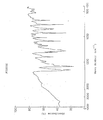
- the polymer had the IR absorption spectrum shown in the accompanying Figure. Since it had two characteristic absorption peaks, one due to the thioether linkage (ca. 1090 cm ⁇ 1) and the other due to the carbonyl group (ca. 1640 cm ⁇ 1), the polymer was found to have the recurring unit
- Example 2 The PPSK prepared in Example 2 was immediately heated at 380°C for 5 and 30 minutes and the resulting changes in melt viscosity were meausred. The results are shown in Table 2.
- the PPSK prepared in Example 2 was heat-treated in an oven at 320°C for 8 hours under vacuum.
- the polymer had a reduced viscosity [ ⁇ ] of 0.49 (H2SO4, 0.5 g/dl, 30°C) and a melt viscosity of 196 Pa.s (365°C).
- the melt viscosity of the polymer increased from the initial value, it was not thermally stabilized as effectively as the polymer treated in Example 2 because it experienced a greater time-dependent change in melt viscosity upon heating at 380°C as shown in Table 2.
- the PPSK synthesized in Comparative Example 1 was heat-treated in an oven at 300°C for 2 hours in an air atmosphere.
- the polymer cured rapidly and its melt viscosity rose to 296 Pa.s (365°C).
- the polymer was also heated at 380°C for 5 and 30 minutes and the resulting changes in melt viscosity were measured.
- the results are shown in Table 2. In the 30-min heating, the curing reaction proceeded while the polymer was molten, thus making viscosity measurement impossible.
- the PPSK synthesized in Comparative Example 2 was heat-treated in an oven at 320°C for 5 hours in an air atmosphere.
- the melt viscosity of the polymer rose to 347 Pa.s (365°C) upon heat treatment.
- the polymer was also heated at 380°C for 5 and 30 minutes and the resulting changes in melt viscosity were measured.
- the results are shown in Table 2. In the 30-min heating, a curing reaction proceeded while the polymer was molten, thus making viscosity measurement impossible.
- the PPSK synthesized in Comparative Example 3 was heat-treated in an oven at 320°C for 5 hours in an air atmosphere.
- the melt viscosity of the polymer rose to 248 Pa.s (365°C) upon heat treatment. It had a reduced viscosity [ ⁇ ] of 0.32 (H2SO4, 0.5 g/dl, 30°C).
- the polymer was also heated at 380°C for 5 and 30 minutes and the resulting changes in melt viscosity were measured. Viscosity measurement was still possible after the 30-min heating but the increase from the value obtained by 5-min heating was greater than in Example 2.
- the present invention is capable of improving the thermal stability of polyphenylene sulfide ketone polymers which inherently have high resistance to heat, flame and solvents and good mechanical properties.
- the so improved polymers are anticipated to find utility in a broader range of applications and hence have high industrial value.
Landscapes
- Chemical & Material Sciences (AREA)
- Health & Medical Sciences (AREA)
- Chemical Kinetics & Catalysis (AREA)
- Medicinal Chemistry (AREA)
- Polymers & Plastics (AREA)
- Organic Chemistry (AREA)
- Inorganic Chemistry (AREA)
- General Chemical & Material Sciences (AREA)
- Polymers With Sulfur, Phosphorus Or Metals In The Main Chain (AREA)
Applications Claiming Priority (4)
| Application Number | Priority Date | Filing Date | Title |
|---|---|---|---|
| JP138460/88 | 1988-06-07 | ||
| JP63138460A JP2629837B2 (ja) | 1988-06-07 | 1988-06-07 | ポリフェニレンスルフィドケトン重合体の製造法 |
| JP63141612A JP2696934B2 (ja) | 1988-06-10 | 1988-06-10 | ポリフェニレンスルフィドケトン重合体及びその製造法 |
| JP141612/88 | 1988-06-10 |
Publications (2)
| Publication Number | Publication Date |
|---|---|
| EP0346085A2 true EP0346085A2 (de) | 1989-12-13 |
| EP0346085A3 EP0346085A3 (de) | 1991-04-17 |
Family
ID=26471475
Family Applications (1)
| Application Number | Title | Priority Date | Filing Date |
|---|---|---|---|
| EP19890305725 Withdrawn EP0346085A3 (de) | 1988-06-07 | 1989-06-07 | Verfahren zur Herstellung von Polyphenylensulfid-Ketonpolymeren |
Country Status (3)
| Country | Link |
|---|---|
| US (1) | US5097003A (de) |
| EP (1) | EP0346085A3 (de) |
| KR (1) | KR900000399A (de) |
Cited By (2)
| Publication number | Priority date | Publication date | Assignee | Title |
|---|---|---|---|---|
| EP0369653A3 (de) * | 1988-11-11 | 1991-05-29 | Kureha Kagaku Kogyo Kabushiki Kaisha | Polyarylenthioätherketone mit verbesserter Schmelzstabilität und Verfahren zu ihrer Herstellung |
| US5312894A (en) * | 1992-04-30 | 1994-05-17 | Kureha Kagaku Kogyo K.K. | Granular high-melt-stable poly(arylene thioether-ketone) and production process thereof |
Families Citing this family (2)
| Publication number | Priority date | Publication date | Assignee | Title |
|---|---|---|---|---|
| CN101864077B (zh) * | 2010-06-30 | 2011-12-07 | 四川大学 | 聚芳硫醚酮及其制备方法 |
| CN113150279A (zh) * | 2021-06-16 | 2021-07-23 | 杨宾科 | 一种聚苯硫醚酮的制备方法 |
Family Cites Families (10)
| Publication number | Priority date | Publication date | Assignee | Title |
|---|---|---|---|---|
| US3819582A (en) * | 1971-11-29 | 1974-06-25 | Ici Ltd | Polysulphones |
| JPS5790018A (en) * | 1980-11-27 | 1982-06-04 | Toray Ind Inc | Stabilized polyphenylene sulfide and its production |
| JPS6058435A (ja) * | 1983-09-09 | 1985-04-04 | Toray Ind Inc | ポリスルフイドケトン成形物 |
| DE3405523A1 (de) * | 1984-02-16 | 1985-08-29 | Basf Ag, 6700 Ludwigshafen | Verfahren zur herstellung von polyarylensulfidketonen und ihre verwendung zur herstellung von faserverbundmaterialien |
| JPS62232437A (ja) * | 1986-04-02 | 1987-10-12 | Toto Kasei Kk | ポリフエニレンスルフイド樹脂の製造方法 |
| JPH0717750B2 (ja) * | 1986-04-28 | 1995-03-01 | 呉羽化学工業株式会社 | ポリアリ−レンスルフイドの製造方法 |
| JPH0717751B2 (ja) * | 1986-06-04 | 1995-03-01 | 呉羽化学工業株式会社 | 高分子量ポリアリ−レンスルフイドの製造法 |
| US4716212A (en) * | 1986-09-05 | 1987-12-29 | Phillips Petroleum Company | Preparation of a high molecular weight poly(arylene sulfide ketone) |
| US4812552A (en) * | 1987-04-15 | 1989-03-14 | Phillips Petroleum Company | Process for preparing poly(arylene sulfide ketone) with water addition |
| JPS6445465A (en) * | 1987-05-15 | 1989-02-17 | Kureha Chemical Ind Co Ltd | Polyarylene thioether ketone based molded product |
-
1989
- 1989-06-07 EP EP19890305725 patent/EP0346085A3/de not_active Withdrawn
- 1989-06-07 US US07/363,573 patent/US5097003A/en not_active Expired - Fee Related
- 1989-06-07 KR KR1019890007811A patent/KR900000399A/ko not_active Withdrawn
Cited By (2)
| Publication number | Priority date | Publication date | Assignee | Title |
|---|---|---|---|---|
| EP0369653A3 (de) * | 1988-11-11 | 1991-05-29 | Kureha Kagaku Kogyo Kabushiki Kaisha | Polyarylenthioätherketone mit verbesserter Schmelzstabilität und Verfahren zu ihrer Herstellung |
| US5312894A (en) * | 1992-04-30 | 1994-05-17 | Kureha Kagaku Kogyo K.K. | Granular high-melt-stable poly(arylene thioether-ketone) and production process thereof |
Also Published As
| Publication number | Publication date |
|---|---|
| US5097003A (en) | 1992-03-17 |
| EP0346085A3 (de) | 1991-04-17 |
| KR900000399A (ko) | 1990-01-30 |
Similar Documents
| Publication | Publication Date | Title |
|---|---|---|
| JP3216228B2 (ja) | ポリアリーレンスルフィドの製造方法 | |
| JP3646737B2 (ja) | 反応性に富むポリアリーレンスルフィド | |
| JPH0618878B2 (ja) | ポリ(アリ−レンスルフィドケトン)の製造方法 | |
| US4812552A (en) | Process for preparing poly(arylene sulfide ketone) with water addition | |
| EP0480685A2 (de) | Verfahren zur Herstellung von Polyarylensulfiden | |
| JP2001172387A (ja) | ポリアリーレンスルフィドの製造方法 | |
| JPH08157718A (ja) | ポリアリーレンスルフィド樹脂組成物 | |
| EP0323723B1 (de) | Verfahren zur Herstellung von Polyparaphenylensulfiden | |
| EP0281406B1 (de) | Verfahren zur Herstellung eines Polyarylensulfids | |
| JP3783219B2 (ja) | ポリアリーレンスルフィド樹脂成形品 | |
| US5097003A (en) | Process for producing polyphenylene sulfide ketone polymers | |
| CA1309551C (en) | Preparation of poly (arylene sulfide) | |
| JP3797446B2 (ja) | ポリアリーレンスルフィドの製造法 | |
| JP3034550B2 (ja) | 高分子量ポリアリーレンスルフィドの製造法 | |
| JP2696934B2 (ja) | ポリフェニレンスルフィドケトン重合体及びその製造法 | |
| JPH02102228A (ja) | 高分子量ポリフェニレンサルファイド樹脂の製造方法 | |
| EP0325061B1 (de) | Verfahren zur Herstellung von Poly(para-phenylen-sulfid) | |
| JP3074188B2 (ja) | ポリアリーレンチオエーテル共重合体の製造方法 | |
| JPH01139625A (ja) | ポリアリーレンスルフィドの製造方法 | |
| JP4820486B2 (ja) | ポリアリーレンスルフィド樹脂の製造方法 | |
| JP2629837B2 (ja) | ポリフェニレンスルフィドケトン重合体の製造法 | |
| JP3538878B2 (ja) | 管状押出成形物用の高分子量ポリアリーレンスルフィド | |
| JP3473780B2 (ja) | 高強度ポリアリーレンスルフィド及びその製造方法 | |
| JPH0820645A (ja) | 射出成形容器用の高分子量ポリアリーレンスルフィド | |
| JP3603433B2 (ja) | ポリアリーレンスルフィド樹脂組成物 |
Legal Events
| Date | Code | Title | Description |
|---|---|---|---|
| PUAI | Public reference made under article 153(3) epc to a published international application that has entered the european phase |
Free format text: ORIGINAL CODE: 0009012 |
|
| AK | Designated contracting states |
Kind code of ref document: A2 Designated state(s): CH DE FR GB LI NL |
|
| PUAL | Search report despatched |
Free format text: ORIGINAL CODE: 0009013 |
|
| 17P | Request for examination filed |
Effective date: 19901220 |
|
| AK | Designated contracting states |
Kind code of ref document: A3 Designated state(s): CH DE FR GB LI NL |
|
| RAP1 | Party data changed (applicant data changed or rights of an application transferred) |
Owner name: TOSOH CORPORATION |
|
| 17Q | First examination report despatched |
Effective date: 19940708 |
|
| STAA | Information on the status of an ep patent application or granted ep patent |
Free format text: STATUS: THE APPLICATION IS DEEMED TO BE WITHDRAWN |
|
| 18D | Application deemed to be withdrawn |
Effective date: 19950628 |