EP0345552B1 - Copolymères contenant des groupes perfluoralkyl - Google Patents
Copolymères contenant des groupes perfluoralkyl Download PDFInfo
- Publication number
- EP0345552B1 EP0345552B1 EP89109459A EP89109459A EP0345552B1 EP 0345552 B1 EP0345552 B1 EP 0345552B1 EP 89109459 A EP89109459 A EP 89109459A EP 89109459 A EP89109459 A EP 89109459A EP 0345552 B1 EP0345552 B1 EP 0345552B1
- Authority
- EP
- European Patent Office
- Prior art keywords
- alkyl
- denotes
- weight
- aqueous dispersions
- graft
- Prior art date
- Legal status (The legal status is an assumption and is not a legal conclusion. Google has not performed a legal analysis and makes no representation as to the accuracy of the status listed.)
- Expired - Lifetime
Links
- 229920001577 copolymer Polymers 0.000 title description 24
- 239000006185 dispersion Substances 0.000 claims description 47
- 239000003995 emulsifying agent Substances 0.000 claims description 44
- 239000000178 monomer Substances 0.000 claims description 27
- 239000000203 mixture Substances 0.000 claims description 20
- 125000005010 perfluoroalkyl group Chemical group 0.000 claims description 19
- XLYOFNOQVPJJNP-UHFFFAOYSA-N water Substances O XLYOFNOQVPJJNP-UHFFFAOYSA-N 0.000 claims description 14
- UFHFLCQGNIYNRP-UHFFFAOYSA-N Hydrogen Chemical compound [H][H] UFHFLCQGNIYNRP-UHFFFAOYSA-N 0.000 claims description 13
- -1 R4 denotes H Chemical group 0.000 claims description 13
- 229910052739 hydrogen Inorganic materials 0.000 claims description 13
- 239000002245 particle Substances 0.000 claims description 13
- 238000002360 preparation method Methods 0.000 claims description 13
- 125000002496 methyl group Chemical group [H]C([H])([H])* 0.000 claims description 12
- 238000006116 polymerization reaction Methods 0.000 claims description 11
- 125000002091 cationic group Chemical group 0.000 claims description 10
- 239000001257 hydrogen Substances 0.000 claims description 10
- 238000000034 method Methods 0.000 claims description 10
- 125000004178 (C1-C4) alkyl group Chemical group 0.000 claims description 9
- 229910052731 fluorine Inorganic materials 0.000 claims description 9
- 239000011737 fluorine Substances 0.000 claims description 9
- 238000007334 copolymerization reaction Methods 0.000 claims description 8
- 238000007720 emulsion polymerization reaction Methods 0.000 claims description 8
- 125000004209 (C1-C8) alkyl group Chemical group 0.000 claims description 6
- 229920000578 graft copolymer Polymers 0.000 claims description 5
- 238000004519 manufacturing process Methods 0.000 claims description 5
- 229910052760 oxygen Inorganic materials 0.000 claims description 4
- 239000001301 oxygen Substances 0.000 claims description 4
- 239000005871 repellent Substances 0.000 claims description 4
- 239000004753 textile Substances 0.000 claims description 4
- 125000006732 (C1-C15) alkyl group Chemical group 0.000 claims description 3
- 125000006702 (C1-C18) alkyl group Chemical group 0.000 claims description 3
- 125000004169 (C1-C6) alkyl group Chemical group 0.000 claims description 3
- 239000004952 Polyamide Substances 0.000 claims description 3
- 150000001450 anions Chemical class 0.000 claims description 3
- 125000003710 aryl alkyl group Chemical group 0.000 claims description 3
- QVGXLLKOCUKJST-UHFFFAOYSA-N atomic oxygen Chemical compound [O] QVGXLLKOCUKJST-UHFFFAOYSA-N 0.000 claims description 3
- 125000001797 benzyl group Chemical group [H]C1=C([H])C([H])=C(C([H])=C1[H])C([H])([H])* 0.000 claims description 3
- 125000000753 cycloalkyl group Chemical group 0.000 claims description 3
- 125000000113 cyclohexyl group Chemical group [H]C1([H])C([H])([H])C([H])([H])C([H])(*)C([H])([H])C1([H])[H] 0.000 claims description 3
- 125000001495 ethyl group Chemical group [H]C([H])([H])C([H])([H])* 0.000 claims description 3
- 125000000286 phenylethyl group Chemical group [H]C1=C([H])C([H])=C(C([H])=C1[H])C([H])([H])C([H])([H])* 0.000 claims description 3
- 229920002647 polyamide Polymers 0.000 claims description 3
- 150000001875 compounds Chemical class 0.000 claims description 2
- 150000002431 hydrogen Chemical class 0.000 claims description 2
- 239000000463 material Substances 0.000 claims description 2
- PXGOKWXKJXAPGV-UHFFFAOYSA-N Fluorine Chemical compound FF PXGOKWXKJXAPGV-UHFFFAOYSA-N 0.000 claims 1
- 239000000243 solution Substances 0.000 description 51
- XEKOWRVHYACXOJ-UHFFFAOYSA-N Ethyl acetate Chemical compound CCOC(C)=O XEKOWRVHYACXOJ-UHFFFAOYSA-N 0.000 description 45
- QTBSBXVTEAMEQO-UHFFFAOYSA-N Acetic acid Chemical compound CC(O)=O QTBSBXVTEAMEQO-UHFFFAOYSA-N 0.000 description 21
- 239000007787 solid Substances 0.000 description 21
- DKGAVHZHDRPRBM-UHFFFAOYSA-N Tert-Butanol Chemical compound CC(C)(C)O DKGAVHZHDRPRBM-UHFFFAOYSA-N 0.000 description 16
- 238000003756 stirring Methods 0.000 description 11
- KFZMGEQAYNKOFK-UHFFFAOYSA-N Isopropanol Chemical compound CC(C)O KFZMGEQAYNKOFK-UHFFFAOYSA-N 0.000 description 10
- CSCPPACGZOOCGX-UHFFFAOYSA-N Acetone Chemical compound CC(C)=O CSCPPACGZOOCGX-UHFFFAOYSA-N 0.000 description 9
- YCKRFDGAMUMZLT-UHFFFAOYSA-N Fluorine atom Chemical compound [F] YCKRFDGAMUMZLT-UHFFFAOYSA-N 0.000 description 9
- 229920000642 polymer Polymers 0.000 description 9
- PPBRXRYQALVLMV-UHFFFAOYSA-N Styrene Chemical compound C=CC1=CC=CC=C1 PPBRXRYQALVLMV-UHFFFAOYSA-N 0.000 description 8
- 150000002148 esters Chemical class 0.000 description 7
- JKNCOURZONDCGV-UHFFFAOYSA-N 2-(dimethylamino)ethyl 2-methylprop-2-enoate Chemical compound CN(C)CCOC(=O)C(C)=C JKNCOURZONDCGV-UHFFFAOYSA-N 0.000 description 6
- ZWEHNKRNPOVVGH-UHFFFAOYSA-N 2-Butanone Chemical compound CCC(C)=O ZWEHNKRNPOVVGH-UHFFFAOYSA-N 0.000 description 6
- 239000002585 base Substances 0.000 description 6
- 239000003795 chemical substances by application Substances 0.000 description 6
- 239000000839 emulsion Substances 0.000 description 6
- 238000010992 reflux Methods 0.000 description 6
- 239000002904 solvent Substances 0.000 description 6
- OPQYOFWUFGEMRZ-UHFFFAOYSA-N tert-butyl 2,2-dimethylpropaneperoxoate Chemical compound CC(C)(C)OOC(=O)C(C)(C)C OPQYOFWUFGEMRZ-UHFFFAOYSA-N 0.000 description 6
- CERQOIWHTDAKMF-UHFFFAOYSA-M Methacrylate Chemical compound CC(=C)C([O-])=O CERQOIWHTDAKMF-UHFFFAOYSA-M 0.000 description 5
- 238000000149 argon plasma sintering Methods 0.000 description 5
- 239000008367 deionised water Substances 0.000 description 5
- 229910021641 deionized water Inorganic materials 0.000 description 5
- 230000001804 emulsifying effect Effects 0.000 description 5
- 239000004816 latex Substances 0.000 description 5
- 229920000126 latex Polymers 0.000 description 5
- HMZGPNHSPWNGEP-UHFFFAOYSA-N octadecyl 2-methylprop-2-enoate Chemical compound CCCCCCCCCCCCCCCCCCOC(=O)C(C)=C HMZGPNHSPWNGEP-UHFFFAOYSA-N 0.000 description 5
- 238000005956 quaternization reaction Methods 0.000 description 5
- NIXOWILDQLNWCW-UHFFFAOYSA-M Acrylate Chemical compound [O-]C(=O)C=C NIXOWILDQLNWCW-UHFFFAOYSA-M 0.000 description 4
- IJGRMHOSHXDMSA-UHFFFAOYSA-N Atomic nitrogen Chemical compound N#N IJGRMHOSHXDMSA-UHFFFAOYSA-N 0.000 description 4
- 238000004821 distillation Methods 0.000 description 4
- 230000002209 hydrophobic effect Effects 0.000 description 4
- 229910052757 nitrogen Inorganic materials 0.000 description 4
- 150000003254 radicals Chemical class 0.000 description 4
- 239000011541 reaction mixture Substances 0.000 description 4
- OZAIFHULBGXAKX-UHFFFAOYSA-N 2-(2-cyanopropan-2-yldiazenyl)-2-methylpropanenitrile Chemical compound N#CC(C)(C)N=NC(C)(C)C#N OZAIFHULBGXAKX-UHFFFAOYSA-N 0.000 description 3
- NLHHRLWOUZZQLW-UHFFFAOYSA-N Acrylonitrile Chemical compound C=CC#N NLHHRLWOUZZQLW-UHFFFAOYSA-N 0.000 description 3
- LFQSCWFLJHTTHZ-UHFFFAOYSA-N Ethanol Chemical compound CCO LFQSCWFLJHTTHZ-UHFFFAOYSA-N 0.000 description 3
- YIVJZNGAASQVEM-UHFFFAOYSA-N Lauroyl peroxide Chemical compound CCCCCCCCCCCC(=O)OOC(=O)CCCCCCCCCCC YIVJZNGAASQVEM-UHFFFAOYSA-N 0.000 description 3
- OKKJLVBELUTLKV-UHFFFAOYSA-N Methanol Chemical compound OC OKKJLVBELUTLKV-UHFFFAOYSA-N 0.000 description 3
- GOOHAUXETOMSMM-UHFFFAOYSA-N Propylene oxide Chemical compound CC1CO1 GOOHAUXETOMSMM-UHFFFAOYSA-N 0.000 description 3
- XTXRWKRVRITETP-UHFFFAOYSA-N Vinyl acetate Chemical compound CC(=O)OC=C XTXRWKRVRITETP-UHFFFAOYSA-N 0.000 description 3
- 150000001252 acrylic acid derivatives Chemical class 0.000 description 3
- NIXOWILDQLNWCW-UHFFFAOYSA-N acrylic acid group Chemical group C(C=C)(=O)O NIXOWILDQLNWCW-UHFFFAOYSA-N 0.000 description 3
- 150000001298 alcohols Chemical class 0.000 description 3
- 229960001716 benzalkonium Drugs 0.000 description 3
- JBIROUFYLSSYDX-UHFFFAOYSA-M benzododecinium chloride Chemical compound [Cl-].CCCCCCCCCCCC[N+](C)(C)CC1=CC=CC=C1 JBIROUFYLSSYDX-UHFFFAOYSA-M 0.000 description 3
- 125000004432 carbon atom Chemical group C* 0.000 description 3
- 239000004744 fabric Substances 0.000 description 3
- 229920000847 nonoxynol Polymers 0.000 description 3
- SNQQPOLDUKLAAF-UHFFFAOYSA-N nonylphenol Chemical class CCCCCCCCCC1=CC=CC=C1O SNQQPOLDUKLAAF-UHFFFAOYSA-N 0.000 description 3
- SMZOUWXMTYCWNB-UHFFFAOYSA-N 2-(2-methoxy-5-methylphenyl)ethanamine Chemical compound COC1=CC=C(C)C=C1CCN SMZOUWXMTYCWNB-UHFFFAOYSA-N 0.000 description 2
- RUMACXVDVNRZJZ-UHFFFAOYSA-N 2-methylpropyl 2-methylprop-2-enoate Chemical compound CC(C)COC(=O)C(C)=C RUMACXVDVNRZJZ-UHFFFAOYSA-N 0.000 description 2
- RTZKZFJDLAIYFH-UHFFFAOYSA-N Diethyl ether Chemical compound CCOCC RTZKZFJDLAIYFH-UHFFFAOYSA-N 0.000 description 2
- IAYPIBMASNFSPL-UHFFFAOYSA-N Ethylene oxide Chemical compound C1CO1 IAYPIBMASNFSPL-UHFFFAOYSA-N 0.000 description 2
- CERQOIWHTDAKMF-UHFFFAOYSA-N Methacrylic acid Chemical compound CC(=C)C(O)=O CERQOIWHTDAKMF-UHFFFAOYSA-N 0.000 description 2
- LRHPLDYGYMQRHN-UHFFFAOYSA-N N-Butanol Chemical compound CCCCO LRHPLDYGYMQRHN-UHFFFAOYSA-N 0.000 description 2
- QAOWNCQODCNURD-UHFFFAOYSA-N Sulfuric acid Chemical compound OS(O)(=O)=O QAOWNCQODCNURD-UHFFFAOYSA-N 0.000 description 2
- WYURNTSHIVDZCO-UHFFFAOYSA-N Tetrahydrofuran Chemical compound C1CCOC1 WYURNTSHIVDZCO-UHFFFAOYSA-N 0.000 description 2
- 239000007864 aqueous solution Substances 0.000 description 2
- 238000006243 chemical reaction Methods 0.000 description 2
- XJOBOFWTZOKMOH-UHFFFAOYSA-N decanoyl decaneperoxoate Chemical compound CCCCCCCCCC(=O)OOC(=O)CCCCCCCCC XJOBOFWTZOKMOH-UHFFFAOYSA-N 0.000 description 2
- 239000012933 diacyl peroxide Substances 0.000 description 2
- 125000004985 dialkyl amino alkyl group Chemical group 0.000 description 2
- 235000014113 dietary fatty acids Nutrition 0.000 description 2
- 238000009826 distribution Methods 0.000 description 2
- NOPFSRXAKWQILS-UHFFFAOYSA-N docosan-1-ol Chemical compound CCCCCCCCCCCCCCCCCCCCCCO NOPFSRXAKWQILS-UHFFFAOYSA-N 0.000 description 2
- UKMSUNONTOPOIO-UHFFFAOYSA-N docosanoic acid Chemical compound CCCCCCCCCCCCCCCCCCCCCC(O)=O UKMSUNONTOPOIO-UHFFFAOYSA-N 0.000 description 2
- 150000002170 ethers Chemical class 0.000 description 2
- 229930195729 fatty acid Natural products 0.000 description 2
- 239000000194 fatty acid Substances 0.000 description 2
- 150000004665 fatty acids Chemical class 0.000 description 2
- 239000000835 fiber Substances 0.000 description 2
- 239000000155 melt Substances 0.000 description 2
- 125000005397 methacrylic acid ester group Chemical group 0.000 description 2
- ZWRUINPWMLAQRD-UHFFFAOYSA-N nonan-1-ol Chemical compound CCCCCCCCCO ZWRUINPWMLAQRD-UHFFFAOYSA-N 0.000 description 2
- GLDOVTGHNKAZLK-UHFFFAOYSA-N octadecan-1-ol Chemical compound CCCCCCCCCCCCCCCCCCO GLDOVTGHNKAZLK-UHFFFAOYSA-N 0.000 description 2
- 150000002978 peroxides Chemical class 0.000 description 2
- BDERNNFJNOPAEC-UHFFFAOYSA-N propan-1-ol Chemical compound CCCO BDERNNFJNOPAEC-UHFFFAOYSA-N 0.000 description 2
- 230000002940 repellent Effects 0.000 description 2
- 238000010561 standard procedure Methods 0.000 description 2
- 239000007858 starting material Substances 0.000 description 2
- 239000000758 substrate Substances 0.000 description 2
- 125000001302 tertiary amino group Chemical group 0.000 description 2
- CIHOLLKRGTVIJN-UHFFFAOYSA-N tert‐butyl hydroperoxide Chemical compound CC(C)(C)OO CIHOLLKRGTVIJN-UHFFFAOYSA-N 0.000 description 2
- 238000010998 test method Methods 0.000 description 2
- 238000012546 transfer Methods 0.000 description 2
- ALSTYHKOOCGGFT-KTKRTIGZSA-N (9Z)-octadecen-1-ol Chemical compound CCCCCCCC\C=C/CCCCCCCCO ALSTYHKOOCGGFT-KTKRTIGZSA-N 0.000 description 1
- KBPLFHHGFOOTCA-UHFFFAOYSA-N 1-Octanol Chemical compound CCCCCCCCO KBPLFHHGFOOTCA-UHFFFAOYSA-N 0.000 description 1
- APLNAFMUEHKRLM-UHFFFAOYSA-N 2-[5-[2-(2,3-dihydro-1H-inden-2-ylamino)pyrimidin-5-yl]-1,3,4-oxadiazol-2-yl]-1-(3,4,6,7-tetrahydroimidazo[4,5-c]pyridin-5-yl)ethanone Chemical compound C1C(CC2=CC=CC=C12)NC1=NC=C(C=N1)C1=NN=C(O1)CC(=O)N1CC2=C(CC1)N=CN2 APLNAFMUEHKRLM-UHFFFAOYSA-N 0.000 description 1
- MPGABYXKKCLIRW-UHFFFAOYSA-N 2-decyloxirane Chemical compound CCCCCCCCCCC1CO1 MPGABYXKKCLIRW-UHFFFAOYSA-N 0.000 description 1
- HRPVXLWXLXDGHG-UHFFFAOYSA-N Acrylamide Chemical compound NC(=O)C=C HRPVXLWXLXDGHG-UHFFFAOYSA-N 0.000 description 1
- 235000021357 Behenic acid Nutrition 0.000 description 1
- OMPJBNCRMGITSC-UHFFFAOYSA-N Benzoylperoxide Chemical compound C=1C=CC=CC=1C(=O)OOC(=O)C1=CC=CC=C1 OMPJBNCRMGITSC-UHFFFAOYSA-N 0.000 description 1
- VEXZGXHMUGYJMC-UHFFFAOYSA-M Chloride anion Chemical compound [Cl-] VEXZGXHMUGYJMC-UHFFFAOYSA-M 0.000 description 1
- MYMOFIZGZYHOMD-UHFFFAOYSA-N Dioxygen Chemical compound O=O MYMOFIZGZYHOMD-UHFFFAOYSA-N 0.000 description 1
- BRLQWZUYTZBJKN-UHFFFAOYSA-N Epichlorohydrin Chemical compound ClCC1CO1 BRLQWZUYTZBJKN-UHFFFAOYSA-N 0.000 description 1
- 229920000877 Melamine resin Polymers 0.000 description 1
- NTIZESTWPVYFNL-UHFFFAOYSA-N Methyl isobutyl ketone Chemical compound CC(C)CC(C)=O NTIZESTWPVYFNL-UHFFFAOYSA-N 0.000 description 1
- UIHCLUNTQKBZGK-UHFFFAOYSA-N Methyl isobutyl ketone Natural products CCC(C)C(C)=O UIHCLUNTQKBZGK-UHFFFAOYSA-N 0.000 description 1
- RJUFJBKOKNCXHH-UHFFFAOYSA-N Methyl propionate Chemical compound CCC(=O)OC RJUFJBKOKNCXHH-UHFFFAOYSA-N 0.000 description 1
- FXHOOIRPVKKKFG-UHFFFAOYSA-N N,N-Dimethylacetamide Chemical compound CN(C)C(C)=O FXHOOIRPVKKKFG-UHFFFAOYSA-N 0.000 description 1
- XBDQKXXYIPTUBI-UHFFFAOYSA-M Propionate Chemical compound CCC([O-])=O XBDQKXXYIPTUBI-UHFFFAOYSA-M 0.000 description 1
- JUJWROOIHBZHMG-UHFFFAOYSA-N Pyridine Chemical class C1=CC=NC=C1 JUJWROOIHBZHMG-UHFFFAOYSA-N 0.000 description 1
- LSNNMFCWUKXFEE-UHFFFAOYSA-N Sulfurous acid Chemical class OS(O)=O LSNNMFCWUKXFEE-UHFFFAOYSA-N 0.000 description 1
- WERKSKAQRVDLDW-ANOHMWSOSA-N [(2s,3r,4r,5r)-2,3,4,5,6-pentahydroxyhexyl] (z)-octadec-9-enoate Chemical compound CCCCCCCC\C=C/CCCCCCCC(=O)OC[C@H](O)[C@@H](O)[C@H](O)[C@H](O)CO WERKSKAQRVDLDW-ANOHMWSOSA-N 0.000 description 1
- MZVQCMJNVPIDEA-UHFFFAOYSA-N [CH2]CN(CC)CC Chemical group [CH2]CN(CC)CC MZVQCMJNVPIDEA-UHFFFAOYSA-N 0.000 description 1
- KXKVLQRXCPHEJC-UHFFFAOYSA-N acetic acid trimethyl ester Natural products COC(C)=O KXKVLQRXCPHEJC-UHFFFAOYSA-N 0.000 description 1
- 150000003926 acrylamides Chemical class 0.000 description 1
- 230000002411 adverse Effects 0.000 description 1
- 229910052783 alkali metal Inorganic materials 0.000 description 1
- 150000001350 alkyl halides Chemical class 0.000 description 1
- 230000029936 alkylation Effects 0.000 description 1
- 238000005804 alkylation reaction Methods 0.000 description 1
- 150000001408 amides Chemical class 0.000 description 1
- 150000001412 amines Chemical class 0.000 description 1
- 125000004103 aminoalkyl group Chemical group 0.000 description 1
- 229940116226 behenic acid Drugs 0.000 description 1
- 235000019400 benzoyl peroxide Nutrition 0.000 description 1
- ZFMQKOWCDKKBIF-UHFFFAOYSA-N bis(3,5-difluorophenyl)phosphane Chemical compound FC1=CC(F)=CC(PC=2C=C(F)C=C(F)C=2)=C1 ZFMQKOWCDKKBIF-UHFFFAOYSA-N 0.000 description 1
- CQEYYJKEWSMYFG-UHFFFAOYSA-N butyl acrylate Chemical compound CCCCOC(=O)C=C CQEYYJKEWSMYFG-UHFFFAOYSA-N 0.000 description 1
- 229910052799 carbon Inorganic materials 0.000 description 1
- 150000001735 carboxylic acids Chemical class 0.000 description 1
- 239000001913 cellulose Substances 0.000 description 1
- 229920002678 cellulose Polymers 0.000 description 1
- 238000001816 cooling Methods 0.000 description 1
- 230000001419 dependent effect Effects 0.000 description 1
- 150000008050 dialkyl sulfates Chemical class 0.000 description 1
- 238000010790 dilution Methods 0.000 description 1
- 239000012895 dilution Substances 0.000 description 1
- 229960000735 docosanol Drugs 0.000 description 1
- 230000000694 effects Effects 0.000 description 1
- 238000004945 emulsification Methods 0.000 description 1
- 238000007046 ethoxylation reaction Methods 0.000 description 1
- 230000007717 exclusion Effects 0.000 description 1
- 150000002191 fatty alcohols Chemical class 0.000 description 1
- 239000010419 fine particle Substances 0.000 description 1
- 238000010528 free radical solution polymerization reaction Methods 0.000 description 1
- 238000010559 graft polymerization reaction Methods 0.000 description 1
- 150000002432 hydroperoxides Chemical class 0.000 description 1
- 229920001600 hydrophobic polymer Polymers 0.000 description 1
- 239000003999 initiator Substances 0.000 description 1
- 150000002576 ketones Chemical class 0.000 description 1
- 239000010985 leather Substances 0.000 description 1
- 230000014759 maintenance of location Effects 0.000 description 1
- 150000002688 maleic acid derivatives Chemical class 0.000 description 1
- JDSHMPZPIAZGSV-UHFFFAOYSA-N melamine Chemical compound NC1=NC(N)=NC(N)=N1 JDSHMPZPIAZGSV-UHFFFAOYSA-N 0.000 description 1
- 238000002844 melting Methods 0.000 description 1
- 230000008018 melting Effects 0.000 description 1
- FQPSGWSUVKBHSU-UHFFFAOYSA-N methacrylamide Chemical class CC(=C)C(N)=O FQPSGWSUVKBHSU-UHFFFAOYSA-N 0.000 description 1
- CRVGTESFCCXCTH-UHFFFAOYSA-N methyl diethanolamine Chemical compound OCCN(C)CCO CRVGTESFCCXCTH-UHFFFAOYSA-N 0.000 description 1
- 229940017219 methyl propionate Drugs 0.000 description 1
- GOQYKNQRPGWPLP-UHFFFAOYSA-N n-heptadecyl alcohol Natural products CCCCCCCCCCCCCCCCCO GOQYKNQRPGWPLP-UHFFFAOYSA-N 0.000 description 1
- 239000004745 nonwoven fabric Substances 0.000 description 1
- 229940055577 oleyl alcohol Drugs 0.000 description 1
- XMLQWXUVTXCDDL-UHFFFAOYSA-N oleyl alcohol Natural products CCCCCCC=CCCCCCCCCCCO XMLQWXUVTXCDDL-UHFFFAOYSA-N 0.000 description 1
- 150000001451 organic peroxides Chemical class 0.000 description 1
- 239000003960 organic solvent Substances 0.000 description 1
- 239000000123 paper Substances 0.000 description 1
- 239000012188 paraffin wax Substances 0.000 description 1
- 229920002239 polyacrylonitrile Polymers 0.000 description 1
- 229920000728 polyester Polymers 0.000 description 1
- 229920000151 polyglycol Polymers 0.000 description 1
- 239000010695 polyglycol Substances 0.000 description 1
- 239000002243 precursor Substances 0.000 description 1
- 125000001453 quaternary ammonium group Chemical group 0.000 description 1
- 238000011160 research Methods 0.000 description 1
- 238000007127 saponification reaction Methods 0.000 description 1
- MWNQXXOSWHCCOZ-UHFFFAOYSA-L sodium;oxido carbonate Chemical compound [Na+].[O-]OC([O-])=O MWNQXXOSWHCCOZ-UHFFFAOYSA-L 0.000 description 1
- 238000005507 spraying Methods 0.000 description 1
- SFVFIFLLYFPGHH-UHFFFAOYSA-M stearalkonium chloride Chemical compound [Cl-].CCCCCCCCCCCCCCCCCC[N+](C)(C)CC1=CC=CC=C1 SFVFIFLLYFPGHH-UHFFFAOYSA-M 0.000 description 1
- 229940012831 stearyl alcohol Drugs 0.000 description 1
- 238000003860 storage Methods 0.000 description 1
- 150000003464 sulfur compounds Chemical class 0.000 description 1
- 229920002994 synthetic fiber Polymers 0.000 description 1
- 238000012360 testing method Methods 0.000 description 1
- YLQBMQCUIZJEEH-UHFFFAOYSA-N tetrahydrofuran Natural products C=1C=COC=1 YLQBMQCUIZJEEH-UHFFFAOYSA-N 0.000 description 1
- 150000004764 thiosulfuric acid derivatives Chemical class 0.000 description 1
- 230000001960 triggered effect Effects 0.000 description 1
- 238000002604 ultrasonography Methods 0.000 description 1
- 229920001567 vinyl ester resin Polymers 0.000 description 1
- 125000000391 vinyl group Chemical group [H]C([*])=C([H])[H] 0.000 description 1
- 210000002268 wool Anatomy 0.000 description 1
Classifications
-
- C—CHEMISTRY; METALLURGY
- C08—ORGANIC MACROMOLECULAR COMPOUNDS; THEIR PREPARATION OR CHEMICAL WORKING-UP; COMPOSITIONS BASED THEREON
- C08F—MACROMOLECULAR COMPOUNDS OBTAINED BY REACTIONS ONLY INVOLVING CARBON-TO-CARBON UNSATURATED BONDS
- C08F220/00—Copolymers of compounds having one or more unsaturated aliphatic radicals, each having only one carbon-to-carbon double bond, and only one being terminated by only one carboxyl radical or a salt, anhydride ester, amide, imide or nitrile thereof
- C08F220/02—Monocarboxylic acids having less than ten carbon atoms; Derivatives thereof
- C08F220/10—Esters
- C08F220/22—Esters containing halogen
- C08F220/24—Esters containing halogen containing perhaloalkyl radicals
-
- C—CHEMISTRY; METALLURGY
- C08—ORGANIC MACROMOLECULAR COMPOUNDS; THEIR PREPARATION OR CHEMICAL WORKING-UP; COMPOSITIONS BASED THEREON
- C08F—MACROMOLECULAR COMPOUNDS OBTAINED BY REACTIONS ONLY INVOLVING CARBON-TO-CARBON UNSATURATED BONDS
- C08F265/00—Macromolecular compounds obtained by polymerising monomers on to polymers of unsaturated monocarboxylic acids or derivatives thereof as defined in group C08F20/00
-
- D—TEXTILES; PAPER
- D06—TREATMENT OF TEXTILES OR THE LIKE; LAUNDERING; FLEXIBLE MATERIALS NOT OTHERWISE PROVIDED FOR
- D06M—TREATMENT, NOT PROVIDED FOR ELSEWHERE IN CLASS D06, OF FIBRES, THREADS, YARNS, FABRICS, FEATHERS OR FIBROUS GOODS MADE FROM SUCH MATERIALS
- D06M15/00—Treating fibres, threads, yarns, fabrics, or fibrous goods made from such materials, with macromolecular compounds; Such treatment combined with mechanical treatment
- D06M15/19—Treating fibres, threads, yarns, fabrics, or fibrous goods made from such materials, with macromolecular compounds; Such treatment combined with mechanical treatment with synthetic macromolecular compounds
- D06M15/21—Macromolecular compounds obtained by reactions only involving carbon-to-carbon unsaturated bonds
- D06M15/263—Macromolecular compounds obtained by reactions only involving carbon-to-carbon unsaturated bonds of unsaturated carboxylic acids; Salts or esters thereof
- D06M15/277—Macromolecular compounds obtained by reactions only involving carbon-to-carbon unsaturated bonds of unsaturated carboxylic acids; Salts or esters thereof containing fluorine
Definitions
- the invention relates to aqueous dispersions of copolymers and graft copolymers of ethylenically unsaturated perfluoroalkyl monomers and perfluoroalkyl group-free ethylenically unsaturated monomers which are prepared in the presence of emulsifiers containing cationic groups, a process for their preparation and their use for the hydrophobization and oleophobicization of textiles, leather and paper.
- Copolymer dispersions based on monomers containing perfluoroalkyl groups in water are known. They provide good oleophobic finishes on many substrates if the perfluoroalkyl residues are linear and contain more than 6 carbon atoms in the perfluoroalkyl residue.
- Emulsifiers or emulsifier systems are used in the preparation of these copolymer dispersions by emulsion polymerization. Depending on the emulsifier system, anionically or cationically stabilized is obtained Dispersions, the shelf life of which can be improved by adding nonionic emulsifiers. Cationic polyperfluoroalkyl (meth) acrylate copolymer dispersions are particularly suitable for textile and carpet oleophobization, also in conjunction with other finishing agents or textile auxiliaries.
- oleophobicizing agents based on polyperfluoroalkyl (meth) acrylate dispersions is essentially dependent on the concentration of perfluoroalkyl groups in the copolymer, on the composition of the copolymer and its particle size.
- the type of emulsifiers used also influences the performance properties. From an application point of view, it is often necessary for the oleophobic finish to additionally cause hydrophobization.
- the emulsifiers are often one of the reasons why the finished goods have a high dirt retention capacity.
- the task then arises to develop emulsifier systems which allow the production of very fine-particle perfluoroalkyl polymer dispersions and their effectiveness as Do not adversely affect water repellents and their soiling behavior.
- Finely divided dispersions are understood to mean dispersions with average particle sizes below 600 nm. Particularly good results are obtained if dispersions with average particle sizes from 200 to 500 nm are used.
- the cationic emulsifiers of the general formula (I) are water-soluble compounds. They are by free-radical copolymerization of styrene and its derivatives, (meth) acrylonitrile, (meth) acrylic acid and its esters with dialkylaminoalkyl (meth) acrylates or dialkylaminoalkyl (meth) acrylamides in solution, dispersion or mass and subsequent quaternization available, the degree of quaternization is at least 10%.
- a preferred embodiment is the polymerization of the monomer mixtures in solution with subsequent quaternization.
- Conventional peroxidic starters or aliphatic azo compounds can be used as initiators. It is advantageous to use solvents in solution polymerization which do not have too high transfer constants, e.g. Butanol, isopropanol, acetone, methyl isobutyl ketone or alkyl acetate.
- Derivatives containing tertiary amino groups are preferably used as aminoalkyl (meth) acrylates.
- Examples include diethylaminoethyl (meth) acrylate, dimethylaminopropyl (meth) acrylate, dimethylaminopropyl (meth) acrylamide and dimethylaminoethyl (meth) acrylate.
- Preferred polymers (I) are made from these basic monomers and (meth) acrylic acid alkyl esters with 1-4 C atoms in the alkyl radical and / or (meth) acrylic acid alkyl esters with 8 to 22 C atoms in the alkyl radical in approximately equimolar amounts or from these basic monomers , Styrene and acrylonitrile in the ratio of 1 to 2, 2 to 10 and 1 to 1.5 obtained.
- the quaternization of the basic polymers can be carried out using known quaternizing agents such as alkyl halides, dialkyl sulfates and monoepoxides and is carried out in a manner known per se (for example according to EP-A 0 160 872).
- the quaternizing agent is used in a molar ratio of 0.25-2.5, preferably 0.5-2.0, based on mole of basic nitrogen in the preliminary product.
- the optionally remaining tertiary amino groups are protonated.
- ethylenically unsaturated monomers which are used in addition to the perfluoroalkyl monomers for the preparation of the polymer dispersions according to the invention, depends on the particular application requirements.
- these comonomers are styrene, acrylic and methacrylic acid esters, vinyl esters such as vinyl acetate, maleic acid derivatives and acrylic or methacrylamides.
- Examples of comonomers of the general formula (IV) are acrylic acid or methacrylic acid esters of behenyl alcohol, stearyl alcohol, oleyl alcohol, nonyl alcohol or octyl alcohol or isomer mixtures of such alcohols.
- esters (IV) can be copolymerized in a mixture with the above-mentioned fluorine-free monomers, for example also with esters of acrylic and methacrylic acid and C1-C7 alkanols.
- water-insoluble comonomers are preferred, albeit, for example, to ensure some adhesion to the various substrates in the Oleophobic / hydrophobic armor in proportions up to 10%, preferably 2%, water-soluble comonomers can be used.
- auxiliary solvents are solvents which have little influence on the course of the emulsion polymerization, e.g. Alcohols such as methanol, ethanol, n-propanol, isopropanol and tert-butanol, ketones such as acetone and methyl ethyl ketone, ethers such as tetrahydrofuran and amides such as dimethylacetamide.
- auxiliary solvent water which is immiscible or only miscible with water, such as esters of lower alcohols with lower carboxylic acids, provided that no ester saponification can take place under the conditions of the emulsion polymerization.
- ethyl acetate, methyl acetate, methyl propionate or methyl ethyl ketone is particularly advantageous.
- the auxiliary solvent is removed after the polymerization is complete.
- the emulsions are produced in stirring units, ultrasound apparatus or homogenizers.
- radical formers e.g. aliphatic azo compounds such as azodiisobutyronitrile and organic or inorganic peroxides are suitable.
- Organic peroxides which may be mentioned are diacyl peroxides such as dibenzoyl peroxide, hydroperoxides such as tert-butyl hydroperoxide, tert-butyl perpivalate and percarbonates such as dicyclohexyl percarbonate.
- the alkali metal salts of peroxidic sulfuric acid are particularly suitable as inorganic peroxides.
- the polymerization temperatures are up to 100 ° C, preferably 50-100 ° C, in particular 60-90 ° C.
- Suitable starter systems are e.g. Mixtures of peroxidisulfates and reducing sulfur compounds such as bisulfites or thiosulfates or combinations of diacyl peroxides with tert. Amines.
- the known chain transfer agents based on mercapto compounds or aliphatic aldehydes can be used to adjust the molecular weights or the molecular weight distributions.
- a graft polymerization can take place at the same time, in which portions of the copolymer are grafted onto the cationic emulsifier (I).
- copolymer dispersions according to the invention are graft copolymer dispersions which are prepared using known graft bases. Graft copolymerization using perfluoroalkyl (meth) acrylates in an aqueous emulsion is known. It is e.g. in German Offenlegungsschriften 3 407 361 and 3 407 362. Particularly suitable graft bases are hydrophobic polymers in the form of aqueous dispersions. Particularly good application results are obtained if the graft bases themselves have the properties of water repellents.
- cationic and / or nonionic emulsifiers in addition to the cationic emulsifiers (I).
- cationic emulsifiers are quaternary ammonium or pyridinium salts, for example stearyldimethylbenzylammonium chloride or N, N, N-trimethyl-N-perfluorooctanesulfonamidopropylammonium chloride.
- the stability of the copolymer dispersions is increased in particular by nonionic emulsifiers.
- nonionic emulsifiers are polyglycol ethers, e.g. Ethylene oxide / propylene oxide block or copolymers and alkoxylation products, in particular ethoxylation products of fatty alcohols, alkylphenols, fatty acids, fatty acid amides, sorbitol monooleate.
- cationic emulsifiers In the preparation of the polymer dispersions, based on the amounts of monomers used for the polymerization, 0.1 to 7% by weight, preferably 0.2-4% by weight, of the cationic emulsifiers according to the invention are used. Of the usual cationic emulsifiers, 1-5% by weight, preferably 1.2-3% by weight, can be used. The known nonionic emulsifiers are advantageously used in amounts of 1-5% by weight, preferably 1.5-4.5% by weight. In the preparation of copolymer dispersions with particularly advantageous performance properties, it is necessary to use emulsifier systems which contain the different types of emulsifiers described in approximately equal amounts. The total amount of all emulsifiers should not exceed 10% by weight.
- the finishing is carried out by known methods, preferably by the pull-out or padding method, for example between room temperature and 40 ° C., but also by splashing or spraying with a subsequent temperature treatment at 80-180, preferably 120 to 150 ° C.
- tert-Butanol are 100 parts by weight in a reactor Dimethylaminoethyl methacrylate and 100 parts by weight Stearyl methacrylate dissolved. After displacing the atmospheric oxygen, 4 parts by weight are added. Azodiisobutyronitrile (AIBN) too. The reactor is heated to 70 ° C. and kept at this temperature for 7 hours with stirring. After cooling, a monomer conversion of> 96% is found by a solid determination.
- AIBN Azodiisobutyronitrile
- the monoepoxide (V) as quaternizing agent in about 15 min. metered in and stirred for about 1 hour.
- the remaining amount of acetic acid (VI) is then added.
- Approx. 63 - 65 l of deionized water at a temperature of approx. 60 ° C. are placed in a 120 l storage vessel equipped with a stirrer and the contents of the 40 l autoclave are combined with it.
- a homogeneous aqueous solution is prepared in a short time with vigorous stirring.
- the aqueous solutions which still contain organic solvent have the properties also listed in Table 1.
- Azoisobutyronitrile (g) 500 500 550 500 500 Acetone (g) 3000 3000 3000 3000 3000 III.
- Azoisobutyronitrile (g) 50 50 50 50 50 50 Acetone (g) 300 300 300 300 300 IV.
- Acetic acid (g) 1229 984 690 984 984 V.
- 1,2-epoxydodecane (g) 1131 - - - - 1,2-epoxyhexane (g) - 1025 719 - - 1,2-epoxybutane (g) - - - 885 - Propylene oxide (g) - - - - 891 VI.
- Viscosity (at 20 ° C) (mPa.s) * 50-100 30-70 300-500 20-50 20-50 PH value: 4.2 4.2 4.1 4.2 4.2 Appearance of the emulsifier solution; slightly cloudy clear clear clear clear *) Viscosity is not constant because samples are pseudoplastic
- Solution 1 600 parts by weight deionized water 2.75 parts by weight Benzyldodecyldimethylammonium chloride 18.45 parts by weight the emulsifier solution obtained according to Example 2a
- Solution 2 247 parts by weight Ethyl acetate 30.8 parts by weight N-methyl-N-perfluorooctanesulfonamidoethyl methacrylate 42.6 parts by weight
- Solution 3 1.125 parts by weight t-butyl perpivalate 1.5 parts by weight Ethyl acetate
- Solutions 1 and 2 are used to produce a mixture which is emulsified to constant particle size at 40 ° C. in an emulsifying machine.
- the emulsion obtained is placed in a reactor equipped with a stirrer, reflux condenser and internal thermometer.
- Solution 3 is added at 40 ° C. and stirred for 15 minutes.
- the temperature is then increased to 70 ° C. and this value is maintained for 2 hours.
- the temperature is increased again and it is kept in the range of 70-80 ° C. for 2 hours, so that the ethyl acetate can distill off via an additionally attached distillation bridge.
- the mixture is stirred for a further hour at 80 ° C.
- Example 5 The procedure is as in Example 5, but in solution 1 the emulsifier solution obtained according to Example 2a is replaced by 14 parts by weight of an emulsifier solution obtained according to Example 3E (see Table 1). Solids content: 15.4% Fluorine content in the solid: 14.6% Average particle size: 476 nm (after light scattering)
- a copolymer dispersion is prepared as described in Example 5, but with the solution from Example 2a omitted, Solids content: 13.7% Fluorine content in the solid: 15.4% Average particle size: 327 nm (after light scattering)
- Solution 1 760 parts by weight deionized water 4.5 parts by weight an ethoxylated nonylphenol with 10 EO 9.2 parts by weight the emulsifier solution obtained according to Example 2b
- Solution 2 300 parts by weight Ethyl acetate 55.6 parts by weight N-methyl-N-perfluorooctanesulfonamidoethyl methacrylate 29.5 parts by weight Stearyl methacrylate 23.8 parts by weight Vinyl acetate 22.8 parts by weight Graft base obtained as in Example 4
- Solution 3 1.018 parts by weight of t-butyl perpivalate 1.429 parts by weight of dilauroyl peroxide 8.1 parts by weight of ethyl acetate
- a mixture is prepared from solutions 1 and 2, which is emulsified at 50 ° C. in an emulsifying machine.
- the emulsion obtained is placed in a reactor equipped with a stirrer, reflux condenser and internal thermometer and allowed to cool to 30 ° C.
- Solution 3 to 30 ° C. is added with stirring.
- the temperature is raised from 30 to 50 ° C. in 1 hour and from 50 to 70 ° C. in a further hour.
- the reaction mixture is then left under stirring at 70 ° C. for 2 hours.
- Solution 1 760 parts by weight deionized water 4.54 parts by weight an ethoxylated nonylphenol 10 EO 1.8 parts by weight Benzyldodecyldimethylammonium chloride
- Solution 2 300 parts by weight Ethyl acetate 55.6 parts by weight N-methyl-N-perfluorooctanesulfonamidoethyl methacrylate 29.5 parts by weight Stearyl methacrylate 23.8 parts by weight Vinyl acetate 22.8 parts by weight Graft base obtained as in Example 4
- Solution 3 1.018 parts by weight t-butyl perpivalate 1.429 parts by weight Dilauroyl peroxide 8.1 parts by weight Ethyl acetate
- a solution is prepared from solutions 1 and 2 and this is emulsified at 50 ° C. in an emulsifying machine.
- the resulting emulsion is placed in a reactor equipped with a stirrer, reflux condenser and internal thermometer and allowed to cool to 30 ° C., solution is added 3 to 30 ° C. with stirring and the temperature rises from 30 to 50 ° C. in the course of 1 hour, and from 50 to 70 ° C. in a further hour, after which the reaction mixture is left at 70 ° C.
- Solution 1 800 parts by weight deionized water 5 parts by weight ethoxylated nonylphenol with an average of 10 ethylene oxide units 6.9 parts by weight Benzyldodecyldimethylammonium chloride 17.3 parts by weight the emulsifier solution obtained according to Example 2c Solution 2: 402 parts by weight Ethyl acetate 43.5 parts by weight Dioctyl adipate 54.2 parts by weight N-methyl-N-perfluorooctanesulfonamidoethyl methacrylate 24.9 parts by weight Stearyl methacrylate 1.44 parts by weight Isobutyl methacrylate
- Solution 3 0.9 parts by weight t-butyl perpivalate 2.1 parts by weight Ethyl acetate 0.9 parts by weight Didecanoyl peroxide
- a mixture is prepared from solutions 1 and 2 and this is emulsified five times at 50 ° C. in an emulsifying machine.
- the emulsion obtained is placed in a reactor equipped with a stirrer, reflux condenser and internal thermometer.
- Solution 3 is added with stirring at 50.degree.
- the mixture is stirred for a further half an hour at 50 ° C., then the temperature is raised from 50 to 70 ° C. within 1 hour and then kept at 70 ° C. for 2 hours.
- the reaction mixture is then allowed to react at reflux (at about 70 ° C.) for 3 hours.
- a preliminary latex with a solids content of 10.4% is obtained.
- Solution 1 1365 parts by weight Pre-latex from level 1 34.3 parts by weight Ethyl acetate 45.3 parts by weight Isobutyl methacrylate 2.8 parts by weight N-methyl-N-perfluorooctanesulfonamidoethyl methacrylate
- Solution 2 0.943 parts by weight t-butyl perpivalate 1.75 parts by weight Ethyl acetate 0.48 parts by weight Didecanoyl peroxide
- Solution 1 is emulsified at 50 ° C in an emulsifying machine and then placed in a reactor with stirrer, reflux condenser and internal thermometer.
- Solution 2 is added with stirring at 50 ° C. and everything is stirred at 50 ° C. for half an hour.
- the mixture is then heated from 50 to 70 ° C. within 1 hour and kept at 70 ° C. for a further 2 hours.
- the mixture is then run for a further 2 hours at 70-80 ° C. and the ethyl acetate is distilled off using an additional distillation device. Finally, stirring is continued at 80 ° C. for 1 hour.
- Example 10 The procedure is as in Example 10, but in order to prepare the preliminary latex (1st stage) in solution 1, the emulsifier solution obtained according to Example 2c is replaced by 17.3 parts by weight of an emulsifier solution obtained according to Example 3E (see table). Solids content: 23.2% Fluorine content in the solid: 14.4%
- Unstable polymer dispersions are obtained without the addition of an emulsifier (I) before the emulsion polymerization.
- the grade for the oleophobia was 3-4 for Example 10 and 6 for Example 11 and for Example 10 the values 60/40 to 70/30 and for Example 11, respectively the value 70/30 for hydrophobicity.
Landscapes
- Chemical & Material Sciences (AREA)
- Chemical Kinetics & Catalysis (AREA)
- Health & Medical Sciences (AREA)
- Medicinal Chemistry (AREA)
- Polymers & Plastics (AREA)
- Organic Chemistry (AREA)
- Engineering & Computer Science (AREA)
- Textile Engineering (AREA)
- Treatments For Attaching Organic Compounds To Fibrous Goods (AREA)
- Addition Polymer Or Copolymer, Post-Treatments, Or Chemical Modifications (AREA)
- Polymerisation Methods In General (AREA)
- Graft Or Block Polymers (AREA)
Claims (9)
- Dispersions aqueuses de copolymères et copolymères greffés de monomères à insaturation éthylénique perfluoroalkylés et de monomères à insaturation éthylénique exempts de groupes perfluoroalkyle, caractérisées en ce qu'elles sont obtenues par copolymérisation (greffée) exécutée sous forme d'une polymérisation en émulsion dans l'eau, sous forme de dispersions en fines particules à une dimension de particule moyenne inférieure à 600 nm, en présence de 0,1 à 7% en poids, par rapport aux quantités de monomères mises en oeuvre à la polymérisation, d'agents émulsionnants polymères solubles dans l'eau de formule générale
 X représente l'oxygène ou NH,R¹ représente l'hydrogène ou un groupe méthyle,R² représente un groupe alkyle en C₁-C₄,R³ représente un groupe alkyle en C₁-C₄,R⁴ représente H, un groupe alkyle en C₁-C₁₈, aralkyle ou cycloalkyle ou un groupe de formule
 R⁵ représente l'hydrogène ou un groupe alkyle en C₁-C₈,R⁶ représente un groupe alkyle en C₁₂-C₂₄,W⁻ représente un anion,a est un nombre allant de 1 à 3, les nombres fractionnairesb va de 0,1 à 0,8,c de 0 à 0,5,d de 0 à 0,5,e de 0 à 0,7 etf de 0 à 0,6, avec
 g est choisi de manière à parvenir à des poids moléculaires Mw de 5000 à 1 000 000.
 - Dispersions aqueuses selon revendication 1, caractérisées en ce qu'elles sont obtenues en présence d'agents émulsionnants de formule I, dans laquelle
R² et R³ représentent, indépendamment l'un de l'autre, un groupe méthyle ou éthyle,
R⁴ représente un groupe alkyle en C₁-C₄, benzyle, phényléthyle ou cyclohexyle ou un groupe de formule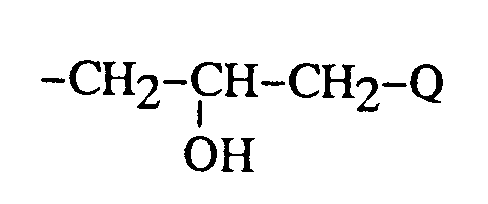
R⁶ représente un groupe alkyle en C₁₅-C₂₂ et
W⁻ représente Cl⁻, Br⁻, 1/2 SO₄²⁻, 1/3 PO₄³-, CH₃-O-SO₃⁻ ou CH₃-COO⁻,
et les autres symboles ont les significations indiquées dans la revendication 1. - Dispersions aqueuses selon revendication 1, caractérisées en ce que l'on copolymérise en tant que monomères perfluoralkylés des composés de formules
 R¹ représente l'hydrogène ou un groupe méthyle,R⁷ représente un groupe alkyle en C₁-C₄,m est égal à 1 ou 2 etn est un nombre allant de 6 à 12.
 - Dispersions aqueuses selon revendication 1, caractérisées en ce que l'on copolymérise les monomères perfluoroalkylés avec des mélanges de monomères contenant au moins un composant de formule
 R⁸ représente l'hydrogène, un groupe méthyle ou le fluor etR⁹ représente un groupe alkyle en C₈-C₂₂.
 - Dispersions aqueuses selon revendication 1, caractérisées en ce que la copolymérisation (greffée) est réalisée à des températures de 50 à 100°C.
- Dispersions aqueuses selon revendication 1, caractérisées en ce que la copolymérisation (greffée) est effectuée en présence d'agents émulsionnants non ioniques et/ou cationiques.
- Procédé de préparation des dispersions aqueuses de copolymères (greffés) de monomères à insaturation éthylénique perfluoroalkylés et de monomères à insaturation éthylénique exempts de groupes perfluoroalkyles selon revendication 1, caractérisé en ce que l'on procède à la copolymérisation (greffée) en présence d'agents émulsionnants polymères solubles dans l'eau de formule I en quantités de 0,1 à 7 % du poids des monomères mis en oeuvre à la polymérisation et sous forme d'une polymérisation en émulsion dans l'eau, avec obtention de dispersions en fines particules, à une dimension de particule moyenne inférieure à 600nm.
- Procédé pour l'apprêtage de matières textiles, caractérisé en ce que l'on utilise à cet effet des dispersions aqueuses selon revendication 1.
- Procédé pour l'apprêtage hydrofugeant et oléofugeant de moquettes en polyamide synthétiques, caractérisé en ce que l'on utilise à cet effet des dispersions aqueuses selon revendication 1.
Applications Claiming Priority (4)
| Application Number | Priority Date | Filing Date | Title |
|---|---|---|---|
| DE3819476 | 1988-06-08 | ||
| DE3819476 | 1988-06-08 | ||
| DE3842539 | 1988-12-17 | ||
| DE3842539A DE3842539A1 (de) | 1988-06-08 | 1988-12-17 | Perfluoralkylgruppen enthaltende copolymerisate |
Publications (3)
| Publication Number | Publication Date |
|---|---|
| EP0345552A2 EP0345552A2 (fr) | 1989-12-13 |
| EP0345552A3 EP0345552A3 (fr) | 1991-03-27 |
| EP0345552B1 true EP0345552B1 (fr) | 1993-11-18 |
Family
ID=25868919
Family Applications (1)
| Application Number | Title | Priority Date | Filing Date |
|---|---|---|---|
| EP89109459A Expired - Lifetime EP0345552B1 (fr) | 1988-06-08 | 1989-05-25 | Copolymères contenant des groupes perfluoralkyl |
Country Status (4)
| Country | Link |
|---|---|
| US (1) | US4997873A (fr) |
| EP (1) | EP0345552B1 (fr) |
| JP (1) | JPH0243210A (fr) |
| DE (2) | DE3842539A1 (fr) |
Families Citing this family (19)
| Publication number | Priority date | Publication date | Assignee | Title |
|---|---|---|---|---|
| DE3934543A1 (de) * | 1989-10-17 | 1991-04-18 | Bayer Ag | Perfluoralkylgruppen enthaltende copolymerisate/ii |
| US5139376A (en) * | 1991-10-23 | 1992-08-18 | Excellon Automation | Method and apparatus for controlled penetration drilling |
| JP2660312B2 (ja) * | 1992-05-29 | 1997-10-08 | ヘキスト合成株式会社 | 含フッ素系水性撥水撥油組成物 |
| US5332340A (en) * | 1992-07-27 | 1994-07-26 | Excellon Automation | Drilling method and apparatus using variable dwell times |
| US5714082A (en) * | 1995-06-02 | 1998-02-03 | Minnesota Mining And Manufacturing Company | Aqueous anti-soiling composition |
| US5807035A (en) * | 1995-10-20 | 1998-09-15 | Lewin; Howard S. | Clamp for drill press |
| US6166157A (en) * | 1995-12-20 | 2000-12-26 | E. I. Du Pont De Nemours And Company | Iodonitriles as chain transfer agents in the manufacture of perfluoropolymers |
| TW494125B (en) * | 1997-07-11 | 2002-07-11 | Rohm And Haas Compary | Preparation of fluorinated polymers |
| JP3721772B2 (ja) * | 1998-03-06 | 2005-11-30 | ユニマテック株式会社 | 撥水撥油剤 |
| US6353051B1 (en) | 1999-03-10 | 2002-03-05 | E. I. Du Pont De Nemours And Company | Top coating for synthetic leathers |
| EP1108761A3 (fr) | 1999-12-13 | 2001-07-18 | Canon Kabushiki Kaisha | Polymère film, et un polymère pour sa production |
| ITMI20031104A1 (it) * | 2003-06-03 | 2004-12-04 | Solvay Solexis Spa | Acidi carbossilici(per) fluoropolieterei e loro uso per il trattamento oleorepellente della carta |
| DE102005003262A1 (de) * | 2005-01-24 | 2006-08-03 | Albert-Ludwigs-Universität Freiburg | Verwendung antimikrobieller Polymere als Emulgatoren und Emulgatoren enthaltende antimikrobielle Polymer-Dispersionen |
| KR20080085016A (ko) * | 2006-01-10 | 2008-09-22 | 클라리언트 파이넌스 (비브이아이)리미티드 | 불소계 텔로머 화합물 및 이를 함유하는 중합체 |
| JP4908009B2 (ja) * | 2006-02-10 | 2012-04-04 | 株式会社サム技研Ii | テープ付封筒のテープ剥離装置 |
| JP4908013B2 (ja) * | 2006-02-23 | 2012-04-04 | 株式会社サム技研Ii | テープ付封筒の封緘装置 |
| EP2149591B1 (fr) * | 2007-05-30 | 2011-11-02 | Asahi Glass Company, Limited | Composition d'agent antitache, procédé de production de celle-ci et article traité avec celle-ci |
| CN101508755B (zh) * | 2009-03-11 | 2011-07-20 | 陕西科技大学 | 交联型自乳化阳离子全氟共聚物无皂乳液及其制备方法 |
| CN102675534A (zh) * | 2012-05-17 | 2012-09-19 | 陕西科技大学 | 超声辅助法制备阳离子氟碳改性聚丙烯酰胺 |
Family Cites Families (4)
| Publication number | Priority date | Publication date | Assignee | Title |
|---|---|---|---|---|
| US4064091A (en) * | 1974-08-09 | 1977-12-20 | The Kendall Co. | Process of forming a polymeric emulsion which comprises copolymerizing in aqueous dispersion an ethylenically-unsaturated monomer containing quaternary nitrogen |
| US4147851A (en) * | 1978-06-13 | 1979-04-03 | E. I. Du Pont De Nemours And Company | Fluorine-containing oil- and water-repellant copolymers |
| US4504605A (en) * | 1982-12-20 | 1985-03-12 | The Standard Oil Company | Film-forming olefinic nitrile polymer latex and method of preparing same |
| DE3407361A1 (de) * | 1984-02-29 | 1985-08-29 | Bayer Ag, 5090 Leverkusen | Verfahren zur herstellung von hydrophobier- und oleophobiermittel |
-
1988
- 1988-12-17 DE DE3842539A patent/DE3842539A1/de not_active Withdrawn
-
1989
- 1989-05-22 US US07/355,727 patent/US4997873A/en not_active Expired - Fee Related
- 1989-05-25 DE DE89109459T patent/DE58906192D1/de not_active Expired - Fee Related
- 1989-05-25 EP EP89109459A patent/EP0345552B1/fr not_active Expired - Lifetime
- 1989-06-02 JP JP1139352A patent/JPH0243210A/ja active Pending
Also Published As
| Publication number | Publication date |
|---|---|
| US4997873A (en) | 1991-03-05 |
| EP0345552A2 (fr) | 1989-12-13 |
| JPH0243210A (ja) | 1990-02-13 |
| DE3842539A1 (de) | 1989-12-21 |
| DE58906192D1 (de) | 1993-12-23 |
| EP0345552A3 (fr) | 1991-03-27 |
Similar Documents
| Publication | Publication Date | Title |
|---|---|---|
| EP0345552A2 (fr) | Copolymères contenant des groupes perfluoralkyl | |
| DE2066160C2 (de) | Selbstvernetzendes Polymerisat, Verfahren zu seiner Herstellung und seine Verwendung zur Behandlung von Papier | |
| DE69316443T2 (de) | Fluorhaltige wässrige Zusammensetzung für die Hydro- und Oleophobierung von Textilien | |
| DE69521009T2 (de) | Verbesserte Verfahren zur Herstellung von Polymere | |
| EP0552630B1 (fr) | Copolymères contenant du fluor et dispersions aqueuses préparés de ces copolymères | |
| DE19524345C2 (de) | Schlichtemittel und deren Verwendung für Glasfasern | |
| EP0424765B1 (fr) | Dispersions de copolymérisats contenant des groupes perfluoroalkyles | |
| DE3782865T2 (de) | Pfropfcopolymer mit einem stabilisationseffekt fuer dispersionen, dessen herstellungsverfahren und verfahren fuer eine emulsionspolymerisation mit diesem stabilisiermittel. | |
| EP0080635B1 (fr) | Dispersion de polymère aqueuse auto-réticulante | |
| DE2749386A1 (de) | Dispersionen hydrophiler acrylharze | |
| DE1111394B (de) | Verfahren zur Herstellung von Pfropfpolymerisaten | |
| EP0727441B1 (fr) | Procédé de préparation de dispersion aqueuses de polymères sans émulsifiant | |
| DE3407361A1 (de) | Verfahren zur herstellung von hydrophobier- und oleophobiermittel | |
| DE60019205T2 (de) | Fasern mit hoher Lichtbeständigkeit und Verfahren zur Herstellung dieser Fasern | |
| DE3689761T2 (de) | Vernetzbare Zusammensetzungen. | |
| DE19907766B4 (de) | Wäßrige Emulsion, Verfahren zu deren Herstellung sowie Wasser- und ölabweisendes Mittel | |
| EP0160257A2 (fr) | Copolymères contenant du fluor, procédé pour leur préparation et leur utilisation | |
| EP0452774A2 (fr) | Polymères greffés comprenant des groupes perfluoroalkyles | |
| DE4233026A1 (de) | Hochkonzentrierte wäßrige Poly(acrylnitril)-Emulsion und Verfahren zu ihrer Herstellung | |
| DE60015285T2 (de) | Verfahren zur Herstellung von Vinylacetat-Ethylen-Copolymer Emulsionen stabilisiert mit einer Polyethylenglykol-Polyvinylacetat- Mischung | |
| DE2709503C2 (de) | Stabile wässrige, emulgier- und dispergiermittelfreie Emulsion eines Acrylnitrilpolymerisats, Verfahren zu ihrer Herstellung und deren Verwendung als Mittel zur Verbesserung der Anfärbbarkeit | |
| DE3800845A1 (de) | Pfropfcopolymerisate, ein verfahren zu deren herstellung und deren verwendung | |
| DE2820095A1 (de) | Verfahren zur herstellung einer waermehaertbaren waessrigen polymeremulsion | |
| EP0073296A1 (fr) | Procédé de préparation de dispersions de résines synthétiques acryliques | |
| EP0364772A2 (fr) | Copolymères contenant des groupes perfluoralkyl |
Legal Events
| Date | Code | Title | Description |
|---|---|---|---|
| PUAI | Public reference made under article 153(3) epc to a published international application that has entered the european phase |
Free format text: ORIGINAL CODE: 0009012 |
|
| 17P | Request for examination filed |
Effective date: 19890602 |
|
| AK | Designated contracting states |
Kind code of ref document: A2 Designated state(s): CH DE FR GB LI |
|
| PUAL | Search report despatched |
Free format text: ORIGINAL CODE: 0009013 |
|
| AK | Designated contracting states |
Kind code of ref document: A3 Designated state(s): CH DE FR GB LI |
|
| 17Q | First examination report despatched |
Effective date: 19921021 |
|
| GRAA | (expected) grant |
Free format text: ORIGINAL CODE: 0009210 |
|
| AK | Designated contracting states |
Kind code of ref document: B1 Designated state(s): CH DE FR GB LI |
|
| REF | Corresponds to: |
Ref document number: 58906192 Country of ref document: DE Date of ref document: 19931223 |
|
| GBT | Gb: translation of ep patent filed (gb section 77(6)(a)/1977) |
Effective date: 19931130 |
|
| ET | Fr: translation filed | ||
| PGFP | Annual fee paid to national office [announced via postgrant information from national office to epo] |
Ref country code: DE Payment date: 19940414 Year of fee payment: 6 |
|
| PG25 | Lapsed in a contracting state [announced via postgrant information from national office to epo] |
Ref country code: GB Effective date: 19940525 |
|
| PG25 | Lapsed in a contracting state [announced via postgrant information from national office to epo] |
Ref country code: LI Effective date: 19940531 Ref country code: CH Effective date: 19940531 |
|
| PLBE | No opposition filed within time limit |
Free format text: ORIGINAL CODE: 0009261 |
|
| STAA | Information on the status of an ep patent application or granted ep patent |
Free format text: STATUS: NO OPPOSITION FILED WITHIN TIME LIMIT |
|
| 26N | No opposition filed | ||
| GBPC | Gb: european patent ceased through non-payment of renewal fee |
Effective date: 19940525 |
|
| PG25 | Lapsed in a contracting state [announced via postgrant information from national office to epo] |
Ref country code: FR Effective date: 19950131 |
|
| REG | Reference to a national code |
Ref country code: CH Ref legal event code: PL |
|
| REG | Reference to a national code |
Ref country code: FR Ref legal event code: ST |
|
| PG25 | Lapsed in a contracting state [announced via postgrant information from national office to epo] |
Ref country code: DE Effective date: 19960201 |