EP0341674A2 - Klonieren von Tryptophan-Synthetase Gen und rekombinantes Plasmid mit diesem Gene - Google Patents
Klonieren von Tryptophan-Synthetase Gen und rekombinantes Plasmid mit diesem Gene Download PDFInfo
- Publication number
- EP0341674A2 EP0341674A2 EP89108344A EP89108344A EP0341674A2 EP 0341674 A2 EP0341674 A2 EP 0341674A2 EP 89108344 A EP89108344 A EP 89108344A EP 89108344 A EP89108344 A EP 89108344A EP 0341674 A2 EP0341674 A2 EP 0341674A2
- Authority
- EP
- European Patent Office
- Prior art keywords
- tryptophan synthase
- recombinant plasmid
- gene
- tryptophan
- coli
- Prior art date
- Legal status (The legal status is an assumption and is not a legal conclusion. Google has not performed a legal analysis and makes no representation as to the accuracy of the status listed.)
- Withdrawn
Links
Images




Classifications
-
- C—CHEMISTRY; METALLURGY
- C12—BIOCHEMISTRY; BEER; SPIRITS; WINE; VINEGAR; MICROBIOLOGY; ENZYMOLOGY; MUTATION OR GENETIC ENGINEERING
- C12N—MICROORGANISMS OR ENZYMES; COMPOSITIONS THEREOF; PROPAGATING, PRESERVING, OR MAINTAINING MICROORGANISMS; MUTATION OR GENETIC ENGINEERING; CULTURE MEDIA
- C12N15/00—Mutation or genetic engineering; DNA or RNA concerning genetic engineering, vectors, e.g. plasmids, or their isolation, preparation or purification; Use of hosts therefor
- C12N15/09—Recombinant DNA-technology
- C12N15/11—DNA or RNA fragments; Modified forms thereof; Non-coding nucleic acids having a biological activity
- C12N15/52—Genes encoding for enzymes or proenzymes
-
- C—CHEMISTRY; METALLURGY
- C12—BIOCHEMISTRY; BEER; SPIRITS; WINE; VINEGAR; MICROBIOLOGY; ENZYMOLOGY; MUTATION OR GENETIC ENGINEERING
- C12N—MICROORGANISMS OR ENZYMES; COMPOSITIONS THEREOF; PROPAGATING, PRESERVING, OR MAINTAINING MICROORGANISMS; MUTATION OR GENETIC ENGINEERING; CULTURE MEDIA
- C12N9/00—Enzymes; Proenzymes; Compositions thereof; Processes for preparing, activating, inhibiting, separating or purifying enzymes
- C12N9/88—Lyases (4.)
Definitions
- This invention relates to a cloned tryptophan synthase gene, a recombinant plasmid containing the same, an E. coli transformant transformed with the recombinant plasmid, and to a process of producing tryptophan synthase.
- Tryptophan synthase is a so called multifunctional enzyme and one of its functions is to catalyze the reaction between indole and L-serine to produce L-tryptophan (Miles, E.W. (1979) Adv. Enzymol., Vol. 49, p. 127-186).
- tryptophan synthase genes originating from Escherichia coli (Hershfield, V. et al., (1974) Proc. Natl. Acad. Sci. U.S.A., Vol. 71, p. 3455-3459), Bacillus subtilis (Henner, D.J. et al., (1984), Gene, vol. 34, pp.169-177), Brevibacterium lactofermentum , (Matsui, K. et al., (1986), Agric. Biol. Chem. vol. 51, pp.823-828), Salmonella typhimurium (Kawasaki, H. et al., (1987) J. Biol. Chem. vol.
- thermostable enzyme In general, in the industrial production of a product utilizing an enzyme, it is preferred to employ a thermostable enzyme because the reaction can be conducted at a higher temperature, the rate of consumption of the enzyme is low and the contamination with other mesophilic bacteria can be prevented. Thus, if a thermostable tryptophan synthase can be produced in a large amount utilizing the genetic engineering technique, it is advantageous for the industrial production of, for example, tryptophan by the reaction between indole and L-serine.
- the object of the present invention is to provide a cloned thermostable tryptophan synthase.
- Another object is to provide a recombinant plasmid containing the thermostable tryptophan synthase gene, which is capable of producing the thermostable tryptophan synthase in a host cell.
- Still another object of the present invention is to provide a transformant transformed with the recombinant plasmid of the present invention which produces the thermostable tryptophan synthase.
- Still another object of the present invention is to provide a process of producing the thermostable tryptophan synthase by utilizing a genetic engineering technique.
- thermostable tryptophan synthase gene originating from a moderate thermophile, Bacillus stearothemophilus and in constructing a recombinant plasmid containing the thermostable tryptophan synthase gene, as well as expressing the gene in E. coli to complete the present invention.
- the present invention provides a cloned gene comprising a region encoding tryptophan synthase B with the amino acid sequence of: (wherein A represents alanine, C represents cystein, D represents aspargic acid, E represents glutamic acid, F represents phenylalanine, G represents glycine, H represents histidine, I represents isoleucine, K represents lysine, L represents leucine, M represents methionine, N represents asparagine, P represents proline, Q represents glutamine, R represents alginine, S represents serine, T represents threonine, V represents valine, W represents tryptophan and Y represents tyrosine).
- the present invention also provides a cloned gene comprising a region encoding tryptophan synthase A with the amino acid sequence of: (wherein the letters represent the same meaning as mentioned above).
- the present invention also provides a recombinant plasmid comprising a gene containing a region encoding tryptophan synthase B and/or A with the above-described amino acid sequence, which is capable of expressing tryptophan synthase B and/or A in a host cell.
- the present invention still further provides an E. coli transformant transformed with the recombinant plasmid of the present invention, which transformant is capable of producing the thermostable tryptophan synthase.
- the present invention still further provides a process of producing tryptophan synthase comprising the steps of culturing the E. coli transformant of the present invention in a condition to produce the tryptophan synthase, and recovering the produced tryptophan synthase.
- thermostable tryptophan synthase gene was first cloned and a recombinant plasmid containing the thermostable tryptophan synthase gene was first provided.
- production of a thermostable tryptophan synthase by the genetic engineering technique was first accomplished.
- the mass production of the thermostable tryptophan synthase by the genetic engineering technique was first attained by the present invention.
- the present invention is advantageous for the production of, for example, tryptophan from indole and L-serine in a commercial scale.
- the gene of the present invention encodes thermostable tryptophan synthase A and/or tryptophan synthase B, of which amino acid sequences are described above.
- the gene exists, for example, in the chromosomal DNA of a moderate thermophile, Bacillus stearothermophilus .
- Bacillus stearothermophilus strains include those deposited in Institute for Fermentation, Osaka (IFO), Japan under the accession number of IFO 12983 and IFO 13737.
- the gene may also be derived from other sources and may be synthesized.
- the cloning of the gene may be accomplished, for example, as follows:
- a B. stearothermophilus strain having a chromosomal DNA containing the thermostable tryptophan synthase gene is cultured by the conventional method, and the chromosomal DNA is extracted and purified from the cells by the conventional method such as phenol method (Saito, H. et al., (1963), Biochim. Biophys. Acta, vol. 72, pp.619-629).
- the chromosomal DNA is digested with one or more of appropriate restriction enzymes.
- appropriate restriction enzymes such as Hpa II, Acc I, Sau 3A I, Hpa I and Sca I may be employed.
- the degree of digestion can be controlled by controlling the amount of the enzyme used and/or the reaction time.
- the digested chromosomal DNA is then recombined with a vector in the presence of a DNA ligase by the conventional method (see, for example, Maniatis, T. et al., (1982), Molecular Cloning, Cold Spring Harbor Lab.) to form recombinant DNAs.
- the vector may preferably be a plasmid vector which can replicate in a host cell, preferably in E. coli .
- Examples of the plasmid vectors which can replicate in E. coli include commercially available ColE1 series vectors such as pBR322 and pUC19.
- the size of the DNA fragments containing the thermostable tryptophan synthase gene, as well as the restriction enzymes used for cutting out the fragments were discovered by the present inventors as described in the Examples hereinbelow described, only the chromosomal DNA fragments having the desired size may be ligated with the vector after selecting the desired DNA fragments by the conventional method such as agarose gel electrophoresis.
- the DNA ligase those originating from T4 phage may preferably be used.
- the thus prepared recombinant DNAs are then used for transforming a host such as E. coli mutants which lacks the ability to produce tryptophan synthase and which requires tryptophan.
- E. coli mutants lacking the ability to produce tryptophan synthase, which requires tryptophan include E. coli K12 W3110 MT-10347 which was deposited in accordance with Budapest Treaty in Fermentation Research Institute (FRI), Ibaraki, Japan on March 15, 1988, under the accession number FERM BP-2361.
- the transformation may be accomplished by the conventional method such as calcium chloride method (Mandel, O. et al., (1970), J. Mol. Biol. vol. 53, pp.159-162).
- the transformants which lost the auxotroph to tryptophan are selected. This selection can be carried out by culturing the transformants in a culture medium not containing tryptophan.
- the fact that the transformant lost the auxotroph to tryptophan implies that the cell was transformed with a recombinant plasmid containing the gene encoding tryptophan synthase which can be expressed in the cell and that tryptophan synthase was produced thereby.
- the recombinant plasmid contained in the transformants which lost the auxotroph to tryptophan can be extracted from the transformant to provide the recombinant plasmid of the present invention.
- the extraction of the recombinant plasmid from the transformant may be conducted by the conventional method such as described in Brinboim, H. et al., (1979), Nucleic Acids Res., vol. 7, pp. 1513-1523.
- the fact that the recombinant plasmid contains the tryptophan synthase gene can be confirmed by cutting out the DNA fragment which was recombined with the vector in the previous step using the restriction enzymes used for digesting the chromosomal DNA, and by determining the base sequence of the cut out DNA fragment. In the Examples hereinbelow described, two recombinant plasmids pISY10 and pISY21 were obtained.
- the DNA fragment containing the tryptophan synthase gene is desired to recombine with an expression vector having a strong promoter such as trp promoter, lacUV5 promoter, tac promoter and ⁇ P L promoter which are known in the art, such that the DNA fragment is inserted downstream the strong promoter.
- an expression vector having a strong promoter and a cloning site downstream thereof is known in the art and examples thereof include pKK223-3 commercially available from Pharmacia.
- a recombinant plasmid pISY73 was prepared by this method.
- the recombinant plasmid of the present invention can express the tryptophan synthase gene in the host cell, in addition to the promoter sequence, the plasmid has at least a replication origin which enables the plasmid to replicate in the cell, and in cases where the host cell is prokaryotic, an SD sequence upstream the tryptophan synthase gene.
- the recombinant plasmid may preferably further comprise a terminater sequence for stopping the transcription and an antibiotic resistant gene which is useful as a marker or useful for preventing contamination with other microorganisms.
- Expression vectors containig these sequences are known in the art and commercially available. The above-mentioned pKK223-3 vector is an example.
- the method of cloning the gene is not restricted to the method described above.
- the DNA fragment containing the thermostable tryptophan synthase gene may be prepared by recovering messenger RNAs in a cell producing the enzyme and by preparing cDNAs from the messenger RNAs by using reverse transcriptase.
- the DNA fragments obtained by this method can be processed in the same manner as described above.
- the E. coli transformant of the present invention which is capable of producing the thermostable tryptophan synthase may be obtained.
- the transformation of E. coli can be accomplished as described above.
- the present invention further provides a process of producing tryptophan synthase by culturing the E. coli transformant of the present invention in a condition to produce the tryptophan synthase and recovering the produced tryptophan synthase.
- the culture of the E. coli transformant can be carried out by the conventional method for culturing E. coli . That is, the E. coli transformant may be cultured in a conventional medium containing assimilable carbon source and nitrogen source, as well as inorganic ions and possibly amino acids and/or vitamines under aerobic condition at a temperature of preferably about 37 o C.
- the promoter of the recombinant plasmid contained in the transformant is one controlled by isopropyl- ⁇ -thiogalactoside (IPTG), such as tac promoter
- IPTG isopropyl- ⁇ -thiogalactoside
- tac promoter this compound may be added to the medium.
- the recombinant plasmid has an antibiotic gene, the antibiotic may be added to the medium so as to prevent the contamination by other microorganisms.
- a compound such as indole acrylic acid which promotes the production of the tryptophan synthase may be added to the medium, if desired.
- thermostable tryptophan synthase may be purified from the culture by the conventional method well-known in the art after disrupting the cells by ultrasonication or the like. By heat-treating the disrupted cells, the thermostable tryptophan synthase can be recovered efficiently. It should be noted, however, in addition to the purified enzyme, the culture medium per se in which the transformant was cultured, as well as the crude extract of the enzyme, whole transformant cells and derivatives thereof may also be used as the enzyme source in a commercial plant for producing the thermostable tryptophan synthase.
- Bacillus stearothermophilus (deposited in IFO, Osaka, Japan under an accession number of IFO 13737) was inoculated to 2 liters of L medium (10 g/l of bactotryptone, 5 g/l of yeast extract and 5 g/l of sodium chloride, pH 7.2) and was cultured under shaking at 55 o C for 15 hours, followed by being collected by centrifugation.
- the cells were suspended in 160 ml of 0.15 M NaCl-50 mM EDTA (pH 8.0) solution. To this suspension, 160 mg of lysozyme was added and the resulting mixture was gently stirred at 37 o C for 20 minutes.
- TE buffer 10 mM Tris-HCl (pH 8.0) - 1 mM EDTA solution
- the thus obtained DNA solution was dialyzed against 2 liters of TE bufffer to obtain 20 ml of TE buffer containing 4.5 mg of chromosomal DNA.
- This DNA solution was subjected to 10 - 40 wt% sucrose density gradient centrifugation (20 o C, 26,000 rpm, 24 hours) and two fractions of about 4 - 6 kb and about 6 - 10 kb were recovered. After dialyzing the each fraction against TE buffer, DNA was collected by ethanol precipitation and the obtained DNA was dissolved in TE buffer.
- each of the thus treated plasmid vectors was mixed with each of the fraction of the chromosomal DNA fragments prepared in (b), respectively, and each of the mixtures was allowed to react separately in the presence of 200 units of T4 DNA ligase in 4 ml of a reaction medium containing 5 mM MgCl2, 10 mM dithiothreitol, 1 mM ATP, 66 mM Tris-HCl buffer (pH 7.5) at 16 o C for 16 hours.
- E. coli K12 W3110 MT-10347 deposited in Fermentation Research Institute (FRI), Ibaraki, Japan on March 15, 1988 under an accession number FERM BP-2361 which is a mutant lacking the production ability of tryptophan synthase and requiring tryptophan was inoculated to 50 ml of L medium (10 g/l of bactotryptone, 5 g/l of yeast extract and 5 g/l of sodium chloride, pH 7.2) and was cultured under shaking at 37 o C for 3 hours. The cultured cells were then collected by centrifugation.
- L medium 10 g/l of bactotryptone, 5 g/l of yeast extract and 5 g/l of sodium chloride, pH 7.2
- the cells were suspended in 2 ml of 0.1 M CaCl2 and the obtained suspension was left to stand at 0 o C for 30 minutes. Thereafter, the suspension was centrifuged and the collected cells were re-suspended in 40 ml of 0.1 M CaCl2.
- the thus prepared cell suspension was poured into two test tubes in the amount of 20 ml each. To each of the cell suspensions, the reaction mixture prepared in (c) was added and the each of the resulting mixtures was left to stand at 0 o C for 3 hours and then at 42 o C for 2 minutes.
- the cells were collected by centrifugation and 10 ml of L medium was added to the cells.
- the cells were cultured at 37 o C for 30 minutes and then collected by centrifugation.
- the cells After suspending the cells in 10 ml of 0.85 wt% NaCl, the cells were collected by centrifugation and then re-suspended in 1 ml of 0.85 wt% NaCl solution.
- E. coli transformed with the recombinant plasmid prepared from the fraction of the chromosomal DNA with a size of 6 - 10 kb was cultured, 22 colonies were formed.
- the E. coli collected from a representative colony was named as Escherichia coli MT-10471 and was deposited in FRI on March 15, 1988, under an accession number of FERM BP-2362.
- Recombinant plasmids were isolated from E. coli MT-10471 and E. coli MT-10472 as follows:
- E. coli MT-10471 or E. coli MT-10472 was inoculated to 50 ml of L medium and was cultured under shaking at 37 o C for 15 hours. The cells were then collected by centrifugation.
- the cells were suspended in 2 ml of 50 mM glucose-25 mM Tris-HCl-10 mM EDTA (pH 8.0) containing 2 mg of lysozyme.
- ribonuclease A (commercially available from Boehringer Mannheim) was added and the resultant was left to stand at 37 o C for 20 minutes.
- the thus obtained DNA solution was purified by column chromatography on Bio-Gel A-50m column (commercially available from Bio-Rad), and the plasmid DNA was collected by ethanol precipitation.
- the recombinant plasmid isolated from E. coli MT-10471 was named as pISY10. This plasmid has a size of about 12.2 kb and contains about 9.5 kb DNA insert which can be cut out with Eco RI and Hind III.
- the recombinant plasmid isolated from E. coli MT-10472 was named as pISY21. This plasmid has a size of about 7.3 kb and contains about 4.6 kb DNA insert which can be cut out with Eco RI and Hind III.
- Figs. 1 and 2 The restriction maps of pISY10 and pISY21 are shown in Figs. 1 and 2, respectively. From Figs. 1 and 2, it can be seen that the DNA fragment inserted in pISY21 is a part of the DNA fragment inserted in pISY10.
- the Southern blotting method was conducted in accordance with the conventional method (T. Maniatis et al (1982), Molecular Cloning, Cold Spring Harbor Lab).
- the chromosomal DNA of Bacillus stearothermophilus IFO 13737 was separated in the same manner as in (a).
- the chromosomal DNA was cut with Eco RI and was subjected to agarose electrophoresis, followed by being transferred to a nitrocellulose filter paper.
- the recombinant plasmid pISY10 and pISY21 were digested with Eco RI and Hind III and only the inserted DNA fragments were collected and labelled with 32P.
- E. coli K12 W3110 MT-10347 lacking the ability to produce tryptophan synthase and requiring tryptophan was transformed in the same manner as described in (d) with the recombinant plasmid pISY10 or pISY21 isolated in (e), and was applied to a L medium agar plate containing 100 mg/l of ampicillin. From the generated colonies, 20 colonies were picked up and the auxotrophy to tryptophan was checked. As a result, in all of the checked colonies, the auxotroph to tryptophan was lost. By this, it was confirmed that the pISY10 and pISY21 had a DNA carrying the tryptophan synthase gene.
- the DNA fragment originating from the chromosomal DNA of Bacillus stearothermophilus , which was inserted in pISY21 had a size of about 4.6 kb.
- the detailed restriction map thereof is shown in Fig. 3. From the DNA fragment inserted in pISY21, various DNA fragments were prepared, which lacked a portion of the DNA insert in pISY21. Each of the various fragments were inserted in the polylinker region downstream the tac promoter of a commercially available expression vector pKK223-3 (commercially available from Pharmacia). With each of these recombinant plasmids, E. coli MT-10347 (trpAB ⁇ ), E. coli ATCC-23717 (trpA ⁇ ) and E.
- coli ATCC-23718 (trpB ⁇ ) were transformed. By checking whether the auxotroph to tryptophan of these transformants is lost or not, approximate positions of the trpA gene and trpB gene were determined.
- the fragment in which the trpA gene and the trpB gene are considered to be contained is the Eco RV- Hind III fragment with a size of about 2.5 kb.
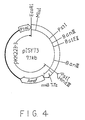
- the recombinant plasmid pISY73 was the plasmid prepared by inserting this fragment in the polylinker region of pKK223-3 cut with Sma I- Hind III. The restriction map of pISY73 is shown in Fig. 4. E. coli was transformed with pISY73 to obtain a transformant E. coli MT-10474 which was deposited in FRI on September 9, 1988 under an accession number of FERM BP-2364.
- the DNA sequence of the Eco RV- Hind III insert of pISY73, which had a size of about 2.5 kb was determined by the conventional dideoxy method (Messing, J. (1983), Methods in Enzymology, vol. 101, p. 20 - 78) according to the scheme shown in Fig. 5 using an M13 series vector (Messing, J. (1983) Methods in Enzymology, vol. 101, pp.20-78) and by the conventional Maxam-Gilbert method (Maxam, A.M. and Gilbert, W. (1980), Methods in Enzymology, Vol. 65, p. 499-560) according to the scheme shown in Fig. 6.
- the DNA insert had a base sequence shown in Fig. 7.
- this base sequence the existence of two open reading frames starting from 179th base and 1374th base, which corresponds to the trpB gene and trpA gene, respectively, was confirmed.
- the two open reading frames co-owned 17 base pairs.
- the amino acid sequence of trpB is shown in Fig. 8, and that of trpA is shown in Fig. 9.
- E. coli MT-10471, E. coli MT-10472 and E. coli MT-10474 were separately inoculated to 50 ml of Vogel and Bonner's medium containing 100 mg/l of ampicillin, 25 mg/l of IPTG and 10 g/l of Casamino acid, and were cultured under shaking at 37 o C for 24 hours. Thereafter, the cells were collected by centrifugation.
- E. coli K12 W3110 MT-10347 which is the host of the transformants prepared as described above was cultured in the same medium (but containing 20 mg/l of tryptophan) and the tryptophan synthase activity was determined in the same manner as described above.
- the trptophan synthase activity of each strain is shown in the table below.
- One unit of tryptophan synthase activity is defined as the amount of the enzyme, which yields 0.1 ⁇ mol of tryptophan in the reaction at 37 o C for 20 minutes.
- Table Strain Enzyme Activity (Units/mg protein) MT-10471 2 MT-10472 12 MT-10474 69 MT-10347 0
- the extract of MT-10474 which did not contain the cells was heat-treated at 65 o C for 10 minutes and then the tryptophan synthase activity was determined. As a result, about 90% of the enzyme activity was remained.
Landscapes
- Health & Medical Sciences (AREA)
- Life Sciences & Earth Sciences (AREA)
- Genetics & Genomics (AREA)
- Engineering & Computer Science (AREA)
- Chemical & Material Sciences (AREA)
- Organic Chemistry (AREA)
- Bioinformatics & Cheminformatics (AREA)
- Biomedical Technology (AREA)
- Wood Science & Technology (AREA)
- Zoology (AREA)
- Biotechnology (AREA)
- Molecular Biology (AREA)
- General Engineering & Computer Science (AREA)
- Microbiology (AREA)
- Biochemistry (AREA)
- General Health & Medical Sciences (AREA)
- Medicinal Chemistry (AREA)
- Physics & Mathematics (AREA)
- Biophysics (AREA)
- Plant Pathology (AREA)
- Micro-Organisms Or Cultivation Processes Thereof (AREA)
- Enzymes And Modification Thereof (AREA)
- Preparation Of Compounds By Using Micro-Organisms (AREA)
Applications Claiming Priority (4)
| Application Number | Priority Date | Filing Date | Title |
|---|---|---|---|
| JP110401/88 | 1988-05-09 | ||
| JP11040188 | 1988-05-09 | ||
| JP63286728A JPH0722510B2 (ja) | 1988-05-09 | 1988-11-15 | 耐熱性トリプトファンシンターゼをコードする遺伝子とその利用 |
| JP286728/88 | 1988-11-15 |
Publications (2)
| Publication Number | Publication Date |
|---|---|
| EP0341674A2 true EP0341674A2 (de) | 1989-11-15 |
| EP0341674A3 EP0341674A3 (de) | 1990-08-01 |
Family
ID=26450037
Family Applications (1)
| Application Number | Title | Priority Date | Filing Date |
|---|---|---|---|
| EP89108344A Withdrawn EP0341674A3 (de) | 1988-05-09 | 1989-05-09 | Klonieren von Tryptophan-Synthetase Gen und rekombinantes Plasmid mit diesem Gene |
Country Status (6)
| Country | Link |
|---|---|
| EP (1) | EP0341674A3 (de) |
| JP (1) | JPH0722510B2 (de) |
| KR (1) | KR910005627B1 (de) |
| AU (1) | AU610395B2 (de) |
| BR (1) | BR8902160A (de) |
| NZ (1) | NZ229029A (de) |
Cited By (1)
| Publication number | Priority date | Publication date | Assignee | Title |
|---|---|---|---|---|
| CN114958936A (zh) * | 2022-06-30 | 2022-08-30 | 厦门大学 | 一种以纤维素为碳源补料分批发酵生产l-色氨酸的方法 |
Families Citing this family (4)
| Publication number | Priority date | Publication date | Assignee | Title |
|---|---|---|---|---|
| JP4713440B2 (ja) * | 2006-11-01 | 2011-06-29 | 株式会社オリンピア | メダル貸出機 |
| JP4713447B2 (ja) * | 2006-11-29 | 2011-06-29 | 株式会社オリンピア | メダル貸出機 |
| KR100838037B1 (ko) * | 2006-12-29 | 2008-06-12 | 씨제이제일제당 (주) | entC 유전자가 불활성화된 L-트립토판 생산 미생물 및이를 이용한 L-트립토판 제조방법 |
| KR100838036B1 (ko) * | 2006-12-29 | 2008-06-12 | 씨제이제일제당 (주) | yjeO 유전자가 결손된 L-트립토판 생산 미생물 및이를 이용한 L-트립토판 제조방법 |
Family Cites Families (3)
| Publication number | Priority date | Publication date | Assignee | Title |
|---|---|---|---|---|
| JPS5780398A (en) * | 1980-11-05 | 1982-05-19 | Sanraku Inc | Plasmid produced by genetic manipulation, coliform bacillus having the same and preparation of tryptophan with said bacillus |
| JPS59196098A (ja) * | 1983-04-23 | 1984-11-07 | Ajinomoto Co Inc | 発酵法によるl−トリプトフアンの製造法 |
| KR900005773B1 (ko) * | 1987-07-13 | 1990-08-11 | 미쓰이도오아쓰가가꾸 가부시끼가이샤 | L-트립토판의 제조방법 및 안정한 효소 수용액의 제조방법 |
-
1988
- 1988-11-15 JP JP63286728A patent/JPH0722510B2/ja not_active Expired - Lifetime
-
1989
- 1989-05-08 NZ NZ229029A patent/NZ229029A/en unknown
- 1989-05-09 BR BR898902160A patent/BR8902160A/pt not_active Application Discontinuation
- 1989-05-09 KR KR1019890006253A patent/KR910005627B1/ko not_active Expired
- 1989-05-09 AU AU34587/89A patent/AU610395B2/en not_active Ceased
- 1989-05-09 EP EP89108344A patent/EP0341674A3/de not_active Withdrawn
Cited By (1)
| Publication number | Priority date | Publication date | Assignee | Title |
|---|---|---|---|---|
| CN114958936A (zh) * | 2022-06-30 | 2022-08-30 | 厦门大学 | 一种以纤维素为碳源补料分批发酵生产l-色氨酸的方法 |
Also Published As
| Publication number | Publication date |
|---|---|
| EP0341674A3 (de) | 1990-08-01 |
| JPH0722510B2 (ja) | 1995-03-15 |
| BR8902160A (pt) | 1990-01-02 |
| KR900018372A (ko) | 1990-12-21 |
| KR910005627B1 (ko) | 1991-08-01 |
| AU3458789A (en) | 1989-11-09 |
| AU610395B2 (en) | 1991-05-16 |
| NZ229029A (en) | 1991-07-26 |
| JPH0249590A (ja) | 1990-02-19 |
Similar Documents
| Publication | Publication Date | Title |
|---|---|---|
| EP0073062B1 (de) | Plasmid, dessen Herstellungsverfahren und dessen Verwendung als Vektor | |
| EP0197335B1 (de) | Verfahren zur Herstellung von L-Lysin | |
| US5017492A (en) | Reverse transcriptase and method for its production | |
| EP0356739A1 (de) | Rekombinante DNS, diese rekombinante DNS enthaltender Mikroorganismus und Verfahren zur Herstellung von L-Aminosäure unter Verwendung dieses Mikroorganismus | |
| EP0137348B1 (de) | Rekombinante DNS, diese rekombinante DNS enthaltende Bakterien, und Verfahren zur Herstellung von L-Threonin oder L-Isoleucin unter Verwendung dieser Bakterien | |
| EP0341674A2 (de) | Klonieren von Tryptophan-Synthetase Gen und rekombinantes Plasmid mit diesem Gene | |
| US5426050A (en) | Plasmid vectors for expression of genes in coryneform bacteria | |
| EP0677584B1 (de) | Stabile D-N-alpha-Carbamylase Mutanten | |
| JP2019047790A (ja) | L−アミノ酸を生産する微生物、及びそれを利用してl−アミノ酸を生産する方法 | |
| EP0537553B1 (de) | Farnesylpyrophosphatsynthetase und dafür kodierende DNA-Sequenz | |
| US4746608A (en) | Process for producing peptides | |
| EP0412688A1 (de) | Modifizierter DNA und seine Verwendung | |
| EP0215388B1 (de) | Plasmidvektor und ein Verfahren zur Regulierung der Genexpression unter Verwendung dieses Vektors | |
| EP0397097B1 (de) | Züchtung von transformierten Mikroorganismen | |
| EP0775748B1 (de) | Herstellung von D-alpha-Aminosäuren, unter Verwendung von mit dem Carbamoylase-Hydantoinase-Operon-transformierten Bakterien | |
| EP0183006B1 (de) | Rekombinantes DNS-Molekül, rekombinante DNS enthaltende, coryneforme Bakterien, und Verfahren zur Herstellung einer aromatischen Aminosäure, unter Verwendung derselben | |
| EP0450920B1 (de) | Kloniertes Tyrosin-Phenol-Lyasegen, ein rekombinantes Plasmid, das dieses enthält und mit diesem Plasmid transformierte E. Coli | |
| JPH0630583B2 (ja) | Dνaおよびその用途 | |
| EP0374771B1 (de) | Verfahren zur Herstellung der Restriktionsendonucklease PvuI | |
| JP4880859B2 (ja) | 新規カルボニル還元酵素、その遺伝子、およびその利用法 | |
| EP0219808A2 (de) | Plasmid mit breitem Wirtspektrum | |
| Ino et al. | Deletions fusing the hisG and hisD genes in Salmonella typhimurium | |
| EP0264914A2 (de) | Verfahren zur Herstellung von L-Phenylalanin | |
| JP2999954B2 (ja) | 4−カルバモイル−1−β−D−リボフラノシル−イミダゾリウム−5−オレイトの酵素的製造法 | |
| EP0441361B1 (de) | Verfahren zur Herstellung von Fremdprotein in Escherichia Coli |
Legal Events
| Date | Code | Title | Description |
|---|---|---|---|
| PUAI | Public reference made under article 153(3) epc to a published international application that has entered the european phase |
Free format text: ORIGINAL CODE: 0009012 |
|
| AK | Designated contracting states |
Kind code of ref document: A2 Designated state(s): AT BE CH DE ES FR GB IT LI NL SE |
|
| PUAL | Search report despatched |
Free format text: ORIGINAL CODE: 0009013 |
|
| AK | Designated contracting states |
Kind code of ref document: A3 Designated state(s): AT BE CH DE ES FR GB IT LI NL SE |
|
| 17P | Request for examination filed |
Effective date: 19901203 |
|
| 17Q | First examination report despatched |
Effective date: 19930114 |
|
| STAA | Information on the status of an ep patent application or granted ep patent |
Free format text: STATUS: THE APPLICATION IS DEEMED TO BE WITHDRAWN |
|
| 18D | Application deemed to be withdrawn |
Effective date: 19930525 |