EP0335827B1 - Neues Verfahren zur Herstellung von Bicyclo(3.3.0)octan-3-on-derivaten - Google Patents
Neues Verfahren zur Herstellung von Bicyclo(3.3.0)octan-3-on-derivaten Download PDFInfo
- Publication number
- EP0335827B1 EP0335827B1 EP89730088A EP89730088A EP0335827B1 EP 0335827 B1 EP0335827 B1 EP 0335827B1 EP 89730088 A EP89730088 A EP 89730088A EP 89730088 A EP89730088 A EP 89730088A EP 0335827 B1 EP0335827 B1 EP 0335827B1
- Authority
- EP
- European Patent Office
- Prior art keywords
- group
- radical
- alkyl
- bicyclo
- derivatives
- Prior art date
- Legal status (The legal status is an assumption and is not a legal conclusion. Google has not performed a legal analysis and makes no representation as to the accuracy of the status listed.)
- Expired - Lifetime
Links
- 238000000034 method Methods 0.000 title claims abstract description 10
- 238000002360 preparation method Methods 0.000 title claims description 4
- RHLVCLIPMVJYKS-UHFFFAOYSA-N 3-octanone Chemical class CCCCCC(=O)CC RHLVCLIPMVJYKS-UHFFFAOYSA-N 0.000 title description 2
- 125000000217 alkyl group Chemical group 0.000 claims abstract description 13
- 125000004432 carbon atom Chemical group C* 0.000 claims abstract description 13
- 125000004178 (C1-C4) alkyl group Chemical group 0.000 claims abstract description 10
- 125000002887 hydroxy group Chemical group [H]O* 0.000 claims abstract description 10
- -1 hydroxymethylene group Chemical group 0.000 claims abstract description 9
- 125000002947 alkylene group Chemical group 0.000 claims abstract description 8
- AEBWATHAIVJLTA-UHFFFAOYSA-N 1,2,3,3a,4,5,6,6a-octahydropentalene Chemical class C1CCC2CCCC21 AEBWATHAIVJLTA-UHFFFAOYSA-N 0.000 claims abstract description 7
- LFTLOKWAGJYHHR-UHFFFAOYSA-N N-methylmorpholine N-oxide Chemical compound CN1(=O)CCOCC1 LFTLOKWAGJYHHR-UHFFFAOYSA-N 0.000 claims abstract description 7
- JEHCHYAKAXDFKV-UHFFFAOYSA-J lead tetraacetate Chemical compound CC(=O)O[Pb](OC(C)=O)(OC(C)=O)OC(C)=O JEHCHYAKAXDFKV-UHFFFAOYSA-J 0.000 claims abstract description 7
- 125000004665 trialkylsilyl group Chemical group 0.000 claims abstract description 7
- 229910000489 osmium tetroxide Inorganic materials 0.000 claims abstract description 5
- 230000003197 catalytic effect Effects 0.000 claims abstract description 4
- 239000012285 osmium tetroxide Substances 0.000 claims abstract description 4
- 125000003718 tetrahydrofuranyl group Chemical group 0.000 claims abstract description 4
- 125000001412 tetrahydropyranyl group Chemical group 0.000 claims abstract description 4
- WKBOTKDWSSQWDR-UHFFFAOYSA-N Bromine atom Chemical group [Br] WKBOTKDWSSQWDR-UHFFFAOYSA-N 0.000 claims abstract description 3
- 229910052801 chlorine Inorganic materials 0.000 claims abstract description 3
- 125000001309 chloro group Chemical group Cl* 0.000 claims abstract description 3
- 125000004435 hydrogen atom Chemical group [H]* 0.000 claims abstract description 3
- LEVJVKGPFAQPOI-UHFFFAOYSA-N phenylmethanone Chemical compound O=[C]C1=CC=CC=C1 LEVJVKGPFAQPOI-UHFFFAOYSA-N 0.000 claims abstract description 3
- JQWHASGSAFIOCM-UHFFFAOYSA-M sodium periodate Chemical compound [Na+].[O-]I(=O)(=O)=O JQWHASGSAFIOCM-UHFFFAOYSA-M 0.000 claims abstract 2
- ZOUYMLXOFDNVRK-UHFFFAOYSA-N 3,3a,4,5,6,6a-hexahydro-1h-pentalen-2-one Chemical class C1CCC2CC(=O)CC21 ZOUYMLXOFDNVRK-UHFFFAOYSA-N 0.000 claims description 5
- 230000000640 hydroxylating effect Effects 0.000 abstract 1
- RTZKZFJDLAIYFH-UHFFFAOYSA-N Diethyl ether Chemical compound CCOCC RTZKZFJDLAIYFH-UHFFFAOYSA-N 0.000 description 10
- XEKOWRVHYACXOJ-UHFFFAOYSA-N Ethyl acetate Chemical compound CCOC(C)=O XEKOWRVHYACXOJ-UHFFFAOYSA-N 0.000 description 9
- VLKZOEOYAKHREP-UHFFFAOYSA-N n-Hexane Chemical compound CCCCCC VLKZOEOYAKHREP-UHFFFAOYSA-N 0.000 description 9
- YMWUJEATGCHHMB-UHFFFAOYSA-N Dichloromethane Chemical compound ClCCl YMWUJEATGCHHMB-UHFFFAOYSA-N 0.000 description 7
- XXROGKLTLUQVRX-UHFFFAOYSA-N allyl alcohol Chemical compound OCC=C XXROGKLTLUQVRX-UHFFFAOYSA-N 0.000 description 6
- 150000004808 allyl alcohols Chemical class 0.000 description 6
- CSCPPACGZOOCGX-UHFFFAOYSA-N Acetone Chemical compound CC(C)=O CSCPPACGZOOCGX-UHFFFAOYSA-N 0.000 description 5
- XLYOFNOQVPJJNP-UHFFFAOYSA-N water Substances O XLYOFNOQVPJJNP-UHFFFAOYSA-N 0.000 description 5
- HEDRZPFGACZZDS-UHFFFAOYSA-N Chloroform Chemical compound ClC(Cl)Cl HEDRZPFGACZZDS-UHFFFAOYSA-N 0.000 description 4
- 239000000203 mixture Substances 0.000 description 4
- WFDIJRYMOXRFFG-UHFFFAOYSA-N Acetic anhydride Chemical compound CC(=O)OC(C)=O WFDIJRYMOXRFFG-UHFFFAOYSA-N 0.000 description 3
- YXFVVABEGXRONW-UHFFFAOYSA-N Toluene Chemical compound CC1=CC=CC=C1 YXFVVABEGXRONW-UHFFFAOYSA-N 0.000 description 3
- 230000015572 biosynthetic process Effects 0.000 description 3
- 238000006243 chemical reaction Methods 0.000 description 3
- 239000012230 colorless oil Substances 0.000 description 3
- 239000000243 solution Substances 0.000 description 3
- 238000003786 synthesis reaction Methods 0.000 description 3
- 0 *[C@](CC(C1)C2CC1=CCO)C2N*ON* Chemical compound *[C@](CC(C1)C2CC1=CCO)C2N*ON* 0.000 description 2
- XKRFYHLGVUSROY-UHFFFAOYSA-N Argon Chemical compound [Ar] XKRFYHLGVUSROY-UHFFFAOYSA-N 0.000 description 2
- BUDQDWGNQVEFAC-UHFFFAOYSA-N Dihydropyran Chemical compound C1COC=CC1 BUDQDWGNQVEFAC-UHFFFAOYSA-N 0.000 description 2
- LFQSCWFLJHTTHZ-UHFFFAOYSA-N Ethanol Chemical compound CCO LFQSCWFLJHTTHZ-UHFFFAOYSA-N 0.000 description 2
- JUJWROOIHBZHMG-UHFFFAOYSA-N Pyridine Chemical compound C1=CC=NC=C1 JUJWROOIHBZHMG-UHFFFAOYSA-N 0.000 description 2
- VYPSYNLAJGMNEJ-UHFFFAOYSA-N Silicium dioxide Chemical compound O=[Si]=O VYPSYNLAJGMNEJ-UHFFFAOYSA-N 0.000 description 2
- PMZURENOXWZQFD-UHFFFAOYSA-L Sodium Sulfate Chemical compound [Na+].[Na+].[O-]S([O-])(=O)=O PMZURENOXWZQFD-UHFFFAOYSA-L 0.000 description 2
- UIIMBOGNXHQVGW-UHFFFAOYSA-M Sodium bicarbonate Chemical compound [Na+].OC([O-])=O UIIMBOGNXHQVGW-UHFFFAOYSA-M 0.000 description 2
- DKGAVHZHDRPRBM-UHFFFAOYSA-N Tert-Butanol Chemical compound CC(C)(C)O DKGAVHZHDRPRBM-UHFFFAOYSA-N 0.000 description 2
- 125000002252 acyl group Chemical group 0.000 description 2
- 239000012267 brine Substances 0.000 description 2
- 238000004587 chromatography analysis Methods 0.000 description 2
- 150000001875 compounds Chemical class 0.000 description 2
- 125000001495 ethyl group Chemical group [H]C([H])([H])C([H])([H])* 0.000 description 2
- 125000000959 isobutyl group Chemical group [H]C([H])([H])C([H])(C([H])([H])[H])C([H])([H])* 0.000 description 2
- 125000001449 isopropyl group Chemical group [H]C([H])([H])C([H])(*)C([H])([H])[H] 0.000 description 2
- 150000002576 ketones Chemical class 0.000 description 2
- 125000002496 methyl group Chemical group [H]C([H])([H])* 0.000 description 2
- 125000004108 n-butyl group Chemical group [H]C([H])([H])C([H])([H])C([H])([H])C([H])([H])* 0.000 description 2
- FDPIMTJIUBPUKL-UHFFFAOYSA-N pentan-3-one Chemical compound CCC(=O)CC FDPIMTJIUBPUKL-UHFFFAOYSA-N 0.000 description 2
- 239000011541 reaction mixture Substances 0.000 description 2
- 125000002914 sec-butyl group Chemical group [H]C([H])([H])C([H])([H])C([H])(*)C([H])([H])[H] 0.000 description 2
- 239000000741 silica gel Substances 0.000 description 2
- 229910002027 silica gel Inorganic materials 0.000 description 2
- 229910052938 sodium sulfate Inorganic materials 0.000 description 2
- 235000011152 sodium sulphate Nutrition 0.000 description 2
- HPALAKNZSZLMCH-UHFFFAOYSA-M sodium;chloride;hydrate Chemical compound O.[Na+].[Cl-] HPALAKNZSZLMCH-UHFFFAOYSA-M 0.000 description 2
- 239000007858 starting material Substances 0.000 description 2
- VZGDMQKNWNREIO-UHFFFAOYSA-N tetrachloromethane Chemical compound ClC(Cl)(Cl)Cl VZGDMQKNWNREIO-UHFFFAOYSA-N 0.000 description 2
- JOXIMZWYDAKGHI-UHFFFAOYSA-N toluene-4-sulfonic acid Chemical compound CC1=CC=C(S(O)(=O)=O)C=C1 JOXIMZWYDAKGHI-UHFFFAOYSA-N 0.000 description 2
- WYZPLRUPKAGJSE-UHFFFAOYSA-N 1,2,3,3a,4,5,6,6a-octahydropentalen-2-ol Chemical compound C1CCC2CC(O)CC21 WYZPLRUPKAGJSE-UHFFFAOYSA-N 0.000 description 1
- NGNBDVOYPDDBFK-UHFFFAOYSA-N 2-[2,4-di(pentan-2-yl)phenoxy]acetyl chloride Chemical compound CCCC(C)C1=CC=C(OCC(Cl)=O)C(C(C)CCC)=C1 NGNBDVOYPDDBFK-UHFFFAOYSA-N 0.000 description 1
- 238000006546 Horner-Wadsworth-Emmons reaction Methods 0.000 description 1
- 229910010084 LiAlH4 Inorganic materials 0.000 description 1
- NTIZESTWPVYFNL-UHFFFAOYSA-N Methyl isobutyl ketone Chemical compound CC(C)CC(C)=O NTIZESTWPVYFNL-UHFFFAOYSA-N 0.000 description 1
- UIHCLUNTQKBZGK-UHFFFAOYSA-N Methyl isobutyl ketone Natural products CCC(C)C(C)=O UIHCLUNTQKBZGK-UHFFFAOYSA-N 0.000 description 1
- 239000007832 Na2SO4 Substances 0.000 description 1
- CYTYCFOTNPOANT-UHFFFAOYSA-N Perchloroethylene Chemical group ClC(Cl)=C(Cl)Cl CYTYCFOTNPOANT-UHFFFAOYSA-N 0.000 description 1
- QAOWNCQODCNURD-UHFFFAOYSA-N Sulfuric acid Chemical compound OS(O)(=O)=O QAOWNCQODCNURD-UHFFFAOYSA-N 0.000 description 1
- 125000002777 acetyl group Chemical group [H]C([H])([H])C(*)=O 0.000 description 1
- 150000008065 acid anhydrides Chemical class 0.000 description 1
- 230000002378 acidificating effect Effects 0.000 description 1
- 239000008346 aqueous phase Substances 0.000 description 1
- 229910052786 argon Inorganic materials 0.000 description 1
- 239000012300 argon atmosphere Substances 0.000 description 1
- SIPUZPBQZHNSDW-UHFFFAOYSA-N bis(2-methylpropyl)aluminum Chemical compound CC(C)C[Al]CC(C)C SIPUZPBQZHNSDW-UHFFFAOYSA-N 0.000 description 1
- 238000010504 bond cleavage reaction Methods 0.000 description 1
- 125000004063 butyryl group Chemical group O=C([*])C([H])([H])C([H])([H])C([H])([H])[H] 0.000 description 1
- 239000006227 byproduct Substances 0.000 description 1
- 150000001732 carboxylic acid derivatives Chemical class 0.000 description 1
- 239000003153 chemical reaction reagent Substances 0.000 description 1
- 239000003795 chemical substances by application Substances 0.000 description 1
- 238000003776 cleavage reaction Methods 0.000 description 1
- 150000002009 diols Chemical class 0.000 description 1
- 238000001035 drying Methods 0.000 description 1
- 150000002148 esters Chemical class 0.000 description 1
- 238000006266 etherification reaction Methods 0.000 description 1
- 125000002485 formyl group Chemical group [H]C(*)=O 0.000 description 1
- 150000008282 halocarbons Chemical class 0.000 description 1
- 238000010438 heat treatment Methods 0.000 description 1
- 125000003104 hexanoyl group Chemical group O=C([*])C([H])([H])C([H])([H])C([H])([H])C([H])([H])C([H])([H])[H] 0.000 description 1
- 239000005457 ice water Substances 0.000 description 1
- 239000012280 lithium aluminium hydride Substances 0.000 description 1
- 238000004519 manufacturing process Methods 0.000 description 1
- 125000001280 n-hexyl group Chemical group C(CCCCC)* 0.000 description 1
- 125000000740 n-pentyl group Chemical group [H]C([H])([H])C([H])([H])C([H])([H])C([H])([H])C([H])([H])* 0.000 description 1
- 125000004123 n-propyl group Chemical group [H]C([H])([H])C([H])([H])C([H])([H])* 0.000 description 1
- 125000001971 neopentyl group Chemical group [H]C([*])([H])C(C([H])([H])[H])(C([H])([H])[H])C([H])([H])[H] 0.000 description 1
- 239000003921 oil Substances 0.000 description 1
- 239000012074 organic phase Substances 0.000 description 1
- KHIWWQKSHDUIBK-UHFFFAOYSA-N periodic acid Chemical compound OI(=O)(=O)=O KHIWWQKSHDUIBK-UHFFFAOYSA-N 0.000 description 1
- 239000012071 phase Substances 0.000 description 1
- 125000001501 propionyl group Chemical group O=C([*])C([H])([H])C([H])([H])[H] 0.000 description 1
- 125000001436 propyl group Chemical group [H]C([*])([H])C([H])([H])C([H])([H])[H] 0.000 description 1
- UMJSCPRVCHMLSP-UHFFFAOYSA-N pyridine Natural products COC1=CC=CN=C1 UMJSCPRVCHMLSP-UHFFFAOYSA-N 0.000 description 1
- 230000007017 scission Effects 0.000 description 1
- 125000003548 sec-pentyl group Chemical group [H]C([H])([H])C([H])([H])C([H])([H])C([H])(*)C([H])([H])[H] 0.000 description 1
- 229910000030 sodium bicarbonate Inorganic materials 0.000 description 1
- 235000017557 sodium bicarbonate Nutrition 0.000 description 1
- 238000010186 staining Methods 0.000 description 1
- 238000003756 stirring Methods 0.000 description 1
- 235000011149 sulphuric acid Nutrition 0.000 description 1
- 125000000999 tert-butyl group Chemical group [H]C([H])([H])C(*)(C([H])([H])[H])C([H])([H])[H] 0.000 description 1
- 229950011008 tetrachloroethylene Drugs 0.000 description 1
- 238000004809 thin layer chromatography Methods 0.000 description 1
- 125000003774 valeryl group Chemical group O=C([*])C([H])([H])C([H])([H])C([H])([H])C([H])([H])[H] 0.000 description 1
Classifications
-
- C—CHEMISTRY; METALLURGY
- C07—ORGANIC CHEMISTRY
- C07C—ACYCLIC OR CARBOCYCLIC COMPOUNDS
- C07C405/00—Compounds containing a five-membered ring having two side-chains in ortho position to each other, and having oxygen atoms directly attached to the ring in ortho position to one of the side-chains, one side-chain containing, not directly attached to the ring, a carbon atom having three bonds to hetero atoms with at the most one bond to halogen, and the other side-chain having oxygen atoms attached in gamma-position to the ring, e.g. prostaglandins ; Analogues or derivatives thereof
- C07C405/005—Analogues or derivatives having the five membered ring replaced by other rings
- C07C405/0075—Analogues or derivatives having the five membered ring replaced by other rings having the side-chains or their analogues or derivatives attached to a condensed ring system
- C07C405/0083—Analogues or derivatives having the five membered ring replaced by other rings having the side-chains or their analogues or derivatives attached to a condensed ring system which is only ortho or peri condensed, e.g. carbacyclins
Definitions
- the invention relates to a new process for the preparation of bicyclo [3.3.0] octane derivatives.
- Example 1d) in DE-OS 33 06 123 1 mixtures of the E / Z are obtained from the bicyclo [3.3.0] octan-3-ones by the Wittig-Horner reaction and subsequent DIBAH or LiAlH4 reduction -configured allyl alcohols, which are separated by chromatography into the desired (E) -allyl alcohols and the (Z) -allyl alcohols, the (Z) derivatives being fed back into the process according to the invention.
- etherification of the hydroxyl of the allyl alcohol e.g. with dihydropyran in CH2Cl2 or CHCl3 using an acidic condensing agent such as p-toluenesulfonic acid.
- the dihydropyran is used in excess, preferably in 4 to 10 times the theoretical amount.
- the reaction is usually complete at 0-30 ° C after 15-30 minutes.
- the acylates of the allyl alcohols are mixed with a carboxylic acid derivative, e.g. Acid chloride, acid anhydride, etc. prepared in the presence of a tertiary base.
- N-methylmorpholine-N-oxide is used in equimolar amounts and OsO4 in catalytic amounts.
- the reaction of the compounds of formula II with these reagents is carried out at 0-80 °, preferably 0-30 ° C, in 5 to 48 hours, preferably 10-24 hours, in ketone / water mixtures or THF.
- the ketones are acetone, diethyl ketone, methyl isobutyl ketone, etc. in question.
- the reaction with lead tetraacetate takes place in halogenated hydrocarbons such as CHCl3, CH2Cl2, CCl4, perchlorethylene, etc. at -70 to + 50 ° C, preferably -30 to + 25 ° C, in 0.25 - 12 hours, preferably 0.5 - 2 hours. In excess (1.1-1.2 molar) of lead tetraacetate used.
- the C1-C4-alkyl radicals in the trialkylsilyl group or the radicals R3 and R4 can be methyl, ethyl, n-propyl, isopropyl, n-butyl, isobutyl, sec-butyl or tert-butyl.
- the C1-C6 alkanoyl group R5 can be formyl, acetyl, propionyl, butyryl, pentanoyl or hexanoyl.
- R2 as a straight-chain or branched alkyl group with 1-7 C atoms are methyl, ethyl, propyl, isopropyl, n-butyl, isobutyl, sec-butyl, n-pentyl, sec-pentyl, neopentyl, n-hexyl, n -Heptyl in question.
- Alkyl groups with 1-4 C atoms are preferred.
- D as a straight-chain alkylene group with 1-5 C atoms or branched alkylene group with 2-5 C atoms contains the following radicals: methylene, ethylene, trimethylene, tetramethylene, pentamethylene,
Landscapes
- Chemical & Material Sciences (AREA)
- Organic Chemistry (AREA)
- Organic Low-Molecular-Weight Compounds And Preparation Thereof (AREA)
- Heterocyclic Carbon Compounds Containing A Hetero Ring Having Oxygen Or Sulfur (AREA)
Description
- Die Erfindung betrifft ein neues Verfahren zur Herstellung von Bicyclo[3.3.0]-octanderivaten.
- Bei der Synthese von (5E)-3-Oxa-6a-carba-prostaglandin-I₂-Derivaten der Formel II

worin A, W, D, E und R₂ die in der allgemeinen Formel I definierten Bedeutungen haben, wird eine Stufe durchlaufen, die zu etwa 50% aus dem gewünschten Allylalkohol mit einer E-konfigurierten Doppelbindung
worin A, W, D, E, R₁ und R₂ die in der Formel I genannten Definitionen besitzen, und zu etwa 50% aus dem für die weitere Synthese unbrauchbaren Allylalkohol mit einer Z-konfigurierten Doppelbindung
worin A, W, D, E, R₁ und R₂ ebenfalls die in der Formel I genannten Definitionen besitzen, besteht. In den Deutschen Offenlegungsschriften DE-OS 30 48 906, 33 06 123 und 33 06 125 werden derartige E-konfigurierte Allylalkohole zu pharmakologisch wirksamen (5E)-3-Oxa-6a-carba-prostaglandin-I₂-Derivaten, wie sie oben bereits genannt wurden, umgesetzt. - Es stellte sich also die Aufgabe, ein Verfahren zu finden, das diese wertvollen, jedoch falsch konfigurierten Allylalkohole zu Bicyclo[3.3.0]octan-3-on-Derivaten rückoxidiert und diese damit der vielstufigen Synthese der eingangs genannten (5E)-3-Oxa-6a-carba-prostaglandin-I₂-Derivate wieder zuführt. Es zeigte sich jedoch, daß sich die (Z)-Allylalkohole mit den üblichen Doppelbindungsspaltmethoden, wie der Perjodatspaltmethode, nur in sehr geringer Ausbeute in die gewünschten Bicyclo[3.3.0]octan-3-on-derivate der allgemeinen Formel I umsetzen lassen.
- Es wurde nun überraschenderweise gefunden, daß man diese Allylalkohole, wenn man sie vorher in Ether oder Ester überführt hat, durch Hydroxylierung mit N-Methylmorpholin-N-oxid/Os0₄ und anschließende Behandlung mit Bleitetraacetat oder NaJO₄ zu den gewünschten Bicyclo[3.3.0]octan-3-on-derivaten in sehr guten Ausbeuten rückoxidieren kann.
- Entsprechend Beispiel 1d) in DE-OS 33 06 123 erhält man aus den Bicyclo-[3.3.0]octan-3-onen nach Wittig-Horner-Reaktion und anschließender DIBAH- oder LiAlH₄-Reduktion 1:1-Gemische der E/Z-konfigurierten Allylalkohole, die chromatographisch in die gewünschten (E)-Allylalkohole und die (Z)-Allylalkohole getrennt werden, wobei die (Z)-Derivate dem erfindungsgemäßen Verfahren erneut zugeführt werden.
- Die vorliegende Erfindung betrifft somit ein Verfahren zur Herstellung von Bicyclo[3.3.0]octan-3-on-derivaten der allgemeinen Formel I

worin - A
- eine trans-CH=CH-Gruppe oder eine -C≡C-Gruppe,
- W
- eine Hydroxymethylengruppe, in der die OH-Gruppe durch eine Trialkylsilylgruppe mit alkyl in der Bedeutung eines C₁-C₄-Alkyls, durch eine C₁-C₆-Alkanoylgruppe, durch Tetrahydropyranyl oder Tetrahydrofuranyl substituiert ist,
- D
- eine

- E
- eine -C≡C-Gruppe oder eine -CR₃=CR₄-Gruppe mit R₃ und R₄ jeweils in der Bedeutung eines Wasserstoffatoms, eines Chloratoms, eines Bromatoms oder einer C₁-C₄-Alkylgruppe,
- R₁
- eine Hydroxygruppe, die wie die Hydroxygruppe in W substituiert ist,
- R₂
- eine geradkettige oder verzweigte Alkylgruppe mit 1-7 C-Atomen,
- Die in dem neuen Verfahren eingesetzten Ausgangsverbindungen werden in den Deutschen Offenlegungsschriften DE-OS 30 48 906, 33 06 123 und 33 06 125 beschrieben.
- Zur Veretherung des Hydroxyls des Allylalkohols wird z.B. mit Dihydropyran in CH₂Cl₂ oder CHCl₃ unter Verwendung eines sauren Kondensationsmittels, wie beispielsweise p-Toluolsulfonsäure, umgesetzt. Das Dihydropyran wird im Überschuß eingesetzt, vorzugsweise in der 4- bis 10-fachen Menge des theoretischen Bedarfs. Die Umsetzung ist normalerweise bei 0-30°C nach 15-30 Minuten beendet. Die Acylate der Allylalkohole werden nach bekannten Methoden mit einem Carbonsäurederivat, wie z.B. Säurechlorid, Säureanhydrid u.a. in Gegenwart einer tertiären Base hergestellt.
- N-Methylmorpholin-N-oxid wird in equimolaren Mengen und OsO₄ in katalytischen Mengen eingesetzt. Die Umsetzung der Verbindungen der Formel II mit diesen Reagenzien wird bei 0-80°, vorzugsweise 0-30°C, in 5 bis 48 Std., vorzugsweise 10-24 Std., in Keton/Wasser-Gemischen oder THF durchgeführt. Als Ketone kommen Aceton, Diethylketon, Methyl-isobutylketon u.s.w. infrage. Die Umsetzung mit Bleitetraacetat erfolgt in halogenierten Kohlenwasserstoffen wie CHCl₃, CH₂Cl₂, CCl₄, Perchlorethylen u.s.w. bei -70 bis + 50°C, vorzugsweise -30 bis +25°C, in 0,25 - 12 Std., vorzugsweise 0,5 - 2 Std. Bleitetraacetat wird dabei im Überschuß (1,1-1,2 molar) eingesetzt.
- Die C₁-C₄-Alkylreste in der Trialkylsilylgruppe bzw. der Reste R₃ und R₄ können Methyl, Ethyl, n-Propyl, Isopropyl, n-Butyl, Isobutyl, sek.-Butyl oder tert.-Butyl bedeuten. Die C₁-C₆-Alkanoylgruppe R₅ kann Formyl, Acetyl, Propionyl, Butyryl, Pentanoyl oder Hexanoyl darstellen.
- Für R₂ als geradkettige oder verzweigte Alkylgruppe mit 1-7 C-Atomen kommen Methyl, Ethyl, Propyl, Isopropyl, n-Butyl, Isobutyl, sek.-Butyl, n-Pentyl, sek.-Pentyl, Neopentyl, n-Hexyl, n-Heptyl in Frage. Bevorzugt sind Alkylgruppen mit 1-4 C-Atomen.
D als geradkettige Alkylengruppe mit 1-5 C-Atomen oder verzweigte Alkylengruppe mit 2-5 C-Atomen beeinhaltet folgende Reste:
methylen, ethylen, trimethylen, tetramethylen, pentamethylen,
- 28g (1S,5S,6S,7R)-3-[(1Z)-(2-Hydroxyethyliden)]-7-tert.-butyl-dimethylsilyloxy-6-[(3S,4S)-3-tert.-butyldimethylsilyloxy-4-methyl-1,6-nonadiinyl]-bicyclo-[3.3.0]-octan werden in 100 ml Pyridin bei Raumtemperatur gelöst und nach Zugabe von 50 ml Acetanhydrid 16 Std. bei Raumtemperatur unter Argon gerührt. Das Reaktionsgemisch wird viermal jeweils mit 80 ml Toluol versetzt und am Rotationsverdampfer eingeengt. Danach wird der Rückstand erst im Wasserstrahlpumpenvakuum und danach im Ölpumpenvakuum getrocknet. Es entstehen 30 g eines farblosen Öls, das dünnschichtchromatographisch [Hexan/Ether (6:4), Anfärben mit H₂SO₄/Ethanol und Erhitzen] keine nennenswerten Nebenprodukte zeigt.
- 30g der nach Vorschrift 1 hergestellten Verbindung werden in 860 ml Aceton/ 125 ml Wasser gelöst. Danach werden bei 0°C und Argon-Atmosphäre unter Rühren 6,53g N-Methyl-morpholin-N-oxid zugefügt. Anschließend wird über einen Zeitraum von 1 Std. eine Lösung aus 0,5 g Osmiumtetroxid in 250 ml tert.-Butanol zugetropft, 1 Std. bei Eisbadtemperatur und 16 Std. bei Raumtemperatur gerührt. Nach Einengung am Rotationsverdampfer wird der Rückstand auf 300 ml Eiswasser gegossen, viermal mit je 300 ml Essigester extrahiert, die organische Phase mit 200 ml Sole gewaschen und nach Trocknung über Na₂SO₄ eingedampft. Durch Chromatographie des Rückstandes an Kieselgel mit Hexan/Essigester (1:1) erhält man 24,1 g (75% der Theorie) eines farblosen Öls.
- 24,7g des nach Vorschrift 2 erhaltenen Diols werden in 800ml Methylenchlorid gelöst. Danach wird die Lösung auf -20°C gekühlt. Bei dieser Temperatur werden 18,6g Bleitetraacetat zugefügt und 1 Std. bei -20°C gerührt. Nach Einengen des Reaktionsgemisches am Rotationsverdampfer wird der Rückstand in Wasser/Ether aufgenommen, die wässrige Phase dreimal mit je 200 ml Ether extrahiert, die Etherphase einmal mit 200 ml Wasser, zweimal mit je 200 ml 4%iger NaHCO₃-Lösung und zweimal mit Sole gewaschen, über Natriumsulfat getrocknet und schließlich am Rotationsverdampfer eingeengt. Der Rückstand wird an Kieselgel mit Hexan/Essigester (4:1) chromatographiert.
Ausbeute 17,4 g (85% der Theorie eines farblosen Öls).
das dadurch gekennzeichnet ist, daß man Bicyclo[3.3.0]octan-Derivate mit einer Z-konfigurierten Doppelbindung im 3-Ethylidenrest der allgemeinen Formel II,

worin A, W, D, E, R₁ und R₂ die oben angegebenen Bedeutungen haben und R₅ eine C₁-C₆-Alkanoylgruppe, einen Benzoylrest, einen Cyclohexylcarbonylrest, einen Tetrahydropyranylrest, einen Tetrahydrofuranylrest oder eine Trialkylsilylgruppe mit alkyl in der Bedeutung eines C₁-C₄-Alkyls darstellt, mit N-Methylmorpholin-N-oxid in Gegenwart katalytischer Mengen Osmiumtetroxid hydroxyliert und mit Bleitetraacetat oder NaJO₄ spaltet.
Claims (1)
- Verfahren zur Herstellung von Bicyclo[3.3.0]octan-3-on-derivaten der allgemeinen Formel I,
 A eine trans-CH=CH-Gruppe oder eine -C≡C-Gruppe,W eine Hydroxymethylengruppe, in der die OH-Gruppe durch eine Trialkylsilylgruppe mit alkyl in der Bedeutung eines C₁-C₄-Alkyls, durch eine C₁-C₆-Alkanoylgruppe, durch Tetrahydropyranyl oder Tetrahydrofuranyl substituiert ist,D eine
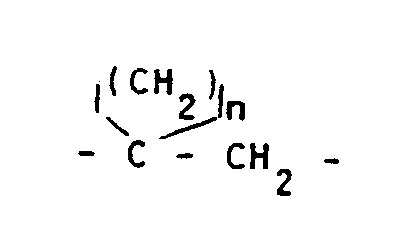 E eine -C≡C-Gruppe oder eine -CR₃=CR₄-Gruppe mit R₃ und R₄ jeweils in der Bedeutung eines Wasserstoffatoms, eines Chloratoms, eines Bromatoms oder einer C₁-C₄-Alkylgruppe,R₁ eine Hydroxygruppe, die wie die Hydroxygruppe in W substituiert ist,R₂ eine geradkettige oder verzweigte Alkylgruppe mit 1-7 C-Atomen,dadurch gekennzeichnet, daß man Bicyclo[3.3.0]octan-Derivate mit einer Z-konfigurierten Doppelbindung im 3-Ethylidenrest der allgemeinen Formel II,
Priority Applications (1)
| Application Number | Priority Date | Filing Date | Title |
|---|---|---|---|
| AT89730088T ATE92042T1 (de) | 1988-03-31 | 1989-03-31 | Neues verfahren zur herstellung von bicyclo(3.3.0)octan-3-on-derivaten. |
Applications Claiming Priority (2)
| Application Number | Priority Date | Filing Date | Title |
|---|---|---|---|
| DE3811577A DE3811577A1 (de) | 1988-03-31 | 1988-03-31 | Neues verfahren zur herstellung von bicyclo(3.3.0)octan-3-on-derivaten |
| DE3811577 | 1988-03-31 |
Publications (2)
| Publication Number | Publication Date |
|---|---|
| EP0335827A1 EP0335827A1 (de) | 1989-10-04 |
| EP0335827B1 true EP0335827B1 (de) | 1993-07-28 |
Family
ID=6351502
Family Applications (1)
| Application Number | Title | Priority Date | Filing Date |
|---|---|---|---|
| EP89730088A Expired - Lifetime EP0335827B1 (de) | 1988-03-31 | 1989-03-31 | Neues Verfahren zur Herstellung von Bicyclo(3.3.0)octan-3-on-derivaten |
Country Status (4)
| Country | Link |
|---|---|
| EP (1) | EP0335827B1 (de) |
| AT (1) | ATE92042T1 (de) |
| DE (2) | DE3811577A1 (de) |
| ES (1) | ES2044204T3 (de) |
Families Citing this family (1)
| Publication number | Priority date | Publication date | Assignee | Title |
|---|---|---|---|---|
| DE4034568A1 (de) * | 1990-10-26 | 1992-04-30 | Schering Ag | Epoxycarbacyclinvorstufen, deren herstellung und verwendung |
Family Cites Families (1)
| Publication number | Priority date | Publication date | Assignee | Title |
|---|---|---|---|---|
| JPS5978179A (ja) * | 1982-10-26 | 1984-05-04 | Sankyo Co Ltd | エポキシカルバサイクリン誘導体およびその製造法 |
-
1988
- 1988-03-31 DE DE3811577A patent/DE3811577A1/de not_active Withdrawn
-
1989
- 1989-03-31 EP EP89730088A patent/EP0335827B1/de not_active Expired - Lifetime
- 1989-03-31 DE DE8989730088T patent/DE58905000D1/de not_active Expired - Fee Related
- 1989-03-31 AT AT89730088T patent/ATE92042T1/de not_active IP Right Cessation
- 1989-03-31 ES ES89730088T patent/ES2044204T3/es not_active Expired - Lifetime
Also Published As
| Publication number | Publication date |
|---|---|
| DE58905000D1 (de) | 1993-09-02 |
| EP0335827A1 (de) | 1989-10-04 |
| DE3811577A1 (de) | 1989-10-12 |
| ES2044204T3 (es) | 1994-01-01 |
| ATE92042T1 (de) | 1993-08-15 |
Similar Documents
| Publication | Publication Date | Title |
|---|---|---|
| EP0002234B1 (de) | Neue Prostacyclinderivate, ihre Herstellung und Anwendung | |
| DE2635838A1 (de) | 4,5,6-trinor-3,7-inter-m-phenylenprostaglandin-verbindungen und verfahren zu ihrer herstellung | |
| EP0099538B1 (de) | Neue Carbacycline, Verfahren zu ihrer Herstellung und ihre Verwendung als Arzneimittel | |
| DE69014152T2 (de) | Verfahren zur Herstellung von Tigogenin-beta-Cellobioside. | |
| EP0335827A1 (de) | Neues Verfahren zur Herstellung von Bicyclo(3.3.0)octan-3-on-derivaten | |
| DE60024353T2 (de) | Verfahren zur Herstellung Antiosteoporicagenz | |
| EP0041661B1 (de) | Neues Verfahren zur Herstellung von Carbacyclin-Zwischenprodukten | |
| DE2427976C2 (de) | Proscillaridinäther, Verfahren zu deren Herstellung und diese enthaltende Arzneimittel | |
| EP0268548B1 (de) | Verbesserte Ketoreduktion von Carbacyclinzwischenprodukten | |
| DE68909143T2 (de) | Prostaglandin-Vorläufer und ihre Herstellung. | |
| DE3338832C2 (de) | ||
| EP0044495B1 (de) | 16-Beta-Ethylsteroide, diese enthaltende Präparate und Verfahren zu ihrer Herstellung | |
| EP0051597B1 (de) | Neue prostacyclinderivate und ihre herstellung | |
| DE2858707C2 (de) | ||
| DE2246867A1 (de) | Tetrahydroxy-bicyclo- eckige klammer auf 3.3.0 eckige klammer zu -octane | |
| EP0446925B1 (de) | Verfahren zur Herstellung von beta-Resorcylsäurederivaten | |
| DE69326972T2 (de) | Verfahren zur Herstellung eines optisch aktiven Olefins | |
| DD213437A5 (de) | Verfahren zur herstellung von cyclopentenderivaten | |
| DE2654668A1 (de) | Verfahren zur herstellung von verbindungen des prostaglandintyps und nach diesem verfahren erhaltene produkte | |
| DE4018828C2 (de) | Verfahren zur Herstellung C7-alpha-substituierter 8alpha- und 8ß-Estra-1,3,5(10)-triene und C8-alpha-substituierter Estra-1,3,5(10)-triene sowie neue Zwischenprodukte für dieses Verfahren | |
| EP0059307A1 (de) | Verfahren zur Herstellung von 2-Oxabicyclo(3.3.0)octanderivaten und danach erhältliche Produkte | |
| CH567028A5 (en) | Dioxatricyclodecenes - elimination of esterified hydroxyl groups from dioxatricyclodecanol intermediates for prostaglandins in | |
| DE2138323A1 (de) | Chemische Verbindungen | |
| EP0103273A1 (de) | Verfahren zur Herstellung von Glyzerinethern und ihre Verwendung | |
| WO1988003569A1 (fr) | Procede pour la fabrication de bicyclo[3.3.0]octandione-esters d'acide carboxylique optiquement actifs |
Legal Events
| Date | Code | Title | Description |
|---|---|---|---|
| PUAI | Public reference made under article 153(3) epc to a published international application that has entered the european phase |
Free format text: ORIGINAL CODE: 0009012 |
|
| 17P | Request for examination filed |
Effective date: 19890413 |
|
| AK | Designated contracting states |
Kind code of ref document: A1 Designated state(s): AT BE CH DE ES FR GB GR IT LI LU NL SE |
|
| 17Q | First examination report despatched |
Effective date: 19910902 |
|
| GRAA | (expected) grant |
Free format text: ORIGINAL CODE: 0009210 |
|
| AK | Designated contracting states |
Kind code of ref document: B1 Designated state(s): AT BE CH DE ES FR GB GR IT LI LU NL SE |
|
| REF | Corresponds to: |
Ref document number: 92042 Country of ref document: AT Date of ref document: 19930815 Kind code of ref document: T |
|
| REF | Corresponds to: |
Ref document number: 58905000 Country of ref document: DE Date of ref document: 19930902 |
|
| ITF | It: translation for a ep patent filed | ||
| ET | Fr: translation filed | ||
| GBT | Gb: translation of ep patent filed (gb section 77(6)(a)/1977) |
Effective date: 19931008 |
|
| REG | Reference to a national code |
Ref country code: GR Ref legal event code: FG4A Free format text: 3009261 |
|
| REG | Reference to a national code |
Ref country code: ES Ref legal event code: FG2A Ref document number: 2044204 Country of ref document: ES Kind code of ref document: T3 |
|
| PGFP | Annual fee paid to national office [announced via postgrant information from national office to epo] |
Ref country code: FR Payment date: 19940209 Year of fee payment: 6 |
|
| PGFP | Annual fee paid to national office [announced via postgrant information from national office to epo] |
Ref country code: CH Payment date: 19940211 Year of fee payment: 6 |
|
| PGFP | Annual fee paid to national office [announced via postgrant information from national office to epo] |
Ref country code: AT Payment date: 19940214 Year of fee payment: 6 |
|
| PGFP | Annual fee paid to national office [announced via postgrant information from national office to epo] |
Ref country code: SE Payment date: 19940216 Year of fee payment: 6 Ref country code: GB Payment date: 19940216 Year of fee payment: 6 |
|
| PGFP | Annual fee paid to national office [announced via postgrant information from national office to epo] |
Ref country code: BE Payment date: 19940224 Year of fee payment: 6 |
|
| PGFP | Annual fee paid to national office [announced via postgrant information from national office to epo] |
Ref country code: GR Payment date: 19940228 Year of fee payment: 6 |
|
| PGFP | Annual fee paid to national office [announced via postgrant information from national office to epo] |
Ref country code: ES Payment date: 19940309 Year of fee payment: 6 |
|
| PGFP | Annual fee paid to national office [announced via postgrant information from national office to epo] |
Ref country code: NL Payment date: 19940331 Year of fee payment: 6 Ref country code: LU Payment date: 19940331 Year of fee payment: 6 |
|
| EPTA | Lu: last paid annual fee | ||
| PLBE | No opposition filed within time limit |
Free format text: ORIGINAL CODE: 0009261 |
|
| STAA | Information on the status of an ep patent application or granted ep patent |
Free format text: STATUS: NO OPPOSITION FILED WITHIN TIME LIMIT |
|
| 26N | No opposition filed | ||
| EAL | Se: european patent in force in sweden |
Ref document number: 89730088.5 |
|
| PG25 | Lapsed in a contracting state [announced via postgrant information from national office to epo] |
Ref country code: LU Free format text: LAPSE BECAUSE OF NON-PAYMENT OF DUE FEES Effective date: 19950331 Ref country code: LI Effective date: 19950331 Ref country code: GB Effective date: 19950331 Ref country code: CH Effective date: 19950331 Ref country code: BE Effective date: 19950331 Ref country code: AT Effective date: 19950331 |
|
| PG25 | Lapsed in a contracting state [announced via postgrant information from national office to epo] |
Ref country code: SE Effective date: 19950401 Ref country code: ES Free format text: LAPSE BECAUSE OF NON-PAYMENT OF DUE FEES Effective date: 19950401 |
|
| BERE | Be: lapsed |
Owner name: SCHERING A.G. BERLIN UND BERGKAMEN Effective date: 19950331 |
|
| PG25 | Lapsed in a contracting state [announced via postgrant information from national office to epo] |
Ref country code: GR Free format text: THE PATENT HAS BEEN ANNULLED BY A DECISION OF A NATIONAL AUTHORITY Effective date: 19950930 |
|
| PG25 | Lapsed in a contracting state [announced via postgrant information from national office to epo] |
Ref country code: NL Effective date: 19951001 |
|
| GBPC | Gb: european patent ceased through non-payment of renewal fee |
Effective date: 19950331 |
|
| PG25 | Lapsed in a contracting state [announced via postgrant information from national office to epo] |
Ref country code: FR Free format text: LAPSE BECAUSE OF NON-PAYMENT OF DUE FEES Effective date: 19951130 |
|
| REG | Reference to a national code |
Ref country code: CH Ref legal event code: PL Ref country code: GR Ref legal event code: MM2A Free format text: 3009261 |
|
| NLV4 | Nl: lapsed or anulled due to non-payment of the annual fee |
Effective date: 19951001 |
|
| EUG | Se: european patent has lapsed |
Ref document number: 89730088.5 |
|
| REG | Reference to a national code |
Ref country code: FR Ref legal event code: ST |
|
| PGFP | Annual fee paid to national office [announced via postgrant information from national office to epo] |
Ref country code: DE Payment date: 19961114 Year of fee payment: 8 |
|
| PG25 | Lapsed in a contracting state [announced via postgrant information from national office to epo] |
Ref country code: DE Effective date: 19971202 |
|
| REG | Reference to a national code |
Ref country code: ES Ref legal event code: FD2A Effective date: 19990503 |
|
| PG25 | Lapsed in a contracting state [announced via postgrant information from national office to epo] |
Ref country code: IT Free format text: LAPSE BECAUSE OF NON-PAYMENT OF DUE FEES Effective date: 20050331 |