EP0248400A2 - Enzym und Verfahren zu seiner Herstellung - Google Patents
Enzym und Verfahren zu seiner Herstellung Download PDFInfo
- Publication number
- EP0248400A2 EP0248400A2 EP87107960A EP87107960A EP0248400A2 EP 0248400 A2 EP0248400 A2 EP 0248400A2 EP 87107960 A EP87107960 A EP 87107960A EP 87107960 A EP87107960 A EP 87107960A EP 0248400 A2 EP0248400 A2 EP 0248400A2
- Authority
- EP
- European Patent Office
- Prior art keywords
- sorbose
- sorbose dehydrogenase
- enzyme
- dehydrogenase
- cell material
- Prior art date
- Legal status (The legal status is an assumption and is not a legal conclusion. Google has not performed a legal analysis and makes no representation as to the accuracy of the status listed.)
- Withdrawn
Links
Images
Classifications
-
- C—CHEMISTRY; METALLURGY
- C12—BIOCHEMISTRY; BEER; SPIRITS; WINE; VINEGAR; MICROBIOLOGY; ENZYMOLOGY; MUTATION OR GENETIC ENGINEERING
- C12N—MICROORGANISMS OR ENZYMES; COMPOSITIONS THEREOF; PROPAGATING, PRESERVING, OR MAINTAINING MICROORGANISMS; MUTATION OR GENETIC ENGINEERING; CULTURE MEDIA
- C12N9/00—Enzymes; Proenzymes; Compositions thereof; Processes for preparing, activating, inhibiting, separating or purifying enzymes
- C12N9/0004—Oxidoreductases (1.)
- C12N9/0006—Oxidoreductases (1.) acting on CH-OH groups as donors (1.1)
-
- C—CHEMISTRY; METALLURGY
- C12—BIOCHEMISTRY; BEER; SPIRITS; WINE; VINEGAR; MICROBIOLOGY; ENZYMOLOGY; MUTATION OR GENETIC ENGINEERING
- C12P—FERMENTATION OR ENZYME-USING PROCESSES TO SYNTHESISE A DESIRED CHEMICAL COMPOUND OR COMPOSITION OR TO SEPARATE OPTICAL ISOMERS FROM A RACEMIC MIXTURE
- C12P19/00—Preparation of compounds containing saccharide radicals
- C12P19/02—Monosaccharides
-
- Y—GENERAL TAGGING OF NEW TECHNOLOGICAL DEVELOPMENTS; GENERAL TAGGING OF CROSS-SECTIONAL TECHNOLOGIES SPANNING OVER SEVERAL SECTIONS OF THE IPC; TECHNICAL SUBJECTS COVERED BY FORMER USPC CROSS-REFERENCE ART COLLECTIONS [XRACs] AND DIGESTS
- Y10—TECHNICAL SUBJECTS COVERED BY FORMER USPC
- Y10S—TECHNICAL SUBJECTS COVERED BY FORMER USPC CROSS-REFERENCE ART COLLECTIONS [XRACs] AND DIGESTS
- Y10S435/00—Chemistry: molecular biology and microbiology
- Y10S435/8215—Microorganisms
- Y10S435/822—Microorganisms using bacteria or actinomycetales
Definitions
- the present invention relates to the new coenzyme-independent L-sorbose dehydrogenase and a process for its preparation.
- the L-sorbose dehydrogenase according to the invention catalyzes the oxidation of L-sorbose to L-sorbosone, the precursor for 2-keto-L-gulonic acid, which is an important intermediate in the production of vitamin C.
- the present invention relates to the new L-sorbose dehydrogenase, which catalyzes the oxidation of L-sorbose to L-sorbosone and has a high substrate specificity.
- Another object is a process for the preparation of the new L-sorbose dehydrogenase by cultivating a microorganism belonging to the genus Gluconobacter or a mutant thereof which enables the production of the new L-sorbose dehydrogenase in cell material, breaking down the cell material, isolating the L- Sorbose dehydrogenase from cell-free extract of the broken cell material, preferably from the membrane fraction of the cell material, and purification of the L-sorbose dehydrogenase.
- the L-sorbose dehydrogenase of the present invention catalyzes the oxidation of L-sorbose to L-sorbosone in the presence of an electron acceptor according to the following reaction equation:
- the enzyme does not use oxygen as an acceptor, but 2,6-dichlorophenolindophenol (hereinafter referred to as DCIP), phenazine methosulfate, Wurster's Blue, ferricyanide, coenzyme Q and cytochrome C can be used as electron acceptors.
- DCIP 2,6-dichlorophenolindophenol
- phenazine methosulfate phenazine methosulfate
- Wurster's Blue ferricyanide
- coenzyme Q and cytochrome C can be used as electron acceptors.
- the enzyme activity is the amount of enzyme that catalyzes the reduction of 1 ⁇ mol of DCIP per minute.
- the extinction coefficient of DCIP at a pH of 7.0 is 14.5 mM .1.
- the base reaction mixture is given below. The mixture was prepared before the test.
- a cuvette with a layer length of 1 cm in the light path contained 0.4 ml of the basic reaction mixture, 0.1 ml 1 M L-sorbose, enzyme solution and water with a final volume of 0.51 ml.
- a reference cuvette contained all components with the exception of the substrate. The reaction was started by adding the substrate. Enzyme activity was determined by the initial rate of reduction of DCIP.
- the substrate specificity of the enzyme was determined using a standard enzyme test method. This method differs from the method described in (1) in that 0.1 ml of the different substrate solutions (1M) was used instead of L-sorbose. The results of the determination are shown in Table 1. It was found that the enzyme according to the invention is extremely specific for L-sorbose.
- the enzyme had the greatest enzyme activity in the pH range 6.5 to 8.0.
- the purified enzyme was added to McIlvaine buffer (mixture of 0.1 M citric acid and 0.2 M disodium phosphate) of various pH values, and the respective mixture was left to stand at 4 ° C. for 121 hours.
- the residual activity was determined under the standard test conditions as described under (1) above. The results of the determination are shown in Table 3.
- the purified enzyme was relatively stable between pH 6.5 and 8.0.
- the purified enzyme was incubated for 5 minutes at different temperatures in 10 mM potassium phosphate buffer (pH 7.0) and then cooled in ice / water.
- the residual activity was measured under the standard test conditions as described in (1) above. The results are shown in Table 4.
- the purified enzyme was stable up to 30 ° C, but lost about 50% or 90% of its activity after incubation at 46 ° C.
- the activity of the enzyme according to the invention increases with increasing temperature up to 48 ° C.
- the enzyme solution was applied to a Sephadex G-200 column (1.0 x 100 cm) containing 10 mM potassium phosphate buffer (pH 7.0) containing 0.3% Triton X-100 and 0.2 M L-sorbose had been equilibrated, applied and eluted with the same buffer.
- the molecular weight of the enzyme was 210,000 ⁇ 20,000 (determined by gel filtration). However, since the enzyme according to the invention is a membrane protein and is solubilized by the membrane using a surface-active agent, the calculated molecular weight does not necessarily correspond to the actual molecular weight of the enzyme protein.
- the enzyme showed a single band by polyacrylamide gel electrophoresis in the presence of sodium dodecyl sulfate (SDS), which corresponded to a molecular weight of approximately 58,000 ⁇ 5,000, which establishes that the enzyme according to the invention consists of homologous subunits.
- SDS sodium dodecyl sulfate
- the rate of oxidation at varying concentrations of L-sorbose was measured using the method described in (2) above to determine the Km values for L-sorbose. It was found that the maximum reaction rate was reached at a substrate concentration of approximately 200 mM.
- the apparent Michaelis constant (Km) was calculated to be 102 ⁇ 10 mM using DCIP as the electron acceptor.
- L-sorbose dehydrogenase can be carried out by means of known purification methods or by a combination of such known purification methods, e.g. Ion exchange chromatography, liquid chromatography, gel filtration, gel electrophoresis, salting out and dialysis.
- the L-sorbose dehydrogenase according to the invention can be produced by cultivating a corresponding microorganism, smashing the cells and isolating and cleaning the L-sorbose dehydrogenase from cell-free extract of the smashed cell material, preferably from the membrane fraction of the cell material.
- the microorganisms used in the present invention belong to the genus Gluconobacter or mutants thereof. According to the latest classification, all Gluconobacter strains fall under the species Gluconobacter oxydans. The morphological and physiological characteristics strains belonging to Gluconobacter oxydans are described in "Bergey's Manual of Systematic Bacteriology", Vol. I, 275-278 (1984) and F. Gossele et al., International J. System. Bacteriol. Vol. 33, 65-81 (1983).
- microorganisms belonging to the genus Gluconobacter which are used in the context of the present invention can be isolated from natural sources or are available from culture collections. Derived mutants can also be used according to the present invention.
- the mutants used in the present invention can be obtained by treating a wild-type strain with a mutagen, such as UV radiation, X-ray radiation, ⁇ -radiation or treatment with nitrous acid or other suitable mutagens, or by isolating a clone which is caused by spontaneous mutation occurs.
- a mutagen such as UV radiation, X-ray radiation, ⁇ -radiation or treatment with nitrous acid or other suitable mutagens
- isolating a clone which is caused by spontaneous mutation occurs can be carried out in a manner known per se. Many of these methods are described in the literature, e.g. "Chemical Mutagens", edited by Y. Tajima, T. Yoshida and T. Kada, Kodansha Scientific Inc., Tokyo, Japan, 1973.
- mutants according to the invention are also accessible by fusion of the strains belonging to the Gluconobacter oxydans species and by combination of mutagenesis and / or fusion.
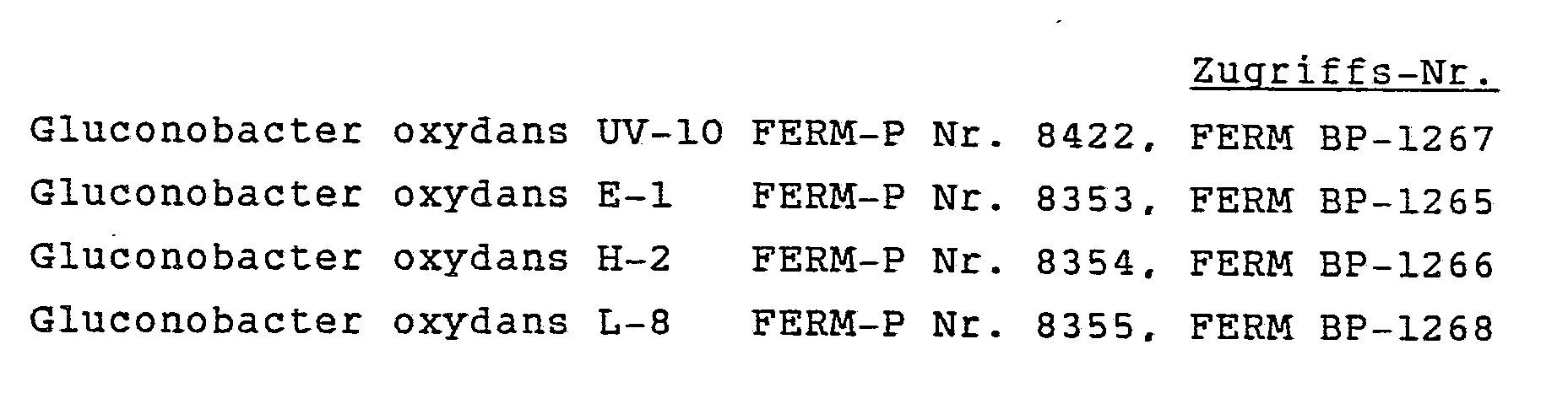
- strains which are preferably used are Gluconobacter oxydans UV-10, Gluconobacter oxydans E-1, Gluconobacter oxydans H-2 and Gluconobacter oxydans L-8. These microorganisms are deposited with the Agency of Industrial Science and Technology, Fermentation Research Institute, Japan under the following deposit numbers:
- the microorganisms can be cultivated in an aqueous medium containing the appropriate nutrients under aerobic conditions.
- the cultivation can be carried out at a pH of 4.0 to approximately 8.0, preferably 4.5 to 6.5.
- the cultivation time depends on the nature of the microorganism used and on the nutrient used, it is preferably about 10 to 100 hours.
- the preferred temperature range for performing the cultivation is 10-40 ° C, especially 25-35 ° C.
- the culture medium normally contains the following nutrients: assimilable carbon sources, such as glycerol, D-mannitol, D-sorbitol, erythritol, ribitol, xylitol, arabitol, inositol, dulcitol, D-ribose, D-fructose, D-frucose, D-glucose, gluconate , L-sorbose, maltose and sucrose, preferably L-sorbose, D-sorbitol or glycerin; degradable nitrogen sources such as organic substances e.g. Peptone, yeast extract, soybean meal and corn steep liquor; and inorganic substances, e.g. Ammonium sulfate, ammonium chloride and potassium nitrite; Vitamins and trace elements.
- assimilable carbon sources such as glycerol, D-mannitol, D-sorbitol, erythritol
- the L-sorbose dehydrogenase according to the invention is suitable as a catalyst for the production of L-sorbosone from L-sorbose.
- the reaction is conveniently carried out at pH values of about 5.0 to 10.0 in the presence of an electron acceptor, e.g. DCIP, phenazine methosulfate, Wurster's Blue, ferricyanide, coenzyme Q, cytochrome C and the like, in a solution such as phosphate buffer, Tris-HCl buffer and the like.
- a preferred temperature range for carrying out the reaction is from about 20 ° C to about 60 ° C. The best results are achieved at pH values in the range of approx. 6.5-8.0 and at 50 ° C.
- the concentration of L-sorbose in a solution also depends on the further reaction conditions, but is preferably between 10 and 100 g / l, in particular between 30 and 40 g / l.
- the enzyme can also be used in the immobilized state on a suitable carrier.
- the enzyme can be immobilized in any conventional manner.
- the enzyme can be attached directly to a membrane or to a resin having functional groups, or it can be linked by bridging compounds having bifunctional groups, e.g. Glutaraldehyde to be bound to the resin.
- the agar slant culture of Gluconobacter oxydans UV-10 (FERM-P No. 8422) was inoculated in 5 ml of medium No. 3B in a test tube and cultured at 27 ° C. in a test tube shaker within 3 days.
- the medium contained 7.0% L-sorbose, 0.05% glycerin, 1.5% yeast extract (Oriental Co.), 0.25% magnesium sulfate heptahydrate and 1.0% calcium carbonate. 1 ml of this culture was transferred into 50 ml of the same medium in a 500 ml Erlenmeyer flask and cultured at 27 ° C. in a shaker (180 rpm) within 3 days.
- 800 ml of the culture thus prepared was used as an inoculum for a 30 liter fermenter containing 20 liters of medium No. 3B.
- the fermenter was used at 30 ° C, 400 rpm and 1 Vvm (volume air / volume medium / minute) for aeration.
- Vvm volume air / volume medium / minute
- the broth was centrifuged at 1500 rpm (365 x g) for 10 minutes to separate the calcium carbonate, then at 8000 rpm (10000 x g) to sediment the cells.
- the cell cake was washed once with 0.85% aqueous sodium chloride solution. 374 g (net weight) of cells were obtained from 20 l of broth.
- the cells of Gluconobacter oxydans (77.5 g) from the previous step (1) were washed twice with physiological saline.
- the washed cells were suspended in 230 ml of the buffer and destroyed by means of a Dyno Mühle homogenizer (A. Willy, Bachofen Co., Basel) in the presence of glass beads (0.1 mm ⁇ ) at 2000 rpm for 4 minutes.
- Cell debris was removed by centrifugation at 4,000 rpm (1800 ⁇ g) for 10 minutes, and then was centrifuged the cell-free extract at 40,000 rpm (80,000 ⁇ g) for 1 hour.
- the resulting precipitate was separated as a membrane fraction (42 g).
- the membrane fraction was suspended in 600 ml of the buffer containing 0.5% Tween 80 and 0.2M L-sorbose. The suspension was stirred for 3 hours and centrifuged at 40,000 rpm (80,000 x g) for 1 hour. The residual membrane was then suspended in 600 ml of the buffer containing 0.3% Triton X-100 and 0.2M L-sorbose. The suspension was stirred for 3 hours and then centrifuged at 40,000 rpm (80,000 x g) for 1 hour. The resulting supernatant contained the solubilized L-sorbose dehydrogenase. The supernatant was dialyzed against two 2 l of the buffer containing 0.3% Triton X-100 and 0.2M L-sorbose within 16 hours.
- the dialysate (570 ml) of the previous step was applied to a DEAE cellulose column (2.5 x 50 cm) which had been equilibrated with the buffer containing 0.3% Triton X-100 and 0.2M L-sorbose.
- the column was washed with the same buffer and the elution of the enzyme was carried out with a linear gradient of sodium chloride up to 0.5M in the same buffer.
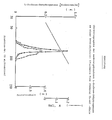
- the combined enzyme fractions (100 ml) from the previous step were dialyzed against twice 1 l of the buffer containing 0.3% Triton X-100 and 0.2M L-sorbose and on a DEAE-Sephrose column (1.5 ⁇ 30 cm) that had been equilibrated with the same buffer. After the column was washed with the same buffer, the L-sorbose dehydrogenase was eluted with a linear gradient of sodium chloride bus to 0.2M as shown in the figure. Fractions 87 to 89 were pooled (15 ml) and used in the next cleaning step.
- electrophoresis was carried out using polyacrylamide gel (separating gel; 5% acrylamide; 20 mA at 4 ° C., 8 hours).
- the enzyme showed a single band and it was confirmed by staining for 30 minutes with a solution of 0.05M phosphate buffer (pH 7.0) containing 50mM L-sorbose, 40 ⁇ g / ml nitroblue tetrazolium and 140 ⁇ g / ml phenazine methosulfate, that this protein indeed had enzyme activity.
- Electrophoresis with sodium dodecyl sulfate (SDS) polyacrylamide gel served to determine the degree of purity and the molecular weight of the enzyme.
- the enzyme resulted in a single band with a molecular weight of 58,000 ⁇ 5,000.
- Phosphorylase B MW 92,500
- bovine serum albumin MW 66,200
- ovalbumin MW 45,000
- carboxylic anhydrase MW 31,000
- soybean trypsin inhibitor MW 21,500
- lysozyme MW 14,400
- the reaction mixture containing 0.2 ml of the purified enzyme, 0.05 ml of 0.5M potassium phosphate buffer (pH 7.0), 0.05 ml of 1M L-sorbose, 0.02 ml of 0.2M phenazine methosulfate and water in a final volume of 0.5 ml was incubated at 45 ° C for 30 minutes.
- the reaction product was analyzed by thin layer chromatography and high pressure liquid chromatography. The product was identified as L-sorbosone by comparison with an authentic sample.
- reaction mixture containing 100 ml of cell-free extract of Gluconobacter oxydans UV-10, FERM-P No. 8422 (Total enzyme activity 123 units), prepared according to steps (1) and (2) of Example 1 described above, 50 ml of 0.5M potassium phosphate buffer (pH 6.0), 50 ml of 1M L-sorbose solution, 10 ml of 0.2M phenazine methosulfate solution and 290 ml of water were incubated at 30 ° C. with gentle shaking. L-sorbosone was formed at 142 mg / hour.
- reaction mixture containing 400 ml of purified membrane-bound L-sorbose dehydrogenase (total activity, 120 units), prepared according to steps (1) to (5) of Example 1 described above, 50 ml of 0.5M potassium phosphate buffer (pH 6, 0), 50 ml of 1M L-sorbose solution and 10 ml of 0.2M phenazine methosulfate solution were incubated at 30 ° C. with gentle shaking. L-sorbosone was formed at 224 mg / hour.
Landscapes
- Chemical & Material Sciences (AREA)
- Organic Chemistry (AREA)
- Life Sciences & Earth Sciences (AREA)
- Engineering & Computer Science (AREA)
- Health & Medical Sciences (AREA)
- Zoology (AREA)
- Wood Science & Technology (AREA)
- Genetics & Genomics (AREA)
- Bioinformatics & Cheminformatics (AREA)
- General Health & Medical Sciences (AREA)
- Biochemistry (AREA)
- General Engineering & Computer Science (AREA)
- Microbiology (AREA)
- Biotechnology (AREA)
- Chemical Kinetics & Catalysis (AREA)
- General Chemical & Material Sciences (AREA)
- Medicinal Chemistry (AREA)
- Molecular Biology (AREA)
- Biomedical Technology (AREA)
- Enzymes And Modification Thereof (AREA)
- Preparation Of Compounds By Using Micro-Organisms (AREA)
Abstract
Description
- Die vorliegendende Erfindung betrifft die neue Coenzym-unabhängige L-Sorbose-Dehydrogenase sowie ein Verfahren zu deren Herstellung.
- Die erfindungsgemässe L-Sorbose-Dehydrogenase katalysiert die Oxidation von L-Sorbose zu L-Sorboson, dem Vorläufer für 2-Keto-L-gulonsäure, die ein wichtiges Zwischenprodukt bei der Herstellung von Vitamin C ist.
- Eine Reaktion zur mikrobiellen Umwandlung von L-Sorbose in L-Sorboson ist bekannt. Die Herstellung von L-Sorboson aus L-Sorbose unter Verwendung von zellfreien Extrakten von Mikroorganismen ist aus verschiedenen Publikationen bekannt geworden. Gemäss der US-Patentschrift Nr. 3.912.592 ermöglichen die zu den Gattungen Gluconobacter, Pseudomonas, Acinetobacter, Bacillus, Sarcina, Streptomyces, Serratia, Aerobacter, Mycobacterium und Paecilomyces gehörenden Mikroorganismen eine solche Umwandlung. Makover et al. [Biotechnol. Bioeng. 17, 1485-1514 (1975)] berichten erstmalig über die Charakterisierung des Enzyms von Pseudomonas putida ATCC 21812, jedoch wird die Isolierung dieses Enzyms dort nicht beschrieben. Kitamura et al. [Biotechnol. Bioeng. 17, 349-359 (1975)] berichten, dass die Aktivität der in Gluconobacter melanogenus IFO 3293 befindlichen L-Sorbose-Dehydrogenase durch Phenazinmethosulfat, Methylenblau oder Kaliumferricyanid als Elektronenakzeptor stimuliert werde. Allerdings konnten sie das Enzym nicht isolieren.
- Wie oben gesagt, verlautet bisher nichts über ein gereinigtes Enzym, das die Aktivität zur Oxidation von L-Sorbose zu L-Sorboson aufweist.
- Es wurde nun gefunden, dass das aus der Membranfraktion von Zellen bestimmter Mikroorganismen isolierte, gereinigte Enzym die Oxidation von L-Sorbose zu L-Sorboson spezifisch katalysiert. Die vorliegende Erfindung beruht auf diesem Befund.
- Gegenstand der vorliegenden Erfindung ist die neue L-Sorbose-Dehydrogenase, die die Oxidation von L-Sorbose zu L-Sorboson katalysiert und eine hohe Substratspezifität aufweist. Ein weiterer Gegenstand ist ein Verfahren zur Herstellung der neuen L-Sorbose-Dehydrogenase durch Kultivieren eines zur Gattung Gluconobacter gehörenden Mikroorganismus oder einer Mutante davon, die die Herstellung der neuen L-Sorbose-Dehydrogenase in Zellmaterial ermöglichen, Zertrümmern des Zellmaterials, Isolieren der L-Sorbose-Dehydrogenase aus zellfreiem Extrakt des zertrümmerten Zellmaterials, vorzugsweise aus der Membranfraktion des Zellmaterials, sowie Reinigen der L-Sorbose-Dehydrogenase.
- Die physiko-chemischen Eigneschaften der gereinigten neuen L-Sorbose-Dehydrogenase, deren Herstellung in den nachfolgenden Beispielen veranschaulicht wird, sind wie folgt:
- Die L-Sorbose-Dehydrogenase der vorliegenden Erfindung katalysiert die Oxidation von L-Sorbose zu L-Sorboson in Gegenwart eines Elektronenakzeptors gemäss der folgenden Reaktionsgleichung:

- Das Enzym benützt Sauerstoff nicht als Akzeptor, sondern 2,6-Dichlorphenolindophenol (im folgenden als DCIP bezeichnet), Phenazinmethosulfat, Wurster's Blue, Ferricyanid, Coenzym Q und Cytochrom C können als Elektronenakzeptoren verwendet werden.
- Zur Bestimmung der Enzymaktivität wurde die Absorptionsabnahme von DCIP bei 25°C und 600 nm spektrophotometrisch gemessen. Unter der Einheit der Enzymaktivität ist diejenige Menge Enzym, die die Reduktion von 1 µMol von DCIP pro Minute katalysiert, zu verstehen. Der Extinktionscoeffizient von DCIP bei einem pH-Wert von 7,0 ist 14,5 mM⁻¹. Das Basis-Reaktionsgemisch wird unten angegeben. Das Gemisch wurde jeweils vor dem Test vorbereitet.

- Eine Küvette mit einer Schichtlänge von 1 cm im Lichtweg enthielt 0,4 ml des Basis-Reaktionsgemisches, 0,1 ml 1 M L-Sorbose, Enzymlösung und Wasser mit einem Endvolumen von 0,51 ml. Eine Referenzküvette enthielt sämtliche Komponenten mit der Ausnahme des Substrats. Die Reaktion wurde durch Zugabe des Substrats in Gang gebracht. Die Enzymaktivität bestimmte sich durch die anfängliche Reduktionsgeschwindigkeit von DCIP.
- Die Substratspezifität des Enzyms wurde unter Verwendung einer Standardenzymtestmethode bestimmt. Diese Methode unterscheidet sich von der unter (1) beschriebenen Methode dadurch, dass je 0,1 ml der verschiedenen Substratlösungen (1M) anstelle von L-Sorbose verwendet wurde. Die Ergebnisse der Bestimung sind in der Tabelle 1 aufgeführt. Es stellte sich heraus, dass das erfindungsgemässe Enzym für die L-Sorbose ausgesprochen spezifisch ist.

- Das Verhältnis zwischen der Reaktionsgeschwindigkeit der L-Sorbose-Dehydrogenase und dem pH-Wert wurde in McIlvaine-Puffer (Gemisch von 0,1 M Zitronensäure und 0,2 M Dinatriumphosphat) verschiedener pH-Werte bestimmt. Die Ergebnisse sind in der Tabelle 2 aufgeführt.

- Das Enzym wies die grösste Enzymaktivität im pH-Bereich 6,5 bis 8,0 auf.
- Das gereinigte Enzym wurde zu McIlvaine-Puffer (Gemisch von 0,1 M Zitronensäure und 0,2 M Dinatriumphosphat) verschiedener pH-Werte gegeben, und das jeweilige Gemisch wurde 121 Stunden bei 4°C stehengelassen. Die Restaktivität wurde unter den Standardtestbedingungen, wie diese oben unter (1) beschrieben sind, bestimmt. Die Ergebnisse der Bestimmung sind in der Tabelle 3 aufgeführt.
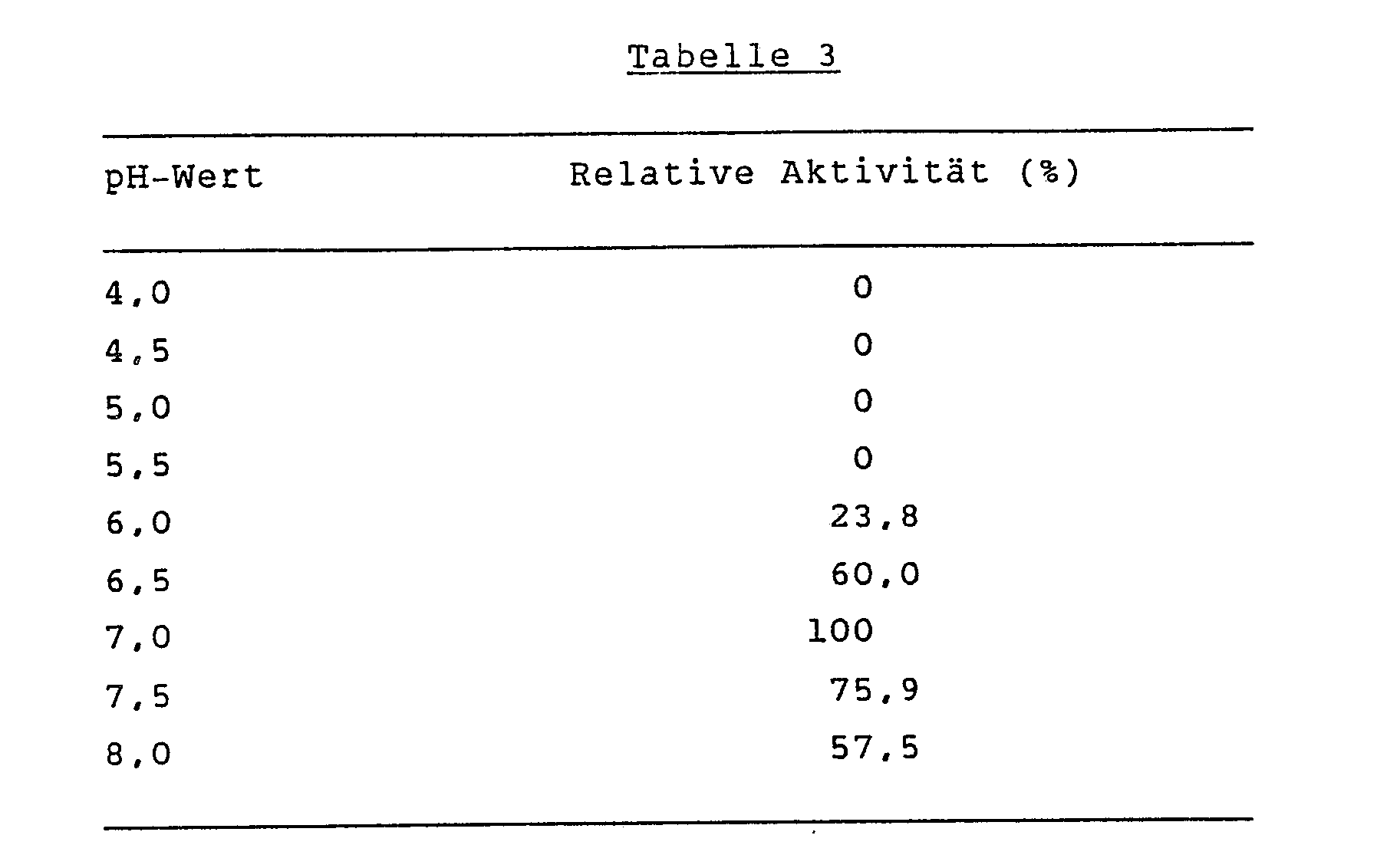
- Das gereinigte Enzym war zwischen den pH-Werten 6,5 und 8,0 relativ stabil.
- Das gereinigte Enzym wurde 5 Minuten bei verschiedenen Temperaturen in 10 mM Kaliumphosphatpuffer (pH-Wert 7,0) inkubiert und danach in Eis/Wasser abgekühlt. Die Restaktivität wurde unter den Standardtestbedingungen, wie diese oben unter (1) beschrieben sind, gemessen. Die Ergebnisse sind in der Tabelle 4 aufgeführt.

- Das gereinigte Enzym war bis zu 30°C stabil, verlor jedoch nach Inkubation bei 46°C ca. 50% bzw. 90% seiner Aktivität .
- Die Enzymaktivität von L-Sorbose-Dehydrogenase wurde bei Temperaturen von 20°C bis 58°C unter den Standardtestbedingungen, wie diese oben unter (1) beschrieben sind, bestimmt. Die Ergebnisse sind in der Tabelle 5 aufgeführt.
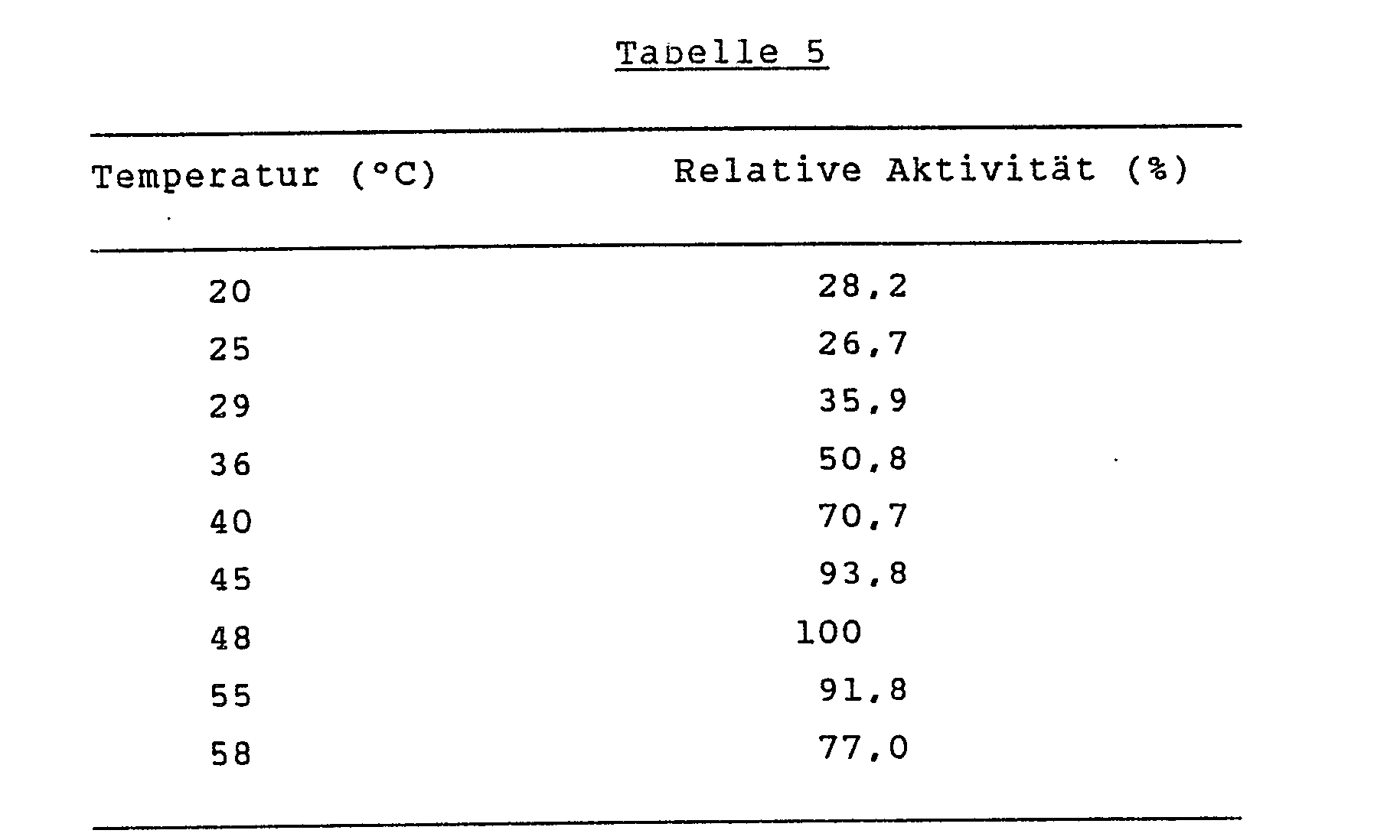
- Die Aktivität des erfindungsgemässen Enzyms nimmt bei steigender Temperatur bis auf 48°C zu.
- Die Enzymlösung wurde auf eine Sephadex G-200-Säule (1,0 × 100 cm), die mit 10 mM Kaliumphosphatpuffer (pH-Wert 7,0) enthaltend 0,3% Triton X-100 und 0,2 M L-Sorbose äquilibriert worden war, aufgetragen und mit demselben Puffer eluiert.
- Das Molekulargewicht des Enzyms betrug 210.000 ± 20.000 (durch Gelfiltration bestimmt). Da allerdings das erfindungsgemässe Enzym ein Membranprotein ist und von der Membran unter Verwendung eines oberflächenaktiven Mittels solubilisiert wird, entspricht das berechnete Molekulargewicht nicht unbedingt dem eigentlichen Molekulargewicht des Enzymproteins. Das Enzym zeigte durch Polyacrylamidgel-Elektrophorese in Gegenwart von Natriumdodecylsulfat (SDS) eine einzelne Bande, die einem Molekulargewicht von ca. 58.000 ± 5.000 entsprach, was etabliert, dass das erfindungsgemässe Enzym aus homologen Untereinheiten besteht.
- Die Geschwindigkeit der Oxidation bei variierender Konzentration von L-Sorbose (0,5 mM bis 320 mM) wurde unter Verwendung der oben unter (2) beschriebenen Methode gemessen, um die Km-Werte für L-Sorbose festzustellen. Es wurde gefunden, dass die maximale Reaktionsgeschwindigkeit bei einer Substratkonzentration von ca. 200 mM erreicht wurde. Für die scheinbare Michaelis-Konstante (Km) wurde unter Verwendung von DCIP als Elektronenakzeptor ein Wert von 102 ± 10 mM berechnet.
- Unter Verwendung der oben unter (1) beschriebenen Testmethode wurde der Einfluss von verschiedenen Metallionen auf die Enzymaktivität untersucht. Die Ergebnisse der Bestimmung sind in der Tabelle 6 aufgeführt. Co²⁺ und Fe³⁺ wirkten stimulierend und Cu²⁺ hemmend.

- Unter Verwendung der oben unter (1) beschriebenen Testmethode wurde der Einfluss verschiedener Hemmstoffe auf die Enzymaktivität untersucht. Die Ergebnisse sind in der Tabelle 7 aufgeführt. Chinin, Monojodacetat, Natriumfluoracetat und Natriumfluorid hemmten teilweise die Enzymaktivität.

- Die Reinigung von L-Sorbose-Dehydrogenase kann mittels bekannten Reinigungsmethoden bzw. durch Kombination solcher bekannter Reinigungsmethoden durchgeführt werden, z.B. Ionenaustauscherchromatographie, Flüssigkeitschromatographie, Gelfiltration, Gelelektrophorese, Aussalzen und Dialyse.
- Die erfindungsgemässe L-Sorbose-Dehydrogenase kann durch Kultivieren eines entsprechenden Mikroorganismus, Zertrümmern der Zellen und Isolieren und Reinigen der L-Sorbose-Dehydrogenase aus zellfreiem Extrakt des zertrümmerten Zellmaterials, vorzugsweise aus der Membranfraktion des Zellmaterials, hergestellt werden.
- Die in der vorliegenden Erfindung verwendeten Mikroorganismen gehören der Gattung Gluconobacter oder Mutanten davon an. Nach der neuesten Klassifikation fallen sämtliche Gluconobacter-Stämme unter die Spezies Gluconobacter oxydans. Die morphologischen und physiologischen Kennzeichen der Stämme, die Gluconobacter oxydans angehören, sind in "Bergey's Manual of Systematic Bacteriology", Vol. I, 275-278 (1984) und F. Gossele et al., International J. System. Bacteriol. Vol. 33, 65-81 (1983) beschrieben.
- Die der Gattung Gluconobacter angehörenden Mikroorganismen, die im Rahmen der vorliegenden Erfindung verwendet werden, können aus natürlichen Quellen isoliert werden bzw. sind bei Kultursammlungen erhältlich. Auch derivierte Mutanten können gemäss der vorliegenden Erfindung verwendet werden.
- Die in der vorliegenden Erfindung verwendeten Mutanten können erhalten werden durch Behandlung eines Wildtyp-Stammes mit einem Mutagen, wie UV-Bestrahlung, Röntgenbestrahlung, γ-Bestrahlung oder Behandlung mit salpetriger Säure oder anderen geeigneten Mutagenen, oder durch Isolierung eines Klons, der durch spontane Mutation auftritt. Diese Mutationen eines Wildtyp-Stammes oder eines Mutantenstammes davon können auf an sich bekannte Weise durchgeführt werden. Viele dieser Methoden sind in der Literatur beschrieben, z.B. "Chemical Mutagens", Herausgeber Y. Tajima, T. Yoshida und T. Kada, Kodansha Scientific Inc., Tokyo, Japan, 1973.
- Die erfindungsgemässen Mutanten sind auch durch Fusion der zur Spezies Gluconobacter oxydans gehörenden Stämme und durch Kombination von Mutagenese und/oder Fusion zugänglich.
- Beispiele von Stämmen, die bevorzugt verwendet werden, sind Gluconobacter oxydans UV-10, Gluconobacter oxydans E-1, Gluconobacter oxydans H-2 und Gluconobacter oxydans L-8. Diese Mikroorganismen sind bei der Agency of Industrial Science and Technology, Fermentation Research Institute, Japan unter den folgenden Hinterlegungsnummern deponiert:
- Die Mikroorganismen können in wässrigem Medium, das die geeigneten Nährstoffe enthält, unter aeroben Bedingungen kultiviert werden. Die Kultivierung kann bei einem pH-Wert von 4,0 bis ca. 8,0, vorzugsweise 4,5 bis 6,5, durchgeführt werden. Die Kultivierungszeit hängt von der Natur des verwendeten Mikroorganismus und vom verwendeten Nährstoff ab, sie beträgt vorzugsweise ca. 10 bis 100 Stunden. Der bevorzugte Temperaturbereich zur Durchführung der Kultivierung beträgt 10-40°C, insbesondere 25-35°C.
- Das Kulturmedium enthält normalerweise folgende Nährstoffe: assimilierbare Kohlenstoffquellen, wie Glycerin, D-Mannit, D-Sorbit, Erythrit, Ribit, Xylit, Arabit, Inosit, Dulcit, D-Ribose, D-Fructose, D-Frucose, D-Glucose, Gluconat, L-Sorbose, Maltose und Sucrose, vorzugsweise L-Sorbose, D-Sorbit oder Glycerin; abbaubare Stickstoffquellen, wie organische Substanzen, z.B. Pepton, Hefeextrakt, Sojabohnenmehl und Maisquellwasser; und anorganische Substanzen, z.B. Ammoniumsulfat, Ammoniumchlorid und Kaliumnitrit; Vitamine und Spurenelemente.
- Im folgenden wird eine Ausführungsform für die Isolierung von L-Sorbose-Dehydrogenase aus den Mikroorganismen nach der Kultivierung und die Reinigung der L-Sorbose-Dehydrogenase beschrieben:
- (1) Die Zellen werden aus der Fermentationsbrühe durch Zentrifugation geerntet.
- (2) Die geernteten Zellen werden mit Wasser, physiologischer Kochsalzlösung oder einer Pufferlösung mit einem geeigneten pH-Wert gewaschen.
- (3) Die gewaschenen Zellen werden in der Pufferlösung suspendiert und durch einen Homogenisator, ein Ultraschallgerät oder durch Behandlung mit Lysozym und dergleichen zerstört.
- (4) Die L-Sorbose-Dehydrogenase wird aus dem zellfreien Extrakt des zerstörten Zellmaterials isoliert, vorzugsweise aus der Membranfraktion des Zellmaterials, und gereinigt.
- Die erfindungsgemässe L-Sorbose-Dehydrogenase eignet sich als Katalysator zur Herstellung von L-Sorboson aus L-Sorbose. Die Reaktion wird zweckmässigerweise bei pH-Werten von ca. 5,0 bis 10,0 in Gegenwart eines Elektronenakzeptors, z.B. DCIP, Phenazinmethosulfat, Wurster's Blue, Ferricyanid, Coenzym Q, Cytochrom C und dergleichen, in einer Lösung, wie Phosphatpuffer, Tris-HCl-Puffer und dergleichen, durchgeführt. Ein bevorzugter Temperaturbereich zur Durchführung der Reaktion ist derjenige von ca. 20°C bis ca. 60°C. Die besten Ergebnisse werden bei pH-Werten im Bereich ca. 6,5-8,0 und bei 50°C erzielt. Die Konzentration von L-Sorbose in einer Lösung hängt auch noch von den weiteren Reaktionsbedingungen ab, liegt jedoch vorzugsweise zwischen 10 und 100 g/l, insbesondere zwischen 30 und 40 g/l.
- Das Enzym kann auch im immobilisierten Zustand auf einem geeigneten Träger verwendet werden. Das Enzym kann auf irgendeine gängige Weise immobilisiert werden. Beispielsweise kann das Enzym unmittelbar an eine Membran oder an ein Harz, welche(s) funktionelle Gruppen aufweist, gebunden werden, oder es kann durch als Brücken dienenden Verbindungen, die bifunktionelle Gruppen aufweisen, z.B. Glutaraldehyd, an das Harz gebunden werden.
- Die nachfolgenden Beispiele veranschaulichen die vorliegende Erfindung.
- Die Agarschrägkultur von Gluconobacter oxydans UV-10 (FERM-P Nr. 8422) wurde in 5 ml des Medium Nr. 3B in einem Reagenzglas inokuliert und bei 27°C innert 3 Tagen in einer Reagenzglas-Schüttelvorrichtung kultiviert. Das Medium enthielt 7,0% L-Sorbose, 0,05% Glycerin, 1,5% Hefeextrakt (Oriental Co.), 0,25% Magnesiumsulfat-heptahydrat und 1,0% Calciumcarbonat. 1 ml dieser Kultur wurde in 50 ml des gleichen Mediums in einen 500 ml-Erlenmeyer-Kolben übertragen und bei 27°C innert 3 Tagen in einer Schüttelvorrichtung (180 Upm) kultiviert. 800 ml der so hergestellten Kultur wurden als Inoculum für einen 30 l-Fermenter verwendet, der 20 l des Mediums Nr. 3B enthielt. Der Fermenter wurde bei 30°C, 400 Upm sowie 1 Vvm (Volumen Luft/Volumen Medium/Minute) für Belüftung verwendet. Nach 40 Stunden Fermentation wurden die Zellen geerntet. Die Brühe wurde bei 1500 Upm (365 × g) 10 Minuten zentrifugiert, um das Calciumcarbonat abzutrennen, anschliessend bei 8000 Upm (10000 × g), um die Zellen zu sedimentieren. Der Zellkuchen wurde mit 0,85% wässriger Natriumchloridlösung einmal gewaschen. Aus 20 l Brühe wurden 374 g (Nettogewicht) Zellen erhalten.
- Die Zellen von Gluconobacter oxydans (77.5 g) der vorhergehenden Stufe (1) wurden zweimal mit physiologischer Kochsalzlösung gewaschen. Die gewaschenen Zellen wurden in 230 ml des Puffers suspendiert und mittels eines Dyno Mühle-Homogenisators (A.Willy, Bachofen Co., Basel) in Gegenwart von Glaskügelchen (0,1 mm ø) bei 2000 Upm 4 Minuten zerstört. Zelltrümmer wurden durch 10-minütige Zentrifugation bei 4000 Upm (1800 × g) entfernt, und anschliessend wurde der zellfreie Extrakt bei 40000 Upm (80000 × g) 1 Stunde zentrifugiert. Der resultierende Niederschlag wurde als Membranfraktion (42 g) abgetrennt.
- Die Membranfraktion wurde in 600 ml des Puffers, enthaltend 0,5% Tween 80 und 0,2M L-Sorbose suspendiert. Man rührte die Suspension 3 Stunden und zentrifugierte sie bei 40000 Upm (80000 × g) 1 Stunde. Anschliessend wurde die Restmembran in 600 ml des Puffers, enthaltend 0,3% Triton X-100 und 0,2M L-Sorbose suspendiert. Die Suspension wurde 3 Stunden gerührt und dann bei 40000 Upm (80000 × g) 1 Stunde zentrifugiert. Der resultierende Ueberstand enthielt die solubilisierte L-Sorbose-Dehydrogenase. Man dialysierte den Ueberstand innert 16 Stunden gegen zweimal 2 l des Puffers, enthaltend 0,3% Triton X-100 und 0,2M L-Sorbose.
- Das Dialysat (570 ml) der vorhergehenden Stufe wurde auf eine DEAE-Cellulosesäule (2.5 × 50 cm) aufgetragen, die mit dem Puffer, enthaltend 0,3% Triton X-100 und 0,2M L-Sorbose äquilibriert worden war. Die Säule wurde mit demselben Puffer gewaschen, und die Elution des Enzyms wurde mit einem linearen Gradienten von Natriumchlorid bis zu 0,5M in demselben Puffer durchgeführt.
- Die vereinigten Enzymfraktionen (100 ml) der vorhergehenden Stufe wurden gegen zweimal 1 l des Puffers, enthaltend 0,3% Triton X-100 und 0,2M L-Sorbose dialysiert, und auf eine DEAE-Sephrose-Säule (1,5 × 30 cm) aufgetragen, die mit demselben Puffer äquilibriert worden war. Nachdem die Säule mit demselben Puffer gewaschen worden war, wurde die L-Sorbose-Dehydrogenase mit einem linearen Gradienten von Natriumchlorid bus zu 0,2M, wie in der Abbildung gezeigt, eluiert. Die Fraktionen 87 bis 89 wurden vereinigt (15 ml) un in der nächsten Reiningungsstufe verwendet.
- Eine Portion der Enzymfraktion (2 ml) wurde auf die Sephadex G-200-Säule (1,0 × 100 cm) aufgetragen, die mit demselben Puffer äquilibriert worden war, und eluiert. Die aktiven Fraktionen wurden vereinigt und bei -80°C gelagert. Die Reinigungsstufen des Enzyms sind in der Tabelle 8 zusammengefasst.

- Zur Bestimmung der Reinheit des isolierten Enzyms wurde eine Elektrophorese mit Polyacrylamidgel (Trenngel; 5% Acrylamid; 20 mA bei 4°C, 8 Stunden) durchgeführt. Das Enzym zeigte eine einzelne Bande, und es wurde durch 30-minütiges Anfärben mit der Lösung von 0,05M Phosphatpuffer (pH-Wert 7,0) enthaltend 50mM L-Sorbose, 40 µg/ml Nitroblautetrazolium und 140 µg/ml Phenazinmethosulfat bestätigt, dass dieses Protein in der Tat Enzymaktivität aufwies.
- Die Elektrophorese mit Natriumdodecylsulfat (SDS)-Polyacrylamidgel (Trenngel; 15% Acrylamid; 20 mA bei Raumtemperatur, 3 Stunden) diente zur Bestimmung des Reinheitgrads und des Molekulargewichts des Enzyms. Das Enzym führte zu einer einzelnen Bande mit einem Molekulargewicht von 58.000 ± 5.000. Als Molekulargewichtstandard wurden Phosphorylase B (MW 92.500), Rinderserumalbumin (MW 66.200), Ovalbumin (MW 45.000), Carbonsäureanhydrase (MW 31.000), Trypsin-Inhibitor der Sojabohne (MW 21.500) und Lysozym (MW 14.400) verwendet.
- Das Reaktionsgemisch enthaltend 0,2 ml des gereinigten Enzyms, 0,05 ml 0,5M Kaliumphosphatpuffer (pH-Wert 7,0), 0,05 ml 1M L-Sorbose, 0,02 ml 0,2M Phenazinmethosulfat und Wasser in einem Endvolumen von 0,5 ml wurde 30 Minuten bei 45°C inkubiert. Das Reaktionsprodukt wurde durch Dünnschichtchromatographie und Hochdruckflüssigkeitschromatographie analysiert. Das Produkt wurde durch Vergleich mit einer authentischen Probe als L-Sorboson identifiziert.
- Nach der in Beispiel 1 beschriebenen Methode wurde L-Sorbose-Dehydrogenase aus den Stämmen Gluconobacter oxydans E-1 (FERM-P Nr. 8353), H-2 (FERM-P Nr. 8354) und L-8 (FERM-P Nr. 8355) isoliert und charakterisiert. Die aus diesen Stämmen gewonnenen Enzyme wiesen dieselben Eigenschaften wie diejenigen des Enzyms aus Gluconobacter oxydans UV-10 (FERM-P Nr. 8422) auf.
- Das Reaktionsgemisch enthaltend 100 ml zellfreien Extrakt von Gluconobacter oxydans UV-10, FERM-P Nr. 8422 (Total-Enzymaktivität 123 Einheiten), hergestellt nach den oben beschriebenen Stufen (1) und (2) des Beispiels 1, 50 ml 0,5M Kaliumphosphatpuffer (pH-Wert 6,0), 50 ml 1M L-Sorbose-Lösung, 10 ml 0,2M Phenazinmethosulfat-Lösung und 290 ml Wasser wurde bei 30°C unter leichtem Schütteln inkubiert. Es bildete sich L-Sorboson und zwar 142 mg/Stunde.
- Das Reaktionsgemisch enthaltend 400 ml gereinigte Membran-gebundene L-Sorbose-Dehydrogenase (Totalaktivität, 120 Einheiten), hergestellt nach den oben beschriebenen Stufen (1) bis (5) des Beispiels 1, 50 ml 0,5M Kaliumphosphatpuffer (pH-Wert 6,0), 50 ml 1M L-Sorbose-Lösung und 10 ml 0,2M Phenazinmethosulfat-Lösung wurde bei 30°C unter leichtem Schütteln inkubiert. Es bildeten sich L-Sorboson, und zwar 224 mg/Stunde.
Claims (5)
Applications Claiming Priority (4)
| Application Number | Priority Date | Filing Date | Title |
|---|---|---|---|
| GB8613430 | 1986-06-03 | ||
| GB868613430A GB8613430D0 (en) | 1986-06-03 | 1986-06-03 | Enzyme |
| GB878708907A GB8708907D0 (en) | 1987-04-14 | 1987-04-14 | Enzyme |
| GB8708907 | 1987-04-14 |
Publications (2)
| Publication Number | Publication Date |
|---|---|
| EP0248400A2 true EP0248400A2 (de) | 1987-12-09 |
| EP0248400A3 EP0248400A3 (de) | 1988-11-30 |
Family
ID=26290850
Family Applications (1)
| Application Number | Title | Priority Date | Filing Date |
|---|---|---|---|
| EP87107960A Withdrawn EP0248400A3 (de) | 1986-06-03 | 1987-06-02 | Enzym und Verfahren zu seiner Herstellung |
Country Status (3)
| Country | Link |
|---|---|
| US (1) | US4916069A (de) |
| EP (1) | EP0248400A3 (de) |
| DK (1) | DK269987A (de) |
Cited By (7)
| Publication number | Priority date | Publication date | Assignee | Title |
|---|---|---|---|---|
| EP0276832A3 (de) * | 1987-01-30 | 1989-07-19 | F. Hoffmann-La Roche Ag | Verfahren zur Herstellung von Ketogulonsäure |
| US5352599A (en) * | 1988-01-14 | 1994-10-04 | Hoffmann-La Roche Inc. | Co-enzyme-independent L-sorbosone dehydrogenase of gluconobacter oxydans: isolation, characterization, and cloning and autologus expression of the gene |
| EP0625193A4 (de) * | 1992-01-24 | 1995-07-12 | Fmc Corp | Effiziente peptide in hinblick auf den einsatz als insektizide. |
| US5434061A (en) * | 1992-11-27 | 1995-07-18 | Takeda Chemical Industries, Ltd. | Production of saccharide carboxylic acids |
| EP0606621A3 (de) * | 1992-12-30 | 1997-04-09 | Hoffmann La Roche | Alkohol/Aldehyd-Dehydrogenase. |
| EP0753575A4 (de) * | 1993-03-08 | 1997-12-17 | Fujisawa Pharmaceutical Co | NEUARTIGE L-SORBOSEDEHYDROGENASE UND NEUARTIGE LSORBOSEDEHYDROGENASE AUS -i(GLUCONOBACTER OXYDANS) |
| EP0758679A4 (de) * | 1994-02-25 | 1999-03-17 | Fujisawa Pharmaceutical Co | Verfahren zur herstellung von 2-keto-l-gulonsäure |
Families Citing this family (5)
| Publication number | Priority date | Publication date | Assignee | Title |
|---|---|---|---|---|
| GB8910958D0 (en) * | 1989-05-12 | 1989-06-28 | Bruce Neil C | Assay |
| WO1997004101A2 (de) * | 1995-07-17 | 1997-02-06 | Fraunhofer-Gesellschaft zur Förderung der angewandten Forschung e.V. | Enzym geeignet zur oxidation von cyclitolen und ihren derivaten |
| CA2614299C (en) * | 2005-06-13 | 2014-06-03 | Nippon Kayaku Kabushiki Kaisha | Method of assaying blood component by using whole blood and measurement kit |
| AU2007261942A1 (en) * | 2006-06-22 | 2007-12-27 | Ikeda Food Research Co., Ltd. | Method for determination of 1,5-anhydroglucitol, and reagent composition for determination of 1,5-anhydroglucitol |
| ATE550642T1 (de) * | 2006-12-14 | 2012-04-15 | Nippon Kayaku Kk | Verfahren zur messung von 1,5-anhydroglucitol in vollblut |
Family Cites Families (3)
| Publication number | Priority date | Publication date | Assignee | Title |
|---|---|---|---|---|
| US3912592A (en) * | 1974-05-06 | 1975-10-14 | Hoffmann La Roche | Method for producing L-sorbosone |
| EP0213591B1 (de) * | 1985-08-28 | 1992-03-25 | F. Hoffmann-La Roche Ag | Verfahren zur Herstellung von Ketogulonsäure |
| US4935359A (en) * | 1987-02-07 | 1990-06-19 | Institute Of Microbiology | Fermentation process |
-
1987
- 1987-05-26 DK DK269987A patent/DK269987A/da not_active Application Discontinuation
- 1987-05-29 US US07/055,271 patent/US4916069A/en not_active Expired - Fee Related
- 1987-06-02 EP EP87107960A patent/EP0248400A3/de not_active Withdrawn
Cited By (13)
| Publication number | Priority date | Publication date | Assignee | Title |
|---|---|---|---|---|
| EP0276832A3 (de) * | 1987-01-30 | 1989-07-19 | F. Hoffmann-La Roche Ag | Verfahren zur Herstellung von Ketogulonsäure |
| US5352599A (en) * | 1988-01-14 | 1994-10-04 | Hoffmann-La Roche Inc. | Co-enzyme-independent L-sorbosone dehydrogenase of gluconobacter oxydans: isolation, characterization, and cloning and autologus expression of the gene |
| EP0625193A4 (de) * | 1992-01-24 | 1995-07-12 | Fmc Corp | Effiziente peptide in hinblick auf den einsatz als insektizide. |
| US5635610A (en) * | 1992-11-27 | 1997-06-03 | Takeda Chemical Industries, Ltd. | Production of saccharide carboxylic acids |
| US5629411A (en) * | 1992-11-27 | 1997-05-13 | Takeda Chemical Industries, Ltd. | Saccharide carboxylic acids of glycosides |
| US5434061A (en) * | 1992-11-27 | 1995-07-18 | Takeda Chemical Industries, Ltd. | Production of saccharide carboxylic acids |
| US5635611A (en) * | 1992-11-27 | 1997-06-03 | Takeda Chemical Industries, Ltd. | Production of saccharide carboxylic acids |
| EP0606621A3 (de) * | 1992-12-30 | 1997-04-09 | Hoffmann La Roche | Alkohol/Aldehyd-Dehydrogenase. |
| US5916785A (en) * | 1992-12-30 | 1999-06-29 | Roche Vitamins Inc. | Process of oxidizing alcohols or carboxylic acids with alcohol/aldehyde dehydrogenase from gluconobacter |
| US5932463A (en) * | 1992-12-30 | 1999-08-03 | Roche Vitamins Inc. | Gluconobacter alcohol/aldehyde dehydrogenase |
| EP0753575A4 (de) * | 1993-03-08 | 1997-12-17 | Fujisawa Pharmaceutical Co | NEUARTIGE L-SORBOSEDEHYDROGENASE UND NEUARTIGE LSORBOSEDEHYDROGENASE AUS -i(GLUCONOBACTER OXYDANS) |
| US5861292A (en) * | 1993-03-08 | 1999-01-19 | Fujisawa Pharmaceutical Co., Ltd. | L-sorbose dehydrogenase and novel L-sorbosone dehydrogenase obtained from Gluconobacter oxydans T-100 |
| EP0758679A4 (de) * | 1994-02-25 | 1999-03-17 | Fujisawa Pharmaceutical Co | Verfahren zur herstellung von 2-keto-l-gulonsäure |
Also Published As
| Publication number | Publication date |
|---|---|
| US4916069A (en) | 1990-04-10 |
| DK269987A (da) | 1987-12-04 |
| DK269987D0 (da) | 1987-05-26 |
| EP0248400A3 (de) | 1988-11-30 |
Similar Documents
| Publication | Publication Date | Title |
|---|---|---|
| DE68924761T2 (de) | Neue coenzym unabhängige l-sorbosone dehydrogenase. | |
| DE69637038T2 (de) | D-Sorbitol-Dehydrogenase | |
| DE69114935T2 (de) | Mutanter Stamm von Clostridium histolyticum, Verfahren zu dessen Herstellung und Verwendung zur Herstellung von Clostripain-freier Kollagenase. | |
| DE69110386T2 (de) | Glukose Dehydrogenase und Verfahren zu deren Herstellung. | |
| DE69821326T2 (de) | Aldehyd-Dehydrogenase | |
| US4916069A (en) | Enzyme and process for producing the same | |
| EP0248401B1 (de) | Enzym und Verfahren zu seiner Herstellung | |
| DE3603257A1 (de) | Thermostabile bilirubin-oxidase und verfahren zur herstellung derselben | |
| DE3600563C2 (de) | ||
| DE3714544C2 (de) | Glucosedehydrogenase und Verfahren zu deren Herstellung | |
| US4569912A (en) | Production of bilirubin oxidase | |
| DE69133494T2 (de) | Microbiologische Herstellung von L-Ascorbinsäure | |
| JP2792600B2 (ja) | メバロン酸生産菌 | |
| DE3931399A1 (de) | N-acetylhexosamin-dehydrogenase, verfahren zu deren herstellung, verfahren zur quantitativen analyse von n-acetylglucosamin oder n-acetylgalactosamin unter verwendung derselben, sowie kit fuer die quantitative analyse | |
| DE2738184C2 (de) | Thermostabile Glycerinkinase und Verfahren zu ihrer Herstellung | |
| DE2920764C2 (de) | ||
| EP0218863B1 (de) | Mikrobiologisch hergestellte D(-)-Mandelat-Dehydrogenase, Verfahren zu ihrer Gewinnung und ihre Verwendung | |
| DE69718360T2 (de) | Aldehyd Dehydrogenase | |
| DE3880290T2 (de) | Enzym und verfahren zu seiner herstellung. | |
| DE4032287C2 (de) | ||
| DE3931377C2 (de) | L-Fucose-Dehydrogenase, Verfahren zu ihrer Herstellung, quantitative Bestimmung von L-Fucose unter Verwendung des genannten Enzyms, sowie Kit für die quantitative Bestimmung | |
| DE3782694T2 (de) | Enzyme mit der alpha-glycerol-3-phosphat-aktivitaet, deren herstellung und deren verwendung. | |
| JP2926249B2 (ja) | アルギン酸リアーゼの製造法 | |
| US4275162A (en) | Process for the production of sphingomyelinase | |
| DE3244129C2 (de) |
Legal Events
| Date | Code | Title | Description |
|---|---|---|---|
| PUAI | Public reference made under article 153(3) epc to a published international application that has entered the european phase |
Free format text: ORIGINAL CODE: 0009012 |
|
| 17P | Request for examination filed |
Effective date: 19870602 |
|
| AK | Designated contracting states |
Kind code of ref document: A2 Designated state(s): AT BE CH DE FR GB IT LI NL |
|
| PUAL | Search report despatched |
Free format text: ORIGINAL CODE: 0009013 |
|
| AK | Designated contracting states |
Kind code of ref document: A3 Designated state(s): AT BE CH DE FR GB IT LI NL |
|
| RAP1 | Party data changed (applicant data changed or rights of an application transferred) |
Owner name: F. HOFFMANN-LA ROCHE AG |
|
| 17Q | First examination report despatched |
Effective date: 19910327 |
|
| STAA | Information on the status of an ep patent application or granted ep patent |
Free format text: STATUS: THE APPLICATION IS DEEMED TO BE WITHDRAWN |
|
| 18D | Application deemed to be withdrawn |
Effective date: 19931116 |
|
| RIN1 | Information on inventor provided before grant (corrected) |
Inventor name: SUGISAWA, TERUHIDE Inventor name: FUJIWARA, AKIKO Inventor name: HOSHINO, TATSUO |