EP0200389A2 - Lese-/Korrekturgerät - Google Patents
Lese-/Korrekturgerät Download PDFInfo
- Publication number
- EP0200389A2 EP0200389A2 EP86302599A EP86302599A EP0200389A2 EP 0200389 A2 EP0200389 A2 EP 0200389A2 EP 86302599 A EP86302599 A EP 86302599A EP 86302599 A EP86302599 A EP 86302599A EP 0200389 A2 EP0200389 A2 EP 0200389A2
- Authority
- EP
- European Patent Office
- Prior art keywords
- data
- clause
- proofreading
- pointer
- correction
- Prior art date
- Legal status (The legal status is an assumption and is not a legal conclusion. Google has not performed a legal analysis and makes no representation as to the accuracy of the status listed.)
- Withdrawn
Links
Images



Classifications
-
- G—PHYSICS
- G06—COMPUTING OR CALCULATING; COUNTING
- G06F—ELECTRIC DIGITAL DATA PROCESSING
- G06F3/00—Input arrangements for transferring data to be processed into a form capable of being handled by the computer; Output arrangements for transferring data from processing unit to output unit, e.g. interface arrangements
- G06F3/16—Sound input; Sound output
-
- G—PHYSICS
- G09—EDUCATION; CRYPTOGRAPHY; DISPLAY; ADVERTISING; SEALS
- G09B—EDUCATIONAL OR DEMONSTRATION APPLIANCES; APPLIANCES FOR TEACHING, OR COMMUNICATING WITH, THE BLIND, DEAF OR MUTE; MODELS; PLANETARIA; GLOBES; MAPS; DIAGRAMS
- G09B5/00—Electrically-operated educational appliances
- G09B5/04—Electrically-operated educational appliances with audible presentation of the material to be studied
Definitions
- This invention relates to a proofreading/correction apparatus which can easily proofread and correct the data or sentence as input to data input apparatuses or word processors.
- the input data or sentences are displayed on the CRT screen, and an operator verifies them while seeing the screen and referring to the original data or sentences. This work is inevitably accompanied by operator's nerve exhausting and eye fatigue.
- the proofreading system based on the speech synthesis technology has been developed.
- the input data or sentences are read aloud by a synthetic speech.
- the operator progresses the proofreading and error correction work while hearing the synthetic speech.
- an error is found, he visually seeks the location of the error on the display screen, and moves a pointer or cursor to the error location for its correction. This process frequently takes much time and is'.irritative and troublesome work for the operator particularly when the operator is tired or busy.
- an object of the present invention is to provide a proofreading/correction apparatus which can make easy proofreading and correction with good operability.
- an input sentence is stored into a memory, and is displayed by a display unit.
- a proofreading mode the stored sentence is read out for each segmented unit of the sentence, e.g. phrase, clause, short sentence.
- a speech synthesis section it is converted into an artificial speech which in turn is produced aloud by a loudspeaker.
- For checking the input sentence an operator hears the speech while reading the sentence on the document. If finding an error, he keys in a correction instruction for the error contained clause, to assign a pointer to that clause.
- the pointer assigned clause is negatively displayed and corrected on the CRT screen.
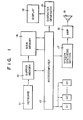
- Fig. 1 there is shown an English word processor incorporating a proofreading/correction apparatus according to the present invention.
- keyboard 11 is connected to buffer memory 12.
- Buffer memory 12 is coupled with microcomputer 13.
- the read and write operations for the buffer memory are controlled by microcomputer 13.
- the read out port of buffer memory 12 is coupled with main memory 14 for storing English sentences as input.
- Microcomputer 13 accesses main memory 14 for read and write of data.
- Microcomputer 13 reads out character codes from main memory 14 and load them into character generator 15. Character generator 15 is coupled with display 16 which displays the characters coming from character generator 15.
- pointer registers Ql, Q2, ... and speech synthesis section 17 which converts phrase, clause or sentence as read out from main memory 14 into a synthetic speech. This conversion is based on the technology as published by Dennis H. Klatt in his paper "THE DLATTALK TEXT-TO-SPEECH CONVERSION SYSTEM" in CH1747-7/82/0000, 1982 IEEE.
- FIG. 2 An input mode will first be given.
- the pointer is first initialized.
- An operator keys in English sentences by means of keyboard 11, while seeing an original document.
- Keyboard 11 is so designed that it inputs into buffer memory 12 character codes (ASCII codes) representative of English sentences.
- ASCII codes character codes
- the character codes representing such sentence or clause are transferred to character generator 15 under control by microcomputer 13.
- Character generator 15 generates characters representing the cause or sentence and applies them to display 16.
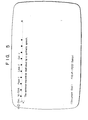
- Display 16 displays an sentence "The sentence now can be read aloud by a synthetic speech" as shown in Fig. 5.
- Fig. 3 shows a flowchart of a proofreading mode.
- the operator checks if the keyed in and displayed sentences are coincident with the sentences on the document, and if errors are found, he keys in a correction instruction.
- a Proofreading mode is set up by a related key on the keyboard, so-that the word processor starts its operation of the proofreading mode.
- space, comma, period, etc. which are present among words, are detected as pointers.
- the word, phrase, clause or short sentence corresponding to the detected pointers are read out from main memory 14, and input to speech synthesis section 17.
- the words coming from memory 14 are converted into speech signals.
- the speech signals are appropriately amplified by amplifier 18 and input to speaker 19.
- Loudspeaker 19 produces a synthetic speech of the clause, for example, as read out main memory 14.
- the operator checks the clauses on the document, while hearing the synthetic speech. When finding an error, he keys in a correction instruction.
- microcomputer 13 receives the instruction through buffer memory 12, the pointer data representing a position of the clause containing the error is stored into first register Ql. Then, microcomputer 13 checks if the following pointer data is present in main memory 14. If it is present there, the microcomputer checks if a stop instruction has been input. If the answer is NO, the control of microcomputer 13 returns to the flow to read out the clause corresponding to the following pointer data frcn main memory 14. That is to say, the next clause is read out from memory 14, and read aloud by a synthetic speech.
- a correction instruction is input to the word processor by the keyboard. Then, microcomputer 13 loads the pointer data representing a location of the error contained clause into register Q2. In this way, every time error is found, the correction instruction is input to the computer, and the location of the error contained clause is loaded into pointer registers Ql to Qn.
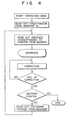
- a correction mode is then executed according to the control flow shown in Fig. 4.
- An operator inputs a start instruction of this mode to the word processor.
- Microcomputer 13 reads out first pointer data from first register Ql. With this first pointer data, memory 14 is accessed and produces the sentence specified by the data.
- the character code data of the read out sentence is transferred to character, generator 15 by microcomputer 13, and is visualized by the display. In this case, the error contained clause is displayed in the negative fashion.
- the operator enters the correction work of the error contained clause. For this correction, he enters a correct clause and replaces the error contained clause by it.
- microcomputer 13 reads out the following pointer data from pointer register Q2, and addresses main memory 14 by the following pointer data to read out therefrom the sentence as specified by that data. In this way, the pointer data are read out from the subsequent pointer registers and the error contained sentences are corrected. All of the pointer data are read out and the errors of the corresponding sentences are corrected, resulting in the end of the correction mode, so that the contents of the memory 11 has been rewritten into correct sentences.
- the operator when finding errors in the sentences as hearing a synthetic speech, the operator assigns the pointer data to the error contained sentences. This makes very easy the finding and correction of error sentences in the correction mode.
- Fig. 6 shows in block form a proofreading/correction apparatus used in a Japanese word processor.
- the output of keyboard 21 is connected through KANA-TO-KANJI translator 23 via buffer memory 22.
- This translator 23 is designed based on the KANA-TO-KANJI translation technique described in THE JAPANESE WORD PROCESSOR JW-10 in INFORMATION PROCESSING 80, S. H. Lavington(ed) IFIP, 1980 published by North-holding Publishing Company.
- Keyboard 21, buffer 22 and KANA-TO-KANJI translator 23 are connected to microcomputer 24 and controlled by it.
- the output of KANA-TO-KANJI translator 23 is connected to page buffer memory 25.
- Page buffer memory 25 is connected by microcomputer 24.
- the microcomputer controls the read and write of data for the memory.
- Microcomputer 24 is further connected to pointer registers Pl to Pn and Ql to Qn, display 26, and speech synthesis section 27. Section 27 converts the sentence into a synthetic speech signal, as in the previous embodiment, and the converted signal is then coupled with loudspeaker 29 by way of amplifier 28.
- the pointer registers Pl to Pn and Ql to Qn are all initialized in the first step. Then, an operator keys in a Japanese sentence in KANAs, while seeing an original document. In this case, an instruction indicating a clause is keyed in whenever the clause is input.
- Keyboard 21 transfers the codes representative of KANA to buffer memory 22.
- the KANA codes are input to KANA-TO-KANJI translation section 23. In this section, KANA codes representing KANJI are converted into KANJI.
- the clause containing the translated KANJI is then transferred to page buffer 25.
- Microcomputer 13 responds to the caluse instruction input through buffer memory 22 to load first pointer to register Pl, and attaches this pointer data to the head of the clause data, and stores them into page buffer memory 25.
- the clause containing KANJI is read out from page buffer memory 25, and input to display 26.
- the display displays the clause at the location of the pointer.
- the updated pointer P is loaded into pointer register P2.
- the new clause together with a new pointer, is stored into page buffer memory 25, through the control flow similar to the above, and finally is displayed on the CRT screen of display 26. All of the necessary sentences are input and the input mode ends. At the end of this input mode, the pointer data formed for each sentence is stored in each of pointer registers Pl to Pn.
- the proofreading mode follows the input mode. As shown in Fig. 8 showing its control flow, an operator selects the proofreading mode and instructs its execution by keyboard 21. Upon the instruction, microcomputer 24 reads out the sentence on the first page from page buffer memory 25, and displays it by display 26. The operator moves a cursor mark to a desired sentence to be proofread. Microcomputer 24 reads out the pointer previous to the cursor position from the pointer register. For proofreading the beginning of the sentence, the pointer data of pointer P1 is read out. By this data, page buffer memory 25 is addressed and produces the clause as specified by the pointer data of pointer register Pl. The read out clause is input to speech synthesis section 27, and converted into a synthetic speech signal. This signal is input through amplifier 28 to loudspeaker 29 which in turn produces its synthetic speech.
- the sentence stored in page buffer memory 25 is read out every sentence from memory 25, as described above, and output from loudspeaker in the form of the synthetic speech. If the operator, while hearing the speech, finds an error, he inputs a correction instruction from keyboard 21.
- microcomputer 24 transfers the pointer data P2, for example, which corresponds to the clause requiring the correction, to proofreading pointer register Ql, and stores the pointer data of pointer register Pl in that register Ql. Then, microcomputer 24 checks if a stop instruction is present or not, and updates the pointer, that is, reads out the next pointer e.g. pointer data P3. By this pointer data, page buffer memory 25 is addressed.
- the correction mode is executed.
- this mode is set up by keyboard 21, pointer data is read out from first register Ql, and addresses page buffer memory 25.
- a sentence including the error contained clause is read out from page buffer memory 25, and is displayed by display 26. For distinguishing the error contained clause from other correct clauses, it is displayed in a negative fashion, as shown in Fig. 11.
- the error contained clause can be corrected by setting up the correction mode.
- the next new pointer data is read out from the corresponding register, i.e. Q2, through the check flow to check if another pointer data is present in proofreading registers Ql to Qn.
- page buffer memory 25 is accessed by the new pointer data, and produces a sentence including the error contained clause. Subsequently, correction is made of all of the clauses with pointers.
- input sentences are read out every given segmented unit of a sentence, e.g. clause, and the read out clause is converted into a synthetic speech by the synthesis conversion section.
- an operator inputs a correction instruction, to assign a pointer to the error contained clause.
- this pointer is detected, and the clause specified by the pointer is displayed in a special form to give an easy check of the corrected clause. This features considerably lessens the load on the operator, and gives good operability of the processor.
- each input sentence or clause may be attached with codes representing punctuation in the sentences.
- codes representing punctuation in the sentences When such a special code is not used, a pointer is attached to the clause for which the correction instruction is issued. A page containing the pointer attached clause is displayed for its correction.
Landscapes
- Engineering & Computer Science (AREA)
- Theoretical Computer Science (AREA)
- General Physics & Mathematics (AREA)
- Physics & Mathematics (AREA)
- General Health & Medical Sciences (AREA)
- Health & Medical Sciences (AREA)
- Audiology, Speech & Language Pathology (AREA)
- Human Computer Interaction (AREA)
- General Engineering & Computer Science (AREA)
- Educational Technology (AREA)
- Educational Administration (AREA)
- Business, Economics & Management (AREA)
- Document Processing Apparatus (AREA)
- Machine Translation (AREA)
- Input From Keyboards Or The Like (AREA)
Applications Claiming Priority (2)
| Application Number | Priority Date | Filing Date | Title |
|---|---|---|---|
| JP60073844A JPS61233832A (ja) | 1985-04-08 | 1985-04-08 | 読合わせ校正装置 |
| JP73844/85 | 1985-04-08 |
Publications (2)
| Publication Number | Publication Date |
|---|---|
| EP0200389A2 true EP0200389A2 (de) | 1986-11-05 |
| EP0200389A3 EP0200389A3 (de) | 1988-11-17 |
Family
ID=13529853
Family Applications (1)
| Application Number | Title | Priority Date | Filing Date |
|---|---|---|---|
| EP86302599A Withdrawn EP0200389A3 (de) | 1985-04-08 | 1986-04-08 | Lese-/Korrekturgerät |
Country Status (2)
| Country | Link |
|---|---|
| EP (1) | EP0200389A3 (de) |
| JP (1) | JPS61233832A (de) |
Cited By (4)
| Publication number | Priority date | Publication date | Assignee | Title |
|---|---|---|---|---|
| EP0598598A1 (de) * | 1992-11-18 | 1994-05-25 | Canon Information Systems, Inc. | Prozessor zur Umwandlung von Daten in Sprache und Ablaufsteuerung hierzu |
| WO2000010101A1 (en) * | 1998-08-17 | 2000-02-24 | Microsoft Corporation | Proofreading with text to speech feedback |
| WO2005045803A1 (en) * | 2003-11-05 | 2005-05-19 | Philips Intellectual Property & Standards Gmbh | Error detection for speech to text transcription systems |
| EP1908055A4 (de) * | 2005-07-22 | 2008-11-26 | Multimodal Technologies Inc | Inhaltbasierte audiowiedergabebetonung |
Families Citing this family (3)
| Publication number | Priority date | Publication date | Assignee | Title |
|---|---|---|---|---|
| JPS63221459A (ja) * | 1987-03-11 | 1988-09-14 | Matsushita Electric Ind Co Ltd | 読み合わせ装置 |
| JPH0168551U (de) * | 1987-03-31 | 1989-05-02 | ||
| JPH02165324A (ja) * | 1988-12-20 | 1990-06-26 | Sanyo Electric Co Ltd | 文章読み上げ装置 |
Family Cites Families (5)
| Publication number | Priority date | Publication date | Assignee | Title |
|---|---|---|---|---|
| JPS5657159A (en) * | 1979-10-17 | 1981-05-19 | Canon Inc | Voice desk calculator |
| JPS5660965A (en) * | 1979-10-24 | 1981-05-26 | Canon Inc | Calculator |
| US4468751A (en) * | 1981-05-11 | 1984-08-28 | Lanier Business Products, Inc. | Dictation recording and transcribing system with variable playback sequence |
| IT8353701U1 (it) * | 1983-09-09 | 1985-03-09 | Olivetti & Co Spa | Dispositivo di memorizzazione e letteratura elettronica di dati per agevolare la verifica della correttezza di dati introdotti in un apparato di elaborazione delle informazioni |
| JPS60134960A (ja) * | 1983-12-23 | 1985-07-18 | Hitachi Ltd | 文章入力・処理・変換装置の確認訂正方法 |
-
1985
- 1985-04-08 JP JP60073844A patent/JPS61233832A/ja active Pending
-
1986
- 1986-04-08 EP EP86302599A patent/EP0200389A3/de not_active Withdrawn
Cited By (7)
| Publication number | Priority date | Publication date | Assignee | Title |
|---|---|---|---|---|
| EP0598598A1 (de) * | 1992-11-18 | 1994-05-25 | Canon Information Systems, Inc. | Prozessor zur Umwandlung von Daten in Sprache und Ablaufsteuerung hierzu |
| US5555343A (en) * | 1992-11-18 | 1996-09-10 | Canon Information Systems, Inc. | Text parser for use with a text-to-speech converter |
| WO2000010101A1 (en) * | 1998-08-17 | 2000-02-24 | Microsoft Corporation | Proofreading with text to speech feedback |
| US6490563B2 (en) | 1998-08-17 | 2002-12-03 | Microsoft Corporation | Proofreading with text to speech feedback |
| WO2005045803A1 (en) * | 2003-11-05 | 2005-05-19 | Philips Intellectual Property & Standards Gmbh | Error detection for speech to text transcription systems |
| EP1908055A4 (de) * | 2005-07-22 | 2008-11-26 | Multimodal Technologies Inc | Inhaltbasierte audiowiedergabebetonung |
| US7844464B2 (en) | 2005-07-22 | 2010-11-30 | Multimodal Technologies, Inc. | Content-based audio playback emphasis |
Also Published As
| Publication number | Publication date |
|---|---|
| EP0200389A3 (de) | 1988-11-17 |
| JPS61233832A (ja) | 1986-10-18 |
Similar Documents
| Publication | Publication Date | Title |
|---|---|---|
| US4456973A (en) | Automatic text grade level analyzer for a text processing system | |
| EP0085209B1 (de) | Terminal mit Sprachausgabe zur Anwendung in Datenverarbeitungsanlagen | |
| EP0370774B1 (de) | Maschinenübersetzungssystem | |
| KR880008124A (ko) | 한문자(漢文字)를 선택, 기억 및 표시하기 위한 방법과 장치 | |
| US7080002B1 (en) | Bi-lingual system and method for automatically converting one language into another language | |
| JP3727969B2 (ja) | 点字表示装置および点字表示方法 | |
| JPH0350668A (ja) | 文字処理装置 | |
| JPH0334105B2 (de) | ||
| JPS6037510B2 (ja) | ロ−マ字漢字変換方式 | |
| JPH081639B2 (ja) | ワードプロセッサ | |
| JP2786260B2 (ja) | かな漢字変換装置 | |
| JPH0380363A (ja) | 文書処理装置 | |
| JP2737160B2 (ja) | 文章処理装置 | |
| JP3236039B2 (ja) | 文字処理装置及びその方法 | |
| JPH0340870B2 (de) | ||
| JP2603269B2 (ja) | 文字処理装置 | |
| JPS60201467A (ja) | 日本語処理装置 | |
| JP3371435B2 (ja) | 入力モード自動設定方法あるいは入力モード自動設定装置 | |
| JPS59106033A (ja) | 文書処理装置の振仮名付加方式 | |
| JP2944666B2 (ja) | 文字処理装置 | |
| JP2937884B2 (ja) | テキストデータ処理システムおよびテキストデータ処理方法 | |
| JPH0363100B2 (de) | ||
| JPS6089235A (ja) | 文字処理装置 | |
| JPH0661080B2 (ja) | 振仮名付加機能付き文書処理装置 | |
| JPH01276363A (ja) | 中国語文章作成装置 |
Legal Events
| Date | Code | Title | Description |
|---|---|---|---|
| PUAI | Public reference made under article 153(3) epc to a published international application that has entered the european phase |
Free format text: ORIGINAL CODE: 0009012 |
|
| 17P | Request for examination filed |
Effective date: 19860421 |
|
| AK | Designated contracting states |
Kind code of ref document: A2 Designated state(s): DE FR GB IT |
|
| PUAL | Search report despatched |
Free format text: ORIGINAL CODE: 0009013 |
|
| AK | Designated contracting states |
Kind code of ref document: A3 Designated state(s): DE FR GB IT |
|
| 17Q | First examination report despatched |
Effective date: 19890606 |
|
| STAA | Information on the status of an ep patent application or granted ep patent |
Free format text: STATUS: THE APPLICATION IS DEEMED TO BE WITHDRAWN |
|
| 18D | Application deemed to be withdrawn |
Effective date: 19891219 |
|
| RIN1 | Information on inventor provided before grant (corrected) |
Inventor name: NITTA, TSUNEOC/O PATENT DIVISION |