EP0011237A1 - Polyäther-Derivate, Verfahren zu ihrer Herstellung und ihre Verwendung als Arzneimittel - Google Patents
Polyäther-Derivate, Verfahren zu ihrer Herstellung und ihre Verwendung als Arzneimittel Download PDFInfo
- Publication number
- EP0011237A1 EP0011237A1 EP79104382A EP79104382A EP0011237A1 EP 0011237 A1 EP0011237 A1 EP 0011237A1 EP 79104382 A EP79104382 A EP 79104382A EP 79104382 A EP79104382 A EP 79104382A EP 0011237 A1 EP0011237 A1 EP 0011237A1
- Authority
- EP
- European Patent Office
- Prior art keywords
- general formula
- alkyl
- polyether
- given above
- meaning given
- Prior art date
- Legal status (The legal status is an assumption and is not a legal conclusion. Google has not performed a legal analysis and makes no representation as to the accuracy of the status listed.)
- Withdrawn
Links
Classifications
-
- C—CHEMISTRY; METALLURGY
- C08—ORGANIC MACROMOLECULAR COMPOUNDS; THEIR PREPARATION OR CHEMICAL WORKING-UP; COMPOSITIONS BASED THEREON
- C08G—MACROMOLECULAR COMPOUNDS OBTAINED OTHERWISE THAN BY REACTIONS ONLY INVOLVING UNSATURATED CARBON-TO-CARBON BONDS
- C08G65/00—Macromolecular compounds obtained by reactions forming an ether link in the main chain of the macromolecule
- C08G65/02—Macromolecular compounds obtained by reactions forming an ether link in the main chain of the macromolecule from cyclic ethers by opening of the heterocyclic ring
- C08G65/32—Polymers modified by chemical after-treatment
- C08G65/321—Polymers modified by chemical after-treatment with inorganic compounds
- C08G65/326—Polymers modified by chemical after-treatment with inorganic compounds containing sulfur
-
- A—HUMAN NECESSITIES
- A61—MEDICAL OR VETERINARY SCIENCE; HYGIENE
- A61K—PREPARATIONS FOR MEDICAL, DENTAL OR TOILETRY PURPOSES
- A61K31/00—Medicinal preparations containing organic active ingredients
- A61K31/74—Synthetic polymeric materials
- A61K31/765—Polymers containing oxygen
- A61K31/77—Polymers containing oxygen of oxiranes
-
- A—HUMAN NECESSITIES
- A61—MEDICAL OR VETERINARY SCIENCE; HYGIENE
- A61P—SPECIFIC THERAPEUTIC ACTIVITY OF CHEMICAL COMPOUNDS OR MEDICINAL PREPARATIONS
- A61P1/00—Drugs for disorders of the alimentary tract or the digestive system
-
- A—HUMAN NECESSITIES
- A61—MEDICAL OR VETERINARY SCIENCE; HYGIENE
- A61P—SPECIFIC THERAPEUTIC ACTIVITY OF CHEMICAL COMPOUNDS OR MEDICINAL PREPARATIONS
- A61P3/00—Drugs for disorders of the metabolism
- A61P3/06—Antihyperlipidemics
-
- C—CHEMISTRY; METALLURGY
- C08—ORGANIC MACROMOLECULAR COMPOUNDS; THEIR PREPARATION OR CHEMICAL WORKING-UP; COMPOSITIONS BASED THEREON
- C08G—MACROMOLECULAR COMPOUNDS OBTAINED OTHERWISE THAN BY REACTIONS ONLY INVOLVING UNSATURATED CARBON-TO-CARBON BONDS
- C08G65/00—Macromolecular compounds obtained by reactions forming an ether link in the main chain of the macromolecule
- C08G65/02—Macromolecular compounds obtained by reactions forming an ether link in the main chain of the macromolecule from cyclic ethers by opening of the heterocyclic ring
- C08G65/32—Polymers modified by chemical after-treatment
- C08G65/321—Polymers modified by chemical after-treatment with inorganic compounds
-
- C—CHEMISTRY; METALLURGY
- C08—ORGANIC MACROMOLECULAR COMPOUNDS; THEIR PREPARATION OR CHEMICAL WORKING-UP; COMPOSITIONS BASED THEREON
- C08G—MACROMOLECULAR COMPOUNDS OBTAINED OTHERWISE THAN BY REACTIONS ONLY INVOLVING UNSATURATED CARBON-TO-CARBON BONDS
- C08G65/00—Macromolecular compounds obtained by reactions forming an ether link in the main chain of the macromolecule
- C08G65/02—Macromolecular compounds obtained by reactions forming an ether link in the main chain of the macromolecule from cyclic ethers by opening of the heterocyclic ring
- C08G65/32—Polymers modified by chemical after-treatment
- C08G65/329—Polymers modified by chemical after-treatment with organic compounds
- C08G65/331—Polymers modified by chemical after-treatment with organic compounds containing oxygen
- C08G65/332—Polymers modified by chemical after-treatment with organic compounds containing oxygen containing carboxyl groups, or halides, or esters thereof
- C08G65/3324—Polymers modified by chemical after-treatment with organic compounds containing oxygen containing carboxyl groups, or halides, or esters thereof cyclic
- C08G65/3326—Polymers modified by chemical after-treatment with organic compounds containing oxygen containing carboxyl groups, or halides, or esters thereof cyclic aromatic
-
- C—CHEMISTRY; METALLURGY
- C08—ORGANIC MACROMOLECULAR COMPOUNDS; THEIR PREPARATION OR CHEMICAL WORKING-UP; COMPOSITIONS BASED THEREON
- C08G—MACROMOLECULAR COMPOUNDS OBTAINED OTHERWISE THAN BY REACTIONS ONLY INVOLVING UNSATURATED CARBON-TO-CARBON BONDS
- C08G65/00—Macromolecular compounds obtained by reactions forming an ether link in the main chain of the macromolecule
- C08G65/02—Macromolecular compounds obtained by reactions forming an ether link in the main chain of the macromolecule from cyclic ethers by opening of the heterocyclic ring
- C08G65/32—Polymers modified by chemical after-treatment
- C08G65/329—Polymers modified by chemical after-treatment with organic compounds
- C08G65/337—Polymers modified by chemical after-treatment with organic compounds containing other elements
Definitions
- the present invention relates to new polyether derivatives, several processes for their preparation and their use as medicaments, in particular as lipid absorption inhibitors.
- this patent also mentions an effect on lowering cholesterol in the blood.
- such polyoxyalkylenes are particularly suitable as cholesterol-lowering compounds which have a molecular weight of approximately 7,500 and contain 80% ethylene oxide.
- the invention also relates to salts of these compounds which are formed either with bases or, in the case of the amino group, with acids in a manner known per se.
- the polyether derivatives have the general formula (I) has a very strong li D idabsorptions- inhibitory effect despite the low molecular weight and an ethylene oxide content of 20 to 40%.
- process variant b) (reaction of IV with V) is a preferred embodiment.
- reaction sequence according to variant b) can be represented by the following formula:
- polyethers of the general formula (II) to be used as starting materials are known or can be prepared by known methods (cf. US Pat. 3,674,619 and IR Schmolka in J. Am. Oil Chemists Soc. 54, No. 3, 110-16 , 1977).
- halides of the general formula (III) to be used as starting materials are known or can be prepared by known methods (cf. Houben Weyl Vol. 5/3, pp. 830-838, 862-870 (1962); Vol. 5/4, Pp. 361-411, 610-628 (1960).
- the compounds of the invention have a narrow molecular weight distribution.
- the compounds according to the invention are characterized and analyzed analytically by determining the molecular weight from the hydroxyl number.
- the ethylene oxide content is determined from the H-NMR spectrum.
- the polyethers according to the invention surprisingly show very strong effects in the treatment of fat and carbohydrate metabolism disorders. In particular, they lower the elevated cholesterol in serum and tissue and at the same time reduce hypertriglyceridaemia.
- the compounds according to the invention are suitable for the treatment of hyperlipoproteinaemia, atherosclerosis, obesity and for the treatment of metabolic disorders triggered thereby.
- polyethers according to the invention of the present application have such a pronounced hypolipidemic effect in this molecular weight range from 3 to 5000, in particular 4000, and the special propylene oxide / ethylene oxide ratio. Since the compounds according to the invention are at the same time very well tolerated in addition to this strong action, they represent an enrichment of the pharmaceutical industry.
- the present invention includes pharmaceutical preparations which, in addition to non-toxic, inert pharmaceutically suitable excipients, contain one or more compounds of the above formula or which consist of one or more compounds of the above formula, and processes for the preparation of these preparations.
- the present invention also includes pharmaceutical preparations in dosage units.
- the preparations in the form of individual parts e.g. Tablets, coated tablets, capsules, pills, suppositories and ampoules are present, the active ingredient content of which corresponds to a fraction or a multiple of a single dose.
- the dosage units can e.g. 1, 2, 3 or 4 single doses or 1/2, 1/3 or 1/4 of a single dose.
- a single dose preferably contains the amount of active ingredient which is administered in one application and which usually corresponds to a whole, a half or a third or a quarter of a daily dose.
- Non-toxic, internal pharmaceutically suitable carriers are to be understood as solid, semi-solid or liquid diluents, fillers and formulation auxiliaries of all kinds.
- Tablets, dragees, capsules, pills, granules, suppositories, solutions, suspensions and emulsions, pastes may be mentioned as preferred pharmaceutical preparations.
- Tablets, coated tablets, capsules, pills and granules can contain the active ingredient (s) in addition to the usual carriers, such as (a) fillers and extenders, e.g. Starches, milk sugar, cane sugar, glucose, mannitol and silica, (b) binders, e.g. Carboxymethyl cellulose, alginates, gelatin, polyvinyl pyrrolidone, (c) humectants, e.g. Glycerin, (d) disintegrants, e.g. Agar-agar, calcium carbonate and sodium bicarbonate, (e) solution retarders, e.g. Paraffin and (f) absorption accelerators, e.g.
- fillers and extenders e.g. Starches, milk sugar, cane sugar, glucose, mannitol and silica
- binders e.g. Carboxymethyl cellulose, alginates, gelatin, polyvinyl pyrrolidone
- quaternary ammonium compounds (g) wetting agents, e.g. Cetyl alcohol, glycerol monostearate, (h) adsorbent e.g. Kaolin and bentonite and (i) lubricants, e.g. Talc, calcium and magnesium stearate and solid polyethylene glycols or mixtures of the substances listed under (a) - (i).
- wetting agents e.g. Cetyl alcohol, glycerol monostearate
- adsorbent e.g. Kaolin and bentonite
- lubricants e.g. Talc, calcium and magnesium stearate and solid polyethylene glycols or mixtures of the substances listed under (a) - (i).
- the tablets, dragees, capsules, pills and granules can be provided with the customary coatings and casings optionally containing opacifying agents and can also be composed such that they release the active ingredient (s) only or preferably in a certain part of the intestinal tract, optionally with a delay, where as Embedding materials, for example Polymer substances and waxes can be used.
- the active ingredient (s) can optionally also be in microencapsulated form with one or more of the above-mentioned excipients.
- suppositories can be the usual water-soluble or water-insoluble carriers Contain substances, for example polyethylene glycols, fats, for example cocoa fat and higher esters (for example C14 alcohol with C 16 fatty acid) or mixtures of these substances.
- substances for example polyethylene glycols, fats, for example cocoa fat and higher esters (for example C14 alcohol with C 16 fatty acid) or mixtures of these substances.
- solutions and emulsions can contain the usual carriers, such as solvents, solubilizers and emulsifiers, e.g. Water, ethyl alcohol, isopropyl alcohol, ethyl carbonate, ethyl acetate, benzyl alcohol, benzyl benzoate, propylene glycol, 1,3-butylene glycol, dimethylformamide, oils, especially cottonseed oil, peanut oil, corn oil, olive oil, castor oil and sesame oil, glycerol, glyceryl formaldehyde, fatty acid, fatty acid, fatty acid, fatty alcohol of sorbitan or mixtures of these substances.
- solvents e.g. Water, ethyl alcohol, isopropyl alcohol, ethyl carbonate, ethyl acetate, benzyl alcohol, benzyl benzoate, propylene glycol, 1,3-butylene glycol, dimethylformamide, oils, especially cottons
- solutions and emulsions can also be in sterile and blood isotonic form.
- suspensions can contain the usual carriers, such as liquid diluents, e.g. Water, ethyl alcohol, propylene glycol, suspending agents e.g. ethoxylated isostearyl alcohols, polyoxyethylene sorbitol and sorbitan esters, microcrystalline cellulose, aluminum methoxide, bentonite, agar and tragacanth or mixtures of these substances.
- liquid diluents e.g. Water, ethyl alcohol, propylene glycol
- suspending agents e.g. ethoxylated isostearyl alcohols, polyoxyethylene sorbitol and sorbitan esters, microcrystalline cellulose, aluminum methoxide, bentonite, agar and tragacanth or mixtures of these substances.
- the formulation forms mentioned can also contain colorants, preservatives and odors and flavors improving additives, for example peppermint oil and eucalyptus oil, and sweeteners, for example saccharin.
- colorants for example peppermint oil and eucalyptus oil
- sweeteners for example saccharin.
- the therapeutically active compounds should be present in the pharmaceutical preparations listed above in a concentration of about 0.1 to 99.5, preferably about 0.5 to 95 percent by weight of the total mixture.
- the pharmaceutical preparations listed above can also contain other active pharmaceutical ingredients.
- the pharmaceutical preparations listed above are prepared in a conventional manner by known methods, e.g. by mixing the active substance or substances with the carrier substance or substances.
- the present invention also includes the use of the compounds of the above formula and the use of pharmaceutical preparations which contain one or more compounds of the above formula in human and veterinary medicine for preventing, ameliorating and / or curing the above-mentioned diseases.
- the active substances or the pharmaceutical preparations can be administered orally, parenterally, intraperitoneally and / or rectally, preferably orally.
- a single dose contains the active ingredient (s) preferably in amounts of about 0.1 to about 100 mg / kg body weight.
- the active ingredient preferably in amounts of about 0.1 to about 100 mg / kg body weight.
- the alkylating agent ethyl iodide is used, analogously to Example 2, the corresponding diethyl ether derivative of the polyether used, which no longer has an OH band, is obtained in an oily form.
- n 1.4563.
- 80 g of polyether according to claim 1 are reacted with 5 ml of thionyl bromide. After chromatographic separation over aluminum oxide, 40 g of polyether dibromide are obtained, to which 3 g of sodium hydroxide and 2.4 ml of ethyl thioessiaate are added in 100 ml of ethanol. After reacting for 4 hours at 80 ° C to give the corresponding thioether of Essi g klareäthylesters.
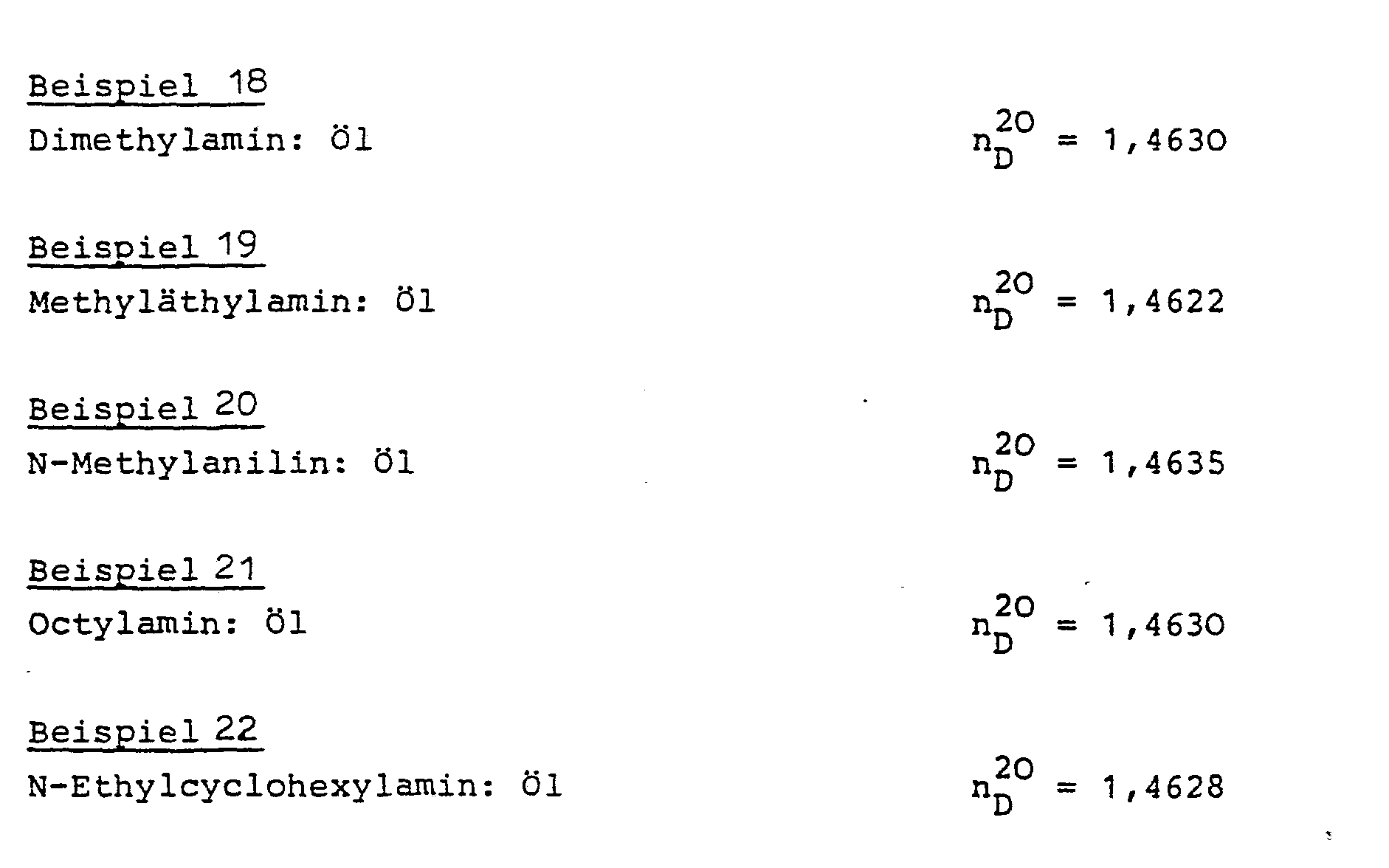
- Example 18 If the following amine compounds are used instead of ammonia in Example 18, the corresponding amine derivatives of the polyether are obtained by the procedure of Example 18.
Landscapes
- Chemical & Material Sciences (AREA)
- Health & Medical Sciences (AREA)
- Medicinal Chemistry (AREA)
- Chemical Kinetics & Catalysis (AREA)
- Organic Chemistry (AREA)
- General Chemical & Material Sciences (AREA)
- Polymers & Plastics (AREA)
- Pharmacology & Pharmacy (AREA)
- Inorganic Chemistry (AREA)
- Veterinary Medicine (AREA)
- Public Health (AREA)
- General Health & Medical Sciences (AREA)
- Animal Behavior & Ethology (AREA)
- Life Sciences & Earth Sciences (AREA)
- Bioinformatics & Cheminformatics (AREA)
- Nuclear Medicine, Radiotherapy & Molecular Imaging (AREA)
- Epidemiology (AREA)
- Engineering & Computer Science (AREA)
- Diabetes (AREA)
- Hematology (AREA)
- Obesity (AREA)
- Pharmaceuticals Containing Other Organic And Inorganic Compounds (AREA)
- Organic Low-Molecular-Weight Compounds And Preparation Thereof (AREA)
- Polyethers (AREA)
- Medicinal Preparation (AREA)
Abstract
Die vorliegende Erfindung betrifft neue Polyäther-Derivate, mehrere Verfahren zu ihrer Herstellung sowie ihre Verwendung als Arzneimittel, insbesondere als Lipidabsorptionshemmer.
Description
- Die vorliegende Erfindung betrifft neue Polyäther-Derivate, mehrere Verfahren zu ihrer Herstellung sowie ihre Verwendung als Arzneimittel, insbesondere als Lipidabsorptionshemmer.
- Es ist bereits bekannt, daß oberflächenaktive Polyäther, die aus Propylenoxid- und Äthylenoxid-Einheiten bestehen, lipidabsorptionshemmende Eigenschaften besitzen. Von Bochenek und Rodgers wird darauf hingewiesen, daß nichtionische Pluronik-Polyole mit einem hydrophoben Block von 90 % (d.h. 90 % Propylenoxid) lipidabsorptionshemmende Wirkungen aufweisen, während die hydrophileren Polyäther aus der gleichen Reihe die Lipidabsorption nur wenig beeinflussen (vgl. Biochimica et Biophysica Acta, 489, (1977) 503-506) . In dem US-Patent 3 202 578 werden Pclycxyalkylene beschrieben, die als Laxantia Verwendung finden können.
- In dieser Patentschrift wird neben der laxierenden Wirkung auch eine Wirkung auf die Cholesterinsenkung im Blut erwähnt. Nach den Ausführungen dieser Patentschrift sind solche Polyoxyalkylene besonders als cholesterinsenkende Verbindungen geeignet, die ein Molekulargewicht von ca. 7.500 besitzen und 80 % Äthylenoxid enthalten.
- Die Erfindung betrifft Polyäther-Derivate der allgemeinen Formel (I)

- X jeweils für Sauerstoff, Schwefel, eine NH- oder eine N-Alkylgruppe steht,
- R für Alkyl, Alkenyl, Cycloalkyl, Cycloalkenyl, Aryl oder Aralkyl steht, wobei diese Gruppen ge-gebenenfalls substituiert sind durch Nitro, Cyano, Azido, Halogen, Trifluormethyl, Trifluormethoxy, Phenyl, Hydroxy, Amino, Alkyl, Alkoxy, Alkoxycarbonyl, Acyloxy, Acylamino, Hydroxy, Carboxy oder S02-Alkyl und
- a, b und c für ganze Zahlen stehen, die so gewählt sind, daß ein mittleres Molekulargewicht von 3.000 - 5.000 resultiert und daß der Propylenoxid-Anteil (b) 60 bis 80 % und der Äthylenoxid-Anteil (a und c) 20-40 % beträgt.
- Für den Fall, daß der Substituent R eine Carboxy- oder Aminogruppe enthält, betrifft die Erfindung auch Salze dieser Verbindungen, die entweder mit Basen oder im Falle der Aminogruppe mit Säuren in an sich bekannter Weise gebildet werden.
- Von besonderem Interesse sind Verbindungen der allgemeinen Formel (I) mit einem mittleren Molekulargewicht von ca. 4.000, einem Propylenoxid-Anteil von 70 % und einem Äthylenoxid-Anteil von 30 %.
- überraschenderweise zeigen die Polyäther-Derivate der allgemeinen Formel (I) eine sehr starke liDidabsorptions- hemmende Wirkung trotz des niedrigen Molekulargewichtes und einem Äthylenoxid-Anteil von 20 bis 40%.
- Die erfindungsgemäßen Polyäther-Derivate der allgemeinen Formel (I) werden erhalten, indem man
- a) Polyäther der allgemeinen Formel (II)

- a, b und c die oben angegebene Bedeutung haben,
in einem inerten organischen Lösungsmittel in an sich bekannter Weise mit Natriumhydrid, Natriumamid oder Natriumalkoholat in das entsprechende Dialkoholat überführt und anschließend mit einem Halogenid der allgemeinen Formel (III)
- R1 die oben angegebene Bedeutung hat und
- Hal für Halogen, insbesondere für Brom oder Chlor steht,
umsetzt, oder - a, b und c die oben angegebene Bedeutung haben,
- b) die Hydroxylgruppen des Polyäthers der allgemeinen Formel (II) nach bekannten Methoden in das Halogenid der allgemeinen Formel (IV)

- a, b, c und Hal die oben angegebene Bedeutung besitzen
- und dieses Halogenid dann in Gegenwart eines
inerten Lösungsmittels nach an sich bekannter Weise mit einem Alkohol, Merkaptan oder Amin der allgemeinen Formel (V)
- R1 und X die oben angegebene Bedeutung haben,
umsetzt. - Für den Fall, daß R Aryl bedeutet und X für Sauerstoff steht, stellt die Verfahrensvariante b) (Umsetzung von IV mit V) eine bevorzugte Ausführungsform dar.
- Verwendet man den Polyäther der allgemeinen Formel (II), Natriumhydrid und Bromessigsäure-Äthylester, so kann der Reaktionsablauf gemäß Variante a) durch folgendes Formelschema wiedergegeben werden:

-

- Verwendet man den Polyäther der allgemeinen Formel (II), Thionylbromid und das Natriumsalz von p-Hydroxybenzoesäureäthylester als Ausgangsstoffe, so kann der Reaktionsablauf nach Variante b) durch folgendes Formelschema wiedergegeben werden:

- Die als Ausgangsstoffe einzusetzenden Polyäther der allgemeinen Formel (II) sind bekannt oder können nach bekannten Methoden hergestellt werden (vgl. U.S.Pat. 3 674 619 und I.R. Schmolka in J. Am. Oil Chemists Soc. 54, No. 3, 110-16, 1977).
- Die als Ausgangsstoffe einzusetzenden Halogenide der allgemeinen Formel (III) sind bekannt oder können nach bekannten Methoden hergestellt werden (vgl. Houben Weyl Bd. 5/3, S. 830-838, 862-870 (1962); Bd. 5/4, S. 361-411, 610-628 (1960).
- Als Beispiele seien genannt:
- Bromessigsäuremethylester, Bromessigsäureäthylester, 2-Brombuttersäureäthylester, 4-Brombuttersäuremethylester, 4-Bromcrotonsäureäthylester, 2-Bromisobuttersäureäthylester, 2-Brompropionsäureäthylester, 3-Brompropionsäuremethylester, 2-Bromvaleriansäureäthylester, 5-Bromvalerian- :iäureäthylester.
- Von besonderer Bedeutung sind Polyätherderivate der allgemeinen Formel (I)
- in welcher
- X für Sauerstoff, Schwefel, -NH oder N-Alkyl (1-2 C-Atome) steht und
- R 1 für Alkyl mit 1 bis 10, insbesondere 1 bis 8 Kohlenstoffatomen, Benzyl oder für einen Phenylrest steht, wobei die Alkylreste gegebenenfalls durch ein oder zwei gegebenenfalls veresterte Carboxylgruppen substituiert sind und wobei der Phenylrest gegebenenfalls substituiert ist durch Alkyl, Alkoxy (je 1-4 C-Atome), Halogen, Nitro oder Trifluormethyl.
- Ganz besonders sind Verbindungen der allgemeinen Formel (I)
- in welcher
- X Sauerstoff bedeutet und
- R1 für Alkyl mit 1 bis 4 Kohlenstoffatomen steht, welches durch eine Carbonsäurefunktion substituiert ist.
- Die erfindungsgemäßen Verbindungen haben eine enge Molekalargewichtsverteilung.
- Die Charakterisierung und Zusammensetzung der erfindungsgemäßen Verbindungen erfolgt analytisch durch Ermittlung des Molekulargewichts aus der Hydroxylzahl. Der Äthylenoxidgehalt wird aus dem H-NMR-Spektrum bestimmt.
- Die erfindungsgemäßen Polyäther zeigen überraschenderweise sehr starke Wirkungen bei der Behandlung von Fett- und Kohlenhydratstoffwechselstörungen. Sie bewirken insbesondere eine Senkung des erhöhten Cholesterins im Serum und im Gewebe und vermindern gleichzeitig eine Hypertriglyceridämie. Die erfindungsgemäßen Verbindungen eignen sich zur Behandlung von Hyperlipoproteinämien, Atherosklerose, Adipositas und zur Behandlung hierdurch ausgelöster Stoffwechselstörungen.
- Es ist als ausgesprochen überraschend zu bezeichnen, daß die erfindungsgemäßen Polyäther der vorliegenden Anmeldung ausgerechnet in diesem Molekulargewichtsbereich von 3 bis 5000, insbesondere 4000, und dem speziellen Propylenoxid/Äthylenoxid-Verhältnis eine so ausgeprägte hypolipidämische Wirkung besitzen. Da die erfindungsgemäßen Verbindungen neben dieser starken Wirkung gleichzeitig sehr gut verträglich sind, stellen sie eine Bereicherung der Pharmazie dar.
- Zur vorliegenden Erfindung gehören pharmazeutische Zubereitungen, die neben nichttoxischen, inerten pharmazeutisch geeigneten Trägerstoffen eine oder mehrere Verbindungen der obigen Formel enthalten oder die aus einer oder mehreren Verbindungen der obigen Formel bestehen, sowie Verfahren zur Herstellung dieser Zubereitungen.
- Zur vorliegenden Erfindung gehören auch pharmazeutische Zubereitungen in Dosierungseinheiten. Dies bedeutet, daß die Zubereitungen in Form einzelner Teile, z.B. Tabletten, Dragees, Kapseln, Pillen, Suppositorien und Ampullen, vorliegen, deren Wirkstoffgehalt einem Bruchteil oder einem Vielfachen einer Einzeldosis entsprechen. Die Dosierungseinheiten können z.B. 1, 2, 3 oder 4 Einzeldosen oder 1/2, 1/3 oder 1/4 einer Einzeldosis enthalten. Eine Einzeldosis enthält vorzugsweise die Menge Wirkstoff, die bei einer Applikation verabreicht wird und die gewöhnlich einer ganzen, einer halben oder einem Drittel oder einem Viertel einer Tagesdosis entspricht.
- Unter nichttoxischen, innerten pharmazeutisch geeigneten Trägerstoffen sind feste, halbfeste oder flüssige Verdünnungsmittel, Füllstoffe und Formulierungshilfsmittel jeder Art zu verstehen.
- Als bevorzugte pharmazeutische Zubereitungen seien Tabletten, Dragees, Kapseln, Pillen, Granulate, Suppositorien, Lösungen, Suspensionen und Emulsionen, Pasten genannt.
- Tabletten, Dragees, Kapseln, Pillen und Granulate können den oder die Wirkstoffe neben den üblichen Trägerstoffen enthalten, wie (a) Füll- und Streckmittel, z.B. Stärken, Milchzucker, Rohrzucker, Glukose, Mannit und Kieselsäure, (b) Bindemittel, z.B. Carboxymethylcellulose, Alginate, Gelatine, Polyvinylpyrrolidon, (c) Feuchthaltemittel, z.B. Glycerin, (d) Sprenmittel, z.B. Agar-Agar, Calciumcarbonat und Natriumbicarbonat, (e) Lösungsverzögerer, z.B. Paraffin und (f) Resorptionsbeschleuniger, z.B. quarternäre Ammoniumverbindungen, (g) Netzmittel, z.B. Cetylalkohol, Glycerinmonostearat, (h) Adsorptionsmittel, z.B. Kaolin und Bentonit und (i) Gleitmittel, z.B. Talkum-, Calcium-und Magnesiumstearat und feste Polyäthylenglykole oder Gemische der unter (a) - (i) aufgeführten Stoffe.
- Die Tabletten, Dragees, Kapseln, Pillen und Granulate können mit den üblichen gegebenenfalls Opakisierungsmittel enthaltenden Überzügen und Hüllen versehen sein und auch so zusammengesetzt sein, daß sie den oder die Wirkstoffe nur oder bevorzugt in einem bestimmten Teil des Intestinaltraktes, gegebenenfalls verzögert abgeben, wobei als Einbettungsmassen z.B. Polymersubstanzen und Wachse verwendet werden können.
- Der oder die Wirkstoffe können gegebenenfalls mit einem oder mehreren der oben angegebenen Trägerstoffe auch in mikroverkapselter Form vorliegen.
- Suppositorien können neben dem oder den Wirkstoffen die üblichen wasserlöslichen oder wasserunlöslichen Trägerstoffe enthalten, z.B. Polyäthylenglykole, Fette, z.B. Kakaofett und höhere Ester (z.B. C14-Alkohol mit C16-Fettsäure) oder Gemische dieser Stoffe.
- Lösungen und Emulsionen können neben dem oder den Wirkstoffen die üblichen Trägerstoffe, wie Lösungsmittel, Lösungsvermittler und Emulgatoren, z.B. Wasser, Aethylalkohol, Isopropylalkchol, Aethylcarbonat, Aethylacetat, Benzylalkohol, Benzylbenzoat, Propylenglykol, 1,3-Butylenglkyol, Dimethylformamid, Öle, insbesondere Baumwollsaatöl, Erdnußöl, Maiskeimöl, Olivenöl, Ricinus- öl und Sesamöl, Glycerin, Glycerinformal, Tetrahydrofurfurylalkohol, Polyäthylenglykole und Fettsäureester des Sorbitans oder Gemische dieser Stoffe enthalten.
- Zur parenteralen Applikation können die Lösungen und Emulsionen auch in steriler und blutisotonischer Form vorliegen.
- Suspensionen können neben dem oder den Wirkstoffen die üblichen Trägerstoffe, wie flüssige Verdünnungsmittel, z.B. Wasser, Aethylalkohol, Propylenglykol, Suspendiermittel z.B. äthoxylierte Isostearylalkohole, Polyoxy- äthylensorbit- und sorbitanester, mikrokristalline Cellulose, Aluminiummethanhydroxid, Bentonit, Agar-Agar und Traganth oder Gemische dieser Stoffe enthalten.
- Die genannten Formulierungsformen können auch Färbemittel, Konservierungsstoffe sowie geruchs- und geschmacksverbessernde Zusätze, z.B.Pfefferminzöl und Eukalyptusöl, und Süßmittel, z.B. Saccharin, enthalten.
- Die therapeutisch wirksamen Verbindungen sollen in den oben aufgeführten pharmazeutischen Zubereitungen in einer Konzentration von etwa 0,1 bis 99,5, vorzugsweise von etwa 0,5 bis 95 Gewichtsprozent der Gesamtmischung, vorhanden sein.
- Die oben aufgeführten pharmazeutischen Zubereitungen können außer Verbindungen der obigen Formel auch andere pharmazeutische Wirkstoffe enthalten.
- Die Herstellung der oben aufgeführten pharmazeutischen Zubereitungen erfolgt in üblicher Weise nach bekannten Methoden, z.B. durch Mischen des oder der Wirkstoffe mit dem oder den Trägerstoffen.
- Zur vorliegenden Erfindung gehört auch die Verwendung der Verbindungen der obigen Formel sowie die Verwendung von pharmazeutischen Zubereitungen, die eine oder mehrere Verbindungen der oben angegebenen Formel enthalten, in der Human- und Veterinärmedizin zur Verhütung, Besserung und/oder Heilung der oben angeführten Erkrankungen.
- Die Wirkstoffe oder die pharmazeutischen Zubereitungen können oral, parenteral, intraperitoneal und/oder rektal, vorzugsweise oral, appliziert werden.
- Im allgemeinen hat es sich sowohl in der Human- als auch in der Veterinär-Medizin als vorteilhaft erwiesen, den oder die Wirkstoffe in Mengen von etwa 0,05 bis etwa 500, vorzugsweise 0,5 bis 100 mg/kg Körpergewicht je 24 Stdn., verteilt auf 1 bis 6 Verabreichungen und zwar vor oder/und während oder/und nach der Mahlzeit zu applizieren. Eine Einzelgabe enthält den oder die Wirkstoffe vorzugsweise in Mengen von etwa 0,1 bis etwa 100 mg/kg Körpergewicht. Es kann jedoch erforderlich sein, von den genannten Dosierungen abzuweichen und zwar in Abhängigkeit von der Art und dem Körpergewicht des zu behandelnden Objekts, der Art und der Schwere der Erkrankung, der Art der Zubereitung und der Applikation des Arzneimittels sowie dem Zeitraum bzw. Intervall, innerhalb welchem die Verabreichung erfolgt. So kann es in einigen Fällen ausreichend sein, mit weniger als der o.g. Menge Wirkstoff auszukommen, während in anderen Fällen die oben angeführte Wirkstoffmenge überschritten werden muß. Die Festlegung der jeweils erforderlichen optimalen Dosierung und Applikationsart der Wirkstoffe kann durch jeden Fachmann aufgrund seines Fachwissens leicht erfolgen.
- 20 g Polyäther mit dem mittleren Molekulargewicht von 4.000 (Verbindung II) werden in 100 ml Tetrahydrofuran mit 3 g Natriumhydrid unter Stickstoff umgesetzt. Nach 1 Stunde werden 2,6 g Bromessigsäureäthylester zugegeben und anschließend 14 Stunden unter Rückfluß gekocht. Nach Zersetzung des überschüssigen Natriumhydrids wird das Reaktionsgemisch eingedampft und über neutrales Aluminiumoxid mit Chloroform als Laufmittel chromatographiert. Das Eluat wird eingedampft. Der Rückstand zeigt im IR-Spektrum keine OH-Bande aber eine CO-Bande bei 1710 cm-1. Nach Verseifen der Estergruppen mit Natronlauge in Äthanol erhält man das erfindungsgemäße Polyätherderivat mit zwei freien Carboxyl-Gruppen. n

- 20 g des im Beispiel 1 eingesetzten Polyäthers werden mit 3 g Natriumhydrid analog Beispiel 1 umgesetzt und anschließend werden 2,2 g Methyliodid zugegeben. Das Reaktionsgemisch wird durch Chromatographie an neutralem Aluminiumoxid gereinigt. Das IR-Spektrum des erhaltenen Dimethyläthers des eingesetzten Polyäthers enthält keine OH-Bande mehr. nD = 1,4561
- Setzt man anstelle von pro Essigsäureethylester den 3-Brompropionsäureethylester ein, so erhält man analog Beispiel 1 nach Verseifen der beiden Estergruppen das Propionsäurederivat des Polyäthers in öliger Konsistenz mit zwei freien Carboxylgruppen. n

- Verwendet man anstelle von Bromessigsäureethylester den 2-Bromvaleriansäureethylester so erhält man analog Beispiel 1 nach Verseifen der Estergruppen das entsprechende Polyätherderivat in öliger Form. n

- Verwendet man anstelle von Methyljodid das Alkylierungsmittel Ethyljodid so erhält man analog Beispiel 2 das entsprechende Diethylätherderivat des eingesetzten Polyäthers welches keine OH-Bande mehr aufweist in öliger Form. n

- Durch Einsatz von Octyljodid erhält man analog Beispiel 2 den entsprechenden Octyläther in öliger Form. n

- Durch Einsatz von Benzylbromid erhält man analog Beispiel 2 den entsprechenden Benzyläther in öliger Form. n

- 80 g Polyäther gemäß Anspruch 1 werden mit 5 ml Thionylbromid umgesetzt. Nach chromatographischer Trennung über Aluminiumoxid erhält man 40 g Polyätherdibromid, welches in 100 ml Äthanol mit 3 g Natriumhydroxid und 2,4 ml Thioessiasäureäthylester versetzt wird. Nach einer Reaktion von 4 Stunden bei 80°C erhält man den entsprechenden Thioäther des Essigsäureäthylesters.
- Schwefelgehalt ber. 1,6 %; gef. 1,7 %. n

- Führt man die Umsetzung analog Beispiel 9 durch und setzt man anstelle von Thioessigsäuremethylester die folgenden Thioalkohole ein behält man nach den analogen Arbeitsbedingungen vom Beispiel 9 die entsprechenden Thioäther des Polyäthers (mittleres MG 4000).

- 36 g Halogenid IV (Hal = Br) werden mit 1 1 mit Ammoniak gesättigtem Äthanol versetzt und 7 Tage bei Raumtemperatur stehengelassen. Anschließend wird der Alkohol abgezogen und das Reaktionsgemisch an neutralem Aluminiumoxid mit Petroläther/Benzol (1:1) chromatographiert. IR: -NH2 st 3200-3300 nD 20 = 1,4605 Stickstoffgehalt ber. 0,7 % gef. 1,0 %
- Setzt man anstelle von Ammoniak in Beispiel 18 die folgenden Aminverbindungen ein so erhält man nach der Arbeitsweise von Beispiel 18 die entsprechenden Aminderivate des Polyäthers.
Claims (8)
- I. Polyäther-Derivate der allgemeinen Formel (I)
 X jeweils für Sauerstoff, Schwefel, eine NH- oder N-Alkylgruppe steht,R1 für Alkyl, Alkenyl, Cycloalkyl, Cycloalkenyl, Aryl oder Aralkyl steht, wobei diese Gruppen gegebenenfalls substituiert sind durch Nitro, Cyano, Azido, Halogen, Trifluormethyl, Trifluormethoxy, Phenyl, Hydroxy, Amino, Alkyl, Alkoxy, Alkoxycarbonyl, Acyloxy, Acylamino, Hydroxy, Carboxy oder S02-Alkyl unda,b und c für ganze Zahlen stehen, die so gewählt sind, daß ein mittleres Molekulargewicht von 3.000 - 5.000 resultiert und daß der Propylenoxid-Anteil (b) 60 bis 80 % und der Äthylenoxid-Anteil (a und c) 20-40 % beträgt.
 - 2. Polyätherderivate der allgemeinen Formel (I) gemäß Anspruch 1 in welchera,b,c für ganze Zahlen stehen,die so gewählt sind, daß ein mittleres Molekulargewicht von 4.000 resultiert und daß der Propylenoxid-Anteil (b) 70 % und der Äthylenoxid-Anteil (a und c) 30 % beträgt.
- 3. Polyätherderivate der allgemeinen Formel (I) gemäß Anspruch 1 in welcherX für Sauerstoff, Schwefel, -NH oder N-Alkyl (1 bis 2 C-Atome)steht undR 1 für Alkyl mit 1 bis 10, insbesondere mit 1 bis 8 Kohlenstoffatomen, Benzyl oder für einen Phenylrest steht, wobei die Alkylreste gegebenenfalls durch 1 oder 2 gegebenenfalls veresterte Carboxyl- gruppen substituiert sind und wobei der Phenylrest gegebenenfalls substituiert ist durch Alkyl, Alkoxy (mit je 1 bis 4, insbesondere 1 bis 2 Kohlenstoffatomen), Halogen, Nitro oder Trifluormethyl.
- 4. Verfahren zur Herstellung von Polyäther-Derivaten der allgemeinen Formel (I) gemäß Anspruch 1, dadurch gekennzeichnet, daß mana) Polyäther der allgemeinen Formel (II)
 a,b und c die oben angegebene Bedeutung haben,in einem inerten organischen Lösungsmittel in an sich bekannter Weise mit Natriumhydrid, Natriumamid oder Natriumalkoholat in das entsprechende Dialkoholat überführt und anschließend mit einem Halogenid der allgemeinen Formel (III)
 R die oben angegebene Bedeutung hat undHal für Halogen, insbesondere für Brom oder Chlor steht,
umsetzt, oderb) die Hydroxylgruppen des Polyäthers der allgemeinen Formel (II) nach bekannten Methoden in das Halogenid der allgemeinen Formel (IV) a, b, c und Hal die oben angegebene Bedeutung besitzenund dieses Halogenid dann in Gegenwart eines inerten Lösungsmittels nach an sich bekannter Weise mit einem Alkohol, Merkaptan oder Amin der allgemeinen Formel (V)
 R1 und X die oben angegebene Bedeutung haben,
umsetzt. - 5. Arzneimittel enthaltend mindestens eine Verbindung der allgemeinen Formel (I) gemäß Anspruch 1.
- 6. Verfahren zur Herstellung von Arzneimitteln, dadurch gekennzeichnet, daß man mindestens eine Verbindung der allgemeinen Formel (I) gemäß Anspruch 1 gegebenenfalls unter Verwendung pharmazeutisch unbedenklicher Hilfs- und Trägerstoffe in eine geeignete Applikationsform überführt.
- 7. Verwendung von Verbindungen gemäß Anspruch 1 als Lipidadsorbtionshemmer.
- 8. Behandlung von Erkrankungen des Fettstoffwechsels, dadurch gekennzeichnet, daß man Verbindungen gemäß Anspruch 1 Menschen oder Tieren im Bedarfsfalle appliziert.
Applications Claiming Priority (2)
| Application Number | Priority Date | Filing Date | Title |
|---|---|---|---|
| DE2850058 | 1978-11-18 | ||
| DE19782850058 DE2850058A1 (de) | 1978-11-18 | 1978-11-18 | Polyaether-derivate, verfahren zu ihrer herstellung und ihre verwendung als arzneimittel |
Publications (1)
| Publication Number | Publication Date |
|---|---|
| EP0011237A1 true EP0011237A1 (de) | 1980-05-28 |
Family
ID=6054997
Family Applications (1)
| Application Number | Title | Priority Date | Filing Date |
|---|---|---|---|
| EP79104382A Withdrawn EP0011237A1 (de) | 1978-11-18 | 1979-11-08 | Polyäther-Derivate, Verfahren zu ihrer Herstellung und ihre Verwendung als Arzneimittel |
Country Status (7)
| Country | Link |
|---|---|
| US (1) | US4330677A (de) |
| EP (1) | EP0011237A1 (de) |
| JP (1) | JPS5571720A (de) |
| CA (1) | CA1149407A (de) |
| DE (1) | DE2850058A1 (de) |
| DK (1) | DK488379A (de) |
| ES (1) | ES486040A1 (de) |
Cited By (14)
| Publication number | Priority date | Publication date | Assignee | Title |
|---|---|---|---|---|
| EP0075166A1 (de) * | 1981-09-11 | 1983-03-30 | Hoechst Aktiengesellschaft | Polymere Ethylenoxid-Propylenoxid- oder Ethylenoxid-Butylenoxid-Ethercarbonsäuren, Verfahren zu deren Herstellung und deren Verwendung |
| DE3431755A1 (de) * | 1983-08-30 | 1985-03-14 | Oreal | Kosmetische oder pharmazeutische zubereitung, die in waessriger oder wasserfreier form vorliegt und als fettprodukt einen oligomeren polyaether enthaelt |
| EP0593284A1 (de) * | 1992-10-13 | 1994-04-20 | Pacesetter, Inc. | Verschmutzungsverhinderte Überzugsmassen aus derivatisierten Polyoxyalkylenen für medizinische Vorrichtungen |
| EP0686181A4 (de) * | 1993-12-23 | 1996-03-20 | Chevron Chem Co | Poly(oxyalkylen) aromatische aether enthaltende brennstoffzusammensetzungen |
| US5525355A (en) * | 1993-09-14 | 1996-06-11 | Euro-Celtique, S.A. | Laxative compositions |
| EP0701697A4 (de) * | 1993-08-20 | 1996-07-10 | Univ Utah | Überzug für hydrophobe oberflächen um diese proteinresistent zu machen unter ermöglichung der kovalenten bindung spezifischer liganden |
| US5674911A (en) * | 1987-02-20 | 1997-10-07 | Cytrx Corporation | Antiinfective polyoxypropylene/polyoxyethylene copolymers and methods of use |
| US5811088A (en) * | 1987-02-20 | 1998-09-22 | Emory University | Antiinfective compounds and methods of use |
| US5990241A (en) * | 1991-03-19 | 1999-11-23 | Cytrx, Corporation | Polyoxypropylene/polyoxyethylene copolymers with improved biological activity |
| US6284503B1 (en) | 1993-08-20 | 2001-09-04 | University Of Utah Research Foundation | Composition and method for regulating the adhesion of cells and biomolecules to hydrophobic surfaces |
| RU2176253C2 (ru) * | 1993-11-12 | 2001-11-27 | Шеарвотер Полимерс, Инк. | Водорастворимый гидролитически стабильный активированный полимер, способ получения активированного полиэтиленгликоля (варианты), биологически активный конъюгат |
| US6933286B2 (en) | 1991-03-19 | 2005-08-23 | R. Martin Emanuele | Therapeutic delivery compositions and methods of use thereof |
| WO2006078163A3 (en) * | 2005-01-18 | 2006-10-19 | Dolphys Technologies B V | High molecular weight non-ionic surfactants comprising nitrogen or phosphorus containing groups |
| US7202225B1 (en) | 1993-10-15 | 2007-04-10 | Emanuele R Martin | Therapeutic delivery compositions and methods of use thereof |
Families Citing this family (15)
| Publication number | Priority date | Publication date | Assignee | Title |
|---|---|---|---|---|
| FR2467838A1 (fr) * | 1979-10-16 | 1981-04-30 | Oreal | Nouveaux composes non-ioniques polyoxyethylenes a deux chaines lipophiles, leur procede de preparation et compositions les contenant |
| US5037969A (en) * | 1986-07-03 | 1991-08-06 | Takeda Chemical Industries, Ltd. | Glycosyl derivatives and use thereof |
| US5093198A (en) * | 1987-06-19 | 1992-03-03 | Temple University | Adjuvant-enhanced sustained release composition and method for making |
| JPH01126327A (ja) * | 1987-06-30 | 1989-05-18 | Union Carbide Corp | N−(ポリオキシアルキル)−n−(アルキル)アミン |
| DE3825637A1 (de) * | 1988-07-28 | 1990-03-08 | Rwe Dea Ag | Sekundaere polyetheramine, ihre herstellung und verwendung zur herstellung von polyharnstoffen |
| US5283339A (en) * | 1988-11-23 | 1994-02-01 | California Institute Of Technology | Immobilized metal aqueous two-phase extraction and precipitation |
| DE3901613A1 (de) * | 1989-01-20 | 1990-08-16 | Basf Ag | Glycerinaminocarboxylate, ihre herstellung und verwendung |
| US5260484A (en) * | 1989-12-22 | 1993-11-09 | Basf Aktiengesellschaft | Polytetrahydrofuran derivatives having terminal aromatic groups |
| AU3649697A (en) | 1996-06-27 | 1998-01-14 | G.D. Searle & Co. | Particles comprising amphiphilic copolymers, having a cross-linked shell domain and an interior core domain, useful for pharmaceutical and other applications |
| ES2288553T3 (es) * | 2001-06-15 | 2008-01-16 | Huntsman Petrochemical Corporation | Extensores de cadena amina sinergicos en elastomeros en pulverizacion de poliurea. |
| CA2471403A1 (en) * | 2001-12-21 | 2003-07-10 | Gensci Orthobiologics, Inc. | End-capped polyalkylene glycols and compositions containing such compounds |
| US7205337B2 (en) * | 2001-12-21 | 2007-04-17 | Isotis Orthobiologics, Inc. | End-capped polymers and compositions containing such compounds |
| US20040015016A1 (en) * | 2002-07-22 | 2004-01-22 | Huntsman Petrochemical Corporation | Preparation of secondary amines |
| US7157549B2 (en) * | 2003-05-30 | 2007-01-02 | The University Of Akron | Polymerization of oxiranes with a lithium-containing initiator |
| BR112013017442A2 (pt) * | 2011-01-13 | 2016-09-27 | Basf Se | uso de compostos, composição para limpeza ou lavagem, composto, e, processo para preparar compostos |
Citations (5)
| Publication number | Priority date | Publication date | Assignee | Title |
|---|---|---|---|---|
| US2662859A (en) * | 1949-06-15 | 1953-12-15 | Visco Products Co | Compositions and process for emulsion breaking |
| BE691608A (de) * | 1965-12-23 | 1967-06-22 | ||
| FR1536689A (fr) * | 1966-09-26 | 1968-08-16 | Basf Ag | Procédé de destruction d'émulsions eau-dans-huile |
| US3957667A (en) * | 1973-12-29 | 1976-05-18 | Nippon Oils And Fats Company Limited | Hydraulic oil composition |
| EP0000704A1 (de) * | 1977-07-21 | 1979-02-21 | Bayer Ag | Polyäther, Verfahren zu ihrer Herstellung sowie ihre Verwendung als Lipidabsorptionshemmer |
Family Cites Families (4)
| Publication number | Priority date | Publication date | Assignee | Title |
|---|---|---|---|---|
| US2010154A (en) * | 1933-06-27 | 1935-08-06 | Herbert S Kreighbaum | Ether acid ester of polyhydric alcohols |
| US2653972A (en) * | 1950-06-09 | 1953-09-29 | Wyandotte Chemicals Corp | Process of producing lower alkyl-, carboxymethyl-, diethers of polyoxyalkylene glycols |
| US3959460A (en) * | 1967-08-07 | 1976-05-25 | L'oreal | Cosmetic compositions containing anionic surface active agent containing mono- or polyhydroxylated mono- or poly ether chains and a terminal acid group |
| US3983171A (en) * | 1967-08-07 | 1976-09-28 | L'oreal | Anionic surface active compositions |
-
1978
- 1978-11-18 DE DE19782850058 patent/DE2850058A1/de not_active Withdrawn
-
1979
- 1979-10-31 US US06/089,839 patent/US4330677A/en not_active Expired - Lifetime
- 1979-11-08 EP EP79104382A patent/EP0011237A1/de not_active Withdrawn
- 1979-11-16 CA CA000339974A patent/CA1149407A/en not_active Expired
- 1979-11-16 JP JP14789079A patent/JPS5571720A/ja active Pending
- 1979-11-16 ES ES486040A patent/ES486040A1/es not_active Expired
- 1979-11-16 DK DK488379A patent/DK488379A/da unknown
Patent Citations (5)
| Publication number | Priority date | Publication date | Assignee | Title |
|---|---|---|---|---|
| US2662859A (en) * | 1949-06-15 | 1953-12-15 | Visco Products Co | Compositions and process for emulsion breaking |
| BE691608A (de) * | 1965-12-23 | 1967-06-22 | ||
| FR1536689A (fr) * | 1966-09-26 | 1968-08-16 | Basf Ag | Procédé de destruction d'émulsions eau-dans-huile |
| US3957667A (en) * | 1973-12-29 | 1976-05-18 | Nippon Oils And Fats Company Limited | Hydraulic oil composition |
| EP0000704A1 (de) * | 1977-07-21 | 1979-02-21 | Bayer Ag | Polyäther, Verfahren zu ihrer Herstellung sowie ihre Verwendung als Lipidabsorptionshemmer |
Cited By (20)
| Publication number | Priority date | Publication date | Assignee | Title |
|---|---|---|---|---|
| EP0075166A1 (de) * | 1981-09-11 | 1983-03-30 | Hoechst Aktiengesellschaft | Polymere Ethylenoxid-Propylenoxid- oder Ethylenoxid-Butylenoxid-Ethercarbonsäuren, Verfahren zu deren Herstellung und deren Verwendung |
| DE3431755A1 (de) * | 1983-08-30 | 1985-03-14 | Oreal | Kosmetische oder pharmazeutische zubereitung, die in waessriger oder wasserfreier form vorliegt und als fettprodukt einen oligomeren polyaether enthaelt |
| US4608392A (en) * | 1983-08-30 | 1986-08-26 | Societe Anonyme Dite: L'oreal | Method for producing a non greasy protective and emollient film on the skin |
| US5674911A (en) * | 1987-02-20 | 1997-10-07 | Cytrx Corporation | Antiinfective polyoxypropylene/polyoxyethylene copolymers and methods of use |
| US5811088A (en) * | 1987-02-20 | 1998-09-22 | Emory University | Antiinfective compounds and methods of use |
| US6747064B2 (en) | 1991-03-19 | 2004-06-08 | Cytrx Corporation | Polyoxypropylene/polyoxyethylene copolymers with improved biological activity |
| US5990241A (en) * | 1991-03-19 | 1999-11-23 | Cytrx, Corporation | Polyoxypropylene/polyoxyethylene copolymers with improved biological activity |
| US6359014B1 (en) | 1991-03-19 | 2002-03-19 | Cytrx Corporation | Polyoxypropylene/polyoxyethylene copolymers with improved biological activity |
| US6933286B2 (en) | 1991-03-19 | 2005-08-23 | R. Martin Emanuele | Therapeutic delivery compositions and methods of use thereof |
| EP0593284A1 (de) * | 1992-10-13 | 1994-04-20 | Pacesetter, Inc. | Verschmutzungsverhinderte Überzugsmassen aus derivatisierten Polyoxyalkylenen für medizinische Vorrichtungen |
| US5728588A (en) * | 1993-08-20 | 1998-03-17 | Caldwell; Karin Maria Elisabet | Coating of hydrophobic surfaces to render them protein resistant while permitting covalent attachment of specific ligands |
| US7208299B2 (en) | 1993-08-20 | 2007-04-24 | Universtiy Of Utah Research Foundation | Composition and method for regulating the adhesion of cells and biomolecules to hydrophobic surfaces |
| US6284503B1 (en) | 1993-08-20 | 2001-09-04 | University Of Utah Research Foundation | Composition and method for regulating the adhesion of cells and biomolecules to hydrophobic surfaces |
| EP0701697A4 (de) * | 1993-08-20 | 1996-07-10 | Univ Utah | Überzug für hydrophobe oberflächen um diese proteinresistent zu machen unter ermöglichung der kovalenten bindung spezifischer liganden |
| US6670199B2 (en) | 1993-08-20 | 2003-12-30 | University Of Utah Research Foundation | Composition and method for regulating the adhesion of cells and biomolecules to hydrophobic surfaces |
| US5525355A (en) * | 1993-09-14 | 1996-06-11 | Euro-Celtique, S.A. | Laxative compositions |
| US7202225B1 (en) | 1993-10-15 | 2007-04-10 | Emanuele R Martin | Therapeutic delivery compositions and methods of use thereof |
| RU2176253C2 (ru) * | 1993-11-12 | 2001-11-27 | Шеарвотер Полимерс, Инк. | Водорастворимый гидролитически стабильный активированный полимер, способ получения активированного полиэтиленгликоля (варианты), биологически активный конъюгат |
| EP0686181A4 (de) * | 1993-12-23 | 1996-03-20 | Chevron Chem Co | Poly(oxyalkylen) aromatische aether enthaltende brennstoffzusammensetzungen |
| WO2006078163A3 (en) * | 2005-01-18 | 2006-10-19 | Dolphys Technologies B V | High molecular weight non-ionic surfactants comprising nitrogen or phosphorus containing groups |
Also Published As
| Publication number | Publication date |
|---|---|
| JPS5571720A (en) | 1980-05-30 |
| CA1149407A (en) | 1983-07-05 |
| DE2850058A1 (de) | 1980-05-29 |
| ES486040A1 (es) | 1980-05-16 |
| DK488379A (da) | 1980-05-19 |
| US4330677A (en) | 1982-05-18 |
Similar Documents
| Publication | Publication Date | Title |
|---|---|---|
| DE2850058A1 (de) | Polyaether-derivate, verfahren zu ihrer herstellung und ihre verwendung als arzneimittel | |
| CH630069A5 (de) | Verfahren zur herstellung von neuen cystein-derivaten. | |
| EP0000704A1 (de) | Polyäther, Verfahren zu ihrer Herstellung sowie ihre Verwendung als Lipidabsorptionshemmer | |
| EP0231367B1 (de) | Verwendung von oxirancarbonsäuren zur behandlung der hyperlipämie | |
| DE2947624A1 (de) | Beta, gamma -dihydropolyprenylalkohol und diesen enthaltendes blutdrucksenkendes arzneimittel | |
| DE2504045B2 (de) | 16,17 dihydro-apovincaminsaeure-2- hydroxypropylester, deren salze, verfahren zu ihrer herstellung und arzneimittel | |
| EP0009777B1 (de) | Retinsäure- und 7,8-Dehydro-retinsäure-N-(carboxy)-phenyl-amide, Verfahren zu ihrer Herstellung und diese enthaltende pharmazeutische Mittel | |
| DE2318784A1 (de) | N-(2,4-dihydroxybenzoyl)-4-aminosalizylsaeure | |
| DE3347658A1 (de) | 1.4-naphthochinonderivate mit entzuendungshemmender wirkung | |
| DE2633891C2 (de) | Tris-(hydroxymethyl)-aminomethansalz der 2-(5-Benzoylthienyl)-α-methylessigsäure, Verfahren zu dessen Herstellung und dieses enthaltende pharmazeutische Zusammensetzungen | |
| DE2038836C3 (de) | Arzneimittel | |
| EP0002219B1 (de) | Arzneimittel mit schwefelhaltigen Estern und Verfahren zu ihrer Herstellung | |
| DE10156617A1 (de) | Herstellung reiner Stereoisomere von Tricyclo[5.2.1.0··2··.··6··]-dec-9-yl-xanthogenat und Arzneimittel daraus | |
| DE2164988C3 (de) | 2,2-Diphenylcyclopropancarbonsäureesterderivate, Verfahren zu ihrer Herstellung und sie enthaltende Arzneimittel | |
| DE2147898C3 (de) | 2-Pvridylmethanol-Derivate, Ver-- fahren zu ihrer Herstellung und sie enthaltende pharmazeutische Zusammensetzungen | |
| EP0036992B1 (de) | Verwendung von S-Benzyl-3-benzylthiopropionthioat in Arzneimitteln | |
| EP0049538A2 (de) | Verwendung von Thioharnstoffderivaten als Arzneimittel bei der Behandlung von Fettstoffwechselstörungen | |
| DE2753768A1 (de) | Antiphologistisch wirkende arzneimittel | |
| DE2714342C2 (de) | Bis(acetylsalicylsäure)-thiaalkandiol-ester und therapeutische Zusammensetzung | |
| DE2726210C2 (de) | 2-(Phenylalkylhydrazono)-propionsäurederivate, Verfahren zur Herstellung derselben und ihre Verwendung zur Behandlung von Diabetes | |
| DE2538206C3 (de) | 2-(p-Acetamidophenyloxy)-äthylester der o-Acetoxybenzoesäure und Verfahren zu seiner Herstellung | |
| DE2713506A1 (de) | Ester der 2- eckige klammer auf 4-(4-chlorbenzoyl)-phenoxy eckige klammer zu -2-methylpropionsaeure mit bis-(hydroxyalkylthio)-alkanen und sie enthaltende arzneimittel | |
| DE2141357C3 (de) | Bis-(4-chlorphenoxy)-essigsäureester, Verfahren zu ihrer Herstellung diese Verbindungen enthaltende Arzneimittel | |
| DE2226750A1 (de) | ||
| DE2505813C3 (de) | 2-(4-Isobutylphenyl)-buttersäure, Verfahren zu ihrer Herstellung und sie enthaltende Arzneimittel |
Legal Events
| Date | Code | Title | Description |
|---|---|---|---|
| PUAI | Public reference made under article 153(3) epc to a published international application that has entered the european phase |
Free format text: ORIGINAL CODE: 0009012 |
|
| 17P | Request for examination filed | ||
| AK | Designated contracting states |
Designated state(s): AT BE CH DE FR GB IT NL SE |
|
| STAA | Information on the status of an ep patent application or granted ep patent |
Free format text: STATUS: THE APPLICATION HAS BEEN WITHDRAWN |
|
| 18W | Application withdrawn |
Withdrawal date: 19830524 |
|
| RIN1 | Information on inventor provided before grant (corrected) |
Inventor name: LINKE, SIEGFRIED, DR. Inventor name: KRAUSE, HANS PETER, DR. Inventor name: SITT, RUEDIGER, DR. Inventor name: MARDIN, MITHAT, DR. |