EP0006972B1 - Verfahren zur Photopolymerisation - Google Patents
Verfahren zur Photopolymerisation Download PDFInfo
- Publication number
- EP0006972B1 EP0006972B1 EP79101003A EP79101003A EP0006972B1 EP 0006972 B1 EP0006972 B1 EP 0006972B1 EP 79101003 A EP79101003 A EP 79101003A EP 79101003 A EP79101003 A EP 79101003A EP 0006972 B1 EP0006972 B1 EP 0006972B1
- Authority
- EP
- European Patent Office
- Prior art keywords
- azo
- bis
- compounds
- polymerization
- azoalkanes
- Prior art date
- Legal status (The legal status is an assumption and is not a legal conclusion. Google has not performed a legal analysis and makes no representation as to the accuracy of the status listed.)
- Expired
Links
- 238000000034 method Methods 0.000 title claims description 15
- 125000000751 azo group Chemical group [*]N=N[*] 0.000 claims description 15
- 150000001875 compounds Chemical class 0.000 claims description 13
- -1 aliphatic hydrocarbon radicals Chemical group 0.000 claims description 11
- VVQNEPGJFQJSBK-UHFFFAOYSA-N Methyl methacrylate Chemical compound COC(=O)C(C)=C VVQNEPGJFQJSBK-UHFFFAOYSA-N 0.000 claims description 6
- 125000005395 methacrylic acid group Chemical group 0.000 claims description 3
- NIXOWILDQLNWCW-UHFFFAOYSA-N acrylic acid group Chemical group C(C=C)(=O)O NIXOWILDQLNWCW-UHFFFAOYSA-N 0.000 claims description 2
- 125000001495 ethyl group Chemical group [H]C([H])([H])C([H])([H])* 0.000 claims description 2
- 125000002496 methyl group Chemical group [H]C([H])([H])* 0.000 claims description 2
- 125000004817 pentamethylene group Chemical group [H]C([H])([*:2])C([H])([H])C([H])([H])C([H])([H])C([H])([H])[*:1] 0.000 claims description 2
- 125000001436 propyl group Chemical group [H]C([*])([H])C([H])([H])C([H])([H])[H] 0.000 claims description 2
- 125000000383 tetramethylene group Chemical group [H]C([H])([*:1])C([H])([H])C([H])([H])C([H])([H])[*:2] 0.000 claims description 2
- 238000006116 polymerization reaction Methods 0.000 description 28
- OFBQJSOFQDEBGM-UHFFFAOYSA-N Pentane Chemical compound CCCCC OFBQJSOFQDEBGM-UHFFFAOYSA-N 0.000 description 18
- 239000003999 initiator Substances 0.000 description 11
- UHOVQNZJYSORNB-UHFFFAOYSA-N Benzene Chemical compound C1=CC=CC=C1 UHOVQNZJYSORNB-UHFFFAOYSA-N 0.000 description 9
- HEMHJVSKTPXQMS-UHFFFAOYSA-M Sodium hydroxide Chemical compound [OH-].[Na+] HEMHJVSKTPXQMS-UHFFFAOYSA-M 0.000 description 6
- 238000006243 chemical reaction Methods 0.000 description 6
- 239000005708 Sodium hypochlorite Substances 0.000 description 4
- 150000003254 radicals Chemical class 0.000 description 4
- SUKJFIGYRHOWBL-UHFFFAOYSA-N sodium hypochlorite Chemical compound [Na+].Cl[O-] SUKJFIGYRHOWBL-UHFFFAOYSA-N 0.000 description 4
- 239000004215 Carbon black (E152) Substances 0.000 description 3
- 238000005684 Liebig rearrangement reaction Methods 0.000 description 3
- DKGAVHZHDRPRBM-UHFFFAOYSA-N Tert-Butanol Chemical compound CC(C)(C)O DKGAVHZHDRPRBM-UHFFFAOYSA-N 0.000 description 3
- 238000001816 cooling Methods 0.000 description 3
- 238000000354 decomposition reaction Methods 0.000 description 3
- 238000004821 distillation Methods 0.000 description 3
- 229930195733 hydrocarbon Natural products 0.000 description 3
- 238000004519 manufacturing process Methods 0.000 description 3
- OZAIFHULBGXAKX-UHFFFAOYSA-N 2-(2-cyanopropan-2-yldiazenyl)-2-methylpropanenitrile Chemical compound N#CC(C)(C)N=NC(C)(C)C#N OZAIFHULBGXAKX-UHFFFAOYSA-N 0.000 description 2
- PPBRXRYQALVLMV-UHFFFAOYSA-N Styrene Chemical compound C=CC1=CC=CC=C1 PPBRXRYQALVLMV-UHFFFAOYSA-N 0.000 description 2
- QAOWNCQODCNURD-UHFFFAOYSA-N Sulfuric acid Chemical compound OS(O)(=O)=O QAOWNCQODCNURD-UHFFFAOYSA-N 0.000 description 2
- 125000004432 carbon atom Chemical group C* 0.000 description 2
- 238000003776 cleavage reaction Methods 0.000 description 2
- 230000007717 exclusion Effects 0.000 description 2
- 238000002474 experimental method Methods 0.000 description 2
- WQYVRQLZKVEZGA-UHFFFAOYSA-N hypochlorite Chemical compound Cl[O-] WQYVRQLZKVEZGA-UHFFFAOYSA-N 0.000 description 2
- 239000000203 mixture Substances 0.000 description 2
- 230000005855 radiation Effects 0.000 description 2
- 230000007017 scission Effects 0.000 description 2
- 238000005979 thermal decomposition reaction Methods 0.000 description 2
- XLYOFNOQVPJJNP-UHFFFAOYSA-N water Substances O XLYOFNOQVPJJNP-UHFFFAOYSA-N 0.000 description 2
- TWASBYPJZBHZQJ-UHFFFAOYSA-N 1-methylcyclopentan-1-amine Chemical compound CC1(N)CCCC1 TWASBYPJZBHZQJ-UHFFFAOYSA-N 0.000 description 1
- WDHFRWNUJIDVAZ-UHFFFAOYSA-N 2-(1-cyanobutyldiazenyl)pentanenitrile Chemical compound CCCC(C#N)N=NC(C#N)CCC WDHFRWNUJIDVAZ-UHFFFAOYSA-N 0.000 description 1
- MTLWTRLYHAQCAM-UHFFFAOYSA-N 2-[(1-cyano-2-methylpropyl)diazenyl]-3-methylbutanenitrile Chemical compound CC(C)C(C#N)N=NC(C#N)C(C)C MTLWTRLYHAQCAM-UHFFFAOYSA-N 0.000 description 1
- GELMWIVBBPAMIO-UHFFFAOYSA-N 2-methylbutan-2-amine Chemical compound CCC(C)(C)N GELMWIVBBPAMIO-UHFFFAOYSA-N 0.000 description 1
- 0 CC(*)(*)N=NC(C)(*)* Chemical compound CC(*)(*)N=NC(C)(*)* 0.000 description 1
- 150000001335 aliphatic alkanes Chemical group 0.000 description 1
- 150000003973 alkyl amines Chemical class 0.000 description 1
- 125000000217 alkyl group Chemical group 0.000 description 1
- 239000008346 aqueous phase Substances 0.000 description 1
- QVGXLLKOCUKJST-UHFFFAOYSA-N atomic oxygen Chemical compound [O] QVGXLLKOCUKJST-UHFFFAOYSA-N 0.000 description 1
- LYPHBAMYMOOWAO-UHFFFAOYSA-N bis(1-methylcyclopentyl)diazene Chemical compound C1CCCC1(C)N=NC1(C)CCCC1 LYPHBAMYMOOWAO-UHFFFAOYSA-N 0.000 description 1
- 238000009835 boiling Methods 0.000 description 1
- 238000012662 bulk polymerization Methods 0.000 description 1
- CQEYYJKEWSMYFG-UHFFFAOYSA-N butyl acrylate Chemical compound CCCCOC(=O)C=C CQEYYJKEWSMYFG-UHFFFAOYSA-N 0.000 description 1
- 229910052799 carbon Inorganic materials 0.000 description 1
- 239000007795 chemical reaction product Substances 0.000 description 1
- 239000002360 explosive Substances 0.000 description 1
- 230000002349 favourable effect Effects 0.000 description 1
- 238000010528 free radical solution polymerization reaction Methods 0.000 description 1
- 238000002955 isolation Methods 0.000 description 1
- 239000007788 liquid Substances 0.000 description 1
- 239000000178 monomer Substances 0.000 description 1
- 229910052760 oxygen Inorganic materials 0.000 description 1
- 239000001301 oxygen Substances 0.000 description 1
- 239000012071 phase Substances 0.000 description 1
- 230000000379 polymerizing effect Effects 0.000 description 1
- 239000002244 precipitate Substances 0.000 description 1
- 239000000047 product Substances 0.000 description 1
- 238000001953 recrystallisation Methods 0.000 description 1
- 230000001105 regulatory effect Effects 0.000 description 1
- NVBFHJWHLNUMCV-UHFFFAOYSA-N sulfamide Chemical compound NS(N)(=O)=O NVBFHJWHLNUMCV-UHFFFAOYSA-N 0.000 description 1
- YBBRCQOCSYXUOC-UHFFFAOYSA-N sulfuryl dichloride Chemical compound ClS(Cl)(=O)=O YBBRCQOCSYXUOC-UHFFFAOYSA-N 0.000 description 1
- 238000010557 suspension polymerization reaction Methods 0.000 description 1
- YBRBMKDOPFTVDT-UHFFFAOYSA-N tert-butylamine Chemical compound CC(C)(C)N YBRBMKDOPFTVDT-UHFFFAOYSA-N 0.000 description 1
Images
Classifications
-
- C—CHEMISTRY; METALLURGY
- C08—ORGANIC MACROMOLECULAR COMPOUNDS; THEIR PREPARATION OR CHEMICAL WORKING-UP; COMPOSITIONS BASED THEREON
- C08F—MACROMOLECULAR COMPOUNDS OBTAINED BY REACTIONS ONLY INVOLVING CARBON-TO-CARBON UNSATURATED BONDS
- C08F2/00—Processes of polymerisation
- C08F2/46—Polymerisation initiated by wave energy or particle radiation
- C08F2/48—Polymerisation initiated by wave energy or particle radiation by ultraviolet or visible light
- C08F2/50—Polymerisation initiated by wave energy or particle radiation by ultraviolet or visible light with sensitising agents
Definitions
- thermal decomposition of the azo initiator prevents an undesirable rise in temperature during the polymerization if the intensity of the incident light is constantly measured in such a way that thermal decomposition of the azo initiator does not occur.
- other azo initiators that can be excited by light such as azo-bis-isobutyronitrile, are used, the thermal decomposition of the initiator begins at a relatively low temperature.
- the thermally generated radicals trigger the polymerization of the unsaturated compounds and cause a constant rise in temperature, which can progress to an explosive course by progressively accelerating the initiator decay.
- the photopolymerization with azo nitriators of the latter type that can be controlled solely via the amount of light radiated in is limited to a temperature range which is clearly below the range of the thermal decay of the azo initiator, for example 20 ° C. or less. At such low temperatures, however, the polymerization is undesirably slow. Only the azo initiators used according to DE-OS 21 30 070 with a high decomposition temperature permit the polymerization, which is controlled solely by the amount of light, at favorable polymerization temperatures. However, the azo initiators mentioned are difficult to manufacture and expensive.
- the object of the present invention is to carry out the photopolymerization of ethylenically unsaturated, free-radically polymerizable compounds in the presence of other azo compounds under the action of light with a wavelength of 200 to 500 nm with such a light intensity that the polymerization takes place at temperatures below 100.degree.
- the object is achieved according to the invention by using the azoalkanes mentioned in the claims. They also allow e.g. Azo-bis-isobutyl acetate, the photopolymerization that is controlled by light intensity, is easier to produce and, as a result, cheaper.
- the azo initiators used according to the invention are from J. Hinz and Chr. Studchardt, Liebigs Ann. Chem. 1972, Vol. 765, pp. 95 to 109 and W. Duismann, R. Hertel, J. Meister and Ch. Studchard, Liebigs Ann. Chem. 1976, pp. 1820-1833, are known, and are described there as thermal radical formers.
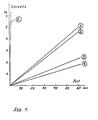
- the lowest of the homologues described by Hinchardt with C 4 alkyl residues proved unsatisfactory for photochemical polymerization; see. Curve 3 in Fig. 1.
- the rate of decay increases with the molecular weight of the alkane residue.
- the carbon atom which is bonded to the azo group is tertiary, ie it carries three aliphatic radicals, two of which can optionally be connected to form a ring.
- the hydrocarbon radicals contain at least 5 and at most 7 carbon atoms, in the latter case they are tertiary hydrocarbon radicals of the formula C 7 H 13 which contain a ring structure, while hydrocarbon radicals C 7 H 1s without a ring structure are unsuitable.
- Preferred azoalkanes correspond to the formula where either R 1 is a methyl group and R 2 is an ethyl or propyl group or R 1 and R 2 taken together are a tetramethylene or pentamethylene group.
- the azoalkanes are preferably used in an amount of 0.001 to 1 g per 100 g of the polymerizable compound.
- the azoalkanes used according to the invention are easily accessible by the process described by R. Ohme and E. Schmitz in Angewandte Chemie 77, 1965, page 429. One starts from the corresponding alkylamines, converts them into the corresponding sulfuric acid dialkylamides and oxidizes them with Hypochlorite to the corresponding azoalkanes. The manufacturing process is not the subject of the invention.
- the process of the invention is not limited to any particular polymerization process. You can e.g. Carry out solution or pearl polymerizations under the influence of light.
- the method is preferably used for the polymerization of unsaturated compounds in bulk, in particular in layer thicknesses of 30 to 300 mm, because it is precisely in these methods that control of the polymerization temperature by means of the amount of light is particularly important because of the difficult cooling.
- the radicals formed during the decomposition of azo compounds are suitable for the polymerization of all ethylenically unsaturated, free-radically polymerizable compounds, and therefore the process according to the invention can also be used without restriction for all such compounds and their mixtures or solutions.
- the preferred field of application of the invention is the polymerization of acrylic and / or methacrylic compounds or mixtures of various polymerizable compounds consisting predominantly of them. The most important of the methacrylic compounds is the methacrylic acid methyl ester.
- the polymerization can be carried out at low temperatures, e.g. 20 ° C are carried out, but technically advantageous polymerization temperatures in the range of 50 to 100 °.
- the general procedure is to allow the temperature to rise to the extent that the boiling point of the monomers has not yet been reached, using the existing cooling options, and then to keep the polymerization temperature at the same level by switching the light source off and on. This can optionally be carried out automatically by means of a switching device controlled by temperature sensors.
- the sulfamide is oxidized as described above with sodium hypochlorite to the azo compound and this is obtained in 75% yield after distillation, b.p. 56 40 °, .
- a 3-molar methyl methacrylate solution in benzene was mixed with 0.02 mol / 1 2,2'-azo-bis-2-methylbutane under the action of light in the wavelength range from 300 to 400 nm of a UV lamp (Philips TLA 20 W / 05) polymerized at 80 ° C.
- the time sales trend is shown in Fig. 1.
- a polymerization rate (1) is obtained which is more than twice as high as that which, under the same conditions, with the same amount of 2,2'-azo-bis-2-methylpropane (3) or 2,2'-azo- bis-2-methyl-hexane (4) is reached.
- the time-turnover curve of these polymerizations is also shown in Fig. 1.
- Methyl methacrylate is polymerized under exclusion of oxygen with 0.01% 2,2'-azo-bis-isovaleronitrile and 0.005% 2,2'-azo-bis-2-methylpentane under pressure adiabatically from 25 ° C.
- the 2,2'-azo-bis-valeronitrile decomposes completely, so that the polymerization is stopped.
- the final polymerization of the sample takes place after cooling the sample to room temperature by exposure to light on the still undecomposed 2,2'-azo-bis-2-methylpentane.
- the temperature in the polymerizing mass is regulated by metering the radiation. If 2,2'-azo-bis-2-methylpentane is replaced by 2,2'-azo-bis-2,4,4-trimethylpentane, which has a lower thermal stability, the polymerization gets out of control in the first stage .
- Methyl methacrylate is polymerized under the action of light with 0.01% by weight of 2,2'-azo-bis-2-mpthylbutane at 16 ° C bath temperature in a layer thickness of 12 cm. With a sales speed of 2%. Hour- 'sets an internal temperature of 20 ° C until a conversion of about 30% is reached. Then the internal temperature rises rapidly and is kept constant at 60-70 ° C by reducing the incident light energy. As soon as about 80% conversion is reached, the light energy is increased again and the final polymerization is carried out at about 110 ° C. The resulting block is optically clear and shows no bubble inclusions.
Landscapes
- Chemical & Material Sciences (AREA)
- Health & Medical Sciences (AREA)
- Chemical Kinetics & Catalysis (AREA)
- Medicinal Chemistry (AREA)
- Polymers & Plastics (AREA)
- Organic Chemistry (AREA)
- Addition Polymer Or Copolymer, Post-Treatments, Or Chemical Modifications (AREA)
- Polymerisation Methods In General (AREA)
- Organic Low-Molecular-Weight Compounds And Preparation Thereof (AREA)
- Polymerization Catalysts (AREA)
Description
- Aus der DE-OS 21 30 070 ist ein Verfahren zur Photopolymerisation äthylenisch ungesättigter Verbindungen in Gegenwart von Azoverbindung bekannt, die bei Temperaturen im Bereich von 20 bis 100° durch Licht im Wellenlägenbereich von 200 bis 500 nm zum radikalischen Zerfall angeregt werden, bei Ausschluß von Licht jedoch erst bei 150 bis 300°C radikalisch zerfallen. Azoinitiatoren dieser Art, z.B. 2,2'-Azo-bis-isobutylacetat, gestatten es, die Polymerisation ungesättigter Verbindungen bei Temperaturen unter 100° streng proportional zur eingestrahlten Lichtmenge durchzuführen. Dadurch wird ein unerwünschter Temperaturanstieg während der Polymerisation vermieden, wenn die Intensität des eingestrahlten Lichts ständig so bemessen wird, daß ein thermischer Zerfall des. Azoinitiators nicht eintritt. Verwendet man andere, durch Licht anregbare Azoinitiatoren, wie Azo-bis-isobuttersäurenitril, so beginnt schon bei verhältnismäßig niedriger Temperatur der thermische Zerfall des Initiators. Die thermisch erzeugten Radikale lösen die Polymerisation der ungesättigten Verbindungen aus und bewirken einen ständigen Temperaturanstieg, der durch fortschreitende Beschleunigung des Initiatorzerfalls bis zum explosiven Verlauf fortschreiten kann.
- Die allein über die eingestrahlte Lichtmenge beherrschbare Photopolymerisation mit Azoinitriatoren der letztgenannten Art ist auf einen Temperaturbereich beschränkt, der deutlich unter dem Bereich des thermischen Zerfalls des Azoinitiators liegt, beispielsweise 20°C oder weniger. Bei so niedrigen Temperaturen verläuft die Polymerisation jedoch unerwünscht langsam. Erst die gemäß der DE-OS 21 30 070 verwendeten Azoinitiatoren mit einer hohen Zerfallstemperatur gestatten die allein über die Lichtmenge beherrschte Polymerisation bei günstigen Polymerisationstemperaturen. Die genannten Azoinitiatoren sind jedoch nur schwierig herstellbar und teuer.
- Aufgabe der vorliegenden Erfindung ist es, die Photopolymerisation von äthylenisch ungesättigten, radikalisch polymerisierbaren Verbindungen in Gegenwart von anderen Azoverbindungen unter Einwirkung von Licht mit einer Wellenlänge von 200 bis 500 nm mit einer solchen Lichtintensität durchzuführen, daß die Polymerisation bei Temperaturen unter 100°C abläuft. Die gestellte Aufgabe wird erfindungsgemäß durch die Verwendung der in den Ansprüchen genannten Azoalkane gelöst. Sie gestatten ebenso wie z.B. Azo-bis-isobutylacetat die über die Lichtintensität beherrschte Photopolymerisation, sind aber einfacher herstellbar und infolgedessen billiger.
- Die erfindungsgemäß verwendeten Azoinitiatoren sind aus J. Hinz und Chr. Rüchardt, Liebigs Ann. Chem. 1972, Bd 765, S. 95 bis 109 und W. Duismann, R. Hertel, J. Meister un Ch. Rüchard, Liebigs Ann. Chem. 1976, S. 1820-1833, bekannt, und werden dort als thermische Radikalbildner beschrieben. Für die photochemische Polymerisation erwies sich das niedrigste der von Rüchardt beschriebenen Homologen mit C4-Alkylresten als unbefriedigend; vgl. Kurve 3 in Abb. 1. Bei der thermolytischen Spaltung nimmt die Zerfallsgeschwindigkeit mit dem Molekulargewicht des Alkanrestes zu. Das gilt nicht in gleicher Weise für die photolytische Spaltung, wie Versuche mit dem entsprechenden Homologen mit C7-Alkylresten ergeben haben. Sie verliefen, wie Kurve 4 in Abb. 1 zeigt, noch unbefriedigender als mit dem C4-Homologen. Überraschenderweise liegt zwischen den untersuchten C4- und C7-Homologen ein Maximum der photolytischen Zerfallsgeschwindigkeit, das wegen der vom thermolytischen Zerfall abweichenden Gesetzmäßigkeit nicht zu erwarten war. Es gilt, wie die Kurven 1 und 2 in Abb. zeigen, für bestimmte C5 bis C7-Homologe. Sie enthalten zwei gleiche, an die Azogruppe gebundene tertiäre aliphatische Kohlenwasserstoffreste mit einem Molekulargewicht von 71 bis 97. Das an die Azogruppe gebundene Kohlenstoffatom ist tertiär, d.h. es trägt drei aliphatische Reste, von denen gegebenenfalls zwei zu einem Ring verbunden sein können. Die Kohlenwasserstoffreste enthalten mindestens 5 und höchstens 7 Kohlenstoffatome, im letztgenannten Fall handelt es sich um tertiäre Kohlenwasserstoffreste der Formel C7H13, die eine Ringstruktur enthalten während Kohlenwasserstoffreste C7H1s ohne Ringstruktur ungeeignet sind.
- Bevorzugte Azoalkane entsprechen der Formel

- 2,2'-Azo-bis-2-methyl-butan und 2,2'-Azo-bis-2-methylpentan sind besonders bevorzugt.
- Die Azoalkane werden vorzugsweise in einer Menge von 0,001 bis 1 g je 100 g der polymerisierbaren Verbindung eingesetzt. Die erfindungsgemäß verwendeten Azoalkane sind auf einfache Weise nach dem von R. Ohme und E. Schmitz in Angewandte Chemie 77, 1965, Seite 429, beschriebenen Verfahren zugänglich. Man geht von den entsprechenden Alkylaminen aus, wandelt sie in die entsprechendn Schwefelsäure-dialkylamide um und oxydiert sie mit Hypochlorit zu den entsprechenden Azoalkanen. Das Herstellungsverfahren ist nicht Gegenstand der Erfindung.
- Das Verfahren der Erfindung ist nicht auf ein bestimmtes Polymerisationsverfahren beschränkt. Man kann z.B. Lösungs- oder Perlpolymerisationen unter Lichteinwirkung durchführen. Vorzugsweise wird das Verfahren jedoch zur Polymerisation von ungesättigten Verbindungen in Substanz, insbesondere in Schichtdicken von 30 bis 300 mm, angewendet, weil gerade bei diesen Verfahren wegen der schwierigen Kühlung die Beherrschung der Polymerisationstemperatur mittels der Lichtmenge besonders wichtig ist.
- Die beim Zerfall von Azoverbindungen entstehenden Radikale eignen sich bekanntlich zur Polymerisation aller äthylenisch ungesättigten, radikalisch polymerisierbaren Verbindungen, daher ist auch das erfindungsgemäße Verfahren ohne Einschränkung auf alle derartigen Verbindungen und ihre Gemische oder Lösungen anwendbar. Das bevorzugte Anwendungsgebiet der Erfindung, besonders im Hinblick auf die Polymerisation in Substanz, besteht in der Polymerisation von Acryl-und/oder Methacrylverbindungen oder überwiegend daraus bestehenden Gemischen verschiedener polymerisierbarer Verbindungen. Unter den Methacrylverbindungen kommt dem Methacrylsäuremethylester die größte Bedeutung zu.
- Die Polymerisation kann zwar bei niedrigen Temperaturen, z.B. 20°C durchgeführt werden, technisch vorteilhafter sind jedoch Polymerisationstemperaturen im Bereich von 50 bis 100°. Man verfährt im allgemeinen so, daß man unter vollem Einsatz der bestehenden Kühlmöglichkeiten die Temperatur soweit ansteigen läßt, daß der Siedepunkt der Monomeren noch nicht erreicht wird und hält dann durch Aus- und Einschalten der Lichtquelle die Polymerisationstemperatur auf gleicher Höhe. Dies läßt sich gegebenenfalls mittels einer durch Temperaturfühler gesteuerten Schaltvorrichtung selbsttätig durchführen.
- Das Verfahren wird durch die nachfolgenden Beispiele näher erläutert, ist aber nicht auf diese Ausführungsformen beschränkt:
- 119,2 g (0,5 Mol) 2,2'-Sulfamib-bis-2-methylbutan (aus N-tert.-pentylamin und SOzCI2 in Pentan) werden zu einer Lösung von 40 g NaOH in 1500 ml 12,5 %iger Natriumhypochloritlösung gegeben und nach Zugabe von 400 ml n-Pentan mit 40 ml tert.-Butanol 24 Std. bei 35°C qerührt. Dann wird die Pentan-Phase abgetrennt, die wäßrige Phase dreimal mit je 100 ml n-Pentan extrahiert und die vereinigten Pentanlösungen getrocknet. Destillation im Vakuum ergibt in hoher Ausbeute 2,2'-Azo-bis-2-methylbutan, Sdp.5,0 54°;
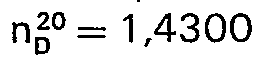
- 26 g (0,1 Mol) 1,1'-Sulfamido-bis-l-methylcyclopentan (aus 1-Methyl-cyclopentylamin, Herst. s. J. Hinz, C. Rüchardt, Liebigs Ann. Chem. 765, 94 (1972), und S02CI2 in Pentan) werden zu einer Lösung von 8,0 g NaOH in 300 m 12,5 %iger Natriumhypochlorit-Lösung gegeben und nach Zusatz von 80 ml n-Pentan und 8 ml tert.- - Butanol 24 Std. bei 35-40°C gerührt. Isolierung der Azoverbindung, wie im vorigen Beispiel beschrieben, ergibt eine gelbliche Flüssigkeit,

- 67,5 g (0,5 Mol) Sulfurylchlorid, in 75 ml n-Pentan gelöst, werden im Verlaufe von 3 Std. zu einer Lösung von 146,2 g (2 Mol) tert.-Butylamin in 250 ml n-Pentan bei 5-20°C getropft. Nach der Reaktion werden langsam 200 ml dest. Wasser zugegeben, der Niederschlag abgesaugt, mit Wasser gewaschen und getrocknet. Ausbeute: 70% d.Th., Schmp. nach Umkristallisation aus Benzol: 141°C.
- Das Sulfamid wird wie oben beschrieben mit Natriumhypochlorit zur Azoverbindung oxidiert und diese nach Destillation, Sdp.56 40°, in 75 %iger Ausbeute erhalten,

- 57,7 g (0,18 Mol) 2,2'-Sulfamido-bis-2,4,4-trimethyl-pentan, hergestellt wie in den vorigen Beispielen beschrieben, Schmp. 80°, werden mit Natriumhypochlorit-Lösung 20 Std. bei 35°C oxidiert. Das isolierte Produkt, 2,2'-Azo-bis-2,4,4-trimethyl-pentan, wird durch Destillation im Vakuum gereinigt; Ausbeute: 50% d.Th., Sdp.0,8 88°C,

- Eine 3-molare Methylmethacrylatlösung in Benzol wurde mit 0,02 Mol/1 2,2'-Azo-bis-2-methylbutan unter Einwirkung von Licht im Wellenlängenbereich von 300 bis 400 nm einer UV-Lampe (Philips TLA 20 W/05) bei 80°C polymerisiert.
- Der Zeit-Umsatzverlauf ist in Abb. 1 dargestellt. Man erhält eine Polymerisationsgeschwindigkeit (1), die mehr als doppelt so hoch ist, wie diejenige, die unter gleichen Bedingungen mit gleicher Menge 2,2'-Azo-bis-2-methylpropan (3) bzw. 2,2'-Azo-bis-2-methyl- hexan (4) erreicht wird. Der Zeit-Umsatzverlauf dieser Polymerisationen ist ebenfalls in Abb. 1 dargestellt.
- Versuch 1 wird mit dem Unterschied wiederholt, daß anstelle von 2,2'-Azo-bis-2-methylbutan das 2,2'-Azo-bis-2-methylpentan eingesetzt wird. Es ergibt sich der in Abb. 1 als Kurve (2) dargestellte Polymerisationsverlauf.
- Versuch 1 wird mit dem Unterschied wiederholt, daß anstelle von Methylmethacrylat n-Butylacrylat polymerisiert wird. Die Brutto - Polymerisationsgeschwindigkeit war 3,1%.min-1. Der Zeit-Umsatzverlauf dieser Reaktion ist ebenfalls in Abb. 1 als Kurve (5) dargestellt.
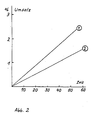
- Eine 3-molare Styrollösung in Benzol wurde mit 2,2'-Azo-bis-2-methylbutan unter den in Beispiel 1 angegebenen Bedingungen polymerisiert. Man erhält mit dem Initiator 2,2'-Azo-bis-2-methylbutan eine deutlich höhere Polymerisationsgeschwindigkeit (1) als mit 2,2'-Azo-bis-2-methylpropan (2). Die Zeit-Umsatzfunktionen dieser beiden Polymerisationsreaktionen sind in Abb. 2 Als Kurven (1) und (2) dargestellt.
- Methylmethacrylat wird unter Sauerstoffausschluß mit 0,01% 2,2'-Azo-bis-isovaleronitril und 0,005% 2,2'-Azo-bis-2-methylpentan unter Druck adiabatisch von 25°C ausgehend polymerisiert. Die Temperatur steigt auf etwa 110°C. Dabei zerfällt das 2,2'-Azo-bis-valeronitril völlig, so daß die Polymerisation abgestoppt wird. Die Endpolymerisation der Probe erfolgt nach Abkühlen der Probe auf Zimmertemperatur durch Lichteinwirkung auf das noch unzersetzte 2,2'-Azo-bis-2-methyl- pentan. Die Temperatur in der polymerisierenden Masse wird durch eine Dosierung der Strahlung geregelt. Ersetzt man 2,2'-Azo-bis-2-methylpentan durch 2,2'-Azo-bis-2,4,4-trimethylpentan, das eine geringere thermische Stabilität besitzt, so gerät die Polymerisation bereits in der ersten Stufe außer Kontrolle.
- Methylmethacrylat wird unter Lichteinwirkung mit 0,01 Gew.-% 2,2'-Azo-bis-2- mpthylbutan bei 16°C Badtemperatur in einer Schichtdicke von 12 cm polymerisiert. Bei einer Umsatzgeschwindigkeit von 2%. Stunde-' stellt sich dabei eine Innentemperatur von 20°C ein, bis ein Umsatz von etwa 30% erreicht ist. Danach steigt die Innentemperatur rasch an und wird durch Reduzieren der eingestrahlten Lichtenergie bei 60-70°C konstant gehalten. Sobald etwa 80% Umsatz erreicht sind, wird die Lichtenergie wieder erhöht und bei etwa 110°C die Endpolymerisation durchgeführt. Der entstandene Block ist optisch klar und zeigt keine Blaseneinschlüsse. Das ist nicht der Fall, wenn der Fotoinitiator 2,2'-Azo-bis-2-methylbutan durch 2,2'-Azo-bis-2,4,4-trimethylpentan ersetzt wird. In diesem Fall läßt sich die Innentemperatur des Blockes nach einem Umsatz über 30% nicht mehr durch Verminderung der Lichteinstrahlung unter 70°C halten. Vielmehr gerät die Polymerisation durch thermischen Initiatorzerfall außer Kontrolle, und die Temperatur steigt auf über 150°C. Es entsteht ein blasiges Endprodukt.
Claims (6)

Applications Claiming Priority (2)
| Application Number | Priority Date | Filing Date | Title |
|---|---|---|---|
| DE2831159 | 1978-07-15 | ||
| DE19782831159 DE2831159A1 (de) | 1978-07-15 | 1978-07-15 | Verfahren zur photopolymerisation |
Publications (2)
| Publication Number | Publication Date |
|---|---|
| EP0006972A1 EP0006972A1 (de) | 1980-01-23 |
| EP0006972B1 true EP0006972B1 (de) | 1982-02-24 |
Family
ID=6044464
Family Applications (1)
| Application Number | Title | Priority Date | Filing Date |
|---|---|---|---|
| EP79101003A Expired EP0006972B1 (de) | 1978-07-15 | 1979-03-31 | Verfahren zur Photopolymerisation |
Country Status (5)
| Country | Link |
|---|---|
| US (1) | US4279719A (de) |
| EP (1) | EP0006972B1 (de) |
| JP (1) | JPS5516083A (de) |
| CA (1) | CA1120886A (de) |
| DE (2) | DE2831159A1 (de) |
Families Citing this family (4)
| Publication number | Priority date | Publication date | Assignee | Title |
|---|---|---|---|---|
| JPS5986603A (ja) * | 1982-11-11 | 1984-05-18 | Showa Denko Kk | 光重合性組成物 |
| WO1994028080A1 (en) * | 1993-06-02 | 1994-12-08 | Minnesota Mining And Manufacturing Company | Novel composite structures |
| CA2422156A1 (en) * | 2000-09-14 | 2002-03-21 | Ciba Specialty Chemicals Holding Inc. | Acylphosphine oxide photoinitiators in methacrylate casting resins |
| DE102007035735A1 (de) * | 2006-08-16 | 2008-02-21 | Ivoclar Vivadent Ag | Pastenförmige, polymerisierbare Dentalmassen und Verfahren zu deren Herstellung |
Family Cites Families (4)
| Publication number | Priority date | Publication date | Assignee | Title |
|---|---|---|---|---|
| GB622374A (en) * | 1946-03-16 | 1949-05-02 | Du Pont | Improvements in and relating to the photo-polymerisation of compounds containing theethylene double bond |
| DE1720367A1 (de) * | 1966-03-08 | 1971-07-08 | Ceskoslovenska Akademie Ved | Verfahren zur Herstellung von Polymeren durch Photoinitiation und geeignete Initiatoren |
| DE2130070C3 (de) | 1971-06-18 | 1981-08-20 | Röhm GmbH, 6100 Darmstadt | Verfahren zur Photopolymerisation von Acryl-, Methacrylverbindungen oder Styrol in Gegenwart von Azoverbindungen |
| US4048423A (en) * | 1974-03-21 | 1977-09-13 | Pennwalt Corporation | Process for polymerizing unsaturated monomers and unsaturated polyester resins employing unsymmetrical tertiary-aliphatic azoalkanes |
-
1978
- 1978-07-15 DE DE19782831159 patent/DE2831159A1/de not_active Withdrawn
-
1979
- 1979-03-31 DE DE7979101003T patent/DE2962170D1/de not_active Expired
- 1979-03-31 EP EP79101003A patent/EP0006972B1/de not_active Expired
- 1979-06-12 US US06/047,769 patent/US4279719A/en not_active Expired - Lifetime
- 1979-07-13 JP JP8838079A patent/JPS5516083A/ja active Granted
- 1979-07-16 CA CA000331899A patent/CA1120886A/en not_active Expired
Also Published As
| Publication number | Publication date |
|---|---|
| DE2962170D1 (de) | 1982-03-25 |
| US4279719A (en) | 1981-07-21 |
| JPS5516083A (en) | 1980-02-04 |
| CA1120886A (en) | 1982-03-30 |
| EP0006972A1 (de) | 1980-01-23 |
| DE2831159A1 (de) | 1980-01-24 |
| JPS621401B2 (de) | 1987-01-13 |
Similar Documents
| Publication | Publication Date | Title |
|---|---|---|
| DE69607620T2 (de) | Acrylamid-derivate als chromophore lichtvernetzbare verbindungen | |
| EP0006972B1 (de) | Verfahren zur Photopolymerisation | |
| DE3248491A1 (de) | Verfahren zur herstellung von polymerisaten der vinylphosphonsaeure in protischen loesungsmitteln | |
| EP0398061B1 (de) | Verfahren zur Herstellung von alpha-Fluoracrylsäurederivaten und neue 1,1-Difluor-2-halogenethyl-(halogen) methyl-ketone | |
| DE1180132B (de) | Verfahren zur Polymerisation von ungesaettigten Verbindungen | |
| DE2848627C2 (de) | Verfahren zur Herstellung eines flüssigen, unmittelbar polymerisierbaren Gemisches aus Acrylamid und Quaternierungsprodukten von tertiären Aminoalkylestern oder tertiären Aminoalkylamiden der Acryl- oder Methacrylsäure | |
| DE2328544A1 (de) | 4,4'-bis(alkoxycarbonyl)benzoinaether, sowie verfahren zu ihrer herstellung | |
| EP1057805A1 (de) | Verfahren zur Herstellung von Isobornylmethacrylat | |
| EP0097940B1 (de) | Verfahren zur Herstellung araliphatischer Alkohole | |
| DE1154633B (de) | Verfahren zur Herstellung von lichtstabilisierten Mischpolymerisaten | |
| DE3637467A1 (de) | Bicyclische acrylmonomere | |
| EP0004884B1 (de) | Verfahren zur Polymerisation von Vinylchlorid | |
| DE2528299C2 (de) | Polymerisate von Acyloxyalkylmethacrylat und Herstellungsverfahren | |
| DE1931165C3 (de) | Verfahren zur Herstellung der Cyanessigsaureester von Silicium enthaltenden Alkoholen | |
| DE69011556T2 (de) | Methode zur Herstellung von photochromem Material. | |
| DE2065547B2 (de) | Vinylverbindungen und Verfahren zu deren Herstellung | |
| DE857501C (de) | Verfahren zur Herstellung von Disulfiden | |
| DE2658955B2 (de) | Verfahren zur Herstellung von Chloracetoxialkylacrylat bzw. -methacrylat | |
| DE1418735A1 (de) | Neue Telomerisate und Verfahren zu ihrer Herstellung | |
| DE2130070B2 (de) | Verfahren zur Photopolymerisation von Acryl-, Methacrylverbindungen oder Styrol in Gegenwart von Azoverbindungen | |
| DE2136496C3 (de) | Verfahren zur Herstellung von Oxablcyclo-alkenen | |
| DE3035431A1 (de) | 2-methylen-1,4,6-trioxaspiro (4,6) undecan, verfahren zu dessen herstellung und verfahren zur herstellung von polymeren | |
| DE1912708B2 (de) | Verfahren zur herstellung tertiaerer phosphinoxyde | |
| DE3226617A1 (de) | 2-acylierte dihydro-1,3-dioxepine, verfahren zu ihrer herstellung und ihre verwendung als photoinitiatoren | |
| DE2128010A1 (de) | Neue 3-SulfonyI-2-aza-bernsteinsäure-derivate und Verfahren zu ihrer Herstellung und Verwendung |
Legal Events
| Date | Code | Title | Description |
|---|---|---|---|
| PUAI | Public reference made under article 153(3) epc to a published international application that has entered the european phase |
Free format text: ORIGINAL CODE: 0009012 |
|
| 17P | Request for examination filed | ||
| AK | Designated contracting states |
Designated state(s): DE FR GB IT NL |
|
| GRAA | (expected) grant |
Free format text: ORIGINAL CODE: 0009210 |
|
| AK | Designated contracting states |
Designated state(s): DE FR GB IT NL |
|
| PG25 | Lapsed in a contracting state [announced via postgrant information from national office to epo] |
Ref country code: IT Free format text: LAPSE BECAUSE OF FAILURE TO SUBMIT A TRANSLATION OF THE DESCRIPTION OR TO PAY THE FEE WITHIN THE PRESCRIBED TIME-LIMIT;WARNING: LAPSES OF ITALIAN PATENTS WITH EFFECTIVE DATE BEFORE 2007 MAY HAVE OCCURRED AT ANY TIME BEFORE 2007. THE CORRECT EFFECTIVE DATE MAY BE DIFFERENT FROM THE ONE RECORDED. Effective date: 19820224 |
|
| REF | Corresponds to: |
Ref document number: 2962170 Country of ref document: DE Date of ref document: 19820325 |
|
| PGFP | Annual fee paid to national office [announced via postgrant information from national office to epo] |
Ref country code: DE Payment date: 19950302 Year of fee payment: 17 |
|
| PGFP | Annual fee paid to national office [announced via postgrant information from national office to epo] |
Ref country code: FR Payment date: 19950316 Year of fee payment: 17 |
|
| PGFP | Annual fee paid to national office [announced via postgrant information from national office to epo] |
Ref country code: GB Payment date: 19950324 Year of fee payment: 17 |
|
| PGFP | Annual fee paid to national office [announced via postgrant information from national office to epo] |
Ref country code: NL Payment date: 19950331 Year of fee payment: 17 |
|
| PG25 | Lapsed in a contracting state [announced via postgrant information from national office to epo] |
Ref country code: GB Effective date: 19960331 |
|
| PG25 | Lapsed in a contracting state [announced via postgrant information from national office to epo] |
Ref country code: NL Effective date: 19961001 |
|
| GBPC | Gb: european patent ceased through non-payment of renewal fee |
Effective date: 19960331 |
|
| PG25 | Lapsed in a contracting state [announced via postgrant information from national office to epo] |
Ref country code: FR Effective date: 19961129 |
|
| NLV4 | Nl: lapsed or anulled due to non-payment of the annual fee |
Effective date: 19961001 |
|
| PG25 | Lapsed in a contracting state [announced via postgrant information from national office to epo] |
Ref country code: DE Effective date: 19961203 |
|
| REG | Reference to a national code |
Ref country code: FR Ref legal event code: ST |
|
| PLBE | No opposition filed within time limit |
Free format text: ORIGINAL CODE: 0009261 |
|
| STAA | Information on the status of an ep patent application or granted ep patent |
Free format text: STATUS: NO OPPOSITION FILED WITHIN TIME LIMIT |