WO2025013733A1 - 睡眠支援システム - Google Patents
睡眠支援システム Download PDFInfo
- Publication number
- WO2025013733A1 WO2025013733A1 PCT/JP2024/024136 JP2024024136W WO2025013733A1 WO 2025013733 A1 WO2025013733 A1 WO 2025013733A1 JP 2024024136 W JP2024024136 W JP 2024024136W WO 2025013733 A1 WO2025013733 A1 WO 2025013733A1
- Authority
- WO
- WIPO (PCT)
- Prior art keywords
- person
- body temperature
- air
- sleep
- temperature
- Prior art date
- Legal status (The legal status is an assumption and is not a legal conclusion. Google has not performed a legal analysis and makes no representation as to the accuracy of the status listed.)
- Pending
Links
Images






Classifications
-
- A—HUMAN NECESSITIES
- A61—MEDICAL OR VETERINARY SCIENCE; HYGIENE
- A61M—DEVICES FOR INTRODUCING MEDIA INTO, OR ONTO, THE BODY; DEVICES FOR TRANSDUCING BODY MEDIA OR FOR TAKING MEDIA FROM THE BODY; DEVICES FOR PRODUCING OR ENDING SLEEP OR STUPOR
- A61M21/00—Other devices or methods to cause a change in the state of consciousness; Devices for producing or ending sleep by mechanical, optical, or acoustical means, e.g. for hypnosis
- A61M21/02—Other devices or methods to cause a change in the state of consciousness; Devices for producing or ending sleep by mechanical, optical, or acoustical means, e.g. for hypnosis for inducing sleep or relaxation, e.g. by direct nerve stimulation, hypnosis, analgesia
-
- A—HUMAN NECESSITIES
- A47—FURNITURE; DOMESTIC ARTICLES OR APPLIANCES; COFFEE MILLS; SPICE MILLS; SUCTION CLEANERS IN GENERAL
- A47C—CHAIRS; SOFAS; BEDS
- A47C27/00—Spring, stuffed or fluid mattresses or cushions specially adapted for chairs, beds or sofas
-
- A—HUMAN NECESSITIES
- A61—MEDICAL OR VETERINARY SCIENCE; HYGIENE
- A61B—DIAGNOSIS; SURGERY; IDENTIFICATION
- A61B5/00—Measuring for diagnostic purposes; Identification of persons
- A61B5/01—Measuring temperature of body parts ; Diagnostic temperature sensing, e.g. for malignant or inflamed tissue
-
- F—MECHANICAL ENGINEERING; LIGHTING; HEATING; WEAPONS; BLASTING
- F04—POSITIVE - DISPLACEMENT MACHINES FOR LIQUIDS; PUMPS FOR LIQUIDS OR ELASTIC FLUIDS
- F04D—NON-POSITIVE-DISPLACEMENT PUMPS
- F04D27/00—Control, e.g. regulation, of pumps, pumping installations or pumping systems specially adapted for elastic fluids
-
- A—HUMAN NECESSITIES
- A61—MEDICAL OR VETERINARY SCIENCE; HYGIENE
- A61M—DEVICES FOR INTRODUCING MEDIA INTO, OR ONTO, THE BODY; DEVICES FOR TRANSDUCING BODY MEDIA OR FOR TAKING MEDIA FROM THE BODY; DEVICES FOR PRODUCING OR ENDING SLEEP OR STUPOR
- A61M21/00—Other devices or methods to cause a change in the state of consciousness; Devices for producing or ending sleep by mechanical, optical, or acoustical means, e.g. for hypnosis
- A61M2021/0005—Other devices or methods to cause a change in the state of consciousness; Devices for producing or ending sleep by mechanical, optical, or acoustical means, e.g. for hypnosis by the use of a particular sense, or stimulus
- A61M2021/0022—Other devices or methods to cause a change in the state of consciousness; Devices for producing or ending sleep by mechanical, optical, or acoustical means, e.g. for hypnosis by the use of a particular sense, or stimulus by the tactile sense, e.g. vibrations
-
- A—HUMAN NECESSITIES
- A61—MEDICAL OR VETERINARY SCIENCE; HYGIENE
- A61M—DEVICES FOR INTRODUCING MEDIA INTO, OR ONTO, THE BODY; DEVICES FOR TRANSDUCING BODY MEDIA OR FOR TAKING MEDIA FROM THE BODY; DEVICES FOR PRODUCING OR ENDING SLEEP OR STUPOR
- A61M21/00—Other devices or methods to cause a change in the state of consciousness; Devices for producing or ending sleep by mechanical, optical, or acoustical means, e.g. for hypnosis
- A61M2021/0005—Other devices or methods to cause a change in the state of consciousness; Devices for producing or ending sleep by mechanical, optical, or acoustical means, e.g. for hypnosis by the use of a particular sense, or stimulus
- A61M2021/0066—Other devices or methods to cause a change in the state of consciousness; Devices for producing or ending sleep by mechanical, optical, or acoustical means, e.g. for hypnosis by the use of a particular sense, or stimulus with heating or cooling
-
- A—HUMAN NECESSITIES
- A61—MEDICAL OR VETERINARY SCIENCE; HYGIENE
- A61M—DEVICES FOR INTRODUCING MEDIA INTO, OR ONTO, THE BODY; DEVICES FOR TRANSDUCING BODY MEDIA OR FOR TAKING MEDIA FROM THE BODY; DEVICES FOR PRODUCING OR ENDING SLEEP OR STUPOR
- A61M2205/00—General characteristics of the apparatus
- A61M2205/33—Controlling, regulating or measuring
- A61M2205/3331—Pressure; Flow
- A61M2205/3334—Measuring or controlling the flow rate
-
- A—HUMAN NECESSITIES
- A61—MEDICAL OR VETERINARY SCIENCE; HYGIENE
- A61M—DEVICES FOR INTRODUCING MEDIA INTO, OR ONTO, THE BODY; DEVICES FOR TRANSDUCING BODY MEDIA OR FOR TAKING MEDIA FROM THE BODY; DEVICES FOR PRODUCING OR ENDING SLEEP OR STUPOR
- A61M2205/00—General characteristics of the apparatus
- A61M2205/33—Controlling, regulating or measuring
- A61M2205/3368—Temperature
-
- A—HUMAN NECESSITIES
- A61—MEDICAL OR VETERINARY SCIENCE; HYGIENE
- A61M—DEVICES FOR INTRODUCING MEDIA INTO, OR ONTO, THE BODY; DEVICES FOR TRANSDUCING BODY MEDIA OR FOR TAKING MEDIA FROM THE BODY; DEVICES FOR PRODUCING OR ENDING SLEEP OR STUPOR
- A61M2205/00—General characteristics of the apparatus
- A61M2205/33—Controlling, regulating or measuring
- A61M2205/3379—Masses, volumes, levels of fluids in reservoirs, flow rates
-
- A—HUMAN NECESSITIES
- A61—MEDICAL OR VETERINARY SCIENCE; HYGIENE
- A61M—DEVICES FOR INTRODUCING MEDIA INTO, OR ONTO, THE BODY; DEVICES FOR TRANSDUCING BODY MEDIA OR FOR TAKING MEDIA FROM THE BODY; DEVICES FOR PRODUCING OR ENDING SLEEP OR STUPOR
- A61M2230/00—Measuring parameters of the user
- A61M2230/04—Heartbeat characteristics, e.g. ECG, blood pressure modulation
- A61M2230/06—Heartbeat rate only
-
- A—HUMAN NECESSITIES
- A61—MEDICAL OR VETERINARY SCIENCE; HYGIENE
- A61M—DEVICES FOR INTRODUCING MEDIA INTO, OR ONTO, THE BODY; DEVICES FOR TRANSDUCING BODY MEDIA OR FOR TAKING MEDIA FROM THE BODY; DEVICES FOR PRODUCING OR ENDING SLEEP OR STUPOR
- A61M2230/00—Measuring parameters of the user
- A61M2230/63—Motion, e.g. physical activity
-
- F—MECHANICAL ENGINEERING; LIGHTING; HEATING; WEAPONS; BLASTING
- F24—HEATING; RANGES; VENTILATING
- F24F—AIR-CONDITIONING; AIR-HUMIDIFICATION; VENTILATION; USE OF AIR CURRENTS FOR SCREENING
- F24F2110/00—Control inputs relating to air properties
- F24F2110/50—Air quality properties
- F24F2110/65—Concentration of specific substances or contaminants
- F24F2110/66—Volatile organic compounds [VOC]
Definitions
- This disclosure relates to a sleep assistance system.
- Patent Document 1 discloses an environmental control system that controls the environment in a bed by using air blown from a blower, and that includes a sleeping position detection means for detecting the sleeping position of a user, and multiple temperature and humidity sensors.
- the environmental control system of Patent Document 1 identifies a temperature and humidity sensor close to the user based on the detection result of the user's sleeping position, and controls the air blowing operation of the blower based on the detection result of the identified temperature and humidity sensor.
- Patent Document 1 in order to get a good night's sleep, it is necessary to control the environment in the bed based on the detection results of a temperature and humidity sensor.
- the present disclosure aims to provide a sleep assistance system that can efficiently improve a person's quality of sleep.
- a sleep assistance system includes a blower that blows air toward the peripheral parts of a sleeping person, and a controller that controls the airflow from the blower to promote a decrease in the person's core body temperature.
- This disclosure makes it possible to effectively improve a person's sleep quality.
- FIG. 1 is a schematic diagram illustrating a sleep assistance system according to an embodiment.
- FIG. 2A is a diagram showing the inside of the bedding shown in FIG.
- FIG. 2B is another view showing the state inside the bedding.
- FIG. 3 is a block diagram showing a configuration of a sleep assistance system according to an embodiment.
- FIG. 4 is a diagram showing a schematic diagram of a change in core body temperature when air is blown against the feet of a person sleeping in bedding.
- FIG. 5 is a flowchart showing an example of the operation of the sleep assistance system according to the embodiment.
- FIG. 6 is a diagram showing a schematic diagram of the relationship between the air volume of the blower and the heat dissipation function, the rate of change in peripheral body temperature, and the bodily sensation when sleeping.
- FIG. 1 is a schematic diagram illustrating a sleep assistance system according to an embodiment.
- FIG. 2A is a diagram showing the inside of the bedding shown in FIG.
- FIG. 2B is another view showing the state inside the
- FIG. 7 is a block diagram showing a configuration of a sleep assistance system according to the first modification of the embodiment.
- FIG. 8 is a flowchart illustrating an example of the operation of the sleep assistance system according to the first modification of the embodiment.
- FIG. 9 is a block diagram showing a configuration of a sleep assistance system according to the second modification of the embodiment.
- FIG. 10 is a flowchart illustrating an example of the operation of the sleep assistance system according to the second modification of the embodiment.
- FIG. 11 is a diagram for explaining an example of air temperature control by the control unit.
- FIG. 12 is a flowchart showing another example of the operation of the sleep assistance system according to the second modification of the embodiment.
- the sleep support system includes a blower that blows air to the peripheral parts of a sleeping person, and a controller that controls the airflow from the blower to promote a decrease in the person's core body temperature.
- the inventors have discovered that by controlling the wind blown onto the feet of a sleeping person, it is possible to significantly lower the person's core body temperature. Therefore, in the sleep support system according to this embodiment, simply blowing wind onto the person's feet can promote a lowering of the sleeping person's core body temperature and improve the quality of the person's sleep, without the need to control the environment, such as the temperature and humidity, within the bed, for example. Therefore, the sleep support system according to this embodiment can efficiently improve the quality of a person's sleep.
- a sleep assistance system is the sleep assistance system according to the first aspect, in which the control unit controls the airflow of the air blowing unit based on the person's core body temperature.
- a sleep support system is a sleep support system according to the second aspect, in which the control unit controls the airflow of the air blower unit so that the rate at which the person's core body temperature drops is equal to or exceeds a predetermined threshold.
- a sleep support system is a sleep support system according to the second or third aspect, in which the control unit acquires the person's deep body temperature measured by a deep body temperature measuring unit, and controls the airflow of the air blowing unit based on the acquired deep body temperature.
- a sleep support system is a sleep support system according to the second or third aspect, in which the control unit acquires the person's heart rate, estimates the person's deep body temperature based on the acquired heart rate, and controls the airflow of the air blowing unit based on the estimated deep body temperature.
- a sleep support system is a sleep support system according to any one of the first to fifth aspects, in which the control unit acquires the person's peripheral body temperature and controls the air volume of the air blower unit so as to maximize the air volume of the air blower unit within a range in which the person's peripheral body temperature does not decrease.
- a sleep assistance system is a sleep assistance system according to any one of the first to sixth aspects, in which the control unit controls the air volume of the air blower unit so that the air volume of the air blower unit during a predetermined period from when the person starts to sleep is greater than the air volume of the air blower unit when the person wakes up.
- a sleep support system is a sleep support system according to any one of the first to seventh aspects, in which the control unit acquires bodily sensation information that is information indicating the bodily sensation of the person, and controls the airflow of the air blowing unit based on the bodily sensation information.
- a sleep support system is a sleep support system according to the eighth aspect, in which the body sensation information is information indicating whether the person is feeling cold or not.
- a sleep support system is a sleep support system according to the ninth aspect, in which the body sensation information is the peripheral body temperature of the person.
- a sleep assistance system is the sleep assistance system according to the tenth aspect, in which the control unit controls the airflow of the air blower to be reduced when the person's peripheral body temperature is decreasing.
- a sleep assistance system is a sleep assistance system according to the ninth aspect, in which the bodily sensation information is a detection result of the person's bodily movements.
- a sleep assistance system is a sleep assistance system according to the twelfth aspect, in which the person is asleep in bedding, and the detection result is a result of detecting the body movement based on vibrations of the bedding.
- a sleep support system is a sleep support system according to any one of the first to thirteenth aspects, further comprising a temperature control unit that heats the air blown out by the air blowing unit.
- a sleep assistance system is the sleep assistance system according to the fourteenth aspect, in which the control unit causes the temperature adjustment unit to heat the air blown by the air blowing unit during a predetermined period until the person wakes up.
- a sleep support system is a sleep support system according to any one of the first to fifteenth aspects, in which the control unit acquires the temperature of the person's sleeping environment and controls the airflow of the air blowing unit based on the acquired temperature of the sleeping environment.
- a sleep support system is a sleep support system according to any one of the first to sixteenth aspects, in which the control unit controls the airflow of the blower unit based on seasonal information.
- a sleep support system is a sleep support system according to any one of the first to seventeenth aspects, in which the control unit acquires the person's peripheral body temperature and controls the airflow of the air blowing unit based on the acquired peripheral body temperature of the person.
- a sleep assistance system is a sleep assistance system according to any one of the 1st to 18th aspects, in which the distal part is the person's foot.
- a sleep assistance system is a sleep assistance system according to the nineteenth aspect, in which the person is sleeping in bedding, and the blower blows air toward the feet surrounded by the bedding.
- a sleep support system is a sleep support system according to the twenty-first aspect, in which the bedding includes a lower bedding placed below the person and an upper bedding placed above the person, and a portion of the upper bedding is fixed to the lower bedding in the area where the person's feet are located.
- a sleep assistance system is a sleep assistance system according to any one of the nineteenth to twenty-first aspects, in which the air blowing unit blows air toward the feet from a direction intersecting the height direction of the sleeping person when viewed from above.
- each figure is a schematic diagram and is not necessarily a precise illustration. Furthermore, in each figure, substantially the same configuration is given the same reference numerals, and duplicate explanations are omitted or simplified.
- Fig. 1 is a schematic diagram for explaining a sleep support system 10 according to the present embodiment.
- Fig. 2A is a diagram showing the state inside the bedding 80 shown in Fig. 1.
- Fig. 1 shows a plan view of the bedding 80 in which a person 90 is sleeping, as seen from above.
- the outlines of the person 90 and the blower 20 in the bedding 80 are shown by dashed lines.
- Fig. 2A the state around the feet 91 of the person 90 in which the blower 20 is arranged in the bedding 80 is shown.
- the sleep support system 10 includes a blower device 20 having a blower section 21, and a control device 30 that controls the airflow from the blower section 21.
- the sleep assistance system 10 assists the sleep of a person 90 who is sleeping in bedding 80 or the like.
- “asleep” means that the person 90 is in a sleeping position in the bedding 80 or the like in order to sleep, and if the person 90 is trying to sleep, it is considered that the person 90 is asleep even if he or she has not actually fallen asleep.
- the bedding 80 includes, for example, lower bedding 81 such as a mattress or futon that is placed under the person 90, and upper bedding 82 such as a blanket or comforter that is placed above the person 90.
- the feet 91 of the person 90 are surrounded by the bedding 80, and specifically, are sandwiched between the lower bedding 81 and the upper bedding 82.
- a part of the upper bedding 82 is fixed to the lower bedding 81, for example.
- a part of the upper bedding 82 is fixed, for example, by being sandwiched between the lower bedding 81 and the floor surface or bed frame supporting the lower bedding 81.
- a part of the upper bedding 82 may be fixed to the lower bedding 81 using a fixing device such as a clip. This makes it possible to prevent the space surrounded by the lower bedding 81 and the upper bedding 82 from collapsing even if the position of the feet 91 changes due to turning over in bed, etc., and allows the air blowing unit 21, described later, to stably blow air to the feet 91.
- the region of the bedding 80 where the feet 91 of the person 90 are located is the region of the bedding 80 located on the foot side of the person 90's knees.
- the blower 21 blows air toward the feet 91, which are the extremities of the person 90 sleeping in the bedding 80.
- the blower 21 is installed so that it can blow air directly onto the feet 91 of the person 90.
- the control device 30 (specifically, the control unit 31, described below) controls the airflow from the blower 21 so as to promote a decrease in the core body temperature of the person 90 sleeping in the bedding 80.
- the control device 30 drives the blower 21 with an air volume that can significantly reduce the core body temperature of the person 90, for example.
- simply blowing air toward the feet 91 of the person 90 can promote a decrease in the core body temperature of the person 90, and can efficiently improve the quality of sleep of the person 90.
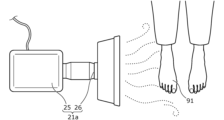
- FIG. 2B is another diagram showing the state inside the bedding 80.
- FIG. 2B shows a plan view of a person 90 sleeping in the bedding 80, as viewed from above with the bedding 80 removed.
- the blower device 20 may be equipped with the blower 21a shown in FIG. 2B, instead of the blower 21 shown in FIG. 2A.
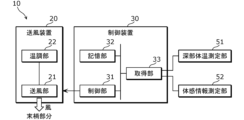
- FIG. 3 is a block diagram showing the configuration of sleep support system 10 according to the present embodiment.
- the sleep support system 10 includes a blower 20, a control device 30, a deep body temperature measuring unit 51, and a body sensation information measuring unit 52.
- the blower device 20 includes a blower section 21 and a temperature adjustment section 22.
- the operation of the blower device 20 is controlled by a control section 31 of the control device 30.
- the blower 21 is disposed, for example, between the lower bedding 81 and the upper bedding 82 at the feet of the person 90.
- the blower 21 is composed of multiple fans or other blowers.
- the multiple blowers are lined up, for example, along the edge of the bedding 80 on the side of the person 90's feet when viewed from above.
- the multiple blowers are also surrounded by a frame body in all directions except for the front and rear of the air blowing direction.
- the frame body is transparent, but it may be opaque. The air from the blower is blown out so that it directly hits the soles of the feet 91 of the person 90, for example.
- the configuration and arrangement of the blower 21 are not particularly limited as long as it can blow air to the feet 91 of the person 90.
- the sleep support system 10 may have a blower 21a shown in FIG. 2B instead of the blower 21, as described above.
- the blower 21a includes a blower 25 and a blower duct 26, and the air from the blower 25 is blown to the feet 91 of the person 90 through the blower duct 26.
- the blower opening of the blower duct 26 is arranged between the lower bedding 81 and the upper bedding 82 at the feet of the person 90.
- the other part may be arranged outside the bedding 80.
- the blower opening of the blower duct 26 is wider than the part of the blower duct 26 on the blower 25 side.
- the blower 21a blows air to the feet 91 from a direction intersecting the height direction of the person 90 (i.e., the direction connecting the head and feet of the person 90 when standing upright). This makes it difficult for the feet 91 to move out of the position where the air hits, even if the position of the feet 91 changes due to turning over in bed, etc., and allows the air to be stably blown to the feet 91 by the blower 21a. It is also possible to reduce the size of the air outlet of the blower duct 26.
- the direction intersecting the height direction of the person 90 may be a direction perpendicular to the height direction of the person 90.
- the air from the blower duct 26 may also be blown so that it directly hits the soles of the feet 91 of the person 90, as in the example of the blower 21 shown in FIG. 2A. Additionally, when viewed from above, the air blowing unit 21 may blow air toward the feet 91 in a direction intersecting the height direction of the sleeping person 90 when the sleeping person 90 is viewed from above.
- the air blowing unit 21 can be replaced with the air blowing unit 21a, and therefore in the following description, the air blowing unit 21 can be read as the air blowing unit 21a.
- the air volume of the air blowing unit 21 can be changed, for example, by adjusting the power supplied to the air blowing unit 21.
- the air volume of the air blowing unit 21 may be changeable in stages or continuously.
- the temperature adjustment unit 22 adjusts the temperature of the air sent out by the air blower 21.
- the temperature adjustment unit 22 is, for example, a heater composed of an electric heating wire or the like, which heats the air sent out by the air blower 21. This allows the air blower 21 to send warm air to the feet 91 of the person 90.
- the control unit 31 determines that the air temperature around the bedding 80 acquired from a temperature sensor or the like (not shown) is equal to or lower than a predetermined value
- the temperature adjustment unit 22 heats the air sent out by the air blower 21 based on the control of the control unit 31. This prevents the temperature of the feet 91 of the person 90 from dropping excessively.
- the air blower 20 does not need to include the temperature adjustment unit 22.
- the temperature adjustment unit 22 may also have a function of cooling the air sent out by the air blower 21.
- the temperature adjustment unit 22 may be a thermoelectric element capable of both heating and cooling, such as a Peltier element.
- the temperature adjustment unit 22 may also have a temperature sensor (not shown) that measures the temperature of the air blown by the air blowing unit 21. The measurement results by the temperature sensor are used to control the temperature of the air blown by the air blowing unit 21.
- the control device 30 includes a control unit 31, a memory unit 32, and an acquisition unit 33.
- the control unit 31 is a processing circuit (processing unit) that controls the operation of the air blowing device 20.
- the control unit 31 performs various information processing for controlling the operation of the air blowing device 20.
- the control unit 31 controls the airflow of the air blowing unit 21.
- the control unit 31 controls the airflow volume of the air blowing unit 21 based on the core body temperature of the person 90.
- the "airflow volume" of the air blowing unit 21 means the airflow volume per unit time blown out by the air blowing unit 21 unless otherwise specified.
- the control unit 31 may also control the temperature of the air blown out by the air blowing unit 21 (i.e., the air temperature) by controlling the temperature adjustment unit 22. Details of the control performed by the control unit 31 will be described later.
- the control unit 31 includes, for example, a memory that stores programs and the like, and a processor that executes the programs.
- the programs may be stored in the storage unit 32.
- the memory unit 32 stores information and data necessary for the processing performed by the control unit 31.
- the memory unit 32 is, for example, a non-volatile storage device such as a semiconductor memory. Note that at least a part of the memory unit 32 may be provided in a device separate from the control device 30, and the control unit 31 may obtain the data stored in the memory unit 32 via a network such as the Internet.
- the acquisition unit 33 communicates with the deep body temperature measurement unit 51 and the body sensation information measurement unit 52, and acquires data from the deep body temperature measurement unit 51 and the body sensation information measurement unit 52.
- the acquisition unit 33 includes a communication interface (communication circuit) for communicating with external devices, etc.
- the acquisition unit 33 may also include an input device that acquires input operations from the user.
- the input device is, for example, a touch panel, an operation switch, or an operation button, etc.
- the deep body temperature measuring unit 51 measures the deep body temperature of the person 90 and outputs the measurement result to the control device 30.
- the deep body temperature measuring unit 51 is, for example, a deep body temperature measuring device that uses a heat flow compensation method or the like.
- the deep body temperature measuring unit 51 may be a device that measures one or more pieces of biometric information of the person 90 and calculates the deep body temperature based on the measured one or more pieces of biometric information.
- the sensory information measuring unit 52 detects sensory information, which is information indicating the sensory sensation of the person 90, such as a sense of warmth or cold.
- the sensory information is, for example, information indicating whether the person 90 is feeling cold.
- the bodily sensation information measuring unit 52 measures, for example, the peripheral body temperature of the person 90 as bodily sensation information, and outputs the measurement result to the control device 30.
- the bodily sensation information measuring unit 52 is a peripheral body temperature meter that measures the peripheral body temperature of the person 90.
- the bodily sensation information measuring unit 52 measures the surface temperature of the foot 91 of the person 90 (i.e., the skin temperature of the foot 91) as the peripheral body temperature.
- the peripheral body temperature meter may be one that uses a contact type temperature sensor or one that uses a non-contact type temperature sensor.
- the sleep assistance system 10 may not include at least one of the deep body temperature measuring unit 51 and the body sensation information measuring unit 52, and the acquisition unit 33 may acquire at least one of the deep body temperature and the body sensation information of the person 90 by communicating with one or more external devices having the functions of at least one of the deep body temperature measuring unit 51 and the body sensation information measuring unit 52.
- the external device may be a dedicated measuring device, or may be an information terminal or wearable terminal owned by the user.
- condition 1 No air was blown toward the subject's feet.
- Condition 2 Air was blown to the subject's feet at a volume of 0.9 m 3 /min per fan throughout the night.
- Condition 3 For the first 3 hours after the subject went to sleep, air was blown to the subject's feet at a volume of 1.4 m 3 /min per fan, and thereafter air was blown at a volume of 0.9 m 3 /min per fan.
- the room temperature was controlled to 26°C, and no fan was used to heat the room.
- Four fans were placed at the feet of the subjects while they were lying in bed.
- Deep body temperature was measured at 30-second intervals using a heat-flow-compensating deep body thermometer (Terumo CM-210), and the median of the measurements taken while asleep was used as a representative value for deep body temperature while asleep for comparison. A decrease in the median deep body temperature indicates that overall deep body temperature decreases while asleep.
- Table 1 shows the median core body temperature measurements for the four subjects, Subject 1 to Subject 4. Table 1 also shows the results of the judgment of whether or not core body temperature was significantly lower under Condition 2 and Condition 3 compared to Condition 1 in the "Significant Difference” column.
- “O” indicates that core body temperature was significantly lower than under Condition 1. This judgment was made based on the Mann-Whitney U test, with a p-value of less than 0.05 being judged as “O”. Outliers were also excluded using the interquartile range.
- “-” indicates that the judgment was not “O", and that core body temperature was not significantly lower than under Condition 1.
- condition 2 in which air was blown to the subjects' feet at a volume of 0.9 m3 /min per fan all night, it was confirmed that the core body temperature was significantly reduced in three of the four subjects.
- condition 3 in which the air volume was increased more than in condition 2 for three hours after the start of sleep, it was confirmed that the core body temperature was significantly reduced in all four subjects. Note that the p-values for determining that the core body temperature was significantly reduced in conditions 2 and 3 were smaller than 0.01.
- the control unit 31 can promote a decrease in the core body temperature of the person 90 sleeping on the bedding 80 by appropriately controlling the air volume of the air blower 21.
- the memory unit 32 stores an air volume of the air blower 21 that can significantly decrease the core body temperature of the person 90 sleeping on the bedding 80, which has been determined in advance through experiments or the like, and the control unit 31 controls the air volume of the air blower 21 to be the air volume stored in the memory unit 32.
- the control unit 31 may also control the air volume of the air blower 21 so that the air volume of the air blower 21 for a predetermined period from when the person 90 starts sleeping is greater than the air volume of the air blower 21 when the person 90 wakes up.
- FIG. 4 is a diagram showing a schematic diagram of a change in deep body temperature when air is blown to the feet 91 of a person 90 sleeping on bedding 80.
- the change in deep body temperature of the person 90 when no air is blown to the feet 91 of the person 90 is shown by a solid line
- the change in deep body temperature of the person 90 when an appropriate amount of air is blown to the feet 91 of the person 90 is shown by a dashed line.
- the deep body temperature of the sleeping person 90 generally decreases from the start of sleep until a certain point, then starts to rise and continues to rise until the time of waking up.
- the quality of sleep improves when the deep body temperature of a sleeping person becomes lower. Therefore, the quality of sleep of the sleeping person 90 can be improved by blowing air of an amount that promotes a decrease in the deep body temperature of the sleeping person 90 to the feet of the person 90.
- the sleep support system 10 can improve the quality of sleep of the person 90 by promoting a drop in the deep body temperature of the sleeping person 90 simply by blowing air onto the feet 91 of the person 90.
- the sleep support system 10 does not need to control the environment in the bed, such as the temperature and humidity, using multiple temperature and humidity sensors, as in Patent Document 1. Therefore, the sleep support system 10 can efficiently improve the quality of sleep of the person 90.
- the sleep support system 10 since the sleep support system 10 does not need to control the environment over a wide area in the bed, energy savings are also possible.
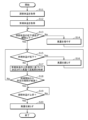
- FIG. 5 is a flowchart showing an example of the operation of the sleep support system 10 according to the present embodiment.
- a person 90 i.e., a user of the sleep support system 10) who is about to sleep enters the bedding 80 and starts blowing air at a predetermined air volume to the feet 91 of the person 90 by turning on the drive of the blower 21, etc.
- the predetermined air volume is, for example, an air volume that can promote a decrease in deep body temperature while sleeping for an average person, which is determined in advance by experiments, etc. Also, the predetermined air volume may be set to a value corresponding to the user.
- the control unit 31 acquires the deep body temperature of the person 90 sleeping in the bedding 80 measured by the deep body temperature measurement unit 51 via the acquisition unit 33 (step S11). For example, the deep body temperature measurement unit 51 measures the deep body temperature of the person 90 at a predetermined interval.
- the control unit 31 stores the results of the deep body temperature measured at the predetermined interval together with time information in the memory unit 32 as a history of the deep body temperature.
- the control unit 31 continues to acquire the deep body temperature of the person 90 at a predetermined interval until the person 90 wakes up.
- This predetermined interval is, for example, between 10 seconds and 10 minutes.
- the control unit 31 also acquires, as bodily sensation information, the peripheral body temperature (specifically, the temperature of the feet 91) of the person 90 sleeping on the bedding 80 measured by the bodily sensation information measuring unit 52 via the acquiring unit 33 (step S12).
- the bodily sensation information measuring unit 52 measures the peripheral body temperature of the person 90 at a predetermined interval, and the control unit 31 stores the peripheral body temperature results measured at the predetermined interval together with time information in the memory unit 32 as a peripheral body temperature history.
- the control unit 31 continues to acquire the peripheral body temperature of the person 90 at the predetermined interval until the person 90 wakes up.
- This predetermined interval is, for example, greater than or equal to 10 seconds and less than or equal to 10 minutes.
- the control unit 31 judges whether the rate at which the deep body temperature of the person 90 is decreasing is equal to or lower than a predetermined threshold (step S13).
- the control unit 31 refers to the history of the deep body temperature of the person 90 while sleeping on the bedding 80 stored in the memory unit 32, and judges whether the rate at which the deep body temperature is decreasing is equal to or lower than a predetermined threshold.
- the rate at which the deep body temperature is decreasing used in this judgment is, for example, an average rate calculated from the amount of change in the deep body temperature over a certain period of time immediately prior to the judgment.
- the predetermined threshold used in the judgment is set to, for example, a value greater than the rate at which the deep body temperature of an average person is decreasing while sleeping.
- the rate at which the deep body temperature of the person 90 is decreasing while sleeping without using the sleep support system 10 may be measured in advance, and the value may be set to a value greater than the measured rate.
- the time when the person 90 starts to sleep is, for example, the time when the blower 21 starts to blow air at a predetermined volume toward the feet 91 of the person 90, but it is not limited to this and can be set as appropriate.
- the time when the person 90 starts to sleep may be set in advance, or it may be the time when a sensor (not shown) detects that the person 90 has entered the bedding 80. This certain period of time is, for example, between 10 minutes and 30 minutes.
- control unit 31 determines that the rate at which the core body temperature of person 90 is decreasing is not below the predetermined threshold (No in step S13), it controls the airflow of the air blower 21 to be increased (step S14).
- the increase in the airflow of the air blower 21 may be a predetermined value, but the control unit 31 may also determine the increase in the airflow of the air blower 21 based on the rate at which the core body temperature of person 90 is decreasing. For example, the greater the difference between the rate at which the core body temperature of person 90 is decreasing and the predetermined threshold, the greater the increase in the airflow of the air blower 21.
- step S13 is performed again after a certain period of time. This certain period of time is, for example, greater than or equal to 10 minutes and less than or equal to 30 minutes.
- step S14 in addition to or instead of controlling the airflow of the air blower 21, the control unit 31 may cause the temperature adjustment unit 22 to cool the air blown by the air blower 21. Furthermore, this cooling by the temperature adjustment unit 22 may be performed in step S14 a predetermined number of times after the second time when step S14 has been performed two or more times. This makes it possible to promote a decrease in the core body temperature without significantly increasing the airflow, even in conditions where it is difficult to decrease the core body temperature due to a high temperature around the bedding 80, for example.
- control unit 31 can control the airflow from the air blowing unit 21 so that the rate at which the core body temperature of the person 90 sleeping on the bedding 80 drops is equal to or exceeds a predetermined threshold.
- control unit 31 determines whether the rate of decline in the core body temperature of the person 90 is equal to or lower than the predetermined threshold (Yes in step S13), it determines whether the peripheral body temperature of the person 90 is declining (step S15). For example, the control unit 31 refers to the history of the peripheral body temperature of the person 90 sleeping on the bedding 80 stored in the memory unit 32, and determines whether the peripheral body temperature has tended to decline for a certain period of time immediately prior to the determination. Note that in step S15, the control unit 31 may determine whether the peripheral body temperature of the person 90 has declined and whether the rate of decline in the peripheral body temperature is equal to or higher than the predetermined threshold.
- step S15 determines that the peripheral body temperature of the person 90 is decreasing (Yes in step S15), it controls the airflow of the air blower 21 to be reduced (step S16).
- the amount of reduction in the airflow of the air blower 21 may be a predetermined value, but the control unit 31 may also determine the amount of reduction in the airflow of the air blower 21 based on the rate at which the peripheral body temperature of the person 90 is decreasing. For example, the greater the rate at which the peripheral body temperature of the person 90 is decreasing, the greater the amount of reduction in the airflow of the air blower 21 is increased.
- step S15 is performed again. This certain period of time is, for example, 10 minutes or more and 30 minutes or less. Note that after step S16, step S13 may be performed again instead of step S15.
- step S16 in addition to or instead of controlling the airflow rate of the air blower 21, the control unit 31 may cause the temperature adjustment unit 22 to heat the air blown out by the air blower 21. Furthermore, this heating by the temperature adjustment unit 22 may be performed in step S16 a predetermined number of times after the second time when step S16 has been performed two or more times. In this way, even in conditions where the peripheral body temperature is likely to decrease due to a low temperature around the bedding 80, the decrease in peripheral body temperature can be suppressed without significantly reducing the airflow rate.
- step S15 by going through step S15 and, if necessary, step S16, the control unit 31 can control the airflow from the air blowing unit 21 so that the peripheral body temperature of the sleeping person 90 does not decrease.
- control unit 31 determines that the peripheral body temperature of the person 90 has not decreased (No in step S15), it controls the blower unit 21 with an air volume determined based on the rate of rise of the peripheral body temperature of the person 90 (step S17). For example, if the rate of rise of the peripheral body temperature of the person 90 is equal to or greater than 0 and equal to or less than a predetermined value, the control unit 31 determines not to change the current air volume of the blower unit 21.
- the control unit 31 determines the air volume so that the air volume is greater than the current air volume of the blower unit 21 the greater the difference between the rate of rise of the peripheral body temperature of the person 90 and the predetermined value. Also, if the rate of rise of the peripheral body temperature of the person 90 is greater than a predetermined value, the control unit 31 may increase the current air volume of the blower unit 21 by a predetermined amount. The predetermined value may be 0.
- step S17 the control unit 31 determines whether a predetermined period of time has passed since the person 90 started to sleep (step S18).
- the length of this predetermined period of time is, for example, 2 hours or more and 5 hours or less. If the control unit 31 determines that the predetermined period of time has not passed since the person 90 started to sleep (No in step S18), step S15 is performed again after a certain period of time. This certain period of time is, for example, 1 minute or more and 30 minutes or less.
- step S13 may be performed again instead of step S15.
- step S18 may be performed again instead of step S15, and the current air volume determined in step S17 may be maintained until the predetermined period of time has passed.
- control unit 31 can control the air volume of blower unit 21 to maximize the air volume of blower unit 21 within a range in which the peripheral body temperature of person 90 sleeping on bedding 80 does not decrease. This can promote the decrease in the core body temperature of person 90 without making person 90 feel cold, thereby further improving the quality of sleep of person 90.
- FIG. 6 is a diagram that shows a schematic diagram of the relationship between the air volume of blower unit 21 and the heat dissipation function, the rate of change in peripheral body temperature, and the physical sensation of person 90 when sleeping.
- FIG. 6 shows how the heat dissipation function, the rate of change in peripheral body temperature, and the physical sensation of person 90 change as the air volume of blower unit 21 increases.
- FIG. 6 shows a simplified depiction of how the heat dissipation function, the rate of change in peripheral body temperature, and the physical sensation of the person 90 change.
- the results may not necessarily be as shown in FIG. 6.
- the time change in peripheral body temperature does not necessarily change linearly depending on the air volume.
- the air volume that is the boundary of the physical sensation may also change.
- the peripheral body temperature of the person 90 while sleeping becomes more difficult to increase as the air volume of the blower 21 increases, and starts to decrease at a certain air volume.
- the person 90 is likely to feel hot when the rate of increase of the peripheral body temperature is high, and is likely to feel comfortable when the rate of increase of the peripheral body temperature falls below a certain level.
- the core body temperature of person 90 is decreasing, the person 90 is likely to feel cold if the peripheral body temperature also decreases.
- the control unit 31 can maximize the heat dissipation function in a state in which person 90 is unlikely to feel cold. As a result, the decrease in the core body temperature of person 90 is effectively promoted, and the quality of sleep of person 90 can be further improved.
- control unit 31 determines whether the deep body temperature of the sleeping person 90 is rising (step S19). For example, the control unit 31 refers to the deep body temperature history of the sleeping person 90 in the bedding 80 stored in the memory unit 32, and determines whether the deep body temperature has tended to rise for a certain period of time immediately prior to the determination.
- step S19 If the control unit 31 determines that the deep body temperature of the sleeping person 90 has not risen (No in step S19), it maintains the current air volume of the air blower 21, and step S19 is performed again after a certain time. On the other hand, if the control unit 31 determines that the deep body temperature of the sleeping person 90 has risen (Yes in step S19), it controls the air volume of the air blower 21 to be reduced (step S20). Then, the air is continuously blown until the person 90 wakes up and the drive of the air blower 21 is turned off.
- the control unit 31 controls the air volume of the air blower 21, for example, so that the air volume is less than the air volume at the time when the air blower 21 started to blow air.
- the control unit 31 may also reduce the air volume of the air blower 21 to zero. In other words, the control unit 31 may stop the drive of the air blower 21, and the operation of the sleep support system 10 may end in step S20.
- the control unit 31 may cause the temperature adjustment unit 22 to heat the air blown by the air blower 21. That is, the control unit 31 may cause the temperature adjustment unit 22 to heat the air blown by the air blower 21 during a predetermined period until the person 90 wakes up. In this way, during the period when the core body temperature of the person 90 rises in preparation for waking up as described with reference to FIG. 4, the air blown by the air blower 21 is heated, and the rise in the core body temperature of the person 90 can be promoted. As a result, the person 90 can wake up more comfortably when waking up.
- control unit 31 controls the air volume of the air blowing unit 21 so as to promote a decrease in the deep body temperature of the sleeping person 90 during a predetermined period from when the person 90 starts to sleep, and controls the air volume of the air blowing unit 21 to be reduced after the end of the predetermined period.
- control unit 31 controls the air volume of the air blowing unit 21 so that the air volume of the air blowing unit 21 during a predetermined period from when the person 90 starts to sleep is greater than the air volume of the air blowing unit 21 when the person 90 wakes up.
- the predetermined period in this case may be determined in advance as described above, or the period until the point at which the deep body temperature of the sleeping person 90 starts to rise from a decrease, or a period based on that point, may be determined by the control unit 31 as the predetermined period.
- steps S15 to S17 may be omitted, at least one of steps S18 and S19 may be omitted, and steps S18 to S20 may be omitted.
- step S15 the control unit 31 may obtain the result of detection of the body movement of the sleeping person 90 instead of the peripheral body temperature of the sleeping person 90 as the bodily sensation information. That is, in this case, the bodily sensation information is the result of detection of the body movement of the sleeping person 90 in the bedding 80. Then, in step S15, the control unit 31 judges whether the amount of body movement of the sleeping person 90 is equal to or greater than a predetermined amount. If the control unit 31 judges that the amount of body movement of the sleeping person 90 is equal to or greater than the predetermined amount, the process proceeds to step S16.
- step S17 the control unit 31 controls the air volume of the blower unit 21 to an air volume determined based on the amount of body movement of the sleeping person 90. In this way, the air volume of the blower unit 21 is controlled according to the body movement of the person 90, which is likely to change according to the bodily sensation of the person 90.
- the body sensation information measuring unit 52 includes a body movement detector consisting of an acceleration sensor attached to the person 90, multiple pressure sensors attached to the bedding 80, or an image sensor that captures an image of the person 90, instead of or in addition to the peripheral body temperature measuring device, and outputs the detection results of these sensors as the body movement detection results.
- a body movement detector consisting of an acceleration sensor attached to the person 90, multiple pressure sensors attached to the bedding 80, or an image sensor that captures an image of the person 90, instead of or in addition to the peripheral body temperature measuring device, and outputs the detection results of these sensors as the body movement detection results.
- the body movement detector included in the body sensation information measuring unit 52 may be configured with a sensor that detects vibrations of the bedding 80, such as an acceleration sensor attached to the bedding 80.
- the body movement detection result is a result of body movement being detected based on the vibrations of the bedding 80 detected by the sensor. This can improve the accuracy of body movement detection. Also, since the sensor can be easily attached to the bedding 80 without attaching it to the person 90, it is possible to prevent the detection of body movement from disturbing the sleep of the person 90 with a simple configuration.
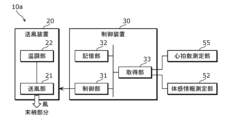
- FIG. 7 is a block diagram showing the configuration of a sleep support system 10a according to this modified example.
- the sleep support system 10a according to this modified example differs from the sleep support system 10 according to the embodiment in that it includes a heart rate measuring unit 55 instead of a deep body temperature measuring unit 51.
- the heart rate measurement unit 55 measures the heart rate of the person 90 and outputs the measurement result to the control device 30.
- the heart rate measurement unit 55 is a heart rate measuring device.
- the sleep assistance system 10a may not include a heart rate measurement unit 55, and the acquisition unit 33 may acquire the heart rate of the person 90 by communicating with an external device having the functions of the heart rate measurement unit 55.
- the external device may be a dedicated measuring device or a wearable device owned by the user.
- Figure 8 is a flowchart showing an example of the operation of the sleep support system 10a according to this modified example.
- a person 90 who is about to sleep enters the bedding 80 and, for example, by turning on the fan unit 21, the fan unit 21 starts blowing air at a predetermined volume toward the feet 91 of the person 90.
- the control unit 31 acquires the heart rate of the person 90 sleeping in the bedding 80 measured by the heart rate measurement unit 55 via the acquisition unit 33 (step S31).
- the heart rate measurement unit 55 measures the heart rate of the person 90 at a predetermined interval.
- the control unit 31 continues to acquire the heart rate of the person 90 at the predetermined interval until the person 90 wakes up.
- This predetermined interval is, for example, greater than or equal to 10 seconds and less than or equal to 10 minutes.
- the control unit 31 estimates the deep body temperature of the person 90 sleeping on the bedding 80 based on the acquired heart rate (step S32).
- the control unit 31 stores the deep body temperature estimated from the heart rate measured at a predetermined interval together with time information in the memory unit 32 as a history of deep body temperature.
- the deeper body temperature tends to be higher as the heart rate increases, and the control unit 31 estimates the deep body temperature from the heart rate based on, for example, a function or data table showing the relationship between the heart rate and deep body temperature.
- step S32 the same operations as those from step S12 onwards described above as the operation of the sleep assistance system 10 are performed.
- the sleep support system 10a does not directly measure the deep body temperature of the person 90, but instead measures the heart rate, which is easier to measure than the deep body temperature, and estimates the deep body temperature from the measured heart rate, making it easier to obtain information about the deep body temperature.
- Modification 2 Next, a description will be given of Modification 2 of the embodiment. In the following description of Modification 2, differences from the embodiment and Modification 1 of the embodiment 1 will be mainly described, and descriptions of commonalities will be omitted or simplified.
- FIG. 9 is a block diagram showing the configuration of a sleep support system 10b according to this modified example.
- sleep support system 10b according to this modified example differs from sleep support system 10 according to the embodiment in that it further includes an environmental temperature measuring unit 53, and includes a peripheral body temperature measuring unit 56 instead of the bodily sensation information measuring unit 52.
- control unit 31 uses the temperature adjustment unit 22 to control the temperature of the air blown by the air blower unit 21 based on the acquired information.
- the environmental temperature measurement unit 53 measures the temperature of the sleeping environment of the person 90.
- the temperature of the sleeping environment of the person 90 is, for example, the air temperature around the bedding 80 in which the person 90 sleeps, and as a specific example, the room temperature of the room in which the bedding 80 is placed.
- the environmental temperature measurement unit 53 outputs the measurement result of the temperature of the sleeping environment of the person 90 to the control device 30.
- the acquisition unit 33 of the control device 30 acquires the measurement result from the environmental temperature measurement unit 53.
- the environmental temperature measurement unit 53 is a temperature sensor that measures the air temperature, and is provided, for example, in the room in which the bedding 80 is placed.
- the peripheral body temperature measuring unit 56 is a peripheral body temperature gauge that measures the peripheral body temperature of the person 90.
- the peripheral body temperature measuring unit 56 measures the surface temperature of the foot 91 of the person 90 (i.e., the skin temperature of the foot 91) as the peripheral body temperature.
- the peripheral body temperature gauge may use a contact type temperature sensor or a non-contact type temperature sensor.
- the peripheral body temperature measured by the peripheral body temperature measuring unit 56 may be used as the above-mentioned body sensation information.
- the sleep support system 10b may not include at least one of the environmental temperature measurement unit 53 and the peripheral body temperature measurement unit 56, and the acquisition unit 33 may acquire at least one of the temperature of the sleeping environment and the peripheral body temperature of the person 90 by communicating with one or more external devices having the functions of at least one of the environmental temperature measurement unit 53 and the peripheral body temperature measurement unit 56.
- the external device may be a dedicated measuring device, or may be an information terminal or a wearable terminal owned by the user.
- the sleep support system 10b may further include a body movement detector used in the bodily sensation information measurement unit 52 described in the configuration of the sleep support system 10 above.
- the sleep support system 10b may also include the heart rate measurement unit 55 described in the configuration of the sleep support system 10a above instead of the deep body temperature measurement unit 51.
- FIG. 10 is a flowchart showing an example of the operation of the sleep support system 10b according to this modified example.
- the control unit 31 uses the temperature adjustment unit 22 to control the temperature of the air blown by the air blower unit 21.
- the control unit 31 may perform the operation described using FIG. 5 in parallel with the operation shown in FIG. 10. In other words, the control unit 31 may control both the temperature and the volume of the air blown by the air blower unit 21.
- a person 90 who is about to sleep enters the bedding 80 and starts blowing a predetermined amount of air toward the feet 91 of the person 90 by turning on the drive of the blower 21, etc.
- the control unit 31 acquires seasonal information that is information indicating the current season (step S41).
- the control unit 31 has a clock circuit and determines the current date by measuring time, and acquires the determined date as seasonal information.
- the control unit 31 may also acquire the current date or the like as seasonal information from an external device via the acquisition unit 33 using a network such as the Internet.
- the control unit 31 may also acquire seasonal information input by the user via the acquisition unit 33.
- the seasonal information may be information indicating the current month or date, or information indicating which of the four seasons it is currently in.
- control unit 31 acquires the temperature of the sleeping environment of the person 90 measured by the environmental temperature measurement unit 53 via the acquisition unit 33 (step S42).
- the control unit 31 controls the temperature of the air blown by the air blowing unit 21 based on at least one of the acquired seasonal information and the temperature of the sleeping environment (step S43).
- the control unit 31 determines the temperature of the air blown by the air blowing unit 21 based on at least one of the seasonal information and the temperature of the sleeping environment, and adjusts the temperature of the air blown by the air blowing unit 21 to the determined air temperature using the temperature adjustment unit 22.
- the memory unit 32 holds information indicating the correspondence, such as a table in which at least one of the seasonal information and the temperature of the sleeping environment is associated with the air temperature, and the control unit 31 determines the air temperature by referring to the information.
- the temperature at which the person 90 feels comfortable may change depending on the season and the temperature of the sleeping environment, but by controlling the air temperature, the person 90 is less likely to feel uncomfortable while sleeping.
- FIG. 11 is a diagram for explaining an example of air temperature control by the control unit 31.
- FIG. 11 shows an example of air temperature when the control unit 31 controls the air temperature of the air blown by the air blowing unit 21 based on seasonal information. Note that the example of air temperature shown in FIG. 11 is just one example, and the air temperature is not limited to the example shown in FIG. 11.
- the control unit 31 determines the temperature of the air blown by the air blowing unit 21 based on the season indicated by the seasonal information. For example, the control unit 31 determines the air temperature so that the air temperature is higher in seasons with lower air temperatures. As a result, the air temperature changes according to the season, and the air blown by the air blowing unit 21 helps to lower the core body temperature, while making it easier for the person 90 to fall asleep comfortably without feeling uncomfortable.
- the control unit 31 may change the air temperature according to a period that is divided into multiple periods from when the person 90 goes to sleep to when they wake up.
- the period from when the person 90 goes to sleep to when they wake up is divided into a first period, a second period, and a third period, and the control unit 31 determines the air temperature according to each period.
- the control unit 31 determines the air temperature so that the air temperature is different in the first period, which is a predetermined period from when the person 90 goes to sleep, and the third period, which is a predetermined period until the person 90 wakes up.
- the control unit 31 may also determine the air temperature so that the air temperature is different in the second period, which is a period between the first period and the third period, and at least one of the first period and the third period.
- control unit 31 determines the air temperature so that the air temperature is higher in the third period than at least one of the first period and the second period.
- the first, second and third periods are, for example, preset and the set values are stored in the memory unit 32.
- the first, second and third periods may also be determined based on changes in the deep body temperature while the person 90 is sleeping.
- the control unit 31 determines the first period to be the period from the start of sleep until the rate at which the deep body temperature falls reaches or exceeds a predetermined rate, determines the second period to be the period after the first period until the rate at which the deep body temperature rises reaches or exceeds a predetermined rate, and determines the third period to be the period after the second period until the person wakes up.
- the periods for changing the air temperature are not limited to the three periods of the first, second and third periods, but may be two periods or four or more periods.
- control unit 31 may adjust the air temperature determined based on the seasonal information based on the temperature of the sleeping environment. For example, the higher the temperature of the sleeping environment, the lower the air temperature determined based on the seasonal information.
- the control unit 31 determines the air temperature so that, for example, the lower the temperature of the sleeping environment, the higher the air temperature. Also, even when the control unit 31 controls the temperature of the air blown by the air blowing unit 21 based on the temperature of the sleeping environment, the air temperature may be changed according to the period of time divided into multiple segments from the start of sleep to waking up, as described above.
- the control unit 31 also determines the air temperature in the first period so that the air temperature is higher, for example, in a colder season or in a lower temperature sleeping environment. This allows the air temperature to be higher in an environment where the person 90 is more likely to feel cold, making it easier for the person 90 to fall asleep.
- control unit 31 may acquire the peripheral body temperature of the person 90 measured by the peripheral body temperature measurement unit 56 via the acquisition unit 33, and change the air temperature determined based on at least one of the seasonal information and the temperature of the sleeping environment based on the acquired peripheral body temperature of the person 90. For example, the control unit 31 may lower the air temperature determined based on at least one of the seasonal information and the temperature of the sleeping environment the higher the peripheral body temperature of the person 90.
- the air temperature may be set arbitrarily by the user.
- the control unit 31 does not use either the seasonal information or the temperature of the sleeping environment to control the air temperature, it is not necessary to acquire that one in steps S41 and S42.
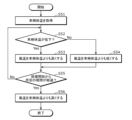
- FIG. 12 is a flowchart showing another example of the operation of the sleep support system 10b according to this modified example.
- the control unit 31 uses the temperature adjustment unit 22 to control the temperature of the air blown by the blower unit 21. Note that the control unit 31 may perform the operation described using FIG. 5 in parallel with the operation shown in FIG. 12.
- a person 90 about to sleep enters the bedding 80, and the blower 21 starts blowing air at a predetermined volume toward the feet 91 of the person 90, for example by turning on the blower 21.
- the controller 31 acquires the peripheral body temperature of the person 90 sleeping in the bedding 80, measured by the peripheral body temperature measuring unit 56, via the acquisition unit 33 (step S51).
- the peripheral body temperature measuring unit 56 measures the peripheral body temperature of the person 90 at a predetermined interval, and the controller 31 stores the results of the peripheral body temperature measurements at the predetermined interval together with time information in the memory unit 32 as a peripheral body temperature history.
- the controller 31 continues acquiring the peripheral body temperature of the person 90 at the predetermined interval until the person 90 wakes up. This predetermined interval is, for example, from 10 seconds to 10 minutes.
- step S52 determines whether the peripheral body temperature of the person 90 has decreased.
- the process in step S52 in the control unit 31 is, for example, the same process as in step S15 described above. This allows the control unit 31 to determine whether the person 90 is feeling cold.
- the process in step S52 may be a process, similar to step S15, in which the control unit 31 determines whether the person 90 is feeling cold by using the detection result of body movement instead of the peripheral body temperature of the person 90. Also, in step S52, the control unit 31 may determine whether the peripheral body temperature of the person 90 has decreased and whether the rate of decrease in the peripheral body temperature is equal to or greater than a predetermined threshold.
- control unit 31 determines that the peripheral body temperature of the person 90 has decreased (Yes in step S52), it controls the temperature of the air blown by the air blowing unit 21 to be higher than the peripheral body temperature of the person 90 (step S53). For example, the control unit 31 determines the temperature of the air blown by the air blowing unit 21 to be "the peripheral body temperature of the person 90 + ⁇ (°C)" and uses the temperature adjustment unit 22 to adjust the temperature of the air to be blown by the air blowing unit 21 to the determined air temperature.
- control unit 31 determines that the peripheral body temperature of the person 90 has not decreased (No in step S52), it controls the temperature of the air blown by the air blowing unit 21 to be lower than the peripheral body temperature of the person 90 (step S54). For example, the control unit 31 determines the temperature of the air blown by the air blowing unit 21 to be "peripheral body temperature of the person 90 - ⁇ (°C)" and uses the temperature adjustment unit 22 to adjust the temperature of the air to be blown by the air blowing unit 21 to the determined air temperature.
- control unit 31 may make the air temperature higher than the peripheral body temperature if the peripheral body temperature of person 90 is equal to or lower than a first threshold value, and may make the air temperature lower than the peripheral body temperature if the peripheral body temperature of person 90 is higher than a second threshold value that is equal to or higher than the first threshold value, regardless of whether the peripheral body temperature of person 90 has decreased. This also makes it possible for person 90 to fall asleep comfortably. Furthermore, since the peripheral body temperature of person 90 is correlated with the blood flow rate in the peripheral parts of person 90, it is possible to prevent the blood flow rate from becoming excessively small, thereby suppressing the decrease in heat dissipation from the peripheral parts, and further promoting the decrease in the core body temperature.
- step S55 the control unit 31 determines whether a predetermined period has passed since the person 90 started to sleep (step S55).
- the length of this predetermined period is, for example, 2 hours or more and 7 hours or less. If the control unit 31 determines that the predetermined period has not passed since the person 90 started to sleep (No in step S55), step S52 is performed again after a certain period of time. This certain period of time is, for example, 1 minute or more and 30 minutes or less. In this way, step S52 and step S53 or S54 are repeated until the predetermined period has passed.
- the control unit 31 may determine whether the deep body temperature of the sleeping person 90 has increased after a predetermined period has passed since the person 90 started to sleep. In this case, step S52 and step S53 or S54 are repeated until the deep body temperature of the sleeping person 90 has increased.
- control unit 31 determines that a predetermined period has elapsed since the person 90 started to sleep (Yes in step S55), it controls the temperature of the air blown by the air blowing unit 21 to be higher than the peripheral body temperature of the person 90 (step S56). Then, the blowing of air at the temperature controlled in step S56 continues until the person 90 wakes up and the drive of the air blowing unit 21 is turned off. For example, the control unit 31 determines the temperature of the air blown by the air blowing unit 21 to be "the peripheral body temperature of the person 90 + ⁇ (°C)" and uses the temperature adjustment unit 22 to adjust the temperature of the air blown by the air blowing unit 21 to the determined air temperature.
- the temperature of the air blown by the air blowing unit 21 becomes higher, and the rise in the deep body temperature can be promoted. As a result, the person 90 can wake up more comfortably when waking up.
- ⁇ , ⁇ , and ⁇ are set, for example, by receiving input from a user.
- ⁇ , ⁇ , and ⁇ may be determined or adjusted based on at least one of the temperature of the sleeping environment of person 90 and the peripheral body temperature of person 90.
- the control unit 31 increases ⁇ and ⁇ and decreases ⁇ in colder seasons, lower temperatures of the sleeping environment, or lower peripheral body temperature.
- the control unit 31 acquires at least one of the seasonal information, the temperature of the sleeping environment of the person 90, and the peripheral body temperature of the person 90, and controls the temperature of the air blown by the air blowing unit 21 based on the at least one of the information. This promotes a decrease in the core body temperature by blowing air to the peripheral parts of the person 90, and reduces discomfort felt by the person 90 while sleeping by controlling the air temperature, thereby improving the quality of sleep of the person 90.
- the control unit 31 controls the air volume of the blower 21 based on the core body temperature of the sleeping person 90, but this is not limited to the above.
- an air volume suitable for promoting a decrease in the core body temperature of the sleeping person 90 may be confirmed in advance, and the air volume may be stored in the memory unit 32.
- the control unit 31 controls the blower 21 with the air volume stored in the memory unit 32. In this case, some of the operations from step S12 onwards may also be performed.
- the air blower 21 blows air to the feet of the person 90 sleeping on the bedding 80, but this is not limited to this.
- the air blower 21 may also blow air to the person 90 sleeping on something other than the bedding 80, such as a vehicle seat or a napping chair.
- the air blowing unit 21 blows air to the feet 91 of the person 90, but this is not limited to this.
- the air blowing unit 21 may also blow air to the hands of the person 90, which are peripheral parts of the person 90.
- the sleep assistance system is realized by multiple devices, it may be realized as a single device.
- the sleep assistance system may be realized as a single device in which the air blower and the control device are integrated.
- each of the components of the sleep assistance system may be allocated in any manner among the multiple devices.
- the multiple devices may communicate via a network such as the Internet.
- processing performed by a specific processing unit may be executed by another processing unit.
- the order of multiple processes may be changed, and multiple processes may be executed in parallel.
- the processing described in the above embodiment may be realized by centralized processing using a single device, or may be realized by distributed processing using multiple devices.
- the processor that executes the above program may be either single or multiple. In other words, centralized processing or distributed processing may be performed.
- the general or specific aspects of the present disclosure may be realized as a system, device, method, integrated circuit, computer program, or computer-readable recording medium such as a CD-ROM. Also, it may be realized as any combination of a system, device, method, integrated circuit, computer program, and recording medium.
- the present disclosure may be realized as a sleep assistance method executed by a computer such as a control device.
- the present disclosure may be realized as a program for causing a computer to execute the sleep assistance method, or as a computer-readable non-transitory recording medium on which such a program is stored.
- the sleep assistance system disclosed herein can be used as a system to be used while a person is sleeping.
Landscapes
- Health & Medical Sciences (AREA)
- Engineering & Computer Science (AREA)
- Life Sciences & Earth Sciences (AREA)
- Anesthesiology (AREA)
- Animal Behavior & Ethology (AREA)
- Veterinary Medicine (AREA)
- Physics & Mathematics (AREA)
- Public Health (AREA)
- Biomedical Technology (AREA)
- Heart & Thoracic Surgery (AREA)
- General Health & Medical Sciences (AREA)
- Psychology (AREA)
- Hematology (AREA)
- Acoustics & Sound (AREA)
- Pain & Pain Management (AREA)
- Mechanical Engineering (AREA)
- General Engineering & Computer Science (AREA)
- Biophysics (AREA)
- Pathology (AREA)
- Medical Informatics (AREA)
- Molecular Biology (AREA)
- Surgery (AREA)
- Mattresses And Other Support Structures For Chairs And Beds (AREA)
Priority Applications (3)
| Application Number | Priority Date | Filing Date | Title |
|---|---|---|---|
| JP2025532723A JPWO2025013733A1 (https=) | 2023-07-11 | 2024-07-03 | |
| CN202480043322.6A CN121398716A (zh) | 2023-07-11 | 2024-07-03 | 睡眠支援系统 |
| US19/431,058 US20260115411A1 (en) | 2023-07-11 | 2025-12-23 | Sleep assistance system |
Applications Claiming Priority (4)
| Application Number | Priority Date | Filing Date | Title |
|---|---|---|---|
| JP2023-113490 | 2023-07-11 | ||
| JP2023113490 | 2023-07-11 | ||
| JP2024-051031 | 2024-03-27 | ||
| JP2024051031 | 2024-03-27 |
Related Child Applications (1)
| Application Number | Title | Priority Date | Filing Date |
|---|---|---|---|
| US19/431,058 Continuation US20260115411A1 (en) | 2023-07-11 | 2025-12-23 | Sleep assistance system |
Publications (1)
| Publication Number | Publication Date |
|---|---|
| WO2025013733A1 true WO2025013733A1 (ja) | 2025-01-16 |
Family
ID=94215530
Family Applications (1)
| Application Number | Title | Priority Date | Filing Date |
|---|---|---|---|
| PCT/JP2024/024136 Pending WO2025013733A1 (ja) | 2023-07-11 | 2024-07-03 | 睡眠支援システム |
Country Status (4)
| Country | Link |
|---|---|
| US (1) | US20260115411A1 (https=) |
| JP (1) | JPWO2025013733A1 (https=) |
| CN (1) | CN121398716A (https=) |
| WO (1) | WO2025013733A1 (https=) |
Citations (9)
| Publication number | Priority date | Publication date | Assignee | Title |
|---|---|---|---|---|
| JP2006194540A (ja) * | 2005-01-14 | 2006-07-27 | Kansai Electric Power Co Inc:The | 温冷感予測値を用いた空調制御方法、空調装置、空調装置用プログラム及びサーバ装置 |
| JP2007132581A (ja) * | 2005-11-09 | 2007-05-31 | Toshiba Corp | 空調制御装置、空調制御システム、空調制御方法および空調制御プログラム |
| JP2009264704A (ja) * | 2008-04-28 | 2009-11-12 | Daikin Ind Ltd | 空調制御システム |
| JP2015017728A (ja) * | 2013-07-10 | 2015-01-29 | 日立アプライアンス株式会社 | 空気調和機 |
| JP2016061446A (ja) * | 2014-09-12 | 2016-04-25 | 日立アプライアンス株式会社 | 空気調和機 |
| JP2020168554A (ja) * | 2015-12-01 | 2020-10-15 | パナソニック インテレクチュアル プロパティ コーポレーション オブ アメリカPanasonic Intellectual Property Corporation of America | 制御方法、制御装置及びプログラム |
| JP2020179026A (ja) * | 2019-04-26 | 2020-11-05 | パナソニックIpマネジメント株式会社 | 睡眠誘導装置、睡眠誘導方法、覚醒誘導装置、および覚醒誘導方法 |
| WO2022145347A1 (ja) * | 2020-12-28 | 2022-07-07 | 重一 中津川 | 衣類システム |
| JP2023003218A (ja) * | 2021-06-23 | 2023-01-11 | 株式会社竹中工務店 | 温熱環境制御装置、温熱環境制御方法及びプログラム |
-
2024
- 2024-07-03 JP JP2025532723A patent/JPWO2025013733A1/ja active Pending
- 2024-07-03 CN CN202480043322.6A patent/CN121398716A/zh active Pending
- 2024-07-03 WO PCT/JP2024/024136 patent/WO2025013733A1/ja active Pending
-
2025
- 2025-12-23 US US19/431,058 patent/US20260115411A1/en active Pending
Patent Citations (9)
| Publication number | Priority date | Publication date | Assignee | Title |
|---|---|---|---|---|
| JP2006194540A (ja) * | 2005-01-14 | 2006-07-27 | Kansai Electric Power Co Inc:The | 温冷感予測値を用いた空調制御方法、空調装置、空調装置用プログラム及びサーバ装置 |
| JP2007132581A (ja) * | 2005-11-09 | 2007-05-31 | Toshiba Corp | 空調制御装置、空調制御システム、空調制御方法および空調制御プログラム |
| JP2009264704A (ja) * | 2008-04-28 | 2009-11-12 | Daikin Ind Ltd | 空調制御システム |
| JP2015017728A (ja) * | 2013-07-10 | 2015-01-29 | 日立アプライアンス株式会社 | 空気調和機 |
| JP2016061446A (ja) * | 2014-09-12 | 2016-04-25 | 日立アプライアンス株式会社 | 空気調和機 |
| JP2020168554A (ja) * | 2015-12-01 | 2020-10-15 | パナソニック インテレクチュアル プロパティ コーポレーション オブ アメリカPanasonic Intellectual Property Corporation of America | 制御方法、制御装置及びプログラム |
| JP2020179026A (ja) * | 2019-04-26 | 2020-11-05 | パナソニックIpマネジメント株式会社 | 睡眠誘導装置、睡眠誘導方法、覚醒誘導装置、および覚醒誘導方法 |
| WO2022145347A1 (ja) * | 2020-12-28 | 2022-07-07 | 重一 中津川 | 衣類システム |
| JP2023003218A (ja) * | 2021-06-23 | 2023-01-11 | 株式会社竹中工務店 | 温熱環境制御装置、温熱環境制御方法及びプログラム |
Also Published As
| Publication number | Publication date |
|---|---|
| CN121398716A (zh) | 2026-01-23 |
| JPWO2025013733A1 (https=) | 2025-01-16 |
| US20260115411A1 (en) | 2026-04-30 |
Similar Documents
| Publication | Publication Date | Title |
|---|---|---|
| CN1741782B (zh) | 控制床的物理特性的装置和方法 | |
| EP2429349B1 (en) | An active pillow system and a method for manipulating a person's resting conditions | |
| JP2750046B2 (ja) | 入眠促進用の体温誘導装置 | |
| JP6067065B2 (ja) | 快眠環境制御システムおよび快眠環境制御方法 | |
| JP7096461B2 (ja) | 睡眠環境温度制御装置及び睡眠環境温度制御方法 | |
| JP2001108278A (ja) | 空気調和装置 | |
| JPH09303842A (ja) | 空気調和機 | |
| WO2016136350A1 (ja) | 睡眠制御装置 | |
| JP2003185217A (ja) | 空気調和機 | |
| JPH07225042A (ja) | 睡眠誘導装置 | |
| JP2007198653A (ja) | 環境制御装置及びその動作プログラム | |
| US20220248866A1 (en) | Control method, recording medium, and control apparatus | |
| WO2025013733A1 (ja) | 睡眠支援システム | |
| JP2644106B2 (ja) | 空調制御装置及び体温収束装置 | |
| JP2016209013A (ja) | 睡眠制御装置 | |
| CN211608880U (zh) | 智能床垫 | |
| JPH05228044A (ja) | 寝室温湿制御システム | |
| JP2020179026A (ja) | 睡眠誘導装置、睡眠誘導方法、覚醒誘導装置、および覚醒誘導方法 | |
| JP7118797B2 (ja) | 睡眠制御装置 | |
| JPH05228043A (ja) | ベッド温湿制御システム | |
| JP2884706B2 (ja) | 就寝装置 | |
| JP2002119596A (ja) | 入眠促進装置 | |
| JPH04300506A (ja) | ベッドシステムおよび寝床内用センサ | |
| JPH0533204A (ja) | センサを付加したパジヤマおよび寝室システム | |
| JP7686412B2 (ja) | 環境制御システム |
Legal Events
| Date | Code | Title | Description |
|---|---|---|---|
| 121 | Ep: the epo has been informed by wipo that ep was designated in this application |
Ref document number: 24839625 Country of ref document: EP Kind code of ref document: A1 |
|
| ENP | Entry into the national phase |
Ref document number: 2025532723 Country of ref document: JP Kind code of ref document: A |
|
| WWE | Wipo information: entry into national phase |
Ref document number: 2025532723 Country of ref document: JP |
|
| NENP | Non-entry into the national phase |
Ref country code: DE |