WO2024219194A1 - 発酵飲料及びその製造方法 - Google Patents
発酵飲料及びその製造方法 Download PDFInfo
- Publication number
- WO2024219194A1 WO2024219194A1 PCT/JP2024/013107 JP2024013107W WO2024219194A1 WO 2024219194 A1 WO2024219194 A1 WO 2024219194A1 JP 2024013107 W JP2024013107 W JP 2024013107W WO 2024219194 A1 WO2024219194 A1 WO 2024219194A1
- Authority
- WO
- WIPO (PCT)
- Prior art keywords
- fermented beverage
- enzyme
- producing
- dextrin
- less
- Prior art date
- Legal status (The legal status is an assumption and is not a legal conclusion. Google has not performed a legal analysis and makes no representation as to the accuracy of the status listed.)
- Ceased
Links
Images
Classifications
-
- C—CHEMISTRY; METALLURGY
- C12—BIOCHEMISTRY; BEER; SPIRITS; WINE; VINEGAR; MICROBIOLOGY; ENZYMOLOGY; MUTATION OR GENETIC ENGINEERING
- C12C—BEER; PREPARATION OF BEER BY FERMENTATION; PREPARATION OF MALT FOR MAKING BEER; PREPARATION OF HOPS FOR MAKING BEER
- C12C5/00—Other raw materials for the preparation of beer
- C12C5/004—Enzymes
-
- C—CHEMISTRY; METALLURGY
- C12—BIOCHEMISTRY; BEER; SPIRITS; WINE; VINEGAR; MICROBIOLOGY; ENZYMOLOGY; MUTATION OR GENETIC ENGINEERING
- C12C—BEER; PREPARATION OF BEER BY FERMENTATION; PREPARATION OF MALT FOR MAKING BEER; PREPARATION OF HOPS FOR MAKING BEER
- C12C7/00—Preparation of wort
- C12C7/04—Preparation or treatment of the mash
-
- C—CHEMISTRY; METALLURGY
- C12—BIOCHEMISTRY; BEER; SPIRITS; WINE; VINEGAR; MICROBIOLOGY; ENZYMOLOGY; MUTATION OR GENETIC ENGINEERING
- C12C—BEER; PREPARATION OF BEER BY FERMENTATION; PREPARATION OF MALT FOR MAKING BEER; PREPARATION OF HOPS FOR MAKING BEER
- C12C11/00—Fermentation processes for beer
- C12C11/02—Pitching yeast
-
- C—CHEMISTRY; METALLURGY
- C12—BIOCHEMISTRY; BEER; SPIRITS; WINE; VINEGAR; MICROBIOLOGY; ENZYMOLOGY; MUTATION OR GENETIC ENGINEERING
- C12C—BEER; PREPARATION OF BEER BY FERMENTATION; PREPARATION OF MALT FOR MAKING BEER; PREPARATION OF HOPS FOR MAKING BEER
- C12C12/00—Processes specially adapted for making special kinds of beer
- C12C12/04—Beer with low alcohol content
-
- C—CHEMISTRY; METALLURGY
- C12—BIOCHEMISTRY; BEER; SPIRITS; WINE; VINEGAR; MICROBIOLOGY; ENZYMOLOGY; MUTATION OR GENETIC ENGINEERING
- C12G—WINE; PREPARATION THEREOF; ALCOHOLIC BEVERAGES; PREPARATION OF ALCOHOLIC BEVERAGES NOT PROVIDED FOR IN SUBCLASSES C12C OR C12H
- C12G3/00—Preparation of other alcoholic beverages
- C12G3/02—Preparation of other alcoholic beverages by fermentation
- C12G3/021—Preparation of other alcoholic beverages by fermentation of botanical family Poaceae, e.g. wheat, millet, sorghum, barley, rye, or corn
-
- C—CHEMISTRY; METALLURGY
- C12—BIOCHEMISTRY; BEER; SPIRITS; WINE; VINEGAR; MICROBIOLOGY; ENZYMOLOGY; MUTATION OR GENETIC ENGINEERING
- C12G—WINE; PREPARATION THEREOF; ALCOHOLIC BEVERAGES; PREPARATION OF ALCOHOLIC BEVERAGES NOT PROVIDED FOR IN SUBCLASSES C12C OR C12H
- C12G3/00—Preparation of other alcoholic beverages
- C12G3/02—Preparation of other alcoholic beverages by fermentation
- C12G3/025—Low-alcohol beverages
Definitions
- the present invention relates to a fermented beverage and a method for producing the same.
- This application claims priority based on Japanese Patent Application No. 2023-069088, filed on April 20, 2023, the contents of which are incorporated herein by reference.
- beer-flavored beverages that have a similar taste to beer, such as low-alcohol beer with a low alcohol content, or non-alcoholic beer that contains virtually no alcohol.
- These beer-flavored beverages are generally consumed as a substitute for beer when people cannot drink beer with a high alcohol content, so it is preferable that they have a taste similar to beer except for the alcohol content. For this reason, there is a demand for the development of beer-flavored beverages that have a taste more similar to beer.
- ⁇ -glucosidase transglucosidase
- isomaltooligosaccharides synthesized from fermentable sugars by transglucosidase have a certain degree of sweetness, although they are less sweet than sucrose.
- Patent Document 3 discloses a method for producing a low-alcohol fermented malt beverage in which an organic acid is added so that the pH of the final product is 3.5 to 4.4, with the aim of providing a method for producing a low-alcohol fermented malt beverage that has a well-balanced taste and flavor that is comparable to regular beers, without being dominated by sweetness or other unnatural flavors.
- Patent Document 4 discloses a method for producing a low-alcohol, beer-taste beverage in which the bitterness value for the extract components in the final product is adjusted to fall within a specified range, with the aim of providing a method for producing a low-alcohol, beer-taste beverage that has sufficient full-bodied flavor, excellent flavor, and enhanced drinkability.
- beer-flavored beverages produced by adding transglucosidase have the problem that the grain aroma derived from malt is relatively prominent due to the low alcohol concentration. Although it is possible to balance the strength of the grain aroma by diluting according to the alcohol concentration, this also causes problems such as a loss of body and a flat taste. It was found that the technologies of Patent Documents 3 and 4 have room for improvement in terms of the balance of the strength of the grain aroma and the body.
- the present invention aims to provide a fermented beverage that has an excellent balance of grain aroma intensity and full-bodied taste even with a low alcohol concentration, and a method for producing the same.
- the inventors of the present invention have noticed that in beer-flavored beverages with a low alcohol concentration, sugars with a higher sweetness than dextrin contribute more to enhancing the body of the beverage, and have discovered that the above-mentioned problem can be solved by adding an enzyme that converts assimilable sugars into non-assimilable sugars and an enzyme that hydrolyzes dextrin to the brewing process for obtaining a saccharified liquid from a starchy raw material, and further including a dilution process for diluting the obtained fermented liquid with water.
- the present invention provides the following [1] to [15].
- a preparation step for obtaining a saccharified liquid from a starchy raw material a fermentation step of fermenting the obtained saccharified liquid with yeast to obtain a fermentation liquid; and A dilution step of diluting the obtained fermentation liquid with water
- an enzyme that produces non-assimilable sugars from assimilable sugars and an enzyme that hydrolyzes dextrin are added in the brewing step.
- the present invention provides a fermented beverage and a method for producing the same that has a well-balanced grain aroma intensity and a rich body, even with a low alcohol concentration.
- the method for producing a fermented beverage of the present invention includes a preparation step of obtaining a saccharified liquid from a starchy raw material, a fermentation step of fermenting the obtained saccharified liquid with yeast to obtain a fermented liquid, and a dilution step of diluting the obtained fermented liquid with water, in which an enzyme that produces non-assimilable sugars from assimilable sugars and an enzyme that hydrolyzes dextrin are added in the preparation step.
- the term "dextrin” refers to a starch hydrolysate, which is an oligosaccharide or polysaccharide having a glucose polymerization degree of 7 or more.
- the method for producing a fermented beverage of the present invention it is possible to obtain a fermented beverage that has a well-balanced grain aroma intensity and a rich body, even with a low alcohol concentration.
- the reason for this is unclear, but is thought to be as follows.
- sweetness and dextrin contribute to enhancing the body (richness, satisfying to drink) of beer-taste beverages.
- an enzyme for hydrolyzing dextrin is added in addition to an enzyme for producing non-assimilable sugars from assimilable sugars, so that the dextrin can be present as a low-molecular-weight sugar instead of the dextrin present in conventional beer-taste beverages, and as a result, it is believed that the effect of enhancing the body is obtained.
- the production method of the present invention includes a brewing step (hereinafter also simply referred to as the "brewing step") of obtaining a saccharified solution from a starchy raw material.
- a brewing step hereinafter also simply referred to as the "brewing step”
- a saccharified solution from a starchy raw material.
- an enzyme that produces non-assimilable sugars from assimilable sugars and an enzyme that hydrolyzes dextrin are added in the brewing process.
- the starch raw material is not particularly limited as long as it is a fermentation raw material containing starch, but preferably contains malt.
- the malt used in the present invention is preferably at least one selected from the group consisting of barley malt, wheat malt, rye malt, and oat malt.
- Malt is obtained by germinating barley, wheat, rye, oats, etc., by a general malting process. Specifically, malt can be produced by soaking harvested barley, wheat, rye, oats, etc. in water to allow them to germinate appropriately, and then drying them with hot air.
- Malt may be used as a pulverized product pulverized by a conventional method.
- starchy raw materials other than malt include barley, wheat, cornstarch, corn grits, rice, and koryan.
- the starch raw material may be used alone or in combination of two or more kinds.
- the proportion of malt used in the starchy raw material is preferably 25% by mass or more and 100% by mass or less, more preferably 40% by mass or more, even more preferably 50% by mass or more, and more preferably 90% by mass or less, even more preferably 80% by mass or less. From the viewpoint of enhancing the full-bodied feeling, it is preferably equal to or more than the above lower limit, and from the viewpoint of adjusting the balance of flavors, it is preferably equal to or less than the above upper limit.
- carbohydrate raw materials such as liquid sugar and sugar may be added in addition to the starch raw materials.
- liquid sugar is produced by decomposing and saccharifying starch with an acid or a saccharifying enzyme, and mainly includes glucose, fructose, sucrose, maltose, maltotriose, etc.
- the carbohydrate raw material may be used alone or in combination of two or more kinds.
- enzymes that convert assimilable sugars into non-assimilable sugars In the brewing process, an enzyme that produces non-assimilable sugars from assimilable sugars is added to convert assimilable sugars to non-assimilable sugars. Specifically, assimilable sugars such as glucose, fructose, sucrose, maltose, and maltotriose are converted to non-assimilable sugars such as kojibiose, nigerose, isomaltose, erlose, panose, and isomaltotriose.
- assimilable sugars such as glucose, fructose, sucrose, maltose, and maltotriose are converted to non-assimilable sugars such as kojibiose, nigerose, isomaltose, erlose, panose, and isomaltotriose.
- isomaltooligosaccharide is preferred as the non-assimilable sugar produced by the enzyme from the viewpoints of adjusting the alcohol concentration and enhancing the body of the sake.
- Isomaltooligosaccharides are oligosaccharides that contain glucose as a constituent sugar and have at least one ⁇ -1,6 bond, ⁇ -1,2 bond, ⁇ -1,3 bond, etc. in the molecule, and have a degree of polymerization of 2 to 10.
- isomaltooligosaccharides include isomaltose, isomaltotriose, and panose.
- non-assimilable sugars are not utilized in the fermentation process, and the production of alcohol can be suppressed, so that the alcohol concentration of the obtained fermented beverage can be reduced.
- the enzyme that produces non-assimilable sugars from assimilable sugars preferably contains transglucosidase.
- transglucosidase There are no particular limitations on the transglucosidase, so long as it is an enzyme that has catalytic activity for glycosyltransferase reactions, and transglucosidases derived from various organisms can be used.
- the form of the transglucosidase may be any of liquid, powder, and those immobilized on a carrier. Commercially available transglucosidases may also be used.
- An example of a commercially available transglucosidase is Transglucosidase L "Amano" (manufactured by Amano Enzyme Inc.). Transglucosidase can be used alone or in combination of two or more kinds.
- the amount of the enzyme that produces non-assimilable sugars from assimilable sugars is preferably 0.05 to 1 part by mass, more preferably 0.1 part by mass or more, even more preferably 0.2 part by mass or more, and even more preferably 0.8 part by mass or less, and even more preferably 0.6 part by mass or less, per 100 parts by mass of starchy raw material, when adding transglucosidase (Transglucosidase L "Amano" manufactured by Amano Enzyme Co., Ltd.), from the viewpoint of adjusting the alcohol concentration.
- transglucosidase Transglucosidase L "Amano” manufactured by Amano Enzyme Co., Ltd.
- the enzyme that produces non-assimilable sugars from assimilable sugars there are no particular limitations on the addition of the enzyme that produces non-assimilable sugars from assimilable sugars, so long as the reaction caused by the added enzyme is sufficiently carried out by the end of the preparation process.
- the transglucosidase when transglucosidase is used as the enzyme that produces non-assimilable sugars from assimilable sugars, the transglucosidase may be added together with the starchy raw material when preparing a mixture (maiche) containing the starchy raw material and raw material water, or may be added during the saccharification treatment of the starch in the starchy raw material.
- it is preferable to add the transglucosidase at an early stage in the preparation process and it is more preferable to add it when preparing the maiche in the preparation process.
- Enzyme that hydrolyzes dextrin In the mashing process, a dextrin-hydrolyzing enzyme is added, so that the dextrin produced during the saccharification of the starch in the starch raw material is hydrolyzed and converted into monosaccharides, disaccharides, and oligosaccharides.
- the enzyme that hydrolyzes dextrin is not particularly limited as long as it is an enzyme that hydrolyzes the ⁇ -1,6 glucoside bond or the ⁇ -1,4 glucoside bond of dextrin.
- Examples of the enzyme that hydrolyzes the ⁇ -1,6 glucosidic bond of dextrin include pullulanase and isoamylase, and it is preferable to include pullulanase.
- Examples of the enzyme that hydrolyzes the ⁇ -1,4-glucosidic bond of dextrin include ⁇ -amylase and ⁇ -amylase, and preferably includes ⁇ -amylase.
- the ⁇ -amylase preferably includes at least one selected from the group consisting of thermostable ⁇ -amylase and maltogenic ⁇ -amylase.
- An example of an enzyme that hydrolyzes ⁇ -1,4 glucoside bonds and ⁇ -1,6 glucoside bonds is glucoamylase.
- the enzyme that hydrolyzes dextrin preferably includes at least one selected from the group consisting of an enzyme that hydrolyzes the ⁇ -1,6 glucoside bond of dextrin and an enzyme that hydrolyzes the ⁇ -1,4 glucoside bond of dextrin, more preferably includes an enzyme that hydrolyzes the ⁇ -1,6 glucoside bond of dextrin and an enzyme that hydrolyzes the ⁇ -1,4 glucoside bond of dextrin, even more preferably includes pullulanase and ⁇ -amylase, and even more preferably includes pullulanase, thermostable ⁇ -amylase, and maltogenic ⁇ -amylase.
- the amount of the dextrin hydrolyzing enzyme added is preferably 0.05 to 1 part by mass, more preferably 0.1 part by mass or more, even more preferably 0.2 parts by mass or more, and even more preferably 0.8 parts by mass or less, and even more preferably 0.6 parts by mass or less, per 100 parts by mass of starch raw material.
- the enzyme that hydrolyzes dextrin is added, so long as the reaction caused by the added enzyme is sufficiently carried out by the end of the preparation process.
- a composite enzyme of pullulanase, thermostable ⁇ -amylase, and maltogenic ⁇ -amylase (“Ceremix (registered trademark) Flex” manufactured by Novozymes) is used as the enzyme that hydrolyzes dextrin
- the composite enzyme of pullulanase, thermostable ⁇ -amylase, and maltogenic ⁇ -amylase may be added together with the starchy raw material when preparing a mixture (maiche) containing the starchy raw material and raw material water, or may be added during the saccharification treatment of the starchy part of the starchy raw material.
- the composite enzyme of pullulanase, thermostable ⁇ -amylase, and maltogenic ⁇ -amylase at an early stage of the preparation process, and it is more preferable to add it when preparing the mash in the preparation process.
- the saccharification process is carried out by keeping the mash at a specified temperature for a certain period of time, using enzymes derived from the starchy raw material and added enzymes.
- the preparation of the mash can be carried out by a conventional method, such as by maintaining the mixture at 35° C. or higher and 70° C. or lower for 20 minutes or longer and 90 minutes or shorter.
- the temperature and time during the saccharification treatment can be adjusted as appropriate taking into consideration the type and amount of starchy raw materials, the type and amount of enzymes added, the amount of mash, the quality of the desired fermented beverage, etc.
- the saccharification treatment can be carried out by gradually increasing the temperature of the mashed potatoes and maintaining the temperature at 50° C. or higher and 72° C.
- the enzymes that hydrolyze dextrin When two or more types of enzymes are added as the enzymes that hydrolyze dextrin, it is preferable to gradually increase the temperature after adding the enzymes that hydrolyze dextrin to the mash and maintain the temperature near the optimal temperature for each enzyme. After the saccharification treatment, it is preferable to inactivate the enzymes by keeping the temperature at 76°C or higher and 78°C or lower for about 10 minutes, and then filter the saccharified wort in a wort filtration tank to obtain a clear wort as a saccharified liquid.
- the resulting saccharified liquid (wort) is boiled.
- the boiling method and conditions can be appropriately determined. By appropriately adding herbs, flavorings, etc. before or during the boiling process, a fermented beverage having a desired flavor can be produced.
- the boiled saccharified liquid (wort) is preferably transferred to a tank called a whirlpool, where hop residue and coagulated proteins resulting from boiling are removed.
- the saccharified liquid (wort) is then cooled to an appropriate fermentation temperature using a plate cooler to obtain a cooled saccharified liquid (wort).
- the fermentation temperature is usually 8° C. or higher and 15° C. or lower.
- the production method of the present invention includes a fermentation step (hereinafter also simply referred to as the "fermentation step") of fermenting the obtained saccharified liquid with yeast to obtain a fermented liquid.
- the fermentation step it is preferable to inoculate the cooled saccharified liquid (wort) obtained in the mashing step with yeast, transfer it to a fermentation tank, and carry out fermentation.
- the yeast used for fermentation is not particularly limited, and may be appropriately selected from yeasts usually used in the production of alcoholic beverages.
- the yeast used for fermentation may be either top-fermenting yeast or bottom-fermenting yeast, but bottom-fermenting yeast is preferred from the viewpoint of ease of application to large-scale brewing equipment.
- the amount of alcohol produced by fermentation is further reduced, making it easier to produce low-alcohol beer with an alcohol concentration of less than 4 vol.% and non-alcoholic beer with an alcohol concentration of less than 1 vol.%.
- the resulting fermented liquid is further matured in a storage tank as a storage step, and then stored under low-temperature conditions at about 0°C to stabilize it. After that, as a filtration step, the matured fermented liquid is filtered to remove yeast, proteins, etc.
- the production method of the present invention may include a step of removing alcohol from the obtained fermentation liquid (hereinafter, also referred to as a "dealcoholization step") from the viewpoint of reducing the alcohol concentration.
- the removal of alcohol can be carried out by a conventional method such as reduced pressure distillation or reverse osmosis membrane method.
- the dealcoholization step is preferably carried out before the dilution step. That is, when the production method of the present invention includes a dealcoholization step, it is preferable to subject the dealcoholized fermentation liquid obtained by removing alcohol from the fermentation liquid to the dilution step.
- the production method of the present invention includes a dilution step (hereinafter, simply referred to as the "dilution step") of diluting the obtained fermented liquid with water from the viewpoint of adjusting the balance of the intensity of the grain aroma.
- a dilution step water or carbonated water is added to and mixed with the fermented liquid to obtain a fermented beverage.
- the dilution of the fermentation liquid in the dilution step can be appropriately adjusted according to the original wort extract concentration, alcohol concentration, true extract concentration, etc. desired as the product, but it is preferable to adjust the original wort extract concentration to less than 10 mass%.
- the dilution ratio is preferably 1.1 to 6 times, more preferably 1.2 to 1.3 times, and more preferably 4 to 1.5 times, and even more preferably 2 to 1.5 times. According to the production method of the present invention, the dilution ratio can be increased compared to conventional production methods for beer-taste beverages, and therefore the yield can also be improved.
- liqueurs as defined by the Liquor Tax Law can also be produced by mixing with spirits, for example, in a process subsequent to the fermentation process using yeast.
- the fermented beverage obtained by the production method of the present invention is usually filled into containers such as cans, bottles, and barrels in a filling step and shipped as a product.
- the fermented beverage of the present invention is preferably a beer-taste beverage.
- the term "beer-taste beverage” refers to a fermented beverage that has the flavor of beer, regardless of the alcohol content.
- Specific examples of beer-taste beverages include beer, happoshu, new genre beer (a sparkling alcoholic beverage that uses hops as one ingredient and does not fall under the category of beer or happoshu), low-alcohol beer, non-alcoholic beer, etc.
- the alcohol concentration of the fermented beverage of the present invention is preferably less than 4.0 vol%.
- the fermented beverage of the present invention can be a low-alcohol beer having an alcohol concentration of less than 4.0 vol% or a non-alcoholic beer having an alcohol concentration of less than 1.0 vol%.
- the alcohol concentration is expressed as a percentage of the volume of alcohol contained in the fermented beverage relative to the total volume of the fermented beverage, and is measured in accordance with the method specified in the revised BCOJ Beer Analysis Method (the method described in "8.3 Alcohol” of the "BCOJ Beer Analysis Method (2013 Revised Edition)").
- the original wort extract concentration of the fermented beverage of the present invention is preferably 1.0 mass% or more and less than 10 mass%, more preferably 9.5 mass% or less, even more preferably 9.0 mass% or less, and more preferably 3.0 mass% or more, even more preferably 5.0 mass% or more, and even more preferably 7.0 mass% or more.
- the original wort extract concentration is measured in accordance with the method specified in the revised BCOJ Beer Analysis Method (the method described in "8.5 Extract-related Calculation Method" in the "BCOJ Beer Analysis Method (2013 Revised Edition)").
- the dextrin concentration of the fermented beverage of the present invention is preferably 0.5 g/L or more and 10.0 g/L or less, more preferably 7.0 g/L or less, even more preferably 5.0 g/L or less, and more preferably 1.0 g/L or more, even more preferably 2.0 g/L or more.
- the dextrin concentration in the fermented beverage of the present invention is preferably equal to or lower than the above upper limit from the viewpoint of enhancing the full-bodied flavor, and is preferably equal to or higher than the above lower limit from the viewpoint of productivity.
- the dextrin concentration is measured as the analytical value of sugars having a molecular weight larger than that of maltohexaose using the method for measuring the content of each sugar described in the Examples.
- the fermented beverage of the present invention preferably contains oligosaccharides having 2 to 6 glucose bonds, and more preferably contains one or more oligosaccharides selected from the group consisting of maltose, maltotriose, maltotetraose, maltopentaose, and maltohexaose.
- the total content of oligosaccharides having 2 to 6 glucose bonds in the fermented beverage of the present invention is, from the viewpoint of enhancing the body feeling, preferably 20 g/L or more and 45 g/L or less, more preferably 25 g/L or more, even more preferably 30 g/L or more, still more preferably 33 g/L or more, and more preferably 40 g/L or less, even more preferably 35 g/L or less.
- the total content of oligosaccharides having 2 to 6 glucose bonds in the fermented beverage of the present invention is the sum of the contents (g/L) of each oligosaccharide measured by the method described in the Examples.
- the ratio of the total content (g/L) of oligosaccharides having 2 to 6 glucose bonds to the dextrin concentration (g/L) in the fermented beverage of the present invention is, from the viewpoint of enhancing the body feeling, preferably 3 or more and 15 or less, more preferably 5 or more, even more preferably 7 or more, still more preferably 9 or more, and more preferably 13 or less, even more preferably 11 or less.
- the total content of one or more oligosaccharides selected from the group consisting of maltose, maltotriose, maltotetraose, maltopentaose, and maltohexaose in the fermented beverage of the present invention is, from the viewpoint of enhancing the body feeling, preferably 20 g/L or more and 45 g/L or less, more preferably 25 g/L or more, even more preferably 30 g/L or more, still more preferably 33 g/L or more, and more preferably 40 g/L or less, even more preferably 35 g/L or less.
- the total content of one or more oligosaccharides selected from the group consisting of maltose, maltotriose, maltotetraose, maltopentaose, and maltohexaose in the fermented beverage of the present invention is the sum of the contents (g/L) of each oligosaccharide measured by the method described in the Examples.
- the ratio of the total content (g/L) of one or more oligosaccharides selected from the group consisting of maltose, maltotriose, maltotetraose, maltopentaose, and maltohexaose to the dextrin concentration (g/L) in the fermented beverage of the present invention [total content of one or more oligosaccharides selected from the group consisting of maltose, maltotriose, maltotetraose, maltopentaose, and maltohexaose/dextrin concentration] is, from the viewpoint of enhancing the body feeling, preferably 3 or more and 15 or less, more preferably 5 or more, even more preferably 7 or more, still more preferably 9 or more, and more preferably 13 or less, even more preferably 11 or less.
- the sweetness of the fermented beverage of the present invention is preferably 5 or more and 25 or less, more preferably 7 or more, even more preferably 9 or more, and more preferably 20 or less, even more preferably 15 or less.
- the "sweetness of a fermented beverage” is calculated as the sum of the values obtained by multiplying the sweetness of each sugar contained in the fermented beverage, when the sweetness of sucrose is set to 1, by the content (g/L) of each sugar in the fermented beverage.
- the fermented beverage of the present invention preferably has an alcohol concentration of less than 4.0 vol%, an original wort extract concentration of less than 10 mass%, a dextrin concentration of 10.0 g/L or less, and a sweetness level of 5 or more.
- Sample injection volume 5 ⁇ L
- the saccharides used as reagents were D(-) fructose, D(+) glucose, maltose monohydrate, maltotriose, maltotetraose, maltopentaose, and maltohexaose, and the peaks corresponding to the reagent peaks were assigned to fructose, glucose, maltose, maltotriose, maltotetraose, maltopentaose, and maltohexaose, respectively.
- the analytical value of maltose is the total amount of maltose, isomaltose, trehalose, kojibiose, and nigerose
- the analytical value of maltotriose is the total amount of maltotriose, isomaltotriose, and panose
- the analytical value of maltotetraose is the total amount of maltotetraose and isomaltotetraose
- the analytical value of maltopentaose is the total amount of maltopentaose and isomaltopentaose
- the analytical value of maltohexaose is the total amount of maltohexaose and isomaltohexaose.
- the analysis value of sugars having a molecular weight higher than that of maltohexaose was measured as a high polymerization degree fraction (dextrin).
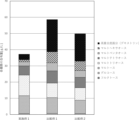
- the sweetness of the fermented beverage was calculated as the sum of the values obtained by multiplying the sweetness of each sugar contained in the fermented beverage (the numbers in parentheses shown in Tables 1 and 2) when the sucrose content of each sugar was set to 1 by the content (g/L) of each sugar in the fermented beverage.
- Example 1 20 kg of malt powder and 20 kg of corn starch were added and mixed as starchy raw materials to the water with adjusted hardness so that the mass ratio of the amount of raw water to the amount of starchy raw materials (water filling ratio) was 4. Then, 4 g of a composite enzyme of pullulanase, thermostable ⁇ -amylase, and maltogenic ⁇ -amylase (Novozymes' Ceremix (registered trademark) Flex) was added per 1 kg of the starchy raw materials, and 4 g of transglucosidase (Amano Enzyme Inc.'s Transglucosidase L "Amano”) was added per 1 kg of the starchy raw materials.
- a composite enzyme of pullulanase, thermostable ⁇ -amylase, and maltogenic ⁇ -amylase Novozymes' Ceremix (registered trademark) Flex
- Saccharification was performed by heating in a three-stage diagram at 50°C for 30 minutes, 64.5°C for 45 minutes, and 70°C for 10 minutes, and then the enzymes were inactivated at 76°C to obtain saccharified mashed potatoes.
- the mashed mash was filtered, and the resulting saccharified liquid (wort) was placed in a boiling kettle, to which water was added so that the original wort extract concentration was 12% by mass.
- an appropriate amount of hops was added, and the mixture was boiled for 70 minutes, after which water was added to adjust the original wort extract concentration to 12% by mass.
- the wort was cooled by a heat exchanger.
- yeast was added to the cooled wort and fermented to obtain a fermented liquid.
- the resulting fermented liquid was diluted to a desired original wort extract concentration and clarified by filtration to obtain a fermented beverage.
- Example 1 A fermented beverage was obtained in the same manner as in Example 1, except that the complex enzyme of pullulanase, thermostable ⁇ -amylase, and maltogenic ⁇ -amylase was not added, and the dilution ratio when diluting the fermented liquid was changed to the same alcohol concentration as in Example 1.
- Comparative Example 2 A fermented liquid obtained in the same manner as in Comparative Example 1 was used, and the dilution ratio was changed so as to obtain the same original wort extract concentration as in Example 1, to obtain a fermented beverage.
- the fermented beverage of Comparative Example 1 has a good body, but the grain aroma is too strong, destroying the balance as a beer-taste beverage.
- the fermented beverage of Comparative Example 2 is a further diluted version of the fermented beverage of Comparative Example 1, so that although the strength of the grain aroma is appropriate for a beer-taste beverage, the beverage lacks body.
- the fermented beverage of Example 1 had both grain aroma and full body that were suitable for a beer-taste beverage, despite having a lower total sugar content compared to the fermented beverages of Comparative Examples 1 and 2.
- Example 1 the intensity of the grain aroma can be adjusted to an optimum level by including a dilution process in which the obtained fermented liquid is diluted with water, so that it is possible to produce a larger amount of fermented beverage from the same amount of raw materials while still having a full-bodied taste similar to that of Comparative Example 1, and the yield can also be improved.
- Example 2 Comparative Example 3, Comparative Example 4
- the obtained fermented liquid was sprayed into a degassing tank under reduced pressure of about 90 mbar to remove carbon dioxide gas, and then heated to about 50° C. using a plate cooler. Thereafter, the liquid was brought into contact with steam heated to about 50° C. in a reduced pressure column at about 90 mbar to adsorb the volatile components into the steam, and the alcohol and volatile components were removed to obtain a dealcoholized fermented liquid with an alcohol concentration of 0.5 vol % or 0.4 vol %.
- the obtained dealcoholized fermented liquid was diluted with degassed water to a concentration of true extract similar to that of Example 1, Comparative Example 1, and Comparative Example 2, and carbon dioxide was dissolved therein to give a gas pressure of 2.9 gas volumes to obtain a fermented beverage.
- Example 2 Comparative Example 3, and Comparative Example 4 are examples in which the alcohol concentration has been further reduced compared to Example 1, Comparative Example 1, and Comparative Example 2 through a dealcoholization process.
- the fermented beverage of Example 2 has both a grain aroma and a full body that are more suitable for a beer-flavored beverage compared to the fermented beverages of Comparative Examples 3 and 4. This shows that even when the alcohol concentration is lowered, the same trends as Example 1, Comparative Example 1, and Comparative Example 2 are observed.
- a fermented beverage can be obtained that has a well-balanced grain aroma intensity and excellent body, even with a low alcohol concentration, and the manufacturing method thereof can be widely applied to the manufacturing of beer-flavored beverages, such as low-alcohol beer-flavored beverages and non-alcohol beer-flavored beverages. Furthermore, these beer-flavored beverages generally meet the needs of consumers as a substitute for beer when they cannot drink beer with a high alcohol concentration.
Landscapes
- Organic Chemistry (AREA)
- Chemical & Material Sciences (AREA)
- Engineering & Computer Science (AREA)
- Life Sciences & Earth Sciences (AREA)
- Genetics & Genomics (AREA)
- Zoology (AREA)
- General Engineering & Computer Science (AREA)
- General Health & Medical Sciences (AREA)
- Health & Medical Sciences (AREA)
- Biochemistry (AREA)
- Wood Science & Technology (AREA)
- Bioinformatics & Cheminformatics (AREA)
- Food Science & Technology (AREA)
- Microbiology (AREA)
- Mycology (AREA)
- Distillation Of Fermentation Liquor, Processing Of Alcohols, Vinegar And Beer (AREA)
- Alcoholic Beverages (AREA)
- Non-Alcoholic Beverages (AREA)
- Preparation Of Compounds By Using Micro-Organisms (AREA)
Priority Applications (4)
| Application Number | Priority Date | Filing Date | Title |
|---|---|---|---|
| EP24792470.7A EP4700109A1 (en) | 2023-04-20 | 2024-03-29 | Fermented beverage and method for producing same |
| AU2024258959A AU2024258959A1 (en) | 2023-04-20 | 2024-03-29 | Fermented beverage and method for producing same |
| KR1020257031549A KR20260004318A (ko) | 2023-04-20 | 2024-03-29 | 발효 음료 및 그 제조 방법 |
| CN202480025938.0A CN120936700A (zh) | 2023-04-20 | 2024-03-29 | 发酵饮料及其制造方法 |
Applications Claiming Priority (2)
| Application Number | Priority Date | Filing Date | Title |
|---|---|---|---|
| JP2023-069088 | 2023-04-20 | ||
| JP2023069088A JP7791132B2 (ja) | 2023-04-20 | 2023-04-20 | 発酵飲料及びその製造方法 |
Publications (1)
| Publication Number | Publication Date |
|---|---|
| WO2024219194A1 true WO2024219194A1 (ja) | 2024-10-24 |
Family
ID=93152663
Family Applications (1)
| Application Number | Title | Priority Date | Filing Date |
|---|---|---|---|
| PCT/JP2024/013107 Ceased WO2024219194A1 (ja) | 2023-04-20 | 2024-03-29 | 発酵飲料及びその製造方法 |
Country Status (6)
| Country | Link |
|---|---|
| EP (1) | EP4700109A1 (https=) |
| JP (2) | JP7791132B2 (https=) |
| KR (1) | KR20260004318A (https=) |
| CN (1) | CN120936700A (https=) |
| AU (1) | AU2024258959A1 (https=) |
| WO (1) | WO2024219194A1 (https=) |
Families Citing this family (1)
| Publication number | Priority date | Publication date | Assignee | Title |
|---|---|---|---|---|
| JP7716613B1 (ja) * | 2025-05-02 | 2025-07-31 | アサヒビール株式会社 | 低アルコール発酵ビールテイスト飲料および低アルコール発酵ビールテイスト飲料の製造方法 |
Citations (9)
| Publication number | Priority date | Publication date | Assignee | Title |
|---|---|---|---|---|
| JPH0568529A (ja) | 1991-07-17 | 1993-03-23 | Sapporo Breweries Ltd | 低アルコールビールの製造方法 |
| JPH0568528A (ja) | 1991-07-17 | 1993-03-23 | Sapporo Breweries Ltd | ノンアルコール発酵飲料の製造方法 |
| JP2002199873A (ja) * | 2001-01-05 | 2002-07-16 | National Research Inst Of Brewing | 発酵麦芽飲料の製造方法 |
| JP2012239460A (ja) | 2011-05-24 | 2012-12-10 | Asahi Breweries Ltd | 低アルコール発酵麦芽飲料の製造方法 |
| JP2015133924A (ja) | 2014-01-17 | 2015-07-27 | サッポロビール株式会社 | 低アルコールビールテイスト飲料の製造方法 |
| JP2021114959A (ja) * | 2020-01-28 | 2021-08-10 | アサヒグループホールディングス株式会社 | ビールテイスト発酵麦芽飲料 |
| JP2021168694A (ja) * | 2013-06-03 | 2021-10-28 | アサヒビール株式会社 | 発酵麦芽飲料のコク感増強方法 |
| JP2021192605A (ja) * | 2020-06-08 | 2021-12-23 | サッポロビール株式会社 | ビールテイスト飲料、その製造方法及び香味向上方法 |
| JP2023069088A (ja) | 2021-11-04 | 2023-05-18 | 豊田合成株式会社 | ロッカー装置 |
-
2023
- 2023-04-20 JP JP2023069088A patent/JP7791132B2/ja active Active
-
2024
- 2024-03-29 KR KR1020257031549A patent/KR20260004318A/ko active Pending
- 2024-03-29 EP EP24792470.7A patent/EP4700109A1/en active Pending
- 2024-03-29 CN CN202480025938.0A patent/CN120936700A/zh active Pending
- 2024-03-29 AU AU2024258959A patent/AU2024258959A1/en active Pending
- 2024-03-29 WO PCT/JP2024/013107 patent/WO2024219194A1/ja not_active Ceased
-
2025
- 2025-12-01 JP JP2025211362A patent/JP2026020406A/ja active Pending
Patent Citations (9)
| Publication number | Priority date | Publication date | Assignee | Title |
|---|---|---|---|---|
| JPH0568529A (ja) | 1991-07-17 | 1993-03-23 | Sapporo Breweries Ltd | 低アルコールビールの製造方法 |
| JPH0568528A (ja) | 1991-07-17 | 1993-03-23 | Sapporo Breweries Ltd | ノンアルコール発酵飲料の製造方法 |
| JP2002199873A (ja) * | 2001-01-05 | 2002-07-16 | National Research Inst Of Brewing | 発酵麦芽飲料の製造方法 |
| JP2012239460A (ja) | 2011-05-24 | 2012-12-10 | Asahi Breweries Ltd | 低アルコール発酵麦芽飲料の製造方法 |
| JP2021168694A (ja) * | 2013-06-03 | 2021-10-28 | アサヒビール株式会社 | 発酵麦芽飲料のコク感増強方法 |
| JP2015133924A (ja) | 2014-01-17 | 2015-07-27 | サッポロビール株式会社 | 低アルコールビールテイスト飲料の製造方法 |
| JP2021114959A (ja) * | 2020-01-28 | 2021-08-10 | アサヒグループホールディングス株式会社 | ビールテイスト発酵麦芽飲料 |
| JP2021192605A (ja) * | 2020-06-08 | 2021-12-23 | サッポロビール株式会社 | ビールテイスト飲料、その製造方法及び香味向上方法 |
| JP2023069088A (ja) | 2021-11-04 | 2023-05-18 | 豊田合成株式会社 | ロッカー装置 |
Non-Patent Citations (2)
| Title |
|---|
| "8.5 Extract Relational Calculation Method'' of ''Methods of Analysis of BCOJ", 2013, REVISED EDITION), BEER |
| See also references of EP4700109A1 |
Also Published As
| Publication number | Publication date |
|---|---|
| JP2026020406A (ja) | 2026-02-06 |
| CN120936700A (zh) | 2025-11-11 |
| JP7791132B2 (ja) | 2025-12-23 |
| EP4700109A1 (en) | 2026-02-25 |
| KR20260004318A (ko) | 2026-01-08 |
| JP2024154883A (ja) | 2024-10-31 |
| AU2024258959A1 (en) | 2025-10-02 |
Similar Documents
| Publication | Publication Date | Title |
|---|---|---|
| JP7671806B2 (ja) | 発酵麦芽飲料のコク感増強方法 | |
| RU2564564C2 (ru) | Слабоалкогольный или безалкогольный сброженный напиток на основе солода и способ его получения | |
| JP5763416B2 (ja) | 低アルコール発酵麦芽飲料の製造方法 | |
| JP4260207B1 (ja) | 低糖質ビール風味アルコール飲料の製造方法 | |
| JP5313327B2 (ja) | 低糖質発酵麦芽飲料およびその製造方法 | |
| WO2017038437A1 (ja) | ビール様発泡性飲料の製造方法 | |
| JP7799392B2 (ja) | ビールテイスト飲料、その製造方法及び香味向上方法 | |
| JP2026020406A (ja) | 発酵飲料及びその製造方法 | |
| WO2019146160A1 (ja) | 麦芽発酵飲料の製造方法及び麦芽発酵飲料 | |
| JP2023064993A (ja) | 発酵ビール様発泡性飲料及びその製造方法 | |
| EP0652284A2 (en) | Preparation of beer | |
| JP7061458B2 (ja) | 発泡性飲料及びその製造方法並びに発泡性飲料の泡持ちを損なうことなく炭酸ガス圧を高める方法 | |
| JP7716613B1 (ja) | 低アルコール発酵ビールテイスト飲料および低アルコール発酵ビールテイスト飲料の製造方法 | |
| KR102567366B1 (ko) | 발효주류용 당류 조성물 및 이를 이용한 발효주류 제조방법 | |
| CA1278756C (en) | Process for the production of low-calorie alcoholic beverages | |
| JP7323730B1 (ja) | 発酵ビールテイスト飲料及びその製造方法 | |
| JPH07327659A (ja) | 酒類の製造法 | |
| JP2024077467A (ja) | ビールテイスト飲料 | |
| JP2006204172A (ja) | ソルガム分解物を用いて発泡性飲料を製造する方法 | |
| JP2000189146A (ja) | 麦芽アルコ―ル飲料の製造法 | |
| JP2001037463A (ja) | 低アルコール飲料の製造方法 |
Legal Events
| Date | Code | Title | Description |
|---|---|---|---|
| 121 | Ep: the epo has been informed by wipo that ep was designated in this application |
Ref document number: 24792470 Country of ref document: EP Kind code of ref document: A1 |
|
| WWE | Wipo information: entry into national phase |
Ref document number: AU2024258959 Country of ref document: AU |
|
| ENP | Entry into the national phase |
Ref document number: 2024258959 Country of ref document: AU Date of ref document: 20240329 Kind code of ref document: A |
|
| WWE | Wipo information: entry into national phase |
Ref document number: 2024792470 Country of ref document: EP |
|
| NENP | Non-entry into the national phase |
Ref country code: DE |
|
| ENP | Entry into the national phase |
Ref document number: 2024792470 Country of ref document: EP Effective date: 20251120 |
|
| ENP | Entry into the national phase |
Ref document number: 2024792470 Country of ref document: EP Effective date: 20251120 |
|
| ENP | Entry into the national phase |
Ref document number: 2024792470 Country of ref document: EP Effective date: 20251120 |
|
| ENP | Entry into the national phase |
Ref document number: 2024792470 Country of ref document: EP Effective date: 20251120 |
|
| ENP | Entry into the national phase |
Ref document number: 2024792470 Country of ref document: EP Effective date: 20251120 |
|
| ENP | Entry into the national phase |
Ref document number: 2024792470 Country of ref document: EP Effective date: 20251120 |
|
| ENP | Entry into the national phase |
Ref document number: 2024792470 Country of ref document: EP Effective date: 20251120 |
|
| ENP | Entry into the national phase |
Ref document number: 2024792470 Country of ref document: EP Effective date: 20251120 |
|
| ENP | Entry into the national phase |
Ref document number: 2024792470 Country of ref document: EP Effective date: 20251120 |
|
| WWP | Wipo information: published in national office |
Ref document number: 2024792470 Country of ref document: EP |