WO2024202994A1 - 魚肉だし及びその調製方法 - Google Patents
魚肉だし及びその調製方法 Download PDFInfo
- Publication number
- WO2024202994A1 WO2024202994A1 PCT/JP2024/008122 JP2024008122W WO2024202994A1 WO 2024202994 A1 WO2024202994 A1 WO 2024202994A1 JP 2024008122 W JP2024008122 W JP 2024008122W WO 2024202994 A1 WO2024202994 A1 WO 2024202994A1
- Authority
- WO
- WIPO (PCT)
- Prior art keywords
- fish
- enzyme
- stock
- fish meat
- meat
- Prior art date
- Legal status (The legal status is an assumption and is not a legal conclusion. Google has not performed a legal analysis and makes no representation as to the accuracy of the status listed.)
- Ceased
Links
Images
Classifications
-
- A—HUMAN NECESSITIES
- A23—FOODS OR FOODSTUFFS; TREATMENT THEREOF, NOT COVERED BY OTHER CLASSES
- A23L—FOODS, FOODSTUFFS OR NON-ALCOHOLIC BEVERAGES, NOT OTHERWISE PROVIDED FOR; PREPARATION OR TREATMENT THEREOF
- A23L17/00—Food-from-the-sea products; Fish products; Fish meal; Fish-egg substitutes; Preparation or treatment thereof
- A23L17/20—Fish extracts
-
- A—HUMAN NECESSITIES
- A23—FOODS OR FOODSTUFFS; TREATMENT THEREOF, NOT COVERED BY OTHER CLASSES
- A23L—FOODS, FOODSTUFFS OR NON-ALCOHOLIC BEVERAGES, NOT OTHERWISE PROVIDED FOR; PREPARATION OR TREATMENT THEREOF
- A23L23/00—Soups; Sauces; Preparation or treatment thereof
-
- A—HUMAN NECESSITIES
- A23—FOODS OR FOODSTUFFS; TREATMENT THEREOF, NOT COVERED BY OTHER CLASSES
- A23L—FOODS, FOODSTUFFS OR NON-ALCOHOLIC BEVERAGES, NOT OTHERWISE PROVIDED FOR; PREPARATION OR TREATMENT THEREOF
- A23L27/00—Spices; Flavouring agents or condiments; Artificial sweetening agents; Table salts; Dietetic salt substitutes; Preparation or treatment thereof
- A23L27/10—Natural spices, flavouring agents or condiments; Extracts thereof
-
- A—HUMAN NECESSITIES
- A23—FOODS OR FOODSTUFFS; TREATMENT THEREOF, NOT COVERED BY OTHER CLASSES
- A23L—FOODS, FOODSTUFFS OR NON-ALCOHOLIC BEVERAGES, NOT OTHERWISE PROVIDED FOR; PREPARATION OR TREATMENT THEREOF
- A23L5/00—Preparation or treatment of foods or foodstuffs, in general; Food or foodstuffs obtained thereby; Materials therefor
Definitions
- the present invention makes it possible to efficiently prepare fish stock with excellent umami flavor.
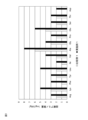
- FIG. 1 is a graph showing the analysis results of the free amino acid composition of the grilled flying fish stock samples of Example 1 and Comparative Example 1.
- One aspect of the present invention relates to a method for preparing a fish stock, the method comprising the steps of: The method comprises the steps of (1) treating fish meat with an enzyme, and (2) extracting a stock from the enzyme-treated fish meat.
- Examples of Clupeiniformes include Japanese pilchard, round herring, and anchovy.
- Examples of Moroniformes include mullet, etc.
- Examples of Alfonsiniformes include alfonsino, etc.
- Examples of John Dory include John Dory.
- Examples of species belonging to the order Scorpaeniformes include scorpionfish, rockfish, flathead, and sculpin.
- species belonging to the order Perciformes include sea bass, horse mackerel, sea bream, mackerel, bonito, and tuna.
- Examples of species belonging to the order Pleuronectiformes include plaice and flounder.
- Examples of species belonging to the order Tetraodontiformes include pufferfish and filefish. Of these, species belonging to the order Scarabaeformes are preferred, with flying fish being particularly preferred.
- the growth stage of the fish from which the fish meat is derived is not limited, and either immature or adult fish may be used, but adult fish meat is preferred.
- immature fish are caught in small quantities and are expensive, which means that the dashi stock prepared from them is expensive.
- adult fish are poorer in umami components than immature fish, which means that the dashi stock prepared from them has a poor flavor.
- by treating the fish meat with an enzyme before extracting the dashi stock it is possible to inexpensively and efficiently prepare a dashi stock with excellent umami taste, even when adult fish are used as the raw material.
- the type of enzyme is not particularly limited, but it is preferably a hydrolase.
- a hydrolase refers to an enzyme that catalyzes a hydrolysis reaction and belongs to the EC3 group of the enzyme nomenclature.
- the type is not particularly limited, but in the present invention, it is preferable to use one or more enzymes selected from peptidases and deaminases.
- peptidase refers to an enzyme that has the activity of cleaving peptide bonds in the peptide chains of proteins and polypeptides and belongs to the EC 3.4 group of the enzyme nomenclature.
- peptidases include endopeptidases and exopeptidases, but either may be used in the present invention.
- peptidases may be classified according to their optimum pH with the prefixes acidic, neutral, or alkaline (for example, "acid exopeptidase,” “neutral aminopeptidase,” “alkaline endopeptidase,” etc.), but either may be used in the present invention.
- an exopeptidase is a peptidase that has the activity of cleaving terminal amino acids from a peptide chain, and is broadly divided into aminopeptidases that cleave amino acids from the N-terminus of a peptide chain, and carboxypeptidases that cleave one residue at a time from the C-terminus of a peptide chain, but either may be used in the present invention.
- aminopeptidases examples include aminopeptidases belonging to EC 3.4.11 of the enzyme nomenclature system, and dipeptidyl-peptidases (dipeptidyl aminopeptidases) and tripeptidyl-peptidases (tripeptidyl aminopeptidases) belonging to EC 3.4.14, but either may be used in the present invention.
- carboxypeptidases examples include peptidyl-dipeptidases (dipeptidylcarboxypeptidases) belonging to EC 3.4.15 of the enzyme nomenclature system, serine-type carboxypeptidases belonging to EC 3.4.16, metal carboxypeptidases belonging to EC 3.4.17, and cysteine-type carboxypeptidases belonging to EC 3.4.18, but any of these may be used in the present invention.
- an endopeptidase is a peptidase that has the activity of cleaving peptide bonds in a peptide chain to split the peptide chain.
- endopeptidases include serine endopeptidases (serine proteases) belonging to EC 3.4.21 of the enzyme nomenclature system, cysteine endopeptidases (cysteine proteases) belonging to EC 3.4.22, aspartic acid endopeptidases (aspartic acid proteases) belonging to EC 3.4.23, metalloendopeptidases (metalloproteases) belonging to EC 3.4.24, and threonine endopeptidases (threonine proteases) belonging to EC 3.4.25, but any of these may be used in the present invention.
- the peptidase used may be an endopeptidase, an exopeptidase, or a combination of an endopeptidase and an exopeptidase.
- Denateam AP Denateam CPOPEPRICH, and Denateam PM CSOFTER
- Denapsin 2P Bioprase SP-20FG, Bioprase XL-416F, and food-grade purified papain
- Alcalase 2.4LFG Alcalase 2.4LFG
- Neutrase 0.8L Neutrase 1.5MG
- Flavorzyme 1000L Flavorzyme 500MG
- Protamex all manufactured by Novozymes Japan Co., Ltd.
- Aroase AP-10 Aroase NP-10, Aroase XA-10, Panchidase MP, Panchidase NP-2, Panchidase P, and protease YP-SS (both manufactured by Yakult Pharmaceutical Co., Ltd.), ADMIL (manufactured by Godo Shusei Co., Ltd.), coclase-P granules and purified papain (both manufactured by Mitsubishi Chemical Foods Corporation), Sumiteam AP, Sumiteam AP, Sumiteam AP, Sumiteam AP, Sumi
- a deaminase is an enzyme that has the activity of removing an amino group.
- deaminases include adenylate deaminase (AMP deaminase) which belongs to EC 3.5.4.6 of the enzyme nomenclature, but any of these may be used in the present invention.
- AMP deaminase adenylate deaminase
- Specific examples of commercially available enzymes that have deaminase activity include Deamizyme G and Deamizyme 50000G (both from Amano Enzyme Inc.), but any of these may be used in the present invention.
- the enzyme treatment of step (1) can be carried out by allowing the enzyme to act on fish meat that has been optionally pretreated by washing, cutting, etc.
- the amount of enzyme used is not limited and may be selected appropriately depending on the type of enzyme, etc.
- the enzyme aqueous solution in which the fish is immersed may be prepared and used at a concentration of, for example, 0.0001% by mass or more, or 0.0005% by mass or more, or 0.001% by mass or more, or at a concentration of, for example, 1.0% by mass or less, or 0.5% by mass or less, or 0.2% by mass or less, or 0.1% by mass or less.
- the enzyme activity (peptidase activity, etc., unit u) measured by a general method can be adjusted to, for example, 0.05u/100g or more, 0.1u/100g or more, or 0.5u/100g or more, and for example, 2,000u/100g or less, 1,000u/100g or less, or 500u/100g or less per 100g of the enzyme aqueous solution in which the fish is soaked.
- an extract prepared directly from an enzyme-containing biological material can be used as the enzyme solution for the enzyme treatment.
- the enzyme-containing biological material can be immersed in an aqueous medium such as water, either directly or after pretreatment such as crushing, and the enzyme is extracted by eluting it from the biological material into the aqueous medium.
- an aqueous medium such as water
- pretreatment such as crushing
- the enzyme is extracted by eluting it from the biological material into the aqueous medium.
- any biological material e.g., microbial material, plant material, etc.
- any biological material e.g., microbial material, plant material, etc.
- the temperature during the enzyme treatment is not particularly limited as long as it is within the range in which the enzyme can act, but from the viewpoint of allowing the enzyme to act stably and efficiently, it is preferably within the range of the optimum temperature of the enzyme used ⁇ 15°C, and more preferably within the range of the optimum temperature ⁇ 10°C, and particularly within the range of the optimum temperature ⁇ 5°C.
- it can be in the range of room temperature to a slightly higher temperature, for example, 10°C or higher, 15°C or higher, or 20°C or higher, and for example, 80°C or lower, 70°C or lower, 60°C or lower, 55°C or lower, or 50°C or lower.
- the time for the enzyme treatment is not particularly limited, and can be selected as appropriate as long as the enzyme acts sufficiently on the fish meat. Generally, however, the time can be in the range of, for example, 1 minute or more, 5 minutes or more, or 10 minutes or more, and for example, 60 minutes or less, 40 minutes or less, or 30 minutes or less, though it is not limited thereto.
- the fish meat after the enzyme treatment in step (1) may be directly subjected to the extraction treatment in step (2), or may be subjected to various intermediate treatments.
- Examples of intermediate treatments that may be performed between the enzyme treatment in step (1) and the extraction treatment in step (2) include heating and drying.
- the heat treatment is a process in which the fish meat after the enzyme treatment in step (1) is heated. Such heat treatment can thermally denature the fish meat, thereby preventing the fish meat from decomposing or spoiling, improving its shelf life, and improving its aroma and flavor.
- the heating means is not particularly limited, but examples include heating in water (boiling, etc.), heating in oil (frying, etc.), baking (frying, grilling, etc.), and hot air heating.
- the heating temperature is not particularly limited and may be selected taking into consideration the conditions of the heating means, etc., and can be, for example, 60°C or higher, or 80°C or higher, or 100°C or higher, and can be, for example, 300°C or lower, or 250°C or lower, or 200°C or lower.
- the heating time is also not particularly limited, but can be, for example, 1 minute or more, or 5 minutes or more, or 10 minutes or more, and can be, for example, 3 hours or less, 2 hours or less, or 1 hour or less.
- the drying process is a process for drying the fish meat after the enzyme treatment in step (1) (or the fish meat that has been optionally heat-treated). By carrying out such a drying process and evaporating the water content of the fish meat, it may be possible to prevent the fish meat from decomposing or spoiling, thereby improving the shelf life, and to improve the aroma and flavor of the fish meat.
- the drying method includes heat drying, reduced pressure drying, and ventilation drying.
- the fish stock obtained by the method of the present invention described above has excellent umami properties, such as the depth of umami (the strength of umami felt when the stock is held in the mouth) and the lingering umami (the lingering umami aftertaste after swallowing the stock).
- umami the depth of umami
- the lingering umami the lingering umami aftertaste after swallowing the stock.
- adult fish have fewer umami components than juvenile fish, and there is an issue that the dashi prepared from them has inferior flavor.
- the method of the present invention to enzymatically treat fish meat and then extract the dashi, it is possible to inexpensively and efficiently prepare dashi with excellent umami flavor, even when adult fish is used as the raw material.
- the present invention relates to a fish stock obtained by the method of the present invention described above (referred to as "the stock of the present invention” as appropriate).
- the fish stock of the present invention is superior in various umami properties compared to conventional fish stock extracted without enzyme treatment.
- the fish stock of the present invention can be consumed in any manner. As an example, it is possible to prepare soups for ramen, udon, soba, etc. by appropriately mixing the fish stock of the present invention with other ingredients, seasonings, additives, media, etc.
- Example 1 Preparation of a peptidase-treated grilled flying fish sample.
- the head, bones, and internal organs of adult flying fish were removed to prepare fillets.
- the fillets were immersed in an enzyme solution of peptidase (Proteax (registered trademark) , manufactured by Amano Enzyme Co., Ltd., derived from Aspergillus oryzae, peptidase activity 1,400 u/g, optimal pH 8, stable pH 5.0-9.0)
- peptidase Proteax (registered trademark) , manufactured by Amano Enzyme Co., Ltd., derived from Aspergillus oryzae, peptidase activity 1,400 u/g, optimal pH 8, stable pH 5.0-9.0
- 1 g of enzyme was dissolved in 99 g of purified water to prepare a 1% aqueous solution, and then 10 g of the 1% aqueous solution was mixed with 190 g of purified
- the fillets were removed from the peptidase solution, baked in an oven at 280°C for 13 minutes, and then transferred to a dryer and dried at 50°C for 17 hours to prepare dried grilled flying fish samples.
- the moisture content of the dried grilled flying fish sample was measured by the loss on drying test method and found to be 12%.
- 9 parts by weight of the dried grilled flying fish sample was added to 100 parts by weight of hot water at 95°C and heated for 30 minutes to perform extraction.
- the resulting extract was filtered to prepare a peptidase-treated grilled flying fish stock sample (the flying fish stock sample of Example 1).
- the resulting flying fish stock sample was vacuum-packed and stored frozen, and was thawed and used immediately before the sensory evaluation.
- Comparative Example 1 Preparation of untreated grilled flying fish stock sample A sample of unenzyme-treated grilled flying fish stock (flying fish stock sample of Comparative Example 1) was prepared in the same manner as in Example 1, except that the fillets were not treated with peptidase. The obtained flying fish stock sample was vacuum-packed and stored frozen, and was thawed and used immediately before the sensory evaluation.
- Example 1 The average scores given by the seven evaluators for each evaluation item are shown below. A two-way analysis of variance was performed for each evaluation item, and a test was performed at a significance level of 5%. As a result, the sample of Example 1 was rated significantly superior to the sample of Comparative Example 1 for each evaluation item.
- the present invention can be widely applied to various food fields where fish stock is used, and its usefulness is extremely high.
Landscapes
- Life Sciences & Earth Sciences (AREA)
- Health & Medical Sciences (AREA)
- Nutrition Science (AREA)
- Chemical & Material Sciences (AREA)
- Engineering & Computer Science (AREA)
- Food Science & Technology (AREA)
- Polymers & Plastics (AREA)
- Marine Sciences & Fisheries (AREA)
- Zoology (AREA)
- Meat, Egg Or Seafood Products (AREA)
Priority Applications (1)
| Application Number | Priority Date | Filing Date | Title |
|---|---|---|---|
| JP2024541270A JP7632834B1 (ja) | 2023-03-27 | 2024-03-04 | 魚肉だし及びその調製方法 |
Applications Claiming Priority (2)
| Application Number | Priority Date | Filing Date | Title |
|---|---|---|---|
| JP2023050206 | 2023-03-27 | ||
| JP2023-050206 | 2023-03-27 |
Publications (1)
| Publication Number | Publication Date |
|---|---|
| WO2024202994A1 true WO2024202994A1 (ja) | 2024-10-03 |
Family
ID=92905406
Family Applications (1)
| Application Number | Title | Priority Date | Filing Date |
|---|---|---|---|
| PCT/JP2024/008122 Ceased WO2024202994A1 (ja) | 2023-03-27 | 2024-03-04 | 魚肉だし及びその調製方法 |
Country Status (2)
| Country | Link |
|---|---|
| JP (1) | JP7632834B1 (https=) |
| WO (1) | WO2024202994A1 (https=) |
Citations (7)
| Publication number | Priority date | Publication date | Assignee | Title |
|---|---|---|---|---|
| JPS51125773A (en) * | 1975-04-25 | 1976-11-02 | Amao Suisan Kk | Method of producing fish meat extract |
| JPH01300872A (ja) * | 1988-05-26 | 1989-12-05 | Osaka Gas Co Ltd | だしの製造方法 |
| JPH0662792A (ja) * | 1992-08-11 | 1994-03-08 | Choko Shoyu Miso Kyodo Kumiai | 出汁様調味料の製造方法 |
| JPH06125743A (ja) * | 1992-10-21 | 1994-05-10 | Tomoya:Kk | 旨味を強化した食品の製造方法 |
| JPH0723702A (ja) * | 1993-07-09 | 1995-01-27 | Marutomo Kk | 魚節の製造方法 |
| JP2003116484A (ja) * | 2001-10-12 | 2003-04-22 | Ajinomoto Co Inc | 調味料の製造方法 |
| WO2015159885A1 (ja) * | 2014-04-16 | 2015-10-22 | 高砂香料工業株式会社 | 優れた呈味を有する魚節類エキス及びその製造方法 |
-
2024
- 2024-03-04 JP JP2024541270A patent/JP7632834B1/ja active Active
- 2024-03-04 WO PCT/JP2024/008122 patent/WO2024202994A1/ja not_active Ceased
Patent Citations (7)
| Publication number | Priority date | Publication date | Assignee | Title |
|---|---|---|---|---|
| JPS51125773A (en) * | 1975-04-25 | 1976-11-02 | Amao Suisan Kk | Method of producing fish meat extract |
| JPH01300872A (ja) * | 1988-05-26 | 1989-12-05 | Osaka Gas Co Ltd | だしの製造方法 |
| JPH0662792A (ja) * | 1992-08-11 | 1994-03-08 | Choko Shoyu Miso Kyodo Kumiai | 出汁様調味料の製造方法 |
| JPH06125743A (ja) * | 1992-10-21 | 1994-05-10 | Tomoya:Kk | 旨味を強化した食品の製造方法 |
| JPH0723702A (ja) * | 1993-07-09 | 1995-01-27 | Marutomo Kk | 魚節の製造方法 |
| JP2003116484A (ja) * | 2001-10-12 | 2003-04-22 | Ajinomoto Co Inc | 調味料の製造方法 |
| WO2015159885A1 (ja) * | 2014-04-16 | 2015-10-22 | 高砂香料工業株式会社 | 優れた呈味を有する魚節類エキス及びその製造方法 |
Also Published As
| Publication number | Publication date |
|---|---|
| JP7632834B1 (ja) | 2025-02-19 |
| JPWO2024202994A1 (https=) | 2024-10-03 |
Similar Documents
| Publication | Publication Date | Title |
|---|---|---|
| Xu et al. | Biochemical changes associated with fast fermentation of squid processing by-products for low salt fish sauce | |
| Haard et al. | Proteases from aquatic organisms and their uses in the seafood industry | |
| CN119054897B (zh) | 一种复合微生物快速发酵低盐鱼露的制备方法 | |
| JP2011182663A (ja) | 鯖速醸魚醤及びその製造法 | |
| JP2012139186A (ja) | 高濃度地鶏ガラスープの製造方法 | |
| WO2017199897A1 (ja) | 塩味増強効果のある組成物 | |
| CN104812252A (zh) | 制作鱼露的方法和通过其制作的鱼露 | |
| KR100729255B1 (ko) | 수산 부산물을 이용한 조미베이스 및 그의 제조방법 | |
| JP7632834B1 (ja) | 魚肉だし及びその調製方法 | |
| JPS5933338B2 (ja) | キノコエキスの製造方法 | |
| CN104431941A (zh) | 一种蛤味营养调味品及其制备方法 | |
| US20040248239A1 (en) | Method for producing amino acid components by enzymatic hydrolysis of fish egg skin | |
| CN104432285B (zh) | 一种虾味调味汤块及其制备方法 | |
| JP2025043147A (ja) | 煮干しの製造方法及び製造された煮干しを用いただしの調製方法 | |
| KR100216338B1 (ko) | 맑은 새우액젓 | |
| JP2020074731A (ja) | 軟化食品製造方法 | |
| KR100495455B1 (ko) | 새우가공폐기물 유래 저염 발효 새우 소스 및 그 제조방법 | |
| JP5035586B2 (ja) | タンパク質分解酵素粉末を含有する食肉軟化剤及び該食肉軟化剤を用いる食肉の改質方法 | |
| Kasankala et al. | The influence of douchi starter cultures on the composition of extractive components, microbiological activity, and sensory properties of fermented fish pastes | |
| JP2008161104A (ja) | 食肉加工用塩漬液 | |
| JP3854488B2 (ja) | 軟体動物由来の醤油様調味料とその製造方法 | |
| KR100476112B1 (ko) | 까나리액젓 발효부산물을 이용한 조미식품 및 그 제조방법 | |
| Lee | Seafood flavor from processing by-products | |
| JP2004113046A (ja) | 発酵調味料の製造方法 | |
| JP2000041574A (ja) | 食肉の焙乾食品およびその製造方法 |
Legal Events
| Date | Code | Title | Description |
|---|---|---|---|
| WWE | Wipo information: entry into national phase |
Ref document number: 2024541270 Country of ref document: JP |
|
| 121 | Ep: the epo has been informed by wipo that ep was designated in this application |
Ref document number: 24779132 Country of ref document: EP Kind code of ref document: A1 |
|
| NENP | Non-entry into the national phase |
Ref country code: DE |
|
| 122 | Ep: pct application non-entry in european phase |
Ref document number: 24779132 Country of ref document: EP Kind code of ref document: A1 |