WO2024127482A1 - オゾン供給装置およびオゾン供給方法 - Google Patents
オゾン供給装置およびオゾン供給方法 Download PDFInfo
- Publication number
- WO2024127482A1 WO2024127482A1 PCT/JP2022/045773 JP2022045773W WO2024127482A1 WO 2024127482 A1 WO2024127482 A1 WO 2024127482A1 JP 2022045773 W JP2022045773 W JP 2022045773W WO 2024127482 A1 WO2024127482 A1 WO 2024127482A1
- Authority
- WO
- WIPO (PCT)
- Prior art keywords
- ozone
- gas
- adsorption
- buffer device
- supplying
- Prior art date
- Legal status (The legal status is an assumption and is not a legal conclusion. Google has not performed a legal analysis and makes no representation as to the accuracy of the status listed.)
- Ceased
Links
Images



Classifications
-
- C—CHEMISTRY; METALLURGY
- C01—INORGANIC CHEMISTRY
- C01B—NON-METALLIC ELEMENTS; COMPOUNDS THEREOF; METALLOIDS OR COMPOUNDS THEREOF NOT COVERED BY SUBCLASS C01C
- C01B13/00—Oxygen; Ozone; Oxides or hydroxides in general
- C01B13/10—Preparation of ozone
-
- Y—GENERAL TAGGING OF NEW TECHNOLOGICAL DEVELOPMENTS; GENERAL TAGGING OF CROSS-SECTIONAL TECHNOLOGIES SPANNING OVER SEVERAL SECTIONS OF THE IPC; TECHNICAL SUBJECTS COVERED BY FORMER USPC CROSS-REFERENCE ART COLLECTIONS [XRACs] AND DIGESTS
- Y02—TECHNOLOGIES OR APPLICATIONS FOR MITIGATION OR ADAPTATION AGAINST CLIMATE CHANGE
- Y02A—TECHNOLOGIES FOR ADAPTATION TO CLIMATE CHANGE
- Y02A50/00—TECHNOLOGIES FOR ADAPTATION TO CLIMATE CHANGE in human health protection, e.g. against extreme weather
- Y02A50/20—Air quality improvement or preservation, e.g. vehicle emission control or emission reduction by using catalytic converters
Definitions
- This application relates to an ozone supplying device and an ozone supplying method.
- An ozone adsorption/desorption device related to a conventional ozone supply device includes an ozone adsorption/desorption tower, an ozone discharge line that supplies carrier gas to the ozone adsorption/desorption tower and discharges the desorbed ozone together with the carrier gas, a temperature controller that controls the temperature of the ozone adsorption/desorption tower, a pressure controller that controls the pressure of the ozone adsorption/desorption tower, an ozone concentration control device that controls the ozone concentration, and an ozone tank that stores the desorbed ozone, and the ozone concentration control device controls the temperature and/or pressure so that the desorbed ozone has a constant concentration, and a constant flow rate is supplied from the ozone tank (see, for example, Patent Document 1).
- this ozone adsorption/desorption device can maintain a constant concentration of desorbed ozone by controlling the temperature and/or pressure, store the ozone gas in an ozone tank, and then stably desorb and supply the ozone at a constant flow rate from the ozone tank.
- the ozone generator supplies ozone via an ozone adsorption/desorption tower, so the concentration of ozone output by desorption varies greatly depending on the state of ozone adsorption/desorption in the ozone adsorption/desorption tower.
- fluctuations in the concentration of ozone output cause fluctuations in the amount of ozone acting on the treatment target, so there is an issue with not being able to achieve a stable treatment effect.
- This application discloses technology for solving the problems described above, and aims to provide an ozone supplying device that can suppress and stabilize the concentration of ozone gas supplied to a target by purging with a pressurized carrier gas or by introducing reduced pressure desorbed ozone gas into an ozone buffer device under positive pressure conditions.
- the ozone supplying device disclosed in the present application is an ozone generator for generating ozone; an adsorption/desorption tower for adsorbing and desorbing the ozone; an ozonized gas transfer circuit for transferring the ozonized gas generated by the ozone generator to the adsorption/desorption tower; At least one of a pressurizing mechanism that supplies a pressurized carrier gas to the adsorption/desorption tower and a depressurizing mechanism that depressurizes a gas in the adsorption/desorption tower; an ozone buffer device that contains an adsorbent that adsorbs the ozone and suppresses fluctuations in the concentration of the ozone desorbed and transferred from the adsorption/desorption tower; a desorbed gas transfer circuit for transferring the ozone desorbed from the adsorption/desorption tower by the supply of the carrier gas to the ozone buffer device and supplying the ozone from the ozone buffer device to a supply
- the ozone supplying device disclosed in this application can provide an ozone supplying device that can suppress fluctuations in the concentration of ozone gas supplied to a target and stabilize it by introducing a pressurized carrier gas into an adsorption/desorption tower, or introducing reduced pressure desorbed ozone gas into an ozone buffer device under positive pressure conditions.
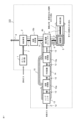
- FIG. 1 is a diagram for explaining a configuration of an ozone supplying device according to a first embodiment
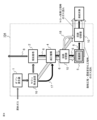
- FIG. 2 is a diagram for explaining one configuration of an ozone buffer device of the ozone supplying device according to the first embodiment
- 6 is a diagram for explaining another configuration of the ozone buffer device of the ozone supplying device according to the first embodiment.
- FIG. FIG. 11 is a diagram for explaining the configuration of an ozone supplying device according to a second embodiment.
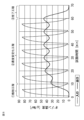
- FIG. 11 is a diagram showing an example of actual measurement of the concentration of ozone gas flowing in and out of an ozone buffer device of the ozone supplying device according to the second embodiment.
- FIG. 11 is a diagram for explaining the configuration of an ozone supplying device according to a third embodiment.
- FIG. 13 is a diagram for explaining the configuration of an ozone supplying device according to a fourth embodiment.
- FIG. 13 is a diagram for explaining the configuration of an ozone supplying device according to a fifth embodiment.
- Fig. 1 is a diagram for explaining the configuration of an ozone supplying device according to embodiment 1.
- the ozone supplying device 100 according to embodiment 1 includes, as main components, at least one of an ozone generator 1 for generating ozone, an adsorption/desorption tower 2 for adsorbing and desorbing ozone, a pressurizing mechanism 3 for introducing a pressurized carrier gas into the adsorption/desorption tower, and a decompression mechanism 4 for decompressing the gas in the adsorption/desorption tower (hereinafter, also referred to simply as a decompression mechanism 4 for decompressing the adsorption/desorption tower), an ozone buffer device 5 containing an adsorbent for adsorbing ozone, and a desorption gas transfer circuit 6 for supplying the ozone gas desorbed by the pressurized carrier gas supplied from the adsorption/desorption tower or
- the ozone generator is a device that generates an ozonized gas containing ozone using a raw material gas supplied from a raw material gas supply unit (not shown).
- a silent discharge type ozone generator driven by a high AC voltage may be used.
- the adsorption/desorption tower is a device that selectively adsorbs ozone contained in the ozonized gas generated in the ozone generating section by using an adsorbent filled inside, via an ozonized gas transfer circuit 7, and discharges the adsorbed ozone to a supply target.
- ozone that breaks through the adsorption/desorption tower during adsorption is treated in a treatment device (not shown) via an adsorption gas transfer circuit 8, rendered harmless, and discharged outside the device.
- the adsorbent used in the adsorption/desorption tower may be one that preferentially adsorbs ozone contained in the ozonized gas, such as silica gel. Due to the adsorption characteristics of the adsorbent, the ozone concentration on the surface of the adsorbent is higher than the ozone concentration in the ozonized gas.
- the adsorption/desorption tower concentrates ozone so as to increase the ozone concentration in the ozonized gas, thereby generating concentrated ozone.
- the ozone supply device is provided with a pressurizing mechanism that injects a gas that serves as a carrier gas for ozone desorption into the adsorption/desorption tower through a desorption gas transfer circuit 6.
- the gas for desorption is, for example, oxygen.
- the ozone buffer device is a device that selectively adsorbs ozone contained in the ozonized gas discharged from the adsorption/desorption tower by using an adsorbent filled inside, and discharges the adsorbed ozone to a supply target.
- a material that preferentially adsorbs ozone contained in the ozonized gas such as silica gel, may be used.
- the operation of the ozone supply device of the first embodiment will be described.
- the ozone gas desorbed from the adsorption/desorption tower is introduced into the ozone buffer device, thereby suppressing fluctuations in the ozone concentration of the desorbed ozone gas and averaging the ozone concentration to be supplied to the supply target.
- the ozone buffer device with an ozone adsorbent and containing it, the amount of ozone stored per unit volume in the ozone buffer device can be significantly increased.
- a pressurizing mechanism for pressurizing the carrier gas or a depressurizing mechanism for depressurizing the adsorption/desorption tower is provided, and the desorption of ozone gas from the adsorption/desorption tower is promoted by pressurizing the carrier gas for desorption of ozone from the adsorption/desorption tower or by controlling the depressurization of the gas inside the adsorption/desorption tower, and the desorbed ozone gas is introduced into the ozone buffer device, thereby stabilizing the ozone concentration in the subsequent process.
- a pressurizing mechanism is provided upstream of the adsorption/desorption tower, and in the case of reduced pressure desorption, a reduced pressure mechanism is provided between the ozone buffer device and the adsorption/desorption tower, so that the desorbed ozone gas can be introduced into the ozone buffer device under positive pressure conditions, and the ozone adsorption performance of the adsorbent in the ozone buffer device can be maintained at a high level for use, so that the concentration of ozone gas supplied to the supply target can be stabilized.
- This also makes it possible to suppress fluctuations in ozone gas concentration within the required specification range.
- a pressure reduction mechanism by installing it downstream of the adsorption/desorption tower, the pressure on the downstream side is reduced relative to the pressure on the upstream side (creating negative pressure), creating a pressure difference and desorbing ozone toward the outlet connected to the supply target.
- a pressure increase mechanism by installing it upstream of the adsorption/desorption tower and increasing the pressure on the inlet side, the pressure on the outlet side is reduced relative to the pressure on the inlet side, and ozone is desorbed toward the outlet connected to the supply target.
- the amount of ozone adsorbed per unit amount of adsorbent is greater when the ozone buffer device is installed on the secondary side of the pressure reduction mechanism than when it is installed on the primary side of the pressure reduction mechanism. This is because the pressure on the secondary side of the pressure reduction mechanism is higher than that on the primary side, and the partial pressure of ozone is higher when ozone is adsorbed by the adsorbent in the ozone buffer device.
- a pressurizing mechanism there must be a pressure difference greater than the pressure loss between the pressurizing mechanism and the supply target, and in the case of a pressure reduction mechanism, there must be a pressure difference greater than the pressure loss between the adsorption/desorption tower and the pressure reduction mechanism.
- high adsorption performance can be achieved by setting the pressure of the ozone buffer device at atmospheric pressure or higher, and the higher the pressure of the adsorbent in the ozone buffer device, the greater the amount of ozone adsorbed per unit of adsorbent, so it is preferable to install a back pressure valve or the like on the secondary side (supply target side) of the ozone buffer device to maintain a higher pressure.
- a pressure gauge may be added as a means for confirming that the pressure inside the ozone buffer device is positive, i.e., above atmospheric pressure.
- a vacuum pump is used as the pressure reducing mechanism, it is preferable to select a pump whose secondary pressure is above atmospheric pressure and whose pressure inside the ozone buffer device is positive. By installing a vacuum pump with the above specifications, there is no need to boost the pressure on the secondary side of the vacuum pump.
- the gas is pushed out to the ozone buffer device side by using pressurized gas to drive the ejector for suction, so that the gas can be supplied at atmospheric pressure or higher.
- the primary pressure is lower than the secondary pressure in the pressure reducing mechanism, so care must be taken because the pressure is lower than when the ozone buffer device is installed on the secondary side, and the amount of ozone adsorbed per unit of adsorbent is accordingly smaller.
- the adsorbent contained in the above-mentioned ozone buffer device will be described in detail below with reference to the figures.
- the adsorbent is contained in the ozone buffer device in a configuration as shown in Figure 2 or Figure 3.
- the adsorbent 52 (a typical example of this adsorbent is silica gel) is filled in a container 51 (e.g., a stainless steel container, PTFE (polytetrafluoroethylene), etc.) made of a highly corrosion-resistant material.
- a container 51 e.g., a stainless steel container, PTFE (polytetrafluoroethylene), etc.
- a configuration is used in which ozone gas is supplied to the entire adsorbent using punched metal 53 or the like, thereby suppressing unnecessary consumption of ozone due to exothermic decomposition.
- a refrigerant 54 is passed around the adsorbent to cool it, thereby further increasing the amount of ozone adsorbed per unit of adsorbent.
- Embodiment 2 As described above, the ozone supplying device according to the first embodiment can achieve the objective of stabilizing the concentration. In order to achieve this objective of stabilizing the concentration more actively or easily, the ozone supplying device according to the second embodiment focuses on the concentration of ozone gas flowing in and out of the ozone buffer device. This will be described in detail below with reference to Figs. 4 and 5.
- FIG. 4 is a diagram for explaining the configuration of an ozone supplying device 101 according to the second embodiment.
- the configuration of the ozone supplying device 101 according to the second embodiment (the portion surrounded by a dotted line frame in FIG. 4) is different from the configuration of the ozone supplying device 100 according to the first embodiment in that a controller 9 is newly added.
- This controller 9 can independently control the operation of all the components (ozone generator 1, adsorption/desorption tower 2, pressurizing mechanism 3, decompression mechanism 4, ozone buffer device 5) shown inside the dashed line frame F. By providing this controller 9, the control described below with reference to FIG. 5 is possible.
- the controller 9 is defined as a device that controls the transition between the three operations of saturation, concentration stabilization, and completion, and the switching of a circuit switch described later.
- the circuit switch refers to a device (e.g., a valve) that opens and closes the gas circuit, or a device (e.g., a three-way valve) that switches the gas circuit.
- FIG. 5 is a diagram showing an example of the results of measuring the concentration of ozone gas entering and leaving the ozone buffer device using the ozone supply device according to embodiment 2.
- the horizontal axis of the graph shown in this figure indicates the test time (unit: minutes), and the vertical axis indicates the ozone concentration (unit: g/Nm 3 ).
- the dashed line indicates the change in ozone concentration at the inlet of the ozone buffer device
- the solid line indicates the change in ozone concentration at the outlet of the ozone buffer device.
- the curve for test time 0-10 minutes shows the change in ozone concentration in the saturation process where the adsorbent in the ozone buffer device is saturated with adsorption.
- the curve for test time 10-60 minutes shows the change in ozone concentration in the concentration stabilization process where some ozone is adsorbed by the adsorbent in the ozone buffer device when the ozone concentration desorbed from the adsorption/desorption tower is higher than a specified concentration, and some ozone is desorbed from the adsorbent in the ozone buffer device when the ozone concentration desorbed from the adsorption/desorption tower is lower than the specified concentration.
- the curve for test time 10-60 minutes shows the change in ozone concentration in the completion process where the ozone gas adsorbed in the ozone buffer device is desorbed.
- the graph also shows that there is no ozone in the completion process.
- completion means that the desorption of ozone gas from the adsorption/desorption tower is stopped and the operation of the ozone supply device is completed.
- the completion process is the process of removing (desorbing) the ozone adsorbed in the ozone buffer device after the desorption of ozone gas from the adsorption/desorption tower is stopped. More details on this are provided below.
- the desorption of ozone from the adsorption/desorption tower is stopped, and dry air or raw oxygen gas is introduced into the ozone buffer device to desorb the ozone adsorbed on the adsorbent in the ozone buffer device.
- dry air or raw oxygen gas is introduced into the ozone buffer device to desorb the ozone adsorbed on the adsorbent in the ozone buffer device.
- the reason why the change width of the outlet concentration becomes smaller relative to the inlet concentration is as follows: That is, as a characteristic of the adsorbent contained in the ozone buffer device, when a saturated adsorption state is reached for a certain adsorption concentration P (hereinafter also simply referred to as concentration P), and then ozone gas with an adsorption concentration Q (hereinafter also simply referred to as concentration Q) larger than the concentration P is introduced, the adsorbent acts to adsorb ozone due to an increase in the ozone partial pressure of the introduced gas, so that the ozone concentration output from the ozone buffer device becomes smaller relative to the inlet concentration A.
- concentration P a saturated adsorption state is reached for a certain adsorption concentration P
- Q ozone gas with an adsorption concentration Q
- concentration Q ozone gas with an adsorption concentration Q
- concentration S ozone gas having an adsorption concentration S (hereinafter simply referred to as concentration S) smaller than the concentration P
- concentration S concentration S
- concentration P concentration A
- the time when the concentration change curve reaches its maximum and minimum is inversely related to the concentration at the inlet and the concentration at the outlet.
- the reason why such a phase shift occurs between the concentration at the inlet and the concentration at the outlet is as follows. That is, as a characteristic of the adsorbent contained in the ozone buffer device, after the saturated adsorption state is reached with respect to the inlet concentration A, when ozone gas with a concentration Q where P ⁇ Q is introduced into the ozone buffer device, the adsorption equilibrium point rises and the ozone tries to be further adsorbed, so the concentration at the outlet tends to decrease with respect to the inlet concentration A.
- FIG. 5 is an example of the concentration change before and after the ozone buffer device, and is not limited to this as long as the method of suppressing ozone concentration fluctuations using the above action is used.
- FIG. 6 is a diagram for explaining the configuration of an ozone supplying device 102 (a portion surrounded by a dotted line frame in Fig. 6) according to the third embodiment.
- the configuration of the ozone supplying device 102 according to the third embodiment is particularly different from the configuration of the ozone supplying device according to the first embodiment in that a circuit switch 10, a flow rate regulator 11, and a dilution gas introduction circuit 12 are newly added.
- the circuit switch 10 is a device for switching between opening and closing the gas circuit that flows into the pressure reduction mechanism, and is also called a circuit controller. It controls the switching between the desorption gas transfer circuit 6 that connects the adsorption/desorption tower and the pressure reduction mechanism 4a (here, a vacuum pump is used as the pressure reduction mechanism), and the dilution gas introduction circuit 12 that connects the flow rate regulator 11 and the pressure reduction mechanism. Although two circuit switchers are shown in FIG. 6, one circuit switch may be used.
- the flow rate regulator 11 is controlled by a controller (not shown) to adjust the flow rate of the dilution gas that flows into the pressure reduction mechanism via the dilution gas introduction circuit 12 according to the concentration of ozone desorbed in the adsorption/desorption tower.
- the dilution gas is a gas used to dilute the ozone, and generally, dry oxygen gas or air is good, high purity oxygen such as oxygen from a cylinder or liquid oxygen, or highly concentrated oxygen with a dew point of 10°C or less that has been passed through PSA (Pressure Swing Adsorption) or VPSA (Vacuum Pressure Swing Adsorption), etc. are preferable.
- PSA Pressure Swing Adsorption
- VPSA Vauum Pressure Swing Adsorption
- a circuit switch 10 By adding a circuit switch 10 to the configuration of the ozone supply device according to the first embodiment, after stopping the desorption of ozone gas from the adsorption/desorption tower in the completion step shown in the second embodiment, dry air or raw oxygen gas can be introduced into the ozone buffer device, and the ozone gas adsorbed on the adsorbent in the ozone buffer device can be desorbed. Specifically, in response to an instruction from a controller (not shown), the circuit switch 10 closes the desorption gas transfer circuit 6 and opens the dilution gas introduction circuit 12. This operation stops the desorption of ozone gas from the adsorption/desorption tower, and allows dry air or raw oxygen gas to be introduced into the ozone buffer device.
- FIG. 7 is a diagram for explaining the configuration of an ozone supplying device 103 (a portion surrounded by a dotted line frame in Fig. 7) according to the fourth embodiment.
- the configuration of the ozone supplying device 103 according to the fourth embodiment is particularly different from the configuration of the ozone supplying device 102 according to the third embodiment in that the speed reducing mechanism is a gas ejector (hereinafter also referred to as an ejector), and a compressor 13, a cooling device 14, and a first bypass circuit 15 are provided instead of a flow rate regulator.
- the speed reducing mechanism is a gas ejector (hereinafter also referred to as an ejector)
- a compressor 13 a cooling device 14, and a first bypass circuit 15 are provided instead of a flow rate regulator.
- a pressurized drive gas When an ejector is used in the pressure reduction mechanism, a pressurized drive gas must be used to drive the ejector for suction, so if the drive gas is dry air, a compressor 13 with a dehumidifying function is required. In addition, the dry air output from the compressor 13 becomes hot, and if it is mixed with the ozone gas desorbed from the adsorption/desorption tower, it may promote ozone decomposition, so it is desirable to have a cooling device 14 to cool the dry air (see “Gas flow during the saturation process and concentration stabilization process" indicated by the thick arrow in Figure 7).
- the circuit switch 10a (also called the first circuit switch 10a) closes the desorbed gas transport circuit 6, and the circuit switch 10b (also called the second circuit switch 10b) opens the first bypass circuit 15, in response to instructions from a controller (not shown).
- the ozone supplying device 103 of the fourth embodiment unlike the operation of the ozone supplying device 102 of the third embodiment, when introducing the dilution gas into the pressure reducing mechanism 4b, instead of using only the dilution gas introduction circuit 12, a part of the circuit is replaced with the first bypass circuit 15, and this first bypass circuit 15 is used.
- This circuit selection makes it possible to introduce high-temperature dry air into the ozone buffer device, and the desorption of ozone is promoted by the high-temperature gas, making it possible to shorten the completion process (see "Gas flow during the completion process" indicated by the thick arrow in Figure 7).
- Fig. 8 is a diagram for explaining the configuration of an ozone supplying device 104 (a portion surrounded by a dotted line frame in Fig. 8) according to the fifth embodiment.
- the configuration of the ozone supplying device 104 according to the fifth embodiment differs from the configuration of the ozone supplying device according to the first embodiment in that it additionally includes a NOx removal device 16 (here, NOx is a general term for nitrogen oxides), a NOx gas transfer circuit 17, and a second bypass circuit 18.
- NOx removal device 16 here, NOx is a general term for nitrogen oxides
- the NOx gas transfer circuit 17 and the second bypass circuit 18 are used when desorbing and removing NOx from the NOx removal device 16.
- the NOx removal device 16 is installed on the piping between the ozone generator and the adsorption/desorption tower. This NOx removal device is a device that removes NOx generated in the ozone generator.
- a method for removing NOx in a NOx removal device is, for example, to use an adsorbent that selectively adsorbs NOx (hereafter referred to as "NOx adsorbent").
- NOx adsorbent whose adsorption performance changes with temperature is preferred, and in particular one whose adsorption amount of NOx changes significantly in the range of -30°C to 40°C is preferred.
- a NOx adsorbent that can desorb adsorbed NOx using a pressure reduction mechanism is also preferred. NOx desorbed from the NOx adsorbent in the NOx removal device by reducing pressure in the pressure reduction mechanism is discharged from the NOx gas transfer circuit 17.
- Silica gel for example, can be used as the NOx adsorbent.
- the device transitions to a NOx desorption process in which NOx is desorbed from the NOx adsorbent in the NOx removal device.
- the second bypass circuit that does not pass through the ozone buffer device by selecting the second bypass circuit that does not pass through the ozone buffer device, it is possible to prevent NOx from being adsorbed and accumulated in the adsorbent inside the ozone buffer device.
- the supply of ozone from the adsorption/desorption tower is interrupted during the NOx desorption process, it is preferable to adjust the amount of NOx adsorbent loaded or the adsorption conditions so that the timing is such that the NOx desorption process is transitioned to during or after the completion process.
Landscapes
- Chemical & Material Sciences (AREA)
- Organic Chemistry (AREA)
- Inorganic Chemistry (AREA)
- Oxygen, Ozone, And Oxides In General (AREA)
Priority Applications (3)
| Application Number | Priority Date | Filing Date | Title |
|---|---|---|---|
| PCT/JP2022/045773 WO2024127482A1 (ja) | 2022-12-13 | 2022-12-13 | オゾン供給装置およびオゾン供給方法 |
| JP2023514390A JP7292554B1 (ja) | 2022-12-13 | 2022-12-13 | オゾン供給装置およびオゾン供給方法 |
| CN202280102168.6A CN120303211A (zh) | 2022-12-13 | 2022-12-13 | 臭氧供给装置及臭氧供给方法 |
Applications Claiming Priority (1)
| Application Number | Priority Date | Filing Date | Title |
|---|---|---|---|
| PCT/JP2022/045773 WO2024127482A1 (ja) | 2022-12-13 | 2022-12-13 | オゾン供給装置およびオゾン供給方法 |
Publications (1)
| Publication Number | Publication Date |
|---|---|
| WO2024127482A1 true WO2024127482A1 (ja) | 2024-06-20 |
Family
ID=86729209
Family Applications (1)
| Application Number | Title | Priority Date | Filing Date |
|---|---|---|---|
| PCT/JP2022/045773 Ceased WO2024127482A1 (ja) | 2022-12-13 | 2022-12-13 | オゾン供給装置およびオゾン供給方法 |
Country Status (3)
| Country | Link |
|---|---|
| JP (1) | JP7292554B1 (https=) |
| CN (1) | CN120303211A (https=) |
| WO (1) | WO2024127482A1 (https=) |
Cited By (1)
| Publication number | Priority date | Publication date | Assignee | Title |
|---|---|---|---|---|
| CN119330308A (zh) * | 2024-12-20 | 2025-01-21 | 山东志伟环保科技有限公司 | 应用于半导体材料清洗刻蚀的高纯度臭氧浓缩工艺及装置 |
Families Citing this family (2)
| Publication number | Priority date | Publication date | Assignee | Title |
|---|---|---|---|---|
| WO2025258560A1 (ja) * | 2024-06-10 | 2025-12-18 | 国立研究開発法人物質・材料研究機構 | オゾン発生器、オゾン発生器の製造方法、オゾンを発生する発生方法、および、オゾン保存容器 |
| JP7630749B1 (ja) * | 2024-07-09 | 2025-02-17 | 三菱電機株式会社 | オゾン供給装置およびオゾン供給装置の運転方法 |
Citations (3)
| Publication number | Priority date | Publication date | Assignee | Title |
|---|---|---|---|---|
| JPH09235103A (ja) * | 1996-03-01 | 1997-09-09 | Mitsubishi Electric Corp | 電力貯蔵方法および装置 |
| JPH09235104A (ja) * | 1996-03-01 | 1997-09-09 | Mitsubishi Electric Corp | オゾン貯蔵方法およびオゾン貯蔵装置 |
| WO2020245885A1 (ja) * | 2019-06-03 | 2020-12-10 | 三菱電機株式会社 | オゾン供給装置およびオゾン供給方法 |
-
2022
- 2022-12-13 CN CN202280102168.6A patent/CN120303211A/zh active Pending
- 2022-12-13 JP JP2023514390A patent/JP7292554B1/ja active Active
- 2022-12-13 WO PCT/JP2022/045773 patent/WO2024127482A1/ja not_active Ceased
Patent Citations (3)
| Publication number | Priority date | Publication date | Assignee | Title |
|---|---|---|---|---|
| JPH09235103A (ja) * | 1996-03-01 | 1997-09-09 | Mitsubishi Electric Corp | 電力貯蔵方法および装置 |
| JPH09235104A (ja) * | 1996-03-01 | 1997-09-09 | Mitsubishi Electric Corp | オゾン貯蔵方法およびオゾン貯蔵装置 |
| WO2020245885A1 (ja) * | 2019-06-03 | 2020-12-10 | 三菱電機株式会社 | オゾン供給装置およびオゾン供給方法 |
Cited By (1)
| Publication number | Priority date | Publication date | Assignee | Title |
|---|---|---|---|---|
| CN119330308A (zh) * | 2024-12-20 | 2025-01-21 | 山东志伟环保科技有限公司 | 应用于半导体材料清洗刻蚀的高纯度臭氧浓缩工艺及装置 |
Also Published As
| Publication number | Publication date |
|---|---|
| JP7292554B1 (ja) | 2023-06-16 |
| CN120303211A (zh) | 2025-07-11 |
| JPWO2024127482A1 (https=) | 2024-06-20 |
Similar Documents
| Publication | Publication Date | Title |
|---|---|---|
| WO2024127482A1 (ja) | オゾン供給装置およびオゾン供給方法 | |
| US9403118B2 (en) | Nitrogen-enriched gas manufacturing method, gas separation method and nitrogen-enriched gas manufacturing apparatus | |
| US8945278B2 (en) | Method and apparatus for concentrating ozone gas | |
| EP1459798B1 (en) | Gas separation method and device | |
| US20050199122A1 (en) | Gas separating method | |
| JPWO2024127482A5 (https=) | ||
| JP2008238076A (ja) | 圧力スイング吸着型酸素濃縮器 | |
| KR101525505B1 (ko) | 오존가스 농축 방법 및 그 장치 | |
| JP7024916B1 (ja) | オゾン供給装置及びオゾン供給方法 | |
| TWI720164B (zh) | 臭氧氣體的濃縮方法、以及臭氧氣體的濃縮裝置 | |
| JP5226282B2 (ja) | 酸素濃縮装置 | |
| JP6607337B1 (ja) | オゾン供給装置およびオゾン供給方法 | |
| JP2022054755A (ja) | 圧力変動吸着装置 | |
| JP5015831B2 (ja) | 酸素濃縮器 | |
| WO2023238275A1 (ja) | オゾン供給装置及びオゾン供給方法 | |
| JP7064835B2 (ja) | 気体分離装置 | |
| JP4673440B1 (ja) | 目的ガスの分離回収方法 | |
| JPWO2008062534A1 (ja) | オゾンガス濃縮方法及びその装置 | |
| JP5009704B2 (ja) | 気体分離装置及び気体分離装置の運転方法 | |
| JP6748321B1 (ja) | 窒素富化ガスの製造装置及び製造方法 | |
| WO2013114707A1 (ja) | 製品ガス供給方法、及び製品ガス供給システム | |
| JP2000290004A (ja) | オゾン供給装置及び方法 | |
| JP4750380B2 (ja) | 酸素濃縮器 | |
| JP2013094753A (ja) | 気体吸着装置のパージ方法及び気体吸着装置 | |
| JP7808966B2 (ja) | 窒素ガス製造装置の運転方法 |
Legal Events
| Date | Code | Title | Description |
|---|---|---|---|
| WWE | Wipo information: entry into national phase |
Ref document number: 2023514390 Country of ref document: JP |
|
| 121 | Ep: the epo has been informed by wipo that ep was designated in this application |
Ref document number: 22968394 Country of ref document: EP Kind code of ref document: A1 |
|
| WWE | Wipo information: entry into national phase |
Ref document number: 202280102168.6 Country of ref document: CN |
|
| WWP | Wipo information: published in national office |
Ref document number: 202280102168.6 Country of ref document: CN |
|
| NENP | Non-entry into the national phase |
Ref country code: DE |
|
| 122 | Ep: pct application non-entry in european phase |
Ref document number: 22968394 Country of ref document: EP Kind code of ref document: A1 |