WO2024080172A1 - 変性基含有水添ブロック共重合体および変性基含有水添ブロック共重合体の製造方法 - Google Patents
変性基含有水添ブロック共重合体および変性基含有水添ブロック共重合体の製造方法 Download PDFInfo
- Publication number
- WO2024080172A1 WO2024080172A1 PCT/JP2023/035800 JP2023035800W WO2024080172A1 WO 2024080172 A1 WO2024080172 A1 WO 2024080172A1 JP 2023035800 W JP2023035800 W JP 2023035800W WO 2024080172 A1 WO2024080172 A1 WO 2024080172A1
- Authority
- WO
- WIPO (PCT)
- Prior art keywords
- group
- block copolymer
- conjugated diene
- modified group
- containing hydrogenated
- Prior art date
- Legal status (The legal status is an assumption and is not a legal conclusion. Google has not performed a legal analysis and makes no representation as to the accuracy of the status listed.)
- Ceased
Links
Images




Classifications
-
- C—CHEMISTRY; METALLURGY
- C08—ORGANIC MACROMOLECULAR COMPOUNDS; THEIR PREPARATION OR CHEMICAL WORKING-UP; COMPOSITIONS BASED THEREON
- C08F—MACROMOLECULAR COMPOUNDS OBTAINED BY REACTIONS ONLY INVOLVING CARBON-TO-CARBON UNSATURATED BONDS
- C08F212/00—Copolymers of compounds having one or more unsaturated aliphatic radicals, each having only one carbon-to-carbon double bond, and at least one being terminated by an aromatic carbocyclic ring
- C08F212/02—Monomers containing only one unsaturated aliphatic radical
- C08F212/04—Monomers containing only one unsaturated aliphatic radical containing one ring
- C08F212/06—Hydrocarbons
- C08F212/08—Styrene
-
- C—CHEMISTRY; METALLURGY
- C08—ORGANIC MACROMOLECULAR COMPOUNDS; THEIR PREPARATION OR CHEMICAL WORKING-UP; COMPOSITIONS BASED THEREON
- C08F—MACROMOLECULAR COMPOUNDS OBTAINED BY REACTIONS ONLY INVOLVING CARBON-TO-CARBON UNSATURATED BONDS
- C08F236/00—Copolymers of compounds having one or more unsaturated aliphatic radicals, at least one having two or more carbon-to-carbon double bonds
- C08F236/02—Copolymers of compounds having one or more unsaturated aliphatic radicals, at least one having two or more carbon-to-carbon double bonds the radical having only two carbon-to-carbon double bonds
- C08F236/04—Copolymers of compounds having one or more unsaturated aliphatic radicals, at least one having two or more carbon-to-carbon double bonds the radical having only two carbon-to-carbon double bonds conjugated
- C08F236/08—Isoprene
-
- C—CHEMISTRY; METALLURGY
- C08—ORGANIC MACROMOLECULAR COMPOUNDS; THEIR PREPARATION OR CHEMICAL WORKING-UP; COMPOSITIONS BASED THEREON
- C08F—MACROMOLECULAR COMPOUNDS OBTAINED BY REACTIONS ONLY INVOLVING CARBON-TO-CARBON UNSATURATED BONDS
- C08F8/00—Chemical modification by after-treatment
- C08F8/04—Reduction, e.g. hydrogenation
-
- C—CHEMISTRY; METALLURGY
- C08—ORGANIC MACROMOLECULAR COMPOUNDS; THEIR PREPARATION OR CHEMICAL WORKING-UP; COMPOSITIONS BASED THEREON
- C08F—MACROMOLECULAR COMPOUNDS OBTAINED BY REACTIONS ONLY INVOLVING CARBON-TO-CARBON UNSATURATED BONDS
- C08F8/00—Chemical modification by after-treatment
- C08F8/14—Esterification
-
- C—CHEMISTRY; METALLURGY
- C08—ORGANIC MACROMOLECULAR COMPOUNDS; THEIR PREPARATION OR CHEMICAL WORKING-UP; COMPOSITIONS BASED THEREON
- C08F—MACROMOLECULAR COMPOUNDS OBTAINED BY REACTIONS ONLY INVOLVING CARBON-TO-CARBON UNSATURATED BONDS
- C08F8/00—Chemical modification by after-treatment
- C08F8/42—Introducing metal atoms or metal-containing groups
-
- C—CHEMISTRY; METALLURGY
- C08—ORGANIC MACROMOLECULAR COMPOUNDS; THEIR PREPARATION OR CHEMICAL WORKING-UP; COMPOSITIONS BASED THEREON
- C08F—MACROMOLECULAR COMPOUNDS OBTAINED BY REACTIONS ONLY INVOLVING CARBON-TO-CARBON UNSATURATED BONDS
- C08F8/00—Chemical modification by after-treatment
- C08F8/46—Reaction with unsaturated dicarboxylic acids or anhydrides thereof, e.g. maleinisation
Definitions
- the present invention relates to a hydrogenated block copolymer containing a modifying group that has high tensile strength and excellent weather resistance.
- thermoplastic elastomers have been used in a variety of fields as elastic materials because they exhibit rubber elasticity at room temperature and become soft and fluid when heated, making them easy to mold and process.
- Patent Document 1 some of the present inventors have reported that in an elastomer containing a block copolymer consisting of a hard polymer A in a glassy state near room temperature and a soft polymer B in a molten state near room temperature, by including in polymer B a portion in which a monomer having a functional group capable of non-covalent bonding is polymerized, the monomer components form non-covalent bonds between and within molecules, forming pseudo-crosslinks, thereby exhibiting a large breaking elongation while also exhibiting larger maximum stress, toughness, etc., and thus exhibiting a large elastic limit and high elasticity.
- thermoplastic elastomers are required to have high tensile strength and excellent weather resistance, and there was a demand for elastomers with higher tensile strength and better weather resistance than the elastomer disclosed in Patent Document 1.
- the present invention was made in consideration of these circumstances, and aims to provide a hydrogenated block copolymer containing a modifying group that has high tensile strength and excellent weather resistance.
- the present invention provides the following hydrogenated block copolymer containing a modifying group.
- a modified group-containing hydrogenated block copolymer having at least one aromatic vinyl polymer block and at least one modified group-containing hydrogenated conjugated diene polymer block is a hydrogenated conjugated diene polymer block having a unit derived from a conjugated diene monomer to which a non-covalently bondable modified group has been introduced.
- [5] The modifying group-containing hydrogenated block copolymer according to any one of [1] to [4], wherein the proportion of units derived from an aromatic vinyl monomer is 5 to 50 mass %.
- [6] The modifying group-containing hydrogenated block copolymer according to any one of [1] to [5], having a weight average molecular weight of 30,000 to 500,000.
- [7] The modifying group-containing hydrogenated block copolymer according to any one of [1] to [6], wherein the hydrogenation rate of the modifying group-containing hydrogenated conjugated diene polymer block is 70 mol % or more.
- the present invention provides a hydrogenated block copolymer containing a modifying group that has high tensile strength and excellent weather resistance.
- FIG. 1 shows 1 H-NMR spectra of the raw materials and intermediate products in Example 1 (and the raw materials, intermediate products and final products in Example 2).
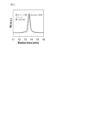
- FIG. 2 is a graph showing the results of gel permeation chromatography (GPC) measurement of the raw materials and intermediate products in Example 1.
- FIG. 3 is a graph showing the results of transmission Fourier transform infrared absorption spectroscopy (FT-IR) measurement of the raw material, intermediate product, and final product in Example 1.
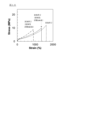
- FIG. 4 is a stress-strain curve showing the results of the tensile test in Example 1 and Comparative Example 1.
- FIG. 5 is a 1 H-NMR spectrum of the final product in Comparative Example 1.
- FIG. 6 is a graph showing the results of transmission Fourier transform infrared absorption spectroscopy (FT-IR) measurement of the final product in Comparative Example 1.
- FIG. 7 is a graph showing the results of gel permeation chromatography (GPC) measurement of the raw materials and the final product in Comparative Example 1.
- FIG. 8 is a stress-strain curve showing the results of the tensile test in Comparative Example 2.
- FIG. 9 is a stress-strain curve showing the results of the tensile test in Example 3.
- FIG. 10 is a stress-strain curve showing the results of the tensile test in Example 2.
- FIG. 11 is a stress-strain curve showing the results of the tensile test in Example 3.
- the modified group-containing hydrogenated block copolymer of the present invention is a modified group-containing hydrogenated block copolymer having at least one aromatic vinyl polymer block and at least one modified group-containing hydrogenated conjugated diene polymer block, and the modified group-containing hydrogenated conjugated diene polymer block is a hydrogenated conjugated diene polymer block having units derived from a conjugated diene monomer to which a non-covalently bondable modified group has been introduced.
- the modified group-containing hydrogenated block copolymer of the present invention has high tensile strength and excellent weather resistance.
- the modified group-containing hydrogenated block copolymer of the present invention has a high Young's modulus and favorable tensile properties, and has a high retention of tensile properties (particularly the retention of tensile strength and breaking energy) under ultraviolet irradiation.
- the modified group-containing hydrogenated block copolymer of the present invention is a copolymer obtained by modifying and hydrogenating the conjugated diene polymer block [D(A1)] in a base polymer (A1) (hereinafter sometimes referred to as "base polymer (A1)”) having at least one aromatic vinyl polymer block and at least one conjugated diene polymer block [D(A1)].
- base polymer (A1)) having at least one aromatic vinyl polymer block and at least one conjugated diene polymer block [D(A1)].
- the conjugated diene polymer block [D(A1)] in the above base polymer (A1) is modified and further hydrogenated to form a modified group-containing hydrogenated conjugated diene polymer block.
- the modifying group-containing hydrogenated block copolymer of the present invention is prepared by subjecting the above-mentioned base polymer (A1) to a modification treatment for introducing a non-covalently bondable modifying group, thereby obtaining a modifying group-containing block copolymer (B1) in which the conjugated diene polymer block [D(A1)] in the base polymer (A1) is converted into a modifying group-containing conjugated diene polymer block [D(B1)] (a conjugated diene polymer block at least partially containing a unit derived from a conjugated diene monomer having a non-covalently bondable modifying group),
- the resulting modified group-containing block copolymer (B1) is subjected to a hydrogenation treatment, whereby the modified group-containing conjugated diene polymer block [D(B1)] in the modified group-containing block copolymer (B1) is converted into a modified group-containing hydrogenated conjugated diene polymer block [D(C
- block copolymer includes all aspects of a pure block copolymer, a random block copolymer, and a copolymer having a tapered block structure.
- the base polymer (A1) has at least one aromatic vinyl polymer block and at least one conjugated diene polymer block [D(A1)].
- the aromatic vinyl polymer block of the base polymer (A1) is a polymer block composed mainly of repeating units derived from aromatic vinyl monomers obtained by polymerizing monomers containing aromatic vinyl monomers.
- aromatic vinyl monomer used to form the aromatic vinyl polymer block is not particularly limited as long as it is an aromatic vinyl compound.
- aromatic vinyl compounds include styrene; styrenes having alkyl groups as substituents, such as ⁇ -methylstyrene, 2-methylstyrene, 3-methylstyrene, 4-methylstyrene, 2-ethylstyrene, 3-ethylstyrene, 4-ethylstyrene, 2,4-diisopropylstyrene, 2,4-dimethylstyrene, 4-t-butylstyrene, and 5-t-butyl-2-methylstyrene; styrenes having ether or ester groups as substituents, such as 4-acetoxystyrene, 4-(1-ethoxyethoxy)styrene, 4-methoxystyrene, 4-ethoxystyrene, and 4-t-butoxy
- aromatic vinyl compounds from the viewpoint of ease of availability, styrene, styrenes having an alkyl group with 1 to 12 carbon atoms as a substituent, and styrenes having an ether group or an ester group as a substituent are preferred, with styrene being particularly preferred.
- the aromatic vinyl polymer block is a polystyrene block composed of styrene as the main repeating unit.
- aromatic vinyl polymer block contains units derived from aromatic vinyl monomers as the main repeating units, it may contain other monomer units.
- monomers constituting monomer units other than units derived from aromatic vinyl monomers that may be contained in the aromatic vinyl polymer block include conjugated diene monomers such as 1,3-butadiene and isoprene (2-methyl-1,3-butadiene); ⁇ , ⁇ -unsaturated nitrile monomers such as acrylonitrile and methacrylonitrile; unsaturated carboxylic anhydride monomers such as maleic anhydride, butenyl succinic anhydride, tetrahydrophthalic anhydride and citraconic anhydride; unsaturated carboxylic ester monomers such as methyl acrylate, ethyl acrylate, 2-ethylhexyl acrylate, methyl methacrylate, ethyl methacrylate and 2-ethylhexyl methacrylate; non-conjugated die
- the content of units derived from aromatic vinyl monomers in the aromatic vinyl polymer block is preferably 60% by mass or more, more preferably 80% by mass or more, and particularly preferably substantially 100% by mass.
- the multiple aromatic vinyl polymer blocks may be the same or different from each other.
- the multiple aromatic vinyl polymer blocks may contain units derived from the same aromatic vinyl monomer as the main repeating units, or may be different from each other.
- the conjugated diene polymer block [D(A1)] contained in the base polymer (A1) is a polymer block composed mainly of repeating units derived from a conjugated diene monomer obtained by polymerizing a monomer containing a conjugated diene monomer.
- the conjugated diene monomer used to form the conjugated diene polymer block [D(A1)] is not particularly limited as long as it is a conjugated diene compound.
- conjugated diene compounds include 1,3-butadiene, isoprene, 2,3-dimethyl-1,3-butadiene, 2-chloro-1,3-butadiene, 1,3-pentadiene, and 1,3-hexadiene. These conjugated diene monomers can be used alone or in combination of two or more.
- the conjugated diene polymer block [D(A1)] is a butadiene polymer block constituted mainly of repeating units of 1,3-butadiene, an isoprene polymer block constituted mainly of repeating units of isoprene, or a butadiene-isoprene copolymer block constituted mainly of repeating units of 1,3-butadiene and isoprene.
- the conjugated diene polymer block [D(A1)] is an isoprene polymer block.
- the modified group-containing hydrogenated conjugated diene polymer block [D(C1)] is a modified group-containing hydrogenated isoprene polymer block, a modified group-containing hydrogenated butadiene polymer block, or a modified group-containing hydrogenated butadiene-isoprene copolymer block, and it is more preferable that the modified group-containing hydrogenated isoprene polymer block.
- the conjugated diene polymer block [D(A1)] may contain other monomer units as long as the main repeating units are units derived from conjugated diene monomers.
- monomers constituting monomer units other than units derived from conjugated diene monomers that may be contained in the conjugated diene polymer block [D(A1)] include aromatic vinyl monomers such as styrene and ⁇ -methylstyrene; ⁇ , ⁇ -unsaturated nitrile monomers; unsaturated carboxylic anhydride monomers; unsaturated carboxylic ester monomers; non-conjugated diene monomers; etc. Specific examples of each monomer may be the same as the monomers constituting monomer units other than units derived from aromatic vinyl monomers that may be contained in the aromatic vinyl polymer block described above.
- the content of units derived from a conjugated diene monomer in the conjugated diene polymer block [D(A1)] is preferably 60% by mass or more, more preferably 80% by mass or more, and even more preferably substantially 100% by mass.
- the multiple conjugated diene polymer blocks [D(A1)] may be the same or different from each other.
- the multiple conjugated diene polymer blocks [D(A1)] may contain units derived from the same conjugated diene monomer as the main repeating units, or may be different from each other.
- the vinyl bond content of the conjugated diene polymer block [D(A1)] (the proportion of 1,2-vinyl bonds and 3,4-vinyl bonds in all units derived from conjugated diene monomers in the conjugated diene polymer block [D(A1)]) is not particularly limited, but is preferably within the range of 0.1 to 50 mol %, more preferably within the range of 1 to 30 mol %, and particularly preferably within the range of 3 to 10 mol %.
- the vinyl bond content of the conjugated diene polymer block [D(A1)] can be measured using 1 H-NMR.
- the base polymer (A1) has at least one aromatic vinyl polymer block and at least one conjugated diene polymer block [D(A1)], there are no particular limitations on the number of polymer blocks or the bond form between them.
- the form of the base polymer (A1) include, but are not limited to, an aromatic vinyl-conjugated diene block copolymer represented as Ar-D, an aromatic vinyl-conjugated diene-aromatic vinyl block copolymer represented as Ar-D-Ar or (Ar-D) n -X, a conjugated diene-aromatic vinyl-conjugated diene block copolymer represented as D-Ar-D or (D-Ar) n -X, and an aromatic vinyl-conjugated diene-aromatic vinyl-conjugated diene block copolymer represented as Ar-D-Ar-D.
- the aromatic vinyl-conjugated diene-aromatic vinyl block copolymer represented as Ar-D-Ar or (Ar-D) n -X is preferred as the base polymer (A1).
- the coupling agent can be, for example, an alkoxysilane compound having two or more alkoxy groups per molecule directly bonded to silicon atoms.
- alkoxysilane compounds include dialkyl dialkoxysilane compounds such as dimethyl dimethoxysilane, dimethyl diethoxysilane, dimethyl dipropoxysilane, dimethyl dibutoxysilane, dimethyl diphenoxysilane, diethyl dimethoxysilane, diethyl diethoxysilane, diethyl dipropoxysilane, diethyl dibutoxysilane, and diethyl diphenoxysilane; monoalkyl trialkoxysilane compounds such as methyl trimethoxysilane, methyl triethoxysilane, methyl tripropoxysilane, methyl tributoxysilane, methyl triphenoxysilane, ethyl trimethoxysilane, ethyl triethoxysilane;
- tetraalkoxysilane compounds such as allyloxysilane; alkenylalkoxysilane compounds such as vinyltrimethoxysilane, vinyltriethoxysilane, vinyltrippropoxysilane, vinyltributoxysilane, vinyltriphenoxysilane, allyltrimethoxysilane, octenyltrimethoxysilane, divinyldimethoxysilane, and styryltrimethoxysilane; arylalkoxysilane compounds such as phenyltrimethoxysilane, phenyltriethoxysilane, phenyltrippropoxysilane, phenyltributoxysilane, and phenyltriphenoxysilane; trimethoxychlorosilane, triethoxychlorosilane, tripropoxychlorosilane, tributoxychlorosilane, triphenoxychlorosilane, dimethoxyd
- alkoxysilane compounds in which the functional group that reacts with the active terminal of the polymer is only an alkoxy group are preferably used.
- dialkyldialkoxysilane compounds, monoalkyltrialkoxysilane compounds, and tetraalkoxysilane compounds are more preferably used, and tetraalkoxysilane compounds are particularly preferably used.
- examples of coupling agents include bifunctional halogenated silanes such as dichlorosilane, monomethyldichlorosilane, and dimethyldichlorosilane; bifunctional halogenated alkanes such as dichloroethane, dibromoethane, methylene chloride, and dibromomethane; and bifunctional tin halides such as dichlorotin, monomethyldichlorotin, dimethyldichlorotin, monoethyldichlorotin, diethyldichlorotin, monobutyldichlorotin, and dibutyldichlorotin.
- bifunctional halogenated silanes such as dichlorosilane, monomethyldichlorosilane, and dimethyldichlorosilane
- bifunctional halogenated alkanes such as dichloroethane, dibromoethane, methylene chloride, and dibromomethane
- These coupling agents may be used alone or in combination of two or more.
- the weight average molecular weight of the base polymer (A1) is not particularly limited, but is usually 30,000 to 500,000, preferably 60,000 to 470,000, and more preferably 90,000 to 450,000.
- the weight average molecular weight of each polymer block of the base polymer (A1) is not particularly limited.
- the weight average molecular weight of the aromatic vinyl polymer block is preferably in the range of 3,000 to 50,000, more preferably in the range of 6,000 to 20,000.
- the weight average molecular weight of the conjugated diene polymer block [D(A1)] is preferably in the range of 10,000 to 500,000, more preferably in the range of 40,000 to 400,000.
- the molecular weight distribution expressed as the ratio (Mw/Mn) of the weight average molecular weight (Mw) to the number average molecular weight (Mn) of the base polymer (A1) and each of the polymer blocks constituting the base polymer (A1), is not particularly limited, but is usually 1.8 or less, preferably 1.3 or less, and more preferably 1.1 or less.
- the weight average molecular weight (Mw) and number average molecular weight (Mn) of the base polymer (A1) are determined as polystyrene equivalent values by measurement using high performance liquid chromatography with tetrahydrofuran (THF) as a solvent.
- the content of units derived from aromatic vinyl monomers in the total monomer units of the base polymer (A1) is not particularly limited, but is usually selected within the range of 5 to 90 mass%, preferably 10 to 60 mass%.
- the content of units derived from conjugated diene monomers in the total monomer units of the base polymer (A1) is not particularly limited, but is usually selected within the range of 10 to 95 mass%, preferably 40 to 90 mass%.
- the content of units derived from the above monomers in the base polymer (A1) can be measured using 1 H-NMR.
- the melt index of the base polymer (A1) is not particularly limited, but is usually 1 to 1000 g/10 min, preferably 3 to 700 g/10 min, and more preferably 5 to 500 g/10 min, as measured in accordance with ASTM D-1238 (G condition, 200°C, 5 kg).
- block copolymers as the base polymer (A1).
- “Quintac (registered trademark)” manufactured by Zeon Corporation
- “JSR-SIS (registered trademark)” manufactured by JSR Corporation
- “Vector (registered trademark)” manufactured by DEXCO Polymers Corporation
- “Asaprene (registered trademark)” manufactured by Asahi Kasei Chemicals Corporation
- “Tufprene (registered trademark)” manufactured by Asahi Kasei Chemicals Corporation
- “Tuftec (registered trademark)” manufactured by Asahi Kasei Chemicals Corporation
- “Septon (registered trademark)” manufactured by Kuraray Co., Ltd.
- “Kraton (registered trademark)” Koreanon JSR Elastomers Co., Ltd.
- the modifying group-containing block copolymer (B1) is a polymer obtained by subjecting the above-mentioned base polymer (A1) to a modification treatment for introducing a modifying group capable of non-covalent bonding, thereby converting the conjugated diene polymer block [D(A1)] in the base polymer (A1) into a modifying group-containing conjugated diene polymer block [D(B1)].
- the non-covalently bondable modified group (hereinafter sometimes referred to as "modified group”) is a functional group capable of forming a physical bond other than a covalent bond, and examples of such functional groups include a functional group capable of hydrogen bonding, a functional group capable of coordinate bonding, and a functional group capable of ionic bonding (hereinafter sometimes referred to as "ionic group").
- modified group an ionic group and a functional group capable of hydrogen bonding are preferred, and at least one group selected from an ionic group formed of an acid salt, an ionic group formed of a base salt, an acidic group, and a basic group is more preferred.
- the modifying group-containing block copolymer (B1) may have the above-mentioned modifying group, and the modifying group may be bonded, for example, directly to the modifying group-containing block copolymer (B1) or may be bonded via a linking group.
- Functional groups capable of forming hydrogen bonds include acidic groups such as carboxyl groups, sulfonic acid groups, and phosphonic acid groups; basic groups such as amino groups, pyridinyl groups, imidazolium groups, and pyrazole groups; amide groups, imide groups, urethane bonds, and hydroxyl groups.
- acidic groups and basic groups are preferred, acidic groups are more preferred, and carboxyl groups are even more preferred.
- ionic group refers to a functional group capable of generating ionic interactions and capable of forming ionic bonds.
- ionic interactions have a strong binding force, and therefore the effect of the modifying group can be exerted more effectively when the modifying group-containing block copolymer (B1) has an ionic group as the modifying group.
- the modifying group contains an ionic group, the effect of the modifying group can be exerted more effectively, and therefore sufficient effect can be obtained even when the introduction rate of the ionic group is relatively small.
- the ionic group is preferably an ionic group generated by mixing an Arrhenius acid and an Arrhenius base and neutralizing the mixture, and/or an ionic group generated by mixing a Bronsted acid and a Bronsted base and neutralizing the mixture.
- ionic groups include ionic groups of acid salts, such as ionic groups of carboxylic acid salts, ionic groups of sulfonic acid salts, and ionic groups of phosphonic acid salts; ionic groups of salts formed by anions obtained by removing protons from the hydroxyl groups of alcohol; ionic groups of base salts, such as ionic groups of amine salts, ionic groups of pyridine salts, ionic groups of imidazole salts, and ionic groups of pyrazole salts.
- acid salts such as ionic groups of carboxylic acid salts, ionic groups of sulfonic acid salts, and ionic groups of phosphonic acid salts
- ionic groups of salts formed by anions obtained by removing protons from the hydroxyl groups of alcohol such as ionic groups of base salts, such as ionic groups of amine salts, ionic groups of pyridine salts, ionic groups of imidazole salt
- acid salts include alkali metal salts, alkaline earth metal salts, ammonium salts, pyridinium salts, and imidazolium salts, and among these, alkali metal salts such as sodium salts, lithium salts, and potassium salts, and alkaline earth metal salts such as magnesium salts, calcium salts, and barium salts are preferred.
- base salts include carboxylates, sulfonates, phosphonates, and phosphates.
- the ionic group is preferably an ionic group formed from an acid salt or an ionic group formed from a base salt, more preferably an ionic group formed from an acid salt, and even more preferably an ionic group formed from a carboxylic acid salt.
- the method for introducing a non-covalently bondable modifying group may be any method capable of introducing a modifying group into the conjugated diene polymer block [D(A1)] in the base polymer (A1), and examples of such methods include a modification method using a modifying agent and a method using a functional group conversion reaction of an alkene. Among these, a modification method using a modifying agent is preferred.
- the modifying group preferably contains a residue of a modifying agent.
- the modifying group may be composed of residues of one or more modifying agents.
- the modifying group when a modification method using a modifying agent is used, the modifying group may be introduced by modification with the modifying agent, or the modifying group may be introduced by further reaction after modification with the modifying agent.
- reaction of a modifying agent refers to the portion derived from the modifying agent in the reaction product produced when the modifying agent reacts with the base polymer (A1), or in the reaction product produced when the modifying agent reacts with the base polymer (A1) and then with another compound.
- the modifying agent used to introduce the modifying group may be, for example, an Arrhenius acid and/or a Bronsted acid (acid modifying agent).
- Arrhenius acid an Arrhenius acid and/or a Bronsted acid
- Specific examples include unsaturated carboxylic acids, unsaturated dicarboxylic acid anhydrides, unsaturated phosphonic acids and their acid anhydrides, unsaturated phosphoric acids and their acid anhydrides, unsaturated sulfonic acids and their acid anhydrides, etc.
- Unsaturated carboxylic acids used to introduce modifying groups include, for example, ethylenically unsaturated carboxylic acids having 8 or less carbon atoms, such as acrylic acid, methacrylic acid, crotonic acid, maleic acid, fumaric acid, itaconic acid, and citraconic acid, as well as Diels-Alder adducts of conjugated dienes and ⁇ , ⁇ -unsaturated dicarboxylic acids having 8 or less carbon atoms, such as 3,6-endomethylene-1,2,3,6-tetrahydrophthalic acid.
- ethylenically unsaturated carboxylic acids having 8 or less carbon atoms such as acrylic acid, methacrylic acid, crotonic acid, maleic acid, fumaric acid, itaconic acid, and citraconic acid
- Diels-Alder adducts of conjugated dienes and ⁇ , ⁇ -unsaturated dicarboxylic acids having 8 or less carbon atoms such as
- Unsaturated dicarboxylic anhydrides used to introduce modifying groups include, for example, ⁇ , ⁇ -unsaturated dicarboxylic anhydrides with 8 or less carbon atoms, such as maleic anhydride, itaconic anhydride, and citraconic anhydride, as well as Diels-Alder adducts of conjugated dienes and ⁇ , ⁇ -unsaturated dicarboxylic anhydrides with 8 or less carbon atoms, such as 3,6-endomethylene-1,2,3,6-tetrahydrophthalic anhydride.
- the modifying group preferably has a residue of an unsaturated dicarboxylic acid anhydride, more preferably has a residue of an ⁇ , ⁇ -unsaturated aliphatic dicarboxylic acid anhydride having 8 or less carbon atoms, and even more preferably has a residue of maleic anhydride.
- an acid anhydride group derived from the unsaturated dicarboxylic anhydride is introduced into the conjugated diene polymer block [D(A1)] in the base polymer (A1).
- an acid anhydride group derived from the unsaturated dicarboxylic anhydride is introduced into the conjugated diene polymer block [D(A1)] in the base polymer (A1).
- the acid modifier is maleic anhydride
- a succinic anhydride unit derived from maleic anhydride is introduced into the conjugated diene polymer block [D(A1)] in the base polymer (A1).
- the acid anhydride group can be converted into a modified group by reacting the acid anhydride group with a base, by hydrolyzing the acid anhydride group with a base, or by subjecting the acid anhydride group to an acyl substitution reaction with an acyl-substituting compound (alcohol, amine, etc.).
- the method of introducing the modified group is preferably a method of modifying the polymer using an unsaturated dicarboxylic anhydride as an acid modifying agent, and then subjecting the acid anhydride group to an acyl substitution reaction with an acyl-substituting compound to introduce a non-covalently bondable functional group.
- the acyl substitution reaction produces an acyl group-containing group (a group formed by acyl-substituting a carboxyl group with an acyl-substituting compound, for example, an ester bond-containing group or an amide bond-containing group).
- the acid anhydride group usually also reacts with a trace amount of water present in the system to produce a carboxyl group.
- the modified group-containing block copolymer (B1) has units derived from the conjugated diene monomer into which an acyl group-containing group and a carboxyl group have been introduced.
- examples of acyl-substituting compounds used in the acyl substitution reaction include alcohols such as 1-butanol, 4-methoxyphenethyl alcohol, and 4,4,4-trifluoro-1-butanol; amines such as n-butylamine; and the like.
- the modified group-containing block copolymer (B1) has an ester bond-containing group as the acyl group-containing group (a group formed by acyl-substitution of a carboxyl group with an alcohol) and a unit derived from a conjugated diene monomer into which a carboxyl group has been introduced.
- the modified group-containing block copolymer (B1) has an amide bond-containing group as the acyl group-containing group (a group formed by acyl-substitution of a carboxyl group with an amine) and a unit derived from a conjugated diene monomer into which a carboxyl group has been introduced.
- the modified group-containing block copolymer (B1) preferably has units derived from a conjugated diene monomer into which an acyl group-containing group and a carboxyl group have been introduced.
- an acyl group-containing group an ester bond-containing group and an amide bond-containing group are preferred, and an ester bond-containing group is more preferred because it allows the hydrogenation treatment described below to be carried out more suitably and further improves the tensile strength and weather resistance of the modified group-containing hydrogenated block copolymer of the present invention.
- the modified group-containing conjugated diene polymer block [D(B1)] in the modified group-containing block copolymer (B1) has units derived from a conjugated diene monomer into which the non-covalently bondable modified group and ester bond-containing functional group have been introduced.
- the modifying group is introduced by subjecting the acid anhydride group introduced into the base polymer (A1) to an acyl substitution reaction with an acyl-substituting compound, it is sufficient that at least a portion of the acid anhydride group introduced into the base polymer (A1) reacts with the acyl-substituting compound, and a portion of the acid anhydride group may react with the acyl-substituting compound, or all of the acid anhydride group may react with the acyl-substituting compound.
- the modifying group-containing block copolymer (B1) may have both a group formed by reacting the acid anhydride group introduced into the base polymer (A1) with the acyl-substituting compound and an acid anhydride group introduced into the base polymer (A1).
- further reaction can be carried out to introduce a non-ionic modifying group (e.g., a carboxyl group), and then the non-ionic modifying group can be converted into an ionic group by further treating with a base.
- a non-ionic modifying group e.g., a carboxyl group
- the base treatment of the non-ionic modifying group may be carried out after the hydrogenation treatment described below.
- the ionic group is preferably any one of the following: a group formed by reacting a carboxyl group derived from an acid modifier with a base (hereinafter referred to as the first base); a group formed by reacting an acid anhydride group derived from an acid modifier with a base (hereinafter referred to as the second base) to form a carboxyl group, which is further reacted with a base (hereinafter referred to as the third base); a group formed by hydrolyzing an acid anhydride group derived from an acid modifier to form a carboxyl group, which is further reacted with a base (hereinafter referred to as the fourth base); or a group formed by subjecting an acid anhydride group derived from an acid modifier to an acyl substitution reaction with an acyl-substituting compound to form a carboxyl group, which is further reacted with a base (hereinafter referred to as the fifth base).
- the first base a group formed by reacting an acid anhydride group
- groups formed by reacting a carboxyl group with a first base, a third base, a fourth base, or a fifth base include ionic groups consisting of salts of carboxylic acids.
- groups formed by reacting an acid anhydride group with a second base include amide groups and carboxyl groups.
- groups formed by hydrolyzing an acid anhydride group include carboxyl groups.
- groups formed by the acyl substitution reaction of an acid anhydride group with an acyl-substituting compound include acyl-group-containing groups and carboxyl groups.
- the ionic group is a group formed by reacting a carboxyl group derived from an acid modifier with a first base
- the modifying group-containing block copolymer (B1) may have both a group formed by reacting a carboxyl group derived from an acid modifier with a first base, and a carboxyl group derived from an acid modifier.
- the ionic group is a group formed by reacting a carboxyl group formed by reacting an acid anhydride group derived from an acid modifier with a second base
- the acid anhydride group derived from the acid modifier may be at least partially reacted with the second base, a part of the acid anhydride group may be reacted with the second base, or all of the acid anhydride group may be reacted with the second base.
- the carboxyl group formed by the reaction of an acid anhydride group with a second base may be at least partially reacted with a third base, a part of the carboxyl group may be reacted with the third base, or all of the carboxyl group may be reacted with the third base.
- the modified group-containing block copolymer (B1) may have, for example, a group formed by reacting a carboxyl group formed by reacting an acid anhydride group derived from an acid modifier with a second base, the acid anhydride group derived from an acid modifier, and a group formed by reacting an acid anhydride group derived from an acid modifier with a second base.
- the ionic group is a group formed by further reacting a carboxyl group formed by hydrolyzing an acid anhydride group derived from an acid modifier with a quaternary base
- at least a part of the acid anhydride group derived from the acid modifier may be hydrolyzed, a part of the acid anhydride group may be hydrolyzed, or the entire acid anhydride group may be hydrolyzed.
- at least a part of the carboxyl group formed by hydrolyzing an acid anhydride group derived from an acid modifier may react with a quaternary base, a part of the carboxyl group may react with a quaternary base, or the entire carboxyl group may react with a quaternary base.
- the modifying group-containing block copolymer (B1) may have, for example, a group formed by further reacting a carboxyl group formed by hydrolyzing an acid anhydride group derived from an acid modifier with a quaternary base, an acid anhydride group introduced into the base polymer (A1), and a group formed by hydrolyzing an acid anhydride group derived from an acid modifier.
- the ionic group is a group formed by further reacting a carboxyl group formed by the acyl substitution reaction of an acid anhydride group derived from an acid modifier with an acyl-substituting compound with a fifth base
- at least a part of the acid anhydride group derived from the acid modifier may react with the acyl-substituting compound
- a part of the acid anhydride group may react with the acyl-substituting compound
- all of the acid anhydride group may react with the acyl-substituting compound.
- the modified group-containing block copolymer (B1) may have, for example, a group formed by further reacting a carboxyl group formed by the acyl substitution reaction of an acid anhydride group derived from an acid modifier with an acyl-substituting compound with a fifth base, an acid anhydride group derived from an acid modifier, and a group formed by the acyl substitution reaction of an acid anhydride group derived from an acid modifier with an acyl-substituting compound.
- unsaturated carboxylic acids and unsaturated dicarboxylic anhydrides used to introduce the ionic groups are as described above. In terms of ease of reaction and economic efficiency, unsaturated dicarboxylic anhydrides are preferred, ⁇ , ⁇ -unsaturated aliphatic dicarboxylic anhydrides having 8 or less carbon atoms are more preferred, and maleic anhydride is even more preferred.
- the first base, third base, fourth base, and fifth base may be any base capable of reacting with a carboxyl group to generate the ionic group, and an Arrhenius base and/or a Bronsted base may be used, such as a metal-containing compound, ammonia, an amine compound, pyridine, or imidazole.
- the first base, the third base, the fourth base, and the fifth base are preferably at least one selected from the group consisting of alkali metal-containing compounds and alkaline earth metal-containing compounds, from the viewpoint of being able to stably generate the above-mentioned ionic group.
- alkali metal-containing compounds include alkoxides, oxides, hydroxides, carbonates, hydrogen carbonates, acetates, sulfates, phosphates, etc. of alkali metals such as sodium, lithium, potassium, etc.
- alkaline earth metal-containing compounds include alkoxides, oxides, hydroxides, carbonates, hydrogen carbonates, acetates, sulfates, phosphates, etc. of alkaline earth metals such as magnesium, calcium, barium, etc.
- the second base may be any base capable of reacting with an acid anhydride group to generate a carboxyl group, and may be, for example, at least one selected from the group consisting of ammonia and amine compounds.
- the amine compound may be either a primary amine compound or a secondary amine compound.
- the amine compound may be either a monoamine or a diamine, but monoamines are preferably used because they are easily available.
- Examples of amine compounds include aliphatic amines, aromatic amines, alicyclic amines, and heterocyclic amines. Among these, aliphatic amines are preferred, and in particular, alkylamines having 1 to 12 carbon atoms are preferred, with alkylamines having 2, 4, or 6 carbon atoms being more preferred.
- the modified group-containing block copolymer (B1) has an ionic group consisting of a carboxylic acid salt and a unit derived from a conjugated diene monomer into which an acyl group-containing group has been introduced.
- the introduction rate of the modifying group (non-covalently bondable modifying group) in the modifying group-containing block copolymer (B1) is not particularly limited, but can be 0.3 mol% to 50 mol% in 100 mol% of the units derived from the conjugated diene monomer in the modifying group-containing block copolymer (B1), preferably 0.5 mol% to 30 mol%, more preferably 1 mol% to 15 mol%, even more preferably 2 mol% to 12 mol%, and particularly preferably 4 mol% to 10 mol%.
- the introduction rate of the modifying group can be calculated using 1 H-NMR.
- the introduction of the modifying group can be confirmed by 1 H-NMR and/or infrared spectroscopy.
- the introduction rate of the ionic group in the modified group-containing block copolymer (B1) can be 0 mol% to 50 mol% out of 100 mol% of units derived from the conjugated diene monomer in the modified group-containing block copolymer (B1), and is preferably 0.5 mol% to 30 mol%, more preferably 1 mol% to 15 mol%, even more preferably 2 mol% to 10 mol%, and particularly preferably 3 mol% to 6 mol%.
- the introduction rate of functional groups capable of hydrogen bonding in the modified group-containing block copolymer (B1) can be 0 mol % to 50 mol %, preferably 0.1 mol % to 30 mol %, more preferably 0.3 mol % to 15 mol %, and even more preferably 0.5 mol % to 10 mol %, out of 100 mol % of units derived from the conjugated diene monomer in the modified group-containing block copolymer (B1).
- the molar ratio of the ionic group to the nonionic modifying group is preferably within the range of 0.1/99.9 to 100/0, more preferably within the range of 1/99 to 99/1, even more preferably within the range of 20/80 to 97/3, particularly preferably within the range of 50/50 to 90/10, and most preferably within the range of 65/35 to 85/15.
- the molar ratio can be calculated using 1 H-NMR and/or infrared spectroscopy.
- the introduction rate of the acyl group-containing group in the modified group-containing block copolymer (B1) can be 0 mol% to 50 mol% in 100 mol% of the units derived from the conjugated diene monomer in the modified group-containing block copolymer (B1), and is preferably 0.1 mol% to 30 mol%, more preferably 0.3 mol% to 15 mol%, and even more preferably 0.5 mol% to 5 mol%.
- the introduction rate of the ester bond-containing group as the acyl group-containing group is within the above range.
- the molar ratio of the acyl group-containing group to the modified group (non-covalently bondable modified group) in the modified group-containing block copolymer (B1) (acyl group-containing group/modified group) is preferably within the range of 10/99 to 50/50, more preferably within the range of 15/85 to 45/55, and even more preferably within the range of 20/80 to 40/60.
- the molar ratio of the ester bond-containing group to the modified group (non-covalently bondable modified group) (ester bond-containing group/modified group) be within the above range.
- the modifying group-containing hydrogenated block copolymer of the present invention is a polymer obtained by hydrogenating the modifying group-containing conjugated diene polymer block [D(B1)] in the above-mentioned modifying group-containing block copolymer (B1).
- the modified group-containing hydrogenated block copolymer of the present invention may be, for example, a polymer obtained by hydrogenating a modified group-containing block copolymer (B1) having a carboxyl group.
- the modified group-containing hydrogenated block copolymer of the present invention may also be a polymer obtained by hydrogenating a modified group-containing block copolymer (B1) having a carboxyl group, and then further treating the carboxyl group with a base to generate an ionic group consisting of a salt of a carboxylic acid as the modified group.
- the modified group-containing hydrogenated block copolymer has a functional group introduced into the modified group-containing block copolymer (B1), or has a functional group obtained by further reacting the functional group introduced into the modified group-containing block copolymer (B1).
- the modified group-containing block copolymer (B1) has a carboxyl group
- the modified group-containing hydrogenated block copolymer has a carboxyl group or has an ionic group consisting of a salt of a carboxylic acid.
- the modified group-containing block copolymer (B1) has a carboxyl group and an acyl group-containing functional group
- the modified group-containing hydrogenated block copolymer has a carboxyl group and an acyl group-containing functional group, or has an ionic group consisting of a salt of a carboxylic acid and an acyl group-containing functional group.
- the introduction rate of each functional group in the modified group-containing hydrogenated block copolymer is usually the same as the introduction rate of each functional group in the modified group-containing block copolymer (B1).
- the preferred ranges of the introduction rates of the modified group and ionic group in the modified group-containing hydrogenated block copolymer are also the same as the ranges described above.
- the hydrogenation rate of the modified group-containing hydrogenated block copolymer is not particularly limited, but is preferably 50 mol% or more, and more preferably 70 mol% or more.
- the hydrogenation rate of the modified group-containing hydrogenated block copolymer may be, for example, 90 mol% or more, or 98 mol% or more.
- the upper limit of the hydrogenation rate of the modified group-containing hydrogenated block copolymer is not particularly limited, and may be substantially 100 mol% or 99.9 mol% or less. By setting the hydrogenation rate within the above range, the tensile strength and weather resistance can be further improved.
- the hydrogenation rate refers to the proportion (mol%) of hydrogenated non-aromatic carbon-carbon double bonds contained in the polymer component (modified group-containing block copolymer (B1)) before hydrogenation.
- the weight average molecular weight of the modified group-containing hydrogenated block copolymer is not particularly limited, but is preferably 30,000 to 500,000, and more preferably 50,000 to 400,000. By setting the weight average molecular weight of the modified group-containing hydrogenated block copolymer within the above range, the tensile strength and weather resistance can be further improved.
- the weight average molecular weight (Mw) of the modified group-containing hydrogenated block copolymer is determined as a polystyrene-equivalent value by measurement using high performance liquid chromatography with tetrahydrofuran (THF) as a solvent.
- the content of the units derived from the aromatic vinyl monomer in the total monomer units of the modified group-containing hydrogenated block copolymer is not particularly limited, but is usually selected within the range of 5 to 50 mass%, preferably 10 to 35 mass%.
- the content of the units derived from the aromatic vinyl monomer in the modified group-containing hydrogenated block copolymer can be measured using 1 H-NMR.
- the modifying group-containing hydrogenated block copolymer of the present invention includes a modification step of subjecting the above-mentioned base polymer (A1) to a modification treatment for introducing a non-covalently bondable modifying group to obtain a modifying group-containing block copolymer (B1) in which at least a portion of units derived from a conjugated diene monomer constituting at least one conjugated diene polymer block [D(A1)] is a unit derived from a conjugated diene monomer having a modifying group; and
- the modified group-containing block copolymer (B1) thus obtained can be obtained by a production method including a hydrogenation step in which the modified group-containing block copolymer (B1) is subjected to a hydrogenation treatment.
- the conjugated diene polymer block [D(A1)] in the base polymer (A1) becomes a modified group-containing conjugated diene polymer block [D(B1)] through the modification step, and further becomes a modified group-containing hydrogenated conjugated diene polymer block [D(C1)] through the hydrogenation step, thereby obtaining the modified group-containing hydrogenated block copolymer of the present invention.
- the following manufacturing method is preferred as the manufacturing method of the hydrogenated block copolymer containing a modifying group of the present invention.
- a production method including a fourth step (ionization step) after the above-mentioned steps 1 to 3, in which the modified group-containing hydrogenated block copolymer (C1) is reacted with a base to convert at least a portion of the carboxyl groups into ionic groups consisting of a salt of a carboxylic acid, so that the modified group-containing hydrogenated conjugated diene polymer block [D(C1)] in the modified group-containing hydrogenated block copolymer (C1) becomes an ionic group-containing hydrogenated conjugated diene polymer block [D(C2)] having at least a portion of units derived from a conjugated diene monomer into which an ionic group consisting of an acyl group-containing group and a salt of a carboxylic acid has been introduced, to produce an ionic group-containing hydrogenated conjugated diene polymer block [D(C2)].
- the base polymer (A1) used in the first step can be produced according to a conventional method. Radical living polymerization, cationic living polymerization, ring-opening metathesis polymerization, etc. may be used, but the most common production method is anionic living polymerization, in which an aromatic vinyl monomer and a conjugated diene monomer are polymerized sequentially to form a polymer block, and if necessary, a coupling agent is reacted to perform coupling.
- the method for obtaining the mixture of block copolymers is not particularly limited, and the mixture can be produced according to a conventional method for producing block copolymers.
- the mixture can be produced by separately producing two or more types of block copolymers, blending other polymer components and various additives as necessary, and then mixing them according to a conventional method such as kneading or solution mixing.
- the method for obtaining a mixture of block copolymers may be, for example, a method in which aromatic vinyl-conjugated diene block copolymer a is obtained, and then an aromatic vinyl polymer block is bonded to the end of a portion of the aromatic vinyl-conjugated diene block copolymer a to obtain aromatic vinyl-conjugated diene-aromatic vinyl block copolymer b, i.e., a method for simultaneously preparing two types of block copolymers.
- a method for simultaneously preparing two types of block copolymers See International Publication No. 2009/123089, JP 2012-77158 A, etc.
- the resulting block copolymer mixture may be processed into pellets or the like in the usual manner before use.
- a block copolymer (A2) in which an acid anhydride group is introduced into at least a portion of the conjugated diene polymer block [D(A1)] in the base polymer (A1) by reacting the base polymer (A1) with an unsaturated dicarboxylic acid anhydride as an acid modifier, resulting in an acid anhydride group-containing conjugated diene polymer block [D(A2)].
- the first step it is preferable to perform acid modification of the base polymer (A1) with an unsaturated dicarboxylic acid anhydride to obtain the block copolymer (A2).
- the acid modification may be performed once or multiple times.
- the conditions for the acid modification may be the same or different for each time.
- Unsaturated dicarboxylic acid anhydrides include those mentioned above. Unsaturated dicarboxylic acid anhydrides can be used alone or in combination of two or more.
- the amount of unsaturated dicarboxylic acid anhydride used is usually 0.01 to 200 parts by mass, preferably 0.05 to 100 parts by mass, per 100 parts by mass of base polymer (A1).
- the reaction temperature for the acid modification reaction can usually be in the range of 50 to 300°C.
- the reaction time can usually be in the range of 5 minutes to 20 hours.
- a solvent, a diluent, a gelling inhibitor, an antioxidant, a reaction accelerator, etc. may be present as necessary.
- the removal method is not particularly limited, and examples include washing, neutralization, filtration, drying, etc.
- a modified group-containing block copolymer (B1) in which the acid anhydride group-containing conjugated diene polymer block [D(A2)] in the block copolymer (A2) is converted into a modified group-containing conjugated diene polymer block [D(B1)] having at least a portion of units derived from a conjugated diene monomer into which an acyl group-containing group and a carboxyl group have been introduced, by reacting the block copolymer (A2) with an acyl-substituting compound.
- the acyl substitution reaction may be carried out once or multiple times. When the acyl substitution reaction is carried out multiple times, the conditions for the acyl substitution reaction may be the same or different for each time.
- the acyl-substituting compounds used in the acyl substitution reaction can be those mentioned above.
- the bases can be used alone or in combination of two or more.
- the amount of the acyl-substituting compound used can be equimolar or more relative to the acid anhydride groups introduced into the block copolymer (A2), and specifically can be about 1 to 100 times the molar amount.
- the acyl substitution reaction is preferably carried out in a solvent in the presence of a catalyst.
- a catalyst triethylamine, trimethylamine, and tributylamine are preferred, and triethylamine is more preferred.
- the solvent for example, aliphatic halogenated hydrocarbons having 1 to 2 carbon atoms such as 1,2-dichloroethane, chloroform, dichloromethane, and 1,1-dichloroethane, aliphatic cyclic hydrocarbons such as cyclohexane, methylcyclohexane, and cyclopentane, nitromethane, nitrobenzene, acetonitrile, tetrahydrofuran, tetrahydropyran, 1,2-dimethoxyethane, acetone, methyl ethyl ketone, dimethyl sulfoxide, dimethylformamide, and pyrrolidone can be mentioned.
- the catalyst and the solvent can be used alone
- the acyl substitution reaction conditions can be appropriately selected depending on the type of acyl substitution reaction.
- the acyl substitution reaction temperature can be 0 to 200°C, and preferably 10 to 150°C. If the reaction temperature is too low, the reaction rate will be slow, and if it is too high, there is a risk of the block copolymer (A2) being thermally decomposed.
- the reaction time varies depending on the reaction temperature, but can be, for example, 1 minute to 40 hours, and preferably 3 minutes to 20 hours. If the reaction time is too short, the reaction will not proceed sufficiently, and if it is too long, there is a risk of poor reaction efficiency.
- the reaction rate of the acyl substitution reaction is not particularly limited, but is preferably 1 mol% to 95 mol%, more preferably 10 mol% to 90 mol%, and even more preferably 30 mol% to 80 mol%, in terms of the ratio of [number of acyl group-containing groups formed by the acyl substitution reaction/number of acid anhydride groups introduced into the block copolymer (A2)].
- the above ratio is expressed as [ester bond-containing groups formed by the acyl substitution reaction/number of acid anhydride groups introduced into the block copolymer (A2)].
- acyl substitution reaction After the acyl substitution reaction, it is preferable to remove the remaining acyl-substituting compound and catalyst.
- the method of removal There are no particular limitations on the method of removal, and examples of the method include washing, neutralization, filtration, drying, etc.
- the third step it is preferable to hydrogenate the modified group-containing block copolymer (B1) to obtain a modified group-containing hydrogenated block copolymer (C1) in which at least a portion of the modified group-containing conjugated diene polymer block [D(B1)] in the modified group-containing block copolymer (B1) is hydrogenated to form a modified group-containing hydrogenated conjugated diene polymer block [D(C1)].
- the modified group-containing hydrogenated block copolymer (C1) by hydrogenating the modified group-containing block copolymer (B1).
- the hydrogenation may be carried out once or multiple times.
- the hydrogenation conditions may be the same or different for each time.
- the hydrogenation treatment is preferably carried out, for example, by reacting the modifying group-containing block copolymer (B1) with p-toluenesulfonyl hydrazide in a solvent.
- the solvent include aliphatic halogenated hydrocarbons having 1 to 2 carbon atoms, such as 1,2-dichloroethane, chloroform, dichloromethane, and 1,1-dichloroethane; aliphatic cyclic hydrocarbons, such as cyclohexane, methylcyclohexane, and cyclopentane; xylene, tromethane, nitrobenzene, acetonitrile, tetrahydrofuran, tetrahydropyran, 1,2-dimethoxyethane, acetone, methyl ethyl ketone, dimethyl sulfoxide, dimethylformamide, and pyrrolidone.
- the solvents may be used alone or in combination of two
- the amount of p-toluenesulfonyl hydrazide used may be 100 to 2,000 parts by weight per 100 parts by weight of the modifying group-containing block copolymer (B1).
- the hydrogenation treatment conditions can be appropriately selected depending on the desired hydrogenation rate, etc.
- the reaction temperature can be 110 to 160°C, and preferably 120 to 150°C.
- the reaction time varies depending on the reaction temperature, but can be, for example, 10 minutes to 20 hours, and preferably 15 minutes to 10 hours. If the reaction time is too short, the reaction will not proceed sufficiently, and if it is too long, the reaction efficiency may be poor.
- the removal method is not particularly limited, and examples include washing, neutralization, filtration, drying, etc.
- a modified group-containing hydrogenated block copolymer (C1) having an acyl group-containing group and a carboxyl group as a modified group can be obtained.
- the modified group-containing hydrogenated block copolymer of the present invention may be the carboxyl group-containing hydrogenated block copolymer (C1) obtained in this manner.
- the method for producing the modified group-containing hydrogenated block copolymer of the present invention preferably includes a fourth step, which is carried out after the above-mentioned first to third steps, in which the modified group-containing hydrogenated block copolymer (C1) is reacted with a base to convert at least a portion of the carboxyl groups in the modified group-containing hydrogenated block copolymer (C1) into ionic groups consisting of a salt of a carboxylic acid, thereby converting the modified group-containing hydrogenated conjugated diene polymer block [D(C1)] in the modified group-containing hydrogenated block copolymer (C1) into an ionic group-containing hydrogenated conjugated diene polymer block [D(C2)] having at least a portion of units derived from a conjugated diene monomer into which an acyl group-containing group and an ionic group consisting of a salt of a carboxylic acid have been introduced.
- a fourth step which is carried out after the above-mentioned
- the modified group-containing hydrogenated block copolymer (C1) is treated with a base to obtain an ionic group-containing hydrogenated block copolymer (C2).
- the base treatment may be carried out once or multiple times. When the base treatment is carried out multiple times, the conditions for the base treatment may be the same or different for each time.
- the base may be any of those mentioned above.
- the base may be used alone or in combination of two or more.
- the amount of base used is appropriately selected depending on the desired introduction rate of ionic groups, etc.
- the amount of base used can be equimolar or more relative to the carboxyl groups in the carboxyl group-containing hydrogenated block copolymer (C1), and specifically can be about 1 to 2 times the molar amount.
- the amount of base used can also be about 1 to 2 times the molar amount relative to the acid anhydride groups introduced in the first step.
- the base treatment may be carried out without a solvent or in a solvent.
- the solvent include aliphatic halogenated hydrocarbons having 1 to 2 carbon atoms, such as 1,2-dichloroethane, chloroform, dichloromethane, and 1,1-dichloroethane; aliphatic cyclic hydrocarbons, such as cyclohexane, methylcyclohexane, and cyclopentane; methanol, nitromethane, nitrobenzene, acetonitrile, tetrahydrofuran, tetrahydropyran, 1,2-dimethoxyethane, acetone, methyl ethyl ketone, dimethyl sulfoxide, dimethylformamide, pyrrolidone, and water.
- the solvent may be used alone or in a mixture of two or more.
- the reaction temperature for the base treatment varies depending on the type of carboxyl group introduced into the carboxyl group-containing hydrogenated block copolymer (C1) and the type of base, but can be, for example, 0 to 200°C, and preferably 10 to 150°C. If the reaction temperature is too low, the reaction rate will be slow, and if it is too high, there is a risk of the carboxyl group-containing hydrogenated block copolymer (C1) being thermally decomposed.
- the reaction time varies depending on the reaction temperature, but can be, for example, 1 minute to 40 hours, and preferably 3 minutes to 2 hours. If the reaction time is too short, the reaction will not proceed sufficiently, and if it is too long, there is a risk of poor reaction efficiency.
- the removal method is appropriately selected depending on the base treatment and the type of base, and examples include washing, neutralization, filtration, drying, etc.
- an ionic group-containing hydrogenated block copolymer (C2) having an ionic group consisting of a salt of a carboxylic acid is obtained.
- the modified group-containing hydrogenated block copolymer of the present invention is preferably the ionic group-containing hydrogenated block copolymer (C2) obtained in this manner.
- the hydrogenated block copolymer containing a modifying group of the present invention can also be produced by hydrogenating the base polymer (A1) to obtain a hydrogenated block copolymer in which the conjugated diene polymer block [D(A1)] in the base polymer (A1) is converted into a hydrogenated conjugated diene polymer block, and then performing a modification treatment to introduce a non-covalently bondable modifying group on the hydrogenated block copolymer.
- the introduction rate of the non-covalently bondable modifying group tends to be low (for example, less than 1 mol % in 100 mol % of units derived from the conjugated diene monomer).
- the modified group-containing hydrogenated block copolymer of the present invention can be used as a material for various components in various technical fields such as the medical field, adhesive field, electronic field, and optical field.
- it can be suitably used for molding material applications such as films, gloves, elastic bands, contraceptives, OA equipment, various rolls for office use, vibration-proof sheets for electrical and electronic equipment, vibration-proof rubber, shock-absorbing sheets, shock-buffering films and sheets, vibration-proof sheets for housing, vibration-proof damper materials, etc.
- adhesive applications such as adhesive tapes, adhesive sheets, adhesive labels, and dust rollers, adhesive applications for sanitary products and bookbinding, and elastic fiber applications for clothing and sporting goods.
- the modified group-containing hydrogenated block copolymer of the present invention has high tensile strength and suitable tensile properties, and has a high retention rate of tensile properties (particularly the retention rate of tensile strength and breaking energy) under ultraviolet irradiation. Therefore, the modified group-containing hydrogenated block copolymer of the present invention can be suitably used as a material for various components that require these properties.
- Example 1 In Example 1, Quintac (registered trademark) 3440 (manufactured by Zeon Corporation, polystyrene-polyisoprene block copolymer) was used as the block copolymer serving as the base polymer, and an addition reaction with maleic anhydride was carried out according to the reaction formula shown below to introduce a succinic anhydride unit (introduction rate 4.4 mol%) (step 1), and then an acyl substitution reaction between 1-butanol and the succinic anhydride unit was carried out to synthesize a block copolymer having an ester having a nonionic and neutral organic substituent and a carboxy group (step 2).
- Quintac (registered trademark) 3440 manufactured by Zeon Corporation, polystyrene-polyisoprene block copolymer
- the content of styrene units in all monomer units of Quintac3440, as determined by the refractive index method, is 18% by mass.
- a chart based on the molecular weight converted to polystyrene was obtained by high performance liquid chromatography using tetrahydrofuran as a carrier at a flow rate of 0.35 ml/min, and the weight average molecular weight of Quintac3440 determined based on the obtained chart was 210,000.
- the apparatus used was Tosoh Corporation's HLC8320, the column was Showa Denko KK's Shodex (registered trademark) KF-404HQ, three columns were connected (column temperature 40°C), and the detector was a differential refractometer and an ultraviolet detector, and the molecular weight was calibrated at 12 points of standard polystyrene (5 to 3 million) manufactured by Polymer Laboratory Co., Ltd.
- the melt index (G condition, 200°C, 5 kg) was 9.0 g/10 min.
- Table 1 summarizes the functional group introduction rate and reaction rate in each process. The specific steps are shown below.
- Step 1 modification with maleic anhydride
- a block copolymer (Quintac3440) as a base polymer, an antioxidant N-(1,3-dimethylbutyl)-N'-phenyl-1,4-phenylenediamine (hereinafter referred to as 6PPD), and a solvent cyclohexane were weighed out in amounts of 248 g, 0.41 g, and 675 g, respectively, and mixed at 60°C using a mechanical stirrer to prepare a solution.
- the purified block copolymer into which the succinic anhydride unit had been introduced was dissolved in deuterated chloroform to prepare a solution of about 2% by mass, and the introduction rate of the succinic anhydride unit relative to the polyisoprene block in the block copolymer was determined by proton nuclear magnetic resonance spectroscopy ( 1 H-NMR) measurement.
- the 1 H-NMR spectra of the block copolymer before and after the introduction of the succinic anhydride unit are shown at the top and second from the top in FIG. 1.
- the block copolymer into which the succinic anhydride unit had been introduced was dissolved in tetrahydrofuran (hereinafter referred to as THF) to prepare a solution of about 0.1% by mass, and gel permeation chromatography (GPC) measurement was performed.
- THF tetrahydrofuran
- GPC gel permeation chromatography
- the eluent was THF
- the flow rate was 1 mL/min
- the measurement was performed in a state in which two TSKgel columns GMH HR -M manufactured by Tosoh Corporation were connected.
- the dashed line shows Quintac 3440
- the solid line shows the GPC chromatogram after the succinic anhydride unit introduction reaction. Since no significant change was observed in the peak shape before and after the reaction, it was confirmed that almost no cleavage of the conjugated diene portion or crosslinking between polymers occurred.
- the polymer was dissolved in THF to prepare a solution of about 8% by mass, and 5 drops of the solution were dropped onto a potassium bromide plate using a Pasteur pipette, and the solution was left to stand at room temperature for 3 hours or more to evaporate the THF. The solvent was then completely removed by drying at 40°C for 3 hours or more using a vacuum dryer, and the obtained film was subjected to transmission Fourier transform infrared absorption spectroscopy (FT-IR) measurement.
- the measurement device used was an infrared spectrophotometer FT/IR-6100 manufactured by JASCO.
- Step 2 (acyl substitution reaction with alcohol)
- 22.0 g of the succinic anhydride unit-introduced block copolymer obtained in the first step was dissolved in 79.9 g of THF previously dehydrated with a molecular sieve, and 24.3 g of 1-butanol and 2.18 g of triethylamine were further added.
- the amounts of 1-butanol and triethylamine relative to the acid anhydride unit were about 28 equivalents and about 1.9 equivalents, respectively.
- the flask was placed in an oil bath at 50°C and stirred for about 15 hours.
- the solution after the reaction was dropped into 2000 mL of methanol to precipitate a block copolymer in which 1-butanol and succinic anhydride units were subjected to an acyl substitution reaction.
- the obtained polymer was separated by suction filtration and thoroughly dried by vacuum drying, and then dissolved in THF and dropped again into methanol to precipitate the polymer.
- the obtained polymer was separated by suction filtration and thoroughly dried by vacuum drying. This purification operation was repeated twice to remove unreacted 1-butanol and triethylamine used as a catalyst.
- the obtained block copolymer after the acyl substitution reaction was dissolved in deuterated chloroform to prepare a solution of about 2% by mass, and 1 H-NMR measurement was performed.
- the obtained 1 H-NMR is shown in the third from the top in FIG. 1. Since a peak intensity derived from the proton (z) of the methylene group adjacent to the oxygen atom of the ester was observed around 4.1 ppm, it was confirmed that the succinic anhydride unit reacted with 1-butanol to obtain a block copolymer having an ester having a nonionic and neutral organic substituent.
- the solution after the reaction was dropped into 1500 mL of methanol to precipitate the block copolymer after the hydrogenation reaction.
- the obtained polymer was separated by suction filtration, thoroughly dried by vacuum drying, dissolved in THF, and dropped again into methanol to precipitate the polymer.
- the obtained polymer was separated by suction filtration and thoroughly dried by vacuum drying. This purification operation was repeated twice to remove unreacted p-toluenesulfonyl hydrazide, its by-products, solvent, etc.
- the hydrogenation reaction was further repeated several times on the obtained product.
- the hydrogenated block copolymer thus obtained was dissolved in deuterated chloroform to prepare a solution of about 2% by mass.
- 1 H-NMR measurement was performed (bottom of FIG. 1).
- the peak intensity derived from the protons of the methylene group adjacent to the oxygen atom of the ester was observed at about 4.1 ppm, confirming that the ester had hardly reacted.
- the broad absorption at 3100 to 3500 cm ⁇ 1 due to the O-H stretching vibration of the carboxy group, the absorption at 1710 cm ⁇ 1 due to the C ⁇ O stretching vibration of the carboxy group, and the absorption at 1738 cm ⁇ 1 due to the C ⁇ O stretching vibration of the ester bond showed almost no change before and after the hydrogenation reaction, confirming that the ester having a nonionic, neutral organic substituent and the carboxy group showed almost no change.
- Step 4 Introduction of ionic functional groups by neutralization of carboxy groups
- the carboxyl group of the block copolymer after the hydrogenation reaction is acidic, and it is believed that the addition of a basic compound will form a salt or an acid-base complex, resulting in ionic interaction.
- the content of ionic groups (carboxylate anion groups) was 4.4 mol%
- the content of functional groups capable of hydrogen bonding (carboxy groups) was 1.4 mol%
- the content of styrene units in all monomer units of the obtained hydrogenated block copolymer having ionic groups was 17 mass%.
- the measurement device was Shimadzu AGS-X, a 50N load cell, and a pneumatic flat-type gripper, and the tensile test was performed at an air pressure of 0.40 MPa, room temperature, a gripper distance of about 10 mm, and an initial strain rate of 0.10/s (tensile rate of about 1.0 mm/s).
- the stress-strain curve resulting from the tensile test is shown by a dashed line in FIG. 4.
- the Young's modulus, tensile strength, breaking elongation, and toughness (the inner area value of the stress-strain curve, which corresponds to the breaking energy) were 8.7 MPa, 18.6 MPa, 1330%, and 103 MJ/ m3 , respectively (Table 2).
- the Young's modulus was determined from the initial gradient of the stress-strain curve (the gradient at strains of 0 to 15%), the tensile strength from the maximum stress, and the breaking elongation from the elongation at which breaking occurred
- the tensile properties were evaluated in the same manner as in 2-1, and the Young's modulus, tensile strength, breaking elongation, and toughness of the film irradiated with light for 24 hours were 7.4 MPa, 19.1 MPa, 1470%, and 112 MJ/ m3 , respectively (solid line in Figure 4, Table 2), and the ratio (retention rate) of each tensile property after use of the accelerated weather resistance tester to that before use was 85%, 103%, 111%, and 109%, respectively, and almost no deterioration was observed.
- the Young's modulus, tensile strength, breaking elongation, and toughness of the film irradiated with light for 48 hours were 7.7 MPa, 16.3 MPa, 1360%, and 99 MJ/ m3 , respectively (chain line in FIG. 4, Table 2).
- the ratios (retention rates) of each tensile property after use in the accelerated weathering tester to those before use were 89%, 88%, 102%, and 96%, respectively, and almost no deterioration was observed.
- Comparative Example 1 In Comparative Example 1, a block copolymer (Quintac 3440), which was the base polymer of Example 1, was subjected to a hydrogenation reaction in the same manner as in the third step of Example 1 to convert 99.1% of the double bonds in the main chain to single bonds, thereby preparing a hydrogenated block copolymer.
- a hydrogenation reaction was carried out in the same manner as in the third step of Example 1, except that Quintac 3440 was used as the polymer.
- 1 H-NMR measurement was carried out in the same manner as in Example 1 ( FIG. 5 )
- FT-IR measurement was carried out in the same manner as for the sample before hydrogenation ( FIG. 6 )
- Example 2 In order to evaluate simple tensile properties, a membrane sample was prepared by the solution casting method as in Example 1, and a uniaxial tensile test was performed, and the results shown by the dotted line in Figure 4 were obtained.
- the Young's modulus, tensile strength, breaking elongation, and toughness were 7.3 MPa, 9.0 MPa, 1460%, and 65 MJ/ m3 , respectively (Table 2).
- the breaking elongation of the sample of Example 1 was almost the same as that of the sample of Comparative Example 2, but it showed higher tensile strength and therefore higher toughness.
- Example 1 The reason why the tensile strength of Example 1 was high is thought to be because micro-ion aggregation occurred due to the introduced carboxylate anion group and sodium cation, and this micro-ion aggregation increased the apparent crosslinking point density.
- stress concentration on the polystyrene isolated domain was also avoided due to the cleavage and recombination of the micro-ion aggregation, which suppressed the pulling out of polystyrene chains from the domain and suppressed early breakage, and therefore it is thought that the elongation was about the same as that of Comparative Example 1.
- Comparative Example 2 In Comparative Example 2, the base polymer of Example 1, that is, the block copolymer (Quintac 3440) itself (containing no additives such as talc) that had not been subjected to a hydrogenation reaction was used.
- a membrane sample was prepared by the solution casting method as in Example 1, and a uniaxial tensile test was performed. The results shown by the dashed lines in FIG. 8 were obtained.
- the Young's modulus, tensile strength, breaking elongation, and toughness of the membrane of Comparative Example 2 were 2.4 MPa, 9.4 MPa, 2940%, and 114 MJ/m 3 , respectively, which were almost the same values as the data measured at a gripper distance of about 10 mm and an initial strain rate of 0.10/s (tensile rate of about 1.0 mm/s) as shown in FIG. 1a and Table 1 of the non-patent document ACS Omega 2022, 7, 2821-2830.
- the ratio (retention rate) of each tensile property after using the accelerated weather resistance tester to that before using the tester was 54%, 15%, 35%, and 8.5%, respectively, and the retention rate of each tensile property was small.
- the Young's modulus, tensile strength, elongation at break, and toughness of the film irradiated with light for 48 hours were 1.2 MPa, 1.0 MPa, 790%, and 5.8 MJ/ m3 , respectively (chain line in FIG. 8, Table 2), and the ratio (retention) of each tensile property after use of the accelerated weathering tester to that before use was 50%, 11%, 27%, and 5.1%, respectively, and the retention of each tensile property was small.
- Example 1 showed higher weather resistance. It is believed that the low weather resistance of the sample in Comparative Example 2 was due to the double bond in the main chain being decomposed by ultraviolet light. On the other hand, it is believed that the sample in Example 1 showed a high retention rate because there were almost no double bonds in the main chain due to the hydrogenation reaction, and there was almost no reaction due to ultraviolet light, and it was difficult to deteriorate.
- Comparative Example 3 In Comparative Example 3, a high-strength block copolymer having an ionic group was prepared by carrying out the fourth step without carrying out the hydrogenation reaction in the third step on the block copolymer having an ester having a nonionic and neutral organic substituent and a carboxyl group obtained in the second step of Example 1. The content of the ionic group in the ionic group-containing block copolymer obtained in Comparative Example 3 was 4.4 mol%, and the membrane sample was prepared in the same manner as in the fourth step of Example 1.
- Example 2 In order to evaluate simple tensile properties, a uniaxial tensile test was carried out in the same manner as in Example 1. The results shown by the dashed line in FIG. 9 were obtained, with the Young's modulus, tensile strength, elongation at break, and toughness being 4.0 MPa, 31.2 MPa, 2890%, and 303 MJ/ m3 , respectively.
- the ratios (retention rates) of each tensile property after use of the accelerated weather resistance tester to those before use were 50%, 29%, 88%, and 34%, respectively, and the retention rate of tensile strength was low, and the retention rate of toughness was also low accordingly.
- the Young's modulus, tensile strength, elongation at break, and toughness of the film irradiated with light for 48 hours were 2.8 MPa, 8.6 MPa, 2530%, and 113 MJ/ m3 , respectively (chain line in FIG.
- Example 2 In Example 2, a film sample (hydrogenation rate of 99.6%) of a block copolymer obtained by hydrogenating an ester having a nonionic neutral organic substituent (butyl group) obtained in the third step of Example 1 and a carboxyl group was prepared, and its mechanical properties were evaluated.
- Example 2 In order to evaluate simple tensile properties, a uniaxial tensile test was performed in the same manner as in Example 1. The results shown by the dashed line in FIG. 10 were obtained, with the Young's modulus, tensile strength, elongation at break, and toughness being 3.9 MPa, 12.2 MPa, 1630%, and 83 MJ/ m3 , respectively.
- the Young's modulus, tensile strength, elongation at break, and toughness of the film irradiated with light for 48 hours were 5.5 MPa, 9.0 MPa, 900%, and 42 MJ/ m3 , respectively (chain line in FIG. 10, Table 2), and the ratios (retention rates) of each tensile property after use of the accelerated weathering tester to those before use of the tester were 141%, 74%, 55%, and 51%, respectively. These values were larger than the retention rates of tensile strength, elongation at break, and toughness of Comparative Example 2, and the sample of Example 2 showed higher weather resistance.
- Example 3 a hydrogenated block copolymer membrane sample having 4.5 mol % of ionic groups (hydrogenation rate of 98.7%) was prepared and its mechanical properties were evaluated in the same manner as in Example 1, except that n-butylamine was reacted with the succinic anhydride unit in an equimolar amount instead of 1-butanol in the second step of Example 1.
- Example 3 In order to evaluate simple tensile properties, a uniaxial tensile test was carried out in the same manner as in Example 1, and the results shown by the dashed line in Fig. 11 were obtained, with the Young's modulus, tensile strength, breaking elongation, and toughness being 9.2 MPa, 27.6 MPa, 1290%, and 153 MJ/ m3 , respectively, and the sample of Example 3 exhibited higher Young's modulus and tensile strength, and also had greater toughness, compared to the sample of Comparative Example 2. This is believed to be due to the fact that micro-ionic aggregation occurred due to the introduced carboxylate anions and sodium cations, and this micro-ionic aggregation increased the apparent crosslinking point density.
- Example 4 a membrane sample of a hydrogenated block copolymer having an ionic group was prepared in the same manner as in Example 1, except that 4-methoxyphenethyl alcohol was used instead of 1-butanol in the second step of Example 1.
- the introduction rate of succinic anhydride units was 1.7 mol%, and the introduction rate of ester bond-containing groups introduced by acyl substitution reaction was 0.6 mol%.
- Example 5 a membrane sample of a hydrogenated block copolymer having an ionic group was prepared in the same manner as in Example 1, except that 3-methyl-1-butanol was used instead of 1-butanol in the second step of Example 1.
- the introduction rate of succinic anhydride units was 1.7 mol%, and the introduction rate of ester bond-containing groups introduced by acyl substitution reaction was 0.9 mol%.
- Example 6 a membrane sample of a hydrogenated block copolymer having an ionic group was prepared in the same manner as in Example 1, except that 4,4,4-trifluoro-1-butanol was used instead of 1-butanol in the second step of Example 1.
- the introduction rate of the succinic anhydride unit was 2.6 mol%, and the introduction rate of the ester bond-containing group introduced by the acyl substitution reaction was 1.3 mol%.
Landscapes
- Chemical & Material Sciences (AREA)
- Health & Medical Sciences (AREA)
- Chemical Kinetics & Catalysis (AREA)
- Medicinal Chemistry (AREA)
- Polymers & Plastics (AREA)
- Organic Chemistry (AREA)
- General Chemical & Material Sciences (AREA)
- Addition Polymer Or Copolymer, Post-Treatments, Or Chemical Modifications (AREA)
Priority Applications (1)
| Application Number | Priority Date | Filing Date | Title |
|---|---|---|---|
| JP2024551417A JPWO2024080172A1 (https=) | 2022-10-14 | 2023-09-29 |
Applications Claiming Priority (2)
| Application Number | Priority Date | Filing Date | Title |
|---|---|---|---|
| JP2022165646 | 2022-10-14 | ||
| JP2022-165646 | 2022-10-14 |
Publications (1)
| Publication Number | Publication Date |
|---|---|
| WO2024080172A1 true WO2024080172A1 (ja) | 2024-04-18 |
Family
ID=90669140
Family Applications (1)
| Application Number | Title | Priority Date | Filing Date |
|---|---|---|---|
| PCT/JP2023/035800 Ceased WO2024080172A1 (ja) | 2022-10-14 | 2023-09-29 | 変性基含有水添ブロック共重合体および変性基含有水添ブロック共重合体の製造方法 |
Country Status (2)
| Country | Link |
|---|---|
| JP (1) | JPWO2024080172A1 (https=) |
| WO (1) | WO2024080172A1 (https=) |
Citations (6)
| Publication number | Priority date | Publication date | Assignee | Title |
|---|---|---|---|---|
| JPH0372512A (ja) * | 1989-05-19 | 1991-03-27 | Japan Synthetic Rubber Co Ltd | 水添ジエン系共重合体、変性水添ジエン系共重合体およびその組成物 |
| JPH08127623A (ja) * | 1994-11-01 | 1996-05-21 | Japan Synthetic Rubber Co Ltd | 変性水添ブロック共重合体およびその組成物 |
| WO2018207683A1 (ja) * | 2017-05-11 | 2018-11-15 | 日本ゼオン株式会社 | 変性処理により得られるブロック共重合体組成物及びその製造方法、並びにそれに用いられる変性ブロック共重合体組成物及びその製造方法 |
| WO2019044660A1 (ja) * | 2017-08-31 | 2019-03-07 | 日本ゼオン株式会社 | 変性処理により得られるマルチブロック共重合体組成物およびフィルム |
| WO2019216241A1 (ja) * | 2018-05-07 | 2019-11-14 | 日本ゼオン株式会社 | イオン性基を有するブロック共重合体組成物及びフィルム |
| WO2019230527A1 (ja) * | 2018-05-31 | 2019-12-05 | 株式会社クラレ | 変性水素添加物及びその製造方法、樹脂組成物、並びにこれらの各種用途 |
-
2023
- 2023-09-29 WO PCT/JP2023/035800 patent/WO2024080172A1/ja not_active Ceased
- 2023-09-29 JP JP2024551417A patent/JPWO2024080172A1/ja active Pending
Patent Citations (6)
| Publication number | Priority date | Publication date | Assignee | Title |
|---|---|---|---|---|
| JPH0372512A (ja) * | 1989-05-19 | 1991-03-27 | Japan Synthetic Rubber Co Ltd | 水添ジエン系共重合体、変性水添ジエン系共重合体およびその組成物 |
| JPH08127623A (ja) * | 1994-11-01 | 1996-05-21 | Japan Synthetic Rubber Co Ltd | 変性水添ブロック共重合体およびその組成物 |
| WO2018207683A1 (ja) * | 2017-05-11 | 2018-11-15 | 日本ゼオン株式会社 | 変性処理により得られるブロック共重合体組成物及びその製造方法、並びにそれに用いられる変性ブロック共重合体組成物及びその製造方法 |
| WO2019044660A1 (ja) * | 2017-08-31 | 2019-03-07 | 日本ゼオン株式会社 | 変性処理により得られるマルチブロック共重合体組成物およびフィルム |
| WO2019216241A1 (ja) * | 2018-05-07 | 2019-11-14 | 日本ゼオン株式会社 | イオン性基を有するブロック共重合体組成物及びフィルム |
| WO2019230527A1 (ja) * | 2018-05-31 | 2019-12-05 | 株式会社クラレ | 変性水素添加物及びその製造方法、樹脂組成物、並びにこれらの各種用途 |
Also Published As
| Publication number | Publication date |
|---|---|
| JPWO2024080172A1 (https=) | 2024-04-18 |
Similar Documents
| Publication | Publication Date | Title |
|---|---|---|
| JP7071968B2 (ja) | 変性処理により得られるブロック共重合体組成物及びその製造方法、並びにそれに用いられる変性ブロック共重合体組成物及びその製造方法 | |
| CN104428320B (zh) | 氢化嵌段共聚物、及其制造方法 | |
| JP5831461B2 (ja) | 共役ジエン系ゴム、ゴム組成物、ゴム架橋物、およびタイヤ | |
| JPWO2011105362A1 (ja) | 共役ジエン系ゴム、ゴム組成物、ゴム架橋物、およびタイヤ、ならびに共役ジエン系ゴムの製造方法 | |
| JP5168460B2 (ja) | ブロック共重合体及びその製造方法 | |
| JP7064909B2 (ja) | 熱可塑性樹脂組成物及び成形品 | |
| WO2010140659A1 (ja) | 水添ブロック共重合体の製造方法、該製造方法により得られた水添ブロック共重合体およびその組成物 | |
| JP7451399B2 (ja) | イオン性基を有するブロック共重合体組成物及びフィルム | |
| CN113474413A (zh) | 交联物及轮胎 | |
| JP5340556B2 (ja) | 末端ヒンダードアミノ基変性重合体の製造方法 | |
| TWI851816B (zh) | 共軛二烯系接枝聚合物、及其製造方法 | |
| EP4112654A1 (en) | Thermoplastic elastomer composition for impact-resistant material and impact-resistant material | |
| JP6432319B2 (ja) | 共役ジエン系重合体およびゴム組成物 | |
| TW200533707A (en) | Rubber composition for footwear | |
| WO2010140658A1 (ja) | 水添ブロック共重合体の製造方法、該製造方法により得られた水添ブロック共重合体およびその組成物 | |
| US11492452B2 (en) | Multi-block copolymer composition obtained by modification treatment, and film | |
| WO2024080172A1 (ja) | 変性基含有水添ブロック共重合体および変性基含有水添ブロック共重合体の製造方法 | |
| WO2021065623A1 (ja) | 水添ブロック共重合体組成物、その製造方法およびフィルム | |
| JP2005187533A (ja) | 耐衝撃性と耐熱性に優れたポリ乳酸系樹脂組成物の成型物 | |
| JP2023134111A (ja) | 変性ブロック共重合体 | |
| JP5396783B2 (ja) | アミノ基含有共役ジエン重合体の製造方法及びブロック共重合体の製造方法 | |
| JP2011094074A (ja) | 発泡体用変性ブロック共重合体及びその組成物 | |
| JP7240787B2 (ja) | 共役ジエン系グラフト重合体、およびその製造方法 | |
| JPS58136604A (ja) | 末端第1級アミノ基を有する重合体の製造方法 |
Legal Events
| Date | Code | Title | Description |
|---|---|---|---|
| 121 | Ep: the epo has been informed by wipo that ep was designated in this application |
Ref document number: 23877177 Country of ref document: EP Kind code of ref document: A1 |
|
| WWE | Wipo information: entry into national phase |
Ref document number: 2024551417 Country of ref document: JP |
|
| NENP | Non-entry into the national phase |
Ref country code: DE |
|
| 122 | Ep: pct application non-entry in european phase |
Ref document number: 23877177 Country of ref document: EP Kind code of ref document: A1 |