WO2024004965A1 - 結晶化ガラス、化学強化ガラス及び結晶化ガラスの製造方法 - Google Patents
結晶化ガラス、化学強化ガラス及び結晶化ガラスの製造方法 Download PDFInfo
- Publication number
- WO2024004965A1 WO2024004965A1 PCT/JP2023/023677 JP2023023677W WO2024004965A1 WO 2024004965 A1 WO2024004965 A1 WO 2024004965A1 JP 2023023677 W JP2023023677 W JP 2023023677W WO 2024004965 A1 WO2024004965 A1 WO 2024004965A1
- Authority
- WO
- WIPO (PCT)
- Prior art keywords
- glass
- less
- crystallized glass
- zno
- zro
- Prior art date
- Legal status (The legal status is an assumption and is not a legal conclusion. Google has not performed a legal analysis and makes no representation as to the accuracy of the status listed.)
- Ceased
Links
Images


Classifications
-
- C—CHEMISTRY; METALLURGY
- C03—GLASS; MINERAL OR SLAG WOOL
- C03C—CHEMICAL COMPOSITION OF GLASSES, GLAZES OR VITREOUS ENAMELS; SURFACE TREATMENT OF GLASS; SURFACE TREATMENT OF FIBRES OR FILAMENTS MADE FROM GLASS, MINERALS OR SLAGS; JOINING GLASS TO GLASS OR OTHER MATERIALS
- C03C10/00—Devitrified glass ceramics, i.e. glass ceramics having a crystalline phase dispersed in a glassy phase and constituting at least 50% by weight of the total composition
- C03C10/0018—Devitrified glass ceramics, i.e. glass ceramics having a crystalline phase dispersed in a glassy phase and constituting at least 50% by weight of the total composition containing SiO2, Al2O3 and monovalent metal oxide as main constituents
- C03C10/0027—Devitrified glass ceramics, i.e. glass ceramics having a crystalline phase dispersed in a glassy phase and constituting at least 50% by weight of the total composition containing SiO2, Al2O3 and monovalent metal oxide as main constituents containing SiO2, Al2O3, Li2O as main constituents
-
- C—CHEMISTRY; METALLURGY
- C03—GLASS; MINERAL OR SLAG WOOL
- C03B—MANUFACTURE, SHAPING, OR SUPPLEMENTARY PROCESSES
- C03B27/00—Tempering or quenching glass products
- C03B27/012—Tempering or quenching glass products by heat treatment, e.g. for crystallisation; Heat treatment of glass products before tempering by cooling
-
- C—CHEMISTRY; METALLURGY
- C03—GLASS; MINERAL OR SLAG WOOL
- C03C—CHEMICAL COMPOSITION OF GLASSES, GLAZES OR VITREOUS ENAMELS; SURFACE TREATMENT OF GLASS; SURFACE TREATMENT OF FIBRES OR FILAMENTS MADE FROM GLASS, MINERALS OR SLAGS; JOINING GLASS TO GLASS OR OTHER MATERIALS
- C03C21/00—Treatment of glass, not in the form of fibres or filaments, by diffusing ions or metals in the surface
-
- C—CHEMISTRY; METALLURGY
- C03—GLASS; MINERAL OR SLAG WOOL
- C03C—CHEMICAL COMPOSITION OF GLASSES, GLAZES OR VITREOUS ENAMELS; SURFACE TREATMENT OF GLASS; SURFACE TREATMENT OF FIBRES OR FILAMENTS MADE FROM GLASS, MINERALS OR SLAGS; JOINING GLASS TO GLASS OR OTHER MATERIALS
- C03C21/00—Treatment of glass, not in the form of fibres or filaments, by diffusing ions or metals in the surface
- C03C21/001—Treatment of glass, not in the form of fibres or filaments, by diffusing ions or metals in the surface in liquid phase, e.g. molten salts, solutions
- C03C21/002—Treatment of glass, not in the form of fibres or filaments, by diffusing ions or metals in the surface in liquid phase, e.g. molten salts, solutions to perform ion-exchange between alkali ions
-
- C—CHEMISTRY; METALLURGY
- C03—GLASS; MINERAL OR SLAG WOOL
- C03C—CHEMICAL COMPOSITION OF GLASSES, GLAZES OR VITREOUS ENAMELS; SURFACE TREATMENT OF GLASS; SURFACE TREATMENT OF FIBRES OR FILAMENTS MADE FROM GLASS, MINERALS OR SLAGS; JOINING GLASS TO GLASS OR OTHER MATERIALS
- C03C3/00—Glass compositions
- C03C3/04—Glass compositions containing silica
- C03C3/076—Glass compositions containing silica with 40% to 90% silica, by weight
- C03C3/083—Glass compositions containing silica with 40% to 90% silica, by weight containing aluminium oxide or an iron compound
-
- C—CHEMISTRY; METALLURGY
- C03—GLASS; MINERAL OR SLAG WOOL
- C03C—CHEMICAL COMPOSITION OF GLASSES, GLAZES OR VITREOUS ENAMELS; SURFACE TREATMENT OF GLASS; SURFACE TREATMENT OF FIBRES OR FILAMENTS MADE FROM GLASS, MINERALS OR SLAGS; JOINING GLASS TO GLASS OR OTHER MATERIALS
- C03C3/00—Glass compositions
- C03C3/04—Glass compositions containing silica
- C03C3/076—Glass compositions containing silica with 40% to 90% silica, by weight
- C03C3/097—Glass compositions containing silica with 40% to 90% silica, by weight containing phosphorus, niobium or tantalum
Definitions
- the present invention relates to crystallized glass, chemically strengthened glass, and a method for producing crystallized glass.
- Chemically strengthened glass is widely used for cover glasses and the like of mobile terminals, as they are required to have strength that will not easily break even if the mobile terminal is dropped.
- Chemically strengthened glass is produced by immersing the glass in a molten salt such as sodium nitrate to cause ion exchange between the alkali ions contained in the glass and the alkali ions contained in the molten salt that have a larger ionic radius. This is a glass with a compressive stress layer formed on the surface layer of the glass.
- Crystallized glass is made by depositing crystals in glass, and is harder and less susceptible to scratches than amorphous glass that does not contain crystals.
- chemically strengthenable crystallized glass can be made to have high strength while preventing shattering.
- cover glasses of mobile terminals are often required to have high transparency in order to improve display visibility. That is, cover glasses of mobile terminals may be required to have both strength, particularly strength against falling, and transparency.
- Patent Document 1 describes crystallized glass that is suitable as a protective member, particularly a back cover, for portable electronic devices, optical devices, and the like.
- WO 2006/000002 describes a glass-ceramic comprising 30-65% by weight of a first crystalline phase of lithium disilicate; and 20-60% by weight of a second crystalline phase of ⁇ -spodumene.
- the crystallized glasses described in Patent Documents 1 and 2 are crystallized glasses that can be chemically strengthened.
- the present inventors have discovered that the above-mentioned problems can be solved by a crystallized glass containing a predetermined crystal and having a fracture toughness value KIC of a predetermined value or more and a haze value of a predetermined value or less, and have completed the present invention. It's arrived.
- the present invention relates to the following 1 to 22.
- At least one of a lithium disilicate type crystal and a solid solution crystal thereof, at least one of a vergilite type crystal and a solid solution crystal thereof, and a residual glass phase, Fracture toughness value K IC is 1.0 MPa ⁇ m 0.5 or more, Crystallized glass having a haze value of 0.8% or less when converted to a thickness of 0.7 mm.
- Fracture toughness value K IC is 1.2 MPa ⁇ m 0.5 or more, Crystallized glass having a haze value of 2.0% or less when converted to a thickness of 0.7 mm. 3.
- the K I -v curve shows the relationship between the stress intensity factor K I (unit: MPa ⁇ m 0.5 ) and the crack growth rate v (unit: m/s) for the crystallized glass
- the K I -v curve has Region I, Region II, and Region III from the region where the crack growth rate v is small, the K I -v curve has an inflection point in the Region III;
- the region in which the crack growth rate v is small, bordering on the bending point in Region III, is defined as Region III-1
- the region in which the crack growth rate v is large is defined as Region III-2
- the crack growth rate v is defined as the stress intensity factor K.
- the composition of the mother glass is expressed as a mole percentage based on oxides, SiO 2 65-75%, 23-25% Li 2 O, 4-8% Al 2 O 3 , 0.5 to 2.5% P 2 O 5 , ZrO 2 0.6-2%, 0-1% B 2 O 3 , 0-1.5% Na 2 O, 0-1% K 2 O, 0-1% ZnO, Contains 0-1% SnO2 , The sum of the molar ratios of P 2 O 5 , ZrO 2 , B 2 O 3 , Na 2 O, K 2 O, ZnO and SnO 2 with respect to the sum of the molar ratios of Li 2 O, Al 2 O 3 and SiO 2 3.
- a chemically strengthened glass having a compressive stress layer on the surface The surface compressive stress value CS is 150 MPa or more, At least one of a lithium disilicate type crystal and a solid solution crystal thereof, at least one of a vergilite type crystal and a solid solution crystal thereof, and a residual glass phase, Fracture toughness value K IC is 1.0 MPa ⁇ m 0.5 or more, The haze value is 0.8% or less when converted to a thickness of 0.7 mm, Chemically strengthened glass is crystallized glass. 9.
- a chemically strengthened glass having a compressive stress layer on the surface The surface compressive stress value CS is 100 MPa or more, At least one of a lithium disilicate type crystal and its solid solution crystal, at least one of a ⁇ spodumene type crystal and its solid solution crystal, and a residual glass phase, Fracture toughness value K IC is 1.2 MPa ⁇ m 0.5 or more, The haze value is 2.0% or less when converted to a thickness of 0.7 mm, Chemically strengthened glass is crystallized glass. 10.
- the mother composition of the chemically strengthened glass is expressed in mole percentage based on oxides, SiO 2 65-75%, 23-25% Li 2 O, 4-8% Al 2 O 3 , 0.5 to 2.5% P 2 O 5 ; ZrO 2 0.6-2%, 0-1% B 2 O 3 , 0-1.5% Na 2 O, 0-1% K 2 O, 0-1% ZnO, Contains 0-1% SnO2 , The sum of the molar ratios of P 2 O 5 , ZrO 2 , B 2 O 3 , Na 2 O, K 2 O, ZnO and SnO 2 with respect to the sum of the molar ratios of Li 2 O, Al 2 O 3 and SiO 2 10.
- the method for producing crystallized glass according to 1 or 2 above Expressed as a mole percentage based on oxides, SiO 2 65-75%, 23-25% Li 2 O, 4-8% Al 2 O 3 , 0.5 to 2.5% P 2 O 5 , ZrO 2 0.6-2%, 0-1% B 2 O 3 , 0-1.5% Na 2 O, 0-1% K 2 O, 0-1% ZnO, Contains 0-1% SnO2 , The sum of the molar ratios of P 2 O 5 , ZrO 2 , B 2 O 3 , Na 2 O, K 2 O, ZnO and SnO 2 with respect to the sum of the molar ratios of Li 2 O, Al 2 O 3 and SiO 2 5% or less of amorphous glass,
- the heat treatment includes multiple stages of heat treatment,
- the multi-stage heat treatment includes holding at 500 to 540 °C for 10 minutes to 24 hours
- the heat treatment includes multiple stages of heat treatment,
- a crystallized glass containing crystals When measuring the K I -v curve showing the relationship between the stress intensity factor K I (unit: MPa ⁇ m 0.5 ) and the crack growth rate v (unit: m/s) for the crystallized glass,
- the K I -v curve has Region I, Region II, and Region III from the region where the crack growth rate v is small, the K I -v curve has an inflection point in the Region III;
- the region in which the crack growth rate v is small, bordering on the bending point in Region III, is defined as Region III-1
- the region in which the crack growth rate v is large is defined as Region III-2
- the crack growth rate v is defined as the stress intensity factor K.
- Ratio of the value of the exponent of the exponential function on the Region III-1 side (x_RegionIII-1,) and the value of the exponent of the exponential function on the Region III-2 side (x_RegionIII-2) (x_RegionIII-2/x_regionIII-1) is less than 0.25. 14.
- the composition of the mother glass is expressed as a mole percentage based on oxides, SiO 2 65-75%, 23-25% Li 2 O, 4-8% Al 2 O 3 , 0.5 to 2.5% P 2 O 5 ; ZrO 2 0.6-2%, 0-1% B 2 O 3 , 0-1.5% Na 2 O, 0-1% K 2 O, 0-1% ZnO, Contains 0-1% SnO2 , The sum of the molar ratios of P 2 O 5 , ZrO 2 , B 2 O 3 , Na 2 O, K 2 O, ZnO and SnO 2 with respect to the sum of the molar ratios of Li 2 O, Al 2 O 3 and SiO 2 14. The crystallized glass according to 13 above, wherein 5% or less. 15.
- the composition of the mother glass is expressed as a mole percentage based on oxides, SiO 2 65-75%, 23-25% Li 2 O, 4-8% Al 2 O 3 , 0.7 to 2.5% P 2 O 5 ; ZrO 2 0.6-1.1%, 0-1% B 2 O 3 , 0-1.5% Na 2 O, 0-1% K 2 O, 0-1% ZnO, Contains 0-1% SnO2 , The sum of the molar ratios of P 2 O 5 , ZrO 2 , B 2 O 3 , Na 2 O, K 2 O, ZnO and SnO 2 with respect to the sum of the molar ratios of Li 2 O, Al 2 O 3 and SiO 2 14.
- the composition of the mother glass is expressed as a mole percentage based on oxides, SiO 2 65-75%, 23-25% Li 2 O, 4-8% Al 2 O 3 , 0.5 to 2.5% P 2 O 5 ; ZrO 2 0.6-2%, 0-1% B 2 O 3 , 0-1.5% Na 2 O, 0-1% K 2 O, 0-1% ZnO, Contains 0-1% SnO2 , The sum of the molar ratios of P 2 O 5 , ZrO 2 , B 2 O 3 , Na 2 O, K 2 O, ZnO and SnO 2 with respect to the sum of the molar ratios of Li 2 O, Al 2 O 3 and SiO 2 20.
- the composition of the mother glass is expressed as a mole percentage based on oxides, SiO 2 65-75%, 23-25% Li 2 O, 4-8% Al 2 O 3 , 0.7 to 2.5% P 2 O 5 ; ZrO 2 0.6-1.1%, 0-1% B 2 O 3 , 0-1.5% Na 2 O, 0-1% K 2 O, 0-1% ZnO, Contains 0-1% SnO2 , The sum of the molar ratios of P 2 O 5 , ZrO 2 , B 2 O 3 , Na 2 O, K 2 O, ZnO and SnO 2 with respect to the sum of the molar ratios of Li 2 O, Al 2 O 3 and SiO 2 20.
- the crystallized glass of the present invention contains predetermined crystals, has a fracture toughness value K Excellent in both strength and transparency.
- the chemically strengthened glass of the present invention is crystallized glass, contains predetermined crystals, has a fracture toughness value K Excellent at both.
- FIG. 1 is a diagram illustrating a sample shape used in the DCDC method.
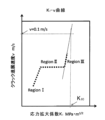
- FIG. 2 is a diagram schematically showing a K I -v curve.
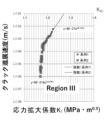
- FIG. 3 is a diagram showing Region III of the K I -v curve for the crystallized glass of Example 3.
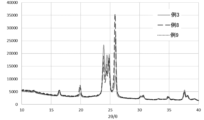
- FIG. 4 is a diagram showing the results of X-ray diffraction measurements of the crystallized glasses of Examples 3, 8, and 9.
- FIG. 5 is a diagram showing stress profiles when the crystallized glasses of Examples 3, 8, and 9 were chemically strengthened.
- chemically strengthened glass refers to glass after being chemically strengthened
- chemically strengthened glass refers to glass before being chemically strengthened
- base composition of chemically strengthened glass is the glass composition of chemically strengthened glass.
- the glass composition at a depth of 1/2 of the plate thickness t is the base composition of the chemically strengthened glass, unless extreme ion exchange treatment is performed.
- the glass composition is expressed in mole percentages based on oxides, and mol% is simply expressed as "%". Further, in this specification, “substantially no content” means that the content is below the level of impurities contained in raw materials, etc., that is, it is not intentionally contained. Specifically, it is, for example, less than 0.1 mol%.
- stress profile refers to a compressive stress value expressed using the depth from the glass surface as a variable.
- compression stress layer depth DOL
- CS compressive stress value
- CT Internal tensile stress value
- the stress profile in this specification can be measured using a scattered light photoelastic stress meter (for example, SLP-1000 manufactured by Orihara Seisakusho Co., Ltd.).
- Scattered light photoelasticity stress meters are affected by surface scattering, and measurement accuracy near the sample surface may decrease.
- the compressive stress value expressed as a function of depth follows a complementary error function, so the internal stress value By measuring , the surface stress value can be determined. If the complementary error function is not followed, the surface portion is measured by another method, such as by measuring with a surface stress meter.
- amorphous glass and “crystallized glass” may be collectively referred to as “glass.”
- amorphous glass refers to glass in which no diffraction peak indicating crystals is observed by powder X-ray diffraction.
- crystallized glass refers to "amorphous glass” that has been heat-treated to precipitate crystals, and is a glass in which crystals are precipitated.
- crystallized glass refers to glass in which a diffraction peak indicating crystals is observed by X-ray diffraction (XRD).
- XRD X-ray diffraction
- the X-ray diffraction measurement can be performed, for example, by using CuK ⁇ rays to measure the 2 ⁇ range of 10° to 80°.
- crystals deposited on crystallized glass can be identified by powder X-ray diffraction (PXRD) measurement.
- the content of each crystal in the crystallized glass is defined as the crystal mole fraction, assuming that the entire crystallized glass is 100 mol%, and that the crystals precipitated have a stoichiometric composition at that composition and temperature. This is the crystal mole fraction of each crystal when considering the ratio that maximizes.
- the crystallized glass according to the first embodiment of the present invention includes at least one of a lithium disilicate type crystal and its solid solution crystal, at least one of a Virgilite type crystal and its solid solution crystal, and a residual glass phase, and has a fracture toughness value.
- the K IC is 1.0 MPa ⁇ m 0.5 or more, and the haze value when converted to a thickness of 0.7 mm is 0.8% or less.
- the crystallized glass according to the second embodiment of the present invention includes at least one of a lithium disilicate type crystal and its solid solution crystal, at least one of a ⁇ spodumene type crystal and its solid solution crystal, and a residual glass phase, and has a fracture toughness value.
- the K IC is 1.2 MPa ⁇ m 0.5 or more, and the haze value when converted to a thickness of 0.7 mm is 2.0% or less.
- the crystallized glass according to the first embodiment and the crystallized glass according to the second embodiment may be collectively referred to as the crystallized glass according to the present embodiment.
- the crystallized glass according to the first embodiment includes at least one of a lithium disilicate type crystal and its solid solution crystal, at least one of a Virgilite type crystal and its solid solution crystal, and a residual glass phase.
- the crystallized glass according to the first embodiment includes at least one of a lithium disilicate type crystal and a solid solution crystal thereof.
- a lithium disilicate type crystal is a crystal whose composition is represented by Li 2 Si 2 O 5 .
- the lithium disilicate type crystal and its solid solution crystal include a complete lithium disilicate (Li 2 Si 2 O 5 ), a lithium disilicate containing defects, a lithium disilicate in which a different element is dissolved as a solid solution, and the like.
- “at least one of a lithium disilicate type crystal and its solid solution crystal” may be referred to as a "lithium disilicate type crystal".
- the fracture toughness value K IC of the crystallized glass can be increased, thereby improving the strength when dropped.
- the content of lithium disilicate-based crystals in the crystallized glass according to the first embodiment is preferably 36 mol% or more, more preferably 42 mol% or more, and even more preferably 48 mol% from the viewpoint of improving the fracture toughness value KIC . % or more is particularly preferred.
- the content is preferably 63 mol% or less, particularly preferably 56 mol% or less.
- the crystallized glass according to the first embodiment includes at least one of a vergilite crystal and a solid solution crystal thereof.
- the vergilite crystal is a hexagonal crystal whose composition is represented by LiAlSi 2 O 6 .
- Virgilite type crystals and their solid solution crystals include complete Virgilite (LiAlSi 2 O 6 ), Virgilite with defects, Virgilite with different elements dissolved in solid solution, etc., and more specifically, hexagonal type crystals.
- LiAlSi 2 O 6 whose Li site is substituted with at least one selected from the group consisting of Na, K, and divalent cation atoms, and at least one of the Al site and Si site is substituted with a trivalent cation. Including those that have been replaced.
- "at least one of a Virgilite-type crystal and its solid solution crystal” may be referred to as a "virgilite-based crystal.”
- the present inventors have found that by making the crystallized glass contain vergilite crystals as well as lithium disilicate crystals, the fracture toughness value K IC of the crystallized glass can be made relatively high, and the haze value can be relatively reduced. I found out what I could do on a smaller scale. The reason for this is that lithium disilicate-based crystals tend to increase the fracture toughness value KIC of crystallized glass, and haze is suppressed due to refractive index matching with the lithium disilicate phase due to vergilite-based crystal formation. It is possible that That is, the crystallized glass according to the first embodiment includes lithium disilicate-based crystals and vergilite-based crystals, so that it is excellent in both strength and transparency when dropped.
- the content of vergilite crystals in the crystallized glass according to the first embodiment is preferably 18 mol% or more, more preferably 21 mol% or more, and even more preferably 24 mol% from the viewpoint of increasing toughness through crystal precipitation.
- the above is particularly preferable.
- the content is preferably 36 mol% or less, even more preferably 32 mol% or less, and particularly preferably 28 mol% or less.
- the crystallized glass according to the first embodiment preferably contains a total of 54 mol% or more of lithium disilicate-based crystals and vergilite-based crystals from the viewpoint of high toughness and low haze.
- the total content of lithium disilicate-based crystals and vergilite-based crystals is more preferably 63 mol% or more, particularly preferably 72 mol% or more, and even more preferably 81 mol% or more.
- the total content is preferably 95 mol% or less, more preferably 93 mol% or less, even more preferably 91 mol% or less, particularly 90 mol% or less from the viewpoint of formability and chemical strengthening including residual glass. preferable.
- the crystallized glass according to the first embodiment may optionally contain crystals (other crystals) other than lithium disilicate-based crystals and vergilite-based crystals within a range that does not impede the effects of the present invention.
- crystals other crystals
- ⁇ -spodumene crystals are included as other crystals will be described later as a second embodiment.
- the other crystals mentioned above may include at least one crystal selected from petalite, eucryptite, and lithium phosphate.
- the preferable content is, for example, 5 mol% or less for each type of crystal from the viewpoint of suppressing the haze value. It is preferably 4 mol% or less, more preferably 3 mol% or less, even more preferably 2 mol% or less.
- the content of other crystals is preferably 0 mol% or more for each type of crystal, but the content is preferably such that it functions only as a nucleation species, and as much as possible the amount of main crystal precipitation It is preferable to increase
- the total content of other crystals is preferably 5 mol% or less, more preferably 4 mol% or less, even more preferably 3 mol% or less, and particularly preferably 2 mol% or less from the viewpoint of haze suppression.
- the total content of other crystals is preferably 0 mol% or more, but the content is preferably such that it functions only as a nucleation species, and it is desirable to increase the amount of precipitated main crystals as much as possible. preferable.
- the degree of crystallinity of the crystallized glass according to the first embodiment is preferably 56 mol% or more, more preferably 65 mol% or more, even more preferably 74 mol% or more, and even more preferably 83 mol% or more from the viewpoint of high toughness. is particularly preferred.
- the degree of crystallinity is preferably 97 mol% or less, more preferably 95 mol% or less, even more preferably 93 mol% or less, particularly preferably 92 mol% or less, from the viewpoint of moldability due to the residual glass phase.
- the crystallinity is the sum of the precipitation ratios of each crystal in the crystallized glass, and is the sum of the content ratios of lithium disilicate-based crystals, vergilite-based crystals, and other crystals.
- the crystallized glass according to the first embodiment includes a residual glass phase.
- the residual glass phase is an amorphous phase in crystallized glass.
- the proportion of the remaining glass phase is preferably 44 mol% or less, more preferably 35 mol% or less, even more preferably 26 mol% or less, and particularly preferably 17 mol% or less.
- the proportion of the remaining glass phase is preferably 3 mol% or more, more preferably 5 mol% or more, even more preferably 7 mol% or more, and particularly preferably 8 mol% or more.
- the proportion of the remaining glass phase refers to the crystal mole fraction, assuming that the entire crystallized glass is 100 mol%, and that the crystals precipitated at that composition and temperature are precipitated with a stoichiometric composition. It is the value obtained by subtracting such crystal mole fraction from 100 mol%, considering the ratio that maximizes .
- the average particle size of the precipitated crystals is preferably 80 nm or less, more preferably 70 nm or less, further preferably 60 nm or less, even more preferably 50 nm or less, from the viewpoint of improving transparency. , 40 nm or less is particularly preferred, and 30 nm or less is most preferred.
- the average particle size of the precipitated crystals is preferably 5 nm or more, more preferably 6 nm or more, even more preferably 7 nm or more, particularly preferably 8 nm or more, even more preferably 9 nm or more, and most preferably 10 nm or more. preferable.
- the average grain size of the precipitated crystals is determined from a transmission electron microscope (TEM) image.
- the average grain size of precipitated crystals can be estimated from a scanning electron microscope (SEM) image.
- the crystallized glass according to the second embodiment includes at least one of a lithium disilicate type crystal and its solid solution crystal, at least one of a ⁇ spodumene type crystal and its solid solution crystal, and a residual glass phase.
- the crystallized glass according to the second embodiment includes at least one of a lithium disilicate type crystal and a solid solution crystal thereof.
- a lithium disilicate type crystal is a crystal whose composition is represented by Li 2 Si 2 O 5 .
- the lithium disilicate type crystal and its solid solution crystal include a complete lithium disilicate (Li 2 Si 2 O 5 ), a lithium disilicate containing defects, a lithium disilicate in which a different element is dissolved as a solid solution, and the like.
- “at least one of a lithium disilicate type crystal and its solid solution crystal” may be referred to as a "lithium disilicate type crystal".
- the fracture toughness value K IC of the crystallized glass can be increased, thereby improving the strength when dropped.
- the content of lithium disilicate crystals in the crystallized glass according to the second embodiment is preferably 36 mol% or more, more preferably 42 mol% or more, and even more preferably 48 mol% from the viewpoint of improving the fracture toughness value KIC . % or more is particularly preferred.
- the content is preferably 63 mol% or less, particularly preferably 56 mol% or less.
- the crystallized glass contains lithium disilicate crystals can be confirmed by the same method as in the first embodiment.
- the crystallized glass according to the second embodiment includes at least one of a ⁇ -spodumene crystal and a solid solution crystal thereof.
- the ⁇ spodumene crystal is a tetragonal crystal whose composition is represented by LiAlSi 2 O 6 .
- the ⁇ -spodumene type crystal and its solid solution crystal include complete ⁇ -spodumene (LiAlSi 2 O 6 ), ⁇ -spodumene containing defects, ⁇ -spodumene in which a different element is dissolved in solid solution, etc., and more specifically, a tetragonal type crystal.
- LiAlSi 2 O 6 whose Li site is substituted with at least one selected from the group consisting of Na, K, and divalent cation atoms, or where at least one of the Al site and Si site is substituted with a trivalent cation. Including those that have been replaced.
- ⁇ -spodumene-based crystal at least one of a ⁇ -spodumene-type crystal and its solid solution crystal.
- the present inventors have found that by including crystallized glass containing ⁇ -spodumene-based crystals together with lithium disilicate-based crystals, the fracture toughness value K I discovered that it can be made smaller.
- the reason for this is that lithium disilicate-based crystals tend to increase the fracture toughness value KIC of crystallized glass, and haze is suppressed due to refractive index matching with the lithium disilicate phase due to the formation of ⁇ -spodumene-based crystals. It is possible that That is, the crystallized glass according to the second embodiment includes lithium disilicate-based crystals and ⁇ -spodumene-based crystals, so that it is excellent in both strength and transparency when dropped.
- the crystallized glass according to the second embodiment is excellent in both strength and transparency when dropped, and also has excellent chemical strengthening properties.
- excellent chemical strengthening properties means that the strength can be easily increased by creating a compressive stress difference between the surface and the inside through chemical strengthening treatment.
- the ⁇ -spodumene-based crystal and the above-mentioned vergilite-based crystal have the same composition but are different crystal types.
- Virgilite-based crystals are crystal seeds that can be precipitated as a precursor of ⁇ -spodumene-based crystals. Therefore, the crystallized glass according to the second embodiment may further include vergilite-based crystals in addition to lithium disilicate-based crystals and ⁇ -spodumene-based crystals. In this case, the crystallized glass according to the second embodiment may also be the crystallized glass according to the first embodiment.
- the content of ⁇ -spodumene crystals in the crystallized glass according to the second embodiment is preferably 18 mol% or more, and 21 mol% or more from the viewpoint of increasing toughness through crystal precipitation and improving chemical strengthening properties. It is even more preferable, and 24 mol% or more is particularly preferable. On the other hand, from the viewpoint of complementary production with lithium disilicate, the content is preferably 36 mol% or less, even more preferably 32 mol% or less, and particularly preferably 28 mol% or less.
- the content of vergilite-based crystals in the crystallized glass according to the second embodiment is related to the amount of ⁇ -spodumene-based crystals produced. Furthermore, from the viewpoint of improving chemical strengthening properties by including ⁇ -spodumene crystals, the content of vergilite crystals is preferably 13 mol% or more, more preferably 15 mol% or more, and particularly preferably 18 mol% or more. On the other hand, from the viewpoint of reducing haze, the content is preferably 36 mol% or less, even more preferably 30 mol% or less, and particularly preferably 27 mol% or less.
- the crystallized glass contains vergilite crystals can be confirmed by the same method as in the first embodiment.
- the crystallized glass according to the second embodiment contains a total of 54 mol% or more of lithium disilicate-based crystals, ⁇ -spodumene-based crystals, and vergilite-based crystals from the viewpoint of obtaining a material that is easy to chemically strengthen and has high toughness. It is preferable to include.
- the total content of lithium disilicate-based crystals and ⁇ -spodumene-based crystals is even more preferably 63 mol% or more, particularly preferably 72 mol% or more, and even more preferably 81 mol% or more.
- the total content is preferably 95 mol% or less, more preferably 93 mol% or less, even more preferably 91 mol% or less, particularly 90 mol% or less from the viewpoint of formability and chemical strengthening properties including residual glass. preferable.
- the crystallized glass according to the second embodiment may optionally contain crystals other than lithium disilicate-based crystals, ⁇ -spodumene-based crystals, and vergilite-based crystals (other crystals) within a range that does not impede the effects of the present invention. It may be contained.
- the other crystals mentioned above may include at least one crystal selected from petalite, eucryptite, and lithium phosphate.
- the preferable content is, for example, preferably 5 mol% or less for each type of crystal from the viewpoint of haze suppression, It is more preferably 4 mol% or less, even more preferably 3 mol% or less, and particularly preferably 2 mol% or less.
- the content of other crystals is preferably 0 mol % or more for each type of crystal, but it is preferable to increase the amount of precipitated main crystals as much as possible so that they can function only as nucleation seeds.
- the total content of other crystals is preferably 5 mol% or less, more preferably 4 mol% or less, even more preferably 3 mol% or less, and particularly preferably 2 mol% or less from the viewpoint of haze suppression.
- the total content of other crystals is preferably 0 mol% or more, but the content is preferably such that it functions only as a nucleation species, and it is desirable to increase the amount of precipitated main crystals as much as possible. preferable.
- the degree of crystallinity of the crystallized glass according to the second embodiment is preferably 56 mol% or more, more preferably 65 mol% or more, and 74 mol% or more from the viewpoint of achieving both fracture toughness and ease of chemical strengthening. It is even more preferable, and 83 mol% or more is particularly preferable.
- the degree of crystallinity is preferably 97 mol% or less, more preferably 95 mol% or less, even more preferably 93 mol% or less, particularly preferably 92 mol% or less, from the viewpoint of moldability due to the residual glass phase.
- the crystallinity is the sum of the precipitation ratios of each crystal in the crystallized glass, and is the sum of the content ratios of lithium disilicate-based crystals, ⁇ -spodumene-based crystals, vergilite-based crystals, and other crystals.
- the crystallized glass according to the second embodiment includes a residual glass phase.
- the proportion of the remaining glass phase is preferably 44 mol% or less, more preferably 35 mol% or less, even more preferably 26 mol% or less, and particularly preferably 17 mol% or less.
- the proportion of the remaining glass phase is preferably 3 mol% or more, more preferably 5 mol% or more, even more preferably 7 mol% or more, and particularly preferably 8 mol% or more.
- the definition of the residual glass phase is the same as in the first embodiment, and its proportion is determined by the same method as in the first embodiment.
- the average particle size of the precipitated crystals is preferably 80 nm or less, more preferably 70 nm or less, even more preferably 60 nm or less, even more preferably 50 nm or less, from the viewpoint of improving transparency. , 40 nm or less is particularly preferred, and 30 nm or less is most preferred.
- the average particle size of the precipitated crystals is preferably 5 nm or more, more preferably 6 nm or more, even more preferably 7 nm or more, particularly preferably 8 nm or more, even more preferably 9 nm or more, and most preferably 10 nm or more. preferable.
- the average grain size of the precipitated crystals is determined from a transmission electron microscope (TEM) image.
- the average grain size of precipitated crystals can be estimated from a scanning electron microscope (SEM) image.
- the crystallized glass according to the first embodiment has a fracture toughness value K IC of 1.0 MPa ⁇ m 0.5 or more. Because the fracture toughness value K IC is relatively large, crack propagation is suppressed, so the crystallized glass according to the present embodiment has excellent strength when dropped.
- the fracture toughness value K IC of the crystallized glass according to the first embodiment is more preferably 1.1 MPa ⁇ m 0.5 or more, and even more preferably 1.2 MPa ⁇ m 0.5 or more.
- the crystallized glass according to the second embodiment has a fracture toughness value K IC of 1.2 MPa ⁇ m 0.5 or more.
- the fracture toughness value K IC of the crystallized glass according to the second embodiment is more preferably 1.1 MPa ⁇ m 0.5 or more, and even more preferably 1.2 MPa ⁇ m 0.5 or more.
- the upper limit of the fracture toughness value K IC is not particularly limited, but may be, for example, 1.4 MPa ⁇ m 0.5 or less.
- the crystal seeds contained in the crystallized glass are as mentioned above, and preferably, the degree of crystallinity is relatively increased, and the glass composition is described below. Examples include adjusting the crystal content to a preferable range and adjusting the crystal ratio.
- the fracture toughness value K IC is determined by the DCDC (Double Cleavage Drilled Compression) method (Acta metal.mater. Vol. 43, pp. 3453-3458, 1995) or the SEPB method specified in JIS R1607. measurement The value of Since the DCDC method allows the fracture toughness value K IC to be determined more accurately than the SEPB method, it is more preferable that the fracture toughness value K IC is a value determined by the DCDC method.
- the stress intensity factor K I (unit: MPa ⁇ m 0.5 ) and crack propagation speed v (unit: m/s) can be calculated as shown in Fig. 2.
- a K I -v curve showing the relationship is measured, and the obtained data for Region III is regressed and extrapolated using a linear equation, and the stress intensity coefficient K I of 0.1 m/s is taken as the fracture toughness value K IC .
- the K I -v curve has a bending point in Region III
- the data for Region III-2 is regressed and armored using a linear equation, and the stress intensity factor K I of 0.1 m/s is calculated.
- the fracture toughness value is KIC .
- the K I -v curve has Region I, Region II, and Region III starting from the region where the crack growth rate v is small.
- Region I in the K I -v curve refers to a region where cracks grow slowly due to bond cleavage reactions
- Region II refers to a crack growth region where water and other molecules react at the crack front.
- III refers to the region where the crack propagation rate accelerates and transitions to unstable fracture (Introductory glass fracture science, Yoshida, New Glass magazine (2008.9), Fatigue crack propagation property of hot mold materials, Yamada, Toyota Central Research Institute R&D Review Vol. 27, (December 1992)).
- FIG. 3 is a diagram showing Region III of the K I -v curve of the crystallized glass of Example 3, which will be described later. As is clear from comparing FIG. 2 and FIG.
- Region III of the general K I -v curve measured for materials such as glass as illustrated in FIG. 2 has no curvature
- the K I -v curve measured for the crystallized glass according to the present embodiment has an inflection point in Region III.
- having an inflection point in Region III means that the power value of K I that can best express v changes before and after a certain value of K I.
- the ratio (x_RegionIII-2/x_regionIII-1) is preferably less than 0.25, more preferably 0.20 or less.
- the lower limit of the ratio (x_RegionIII-2/x_regionIII-1) is not particularly limited, but from the viewpoint of achieving a uniform fracture process, it is preferably 0.01 or more.
- a crystallized glass containing crystals which has a stress intensity coefficient K I (unit: MPa ⁇ m 0.5 ) and a crack growth rate v (unit: m /s), the K I -v curve has Region I, Region II, and Region III from the region where the crack growth rate v is small, and the K The I -v curve has a bending point in Region III, and with the bending point in Region III as a border, a region where the crack growth rate v is small is Region III-1, and a region where the crack growth speed v is large is Region III.
- the index for fracture is calculated under the following conditions. can do. This is done by measuring the progress of cracks using a high-speed camera. More specifically, in order to photograph cracks that propagate over a long distance of 9 mm or more while changing speed, the above-mentioned A high-speed camera is made to follow the crack at a speed of 500 ⁇ m/s or more to take pictures.
- the shoulder value of the exponential function is considered to represent the material eigenvalue that is the main factor in the value of the fracture toughness value K IC . Therefore, it is thought that the parameter of x_RegionIII-2 itself becomes a dominant factor that increases resistance to crack growth. From this point of view, x_RegionIII-2 (unit: MPa -1 m -0.5 ), that is, the crack growth rate v between 1 ⁇ 10 -4 m/s and 1 ⁇ 10 -1 m/s is KI When fitting with an exponential function with base e to Most preferably less than 100, less than 90.
- a KI-v curve showing the relationship between the stress intensity coefficient K I (unit: MPa ⁇ m 0.5 ) and crack growth rate v (unit: m/s) for crystallized glass is
- the crack growth rate v between 1 ⁇ 10 -4 m/s and 1 ⁇ 10 -1 m/s was fitted to K I with an exponential function with base e
- the difference within the index was Examples include crystallized glass having a stress intensity factor value of less than 130 (MPa ⁇ 1 ⁇ m ⁇ 0.5 ) and a haze value of less than 2.0% when converted to a thickness of 0.7 mm.
- the crystallized glass according to the first embodiment has a haze value of 0.8% or less when converted to a thickness of 0.7 mm. Thereby, the crystallized glass according to the first embodiment has excellent transparency.
- the crystallized glass according to the first embodiment is more preferably 0.7% or less, further preferably 0.6% or less, even more preferably 0.5% or less, particularly preferably 0.3% or less, and .2% or less is even more particularly preferred, and 0.15% or less is most preferred.
- the crystallized glass according to the second embodiment has a haze value of 2.0% or less when converted to a thickness of 0.7 mm. Thereby, the crystallized glass according to the second embodiment has excellent transparency.
- the haze value of the crystallized glass according to the second embodiment is preferably 1.8% or less, more preferably 1.6% or less, and in the following order: 1.4% or less, 1.2% or less, 1. It is more preferably 0% or less, 0.8% or less, 0.7% or less, 0.6% or less, even more preferably 0.5% or less, particularly preferably 0.3% or less, and 0.2% or less. It is particularly preferably 0.15% or less, and most preferably 0.15% or less.
- the lower limit of the haze value is not particularly limited, but may be, for example, 0.1% or more.
- the crystal seeds contained in the crystallized glass are as mentioned above, and preferably, the crystal formation conditions are adjusted, the residual glass components are adjusted, etc. can be mentioned.
- the haze value is a value measured according to JIS K7136 (2000).
- X ⁇ Y represents X Y.
- dH/dt ⁇ exp(- ⁇ t) ⁇ (1-H) It can be expressed as That is, since it is considered that the haze value increases in proportion to the internal linear transmittance each time the plate thickness increases, the haze value H 0.7 in the case of 0.7 mm can be determined by the following formula.
- "X ⁇ Y" represents "X Y ".
- H 0.7 100 ⁇ [1-(1-H) ⁇ ((1-R) 2 -T 0.7 )/((1-R) 2 -T) ⁇ ] [%] Further, in the case of glass whose plate thickness t is larger than 0.7 mm, the plate thickness may be adjusted to 0.7 mm by polishing or etching, and then the haze value may be actually measured.
- composition of crystallized glass is the same as the glass composition of the amorphous glass before crystallization in the manufacturing method described below, that is, the composition of the mother glass of the crystallized glass. Therefore, the composition of the crystallized glass according to the present embodiment and the glass composition of the mother glass of the crystallized glass have the same preferred aspects.
- the composition of crystallized glass in this specification refers to the total composition of the crystalline phase and amorphous phase of crystallized glass.
- the composition of the crystallized glass can be determined by subjecting the crystallized glass to a heat treatment at a temperature higher than the melting point and analyzing the vitrified product. An example of the analysis method is fluorescent X-ray analysis.
- composition of the crystallized glass according to this embodiment is not particularly limited, an example of a preferable embodiment is as follows.
- the lower limit of the preferable content of non-essential components is 0%.
- the crystallized glass according to this embodiment is a lithium aluminosilicate glass containing SiO 2 , Al 2 O 3 and Li 2 O.
- Lithium aluminosilicate glass contains lithium ions, which are alkali ions with the smallest ionic radius, so it is easy to obtain chemically strengthened glass with a favorable stress profile by chemically strengthening treatment that involves ion exchange using various molten salts. .
- SiO 2 is a constituent of lithium disilicate-based crystals, vergilite-based crystals, and ⁇ -spodumene-based crystals, and is an essential component.
- SiO 2 is a component that constitutes the glass network and is also a component that increases chemical durability.
- the content of SiO 2 is preferably 65% or more from the viewpoint of precipitating lithium disilicate-based crystals, and at least one of vergilite-based crystals and ⁇ -spodumene-based crystals, and from the viewpoint of improving chemical durability. % or more is more preferable, 67% or more is even more preferable, and 68% or more is particularly preferable.
- the content of SiO 2 is preferably 75% or less, more preferably 74% or less, even more preferably 73% or less, particularly preferably 72% or less, in order to improve meltability during glass production.
- Li 2 O is a constituent of lithium disilicate crystals, vergilite crystals, and ⁇ -spodumene crystals, and is an essential component.
- Li 2 O is a component that forms surface compressive stress through ion exchange, and is also a component that improves the meltability of glass. Since the crystallized glass contains Li 2 O, the Li ions on the glass surface are ion-exchanged with Na ions, and the Na ions are further ion-exchanged with K ions, so that both the surface compressive stress and the compressive stress layer have large stress. You can get a profile.
- the content of Li 2 O is preferably 23% or more from the viewpoint of precipitating lithium disilicate-based crystals and at least one of vergilite-based crystals and ⁇ -spodumene-based crystals, and from the viewpoint of improving strength by chemical strengthening. More preferably 23.5% or more, particularly preferably 24% or more. On the other hand, in order to stabilize the glass, the content of Li 2 O is preferably 25% or less, particularly preferably 24.9% or less.
- Al 2 O 3 is a constituent of vergilite crystals and ⁇ -spodumene crystals, and is an essential component. Al 2 O 3 is an effective component from the viewpoint of improving ion exchange performance during chemical strengthening and increasing surface compressive stress after strengthening. Al 2 O 3 is also a component that improves chemical durability.
- the content of Al 2 O 3 is preferably 4% or more, in order to precipitate at least one of vergilite-based crystals and ⁇ -spodumene-based crystals, and to improve chemical durability and chemical strengthening properties. More preferably .5% or more. From the viewpoint of lithium disilicate precipitation, the content of Al 2 O 3 is preferably 8% or less, more preferably 7% or less, even more preferably 6.5% or less, and particularly preferably 6% or less.
- the total content of Li 2 O and Al 2 O 3 is preferably 27% or more, more preferably 28% or more, even more preferably 29% or more, and 29.5% from the viewpoint of appropriately adjusting the generated crystals.
- the above is particularly preferable.
- the total content of Li 2 O and Al 2 O 3 is preferably 33% or less, more preferably 32% or less, even more preferably 31% or less, and 30.5% from the viewpoint of producing crystals and adjusting the residual glass phase. The following are particularly preferred.
- the ratio of the Al 2 O 3 content to the Li 2 O content can affect the ratio of precipitated crystals. That is, when the value of (Al 2 O 3 /Li 2 O) is relatively large, the ratio of precipitation of at least one of vergilite-based crystals and ⁇ -spodumene-based crystals to lithium disilicate-based crystals becomes large. Tend. Therefore, from the viewpoint of keeping the precipitation ratio of each crystal within the preferable range mentioned above, (Al 2 O 3 /Li 2 O) is preferably 0.15 or more, and more preferably 0.20 or more. From the same viewpoint, (Al 2 O 3 /Li 2 O) is preferably 0.50 or less, more preferably 0.36 or less.
- P 2 O 5 is a component that becomes a crystal nucleus of a lithium disilicate crystal.
- the content of P 2 O 5 is preferably 0.5% or more, more preferably 0.7% or more, and even more preferably 1.0% or more from the viewpoint of precipitating lithium disilicate crystals.
- the content of P 2 O 5 is preferably 2.5% or less, more preferably 2.0% or less, even more preferably 1.8% or less, and especially 1.6% or less from the viewpoint of increasing acid resistance. preferable.
- P 2 O 5 can affect the precipitation of not only lithium disilicate-based crystals but also at least one of vergilite-based crystals and ⁇ -spodumene-based crystals. This is because it is thought that P 2 O 5 can also become the crystal nucleus of these crystals, and that the residual glass that has changed due to the formation of lithium disilicate type crystals may affect the formation of these crystals. .
- ZrO 2 is a component that can increase the surface compressive stress of chemically strengthened glass, and can also serve as a nucleating agent.
- the crystallized glass according to the present embodiment preferably contains ZrO 2 in an amount of 0.6% or more, more preferably 0.7% or more, and even more preferably 0.8% or more.
- the content of ZrO 2 is preferably 2% or less, more preferably 1.5% or less, even more preferably 1.3% or less, and particularly preferably 1.1% or less from the viewpoint of haze suppression.
- B 2 O 3 is not an essential component, it is a component that can reduce the brittleness of glass, improve crack resistance, and facilitate precipitation of ⁇ -spodumene crystals.
- the crystallized glass according to this embodiment may contain B2O3 .
- the content is preferably 0.2% or more, more preferably 0.3% or more.
- the content of B 2 O 3 is preferably 1% or less, more preferably 0.7% or less, from the viewpoint of increasing acid resistance.
- the crystallized glass according to this embodiment most preferably does not substantially contain B 2 O 3 from the viewpoint of reducing haze.
- Na 2 O and K 2 O are components that improve the meltability of glass and also components that improve ion exchange performance.
- the crystallized glass according to this embodiment may contain at least one of Na 2 O and K 2 O in order to obtain these effects.
- the total content of Na 2 O and K 2 O is preferably 0% or more, more preferably 0.5% or more, and 0.7% or more from the viewpoint of improving the meltability of the glass and the ion exchange performance. is even more preferable.
- the total content of Na 2 O and K 2 O is preferably 3% or less, more preferably 1% or less, from the viewpoint of suppressing deterioration of chemical strengthening properties and chemical durability and suppressing haze.
- Na 2 O is a component that forms a surface compressive stress layer in chemical strengthening treatment using a potassium salt, and is a component that can improve the meltability of glass.
- the content is preferably 0% or more, and more preferably 0.5% or more.
- the content of Na 2 O is preferably 1.5% or less, more preferably 1% or less.
- K 2 O is a component that improves the meltability of glass, and is also a component that improves ion exchange performance.
- the content is preferably 0% or more, more preferably 0.1% or more, from the viewpoint of obtaining the effect.
- the content of K 2 O is preferably 1% or less from the viewpoint of suppressing deterioration of chemical strengthening properties and chemical durability, and from the viewpoint of suppressing haze, it is preferable that K 2 O is not contained.
- the crystallized glass according to this embodiment may contain ZnO.
- the ZnO content is preferably 0.1% or more, more preferably 0.2% or more. From the viewpoint of improving weather resistance, the ZnO content is preferably 1% or less, more preferably 0.7% or less, and even more preferably 0.5% or less.
- the crystallized glass according to this embodiment may contain SnO 2 .
- the content of SnO 2 is preferably 0.1% or more, and more preferably 0.5% or more.
- the content of SnO 2 is preferably 1% or less, more preferably 0.9% or less, from the viewpoint of reducing coloring.
- the sum of the molar ratios of , ZnO and SnO 2 is 5% or less. This is the sum of the components constituting the lithium disilicate-based crystal, vergilite-based crystal, and ⁇ -spodumene-based crystal, that is, Li 2 O, Al 2 O 3 , and SiO 2 in the crystallized glass according to the present embodiment.
- the proportion of This makes it easier to obtain crystallized glass containing lithium disilicate-based crystals and at least one of vergilite-based crystals and ⁇ -spodumene-based crystals, and also increases the precipitation ratio of these crystals, resulting in crystallization. It is also easy to improve the degree.
- the sum of the molar ratios of P 2 O 5 , ZrO 2 , B 2 O 3 , Na 2 O, K 2 O, ZnO and SnO 2 with respect to the sum of the molar ratios of Li 2 O, Al 2 O 3 and SiO 2 is more preferably 4% or less, and even more preferably 3% or less.
- the above ratio is preferably 0.7% or more.
- Nb 2 O 5 , Ta 2 O 5 , Gd 2 O 3 and CeO 2 are components that suppress solarization of glass and improve meltability, respectively.
- the crystallized glass according to this embodiment may contain at least one of these components.
- the total content is preferably 0.03% or more, more preferably 0.1% or more, even more preferably 0.3% or more, It is particularly preferably 0.5% or more, even more preferably 0.8% or more, and most preferably 1% or more.
- these contents are too large, it becomes difficult to increase the compressive stress value during chemical strengthening treatment.
- the total content of these components is preferably 3% or less, more preferably 2.5% or less, even more preferably 2% or less, and particularly preferably 1.5%. It is preferably at most 1%, more preferably at most 1%, and most preferably at most 0.5%.
- Fe 2 O 3 is a component that can improve the melting properties of glass because it absorbs heat rays.
- the crystallized glass according to this embodiment contains Fe 2 O 3 .
- the content of Fe 2 O 3 is preferably 0.002% or more, more preferably 0.003% or more, even more preferably 0.005% or more, particularly preferably 0. It is at least .007%, more preferably at least 0.008%, and most preferably at least 0.01%.
- the content is preferably 0.3% or less, more preferably 0.3% or less, based on the weight percent of the oxide. 0.04% or less, even more preferably 0.03% or less, particularly preferably 0.025% or less, even more preferably 0.02% or less, most preferably 0.015% or less.
- Fe 2 O 3 Although all iron oxides in glass are explained here as Fe 2 O 3 , in reality, it is common for Fe(III) in an oxidized state and Fe(II) in a reduced state to coexist. . Among these, Fe(III) causes yellow coloration, Fe(II) causes blue coloration, and the balance between the two causes green coloration to occur in the glass.
- the crystallized glass according to the present embodiment may contain a coloring component within a range that does not impede the effects of the present invention.
- coloring components include Co3O4 , MnO2 , NiO, CuO, Cr2O3, V2O5 , Bi2O3 , SeO2 , CeO2 , Er2O3 , Nd2O3 , etc. are listed as suitable.
- the content of the coloring components is preferably 5% or less in total, more preferably 4% or less, even more preferably 3% or less, particularly preferably 2% or less, expressed as a percentage on an oxide basis. , more preferably 1% or less. When it is desired to increase the transmittance of the glass, it is preferable that these components are not substantially contained.
- SO 3 , chloride, fluoride, etc. may be appropriately contained as a refining agent during glass melting. It is preferable that As 2 O 3 is not contained. When Sb 2 O 3 is contained, its content is preferably 0.3% or less, more preferably 0.1% or less, and most preferably not contained.
- compositions of the crystallized glass include, but are not limited to, the following.
- the composition of the mother glass is expressed as a mole percentage based on oxides, SiO 2 65-75%, 23-25% Li 2 O, 4-8% Al 2 O 3 , 0.5 to 2.5% P 2 O 5 , ZrO 2 0.6-2%, 0-1% B 2 O 3 , 0-1.5% Na 2 O, 0-1% K 2 O, 0-1% ZnO, Crystallized glass containing 0 to 1% SnO2 .
- the composition of the mother glass is expressed as a mole percentage based on oxides, SiO 2 65-75%, 23-25% Li 2 O, 4-8% Al 2 O 3 , 0.5 to 2.5% P 2 O 5 ; ZrO 2 0.6-2%, 0-1% B 2 O 3 , 0-1.5% Na 2 O, 0-1% K 2 O, 0-1% ZnO, Contains 0-1% SnO2 ,
- the sum of the molar ratios of P 2 O 5 , ZrO 2 , B 2 O 3 , Na 2 O, K 2 O, ZnO and SnO 2 with respect to the sum of the molar ratios of Li 2 O, Al 2 O 3 and SiO 2 is 5% or less.
- the composition of the mother glass is expressed as a mole percentage based on oxides, SiO 2 65-75%, 23-25% Li 2 O, 4-8% Al 2 O 3 , 0.7 to 2.5% P 2 O 5 ; ZrO 2 0.6-1.1%, 0-1% B 2 O 3 , 0-1.5% Na 2 O, 0-1% K 2 O, 0-1% ZnO, Contains 0-1% SnO2 ,
- the sum of the molar ratios of P 2 O 5 , ZrO 2 , B 2 O 3 , Na 2 O, K 2 O, ZnO and SnO 2 with respect to the sum of the molar ratios of Li 2 O, Al 2 O 3 and SiO 2 is 4% or less.
- the Young's modulus of the crystallized glass according to this embodiment is preferably 100 GPa or more, more preferably 102 GPa or more, and even more preferably It is 105 GPa or more.
- Young's modulus may be, for example, 120 GPa or less. Young's modulus can be measured, for example, by an ultrasonic method.
- the glass transition temperature of the mother glass (amorphous glass) of the crystallized glass according to this embodiment is preferably 400° C. or higher from the viewpoint of ease of handling in the manufacturing process of the crystallized glass.
- the glass transition temperature is preferably 600° C. or lower from the viewpoint of facilitating the cooling process.
- the glass transition temperature is determined, for example, from a DSC curve measured by a differential scanning calorimeter.
- the devitrification temperature in the mother glass (amorphous glass) of crystallized glass is preferably 1200° C. or less, more preferably 1150° C. or less, from the viewpoint of ease of preparing the mother glass.
- the lower limit of the devitrification temperature is not particularly limited, the devitrification temperature may be, for example, 1000° C. or higher.
- the devitrification temperature of glass is determined by placing crushed glass particles in a platinum dish, heat-treating them in an electric furnace controlled at a constant temperature for 17 hours, and observing the sample with an optical microscope after the heat treatment. and the average value of the maximum temperature at which crystals precipitate inside and the minimum temperature at which crystals do not precipitate.
- the value of log ⁇ is preferably 2.5 or more from the viewpoint of ease of continuous production, and more preferably 3.0 or more. preferable. Although the upper limit of log ⁇ is not particularly limited, log ⁇ may be, for example, 4 or less.
- the devitrification viscosity ⁇ in this specification is the viscosity value at the devitrification temperature, and is determined by the cylindrical rotation method.
- the shape of the crystallized glass according to this embodiment is not particularly limited, it is preferably plate-shaped, for example.
- the plate thickness (t) is, for example, 2 mm or less, preferably 1.5 mm or less, from the viewpoint of increasing the effect of chemical strengthening. It is more preferably 1 mm or less, further preferably 0.9 mm or less, particularly preferably 0.8 mm or less, even more preferably 0.7 mm or less, and most preferably 0.6 mm or less.
- the plate thickness is preferably 0.1 mm or more, more preferably 0.2 mm or more, and still more preferably 0.3 mm or more. , still more preferably 0.35 mm or more, particularly preferably 0.4 mm or more, even more preferably 0.5 mm or more.
- the shape of the crystallized glass according to this embodiment may be other than a plate shape depending on the product to which it is applied, its use, etc.
- the glass plate may have a rimmed shape with different thicknesses on the outer periphery.
- the shape of the glass plate is not limited to this, and for example, the two main surfaces may not be parallel to each other. Further, all or part of one or both of the two main surfaces may be a curved surface. More specifically, the glass plate may be, for example, a flat glass plate without warpage, or may be a curved glass plate having a curved surface.
- the chemically strengthened glass according to this embodiment is obtained by chemically strengthening the crystallized glass according to the above-mentioned embodiment. That is, the base composition of the chemically strengthened glass according to this embodiment is the same as the composition of the crystallized glass according to the above-mentioned embodiment, and the preferred composition range is also the same.
- the chemically strengthened glass is, for example, plate-shaped, the content ratio of the alkali metal element is different between the surface layer and the center in the thickness direction.
- the glass composition in the deepest part from the surface of chemically strengthened glass is the same as the mother composition of chemically strengthened glass, except when extreme ion exchange treatment is performed.
- the chemically strengthened glass is in the form of a plate, the deepest part from the glass surface is, for example, 1/2 the depth of the plate thickness t.
- the strength can be improved.
- the crystals contained in the chemically strengthened glass according to the present embodiment and their content are the same as the crystallized glass according to the present embodiment, except when extreme ion exchange treatment or the like is performed. That is, the chemically strengthened glass according to this embodiment has excellent strength and transparency when dropped for the same reason as the crystallized glass according to this embodiment.
- the fracture toughness value K IC is relatively large and that the glass is chemically strengthened both contribute to improving the strength of the chemically strengthened glass.
- the two differ in that glass with a relatively high fracture toughness value KIC has a strong overall bulk strength, while chemically strengthened glass has a large contribution to the strength near the surface, which is the starting point of cracking.
- the chemically strengthened glass according to this embodiment has a relatively high fracture toughness value and is chemically strengthened, so it is a chemically strengthened glass that has both of these characteristics and is superior in strength.
- Examples of the chemically strengthened glass according to this embodiment include the chemically strengthened glass according to the third embodiment and the chemically strengthened glass according to the fourth embodiment below.
- the chemically strengthened glass according to the third embodiment is a chemically strengthened glass having a compressive stress layer on the surface, has a surface compressive stress value CS of 150 MPa or more, and includes at least one of a lithium disilicate type crystal and a solid solution crystal thereof. Contains at least one of Virgilite type crystals and solid solution crystals thereof, and a residual glass phase, has a fracture toughness value K IC of 1.0 MPa ⁇ m 0.5 or more, and has a haze value of 0.8 when converted to a thickness of 0.7 mm. % or less, and is crystallized glass. That is, the chemically strengthened glass is a chemically strengthened glass that is the crystallized glass according to the first embodiment.
- the chemically strengthened glass according to the fourth embodiment is a chemically strengthened glass having a compressive stress layer on the surface, has a surface compressive stress value CS of 100 MPa or more, and includes at least one of a lithium disilicate type crystal and a solid solution crystal thereof. Contains at least one of a ⁇ -spodumene type crystal and its solid solution crystal, and a residual glass phase, has a fracture toughness value K IC of 1.2 MPa ⁇ m 0.5 or more, and has a haze value of 2.0 when converted to a thickness of 0.7 mm. % or less, and is crystallized glass. That is, the chemically strengthened glass is a chemically strengthened glass that is crystallized glass according to the second embodiment.
- the mother composition of the chemically strengthened glass according to this embodiment is expressed in mole percentage based on oxides, SiO 2 65-75%, 23-25% Li 2 O, 4-8% Al 2 O 3 , 0.5 to 2.5% P 2 O 5 ; ZrO 2 0.6-2%, 0-1% B 2 O 3 , 0-1.5% Na 2 O, 0-1% K 2 O, 0-1% ZnO, Contains 0-1% SnO2 ,
- the sum of the molar ratios of P 2 O 5 , ZrO 2 , B 2 O 3 , Na 2 O, K 2 O, ZnO and SnO 2 with respect to the sum of the molar ratios of Li 2 O, Al 2 O 3 and SiO 2 is preferably 5% or less.
- a more preferable range of the mother composition of the chemically strengthened glass is the same as the above-mentioned preferable range of the composition of the crystallized glass or the mother glass of the crystallized glass.
- the chemically strengthened glass according to the third embodiment has a surface compressive stress value CS of 150 MPa or more, more preferably 160 MPa or more, even more preferably 170 MPa or more, and even more preferably 180 MPa or more.
- the chemically strengthened glass according to the fourth embodiment has a surface compressive stress value CS of 100 MPa or more, preferably 140 MPa or more, more preferably 150 MPa or more, even more preferably 160 MPa or more, and even more preferably 170 MPa or more.
- the upper limit of the surface compressive stress value CS is not particularly limited, the surface compressive stress value CS may be, for example, 1400 MPa or less.
- the compressive stress value CS 50 at a depth of 50 ⁇ m from the surface is preferably 40 MPa or more, and even more preferably 50 MPa or more.
- a high CS 50 makes chemically strengthened glass less likely to break when it is damaged by being dropped.
- the upper limit value of CS 50 is not particularly limited, CS 50 may be, for example, 150 MPa or less.
- the internal tensile stress value CT of the chemically strengthened glass according to this embodiment is preferably 40 MPa or more, and even more preferably 50 MPa or more.
- CT is greater than or equal to the above value, the compressive stress near the surface becomes large and the strength becomes high.
- the upper limit of CT is not particularly limited within the range where the effects of the present invention can be achieved, but CT is preferably, for example, 150 MPa or less, and more preferably 120 MPa or less.
- the compressive stress layer depth DOL of the chemically strengthened glass according to the present embodiment is preferably 0.3 t or less because if it is too large relative to the thickness t (mm), CT may become too large. Further, from the viewpoint of improving strength, the DOL is preferably 0.1 t or more, more preferably 0.2 t or more. Note that the preferred thickness (t) and shape of the chemically strengthened glass according to this embodiment are the same as the preferred thickness (t) and shape of the crystallized glass according to this embodiment described above.
- the chemically strengthened glass according to this embodiment can be manufactured by chemically strengthening the crystallized glass according to this embodiment described above. Further, the crystallized glass according to the present embodiment can be manufactured by heat-treating amorphous glass (mother glass of crystallized glass) to crystallize it.
- Amorphous glass can be manufactured, for example, by the following method. Note that the manufacturing method described below is an example of manufacturing plate-shaped crystallized glass and chemically strengthened glass.
- Glass raw materials are prepared so as to obtain a glass having a preferable composition, and heated and melted in a glass melting furnace. Thereafter, the molten glass is homogenized by bubbling, stirring, addition of a clarifying agent, etc., formed into a glass plate of a predetermined thickness by a known forming method, and slowly cooled. Alternatively, molten glass may be formed into a block shape, slowly cooled, and then cut into a plate shape. Note that in order to prevent nucleation during production of amorphous glass, it is preferable to slowly cool the glass at a temperature several tens of degrees lower than the glass transition point.
- the preferred glass composition of the amorphous glass is the same as the preferred composition of the crystallized glass or the mother glass of the crystallized glass described above.
- Crystallized glass is obtained by heating the amorphous glass obtained by the above procedure (heat treatment).
- the heat treatment method is not particularly limited, but the following method is preferred, for example.
- the heat treatment includes multiple stages of heat treatment, and the multiple stages of heat treatment include holding at 500 to 540°C for 10 minutes to 24 hours as the first stage of heat treatment, and holding at 730 to 860°C for 10 minutes as the final stage of heat treatment. It is preferable that the temperature increase rate and temperature decrease rate in each stage of heat treatment be 5 to 120° C./min.
- the multi-stage heat treatment refers to a heat treatment in which holding in a predetermined temperature range for a predetermined period of time is performed multiple times while changing the temperature range or the like.
- the heat treatment preferably includes at least two stages of heat treatment, and more preferably three stages from the viewpoint of haze suppression.
- the first stage heat treatment is preferably a heat treatment held at 500 to 540°C for 10 minutes to 24 hours.
- the temperature range for the first stage heat treatment is preferably a temperature range where the rate of crystal nucleation is high for the glass composition.
- the holding time of the first stage heat treatment is preferably a relatively long time so that a sufficient number of crystal nuclei are generated. By generating a large number of crystal nuclei, the size of each crystal becomes smaller, making it easier to obtain highly transparent crystallized glass.
- the temperature range for the first stage heat treatment is preferably 500 to 540°C, more preferably 520 to 540°C. Further, the holding time of the first stage heat treatment is preferably 10 minutes to 24 hours, more preferably 2 to 10 hours.
- the final stage heat treatment is preferably held at 730° C. to less than 800° C. for 2 to 8 hours, or at 830° C. to 860° C. for 10 minutes to 60 minutes.
- the temperature range for the final stage heat treatment is preferably a temperature range where the rate of crystal nucleation is high for the glass composition.
- the final stage heat treatment when the temperature range is 800°C or higher and the heat treatment is performed for a relatively long time, ⁇ -spodumene is more likely to be produced, but at the same time, haze tends to increase. I found out something. From this point of view, the final stage heat treatment is preferably from 730° C. to less than 800° C. for 2 to 8 hours.
- the final heat treatment is preferably a heat treatment held at 830° C. to 860° C. for 10 minutes to 60 minutes. Therefore, as mentioned above, the final stage heat treatment is preferably a heat treatment held at 730° C. to less than 800° C. for 2 to 8 hours, or at 830° C. to 860° C. for 10 minutes to 60 minutes.
- the temperature range is more preferably 760° C. to 790° C., and the holding time is more preferably 1 hour to 6 hours.
- the temperature range is more preferably 840° C. to 850° C., and the holding time is more preferably 15 minutes to 40 minutes.
- the heat treatment includes three or more stages of heat treatment, that is, when further heat treatment is included between the first stage and the final stage, the heat treatment is performed at 540°C to 650°C for 10 minutes to 24 minutes from the viewpoint of generating precursor crystals.
- the heat treatment is held for a period of time, and more preferably, the heat treatment is held at 580° C. to 630° C. for 30 minutes to 6 hours.
- the temperature increase rate and temperature decrease rate in each stage of heat treatment are preferably 5 to 120°C/min. It is preferable that the temperature increase rate and temperature decrease rate be 5° C./min or more because it is possible to follow the crystal formation rate within the material. On the other hand, it is preferable that the temperature increase rate and temperature decrease rate be 120° C./min or less, since deformation of the material can be suppressed.
- the temperature increase rate when increasing the temperature to the temperature range of the final stage heat treatment is relatively high. ⁇ 120°C/min is preferred. This makes it easy to deposit ⁇ -spodumene crystals on the crystallized glass while maintaining transparency. The reason for this is thought to be that ⁇ -spodumene crystals can be generated while suppressing large changes in the structure shape.
- the final stage heat treatment is a heat treatment held at 830°C to 860°C for 10 to 60 minutes, and the temperature increase rate when raising the temperature to the temperature range of the final stage heat treatment is 50 to 120°C/min. This is more preferable from the viewpoint of precipitating ⁇ -spodumene crystals while suppressing haze.
- volume crystallization is preferable from the viewpoint of preventing orientation of precipitated crystals that causes light scattering.
- the form of crystallization is surface crystallization, and surface crystallization is not observed. If it is crystallized, it can be determined that it is volumetric crystallization.
- the molten glass may be homogenized and formed into a glass plate of a predetermined thickness, or the molten glass may be formed into a block shape, and then the crystallization treatment may be continuously performed.
- examples of the setter plate include a silicon carbide plate, a silicon nitride plate, a SiN plate, an alumina plate, a mullite cordierite plate, a mullite plate, and a crystallized glass plate. Further, in order to reduce temperature unevenness during heat treatment, a material with high thermal conductivity is preferable.
- the thermal conductivity of the setter plate is preferably 2 W/(m ⁇ K) or more, more preferably 20 W/(m ⁇ K) or more, and still more preferably 40 W/(m ⁇ K) or more.
- a mold release agent can be used to prevent the glass from sticking to the setter plate.
- the mold release agent include alumina cloth and glass cloth. Further, examples include powdered boron nitride, alumina, and minerals.
- the powdered mold release agent may be mixed with a solvent and applied by spraying or the like. When using particles, the average particle size is preferably 80 ⁇ m or less, more preferably 50 ⁇ m or less, and still more preferably 30 ⁇ m or less.
- heat treating glass When heat treating glass, it may be laminated to increase work efficiency. When laminating, it is preferable to use a mold release agent between the glasses. Further, a setter plate may be placed between the glasses.
- the crystallized glass obtained in the above procedure is ground and polished as necessary to form a crystallized glass plate.
- a crystallized glass plate When cutting or chamfering a crystallized glass plate into a predetermined shape and size, if the cutting or chamfering is done before chemical strengthening treatment, compressive stress will be applied to the end face due to the subsequent chemical strengthening treatment. This is preferred because a layer is formed.
- Chemical strengthening treatment is a process that strengthens metal ions with a small ionic radius in the glass by bringing the glass into contact with a metal salt (e.g., immersing the glass in a melt of a metal salt (e.g., potassium nitrate) containing metal ions with a large ionic radius.
- a metal salt e.g., potassium nitrate
- metal ions are replaced with metal ions having a large ionic radius.
- the metal ion with a small ionic radius is typically a Na ion or a Li ion.
- Metal ions with large ionic radius are typically Na ions or K ions, more specifically Na ions or K ions for Li ions, and K ions for Na ions. It is.
- Li--Na exchange Li ions in the glass are replaced with Na ions.
- Na--K exchange Na ions in the glass are exchanged with K ions.
- Examples of molten salts for chemical strengthening include nitrates, sulfates, carbonates, and chlorides.
- examples of nitrates include lithium nitrate, sodium nitrate, potassium nitrate, cesium nitrate, and silver nitrate.
- examples of the sulfate include lithium sulfate, sodium sulfate, potassium sulfate, cesium sulfate, and silver sulfate.
- Examples of carbonates include lithium carbonate, sodium carbonate, potassium carbonate, and the like.
- Examples of chlorides include lithium chloride, sodium chloride, potassium chloride, cesium chloride, and silver chloride. These molten salts may be used alone or in combination.
- the time, temperature, etc. can be selected in consideration of the glass composition, the type of molten salt, etc.
- the chemical strengthening treatment may be performed by two-stage ion exchange as follows.
- the crystallized glass according to the present embodiment is immersed in a metal salt containing Na ions (eg, sodium nitrate) at a temperature of preferably about 350 to 500° C. for preferably about 0.1 to 10 hours. This causes ion exchange between Li ions in the crystallized glass and Na ions in the metal salt, and a relatively deep compressive stress layer can be formed.
- a metal salt containing Na ions eg, sodium nitrate
- a metal salt for example, potassium nitrate
- K ions preferably at a temperature of about 350 to 500°C, for preferably about 0.1 to 10 hours.
- a large compressive stress is generated in a portion of the compressive stress layer formed in the previous process, for example, within a depth of about 10 ⁇ m.
- a stress profile with a large surface compressive stress value is easily obtained.
- the crystallized glass according to this embodiment and the chemically strengthened glass according to this embodiment are excellent in both strength and transparency when dropped, and are therefore useful as cover glasses and circuit boards used in electronic devices.
- the crystallized glass according to this embodiment and the chemically strengthened glass according to this embodiment are particularly useful as cover glasses used in mobile devices such as mobile phones, smartphones, personal digital assistants (PDAs), and tablet terminals.
- cover glass for display devices such as televisions (TVs), personal computers (PCs), and touch panels that are not intended for mobile use, elevator walls, walls (full-scale displays) of buildings such as houses and buildings, and architectural structures such as window glass. It is also useful for use as materials, table tops, interiors of automobiles, airplanes, etc., and their cover glasses, and for housings that have a curved surface shape other than a plate shape by bending or molding.
- Glass raw materials were prepared so as to have the composition shown in Tables 1 and 2 in terms of mole percentage based on oxides, and weighed to give 400 g of glass. Next, the mixed raw materials were placed in a platinum crucible, placed in an electric furnace at 1500°C to 1700°C, and melted for about 3 hours, defoamed, and homogenized.
- the obtained molten glass was poured into a metal mold, held at a temperature approximately 50°C lower than the glass transition point for 1 hour, and then cooled to room temperature at a rate of 0.5°C/min to obtain a glass block.
- the obtained glass block was cut, ground, and finally both sides were mirror-polished to obtain glass plates with a thickness of 2 mm (Amorphous Glass 0 to Amorphous Glass 12).
- Tables 1 and 2 show the compositions of amorphous glass 0 to amorphous glass 12 and the glass transition temperature, devitrification temperature, and devitrification viscosity ⁇ (log ⁇ ) of each amorphous glass.
- the method for measuring each physical property is as follows. Note that blank columns in Tables 1 and 2 indicate that the physical properties have not been measured.
- the glass transition temperature is determined by crushing amorphous glass using an agate mortar, placing approximately 80 mg of the powder in a platinum cell, increasing the temperature from room temperature to 1100 °C at a heating rate of 10 °C/min, and measuring the differential scanning calorimetry. It was determined by a method of measuring a DSC curve using a meter (manufactured by Bruker; DSC3300SA).
- the crushed glass particles were placed in a platinum dish and heat-treated for 17 hours in an electric furnace controlled at a constant temperature. By observing the sample after heat treatment with an optical microscope, the average value of the maximum temperature at which crystals precipitate on the surface and inside of the glass and the minimum temperature at which crystals do not precipitate was determined as the devitrification temperature.
- devitrification viscosity ⁇ The devitrification viscosity ⁇ was measured by the rotating cylinder method.
- the obtained amorphous glass was heat-treated to obtain crystallized glasses of Examples 1 to 23. That is, crystallized glass was obtained by heat-treating the amorphous glasses having the respective numbers shown in Tables 3 to 6 under the conditions described in "Heat treatment conditions.”
- the description in the "Heat treatment conditions" column for crystallized glass in Example 1 states that as the first stage heat treatment, the temperature was raised to 540 °C at a temperature increase rate of 10 °C/min, held at 540 °C for 4 hours, As the heat treatment step, the temperature was raised to 600 °C at a temperature increase rate of 10 °C/min and held at 600 °C for 4 hours, and as the third stage heat treatment, the temperature was raised to 780 °C at a temperature increase rate of 10 °C/min. , means that the temperature was maintained at 780°C for 4 hours.
- the physical properties listed in Tables 3 to 6 were obtained from the obtained crystallized glass.
- the crystallized glasses of Examples 1 to 5 and Examples 8 to 15 are examples, and the crystallized glasses of Examples 6, 7, and 16 to 23 are comparative examples.
- the content (ratio) of each crystal in crystallized glass is determined by assuming that the entire crystallized glass is 100 mol%, and that the crystals precipitated at that composition and temperature have a stoichiometric composition, and the crystal mole fraction is the maximum.
- the crystal mole fraction of each crystal was determined by considering the ratio such that Further, the value obtained by subtracting the total crystal mole fraction of each crystal from 100 mol % was defined as the proportion of the remaining glass phase.
- the content of vergilite-based crystals and ⁇ -spodumene-based crystals was shown as the total amount thereof.
- the crystallization morphology was identified by optical microscopy. When observed using an optical microscope, if a continuous crystalline structure is observed from the interface between the material and the air, it is surface crystallization, and if no surface crystallization is observed and a crystal peak is seen in X-ray diffraction, it is volume crystallization. It became .
- haze value/appearance The haze value [unit: %] of the crystallized glass with a C light source was measured using a haze meter (manufactured by Suga Test Instruments; HZ-V3). In addition, the appearance of the crystallized glass was visually confirmed.
- Young's modulus E The Young's modulus of the glass was measured using an ultrasonic method.
- the fracture toughness value K IC [unit: MPa ⁇ m 0.5 ] was measured by the SEPB method or the DCDC method. Measurement using the SEPB method was carried out in accordance with JIS R1607. Further, measurement using the DCDC method was performed as follows. M. Y. He, M. R. Turner and A. G. Evans, Acta Metal. Mater. 43 (1995) 3453. With reference to the method described in , the stress intensity factor K I (unit: MPa m 0.5 ) and the crack growth rate v (unit: m/s) was measured, and the obtained data for Region III was regressed and extrapolated using a linear equation, and the result was 0.1 m/s. The stress intensity factor K I was taken as the fracture toughness value K IC . Relative humidity was measured under conditions of 1% or less.
- FIG. 3 is a diagram showing Region III of the K I -v curve for the crystallized glass of Example 3.
- Region III -1 is the region where the crack growth rate v is small
- Region III-2 is the region where the crack growth rate v is large, bordering on the bending point in the K I -v curve. Fitted with an exponential function.
- the value of the exponent of the exponential function on the Region III-1 side (x_RegionIII-1) is 416.96x
- the value of the exponent of the exponential function on the Region III-2 side is 64.125x. be.
- the ratio of these (x_RegionIII-2/x_regionIII-1) is 0.15.
- Such a peculiar curvature in Region III of the K I -v curve was also confirmed in an example other than Example 3 (Example 8), and in each example, the ratio (x_RegionIII-2/x_regionIII-1) was 0.25. It was less than
- FIG. 5(a) is a diagram showing stress profiles when each crystallized glass was immersed in 100% sodium nitrate salt at 380° C. for 4 hours.
- (b) is a diagram showing stress profiles when each crystallized glass was immersed in 100% sodium nitrate salt at 450° C. for 4 hours.
- (c) is a diagram showing the stress profile when each crystallized glass was immersed in 100% sodium nitrate salt at 380° C. for 8 hours.
- (d) is a diagram showing the stress profile when each crystallized glass was immersed in 100% sodium nitrate salt at 450° C.
- each stress profile in FIG. 5 represents the depth ( ⁇ m) from the surface, and the vertical axis represents the compressive stress value (MPa). From the results shown in FIG. 5, it was confirmed that the crystallized glasses of Examples 3, 8, and 9 had excellent strength due to chemical strengthening. In addition, in 380°C treatment, the magnitude relationship of compressive stress depending on the composition tends to be maintained even if the treatment time is extended, but in 450°C treatment, although the surface tends to relax as the treatment time increases, the DOL tends to increase. It was confirmed that there is.
- Fracture toughness value K IC is 1.0 MPa ⁇ m 0.5 or more, Crystallized glass having a haze value of 0.8% or less when converted to a thickness of 0.7 mm.
- Fracture toughness value K IC is 1.2 MPa ⁇ m 0.5 or more, Crystallized glass having a haze value of 2.0% or less when converted to a thickness of 0.7 mm. 3.
- the K I -v curve shows the relationship between the stress intensity factor K I (unit: MPa ⁇ m 0.5 ) and the crack growth rate v (unit: m/s) for the crystallized glass
- the K I -v curve has Region I, Region II, and Region III from the region where the crack growth rate v is small, the K I -v curve has an inflection point in the Region III;
- the region in which the crack growth rate v is small, bordering on the bending point in Region III, is defined as Region III-1
- the region in which the crack growth rate v is large is defined as Region III-2
- the crack growth rate v is defined as the stress intensity factor K.
- the composition of the mother glass is expressed as a mole percentage based on oxides, SiO 2 65-75%, 23-25% Li 2 O, 4-8% Al 2 O 3 , 0.5 to 2.5% P 2 O 5 ; ZrO 2 0.6-2%, 0-1% B 2 O 3 , 0-1.5% Na 2 O, 0-1% K 2 O, 0-1% ZnO, Contains 0-1% SnO2 , The sum of the molar ratios of P 2 O 5 , ZrO 2 , B 2 O 3 , Na 2 O, K 2 O, ZnO and SnO 2 with respect to the sum of the molar ratios of Li 2 O, Al 2 O 3 and SiO 2 4.
- the composition of the mother glass is expressed as a mole percentage based on oxides, SiO 2 65-75%, 23-25% Li 2 O, 4-8% Al 2 O 3 , 0.7 to 2.5% P 2 O 5 ; ZrO 2 0.6-1.1%, 0-1% B 2 O 3 , 0-1.5% Na 2 O, 0-1% K 2 O, 0-1% ZnO, Contains 0-1% SnO2 , The sum of the molar ratios of P 2 O 5 , ZrO 2 , B 2 O 3 , Na 2 O, K 2 O, ZnO and SnO 2 with respect to the sum of the molar ratios of Li 2 O, Al 2 O 3 and SiO 2 The crystallized glass according to any one of 1 to 3 or 5 above, wherein the crystallized glass is 4% or less.
- a chemically strengthened glass having a compressive stress layer on the surface The surface compressive stress value CS is 150 MPa or more, At least one of a lithium disilicate type crystal and a solid solution crystal thereof, at least one of a vergilite type crystal and a solid solution crystal thereof, and a residual glass phase, Fracture toughness value K IC is 1.0 MPa ⁇ m 0.5 or more, The haze value is 0.8% or less when converted to a thickness of 0.7 mm, Chemically strengthened glass is crystallized glass. 9.
- a chemically strengthened glass having a compressive stress layer on the surface The surface compressive stress value CS is 100 MPa or more, At least one of a lithium disilicate type crystal and its solid solution crystal, at least one of a ⁇ spodumene type crystal and its solid solution crystal, and a residual glass phase, Fracture toughness value K IC is 1.2 MPa ⁇ m 0.5 or more, The haze value is 2.0% or less when converted to a thickness of 0.7 mm, Chemically strengthened glass is crystallized glass. 10.
- the mother composition of the chemically strengthened glass is expressed in mole percentage based on oxides, SiO 2 65-75%, 23-25% Li 2 O, 4-8% Al 2 O 3 , 0.5 to 2.5% P 2 O 5 ; ZrO 2 0.6-2%, 0-1% B 2 O 3 , 0-1.5% Na 2 O, 0-1% K 2 O, 0-1% ZnO, Contains 0-1% SnO2 , The sum of the molar ratios of P 2 O 5 , ZrO 2 , B 2 O 3 , Na 2 O, K 2 O, ZnO and SnO 2 with respect to the sum of the molar ratios of Li 2 O, Al 2 O 3 and SiO 2 10.
- the heat treatment includes multiple stages of heat treatment, The multi-stage heat treatment includes holding at 500 to 540 °C for
- a crystallized glass containing crystals When measuring the K I -v curve showing the relationship between the stress intensity factor K I (unit: MPa ⁇ m 0.5 ) and the crack growth rate v (unit: m/s) for the crystallized glass,
- the K I -v curve has Region I, Region II, and Region III from the region where the crack growth rate v is small, the K I -v curve has an inflection point in the Region III;
- the region in which the crack growth rate v is small, bordering on the bending point in Region III, is defined as Region III-1
- the region in which the crack growth rate v is large is defined as Region III-2
- the crack growth rate v is defined as the stress intensity factor K.
- Ratio of the value of the exponent of the exponential function on the Region III-1 side (x_RegionIII-1,) and the value of the exponent of the exponential function on the Region III-2 side (x_RegionIII-2) (x_RegionIII-2/x_regionIII-1) is less than 0.25. 14.
- the composition of the mother glass is expressed as a mole percentage based on oxides, SiO 2 65-75%, 23-25% Li 2 O, 4-8% Al 2 O 3 , 0.5 to 2.5% P 2 O 5 ; ZrO 2 0.6-2%, 0-1% B 2 O 3 , 0-1.5% Na 2 O, 0-1% K 2 O, 0-1% ZnO, Contains 0-1% SnO2 , The sum of the molar ratios of P 2 O 5 , ZrO 2 , B 2 O 3 , Na 2 O, K 2 O, ZnO and SnO 2 with respect to the sum of the molar ratios of Li 2 O, Al 2 O 3 and SiO 2 14. The crystallized glass according to 13 above, wherein 5% or less. 15.
- composition of the mother glass is expressed as a mole percentage based on oxides, SiO 2 65-75%, 23-25% Li 2 O, 4-8% Al 2 O 3 , 0.7 to 2.5% P 2 O 5 ; ZrO 2 0.6-1.1%, 0-1% B 2 O 3 , 0-1.5% Na 2 O, 0-1% K 2 O, 0-1% ZnO, Contains 0-1% SnO2 , The sum of the molar ratios of P 2 O 5 , ZrO 2 , B 2 O 3 , Na 2 O, K 2 O, ZnO and SnO 2 with respect to the sum of the molar ratios of Li 2 O, Al 2 O 3 and SiO 2 15.
- the composition of the mother glass is expressed as a mole percentage based on oxides, SiO 2 65-75%, 23-25% Li 2 O, 4-8% Al 2 O 3 , 0.5 to 2.5% P 2 O 5 ; ZrO 2 0.6-2%, 0-1% B 2 O 3 , 0-1.5% Na 2 O, 0-1% K 2 O, 0-1% ZnO, Contains 0-1% SnO2 , The sum of the molar ratios of P 2 O 5 , ZrO 2 , B 2 O 3 , Na 2 O, K 2 O, ZnO and SnO 2 with respect to the sum of the molar ratios of Li 2 O, Al 2 O 3 and SiO 2 20.
- the composition of the mother glass is expressed as a mole percentage based on oxides, SiO 2 65-75%, 23-25% Li 2 O, 4-8% Al 2 O 3 , 0.7 to 2.5% P 2 O 5 ; ZrO 2 0.6-1.1%, 0-1% B 2 O 3 , 0-1.5% Na 2 O, 0-1% K 2 O, 0-1% ZnO, Contains 0-1% SnO2 , The sum of the molar ratios of P 2 O 5 , ZrO 2 , B 2 O 3 , Na 2 O, K 2 O, ZnO and SnO 2 with respect to the sum of the molar ratios of Li 2 O, Al 2 O 3 and SiO 2 21.
Landscapes
- Chemical & Material Sciences (AREA)
- Engineering & Computer Science (AREA)
- Materials Engineering (AREA)
- Organic Chemistry (AREA)
- Life Sciences & Earth Sciences (AREA)
- Chemical Kinetics & Catalysis (AREA)
- General Chemical & Material Sciences (AREA)
- Geochemistry & Mineralogy (AREA)
- Ceramic Engineering (AREA)
- Crystallography & Structural Chemistry (AREA)
- Dispersion Chemistry (AREA)
- Thermal Sciences (AREA)
- Physics & Mathematics (AREA)
- Glass Compositions (AREA)
- Re-Forming, After-Treatment, Cutting And Transporting Of Glass Products (AREA)
Priority Applications (5)
| Application Number | Priority Date | Filing Date | Title |
|---|---|---|---|
| CN202380050383.0A CN119451921A (zh) | 2022-06-30 | 2023-06-26 | 微晶玻璃、化学强化玻璃以及微晶玻璃的制造方法 |
| KR1020247042089A KR20250029053A (ko) | 2022-06-30 | 2023-06-26 | 결정화 유리, 화학 강화 유리 및 결정화 유리의 제조 방법 |
| EP23831405.8A EP4549411A1 (en) | 2022-06-30 | 2023-06-26 | Crystallized glass, chemically toughened glass, and method for producing crystallized glass |
| JP2024530843A JPWO2024004965A1 (https=) | 2022-06-30 | 2023-06-26 | |
| US19/003,804 US20260116813A1 (en) | 2022-06-30 | 2024-12-27 | Crystallized glass, chemically toughened glass, and method for producing crystallized glass |
Applications Claiming Priority (2)
| Application Number | Priority Date | Filing Date | Title |
|---|---|---|---|
| JP2022-106563 | 2022-06-30 | ||
| JP2022106563 | 2022-06-30 |
Related Child Applications (1)
| Application Number | Title | Priority Date | Filing Date |
|---|---|---|---|
| US19/003,804 Continuation US20260116813A1 (en) | 2022-06-30 | 2024-12-27 | Crystallized glass, chemically toughened glass, and method for producing crystallized glass |
Publications (1)
| Publication Number | Publication Date |
|---|---|
| WO2024004965A1 true WO2024004965A1 (ja) | 2024-01-04 |
Family
ID=89383118
Family Applications (1)
| Application Number | Title | Priority Date | Filing Date |
|---|---|---|---|
| PCT/JP2023/023677 Ceased WO2024004965A1 (ja) | 2022-06-30 | 2023-06-26 | 結晶化ガラス、化学強化ガラス及び結晶化ガラスの製造方法 |
Country Status (6)
| Country | Link |
|---|---|
| US (1) | US20260116813A1 (https=) |
| EP (1) | EP4549411A1 (https=) |
| JP (1) | JPWO2024004965A1 (https=) |
| KR (1) | KR20250029053A (https=) |
| CN (1) | CN119451921A (https=) |
| WO (1) | WO2024004965A1 (https=) |
Citations (9)
| Publication number | Priority date | Publication date | Assignee | Title |
|---|---|---|---|---|
| JP2014515722A (ja) * | 2011-04-20 | 2014-07-03 | ストラウマン ホールディング アーゲー | ガラスセラミック体の調製方法 |
| JP2016529201A (ja) | 2013-09-06 | 2016-09-23 | コーニング インコーポレイテッド | 二ケイ酸リチウム及びβ‐スポジュメン構造を有する高強度ガラスセラミック |
| WO2019022035A1 (ja) * | 2017-07-26 | 2019-01-31 | Agc株式会社 | 化学強化ガラスおよびその製造方法 |
| JP2019531241A (ja) * | 2016-10-07 | 2019-10-31 | デンツプライ・シロナ・インコーポレイテッド | リチウムシリケートガラスセラミック |
| JP2020033202A (ja) * | 2018-08-27 | 2020-03-05 | Agc株式会社 | 結晶化ガラス基体、化学強化ガラス板、及びこれらの製造方法 |
| JP2021505503A (ja) * | 2017-11-30 | 2021-02-18 | コーニング インコーポレイテッド | 黒色ケイ酸リチウムガラスセラミック |
| JP2021509658A (ja) | 2017-12-01 | 2021-04-01 | シーディージーエム グラス カンパニー リミテッド | 結晶化ガラスおよびその基板 |
| JP2021531229A (ja) * | 2018-07-16 | 2021-11-18 | コーニング インコーポレイテッド | 改善された特性を有するガラスセラミックス物品およびその製造方法 |
| JP2022106563A (ja) | 2021-01-07 | 2022-07-20 | 三菱電機株式会社 | 半導体装置 |
-
2023
- 2023-06-26 JP JP2024530843A patent/JPWO2024004965A1/ja active Pending
- 2023-06-26 EP EP23831405.8A patent/EP4549411A1/en active Pending
- 2023-06-26 KR KR1020247042089A patent/KR20250029053A/ko active Pending
- 2023-06-26 WO PCT/JP2023/023677 patent/WO2024004965A1/ja not_active Ceased
- 2023-06-26 CN CN202380050383.0A patent/CN119451921A/zh active Pending
-
2024
- 2024-12-27 US US19/003,804 patent/US20260116813A1/en active Pending
Patent Citations (9)
| Publication number | Priority date | Publication date | Assignee | Title |
|---|---|---|---|---|
| JP2014515722A (ja) * | 2011-04-20 | 2014-07-03 | ストラウマン ホールディング アーゲー | ガラスセラミック体の調製方法 |
| JP2016529201A (ja) | 2013-09-06 | 2016-09-23 | コーニング インコーポレイテッド | 二ケイ酸リチウム及びβ‐スポジュメン構造を有する高強度ガラスセラミック |
| JP2019531241A (ja) * | 2016-10-07 | 2019-10-31 | デンツプライ・シロナ・インコーポレイテッド | リチウムシリケートガラスセラミック |
| WO2019022035A1 (ja) * | 2017-07-26 | 2019-01-31 | Agc株式会社 | 化学強化ガラスおよびその製造方法 |
| JP2021505503A (ja) * | 2017-11-30 | 2021-02-18 | コーニング インコーポレイテッド | 黒色ケイ酸リチウムガラスセラミック |
| JP2021509658A (ja) | 2017-12-01 | 2021-04-01 | シーディージーエム グラス カンパニー リミテッド | 結晶化ガラスおよびその基板 |
| JP2021531229A (ja) * | 2018-07-16 | 2021-11-18 | コーニング インコーポレイテッド | 改善された特性を有するガラスセラミックス物品およびその製造方法 |
| JP2020033202A (ja) * | 2018-08-27 | 2020-03-05 | Agc株式会社 | 結晶化ガラス基体、化学強化ガラス板、及びこれらの製造方法 |
| JP2022106563A (ja) | 2021-01-07 | 2022-07-20 | 三菱電機株式会社 | 半導体装置 |
Non-Patent Citations (3)
| Title |
|---|
| "Fatigue Crack Growth Properties of Hot Work Die Steels", YAMADA TOYOTA LAB R&D REVIEW, vol. 27, December 1992 (1992-12-01) |
| "Introduction to Fracture in Glass", NEW GLASS MAGAZINE, September 2008 (2008-09-01) |
| ACTA METALL. MATER., vol. 43, 1995, pages 3453 - 3458 |
Also Published As
| Publication number | Publication date |
|---|---|
| CN119451921A (zh) | 2025-02-14 |
| US20260116813A1 (en) | 2026-04-30 |
| EP4549411A1 (en) | 2025-05-07 |
| JPWO2024004965A1 (https=) | 2024-01-04 |
| KR20250029053A (ko) | 2025-03-04 |
Similar Documents
| Publication | Publication Date | Title |
|---|---|---|
| CN111268912B (zh) | 可离子交换玻璃、玻璃-陶瓷及其制造方法 | |
| JP7548227B2 (ja) | 化学強化ガラスの製造方法および化学強化ガラス | |
| JP7605259B2 (ja) | 化学強化ガラスおよび結晶化ガラス並びにそれらの製造方法 | |
| WO2019167850A1 (ja) | 3次元形状の結晶化ガラス、3次元形状の化学強化ガラスおよびそれらの製造方法 | |
| CN121872677A (zh) | 具有透锂长石和硅酸锂结构的高强玻璃-陶瓷 | |
| JPWO2019194110A1 (ja) | 化学強化用ガラス | |
| JP6962512B1 (ja) | 結晶化ガラスおよび化学強化ガラス | |
| WO2025139832A1 (zh) | 透明微晶玻璃、基材玻璃、化学强化微晶玻璃及其应用 | |
| US20260028269A1 (en) | Glass ceramic having excellent acid and alkali resistance, and preparation method therefor and use thereof | |
| WO2023032937A1 (ja) | 結晶化ガラス及びその製造方法、化学強化ガラス並びに電子デバイス | |
| JP2023086706A (ja) | ガラスセラミックカバープレート、その製造方法、並びにその使用、および前記カバープレートを含むデジタル表示装置 | |
| WO2022168895A1 (ja) | 結晶化ガラスおよび化学強化ガラス | |
| WO2022215575A1 (ja) | 結晶化ガラスからなる化学強化ガラス及びその製造方法 | |
| WO2024004965A1 (ja) | 結晶化ガラス、化学強化ガラス及び結晶化ガラスの製造方法 | |
| WO2023032936A1 (ja) | 結晶化ガラス、化学強化ガラス及び電子デバイス | |
| WO2023149384A1 (ja) | ガラス、化学強化ガラスおよびカバーガラス | |
| WO2021235547A1 (ja) | 化学強化ガラス物品およびその製造方法 | |
| WO2025254113A1 (ja) | 結晶化ガラス、ガラス、及び結晶化ガラスの製造方法 | |
| WO2026018811A1 (ja) | ガラスおよび結晶化ガラス | |
| WO2025254111A1 (ja) | 化学強化ガラス、結晶化ガラス、及びガラス | |
| WO2025254112A1 (ja) | 結晶化ガラス | |
| WO2025254115A1 (ja) | 結晶化ガラス | |
| WO2025254106A1 (ja) | 結晶化ガラス、化学強化ガラス、ガラス、及び3次元形状カバーガラス | |
| JP2025091351A (ja) | 化学強化ガラス、化学強化ガラスの製造方法、カバーガラス、太陽電池モジュール | |
| WO2023243574A1 (ja) | 化学強化用ガラス及びガラス |
Legal Events
| Date | Code | Title | Description |
|---|---|---|---|
| 121 | Ep: the epo has been informed by wipo that ep was designated in this application |
Ref document number: 23831405 Country of ref document: EP Kind code of ref document: A1 |
|
| WWE | Wipo information: entry into national phase |
Ref document number: 2024530843 Country of ref document: JP |
|
| WWE | Wipo information: entry into national phase |
Ref document number: 202380050383.0 Country of ref document: CN |
|
| WWE | Wipo information: entry into national phase |
Ref document number: 2023831405 Country of ref document: EP |
|
| NENP | Non-entry into the national phase |
Ref country code: DE |
|
| ENP | Entry into the national phase |
Ref document number: 2023831405 Country of ref document: EP Effective date: 20250130 |
|
| WWP | Wipo information: published in national office |
Ref document number: 202380050383.0 Country of ref document: CN |
|
| WWP | Wipo information: published in national office |
Ref document number: 1020247042089 Country of ref document: KR |
|
| WWP | Wipo information: published in national office |
Ref document number: 2023831405 Country of ref document: EP |